Implementation of Physical-layer Network Coding
This paper presents the first implementation of a two-way relay network based on the principle of physical-layer network coding. To date, only a simplified version of physical-layer network coding (PNC) method, called analog network coding (ANC), has…
Authors: Lu Lu, Taotao Wang, Soung Chang Liew
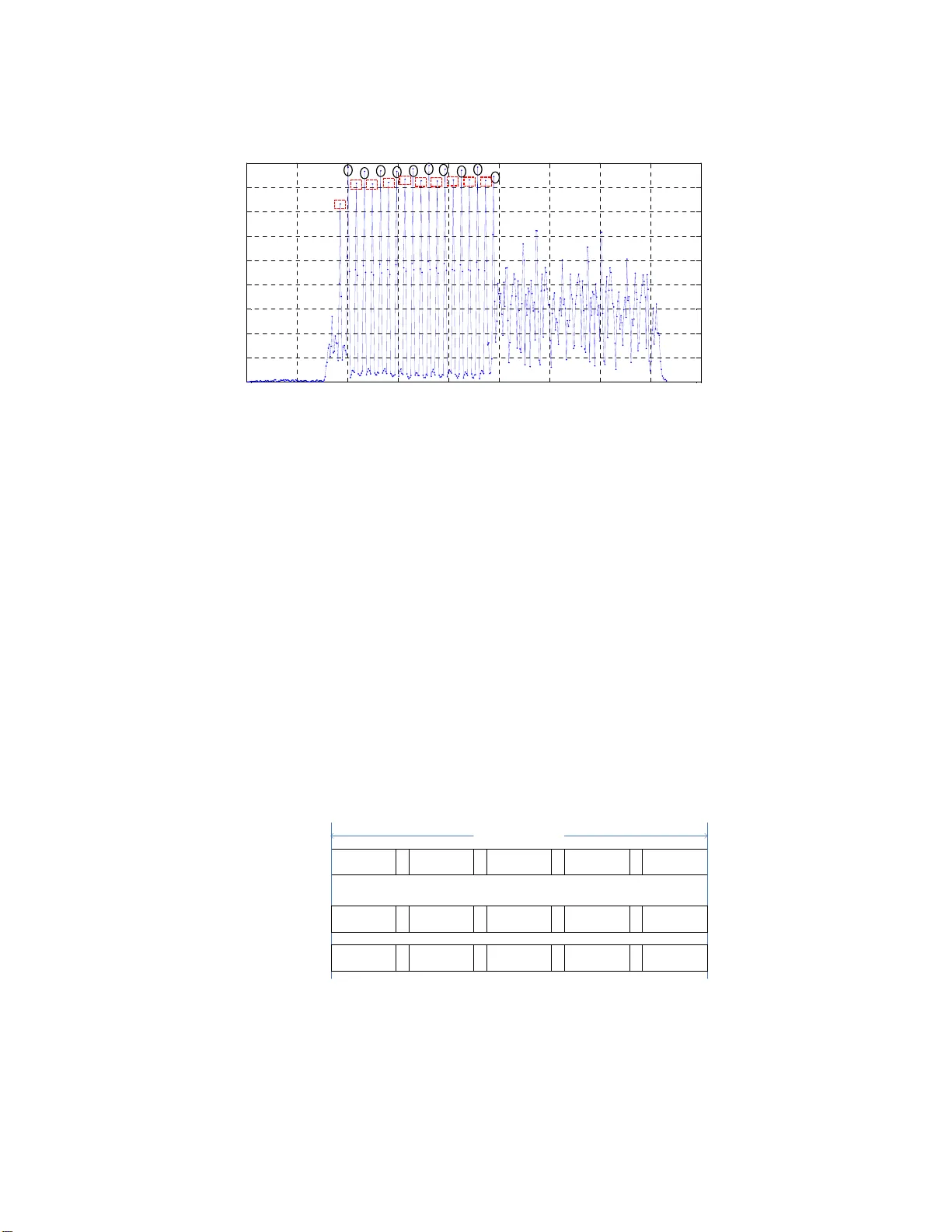
Implemen tation of Ph ysical-la ye r Net w ork Co ding Lu Lu a , T aotao W ang a , Soung Chang Liew a , Shengli Zha ng a,b a Dept. of Information Engine ering, The Chinese University of Hong Kong, Hong Kong b Dept. of Communic ation Engine ering, Shenzhen Un iversity, China Abstract This pap er presen ts the first implemen tatio n of a t wo-w a y rela y net w ork based on the p rinciple of phys ical-lay er net w ork co ding. T o date, only a simplified v ersion of ph ysical-la ye r net w ork co ding (PNC) metho d, called a na lo g net w ork co ding (ANC), has b een succes sfully implemen ted. The adv an tage of ANC is that it is simple to implemen t; the disadv an tage, on the other ha nd, is that the rela y amplifies the noise along with t he signal b efore fo r warding the signal. PNC systems in whic h the rela y p erforms X OR or other denoising PNC mappings o f the receiv ed signal ha v e the p oten tial for significan tly b etter p erfor ma nce. Ho wev er, the implemen tation of suc h PNC systems p oses man y challenges . F or example, the rela y mu st b e able to deal with sym b ol and carrier- phase async hronies of the sim ultaneous signals receiv ed fr o m the t w o end no des, and the relay mus t p erform c hannel estimation b efore detecting the signals. W e in v estigate a PNC implemen tation in the frequency domain, referred to as FPNC, to tack le these c hallenges. FPNC is based on OF D M. In FPNC, X OR mapping is p erformed on t he O F DM samples in eac h sub carrier ra ther than on the samples in the time domain. W e implemen t FPNC on the univ ersal soft radio p eripheral (USRP) plat f orm. Our implemen tation requires only mo derate mo difications of the pac k et pream ble design of 802.11a/g OFDM PHY. With the help of the cyclic prefix (CP) in OFDM, sym b ol async hrony and the m ulti-path f ading effects can b e dealt with in a similar fashion. Our exp erimen tal results sho w that symbol-sync hronous and sym b ol- async hronous FPNC ha v e essen tially the same BER p erfo rmance, for b oth c hannel-co ded and unc hannel-co ded FPNC. Keywor ds: ph ysical-la ye r net w o r k co ding, net w ork co ding implemen tation, soft ware radio 1. Intro duction In this pap er, w e presen t the first implemen tation of phy sical-lay er net work co ding (PNC) on the sof tw are radio platform. W e b eliev e this prot o t yping effort mov es the Email addr esses: ll007@ ie.cu hk.edu.hk (Lu Lu), pos tman5 11@gm ail.com (T aotao W ang), soung@ ie.cu hk.edu.hk (Soung Chang Liew), zsl@sz u.edu .cn (Sheng li Zhang) Pr eprint submitte d to Physic al Communic ation May 28, 2018 concept of PNC a step to ward r ealit y . Our implemen tation w ork also exp oses a nd raises some interes ting issues for further researc h. PNC, first prop osed in [1], is a subfield of netw ork co ding [2] that is attracting m uc h atten tion recen tly . The simplest system in whic h PNC can b e applied is the tw o- w a y relay c hannel (TWR C), in whic h tw o end no des A and B exc hange inf o rmation with the help of a relay no de R in the middle, as illustrated in Fig. 1. Compared with the conv en tional relay system, PNC could double the throughput of TWR C b y reducing the needed time slots for the exc hange of o ne pack et f rom four to tw o [1 ]. In PNC, in the first time slot, end no des A a nd B send signals simultaneously to rela y R ; in the second phase, relay R pro cesses the sup erimposed signa ls and maps them to a net w ork-co ded pac ket f or broadcast bac k to the end no des. F rom the net work-coded pac k et, eac h end no de then mak es use of its self information to extract the pac k et from the other end no de [1 , 3, 4]. Prior to this pap er, only a simplified v ersion of PNC, called analog netw ork co ding (ANC) [5], has b een success fully implemen ted. The a dv an tag e of ANC is that it is simple to implemen t; the disadv an tage, on the other hand, is that the rela y a mplifies the noise along with the signal b efore forw arding the signal, causing error propagatio n. T o o ur b est kno wledge, the implemen ta tion of the or ig inal PNC based on XOR mapping as in [1] has not b een demonstrated, ev en though it could hav e significan tly b etter p erfor ma nce. A reason is tha t the impleme ntation of X OR PNC p o ses a n um b er of challenges . F or example, the relay m ust b e able to deal with sym b ol and carrier-phase async hro nies o f the simu lta neous signals receiv ed from the tw o end no des, and the rela y m ust p erform ch a nnel estimation b efore detecting the signals. This pap er presen ts a PNC implemen tat ion in the frequency domain, referred to as FPNC, to tackle these c hallenges. In particular, FPNC is based on OFD M, and XOR mapping is p erformed o n OF DM samples in eac h sub carrier rather than the samples in the time domain. W e implemen t FPNC on the univ ersal soft radio p eripheral (USRP) plat f orm. Our implemen tation requires only mo derate mo difications of the pac k et pream ble design of 802.11a / g OFDM PHY. With the help the cyclic prefix (CP) in OFDM, sym b ol async hrony and the m ulti-path f ading effects can b e dealt with in a similar fashion. Our exp erimen tal results sho w that symbol-sync hronous and sym b ol-async hronous FPNC hav e nearly the same BER p erfo rmance, fo r b oth c hannel-co ded and unchannel-coded FPNC. End Node A End Node B Relay Node R Figure 1: System mo del for physical-lay er netw or k co ding. 2 Chal len ges In the following, we briefly ov erview the c hallenges of PNC, and the implemen ta- tion approac hes tak en by us to tack le them: Asynchr ony There are tw o p ossible implemen tatio ns for PNC: sync hro no us PNC and asyn- c hronous PNC. In sync hrono us PNC, end no des A and B ha v e the uplink channe l state information (CSI). They p erform preco ding and sync hronize their transmissions so that their signals arriv e at rela y R with sym b ol and carrier-phase alignmen ts. F or high-sp eed t r a nsmission, suc h tigh t sync hro nization is c hallenging; in addition, timely collection of CSI is difficult in f a st fading scenarios. Async hrono us PNC is less demanding. It do es not require the tw o end no des to tigh tly sync hronize and preco de their transmissions. In pa rticular, kno wledge of the uplink CSI is not needed at t he t w o end no des. The simplicit y at the end no des comes with a cost. Without preco ding and sync hronizatio n of the tw o end no des, their signals may arrive at t he relay with sym b ol and carrier-phase misalignmen ts. A k ey issue in async hronous PNC is how to deal with suc h signal a sync hro ny at the rela y [6, 7]. This pap er fo cuses on the implemen ta tion of a sync hro nous PNC. T o deal with async hron y , o ur FPNC implemen tation makes use of OFD M to lengthen the symbol duration within eac h subcar r ier. Then, indep enden t X OR PNC mapping is p erformed within each sub carrier. OFDM splits a high-rate data stream in to a n um b er of low er- rate streams o ve r a num b er of sub carriers. Thanks to the larger sym b ol duration within each sub carrier, t he relative amount of disp ersion caused b y the multipath dela y spread is decreased. The OFDM sym b o ls o f the tw o end no des b ecome more aligned with resp ect to the total sym b o l duration, as illustrated in Fig. 2 . In pa r - ticular, if t he relativ e sym b ol dela y is within the length of the CP , the time-do ma in misaligned samples will b ecome alig n e d in the fr equency domain aft er D FT is applied. This prop erty will b e further elab orated later in Section 2 . Channel Estima tion F or go o d p erformance of async hronous PNC, the rela y m ust ha ve the know ledge of the uplink CSI. This has b een the assumption in many prior works on PNC (e.g., [1, 8]). This means that in implemen tation, the rela y will need to estimate the c hannel gains. Most channe l estimation t echniq ues for the OFDM system assume p oint-to- p oin t communication in whic h only one c hannel needs to b e estimated. In PNC, the rela y needs to estimate t wo channels based on sim ultaneous reception o f signals (and pream bles) from the t wo end no des. This p oses the following t w o problems in PNC that do not exist in p oin t-to- p oin t comm unication: • Channel estimation in a p oint-to-p oin t OFDM system (e.g., 802.11 [9]) is gener- ally facilitated b y training sym b ols and pilots in the transmitted signal. If used 3 Time Freq. ... Symbol duration in FPNC Time Freq. [ 1 ] A x [ 1 ] B x [2 ] A x [2 ] B x [ ] A x n [ ] B x n [ 1 ] A x n ! [ 1 ] B x n ! ... ... (a) (b) [ 1 ] A X [ 1 ] B X [ ] A X n [ ] B X n Symbol duration in TPNC Figure 2: PNC with time asynchrony: (a) fre q uency-domain physical-layer net work co ding (FPNC); (b) time-domain physical-layer net work co ding (TPNC). unaltered in the PNC system, the training sym b ols and pilots from the tw o end no des ma y ov erlap at the rela y , complicating the task o f channe l estimation. In our implemen ta t io n, w e solv e this problem by assigning orthogonal training sym b ols and pilots to the end no des. The details will b e giv en in Section 4. • It is we ll known that carr ier frequency offset (CF O) b et w een the transmitter and the receiv er can cause in ter- sub carrier in terference (ICI) if left uncorrected. In a p oin t-to- p oint system, CFO can b e estimated and compensated for. In PNC, w e ha ve t w o CF Os at the rela y , one with resp ect to eac h end no de. Ev en if the tw o CF Os can b e estimated p erfectly , their effects cannot b e b o th comp ensated for tot a lly; the tota l elimination of the ICI of one end no de will inevitably lead to a larg er ICI for the other end no de. T o strik e a balance, our solution is to comp ensate for the mean of the tw o CF Os (i.e., comp ensate fo r (CF O A − CFO B ) / 2). The details will b e elab or a ted in Section 4. Joint Channel Decodin g and Network Coding F or reliable comm unication in a practical PNC system, ch a nnel co ding needs to b e incorp orated. This pap er considers link-b y-link channel-coded PNC, in whic h the rela y maps t he ov erlapp ed channel-coded symbols of the tw o end no des [4, 10] to the X OR of the source sym b ols 1 ; aft er that, the rela y c hannel-enco des the X OR source sym b ols to c hannel-co ded sym b o ls fo r forw arding t o the end no des. Such a link-b y-link c hannel-co ded PNC system has b etter p erforma nce t ha n an end-to-end c hannel-co ded PNC system [4, 10]. 1 This pro cess is called Channel-deco ding-Netw or k-Co ding (CNC) in [10] b ecause it do es tw o things: channel deco ding and netw ork co ding . Unlike the tra ditional multiuser detection (MUD) in which the goa l is to recover the individual source information fro m the tw o end no des, CNC aims to recov er the XOR of the source infor mation during the channel dec o ding pro ces s. CNC is a comp onent in link-by-link c ha nnel-co ded PNC cr itical for its p erfor ma nce [4, 10]. 4 In our FPNC design, w e adopt the conv olution co de as defined in the 802.11 a/g standard. The rela y first ma ps the ov erlapp ed c hannel-co ded sym b ols to their X OR on a sym b ol-by-sy mbol basis. After that it cleans up the noise by (i) channe l- deco ding the X OR c hannel-co ded sym b ols to the X OR source sym b ols, and then (ii) re-c hannel-co ding the XOR source sym b ols to the X OR channe l- co ded sym b ols for forw arding to the tw o end no des. The remainder of this pap er is organized as follow s: Section 2 details the dela y async hron y mo del of this pap er. Sec tio n 3 presen ts the FPNC f r ame format design. Section 4 addresses the k ey implemen tation challenges . Experimen ta l results are giv en in Section 5. Finally , Section 6 concludes this pap er. 2. Effect of Dela y A synchron y in F requency Domain In async hronous PNC , sym b o ls of the t w o end no des ma y arriv e at the rela y misaligned. W e men tioned in the introduction that if the r elat ive sym b ol dela y is within the length of the CP in FPNC, then the t ime-domain misaligned samples will b ecome aligne d in the frequency domain after DFT is applied. This section is dev oted to the mathematical deriv ation of t his result. Here, w e will deriv e a more general result that tak es into accoun t m ulti-pa th c hannels as we ll. 2.1. Effe ctive D iscr ete-time C h annel Gains W e consider t he follow ing multi-path c hannel mo del. Supp ose that there are M A paths from no de A to relay R with delays τ 0 A < τ 1 A < · · · < τ M A − 1 A and corresp onding c hannel ga ins α 0 A , α 1 A , . . . , α M A − 1 A . The c hannel impuls e resp onse of A is g A ( t ) = M A − 1 P i =0 α i A δ ( t − τ i A ). Similarly , t here are M B paths from no de B to rela y R with delay s τ 0 B < τ 1 B < · · · < τ M B − 1 B and c hannel gains α 0 B , α 1 B , . . . , α M B − 1 B , with c hannel impulse resp onse g B ( t ) = M B − 1 P i =0 α i B δ ( t − τ i B ). Without loss of generality , w e assume that fra me A arrive s earlier tha n frame B : sp ecifically , τ 0 A ≤ τ 0 B . Note that our mo del al lows for the c ase wher e no des A and B do not exactly tr a nsmit at the same time. If one no de transmits slightly later than the other, we could simply add the lag t ime to a ll the path dela ys of that no de. W e a ssume that the net effect is suc h that the signal of A arriv es earlier than the signal of B , whether this is due t o earlier transmission or shorter path delay of A . W e first deriv e the effectiv e discrete-time channel gains for t he uplink in FPNC. As sho wn in Fig. 3, the discrete-time c hannel gains capture not just the con tin uous-t ime c hannel gains, but a lso the op era t ions p erfo rmed b y pulse shaping and matc hed- filtering-and-sampling. Let us assume that the pulse shaping function p ( t ) is of finite length: s p ecifically , we assume p ( t ) = 0 for t ≤ 0 and t ≥ T P . The contin uous-time 5 ( ) p t ( ) A g t MF ( ) p t ( ) B g t [ ] A x n [ ] B x n [ ] A h n [ ] R y n ( ) A x t [ ] B h n ( ) B x t ( ) R y t ( ) w t [ ] A x n [ ] B x n [ ] R y n [ ] w n (a) (b) Figure 3: (a) Contin uous-time channel mo del for PNC, in which x A [ n ] a nd x B [ n ] are the time domain source samples; y [ n ] is the time domain received sa mples; g A ( t ) and g B ( t ) are the wireless m ultipath channel ga ins ; p ( t ) is the pulse shaping function; w ( t ) is the receiver nois e ; and MF is the matched filter and sa mpler at the relay no de. (b) E quiv a lent discrete-time channel mo del for PNC, in which h A [ n ] and h B [ n ] denote the equiv a lent discrete time channel imp ose r esp onse (i.e., effective discrete time channel ga ins), and w [ n ] is the equiv alent discre te- time noise term. baseband signal fed in to the con tinuous-time channel is x A ( t ) = ∞ P n = −∞ x A [ n ] p ( t − nT ). The time domain receiv ed signal if o nly no de A tr a nsmits is y A ( t ) = x A ( t ) ∗ g A ( t ) + w ( t ) = ∞ X n = −∞ M A − 1 X i =0 α i A x A [ n ] p ( t − τ i A − nT ) + w ( t ) , (1) where w ( t ) is the noise, assumed to b e A W GN. Matc hed-Filt ering (MF) and sampling are then p erfo rmed o n (1) , b y sampling at the first m ultipath c hannel tap of the uplink c hannel b et we en no de A and rela y R , to get the receiv ed samples y A [ m ] = ∞ Z −∞ y ( t ) p ( t − τ 0 A + T P − mT ) d t = ∞ X n = −∞ x A [ n ] ∞ Z −∞ M A − 1 X i =0 α i A p ( t − τ i A − nT ) p ( t − τ 0 A + T P − mT ) d t + w [ m ] = ∞ X n = −∞ x A [ n ] h A [ m − n ] + w [ m ] , (2) where w [ m ] = ∞ R −∞ w ( t ) p ( t − τ 0 A + T P − mT ) dt . W e see that t he effectiv e discrete-time c hannel o f A is suc h that h A [ m − n ] = ∞ R −∞ M A − 1 P i =0 α i A p ( t − τ i A − nT ) p ( t − τ 1 A + T P − mT ) d t . Note that p ( t − τ i A − nT ) p ( t − τ 0 A + T P − mT ) = 0 if | τ i A − τ 0 A + T P − ( m − n ) T | ≥ T P . In other words, h A [ m − n ] = 0 for ( m − n ) T ≥ τ M A − 1 A − τ 0 A + 2 T P and ( m − n ) T ≤ 0 . Define D A = τ M A − 1 A − τ 0 A + 2 T P /T . Let us no w consider what if b oth end no des transmit. The receiv ed signal at the 6 rela y no de is y R ( t ) = x A ( t ) ∗ g A ( t ) + x B ( t ) ∗ g B ( t ) + w ( t ) . (3) Stic king to the ab ov e MF that is defined with resp ect to first path dela y of A , we ha v e y R [ n ] = x A [ n ] ∗ h A [ n ] + x B [ n ] ∗ h B [ n ] + w [ n ] , (4) where h A [ n ] = 0 for n < 0 and n ≥ D A ∆ = τ M A − 1 A − τ 0 A + 2 T P /T , and h B [ n ] = 0 for n < ⌈ ( τ 0 B − τ 0 A + 2 T P ) /T ⌉ and n ≥ D B ∆ = τ M B − 1 B − τ 0 A + 2 T P /T . n 0 1 2 3 D A ĂĂ D A +1 n 0 1 2 3 D B ĂĂ D B +1 [ ] A h n [ ] B h n D A -1 D B -1 Figure 4: Ex ample of delay spread in FPNC. 2.2. Delay-Spr e ad- Within- C P R e quir ement The delay spread of no de A is D A , and the dela y spread of no de B , with resp ect to time n = 0, is D B . W e define the delay spread of the PNC system as (i.e., it com bines the dela y spreads o f A a nd B into a p ot entially larger dela y spread, as illustrated in Fig. Dela ySpread) dela y spread = max [ D A , D B ] . (5) The ab ov e deriv ation is general and do not ha v e an y requiremen t on the mo dulation. This subsection, we will presen t the OF DM mo dulated PNC system. In particular, w e will presen t the “D ela y-Spread-Within-CP Requiremen t” for FPNC. That is, we com bine the Cyclic Prefix (CP) and D iscrete F ourier T ransform (DFT) to show tha t the time-domain sym b ol async hron y of FPNC disapp ears in the frequency domain, when the uplink f r ames satisfy the Dela y-Spread-Within- CP Requiremen t. First, let H [ k ] b e the N -p oin t DFT of h [ n ] giv en by [11] (Not e that, in the fo llo wing deriv ation, we a ssume the sub carrier indices start from 0, i.e, k = 0 , · · · , N − 1) H [ k ] = D F T { h [ n ] } = N − 1 X n =0 h [ n ] e − j 2 πnk N , 0 ≤ k ≤ N − 1 . (6) 7 The N -p oint circular con volution of x n and h n is written as y [ n ] = x [ n ] ⊗ N h [ n ] = N − 1 X k =0 h [ k ] x [ n − k ] N , (7) where [ n − k ] N denotes [ n − k ] mo dulo N . In other words, x [ n − k ] N is a p erio dic v ersion of x [ n − k ] with p erio d N . F rom the definition of D FT, circular con volution in time leads to m ultiplication in the frequency [11 ]: D F T { x [ n ] ⊗ N h [ n ] } = X [ k ] H [ k ] , 0 ≤ k ≤ N − 1 . (8) The c hannel output, as in (4), how eve r, is not a circular con v olutio n but a linear con v olution. The line ar c onvolution b etwe en the chann e l input and im pulse r esp onse c an b e turne d into a cir cular c onv o lution by adding a sp e cial p r efix to the input c al le d a cyclic pr efix (CP) [12]. F or F PNC, let H A [ k ] and H B [ k ] denote the frequency resp onses o f the discrete- time c hannels, and let C denote the length of t he CP . One OFD M sym b ol duration is then N + C . The CP for x A [ n ] is defined a s x A [ N − C ] , . . . , x A [ N − 1]: it consists of the last C v alues o f the x A [ n ] sequence. F or each input sequen ce of length N , these la st C samples are app ended to the b eginning of the sequenc e. This yields a new sequenc e x O F D M A [ n ], − C ≤ n ≤ N − 1 , of length N + C , where x O F D M A [ − C ] , . . . , x O F D M A [ N − 1] = x A [ N − C ] , . . . , x A [ N − 1] , x A [0] , . . . , x A [ N − 1]. Note that with t his definition, x O F D M A [ n ] = x A [ n ] N for − C ≤ n ≤ N − 1, wh ich implies t hat x O F D M A [ n − k ] = x A [ n − k ] N for − C ≤ n − k ≤ N − 1. Supp ose x O F D M A [ n ] and x O F D M B [ n ] are inputs to a discrete-time channel with im- pulse resp onse h A [ n ] and h B [ n ], resp ectiv ely . The c hannel output y R [ n ], 0 ≤ n ≤ N − 1 is then (assuming that the delay spread o f FPNC max [ D A , D B ] is no larg e than the CP length C ) y R [ n ] = x O F D M A [ n ] ∗ h A [ n ] + x O F D M B [ n ] ∗ h B [ n ] + w [ n ] = C − 1 X k =0 h A [ k ] x O F D M A [ n − k ] + C − 1 X k =0 h B [ k ] x O F D M B [ n − k ] + w [ n ] = C − 1 X k =0 h A [ k ] x A [ n − k ] N + C − 1 X k =0 h B [ k ] x B [ n − k ] N + w [ n ] = x A [ n ] ⊗ N h A [ n ] + x B [ n ] ⊗ N h B [ n ] + w [ n ] , (9) where the third equalit y follo ws f rom the fact that for 0 ≤ k ≤ C − 1, x O F D M A [ n − k ] = x A [ n − k ] N for − C ≤ n − k ≤ N − 1 . T hus , b y app ending a CP to the c hannel input, the linear con v olution asso ciated with the ch a nnel impulse resp onse y R [ n ] for 0 ≤ n ≤ N − 1 b ecomes a circular con v olution. T akin g the D F T of the c hannel 8 output in the absense of noise then yields the follo wing FPNC frequency domain digital expression: FPNC F requency Domain Digital Expression: Define C as the length of the CP , and assuming F PNC dela y spread = max [ D A , D B ] ≤ C (where D A and D B are functions of the multipath dela ys τ M A − 1 A and τ M B − 1 B , re- sp ectiv ely) the receiv ed signal at sub carrier k is giv en b y Y [ k ] = H A [ k ] X A [ k ] + H B [ k ] X B [ k ] + W [ k ] , k = 0 , . . . , N − 1 . (10) Note that the time-domain dela y spread has b een incorp orated in to H A [ k ] a nd H B [ k ] resp ectiv ely . In FPNC, w e will map Y [ k ] for eac h subcar r ier k into the X OR, X A [ k ] ⊕ X B [ k ]. This will b e detailed in Section 4.3. The main p oin t here is in (1 0), the signals of differen t sub carriers k are isolated from eac h other, and w e only need to p erform PNC mapping within eac h sub car r ier. W e remark that our discussion so far in t his section has assumed the absence of CF O. When there is CF O, inter-carrier interfere nce (ICI) ma y o ccur, and this will b e further discussed in Section 4.1. 3. FPNC F rame F ormat s 1 s 2 s 3 s 4 s 5 s 6 s 7 s 8 s 9 s 10 L 1 L 2 data 0 s 1 s 2 s 3 s 4 s 5 s 6 s 7 s 8 s 9 s 10 0 data Node A Node B 160 samples 10 short training symbols 128 samples 320 samples Cyclic prefix 16 samples 2 long short training symbols 0 L 1 L 2 0 CP CP Figure 5: FPNC preamble format. This section fo cuses on the PHY fr ame design to enable async hronous op eration, c hannel estimation, and frequency offset comp ensation in FPNC. As previously men- tioned, the async hronous op erat ion requires the PNC delay spread t o b e within CP . T o ensu re this , a simple MA C proto col as follows could b e used to trigger near- sim ultaneous transmissions b y the tw o end no des. The rela y could send a short p olling frame ( similar to the “b eacon f r a me” in 802.11 that con ta ins only 1 0 Bytes) to the end no des. Up on receiving the p olling frame, the end no des then transmit. With this metho d, the sym b ols w ould a rriv e at the rela y with a relativ e delay offset of | RT T A − RT T B | , where RT T is the round trip time, including the propagation dela y and t he pro cessin g time a t the end no des. This delay offset is not harmful to 9 802.11 STS FPNC STS sts sts sts sts sts sts sts sts sts sts sts sts sts sts sts sts sts sts sts sts sts sts sts sts sts sts sts sts sts sts 160 samples A B Figure 6: Short T raining Symbol design for FPNC (time domain). lts lts FPNC LTS 802.11 LTS 0 0 160 samples lts lts C P 0 lts lts C P 0 CP2 data data A B Figure 7: Long T raining Symbol des ig n for FPNC (time do main). our system as long a s the sample misalignmen t of tw o end no des is within the CP length. Giv en t his lo ose sync hronizatio n, our tra ining sym b o ls a nd pilot designs describ ed b elo w can then b e used t o facilitate c hannel estimation and frequency offset comp en- sation in FPNC. W e mo dify the PHY pream ble design of 80 2 .11a/g for FPNC. The o v erall FPNC frame format is sho wn in Fig. 5. The functions o f the different com- p onen ts in the PHY preamble are describ ed in the next few subsections. 3.1. FPNC Short T r ai n ing Symb ol In 802.11 , the short training sym b o l (STS) sequence con tains 16 0 time-domain samples, in which 16 samples form one STS unit ( sts ) for a to tal of 10 iden tical units, as show n in Fig. 6. FPNC adopts the same STS sequence as in 8 02.11, as illustrated in F ig. 6. T he STS sequence is used by the relay no de to p erform the sample t iming reco ve ry on the receiv ed frame. I n particular, the rela y no de applies a cross-correlation to lo cate the sample b oundary for the long training sym b ols that follo w the STS sequence. The norma lized cross-correlation is defined as follows: Z [ n ] = L − 1 P i =0 ( sts ∗ [ i ] y R [ n + i ]) L − 1 P i =0 ( y R [ n + i ] y ∗ R [ n + i ]) , (11) where n is the receiv ed sample index, y R [ n ] is the n -th sample at the rela y R , and L = 16 is the length of each sts . F or FPNC, this cross-correlation will result in 20 p eaks ov er the STS sequences (see Fig. 8) of the t wo frames if the frames are not sync hro nized. F rom this profile of p eaks, w e can identify the last tw o p eaks. If the Dela y-Spread-Within- CP requiremen t is satisfied, then the la st tw o peaks m ust b e the last p eaks of A and B , r esp ective ly . This is b ecause the CP as w ell as the sts are of 16 samples in length. F rom there, w e could lo cate the b oundaries of the L TS of A and B tha t follo w. Note that when the STS sequences of no des A and B ov erlap exactly , we will hav e ten p eaks only . In this case, the L TS b oundaries o f A and B also o v erlap exactly , a nd w e simply use the last p eak to identify the common b oundary . 10 0 50 100 150 200 250 300 350 400 450 0 1 2 3 4 5 6 7 8 9 x 10 -3 Cross -correla tion of STS with sample misal ignment Th e la te f rame's STS Th e earl y frame's ST S Figure 8: Cr o ss-cor relation of the STS fo r the uplink of FP NC. 3.2. FPNC L ong T r aining Symb ol With reference to Fig. 7, the 802.11 L TS seq uence con ta ins 160 time-doma in samples in whic h there is a CP fo llow ed b y t w o iden tical L TS units, l ts . The receiv er uses the L TS sequence to p erfo r m c hannel estimation and CF O comp ensation. F or F PNC, in o r der to estimate t wo uplink channe l gains, w e design the L TS so that it con tains tw ice the length of L TS in 802.11a/ g , as sho wn in F ig . 7. In F ig . 7, w e in ten tiona lly sho w the case in whic h the L TS sequence s of the tw o end no des are not exactly sync hronized. Note that we c hange the 80 2 .11 L TS design by shortening its original CP length from 32 to 16 to mak e sure that the t wo l ts units of B will no t o v erlap with t he data of A that follow s under the condition that the dela y spread is less than the CP length of 16. This do es not imp ose additio nal requiremen t on the dela y spread, since the CP o f the dat a OFDM sym b ols in 8 02.11a/g (and F PNC) ha ve only 16 samples an yw ay (i.e., the dela y spread must b e within 16 samples anyw ay). Section 4 will detail the CF O comp ensation and c hannel estimation metho ds f or our implemen ta tion. P Data Data Data FPNC Pilot Data Data 802.11 Pilot 53 subcarriers P P P P Data Data Data Data Data 0 P 0 0 Data Data Data Data Data P 0 P A B Figure 9: Lo ng T r aining Symbol design for FP NC (time do main). 11 3.3. FPNC Pilot There a re fo ur pilo ts for eac h OFD M sym b ol in 802.11, as show n in Fig. 9. The four pilots ar e used to fine-tune the channe l gains estimated from L TS. In a frame, there are multiple OFDM sym b ols, but only one L TS in the b eginning. In practice, the c hannel condition ma y ha v e c hanged by the time the later OF D M sym b ols arrive at the r eceiv er. That is, t he original c hannel gains as estimated b y L TS ma y not b e accurate a n ymore for the later OFDM sym b o ls. The pilots are used to trac k suc h c hannel c hanges. In FPNC, w e design the F PNC pilots o f no des A and B by n ulling certain pilots to intro duce orthog onalit y b etw een them, as shown in Fig. 9. As will b e detailed in Section 4.2, this allo ws us to t r a c k the c hannel gains of A and B separately in a disjoin t manner in FPNC. W e conducted some exp erimen ts for a p oin t-to- p oin t comm unication system using the t w o- pilo t design rather than the four-pilot design. W e find that for our linear interpolation ch annel trac king sc heme describ ed in Section 4.2, the BER p erformances o f the t wo-pilot a nd four-pilot designs are comparable for BPSK- and QPSK-mo dulated systems. 4. Addressing Key Implemen t ation C hallenges in FPNC W e next presen t our metho ds fo r carrier frequency offset comp ensation, c hannel estimation, and FPNC mapping, assuming the use of the PHY fra me format presen ted in Section 3. 4.1. FPNC Carrier F r e quency Offs e t (CFO) Comp ensation F or CF O comp ensation, w e first estimate the tw o independen t CFOs (namely C F O A and C F O B ) caused by the carrier frequency offsets b etw een no des A and B and relay R , resp ectiv ely . W e then comp ensate fo r the mean o f the t wo CF Os (i.e., C F O P N C = ( C F O A + C F O B ) / 2 ). The details a r e presen ted b elo w. 4.1.1. CF O Estimation F or the uplink phase, when there a re CFOs, the receiv ed frames at rela y R will suffer from time-v arying phase a sync hro nies. W e need to comp ensate for the CFOs to alleviate inter-carrier in terference ( ICI) among dat a on differen t sub carriers. Recall tha t in Section 3, w e men tioned that a lo ose sync hro nizatio n MA C proto col can b e used to ensure tha t the difference of the arriv a l times of the frames from no des A and B are within CP . That means that the L TSs f r om no des A and B will o v erlap with eac h o ther substan tially , with the non-ov erlapping part smaller than CP (see Fig. 5). Recall also that w e introduce ortho g onalit y b et w een the L TSs of no des A and B so that when the L TS units in A are activ e, the L TS in B are zeros, a nd vice v ersa, a s shown in Fig. 7. This allo ws us to separately estimate C F O A and C F O B . Without loss of g eneralit y , in the follo wing we f o cus the estimation of C F O A using LT S A . 12 C F O A is giv en b y ∆ f A = f A − f R (i.e., the difference in the f r equencies of the oscillators o f no de A and relay R ). W e define the normalized C F O A to b e φ A = 2 π ∆ f A T N , where T is the duratio n of one OFD M sym b ol, and N is the num b er o f samples in one O F DM sym b o l not including CP . In ot her w ords, φ A is the a dditional phase adv ance in tro duced b y the CF O from one sample to the next sample. T o estimate φ A , w e mu ltiply one sample in the first unit of LT S A (see Fig. 7) b y the corresp onding sample in the second unit o f LT S A to obtain y LT S A R [ n ] ∗ y LT S A R [ n + N ]. Then, ang le y LT S A R [ n ] ∗ y LT S A R [ n + N ] ∈ ( − π , π ) is g iv en b y ang l e y LT S A R [ n ] ∗ y LT S A R [ n + N ] + 2 mπ = N φ A , (12) where m ∈ { . . . , − 2 , − 1 , 0 , 1 , 2 , . . . } . F or our exp erimen tal test-b ed, USRP , w e f ound t ha t the accuracies o f the on b oa r d oscillators are suc h that they do no t induce larg e CFOs so that m = 0 (interes ted readers ar e referred to [1 4] fo r CFO estimation when m 6 = 0.). Hence, w e could write (12) as follows : N φ A = ang l e y LT S A R [ n ] ∗ y LT S A R [ n + N ] . (13) Strictly s p eaking, (13) is an ex pression for the noiseless case. Because of noise, ang l e y LT S A R [ n ] ∗ y LT S A R [ n + N ] for differen t n ∈ { 0 , . . . , N − 1 } could b e differen t. Th us, in our computation, w e first obt a ined ˆ φ A [ n ] = ang l e y LT S A R [ n ] ∗ y LT S A R [ n + N ] for n = 0 , . . . , N − 1, and then estimate φ A b y ˆ φ A = median n ∈{ 0 ,...,N − 1 } ˆ φ A [ n ] . (14) W e obtain φ B similarly . The reason we use the median CF O instead of the mean v alues is t ha t we find the median is more stable. In particular, some samples of ˆ φ A [ n ] a r e outliers that app ear t o b e caused by unkno wn errors of significan t mag nitudes. W e will sho w t he BER results comparing the use of mean and median for CF O comp ensation (in Fig. 10(b)). 4.1.2. Comp ensation for Two CFOs In FPNC, w e adopt the mean of the tw o CFOs for comp ensation purp oses: ˜ φ = ˆ φ A + ˆ φ B / 2 . (15) Exp erimental results sho w (see Fig. 10(a)) that comp ensation b y the mean ˜ φ in (15) is b etter than comp ensation by either ˆ φ A or ˆ φ B . W e b eliev e a t heoretical study 13 8 10 12 14 16 18 20 22 24 10 -6 10 -5 10 -4 10 -3 10 -2 10 -1 10 0 CFO co m pe nsa tio n: CFO A v.s . (CFO A + CFO B )/ 2 SNR [ dB] BER CF O A (unc hannel-c oded) CF O A (c hannel-c oded) (CFO A + CF O B )/2 (unc hannel-co ded) (CFO A + CF O B )/2 (cha nnel-code d) 8 10 12 14 16 18 20 22 10 -5 10 -4 10 -3 10 -2 10 -1 10 0 CFO co m pe nsa tio n: Mea n v.s . Med ian SNR [dB] BER mean (unc hannel-co ded) mean (c hannel-code d) median (un channel-c oded) median ( channel-c oded) (a) (b) Figure 10 : Compar is on of the different C FO co mpe ns ation metho ds: (a) C F O A v.s. C F O A + C F O B 2 ; (b) mean CFO v.s. median CFO. to explore and compare differen t comp ensatation metho ds may b e w orthwhile in the future. As far as w e kno w, there ha ve b een no theoretical treatments o f comp ensating for t w o CF Os. Fig. 10(b) sho ws the BER p erformance of using median fo r t he estimate of ˆ φ A or ˆ φ B as in (14 ) , vers us using mean. It shows tha t he use of median results in b etter p erformance. After comp ensation, our receiv ed data in the time do main is given b y ˜ y R [ n ] = y R [ n ] e − j n ˜ φ . (16) In the frequency domain, w e hav e ˜ Y R [ k ] = D F T ( ˜ y R [ n ]) . (17) W e should emphasize that the computation complexit y of FPNC CFO comp ensation is exactly the same as that o f p o in t-to - p oint comm unication, thus real-time deco ding is p ossible. 4.2. FPNC Chan n el Estimation In this subsection, w e presen t the c hannel estimation and trac king metho d for FPNC. Note that CFO comp ensation w as p erformed on the time-do main signal. F or 14 c hannel estimation, how ev er, w e are in terested in the channel gains for differen t sub- carriers in the frequency domain. This means that c hannel estimation will b e p er- formed after DFT. Th us, in the follo wing w e lo ok at the signal a fter CP remo v al a nd DFT. F or F PNC c hannel estimation, we use the L TS to obtain a first estimate. Pilots are used t o obtain additiona l estimates for la ter O F DM sym b o ls within the same frame. In the following, w e consider c hannel estimation of H A [ k ]. Estimation o f H B [ k ] is p erformed similarly . F or channel estimation based on L TS, define one F PNC L TS unit of no de A (i.e., with resp ect to Fig. 7 , one unit is l ts A ) in the frequency domain as X LT S A [ k ], where k = 0 , . . . , N − 1. Based on the first unit of l ts A the receiv ed frequency domain LT S A (i.e., ˜ Y LT S A R [ k ] = D F T ˜ y LT S A R [ n ] ), we p erform c hannel estimation of H A [ k ] as follows : ˆ H A [ k ] = ˜ Y LT S A R [ k ] X LT S A [ k ] . (18) As men tioned in Section 3, eac h L TS contains tw o iden tical units in o ur design. The uplink channel gain H A [ k ] b etw een no de A and relay R is estimated by taking the av erage of the t wo units results ˜ H A [ k ] = ˆ H A [ k ] + ˆ H A [ k + N ] / 2 . (19) In general, the c hannel ma y hav e c hanged from the first OFDM sym b ol to the last OFDM sym b o l within the same frame. The estimate based on L TS in (19) applies only for the earlier sym b ols. Pilots are used t o trac k the channe l c hanges for later sym b ols. Our pilot design w as shown in Fig. Pilot. In eac h FPNC OFDM sym b ol, there are tw o pilots p er end no de. Note f rom Fig. 9 tha t the tw o pilo ts of no de A and the t wo pilots are no de B are p o sitioned at differen t sub carriers and non-ov erlapping in the frequency domain. Therefore, w e could separately track the c hanges in H A [ k ] and H B [ k ]. In the f o llo wing, w e consider the trac king of H A [ k ]. T rac king of H B [ k ] can b e done similarly . Let k ′ and k ′′ denote the sub carriers o ccupied b y the tw o pilots of A . Consider OFDM symbol m . Let ˜ Y m R [ k ′ ] and ˜ Y m R [ k ′′ ] b e the receiv ed signal in the f requency domain. Becaus e the pilots of A and B do not o ve rla p, ˜ Y m R [ k ′ ] and ˜ Y m R [ k ′′ ] con tain only signals related to the pilots of A . W e first m ultiply ˜ Y m R [ k ′ ] and ˜ Y m R [ k ′′ ] b y ( ˜ H m A [ k ′ ]) − 1 and ( ˜ H m A [ k ′′ ]) − 1 obtained from (19 ) , resp ectiv ely . Let P A [ k ′ ] and P A [ k ′′ ] b e the tw o pilots. Then, we compute ∆ ˜ H m A [ k ′ ] = ( ˜ H m A [ k ′ ]) − 1 ˜ Y m R [ k ′ ] . P A [ k ′ ] , ∆ ˜ H m A [ k ′′ ] = ( ˜ H m A [ k ′′ ]) − 1 ˜ Y m R [ k ′′ ] . P A [ k ′′ ] . (20) 15 After that, we p erform linear fitting to obtain ∆ ˜ H m A [ k ] f or k 6 = k ′ , k ′′ , as fo llo ws: ∆ ˜ H m A [ k ] = ∆ ˜ H m A [ k ′ ] + ∆ ˜ H m A [ k ′′ ] − ∆ ˜ H m A [ k ′ ] k ′′ − k ′ ! ( k − k ′ ) . (21) T o obtain the final channe l estimation for the m -th OFDM sym b o l, we compute H m A [ k ] = ˜ H m A [ k ] · ∆ ˜ H m A [ k ] . (22) Channel- decoding and Network Coding Channel Encoder R Y A B S S ( ) R R X C S ! Figure 11 : Link-by-link channel-co ded PNC, including channel-deco ding and net work co ding (CNC) pro cess and channel enco ding . 4.3. FPNC Mapping F or reliable comm unication, channel co ding should b e used. Channel co ding in PNC systems can b e either done on an end-to -end basis or a link-b y-link basis [10, 4]. The lat t er generally has b etter p erformance b ecause the relay p erfo rms c hannel deco ding to remov e noise b efore fo rw arding the netw ork-co ded signal. The basic idea in link-by-link c hannel-co ded PNC is sho wn in Fig. 11 . It con- sists of t w o parts. Let ¯ Y R denote the v ector represen ting the o v erall channel-coded o v erlapp ed frames receiv ed b y relay R . The o p eration p erfo rmed by the first part is referred to as t he Channel-deco ding and Net w ork-Co ding (CNC) pro cess in [10]. It maps ¯ Y R to ¯ S A ⊕ ¯ S B , where ¯ S A and ¯ S B are the v ectors of source symbols from no des A and B , resp ectiv ely , and t he ⊕ o p eration r epresen ts sym b ol-by-sy mbol X OR op er- ation across corresp onding sym b ols in ¯ S A and ¯ S B . No t e that the n umber of sym b o ls in ¯ Y R is more than the num b er of sym b ols in ¯ S A ⊕ ¯ S B b ecause of c hannel co ding. Imp ortantly , CNC in v olves b oth ch a nnel deco ding a nd net w ork co ding. In part icular, CNC c hannel-deco des the receiv ed signal ¯ Y R not to ¯ S A and ¯ S B individually , but to their XOR. The second part can b e just an y conv en tional c hannel co ding op eration that c hannel co de ¯ S A ⊕ ¯ S B to ¯ X R = C ( ¯ S A ⊕ ¯ S B ) for broadcast to no des A and B , where C ( ∗ ) is the c hannel co ding op eration. As men tio ned in [10] and [4], the CNC comp onen t is unique to the PNC system, and differen t designs can hav e differen t p erfo rmance and differen t implemen tatio n complexit y . W e refer the inte rested readers to [4] for a discussion on differen t CNC designs. In this pap er, we choose a design that is amenable to simple implemen tation, a s sho wn in Fig. 1 2. W e refer to this CNC design as XOR-CD. In this design, an y linear c hannel co de can b e used. In our implemen tation, w e c ho ose to use the con v olutiona l 16 Symbol-wise XOR PNC Mapper Channel Decoder R Y A B X X A B S S CNC Figure 12 : XOR-CD design for CNC. co de. In XOR-CD, the c hannel-deco ding and net w ork co ding op erations in CNC are p erformed in a disjoin t manner. As sho wn in Fig. 12, based on the CF O- comp ensated ˜ Y R [ k ] obtained as in (17 ) , we obtain the o v erall vec tor ¯ Y R = ( Y R [ k ] ) k =0 , 1 ,... . W e then p erform sym b ol-wise PNC mapping to get an estimate for the the channel-coded X OR v ector ¯ X A ⊕ ¯ X B = ( X A [ k ] ⊕ X B [ k ]) k =0 , 1 ,... , where ¯ X A = ( X A [ k ]) k =0 , 1 ,... and ¯ X B = ( X B [ k ]) k =0 , 1 ,... are the c hannel-co ded vectors from A and B , resp ectiv ely . W e assume the same linear c hannel co de is used at no des A , B , and R . Note that since w e adopt the conv olutional code, C ( ∗ ) is linear. Therefore, w e ha ve ¯ X A ⊕ ¯ X B = C ( ¯ S A ) ⊕ C ( ¯ S B ) = C ( ¯ S A ⊕ ¯ S B ), and th us the same Viterbi c hannel deco der as used in a con ven tional p oint-to-p oint commu nicatio n link can b e used in the second blo c k of Fig. 12. The mapping in t he first blo ck in Fig. 12 could b e p erfo rmed as f ollo ws. Based on the channel g ains estimated in (22), w e could p erform the X OR mapping for the k -th sub carrier in the m -th OFDM sym b ol (assuming BPSK mo dulation) according to the decision r ule b elow : exp − | Y m R [ k ] − H m A [ k ] − H m B [ k ] | 2 2 σ 2 + exp − | Y m R [ k ]+ H m A [ k ]+ H m B [ k ] | 2 2 σ 2 X m R [ k ]=1 ≷ X m R [ k ]= − 1 exp − | Y m R [ k ]+ H m A [ k ] − H m B [ k ] | 2 2 σ 2 + exp − | Y m R [ k ] − H m A [ k ]+ H m B [ k ] | 2 2 σ 2 , (23) where w e hav e assumed Gaussian noise with v ariance σ 2 . The computatio n complex- it y in (23) 2 , ho we ve r, is large. In our implemen tation, w e adopt a simple “log-max appro ximation” [15] (i.e., log ( P i exp( z i )) ≈ max i z i ) that yields the following decision rule: min | Y m R [ k ] − H m A [ k ] − H m B [ k ] | 2 , | Y m R [ k ] + H m A [ k ] + H m B [ k ] | 2 X m R [ k ]= − 1 ≷ X m R [ k ]=1 min n Y m R [ k ] + H m A [ k ] − H k B [ k ] 2 , | Y m R [ k ] − H m A [ k ] + H m B [ k ] | 2 o . (24) 2 Note that (2 3) is similar to (7) in Ref. [7 ], e x cept that he r e we allow for the p o s sibility that | H m A [ k ] | 6 = | H m B [ k ] | 17 This decision rule can also b e in terpreted as in T able 1, where U ∆ = arg U ∈{± H m A [ k ] ± H m B [ k ] } min | Y m R [ k ] − U | 2 . (25) T able 1: XOR mapping with BPSK mo dula tio n in FP NC. U = arg U ∈{± H m A [ k ] ± H m B [ k ] } min | Y m R [ k ] − U | 2 X m R [ k ] = X m A [ k ] ⊕ X m B [ k ] H m A [ k ] + H m B [ k ] 1 H m A [ k ] − H m B [ k ] -1 − H m A [ k ] + H m B [ k ] -1 − H m A [ k ] − H m B [ k ] 1 Note here t ha t this decision rule could b e used ev en for no n- Gaussian noise. This is b ecause (25) corresponds to finding the nearest p oin t in the constellation ma p (constructed by combinin g the t wo end no des’ channel gains). Based on the X ORed samples detected using t he decision rule of T a ble 1, w e then p erform the channel deco ding to get the X ORed source samples. In our implemen- tation, w e use a Viterbi deco der with hard input and hard output. In general, a soft Viterbi algorithm could also b e used for p oten tially b etter BER p erfor mance [16]. 5. Exp erimen t al Results This section presen ts details o f our FPNC implemen tatio n ov er the softw are radio platform and the exp erimen tal results. 5.1. FPNC Im p lementation o v e r S o ftwar e R adio Platform W e implemen t FPNC in a 3-no de GNU Radio testb ed, with So ft w a r e Defined Radio (SD R). The top ology is show n in Fig. 1. Eac h no de is a commo dit y PC connected to a USRP GNU radio [17 ]. • H ardware: W e use the Univers al Sof tw a re Radio P eripheral (USRP) [1 8 ] as o ur radio hardware. Sp ecifically , we use the X CVR2450 daughte rb oard op erating in the 2.4/5G Hz range as our RF fronte nd. W e use the USRP1 motherb oa r d for baseband data pro cessin g . The larg est ba ndwidth that USRP1 could supp o rt is 8MHz. In our exp erimen t, w e use only use half of the total bandwidth for FPNC (i.e., 4MHz bandwidth). • Softw are: The softw are for baseband signal pro cessing is based on the op en source of GNURadio pro j ect [17]. W e build our system b y mo difying the 80 2 .11g transmitter implemen tatio n in the FTW pro ject [19]. The F TW pro ject [20], ho w eve r, do es not ha v e a 8 0 2.11g receiv er. Therefore, w e dev elop our own 18 OFDM receiv er, designed sp ecifically to tack le v arious issues in t he FPNC sys- tem, suc h as CFO estimation and comp ensation, channel estimation, and CNC pro cessing as presen ted in Section 4. 5.2. Exp erim ental R esults W e conduct our experimen ts ov er the c hannel one of 802.11g, with 2.412 GHz b eing the cen tr a l frequency . F or eac h transmitter p ow er lev el (w e v ary the SNR from 5dB to 20dB), w e transmit 1000 pac k ets and examine the resulting BER p erformance. Both the sym b ol- sync hrono us and sym b ol-async hronous cases are in v estigated. The pac k et length is 1500Bytes, whic h is a normal Ethernet frame size. 5.2.1. Time-Synchr onous FPNC versus Tim e - Asynchr onous FPNC In Section 2, we deriv ed t heoretically that as long as the D ela y-Spread-Within-CP requiremen t is satisfied, FPNC will not ha ve async hron y in the frequency domain. Of in terest is whether this reduces the async hro n y p enalt y in practice. In our fir st set of exp erimen ts, w e in ves tiga te this issue. W e study b oth unc hannel-co ded a s w ell as c hannel-co ded FPNC systems. T o create differen t lev els of time async hrony , w e adjust the p ositions of the end no des. One o f the set-ups corr esp o nds to the p erfectly sync hronized case (the STS correlation has only ten p eaks in the p erfectly sync hronized case: see Section 3). Fig . 13(a) show s the BER-SNR curv es f o r the sync hronous case, a nd Fig. 13 (b) shows the curv es f or the async hr o nous case with eight samples offset b etw een the early a nd late frames. Note that this async hrony still satisfies the Dela y-Spread-Within-CP requiremen t b ecause the CP has of 16 samples. W e find tha t t he p erformance results of the async hro no us cases with other time offset to b e similar, and we therefore pr esen t the results of t he eigh t-sample offset only . F rom Fig. 13(a) and (b), w e see that the async hro nous FPNC has essen tially the same BER p erformance as that of the sync hronous FPNC. Hence, we conclude that FPNC is robust ag ainst time async hrony as far as BER p erfo rmance is concerned. 5.2.2. FPNC versus Other Appr o aches for TWRC Our next set of exp erimen ts is geared to ward the comparison of FPNC with other TWR C sc hemes. Recall that F PNC TWRC is a t w o - phase sche me using tw o time slots for the exc hange of a pa ir of pac k ets b et we en t wo end no des. W e consider the follo wing t wo additional approaches [4] • SNC: The straigh tforward net w ork co ding (SNC) sc heme mak es use of conv en- tional net w or k co ding at the higher lay er using three time slots. In SNC, no de A transmits to rela y R in the first time slot; no de B transmits to relay R in the second time slot; rela y R then X OR the tw o pac k ets from A and B a nd transmits the XOR pac k ets to no des A and B in the third time slot. 19 10 15 20 25 10 -6 10 -5 10 -4 10 -3 10 -2 10 -1 10 0 Synchro nous FP NC SNR [ dB] BER 10 15 20 25 10 -6 10 -5 10 -4 10 -3 10 -2 10 -1 10 0 Asynchro n o us FPNC SNR [ dB] BER cha n ne l unco de d (s y m b ol al ig n ) cha n ne l co de d ( s ym bo l ali gn) cha n ne l unco de d ( symb ol m isali gn) cha n ne l c od ed (sym bo l m isa lig n) (a) (b) Figure 13: BE R of FPNC with and without sample synchronization. The 95% confidence int er v a ls are ma rked in the figures. Note that the BER here is related to whether the XOR bit is deco ded correctly , not whether the individual bits from the tw o end no des are deco ded correctly . • TS: T raditiona l sc heduling (TS) sche me uses four time slots. In the first time slot, no de A transmits to rela y R ; in the second time slot, rela y R fo rw ards the pac k et from A to no de B . Similarly , the pac k et from no de B to no de A uses t w o additional times slots f o r its deliv ery . Our o v erall goal is the compare t he throughputs of the three sc hemes. T o deriv e the throughputs, we first measure the follo wing three frame-error ra tes: 1) F E R P N C = P uplink , P N C f : f rame-error ra t e of the uplink o f FPNC. 2) F E R S N C = P uplink , S N C f : frame-error rate computed f rom the tw o uplink time slots in SNC 3) F E R P 2 P = P P 2 P f : frame-error rate of a p oint-to-p oint link. Channel co ded systems are considered in our implemen tatio n. All three systems use the conv olutio na l c hannel co de with 1/2 co ding rate, as sp ecified in the 802.1 1 a/g standard [9]. 20 Note for 1 ) a nd 2), F E R P N C and F E R S N C refers to the error rate of t he X OR of the tw o source frames. That is the error rate for the frame ¯ S R = ¯ S A ⊕ ¯ S B . F or F E R S N C , w e gather the decoded ¯ S A and ¯ S B from the tw o uplink t ime slots, and the compute their XOR b efore che ck ing whether there is an error in the X OR frame. F or F E R P N C , the CNC sc heme as describ ed in Section 4.3 is used to deco de ¯ S R directly ba sed on the sim ultaneously receiv ed signals. In Fig. 14(a ), w e plot F E R P N C , F E R S N C , and F E R P 2 P v ersus SNR obtained from our exp eriments . The FER measuremen ts are all from c hannel-co ded systems. The thro ug hputs p er direction of t he three T WRC sc hemes are computed as follo ws: T h F P N C = 1 2 (1 − P uplink , P N C f )(1 − P P 2 P f ) , T h S N C = 1 3 (1 − P uplink , S N C f )(1 − P P 2 P f ) , T h T S = 1 4 (1 − P P 2 P f ) 2 . (26) In Fig . 14(b), we plot the throughputs ( T h F P N C , T h C N C , and T h T S ) o f FPNC, SNC and TS ve rsus SNR based on the F E R F P N C , F E R C N C , and F E R T S in Fig. 14(a). With r eference to Fig. 14(b), f or the high SNR r egime (ab o v e 19dB), the throughput of PNC is approximately 99% higher than that of the TS sch eme, and 49% higher than that of the SNC sc heme. This is essen tia lly the same as the ideal 100% and 50% throughput gains deriv ed by slot counting in [1] (i.e., the error- free case), with the difference tha t w e hav e channel co ding here to ensure reliable com- m unication. If w e use t he guideline that the common deco dable 802.1 1 link usually w orks a t an SNR regime that is higher than 20dB [21, 5], w e can conclude that our FPNC implemen tation has ve ry go o d p erformance in t his regime. W e note that f or this regime, [5] men tions t ha t ANC can a c hiev e 70% and 30% throughput gains rel- ativ e to TS and SNC. Hence, FPNC has b etter p erformance in this SNR r egime by comparison. W e note from F ig. 14(b) that the p erformance of F PNC is no t as go o d as that of SNC or TS at the lo we r SNR regime (sa y b elow 17dB). This is most lik ely due to our sp ecific implemen tation of FPNC in this pap er ra t her than a fundamen tal limitation of FPNC in g eneral. In part icular, recall that w e impleme nt the CNC function in F PNC mapping (see Section 4.3) using the so-called X OR-CD a pproac h. In X OR- CD, (i) w e first p erform X OR mapping for the c hannel-co ded sym b ol pair s from the tw o end no des; (ii) after that c hannel deco ding is applied on the c hannel- co ded X OR sym b ols to get the X OR of t he source sym b ols. Step ( i) loses information that could b e useful for the deco ding of the XOR of the source sym b ols, and ma y lead to inferior p erformance in the low SNR r egime. This phenomenon is explained in [10, 4], and an joint CNC sc heme [13, 4] for the PNC system can p otentially a c hiev e b etter p erformance than the X OR-CD sc heme implemen ted in this pap er, a t the cost of higher implemen tation complexit y . 21 10 12 14 16 18 20 0 0.2 0.4 0.6 0.8 1 1.2 Fra m e Er ror Ra te SNR [ dB] FER FPN C SNC tr ad iti onal sched ulin g 10 12 14 16 18 20 0 0.0 5 0.1 0.1 5 0.2 0.2 5 0.3 0.3 5 0.4 0.4 5 0.5 Throu ghp ut Per Direc tio n SNR [ dB] Throughput Per Di rection FPN C SNC tr ad iti onal sched ulin g (a) (b) Figure 1 4: F rame error rate and throughput co mparison o f FPNC with stra ight-forw ar d netw ork co ding and traditiona l secluding. (a) FER compa rison o f three appr o aches; (b) throughput compar- ison of three appro aches. 6. Conclusion and F uture W ork This pap er presen ts the first implemen tation of a PNC system in whic h the rela y p erforms the XOR mapping on the sim ultaneously receiv ed signals as originally en- visioned in [1]. In particular, in our implemen tation, the X OR mapping is p erformed in the frequency domain of an OFDM PNC system. W e refer t o the OFDM PNC system as FPNC. The impleme ntation of FPNC requires us t o tackle a num b er of implemen ta tion challen ges, including carrier frequency o ffset (CFO) comp ensation, c hannel estimation, and F PNC mapping. A ma jor adv antage of FPNC compared with PNC in the time domain is that FPNC can deal with the different arriv al times of t he signals from the t w o end no des in a natural w ay . W e sho w b y t heoretical deriv ation that if the sim ultaneously receiv ed signals in F PNC hav e a maximum dela y spread that is less than the length of the OFDM cyclic prefix (CP), then after the Discrete F ourier T ransform, the frequency- domain signals on the differen t sub carrier are isolated from eac h o ther. That is, in the frequency domain, the signals ar e sync hronous. Then, straightforw ard XOR mapping can b e applied on the differen t sub carr ier signals separately in a disjoin t manner. 22 T o v alidate the adv a n tage of FPNC, w e presen t experimen tal results sho wing t ha t time-domain sym b o l a sync hro ny do es not cause p erfo r ma nce degradation in FPNC. T o date, most w ork related to PNC fo cuses o n its p otential sup erior p erformance as deriv ed fr om theory . In this pap er, w e ev aluate the throughput gain of PNC relativ e to ot her t wo-w ay relay sc hemes. Our implemen tation indicates that PNC can ha ve a throughput gain of 9 9% compared with traditiona l sc heduling (TS), and a 49% throughput ga in compared with strait- f orw ard net w ork co ding (SNC), in the high SNR regime (a b ov e 19 dB) in whic h practical tec hnology suc h as Wi-Fi typically op erates. Going fo rw ard, there ar e many ro o ms for improv emen t in our FPNC implemen- tation. In this pap er, when f a ced with alternativ e design c hoices, w e opt for imple- men tation simplicit y than p erforma nce sup eriority . F or example, we c ho ose to use a simple PNC mapping metho d called X OR -CD in this pap er, whic h is simple to implemen t but has inferior p erformance compared with o t her kno wn metho ds [4] in the low SNR regime. In addition, our implemen ta tion exercise rev eals a nu mber of problems with no go o d theoretical solutions yet, and furt her t heoretical analysis is needed; in suc h cases, we use simple heuristics to tac kle the problems. F or example, CF O comp ensation for FPNC is an area that is not w ell understo o d y et, b ecause w e ha v e to deal with CF Os of more than one transmitter relativ e to the receiv er. In this pap er, we simply comp ensate for the mean of the CF Os o f the t w o end no des. Better metho ds aw a it further theoretical studies. Last but not least, w e base our design on the 802.11 standard to a large exten t with only mo derate mo difications. If w e do not limit our design within the framew ork of 802.11, there could be other alternativ es with p otentially b etter p erformance. References [1] S. Zhang, S. C. Liew, and P . P . Lam. “Hot T opic: Ph ysical La y er Netw ork Co ding,” in Pr o c. 12th MobiCom , pp. 35 8-365, NY, USA, 2006. [2] R. Ahlsw ede, N. Cai, S.-Y. R. Li, and R. W. Y eung, “Net w ork Information Flo w,” IEEE T r a ns. on Information The ory , v ol. 46, pp. 1204-1 2 16, 20 0 0. [3] S. Zhang, S. C. Liew, and L. Lu, “Ph ysical Lay er Net w ork Co ding Sc hemes o v er Finite and Infinite Fields,” in Pr o c. IEEE GLOBECOM 2008 . [4] S. C. Liew, S. Zhang, and L. Lu “Ph ysical-La yer Net work Co ding: T utorial, Surv ey , and Bey ond,” submitted to Phy com. [5] S. Katti, S. Gollakota, and D. Kata bi, “Emb ra cing Wireless In terference: Analog Net w ork Co ding,” ACM SI GCOMM , 2007. [6] S. Zhang, S. C. Liew, a nd P . P . Lam, “On the Sync hronization of Ph ysical-Lay er Net w ork Co ding,” Inform ation The ory Worksho p , Oct 2006. 23 [7] L. Lu, S. C. Liew, and S. Z hang, “Optimal Deco ding Algorithm for Async hronous Ph ysical-La ye r Netw ork Co ding,” in Pr o c. I EEE I CC 2011. [8] Rossetto, F. and Z orzi, M., “O n the D esign of Practical Async hronous Phys ical La ye r Netw ork Co ding,” IEEE 10th Works h op on SP A WC , 2 0 09 [9] IEEE 802.11- 2007. Wireless LAN Medium Access Con trol (MA C) and Phys ical La ye r (PHY) Sp ecifications. http://stan dards.ieee.org/getieee802/download/802.11- 2007.pdf . [10] S. Zhang, and S. C. Liew, “Channel Co ding and Deco ding in a Rela y System Op erated with Ph ysical-Lay er Netw ork Co ding,” IEEE J on Sel e cte d Ar e as in Commun. v ol. 27, no. 5, pp. 788 - 796, June 2009. [11] A. V. Opp enheim, et al., Discr ete-Time Signal Pr o c ess i ng (3r d Edition) , Pren tice Hall, 2009 . [12] A. G oldsmith, et al., Wir eless Communic ations , Cambridge Univ ersit y Press, 2005. [13] L. Lu, and S. C. Liew, “As ync hro no us Ph ysical-Lay er Net work Co ding ,” http://arxi v.org/abs/1105.3144 . [14] S. G. G lisic, A dva nc e d Wir eless Networks: 4G T e ch nolo gie s (se c on d eidtion) , John Wiley & Sons, 20 0 7. [15] S. Bo yd, and L. V anden b erghe, Convex Optimization , Cam bridge Univ ersit y Press, 200 4. [16] B. Sklar, Dig i tal Communic ation s : F undamentals and Appli c ations (2nd Edi- tion) , Pren tice Hall PTR, 2003. [17] G. FSF . GNU Radio - Gn u FSF Pro ject, http://gnur adio.org/redmine/wiki/gnuradio [18] Ettus Inc. Univ ersal Softw are Radio Pe ripheral, http://www. ettus.com/ [19] P . F uxjaeger, et al., FTW IEEE802.11a/g / p OFDM F rame Enco der, https://www .cgran.org/wiki/ftw80211ofdmtx [20] P . F uxj ¨ er et al., “IEEE 802 .11p T ransmission Using GNURadio,” in Pr o c. IEEE WSR , 2010. [21] J. G eier. SNR Cutoff Recommendations, 20 0 5. http://www. wi- fiplanet.com/tutorials/article.php/3468771 24
Original Paper
Loading high-quality paper...
Comments & Academic Discussion
Loading comments...
Leave a Comment