Parallel Transport and Functors
Parallel transport of a connection in a smooth fibre bundle yields a functor from the path groupoid of the base manifold into a category that describes the fibres of the bundle. We characterize functors obtained like this by two notions we introduce:…
Authors: Urs Schreiber, Konrad Waldorf
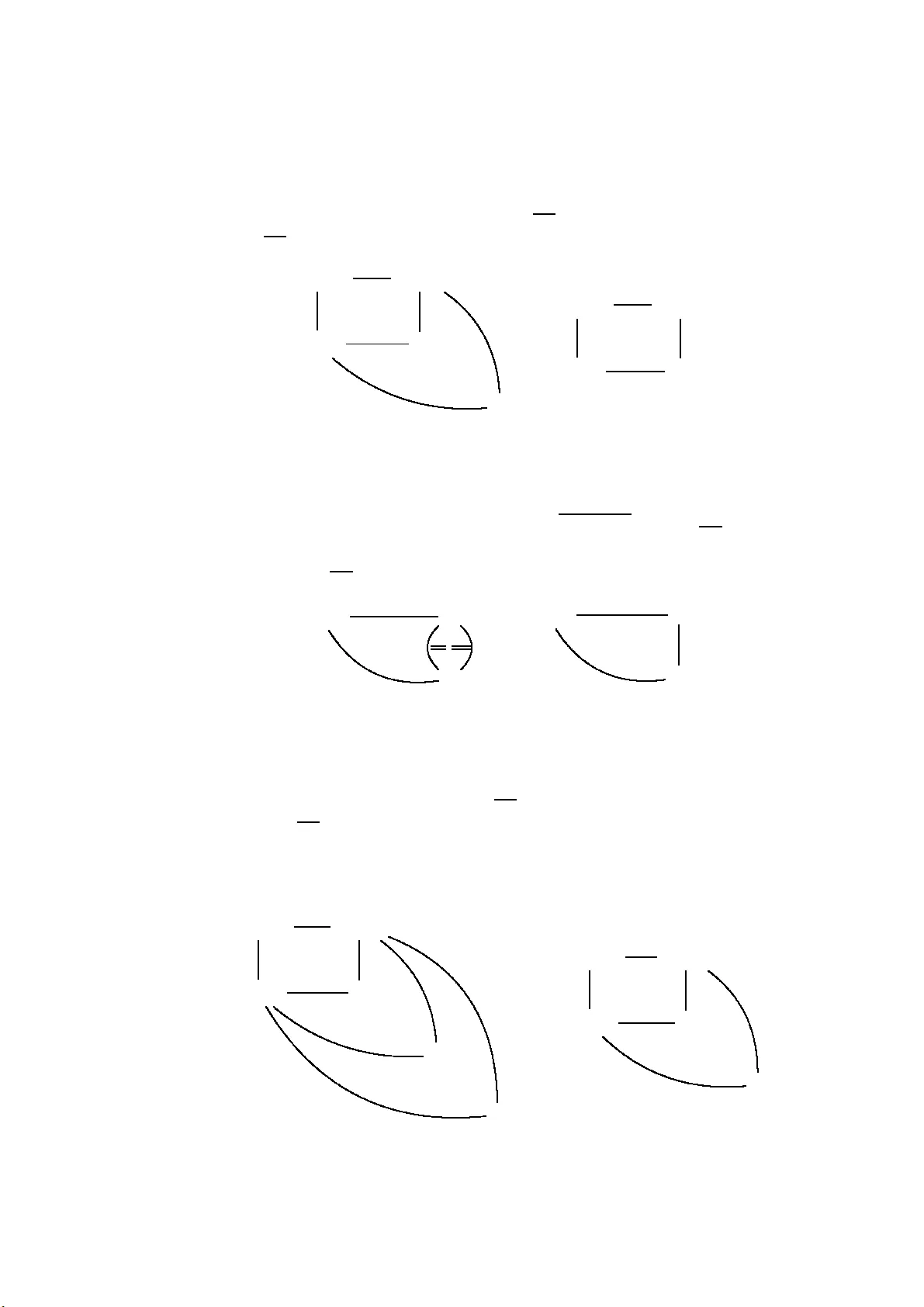
a rxiv:0705.0 452 Hamburger Beitr¨ age zur Mathematik Nr. 269 ZMP-HH/07-5 P arallel T ransp ort and F unctors Urs Sc hreib er and Konrad W a ldorf Organisationseinheit Mathematik Sc h w e rpunkt Alg ebra und Zahlen theorie Univ ersit¨ at Ham burg Bundesstraße 55 D–20146 Ham burg Abstract P arallel transp ort of a connection in a smo oth fibre bun d le yie lds a functor from the p ath group oid of the base manifold in to a category that describ es the fi bres of the bun dle. W e c haracterize functors ob- tained like this by t w o notions w e introd uce: lo cal trivializations and smo oth descen t data. This provides a w a y to substitute categories of functors for catego ries of smo oth fibr e bundles w ith connection. W e indicate that this concept can b e generalize d to connections in catego - rified bund les, and ho w this generalization imp ro v es the un derstanding of higher dimensional parallel trans p ort. T able o f Con ten ts 1 In tro duction 2 2 F unctors and lo cal T rivializations 6 2.1 The Path Gr oup oid of a smo oth Ma nifold . . . . . . . . . . . . . . . . . . . 6 2.2 Extracting Descent Data fro m a F unctor . . . . . . . . . . . . . . . . . . . . 9 2.3 Reconstructing a F unctor from Descent Data . . . . . . . . . . . . . . . . . 13 3 T ransp ort F unctors 18 3.1 Smo oth Descent Data . . . . . . . . . . . . . . . . . . . . . . . . . . . . . . 19 3.2 Wilson Lines o f T ransp ort F uncto rs . . . . . . . . . . . . . . . . . . . . . . . 23 4 Different ial F orms and smo oth F unctors 26 5 Examples 31 5.1 Principal Bundles with Co nnection . . . . . . . . . . . . . . . . . . . . . . . 31 5.2 Holonomy Maps . . . . . . . . . . . . . . . . . . . . . . . . . . . . . . . . . 37 5.3 Asso ciated Bundles and V ector Bundles with Co nnec tion . . . . . . . . . . 38 5.4 Generalized Connections . . . . . . . . . . . . . . . . . . . . . . . . . . . . . 41 6 Group oid Bundles with Connection 41 7 Generalizations and further T opics 46 7.1 T ra nsp o rt n -F unctor s . . . . . . . . . . . . . . . . . . . . . . . . . . . . . . . 46 7.2 Curv a tur e o f T ransp ort F uncto rs . . . . . . . . . . . . . . . . . . . . . . . . 49 7.3 Alternatives to smo oth F unctors . . . . . . . . . . . . . . . . . . . . . . . . 4 9 7.4 Anafunctors . . . . . . . . . . . . . . . . . . . . . . . . . . . . . . . . . . . . 50 A Mo re Back ground 51 A.1 The universal Path Pusho ut . . . . . . . . . . . . . . . . . . . . . . . . . . . 51 A.2 Diffeological Spaces and s mo o th F unctors . . . . . . . . . . . . . . . . . . . 54 B Postp oned Pro ofs 57 B.1 Proo f of Theo rem 2.9 . . . . . . . . . . . . . . . . . . . . . . . . . . . . . . . 57 B.2 Proo f of Theo rem 3.12 . . . . . . . . . . . . . . . . . . . . . . . . . . . . . . 59 B.3 Proo f of P rop osition 4.3 . . . . . . . . . . . . . . . . . . . . . . . . . . . . . 6 1 B.4 Proo f of P rop osition 4.7 . . . . . . . . . . . . . . . . . . . . . . . . . . . . . 6 3 T able of Notations 68 References 70 1 In tro duc tion Higher dimensional parallel transp ort g eneralizes parallel transport along curv es to parallel transpor t along higher dimensional ob jects, for instance surfaces. One motiv a tion to consider parallel transp ort a long surfaces comes from tw o-dimensional conformal field theories, where so- called W ess-Zumino terms hav e b een recognized as surface holo no mies [Gaw88, CJM02, SSW07]. Sev era l mathematical ob jects ha v e ha v e b een used to define higher dimen- sional parallel transp ort, a mong them classes in Deligne cohomolog y [Del91], bundle gerb es with connection and curving [Mur96], or 2-bundles with 2- connections [BS, BS07]. The dev elopmen t of suc h definitions often o ccurs in t w o steps: an appropriate definition of para llel transp ort along curv es, fol- lo w ed by a g eneralization to higher dimensions. F or instance, bundle gerb es with connection can b e obtained a s a generalization of principal bundles with connection. How ev er, in the case o f b oth bundle gerb es and D eligne classes one encoun ters the o bstruction that the structure group has to b e ab elian. It is hence desirable to find a r efo r m ulation of fibre bundles with connection, that brings along a natural generalization for arbitrar y structure group. A candidate for suc h a refor mulation are holonomy maps [Bar91, CP94]. These are group homomo r phisms H : π 1 1 ( M , ∗ ) / / G from the group of thin homotop y classes of based lo ops in a smo ot h mani- fold M in to a Lie gro up G . An y principal G -bundle with connection o v er M defines a gro up homomorphism H , but the crucial p oin t is to distinguish those from arbitrary ones. By imp osing a certain smo othness condition on H , these holonom y maps corresp ond – for connected manifolds – bijectiv ely to principal G - bundles with connection [Bar91, CP94]. On the other hand, they ha v e a natura l generalization f rom lo ops t o surfaces. Ho we v er, the obstruc- tion for M b eing connected b ecomes eve n stronger: only if the manifold M is connected and simply-connected, holonom y maps generalized to surfaces capture all asp ects of surface holo nom y [MP02]. Esp ecially the second ob- struction erases one o f the most inte resting of these a sp ects, see, for example, [GR02]. In order to obtain a form ulation of parallel transp ort along curv es without top ological assumptions on the base manifold M , o ne considers functors F : P 1 ( M ) / / T from the path group oid P 1 ( M ) of M in to another category T [Mac87, MP02]. The set of ob jects of the path group oid P 1 ( M ) is the manifo ld M itself, and 2 the set of morphisms b etw een t w o p oin ts x and y is the set of thin homotopy classes of curv es starting at x and ending at y . A functor F : P 1 ( M ) / / T is a generalization of a gro up homomor phism H : π 1 1 ( M , ∗ ) / / G , but it is not clear how the smo o thness condition for holonom y maps has to b e generalized to these functors. Let us first review ho w a functor F : P 1 ( M ) / / T arises from parallel transp ort in a , say , principal G -bundle P with connection. In this case, the category T is t he catego ry G -T or of smo oth ma nif o lds with smoo th, free and transitiv e G -action from the righ t, and smo oth equiv arian t maps b et w een those. Now, the connection on P a sso ciates to any smo oth curv e γ : [0 , 1] / / M and an y elemen t in the fibre P γ (0) o v er the starting p oin t, a unique horizon tal lift ˜ γ : [0 , 1] / / P . Ev a luating this lift at its endp oin t defines a smo oth map τ γ : P γ (0) / / P γ (1) , the parallel transp ort in P along the curv e γ . It is G - equiv arian t with resp ect to the G -action on the fibres of P , and it is in v ariant under thin homotopies. Moreo v er, it satisfies τ id x = id P x and τ γ ′ ◦ γ = τ γ ′ ◦ τ γ , where id x is the constan t curv e and γ and γ ′ are smo othly comp osable curv es. These are the a xioms of a functor tra P : P 1 ( M ) / / G -T or whic h sends an ob ject x of P 1 ( M ) to the ob ject P x of G -T or and a morphism γ of P 1 ( M ) to the morphism τ γ of G -T or. Summarizing, ev ery principal G - bundle with connection ov er M defines a functor tra P . No w the crucial p oin t is to c haracterize these functors among all functors from P 1 ( M ) to G -T or. In t his article w e describe such a c haracterization. F or this purp ose, w e in tro duce, for general target categories T , the notion of a transp ort functor. These are certain functors tra : P 1 ( M ) / / T , suc h that the categor y they form is – in the case of T = G -T or – equiv alen t to the category o f principal G -bundles with connection. The defining prop erties of a transp o r t functor capture t w o imp o r tan t con- cepts: the existence of lo cal trivializations a nd the smo othness of a sso ciated descen t data. Just a s for fibre bundles, lo cal trivializations are sp ecified with resp ect to an op en co v er of the base manifold M and to a c hoice of 3 a t ypical fibre. Here, we represen t an op en cov er by a surjectiv e submer- sion π : Y / / M , a nd enco de the ty pical fibre in the notion of a structure group oid: this is a Lie g r o up oid Gr together with a functor i : Gr / / T . No w, a π - lo cal i -trivialization of a functor F : P 1 ( M ) / / T is another functor triv : P 1 ( Y ) / / Gr together with a na t ural equiv alence t : F ◦ π ∗ / / i ◦ tr iv, where π ∗ : P 1 ( Y ) / / P 1 ( M ) is the induced functor b etw een path group oids. In detail, the na t ur a l equiv alence t giv es for ev ery p oin t y ∈ Y an isomor- phism F ( π ( y )) ∼ = i (triv( y )) that iden tifies the “fibre” F ( π ( y )) of F ov er π ( y ) with the image of a “t ypical fibre” triv( y ) under the functor i . In o ther w ords, a f unctor is π -lo cally i -trivializable, if its pullbac k to the co v er Y factors through the functor i up to a natural equiv alence. F unctors with a c hosen π -lo cal i -trivialization (triv , t ) form a category T riv 1 π ( i ). The second concept w e in tro duce is that of smo oth descen t data. Descen t data is sp ecified with resp ect to a surjectiv e submersion π and a structure group oid i : G r / / T . While descen t data for a fibre bundle with connection is a collection of transition functions and lo cal connection 1-forms, descen t data for a functor F : P 1 ( M ) / / T is a pair (triv , g ) consisting of a functor triv : P 1 ( Y ) / / Gr lik e t he one from a lo cal trivializations and of a certain natural equiv a lence g tha t compares triv on the tw o-fold fibre pro duct of Y with itself. Suc h pairs define a descen t category Des 1 π ( i ). The first result of this ar t icle (Theorem 2 .9 ) is to pro v e the descen t prop ert y: extracting descen t data and, conv ersely , r econstructing a functor from descen t data, are equiv alences of categories T riv 1 π ( i ) ∼ = Des 1 π ( i ). W e introduce descen t data b ecause o ne can precisely decide whether a pair (triv , g ) is smo oth or not (Definition 3 .1). The smoothness conditions w e in tro duce can b e expressed in ba sic terms of smo oth maps b et w een smoo th manifolds, and arises fro m the theory of diffeological spaces [Che77]. The concept of smo oth descen t data is our g eneralization of the smo othness con- dition f or holonomy maps to functors. Com bining b o th concepts w e hav e in tro duced, w e call a functor that allo ws – fo r some surjectiv e submers ion π – a π -lo cal i -t r ivialization whose 4 corresp onding descend data is smo oth, a transp ort f unctor on M in T with Gr-structure. The category formed by these t r a nsp ort functors is denoted b y T ra ns 1 Gr ( M , T ). Let us return to the particular target category T = G -T or. As describ ed ab ov e, one obtains a functor tra P : P 1 ( M ) / / G -T or from any principal G - bundle P with connection. W e consider the L ie group oid Gr = B G , whic h has only one ob ject, a nd where ev ery g roup elemen t g ∈ G is an automorphism of this ob ject. The nota t io n indicates the fa ct that the g eometric realization of the nerv e of this category yields the classifying space B G of the group G . The Lie group oid B G can b e em b edded in the category G -T or via the functor i G : B G / / G -T or whic h sends the ob ject of B G to the group G r ega rded as a G - space, and a morphism g ∈ G to the equiv ariant smo oth map whic h m ultiplies with g from the left. The descen t category Des 1 π ( i G ) for the structure group oid B G and some surjectiv e submersion π is closely related to differen tial geometric ob jects: we deriv e a o ne-to-one corresp ondence b et w een smo oth functors triv : P 1 ( Y ) / / B G , whic h a re part of the ob jects of Des 1 π ( i G ), a nd 1- f orms A on Y with v alues in the Lie algebra of G ( Prop osition 4 .7). The corres- p ondence can b e sym b o lically expresse d as the path-ordered exp onential triv( γ ) = P exp Z γ A for a path γ . Using this r elat io n b et w een smo oth functors and differen tial forms, w e show t ha t a f unctor tra P : P 1 ( M ) / / G -T or obtained fro m a principal G -bundle with connection, is a transp ort functor on M in G -T o r with B G -structure. The main result of this article (Theorem 5.4) is that this establishes a n equiv alence of catego r ies Bun ∇ G ( M ) ∼ = T rans 1 B G ( M , G -T or) b et w een the category of principal G - bundles with connection ov er M and the category of transp ort functors on M in G -T or with B G -structure. In other w ords, these transp ort functors pro vide a prop er reform ulation of principal bundles with connection, emphasizing the a sp ect of pa r allel transp o r t. This a r t icle is organized as follows. In Section 2 w e review the path group oid o f a smo oth manifo ld and describ e some prop erties of functors de- fined on it. W e in tro duce lo cal trivializations fo r functors and the descen t category Des 1 π ( i ). In Section 3 w e define the category T rans 1 Gr ( M , T ) of trans- p ort functors on M in T with Gr-structure and discuss sev eral prop erties. 5 In Section 4 w e deriv e the result that relates the descen t category De s 1 π ( i G ) for the pa r ticular functor i G : B G / / G -T or to differential fo r ms. In Sec- tion 5 w e provide examples that show that t he theory of transp ort functors applies w ell to sev eral situations: we pro v e o ur main result concerning prin- cipal G - bundles with connection, sho w a similar statemen t f o r ve ctor bundles with connection, and also discuss holonomy maps. In Section 6 w e discuss principal gro up oid bundles and sho w how transp ort functors can b e used to deriv e the definition of a connection on suc h group oid bundles. Section 7 con tains v arious directions in which the concept of transp ort functors can b e generalized. In particular, w e outline a p ossible generalization of transp ort functors to transp ort n -functors tra : P n ( M ) / / T , whic h pro vide an implemen tation for higher dimensional par a llel tra nsp o rt. The discussion of the in teresting case n = 2 is the sub ject of a separate publication [SW13]. 2 F unctors and lo cal T rivializations W e give the definition of the path group oid of a smo oth manifold and describ e functors defined o n it. W e in tro duce lo cal trivializations and descen t data of suc h functors. 2.1 The P ath Group oid of a smo oth Manifold W e start by setting up t he basic definitions around the path group oid of a smo oth manifold M . W e use the con v en tio ns of [CP94, MP02], generalized from lo o ps to paths. Definition 2.1. A p ath γ : x / / y b etwe en two p oints x, y ∈ M is a smo oth map γ : [0 , 1] / / M w hich h a s a sitting instant: a numb er 0 < ǫ < 1 2 such that γ ( t ) = x for 0 ≤ t < ǫ and γ ( t ) = y fo r 1 − ǫ < t ≤ 1 . Let us denote the set of suc h paths b y P M . F or example, for any p o in t x ∈ M there is the constant path id x defined b y id x ( t ) := x . Giv en a path γ 1 : x / / y and another path γ 2 : y / / z we define their comp osition to b e the path γ 2 ◦ γ 1 : x / / z defined b y ( γ 2 ◦ γ 1 )( t ) := ( γ 1 (2 t ) for 0 ≤ t ≤ 1 2 γ 2 (2 t − 1) for 1 2 ≤ t ≤ 1. 6 This give s a smo oth map since γ 1 and γ 2 are b ot h constan t near the gluing p oin t, due to their sitting instan ts. W e also define the in v erse γ − 1 : y / / x of a path γ : x / / y b y γ − 1 ( t ) := γ (1 − t ). Definition 2.2. Two p aths γ 1 : x / / y and γ 2 : x / / y ar e c al le d thin homotopy e quiva lent, if ther e exists a smo oth m a p h : [0 , 1] × [0 , 1 ] / / M such that 1. ther e exists a numb er 0 < ǫ < 1 2 with (a) h ( s, t ) = x for 0 ≤ t < ǫ and h ( s, t ) = y for 1 − ǫ < t ≤ 1 . (b) h ( s, t ) = γ 1 ( t ) for 0 ≤ s < ǫ and h ( s, t ) = γ 2 ( t ) for 1 − ǫ < s ≤ 1 . 2. the differ ential of h has at mos t r ank 1 eve rywh e r e, i.e. rank(d h | ( s,t ) ) ≤ 1 for al l ( s, t ) ∈ [0 , 1] × [0 , 1 ] . Due to condition (b), thin homotopy defines an equiv alence relation on P M . The set of thin homo t o p y classes of paths is denoted b y P 1 M , and the pro jection to classes is denoted by pr : P M / / P 1 M . W e denote a thin homotopy class of a path γ : x / / y by γ : x / / y . Notice that thin homotopies include the f o llo wing t yp e of reparameterizations: let β : [0 , 1] / / [0 , 1] b e a path β : 0 / / 1, in par t icular with β (0) = 0 and β (1) = 1. Then, for an y path γ : x / / y , also γ ◦ β : x / / y is a path and h ( s, t ) := γ ( tβ (1 − s ) + β ( t ) β ( s )) defines a thin homotop y b et w een them. The comp osition of paths defined abov e on P M desc ends to P 1 M due to condition (a ), whic h a dmits a smo o t h comp osition of smo oth homotopies. The comp osition o f thin homoto p y classes of pat hs ob eys the following rules: Lemma 2.3. F or any p ath γ : x / / y , a) γ ◦ id x = γ = id y ◦ γ , b) F or further p aths γ ′ : y / / z and γ ′′ : z / / w , ( γ ′′ ◦ γ ′ ) ◦ γ = γ ′′ ◦ ( γ ′ ◦ γ ) . 7 c) γ ◦ γ − 1 = id y and γ − 1 ◦ γ = id x . These three prop erties lead us to the following Definition 2.4. F or a smo oth manifol d M , we c onsider the c ate g o ry who s e set of obje cts is M , wh ose set o f morph i s ms is P 1 M , wher e a c l a ss γ : x / / y is a morphism fr om x to y , and the c omp osition is as describ e d ab ove. L emma 2.3 a) and b) ar e the axioms of a c ate gory and c) says that every morphism is in v ertible. Henc e we have define d a gr oup oid , c al le d the p ath gr oup oid of M , and denote d by P 1 ( M ) . F or a smo oth map f : M / / N , w e denote by f ∗ : P 1 ( M ) / / P 1 ( N ) the functor with f ∗ ( x ) = f ( x ) and ( f ∗ )( γ ) := f ◦ γ . The latter is w ell-defined, since a thin homotopy h b etw een paths γ a nd γ ′ induces a thin ho motop y f ◦ h b et w een f ◦ γ and f ◦ γ ′ . In the follow ing w e consider functors F : P 1 ( M ) / / T (2.1) for some arbitrary category T . Suc h a functor sends eac h po in t p ∈ M to an o b ject F ( p ) in T , and eac h thin ho motop y class γ : x / / y of paths to a morphism F ( γ ) : F ( x ) / / F ( y ) in T . W e use the follow ing no tation: w e call M t he b ase sp ac e of the f unctor F , and the ob ject F ( p ) the fibr e of F ov er p . In the remainder of this section we give examples o f natural constructions with functors (2.1). Additional Structure on T . An y additional structure fo r the category T can b e applied p oint wise to functors into T , for instance, a) if T has direct sums, w e can tak e the direct sum F 1 ⊕ F 2 of tw o functors. b) if T is a monoidal category , w e can take tensor pro ducts F 1 ⊗ F 2 of functors. c) if T is monoidal and has a duality regarded a s a functor d : T / / T op , w e can form the dual F ∗ := d ◦ F of a functor F . Pullbac k. If f : M / / N is a smo oth map and F : P 1 ( N ) / / T is a functor, we define f ∗ F := F ◦ f ∗ : P 1 ( M ) / / T to b e the pullback of F along f . 8 Flat F unctors. Instead o f the path group oid, one can a lso consider the fundamen tal group oid Π 1 ( M ) of a smo oth manifold M , whose ob jects are p oin ts in M , just lik e for P 1 ( M ), but whose morphisms are smo o th homotop y classes of paths (whose differen tial may hav e arbitrary rank). The pro jection from thin homotopy classes to smo oth homotop y classes prov ides a functor p : P 1 ( M ) / / Π 1 ( M ). W e call a functor F : P 1 ( M ) / / T flat , if there ex ists a functor ˜ F : Π 1 ( M ) / / T with F ∼ = ˜ F ◦ p . This is mot iv ated b y parallel transp ort in principal G -bundles: while it is in v ariant under thin homotopy , it is only ho- motop y in v ariant if the bundle is flat, i.e. has v a nishing curv a ture. Ho w ev er, aside from Section 7.2 w e will not discuss the flat case any further in this article. Restriction to P aths b et w een fixed P oin ts. Finally , let us consider the restriction of a functor F : P 1 ( M ) / / T to paths b etw een tw o fixed p oin ts. This yields a map F x,y : Mor P 1 ( M ) ( x, y ) / / Mor T ( F ( x ) , F ( y )). Of particular in terest is the case x = y , in whic h Mor P 1 ( M ) ( x, x ) forms a group under comp osition, whic h is called the thin homotopy group of M at x , and is denoted by π 1 1 ( M , x ) [CP94, MP02]. Ev en more pa r ticular, we consider the target category G -T or: by c ho osing a diffeomorphism F ( x ) ∼ = G , w e obta in an iden tification Mor G -T or ( F ( x ) , F ( x )) = G , and the restriction F x,x of a functor F : P 1 ( M ) / / G -T or to the thin homo- top y group of M at x giv es a group homomorphism F x,x : π 1 1 ( M , x ) / / G . This wa y one obtains the setup o f [Bar91, CP94] and [MP02 ] for the case G = U (1) as a particular case of our setup. A furt her question is, whether the group homo mo r phism F x,x is smo oth in the sense used in [Bar91, CP94, MP02]. An answ er is giv en in Section 5.2. 2.2 Extracting Descen t Data from a F unctor T o define lo cal t r ivializations of a functor F : P 1 ( M ) / / T , w e fix three attributes: 9 1. A surjectiv e submersion π : Y / / M . Compared to lo cal trivializations of fibre bundles, the surjectiv e submersion r eplaces an op en cov er of the manifold. Indeed, giv en an op en co v er { U α } α ∈ A of M , one obtains a surjectiv e subm ersion b y taking Y to b e the disjoin t unio n of the U α and π : Y / / M to b e the unio n of the inclusions U α / / M . 2. A Lie gr o up oid Gr, i.e. a group oid whose sets of ob jects and mo r phisms are smo oth manifolds, whose source and ta rget maps s, t : Mor(Gr) / / Ob j(G r) are surjectiv e submersions, and whose comp osition ◦ : Mor(Gr) s × t Mor(Gr) / / Mor(Gr) and the iden tit y id : Ob j(G r) / / Mor(Gr) are smo ot h maps. The Lie group oid G r play s the ro le of the t ypical fibre of the functor F . 3. A functor i : Gr / / T , whic h relates the typical fibre Gr to the tar g et category T of the functor F . In all of our examples, i will b e an equiv alence of categories. This is imp ortan t for some results derive d in Section 3.2. Definition 2.5. Given a Lie gr oup oid G r , a functor i : Gr / / T and a surje ctive submersi o n π : Y / / M , a π -lo c al i -trivialization of a functor F : P 1 ( M ) / / T is a p air (triv , t ) of a functor triv : P 1 ( Y ) / / Gr an d a natur al e quivalen c e t : π ∗ F / / i ◦ tr iv . The na t ur a l equiv alence t is also depicted b y the dia g ram P 1 ( Y ) π ∗ / / triv P 1 ( M ) t ✈ ✈ ✈ ✈ ✈ ✈ ✈ ✈ ✈ ✈ ✈ ✈ v ~ ✈ ✈ ✈ ✈ ✈ ✈ ✈ ✈ ✈ ✈ ✈ ✈ F Gr i / / T . T o set up the familiar terminology , we call a functor lo c al l y i -trivializable , if it admits a π -lo cal i -tr ivializatio n for some c hoice of π . W e call a functor 10 i -trivial , if it admits a n id M -lo cal i -trivialization, i.e. if it is natur a lly equi- v alen t to the f unctor i ◦ triv. T o a bbreviate the not a tion, w e will often write triv i instead of i ◦ triv. Note that lo cal trivializations can b e pulled ba c k: if ζ : Z / / Y and π : Y / / M are surjectiv e submersions, and (tr iv , t ) is a π -lo cal i -trivialization of a functor F , we obtain a ( π ◦ ζ )-lo cal i -t r ivialization ( ζ ∗ triv , ζ ∗ t ) of F . In terms of op en cov ers, this corresp onds to a refinemen t of the co v er. Definition 2.6. L et G r b e a Lie gr oup oid and let i : Gr / / T b e a functor. The c ate gory T riv 1 π ( i ) of functors with π -lo c al i -trivialization is define d as fol lows: 1. its obje cts ar e triples ( F , triv , t ) c onsis ting of a functor F : P 1 ( M ) / / T and a π -lo c al i -trivialization (triv , t ) o f F . 2. a morphism ( F , triv , t ) α / / ( F ′ , triv ′ , t ′ ) is a natur al tr ansformation α : F / / F ′ . Comp osition of m o rphisms is simp ly c omp osition of these n a tur al tr an sformations. Motiv ated b y transition functions of fibre bundles, we extract a similar datum from a functor F with π -lo cal i -trivializatio n (triv , t ); this datum is a natural equiv alence g : π ∗ 1 triv i / / π ∗ 2 triv i b et w een the t w o functors π ∗ 1 triv i and π ∗ 2 triv i from P 1 ( Y [2] ) to T , where π 1 and π 2 are the pro jections from the tw o- fold fibre pro duct Y [2] := Y × M Y of Y to the comp onen ts. In the case that the surjective submersion comes f rom an o p en co v er of M , Y [2] is the disjoin t union o f all tw o- fold intersec tions of op en subsets. The na tural equiv alence g is defined by g := π ∗ 2 t ◦ π ∗ 1 t − 1 ; its comp onen t at a p oin t α ∈ Y [2] is the morphism t ( π 2 ( α )) ◦ t ( π 1 ( α )) − 1 in T . The comp osition is w ell-defined b ecause π ◦ π 1 = π ◦ π 2 . T r ansition functions o f fibre bundles satisfy a co cycle condition o v er three- fold in tersections. The natural equiv a lence g has a similar prop ert y when pulled bac k to the three-fo ld fibre pro duct Y [3] := Y × M Y × M Y . 11 Prop osition 2.7. The diag r am π ∗ 2 triv i π ∗ 23 g ❆ ❆ ❆ ❆ ❆ ❆ ❆ ❆ ❆ ❆ ❆ ❆ ❆ π ∗ 1 triv i π ∗ 12 g > > ⑥ ⑥ ⑥ ⑥ ⑥ ⑥ ⑥ ⑥ ⑥ ⑥ ⑥ ⑥ ⑥ π ∗ 13 g / / π ∗ 3 triv i of natur al e quivalenc es b etwe en functors fr o m P 1 ( Y [3] ) to T is c ommutative. No w that w e ha v e defined the data (triv , g ) ass o ciated to an ob ject ( F , triv , t ) in T riv 1 π ( i ), we consider a morphism α : ( F , triv , t ) / / ( F ′ , triv ′ , t ′ ) b et w een t w o functors with π -lo cal i -trivializations, i.e. a natural tra nsforma- tion α : F / / F ′ . W e define a natural transformation h : tr iv i / / triv ′ i b y h := t ′ ◦ π ∗ α ◦ t − 1 , whose comp onen t at x ∈ Y is the morphism t ′ ( x ) ◦ α ( π ( x )) ◦ t ( x ) − 1 in T . F rom the definitions of g , g ′ and h one obtains the comm utativ e diagra m π ∗ 1 triv i g / / π ∗ 1 h π ∗ 2 triv i π ∗ 2 h π ∗ 1 triv ′ i g ′ / / π ∗ 2 triv ′ i . (2.2) The b eha viour of the natural equ iv alences da t a g a nd h leads t o the follo wing definition o f a category Des 1 π ( i ) o f descen t data. This terminology will b e explained in the next section. Definition 2.8. The c ate gory Des 1 π ( i ) of desc e nt data of π -lo c al ly i -trivialize d functors is de fi ne d as f o l lows: 1. its obje cts ar e p airs (triv , g ) of a functor triv : P 1 ( Y ) / / Gr and a natur al e quivalenc e g : π ∗ 1 triv i / / π ∗ 2 triv i , 12 such that the diagr am π ∗ 2 triv i π ∗ 23 g ❆ ❆ ❆ ❆ ❆ ❆ ❆ ❆ ❆ ❆ ❆ ❆ ❆ π ∗ 1 triv i π ∗ 12 g > > ⑥ ⑥ ⑥ ⑥ ⑥ ⑥ ⑥ ⑥ ⑥ ⑥ ⑥ ⑥ ⑥ π ∗ 13 g / / π ∗ 3 triv i (2.3) is c ommutative. 2. a morphism (triv , g ) / / (triv ′ , g ′ ) is a natur al tr ansformation h : triv i / / triv ′ i such that the diagr am π ∗ 1 triv i g / / π ∗ 1 h π ∗ 2 triv i π ∗ 2 h π ∗ 1 triv ′ i g ′ / / π ∗ 2 triv ′ i . (2.4) is c ommutative. The c omp osition is the c omp osition of these n atur al tr ansformations. Summarizing, w e hav e defined a functor Ex π : T riv 1 π ( i ) / / Des 1 π ( i ), (2.5) that extracts descen t data from functors with lo cal trivialization and o f mor- phisms of those in the w a y describ ed a b o v e. 2.3 Reconstructing a F unctor from Descen t Data In t his section we show tha t extracting descen t dat a from a functor F pre- serv es all information ab o ut F . W e also justify the terminology desc ent data , see Remark 2.10 b elo w. Theorem 2.9. The functor Ex π : T riv 1 π ( i ) / / Des 1 π ( i ) is an e quivalenc e of c ate g o ries. 13 F or t he pro of w e define a we ak in v erse f unctor Rec π : Des 1 π ( i ) / / T r iv 1 π ( i ) (2.6) that reconstructs a functor (and a π -lo cal i -trivialization) from given descen t data. The definition o f Rec π is give n in three steps: 1. W e construct a group oid P π 1 ( M ) cov ering the path g r o up oid P 1 ( M ) by means of a surjectiv e functor p π : P π 1 ( M ) / / P 1 ( M ), and sho w that an y ob ject (triv , g ) in Des 1 π ( i ) g ives rise to a functor R (triv , g ) : P π 1 ( M ) / / T . W e enhance this to a f unctor R : Des 1 π ( i ) / / F unct( P π 1 ( M ) , T ), (2.7) where F unct( P π 1 ( M ) , T ) is the category of functors from P π 1 ( M ) to T and natural transformations b et w een those. 2. W e sho w that the functor p π : P π 1 ( M ) / / P 1 ( M ) is an equiv a lence of categories and construct a we ak inv erse s : P 1 ( M ) / / P π 1 ( M ). The pullbac k along s is the functor s ∗ : F unct( P π 1 ( M ) , T ) / / F unct( P 1 ( M ) , T ) (2.8) obtained by pre-comp osition with s . 3. By constructing canonical π -lo cal i -trivializations of functors in the image of the comp osition s ∗ ◦ R o f the functors (2.7) and (2.8 ) , we extend this comp osition to a functor Rec π := s ∗ ◦ R : Des 1 π ( i ) / / T r iv 1 π ( i ). Finally , w e g iv e in App endix B.1 the pro of that Rec π is a w eak in vers e of the functor Ex π and th us sho w that Ex π is an equiv alence o f categories. Before w e p erform the steps 1 to 3, let us mak e the followin g r emark ab out the nature of the category Des 1 π ( i ) and the functor Rec π . Remark 2.10. W e consider the case i := id Gr . No w, the forgetful functor v : T r iv 1 π ( i ) / / F unct( P 1 ( M ) , Gr) has a canonical w eak inv erse, which asso ciates to a functor F : P 1 ( M ) / / Gr the π -lo cal i - trivialization ( π ∗ F , id π ∗ F ). Under this iden tification, Des 1 π ( i ) is the descen t category of the functor category F unct( M , Gr) with resp ect to π in t he sense of a stack [Mo e02, Str04]. The functor Rec π : Des 1 π ( i ) / / F unct( P 1 ( M ) , Gr) realizes the descen t. 14 Step 1: T he Group oid P π 1 ( M ) . The group oid P π 1 ( M ) w e in tro duce is the universal p ath pushout a sso ciated to the surjectiv e submersion π : Y / / M . Heuristically , P π 1 ( M ) is the path group oid of the co v ering Y com bined with “jumps” in the fibres of π . W e explain its univ ersalit y in App endix A.1 for completeness and in tro duce here a concrete realization (see Lemma A.4). Definition 2.11. The gr oup oid P π 1 ( M ) is define d as fol lows. Its obje cts ar e p oints x ∈ Y and its mo rphisms ar e formal (fini te) c omp ositions of two typ es of b asi c m orphisms: thin homotopy classes γ : x / / y of p aths in Y , and p oints α ∈ Y [2] r e ga r de d as morphisms α : π 1 ( α ) / / π 2 ( α ) . Among the morphisms, we imp ose thr e e r elations: (1) for an y thin homotopy class Θ : α / / β of p a ths in Y [2] , w e d emand that the d iagr am π 1 ( α ) α / / ( π 1 ) ∗ (Θ) π 2 ( α ) ( π 2 ) ∗ ( Θ) π 1 ( β ) β / / π 2 ( β ) . of morphisms in P π 1 ( M ) is c ommutative. (2) for any p oint Ξ ∈ Y [3] , we d e mand that the diagr am π 2 (Ξ) π 23 (Ξ) ❃ ❃ ❃ ❃ ❃ ❃ ❃ ❃ ❃ ❃ ❃ ❃ π 1 (Ξ) π 12 (Ξ) @ @ π 13 (Ξ) / / π 3 (Ξ) of morphisms in P π 1 ( M ) is c ommutative. (3) we imp ose the e quation id x = ( x, x ) ∈ Y [2] for any x ∈ Y . It is clear that this definition indeed giv es a gro up oid. It is imp or t a n t f o r us b ecause it pro vides the t w o following natural definitions. Definition 2.12. F or an obje ct (triv , g ) in Des 1 π ( i ) , we h ave a functor R (triv , g ) : P π 1 ( M ) / / T that sends an obje ct x ∈ Y to triv i ( x ) , a b as i c morp h i sm γ : x / / y to triv i ( γ ) and a b asic morphism α to g ( α ) . 15 The definition is w ell-defined since it resp ects the relations among the morphisms: (1) is r esp ected due to t he commutativ e diagram for the natural transformation g , (2) is the co cycle condition (2.3) for g and (3) follows from the latt er since g is in v ertible. Definition 2.13. F or a m o rphism h : (triv , g ) / / (triv ′ , g ′ ) in Des 1 π ( i ) we have a natur al tr ansformation R h : R (triv ,g ) / / R (triv ′ ,g ′ ) that sends a n obje ct x ∈ Y to the m o rphism h ( x ) in T . The comm utativ e diagram for the nat ural tr a nsformation R h for a basic morphism γ : x / / y follo ws f r o m the one of h , and for a basic mor phism α ∈ Y [2] from the condition (2.4) on the morphisms of Des 1 π ( i ). W e explain in App endix A.1 that Definitions (2.12) a nd (2.1 3 ) are con- sequence s of the univ ersal prop erty of the g roup oid P π 1 ( M ), as sp ecified in Definition A.1 and calculated in Lemma A.4. Here w e summarize t he defini- tions ab o v e in the following w a y: Lemma 2.14. Definitions (2.12) and (2.13) yield a functor R : Des 1 π ( i ) / / F unct( P π 1 ( M ) , T ) . (2.9) Step 2: Pullbac k to M . T o con tin ue the reconstruction of a functor from giv en descen t data let us intro duce the pro jection functor p π : P π 1 ( M ) / / P 1 ( M ) (2.10) sending a n ob ject x ∈ Y to π ( x ), a basic morphism γ : x / / y to π ∗ ( γ ) a nd a basic mo r phism α ∈ Y [2] to id π ( π 1 ( α )) (= id π ( π 2 ( α )) ). In other w ords, it is just the functor π ∗ and forgets the j umps in the fibres of π . More precisely , p π ◦ ι = π ∗ , where ι : P 1 ( Y ) / / P π 1 ( M ) is the obvious inclusion functor. Lemma 2.15. The p r oje ction f unc tor p π : P π 1 ( M ) / / P 1 ( M ) is a surje ctive e quivalenc e of c ate gories. 16 Pro of. Since π : Y / / M is surjectiv e, it is clear tha t p π is surjectiv e on ob jects. It remains to sho w that the map ( p π ) 1 : Mor P π 1 ( M ) ( x, y ) / / Mor P 1 ( M ) ( π ( x ) , π ( y )) (2.11) is bijectiv e for all x, y ∈ Y . Let γ : π ( x ) / / π ( y ) b e an y path in M . Let { U i } i ∈ I an op en cov er of M with sections s i : U i / / Y . Since the image of γ : [0 , 1] / / M is compact, there exists a finite subset J ⊂ I suc h that { U i } i ∈ J co v ers the image. Let γ = γ n ◦ ... ◦ γ 1 b e a decomp osition of γ suc h that γ i ∈ P U j ( i ) for some assignmen t j : { 1 , ..., n } / / J . Let ˜ γ i := ( s j ( i ) ) ∗ γ i ∈ P Y b e lifts of the pieces, ˜ γ i : a i / / b i with a i , b i ∈ Y . Now we consider t he path ˜ γ := ( b n , y ) ◦ ˜ γ n ◦ ( b n − 1 , a n ) ◦ ... ◦ ˜ γ 2 ◦ ( b 1 , a 2 ) ◦ ˜ γ 1 ◦ ( x, a 1 ), whose thin homotopy class is eviden tly a preimage of the thin homoto py class of γ under ( p π ) 1 . The injectivit y of (2.11) f ollo ws f r o m the iden tifications (1), (2) and (3) of morphisms in the g roup oid P π 1 ( M ). Since p π is an equiv a lence of categories, there exists a (up t o natural isomorphism) unique weak in v erse functor s : P 1 ( M ) / / P π 1 ( M ) together with natura l equiv alences λ : s ◦ p π / / id P π 1 ( M ) and ρ : p π ◦ s / / id P 1 ( M ) . The inv erse functor s can b e constructed explicitly: for a fixed c hoice of lifts s ( x ) ∈ Y for ev ery p oin t x ∈ M , and a fixed c hoice of an op en cov er, eac h path can b e lift ed a s describ ed in the pro of of Lemma 2.15 . In this case w e ha v e ρ = id, and the comp onen t of λ at x ∈ Y is the morphism ( s ( π ( x )) , x ) in P π 1 ( M ). Now w e hav e a canonical f unctor s ∗ ◦ R : Des 1 π ( i ) / / F unct( P 1 ( M ) , T ). It reconstructs a functor s ∗ R (triv , g ) from a giv en ob ject (triv , g ) in Des 1 π ( i ) and a natural tr a nsformation s ∗ R h from a giv en morphism h in Des 1 π ( i ). Step 3: Lo cal T rivialization. What remains to enhance the functor s ∗ ◦ R to a functor Rec π : Des 1 π ( i ) / / T r iv 1 π ( i ) is finding a π -lo cal i - trivialization (t r iv , t ) o f eac h reconstruc ted functor s ∗ R (triv , g ) . Of course the g iven functor t r iv : P 1 ( Y ) / / Gr serv es a s the first comp onent of the trivialization, and it remains to define t he natural equiv alence t : π ∗ s ∗ R (triv ,g ) / / triv i . (2.12) 17 W e use the nat ura l equiv alence λ : s ◦ p π / / id P π 1 ( M ) asso ciated to the functor s and obtain a natural equiv a lence ι ∗ λ : s ◦ π ∗ / / ι b et w een functors fro m P 1 ( Y ) to P π 1 ( M ). Its comp onen t a t x ∈ Y is the morphism ( s ( π ( x )) , x ) g oing from s ( π ( x )) to x . Using π ∗ s ∗ R (triv ,g ) = ( s ◦ π ∗ ) ∗ R (triv ,g ) and triv i = ι ∗ R (triv ,g ) , w e define b y t := g ◦ ι ∗ λ the natural equiv alence (2.12). Indeed, its comp onen t at x ∈ Y is the mor- phism g (( s ( π ( x )) , x )) : triv i ( s ( π ( x ))) / / triv i ( x ), these are natural in x and isomorphisms b ecause g is one. Diagr a mmatically , it is P 1 ( Y ) ι % % ❏ ❏ ❏ ❏ ❏ ❏ ❏ ❏ ❏ π ∗ / / triv P 1 ( M ) λ s s s s s s u } s s s s s s s s s s ∗ R (triv ,g ) P π 1 ( M ) p π 3 3 R (triv ,g ) % % ▲ ▲ ▲ ▲ ▲ ▲ ▲ ▲ ▲ ▲ Gr i / / T . This sho ws Lemma 2.16. The p a ir (triv , t ) is a π -lo c al i -trivialization of the functor s ∗ R (triv , g ) . This finishes the definition of the reconstruction functor Rec π . The re- maining pro of tha t Rec π is a w eak in v erse of Ex π is p ostp oned to App endix B.1. 3 T ransp ort F unctors T r ansp ort functors are lo cally trivializable functors whose descen t data is smo oth. Wilson lines a re r estrictions of a functor to paths b et w een t w o fixed p oin ts. W e deduce a c haracterization of t r a nsp ort functors by the smo othness of their Wilson lines. 18 3.1 Smo oth Descen t Data In this section w e sp ecify a sub category Des 1 π ( i ) ∞ of the catego r y Des 1 π ( i ) of descen t da t a w e ha v e defined in the previous section. This sub categor y is supp osed to con tain smo oth descen t data. The main issue is to decide, when a functor F : P 1 ( X ) / / Gr is smo o th: in contrast to t he ob jects and the morphisms of the Lie gr o up oid G r, the set P 1 X of morphisms of P 1 ( X ) is not a smo oth manif o ld. Definition 3.1. L et Gr b e a Lie gr oup oid and let X b e a smo o th mani fold. A functor F : P 1 ( X ) / / Gr is c al le d sm o oth, if the fol lowi n g two c onditions ar e satisfie d: 1. On obje cts, F : X / / Ob j(Gr) is a smo oth map. 2. F or every k ∈ N 0 , every op en subset U ⊂ R k and every map c : U / / P X such that the c omp osite U × [0 , 1 ] c × id / / P X × [0 , 1] ev / / X (3.1) is smo oth, also U c / / P X pr / / P 1 X F / / Mor(Gr) is smo oth. In ( 3 .1), ev is the ev aluat io n map ev( γ , t ) := γ ( t ). Similar definitions of smo oth maps defined on thin homoto p y classes of paths ha v e a lso b een used in [Bar91, CP94 , MP02]. W e explain in App endix A.2 ho w D efinition 3.1 is motiv ated a nd ho w it arises from the general concept of diffeological spaces [Che77], a generalization of the concept of a smo oth manifold, cf. Prop osition A.7 i) . Definition 3.2. A natur al tr a n sformation η : F / / G b etwe e n smo oth func- tors F , G : P 1 ( X ) / / Gr is c al le d smo oth, if its c omp onents form a smo oth map X / / Mor(Gr) : X ✤ / / η ( X ) . Because the comp osition in the Lie group oid Gr is smo oth, comp ositions of smoo t h natura l tr a nsformations are ag ain smo o th. Hence, smo oth functors and smo o th natura l tra nsfor ma t ions form a cat ego ry F unct ∞ ( P 1 ( X ) , Gr). Notice that if f : M / / X is a smo o th map, and F : P 1 ( X ) / / Gr is a smo oth functor, the pullbac k f ∗ F is also smo oth. Similarly , pullback s of smo oth natural transformatio ns are smo oth. 19 Definition 3.3. L et G r b e a Lie gr oup oid and let i : Gr / / T b e a functor. A n obj e ct (triv , g ) in D es 1 π ( i ) is c al le d smo oth, if the fo l lowing two c ondition s ar e satisfie d: 1. The functor triv : P 1 ( Y ) / / Gr is smo o th in the sense of Definition 3.1. 2. The natur al e quivalenc e g : π ∗ 1 triv i / / π ∗ 2 triv i factors thr ough i by a natur al e quivalen c e ˜ g : π ∗ 1 triv / / π ∗ 2 triv which is smo oth in the sense of Defin i tion 3.2. F or the c omp onents a t a p oint α ∈ Y [2] , the factorization me ans g ( α ) = i ( ˜ g ( α )) . In the same sense, a morphism h : (t r iv , g ) / / (triv ′ , g ′ ) b etwe en smo oth obj e cts is c al le d smo oth, if it factors thr ough i by a smo oth natur al e quivalenc e ˜ h : triv / / triv ′ . Remark 3.4. If i is faithful, t he nat ur a l equiv alences ˜ g and ˜ h in D efinition 3.3 are uniquely determined, provided t ha t they exist. If i is additiona lly full, a lso the existence of g and h is g uaran teed. Smo oth ob jects and morphisms in Des 1 π ( i ) form the subcatego r y Des 1 π ( i ) ∞ . Using the equiv alence Ex π defined in Section 2.2, w e obtain a sub category T riv 1 π ( i ) ∞ of T r iv 1 π ( i ) consisting of those ob jects ( F , triv , t ) for whic h Ex π ( F , triv , t ) is smo oth and of those morphisms h for whic h Ex π ( h ) is smo oth. Prop osition 3.5. The functor Rec π : Des 1 π ( i ) / / T r iv 1 π ( i ) r estricts to an e quivalenc e of c ate gories Rec π : Des 1 π ( i ) ∞ / / T r iv 1 π ( i ) ∞ . Pro of. This follo ws from the fact that Ex π ◦ Rec π = id Des 1 π ( i ) , see the pro of of Theorem 2.9 in App endix B.1. No w w e are ready to define transp o rt functors. 20 Definition 3.6. L et M b e a smo oth m anifold, T a c ate gory, Gr a Lie gr oup o i d and i : Gr / / T a functor. 1. A tr ansp o rt functor on M in T wi th Gr -structur e is a functor tra : P 1 ( M ) / / T such that ther e exists a surje ctive s ubm ersion π : Y / / M and a π -lo c al i -trivialization (triv , t ) , such that Ex π (tra , triv , t ) is smo oth. 2. A morphism b etwe en tr an s p ort functors on M in T with Gr -structur e is a natur a l e quivalenc e η : t r a / / tra ′ such that ther e exists a surje ctive submersion π : Y / / M to gether with π -lo c al i -trivializations of tra and tra ′ , such that Ex π ( η ) is smo oth. It is clear that the iden tit y natural transformation of a transp ort functor tra is a morphism in the ab o v e sense. T o show that t he comp osition of morphisms b etw een transp ort functor s is p ossible, note that if π : Y / / M is a surjectiv e submersion for whic h Ex π ( η ) is smoo th, and ζ : Z / / Y is another surjectiv e submersion, then also Ex π ◦ ζ ( η ) is smo oth. If no w η : tra / / tra ′ and η ′ : tra ′ / / tra ′′ are morphisms of transp ort functors, and π : Y / / M and π ′ : Y ′ / / M are surjectiv e submersions for which Ex π ( η ) and Ex π ′ ( η ′ ) are smo o th, the fibre pro duct ˜ π : Y × M Y ′ / / M is a surjectiv e submersion and factors through π a nd π ′ b y surjectiv e submersions. Hence, Ex ˜ π ( η ′ ◦ η ) is smo oth. Definition 3.7. T he c ate gory of al l tr an sp ort functors on M in T with Gr - structur e and al l morphisms b etwe en those is de n ote d b y T rans 1 Gr ( M , T ) . F rom the definition of a transp ort functor with Gr-structure it is not clear that, for a fixed surjectiv e submersion π : Y / / M , all c hoices of π -lo cal i -trivializations ( t riv , t ) with smo oth descen t da t a giv e rise to isomorphic ob jects in Des 1 π ( i ) ∞ . This is at least true for full functors i : Gr / / T and con tractible surjectiv e submersions: a surjectiv e submersion π : Y / / M is called c ontr actible , if t here exists a smo oth map c : Y × [0 , 1 ] / / Y suc h that c ( y , 0) = y for all y ∈ Y and c ( y , 1) = y k for some fixed c hoice of y k ∈ Y k for eac h connected comp onen t Y k of Y . W e may assume without loss of generalit y , that c has a sitting instan t with resp ect to the second parameter, so that w e can rega rd c also a s a map c : Y / / P Y . F or example, if Y is the disjoin t union o f the op en sets of a g o o d op en co v er of M , π : Y / / M is contractible. 21 Lemma 3.8. L et i : Gr / / T b e a ful l functor, let π : Y / / M b e a c on - tr actible surje ctive submersion and let (triv , t ) and (tr iv ′ , t ′ ) b e two π -lo c al i -trivializations of a tr an s p ort functor tra : P 1 ( M ) / / T with Gr - s tructur e. Then, the i d entity n atur al tr ansformation id tra : tra / / tra defines a mor- phism id tra : (tra , triv , t ) / / (tra , triv ′ , t ′ ) in T riv 1 π ( i ) ∞ , in p articular, Ex π (tra , triv , t ) and Ex π (tra , triv ′ , t ′ ) ar e isomor- phic obje cts in Des 1 π ( i ) ∞ . Pro of. Let c : Y × [0 , 1] / / Y be a smo o t h contraction, regarded as a map c : Y / / P Y . F or eac h y ∈ Y k w e ha v e a path c ( y ) : y / / y k , and the comm utativ e diagra m for the nat ura l transformation t gives t ( y ) = triv i ( c ( y )) − 1 ◦ t ( y k ) ◦ tra( π ∗ ( c ( y ))), and analog ously for t ′ . The descen t datum of the natural equiv alence id tra is the natura l equiv alence h := Ex π (id) = t ′ ◦ t − 1 : triv i / / triv ′ i . Its comp onent at y ∈ Y k is the morphism h ( y ) = triv ′ i ( c ( y )) − 1 ◦ t ′ ( y k ) ◦ t ( y k ) − 1 ◦ t riv i ( c ( y )) : triv i ( y ) / / triv ′ i ( y ) (3.2) in T . Since i is full, t ′ ( y k ) ◦ t ( y k ) − 1 = i ( κ k ) fo r some morphism κ k : triv( y k ) / / triv ′ ( y k ), so that h factors through i b y ˜ h ( y ) := t r iv ′ ( c ( y )) − 1 ◦ κ k ◦ triv ( c ( y )) ∈ Mor (Gr). Since triv and triv ′ are smo oth functors, triv ◦ pr ◦ c and triv ′ ◦ pr ◦ c are smo oth maps, so that the components of ˜ h form a smo oth map Y / / Mor(Gr). Hence, h is a morphism in Des 1 π ( i ) ∞ . T o k eep t rac k of all the categories w e hav e defined, consider the f ollo wing diagram of functors which is strictly commutativ e: Des 1 π ( i ) ∞ _ Rec π / / T r iv 1 π ( i ) ∞ _ v ∞ / / T r ans 1 Gr ( M , T ) _ Des 1 π ( i ) Rec π / / T r iv 1 π ( i ) v / / F unct( M , T ) (3.3) The v ertical arro ws are the inclusion functors, a nd v ∞ and v are for g etful functors. In the next subsection w e show that the functor v ∞ is an equiv a- lence of categories. 22 3.2 Wilson Lines of T ransp ort F unctors W e restrict functors to paths b et w een t w o fixed p oin ts and study the smo oth- ness of these restrictions. F or this purpo se w e assume that the f unctor i : Gr / / T is an equiv alence of categories; this is the case in all examples of transp or t functors w e give in Section 5. Definition 3.9. L et F : P 1 ( M ) / / T b e a func tor, let Gr b e a Lie gr oup oid and let i : Gr / / T b e an e quivale n c e of c ate go rie s. Consider two p oints x 1 , x 2 ∈ M to gether with a choic e o f o b je cts G k in Gr and is omorphisms t k : F ( x k ) / / i ( G k ) in T for k = 1 , 2 . Then, the map W F ,i x 1 ,x 2 : Mor P 1 ( M ) ( x, y ) / / Mor Gr ( G 1 , G 2 ) : γ ✤ / / i − 1 ( t 2 ◦ F ( γ ) ◦ t − 1 1 ) is c al l e d the Wilson line of F fr om x 1 to x 2 . Note that b ecause i is essen tia lly surjectiv e, the c hoices of ob jects G k and morphisms t k : F ( x k ) / / G k exist for all p oin ts x k ∈ M . Because i is full and faithful, the morphism t 2 ◦ F ( γ ) ◦ t − 1 1 : i ( G 1 ) / / i ( G 2 ) has a unique preimage under i , whic h is the Wilson line. F o r a different c hoice t ′ k : F ( x k ) / / i ( G ′ k ) of ob jects in Gr a nd isomorphisms in T the Wilson line c hanges like W F ,i x 1 ,x 2 ✤ / / τ − 1 2 ◦ W F ,i x 1 ,x 2 ◦ τ 1 for τ k : G ′ k / / G k defined by i ( τ k ) = t k ◦ t ′− 1 k . Definition 3.10. A Wilso n line W F ,i x 1 ,x 2 is c al l e d smo oth, if for every k ∈ N 0 , every op en subset U ⊂ R k and every map c : U / / P M such that c ( u )( t ) ∈ M is smo oth on U × [0 , 1] , c ( u, 0) = x 1 and c ( u, 1) = x 2 for al l u ∈ U , also the map W F ,i x 1 ,x 2 ◦ pr ◦ c : U / / Mor Gr ( G 1 , G 2 ) is smo oth. This definition of smo othness arises a g ain from the contex t of diffeological spaces, see Prop osition A.6 i) in App endix A.2 . Notice that if a Wilson line is smo oth for some choice of ob j ects G k and isomorphisms t k , it is smo oth for an y other choice . F or this reason we ha v e not lab elled Wilson lines with additional indices G 1 , G 2 , t 1 , t 2 . Lemma 3.11. L et i : Gr / / T b e an e quival e n c e of c ate gories, let F : P 1 ( M ) / / T b e a functor whose Wilson lines W F ,i x 1 ,x 2 ar e s m o oth for al l p oints x 1 , x 2 ∈ M , and let π : Y / / M b e a c ontr actible surje ctive submersio n. Then, F admi ts a π -lo c al i -trivialization (triv , t ) whose de s c ent data Ex π (triv , t ) is smo oth. 23 Pro of. W e c ho ose a smo oth contraction r : Y / / P Y and make, for ev ery connected comp onent Y k of Y , a choice of ob jects G k in Gr and iso- morphisms t k : F ( π ( y k )) / / i ( G k ). First we set triv( y ) := G k for all y ∈ Y k , and define morphisms t ( y ) := t k ◦ F ( π ∗ ( r ( y ))) : F ( π ( y )) / / i ( G k ) in T . F or a path γ : y / / y ′ , w e define the morphism triv( γ ) := i − 1 ( t ( y ′ ) ◦ F ( π ∗ ( γ )) ◦ t ( y ) − 1 ) : G k / / G k in Gr. By construction, the morphisms t ( y ) are the comp onen ts of a natura l equiv alence t : π ∗ F / / triv i , so t ha t w e hav e defined a π -lo cal i -trivializatio n (triv , t ) of F . Since triv is lo cally constan t on ob jects, it satisfies condition 1 of D efinition 3.1. T o che c k condition 2, no tice that , for a n y path γ : y / / y ′ , triv( γ ) = W F ,i y k ,y k ( π ∗ ( r ( y ′ ) ◦ γ ◦ r ( y ) − 1 )). (3.4) More generally , if c : U / / P Y is a map, w e hav e, for ev ery u ∈ U , a path ˜ c ( u ) := π ∗ ( r ( c ( u )(1 ) ) ◦ c ( u ) ◦ r ( c ( u )(0)) − 1 ) in M . Then, equation (3.4) b ecomes triv ◦ pr ◦ c = W F ,i y k ,y k ◦ pr ◦ ˜ c . Since the right ha nd side is b y assumption a smo o th function; triv is a smooth functor. The comp o nent of the natura l equiv alence g := π ∗ 2 t ◦ π ∗ 1 t − 1 at a p oin t α = ( y , y ′ ) ∈ Y [2] with y ∈ Y k and y ′ ∈ Y l is the morphism g ( α ) = t l ◦ F ( π ( c ( y ′ ))) ◦ F ( π ( c ( y ))) − 1 ◦ t − 1 k : i ( G k ) / / i ( G l ), and hence of the form g ( α ) = i ( ˜ g ( α )). Now consider a c hart ϕ : V / / Y [2] with an op en subset V ∈ R n , and the path c ( u ) := r ( π 2 ( ϕ ( u ))) ◦ r ( π 1 ( ϕ ( u ))) − 1 in Y . W e find ˜ g ◦ ϕ = W F ,i y k ,y l ◦ pr ◦ c as functions from U to Mor( G k , G l ). Because t he righ t hand side is b y assumption a smo oth function, ˜ g is smo o th on ev ery c hart, and hence also a smo oth function. Theorem 3.12. L et i : Gr / / T b e a n e quivalenc e of c ate gories. A functor F : P 1 ( M ) / / T is a tr ansp ort functor with Gr -structur e if and on ly if for e very p a ir ( x 1 , x 2 ) of p oin ts in M the Wilson line W F ,i x 1 ,x 2 is smo oth. 24 Pro of. One implication is sho wn b y Lemma 3.11, using the fact that contractible surjectiv e submersions alw a ys exist. T o prov e the other implication w e express the Wilson line o f the transp o r t functor lo cally in terms of the functor R (triv ,g ) : P π 1 ( M ) / / T from Section 2.3. W e p ostp one this construction to App endix B.2 . Theorem 3.12 mak es it p ossible to chec k explicitly , whether a giv en func- tor F is a transp ort functor or not. F urthermore, because ev ery tra nsp o rt functor ha s smo oth Wilson lines, we can apply Lemma 3.11 and ha v e Corollary 3.13. Every tr ansp ort functor tra : P 1 ( M ) / / T with Gr - structur e (with i : Gr / / T an e quivalenc e of c ate gories) admits a π -lo c al i -trivialization with smo oth desc ent da ta for any c ontr actible surje ctive sub- mersion π . This corolla r y can b e understo o d analogously to the fact, that ev ery fibre bundle o v er M is trivializable o v er ev ery go o d op en co v er o f M . Prop osition 3.14. F or an e quivalenc e of c ate gories i : Gr / / T an d a c o n - tr actible surje ctive submersion π : Y / / M , the for getful functor v ∞ : T riv 1 π ( i ) ∞ / / T r ans 1 Gr ( M , T ) is a surje ctive e quivalenc e of c ate gories. Pro of. By Coro lla ry 3.13 v ∞ is surjectiv e. Since it is certainly faithful, it remains to pro v e that it is full. Let η b e a mor phism of transp ort functors with π -lo cal i -trivialization, i.e. there exists a surjectiv e submersion π ′ : Y ′ / / M suc h that Ex π ′ ( η ) is smo oth. Going to a con tractible surjectiv e submersion Z / / Y × M Y ′ sho ws that also Ex π ( η ) is smo oth. Summarizing, w e hav e for i an equiv alence of categor ies and π a con- tractible surjectiv e submersion, the follo wing equiv alences of categories: Des 1 π ( i ) ∞ Rec π # # T r iv 1 π ( i ) ∞ Ex π c c v ∞ / / T r ans 1 Gr ( M , T ). 25 4 Differen tial F orms and smo oth F unctors W e establish a relation b et w een smo oth descen t data w e hav e defined in the previous section and more familiar geometric ob jects lik e differen t ia l forms, motiv ated b y [BS ] and [Bae07]. The relation w e find can b e expressed as a path ordered exp onen tial, understo o d as the solution o f an initial v alue problem. Lemma 4.1. L et G b e a Lie gr oup with Lie algebr a g . The r e is a c anon i c al bije ction b etwe en the set Ω 1 ( R , g ) of g -value d 1- f o rms on R and the set of smo oth ma ps f : R × R / / G satisfying the c o cycle c ondition f ( y , z ) · f ( x, y ) = f ( x, z ) . (4.1) Pro of. The idea b ehind this bijection is that f is the path-ordered exp o nen tial of a 1 -form A , f ( x, y ) = P exp Z y x A . Let us explain in detail what that means. G iv en the 1-for m A , w e p ose the initial v alue problem ∂ ∂ t u ( t ) = − d r u ( t ) | 1 ( A t ∂ ∂ t ) and u ( t 0 ) = 1 (4.2) for a smoo th function u : R / / G and a n um b er t 0 ∈ R . Here, r u ( t ) is the righ t m ultiplication in G and d r u ( t ) | 1 : g / / T u ( t ) G is its differential ev a luated at 1 ∈ G . The sign in (4.2) is a conv en tion w ell-adapted to the examples in Section 5. Differential equations of this ty p e hav e a unique solution u ( t ) defined on all of R , suc h that f ( t 0 , t ) := u ( t ) dep ends smo othly on b oth parameters. T o see that f satisfies the co cycle condition (4.1), define for fixed x, y ∈ R the function Ψ( t ) := f ( y , t ) · f ( x, y ). Its deriv ativ e is ∂ ∂ t Ψ( t ) = d r f ( x,y ) | 1 ∂ ∂ t f ( y , t ) = − d r f ( x,y ) | 1 (d r f ( y, t ) | 1 ( A t ∂ ∂ t )) = − d r Ψ( t ) ( A t ∂ ∂ t ) 26 and f urt hermore Ψ( y ) = f ( x, y ). So, by uniqueness f ( y , t ) · f ( x, y ) = Ψ( t ) = f ( x, t ). Con v ersely , for a smooth function f : R × R / / G , let u ( t ) := f ( t 0 , t ) for some t 0 ∈ R , a nd define A t ∂ ∂ t := − d r u ( t ) | − 1 1 ∂ ∂ t u ( t ), (4.3) whic h yields a 1- f orm on R . If f satisfies the co cycle condition, this 1-fo r m is indep enden t of the choice of t 0 . The definition o f the 1-f orm A is o b viously in v erse to (4.2) and thus establishes the claimed bijection. W e also need a relation b et w een the functions f A and f A ′ corresp onding to 1-f orms A a nd A ′ , when A and A ′ are related b y a gauge tra nsformation. In the f ollo wing w e denote the left and right inv ariant Maurer-Cartan forms on G forms b y θ and ¯ θ resp ectiv ely . Lemma 4.2. L et A ∈ Ω 1 ( R , g ) b e a g -value d 1-form on R , let g : R / / G b e a smo o th f unc tion and let A ′ := Ad g ( A ) − g ∗ ¯ θ . If f A and f A ′ ar e the sm o oth functions c orr esp onding to A and A ′ by L em ma 4.1, we have g ( y ) · f A ( x, y ) = f A ′ ( x, y ) · g ( x ) . Pro of. By direct v erification, the function g ( y ) · f A ( x, y ) · g ( x ) − 1 solv es the initial v alue problem (4 .2) for the 1-form A ′ . Uniqueness giv es the claimed equalit y . In the following we use the tw o lemmata ab ov e for 1-forms on R to obtain a similar corr esp ondence b etw een 1- forms on an arbitrary smo oth manifold X and certain smo oth functors defined on the path group oid P 1 ( X ). F o r a giv en 1 - form A ∈ Ω 1 ( X , g ), we first define a map k A : P X / / G in the follo wing wa y: a path γ : x / / y in X can b e contin ued t o a smo oth function γ : R / / X with γ ( t ) = x for t < 0 a nd γ ( t ) = y for t > 1, due to its sitting instan ts. Then, the pullbac k γ ∗ A ∈ Ω 1 ( R , g ) cor r esp onds b y Lemma 4.1 to a smo oth function f γ ∗ A : R × R / / G . Now w e define k A ( γ ) := f γ ∗ A (0 , 1). The map k A defined like this comes with the fo llo wing prop erties: 27 a) F or the constan t path id x w e obtain the constan t function f id ∗ x A ( x, y ) = 1 and th us k A (id x ) = 1. (4.4) b) F o r t w o paths γ 1 : x / / y and γ 2 : y / / z , w e ha v e f ( γ 2 ◦ γ 1 ) ∗ A (0 , 1) = f ( γ 2 ◦ γ 1 ) ∗ A ( 1 2 , 1) · f ( γ 2 ◦ γ 1 ) ∗ A (0 , 1 2 ) = f γ ∗ 1 A (0 , 1) · f γ ∗ 2 A (0 , 1) and thu s k A ( γ 2 ◦ γ 1 ) = k A ( γ 2 ) · k A ( γ 1 ). (4.5) c) If g : X / / G is a smo o th function and A ′ := Ad g ( A ) − g ∗ ¯ θ , g ( y ) · k A ( γ ) = k A ′ ( γ ) · g ( x ) (4.6) for any path γ : x / / y . The next prop osition sho ws that the definition o f k A ( γ ) dep ends only on the thin homotopy class of γ . Prop osition 4.3. The map k A : P X / / G fa ctors in a unique way thr ough the set P 1 X of thin homotopy class e s of p aths, i.e. ther e is a unique map F A : P 1 X / / G such that k A = F A ◦ pr with pr : P X / / P 1 X the pr oje ction. Pro of. If k A factors through the surjectiv e map pr : P X / / P 1 X , the map F A is determined uniquely . So w e only ha ve to show that tw o thin homot op y equiv alent paths γ 0 : x / / y and γ 1 : x / / y ar e mapped to the same group elemen t, k A ( γ 0 ) = k A ( γ 1 ). W e ha v e mov ed this issue to App endix B.3 . In fact, the map F A : P 1 X / / G is not just a map. T o understand it correctly , w e need t he following category: Definition 4.4. L et G b e a Lie gr o up. We denote by B G the fol lowing Lie gr oup o i d : it ha s only one obje ct, and G is i ts set of morphisms. The unit element 1 ∈ G is the iden tity morph ism, and gr oup multiplic ation is the c omp osition, i. e . g 2 ◦ g 1 := g 2 · g 1 . 28 T o understand the notation, no t ice that the geometric realization of the nerv e of B G yields the classifying space of the g r oup G , i.e. | N ( B G ) | = B G . W e claim that the map F A defined by Prop osition 4.3 defines a functor F A : P 1 ( X ) / / B G . Indeed, since B G ha s only one ob ject one o nly has to c hec k that F A resp ects the comp o sition (whic h is sho wn by (4.4)) and the iden tit y morphisms (sho wn in (4 .5)). Lemma 4.5. The functor F A is smo oth in the sense of D efinition 3.1. Pro of. Let U ⊂ R k b e a n op en subset of some R k and let c : U / / P X b e a map suc h that c ( u )( t ) is smo oth on U × [0 , 1]. W e denote the path asso ciated to a p oint x ∈ U a nd extended smo othly to R b y γ x := c ( x ) : R / / X . This means that U / / Ω 1 ( R , g ) : x ✤ / / γ ∗ x A is a smo oth family of g -v a lued 1-forms on R . W e recall that ( k A ◦ c )( x ) = k A ( γ x ) = f γ ∗ x A (0 , 1) is defined to b e the solution of a differen tial equation, whic h now dep ends smo othly on x . Hence, k A ◦ c = F A ◦ pr ◦ c : U / / G is a smo oth function. Let us summarize the corresp ondence b etw een 1 -forms on X and smo oth functors dev elop ed in the Lemmata ab ov e in terms of an equiv alence b e- t w een categories. One category is a category F unct ∞ ( P 1 ( X ) , B G ) of smo o th functors and smo oth natural transformations. The second category is the category o f differen tial G -co cycles on X : Definition 4.6. L et X b e a smo oth manif o ld and G b e a Lie gr oup with Lie algebr a g . We c onsider the fol lowing c ate go ry Z 1 X ( G ) ∞ : obje cts ar e al l g -value d 1-forms A on X , and a morphism A / / A ′ is a smo oth function g : X / / G such that A ′ = Ad g ( A ) − g ∗ ¯ θ . The c o m p osition is the multiplic a tion of functions, g 2 ◦ g 1 = g 2 g 1 . W e claim that the Lemmata ab ov e pro vide the structure of a functor P : Z 1 X ( G ) ∞ / / F unct ∞ ( P 1 ( X ) , B G ). It sends a g -v alued 1-form A o n X to the functor F A defined uniquely in Prop osition 4.3 and whic h is show n b y Lemma 4.5 . It sends a function g : X / / G regarded as a morphism A / / A ′ to the smo ot h natural trans- formation F A / / F A ′ whose comp onen t at a p oint x is g ( x ). This is natural in x due to (4.6). 29 Prop osition 4.7. The functor P : Z 1 X ( G ) ∞ / / F unct ∞ ( X , B G ) . is an isomorphism o f c ate gories, which r e duc es on the level of obje cts to a bije ction Ω 1 ( X , g ) ∼ = { Smo oth f unctors F : P 1 ( X ) / / B G } . Pro of. If A and A ′ are t w o g -v alued 1-forms on X , the set of morphisms b et w een them is the set of smo oth functions g : X / / G satisfying the condition A ′ = Ad g ( A ) − g ∗ ¯ θ . The set of morphisms b et w een the func- tors F A and F A ′ are smo oth natural transformations, i.e. smo oth maps g : X / / G , whose naturalit y square is equiv alen t to the same condition. So, the functor P is manifestly full and faithful. It remains t o sho w that it is a bijection on the leve l of ob jects. This is done in Appendix B.4 by an explicit construction of a 1-for m A to a give n smo o th functor F . One can a lso enhance the category Z 1 X ( G ) ∞ in suc h a w a y that it b ecomes the familia r category of lo cal data of principal G -bundles with connection. Definition 4.8. The c ate gory Z 1 π ( G ) ∞ of differ ential G -c o cycles of the sur- je ctive submersion π is the c ate go ry whose obje cts ar e p airs ( g , A ) c onsisting of a 1 - f orm A ∈ Ω 1 ( Y , g ) and a smo oth function g : Y [2] / / G such that π ∗ 13 g = π ∗ 23 g · π ∗ 12 g and π ∗ 2 A = Ad g ( π ∗ 1 A ) − g ∗ ¯ θ . A morphism h : ( g , A ) / / ( g ′ , A ′ ) is a sm o oth function h : Y / / G such that A ′ = Ad h ( A ) − h ∗ ¯ θ and π ∗ 2 h · g = g ′ · π ∗ 1 h . Comp os i tion o f morp hisms is given by the pr o duct of these f unc tion s , h 2 ◦ h 1 = h 2 h 1 . T o exp lain the notation, not ice that for π = id X w e obtain Z 1 X ( G ) ∞ = Z 1 π ( G ) ∞ . As an example, w e consider the group G = U (1) and a surjec- tiv e submersion π : Y / / M coming from a go o d op en co v er U of M . Then, the group of isomorphism classes of Z 1 π ( U (1)) ∞ is the Deligne h y- p ercohomology group H 1 ( U , D (1)), where D (1) is the Deligne sheaf complex 0 / / U (1) / / Ω 1 . 30 Corollary 4.9. The functor P extends to an e quivale n c e of c ate gories Z 1 π ( G ) ∞ ∼ = Des 1 π ( i G ) ∞ , wher e i G : B G / / G - T or send s the obje ct of B G to the gr oup G r e gar de d as a G -sp ac e, and a morphism g ∈ G to the e quivariant smo oth map whi ch multiplies with g fr om the left. This corollary is an imp ortant step to w ards our main theorem, to whic h w e come in t he next section. 5 Examples V arious structures in the theory of bundles with connection a re sp ecial cases of transp ort functors with G r-structure for particular c hoices of the structure group oid G r. In t his section w e sp ell out some prominent examples. 5.1 Principal Bundles with Connection In this section, w e fix a Lie g r o up G . Asso ciated to this Lie group, w e hav e the Lie group oid B G fr o m D efinition 4.4, the category G -T or of smo oth manifolds with righ t G -action and G - equiv arian t smo oth maps b etw een those, and the functor i G : B G / / G -T or that sends the ob ject of B G to the G -space G and a morphism g ∈ G t o the G -equiv ariant diffeomorphism that m ultiplies fr o m the left b y g . The functor i G is an equiv alence of categories. As w e hav e outlined in the in tro duction, a principal G -bundle P with connection o v er M defines a f unctor tra P : P 1 ( M ) / / G -T or. Before w e sho w that tra P is a transpo r t functor with B G -structure, let us recall it s definition in detail. T o an o b ject x ∈ M it assigns the fibre P x of the bundle P o v er the p o in t x . T o a path γ : x / / y , it assigns the par allel transp ort map τ γ : P x / / P y . F or preparation, w e recall the basic definitions concerning lo cal trivializa- tions of principal bundles with connections. In the spirit o f this article, w e use surjectiv e submersions instead o f cov erings by op en sets. In this la nguage, a lo cal trivialization o f t he principal bundle P is a surjectiv e submersion π : Y / / M together with a G - equiv arian t diffeomorphism φ : π ∗ P / / Y × G 31 that co v ers t he iden tit y on Y . Here, the fibre pro duct π ∗ P = Y × M P comes with the pro jection p : π ∗ P / / P on t he second factor. It induces a section s : Y / / P : y ✤ / / p ( φ − 1 ( y , 1)). The transition function ˜ g φ : Y [2] / / G asso ciated to the lo cal trivialization φ is defined by s ( π 1 ( α )) = s ( π 2 ( α )) · ˜ g φ ( α ) (5.1) for ev ery p oint α ∈ Y [2] . A connection on P is a g -v alued 1-f orm ω ∈ Ω 1 ( P , g ) that ob eys ω ρg d d t ( ρg ) = Ad − 1 g ω ρ d ρ d t + θ g d g d t (5.2) for smo o th maps ρ : [0 , 1] / / P and g : [0 , 1] / / G . In this setup, a tangent v ector v ∈ T p P is called horizontal, if it is in the k ernel of ω . Notice that all our conv en tions are c hosen suc h that the tra nsition func- tion ˜ g φ : Y [2] / / G and the lo cal connection 1-form ˜ A φ := s ∗ ω ∈ Ω 1 ( Y , g ) define a n ob ject in the category Z 1 π ( G ) ∞ from Definition 4.8. T o define the parallel transp ort map τ γ asso ciated t o a path γ : x / / y in M , w e assume first that γ has a lift ˜ γ : ˜ x / / ˜ y in Y , that is, π ∗ ˜ γ = γ . Consider then the pa th s ∗ ˜ γ in P , whic h can be modified b y the p oint wise action of a path g in G from the right, ( s ∗ ˜ γ ) g . This mo dification has no w to b e c hosen suc h that ev ery t a ngen t v ector to ( s ∗ ˜ γ ) g is horizon tal, i.e. 0 = ω ( s ∗ ˜ γ ) g d d t (( s ∗ ˜ γ ) g ) ( 5 . 2 ) = Ad − 1 g ω s ∗ ˜ γ d( s ∗ ˜ γ ) d t + θ g d g d t This is a linear differen t ia l equation for g , whic h ha s to gether with the initia l condition g (0) = 1 a unique solution g = g ( ˜ γ ). Then, for any p ∈ P x , τ γ ( p ) := s ( y )( g (1) · h ), (5.3) where h is the unique gro up elemen t with s ( x ) h = p . It is eviden tly smo oth in p and G -equiv aria n t. P aths γ in M whic h do not ha v e a lift to Y hav e to b e split up in pieces whic h admit lif ts; τ γ is then t he comp osition o f the parallel transp ort maps of those. Lemma 5.1. L et P b e a princip al G -bund le over M with c onne ction ω ∈ Ω 1 ( P , g ) . F or a surje ctive submersion π : Y / / M and a trivialization φ with asso c i a te d se c tion s : Y / / P , we c onsider the smo oth functor F ω := P ( s ∗ ω ) : P 1 ( Y ) / / B G 32 asso ciate d to the 1-form s ∗ ω ∈ Ω 1 ( Y , g ) b y Pr op osition 4.7. Then, i G ( F ω ( γ )) = φ y ◦ τ π ∗ γ ◦ φ − 1 x (5.4) for any p ath γ : x / / y i n P Y . Pro of. Recall the definition of the functor F ω : for a path γ : x / / y , w e hav e to consider the 1-fo rm γ ∗ s ∗ ω ∈ Ω 1 ( R , g ), whic h defines a smo oth function f ω : R × R / / G . Then, F ω ( γ ) := f ω (0 , 1). W e claim the equation f ω (0 , t ) = g ( t ). (5.5) This comes from the fa ct tha t b oth functions a r e solutions of the same dif- feren tial equation, with the same initial v alue f or t = 0. Using (5.5), i G ( F ω ( γ ))( h ) = F ω ( γ ) · h = g (1 ) · h for some h ∈ G . On the other hand, φ y ( τ π ∗ γ ( φ − 1 x ( h ))) = φ y ( τ π ∗ γ ( s ( x ) h )) ( 5 . 3 ) = φ y ( s ( y )( g (1) · h )) = g (1) · h . This prov es equation (5.4). No w w e are ready to formulate the ba sic r elation b etw een principal G - bundles with connection and t r ansp ort functors with B G -structure. Prop osition 5.2. The functor tra P : P 1 ( M ) / / G - T or obtaine d fr om p ar al lel tr a nsp ort in a princip al G -bund le P , is a tr ansp ort functor with B G -structur e in the sens e of D e finition 3.6. Pro of. The esse n tial ingredien t is, that P is lo cally trivializable: we c ho ose a surjectiv e subme rsion π : Y / / M and a t rivialization φ . The construction of a functor triv φ : P 1 ( Y ) / / B G a nd a natural equiv a lence P 1 ( Y ) π ∗ / / triv φ P 1 ( M ) t φ ✉ ✉ ✉ ✉ ✉ ✉ ✉ ✉ ✉ ✉ v ~ ✉ ✉ ✉ ✉ ✉ ✉ ✉ ✉ ✉ ✉ tra P B G i G / / G -T or is a s fo llo ws. W e let triv φ := P ( s ∗ ω ) b e the smo oth functor asso ciated to the 1-form s ∗ ω b y Prop osition 4.7. T o define the natural equiv alence t φ , consider 33 a p oint x ∈ Y . W e find π ∗ tra P ( x ) = P π ( x ) and ( i G ◦ tr iv φ )( x ) = G . So w e define the comp onen t of t φ at x b y t φ ( x ) := φ x : P π ( x ) / / G . This is natural in x since the diagram P π ( x ) τ π ∗ γ φ x / / G i G (triv φ ( γ )) P π ( y ) φ y / / G is comm utativ e b y Lemma 5.1. Not ice that the na tural equiv alence g φ := π ∗ 2 t φ ◦ π ∗ 1 t φ (5.6) factors through the smo oth transition function ˜ g φ from (5.1), i.e. g φ = i G ( ˜ g φ ). Hence, the pair (tr iv φ , g φ ) is a smo oth ob ject in Des 1 π ( i ) ∞ . No w w e consider the morphisms. Let ϕ : P / / P ′ b e a morphism of principal G - bundles ov er M (co v ering the iden tit y o n M ) whic h resp ects the connections, i.e. ω = ϕ ∗ ω ′ . F or any p oin t p ∈ M , its restriction ϕ x : P x / / P ′ x is a smo oth G -equiv arian t map. F or any path γ : x / / y , the parallel transp ort map satisfies ϕ y ◦ τ γ = τ ′ γ ◦ ϕ x . This is nothing but the commutativ e dia g ram f or the comp onen ts η ϕ ( x ) := ϕ x natural transfor ma t io n η ϕ : tra P / / tra P ′ . Prop osition 5.3. The natur a l tr ans f o rmation η ϕ : tra P / / tra P ′ obtaine d fr om a morphism ϕ : P / / P ′ of princip al G -bund les, is a morphi s m of tr ansp ort functors in the se n se of Definition 3.6. Pro of. Consider a surjectiv e submersion π : Y / / M suc h that π ∗ P and π ∗ P ′ are trivializable, and c ho ose trivializations φ and φ ′ . The descen t datum of η ϕ is the natural equiv alence h := t ′ φ ◦ π ∗ η ϕ ◦ t − 1 φ . No w define the map ˜ h : Y / / G : x ✤ / / p G ( φ ′ ( x, ϕ ( s ( x )))) 34 where p G is t he pro jection to G . This map is smo oth and satisfies h = i G ( ˜ h ). Th us, η ϕ is a morphism o f transp ort functors. T a king the Prop o sitions 5.2 a nd 5.3 together, w e ha v e defined a functor Bun ∇ G ( M ) / / T r ans 1 Gr ( M , G -T or ) (5.7) from the category of principal G -bundles ov er M with connection to the cat- egory of transp ort functors on M in G -T or with B G -structure. In particular, this functor prov ides us with lots of examples of transp o r t functors. Theorem 5.4. The functor Bun ∇ G ( M ) / / T r ans 1 B G ( M , G - T or) (5.8) is an e quivalenc e of c ate g o ries. W e g iv e tw o pro ofs of this Theorem: the first is short and the second is explicit. First Pro of. Let π : Y / / M b e a con tractible surjectiv e submersion, o v er whic h ev ery principal G - bundle is trivializable. Extracting a connection 1-form ˜ A φ ∈ Ω 1 ( Y , g ) and the transition function (5.1) yields a functor Bun ∇ G ( M ) / / Z 1 π ( G ) ∞ to the category of differen tial G -co cycles for π , whic h is in fa ct an equiv a lence of categories. W e claim that the comp osition of this equiv alence with the sequence Z 1 π ( G ) ∞ P / / Des 1 π ( i ) ∞ Rec π / / T r iv 1 π ( i ) ∞ v ∞ / / T r ans 1 Gr ( M , G -T or) (5.9) of functors is nat ura lly equiv a lent to the functor (5.8). By Corollary 4.9, Theorem 2 .9 and Propo sition 3.14 all functors in (5.9) are equiv alences of categories, a nd so is (5.8). T o sho w the claim recall that in the pro o f of Pro- p osition 5 .2 w e hav e defined a lo cal trivialization of tr a P , whose descen t data (triv φ , g φ ) is the image of the lo cal data ( ˜ A φ , ˜ g φ ) of the principal G -bundle un- der the functor P . This repro duces exactly the steps in the sequence (5.9). Second pro of. W e show that t he functor (5 .8) is faithful, full and essen- tially surjectiv e. In fa ct, this pro of shows t hat it is ev en surjectiv e. So let P and P ′ t w o principal G -bundles with connection o v er M , and let tra P and tra P ′ b e the asso ciated transp ort functors. 35 F aithfulness follow s directly fr om t he definition, so assume now that η : tra P / / tra P ′ is a morphism of tra nsp o rt functors. W e define a morphism ϕ : P / / P p oint wise a s ϕ ( x ) := η ( p ( x ))( x ) for an y x ∈ P , where p : P / / M is the pro jection of the bundle P . This is clearly a preimage of η under the functor ( 5.8), so that w e o nly ha v e to sho w tha t ϕ is a smoot h map. W e c ho ose a surjectiv e submersion such that P and P ′ are trivializable and suc h that h := Ex π ( η ) = t φ ′ ◦ π ∗ η ◦ t − 1 φ is a smo oth morphism in Des 1 π ( i ) ∞ . Hence it f a ctors through a smo oth ma p ˜ h : Y / / G , a nd from the definitions o f t φ and t φ ′ it follows t ha t π ∗ ϕ is the function π ∗ ϕ : π ∗ P / / π ∗ P ′ : ( y , p ) ✤ / / φ ′− 1 ( φ ( y , p ) ˜ h ( y )), and thu s smo oth. F inally , since π is a surjectiv e submersion, ϕ is smo oth. It remains to pro v e that the functor (5.8) is essen t ia lly surjectiv e. First w e construct, for a giv en t ransp ort functor tra : P 1 ( M ) / / G -T or a principal G -bundle P with connection o v er M , p erforming exactly the in v erse steps of (5.9). W e choose a surjectiv e subm ersion π : Y / / M and a π -lo cal i -trivialization (triv , t ) of the transp ort functor tra. By construction, its descen t data (triv , g ) := Ex π (triv , g ) is an ob ject in De s 1 π ( i ) ∞ . By Corollary 4.9, t here exists a 1-fo rm A ∈ Ω 1 ( Y , g ), and a smo oth function ˜ g : Y [2] / / G , forming an ob ject ( A, ˜ g ) in the category Z 1 π ( G ) ∞ of differen tial co cycles such that P ( A, ˜ g ) = (triv , g ) (5.10) in Des 1 π ( i ) ∞ . In particular g = i G ( ˜ g ). The pair ( A, ˜ g ) is lo cal data for a principal G -bundle P with connection ω . The reconstructed bundle comes with a canonical trivialization φ : π ∗ P / / Y × G , for whic h the asso ciated section s : Y / / P is suc h that A = s ∗ ω , and whose transition f unction is ˜ g φ = ˜ g . Let us extract desce n t data o f the transp ort functor tra P of P : as de- scrib ed in the pro of of Prop osition 5.4, the trivializatio n φ of the bundle P gives rise to a π -lo cal i G -trivialization (triv φ , t φ ) of the transp ort functor tra P , namely triv φ := F ω := P ( s ∗ ω ) = P ( A ) (5.11) and t φ ( x ) := φ x . Its natural equiv alence g φ from (5.6) is just g φ = i G ( ˜ g φ ). Finally w e construct an isomorphism η : tr a P / / tra of transp ort func- tors. Consider the natural equiv alence ζ := t − 1 ◦ t φ : π ∗ tra P / / π ∗ tra. F rom condition (2.4) it follows tha t ζ ( π 1 ( α )) = ζ ( π 2 ( α )) for ev ery po int α ∈ Y [2] . So ζ descends to a natural equiv a lence η ( x ) := ζ ( ˜ x ) 36 for x ∈ M and a n y ˜ x ∈ Y with π ( ˜ x ) = x . An easy computation shows that Ex π ( η ) = t ◦ ζ ◦ t − 1 φ = id, whic h is in particular smo oth and th us pro v es tha t η is an isomorphism in Des 1 π ( i ) ∞ . 5.2 Holonom y Maps In this section, w e show that imp ortant results of [Bar91, CP94] on holonomy maps of principal G -bundles with connection can b e repro duced as particular cases. Definition 5.5 ([CP94]) . A holonomy map on a smo oth manif o ld M at a p oint x ∈ M is a gr oup homomorphism H x : π 1 1 ( M , x ) / / G , which is sm o oth in the fol lowing sen s e : for every op en subset U ⊂ R k and every map c : U / / L x M such that Γ( u, t ) := c ( u )( t ) is smo oth on U × [0 , 1] , also U c / / L x M pr / / π 1 1 ( M , x ) H / / G is smo oth. Here, L x M ⊂ P M is the set of paths γ : x / / x , whose image under the pro jection pr : P M / / P 1 M is, b y definition, the thin homotop y gro up π 1 1 ( M , x ) of M at x . Also notice, that • in the conte xt of diffeolo g ical spaces r eview ed in App endix A.2, the definition of smo othness give n here just means that H is a morphism b et w een diffeological spaces, cf. Prop osition A.6 ii). • the notion of intimate p aths from [CP94] and t he notion of thin homo- top y from [MP02 ] coincides with o ur notion o f thin homoto p y , while the notio n of thin homotopy used in [Bar91] is differen t from o urs. In [CP94] it ha s b een shown that para llel transp or t in a principal G -bundle o v er M around based lo ops defines a holonom y map. F or connected man- ifolds M it w as also sho wn how to reconstruct a principal G -bundle with connection from a given holonom y map H at x , suc h that the holonomy of t his bundle around lo ops based at x equals H . This establishes a bijec- tion b et w een holonomy maps and principal G - bundles with connection ov er connected manifolds. The same result has b een pr ov en (with the b efo r e men tioned different notion of thin homotopy) in [Bar91]. 37 T o relate these r esults to Theorem 5.4, we consider again transp ort func- tors tra : P 1 ( M ) / / G -T or with B G -structure. R ecall from Section 2.1 that for any p oin t x ∈ M and an y identific ation F ( x ) ∼ = G the f unctor tra pro- duces a group homomorphism F x,x : π 1 1 ( M , x ) / / G . Prop osition 5.6. L et tra : P 1 ( M ) / / G - T or b e a tr ansp ort functor on M with B G -structur e. Then , for any p oint x ∈ M and any ide n tific ation F ( x ) ∼ = G , the gr oup homomorp hism tra x,x : π 1 1 ( M , x ) / / G is a h o lonomy map. Pro of. The group ho mo mo r phism tra x,x is a Wilson line of the transp ort functor tra, and hence smo oth b y Theorem 3.12. F or illustration, let us combin e Theorem 5.4 and Prop osition 5.6 to the follo wing dia g ram, whic h is eviden tly comm utativ e: Bun ∇ G ( M ) Theorem 5.4 " " ❋ ❋ ❋ ❋ ❋ ❋ ❋ ❋ ❋ ❋ ❋ ❋ ❋ ❋ ❋ ❋ ❋ ❋ ❋ ❋ ❋ ❋ [CP94] / / Holonom y maps on M a t x T r ans 1 Gr ( M , G -T or). Prop osition 5.6 9 9 t t t t t t t t t t t t t t t t t t t t t t t 5.3 Asso c iated Bundles and V ector Bundles with Con- nection Recall that a principal G -bundle P together with a fait hful represen t ation ρ : G / / Gl( V ) of the Lie group G on a v ector space V defines a v ector bundle P × ρ V with structure group G , called the v ector bundle asso ciated to P b y the represen tation ρ . One can regard a (sa y , complex) represen ta- tion of a group G con venie n tly as a functor ρ : B G / / V ect( C ) from the one-p oint-category B G in to the catego r y of complex v ector spaces: the ob- ject o f B G is sen t to the v ector space V of the represen tatio n, and a group elemen t g ∈ G is sen t to an isomorphism g : V / / V of this v ector space. The a xioms of a functor are precisely the axioms one demands for a represen- tation. F urthermore, the represen ta tion is faithful, if a nd only if t he functor is faithf ul. 38 Definition 5.7. L et ρ : B G / / V ect( C ) b e any r epr esentation of the Lie gr oup G . A tr ansp ort functor tra : P 1 ( M ) / / V ect( C ) with B G -structur e is c al le d asso ciate d tr a n sp ort func tor . As an example, w e consider the defining represen tation o f the Lie group U ( n ) on the v ector space C n , considered as a functor ρ n : B U ( n ) / / V ect( C n h ) (5 .12) to the category of n -dimensional hermitian v ector spaces and isometries b e- t w een those. Because w e only include isometries in V ect( C n h ), the functor ρ n is an equiv alence of categories. Similarly to Theorem 5.4, w e find a geometric in terpretat io n fo r asso ciated transp ort functors on M with B U ( n )-structure, namely hermitian v ector bundles of rank n with (unitary) connection o v er M . W e denote t he category of those v ector bundles b y VB( C n h ) ∇ M . Let us just outline the v ery basics : giv en such a vec tor bundle E , w e asso ciate a f unctor tra E : P 1 ( M ) / / V ect( C n h ), whic h sends a p oint x ∈ M to the v ector space E x , the fibre o f E o v er x , and a path γ : x / / y to the parallel tra nsp o rt map τ : E x / / E y , which is linear a nd an isometry . Theorem 5.8. The functor tra E obtaine d fr om a hermitian ve ctor b und le E with c on ne ction ov e r M is a tr ansp ort func tor on M with B U ( n ) -structur e; furthermor e, the assignm ent E ✤ / / tra E yields a f unc tor VB( C n h ) ∇ M / / T r ans 1 B U ( n ) ( M , V ect( C n h )) , (5.13) which is an e quivale nc e of c ate gories. Pro of. W e pro ceed lik e in the first pro of of Theorem 5.4. Here w e use the corresp ondence b et w een hermitian v ector bundles with connection and their lo cal data in Z 1 π ( U ( n )) ∞ , fo r con tractible surjectiv e submersions π . Under this correspondence the functor (5.13) b ecomes na t urally equiv alent to the comp osite Z 1 π ( U ( n )) ∞ Ξ / / Des 1 π ( i ) ∞ Rec π / / T r iv 1 π ( i ) ∞ v ∞ / / T r ans 1 B U ( n ) ( M , V ect( C n h )) 39 whic h is, by Corollary 4.9, Theorem 2.9 and Prop osition 3.14, an equiv a lence of categories. Let us also consider the Lie group oid Gr U := F n ∈ N B U ( n ), whose set of ob jects is N (with the discrete smo ot h structure) and whose morphisms are Mor Gr U ( n, m ) = ( U ( n ) if n = m ∅ if n 6 = m so that Mor(Gr U ) is a disjoin t union of Lie groups. The functors ρ n from (5.12) induce a functor ρ U : Gr U / / V ect( C h ) to the category of hermitian v ector spaces (without a fixed dimension) and isometries b etw een those. The catego ry V ect( C h ) in fact a mono ida l category , and its monoidal structure induces monoidal structures on the category VB( C h ) ∇ M of hermitian v ector bundles with connection o v er M as w ell as on the categor y of transp o rt functors T rans 1 Gr U ( M , V ect( C h )), as outlined in Section 2.1. Since pa rallel transp ort in v ector bundles is compatible with t ensor pro ducts, w e hav e Corollary 5.9. The functor VB( C h ) ∇ M / / T r ans 1 Gr U ( M , V ect( C h )) is a m onoidal e quivalenc e of mo noidal c ate go ri e s. In particular, w e ha v e t he unit tra nsp o rt functor I C whic h sends ev ery p oin t to the complex n umbers C , and ev ery path to the iden tit y id C . The follo wing f act is easy to v erify: Lemma 5.10. L et tra : P 1 ( M ) / / V ect( C h ) b e a tr an sp ort functor with Gr U -structur e, c orr e s p onding to a hermi tian ve ctor bund le E with c o nne ction over M . Then, ther e is a c anon i c al b i j e ction b etwe en morphisms η : I C / / tra of tr ansp ort functors with Gr U -structur e and smo o th flat se ction of E . 40 5.4 Generalized Connections In this section w e consider functors F : P 1 ( M ) / / B G . By now, w e can arrange suc h functors in three types: 1. W e demand nothing of F : suc h functors are addressed as gener alize d c onne ctions [AI92]. 2. W e demand that F is a transp ort functor with B G -structure: it corre- sp onds to an o rdinary principal G - bundle with connection. 3. W e demand that F is smo oth in the sense of D efinition 3.1 : b y Prop o- sition 4.7, one can replace suc h functors by 1- forms A ∈ Ω 1 ( M , g ), so that w e can sp eak of a trivial G -bundle. Note that for a functor F : P 1 ( M ) / / B G and the iden tit y functor id B G on B G t he Wilson line W F , id B G x 1 ,x 2 : Mor P 1 ( M ) ( x 1 , x 2 ) / / G do es not dep end o n c hoices of ob jects G 1 , G 2 and morphisms t k : i ( G k ) / / F ( x k ) as in the general setup describ ed in Section 3.2, since B G has only one ob ject and one can canonically choose t k = id. So, generalized connections hav e a particularly go o d Wilson lines. Theorem 3 .12 provide s a precise criterion to decide when a generalized connection is regular: if and only if all its Wilson lines ar e smo oth. 6 Group oid Bundles w i th Connection In all examples we ha v e discussed so far the Lie group oid Gr is of the form B G , or a union of t ho se. In this section w e discuss transp ort functors with Gr-structure for a general Lie group oid Gr. W e start with the lo cal asp ects of suc h transp ort functors, a nd then discuss tw o examples of tar g et categories. Our main example is related t o the notion of principal group o id bundles [MM03]. In con trast to the examples in Section 5, transp ort functors with Gr- structure do not only repro duce the existing definition of a principal gro up oid bundle, but also rev eal precisely what a connection o n suc h a bundle mus t b e. 41 W e start with the lo cal asp ects of transp ort functors with Gr-structure b y considering smo oth functors F : P 1 ( X ) / / Gr. (6.1) Our aim is to obtain a correspondence b et w een suc h functors and certain 1-forms, g eneralizing the one derive d in Section 4. If w e denote the o b jects of Gr by Gr 0 and the mor phisms b y G r 1 , F define s in the first place a smo oth map f : X / / Gr 0 . Using the techn ique intro duced in Section 4, we obta in further a 1 -form A on X with v alues in the vec tor bundle f ∗ id ∗ T Gr 1 o v er X . Only the fact that F resp ects targets and sources imp oses tw o new conditions: f ∗ d s ◦ A = 0 and f ∗ d t ◦ A + d f = 0 . Here w e regar d d f as a 1-form on X with v alues in f ∗ T Gr 0 , and d s and d t are the differen tials of the source and target maps. No w w e recall tha t the Lie algebr oid E of G r is t he v ector bundle E := id ∗ k er(d s ) o v er Gr 0 where id : Gr 0 / / Gr 1 is the iden tit y em b edding. The an chor is the morphism a := d t : E / / T Gr 0 of v ector bundles ov er Gr 0 . Using this terminology , w e see that the smo oth functor (6.1) defines a smo o th map f : X / / Gr 0 plus a 1-for m A ∈ Ω 1 ( X , f ∗ E ) suc h that f ∗ a ◦ A + d f = 0. In order to deal with smo oth natural t r a nsformations, w e in tro duce the follo wing no t ation. W e denote by c : G r 1 s × t Gr 1 / / Gr 1 : ( h, g ) ✤ / / h ◦ g the comp osition in the Lie group oid Gr, and for g : x / / y a morphism b y r g : s − 1 ( y ) / / s − 1 ( x ) : h ✤ / / h ◦ g the comp o sition b y g from the right. Notice that c and r g are smo oth maps. It is straigh tforw ard to ch ec k that one has a w ell-defined map AD g : T g Γ 1 d s × a E s ( g ) / / E t ( g ) whic h is defined b y AD g ( X , Y ) := d r g − 1 | g (d c | g , id s ( g ) ( X , Y )). (6.2) F or example, if G r = B G for a Lie group G , the Lie a lg ebroid is the trivial bundle E = Γ 0 × g , the comp osition c is the m ultiplication of G , and (6.2) reduces to AD g ( X , Y ) = ¯ θ g ( X ) + Ad g ( Y ) ∈ g . 42 Supp ose no w that η : F + 3 F ′ is a smo oth na t ural transformation b etw een smo oth functors F and F ′ whic h corresp ond to pairs ( f , A ) and ( f ′ , A ′ ), resp ectiv ely . It defines a smo oth map g : X / / Gr 1 suc h that s ◦ g = f and t ◦ g = f ′ . (6.3) Generalizing Lemma 4.2, the na turalit y of η implies additionally A ′ + AD g (d g , − A ) = 0. (6.4) The structure obtained lik e this forms a category Z 1 X (Gr) of Gr - c onne ctions : its ob jects are pairs ( f , A ) of smo oth functions f : X / / Gr 0 and 1- forms A ∈ Ω 1 ( X , f ∗ E ) satisfying f ∗ d t ◦ A + d f = 0, and it s morphisms are smo oth maps g : X / / Gr 1 satisfying (6.3) and (6.4). The catego ry Z 1 X (Gr) generalizes the category of G -connections from Definition 4.6 in the sense that Z 1 X ( B G ) = Z 1 X ( G ) for G a Lie group. W e o bt a in the follo wing generalization o f Prop osition 4.7. Prop osition 6.1. Ther e is a c anon i c al is omorphism of c ate gories F unct ∞ ( X , Gr) ∼ = Z 1 X (Gr) . W e remark that examples o f smo o th of functors with v alues in a Lie group oid natura lly app ear in the discussion of transgression to lo op spaces, see Section 4 of the forthcoming pap er [SW11]. No w w e come to the global asp ects of transpor t functors with Gr- structure. W e in tro duce the category of Gr-t o rsors as an in teresting tar- get category of suc h transp ort functors. A smo oth Gr -manifold [MM 03] is a triple ( P , λ, ρ ) consisting a smo oth manifold P , a surjectiv e submersion λ : P / / Gr 0 and a smo oth map ρ : P λ × t Gr 1 / / P suc h that 1. ρ resp ects λ in the sense that λ ( ρ ( p, ϕ )) = s ( ϕ ) fo r all p ∈ P and ϕ ∈ Gr 1 with λ ( p ) = t ( ϕ ), 2. ρ resp ects t he comp osition ◦ of morphisms of G r. 43 A mo rp hism b etwe en Gr -manifolds is a smo oth map f : P / / P ′ whic h resp ects λ , λ ′ and ρ , ρ ′ . A Gr -torsor is a G r-manifold for whic h ρ acts in a free and tr a nsitiv e w a y . Gr-torsors for m a category denoted Gr-T or . F or a fixed ob ject X ∈ Ob j (Gr), P X := t − 1 ( X ) is a Gr-torsor with λ = s and ρ = ◦ . F urthermore, a morphism ϕ : X / / Y in G r defines a morphism P X / / P Y of Gr- torsors. T ogether, this defines a f unctor i Gr : Gr / / Gr-T or. (6.5) The f unctor (6.5) a llo ws us to study transp ort functors tra : P 1 ( M ) / / Gr-T or with Gr-structure. By a straightforw a rd adaption of the Second Pro of o f Theorem 5.4 one can construct the total space P of a fibre bundle o v er M from the transition function ˜ g : Y [2] / / Gr 1 of tra, in such a wa y that P is fibrewise a Gr-torsor. More precisely , w e repro duce the follo wing definition. Definition 6.2 ([MM03]) . A princip al G r -bund le ove r M is a Gr -manifold ( P , λ, ρ ) to ge ther with a s m o oth map p : P / / M which is pr eserve d by the action, such that ther e exists a surje ctive submersion π : Y / / M with a smo oth ma p f : Y / / Gr 1 and a morphism φ : P × M Y / / Y f × t Gr 1 of Gr -mani f o lds that pr eserves the pr o j e ctions to Y . Here w e hav e used surjectiv e submersions instead of op en cov ers, lik e we already did fo r principal bundles (see Section 5.1). Principal G r-bundles ov er M for m a category denoted Gr- Bun ∇ ( M ), whose morphisms are morphisms of Gr-manifolds that preserv e the pro jections to M . The descen t data of the transp ort functor tra not only consists o f the transition function ˜ g but also of a smo oth functor tr iv : P 1 ( Y ) / / Gr. No w, Prop osition 6.1 pr e dicts the notion of a connection 1 -form on a principal Gr-bundle: Definition 6.3. L et Gr b e a Lie g r oup oid an d E b e its Lie alge br oid. A c onne ction on a p rin cip al Gr -bund le P is a 1-form ω ∈ Ω 1 ( P , λ ∗ E ) such that λ ∗ d t ◦ ω + d λ = 0 and p ∗ 1 ω + AD g (d g , − ρ ∗ ω ) = 0 , wher e λ : P / / Gr 0 and ρ : P λ × t Gr 1 / / P ar e the structur e of the Gr - manifold P , p 1 and g ar e the pr o je ctions to P and Gr 1 , r esp e ctively. 44 By construction, w e ha v e Theorem 6.4. Ther e is a c anonic al e quivalenc e of c ate gorie s Gr - B un ∇ ( M ) ∼ = T r ans Gr ( M , Gr - T o r ) . Indeed, c ho osing a lo cal trivialization ( Y , f , φ ) of a principal Gr-bundle P , o ne obtains a section s : Y / / P : y ✤ / / p ( φ − 1 ( y , id f ( y ) )). This section satisfies λ ◦ s = f , so that the pullback of a connection 1-form ω ∈ Ω 1 ( P , λ ∗ E ) along s is a 1- form A := s ∗ ω ∈ Ω 1 ( Y , f ∗ E ). The first condition in D efinition 6.3 implies that ( A, f ) is an ob ject in Z 1 Y (Gr), and thus by Prop osition 6.1 a smo oth functor triv : P 1 ( Y ) / / Gr. The second condition implies that the transition function ˜ g : Y [2] / / Gr defined by s ( π 1 ( α )) = ρ ( s ( π 2 ( α )) , ˜ g ( α )) is a morphism in Z 1 Y [2] (Gr) from π ∗ 1 F to π ∗ 2 F . All together, this is descen t data for a transp ort functor on M with G r-structure. W e remark that this automatically induces a notion of pa rallel t r ansp ort for a connection A on a principal Gr-bundle P : let tra P ,A : P 1 ( M ) / / Gr-T or b e the transp ort corresp onding to ( P , A ) under the equiv alence of Theorem 6.4. Then, the parallel transp ort of A along a pat h γ : x / / y is the G r-torsor morphism tra P ,A ( γ ) : P x / / P y . In the remainder of this section w e discuss a class of group oid bundles with connection r elat ed to a ction g roup oids. W e recall that for V a complex v ector space with an a ction of a Lie group G , the action gro up oid V / / G has V as its ob jects and G × V as its morphisms. The source map is the pro jection to V , and the target map is the action ρ : G × V / / V . Ev ery action group oid V / / G comes with a canonical functor i V / / G : V / / G / / V ect ∗ ( C ) to the category of p oin ted complex v ector spaces, whic h sends an ob ject v ∈ V to the p oin ted v ector space ( V , v ) and a morphism ( v , g ) to the linear map ρ ( g , − ), whic h resp ects the base p oints. Prop osition 6.5. A tr ansp ort functor tra : P 1 ( M ) / / V ect ∗ ( C ) w i th V / / G - structur e is a c omplex ve ctor bund le over M with structur e gr oup G and a smo oth flat se c tion. Pro of. W e consider the strictly commutativ e diagram V / / G i V / / G / / pr V ect ∗ ( C ) f B G ρ / / V ect( C ) 45 of functors, in whic h f is the functor that forgets the base p oint, pr is the functor whic h sends a morphism ( g , v ) in V / / G to g , and ρ is the giv en repre- sen t a tion. The diagram sho ws that the comp osition f ◦ tra : P 1 ( M ) / / V ect( C ) is a transp ort f unctor with B G - structure, and hence the claimed ve ctor bundle E b y (a slight generalization of ) Theorem 5 .8 . Remem b ering the forgotten base p oint defines a natural transformation η : I C / / f ◦ tra. If w e regar d the iden tit y transp ort functor I C as a tr a nsp o rt functor with B G - structure, t he natural transformation η becomes a morphism of transp ort functors with B G -structure, and th us defines b y Lemma 5.10 a smo oth flat section in E . 7 Generalizati o ns and further T opics The concept of transp or t functors has generalizations in many asp ects, some of whic h w e wan t to outline in this section. 7.1 T ransp ort n -F unctors The motiv a tion to write this article w as to find a formulation of parallel t rans- p ort along curv es, whic h can b e generalized to higher dimensional parallel transp ort. T ransp ort functors ha v e a natura l generalization to transp ort n - functors. In particular the case n = 2 promises relations b etw een transp ort 2-functors and gerb es with connectiv e structure [BS07 ], similar to the r ela- tion b etw een transp ort 1-functors a nd bundles with connections presen ted in Section 5. W e address these issues in a furt her publication [SW13]. Let us briefly describ e the g eneralization of the concept of transp ort func- tors to transp ort n -functors. The first generalization is that of the pa t h group oid P 1 ( M ) to a path n -group o id P n ( M ). Here, n -gr o up oid means that ev ery k -morphism is an equiv alence, i.e. inv ertible up to ( k +1) - isomorphisms. The set of ob jects is again the manifold M , the k -morphisms a r e smo oth maps [0 , 1] k / / M with sitting instan ts on eac h b oundar y of the k -cub e, and the top-lev el morphisms k = n a re additiona lly tak en up to thin homotop y in the appropr ia te sense. 46 W e then consider n -functors F : P n ( M ) / / T (7.1) from the path n -group oid P n ( M ) to some t a rget n -category T . Lo cal triv- ializations of suc h n -f unctors are considered with resp ect to an n -f unctor i : Gr / / T , where Gr is a Lie n - g roup oid, a nd to a surjectiv e submer- sions π : Y / / M . A π -lo cal i -trivializatio n then consists of an n -functor triv : P n ( Y ) / / Gr and an equiv alence P n ( Y ) π ∗ / / triv P n ( M ) t ✈ ✈ ✈ ✈ ✈ ✈ ✈ ✈ ✈ ✈ ✈ ✈ v ~ ✈ ✈ ✈ ✈ ✈ ✈ ✈ ✈ ✈ ✈ ✈ ✈ ✈ ✈ F Gr i / / T (7.2) of n -functors. Lo cal trivializations lead to an n - category Des n π ( i ) of descen t data, whic h are descen t n - categories in the sense of [Str04], similar to Remark 2.10 fo r n = 1. The category De s n π ( i ) has a natural no t io n of smo oth ob jects and smo oth k -morphisms. Then, n -functors (7.1) whic h allow lo cal trivializations with smo oth descen t data will b e called transp ort n -functors, and form an n - category T ra ns n Gr ( M , T ). In t he case n = 1, the pro cedure described a b o v e repro duces the f rame- w ork of transp or t functors described in this article. The case n = 2 will b e considered in detail in t w o fo r t hcoming pap ers. First we settle the lo cal asp ects: we deriv e a correspo ndence b et w een smo oth 2-functors a nd differ- en tial 2- forms (Theorem 2.20 in [SW11]) . Then w e con tin ue with the global asp ects in [SW13]. As a further example, we now describ e the case n = 0. Note that a 0- category is a set, a Lie 0- group oid is a smo oth manifo ld, a nd a 0-f unctor is a map. T o start with, w e ha v e the set P 0 ( M ) = M , a set T , a smo ot h manifold G and an injectiv e map i : G / / T . Now we consider maps F : M / / T . F ollow ing the general concept, suc h a map is π -lo cally i -trivializable, if there exists a map triv : Y / / G such that t he diagram Y π / / triv M F G i / / T 47 is comm utativ e. Maps F together with π -lo cal i -t rivializations form the set T r iv 0 π ( i ). The set Des 0 π ( i ) of desce n t data is just the set of maps triv : Y / / G satisfying the equation π ∗ 1 triv i = π ∗ 2 triv i , (7.3) where w e ha v e used the notation π ∗ k triv i = i ◦ t r iv ◦ π k from Section 2. It is easy to see that ev ery π -lo cal i -trivialization triv of a map F satisfies this condition. This defines t he map Ex π : T riv 0 π ( i ) / / Des 0 π ( i ). Similar to Theorem 2.9 in the case n = 1, this is indeed a bij ection: ev ery function triv : Y / / G satisfying (7 .3 ) with i injectiv e factors through π . No w it is easy to sa y when an elemen t in Des 0 π ( i ) is called smo oth: if and only if the map triv : Y / / G is smo oth. Suc h maps form the set Des 0 π ( i ) ∞ , whic h in turn defines the set T rans 0 G ( M , T ) of transp ort 0-functors with G - structure. D ue to (7.3), there is a canonical bijection Des 0 π ( i ) ∞ ∼ = C ∞ ( M , G ). So, w e ha v e T r ans 0 G ( M , T ) ∼ = C ∞ ( M , G ), in other w o rds: transp ort 0-functors on M with G -structure are smo oth functions from M to G . Let us revisit Definition 3.3 of the category Des 1 π ( i ) ∞ of smo oth descen t data, whic h no w can equiv alen tly b e reform ulated as follows : L et Gr b e a Lie gr o up oid and let i : Gr / / T b e a functor. A n obje ct (triv , g ) i n Des 1 π ( i ) is c al le d smo oth, if the functor triv : P 1 ( Y ) / / Gr is smo oth the sense of Definition 3.1, and if the natur al e quivalenc e g : Y [2] / / Mor( T ) is a tr an s p ort 0 -functor with Mor( T ) -s tructur e. A morphism h : (t r iv , g ) / / (triv ′ , g ′ ) b etwe en smo oth obje cts is c al le d smo oth, if h : Y / / Mor( T ) is a tr ans- p ort 0 -functor with Mor( T ) -structur e. This giv es an o utlo ok ho w the definition of the n -category Des n π ( i ) ∞ of smo oth descen t data will b e for higher n : it will recursiv ely use transp ort ( n − 1)-functors. 48 7.2 Curv ature of T ransp ort F unctors When w e describe parallel transp ort in terms of functors, it is a natural question how related not ions lik e curv ature can b e seen in this f orm ulation. In terestingly , it turns out that the curv ature of a transp ort functor is a trans- p ort 2-functor. More generally , the curv ature of a transp ort n -functor is a transp ort ( n + 1)-f unctor. This b ecomes eviden t with a view to Section 4, where w e hav e related smo oth functors and differen tial 1-fo rms. In a similar w a y , 2-functors can b e related to 2-forms. A comprehensiv e discussion o f the curv ature of transp ort functors is therefore b eyond the scop e of this article, and ha s to b e po stp oned until after the discus sion of transp ort 2-functors [SW13]. W e shall briefly indicate the basic ideas. W e recall from Section 2.1 when a functor F : P 1 ( M ) / / T is flat: if it factors through the fundamen tal group oid Π 1 ( M ), whose morphisms are smo oth homo t op y classes o f paths in M . In general, one can a sso ciate to a t ransp ort functor tra a 2-functor curv (tra) : P 2 ( M ) / / Grp d in to the 2-category of group oids. This 2-functor is particularly t rivial if tra is flat. F urthermore, the 2-functor curv ( tra) is itself flat in the sense that it factors through the f undamen t a l 2-gro up oid of M : this is nothing but the Bianc hi iden tity . F or smo oth functors F : P 1 ( M ) / / B G , whic h corresp onding b y Prop o- sition 4.7 to 1-f orms A ∈ Ω 1 ( M , g ), it t urns out that the 2-functor curv( F ) corresp onds to a 2-form K ∈ Ω 2 ( M , g ) whic h is related to A by the usual equalit y K = d A + A ∧ A . 7.3 Alternativ es to smo oth F un c tors The definition of transp ort functors concen tr ates on the smo oth asp ects of parallel tr a nsp o rt. As w e ha v e outlined in App endix A.2, our definition of smo oth descen t data De s 1 π ( i ) ∞ can b e regarded as the in ternalization of func- tors and na tural transforma t ions in the category D ∞ of diffeolog ical spaces and diffeolo g ical maps. Simply by c ho osing a no ther am bien t category C , w e obtain p o ssibly w eak er notions of parallel transp ort. Of particular in terest is the situation where the ambien t categor y is the category T op of top ological spaces and con tin uous maps. Indicated b y results of [Sta74], one w o uld exp ect that re- construction theorems as discusse d in Section 2.3 should a lso exist for T op, and also for transp or t n -functors for n > 1 . Besides, parallel transp ort along 49 top ological paths of b o unded v ariation can b e defined, and is of interes t fo r its own righ t, see, for example, [Bau0 5 ]. 7.4 Anafunctors The notion of smo othly lo cally trivializable functors is closely related to the concept of anafunctors. F ollowing [Mak96], an a nafunctor F : A / / B b et w een categories A and B is a catego ry | F | together with a functor ˜ F : | F | / / B and a surjectiv e equiv alence p : | F | / / A , denoted as a diagram | F | ˜ F / / p B A (7.4) called a span. It ha s b een show n in [Bar04] how to form ulate the concept of an anafunctor in ternally to any category C . Note that an anafunctor in C giv es rise to an ordinary functor A / / B in C , if the epimorphism p has a section. In the category of sets, C = Set , ev ery epimorphism has a section, if one assumes the axiom of c hoice (this is what w e do). The original motiv ation for intro ducing ana functors was, ho w- ev er, to deal with situations where o ne do es not assume the axiom of choice [Mak96]. In the category C = C ∞ of smo o t h manifo lds, surjectiv e submer- sions are particular epimorphisms, as they a rise for example as pro jections of smo oth fibre bundles. Since not ev ery bundle has a global smo oth section, an anafunctor in C ∞ do es not pro duce a functor. The same applies to the category C = D ∞ of diffeological spaces described in App endix A.2. Let us indicate how anaf unctor s arise from smo othly lo cally trivialized functors. Let tra : P 1 ( M ) / / T b e a transp ort functor with Gr-structure. W e c ho o se a π -lo cal i -t r ivializatio n (triv , t ), whose descen t data (triv , g ) is smo oth. Consider the functor R (triv , g ) : P π 1 ( M ) / / T that w e hav e defined in Section 2 .3 from this descen t data . By Definition 3.3 of smo oth descen t da t a , the f unctor triv : P 1 ( Y ) / / Gr is smo oth and the natural equiv a lence g factors through a smo ot h natural equiv alence ˜ g : Y / / Mor(Gr). So, the functor R (triv , g ) factors through G r, R (triv ,g ) = i ◦ A 50 for a functor A : P π 1 ( M ) / / Gr. In fact, the category P π 1 ( M ) can b e consid- ered as a catego ry in ternal to D ∞ , so that the functor A is in ternal to D ∞ as described in App endix A.2, Pro p osition A.7 ii). Hence the reconstructed functor yields a span P π 1 ( M ) p π A / / Gr P 1 ( M ), in ternal to D ∞ , i.e. an anafunctor P 1 ( M ) / / Gr. Because the epimorphism p π is not in v ertible in D ∞ , w e do not get an ordinary f unctor P 1 ( M ) / / Gr in ternal to D ∞ : the w eak in v erse functor s : P 1 ( M ) / / P π 1 ( M ) w e hav e constructed in Section 2.3 is not internal to D ∞ . Ac kno wledgemen ts W e thank Bruce Bartlett, Uw e Semmelmann, Jim Stasheff and Dann y Stev enson for helpful corresp ondences and Christoph Sc h weigert for helpful discussions. U.S. tha nks John Baez for man y v alu- able suggestions a nd discussions. W e ac kno wledge supp o rt from the So nder- forsc h ungsbereic h “Particles , Strings and the Early Univ erse - the Structure of Matter and Space-Time”. A More Bac kgroun d A.1 The univ ersal P ath Pushout Here w e motiv ate Definition 2.11 of the group o id P π 1 ( M ). Let π : Y / / M b e a surjectiv e submersion. A p ath pushout of π is a triple ( A, b, ν ) consisting of a g roup oid A , a functor b : P 1 ( Y ) / / A and a natura l equiv alence ν : π ∗ 1 b / / π ∗ 2 b with π ∗ 13 ν = π ∗ 23 ν ◦ π ∗ 12 ν . A morphism ( R, µ ) : ( A, b, ν ) / / ( A ′ , b ′ , ν ′ ) 51 b et w een path pushouts is a f unctor R : A / / A ′ and a natural equiv a lence µ : R ◦ b / / b ′ suc h that P 1 ( Y [2] ) π 1 / / π 2 P 1 ( Y ) ν t t t t t t t t t t u } t t t t t t t t b ′ µ − 1 ❤ ❤ ❤ ❤ p x ❤ ❤ ❤ ❤ b P 1 ( Y ) b / / b ′ 0 0 A µ ✔ ✔ ✔ ✔ ✔ ✔ ✔ ✔ ✔ ✔ ✔ ✔ R " " ❋ ❋ ❋ ❋ ❋ ❋ ❋ ❋ ❋ A ′ = P 1 ( Y [2] ) π 1 / / π 2 P 1 ( Y ) ν ′ t t t t t t t t u } t t t t t t t t b ′ P 1 ( Y ) b ′ / / A ′ . (A.1) Among all path pushouts of π w e distinguish some ha ving a unive rsal prop ert y . Definition A.1. A p ath pushout ( A, b, ν ) is universal, if, given any other p ath pushout ( T , F , g ) , ther e e x ists a m orphism ( R, µ ) : ( A, b, ν ) / / ( T , F , g ) such that, given an y other such mo rphism ( R ′ , µ ′ ) , ther e is a unique natur al e quivalenc e r : R / / R ′ with P 1 ( Y ) F 1 1 b / / A µ ′ ❤ ❤ ❤ ❤ ❤ ❤ ❤ ❤ ❤ ❤ ❤ ❤ p x ❤ ❤ ❤ ❤ ❤ ❤ ❤ ❤ ❤ ❤ ❤ ❤ R R ′ r k s T = P 1 ( Y ) F 1 1 b / / A µ ① ① ① ① ① ① ① ① ① ① x ① ① ① ① ① ① ① ① R T . (A.2) No w w e sho w how tw o pat h pushouts having b oth the univ ersal prop erty , are related. Lemma A.2. Given two unive rs a l p ath p ushouts ( A, b, ν ) and ( A ′ , b ′ , ν ′ ) of the same surje ctive subme rsion π : Y / / M , ther e is an e quivale nc e of c at- e gories a : A / / A ′ . Pro of. W e use the univers al prop erties of b oth triples applied to eac h other. W e o btain tw o c hoices of mor phisms ( R, µ ) and ( ˜ R, ˜ µ ), namely P 1 ( Y [2] ) π 1 / / π 2 P 1 ( Y ) ν t t t t t t t t u } t t t t t t t t b b ′ b P 1 ( Y ) b / / b ′ 0 0 b 1 1 A µ ✔ ✔ ✔ ✔ ✔ ✔ ✔ ✔ ✔ ✔ o w µ − 1 ❤ ❤ ❤ ❤ a " " ❊ ❊ ❊ ❊ ❊ ❊ ❊ ❊ ❊ A ′ µ ′ r r r r r r r r t | r r r r r r r r µ ′− 1 ✍ ✍ ✍ ✍ ✍ ✍ ✍ ✍ ✍ ✍ a ′ ❄ ❄ ❄ ❄ ❄ ❄ ❄ ❄ A and P 1 ( Y [2] ) π 1 / / π 2 P 1 ( Y ) ν ✉ ✉ ✉ ✉ ✉ ✉ ✉ ✉ v ~ ✉ ✉ ✉ ✉ ✉ ✉ ✉ ✉ b b P 1 ( Y ) b / / b 0 0 A id A ! ! ❈ ❈ ❈ ❈ ❈ ❈ ❈ ❈ ❈ A 52 The unique natura l transformation w e get fro m the univ ersal prop ert y is here r : a ′ ◦ a / / id A . Doing the same thing in the other or der, w e obtain a unique natura l transformation r ′ : a ◦ a ′ / / id A ′ . Hence a : A / / A ′ is an equiv alence of categories. W e also need Lemma A.3. L et ( A, b, ν ) b e a universal p ath pushout of π , let ( T , F , g ) and ( T , F ′ , g ′ ) two other p ath pushouts and let h : F / / F ′ b e a natur al tr ansformation with π ∗ 2 h ◦ g = π ∗ 1 h ◦ g ′ . F or any choic e of morphism s ( R, µ ) : ( A, b, ν ) / / ( T , F , g ) and ( R ′ , µ ′ ) : ( A, b, ν ) / / ( T , F ′ , g ′ ) ther e is a unique natur al tr ansformation r : R / / R ′ with µ • (id b ◦ r ) = µ ′ . Pro of. Note that the natural equiv alence h defines a morphism (id T , h ) : ( T , F , g ) / / ( T , F ′ , g ′ ) of path pushouts. The comp osition (id T , h ) ◦ ( R , µ ) giv es a morphism ( R, h ◦ µ ) : ( A, b, ν ) / / ( T ′ , F ′ , g ′ ). Since ( R ′ , µ ′ ) is univ ersal, w e obtain a unique natural transformatio n r : R / / R ′ . No w consider the group oid P π 1 ( M ) from Definition 2.11, together with the inclusion functor ι : P 1 ( Y ) / / P π 1 ( M ) and the iden tity id Y [2] : π ∗ 1 ι / / π ∗ 2 ι whose comp onen t at a p oin t α ∈ Y [2] is the morphism α in P π 1 ( M ). Its comm utativ e diagram fo llows from relations (1) and (2), depending on the t yp e of morphism you a pply it to. Its co cycle condition follow s from (3) . So, the triple ( P π 1 ( M ) , ι, id Y [2] ) is a pat h pushout. Lemma A.4. The triple ( P π 1 ( M ) , ι, id Y [2] ) is universal. Pro of. Let ( T , F , g ) an y path pushout. W e construct the morphism ( R, µ ) : ( P π 1 ( M ) , ι, id Y [2] ) / / ( T , F , g ) as fo llows. The functor R : P π 1 ( M ) / / T sends an ob ject x ∈ Y to F ( x ), a morphism γ : x / / y to F ( γ ) and a morphism α to g ( α ). This definition is w ell-defined under the relations 53 among the morphisms: (1) is the comm utativ e diagram for the natural transformation g , (2) is the co cycle condition for g and (3) follo ws from the latt er since g is in ve rtible. The natural equiv alence µ : R ◦ ι / / F is the identit y . By definition equation (A.1) is satisfied, so that ( R, µ ) is a morphism o f path pushouts. No w w e assume that there is a nother morphism ( R ′ , µ ′ ). The comp onen t of the natural equiv alence r : R / / R ′ at a p oin t x ∈ Y is µ ′− 1 ( x ), its na t uralit y with resp ect to a morphisms γ : x / / y is then just the one o f µ ′ , a nd with resp ect to morphisms α ∈ Y [2] comes fr o m condition (A.1) o n morphisms of path pushouts. It also satisfies the equality (A.2). Since this equation already determines r , it is unique. Notice that t he construction of the functor R repro duces Definition 2.12. Let us finally apply Lemma A.3 to the univ ersal pa th pushout ( P π 1 ( M ) , ι, id Y [2] ). Give n the tw o functors F , F ′ : P 1 ( Y ) / / T , the natu- ral tra nsformation h : F / / F ′ , and the univ ersal morphisms ( R, µ ) and ( R ′ , µ ′ ) as constructed in the pro of of Lemma A.4, the natural transforma- tion r : R / / R ′ has the comp onen t h ( x ) at x . This repro duces Definition 2.13. A.2 Diffeolo gical Spaces and smo oth F unctors This section puts Definition 3.1 of a smo oth f unctor into the wider p ersp ectiv e of functors in ternal to some catego r y C , here the category D ∞ of diffeolo- gical spaces [Che77, Sou81]. Diffeological spaces generalize the concept of a smo oth manifo ld. While the set C ∞ ( X , Y ) of smo o t h maps b etw een smo oth manifolds X and Y do es not form, in general, a smo oth manifold itself, the set D ∞ ( X , Y ) of diffeological maps b et w een diffeological spaces is again a diffeological space in a canonical w a y . In other w ords, t he category D ∞ of diffeological spaces is closed. Definition A.5. A diffe olo gic al sp ac e i s a set X to gether with a c ol le ction of plots: maps c : U / / X , e ach of them define d on an op en subset U ⊂ R k for some k ∈ N 0 , such that a) for any plot c : U / / X and any smo oth function f : V / / U also c ◦ f : V / / X is a p l o t. b) eve ry c onstant map c : U / / X is a plot. 54 c) if f : U / / X is a map define d on U ⊂ R k and { U i } i ∈ I is an op en c over of U for which al l r estrictions f | U i ar e plots o f X , then also f is a plot. A diffe olo gic al map b etwe en diffe o l o gic al sp ac es X and Y is a map f : X / / Y such that f o r every p l o t c : U / / X of X the map f ◦ c : U / / Y is a plot of Y . T h e set of al l diffe olo gic al maps is denote d by D ∞ ( X , Y ) . In fact Chen originally used con v ex subsets U ⊂ R k instead o f op en ones, but this will not b e of any imp ortance for t his article. F or a comparison of v arious concepts see [KM97]. The following examples of diffeological spaces are imp ortan t for us. (1) F irst of all, eve ry smo oth manifold is a diffeological space, the plots b eing a ll smo o t h maps defined o n all open subset of all R n . A map b et w een t w o manifolds is smo o th if and o nly if it is diffeological. (2) F or diffeological spaces X and Y the space D ∞ ( X , Y ) of all diffeological maps from X to Y is a diffeological space in the following wa y: a map c : U / / D ∞ ( X , Y ) is a plot if and only if for any plot c ′ : V / / X of X the comp o site U × V c × c ′ / / D ∞ ( X , Y ) × X ev / / Y is a plot o f Y . Here, ev denotes the ev aluation map ev ( f , x ) := f ( x ). (3) Eve ry subset Y of a diffeological space X is a diffeological space: its plots ar e those plots of X whose image is con tained in Y . (4) F or a diffeological space X , a set Y and a map p : X / / Y , the set Y is also a diffeological space: a map c : U / / Y is a plot if and o nly if there exists a co v er of U b y op en sets U α together with plots c α : U α / / X of X suc h that c | U α = p ◦ c α . (5) Combining (1) and (2 ) w e obtain the follow ing imp ortant example: for smo oth manifolds X and Y t he space C ∞ ( X , Y ) of smo o t h maps from X to Y is a diffeological space in the following w a y: a map c : U / / C ∞ ( X , Y ) is a plot if and only if U × X c × id X / / C ∞ ( X , Y ) × X ev / / Y 55 is a smo oth map. This applies for instance to the fr ee lo op space LM = C ∞ ( S 1 , M ). (6) Combining (3) and (5) , the based lo op space L x M and the path space P M of a smo oth manifold are diffeological spaces. (7) Combining (4) and (6) a pplied to the pro jection pr : P M / / P 1 M to thin homotopy classes of paths, P 1 M is a diffeological space . In the same w a y , the t hin homotopy group π 1 1 ( M , x ) is a diffeological space. F rom Example (7) w e see that diffeolo gical spaces arise naturally in the setup of transp ort functors introduced in this a r t icle. Prop osition A.6. D uring this article, we enc ounter e d two examples of dif- fe olo gic al maps: i) A Wilson line W F ,i x 1 ,x 2 : Mor P 1 ( M ) ( x 1 , x 2 ) / / Mor Gr ( G 1 , G 2 ) is sm o oth in the sense of Defin ition 3.10 if an d only if i t is diffe olo gic al . ii) A gr oup homomorphism H : π 1 1 ( M , x ) / / G is a holonomy map in the sense of D e fi nition 5.5, if and only if it i s diffe olo gic al. Diffeological spaces and diffeological maps form a category D ∞ in whic h w e can in ternalize categories and functors. Examples of such categories are: • the path group oid P 1 ( M ): its set of ob jects is the smo o th manifold M , whic h is b y example ( 1 ) a diffeolo g ical space. Its set of morphisms P 1 X is a diffeolog ical space b y example (7). • the univ ersal path pushout P π 1 ( M ) of a surjectiv e submersion π : Y / / M : its set of ob jects is the smo oth manifold Y , and hence a diffeological space. A map φ : U / / Mor( P π 1 ( M )) is a plot if and only if there is a collection of plots f i : U / / P 1 Y and a collection of smo oth maps g i : U / / Y [2] suc h that g N ( x ) ◦ f N ( x ) · · · g 2 ( x ) ◦ f 2 ( x ) ◦ g 1 ( x ) ◦ f 1 ( x ) = φ ( x ). W e also ha v e examples of functors internal to D ∞ : 56 Prop osition A.7. During this article, we enc ounter e d two examp les of func- tors internal to D ∞ : i) A functor F : P 1 ( M ) / / Gr is internal to D ∞ if and only if it is smo oth in the se n se of Definition 3.1. ii) F or a smo oth obje ct (triv , g ) in Des 1 π ( i ) , the functor R (triv , g ) factors smo othly thr ough i : Gr / / T , i.e. ther e is a functor A : P π 1 ( M ) / / Gr internal to D ∞ such that i ◦ A = R (triv , g ) . B P os tp oned Pro ofs B.1 Pro of of T heorem 2.9 Here w e pro v e tha t the functor Ex π : T riv 1 π ( i ) / / Des 1 π ( i ) is an equiv alence of categories. In Section 2.3 w e ha v e defined a reconstruc- tion functor R ec π going in the opp osite direction. No w w e sho w that Rec π is a w eak inv erse of Ex π and th us prov e that b oth are equiv alences of catego r ies. F or this purp ose, w e show (a) the equation Ex π ◦ R ec π = id Des 1 π ( i ) and (b) that there exists a natural equiv alence ζ : id T riv 1 π ( i ) / / Rec π ◦ Ex π . T o se e (a), let (triv , g ) b e an ob ject in Des 1 π ( i ), and let Rec π (triv , g ) = s ∗ R (triv , g ) b e the reconstructed functor, coming with the π -lo cal i - trivialization (triv , t ) with t := g ◦ ι ∗ λ . Extracting descen t data a s describ ed in Section 2.2, w e find ( π ∗ 2 t ◦ π ∗ 1 t − 1 )( α ) = g (( π ∗ 2 λ ◦ π ∗ 1 λ − 1 )( α )) = g ( α ) so that Ex π (Rec π (triv , g )) = (triv , g ). Similar, if h : (triv , g ) / / (triv ′ , g ′ ) is a morphism in De s 1 π ( i ), the reconstructed nat ura l equiv alence is Rec π ( h ) := s ∗ R h . Extracting descen t dat a, we o btain for the comp onen t a t a p oin t x ∈ Y ( t ′ ◦ π ∗ s ∗ R h ◦ t − 1 )( x ) = g ′ ( λ ( x )) ◦ R h ( s ( π ( x ))) ◦ g − 1 ( λ ( x )) = g ′ ( x, s ( π ( x ))) ◦ h ( s ( π ( x ))) ◦ g − 1 ( x, s ( π ( x ))) = h ( x ) 57 where w e ha v e used Definition 2.13 and the comm utativit y o f diagram (2.2). This sho ws that Ex π (Rec π ( h )) = h . T o see (b), let F : P 1 ( M ) / / T b e a functor with π -lo cal i -trivialization (triv , t ). Let us first describ e the functor Rec π (Ex π ( F )) : P 1 ( M ) / / T . W e extract descen t data ( t r iv , g ) in Des 1 π ( i ) as described in Section 2 . 2 b y setting g := π ∗ 2 t ◦ π ∗ 1 t − 1 . (B.1) Then, we ha v e Rec π (Ex π ( F ))( x ) = triv i ( s ( x )) for a ny p o in t x ∈ M . A morphism γ : x / / y is mapp ed b y the functor s to some finite comp osition s ( ¯ γ ) = α n ◦ γ n ◦ α n − 1 ◦ ... ◦ γ 2 ◦ α 1 ◦ γ 1 ◦ α 0 of basic morphisms γ i : x i / / y i and α i ∈ Y [2] , so that w e hav e Rec π (Ex π ( F ))( γ ) = g ( α n ) ◦ triv i ( γ n ) ◦ g ( α n − 1 ) ◦ ... ◦ triv i ( γ 1 ) ◦ g ( α 0 ). (B.2) No w w e are ready define the comp onen t of the natural equiv a lence ζ at a functor F . This comp onen t is a morphism in T riv 1 π ( i ) and th us itself a natural equiv alence ζ ( F ) : F / / Rec π (Ex π ( F )). W e define the comp onent of ζ ( F ) at a p oin t x ∈ M by ζ ( F )( x ) := t ( s ( x )) : F ( x ) / / triv i ( s ( x )). (B.3) No w w e c hec k that this is natural in x : let γ : x / / y b e a morphism lik e the ab ov e one. The diagram whose commutativit y w e ha v e to sho w splits along the decomp osition (B.2) in to diagrams of t w o types: F ( π ( x i )) t ( x i ) / / π ∗ γ i triv i ( x i ) triv i ( γ i ) F ( π ( y i )) t ( y i ) / / triv i ( y i ) and F ( π ( π 1 ( α ))) t ( π 1 ( α )) / / id triv i ( π 1 ( α )) g ( γ i ) F ( π ( π 2 ( α ))) t ( π 2 ( α )) / / triv i ( π 2 ( α )). Both diagrams are indeed comm utative , the one on the left b ecause t is natural in y ∈ Y and the one on the right b ecause of (B.1). 58 It remains to sho w tha t ζ is natural in F , i.e. w e hav e to pro v e t he comm utativit y of the naturalit y dia g ram F ζ ( F ) / / α Rec π (Ex π ( F )) Rec π (Ex π ( α )) F ′ ζ ( F ′ ) / / Rec π (Ex π ( F ′ )) (B.4) for any natura l transformation α : F / / F ′ . Recall t ha t Ex π ( α ) is the natural transfor ma t io n h := t ◦ π ∗ α ◦ t − 1 : triv i / / triv ′ i and that Rec π (Ex π ( α )) is the natural t ransformation whose comp onen t at a p oin t x ∈ M is the mo r phism h ( s ( x )) : triv i ( s ( x )) / / triv ′ i ( s ( x )) in T . Then, with definition (B.3), the comm utativit y of the naturality square (B.4) b ecomes ob vious. B.2 Pro of of T heorem 3.12 W e sho w that a Wilson line W tra ,i x 1 ,x 2 of a transp ort functor tra with Gr- structure is smo oth. Let c : U / / P M b e a map suc h that Γ( u, t ) := c ( u )( t ) is smo oth, let π : Y / / M b e a surjectiv e submersion, and let (triv , t ) b e a π -lo cal i -trivializatio n of the transp ort functor tra, for whic h Ex π (triv , t ) is smo oth. Consider the pullbac k diag r a m Γ − 1 Y a / / p Y π U × [0 , 1 ] Γ / / M with the surjectiv e submersion p : Γ − 1 Y / / U × [0 , 1]. W e ha v e to sho w that W tra ,i x 1 ,x 2 ◦ pr ◦ c : U / / G (B.5) is a smo oth map. This can b e c hec k ed lo cally in a neighbourho o d of a p oint u ∈ U . Let t j ∈ I for j = 0 , ..., n b e n um b ers with t j − 1 < t j for j = 1 , ..., n , 59 and V j op en neigh b ourho o ds of u chosen small enough to admit smo oth lo cal sections s j : V j × [ t j − 1 , t j ] / / Γ − 1 Y . Then, w e restrict all these sections to the intersec tion V o f all the V j . Let β j : t j − 1 / / t j b e pat hs through I defining smo oth maps ˜ Γ j : V × I / / Y : ( v , t ) ✤ / / a ( s j ( V , β j ( t ))), (B.6) whic h can b e considered as maps ˜ c j : V / / P Y . Additionally , we define the smo oth maps ˜ α j : V / / Y [2] : v ✤ / / ( ˜ Γ j − 1 ( v , 1) , ˜ Γ j ( v , 0)). Note that for an y v ∈ V , b o t h pr( ˜ c j ( v )) and ˜ α j ( v ) are morphisms in the univ ersal path pushout P π 1 ( M ), namely pr( ˜ c j ( v )) : ˜ Γ j ( v , 0) / / ˜ Γ j ( v , 1) and ˜ α j ( v ) : ˜ Γ j − 1 ( v , 1) / / ˜ Γ j ( v , 0). T a king their comp osition, w e obta in a map φ : V / / Mor( P π 1 ( M )) : v / / ˜ c n ( v ) ◦ ˜ α j ( v ) ◦ ... ◦ ˜ α 1 ( v ) ◦ ˜ c 0 ( v ). No w w e claim tw o assertions for the comp osite i − 1 ◦ ( R (triv ,g ) ) 1 ◦ φ : V / / Mor(Gr) (B.7) of φ with the functor R (triv , g ) : P π 1 ( M ) / / Mor( T ) w e hav e defined in Section 2.3: first, it is smo oth, and second, it coincides with the r estriction of W tra ,i x 1 ,x 2 ◦ pr ◦ c to V , b oth a ssertions together pr ov e the smo othness of (B.5). T o show the first assertion, not e that (B.7) is the follo wing assignmen t: v ✤ / / triv( ˜ c j ( v )) · ˜ g ( ˜ α j ( v )) · ... · ˜ g ( ˜ α 1 ( v )) ◦ triv( ˜ c 0 ( v )). (B.8) By definition, the descen t data (triv , g ) is smo oth. Because t riv is a smo o th functor, and the maps ˜ c j satisfy the relev an t condition (B.6), ev ery factor triv ◦ ˜ c j : V / / G is smo o t h. F urthermore, the maps ˜ g : Y [2] / / G are smo oth, so that also the remaining factors a re smooth in v . T o sho w the second assertion, consider a p oin t v ∈ V . If we choo se in the definition of the Wilson line W tra ,i x 1 ,x 2 the ob jects G k := triv( ˜ x k ) and the isomorphisms t k := t ( ˜ x k ) for some lifts π ( ˜ x k ) = x k , where t is the trivialization of tra from the b eginning of this section, w e find ( W tra ,i x 1 ,x 2 ◦ pr ◦ c )( v ) = tr a ( c ( v )). The right hand side coincides with the right hand side of (B.8). 60 s 0 s 0 + s 0 0 t Figure 1: The path τ s 0 ( s, t ). B.3 Pro of of Pr op osition 4.3 W e are going to prov e that the map k A : P X / / G , defined by k A ( γ ) := f γ ∗ A (0 , 1) for a path γ : [0 , 1 ] / / X dep ends only o n the thin homotopy class of γ . Due to the m ultiplicative pro p ert y (4.5 ) of k A , it is enough to sho w k A ( γ − 1 0 ◦ γ 1 ) = 1 for ev ery thin homotop y equiv alen t paths γ 0 and γ 1 . F or this purp ose w e deriv e a relation to the pullback of the curv ature K := d A + [ A ∧ A ] of the 1-form A along a homotop y b et w een γ 0 and γ 1 . If this homotopy is thin, the pullbac k v anishes . Let us fix the following nota t io n. Q := [0 , 1] × [0 , 1] is the unit square, γ ( a,b,c,d ) : ( a, b ) / / ( c, d ) is the straig ht path in Q , and τ s 0 : Q / / P Q assigns f o r fixed s 0 ∈ [0 , 1] to a p oin t ( s, t ) ∈ Q the closed path τ s 0 ( s, t ) := γ ( s 0 ,t,s 0 , 0) ◦ γ ( s 0 + s,t,s 0 ,t ) ◦ γ ( s 0 + s, 0 ,s 0 + s,t ) ◦ γ ( s 0 , 0 ,s 0 + s, 0) , whic h go es coun ter-clo c kwise around the rectangle spanned b y the p oints ( s 0 , 0) and ( s 0 + s, t ), see Figure 1. No w consider t w o paths γ 0 , γ 1 : x / / y in X . Without loss of generality w e can assume that the paths γ ( a,b,c,d ) used ab ov e hav e sitting instan ts, suc h that τ s 0 is smo oth and γ 0 ( γ (0 , 1 , 0 , 0) ( t )) = γ − 1 0 ( t ) and γ 1 ( γ (0 , 1 , 1 , 1) ( t )) = γ 1 ( t ). (B.9) Lemma B.1. L et h : Q / / X b e a smo oth h omotopy b etwe en the p aths γ 0 , γ 1 : x / / y w ith h (0 , t ) = γ 0 ( t ) and h (1 , t ) = γ 1 ( t ) . Then, the map u A,s 0 := k A ◦ h ∗ ◦ τ s 0 : Q / / G is smo oth and has the fol lowing p r op erties 61 (a) u A, 0 (1 , 1) = k A ( γ − 1 0 ◦ γ 1 ) (b) u A,s 0 ( s, 1) = u A,s 0 ( s ′ , 1) · u A,s 0 + s ′ ( s − s ′ , 1) (c) wi th γ s,t the p ath define d by γ s,t ( τ ) := h ( s, τ t ) and K := d A + [ A ∧ A ] the curvatur e of A w e have: ∂ ∂ s ∂ ∂ t u A,s 0 (0 ,t ) = − Ad − 1 k A ( γ s 0 ,t ) ( h ∗ K ) ( s 0 ,t ) ∂ ∂ s , ∂ ∂ t (B.10) Pro of. Since h is constant for t = 0 a nd t = 1, (a) fo llows from (B.9). The m ultiplicativ e prop erty (4.5) of k A implies (b). T o pro v e (c), w e define a further path γ s 0 ,s,t ( τ ) := h ( s 0 + sτ , t ) and write u A,s 0 ( s, t ) = f γ ∗ s 0 ,t A (0 , 1) − 1 · f γ ∗ s 0 ,s,t A (0 , 1) − 1 · f γ ∗ s 0 + s,t A (0 , 1) (B.11) where f ϕ : R × R / / G are the smo oth functions tha t corresp ond to the a 1- form ϕ ∈ Ω 1 ( R , g ) b y Lemma 4 .1 as the solution of initial v alue problems. By a uniqueness argumen t one can sho w that f γ ∗ s,t A (0 , 1) = f γ ∗ s, 1 A (0 , t ). The n, we calculate with (B.11 ) and, for simplicit y , in a faithful ma t r ix represen t ation of G , ∂ ∂ t u A,s 0 ( s, t ) = f − 1 γ ∗ s 0 ,t A (0 , 1) · ( h ∗ A ) ( s 0 ,t ) ∂ ∂ t · f γ ∗ s 0 ,s,t A (0 , 1) − 1 + ∂ ∂ t f γ ∗ s 0 ,s,t A (0 , 1) − 1 − f γ ∗ s 0 ,s,t A (0 , 1) − 1 · ( h ∗ A ) ( s 0 + s,t ) ∂ ∂ t · f γ ∗ s 0 + s,t A (0 , 1). T o tak e the deriv a tiv es a long s , w e use f γ ∗ s 0 ,s,t A (0 , 1) = f γ s 0 , 1 ,t (0 , s ) and f γ s 0 , 0 ,t (0 , 1) = 1, b oth together sho w ∂ ∂ s 0 f γ ∗ s 0 ,s,t A (0 , 1) − 1 = ( h ∗ A ) ( s 0 ,t ) ∂ ∂ s . Finally , ∂ ∂ s ∂ ∂ t u A,s 0 s =0 = f − 1 γ ∗ s 0 ,t A (0 , 1) · ( h ∗ A ) ( s 0 ,t ) ∂ ∂ t · ( h ∗ A ) ( s 0 ,t ) ∂ ∂ s + ∂ ∂ t ( h ∗ A ) ( s 0 ,t ) ∂ ∂ s − ( h ∗ A ) ( s 0 ,t ) ∂ ∂ s · ( h ∗ A ) ( s 0 ,t ) ∂ ∂ t − ∂ ∂ s 0 ( h ∗ A ) ( s 0 + s,t ) ∂ ∂ t · f γ ∗ s 0 ,t A (0 , 1). 62 This yields the claimed equality . Notice tha t if h is a thin homot o p y , h ∗ K = 0, so that the righ t hand side in (c) v anishes. Then w e calculate at (0 , 1) ∂ ∂ s u A,s 0 (0 , 1) = Z 1 0 ∂ ∂ s ∂ ∂ t u A,s 0 (0 ,t ) d t = 0. Using (b) w e obta in the same result for all p oints ( s 0 , 1), ∂ ∂ s u A, 0 ( s 0 , 1) = u A, 0 ( s 0 , 1) · ∂ ∂ s u A,s 0 (0 , 1) = u A, 0 ( s 0 , 1) · 0 = 0 . This means that the function u A, 0 ( s, 1) is constan t and th us determined by its v a lue at s = 0 , namely 1 = u A, 0 (0 , 1) = u A, 0 (1 , 1) (a) = k A ( γ − 1 1 ◦ γ 0 ) = k A ( γ 1 ) − 1 · k A ( γ 0 ). This finishes the pr o of. B.4 Pro of of Pr op osition 4.7 W e hav e to sho w that the functor P : Z 1 X ( G ) ∞ / / F unct ∞ ( P 1 ( X ) , B G ) is bijectiv e o n ob jects. F or this purp ose, w e define a n in v erse map D that assigns to a n y smo oth functor F : P 1 ( X ) / / B G a g - v alued 1- form D ( F ), suc h that P ( D ( F )) = F and suc h t ha t D ( P ( A )) = A fo r an y 1-form A ∈ Ω 1 ( X , g ). Let F : P 1 ( X ) / / B G b e a smo ot h functor. W e define the 1-form A := D ( F ) at a p o int p ∈ X and fo r a ta ngen t vec tor v ∈ T p X in the f o llo wing w a y . Let γ : R / / X b e a smo oth curv e suc h that γ (0) = p and ˙ γ (0 ) = v . W e consider the map f γ := F 1 ◦ ( γ ∗ ) 1 : R × R / / G . (B.12) The ev aluation ev ◦ (( γ ∗ ) 1 × id) : U × [0 , 1] / / X with U = R × R is a smo oth map b ecause γ is smo oth. Hence, b y Definition 3.1, f γ is smo oth. The pro p erties of the functor F further imply the co cycle condition f γ ( y , z ) · f γ ( x, y ) = f γ ( x, z ). (B.13) By Lemma 4.1, the smo oth map f γ : R × R / / G corresp onds to a g -v alued 1-form A γ on R . W e define α F ,γ ( p, v ) := A γ | 0 ∂ ∂ t ∈ g . (B.14) 63 With a view to the definition (4 .3) of A γ , this is α F ,γ ( p, v ) = − d d t f γ (0 , t ) t =0 . (B.15) Lemma B.2. α F ,γ ( p, v ) is indep endent of the cho ic e of the smo o th c urve γ . Pro of. W e prov e the follo wing: if γ 0 , γ 1 : R / / X a re smo oth curv es suc h that γ 0 (0) = γ 1 (0) and d γ 1 ( t ) d t 0 = d γ 2 ( t ) d t 0 then it follo ws d d t 0 f γ 0 (0 , t ) = d d t 0 f γ 1 (0 , t ). Let U ⊂ X b e a conv ex op en c hart neighborho o d o f x . Let ǫ > 0 b e suc h that ( γ 0 ∗ ) 1 (0 , t )( x ) , ( γ 1 ∗ ) 1 (0 , t )( x ) ∈ U for all t ∈ [0 , ǫ ) and x ∈ [0 , 1]. In the c hart, we can form the difference v ector d : [0 , ǫ ) × [0 , 1] / / R n : ( t, x ) ✤ / / ( γ 1 ∗ ) 1 (0 , t )( x ) − ( γ 0 ∗ ) 1 (0 , t )( x ). W e obta in a smo ot h map h : [0 , ǫ ) × [0 , 1] × [0 , 1] / / X : ( t, α , x ) ✤ / / ( γ 0 ∗ ) 1 (0 , t )( x ) + αd ( t, x ) and define b y H ( t, α )( x ) := h ( t, α, x ) a smo oth homotopy H : [0 , ǫ ) × [0 , 1] / / P X b et w een ( γ 0 ∗ ) 1 (0 , t ) and ( γ 1 ∗ ) 1 (0 , t ). The diff erence map satisfies d (0 , x ) = 0 and d d t 0 d ( t, x ) = 0. By Hadamard’s Lemma there exists a smo oth map e : [0 , ǫ ) × [0 , 1] / / R n suc h that d ( t, x ) = t 2 e ( t, x ). W e consider Z := [0 , ǫ ) × [0 , ǫ 2 ) and the smo oth maps f : [0 , ǫ ) × [0 , 1] / / Z and p : Z / / P X defined b y f ( t, α ) := ( t, t 2 α ) and p ( t, α )( x ) := γ 0 ( t )( x ) + α e ( t, x ). W e hav e H = p ◦ f . No w w e compute via the ch ain rule d d t 0 F 1 ( H ( t, α )) = J ( F 1 ◦ p ) | f (0 ,α ) · d d t 0 f ( t, α ) = J ( F 1 ◦ p ) | (0 , 0) · (1 , 0) . The left hand side is d d t 0 f γ α (0 , t ), and the right hand side is indep enden t of α . This sho ws the claim. 64 According to the result of Lemma B.2 , we drop the index γ , and remain with a map α F : T X / / g defined canonically by the functor F . W e sho w next that α F is linear in v . F or a mu ltiple sv of v w e can c ho ose the curve γ s with γ s ( t ) := γ ( st ). It is easy to see that then f γ s ( x, y ) = f γ ( sx, sy ). Again b y t he c hain r ule α ( p, sv ) = − d d t f γ s (0 , t ) | t =0 = − d d t f γ (0 , st ) | t =0 = sα F ( p, v ). In the same wa y one can show that α ( p, v + w ) = α ( p, v ) + α ( p, w ). Lemma B.3. The p oi n twise line ar map α F : T X / / g is smo oth, and thus defines a 1-f o rm A ∈ Ω 1 ( X , g ) by A | p ( v ) := α F ( p, v ) . Pro of. If X is n -dimensional and φ : U / / X is a co ordinate c hart with an o p en subset U ⊂ R n , the standard chart for t he tangent bundle T X is φ T X : U × R n / / T X : ( u, v ) ✤ / / d φ | u ( v ). W e prov e the smo othness of α F in the c hart φ T X , i.e. w e sho w that A ◦ φ T X : U × R n / / g is smo oth. F or this purp ose, w e define the map c : U × R n × R / / P X : ( u, v , τ ) ✤ / / ( t ✤ / / φ ( u + β ( tτ ) v )) where β is some smo othing function, i.e. an orien tation-preserving diffeomor- phism of [0 , 1] with sitting instan ts. No w, ev ◦ ( c × id) is eviden tly smo o t h in all parameters, and since F is a smo ot h functor, f c := F 1 ◦ pr ◦ c : U × R n × R / / G is a smo oth function. Note that γ u,v ( t ) := c ( u, v , t )(1) defines a smo oth curv e in X with the prop erties γ u,v (0) = φ ( u ) and ˙ γ u,v = d φ | u ( v ), (B.16) and which is in turn related to c by ( γ u,v ) ∗ (0 , t ) = c ( u, v , t ). (B.17) Using the path γ u,v in the definition of the 1-fo r m A , w e find ( A ◦ φ T X )( u, v ) = α F ( φ ( u ) , d φ | u ( v )) ( B . 1 6 ) = − d d t ( F 1 ◦ ( γ u,v ) ∗ )(0 , t ) t =0 ( B . 1 7 ) = − d d t f c ( u, v , t ) t =0 . 65 The last expression is, in particular, smo oth in u and v . Summarizing, w e started with a giv en smo oth functor F : P 1 ( X ) / / B G and ha v e deriv ed a 1-fo rm D ( F ) := A ∈ Ω 1 ( X , g ). Next we show that this 1-form is the preimage of F under the functor P : Z 1 X ( G ) ∞ / / F unct ∞ ( X , B G ) from Prop osition 4.7, i.e. w e sho w P ( A )( γ ) = F ( γ ) for an y path γ ∈ P X . W e recall that the functor P ( A ) w as defined b y P ( A )( γ ) := f γ ∗ A (0 , 1), where f γ ∗ A : R × R / / G solv es the differen tial equa- tion d d t f γ ∗ A | (0 ,t ) = − d r f γ ∗ A (0 ,t ) | 1 ( γ ∗ A ) t ∂ ∂ t (B.18) with the initial v alue f γ ∗ A (0 , 0) = 1. Now w e use the construction of the 1- form A from the give n functor F . F o r the smo oth function f γ : R × R / / G from (B.12) we obtain using γ t ( τ ) := γ ( t + τ ) with p := γ t (0) and v := ˙ γ t (0) d d τ f γ ( t, t + τ ) | τ =0 = d d τ f γ t (0 , τ ) | τ =0 ( B . 1 5 ) = − α F ,γ t ( p, v ) = − A p ( v ) = − ( γ ∗ A ) t ∂ ∂ t . (B.19) Then w e ha v e d d t f γ (0 , t ) ( B . 1 3 ) = d d τ f γ ( t, τ ) | τ = t · f γ (0 , t ) ( B . 1 9 ) = − d r f γ (0 ,t ) | 1 ( γ ∗ A ) t ∂ ∂ t . Hence, f γ solv es t he initial v alue problem (B.18). By uniquenes s, f γ ∗ A = f γ and finally F ( γ ) = f γ (0 , 1) = f γ ∗ A (0 , 1) = P ( A )( γ ). It remains to sho w that, con v ersely , for a giv en 1-fo r m A ∈ Ω 1 ( X , g ), D ( P ( A )) = A . W e test the 1-form D ( P ( A )) at a p oin t x ∈ X and a t a ngen t v ector v ∈ T x X . Let Γ : R / / X b e a curve in X with x = Γ(0) and v = ˙ Γ(0). If we further denote γ a := Γ ∗ (0 , a ) w e ha v e − D ( P ( A )) | x ( v ) ( B . 1 5 ) = ∂ f γ a ∂ a (0 , 0) ( B . 1 2 ) = ∂ ∂ a 0 P ( A )( γ a ) = ∂ ∂ a 0 f γ ∗ a A (0 , 1) (B.20) 66 Here, f γ ∗ a A is the unique solution o f the initial v alue problem (B.18) for the giv en 1 - form A a nd the curv e γ a . W e calculate with the pro duct rule d d a 0 d f γ ∗ a A (0 , τ ) d τ τ = t = − d d a 0 A γ a ( t ) d γ a ( τ ) d τ τ = t · f γ ∗ 0 A (0 , t ) − A γ 0 ( t ) d γ 0 ( τ ) d τ τ = t · d f γ ∗ a A (0 , t ) d a 0 . Since γ 0 = id x , we ha v e d γ 0 ( τ ) d τ τ = t = 0 as w ell as f γ ∗ 0 A (0 , t ) = 1. Hence, d d a 0 d f γ ∗ a A (0 , τ ) d τ τ = t = − d d a 0 A γ a ( t ) d γ a ( τ ) d τ τ = t = − lim h → 0 1 h A γ h ( t ) d γ h ( τ ) d τ τ = t . Within the thin homoto py class of γ a w e find a represen tativ e that satisfies γ a ( t ) = Γ( aϕ ( t )) with ϕ : [0 , 1] / / [0 , 1] a surjectiv e smo oth ma p with sitting instan ts. Using this represen tativ e we o btain d γ h ( τ ) d τ τ = t = dΓ d τ τ = hϕ ( t ) · h · d ϕ ( τ ) d τ τ = t . Th us, d d a 0 d f γ ∗ a A (0 , τ ) d τ τ = t = − lim h → 0 d ϕ ( τ ) d τ τ = t · A γ h ( t ) dΓ d τ τ = hϕ ( t ) ! = − d ϕ ( τ ) d τ τ = t A x ( v ). In tegrating t form 0 to 1 gives with ϕ ( 1 ) = 1 d f γ a (1) d a 0 = − A x ( v ). Substituting this in (B.20) w e o btain the claimed result. 67 T able o f Notations P π 1 ( M ) the univ ersal path pushout of a surjec tiv e subme r- sion π : Y / / M . P age 13 Ex π the functor Ex π : T riv 1 π ( i ) / / Des 1 π ( i ) whic h ex- tracts descen t data. P age 13 f ∗ the functor f ∗ : P 1 ( M ) / / P 1 ( N ) of path group oids induced by a smo oth map f : M / / N . P age 8 F unct( S, T ) the category of functors b etw een categories S and T . P age 14 F unct ∞ ( P 1 ( X ) , Gr) the category of smo oth functors from P 1 ( X ) to a Lie group oid G r. P age 29 G -T or the category of smo oth principal G -spaces and smo oth equiv a r ia n t maps. P age 2 Gr a Lie group oid P age 26 i a functor i : Gr / / T , whic h relates the t ypical fibre Gr of a functor to t he target category T . P age 26 C ∞ the catego ry of smo oth manifolds and smo oth maps b et w een those. P age 54 π 1 1 ( M , x ) the thin homotop y group of the smo o th manifold M at the p oin t x ∈ M . P age 8 p π the pro jection functor p π : P π 1 ( M ) / / P 1 ( M ). P age 16 P M the set of paths in M P age 6 P 1 M the set of thin homotopy classes of paths in M P ag e 7 P 1 ( M ) the path group o id of the smo oth ma nif o ld M . P age 8 Π 1 ( M ) the fundamen tal group oid o f a smo ot h manifold M Page 9 Rec π the functor Rec π : Des 1 π ( i ) / / T r iv 1 π ( i ) whic h recon- structs a functor from descen t data. P age 14 s the section functor s : P 1 ( M ) / / P π 1 ( M ) a sso ciat ed to a surjectiv e submersion π : Y / / M . P age 13 68 B G the category with one ob ject whose set of morphisms is the Lie g roup G . P age 28 D ∞ the category of smo o th spaces P age 54 T the t a rget category of tra nsp o r t functors – the fi- bres of a bundle are ob jects in T , and the parallel transp ort maps are morphisms in T . P age 26 Des 1 π ( i ) the category of descen t data of π -lo cally i -trivialized functors. P age 12 Des 1 π ( i ) ∞ the category of smo o th descen t data of π -lo cally i - trivialized functors P age 20 T r ans 1 Gr ( M , T ) the category of transp ort functors with Gr- struc- ture. P age 21 T r iv 1 π ( i ) the category of functors F : P 1 ( M ) / / T together with π -lo cal i -trivializations P age 11 T r iv 1 π ( i ) ∞ the category of transp ort functors on M with Gr- structure t ogether with π - lo cal i -trivializatio ns. P age 21 V ect( C n h ) the catego ry o f n -dimensional hermitian v ector spaces and isometries b et w een those. P age 39 VB( C n h ) ∇ M the category of hermitian v ector bundles of rank n with unitary connection o v er M . P age 39 Z 1 X ( G ) ∞ the category of differen tial co cycles on X with gauge group G . P age 29 Z 1 π ( G ) ∞ the category of differen tial co cycles o f a surjectiv e submersion π with gauge group G . P age 30 69 References [AI92] A. Ashtek ar and C. J. Isham, “Represen tations of the Holonomy Al- gebras of Grav it y and nonab elian Gauge Theories”. Class. Quant. Gr av. , 9:1433–1 468, 19 92. [arxiv:hep-th/ 9202053] [Bae07] J. C. Baez, Quantization and Coh o molo gy . L ecture notes, Unive r- sit y of California, Riv erside, 20 0 7. [Bar91] J. W. Barrett, “Holonomy and path structures in general relativity and Yang-Mills theory”. Int. J. The or. Phys. , 30 (9):1171–1 2 15, 1991. [Bar04] T. Bart els, 2-bund les and high e r ga uge the ory . PhD thesis, Univ er- sit y of California, Riv erside, 20 0 4. [arxiv:math/0 410328] [Bau05] F. Baudoin, An I n tr o duction to the Ge ometry of sto chastic Flows . W orld Scien tific, 20 05. [BS] J. Baez a nd U. Sc hreib er, “Higher Gauge Theory: 2-Connections on 2 -Bundles”. Preprin t. [arxiv:hep-th/041 2325] [BS07] J. C. Baez and U. Sc hreib er, “Higher gauge theory”. In A. Davy - do v, editor, Cate g ories in Algebr a, Ge ometry and Mathematic al Physics , Pro c. Contemp. Math. AMS, Pro videnc e, Rho de Island, 2007. [arxiv:math/051171 0] [Che77] K.-T. Chen, “Iterated Path In tegrals”. Bul l. Amer. Math. So c. , 83:831–87 9, 1977. [CJM02] A. L. Carey , S. Johnson, and M. K. Murra y , “Holo- nom y on D- branes”. J. Ge om. Phys. , 52 ( 2 ):186–216, 2 002. [arxiv:hep- th/0204199] [CP94] A. Caetano and R. F. Pic k en, “An axiomatic Definition of Holo- nom y”. Int. J. Math. , 5(6):835– 8 48, 19 9 4. [Del91] P . Deligne, “Le Sym b o le mo dr”. Publ. Math. Inst. Hautes ´ Etudes Sci. , 73:1 47–181, 199 1 . [Ga w88] K. Ga w¸ edzki, “T op ological actions in tw o- dimensional quan tum field theories”. In G. ’t Ho of t, A. Ja ff e, G. Mac k, K. Mitter, and R. Stora, editors, Non-p erturb ative quantum fi e l d the ory , pages 101– 142. Plen um Press, 1988. 70 [GR02] K. Ga w¸ edz ki and N. Reis, “WZW branes a nd gerb es”. R e v . Math. Phys. , 1 4 (12):1281– 1 334, 2 0 02. [arxiv:he p-th/0205233] [KM97] A. Kriegl and P . W. Mic hor, The c onvenient setting of glob al an al- ysis . AMS, 1997. [Mac87] K. C. H. Mack enzie, Lie Gr oup oids and Lie Algebr o i d s i n D iffer en- tial Ge ome try , v olume 124 of L ondo n Math. So c. L e ctur e Note Ser. Cam bridge Univ. Press, 1987. [Mak96] M. Makk ai, “Av oiding the Axiom of Choice in general Category Theory”. J. Pur e Appl. Algebr a , 108( 2 ):109–174, 1996. [MM03] I. Mo erdijk and J. Mrˇ cun, Intr o duction to foliation s and Lie gr oup o i d s , v olume 91 of Cambridge Studies in A dv. Math. Cam- bridge Univ. Press, 2003. [Mo e02] I. Mo erdijk, Intr o duction to the L anguage of Stacks an d Gerb es . Lecture notes, 2002. [arxiv:mat h.AT/0212266 ] [MP02] M. Mac k aa y and R. Pic k en, “Holonomy and parallel T rans- p ort for ab elian Gerb es”. A dv. Math. , 17 0 (2):287–33 9 , 2002. [arxiv:math /0007053] [Mur96] M. K. Murray , “Bundle gerb es”. J. L ond. Math. So c. , 54:403–416 , 1996. [arxiv:dg-ga/94070 15] [Sou81] J.- M. Souriau, “ Group es diff´ eren tiels”. In L e ctur e Notes in Math. , v olume 83 6, pages 91–12 8. Springer, 19 8 1. [SSW07] U. Sc hreib er, C. Sc h w eigert, and K. W aldorf , “Unorien ted WZW mo dels and holonomy of bundle gerb es”. Comm un. Math. Phys. , 274(1):31– 64, 2007. [arxiv:hep-th /0512283] [Sta74] J. D. Stasheff, Par al l e l tr an sp ort and cl a ssific ation of fibr ation s , v olume 42 8 of L e ctur e Notes in Math. Springer, 1974. [Str04] R. Street, “Categorical and combinatorial Asp ects of De- scen t Theory”. Appl. Cate g. S tructur es , 12(5-6), 2004. [arxiv:math /0303175v2] [SW11] U. Sc hreib er and K. W aldorf, “Smo o th functors vs. differen- tial forms”. H omolo gy, Homotopy Appl. , 13(1 ) :143–203, 2 011. [arxiv:0802 .0663] 71 [SW13] U. Sc hreiber and K. W aldorf, “Connections on non-ab elian gerb es and their holonom y”. The ory Appl. Cate g. , 28( 1 7):476–540 , 2013. [arxiv:0808 .1923] 72
Original Paper
Loading high-quality paper...
Comments & Academic Discussion
Loading comments...
Leave a Comment