Constructing packings in Grassmannian manifolds via alternating projection
This paper describes a numerical method for finding good packings in Grassmannian manifolds equipped with various metrics. This investigation also encompasses packing in projective spaces. In each case, producing a good packing is equivalent to const…
Authors: I. S. Dhillon, R. W. Heath Jr, T. Strohmer
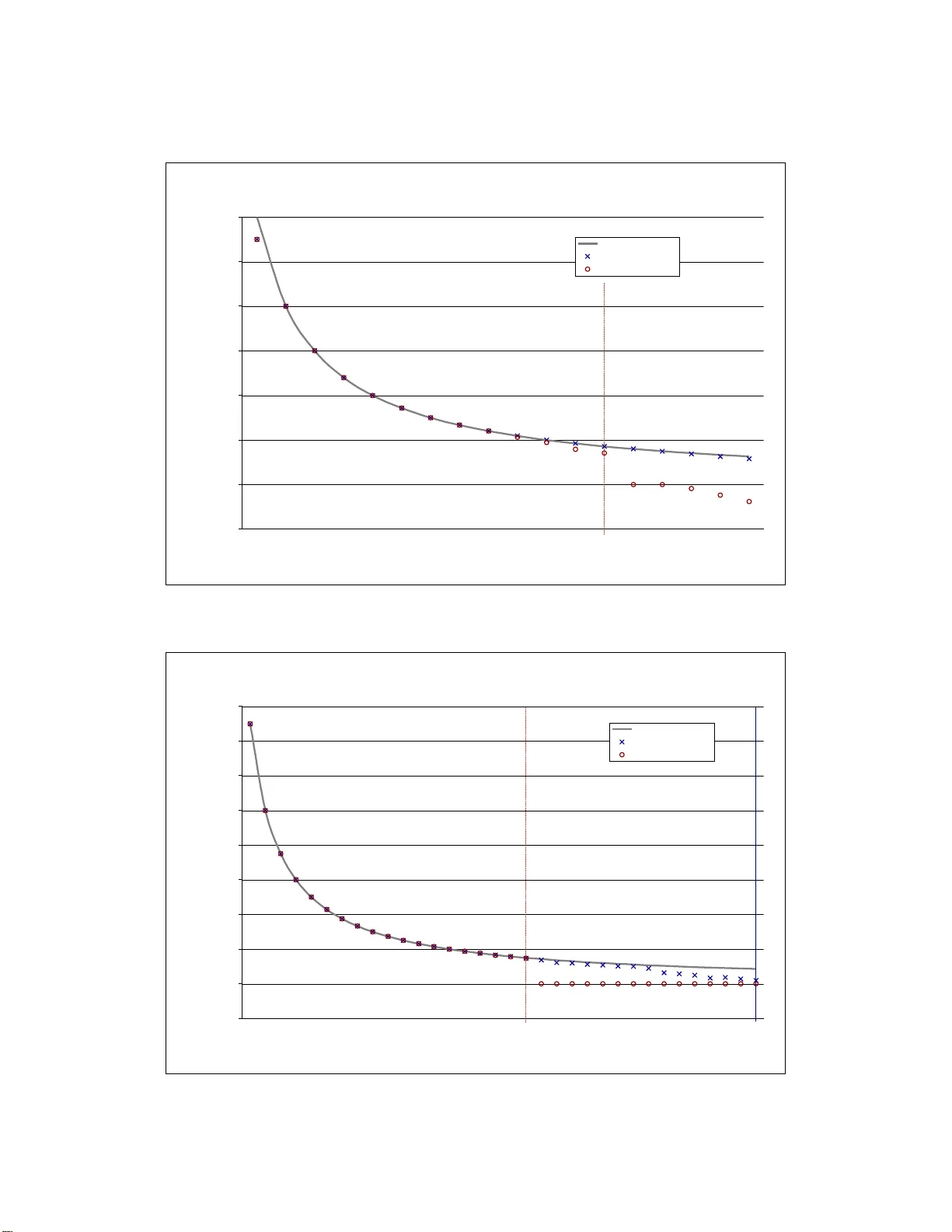
CONSTRU CTING P A CKINGS IN GRASSMANNIAN MANIFOLDS VIA AL TERNA TI N G PR OJECTION I. S. DHI LLO N, R. W. HEA T H JR., T. STROHMER, AND J. A. TROPP Abstra ct. This pap er d escribes a numerica l method for finding goo d packings in Grassmannian manifolds equipp ed with v arious metrics. This in vestig ation also encompasses pac king in pro jective spaces. In eac h case, pro ducing a goo d pac king is equiv alen t to co nstructing a matrix that has certain structural and sp ectral properties. By alternately enforcing the stru ctu ral condition and then the spectral condition, it is often p ossible to reach a matrix that satisfies b oth. On e may then extract a packing from this matrix. This approach is b oth p ow erf ul and ver satile. In cases where experiments h ave been p erformed, the alternating pro jection metho d yields packings that compete with th e b est packings recorded. It also extends to problems that ha ve not b een studied n umerically . F or example, it can b e used to prod uce pac kings of subspaces in rea l and complex Grassmannian spaces equipped with the F ubini– Study distance; these packings are v aluable in wireless comm unications. One can prov e that some of the nov el configurations constructed by the algorithm ha ve packing diameters that are n early optimal. 1. Introduction Let us b egin with the standard faceti ous example. Imagine that sev e ral m utually inimical nations build their capita l cities on the surface of a featureless glo b e. Be ing concerned ab out missile strik es, they wish to lo cate the closest pair of cities as far apart as p ossible. In other w ords, what is the b est w a y to pack p oin ts on the surface of a t w o-dimensional sphere? This question, first discussed b y the Dutc h biologist T ammes [T am30], is the protot ypical example of p acking in a compact metric space. It has b een studied in detail for the last 75 yea rs. More recen tly , researc h ers hav e starte d to ask ab out pac kings in other compact spaces. In particular, sev eral comm unities h a v e inv e stigated ho w to arrange sub spaces in a Eu clidean space so that they are as distinct as p ossible. An equiv ale n t form ulation is to find the b est p ac kings of p oin ts in a Grassmannian m anifold. This problem has app lications in quan tum computing and wireless comm unications. There has b een th eoretica l int erest in su b space pac king since the 1960s [T´ ot65], but the fi rst detailed numerical study app ears in a 1996 p ap er of C on w a y , Hardin, and S loane [CHS96]. The aim of this pap er is to describ e a flexible numerical metho d that can b e used to construct pac kings in Grassmannian manifolds equipp ed with sev eral different metrics. The rest of this Date : Ma y 2004. Revised Nov em b er 2006 and A ugust 2007. 2000 Mathemat ics Subje ct Classific ation. Primary: 51N15, 52C 17. Key wor ds and phr ases. Combinatori al optimization, pac king, pro jective spaces, Grassmannian spaces, T ammes’ Problem. E-mail. inderjit@cs.ut exas.edu , rheath@ece.ute xas.edu , strohmer@u cdavis.edu , jtropp@acm.c altech.edu . A ddr esses. ISD is with the Dep artmen t of Computer Sciences, Universit y of T exas, Austin, TX 78712. R WH is with the Department of Electrical and Computer Engineering, Universit y of T exas, Au stin, TX 78712. TS is with the Department of Mathematics, Universit y of California, Davis , CA 95616. JA T is cu rrently with Applied and Computational Mathematics, California Institute of T ec hnology , Pasadena, CA 91125. A cknow l e dgments. I SD was supported by NSF gran t CCF-0431 257, NSF Career Aw ard ACI-009 3404, and NSF- ITR a ward I IS-0325116. R WH was supported by N S F CCF Grant #51419 4. TS w as supp orted by NSF DMS Grant #051146 1. JA T w as supp orted b y an NSF Graduate F ello wship, a J. T. Oden Visiting F acult y F ellow ship, and NS F DMS 0503299 . 1 CONSTRUCTING GRASSMANNIAN P ACKINGS 2 in tro duction provides a formal statemen t of abstract pac king pr ob lems, and it offers an ov erview of our appr oac h to solving them. 1.1. Abstract Pac king Problems. Although we will b e w orking with Grassmannian manifolds, it is more instructive to introduce pac king p roblems in an abstract setting. Let M b e a compact metric space endo w ed with the distance fu nction d ist M . The p acking diameter of a finite su bset X is the min im u m distance b et we en some pair of d istinct p oin ts d ra w n from X . Th at is, pac k M ( X ) def = min m 6 = n dist M ( x m , x n ) . In other wo rds, the pac king diameter of a set is the diameter of the largest op en b all that can b e cen tered at eac h p oin t of the set w ithout encompassing an y other p oin t. (It is also common to study the p acking r adius , w hic h is half the diameter of this ball.) An optimal p acking of N p oints is an ensem b le X that solv es the mathematica l program max | X | = N pac k M ( X ) where |·| returns the cardinalit y of a finite s et. The optimal pac king problem is guarantee d to hav e a solution b ecause the metric space is compact and the ob jectiv e is a con tin u ous fun ction of the ensem b le X . This article fo cuses on a fe asibility pr oblem closely connected with optimal pac king. Giv en a n um b er ρ , the goal is to pr o duce a set of N p oints for whic h pac k M ( X ) ≥ ρ. (1.1) This problem is notoriously difficult to solv e b ecause it is h ighly nonconv ex, and it is ev en more difficult to determine the maxim um v alue of ρ for whic h the feasibilit y problem is soluble. This maxim u m v alue of ρ corresp onds with the diameter of an optimal pac king. 1.2. Alternating Pro jection. W e will attempt to solv e the feasibilit y pr oblem (1.1) in Grass- mannian manifolds equipp ed with a n um b er of differen t metrics, but the same b asic algorithm applies in eac h case. Here is a high-lev el description of our approac h . First, we sho w that eac h configur ation of subspaces is asso ciated with a b lo c k Gram matrix whose blo c ks con trol the distances b et w een pairs of sub spaces. Then we p ro ve that a configuration solv es the feasibilit y problem (1.1) if and only if its Gram matrix p ossesses b oth a structural prop ert y and a sp ectral p r op ert y . The o verall algorithm consists of the follo win g s teps. (1) Cho ose an initial configur ation and construct its matrix. (2) Alternately enforce the structural condition and the sp ectral condition in hop e of reac hing a matrix that satisfies b oth. (3) Extract a configur ation of subsp aces from the output m atrix. In our w ork, w e c ho ose the initial configuration randomly and then remo v e similar s ubspaces from it with a simple algorithm. One can imagine more sophisticated approac hes to constructing the initial configur ation. Flexibilit y and ease of implemen tation are the ma jor adv anta ges of alternating pr o jecti on. Th is article demonstrates that appropriate mo d ifications of this basic tec h nique allo w us to construct solutions to the feasibilit y problem in Grassmannian manifolds equipp ed with v arious metrics. Some of these problems h a ve n ev er b een stu died numericall y , and the exp eriment s p oint tow ard in triguing phenomena that d eserv e theoretical atten tion. Moreo ver, we b eliev e that the p ossibilities of this m etho d ha ve not b een exhausted and that it will see other applications in the f uture. Alternating pro jection do es ha v e sev eral dra wbac ks. It ma y con verg e v ery s lowly , and it do es not alw ays yield a high lev el of numerica l precision. I n addition, it ma y not deliv er go o d pac kings when the ambien t dimension or the num b er of subsp aces in the configur ation is large. CONSTRUCTING GRASSMANNIAN P ACKINGS 3 1.3. Motiv ation and Related W ork. This work was motiv ated by applications in electrica l engineering. In p articular, su b space pac kings solv e certain extremal problems that arise in m ultiple- an tenn a communicat ion systems [ZT02, HMR + 00, LJS H04]. This app licatio n r equires complex Grassmannian pac kings that consist of a small num b er of subspaces in an am bien t space of lo w dimension. Our algorithm is quite effectiv e in this p arameter r egime. The resulting pac kings fill a significan t gap in the literature, since existing tables consider only the real case [Slo04a]. See Section 6.1 for add itional discussion of the wireless application. The approac h to packi ng via alternating pro jectio n was d iscussed in a previous pub licatio n [TDJS05], but the exp erimen ts we re limited to a single case . W e are a w are of sev eral other n umer- ical metho ds that can b e u sed to construct pac kings in Grassmannian manifolds [CHS96, T ro01, AR U01 ]. Th ese tec hn iques rely on ideas fr om n on linear programming. 1.4. Historical I n t erlude. The problem of constructing optimal pac kings in v arious metric spaces has a long and lo ve ly h istory . The most famous example m a y b e Kepler’s Conjecture that an optimal pac king of spheres in thr ee-dimensional Euclidean sp ace 1 lo cates them at the p oin ts of a face-ce n tered cub ic lattice . F or millennia, greengro cers ha v e applied this theorem w hen stac king oranges, but it has only b een established rigorously within the last few yea rs [Hal04]. P ac kin g problems pla y a ma jor r ole in mo d ern comm u nications b ecause error-correct ing co des ma y b e in terpreted as pac kings in the Hamming space of binary strings [C T 91]. Th e standard reference on pac king is the magnum opus of Conw a y and Sloane [CS98]. C lassical monographs on the sub ject w ere written by L. F ejes T ´ o th [T´ ot6 4] and C. A. Rogers [Rog64]. The idea of applying alternating pro jection to feasibilit y problems first app eared in the work of v on Neumann [vN50]. He pro v ed that an alternating pr o jection b et w een tw o closed subspaces of a Hilb ert sp ace conv erges to the orthogo nal pro jection of the initial ite rate on to the int ersection of the t wo subspaces. Cheney and Goldstein su bsequent ly s ho wed that an alternating pro jection b et wee n t wo closed, con vex subsets of a Hilb ert space alwa ys con v erges to a p oin t in their inte rsection (pro vid ed that the in tersection is nonemp t y) [CG59]. This result do es not apply in our setting b ecause one of the constraint sets w e define is n ot con vex. 1.5. Outline of Article. Here is a brief ov erview of this article. In Section 2, w e dev elop a basic description of Grassmannian manifolds and pr esen t some natural metrics. S ection 3 explains wh y alternating pro jection is a n atur al algorithm f or pr o ducing Grassmann ian packi ngs, and it outlines ho w to apply this algorithm for one sp ecific m etric. S ection 4 giv es s ome theoretical upp er b ound s on the optimal diameter of pac kings in Grassmannian manifolds. Section 5 describ es the outcomes of an extensive set of n umerical exp erimen ts and explains how to apply the algorithm to other metrics. Section 6 offers some discussion and conclusions. App endix A explores h o w our metho dology applies to T ammes’ Problem of pac kin g on the surface of a sphere. Finally , App end ix B con tains tables and figur es that detail the exp erimenta l results. 2. P acking in Grassmannian Manifolds This section int ro du ces our notation and a simple description of the Grassmannian manifold. It presen ts sev eral natural metrics on the manifold, and it shows ho w to repr esen t a configur ation of subspaces in m atrix form. 2.1. Preliminaries. W e w ork in the v ector space C d . The symb ol ∗ denotes the complex- conjugate transp ose of a v ector (or matrix). W e equip the vec tor space with its usual inner p ro duct h x , y i = y ∗ x . This inner pro d uct generates the ℓ 2 norm via the formula k x k 2 2 = h x , x i . The d -dimensional identi t y matrix is I d ; w e sometimes omit the subscript if it is unnecessary . A square matrix is p ositive semidefinite w h en its eigen v alues are all nonn egativ e. W e write X < 0 to indicate that X is p ositi v e semidefinite. 1 The infinite extent of a Euclidean space necessitates a more subtle definition of an optimal packing. CONSTRUCTING GRASSMANNIAN P ACKINGS 4 A square, complex matrix U is unitary if it satisfies U ∗ U = I . If in addition the ent ries of U are real, the matrix is ortho gonal . The unitary group U ( d ) can b e p resen ted as the collection of all d × d unitary matrices with ordinary matrix m ultiplication. The r eal orthogonal group O ( d ) can b e presen ted as the collec tion of all d × d real orthogonal matrices with the usual matrix m ultiplicati on. Supp ose that X is a general matrix. The F rob enius norm is calculate d as k X k 2 F = trace X ∗ X , where the trace op erato r sums the d iagonal en tries of the matrix. The sp ectral n orm is denoted by k X k 2 , 2 ; it retur n s the largest singular v alue of X . Both these norms are u nitarily in v arian t, whic h means that k U X V ∗ k = k X k w h enev er U and V are un itary . 2.2. Grassmannian Manifolds. Th e (complex) Grassmann ian manifold G ( K, C d ) is the collec- tion of all K -dimensional sub s paces of C d . Th is space is isomorphic to a quotien t of unitary groups: G ( K, C d ) ∼ = U ( d ) U ( K ) × U ( d − K ) . T o un derstand the equiv alence, note that eac h orthonormal basis from C d can b e s p lit into K v ectors, wh ic h sp an a K -dimensional su b space, and d − K ve ctors, whic h sp an the orth ogonal complemen t of that su bspace. T o obtain a unique represen tation f or the subs p ace, it is n ecessary to divide by isometries that fix the subsp ace and by isometries that fix its complement . It is eviden t that G ( K, C d ) is alwa ys isomorphic to G ( d − K , C d ). Similarly , th e real Grassmannian manifold G ( K, R d ) is the collectio n of all K -dimensional sub - spaces of R d . This space is isomorphic to a qu otien t of orthogonal groups: G ( K, R d ) ∼ = O ( d ) O ( K ) × O ( d − K ) . If w e need to refer to the real and complex Grassmannians simulta neously , we write G ( K, F d ). In the theoretical develo pmen t, we concent rate on complex Grassmannians since the dev elopment for the r eal case is identic al, except that all the matrices are real-v alued instead of complex- v alued. A second r eason f or fo cusing on the complex case is that complex pac kings arise naturally in wir eless comm un ications [LJS03]. When eac h sub space has dimension K = 1, the Grassmannian manifold reduces to a simpler ob ject called a pr oje ctive sp ac e . T h e elemen ts of a pro jectiv e space can b e view ed as lines th r ough the origin of a Euclidean space. T he standard notation is P d − 1 ( F ) def = G (1 , F d ). W e will sp end a significan t amount of atten tion on pac kin gs of this manifold. 2.3. Principal Angles. Supp ose that S and T are tw o subs paces in G ( K, C d ). Th ese sub spaces are in clined against eac h other b y K different princip al angles . T h e smallest pr in cipal angle θ 1 is the minim um angle f ormed by a pair of unit v ectors ( s 1 , t 1 ) dra wn from S × T . That is, θ 1 = min ( s 1 , t 1 ) ∈S ×T arccos h s 1 , t 1 i sub ject to k s 1 k 2 = 1 and k t 1 k 2 = 1 . The second principal angle θ 2 is d efined as the smallest angle attained by a pair of u nit ve ctors ( s 2 , t 2 ) that is orthogonal to the first pair, i.e., θ 2 = min ( s 2 , t 2 ) ∈S ×T arccos h s 2 , t 2 i sub ject to k s 2 k 2 = 1 and k t 2 k 2 = 1 , h s 1 , s 2 i = 0 and h t 1 , t 2 i = 0 . The remaining principal angles are defined an alogously . Th e sequence of pr in cipal angle s is nonde- creasing, and it is conta ined in the range [0 , π / 2]. W e only consider metrics that are functions of the principal angles b et we en t w o subsp aces. Let us present a more computatio nal definition of the p rincipal angles [BG73]. Supp ose that the columns of S and T f orm orthonormal bases f or th e su bspaces S and T . More rigorously , S is a CONSTRUCTING GRASSMANNIAN P ACKINGS 5 d × K matrix that sati sfies S ∗ S = I K and range S = S . The matrix T has an analogous definition. Next we compute a singular v alue decomp osition of the pro du ct S ∗ T : S ∗ T = U C V ∗ where U and V are K × K unitary matrices and C is a n onnegativ e, diagonal matrix with non- increasing entries. The matrix C of singular v alues is uniquely determined, and its entries are the cosines of the pr incipal angles b etw een S and T : c k k = cos θ k k = 1 , 2 , . . . , K. This d efi n ition of the principal angles is most con venien t numerically b eca use singular v alue de- comp ositions can b e computed efficien tly with standard soft ware. W e also note that this definition of the pr incipal angles do es not dep end on the c hoice of matrices S and T that r ep r esen t the tw o subspaces. 2.4. Metrics on Grassmannian Manifolds. Grassmann ian m anifolds adm it man y int eresting metrics, w hic h lead to different pac king problems. This section describ es some of th ese metrics. (1) The c hor dal distanc e b et w een t wo K -dimensional subspaces S and T is giv en by dist c hord ( S , T ) def = p sin 2 θ 1 + · · · + sin 2 θ K = h K − k S ∗ T k 2 F i 1 / 2 . (2.1) The v alues of this metric r ange b et w een zero and √ K . T he c hordal distance is the easiest to work with, and it also yields the most symmetric packi ngs [CHS96]. (2) The sp e ctr al distanc e is dist spec ( S , T ) def = min k sin θ k = h 1 − k S ∗ T k 2 2 , 2 i 1 / 2 . (2.2) The v alues of this metric range b et w een zero and one. As w e will see, this metric promotes a sp ecial type of p ac king called an e qui-iso clinic configuration of subsp aces. (3) The F ubi ni–Study distanc e is dist FS ( S , T ) def = arccos Y k cos θ k = arccos | det S ∗ T | . (2.3) This metric tak es v alues b et w een zero and π / 2. It p lays an imp ortant role in wireless comm un ications [LHJ05, LJ 05]. (4) The g e o desic distanc e is dist geo ( S , T ) def = q θ 2 1 + · · · + θ 2 K . This metric tak es v alues b etw een zero and π √ K / 2. F rom the p oint of view of differen- tial geometry , th e geod esic distance is very natural, bu t it do es not seem to lead to v ery in teresting packi ngs [CHS 96], so we will not discuss it any fur ther. Grassmannian manifolds supp ort sev eral other inte resting metrics, some of which are listed in [BN02]. In case w e are wo rking in a pro jectiv e space, i.e., K = 1, all of these metrics reduce to the acute angle b et w een t wo lines or the sine th ereof. Therefore, the metrics are equiv alen t up to a monotonicall y in creasing transform ation, and they promote iden tical p ac kings. CONSTRUCTING GRASSMANNIAN P ACKINGS 6 2.5. Represen ting Configurations of Subspaces. Supp ose that X = {S 1 , . . . , S N } is a col- lectio n of N sub spaces in G ( K, C d ). Let us deve lop a metho d for represen ting this configur ation n umerically . T o eac h sub space S n , we asso ciate a (non u nique) d × K m atrix X n whose columns form an orthonormal basis for that subsp ace, i.e., X ∗ n X n = I K and range X n = S n . No w collat e these N matrices into a d × K N configuration matrix X def = X 1 X 2 . . . X N . In the sequel, we do not distinguish b et w een the configuration X and the m atrix X . The Gr am matrix of X is defined as the K N × K N matrix G = X ∗ X . By construction, the Gram m atrix is p ositiv e semidefinite, and its rank do es not exceed d . It is b est to r egard the Gram matrix as an N × N block m atrix compr ised of K × K blo c ks, and we ind ex it as such. Observ e that eac h blo c k satisfies G mn = X ∗ m X n . In particular, eac h diagonal b lo ck G nn is an identi t y matrix. Mean while, th e singular v alues of the off-diagonal b lo c k G mn equal the cosines of the principal angles b et we en the t w o subspaces range X m and range X n . Con v ersely , let G b e an N × N blo c k matrix with eac h b lo c k of size K × K . Supp ose that the matrix is p ositiv e semidefinite, that its rank d o es not exceed d , and that its d iagonal blo c ks are iden tit y matrices. Then we can factor G = X ∗ X where X is a d × K N configur ation matrix. That is, the columns of X form orthogonal bases for N different K -dimens ional subsp aces of C d . As w e will see, eac h metric on the Grassmannian manifold leads to a measure of “magnitude” for the off-diagonal blo c ks on the Gram matrix G . A configur ation solv es the f easibilit y problem (1.1) if and only if eac h off-diagonal blo c k of its Gram matrix h as sufficien tly small m agnitude. So solving the feasibilit y problem is equiv alen t to pro d ucing a Gram matrix w ith app ropriate pr op erties. 3. Al ter na ting Pr ojection for Chord al Dist ance In this section, w e elab orate on the idea that solving the feasibilit y pr oblem is equiv alen t with constructing a Gram m atrix that meets certain conditions. These conditions f all int o tw o d ifferen t catego ries: structural pr op erties and sp ectral prop ertie s. This observ ation leads naturally to an alternating pr o jecti on algo rithm for solving the feasibilit y pr oblem. The algorithm alternately enforces the structural p rop erties and then the sp ectral prop erties in hop e of pro du cing a Gram matrix that satisfies them all. This section illustrates how this appr oac h u nfolds w hen d istances are measured with resp ect to the c h ordal metric. In S ection 5, we describ e adaptations for other metrics. 3.1. P ackings w it h C hordal Distance. S upp ose that w e seek a pac king of N su bspaces in G ( K, C d ) equipp ed with the c hordal distance. If X is a configuration of N sub s p aces, its pac kin g diameter is pac k c hord ( X ) def = min m 6 = n dist c hord ( X m , X n ) = m in m 6 = n h K − k X ∗ m X n k 2 F i 1 / 2 . Giv en a p arameter ρ , the feasibilit y problem elicits a configuration X that satisfies min m 6 = n h K − k X ∗ m X n k 2 F i 1 / 2 ≥ ρ. W e m a y r earrange this inequalit y to obtain a simpler condition: max m 6 = n k X ∗ m X n k F ≤ µ (3.1) CONSTRUCTING GRASSMANNIAN P ACKINGS 7 where µ = p K − ρ 2 . (3.2) In fact, we may f ormulate the feasibilit y problem purely in terms of the Gram matrix. S upp ose that the configuration X satisfies (3.1 ) with parameter µ . Then its Gram matrix G must h av e the follo wing six pr op erties: (1) G is Hermitian. (2) Eac h d iagonal blo ck of G is an id entit y matrix. (3) k G mn k F ≤ µ for eac h m 6 = n . (4) G is p ositiv e s emid efi n ite. (5) G h as rank d or less. (6) G h as trace K N . Some of these prop erties are redund an t, but we ha v e listed them separately for reasons so on to b ecome apparen t. Conv ersely , supp ose that a matrix G satisfies Prop ertie s 1–6. Then it is alw ays p ossible to factor it to extract a configuration of N subspaces that solve s (3.1). The factorizat ion of G = X ∗ X can b e obtained most easily from an eigenv alue decomp osition of G . 3.2. The Algorithm. Observ e that Prop erties 1–3 are structur al pr op erties. By this, we m ean that they constrain the en tries of the Gram matrix directly . Pr op erties 4–6, on the other h and, are sp e ctr al prop erties. That is, they con trol the eigen v alues of the matrix. It is n ot easy to enforce structural and sp ectral prop erties s imultaneously , so we m ust resort to half measures. S tarting from an initial m atrix, our algorithm will alternately enforce Prop erties 1–3 and then P r op erties 4–6 in h op e of r eac hing a matrix that satisfies all six p rop erties at once. T o b e more rigorous, let us define the structural constraint set H ( µ ) def = { H ∈ C K N × K N : H = H ∗ , H nn = I K for n = 1 , 2 , . . . , N , and k H mn k F ≤ µ for all m 6 = n } . (3.3) Although the structural constrain t set evidently d ep ends on the parameter µ , w e will usually eliminate µ fr om the notation for simplicit y . W e also define the sp ectral constrain t set G def = G ∈ C K N × K N : G < 0 , rank G ≤ d, and trace G = K N . (3.4) Both constrain t sets are closed and b ounded, hence compact. The stru ctural constrain t set H is con vex, b u t the sp ect ral constrain t set is n ot. T o solv e th e feasibilit y problem (3.1), w e must find a matrix that lies in the intersec tion of G and H . This section states the algorithm, and the succeeding t w o sect ions provi de some implemen tation details. Algorithm 1 (Alternating P r o jectio n) . Input: • A K N × K N H e rmitian matrix G (0) • The maximum numb er of iter ations T Output: • A K N × K N matrix G out that b elongs to G and whose diagona l blo cks ar e identity matric es Pr ocedure : (1) Initialize t ← 0 . (2) Determine a matrix H ( t ) that solves min H ∈ H H − G ( t ) F . CONSTRUCTING GRASSMANNIAN P ACKINGS 8 (3) Determine a matrix G ( t +1) that solves min G ∈ G G − H ( t ) F . (4) Incr ement t . (5) If t < T , r eturn to Step 2. (6) Define the blo ck-diagonal matrix D = diag G ( T ) . (7) R eturn the matrix G out = D − 1 / 2 G ( T ) D − 1 / 2 . The iterates generated b y this algo rithm are not guaran teed to con verge in norm. Therefore, w e ha ve c h osen to halt the algorithm after a fixed num b er of steps instead of c hecking the b eha vior of the sequence of iterates. W e d iscus s the con v ergence prop erties of the algorithm in the sequel. The scaling in the last s tep normalizes the diagonal blo c ks of the matrix but p reserv es its in ertia (i.e., n umbers of negativ e, zero, and p ositiv e eigen v alues). Since G ( T ) is a p ositiv e-semidefin ite matrix w ith rank d or less, the outpu t matrix G out shares these traits. I t follo w s that the output matrix alwa ys admits a factorization G out = X ∗ X where X is a d × K N configuration matrix. Prop erty 3 is the only one of the six p rop erties that m a y b e violated. 3.3. The Matrix Nearness Problems. T o implement Algorithm 1, we m ust solv e the matrix nearness problems in S teps 2 and 3. Th e fir st one is straigh tforw ard . Prop osition 2. L et G b e an Hermitian matrix. With r esp e ct to the F r ob enius norm, the unique matrix i n H ( µ ) ne ar est to G has diagonal blo cks e qual to the identity and off-diagonal blo cks that satisfy H mn = G mn if k G mn k F ≤ µ , and µ G mn / k G mn k F otherwise. It is rather more difficult to fi nd a nearest matrix in the sp ectral constrain t set. T o state th e result, w e defin e the p lus op erator by the rule ( x ) + = max { 0 , x } . Prop osition 3. L et H b e an Hermitian matrix whose eigenvalue de c omp osition is P K N j =1 λ j u j u ∗ j with the eigenv alues arr ange d i n nonincr e asing or der: λ 1 ≥ λ 2 ≥ · · · ≥ λ K N . With r esp e ct to the F r ob enius norm, a matrix in G closest to H is gi v en by X d j =1 ( λ j − γ ) + u j u ∗ j wher e the sc alar γ is chosen so that X d j =1 ( λ j − γ ) + = K N . This b e st appr oximation is unique pr ovide d that λ d > λ d +1 . The nearest matrix d escrib ed by this theorem can b e computed efficien tly from an eigen v alue decomp osition of H . (See [GVL96] for computational details.) Th e v alue of γ is u niquely deter- mined, but one must solve a small ro otfin d ing p roblem to solve it. The bisection metho d is an appropriate tec h nique since the plus op erator is nond ifferen tiable. W e omit the details, whic h are routine. Pr o of. Giv en an Hermitian matrix A , denote by λ ( A ) the vect or of eigen v alues arranged in nonin- creasing ord er. Then w e ma y decomp ose A = U { diag λ ( A ) } U ∗ for some u nitary matrix U . CONSTRUCTING GRASSMANNIAN P ACKINGS 9 Finding the matrix in G closest to H is equiv alen t to solving the optimization problem min G k G − H k 2 F sub ject to λ j ( G ) ≥ 0 for j = 1 , . . . , d , λ j ( G ) = 0 for j = d + 1 , . . . , K N , and X K N j =1 λ j ( G ) = K N . First, w e fix the eigen v alues of G and minimize with resp ect to the unitary part of its eigen v alue decomp osition. In consequence of the Hoffman–Wielandt T h eorem [HJ85], the ob jectiv e f unction is b ounded b elo w: k G − H k 2 F ≥ k λ ( G ) − λ ( H ) k 2 2 . Equalit y holds if and only if G and H are sim u ltaneously diagonalizable by a unitary m atrix. Therefore, if we decomp ose H = U { diag λ ( H ) } U ∗ , the ob jectiv e function attains its minimal v alue w h enev er G = U { diag λ ( G ) } U ∗ . Note that the matrix U ma y not b e uniquely determined. W e fin d the optimal vec tor of eigen v alues ξ for the matrix G by solving the (strictly) conv ex program min ξ k ξ − λ ( H ) k 2 2 sub ject to ξ j ≥ 0 for j = 1 , . . . , d , ξ j = 0 for j = d + 1 , . . . , K N , and X K N j =1 ξ j = K N . This minimization is accomplished by an application of Karush –Kuhn–T uc k er theory [Ro c70]. In short, the top d eigenv alues of H are translated an equal amount, and those that b eco me negativ e are set to zero. The size of the translation is chosen to fu lfill the third condition (whic h con trols the trace of G ). Th e en tries of the optimal ξ are n onincreasing on accoun t of the orderin g of λ ( H ). Finally , the un iqueness claim follo w s from the fact that the eigenspace asso ciated with the top d eigen v ectors of H is u niquely d etermined if and only if λ d ( H ) > λ d +1 ( H ). 3.4. Cho osing an Initial Configuration. Th e success of the algorithm d ep ends on adequate selectio n of th e input matrix G (0) . W e ha ve found that the follo wing strateg y is reasonably effectiv e. It c ho oses r andom subspaces and adds them to the initia l configuration only if they are suffi cientl y distan t f rom th e s ubspaces that hav e already b een c hosen. Algorithm 4 (Initial Confi guration) . Input: • The ambient dimension d , the subsp ac e dimension K , and the numb er N of subsp ac e s • An upp er b ound τ on the similarity b etwe en subsp ac es • The maximum numb er T of r andom sele c tions Output: • A K N × K N matrix G fr om G whose off-diagonal blo cks also satisfy k G mn k F ≤ τ Pr ocedure : (1) Initialize t ← 0 and n ← 1 . (2) Incr ement t . If t > T , print a failur e notic e and stop. (3) Pick a d × K matrix X n whose r ange is a uniformly r andom sub sp ac e in G ( K, C d ) . (4) If k X ∗ m X n k F ≤ τ for e ach m = 1 , . . . , n − 1 , then incr ement n . (5) If n ≤ N , r eturn to Step 2. (6) F orm the matrix X = X 1 X 2 . . . X N . (7) R eturn the Gr am matrix G = X ∗ X . CONSTRUCTING GRASSMANNIAN P ACKINGS 10 T o imp lemen t Step 3, w e use the metho d devel op ed in [Ste80]. Dra w a d × K matrix wh ose en tries are iid complex, standard normal random v ariables, and p erform a QR decomp osition. The first K columns of the unitary part of the QR decomp osition form an orthonormal basis for a random K -dimensional subspace. The p urp ose of the parameter τ is to prev ent the starting configur ation X fr om cont aining blo c ks that are nearly identic al. The extreme case τ = √ K places n o restriction on the similarit y b et w een blo c ks . If τ is chosen to o small (or if we are unlucky in our r an d om c hoices), then this selection pro cedure ma y fail. F or this r eason, we add an iteration counte r to preve n t the algorithm fr om en tering an infinite lo op. W e typica lly choose v alues of τ ve ry close to the maxim um v alue. 3.5. Theoretical Beha vior of Algorithm. It is imp ortan t to b e aw are that packi ng pr oblems are t ypically difficult to s olv e. Therefore, w e cann ot exp ect that our algorithm w ill necessarily pro du ce a p oin t in the intersec tion of the constraint sets. One may ask whether we can mak e an y guaran tees ab out the b eha vior of Algorithm 1. This tur n s out to b e difficult. Ind eed, there is p oten tial that an alternating pro jection algorithm will fail to generate a con v ergent sequence of iterates [Mey76]. Neverthele ss, it can b e sho wn that the sequence of iterates has accumulat ion p oint s and th at th ese accumulat ion p oin ts satisfy a w eak stru ctural pr op ert y . In practic e, the alternati ng pr o jecti on algo rithm seems to con v erge, b ut a theoretical justificatio n for this observ ation is lac kin g. A more serious problem is that the algorithm frequently r equires as man y as 500 0 iterations b efore the iterates settle do wn . Th is is one of the ma jor wea knesses of our approac h. F or reference, we offer the b est theoretical con ve rgence result that we kn o w. The distance b et w een a matrix and a compact collection of matrices is defined as dist( M , C ) def = min C ∈ C k M − C k F . It can b e shown that the d istance fu nction is Lip sc h itz, hence con tin uous. Theorem 5 (Global Con v ergence) . Supp ose that Algorithm 1 gener ates an infinite se quenc e of iter ates { ( G ( t ) , H ( t ) ) } . This se qu e nc e has at le ast one ac cumulation p oint. • E very ac cumulation p oint lies in G × H . • E very ac cumulation p oint ( G , H ) satisfies G − H F = lim t →∞ G ( t ) − H ( t ) F . • E very ac cumulation p oint ( G , H ) satisfies G − H F = dist( G , H ) = dist( H , G ) . Pr o of sketch. T he existence of an accumulati on p oin t follo ws fr om the co mpactness of the constrain t sets. The algorithm d o es not increase the distance b et w een successiv e iterates, wh ic h is b oun ded b elo w b y zero. Therefore, this distance must con v erge. The distance functions are contin uous, so w e can tak e limits to obtain the remaining assertions. A more detaile d treatmen t requires the mac hinery of p oint -to-set maps, and it would not enhance our main d iscus sion. Please see the app endices of [TDJS05] for additional in f ormation. 4. Bounds on the P acking diameter T o assa y the qualit y of the packi ngs that w e pro d uce, it helps to hav e some up p er b oun ds on the pac king diameter. If a configuration of sub spaces has a pac kin g diameter close to the up p er b ound , that configuration m ust b e a nearly optimal pac king. This approac h allo ws u s to establish that man y of th e pac kings we constru ct numerical ly ha v e pac king diameters that are essen tially optimal. CONSTRUCTING GRASSMANNIAN P ACKINGS 11 Theorem 6 (Con wa y–Hardin–Sloane [C HS 96]) . The p acking diameter of N subsp ac es in the Gr ass- mannian manifold G ( K, F d ) e quipp e d with chor dal distanc e is b ounde d ab ove as pac k c hord ( X ) 2 ≤ K ( d − K ) d N N − 1 . (4.1) If the b ound is met, al l p airs of subsp ac es ar e e quidistant. When F = R , the b ound is attainable only if N ≤ 1 2 d ( d + 1) . When F = C , the b ound is attainable only if N ≤ d 2 . The complex case is not stat ed in [CHS96], but it follo ws from an iden tical argumen t. W e refer to (4.1) as the R ankin b ound f or subsp ace pac kings with resp ect to the c hordal distance. The reason for the nomenclat ure is that the result is established b y em b eddin g the c hord al Grassmannian manifold in to a Eu clidean s phere and applying the classical Rankin b ound for sphere packi ng [Ran47]. It is also p ossible to dra w a corollary on pac king with resp ect to the sp ectral distance; this result is no v el. A su bspace pac king is s aid to b e e qu i - iso clinic if all the pr incipal angles b et w een all pairs of subspaces are identic al [LS73]. Corollary 7. We have the fol lowing b ound on the p acking diameter of N subsp ac es in the Gr ass- mannian manifold G ( K, F d ) e quipp e d with the sp e ctr al distanc e . pac k spec ( X ) 2 ≤ d − K d N N − 1 . (4.2) If the b ound is met, the p acking is e qu i - iso clinic. W e refer to (4.2) as the Rankin b ound for su bspace p ac kings with resp ect to sp ectral d istance. Pr o of. The p o w er mean inequalit y (equiv alen tly , H¨ o lder’s inequalit y) yields min k sin θ k ≤ K − 1 X K k =1 sin 2 θ k 1 / 2 . F or angles b et w een zero and π / 2, equ alit y h olds if and only if θ 1 = · · · = θ K . It follo ws that pac k spec ( X ) 2 ≤ K − 1 pac k c hord ( X ) 2 ≤ d − K d N N − 1 . If the second inequalit y is met, then all pairs of sub spaces are equidistan t with resp ect to the c hord al m etric. Moreo ver, if th e fi rst inequalit y is met, then the prin cipal angles b et w een eac h pair of su bspaces are constan t. T ogether, these t wo conditions imply that the packing is equi- iso clinic. An up p er b ound on the maxim u m n umb er of equi-isoclinic subspaces is a v ailable. Its authors do not b eliev e th at it is sharp . Theorem 8 (Lemmens–Seidel [LS73]) . The maximum numb e r of e qui-iso clinic K -dimensional subsp ac es of R d is no gr e ater than 1 2 d ( d + 1) − 1 2 K ( K + 1) + 1 . Similarly, the maximum numb er of e qui-iso clinic K -dimensional subsp ac es of C d do es not exc e e d d 2 − K 2 + 1 . CONSTRUCTING GRASSMANNIAN P ACKINGS 12 5. Experiments Our app roac h to pac kin g is exp erimental rather than theoretical, so the r eal question is h o w Algorithm 1 p erforms in practice. In principle, this question is difficult to resolv e b ecause the optimal p ac king diameter is unkn own for almost all com binations of d and N . Wheneve r p ossible, w e compared our results with the Rankin b ound and with the “wo rld record” pac kin gs tabulated b y N. J . A. Sloane and his colleagues [Slo04a]. In man y cases, the algorithm w as able to iden tify a nearly optimal p acking. Moreo v er, it yields in teresting results for pac king problems that hav e n ot receiv ed n umerical atten tion. In the next subsection, we d escrib e detailed exp erimen ts on p ac king in real and complex pro- jectiv e spaces. Then, we m o ve on to pac kings of subsp aces with resp ect to the c hordal distance. Afterw ard , w e stud y the sp ect ral distance and the F ub ini–Study distance. 5.1. Pro jectiv e P ac kings. Line pac kings are the simplest t yp e of Grassmannian pac king, so they offer a natural starting p oin t. Our goal is to pro du ce the b est p ac king of N lines in P d − 1 ( F ). In the real case, Sloane’s tables allo w us to determine how muc h our pac kings fall s hort of the w orld record. In the complex setting, there is no comparable resource, so we must rely on the Rankin b ound to gauge h o w well the algorithm p erforms. Let us b egin with pac king in r eal pro jectiv e spaces. W e attempted to construct configurations of real lines wh ose maximum absolute inner pro duct µ fell within 10 − 5 of the b est v alue tabulated in [Slo04a]. F or pairs ( d, N ) with d = 3 , 4 , 5 and N = 4 , 5 , . . . , 25, w e computed the putativ ely optimal v alue of the feasibilit y parameter µ from Sloane’s data and equation (3.2). In eac h of 10 trials, w e constru cted a starting matrix using Algorithm 4 with parameters τ = 0 . 9 and T = 10 , 000. (Recall that the v alue of T determines the maxim um num b er of random su b spaces that are d ra w n when trying to construct the initial configuration.) W e applied alternating pro jection, Algorithm 1, with the computed v alue of µ and the maximum num b er of ite rations T = 5000. (Our n umerical exp erience ind icates that increasing the maxim u m num b er of iterations b ey ond 5000 do es not confer a significan t b enefit.) W e halted the iteratio n in Step 4 if the iterat e G ( t ) exhibited no off-diago nal en try with absolute v alue greater than µ + 10 − 5 . After 10 trials, w e recorded the largest packi ng diameter attained, as well as th e a v erage v alue of the pac king diameter. W e also recorded the a verag e num b er of iterations the alternating pro jection required p er trial. T able 1 deliv ers the results of this exp eriment. F ollo wing Sloane, we ha v e rep orted the d egrees of arc subtended by the closest pair of lines. W e b elie v e that it is easiest to in terpret the results geometric ally when they are state d in this fashion. All the tables and figures r elated to p acking are collat ed at the b ac k of this pap er for easy comparison. According to the table, the b est configurations pro duced b y alternating pro jection consisten tly attain pac king diameters ten ths or hundredths of a degree a wa y from the b est configurations known. The a v erage configurations r etur n ed b y alternating pro jection are sligh tly wo rse, bu t they usually fall within a degree of the pu tativ e optimal. Moreo ve r, the algorit hm fi nds certain configurations with ease. F or the pair (5 , 16), few er than 1000 iterations are required on a v erage to ac hiev e a pac king w ithin 0.001 d egrees of optimal. A second observ ation is that the alternating pro jecti on algorithm t ypically p erforms b etter when the num b er N of p oints is small. The largest errors are all clustered at larger v alues of N . A corollary observ ation is that the a v erage n umber of iterations p er trial tends to increase w ith the n um b er of p oint s. There are seve ral anomalies that we w ould lik e to p oint ou t. The m ost in teresting pathology o ccurs at the p air ( d, N ) = (5 , 19). T he b est pac king diameter calculated b y alternating pro j ection is about 1 . 76 ◦ w orse th an the optimal configuration, and it is also 1 . 76 ◦ w orse than the b est pac king diameter compu ted for the pair (5 , 20). F rom Sloane’s tables, w e can see that the (putativ e) optimal pac king of 19 lines in P 4 ( R ) is actually a subset of the b est pac king of 20 lines. Pe rhaps the fact that this pac king is degenerate make s it difficult to construct. A similar ev ent o ccurs (less dr amatica lly) CONSTRUCTING GRASSMANNIAN P ACKINGS 13 at the pair (5 , 13). The table also sho ws that the algorithm p erforms less effectiv ely when the n um b er of lines exceeds 20. In complex p ro jectiv e spaces, this metho dology do es not apply b ecause th ere are no tables a v ailable. In f act, we only know of one pap er that conta ins numerica l work on pac king in complex pro jectiv e spaces [AR U01 ], bu t it giv es ve ry f ew examples of go o d pac kings. The only metho d we kno w for gauging the qualit y of a complex line pac king is to compare it ag ainst an u pp er b oun d. The Rankin b oun d for pro jectiv e p ac kings, which is deriv ed in Sectio n 4, states that every configuration X of N lines in either P d − 1 ( R ) or P d − 1 ( C ) satisfies the inequalit y pac k P ( X ) 2 ≤ ( d − 1) N d ( N − 1) . This b ound is attainable only for rare com bin ations of d and N . In particular, the b ound can b e met in P d − 1 ( R ) only if N ≤ 1 2 d ( d + 1). In th e space P d − 1 ( C ), attainmen t requires that N ≤ d 2 . An y arrangemen t of lines that meets the Rankin b ound m ust b e equiangular. These optimal configurations are called e quiangular tight fr ames . See [SJ 03, HP04, TDJS05, STDJ07] f or more details. W e p erformed some ad ho c exp eriments to pro d uce configurations of complex lines with large pac king diameters. F or eac h p air ( d, N ), we used the Rankin b ound to determine a lo wer limit on the feasibilit y parameter µ . Starting matrices w ere constructed with Algorithm 4 usin g v alues of τ ranging b et w een 0.9 and 1.0. (Algorithm 4 typical ly f ails for sm aller v alues of τ .) F or v alues of the feasibilit y parameter b et we en the minimal v alue and t wice the min imal v alue, we p erformed 5000 iterations of Algo rithm 1, and w e recorded the large st pac king diameter attained during these trials. T able 2 compares our results against the Rankin b ound. W e s ee that man y of the complex line configurations hav e pac king diameters muc h smaller than the Rankin b ound , wh ic h is not surprising b ecause the b ound is usually not attainable. Some of our configurations f all within a thousand th of a degree of the b oun d, which is essen tially optimal. T able 2 con tains a few o ddities. In P 4 ( C ), the b est pac king diameter computed for N = 18 , 19 , . . . , 24 is w orse than the pac king diameter for N = 25. This configuration of 25 lines is an equiangular tigh t frame, whic h means that it is an optimal pac king [TDJS 05, T able 1]. It seems lik ely that the optimal configurations for the preceding v alues of N are ju s t subsets of th e optimal arrangemen t of 25 lines. As b efore, it ma y b e difficult to calculate this t yp e of degenerate pac king. A similar ev en t o ccurs less dramatically at the pair ( d, N ) = (4 , 13) and at the p airs (4 , 17) and (4 , 18) . Figure 1 compares the qu alit y of the b est real pro jectiv e pac kings fr om [Slo04a] with the b est complex p ro jectiv e pac kings that w e obtained. It is natural that the complex pac kings are b ette r than the real packings b eca use the real p ro jectiv e space can b e em b edded isometrically into the complex pr o jectiv e space. But it is r emark able how b adly the real p ackings compare with the complex pac kings. Th e only cases where the real and complex ensem bles ha v e the s ame pac king diameter o ccur when the real configuration meets th e Rankin b ound. 5.2. The Chordal Distance. Emboldened by this success with pro jectiv e pac kings, w e mo v e on to pac kin gs of subs p aces w ith resp ect to th e c h ordal distance. Once again, w e are able to u se Sloane’s tables for guidance in th e real case. In the complex case, we fall bac k on the Rankin b ound . F or eac h triple ( d, K, N ), we d etermined a v alue for th e feasibilit y parameter µ from the b est pac king diameter Sloane recorded f or N su bspaces in G ( K , R d ), along with equation (3.2). W e con- structed starting p oints using the mo dified versio n of Algorithm 4 with τ = √ K , whic h repr esen ts no constrain t. (W e foun d that the alternating pr o jecti on p erformed no b etter w ith in itial config- urations generated from smaller v alues of τ .) Then we executed Algorithm 1 with the calculated v alue of µ for 5000 iterations. CONSTRUCTING GRASSMANNIAN P ACKINGS 14 T able 3 demonstrates ho w the b est p ac kings we obtained compare with S loane’s b est pac kings. Man y of our real configur ations attained a squared pac king diameter within 10 − 3 of the b est v alue Sloane recorded. Our algorithm was esp ecially successful for smaller num b ers of subspaces, but its p erformance b egan to flag as the num b er of su bspaces app roac hed 20. T able 3 con tains sev eral anomalies. F or example, our configurations of N = 11 , 12 , . . . , 16 sub- spaces in R 4 yield w orse pac king diameters than the configuration of 17 s u bspaces. It turn s out that this configuration of 17 s ubspaces is optimal, and Sloane’s data sho w that the (putativ e) optimal arrangemen ts of 11 to 16 subspaces are all subsets of this configur ation. This is th e same problem that o ccurred in some of our earlier exp eriments, and it suggests again that our algorithm has difficult y lo cating these degenerate configurations pr ecisely . The literat ure con tains very few exp eriment al results on p ac king in complex Grassmannian man- ifolds equipp ed with c hord al distance. T o our kn o wledge, the only numerica l work app ears in t wo short tables from [AR U01 ]. T herefore, w e found it v aluable to compare our results against the Rankin b ound for subspace p ac kings, w h ic h is derive d in Section 4. F or reference, this b oun d requires that every configuration X of N sub spaces in G ( K, F d ) satisfy the inequalit y pac k c hord ( X ) 2 ≤ K ( d − K ) d N N − 1 . This b ound cannot alw a ys b e met. I n particular, the b ound is attainable in the complex setting only if N ≤ d 2 . In the real setting, the b ound requires that N ≤ 1 2 d ( d + 1). W hen the b ound is attained, eac h pair of sub spaces in X is equidistant . W e p erformed some ad ho c exp eriments to construct a table of p ackings in G ( K, C d ) equipp ed with the chordal distance. F or eac h triple ( d, K, N ), we constructed random starting p oints using Algorithm 4 with τ = √ K (whic h represents no constrain t). Then w e u sed the Rankin b ound to calculate a lo wer limit on the feasibilit y parameter µ . F or this v alue of µ , w e executed the alternating pro jection, Algorithm 1, for 5000 iterations. The b est pac king d iameters we obtained are listed in T able 4. W e see that there is a remark able corresp ondence b et w een the squared pac king diameters of our configurations and the R ank in b ound. Indeed, man y of our pac kings are within 10 − 4 of the b ound, which means that these configuratio ns are essent ially optimal. The algorithm was less s u ccessful as N approac h ed d 2 , whic h is an u pp er b ound on the num b er N of subsp aces for whic h the Rankin b ound is attainable. Figure 2 compares the pac king diameters of the b est configurations in real and complex Grass- mannian sp aces equipp ed with c hordal distance. It is remark able that b oth r eal and complex pac kings almost meet the Rankin b ound for all N where it is att ainable. Notice ho w the real pac k- ing diameters fall off as so on as N exceeds 1 2 d ( d + 1). In theory , a complex configur ation should alw ays att ain a b etter pac king diameter than the corresp onding real configuration b ecause the real Grassmannian space can b e embedd ed isometricall y int o the complex Grassmannian space. The figure sho ws that our b est arrangemen ts of 17 and 18 sub spaces in G (2 , C 4 ) are actually sligh tly w orse than the real arrangemen ts calculated by Sloane. This ind icates a failure of the alternating pro jection algorithm. 5.3. The Sp ectral Distance. Next, we consider ho w to compu te Grassmannian pac kin gs with resp ect to the sp ectral distance. This inv estigati on requires some small mo difications to the al- gorithm, which are describ ed in the n ext subsection. Afterw ard , we pr o vide the results of some n umerical exp erimen ts. 5.3.1. Mo dific ations to Algorithm. T o construct pac kings with resp ect to the sp ectral distance, we tread a familiar path. Sup p ose that w e wish to pro duce a configuration of N subs p aces in G ( K, C d ) with a p ac king diameter ρ . The f easibilit y p roblem r equires that max m 6 = n k X ∗ m X n k 2 , 2 ≤ µ (5.1) CONSTRUCTING GRASSMANNIAN P ACKINGS 15 where µ = p 1 − ρ 2 . This leads to the conv ex structural constrain t set H ( µ ) def = { H ∈ C K N × K N : H = H ∗ , H nn = I for n = 1 , 2 , . . . , N , and k H mn k 2 , 2 ≤ µ for all m 6 = n } . The sp ect ral constraint set is the same as b efore. T he next p rop osition shows how to find th e matrix in H closest to an initial matrix. In preparation, defin e the truncation op erator [ x ] µ = min { x, µ } for num b ers, and extend it to matrices by applying it to eac h comp onen t. Prop osition 9. L et G b e an Hermitian matrix. With r esp e ct to the F r ob enius norm, the unique matrix in H ( µ ) ne ar est to G has a blo ck identity diagonal. If the off-diagonal blo ck G mn has a singular value de c omp osition U mn C mn V ∗ mn , then H mn = G mn if k G mn k 2 , 2 ≤ µ , and U mn [ C mn ] µ V ∗ mn otherwise . Pr o of. T o determine the ( m, n ) off-diago nal blo c k of the solution matrix H , w e m ust solve the optimizatio n p roblem min A 1 2 k A − G mn k 2 F sub ject to k A k 2 , 2 ≤ µ. The F rob eniu s norm is strictly conv ex and the sp ect ral norm is conv ex, so this problem has a unique solution. Let σ ( · ) return the v ector of decreasingl y ordered singular v alues of a matrix. S u pp ose that G mn has the singular v alue decomp osition G mn = U { diag σ ( G mn ) } V ∗ . Th e constrain t in the optimiza- tion problem dep ends only on the singular v alues of A , and so the Hoffman–W ielandt Theorem for singular v alues [HJ85] allo ws us to c h ec k that the solution has the form A = U { diag σ ( A ) } V ∗ . T o determine the singular v alues ξ = σ ( A ) of the solution, we must solv e the (strictly) conv ex program min ξ 1 2 k ξ − σ ( G mn ) k 2 2 sub ject to ξ k ≤ µ. An easy app lication of K aru sh–Kuhn –T uck er theory [Ro c70] pro v es that the solution is obtained b y tru ncating the s ingular v alues of G mn that exceed µ . 5.3.2. Numeric al R esults. T o our kno wledge, there are n o numerical stud ies of pac king in Grass- mannian spaces equip p ed with sp ectral d istance. T o gauge the qu alit y of our r esults, we compare them against the u pp er b oun d of Corollary 7. In the real or complex setting, a confi guration X of N subsp aces in G ( K, F d ) with r esp ect to the sp ectral distance must satisfy the b ound pac k spec ( X ) 2 ≤ d − K d N N − 1 . In the real case, the b oun d is atta inable only if N ≤ 1 2 d ( d + 1) − 1 2 K ( K + 1) + 1, while attainmen t in the complex case requires that N ≤ d 2 − K 2 + 1 [LS73]. When a configuration meets the b oun d, the subsp aces are not only equidistan t but also e qu i - iso clinic . T hat is, all principal angles b et w een all p airs of su bspaces are identi cal. W e p erformed some limited ad ho c exp eriments in an effort to pro d uce go o d configur ations of subspaces with resp ect to the sp ectral distance. W e constructed rand om starting p oin ts u s ing the mo dified v ersion of Algorithm 4 with τ = 1, whic h represen ts no constraint. (Aga in, we did n ot find that smaller v alues of τ improv ed the p erformance of the alternating pro jection.) F rom the Rankin b ound , w e calculated the smallest p ossible v alue of the feasibilit y parameter µ . F or v alues of µ ranging from the m in imal v alue to t wice the minimal v alue, we r an the alternating p ro jectio n, Algorithm 1 , for 5000 iterations, and we recorded the b est pac king d iameters that we obtained. T able 5 displa ys the results of our calculations. W e see that some of our configurations essenti ally meet the Rankin Bound, whic h means that they are equi-iso clinic. It is clear that alternating pro jection also succeeds reasonably we ll for this pac kin g p roblem. CONSTRUCTING GRASSMANNIAN P ACKINGS 16 The most notable pathology in the table o ccurs for configurations of 8 and 9 subsp aces in G (3 , R 6 ). In these cases, the algorithm alw ays yielded arrangemen ts of su bspaces with a zero pac king diameter, w hic h implies that t w o of the sub spaces in tersect nont rivially . Nev ertheless, we w ere able to construct rand om starting p oin ts with a nonzero pac king d iameter, whic h means that the algorithm is m aking the initial configuration worse. W e do not un derstand the reason for this failure. Figure 3 makes a graphical comparison b et wee n the r eal and complex subsp ace p ac kings. On the whole, the complex pac kings are muc h b etter than the real p ac kings. F or example, ev ery configuration of sub spaces in G (2 , C 6 ) nearly meets the Rankin b ound, while ju st t wo of the r eal configurations ac hiev e the same distinction. In comparison, it is curious h o w few arrangements in G (2 , C 5 ) come anywhere near the Rankin b oun d. 5.4. The F ubini–Study Distance. When we approac h the problem of packing in Grassmannian manifolds equipp ed with the F ub ini–Study distance, we are truly out in the wildern ess. T o our kno w ledge, the literature con tains n either exp erimenta l nor theoretical treatmen ts of this ques- tion. Moreo ver, we are not pr esen tly aw are of general u p p er b ounds on the F ubin i–Study pac king diameter that we migh t use to assa y the qualit y of a configuration of subsp aces. Nev ertheless, w e attempted a f ew basic exp erimen ts. The inv estigation enta ils some more mo difications to the algorithm, whic h are describ ed b elo w. Afterw ard, w e go o ver our exp erimental results. W e view this work as ve ry preliminary . 5.4.1. Mo dific ations to Algorithm . Sup p ose that w e wish to construct a configur ation of N sub- spaces whose F ubini–Stud y pac kin g diameter exceeds ρ . The feasibilit y condition is max m 6 = n | det X ∗ m X n | ≤ µ (5.2) where µ = cos ρ . This leads to the structural constrain t set H ( µ ) def = { H ∈ C K N × K N : H = H ∗ , H nn = I for n = 1 , 2 , . . . , N , and | det H mn | ≤ µ f or all m 6 = n } . Unhappily , this set is no longer con vex. T o p ro duce a n earest matrix in H , we must solv e a nonlinear pr ogramming problem. The f ollo wing p r op osition describ es a numerica lly fa vorable for- m ulation. Prop osition 10. L et G b e an He rmitian matrix. Supp ose that the off-diagonal blo ck G mn has singular value de c omp osition U mn C mn V ∗ mn . L et c mn = diag C mn , and find a (r e al) v e ctor x mn that solves the optimization pr oblem min x 1 2 k exp( x ) − c mn k 2 2 subje ct to e ∗ x ≤ log µ. In F r ob enius norm, a matrix H fr om H ( µ ) that i s c losest to G has a blo ck- identity diagonal and off-diagonal blo cks H mn = G mn if | det G mn | ≤ µ , and U mn { diag(exp x mn ) } V ∗ mn otherwise . W e use exp( · ) to denote the comp onent wise exp onen tial of a v ector. One ma y establish that the optimizatio n p roblem is not conv ex by calculat ing the Hessian of the ob jectiv e function. Pr o of. T o determine the ( m, n ) off-diago nal blo c k of the solution matrix H , w e m ust solve the optimizatio n p roblem min A 1 2 k A − G mn k 2 F sub ject to | det A | ≤ µ. CONSTRUCTING GRASSMANNIAN P ACKINGS 17 W e m a y r eform u late this problem as min A 1 2 k A − G mn k 2 F sub ject to X K k =1 log σ k ( A ) ≤ log µ. A familiar argument pr o ves that the solution matrix has the same left and right singular ve ctors as G mn . T o obtain th e singular v alues ξ = σ ( A ) of the s olution, we consider the mathematical program min ξ 1 2 k ξ − σ ( G mn ) k 2 2 sub ject to X K k =1 log ξ k ≤ log µ. Change v ariables to complete the pro of. 5.4.2. Numeric al Exp eriments. W e implemente d the mo dified v ersion of Algorithm 1 in Matlab, using the bu ilt-in non linear programming soft w are to solve the optimizatio n problem required b y the prop osition. F or a few triples ( d, K , N ), we ran 100 to 500 iterat ions of the algorithm for v arious v alues of the f easibilit y parameter µ . (Giv en the exploratory nature of these experiments, we found that th e implemen tatio n w as to o slo w to increase the n umber of iteratio ns.) The results app ear in T able 6. F or small v alues of N , w e fi nd that the pac kin gs exhibit the maxim u m p ossible packi ng diameter π / 2, whic h shows that the algorithm is succeeding in these cases. F or larger v alues of N , w e are unable to jud ge ho w close th e packi ngs might decline from optimal. Figure 4 compares the qu alit y of our real pac kings against our complex pac kings. In eac h case, the complex pac king is at least as go o d as the real p acking, as we w ould exp ect. The smo oth decline in the qu alit y of the complex packi ngs su ggests that there is some un derlying ord er to the pac king d iameters, bu t it remains to b e disco v ered. T o p erform large-scale exp eriments, it will probably b e necessary to tailor an algorithm that can solv e the nonlinear pr ogramming problems more quickly . It ma y also b e essen tial to implement the alternati ng pro jection in a programming en vironment more efficien t than Matl ab. Th erefore, a detailed stu dy of pac king with r esp ect to th e F ubini–Study distance m ust remain a topic for future researc h. 6. Discussion 6.1. Subspace Pac king in Wireless Communic ations. Configurations of su bspaces arise in sev eral asp ects of wireless comm un ication, esp ecially in s ystems with m u ltiple transmit and receiv e an tenn as. T h e intuition b ehind this connection is that the transmitted and r eceiv ed signals in a m ultiple antenna system are connected by a matrix transf ormation, or matrix channel . Subsp ace pac kings o ccur in t w o wireless applications: noncoheren t comm unication and in sub- space quant ization. T h e noncoheren t app licatio n is p r imarily of theoreti cal in terest, w hile subsp ace quan tizatio n has a strong impact on practical wireless systems. Grassmannian pac kings app ear in these situations du e to an assumption that the matrix c hannel sh ould b e mo deled as a complex Gaussian random matrix. In the noncoheren t communicat ion problem, it has b een sho wn that, from an information- theoretic p ersp ectiv e, u nder certain assumptions ab out the c hannel m atrix, the optim u m trans mit signal corresp onds to a pac king in G ( K, C d ) where K corresp onds to the minimum of the n um b er of transmit and receiv e an tennas and d corresp onds to the n um b er of consecutiv e samples o ver whic h the c hannel is constan t [ZT 02, HM00]. In other w ords, the n um b er of su bspaces K is determined b y the sys tem configuration, while d is determined b y the carrier fr equency and the d egree of mobilit y in th e p ropagation channel. On acco unt of this application, sev eral pap ers ha v e inv estiga ted the p roblem of find in g p ackings in Grassmann ian manifolds. One app roac h for the case of K = 1 is presen ted in [HM 00]. Th is pap er prop oses a numerica l algorithm for finding line pac kings, but it do es not discuss its prop erties or connect it w ith the general subspace pac king pr oblem. An other approac h, based on discrete F ourier CONSTRUCTING GRASSMANNIAN P ACKINGS 18 transform matrices, app ears in [HMR + 00]. This construction is b oth structured and flexible, but it do es n ot lea d to optimal pac kings. T h e p ap er [AR U01] studies Grassmannian p ac kings in detail, and it con tains an algorithm for finding pac kings in the complex Grassmannian manifold equipp ed with c hord al distance. Th is algorithm is qu ite complex: it uses surr ogate f unctionals to solv e a sequence of relaxed nonlinear programs. T he authors tabulate sev eral excelle n t c hordal pac kings, but it is not clear whether their metho d generalizes to other m etrics. The subsp ace quan tizati on pr ob lem also leads to Grassmannian pac kin gs. In multiple-a n tenna wireless systems, one must quan tize th e dominant subspace in the m atrix comm unication c hannel. Optimal qu antize rs can b e view ed as pac kin gs in G ( K, C d ), where K is the d imension of the su bspace and d is the num b er of transmit antennas. The chordal distance, the sp ectral distance, and the F ub in i–Study distance are all useful in this connection [LHJ05, LJ05]. This literature d o es not describ e an y new algorithms for constructing pac kin gs; it lev erages results from the noncoherent comm un ication literature. Comm unication strategies based on quanti zation via sub space pac kings ha ve b een incorp orated into at least one recent standard [Wir05]. 6.2. Conclusions. W e hav e sho w n that th e alternating pro jection algorithm can b e us ed to solve man y differen t pac king problems. The metho d is easy to un derstand and to implemen t, even while it is v ersatile and p o w erful. In cases where exp erimen ts ha ve b een p erformed, we ha ve often b een able to matc h the b est pac kings kno w n . Moreo v er, w e hav e exte nded the metho d to solv e prob lems that h a ve not b ee n studied numerically . Using the Rankin b ounds, we hav e b een ab le to show that many of our pac kings are essenti ally optimal. It seems clear that alternating pro jection is an effectiv e n umerical algorithm for pac king. Appendix A. T amme s’ Pr oblem The alternating pr o jecti on metho d can also b e used to s tudy T ammes’ Problem of pac king p oints on a sph ere [T am30]. This question h as receiv ed an enormous amount of atten tion o v er the last 75 y ears, and extensiv e tables of putativ ely optimal pac kings are a v ailable [Slo04b]. This app endix offers a br ief treatmen t of our work on th is problem. A.1. Mo difications to Algorithm. Su pp ose that we wish to pro d uce a configuration of N p oint s on the u nit sp here S d − 1 with a p ac king diameter ρ . The f easibilit y p roblem requires that max m 6 = n h x m , x n i ≤ µ (A.1) where µ = p 1 − ρ 2 . This leads to the conv ex structural constrain t set H ( µ ) def = { H ∈ R N × N : H = H ∗ , h nn = 1 for n = 1 , 2 , . . . , N , and − 1 ≤ h mn ≤ µ for all m 6 = n } . The sp ectral constrain t set is the same as b efore. The associated matrix nearness problem is trivial to solve. Prop osition 11. L et G b e a r e al, symmetric matrix. W ith r esp e ct to F r ob enius norm, the uniq u e matrix i n H ( µ ) closest to G has a unit diagonal and off-diagonal entries that satisfy h mn = − 1 , g mn < − 1 , g mn , − 1 ≤ g mn ≤ µ, and µ, µ < g mn . CONSTRUCTING GRASSMANNIAN P ACKINGS 19 A.2. Numerical Results. T ammes’ Problem has b een studied for 75 ye ars, and m an y p utativ ely optimal configurations are a v ailable. Th erefore, w e attempted to pro du ce pac kings whose maxim um inner pro duct µ fell within 10 − 5 of the b est v alue tabulated by N. J. A. Sloane and his colleagues [Slo04b]. This resource d ra w s from all the exp erimen tal and theoretical w ork on T ammes’ Problem, and it should b e considered the gold standard. Our exp erimental setup ec ho es the setup for real pro jectiv e pac kings. W e implemen ted the algorithms in Matlab, and we p erformed the follo wing exp eriment f or pairs ( d, N ) with d = 3 , 4 , 5 and N = 4 , 5 , . . . , 25. First, we computed the pu tativ ely optimal maxim um inn er pro duct µ us in g the data from [Slo04b]. In eac h of 10 trials, we constructed a starting matrix usin g Alg orithm 4 with parameters τ = 0 . 9 and T = 10 , 000 . Then, we executed the alternating pro jection, Algorithm 1 , with the calculated v alue of µ and the maxim um n umb er of iterations set to T = 5000. W e stopp ed the alternating pro jection in Step 4 if the iterate G ( t ) con tained no off-diagonal ent ry greater than µ + 10 − 5 and pro ceeded with Step 6. After 10 trials, we recorded th e largest pac king diameter attained, as w ell as the a verag e v alue of the packi ng diamete r. W e also recorded the a ve rage n um b er of iterations the alternating pr o jecti on required during eac h trial. T able 7 p r o vides the results of this exp erimen t. T he most striking feature of T able 7 is that the b est configurations return ed by alternating p ro jection consisten tly attain packi ng diameters that fall hundredths or thousand ths of a degree a w a y fr om the b est pac king diameters recorded by Sloane. If we examine the maxim u m inner pro duct in the configuration instead, the difference is usually on the order of 10 − 4 or 10 − 5 , whic h w e exp ect based on our stoppin g criterion. The a ve rage- case results are somewh at w orse. N ev ertheless, the a verage configuration r etur n ed by alternating pro jection typica lly attains a pac king d iameter only s evera l ten ths of a d egree aw a y from optimal. A second observ ation is that the alternating pro jecti on algorithm t ypically p erforms b etter when the num b er of p oint s N is small. The largest errors are all clustered at larger v alues of N . A corollary observ ation is that the a v erage n umber of iterations p er trial tends to increase w ith the n um b er of p oints. W e b eliev e th at the explanation for these phenomena is that T ammes’ P roblem has a com binatorial regime, where solutions ha v e a lot of symmetry and structur e, and a random regime, where the solutions ha v e v ery little order. T he algorithm t ypically seems to p erform b ett er in th e combinatoria l regime, although it fails for certain un usually structured ensembles. This claim is sup p orted somewhat by theoretica l resu lts for d = 3. Optimal configurations hav e only b een established for N = 1 , 2 , . . . , 12 and N = 24. Of these, the cases N = 1 , 2 , 3 are trivial. The cases N = 4 , 6 , 8 , 12 , 24 fall from the v ertices of v arious well-kno wn p olyhedra. The cases N = 5 , 11 are degenerate, obtained by lea ving a p oint out of the solutions for N = 6 , 12. T he remaining cases in v olve complicated constructions based on graphs [EZ01]. The algorithm was able to calculate the kno w n optimal configurations to a h igh order of accuracy , but it generally p erformed sligh tly b etter for the n ondegenerate cases. On the other hand, there is at least one case where the algorithm failed to matc h th e optimal pac king diameter, ev en though the optimal configuration is highly symmetric. The b est arrange- men t of 24 p oints on S 3 lo cates them at vertic es of a very sp ecia l p olyto p e call ed the 24-cell [Slo04b]. The b est configuration pro du ced by the algorithm has a packing diameter 1 . 79 ◦ w orse. It seems that this optimal configuration is ve ry difficult for the algorithm to find . Less dr amatic failures o ccurred at pairs ( d, N ) = (3 , 25), (4 , 14), (4 , 25), (5 , 22), and (5 , 23). But in eac h of these cases, our b est pac king d eclined m ore than a ten th of a degree f rom the b est recorded. CONSTRUCTING GRASSMANNIAN P ACKINGS 20 Appendix B. T able s and Figures Our exp eriments resulted in tables of p ac king diameters. W e did n ot store the configur ations pro du ced b y the alg orithm. The Matlab code that pro duced these data is av ailable on request from jtropp@a cm.calte ch.edu . These tables and figures are inte nded only to describ e the results of our exp erimen ts; it is lik ely that many of the pac kin g diameters could b e impr o ved with additional effort. In all cases, we presen t the results of calculations for the stated problem, ev en if we obtained a b etter pac kin g b y solving a different problem. F or example, a complex pac king sh ould alw ays impro v e on the corresp onding real pac king. If the num b ers indicate otherwise, it just means that the complex exp eriment yiel ded an inferior result. As a second example, the optimal pac king diameter must not decrease as the num b er of p oin ts increases. When the n um b ers indicate otherwise, it means that runnin g the algorithm with more p oin ts yielded a b etter result than runn ing it with fewe r. These failures may reflect the difficulty of v arious pac kin g p roblems. List of T a bles 1 P acking in real pro jectiv e spaces 21 2 P acking in complex pro jectiv e spaces 23 3 P acking in real Grassmannians with c hordal distance 27 4 P acking in complex Grassmannians with chordal distance 28 5 P acking in Grassmannians with sp ectral distance 33 6 P acking in Grassmannians with F ubini–Study distance 36 7 P acking on spheres 38 List of Figures 1 Real and complex pro jectiv e p ackings 25 2 P acking in Grassmannians with c hordal distance 31 3 P acking in Grassmannians with sp ectral distance 34 4 P acking in Grassmannians with F ubini–Study distance 37 CONSTRUCTING GRASSMANNIAN P ACKINGS 21 T able 1. P acking in real p rojective sp aces: F or colle ctions of N p oin ts in the real pro jecti v e space P d − 1 ( R ), this table lists the b est pac king diameter (in degrees) and the a ve rage pac king diameter (in degrees) obtained during ten random trials of the alternating pro jection algorithm. The error columns record how far our r esults decline from the putativ e optimal p ac kings (NJAS) rep orted in [Slo04a]. The last column giv es the a verag e num b er of iterations of alternating pr o jecti on p er trial b efore the termination condition is met. P acking diamet ers (Degrees) Itera tions d N NJAS Best o f 10 Error Avg. of 10 Erro r Avg. of 10 3 4 70 .529 70.528 0.001 70.528 0.001 54 3 5 63 .435 63.434 0.001 63.434 0.001 171 3 6 63 .435 63.435 0.000 59.834 3.601 545 3 7 54 .736 54.735 0.001 54.735 0.001 341 3 8 49 .640 49.639 0.001 49.094 0.546 4333 3 9 47 .982 47.981 0.001 47.981 0.001 2265 3 10 46.675 46.67 4 0.001 46.674 0.001 2657 3 11 44.403 44.40 2 0.001 44.402 0.001 2173 3 12 41.882 41.88 1 0.001 41.425 0.457 2941 3 13 39.813 39.81 2 0.001 39.522 0.291 4870 3 14 38.682 38.46 2 0.221 38.378 0.305 5000 3 15 38.135 37.93 4 0.201 37.881 0.254 5000 3 16 37.377 37.21 1 0.166 37.073 0.304 5000 3 17 35.235 35.07 8 0.157 34.821 0.414 5000 3 18 34.409 34.40 3 0.005 34.200 0.209 5000 3 19 33.211 33.10 7 0.104 32.909 0.303 5000 3 20 32.707 32.58 0 0.127 32.273 0.434 5000 3 21 32.216 32.03 6 0.180 31.865 0.351 5000 3 22 31.896 31.85 3 0.044 31.777 0.119 5000 3 23 30.506 30.39 0 0.116 30.188 0.319 5000 3 24 30.163 30.08 9 0.074 29.694 0.469 5000 3 25 29.249 29.02 4 0.224 28.541 0.707 5000 4 5 75 .522 75.522 0.001 73.410 2.113 4071 4 6 70 .529 70.528 0.001 70.528 0.001 91 4 7 67 .021 67.021 0.001 67.021 0.001 325 4 8 65 .530 65.530 0.001 64.688 0.842 3134 4 9 64 .262 64.261 0.001 64.261 0.001 1843 4 10 64.262 64.26 1 0.001 64.261 0.001 803 4 11 60.000 59.99 9 0.001 59.999 0.001 577 4 12 60.000 59.99 9 0.001 59.999 0.001 146 4 13 55.465 55.46 4 0.001 54.390 1.074 4629 4 14 53.838 53.83 3 0.005 53.405 0.433 5000 4 15 52.502 52.49 3 0.009 51.916 0.585 5000 4 16 51.827 51.71 4 0.113 50.931 0.896 5000 4 17 50.887 50.83 4 0.053 50.286 0.601 5000 4 18 50.458 50.36 4 0.094 49.915 0.542 5000 4 19 49.711 49.66 9 0.041 49.304 0.406 5000 4 20 49.233 49.19 1 0.042 48.903 0.330 5000 contin ued. . . CONSTRUCTING GRASSMANNIAN P ACKINGS 22 . . . cont inued P acking diamet ers (Degrees) Itera tions d N NJAS Best o f 10 Error Avg. of 10 Erro r Avg. of 10 4 21 48.548 48.46 4 0.084 48.374 0.174 5000 4 22 47.760 47.70 8 0.052 47.508 0.251 5000 4 23 46.510 46.20 2 0.308 45.789 0.722 5000 4 24 46.048 45.93 8 0.110 45.725 0.322 5000 4 25 44.947 44.73 9 0.208 44.409 0.538 5000 5 6 78 .463 78.463 0.001 77.359 1.104 3246 5 7 73 .369 73.368 0.001 73.368 0.001 1013 5 8 70 .804 70.803 0.001 70.604 0.200 5000 5 9 70 .529 70.528 0.001 69.576 0.953 2116 5 10 70.529 70.52 8 0.001 67.033 3.496 3029 5 11 67.254 67.25 4 0.001 66.015 1.239 4615 5 12 67.021 66.48 6 0.535 65.661 1.361 5000 5 13 65.732 65.72 0 0.012 65.435 0.297 5000 5 14 65.724 65.72 3 0.001 65.637 0.087 3559 5 15 65.530 65.49 2 0.038 65.443 0.088 5000 5 16 63.435 63.43 4 0.001 63.434 0.001 940 5 17 61.255 61.23 8 0.017 60.969 0.287 5000 5 18 61.053 61.04 8 0.005 60.946 0.107 5000 5 19 60.000 58.23 8 1.762 57.526 2.474 5000 5 20 60.000 59.99 9 0.001 56.183 3.817 3290 5 21 57.202 57.13 4 0.068 56.159 1.043 5000 5 22 56.356 55.81 9 0.536 55.173 1.183 5000 5 23 55.588 55.11 3 0.475 54.535 1.053 5000 5 24 55.228 54.48 8 0.740 53.926 1.302 5000 5 25 54.889 54.16 5 0.724 52.990 1.899 5000 CONSTRUCTING GRASSMANNIAN P ACKINGS 23 T able 2. P acking in co mplex projective sp aces: W e compare our b est con- figurations (DHST) of N p oin ts in the complex pro jectiv e space P d − 1 ( C ) against the Rankin b ound (4.1). The pac king d iameter of an ensemble is measured as the acute angle (in d egrees) b etw een th e closest pair of lines. The fin al column sh o ws ho w far our configurations fall short of the b ound . P acking diamet ers (Degrees) d N DHST Rankin Difference 2 3 60.00 60.00 0.00 2 4 54.74 54.74 0.00 2 5 45.00 52.24 7.24 2 6 45.00 50.77 5.77 2 7 38.93 49.80 10.86 2 8 37.41 49.11 11.69 3 4 70.53 70.53 0.00 3 5 64.00 65.91 1.90 3 6 63.44 63.43 0.00 3 7 61.87 61.87 0.00 3 8 60.00 60.79 0.79 3 9 60.00 60.00 0.00 3 10 5 4.73 5 9.39 4.66 3 11 5 4.73 5 8.91 4.18 3 12 5 4.73 5 8.52 3.79 3 13 5 1.32 5 8.19 6.88 3 14 5 0.13 5 7.92 7.79 3 15 4 9.53 5 7.69 8.15 3 16 4 9.53 5 7.49 7.95 3 17 4 9.10 5 7.31 8.21 3 18 4 8.07 5 7.16 9.09 3 19 4 7.02 5 7.02 10.00 3 20 4 6.58 5 6.90 10.32 4 5 75.52 75.52 0.00 4 6 70.88 71.57 0.68 4 7 69.29 69.30 0.01 4 8 67.78 67.79 0.01 4 9 66.21 66.72 0.51 4 10 6 5.71 6 5.91 0.19 4 11 6 4.64 6 5.27 0.63 4 12 6 4.24 6 4.76 0.52 4 13 6 4.34 6 4.34 0.00 4 14 6 3.43 6 3.99 0.56 4 15 6 3.43 6 3.69 0.26 4 16 6 3.43 6 3.43 0.00 4 17 5 9.84 6 3.21 3.37 4 18 5 9.89 6 3.02 3.12 4 19 6 0.00 6 2.84 2.84 4 20 5 7.76 6 2.69 4.93 5 6 78.46 78.46 0.00 contin ued. . . CONSTRUCTING GRASSMANNIAN P ACKINGS 24 . . . cont inued P acking diamet ers (Degrees) d N DHST Rankin Difference 5 7 74.52 75.04 0.51 5 8 72.81 72.98 0.16 5 9 71.24 71.57 0.33 5 10 7 0.51 7 0.53 0.02 5 11 6 9.71 6 9.73 0.02 5 12 6 8.89 6 9.10 0.21 5 13 6 8.19 6 8.58 0.39 5 14 6 7.66 6 8.15 0.50 5 15 6 7.37 6 7.79 0.43 5 16 6 6.68 6 7.48 0.80 5 17 6 6.53 6 7.21 0.68 5 18 6 5.87 6 6.98 1.11 5 19 6 5.75 6 6.77 1.02 5 20 6 5.77 6 6.59 0.82 5 21 6 5.83 6 6.42 0.60 5 22 6 5.87 6 6.27 0.40 5 23 6 5.90 6 6.14 0.23 5 24 6 5.91 6 6.02 0.11 5 25 6 5.91 6 5.91 0.00 CONSTRUCTING GRASSMANNIAN P ACKINGS 25 Figure 1. R eal and Compl ex Projective P ackings: Th ese three graphs com- pare the p ac king diameters attained b y configurations in real and complex pro jectiv e spaces with d = 3 , 4 , 5. The circles indicate the b est real packi ngs obta ined b y S loane and his colleagues [Slo04a]. Th e crosses indicate the b est complex p ac kings pro duced b y the authors. Rankin’s upp er b ound (4. 1) is depicted in gra y . The dash ed v ertical line marks the large st num b er of real lines for whic h the Rankin b ound is atta inable, while the solid vertic al line marks the maximum n um b er of complex lines for whic h the Rankin b ound is attainable. Packing in P^2(F) 30 40 50 60 70 80 4 6 8 10 12 14 16 18 20 Number of Lines Packing Diameter (deg) Rankin Bound Complex (DHST) Real (NJAS) con tinued. . . CONSTRUCTING GRASSMANNIAN P ACKINGS 26 . . . con tin u ed Packing in P^3(F) 40 50 60 70 80 5 7 9 11 13 15 17 19 Number of Lines Packing Diameter (deg) Rankin Bound Complex (DHST) Real (NJAS) Packing in P^4(F) 50 60 70 80 6 8 10 12 14 16 18 20 22 24 Number of Lines Packing Diameter (deg) Rankin Bound Complex (DHST) Real (NJAS) CONSTRUCTING GRASSMANNIAN P ACKINGS 27 T able 3. P acking in real Grassmann ians with c hordal d ist anc e: W e com- pare our b est configur ations (DHST) of N p oin ts in G ( K, R d ) against the b est pac kings (NJAS) r ep orted in [Slo04a]. T he squared pac king diameter is the s qu ared c hord al d istance (2.1) b et w een the closest pair of subspaces. The last column lists the difference b et w een the columns (NJAS) and (DHST). Squared P acking diamete rs K d N DHS T NJAS Difference 2 4 3 1.5000 1.5000 0 .0000 2 4 4 1.3333 1.3333 0 .0000 2 4 5 1.2500 1.2500 0 .0000 2 4 6 1.2000 1.2000 0 .0000 2 4 7 1.1656 1.1667 0 .0011 2 4 8 1.1423 1.1429 0 .0005 2 4 9 1.1226 1.1231 0 .0004 2 4 10 1.11 11 1.1111 0.0 000 2 4 11 0.99 81 1.0000 0.0 019 2 4 12 0.99 90 1.0000 0.0 010 2 4 13 0.99 96 1.0000 0.0 004 2 4 14 1.00 00 1.0000 0.0 000 2 4 15 1.00 00 1.0000 0.0 000 2 4 16 0.99 99 1.0000 0.0 001 2 4 17 1.00 00 1.0000 0.0 000 2 4 18 0.99 92 1.0000 0.0 008 2 4 19 0.88 73 0.9091 0.0 218 2 4 20 0.82 25 0.9091 0.0 866 2 5 3 1.7500 1.7500 0 .0000 2 5 4 1.6000 1.6000 0 .0000 2 5 5 1.5000 1.5000 0 .0000 2 5 6 1.4400 1.4400 0 .0000 2 5 7 1.4000 1.4000 0 .0000 2 5 8 1.3712 1.3714 0 .0002 2 5 9 1.3464 1.3500 0 .0036 2 5 10 1.33 07 1.3333 0.0 026 2 5 11 1.30 69 1.3200 0.0 131 2 5 12 1.29 73 1.3064 0.0 091 2 5 13 1.28 50 1.2942 0.0 092 2 5 14 1.27 34 1.2790 0.0 056 2 5 15 1.26 32 1.2707 0.0 075 2 5 16 1.18 38 1.2000 0.0 162 2 5 17 1.16 20 1.2000 0.0 380 2 5 18 1.15 89 1.1909 0.0 319 2 5 19 1.12 90 1.1761 0.0 472 2 5 20 1.08 45 1.1619 0.0 775 CONSTRUCTING GRASSMANNIAN P ACKINGS 28 T able 4. P acking in compl ex Grassmannians with chordal dist ance: W e compare our b est configurations (DHST) of N p oin ts in G ( K, C d ) against the Ran kin b ound , equation (4.1). T he squared pac king diameter is calculat ed as the squ ared c hord al distance (2. 1) b et w een the closest pair of su bspaces. The final column sho ws ho w muc h the computed ensem b le declines from the Rankin b ound. When the b ound is met, all p airs of subs p aces are equidistan t. Squared P acking diamete rs K d N DHST Rankin Difference 2 4 3 1.5000 1.5000 0 .0 000 2 4 4 1.3333 1.3333 0 .0 000 2 4 5 1.2500 1.2500 0 .0 000 2 4 6 1.2000 1.2000 0 .0 000 2 4 7 1.1667 1.1667 0 .0 000 2 4 8 1.1429 1.1429 0 .0 000 2 4 9 1.1250 1.1250 0 .0 000 2 4 10 1.11 11 1.1111 0.00 00 2 4 11 1.09 99 1.1000 0.00 01 2 4 12 1.09 06 1.0909 0.00 03 2 4 13 1.07 58 1.0833 0.00 76 2 4 14 1.07 41 1.0769 0.00 29 2 4 15 1.06 98 1.0714 0.00 16 2 4 16 1.06 58 1.0667 0.00 09 2 4 17 0.99 75 1.0625 0.06 50 2 4 18 0.99 34 1.0588 0.06 54 2 4 19 0.98 68 1.0556 0.06 88 2 4 20 0.99 56 1.0526 0.05 71 2 5 3 1.7500 1.8000 0 .0 500 2 5 4 1.6000 1.6000 0 .0 000 2 5 5 1.5000 1.5000 0 .0 000 2 5 6 1.4400 1.4400 0 .0 000 2 5 7 1.4000 1.4000 0 .0 000 2 5 8 1.3714 1.3714 0 .0 000 2 5 9 1.3500 1.3500 0 .0 000 2 5 10 1.33 33 1.3333 0.00 00 2 5 11 1.32 00 1.3200 0.00 00 2 5 12 1.30 90 1.3091 0.00 01 2 5 13 1.30 00 1.3000 0.00 00 2 5 14 1.29 23 1.2923 0.00 00 2 5 15 1.28 57 1.2857 0.00 00 2 5 16 1.27 99 1.2800 0.00 01 2 5 17 1.27 44 1.2750 0.00 06 2 5 18 1.26 86 1.2706 0.00 20 2 5 19 1.26 30 1.2667 0.00 37 2 5 20 1.25 76 1.2632 0.00 56 2 6 4 1.7778 1.7778 0 .0 000 2 6 5 1.6667 1.6667 0 .0 000 2 6 6 1.6000 1.6000 0 .0 000 contin ued. . . CONSTRUCTING GRASSMANNIAN P ACKINGS 29 . . . contin ued Squared P acking diamete rs K d N DHST Rankin Difference 2 6 7 1.5556 1.5556 0 .0 000 2 6 8 1.5238 1.5238 0 .0 000 2 6 9 1.5000 1.5000 0 .0 000 2 6 10 1.48 15 1.4815 0.00 00 2 6 11 1.46 67 1.4667 0.00 00 2 6 12 1.45 45 1.4545 0.00 00 2 6 13 1.44 44 1.4444 0.00 00 2 6 14 1.43 59 1.4359 0.00 00 2 6 15 1.42 86 1.4286 0.00 00 2 6 16 1.42 21 1.4222 0.00 01 2 6 17 1.41 66 1.4167 0.00 00 2 6 18 1.41 18 1.4118 0.00 00 2 6 19 1.40 74 1.4074 0.00 00 2 6 20 1.40 34 1.4035 0.00 01 2 6 21 1.39 99 1.4000 0.00 01 2 6 22 1.39 68 1.3968 0.00 01 2 6 23 1.39 23 1.3939 0.00 17 2 6 24 1.38 86 1.3913 0.00 28 2 6 25 1.38 62 1.3889 0.00 27 3 6 3 2.2500 2.2500 0 .0 000 3 6 4 2.0000 2.0000 0 .0 000 3 6 5 1.8750 1.8750 0 .0 000 3 6 6 1.8000 1.8000 0 .0 000 3 6 7 1.7500 1.7500 0 .0 000 3 6 8 1.7143 1.7143 0 .0 000 3 6 9 1.6875 1.6875 0 .0 000 3 6 10 1.66 67 1.6667 0.00 00 3 6 11 1.65 00 1.6500 0.00 00 3 6 12 1.63 63 1.6364 0.00 01 3 6 13 1.62 49 1.6250 0.00 01 3 6 14 1.61 53 1.6154 0.00 00 3 6 15 1.60 71 1.6071 0.00 00 3 6 16 1.59 99 1.6000 0.00 01 3 6 17 1.59 36 1.5938 0.00 01 3 6 18 1.58 79 1.5882 0.00 03 3 6 19 1.58 29 1.5833 0.00 04 3 6 20 1.57 86 1.5789 0.00 04 3 6 21 1.57 38 1.5750 0.00 12 3 6 22 1.56 87 1.5714 0.00 28 3 6 23 1.56 11 1.5682 0.00 70 3 6 24 1.55 99 1.5652 0.00 53 3 6 25 1.55 58 1.5625 0.00 67 3 6 26 1.55 42 1.5600 0.00 58 3 6 27 1.55 07 1.5577 0.00 70 3 6 28 1.55 02 1.5556 0.00 54 3 6 29 1.54 43 1.5536 0.00 92 3 6 30 1.53 16 1.5517 0.02 01 contin ued. . . CONSTRUCTING GRASSMANNIAN P ACKINGS 30 . . . contin ued Squared P acking diamete rs K d N DHST Rankin Difference 3 6 31 1.52 83 1.5500 0.02 17 3 6 32 1.52 47 1.5484 0.02 37 3 6 33 1.51 62 1.5469 0.03 07 3 6 34 1.51 80 1.5455 0.02 74 3 6 35 1.51 41 1.5441 0.03 00 3 6 36 1.50 91 1.5429 0.03 38 CONSTRUCTING GRASSMANNIAN P ACKINGS 31 Figure 2. P acking in Grassmannians with chordal dist ance: T his fi gu r e sho w s the pac king diameters of N p oints in the Grassmann ian G ( K , F d ) equipp ed with the chordal distance. The circles indicate the b est real packi ngs ( F = R ) obtained by Sloane and his collea gues [Slo04a]. The crosses indicate the b est complex pac kings ( F = C ) pro duced by the authors. Rankin ’s u pp er b oun d (4.1) app ear s in gra y . Th e d ashed v ertical line marks the largest n u mb er of r eal subspaces for wh ich the Rankin b oun d is attainable, wh ile the solid vertic al line marks the maxim um n um b er of complex subspaces for which the Rankin b ound is attainable . Packing in G(2, F^4) with Chordal Distance 0.90 1.00 1.10 1.20 1.30 1.40 1.50 1.60 3 5 7 9 11 13 15 17 19 Number of Planes Squared Packing Diameter Rankin Bound Complex (DHST) Real (NJAS) con tinued. . . CONSTRUCTING GRASSMANNIAN P ACKINGS 32 . . . con tin u ed Packing in G(2, F^5) with Chordal Distance 1.10 1.20 1.30 1.40 1.50 1.60 1.70 1.80 3 5 7 9 11 13 15 17 19 Number of Planes Squared Packing Diameter Rankin Bound Complex (DHST) Real (NJAS) Packing in G(3, F^6) with Chordal Distance 1.40 1.50 1.60 1.70 1.80 1.90 2.00 2.10 2.20 2.30 3 6 9 12 15 18 21 24 27 30 33 36 Number of 3-spaces Squared Packing Diameter Rankin Bound Complex (DHST) Real (NJAS) CONSTRUCTING GRASSMANNIAN P ACKINGS 33 T able 5. P acking i n Grassmannians with spectral dist ance: W e compare our b est real ( F = R ) and complex ( F = C ) pac kings in G ( K, F d ) against the Rankin b ound, equation (4.2). The squ ared packing diameter of a configuration is the squared sp ectral distance (2.2) b et wee n the closest pair of subsp aces. When the Rankin b ound is met, all p airs of sub s p aces are equi-iso clinic. Th e algorithm failed to p ro duce an y configurations of 8 or 9 subspaces in G (3 , R 6 ) with nontrivial pac kin g diameters. Squared P acking diameters d K N Rankin R Difference C Difference 4 2 3 0.7500 0.7500 0.0000 0.7500 0.0000 4 2 4 0.6667 0.6667 0.0000 0.6667 0.0000 4 2 5 0.6250 0.5000 0.1250 0.6250 0.0000 4 2 6 0.6000 0.4286 0.1714 0.6000 0.0000 4 2 7 0.5833 0.3122 0.2712 0.5000 0.0833 4 2 8 0.5714 0.2851 0.2863 0.4374 0.1340 4 2 9 0.5625 0.2544 0.3081 0.4363 0.1262 4 2 10 0 .5556 0.2606 0.2950 0.4375 0.1181 5 2 3 0.9000 0.7500 0.1500 0.7500 0.1500 5 2 4 0.8000 0.7500 0.0500 0.7500 0.0500 5 2 5 0.7500 0.6700 0.0800 0.7497 0.0003 5 2 6 0.7200 0.6014 0.1186 0.6637 0.0563 5 2 7 0.7000 0.5596 0.1404 0.6667 0.0333 5 2 8 0.6857 0.4991 0.1867 0.6060 0.0798 5 2 9 0.6750 0.4590 0.2160 0.5821 0.0929 5 2 10 0 .6667 0.4615 0.2052 0.5196 0.1470 6 2 4 0.8889 0.8889 0.0000 0.8889 0.0000 6 2 5 0.8333 0.7999 0.0335 0.8333 0.0000 6 2 6 0.8000 0.8000 0.0000 0.8000 0.0000 6 2 7 0.7778 0.7500 0.0278 0.7778 0.0000 6 2 8 0.7619 0.7191 0.0428 0.7597 0.0022 6 2 9 0.7500 0.6399 0.1101 0.7500 0.0000 6 2 10 0 .7407 0.6344 0.1064 0.7407 0.0000 6 2 11 0 .7333 0.6376 0.0958 0.7333 0.0000 6 2 12 0 .7273 0.6214 0.1059 0.7273 0.0000 6 3 3 0.7500 0.7500 0.0000 0.7500 0.0000 6 3 4 0.6667 0.5000 0.1667 0.6667 0.0000 6 3 5 0.6250 0.4618 0.1632 0.4999 0.1251 6 3 6 0.6000 0.4238 0.1762 0.5000 0.1000 6 3 7 0.5833 0.3590 0.2244 0.4408 0.1426 6 3 8 0.5714 — — 0.4413 0.1301 6 3 9 0.5625 — — 0.3258 0.2367 CONSTRUCTING GRASSMANNIAN P ACKINGS 34 Figure 3. P acking in Gras smannians with spe ctral dist ance: T his figure sho w s the pac king diameters of N p oints in the Grassmann ian G ( K , F d ) equipp ed with the sp ectral distance. The circles indicate the b est real pac kings ( F = R ) obtained by the authors, while the crosses ind icate the b est complex packi ngs ( F = C ) obtained. Th e Rankin b ound (4.2) is depicted in gra y . The dashed ve rtical line marks an upp er b ound on largest n um b er of real sub s paces for whic h the Rankin b ound is attainable according to Theorem 8. Packing in G(2, F^4) with Spectral Distance 0.20 0.30 0.40 0.50 0.60 0.70 0.80 3 4 5 6 7 8 9 10 Number of Planes Squared Packing Diameter Rankin Bound Complex Real con tinued. . . CONSTRUCTING GRASSMANNIAN P ACKINGS 35 . . . con tin u ed Packing in G(2, F^5) with Spectral Distance 0.40 0.50 0.60 0.70 0.80 0.90 3 4 5 6 7 8 9 10 Number of Planes Squared Packing Diameter Rankin Bound Complex Real Packing in G(2, F^6) with Spectral Distance 0.50 0.60 0.70 0.80 0.90 4 5 6 7 8 9 10 11 12 Number of Planes Squared Packing Diameter Rankin Bound Complex Real CONSTRUCTING GRASSMANNIAN P ACKINGS 36 T able 6. P acking in Grassmannians with Fubini–Study dist anc e: Our b est real pac kings ( F = R ) compared with our b est complex pac kin gs ( F = C ) in the space G ( K, F d ). The packi ng diameter of a configur ation is the F u bini–Study distance (2.3 ) b et w een the closest pair of subspaces. Note that we ha v e scale d the distance by 2 /π so that it ranges b et w een zero and on e. Squared P acking diamete rs d K N R C 2 4 3 1.0000 1.0000 2 4 4 1.0000 1.0000 2 4 5 1.0000 1.0000 2 4 6 1.0000 1.0000 2 4 7 0.8933 0.8933 2 4 8 0.8447 0.8559 2 4 9 0.8196 0.8325 2 4 10 0 .8176 0.8216 2 4 11 0 .7818 0.8105 2 4 12 0 .7770 0.8033 2 5 3 1.0000 1.0000 2 5 4 1.0000 1.0000 2 5 5 1.0000 1.0000 2 5 6 0.9999 1.0000 2 5 7 1.0000 0.9999 2 5 8 1.0000 0.9999 2 5 9 1.0000 1.0000 2 5 10 0 .9998 1.0000 2 5 11 0 .9359 0.9349 2 5 12 0 .9027 0.9022 CONSTRUCTING GRASSMANNIAN P ACKINGS 37 Figure 4. P acking in Grassman nians with Fubini–Study dist an ce: This figure shows the pac king diameters of N p oints in the Grassmann ian G ( K, F d ) equipp ed w ith the F ubini–Study distance. The circles indicate the b est real p ac k- ings ( F = R ) obtained by th e authors, while the crosses indicate the b est complex pac kings ( F = C ) obtained. Packing in G(2, F^4) with Fubini–Study Distance 0.70 0.75 0.80 0.85 0.90 0.95 1.00 3 4 5 6 7 8 9 10 11 12 Number of Planes Normalized Packing Diameter Complex Real CONSTRUCTING GRASSMANNIAN P ACKINGS 38 T able 7. P acking on spheres: F or collections of N p oints on the ( d − 1)- dimensional sphere, this table li sts t he b est pac king d iameter and the a verage pac king diameter obtained d u ring ten rand om trials of the alternating pr o jecti on algorithm. Th e error column s record how far our results decline from the pu tativ e optimal p ac kings (NJAS) rep orted in [Slo04b]. The last column giv es the a verag e n um b er of iterations of alternating pr o jecti on p er trial. P acking diamet ers (Degrees) Itera tions d N NJAS Best of 10 Erro r Avg. o f 1 0 Err or Avg. of 10 3 4 109.4 7 1 10 9.471 0.001 109.47 1 0.001 45 3 5 90.000 90.000 0.000 89.999 0.001 130 3 6 90.000 90.000 0.000 90.000 0.000 41 3 7 77.870 77.869 0.001 77.869 0.001 613 3 8 74.858 74.858 0.001 74.858 0.001 328 3 9 70.529 70.528 0.001 70.528 0.001 814 3 10 66.1 4 7 66.140 0.007 66.010 0.137 5000 3 11 63.4 3 5 63.434 0.001 63.434 0.001 537 3 12 63.4 3 5 63.434 0.001 63.434 0.001 209 3 13 57.1 3 7 57.136 0.001 56.571 0.565 4876 3 14 55.6 7 1 55.670 0.001 55.439 0.232 3443 3 15 53.6 5 8 53.620 0.038 53.479 0.178 5000 3 16 52.2 4 4 52.243 0.001 51.665 0.579 4597 3 17 51.0 9 0 51.084 0.007 51.071 0.019 5000 3 18 49.5 5 7 49.548 0.008 49.506 0.050 5000 3 19 47.6 9 2 47.643 0.049 47.434 0.258 5000 3 20 47.4 3 1 47.429 0.002 47.254 0.177 5000 3 21 45.6 1 3 45.576 0.037 45.397 0.217 5000 3 22 44.7 4 0 44.677 0.063 44.123 0.617 5000 3 23 43.7 1 0 43.700 0.009 43.579 0.131 5000 3 24 43.6 9 1 43.690 0.001 43.689 0.002 3634 3 25 41.6 3 4 41.458 0.177 41.163 0.471 5000 4 5 104.4 7 8 10 4.478 0.000 104.26 7 0.211 2765 4 6 90.000 90.000 0.000 89.999 0.001 110 4 7 90.000 89.999 0.001 89.999 0.001 483 4 8 90.000 90.000 0.000 89.999 0.001 43 4 9 80.676 80.596 0.081 80.565 0.111 5000 4 10 80.4 0 6 80.405 0.001 77.974 2.432 2107 4 11 76.6 7 9 76.678 0.001 75.881 0.798 2386 4 12 75.5 2 2 75.522 0.001 74.775 0.748 3286 4 13 72.1 0 4 72.103 0.001 71.965 0.139 4832 4 14 71.3 6 6 71.240 0.126 71.184 0.182 5000 4 15 69.4 5 2 69.450 0.002 69.374 0.078 5000 4 16 67.1 9 3 67.095 0.098 66.265 0.928 5000 4 17 65.6 5 3 65.652 0.001 64.821 0.832 4769 4 18 64.9 8 7 64.987 0.001 64.400 0.587 4713 4 19 64.2 6 2 64.261 0.001 64.226 0.036 4444 4 20 64.2 6 2 64.261 0.001 64.254 0.008 3738 4 21 61.8 7 6 61.864 0.012 61.570 0.306 5000 contin ued. . . CONSTRUCTING GRASSMANNIAN P ACKINGS 39 . . . contin ued P acking diamet ers (Degrees) Itera tions d N NJAS Best of 10 Erro r Avg. o f 1 0 Err or Avg. of 10 4 22 60.1 4 0 60.084 0.055 59.655 0.485 5000 4 23 60.0 0 0 59.999 0.001 58.582 1.418 4679 4 24 60.0 0 0 58.209 1.791 57.253 2.747 5000 4 25 57.4 9 9 57.075 0.424 56.871 0.628 5000 5 6 101.5 3 7 10 1.536 0.001 95.585 5.952 4056 5 7 90.000 89.999 0.001 89.999 0.001 1540 5 8 90.000 89.999 0.001 89.999 0.001 846 5 9 90.000 89.999 0.001 89.999 0.001 388 5 10 90.0 0 0 90.000 0.000 89.999 0.001 44 5 11 82.3 6 5 82.300 0.065 81.937 0.429 5000 5 12 81.1 4 5 81.145 0.001 80.993 0.152 4695 5 13 79.2 0 7 79.129 0.078 78.858 0.349 5000 5 14 78.4 6 3 78.462 0.001 78.280 0.183 1541 5 15 78.4 6 3 78.462 0.001 77.477 0.986 1763 5 16 78.4 6 3 78.462 0.001 78.462 0.001 182 5 17 74.3 0 7 74.307 0.001 73.862 0.446 4147 5 18 74.0 0 8 74.007 0.001 73.363 0.645 3200 5 19 73.0 3 3 73.016 0.017 72.444 0.589 5000 5 20 72.5 7 9 72.579 0.001 72.476 0.104 4689 5 21 71.6 4 4 71.639 0.005 71.606 0.039 5000 5 22 69.2 0 7 68.683 0.524 68.026 1.181 5000 5 23 68.2 9 8 68.148 0.150 67.568 0.731 5000 5 24 68.0 2 3 68.018 0.006 67.127 0.896 5000 5 25 67.6 9 0 67.607 0.083 66.434 1.256 5000 CONSTRUCTING GRASSMANNIAN P ACKINGS 40 Referenc es [ARU01] D. Agraw al, T. J. R ic hardson, and R . L. Urb anke. Mult iple-an tenna signal constellations for fading c hannels. IEEE T r ans. Inform. The ory , 47(6 ):2618–2 626, Sept . 2001. [BG73] ˚ A. Bj¨ orc k and G. Golub. Numerical metho ds for computing angles b etw een linear subspaces. Mathematics of Computat ion , 27(123):579–5 94, July 1973. [BN02] A. Barg and D. Y u. Nogin. Bound s on packings of spheres in the Grassmannian manifold. IEEE T r ans. Inform. The ory , 48(9):2450– 2454, Sept. 2002. [CG59] E. W. Cheney and A. A. Goldstein. Pro ximit y maps for conv ex sets. Pr o c. Amer . M ath. So c. , 10(3):44 8– 450, June 1959. [CHS96] J. H. Conw ay , R. H. Hardin, and N. J. A. S loane. Pac king lines, planes, etc.: Packings in Grassmannian spaces. Exp erimental Math. , 5(2):139–159, 1996. [CS98] J. H. Conw ay and N . J. A. Sloane. Spher e Packing, L attic es and Gr oups . Number 290 in Grundlehren der mathematisc h en Wissensc h aften. Springer V erlag, 3rd edition, 1998. [CT91] T. M. Co ver and J. A. Thomas . Elements of Inf ormation The ory . John Wiley and Sons, 1991. [EZ01] T. Ericson and V. Zino viev. Co des on Eucli de an Spher es . Elsevier, 2001. [GVL96] G. H . Golub and C. F. V an Loan. Matrix Computations . Johns H opkins U niversit y Press, 3rd edition, 1996. [Hal04] T . C. Hales. A p roof of the K ep ler Conjecture (DCG version). Av ailable at http://www .math.pitt. edu/ ~ thales/kep ler04/fullk epler.pdf , Marc h 2004. [HJ85] R. A. Horn and C. R. Johnson. Matrix Analysis . Cam b ridge Universit y Press , 1985. [HM00] B.M. Ho ch w ald and T.L. Marzetta. Unitary space-time modu lation for m u ltiple-an tenna communicatio ns in Rayleigh flat fading. IEEE T r ans. Info. The ory , 46(2 ):543–56 4, 2000. [HMR + 00] B.M. Ho ch w ald, T.L. Marzetta, T.J. Richardson, W. Sweldens, and R. U rbanke. Systematic design of unitary space-time constellations. I EEE T r ans. Info. The ory , 46(6):1962– 1973, 2000. [HP04] R. B. Holmes and V . I. Paulsen. Optimal frames for erasures. Line ar Algebr a Appl. , 377: 31–51, Jan. 2004. [LHJ05] D.J. Lov e and R. W. Heath Jr. Limited feedback un itary preco ding for orthogonal space-time blo ck co des. IEEE T r ans. Signal Pr o c essing , 53(1):64–7 3, 2005. [LJ05] D. J. Lov e and R . W. Heath Jr. Limited feedbac k un itary preco ding for spatial multiplexing systems. IEEE T r ans. Info. The ory , 51(8):2967–2 976, 2005. [LJS03] D. J. Lov e, R. W. Heath Jr., and T. Strohmer. Grassmannian b eamforming for m ultiple-input multiple- output wireless systems. IEEE T r ans. Info. The ory , 49(10):2735–2 747, Oct 2003. [LJSH04] D. J. Lov e, R. W. Heath Jr., W. Santipac h, and M. L. Honig. What is the val ue of limited feedbac k for MIMO channels? I EEE Comm. Mag. , 42(10 ):54–59, 2004. [LS73] P . W. H. Lemmens and J. J. Seidel. Equi-isoclinic subspaces of Euclidean spaces. Pr o c. Ne derl. Ak ad. Wetensch. Series A , 76:9 8–107, 1973. [Mey76] R. R. Meyer. Sufficient conditions for the con vergence of monotonic mathematical p rogramming algo- rithms. J. Comp. Sys. Sci. , 12:1 08–121, 1976. [Ran47] R. A. Rank in. On the closest packing of spheres in n dimensions. Ann. Math. , 48: 1062–1 081, 1947. [Roc70] R. T. Ro ck afellar. Convex Analysis . Princeton Universit y Press, 197 0. [Rog64] C. A. Rogers. Packing and Covering . Cambridge Univers ity Press , 1964. [SJ03] T. Strohmer and R. W. H eath Jr. Grassmannian frames with applications to co ding and communication. Appl. Comp. Harmonic Anal. , 14(3): 257–27 5, May 2003. [Slo04a] N. J. A. S loane. T able of best Grassmannian p ackings. In collaboration with A. R . Calderbank, J. H. Con w a y , R. H. Hardin, E. M . Rains, P . W. Shor and others. Published el ectronically at http://www .research.a tt.com/ ~ njas/grass /grassTab.h tml , 2004. [Slo04b] N. J. A. Sloane. T ables of spherical codes. In collab oration with R. H. Hardin, W. D. Smith and others. Published electronically at http: //www.resea rch.att.com / ~ njas/packi ngs/ , 2004. [STDJ07] M. A . Sustik, J. A. T ropp, I. S. Dhillon, and R . W. Heath Jr. On the ex istence of equ iangular tight frames. Line ar Algebr a Appl. , 426 :619–63 5, 2007. [Ste80] G. W. Stew art. The efficient generation of random orthogonal matrices with an application t o condition estimation. SIAM J. Num er. A nal. , 17(30):40 3–409, 1980. [T am30] P . M. L. T ammes. On the origin of number and arrangemen t of the places of exit on the surface of p ollen grains. R e c. T r av. b ot. ne erl. , 27:1 –84, 1930. [TDJS05] J. A. T ropp, I . S. D hillon, R. W. H eath Jr., and T. Str ohmer. Designing structured tigh t frames via alternating pro jectio n. IEEE T r ans. Info. The ory , 51(1), Jan. 2005 . [T´ o t64] L. F ejes T´ oth. R e gular Figur es . Macmil lan, 1964 . [T´ o t65] L. F ejes T´ oth. Distribution of p oints in the elliptic plane. A cta Math. A c ad. Hung. Sci. , 16:437–440 , 196 5. CONSTRUCTING GRASSMANNIAN P ACKINGS 41 [T ro01] M. W. T rosset. Approximate maximin distance designs. In Pr o c e e dings of the Se ction on Physic al and Engine ering Scienc es , pages 223 –227. American Statistical Association, 2001. [vN50] J. von Neumann. F unctional Op er ators, V ol. II . Number 22 in A nnals of Mathematics Studies. Princeton Universit y Press, 195 0. [Wir05] IEEE WirelessMAN. Pa rt 16: A ir interf ace for fixed and mobile broadband wireless access systems. I EEE P802.16e/D8, , May 20 05. [ZT02] L. Zheng and D . N. C. Tse. Comm unication on the Grassmann manifold: a geometric app roac h to the noncoherent multiple-an tenna channel. IEEE T r ans. Info. The ory , 48(2):359–383 , 2002.
Original Paper
Loading high-quality paper...
Comments & Academic Discussion
Loading comments...
Leave a Comment