A Prospect of Earthquake Prediction Research
Earthquakes occur because of abrupt slips on faults due to accumulated stress in the Earth's crust. Because most of these faults and their mechanisms are not readily apparent, deterministic earthquake prediction is difficult. For effective prediction…
Authors: Yosihiko Ogata
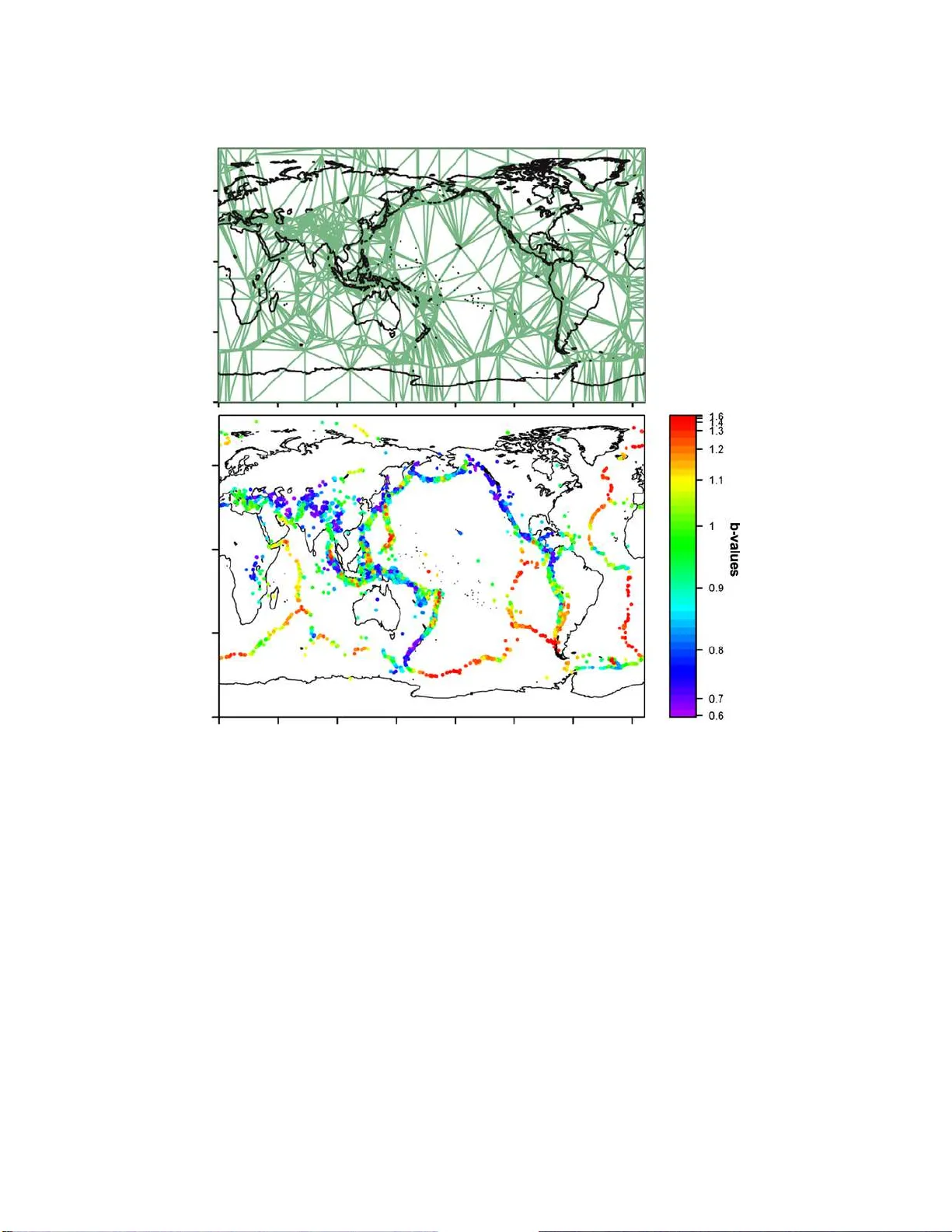
Statistic al Scienc e 2013, V ol. 28, No. 4, 521– 541 DOI: 10.1214 /13-STS439 c Institute of Mathematical Statisti cs , 2013 A Prosp ect of Ea rthquak e Prediction Resea rch Y osihik o Ogata Abstr act. Earthquak es o ccur b ecause of abrupt slip s on faults d u e to accum u lated stress in the Earth’s cr u st. Because most of th ese faults and their mec han ism s are not readily apparen t, deterministic earth- quak e prediction is difficult. F or effect iv e prediction, complex co ndi- tions a nd uncertain e lement s m ust b e considered , whic h necessitates sto c hastic p rediction. In particular, a large amount of u ncertain t y lies in ident ifying wh ether abn ormal p henomena are precursors to large earthquak es, as well as in assigning urgency to the earthquak e. An y disco v ery of p oten tially useful information for earthquak e prediction is incomplete un less qu an titativ e mo d eling of risk is considered. Th ere- fore, this m anuscript describ es the prosp ect of earthquake predictabilit y researc h to realize pr actical op erational forecasting in the near future. Key wor ds and phr ases: Abnormal p henomena, aseismic slip, Ba yesian constrain ts, epidemic-t yp e aftersho c k sequence (ET AS) m o dels, h ier- arc h ical space–time ET AS mo dels, p robabilit y forecasts, p robabilit y gains, stress c hanges. 1. INTRODUCTION Through r emark able dev elopment s in solid Earth science since the late 1960s, our understandin g of earthquak es h as increased significantly . Th e a v ail- abilit y of relev ant data has s teadily in creased as the study of ea rthqu ak es has pr ogressed remark- ably in g eophysic s. After ev ery ma jor earthquake, researc h ers h a v e elucidated imp ortan t seismic mec h- anisms asso ciated with it. Ho wev er, ev en though detailed an alysis and discussions ha v e b een con- ducted, large uncertain ties remain b ecause of dive r- sit y and complexit y of the earthquake phenomenon. Y osihiko O gata is Pr ofessor Emeritus, Institu t e of Statistic al Mathematics, Information and System R ese ar ch O r ganization, 10-3 Midori-cho, T achi kawa, T okyo 190-8562 and Institut e of In dustrial Scienc e, University of T okyo, Visiting Pr ofessor, 4-6-1 Komab a, Me gr o-Ku, T okyo 153-850 5 e-mail: o gata@ism.ac.jp . This is a n electronic r e print of the orig inal article published by the Institute of Mathematical Sta tistics in Statistic al Scienc e , 20 13, V ol. 28, No. 4 , 521– 5 41 . This reprint differs from the original in pa gination and t yp ogr aphic detail. This leads to un ac h iev able c hallenges in determin- istic earthquak e prediction b ecause all diverse and complex scenarios must faithfu lly reflect the pro- cesses of earthquakes to b e considered for effectiv e earthquak e pr ediction. On the other hand, sev eral tec hn iques for predict- ing earthquakes hav e b een p r op osed on the basis of anomalies of v arious t yp es; ho wev er, the effec- tiv en ess of these tec hniques is contro v ersial (Jor- dan et al. ( 2011 )). Th erefore, ob jectivit y is required for suc h ev aluation; otherwise, argu m en ts p r esen ted ma y lac k merit. New prediction m o dels that claim to incorp orate p otentia lly useful in formation o ver those used in stand ard seismicit y mo dels s hould b e ev aluated to determine whether predictiv e p o we r is impro v ed. Earthquak e forecasting mod els should ev olv e in this manner . Recen tly , there has b een gro wing momentum for seismologist s to dev elop an organized research program on earthquak e pr edictabilit y . An interna- tional co op erativ e study kn o w n as Col lab or atory for the Study of Earthquake Pr e dictability (CSEP; http://w ww.csept esting.org/ ) is current ly und er w a y among countries prone to ma jor earthquakes 1 2 Y. OGA T A for exploring p ossib ilities in earthqu ak e prediction (e.g., Jordan ( 2006 )). An immediate ob j ectiv e of the pro ject is to encourage the d ev elopmen t of statisti- cal mo dels of seismicit y , su c h as those sub sequent ly discussed in Section 2 , and to ev aluate their predic- tiv e p erformances in terms of pr obabilit y . In addition, the C SEP stu d y aims to deve lop a scien tific inf rastructure to ev aluate statistical signif- icance and pr ob ability gain (Aki ( 1981 )) of v arious metho ds used to p r edict large earthquak es by using observ ed abnormalities su c h as seismicit y anomaly , transien t cru stal mov emen ts and electromagneti c anomaly . Here pr ob ability gain is defined as the ra- tio of p robabilit y of a large earthquake estimated based on an anomaly to the underlying pr ob ab ility without anomaly . Section 3 describ es this imp ortan t concept, and then discus ses s tatistical p oin t-pro cess mo dels to examine th e significance of causalit y of anomalies and also to ev aluate the pr obabilit y gains conditional on the anomalous eve nts. F or pred iction of large earthquak es with a h igher probabilit y gain, comprehensiv e studies of anoma- lous phenomena and observ ations of earthquak e mec h anisms are essential . Sev eral su c h studies are summarized in S ections 4 – 6 . P articularly , I ha v e b een in terested in elucidating abn ormal seismic ac- tivities and geod etic anomalies to apply th em for promoting forecasting abilities, as describ ed in these sections. 2. PROBABILITY F ORECASTING OF BASELINE S EISMICITY 2.1 Log-Lik eliho o d fo r the Evaluation S co re of Probabilit y F o recast Through rep eated revisions, CSEP atte mpts to es- tablish standard m o dels to predict probabilit y th at conform to v arious parts of the w orld. Here I mean the prediction/estimation of pr ob ab ility as p redict- ing/estimating conditional probabilities gi ve n the past history of earthquake s and other p ossible pr e- cursors. The lik eliho o d is u s ed as a reasonable measure of p r ediction p erf orm ance (cf. Boltzmann ( 1878 ); Ak aik e ( 1985 )). The ev aluation metho d for probabilistic forecasts of earthquake s by the log- lik eliho o d fun ction has b een pr op osed, discussed and imp lemen ted (e.g., Kagan and Jac kson ( 1995 ); Ogata ( 1995 ); Ogata, Utsu and Katsura, 1996 ; V er e- Jones ( 1999 ); Harte and V er e-Jones ( 2005 ); S c hor- lemmer et al. ( 2007 ); Zec har, Gerstenb erger and Rhoades, 2010 ; Nanjo et al. ( 2012 ); Ogata et al. ( 2013 )). In some suc h stud ies, the ev aluation score has b een r eferr ed to as (relativ e) entrop y , wh ic h is essen tially similar to the log-lik eliho o d. 2.2 Space–Time-Magnitude Fo recasting of Ea rthquak es Baseline mo d els should b e set to compare with and ev aluate all pr edictabilit y mo dels. Based on em- pirical la ws, we can pr edict s tand ard reference prob- abilit y of earthqu ak es in a space–time-mag nitude range on the b asis of the time series of present and past earthquak es. The framew ork of CSEP , w hic h has ev aluated p erformances of subm itted forecasts of resp ectiv e regions (Jordan ( 2006 ); Zechar, Ger- sten b erger and Rhoades, 2010 ; Nanjo et al. ( 201 1 )), is similar to that of the California Regional E arth - quak e Lik eliho o d Mo dels (REL M) pro j ect for spatial forecast (Field ( 2007 ); Sc horlemmer et al. ( 2010 )). Differen t s p ace–time mo dels were submitted to the CSEP Japan T esting Center at the Earthquake Re- searc h In stitute, Univ ersit y of T oky o, for the one- da y forecast applied to the testing region in Japan (Nanjo et al. ( 2012 )). This means that the mo d el forecasts the pr obabilit y of an earthqu ake at eac h space–time-mag nitude bin. Ho w ev er, the CSE P pro- to cols h av e to b e impr ov ed to those in terms of p oint- pro cesses on a con tin uous time axis for the ev aluation includin g a real-time forecast (Ogata et al. ( 2013 )). Almost all mo dels incorp orated the Gutenberg– Ric hter (G–R) law for forecasting the m agnitude factor, and tak e differen t v arian ts of the space–time epidemic-t yp e aftersh o c k sequence (ET AS) mo del (Nanjo et al. ( 2012 ), and Ogata et al. ( 2013 )). In the follo w ing sections, I will outline these mo dels. 2.2.1 Magnitude fr e quency distribution Guten- b erg and Rich ter ( 1944 ) determined th at the num- b er of earthqu ak es increased (decreased) exp onen- tially as their magnitude decreased (increased). De- scribing this theory in terms of p oint pro cesses, the in tensit y of magnitude M is λ 0 ( M ) = lim ∆ → 0 1 ∆ Prob( M < Magnitude ≤ M + ∆) (1) = 10 a − bM = Ae − β M for constants a and b . In other words, the magnitude of eac h earthquak e will ob ey an exp onen tial d is- tribution su c h that f ( M ) = β e − β ( M − M c ) , M ≥ M c , where β = b ln 10, and M c is a cutoff magnitud e v alue ab o v e whic h all earthqu ak es are d etected. T ra- ditionally , the b -v alue had b een estimate d graph - EAR THQUAKE PREDICTION 3 Fig. 1 . T op p anel shows Delaunay tesse l lation up on which the pie c ewise line ar f unction is define d. The smo othness c on- str aint is p ose d i n the sum of squar es of inte gr ate d sl op es. Bottom p anel shows b-value estimates of the G–R f ormula in e quation ( 1 ) estimate d fr om the data f or e arthquakes of M ≥ 5 . 4 fr om the Harvar d University glob al CMT c atalo g ( http: // www. globalcmt. org/ CMTsearch. html ). One c onspicuous fe atur e is that b-values ar e lar ge in o c e anic ridge zones, but smal l in plate sub duction zones. ically , ho w ev er, more efficien t estimation is p er- formed b y the maximum likelihoo d metho d . Utsu ( 1965 ) derived it by the moment metho d. Later, Aki ( 1965 ) demonstrated that this is a maximum- lik eliho o d estimate (MLE) and provided the error estimate. It sh ould b e noted that the magnitud es in most catalog s are giv en in the int erv al of 0.1 (dis- crete magnitude v alues), hen ce, care should b e tak en for av oiding the bias of the b estimate in lik eliho o d - based estimation pro cedur es (Utsu ( 1969 )). Although the co efficien t b in a wide r egion is generally sligh tly smaller th an 1.0, Guten b erg and Ric hter ( 1944 ) further determined that the b -v alue v aries according to lo cation in sm aller seismic re- gions. The b -v alue v aries ev en within Japan and fur- ther v aries with time. T emp oral and s p atial b -v alue c h anges hav e attracted the atten tion of man y re- searc h ers ev er since Suyehiro ( 1966 ) rep orted a d if- ference b etw een b -v alues of foreshocks and after- sho c ks in a sequence. Here, we consider that β can v ary with time, space and space–time according to a function suc h as β ( t ), β ( x, y , z ) or β ( t, x, y ) . V arious non p aramet- ric smo othing algorithms such as ke rnel m etho ds ha v e b een prop osed (Wiemer and Wyss, 1997 ). Al- ternativ ely , the β v alue can b e parameterized by smo oth cubic sp lines (Ogata, Imoto and K atsur a, 1991 ; Ogata and K atsura ( 1993 )) or piece-wise lin- ear expansions on Delauna y tessellated space (Ogata ( 2011c ); see also Figure 1 , e.g.). In suc h a case, a 4 Y. OGA T A p enalized log-lik eliho o d (Go o d and Gaskins ( 1971 )) is used whereb y th e log-lik eliho o d function is asso- ciated with p enalt y fun ctions in whic h the co effi- cien ts are constrained for smo othness of the β func- tion. F or the optimal estimation of the β fun ction, the wei ght s in the p enalt y function are ob j ectiv ely adjusted in a Ba ye sian f ramew ork, as su ggested by Ak aik e ( 1980a ). 2.2.2 Af tersho ck analysis and pr ob abilistic for e- c asting T ypical aftersho c k frequen cy deca ys accord- ing to the rev erse p ow er fu nction w ith time (Omori ( 1894 ); Utsu , 1961 , 1969 ). First, let N ( s , t ) b e the n umb er of aftersho c ks in an in terv al ( s, t ). Then, the o ccurrence r ate of aftersho cks at th e elapsed time t since the main sho c k is ν ( t ) = lim ∆ → 0 1 ∆ P { N ( t, t + d ∆) ≥ 1 | Mainsho c k at time 0 } (2) = K ( t + c ) p for constan ts K , c and p . This is kn own as the Omori–Utsu (O–U) la w . T raditionally , estimates of the p arameter p ha v e b een obtained since the study of Utsu ( 1961 ) in the follo wing m an n er. The n umb ers of aftersho cks in a unit time in terv al n ( t ) are fi rst plotted against elapsed time on doubly logarithmic axes, and then are fit to an asymp totic straigh t line. The slop e of this line is an estimate for p . Th e v alues of c can b e determin ed by measuring the b en d ing curv e im- mediately after the m ain sho c k. Such an analysis is based on th e time series of counte d num b ers of af- tersho c ks. By such a plot, we can find aftersho ck sequences for w hic h the formula ( 2 ) lasts a long p e- rio d, more than 120 y ears, for example (Utsu ( 1969 ); Ogata ( 1989 ); Utsu, O gata and Matsu’ur a, 1995 ). T o efficien tly estimate th e three parameters di- rectly on the basis of o ccurrence time r ecords of aftersho c ks, assuming nonstationary P oisson pro- cess with intensit y function ( 2 ), Ogata ( 1983 ) su g- gested the maximum-lik eliho o d metho d, wh ic h en- abled th e practical aftersho ck forecasting. Reasen- b erg and Jones ( 1989 ) pr op osed a pro cedure based on the join t in tensit y rate of time and magnitud e of aftersho c ks (Utsu ( 1970 )) according to the G–R la w ( 1 ), λ ( t, M ) = λ 0 ( M ) ν ( t ) (3) = 10 a + b ( M 0 − M ) ( t + c ) p ( a, b, c, p ; constant) , where M is the magnitude of an aftersho c k and t is the time follo wing a main sho c k of magnitude M 0 ; the parameters are indep enden tly estimated by the maxim um-lik eliho o d metho d for resp ectiv e empir i- cal la ws. After a large earthquake o ccurs, the Japan Me- teorolog ical Agency (JMA) and the United States Geolog ical S urve y (USGS) hav e under taken op era- tional probabilit y forecast of the aftersho cks. Ho w- ev er, the forecast is announ ced after the elapse of 24 h or more. T his is d ue to the d eficiency of after- sho c k data due to o verlapping of seismograms after the main sho ck. In particular, the p arameter a is crucial f or the early forecast, but difficu lt to estimate in an early p erio d , whereas the other parameters can b e default v alues for the early forecast [Reasen b erg and Jones ( 1994 ); Earthqu ak e Researc h Committee (ER C), 1998 ]. T he diffi cu lt y is b ecause the parame- ter a can substan tially d iffer ev en if the magnitudes of th e main sho c ks are almost the same: for exam- ple, the num b ers of the aftersh o c ks of M ≥ 4 . 0 of t w o nearby main sho c ks of the same M6.8 differ b y 6–7 times (JMA ( 2009 )). It is notable that th e strongest aftersho c ks o c- curred within 24 h in most sequences (JMA ( 2008 )). Therefore, d esp ite adv erse conditions du ring data collect ion, pr obabilistic aftersho ck f orecasts sh ould b e d eliv ered as so on as p ossible within 24 h after the main sho c k to mitigate secondary disasters in affected areas. F or this p urp ose, it is necessary to estimate time- dep end en t m issing rates, or detection rates, of af- tersho c ks (Ogata and Katsura, 1993 , 2006 ; Ogata, 2005c ) b ecause they enable probabilistic forecasting immediately after the main sho c k (Oga ta, 2005c ; Ogata and Katsura ( 2006 )). The detection rate of earthquak es is describ ed by a probabilit y function q ( M ) of magnitude M such th at 0 ≤ q ( M ) ≤ 1 . The in tensit y λ ( M ) for actually observed magnitude fre- quency is describ ed b y λ ( M ) = λ 0 ( M ) q ( M ), corre- sp ond ing to th in ning or random deletion. An ex- ample of the detection rate fun ction is the cum u- lativ e of Gauss ian distribu tion or the so-called er- ror function q ( M ) = erf { M | µ, σ } . The parameter µ represents the magnitude at which earthquak es are d etected at a rate of 50%, and σ repr esen ts a range of magnitudes in whic h earthquakes are partially detected. Let a data set of magnitudes { ( t i , M i ); i = 1 , . . . , N } b e giv en at a p erio d imme- diately after the main sho ck. Assum e that the pa- rameters are time-dep en den t d u ring the p erio d suc h EAR THQUAKE PREDICTION 5 that λ ( t, M ) = 10 a + b ( M 0 − M ) ( t + c ) p q { M | µ ( t ) , σ } (4) with an impro ving detection r ate µ ( t ). An additional parametric approac h prop osed by Omi et al. ( 2013 ) uses the state–space repr esen tation metho d for r eal- time forecasting within the 24 h p erio d. 2.2.3 Epidemic-typ e aftersho ck se quenc e (ET AS) mo del The epidemic-t yp e aftersho ck sequence (ET AS) mo del describ es earthquake activit y as a p oint pro cess (Ogata ( 1986 ), 1988 ) and in clud es th e O–U la w for aftersh o c ks as a d escendan t p ro cess. This mo d el assumes that the bac kgrou n d seismicit y is a stationary Po isson pro cess with a constant oc- currence r ate or num b er of earthquake s p er da y , µ . The conditional in tensit y function of the pr o cess is describ ed by λ θ ( t | H t ) = µ + X { i : t i 0 , resp ectiv ely , w h ere σ 1 = 0 . 6709 an d σ 2 = 0 . 4456 (km). Supp ose that, at the curren t time, c | n s ho ws the stage where the n th earthqu ake ( n = 2 , 3 , 4 , . . . , # c ) has o ccurr ed in a cluster c , where # c is the num b er of all earthquak es in the cluster c . W e prop ose the forecasting probabilit y p c | n b y usin g the follo w ing logistic transformation: Set f = logit p = (1 − p ) /p , or p = 1 / (1 + e f ); th en, logit p c | n = logit µ ( x 1 , y 1 ) + 1 #( i < j ≤ n ) (23) × X i
Original Paper
Loading high-quality paper...
Comments & Academic Discussion
Loading comments...
Leave a Comment