Tracing the origin of a scientific legend by Reference Publication Year Spectroscopy (RPYS): the legend of the Darwin finches
In a previews paper we introduced the quantitative method named Reference Publication Year Spectroscopy (RPYS). With this method one can determine the historical roots of research fields and quantify their impact on current research. RPYS is based on…
Authors: ** *제공된 정보에 저자 명단이 포함되어 있지 않습니다.* **
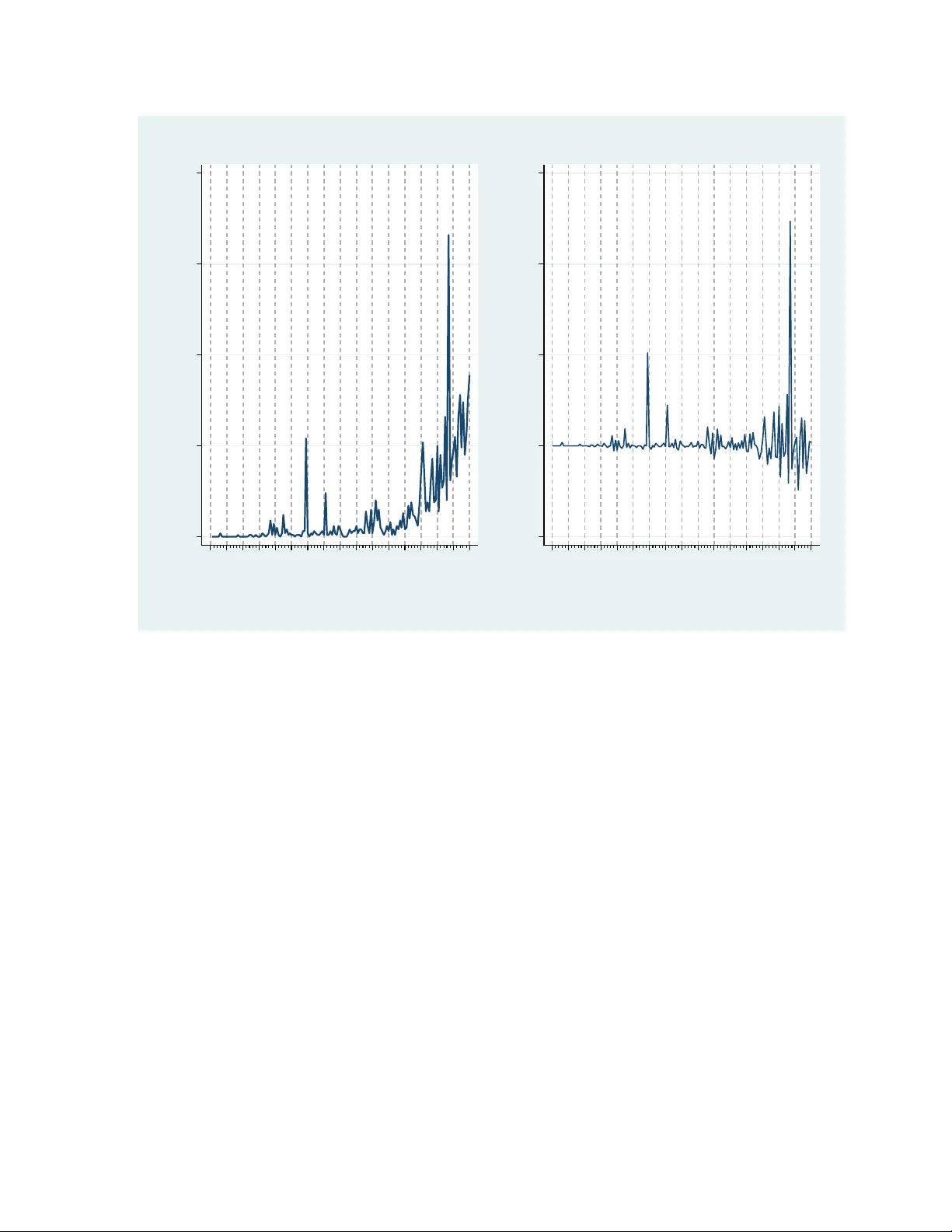
Accepted for publication in Scientometrics Tracing the origin of a scientific legend by Reference Publication Year Spectroscopy (RPYS): the legend of the Darwin finches W e rner Marx Max Planck Institute f or Solid State Research, He isenbergstr. 1, D -70569 Stuttgart , Germany; w.marx@fkf . mpg.de Lutz Bornm ann Division for Science a nd Innovation Studies, Adm inistrative Headquarters of the Max Planck Society, Hofgartenstr. 8, 80539 Munich, German y ; bornm ann@gv.mpg.de Abstract In a previews pap er we introduced the qu antitative method nam ed Reference Pub li cation Year Spectroscop y (RPYS). W ith t his m ethod one can determine the historical roots of research fields and quantify their im pact on current research. RPYS is bas ed on the analysis of the f requency with which references are cited i n the publications of a specific research f iel d in term s of the publication years of these cited references. I n this study, we illustrate that RPYS can also be used to reveal the origin of scientific legends. W e selected “Darwin finches” as a n example for illustration. Ch arles Darwin, the originator of evoluti onary theory, was given credit for f inches he did not see and f or observations and insights about the finch es he never made. W e have shown that a book published in 1947 is the m ost- highly cited earl y reference c ited within the relevant literature. This book had already been revealed as the origin of the term "Darwin finches" by Sullowa y through careful historic al analysis. 2 Introduction Research activit y usually evo lves on the basis of previous invest igations and di scussions am ong the experts in a scientific com munity. Although there are many differences between t he theories of scientific development, the relati onship of current research to past literature pla y s a significant role: k nowledge cannot be acquired without this relationship. T he relationship to earlier publicat ions is expressed in the form of ref erences. One can expect that the content of the ci ted publication and that of the citing publication are related and that the former is of significance to the know ledge claim in the l atter. The premise of a normative theory of citations is that th e more frequently scientific pub lications are cited, the more important the y are for the advancement of knowledge. From this perspectiv e, citation data provides interesting insight i nto the historical science co ntext, in terms of the significance of the previous historical publications on which the later publications in a field are based. Garfield discussed the application of citation data to sociolog ical and historical rese arch as early as 1963 [ 1]. Reference Publicatio n Year Spectroscopy (RPYS) In a previous publicatio n, rather than starting with citati ons of the publications in a specif ic research field, for certain issues we pro posed reversing the perspect ive and analyzing the paper s referenced in the publications in the sam e research field in order to determine the im pact of publications, authors, institutions or journ al s withi n that field [2]. A cited r eference analysis with specif ic emphasis on the publication years of the references can be used to quantif y the signif icance of historical publ ications an d to reveal the historica l roots of a given research field. T he analysis of the publicati on years of references is not a new bibliom etric approach but has alread y been discussed by De Solla Pric e (De Solla Price, 1974; p. 91). And it was for ins tance applied b y Van Raan to measure the growth of s cience and to detect important breakthroug hs in science without pre -defining an y fields (van Raan, 2000). Quantitative anal y sis of the r eference publication years (RP Y s , not to confuse w ith the m ethod RP YS) in a specific research f iel d shows that f requently occurring RPYs becom e more differentiated towards the past and mostly sho w up as distinct peak s. If one analyzes the publicat ions underlying these peak s, one will find that during the 19t h and the firs t half of the 20th centur y they are predom inantly formed by single relatively highl y cited publications . These few, particularly frequentl y cited publicati ons contain as a rule the historic papers (or even the historical roots) m ost relevant for the evolut ion of a specific research field which should be tak en into consideration when discuss ing its histor y . Their specifi c role can only be revealed by careful ana ly sis through experts in the relevant fie ld. In an anal ogy to the spectra in signal analysis, which are c haracterized by pronounc ed peaks in the quantification of c ertain properties (such as the absorption or ref lection of light as a function of its color), we call this special applica tion Reference Publication Year Spe ctrosc opy (RPYS) [3 -4 ]. 3 RPYS can be used to analyze the historical roots of a research field, but can also be use d to reveal the origin of a scientific lege nd. This study deals with the o rigi n of the term “Darwin finches“, which has been introduced into scientif ic literature and be y ond as a le gend and is based on a m isconception. The legend implies that the f inches of the Galapagos Islands prom pted Darwin to develop his theory on the origin of species based on th e mechanism of natural selection. On princi ple, this could have happe ned but definitely did not: In t he first edition (18 39) of his Journal of Rese arches Darwin [ 5] said very little about the finches and in hi s book on the origin of species [6] the y were not even m entioned. The legend was obviously imposed on the history of the theory of evolution later, g iving rise to the question of w hich publication this term comes from. Since the answer ha s already been given by an expert o f the theory of evolution [7-8], w e can verify the R PYS method and will show that the roots of a le gend (here the “Darwin finches”) can also be re vealed by using this bibliom etric method. Scientific legends have long been a topic in popular as w ell as in scientific literat ure (see for exam ple references [9], [10], and [11]). W etterer has already applied bi bliometric data to the trac ing of a scientific legend [12 ]. Methods The result of the applica tion of RPYS to literature deal ing with “Darwin finches” pr esented here is based on the Science Citati on Index (SCI) which is access ed v ia the SCIsearch data base offered by the database provider ST N International (http://www.stn -internation al.com/). This database com bined with the STN search s y stem enables s ophi sticated citat ion analysis. Among man y other options, the SCIsearch database searched via STN m a kes it possible to ask whi ch historical publications in the various f ields of the natural sciences have been cited most f requently by the papers publishe d since 1974, the period covered b y the SCIsearch database. T he Web of Science (W oS) provided by Thoms on Reuters, the m ost common search platform of the Thoms on Reuters citation indexes, stretches back to 1900. However, the W oS search functions have not bee n optimized for the k ind of bibliometric analysis presented here. STN’s retrieval s y stem allows the publications from a specific research field to be s elected and all the references they cite to b e extracted. Instead of the co mplete references it is also possible to select and analyze only the authors of the publications in the cited references, only the journals or on ly the RPYs. In this study, we are concerne d mainly with the anal y sis of the RPYs an d especially the early publications cited particularl y frequently as the orig ins of specific terms ( here “Darwin finches”). The firs t step i n RPYS is to select the publ ications for a certain researc h field and extract all the referenc es from them. T he second step is to estab li sh the d istribution of the frequencies of th e cited references over the RPYs and from this determ ine the early RP Y s cited m ost frequentl y (a m ini mum citation count of 10 h as proved to be reasonable). The third is to analyze these RPYs for f requ entl y cited historical publi cation s. The publications dea ling with “Darwin finches” w ere selected in the SCI database b y searching w ith the term "Darwin('s) finch(es)". All cited references with referenc e publication years prior or eq ual to 1960 (n= 4 1961) have been selec ted from the references of the complete set of 689 papers on “Darwin finches” published within scientif ic literature since 1974. Re sults Figure 1 shows the distri bution of the cited references li miting the reference publication yea rs to the tim e period 1800 to 1960. T he reference publication y ears stretch back to before 1800. However, a large number of ref erences with early reference publication years usu ally prove to b e erroneous. Whereas Figure 1a shows the distr ibution of the number of cited references across the publicati on years, Figure 1b shows the absolute de viation of the number of cited references in one y ear from the m edi an for the number of c ited references in the two pre vious, the current and the t wo following years. The de vi ation from the median mak es the distinct peaks more c lea rly visible in a historic al context. Figures 1a and 1b sho w some distinct peak s. In a historical co ntext, the vast majorit y of the cited references collected u nder a distinct peak results f ro m the citations of on e single publication. The first distinct peak in Figure 1 can be assigned to th e reference publication y ear 1859: 53 out of altogether 54 citations r efer to Charles Darwin's book “On the Origin of Species b y Means of Natural Selection, or the Preservation of Favoured Races in the Struggle for Life” f irst published in 1959 [6]. The next peak can be assig ned to Darwin's second bo ok on evolutionar y theory, following his 1859 work: 21 out of 24 citations ref er to Darwin’s book “ The Descent of Man , and Selec tion in Relation to S ex” first published in 1871 [13 ]. The next distinct peak can be assigned to a book by Theodosius Dobzhansk y published in 1937 [14 ]: 22 out of 41 citatio ns refer to his book entitled “Gen etics and the Origin of Species”, a m aj or work on the m odern evolutionary synthesis (the synthes is of evolutionary biolog y with genetics). Due to the ir overall importance, it is not surp rising that these basic works on evolutionary theory are frequentl y cited by papers dealing with “Darwin finc hes”. However, a caref ul reading of these books shows that the y are not the orig in of the legend about Darwin fi nches. The most clearly pron ounced peak in Figure 1 can be assigned to the reference p ublication year 1947: 144 out of 161 citations r efer to a book b y D.L. Lack entitled "Darwin’ s f inches" published in 1947 [15 ]. The strong suspicion that th is book is the origin of the term "Darwin finches" is confirm ed by the historical analysis of F.J. Sullowa y published in 1982 in his paper “Darwin and h is fi nches: T he ev olution of a legend ” [7 ]. A short f orm of this paper was also published in Na ture [8 ]. Although David Lack c lai med that the term “Darwi n finches” was f irst applied by Percy Lowe in 19 36 (there is also a corresponding peak visible in Figure 1), it was only then popularized b y Lack in his 1947 book. The following two qu otations from the pap er b y Sulloway [7] il lustrate the emergence of the legend originated by the book by David Lack published in 1947: 5 Figure 1: Distributi on of the cited references across the reference publication years 1800 to 1960: W h ereas Figure 1a shows the d istribution of the number of c ited references acros s the publication years, Figure 1b shows the abso lute deviation of the num ber of cited references in one year from the median for the number of cited references in the two previous, t he cu rrent and the two following y ears. (1 ) “As it turns out, Darw in made absolutely no effort while i n the Galapagos to separate his finches by island; and what loca lity information he lat er published, he reconstructed af ter his return to England, using other shipm ates’ carefully labeled collections ... Even after his return to England, when John Gould had clarified the aff initi es of this unusual avian group, Dar win was slow to unde rstand how the Ga lapagos finches had evolved ... Lastly, far from being crucia l to his evolutionar y argument, as the legend would have us believe, the finc hes were not even m entioned by Darwin in the Orig in of Species. In spite of the legend’s m anifest con tradictions with historic al fact, it successf ully holds swa y today in the m ajor textbooks of biolog y and ornithology, and is f requently encoun tered as well in the historical li terature on Darwin. It has becom e, in fact, one of the m ost widely circulated le gends in the his tory of the life sciences, ranking with the fam ous stories of Newton and the app le and of Galileo’s experim ents at the Leaning Tower of Pisa, as a c lassic textbook account of the origins of modem science” (pp. 39 - 40 ). 0 50 100 150 200 N u m b e r o f c i t e d r e f e r e n c e s 1800 1810 1820 1830 1840 1850 1860 1870 1880 1890 1900 1910 1920 1930 1940 1950 1960 Publication y ear 1a -50 0 50 100 150 Deviation from 5-years smoother (absolute) 1800 1810 1820 1830 1840 1850 1860 1870 1880 1890 1900 1910 1920 1930 1940 1950 1960 Publication y ear 1b 6 (2) “ Although Lack was not the first person to use th is term, it was he who succee ded in popularizing it. In one sense the term is felicitous, because not all the G eospizinae [scientific nam e of Darwin finches] are confined to the Ga lapagos Islands, and thus th e name ‘Galapagos finch es’ is inappropriate for the who le group. This was, in f act, the chief reason for Lack ’s use of the expression ‘Darwin’s finches.’ But as the term becam e more popularl y known throug h Lack’s book, people tende d to assum e tha t these bi rds had been so named beca use, as one biologist put it, ‘the y helped to persuade Darwin of the truth of evolution’ and were crucial as wel l to his later theories. T hrough this act of eponom y , Darwin was increas ingly given credit after 1947 for f inches he n ever s aw and for observations and insights a bout them he never m ade” (pp. 45-46). Discussion The origin of the term “Darwin finches” was tak en as a case study to point out the pote ntial of the RPYS method [3 - 4] t o investigate scientific legends . We have selecte d the literature on “Darwin fi nches” and have applied RP YS to identify possible publications as the origin of this legend whi ch has spread out into the scientific literature a nd beyond. W e have shown that the book by David L ack published in 1947 [15] is by far the m ost-highly-cited pre-1960 referenc e cited since 1974 within t he relevant literature. T his book has been alread y identified as the orig in of the misleading term "Darwin finches" b y th e extensive historical anal y sis of Sullowa y [7-8]. T his study has shown that R PYS (a simple anal y sis of cited references in a publ ication set) has the potential to m ake the origin of a legend vis ible in a similar wa y to a sophisticated and tim e-consuming historical a nalysis. However, we should consider that the method is only as good as the p ublication-citation recor d. As illustrated by our exam ple, one ends up with the paper that popularized the co ncept (here: the le gend) under stud y , not necessar y the paper that introduced the concept. If ever y one has f orgotten the original sourc e of a concept, then only careful historical analy sis can reveal the true orig in. 7 References [1] Garfield, E. (1969). Essays of an Inform ation S cientist. Curre nt Contents , 1, 43-46. Reprinted f rom: American Documentat ion , 14, 289-291 (Oc tober 1963). [2] Bornmann, L., & Marx, W . (20 13). The proposal of a broa dening of perspective in evaluat ive bibliometrics by complem enti ng the tim es cited with a cited reference anal y sis. Journal of I nformetrics , 7(1), 84 – 88. doi: 1 0.1016/j.joi.2012.09.003 [3] Marx, W ., Bornmann, L., Barth, A., & Leydesdorff , L. (in press). Detecting the his torical roots of research fields b y reference publ ication year spectroscopy (RPYS). Journal of t he American Society for Information Science an d Technol ogy . [4] Marx, W . (2012). Tracking historical papers and t heir citations. European Science Ed iting , 38(2), 35-3 9. http://www.ease.or g.uk/sites/default/files/m ay 12toc.pdf [5] Darwin, C.: Jour nal and remarks 1832 – 1836. Vol. 3 by P. Park er King, Robert Fit zRoy, Charles Darwin: The narrat ive of the voyages of H.M. Ships A dventure and Beagle. Henr y Colburn, Lond on 1838 – 1839 (1st ed.). [6] Darwin, C. (1859). On the Origin of Species b y Means of Natural Selection, or the Preservat ion of Favoured Races in the Struggle for Life (1st ed.) . London: John Murray. ISBN 1-4353-9 386-4 [7] Sulloway, F.J. (198 2). Darwin and his finches: T he evolution of a legend. Journal of t he History of Biology , 15(1), 1- 53. [8] Sulloway, F.J. (198 3). The legend of Darwin’s f inche s . Nature , 303(5916), 372 - 372. doi : 10.1038/303372a0 [9 ] Bangerter, A., & Heath, C. (2004). T he Mozart effect: Track ing th e evolution of a scientific legend. British Journal of Socia l Psychology , 43, 605 – 623. doi: 10.1348/01 44666042565353 [10 ] Grünbaum , B. (2012). Is Napoleon’s theorem really Napo leon’s theorem? The American Mathematical Month ly , 119(6), 495-501. doi: 10.4169/am er. math.m onthly .119.06.495. [11] Dufour, H.D., & Carroll, S.B. (2013). Great m yths die hard. N ature , 502(7469), 32 - 33. doi :10.1038/5020 32a 8 [12 ] W etterer, J.K. (2006). Quotation error, citati on copying, and ant extinctions i n Madeira. Scientometrics , 6 7(3), 351 – 372. do i: 10.1556/Scient.67.2006.3. 2 [13 ] Darwin, C. (1871). The Descent of Ma n, and Selection in R elation to Sex (1st ed.). Lond on: John Murray. ISBN 0-801 4-2085-7 [14 ] Dobzhansk y , T. (1937). G enetics and the Origin of Spec ies. Columbia Univers ity Press, New York . (2nd ed. 1941; 3rd ed. 1951). [15 ] Lack , D.L. (1947). Darwin’s Finches. Cam bridge, UK: Cambridge Uni versity Press (reissued in 1961 by Harper, New York , with a new preface b y Lack; reissued in 1 983 by Cambridge Universit y Press w ith an introduction and n otes by Lauren e M. Ratcliffe and Peter T. B oag). ISBN 0- 521-25243-1
Original Paper
Loading high-quality paper...
Comments & Academic Discussion
Loading comments...
Leave a Comment