Comparing journals from different fields of Science and Social Science through a JCR Subject Categories Normalized Impact Factor
The journal Impact Factor (IF) is not comparable among fields of Science and Social Science because of systematic differences in publication and citation behaviour across disciplines. In this work, a decomposing of the field aggregate impact factor i…
Authors: Pablo Dorta-Gonzalez, Maria Isabel Dorta-Gonzalez
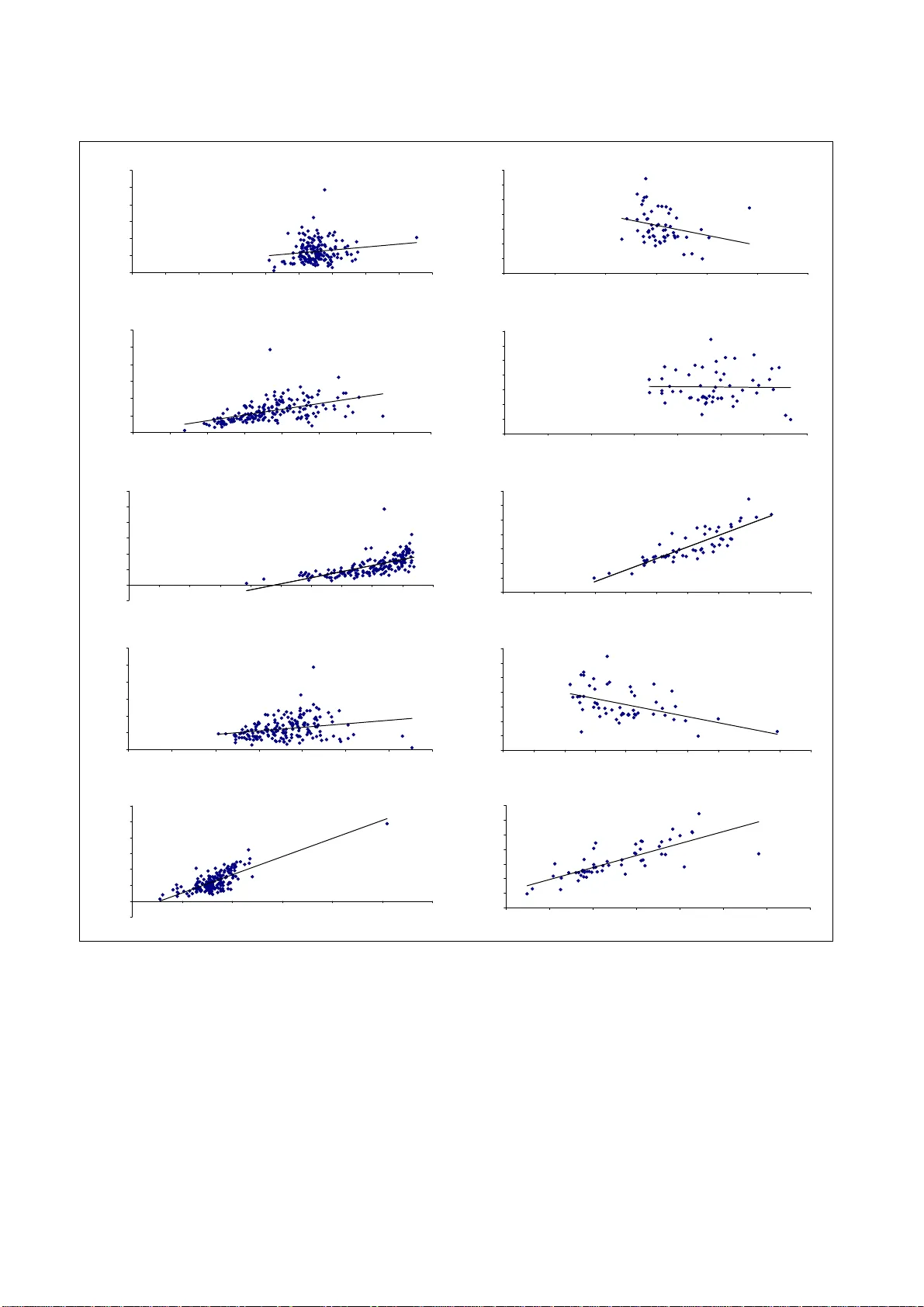
1 Comparing journals from different fields of Science and Soci al Science through a JCR Subject Categories Normalized Impact Factor P. Dorta-González a* , M.I. Dorta-González b a Departamento de Métodos Cuantita tivos en Economía y Gestión, Univ ersidad de Las Palmas de Gran Canaria, Gran Canaria, España; b Departamento de Estadística, Investigación Operativa y Co mputación, Universidad de La La guna, Tenerife, España. ABSTRACT The journal Impact Factor (IF) is not com parable among fields of Science and Social Science because of systematic differences in publicati on and citation behaviour across disciplines. In this work, a decomposing of the field aggregate impact factor into five normall y distributed variables is presented. Considering these factors, a Principal Component Analysis is employed to find the sources of the variance in the JCR subject categories of Science and Social Science. Although publica tion and citation behaviour differs largel y across disciplines, principal components explain more than 78% of the total variance and the average number of references per paper is not the primary factor explaining the variance in impact f actors across categories. Th e Categories Normalized Impact Factor (CNIF) ba sed on the JCR subject category list is proposed and compared with the IF. This normalization is achieve d by considering all the indexing categories of each journal. An empirical application, with one hu ndred j ournals in two or m ore subject categories of economics and business, shows that the gap between rankings is reduced around 32% in the journals analyzed. This gap is obtained as the maximum distance among the ranking percentil es from all categories where each journal is included. Keywords: citation, impact factor, journal evaluation, s ource normalized indicator, JCR subject categories. 2 1. Introduction The Impact Factor (IF) published in the Journal Citation Reports (JCR) by Thomson Reuters is defined as the average number of citations to each journal in a current year to ‘citab le items’ published in that journal during the two preceding years. Sin ce its formulation (Garfield, 1972), the IF has been criticized for some arbitrary decisi ons involved in its construction. The definition of ‘citable items’ (articles, notes, and reviews), th e focus on two preceding years as rep resentation of impact at the research front, et c., have been discussed in the literature (Bensman, 2007) and m any possible modifications and improvements have been suggested (Althouse et al., 2009). In response, Thomson Reuters has added the Five-year Impact Factor , the Eigenfactor Score , and the Article Influence Score (Bergstrom, 2007) to the journals in th e online version of the JCR, in 2007 (see Bornmann & Daniel, 2008, for a review in citation m easures). While the extension of the IF to a five-year time window is direct, the other recent m easures can be considered too complex (W altman & Van Eck, 2010) and they do not solve the problem of comparing journals from different fields of science. The problem of field-sp ecific differences in citation impact ind icators comes from institu tional research evaluation (Leydesdorff & Opthof, 2010a; Opthof & Leydesdorff, 2010; Van Raan et al., 2010). Citation distribution va ries with fields of science and, in some cases, across specialties within fields (Dorta-González & Dorta-González, 201 0, 2011a,b). However, institutes are populated by scholars with different disciplin ary backgrounds and research in stitutes often have among their missions the objective of integra ting interdisciplinary bodies of knowledge (Leydesdorff & Rafols, 2011; Wagner et al., 2011). There are statistical patterns which are field-speci fic and allow the norm alization of the IF. Garfield (1979a,b), proposes the term ‘citatio n potential’ for system atic differences among fields of science based on the average number of references per pape r. For example, in the biom edical fields long reference lists with more than fifty items are common, but in mathematics short lists with fewer than twenty references are the standard. Thes e differences are a co ns equence of the citation cultures, and can be expected to lead to signif icant differences in the IF across fields of science because the probability of bei ng cited is affected. The fracti onally counted IF corrects these differences in terms of the sources of the ci tations (Leydesdorff & Bornm ann, 2011; Moed, 2010; Zitt & Small, 2008). Using fractional coun ting, a citation in a citing paper con taining n references counts 1/ n, instead of 1, as is the case with integer counting. In relation to the source-normalizat ion, Zitt & Sm all (2008) propose the Audience Factor (AF) using the mean of the fractionally counted citations to a journal. This mean is then divided by the mean of all journals included in the Science Citation Index. Similarly, Moed (2010) divides a 3 modified IF (with a window of th ree years and a different definiti on of citable items) by the median number of references in the Scopus databa se. He proposes the resulting ratio as the Source Normalized Impact per Paper (SNIP) which is now in use as an alternative to th e IF in the Scopus database (Leydesdorff & Opthof, 2010b). The Scimago Journal Ranking (SJR) considers the prestige of the citing journals (G onzález-Pereira et al., 2011), and ev en though this is useful for the ranking of journals, the value of the indicator is difficult to interpret (Waltman et al., 2011). Another important source of variance between fields is related to the dissem ination channel of the research activity results. For exam ple, researchers in social sciences and h umanities publish more in books than in journals, and researchers in computer science publish their resu lts m ore in conference proceedings than in journal articles (Chen & Konstan, 2010; Freyne et al., 2010 ). Differences between fields citations are caused mainly by the differe nt ratio of refer ences to journals includ ed in the JCR as opposed to references to ‘non-source items’ (e.g., books), whereas differences in the lengths of reference lists are mainly responsible for inflation in the IF (Althouse et al., 2009). Most efforts to class ify journals in terms of f iel ds of science have focuse d on correlations between citation patterns in core groups assumed to represent scientific specialties (Leydesdorff, 2006; Rosvall & Bergstrom, 2008 and 2010). Indexes such as the JCR subject category lis t accommodate a multitude of perspectives by listing journals u nder different groups (P udovkin & Garfield, 2002; Rafols & Leydesdorff, 2009). In this sens e, Egghe & Rousseau (2002) define the Relative Im pact Factor (RIF) in a simila r way as the IF, taking all journa ls in a category as a m eta-journal. This indicator in the JCR is called Aggregate Impact F actor (AIF). Furtherm ore, normalizations based on the journal ranking in the category (Sombatsom pop & Markpin, 2005), and the m aximum value of the IF jointly with the median in the categor y (Ramírez et al., 2000) have been proposed. However the positions of indivi dual journals on the merging specialties remain dif ficult to determine with precision and som e journals are assi gned to more than one category. This is the case of Science, Nature, and the Proceedings of the National Academ y of Scie nce of the USA (PNAS), which are examples of high pres tige multidisciplinar y jou rnals. Many others journals cove r two or more specialties. Therefore, journals cannot easil y be compared, and classification systems based on citation patterns hence tend to fail. When a journal publishes work from several subject categories, its performance may be better when s een from the standpoint of one subject category than from the other (m ultidisciplinary ef fect). The categories in the JCR were created in order to com pare journals within the sam e category. However, what is to be done when a journal is included in more than one ca tegory? In this work, a normalization process considering a ll journals in the indexing categ ories is proposed. In order to 4 compare the normalized im pact indicator with th e IF, an empirical app lication, with one hundred journals in two or more subject categories of economics and business, is presented. In addition to the average number of references and the ratio of ref erences to journals included in the JCR, there exist some other sou rces of variance between fields. In this work also we decom pose the aggregated impact factor into five m ain s ources of variance and calculate them in all the categories of the JCR. Out of the five main sour ces there are three new factor s: the field growth, the ratio of JCR references to the target window , and the proportion cite d to citing items. 2. Decomposing the Aggregate Impact Factor of a field into its main components 2.1 Impact Factor of a journal A journal impact indicator is a measure of the nu mber of times that artic les published in a census period cite articles published dur ing an earlier target window. The IF reported by Thomson Reuters has a one year census period and uses the tw o previous years as the target window. As an average, the IF calcula tion is based on two elements: the num erator, which is the number of citations in the current year to any item s published in a journal in the prev ious two years, and the denominator, which is the number of ‘citable item s’ published in the same two years (Garfield, 1972). Journal items include ‘citable items’ (artic les, notes, and review s), but also letters, corrections and retractio ns, edito rials, news, and other items. Let i t A be the number of citable item s in journal i in year t . Let i t NCite d be the number of times in year t that the year t-1 and t-2 volumes of journal i are cited by journals in the JCR. Then, the Impact Factor of journal i in year t is 12 i i t t ii tt NCited I F. AA (1) 2.2 Aggregate Impact Fact or (AIF) of a field Let F be the set of all journals in a specific field, where the fields are equivalent to the JCR subject categories . Denoting Fi tt iF A A and Fi tt iF NCit ed NCi ted , the Aggregate Impact Factor (AIF) is the ratio between the citations in year t to citable items in any journal of field F in years t-1 and t-2 , and the number of citable items published in years t-1 and t-2 , that is, 12 12 i F t F t iF t ii F F tt tt iF NCited NCited AIF . AA AA (2) 5 The AIF can also be expressed as a weigh ted mean impact facto r . Consider a formulation that assigns weights proportional to th e number of citable items in the target years. The weigh t for journal i in year t is 12 12 ii i tt t FF tt AA f . AA (3) Notice that 1 i t iF f . Then, from equations (1), (2), and (3), 12 12 12 12 i ii i t F ii i tt t iF t tt t FF FF FF iF iF iF tt tt tt NCited NCited A A A IF IF f IF . AA AA AA (4) 2.3 Components in the Aggre gate Impact Factor of a field It is possible to decompose the AIF into five main variab les. We will show in section 4 that these variables are normally distributed and different across fields. The variable F t a is a measure of the field growth while the others ( FF F F tt t t r, p, w , b ) are related with the citation ha bits in the field. - Field growth rate A field can grow for two reasons; by incorporati ng new journals into the field or by publishing more items in some indexed journals. Ho wever, a field can also decrease. Let 12 FF F F tt t t aA / ( A A ) be the ratio of citable items in year t with respect to those appearing in the target window. This is a measure of the field growth. Note that F t a0 . 5 when 12 FF F tt t A AA . If F t a0 . 5 then the field is growing in the number of citable items. Conversely, if F t a0 . 5 then the field is reducing. For example, if a field is gr owing annually around 5%, then 1 FF tt A 1.05 A , 12 FF tt A 1.05 A , and 22 F2 F F tt t a ( 1.05 A ) / ( 2.05 A ) 2 1.05 / 2.05 0.538 . Some others ratios are F t a 0. 576 (10%) and F t a0 . 6 5 4 (20%). On the other hand, if a fiel d is reducing annually around 5%, then 1 FF tt A 0.95 A , 12 FF tt A 0.95 A , and 22 F2 F F tt t a ( 0.95 A ) / ( 1.95 A ) 2 0.95 / 1.95 0.463 . - Average number of references Let F t R be the total number of refere nces in journals of field F in year t. Then FF F tt t rR / A is the average number of references in citable items of field F in year t . - Ratio of references to JCR items 6 Let F t J be the total number of references (in items of field F in year t ) to journals in th e JCR. This excludes unpublished working papers, conference pr oceed ings, books, and journals not indexed by the JCR. Then FF F tt t p J/ R is the ratio of number of refere nces to number of JCR items. For example, if 05 F t p . then half of the references are JCR items. - Ratio of JCR references to the target window Let F t NCiting be the total JCR references in f ield F in year t within the targ et window. Then, FF F tt t w NCiting / J is the ratio of JCR references in year t within the target window. For exam ple, if 02 5 F t w. then a quarter of the JCR refere nces belong to the target window. - Proportion of cited to citing items in the target window If , iF most of the citations to journal i came f rom journals within field F but some of them came from journals outside field F . Let / FF F tt t b NCited NCiting be the proportion of cited to citing items in the target win dow. If 1 F t b then citations received in field F are more than cita tions produced in field F (within the target wi ndow). Conversely, if 1 F t b then citations received are less than citations produced. Therefore, the index F t b is a measure of the field’s citations exchange. For example, if 11 F t b. then field F receives in the target window around 10% more citations than it produces. 2.4 Decomposing the AIF of a field into components The Aggregate Impact Factor of field F can be decom posed or fact orized in the following way: FF F F F F tt t t t t AIF a r p w b . (5) The proof is direct, considering that F t NCite d can be expressed as: FF F F FF F F F F F tt t t tt t t t t t FF F F tt t t R J NCiting NCited NCited A A r p w b . A R J NCiting (6) Therefore, from (2) and (6), 12 FF F F F FF F F F F tt t t t tt t t t t FF tt Ar p w b A I F ar pw b . AA 3. Categories Normalized Impact Factor (CNIF) 7 This is a field-normalized citation impact score, wh ere the fields are equivalen t to the JCR subject categories. We compare ‘actual’ citation counts to ‘expected’ c ounts based on the average im pact score of all JCR-indexed jour nals assigned to a field. Let 12 n tt t F , F ,..., F be the subject categories where journal i is indexed in year t . Denoting by 12 jn tt t t FF F F , then 12 j j t t j t i t iF F t ii tt iF NCited A IF . A A In a similar way, 12 i t JCR iJ C R t ii tt iJ C R NCited A IF . AA Let j t F JCR tt AIF / AIF be the normalized score of the meta-category j t F . If j t F JCR tt AIF AIF then the score is one. Scores larger th an one represent aggregate impact factors in the field below the average in the JCR, while scores lower than on e represent aggregate impact factors in the field above the average in the JCR. We define the Categories Normalized Impact Factor of journal i in year t as: j t JCR ii t tt F t AIF CNIF IF AIF Notice that if j t F J CR tt A IF AIF , then the score is less than one and it reduces the impact factor of that journal. Conversely, if j t F J CR tt AIF AIF , then the score is higher than one and it increases the impact factor of that journal. In the particular case of a journal in only one category F , JCR ii t tt F t AIF CNIF IF AIF The CNIF has an intuitive interpre tation, similar to the IF. The CNIF is a measure of the number of times that articles published in year t cite, in a category-norm ali zed proportion, articles published during the two previous years. Moreover, it is easy to calculate and allows for the comparison between fields. 4. Empirical application 8 4.1 Materials and Methods The underlying bibliometric data in the empirical application was obtained from the online version of the Journal Citation Reports (JCR) during the first week of October 2011. The JCR database (reported by Thomson Reuters – ISI, Philadel phia, USA) is availab le at the website www.webofknowledge.com. The IF reported by Thoms on Reuters has a one ye ar census period and uses the two previous years as the target window. In the JCR, journals are assigned by Thomson Reuter s experts into one or m ore journal categories, according to cited and citing relationships with the journals in the catego ries (Pudovkin & Garfield, 2002). The journal categories, also referred to subject category list, are treated as fields and subfields of science. The 2010 Scie nce edition contains 8073 journa ls classified into 174 subject categories. The 2010 Social Science edition contai ns 2731 journals classified into 56 subject categories. Given that these journal categories ar e well known, there is no reason to question the feasibility of using them in the field-normalization. Although most journals in the JC R are included in only one edition (Science or Social Science), there are some which are included in both. This ha ppens, for example, with nine journals included in the category ‘Management’, in the Social Science edition, and in th e category ‘Operations Research and Management Scien ce’, in the Science edition. In the comparative analysis betw een the IF and the CNIF, and th e estimation of the gap between rankings across categories, the five selected categories are : SS3 (BUSINESS), SS4 (BUSINESS, FINANCE), SS9 (ECON), SS29 (MANAGE), a nd S124 (OPER RES & MANAGE SCI). These five categories contain a total of 590 different journals. There are 490 journals in just one category, 98 journals in two categories, and 2 journals in three categories. Th erefore, the number of journals in more than one category is exactly 100 (48 jour nals in SS3, 36 journals in SS4, 54 journals in SS9, 55 journals in SS29, and 9 journals in S124). 4.2 Results - The Aggregate Impact Factor of the JCR subject categories Table 1 shows the AIF for both editions of the JCR (i.e. Science and Social Science). At the bottom of Table 1 the aggregate index, the average, and the standard deviation fo r both editions, are also shown. Unlike the aggregate impact factor, that cons iders th e size of the categories, in the av erage impact factor all the categories have the same weight. The AIF in Science is 2.920, around 58% higher than in Social Science which is 1.848. [Table 1 about here] 9 There exists a great variance in th e AIF within each edition. In Scie nce, the categories with highest values are MULTIDISCIP SCI (9.707), CELL BI OL (6.453), and HEMATOL (5.310), whereas the lowest factors are for ENGN, MARINE (0.207), ENGN, PETROLEU M (0.565), and ENGN, AEROSPACE (0.628). In Social Science, the cat egories with the highest AIF are PSYCHIATRY (3.215), PSYCHOL, BIOL (2.682), and PSYCHOL, EXPT (2.590), whereas the lowest factors are for HIST (0.479), HIST OF SOCI AL SCI (0.623), and AREA STUDI ES (0.640). Notice in Figure 1 that the AIF in Science is highe r than in Social Science. [Figure 1 about here] - The components of the JCR subject categories Table 1 shows also the components. There are important differences between categories, especially between categories from different editions. The average growth of the JCR is 0.57 (the JCR database annual growth is around 9%). This average growth is about 0.55 (7%) in the Scie nce edition and around 0.62 (16%) in the Social Science edition. Therefore, the Social Science editi on is grow ing over twice as much as the Science edition. This is due to the incorpor ation of journals in some categor ies of the Social Science edition in the last few years. This has occurred in categories HOSPITAL, LEI S, SPORT & TOUR (0.97), ETHNIC STUDIES (0.81), and HIST (0.78), for example. In Science, a great variance is observed. Note the case of BIOL (0.85) in comparis on to ENGN, INDUSTRIAL (0.41), for example. The average number of references in Science is 37.18 while in Social Science it is 48.28. Therefore, a journal from a category of Social Science has on averag e 30% more references than a journal from a Science category. However, there exis ts a g reat variance within editions. Notice categories CELL & TISSUE ENGN (75.66), PALEONTOL (67.05) , and HIST (66.28), in comparison to ENGN, MARINE (13.94), NUCLEAR SCI & TECH (19.21 ), and MATH (20.49), for example. The average ratio of references to JCR items is 0.75. In Science th is average is 0.80 whereas in Social Science it is 0.60. Therefore, a journal fr om a Social Science category has on average 20% more references to non-JCR items than a journal from a Science category. However, there exists a great variance within editions. In Science, notice categories PHYS, ATOM, MOLEC & CHEM (0.94), CELL BIOL (0.93), and CHEM, ORGANIC (0.93), in comparison to ENGN, MARINE (0.39), HIST & PHILOS OF SCI (0.44), and COMP SCI, SOFT ENGN (0.56) , for example. In Social Science, note categories PSYCHOL , BIOL (0.87), PSYCHOL, EXPT (0.83), and PSYCHIATRY (0.80), in relation to HIST (0.30), and CULTURAL STUDIES (0.32), for example. The average ratio of JCR references to the targ et window is 0.18. Therefore, one of each five JCR references is on average within the target window. There are few di fferences between editions (0.18 in Science and 0.20 in Social Scienc e) but there exists a great vari ance within editions. The highest 10 ratios are 0.45 in AREA STUDIES, 0.35 in INT RELAT, and 0.33 in ENGN, MARINE. The lowest ratios are 0.10 in PALEONTOL, and 0.11 in GEOL and MANAGE. Finally, there exists a great variance in the prop ortion of cited to citing item s. In Science, notice categories MULTIDISCIP SCI with 2.55, PHYS, MULTIDISCIP with 1.20, and HEMATOL with 1.18, in comparison to ENGN, MARINE with 0.28, HIST & PHILOS OF SCI with 0.30, and NURS with 0.41, for example. In Social Scien ce, note category PSYCHOL, MATH with 1.16, in relation to HIST with 0.10, for example. - Cluster Analysis of the JCR categories Table 2 shows a Cluster Analysis of the JCR categories according to the AIF components. W ard's method is the criterion applied in the hierarchical cluster analysis. We c onsider two levels of aggregation. The first cluster level (L1) is conf igured by closest categori es in the publica tion and citation habits. The second level (L2) contains meta -clusters of categories th at are relatively clo ser in the publication and c itation habits. Although some clusters exclusively contain categories from the same edition (C4 and C8), in most cases ther e are categories from both editio ns of the JCR. There are two very large clusters (C5 and C6), w ith more than 25% of categories each. Note that around 70% of categories are clustered in C12 while about 4% of categories are not clustered. The non clustered group includes some popular categori es such as S17 (BIOL), S113 (MULTIDISCIP SCI), and SS20 (HIST). [Table 2 about here] - Principal Component Analysis of the AIF Table 3 shows the correlation between the main va riables. N ote that increasing the average number of references in a field F t r also increases the citations received NCited F t ; correlations of 0.95 and 0.89 in Science and Social Science, respectively. Something sim ilar occurs with the number of references to JCR items F t J . Moreover, if a field produces more citations F t NCiting , then it also receives more cita tions NCi ted F t ; correlations of 0.98 and 0.87 in Science and Social Science, respectively. [Table 3 about here] The correlation between components in Table 3 is lo w or non-existent. There is a high correlation in Social Science between the ratio of references to JCR items F t J and the proportion of cited to citing 11 items F t b . In this edition, c ategories citing more JCR items (closer to ca tegories in Scie nce) receive more citatio ns from outside the category. In general, the components of the AIF correlate litt le or nothing with the AIF. This is shown in Figure 2. Whereas the correlation with the proportion cited to ci ting item s is similar in both editions, the correlation with the ratio of references to JCR items is m uch higher in Social Science. The correlation with the average number of referen ces is low in Science and there is no correlation in Social Science. [Figure 2 about here] Table 3 also shows the eigenvalues of a Princi pal Component Analysis (PCA). This eigenvalue decomposition of the correlation matrix in term s of component scores is used to find the causes of the variability in the dataset a nd sort them by importance. The principal components are guaranteed to be independent because the variables ar e normally distributed according to a Kolmogorov- Smirnov test (see also Table 4 and Figure 3). [Table 4 and Figure 3 about here] The analysis reveals that in Science the variance can be explained to a great degree by three m ajor components: the ratio of references to JCR items ( F t J , 36.55%), the ratio of JCR references to the target window ( F t w , 20.93%), and the field growth ( F t a , 20.60%). These components together explain 78.08% of the total variance. In Social Sc ience, the variance can be explained to a great degree by only two major compon ents: the ratio of JCR refere nces to the target window ( F t w , 57.79%) and the proportion of cited to citing items in the target window ( F t b , 23.50%). These components together explain 81. 29 % of the total variance. - Comparing IF and CNIF The CNIF is obtained for economics and business fi eld journals in more than one JCR subject category (SS3, SS4, SS9, SS29, an d S124). In each category, the percentile of a journal in the ranking is obtained as the position in the rank ing divided by the number of j ourna ls in the categ ory ( x100% ). A percentile is the va lue below wh ich a certain percent of jou rnals fall. The gap is def ined as the maximum distance am ong the ranking percent iles from all categories where each journal is included. For instance, COMPUT ECON is in percentiles 67 and 85 for its two categories according to IF. The same procedure is applied to ranking perc entiles obta ined with CNIF. CO MPUT ECON is 12 ranked in percentiles 69 and 77 for its two categorie s according to CNIF. Th en, the gap according to IF is 18 (85-67) and according to CNIF is 8 (77-69 ). There are important differences between the CNIF a nd the IF in most of the journals analyz ed. The maxim um gap in the IF case is 28 while in th e CNIF case it is 17. The average g ap in the IF case is 6.2 whereas the CNIF case is 4.2. Therefore, the maximum gap is reduced by around 39% and the average gap by about 32%. Moreover, in 51% of the journals analyzed the maximum gap has decreased. Finally, Figures 4 and 5 show the e ffect of the norm alization on the Impact Factor. In all cases the impact of the journals analyzed has increased, so m e more than others (in a quantity higher than two in some cases). Therefore, the econ omics and busine ss field is being penalized by the Im pact Factor in comparison to the rest of f ields in the JCR. [Figures 4 and 5 about here] 4.3 Discussion The AIF in Science is around 58% higher than in So cial Science. This is due to the fact that although on average there are over 30% more references in articles of Social Science, an im portant part of them are non-JCR items. In Social Scie nce around 40% of the re ferences are books and journals that are not indexed in the JCR, while in Science the se are around 20% of the references. There exists a great variance in th e AIF within each edition, in som e cases between journals of relatively close categories. For example, the AI F of category MATH & CO MP BIOL (3.038) is almost four tim es greater than category MATH (0.829). The categ ories with the highest AIF in Science are related to biom edicine. The lowest values are in engine ering and mathem atics. In Social Science, the categories with the hig hest values ar e related to psychology and som e specialties of economics, such as health policy and management. The lowest factors are in categories related to history. The JCR database grows annually around 9%. The Soci al Science edition is growing over twice as much as the Science edition (16% and 7%, respectively) . This is due to the in corporation of journals in some categories of the Social Science in th e last few years. A journal from a category of So cial Science has on average 30% more references and around 20% more references to non -JCR items than a journal from a Science category . The longest reference lists are produced in history and the shortest in engineering and m athematics. The highest proportions to non-JCR items are in physics, biology, and chemistry, whereas the lowest are in 13 engineering and computer science. In Social Science, the highest values are in psychology and the lowest in history. One of each five JCR references is on average in the target window. Curiously, some of the categories with the lowest propor tion of references to JCR item s have the highest proportion of citations in the target window. This is due to the fact that the ol der references correspond to books while the newer references correspond to articles. This happens, for example, in engineering and history. In some areas, such as m athematics, just one in eight JCR references is from the previous two years, in comparison to histor y where they are one in three. In general, the highest proportions cited to citing are in biomedic ine and lowest are obtained in history and law. However, noti ce the exceptional case of categor y MULTIDISCIP SCI where m ore than half of the citations came fr om outside the category. In Social Science, categories citing more JCR items (closer to categories in Science) receive m ore citations from outside the category, som e of them from Science categories. With respect to the Cluster A nalysis of the JCR c a tegories, C1 and C7 include , in general, those life sciences with an important social component, as well as those social sciences which use mathematical m ethods in a higher degree (hea lth, psychology, economics, and business, for example). However, there exist important diffe rences between C1 and C7, and they are not clustered jointly in the second le vel. Notice that S119 and SS30 ( NURS) are in the same cluster (C1), as there are not enough diffe rences between them to justif y the existence of two sim ilar categories in Science and Social Science editions . A sim ilar case occurs with S79 and SS21 (HIST & PHILOS OF SCI) in cluster C2. Note that ECON is in C1, however BUSINESS and MANAGE are in C7; this highlights the heterogeneity of th e economics and business field (observe also that BUSINESS, FINANCE i s in C6). Clusters C2 and C4 contain thos e social sciences which use ma thematical methods in a lower degree (education, sociology, linguis tic, and law, for example). Finall y, clusters C5 and C6 include formal, physical, technological, an d life sciences (m athematics, phys ics, chemistry, engineering, and biomedicine, for example). The differences across categories within the sam e edition are in some cases greater than those which exist between some categorie s from different editions. This is the case of GERONTOL and PSYCHIATRY, close to Science, an d S79 (H IST & PHILOS OF SCI), close to Soc ial Science, for example. The variance in the AIF in Science can be expl ained to a great degree by three m ajor components (the ratio of references to JCR items, the ratio of JCR references to the target window, and the field growth). In Social Science, the variance can be explained to a great degree by only two major 14 components (the ratio of JCR references to the target window and the proportion of cited to citing items in the target window). The principal compone nts are different depending on the edition of the JCR. This is motivated because in Social Science there are m any different di sciplines in relation to the habits of publication and citation (economic s and psychology versus history, for exam ple). There are important differences between the CNIF a nd the IF for most of the journals analyzed. In the case of the CNIF, the maximum ga p is reduced in m ore than half of the journals with resp ect to the IF. The average gap is also reduced by around a 32%. 5. Conclusions The journal Impact Factor is not comparable among fields of science because of system atic differences in publication and ci tation behaviour across discipline s. A decom posing of the field aggregate impact factor into five normally distributed variable s sho ws that, for the JCR subject categories of Science and Social Science, the v ariables that to a greater degree exp lain the variance in the impact factor of a field do not include the average number of ref erences. However, this is the factor that has m ost frequently been used in the l iteratu re to justify the dif ferences between fields of science, as well as the most em ployed in th e source-normalization (L eydesdorff & Bornm ann, 2011; Moed, 2010; Zitt & Small, 2008). Therefore, it is nec essary to consider som e other sources of variance in the normalization p rocess. In this sense, a normalized impact indicator base d on the JCR subject category list is proposed and compared with the Im pact Factor. This normaliza tion is achieved by considering all the categor ies indexing each journal. An empirical application, w ith one hundred journals in two or more subject categories of econom ics and business, shows that the gap between rankings diminishes in one half of the cases analyzed and by around 32%. The field considered (economics and business) is an exam ple of a hete rogeneous area that is penalized by the Impact Factor, but not the only one, since the normalized im pact has increased in all journals analyzed. Additionally , there are some other fields that are favored by the Im pact Factor. This is the main reason why it is necessar y to be cautious when comparing journal im pact factors from different fields. In this sense, our index has behaved well in a big number of journals. Finally, we would emphasize the nature of JCR subject categor y data and the doubtfulness of obtaining results precise enough fo r the purpose no matter how sophist icated the mathem atical and statistical technique. Acknowledgements 15 This research has been supported by the Minist ry of Science and Tech nology of Spain under the research project ECO2008-05589. 16 References Althouse, B. M., West, J. D., Bergstrom , C. T ., & Bergstrom, T. (2009). Differences in im pact factor across fields and over time. Journal of the American Socie ty for Information Science and Technology, 60 (1), 27–34. Bensman, S. J. (2007). Garfield and the impact factor. Annual Review of Information Science and Technology, 41 (1), 93–155. Bergstrom, C. (2007). Eigenfact or: Measuring the value and pr estige of scholarly journals. College and Research Libraries News, 68 (5), 314. Bornmann, L., & Daniel, H. D. (2008). What do citation counts measure? A review of studies on citing behavior. Journal of Documentation, 64 (1), 45–80. Chen, J., & Konstan, J. A. (2010). C onference paper select ivity and im pact. Communications of the ACM , 53 (6), 79 – 83 Dorta-González, P., & Dorta-González, M. I. (2010). Indicador bibliométrico basado en el índice h. Revista Española de Documentación Científica , 33 (2), 225–245. Dorta-González, P., & Dorta-Go nzález, M. I. (2011a). Aplicac ión empírica de un indicador bibliométrico basado en el índice h. Cultura y Educación , 23 (2), 297–313. Dorta-González, P., & Dort a-González, M. I. (2011b). Central inde xes to the citation distribution: A complem ent to the h-index. Scientometrics , 88 (3), 729–745. Egghe, L., & Rousseau, R. (2002). A general fra mework for relative impact indicators. Canadian Journal of Information and Library Science , 27 (1), 29–48. Freyne, J., Coyle, L., Smyth, B., & Cunningha m, P. (2010). Relative st atus of journal and conference publications in computer science. Communications of the ACM , 53 (11), 124 – 132. Garfield, E. (1972). Citati on analysis as a tool in journal evaluation. Science, 178 (4060), 471–479. Garfield, E. (1979a). Citation indexing: Its th eory and application in Science, Technology, and Humanities . New York: John Wiley. Garfield, E. (1979b). Is citation anal ysis a legitimate evaluation tool? Scientometrics, 1 (4), 359– 375. González-Pereira, B., Gue rrero-Bote, V. P., & M oya-Anegón, F. (2011). A new approach to the metric of journals’ sc ientific prestige: The SJR indica tor. Journal of Informetrics, 4 (3), 379– 391. Kendall, M. G. (1938). A new m easure of rank correlation. Biometrika , 30 (1/2), 81 – 93. Leydesdorff, L. (2006). Can scientif ic journals be classified in te rm s of aggregated journal-journal citation rela tions using the Journal Citation R eports? Journal of the Am erican Society for Information Science & Technology, 57 (5), 601–613. 17 Leydesdorff, L., & Bornmann (2011) . How fractional counting of ci tations affects the Impact Factor: Normalization in terms of differences in citation potentials among fields of science. Journal of the American Society fo r Information Science & Technology, 62 (2), 217–229. Leydesdorff, L., & Opthof, T. (2010a). Normaliz ation at the field leve l: Fractional counting of citations. Journal of Informetrics, 4 (4), 644–646. Leydesdorff, L., & Opthof, T. ( 2010b). Scopus's source normalized imp act per paper (SNIP) versus a journal impact factor based on fractional counting of citations. Journal of the American Society for Information Science and Technology, 61 (11), 2365–2369 . Leydesdorff, L., & Rafols, I. (2011). Indicato rs of the interdisciplina rity of journals: Diversity, centrality, and citations. Journal of Informetrics , 5 (1), 87–100. Moed, H. F. (2010). Measuring contextual citation impact of scientific journals. Journal of Informetrics, 4 (3), 265–277. Opthof, T., & Leydesdorff, L. (2010). Caveats for th e journal and field norma lizations in the CW TS (“Leiden”) evaluations of research p erformance. Journal of Informetrics, 4 (3), 423–430. Pudovkin, A. I., & Garfield, E. (2002). Algorithmi c procedure for finding semantically related journals. Journal of the American Society for In formation Science and Technology, 53 (13), 1113–1119. Rafols, I., & Leydesdorff, L. (2009). Content-base d and algorithmic classi fications of journals: Perspectives on the dynamics of scientif ic communication and indexer effects. Journal of the American Society for Information Science and Technology, 60 (9), 1823–1835. Ramírez, A. M., García, E. O., & Del Río, J. A. (2000). Renormalized impact factor. Scientometrics , 47 (1), 3–9. Rosvall, M., & Bergstrom, C. T. (2008). Maps of random walks on complex networks reveal community structure. Proceedings of the National Academy o f Sciences, 105 (4), 1118–1123. Rosvall, M., & Bergstrom, C. T. ( 2010). Mapping change in large networks. PLoS ONE, 5 (1), e8694. Sombatsompop, N., & Markpin, T. (2005). Making an equality of ISI im pact factors for different subject fields. Journal of the American Society for Information Science and Technology , 56 (7), 676–683. Van Raan, A. F. J., Van Leeuwen, T. N., Visser, M. S., Van Eck, N. J., & Waltm an, L. (2010). Rivals for the crown: Reply to Opthof and Leydesdorff. Journal of Informetrics, 4 (3), 431– 435. Wagner, C., Roessner, J. D., Bobb , K., Klein, J., Boy ack, K., Keyton, J, Ra fols, I., Börner, K. (2011). Approaches to understand ing and measuring interdiscipl inary scientific research (IDR): A review of the literature. Journal of Informetrics , 5 (1), 14–26 18 Waltman, L., & Van Eck, N. J. (2010). The rela tion betw een Eigenfactor, Audience Factor, and Influence Weight. Journal of the American Society fo r Information Science and Technology, 61 (7), 1476–1486. Waltman, L., Yan, E., & Van E ck, N. J. (2011) . A recursive field-normalized bibliometric performance indicator: An application to th e field of library and information science. Scientometrics, 89 (1), 301–314. Zitt, M., & Small, H. (2 008). Modifying the journa l im pact factor by fractional citation weightin g: The audience factor. Journal of the American Society for Information Science and Technology, 59 (11), 1856–1860. 19 Table 1: Aggregate Impact Factor components of the JCR subject categories in the 2010 Science and Social Science editions (S=Science, SS=Social Science, t =2010, - Data not available) Code JCR subject category (F) References Citations to JCR items in the target window AIF components Aggregate Impact Factor JCR J t F Total R t F NCited t F NCiting t F a t F r t F p t F w t F b t F AIF t F S1 ACOUSTICS 87001 110560 11626 1287 2 0.51 29.14 0.79 0.15 0.90 1. 553 S2 AGR ECON & POLICY 10771 18343 1075 2395 0.48 38.94 0.59 0.22 0.45 1.088 S3 AGR ENGN 65135 82827 13352 13182 0.65 29.92 0.79 0.20 1.01 3.123 S4 AGR, DAIRY & ANIMAL SCI 165027 204241 15769 21064 0.55 33.81 0.81 0.13 0.75 1.428 S5 AGR, MULTIDISCIP 140735 193124 15625 2378 3 0.63 32.96 0.73 0.17 0.66 1.673 S6 AGRONOMY 191377 248439 19111 2627 7 0.62 37.44 0.77 0.14 0.73 1.774 S7 ALLERGY 82572 94468 16195 1821 6 0.51 44.23 0.87 0.22 0.89 3.844 S8 ANATOMY & MORPHOL 71567 85796 6011 9494 0.61 46.50 0.83 0.13 0.63 1.976 S9 ANDROL 14097 16433 1571 2069 0.56 44. 78 0.86 0.15 0.76 2.377 S10 ANESTHESIOL 119952 136540 20567 24750 0.52 37.42 0.88 0.21 0.83 2.955 S11 ASTRON & ASTROPHYS 587864 753996 131008 142737 0.47 56.59 0.78 0.24 0.92 4.609 S12 AUTOM & CONTROL SYST 119510 171369 17595 23622 0.58 25.73 0.70 0.20 0.74 1.532 S13 BEHAV SCI 277143 312477 32268 40224 0.51 57.76 0.89 0.15 0.80 3.048 S14 BIOCHEM RES METHODS 497392 557611 98866 107235 0.56 38.37 0.89 0.22 0.92 3.822 S15 BIOCHEM & MOLEC BIOL 2300858 2489594 428047 418919 0.52 49.62 0.92 0.18 1.02 4.435 S16 BIODIVERS CONSERVAT 123090 159146 13946 19505 0.57 54.15 0.77 0.16 0.71 2.688 S17 BIOL 653552 745525 74752 117221 0.85 48.06 0.88 0.18 0.64 4.114 S18 BIOPHYS 467970 514619 76148 86868 0.51 43.37 0.91 0.19 0.88 3.291 S19 BIOTECH & APPL MICROBIOL 822862 946753 137905 160035 0.57 39.23 0.87 0.19 0.86 3.256 S20 CARDIAC & CARDIO SYST 554524 604904 115840 112024 0.59 37.98 0.92 0.20 1.03 4.277 S21 CELL & TISSUE ENGN 75741 81945 18128 17421 - 75.66 0.92 0.23 1.04 - S22 CELL BIOL 1165303 1251961 268233 231292 0.54 55.27 0.93 0.20 1.16 6.453 S23 CHEM, ANALYT 548695 628015 100590 119856 0.52 34.95 0.87 0.22 0.84 2.906 S24 CHEM, APPL 317360 371130 49172 54563 0.52 31.82 0.86 0.17 0.90 2.207 S25 CHEM, INORG & NUCLEAR 497463 538689 58993 79483 0.51 43.13 0.92 0.16 0.74 2.404 S26 CHEM, MED 451855 516337 57426 88072 0.60 42.17 0.88 0.19 0.65 2.795 S27 CHEM, MULTIDISCIP 1544644 1694928 324585 317737 0.59 40.37 0.91 0.21 1.02 4.586 S28 CHEM, ORGANIC 765524 824033 111395 136404 0.51 41.38 0.93 0.18 0.82 2.853 S29 CHEM, PHYS 1643567 1770821 285009 309709 0.57 39.72 0.93 0.19 0.92 3.615 S30 CLIN NEUROL 779590 888013 132347 131593 0.56 38.73 0.88 0.17 1.01 3.238 S31 COMP SCI, ARTIF INTEL 187274 285250 29613 33535 0.55 33.83 0.66 0.18 0.88 1.940 S32 COMP SCI, CYBERNET 24119 41678 2843 4387 0.53 38.34 0.58 0.18 0.65 1.395 S33 COMP SCI, HARD & ARCHITEC 54473 95160 8502 12437 0.51 26.30 0.57 0.23 0.68 1.203 S34 COMP SCI, INFORMAT SYST 155262 266542 23113 36675 0.56 32.48 0.58 0.24 0.63 1.583 S35 COMP SCI, INTERDISCIP APPL 2278 95 322163 30707 41310 0.53 32.46 0.71 0.18 0.74 1.652 S36 COMP SCI, SOFT ENGN 106893 190047 14891 25990 0.53 29.61 0.56 0.24 0.57 1.240 S37 COMP SCI, THEORY & ME THODS 97412 164483 14231 18296 0.54 30.26 0.59 0.19 0.78 1.404 S38 CONSTRUCT & BUILD TECH 57189 94782 7364 11475 0.59 24.49 0.60 0.20 0.64 1.121 S39 CRIT CARE MED 153274 170072 29238 30200 0.54 42.06 0.90 0.20 0.97 3.924 S40 CRYSTALLOGRAPHY 212892 231353 32921 41283 0.52 22.79 0.92 0.19 0.80 1.681 S41 DENTISTRY, ORAL SURG & MED 218076 252356 26350 31184 0.55 34.00 0.86 0.14 0.84 1.966 S42 DERMATOL 173103 201837 26506 30138 0.57 33.87 0.86 0.17 0.88 2.525 S43 DEV BIOL 211739 229814 36751 36553 0.50 57.14 0.92 0.17 1.01 4.583 S44 ECOL 640059 790606 84918 96279 0.53 54.00 0.81 0.15 0.88 3.094 S45 EDUC, SCI DISCIP 48104 72082 5734 9403 0.67 28.67 0.67 0.20 0.61 1.529 S46 ELECTROCHEM 302448 335975 56538 64829 0.6 7 31.88 0.90 0. 21 0.87 3.615 S47 EMERGENCY MED 6854 6 82846 8842 11669 0.66 30.25 0.83 0.17 0.76 2.123 S48 ENDOCRIN & METABOL 611906 677374 113606 1145 54 0.55 46.80 0.90 0.19 0.99 4.304 S49 ENERGY & FUELS 336244 437760 65702 84990 0.64 30.33 0.77 0.25 0.77 2.912 S50 ENGN, AEROSPACE 3075 5 51921 3175 5620 0.43 23.96 0.59 0.18 0.56 0.628 S51 ENGN, BIOMED 276851 328504 42038 49317 0.61 36.42 0.84 0.18 0.85 2.848 S52 ENGN, CHEM 536301 653171 76256 96697 0.56 29.60 0.82 0.18 0.79 1.940 S53 ENGN, CIVIL 199342 295089 30628 39031 0.57 27.06 0.68 0.20 0.78 1.593 S54 ENGN, ELECT & ELECTRON 634985 876499 112849 137704 0.55 21.82 0.72 0.22 0.82 1.541 S55 ENGN, ENVIRONM 259544 327262 52006 60964 0.58 35.44 0.79 0.23 0.85 3.258 S56 ENGN, GEOLOG 36820 57045 3849 5303 0.55 30.52 0.65 0.14 0.73 1.132 S57 ENGN, INDUSTRIAL 74614 105946 11104 1126 5 0.41 33.60 0.70 0.15 0.99 1.450 S58 ENGN, MANUFACT 76839 107999 11339 12720 0.46 27.29 0.71 0.17 0.89 1.307 S59 ENGN, MARINE 2376 6133 214 776 0.43 13.94 0.39 0.33 0.28 0.207 S60 ENGN, MECHAN 210921 296658 25610 32354 0.54 24.35 0.71 0.15 0.79 1.127 S61 ENGN, MULTIDISCIP 132667 199242 14276 23749 0.52 25.06 0.67 0.18 0.60 0.928 S62 ENGN, OCEAN 13260 20338 1785 2306 0.48 23.59 0.65 0.17 0.77 0.998 S63 ENGN, PETROLEUM 24595 36848 1577 3498 0.60 21.95 0.67 0.14 0.45 0.565 S64 ENTOMOL 160936 213373 14138 21061 0.55 38.68 0.75 0.13 0.67 1.409 S65 ENVIRONM SCI 863759 1135683 133091 169848 0.51 41.60 0.76 0.20 0.78 2.507 S66 EVOLUT BIOL 268481 315846 40368 42326 0.53 60.69 0.85 0.16 0.95 4.116 S67 FISHERIES 150855 190662 12664 18730 0.54 44.07 0.79 0.12 0.68 1.579 S68 FOOD SCI & TECH 492829 604057 58996 7662 0 0.57 34.60 0.82 0.16 0.77 1.942 20 S69 FORESTRY 118549 163891 10745 16473 0.54 45.07 0.72 0.14 0.65 1.607 S70 GASTROEN & HEPATOL 3829 40 420138 77128 75259 0.52 40.17 0.91 0.20 1.02 3.801 S71 GENET & HERED 759905 849856 156577 150409 0.53 49.95 0.89 0.20 1.04 4.861 S72 GEOCHEM & GEOPHYS 324472 382922 33619 42544 0.54 49.78 0.85 0.13 0.79 2.358 S73 GEOGRAPHY, PHYS 160804 210478 14939 22751 0.55 59.09 0.76 0.14 0.66 2.323 S74 GEOL 93025 123641 7929 10439 0.51 57.08 0.75 0.11 0.76 1.868 S75 GEOSCI, MULTIDISCI P 697181 873861 76510 95789 0.53 48.47 0.80 0.14 0.80 2.230 S76 GERIATR & GERONTOL 138082 165247 19901 26049 0.56 46.67 0.84 0.19 0.76 3.158 S77 HEALTH CARE SCI & SERV 151209 216231 21434 33354 0.62 35.22 0.70 0.22 0.64 2.154 S78 HEMATOL 436060 472192 109358 92940 0.51 44.98 0.92 0.21 1.18 5.310 S79 HIST & PHILOS OF SCI 27945 62939 1678 5515 0.59 48.08 0.44 0.20 0.30 0.754 S80 HORTICULTURE 83424 105471 7471 11143 0.58 34.99 0.79 0.13 0.67 1.429 S81 IMAG SCI & PHOTO TECH 45101 61322 5867 7468 0.60 37.78 0.74 0.17 0.79 2.186 S82 IMMUNOL 826396 902431 176305 172838 0.51 45.73 0.92 0.21 1.02 4.585 S83 INFECTIOUS DIS 296452 340308 67287 69288 0.54 36.20 0.87 0.23 0.97 3.879 S84 INSTRUM & IN STRUMENTAT 205016 265740 35387 45316 0.54 23.50 0.77 0.22 0.78 1.675 S85 INTEGRAT & COMPL MED 45667 61939 5667 8647 0.68 38.74 0.74 0.19 0.66 2.402 S86 LIMNOL 73679 90960 6712 15236 0.59 46.86 0.81 0.21 0.44 2.028 S87 MARINE & FRESH BIOL 353748 439034 33305 45527 0.50 49.14 0.81 0.13 0.73 1.870 S88 MAT SCI, BIOMAT 161212 180555 27166 28420 0.63 39.30 0.89 0.18 0.96 3.729 S89 MAT SCI, CERAM 8079 4 94437 10855 11926 0.45 24.40 0.86 0.15 0.91 1.264 S90 MAT SCI, CHARAC & TEST 25396 38432 3345 4321 0.54 19.84 0.66 0.17 0.77 0.939 S91 MAT SCI, COAT & FILMS 147205 162025 22364 24633 0.51 27.61 0.91 0.17 0.91 1.943 S92 MAT SCI, COMPOSITES 52688 67083 6749 7675 0.58 26.58 0.79 0.15 0.88 1.553 S93 MAT SCI, MULTIDISCIP 1534898 1718357 287829 309530 0.55 32.07 0.89 0.20 0.93 2.949 S94 MAT SCI, PAPER & WOOD 21449 31552 2098 3852 0.56 24.59 0.68 0.18 0.54 0.912 S95 MAT SCI, TEXT 23909 34522 3280 4267 0.55 23.01 0.69 0.18 0.77 1.208 S96 MATH & COMP BI OL 148002 178634 23779 28791 0.61 37.38 0.83 0.19 0.83 3.038 S97 MATH 304735 410885 30156 37579 0.55 20.49 0.74 0.12 0.80 0.829 S98 MATH, APPL 371885 497222 43713 55245 0.60 23.68 0.75 0.15 0.79 1.247 S99 MATH, INTERDISCIP APPL 154935 207574 19456 23504 0.52 30.90 0.75 0.15 0.83 1.515 S100 MECHAN 325669 416158 40233 46736 0.56 28.83 0.78 0. 14 0.86 1.574 S101 MED ETH 1239 2 21839 1756 3911 0.56 35.05 0.57 0.32 0.45 1.581 S102 MED INFORMAT 43039 63614 6730 9045 0.56 31.98 0.68 0.21 0.74 1.893 S103 ME D LAB TECH 84687 100724 11600 16603 0.55 34.80 0.84 0.20 0.70 2.208 S104 MED, GEN & INTERNAL 564352 707658 145040 123869 0.61 38.13 0.80 0.22 1.17 4.754 S105 MED, LEGAL 31589 45286 4010 8185 0.59 34.18 0.70 0.26 0.49 1.787 S106 ME D, RES & EXPT 558834 632036 84168 111221 0.61 46.04 0.88 0.20 0.76 3.753 S107 METALL & METALL ENGN 256599 309126 33430 45099 0.52 23.94 0.83 0.18 0.74 1.346 S108 ME TEOROL & ATMOS SCI 279224 336111 37740 46993 0.55 40.13 0.83 0.17 0.80 2.475 S109 MICROBIOL 656715 729125 119330 120871 0.55 42.59 0.90 0.18 0.99 3.801 S110 MICROSCOPY 27154 33809 4693 4851 0.48 34.15 0.80 0.18 0.97 2.293 S111 MINERAL 78015 95651 7341 9567 0.51 45.29 0.82 0.12 0.77 1.790 S112 MI N & MINERAL PROC 27955 40715 4039 4725 0.46 22.67 0.69 0.17 0.85 1.033 S113 MULTIDI SCIP SCI 379543 451475 206138 80965 0.58 36.81 0.84 0.21 2.55 9.707 S114 MYCOL 53821 66081 5867 8038 0.58 39.69 0.81 0.15 0.73 2.059 S115 NANOSCI & NANOTECH 661585 722178 145992 1524 01 0.60 35.80 0.92 0.23 0.96 4.365 S116 NEUROIMAG 93439 101390 15479 15648 0.57 47.16 0.92 0. 17 0.99 4.098 S117 NEUROSCI 1618720 1768206 245526 259773 0.53 55.03 0.92 0.16 0.95 4.082 S118 NUCLEAR SCI & TE CH 113692 151346 16609 21096 0.49 19.21 0.75 0.19 0.79 1.025 S119 NURS 125366 191459 10869 26587 0.66 36.50 0.65 0.21 0.41 1.369 S120 NUTRIT & DIETET 286862 342612 46423 49255 0.54 42.05 0.84 0.17 0.94 3.098 S121 OBSTETR & GYNECOL 301783 350442 44212 54848 0.56 33.92 0.86 0.18 0.81 2.397 S122 OCEANOGRAPHY 192373 238310 18538 24957 0.53 47.04 0.81 0.13 0.74 1.943 S123 ONCOL 1061251 1162357 248653 229993 0.55 41.65 0.91 0.22 1.08 4.941 S124 OPER RES & MANAGE SCI 153260 212548 2032 4 21253 0.52 31.46 0.72 0.14 0.96 1.557 S125 OPHTHALMOL 241331 268410 34700 38015 0.52 35.06 0.90 0. 16 0.91 2.379 S126 OPTICS 458808 516733 83455 95436 0.56 24.26 0.89 0.21 0.87 2.204 S127 ORNITHOL 38828 50439 2483 4803 0.51 47.14 0.77 0.12 0.52 1.182 S128 ORTHOPED 243535 274007 31353 32722 0.57 31.38 0.89 0.13 0.96 2.048 S129 OTORHIN 107942 128555 12514 15689 0.60 25.91 0.84 0.15 0.80 1.501 S130 PALEONTOL 1146 85 155830 7777 11907 0.56 67.05 0.74 0.10 0.65 1.873 S131 PARASITOL 158367 184377 23053 29583 0.58 42.14 0.86 0.19 0.78 3.056 S132 PATHOL 253772 288633 36577 47847 0.57 38.58 0.88 0.19 0.76 2.763 S133 PEDIATR 359622 430521 49629 63818 0.55 31.37 0.84 0.18 0.78 2.005 S134 PERI PH VASCULAR DIS 355361 387120 79062 70290 0.56 40.40 0.92 0.20 1.12 4.612 S135 PHARMACOL & PHARM 1316587 1505438 184677 268016 0.54 47.69 0.87 0.20 0.69 3.134 S136 PHYS, APPL 945463 1053047 215235 203512 0.52 25.40 0.90 0.22 1.06 2.724 S137 PHYS, ATOM, MOLE C & CHEM 571932 609551 69842 91796 0.50 40.57 0.94 0.16 0.76 2.344 S138 PHYS, CONDEN MATTER 783797 842466 156603 151310 0.53 31.50 0.93 0.19 1.03 3.095 S139 PHYS, FLUIDS & PL ASM 214211 240795 29475 34286 0.57 30.99 0.89 0.16 0.86 2.151 S140 PHYS, MATH 261378 309310 35684 41979 0.49 30.84 0.85 0.16 0. 85 1.726 S141 PHYS, MULTIDISCIP 573143 653806 133654 111266 0.49 30.25 0.88 0.19 1.20 3.046 S142 PHYS, NUCLEAR 161221 183704 19947 26941 0.52 31.99 0.88 0.17 0.74 1.796 S143 PHYS, PARTIC & FIELDS 371309 411286 67830 80556 0.53 40.39 0.90 0.22 0.84 3.503 S144 PHYSIOL 460753 508333 62539 69011 0.51 51.08 0.91 0.15 0.91 3.223 S145 PLANT SCI 672802 801562 84660 98536 0.56 45.81 0.84 0.15 0.86 2.692 S146 POLYMER SCI 507387 564922 70658 85871 0.55 36.67 0.90 0.17 0.82 2.508 S147 PRIMARY HEALT H CARE 26602 37017 3279 6877 - 35.46 0.72 0.26 0.48 - 21 S148 PSYCHIATRY 485603 576782 79435 81974 0.54 47.13 0.84 0.17 0.97 3.507 S149 PSYCHOL 211860 257868 25390 28636 0.54 51.79 0.82 0.14 0.89 2.741 S150 PUBLIC, ENVI RONM & OCC GEN HEALTH 385850 519875 65623 83835 0.60 35.30 0.74 0.22 0.78 2.666 S151 RADIOL, NUCL MED & MED IMAG 481649 545932 85883 91399 0.56 34.00 0.88 0.19 0.94 2.972 S152 REHABILITAT 99117 124731 10646 15214 0.65 38.16 0.79 0.15 0.70 2.103 S153 REMOTE SENS 51285 69054 7321 9266 0.55 33.12 0.74 0.18 0.79 1.948 S154 REPRODUCTIVE BIOL 1797 50 198502 23610 26713 0.54 44.88 0.91 0.15 0.88 2.904 S155 RESPIRATORY SYST 240911 268308 45504 46199 0.53 38.69 0.90 0.19 0.98 3.475 S156 RHEUMATOL 157097 174265 32264 31641 0.56 39.81 0.90 0.20 1.02 4.133 S157 ROBOT 20108 32676 3355 4136 0.60 29.23 0.62 0.21 0.81 1.795 S158 SOIL SCI 130188 161955 12098 15840 0.52 44.37 0.80 0.12 0.76 1.721 S159 SPECTROSCOPY 178154 208226 26031 32306 0.50 32.72 0.86 0.18 0.81 2.065 S160 SPORT SCI 222816 264736 28069 31732 0.58 37.59 0.84 0.14 0.88 2.300 S161 STAT & PROBABIL 138380 189435 16634 18831 0.53 26.86 0.73 0.14 0.88 1.241 S162 SUBSTANCE ABUSE 60317 73043 8049 9739 0.54 49.29 0.83 0.16 0.83 2.959 S163 SURGERY 747985 844558 120918 123438 0.56 28.51 0.89 0.17 0.98 2.272 S164 TELECOM 124425 197889 21791 31501 0.55 21.95 0.63 0. 25 0.69 1.331 S165 THERMODYN 132560 171792 17614 21357 0.56 27.94 0.77 0.16 0.82 1.608 S166 TOXICOL 362715 433917 47847 62011 0.54 46.25 0.84 0.17 0.77 2.765 S167 TRANSPLANT 134825 148395 27423 27311 0.51 30.50 0.91 0.20 1.00 2.876 S168 TRANSPORT SCI & TECH 38432 64196 4341 9395 0.60 23.77 0.60 0.24 0.46 0.957 S169 TROP MED 75960 94259 10570 15699 0.64 33.26 0.81 0.21 0.67 2.400 S170 UROL & NEPHROL 305917 339449 58233 65473 0.51 35.21 0.90 0.21 0.89 3.078 S171 VETERINARY SCI 354658 447730 31900 49663 0.53 32.16 0.79 0.14 0.64 1.213 S172 VIROL 287583 307702 47242 56952 0.56 48.09 0.93 0.20 0.83 4.122 S173 WATER RESOURCES 246190 337415 30246 46250 0.55 35.51 0.73 0.19 0.65 1.764 S174 ZOOL 361803 460891 30040 44346 0.53 46.65 0.79 0.12 0.68 1.613 SS1 ANTHROPOL 90985 160999 6675 16147 0.57 58.42 0.57 0. 18 0.41 1. 381 SS2 AREA STUDI ES 28124 81449 1537 12555 0.74 45.71 0.35 0.45 0.12 0.640 SS3 BUSINESS 196302 276839 14674 24557 0.57 61.33 0.71 0. 13 0.60 1. 845 SS4 BUSINESS, FINANCE 85960 117663 8184 13133 0.60 38.18 0.73 0. 15 0.62 1. 602 SS5 COMMUNICAT 52751 98905 4104 11600 0.65 47.39 0.53 0.22 0.35 1.271 SS6 CRIMINOL & PENOL 46888 80085 2842 7873 0.67 52.86 0.59 0.17 0.36 1.260 SS7 CULTURAL STUDI ES 4798 15095 268 1530 - 41.58 0.32 0. 32 0.18 - SS8 DEMOGRAPHY 19467 36141 1680 3791 0.59 45.98 0.54 0. 19 0.44 1.258 SS9 ECON 324730 524600 32935 61834 0.64 36.42 0.62 0. 19 0.53 1. 459 SS10 EDUC & EDUC RES 165628 310756 12141 32501 0.69 46.32 0.53 0.20 0.37 1.242 SS11 EDUC, SPE CIAL 3653 7 53139 2612 5600 0.66 48.80 0.69 0.15 0.47 1.574 SS12 ENVIRONM STUDI ES 124336 226111 13860 34232 0.65 50. 81 0.55 0. 28 0.40 2.027 SS13 ERGONOM 26352 42035 2807 4380 0.53 40.77 0. 63 0.17 0.64 1.436 SS14 ETHICS 42523 71361 3487 9109 0.55 45. 83 0.60 0. 21 0.38 1.232 SS15 ETHNIC STUDIES 11649 25591 813 2517 0.81 46.78 0. 46 0.22 0.32 1.203 SS16 FAMILY STUDIES 54465 84627 4028 8513 0.63 48.41 0. 64 0.16 0.47 1.449 SS17 GEOGRAPHY 7973 7 156234 7161 19868 0.61 58.80 0.51 0.25 0.36 1.644 SS18 GERONTOL 66854 90104 8758 11599 0.54 44.13 0.74 0.17 0.76 2.335 SS19 HEALTH POLICY & SERV 89409 135784 13659 21954 0.61 37.07 0.66 0.25 0.62 2.271 SS20 HIST 19717 66282 612 6263 0.78 66.28 0. 30 0.32 0.10 0.479 SS21 HIST & PHILOS OF SCI 24325 52861 1540 4608 0.60 52.91 0.46 0.19 0.33 0.922 SS22 HIST OF SOCIAL SCI 21007 50056 675 2684 0.71 65.09 0.42 0.13 0.25 0.623 SS23 HOSPITAL, LEIS, SPORT & TOUR 48631 76963 2840 6860 0.97 61.92 0.63 0.14 0.41 2.212 SS24 INDUSTR RELAT & LABOR 14563 27507 1076 2967 0.72 42.85 0.53 0.20 0.36 1.208 SS25 INFORMAT SCI & LIBR SCI 6354 6 114676 7377 16483 0.57 38.89 0.55 0.26 0.45 1.430 SS26 INT RELAT 56150 121969 4307 19684 0.63 48.10 0.46 0.35 0.22 1.078 SS27 LAW 149174 230820 9451 41859 0.59 62. 20 0.65 0. 28 0.23 1.495 SS28 LINGUIST 103509 180385 6186 15290 0.78 55.06 0.57 0.15 0.40 1.471 SS29 MANAGE 257814 367462 20293 28323 0.64 63.55 0.70 0.11 0.72 2.249 SS30 NURS 122147 187498 10510 25955 0.67 36.47 0.65 0.21 0.40 1.367 SS31 PLANN & DEV 51099 102847 4417 12526 0.59 48.33 0.50 0.25 0.35 1.233 SS32 POLIT SCI 108435 233178 8219 32227 0.62 46.49 0.47 0.30 0.26 1.011 SS33 PSYCHIATRY 299136 374398 45075 50710 0.56 47.75 0.80 0.17 0.89 3.215 SS34 PSYCHOL, APPL 1008 78 140896 8445 11509 0.53 57.51 0.72 0.11 0.73 1.812 SS35 PSYCHOL, BIOL 59120 67642 5967 7775 0.53 57.76 0.87 0.13 0.77 2.682 SS36 PSYCHOL, CLIN 208588 270475 24720 30799 0.55 49.03 0.77 0.15 0.80 2.459 SS37 PSYCHOL, DEV 151501 195736 17088 19905 0.55 53.26 0.77 0.13 0.86 2.572 SS38 PSYCHOL, EDUC 5923 0 87070 4686 7415 0.58 52.17 0.68 0.13 0.63 1.637 SS39 PSYCHOL, EXPT 237748 288157 25895 30219 0.56 51.19 0.83 0.13 0.86 2.590 SS40 PSYCHOL, MATH 13641 18429 2087 1792 0.49 33.51 0.74 0.13 1.16 1.840 SS41 PSYCHOL, MULTIDISCIP 196309 282212 20743 29384 0.58 49.04 0.70 0.15 0.71 2.098 SS42 PSYCHOL, PSYC HOANAL 11231 17756 976 1773 0.47 44.84 0.63 0.16 0.55 1.147 SS43 PSYCHOL, SOCIAL 115913 155782 10135 14125 0.56 49.99 0.74 0.12 0.72 1.835 SS44 PUBLIC ADM 35026 71439 2677 9244 0.64 50.31 0.49 0.26 0.29 1.199 SS45 PUBLIC, ENVIRONM & OCC GEN HEALTH 242429 360171 30097 50332 0.66 39.61 0.67 0.21 0.60 2.177 SS46 REHABILITAT 87309 123939 6987 13096 0.64 45.35 0.70 0.15 0.53 1.632 SS47 SOCIAL ISSUES 2473 4 50252 2550 6875 0.55 37.14 0.49 0.28 0.37 1.043 SS48 SOCIAL SCI, BIOMED 60793 92668 7862 12707 0.55 42.65 0.66 0.21 0.62 2.002 SS49 SOCIAL SCI, INTERDISCIP 81449 156009 7010 16636 0.63 43.20 0.52 0.20 0.42 1.227 SS50 SOCIAL SCI, MATH ME TH 43700 63868 4657 5666 0.57 33.54 0.68 0.13 0.82 1.392 SS51 SOCIAL WORK 45449 81617 2937 8780 0.68 49.40 0.56 0.19 0.33 1.201 SS52 SOCIOL 104512 222709 7693 22281 0.60 53. 82 0.47 0.21 0.35 1.111 22 SS53 SUBSTANCE ABUSE 61928 83290 6596 10506 0.62 45.79 0.74 0.17 0.63 2.261 SS54 TRANSPORT 26648 44866 3392 5717 0.68 36.42 0.59 0.21 0.59 1.874 SS55 URBAN STUDIES 36971 71615 3003 7577 0.58 50.19 0.52 0. 20 0.40 1.211 SS56 WOMEN'S STUDIES 36072 65185 2381 6659 0.61 46.66 0. 55 0.18 0.36 1.048 AIF of JCR (both editions) 2.822 AIF of Science edition 2.920 AIF of Social Science edition 1.848 JCR average 261104 315665 42074 48080 0.57 39.88 0.75 0.18 0.74 2.258 JCR standard deviation 0.07 10.69 0.14 0.05 0.25 1.183 Science average 316816 372510 52894 58378 0.55 37.18 0.80 0.18 0.82 2.473 Science standard deviation 0.05 10.01 0.10 0.04 0.21 1.248 Social Science average 87999 139039 8453 16080 0.62 48.28 0.60 0.20 0.50 1.585 Social Science standard deviation 0.09 8.09 0.13 0.07 0.22 0.562 23 Figure 1: Aggregate Impact Factor of the JCR subject catego ries (in decreasing order) 0 2 4 6 8 10 1 21 41 61 81 101 121 141 161 JCR S ub j e ct Ca te go ri e s Aggreg ate I m pact Factor S c ienc e S oc ial S c ienc e 24 Table 2: Cluster Analysis of the JCR cat egories according to the AIF components Level Cluster # Categories Science categories Social Science categories L1 C1 29 (12.61%) 2, 5, 32, 33, 34, 36 , 38, 45, 50, 61, 77, 8 5, 86, 94, 103, 105, 119, 164, 168, 169, 17 3 9, 13, 19, 30, 42, 45, 48, 54 C2 19 (8.26%) 79 1, 5, 6, 8, 10, 11, 14, 15, 16, 21, 24, 28, 46, 49, 51, 52, 55, 56 C3 3 (1.30%) 101 25, 47 C4 7 (3.04%) - 12, 17, 26, 27, 31, 32, 44 C5 63 (27.39%) 3, 7, 10, 14, 15, 18 , 19, 20, 22, 23, 25, 2 6, 27, 28, 29, 30, 39, 46, 48, 49, 51, 55, 65, 70 , 71, 76, 78, 82, 83, 88, 91, 93, 96, 104, 106, 108, 109, 110, 115, 116, 120 , 123, 131, 132, 1 34, 135, 136, 137, 138, 141 , 143, 148, 150, 1 51, 155, 156, 163, 166, 167 , 170, 172 18, 33 C6 59 (25.65%) 1, 4, 6, 12, 24, 31, 35, 37, 40, 41, 42 , 47, 52, 53, 54, 56, 57, 58, 60, 62, 64, 68, 80, 81, 84 , 89, 90, 92, 95, 97, 98, 99, 100, 102, 112, 114, 1 18, 121, 124, 125, 126, 128 , 129, 133, 139, 1 40, 142, 146, 152, 153, 157 , 159, 160, 161, 1 65, 171 4, 40, 50 C7 34 (14.78%) 8, 9, 13, 16, 44, 67 , 69, 72, 73, 74, 75, 8 7, 111, 122, 127, 130, 144 , 145, 149, 154, 158, 162, 174 3, 29, 34, 35, 36, 37, 38, 39, 41, 43, 53 C8 4 (1.74%) 11, 43, 66, 117 - C9 3 (1.30%) 107 22, 23 Non clustered 9 (3.91%) 17, 21, 59, 63, 113, 14 7 2, 7, 20 L2 C10 48 (20.87%) C1, C2 C11 10 (4.35%) C3, C4 C12 160 (69.56%) C5, C6, C7, C8 25 Table 3: Correlations between the main variab les and Principal Compone nt Analysis (t=2010) Science subject categories |F| A t F R t F J t F NCited t F NCiting t F a t F r t F p t F w t F b t F AIF t F |F| 1 0.81 0.79 0.75 0.67 0.72 a t F 1 0.02 0.03 0.08 -0.11 0.14 A t F 1 0.94 0.93 0.90 0.93 r t F 1 0.40 -0.21 0.14 0.52 R t F 1 1.00 0.95 0.98 p t F 1 -0.20 0.55 0.65 J t F 1 0.96 0.99 w t F 1 -0.03 0.24 NCited t F 1 0.98 b t F 1 0.76 NCiting t F 1 AIF t F 1 PCA scores 0.2060 0.0731 0.3655 0.2093 0.1460 Social Science subject categories |F| A t F R t F J t F NCited t F NCiting t F a t F r t F p t F w t F b t F AIF t F |F| 1 0.90 0.90 0.80 0.66 0.85 a t F 1 0.29 -0.50 0.25 -0.56 -0.26 A t F 1 0.96 0.92 0.87 0.94 r t F 1 -0.15 -0.11 -0.29 -0.01 R t F 1 0.97 0.89 0.95 p t F 1 -0.71 0.88 0.85 J t F 1 0.95 0.91 w t F 1 -0.68 -0.48 NCited t F 1 0.87 b t F 1 0.78 NCiting t F 1 AIF t F 1 PCA scores 0.1173 0.0220 0.0478 0.5779 0.2350 26 Figure 2: Scatter plot of the components with the Aggregate Impact Facto r Science Social Science y = -1, 7146x + 2,6491 R 2 = 0,0673 0,000 0,500 1,000 1,500 2,000 2,500 3,000 3,500 0,00 0,20 0,40 0,60 0,80 1,00 1,20 Fiel d growth rate AIF y = -0,0009x + 1,6308 R 2 = 0, 0002 0,000 0,500 1,000 1,500 2,000 2,500 3,000 3,500 0,00 10,00 2 0,00 30,00 40,00 50,00 60,00 70,00 Ave rage num ber of ref ere nces AIF y = 3,9755x - 0,8311 R 2 = 0,7281 0,000 0,500 1,000 1,500 2,000 2,500 3,000 3,500 0,00 0,10 0,20 0,30 0,40 0,50 0, 60 0,70 0,80 0,90 1,00 Ratio of r ef er en ces to JCR ite m s AIF y = - 4,1249x + 2 ,3899 R 2 = 0, 2288 0,000 0,500 1,000 1,500 2,000 2,500 3,000 3,500 0,00 0,05 0,10 0,15 0,20 0,25 0,30 0,35 0,4 0 0,45 0, 50 Ratio of JCR r efe r ence s to the targe t window AIF y = 2 ,0 5 0 6 x + 0, 5 5 1 3 R 2 = 0,6083 0,000 0,500 1,000 1,500 2,000 2,500 3,000 3,500 0,00 0,20 0,40 0,60 0,80 1,00 1,20 1,40 Proporti on of cit ed to ci ti ng it ems in t he targe t window AIF y = 3,5262x + 0,5277 R 2 = 0,0207 0,000 2,000 4,000 6,000 8,000 10,000 12,000 0,00 0,10 0,20 0,30 0,40 0,50 0,60 0,70 0,80 0,90 Fiel d growth rat e AI F y = 0,0672x - 0,0107 R 2 = 0,2687 0,000 2,000 4,000 6,000 8,000 10,000 12,000 0,00 10,00 20,00 30,00 40,00 50,00 60,00 70,00 80,00 Average number of references AIF y = 7,7528x - 3,7381 R 2 = 0,4246 -2,000 0,000 2,000 4,000 6,000 8,000 10,000 12,000 0,00 0,10 0,20 0,30 0,40 0, 50 0,60 0,70 0, 80 0,90 1,00 Ratio of re fe re nces to JC R ite m s AIF y = 8,3538x + 0,9683 R 2 = 0,0561 0,000 2,000 4,000 6,000 8,000 10,000 12,000 0,00 0,05 0,10 0,15 0,20 0,25 0,30 0,35 Ratio of JCR ref er en ces to the targe t window AIF y = 4,5613x - 1,2595 R 2 = 0, 5788 -2,000 0,000 2,000 4,000 6,000 8,000 10,000 12,000 0,00 0,50 1,00 1,50 2,00 2,50 3,00 Proportion of ci ted to cit ing it ems in t he target window AIF 27 Table 4: Frequency of the components ( m =m ean, s =standard deviation) Science freq uency Social Science freque ncy Interval a t F r t F p t F w t F b t F a t F r t F p t F w t F b t F (-,m-3s) 0 0 2 0 0 0 0 0 0 0 [m-3 s,m-2s ) 3 1 8 1 2 0 0 2 0 0 [m-2s,m-s) 10 28 17 15 13 2 10 5 3 7 [m-s ,m) 67 63 44 60 76 28 19 20 28 25 [m,m +s) 64 58 66 71 71 18 17 19 17 13 [m+s, m+2s) 20 19 37 23 11 5 8 9 6 10 [m+2 s,m+3s ) 7 4 0 2 0 1 2 1 1 0 [m+3s ,-) 1 1 0 2 1 1 0 0 1 1 [m-s, m+s] 76.16% 69.54% 63.22% 75.29% 84.4 8% 83.64% 64.2 9% 69.64% 80 .36% 67.8 6% [m-2s ,m+2s] 93.60% 96 .55% 94.2 5% 97.13% 98.28% 96.36% 96.4 3% 94.64% 96.43% 98 .21% [m-3s ,m+3s] 99.42% 99 .43% 98.8 5% 98.85% 99.43% 98.1 8% 100.00% 100.00% 98 .21% 98.21% Figure 3: Frequency histograms of the components ( m =mean, s =standard deviation) Science 0 10 20 30 40 50 60 70 80 arp w b (-,m-3s) [m-3s ,m-2 s ) [m -2s,m -s) [m-s,m) [m,m+s) [m+s,m+2 s) [m+2s ,m+3 s) [m+3s ,-) Soci al Sc i ence 0 5 10 15 20 25 30 arp w b (-,m-3s) [m-3s ,m-2 s ) [m -2s,m -s) [m-s,m) [m,m+s) [m+s,m+2 s) [m+2s ,m+3 s) [m+3s ,-) 28 Figure 4: CNIF of all journals in the econom ics and business field Figure 5: CNIF of all journals in tw o or mo re categories of the economics and business field
Original Paper
Loading high-quality paper...
Comments & Academic Discussion
Loading comments...
Leave a Comment