Realignment in the NHL, MLB, the NFL, and the NBA
Sports leagues consist of conferences subdivided into divisions. Teams play a number of games within their divisions and fewer games against teams in different divisions and conferences. Usually, a league structure remains stable from one season to t…
Authors: Brian Macdonald, William Pulleyblank
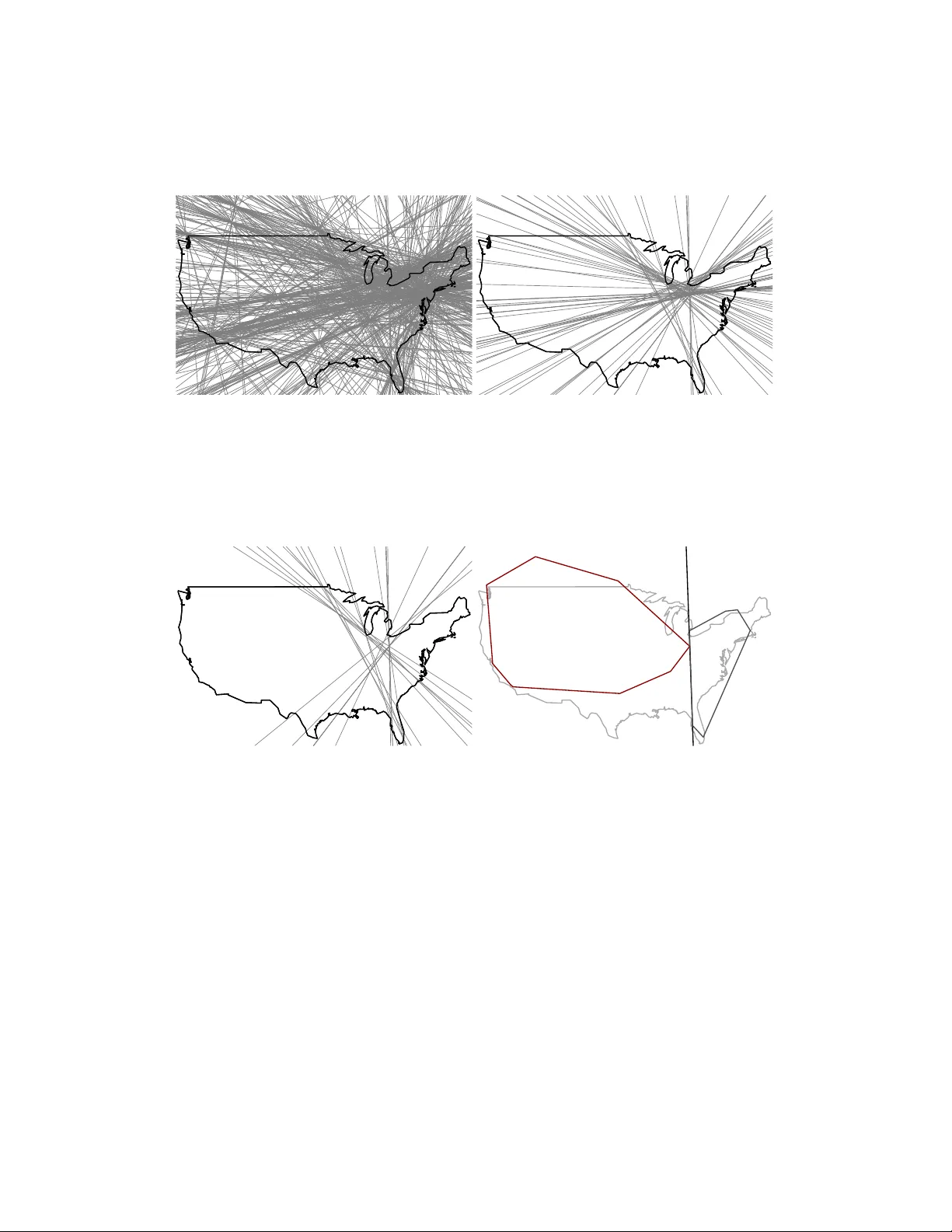
Realignment in the NHL, MLB, the NFL, and the NB A Brian Macdonald ∗ W illiam Pulleyblank † United States Military Academy Department of Mathematical Sciences W est Point, NY 10996 Nov ember 1, 2018 Abstract Sports leagues consist of conferences subdi vided into di visions. T eams play a number of games within their divisions and fewer games against teams in dif ferent di visions and conferences. Usually , a league structure re- mains stable from one season to the next. Howe v er , structures change when gro wth or contraction occurs, and realignment of the four major professional sports leagues in North America has occurred more than twenty-fi v e times since 1967. In this paper , we describe a method for realigning sports leagues that is fle xible, adapti ve, and that enables construction of schedules that min- imize travel while satisfying other criteria. W e do not build schedules; we de velop league structures which support the subsequent construction of ef- ficient schedules. Our initial focus is the NHL, which has an urgent need for realignment following the recent move of the Atlanta Thrashers to W in- nipeg, but our methods can be adapted to virtually any situation. W e e xam- ine a variety of scenarios for the NHL, and apply our methods to the NB A, MLB, and NFL. W e find the biggest improv ements for MLB and the NFL, where adopting the best solutions would reduce league trav el by about 20%. Keyw ords: Quadradic assignment problem (QAP), Mixed Integer Programming Problem (MIP), Optimization, Realignment, Expansion ∗ bmac@jhu.edu † william.pulleyblank@usma.edu 1 Contents 1 Introduction 2 2 A surrogate objecti ve function f or estimating league tra v el 4 2.1 Estimating league trav el . . . . . . . . . . . . . . . . . . . . . . . 5 3 A fast algorithm f or generating league structures 6 3.1 Including additional constraints . . . . . . . . . . . . . . . . . . . 8 3.2 Proving Optimality . . . . . . . . . . . . . . . . . . . . . . . . . 8 4 Results 9 4.1 NHL Realignment . . . . . . . . . . . . . . . . . . . . . . . . . . 9 4.2 MLB Realignment . . . . . . . . . . . . . . . . . . . . . . . . . 14 4.3 NFL Realignment . . . . . . . . . . . . . . . . . . . . . . . . . . 18 4.4 NB A Realignment . . . . . . . . . . . . . . . . . . . . . . . . . . 18 5 Conclusions 20 6 A ppendix 23 1 Intr oduction The four major sports leagues in North America currently consist of thirty or thirty-two teams. These teams are divided into di visions which are grouped to form conferences (or leagues in the case of MLB). T eams typically play the same number of home and away games against other teams in the same division, and a smaller number of games against teams in other di visions and conferences. The amount of trav el by a team ov er a season is determined by three major factors: (1) the distance between the team and the other cities in its division, its conference and the other conference, (2) the number of away games the y must play against those teams, and (3) the scheduling of the team’ s aw ay games. The schedules are created annually and take into account a range of factors including stadium av ailability , holiday week ends and the possibility of making efficient road trips. A league structure, howe v er , will normally remain unchanged for a number of years. T eams typically stay in the same di vision and conference until another team enters the league or mov es to a dif ferent city . 2 For example, in 2010, the NHL approved the moving of the Thrashers from Atlanta (A TL) to W innipeg (WPG), where the y became the resurrected W innipeg Jets. In the left of Figure 1 , we gi ve the league setup before and after the mov e. After the move, W innipeg remained in the Southeast division, causing significant ● ● ● ● ● ● ● ● ● ● ● ● ● ● ● ● ● ● ● ● ● ● ● ● ● ● ● ● ● ● ● ● ● ● ● ● ● ● ● ● A TL Current NHL Configuration League T rav el: 1,185,123 miles ANA BOS BUF CGY CAR CHI COL CBJ DAL DET EDM FLA LA MIN MON NAS NJ, NYI NYR OTT PHI PIT SJ STL TB TOR V AN W AS WPG ● ● ● ● ● ● ● ● ● ● ● ● ● ● ● ● ● ● ● ● ● ● ● ● ● ● ● ● ● ● Proposed configuration League T rav el: 1,212,740 miles ANA BOS BUF CGY CAR CHI COL CBJ DAL DET EDM FLA LA MIN MON NAS NJ, NYI NYR OTT PHI PHO PIT SJ STL TB TOR V AN W AS WPG Figure 1: (Left) The league setup before (dotted) and after (solid) the Atlanta Thrashers mo ved to W innipe g. (Right) The proposed 4-conference league struc- ture that w as approved by the NHL Board of Gov ernors but rejected by the NHL Players’ Association. increases in tra v el for W innipeg and the other teams in that di vision. The NHL re- alized the need for realignment, and proposed the ne w 4-conference configuration pictured in the right of Figure 1 . This proposal was subsequently rejected by the NHLP A, and a decision about realignment remains. In this paper we focus here on optimizing the first factor mentioned abov e. W e de velop method for structuring sports leagues that will support the construction of the most ef ficient annual travel schedules possible, from both the vie wpoint of the league as a whole and from the viewpoints of the various teams. Note that these vie wpoints may be contradictory . Minimizing total league travel o ver a season may require increasing the trav el for some teams. This league structure has important consequences for the teams. T rav el costs are a major cost for teams, and major factors are the lengths and distances trav eled on road trips. Moreov er , long road trips can be physically tiring for teams, which may place them at a competiti ve disadv antage. In this paper we provide the follo wing: • a simple “surrogate” objecti ve function that enables us to giv e an accurate estimate of total league trav el incurred by a league structure without know- ing the schedule; 3 • a fast heuristic that creates large numbers of league structures that minimize league travel and allo w the inclusion of a variety of e xtra constraints, such as maintaining traditional ri v alries and av oiding perceived inequities; • exact solutions to minimizing tra v el that show that our heuristic did succeed in constructing the optimal solution in all cases considered; • a way to visualize these solutions, which can be helpful to humans, who ultimately make the final decision about a league’ s realignment plan. After describing our methods, we conclude by presenting results and analysis of realignment in the NHL, MLB, the NFL and the NB A. 2 A surrogate objecti ve function f or estimating league tra v el The goal of constructing a league structure which minimizes total travel by all teams ov er a season faces a major problem: the actual construction of the season schedule, which is a major factor determining tra vel, takes place after the league structure has been created. W e deal with this by defining a surrogate measure for the goodness of a league structure which can be computed ef ficiently . W e compared this measure with the actual published amounts of travel by teams and found a v ery high correlation between this surrogate and the actual distance that each team trav elled o ver the last se veral years. The surrog ate is equal to the sum o ver all pairs ( i , j ) of teams in the league of a weighted tra vel distance between the home cities of teams i and j . This is the actual distance between the cities multiplied by the number of times team i plays an away game in city j during the course of a season. For example, FLA is 180 miles a way from TB, and TB plays three away games there, so the weighted distance between those tw o teams would be 3 × 180 = 540. BOS is 1184 miles from TB, and TB plays there twice, which giv es 2 × 1184 = 2368. The “cost” of a schedule is the sum of these weighted distances ov er all pairs of teams. Formally , this is defined as follo ws: For each pair ( i , j ) of cities, let d ( i , j ) denote the distance between i and j and let g ( i , j ) be the number of g ames that team i plays in j ’ s city . These depend only on the league structure, not on the actual season game schedule. The league’ s weighted distance is defined as 4 ● ● ● ● ● ● ● ● ● ● ● ● ● ● ● ● ● ● ● ● ● ● ● ● ● ● ● ● ● 20000 30000 40000 50000 20000 30000 40000 50000 Actual trav el vs estimated trav el f or the NHL Estimated trav el (miles) Actual trav el (miles) ANA BOS BUF CAR CBJ CGY CHI COL DAL DET EDM FLA LA MIN MON NAS NJ NYI NYR OTT PHI PHO PIT SJ STL TB TOR V AN WAS R=0.92 ● ● ● ● ● ● ● ● ● ● ● ● ● ● ● ● ● ● ● ● ● ● ● ● ● ● ● ● ● ● 15000 25000 35000 45000 15000 25000 35000 45000 Actual trav el vs estimated trav el f or MLB Estimated trav el (miles) Actual trav el (miles) ARI A TL BAL BOS CHC CHW CIN CLE COL DET HOU KC LAA LAD MIA MIL MIN NYM NYY OAK PHI PIT SD SEA SF STL TB TEX TOR WAS R=0.97 Figure 2: Actual trav el versus estimated travel for the NHL (left) and MLB (right). D = ∑ ( i , j ) d ( i , j ) g ( i , j ) . (1) 2.1 Estimating league tra vel Minimizing the weighted distance will tend to put teams located in cities close to each other in the same di vision, but we would like to kno w if these weighted distances translate to accurate tra vel distances well. W e can use data from past schedules to see how well our weighted distance for a gi v en league structure com- pares with actual distances trav eled in pre vious seasons. W e considered actual tra v el data for all four leagues: the NHL Hoag ( 2010 , 2011 ), MLB Allen ( 2011 ), the NFL GTP ( 2009 ), SBD ( 2010 ), Cariello ( 2011 ), Maillet ( 2011 ), JasonB ( 2012 ) and the NB A W ilczynski ( 2011 , 2013 ). The sched- ule, and therefore actual team tra v el, changes each year , so we ev aluate the surro- gate based on the a verage tra v el distances ov er se veral seasons. W e find a strong linear relationship between our surrogate and actual team trav el. W e describe this relationship using a linear regression model, and using the results of this model we get a predicted distance traveled for each team in the league. Figure 2 shows the actual vs. the predicted tra v el for indi vidual teams in the NHL ov er the last four years. Our predicted team trav el is very highly correlated with actual team trav el. 5 W e also checked before A TL mov ed to WPG (2008-09 thru 2010-11) and after A TL mov ed to WPG (2011-12) separately , and the fit was equally good in both cases. In the right of Figure 2 , we giv e a similar plot for MLB, and again we see a v ery strong relationship. W e get similarly strong results for the NFL. Our estimates for NB A team trav el, while good, were not quite as strong as the others, but the NB A is the league that will be the least af fected by realignment. The NBA estimates were good for most teams, but overestimated trav el for the fi ve west coast teams (LAL, LA C, SAC, GS, and POR). 3 A fast algorithm f or generating league structur es The con ve x hull of a division is the smallest con ve x shape that contains the home cities of the teams in the division. These shapes are the polygons dra wn around the cities in Figure 1 . Intuiti vely , from the standpoint of minimizing distance, it is adv antageous to hav e the divisions be disjoint. W e describe an efficient method for finding league structures for which the con vex hulls of all di visions are disjoint. Our algorithm first uses straight line cuts to di vide the league into two disjoint conferences. The reason that this is possible is that con ve x sets in the plane are disjoint only if a straight line can be drawn which separates the sets. In addition, we can limit the separating straight lines under consideration to those lines that pass through a pair of cities. If there are n teams in the league, then the number of lines that pass through a pair of cities is “only” n 2 = n ( n − 1 ) / 2 . In the case of a 30 team league like the NHL, that is only 435. These lines are depicted in the left of Figure 3 . Most such lines do not ev en need to be considered. In the case of the current structure of the NHL, we only need consider separating lines that split the teams into two sets each consisting of 15 teams to determine the conferences. The line between LA and V AN, for example, does not split the league ev enly and does not need to be considered. W e remo v e lines that do not split the league e venly , and we are left with the lines sho wn in the right of Figure 3 . Some of the remaining lines would still be undesirable for splitting the league into conferences. Lines that are too horizontal would split the league into a north- ern half and a southern half. These splits would result in west coast teams being in the same conference as east coast teams, and the conferences would span all four time zones. Even if did not care about time zones and included these lines, the resulting solutions w ould not be near the top of the list of the best solutions 6 ● ● ● ● ● ● ● ● ● ● ● ● ● ● ● ● ● ● ● ● ● ● ● ● ● ● ● ● ● ● ANA BOS BUF CGY CAR CHI COL CBJ D AL DET EDM FLA LA MIN MON NAS NJ,NYI NYR O TT PHI PHO PIT SJ STL TB T OR V AN W AS WPG ● ● ● ● ● ● ● ● ● ● ● ● ● ● ● ● ● ● ● ● ● ● ● ● ● ● ● ● ● ● ANA BOS BUF CGY CAR CHI COL CBJ D AL DET EDM FLA LA MIN MON NAS NJ,NYI NYR O TT PHI PHO PIT SJ STL TB T OR V AN W AS WPG Figure 3: (Left) Lines through ev ery pair of cities in the NHL. (Right) Lines that di vide the league into equal halves. that minimize trav el anyw ay . So we choose to remo v e many of these horizontal lines. W e are left with about 20 lines, which are sho wn in the left of Figure 4 . ● ● ● ● ● ● ● ● ● ● ● ● ● ● ● ● ● ● ● ● ● ● ● ● ● ● ● ● ● ● ANA BOS BUF CGY CAR CHI COL CBJ D AL DET EDM FLA LA MIN MON NAS NJ,NYI NYR O TT PHI PHO PIT SJ STL TB T OR V AN W AS WPG ● ● ● ● ● ● ● ● ● ● ● ● ● ● ● ● ● ● ● ● ● ● ● ● ● ● ● ● ● ● ANA BOS BUF CGY CAR CHI COL CBJ DAL DET EDM FLA LA MIN MON NAS NJ,NYI NYR OTT PHI PHO PIT SJ STL TB TOR V AN W AS WPG Figure 4: (Left) Lines through ev ery pair of cities in the NHL. (Right) Lines that di vide the league into equal halves. W ith each of these remaining lines, we can form two conferences, grouping the cities that are on the same side of the line into the same conference. In the right of Figure 4 we sho w the con ve x hulls of the tw o conferences that result from using one of the lines. An animation depicting the two conferences that result from using each of the remaining lines can be found at www.GreaterThanPlusMinus. com/p/realignment.html . W e then repeat this process and split these conferences into two subgroups. For each 15-team conference, we can find all lines that split the conference into a 10-team subgroup and a 5-team di vision. The process can be repeated again for all of the 10-team subgroups, which can be split into two 5-team di visions. The 7 only difference in generating the di visions and generating the conferences is that we do not thro w out horizontal lines while generating di visions. T ens of thousands of solutions are created for each league using this method. For e xample, in optimally structuring the NHL with the current league structure we generated ov er 100,000 different candidates. Estimated travel can be computed for the solutions we create, and we can sort the list of solutions by this estimated trav el. W e note that this same process can be used for the NHL, MLB, and the NB A, since each league has 30 teams split into two conferences (or leagues), each of which has three 5-team divisions. For the NFL, which is a 32-team league, the process can be easily adapted: we find lines that split the league into tw o 16-team conferences, lines that split those conferences into two 8-team subgroups, and lines that split those subgroups into two 4-team di visions. 3.1 Including additional constraints Our approach has another significant benefit in addition to being fast. In restruc- turing a league, other factors besides travel distance are important. There may be traditional ri valries that we want to maintain, for e xample, Montreal-T oronto or Pittsbur gh-Philadelphia in the NHL. W e may wish to sacrifice overall league dis- tance tra vel in order to reduce trav el for Florida and W est Coast teams. W e may want to keep each division within at most two time zones. Our approach deals with this very easily . W e can filter the ov erall set of solutions based on relev ant, possi- bly complex, criteria and then sort based on estimated travel. This produces se v- eral alternativ e struct ures with similar estimated trav el costs, and decision-mak ers could choose among them using other criteria. 3.2 Pr oving Optimality An important issue is how much we lose by only considering solutions generated by our algorithm. Surprisingly , it seems that we lose very little. In the appendix we outline how truly optimal league structures can be created by solving a mixed in- teger programming problem (MIP). These problems can be very dif ficult to solve optimally in any reasonable amount of time for situations as large as the ones we are considering. W e did howe v er solv e the MIPs corresponding to a number of the cases considered here. In e very case this established that the best solution pro- duced by our algorithm w as not just optimal among the solutions we generated, but w as in fact optimal among all solutions. 8 4 Results Figure 5 shows the estimated difference in team travel if the NHL switched from the current configuration to the configuration proposed by the NHL Board of Gov- ernors, which were depicted in Figure 1 . Note that most teams would have more trav el, including the teams that already have the worst tra v el (the west coast and Florida teams near the top). ● ● ● ● ● ● ● ● ● ● ● ● ● ● ● ● ● ● ● ● ● ● ● ● ● ● ● ● ● ● 30000 35000 40000 45000 50000 55000 60000 65000 Difference in T eam T ra v el Between the Current Configuration and the NHL ' s Proposal T rav el Miles PIT BUF PHI NJ T OR NYR NYI W AS O TT MON CAR BOS CHI STL DET CBJ MIN NAS COL TB D AL FLA PHO WPG CGY EDM ANA LA SJ V AN ● ● ● ● ● ● ● ● ● ● ● ● ● ● ● ● ● ● ● ● ● ● ● ● ● ● ● ● ● ● ● Current Miles Increase in Miles Decrease in Miles Figure 5: The dif ference in team trav el if the NHL switches from the current con- figuration to the configuration proposed by the NHL Board of Gov ernors. Black dots indicate current travel for each team. Red indicates that a team would ha ve worse tra v el (more miles) in the NHL ’ s proposed configuration. Green indicates that a team would ha ve better tra vel (fewer miles) in the proposed configuration. 4.1 NHL Realignment W e now giv e results for the best configurations in the NHL under a variety of constraints. In the left of Figure 6 , we giv e the best league configuration for the current structure of 6 di visions of 5 teams each. Interestingly , in this case, Florida (FLA) and T ampa Bay (TB) are not in the same division. In fact, the y are not ev en 9 in the same conference, as TB mo ves west and both Detroit and Columbus move east. So while this is the configuration that minimizes total league distance, it would probably be undesirable based on other factors. Ideally , we could minimize league distance, b ut also minimize distance tra v eled by the teams that ha v e it the worst, the west coast and Florida teams. ● ● ● ● ● ● ● ● ● ● ● ● ● ● ● ● ● ● ● ● ● ● ● ● ● ● ● ● ● ● Best 6−division configuration League T rav el: 1,155,391 miles ANA BOS BUF CGY CAR CHI COL CBJ DAL DET EDM FLA LA MIN MON NAS NJ, NYI NYR OTT PHI PHO PIT SJ STL TB TOR V AN W AS WPG ● ● ● ● ● ● ● ● ● ● ● ● ● ● ● ● ● ● ● ● ● ● ● ● ● ● ● ● ● ● Best configuration with FLA and TB together League T rav el: 1,155,969 miles ANA BOS BUF CGY CAR CHI COL CBJ DAL DET EDM FLA LA MIN MON NAS NJ, NYI NYR OTT PHI PHO PIT SJ STL TB TOR V AN W AS WPG Figure 6: (Left) The best 6-division configuration. (Right) The best with TB and FLA together . Fortunately , we can easily add constraints to the problem. For e xample, we can allow only solutions in which FLA and TB are in the same division. In the right of Figure 6 , we gi ve the best solution subject to this constraint. Note this solution would only cost the league a fe w hundred trav el miles, a small price to pay for keeping those teams together . This solution also minimizes tra v el for the west coast and Florida teams. In Figure 7 , we giv e the dif ference in team trav el if the NHL switches from the current configuration to our best 6-di vision solution. Most teams would have better travel with our solution, including the teams that have the worst trav el (the west coast and Florida teams near the top). Not surprisingly , W innipe g’ s tra vel would improve significantly . Columb us would also have much better tra v el be- cause the y would replace W innipe g the Southeast Division and join the Eastern Conference. In Figure 8 , we giv e the dif ference in team trav el between using the NHL ’ s proposed configuration and our best 6-division configuration. Most teams would hav e significantly better tra v el with our solution compared to the NHL ’ s proposal. In particular , the west coast and Florida teams would have significantly better trav el with our configuration, which can be seen in the upper right of Figure 8 . There may be other constraints that one would like to add. For example, note 10 ● ● ● ● ● ● ● ● ● ● ● ● ● ● ● ● ● ● ● ● ● ● ● ● ● ● ● ● ● ● 30000 35000 40000 45000 50000 Difference in T eam T rav el Between the Current Configuration and our Best Configuration T rav el Miles PIT BUF PHI NJ TOR NYR NYI W AS OTT MON CAR BOS CHI STL DET CBJ MIN NAS COL TB DAL FLA PHO WPG CGY EDM ANA LA SJ V AN ● ● ● ● ● ● ● ● ● ● ● ● ● ● ● ● ● ● ● ● ● ● ● ● ● ● ● ● ● ● ● Current Miles Increase in Miles Decrease in Miles Figure 7: The difference in team trav el if the NHL switches from the current configuration to our best 6-di vision solution. ● ● ● ● ● ● ● ● ● ● ● ● ● ● ● ● ● ● ● ● ● ● ● ● ● ● ● ● ● ● 30000 40000 50000 60000 Diff erence in T eam T rav el Between the NHL 's Proposal and our Best 6−division Configur ation T ravel Miles PIT W AS CHI PHI CBJ DET NJ NYR STL NYI BUF T OR CAR NAS MIN O TT MON BOS WPG D AL COL TB PHO FLA CGY EDM ANA LA SJ V AN ● ● ● ● ● ● ● ● ● ● ● ● ● ● ● ● ● ● ● ● ● ● ● ● ● ● ● ● ● ● ● Miles with NHL ' s Proposal Increase in Miles Decrease in Miles Figure 8: The difference in team tra vel between using the NHL ’ s proposed con- figuration and our best 6-di vision configuration. that in Figure 6 , Philadelphia (PHI) and Pittsb ur gh (PIT) are in different divisions. 11 The NHL may prefer that PHI and PIT remain together , and that other traditional ri v als remain in the same di vision. In the left of Figure 9 , we gi ve the best solution that k eeps the following teams together: TB and FLA; PHI and PIT ; NY Rangers, NY Islanders, and NJ Devils; Calgary and Edmonton; Anaheim and Los Angeles. Although this configuration is not the “best” according to distance, the league ● ● ● ● ● ● ● ● ● ● ● ● ● ● ● ● ● ● ● ● ● ● ● ● ● ● ● ● ● ● Best configuration with T raditional Rivalries T ogether League T rav el: 1,156,530 miles ANA BOS BUF CGY CAR CHI COL CBJ DAL DET EDM FLA LA MIN MON NAS NJ, NYI NYR OTT PHI PHO PIT SJ STL TB TOR V AN W AS WPG ● ● ● ● ● ● ● ● ● ● ● ● ● ● ● ● ● ● ● ● ● ● ● ● ● ● ● ● ● ● Best with all constraints League T rav el: 1,157,640 miles ANA BOS BUF CGY CAR CHI COL CBJ DAL DET EDM FLA LA MIN MON NAS NJ, NYI NYR OTT PHI PHO PIT SJ STL TB TOR V AN W AS WPG Figure 9: (Left) The best configuration with riv als together . (Right) The best configuration with two additional constraints: at most 3 Canadian teams can be in one di vision, and a di vision can span at most two dif ferent times zones. would travel only about 1,000 miles more in this case, and the benefits of keeping these riv als together would likely far outweigh the costs of a minimal increase in trav el miles. Also, this solution still minimizes travel for west coast and Florida teams. Note that so far , the two western most divisions have been the same. In f act, most of the top 100 solutions ha ve this configuration out west. Note ho wev er that Minnesota is with four Canadian teams. It has been reported that the NHL may try to av oid four Canadian teams in the same di vision with one lone American team. Also, note that this division crosses three time zones, another undesirable property . Fortunately , we can easily add yet another constraint to our problem, and re- quire that at most 3 Canadian teams be in one di vision. The best solution in this case is gi ven in the right of Figure 9 . This solution costs the league only about 2,000 miles more than the optimal solution, and costs west coast teams an addi- tional 3,400 miles. W e gi v e some summary statistics for this configuration, and many other configurations, in T able 1 . 12 Best 4 -confer ence configurations Our methods are not restricted to the current setup of 6 di visions and 5 teams in each di vision. Since the NHL recently pro- posed a 4-conference structure (see Figure 1 ), we giv e the best 4-conference struc- ture in Figure 10 . Also, we giv e the best solution using the same additional con- straints as before in the right of Figure 10 . W e note that the proposed 4-conference ● ● ● ● ● ● ● ● ● ● ● ● ● ● ● ● ● ● ● ● ● ● ● ● ● ● ● ● ● ● Best 4−conference configur ation League T rav el: 1,203,918 miles ANA BOS BUF CGY CAR CHI COL CBJ DAL DET EDM FLA LA MIN MON NAS NJ, NYI NYR OTT PHI PHO PIT SJ STL TB TOR V AN W AS WPG ● ● ● ● ● ● ● ● ● ● ● ● ● ● ● ● ● ● ● ● ● ● ● ● ● ● ● ● ● ● Best 4−conference configur ation with constraints League T rav el: 1,204,272 miles ANA BOS BUF CGY CAR CHI COL CBJ DAL DET EDM FLA LA MIN MON NAS NJ, NYI NYR OTT PHI PHO PIT SJ STL TB TOR V AN W AS WPG Figure 10: (Left) The proposed 4-conference structure. (Right) The “best” config- uration for a 4-conference structure, that satisfies the same additional constraints as before. structure is typically much more costly than the current 6-division structure. The best 4-conference solutions are worse than the best 6-di vision solutions, resulting in increase of about 85,000 miles. Much of this difference is due to the more balanced schedule that was proposed along with this realignment. The difference in team trav el between using the NHL ’ s proposed 4-conference configuration and our best 4-conference configuration is shown in Figure 11 . There are not man y big differences in tra vel, although TB and FLA, two of the teams with the w orst tra vel, would benefit from not being with teams in the north- east. Franchise mo ves Our approach can be easily modified to accommodate fran- chise mo v es or expansion. Suppose that, sometime in the near future, the Phoenix Coyotes (PHO) move to Quebec (QUE). W e gi v e the best solution in this case in the top left of Figure 12 , where we have specified the same additional constraints as before. Note that this solution has TB and FLA as part of the west, so one might prefer to add additional constraint to force TB and FLA to the east. Also, in Figure 12 , we giv e the best solution if PHO mov es to Seattle (SEA), Kansas City (KC), or Houston (HOU). W e note that if PHO mov es to southern Ontario, we get 13 ● ● ● ● ● ● ● ● ● ● ● ● ● ● ● ● ● ● ● ● ● ● ● ● ● ● ● ● ● ● 35000 40000 45000 50000 Difference in T eam T rav el Between the Proposed NHL Configuration and our Best 4−conf erence Configuratio n T ra vel Miles PIT W AS CHI PHI CBJ DET NJ NYR STL NYI BUF T OR CAR NAS MIN O TT MON BOS WPG D AL COL TB FLA PHO CGY EDM ANA LA SJ V AN ● ● ● ● ● ● ● ● ● ● ● ● ● ● ● ● ● ● ● ● ● ● ● ● ● ● ● ● ● ● ● Miles with NHL ' s Proposal Increase in Miles Decrease in Miles Figure 11: The difference in team trav el between using the NHL ’ s proposed con- figuration and our best 4-conference configuration. the same solution that we got for Quebec, and if PHO mo ves to Las V e gas, we get the same solutions as if PHO stayed in PHO. Expansion W e can also modify our approach to accommodate for potential fu- ture e xpansion by the NHL. For example, suppose that in a fe w years PHO mov es to L V , and teams in southern Ontario and Quebec are added to the league. The NHL would hav e 32 teams, and would likely choose either four 8-team di visions or eight 4-team divisions. W e give the best solution under these conditions in the left and right of Figure 13 , respecti v ely . In the ev ent that the NHL seriously con- siders expanding to Europe, our approach could be used to estimate league trav el miles and the associated cost, as well as propose the best solutions with, for ex- ample, one European division of 6 teams and 5 North American divisions with 6 teams each. 4.2 MLB Realignment MLB has considered different forms of radical realignment over the years. F or example, in 1997, one v ery controversial plan in volved 4 di visions of 7 or 8 teams each, and the divisions were based on geography so that se v eral teams would hav e switched from the AL to the NL, and vice v ersa Brisbee ( 2011 ), Chass ( 1997 ). MLB has e v en considered a “floating realignment” in which teams could change 14 ● ● ● ● ● ● ● ● ● ● ● ● ● ● ● ● ● ● ● ● ● ● ● ● ● ● ● ● ● ● Best configuration if Phoenix mov es to Quebec League T rav el: 1,152,929 miles ANA BOS BUF CGY CAR CHI COL CBJ DAL DET EDM FLA LA MIN MON NAS NJ, NYI NYR OTT PHI PIT QUE SJ STL TB TOR V AN W AS WPG ● ● ● ● ● ● ● ● ● ● ● ● ● ● ● ● ● ● ● ● ● ● ● ● ● ● ● ● ● ● Best configuration if Phoenix mov es to Seattle League T rav el: 1,166,549 miles ANA BOS BUF CGY CAR CHI COL CBJ DAL DET EDM FLA LA MIN MON NAS NJ, NYI NYR OTT PHI PIT SEA SJ STL TB TOR V AN W AS WPG ● ● ● ● ● ● ● ● ● ● ● ● ● ● ● ● ● ● ● ● ● ● ● ● ● ● ● ● ● ● Best configuration if Phoenix mov es to Houston League T rav el: 1,158,979 miles ANA BOS BUF CGY CAR CHI COL CBJ DAL DET EDM FLA HOU LA MIN MON NAS NJ, NYI NYR OTT PHI PIT SJ STL TB TOR V AN W AS WPG ● ● ● ● ● ● ● ● ● ● ● ● ● ● ● ● ● ● ● ● ● ● ● ● ● ● ● ● ● ● Best configuration if Phoenix mov es to Kansas City League T rav el: 1,145,368 miles ANA BOS BUF CGY CAR CHI COL CBJ DAL DET EDM FLA KC LA MIN MON NAS NJ, NYI NYR OTT PHI PIT SJ STL TB TOR V AN W AS WPG Figure 12: The best solution if PHO mo ves to Q UE (top left), SEA (top right), HOU (bottom left), and KC (bottom right). In all cases, we ha ve used the same additional constraints as before. di visions year -to-year based on things like payroll and a team’ s plans to contend V erducci ( 2010 ). W e gi ve the current alignment and our best 6-di vision alignment for MLB in Figure 14 . Note that we are not requiring that teams stay in their current league. The dif ference in trav el between the current solution and our best solution is sub- stantial. Current league trav el is about 20% more than it would be under our best solution. This is perhaps not terribly surprising, since the pairs of teams in New Y ork, Chicago, and Los Angeles, as well as teams like Philadelphia and Balti- more, T ampa Bay and Miami, San Francisco and Oakland, and Kansas City and St. Louis are not currently in the same division. W e giv e the dif ference in team trav el under the current MLB configuration and our best configuration in Figure 15 . Most teams would hav e drastically reduced trav el, and the teams with the most tra v el (Seattle, Oakland, LAA, San Francisco, 15 ● ● ● ● ● ● ● ● ● ● ● ● ● ● ● ● ● ● ● ● ● ● ● ● ● ● ● ● ● ● ● ● Best configuration f or 4−team divisions League T rav el: 1,214,465 miles ANA BOS BUF CGY CAR CHI COL CBJ DAL DET EDM FLA LA L V MIN MON NAS NJ, NYI NYR ONT OTT PHI PIT QUE SJ STL TB TOR V AN W AS WPG ● ● ● ● ● ● ● ● ● ● ● ● ● ● ● ● ● ● ● ● ● ● ● ● ● ● ● ● ● ● ● ● Best configuration f or 8−team divisions League T rav el: 1,214,465 miles ANA BOS BUF CGY CAR CHI COL CBJ DAL DET EDM FLA LA L V MIN MON NAS NJ, NYI NYR ONT OTT PHI PIT QUE SJ STL TB TOR V AN W AS WPG Figure 13: The best solutions if PHO moves to L V and if ONT and QUE are aw arded expansion teams. These represent the best solutions assuming 4-team di visions (left) and 8-team di visions (right). ● ● ● ● ● ● ● ● ● ● ● ● ● ● ● ● ● ● ● ● ● ● ● ● ● ● ● ● ● ● Current MLB configuration League T rav el: 991,653 miles ARI A TL BAL BOS CHC CHW CIN CLE COL DET HOU KC LAA LAD MIA MIL MIN NYM NYY OAK PHI PIT SD SEA SF STL TB TEX TOR W AS ● ● ● ● ● ● ● ● ● ● ● ● ● ● ● ● ● ● ● ● ● ● ● ● ● ● ● ● ● ● Best MLB configuration League T rav el: 832,260 miles ARI A TL BAL BOS CHC CHW CIN CLE COL DET HOU KC LAA LAD MIA MIL MIN NYM NYY OAK PHI PIT SD SEA SF STL TB TEX TOR W AS Figure 14: The current MLB alignment (left) and the best MLB alignment (right). etc.) hav e among the biggest improvements. For example, Seattle, the team with the worst tra vel, w ould ha ve their tra v el reduced by 9,000 miles. MLB might prefer to keep the current American League (AL) and National League (NL) in tact, and would not consider any configuration in which se veral teams switch leagues as in our best configuration abov e. In Figure 16 , we gi ve the best MLB configuration where teams are not allo wed to switch leagues (right), along with the current configuration (left). The NL W est and AL W est would remain the same in our best solution, and there would only be one change in each league: Atlanta and Pittsbur gh would switch places in the NL, and Cle v eland and T ampa Bay would switch places in the AL. This solution w ould sa ve the league 16 ● ● ● ● ● ● ● ● ● ● ● ● ● ● ● ● ● ● ● ● ● ● ● ● ● ● ● ● ● ● 20000 30000 40000 Diff erence in T eam T ra v el Between the Current MLB Configuration and our Best Configuration T ra vel Miles CHC CHW CIN MIL STL DET CLE PIT KC MIN BAL T OR W AS A TL NYY PHI NYM BOS COL TEX ARI HOU SD LAD TB MIA SF LAA OAK SEA ● ● ● ● ● ● ● ● ● ● ● ● ● ● ● ● ● ● ● ● ● ● ● ● ● ● ● ● ● ● ● Miles under Current Increase in Miles Decrease in Miles Figure 15: The dif ference in team tra v el under the current and best MLB configu- ration. only 2 , 000 miles. ● ● ● ● ● ● ● ● ● ● ● ● ● ● ● ● ● ● ● ● ● ● ● ● ● ● ● ● ● ● ● ● AL NL Current MLB configuration League T rav el: 991,653 miles ARI A TL BAL BOS CHC CHW CIN CLE COL DET HOU KC LAA LAD MIA MIL MIN NYM NYY OAK PHI PIT SD SEA SF STL TB TEX TOR W AS ● ● ● ● ● ● ● ● ● ● ● ● ● ● ● ● ● ● ● ● ● ● ● ● ● ● ● ● ● ● ● ● AL NL Best MLB configuration with no teams switching leagues League T rav el: 990,034 miles ARI A TL BAL BOS CHC CHW CIN CLE COL DET HOU KC LAA LAD MIA MIL MIN NYM NYY OAK PHI PIT SD SEA SF STL TB TEX TOR W AS Figure 16: The current MLB configuration (left) and the best MLB configuration in which teams must stay in the same league (right). Perhaps some of those opposed to allo wing teams to switch leagues would be less opposed after considering the positi ve impact on the en vironment our realignment w ould ha v e. The current configuration requires roughly 20% more trav el than our best solution, which means it requires roughly 20% more jet fuel. Suppose teams use a Boeing 747-400, Boeing 747-800, or any other plane that consumes about 5 gallons per mile Boeing ( 2013 ). A 160,000 decrease in tra vel 17 miles during an MLB season corresponds to a decrease of 800,000 gallons of jet fuel per season. 4.3 NFL Realignment W e give the current and best NFL alignment in Figure 17 . The current configura- tion requires 20% more travel than the best configuration, b ut the league still tra v- els far fewer miles than the other three leagues because of their 16-g ame schedule. Still, our best solution would sa ve the league almost 100,000 miles of tra vel. Of course, our best configuration breaks up some ri v alries that the NFL might prefer to keep intact. For example, Dallas is not with their NFC east riv als in our best solution. One might prefer to add constraints to ensure that these riv alries to stay together . ● ● ● ● ● ● ● ● ● ● ● ● ● ● ● ● ● ● ● ● ● ● ● ● ● ● ● ● ● ● ● ● Current NFL Configuration League T rav el: 483,782 miles ARI A TL BAL BUF CAR CHI CIN CLE DAL DEN DET GB HOU IND JA C KC MIA MIN NE NO NYG NYJ OAK PHI PIT SD SEA SF STL TB TEN W AS ● ● ● ● ● ● ● ● ● ● ● ● ● ● ● ● ● ● ● ● ● ● ● ● ● ● ● ● ● ● ● ● Best NFL Configuration League T rav el: 398,617 miles ARI A TL BAL BUF CAR CHI CIN CLE DAL DEN DET GB HOU IND JA C KC MIA MIN NE NO NYG NYJ OAK PHI PIT SD SEA SF STL TB TEN W AS Figure 17: The current NFL alignment (left) and the best NFL alignment (right). W e gi ve the dif ference in team tra vel under the current NFL configuration and our best configuration in Figure 18 . V irtually e very team would have improv ed trav el in our solution, including all of the teams that ha ve the w orst tra vel. 4.4 NB A Realignment The current and best NB A configurations are giv en in Figure 19 . Since the league plays a f airly balanced schedule, the current alignment, while not optimal, is only costing the league about 100 miles in total trav el. Our solution has Portland with the California teams, which probably makes more sense from a time zone stand- point. The current Northwest division, sho wn as the red triangle in the upper left, spans three time zones. After swapping Portland and Phoenix, the division spans 18 ● ● ● ● ● ● ● ● ● ● ● ● ● ● ● ● ● ● ● ● ● ● ● ● ● ● ● ● ● ● ● ● 10000 15000 20000 25000 Diff erence in T eam T r av el Between the Current NFL Configuration and our Best Configuration T rav el Miles CIN CLE PIT CHI DET TEN GB IND A TL BAL CAR MIN W AS BUF PHI NYJ NO NYG JA C TB KC NE HOU STL DEN D AL MIA ARI SD SF OAK SEA ● ● ● ● ● ● ● ● ● ● ● ● ● ● ● ● ● ● ● ● ● ● ● ● ● ● ● ● ● ● ● ● ● Miles under Current Increase in Miles Decrease in Miles Figure 18: The difference in team travel under the current and best NFL configu- rations. ● ● ● ● ● ● ● ● ● ● ● ● ● ● ● ● ● ● ● ● ● ● ● ● ● ● ● ● ● ● Current NBA Configuration League T rav el: 1,358,755 miles A TL BKN BOS CHA CHI CLE DAL DEN DET GS HOU IND LAC LAL MEM MIA MIL MIN NO NY OKC ORL PHI PHO POR SA SAC TOR UT AH W AS ● ● ● ● ● ● ● ● ● ● ● ● ● ● ● ● ● ● ● ● ● ● ● ● ● ● ● ● ● ● Best NBA Configuration League T rav el: 1,358,663 miles A TL BKN BOS CHA CHI CLE DAL DEN DET GS HOU IND LAC LAL MEM MIA MIL MIN NO NY OKC ORL PHI PHO POR SA SAC TOR UT AH W AS Figure 19: The current NB A alignment (left) and the best NB A alignment (right). only 2 time zones, and all of the teams in the P acific di vision are in the same time zone. W e gi v e the difference in team trav el under the current NBA configuration and our best configuration in Figure 20 . There are not an y major changes in tra v el, although the team with the w orst trav el, Portland, has the biggest improvement. 19 ● ● ● ● ● ● ● ● ● ● ● ● ● ● ● ● ● ● ● ● ● ● ● ● ● ● ● ● ● ● 42000 46000 50000 Diff erence in T eam T r av el Between the Current NBA Configuration and our Best Configuration T rav el Miles IND CHI CLE DET MIL A TL CHA W AS T OR OKC D AL MEM PHI NY BKN DEN HOU MIN SA NO ORL BOS UT AH PHO MIA LAL LA C SA C GS POR ● ● ● ● ● ● ● ● ● ● ● ● ● ● ● ● ● ● ● ● ● ● ● ● ● ● ● ● ● ● ● Miles under Current Increase in Miles Decrease in Miles Figure 20: The dif ference in team tra vel under the current and best NB A configu- ration. The biggest benefit of our best NB A solution is the time zone improvements men- tioned in the pre vious figure. 5 Conclusions W e ha v e provided a way to estimate team trav el in a gi ven league configuration before a schedule is known. W e have also dev eloped a fast way to generate thou- sands of good solutions for realignment, and we can easily reduce this list by adding any desired constraints. W e can sho w that the best solution using this method is actually the optimal solution. W e can estimate tra v el for each of these solutions, but we can also estimate trav el for any solution that a league might want to consider , ev en one we do not generate. Finally , we hav e provided a w ay to vi- sualize an y configuration that is under consideration, which could assist humans in making a final decision. In future work, one could attempt to improve the surrogate objectiv e ev en further by using trends from previous schedules in each of the four leagues. W e could also use our methods in any of the minor leagues associated with the NHL, 20 any of the junior hockey leagues in Canada, an y of the hock ey leagues in Europe, or any of the minor leagues in baseball. Additional information and discussion can be found at www.GreaterThanPlusMinus. com/p/realignment . For example, we ha ve posted various animations on that site, including the top 100 configurations for the NHL, MLB, NFL, and NB A. W e also gi v e animations that help illustrate our algorithm for generating thousands of solutions. The authors wish to thank Dirk Hoag, Michael Peterson, and Michael W ilczyn- ski for the NHL data, the airplane information and feedback about the paper , and the NB A data, respecti v ely , that were used in this project. Refer ences Allen, D. (2011): “MLB T eam T ra v el, ” http://www.fangraphs.com/blogs/ index.php/mlb- team- travel/ , Accessed 01-01-2013. Boeing (2013): “Boeing: Commerical Airplanes - 747 Fun Facts, ” http:// www.boeing.com/commercial/747family/pf/pf_facts.html , Accessed 01-13-2013. Brisbee, G. (2011): “MLB Realignment: A Look Back At A Pre vious, Horrible Proposal, ” http://mlb.sbnation.com/2011/6/13/2221623/ mlb- realignment- baseball- switching- leagues- divisions- yankees , Accessed 10-19-2012. Cariello, D. (2011): “Saints Hav e One of the Easi- est Tra v el Schedules in NFL for 2011 Season, ” http: //www.canalstreetchronicles.com/2011/9/5/2404623/ saints- have- one- of- easiest- 2011- travel- schedules- in- nfl , Accessed 01-01-2013. Chass, M. (1997): “Owners’ V ote Allo ws One T eam to Mov e to Na- tional League, ” http://www.nytimes.com/1997/10/16/sports/ baseball- owners- vote- allows- one- team- to- move- to- national- league. html , Accessed 10-19-2012. GTP (2009): “2009 NFL Tra v el Miles, ” http://www.glorifythepast.com/ forums/threads/2009- nfl- travel- miles.6560/ , Accessed 01-01-2013. 21 Hoag, D. (2010): “How f ar will your fa v orite team travel this year? Check the 2010-11 NHL Super Schedule!” http://www.ontheforecheck.com/2010/ 6/22/1530627/nhl- schedule- travel- miles- back- to . Hoag, D. (2011): “NHL Super Schedule breaks down 2011-12 trav el miles by team, ” http://www.ontheforecheck.com/2011/6/23/2240779/ nhl- travel- miles- by- team- super- schedule . JasonB (2012): “Eagles T ra vel Schedule Is Light In 2012, ” http://www.bleedinggreennation.com/2012/9/2/3287477/ eagles- travel- schedule- is- light- in- 2012 , Accessed 01-01-2013. Maillet, J. (2011): “The Drill: NFL tra v el miles, ” http://www.jsonline.com/ sports/etc/131025013.html , Accessed 01-01-2013. Mitchell, J. E. (2003): “Realignment in the national football league: Did they do it right?” Naval Resear ch Logistics , 50. SBD (2010): “Frequent Fliers: Six NFL T eams Set T o T ra vel Over 20K Miles In ’10, ” http://www.sportsbusinessdaily.com/ Daily/Issues/2010/04/Issue- 152/The- Back- Of- The- Book/ Frequent- Fliers- Six- NFL- Teams- Set- To- Travel- Over- 20K- Miles- In- 10. aspx , Accessed 01-01-2013. V erducci, T . (2010): “Selig, committee considering radical realignment plan, ” http://sportsillustrated.cnn.com/2010/writers/tom_verducci/ 03/09/floating- realignment/index.html , Accessed 10-19-2012. W ilczynski, M. (2011): “Distance T rav eled by NB A T eams during a Season, ” http://weaksideawareness.wordpress.com/2011/12/12/ distance- traveled- by- nba- teams- during- a- season/ , Accessed 01- 01-2013. W ilczynski, M. (2013): “NBA T eam Tra v el Data, ” Personal communication, 01- 01-2013. 22 6 A ppendix T able of Results T able 1: Summary of current and optimized configurations. League # of Conf # of Divs Tms per Div Div Gms Conf Gms non- Conf Gms Solution T rav el (miles) Miles Over Minimum NHL 2 6 5 24 40 18 Best 1 , 155 , 391 0 2 6 5 24 40 18 FLA-TB 1 , 155 , 969 578 2 6 5 24 40 18 Ri v alries 1 , 156 , 530 1 , 139 2 6 5 24 40 18 3 CAN tms 1 , 157 , 640 2 , 249 2 6 5 24 40 18 Current 1 , 185 , 123 29 , 732 4 0 7, 8 0 36, 38 46, 44 Best 4-conf 1 , 228 , 487 85 , 437 4 0 7, 8 0 36, 38 46, 44 Ri v alries 1 , 229 , 110 86 , 060 4 0 7, 8 0 36, 38 46, 44 Proposed 1 , 245 , 506 102 , 456 MLB 2 6 5 24 20 6 Best 832 , 260 0 2 6 5 24 20 6 Current 991 , 653 159 , 393 2 6 5 24 20 6 Fix AL,NL 990 , 034 157 , 774 NFL 2 8 4 2 0,1 0,1 Best 398 , 617 0 2 8 4 2 0,1 0,1 Current 483 , 782 85 , 165 NB A 2 6 5 16 36 30 Best 1 , 358 , 663 0 2 6 5 16 36 30 Current 1 , 358 , 755 92 Minimizing T otal League T ra vel with Mixed Integer Programming W e now outline a way to find the prov ably optimal solution for each league. W e note that this is a similar problem to that studied in Mitchell ( 2003 ), but we aim to minimize total league trav el distances as opposed to minimizing intradivisional trav el distance. The problem of finding a league structure for which the surrogate objectiv e is minimized can be formulated as an Integer Programming Problem. W e hav e a set T of n teams/cities and a set S of s di visions. For any two teams u , v ∈ T recall that d ( u , v ) = d ( v , u ) is the tra vel distance between the home cities of u and v . The input data consists of the follo wing: • D = ( d ( u , v ) : u , v ∈ T ) is the n × n inter-city distance matrix. 23 • G is the s × s away game matrix. For each pair ( i , j ) of divisions, G i j spec- ifies the number of away games to be played by teams in division i against teams in di vision j . In the case that this number is not the same for all pairs of teams in these divisions, we set G i j equal to the av erage number of games ov er pairs of teams in the two divisions. When considering intra-divisional games, that is, when i = j , we only consider pairs of distinct teams. • Let d be an s element vector with d i equal to the number of teams required in di vision i . Note that ∑ i d i = n . In the case of the current NHL, n = 30, s = 6, d = [ 5 5 5 5 5 5 ] . The aw ay game matrix G = 3 2 2 . 6 . 6 . 6 2 3 2 . 6 . 6 . 6 2 2 3 . 6 . 6 . 6 . 6 . 6 . 6 3 2 2 . 6 . 6 . 6 2 3 2 . 6 . 6 . 6 2 2 3 . For each team v and each di vision i we hav e a variable x vi = 1 if team i is in di vision i and x vi = 0 if not. In order to ev aluate the quadratic objectiv e function, we define a set of vari- ables y uvi j as follows: For each pair ( u , v ) of teams and for each pair ( i , j ) of di visions, we ha ve y uvi j = 1 if team u is assigned to di vision i and team v is as- signed to conference j and y uvi j = 0 if not. The cost c uvi j of y uvi j is defined to be c uvi j = D uv · G i j . (This enables us to correctly ev aluate the quadratic objectiv e function.) In our example, we hav e 30 × 6 = 180 v ariables x vi and 180 2 = 32 , 400 v ari- ables y uvi j . There are three sets of constraints on our v ariable. The first set ensures that we hav e the correct number of teams in each division and that each team belongs to a di vision: ∑ v ∈ T x vi = d i for each di vision i ; ∑ i ∈ S x vi = 1 for each team v . 24 The second ensures that each pair of teams play in exactly one pair of confer- ences. For each pair u , v of cities, ∑ i , j ∈ S y uvi j = 1; For each pair i , j of divisions, ∑ u , v ∈ T y uvi j = d i · d j . The third set of constraints forces the x and y variables to beha v e consistently . W e want to have y uvi j = 1 only if x ui = 1 and x v j = 1 and equal y uvi j = 0 otherwise. W e create the inequalities y uvi j ≤ 0 . 5 ( x ui + x v j ) for all u , v ∈ T , i , j ∈ S . (2) W e also constrain y uvi j to be a 0 − 1 v ariable for all u , v , i , j . This forces y uvi j to be 0 unless both x ui = 1 and x v j = 1. Finally , we define a new cost function c 0 by letting c 0 uvi j = M − c uvi j for all u , v ∈ T and i , j ∈ S , where M is a constant lar ger than an y cost c uvi j . Then minimizing c is equi v alent to maximizing c 0 and all c 0 uvi j are strictly positi ve. Each variable y uvi j occurs in a single inequality ( 2 ) so if we maximize the objecti ve, ev ery y will take on the value 1 if and only if both x ui = 1 and x v j = 1, as we desired. So, finally , the mix ed integer programming problem that we solve to obtain an optimal league structure is maximize ∑ u , v ∈ T , i , j ∈ S y uvi j · c 0 uvi j subject to ∑ v ∈ T x vi = d i for each di vision i ; ∑ i ∈ S x vi = 1 for each team v ; ∑ i , j ∈ S y uvi j = 1 for each pair u , v of cities ; ∑ u , v ∈ T y uvi j = d i · d j for each pair i , j of divisions; y uvi j ≤ 0 . 5 ( x ui + x v j ) for all u , v ∈ T , i , j ∈ S ; 25 x uv ≥ 0 for all u , v ∈ T and y i j ≥ 0 , integer for all i , j ∈ S . It is straightforw ard to add extra constraints to this model to require certain teams, or combinations of teams to be in specified di visions. W e also were able to significantly improv e performance by pro viding CPLEX with a starting solution equal to the best solution found by our heuristic for the problem. Also, constrain- ing pairs of cities on opposite sides of the continent to be in dif ferent di visions significantly improv ed solution time. The solution time required to solve these league structure problems ranged from sev eral hours to tens of hours on a moderately powerful workstation. How- e ver , as noted earlier , this only produced a single, prov ably optimal, structure. The set of optimal and near optimal solutions provided by the heuristic pro vide more options to league planners. 26
Original Paper
Loading high-quality paper...
Comments & Academic Discussion
Loading comments...
Leave a Comment