Higher-Order Properties of Analytic Wavelets
The influence of higher-order wavelet properties on the analytic wavelet transform behavior is investigated, and wavelet functions offering advantageous performance are identified. This is accomplished through detailed investigation of the generalize…
Authors: J. M. Lilly, S. C. Olhede
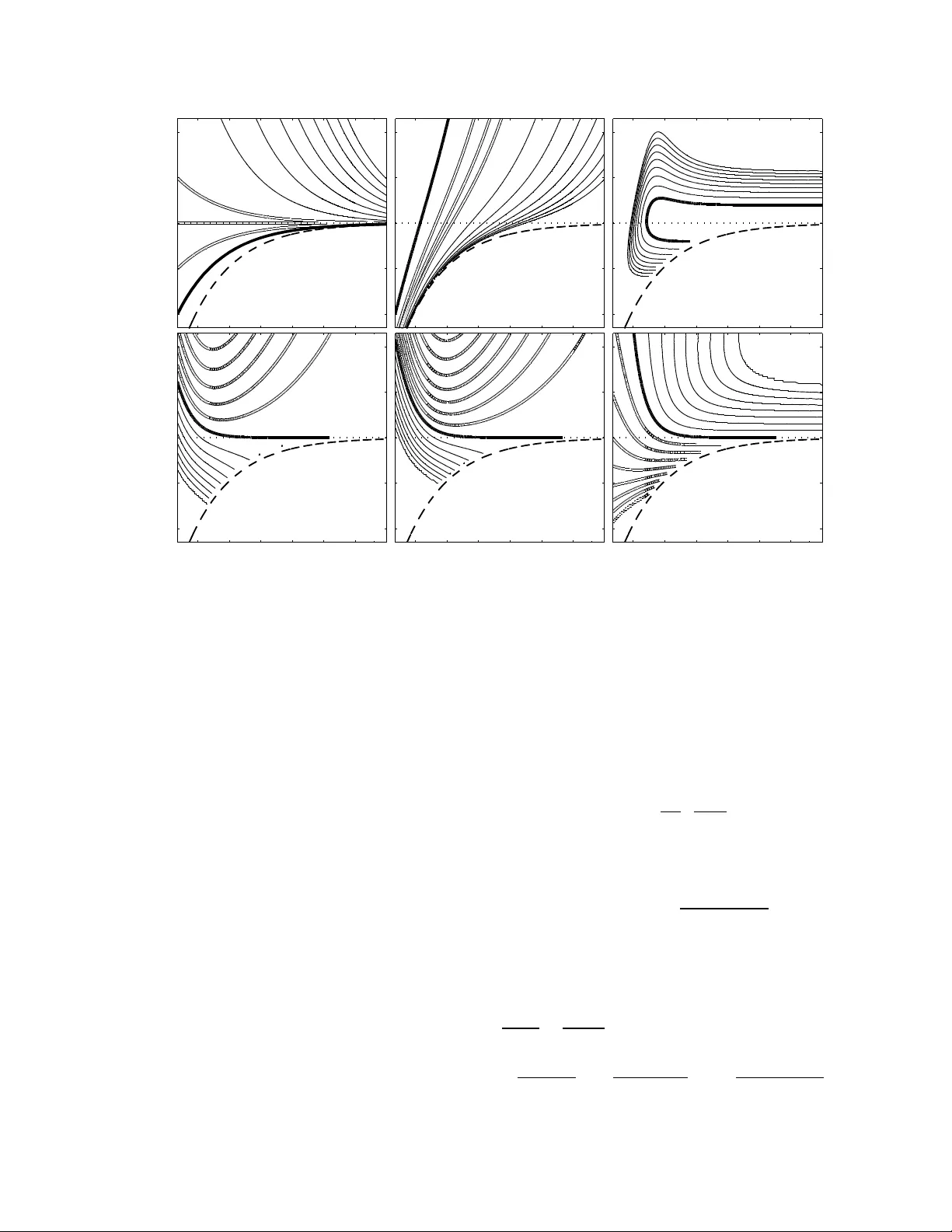
IEEE TRANSACTIONS ON SI GNAL PR OCESSING, SUBMITTED FEBR UAR Y 2008 1 The following statements ar e placed her e in accor d ance with the copyrigh t policy of the Institute of Electrical and Electr o nics Engineers, Inc., available online at http://www .ieee .org/web/pub lications/rights/policies.html. Lilly , J. M., & Olhede, S. C. (2009). Higher-order proper ties of analytic wa velets. IEEE T ransactions on Signal Pr ocessing , 57 (1), 146– 160. This is a preprin t version. T he d efinitiv e version is av ailable from the IEEE or f rom the first auth or’ s web site, http://www .jmlilly .net. c 2009 IEEE. Personal use of this material is permitted. Howe ver , perm ission to reprint/r epublish this ma terial for advertising or promo tional pu rposes or for creating new collective works for r esale o r redistribution to servers o r lists , or to reuse any c opyrighted compo nent of this work in other works must be obtained from the IEEE. IEEE TRANSACTIONS ON SIGNAL PR OCESSING, SUBMITTED FEBRU AR Y 2008 2 Higher -Order Properties of Anal ytic W a vel ets Jonathan M. Lilly , Member , IEEE, and Sofia C. Olhede, Member , IEEE Abstract —The influence of higher -order wa velet properties on the analytic wave let transfo rm behavior is in vestiga ted, and wa velet fu nctions offering advantageo us perf orm ance are i denti- fied. This is accomplished through detailed in vestiga tion of th e generalized Morse wavelets, a two-parameter family of exactly analytic contin uous wav elets. T he d egree of time/frequency local- ization, th e existence of a mappi ng between scale an d frequency , and the bias invo lved in estimating properties of modulated oscillatory signals, are proposed as important consid erations. W av elet beh a vior is found to be strongly impacted by the d egree of asymmetry of the wavelet in both the frequency and the time domain, as q uantified b y th e third central moments. A particular subset of the generalized Morse wav elets, recog nized as deriving from an inhomogeneous Airy fun ction, emerge as having partic- ularly d esirable properties. Th ese “Airy wa velets” substanti ally outperfor m the only approx imately analytic Morlet wavelets for high time localization. Sp ecial cases of the generalized Morse wa velets are examined, revea ling a b road range of b ehav iors which can b e matched to the characteristics of a signal. Index T erms —W av elet t ransf orm, instantaneous frequency , ridge analysis, Hil bert transf orm, ti me-frequency analysis I . I N T RO D U C T I O N W A VELET analysis is a p owerful an d popu lar tool for the analysis of nonstation ary signals. The wa velet transform is a joint fun ction of a time series of interest x ( t ) and an an alyzing f unction or wa velet ψ ( t ) . This transfor m isolates signal variability both in time t , an d also in “scale” s , by rescaling and shifting the analyzing wa velet. The wa velet itself can be said to play th e role of a lens through which a sign al is ob served, and there fore it is importan t to und erstand how the wav elet tr ansform depend s upo n the wa velet pro perties. This permits the ide ntification of wav elets wh ose hig her-order proper ties—with, say , du ration held fixed—lead to the m ost accurate represen tation o f the signal. Here we focus on analy tic, also known as progr essi ve, wa velets—complex-valued w av elets with v anishing support on the n egati ve frequency axis—defined in co ntinuou s time. Such wa velets are idea l for the analysis of modulated oscillatory sig- nals, since the continuo us analytic wa velet transfor m provides an estimate o f the instantaneous amplitude and in stantaneous phase of the signal in the vicinity of each time/scale location ( t, s ) . The analytic wavelet transf orm is th e basis for the “wa velet r idge” method [1], [2], wh ich recovers time-varying estimates of instantaneou s amplitude, phase, and frequ ency Manuscript submitte d October 22, 2018. The work of J. M. Lilly was supported by a fello wship from the Conseil Scienti fique of the U ni ve rsit ´ e Pierre et Marie Curie in Paris, and by awa rd #052629 7 from the Physica l Oceanogr aphy program of the United States Nation al Science Founda tion. A collab oration visit by S. C. Olhede to Earth and Spac e Research in the summer of 2006 was funded by the Imperial Colle ge Trust. J. M. L illy is with E arth and Space Research, 2101 Fourth A v e., Suite 1310, Seattl e, W A 98121, USA. S. C. Olhede is with the Department of Statistical Science, Univ ersit y Colle ge London, Gower Street, London WC1 E 6BT , UK. of a mo dulated oscillatory signal f rom the time/scale plane. On the oth er hand, the analytic wav elet transform can also be useful for application to very time-localized structures [3], particularly if these featur es may appear as either lo cally even (symmetric) or locally odd (a symmetric) [ 4]. The many u seful features of ana lytic wavelets are covered in more d epth by [5] . A promising class of exactly analy tic wavelets is th e g en- eralized Mo rse wa velet family [6], the joint time/freq uency localization pro perties of which wer e examine d by [7]. The generalized Morse wavelets h av e been used to estimate char- acteristics of a number of d ifferent non-statio nary signals, including blood- flow data [8], seismic and solar magn etic field data [9], neurop hysiolog ical time series [1 0], an d free- drifting ocean ograph ic float records [1 1], and ha ve also been utilized in im age analysis [12 ]. W ith two f ree para meters, the gener alized Morse wa velets can take on a br oad range of fo rms which has not y et b een fu lly explored , and in fact this family encom passes m ost other pop ular analytic wa velets. T wo p arameters yield a n atural charac terization of an a nalytic wa velet f unction, since then the decay at both h igher and lower freque ncies from the center o f the pass-band can be indepen dently specified. The gen eralized M orse wavelets will therefor e be the foc us of this study . This work has three go als. The first g oal, addressed in Section 2, is to id entify imp ortant ways in wh ich h igher- order pro perties o f analytic wa velets express themselves in the wav elet transform . Th ird-ord er measures o f the d egree of asymmetry of the wa velet, b oth in the fr equency dom ain and in the time doma in, em erge as key quan tities relatin g to the p recise beh avior of th e wav elet tran sform; we note th at compara ble behavior would be expected f or discrete analy tic wa velets a t long time scales. The second goa l is then to establish the particu lar p roperties of the g eneralized M orse wa velets, and is accomp lished in Section 3. A prima ry result is the existence of a sub-family , ch aracterized b y vanishing third der i vati ve at the p eak of the frequency-do main wa velet, which o ffers attractiv e behavior fo r the analysis of oscillatory signals. The third go al, the fo cus of Sectio n 4, is to provid e practical guidelines for the choice of a con tinuous analytic wa velet approp riate for a particular task. When calcu lating the wav elet transform , it is ofte n desirable to ch oose wav elets to match the signal or stru cture of interest. The g eneralized Morse wav elets emerge as exh ibiting a variety of possible beh aviors, including limits in wh ich the wa velet transform collapses to eithe r the analytic filter or , in a certain sense, to the Fourier transform. The sub-family m entioned above is shown to derive from an inhomog eneous Airy function, and we expect these “ Airy wa velets” will find value as superior alternatives to the po pular Morlet wa velet. All software related to this paper is distributed as a part of IEEE TRANSACTIONS ON SIGNAL PR OCESSING, SUBMITTED FEBRU AR Y 2008 3 a free ly av ailable package o f Matlab fun ctions, called JLAB, av ailable at the first author’ s website, http://www .jm lilly .net. I I . A N A L Y T I C W A V E L E T P RO P E RT I E S In this section, several desirable pro perties o f contin uous analytic wavelets are intr oduced: maximiz ation of a conven- tional measure of th e tim e/frequen cy energy c oncentratio n; the existence of a uniq ue relationship between scale and frequen cy; and minimization of th e bias inv olved in estimating proper ties of oscillatory signals. The second and third o f these will be shown to r elate to the d egree of asymmetr y of the wa velet in the freq uency an d time dom ains, respectiv ely , and more specifically to third order central mom ents. A. Defi nitions The c ontinuo us wavelet tran sform of a signal x ( t ) ∈ L 2 ( R ) is a sequen ce o f projections onto rescaled and tran slated versions of an analyzing function or “wa velet” ψ ( t ) , W ( t, s ) ≡ Z ∞ −∞ 1 s ψ ∗ u − t s x ( u ) du (1) = 1 2 π Z ∞ −∞ Ψ ∗ ( sω ) X ( ω ) e iωt dω (2) where Ψ( ω ) = R ∞ −∞ ψ ( t ) e − iωt dt is the Fourier transform of the wavelet and X ( ω ) is the Fourier transfo rm of the signal. Note the choice o f 1 /s n ormalization rather than the more common 1 / √ s , as we find the former to be more conv enient for analysis of oscillator y sign als. The wavelet is a zero- mean functio n which is assumed to satisfy the admissibility condition [13] c ψ ≡ Z ∞ −∞ | Ψ( ω ) | 2 | ω | dω < ∞ (3) and is said to b e analytic if Ψ( ω ) = 0 for ω < 0 . The wavelet modulu s | Ψ( ω ) | obtain s a maximu m at the p eak fr equency ω ψ ; note th at ω and ω ψ are both radian frequ encies. It will also be con venient to ad opt the con vention that | Ψ( ω ψ ) | = 2 . B. An Overview of Analytic W avelets A com monly used com plex-valued wa velet is the Mo rlet wa velet [13 ], which is essentially a Gaussian envelope mo du- lated b y a co mplex-valued carrier wave at radian fr equency ν : ψ ν ( t ) = a ν e − 1 2 t 2 h e iν t − e − 1 2 ν 2 i (4) Ψ ν ( ω ) = a ν e − 1 2 ( ω − ν ) 2 1 − e − ω ν . (5) As the carrier wav e frequency ν increa ses, more oscillations fit into th e Gaussian wind ow , an d the wa velet becom es in - creasingly f requen cy-localized. Th e secon d term in (4) and (5) is a correction necessary to enf orce zero mean, wh ile a ν normalizes the wav elet am plitude. An exp ression for a ν , along with f urther details o f the Morlet wa velet, is given in Append ix A. The Morlet wavelet is not, h owe ver , exactly analytic—it is only app roximate ly analytic for sufficiently large ν , and this h as impo rtant implication s, as will be shown shortly . A p romising class of analy tic wav elets ar e the generalized Morse wa velets, which h av e the frequency-d omain fo rm [7] Ψ β ,γ ( ω ) = U ( ω ) a β ,γ ω β e − ω γ (6) where U ( ω ) is the Hea viside step function and where a β ,γ ≡ 2( eγ /β ) β /γ (7) is a n ormalizing constan t. The peak f requency of these wa velets is given by ω β ,γ = ( β /γ ) 1 /γ . The wavelet ψ β ,γ ( t ) is in fact the lowest-order member of an ortho gonal family of wa velets for each ( β , γ ) pair [7], but we will not be concern ed with the higher-order members in the pr esent paper . The gen eralized Morse wavelets are the solution s to a joint time/frequ ency localizatio n problem, with an alytic expressions for b oth th e shap e of th e c oncentratio n region and the frac- tional en ergy concentr ation [7]. Note that we r eplace the subscript “ ψ ”, d enoting a prop erty of an arb itrary analy tic wa velet, with th e subscript “ β , γ ” for specific pro perties of the generalized Morse wa velets. The gen eralized Morse wav elets for m a two-par ameter family of wa velets, exhibiting an add itional degree of freed om in compar ison with the Mo rlet wavelet. The natur e of th is additional degree of freedom has n ot yet been fully explored, but it w ould appear to contr ol v ariation in higher-order wa velet proper ties with the time an d fre quency resolution held fixed. Because of this adjustability , the genera lized Morse wa velets can exhibit a very br oad variety of behaviors, making (6) a fairly general pr escription for co nstructing an e xactly analytic wa velet. Furth ermore, the gene ralized Morse wav elets sub - sume two other classes of commonly- used analytic wav elets, the analytic der i vati ve of Gaussian wav elets [3] with γ = 2 , and the Cauchy , also known as Klau der , wavelets [13 ] with γ = 1 . The num ber of other existing analytic continu ous w av elets is fairly limited . There is also the comp lex Shann on wav elet [14, p. 63] ψ S ( t ) = π sinc( t ) e i 2 πt (8) Ψ S ( ω ) = 2 r ect ω 2 π + 1 (9) where sinc( t ) is the sinc f unction an d rect( ω ) is the unit rectangle function . The usefuln ess of the Shan non wavelet ψ S ( t ) is limited by its slow ( 1 /t ) time dec ay , a consequence of the “sharp edg es” of its Fourier tran sform. An other an alytic wa velet is the Bess el wav elet [15], defined by ψ B ( t ) = 2 π √ 1 − it K 1 2 √ 1 − it (10) Ψ B ( ω ) = 2 e − ( ω +1 /ω ) (11) where K 1 ( · ) is the first modified Bessel func tion of the second kind. Howe ver th ese two wav elets are less common ly u sed than the Cau chy and Gaussian wavelets that are subsets of the generalized Mo rse family , and in ad dition, are restricted in their behaviors on account of ha ving zero free parame ters. These consideration s justify our focu s on the g eneralized Morse wa velets. IEEE TRANSACTIONS ON SIGNAL PR OCESSING, SUBMITTED FEBRU AR Y 2008 4 C. I mportance of Analyticity The advantage of u sing precisely , as oppo sed to app rox- imately , analytic wa velets such as the gen eralized Mor se wa velets was demo nstrated by [ 16], who showed that even small amo unts of leakage to negative frequen cies can re sult in spuriou s variation of the transform phase. It is important to emph asize th is poin t for practical signal analysis. As an example, a gen eralized Morse wav elet and a Morlet wa velet- come tog ether with th eir Wigner -V ille distributions [2] , are shown in Figur e 1. The wavelet W ig ner-V ille distribution is a funda mental time- frequen cy object wh ich expresses the smoothing implicit in the wa velet tran sform; see [2 ] for details. The instantaneou s frequency [17]—a quantity which r eflects the time-varying fr equency co ntent o f a mo dulated oscillatory signal—of each wa velet is als o shown; i n this case both instan- taneous frequencies are very nearly constant, as would b e th e case for a sinusoid. Parameter settin gs have been chosen su ch that the width o f the centra l tim e wind ow (as m easured by the standard deviation of the time-doma in wa velet de modulated by its peak freque ncy , defined sub sequently) in proportion to the period 2 π /ω ψ is th e same for both wa velets. These two w a velets app ear ind istinguishable, and their W igner-V ille distributions are nearly identical. Howe ver , if we narrow the time window of b oth wa velets by a factor of √ 10 , in ord er to increase time resolu tion a t the expense of f requen cy reso lution, w e obtain the wavelets shown in Figure 2. The Morlet wa velet no w exhibits leakage to negati ve freq uencies, as well as su bstantial instan taneous frequen cy flu ctuations over the centr al window . At this very narrow parameter setting, a local minimum h as developed in the amplitud e at the wavelet cen ter on account of the correction terms. By contr ast, the generalized Mo rse w av elet has an instantaneou s fr equency which is nearly constant over the central win dow , and its W igner-V ille distrib ution remains entirely concentrated at positive frequ encies. Unlike the Mo rlet wa velet, the Morse wa velets rem ain analytic ev en for highly time-localized para meter setting s. This is important for th e analysis of strongly mod ulated functions, whe re the wav elets are required to be narrow in time to m atch the modulation timescale. The imp lications of the negativ e-frequ ency leakage of the Morlet wa velet’ s W ig ner-V ille distribution—a manifestation of its departu re from analyticity—ar e drastically degraded transform pr operties. Figure 3 shows the wavelet tr ansform of a Gaussian-enveloped chirp using th e two wavelets from Figure 2 . Th e chirp signal has a frequen cy which increases at a c onstant rate, passing throu gh zero fr equency at time t = 0 . The negative-frequency leakage of the Morlet wavelet lea ds to inter ference in the wav elet transfo rm wh ich ac counts for its irregular structur e. Essentially this in terference pattern can b e understoo d as th e inter action of th e chirp with its image at negativ e freq uencies. Estimates of amplitude o r pha se p roper- ties o f the signal using the Morlet transfor m would be badly biased. Since the Mo rse wavelet has no sup port at negati ve frequen cies, the in terference is completely suppressed. As an asid e, we poin t out that in this example, the d eriv ati ve of the phase of the chirp is shown fo r re ference. Howe ver , −0.10 −0.05 0.00 0.05 0.10 Amplitude Morlet Wavelet with ω ν =5.5, P ν 2 =30 (a) Time Cyclic Frequency x 10 3 (c) −180 −120 −60 0 60 120 180 6 8 10 12 14 Morse Wavelet with γ =3 and β =10, P β , γ 2 =30 (b) Time (d) −180 −120 −60 0 60 120 180 Fig. 1. A Morlet wa ve let (a), a gen erali zed Morse wav elet (b), and their respect i ve Wi gner -V ille distrib ution s (c,d). These two wave lets are fairly long in time, and in a sense that will be made precise later , these two wa v elets can be said to hav e the same length. In (a) and (b), the thick solid, thin solid, and dashed line s correspond to the magnitude, real part, and imaginary part of the time-domai n wa ve let respec ti ve ly . In panels (c) and (d), ten lo garithmic ally spaced contours are drawn from the maximum val ue of the distributio n to 1% of that va lue. The thick dashed lines in (c) and (d) are the wav elet instant aneous frequenci es. −0.10 −0.05 0.00 0.05 0.10 Amplitude Morlet Wavelet with ω ν =1.5, P ν 2 =3 (a) Time Cyclic Frequency x 10 3 (c) −60 −40 −20 0 20 40 60 −15 −10 −5 0 5 10 15 20 25 Morse Wavelet with γ =3 and β =1, P β , γ 2 =3 (b) Time (d) −60 −40 −20 0 20 40 60 Fig. 2. As with Figure 1, but for paramet er settings givi ng wa ve lets that are very short in time. this is not th e same as the instantaneous fr equency of the total signal. The m axima-line o f the Morse wavelet tran sform follows the latter rather than the f ormer; see [18] fo r further details. This illustrates th e im portanc e of analyticity for th e de- terministic properties o f th e w av elet transform, the details of which have been investigated b y other auth ors. Statistical proper ties are also deterio rated by departu res from analy ticity: whereas an analytic transform applied to a Gau ssian process produ ces Gaussian prop er transform co efficients [1 6, p. 424], this behavior is lo st with a non-a nalytic analysis func tion. IEEE TRANSACTIONS ON SIGNAL PR OCESSING, SUBMITTED FEBRU AR Y 2008 5 −1.0 −0.5 0.0 0.5 1.0 A Gaussian−Enveloped Chirp (a) Frequency ω /(2 π ) × 100 (b) 0 1 2 3 Frequency ω /(2 π ) × 100 (c) −400 −200 0 200 400 0 1 2 3 Fig. 3. A Gaussian-en veloped chirp is shown in panel (a), while panels (b) and (c) sho w the wa vel et transform of the signal with the generalize d Morse wa vel et and Morlet wa v elet shown in Figure 2(a) and (b) respecti vely . In (b) and (c), the deri v at i ve of the phase of the chirp signal is shown for refere nce as the dashed line. Since the advantages o f ana lytic wavelets are well established , our concern h encefor th w ill be on th e influen ce o f ana lytic wa velet structur e on transform prop erties. W e foc us on M orse wa velets becau se th ey are a two p arameter family e ncompass- ing most other major analytic wav elets. On acco unt of its n on- analyticity , the Morlet wa velet is not a valid p oint c omparison in mo st of what fo llows. W e tu rn now to d efining sev eral importan t p roperties of analytic wa velets. D. Mapp ing Scale to F r equency It is commo n practice to conside r the scale s as p ropor tional to an inverse frequen cy . But it is critical to keep in m ind that any assignmen t of frequen cy to scale is an interpretation, and there is in fact more than on e valid interp retation. The ideal wa velet s hould have these different interp retations be identical, such that there is no am biguity in assigning freq uency to a giv en scale. One may define three meaning ful freq uencies associate d with the wavelet itself: th e p eak fr equency ω ψ at wh ich the wa velet magnitud e | Ψ( ω ) | is maximized , which is also the mode of | Ψ( ω ) | 2 ; the ener gy fr equ ency e ω ψ ≡ R ∞ 0 ω | Ψ( ω ) | 2 dω R ∞ 0 | Ψ( ω ) | 2 dω (12) which is the mean of | Ψ ( ω ) | 2 ; and finally , the time-varying instantaneou s fr equency [17] o f the wa velet ˘ ω ψ ( t ) = d dt ℑ { ln ψ ( t ) } = d dt arg { ψ ( t ) } (13) ev aluated at the wavelet center , ˘ ω ψ (0) . A difference between ω ψ and e ω ψ is obviously an expression of frequen cy-domain asymmetry of the wa velet. On the othe r hand , the ene rgy frequen cy and instantaneou s fre quency a re related by [19] e ω ψ = R ∞ −∞ | ψ ( t ) | 2 ˘ ω ψ ( t ) dt R ∞ −∞ | ψ ( t ) | 2 dt (14) and therefore a departu re of ˘ ω ψ (0) from e ω ψ implies that the wa velet f requency content is not uniform in time. There correspo nd three separate interpr etations of scale as frequen cy . Consider x o ( t ) = cos ( ω o t ) , h aving an analytic wa velet tra nsform W o ( t, s ) = 1 2 Ψ ∗ ( sω o ) e iω o t (15) where the co ntribution from negativ e f requenc ies vanishes on account o f the analyticity of the wa velet. The scale at which the magn itude o f the wa velet transform is maximum , ob tained by solving ∂ ∂ s | W o ( t, s ) | 2 = 0 , (16) is foun d to be s = s ψ ≡ ω ψ /ω o . This is the same as th e scale at which th e rate of change of transform phase is equal to the signal frequen cy , that is, the scale at which ∂ ∂ t ℑ { ln [ W o ( t, s )]) } = ω o (17) is satisfied. T he peak freq uency ω ψ therefor e contro ls location of the amplitud e maximum , an d the rate of phase progr ession, of an oscillatory feature much broad er in time than the w a velet. Note that for more genera l signals (16) and ( 17) respectively define the a mplitude an d p hase ridge curves of the wavelet transform [18], fro m which th e instantaneo us fre quency of the signal can be derived. Secondly , o ne may fo rm the energy-mea n scale, which becomes for the sinusoid e s ψ ≡ R ∞ 0 s | W o ( t, s ) | 2 ds R ∞ 0 | W o ( t, s ) | 2 ds = R ∞ 0 s | Ψ ( sω o ) | 2 ds R ∞ 0 | Ψ ( sω o ) | 2 ds (18) but f ollowing a chang e o f variables, this is seen to be simply e s ψ = e ω ψ /ω o . Thu s e ω ψ determines the scale at which the first momen t of th e modulus-squ ared wa velet transform of a sinuso idal signal occurs; this gives a integral measur e of energy co ntent of a signal across all scales. IEEE TRANSACTIONS ON SIGNAL PR OCESSING, SUBMITTED FEBRU AR Y 2008 6 Finally , let W δ ( t, s ) be the wa velet transform of a Dirac delta-fun ction δ ( t ) loca ted at the o rigin. The rate of chan ge of phase of this transform is ∂ ∂ t ℑ { ln [ W δ ( t, s )]) } = 1 s ˘ ω ψ t s (19) which, at the location of the delta-functio n, b ecomes ˘ ω ψ (0) /s . The wav elet central instantan eous frequen cy ˘ ω ψ (0) there fore controls th e rate o f phase p ropag ation at the center of a f eature much narrower th an the wa velet. W e th us have that ω s ≡ ω ψ /s , e ω s ≡ e ω ψ /s , and ˘ ω s ≡ ˘ ω ψ (0) /s d efine three different mapp ings of scale to freque ncy . The fir st will correctly g iv e the fr equency of a pure sinuso id from the scale s at wh ich its transform obtain s a maximum , the second will cor rectly g iv e the f requency of a pur e sinuso id from the energy-mean scale of the transfor m, an d th e third fixes the frequ ency to be the same as the phase prog ression of the tran sform at the location of a n in finitesimally n arrow impulse. As all of these are map pings argu ably correct in different senses or f or d ifferent types o f signals, it is desirable that all three should be the sam e. In that case there would be a unique and unambigu ous inter pretation of scale as fre quency . It will b e f ound that the γ = 3 gene ralized Mo rse wav elets have the fre quency measures very n early b eing eq ual, while maintaining exact analyticity as well as good time localization . E. En er gy Localization The degree of en ergy localization of a wa velet is conven- tionally expressed in terms of its Heisenber g ar ea [2] A ψ ≡ σ t ; ψ σ ω ; ψ (20) where the standard deviations σ 2 t ; ψ ≡ ω 2 ψ R t 2 | ψ ( t ) | 2 dt R | ψ ( t ) | 2 dt (21) σ 2 ω ; ψ ≡ 1 ω 2 ψ R ( ω − e ω ψ ) 2 | Ψ( ω ) | 2 dω R | Ψ( ω ) | 2 dω (22) describe the wa velet spr ead in th e time domain and freq uency domain, respectively; here the standard deviations have been defined such th at they are no ndimension al. The Heisen berg area A ψ obtains a minim um value of o ne-half for a fun ction which has a Gaussian en velope, but such a fun ction is no t a wa velet because it is not zero-mean. Note that th ere are other n otions o f tim e-frequ ency local- ization. The whole set of generalized Morse wa velets are optimally localized in that they maximize the eigen v alues of a joint time- frequen cy localization opera tor , as shown by [ 6] and inv estigated in fur ther detail by [7], and in deed this is the way the generalized Morse wavelets were initially constructed. Howe ver , the Heisenberg area is a valuable measure of tim e- frequen cy lo calization, since it is in standard usage and permits ready compa rison am ong different func tions. I t will be shown later that the γ = 3 generalized Morse w av elets are close to the theoretical minimum of the Heisenberg are a, w hile rema ining exactly analytic, even for narrow tim e-domain settings; th eir concentr ation is comparable to o r greater th an that of the Morlet wa velet. F . Minimally Biased Signal Infer ence An impor tant application of analytic wa velet analysis is to detect the properties of m odulated oscillator y sig nals of the form [1], [2] x ( t ) = a + ( t ) c o s [ φ + ( t )] . (23) The am plitude a + ( t ) > 0 and phase φ + ( t ) in this m odel a re uniquely defined in terms of the analytic signal [20] x + ( t ) ≡ 2 Z ∞ −∞ U ( ω ) X ( ω ) e iωt dω (24) where U ( ω ) is again the Hea viside step f unction. I n terms of the an alytic signal, the orig inal real-valued signal is written as x ( t ) = ℜ { x + ( t ) } = ℜ n a + ( t ) e iφ + ( t ) o (25) and a + ( t ) an d φ + ( t ) ar e c alled the can onical amp litude and pha se [20] . Th e rates of ch ange of th e pha se ω ( t ) ≡ d/dt { φ + ( t ) } and log -amplitude υ ( t ) ≡ d/dt { ln [ a + ( t )] } are called th e instantaneou s f requency an d instantaneo us band- width, respectively . W a velet ridge an alysis [1], [2] is a second analysis step perfor med o n an an alytic wa velet transform which estimates the pr operties of the analytic signal o r signals associated with the time series. T he bias properties of wa velet ridge an alysis were examined by [18] , the results of which we ma ke use of in this section. A dimension less v ersion of the wa velet fre quency- domain deriv ati ve is defined by e Ψ n ( ω ) ≡ ω n Ψ ( n ) ( ω ) Ψ( ω ) (26) where th e superscr ipt “ ( n ) ” denotes the n th-o rder deriv ati ve of Ψ( ω ) . With this definition, an exact f orm of the wavelet transform of an oscillatory signal, derived in [18] , is x ψ ( t ) ≡ W ( t, ω ψ /ω ( t )) = x + ( t ) × ( 1 − 1 2 a ′′ + ( t ) a + ( t ) + iω ′ ( t ) e Ψ ∗ 2 ( ω ψ ) ω 2 ( t ) + i 6 a ′′′ + ( t ) a + ( t ) + 3 i a ′ + ( t ) a + ( t ) ω ′ ( t ) + iω ′′ ( t ) e Ψ ∗ 3 ( ω ψ ) ω 3 ( t ) + ǫ ψ , 4 ( t ) } (2 7) where the q uantity ǫ ψ , 4 ( t ) is a bou nded residual associated with truncating the integration outside of a finite range [18]. Equation (27) d efines a nonline ar smo othing o f the an alytic signal by the wav elet, resulting in a quantity x ψ ( t ) which de- parts from the analytic signal x + ( t ) o n acco unt of intera ctions between time-d omain deriv ativ es of the signal and frequ ency- domain deriv ati ves o f the wa velet. Note that these bias terms depend on wavelet deriv ati ves ev aluated only at the peak frequen cy ω ψ . Under a certain smoothness assump tion on the original signal x ( t ) , expected to hold wh en the signal is locally described as an oscillation, the term in (27) associated with e Ψ 3 ( ω ψ ) is much smaller than that associated with e Ψ 2 ( ω ψ ) , and the term associated with e Ψ 4 ( ω ψ ) —here incorpo rated in to the residual—is smaller still; see [1 8] for details. For th is r eason it is m ore im portant to minim ize | e Ψ 3 ( ω ψ ) | r ather than | e Ψ 4 ( ω ψ ) | for a given e Ψ 2 ( ω ψ ) . IEEE TRANSACTIONS ON SIGNAL PR OCESSING, SUBMITTED FEBRU AR Y 2008 7 Since, as sho wn b elow , the square roo t of no rmalized second derivati ve e Ψ 2 ( ω ψ ) is a nondim ensional measure of the wavelet duration, it app ears d esirable choo se a wa velet with vanishing e Ψ 3 ( ω ψ ) for a fixed v alue of e Ψ 2 ( ω ψ ) , as this removes the next-high est-order bias term f or a giv en wa velet duration . It will be shown th at the g eneralized M orse wa velets achieve this w ith the c hoice γ = 3 . W e are aw are of no other analy tic wa velets with this p roperty , apart fr om the Shannon wavelets which we do n ot prefer o n acco unt of the ir poor time localization. The Bessel wavelets mentioned above have a very large value o f the third derivati ve at the peak frequen cy , e Ψ 3 ( ω ψ ) = − 6 , which would result in su bstantial bias accordin g to th e analysis of [18]. I I I . P RO P E RT I E S O F G E N E R A L I Z E D M O R S E W A V E L E T S Having de fined three useful properties of analytic wa velets—high time /frequen cy co ncentratio n, a uniqu e in- terpretation o f scale as frequ ency , and minimized bias f or analyzing oscillato ry signals—ou r next g oal is to form explicit expressions of the rele v ant qu antities for the generalized Mor se wa velets. A. F r equ ency-Doma in Momen ts The structure of a wavelet can be d escribed in terms of its mome nts o r cumulan ts. W e will use both the freque ncy- domain wa velet moments and the ener gy momen ts M n ; ψ ≡ 1 2 π Z ∞ 0 ω n Ψ( ω ) dω (28) N n ; ψ ≡ 1 2 π Z ∞ 0 ω n | Ψ( ω ) | 2 dω (29) as we ll as the frequen cy-domain wavelet cumulants. Th e wa velet m oments are the terms in the T aylo r series e xpansion ψ ( t ) = ∞ X n =0 ( it ) n n ! M n ; ψ (30) while the coefficients K n ; ψ in the expansion ln ψ ( t ) = ∞ X n =0 ( it ) n n ! K n ; ψ (31) define the frequen cy-domain wa velet cumulants. T echnically , these are called “form al m oments” and “formal cumulan ts” since the freq uency-do main wa velet is not n ormalized as a probab ility den sity function. The wav elet cumulants K n ; ψ may be fou nd in terms of the wa velet mo ments M n ; ψ throug h M 0; ψ = exp ( K 0; ψ ) tog ether with a recu rsion relation g iv en in Appen dix B. The moments of the generalized Morse wa velets are M n ; β ,γ = a β ,γ 2 π γ Γ β + 1 + n γ (32) while the expression N n ; β ,γ = 2 2 (1+ n ) /γ M n ;2 β ,γ (33) giv es the en ergy moments of the ( β , γ ) wa velet in ter ms of the moments of the (2 β , γ ) wa velet. Combinin g (32) with (88) of Append ix B, one obtains simple expression s for the cumulants, the first thr ee of which are g i ven explicitly in Appendix B. In Appen dix C it is shown that fo r the gener alized Morse wa velets, the series in (30) converges for all t su ch th at | t | < 1 for γ = 1 , while for γ > 1 the radius of conv ergence is infinite. B. F r equ ency-Doma in Derivatives / T ime-Do main Moments W e will also need expressions for the dimen sionless frequen cy-domain derivati ves e Ψ n ( ω ) evaluated at the peak frequen cy ω ψ , shown in Section II-F to control the wa velet transform of an oscillator y signa l. T he dimensionless d eriv a- ti ves can be cast in a form which is somewhat more straightfo r- ward to interp ret. Let the time-d omain moments of the wavelet demodu lated b y its peak frequency be d enoted by m n ; ψ ≡ Z ∞ −∞ t n e − iω ψ t ψ ( t ) dt (34) and recall the corr esponden ce b etween time-do main m oments and freque ncy-domain deriv ati ves [21 , Section 5.5], m n ; ψ m 0; ψ = i n Ψ ( n ) ( ω ψ ) Ψ( ω ψ ) = i n e Ψ n ( ω ψ ) ω n ψ . (35) Since m 1; ψ = 0 , the m n ; ψ are cen tral mome nts of the demod - ulated wa velet e − iω ψ t ψ ( t ) /m 0; ψ . This su ggests normalizing the higher-orde r demod ulate mom ents by the secon d mo ment, as one would for a probability density function: α n ; ψ ≡ m n ; ψ m 0; ψ m 2; ψ m 0; ψ n/ 2 = i n e Ψ n ( ω ψ ) e Ψ 2 ( ω ψ ) n/ 2 . (36) The normalize d thir d an d fourth central moments α 3; ψ and α 4; ψ will be called the demod ulate skewness and demod ulate kurtosis , o wing to th eir formal re semblance to ske wness and kurtosis of a p robability den sity function . However , it is importan t to keep in mind that the dem odulated wa velet is n ot a probability density functio n since it is in general co mplex- valued an d not nonnegative. Now d efine a dimensionle ss measure of the wa velet time- domain length or duratio n P ψ ≡ π 2 q m 2; ψ m 0; ψ 2 π /ω ψ = ω ψ r m 2; ψ m 0; ψ = r e Ψ 2 ( ω ψ ) (37) such that P ψ /π is the num ber of o scillations at the peak frequen cy wh ich fit wit hin the central w a velet wind ow , as mea- sured by the stan dard deviation of the de modulated wa velet. Increasing P ψ increases the f requency-d omain curvature in the vicinity of the peak frequ ency , narrowing th e wav elet in th e frequen cy do main and hence broad ening the wavelet in the time domain. For th e generalize d Morse wavelets, we fin d in Appe ndix D that P β ,γ is simply √ β γ , while the demodulate ske wness and kurtosis become α 3; β ,γ = i γ − 3 √ β γ = i γ − 3 P β ,γ (38) α 4; β ,γ = 3 − ℑ { α 3; β ,γ } 2 − 2 P 2 β γ (39) IEEE TRANSACTIONS ON SIGNAL PR OCESSING, SUBMITTED FEBRU AR Y 2008 8 where we note the dem odulate skewness is a p urely imag inary quantity . Note that the choice γ = 3 causes the d emodu late ske wness [and h ence e Ψ 3 ( ω ψ ) ] to vanish—while simu ltane- ously maximizing the m agnitude o f the d emodula te kurtosis α 4; β ,γ for a fixed value of P β ,γ . As mentione d in Section II- F, we are less co ncerned with the ku rtosis than with the skew- ness: fo r signals which are loca lly o scillatory , it is expected that nonz ero skewness will contribute more substantially to a bias of (2 7), the analytic signal estimated from th e wa velet transform [18]. The d imensionless d uration P β ,γ and d emodu late ske wness ℑ { α 3; β ,γ } fo rm a natural two-p arameter descriptio n of th e generalized Mo rse wavelets. Particular values of P β ,γ and ℑ { α 3; β ,γ } give a uniq ue ( β , γ ) pair . P β ,γ is a n ormalized second-o rder m oment, while α 3; β ,γ is a normalize d th ird- order moment measuring the degree of asymmetr y o f the demodu lated wav elet in the time do main. For a given du ration P β ,γ , a ran ge of shap es can be o btained for the gen eralized Morse wavelets by adjusting ℑ { α 3; β ,γ } . Th e fourth- order behavior , as expressed by the demod ulate kurtosis α 4; β ,γ , is not free, but is an implicit fun ction o f the two lo wer-order quantities P β ,γ and ℑ { α 3; β ,γ } . This clarifies h ow β an d γ translate directly into controllin g the wavelet moments. The generalize d Mor se wa velet parameters γ and β are plotted as a f unction of P β ,γ and ℑ { α 3; β ,γ } in Fig ure 4(a),( b). The param eter β increases with incr easing P β ,γ but decr eases with increasing ℑ { α 3; β ,γ } . The γ curves, on the o ther hand, change character at γ = 3 , with contou rs of lo wer v alues being concave down and those of higher values being concave up; γ = 3 itself is the horizon tal line ℑ { α 3; β ,γ } = 0 . For a g i ven P β ,γ with β ≥ 0 and γ ≥ 0 , ℑ { α 3; β ,γ } is boun ded from below by − 3 /P β ,γ for γ = 0 , but has no upp er bound; this lower bo und is the cause of the em pty region below the γ = 0 contour in these plots. C. W avelet F r equency Measur es W e n ow return to the qu estion o f assignin g a f requen cy interpretatio n to the wavelets . From the results of the preceding sections, we see that the en ergy fr equency de fined in (12) becomes e ω ψ ≡ R ∞ 0 ω | Ψ( ω ) | 2 dω R ∞ 0 | Ψ( ω ) | 2 dω = N 1; ψ N 0; ψ (40) while the time-varying instantane ous wa velet frequen cy (1 9) is [using (31)] ˘ ω ψ ( t ) = d dt ℑ { ln ψ ( t ) } = K 1; ψ − 1 2 K 3; ψ t 2 + . . . (41) when expanded in terms of the wa velet frequ ency-dom ain cumulants; only th e o dd cumulants ap pear because of taking the imaginar y par t. Thus ˘ ω ψ (0) = K 1; ψ = M 1; ψ / M 0; ψ . The quantity 1 K 3 / 2 2; ψ d 2 ˘ ω ψ dt 2 (0) = − K 3; ψ K 3 / 2 2; ψ (42) is a n ondimen sional measure of th e cur vature of the in- stantaneous frequen cy ev aluated at the wa velet center . The instantaneou s frequency cu rvature has a simple interp reta- tion for a real-valued, nonn egati ve definite fr equency d omain wa velet such as a gene ralized Mor se wav elet. F or such a wa velet, Ψ( ω ) / M 0; ψ is a prob ability density f unction h aving K 3; ψ /K 3 / 2 2; ψ as its co efficient of skewness, which is the neg- ativ e of the dime nsionless instantaneous frequency curvature. Thus f requency-d omain skewness corr esponds to cu rvature o f the instantaneous frequency . One finds fo r the gene ralized Morse wav elets that the energy frequen cy is e ω β ,γ = N 1; β ,γ N 0; β ,γ = 1 2 1 /γ M 1;2 β ,γ M 0;2 β ,γ = 1 2 1 /γ Γ 2 β +2 γ Γ 2 β +1 γ (43) while ˘ ω β ,γ (0) = K 1; β ,γ = M 1; β ,γ M 0; β ,γ = Γ β +2 γ Γ β +1 γ = 2 1 /γ e ω β / 2 ,γ (44) giv es the time-varying instantaneo us frequen cy at the w a velet center . An expression f or the frequency curvature may be found from (32) together with (85) and (87) of Appen dix B. The behaviors of these frequ ency m easures of the gen eral- ized Mo rse wa velets versus P β ,γ /π a nd ℑ { α 3; β ,γ } are shown in Figu re 4 (d),(e) ,(f). A ch ange in chara cter is observed at γ = 3 . At γ = 3 , th e ratio of the energy fre quency to the peak frequ ency e ω β ,γ /ω β ,γ , and the r atio of the in stantaneous frequen cy a t the wa velet center ( t = 0) to the peak f requency ˘ ω β ,γ (0) /ω β ,γ , are both very clo se to un ity , except for very short wav elet d urations with P β ,γ /π < 1 . F or larger values of γ , or positi ve ℑ { α 3; β ,γ } , both of these tw o ratios are generally smaller than unity , while for smaller values of γ or n egati ve ℑ { α 3; β ,γ } both ra tios g enerally exceed unity . The excep tion is fo r very sho rt dur ations P β ,γ /π < 1 , where on e finds these ratios b ecoming incr easingly large and positive a s P β ,γ /π decreases w ith fixed ℑ { α 3; β ,γ } . Me anwhile the instan taneous frequen cy curvature at the wavelet cen ter , Figur e 4( f), exh ibits a similar pattern but with the sign re versed. The γ = 3 wa velets have negligible in stantaneous frequency curvature except as th e duratio n becomes very shor t. For P β ,γ /π > 1 , the γ = 3 wa velets have e ω β ,γ ≈ ω β ,γ ≈ ω β ,γ (0) to a very go od app roximatio n, nearly o btaining the unambig uous inter pretation of scale as frequen cy which was sought in Section II-D while remaining exactly analytic. That ω β ,γ and e ω β ,γ should be almost iden tical for som e value of γ is not obvious. Th e form er is a sim ple algeb raic expre ssion in terms o f po wers of β and γ , wher eas th e latter is given by a ratio of gam ma functio ns. In Ap pendix E it is shown that for in creasing β , th e ra tio o f these two quantities con verges rapidly to unity for γ = 3 due to the asymptotic b ehavior of the gamma function. The sign cha nge of th e wa velet frequen cy curvature ob- served in Figure 4(f) gi ves the bord er between two q ual- itati vely d ifferent behaviors, as is seen in Figure 5. For negativ e curvature, we have conca ve wavelets in which the instantaneou s freq uency takes on its maximum value at the wa velet center, while for po siti ve curvature the wavelets are IEEE TRANSACTIONS ON SIGNAL PR OCESSING, SUBMITTED FEBRU AR Y 2008 9 Demodulate Skewness ℑ { α 3; β , γ } (a) γ parameter −2 −1 0 1 2 Demodulate Skewness ℑ { α 3; β , γ } Duration P β , γ / π (d) Energy Freq. / Peak Freq. − 1 0.5 1 2 4 8 16 −2 −1 0 1 2 Properties of Generalized Morse Wavelets (b) β Parameter Duration P β , γ / π (e) Inst. Freq. / Peak Freq. − 1 0.5 1 2 4 8 16 (c) Heisenberg Area Duration P β , γ / π (f) Frequency Curvature 0.5 1 2 4 8 16 Fig. 4. The behavior of Morse wave let quantitie s as a function of P β ,γ and the imaginary part of demodulate skewn ess α 3; β ,γ is presented. All panels hav e the same axes, with P β ,γ /π being the x-axis and ℜ ˘ α 3; β ,γ ¯ being the y-axis. The six panels show six dif ferent quantities contoured as a function of this plane. Panels (a) and (b) sho w γ and β , respecti v ely . Heavy solid lines sho w γ = 1 and β = 1 , white lines with black outlines show γ and β = 2 , 3, and 4, and thin s olid lines show γ and β = n 2 for integ er n with 3 ≤ n ≤ 10 . The dashed line in all panels is the γ = 0 contour . T he Heisenber g area is shown in panel (c) with a contour inte rv al of 0.01 from 0.51 to 0.59; the hea vy solid line is the 0.51 contour . Panel (d) shows e ω β ,γ /ω β ,γ − 1 , the dif fere nce of the ratio of the energy frequenc y to the peak frequenc y from unity , and similar ly panel (e) shows ˘ ω β ,γ (0) /ω β ,γ − 1 where ˘ ω β ,γ (0) is the v alue of the wave let instant aneous frequency at the wa v elet center . Finall y panel (f) giv es the dimensionl ess curv ature of instantane ous frequenc y ˘ ω β ,γ ( t ) as defined in (42). The last three panels all hav e the same contours, which range from -0.2 to 0.2 with a contour integra l of 0.025. Thin solid contours are for positi ve v alues, white contours with black outlines are for negati v e va lues, and the hea vy curve is for the zero contour . Note that γ = 3 lies along the x-axis. conve x and th e instantaneous freq uency takes on a m inimum value at the wa velet center . Regions of large amplitude thu s correspo nd to re gions of h igh frequ ency for the concave case, but to regions of low frequency fo r the conve x case. The degree of conv exity , or concavity , co ntrols how the wav elet filter will respond prefer entially to signals h aving frequ ency minima, or maxim a, at the w av elet center . For P β ,γ /π > 1 , the γ = 3 wa velets ar e the di vision between these two cases. The γ = 3 wa velets ha ve v ery small instantan eous frequen cy cur- vature, and h av e W igner-V ille distributions which ar e rou ghly symmetric abou t the central f requen cy , as in Figure 5(b). It was seen earlier in Figur e 2 (d) that this symmetry bec omes compro mised for very time-lo calized settings, correspo nding to “squ ashed” app earance of the W igner-V ille distribution and to the curvature apparent in Fig ure 4(f) for small P β ,γ /π . D. Ene r gy Localization W e now address the problem of time/fr equency concentra- tion as measured by the Heisenberg area. The frequency spread defined in (22) simplifies to σ 2 ω ; ψ = 1 ω 2 ψ N 2; ψ N 0; ψ − e ω 2 ψ (45) making u se o f th e definition of e ω ψ (40). For the tim e-domain spread (21), note that one may show σ 2 t ; ψ = ω 2 ψ R | Ψ ′ ( ω ) | 2 dω R | Ψ( ω ) | 2 dω (46) using the re lation between time-mome nts and frequen cy- domain deriv ati ves together with Parse val’ s theorem . This becomes for the generalize d Mor se wa velets σ 2 t ; β ,γ ω 2 β ,γ = a 2 β ,γ N 0; β ,γ × " β 2 N 0; β − 1 ,γ a 2 β − 1 ,γ + γ 2 N 0; β − 1+ γ ,γ a 2 β − 1+ γ ,γ − 2 β γ N 0; β − 1+ γ / 2 ,γ a 2 β − 1+ γ / 2 ,γ # (47) which can then be expressed using (7) and (33). The Heisenberg area is shown in Figur e 4(c) as a fu nction of the wa velet d uration P β ,γ /π and demo dulate skewness IEEE TRANSACTIONS ON SIGNAL PR OCESSING, SUBMITTED FEBRU AR Y 2008 10 ℑ { α 3; β ,γ } . It is clear the wavelets exhibiting small time- domain skewness have a small Heisenb erg area. As P β ,γ /π increases, the Heisenberg area approaches the limiting v alue of one-ha lf for any value of the demodu late skewness ℑ { α 3; β ,γ } . The theoretical minimu m value of the Heisenberg area of one-ha lf is not quite obtaine d, except in the limit o f long duration , evidently on account of asymmetr y induced by the constraint of analyticity . Howe ver , we may po int out that perfect co ncentration is not ach iev ed b y the Morlet wavelet either—although constructed fro m a Gaussian, the existence of the correction terms lead to departur e from the theo retical minimum value of one-h alf. In fact, numer ical c omputatio ns we ha ve perfo rmed (no t presen ted her e) show th e Heisenberg area of the γ = 3 wa velet is compar able to or smaller than that of the Morlet wa velet. Summarizin g the results in this section, we see fr om Fig- ure 4 the special p roperties of the γ = 3 wavelets . In the vicinity of γ = 3 , the ge neralized Mo rse wa velets o btain their minimum Heisenberg area, and for suffi ciently large d uration P β ,γ the peak frequ ency ω β ,γ , energy fr equency e ω β ,γ , and central in stantaneous fre quency ˘ ω β ,γ (0) all beco me indistin- guishable wh ile the wav elet instantaneou s frequen cy curvature (42) v anishes. The γ = 3 generalized Morse w a velets therefore obtain the ideal behavior with respect to the three issues raised in the Section 2 f or P β ,γ /π > 1 . For extremely time-conce ntrated wav elets with P β ,γ /π < 1 , the curves along which the f requency pairs ar e ide ntical, the fr equency curvature vanishes, an d the Heisen berg area is minimized, all begin to di verge from one anoth er . I V . S P E C I A L C A S E S O F G E N E R A L I Z E D M O R S E W A V E L E T S In this section we step b ack from an em phasis on pro p- erties r elev ant for analysis of oscillatory signals. I nstead we examine the b road variety of b ehavior of the generalized Morse wav elets, with the idea in mind th at these co uld be considered a gen eric family of analytic wa velets approp riate for analyzing many different types of signals. In th is section we theref ore isolate special cases of these wav elets, exploring the bound aries of the family as well as the relationships among its different me mbers. A. In terpr etations o f β and γ W e discuss two imp ortant interpr etations of β and γ , the first pertaining to the relatio nships am ong different members of the gener alized Morse wa velet family , and th e secon d to the time-dom ain and fre quency-do main decay of the wa velets. 1) Differ entiation a nd W arping: The ( β , γ ) gener alized Morse wav elet was represented as a nonline ar transformation of th e β + 1 2 γ − 1 2 , 1 wa velet by [7]. T his r epresentation was crucial for der i ving the localization prop erties of the generalized Morse wa velets in the time-frequ ency plan e for β > γ − 1 2 > 0 , since the tim e-frequ ency lo calization operator for which th ese wa velets form the eigenvectors [6] is on ly well defined in th is case. He re we present an alternate constru ction which mor e directly reflects the d ifferent roles of the β and γ parameters. Note that over the entire rang e γ ≥ 0 and β ≥ 0 , the in verse Fourier tran sform ψ β ,γ ( t ) of (6) still defin es a valid filterin g function . W e refer to ψ β ,γ ( t ) over this entire ran ge as the generalized Morse filter , o nly a subset of which correspond s to the gen eralized M orse wav elets. In fact, it is easy to see that this filter is zero-mean for β > 0 . Computing c ψ defined in (3 ) f or th e generalize d Morse wa velets, we find [using (3 2)] c β ,γ = a 2 β ,γ π γ 2 2 β /γ +1 Γ 2 β γ (48) and over the entire range γ > 0 and β > 0 admissibility is satisfied, as is the constrain t of finite energy . Thu s only β = 0 or γ = 0 ar e not v alid wa velets . Note that the time-domain β = 0 , γ > 1 filter ψ 0 ,γ ( t ) = 1 π Z ∞ −∞ e − ω γ e iωt dω (49) may b e expr essed in ter ms o f the freq uency-dom ain β = 0 , γ = 1 filter as ψ 0 ,γ ( t ) = 1 2 π Z ∞ −∞ Ψ 0 , 1 ( ω γ ) e iωt dω (50) since Ψ 0 , 1 ( ω ) = 2 e − ω . Eq uation (50 ) states that the frequen cy-domain power distribution of Ψ 0 , 1 ( ω ) is map ped onto d ifferent Fourier comp onents throu gh the substitution ω 7→ ω γ . But substituting the in verse Fourier transform, Ψ 0 , 1 ( ω ) = R ∞ −∞ ψ 0 , 1 ( t ) e − iωt dt , one may write instead ψ 0 ,γ ( t ) = Z ∞ −∞ ψ 0 , 1 ( u ) K γ ( t, u ) du (5 1) where we have defined K γ ( t, u ) ≡ 1 2 π Z ∞ 0 e iωt − iω γ u dω (52) as a time-do main transform ation kernel func tion. Note that for γ = 1 one has K 1 ( t, u ) = δ ( t − u ) where δ ( t ) is the Dirac d elta-functio n. T hus inc rementing γ is accom plished by a freque ncy-domain warping. Subsequen tly , the β ≥ 1 filter is obtained from th e β = 0 filter for fixed γ a nd β ∈ N via the time- domain differentiation ψ β ,γ ( t ) = a β ,γ ( − i ) β 1 2 d β dt β ψ 0 ,γ ( t ) . (5 3) Therefo re all ge neralized Mo rse wavelets can be generated by beginning with ℜ{ ψ 0 , 1 ( t ) } , m aking this functio n analytic to obtain ψ 0 , 1 ( t ) , warpin g the fr equency co ntent to in crement γ , and then differentiating in the time domain to in crement β . The nature o f the originatin g function ℜ{ ψ 0 , 1 ( t ) } will be seen shortly . 2) F requency and T ime Decay: Clearly the parameter γ also contro ls the high-fr equency decay o f the wavelet. W e now show that β controls the time-d omain de cay . T he time-do main form of the g eneralized Mo rse wa velets is expressed b y the in verse Fourier transform ψ β ,γ ( t ) = 1 2 π Z ∞ 0 a β ,γ ω β e − ω γ e iωt dω . (54) IEEE TRANSACTIONS ON SIGNAL PR OCESSING, SUBMITTED FEBRU AR Y 2008 11 −0.10 0.00 0.10 Amplitude Morse with γ =2 and β =6 (a) Time Cyclic Frequency x 10 3 (d) −150 −100 −50 0 50 100 150 0 5 10 15 Morse with γ =3 and β =4 (b) Time (e) −150 −100 −50 0 50 100 150 Morse with γ =4 and β =3 (c) Time (f) −150 −100 −50 0 50 100 150 Fig. 5. The time-domain generaliz ed Morse wav elets (a,b,c) and their Wi gner- V ille distri but ions (d,e,f). All three wave lets have the same value of P β ,γ ( ω β ,γ ) = √ β γ = 2 √ 3 , but dif feri ng va lues of γ as indica ted in the captions. Line styles and contour interv al s are as in Figure 2. One may ob tain the ir a symptotic time domain behavior using the method of [22, p. 407 ] by noting th at ω β e − ω γ = ∞ X s =0 ( − 1) s s ! ω γ s + β . (55) Inserting this into (54), we find that the integrals of the terms in this summation, while possibly di vergent, a re Abel summable [22, p. 407] and it follows f rom this referen ce that ψ β ,γ ( t ) = a β ,γ ∞ X s =0 ( − 1) s s ! exp iπ ( sγ + β + 1) 2 × Γ( sγ + β + 1) t sγ + β +1 . (5 6) W e therefore obtain the asymptotic behavior ψ β ,γ ( t ) ∼ a β ,γ e iπ ( β +1) / 2 Γ( β + 1) t β +1 , | t | − → ∞ (57) since the smallest power of 1 /t dominates at large times. The O ( t − ( β +1) ) behavior could h av e b een anticipate d fr om the fact that the freq uency-do main wavelet Ψ β ,γ ( ω ) is β times differentiable but has a singu larity in the ( β + 1 ) st derivati ve at ω = 0 . The d ifferent ro les of β and γ are illustrated in Figure 6 , which shows the first sixteen g eneralized Morse wav elet filters at integer β ≥ 0 and γ ≥ 1 . Note that the appear ance of the twelve wa velets ( β 6 = 0 ) v aries dramatically de spite the fact that all have been set to have the same peak freq uency . The ac tion o f dif ferentiation (inc reasing β ) is to broa den the central po rtion of the filter , while at th e same time makin g th e long-time dec ay more rapid . On the o ther han d, increa sing γ red uces the curvature of the filter envelope at its center, also cau sing it to broa den, but without ch anging the lo ng-time decay . This broad ening of the ce ntral win dow width as β or γ increases agrees with our earlier identificatio n of P β γ = √ β γ as a dimen sionless time-dom ain duration. Ad justing β and γ together there fore permits the “inner” width of the wavelet window to be c ontrolled inde pendently from th e long -time decay . 3) Symmetry V ersus Compactn ess: Earlier it was sh own that time-doma in symm etry o f the demod ulated wavelet is controlled by γ through the “dem odulate skewness” param eter α 3; β ,γ = i ( γ − 3) / P β ,γ (38). Thu s we can interpret β as the decay , or c ompactne ss, par ameter and γ a s the symm etry parameter . Note the differing behaviors of the wavelet with fixed P β ,γ = √ β γ on either side o f γ = 3 . For γ ≤ 3 , IEEE TRANSACTIONS ON SIGNAL PR OCESSING, SUBMITTED FEBRU AR Y 2008 12 Cauchy Family ( γ =1) β =0 β =1 β =3 Gaussian Family ( γ =2) Airy Family ( γ =3) Hyper−Gaussian Family ( γ =4) Frequency Domain Mod Re Im 1 2 3 4 β =2 Fig. 6. The time-domain forms of the general ized Morse filters for γ = 1 –4 and β = 0 –3 are shown in the first four columns, while the fifth column sho ws the frequency-d omain version of filters with γ = 1 –4 for each v alue of β , with line styles as labele d. All wa vel ets with β 6 = 0 have the time axis normalize d by P β ,γ , while the β = 0 filters hav e been rescaled along the time axis such that their first time-domain deriv at i ve s (multiplie d by a constant ) are the β = 1 wa vel ets s ho wn. time decay increases as β increases f rom a minimum at β = P 2 β ,γ / 3 , an d the co rrespond ing d ecrease in γ makes the wa velet less symmetric. On the o ther hand, for γ ≥ 3 , decreasing β from a max imum at β = P 2 β ,γ / 3 also makes the demodu lated wa velet less symme tric. In this case the w av elet is most symm etric when its time de cay is also stronge st, and this occurs at γ = 3 . Time-domain symmetry and compactn ess are therefore antagon istic fo r γ < 3 but covary for γ > 3 . B. Doma in Bounda ries Next we examine the behaviors of the genera lized Mor se wa velets at e xtreme values on the ( β , γ ) plane. 1) Th e A nalytic F ilter F amily: The fr equency-do main gen - eralized Morse filter for β = γ = 0 is simply twice the u nit step function Ψ 0 , 0 ( ω ) = 2 U ( ω ) (58) so that the time-domain Mo rse filter is the analytic filter [23] ψ 0 , 0 ( t ) = δ ( t ) + i π t (59) which, of course, is not a wavelet. Application of this filter to a signal x ( t ) simply recovers the an alytic version of th e signal, i.e. W x ;0 , 0 ( t, s ) = x + ( t ) , (60) indepen dent of scale. This shows that the gener alized Mo rse filter includ es the analytic filter as a special case. Commuting the differentiation o perator w ith the analytic filter in (53) shows th at taking the wa velet transform with the wa velet ψ β , 0 ( t ) fo r β ∈ Z e ssentially in v olves takin g the β th derivati ve of the analytic signal. 2) The Complex Expon ential Limit: The gen eralized Mo rse wa velets h av e an intere sting beh avior in th e case β − → ∞ . It follows from asymptotic expr ession fo r g amma function ratio (102) in Appendix E that M n ; β ,γ M 0; β ,γ ∼ ( β /γ ) n/γ = [ ω β ,γ ] n , β − → ∞ . (61) Now , the momen t expansion o f the wa velet (30) can be rewritten as ψ β ,γ ( t ) / M 0; β ,γ = ∞ X n =0 ( it ) n n ! M n ; β ,γ M 0; β ,γ (62) while a com plex sinusoid at the wav elet p eak freq uency has a T aylor-series expan sion e iω β ,γ t = ∞ X n =0 ( it ) n n ! [ ω β ,γ ] n . (63) From (61 ) we th en see that for any fixed n , the n th mom ent of the normalized wa velet ψ β ,γ ( t ) / M 0; β ,γ becomes identical IEEE TRANSACTIONS ON SIGNAL PR OCESSING, SUBMITTED FEBRU AR Y 2008 13 with the n th m oment of the com plex sinusoid e iω β ,γ t as β ap proach es in finity . In this sense the g eneralized Morse wa velets appro ach a complex sinusoid as β increases. Equating (62) an d (63) over so me range o f times would h owe ver require careful consideration of terms with n = O ( β ) in th e summations. C. Th e γ F amilies Finally we examine in more detail the gener alized Mor se wa velet families fo r the first few integer values of γ . 1) Th e Cauchy W avelets : Th e γ = 1 family c orrespon ds to the Cauch y wavelets [13 , p. 28– 29]. For β > 0 and γ = 1 th e generalized Morse filter becom es the analytic Cauchy filter ψ 0 , 1 ( t ) = 1 π Z ∞ 0 e − ω e iωt dω = 1 π (1 − it ) (64) = 1 π (1 + t 2 ) + i t π (1 + t 2 ) (65) such that ℜ { ψ 0 , 1 ( t ) } is the Witch o f Agnesi curve, or, equiv alently , t he standard Cauchy pro bability distribution. This filter therefore specifies the joint ef fect of applying the analytic filter and smoothin g by th e W itch o f Ag nesi. Th e β th filter for β ∈ N and β ≥ 1 is then obtained by (53) to be ψ β , 1 ( t ) = ( e/β ) β 1 π Γ( β + 1) (1 − it ) β +1 , (66) a form which, it turn s o ut, is in fact v alid for all β > 0 [7], not just the integers. Follo wing the results of Section I V -A1, all gener alized Morse filters with β ∈ N and γ ≥ 1 are genera ted fro m the W itch of Agnesi (the rea l-valued cu rve in the u pper of left- hand co rner o f Figu re 6) by analytizatio n followed by warping followed by differentiation. Althou gh not itself a wavelet, this time- and frequ ency-localized function forms the basis for all generalized Morse wa velets, an d can therefore be thought of as the “queen mother wa velet” function. The next two subsections demonstra te th at the γ = 2 an d γ = 3 warpings gene rate two oth er imp ortant fun ctions, the Gaussian probability density function and the inhomo geneou s Airy fu nction. 2) Th e Analytic Derivative o f Gau ssian W avelets : The γ = 2 family corr esponds to analytic Deri vati ve of Gaussian wa velets [3 ]. W ith β = 0 a nd γ = 2 , the generalize d Mor se filter becomes ψ 0 , 2 ( t ) = 1 π Z ∞ 0 e − ω 2 e iωt dω (67) = 1 2 √ π e − t 2 / 4 + i 2 √ π D ( t/ 2) (68) where D ( t ) ≡ e − t 2 R t 0 e u 2 du is the Dawson fun ction. This extends the repr esentation o f [7, p. 26 67] which is only valid for the real p art and for even values o f β . The ( β , 2 ) wav elets are given for integer β > 0 , with H β ( x ) denotin g the β th Hermite polyno mial [2 4, eq n. 22.2.1 4], by ψ β , 2 ( t ) = a β , 2 4 √ π i 2 β × H β ( t/ 2) e − t 2 / 4 + i ( − 1 ) β 2 √ π D ( β ) ( t/ 2) (69) using (53) and where D ( n ) ( t ) = ( − 1) n × ( H n ( t ) D ( t ) − n X k =1 n k H n − k ( t ) i k − 1 H k − 1 ( it ) ) (70) giv es th e f orm of the n th d eriv ati ve o f the Dawson func- tion, which h as been derived using Leibniz’ s the orem [24, eq n. 3.3.8] . These wavelets have been proposed for singularity analy sis by [3], b ut no analytic expression fo r th eir time-domain form has been given p reviously as far as the authors are aware. As illustrated in Figure 5(d), the instantaneou s fre quency cu rve for the analytic Deriv ati ve of Gaussian wa velets is co ncave; this is true for all β as Figur e 4(c) shows. Th eir frequ ency domain behavior makes them less a pprop riate for the an alysis of oscillations than the γ = 3 wa velets. 3) The Airy W avelets : The γ = 3 generalized Morse wa velets in f act der i ve f rom an inhom ogeneo us Airy fu nction, therefor e we sugge st callin g this family the Airy wav elets . The second inh omogen eous Airy fu nction Hi( z ) , also known as the second Scorer f unction, is defined by the integral [24, p. 448, eqn. 10.4 .44] Hi( z ) ≡ 1 π Z ∞ 0 e − u 3 / 3 e z u du. (71) Thus th e g eneralized Mo rse filter with β = 0 an d γ = 3 is simply ψ 0 , 3 ( t ) = 1 π Z ∞ 0 e − ω 3 e iωt dω = 1 3 1 / 3 Hi it 3 1 / 3 (72) which is the inhomog eneous Airy functio n ev aluated at an imaginary argument. Differentiating the analytic Airy filter ψ 0 , 3 ( t ) β times, as in (53), one obtains ψ β , 3 ( t ) = a β , 3 ( − i ) β 1 2 1 3 1 / 3 d β dt β Hi it 3 1 / 3 (73) as an e xpression for the β th Air y wavelet ψ β , 3 ( t ) with β ∈ N and β ≥ 1 . No te th at the β = 1 Airy wa velet is not within the localization regime β > ( γ − 1) / 2 . Examp les ar e sh own in Figu re 2(b ) and Figure 5(b). As already d iscussed, the instantaneou s f requen cy of the wavelet is nearly c onstant over the width of th e wa velet, and the wav elet fun ction exhibits no preferen ce for its W igner-V ille distribution to skew to smaller or larger frequencies on its p eripher y . 4) The Hy per gaussian W avelets : Th e γ = 4 family d oes not have an analytic time-do main expr ession in term s of known function s as far as the autho rs are aware. Howev er , this family is in teresting becau se it is the first integer γ family ex- hibiting conve x beha vior of the instantaneou s frequency curve. W e may note that the analytic Gaussian filter is generated from the analytic Cauchy filter via the frequency-d omain warping ψ 0 , 2 ( t ) = 1 2 π Z ∞ −∞ Ψ 0 , 1 ( ω 2 ) e iωt dω (74) while the analytic γ = 4 filter m ay be expressed as ψ 0 , 4 ( t ) = 1 2 π Z ∞ −∞ Ψ 0 , 2 ( ω 2 ) e iωt dω . (75) IEEE TRANSACTIONS ON SIGNAL PR OCESSING, SUBMITTED FEBRU AR Y 2008 14 Thus the relation between ψ 0 , 4 ( t ) an d ψ 0 , 2 ( t ) is the same as that between ψ 0 , 2 ( t ) and ψ 0 , 1 ( t ) . W e therefor e sugg est “Hypergaussian” as a nam e for ψ 0 , 4 ( t ) since it inv olves a second iteration of the nonlinear ope ration creatin g the analytic Gaussian filter from the analytic Cauchy filter . V . D I S C U S S I O N A N D C O N C L U S I O N S This pap er has examined the higher-order properties of analytic wavelets and th eir imp act on the beh avior of the wa velet transform. Three impor tant wavelet pr operties were discussed—time-fr equency localization in term s of the Heisen- berg area, the existence o f a uniqu e corr esponden ce between scale and f requency , an d minimized bias in the extraction o f oscillatory signals. Th e latter two were sho wn to be r elated to third order mo ments of the wav elet. T hese properties were examined for the gener alized Morse wa velets, a two-parameter family of exactly analytic w a velets. The existence of a un ique cor responde nce between scale and fre quency r equires symm etry about the peak freq uency , as measured by th e frequen cy-domain ske wness, and also equality between the mean and the mode of the squared modulu s o f the f requen cy-domain wav elet. Minimized bias in estimating instantaneo us properties of modu lated o scillatory signals was found to require a v anishing third deriv ati ve at the wa velet p eak f requen cy , which is equivalent to a vanishing third central mo ment of the time-domain demodulated w a velet. Thus with a lo wer-order proper ty held fixed—su ch as the wa velet dur ation in proportio n to its perio d, deno ted here by P ψ —choosing a wa velet which has a high d egree of symmetry in both the time dom ain and the freq uency domain leads to good perfor mance for the analysis o f oscillatory signals. These results fo r continu ous analytic wa velets could also contribute to an imp roved un derstanding of the beh avior of discrete analytic wa velets, su ch as those of [5]. One memb er of the generalized Morse wa velet family w as found to ha ve zero asymmetry in the time domain, as measured by the th ird centr al momen t of a dem odulated version of itself, as well as competitiv e p erforma nce in terms of other criteria. This is the γ = 3 wa velet, shown herein to be derived f rom an inhomo geneou s Airy fu nction. I n fact the Airy wavelet preserves the spirit of the Morlet wav elet more th an the Morlet itself, remainin g nearly symmetric in the fr equency domain and main taining a nearly optimal Heisen berg area e ven at high time concen tration, yet witho ut compr omising its exact analyticity . The r oles of the two parameter s γ an d β in setting p ractical proper ties o f the wavelet filters was inves tigated in detail. Here we sh owed that the fo rmer con trols the width of th e inner wa velet window without impacting the tim e decay , while increasing the latter broadens th e wa velet centra l win dow but increases the rate of decay at large times. The gen eralized Morse wa velets include a s special cases the Cauchy wa velets ( γ = 1 ) as well as an alytic versions of the Deriv ati ve of Gaussian wa velets ( γ = 2 ). The Airy wavelets emerge as the approximate bo undary betwe en two qualitatively different sorts of behavior , wh ich we identify as conv ex or con cave depend ing upon the sen se of curvature of instantaneou s fre- quency curve. T he broad ran ge of beh avior of the g eneralized Morse wa velets, toge ther with their attractiv e p roperties for certain values of β and γ , suggests their use as a generic family of exactly analytic wavelets . A P P E N D I X A T H E M O R L E T W A V E L E T In this section we address some details of t he Morlet wav elet (4–5) . First we find an expression for the peak freq uency ω ν at which the frequency-d omain wavelet obtains its maxim um value, which is not the same as the carrier fr equency ν . The peak frequency ω ν of the Morlet wa velet occu rs where th e first deriv ati ve Ψ ′ ν ( ω ) = a ν e − 1 2 ( ω − ν ) 2 ν + ω e − ω ν − 1 (76) vanishes. This oc curs when ω − ν = ω e − ω ν (77) the solution to which ma y be found by introdu cing e ν ≡ ν /ω ν . Then (77) leads to ω ν ( e ν ) = r − ln (1 − e ν ) e ν (78) and since 0 < ν < ω ν , we can numerically solve (78) on the interval 0 < e ν < 1 to obtain ω ν ( e ν ) . Settin g a ν ≡ 2 ω ν ν e 1 2 ( ω ν − ν ) 2 (79) for th e no rmalization functio n a ν obtains o ur ch osen value of Ψ ν ( ω ν ) = 2 , and from the above p arametric form for ω ν we like wise know a ν as a function of the c arrier wav e freq uency . Additional wav elet pr operties are gi ven by the value of higher-order deriv ati ves at the p eak freq uency . One m ay verify Ψ ′′ ν ( ω ) = − [ ω ( ω − ν ) + 1] Ψ ν ( ω ) − [2 ω − ν ] Ψ ′ ν ( ω ) (80) as an expression f or th e second deriv ati ve in the frequen cy domain, which leads to e Ψ (2) ν ( ω ν ) = − ω 2 ν [ ω ν ( ω ν − ν ) + 1] (81) for the normalized secon d d eriv ati ve ev aluated at the p eak frequen cy . The wa velet duration is then P ν ≡ q − e Ψ (2) ν ( ω ν ) = ω v p ω ν ( ω ν − ν ) + 1 (82) and one may note th at as ν b ecomes large, one has ω ν ∼ ν , e Ψ (2) ν ( ω ν ) ∼ − ν 2 , and P ν ∼ ν . A P P E N D I X B W A V E L E T M O M E N T S A N D C U M U L A N T S T o find the relation between the w av elet cu mulants and the moments, note that ψ ( t ) = exp (ln [ ψ ( t )] ) = exp ∞ X n =0 ( it ) n n ! K n ; ψ ! = e K 0; ψ " 1 + ∞ X n =1 ( it ) n n ! B n ( K 1; ψ , K 2; ψ , . . . K n ; ψ ) # (83) [using (3 1)] which implicitly d efines B n ( c 1 , c 2 , . . . c n ) , the n th-ord er complete Bell polyno mial; see [1 8] and references IEEE TRANSACTIONS ON SIGNAL PR OCESSING, SUBMITTED FEBRU AR Y 2008 15 therein for details. Th en equating powers o f t between (3 0) and (83), on e finds the mom ents are given in term s of the cumulants as M 0; ψ = exp ( K 0; ψ ) and M n ; ψ M 0; ψ = B n ( K 1; ψ , K 2; ψ , . . . K n ; ψ ) n ≥ 1 . (84) In verting (8 4) leads to K 1; ψ = M 1; β ,γ M 0; β ,γ (85) K 2; ψ = M 2; ψ M 0; ψ − M 2 1; ψ M 2 0; ψ (86) K 3; ψ = M 3; ψ M 0; ψ − 3 M 1; ψ M 0; ψ M 2; ψ M 0; ψ + 2 M 3 1; ψ M 3 0; ψ (87) as expr essions for the first three cu mulants. The se differ from the usual expressions be tween mo ments and cumula nts [e.g. 25] because the frequ ency-dom ain wav elet is no t normalized as a proba bility d ensity func tion, that is, M 0; ψ 6 = 1 . More generally , the recur sion relation K n ; ψ = M n ; ψ M 0; ψ − n − 1 X k =1 n − 1 k − 1 K k ; ψ M n − k ; ψ M 0; ψ (88) relates the moments to the cumulan ts an d vice-versa. A P P E N D I X C C O N V E R G E N C E O F M O R S E M O M E N T E X PA N S I O N Here we invest igate th e convergence o f the mom ent ex- pansion (30) for the gen eralized Morse wav elets. Th e ser ies conv erges for all t such th at | t | < r , wher e r is a positive constant refe rred to as the radius of co n vergence [26 , p. 2 03]. This radius may be determin ed by the r atio test as r − 1 = lim n − →∞ n ! ( n + 1)! M n +1; ψ M n ; ψ (89) and one find s for the g eneralized Morse wa velets with fixed ( β , γ ) that r − 1 = lim n − →∞ 1 n + 1 Γ β +1+ n +1 γ Γ β +1+ n γ (90) = lim n − →∞ n 1 /γ − 1 (1 /γ ) 1 /γ (91) using (32) and the asymp totic beh avior of th e ga mma fun ction giv en subseq uently in (10 2). Th e mom ent expansio n for the generalized Morse wa velets theref ore has radius o f conver - gence r = 1 for γ = 1 , and infinite radius of co n vergence for γ > 1 . A P P E N D I X D W A V E L E T F R E Q U E N C Y - D O M A I N D E R I V AT I V E S T o find the gen eralized Morse wa velet frequ ency-doma in deriv ati ves, first note that there exists a simple expression ω n d n dω n ln Ψ β ,γ ( ω ) = ( − 1) n − 1 ( n − 1)! β − ω γ n − 1 Y p =0 ( γ − p ) (92) [ n ≥ 1 ] for the deriv ativ e of the logar ithm of the wavelet. T aylor-expanding the frequency-d omain generalize d Morse wa velet ab out any fixed freq uency ω o leads to Ψ β ,γ ( ω ) Ψ β ,γ ( ω o ) = 1 + ∞ X n =1 ( ω /ω o − 1) n n ! e Ψ n ; β ,γ ( ω o ) (93) but at th e same time Ψ β ,γ ( ω ) = e ln Ψ β ,γ ( ω ) = Ψ β ,γ ( ω o ) × exp 1 + ∞ X n =1 ( ω /ω o − 1) n n ! ω n o d n dω n ln Ψ β ,γ ( ω ) | ω = ω o ! (94) and therefor e, using (8 3) and equating terms we obtain e Ψ n ; β ,γ ( ω ) = B n ω d dω ln Ψ β ,γ ( ω ) , ω 2 d 2 dω 2 ln Ψ β ,γ ( ω ) , . . . , ω n d n dω n ln Ψ β ,γ ( ω ) (95) as th e ge neral relation ship between the nor malized wa velet deriv ati ves and the derivati ves of the logar ithm o f the wa velet. Here B n ( c 1 , c 2 , . . . c n ) is the n th-o rder complete Bell poly- nomial defined implicitly by (83). W e then find e Ψ 1; β ,γ ( ω β ,γ ) = 0 (96) e Ψ 2; β ,γ ( ω β ,γ ) = − β γ (97) e Ψ 3; β ,γ ( ω β ,γ ) = − β γ ( γ − 3) (98) e Ψ 4; β ,γ ( ω β ,γ ) = 3( β γ ) 2 − β γ ( γ − 3) 2 + 2 (99) as first few values of the norm alized wavelet d eriv ati ves at the peak frequ ency ω β ,γ . A P P E N D I X E M O R S E W A V E L E T E N E R G Y A N D P E A K F R E Q U E N C I E S For the g eneralized Morse wavelets, th e wavelet “energy frequen cy” e ω β ,γ defined in (12) is given b y a ratio o f gamma function s (43 ). Her e we in vestigate why e ω β ,γ and ω β ,γ should become in distinguishab le for γ = 3 and P β ,γ > 1 , as was observed in Figure 4(d). Note th at the asymptotic behavior of the g amma function is [24, eq n. 6.1.39 ] Γ ( az + b ) ∼ √ 2 π e − az ( az ) az + b − 1 / 2 , | z | − → ∞ (100) with | arg z | ≤ π an d a > 0 ; here f ( z ) ∼ g ( z ) , | z | − → ∞ denotes lim | z |− →∞ f ( z ) /g ( z ) = 1 as usual. It follows that 1 x ( n − 1) r Γ ( x + nr ) Γ ( x + r ) ∼ 1 , | x | − → ∞ (101) for real and positi ve x , n , and r . Choo sing x = 2 β /γ and n = 2 , one obtain s e ω β ,γ ω β ,γ = 1 (2 β / γ ) 1 /γ Γ (2 β /γ + 2 /γ ) Γ (2 β /γ + 1 /γ ) ∼ 1 , β − → ∞ (10 2) with fixed γ but not, one may note, as γ − → 0 with fixed β . Evaluating the lef t-hand side of (1 01) fo r n = 2 numerically (not shown), on e find s that for r = 1 / 3 , co rrespond ing to the case γ = 3 , this ratio in fact remains very close to unity IEEE TRANSACTIONS ON SIGNAL PR OCESSING, SUBMITTED FEBRU AR Y 2008 16 for all x ≥ 1 and rapidly appr oaches its asym ptotic value a s x increases. The minimum d eparture of the left-hand side of (101) from unity at a particular v alue of x is fou nd to occur near r = 1 / 3 for all x ≥ 1 . Therefo re the special pro perties of th e γ = 3 wa velets have the ir orig ins in the behavior of the gamma function ratio in (101) for r = 1 / 3 . A C K N OW L E D G M E N T W e tha nk P . J. Acklam for su pplying Matlab code to implement the Dawson function. PLA CE PHO TO HERE Jonathan M. Lilly (M’05) was born in Lansing, Michiga n, in 1972. He recei ved the B.S. degree in Geology and Geophysics from Y ale Uni ve rsity , Ne w Hav en, Connecticut , in 1994, and the M.S . and Ph.D. degrees in Physic al Oceanography from the Uni ve rsity of W ashingt on, Seattle , W ashington, in 1997 and 2002, respecti v ely . He was a Postdoctoral Researche r at the Uni ver - sity of W ashington, Seatt le, Applied Physics Lab- oratory and School of Oceanography from 2002 to 2003, and at the Laboratoire d’Oc ´ e anograph ie Dynamique et de Climatologi e of the Univ ersit ´ e Pierre et Marie Curie, Paris, from 2003 to 2005. Sinc e 2005 he ha s been a Research Associat e at Earth and Space Resea rch, a non-profit s cient ific insti tute in Seattle . His research intere sts are oceanic vortex structu res, satellite ocea nography , time / freque ncy analysi s methods, and wav e-w av e interactio ns. Dr . Lilly is a member of the American Meteorolo gical Society . PLA CE PHO TO HERE Sofia C. Olhede (M’06) was born in Spanga, Sweden in 1977. She recei ved the M.Sci. and Ph.D. degre es in Mathematics from Imperial Colle ge Lon- don, London, U.K. in 2000 and 2003 respecti vely . She held the posts of Lecturer (2002-2 006) and Senior Lecturer (2006-2007) at the Mathemat ics Departmen t at Imperial Colle ge London, and in 2007 she joined the Department of Statist ical Science at Uni ve rsity Coll eg e London, where she is professor of Statist ics and honorary professor of Computer Science . She serve s on the Research Sectio n of the Roya l Sta tistic al Society , is a member of the Prog ramme Commit tee of the Interna tional Centre for Mathemati cal Sciences, and is an associate editor of the Journal of t he Roy al Statisti cal Society , Series B (Statistic al Methodo logy). Her resea rch intere sts include the analysis of diffusion weighted magnetic resonance imaging data, complex -v alued stochastic processes, and multiscale methods. Prof. O lhede is a fello w of the Royal Statistica l Society and a member of the Institute of Mathematica l Statisti cs, the London Mathe matica l Society , and the Society of Industrial and Applied Mathemati cs. R E F E R E N C E S [1] N. Delprat, B. Escudi ´ e, P . Guillemai n, R. Kronland-Marti net, P . T chamitc hian, and B. T orr ´ esan i, “ Asymptot ic wave let and Gabor analysi s: E xtract ion of instant aneous frequenci es, ” IE EE T rans. Inf. Theory , vol. 38, no. 2, pp. 644–665, 1992. [2] S. Mallat, A wavelet tour of signal pr ocessing , 2nd edition . Ne w Y ork: Academic Press, 1999. [3] C.-L. Tu, W . -L. Hwang, and J. Ho, “ Analysis of singularities from modulus maxi ma of comple x wa v elet s, ” IEE E T rans. Inf . The ory , vo l. 51, pp. 1049–1062, 2005. [4] J. M. Lilly , P . B. Rhi nes, F . Schott, K. Lav ende r , J. Lazier , U. Send , and E. D’Asaro, “Observ ations of the Labra dor Sea eddy field, ” Pr og. Oceano gr . , vol. 59, no. 1, pp. 75–176, 2003. [5] I. W . Selesnick, R. G. Baraniuk, and N. G. Kin gsbury , “The du al-tre e comple x wa v elet transform, ” IEEE Signal Pr ocessing . Mag. , vol. 22, pp. 123–151, 2005. [6] I. Daubec hies and T . Pa ul, “Time-freq uenc y localisati on opera tors: a ge- ometric phase space approach II. The use of dilat ions and translation s. ” In ve rse Probl . , vol. 4, pp. 661–80, 1988. [7] S. C. Olhede and A. T . W alden, “Gener alize d Morse wa v elet s, ” IEE E T rans. Signal Process. , vol. 50, no. 11, pp. 2661–2670, 2002. [8] ——, “Noise reduction in direct ional signals using m ultipl e Morse wa vel ets illustrate d on quadrature Doppler ultrasoun d, ” IEEE T rans. Biomed. Eng. , vol . 50, no. 1, pp. 51–57, 2003. [9] ——, “Polariz ation phase relationships via multiple Morse wav ele ts. II. Data analysis, ” Pr oc. Roy . Soc. Lond. A Mat. , vol. 459, no. A, pp. 641– 657, 2003. [10] J.-S. Britta in, D. M. Hallida y , B. A. Conw ay , and J. B. Nielsen, “Single- trial multiw av ele t co herenc e in applic ation to neuro-physiolo gical time series, ” IEE E T rans. Biomed. Eng. , vol. 54, no. 5, pp. 854–862, 2007. [11] J. M. Lilly and J. -C. Gascard, “W a ve let ridge diagnosis of time-v aryi ng ellip tical signals with applic ation to an oceanic eddy , ” Nonlinear Pr oc. Geoph. , vol. 13, pp. 467–483, 2006. [12] J.-P . Antoine, R. Murenzi, and P . V ander ghe ynst, “Directi onal wav elet s re visite d: Cauchy wav elet s and symmetry dete ction in patter ns, ” Appl. Comput. Harmonic Anal. , vol. 6, no. 3, pp. 314–345, 1999. [13] M. Holschneider , W avel ets: an analysis tool . Oxford: Oxford Uni ver sity Press, 1998. [14] A. T eolis, Computational signal pr ocessing with wavelets . Berlin, Germany : Birkhauser , 199 8. [15] T . Lobos and J. Rezmer , “W avel et transforms for real-ti me estimatio n of transmission impe dance under tra nsient conditi ons, ” E lectr . Eng. , v ol. 84, pp. 63–70, 2002. [16] S. C. Olhede and A. T . W alden, “Polari zati on phase rela tionshi ps via multiple Morse wave lets. I. Fundament als, ” Pr oc. Roy . Soc. Lond. A Mat. , vol. 459, no. A, pp. 413–444, 2003. [17] B. Boashash, “Estimating and in terpret ing the instantane ous freque ncy of a s ignal— Part I: Fundamenta ls, ” Pr oc. IE EE , vol. 80, no. 4, pp. 520– 538, 1992. [18] J. M. Lilly and S. C. Olhede, “On the analytic wav ele t transform, ” Imperial College Statistic s Secti on, T ech. Rep. TR-07-02, 2007. [Online]. A vail able: http://arxi v .org/ abs/0711.3834 [19] L. Cohen, “ A general appr oach for obtaining joint representatio ns in signal analysis. 2. General cla ss, m ean and local values, and bandwidth, ” IEEE T rans. Signal P r ocess. , vol. 44, pp. 1091–1098, 1996. [20] B. Picinbono, “On instantaneo us amplitude and phase of signals, ” IEEE T rans. Signal Process. , vol. 45, pp. 552–560, 1997. [21] A. Pap oulis, Pr obab ility , random variables, and stocha stic pr oc esses . McGra w-Hill, Inc., 1991. [22] R. W ong, “Error bounds for asymptotic expansi ons of integral s, ” SIAM Rev . , vol. 22, pp. 401–435, 1980. [23] M. A. Poletti, “The homomorphic analyti c signal, ” IEEE T rans. Signal Pr ocess. , vol . 45, pp. 1943–1953, 1997. [24] M. Abramowi tz and I. A. Stegun , Eds. , Handbook of mathematica l functi ons , tenth printing ed. National Bureau of Standards, 1972. [25] Wiki pedia , “Cumulant — Wikipedi a, The Free Enc yclope dia, ” 2007, [Online; accessed 18-Decembe r-2007 ]. [Online]. A vaila ble: \ url { http: //en.wiki pedia.or g/w/i nde x.php?title=Cumulant&oldid=177400505 } [26] J. M. Howi e, Real Analysis . Springer-V erlag London Ltd, 2001.
Original Paper
Loading high-quality paper...
Comments & Academic Discussion
Loading comments...
Leave a Comment