On the Number of Facets of Three-Dimensional Dirichlet Stereohedra IV: Quarter Cubic Groups
In this paper we finish the intensive study of three-dimensional Dirichlet stereohedra started by the second author and D. Bochis, who showed that they cannot have more than 80 facets, except perhaps for crystallographic space groups in the cubic sys…
Authors: ** - **Second author** (이름 미제공) – 2000년 Bochiş와 공동 연구 수행 - **D. Bochiş** – 2000년 논문 공동 저자 - **현재 논문의 저자** – 논문 본문에 명시되지 않음 (원문에 저자 정보가 포함되지 않아 제공 불가) **
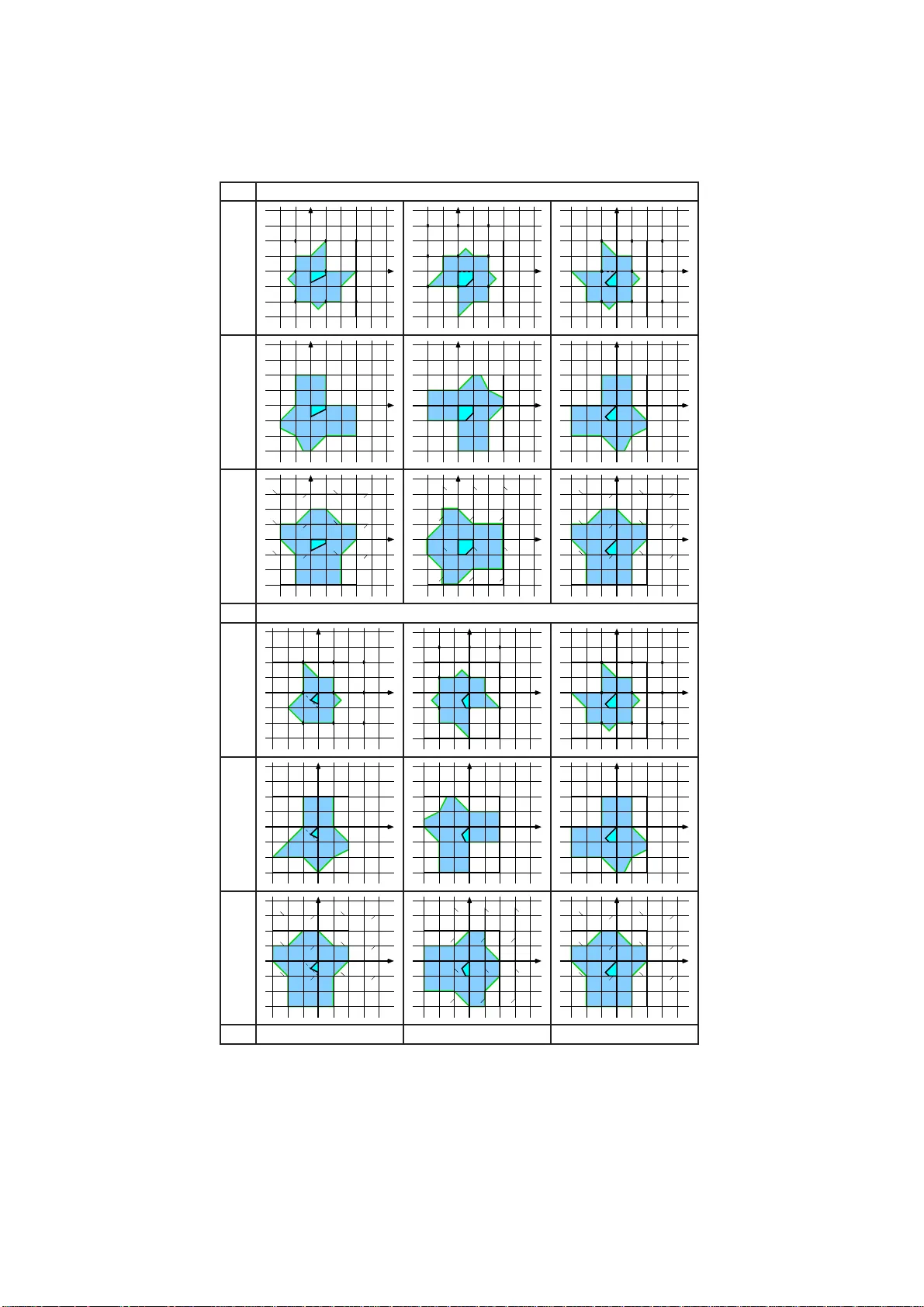
ON THE NUMBER OF F A CETS OF THREE-DIMENSION AL DIRICHLET STEREOHEDR A IV: QUAR TER CUBIC GROUPS PILAR SABARIEGO AND FRANCISCO SANTOS Abstract. In this paper we finish th e intensiv e study of three -dimensional Dirichlet stereohedra started by the second author and D. Bochi¸ s, who show ed that they cannot hav e more than 80 f acets, except p erhaps f or crystallographic space groups in the cubic system. T aking adv an tage of the recen t, simpler classification of three-dimensional crystallographic groups b y Conw a y , Delgado-F r iedrichs, Huson and Th urston, in a previous pa p er we pro ved that Dirichlet stereohedra for an y of the 27 “f ull” cubic groups cannot hav e m ore than 25 facets. Here we study the remaining “quarter” cub ic groups. With a c omputer-assisted method, our main result is that Di richlet stereohedra for the 8 quarter groups, hence for all three- dimensional crystallographic groups, cannot ha ve more than 92 facets. 1. I ntroduction This is the last in a ser ie s of four pap ers (see [1, 2, 17]) devoted to b ounds on the nu mber of facets that Dirichlet stere o hedra in Euclidean 3-spa ce can have. A st er e ohe dr on is a ny bo unded co nv ex p olyhedron which tiles the s pa ce by the action of some crystallogr aphic gr o up. A Dirichlet ster e ohe dr on for a cer ta in crys- tallogra phic group G is the V o ronoi reg io n V o r Gp ( p ) of a p oint p ∈ R 3 in the V o r onoi diagram of an o rbit Gp . The study of the max im um n umber o f facets for s tereohedra is rela ted to Hilb ert’s 18th pr oblem, “ Building up the sp ac e with c ongruent p olyhe dr a” (see [12, 1 6]). B ie- ber bach (1910 ) and Reinhardt (193 2) answered completly the first tw o of Hilb ert’s sp ecific questions, but other problems related to monohe dr al t essel lations (i. e., tessellations whose tiles ar e congr uent) re main op en. An exhaus tive a ccount of this topic app ear ed in a s urvey article by Gr ¨ un baum and Shephard [11], wher e our problem, t o determine t he maximum numb er of fac ets— or, at le ast, a “go o d” upp er b ound—for Dirichlet st er e ohe dr a in R 3 , is mentioned a s a n imp ortant one. Previous results on this pr oblem a re: • The fundamental the or em of ster e ohe dr a (Delaunay , 1961 [6]) ass erts that a stereohedron of dimension d for a crystallog raphic gr oup G with a asp e ct s cannot hav e more than 2 d ( a + 1) − 2 facets. The num b er of asp ects of a crystallog raphic gro up G is the index of its tr a nslational subgroup. Delone’s bo und for three-dimensional gro ups , which ha ve up to 48 aspects , is 3 9 0 facets. • The thr e e-dimensional stere o hedron with the maximum num b er of face ts known so far was found in 1980 by P . Engel (see [7] a nd [11, p. 964]). It is a Dirichlet stereohedr on with 3 8 facets, for the cubic g roup I 4 1 32, with 24 asp ects. Researc h partiall y supported b y the Spanish Ministry of Educat ion and Science, grant num b er MTM2008-04699-C03-02. 1 2 PILAR SABARIEGO AND FRANCISCO SANTOS | G : Q | Aspe c ts Group Our bo unds (1) (2) (3) (4) Final 8 48 N ( Q ) = I 4 1 g 3 2 d 519 155 100 6 8 68 4 24 I 4 1 32 264 96 55 55 I 43 d 257 78 76 76 I 2 g 3 260 77 57 57 2 24 P 4 1 32 135 92 92 12 I 2 ′ 3 131 48 46 46 24 P 2 1 a 3 132 86 86 1 12 Q = P 2 1 3 69 69 (1) Bo unds after pro cessing tria d ro tations. (2) Bo unds after diad ro ta tions with a xes para llel to the co or dinate a xes. (3) Bo unds after diag onal diad rota tions. (4) Bo unds after intersecting w ith pla nar pro jections. T able 1. Bounds fo r the num b er of facets of Dirichlet stereohedr a of qua r ter cubic gr oups There is ag reement among the ex per ts (see [7 , page 214], [11, page 960], [1 8, page 50]) that Engel’s s terohedron is muc h clo ser than Delone’s upp er b ound to having the max imum p o s sible num b er of facets. Our r e s ults confir m this. In 20 00, the second author a nd D. Bo chi ¸ s gave upp er b ounds for the num b er of facets of Dirichlet stereohedr a. They did this by dividing the 219 affine co njugacy classes of three-dimensio nal crystallogr a phic gro ups in to three blo cks, and using different to ols for each. Their main r esults a re: • Within the 10 0 crystallog raphic groups which contain r eflection planes, the exact maximum n umber of facets is 18 [1]. • Within the 97 no n-cubic cr ystallogr aphic g r oups without reflection pla nes, they found Diric hlet ster eohedra with 32 facets and proved that no one c an hav e more than 80. Moreover, they g ot upp er b ounds of 50 and 38 for all but, r esp ectively , 9 and 21 of the gro ups [2]. • The y a lso co nsidered cubic groups, but they were o nly able to prov e an upper b ound o f 1 62 facets fo r them [3]. In [17] we improved the b o und fo r 1 4 of the 22 cubic groups without re flec tions planes, the 14 “full groups” : Theorem 1.1. Dirichlet st er e ohe dr a for ful l cubic gr oups c annot have mor e than 25 fac ets. In this paper we give an upper bound for the r emaining cubic groups: the 8 “quarter groups”. It has to be noted that to get these b ounds, c ontrary to the ones in the previous pa per s of this ser ies, computers ar e used. The upper b ound we obta in for each quarter g roup is shown in T able 1. Columns (1) to (4) are the bo unds obtained in different phases or o ur metho d, the column lab eled “ Final” is our final b ound. Globally , we get the following. Theorem 1 .2. Dirichlet st ere ohe dr a for quarter cubic gr oups c annot have mor e than 92 fac ets. F or the sake of c ompleteness, we include here the full list of other crystallo- graphic g r oups for which the bounds prov ed in this series of pap ers is bigger than 38 (T able 2). This list is the sa me as T a ble 2 in [2]. DIRICHLET STEREOHEDRA FOR QUAR TER CUBIC GR OUPS 3 Group Asp. Bound I 4 c 2 8 40 P 4 2 n 2 g 2 c 16 40 R 3 6 42 R 32 6 42 R 3 c 6 42 I 4 1 cd 8 44 P 3 1 2 6 48 Group Asp. Bound P 3 1 12 6 48 P 6 1 6 48 P 4 1 22 8 50 C 2 a 2 c 2 c 8 50 I 2 a 2 c 2 c 8 50 P 4 1 2 1 2 8 64 I 4 1 g 8 70 Group Asp. Bound I 4 1 22 8 70 I 4 2 d 8 70 F 2 d 2 d 2 d 8 70 P 6 2 22 1 2 78 P 6 1 22 1 2 78 R 3 2 c 12 7 9 I 4 1 g 2 c 2 d 16 8 0 T able 2. Non-cubic gro ups where o ur upp er b ound is lar ger than 38 Theorem 1. 3. Thr e e dimensional Dirichlet ster e ohe dr a c annot have mor e than 92 fac ets. T hey c an p ossibly have mor e than 38 fac et s only in one of the 29 gr oups liste d in tables 1 and 2. 2. P reliminaries and outline 2.1. “F ull” and “quarter” cubic groups. Our division of cubic gro ups into “full” and “q uarter” ones comes from the recent clas s ification of three-dimensio na l crystallog raphic gro ups develop ed in [5] by Co nw ay et al. They divide cry s tallo- graphic groups into “reducible” and “irr e ducible”, w ere irr e ducible gr oups are those that do not hav e a ny inv a r iant direction. It turns out that they coincide with the cubic gr oups of the classica l classifica tion. Co nw ay et al. define o dd su b gr oup of a n irreducible gro up G as the one gener ated by the ro tations o f order three, a nd show that: Theorem 2.1 (Conw ay et al. [5]) . (1) Ther e ar e only two p ossible o dd su b- gr oups of cubic gr oups, that we denote F and Q . (2) Both F and Q ar e normal in Isom( R 3 ) . Henc e, every cubic gr oup lies b etwe en its o dd sub gr oup and the normalizer N ( F ) and N ( Q ) of it. The seco nd prop erty reduces the enumeration of cubic space g roups to the enu- meration, up to co njugacy , o f subgroups of the tw o finite groups N ( F ) /F and N ( Q ) /Q . N ( Q ) /Q is dihedral of order 8 and N ( F ) /F has order 16 and contains a dihedr al subg roup of index 2 . The main difference betw een F and Q is that Q o nly c o ntains triad r otations whose axes are mut ually dis jo in t, while so me tr iad rotation axes in F intersect one another. Q is a subgro up of F of order four and bec a use of that Conw ay et al. c all ful l gr oups those with o dd subgr oup equal to F and quarter gr oups those with o dd subgroup eq ua l to Q : Quar ter g roups co ntain only a qua rter of the p oss ible ro tation axes. There are 2 7 full groups (14 o f them without r eflection planes) and 8 quarter groups (no ne with reflection planes, be cause N ( Q ) do es not contain reflections). 2.2. The structure of quarter cubic g roups. Thro ughout the pap er we us e the Int ernatio nal Cr ystallogr aphic Notation for three-dimensional cry s tallogra phic groups; s ee, e. g ., [15]. All the quar ter cubic groups have the sa me o dd group Q , a gro up of type P 2 1 3. By definition, Q is gene r ated b y triad rotatio ns. More precis ely , throug h eac h p oint ( x, y , z ) ∈ ( Z / 2) 3 exactly one r otation axis pa sses, with vector: 4 PILAR SABARIEGO AND FRANCISCO SANTOS Z X Y Figure 1. The bo dy-centered cubic lattice I . The triad rotations (in grey) together with translations of length tw o in the co or dinate directions genera te Q (1 , 1 , 1) if x ≡ y ≡ z (mo d 1) ( − 1 , 1 , 1) if y 6≡ x ≡ z (mo d 1) (1 , − 1 , 1) if z 6≡ x ≡ y (mo d 1) (1 , 1 , − 1) if x 6≡ y ≡ z (mo d 1) In other words, exactly one of the fo ur diag onals of each primitive cubic cell of the la ttice ( Z / 2) 3 is a rotation axis (see Fig 1). The translational subgroup o f Q is a cubic primitive lattice w ith vectors of length one. N ( Q ) is the gr oup of symmetries of the set of tria d rota tion ax es. It is a gr oup of type I 4 1 g 3 2 d , and its translationa l subgroup is a b o dy centered la ttice generated by the vectors ( ± 1 2 , ± 1 2 , ± 1 2 ). N ( Q ) /Q has or de r 8 . In fact, it is iso morphic to the dihedra l group D 8 . Hence there a re 8 g roups b etw een N ( Q ) and Q , including b oth. Their lattice is drawn in Figure 2. In Fig ure 2, we re pr esent them g r aphically with the conv entions o f [15]: for each group, the intersection of a generic orbit with the primitive cell [0 , 1] 3 is considered. Becaus e all the groups contain the tr iad rotatio n on the diago nal axis x = y = z , only a thir d of the orbit is necessa ry in order to describ e the group. E. g., the or bit with resp ect to the subgro up that sends hor izontal planes to horizontal planes. This is what is drawn in the figures, pro jected over the X Y plane . The full dot near the or igin repres ent s a base po int ( a, b, c ) with 0 ≤ a, b, c ≤ 1 / 4. Next to each of the other or bit p oints there is a num b er h ∈ { 0 , 1 / 4 , 1 / 2 , 3 / 4 } , omitted whenever it equals 0. If a n or bit p o int is represented as a “full dot”, then its z -co o rdinate e q uals c + h . If it is r epresented as an “empty dot”, then it equals h − c (or 1 − c , if h is zero). F or extra understanding of the gr oup, eac h do t is drawn dark or light dep ending on whether it is obtained from the base p oint by an orientation preserving or an orientation reversing isometry in G . 2.3. Outline of our metho d. Let G be one of the eig h t quar ter g roups and let p ∈ R 3 be a base p oint for an or bit Gp , so that the Dirichlet s ter eohedron we wan t to study is the closed V o ronoi region V o r Gp ( p ). There is no loss of ge ne r ality in assuming that p has trivial stabilizer, since Ko ch [13, 14] completely class ified cubic orbits with non-trivial stabilizer (more g enerally , those with less than 3 degrees of DIRICHLET STEREOHEDRA FOR QUAR TER CUBIC GR OUPS 5 X 1/2 1/2 1/2 1/2 Y 1/2 3/4 1/4 1/4 1/2 1/2 1/2 3/4 1/4 3/4 3/4 1/4 3/4 1/4 1/4 3/4 1/4 3/4 3/4 1/4 N ( Q ) = I 4 1 g 3 2 d ւ ↓ ց X Y 1/2 1/2 1/2 1/2 1/2 1/2 1/2 1/2 X Y 3/4 1/2 3/4 1/4 1/2 1/4 1/4 1/4 1/2 1/2 3/4 3/4 X 1/2 1/2 1/2 1/2 Y 3/4 1/4 3/4 1/4 1/4 3/4 3/4 1/4 I 2 g 3 I 43 d I 4 1 32 ↓ ց ↓ ւ ↓ X Y 1/2 1/2 1/2 1/2 X Y 1/2 1/2 1/2 1/2 X 3/4 1/4 Y 1/2 1/2 1/4 3/4 P 2 1 a 3 I 2 ′ 3 P 4 1 32 ց ↓ ւ X Y 1/2 1/2 Q = P 2 1 3 Figure 2 . The eight quar ter g r oups. freedom) a nd show ed that they pr o duce Dir ichlet stereohedra with at most 23 facets. 6 PILAR SABARIEGO AND FRANCISCO SANTOS If p has trivia l stabilizer, then a s mall p erturbation of its co o rdinates can only increase the num b er o f facets [17, Lemma 3.1], so we assume p to b e s ufficient ly generic. Our metho d is as follo ws: W e consider a certain tessella tion T of the three- dimensional Euclidean space, which we call the aux iliary tessel lation . F or each tile T of T we ca ll ext ende d V or onoi r e gion o f T an y region V o rExt G T with the following prop erty: ∀ q ∈ T , V or Gq ( q ) ⊆ V or Ext G ( T ) . The extended V oronoi reg ion is not uniquely defined. P art o f our work is to compute one that is as small as p oss ible, for each tile T . Now, if T 0 is the tile of T that co n tains the base p oint p , we call influenc e re gion of T 0 (or, of p ) the union of all the tiles of T whos e extended V orono i reg ions meet V orEx t G ( T 0 ) in their interiors. W e deno te it by Infl G ( T 0 ). Observe that, str ictly sp eaking, Infl G ( T 0 ) depends not only o n G , but also on T and on o ur pa rticular choice of extended V oronoi regions. It is easy to prov e: Theorem 2.2. If T 0 is the t ile c ontaining p , then al l the elements of Gp that ar e neighb ors of p in the V or onoi diagr am V or Gp ( p ) lie in Infl G ( T 0 ) . Pr o of. See [3]. That is, to get a b ound on the num b er o f face ts of Dirichlet stereohedr a for base po int s in T 0 we only need to count, o r b ound, | Gp ∩ Infl G ( T 0 ) | . The ab ov e “ s ketc h of a metho d” is imp ossible to implement directly . It involv e s the computatio n of an infinite num b er of extended V oro noi reg ions and influence regions. The key prop er t y that allows us to conv er t this into a finite co mputation is the following e asy lemma: Lemma 2.3. L et N ( G ) denote the n ormalizer of a crystal lo gr aphic gr oup G . If T 1 and T 2 = ρT 1 ar e tiles r elate d by a tra nsformation ρ ∈ N ( G ) , t hen V or Ext G ( T 2 ) = ρ V orE xt G ( T 1 ) and Infl G ( T 2 ) = ρ Infl G ( T 1 ) . Pr o of. It follows from the fact that V or Gρ ( q ) ( ρ ( q )) = ρ (V o r Gq ( q )) for ev ery p o int q , if ρ is in the nor malizer N ( G ) of G . So, what we do is to use an auxiliary tessella tio n whose tiles lie in a sma ll num b er of classes modulo the normalize r of G . Only this num be r of influence re g ions nee ds to b e co mputed. 2.4. Computation of extended V oronoi reg i ons. The basic idea for our com- putation of e x tended V orono i re g ions is that ea ch translation and rotation pres ent in G implies that a certain r egion o f space can b e excluded from V or Ext G ( T 0 ). Lemma 2.4 . L et T 0 b e a c onvex domain and let ρ b e a r otation in G with axis ℓ and r otation angle α . Assu me that ℓ do es not interse ct T 0 . L et H 1 and H 2 b e the two supp ort half-planes of T 0 with b or der in ℓ . Le t H ′ 1 and H ′ 2 b e the half-planes obtaine d by r otating H 1 and H 2 “away fr om T 0 ” with angles ± α/ 2 and axis ℓ . Then, for every p ∈ T 0 , the Dirichlet r e gion V or Gp ( p ) is c ontaine d in the (p erhaps non-c onvex) dihe dr al r e gion b ounde d by H ′ 1 ∪ H ′ 2 and c ontaining T 0 . Pr o of. In fact, something stronger is tr ue: V or Gp ( p ) is co n tained in the dihedral sector with axis in ℓ , angle α , and cen tered at p . This follows from the fact that the tw o facets of this dihedron a r e parts o f the bise c to rs of p and ρp and o f p and ρ − 1 p , r e s pe c tively . See the left part o f Figure 3. DIRICHLET STEREOHEDRA FOR QUAR TER CUBIC GR OUPS 7 2 ρ α/2 α α/2 ρ −1 p T (p) 0 l H’ 2 (p) ρ H’ 1 H 1 H 1 2 −v/2 v/2 0 T 1 H H H’ 2 H’ Figure 3. Situations in the Lemmas 2.4 and 2.5 v/2 0 T v/2 v/2 π/2 π/3 π/3 π/4 π/4 π/2 v/2 Figure 4 . E xtended V oronoi reg ion induced by three r o tations and tw o translatio ns Lemma 2.5. L et T 0 b e a c onvex domain and let ~ v b e the ve ctor of some tr ans lation in G . L et H 1 and H 2 b e the two su pp ort planes of T 0 ortho gonal to ~ v . L et H ′ 1 and H ′ 2 b e the planes obtaine d tra nslating H 1 and H 2 “away fr om T 0 ” by the ve ctors ± ~ v / 2 . Then, for every p ∈ T 0 , the D irichlet r e gion V or Gp ( p ) is c ontaine d in the strip b etwe en H ′ 1 and H ′ 2 . Pr o of. Simila r to the pr evious one. See the right part of Figure 3. So, our metho d for constructing e xtended V or onoi reg ions consists in identifying a certain n umber of rotations and transla tions in G a nd taking as V orExt G ( T 0 ) the intersection of the regions allow ed in Lemmas 2.4 and 2.5. Figure 4 shows an example of what we mean, in which we co nsider three rota tions a nd tw o translations in the plane. The problem with this appro ach is that the r egions obtained in Lemma 2.4 may not b e con vex. Obs erve that w e ar e going to use more than 2 5 0 rotations (see T ables 9 , 10, 11 a nd 12). So, in principle , to compute an extended V oronoi regio n we would need to in tersect 2 50 non-conv ex regions , which is an extremely ha r d computational problem (see, e. g., [8 ]). 8 PILAR SABARIEGO AND FRANCISCO SANTOS T 0 T Figure 5. Extended V oronoi region over a tessella tion T o av oid this we do the following, at the exp ense of getting a slightly larger (hence, for o ur purp oses w ors e) extended V orono i region: instead of obtaining the extended V oro noi region directly a s an intersection, we obtain it as a unio n of tiles of the sa me auxilia ry tessellation T . That is to say: (1) W e firs t iden tify a finite (but la rge) popula tion of tiles in T that form themselves an extended V oronoi regio n (that is, whic h are guar anteed to contain V or Gp ( p ) for e very p ∈ T 0 ). (2) W e then pro cess one b y one the rota tions a nd tr anslations w e are in terested in, a nd at each s tep discard from our initial popula tio n the tiles that do not intersect the co rresp onding region o f L emma 2.4 o r Lemma 2.5. What w e even tua lly obta in with this metho d is the set of tiles of T tha t intersect the region o f Figure 4. See Figure 5. The reader ma y w onder why step (2) ab ov e is computatio nally not s o hard, since it again inv olves the intersection of non-convex regions. The reaso n is that now we int ersec t only tw o such reg ions at a time (one tile and one s trip or dihedr on) and do no t need to intersect the resulting set with anything else. Also (although less impo rtant), w e do no t rea lly need to compute an intersection but only to chec k its empt yness. 3. D et ailed discussion of the method 3.1. The auxiliary tessell ation. The first natural choice of an auxiliary tessel- lation would b e a tesse lla tion by fundament al domains of the nor malizer N ( G ), or of a n y s ubg roup of it. In this w ay all the tiles ar e equiv ale n t: By Lemma 2.3, in such a tessella tion we would ne e d to co mpute o nly one extended V oronoi r egion. Since we ha ve N ( Q ) ≤ N ( G ) for every quarter gro up, as a fir s t step le t us compute a fundamental do ma in o f N ( Q ) (later , w e will subdivide it further). In order to ge t a fundamental doma in with some symmetries , we start with the V orono i region of one of its degenera te or bits, namely the o r bit with ba se p oint a t the origin (0 , 0 , 0). This or bit is a b o dy centered cubic lattice o f s ide 1 / 2 . Its V oronoi cell is DIRICHLET STEREOHEDRA FOR QUAR TER CUBIC GR OUPS 9 Figure 6. A truncated o ctahedr on, the V o ronoi cell of the b o dy centered cubic lattice a truncated o ctahedron (see Fig ure 6 ) who se 14 face ts have s uppo rting inequalities ± x ≤ 1 4 , ± y ≤ 1 4 , ± z ≤ 1 4 , ± x ± y ± z ≤ 3 8 . The 24 vertices of the V o ronoi c e ll are ± 1 4 , ± 1 8 , 0 , ± 1 4 , 0 , ± 1 8 , 0 , ± 1 4 , ± 1 8 , ± 1 8 , ± 1 4 , 0 , ± 1 8 , 0 , ± 1 4 , 0 , ± 1 8 , ± 1 4 . The stabilizer o f this truncated o ctahedron in N ( Q ) ha s o rder six. It is gener a ted by the central symmetry (in version) around the orig in and the ro tation of order three with axis in the line x = z = y . Hence, one wa y of o btaining a fundamen tal domain for N ( Q ) is to intersect the truncated o ctahedro n with a sector of angle π / 3 with edg e in that line. There are several inequiv alent wa ys of do ing it, but we choose the se ctor defined by the ineq ua lities x ≤ y ≤ z . In this wa y , w e obtain as fundamental domain of N ( Q ) the p olyto p e with the following 12 vertices: 1 8 , 1 8 , 1 8 1 4 , 1 16 , 1 16 1 4 , 1 8 , 0 3 16 , 3 16 , 0 1 4 , − 1 16 , − 1 16 1 4 , 0 , − 1 8 1 8 , 0 , − 1 4 1 16 , 1 16 , − 1 4 0 , − 3 16 , − 3 16 0 , − 1 8 , − 1 4 − 1 16 , − 1 16 , − 1 4 − 1 8 , − 1 8 , − 1 8 This p olytop e is depicted on the left side of Fig ur e 7. It has eig h t fac ets: the t wo “big ones” in the planes x = y and y = z are pe n tago ns a nd the other six are par ts o f facets of the truncated o ctahe dr on: t wo halves-of-sq ua res, tw o ha lves-of-hexagons and tw o sixths-of-hexa gons. As we sa id ab ove, to get b e tter bo unds , w e further subdiv ide this fundamental domain of N ( Q ). W e do it cutting w ith the co or dinate planes z = 0, y = 0 and x = 0. W e g et the following four sub- po lytop es A 0 , B 0 , C 0 and D 0 (see Figure 7): A 0 := conv (0 , 0 , 0) , 1 8 , 1 8 , 1 8 , 1 4 , 1 16 , 1 16 , 1 4 , 1 8 , 0 , 3 16 , 3 16 , 0 , 1 4 , 0 , 0 10 PILAR SABARIEGO AND FRANCISCO SANTOS Figure 7. Two view s of the fundamental do main of N ( Q ) a nd its sub div ision into four prototiles, A 0 , B 0 , C 0 and D 0 B 0 := conv (0 , 0 , 0 ) , 1 4 , 0 , 0 , 1 4 , 1 8 , 0 , 3 16 , 3 16 , 0 , 1 4 , 0 , − 1 8 , 1 8 , 0 , − 1 4 , 1 16 , 1 16 , − 1 4 , 0 , 0 , − 1 4 C 0 := con v (0 , 0 , 0 ) , 1 4 , 0 , 0 , 1 4 , − 1 16 , − 1 16 , 1 4 , 0 , − 1 8 , 1 8 , 0 , − 1 4 , 0 , − 3 16 , − 3 16 , 0 , − 1 8 , − 1 4 , 0 , 0 , − 1 4 D 0 := conv (0 , 0 , 0) , 0 , − 3 16 , − 3 16 , − 1 16 , − 1 16 , − 1 4 , 0 , − 1 8 , − 1 4 , − 1 8 , − 1 8 , − 1 8 , 0 , 0 , − 1 4 Definition 3.1. F r om now on, the tessel lation T of R 3 obtaine d letting N ( Q ) act on t he four “pr ototiles” A 0 , B 0 , C 0 , and D 0 is c al le d auxiliar y tessellatio n . 3.2. The ini tial p opulation of tiles . As sa id in Section 2.4, we compute ex tended V orono i regio ns starting with a finite num b er of tiles of T whose union in g uaranteed to co n tain V or Gp ( p ) for e very p ∈ T 0 , and then elimina ting as ma n y of them a s we can. As initial p opulation of tiles, we take all the ones contained in the cub e [ − 1 , 1] 3 . That this is enough follows from the fact that the four pro totiles are contained in the cube [ − 1 / 4 , 1 / 4] 3 and our g roup Q co nt ains the tr anslations o f length 1 in the three co ordinate directions. Lemma 2.5 then implies that the extended V oro noi region (o f a ny of the proto tiles) is co nt ained in the cub e [ − 3 / 4 , 3 / 4] 3 . Since the four pr o totiles together form a fundamental domain of N ( Q ) and since the density of (any generic orbit of ) N ( Q ) is 96 p oints p er unit cub e, in the initial po pulation we have 9 6 × 8 = 768 tiles of each of the four types, and 3 0 72 tiles in total. In our implementation, each tile of T is characterized by its “type” ( A , B , C or D ) a nd the transformatio n ρ ∈ N ( Q ) that sends the corres p o nding prototile ( A 0 , DIRICHLET STEREOHEDRA FOR QUAR TER CUBIC GR OUPS 11 Type A C 1 1 0 0 0 0 1 0 0 0 0 1 0 0 0 0 1 1 0 0 0 1 − 1 0 0 1 / 2 0 − 1 0 1 / 2 0 0 1 1 0 0 0 1 / 2 − 1 0 0 1 / 2 0 1 0 1 0 0 − 1 1 0 0 0 1 / 2 1 0 0 1 0 − 1 0 1 / 2 0 0 − 1 C 2 1 0 0 0 3 / 4 0 1 0 1 / 4 − 1 0 0 1 / 4 0 0 1 1 0 0 0 1 / 4 0 − 1 0 1 / 4 1 0 0 3 / 4 0 0 1 1 0 0 0 3 / 4 0 − 1 0 3 / 4 − 1 0 0 3 / 4 0 0 − 1 1 0 0 0 1 / 4 0 1 0 3 / 4 1 0 0 1 / 4 0 0 − 1 C 3 1 0 0 0 1 − 1 0 0 0 0 1 0 1 / 2 0 0 − 1 1 0 0 0 0 1 0 0 1 / 2 0 − 1 0 1 0 0 − 1 1 0 0 0 1 / 2 1 0 0 1 / 2 0 1 0 1 / 2 0 0 1 1 0 0 0 1 / 2 − 1 0 0 1 0 − 1 0 0 0 0 1 C 4 1 0 0 0 1 / 4 0 − 1 0 1 / 4 − 1 0 0 1 / 4 0 0 − 1 1 0 0 0 3 / 4 0 1 0 1 / 4 1 0 0 3 / 4 0 0 − 1 1 0 0 0 1 / 4 0 1 0 3 / 4 − 1 0 0 3 / 4 0 0 1 1 0 0 0 3 / 4 0 − 1 0 3 / 4 1 0 0 1 / 4 0 0 1 C 5 1 0 0 0 1 / 2 1 0 0 0 0 1 0 1 0 0 − 1 1 0 0 0 1 / 2 − 1 0 0 1 / 2 0 − 1 0 1 / 2 0 0 − 1 1 0 0 0 1 − 1 0 0 1 / 2 0 1 0 0 0 0 1 1 0 0 0 0 1 0 0 1 0 − 1 0 1 / 2 0 0 1 C 6 1 0 0 0 1 / 4 0 1 0 1 / 4 − 1 0 0 3 / 4 0 0 − 1 1 0 0 0 3 / 4 0 − 1 0 1 / 4 1 0 0 1 / 4 0 0 − 1 1 0 0 0 1 / 4 0 − 1 0 3 / 4 − 1 0 0 1 / 4 0 0 1 1 0 0 0 3 / 4 0 1 0 3 / 4 1 0 0 3 / 4 0 0 1 C 7 1 0 0 0 1 / 2 − 1 0 0 0 0 1 0 1 / 2 0 0 1 1 0 0 0 1 / 2 1 0 0 1 / 2 0 − 1 0 0 0 0 1 1 0 0 0 0 1 0 0 1 / 2 0 1 0 1 / 2 0 0 − 1 1 0 0 0 1 − 1 0 0 1 0 − 1 0 1 0 0 − 1 C 8 1 0 0 0 3 / 4 0 − 1 0 1 / 4 − 1 0 0 3 / 4 0 0 1 1 0 0 0 1 / 4 0 1 0 1 / 4 1 0 0 1 / 4 0 0 1 1 0 0 0 3 / 4 0 1 0 3 / 4 − 1 0 0 1 / 4 0 0 − 1 1 0 0 0 1 / 4 0 − 1 0 3 / 4 1 0 0 3 / 4 0 0 − 1 T able 3. The 3 2 matrices of the isometries whic h se nd hor iz ontal planes to hor izontal pla nes for A 0 B 0 , C 0 or D 0 ) to it. W e compute the initial tiles of t yp e, say , A , in the initial tessellation as follows: • F rom the g raphic representation of N ( Q ) in Figure 2 we read the 3 2 isome- tries in N ( Q ) that s end horizontal pla ne s to ho r izontal planes a nd send a base p oint p ∈ [0 , 1 / 4 ] 3 to lie in the unit cub e [0 , 1] 3 . The matrices of these isometries are shown in T able 3. F or future reference, these 32 matrices app ear in eight subsets C i , i = 1 , . . . , 8, representing the co sets mo dulo Q . T able 4 s hows which cosets of isometries for m each of the eight quar ter groups. • T o these 32 iso metries we apply the tria d rotation with a xis x = y = z , to obtain the 96 elements of N ( Q ) that send a p oint p ∈ A 0 ⊂ [0 , 1 / 4 ] 3 to lie in [0 , 1] 3 . • Fina lly , we co mpo se these 9 6 with the tra ns lations by the vectors (0 , 0 , 0), ( − 1 , 0 , 0), (0 , − 1 , 0), (0 , 0 , − 1), ( − 1 , − 1 , 0 ), ( − 1 , 0 , − 1), (0 , − 1 , − 1 ) and ( − 1 , − 1 , − 1) in o rder to g et all the tiles of type A contained in [ − 1 , 1] 3 . With the tiles of the o ther types, B , C a nd D , we work the same way , except for the fact tha t the prototiles ar e now not in [0 , 1] 3 . F or ex a mple: B 0 is in the unit c ub e [0 , 1] × [0 , 1 ] × [ − 1 , 0]. Still, to build our initial p opulation of B -tiles, we wan t to start with the 32 hor izontal trans formations that se nd B 0 to lie in [0 , 1 ] 3 . 12 PILAR SABARIEGO AND FRANCISCO SANTOS Quarter groups Cosets I 4 1 g 3 2 d C 1 , . . . , C 8 I 4 1 32 C 1 , C 2 , C 3 , C 4 I 43 d C 1 , C 3 , C 6 , C 8 I 2 g 3 C 1 , C 3 , C 5 , C 7 P 4 1 32 C 1 , C 2 I 2 ′ 3 C 1 , C 3 P 2 1 a 3 C 1 , C 7 P 2 1 3 C 1 T able 4. Cose ts of isometries in each quar ter gr o up Type B C 1 1 0 0 0 0 1 0 0 0 0 1 0 1 0 0 1 1 0 0 0 1 / 2 − 1 0 0 1 / 2 0 1 0 0 0 0 − 1 C 3 1 0 0 0 0 1 0 0 1 / 2 0 − 1 0 0 0 0 − 1 1 0 0 0 1 / 2 − 1 0 0 1 0 − 1 0 1 0 0 1 C 5 1 0 0 0 1 / 2 1 0 0 0 0 1 0 0 0 0 − 1 1 0 0 0 1 − 1 0 0 1 / 2 0 1 0 1 0 0 1 C 7 1 0 0 0 1 / 2 1 0 0 1 / 2 0 − 1 0 1 0 0 1 1 0 0 0 1 − 1 0 0 1 0 − 1 0 0 0 0 − 1 T able 5. The new matrices of the iso metries which s end ho rizon- tal planes to ho rizontal planes for B 0 These a re the same 3 2 o f T a ble 3 except some o f them need to be comp osed with a s uitable int eger transla tion. The matrices that need mo dification are shown in T ables 5 , 6, and 7 , for types B , C and D , resp ectively . As in case A , once we hav e got these iso metries, we apply to them the triad ro tations with axis x = y = z and the trans lations by the vectors (0 , 0 , 0), ( − 1 , 0 , 0), (0 , − 1 , 0), (0 , 0 , − 1), ( − 1 , − 1 , 0), ( − 1 , 0 , − 1 ), (0 , − 1 , − 1) and ( − 1 , − 1 , − 1 ) to get an initial p o pulation o f 96 × 8 = 7 68 tiles of ea ch t yp e. 3.3. Cutting wi th translatio ns and rotations. At this point we can say that we hav e alrea dy computed a single extended V oronoi r egion for the eight g roups and the four prototiles: the cube [ − 1 , 1] 3 decomp osed into 768 × 4 = 3072 tiles, 768 of ea ch type A , B , C or D . But this region is certainly not g o o d enough for our purp oses . Our next step is to apply Lemmas 2.4 and 2.5 to exclude from this initial p opulation as many tiles as we can. That is to say: Let G be one of the eig ht q uarter gr oups and let T 0 be one of the four prototiles A 0 , B 0 , C 0 and D 0 . F or each choice o f G and T 0 we do the following: • L e t S b e a set of rotations and trans la tions present in G . Below we sp ecify our choice of S for ea ch G , but esse n tially wha t we do is we take the translations of s ma ller length a nd the ro tations of ax is closer to the or igin. DIRICHLET STEREOHEDRA FOR QUAR TER CUBIC GR OUPS 13 Type C C 1 1 0 0 0 0 1 0 0 1 0 1 0 1 0 0 1 1 0 0 0 1 / 2 − 1 0 0 1 / 2 0 1 0 0 0 0 − 1 1 0 0 0 1 / 2 1 0 0 0 0 − 1 0 1 / 2 0 0 − 1 C 3 1 0 0 0 1 − 1 0 0 1 0 1 0 1 / 2 0 0 − 1 1 0 0 0 0 1 0 0 1 / 2 0 − 1 0 0 0 0 − 1 1 0 0 0 1 / 2 − 1 0 0 0 0 − 1 0 1 0 0 1 C 5 1 0 0 0 1 / 2 1 0 0 1 0 1 0 0 0 0 − 1 1 0 0 0 1 − 1 0 0 1 / 2 0 1 0 1 0 0 1 1 0 0 0 0 1 0 0 0 0 − 1 0 1 / 2 0 0 1 C 7 1 0 0 0 1 / 2 − 1 0 0 1 0 1 0 1 / 2 0 0 1 1 0 0 0 1 / 2 1 0 0 1 / 2 0 − 1 0 1 0 0 1 1 0 0 0 1 − 1 0 0 0 0 − 1 0 0 0 0 − 1 T able 6. The new matrices of the iso metries which s end ho rizon- tal planes to ho rizontal planes for C 0 Type D C 1 1 0 0 0 1 1 0 0 1 0 1 0 1 0 0 1 1 0 0 0 0 − 1 0 0 1 / 2 0 − 1 0 1 / 2 0 0 1 1 0 0 0 1 / 2 − 1 0 0 1 / 2 0 1 0 0 0 0 − 1 1 0 0 0 1 / 2 1 0 0 0 0 − 1 0 1 / 2 0 0 − 1 C 3 1 0 0 0 0 − 1 0 0 1 0 1 0 1 / 2 0 0 − 1 1 0 0 0 1 1 0 0 1 / 2 0 − 1 0 0 0 0 − 1 1 0 0 0 1 / 2 − 1 0 0 0 0 − 1 0 1 0 0 1 C 5 1 0 0 0 1 / 2 1 0 0 1 0 1 0 0 0 0 − 1 1 0 0 0 0 − 1 0 0 1 / 2 0 1 0 1 0 0 1 1 0 0 0 1 1 0 0 0 0 − 1 0 1 / 2 0 0 1 C 7 1 0 0 0 1 / 2 − 1 0 0 1 0 1 0 1 / 2 0 0 1 1 0 0 0 1 / 2 1 0 0 1 / 2 0 − 1 0 1 0 0 1 1 0 0 0 1 1 0 0 1 / 2 0 1 0 1 / 2 0 0 − 1 1 0 0 0 0 − 1 0 0 0 0 − 1 0 0 0 0 − 1 T able 7. The new matrices of the iso metries which s end ho rizon- tal planes to ho rizontal planes for D 0 • F or each of the 768 × 4 tiles in the initial po pulation a nd for each element ρ ∈ S , apply L emma 2.4 (if ρ is a rotation) or 2.5 (if ρ is a trans lation) and, if the tile is fully contained in the r egion of space forbidden b y the Lemma, then remov e this tile from the extended V or onoi re gion. There is a subtle po in t in this latter test. Let T b e a tile to which we ca n apply the test of Lemma, say , 2.4. The “forbidden r egion” is the unbounded dihedron defined by t wo half-spaces H ′ 1 and H ′ 2 (see Fig ure 3). What w e test is whether each of the vertices of T belong s to each of the tw o half- spaces. But the decisio n o f whether the tile is discar ded o r not dep ends o n whether the dihedron is conv ex or not. That is, whether the angle α of the 14 PILAR SABARIEGO AND FRANCISCO SANTOS Sets Isommetries S 1 Co ordinate tr anslations: ( ± 1 , 0 , 0) , (0 , ± 1 , 0 ) , (0 , 0 , ± 1) S 2 Diagonal tr anslations: ( ± 1 / 2 , ± 1 / 2 , ± 1 / 2) S 3 T riad rota tions (T able 9) S 4 Diad rotations (T able 10) S 5 Diad rotations (T able 11) S 6 Diad rotations (T able 12) Group T rans l. Rotations P 2 1 3 P 2 1 a 3 S 1 S 3 P 4 1 32 S 1 S 3 , S 6 I 4 3 d I 2 g 3 I 2 ′ 3 S 1 , S 2 S 3 , S 4 I 4 1 g 3 2 d I 4 1 32 S 1 , S 2 S 3 , S 4 , S 5 T able 8. T r ansformatio ns that we use in e a ch quarter g r oup rotation ρ plus the a ngle with which T 0 is seen fro m l is bigger or s maller than 18 0 deg rees: – If this angle is bigger than 1 80 degrees (that is, if the for bidden reg io n is conv ex) we discar d the tile T whenev er “b oth half-spaces H ′ 1 and H ′ 2 contain all the vertices of T ”. – If this angle is smaller than 1 80 degrees (that is, if the forbidden region is not conv ex) we dis card the tile T whenever “o ne of the half-spa c es H ′ 1 and H ′ 2 contains all the vertices of T ”. If ρ is a tr anslation, the se c o nd rule is a lways applied. The particular translations a nd rotations that we use are the following ones. T ables 8, 9, 10, 11 and 1 2 lis t them mo re e x plicitly . • The integer tra nslations o f leng th one a ppea r in all the q ua rter groups. In the five gr oups with a b o dy centered tra nslational subgro up we also use the half-integer diagonal tr anslations ( ± 1 / 2 , ± 1 / 2 , ± 1 / 2). • The triad ro tations also app ea r in a ll the quarter gro ups. The set S 3 of triad rotations that we use ar e listed in T able 9. W e ha ve included the ones with axis clos er to the prototile, s ince the ones that are not close will cut o ut only po rtions of the e x tended V oro no i reg ion that were a lready cut by other, closer rotatio ns. The decision on where to put the thres hold is somehow heuristic but should not a ffect the r esult muc h. Actually , many of the ro tations listed in o ur table turned out to b e alrea dy sup erfluous. • T able 10 lists the set S 4 of diad rotations with ax e s para lle l to the co or dinate axes that we use in the g roups I 4 1 g 3 2 d , I 4 1 32, I 43 d , I 2 g 3 a nd I 2 ′ 3. • T able 1 1 lists the set S 5 of diad r otations with axe s parallel to the diagonals of the faces of the unit cub e that we use in the gr o ups I 4 1 g 3 2 d and I 4 1 32. In the group P 4 1 32 only some of these diad rotatio ns are present. The list S 6 of them is in T able 12. In these four tables (T a bles 9, 10, 11 and 12), the t wo en tries in each column are a p oint a nd the direc tio n of the r o tation axis. 3.4. Planar pro jection. In the extended V orono i region computed so far only rotations and translations present in our gro up a re taken into account. If we wish to deal with other transformatio ns (glide reflec tio ns, screw r otations, etc) we could state the ana logues of Lemmas 2.4 and 2.5 for them, but the result would be too complicated, per haps impractical. Instead, let us consider the “horizontal subgroup” of o ur group G . That is, the subgroup G z that fixes the third co o rdinate. Each o f the eight parts of Figur e 8 shows the planar subgr o up of the qua rter group that o ccupies the sa me pos ition in Figure 2. Only four different planar subgro ups arise, of types p 1, p 2, pg and pg g . DIRICHLET STEREOHEDRA FOR QUAR TER CUBIC GR OUPS 15 T riad rota tions Poin t V ector Point V ector Poin t V ector (0 , 0 , 0) (1 , 1 , 1) ( − 1 / 2 , 0 , 0) ( − 1 , − 1 , 1) (0 , 1 / 2 , 0) ( − 1 , 1 , 1) ( − 1 , 0 , 0) (1 , 1 , 1) (1 / 2 , 0 , 0 ) ( − 1 , − 1 , 1) (0 , − 1 / 2 , 0) ( − 1 , 1 , 1) (1 , 0 , 0) (1 , 1 , 1) (1 / 2 , 1 , 0) ( − 1 , − 1 , 1) ( − 1 , 1 / 2 , 0) ( − 1 , 1 , 1) (0 , − 1 , 0) (1 , 1 , 1) ( − 1 / 2 , 1 , 0) ( − 1 , − 1 , 1) ( − 1 , − 1 / 2 , 0 ) ( − 1 , 1 , 1) (0 , 1 , 0) (1 , 1 , 1) (1 / 2 , − 1 , 0) ( − 1 , − 1 , 1) (1 , 1 / 2 , 0) ( − 1 , 1 , 1) (0 , 0 , − 1) (1 , 1 , 1) ( − 1 / 2 , − 1 , 0) ( − 1 , − 1 , 1) (1 , − 1 / 2 , 0) ( − 1 , 1 , 1) (0 , 0 , 1) (1 , 1 , 1) ( − 3 / 2 , − 1 , 0) ( − 1 , − 1 , 1) ( − 1 , 3 / 2 , 0) ( − 1 , 1 , 1) (0 , 0 , 1 / 2 ) (1 , − 1 , 1 ) (1 / 2 , 0 , 1) ( − 1 , − 1 , 1) (0 , 1 / 2 , − 1 ) ( − 1 , 1 , 1 ) (1 , 0 , 1 / 2 ) (1 , − 1 , 1 ) ( − 1 / 2 , 0 , 1) ( − 1 , − 1 , 1) (0 , − 1 / 2 , − 1) ( − 1 , 1 , 1) (0 , 0 , − 1 / 2) (1 , − 1 , 1) (1 / 2 , 0 , − 1) ( − 1 , − 1 , 1) (0 , 1 / 2 , 1) ( − 1 , 1 , 1) (1 , 0 , − 1 / 2) (1 , − 1 , 1) ( − 1 / 2 , 0 , − 1) ( − 1 , − 1 , 1) (0 , − 1 / 2 , 1) ( − 1 , 1 , 1) (0 , 1 , − 1 / 2) (1 , − 1 , 1) (0 , 0 , 3 / 2 ) (1 , − 1 , 1) (1 , − 1 / 2 , 0 ) ( − 1 , 1 , 1 ) (0 , 1 , 1 / 2 ) (1 , − 1 , 1 ) (0 , 0 , − 3 / 2) (1 , − 1 , 1) (1 , 1 / 2 , 0) ( − 1 , 1 , 1) (1 / 2 , 3 / 2 , 0) (1 , − 1 , 1) ( − 1 , 1 / 2 , 0) ( − 1 , 1 , 1) T able 9. A set S 3 of triad rotations in Q and, therefore, in all the quarter g roups Diad rotations parallel to the co ordinate axes Poin t V ector Poin t V ector Point V ec tor (0 , − 3 / 4 , − 1 / 2) (1 , 0 , 0) ( − 1 / 2 , 0 , − 3 / 4) (0 , 1 , 0) ( − 3 / 4 , − 1 / 2 , 0) (0 , 0 , 1) (0 , − 3 / 4 , 0) (1 , 0 , 0) ( − 1 / 2 , 0 , − 1 / 4) (0 , 1 , 0) ( − 3 / 4 , 0 , 0) (0 , 0 , 1) (0 , − 3 / 4 , 1 / 2) (1 , 0 , 0) ( − 1 / 2 , 0 , 1 / 4 ) (0 , 1 , 0) ( − 3 / 4 , 1 / 2 , 0) (0 , 0 , 1) (0 , − 1 / 4 , − 1 / 2) (1 , 0 , 0) ( − 1 / 2 , 0 , 3 / 4) (0 , 1 , 0) ( − 1 / 4 , − 1 / 2 , 0) (0 , 0 , 1) (0 , − 1 / 4 , 0) (1 , 0 , 0) (0 , 0 , − 3 / 4) (0 , 1 , 0) ( − 1 / 4 , 0 , 0 ) (0 , 0 , 1) (0 , − 1 / 4 , 1 / 2) (1 , 0 , 0) (0 , 0 , − 1 / 4 ) (0 , 1 , 0) ( − 1 / 4 , 1 / 2 , 0 ) (0 , 0 , 1) (0 , 1 / 4 , − 1 / 2) (1 , 0 , 0) (0 , 0 , 1 / 4 ) (0 , 1 , 0) (1 / 4 , − 1 / 2 , 0 ) (0 , 0 , 1) (0 , 1 / 4 , 0 ) (1 , 0 , 0) (0 , 0 , 3 / 4 ) (0 , 1 , 0) (1 / 4 , 0 , 0 ) (0 , 0 , 1) (0 , 1 / 4 , 1 / 2) (1 , 0 , 0) (1 / 2 , 0 , − 3 / 4) (0 , 1 , 0 ) (1 / 4 , 1 / 2 , 0) (0 , 0 , 1) (0 , 3 / 4 , − 1 / 2) (1 , 0 , 0) (1 / 2 , 0 , − 1 / 4) (0 , 1 , 0) (3 / 4 , − 1 / 2 , 0) (0 , 0 , 1) (0 , 3 / 4 , 0 ) (1 , 0 , 0) (1 / 2 , 0 , 1 / 4) (0 , 1 , 0) (3 / 4 , 0 , 0) (0 , 0 , 1) (0 , 3 / 4 , 1 / 2) (1 , 0 , 0) (1 / 2 , 0 , 3 / 4 ) (0 , 1 , 0) (3 / 4 , 1 / 2 , 0) (0 , 0 , 1) T able 10. A set S 4 of diad r otations par allel to the co ordinate axes that a pp ea r in the g roups I 4 1 g 3 2 d , I 4 1 32, I 43 d , I 2 g 3 a nd I 2 ′ 3 As it turns out, extended V oronoi r egions (and influence regions) for these four groups were co mputed in [3] and [1]. Our idea is to take adv antage of the following simple fact: Lemma 3.2. L et π : R 3 → R 2 denote the vertic al pr oje ction, omitting t he thir d c o or dinate. L et T 0 b e a pr ototile and let G b e a crystal lo gr aphic gr oup. L et G z denote the horizontal s u b gr oup of G , that is the set of tr ansformations that send e ach horizontal plane to itself. Then: π (V orE xt G ( T 0 )) ⊆ V orE xt G z ( π ( T 0 )) . Pr o of. The only thing to prove is the same formula for V oronoi reg ions. Tha t is, for e very base p oint p ∈ T 0 we need to show that: π (V or Gp ( p )) ⊆ V o r G z ( π ( p )) ( π ( p )) . 16 PILAR SABARIEGO AND FRANCISCO SANTOS Po int V ector P oint V ector Poin t V ector ( − 7 / 4 , 0 , 1 / 8) ( − 1 , 1 , 0) ( − 5 / 4 , 0 , 3 / 8) (1 , 1 , 0) (1 / 8 , − 7 / 4 , 0) (0 , − 1 , 1) ( − 7 / 4 , 0 , 5 / 8) ( − 1 , 1 , 0) ( − 5 / 4 , 0 , 7 / 8) (1 , 1 , 0) (5 / 8 , − 7 / 4 , 0) (0 , − 1 , 1) ( − 5 / 4 , 0 , 3 / 8) ( − 1 , 1 , 0) ( − 3 / 4 , 0 , 1 / 8) (1 , 1 , 0) (3 / 8 , − 5 / 4 , 0) (0 , − 1 , 1) ( − 5 / 4 , 0 , 7 / 8) ( − 1 , 1 , 0) ( − 3 / 4 , 0 , 5 / 8) (1 , 1 , 0) (7 / 8 , − 5 / 4 , 0) (0 , − 1 , 1) ( − 3 / 4 , 0 , 1 / 8) ( − 1 , 1 , 0) ( − 1 / 4 , 0 , 3 / 8) (1 , 1 , 0) (1 / 8 , − 3 / 4 , 0) (0 , − 1 , 1) ( − 3 / 4 , 0 , 5 / 8) ( − 1 , 1 , 0) ( − 1 / 4 , 0 , 7 / 8) (1 , 1 , 0) (5 / 8 , − 3 / 4 , 0) (0 , − 1 , 1) ( − 1 / 4 , 0 , 3 / 8) ( − 1 , 1 , 0) (1 / 4 , 0 , 1 / 8) (1 , 1 , 0) (3 / 8 , − 1 / 4 , 0) (0 , − 1 , 1) ( − 1 / 4 , 0 , 7 / 8) ( − 1 , 1 , 0) (1 / 4 , 0 , 5 / 8) (1 , 1 , 0) (7 / 8 , − 1 / 4 , 0) (0 , − 1 , 1) (1 / 4 , 0 , 1 / 8) ( − 1 , 1 , 0) (3 / 4 , 0 , 3 / 8) (1 , 1 , 0) (1 / 8 , 1 / 4 , 0) ( 0 , − 1 , 1) (1 / 4 , 0 , 5 / 8) ( − 1 , 1 , 0) (3 / 4 , 0 , 7 / 8) (1 , 1 , 0) (5 / 8 , 1 / 4 , 0) ( 0 , − 1 , 1) (3 / 4 , 0 , 3 / 8) ( − 1 , 1 , 0) (5 / 4 , 0 , 1 / 8) (1 , 1 , 0) (3 / 8 , 3 / 4 , 0) ( 0 , − 1 , 1) (3 / 4 , 0 , 7 / 8) ( − 1 , 1 , 0) (5 / 4 , 0 , 5 / 8) (1 , 1 , 0) (7 / 8 , 3 / 4 , 0) ( 0 , − 1 , 1) (5 / 4 , 0 , 1 / 8) ( − 1 , 1 , 0) (7 / 4 , 0 , 3 / 8) (1 , 1 , 0) (1 / 8 , 5 / 4 , 0) ( 0 , − 1 , 1) (5 / 4 , 0 , 5 / 8) ( − 1 , 1 , 0) (7 / 4 , 0 , 7 / 8) (1 , 1 , 0) (5 / 8 , 5 / 4 , 0) ( 0 , − 1 , 1) (7 / 4 , 0 , 3 / 8) ( − 1 , 1 , 0) ( − 5 / 4 , 0 , − 1 / 8) (1 , 1 , 0) ( 3 / 8 , 7 / 4 , 0) (0 , − 1 , 1) (7 / 4 , 0 , 7 / 8) ( − 1 , 1 , 0) ( − 5 / 4 , 0 , − 5 / 8) (1 , 1 , 0) ( 7 / 8 , 7 / 4 , 0) (0 , − 1 , 1) ( − 7 / 4 , 0 , − 3 / 8) ( − 1 , 1 , 0) ( − 3 / 4 , 0 , − 3 / 8) (1 , 1 , 0) ( − 3 / 8 , − 7 / 4 , 0) (0 , − 1 , 1) ( − 7 / 4 , 0 , − 7 / 8) ( − 1 , 1 , 0) ( − 3 / 4 , 0 , − 7 / 8) (1 , 1 , 0) ( − 7 / 8 , − 7 / 4 , 0) (0 , − 1 , 1) ( − 5 / 4 , 0 , − 1 / 8) ( − 1 , 1 , 0) ( − 1 / 4 , 0 , − 1 / 8) (1 , 1 , 0) ( − 1 / 8 , − 5 / 4 , 0) (0 , − 1 , 1) ( − 5 / 4 , 0 , − 5 / 8) ( − 1 , 1 , 0) ( − 1 / 4 , 0 , − 5 / 8) (1 , 1 , 0) ( − 5 / 8 , − 5 / 4 , 0) (0 , − 1 , 1) ( − 3 / 4 , 0 , − 3 / 8) ( − 1 , 1 , 0) (1 / 4 , 0 , − 3 / 8) (1 , 1 , 0) ( − 3 / 8 , − 3 / 4 , 0) (0 , − 1 , 1) ( − 3 / 4 , 0 , − 7 / 8) ( − 1 , 1 , 0) (1 / 4 , 0 , − 7 / 8) (1 , 1 , 0) ( − 7 / 8 , − 3 / 4 , 0) (0 , − 1 , 1) ( − 1 / 4 , 0 , − 1 / 8) ( − 1 , 1 , 0) (3 / 4 , 0 , − 1 / 8) (1 , 1 , 0) ( − 1 / 8 , − 1 / 4 , 0) (0 , − 1 , 1) ( − 1 / 4 , 0 , − 5 / 8) ( − 1 , 1 , 0) (3 / 4 , 0 , − 5 / 8) (1 , 1 , 0) ( − 5 / 8 , − 1 / 4 , 0) (0 , − 1 , 1) (1 / 4 , 0 , − 3 / 8) ( − 1 , 1 , 0) (5 / 4 , 0 , − 3 / 8) (1 , 1 , 0) ( − 3 / 8 , 1 / 4 , 0) (0 , − 1 , 1) (1 / 4 , 0 , − 7 / 8) ( − 1 , 1 , 0) (5 / 4 , 0 , − 7 / 8) (1 , 1 , 0) ( − 7 / 8 , 1 / 4 , 0) (0 , − 1 , 1) (3 / 4 , 0 , − 1 / 8) ( − 1 , 1 , 0) (7 / 4 , 0 , − 1 / 8) (1 , 1 , 0) ( − 1 / 8 , 3 / 4 , 0) (0 , − 1 , 1) (3 / 4 , 0 , − 5 / 8) ( − 1 , 1 , 0) (7 / 4 , 0 , − 5 / 8) (1 , 1 , 0) ( − 5 / 8 , 3 / 4 , 0) (0 , − 1 , 1) (5 / 4 , 0 , − 3 / 8) ( − 1 , 1 , 0) (0 , 1 / 8 , − 7 / 4) (1 , 0 , − 1) ( − 3 / 8 , 5 / 4 , 0) (0 , − 1 , 1) (5 / 4 , 0 , − 7 / 8) ( − 1 , 1 , 0) (0 , 1 / 8 , − 7 / 4) (1 , 0 , − 1) ( − 7 / 8 , 5 / 4 , 0) (0 , − 1 , 1) (7 / 4 , 0 , − 1 / 8) ( − 1 , 1 , 0) (0 , 3 / 8 , − 5 / 4) (1 , 0 , − 1) ( − 1 / 8 , 7 / 4 , 0) (0 , − 1 , 1) (7 / 4 , 0 , − 5 / 8) ( − 1 , 1 , 0) (0 , 7 / 8 , − 5 / 4) (1 , 0 , − 1) ( − 5 / 8 , 7 / 4 , 0) (0 , − 1 , 1) (3 / 8 , − 5 / 4 , 0) (0 , 1 , 1) (0 , 1 / 8 , − 3 / 4) (1 , 0 , − 1) (0 , 3 / 8 , − 5 / 4) ( 1 , 0 , 1) (7 / 8 , − 5 / 4 , 0) (0 , 1 , 1) (0 , 5 / 8 , − 3 / 4) (1 , 0 , − 1) (0 , 7 / 8 , − 5 / 4) ( 1 , 0 , 1) (1 / 8 , − 3 / 4 , 0) (0 , 1 , 1) (0 , 3 / 8 , − 1 / 4) (1 , 0 , − 1) (0 , 1 / 8 , − 3 / 4) ( 1 , 0 , 1) (5 / 8 , − 3 / 4 , 0) (0 , 1 , 1) (0 , 7 / 8 , − 1 / 4) (1 , 0 , − 1) (0 , 5 / 8 , − 3 / 4) ( 1 , 0 , 1) (3 / 8 , − 1 / 4 , 0) (0 , 1 , 1) (0 , 1 / 8 , 1 / 4) (1 , 0 , − 1) (0 , 3 / 8 , − 1 / 4) (1 , 0 , 1) (7 / 8 , − 1 / 4 , 0) (0 , 1 , 1) (0 , 5 / 8 , 1 / 4) (1 , 0 , − 1) (0 , 7 / 8 , − 1 / 4) (1 , 0 , 1) (1 / 8 , 1 / 4 , 0) (0 , 1 , 1) (0 , 3 / 8 , 3 / 4) (1 , 0 , − 1) (0 , 1 / 8 , 1 / 4) (1 , 0 , 1) (5 / 8 , 1 / 4 , 0) (0 , 1 , 1) (0 , 7 / 8 , 3 / 4) (1 , 0 , − 1) (0 , 5 / 8 , 1 / 4) (1 , 0 , 1) (3 / 8 , 3 / 4 , 0) (0 , 1 , 1) (0 , 1 / 8 , 5 / 4) (1 , 0 , − 1) (0 , 3 / 8 , 3 / 4) (1 , 0 , 1) (7 / 8 , 3 / 4 , 0) (0 , 1 , 1) (0 , 5 / 8 , 5 / 4) (1 , 0 , − 1) (0 , 7 / 8 , 3 / 4) (1 , 0 , 1) (1 / 8 , 5 / 4 , 0) (0 , 1 , 1) (0 , 3 / 8 , 7 / 4) (1 , 0 , − 1) (0 , 1 / 8 , 5 / 4) (1 , 0 , 1) (5 / 8 , 5 / 4 , 0) (0 , 1 , 1) (0 , 7 / 8 , 7 / 4) (1 , 0 , − 1) (0 , 5 / 8 , 5 / 4) (1 , 0 , 1) (3 / 8 , 7 / 4 , 0) (0 , 1 , 1) (0 , − 3 / 8 , − 7 / 4) (1 , 0 , − 1) (0 , 3 / 8 , 7 / 4) (1 , 0 , 1) (7 / 8 , 7 / 4 , 0) (0 , 1 , 1) (0 , − 7 / 8 , − 7 / 4) (1 , 0 , − 1) (0 , 7 / 8 , 7 / 4) (1 , 0 , 1) ( − 1 / 8 , − 5 / 4 , 0) (0 , 1 , 1) (0 , − 1 / 8 , − 5 / 4 , 0) (1 , 0 , − 1) (0 , − 1 / 8 , − 5 / 4) (1 , 0 , 1) ( − 5 / 8 , − 5 / 4 , 0) (0 , 1 , 1) (0 , − 5 / 8 , − 5 / 4) (1 , 0 , − 1) (0 , − 5 / 8 , − 5 / 4) (1 , 0 , 1) ( − 3 / 8 , − 3 / 4 , 0) (0 , 1 , 1) (0 , − 3 / 8 , − 3 / 4) (1 , 0 , − 1) (0 , − 3 / 8 , − 3 / 4) (1 , 0 , 1) ( − 7 / 8 , − 3 / 4 , 0) (0 , 1 , 1) (0 , − 7 / 8 , − 3 / 4) (1 , 0 , − 1) (0 , − 7 / 8 , − 3 / 4) (1 , 0 , 1) ( − 1 / 8 , − 1 / 4 , 0) (0 , 1 , 1) (0 , − 1 / 8 , − 1 / 4) (1 , 0 , − 1) (0 , − 1 / 8 , − 1 / 4) (1 , 0 , 1) ( − 5 / 8 , − 1 / 4 , 0) (0 , 1 , 1) (0 , − 5 / 8 , − 1 / 4) (1 , 0 , − 1) (0 , − 5 / 8 , − 1 / 4) (1 , 0 , 1) ( − 3 / 8 , 1 / 4 , 0) (0 , 1 , 1) (0 , − 3 / 8 , 1 / 4) (1 , 0 , − 1) (0 , − 3 / 8 , 1 / 4) (1 , 0 , 1) ( − 7 / 8 , 1 / 4 , 0) (0 , 1 , 1) (0 , − 7 / 8 , 1 / 4) (1 , 0 , − 1) (0 , − 7 / 8 , 1 / 4) (1 , 0 , 1) ( − 1 / 8 , 3 / 4 , 0) (0 , 1 , 1) (0 , − 1 / 8 , 3 / 4) (1 , 0 , − 1) (0 , − 1 / 8 , 3 / 4) (1 , 0 , 1) ( − 5 / 8 , 3 / 4 , 0) (0 , 1 , 1) (0 , − 5 / 8 , 3 / 4) (1 , 0 , − 1) (0 , − 5 / 8 , 3 / 4) (1 , 0 , 1) ( − 3 / 8 , 5 / 4 , 0) (0 , 1 , 1) (0 , − 3 / 8 , 5 / 4) (1 , 0 , − 1) (0 , − 3 / 8 , 5 / 4) (1 , 0 , 1) ( − 7 / 8 , 5 / 4 , 0) (0 , 1 , 1) (0 , − 7 / 8 , 5 / 4) (1 , 0 , − 1) (0 , − 7 / 8 , 5 / 4) (1 , 0 , 1) ( − 1 / 8 , 7 / 4 , 0) (0 , 1 , 1) (0 , − 1 / 8 , 7 / 4) (1 , 0 , − 1) (0 , − 1 / 8 , 7 / 4) (1 , 0 , 1) ( − 5 / 8 , 7 / 4 , 0) (0 , 1 , 1) (0 , − 5 / 8 , 7 / 4) (1 , 0 , − 1) (0 , − 5 / 8 , 7 / 4) (1 , 0 , 1) T able 11. A se t S 5 of dia d rotatio ns para llel to the diago nal of the faces o f the cub e, in the gro ups I 4 1 g 3 2 d and I 4 1 32 DIRICHLET STEREOHEDRA FOR QUAR TER CUBIC GR OUPS 17 Diad ro tations parallel to the diag onals of the fac e s of the unit cub e Po int V ector P oint V ector Poin t V ector ( − 5 / 4 , 0 , 3 / 8) ( − 1 , 1 , 0) ( − 3 / 4 , 0 , 1 / 8) (1 , 1 , 0) (3 / 8 , − 5 / 4 , 0) (0 , − 1 , 1) ( − 5 / 4 , 0 , 7 / 8) ( − 1 , 1 , 0) ( − 3 / 4 , 0 , 5 / 8) (1 , 1 , 0) (7 / 8 , − 5 / 4 , 0) (0 , − 1 , 1) ( − 1 / 4 , 0 , 3 / 8) ( − 1 , 1 , 0) (1 / 4 , 0 , 1 / 8) (1 , 1 , 0) (3 / 8 , − 1 / 4 , 0) (0 , − 1 , 1) ( − 1 / 4 , 0 , 7 / 8) ( − 1 , 1 , 0) (1 / 4 , 0 , 5 / 8) (1 , 1 , 0) (7 / 8 , − 1 / 4 , 0) (0 , − 1 , 1) (3 / 4 , 0 , 3 / 8) ( − 1 , 1 , 0) (5 / 4 , 0 , 1 / 8) (1 , 1 , 0) (3 / 8 , 3 / 4 , 0) (0 , − 1 , 1) (3 / 4 , 0 , 7 / 8) ( − 1 , 1 , 0) (5 / 4 , 0 , 5 / 8) (1 , 1 , 0) (7 / 8 , 3 / 4 , 0) (0 , − 1 , 1) (7 / 4 , 0 , 3 / 8) ( − 1 , 1 , 0) ( − 3 / 4 , 0 , − 3 / 8) (1 , 1 , 0) ( 3 / 8 , 7 / 4 , 0) (0 , − 1 , 1) (7 / 4 , 0 , 7 / 8) ( − 1 , 1 , 0) ( − 3 / 4 , 0 , − 7 / 8) (1 , 1 , 0) ( 7 / 8 , 7 / 4 , 0) (0 , − 1 , 1) ( − 5 / 4 , 0 , − 1 / 8) ( − 1 , 1 , 0) (1 / 4 , 0 , − 3 / 8) (1 , 1 , 0) ( − 1 / 8 , − 5 / 4 , 0) (0 , − 1 , 1) ( − 5 / 4 , 0 , − 5 / 8) ( − 1 , 1 , 0) (1 / 4 , 0 , − 7 / 8) (1 , 1 , 0) ( − 5 / 8 , − 5 / 4 , 0) (0 , − 1 , 1) ( − 1 / 4 , 0 , − 1 / 8) ( − 1 , 1 , 0) (5 / 4 , 0 , − 3 / 8) (1 , 1 , 0) ( − 1 / 8 , − 1 / 4 , 0) (0 , − 1 , 1) ( − 1 / 4 , 0 , − 5 / 8) ( − 1 , 1 , 0) (5 / 4 , 0 , − 7 / 8) (1 , 1 , 0) ( − 5 / 8 , − 1 / 4 , 0) (0 , − 1 , 1) (3 / 4 , 0 , − 1 / 8) ( − 1 , 1 , 0) (0 , 3 / 8 , − 5 / 4) (1 , 0 , − 1) ( − 1 / 8 , 3 / 4 , 0) (0 , − 1 , 1) (3 / 4 , 0 , − 5 / 8) ( − 1 , 1 , 0) (0 , 7 / 8 , − 5 / 4) (1 , 0 , − 1) ( − 5 / 8 , 3 / 4 , 0) (0 , − 1 , 1) (7 / 4 , 0 , − 1 / 8) ( − 1 , 1 , 0) (0 , 3 / 8 , − 1 / 4) (1 , 0 , − 1) ( − 1 / 8 , 7 / 4 , 0) (0 , − 1 , 1) (7 / 4 , 0 , − 5 / 8) ( − 1 , 1 , 0) (0 , 7 / 8 , − 1 / 4) (1 , 0 , − 1) ( − 5 / 8 , 7 / 4 , 0) (0 , − 1 , 1) (1 / 8 , − 3 / 4 , 0) (0 , 1 , 1) (0 , 3 / 8 , 3 / 4) (1 , 0 , − 1) (0 , 1 / 8 , − 3 / 4) (1 , 0 , 1) (5 / 8 , − 3 / 4 , 0) (0 , 1 , 1) (0 , 7 / 8 , 3 / 4) (1 , 0 , − 1) (0 , 5 / 8 , − 3 / 4) (1 , 0 , 1) (1 / 8 , 1 / 4 , 0) (0 , 1 , 1) (0 , 3 / 8 , 7 / 4) (1 , 0 , − 1) (0 , 1 / 8 , 1 / 4) (1 , 0 , 1) (5 / 8 , 1 / 4 , 0) (0 , 1 , 1) (0 , 7 / 8 , 7 / 4) (1 , 0 , − 1) (0 , 5 / 8 , 1 / 4) (1 , 0 , 1) (1 / 8 , 5 / 4 , 0) (0 , 1 , 1) (0 , − 1 / 8 , − 5 / 4 , 0) (1 , 0 , − 1) (0 , 1 / 8 , 5 / 4) ( 1 , 0 , 1) (5 / 8 , 5 / 4 , 0) (0 , 1 , 1) (0 , − 5 / 8 , − 5 / 4) (1 , 0 , − 1) (0 , 5 / 8 , 5 / 4) (1 , 0 , 1) ( − 3 / 8 , − 3 / 4 , 0) (0 , 1 , 1) (0 , − 1 / 8 , 3 / 4) (1 , 0 , − 1) (0 , − 3 / 8 , − 3 / 4) (1 , 0 , 1) ( − 7 / 8 , − 3 / 4 , 0) (0 , 1 , 1) (0 , − 5 / 8 , 3 / 4) (1 , 0 , − 1) (0 , − 7 / 8 , − 3 / 4) (1 , 0 , 1) ( − 3 / 8 , 1 / 4 , 0) (0 , 1 , 1) (0 , − 1 / 8 , − 1 / 4) (1 , 0 , − 1) (0 , − 3 / 8 , 1 / 4) (1 , 0 , 1) ( − 7 / 8 , 1 / 4 , 0) (0 , 1 , 1) (0 , − 5 / 8 , − 1 / 4) (1 , 0 , − 1) (0 , − 7 / 8 , 1 / 4) (1 , 0 , 1) ( − 3 / 8 , 5 / 4 , 0) (0 , 1 , 1) (0 , − 1 / 8 , 7 / 4) (1 , 0 , − 1) (0 , − 3 / 8 , 5 / 4) (1 , 0 , 1) ( − 7 / 8 , 5 / 4 , 0) (0 , 1 , 1) (0 , − 5 / 8 , 7 / 4) (1 , 0 , − 1) (0 , − 7 / 8 , 5 / 4) (1 , 0 , 1) T able 12. A set S 6 ⊂ S 5 of diad r otations parallel to the diagonal of the faces of the unit cub e that a pp ea r in the g roup P 4 1 32 The latter follows from the fact that G z ( π ( p )) equals the pro jectio n of the part of Gp in the sa me hor iz ontal plane as p (for a sufficiently gener ic p ). That is to say: w e can intersect our previo usly computed extended V oronoi regions V orEx t G ( T 0 ) (for T 0 ∈ { A 0 , . . . , D 0 } ) with π − 1 (V orEx t G z ( π ( T 0 ))) a nd us e the new, smaller reg ion to compute influence re g ions. In o rder to do this we chec k, for each tile in V or Ext G ( T 0 ), whether its pro jection intersects V orE xt G z ( π ( T 0 )). If it doe s not then we discard that tile. Needles s to s ay that we apply this pro cess three times to each prototile, fo r the three co ordinate pr o jections X Y , X Z a nd Y Z . F or the gr oups with a planar p 1 this step do es not reduce the regio ns at a ll, so we do no t show the details . But for the other thr ee types of gro ups, p 2, pg and pg g , this step is significant. Ro ughly sp eaking, it allows us to use s ome glide reflections present in some of the qua rter groups to cut the extended V oronoi r egion further. As a pla nar prototile w e ha ve used a square of side 1 / 4 fo r pg and half of it (a r ight triangle) for pg g and p 2. The reason for this difference is that in pg the extended V o ronoi reg io n w ould not decrea s e significantly if we to o k a triangle. W e omit the calcula tion of the extended V oro noi regions, shown in Figure 9. The details can b e found in [3] and [1]. Let us only say that the calcula tion is based on the plana r version o f Lemmas 2.4 and 2.5 , plus the analo gue fo r glide reflections. Roughly sp eaking , each glide r eflection with translation vector, say v , “acts as if ” the gro up G z contained a rotatio n of order tw o with center on the glide reflection 18 PILAR SABARIEGO AND FRANCISCO SANTOS X Y pg g ւ ↓ ց X Y X Y X Y pg g p 2 p 2 ↓ ց ↓ ւ ↓ X Y Y X X Y pg p 2 p 1 ց ↓ ւ X Y p 1 Figure 8. Pla ne groups of the quarter groups. axis and at dista nce | v / 2 | from the or tho gonal pro jection of the prototile T 0 to the axis. Glide reflections ar e indicated as dotted lines in the figures. Of cours e , we need to c heck whether each prototile T 0 that we used in the 3D step pro jects to lie in one planar tile. That is, in o ne tile o bta ined fro m the one in Figure 9 by the a ction of the planar gro up G z . If this is not the case then the planar extended V oronoi region we consider is going to b e a union of mor e than DIRICHLET STEREOHEDRA FOR QUAR TER CUBIC GR OUPS 19 (a) plane g roup pg . (b) pla ne group p g g . (c) plane group p 2 . Figure 9. Extended V or o noi Reg ions of the plane groups pg , pg g and p 2 . one of the reg ions s hown in the figure. The result of this ch eck, for each of the four tiles A 0 , B 0 , C 0 and D 0 , each o f the three co ordina te pro jections, and the three po ssible plane g roups, is illustrated in T ables 13 and 1 4. As shown in the pictures, for the gro up pg o ne planar tile is alwa ys enough, but for the groups p g g and p 2 we usually need tw o. 3.5. Influence regions . By Theorem 2.2, once we know the influence r egion o f, say , the prototile A 0 , for a gro up G , we can o btain an upper bound for the ma ximum nu mber of facets of the Dirichlet ster e ohedra o f G with ba se p oint in A 0 . W e only need to c ount how many orbit p oints lie in the influence reg ion, that is, how ma ny tiles in the G -orbit o f A 0 are listed in our influence r egion. (Remem b er that, by construction, our influence region is a unio n o f tiles of the auxiliar y tessellation T .) Let us se e in mor e detail how we compute this num b er. By definition, a tile T is in Infl G ( A 0 ) if and o nly if V orExt G ( A 0 ) ∩ V orExt G ( T ) 6 = ∅ . Note that T ca n a priori b e a tile of any of the four types, A , B , C or D . But for T pro duce an orbit p oint it is nece s sary (but not sufficient, s ee below) that T be of the s ame type, A , as o ur pr ototile. Such a tile A ′ is in Infl G ( A 0 ) if a nd only if ther e is a tile T ′ (of any of the four types) in V orExt G ( A 0 ) ∩ V o rExt G ( A ′ ). A t this p o int we hav e to cla rify one feature of our enco ding of tiles that is useful here. Remember that for us V orE x t G ( A 0 ) is a list of tiles of T , and that each tile T of T has b een enco ded as the transfor mation ρ ∈ N ( Q ) that sends the pro to tile T 0 of the same type to T (see Figure 10). Suppo se now that A ′ is a tile of type A in Infl G ( A 0 ). That is , A is such that T ′ ∈ V or Ext G ( A 0 ) ∩ V orE xt G ( A ′ ) for s o me T ′ . Let µ ∈ N ( Q ) b e the transformation that sends A 0 to A ′ . Then, by Lemma 2.3 (and since N ( Q ) ⊆ N ( G ) for every quarter group G ), V orExt G ( A ′ ) = µ V orE x t G ( A ). That is, there is a second tile T 1 in V orExt G ( A ) suc h tha t T ′ = µT 1 . Let ρ a nd ρ ′ denote the tr ansformations that s e nd the pro totile T 0 of the a ppropriate t yp e to T ′ and T 1 , resp ectively . W e obviously hav e that (se e Figur e 10 ag ain): µ = ρ ′ ◦ ρ − 1 . Therefore, a ll the tiles A ⊂ Infl G ( A 0 ) tha t may p ossibly pro duce a facet in our Dirichlet stere ohedra ca n b e repres ent ed as the comp osition ρ ′ ◦ ρ − 1 where ρ and ρ ′ are tw o isometries (that repres ent tiles) in V or Ext G ( A 0 ). There is a final step. Each trans fo rmation µ = ρ ′ ◦ ρ − 1 obtained in this way is clearly in N ( Q ), but it may not be in o ur particula r gro up G . Only if it is in G it 20 PILAR SABARIEGO AND FRANCISCO SANTOS Type A pgg X Y X Z Y Z p2 X Y X Z Y Z pg X Y X Z Y Z Type B pgg X Y X Z Z Y p2 X Y Z X Y Z pg X Y X Z Y Z Plane XY Plane XZ Plane YZ T able 13. E x tended V oronoi Regions of the plane groups of the quarter g roups. Pro totiles of types A and B contributes one neighbor to the b ound. T o check this we use the cos et classification of all the tiles in our initial p opulatio n, shown in T able 4. DIRICHLET STEREOHEDRA FOR QUAR TER CUBIC GR OUPS 21 Type C pgg X Y X Z Y Z p2 X Y X Z Y Z pg X Y X Z Y Z Type D pgg X Y X Z Y Z p2 X Y X Z Y Z pg X Y X Z Y Z Plane XY Plane XZ Plane YZ T able 14. E x tended V oronoi Regions of the plane groups of the quarter g roups. Pro totiles of types C and D 22 PILAR SABARIEGO AND FRANCISCO SANTOS ρ T 1 ρ ’ 0 T’ µ VorExt (A’) Y X 0 T A VorExt G G (A ) 0 A’ Figure 1 0. Calcula tion of the influence r egion The influence r egions for the three other pro to tiles B 0 , C 0 and D 0 are obta ined in exactly the same wa y . Once w e hav e the num b er of elements in each influence region of G fo r each pro to tile, we take the biggest of these num b ers as a b ound of the maximum n umber of facets of Dirichlet stereo hedra for G . The results of these calc ulations are shown in columns (1), (2), (3) and (4) of T a ble 1. F or each g roup, the rightmost num b er o f these three columns is the maximum size of influence reg ions obtained. Column (1) shows the b ound o btained if we neglect the diad rotations and the planar pro jection step. Co lumns (2), (3) and (4) show how the bo und decr eases after co ns idering, resp ectively , the co ordinate diad r otations, the diagona l diad r otations, and the planar pr o jection step. References [1] D. Bo chi ¸ s and F. San tos. On the num b er of facets of 3-dimensional Dirichlet stereohedra I: groups with r eflections. Discr et e Comput. Ge om. 25:3 (2001), 419–444. [2] D. Bochi ¸ s and F. San tos. On the num b er of facets of 3-dimensional Dirichlet stereohedra II: non-cubic groups. Beit rge A lgebr a Ge om. 47:1 (2006) , 89–120. [3] D. Bo chi ¸ s. Es tereoedros de Dirichlet en 2 y 3 dimensiones. Ph. D. Thesis, Universidad de Cantabria , 1999. [4] P . Br ass, W. Moser, and J. Pac h. Research problems in discrete geometry , Springer-V erlag, 2005. [5] J. H. Conw ay , O. Delgado F ri edrichs, D.H. Huson and W.P . Thurston. On Three-Dimensional Space Groups. Contributions to Algebr a and Ge ometry. V ol 42. No 2 (2001), 475–507. [6] B. N. Delone (or Delaunay) . A pr oof of the fundamenta l theorem of the theory of s tereohedra. In Dokl. Akad. Nauk. SSSR 138 (1961) , 1270–1272. (In Russi an) [7] P . Engel. ¨ Ub er Wirkungsb er ei chsteilungen von kubischer Symmetrie , Z. Krist. 154 (1981), no. 3–4, 199–215. [8] J. Erickson. Lo cal p olyhedra and geometric graphs, Comput. Ge om. , 31 :1–2 (2005), 101–125, [9] J. Erickson. Nice Poin t Sets Can Hav e Nasty Delauna y T riangulations, Discr ete Com- put. Ge om. , 30 :1 (2003), 109–132. [10] J. Er ickson , S. Ki m. Arbitrarily l arge neigh borl y famili es of congruen t symm etri c con vex 3-pol ytopes, i n Discr ete Ge ometry: In Honor of W. Kup e rb er g’s 60th Birthday (Andr´ as Bezdek, editor), M arcel-Dekk er, 2003, pp. 267–278. [11] B . Gr ¨ unbaum and G. C. Shephard. Tili ngs with congruen t tiles, Bul l. A mer. Math. So c. 3 (1980), 951–973. DIRICHLET STEREOHEDRA FOR QUAR TER CUBIC GR OUPS 23 [12] D . Hi lb ert. Mathematische Pr obleme , in: Gesammelte Abhand lungen , V ol 3, (D. Hil ber t, ed.), Springer-V erlag, Berlin, 1935, pp. 290–32 9. [13] E . Ko ch . Wirkungsb er eic hsp olye der und Wirkungsbereichsteilungen zu kubischen Gitterko m- plexen mit weniger als drei F reiheitsgraden. Z. Kristal lo gr. 138 (1973), 196–215. [14] E . K o ch. A geometrical classification of cubic p oint confi gurations. Z. Kristal lo gr. 1 66 (1984), 23–52. [15] E . H. Lo ckw o o d and R. H. Macmillan. Geometric Symm etry . Cambridge University Pr ess , Camb ridge, 1978. [16] J. Milnor. Hi lb ert’s 18 problem: on crystallographic groups, fundamen tal domains, and on sphere pac ki ng. In Pr o c ee dings of Symp osium in Pur e Mathematics of A meric an Mathemat- ic al So ciety , pages 491–507. Northern Illinois Uni v ersity , Dek al b, Illinois, 1974. [17] P . Sabariego and F. San tos. On the num b er of f acets of three-dimensional Di r ichlet stereo- hedra I I I: F ull cubic groups. Discr ete and Computational Ge ometry , V ol ume 40, Number 2, 2008, pp. 159–189. [18] D . Sch attsc hneider and M . Senec hal. Tili ngs, in: Handb o ok of Discrete and Computational Ge ometry (J. E. Go o dman, J. O’Rourke, eds), CRC Press, 1997, pp. 43–63. Dep ar t am ento de Matem ´ aticas, Est ad ´ ıstica y Compu t aci ´ on, Universidad de Can t a- bria, 39005 Sa nt ander, Sp ain E-mail addr ess : sabariego@ gmail.com, francisc o.santos@uni can.es.
Original Paper
Loading high-quality paper...
Comments & Academic Discussion
Loading comments...
Leave a Comment