QoS Routing using OLSR with Optimization for Flooding
Mobile Ad-hoc Network (MANET) is the self organizing collection of mobile nodes. The communication in MANET is done via a wireless media. Ad hoc wireless networks have massive commercial and military potential because of their mobility support. Due t…
Authors: Suman Banik, Bibhash Roy, Parthi Dey
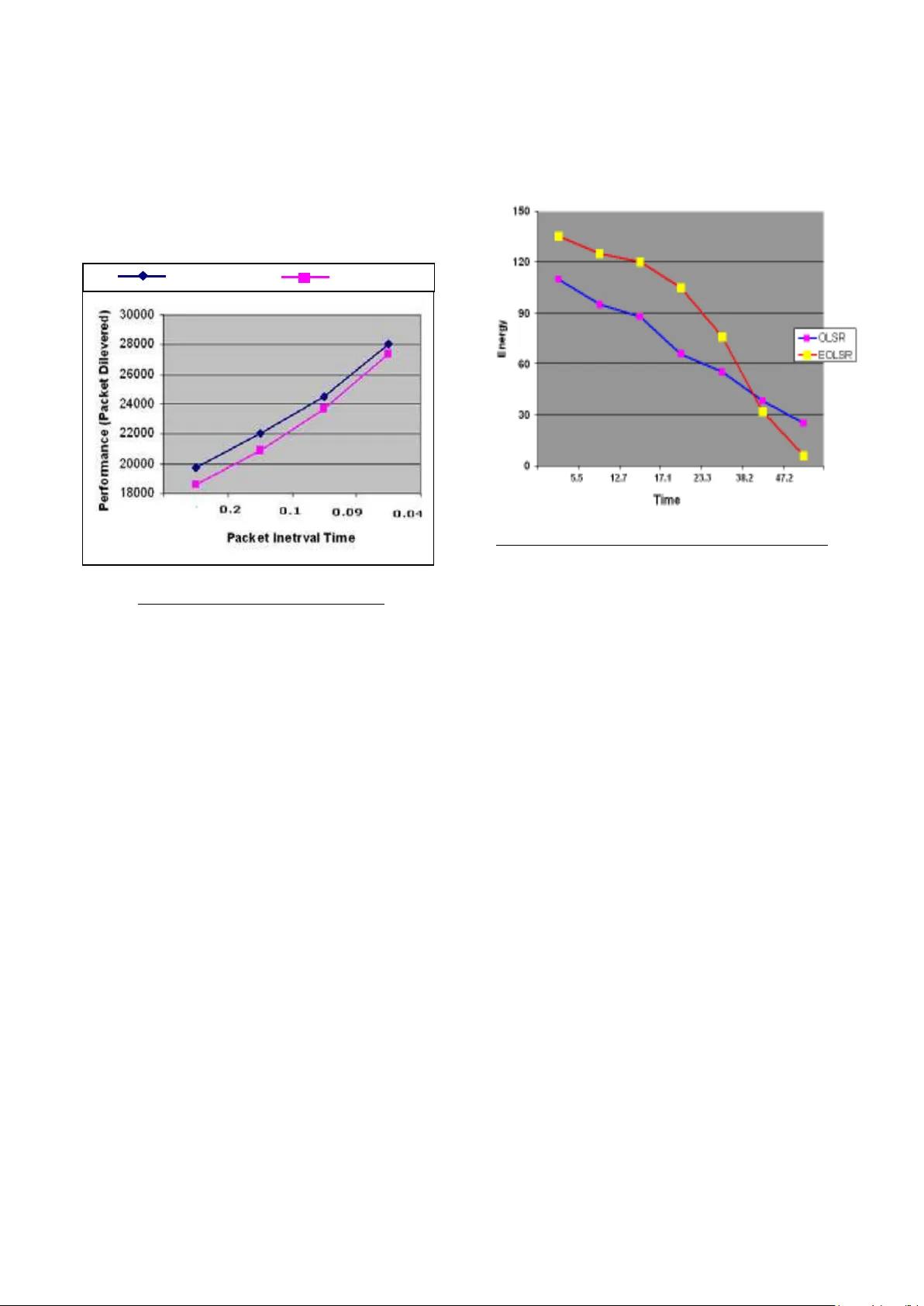
QoS Routing usin g OLSR with Opti mization for Flooding 1 Suman Banik, 2 Bibhash Ro y, 3 Parthi Dey, 4 Nabendu C haki, 5 Sugata Sanyal 1 Department of Election, Govt. of Tripura, India email: suman.banik07@gmail.com 2 Tripura Institute of Technology, Narsingarh, Tripura, India email: bibhashroy10@yahoo.co.in 3 Hindi Higher Secondary School, Agartala, Tripura, India email: parthi.dey@gmail.com 4 Corresponding Author University of Calcutta, Kolkata, India email: nabendu@ieee.org 5 Tata Institute of Fundamental Researc h, Mumbai, India email: sanyal@tifr.res.in ABSTRACT Mobile Ad-hoc Network (MA NET) is the self organizing collection of mobile nodes. The communication in MANET is done via a wireless media. Ad hoc wireless net works have massive c ommercial and military potential b ecause of their mobility suppo rt. Due to demanding rea l ti me multimedia ap plications, Quality o f Services (QoS) suppor t in such infrastructure less networks have beco me essential. QoS ro uting i n mobile Ad-Hoc networks is challen ging due to rapid change in network topolog y. Consequently, the available state information for routing is inherentl y imprecise. QoS routing may suffer badl y due to several factors includi ng radio interference on a vailable b andwidth, a nd i nefficient flooding of information to the adjacent nodes. As a result the p erformance of the net work d egrades substantially. This pape r aims at the so lution for energy efficie nt Qo S routing b y b est utilizat ion o f network reso urces s uch as energy a nd bandwidt h. A c omparative stud y s hows that despite the overhead d ue to QoS management, this solution perfor ms be tter than classical OLSR p rotocol in terms of QoS and ef ficient utilization o f energy. Keywords: QoS routing, Optimized Link State Rou ting (OLSR), Multi Point Relay (MPR), admission control, flooding 1. Introduction A Mobile A d-hoc Ne twork ( MANET) is defined by the MANET Wo rking Gro up as “an a utonomous system of mobile rou ters (and associated hosts) con nected b y wireless links – the un ion of which forms an arbitrary graph” [14]. It is a self-organizi ng d ynamic m ulti-hop wireless networks estab lished b y a group of mobile nodes on a shared wireless cha nnel [1] . T he QoS issues such as end-to-end delay, available band width, cost, loss probabilit y, and error rate have been widely addr essed in the co ntext of internet [2 , 3]. However, these have li mited applications due to the ba ndwidth constrain t and variant topology i n M ANET. In spite of these limitations, some QoS routing pro tocol have been pro posed [4, 5, 7, 8]. Such protoco ls are on-demand in nature w here the QoS requirements are known b efore r outing. T he Link State Routing i s more suitable to guarantee QoS up to a large extent in MANET as the det ailed in formation abou t the connectivity i s a vailable i n ea ch particip ating node. T hus, it increases the cha nces that a node will ge nerate a ro ute that m eets the speci fied s et of Qo S ro uting constraints. However, in LSR, a la rge amount of infor mation needs to be stored in t he nod es. As a result, substantial amount o f power is required for the devices. In recent years, a number of po wer-aware metrics ha ve b een prop osed [10, 11, 12 , 13]. T he majorit y of these metrics has been applied to DSR ro uting pro tocol, so, an e nergetic e valuation of another protoco l, i.e. the p roactive p rotoco l OLSR, arrived to the RFC stat us. I n particular, the energy behavior of OLSR protocol has been evaluated and a novel energy aware Multi Point Relay sel ection mec hanism has been proposed with QoS support. 2. Opti mal Link State Routing Pro tocol Optimized Link State Routi ng (OLSR) i s a tab le driven proactive ro uting protoco l for MANET . It is an optimization of li nk-state ro uting. In a classic l ink-state algorithm, li nk-state infor mation is floo ded throughout t he network. OLSR uses this approa ch as well, but since the protoco l runs in wireles s multi-hop scenarios the message flooding in O LSR is opti mized to p reserve band width. The optimization is based on a technique called Multipoint Relaying. The nodes are free to move randomly and organize the mselves ar bitraril y and treating each m obile host as a r outer. In this a ll the nod es c ontain p re-computed routes information about all the other nodes in network. This infor mation is e xchanged by pro tocol messages a fter periodic time. OLSR perfor ms hop -by-hop routing, where each node uses its most recent topo logy information for routing. E ach node select s a set of its nei ghbor nodes as MPRs (Multi P oint Relays). Only t hose nodes selected as MPRs, are resp onsible for forwardin g the Control T raffic. MPRs are selected such that 2-hop neighbors ca n be reached through a t least one MPR node a nd OLSR pro vide shortest path r outes to all d estinations b y pro viding link - state information f or t heir MP R selectors. Node s which have been selected as MPRs by some neighbor nodes announce this i nfor mation p eriodically in their Cont rol Messages. MPRs are used to form the ro ute from starting node to desti nation node i n MANET. All this in formation is an nounces to neighboring MPRs through Co ntrol Messages. T he p urpose of selectin g MP R is to red uce flooding overhead and provide opti mal flooding distance. Figure-1 shows nodes and sel ection of MPRs for flooding control messages. Figure-1: Flood ing Optimization using O LSR The key messa ges in OLSR are Hel lo and T C messages. Hello me ssages are pe riodically exchanged to inform nodes a bout t heir neighbors and their neighbors’ neighbors and are 1-hop bro adcast messages. T he 2-hop neighborhood information is the n used locally by each node to d etermine MP Rs. In contrast, T C messages are flooded through the net work t o inform all nodes about the (partial) network top ology. At a minimum, T C messages contain i nformation about MPRs and their MP R selectors. There are fe w para meters i n OLSR which can control the efficiency o f OLSR. The Hello-interval para meter represents the freq uency of generating a Hello message. Increasing the frequency of g enerating Hello messages leads to m ore frequent updates about the n eighborhood and hence a more accurate vie w o f the network and result in overhead. The TC-interval parameters represent the frequency of generati ng a TC message a nd are used for topology discovery. If frequency o f TC messages is increased the n nodes are having mor e re sent in formation about topology, as nodes lea ves and enter in the network very freq uently. The MPR-coverage parameter allo ws a node to select redundant MPRs. The number of MPRs should be minimum as it introduce overhead in the network. B ut more the MPRs m ore is the r each ab ility. The T C-redundancy pa rameter specifies , for the lo cal node, the a mount of infor mation that may b e included in the TC message. T he T C-redundancy parameter a ffects the overhead through affecti ng the amount o f links being advertised as well as the amount of nodes advertising links. Through the exc hange of OLSR control messages, each node accumulates information about the network. This information is s tored according to the OLS R specifications. Timestamp with each data p oint and modify the contr ol messages a nd local repo sitories accordingly. For better efficiency o f O LSR state information such a s res idual energy level o f each node, bandwidth, queue len gth etc s hould b e a vailable while making r outing deci sions. Inco rrect information may lead to degradatio n in efficiency o f OLSR. As state infor mation in O LSR is collected by P eriod ic E xchange of above mentioned messages, t his info rmation ma y not be up to date as topolog y chan ges very fast. Resid ual e nergy level of the nod es changes r apidl y and the nod e with less e nergy level must not be selected i n route. T he main focus here is the effect of residual e nergy levels on pro tocol efficiency. Main t hing is ho w nod es ca n collect accurate e nergy le vel information about o ther nodes by O LSR con trol messages. Traffic loa d can be one factor tha t ca n af fect the inaccuracy of energ y level infor mation. 3. Integrat ing QoS in OLSR a nd Energy Constraint QoS is a term widely used in t he last recent years i n t he area of wire-based net works controlled by the ce ntralized administration where fixed in frastructure is pre sent. However it is a challenge to route QoS in wireless environment d ue to node’s dynamic na ture a nd mobility. The service provider s implement QoS proto cols keeping in mind so me speci fic scenarios and taking into consideration d ifferent li nk p arameters (d elay, band width, loss pro bability and error rate) , net work top ologies a nd variables. In or der to ob tain QoS, the main emphasis mus t be o n obtaining best band width and mini mum dela y path. In [1], delay and hop d istance are used to measure the QoS. In this pr oposed work, bandwidth has bee n considered as it is m ore extensively coupled with QoS routing. I n [4] , the focus is on red ucing t he link advertisement. Ho wever, the network fi nds it dif ficult to distinguish between d ifferent t ypes of control messages. The bandwidth m etric is used to specify the amount of bandwidth t hat will be a vailable along the path from t he initiator to the destinatio n. In [8], the aut hors p roposed a MPR nod e selec tion cri teria b ased o n best bandwidth path and considered the best pa th. Although it app ears to b e the optimal one, but there ar e factor s like intrusio n and radio interference in the net work where in spite of havin g higher available bandwidth, the unex pected de lay is occurred . In another work [9], the aut hors focused on ad mission control mechanism such that the band width calculation is done during the routin g tab le calculation. In this pr oposal, the unused b andwidth is calc ulated takin g on acco unt the bandwidth consumed over a link by other nod es. 4. OLSR Efficiency and Energy Level Accuracy The OLSR pro tocol can be tuned and it can be seen that the perfor mance c hanges in OLSR and how perfor mance depends on residual energy o f nodes. Some of the factors on which OLSR ef ficiency vary are discussed in thi s section. T here are various MP R selection technique s and path deter mination algor ithms available. In M odified Routing original MP R selectio n criteria is combined with new path deter mination al gorithm. And in o ther variation Modified MP R/Routing ne w MPR selection and the new path deter mination algorithm are combined. These variations affect perfo rmance of OLSR to a great extent. Also th e pro tocol can b e varied on the ba sis of “How o ld the information about Residual energy” is. The residual e nergy at that ti me when MPR was selected is Ideal version. I n realistic v ersion, d ata about residual energy co llected by pr otocol message e xchange. Also change i n to pology impact nu mber o f p ackets delivered and a ccuracy of the residual energy level. Packet latent also effect accurac y of data collected . In fig ure-2 given belo w, the performance of ideal and actual version of O LSR under different traffic rate is compared. T he p erformance of network i n ter ms of p acket delivered with respect to vari ation in pac ket interval ti me is compared. As P acket i nterval time decreases (X- Axis), more number of packets are delivered and m ore resent information a bout residual energ y is collected b y nodes in MANET. So inaccuracy is l ess and s ystem perfor mance increases. T his is tr ue i n both id eal and rea listic app roach, as p acket i nterval t ime d ecreases perfor mances i ncreases. But when t he ide al with r ealistic is co mpared, I deal outperforms realistic for every piece o f data. It m eans it is sufficient to collect residual energy infor mation at the time when MPR was selected. Figure-2: Ideal vs. Actual Perfor mance In Ener gy efficient v ariation of OLSR the MPRs are selected o n t he ba sis o f re sidual energy levels of nod es. Path determinatio n algorithm is modified, selecting path s based on the residua l energy level of i ntermediate nodes. Nodes with low resid ual energ y are avoid ed. T he route & MPR selection is such th at to maximize bo ttleneck residual e nergy level. That will increase t he e fficiency of network. I f wrong o r o ld in formation is collected b y nod es then ef ficiency is degrad ed as ro ute may vanish. But the main issue is ho w to co llect the correct residual energ y information. One solution is use of EOLSR that select route and MPRs on basis of residual e nerg y o f nodes and number of neighbors. Idea l appro ach is sending m ore packet s than realistic appr oach in above figure. As the tr affic rate increases from lo w to high th e Ide al appr oach send more and more packets. Omniscient knowledge o f a node’s energy level delivers more packets than the reali stic version. As Choosing very small val ues for Hello and TC intervals will significantly increa se the p rotocol overheads. So reali stic in app roach with de crease in packe t interval time more a nd more T C a nd Hello messages are send in t he net work which i ncrease in net work overhead . That is the reason Realist ic appro ach is little less e fficient then ideal as sho wn i n fi gure-2. These results are a direct consequence of the increased level of congestion in the network which results in high message loss and delay a nd hence less accurate state in formation. In fi gure-3 the OLSR and EO LSR is co mpared and it is clearly seen how energy varies with ne twork life. W ith time passes b y energy o f nodes deca y very fast. In OLS R MPRs are not frequently cha nged & effici ency degrade. However, in EOLSR MP Rs selec tion dep ends on r esidual energy level of nodes. Thus EO LSR performs better the n OLSR. This study so far sho ws that nodes have i naccurate information ab out the act ual residual energy le vels when making routing d ecisions. Mo difying t he OLSR p rotocol parameters (s uch a s increa sing the Hello or T C messag e rates) has ver y limited impact on this inacc uracy. Figure-3: OLSR a nd EOLSR Resid ual Energy Levels This means by increasing the frequenc y of TC and Hello m essages improve resi dual e nergy information o f neighboring nod es a little b ut increase t he traf fic overhead. So some other method is requir ed to i mprove t he accurac y of ener gy state information. I n the next sectio n it is suggested p redictive technique to increa se energy level accuracy above and beyond modifying t he protoco l parameters . 5. Reducing Inaccurac ies of Residual Energy It is clearly seen that increas e in frequency of packet does not impro ve inaccurate e nergy infor mation. So some other techniq ue is req uired to co mpute residual e nergy information of nodes. In t his section it is suggested that Predictio n mechanism to compute residual energy information that is more acc urate then previous method. Our idea is therefore to have ever y node locally adjust nodes’ old energy le vels b ased on their past energy consumption rate. In thi s mechanism each nod e locally extrapolates the e xpected e nergy level based on old (repor ted) energ y levels and the energy consu mption rate for that nod e based on the most recent t wo repo rted values. A dra wback of t he P rediction algorithm is the need to wait for t wo differe nt per ceived value r eadings, so a consumption rate can be ca lculated and used to adj ust the perceived values. For p redicting at least t wo p revious values a re required. If a new MPR is selected then it is not possible to predict residua l energy as no p revious data is available. Under hi gh traffic loads, adjustments happen less rarel y. Pro tocol control messages are lo st / delayed, and as a r esult nodes will not “hear” other nod es. After a node is dee med unreachable, startup phase is again recalled, where at least t wo successive reports are r equired to be ab le to calculate a consumption ra te. In order to overcome the dra wbacks of pred iction Ideal Actual technique smart p rediction tec hnique is used in which adjustments take place almost all the ti me. T he number of time adjustment take place depends on pac ket interval times. In the Smart P rediction algorith m, for e very pa ir of nodes (p,q ), if q’s co nsumptio n rate is not yet known, p adjusts the pe rceived v alue o f q’s resid ual energy le vel based on the avera ge o f all known co nsumptio n rates for other nodes. If p does not know a single consumption rate for other nod es, it adj usts q ’s perceived energy level based on its (p’s) consumption rate. Using all known nodes ’ consumption rates elimi nates th e domination of outliers and ensures close ness to the actual co nsumption rate, assuming that nodes are some what homogeneou s in the energy characteristics o f their wireless cards. T he Predictio n algor ithms i mprove the overall inaccuracy level under different traf fic rates. The im provement under higher traffic rates is not as high as i t is under lo wer traffic rates. For an a djustment to take place, a node must have received t wo different reported values. But under high traffic rates, due to message loss and de lays, the perce ntage of times adjustments take plac e decre ases. Since the Smart Predictio n algorithm add resses the pr oble m of not being able to adjust the perce ived energy le vel value all the time, it achieves much better performance in ter ms of o verall inaccuracy level, especially under higher tra ffic rates. Both the P rediction and the Smart Predic tion algorit hms outperform the default OLSR pro tocol. 6. Conclusion In MANET, state in formation suc h as re sidual ener gy level pla ys a major ro le in route selection. If latest information is not co llected by nodes, then perfor mance of the networ k would suffer. T he e ffect of time at which state information was collected in ideal and i n realistic approac h has b een evaluated . It may be in ferred that eve n if ideal app roach is better than the reali stic o ne; the increase i n frequency of packets impro ve t he performance very little. Besides, it r esults in i ncreasing tr affic overhead. As a solution, pr ediction mechanism and s mart prediction mechanism are used. T his p erforms b etter than EOLSR pro tocol and reduce t raffic load . O f course, 100 % accurate state information ca n not be calculated due to continually changing top ology. However, accurac y can b e increased b y using some o ther technique a lso that may be even better tha n predictio n mechanis m. In f uture some other methods may be s uggested to compute more accurate state infor mation. References [1] Internet E ngineering Task Force, "Manet working group charter" , http://www.ietf.or g/html.charters/ manet-charter.ht ml. [2] X. Xiao, L .M. Ni, "Internet QoS: A Big Picture", IEEE Net work, Vol. 13, No. 2, March 1999. [3] Z. Wa ng, J. Cro wcroft, " Quality o f Ser vice Rou ting for Supporting Multimedia Applications", IEEE Journal on Selected Areas in comm. , Vol. 1 4(7), '96. [4] Suman Ba nik, Bibhash Roy, B iswajit Saha, and Nabendu Chaki, “Design of QoS Routing Framework Based on O LSR Protoco l”, Proc. o f International Co nference o n Ad vances in Recent Technologies in Communic ation and Computing; pp.171-173 , 2010. [5] H. B adis, K. Alagha; "An E fficient QOLSR Extension Proto col for Qo S in Ad hoc Net works", Proc. of IEEE Vehicular Technolog y Co nference, 2004. [6] A. M unaretto, et. al.; " QoS-enhanced O LSR p rotocol for mobile A d Hoc networks", Proc. of ANW IRE International Wor kshop, pp. 171 -178, 2003. [7] L. Boukhalfa, P. Minet, S. M idonnet, " QoS Suppo rt in a MANET B ased on OLSR and CBQ"; Proc. of 6th Int’l conf. on Net working ( ICN'07), 200 7. [8] D. Nguyen, P. Minet, " Quality of Ser vice in a MANET w ith OLSR", Journal of Universal Computer Science, vol. 13(1 ), pages 56-86, 2007. [10] D. Kim, J.J. Garcia-Luna-Aceves, K. Obraczka, J . Cano, and P. Manzoni; "Po wer-Aware Ro uting Based on T he Energy Drain Rate for Mob ile Ad Hoc Networks"; Proceed ings o f the IE EE International Conference o n Co mputer Co mmunication a nd Networks, October 2002. [11] J.-E. Garcia, A. Kallel, K. Kyamakya, K. Jobmann, J.-C. Cano, P . Manzoni; " A Novel DSR -based Energy-efficient Routing Algo rithm for Mob ile Ad- hoc Networks," in 58t h I EEE Vehicular T echnology Conference (VT C Fall. 2 003) , pp .: 2 849 – 2854, Oct. 2003. [12] C.Tadd ia, A.Giovanardi, G.M azzini, M. Zorzi, "Energy efficient u nicast ro uting p rotoco ls over 802.11b" ; Pr oc. in IEEE Glo bal T elecommunicatio ns Conf., (GLOBECOM’05 ), Nov. 20 05. [13] A.McCabe, A.Culle n, M. Fredin, L.Axelsson, "A power consumption study o f DSR and O LSR"; in IEEE Military Communications Conference (MILCOM’05), p p. 1954 - 1960, Oct. 2005. [14] MANET: "Descriptio n of Workgroup" , http://www.ietf.or g/proceedings/54/182 .htm
Original Paper
Loading high-quality paper...
Comments & Academic Discussion
Loading comments...
Leave a Comment