Quantum Theory, Noncommutativity and Heuristics
Noncommutative field theories are a class of theories beyond the standard model of elementary particle physics. Their importance may be summarized in two facts. Firstly as field theories on noncommutative spacetimes they come with natural regularizat…
Authors: Earnest Akofor
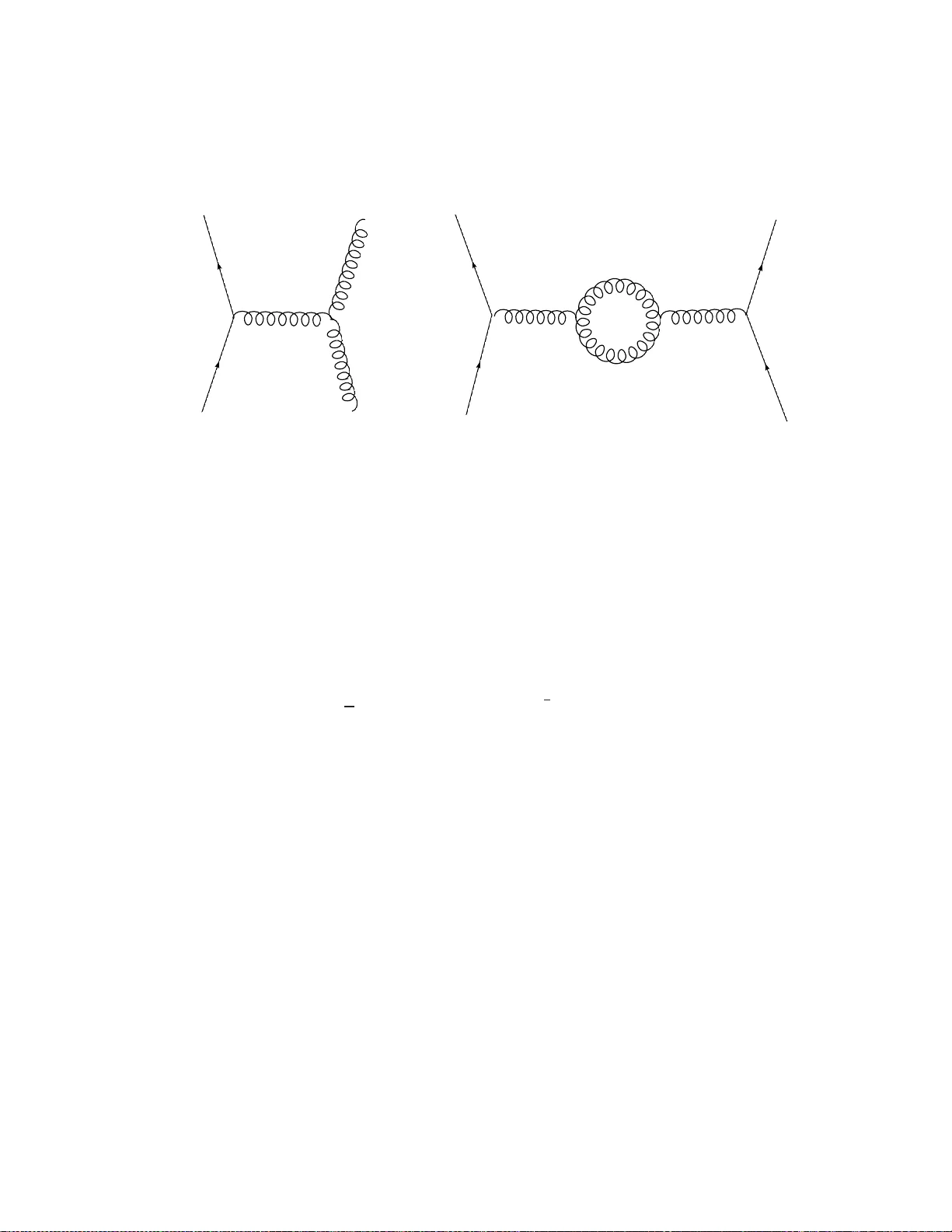
Quan tum Theory , Noncomm utativit y and Heuristics Earnest Ak ofor e akofor@physics.syr.e du Dep artment of Physics, Syr acuse University, Syr acuse, NY 13244 -1130, USA (h ttp://users.aims.ac.za/ ∼ ak ofor/academics/academics.h t ml ) Abstract Noncomm utativ e field theories are a class of theories b ey ond the standard mo del of elemen tar y particle ph ysics. Th eir imp ortance may be summarized in tw o facts. Firstly as field theories on noncomm utativ e spacetimes t he y come with natural reg- ularization parameters. Secondly they ar e r elat ed in a natura l w ay to theories of quan tum grav ity whic h t ypically giv e rise to noncommutativ e spacetimes . There- fore noncomm utativ e field theories can shed lig h t on t he problem of quan tizing gra vity . An attractiv e asp ect of noncomm utativ e field theories is that they can b e form ulated so as to pr eserv e spacetime symmetries and to av oid the in tro duction of irrelev ant degrees freedom and so they prov ide mo dels of consisten t fundamen tal theories. In these notes w e r eview t he formulation of symmetry asp ects of noncommu- tativ e field theories o n the simplest type of noncomm utative spacetime, the Moy al plane. W e discuss violations of Loren tz, P , CP , PT and CPT symme tries as w ell as causalit y . Some exp erime ntally detectable signatures of these violatio ns in v olving Planc k scale ph ysics of the early unive rse and linear resp onse finite temp erature field theory are also pr esen ted. 1 Con ten ts 1 In tro duction 12 1.1 Quan tum Theory . . . . . . . . . . . . . . . . . . . . . . . . . . . . 15 1.1.1 Quan tum mec hanics . . . . . . . . . . . . . . . . . . . . . . 15 1.1.2 Quan tum field theory . . . . . . . . . . . . . . . . . . . . . . 23 1.2 Quan tization o f spacetime . . . . . . . . . . . . . . . . . . . . . . . 28 1.3 Motiv ation for noncomm utative field theory . . . . . . . . . . . . . 30 1.3.1 Phase space in quan tum mec hanics . . . . . . . . . . . . . . 31 1.3.2 Sup erspace in sup ers ymmetric field theory . . . . . . . . . . 31 1.3.3 The cen t er of motion of an electron in a magnetic field . . . 31 1.3.4 Phase space of a Landau problem with a strong magnetic field 3 2 1.3.5 F undame ntal strings and D-branes . . . . . . . . . . . . . . 32 1.3.6 My ers Effect . . . . . . . . . . . . . . . . . . . . . . . . . . . 33 2 In tro duction to Noncomm utativ e geometr y 38 2.1 In tro duction . . . . . . . . . . . . . . . . . . . . . . . . . . . . . . . 38 2.2 Noncomm utativ e Spacetime . . . . . . . . . . . . . . . . . . . . . . 41 2.2.1 A Little Bit of History . . . . . . . . . . . . . . . . . . . . . 41 2.2.2 Spacetime Uncertain tities . . . . . . . . . . . . . . . . . . . 41 2 2.2.3 The Gro enew old- M oy al Plane . . . . . . . . . . . . . . . . . 42 2.3 The Star Pro ducts . . . . . . . . . . . . . . . . . . . . . . . . . . . 43 2.3.1 Deforming an Algebra . . . . . . . . . . . . . . . . . . . . . 43 2.3.2 The V oros and Moy al St a r Pro duc ts . . . . . . . . . . . . . 45 2.3.2.1 Coheren t States . . . . . . . . . . . . . . . . . . . . 45 2.3.2.2 The Coheren t State or V oro s ∗ -pro duct on the GM Plane . . . . . . . . . . . . . . . . . . . . . . . . . 46 2.3.2.3 The Mo y al Pro duct on the GM Plane . . . . . . . 50 2.3.3 Prop erties of the ∗ -Pro ducts . . . . . . . . . . . . . . . . . . 51 2.3.3.1 Cyclic In v ariance . . . . . . . . . . . . . . . . . . . 51 2.3.3.2 A Sp ec ial Iden tity for the W eyl Star . . . . . . . . 52 2.3.3.3 Equiv a lenc e of ∗ C and ∗ W . . . . . . . . . . . . . . 53 2.3.3.4 In tegration a nd T racial States . . . . . . . . . . . . 54 2.3.3.5 The θ -Expans ion . . . . . . . . . . . . . . . . . . . 55 2.4 Spacetime Symmetries on Noncommutativ e Plane . . . . . . . . . . 56 2.4.1 The Deformed P oincar´ e Gro up Action . . . . . . . . . . . . 57 2.4.2 The Twisted Statistics . . . . . . . . . . . . . . . . . . . . . 62 2.4.3 Statistics of Quantum Fields . . . . . . . . . . . . . . . . . . 64 2.4.4 F rom Twisted Statistics to Noncommutativ e Spacetime . . . 70 2.4.5 Violation of the P auli Principle . . . . . . . . . . . . . . . . 71 2.4.6 Statisitcal P otential . . . . . . . . . . . . . . . . . . . . . . . 72 2.5 Matter Fields, Gauge Fields and In teractions . . . . . . . . . . . . . 76 2.5.1 Pure Matter Fields . . . . . . . . . . . . . . . . . . . . . . . 76 2.5.2 Co v ariant Deriv ativ es o f Qua n tum Fields . . . . . . . . . . . 78 2.5.3 Matter fields with ga uge interactions . . . . . . . . . . . . . 79 2.5.4 Causalit y and Loren tz In v a riance . . . . . . . . . . . . . . . 82 3 2.6 Discrete Symmetries - C , P , T and CPT . . . . . . . . . . . . . . 85 2.6.1 T r ansformation of Quan tum Fields Under C , P and T . . . 85 2.6.1.1 Charge conjugation C . . . . . . . . . . . . . . . . 86 2.6.1.2 P arit y P . . . . . . . . . . . . . . . . . . . . . . . . 87 2.6.1.3 Time rev ersal T . . . . . . . . . . . . . . . . . . . 88 2.6.1.4 CPT . . . . . . . . . . . . . . . . . . . . . . . . . 89 2.6.2 CPT in Non-Ab elian Gauge Theories . . . . . . . . . . . . . 90 2.6.2.1 Matter fields coupled to gaug e fields . . . . . . . . 90 2.6.2.2 Pure Gauge Fields . . . . . . . . . . . . . . . . . . 92 2.6.2.3 Matter and Gauge Fields . . . . . . . . . . . . . . 92 2.6.3 On F eynman Gra phs . . . . . . . . . . . . . . . . . . . . . . 93 3 CMB Po wer Sp ectrum and Anisotropy 98 3.1 INTR ODUCTION . . . . . . . . . . . . . . . . . . . . . . . . . . . 99 3.2 Noncomm utativ e Spacetime and Defor med P oincar ´ e Symmetry . . . 101 3.3 Quan tum Fields in Noncomm utativ e Spacetime . . . . . . . . . . . 104 3.4 Cosmological P erturbations and (D ir ec tion-Indep enden t) P ow er Sp ec- trum for θ µν = 0 . . . . . . . . . . . . . . . . . . . . . . . . . . . . 10 9 3.5 Direction-Dep enden t P ow er Sp ectrum . . . . . . . . . . . . . . . . . 114 3.6 Signature of Noncomm utativity in the CMB Ra dia tion . . . . . . . 117 3.7 Non-causalit y and No nc ommutativ e Fluctuations . . . . . . . . . . 121 3.8 Non-Gaussianit y fro m noncommutativit y . . . . . . . . . . . . . . . 12 3 3.9 Conclusions: Chapter 3 . . . . . . . . . . . . . . . . . . . . . . . . . 126 4 Constrain t from the CMB, Causalit y 128 4.1 In tro duction . . . . . . . . . . . . . . . . . . . . . . . . . . . . . . . 12 8 4 4.2 Lik eliho o d Analysis for Noncomm. CMB . . . . . . . . . . . . . . . 130 4.3 Non-causalit y from Noncomm utativ e Fluctuations . . . . . . . . . . 139 4.4 Conclusions: Chapter 4 . . . . . . . . . . . . . . . . . . . . . . . . . 143 5 Finite T emp erature Field Theory 146 5.1 INTR ODUCTION . . . . . . . . . . . . . . . . . . . . . . . . . . . 14 7 5.2 Review of standard theory: Sinha-Sorkin results . . . . . . . . . . . 149 5.3 Quan tum Fields on Comm utativ e Spacetime . . . . . . . . . . . . . 154 5.3.0.1 Spacelik e D isturbance s . . . . . . . . . . . . . . . . 155 5.3.0.2 Timelik e Disturbances . . . . . . . . . . . . . . . . 156 5.4 Quan tum Fields on the Mo y al Plane . . . . . . . . . . . . . . . . . 161 5.4.1 An exact expression for susceptibilit y . . . . . . . . . . . . . 165 5.4.2 Zeros and Oscillations in e χ ( j ) θ . . . . . . . . . . . . . . . . . 167 5.5 Finite temp erature Lehmann represen tation . . . . . . . . . . . . . 168 5.6 Conclusions: Chapter 5 . . . . . . . . . . . . . . . . . . . . . . . . . 172 6 Conclusions 173 A Some ph ysical concepts 175 A.1 Motion of an electron in constan t magnetic field . . . . . . . . . . . 175 A.2 Sym metries and the least action principle . . . . . . . . . . . . . . . 176 A.2.1 Use of symmetries . . . . . . . . . . . . . . . . . . . . . . . 176 A.2.2 Analogy a nd least a ction principle . . . . . . . . . . . . . . . 1 7 8 A.3 Renormalizabilit y . . . . . . . . . . . . . . . . . . . . . . . . . . . . 179 A.4 Rules for writing probabilit y a mplitude s of ph ysical pro cesses . . . . 181 B Quan tizat ion 183 5 B.1 Canonical quan tizat io n, deformation quantization a nd noncommu- tativ e geometry . . . . . . . . . . . . . . . . . . . . . . . . . . . . . 183 B.1.1 Star pro ducts and regularizat io n . . . . . . . . . . . . . . . . 188 B.2 The quan tum field . . . . . . . . . . . . . . . . . . . . . . . . . . . 195 B.3 The algebra of quan tum fields . . . . . . . . . . . . . . . . . . . . . 1 9 8 B.3.1 Op erator pro duct ordering and phy sical correlations . . . . . 202 B.3.2 F rom W eyl or symmetric ordering to normal or classical or- dering . . . . . . . . . . . . . . . . . . . . . . . . . . . . . . 204 B.4 Hamilton-Jacobi theory . . . . . . . . . . . . . . . . . . . . . . . . . 2 09 B.5 (Orbital) angular momen tum and spherical functions . . . . . . . . 212 B.5.1 ∂ 2 in a minimally coupled system? . . . . . . . . . . . . . . 2 1 3 B.5.2 Spherical eigenfunctions . . . . . . . . . . . . . . . . . . . . 214 C V ariation principle and classic symmetries 221 C.1 Division of spaces . . . . . . . . . . . . . . . . . . . . . . . . . . . . 221 C.1.1 Sp ectrum of a group algebra . . . . . . . . . . . . . . . . . . 222 C.2 Gaug e symmetry and No ether’s theorem . . . . . . . . . . . . . . . 223 C.3 Symmetry breaking/violatio n . . . . . . . . . . . . . . . . . . . . . 223 C.4 Action/on-shell symmetries . . . . . . . . . . . . . . . . . . . . . . 225 C.5 No ether’s theorem and W ard-T a k ahashi identities . . . . . . . . . . 22 6 C.5.1 Dynamics using differen tial forms . . . . . . . . . . . . . . . 231 C.6 F addeev-Popov gauge gixing metho d . . . . . . . . . . . . . . . . . 232 D Geometry and Symmetries 236 D.1 Manifold structure . . . . . . . . . . . . . . . . . . . . . . . . . . . 236 D.2 Relativit y o r O bserv er Symmetry . . . . . . . . . . . . . . . . . . . 2 37 6 D.3 Hopf symmetry transformations . . . . . . . . . . . . . . . . . . . . 242 D.3.0.1 Example . . . . . . . . . . . . . . . . . . . . . . . . 245 D.3.1 Quasi-tringular Hopf algebras and R-matrix . . . . . . . . . 246 D.3.2 Action . . . . . . . . . . . . . . . . . . . . . . . . . . . . . . 2 4 6 D.3.3 Dualit y and inte gra tion . . . . . . . . . . . . . . . . . . . . . 247 E Some math concepts 249 E.1 Groups, Rings (Algebras), Fields, V ector spaces, Mo dules . . . . . . . . . . . . . . . . . . . . . . . . . . . . . 249 E.2 Set comm utant algebra . . . . . . . . . . . . . . . . . . . . . . . . . 2 5 0 E.3 Pro jector algebra . . . . . . . . . . . . . . . . . . . . . . . . . . . . 253 E.4 Matrix-v alued functions and BCH form ula . . . . . . . . . . . . . . 2 54 E.4.1 Limits . . . . . . . . . . . . . . . . . . . . . . . . . . . . . . 25 4 E.4.2 Matrix functions . . . . . . . . . . . . . . . . . . . . . . . . 255 E.4.3 Symmetric ordered extension . . . . . . . . . . . . . . . . . 258 E.4.4 Baker-Campbell-Hausdorff (BCH) formula . . . . . . . . . . 25 9 E.5 Complex analytic transfor ms . . . . . . . . . . . . . . . . . . . . . . 260 E.5.1 La ur ent series . . . . . . . . . . . . . . . . . . . . . . . . . . 264 E.5.2 F ourier series and other derive d transforms . . . . . . . . . . 265 E.5.3 G roups of in v ertible functions and related transforms . . . . 268 E.5.4 Sev eral v aria bles . . . . . . . . . . . . . . . . . . . . . . . . 270 E.6 Some inequalities . . . . . . . . . . . . . . . . . . . . . . . . . . . . 271 E.6.1 Y o ung’s ineq uality . . . . . . . . . . . . . . . . . . . . . . . 271 E.6.2 Holder’s inequality . . . . . . . . . . . . . . . . . . . . . . . 272 E.6.3 Mink ows ki’s inequality . . . . . . . . . . . . . . . . . . . . . 273 E.7 Map con tinuit y . . . . . . . . . . . . . . . . . . . . . . . . . . . . . 27 3 7 E.7.1 Unifor m con tin uity in terms of sets . . . . . . . . . . . . . . 276 E.8 Sequences and series . . . . . . . . . . . . . . . . . . . . . . . . . . 277 E.9 Connectedness and conv exit y . . . . . . . . . . . . . . . . . . . . . 280 E.10 Some top ology . . . . . . . . . . . . . . . . . . . . . . . . . . . . . . 280 E.11 More on compactness and separability . . . . . . . . . . . . . . . . 284 E.12 On the r ealizat io n of compact spaces . . . . . . . . . . . . . . . . . 285 E.13 Metric to pology of R . . . . . . . . . . . . . . . . . . . . . . . . . . 288 E.14 On Measures I . . . . . . . . . . . . . . . . . . . . . . . . . . . . . . 289 E.14.1 Measurabilit y . . . . . . . . . . . . . . . . . . . . . . . . . . 292 E.15 On Measures I I . . . . . . . . . . . . . . . . . . . . . . . . . . . . . 292 E.15.1 Haar measure: existenc e and uniquenes s . . . . . . . . . . . 29 6 E.15.2 In v ariant linear maps . . . . . . . . . . . . . . . . . . . . . . 299 F C ∗ -algebras 301 F.1 Cauc hy-Sc h warz inequality . . . . . . . . . . . . . . . . . . . . . . . 3 0 1 F.2 Hilbert space and op erator norm . . . . . . . . . . . . . . . . . . . 302 F.3 Con vex subspaces . . . . . . . . . . . . . . . . . . . . . . . . . . . . 309 F.3.1 Sta tes of a ∗ -algebra . . . . . . . . . . . . . . . . . . . . . . 310 F.4 Spectral theory . . . . . . . . . . . . . . . . . . . . . . . . . . . . . 3 11 F.4.1 G elfand-Mazur theorem . . . . . . . . . . . . . . . . . . . . 313 F.4.2 G elfand-Naimark theorem . . . . . . . . . . . . . . . . . . . 313 F.5 Ideals and Iden t it ies . . . . . . . . . . . . . . . . . . . . . . . . . . 315 F.6 GNS construction . . . . . . . . . . . . . . . . . . . . . . . . . . . . 3 19 F.7 Algebra Homomorphisms (Represen tations) . . . . . . . . . . . . . 320 F.8 Geometry/algebra dictionary . . . . . . . . . . . . . . . . . . . . . . 321 8 G Sets and Physical Logic 322 G.1 Exclusiv e sets . . . . . . . . . . . . . . . . . . . . . . . . . . . . . . 322 G.1.1 Conditional algebra . . . . . . . . . . . . . . . . . . . . . . . 3 24 G.1.2 Maps and bundling . . . . . . . . . . . . . . . . . . . . . . . 325 G.1.3 Counting isomorphisms ? . . . . . . . . . . . . . . . . . . . . 328 G.2 Nonexclusiv e sets: Generalizations . . . . . . . . . . . . . . . . . . . 328 G.2.1 G1 . . . . . . . . . . . . . . . . . . . . . . . . . . . . . . . . 329 G.2.2 G2 . . . . . . . . . . . . . . . . . . . . . . . . . . . . . . . . 331 G.3 Ph ysics: The logic of quan tum theory . . . . . . . . . . . . . . . . . 336 G.3.1 Co ordinate types . . . . . . . . . . . . . . . . . . . . . . . . 344 G.3.2 On Gravit y . . . . . . . . . . . . . . . . . . . . . . . . . . . 346 G.3.3 Pro jectors on Self Hilb ert Spaces . . . . . . . . . . . . . . . 348 G.4 Primitivit y: The logic of h uman so ciet y . . . . . . . . . . . . . . . . 349 Bibliograph y 350 9 List of Figures 2.1 Statistical p oten tial v ( r ) measured in units of k B T . An irrelev an t additiv e constan t has b een set zero. The upp er t w o curv es represen t the fermionic cases and the lo we r curv es the b osonic cases. The solid line show s the noncomm utative resu lt and the dashed line the comm utativ e case. The curv es are draw n for the v alue θ λ 2 = 0 . 3. The separation r is measured in units of the thermal length λ . [63] 75 2.2 A F eynman diagra m in QCD with non-trivial θ -dep endence. The t wist of H M ,G I 0 c hanges the gluon propa g ator. The pro pa gator is differen t from the usual one b y its dep endence on terms of the form ~ θ 0 · P in , where ( ~ θ 0 ) i = θ 0 i and P in is the to tal momen tum of the incoming particles. Suc h a frame-dep enden t mo dification violates Loren tz inv ariance. . . . . . . . . . . . . . . . . . . . . . . . . . . . 82 2.3 CPT violat ing pro cesses on G M plane. (1) sho ws quark-gluon scat- tering with a t hree-g luon v ertex. (2) show s a gluon-lo op contribu- tion to quark-quark scattering. . . . . . . . . . . . . . . . . . . . . . 94 4.1 T r ansfe r function ∆ l for l = 10 as a function of k . It p eaks aro und k = 0 . 00 1 Mpc − 1 . . . . . . . . . . . . . . . . . . . . . . . . . . . . . 1 33 10 4.2 T r ansfe r function ∆ l for l = 800 as a f unction of k . It p eaks around k = 0 . 06 Mp c − 1 . . . . . . . . . . . . . . . . . . . . . . . . . . . . . . 134 4.3 CMB p o we r sp ectrum o f Λ CD M mo del (solid curve ) compared to the WMAP data (p oin ts with error bar s ). . . . . . . . . . . . . . . 135 4.4 The v alues of k whic h maximize ∆ l ( k ), as a function of l . . . . . . 1 3 6 4.5 χ 2 v ersus H θ fo r ACBAR data . . . . . . . . . . . . . . . . . . . . 137 4.6 The amoun t of causalit y violation with resp ect to the relativ e ori- en tation b et wee n the v ectors ~ θ 0 and r = x 1 − x 2 . It is maximum when the angle b et w een the tw o v ectors is zero. Notice that the minima do not o ccur when the tw o v ectors are orthogonal to eac h other. This plot is generated using the Cuba integrator [117]. . . . . 142 11 Chapter 1 In tro duct ion Quan tum theory and the theory o f general relativit y do not app ear t o b e compat- ible at v ery short distance scales due to the follo wing argumen t. One generally exp ects that at v ery short length scales the general relativistic theory of grav ity needs to become a quan tum field theory due t o the high energies that are required to prob e suc h short distances. How ev er, standard quantization metho ds do not suffice b ecause the quan tization of classical gravit y theories results in quan tum theories lac king in renormalizabilit y whic h is one of the requiremen ts for a consis- ten t fundamen tal quan tum field theory . In quan tum field theory (QFT) renormalization is an attempt to understand the ph ysical reasons for the UV or short distance div ergences that o ccur in the nat- urally expected con tributions of energetically unrestricted interm ediate pro cesses to the p oten tial or pro ba bilit y amplitude o f a give n energetically restricted phys ical pro cess in spacetime. Renormalizat io n pro cedures naturally start with some kind of regulator, a set of regularizing parameters, follo w ed b y the isolation of regulato r dep ende nt con tributio ns in to finite and purely div erg ent pieces. A theory is said to 12 b e renormalizable if the div ergences can b e understo o d with a finite regulator; one con taining a manageable num b er of regularizing parameters, without the need of in tro ducing or allow ing a n arbitrarily large num b er of extra f undame ntal degrees o f freedom, otherwise the theory is inconsis tent and is said to be nonrenormalizable. A ph ysical pro cess, an isola t ion of part of the course of dynamics of a ph ysi- cal syste m, is one whose p oten tial surviv es any induced and intrinsic isomorphic transformations, ie. symme tries, of b oth spacetime and the spaces of configura- tions or auxiliary v ariables of the system in spacetime. The p oten tial dep ends on the configura tion v ariables and on the wa y these v ariables couple in the classical action that describes the dynamics of the system through a least a ction principle. The w a y the v ariables couple is in turn determined by symmetries. O ur config- uration v a r iables shall b e fields whic h include matter or half in teger spin fields and gauge or in teger spin fields which are though t to mediate fundamen t a l inter- actions b et w een the matter fields. Symmetries ma y b e separated in to nonlo cal and lo cal symmetries. Nonlo cal symmetries are homogeneous in that the v alue of the transformatio n parameter is the same at eac h p oin t or infinitesimal region of spacetime and/or spaces of configurations. The definition of a gauge field allows it to hav e some phys ically irrelev ant comp onen ts. G auge symmetries are sp ecial lo cal symmetries often used as a t ool or standard for trac king the n um b er of irrel- ev an t comp onen ts in a gauge field in addition to their normal use as symmetries; to determine ho w ga uge fields couple among themselv es, a nd to other fields, in the classical action. The use of gauge symmetries to determine the coupling of gauge fields is due to the assumption that they should corresp ond to some global symmetry when their transformation parameters are made homogeneous and vice v ersa. A finite regulator may or may not surviv e all of the symmetries of a quan- 13 tum theory . Anomalies a re unexp ec ted (no nsymmetric) con tributions, from the in termediate pro cesse s, whic h are found to b e due to the nonexistence of a finite regulator that can surviv e all symmetries of the action for the underlying theory . The anomalies can b e presen ted as the failure of a conserv ed ( No ether) curren t of a symmetry of the classical action to remain conserv ed after quan tization. The underlying theory in this case is said t o b e anomalous. Renormalization b y defini- tion m ust also accoun t for the anomalies as well. F ollow ing symmetries anomalies ma y b e global or lo cal. Global anomalies do not intro duce an y extra degrees of freedom and so do not sp oil renormalizabilit y . How ev er the theory will b e non- renormalizable if the g a uge anomalies from a ll p ossible intermed iate pro cess es do not sum to zero. This is b ecause the unph ysical degrees of freedom that the gauge symmetry represen ts will con tribute to a sup p osedly phys ical in t ermediate pro cess implying a n inconsistenc y . The nonrenormalizability of the quantiz ed v ersion o f an y classically succes sful theory suc h as the theory o f gra vit y indicates that suc h a theory is only an effectiv e theory that can b e obtained in the classical limit of a more fundamen tal quan tum theory . Theories on noncomm utative spacetime come with a natural symmetry surviving regulator and can therefore serv e as bases fo r testing consisten t quan tum theories of gra vity . W e will review quan tum theory and quan tization of spacetime in this c hapter. In chapter 2 , mostly [119] with minor c hang es, we will review quan tum field theory on the Moy al plane and some of its phy sical implications including results of in v es- tigations o n discrete spacetime symmetries a nd lo calit y . Chapter 3, mostly [9 9], in v olv es a theoretical mo del for a possible effect of noncomm utativity on the CMB p o w er spectrum mean while c hapter 4, mostly [98], presen ts results on the analysis of p ossible effe cts of noncomm utativity from anisotrop y in the CMB radiation. In- v estigations on causalit y violating effec ts in finite temp erature field theory app ear 14 in c hapter 5, mostly [122]. Chapter 6 is the concludin g ch apter and the appendices con tain indisp ensable informat ion tha t is mostly in heuristic form. 1.1 Quan tum Theory A clas sical theory , in the description of a phys ical system, assumes that a ny under- lying c hara cteristic of the ph ysical system can undergo only (deterministic) con- tin uous c hanges. Noncontin uous changes (which can b e no ndeterministic) a re at- tributed to statistically av eraged c haracteristics, o f a giv en ph ysical system placed, in an ensem ble (ie. a larg e collection) of ph ysical systems. Quan tum theory in volv es extensions , of t he classical theoretical description of a ph ysical system, in whic h some of the underlying characteristics of the phys ical system instead undergo noncontin uous c hanges (whic h ma y be deterministic , non- deterministic or partially deterministic). The classic al description can b e obtained from the quan tum description in the limit where the noncon tinuous c hanges are small enough to b e appro ximately considered as contin uous c hanges. The effects of noncon tinuous changes are expected to b e o bs erv ed when the system is inv olv ed in high energy in teractions, where disso ciations are most likely to o ccur. 1.1.1 Quan tum mec hanics Mec hanics describ es the characteristic c hanges o f a giv en mec hanical system (any ph ysical system in v olv ed in mostly nondestructiv e inte ractions). Quan tum me- c hanics fo cuses on an extension of the classical mec hanical description to include also those underlying c haracteristics (electrical charge, radiativ e energy , a ng ula r 15 momen tum, etc) o f t he mec hanical syste m that undergo noncon tin uous c hanges. Quan tum mec hanics resulted from efforts that either predicted o r explained observ ed phenomena suc h as the energy distribution in a blac k b ody’s sp ectrum, the photo electric effect, the Compton effect, electron diffraction, atomic spectra, etc. Early quan tization ideas w ere presen ted by Planc k, Einstein, Bohr, De Broglie, Hiesen b erg and Sc hro dinger. Planc k had to assume that t he blackb o dy consisted o f oscillators that could emit or absorb energy only in fixed amounts ε that needed to dep end linearly on the f r eq uency only . That is ε = hf , where h is a constan t. Similarly Einstein in order to explain the photo ele ctric e ff e ct (the ejection of electrons f r o m the light- illuminated surface of a metal, with the kinetic energy of the electrons dep ending linearly o n frequency but not on the in tensit y of the ligh t) a ssumed that the energy of light w as quantize d (distributed in space as localized lumps eac h of whic h can b e pro duced, tra ns p orted or absorb ed only as a whole) so that the energy of a particle of ligh t may b e written as E = hf and hence deduced a corresponding momentum with | ~ p | = h c f = h λ . Th us the w a v e phase of ligh t could then b e rewritten as e 2 π i ( f t − ~ k · ~ x ) = e i 2 π h ( E t − ~ p · ~ x ) , in terms of its part icle s’ states ( ~ x, ~ p ) , ~ p = h ~ k = h λ ˆ v = h λ ˙ ~ x | ˙ ~ x | , or ( x µ , p µ ) ≡ ( ct, ~ x, E c , ~ p ). Since the energy and momen tum of a massiv e free par ticle are related by E 2 = ~ p 2 c 2 + m 2 c 4 the pa r ticle of light is therefore a massless free pa r ticle . De Broglie po stulat ed that the w a v e phase relation b e applied also t o massiv e free particles E 2 = ~ p 2 c 2 + m 2 c 4 in whic h case these particles should a lso displa y wa ve -like prop erties with f = E h , λ = h | ~ p | , ~ p = E c 2 ~ v . This w as confirmed in ele ctr on di ffr ac tion exp erimen ts. It w as then straig h tforward to write dow n “w a ve ” or “field” equations (eg. the nonrelativistic Sc hro dinger equation ( i∂ t + 1 2 m ~ ∂ 2 − V ( ~ x, t )) ψ ( ~ x, t ) = 0) fo r massiv e particles in an ex ternal p oten tia l V ( ~ x, t ), where a “field” ψ ( ~ x, t ) is a superp osition 16 or linear sum of “wa ves ”. Ligh t quan tizatio n also explains the Com p t on effe ct : the observ ed shift in w av elength of ligh t when it scatters off free electrons. On the other hand, it was realized b y Bohr and o t hers that it is not p ossible to map out a clear path or o rbit for the electron in an at o m. In the con tin uum theory , the F our ier transform of the elec tron’s electric dip ole momen t eq predicted a con tin uous f r equency sp ectrum for radiation with the F o urier co efficien ts of eq giving the intens ities a s so ciated with eac h ra dia ted frequency . Ho w ev er, the ob- serv ed frequencies we re discrete implying that the F ourier represen tation w as not an appropriate w ay to represen t eq . A matrix represe ntation w as finally c ho- sen b y Heisen b erg and others as an appropria t e represen tat io n for eq , where the comp onen ts of the matrix may be inte rpreted as “transition pr o babilities ” among the discrete frequencies in analogy to the classical F ourier co efficien ts whic h w ere normally in terpreted as ra dia tion in tensities asso ciated with t he contin uous fre- quencies. Empirical results in atomic sp e ctr osc opy , eg. Rydb erg’s w a v elength fo rm ula 1 λ ij = R n i − R n j where n i , n j are in tegers and R a constan t, indicate that the energy lev els of an electron in a ph ysical atom may be represen ted b y the eigen v alues of a matrix called Ha milto nian H . The Ha miltonian H is a matrix-v alued “function” of equally matrix-v alued 1 observ able 2 quan tities q , p that represen t the canonical p osition and momen tum f r om classical Ha miltonian mech anics. The relations ma y b e expres sed as follows 1 instead of a F ourier sequence 2 In “observ able” or “meas urable”, measurement of a quan tity U refers to an as s ignmen t of a nu mber to the qua n tit y U . An observ able will randomly take o n one v alue of its spe c tr um eac h time it is measuremen t. 17 H = H ( p, q , t ) = ( H mn ) , (1.1.1) dF dt = i ~ ( H F − F H ) + ∂ F ∂ t , F = F ( p, q , t ) = ( F mn ) , (1.1.2) q p − pq = i ~ , q = q ( t ) = ( q mn ) , p = p ( t ) = ( p mn ) , (1.1.3) H ψ ν = ~ ν ψ ν (Eigen v alue problem for the mat r ix H ) , (1.1.4) H = S Λ S − 1 , Λ mn = ~ ω m δ mn , ω m = 2 π ν m , (1.1.5) where the commutator [ H , F ] = H F − F H ma y b e in terpreted a s a quantum mec ha nic al analogue of the classical P oisson brac k et { h, f } = ∂ q h∂ p f − ∂ p h∂ q f . The equations ab o v e come from a n empirically deduced form fo r the co ordinate q giv en b y q mn ( t ) = q 0 mn e iω mn t , ω mn = 2 π ( ν m − ν n ) , dq mn ( t ) dt = i ~ (Λ q − q Λ) mn = iω mn q mn ( t ) . (1.1.6) where ν mn = ν m − ν n is the fr e quency of a photon emitted by a n electron that “drops” from a higher energy lev el m to a low er energy lev el n (the energy of the photon is hν ). The canonical quantization conditions [ q i , p j ] = i ~ δ ij , [ p i , p j ] = [ q i , q j ] = 0 are an extension (see eqn (B.1.9) of app endix B.1) of the Bohr- Sommerfeld quan tization 3 condition I C p i dq i = nh. (1.1.7) 3 This mo de l co ns iders (planar) elliptical rather than (planar) cir cular orbits of Bohr’s model for the electronic orbits of Hydrog en. This quan tization co ndition is merely an a dditio na l con- straint (to the usual classical equations of motion) imposed in order to obtain a discrete rather than a co n tin uous set of or bits, energie s, angula r momen ta and related qua n tities. I t may also be wr itten as H C ( p j dq j − q j dp j ) = 2 nh or as H C ¯ z j dz j = 2 n hi, z j = q j + i p j . 18 The time ev o lution equation (1.1.2) g enerates a one parameter time transla- tion gr o up { e iH t } with the Hamiltonia n H as the sole generator. The sp ectrum (from the eigen v alue problem H ψ ν = hν ψ ν for H ) of H is preserv ed b y t his time translation symmetry and consequen tly eac h atom ha s a unique emission or ab- sorption sp ectrum tha t c haracterizes (or serv es as a thum bprin t for) the t yp e of c hemical elemen t the atoms of t ha t type pro duce. The eigen v alue problem for H = H ( ~ q , ~ p ) ma y b e seen as the problem of finding the irreducible repres en tatio ns of the one par a me ter time translation group and so eac h frequency r epresen ts an irreducible or eleme ntary attributes ( a single excitation, or energy , lev el of an electron of the a tom) o f a non-rotating atomic electron system. Naturally , the electron system can b e free to rota te around or relativ e to the nucle us in whic h case we ha v e in v ariance under the time translation plus rotatio n group whose ir- reducible repres en tatio ns w ould giv e the elemen ta ry attributes of the system . The canonical quan tization condition for a system with sev eral cano nical degrees of freedom is [ q i , p j ] = iδ ij ~ , [ q i , q j ] = [ p i , p j ] = 0. F or a system with Hamilto nia n H = H ( ~ p 2 , ~ p · ~ q , ~ q 2 ) and angular momentum L ij = 1 2 ( q i p j − q j p i ), H comm utes with L ij and { H, L 2 = L ij L ij } generate the cen ter o f the algebra of the symme try group. [ L ij , L k l ] = − 1 2 ( δ ik L j l + δ j l L ik ) + 1 2 ( δ il L j k + δ j k L il ) . (1.1.8) All parts o f the atomic system can a ls o be displace d b y the same amount in “free” space without disturbing the sp ectrum o f the a t o mic system. Thus one needs to consider a Hamiltonian of the fo rm H = P ab h ( ~ p a · ~ p b , ~ p a ( ~ q a − ~ q b ) , ( ~ q a − ~ q b ) 2 ) where a, b lab el the v ar io us pieces or particles of the system. Then H also comm utes with the total momen tum op erator ~ P = P a ~ p a whic h is the generator of spatial 19 translations. The canonical comm utation relations are [ q i a , p j b ] = iδ ij δ ab ~ , [ q i a , q j b ] = [ p i a , p j b ] = 0 (1.1.9) and the angular momentum op erator will b e the sum of the individual ones: L ij = X a L ij a = X a 1 2 ( q i a P j − q j a P i ) = 1 2 ( Q i P j − Q j P i ) , ~ Q = X a ~ q a . (1.1.10) The cen ter of the algebra of the symmetry group of the atomic system is no w gen- erated by ( H, L 2 , ~ P ). A t this point one realizes t ha t the problem of quantiz ing the atomic sy stem includes the problem of finding the irreducible represen ta t ions of its symmetry gr oup (or equiv a len tly of the algebra of the symm etry group) g enerated b y H, P i , L ij . T o include relativistic effects , one need s to replace the (spatial rot a- tion plus spatial translation plus time translation) group with the P oincare gro up (spacetime rotation plus translation group). Then relativistic qu antum mec hanics in v olv es the problem of finding the sp ectrum of the cen ter of the group generated 20 b y the op erators P µ , J µν whic h hav e the canonical represen tation P µ = ( P 0 ( H ) , ~ P ( ~ P )) , Q µ = ( Q 0 ( Q 0 ) , ~ Q ( ~ Q )) , P 0 ( H ) = H = H ( γ 0 , ~ γ , t, ~ Q, ~ P ) , ~ P ( ~ P ) = ~ P , Q 0 ( Q 0 ) = Q 0 , ~ Q ( ~ Q ) = ~ Q, J µν = 1 2 ( Q µ P ν − Q ν P µ ) + i 4 ( γ µ γ ν − γ ν γ µ ) + ... ≡ L µν ⊗ 1 S + 1 L ⊗ S µν + ..., = J µν L + J µν S , [ J µν , J αβ ] = − 1 2 ( η µα J ν β + η ν β J µα ) + 1 2 ( η µβ J ν α + η ν α J µβ ) , [ J µν L , J αβ S ] = 0 , [ P µ , Q ν ] = iη µν , Q µ = ( Q 0 , ~ Q ) , { γ µ , γ ν } = 2 η µν . (1.1.11) In the Sc hro dinger represen tation Q µ → µ x µ , P µ → i ∂ ∂ x µ (here µ x µ denotes ordi- nary m ultiplication b y the spacetime co ordinates x µ ), one then has the consiste ncy condition i ∂ ∂ t = H ( γ 0 , ~ γ , t, ~ x, i ∂ ∂ ~ x ) (1.1.12) on the space of sections E / R d +1 = { ψ : R d +1 → E ≃ O ( C M ⊗ C N ) × ( C M ⊗ C N ) } of a v ector bundle E o v er R d +1 where ψ = ψ L ⊗ ψ S is the pro duct of t he orbital and spin angular momen tum w av efunctions and O ( C M ⊗ C N ) is the space of linear op erators on C M ⊗ C N . Ev en though it is not p ossible to sa y precisely where the a tomic electron’s or- bit is, it is ho w ev er p ossible to sa y tha t it is mostly around the n ucleus of the atom; that is, the electron’s orbit is lo calized in the region around the nucle us. A basic quan tity in tro duced for the study of lo calization 4 w as Sc hro dinger’s w a v e- 4 A system is lo calized in a certa in region D at a particular time if the total pro ba bilit y of 21 function in wa ve mec hanics whic h is an y function satisfying the consistency con- dition (1.1.12) . Schrodinger’s w av e mec hanics is equiv alen t to Heisen b erg’s matrix mec ha nic s whic h was discussed earlier. In general the w av e function is a complex- v alued function(al) of the quan t ized configuration v ariables suc h as canonical co- ordinate in quan tum mec hanics or fields in quan tum field theory , whose absolute v alue can b e in terpreted as a join t probabilit y densit y function for the quan tized canonical v ariables on whic h it dep end s. When the quantum, ie. quan tized classical, configuratio n v ariables are repre- sen t ed as elemen ts of an alg eb ra O ( H ) of op erators on a Hilb ert space 5 H then the w av efunction would be the v a lue of a chose n linear functional 6 on the quantum configuration v ariable in question. Th us the time ev o lut io n equation may also b e written either in terms of the w a v efunction or in terms of a corresp onding v ector in the Hilb ert space H . The time ev olution equation in terms o f the w a ve function is known as Sc hro dinger’s equation. More sp ecifically the sole ir r educible r epre- sen t a tion, up to unitary equiv alence, of the relations (1 .1 .1 ) through (1.1.5) on a Hilb ert space is kno wn a s Sc hro dinger’s represen tation. finding it in D at that time is 1. Alterna tively , the reg ion D is dense in the supp ort of the probability density fun ction of the system. 5 A Hilbert space is a vector spa ce completed into a metric space by a norm that is induced by an inner pro duct meas ur e defined on the vector space. 6 W av efunctions of physical systems and probabilit y a mplitudes for v a rious ph ysica l pro cesses are examples of (v alues of ) linear functionals on O ( H ). The wa vefunction for a ph ysic al system is a time-dep enden t linear functional whose v a lue o n a given quantum configuration is the proba bil- it y amplitude for finding the system in that quantum co nfiguration a nd it satisfies Sc hro dinger’s equation. 22 1.1.2 Quan tum field theory Quan tum field theory is a relativistic quan tum theory of systems with ar bitrary n um b ers and t yp es of degrees of f ree dom. Quan tum mec hanics treats a system of N (interacting) particles using a fixed num b er and t yp e of N (coupled) equa- tions. Ho w ev er not all in teracting systems hav e a fixed num b er and sp ecies of particles. Particle transformations and relativistic quantum effects suc h as parti- cle creation and annihilatio n ma y o ccur. P a rticle s of a kind are no w rega r ded as lo calizable disturbances (ie. p erturbations or fluctuations) in a field of that kind. In particular the field description treats elemen tary particles as (F o urier) mo des of the oscillatory pa r t of an asso ciated field in direct analogy to t he ele ctromagnetic field, the mo des of whose oscillatory part corresp ond to the v arious f req uencies of the electromagnetic sp ectrum. One has an analo g of the canonical quan tization condition; ~ q n ( t ) → q α p ( t ) = X ~ x ψ α ( ~ x, t ) u p ( ~ x, t ) , ~ p n ( t ) → π α p ( t ) = X ~ x Π α ( ~ x, t ) u p ( ~ x, t ) , q α p ( t ) π β p ′ ( t ) − ( − 1) 2 s π β p ′ ( t ) q α p ( t ) = i ~ δ αβ δ pp ′ , X p u ∗ p ( ~ x, t ) u p ( ~ y , t ) = δ 3 ( ~ x − ~ y ) , Π α ( ~ x, t ) ψ β ( ~ y , t ) − ( − 1) 2 s ψ β ( ~ y , t )Π α ( ~ x, t ) = i ~ δ αβ δ ( ~ x − ~ y ) , Π( ~ x, t ) = ∂ L ∂ ∂ t ψ ( ~ x, t ) , S [ ψ ] = Z L ( x, dx, ψ , dψ ) , (1.1.13) where n is a discre te lab el for a collection of particles and t he v a lue o f x nee ds to b e c hosen in suc h a w a y as to obtain a cons isten t theory for the field ψ . F o r example 23 P auli’s exclusion principle 7 requires tha t s b e a ha lf in teger for matter fields and and in teger for interaction mediation fields. p is a c haracteristic or ty pical v a lue (an eigen v alue for a correspo nding momen tum op erator as a No ether charge asso ciated with translational inv ariance) for the momen tum of an individual mo de. This is b ecause ~ q 1 and ~ q 2 (corresp onding to q α p 1 , q α p 2 ) denote differen t p ositions in space. α is a “spin” index whic h is a n exte nsion of the spatial v ector index. The differential action or Lagra ng ian L ( x, dx, ψ , d ψ ) is a differen tial form o n spacetime. Th us an individual mo de is describ ed b y the triple ( q α p ( t ) , π α p ( t ) , u p ( ~ x, t )), whe re | u p ( ~ x, t ) | 2 d 3 x is the pro babilit y o f finding the mo de in an infinitesimal neighborho o d of ~ x of v olume d 3 x at an y giv en time t . This means that the role of the p oin t ~ x is no w b eing pla ye d b y the linear functional u p : ( q α p ( t ) , ψ α ( ~ x, t )) 7→ u p ( ~ x, t ) = h q α p ( t ) ψ α ( ~ x, t ) i . The field ψ α can also be directly in terpreted as the particle co ordinate, where the pa rticle is constrained t o mov e along a time-parametrized pat h ~ q : [0 , 1] → C of the configuration space C = S n C n ≡ S n { ~ q n } in many particle quan tum mec hanics meanw hile the particle is constrained to mov e along a spacetime-parametrized h yp ersurface ψ α : M ≃ ([0 , 1] 4 , g ) → U = S x ∈M { ψ α ( x ) } ⊂ C of the configuration space C = S p { q α p } in quan tum field theory and similarly the particle is constrained to mo v e along a ( σ, τ )-para me trized t w o dimensional surface 7 The exclusion principle asso ciates the shell structure of atomic electron s ystems, space oc- cupying/shape forming pr operties of matter, stability of astro nomical ob jects such as neutron stars, etc to the difficulty for tw o elementary matter systems to hav e exactly the sa me set of fundamen tal quantum labels. Electr omagnetic fields for ex a mple a nd other force fields do not app ear to exhibit thes e pro perties. The exclus io n principle is co nnec ted to the idea of spin angular momen tum b y the re q uiremen t that the probability amplitude of a comp osite physical pro cess m ust b e a rotatio nally inv ariant/cov ariant functional of the probability amplitudes for the individual elemen tary pro cesses of which it is comp osed. 24 X α : ([0 , 1] 2 , h ) → C = R d +1 in string theory . In quan t um field theory the role originally pla y ed b y the Hamiltonian H alone in quan tum mec ha nic s is now pla yed b y the 4 -momen tum op erator P µ = ( H, ~ P ) (A comp onen t T µ 0 of the Energy-momen tum tensor T µν = R d 3 x T µν , ∂ µ T µν = 0, a No ether c harge corresp onding to spacetime translation symmetry). The eigen-v alue problem for H , and an y other quantities that comm ute with H , is replaced by the problem of finding t he s olutio ns U of the equation U (Λ 1 , b 1 ) U ( Λ 2 , b 2 ) = U (Λ 1 Λ 2 , b 1 + Λ 1 b 2 ) whic h is Wigner’s metho d of classifying elemen tar y particle states. That is, finding the irreducible represen tations of the Loren tz-P oincare transformation LP : R 3+1 → R 3+1 , x 7→ Λ x + b, Λ T = Λ − 1 , x = ( x µ ) = ( x 0 , ~ x ), the automor- phism o r symmetry group of the spacetime R 3+1 . The irreducible represen tations corresp ond to f r ee elemen tary p oin t particles that can b e lo calized in R 3+1 . In addition to reparametrization symmetry the Loren tz-P oincare tra nsfor ma t io n is a symmetry and thu s a canonical transformation 8 of the relativistic p oin t particle action S [ x , Γ] = m Z Γ p η µν dx µ dx ν (1.1.14) since this Lagrangian in v olve s only the metric ds 2 = η µν dx µ dx ν whic h is the defin- ing structure of t he Mink owsk i spacetime. Th us g iv en a ny space S , one can also consider the problem of finding the ir- reducible represen tat ions of the a uto morphism group G ( S ) : S → S o f S so as to b e able to c haracterize/classify all the p ossible elemen tary ph ysical systems that can b e lo calized in S . Examples o f spaces include top ological metric spaces, man- 8 Section B.1 25 ifolds (whic h also include Lie groups), fib er bundles, etc and other spaces deriv ed from these using v arious mathematical constructs. Here it is also imp ortant to note that the symmetry group of a top ologically non trivial 9 space (as compared to the flat spacetime R 3+1 ) is “enlarged” mainly due to a dditional discrete tra ns - formation channels leading to v arious p erio dic ity ty p es a nd therefore one exp ects additional distinct ph ysical prop erties induced on t he elemen tary systems in S b y its non trivial top ology . Con v ersely , if the elemen tary systems in S are observ ed to displa y une xp ected additio na l prop erties, sa y throug h ex p erimen tation, that do not seem to dep end on t he geometry , ie. shap e/siz e structures, on S then they ma y b e inv estigated b y in tro ducing non trivial topo logy . W ays of in tro ducing non- trivial to p ology include emplo ying nondyn amical constrain ts (lik e quotien ting of a [top ologically trivial] space b y the actions o f [discrete] transformation groups ) as w ell as dynamical constrain ts suc h as p ostulating the presence of unkno wn forms of “elemen tary” systems that can couple to the kno wn elemen tary system s in a w a y that can ex plain the additional prop erties and also giv es possible explanations as to whether the unknow n forms of elemen tary systems could b e exp erime ntally detectable or not. F or example, conside r the v ariational problem for an electron (considered as the less phys ically realistic case, a p oin t particle, so that it can o nly trace 1-dimensional paths) with action S [ q ] = R 1 0 L ( t, dt, q , dq ) , q : [0 , 1] → R 3+1 . If there is a very strong magnetic field confined in a thin infinitely long t ub e throug h the space R 3+1 , then since an y electron (and hence its path) with insuffic ient energy cannot 9 A s pace is top ologica lly non trivial if any tw o of its subspaces cannot alw ays be contin uously deformed into each other . T op ology is the study of inv ariance under co n tin uous sha p e change or deformation (ie. ge ometry) transfor mations. Physically interesting geometries would b e the fixed po ints of thes e geometr y transfor mations. 26 p enetrate this tub e, it means that for suc h an electron the v ariational problem will ha v e more than one solution as a path o n one side of the magnetic tub e cannot b e con tinuously v aried to a path o n the opp osite side of the tub e. F or the same reason a path that wraps around the tub e n times cannot b e v aried to a path that wraps aro und it any m times in the opp osite sense or m 6 = n times in the same sense. Hence to ev ery path is asso ciated an in teger parameter lab eling the n um b er of times and sense in which its path winds around the tub e. Therefore if iden tical electrons of insufficien t energy are pro duced at some p oin t and later in teract then one expects to observ e the effect o f the difference in the top ological c harges ( w inding num b ers) they gained during their individual journeys. This effect ma y b e included in the action by a dding a non trivial but smo oth path deformation indep enden t term ν [ q ] = Z 1 0 B i dq i , δ ν [ q ] = δ ( Z 1 0 B i dq i ) = Z 1 0 ( δ B i dq i + B i δ dq i ) = Z 1 0 ( δ q i ∂ i B j dq j + B i ∂ j ( δ q i ) dq j ) = Z 1 0 δ q i ( ∂ i B j − ∂ j B i ) dq j + Z 1 0 ∂ i ( B j δ q j ) dq i = Z 1 0 δ q i ( ∂ i B j − ∂ j B i ) dq j + [ B j δ q j ] | 1 0 = 0 , (1.1.15) where the path q ( t ) can b e smo othly deformed to the path q ( t ) + δ q ( t ). That is, smo oth path defor ma t ion indep endence requires dB = 0 in t he region b et w een b et we en a ny tw o pa t hs , with common end p oin ts, that can b e con tinuously de- formed in to eac h other, H Γ B = n (Γ) ∈ Z , B = B i dq i . Alternativ ely , let Γ + (Γ − ) b e the path orien ted from t = 0 to t = 1 ( t = 1 to t = 0), (Γ + δ Γ) + b e the v aried (with end fixed δ q (0) = 0 = δ q (1)) path orien ted from t = 1 to t = 0 and Γ be the 27 closed path (Γ + δ Γ) + + Γ − . Then Stok es’ theorem implies that δ ν [ q ] = ν (Γ+ δ Γ) + [ q ] − ν Γ + [ q ] = ν (Γ+ δ Γ) + [ q ] + ν Γ − [ q ] = ν (Γ+ δ Γ) + +Γ − [ q ] = ν Γ [ q ] = I Γ B = Z int (Γ) dB . (1.1.16) Therefore, δ ν [ q ] = 0 unless the v ariation tak es the path across the tub e since dB | R 3+1 \ tube = 0. B may b e normalized so that an y non- ze ro con tribution fr o m ν [ q ] is an inte ger. One notes ob viously that B (a s well as the tub e) can a ls o be a dynamical field. The configuration space of the electron is S ≃ R 3+1 \ tub e instead of R 3+1 . This same analysis can b e carried out for the ph ysically more realistic systems suc h a s strings, p - branes, and fields in general a s w ell; whic h can b e sensitiv e to sev eral other kinds of to p ologies. The additional terms ν ( q ) are kno wn as W ess-Zumino terms and their gauge non-inv aria nc e can b e adapted to cancel gauge anomalies and so they may b e used to define gauge inv ar ian t f unc tional in tegrals in qu antum field theory 10 . 1.2 Quan tization of spacetime It is estimated [9] tha t in order to satisfy the uncertaint y principle in quantum theory and also prev ent the undesirable phenomenon of blac khole fo r ma t ion in the general relativistic theory of grav ity during a high energy exp eriment, the length scales being prob ed b y the experimen t mus t not b e muc h smaller than the Planc k length l p = 10 − 35 m . Information will b e lost if black holes are allo w ed to fo r m during the exp erimen t. It follows tha t one cannot, b y suc h careful exp erimen t s, 10 See for example [3 ] for a review of q uan tum field theory . 28 distinguish b et ween t w o lo cal ev en ts in spacetime wh ose se paratio n is mu ch smaller than l p . Th us the phys ical spacetime is exp ected to b e quantize d with cells of size of the order of l p . Nonrenormalizable field theories, including the theory of gra v- it y , are expected to b e regular ize d in the ph ysical spacetime. Here the minim um length scale naturally pr ovides the UV cutoff needed to regulate otherwise div er- gen t in tegrals encounte red in the computation of probabilit y amplitudes of certain scattering pro cesse s. V arious metho ds of quan tizing spacetime include the follo wing. 1. L attic e r e gularization metho ds. Space t ime is giv en the structure of a lat- tice with a lattice constan t of the order l p . These metho ds preserv e ga uge symmetries but break spacetime symmetries. 2. Canonic al quantization metho ds. Here the lo cal co ordinates of spacetime b ecome noncomm utative in suc h a wa y that their spectra 11 are still in v arian t under the original classical symmetry group of the spacetime. 3. Deformation quantization metho ds. The lo cal co ordinates of spacetime b e- come noncommutativ e and the symmetry gro up of spacetime is also modified so that it can preserv e the sp ectra of the co ordinates. Because of the obser- v ation that the elemen t a ry ph ysical systems that live in a space S a re given b y the irreducible represen tations of the symmetry gro up of S , one could rather directly quan tize/deform the gro up algebras o f the symmetry gro up of S and study their consequences . Mathematically these deformed groups 11 See sectio n F.4. If a describ es a ph ysic a lly measura ble quantit y then its sp ectrum would contain the p ossible v alues that one can obtain when the quantit y is meas ur ed. 29 or quan tum g r oups may b e considered as belonging to a certain class of Hopf algebras 12 . 4. Nonc ommutative ge ometry 13 . The noncomm utative algebra of space time co- ordinates is first in tro duced. One then construc ts an y p ossible C ∗ -algebras 14 from the univ ersal algebra generated b y the algebra of co ordinates. Noncomm utativ e geometry in v olves extensions of classical g eometric struc- tures to an arbitrary ∗ -algebra A and its dual space o f linear functionals A ∗ = { φ : A → C } . The extensions are based on dualit y b et w een a classical space 15 X and the p oint-wis e pro duct algebra A = ( C ( X ) , + , pt-wise) of complex classical functions C ( X ) = { f : X → C } on X . The algebra A pla ys the role of a (non)commutativ e space of functions on the dual space A ∗ . The symmetry groups of noncomm utativ e spaces are kno wn as quan- tum groups. Noncomm utativ e geometry provide s a unifying framew ork for v arious metho ds of quan tizing spacetime. 1.3 Motiv ation for nonco mm utativ e field theory Apart from the fact that spacetime quan tizat io n arose historically due to the need for regularizatio n in quan tum field theory , noncommu tative spaces a lso arise nat- urally in v arious ph ysical and mathematical theories. This fact lends supp ort to 12 See [30, 32, 33] 13 [4] for example giv es an informal intro duction to noncommutativ e geometry . 14 See equation (F.2.4) 15 A classical space is a set of p oin ts (ie. imaginary ob jects) with one or mor e cla s sical structures, such as s pecial mapping or transfor mation structures, group str uctures, topo lo gical or contin uit y structures, different ial structures and so on, defined o n it. 30 the construction of general spacetime quan tization sche mes and noncomm uta tiv e geometry . W e will no w list some of the noncomm utative spaces that are often encoun tered in ph ysics. 1.3.1 Phase space in quan tu m mec hanics In quan tum mec hanics the canonical quan tization conditions [ q i , p j ] = i ~ δ ij , [ p i , p j ] = [ q i , q j ] = 0 imply that the quan tum phase space is a naturally noncomm utative space. 1.3.2 Sup erspace in sup ersymmetric field theory Geometrically , sup ersymmetric theories are theories on a noncomm utative space (kno wn as sup erspace) with graded co ordinates x I = ( x µ , θ a ) x I x J = ( − 1) | x I || x J | x J x I , | x µ | = 0 , | θ a | = 1 , | x I x J | = | x I | + | x J | . (1.3.1) 1.3.3 The cen ter of motion of an electron in a magnetic field When an elec tron mo v es in a constant magnetic field the co ordinates of the cen ter of its circular motion (ie. g uiding cen ter) b ecome noncomm utativ e when the system is quan tized canonically . The solution to m d ~ v dt = e ~ v × ~ B , ~ v = d~ x dt (1.3.2) 31 (see app endix A.1) sho ws that the cen ter of circular motion is ~ x c ( t ) = ~ x 0 + m eB ˆ ~ B × ~ v 0 + ˆ ~ B ( ˆ ~ B · ~ v 0 )( t − t 0 ) , (1.3.3) whic h up on quan tization (see app endix A.1) satisfies the relation [ x i c ( t ) , x j c ( t )] = iθ ij = i ~ eB ε ik j ˆ B k ∀ t. (1.3.4) 1.3.4 Phase space of a Landau problem with a strong mag- netic field Consider the problem where an electron mo v es in a plane ~ x = ( x, y , 0) sub ject to a constan t magnetic field ~ B = (0 , 0 , B ) p erp endicular t o the pla ne , then the Lagrangian is L = 1 2 m ~ v 2 − e ~ v · ~ A, ~ v = ( ˙ x, ˙ y , 0) , ~ A = − 1 2 ~ x × ~ B . (1.3.5) When the magnetic field is strong, ie. eB ≫ mc , w e hav e L ≃ − e ~ v · ~ A giving p x = eB 2 y and p y = − eB 2 x so that canonical quan tization yields [ x, y ] ≃ i ~ eB . (1.3.6) 1.3.5 F undamen tal strings and D-branes Consider the op en string sigma mo del give n by S = 1 2 π λ { Z D 1 2 ( g µν dx µ ∨ dx ν + iλB µν dx µ ∧ dx ν ) + i Z ∂ D dx µ A µ } , (1.3.7) where D is the string’s worldshee t and g µν , B µν are constant. Then the second term is a surface term and so the noncomm utativit y t ha t arises will b e on a D - 32 brane at the end of the string. In string theory 16 a D − brane is the spacetime h yp ersurface on whic h the end of an o pen string can mov e freely (ie. the end of the string is confined to this hy p ersurface) as allow ed b y a nontriv ial c hoice of b oundary conditions in the v ariat ional principle tha t determines the dynamics of the string. More precisely , a D p -brane (or Diric hlet p − brane) is the hypersurface of dimensions p (o r p + 1 when the time direction is included) defined by Dirichle t b oundary conditions δ X r σ 0 ( τ , σ 0 ) = 0 , σ 0 ∈ { 0 , π } , r σ 0 : { 0 , 1 , 2 , ..., D } → { 1 , 2 , ..., D − p } or { 1 , 2 , ..., D − p − 1 } . One ma y write the F ourier expansion x µ ( σ , τ ) = X k x µ k ( τ ) e − ik σ , (1.3.8) where the mo des x µ k ( τ ) may b e regarded as individual par t icles. Then one has a Landau pro ble m for eac h mo de and noncomm utativity of the coordinates x µ k ( τ ) o f the t yp e (1.3.6) arises when B µν is large. 1.3.6 My ers Effect The action principle for a collection of N D 0-branes in t he presenc e of bac kground fields leads to Lie algebra- t yp e noncomm utativit y [ x i , x j ] = f ij k x k (1.3.9) 16 String theory is a qua n tum fie ld theory in which elementary pa rticles s tates arise as dynamical fluctuations of the tra jectory o f a o ne dimensional ob ject, known as the fundamental string, in sup e rspacetime. The fu ndamental str ings as w ell as the elemen tary particle states can in teract and/or condense to pr oduce charged p dimensional classic al or b ound states, known as p -br anes, the existence of s ome of which is a prediction of the theo ry . The c harged p -branes in tera ct with one another as well as with the elementary pa r ticle states of the fundamental string. 33 for the co ordinates o f the s ystem of D 0-branes in spac e-time. This corresponds to static configurations ( ˙ x i = 0) of the D 0-brane system that extremize the action as required b y the least action principle. The co ordinates x i are N × N mat r ice s in the adjoint represen tation of U ( N ). In the a bs ence of the bac kground field f one has [ x i , x j ] = 0 and these matrices can b e sim ulta neously diagonalized and the N eigen-v alues r epresen t the p ositions of the N D 0-branes [5, 6]. Summary of Chapter 2 1. Noncomm utativity of spacetime R d +1 co ordinates is implied b y a noncomm u- tativ e spacetime function algebra A θ ( R d +1 ) = ( F ( R d +1 ) , ∗ ); with multiplica- tion or self action µ : A ⊗ A → A , ( f , h ) 7→ f ∗ g which induces left,r ig h t m ultiplicativ e self repres entations µ L , µ R : A → O ( V ( A )) on A regarded as a v ector space V ( A ) = A . G roup action needs to preserv e the noncomm utative pro duct structure µ ; ie. g ◦ µ = µ ◦ ∆( g ) , g ∈ G (1.3.10) (where ∆( g ) = g ⊗ g , or ∆( e αT ) = e α ∆( T ) , ∆( T ) = T ⊗ 1 + 1 ⊗ T , in the undeformed case) whic h requires a deforme d gr oup action and hence a deforme d gr ou p algebr a . 2. The group action equally needs to preserv e the sp ectrum A ∗ τ = { τ ∗ : A τ → C , τ ∗ ( ab ) = τ ∗ ( a ) τ ∗ ( b ) , τ ∗ ( a + b ) = τ ∗ ( a ) + τ ∗ ( b ) } (1.3.11) 34 of the algebra A τ of the statistics or particle interc hange op erators τ i . It suffices for the action of g to comm ute with eac h τ ∈ A τ ∆( g ) ◦ τ = τ ◦ ∆( g ) , ∀ τ ∈ A τ (1.3.12) whic h implies a defo r me d statistics op er ator . Here A τ = A{ τ i , i ∈ N ; τ i τ i +1 τ i = τ i +1 τ i τ i +1 , τ i τ i = 1 } (1.3.13) is the group algebra of the permutation group (a subalgebra of the automor- phism algebra of an y tens or pro duct algebra just as the permutation group is a subgroup of the auto mo r phis m group of a n y homogeneous tensor pr o duct algebra, so named after a ho mogene ous p olynom ial algebra). τ i τ i +1 τ i = τ i +1 τ i τ i +1 ⇒ τ ∗ ( τ i ) = τ ∗ ( τ i +1 ) , τ 2 i = e ⇒ τ ∗ ± ( τ i ) = ± τ ∗ ± ( e ) (1.3.14) and e 2 = e ⇒ τ ∗ ± ( e ) = 1 ⇒ τ ∗ ± ( τ i ) = ± 1 ∀ i. (1.3.15) 3. Let A τ → O ( H ) b e a represen tatio n of A τ as an algebra of op erators O ( H ) on a Hilb ert space H = T ∗ (Φ) (the dual space of the tensor algebra T (Φ) of quan tum fields Φ = { φ } ). Since the asso ciated spectrum of eigenfunctions ( fermion/b oson or pure iden tical man y-particle wa ve functions { ψ : T (Φ) → C N } ) m ust b e preserv ed in the same manner, a deforme d algebr a of quantum op er ators in the quan tum fields is required in ad- dition to the star-pro duct deformation of the lo calization functions of the fields. 35 4. The ab o v e pro ces s is rev ersible in tha t a deformed algebra of quan tum fields necessarily leads to a noncummutativ e algebra of functions. 5. Conse quences of deformed stat is tics of quan tum fields include 1) Mo dific atio n o f the statistical in terparticle f o rce and hence degeneracy pressure that determines the fa te of galactic n uclei after fuel burning seizes. 2) P auli forbidden transitions may be observ able, 3) Loren tz, P , PT, CP , CPT and causality violations can o ccur. 6. In scattering theory the S - operato r con tains time ordering T and only in- teraction terms. Therefore t he t wist factor e 1 2 ← − ∂ ∧ P do es not alw a ys drop o ut directly as surface terms in the action S I . Ho w ev er it can b e c hec k ed t hat the t wist factor drops o ut fr o m all terms in the expansion of the S -operat o r in ab elian g auge theories with or without matter fields as w ell as in pure nonab elian gauge theories. 7. In the (Schrodinger) represen tation of the noncomm utativ e Mo y al alg ebra A θ ( R D ) = ( F ( R D ) , ∗ ) as an algebra of m ultiplication op erators m ( H θ ) = { µ f : H θ → H θ , f ∈ A θ ( R D ) , ξ → µ f ξ } , on the Schrodinger Hilb ert space H θ = ( A θ ( R D ) , hi ), with the co ordinates ˆ x µ acting as m ultiplication op erators and the momen ta ˆ p acting as deriv a- tions, one encoun ters t wo p o ss ible indep en dent mu ltiplication represen tations µ L , µ L f µ L g = µ L f ∗ g and µ R , µ R f µ R g = µ R g ∗ f , [ µ L f , µ R g ] = 0, correspo nding to left and righ t m ultiplication µ L f ξ = f ∗ ξ , µ R f ξ = ξ ∗ f , (1.3.16) 36 and this is the case for an y noncomm utative algebra. The Mo yal case is sp ec ial in that a comm utative represen tat io n µ c ˆ x µ = 1 2 ( µ L ˆ x µ + µ R ˆ x µ ) can b e found for the alg ebra of the co ordinates as one can c hec k that [ µ L f ± µ R f , µ L g ± µ R g ] = µ L f ∗ g − g ∗ f ± µ R g ∗ f − f ∗ g ∀ f , g ∈ A θ ( R D ) . Th us some of the fields in phy sics can b e asso ciated with the comm utative sector A 0 ( R D ) generated b y the comm utative co ordinates { ˆ x µ c } whic h are defined b y µ c ˆ x µ = µ ˆ x µ c . Owing to the comm utativit y of momen ta ( µ ˆ p µ = 1 2 θ − 1 µν ad ˆ x ν ≡ 1 2 θ − 1 µν ( µ L ˆ x ν − µ R ˆ x ν ) ) and the principle of minimal coupling, gauge fields (including Y a ng-Mills and G r avit y fields) ma y b e asso ciated with the comm utativ e sector A 0 ( R D ). If gauge fields ar e comm utative while mat ter fields are noncomm utativ e then the matter-g a uge in teraction terms will inherit (via the choice of cov ariant deriv ativ e D µ ) a twis t factor from the matt er sector mean while the pure gauge in teraction terms will lac k this factor leading to S = T ( e − iS I e − i 2 ← − ad P 0 θ 0 i P in i ) 6 = S 0 , where P in i represen ts the anticipated to tal inciden t momen tum when the matrix elemen ts h f | S | i i of S are finally tak en. This will lead to P , C P T nonin v a r iance of the S - operato r. 8. The direct P o incare transformation of pro ducts of deformed or t wisted quan- tum fields φ = φ 0 e 1 2 ← − ∂ ∧ P tak es in to accoun t the use of the copro duct to tra ns - form lo cal products of fields. The S operator S = T e − i R H I is inv aria n t under this transformation ev en though the causalit y or lo cality condition, whic h is required for Lorentz in v a riance in comm utativ e theories, do es not hold: [ H I ( x ) , H I ( y )] 6 = 0 for ( x 0 − y 0 ) 2 < ( ~ x − ~ y ) 2 . (1.3.17) 37 Chapter 2 In tro duct ion to N onco mm utativ e geometry W e g iv e an in tro ductory review of quan tum ph ysics on the noncommu tative space - time called t he Gro enew old-Mo yal plane. Basic ideas lik e star pro ducts, t wisted statistics, second quantized fields a nd discrete symmetries are discussed. W e also outline some of the recen t dev elopmen ts in these fields and me ntion where one can searc h for exp erimen tal signals. 2.1 In tro duct i o n Quan tum electro dynamics is not free from div ergences. The calculation o f F eyn- man diag r a ms in v olve s a cut-off Λ on the momen tum v ariables in the integrands. In this case, the theory will not see length scales smaller than Λ − 1 . The theory fails to explain phys ics in the regio ns of space time v olume less t han Λ − 4 . Heisen b erg pr o posed in the 1930’s that an effectiv e cut-off can b e intro duce d 38 in quan tum field theories b y in tro ducing an effectiv e lattice structure for t he un- derlying spacetime. A lattice structure of spacetime tak es care o f the divergenc es in quan tum field theories, but a lat t ic e breaks Loren tz inv ariance. Heisen b erg’s prop osal to obtain an effectiv e lat t ice structure w as to mak e the spacetime noncomm utativ e. The noncomm utativ e spacetime structure is p oin t- less on small length scales. Noncomm uting spacetime coo rdinates in tro duce a fundamen tal length scale. This fundamen tal length can b e tak en t o b e of the order of the Planc k length. The notion of p oin t b elo w this length scale has no op erational meaning. W e can explain Heisen b erg’s ideas b y recalling the quan tization of a classical system. The p oin t of departure from classical to quantum phys ics is the alg eb ra of functions on the phase space. The classical phase space, a symplectic manifo ld M , consists of “p oin ts” forming the pure states of the system. Ev ery o bs erv able ph ysical quan tity o n this manifold M is sp ecified b y a function f . The Ha milto nian H is a function on M , whic h measures energy . The ev olution of f o n the manifold is sp ecifie d by H by the equation ˙ f = { f , H } (2.1.1) where ˙ f = d f /dt and { , } is the P oisson brack et. The quan tum phase space is a “noncomm utative space” where the algebra of functions is r eplaced by the algebra of linear op erators. The algebra F ( T ∗ Q ) of functions on the classical phase space T ∗ Q , asso ciated with a giv en spacetime Q , is a comm utativ e alg ebra. According t o D ir ac, quan tization can b e ac hiev ed b y replacing a function f in t his algebra b y an op erator ˆ f and equating i ~ times the P oisson brac k et b et we en functions to the commutator b et w een the corresp onding op erators. In classical ph ysics, the functions f comm ute, so F ( T ∗ Q ) is a com- 39 m utativ e algebra. But the corr esp onding quan tum algebra ˆ F is not comm utativ e. Dynamics is on ˆ F . So quantum ph ysics is nonc ommutative dynamics . A par t icular asp ec t of this dynamics is fuzzy phase sp ac e where w e cannot lo calize p oints , and which has an attenden t effectiv e ultraviolet cutoff. A fuzzy phase space can still admit the action of a con tin uous symmetry group suc h as the spatia l rota tion group as the auto mo r phism group [7]. F or example, one can quan tize functions on a sphere S 2 to o btain a fuzzy sph ere [8]. It a dmits S O (3) a s an a ut o morphis m group. The fuzzy sphere can b e identified with the a lgebra M n of n × n complex matrices. The v olume of phase space in this case b ecomes finite. Semiclassically there are a finite n um b er of cells on the fuzzy sphere, eac h with a finite area [7]. Th us in quan tum ph ysics, the comm utativ e algebra of functions on phase space is deformed to a noncomm utativ e algebra, leading to a “noncomm utativ e phase space”. Such deformatio ns , c ha racteris tic of quan tization, are now app earing in differen t a ppro ac hes t o f undamental ph ysics. Examples are the fo llo wing: 1.) Noncomm utative geometry has made its app earance as a metho d for regu- larizing quan tum field theories (qft’s) a nd in s tudies of deformation quantiz atio n. 2.) It has turned up in string phys ics as quantiz ed D -branes. 3.) Certain approac hes to canonical g ra vity [64] hav e used noncomm utativ e geometry with great effectiv eness. 4.) There are also plausible argumen ts based on the uncertain ty principle [9] that indicate a noncommu tative spacetime in the presence of gravit y . 5.) It has b een conj uctered by ‘t Ho oft [10] that the hor izon of a blac k hole should ha v e a fuzzy 2-sphere structure to giv e a finite en tropy . 6.) A noncomm ut a tiv e structure emerges naturally in quan t um Hall effect [11]. 40 2.2 Noncomm utativ e Spacetime 2.2.1 A Little Bit of History The idea that spacetime geometry ma y b e no ncommutativ e is old and go es back as far as the 30’s. In 1947 Sn yder used the noncomm utativ e structure of spacetime to in tro duce a small length scale cut-off in field theory without breaking Lo ren tz in v ariance [12]. In the same y ear, Y ang [1 3] also published a pa p er on quan tized spacetime, extending Snyde r’s work. The term ‘noncomm utative geometry’ was in tro duced by v on Neumann [7]. He used it to describe in general a geometry in whic h the algebra of noncomm uting linear op erators replaces the algebra o f functions. Sn yder’s idea w as forgotten with the succes sful dev elopmen t of the renormal- ization program. Later, in the 1980’s Connes [14] and W oronow icz [15] reviv ed noncomm utativ e geometry by in tro ducing a differen tia l structure in the noncom- m utativ e framew ork. 2.2.2 Spacetime Uncertain tities It is generally b eliev ed that the picture of spacetime a s a manifold of points breaks do wn at distance scales of the order of the Planck length: Spacetime ev ents cannot b e lo calize d with an accuracy given b y Planc k length. The follo wing argumen t can be found in Doplic her et al. [9]. In o r de r to probe ph ysics at a fundamen tal length scale L close to the Planc k scale, the Compton w a v elength ~ M c of the prob e m ust fulfill ~ M c ≤ L or M ≥ ~ Lc ≃ Planc k mass . (2.2.1) 41 Suc h high mass in the small v olume L 3 will strongly affect gravit y and can cause blac k holes and their horizons to form. This suggests a fundamen tal length limiting spatial lo calization. That is, there is a space-space uncertain ty , ∆ x 1 ∆ x 2 + ∆ x 2 ∆ x 3 + ∆ x 3 ∆ x 1 & L 2 (2.2.2) Similar argumen ts can b e made ab out time lo calization. Observ ation of v ery short time scales requires very high energies. They can pro duce blac k holes and blac k hole horizons will then limit spatial resolution suggesting ∆ x 0 (∆ x 1 + ∆ x 2 + ∆ x 3 ) ≥ L 2 . (2.2.3) The a b ov e uncertain ty relations suggest that spacetime ough t to b e described as a noncomm utative manifold j us t as classical phase space is replaced b y noncom- m utativ e phase space in quan tum ph ysics whic h leads to Heis enberg’s uncertain t y relations. The p oin ts o n the classical comm utative manifold should then b e re- placed b y states o n a noncomm utativ e algebra. 2.2.3 The Gro enew old-Mo y al Plane The noncommutativ e Gro enew old-Moy al (GM) spacetime is a deformation of or- dinary spac etime in whic h the space time co ordinate functions b x µ do not commute [16, 17, 18, 19]: [ b x µ , b x ν ] = iθ µν , θ µν = − θ ν µ = constan ts , (2.2.4) where the co ordinate functions b x µ giv e Cartesian co ordinates x µ of (flat) spacetime: b x µ ( x ) = x µ . (2.2.5) 42 The deformation matrix θ is tak en to b e a real and an tisymmetric constan t matrix [20]. Its elemen ts ha ve the dimension of (length) 2 , th us a scale for the smallest patc h of ar ea in the µ - ν plane. They also g ive a measure of the strength of noncomm utativit y . One cannot probe spacetime with a resolution b elo w this scale. That is, spacetime is “fuzzy” [21 ] b elo w this scale. In the limit θ µν → 0, one reco v ers ordinary spacetime. 2.3 The Star Pro du cts In t his part w e will go in to more details of the GM plane. The G M plane incor- p orates space time uncertain ties. Suc h an in tro duction of spacetime noncomm uta- tivit y replaces p oin t-by-po in t m ultiplication of t w o fields by a type of “smeared” pro duct. This t yp e of pro duct is called a star pro duct. 2.3.1 Deforming an Algebra There is a general w ay o f deforming the algebra of functions on a manifold M [22]. The G M plane, A θ ( R d +1 ), asso ciated with spacetime R d +1 is an example of suc h a deformed algebra. Consider a Riemannian manifold ( M , g ) with metric g . If the g roup R N ( N ≥ 2) acts as a group of isometries on M , then it acts on the Hilbert space L 2 ( M , dµ g ) of square in tegrable functions on M . The volume form dµ g for the scalar pro duct on L 2 ( M , dµ g ) is induced from g . If n λ = ( λ 1 , . . . , λ N ) o denote the unitary irreducible represen tations (UIR’s) of R N , then w e can write L 2 ( M , dµ g ) = M λ H ( λ ) , (2.3.1) 43 where R N acts b y the UIR λ on H ( λ ) . W e c ho ose λ suc h that λ : a − → e iλa (2.3.2) where a = ( a 1 , a 2 , · · · , a N ) ∈ R N . Cho ose tw o smo oth functions f λ and f λ ′ in H ( λ ) and H ( λ ′ ) . Then under the p oin twise m ultiplication f λ ⊗ f λ ′ → f λ f λ ′ (2.3.3) where, if p is a p oin t o n M , ( f λ f λ ′ )( p ) = f λ ( p ) f λ ′ ( p ) . (2.3.4) Also f λ f λ ′ ∈ H ( λ + λ ′ ) (2.3.5) where w e hav e tak en the g roup la w as addition. Let θ µν b e an antis ymmetric constan t matrix in the space of UIR’s of R N . The ab o v e algebra with po in tw ise m ultiplication can b e de for med in to a new de for med algebra. The p oint wise pro duct b ecomes a θ dep enden t “smeared” pro duct ∗ θ in the deformed algebra, f λ ∗ θ f λ ′ = f λ f λ ′ e − i 2 λ µ θ µν λ ′ ν . (2.3.6) This deformed algebra is also asso ciativ e b ecaus e of eqn. (2.3.5). The GM plane, A θ ( R d +1 ), is a sp ecial case of this algebra. In the case of the GM plane, the group R d +1 acts on A θ ( R d +1 ) { = C ∞ ( R d +1 ) as a set } b y translatio ns leav ing the flat Euclide an metric 44 in v ariant. The IRR’s are lab elled b y the “momenta” λ = p = ( p 0 , p 1 , . . . , p d ). A basis for the Hilb ert space H ( p ) is formed b y plane w av es e p with e p ( x ) = e − ip µ x µ , x = ( x 0 , x 1 , . . . , x d ) b eing a p oin t of R d +1 . The ∗ -pro duct for the GM plane follow s from eqn. ( 2 .3.6), e p ∗ θ e q = e p e q e − i 2 p µ θ µν q ν . (2.3.7) This ∗ -pro duct defines the Mo y al plane A θ ( R d +1 ). In the limit θ µν → 0, the op erators e p and e q b ecome comm utative functions on R N . 2.3.2 The V oros and Mo y al Star Pro ducts This section is based on the b o ok [8]. The algebra A 0 of smo oth functions on a manifold M under p oin t- wise m ulti- plication is a comm utative algebra. In the previous section w e sa w that A 0 can b e deformed in to a new alg e bra A θ in whic h the p oin t-wise pro duct is deformed to a noncomm utativ e (but still a s so ciativ e) pro duct called the ∗ -pro duct. Suc h deformat io ns w ere studied b y W eyl, Wigner, Gro enew old and Mo y al [24, 25, 26]. The ∗ -pro duct has a cen tral role in many discussions of noncomm utativ e geometry . It app ears in ot her branche s of phy sics lik e quantum optics. The ∗ -pro duct can b e obta ined from the algebra of creation and a nnihilat io n op erators. It is explained b elo w. 2.3.2.1 Coheren t States The dynamics of a quan tum har mo nic oscillator most closely resem bles t ha t of a classical harmonic oscillator when the oscillator quan tum state is a coheren t 45 state. Consider a quan tum oscillator with annihilation and creation op erators a , a † , aa † = a † a + 1. The coherent states | z i defined by a | z i = z | z i (2.3.8) are giv en by | z i = e z a † − ¯ z a | 0 i = e − 1 2 | z | 2 e z a † | 0 i , z ∈ C . They also hav e the prop ert y h z ′ | z i = e 1 2 | z − z ′ | 2 . (2.3.9) The coheren t states are ov ercomplete, with the resolution of iden tit y 1 = Z d 2 z π | z ih z | , d 2 z = dx 1 dx 2 , (2.3.10) where z = x 1 + ix 2 √ 2 . Consider an op erator ˆ A . The “sym b ol” (or “represen tation”) of ˆ A is a f unction A on C with v alues A ( z , ¯ z ) = h z | ˆ A | z i . A cen tral pro p ert y of coheren t states is that an op e rat o r ˆ A is determine d just b y its diagonal matrix elemen ts, that is, b y the sym b ol A of ˆ A . 2.3.2.2 The Coheren t State or V oros ∗ -pro duct on the GM P la ne As indicated a b ov e, we can map an op erator ˆ A to a function A using coheren t states as follow s: ˆ A − → A , A ( z , ¯ z ) = h z | ˆ A | z i . (2.3.11) 46 This is a bijectiv e linear map and induces a product ∗ C on functions ( C indicating “coheren t state”). With this pro duct, w e get an algebra ( C ∞ ( C ) , ∗ C ) of functions. Since the map ˆ A → A has the pro p erty ( ˆ A ) ∗ → A ∗ ≡ ¯ A , this map is a ∗ - morphism from op erators to ( C ∞ ( C ) , ∗ C ) where ∗ on functions is complex conjugation. Let us get familiar with this new function algebra. The image of a is the function α where α ( z , ¯ z ) = z . The imag e o f a n has the v alue z n at ( z , ¯ z ), so by definition, ( α ∗ C α . . . ∗ C α )( z , ¯ z ) = z n . (2.3.12) The image of a ∗ ≡ a † is ¯ α where ¯ α ( z , ¯ z ) = ¯ z and that of ( a ∗ ) n is ¯ α ∗ C ¯ α · · · ∗ C ¯ α where ¯ α ∗ C ¯ α · · · ∗ C ¯ α ( z , ¯ z ) = ¯ z n . (2.3.13) Since h z | a ∗ a | z i = ¯ z z and h z | aa ∗ | z i = ¯ z z + 1, w e get ¯ α ∗ C α = ¯ αα , α ∗ C ¯ α = α ¯ α + 1 , (2.3.14) where ¯ αα = α ¯ α is the p oin t wise pro duct of α and ¯ α , and 1 is the constan t function with v alue 1 for all z . F or general op erators ˆ f , the construction pro ceeds as follo ws. Consider : e ξ a † − ¯ ξ a : (2.3.15) where the normal ordering sym b ol : · · · : means as usual that a † ’s a re to be put to the left of a ’s. Th us : aa † a † a : = a † a † aa , : e ξ a † − ¯ ξa : = e ξ a † e − ¯ ξa . 47 Hence h z | : e ξ a † − ¯ ξa : | z i = e ξ ¯ z − ¯ ξ z . (2.3.16) W riting ˆ f as a F our ier transform, ˆ f = Z d 2 ξ π : e ξ a † − ¯ ξ a : ˜ f ( ξ , ¯ ξ ) , ˜ f ( ξ , ¯ ξ ) ∈ C , (2.3.17) its sym b ol is seen to b e f = Z d 2 ξ π e ξ ¯ z − ¯ ξ z ˜ f ( ξ , ¯ ξ ) . (2.3.18) This map is in v ertible since f determines ˜ f . Consider also the second o perator ˆ g = Z d 2 η π : e ηa † − ¯ η a : ˜ g ( η , ¯ η ) , (2.3.19) and its sym b ol g = Z d 2 η π e η ¯ z − ¯ η z ˜ g ( η , ¯ η ) . (2.3.20) The task is to find the sym b ol f ∗ C g of ˆ f ˆ g . Let us first find e ξ ¯ z − ¯ ξ z ∗ C e η ¯ z − ¯ η z . (2.3.21) W e ha v e : e ξ a † − ¯ ξ a : : e ηa † − ¯ η a :=: e ξ a † − ¯ ξa e ηa † − ¯ ηa : e − ¯ ξ η (2.3.22) and hence e ξ ¯ z − ¯ ξ z ∗ C e η ¯ z − ¯ η z = e − ¯ ξ η e ξ ¯ z − ¯ ξz e η ¯ z − ¯ η z = e ξ ¯ z − ¯ ξ z e ← − ∂ z − → ∂ ¯ z e η ¯ z − ¯ η z . (2.3.23) 48 The bidifferen tial op erators ← − ∂ z − → ∂ ¯ z k , ( k = 1 , 2 , ... ) ha v e the definition α ← − ∂ z − → ∂ ¯ z k β ( z , ¯ z ) = ∂ k α ( z , ¯ z ) ∂ z k ∂ k β ( z , ¯ z ) ∂ ¯ z k . (2.3.24) The exp onen t ia l in (2.3.23) in v olving them can b e defined using the p ow er series. The coheren t state ∗ -pro duct f ∗ C g fo llows from (2.3.23): f ∗ C g ( z , ¯ z ) = f e ← − ∂ z − → ∂ ¯ z g ( z , ¯ z ) . (2.3.25) W e can explicitly in tro duce a deformation par a me ter θ > 0 in the discussion b y c hanging (2.3.25) to f ∗ C g ( z , ¯ z ) = f e θ ← − ∂ z − → ∂ ¯ z g ( z , ¯ z ) . (2.3.26) After rescaling z ′ = z √ θ , (2.3.26) giv es (2.3.25). As z ′ and ¯ z ′ after quan tization b ecome a , a † , z and ¯ z b ecome the scaled oscillators a θ , a † θ [ a θ , a θ ] = [ a † θ , a † θ ] = 0 , [ a θ , a † θ ] = θ . (2.3.27) Equation (2.3.27) is asso ciated with the Mo y al plane with Cartesian co ordinate functions x 1 , x 2 . If a θ = x 1 + ix 2 √ 2 , a † θ = x 1 − ix 2 √ 2 , [ x i , x j ] = iθ ε ij , ε ij = − ε j i , ε 12 = 1 . (2.3.28) The Mo y al plane is the plane R 2 , but with its function algebra deformed in accordance with eqn. (2.3.28). The defo r med alg eb ra has the pro duct eqn. (2.3.26) or equiv alen tly the Mo y al pro duct deriv ed b elo w. 49 2.3.2.3 The Mo y al P roduct on the GM Plane W e get this b y changing the map ˆ f → f f r om op erators to functions. F or a given function f , t he op erator ˆ f is thu s differen t f or the coherent state and Mo y al ∗ ’s. The ∗ -pro duct on t w o f unctions is accordingly also differen t . Let us introduce the W eyl map and the W eyl sym b ol. The W eyl map of the op erator ˆ f = Z d 2 ξ π ˜ f ( ξ , ¯ ξ ) e ξ a † − ¯ ξ a (2.3.29) to the function f is defined b y f ( z , ¯ z ) = Z d 2 ξ π ˜ f ( ξ , ¯ ξ ) e ξ ¯ z − ¯ ξz . (2.3.30) Equation (2.3 .3 0 ) mak es sense since ˜ f is fully determined b y ˆ f as follows: h z | ˆ f | z i = Z d 2 ξ π ˜ f ( ξ , ¯ ξ ) e − 1 2 ξ ¯ ξ e ξ ¯ z − ¯ ξz . ˜ f can b e calculated fro m here by F ourier transformation. The map is in v ertible since ˜ f follows fro m f b y the F ourier transform of eqn. (2.3.30) and ˜ f fixes ˆ f b y eqn. (2.3.29). f is called the Weyl symb ol of ˆ f . As the W eyl map is bijectiv e, we can find a new ∗ pro duct, call it ∗ W , betw een functions by se tting f ∗ W g = W eyl sym b ol of ˆ f ˆ g . F or ˆ f ( ξ , ¯ ξ ) = e ξ a † − ¯ ξa , ˆ g ( η , ¯ η ) = e ηa † − ¯ ηa , to find f ∗ W g , w e first rewrite ˆ f ˆ g according to ˆ f ˆ g = e 1 2 ( ξ ¯ η − ¯ ξ η ) e ( ξ + η ) a † − ( ¯ ξ + ¯ η ) a . 50 Hence f ∗ W g ( z , ¯ z ) = e ξ ¯ z − ¯ ξ z e 1 2 ( ξ ¯ η − ¯ ξ η ) e η ¯ z − ¯ η z = f e 1 2 ← − ∂ z − → ∂ ¯ z − ← − ∂ ¯ z − → ∂ z g ( z , ¯ z ) . (2.3.31) Multiplying by ˜ f , ˜ g and in tegrating, w e get eqn. (2.3.31) f o r a r bit r a ry functions: f ∗ W g ( z , ¯ z ) = f e 1 2 ← − ∂ z − → ∂ ¯ z − ← − ∂ ¯ z − → ∂ z g ( z , ¯ z ) . (2.3.32) Note that ← − ∂ z − → ∂ ¯ z − ← − ∂ ¯ z − → ∂ z = i ( ← − ∂ 1 − → ∂ 2 − ← − ∂ 2 − → ∂ 1 ) = iε ij ← − ∂ i − → ∂ j . In tro ducing also θ , w e can write the ∗ W -pro duct as f ∗ W g = f e i θ 2 ε ij ← − ∂ i − → ∂ j g . (2.3.33) By eqn. (2.3.28), θε ij = ω ij fixes the Pois son brac kets , or the P oisson structure on the Mo y al plane. Eqn. (2.3.3 3) is customarily written as f ∗ W g = f e i 2 ω ij ← − ∂ i − → ∂ j g using the P oisson structure. (But we hav e not cared to p osition the indices so as to indicate their tensor nature and to write ω ij .) 2.3.3 Prop erties of the ∗ -Pro ducts A ∗ -pro duct without a subscript indicates that it can b e either a ∗ C or a ∗ W . 2.3.3.1 Cyclic In v ariance The trace of op erators, T r : ˆ A 7→ R d 2 z π h z | ˆ A | z i , has the fundamental prop ert y T r ˆ A ˆ B = T r ˆ B ˆ A , whic h leads to the general cyclic identities T r ˆ A 1 . . . ˆ A n = T r ˆ A n ˆ A 1 . . . ˆ A n − 1 . (2.3.34) 51 W e no w sho w that T r ˆ A ˆ B = Z d 2 z π A ∗ B ( z , ¯ z ) , ∗ = ∗ C or ∗ W . (2.3.35) (The functions on the right hand side are differen t for ∗ C and ∗ W if ˆ A , ˆ B are fixed). F rom this follow s the a na logue of (2.3.34): Z d 2 z π A 1 ∗ A 2 ∗ · · · ∗ A n ) ( z , ¯ z = Z d 2 z π A n ∗ A 1 ∗ · · · ∗ A n − 1 ) ( z , ¯ z . (2.3.36) F or ∗ C , eqn. (2.3.35) follo ws fro m eqn. (2.3.10). The coheren t state image of e ξ a † − ¯ ξ a is the function with v a lue e ξ ¯ z − ¯ ξ z e − 1 2 ¯ ξ ξ (2.3.37) at z , with a similar corresp ondenc e if ξ → η . So T r e ξ a † − ¯ ξa e ηa † − ¯ ηa = Z d 2 z π e ξ ¯ z − ¯ ξz e − 1 2 ¯ ξξ e η ¯ z − ¯ η z e − 1 2 ¯ η η e − ¯ ξη The in tegral pro duces the δ -function Y i 2 δ ( ξ i + η i ) , ξ i = ξ 1 + ξ 2 √ 2 , η i = η 1 + η 2 √ 2 . W e can hence substitute e − 1 2 ¯ ξ ξ + 1 2 ¯ η η + ¯ ξ η b y e 1 2 ( ξ ¯ η − ¯ ξη ) and get eqn. (2.3.35) for W eyl ∗ for these exp onen tials a nd so for general functions b y using eqn. (2.3.29 ). 2.3.3.2 A Sp ecial Iden t it y for the W eyl Star The ab o v e calculation also giv es t he iden tit y Z d 2 z π A ∗ W B ( z , ¯ z ) = Z d 2 z π A ( z , ¯ z ) B ( z , ¯ z ) . That is b ecause Y i δ ( ξ i + η i ) e 1 2 ( ξ ¯ η − ¯ ξ η ) = Y i δ ( ξ i + η i ) . 52 In eqn. (2.3.36), A and B in turn can b e W eyl ∗ -pro ducts of ot he r functions. Th us in integrals of W eyl ∗ -pro ducts of f unctions, one ∗ W can b e replaced b y the p oin twise (comm utativ e) pro duct: Z d 2 z π A 1 ∗ W A 2 ∗ W · · · A K ∗ W ( B 1 ∗ W B 2 ∗ W · · · B L ( z , ¯ z ) = Z d 2 z π A 1 ∗ W A 2 ∗ W · · · A K ( B 1 ∗ W B 2 ∗ W · · · B L ( z , ¯ z ) . This iden tity is frequen tly useful. 2.3.3.3 Equiv alence of ∗ C and ∗ W F or the op erator ˆ A = e ξ a † − ¯ ξa , (2.3.38) the coheren t state function A C has t he v alue (2.3 .37) a t z , and the W eyl sym b ol A W has the v alue A W ( z , ¯ z ) = e ξ ¯ z − ¯ ξ z . As b oth C ∞ ( R 2 ) , ∗ C and C ∞ ( R 2 ) , ∗ W are isomorphic to the op erator al- gebra, they to o are isomorphic. The isomorphism is established by the maps A C ← → A W and their ex tension via F ourier transform to all op erators and functions ˆ A , A C ,W . Clearly A W = e − 1 2 ∂ z ∂ ¯ z A C , A C = e 1 2 ∂ z ∂ ¯ z A W , A C ∗ C B C ← → A W ∗ W B W . The m utual isomorphism of these three algebras is a ∗ -isomorphism since ( ˆ A ˆ B ) † − → ¯ B C , W ∗ C , W ¯ A C ,W . 53 2.3.3.4 Integration and T racial States This is a go o d p oin t to intro duce the ideas of a state and a tracial state on a ∗ -algebra A with unity 1 . A state ω is a linear map from A to C , ω ( a ) ∈ C fo r all a ∈ A with the f o llo wing prop erties: ω ( a ∗ ) = ω ( a ) , ω ( a ∗ a ) ≥ 0 , ω ( 1 ) = 1 . If A consists of op erators on a Hilbert space and ρ is a densit y matrix, it defines a state ω ρ via ω ρ ( a ) = T r ( ρa ) . (2.3.39) If ρ = e − β H /T r ( e − β H ) for a Hamiltonian H , it giv es a G ibbs state via eqn. (2.3.39). Th us t he concept of a state on an algebra A generalizes the notion of a den sity matrix. There is a remark able construction, the Gel’fand- Naimark- Sega l (GNS) construction, whic h sh ows ho w to associate an y state with a rank- 1 densit y matrix [27]. A state is tr aci a l if it has cyclic inv ar ia nce : ω ( ab ) = ω ( b a ) . (2.3.40) The Gibbs state is not tracial, but fulfills an iden t ity g en eralizing eqn. (2.3.40). It is a Kub o-Martin-Sc hwin ger (KMS) state [2 7 ]. A p ositiv e map ω ′ is in general an unnor ma lized state: It m ust fulfill a ll the conditions that a state fulfills, but is not obliged to fulfill the condition ω ′ ( 1 ) = 1. 54 Let us define a p ositiv e map ω ′ on ( C ∞ ( R 2 ) , ∗ ) ( ∗ = ∗ C or ∗ W ) using in tegratio n: ω ′ ( A ) = Z d 2 z π ˆ A ( z , ¯ z ) . It is easy to v erfy that ω ′ fulfills t he prop erties of a p ositiv e map. A tr ac ial p ositiv e map ω ′ also has the cyclic inv aria nce , eqn. (2.3.40). The cyclic inv aria nce (2.3.40) of ω ′ ( A ∗ B ) means that it is a tracial p ositiv e map. 2.3.3.5 The θ -Expan sion On in tro ducing θ , w e hav e (2.3.26) and f ∗ W g ( z , ¯ z ) = f e θ 2 ← − ∂ z − → ∂ ¯ z − ← − ∂ ¯ z − → ∂ z g ( z , ¯ z ) . The series expansion in θ is thus f ∗ C g ( z , ¯ z ) = f g ( z , ¯ z ) + θ ∂ f ∂ z ( z , ¯ z ) ∂ g ∂ ¯ z ( z , ¯ z ) + O ( θ 2 ) , f ∗ W g ( z , ¯ z ) = f g ( z , ¯ z ) + θ 2 ∂ f ∂ z ∂ g ∂ ¯ z − ∂ f ∂ ¯ z ∂ g ∂ z ( z , ¯ z ) + O ( θ 2 ) . In tro ducing the nota tion [ f , g ] ∗ = f ∗ g − g ∗ f , ∗ = ∗ C or ∗ W , (2.3.41) w e see that [ f , g ] ∗ C = θ ∂ f ∂ z ∂ g ∂ ¯ z − ∂ f ∂ ¯ z ∂ g ∂ z ( z , ¯ z ) + O ( θ 2 ) , [ f , g ] ∗ W = θ ∂ f ∂ z ∂ g ∂ ¯ z − ∂ f ∂ ¯ z ∂ g ∂ z ( z , ¯ z ) + O ( θ 2 ) . W e th us see that [ f , g ] ∗ = iθ { f , g } P .B. + O ( θ 2 ) , (2.3.42) 55 where { f , g } is the P oisson br a c k et of f and g and the O ( θ 2 ) term dep ends on ∗ C ,W . Thus the ∗ -pro duct is an asso ciativ e pro duct that to leading order in the deformation para me ter (“Planck ’s constant”) θ is compatible with the rules of quan tization o f Dirac. W e can sa y that with the ∗ -pro duct, w e hav e deformation quan tization of the classical comm utative algebra of functions. But it should b e emphasized that ev en t o leading order in θ , f ∗ C g and f ∗ W g do not agree. Still the algebras C ∞ ( R 2 , ∗ C ) and C ∞ ( R 2 , ∗ W ) are ∗ -isomorphic. If a Pois son structure on a manifold M with P oisson bra c k et { . , . } is given , then one can ha v e a ∗ -product f ∗ g as a formal p ow er series in θ suc h that eqn. (2.3.42) holds [28]. 2.4 Spacetime Symmetries on Noncomm ut ati ve Plane In this section w e address how to implemen t spacetime symmetries on the noncom- m utativ e spacetime algebra A θ ( R N ), where functions are m ultiplied b y a ∗ - product. In section 2, w e mo delled the spacetime noncomm utativity using the commutation relations giv en by eqn. (2.2.4). Those relations are clearly not in v ar ian t under naiv e Loren tz transformations. That is, the noncomm utativ e structure w e hav e mo delled breaks Lorentz symmetry . F ortunately , there is a wa y to ov ercome this difficult y: one can interpret these relations in a Lor entz-in v arian t wa y b y imple- men ting a defor med Loren tz g r oup a ctio n [29]. 56 2.4.1 The Deformed P oincar´ e Group Action The single particle s tates in quan tum mec hanics can b e identifie d with the carrier (or represen tation) space of t he one-particle unitary irreducible represen tations (UIRR’s) of the iden tity comp onen t of the P oincar´ e gro up, P ↑ + or ra t her its t w o- fold cov er ¯ P ↑ + . Let U ( g ), g ∈ ¯ P ↑ + , b e the UIRR for a spinless particle of mass m on a Hilb ert space H . Then H has the basis {| k i} of momen tum eigenstates, where k = ( k 0 , k ), k 0 = | √ k 2 + m 2 | . U ( g ) tra ns forms | k i according to U ( g ) | k i = | g k i . (2.4.1) Then conv en tionally ¯ P ↑ + acts on the tw o-pa r t icle Hilb ert space H ⊗ H in the fol- lo wing w ay: U ( g ) ⊗ U ( g ) | k i ⊗ | q i = | g k i × | g q i . (2.4.2) There are similar equations fo r m ultipa r t icle states. Note that w e can write U ( g ) ⊗ U ( g ) = [ U ⊗ U ]( g × g ). Th us while defining the group action on m ulti-part icle states, w e see that w e ha v e made use of the isomorphism G → G × G defined by g → g × g . This map is essen tial for the gro up action on m ult i- particle states. It is said to b e a copro duct on G . W e denote it b y ∆: ∆ : G → G × G, (2.4.3) ∆( g ) = g × g . (2.4.4) The copro duct exists in the algebra leve l also. T ensor pro ducts of represen t a - tions of an alg eb ra are in fact determined b y ∆ [30, 31]. It is a homomorphism 57 from the group algebra (generalization of the F ourier transform, the group algebra of the group R n ) G ∗ to G ∗ ⊗ G ∗ . A copro duct ma p need not b e unique: Not all c hoices of ∆ are equiv alen t. In particular the Clebsc h-Gordan co efficie nts , that o ccur in the reduction of group repres en tatio ns , can dep end up on ∆. Examples of this sort o ccur for ¯ P ↑ + . In any case , it m ust fulfill ∆( g 1 )∆( g 2 ) = ∆( g 1 g 2 ) , g 1 , g 2 ∈ G (2.4.5) Note tha t eqn. (2.4.5) implies the copro duct on the gr o up algebra G ∗ b y linearit y . If α, β : G → C are smo oth compactly supp orted f unc tions on G , then the group algebra G ∗ con tains the generating elemen ts Z dµ ( g ) α ( g ) g , Z dµ ( g ′ ) α ( g ′ ) g ′ , (2.4.6) where dµ is the measure in G . The copro duct action on G ∗ is then ∆ : G ∗ → G ∗ ⊗ G ∗ Z dµ ( g ) α ( g ) g → Z dµ ( g ) α ( g )∆( g ) . (2.4.7) The represen tations U k of G ∗ on H k ( k = i, j ), U k : Z dµ ( g ) α ( g ) g → Z dµ ( g ) α ( g ) U k ( g ) (2.4.8) induced b y those of G also extend to the represen tation U i ⊗ U j on H i ⊗ H j : U i ⊗ U j : Z dµ ( g ) α ( g ) g → Z dµ ( g ) α ( g )( U i ⊗ U j )∆( g ) . (2.4.9) Th us the action of a symmetry group on the tensor pro duct o f represen ta t ion spaces carrying any t wo represen tat io ns ρ 1 and ρ 2 is determined b y ∆: g ⊲ ( α ⊗ β ) = ( ρ 1 ⊗ ρ 2 )∆( g )( α ⊗ β ) . (2.4.10) 58 If the represen t a tion space is itself an algebra A , we ha v e a rule for taking pro ducts of elemen ts of A that in v olv es the m ultiplication map m : m : A ⊗ A → A , (2.4.11) α ⊗ β → m ( α ⊗ β ) = αβ , (2.4.12) where α, β ∈ A . It is now es sen tial that ∆ b e compatible with m . That is m h ( ρ ⊗ ρ )∆( g )( α ⊗ β ) i = ρ ( g ) m ( α ⊗ β ) , (2.4.13) where ρ is a represen tation of the group acting on the algebra. The compatibility condition (2.4.13) is enco ded in the comm utative diagram: α ⊗ β g ⊲ − → ( ρ ⊗ ρ )∆( g ) α ⊗ β m ↓ ↓ m m ( α ⊗ β ) g ⊲ − → ρ ( g ) m ( α ⊗ β ) (2.4.14) If suc h a ∆ can b e found, G is an automorphism of A . In the absence of suc h a ∆, G do es not act on A . Let us cons ider the action of P ↑ + on the no comm utative spacetime algebra (GM plane) A θ ( R d +1 ). The algebra A θ ( R d +1 ) consis ts of smo oth functions on R d +1 with the m ultiplication map m θ : A θ ( R d +1 ) ⊗ A θ ( R d +1 ) → A θ ( R d +1 ) . (2.4.15) F or t w o functions α and β in the algebra A θ , the m ultiplication map is not a p oin t -wis e m ultiplication, it is the ∗ -multiplic atio n: m θ ( α ⊗ β )( x ) = ( α ∗ β )( x ) . (2.4.16) 59 Explicitly the ∗ - product b et w een t w o f unctions α and β is written as ( α ∗ β )( x ) = exp i 2 θ µν ∂ ∂ x µ ∂ ∂ y ν α ( x ) β ( y ) x = y . (2.4.17) Before implemen ting the P oincar ´ e group action on A θ , w e write do wn a useful expression for m θ in terms of the comm utative m ultiplication map m 0 , m θ = m 0 F θ , (2.4.18) where F θ = exp( − i 2 θ αβ P α ⊗ P β ) , P α = − i∂ α (2.4.19) is called the “ D rinfel’d twist” or simply the “twis t”. The indices here are raised or lo w ered with the Mink ows ki metric with signature (+ , − , − , − ). It is easy to sho w fr o m this equation that the P o incar ´ e group action t hro ugh the copro duct ∆( g ) on the noncommutativ e algebra of functions is not compatible with the ∗ -pro duct. That is, P ↑ + do es not act on A θ ( R d +1 ) in the usual w a y . There is a w ay to implemen t P oincar´ e symmetry on noncomm uativ e algebra. Using the tw ist elemen t , the copro duct of the univ ersal en v eloping a lg eb ra U ( P ) of the P oincar ´ e algebra can b e deformed in such a w a y that it is compatible with t he ab o v e ∗ -multiplic atio n. The deformed copro duct, denoted b y ∆ θ is: ∆ θ = F − 1 θ ∆ F θ (2.4.20) W e can c hec k compatibility of the t wisted copro duct ∆ θ with the t wisted m ul- tiplication m θ as follow s m θ (( ρ ⊗ ρ )∆ θ ( g )( α ⊗ β )) = m 0 F θ ( F − 1 θ ρ ( g ) ⊗ ρ ( g ) F θ ) α ⊗ β = ρ ( g ) ( α ∗ β ) , α , β ∈ A θ ( R d +1 ) (2.4.21) 60 as required. This compatibilit y is enco ded in the comm utativ e diagram α ⊗ β g ⊲ − → ( ρ ⊗ ρ )∆ θ ( g ) α ⊗ β m θ ↓ ↓ m θ α ∗ β g ⊲ − → ρ ( g )( α ∗ β ) (2.4.22) Th us G is an automorphism of A θ if the copro duct is ∆ θ . It is easy to see that t he copro duct for the generators P α of the Lie a lgebra of the translation gr o up ar e not deformed, ∆ θ ( P α ) = ∆( P α ) (2.4.23) while the copro duct for the generators of t he Lie algebra of the Loren tz group are deformed: ∆ θ ( M µν ) = 1 ⊗ M µν + M µν ⊗ 1 − 1 2 h ( P · θ ) µ ⊗ P ν − P ν ⊗ ( P · θ ) µ − ( µ ↔ ν ) i , ( P · θ ) λ = P ρ θ ρ λ . (2.4.24) The idea of tw isting the copro duct in noncomm utative spacetime a lgebra is due to [29, 32, 33, 34, 3 5, 36 , 37, 38, 39, 40, 41, 42, 43, 64]. But its origins can b e traced back to D rinfel’d [32] in mathematics. This D rinfel’d t wist leads naturally t o deformed R -matrices and statistics for quan tum groups, as discussed b y Ma j id [33]. Subsequen tly , Fiore and Sc hupp [35] and W atts [38, 40] explored the significance of the Drinfel’d t wist and R -matrices while Fiore [36, 37] and Fiore and Sc hupp [34 ], Oec kl [39] and Grosse et al. [4 1] studied the imp ortance of R -matrices f or statistics. Oec kl [39] a nd Grosse et al. [41] also dev elop ed quan tum field theories using differen t and apparen tly inequiv a lent approaches , the first on the Mo yal plane and 61 the second on the q - deformed fuzzy sphere. In [64, 42] the authors focused on the diffiomorphism group D and dev elop ed Riemannian geometry and gra vit y theories based on ∆ θ , while [29] fo cused on the Poincar ´ e subgroup P of D and explored the consequences of ∆ θ for quan tum field theories. Twisted conformal symmetry w as discussed by [43]. Recen t w ork, including ours [44, 84, 85, 8 6 , 4 8, 49, 50], has significan t ov erlap with the earlier literature. 2.4.2 The Twisted Statistics In t he previous section, w e discussed ho w to implemen t the P oincar ´ e group a c- tion in the noncomm utativ e framew ork. W e c hanged the ordinary copro duct to a t wisted copro duct ∆ θ to mak e it compatible with the multiplication map m θ . This v ery pro cess of t wisting the copro duct has an impact on statistics. In this section w e discuss ho w the deformed P oincar´ e symmetry leads to a new kind of statistics for the particles. Consider a t w o-pa r ticle system in quan tum mec hanics for the case θ µν = 0. A t w o-part icle w a v e function is a function o f tw o sets o f v ariables, and liv es in A 0 ⊗A 0 . It transforms according to the usual copro duct ∆. Similarly in the noncomm utativ e case, the t w o-pa r ticle w av e function liv es in A θ ⊗ A θ and transforms according to the t wisted copro duct ∆ θ . In the comm utativ e case, w e require tha t the ph ysical wa ve functions describing iden tical particles are either symmetric (b osons) or antisymm etric (fermions), that is, w e work with either the symmetrized or antisym metrized tensor pro duct, φ ⊗ S χ ≡ 1 2 ( φ ⊗ χ + χ ⊗ φ ) , (2.4.25) φ ⊗ A χ ≡ 1 2 ( φ ⊗ χ − χ ⊗ φ ) . (2.4.26) 62 whic h satisfies φ ⊗ S χ = + χ ⊗ S φ, (2.4.27) φ ⊗ A χ = − χ ⊗ A φ. (2.4.28) These relations hav e to hold in all frames of reference in a Lo ren tz-inv ariant theory . That is, symmetrization and antisy mmetrization mus t commute with the Loren tz group action. Since ∆( g ) = g × g , w e hav e τ 0 ( ρ ⊗ ρ )∆( g ) = ( ρ × ρ )∆( g ) τ 0 , g ∈ P ↑ + (2.4.29) where τ 0 is the flip op erator: τ 0 ( φ ⊗ χ ) = χ ⊗ φ. (2.4.30) Since φ ⊗ S,A χ = 1 ± τ 0 2 φ ⊗ χ, (2.4.31) w e see that Loren tz tra ns for ma t io ns preserv e symme trization and an ti-symmetrization. The tw isted copro duct action of the Loren tz gro up is not compatible with the usual symmetrization and an ti-symmetrization. The origin of this fa c t can b e traced to the fact that the copro duct is no t co comm utative except when θ µν = 0. That is, τ 0 F θ = F − 1 θ τ 0 , (2.4.32) τ 0 ( ρ ⊗ ρ )∆ θ ( g ) = ( ρ ⊗ ρ )∆ − θ ( g ) τ 0 (2.4.33) One can easily construct an appropriate deformation τ θ of the op erator τ 0 using the t wist op erator F θ and the definition of the tw isted copro duct, suc h that 63 it comm utes with ∆ θ . Since ∆ θ ( g ) = F − 1 θ ∆( g ) F θ , it is τ θ = F − 1 θ τ 0 F θ . (2.4.34) It has the prop ert y , ( τ θ ) 2 = 1 ⊗ 1 . (2.4.35) The states constructed according to φ ⊗ S θ χ ≡ 1 + τ θ 2 ( φ ⊗ χ ) , (2.4 .36) φ ⊗ A θ χ ≡ 1 − τ θ 2 ( φ ⊗ χ ) (2.4.37) form t he ph ysical tw o- pa rticle Hilb ert spaces of (generalized) bo s ons and fermions ob eying t wisted statistics. 2.4.3 Statistics of Quan tum Fields The v ery act of implemen ting P o incar ´ e symmetry on a noncomm utative spacetime algebra leads to twis ted fermions and b osons. In this section w e lo ok a t the second quan tized ve rsion of the theory and w e encoun ter another surprise o n the w ay . W e can connec t a n op erator in Hilbert space and a quan t um field in the follow- ing w ay . A quan tum field on ev aluation at a spacetime p oin t g iv es an op erator- v alued distribution acting on a Hilb ert space. A quantum field a t a spacetime p oin t x 1 acting on the v acuum giv es a one-particle state cen tered at x 1 . Similarly w e can construct a tw o-par t icle state in the Hilb ert space. The pro duct o f t w o quan tum fields at spacetime p oin ts x 1 and x 2 when acting on the v acuum gen- erates a tw o-par ticle state where one particle is cen tered at x 1 and the other a t x 2 . 64 In the comm utativ e case, a free spin-zero quan tum scalar field ϕ 0 ( x ) of mass m has the mo de expansion ϕ 0 ( x ) = Z dµ ( p ) ( c p e p ( x ) + d † p e − p ( x )) (2.4.3 8) where e p ( x ) = e − i p · x , p · x = p 0 x 0 − p · x , dµ ( p ) = 1 (2 π ) 3 d 3 p 2 p 0 , p 0 = p p 2 + m 2 > 0 . The annihilatio n-creation op erators c p , c † p , d p , d † p satisfy the standard comm u- tation relations, c p c † q ± c † q c p = 2 p 0 δ 3 ( p − q ) ( 2 .4.39) d p d † q ± d † q d p = 2 p 0 δ 3 ( p − q ) . (2.4.40) The remaining commu tat o rs in volvin g t he se op erators v a nis h. If c p is t he a nnihilat ion op erator of t he second-quantiz ed field ϕ 0 ( x ), an ele- men tary calculation tells us that h 0 | ϕ 0 ( x ) c † p | 0 i = e p ( x ) = e − ip · x . 1 2 h 0 | ϕ 0 ( x 1 ) ϕ 0 ( x 2 ) c † q c † p | 0 i = 1 ± τ 0 2 ( e p ⊗ e q )( x 1 , x 2 ) ≡ ( e p ⊗ S 0 ,A 0 e q )( x 1 , x 2 ) ≡ h x 1 , x 2 | p, q i S 0 ,A 0 . (2.4.41) where w e hav e used the comm utation relation c † p c † q = ± c † q c † p . (2.4.42) F rom the previous section w e hav e learned that the t w o-par ticle states in non- comm utativ e spacetime should b e constructed in suc h a w a y that they ob ey t wisted 65 symmetry . That is, | p, q i S 0 ,A 0 → | p, q i S θ ,A θ . (2.4.43) This can happ en only if we mo dify the quan tum field ϕ 0 ( x ) in such a w a y that the analogue o f eqn. (2.4.41) in the noncomm utative framew ork give s us | p, q i S θ ,A θ . Let us denote the mo dified quantum field b y ϕ θ . It has a mo de exp ansion ϕ θ ( x ) = Z dµ ( p ) ( a p e p ( x ) + b † p e − p ( x )) (2.4.4 4) Noncomm utativit y of spacetime does not c hange t he disp ersion relation for the quan tum field in our framew ork. It will definite ly c hange the op erator co effi cien ts of t he plane w av e basis. Here w e denote the new θ -deformed annihilatio n-creation op erators b y a p , a † p , b p , b † p . Let us try to connect the quan tum field in noncomm u- tativ e spacetime with its coun terpart in commutativ e spacetime, k eeping in mind that they should coincide in the limit θ µν → 0. The t w o-par t icle state | p, q i S θ ,A θ for b osons and fermions ob eying deformed statistics is constructed as f ollo ws: | p, q i S θ ,A θ ≡ | p i ⊗ S θ ,A θ | q i = 1 ± τ θ 2 ( | p i ⊗ | q i ) = 1 2 | p i ⊗ | q i ± e − iq µ θ µν p ν | q i ⊗ | p i . (2.4.45) Exc hang ing p and q in the ab o v e, one finds | p, q i S θ ,A θ = ± e ip µ θ µν q ν | q , p i S θ ,A θ . (2.4.46) In F o c k space the ab o ve tw o-par ticle stat e is constructed fro m the mo dified second-quan tized field ϕ θ according to 1 2 h 0 | ϕ θ ( x 1 ) ϕ θ ( x 2 ) a † q a † p | 0 i = 1 ± τ θ 2 ( e p ⊗ e q )( x 1 , x 2 ) = ( e p ⊗ S θ ,A θ e q )( x 1 , x 2 ) = h x 1 , x 2 | p, q i S θ ,A θ . (2.4.47) 66 On using eqn. (3.3.7), this leads to the relation a † p a † q = ± e ip µ θ µν q ν a † q a † p . (2.4.48) It implies a p a q = ± e ip µ θ µν q ν a q a p . (2.4.49) Th us we hav e a new t yp e of bilinear relations reflecting the deformed quan tum symmetry . This result sho ws that while constructing a quan tum field theory on noncom- m utativ e spacetime, w e should twis t the creation a nd annihilation op erators in addition to the ∗ - m ultiplication b et w een the fields. In t he limit θ µν = 0, the twisted creation and annihilation op erators should matc h with their counterparts in the comm utativ e case. There is a w a y to con- nect these op erators in the tw o cases. The transformation connecting the twisted op erators, a p , b p , and the un twis ted op erators, c p , d p , is called the “dressing transformation” [51, 52]. It is defined as fo llo ws: a p = c p e − i 2 p µ θ µν P ν , b p = d p e − i 2 p µ θ µν P ν , (2.4.50) where P µ is the four-momentum operato r, P µ = Z d 3 p 2 p 0 ( c † p c p + d † p d p ) p µ . ( 2 .4.51) The Grosse-F addeev-Zamolo dc hik ov algebra is the ab o v e t wisted or dr essed algebra [51, 52]. (See also [53] in this connection.) Note that the four-momen tum op erator P µ can also b e written in terms of the t wisted op erators: P µ = Z d 3 p 2 p 0 ( a † p a p + b † p b p ) p µ . ( 2 .4.52) 67 That is b ecause p µ θ µν P ν comm utes with any of t he op erators for momentum p . F or example [ P µ , a p ] = − p µ a p , ( 2 .4.53) so that [ p ν θ ν µ P µ , a p ] = p ν θ ν µ p µ = 0 , (2.4.54) θ b eing an tisymmetric. The antis ymmetry of θ µν allo ws us to write c p e − i 2 p µ θ µν P ν = e − i 2 p µ θ µν P ν c p , (2.4.55 ) c † p e i 2 p µ θ µν P ν = e i 2 p µ θ µν P ν c † p . (2.4.56) Hence the ordering o f f a ctors here is immeterial. It should a ls o b e not ed tha t the map from the c - to t he a - o perators is in ve rtible, c p = a p e i 2 p µ θ µν P ν , d p = b p e i 2 p µ θ µν P ν , where P µ is written as in eqn. (2.4.52). The ⋆ -pro duct b et wee n the mo dified (twis ted) quan tum fields is ( ϕ θ ⋆ ϕ θ )( x ) = ϕ θ ( x ) e i 2 ← − ∂ ∧ − → ∂ ϕ θ ( y ) | x = y , (2.4 .5 7) ← − ∂ ∧ − → ∂ := ← − ∂ µ θ µν − → ∂ ν . The t wisted quantum field ϕ θ differs from the un twis ted quan tum field ϕ 0 in t w o wa ys: 68 i. ) e p ∈ A θ ( R d +1 ) and ii. ) a p is t wisted by statistics. The tw isted stat istics can b e accoun ted b y writing [86] ϕ θ = ϕ 0 e 1 2 ← − ∂ ∧ P , (2.4.58) where P µ is the total momen tum op erator. F ro m this follo ws t ha t the ⋆ - product of an arbitrary num b er of fields ϕ ( i ) θ ( i = 1, 2, 3, · · · ) is ϕ (1) θ ⋆ ϕ (2) θ ⋆ · · · = ( ϕ (1) 0 ϕ (2) 0 · · · ) e 1 2 ← − ∂ ∧ P . (2.4.59) Similar deformations o ccur for all tensorial and spinorial quantum fields. In [54], a noncommutativ e cosmic microw av e background (CMB) p o we r sp ec - trum is calculated by promoting the quan tum fluctuations ϕ 0 of the scalar field driving inflation (the inflaton) to a tw isted qu antum field ϕ θ . The p o we r sp ectrum b ecomes direction-dep en dent, breaking the statistical anisotrop y of the CMB. Also, n -p oin t correlation functions b ecome no n-Gaussian when the fields are noncom- m utativ e, assuming that they are Gaussian in their comm utative limits. These effects can b e tested exp erimentally . In this chapter w e discuss field theory with spacetime noncomm utativit y . It should also be noted that there is another approa c h in whic h noncomm utativity is enco ded in the degrees of freedom of the fields while k eeping spacetime comm uta- tiv e [55, 56]. Suc h noncomm utativity can also b e in terpreted in terms of t wisted statistics. In [53] a noncomm utative blac k b o dy sp ectrum is calculated using this approac h (whic h is based on [55, 5 6]). Also, a noncomm utativ e-gas driv en inflation is considered in [53] along this formulation. 69 2.4.4 F rom T wist ed S ta tistics to Noncomm utativ e Space- time Noncomm utativ e spacetime leads to t wisted statistics. It is also p ossible to start from a t wisted statistics and end up with a noncomm utativ e spacetime [2 2, 57]. Consider the commutativ e v ersion ϕ 0 of the ab o ve quan tum field ϕ θ . The creation and annihilation op erators of this field fulfill the standard comm utation relations as giv en in eqn. (2.4.39). Let us t wist statistics by de forming the creation-annihilat io n op era t o rs c p and c † p to a p = c p e − i 2 p µ θ µν P ν , a † p = c † p e i 2 p µ θ µν P ν (2.4.60) No w statistics is twiste d since a ’s and a † ’s no longer fulfill standard relations. They ob ey the relations giv en in eqn . (2.4.48) and eqn. (2.4.49) This t wist affects the usual symmetry of par t ic le interc hange. The n -particle w av e function ψ k 1 ··· k n , ψ k 1 , ··· ,k n ( x 1 , . . . , x n ) = h 0 | ϕ ( x 1 ) ϕ ( x 2 ) . . . ϕ ( x n ) a † k n a † k n − 1 . . . a † k 1 | 0 i (2.4.61) is no lo nger symmetric under the in terc hange of k i . It fullfils a tw isted symmetry giv en by ψ k 1 ··· k i k i +1 ··· k n = exp − ik µ i θ µν k ν i +1 ψ k 1 ··· k i +1 k i ··· k n (2.4.62) sho wing that statistics is twiste d. W e can sho w that this in fa ct leads to a non- comm utativ e spacetime if w e require P oincar´ e inv ariance. It is explained b elo w. In the commutativ e case, the elemen ts g of P ↑ + acts on ψ k 1 ··· k n b y the repre- sen t a tiv e U ( g ) ⊗ U ( g ) ⊗ · · · ⊗ U ( g ) ( n factors) compatibly with the symmetry of ψ k 1 ··· k n . This action is based on the copro duct ∆( g ) = g × g . (2.4.63) 70 But for θ µν 6 = 0, and for g 6 = iden tity, already for the case n = 2, ∆( g ) ψ p,q = ψ g p,gq = e − ip µ θ µν q ν ∆( g ) ψ q ,p = e − ip µ θ µν q ν ψ g q,g p 6 = e − i ( g p ) µ θ µν ( gq ) ν ψ g q,g p . (2.4.64) Th us the usual copro duct ∆ 0 is not compatible with t he statistics (2.4.62). It has to b e t wisted to ∆ θ ( g ) = F − 1 θ ∆( g ) F θ , ∆( g ) = ( g × g ) (2.4.65) to b e compatible with the new statistics. At this p oin t ∆ θ ( g ) is not compatible with m 0 , the comm utativ e (p oin t-wise) m ultiplication map. So w e are for ce d to c hange the multiplic atio n map to m θ , m θ = m 0 F θ (2.4.66) for this compatibilit y . Since m θ ( α ⊗ β ) = α ∗ β , (2.4.6 7) w e end up with no ncommutativ e spacetime. Thus t wisted statistics can lead to spacetime noncomm utativit y . 2.4.5 Violation of the P auli Principle In section 4.3, we wrote dow n the t wisted comm utation relations. In the fermionic sector, these relations read a † p a † q + e ip µ θ µν q ν a † q a † p = 0 (2.4.68) a p a † q + e − ip µ θ µν q ν a † q a p = 2 q 0 δ 3 ( p − q ) . (2.4.69) 71 In the comm utative case, ab o v e relat io ns read c † p c † q + c † q c † p = 0 (2.4.70) c p c † q + c † q c p = 2 q 0 δ 3 ( p − q ) . (2.4.71) The phase factor appearing in eqn (2.4.68) a nd eqn. ( 2 .4.69) while exc hanging the op erators has a nontrivial ph ysical consequence whic h forces us to reconsider the P auli exclusion principle. A mo dification of Pauli principle compatible with the t wisted statistics can lead to P a uli forbidden pro cesse ss and they can b e sub jected to stringen t experimental tests. F or example, there are results from Sup erKamiok ande [58] and Bor exino [5 9 ] putting limits on the violatio n of P auli exclusion principle in nu cleon systems. These results are based on non- o bs erv ed transition from P auli-allow ed states to P auli-forbidden states with β ± deca ys or γ , p , n emission. A b ound for θ as strong as 10 11 Gev is obtained from these results [60]. 2.4.6 Statisitcal P oten tial Twisting the statistics can mo dify the spatial correlation functions of fermions and b osons and th us affect the statistical potential existing b et ween any t wo par t icles. Consider a canonical ensem ble, a system of N indistinguishable, non-interacting particles confined to a three-dimensional cubical b o x of v olume V , c haracterized b y the in v erse temp erature β . In the co ordinate represe ntation, w e write dow n the densit y mat r ix of the sys tem [61] h r 1 , · · · r N | ˆ ρ | r ′ 1 , · · · r ′ N i = 1 Q N ( β ) h r 1 , · · · r N | e − β ˆ H | r ′ 1 , · · · r ′ N i , (2.4.72) where Q N ( β ) is t he partition function of the system giv en b y Q N ( β ) = T r(e − β ˆ H ) = Z d 3 N r h r 1 , · · · r N | e − β ˆ H | r ′ 1 , · · · r ′ N i . (2.4.73) 72 Since the par t icles are non- interacting, we ma y write dow n the eigenfunctions and eigenv alues of the system in terms o f the single-particle wa ve functions and single-particle energies. F or free non-relativistic particles, w e hav e the energy eigenv alues E = ~ 2 2 m N X i =1 k 2 i (2.4.74) where k i is the magnitude of the w av e v ector of the i - t h particle. Imp osing p erio dic b oundary conditions, w e write do wn the normalized single-particle w av e function u k ( r ) = V − 1 / 2 e i k · r (2.4.75) with k = 2 π V − 1 / 3 n and n is a three-dimensional v ector whose comp onen ts t a k e v alues 0 , ± 1 , ± 2 , · · · . F ollow ing the steps give n in [61], w e write dow n the diagonal elemen ts of the densit y mat r ix for the simples t relev an t case with N = 2, h r 1 , r 2 | ˆ ρ | r 1 , r 2 i ≈ 1 V 2 1 ± exp( − 2 π r 2 12 /λ 2 ) (2.4.76) where the plus and the min us signs indicate b osons and fermions resp ectiv ely , r 12 = | r 1 − r 2 | and λ is the mean thermal w a v elength, λ = ~ r 2 π β m , β = 1 k B T . ( 2 .4.77) Note that eqn. (2.4.76) is obtained under the assumption that the mean in- terparticle distance ( V / N ) 1 / 3 in the sys tem is m uc h larger than the mean thermal w a v elength λ . Eqn. (2 .4 .76) indicates that spatial correlations are non-zero ev en when the particles are non-interacting. These correlations are purely due to statis- tics: They emerge from the symmetrization or anti-sy mmetrization o f the w av e 73 functions describing the particles . P articles ob eying Bose statistics giv e a p ositiv e spatial correlation and par t icle s ob eying F ermi statistics giv e a negative spatial correlation. W e can express spatial correlations b et we en particles b y in tro ducing a statis- tical p oten tia l v s ( r ) and thus treat the particles classically [62]. The statistical p oten tia l corresponding to the spatial correlation giv en in eqn. (2.4.76) is v s ( r ) = − k B T ln 1 ± exp( − 2 π r 2 12 /λ 2 ) (2.4.78) F rom this equation, it follo ws that tw o b osons alw ays experience a “statistical attraction” while t w o fermions alw ay s exp erience a “statistical repulsion”. In b oth cases, the p oten tial decay s rapidly when r > λ . So far our discussion fo cussed on particles in comm utative spacetime. W e can deriv e a n expres sion for the statistical p oten tial b et ween t w o particles living in a noncomm utativ e s pacetime. The results [63] are in teresting. In a noncomm utativ e spacetime with 2+1 dimensions and fo r the case θ 0 i = 0, w e write do wn the a nswe r for the spatial correlatio n b et wee n t w o non-interacting particles from [63] h r 1 , r 2 | ˆ ρ | r 1 , r 2 i θ ≈ 1 A 2 1 ± 1 1 + θ 2 λ 4 e − 2 π r 2 12 / ( λ 2 (1+ θ 2 λ 4 )) ! (2.4.79) Here A is the area of the system. This result can b e generalized to higher di- mensions by replacing θ 2 b y an appropriate sum of ( θ ij ) 2 [63]. It r educes to the standard (unt wisted) result g iv en in eqn. (2.4.76) in t he limit θ → 0. Notice tha t the spatial correlation function for fermions do es not v anish in t he limit r → 0 (See F ig . 2.1). That means that there is a finite probability that fermions ma y come v ery close to each other. This proba bilit y is determined b y the noncomm u- tativit y par a me ter θ . Also notice that the assumptions made in [63] are v alid f o r lo w temp erature and lo w densit y limits. A t high temp erature and high densit y 74 0 0.5 1 1.5 2 r 0 2 4 6 V H r L Figure 2.1: Statistical p oten tial v ( r ) measured in units of k B T . An irrelev an t ad- ditiv e constant has b een set zero. The upp er t w o curv es represen t the fermionic cases and the lo w er curv es the b osonic cases. The solid line sho ws the noncomm u- tativ e result and t he dashed line the comm uta t ive case. The curve s are dra wn for the v alue θ λ 2 = 0 . 3. The separation r is measured in units of the thermal length λ . [63] 75 limits a m uch more careful analysis is required to in ve stigate t he noncomm utativ e effects. 2.5 Matter Fie lds, Gauge Field s and In teractio ns In section 4, w e discussed the statistics of quantum fields by taking a simple ex- ample of a massiv e, spin-zero quan tum field. In this section, w e discuss how matter and gauge fields are constructed in the noncomm utative form ulation a nd their inte ractions. W e also explain some in teresting results whic h can b e v erified exp erimentally . 2.5.1 Pure Matter Fields Consider a second quantiz ed real Hermitian field of mass m , Φ = Φ − + Φ + (2.5.1) where the creation and annihilatio n fields a r e constructed fro m the creation a nd annihilation op erators: Φ − ( x ) = Z dµ ( p ) e ipx a † p (2.5.2) Φ + ( x ) = Z dµ ( p ) e − ipx a p (2.5.3) The deformed quan tum field Φ can b e written in terms of the un-defor me d quan tum field Φ 0 , Φ( x ) = Φ 0 ( x ) e 1 2 ← − ∂ µ θ µν P ν (2.5.4) 76 where the creation and annihilation fields of the un-deformed quan tum field is constructed from the usual creation and annihilation o p erators Φ − 0 ( x ) = Z dµ ( p ) e ipx c † p , (2.5.5) Φ + 0 ( x ) = Z dµ ( p ) e − ipx c p (2.5.6) When ev aluating the pro duct of Φ’s at the same p oin t, w e must tak e ∗ -pro duct of the e p ’s since e p ∈ A θ ( R N ). W e can ma ke use of eqn. (2 .5.4) to simplify the ∗ -pro duct of Φ’s at the same p oint to a comm utative (p oin t-wise) product o f Φ 0 ’s. F or the ∗ -pro duct of n Φ’s, Φ( x ) ∗ Φ( x ) ∗ · · · ∗ Φ( x ) = Φ 0 ( x ) n e 1 2 ← − ∂ µ θ µν P ν (2.5.7) This is a v ery imp ortan t result. Using this result, w e can pro ve t ha t there is no UV-IR mixing in a noncomm utative field theory with matter fields and no gauge in teractions [3 9, 85]. The interaction Hamiltonian densit y is built out of quan tum fields. It trans- forms lik e a single scalar field in the noncomm utative theory also. (This is the case only when w e c ho ose a ∗ -pro duct b et wee n the fields to write dow n the Hamilto - nian densit y .) Th us a generic in teraction Hamilto nian densit y H I in v olving only Φ’s (for simplicit y) is giv en by H I ( x ) = Φ( x ) ∗ Φ( x ) ∗ · · · ∗ Φ( x ) ( 2 .5.8) This form of the Hamiltonian and the tw isted statistics of the fields is all that is required to sho w that there is no UV-IR mixing in this theory . This happ ens b ecause the S - matrix b ecomes indep enden t o f θ µν . W e illustrate this result for the first non trivial term S (1) in the expansion of 77 the S -matrix. It is S (1) = Z d 4 x H I ( x ) . (2.5.9) Using eqn. (2.5.4) w e write do wn the in teractio n Hamiltonian densit y giv en in eqn. (2.5.8) as H I ( x ) = Φ 0 ( x ) n e 1 2 ← − ∂ µ θ µν P ν (2.5.10) Assuming that the fields b eha v e “nicely” at infinity , the integration o v er x gives Z d 4 x Φ ∗ ( x ) n = Z d 4 x Φ 0 ( x ) n e 1 2 ← − ∂ µ θ µν P ν = Z d 4 x Φ 0 ( x ) n . (2.5.11) Th us S (1) is indep end ent of θ µν . By similar calculatio ns w e can show that the S -op erator is indep enden t of θ µν to all orders [84, 85, 8 6, 4 8]. 2.5.2 Co v arian t Deriv ativ es of Qu an tum Fields In t his section w e briefly discuss ho w to c ho ose a ppropriate co v ariant deriv atives D µ of a quan tum field asso ciated with A θ ( R 3+1 ). T o define the desirable prop erties of co v ariant deriv ative s D µ , let us first lo ok at w a ys of m ultiplying t he field Φ θ b y a function α 0 ∈ A 0 ( R 3+1 ). There are t w o p ossibilities [86]: Φ → ( Φ 0 α 0 ) e 1 2 ← − ∂ ∧ P ≡ T 0 ( α 0 )Φ , (2.5.12) Φ → ( Φ 0 ∗ θ α 0 ) e 1 2 ← − ∂ ∧ P ≡ T θ ( α 0 )Φ (2.5.13 ) where T 0 giv es a represen tatio n o f the comm utativ e algebra of functions and T θ giv es that of a ∗ -algebra. 78 A D µ that can qualify as the cov aria n t deriv ative of a quan tum field associated with A 0 ( R 3+1 ) should preserv e statistics, P oincar´ e and ga uge inv ariance and m ust ob ey the Leibnitz rule D µ ( T 0 ( α 0 )Φ) = T 0 ( α 0 )( D µ Φ) + T 0 ( ∂ µ α 0 )Φ (2.5.14) The require men t giv en in eqn. (2 .5.14) reflects the fact that D µ is a ss o ciated with the comm utativ e algebra A 0 ( R 3+1 ). There are tw o immediate c hoices for D µ Φ: 1 . D µ Φ = (( D µ ) 0 Φ 0 ) e 1 2 ← − ∂ ∧ P , (2.5.15) 2 . D µ Φ = (( D µ ) 0 e 1 2 ← − ∂ ∧ P )(Φ 0 ) e 1 2 ← − ∂ ∧ P (2.5.16) where ( D µ ) 0 = ∂ µ + ( A µ ) 0 and ( A µ ) 0 is the comm utative gaug e field, a function only of the comm utative co ordinates x c . Both the c hoices preserv e statistics, P oincar´ e and gauge inv ariance, but the second c hoice do es not satisfy eqn. (2.5.14). Th us w e iden tify the correct co v aria n t deriv ativ e in our formalism as the o ne giv en in the first choice , eqn. (2.5 .15 ). 2.5.3 Matter fields with gauge in teractions W e assume that gauge (and grav ity ) fields are comm utative fields, whic h means that they are functions only of x µ c . F or Asc hieri et a l. [64], instead, they are asso ciated with A θ ( R 3+1 ). Matter fields o n A θ ( R 3+1 ) m ust b e transp orted by the connection compatibly w ith eqn. (2.5.4), so from the previous section, w e see t ha t the natural c hoice for co v ariant deriv ativ e is D µ Φ = ( D c µ Φ 0 ) e i 2 ← − ∂ ∧ P , (2.5.17) 79 where D c µ Φ 0 = ∂ µ Φ 0 + A µ Φ 0 , (2.5.18) P µ is the tot a l momen tum op erator for all the fields and the fields A µ and Φ 0 are m ultiplied p oin t-wise, A µ Φ 0 ( x ) = A µ ( x )Φ 0 ( x ) . (2.5.19) Ha ving iden tified the correct cov ariant deriv ativ e, it is simple to write do wn the Hamiltonian for gauge theories. The comm utator o f t w o co v ariant deriv a t ives giv es us the curv ature. On using eqn. (2.5.17), [ D µ , D ν ]Φ = [ D c µ , D c ν ]Φ 0 e i 2 ← − ∂ ∧ P (2.5.20) = F c µν Φ 0 e i 2 ← − ∂ ∧ P . (2.5.21) As F c µν is the standard θ µν = 0 curv ature, our gauge field is asso ciated with A 0 ( R 3+1 ). Thus pure gauge theories o n the G M plane are iden tical to t heir coun- terparts on comm utative spacetime. (F o r Asc hieri et al. [6 4] the curv a ture w ould b e the ⋆ -comm utator of D µ ’s.) The gauge theory for mulation w e adopt here is fully explained in [86]. It differs from the fo r m ulation of Asc hieri et al. [64] (where co v a rian t deriv ativ e is defined using star pro duct) and has the adv an tage of b eing able to accommo date a ny ga ug e group and not just U ( N ) gauge groups a nd their direct pro ducts. The gauge theory form ulation w e adopt here t hus a v oids m ultiplicit y of fields t ha t the expression for co v ariant deriv ativ es with ⋆ pro duct en tails. In the single-particle sector (obtained b y t a kin g the matrix elemen t of eqn. (2.5.17) b et we en v acuum and one-particle states), the P term can b e dropp ed and w e get for a single particle wa ve function f o f a par ticle associat ed with Φ, D µ f ( x ) = ∂ µ f ( x ) + A µ ( x ) f ( x ) . (2.5.22) 80 Note that w e can also write D µ Φ using ⋆ -pro duct: D µ Φ = D c µ e i 2 ← − ∂ ∧ P ⋆ Φ 0 e i 2 ← − ∂ ∧ P . (2.5 .2 3) Our choice of co v ariant deriv ativ e allows us to write the interaction Hamiltonian densit y f o r pure gauge fields as follows: H G I θ = H G I 0 . (2.5.24) F or a theory with matter and gauge fields, the in teraction Hamiltonian densit y splits in to t w o pa r t s, H I θ = H M ,G I θ + H G I θ , (2.5.25) where H M ,G I θ = H M ,G I 0 e i 2 ← − ∂ ∧ P , H G I θ = H G I 0 . (2.5.26) The matter-gaug e field couplings are also included in H M ,G I θ . In quan tum electro dyn amics ( QE D ), H G I θ = 0. Th us the S -op erator for the t wisted QE D is the same for the unt wisted QE D : S QE D θ = S QE D 0 . (2.5.27) In a non-ab elian gaug e theory , H G θ = H G 0 6 = 0, so that in the presence of nonsinglet matter fields [8 6 ], S M ,G θ 6 = S M ,G 0 , (2.5.28) b ecause o f the cross-terms b et w een H M ,G I θ and H G I θ . In particular, this inequality happ ens in QCD. One suc h ex ample is the quark-gluon scattering through a g luo n exc hang e. The F eynman diagram for this pro cess is give n in Fig. 2.2. 81 p q 1 p q 2 2 1 Figure 2.2: A F eynman diagram in QCD with non-trivial θ -dependence. The twis t of H M ,G I 0 c hanges the gluon pro pa gator. The propagator is differen t from the usual one by its dep endence on terms o f the form ~ θ 0 · P in , whe re ( ~ θ 0 ) i = θ 0 i and P in is the total momen tum of the incoming particles. Suc h a fr a me -dep enden t mo dification violates Lorentz in v ariance. 2.5.4 Causalit y and Loren tz In v ariance The v ery pro cess of replacing the p oin t-wise m ultiplication of functions at the same p oin t b y a ∗ - m ultiplication mak es the theory non-lo cal. The ∗ -pro duct con tains an infinite num b er of space-time deriv ative s and this in turn a ffec ts the fundamen tal causal structure on whic h all lo cal, p oin t-like quan tum field theories are built up on. Let H I b e the interaction Hamiltonian densit y in the interaction represen tation. The in teraction represen tatio n S - matrix is S = T exp − i Z d 4 x H I ( x ) . (2.5.29) In a commutativ e theory , t he in teraction Hamiltonian densit y H I satisfies the Bogoliub o v - Shirk ov [65] causalit y [ H I ( x ) , H I ( y )] = 0 , x ∼ y (2.5.30) where x ∼ y means x and y are space-lik e separated. 82 This causality relation pla ys a crucial ro le in main taining the Loren tz inv ariance in all the lo cal, p oin t-lik e quan tum field theories. W ein b erg [66, 67] has discussed the f undame ntal significance of this equation in connection with the relativistic in v ariance of t he S -matrix. If eqn. (2.5.30) fails, S cannot b e relativistically in v ariant. T o see wh y this is the case, w e cons ider the lo w est term S (2) of t he S -matrix con taining non-trivial time ordering. It is S (2) = − 1 2 R d 4 xd 4 y T ( H I ( x ) H I ( y ) ) , where T ( H I ( x ) H I ( y ) ) := θ ( x 0 − y 0 ) H I ( x ) H I ( y ) + θ ( y 0 − x 0 ) H I ( y ) H I ( x ) = H I ( x ) H I ( y ) + ( θ ( x 0 − y 0 ) − 1) H I ( x ) H I ( y ) + θ ( y 0 − x 0 ) H I ( y ) H I ( x ) = H I ( x ) H I ( y ) − θ ( y 0 − x 0 )[ H I ( x ) , H I ( y )] . (2.5.31) If U (Λ) is the unitary op erator on the quantum Hilbert space for implemen ting the Loren tz tra nsfor ma t io n Λ connected to the iden tity , that is, Λ ∈ P ↑ + , then U (Λ ) T ( H I ( x ) H I ( y )) U (Λ) − 1 = H I (Λ x ) H I (Λ y ) − θ ( y 0 − x 0 )[ H I (Λ x ) , H I (Λ y )] . If this is equal to T ( H I (Λ x ) H I (Λ y )), that is, if θ ( y 0 − x 0 )[ H I (Λ x ) , H I (Λ y )] = θ ( ( Λ y ) 0 − (Λ x ) 0 )[( H I (Λ x ) , H I (Λ y )] , then S (2) is inv aria n t under Λ ∈ P ↑ + . It is clearly inv ariant under translations. Hence the inv aria nce of S (2) under P ↑ + requires that eithe r θ ( y 0 − x 0 ) is in v arian t or that [ H I ( x ) , H I ( y )] = 0. When x ≁ y , the time step function θ ( y 0 − x 0 ) is in v a r ian t under P ↑ + since Λ ∈ P ↑ + cannot rev erse the direction of time. 83 Ho w ev er, when x ∼ y , Λ ∈ P ↑ + can reve rse the direction of time and so θ ( y 0 − x 0 ) is not in v a rian t. One therefore requires that [ H I ( x ) , H I ( y )] = 0 if x ∼ y . Therefore a commonly imp osed condition f o r the in v ar iance of S (2) under P ↑ + is [ H I ( x ) , H I ( y )] = 0 whenev er x ∼ y . (2.5.32) One can sho w b y similar argumen ts that it is natural to imp ose the causalit y condition (2.5.32) to maintain the P ↑ + in v ariance of o f the general term S ( n ) = ( − i ) n n ! Z d 4 x 1 d 4 x 2 ...d 4 x n T ( H I ( x 1 ) H I ( x 2 ) ... H I ( x n ) ) , in S . Here T ( H I ( x 1 ) ... H I ( x n ) ) = X p ∈ S n θ ( x 0 p (1) − x 0 p (2) ) θ ( x 0 p (2) − x 0 p (3) ) ...θ ( x 0 p ( n − 1) − x 0 p ( n ) ) H I ( x p (1) ) ... H I ( x p ( n ) ) . In a noncomm utative theory , due to twisted statistics, the in teraction Hamil- tonian densit y migh t not satisfy (2.5.32) but S can still b e Loren tz-in v a r ia n t. F o r example, consider the in teraction Hamiltonian densit y for the electron-photon sys- tem H I ( x ) = ie ( ¯ ψ ∗ γ ρ A ρ ψ )( x ) . (2.5.33) F or simplicit y , w e consider the case where θ 0 i = 0 and θ ij 6 = 0. W e write down the S -matrix S = T exp − i Z d 3 x H I ( x ) (2.5.34) 84 where H I ( x ) = ie ( ¯ ψ γ ρ A ρ ψ )( x ) . Here w e ha v e used t he prop ert y of the Mo y al pro duct to remov e the ∗ in H I while integrating ov er the spatial v ariables. The fields ψ and ¯ ψ a r e still noncommutativ e as their oscillator mo des con tain θ µν . W e can write dow n H I ( x ) in the for m H I ( x ) = H (0) I ( x ) e 1 2 ← − ∂ ∧ − → P (2.5.35) where H (0) I giv es the in teraction Hamiltonian for θ µν = 0 and satisfies the causal- it y condition ( 2 .5.32). It follo ws that H I do es not fulfill the causality condition (2.5.32). Still, as sho wn in [86], S is Lo ren tz in v ar ia n t. ( F or further disc ussion, see [86].) 2.6 Discret e Symmetries - C , P, T and CPT So far o ur discussion was cen tered around the iden tit y comp onen t P ↑ + of the Loren tz group P . In this section w e in ve stigate the symmetries of our noncomm utativ e theory unde r the action of discrete symmetries - parit y P , time rev ersal T , c harge conjugation C and their combin ed op eration CPT . The CP T theorem [68 , 69] is v ery fundamental in nature and all lo cal relativistic quantum field theories are CPT in v ariant. Quan tum field t he ories on the GM plane are non-lo cal a nd so it is imp ortan t to inv estigate the v alidity of the CPT theorem in these theories. 2.6.1 T ransformation of Quant um Fields Under C, P and T Under C , the P oincar´ e group P ↑ + , the creation and annihilatio n op erators c k , c † k , d k , d † k of a second quan tized field transform in the same w ay a s their coun terparts 85 in an un tw isted theory [86]. Using the dressing transfor mat ion [51 , 52], we can then deduce the transformation laws for a k , a † k , b k , b † k , and the quan tum fields. They automatically imply the a ppro priate twisted copro duct in the matter sec tor (and of course the un tw isted copro duct for gauge fields.) It then implies the transformation la ws fo r the fields under the full group generated b y C and P b y the g roup prop erties of that group: they a re all induced from those of c k , c † k , d k , d † k in the ab o v e fashion. (W e alwa ys try to pres erv e suc h group prop erties .) W e ma ke use of this observ ation when w e discuss the transformation properties of quan tum fields under discrete symmetries. So far w e hav e not men tioned the tra ns for ma t o n prop ert y of the noncomm u- tativit y par a me ter θ µν . The matrix θ µν is a constant an tisymmetric matrix. In the approach using the t wisted copro duct for the P oincar ´ e group, θ µν is not trans- formed b y Poincar ´ e t r ansformations or in fact by any other symmetry: they are truly constan ts. Nev ertheless P oincar ´ e inv ariance and other symmetries can b e certainly reco v ered for in teractions in v ariant under the twiste d symmetry actions at the lev el of classical theory and also f or Wigh tman functions [32, 48, 64, 70]. W e discuss the tr a ns forma t ion of quan tum fields under the action of discrete symmetries b elo w. 2.6.1.1 Charge conjugation C The c harge conjugation op erator is not a part of the Lorentz group and commutes with P µ (and in fact with the full P oincar ´ e g roup). This implies that the coproduct [29, 6 4] for the c harge conjugation op erator C in the t wisted case is the same as the copro duct for C in the un twis ted case. So, w e write ∆ θ ( C ) = ∆ 0 ( C ) = C ⊗ C , (2.6.1) 86 with the understanding that C is an elemen t of the group algebra G ∗ , where G = { C } × P ↑ + . (This is wh y we use ⊗ and not × in (2.6.1).) Under c harge conjugation, c k C − → d k , a k C − → b k (2.6.2) where the t wisted o p erators are related to the unt wisted ones b y the dressing transformation [51, 5 2 ]: a k = c k e − i 2 k ∧ P and b k = d k e − i 2 k ∧ P . It follows t ha t ϕ θ C − → ϕ C 0 e 1 2 ← − ∂ ∧ P , ϕ C 0 = C ϕ 0 C − 1 . ( 2 .6.3) while the ∗ -pro duct of t wo suc h fields ϕ θ and χ θ transforms according to ϕ θ ⋆ χ θ = ( ϕ 0 χ 0 ) e 1 2 ← − ∂ ∧ P C − → ( C ϕ 0 χ 0 C − 1 ) e 1 2 ← − ∂ ∧ P = ( ϕ C 0 χ C 0 ) e 1 2 ← − ∂ ∧ P . (2.6.4 ) 2.6.1.2 Parit y P P arit y is a unitary op erator on A 0 ( R 3+1 ). But parit y transforma t io ns do not induce automorphisms of A θ ( R 3+1 ) [44] if its copro duct is ∆ 0 ( P ) = P ⊗ P . (2.6.5) That is, this copro duct is not compatible with t he ⋆ -pro duct. Hence the copro duct for parit y is not the same as that for the θ µν = 0 case. But the tw isted copro duct ∆ θ , where ∆ θ ( P ) = F − 1 θ ∆ 0 ( P ) F θ , (2.6.6) 87 is compatible with the ⋆ -pro duct. So, fo r P as w ell, compatibility with the ⋆ - pro duct fixes the copro duct [84]. Under parity , c k P − → c − k , d k P − → d − k (2.6.7) and hence a k P − → a − k e i ( k 0 θ 0 i P i − k i θ i 0 P 0 ) , b k P − → b − k e i ( k 0 θ 0 i P i − k i θ i 0 P 0 ) . (2.6.8) By an earlier remark [86], eqns. (2.6.7) and (2.6.8) imply the transformation law for t wisted sc alar fields . A t wisted complex scalar field ϕ θ transforms under parity as follow s, ϕ θ = ϕ 0 e 1 2 ← − ∂ ∧ P P − → P ϕ 0 e 1 2 ← − ∂ ∧ P P − 1 = ϕ P 0 e 1 2 ← − ∂ ∧ ( P 0 , − − → P ) , (2.6.9 ) where ϕ P 0 = P ϕ 0 P − 1 and ← − ∂ ∧ ( P 0 , − − → P ) := − ← − ∂ 0 θ 0 i P i − ← − ∂ i θ ij P j + ← − ∂ i θ i 0 P 0 . The pro duct of t wo suc h fields ϕ θ and χ θ transforms according to ϕ θ ⋆ χ θ = ( ϕ 0 χ 0 ) e 1 2 ← − ∂ ∧ P P − → ( ϕ P 0 χ P 0 ) e 1 2 ← − ∂ ∧ ( P 0 , − − → P ) (2.6.10) Th us fields tra nsfor m under P with an extra factor e − ( ← − ∂ 0 θ 0 i P i + ∂ i θ ij P j ) = e − ← − ∂ µ θ µj P j when θ µν 6 = 0. 2.6.1.3 Time reve rsal T Time rev ersal T is an an ti- linear op erator. Due to antilinearit y , T induces automorphisms on A θ ( R 3+1 ) for the copro duct ∆ 0 ( T ) = T ⊗ T if θ ij = 0 , but not otherwise. 88 Under time rev ersal, c k T − → c − k , d k T − → d − k (2.6.11) a k T − → a − k e − i ( k i θ ij P j ) , b k T − → b − k e − i ( k i θ ij P j ) . (2.6.12) When θ µν 6 = 0, compatibility with the ⋆ -pro duct fixes the copro duct for T to b e ∆ θ ( T ) = F − 1 θ ∆ 0 ( T ) F θ . (2.6.13) This copro duct is also required in order to main tain the group prop e rties of P , the full P oincar´ e group. A twis ted complex scalar field ϕ θ hence transforms under time rev ersal as fol- lo ws, ϕ θ = ϕ 0 e 1 2 ← − ∂ ∧ P T − → ϕ T 0 e 1 2 ← − ∂ ∧ ( P 0 , − − → P ) , (2.6.14) where ϕ T 0 = T ϕ 0 T − 1 , while t he pro duct of t w o suc h fields ϕ θ and χ θ transforms according to ϕ θ ⋆ χ θ = ( ϕ 0 χ 0 ) e 1 2 ← − ∂ ∧ P T − → ( ϕ T 0 χ T 0 ) e 1 2 ← − ∂ ∧ ( P 0 , − − → P ) (2.6.15) Th us the time rev ersal op eration as w ell induces an extra factor e − ← − ∂ i θ ij P j in the transformation prop ert y of fields when θ µν 6 = 0. 2.6.1.4 CPT When CPT is applied, c k CPT − → d k , d k CPT − → c k , (2.6.1 6 ) 89 a k CPT − → b k e i ( k ∧ P ) , b k CPT − → a k e i ( k ∧ P ) . (2.6.17) The copro duct for CPT is of course ∆ θ ( CPT ) = F − 1 θ ∆ 0 ( CPT ) F θ . (2.6.18) A t wisted complex scalar field ϕ θ transforms under CP T as fo llows, ϕ θ = ϕ 0 e 1 2 ← − ∂ ∧ P CPT − → CPT ϕ 0 e 1 2 ← − ∂ ∧ P ( CPT ) − 1 = ϕ CPT 0 e 1 2 ← − ∂ ∧ P , (2.6.19) while the pro duct of tw o suc h fields ϕ θ and χ θ transforms according to ϕ θ ⋆ χ θ = ( ϕ 0 χ 0 ) e 1 2 ← − ∂ ∧ P CPT − → ( ϕ CPT 0 χ CPT 0 ) e 1 2 ← − ∂ ∧ P . (2.6.20) 2.6.2 CPT in Non-Ab elian Gauge Theories The standard mo del, a non-a b elian gauge theory , is CPT in v a r ian t, but it is not in v ariant under C , P , T o r pro ducts of an y t w o of them. So w e fo cus on discuss ing just CP T for its S -matrix when θ µν 6 = 0. The discussion here can b e easily adapted to an y other no n- abelian gauge theory . 2.6.2.1 Matter fields coupled to gauge fields The in teraction represen tatio n S - matrix is S M ,G θ = T exp h − i Z d 4 x H M ,G I θ ( x ) i (2.6.21) 90 where H M ,G I θ is the in teraction Hamiltonian densit y for matter fields (including also matter-gauge field couplings). Under CPT , H M ,G I θ ( x ) CPT − → H M ,G I θ ( − x ) e ← − ∂ ∧ P (2.6.22) where ← − ∂ has comp onen ts ← − ∂ ∂ x µ . W e write H M ,G I θ as H M ,G I θ = H M ,G I 0 e 1 2 ← − ∂ ∧ P . (2.6.23) Th us w e can write the in teraction Hamiltonian densit y after CPT transformation in terms of the un twis ted interaction Hamiltonian densit y: H M ,G I θ ( x ) CPT − → H M ,G I θ ( − x ) e ← − ∂ ∧ P = H M ,G I 0 ( − x ) e − 1 2 ← − ∂ ∧ P e ← − ∂ ∧ P = H M ,G I 0 ( − x ) e 1 2 ← − ∂ ∧ P . (2.6.2 4) Hence under CP T , S M ,G θ = T exp h − i Z d 4 x H M ,G I 0 ( x ) e 1 2 ← − ∂ ∧ P i → T exp h i Z d 4 x H M ,G I 0 ( x ) e − 1 2 ← − ∂ ∧ P i = ( S M ,G − θ ) − 1 . But it has b een sho wn elsewhere that S M ,G θ is indep ende nt of θ [85]. Hence also S M ,G θ is indep ende nt of θ . Therefore a quantum field theory with no pure gauge interaction is CPT “in- v ariant” on A θ ( R 3+1 ). In part icu lar quan tum electro dynamic s ( QE D ) preserv es CPT . 91 2.6.2.2 Pure Gauge Fields The in teraction Hamiltonia n densit y fo r pure gauge fields is indep enden t of θ µν in the approac h o f [86]: H G I θ = H G I 0 . (2.6.25) Hence also the S b ecomes θ -indep enden t, S G θ = S G 0 , (2.6.26) and CPT holds as a g o o d “symmetry” of the theory . 2.6.2.3 Matter and Gauge Fields All interactions of matter and gauge fields can b e fully discussed b y writing the S -operat o r as S M ,G θ = T exp h − i Z d 4 x H I θ ( x ) i , (2.6.27) H I θ = H M ,G I θ + H G I θ , (2.6.28) where H M ,G I θ = H M ,G I 0 e 1 2 ← − ∂ ∧ P and H G I θ = H G I 0 . In QE D , H G I θ = 0. Th us the S -op erator S QE D θ is the same as for the θ µν = 0. That is, S QE D θ = S QE D 0 . (2.6.29) 92 Hence C , P , T and CP T are go od “symmetries” fo r QE D on the GM plane. F or a non-a belian ga uge theory with non-singlet matter fields, H G I θ = H G I 0 6 = 0 so that if S M ,G θ is the S -matrix of the theory , S M ,G θ 6 = S M ,G 0 . (2 .6.30) The S -op erator S M ,G θ dep ends only on θ 0 i in a no n- abelian theory , that is, S M ,G θ = S M ,G θ | θ ij =0 . Applying C , P and T on S M ,G θ w e can see that C and T do not affect θ 0 i while P c hanges its sign. Th us a non-zero θ 0 i con tributes to P and CPT violation. F or further analysis see [23 ]. 2.6.3 On F eynman G raphs This section uses the results of [86] and [71] where F eynman rules ar e fully dev el- op ed and field theories are analyzed further. In non-a belian ga uge theories, H G I θ = H G I 0 is not zero as gauge fields ha ve self- in teractions. The preceding discussions sho w that the effects of θ µν can sho w up only in F eynman diagrams whic h a r e sensitiv e to pro ducts of H M ,G I θ ’s with H G I 0 ’s. Fig. (2.3) shows t w o suc h diagrams. As an example, consider the first diagra m in Fig. (2.3) T o low est order, it dep ends on θ 0 i . W e can substitute eqn. (2.6.23) fo r H M ,G I θ and in tegrate o v er x . That giv es, S (2) = − 1 2 Z d 4 xd 4 y T H M ,G I 0 ( x ) e 1 2 ← − ∂ 0 θ 0 i P i H G I 0 ( y ) where ← − ∂ 0 acts only on H M ,G I 0 ( x ) (and not on the step functions in time entering in the definition of T.) No w P i , b eing compo nents of spatial momen tum, comm utes with Z d 3 y H G I 0 ( y ) 93 q g q q q q g g g (1) g g q (2) Figure 2.3: CPT violating pro cess es o n GM plane. (1) sho ws quark-gluon scatter- ing with a three-gluon v ertex. (2) show s a gluon- loop con tribution to quark-quark scattering. and hence f o r computing the matrix elemen t defining the pro cess ( 1 ) in Fig. (2.3), w e can substitute − → P in for − → P , − → P in b eing the total inciden t spatial momen tum: S (2) = − 1 2 Z d 4 xd 4 y T H M ,G I 0 ( x ) e 1 2 ← − ∂ 0 θ 0 i P in i H G I 0 ( y ) . (2.6.31) Th us S (2) dep ends on θ 0 i unless θ 0 i P in i = 0 . (2.6.32) This will happ en in the cen ter-of- mass syste m or more generally if − → θ 0 =( θ 01 , θ 02 , θ 03 ) is p erp endic ular to − → P in . Under P and CPT , θ 0 i → − θ 0 i . This sho ws clearly that in a general frame, θ 0 i con tributes to P violation and causes CP T violat io n. The dep endence of S (2) on the inciden t total spatial momentum sho ws that the scattering matrix is not Lor entz inv aria nt. This nonin v ariance is caused b y the nonlo calit y of the interaction Hamiltonian densit y: if w e ev aluate it at t w o spacelik e 94 separated p oin ts, the r esultant op erators do not commute . Such a violat io n of causalit y can lead to Loren tz-noninv aria nt S -op erators [86]. The reasoning tha t reduced e 1 2 ← − ∂ ∧ P to e 1 2 ← − ∂ 0 θ 0 i P in i is v alid to all suc h facto r s in an arbitrary order in the perturbation ex pansion of the S - matrix and for arbitrary pro cess es, − → P in b eing t he total inciden t spatial momen tum. As θ µν o ccur o nly in suc h factors, this leads to an in teresting conclusion: if scattering ha ppens in the cen ter-of-mass frame, or any frame where θ 0 i P in i = 0, then the θ -dep endence go es a w ay from the S -matrix. That is, P and C P T r emain in tact if θ 0 i P in i = 0. The theory b ecomes P and C P T violating in all other frames. T erms with pro ducts o f H M ,G I θ and H G I θ are θ -dep en dent and they violate CPT . Electro-w eak and QC D pro cesses will th us acquire dep endence on θ . This is the case whe n a diagram in volv es pro ducts of H M ,G I θ and H G I θ . F or example quark-gluon and quark-quark scattering on the GM plane b ecome θ -dep enden t CP T violating pro cess es (See Fig. (2.3)). These effects can b e tested exp erimen tally . Summary of Chapter 3 1. Tin y (small scale) non uniformities (inhomogeneities and anisotropies) in the CMB radiation suggest the existence of tempera t ure fluctuations (ie. nonequi- librium) in the early univ erse just b efore photon- bary on decoupling. These are reflec ted in the distribution of large scale s tructures suc h as galaxy clus- ters in the univ erse to da y . 2. There a re problems in the standard model of cosmology: The theory of infla- tion attempts to explain the high causal connectedness or correlation in the CMB radiation (High isotr op y of CMB implies that radiation from tw o op- p osite p oin ts in the sky m ust ha v e b ee n in causal contact before decoupling. 95 Decoupling happ ened in the “ far past”, to o close to the big ba ng singularit y , and so suc h causal contact is not p ossible with the homogeneous and isotropic metric o f standard big bang cosmology), flatness or small curv ature of the presen t univ erse, a bsence of primordial or early phase transition b ypro ducts suc h as monop oles a nd cosmic strings and the origin of tiny no n uniformities in the highly ( large-scale) uniform CMB radia tion. A scalar field (inflaton) could hav e caused a fast expansion of the early univ erse thus neutralizing accausal, curv ature and phase transition b ypro duct effects and quan tum cor- rections to its dynamics w o uld b e resp onsible for tin y non uniformities in the CMB radiation. Other cosmological problems susce ptible to no ncommutativit y include da r k matter (asso ciated with inconsistencies inv olving excesses in the observ ed motion of galaxies and clusters), dark energy (asso ciated w ith observ ed r ed - shifts whic h suggest an accelerated expansion of the univ erse) and the fact that only four spacetime dimensions are observ ed ev en thoug h ph ysical the- ories predict more than fo ur dimensions for spacetime. 3. Quan tum theory predicts a noncomm utativ e structure for spacetime at small scales. Therefore noncomm utativit y of spacetime will con tribute to the tiny non uniformities of the CMB radiation thro ug h it naturally exp ected affects on the quan tum dynamics (ta kin g place prec isely at suc h sm all scales) of the inflaton. 4. During inflat io n, metric fluctuations are negligible compared to inflaton fluc- tuations. How ev er, at the end of inflation the quantum fluctuations o f the inflaton b ecome a s o ur c e of fluctuations in the metric of spacetime as w ell as of radiation and matt er. The p o w er sp ec trum or F ourier transform of 96 the (metric) t w o- point correlation amplitude or p oten tial will dep end o n the spacetime noncomm utativit y parameter. Using nonequilibrium dynamics one can find the fluctuations in t emp erature, and cor r e sp onding temp erature cor- relations, induced b y the metric fluctuations. These temp erature fluctuations will then sho w up in the CMB radiation. 5. One g ets a noncommu tativity dep enden t p ow er sp ectrum, noncomm utativit y- induced causalit y violation and a non- Gaussian pro babilit y distribution. 97 Chapter 3 CMB P o w er Sp ectrum and Anisotrop y Mo dern cosmology has now emerged as a testing ground for theories b ey ond the standard mo del of particle phys ics. In this pap er, w e consider quantum fluctua- tions of the inflaton scalar field on certain noncomm utativ e spacetimes and lo ok for noncomm utativ e corrections in the cosmic micro w av e bac kgro und (CMB) radi- ation. Inhomogeneities in the distribution of large scale structure and anisotropies in the CMB radia tion can carry traces of noncomm uta tivit y of the early univ erse. W e sh ow that its p o w er spectrum b ecomes direction-dep enden t when spacetime is noncomm utativ e. (The effects due to noncomm utativit y can b e observ ed exp eri- men tally in the distribution of large scale structure of matter as we ll.) F urthermore, w e ha v e sho wn that the probability distribution determining the temp erature fluc- tuations is not Gaussian fo r no ncommutativ e spacetimes. 98 3.1 INTR ODUC TION The CMB radiation sho ws ho w the univ erse was lik e when it was only 400 , 00 0 y ears old. If photons and bary ons w ere in equilibrium b efore they decoupled from eac h other, then the CMB radia t ion w e observ e to day should ha v e a blac k b o dy sp ec trum indicating a smo oth early univ erse. But in 1992, the Cosmic Ba ckground Explorer (COBE) satellite detected anisotropies in the CMB radiation, whic h led to the conclusion that t he early univers e was not smo oth: There w ere small p er- turbations in the phot o n-bary on fluid. The theory of inflation was intro duc ed [72, 73, 74] to resolv e the fine tuning problems asso ciated with the standard Big Bang cosmology . An imp ortan t prop- ert y of inflation is that it can generate irregularities in the univ erse, whic h ma y lead to the formation of structure. Inflation is assumed to b e driv en b y a classical scalar field that accelerates the observ ed univ erse to w ards a p erfect homogeneous state. But we liv e in a quan t um w o rld where perfect homogeneit y is nev er attained. The classical scalar field has quan tum fluctuations ar o und it and these fluctuations act as seeds for the primordial p erturbations o v er the smo oth univ erse. Thus according to these ideas, the early univ erse had inhomogeneities and we observ e them to da y in the distribution of large scale s tructure a nd anisotropies in the CMB radiation. Ph ysics at Planck scale could b e radically differen t. It is the regime of string theory and quan tum grav ity . Inflation stretche s a region of Planc k size in to cos- mological scales. So, at the end of inflation, ph ysics at Planc k region should lea v e its signature on the cosmological scales to o. There are indications bo th fro m quan tum gravit y and string theory that space- time is noncommutativ e with a length scale of the o r der of Planc k length. In this pap er we explore the consequences of suc h noncomm utativit y for CMB radiatio n 99 in the light of recen t dev elopmen ts in the field o f noncomm utative quantum field theories relating to deformed P oincar ´ e symmetry . The early univ erse and CMB in the noncomm utative framew ork ha v e b een addressed in many places [75, 7 6 , 77, 78, 79, 53, 80, 81]. In [75], the noncommu- tativ e parameter θ µν = − θ ν µ = constan ts with θ 0 i = 0, ( µ, ν = 0 , 1 , 2 , 3, with 0 denoting time direction), c haracterizing the Mo y al plane is scale dep enden t, while [77, 7 9, 78] ha v e considered noncomm utat ivity based o n stringy space-time uncer- tain ty relations. Our approac h differs from thes e authors sinc e our quan tum fields ob ey t wisted statistics , a s implied b y t he deformed P oincar´ e s ymmetry in quantum theories. W e o rganize the pap er as follo ws: In section I I, we discuss how noncomm u- tativit y breaks the usual Loren tz inv aria nce a nd indicate ho w this breaking can b e in terpreted as in v a riance under a deformed P oincar ´ e symmetry . In section I I I, w e write down an expression fo r a scalar quan tum field in the noncomm utative framew ork and sho w how its t wo-point function is mo dified. W e review the t he- ory of cosmological perturbations and (direction-indep en dent) p ow er sp ectrum for θ µν = 0 in section IV. In section V, w e deriv e the p o w er sp ectrum f o r the non- comm utativ e Gro enew o ld- Mo yal plane A θ and show that it is direction-dep enden t and breaks statistic al isotrop y . In section VI, w e compute the angular correlations using this p ow er sp ectrum and sho w that there are non trivial O ( θ 2 ) corrections to the CMB t em p erature fluctuations. Next, in section VI I, w e discuss the mo d- ifications of the n -p oin t f unc tions for an y n brough t ab out b y a non-zero θ µν and sho w in particular that the underlying pro babilit y distribution is not Ga us sian. The pap er concludes with section VI I I. 100 3.2 Noncomm utativ e Spacetime and D eformed P o i n car ´ e Symmetry A t energy scales close to t he Planc k scale, the quan tum nature of spacetime is exp ected to b ecome imp ortan t. Argumen ts based on Heisen b erg’s uncertain ty principle and Einstein’s theory of classical g r avit y suggest that spacetime has a noncomm utativ e structure at such length scales [9]. W e can model suc h space time noncomm utativit y b y the comm utation relations [16, 17, 18, 19] [ b x µ , b x ν ] = iθ µν (3.2.1) where θ µν = − θ ν µ are constan ts and b x µ are the co o rdinate functions of the c hosen co ordinate system: b x µ ( x ) = x µ . (3.2.2) The ab o ve relations dep end on c hoice o f co ordinates. The comm utation rela- tions give n in eqn. (3 .2 .1 ) only ho ld in sp ecial co ordinate systems and will lo ok quite complicated in other co ordinate systems. Therefore, it is important to kno w in whic h co ordinate system the ab o ve simple form for the comm uta tion relations holds. F or cosmological applications, it is natural to assume that eqn. (3 .2.1) holds in a comov ing frame, the co ordinates in whic h galaxies are freely falling. Not only do es it make the ana ly sis a nd comparison with the observ atio n easier, but also mak e the time co ordinate the prop er time for us (neglecting the small lo cal accele ratio ns ). The relations ( 3 .2.1) are not in v ariant under naive Loren tz transforma t io ns either. But they a r e in v a rian t under a deformed Loren tz Symmetry [29], in whic h the copro duct on the Loren tz group is deformed while the group structure is ke pt in tact, as we briefly explain b elo w. 101 The Lie alg ebra P of the P oincar ´ e group has generators ( basis ) M αβ and P µ . The subalgebra of infinitesimal generators P µ is ab elian and we can make use of this fact to construct a twis t elemen t F θ of the underlying quantum group theory [32, 82, 8 3]. Using this twis t elemen t, the copro duct of the univ ersal en v eloping algebra U ( P ) o f the P oincar ´ e algebra can b e deformed in suc h a wa y that it is compatible with the a bov e commu tatio n relations. The copro duct ∆ 0 appropriate for θ µν = 0 is a symmetric map from U ( P ) to U ( P ) ⊗ U ( P ). It defines the action of P on the tensor pro duct of represen tations. In the case of the generators X of P , this standard copro duct is ∆ 0 ( X ) = 1 ⊗ X + X ⊗ 1 . (3.2.3) The tw ist elemen t is F θ = exp( − i 2 θ αβ P α ⊗ P β ) , P α = − i∂ α . (3.2.4) (The Minko wski metric with signature ( − , + , + , +) is used to ra ise and low er the indices.) In the presence of the t wist, the copro duct ∆ 0 is mo dified to ∆ θ where ∆ θ = F − 1 θ ∆ 0 F θ . (3.2.5) It is easy to see tha t the copro duct for translation generators are not deformed, ∆ θ ( P α ) = ∆ 0 ( P α ) (3.2.6) while the copro duct for Lorentz generators are deformed: ∆ θ ( M µν ) = 1 ⊗ M µν + M µν ⊗ 1 − 1 2 h ( P · θ ) µ ⊗ P ν − P ν ⊗ ( P · θ ) µ − ( µ ↔ ν ) i , ( P · θ ) λ = P ρ θ ρ λ . (3.2.7) 102 The algebra A 0 of functions on the Mink o wski space M 4 is comm utativ e with the comm utativ e mu ltiplication m 0 : m 0 ( f ⊗ g )( x ) = f ( x ) g ( x ) . (3.2.8) The P oincar´ e algebra acts o n A 0 in a w ell-kno wn w ay P µ f ( x ) = − i∂ µ f ( x ) , M µν f ( x ) = − i ( x µ ∂ ν − x ν ∂ µ ) f ( x ) . (3.2.9) It acts on tensor pro ducts f ⊗ g using the copro duct ∆ 0 ( X ). This commutativ e mu ltiplication is c hanged in the Gro enew old-Mo yal algebra A θ to m θ : m θ ( f ⊗ g )( x ) = m 0 h e − i 2 θ αβ P α ⊗ P β f ⊗ g i ( x ) = ( f ⋆ g )( x ) . (3.2.10) Equation (3.2 .1) is a consequenc e of this ⋆ -m ultiplication: [ b x µ , b x ν ] ⋆ = m θ ( b x µ ⊗ b x ν − b x ν ⊗ b x µ ) = iθ µν . (3.2.11) The Poinc ar´ e alg ebra acts on functions f ∈ A θ in the usual w a y while it acts on tensor pro ducts f ⊗ g ∈ A θ ⊗ A θ using the copro duct ∆ θ ( X ) [29, 64]. Quan tum field theories can b e constructed on the noncomm utativ e spacetime A θ b y replacing ordinary m ultiplication b et we en the fields by ⋆ -m ultiplication and deforming statistics as w e discuss b elow [8 4, 85, 8 7, 86]. These theories are in v ariant under the deformed P oincar´ e a ction [2 9, 64, 87, 86] under whic h θ µν is in v a r ia n t. It is thus p ossible to o bs erv e θ µν without violating defor med P oincar ´ e symmetry . But of course they are not in v ariant under the s tandar d undeformed action of the P oincar ´ e gro up as sho wn for example b y the observ ability of θ µν . 103 3.3 Quan tum Fiel ds in Noncomm utativ e S pace- time It can b e show n immediately that the action of the deformed copro duct is no t compatible with standard statistics [87]. Thus for θ µν = 0, w e hav e the axiom in quan tum theory that the statistics o perator τ 0 defined b y τ 0 ( φ ⊗ χ ) = χ ⊗ φ (3.3.1) is sup erselected. In particular, the Loren tz group action m ust and do es comm ute with the statistics op erator, τ 0 ∆ 0 (Λ) = ∆ 0 (Λ) τ 0 , (3.3.2) where Λ ∈ P ↑ + , the connected comp onen t of the Poincar ´ e group. Also all the states in a giv en superselection sector a re eigenstates of τ 0 with the same eigen v alue. Giv en an elemen t φ ⊗ χ of the tensor pro duct, the ph ysical Hilb ert spaces can b e constructed from the elemen ts 1 ± τ 0 2 ( φ ⊗ χ ) . (3.3.3 ) No w since τ 0 F θ = F − 1 θ τ 0 , w e hav e that τ 0 ∆ θ (Λ) 6 = ∆ θ (Λ) τ 0 (3.3.4) sho wing that the use of the usual statistics op erator is not compatible with the deformed copro duct. But the new statistics op erator τ θ ≡ F − 1 θ τ 0 F θ , τ 2 θ = 1 ⊗ 1 (3.3.5) 104 do es comm ute with the deformed copro duct. The t w o-par t icle state | p, q i S θ ,A θ for b osons and fermions ob eying deformed statistics is constructed as f ollo ws: | p, q i S θ ,A θ = | p i ⊗ S θ ,A θ | q i = 1 ± τ θ 2 ( | p i ⊗ | q i ) = 1 2 | p i ⊗ | q i ± e − ip µ θ µν q ν | q i ⊗ | p i . (3.3.6) Exc hang ing p and q in the ab o v e, one finds | p, q i S θ ,A θ = ± e − ip µ θ µν q ν | q , p i S θ ,A θ . (3.3.7) In F o c k space, the ab o v e t w o-particle state is constructed fr o m a second- quan tized field ϕ θ according to 1 2 h 0 | ϕ θ ( x 1 ) ϕ θ ( x 2 ) a † q a † p | 0 i = 1 ± τ θ 2 ( e p ⊗ e q )( x 1 , x 2 ) = ( e p ⊗ S θ ,A θ e q )( x 1 , x 2 ) = h x 1 , x 2 | p, q i S θ ,A θ (3.3.8) where ϕ 0 is a b oson(fermion) field asso ciated with | p, q i S 0 ( | p, q i A 0 ). On using eqn. (3.3.7), this leads to the comm utation relat io n a † p a † q = ± e ip µ θ µν q ν a † q a † p . (3.3.9) Let P µ b e the F o c k space momen t um operato r. (It is the represen tation of the translation g ene rato r introduced previously . W e use the same sym b ol for b oth.) Then the op erators a p , a † p can b e written as follow s: a p = c p e − i 2 p µ θ µν P ν , a † p = c † p e i 2 p µ θ µν P ν , (3.3.10) c p ’s b eing θ µν = 0 annihilation op erators. 105 The map from c p , c † p to a p , a † p in eq n. (3.3.10) is kno wn as the “dressing trans- formation” [51, 52]. In the noncomm uta tiv e case, a free spin-zero quan tum scalar field of mass m has the mo de expansion ϕ θ ( x ) = Z d 3 p (2 π ) 3 ( a p e p ( x ) + a † p e − p ( x )) (3.3.11) where e p ( x ) = e − i p · x , p · x = p 0 x 0 − p · x , p 0 = p p 2 + m 2 > 0 . The deformed quan tum field ϕ θ differs form the undeformed quantum field ϕ 0 in tw o w ay s: i .) e p b elongs to the noncomm utativ e algebra of M 4 and ii .) a p is deformed by statistics. The deformed statistics can b e accounte d fo r b y writing [88] ϕ θ = ϕ 0 e 1 2 ← − ∂ ∧ P (3.3.12) where ← − ∂ ∧ P ≡ ← − ∂ µ θ µν P ν . (3.3.13) It is easy to write do wn the n -po in t correlation function for t he deformed quan- tum field ϕ θ ( x ) in terms of the undeformed field ϕ 0 ( x ): h 0 | ϕ θ ( x 1 ) ϕ θ ( x 2 ) · · · ϕ θ ( x n ) | 0 i = h 0 | ϕ 0 ( x 1 ) ϕ 0 ( x 2 ) · · · ϕ 0 ( x n ) | 0 i e ( − i 2 P n J =2 P J − 1 I =1 ← − ∂ x I ∧ ← − ∂ x J ) . On using ϕ θ ( x ) = ϕ θ ( x , t ) = Z d 3 k (2 π ) 3 Φ θ ( k , t ) e i k · x , (3.3.1 4 ) 106 w e find f o r t he v acuum exp ectation v alues, in momentum space h 0 | Φ θ ( k 1 , t 1 )Φ θ ( k 2 , t 2 ) · · · Φ θ ( k n , t n ) | 0 i = e ( i 2 P J >I k I ∧ k J ) × h 0 | Φ 0 ( k 1 , t 1 + ~ θ 0 · k 2 + ~ θ 0 · k 3 + · · · + ~ θ 0 · k n 2 )Φ 0 ( k 2 , t 2 + − ~ θ 0 · k 1 + ~ θ 0 · k 3 + · · · + ~ θ 0 · k n 2 ) · · · Φ 0 ( k n , t n + − ~ θ 0 · k 1 − ~ θ 0 · k 2 − · · · − ~ θ 0 · k n − 1 2 ) | 0 i (3.3.15) where ~ θ 0 = ( θ 01 , θ 02 , θ 03 ) . (3.3.16) Since the underlying F riedmann-Lema ˆ ıtre-Rob ertson-W alke r (FL R W) space- time has spatial translatio nal in v ariance, k 1 + k 2 + · · · + k n = 0 , the n -p oin t correlation function in momen tum space b ecomes h 0 | Φ θ ( k 1 , t 1 )Φ θ ( k 2 , t 2 ) · · · Φ θ ( k n , t n ) | 0 i = e ( i 2 P J >I k I ∧ k J ) h 0 | Φ 0 ( k 1 , t 1 − ~ θ 0 · k 1 2 )Φ 0 ( k 2 , t 2 − ~ θ 0 · k 1 − ~ θ 0 · k 2 2 ) · · · Φ 0 ( k n , t n − ~ θ 0 · k 1 − ~ θ 0 · k 2 − · · · − ~ θ 0 · k n − 1 − ~ θ 0 · k n 2 ) | 0 i . (3.3.17) In particular, the tw o-p oin t corr elat io n function is h 0 | Φ θ ( k 1 , t 1 )Φ θ ( k 2 , t 2 ) | 0 i = h 0 | Φ 0 ( k 1 , t 1 − ~ θ 0 · k 1 2 )Φ 0 ( k 2 , t 2 − ~ θ 0 · k 1 2 ) | 0 i , (3.3.18) since it v anishes unless k 1 + k 2 = 0 and hence e ( i 2 P J >I k I ∧ k J ) = 1. W e emphasize that eqns. (27), (29) a nd (30) come f r o m eqn. (20) whic h implies eqns. (2 1 ), (23) and (2 5). They are exclusiv ely due to deformed statistics. The 107 ∗ -pro duct is still mandatory when taking pro ducts of ϕ θ ev aluated at the same p oin t . In standa r d Hopf algebra theory , the exc hange op eration is to b e p erformed using the R -matr ix times the flip op erator σ [30, 31]. It is easy to chec k that R σ acts as iden tity on an y pair of factors in eqns. ( 27) and (29). One can also explicitly sho w tha t the n -p oin t functions a re in v ariant under the t wisted P oincar ´ e gro up while those of the conv en tional theory are not. Hence the requiremen t of twisted P oincar´ e in v ariance fixes the structure of n -p oint functions. These p oin t s are discus sed further in [87]. It is in teresting to note t hat the tw o-p oin t correlatio n function is nonlo cal in time in the noncomm utativ e frame work. Also note the following: Assuming that θ µν is non-degenerate, we can write it as θ µν = α ǫ ab e µ a e ν b + β ǫ ab f µ a f ν b , α, β 6 = 0 , ǫ ab = − ǫ ba , a, b = 1 , 2 where e a , e b , f a , f b are orthono rmal real v ectors. Thu s θ µν defines tw o distinguished t w o-planes in M 4 , namely those spanned b y e a and b y f a . F or simplicit y w e hav e assumed that o ne of these planes contains t he time direction, sa y e 1 : e µ 1 = δ µ 0 . The θ 0 i part then can b e regarded as defining a spatial direction ~ θ 0 as give n by eqn. (3.3.16). W e will mak e use of the mo dified t w o-p oin t correlation functions giv en b y eq n. (3.3.18) when w e define the p o wer sp ectrum for inflaton field perturbatio ns in the noncomm utativ e frame w ork. 108 3.4 Cosmolog ical P ertu r b ations and (Dire c tion- Indep en den t) P o w er Sp ectrum for θ µν = 0 In this section w e briefly review ho w fluctuations in the inflato n field cause inho- mogeneities in the distribution of matter and radia t io n follo wing [89]. The scalar field φ driving inflation can be split into a ze roth order homogeneous part and a first order p erturbation: φ ( x , t ) = φ (0) ( t ) + δ φ ( x , t ) (3.4.1) The energy-momen tum tensor for φ is T α β = g αν ∂ φ ∂ x ν ∂ φ ∂ x β − g α β h 1 2 g µν ∂ φ ∂ x µ ∂ φ ∂ x ν + V ( φ ) i (3.4.2) W e a ss ume a spatially flat, homogeneous and isotropic (FLR W) bac kground with the metric ds 2 = dt 2 − a 2 ( t ) d x 2 (3.4.3) where a is the cosmological scale factor, and nonv anishing Γ’s Γ 0 ij = δ ij a 2 H and Γ i 0 j = Γ i j 0 = δ i j H where H is the Hubble parameter. In conformal time η where dη = dt a ( t ) , −∞ < η < 0, the metric b ecome s ds 2 = a 2 ( η )( dη 2 − d x 2 ) , (3.4.4) where a is the cosmological scale factor no w regarded as a function of conformal time. Using this metric w e write the equation for the zeroth o r der part of φ [89], ¨ φ (0) + 2 aH ˙ φ (0) + a 2 V ′ φ (0) = 0 , (3.4.5) 109 where ov erdots denote deriv ative s with resp ect to conf o rmal time η a nd V ′ is the deriv ativ e of V with resp ect to the field φ (0) . Not ic e that in conformal time η we ha v e da ( η ) dη = a 2 ( η ) H while in cosmic time t w e hav e da ( t ) dt = aH . The equation for δ φ can b e obta ine d fr o m the first order p erturbation of the energy-momen tum tensor conserv ation equation: T µ ν ; µ = ∂ T µ ν ∂ x µ + Γ µ αµ T α ν − Γ α ν µ T µ α = 0 . (3.4.6) The p erturb ed par t of the energy-momen tum tensor δ T µ ν satisfies the fo llo wing conserv ation equation in momen tum space [89]: ∂ δ T 0 0 ∂ t + ik i δ T i 0 + 3 H δ T 0 0 − H δ T i i = 0 , ( 3 .4.7) where T µν ( k , t ) = Z d 3 x T µν ( x , t ) e − i k · x . (3.4.8) Let φ ( x , t ) = R d 3 k (2 π ) 3 ˜ φ ( k , t ) e i k · x . W riting down the p erturbations to the energy- momen tum tensor in terms of ˜ φ ( k , t ), δ T i 0 = ik i a 3 ˙ ˜ φ (0) δ ˜ φ, δ T 0 0 = − ˙ ˜ φ (0) ˙ δ ˜ φ a 2 − V ′ ( ˜ φ (0) ) δ ˜ φ, δ T i j = δ ij ˙ ˜ φ (0) ˙ δ ˜ φ a 2 − V ′ ( ˜ φ (0) ) δ ˜ φ , the conserv ation equation b ecomes ¨ δ ˜ φ + 2 aH ˙ δ ˜ φ + k 2 δ ˜ φ = 0 . (3.4.9) Eliminating the middle Hubble damping term by a c hange of v ariable ζ ( k , η ) = a ( η ) δ ˜ φ ( k , η ), the ab o v e equation b ecome s ¨ ζ ( k , η ) + ω 2 k ( η ) ζ ( k , η ) = 0 , ω 2 k ( η ) ≡ k 2 − ¨ a ( η ) a ( η ) . (3.4.10) 110 The mo de functions u asso ciated with the quantum op erator ˆ ζ satisfy ¨ u ( k , η ) + k 2 − ¨ a ( η ) a ( η ) u ( k , η ) = 0 (3.4.11) with the initial conditions u ( k , η i ) = 1 √ 2 ω k ( η i ) and ˙ u ( k , η i ) = i p ω k ( η i ). Notice that these initial conditions hav e meaning only when ω k ( η i ) > 0 . W e can immediately write down the quan tum op erator asso ciated with the v ariable ζ , ˆ ζ ( k , η ) = u ( k , η )ˆ a k + u ∗ ( k , η )ˆ a † k , (3.4.12) with the b osonic comm utation relations [ˆ a k , ˆ a k ′ ] = [ ˆ a † k , ˆ a † k ′ ] = 0 a nd [ˆ a k , ˆ a † k ′ ] = (2 π ) 3 δ 3 ( k − k ′ ). During inflation w e ha v e scale factor a ( η ) ≃ − ( η H ) − 1 . Th us eqn. ( 3 .4.11) tak es the f o rm [8 9 ] ¨ u + k 2 − 2 η 2 u = 0 . (3.4.13) When the p erturbation mo des a r e we ll within the hor izon, k | η | ≫ 1, one can obtain a prop erly normalized solution u ( k , η ) from the conditions imposed on it at v ery early times during inflation. Suc h a solution is [89, 90] u ( k , η ) = 1 √ 2 k 1 − i k η e − ik ( η − η i ) . (3.4.14) The v ariances inv olving ˆ ζ a nd ˆ ζ † are h 0 | ˆ ζ ( k , η ) ˆ ζ ( k ′ , η ) | 0 i = 0 , h 0 | ˆ ζ † ( k , η ) ˆ ζ † ( k ′ , η ) | 0 i = 0 , h 0 | ˆ ζ † ( k , η ) ˆ ζ ( k ′ , η ) | 0 i = (2 π ) 3 | u ( k , η ) | 2 δ 3 ( k − k ′ ) ≡ (2 π ) 3 P ζ ( k , η ) δ 3 ( k − k ′ ) (3.4.15) 111 where P ζ is the p o w er sp ectrum of ˆ ζ . Eqn. (3 .4.15) can b e treated as a general definition of p o we r sp ectrum. In the case when spacetime is comm utativ e ( θ µν = 0), the p o wer sp ectrum in eqn. (3.4.15 ) is h 0 | ˆ ζ † ( k , η ) ˆ ζ ( k ′ , η ) | 0 i = (2 π ) 3 P ζ ( k , η ) δ 3 ( k − k ′ ) . (3.4.16) The Dira c delta function in eqns. (3.4.15) and (3 .4.16) sho ws that p erturbations with different wa ve num b ers are uncoupled as a consequenc e of the translational in v ariance of the underlying spacetime. Rotat io nal in v a riance of the underlying (comm utativ e) spacetime constrain ts the p o we r sp ectrum P ζ ( k , η ) to depend only on the magnitude o f k . T ow a r ds the end of inflation, k | η | ( −∞ < η < 0) b ecomes v ery small. In that case the small arg ume nt limit of eqn. (3.4 .14), lim k | η |→ 0 u ( k , η ) = 1 √ 2 k − i k η e − ik ( η − η i ) , (3.4.17) giv es the p o w er sp ectrum P ζ ( k , η ) = | u ( k , η ) | 2 . On using ζ ( k , η ) = a ( η ) δ ˜ φ ( k , η ), w e write the p o wer spectrum P δ ˜ φ for the scalar field p erturbations [89]: P δ ˜ φ ( k , η ) = | u ( k , η ) | 2 a ( η ) 2 = 1 2 k 3 1 a ( η ) 2 η 2 . (3.4.18) In terms of the Hubble pa r amete r H during inflation ( H ≃ − 1 a ( η ) η ), the p o w er sp ec trum b ecomes P δ ˜ φ ( k , η ) = 1 2 k 3 H 2 . (3.4.19) W e a re in terested in the p ost-inflation p ow er sp ec trum for the scalar metric p erturbations since they couple to matt er and r adiation and give rise to inhomo- geneities and anisotropies in their resp ectiv e distributions whic h w e observ e. This 112 sp ec trum comes from the inflato n field since the inflat o n field p erturbations g et transferred to the scalar part of the metric. W e write the p erturb ed metric in the longitudinal gauge [91], ds 2 = a 2 ( η ) h (1 + 2 χ ( x , η )) dη 2 − (1 − 2Ψ( x , η )) γ ij ( x , η ) dx i dx j i , (3.4.20) where χ and Ψ are tw o phy sical metric degrees of freedom describing t he scalar metric p erturbations and γ ij is the metric o f the unp erturbed spatial h yp ersurfaces. In our mo del, as in the case of most simple cosmological mo dels, in the absence of anisotropic stress ( δ T i j = 0 for i 6 = j ), the t wo scalar metric degree s of freedom χ and Ψ coincide upto a sign: Ψ = − χ . (3.4.21) The remaining me tric perturbat ion Ψ can be expres sed in terms of the inflato n field fluctuation δ ˜ φ at horizon crossing [89], ˜ Ψ p os t inflation = 2 3 aH δ ˜ φ ˙ ˜ φ (0) horizon crossing (3.4.22) where ˜ Ψ is the F ourier co efficien t o f Ψ. On using t he g eneral definition o f p o w er sp ectrum as in eqn. (3.4.16), t he p ow er sp ec tra for P ˜ Ψ and P δ ˜ φ can b e connected when a mo de k crosses the horizon, i.e. when a ( η ) H = k , sa y for η = η 0 : P ˜ Ψ ( k , η ) = 4 9 a ( η ) H ˙ ˜ φ (0) 2 P δ ˜ φ a ( η 0 ) H = k . (3.4.23) F rom eqn. (3.4.19), eqn. (3.4 .21) and using aH / ˙ ˜ φ (0) = p 4 π G/ǫ (3.4.24) 113 at horizon crossing, where G is New ton’s grav itatio nal constan t and ǫ is the s low- roll pa r a me ter in the single field inflation mo del [89], we hav e the pow er sp ectrum (defined as in eqn. (3.4.16)) for the scalar metric perturbation at horizon crossing, P ˜ Ψ ( k , η ( t )) = P Φ 0 ( k , η ( t )) = 16 π G 9 ǫ H 2 2 k 3 a ( η 0 ) H = k , (3.4.25) Here w e wrote Φ 0 for ˜ χ . Note that the Hubble para me ter H is (nearly) constan t during inflatio n and also it is the same in conformal time η and cosmic time t . Since the time dep end ence of the p o w er sp ectrum is through the Hubble parameter in eqn. (3.4.25), w e ha v e P Φ 0 ( k , η ( t )) = P Φ 0 ( k , t ) ≡ P Φ 0 ( k ) = constant in time . (3.4.2 6) The p o w er spectrum in eqn. (3.4.25) is for comm utative spacetime and it dep ends on the magnitude of k and not on its direction. In the next section, w e will sho w that the p o w er sp ectrum b ecomes direction- dep enden t when we ma ke spacetime noncomm utativ e. 3.5 Directio n-Dep enden t P o w er Sp ectrum The t w o-p oin t function in noncomm utativ e spacetime, using eqn. (3.3.1 8), t ak es the form h 0 | Φ θ ( k , η )Φ θ ( k ′ , η ) | 0 i = h 0 | Φ 0 ( k , η − )Φ 0 ( k ′ , η − ) | 0 i , (3 .5 .1) where η − = η ( t − ~ θ 0 · k 2 ). In the commutativ e case, the realit y o f the t wo-po in t correlation function (since the densit y fields Φ 0 are real) is obtained by imp osing the condition h Φ 0 ( k , η )Φ 0 ( k ′ , η ) i ∗ = h Φ 0 ( − k , η )Φ 0 ( − k ′ , η ) i . (3.5.2) 114 But this condition is not correct when the fields are deformed. That is b e- cause ev en if Φ θ is self-adjoint, Φ θ ( x , t )Φ θ ( x ′ , t ′ ) 6 = Φ θ ( x ′ , t ′ )Φ θ ( x , t ) for space-lik e separations. A simple and natural mo dification (denoted b y subscript M ) of the correlation function that ensures realit y in v olv es “symmetrization” of the pro duct of ϕ θ ’s o r k eeping its self-adjo int part. That inv olv es replacing the pro duct o f φ θ ’s b y half its an ti-comm utato r, 1 2 [ ϕ θ ( x , η ) , ϕ θ ( y , η )] + = 1 2 ϕ θ ( x , η ) ϕ θ ( y , η ) + ϕ θ ( y , η ) ϕ θ ( x , η ) . (3.5.3) (W e emphasize that this pr o cedure f or ens uring r eality is a matter of choice ) F or the F o urier mo des Φ θ , this pro cedure giv es : h Φ θ ( k , η )Φ θ ( k ′ , η ) i M = 1 2 h Φ θ ( k , η )Φ θ ( k ′ , η ) i + h Φ θ ( − k , η )Φ θ ( − k ′ , η ) i ∗ (3.5.4) After t he mo dification of the correlatio n function, the p o w er sp ectrum for scalar metric p erturbation tak es the form h Φ θ ( k , η )Φ θ ( k ′ , η ) i M = (2 π ) 3 P Φ θ ( k , η ) δ 3 ( k + k ′ ) . (3.5.5) Using eqns. (3.4.18), (3.4.23), (3.5 .1) and (3.5.4) we write do wn the mo dified p o w er sp ectrum: P Φ θ ( k , η ) = 1 2 h 4 9 a ( η ) H ˙ ˜ φ (0) 2 1 a ( η ) 2 | u ( k , η − ) | 2 + | u ( − k , η + ) | 2 i . (3.5.6) where η ± = η ( t ± ~ θ 0 · k 2 ). Notice that here t he argumen t o f the scale fa cto r a ( η ) is not shifted, since it is not deformed by noncomm utativity . It is easy to show that u ( k , η ± ) = e − ik η ± √ 2 k 1 − i k η ± (3.5.7) are also solutions o f eqn. (3.4.13). 115 Th us on using eq n. (3.4.24 ) and the limit k η ± → 0 of eqn. (3.5.7), the mo dified p o w er sp ectrum is found to b e P Φ θ ( k , η ) = 1 2 h 16 π G 9 ǫ 1 a ( η ) 2 | u ( k , η − ) | 2 + | u ( − k , η + ) | 2 i = 1 2 h 16 π G 9 ǫ 1 a ( η ) 2 1 2 k 3 ( η − ) 2 + 1 2 k 3 ( η + ) 2 i = 8 π G 9 ǫ 1 2 k 3 a ( η ) 2 1 ( η − ) 2 + 1 ( η + ) 2 . (3.5.8) Assuming that the Hubble parameter H is nearly a constan t during inflatio n, the conformal time [8 9 ] η ( t ) ≃ − 1 H a 0 e − H t . (3.5.9) giv es an expression for η ± : η ± = η ( t ) e ∓ 1 2 H ~ θ 0 · k . ( 3 .5.10) On using eqn. ( 3 .5.10) in eqn. (3.5.8) w e can easily write do wn an analytic expression for the mo dified primordial p ow er sp ectrum at horizon crossing, P Φ θ ( k ) = P Φ 0 ( k ) cosh( H ~ θ 0 · k ) (3.5.11) where P Φ 0 ( k ) is giv en b y eqn. (3.4.25). Note that the mo dified p ow er sp ectrum also resp ects the k → − k parit y symmetry . This p o we r sp ectrum dep ends o n b oth the magnitude and direction of k and clearly breaks rotational in v aria nc e. In t he next section we will conne ct this p ow er sp ec trum to the t w o-p oin t temp erature corr elat io ns in the sky and obtain an ex- pression for the amount of deviation from statistical isotr o p y due to noncomm u- tativit y . 116 3.6 Signature of Nonco mm u tativit y in th e CMB Radiation W e are intereste d in quan tifying the effects o f noncomm utativ e scalar p erturbations on the cosmic micro w av e background fluctuations. W e assume homogeneity of temp erature fluctuations observ ed in the sky . Hence it is a function of a unit v ector giving the direction in the sky and can b e exp anded in spherical harmonics: ∆ T ( ˆ n ) T = X lm a lm Y lm ( ˆ n ) , (3.6.1) Here ˆ n is the direction of incoming photons. The co efficien ts of spherical harmonics con tain all the information enco ded in the temp erature fluctuations. F or θ µν = 0, they can b e connected to the primordial scalar metric p erturbations Φ 0 , a lm = 4 π ( − i ) l Z d 3 k (2 π ) 3 ∆ l ( k )Φ 0 ( k , η ) Y ∗ lm ( ˆ k ) , (3.6.2) where ∆ l ( k ) a r e called tr a nsfer functions . They describ e the ev olutions of scalar metric p erturbations Φ 0 from horizon crossing ep o c h to a time w ell in to the radi- ation dominated ep o c h. The tw o-p oint temp erature correlation function can b e expanded in spherical harmonics: h ∆ T ( ˆ n ) T ∆ T ( ˆ n ′ ) T i = X lml ′ m ′ h a lm a ∗ l ′ m ′ i Y ∗ lm ( ˆ n ) Y l ′ m ′ ( ˆ n ′ ) . (3.6.3) The v ariance o f a lm ’s is nonzero. F or θ µν = 0, w e hav e h a lm a ∗ l ′ m ′ i = C l δ ll ′ δ mm ′ . (3.6.4) 117 Using eqn. (3 .4.16) and eqn. (3.6.2), we can deriv e the expression for C l ’s for θ µν = 0: h a lm a ∗ l ′ m ′ i = 16 π 2 ( − i ) l − l ′ Z d 3 k (2 π ) 3 d 3 k ′ (2 π ) 3 ∆ l ( k )∆ l ′ ( k ′ ) h Φ 0 ( k , η )Φ ∗ 0 ( k ′ , η ) i Y ∗ lm ( ˆ k ) Y l ′ m ′ ( ˆ k ′ ) = 16 π 2 ( − i ) l − l ′ Z d 3 k (2 π ) 3 ∆ l ( k )∆ l ′ ( k ) P Φ 0 ( k ) Y ∗ lm ( ˆ k ) Y l ′ m ′ ( ˆ k ) = 2 π Z dk k 2 (∆ l ( k )) 2 P Φ 0 ( k ) δ ll ′ δ mm ′ = C l δ ll ′ δ mm ′ , (3.6.5) where P Φ 0 ( k ) is giv en by eqn. (3.4.25). When the fields a re noncommutativ e, the t w o-p oin t temp erature corr e latio n function clearly dep ends on θ µν . W e can still write the tw o-p oint temp erature correlation as in eqn. (3.6.3): h ∆ T ( ˆ n ) T ∆ T ( ˆ n ′ ) T i θ = X lml ′ m ′ h a lm a ∗ l ′ m ′ i θ Y lm ( ˆ n ) Y ∗ l ′ m ′ ( ˆ n ′ ) . (3.6.6) This giv es h a lm a ∗ l ′ m ′ i θ = 16 π 2 ( − i ) l − l ′ Z d 3 k (2 π ) 3 d 3 k ′ (2 π ) 3 ∆ l ( k )∆ l ′ ( k ′ ) h Φ θ ( k , η )Φ † θ ( k ′ , η ) i M Y ∗ lm ( ˆ k ) Y l ′ m ′ ( ˆ k ′ ) . (3.6.7) The tw o-p oin t correlation function in eqn. (3.6.7) is calculated during the horizon crossing of the mo de k . Once a mo de crosses the horizon, it b ecomes indep end ent of time, so tha t we can rewrite the t wo-point function as h Φ θ ( k , η )Φ † θ ( k ′ , η ) i M = (2 π ) 3 P Φ θ ( k ) δ 3 ( k − k ′ ) (3.6.8) where P Φ θ ( k ) is give n by eqn. (3.5.11 ) . 118 Th us w e write the noncomm utative angular correlation function as follows : h a lm a ∗ l ′ m ′ i θ = 16 π 2 ( − i ) l − l ′ Z d 3 k (2 π ) 3 ∆ l ( k )∆ l ′ ( k ) P Φ θ ( k ) Y ∗ lm ( ˆ k ) Y l ′ m ′ ( ˆ k ) . (3.6.9) The regime in whic h the transfer functions act is well ab o v e the noncomm u- tativ e length scale, so that it is p erfectly legitimate to assume tha t the transfer functions are the same as in the comm utativ e case. Assuming that the ~ θ 0 is along the z -axis, w e hav e the expansion e ± ~ H θ 0 · k = ∞ X l =0 i l p 4 π (2 l + 1) j l ( ∓ iθk H ) Y l 0 (cos ϑ ) (3.6.1 0) where ~ θ 0 · k = θk cos ϑ and j l is the spherical Bessel function. On using eqn. (3.6.10) and the iden tities j l ( − z ) = ( − 1) l j l ( z ) and j l ( iz ) = i l i l ( z ), where i l is t he mo dified spherical Bessel function, w e can write eqn. (3.5.11 ) a s P Φ θ ( k ) = P Φ 0 ( k ) ∞ X l =0 , l : even p 4 π (2 l + 1) i l ( θ kH ) Y l 0 (cos ϑ ) . (3.6.11) Using eqns. (3 .6 .9) and (3.6.11), w e rewrite eqn. (3.6.9) as, h a lm a ∗ l ′ m ′ i θ = 2 π Z dk ∞ X l ′′ =0 , l ′′ : eve n ( i ) l − l ′ ( − 1) m (2 l ′′ + 1 ) k 2 ∆ l ( k )∆ l ′ ( k ) P Φ 0 ( k ) i l ′′ ( θk H ) × p (2 l + 1)(2 l ′ + 1 ) l l ′ l ′′ 0 0 0 l l ′ l ′′ − m m ′ 0 , (3.6.12) the Wigner’s 3-j sym b ols in eqn. (4.2.4) b eing related to the in tegrals of spherical 119 harmonics: Z d Ω k Y l, − m ( ˆ k ) Y l ′ m ′ ( ˆ k ) Y l ′′ 0 ( ˆ k ) = p (2 l + 1)(2 l ′ + 1)(2 l ′′ + 1) / 4 π l l ′ l ′′ 0 0 0 l l ′ l ′′ − m m ′ 0 . (3.6.13) W e can also get a simplified form of eqn. ( 4 .2.4) b y expanding the mo dified p o w er sp ectrum in eqn. (3.5.11) in p o w ers of θ up to the leading order: P Φ θ ( k ) ≃ P Φ 0 ( k ) h 1 + H 2 2 ( ~ θ 0 · k ) 2 i . (3.6.14) A mo dified p ow er sp ectrum of this f orm ha s b een considered in [92], where the rotational inv ariance is bro k en b y in tro ducing a (small) nonzero v ector. In our case, the vec tor that breaks ro tational in v aria nce is ~ θ 0 and it emerges na t ur a lly in the framew ork of field theories on the noncomm utativ e Gro enew old-Moy al spacetime. W e ha v e also an exact expression f o r P Φ θ ( k ) in eqn. (3.5.11). W ork is in progress to find a b est fit for the data av ailable and thereb y t o determine the length scale of noncomm utativit y . The direction-dependen t primordia l p o w er sp ec trum discussed in [92] is consid- ered in a mo del indep enden t wa y in [93] to compute minimum-v aria nc e estimators for the coefficien ts of direction-dependence. A test for the ex istence of a preferred direction in the primordial p erturbations using full-sky CMB maps is p erformed in a mo del independent w a y in [94]. Imprin ts of cosmic microw av e bac kground anisotropies from a non-standard spinor field driv en inflation is considered in [95]. Anisotropic dark energy equation of state can also giv e rise to a preferred direction in the univ erse [96]. 120 3.7 Non-causality and Non c omm utativ e Fluctu- ations In the noncomm utativ e f rame w ork, the expression fo r the t wo-point correlation function fo r the field ϕ θ con tains r eal and imaginary parts. W e iden tified the real part with t he observ ed temp era t ur e corr elat io ns whic h are real. This g a ve us the mo dified p ow er sp ectrum P Φ θ ( k ) = P Φ 0 ( k ) cosh ( H ~ θ 0 · k ) . (3.7.1) In this section w e discuss the imaginary part of the t w o-p oin t correlation func- tion for the field ϕ θ . In p osition space, the ima g inary part of the tw o-p oint cor- relation function is obta ine d from the “anti-sy mmetrization” of the fields for a space-lik e separation: 1 2 [ ϕ θ ( x , η ) , ϕ θ ( y , η )] − = 1 2 ϕ θ ( x , η ) ϕ θ ( y , η ) − ϕ θ ( y , η ) ϕ θ ( x , η ) . (3.7.2) The comm utator o f deformed fields, in general, is non v a nis hing for space-lik e separations. This t yp e of non-causalit y is an inheren t prop ert y of noncomm utative field theories constructed on the Gro enew old-Mo y al spacetime [97]. T o study this non-causality , w e consid er t w o smeared fields lo calized at x 1 and x 2 . (The expression for non- caus ality div erges fo r con v en tional c hoices for P Φ 0 if w e do not smear the fields. See after eqn. (4.3.10).) W e w rite do wn smeared fields at x 1 and x 2 . ϕ ( α, x 1 ) = α π 3 / 2 Z d 3 x ϕ θ ( x ) e − α ( x − x 1 ) 2 , (3.7.3) ϕ ( α, x 2 ) = α π 3 / 2 Z d 3 x ϕ θ ( x ) e − α ( x − x 2 ) 2 , (3.7.4) 121 where α determines the amoun t o f smearing of the fields. W e ha v e lim α →∞ α π 3 / 2 Z d 3 x ϕ θ ( x ) e − α ( x − x 1 ) 2 = ϕ θ ( x 1 ) . (3.7.5 ) The scale α can b e tho ug h t of as the width of a w av e pac ke t whic h is a measure of the size of the spacetime r egio n o v er whic h an exp erime nt is p erformed. W e can no w write down the uncertaint y relat io n for the fields ϕ ( α , x 1 ) a nd ϕ ( α, x 2 ) coming from eqn. (4.3.3): ∆ ϕ ( α, x 1 )∆ ϕ ( α, x 2 ) ≥ 1 2 h 0 | [ ϕ ( α , x 1 ) , ϕ ( α, x 2 )] | 0 i (3.7.6) This e quation is an e xpr es sion for the violation of c ausality due to n onc ommu- tativity. Notice tha t, in momen tum space, w e can rewrite the comm utator in terms o f the primordial p o w er sp ectrum P Φ 0 ( k ) at horizon crossing using the discussion follo wing eqn. (3.5.4): 1 2 h 0 | [Φ θ ( k , η ) , Φ θ ( k ′ , η )] − | 0 i horizon cr ossing = (2 π ) 3 P Φ 0 ( k ) sinh( H ~ θ 0 · k ) δ 3 ( k + k ′ ) (3.7.7) W e can calculate the righ t hand side of eqn. (4.3.7) h 0 | [ ϕ ( α, x 1 ) , ϕ ( α, x 2 )] | 0 i = α π 3 Z d 3 xd 3 y h 0 | [ ϕ θ ( x ) , ϕ θ ( y )] | 0 i e − α ( x − x 1 ) 2 e − α ( y − x 2 ) 2 = α π 3 Z d 3 xd 3 y d 3 k (2 π ) 3 d 3 q (2 π ) 3 h 0 | [Φ θ ( k ) , Φ θ ( q )] | 0 i e − i k · x − i q · y e − α [( x − x 1 ) 2 +( y − x 2 ) 2 ] = 2 (2 π ) 3 α π 3 Z d 3 xd 3 y d 3 k d 3 q P Φ 0 ( k ) sinh( H ~ θ 0 · k ) δ 3 ( k + q ) × e − i k · x − i q · y e − α [( x − x 1 ) 2 +( y − x 2 ) 2 ] = 2 (2 π ) 3 α π 3 Z d 3 xd 3 y d 3 k P Φ 0 ( k ) sinh( H ~ θ 0 · k ) e − i k · ( x − y ) e − α [( x − x 1 ) 2 +( y − x 2 ) 2 ] = 2 (2 π ) 3 α π 3 Z d 3 k P Φ 0 ( k ) sinh( H ~ θ 0 · k ) Z d x d y e − i k · ( x − y ) e − α [( x − x 1 ) 2 +( y − x 2 ) 2 ] = 2 (2 π ) 3 Z d 3 k P Φ 0 ( k ) sinh( H ~ θ 0 · k ) e − k 2 2 α − i k · ( x 1 − x 2 ) . (3.7.8) 122 This giv es for eqn. (4.3.7), ∆ ϕ ( α, x 1 )∆ ϕ ( α, x 2 ) ≥ 1 (2 π ) 3 Z d 3 k P Φ 0 ( k ) sinh( H ~ θ 0 · k ) e − k 2 2 α − i k · ( x 1 − x 2 ) (3.7.9) The r ig h t hand side of eqn. (4 .3 .10) is div ergen t for con v en tional asymptotic b eha viours of P Φ 0 (suc h as P Φ 0 v anishing for larg e k no faster tha n some inv erse p o w er of k ) when α → ∞ and th us the Gaussian width b ecomes zero. This is the reason for in tro ducing smeared fields. Notice tha t the amoun t of causalit y violation giv en in eqn. (4.3 .10 ) is direction- dep ende nt. The uncertain ty r elat io n giv en in eqn. (4.3.10) is purely due to spacetime noncomm utativit y as it v anishes f or the case θ µν = 0. It is an expression of causalit y violatio n. 3.8 Non-Gaussi ani t y from noncomm utativit y In this section, we briefly explain ho w n - p oint cor r elat io n f unctions b ecome non- Gaussian when the fields are noncomm utative , assuming tha t they are Gaussian in their comm utative limits. Consider a noncommutativ e field ϕ θ ( x , t ). Its first moment is ob viously zero: h ϕ θ ( x , t ) i = h ϕ 0 ( x , t ) i = 0 . The info rmation ab out noncomm utativity is con tained in the higher momen ts of ϕ θ . W e sho w that the n -p oin t functions cannot b e written as sums of pro ducts of t w o-p oin t functions. That pro v es that the underlying probability distribution is non-Gaussian. 123 The n -p oin t correlation f unction is C n ( x 1 , x 2 , · · · , x n ) = h ϕ θ ( x 1 , t 1 ) · · · ϕ θ ( x n , t n ) i (3.8.1) Since ϕ 0 is assumed to b e Gaussian and ϕ θ is giv en in terms of ϕ 0 b y eqn. (3.3.12), all the o dd momen ts of ϕ θ v anish. But the ev en momen ts of ϕ θ need not v anish and do not split in to sums o f pro ducts of its t w o-p oin t f unc tions in a familiar wa y . Non-Gaussianit y cannot b e seen at the lev el of t w o-p oint f unctions. Consider the t w o- p oint function C 2 . W e write this in momen tum space in terms of Φ 0 : C 2 = h Φ θ ( k 1 , t 1 )Φ θ ( k 2 , t 2 ) i = e − i 2 ( k 2 ∧ k 1 ) D Φ 0 ( k 1 , t 1 + ~ θ 0 · k 2 2 )Φ 0 ( k 2 , t 2 − ~ θ 0 · k 1 2 ) E . (3.8.2) where k i ∧ k j ≡ k i θ ij k j . Making use of the translation inv aria nce k 1 + k 2 = 0, the ab ov e equation b ecomes h Φ θ ( k 1 , t 1 )Φ θ ( k 2 , t 2 ) i = D Φ 0 ( k 1 , t 1 − ~ θ 0 · k 1 2 )Φ 0 ( k 2 , t 2 − ~ θ 0 · k 1 − ~ θ 0 · k 2 2 ) E . (3.8.3) Non-Gaussianit y can b e seen in a ll the n -p oin t functions for n ≥ 4 and ev en n . Still they can all b e written in terms of correlation functions of Φ 0 . F or example, let us consider the fo ur-point function C 4 : C 4 = h Φ θ ( k 1 , t 1 )Φ θ ( k 2 , t 2 )Φ θ ( k 3 , t 3 )Φ θ ( k 4 , t 4 ) i = e − i 2 ( k 3 ∧ k 2 + k 3 ∧ k 1 + k 2 ∧ k 1 ) D Φ 0 ( k 1 , t 1 − ~ θ 0 · k 1 2 )Φ 0 ( k 2 , t 2 − ~ θ 0 · k 1 − ~ θ 0 · k 2 2 ) × Φ 0 ( k 3 , t 3 − ~ θ 0 · k 1 − ~ θ 0 · k 2 − ~ θ 0 · k 3 2 )Φ 0 ( k 4 , t 4 − ~ θ 0 · k 1 − ~ θ 0 · k 2 − ~ θ 0 · k 3 − ~ θ 0 · k 4 2 ) E Here w e ha v e used translational in v ariance, whic h implies that k 1 + k 2 + k 3 + k 4 = 0. Using this equation o nc e more to eliminate k 4 , w e find C 4 = e − i 2 ( k 3 ∧ k 2 + k 3 ∧ k 1 + k 2 ∧ k 1 ) D Φ 0 ( k 1 , t 1 − ~ θ 0 · k 1 2 )Φ 0 ( k 2 , t 2 − ~ θ 0 · k 1 − ~ θ 0 · k 2 2 ) × × Φ 0 ( k 3 , t 3 − ~ θ 0 · k 1 − ~ θ 0 · k 2 − ~ θ 0 · k 3 2 )Φ 0 ( k 4 , t 4 − ~ θ 0 · k 1 + ~ θ 0 · k 2 + ~ θ 0 · k 3 2 ) E 124 Assuming Gaussianit y for the fie ld Φ 0 and denoting Φ 0 ( k i , t i ) b y Φ ( i ) 0 , w e ha v e, h Φ (1) 0 Φ (2) 0 · · · Φ ( i ) 0 Φ ( i +1) 0 · · · Φ ( n ) 0 i = h Φ (1) 0 Φ (2) 0 ih Φ (3) 0 Φ (4) 0 i · · · h Φ ( i ) 0 Φ ( i +1) 0 i · · · h Φ ( n − 1) 0 Φ ( n ) 0 i + per m utations (for n even) (3.8.4) and h Φ (1) 0 Φ (2) 0 · · · Φ ( i ) 0 Φ ( i +1) 0 · · · Φ ( n ) 0 i = 0 (for n o dd) . (3.8.5) Therefore C 4 is h Φ θ ( k 1 , t 1 )Φ θ ( k 2 , t 2 )Φ θ ( k 3 , t 3 )Φ θ ( k 4 , t 4 ) i = e − i 2 ( k 3 ∧ k 2 + k 3 ∧ k 1 + k 2 ∧ k 1 ) D Φ 0 ( k 1 , t 1 − ~ θ 0 · k 1 2 )Φ 0 ( k 2 , t 2 − ~ θ 0 · k 1 − ~ θ 0 · k 2 2 ) E D Φ 0 ( k 3 , t 3 − ~ θ 0 · k 1 − ~ θ 0 · k 2 − ~ θ 0 · k 3 2 )Φ 0 ( k 4 , t 4 − ~ θ 0 · k 1 + ~ θ 0 · k 2 + ~ θ 0 · k 3 2 ) E × + D Φ 0 ( k 1 , t 1 − ~ θ 0 · k 1 2 )Φ 0 ( k 3 , t 3 − ~ θ 0 · k 1 − ~ θ 0 · k 2 − ~ θ 0 · k 3 2 ) E × D Φ 0 ( k 2 , t 2 − ~ θ 0 · k 1 − ~ θ 0 · k 2 2 )Φ 0 ( k 4 , t 4 − ~ θ 0 · k 1 + ~ θ 0 · k 2 + ~ θ 0 · k 3 2 ) E + D Φ 0 ( k 1 , t 1 − ~ θ 0 · k 1 2 )Φ 0 ( k 4 , t 4 − ~ θ 0 · k 1 + ~ θ 0 · k 2 + ~ θ 0 · k 3 2 ) E × D Φ 0 ( k 2 , t 2 − ~ θ 0 · k 1 − ~ θ 0 · k 2 2 )Φ 0 ( k 3 , t 3 − ~ θ 0 · k 1 − ~ θ 0 · k 2 − ~ θ 0 · k 3 2 ) E . (3.8.6) Using spatial translational in v ariance for eac h tw o-p oint function, w e hav e h Φ θ ( k 1 , t 1 )Φ θ ( k 2 , t 2 )Φ θ ( k 3 , t 3 )Φ θ ( k 4 , t 4 ) i = hD Φ 0 ( k 1 , t 1 − ~ θ 0 · k 1 2 )Φ 0 ( k 2 , t 2 − ~ θ 0 · k 1 2 ) ED Φ 0 ( k 3 , t 3 − ~ θ 0 · k 3 2 )Φ 0 ( k 4 , t 4 − ~ θ 0 · k 3 2 ) Ei + e − i k 2 ∧ k 1 hD Φ 0 ( k 1 , t 1 − ~ θ 0 · k 1 2 )Φ 0 ( k 3 , t 3 − ~ θ 0 · k 2 − ~ θ 0 · k 1 2 ) E D Φ 0 ( k 2 , t 2 − ~ θ 0 · k 1 − ~ θ 0 · k 2 2 )Φ 0 ( k 4 , t 4 − ~ θ 0 · k 2 2 ) Ei + hD Φ 0 ( k 1 , t 1 − ~ θ 0 · k 1 2 )Φ 0 ( k 4 , t 4 − ~ θ 0 · k 1 2 ) E × D Φ 0 ( k 2 , t 2 − ~ θ 0 · k 1 − ~ θ 0 · k 2 2 )Φ 0 ( k 3 , t 3 − ~ θ 0 · k 1 − ~ θ 0 · k 2 2 ) Ei . (3.8.7) 125 Notice that the second term has a non-trivial phase whic h dep ends o n the spa- tial momen ta k 1 and k 2 and the noncomm ut a tiv e parameter θ . As C 4 cannot b e written as sums of pro ducts of C 2 ’s in a standard w ay , w e se e that the noncomm u- tativ e pro babilit y distribution is non-G auss ian. Also it should b e not ed that we still cannot ac hiev e Gaussianit y of n -p oint functions ev en if w e mo dify them b y imp osing the realit y conditio n as w e did fo r the t w o-p oin t case. Non-Gaussianit y affects the CMB distribution and also the large scale structure (the large scale distribution of matter in the univ erse). W e ha v e not considered the latter. An upp er b ound to the a mo unt of non-G a us sianity coming fr o m non- comm utativit y can b e set b y extracting the four-p oint function from the data. 3.9 Conclus ions: Chapte r 3 In t his c hapter, w e ha v e sho wn that the in tro duction of spacetime noncomm uta- tivit y giv es rise to nontrivial con tributions to the CMB temp erature fluctuations. The tw o- point correlation function in mo mentum space, called the p ow er sp ec- trum, b ecomes direction-dep enden t. Th us spacetime no ncommutativit y breaks the rotational in v aria nc e o f the CMB sp ectrum. That is, CMB radiation b ecomes statistically anisotro pic. This can b e measured exp erimen tally to set b ounds on the noncomm utative parameter. The next c hapter (see [98]) presen ts n umerical fits to the av ailable CMB data to put b ounds on θ . W e ha v e also sho wn that the probabilit y distribution go v erning correlations of fields on the Gro enew old-Mo y al algebra A θ are no n- Gaussian. This affects the correlation functions o f temp erature fluctuations. By measuring the amount of non-Ga ussianity fro m the four-p oin t correlation f unction data for t emp erature fluctuations, w e can th us set furt her limits on θ . 126 W e ha v e a ls o discussed the signals of non-causality of no n-comm utative field theories in the temp erature fluctuations of the CMB sp ectrum. It will b e very in teresting to test the data for suc h signals. Summary of Chapter 4 • The noncommutativit y parameter is not constrained by WMAP dat a , how - ev er AC BAR and CBI data restrict the lo w er bound o f its energy scale to be around 10 T eV • Upp er b ound for the noncommu tativity parameter: √ θ < 1 . 36 × 10 − 19 m. This corresp onds to a 10 T eV low er b ound for the energy scale. • Amount of non-causality coming from spacetime noncomm utativity for the fields of primordial scalar p erturbations that are space-lik e separated ∆ ϕ ( α, x 1 )∆ ϕ ( α, x 2 ) ≥ 1 (2 π ) 3 Z d 3 k P Φ 0 ( k ) sinh( H ~ θ 0 · k ) e − k 2 2 α − i k · ( x 1 − x 2 ) . 127 Chapter 4 Constrain t from the CMB, Causali t y W e try to constrain the noncomm utativity length scale of the theoretical mo del giv en in [99] using the observ atio na l data from A CBAR, CBI and fiv e year WMAP . The noncomm utativity parameter is not constrained b y WMAP data, ho w ev er A CBAR and CBI dat a restrict the low er b ound of its energy scale to b e a round 10 T eV. W e also deriv e an expression f or the amoun t of non-causality coming from spacetime noncomm utativit y for the fields of primordial scalar p erturbations that are space-like separated. The amount of causality violation for these field fluctuations are direction dep ende nt. 4.1 In tro duct i o n In 1992, the Cosmic Bac kground Explorer (COBE) satellite detected anisotropies in the CMB radiat ion, whic h led to the conclusion that the early univers e was not 128 smo oth: there w ere small densit y p erturbations in the photon- bary on fluid b efore they decoupled from eac h ot her. Quan tum corrections to the inflato n field generate p erturbations in the metric and these p erturbations could hav e b een carried o v er to the photon- bary on fluid as densit y p erturbations. W e then observ e them to da y in the distribution of large scale s tructure a nd anisotropies in the CMB radiation. Inflation [1 00, 101, 72, 73, 7 4 ] stretc hes a region of Planck size into cosmo- logical scales. So, at the end of inflation, ph ysics at the Planck scale can lea ve its signature on cosmological scales to o. Ph ysics at the Planc k scale is b etter de- scrib ed b y mo dels of quantum gra vit y or string theory . There are indications from considerations of either quantum gra vit y or string theory that spacetime is no n- comm utativ e with a length scale of t he order of Planc k length. CMB radiation, whic h consists of photo ns f rom the last scattering surface o f the early univ erse can carry the signature of spacetime noncomm utativity . With these ideas in mind, in this pap e r, w e lo ok for a constrain t on the noncommutativit y length scale from the WMAP5 [102, 103, 104], ACBAR [105, 106, 107] and CBI [108, 109, 110, 111, 11 2 ] observ ational data . In a noncommutativ e spacetime, the comm uta tor of quan tum fields at space- lik e separations do es not in general v anish, leading to viola t io n of causalit y . This t yp e of violation of causalit y in the con text of the fields f o r the primordial scalar p erturbations is also discussed in this pap er. It is sho wn that the expression for the amoun t o f causality violation is direction-dep enden t. In [113], it w as sho wn that causalit y violation coming from no nc ommutativ e spacetimes leads to violation of Loren tz in v ariance in certain scattering a mplitude s. Measuremen ts of these violations w ould b e ano t her w a y to put limits on t he amoun t of spacetime noncomm utativity . This pap er is a sequel to an earlier w o r k [99]. The latter explains the the- 129 oretical basis of the formulae used in this pap er. In [53] another approach of noncomm utativ e inflation is considered based on ta rget space noncomm utativit y of fields [53]. 4.2 Lik eliho o d Analysis fo r Noncomm. CMB The CMBEasy [114] program calculates CMB p ow er spectra based on a set of pa- rameters and a cosmological mo del. It w orks b y calculating the transfer functions ∆ l for multipole l for scalar p erturbations at the presen t conformal time η 0 as [115] ∆ l ( k , η = η 0 ) = Z η 0 0 dη S ( k , η ) j l [ k ( η 0 − η )] , (4.2.1) where S is a kno wn “source” term and j l is the spherical Bessel function. (Here “scalar p erturbations” mean the sc alar part o f the primordial metric fluctuations. Primordial metric fluctuations can b e decomp osed in to scalar, vec tor and second rank tensor fluctuations according to t he ir transformation prop erties under spatial rotations [1 16]. They ev olv e indep enden tly in a linear theory . Scalar perturbatio ns are most imp ortan t as they couple to matter inhomogeneities. V ector p erturbations are not imp ortan t a s they deca y a wa y in an expanding bac kground cosmology . T ensor p erturbations are less imp ortan t than scalar o nes , they do no t couple to matter inhomog ene ities a t linear o rder. In the followin g discussion w e denote the amplitudes of scalar and tensor p erturbations b y A s and A T resp ec tive ly .) The lo w er limit of the time in tegral in eq. (4.2.1) is tak en as a time we ll into the radiation dominance ep o c h. Eq. (4.2.1) sho ws that for each mo de k , the source term should b e in tegrated o v er time η . The transfer functions fo r scalar p erturbations are then in tegrated ov er k to 130 obtain the p o w er sp ectrum for m ultip ole moment l , C (0) l = (4 π 2 ) Z dk k 2 P Φ 0 ( k ) | ∆ l ( k , η = η 0 ) | 2 , (4.2.2) where P Φ 0 is the initial p o w er sp ec trum of scalar p erturbations (cf. Ref. [99].), tak en to b e P Φ 0 ( k ) = A s k − 3+( n s − 1) with a sp ectral index n s . The co ordinate functions b x µ on the noncommutativ e Mo y al plane ob ey the comm utation relations [ b x µ , b x ν ] = iθ µν , θ µν = − θ ν µ = const . (4.2.3 ) W e set ~ θ 0 ≡ ( θ 01 , θ 02 , θ 03 ) to b e in the third direction. In that case, ~ θ 0 = θ b θ 0 where the unit ve ctor b θ 0 is (0 , 0 , 1 ). W e no w write do wn eq. (79) of [99], h a lm a ∗ l ′ m ′ i θ = 2 π Z dk ∞ X l ′′ =0 , l ′′ : even i l − l ′ ( − 1) m (2 l ′′ + 1) k 2 ∆ l ( k )∆ l ′ ( k ) P Φ 0 ( k ) i l ′′ ( θ kH ) × p (2 l + 1)(2 l ′ + 1) l l ′ l ′′ 0 0 0 l l ′ l ′′ − m m ′ 0 , (4.2 .4) where i l is the mo dified spherical Bessel function and H is t he Hubble para me ter during inflation. In the limit when θ = 0 eq. (4.2.4) leads t o t he usu al C l ’s [89]: C l = 1 2 l + 1 X m h a lm a ∗ lm i 0 = (4 π 2 ) Z dk k 2 P Φ 0 ( k ) | ∆ l ( k , η = η 0 ) | 2 . (4.2.5) Our goal is to compare theory with the observ ational dat a from WMAP5, A CBAR and CBI. These data sets are only av ailable for the diagonal terms l = l ′ of eq. (4 .2 .4), and for the a verage o ve r m for eac h l , so w e consider only this case. T a kin g the a ve rage ov er m of eq. (4.2.4), fo r l m = l ′ m ′ the sum collapses to C ( θ ) l ≡ 1 2 l + 1 X m h a lm a ∗ lm i θ = Z dk k 2 P Φ 0 ( k ) | ∆ l ( k , η = η 0 ) | 2 i 0 ( θk H ) , (4.2.6) C (0) l = C l . (4.2.7) 131 The CMBEasy inte gra tor w as mo dified to include the additional i 0 co de a nd the Mon te Carlo Mark o v-ch ain (MCMC) facility of the program w as used to find b est-fit v alues for θ H along with the other parameters of the standard Λ C D M cosmology . In the first run the parameters were fit using a join t lik eliho o d deriv ed from the WMAP5, ACBAR and CBI data. The outcome of this a na lysis w as inconclusiv e, as the resulting v alue w as unph ysically large. This result can b e understo o d b y examining the WMAP5 data alone and considering a χ 2 go o dness -of - fit test, using χ 2 = X l C ( θ ) l − C l,data σ l ! 2 , (4.2.8) where C l,data is the p o w er sp ectrum and σ l is the standard deviation for eac h l as rep orted b y WMAP observ ation. W e expect noncommu tat ivity to hav e a negligible effect on most of the pa- rameters of the standard ΛCDM cosmology . W e therefore consider the effect o n the CMB p o we r sp ectrum of v arying only the new parameter H θ . T o determine its effect, we consider the shap e of the transfer f unc tions ∆ l ( k ) as calculated by CMBEasy . The gr a phs of t w o suc h functions are sho wn in Figs. 4.1 and 4.2. As can b e seen, these functions drop off rapidly with k , but extend to hig her k with increasing l . (F o r example, in Fig. 4.1, the transfer f unction for l = 10, ∆ 10 , p eaks around k = 0 . 001 Mp c − 1 while in Fig. 4.2 , the transfer function for l = 80 0, ∆ 800 , p eaks around k = 0 . 06 Mp c − 1 .) As i 0 is a monot o nically increasing function of k starting at i 0 (0) = 1, this means that transfer functions of hig he r m ultip oles will feel the effect of noncommutivit y first. The sp ectrum from t he WMAP observ atio n is show n in Fig. 4.3. Note in 132 0 5e-06 1e-05 1.5e-05 2e-05 2.5e-05 3e-05 3.5e-05 4e-05 4.5e-05 0 0.005 0.01 0.015 0.02 0.025 0.03 0.035 ∆ 10 (k) k (Mpc -1 ) Figure 4.1 : T ransfer function ∆ l for l = 10 as a function of k . It p eaks ar o und k = 0 . 00 1 M p c − 1 . 133 0 1e-09 2e-09 3e-09 4e-09 5e-09 6e-09 7e-09 0.04 0.06 0.08 0.1 0.12 0.14 0.16 0.18 ∆ 800 (k) k (Mpc -1 ) Figure 4.2: T ransfer function ∆ l for l = 80 0 as a function of k . It p eaks around k = 0 . 06 Mp c − 1 . 134 -1000 0 1000 2000 3000 4000 5000 6000 10 100 1000 C l l (l+1)/2 π ( µ K 2 ) l Figure 4.3: CMB p o w er sp ectrum of ΛCDM mo del (solid curv e) compared to the WMAP data (p oin ts with error bars). particular that the last data p oin t, corresp onding to l = 839 f alls significan tly ab o v e the theoretical curve . This means that χ 2 can b e lo w ered b y a significan t amoun t by using an unph ysical v alue of H θ to fit this la st point, so long as doing so do es not also raise adjacent p oin ts to o far o uts ide their error bars. P erforming the calculation show s that is indeed what happ ens. W e therefore conclude that the WMAP data do not constrain H θ . Fig. 4.4 sho ws the v alues of k whic h maximize ∆ l ( k ), as a function of l , which in turn g ives a rough estimate of the region ov er whic h the transfer functions con tribute the most to the integral in eq. (4), and hence the regio n o ve r whic h c hanges in i 0 ( H θ k ) will most c hange the corresp o nding C l . Thus to impro v e the 135 0 0.02 0.04 0.06 0.08 0.1 0.12 0.14 0.16 0.18 0 500 1000 1500 2000 2500 k for which ∆ l (k) is maximum (Mpc -1 ) l Figure 4.4: The v alues of k whic h maximize ∆ l ( k ), as a function of l b ound on H θ , we need data at higher l ( l > 8 3 9). In additio n, tigh ter error bars at these higher l will, of course, also help constrain the new parameter. Based o n this analysis w e p erformed a second run of CMBEasy excluding the WMAP data. This run resulted in a smaller, but still unph ysically large, v alue of H θ . T o see wh y t his happ ens, w e again consider t he effect of v arying only the new parameter H θ and examine the b eha vior of χ 2 . A CBAR and CBI are CM B dat a on small-scales (A CBAR and CBI giv e CMB p o w er sp ec trum for m ultip oles up to l = 298 5 a nd l = 35 00 respectiv ely) and hence ma y b e b etter suited to determination of H θ . A plot of χ 2 v ersus H θ fo r A CBAR+CBI data is shown in Fig. 4 .5. The plateau b et w een H θ = 0 Mp c and H θ = 0 . 01 Mp c is not phys ical, it results from limited n umerical precision. 136 31.657 31.658 31.659 31.66 31.661 31.662 31.663 31.664 31.665 31.666 31.667 31.668 1e-06 1e-05 0.0001 0.001 0.01 0.1 1 χ 2 H θ (Mpc) Figure 4.5: χ 2 v ersus H θ fo r ACBAR data 137 Therefore, like liho o ds calculated in this rang e only restrict H θ < 0 . 01 Mp c and hence cannot indicate whether t he b est fit is a t H θ = 0 Mp c or some small non-zero v alue. Ho w ev er, it is p ossible to put a constran t on the energy scale of spacetime noncomm utativit y from H θ < 0 . 01 Mpc. W e discuss this b elo w. W e can use t he AC BAR+WMAP3 cons traint on the amplitude of scalar p o wer sp ec trum A s ≃ 2 . 15 × 10 − 9 and the slo w-roll parameter ǫ < 0 . 043 [105] t o find the Hubble para me ter during inflatio n. The ex pression for t he amplitude of the scalar p o w er sp ectrum A s = 1 π ǫ H M p 2 , (4.2.9) where M p is the Planc k mass, giv es an upp er limit on Hubble parameter: H < 1 . 704 × 10 − 5 M p . (4.2.10) On using this upp er limit for H in the relation H θ < 0 . 01 Mp c, w e ha v e θ < 1 . 84 × 10 − 9 m 2 . W e are in terested to kno w the noncommutativit y parameter at the end of in- flation. That is, w e should kno w the v a lue of the cosmological scale factor a when inflation ended. Most of the single field slow -r o ll infla t io n mo dels w ork at an en- ergy scale of 10 15 GeV or larger [89]. Assuming that t he reheating temp erature of the univ erse w as close to the GUT energy scale (10 16 GeV), we ha v e for the scale factor a t the end of inflatio n the v alue a ≃ 10 − 29 [89]. Th us w e hav e for the noncomm uta tivit y parameter, √ θ < (1 . 84 a × 1 0 − 9 ) 1 / 2 = 1 . 36 × 10 − 19 m. This corresp onds to a lo w er b ound for the energy scale of 10 T eV. 138 4.3 Non-causality from Non c omm utativ e Fluc- tuations In the noncomm utativ e f rame w ork, the expression fo r the t wo-point correlation function for the field ϕ θ for the s calar metric p erturbations con tains hermitian and an ti-hermitian parts [99]. T a king the hermitian part, w e obtained the mo dified p o w er sp ectrum P Φ θ ( k ) = P Φ 0 ( k ) cosh ( H ~ θ 0 · k ) , (4.3.1) where P Φ 0 ( k ) is the pow er spectrum for the scalar metric p erturbations in the com- m utativ e case (as discusse d in [99]), H is the Hubble para meter during inflation. The constan t spatial v ector ~ θ 0 is a measure of noncomm utativit y . The parameter θ is related to ~ θ 0 b y ~ θ 0 = θ ˆ z if w e c ho ose the z - a xis in the direction o f ~ θ 0 , ˆ z b eing a unit v ector. Also, Φ θ ( k , t ) = Z d 3 x ϕ θ ( x , t ) e − i k · x . (4.3.2) This mo dified p o w er sp ectrum w as used to calculate the CMB ang ula r p o w er sp ec trum for the tw o-p oint temperature corr elat io ns . In this section 1 , we discuss t he imaginary part of the tw o-p oin t cor r elat io n function for the field ϕ θ . In p osition space, the imagina ry part of the tw o-p oin t correlation function is o bta ined from the “anti-symme trization” (ta k ing the a n ti- hermitian part) of t he pro duct of fields for a space-lik e separation: 1 2 [ ϕ θ ( x , η ) , ϕ θ ( y , η )] − = 1 2 ϕ θ ( x , η ) ϕ θ ( y , η ) − ϕ θ ( y , η ) ϕ θ ( x , η ) . (4.3.3) 1 This se ction is based on the work of four o f us with Sang Jo. It has been describ ed in [9 9], but not published. 139 The comm utator of deformed fields, in general, is nonv anishing for space-lik e sep- arations. This type of non-causality is an inheren t prop ert y of noncomm utative field theories constructed on the Gro enew old-Mo y al spacetime [113]. T o study this non-causality , w e consid er t w o smeared fields lo calized at x 1 and x 2 . (The expression for non- caus ality div erges fo r con v en tional c hoices for P Φ 0 if w e do not smear the fields. See a f ter eq. (4 .3.10).) W e write down smeared fields at x 1 and x 2 . ϕ ( α, x 1 ) = α π 3 / 2 Z d 3 x ϕ θ ( x ) e − α ( x − x 1 ) 2 , (4.3.4) ϕ ( α, x 2 ) = α π 3 / 2 Z d 3 x ϕ θ ( x ) e − α ( x − x 2 ) 2 , (4.3.5) where α determines the amoun t o f smearing of the fields. W e ha v e lim α →∞ α π 3 / 2 Z d 3 x ϕ θ ( x ) e − α ( x − x 1 ) 2 = ϕ θ ( x 1 ) . (4.3.6 ) The scale 1 / √ α can b e thought of as the width of a w a v e pac k et which is a measure of the size of the spacetime r egio n o v er whic h an exp erime nt is p erformed. W e can no w write down the uncertaint y relat io n for the fields ϕ ( α , x 1 ) a nd ϕ ( α, x 2 ) coming from eq. (4.3.3): ∆ ϕ ( α, x 1 )∆ ϕ ( α, x 2 ) ≥ 1 2 h 0 | [ ϕ ( α , x 1 ) , ϕ ( α, x 2 )] | 0 i (4.3.7) This e quation is an e xpr es sion for the violation of c ausality due to n onc ommu- tativity. W e can connect the p ow er sp e ctrum fo r the field Φ 0 at horizon crossing with the comm utator of the fields giv en in eq. (4 .3.3 ): 1 2 h 0 | [Φ θ ( k , η ) , Φ θ ( k ′ , η )] − | 0 i horizon crossing = (2 π ) 3 P Φ 0 ( k ) sinh( H ~ θ 0 · k ) δ 3 ( k + k ′ ) . (4.3.8) 140 Here w e follow ed the same deriv ation give n in [99], using a commu tato r fo r the fields to start with, instead of an an ticomm utator of the fields, to o btain the ab o v e result. The right hand side of eq. (4.3.7) can b e calculated as follo ws: h 0 | [ ϕ ( α, x 1 ) , ϕ ( α, x 2 )] | 0 i = α π 3 Z d 3 xd 3 y h 0 | [ ϕ θ ( x ) , ϕ θ ( y )] | 0 i e − α ( x − x 1 ) 2 e − α ( y − x 2 ) 2 = α π 3 Z d 3 xd 3 y d 3 k (2 π ) 3 d 3 q (2 π ) 3 h 0 | [Φ θ ( k ) , Φ θ ( q )] | 0 i e − i k · x − i q · y e − α [( x − x 1 ) 2 +( y − x 2 ) 2 ] = 2 (2 π ) 3 α π 3 Z d 3 xd 3 y d 3 k P Φ 0 ( k ) sinh( H ~ θ 0 · k ) e − i k · ( x − y ) e − α [( x − x 1 ) 2 +( y − x 2 ) 2 ] = 2 (2 π ) 3 Z d 3 k P Φ 0 ( k ) sinh( H ~ θ 0 · k ) e − k 2 2 α − i k · ( x 1 − x 2 ) . (4.3.9) This giv es f or eq . (4.3.7), ∆ ϕ ( α, x 1 )∆ ϕ ( α, x 2 ) ≥ 1 (2 π ) 3 Z d 3 k P Φ 0 ( k ) sinh( H ~ θ 0 · k ) e − k 2 2 α − i k · ( x 1 − x 2 ) . (4.3.10) The righ t hand side of eq. ( 4 .3.10) is div ergen t for con v entional asymptotic b e- ha viours of P Φ 0 (suc h as P Φ 0 v anishing for larg e k no faster than some inv erse p o w er of k ) when α → ∞ and th us the Gaussian width b ecomes zero. This is the reason for in tro ducing smeared fields. Notice that the amoun t of causalit y violation giv en in eq. ( 4.3.10) is direction- dep ende nt. The uncertain t y relation given in eq. (4.3.10) is purely due to spacetime non- comm utativit y a s it v anishes for the case θ µν = 0. It is an expression of causalit y violation. This amount of causalit y violation ma y b e expresse d in terms of the CMB temp erature fluctuation ∆ T / T . W e hav e t he relation connecting the temperat ure 141 0 1 2 3 4 5 6 7 8 9 10 - π /2 0 π /2 Value of the right-hand side in (20), in units of 10 -14 Angle between θ 0 and r r=1.0 Mpc r=1.2 Mpc r=1.3 Mpc Figure 4.6: The amoun t of causalit y viola tion with resp ect to the relativ e orien- tation b et w een the v ectors ~ θ 0 and r = x 1 − x 2 . It is maximum when the a ngle b et we en the t w o v ectors is zero. Notice that the minima do not o ccur when the t w o ve ctors ar e orthog o nal to eac h other. This plot is generated using the Cuba in tegrator [117]. 142 fluctuation w e observ e to da y and the primordial scalar p erturbation Φ θ , ∆ T ( ˆ n, η 0 ) T = X lm a lm ( η 0 ) Y lm ( ˆ n ) , a lm ( η 0 ) = 4 π ( − i ) l Z d 3 k (2 π ) 3 ∆ l ( k , η 0 )Φ θ ( k ) Y ∗ lm ( ˆ k ) , (4.3.1 1) where ˆ n is the direction of incoming photons and the transfer functions ∆ l tak e the primordial field p erturbations to the presen t time η 0 . W e can rewrite the comm u- tator of the fields in terms of temperat ure fluctuations ∆ T /T using eq. (4.3.11), but the corresp onding correlato r differs from the one for the CMB temp erature anisotrop y . It is no t enco ded in the tw o-p oint tempera t ure correlation functions whic h as we hav e seen are giv en by the correlators of the a n ti-commutator o f the fields. In F ig. 4.6, w e sho w the dep endenc e of the amoun t of non- caus ality on the relativ e orien tation of t he vec tors ~ θ 0 and r = x 1 − x 2 . The amoun t of causalit y violation is maxim um when the tw o v ectors are alig ned . 4.4 Conclus ions: Chapte r 4 The p o w er sp ectrum b ecomes direction dep enden t in the presence o f spacetime noncomm utativit y , indicating a preferred direction in the univ erse. W e tried a b est- fit of the theoretic al mo del in [99] with the WMAP data and saw that to impro v e the b ound on H θ , w e need data at higher l . (The last data p oin t f or WMAP is at l = 839.) W e therefore conclude that the WMAP data do no t constrain H θ . W e also see that tigh ter error bars at these higher l will also help constrain the noncomm utativit y parameter. The small-scale CMB data lik e ACBA R and CBI giv e the CMB p o wer sp ectrum for larger m ultip oles and hence ma y b e b etter suited 143 for the determination of H θ . A CBAR+CBI data only restrict H θ to H θ < 0 . 0 1 Mp c and do not indicate whether the b est fit is at H θ = 0 Mp c o r some small non-zero v alue. Ho w ev er, this restriction corresp onds to a low er b ound for the energy of θ of around 10 T eV. F urther w ork is needed b efore rejecting the initia l h yp othesis that the other parameters of the ΛCDM cosmology are unaffected b y noncomm utivity . It requ ires p erforming a full MCMC study of a ll sev en parameters. Also, w e ha v e sho wn the existence and direction-dep endence of non-causality coming fro m spacetime noncomm utativity fo r the fields describing the primordial scalar p erturbations when they are space-lik e separated. W e see that the amount of causalit y viola tion is ma ximum when the tw o v ectors, ~ θ 0 and r = x 1 − x 2 , are aligned. Here r is the relativ e spatial co ordinate of the fields at spatial lo cations x 1 and x 2 . Summary of Chapter 5 • D eformed Lorentz inv ariance leads to no nc ausal correlations whic h “corre- sp ond” to corrections δ χ θ to susceptibilit y χ in linear resp onse theory . • L ine ar resp onse theory in v olv es determination of the linear dep endence h δ q i ≈ χf of the exp ectation v alue h δ q i o f the c hange δ q in a dynamical v ariable or co ordinate q of a phy sical system when the Hamiltonian H of the system is p erturbed H → H + q f by applying a w eak external force f to the system. • There are acausal corrections δ χ θ to susceptibilit y χ due to spacetime non- comm utativit y . F or input with a single frequency ω 0 the momen tum dep en- dence g δ χ θ ( ~ k , ω ) of the corrections δ χ θ to the output due to no nc ommutativit y 144 displa y zero es and oscillations which are p oten tial exp erime ntal signals for noncomm utativit y . 145 Chapter 5 Finite T emp er a ture Fiel d Theory In this pap er, w e initiate the study of finite t em p erature quantum field theories (QFT’s) on the Moy al plane. Such theories violate causalit y whic h influences the prop erties of these theories. In particular, causalit y influences the fluctuation- dissipation theorem: as w e sho w, a disturbance in a spacetime region M 1 creates a r esp onse in a spacetime region M 2 spacelik e with resp ect to M 1 ( M 1 × M 2 ). The relativistic Kub o form ula with and without noncomm utativity is discussed in detail, and the mo dified properties of relaxation time and the dependence of mean square fluctuations on time are derived . In particular, the Sinha- Sorkin result [118] on the log a rithmic time dep enden ce of the mean square fluctuations is discussed in our con text. W e deriv e an exact formula for the noncomm utativ e susceptibilit y in terms of the susceptibilit y f o r the corresp onding comm utativ e case. It sho ws that non- comm utativ e cor r ections in the four- momen tum space ha ve remark able p erio dic ity prop erties as a function o f the four-momen tum k . They ha v e direction dep en- dence as w ell and v anish for certain directions of the spatial momen tum. These 146 are striking observ able signals for noncomm utativity . The Lehmann represen tation is also generalized to an y v alue of the no ncom- m utativit y parameter θ µν and finite temp eratures. 5.1 INTR ODUC TION The Moy al plane is the algebra A θ ( R d ) of functions on R d with the ∗ -pro duct giv en b y ( f ∗ g )( x ) = f ( x ) e i 2 ← − ∂ µ θ µν − → ∂ ν g ( x ) ≡ f ( x ) e i 2 ← − ∂ ∧ − → ∂ g ( x ) , f , g ∈ A θ ( R d ) , θ µν = − θ ν µ = constan t . (5.1.1) If ˆ x µ are co ordinate functions, ˆ x µ ( x ) = x µ , then (5.1.1) implies that [ ˆ x µ , ˆ x ν ] = iθ µν . (5.1 .2) Th us A θ ( R d ) is a deformation of A 0 ( R d ) [119]. There is an actio n of a P oincar ´ e-Hopf algebra with a ”t wisted” copro duct on A θ ( R d ). Its ph ysical implication is that QFT’s can b e formulated on A θ ( R d ) compatibly with the P oincar ´ e inv ariance o f Wightman f unc tions [32, 119]. There is also a map of un t wisted to twis ted fields corresp onding to θ µν = 0 and θ µν 6 = 0 (“the dressing transformation” [51, 52]). F or matter fields, if these are ϕ 0 and ϕ θ , ϕ θ ( x ) = ϕ 0 ( x ) e 1 2 ← − ∂ µ θ µν P ν ≡ ϕ 0 ( x ) e 1 2 ← − ∂ ∧ P , (5.1.3 ) P µ = T otal momen tum op erator . (5.1.4 ) While there is no twis t factor e 1 2 ← − ∂ ∧ P for gauge fields, the gauge field interactions of a matter curren t with a gauge field a r e t wisted as w ell: H θ I ( x ) = H 0 I ( x ) e 1 2 ← − ∂ ∧ P , (5.1.5) 147 where H 0 I can b e the standard in teraction J 0 µ A µ of an unt wisted matter curren t to the un tw isted gauge field A µ . The t wisted fields ϕ θ and H θ I are not causal (lo cal). Th us ev en if ϕ 0 and H 0 I are causal fields, [ ϕ 0 ( x ) , ϕ 0 ( y )] = 0 , (5.1.6) [ H 0 I ( x ) , H 0 I ( y )] = 0 , (5.1.7) [ H 0 I ( x ) , ϕ 0 ( y )] = 0 , x × y (5 .1.8) ( x × y means tha t x a nd y are relativ ely spacelik e), that is not the case for the corresp onding t wisted fields. F or example, [ ϕ θ ( x ) , H θ I ( y )] = e − i 2 ∂ ∂ x µ θ µν ∂ ∂ y ν ϕ 0 ( x ) H 0 I ( y ) − e − i 2 ∂ ∂ y µ θ µν ∂ ∂ x ν H 0 I ( y ) ϕ 0 ( x ) 6 = 0 , x × y . (5.1.9) Th us acausality leads to correlation b et w een ev ents in spacelik e regions. The study of these correlations at finite temp eratures at the lev el of linear resp onse theory (Kub o formula) is the cen tral fo cus of this pap er. W e will also form ulate the Lehmann represen tation for relativistic fields at finite temperature fo r θ µν 6 = 0. It is p ossible that some of our results for θ µν = 0 and θ µν 6 = 0 are kno wn [120]. In section 3, w e review the standard linear r esp onse theory [120 ] and the striking w ork of Sinha and Sorkin [118]. W e also discuss the linear resp onse theory for relativistic QFT’s at finite temp erature for θ µν = 0. It leads to a natural low er b ound on relaxatio n time, a mo dification of the result “(∆ r ) 2 ≈ constant × ∆ t ” of Einstein and its generalization “(∆ r ) 2 ≈ constan t × log ∆ t ” to the “ quan t um regime” b y Sinha and Sorkin [118]. 148 Section 4 con tains the linear respo ns e theory for the twisted Q FT’s for θ µν 6 = 0. A striking result w e find is the existence of correlations b et w een spacelik e ev en ts: A disturbance in a spacetime region M 2 ev ok es a fluctuation in a spacetime region M 1 spacelik e with respect to M 2 ( M 1 × M 2 ). Noncomm utative corrections in four- momen tum space also ha ve strik ing p erio dicit y prop erties and zeros as a function of t he four-momen tum k . They are also direction-dependent and v anish in certain directions of the spatial momen tum ~ k . All these results are discussed in this section. The results of this section hav e a b earing on the homogeneit y problem in cos- mology . It is a pro blem in causal theories [121]. The noncomm utative theories are not causal and hence can con tribute to its resolution. In section 5, w e deriv e the finite temp erature Lehmann represen ta tion for θ µν = 0 and generalize it to θ µν 6 = 0. The Lehmann represen ta tion is known to b e useful for the inv estigation of QFT’s. The concluding remarks are in section 6. 5.2 Review of standard the ory: Si nha-Sorkin r e - sults Let H 0 b e the Hamiltonian of a system in equilibrium at temp erature T . It is described b y the Gibbs state ω β whic h giv es for the mean v a lue ω β ( A ) of an ob- serv able A , ω β ( A ) = T r e − β H 0 A T r e − β H 0 . (5.2.1) W e assume that H 0 has no explicit time dep endence, ot herwise it is arbitr a ry and can describ e an in teracting system. W e now p erturb the system b y a n interaction H ′ ( t ) so tha t the Hamiltonian 149 b ecomes H ( t ) = H 0 + H ′ ( t ) . (5.2.2) When H ′ is treated as a perturbatio n, the c hange ω β ( δ A ( t )) in the ex p ectation v alue of an o bs erv able A ( t ) in the Heisen b erg picture at time t is ω β ( δ A ( t )) = ω β ( U − 1 I ( t ) A U I ( t )) − ω β ( A ) , (5.2.3) where U I ( t ) = T e − i ~ R t −∞ dτ H I ( τ ) (5.2.4) H I ( τ ) = e i ~ H 0 τ H ′ ( τ ) e − i ~ H 0 τ . (5.2.5) Hence to leading order, ω β ( δ A ( t )) = − i ~ Z t −∞ dτ ω β ([ A, H I ( τ )]) (5.2 .6 ) = − i ~ Z ∞ −∞ dτ θ ( t − τ ) ω β ([ A, H I ( τ )]) . (5.2.7) The linear r es p onse theory is based on this formula. It is completely g eneral a nd applies equally we ll to quan tum mec ha nic s and QFT’s. But in the latter case, the spatial dep endence of the observ able should also b e sp ecifie d. F or illustrat io n of know n results, w e now sp ecialize to quan tum mec hanics with o ne degree of freedom and to a dynamical v ariable A ( t ) = x ( t ) = x ( t ) † and H ′ ( t ) = x ( t ) f ( t ) where f is a w eak external force. Then, ω β ( δ x ( t )) = − i ~ Z ∞ −∞ dτ θ ( t − τ ) ω β ([ x ( t ) , x ( τ )]) f ( τ ) (5.2.8) = Z ∞ −∞ χ ( t − τ ) f ( τ ) , (5.2.9) 150 where χ is the susceptibilit y: χ ( t ) = − i ~ θ ( t ) ω β ([ x ( t ) , x (0)]) . (5.2.10) W e ha v e the following expres sions: W ( t ) = ω β ( x ( t ) x (0)) = S ( t ) + iA ( t ) , (5.2.11) S ( t ) = 1 2 ω β ( { x ( t ) , x (0) } ) , A ( t ) = − i 2 ω β ([ x ( t ) , x (0)]) , χ ( t ) = 2 ~ θ ( t ) A ( t ) . (5.2.12) The significan t prop erties of these correlation functions are as follow s: 1. Unitarit y: H † 0 = H 0 , x ( t ) † = x ( t ) ⇒ S ( t ) = S ( t ) , A ( t ) = A ( t ) . 2. Time translation in v ariance: S ( − t ) = S ( t ) , A ( − t ) = − A ( t ) ⇒ W ( t ) = W ( − t ) from time indep enden ce o f H 0 . 3. The KMS condition: (with ~ = 1 .) W ( − t − iβ ) = W ( t ) . (5.2.13) Denoting the F ourier transform of these functions, including χ , b y a tilde e , as for instance f W ( ω ) = Z dt e iω t W ( t ) , (5.2.14) 151 one finds f W ( ω ) = e β ω f W ( − ω ) , (5.2.15) Im e χ ( ω ) = − 1 2 (1 − e − β ω ) f W ( ω ) , (5.2.16) e S ( ω ) = − coth β ω 2 Im e χ ( ω ) . (5.2.17) The imp ortan t asp ec t of these relations is that the dissipativ e part Im e χ of the (F ourier transform of ) susceptibilit y χ completely determines all the tw o p oin t correlations, and hence a ls o the real part Re e χ of e χ . Re e χ can also b e determined from Im e χ by the Kramers-Kronig relation [120]. F ollow ing an argument, presen ted in [1 1 8], whic h exploits the prop erties of the Hea viside function θ , w e can write Im e χ ( ω ) = − i 2 e χ ′ ( ω ) , (5.2.18) where χ ′ ( t ) := sgn( t ) χ ( | t | ) , sgn( t ) = θ ( t ) − θ ( − t ) . (5.2.19) Therefore, (5.2.17) b ecomes e S ( ω ) = i 2 coth β ω 2 e χ ′ ( ω ) . (5.2.20) The F ourier transform of (5.2.20) giv es S ( t ) = 1 2 β P Z ∞ −∞ dt ′ sgn( t ′ − t ) χ ( | t ′ − t | ) coth π t ′ β , (5.2.21) where P denotes the principal v alue of coth. Re e χ do es not contribute to (5.2.21). 152 This equation has imp o rtan t phys ics. In time ∆ t , the op erator c hanges b y ∆ x ( t ) = x ( t + ∆ t ) − x ( t ). With t = 0, the square displace men t due to equilibrium fluctuations is thus ω β (∆ x (0) 2 ) = 2 [ S (0) − S (∆ t )] (5.2.22) so that w e obtain the Sinha-Sorkin formula 1 2 ω β (∆ x (0) 2 ) = i 2 β P Z ∞ 0 dt ′ χ ( t ′ )[2 coth(Ω t ′ ) − coth(Ω( t ′ + ∆ t )) − co th( Ω( t ′ − ∆ t ))] , Ω = π β . (5.2.23) Sinha and Sorkin [118] hav e analyzed this equation for the (realistic) ansatz χ ( t ) = µ [1 − e − t τ ] θ ( t ) t ≫ τ − → µ θ ( t − τ ) , (5 .2 .24) where τ is the relaxation time. In that case, 1 2 ω β (∆ x (0) 2 ) = µ ~ π ln [sinh(Ω | ∆ t − τ | ) sinh(Ω | ∆ t + τ | )] 1 2 sinh(Ω τ ) , (5.2.25) where w e hav e restored ~ . Sinha and Sor kin [118] observ ed that (5.2.2 5 ) giv es Einstein’s relation in the classical regime: β ~ ≪ τ ≪ ∆ t : 1 2 ω β (∆ x (0) 2 ) ≈ µ β ∆ t. (5.2.26) But in a dditio n they found a lo garithmic dep endence of ∆ t in the ”quantum” regime: τ ≪ ∆ t ≪ β ~ : 1 2 ω β (∆ x (0) 2 ) = µ ~ π ln ∆ t τ . (5.2.27) They ha v e emphasized that this b eha vior can b e tested exp erimentally . They also discuss a regime b et we en the classical and quan tum extremes whic h in terp olates (5.2.26) and (5 .2.27). 153 5.3 Quan tum Fields on Comm utativ e S pacetime Hereafter, w e set ~ = c = 1. W e no w sp ec ialize to QFT’s for θ µν = 0. F or simplicit y , w e ta k e H ′ ( t ) = e Z d 3 y N 0 ( y ) ϕ 0 ( y ) , (5 .3.1) where N 0 ( y ) is the nu mber densit y of a c harged spinor field ψ 0 , N 0 ( y ) = ψ † 0 ( y ) ψ 0 ( y ) . (5.3.2) ϕ 0 is the externally imp osed scalar p oten tial and the subscript denotes tha t θ µν = 0 for these fields. Again for simplicit y , we c ho ose A as w ell to b e the n um b er densit y at a spacetime p oin t x . Then ω β ( δ N 0 ( x )) = − ie ~ Z d 4 y θ ( x 0 − y 0 ) ω β ([ N 0 ( x ) , N 0 ( y )]) ϕ 0 ( y ) . (5.3.3) The natural definition of susceptibilit y in t his case is χ β ( x, y ) = − i e ~ θ ( x 0 − y 0 ) ω β ([ N 0 ( x ) , N 0 ( y )]) . (5.3.4) With this definition, ω β ( δ N 0 ( x )) = Z d 4 y χ β ( x, y ) ϕ 0 ( y ) . (5.3 .5) W e will now analyze this form ula. The Kub o form ulae The susceptibilit y χ β is related to the Wigh tman function W β 0 ( x, y ) = i ~ ω β ( N 0 ( x ) N 0 ( y )) (5.3.6) 154 and the auto correlation and commutator functions W β 0 ( x, y ) = S β 0 ( x, y ) + iA β 0 ( x, y ) , S β 0 ( x, y ) = 1 2 ~ ω β ( N 0 ( x ) N 0 ( y ) + N 0 ( y ) N 0 ( x )) , A β 0 ( x, y ) = − i 2 ~ ω β ([ N 0 ( x ) , N 0 ( y )]) , χ β ( x, y ) = 2 eθ ( x 0 − y 0 ) A β 0 ( x, y ) . (5.3.7) There are more nontrivial conditions coming from the KMS condition whic h w e now discus s. By assumption, H 0 comm utes with spacetime translatio ns and rota t ions as dictated b y the P oincar ´ e alg ebra. So ω β enjo ys these symmetries and W β 0 ( x, y ) , S β 0 ( x, y ) , A β 0 ( x, y ) dep end only on x 0 − y 0 and ( ~ x − ~ y ) 2 . Hence t hey are ev en in ~ x − ~ y : W β 0 ( x 0 , ~ x 0 ; y 0 , ~ y ) = W β 0 ( x 0 , ~ y 0 ; y 0 , ~ x ) etc . (5.3.8) = ˆ W β 0 ( x 0 − y 0 ; ( ~ x 0 − ~ y ) 2 ) . (5.3.9) As ˆ W β 0 ( x 0 − y 0 ; ( ~ x 0 − ~ y ) 2 ) can con ta in terms with θ ( x 0 − y 0 ), w e cannot alw a ys claim that it is ev en in x 0 − y 0 as w ell. The same go es for S β 0 and A β 0 . 5.3.0.1 Spacelik e Disturbances If x a nd y are relativ ely spacelik e, [ N 0 ( x ) , N 0 ( y )] = 0 b ecaus e of causalit y (lo cal- it y). So if ϕ 0 = 0 outside the spacetime region D 2 and we observ e the fluctuation in a spacetime region D 1 spacelik e with resp ect to D 2 , then the fluctuation v a nishes: ω β ( δ N 0 ( x )) = 0 if x ∈ D 2 , Supp ϕ 0 = D 2 , D 1 × D 2 . (5.3.10) 155 Here Supp de notes the support of the function ϕ 0 (it is zero in the complemen t of the supp ort). Th us w e easily reco ve r the prediction of causalit y fo r θ µν = 0 [120]. 5.3.0.2 Timelik e Disturbances In this case, the p oin t of observ a tion x is causally linked to the spacetime region D 2 . Hence [ N 0 ( x ) , N 0 ( y )] need not v a nish if x ∈ D 1 . W e can mo del the analysis of t his case to the one in Section 2 if H 0 is t he time translation generator of the P oincar´ e group for ϕ 0 = 0. W e assume that to be t he case. F ollow ing section 2, w e no w in tro duce the correlator W β 0 ( x, y ) = ω β ( N 0 ( x ) N 0 ( y )) . (5.3.11 ) By relativistic inv ariance, W β 0 dep ends only on ( ~ x − ~ y ) 2 . Since θ ( x 0 − y 0 ) is Loren tz in v ariant when x − y is timelik e, it can also dep end on θ ( x 0 − y 0 ). Th us W β 0 dep ends on ( ~ x − ~ y ) 2 and x 0 − y 0 and w e can rewrite (5.3.11) as W β 0 (( ~ x − ~ y ) 2 , x 0 − y 0 ) = ω β ( N 0 ( x ) N 0 ( y )) . (5.3.1 2 ) W e can thu s fo cus on W β 0 ( ~ x 2 , x 0 ) = ω β ( N 0 ( x ) N 0 ( y )) . (5.3.13) It is imp ortan t that it is even in ~ x . W e cannot sa y that ab out x 0 b ecause of the p oten tial presence o f θ ( x 0 ). No w W β 0 ( ~ x 2 , x 0 ) = ω β ( N 0 (0) N 0 ( x )) = W β 0 ( ~ x 2 , − x 0 ) . (5.3 .14) 156 The presence of ~ x thus do es not affect the symmetry prop erties in x 0 . That is the case a lso with rega r d to the KMS condition. W e write a ll these conditions explicitly now: write W β 0 ( ~ x 2 , x 0 ) = S β 0 ( ~ x 2 , x 0 ) + iA β 0 ( ~ x 2 , x 0 ) , (5.3.15) where S β 0 ( ~ x 2 , x 0 ) = 1 2 ω β ( N 0 ( x ) N 0 (0) + N 0 (0) N 0 ( x )) , A β 0 ( ~ x 2 , x 0 ) = − i 2 ω β ([ N 0 ( x ) , N 0 (0)]) . (5.3.16) Then χ β ( ~ x 2 , x 0 ) = 2 eθ ( x 0 ) A β 0 ( ~ x 2 , x 0 ) , (5.3.17) where w e ha v e written the susceptibilit y as a function of ~ x 2 and x 0 . Then a s b efore 1. S β 0 and A β 0 are real functions: S β 0 ( ~ x 2 , x 0 ) = S β 0 ( ~ x 2 , x 0 ) , A β 0 ( ~ x 2 , x 0 ) = A β 0 ( ~ x 2 , x 0 ) . (5.3.18) 2. S β 0 is ev en in x 0 and A β 0 is o dd in x 0 : S β 0 ( ~ x 2 , − x 0 ) = S β 0 ( ~ x 2 , x 0 ) , A β 0 ( ~ x 2 , − x 0 ) = − A β 0 ( ~ x 2 , x 0 ) . (5.3.19) 3. W e hav e the KMS condition W β 0 ( ~ x 2 , − x 0 − iβ ) = W β 0 ( ~ x 2 , x 0 ) , (5.3.20) where w e hav e set the sp eed of ligh t c equal to 1. 157 [W e will rewrite χ β , e χ β as χ β 0 , e χ β 0 to emphasize that t he y correspond to θ µν = 0.] Th us from the F ourier transforms distinguished b y tildes, as in f W β 0 ( ~ x 2 , ω ) = Z dx 0 e iω x 0 W β 0 ( ~ x 2 , x 0 ) , (5.3.21) w e get f W β 0 ( ~ x 2 , ω ) = e β ω f W β 0 ( ~ x 2 , − ω ) , (5.3.22) Im e χ β 0 ( ~ x 2 , ω ) = − e 2 (1 − e β ω ) f W β 0 ( ~ x 2 , − ω ) , (5.3.23) e e S β 0 ( ~ x 2 , ω ) = − coth β ω 2 Im e χ β 0 ( ~ x 2 , ω ) (5.3.24) No w following an argumen t analogo us to the one that yie lded (5.2.20), w e are able to write Im e χ β 0 ( ~ x 2 , ω ) = − i 2 e χ ′ β 0 ( ~ x 2 , ω ) , (5.3.25) where χ ′ β 0 ( ~ x 2 , x 0 ) := sgn ( x 0 , ~ x ) χ β 0 ( ~ x 2 , | x 0 | ) , sgn( x 0 , ~ x ) = θ ( x 0 − | ~ x | ) − θ ( − x 0 − | ~ x | ) . (5.3.26) Therefore, (5.3.24) b ecomes e e S β 0 ( ~ x 2 , ω ) = − coth β ω 2 Im e χ β 0 ( ~ x 2 , ω ) = i 2 coth β ω 2 e χ ′ β 0 ( ~ x 2 , ω ) . (5.3.27 ) The F ourier transform of (5.3.27) giv es eS β 0 ( ~ x 2 , x 0 ) = 1 2 β P Z dx ′ 0 sgn( x ′ 0 − x 0 , ~ x ) χ β 0 ( ~ x 2 , | x ′ 0 − x 0 | ) coth π x ′ 0 β . (5.3.28) 158 The expression for the mean square equilibrium fluctuation ω β (∆ N 2 0 )( ~ x 2 , 0) follo ws as b efore: 1 2 ω β (∆ N 2 0 )(( ~ x − ~ y ) 2 , 0) = 1 2 ω β (( N 0 ( ~ x, x 0 + ∆ x 0 ) − N 0 ( ~ y , x 0 )) 2 ) = e ( S β 0 ( ~ 0 2 , 0) − S β 0 (( ~ x − ~ y ) 2 , ∆ x 0 ) ) = 1 2 β { 2 Z ∞ | ~ 0 | dx ′ 0 χ β 0 ( ~ 0 2 , | x ′ 0 | ) coth π x ′ 0 β − Z ∞ | ~ x − ~ y | dx ′ 0 χ β 0 (( ~ x − ~ y ) 2 , | x ′ 0 | )(coth π ( x ′ 0 + ∆ x 0 ) β + c o th π ( x ′ 0 − ∆ x 0 ) β ) } (5.3.29) So nothing m uc h has changed until this p oin t except for the additional dep endence of correlations on ~ x 2 . An ansatz lik e (5 .2.24) fo r susceptibilit y is no longer appropriate no w. That is b ecause if x 2 0 < ~ x 2 , (5.3.30) then as w e sa w χ β 0 ( ~ x 2 , x 0 ) is zero b y causalit y . Th us the relaxation time τ in units of c has the low er b ound | ~ x | : τ > | ~ x | . (5.3.31) τ is a function of ~ x 2 , and w e write τ ( ~ x 2 ). Then the generalization of the ansatz (5.2.24) is χ β 0 ( ~ x 2 , x 0 ) = µ [1 − e − x 0 −| ~ x | τ ( ~ x 2 ) ] θ ( x 0 − | ~ x | ) x 0 −| ~ x |≫ τ − → µ θ ( x 0 − | ~ x | − τ ( ~ x 2 )) . (5.3.32) This lets us ev aluate t he mean square fluctuation of n um b er densit y 1 2 ω β (∆ N 2 0 )(( ~ x − ~ y ) 2 , 0) = µ ~ π ln [sinh Ω | ∆ x 0 − τ (( ~ x − ~ y ) 2 ) | sinh Ω | ∆ x 0 + τ (( ~ x − ~ y ) 2 ) | ] 1 2 sinh Ω τ (0) , (5.3.33) where Ω = π ~ β . 159 F ollow ing Sinha and Sorkin [11 8 ], we assume that ∆ x 0 ≫ τ ( ~ x 2 ) > | ~ x | . (5.3.34) There are th us four time scales: β ~ , | ~ x | , τ ( ~ x 2 ) , ∆ x 0 , (5.3.35 ) where w e ha ve restored ~ . With the assumption (5.3.34), w e ha v e four p ossibilities to consider: 1. β ~ ≪ | ~ x | ≪ τ ( ~ x 2 ) ≪ ∆ x 0 , 2. | ~ x | ≪ β ~ ≪ τ ( ~ x 2 ) ≪ ∆ x 0 , 3. | ~ x | ≪ τ ( ~ x 2 ) ≪ β ~ ≪ ∆ x 0 , 4. | ~ x | ≪ τ ( ~ x 2 ) ≪ ∆ x 0 ≪ β ~ . Case 1: Th e clas s i c al R e gime Case 1 is the ”classical” limit. W e get bac k Einstein’s result in this case: 1 2 ω β (∆ N 2 0 )(( ~ x − ~ y ) 2 , 0) = µ β (∆ x 0 − τ (0)) = µk T (∆ x 0 − τ (0)) . (5.3.3 6) Cases 2 and 3 in terp olate the classical regime and the extreme quan tum regime of case 4. So let us first consider Case 4 . Case 4: Th e Extr eme Quantum R e gime This is the new regime where Sinha and Sorkin [1 18] found a logarithmic de- p endenc e on time ∆ t of mean sq uare fluctuatio ns . It is now c hanged significantly . 160 1 2 ω β (∆ N 2 0 )(( ~ x − ~ y ) 2 , 0) = µ ~ π ln( ∆ x 0 τ (0) [1 − ( τ (( ~ x − ~ y ) 2 ) ∆ x 0 ) 2 ] 1 2 ) . (5.3.37) As for the cases 2 and 3, our results are as follo ws: Case 2 : The same as Case 1 . 1 2 ω β (∆ N 2 0 )(( ~ x − ~ y ) 2 , 0) = µ β (∆ x 0 − τ (0)) . (5.3.38) Case 3 : 1 2 ω β (∆ N 2 0 )(( ~ x − ~ y ) 2 , 0) = µ β ∆ x 0 + µ ~ π ln ~ β 2 π τ (0) . (5.3.39) 5.4 Quan tum Fields on the Mo y al Plane F or the Moy al plane, we m ust use the t wisted fields and inte ractions as explained in the In tro duction. That leads to the fo llo wing expression f o r δ N θ : δ N θ ( x ) = − i Z ∞ −∞ dx ′ 0 θ ( x 0 − x ′ 0 ) ω β ([ N θ ( x ) , H θ I ( x ′ 0 )]) , (5.4.1 ) where N θ = N 0 e 1 2 ← − ∂ ∧ P , H I ( x 0 ) = e Z d 3 x H 0 I ( x ) e 1 2 ← − ∂ ∧ P , (5 .4.2) H 0 I b eing the in teraction Hamiltonian densit y in the in teraction r epresen tation. Note that e 1 2 ← − ∂ ∧ P reduces to e 1 2 ← − ∂ 0 θ 0 i P i on in tegration ov er d 3 x . But we will not use this simplification y et. W e shall first discuss the dep ende nce on θ of t w o-p oint correlators. Let us first examine the t wisted Wightman function: W β θ ( x, y ) = ω β ( N θ ( x ) N θ ( y )) = e − i 2 ∂ ∂ x µ θ µν ∂ ∂ y ν ω β ( N 0 ( x ) N 0 ( y ) e − i 2 ( ← − ∂ ∂ x µ + ← − ∂ ∂ y µ ) θ µν P ν ) . (5.4.3 ) 161 W e can write this as an in tegral (and sum) o v er states with tot a l momen tum p suc h as h p, ... | e − β P 0 N 0 ( x ) N 0 ( y ) e − i 2 ( ← − ∂ ∂ x µ + ← − ∂ ∂ y µ ) θ µν P ν | p, ... i , (5.4.4) where the dots indicate that there will in general b e many states con tributing to a state of giv en total momen tum p . W e can write (5.4.4) a s h p, ... | e − β P 0 N 0 ( x ) N 0 ( y ) e − i 2 ← − adP µ θ µν P ν | p, ... i , (5.4.5) where adP µ A = [ P µ , A ]. for an y op erator A . But h p, ... | [ P µ , A ] | p, ... i = 0 (5.4.6) for an y A . Consequen tly (5.4.4) is W β θ ( x, y ) = e − i 2 ∂ ∂ x µ θ µν ∂ ∂ y ν W β 0 ( x, y ) . (5.4.7) But no w we can write W β 0 ( x, y ) as w e wrote it earlier: W β 0 ( x, y ) → W β 0 (( ~ x − ~ y ) 2 , x 0 − y 0 ) . (5.4.8 ) It dep ends on x − y . Hence in the exp onen tial, ∂ ∂ x µ θ µν ∂ ∂ y ν = − ∂ ∂ x µ θ µν ∂ ∂ x ν = 0 . (5.4.9) Similarly , S β θ ( x, y ) = 1 2 ω θ ( N θ ( x ) N θ ( y ) + N θ ( y ) N θ ( x )) = S β 0 (( ~ x − ~ y ) 2 , x 0 − y 0 ) , A β θ ( x, y ) = − i 2 ω θ ([ N θ ( x ) , N θ ( y )]) = A β 0 (( ~ x − ~ y ) 2 , x 0 − y 0 ) (5.4.10) and they hav e the prop erties listed earlier. 162 But we cannot conclude that δ N θ is indep enden t of θ µν as w ell. Sp ecializing to H 0 I = N 0 ϕ 0 , (5.4.11) w e find δ N θ ( x ) = δ N θ 1 ( x ) − δ N θ 2 ( x ) , (5.4.12) δ N θ 1 ( x ) = − i Z d 4 x ′ θ ( x 0 − x ′ 0 ) e − i 2 ∂ ∂ x µ θ µν ∂ ∂ x ′ ν ω β ( N 0 ( x ) H 0 I ( x ′ ) e − i 2 ( ← − ∂ ∂ x µ + ← − ∂ ∂ x ′ µ ) θ µν P ν ) (5.4.13) with a similar expression for δ N 2 θ ( x ). The last exp onen tial can b e replaced by 1 as b efore. Also, in tegration o v er ~ x ′ reduces e − i 2 ∂ ∂ x µ θ µν ∂ ∂ x ′ ν to e − i 2 ∂ ∂ x i θ i 0 ∂ ∂ x ′ 0 , e − i 2 ∂ ∂ x µ θ µν ∂ ∂ x ′ ν → e − i 2 ∂ ∂ x i θ i 0 ∂ ∂ x ′ 0 . (5.4 .14) Th us δ N 1 θ = − i Z d 4 x ′ θ ( x 0 − x ′ 0 ) e − i 2 ∂ ∂ x i θ i 0 ∂ ∂ x ′ 0 ω β ( N 0 ( x ) N 0 ( x ′ )) ϕ 0 ( x ′ ) ( 5 .4.15) and similarly δ N 2 θ = − i Z d 4 x ′ θ ( x 0 − x ′ 0 ) e i 2 ∂ ∂ x i θ i 0 ∂ ∂ x ′ 0 ω β ( N 0 ( x ′ ) N 0 ( x )) ϕ 0 ( x ′ ) . (5.4.16) W e now discuss the t w o cases where x is space- a nd time-like with resp ect to supp ϕ 0 . x sp ac elike with r esp e ct to Supp ϕ 0 : This is the case where w e an ticipate qualitativ ely new results. While calculating δ N 1 θ ( x ′ ) − δ N 2 θ ( x ′ ) , w e cannot set N 0 ( x ) N 0 ( x ′ ) = N 0 ( x ′ ) N 0 ( x ) (fr o m causalit y ) (5.4.17) 163 b ecause the exp onen tials in the in tegrand translate the arg ume nts x and x ′ , and can bring them to timelik e separations. With this in mind, we can write δ N θ ( x ) = − i Z d 4 x ′ θ ( x 0 − x ′ 0 ) cos[ 1 2 ∂ ∂ x i θ i 0 ∂ ∂ x 0 ′ ] ω β ([ N 0 ( x ) , N 0 ( x ′ )]) ϕ 0 ( x ′ ) − Z d 4 x ′ θ ( x 0 − x ′ 0 ) sin[ 1 2 ∂ ∂ x i θ i 0 ∂ ∂ x 0 ′ ] ω β ( N 0 ( x ) N 0 ( x ′ ) + N 0 ( x ′ ) N 0 ( x )) ϕ 0 ( x ′ ) . (5.4.18) W e can replace cos( 1 2 ∂ ∂ x i θ i 0 ∂ ∂ x 0 ′ ) b y cos( 1 2 ∂ ∂ x i θ i 0 ∂ ∂ x 0 ′ ) − 1 = 2 sin 2 ( 1 4 ∂ ∂ x i θ i 0 ∂ ∂ x 0 ′ ) as the extra term contributes 0 b y causalit y . This shows that this term is O (( θ i 0 ) 2 ). Finally , δ N θ ( x ) = − Z d 4 x ′ θ ( x 0 − x ′ 0 ) sin[ 1 2 ∂ ∂ x i θ i 0 ∂ ∂ x 0 ′ ] ω β ( N 0 ( x ) N 0 ( x ′ ) + N 0 ( x ′ ) N 0 ( x )) ϕ 0 ( x ′ ) + 2 i Z d 4 x ′ θ ( x 0 − x ′ 0 ) sin 2 [ 1 4 ∂ ∂ x i θ i 0 ∂ ∂ x 0 ′ ] ω β ([ N 0 ( x ) , N 0 ( x ′ )]) ϕ 0 ( x ′ ) . (5.4.19 ) This sho ws clearly that there is an acausal fluctuation in δ N θ ( x ) whe n ϕ 0 (the “c hemical p oten tial”) is fluctuated in a region D 2 spacelik e with resp ect to x . But it o ccurs only when time-space noncomm utativit y ( θ 0 i ) is non-zero. W e will come bac k to this term after also briefly lo oking at the case where x is not spacelik e with resp ect to D 2 . x is not sp a c elike with r esp e ct to Supp ϕ 0 The only c hange as compared to the spacelik e case is that w e m ust restore the extra term, whic h con tributed 0 in the spacelik e case, but do es not do that now . W e can simplify nota tion b y defining ∆ N θ ( x ) for any x as follo ws: ∆ N θ ( x ) = − Z d 4 x ′ θ ( x 0 − x ′ 0 ) sin[ 1 2 ∂ ∂ x i θ i 0 ∂ ∂ x 0 ′ ] ω β ( N 0 ( x ) N 0 ( x ′ ) + N 0 ( x ′ ) N 0 ( x )) ϕ 0 ( x ′ ) + 2 i Z d 4 x ′ θ ( x 0 − x ′ 0 ) sin 2 [ 1 4 ∂ ∂ x i θ i 0 ∂ ∂ x 0 ′ ] ω β ([ N 0 ( x ) , N 0 ( x ′ )]) ϕ 0 ( x ′ ) . (5.4.20) 164 Then a) If x × Supp ϕ 0 , δ N θ ( x ) = ∆ N θ ( x ) . (5.4.21) b) If x is no t spacelik e with resp ect to Supp ϕ 0 , δ N θ ( x ) = i Z d 4 x ′ θ ( x 0 − x ′ 0 ) ω β ([ N 0 ( x ) , N 0 ( x ′ )]) ϕ 0 ( x ′ ) + ∆ N θ ( x ) . (5.4.22 ) 5.4.1 An exact expression for susceptibilit y W e w an t to write δ N θ ( x ) = Z d 4 x ′ χ θ ( x, x ′ ) ϕ 0 ( x ′ ) , (5.4.23) where χ θ is the deformed susceptibilit y . W e will succeed in doing that by deriving an exact expression for the F ourier transform e χ θ ( k ) = Z d 4 x e ik x χ θ ( x ) , k x = k 0 x 0 − ~ k · ~ x, (5.4.24) in terms of e χ 0 ( k ). The corrections to e χ 0 ( k ) hav e remark able zeros and direction dep ende nce whic h w e will so on p oin t out. W e can write δ N θ ( x ) = δ N 0 ( x ) + ∆ N θ ( x ) , (5.4.25) where δ N 0 ( x ) = Z d 4 x ′ χ 0 ( x − x ′ ) ϕ 0 ( x ′ ) (5.4.26) 165 and ∆ N θ ( x ) = ∆ N 1 θ ( x ) − ∆ N 2 θ ( x ) , ∆ N (1) θ ( x ) = − 2 Z d 4 x ′ θ ( x 0 − x ′ 0 ) sin( 1 2 ∂ ∂ x i θ i 0 ∂ ∂ x ′ 0 ) S β 0 ( x − x ′ ) ϕ 0 ( x ′ ) := Z d 4 x ′ χ (1) θ ( x − x ′ ) ϕ 0 ( x ′ ) , (5.4.27) ∆ N (2) θ ( x ) = − 4 Z d 4 x ′ θ ( x 0 − x ′ 0 ) sin 2 ( 1 4 ∂ ∂ x i θ i 0 ∂ ∂ x ′ 0 ) A β 0 ( x − x ′ ) ϕ 0 ( x ′ ) := Z d 4 x ′ χ (2) θ ( x − x ′ ) ϕ 0 ( x ′ ) . (5.4.28) (5.4.29) In (5.4 .2 7 ) and (5.4.28), ∂ ∂ x ′ 0 = ( ∂ ∂ x ′ 0 ) 1 + ( ∂ ∂ x ′ 0 ) 2 , where t he first differentiates just S β 0 and the second differentiates just ϕ 0 . On par t ia lly in tegrating the second deriv ativ e, it cancels the first deriv at ive acting on S β 0 lea ving a deriv ative ∂ ∂ x ′ 0 acting on θ ( x 0 − x ′ 0 ). So finally χ (1) θ ( x ) = 2 S β 0 ( x ) sin( 1 2 ← − ∂ ∂ x i θ i 0 − → ∂ ∂ x 0 ) θ ( x 0 ) (5.4.30) and similarly , χ (2) θ ( x ) = − 4 A β 0 ( x ) sin 2 ( 1 4 ← − ∂ ∂ x i θ i 0 − → ∂ ∂ x 0 ) θ ( x 0 ) . (5.4.31) Let us F ourier transform these expressions setting e χ (1) θ ( k ) = Z d 4 x e ik x χ (1) θ ( x ) , (5.4.32) e χ (2) θ ( k ) = Z d 4 x e ik x χ (2) θ ( x ) (5.4.33) 166 and similarly fo r e S ( k ) , e A ( k ). Then e χ (1) θ ( k ) = 1 π Z dx 0 θ ( x 0 )[ Z dq 0 e i ( k 0 − q 0 ) x 0 sin k i θ i 0 ( k 0 − q 0 ) 2 e S ( ~ k , q 0 )] , e χ (2) θ ( k ) = − 2 π Z dx 0 θ ( x 0 )[ Z dq 0 e i ( k 0 − q 0 ) x 0 sin 2 k i θ i 0 ( k 0 − q 0 ) 4 e A ( ~ k , q 0 )] . (5.4.34) Here w e can write e S and e A in terms of Im e χ 0 : e S ( ~ k , k 0 ) = − coth β k 0 2 Im e χ 0 ( ~ k , k 0 ) , (5.4.35) e A ( ~ k , k 0 ) = i Im e χ 0 ( ~ k , k 0 ) . (5.4.36) Finally for the twis ted susceptibilit y χ ′ θ , χ θ = χ 0 + χ (1) θ + χ (2) θ , (5.4.37) where w e hav e exact express ions for χ ( j ) θ in terms of Im χ 0 . 5.4.2 Zeros and Oscillations in e χ ( j ) θ A generic Im e χ 0 is the sup erp osi tion of terms with δ -function supp orts at frequencies ω , that is, of terms δ ( k 0 − ω )Im e χ R 0 ( ~ k , ω ) (5.4.38) ( R standing for “reduced”). W e no w fo cus on a single fr eq uency ω , that is, the case where Im e χ 0 ( ~ k , k 0 ) equals (5.4.38). Then e χ 1 θ ( k ) = − i π coth β ω 2 1 k 0 − ω sin k i θ i 0 ( k 0 − ω ) 2 Im e χ R 0 ( ~ k , ω ) (5.4.39 ) e χ 2 θ ( k ) = 2 π 1 k 0 − ω sin 2 k i θ i 0 ( k 0 − ω ) 4 Im e χ R 0 ( ~ k , ω ) . (5.4.40) 167 These corrections ha v e striking zeros and oscillations whic h w ould b e c harac- teristic signals for noncommutativit y . Th us, a) e χ (1) θ ( k ) = e χ (2) θ ( k ) = 0 if k i θ i 0 ( k 0 − ω ) 2 = 2 nπ , n ∈ Z . (5.4.41) e χ (1) θ actually v anishes at all nπ . b) Regarding the oscillations, they are from the sin and sin 2 terms. The sine rep eats if its argumen t is changed b y 2 nπ (5.4.42) while the sin 2 term do es so if its argument is c ha ng ed b y nπ (5.4.43) ( n ∈ Z ). These are m ultiplying backgrounds with no particular oscillatory b eha v- ior. Both a ) and b ) are characteristic features of the Moy al Plane and in principle accessible to exp erime nts . W e emphasize that t ha t b oth these effec ts are direction- dep ende nt. These features ma y hav e applications to the homogeneity pro blem in cosmology [121]. 5.5 Finite te mp erature Leh ma nn repres en tatio n The Lehmann represen tation in Q FT expre sses t he tw o- point v acuum correlation functions of a fully interacting theory in terms of their free field v alues. It is exact and captures the prop erties emerging from the s p ectrum of P µ and Poincar ´ e in v ariance in a useful manner. 168 W e hav e seen in Section 4 that all the t w o-p oint correlations at finite temp er- ature for θ µν 6 = 0 can b e expres sed in terms of the corresp onding expressions f o r θ µν = 0. In this section, w e t r eat the θ µν = 0 case in detail whic h then also co ve rs the θ µν 6 = 0 case. First we state some notation. The single particle states are normalized accord- ing to h k ′ | k i = 2 | k 0 | δ 3 ( k ′ − k ) , k 0 = ( ~ k 2 + m 2 ) 1 2 , (5.5.1) where m is the particle mass. The scalar pro duct of n -par t icle states suc h as | k 1 , ..., k n i then f o llo ws, (with appropriat e symmetrization factors whic h we will not displa y here or b elo w). W e will also not displa y degeneracy indices suc h as those from color: their treatment is easy . F or a similar reason, w e consider spin 0 fields. F or the normalization (5.5.1), t he v olume form dV n for the n -particle s tate is a pro duct of factors d 3 k j 2 | k j 0 | : dV n = n Y j =1 dµ j , d µ j = d 3 k j 2 | k 0 j | , | k j 0 | = q ~ k 2 j + m 2 j . (5.5.2) No w consider W β 0 ( x ) = ω β ( ϕ 0 ( x ) ϕ 0 ( x ′ )) , (5.5.3) where ϕ 0 is a scalar field for θ µν = 0 and H is the tota l time-translation generator of the P oincar´ e group. Its spacetime translation inv ariance implies that ω β ( ϕ 0 ( x ) ϕ 0 ( x ′ )) = ω β ( ϕ 0 ( x − x ′ ) ϕ 0 (0)) . (5.5.4) 169 W e assume as usual that h 0 | ϕ 0 ( x ) | 0 i = 0 . (5.5.5) W e can write W β 0 ( x ) = h 0 | e − β H ϕ 0 ( x ) ϕ 0 (0) | 0 i + ω β ( ϕ 0 ( x ) | 0 ih 0 | ϕ 0 (0)) Z ( β ) + c W β 0 ( x ) , Z ( β ) := T r e − β H . (5.5.6) W e shall see that the v acuum con tributions are separated out in the first tw o terms and that v acuum in termediate states do not contribute to c W β 0 . W e no w consider the three terms separately . 1) 1 Z ( β ) h 0 | e − β H ϕ 0 ( x ) ϕ 0 (0) | 0 i = 1 Z ( β ) W 0 0 ( x ) ≡ 1 Z ( β ) W ( x ) . (5.5.7) Here W ( x ) is the zero-temp erature Wigh tman function with its standa r d sp ectral represen tat io n: W ( x ) = Z dM 2 ρ ( M 2 )∆ + ( x, M 2 ) , ∆ + ( x, M 2 ) = Z d 4 p δ ( p 2 − M 2 ) θ ( p 0 ) e ipx . (5.5.8) 2) ω β ( ϕ 0 ( x ) | 0 ih 0 | ϕ 0 (0)) = 1 Z ( β ) X n > 1 Z dV n h k 1 , ..., k n | e − β H ϕ 0 ( x ) | 0 ih 0 | ϕ 0 (0) | k 1 , ..., k n i (5.5.9) where the n = 0 term has b een o mitted in the sum as it con tributes 0 b y (5.5.5). Using ϕ 0 ( x ) = e iP x ϕ 0 (0) e − iP x , (5.5.10) 170 where P µ generates translations ( P 0 = H ), w e find ω β ( ϕ 0 ( x ) | 0 ih 0 | ϕ 0 (0)) = 1 Z ( β ) Z d 4 k θ ( k 0 ) e − β k 0 + ik x ρ ( k 2 ) , (5.5.11) ρ ( k 2 ) = X n Z n Y j =1 δ ( k 2 j − m 2 j ) θ ( k j 0 ) δ 4 ( X k j − k ) |h k 1 , ..., k n | ϕ 0 (0) | 0 i| 2 , (5.5.12) ρ b eing the zero-temp erature sp ectral function. Th us ω β ( ϕ 0 ( x ) | 0 ih 0 | ϕ 0 (0)) = 1 Z ( β ) Z dM 2 ρ ( M 2 )∆ + ( x, M 2 ; β ) , (5.5.13) ∆ + ( x, M 2 ; β ) = Z d 4 k θ ( k 0 ) δ ( k 2 − M 2 ) e − β k 0 + ik x . (5.5.14) F or β = 0, ∆ + ( x, M 2 ; 0) is the fr ee field zero-temp erature Wightman function. It v anishes when β → ∞ . 3) c W β 0 ( x ) = 1 Z ( β ) X n,m > 1 Z dV n dV m h k 1 , ..., k n | e − β H ϕ 0 ( x ) | q 1 , ..., q m i h q 1 , ..., q n | ϕ 0 (0) | k 1 , ..., k m i . The v a cu um con tributions ( n and /or m = 0) hav e already b een considered and need not b e included here. Elemen tar y manipulat io ns lik e those ab o v e show that c W β 0 ( x ) = 1 Z ( β ) Z d 4 K d 4 Q θ ( K 0 ) θ ( Q 0 ) e − β K 0 + i ( K − Q ) x × { X n,m > 1 Z n Y j =1 d 4 k θ ( k j 0 ) δ ( k 2 j − m 2 j ) m Y j =1 d 4 q θ ( q j 0 ) δ ( q 2 j − m 2 j ) × δ 4 ( X k j − K ) δ 4 ( X q j − Q ) |h k 1 , ..., k n | ϕ 0 (0) | q 1 , ..., q m i| 2 } . (5.5.15) 171 The term in braces, by relativistic in v ar ia nce , dep ends only on K 2 , Q 2 and ( K + Q ) 2 . As K µ , Q µ are timelik e with K 0 , Q 0 > 0, w e ha ve , as in scattering theory , ( K + Q ) 2 > ( √ K 2 + p Q 2 ) 2 . (5.5.16) Call the terms in braces as ρ ( K 2 , Q 2 , ( K + Q ) 2 ). Then c W β 0 ( x ) = 1 Z ( β ) Z dM 2 dN 2 dR 2 ρ ( M 2 , N 2 , R 2 ) × { Z d 4 K θ ( K 0 ) δ ( K 2 − M 2 ) Z d 4 Q θ ( Q 0 ) δ ( Q 2 − N 2 ) δ (( K + M ) 2 − R 2 ) e − β K 0 + i ( K − Q ) x } . (5.5.17) The term in braces here is t he elemen tary function appropriate for c W β θ . The full sp ectral represe ntation for W β θ is obt a ined by adding those of its terms giv en ab ov e. 5.6 Conclus ions: Chapte r 5 A ma jor result of this c hapter is the deriv atio n of acausal and noncommutativ e effects in finite temperature QFT’s. They are new and a re exp ec ted to ha v e ap- plications for instance in t he homogeneit y problem in cosmology . W e ha v e also treated the finite temp erature Lehmann represen tation on the comm utativ e and Mo yal planes in detail. This represen tatio n succ inctly expresse s the sp ectral and p ositivit y prop erties of the underlying QFT’s in a transparent manner and are thus expected to b e useful. 172 Chapter 6 Conclusions W e ha v e giv en a brief review of quantum theory as w ell as an introduction to quan tum field theory in no nc ommutativ e spacetime. The concept of deformed Loren tz inv ariance in noncomm utative spacetime led to the f ollo wing effects whic h ma y b e susceptible to exp erimen tal tests. 1. Deformed statistics of quan tum fields whose consequence s include 1) mo dification of the statistical in terparticle force and hence degeneracy pressure whic h determines the fa te of galactic n uclei after fuel burning seizes, 2) the p ossibilit y of o bserving Pauli forbidden transitions, 3) observ ation of Lor entz, P , PT, CP , CPT and causality violations. 2. The presence of no nc ommutativit y dep enden t temp erature fluctuations in the CMB radiation, through a noncom utativit y dependen t p ost inflatio n p o w er spectrum; giving an estimated upper b ound fo r the noncomm utativity parameter and a corresp onding low er b ound fo r the energy scale. 173 3. Encoun ter with noncommutativit y-induced causalit y violat ion and a non- Gaussian probability distribution during cosmological inflation. 4. Noncomm utativity induces noncausal, and p oten tially p erio dic, corrections to the susceptibilit y in linear resp onse theory . T o summarize w e hav e inv estigated, in the contex t o f quan tum field theory , t he scop e of applicabilit y of a new conce pt of Loren tz in v aria nce . This new conce pt is a deformation of the us ual concept of Loren tz in v ariance motiv ated by the f o rm of in v ariance in Mo y al’s treatment of quan tum mec hanics. The inv estigations we re based on certain av ailable theoretical mo dels and exp erimen tal data. Results of these in ve stigations can p oin t to alternativ e and hop efully simpler solutions to b oth exp ected and observ ed ph ysical phenomena whose exp erime ntal energies fall within the range of v alidit y of the noncomm utativit y mo dels. 174 App endix A Some ph y s ical concepts A.1 Motion o f an electron in cons t an t magneti c field When an elec tron mo v es in a constant magnetic field the co ordinates of the cen ter of its circular motion (ie. g uiding cen ter) b ecome noncomm utativ e when the system is quan tized canonically . The Lagrangian and equations of mot io n L = m ~ v 2 2 − e ~ v · ~ A, ~ A = − 1 2 ~ x × ~ B , m d ~ v dt = e ~ v × ~ B , ~ v = d~ x dt ha v e the solution ~ x ( t ) = ~ x 0 + m eB ˆ ~ B × ~ v 0 + ˆ ~ B ( ˆ ~ B · ~ v 0 )( t − t 0 ) − ˆ ~ B × ~ v 0 cos( ω ( t − t 0 )) ω − ˆ ~ B × ( ˆ ~ B × ~ v 0 ) sin( ω ( t − t 0 )) ω , ω = e | ~ B | m = eB m . 175 The p osition of the cen ter of circular motion is ~ x c ( t ) = ~ x 0 + m eB ˆ ~ B × ~ v 0 + ˆ ~ B ( ˆ ~ B · ~ v 0 )( t − t 0 ) . and the canonical momentum is ~ p = ∂ L ∂~ v = m ~ v − e ~ A. One gets the canonical commutation relations [ x i ( t ) , x j ( t )] = 0 = [ p i ( t ) , p j ( t )] ∀ t, [ x i ( t ) , p j ( t )] = [ x i ( t ) , mv j ( t ) − eA j ( x ( t ))] = [ x i ( t ) , mv j ( t )] = − i ~ δ ij ∀ t, from whic h one can v erify that [ v i ( t ) , v j ( t )] = i e ~ B m 2 ε ik j ˆ B k ∀ t, ⇒ [ x i c ( t ) , x j c ( t )] = iθ ij = i ~ eB ε ik j ˆ B k ∀ t. (A.1.1) Here θ ij = ~ eB ε ik j ˆ B k is not inv ertible as a 3 × 3 matrix as det 3 × 3 θ = 0. Ho w ev er if w e arrange the system suc h that ˆ ~ B · ~ v 0 = 0, sa y with B k = B δ z k , v k 0 = v x 0 δ xk + v y 0 δ y k , then the motion stay s in the x − y plane and θ ij = ~ eB ε i 3 j is now in ve rtible as a 2 × 2 matrix. A.2 Symmetries and the least act i on pr i nciple A.2.1 Use of symmetries A ma jo r reason for the use of symmetries to analyze ph ysical systems stems fro m the fact that the kinematics and/or dynamics of a ph ysical system can b e cast in terms of nonanalytic and/or analytic (differential or in tegral) constraints or 176 equations whic h may also b e deriv able from a least action principle. The sym- metry group of the action or Lagrangia n is a subgroup of the symmetry gro up of the equations. The k ey observ ation that the solution space of t he equations is in v ariant under the symmetry g r oup of the equations implies that t he complete space of solutions can b e generated from only a few simple solutions. Moreov er, most of the ph ysically relev ant infor mation ab out the solution space of the equa- tions is con t a ined in their symmetry group. In part icular, one exp ects that eac h indep end ent solution of the equations has a simple corresp ondence with an irr e- ducible represen tation of the sy mmetry group. Therefore instead of trying to solv e the equations directly , one could rather consider the problem of finding the irre- ducible represen tatio ns of the symmetry group. The group theoretic analysis is most useful for inte racting ph ysical sys tems where the in teractions lead t o coupled nonlinear equations for whic h ev en the simplest solution can b e difficult to find. One may p ostulate that whenev er tw o separate systems couple, one or more of the v aria bles in v olved should b e mo dified o r extended suc h that their individual symmetry gro ups b ecome either 1 ) indep endent symmetry groups of the coupled system or 2) subgroups o f a larger symmetry group o f the coupled system or 3 ) iden tified; that is, merged together in to a larger unifying symmetry group. Anot he r ma jor reason for the use o f symmetries is that they iden tify ph ysically observ able quan tities, suc h as interaction amplitudes o r p o ten tials, as those that can surviv e the symmetry tr ansformation. T o gether with a n action principle, the symmetries also pro vide conserv ation la ws and conserv ed quan tities (Noether’s theorem) whic h help simplify the analysis o f in teractions. 177 A.2.2 Analogy and least action principle Biological systems, their dev elopments and the interactions among them ma y b e c haracterized b y the w ay they resp ond to the v ariety of (certain) natural changes in their supp orting environme nts (“ ex ternal” c hanges) and also to a v ariet y o f c hanges in their most basic o r defining configurations (“in ternal” changes ) in these en vironmen ts. Similarly , mathematical structures, op erations on them and the re- lations b et w een them can b e c haracterized by the w a y they resp ond to a v ar iety of sp ec ial maps o r tra ns format ions among their supp orting spaces whic h are the spaces on whic h they are defined or configured and also to a v ariet y of sp ecial maps or transformations among the spaces consisting of the structures and classes of structures themselv es. Man y mathematical mo dels for (elemen tary) ph ysical sys- tems (their configurations and interactions in space and time or simply spacetime) can b e based o n a least action principle for a comp osite or deriv ed mathematical structure o n spacetime called the action functional. The action functional is a configuration-dep enden t v a riable tha t is written as a sum tot al of a Lagrangia n o v er the domain (the region of spacetime in whic h the system can b e v ariously configured) of the ph ysical system. The Lagrangian is a quan tit y written in terms of spacetime v ariables a nd spacetime-dependen t configuratio n v ar iables fo r the ph ysical system. A classical ph ysical system is then characterized by its symme- tries; those tra ns for ma t io ns or changes in space time v ariables and/or configuration v ariables and Lagrangian that do not alter the outcome of (or the equations of mo- tion resulting from) the least action principle. The least action principle asserts that within a give n spacetime domain, supp orting all p ossible configurations of the ph ysical system, the a ctual configuration of the ph ysical system is the one for whic h the action functional is minim um. The domain of the system in spacetime 178 ma y either b e a collection o f p oin ts (eg. the system is a set of ”ev en ts”), a one dimensional path (eg. the system is a mec hanical ”par t icle”) or a h yp ersurface in general (eg. the system is either an extended classical ob ject or a quan tum ev en t). In quantum theory , it turns out that one needs to a v erage quan tities o v er the configuration space domain of the ph ysical system with a proba bility densit y function giv en by the exp onen tial of the classical action. The exp onen tial form of the proba bilit y distribution is due to the corresp ondence b et w een the additive nature of the classical action and the multiplic ative nature of the join t probabilit y distribution for a collection of nonin teracting systems . A.3 Renormalizabilit y NB: Here the term “classical” is synon ymous to “low energies” mean while the term “quan tum” is synon ymous to “ all p ossible energies”. In quan tum theory , the pro ba bilit y amplitude for the ev olution of a ph ysical system from an initial quan tum configura tion (or a set of p ossible initial quan- tum configuratio ns ) to a final quan tum configuration (or a set of p ossible final quan tum configurations) may b e defined or p ostulated in terms of certain func- tionals kno wn as Green’s functions. F or a nonin teracting theory t hese probabilit y amplitudes a r e finite. The in tro duction of in teractions leads to initial/ fina l quan- tum configuration-dep enden t quantum corrections to the probability amplitudes. Some o f these corrections con tain purely div ergen t parts. The finite parts of the div ergen t corrections can b e isolated with the help of a regularizatio n pro cedure. In some cases the remaining purely divergen t parts can b e eliminated b y simple redefinitions of the parameters in the classical action and hence a few additio nal parameters to b e determined exp erimen tally . 179 This observ ation therefore suggests that whenev er t here are interactions one has corresp onding initial/final state dependent quan tum corrections to the exp er- imen tally measured v alues of the parameters found in the classical action as w ell. The elimination of the purely div ergent parts of the corrections is kno wn as renor- malization and theories in whic h the simple parameter redefinitions are sufficie nt to eliminate all p ossible div ergences a re said to b e renormalizable. Nonrenormalizable theories a re kno wn as effectiv e (as opp osed to fundamen tal) t he ories since due to div ergences they can b e v alid o nly for a restricted range of initial/final quan tum configurations. Effectiv e theories are expected to arise as consequences of fun- damen tal theories. There are sev eral p ossible r egula rization pro cedures resulting in differen t renorma lized v alues for the same quan tity . A t heory may ha v e more than one symmetry and when none of the p ossible regularization pro cedures can preserv e all the symmetries then anomalies, whic h may b e presen ted as a failure of the conserv ation la w of No ether curren ts, a rise rendering the theory nonrenor- malizable in some cases. Anomalies signal a p ossibilit y of incompleteness of the theory that ma y be for example due to a failure to t a k e into accoun t extra degrees of freedom (ie. a missin g piece of the configuration space of the system) p osing as top ological non triviality of spacetime and/or configuration space, or considering to o many degrees of freedom suc h as the case where a reducible space rather than an irreducible one is used. A consequenc e of renormalization is that requiring nondep endence of the Green’s functions and the measurable o r measured coupling constan t and/or mass on the regularization parameter implies a first order differential relationship b et we en the Green’s functions and the me asured coupling constant and/or mas s. The solution to this differential relationship indicates a scaling b eha vior for the Greens’s func- tion as the measured coupling constan t and/or mass is v aried through a single real 180 parameter that may b e thought of as a parameter for the gro up of all p ossible renormalization sc hemes. The fixed p oin ts of this v ariation ma y indicate p ossible phase transitions which are mark ed c hanges in the b eha vior of the G reen ’s func- tions as the initia l/final quan tum configurations of the system are v aried. This is b ecause a change in renormalizatio n sche me causes a c hange in the renormalized or measured coupling constant and/or mass (whic h in turn depend only on the ini- tial/final quan t um configurations of the system) and so ma y b e regarded as b eing equiv a len t to a change in the initial/final quantum configurations of the system. The scaling b eha vior together with symmetry prop erties of the Greens function giv e a qualitativ e description of the Green’s function, and hence of the quantum configurations of the system, esp ecially near the critical or fixed p oin ts. A.4 Rules fo r w r i ting probabilit y amplitudes of ph ysical pro cess e s A sample Lagrangian is tha t of QED L = 1 4 ( ∂ µ A ν − ∂ ν A µ )( ∂ µ A ν − ∂ ν A µ ) + i ¯ ψ γ µ ( ∂ µ − iq A µ ) ψ . (A.4.1) 1. Sk etc h all p ossible c onne cte d F eynman diagram(s) of the pro cess and indicate momen ta. 2. Eac h external (initial/final) line (“half of a pr o pagator”) represen ts the nor- malize d F ourier co efficien t of the classical field; which includes p olariza- tion/spin “v ectors” or directions. 3. Eac h internal line represen t a full time-ordered (ie. F eynman) propaga tor. 181 4. Eac h v ertex represen ts one or more of the follo wing: coupling constants, momen tum v ectors, spin matrices, represen tation matrices/tensors, etc, as they app ear in the (F ourier transformed) Lagrangian. When written out, a v ertex with external lines ha s the form of the F o ur ier transform of a curren t from the Lagrangia n. 5. Conse rve o v erall momen tum, conserv e momentum at eac h v ertex. This ma y b e done either directly or b y including delta functions. 6. F or eac h lo op, in tegrate o v er the residual momen tum tha t remains a fter momen tum conserv atio n has b een a pplie d to all ve rtices surrounding the lo op. 7. T race ov er γ - matrices in a pur e l y f e rm ion lo op. 8. Divide the amplitude of eac h diagram b y its “symmetry fa cto r ” whic h repre- sen t s ho w man y times the giv en diag ram has b e en ov er coun ted as comp ared to those other diagrams t ha t la c k the symmetries of the give n diagram. 9. Add together the contributions fro m eac h diagram t o get the total amplitude of the pro cess. 182 App endix B Quan tization B.1 Canonical quan tiz ati o n, d eformation qu an- tization and non comm utativ e ge ometry The form of the classical action in the Lagrangia n and Hamiltonian pictures is S [ q ] = Z dλ L ( λ, q , ˙ q ) = Z p i dq i − Z dλ H ( λ, q , p ) , p = ∂ L ∂ ˙ q , L ( λ, q , ˙ q ) = X i L i ( λ, q , ˙ q ) , H ( λ, q , p ) = X i H i ( λ, q , p ) . (B.1.1) One can iden tify the canonical 1-f orm A I ( λ, x ) dx I ≡ p i dq i + dα ( λ, q , p ) , x I = ( x 0 i , x 1 i ) = ( q i ( λ ) , p i ( λ )) , A ( λ, x ) = ( A 0 i ( x, λ ) , A 1 i ( x, λ )) = ( ∂ α ∂ q i , p i ( λ ) + ∂ α ∂ p i ) (B.1.2) from the Legendre tra nsforma t ion H ( λ, dλ, q , p ) = p i dq i − L ( λ, dλ, q , dq ) | p i = ∂ L ∂ dq i . A canonical tra nsfor mat ion is any symmetry of t he Lagra ngian L ( L c hanges b y at most a total deriv ativ e) which is also a symmetry o f the Hamiltonian L ( H changes b y at most a total deriv a tiv e) and since H = A − L it means that a 183 canonical transformation is an y symmetry of L for whic h A c hanges b y a t most a total differen tial ( δ A = dβ or equiv a lently δ Ω = δ dA = dδ A = 0). Therefore a canonical transfor ma t ion is a transformation on phase space T ∗ ( M ) ≃ { q , p } , M ≃ { q } that preserv es the exterior differen t ial Ω = dA, A ∈ T ∗ ( T ∗ ( M )) / M . The relationship b et wee n the canonical 2-form Ω = dA = ∂ I A J dx I ∧ dx J and A = A I dx I is analog o us to the relationship b et w een the electromagnetic 2-for m a nd its 1-form. The infinites imal transformation of an y 2-form Ω δ Ω = δ (Ω I J dx I ∧ dx J ) = δ Ω I J dx I ∧ dx J + Ω I J δ dx I ∧ dx J + Ω I J dx I ∧ δ dx J = δ x K ∂ K Ω I J dx I ∧ dx J + Ω K J ∂ I δ x K dx I ∧ dx J + Ω I K dx I ∂ J δ x K ∧ dx J = ( ∂ K Ω I J + ∂ J Ω K I + ∂ I Ω J K ) δ x K dx I ∧ dx J − [ ∂ I (Ω J K δ x K ) − ∂ J (Ω I K δ x K )] × dx I ∧ dx J can be written in the general form δ Ω = £ δx Ω = i δx d Ω + d ( i δx Ω) . (B.1 .3) Similarly the infinitesimal tra nsfor ma t ion of an y 1-form A is g iv en by δ A = £ δx A = i δx dA + d ( i δx A ) → i δx Ω + d ( i δx A ) . (B.1.4) Therefore a canonical transfor ma t ion δ A = dβ is given b y i δx Ω = − d f (ie. δ x I = Ω I K ∂ K f ≡ { x I , f } ) , (B.1.5) where Ω I K Ω K J = δ J I and the Pois son brac ke t { f , g } = Ω I J ∂ I f ∂ J g can b e infered. This pro duces the desired symmetry conditions δ A = i δx Ω + d ( i δx A ) = d ( − f + i δx A ) , δ Ω = i δx d Ω + d ( i δx Ω) = 0 . (B.1.6) 184 The v ector field ξ f = ξ I f ∂ I ≡ δ x I ∂ I = − Ω I J ∂ I f ∂ J (B.1.7) asso ciated with the canonical transformations is know n as a Hamiltonian v ector field. The follo wing relations hold following t he Jacobi identit y f o r the P oisson brac k et: [ £ ξ f , £ ξ g ] ψ = £ [ ξ f ,ξ g ] ψ = £ ξ { f ,g } ψ , (B.1.8 ) where ψ ∈ C N T ∗ ( M ) ≡ F ( T ∗ ( M )). Remarks: • O ne has the Liouville measure dµ = Ω ∧ D = Ω ∧ Ω ∧ ( D − 1) = √ det Ω d 2 D x on T ∗ ( M ). • Cano nical transformations (or canonical in v ariants rather) pro vide a w ay to derive quan tization conditions. If o nly canonical path deformations are allo w ed then δ I C A = I C δ A = 0 ⇒ I C A = const. ≡ K ∀ C , [ Also v erify using I C A = Z C 0 dA = Z C 0 Ω ] , (B.1.9) whic h repro duces the Bohr-Sommerfeld quantization condition (1.1.7) when K tak es on in teger v alues. How ev er K ∈ R in general and therefore one can ha v e con tinuous as well as discrete v alues for the sp ectra of quantum mec ha nic al observ ables. A generalization of the canonical in v ariant H C A to a situation whe re A is noncomm utativ e (eg. an A that contains the nonab elian gauge p oten t ia l) is the path ordered lo op in tegral ( known as Wilson lo op) T r P e H C A = e K , ∂ K ∂ C = 0 , (B.1.10) 185 whic h is a gaug e 1 in v ariant and P denotes path ordering. • O ne learns that a canonical t r a ns forma t ion is generated by a function on T ∗ ( M ) ≃ { ( q , p ) } , where M ≃ { q } & T ( M ) ≃ { ( q , dq ) } , throug h a P oison brac k et constructed from Ω. Note that A ∈ T ∗ ( T ∗ ( M )) M , Ω ∈ T ∗ ( T ∗ ( M )) ∧ T ∗ ( T ∗ ( M )) M . In particular, the g en erator or generating function asso ciated to time trans- lations δ x I = δ t dx I dt is the Hamilto nian H . Con v ersly , to ev ery function is asso ciated a canonical transformation whose g ene rator is the function. • Cano nical qu antization is a para llel or corresp ondence where canonical tra ns - formations are mapp ed to unitary linear o p erators (or unitary transforma- tions) of the set of op erators O ( H ) on a Hilb ert space H ; the classical ob- serv ables o r the generating functions of the canonical transformations are mapp ed t o hermitian or an tihermitian linear op erators whic h a re generators of the unitary transformations on H and the Poisson brac k et { , } is mapp ed to the comm utator [ , ] in O ( H ). Th us canonical transformations are to the symplectic 2-form Ω as unitary tr a ns forma t ions are to the inner pro duct h | i of the Hilb ert space. One can construct a quan tum Hilb ert space H S = ( F ( M ) , h|i ) from the p oin twise product algebra ( F ( M ) , pt · wise) of the space of complex functions F ( M ) on M ≃ { q } with an inner pro duct give n b y h f | g i = R dµ ( q ) f ( q ) g ( q ). On H S the comm utation relat io n [ ˆ q , ˆ p ] = i ~ implies tha t ˆ q = µ q , ˆ p = − i ~ ∂ q = − i ~ ∂ ∂ q whic h is know n as Sc hro dinger represen tation where the p osition op erators ˆ q act as m ultiplication op erators µ q : H S → H S , µ q ξ ( q ) = q ξ ( q ) . (B.1.11) 1 Gauge transformations are examples of cano nical transforma tio ns. 186 The quan tum op erators Q ( T ∗ ( M )) ⊂ O ( H S ) are then given b y Q ( T ∗ ( M )) = { Q ( f ) , f ∈ F ( T ∗ ( M )) } , Q : F ( T ∗ ( M )) → O ( H S ) , f ( q , p ) 7→ Q ( f )( q , p ) = f ( q , − i ~ ∂ q ) . Since the p oin ts x I = ( q i , p i ) of T ∗ ( M ) on whic h the commutativ e algebra of (generating) functions F ( T ∗ ( M )) is defined act like linear functionals δ x : f → δ x ( f ) = R T ∗ ( M ) dy δ ( y − x ) f ( y ) = f ( x ) on the space of functions F ( T ∗ ( M )), the r ole of these points ma y b e play ed b y linear functionals O ∗ ( H ) = { χ : O ( H ) → C , χ ( a + b ) = χ ( a ) + χ ( b ) } o n the algebra of linear op erators O ( H ) on the Hilb ert space H . • D eformation quan t iz atio n is an alternative metho d of quan tization that arises b ecause the algebra of op erators O ( H ) on the quantum mec hanical Hilb ert space H can b e sho wn to be equiv alen t to a noncomm utativ e ∗ - pr o duct function algebra ( F ( T ∗ ( M )) , ∗ -wise), the comm utator in which reduces t o the P oisson bra c k et of the classical function a lgebra ( F ( T ∗ ( M )) , pt · wise) in a certain limit. That is, the P oisson algebra can b e obtained from a noncomm utativ e deformation ( F ( T ∗ ( M )) , ∗ -wise) of the comm utativ e function algebra ( F ( T ∗ ( M )) , pt · wise): ( F ( T ∗ ( M )) , pt · wise) → ( F ( T ∗ ( M )) , ∗ -wise) , ( f g )( q , p ) = f ( q, p ) g ( q , p ) 7→ ( f ∗ g )( q , p ) = f ( q, p ) e ← − ∂ I Ω I J − → ∂ J g ( q , p ) . (B.1.12) Here one ma y again construct a quan tum Hilb ert space H M = ( F ( T ∗ ( M )) , h| i ) from the ∗ - product pro duct algebra ( F ( T ∗ ( M )) , ∗ -wise) of the space of com- plex functions F ( T ∗ ( M )) on T ∗ ( M ) ≃ { ( q , p ) } with an inner pro duct giv en 187 b y h f | g i = R dµ ( q , p ) f ( q , p ) ∗ g ( q , p ). On H M the comm utation relation [ ˆ q , ˆ p ] = i ~ implies tha t b oth ˆ q = µ q , ˆ p = µ p act (reducibly) as m ultiplication op erators µ q , µ p : H M → H M , µ q ξ ( q , p ) = q ∗ ξ ( q , p ) = ( q + i 2 ∂ p ) ξ ( q , p ) , µ p ξ ( q , p ) = p ∗ ξ ( q , p ) = ( p − i 2 ∂ q ) ξ ( q , p ) , d f ( q t , p t ) dt = ( H ∗ f − f ∗ H )( q t , p t ) , (B.1.13) whic h is how ev er only left m ultiplication but w e ho we v er hav e b oth Left and righ t indep enden t m ultiplication op erators µ L,R q , µ L,R p . Due to the simple nature of the a lgebra µ c = 1 2 ( µ L ( q ,p ) + µ R ( q ,p ) ) give s a comm utative coordinate represen tat io n µ c = µ ( q c ,p c ) that is insensitiv e to the ∗ -pro duct. Deformation quan tization provide s an example of noncommu tative geometry since a n y C ∗ -algebra can b e realized as an algebra of o perators O ( H ) on a Hilb ert space H and noncomm utativ e geometry in v olv es the represen tation of an a r bitrary ∗ -algebra A as a noncomm utative algebra of functions on its dual A ∗ = { χ : A → C N , χ ( a + b ) = χ ( a ) + χ ( b ) } . That is R : A → R ( A ) = { ˜ a : A ∗ → C N , ˜ a ( χ ) = χ ( a ) , (˜ a ∗ ˜ b )( χ ) = χ ( ab ) } . (B.1.14) • Thus quantiz ing a giv en classical system in v olv es t he represen tat io n theory of the algebra(s) and symmetry group(s) of the classical system. B.1.1 Star pro ducts and regularization The star pro duct construction is a tric k one ma y use, w henev er con venie nt, t o find c haracteristic represen tations 188 π : A → π ( A ) ≃ F ( X ) | f g → f ∗ g ≃ { ˜ a : { π } ≃ X → C N , π 7→ ˜ a ( π ) = π ( a ) } of a giv en alg ebra A by mo difying the pro duct on the algebra of functions F ( X ) = C N /X on some top ological space X ≃ { π } . The characteristic represen- tation of the algebra pro duct on the function space is know n as a star pro duct: π ( ab ) = (˜ a ∗ ˜ b )( π ) . (B.1.15 ) An example is give n b y the gr o up algebra G ∗ of a group G . G ∗ = Span { ˆ f = L ( f ) = X g ∈ G f ( g ) g , f ∈ F ( G ) } , F ( G ) = { f : G → C } , L ( f ) L ( h ) = L ( f ∗ h ) , ( f ∗ h )( g ) = X u ∈ G f ( u ) h ( u − 1 g ) = X u ∈ G f ( g u − 1 ) h ( u ) 6 = ( h ∗ f )( g ) . As another example let A b e the Mo y al-W eyl algebra; A = { W ( f ) = ˆ f } , ˆ f = X p ˜ f p e p ( ˆ x ) = X x f ( x ) X p e p ( ˆ x − x ) = X x f ( x ) ˆ δ x , ˆ δ x = X y δ ( x − y ) ˆ δ y ≡ W ( δ x ) , x, p ∈ R d +1 (B.1.16) generated b y the linear op erators { ˆ x µ } ; [ ˆ x µ , ˆ x ν ] = iθ µν . (B.1 .17) The ma jor p oin t here is t o b e able to in v ert (in an unam biguous w ay ) t he series expansion ˆ f = X x f ( x ) ˆ δ x . (B.1.18) This is p ossible if a unique linear f unctional φ ≡ P ˆ x (an analo g of the in tegral) can b e found suc h that φ ( ˆ δ x ˆ δ y ) ∼ δ xy . T o find this functional, consider the generators 189 of real translations { ˆ ∂ µ } on this algebra giv en b y [ ˆ x µ , ˆ ∂ ν ] = − δ µ ν , [ ˆ ∂ µ , ˆ ∂ ν ] = 0 , ( compare with ˆ y ν = − iθ ν α ˆ x α = − iθ − 1 ν α ˆ x α , [ ˆ y µ , ˆ y ν ] = iθ µν [ ˆ x µ , ˆ y ν ] = − δ µ ν ) . (B.1.19) That suc h ˆ ∂ µ ’s exist may b e seen b y represen ting the algebra as a n algebra of differen tial op erators o n a function space F ( R d +1 ) = F ( { x } ) , ˆ x µ = x µ + i 2 θ µν ∂ ν . More simply , ˆ ∂ µ = − iθ − 1 µν ad ˆ x ν ≡ − iθ µν ad ˆ x ν = ad ˆ y µ where the algebra (B.1.17) implies that [ad ˆ x µ , ˆ x ν ] ˆ f = ad ˆ x µ ( ˆ x ν ˆ f ) − ˆ x ν ad ˆ x µ ( ˆ f ) = iθ µν ˆ f (B.1.20) and one easily sees that [ad ˆ x µ , ad ˆ x ν ] = ad [ ˆ x µ , ˆ x ν ] = ad iθ µν = 0. Then ˆ δ x = X p e p ( ˆ x − x ) = X p e ip ( ˆ x − x ) = e − ix ˆ ∂ X p e p ( ˆ x ) e ix ˆ ∂ , [ ˆ ∂ µ , ˆ δ x ] = − ∂ µ ˆ δ x ⇒ ∂ µ T r ˆ δ x = 0 as T r ( AB ) = T r( B A ) (B.1.21) whic h means that T r ˆ δ x = c = const. and the normalization T r ˆ δ x = 1 giv es T r ( ˆ δ x ˆ δ y ) = δ ( x − y ) (B.1.22) since ˆ δ x ˆ δ y = X pp ′ e i ( p + p ′ ) ˆ x e i 2 p ∧ p ′ e − ipx − ip ′ y (B.1.23) 190 and 2 e ia ˆ x = X α δ ( a − α ) e iα ˆ x = X α X z e i ( a − α ) z e iα ˆ x = X z e iaz X α e iα ˆ x − iαz = X z ˆ δ z e iaz ⇒ T r e ia ˆ x = X z T r ˆ δ z e iaz = X z e iaz = δ ( a ) . (B.1.25) Th us the tra ce T r ≡ P ˆ x pro vides a means to in v ert the series (B.1.18). W e can therefore define the linear functionals A ∗ ≃ { δ x , x ∈ R D } ≃ R D b y δ x : A → C , δ x ( ˆ f ) = T r( ˆ f ˆ δ x ) = ( T r ˆ δ x ◦ W )( f ) = f ( x ) . (B.1.26) 2 Moreov er one can simplify further to obtain ˆ δ x ˆ δ y = X pp ′ e i ( p + p ′ ) ˆ x e i 2 p ∧ p ′ e − ipx − ip ′ y = e − ix ( θ 2 ) − 1 y det( θ 2 ) − 1 X z ˆ δ z e iz ( θ 2 ) − 1 ( x − y ) = e − ix ( θ 2 ) − 1 y X k ˆ δ θ 2 k e − ik ( x − y ) ≡ Γ xy z ˆ δ z , X z Γ xy z = δ ( x − y ) , T r( ˆ δ x ˆ δ y ˆ δ z ) = Γ xy z = 1 det( θ 2 ) − 1 e − ix ( θ 2 ) − 1 y − ix ( θ 2 ) − 1 z − iy ( θ 2 ) − 1 z = 1 det( θ 2 ) − 1 e − i ( x − z )( θ 2 ) − 1 ( y + z ) ≡ Cycl xy z ( 1 det( θ 2 ) − 1 e − i ( x − z )( θ 2 ) − 1 ( y + z ) ) , T r( ˆ δ x ˆ δ y ˆ δ z ˆ δ w ) = Γ xy α Γ αz w = Γ xy w δ ( x + y − z − w ) = Γ xy − z δ ( x + y − z − w ) , T r( ˆ δ x 1 ˆ δ x 2 ... ˆ δ x n − 1 ˆ δ x n ) = Γ x 1 x 2 z 1 Γ z 1 x 3 z 2 Γ z 2 x 4 z 3 ... Γ z k − 1 x k +1 z k Γ z k x k +2 z k +1 ... Γ z n − 5 x n − 3 z n − 4 Γ z n − 4 x n − 2 z n − 3 Γ z n − 3 x n − 1 z n − 2 Γ z n − 2 x n z n − 1 T r( ˆ δ z n − 1 ) = Γ x 1 x 2 z 1 Γ z 1 x 3 z 2 Γ z 2 x 4 z 3 ... Γ z k − 1 x k +1 z k Γ z k x k +2 z k +1 ... Γ z n − 5 x n − 3 z n − 4 Γ z n − 4 x n − 2 z n − 3 Γ z n − 3 x n − 1 x n = T r( ˆ δ x 1 ˆ δ x 2 ... ˆ δ x n − 4 ˆ δ x n − 3 ˆ δ x n + x n − 1 − x n − 2 ) Γ ( x n + x n − 1 − x n − 2 ) x n − 2 x n . (B.1.24) The app earance of delta functions indicates that Moyal nonc ommutativity i s not str ong enough to b e able to r e gulariz e al l p ossible n -p oint c orr elati ons. (2 k + 1) -p oint c orr e- lations ar e ful l y r e gul arize d but 2 k -p oint c orr elations ar e only p arti al ly r e gular ize d. . 191 Since W ( f 1 ) W ( f 2 ) ...W ( f n ) = W ( f 1 ∗ f 2 ∗ ... ∗ f n ) one has δ x ( ˆ f 1 ˆ f 2 ... ˆ f n ) = T r ( ˆ δ x ˆ f 1 ˆ f 2 ... ˆ f n ) = T r ( ˆ δ x W ( f 1 ) W ( f 2 ) ...W ( f n )) = (T r ˆ δ x ◦ W )( f 1 ∗ f 2 ∗ ... ∗ f n ) = ( f 1 ∗ f 2 ∗ ... ∗ f n )( x ) , ( f ∗ g )( x ) = f ( x ) e i 2 ← − ∂ µ θ µν − → ∂ ν g ( x ) , [ ˆ ∂ µ , W ( f )] = W ( ∂ µ f ) . (B.1.2 7) F or noncomm utativity of the form [ ˆ x µ , ˆ x ν ] = iC µν α ˆ x α , Cyclic µν α ( C µν ρ C αρ λ ) = 0, for the purp ose of in v erting the series (B.1.18) one may define a conjugate ˆ δ B x = P p A ( p ) e iB ( p ) ˆ x − ipx to ˆ δ x = P p e ip ˆ x − ipx suc h that T r( ˆ δ x ˆ δ B y ) = δ ( x − y ). Again one assumes that ˆ ∂ µ can b e found suc h t ha t [ ˆ x µ , ˆ ∂ ν ] = − δ µ ν , [ ˆ ∂ µ , ˆ ∂ ν ] = 0 . (B.1.28 ) That suc h ˆ ∂ µ ’s exist may b e seen b y represen ting the algebra as a n algebra of differen tial op erators on a function space F ( R d +1 ) = F ( { x } ). ˆ x µ → x ν E µ ν ( i∂ ) , ∂ = ∂ ∂ x , E α ν ( i∂ ) ∂ ν E β µ ( i∂ ) − E β ν ( i∂ ) ∂ ν E α µ ( i∂ ) = C αβ ν E ν µ ( i∂ ) , (B.1.29) eg . E ν µ ( i∂ ) = ( F ( i∂ ) 1 − e − F ( i∂ ) ) ν µ = ( Z 1 0 dt e − tF ( i∂ ) ) − 1 ν µ , F µ ν ( i∂ ) = C µα ν i∂ α , as w ell a s E ν µ ( i∂ ) = F ν µ ( i∂ ) (due to the Jacobi id) , (B.1.30) where the in terc hange i∂ ↔ x in a ny giv en repre sen tation ˆ x → f ( x, i∂ ) pro duces another represen tation f ( i∂ , x ). In this case ad ˆ x µ ’s are deriv atio ns but they rotate the co ordinates rather than translate t he m as w as the case with [ ˆ x µ , ˆ x ν ] = iθ µν . The ˆ ∂ µ ’s ma y b e represen t ed 3 b y op erators ˆ ∂ µ = Q µ ( ∂ ) suc h that dQ µ ( ∂ ) = E − 1 ν µ ( i∂ ) d∂ ν eg . = ( Z 1 0 dt e − tF ( i∂ ) ) ν µ d∂ ν 3 The action of generators can b e seen by making an infinitesimal v ariation and using the 192 and their action is as f o llo ws: Q µ ( ∂ ) T J ( x, ∂ ) = ∂ ∂ u µ T J ( x, ∂ ) = ∂ X K ∂ u µ { ∂ ∂ X K T J ( x, ∂ ) + Γ K J L ( ∂ ) T L ( x, ∂ ) } , u µ = x ν E µ ν ( i∂ ) , X I = ( x µ , ∂ µ ) , Γ K J L = ∂ u ρ ∂ X K ∂ ∂ X J ∂ X L ∂ u ρ = ∂ u ρ ∂ X J ∂ ∂ X K ∂ X L ∂ u ρ = − ∂ 2 u ρ ∂ X K ∂ X J ∂ X L ∂ u ρ , where w e only need its restriction on x -functions, T J ( x, ∂ ) → f µ ( x ). If e iα ˆ x e iβ ˆ x = e iK ( α,β ) ˆ x then T r( ˆ δ x ˆ δ B y ) = δ ( x − y ) requires the functions A, B to Hausdorf-Campb ell form ula: f ( ˆ x + δ ˆ x ) ≈ f ( ˆ x ) + δ ˆ x i Z 1 0 ds e s ← − ad ˆ x j − → ∂ j ∂ i f ( ˆ x ) , ∂ i f ( s ← − − ad ˆ x + ˆ x ) = ∂ f ( y ) ∂ y i | y j = s ← − − ad ˆ x j + ˆ x j , ad ˆ x = (ad ˆ x i ) = (ad ˆ x 1 , ad ˆ x 2 , ..., ad ˆ x D ) , ad a ( b ) = [ a, b ] = − [ b, a ] = − ( b ) ← − ad a , δ ˆ x j = d ˆ x i ˆ J i j = d ˆ x i J i j ( ˆ x ) , d ˆ x i → 0 , (B.1.31) where its is as sumed that ˆ f = f ( ˆ x ) can be expa nded in the specific for m f ( ˆ x ) = X p ∈ C D f 1 ( p ) f 2 ( p · ˆ x ) , p · ˆ x = p i ˆ x i . (B.1.32) Rotations and translations a re isometr ies of g ij = δ ij and are giv en b y ∂ i J mj ( x ) + ∂ j J mi ( x ) = 0 , J ij ( x ) = δ ij for translations & J mi ( x ) = ( c mij − c mj i ) x j for rotations , where the c ’s ar e constants. 193 satisfy 4 K ( p, B ( − p )) = 0 , A ( p ) = det ∂ p ′ K ( p, B ( p ′ )) | p ′ = − p . (B.1.33) ( Therefore ˆ δ B x = X p A ( p ) e iB ( p ) ˆ x − ipx = X p e ip ˆ x − iB − 1 ( p ) x = X z ˆ δ z X p e ipz − iB − 1 ( p ) x ) . ( B.1 .34) That is to say that p + p ′ = 0 is a solution of K ( p, B ( p ′ )) = 0 and the factor det ∂ p ′ K ( p, B ( p ′ )) | p ′ = − p coming fr o m δ ( K ( p, B ( p ′ ))) at p + p ′ = 0 needs to b e canceled by the amplitude A ( p ). The uniqueness of the in v ersion here dep ends up on the solutions ˆ ∂ µ and B of the relations [ ˆ x µ , ˆ ∂ ν ] = − δ µ ν , [ ˆ ∂ µ , ˆ ∂ ν ] = 0 , K ( p, B ( − p )) = 0 . (B.1 .3 5) Finally , with W ( f 1 ) W ( f 2 ) ...W ( f n ) = W ( f 1 ∗ f 2 ∗ ... ∗ f n ) one defines δ x ( ˆ f 1 ˆ f 2 ... ˆ f n ) = T r ( ˆ δ B x ˆ f 1 ˆ f 2 ... ˆ f n ) = T r ( ˆ δ B x W ( f 1 ) W ( f 2 ) ...W ( f n )) = (T r ˆ δ B x ◦ W )( f 1 ∗ f 2 ∗ ... ∗ f n ) = ( f 1 ∗ f 2 ∗ ... ∗ f n )( x ) , [ ˆ ∂ µ , W ( f )] = W ( ∂ µ f ) . (B.1.36) 4 Note that ˆ δ x ˆ δ B y = X pp ′ A ( p ) e ip ˆ x e iB ( p ′ ) ˆ x e − ipx − ip ′ y = X pp ′ A ( p ) e iK ( p,B ( p ′ )) ˆ x e − ipx − ip ′ y = X pp ′ X z ˆ δ z A ( p ) e iK ( p,B ( p ′ )) z e − ipx − ip ′ y = Γ xy z ( B ) ˆ δ z , Γ xy z ( B ) = X pp ′ A ( p ) e iK ( p,B ( p ′ )) z e − ipx − ip ′ y , T r ˆ δ x = 1 requires the existence of [ ˆ x µ , ˆ ∂ ν ] = − δ µ ν , [ ˆ ∂ µ , ˆ ∂ ν ] = 0 . Lie al geb r a ty p e nonc ommutativity may b e str ong enough to r e gularize al l p ossible n -p oint c orr elations unlike Moyal nonc ommutativity . 194 Note that one now also has the equiv alen t mirror algebra A B = { W B ( f ) = ˆ f B = X x f ( x ) ˆ δ B x } , ˆ f B = X x f ( x ) ˆ δ B x = X p ˜ f ( p ) A ( p ) e iB ( p ) ˆ x . (B.1.37) The corresp onding set of linear functionals is A ∗ B ≃ { δ B x = T r ◦ µ ˆ δ x , x ∈ R D } ≃ R D ∀ B . (B.1.38) B.2 The quan tum field A p oin t particle’s instance-wise tra jectory Γ : ]0 , 1[ ⊂ R → R d +1 , τ 7→ γ µ ( τ ) in spacetime R d +1 ma y b e regarded a s a field or collection { c τ = ( γ ( τ ) , ρ τ ( R d +1 ); τ ∈ ]0 , 1[ } of p oin t-lik e spacetime distributions, with eac h instance γ ( τ ) represen ted by its localizat io n or densit y or supp ort function ρ τ ( y ) = δ ( y − γ ( τ )) in spacetime R d +1 . F or the v alue o f an y prop ert y P (eg. p osition, ve lo cit y , energy , momen tum, etc) of t he p oin t particle that dep ends only on instances γ ( τ ) of its tra jec tory Γ one then has t he decompo sition P = P ( γ ( τ )) = X y ∈ R d +1 P ( y ) δ ( y − γ ( τ )) ≡ X y p y ( γ ( τ )) (B.2.1) where δ ( y − γ ( τ )) represen ts the densit y o r supp ort of the particle at the instan t γ ( τ ) meanwhile p y ( γ ( τ )) = P ( y ) δ ( y − γ ( τ )) ≡ P ( γ ( τ )) δ ( y − γ ( τ )) is the (proba bility of ) presence/influenc e, at the instance τ , of the pro p ert y P at/on a generic p oin t y ∈ R d +1 . No w consider a w av e pac ket (g ene rically a field) ψ : D ⊂ R d +1 → C , x 7→ ψ ( x ) whic h describes the energy ( presence or existence ) distribution or concen tration of a larg e collection of particles. Just a s the instance-wise tra jectory Γ of the p oin t 195 particle was decompo s ed into p oin t -lik e (or spacetime δ -) distributions according to its instances { γ ( τ ); τ ∈ ]0 , 1[ } one can also decomp ose the w av e pack et in to spacetime mo des, whic h are spacetime δ -distributions, ( δ -mo des) as ψ ( x ) = X y ψ ( y ) δ ( y − x ) = X y ψ ( x ) δ ( y − x ) ≡ X y ψ y δ y ( x ) = X y ψ x δ y ( x ) . where ψ x is the amplitude of the space-time mo de that is δ -lo calized at x . The δ decomp osition is done in analogy (and should b e interpreted similarly) to the plane-w av e (ie. F ourier) or exp onen tial (e) decomp osition ψ ( x ) = X k e ψ k e k ( x ) ≡ X k e ψ ( k ) e ik x (B.2.2) where e ψ k is the amplitude of the en ergy-momentum mo de that is e - localized at x . In principle one ha s an arbitrarily large n umber of p ossible types of decomp osi- tions (or transforms). The basic idea is to describ e the in teraction of tw o systems (w a v e pac k et, p oin t pa r t icles, fields, etc) in terms of the in teractions/correlatio ns of their individual mo des. Of course one also has an e -decomp osition of the instance-wise prop ert y P of the p oin t-lik e particle: P ( γ ( τ ) ) = X k e P k e k ( γ ( τ )) = X k e P k e ik γ ( τ ) . (B.2.3) The quantum field Ψ : D ⊂ R d +1 → U ( C ) , x 7→ Φ( x ) is an o p erator- v alued w a v e pac k et Ψ( x ) = X k e Ψ k e k ( x ) = X y Ψ y δ y ( x ) = ... (B.2.4) In a noncomm utativ e spacetime R d +1 θ with co ordinates ˆ x µ , [ ˆ x µ , ˆ x ν ] 6 = 0 these 196 decomp ositions ma y b e written analog ously a s Ψ( ˆ x ) = X k e Ψ k ⊗ ˆ e k = X y Ψ y ⊗ ˆ δ y = ..., ˆ e k = e ik ˆ x , ˆ δ y = X k e ik (ˆ x − y ) . (B.2.5) When ˆ x is commutativ e, w e hav e the tw o-p oin t corr elation dua lity h ˆ e k 1 ... ˆ e k m ˆ e ∗ k ′ 1 ... ˆ e ∗ k ′ n i N C = X ˆ x ˆ e k 1 ... ˆ e k m ˆ e ∗ k ′ 1 ... ˆ e ∗ k ′ n = δ ( X k − X k ′ ) , h ˆ δ y 1 ... ˆ δ y m ˆ δ ∗ y ′ 1 ... ˆ δ ∗ y ′ n i N C = X ˆ x ˆ δ y 1 ... ˆ δ y m ˆ δ ∗ y ′ 1 ... ˆ δ ∗ y ′ n = m − 1 Y i =1 δ ( y i − y i +1 ) n − 1 Y j =1 δ ( y ′ j − y ′ j +1 ) where the former is a n expression of momen tum conserv ation. The purp ose of noncomm utativit y(NC) is to spread o ut a ll the delta functions in the latter ex- pression, ie. to mak e the spacetime δ -distribution nonsingular ( although this do es not happ en f o r 2 n + 1 -point functions in the case of Moy al noncomm utativity [[ ˆ x µ , ˆ x ν ] , ˆ x α ] = 0. Mo y al NC also maintains translational in v ariance/momen tum conserv ation expressed b y the fo r mer correlation expression but breaks rotational in v ariance and hence an y angular momen tum conserv ation). In Lie algebra ty p e NC [ ˆ x µ , ˆ x ν ] = C µν α ˆ x α full smearing ma y b e ac hiev ed (Here b oth ro t ational and translational inv aria nce, and hence ang ular momen tum and momentum conserv a- tion, are brok en). 197 B.3 The algebra of quan tum field s Consider the algebra of free causal/accausal real (or hermitian) quan tum fields A = { φ } [ φ ( x ) , φ ( y )] = i ∆( x, y ) = − i I C d 4 x (2 π ) 4 e − ik x k 2 − m 2 , [ φ x , φ y ] = i Θ xy , Θ xy = − I C d 4 x (2 π ) 4 e − ik x k 2 − m 2 , (B.3.1) where the integral in k 0 is an in tegral a long an y closed contour C in the complex k 0 plane that encloses all tw o p oles of the in tegrand tha t a r e located at k 0 = ± p ~ k 2 + m 2 . Regarding θ µν as a 2-p oin t correlation function in t he direc- tions of spacetime, then one can employ the star pro duct tec hnique to calculate correlation functions of quantum fields: g ( µ 1 , µ 2 , ... ) = T r( ˆ x µ 1 ˆ x µ 2 ... ˆ δ x ) = x µ 1 ∗ x µ 2 ∗ ..., W ( x 1 , x 2 , ... ) = T r( φ x 1 φ x 2 ... ˆ δ ϕ ) ≡ T r ϕ ( φ x 1 φ x 2 ... ) = ϕ x 1 ∗ ∆ ϕ x 2 ∗ ∆ ..., ˆ δ ϕ = Z D Π e i P y Π y ( φ y − ϕ y ) . G ( x 1 , x 2 , .. ) = T r( T ( φ x 1 φ x 2 .. ) T ˆ δ ϕ ) = T ( T r( φ x 1 φ x 2 .. ˆ δ ϕ )) = T ( ϕ x 1 ∗ ∆ ϕ x 2 ∗ ∆ .. ) , T ˆ δ ϕ = Z D Π T e i P y Π y ( φ y − ϕ y ) , A ( x 1 , x 2 , ... ) = T r( T ( e iS E [ φ ] φ x 1 φ x 2 ... ˆ δ ϕ ) , (a mplitude of a dynamical pro ces s) , ∗ ∆ ≡ e − i 2 P xy ← − δ δϕ x Θ xy − → δ δϕ y , G ( x, y ) = ϕ x ϕ y + sign( x 0 − y 0 ) Θ xy = ϕ x ϕ y + sign( x 0 − y 0 ) θ (( x 0 − y 0 ) 2 − ( ~ x − ~ y ) 2 ) Θ xy , T ( φ x φ y ) = 1 2 ( φ x φ y + φ y φ x ) + sign( x 0 − y 0 ) [ φ x , φ y ] , θ (( x 0 − y 0 ) 2 − ( ~ x − ~ y ) 2 ) Θ xy = Θ xy , (B.3.2) 198 where T denotes time ordering. With this a nalogy , θ µν ma y b e in terpreted as the pro babilit y amplitude or p oten tial that a straigh t line tra jectory into the µ direction will sp on taneously tur n in the ν direction. If the spacetime on which the quan tum field is defined is also noncomm utativ e as the Mo yal plane then the algebra of the fr ee q uantum fields [ φ x , φ y ] = 0 , whenev er Θ xy = 0 (B.3.3) b ecomes φ x φ y = e iθ µν ∂ ∂ y µ ∂ ∂ x ν φ y φ x , whenev er Θ xy = 0 , φ x = φ 0 x e 1 2 ← − ∂ µ θ µν P ν , [ φ 0 x , φ 0 y ] = 0 whenev er Θ xy = 0 . (B.3.4) Th us the ∗ to b e used in the Green’s functions and pro cess amplitudes is a com- p osition of t w o ∗ ’s ∗ = ∗ ∆ ◦ ∗ θ = e − i 2 P y z ← − δ δϕ y Θ y z − → δ δϕ z ◦ e − i 2 ← − δ µ θ µν − → δ ν = e − i 2 P y z ← − δ δϕ y Θ y z − → δ δϕ z − i 2 ← − δ µ θ µν − → δ ν , G ( x 1 , x 2 , ... ) = (T r ϕ ◦ T r θ )( T φ ˆ x 1 φ ˆ x 2 ... ) = T r ϕ (T r θ ( T φ ˆ x 1 φ ˆ x 2 ... )) = T ( ϕ x 1 ∗ ϕ x 2 ∗ ... ) . (B.3.5) The t w o ∗ ’s commu te (ie. ∗ ∆ ◦ ∗ θ = ∗ θ ◦ ∗ ∆ ) since they act on differen t spaces (spacetime and the internal space of the quan tum fields). Therefore to consider the ˆ x ’s dynamical one ma y simply add a suitable term Γ[ X ( ˆ x )] to the action S [ φ ] 199 ( S [ φ ] → S [ φ ] + Γ[ X ]) whic h describes the dynamics 5 of φ 5 Time evolution in terms of the Hamiltonian is given by i∂ 0 φ x = [ H , φ x ] ⇒ i∂ 0 φ ′ x = [ H ′ − H 0 , φ ′ x ] , ∂ 0 H 0 = 0 , H ′ = e − ix 0 H 0 H e ix 0 H 0 , φ ′ x = e − ix 0 H 0 φ x e ix 0 H 0 ( φ x = e ix 0 H 0 φ ′ x e − ix 0 H 0 ) , ⇒ (solution) φ ′ x = C ~ x + T e − i R x 0 −∞ dt ( H ′ − H 0 ) ˆ ϕ ~ x T e i R x 0 −∞ ( H ′ − H 0 ) = C ~ x + δ φ ′ x , ∂ 0 C ~ x = 0 , [ H ′ − H 0 , C ~ x ] = 0 , ∂ 0 ˆ ϕ ~ x = 0 , [ H ′ − H 0 , ˆ ϕ ~ x ] 6 = 0 , ⇒ φ x = e iH 0 x 0 C ~ x e − iH 0 x 0 + T e − i R x 0 −∞ dt ( H − H 0 ) e iH 0 x 0 ˆ ϕ ~ x e − iH 0 x 0 T e − i R x 0 −∞ ( H − H 0 ) = C x + T e − i R x 0 −∞ dt ( H − H 0 ) ˆ ϕ x T e i R x 0 −∞ ( H − H 0 ) = C x + δ φ x = C x + S † T ( S ˆ ϕ x ) , (B.3.6) T ( δ φ x δ φ y ... ) = T ( T e − i R x 0 −∞ ( H − H 0 ) ˆ ϕ x T e i R x 0 −∞ ( H − H 0 ) T e − i R y 0 −∞ ( H − H 0 ) ˆ ϕ y T e i R y 0 −∞ ( H − H 0 ) ... ) = S † T ( S ˆ ϕ x ˆ ϕ y ... ) , H − H 0 = Z d D − 1 x ( ∂ ( L − L 0 ) ∂ ∂ 0 φ ∂ 0 φ − ( L − L 0 )) . (B.3.7) Here T e i R t 2 t 1 H = e idt 2 H ( t 2 ) ...e idt 1 H ( t 1 ) , ( T e i R t 2 t 1 H ) − 1 = e − idt 1 H ( t 1 ) ...e − idt 2 H ( t 2 ) = T e − i R t 2 t 1 H . T e − i R x 0 −∞ H I = e − idt −∞ H I ( −∞ ) ...e − idx 0 H I ( x 0 ) = e − idt −∞ H I ( −∞ ) ...e − idx 0 H I ( x 0 ) e − idx 0 H I ( x 0 ) ...e − idt ∞ H I ( ∞ ) e idt ∞ H I ( ∞ ) ...e idx 0 H I ( x 0 ) = T e − i R ∞ −∞ dtH I T e i R ∞ x 0 dtH I = S † T e i R ∞ x 0 dtH I . (B.3.8) If C x = C ~ x , ie. a ll commuting, and L I contains no time deriv atives then H I = H − H 0 = − Z d D − 1 x L I , S I [ φ ] = Z dt H I = S I [ C + U − 1 ˆ ϕU ] = S I [ C + ˆ ϕ ] as S I [ φ ] is local , (B.3.9) where (if it exists) ˆ ϕ ma y be chosen s uc h that [ ˆ ϕ x , ˆ ϕ y ] comm utes with all quan tum ope r ators, a prop ert y that do es not hold for φ in genera l. 200 F or example one can consider [ ˆ x µ ( u ) , ˆ x ν ( v )] = iθ µν ( u, v ) , ∗ θ = e − i 2 P uv ← − δ δx µ ( u ) θ µν ( u,v ) − → δ δx ν ( v ) , Γ[ ˆ x ] = X u α µ ( u ) γ µ ( u, ˆ x ( u ) , ∂ u ˆ x ( u ) , ... ) , (B.3.10) The Moy al co ordinate ˆ x is seen to hav e b een ev olv ed from a general dynamical noncomm utativ e co ordinate X to the form [ ˆ x µ ( u ) , ˆ x ν ( v )] = iθ µν ( u, v ) b y Γ[ X ] = Γ[ c + U − 1 ˆ xU ] in the same w ay that φ is ev olve d in to ˆ ϕ by S [ φ ] = S [ C + U − 1 ˆ ϕU ]. Therefore the dynamical quantum theory of a n “in teracting” membrane em b edded in spacetime is a theory of noncomm utativ e spacetime. Here one may sa y that the field φ propagates in a dynamical (ie. curv ed) spacetime (whose metric is induced b y the classical path ˆ x ( u ) defined b y δ Γ[ ˆ x ] δ ˆ x µ ( u ) = 0) g µν = h ab ∂ u a ∂ x µ ∂ u b ∂ x ν = ( h ab ∂ x µ ∂ u a ∂ x ν ∂ u b ) − 1 , (B.3.11) where for the sp ecial case of t w o parameters (ie. “string”) one can set h ab = η ab and one w ould then sa y tha t the field φ is propaga ting in a “stringy spacetime”. S [ φ ] = Z D x L [ ˆ x, φ [ ˆ x ] , ∂ ˆ x φ [ ˆ x ] , ... ] = Z ( Y u d d +1 x ( u )) L [ ˆ x, φ [ ˆ x ] , ∂ ˆ x φ [ ˆ x ] , ... ] where an y sum P µ has b een replaced b y P µ P u . One ma y also com bine the ϕ and x spaces thus com bining the tw o pro ducts: ϕ i = ( ϕ y , x µ ( u )) , Θ ij = Θ y z 0 0 θ µν ( u, v ) . δ δ ϕ i = δ ψ j ( ϕ ) δ ϕ i ( δ δ ψ j + Γ j ) . (B.3 .1 2) 201 B.3.1 Op erator pro d u ct ordering and physical correlations • L ine ar transforms, suc h as the F ourier transform of f unc tions, enable infor- mation to b e pro cess ed (enco ded/stored/transp orted/decoded) determinis ti- cally . In general, functions of the noncomm uting v ariable φ ma y b e analyzed b y defining F ourier transforms (no w ho w ev er dep ending on the order in the op erator pro ducts) in analogy to commutativ e v ariables. In particular for the description of natura l pro ce sses or phenomena one can define a time-ordered F ourier transform required b y their tra nsitive past-future time direction; re- call that φ can b e expresse d as a time ordered function of ˆ ψ = C + ˆ ϕ . A ny natur al pr o c ess o r phenom enon may b e r e gar de d as a se quenc e of lo c alize d sp ac etime “events” that is wel l or der e d in time (non-r elativistic sense) or pr op er time (r elativistic sense) or any other suitable p a r ame t er. This nat- ural time o r dering is trivial in a comm utativ e theory but nontrivial in a noncomm utativ e theory; it provides a starting p oin t for defining kinematic v ariables by eliminating the inheren t op erator ordering ambiguit y in the non- 202 comm utativ e theory . f O [ ˆ ψ ] = Z D J ˜ f [ J ] O ( Y x e − iJ x ˆ ψ x ) . f T [ ˆ ψ ] = Z D J ˜ f [ J ] T ( Y x e − iJ x ˆ ψ x ) , T ( e − iJ x ˆ ψ x e − iJ y ˆ ψ y ) 2 = θ ( x 0 − y 0 ) e − iJ x ˆ ψ x e − iJ y ˆ ψ y + θ ( y 0 − x 0 ) e − iJ y ˆ ψ y e − iJ x ˆ ψ x = e − iJ x ˆ ψ x − iJ y ˆ ψ y e − 1 2 J x sign( x 0 − y 0 ) i Θ xy J y = e − iJ x ˆ ψ x e − iJ y ˆ ψ y e 1 2 J x (1 − sign( x 0 − y 0 )) i Θ xy J y = e − iJ x ˆ ψ x e − iJ y ˆ ψ y e J x θ ( y 0 − x 0 ) i Θ xy J y = e − iJ y ˆ ψ y e − iJ x ˆ ψ x e − J x θ ( x 0 − y 0 ) i Θ xy J y , T ( A 1 A 2 ...A n ) = Y i = X m ′ 1 ,...,m ′ n − 2 ,l ′ | m ′ 1 , ..., m ′ n − 2 , l > < m ′ 1 , ..., m ′ n − 2 , l ′ | g | m 1 , ..., m n − 2 , l > 7→ R ( g ) ⊲ Y m 1 ...m n − 2 ˜ L (B.5.33) 219 for S O ( n ), one can consider the sequence S O ( n ) ⊂ S O ( n − 1) ... ⊂ S O (3) ⊂ S O (2 ) with their respectiv e quadratics Casimirs L 2 ( n ) , L 2 ( n − 1) ...L 2 (3) , L 2 (2) all commuting and therefore can serv e as lab els. These Casimirs may b e iden tified with the num b ers m 1 , m 2 , ..., m n − 2 , ˜ L giv en in the spherically symmetric equation ab o v e. Since L 2 ( k ) ≤ L 2 ( k +1) , n um b ers may be assigned suc h tha t −| l k +1 | ≤ l k ≤ | l k +1 | , k = 2 , 3 , ..., n , where L 2 ( k ) = L 2 ( k ) ( l k ) = l k ( l k + 1). States may b e lab ele d a s | l 2 l 3 ...l n − 1 l n i ≡ | m 1 , ..., m n − 2 , l > . 220 App endix C V ariation pr i nciple and class i c symmetri es C.1 Division of spaces If A, B are tw o spaces, then their quotien t is giv en by the set of isomorphic maps A/B = { f ; f : B → A, f ( a ) = f ( b ) ⇔ a = b } . If one wishes the maps to b e par allel then the following condition ma y be included: f ( a ) = g ( a ) ⇔ f = g ∀ f , g ∈ A/B . If A ≃ F × B t he n one says that A is a bundle of fib ers { F } (or fib er bundle π : A → B ) ov er B and A/B is the space of sections of A by B . The partia l equalit y ≃ means “similar to” and it s actual me aning dep ends on the con text. 221 C.1.1 Sp ectrum of a group algebra In the case of groups, if A = G a group and subgroup F = H ⊂ G , with an action ρ : G × H → H, ( g , h ) → ρ ( g , h ) = g h ; eg. G = S O ( n + 1) , H = S O ( n ), then B = G/H ≃ { g H , g ∈ G } ≃ { H g , g ∈ G } . Th us one has a fiber bundle structure G ≃ H × G/H . If a subgroup H is not normal; ie. g H = H g do es not hold for at least one g ∈ G , then a normal subgroup H G ma y b e constructed f r o m it as H G = { g hg − 1 , G ∈ G, h ∈ H } (C.1.1) since ˜ g g H g − 1 = ˜ g g H ( ˜ g g ) − 1 ˜ g . One can also define a comm uting elemen t S 0 ( s ) for an y elemen t s ∈ G , S 0 ( s ) b eing an elemen t of the group algebra A G ≃ { a = a ( α ) = Z g ∈ G dµ ( g ) α ( g ) g , α : G → C N } , a ( α ) a ( β ) = a ( α ∗ β ) , ( α ∗ β )( g ) = Z x ∈ G dµ ( x ) α ( g x − 1 ) β ( x ) = Z x ∈ G dµ ( x ) α ( x ) β ( x − 1 g ) , where µ is the left-tra ns latio n in v ariant measure 1 on G . S 0 ( s ) = { h 0 = Z g ∈ G dµ ( g ) gs g − 1 , s ∈ H } , Z g ∈ G dµ ( g ′ g ) = Z g ∈ G dµ ( g ) ∀ g ′ ∈ G. (C.1.2) The n um b er of unique suc h elemen ts is equal to the num b er of conjugacy classes of G since S 0 ( g ) = S 0 ( hg h − 1 ). That is, the cen ter Z ( A G ) o f A G is as lar g e as the set of conjugacy classes { [ g ] , g ∈ G } . Z ( A G ) = { S 0 ([ g ]) , g ∈ G } ≃ { [ g ] , g ∈ G } . Z ( G ) = G ∩ Z ( A G ) (C.1.3) 1 Section E.15.1. 222 and the irreducible r e presen tations of G or of A G are parametrized by the spec- trum 2 σ ( Z ( A G )). C.2 Gauge symmetry and No e t her’s theorem A U (1) gauge transformation is a con tinuous lo cal t r a ns for ma t io n of the electro- magnetic p oten tial A ( x ) → A ( x ) − 1 g ( x ) dg ( x ) that preserv es the Maxw ell L a grangian for electromagnetism. Gauge symmetry ma y also b e define d for an in teracting the- ory , in which case, it ma y b e a sso ciated to the conserv ation of electric c harge b y No ether’s theorem whic h a ss o ciates, along the classical path δ S = 0, a “complete” set of conserv a t io n la ws and hence a “complete” set of conserv ed c harges to an y con tin uous global symmetry of a classical theory . A con tin uous symmetry of a clas- sical theory is a transformation that c hanges the differential action or Lagrangian only b y an ex act form δ ξ L = d K (a canonical transformatio n) and hence does not c hange the equations of motion δ S = δ R L = 0. The No ether charges { Q a } for a giv en sy mmetry giv e a canonical represen tation for the generators of the symm etry group. The c haracteristic v alues or sp ectra, whic h ma y b e referred t o as p ossible ph ysical realizatio ns of the No ether c harges { Q a } , corresp ond to the irreducible represen tat io ns of the symmetry g roup. C.3 Symmetry breaking /violation Certain inte rnal (non spacetime) symmetries are brok en by the observ ation that “elemen ta ry” particles come with different masses. A natural w a y to c haracterize this symmetry breaking is through a pro cedure know n as dynamical or “sp on ta- 2 Section F.4 223 neous” (implicit in general) symmetry breaking. In this pro cedure the ph ysical system around it’s ground configura tion (low est energy configuration) is seen to ha v e ev olv ed from a more symmetric system at high energy/temp erature configu- rations (ie. hig h kinetic energy , referring to a situation where the kinetic terms are dominating in the Lagrangian). As the system ev olv es to low er energy configura- tions (a situation where the interaction or p oten tial energy terms are dominating) it has more than one lo cal minim um energy configuration to ra ndo mly/sp on taneously c ho ose from. The space of all configurations with a giv en lo cal minim um of ene rgy is kno wn a s a v a cu um or a v acuum manifold. The lo cal extrema ma y b e obta ined b y solving ∂ H ∂ { ∂ 0 ϕ } = 0 , ∂ H ∂ { ϕ } = 0 , H = Z d 3 x H = Z d 3 x ( ∂ L ∂ { ∂ 0 ϕ } { ∂ 0 ϕ } − L ) , (C.3.1) where { ϕ } is the collection of all fields inv olv ed. In one case all fields take zero v alues in the v acuum and in this case the field theory aro und this v acuum retains the o r iginal symmetry and the v acuum is said to b e in v ariant under the symmetry . In the o t her case, one or more o f the fields assume non-zero v alues in the v a cuum and consequen tly t he field theory around the v acuum cannot retain all of the original symmetry and the symmetry is said to ha v e been sp on taneously broke n b y this supposedly sp on taneous or random c hoice of the v acuum. There is also empirical (explicit in general) symmetry breaking which in v olv es the intro duc tion of nonin v ariant terms into the La grangian in order that theoretical results (eg. calculated interaction amplitudes) agree with exp erimen tal results of certain pro cesses observ ed to violate the symmetry . 224 C.4 Action/on- s hell symmetries A t t he lev el of t he action, an y tw o theories with the same num b er of degrees of freedom (dofs) a re eq uiv a lent in that they can b e related b y an inv ertible transfor- mation { ϕ 1 } → { ϕ 2 } = g 12 ( { ϕ 1 } ) , S 1 [ { ϕ 1 } ] → S 2 [ { ϕ 2 } ] = f 12 [ ϕ 1 , S 1 [ ϕ 1 ] , δ ϕ 1 S 1 [ ϕ 1 ] , ... ]. S 1 [ { ϕ 1 } ] = Z dµ ( x ) L 1 ( x, { ϕ 1 } , ∂ { ϕ 1 } , ... ) , S 2 [ { ϕ 2 } ] = Z dµ ( x ) L 2 ( x, { ϕ 2 } , ∂ { ϕ 2 } , ... ) . (C.4.1) Ho w ev er the equations of motion δ S 1 [ { ϕ 1 } ] δ { ϕ 1 } ( x ) = 0 , δ S 2 [ { ϕ 2 } ] δ { ϕ 2 } ( x ) = 0 (C.4.2) ma y not b e in v ariant under the transformation (that is the tw o solution sp aces are not isomorphic). Th us the space of all action equiv alent t heories T = { S i [ { ϕ i } ] } for a giv en num b er of degrees of fr eedom has an a ction intertheory symmetry group G that in terconnects the differen t t heories in T . The usual symmetry groups of ph ysics are “fixed p oin ts” of T . { ϕ 1 } → { ϕ 2 } = g 12 ( { ϕ 1 } ) , S 1 [ { ϕ 1 } ] → S 2 [ { ϕ 2 } ] = αS 1 [ a { ϕ 1 } + b ] + β ⇒ δ S 2 [ { ϕ 2 } ] δ { ϕ 2 } ( x ) = α δ { ϕ 1 } ( y ) δ g 12 ( { ϕ 1 } ( x )) δ S 1 [ a { ϕ 1 } + b ] δ { ϕ 1 } ( y ) = 0 . (C.4.3) where α , β , a, b are constan ts. That is, they map an action to one that is similar to itself and for these sp ec ial cases, the equations of motion are inte related ev en though the symmetry group of the equations o f motion can b e larger than t ha t of the action. The duality symmetries of string t heory arise as special cases of α, a 6 = 1 and β , b = 0. 225 C.5 No ether’s t heorem and W ard-T ak ahas h i ide n- tities F or simplicit y w e consider an action with at most first deriv a tiv es but the discussion can b e extended to the case with any n umber of higher deriv ativ es. Consider a ph ysical system describ ed b y a part icular configuration (tra jectory or path) φ ∈ { f : D ⊆ R d +1 → E ⊆ M = C N } . Assume that the dynamics of the syste m is determined b y a least action principle with an action S [ f ] = R D dµ L ( x, f ( x ) , ∂ f ( x )). That is, among all t he p ossible configurations f mark ed b y a n y given b ound ∂ E = f ( ∂ D ) (ie. δ f | f ∈ ∂ E ≡ δ f ( x ) | x ∈ ∂ D = 0), the classical ph ysical configurations(s) is (a re) the one(s) for whic h the action is extremized δ S [ f ] | f = φ = 0. Therefore ph ysically the Euler-Lagrange equations describ e the only classically p oss ible de- p endenc e(s) of φ on x ∈ D for any giv en b oundary ∂ E = φ ( ∂ D ). δ S [ f ] = Z D d n x { ∂ µ ( δ f ∂ L ∂ ∂ µ f ) + δ f ( ∂ L ∂ f − ∂ µ ∂ L ∂ ∂ µ f ) } = Z x ∈ ∂ D dS µ ( u ) δf ( x ( u )) ∂ L ∂ ∂ µ f ( x ( u )) + Z x ∈D d n x δ f ( x ) ( ∂ L ∂ f ( x ) − ∂ µ ∂ L ∂ ∂ µ f ( x )) , dS µ ( u ) = ε µν 1 ...ν D − 1 ∂ ( x ν 1 , ..., x ν D − 1 ) ∂ ( u 1 , ..., u D − 1 ) d D − 1 u. (C.5.1) Therefore δ S [ f ] | f = φ = 0 , δ f ( x ) | x ∈ ∂ D = 0 implies that ∂ L ∂ φ ( x ) − ∂ µ ∂ L ∂ ∂ µ φ ( x ) = 0 ∀ x ∈ D (C.5.2) or simply ∂ L ∂ φ − ∂ µ ∂ L ∂ ∂ µ φ = 0 . (C.5.3) No w differen t phys ical observ ers describ e the b eha vior of the system with differ- en t po in ts of view, whic h range from the use of differen t co ordinates (lab els or pa- rameters) x 7→ y and/or differen t in tegration doma ins D → D ′ to reordering and/or 226 rescaling/translating o f the comp onen ts of the field v ariable φ ( φ ( x ) 7→ φ ′ ( x ′ ) ) and of the Lagrangian L . According to the theory (or principle) of relativity , these observ ers should still use the same least action principle and hence the same equations of motion, among other things, to describ e the b eh avior of φ . That is, δ S ′ [ f ] f = φ ′ = 0 implies that ∂ L ′ ∂ φ ′ ( x ′ , .. ) − ∂ ′ µ ∂ L ′ ∂ ∂ ′ µ φ ′ ( x ′ , .. ) = 0 ∀ x ′ ∈ D ′ , ( ∂ µ f ) ′ ( x ′ ) = ∂ ∂ x µ ′ f ′ ( x ′ ) ≡ ∂ ′ µ f ′ ( x ′ ) . (C .5.4) One can c hec k that for smo oth transformations (ie. smo othly related ob- serv ers), the difference b et w een D a nd D ′ can b e fully sp ec ified through a c hange 227 in the in tegrat io n measure of the action. S [ φ, D ] = Z D d n x L ( x, φ ( x ) , ∂ φ ( x )) , x → x ′ = x + δ x, φ ( x ) → φ ′ ( x ′ ) ≡ M ( x, φ ( x ) , ∂ φ ( x ) , ... ) = φ ′ ( x ′ ) − φ ( x ′ ) + φ ( x ′ ) ≡ ¯ δ φ ( x ′ ) + φ ( x ′ ) ⇒ ¯ δ φ ( x ) = φ ′ ( x ) − φ ( x ) = M ( x − δ x, φ ( x − δ x ) , ∂ φ ( x − δ x ) , ... ) − φ ( x ) , d n x → det ∂ ( x + δ x ) ∂ x d n x = det( I + ∂ δ x ) d n x ≈ (1 + T r( ∂ δ x )) d n x = (1 + ∂ µ δ x µ ) d n x, δ L = ¯ δ L + δ x µ ∂ µ L + ¯ δ φ ∂ L ∂ φ + ¯ δ ∂ µ φ ∂ L ∂ ∂ µ φ = ¯ δ L + δ x µ ∂ µ L + ¯ δ φ ∂ L ∂ φ + ∂ µ ¯ δ φ ∂ L ∂ ∂ µ φ , = ¯ δ L − ∂ µ δ x µ L + ∂ µ ( δ x µ L + ¯ δ φ ∂ L ∂ ∂ µ φ ) + ¯ δ φ ( ∂ L ∂ φ − ∂ µ ∂ L ∂ ∂ µ φ ) , δ S [ φ, D ] := S ′ [ φ ′ , D ′ ] − S [ φ, D ] = Z D ′ d n x ′ L ′ ( x ′ , φ ′ ( x ′ ) , ∂ ′ φ ′ ( x ′ )) − Z D d n x L ( x, φ ( x ) , ∂ φ ( x )) = Z D ( δ d n x L + d n x δ L ) ≈ Z D { (1 + ∂ µ δ x µ ) d n x L + d n x δ L} = Z D d n x { ¯ δ L + ∂ µ ( δ x µ L + ¯ δ φ ∂ L ∂ ∂ µ φ ) + ¯ δ φ ( ∂ L ∂ φ − ∂ µ ∂ L ∂ ∂ µ φ ) } = Z D d n x { ¯ δ L + ∂ µ J µ + ¯ δ φ E } = Z D d n x ( ¯ δ L + ∂ µ α µ ) = 0 ∀D , α µ = δ x µ L + ¯ δ φ ∂ L ∂ ∂ µ φ + f µ 1 + f µ 2 , ∂ µ f µ 1 = 0 , Z ∂ D dS µ f µ 2 = 0 . (C.5.5) In particular, fo r domains t hat can b e contin uously shrunk to a p oin t, one has that ¯ δ L + ∂ µ α µ = 0 at ev ery p oin t. Here, ¯ δ is the functional v ariation ¯ δ F ( u ) = ( F ′ − F ) ( u ) = F ′ ( u ) − F ( u ); ie. it is the par t of the v ariation that is not due to the “visible” arg ume nts for the function in volv ed. ¯ δ φ ( x ) = φ ′ ( x ) − φ ( x ) , ¯ δ L ( x, φ ( x ) , ∂ φ ( x )) = L ′ ( x, φ ( x ) , ∂ φ ( x )) − L ( x, φ ( x ) , ∂ φ ( x )) . (C.5.6) F or any system of observ ers whose functional forms of the Lag rangian L can differ 228 only b y a total div ergence ∂ µ β µ there is a conserv ed current J µ = α µ + β µ ; ¯ δ L = ∂ µ β µ ⇒ δ S = Z ∂ µ J µ = Z ∂ µ ( α µ + β µ ) = 0 . (C.5.7) In the case that inv olves a system with a dyn amic domain D suc h as a smo othly expanding univ erse, the dynamics of D can b e accoun t ed for b y introducing a dy- namical metric field g µν whose dynamics is also determined b y the Euler-Lagrange equations. In a more conv enien t form for o t he r purp oses , one ma y express the general v ariatio n of the action as δ S = Z d D x { ˜ δ L + ∂ µ ( δ x µ L ) } = 0 ⇒ ˜ δ L + ∂ µ ( δ x µ L ) = 0 , (C.5.8) where ˜ δ x = x ˜ δ , ˜ δ ∂ = ∂ ˜ δ . In D = 1 + 0 dimensions for example, Z d D x L ( x, φ ( x ) , ∂ φ ( x )) → Z dλ L ( λ, q ( λ ) , ˙ q ( λ )) , ∂ µ → d dλ , α = δ λ L + ¯ δ q i ( λ ) ∂ L ∂ ˙ q i , ˙ q = dq dλ . ¯ δ L = d dλ β ⇒ d dλ ( α + β ) = 0 . (C.5.9) Analogously in quan tum field theory where w e ha v e the quan tum measure dµ φ in v olving a sum ov er all p ossible φ configurations (or ”pa ths ”) in D , an amplitude G for a ph ysical pro cess is giv en b y the exp ectation v alue h F ( { φ } ) i , wrt the quan tum measure, of a homogeneous p olynomial F ( { φ } ) of the fields. The in v a r ia nce of G 229 ma y b e expressed as follows: G = h F ( { φ } ) i = Z ϕ ∈M / D dµ ϕ F ( { ϕ } ) = Z ϕ ∈M / D D ϕ F ( { ϕ } ) e i ~ S [ ϕ, D ] → Z ϕ ∈M / D D ′ ϕ ′ F ′ ( { ϕ ′ } ) e i ~ S ′ [ ϕ ′ , D ′ ] = Z ϕ ∈M / D D ϕ det( D ′ ϕ ′ D ϕ ) ( F ( { ϕ } ) + δ F ( { ϕ } )) e i ~ ( S [ ϕ, D ]+ δS [ ϕ, D ]) ≈ Z ϕ ∈M / D D ϕ e tr ˜ δ ( ˜ δϕ ) ˜ δ ( ϕ ) ( F ( { ϕ } ) + δ F ( { ϕ } )) e i ~ ( S [ ϕ, D ]+ δS [ ϕ, D ]) , δ G ≈ Z ϕ ∈M / D D ϕ [ δ F ( { ϕ } ) + F ( { ϕ } )( i ~ δ S [ ϕ , D ] + tr ˜ δ ( ˜ δ ϕ ) ˜ δ ( ϕ ) ) ] e i ~ S [ ϕ, D ] = 0 h δ F ( { φ } ) i + h F ( { φ } )( i ~ Z D ∂ µ J µ + tr ˜ δ ( ˜ δ φ ) ˜ δ ( φ ) ) i = 0 . (C.5.10) The relation (C.5.10) is the quan tum analog of the classical No ether’s theorem and is kno wn as W a r d-T ak ahashi iden tit y . An expression for the t race tr is tr ˜ δ ( ˜ δ φ ) ˜ δ ( φ ) = X xy X ξ ξ ∗ ( x ) ˜ δ ˜ δ φ ( y ) ˜ δ φ ( x ) ξ ( y ) , ˜ δ φ ( y ) ˜ δ φ ( x ) = δ n ( x − y ) . X ξ ξ ∗ ( x ) ξ ( y ) = δ n ( x − y ) , X x ξ ′ ∗ ( x ) ξ ( x ) = δ ξ ′ ξ . φ ( x ) = X ξ ˜ φ ξ ξ ( x ) . (C.5.11) F or the case of global spacetime translations where ˜ δ φ = − b µ ∂ µ φ , tr ˜ δ ( ˜ δ φ ) ˜ δ ( φ ) = − X ξ Z D d n x b µ ξ ∗ ( x ) ∂ µ ξ ( x ) , ξ | ∂ D = 0 . (C.5.12) This v anishes if the do ma in D is symmetric a s w e ha v e an o dd in tegrand. 230 In general, tr ˜ δ ( ˜ δ φ ) ˜ δ ( φ ) = T r( P · ˜ δ ( ˜ δ φ ) ˜ δ ( φ ) ) = X xy P ( x, y ) ˜ δ ( ˜ δ φ ( x )) ˜ δ ( φ ( y )) P ( x, y ) = X ξ ξ ′ ξ ∗ ( x ) g ξ ξ ′ ξ ′ ( y ) , g ξ ξ ′ = g − 1 ξ ξ ′ , g ξ ξ ′ = X x ξ ∗ ( x ) ξ ′ ( x ) . where P is a pro jection that may b e constructed from a complete set of f unctions whic h can span t he solution space of the classical tra jectory giv en b y ˜ δ S [ φ ] ˜ δ φ = 0. In order to obtain an analogous situation to the classic al case, w e need to define Z [ C ] = Z ϕ ∈C ( D ) D ϕ e i ~ S [ ϕ, D ] , (C .5.13 ) where C ( D ) = { f ; f : D ⊆ R d +1 → M , f 1 ( ∂ D ) = f 2 ( ∂ D ) ∀ f 1 , f 2 } ⊂ M / D is the configurations space. C.5.1 Dynamics using differen tial forms In terms of differntial forms the terms of matter and fermion actions are i Z D d D x ψ γ µ ( ∂ µ − ieA µ ) ψ = i Z D ψ γ ∗ ( dψ − ieAψ ) , γ = γ µ dx µ , 1 2 Z D d D x ∂ µ φ † ∂ µ φ = 1 2 Z D dφ † ∗ dφ, 1 4 Z D F µν F µν = 1 4 Z D F ∗ F , F = dA, A = A µ dx µ . (C.5.14) Infinitesimal transformations a re giv en b y δ f = i δx d f + d ( i δx f ) ∀ f = f µ 1 ...µ p dx µ 1 ...µ p , where i δx f = f µ 1 ...µ p δ x [ µ 1 dx µ 2 ...µ p ] 231 and the ∗ and d o p erations are ∗ f = f µ 1 ...µ p ε µ 1 ...µ p µ p +1 ...µ D dx µ p +1 ...µ D ≡ f ∗ µ p +1 ...µ D dx µ p +1 ...µ D , d f = ∂ [ µ f µ 1 ...µ p ] dx µµ 1 ...µ p , f µ 1 ...µ p = f µ 1 ...µ p ( x ) . Example of transformation: δ ( F ∗ F ) = 2( δ F ) ∗ F = 2 d ( i δx F ) ∗ F = 2 d (( i δx F ) ∗ F ) − 2 ( i δx F )( d ∗ F ) . (C.5.15) The Lagrang ia n in general is giv en by L = L ( f , ∗ f , d f , ∗ d f , d ∗ f , ∗ d ∗ f , ... ) . (C.5.16) C.6 F addee v-P op o v gauge gixing metho d The definition of gauge fields in the classical or lo w energy a ctio n in v olve s irrele- v an t degrees of freedom (in the form of inv ariance under gauge transformat io ns ) that m ust b e eliminated (through gaug e fixing: ie. b y imp osing an y constrain t that breaks the g auge symmetry completely) when attempting to o btain ph ysical solu- tions to the equations o f motion resu lting from the least action principle. Similarly this elimination has to b e done whe n attempting to quan t ize (ie. extend to all p os- sible energies) the classical g a uge theory since quan tization inv olv es summing ov er con tributions from relev a nt degrees of freedom only . The F addeev-P op o v gauge fixing metho d is one metho d of implemen ting gauge fixing in quan tum theory . The con v enien t (i.e. Euclide an) measure dµ ( A ) and action S [ A ], in the part i- 232 tion function Z 1 [ J ] = Z D A e − S [ A ]+ J A ≡ Z dµ ( A ) e − S [ A ]+ J A , J A = Z d D x T r( J µ ( x ) A µ ( x )) = Z d D x J a µ ( x ) A aµ ( x )) , are in v ar ian t under the gauge transfor ma t io n A → A g = g − 1 Ag + g − 1 dg = A + g − 1 D g , D g = dg + [ A, g ] . (C.6.1 ) Here A is the G -bundle A = { A } ≃ A / G × G o f all gauge equiv alen t p otentials [ A ]. This means that dµ ( A ) = dµ ( A / G ) d µ ( G ) , A / G = { [ A ] , A ∈ A} , [ A ] = { g − 1 Ag + g − 1 dg , g ∈ G } . Therefore there is o v er coun ting in the partition function (C.6.1) as it includes in tegration o v er the gr o up G under whic h the integrand is inv aria n t at J = 0 whic h is the most imp ortan t p oint in the definition a nd applications of the partitio n function to av eraging of quan tities h Q ( A ) i = 1 Z [0] Q ( δZ [ J ] δJ | J =0 ) as well as in ev aluating effectiv e actions. One simply needs to divide Z [0] b y t he v olume of the group R dµ ( G ) in order to remo v e the redundan t f actor and so the corrected partition function is Z [0] = Z dµ ( A / G ) e − S [ A ] (C.6.2) no w ha ving the less conv enien t measure dµ ( A / G ). The F addeev-P op o v metho d in v olv es rewriting Z [0] in terms o f the more conv enien t measure dµ ( A ) b y c ho osing a path (a section or ga uge fixing condition G [ A ] − h = 0 , ∂ h ∂ A = 0 ) o ther than g = const through the bundle { [ A ] } × G ≃ { ([ A ] , g ) } . The path should cut through 233 an y given fib er [ A ] only once : ie G [ A g ′ ] 6 = G [ A g ] unless g = g ′ . W e insert the iden tit y 1 = Z g ∈G D G [ A g ] δ ( G [ A g ] − h ) = Z g ∈G dµ ( G ) | det δ G [ A g ] δ g | δ ( G [ A g ] − h ) in to the integral expression for Z [0]. Z [0] = Z dµ ( A / G ) e − S [ A ] = Z dµ ( A / G ) DG [ A g ] δ ( G [ A g ] − h ) e − S [ A ] = Z dµ ( A / G ) dµ ( G ) | det δ G [ A g ] δ g | δ ( G [ A g ] − h ) e − S [ A ] = Z dµ ( A ) | det δ G [ A g ] δ g | δ ( G [ A g ] − h ) e − S [ A ] = Z dµ ( A ) | det δ G [ A g ] δ g | δ ( G [ A g ] − h ) e − S [ A g ] = Z dµ ( A ) | det δ G [ A g ] δ g | g =1 δ ( G [ A ] − h ) e − S [ A ] = Z dµ ( A ) | det δ ( G [ A g ] − h ) δ g | g =1 δ ( G [ A ] − h ) e − S [ A ] = Z dµ ( A ) | det δ ( G [ A + g − 1 D g ] − h ) δ g | g =1 δ ( G [ A ] − h ) e − S [ A ] . But G [ A + g − 1 D g ] − h = G [ A ] − h + δ ( g − 1 D µ g ) δ g δ G [ A ] δ A µ + 1 2! δ ( g − 1 D µ g g − 1 D ν g ) δ g δ 2 G [ A ] δ A µ δ A ν + ... = G [ A ] − h + δ ( g − 1 D µ g ) δ g δ G [ A ] δ A µ + g − 1 D µ g δ ( g − 1 D ν g ) δ g δ 2 G [ A ] δ A µ δ A ν + ... (C.6.3) and so only the first deriv ativ e term in the expansion can surviv e in the presence 234 of δ ( G [ A ] − h ) and upon setting g = 1. Z [0] = Z dµ ( A ) | det δ ( g − 1 D µ g ) δ g δ G [ A ] δ A µ | g =1 δ ( G [ A ] − h ) e − S [ A ] = Z dµ ( A ) | det D µ δ G [ A ] δ A µ | δ ( G [ A ] − h ) e − S [ A ] = Z dµ ( A ) D cD c δ ( G [ A ] − h ) e − S [ A ] − T r( cD µ ( δG [ A ] δA µ ) c ) = Z dµ ( A ) D cD c δ ( G [ A ] − h ) e − S [ A ] − c a D µ ( δG a [ A ] δA b µ ) c b ∀ h, c a c b = − c b c a , c a c b = − c b c a , c a c b = − c b c a (C.6.4) where in tegration o v er spacetime is understo o d. Since h is arbitr ary we can use equiv alen tly Z [0] = Z dµ ( A ) D cD cDh F [ h ] δ ( G [ A ] − h ) e − S [ A ] − c a D µ ( δG a [ A ] δA b µ ) c b . (C.6.5) In particular F [ h ] = e − 1 2 α T r h 2 = e − 1 2 α h a h a giv es Z [0] = Z dµ ( A ) D cD c e − S [ A ] − 1 2 α G a [ A ] G a [ A ] − c a D µ ( δG a [ A ] δA b µ ) c b , Z [ J ] = Z dµ ( A ) D cD c e − S [ A ] − 1 2 α G a [ A ] G a [ A ] − c a D µ ( δG a [ A ] δA b µ ) c b + AJ . ( C.6.6 ) 235 App endix D Geometry and Symm etri es D.1 Manifold struct ure A real D - dimen sional manif o ld M D is a collection of differentiable in v ertible maps from an arbitrarily giv en space M on to R D . That is M D ≃ M R D ⊂ { ϕ : R D → M} . One may ignore the dimension lab el D when it is understo o d and write simply M ≃ M R D . The function space ov er M is F ( M ) = C N / M and the tangen t v ector bundle T ( M ) and dual ta ngen t vec tor bundle T ∗ ( M ) are give n b y T ( M ) = { t : F ( M ) → F ( M ) , t ◦ ( f g ) = t ◦ f g + f t ◦ g , t ◦ ( f + g ) = t ◦ f + t ◦ g } , T ∗ ( M ) = { t ∗ : T ( M ) → C N , t ∗ ◦ ( t 1 + t 2 ) = t ∗ ◦ t 1 + t ∗ ◦ t 2 } . (D.1.1) and their fields (or sections) are T ( M ) / M and T ∗ ( M ) / M resp ectiv ely . O ne can equally construct tensor fields and dual tensor fields which are sections 236 T ( M ) / M , T ∗ ( M ) / M of the tensor and dual tensor algebras T ( M ) = C N ⊕ ∞ M k =1 T ( M ) ⊗ k = C N ⊕ T ( M ) ⊗ ∞ M k =0 T ( M ) ⊗ k , T ∗ ( M ) = C N ⊕ ∞ M k =1 T ∗ ( M ) ⊗ k = C N ⊕ T ∗ ( M ) ⊗ ∞ M k =0 T ∗ ( M ) ⊗ k . (D.1.2) D.2 Relativit y or Observ er Symmetry According to a univers al observ er, the dynamics of a ph ysical system ma y b e described by a “path” 1 Γ : X → E ; ie. Γ ∈ E /X = { ψ : X → E } , in the univ ersal (exp erime ntal, o p erational or in ve stigationa l) space E = { f : A /X → A /X } of space and time (spacetime) X ≃ R D , where A is any suitable algebra. How ev er a lo cal or limited o bserv er (sees t he pat h as ψ : D ⊆ X → E , ψ ( D ) = Γ( X )) can only access an observ er domain D of spacetime that serv es as a parameter space and is differen t for different lo cal observ ers although the ph ysical system (ie. its “pat h” in the univers al space), and of course the unive rsal space, lo ok the same according t o t he differen t observ ers. W e assume that the local observ ers are careful observ ers, where a careful observ er is one that is a w are that he needs to mak e sev eral observ atio ns using as many differen t fra me s of reference D as p ossible before attempting to mak e an y general conclusions abo ut the b eha vior of the ph ysical system. According to the univ ersal observ er, it is therefore natur a l to rega r d eac h local observ er O ∈ G as merely a member o f the set of structure preserving t ransfor- mations G = { g : E /X → E /X, ( g ◦ Γ)( X ) = Γ( X ) } ⊂ E on spacetime based 1 A “path in the universal space E ” is a “configura tio n in spacetime X ”. 237 systems or paths, where the structure to b e preserv ed is the “path” Γ of the ph ys- ical system in the unive rsal space E of X . Therefore Γ ∈ C = { c = G ◦ f ≡ [ f ] , f ∈ E } ⊂ E /G since g ◦ G := { g h ; h ∈ G } = G ∀ g ∈ G , where C is the space of a ll symmetric path configurations. F or simp licity , w e will mak e the restriction E ≃ C N 1 × C N 2 × ... × C N n . No w tw o lo cal observ ers O , O ′ define the path Γ as ψ : D ⊆ X → E , ψ ( D ) = Γ( X ) and ψ ′ : D ′ ⊆ X → E , ψ ′ ( D ′ ) = Γ ( X ) respectiv ely . Whic h means t hat ψ ′ ( D ′ ) = ψ ( D ). F rom exp erimen ting with lo cal observ er re- lab eling prop erties of a function, comp onen ts of a v ector field, comp onen ts of a spinor field, comp onen ts of a tensor field (infinitesimal p olygons), ... in ordinary spaces one finds that resp ectiv ely , α ′ ( u ′ ) = α ( u ) , α : X → R , α ′ ( u ′ ) = e iθ ( u,u ′ , ∂ u ′ ∂ u ,... ) α ( u ) , α : X → C , θ ( u, u ′ , ∂ u ′ ∂ u , ... ) ∈ R , ∂ ′ µ = ∂ u ν ∂ u ′ µ ∂ ν , α ′ µ ( u ′ ) = ∂ u ′ µ ∂ u ν α ν ( u ) , α ′ a ( u ′ ) = S a b ( u, u ′ , ∂ u ′ ∂ u ) α b ( u ) , ... (D.2.1) Therefore “p oin tw ise”, ψ ′ ( D ′ ) = ψ ( D ) may be written as ψ ′ a 1 a 2 ...a n ( u ′ ) = R a 1 b 1 ( u, u ′ , ∂ u ′ ∂ u , .. ) R a 2 b 2 ( u, u ′ , ∂ u ′ ∂ u , .. ) ...R a n b n ( u, u ′ , ∂ u ′ ∂ u , .. ) ψ b 1 b 2 ...b n ( u ) ∀ u ′ ∈ D ′ , u ∈ D , (D.2.2) 238 a more general form of whic h b eing ψ ′ a 1 a 2 ...a n ( u ′ ) = R a 1 a 2 ...a n b 1 b 2 ...b n ( u, u ′ , ∂ u ′ ∂ u , .. ) ψ b 1 b 2 ...b n ( u ) + b a 1 a 2 ...a n ( u, u ′ , ∂ u ′ ∂ u , .. ) . ∀ u ′ ∈ D ′ , u ∈ D . (D.2.3) and y et a more general form b eing ψ ′ a 1 a 2 ...a n ( u ′ ) = R a 1 a 2 ...a n ( u, u ′ , ∂ u ′ , .., ψ ( u ) , ∂ ψ ( u ) , .. ) . ∀ u ′ ∈ D ′ , u ∈ D . ψ ′ ( u ′ ) = R ( u, u ′ , ∂ u ′ , .., ψ ( u ) , ∂ ψ ( u ) , .. ) . (D.2 .4 ) In general ψ may b e expanded as a sum of pro ducts of elemen tary functions { e } : ψ ( u ) = X k ˜ ψ i 1 i 2 ...i k e i 1 ( u ) e i 2 ( u ) ...e i k ( u ) . (D.2.5) In ternal symm etries are those for which u = u ′ ∀ u ∈ D , u ′ ∈ D ′ . One notes here that the observ er doma ins D , D ′ ma y b e sp ecifie d through differen tia ble- in v ertible maps ϕ : U ⊂ M → X , m 7→ u and ϕ ′ : U ′ ⊂ M → X , m ′ 7→ u ′ (with ϕ : U ∩ U ′ → D ⊆ X, ϕ ′ : U ∩ U ′ → D ′ ⊆ X ) so tha t u ′ and u corresp ond to the same p oin t m = ϕ − 1 ( u ) = ϕ ′ − 1 ( u ′ ) in the interse ction U ∩ U ′ on some abstract space M , in whic h case a n y given complete collection { U a } , S a U a ⊇ M of pre-o bserv er domains is said to define a differentiable manifold M ov er X mean while an y corresp onding a ppro priate choices { E ( M ) = { f : A / M → A / M}} for the univ ersal space E are fib er bundles { π : E → M} ov er M . The 239 (in ternal) tra nsition relation among the v arious observ ers ma y b e expressed th us u a = ϕ a ( m ) = ϕ a ◦ ϕ − 1 b ◦ ϕ b ( m ) = ϕ a ◦ ϕ − 1 b ( u b ) = ϕ ab ( u b ) = ϕ ab ( ϕ bc ( u c )) = ϕ ab ◦ ϕ bc ( u c ) = ϕ ac ( u c ) . ϕ ac ◦ ϕ cb = ϕ ab . (D.2.6) ψ a ( D a ) = ψ b ( D b ) ⇐ ⇒ ψ a ◦ ϕ a ( U a ∩ U b ) = ψ b ◦ ϕ b ( U a ∩ U b ) ⇐ ⇒ ψ a = ψ b ◦ ϕ ba , ϕ ab = ϕ a ◦ ϕ − 1 b . (D.2.7) The form of the represen tatio n function R in (D .2.4) is determined b y consis- tency with observ ational facts. F or example, in quan tum theory E is a noncomm u- tativ e space [as decided b y observ ations] meanwh ile X can also b e noncomm utativ e [as decided b y observ ations]; then for the noncomm utativity to b e ph ysical o r ob- serv able, the underlying algebraic (eg. comm utation) relations, or their functional form equiv alently , need t o b e the same (just as the pat h Γ( X ) is) for eac h lo- cal observ er and conseque ntly the (lo cal) obse rve r relab eling or reparametrization tensor R needs to take on a form tha t can suppo r t this preserv ation of the al- gebraic relations on relab eling. The following section D.3 is an attempt at suc h transformations. If the path Γ is defined b y a least action principle S [ ψ, D ] = Z D dµ ( D ) L ( u, ψ ( u ) , ∂ ψ ( u ) , ... ) , δ S [ ψ , D ] δ ψ ( u ) = 0 , δ ψ ( u ) | u ∈ ∂ D = 0 , ( D .2.8) then ψ ′ ( D ′ ) = ψ ( D ) requires that S ′ [ ψ ′ , D ′ ] = Z D ′ dµ ( D ′ ) L ′ ( u ′ , ψ ′ ( u ′ ) , ∂ ψ ′ ( u ′ ) , ... ) , δ S ′ [ ψ ′ , D ′ ] δ ψ ′ ( u ′ ) = 0 , δ ψ ′ ( u ′ ) | u ′ ∈ ∂ D ′ = 0 (D.2.9 ) 240 as w ell. In the case where X is an algebra ˆ X = { ˆ x } sp ecifi ed b y comm utation relations, one ma y first determine the sp ectra σ ( ˆ x µ ) = { λ µ ∈ C ; ( ˆ x µ − λ µ 1) − 1 ∄ } ∀ µ . Then the “f unctiona l” form of the relativistic path ˆ ψ : ˆ D ⊆ ˆ X → ˆ E , ˆ ψ ′ ( ˆ D ′ ) = ˆ ψ ( ˆ D ) ma y b e expres sed as ˆ ψ ( ˆ u ) = X k ˜ ˆ ψ i 1 ...i k e i 1 ( ˆ u ) e i 2 ( ˆ u ) ...e i k ( ˆ u ) , e i ( ˆ u ) = ( e i ◦ ϕ )( ˆ x ) = I D ( σ ( ˆ x )) ( e i ◦ ϕ )( z ) Y µ dz µ z µ − ˆ x µ , ( D .2.10) where one now has (index) reordering or p erm utation or braiding symmetry due to the noncommutativit y and again this reordering mus t b e consisten t with t he relation ˆ ψ ′ ( ˆ D ′ ) = ˆ ψ ( ˆ D ). 241 D.3 Hopf symmetry transformatio n s The p erm utation group S n and braid group B n ma y b e defined as follows: T n = { 1 , t 12 , t 23 , ..., t n − 1 n } ≡ { 1 , t 1 , t 2 , ..., t n − 1 } , t k = t k k +1 : V ⊗ N → V ⊗ N , v 1 ⊗ ... ⊗ v N 7→ v 1 ⊗ ... ⊗ t ( v k ⊗ v k +1 ) ⊗ ... ⊗ v N , t : V ⊗ W → W ⊗ V , B n = { b i ∈ T n ; b i b j = δ ij b 2 i + b j b i b j b − 1 i δ i ± 1 j + b j b i (1 − δ ij − δ i ± 1 j ) } = { b i ∈ T n ; [ b i , b j ] = b j b i ( b j b − 1 i − 1) δ i ± 1 j = b i b j (1 − b i b − 1 j ) δ j ± 1 i } B n = { g i = u ◦ n 1 1 ◦ u ◦ n 2 2 ◦ ... ◦ u ◦ n i n , n 1 + ... + n i = i, n r ∈ Z ; ( u 1 , ..., u n ) ∈ B n n ≡ B n × B n n − 1 } . S n = { s i ∈ T n ; s i s j = δ ij + ( s j s i ) 2 δ i ± 1 j + s j s i (1 − δ ij − δ i ± 1 j ) } S n = { g i = u ◦ n 1 1 ◦ u ◦ n 2 2 ◦ ... ◦ u ◦ n i n , n 1 + ... + n i = i, n r ∈ { 0 , 1 } ; ( u 1 , ..., u n ) ∈ S n n ≡ S n × S n n − 1 } . (D.3.1) One ma y summarize the defining prop erties of a Hopf algebra H = ( A = { a, b, ... } , F , µ, ∆ , η , ε, S, τ ) ≡ (V ector space, Field, pro duct, copro d- uct, unit, counit, antipo de, braiding) as follows . • Unit: η a : F → A, λ 7→ λa. ∀ a ∈ A. η := η 1 A : F → A, λ 7→ λ 1 A . (D.3.2) 242 • Pro duct: µ : A ⊗ A → A. (D.3.3) • Copro duct ∆ = ∆ 2 : A → A ⊗ A, a 7→ ∆( a ) = X αβ C αβ α ( a ) ⊗ β ( a ) ≡ a (1) ⊗ a (2) ≡ a α ⊗ a α , ∆( a ⊗ b ) = a (1) ⊗ b (1) ⊗ a (2) ⊗ b (2) (an alternativ e) . ∆ ◦ µ = ( µ ⊗ µ ) ◦ ( id ⊗ τ ⊗ id ) ◦ (∆ ⊗ ∆) , ∆( ab ) = ∆( a )∆( b ) . ∆ 1 = id. ∆ 3 := ( id ⊗ ∆) ◦ ∆ = (∆ ⊗ id ) ◦ ∆ , ∆ 3 ( g ) = g (1) ⊗ g (2)(1) ⊗ g (2)(2) = g (1)(1) ⊗ g (1)(2) ⊗ g (2) ≡ g (1) ⊗ g (2) ⊗ g (3) . ∆ k : A → A ⊗ k = A ⊗ A ⊗ ( k − 1 ) , ∆ k +1 = (( id ⊗ ) i − 1 ∆( ⊗ id ) k − i ) ◦ ∆ k , i = 1 , 2 , ..., k . ∆ k ( g ) = g (1) ⊗ .. ⊗ g ( i − 1) ⊗ g ( i )(1) ⊗ g ( i +1)(2) ⊗ g ( i +2) ⊗ ... ⊗ g ( k − 1) ≡ g (1) ⊗ g (2) ⊗ ... ⊗ g ( k ) . (D.3.4) 243 • Counit: ε : A → F , a 7→ ε ( a ) , ε (1 A ) = 1 F , ε ◦ µ A = µ F ◦ ( ε ⊗ ε ) , ε ( ab ) = ε ( a ) ε ( b ) . ( id ⊗ ε ) ◦ ∆ = ( ε ⊗ id ) ◦ ∆ = id, g (1) ε ( g (2) ) = ε ( g (1) ) g (2) = g . (( id ⊗ ) i − 1 ε ( ⊗ id ) k − i ) ◦ ∆ k = ∆ k − 1 , i = 1 , 2 , ..., k . ε ( g ( i ) ) g (1) ⊗ ... ⊗ g ( i − 1) ⊗ g ( i +1) ⊗ ... ⊗ g ( k ) = g (1) ⊗ ... ⊗ g ( k − 1) . (D.3.5) • Antipo de: S : A → A, µ ◦ ( id ⊗ S ) ◦ ∆ = µ ◦ ( S ⊗ id ) ◦ ∆ = η ◦ ε, g (1) S ( g (2) ) = S ( g (1) ) g (2) = η ( ε ( g )) = ε ( g )1 G , ⇒ S ( g h ) = S ( h ) S ( g ) , S (1 G ) = 1 G , ( S ⊗ S ) ◦ ∆ = τ ◦ ∆ ◦ S, ε ◦ S = ε. (( id ⊗ ) i − 1 S ( ⊗ id ) k − i ) ◦ ∆ k ? = η ◦ ε ∆ k − 1 , g (1) ⊗ ... ⊗ g ( i − 1) ⊗ S ( g ( i ) ) g ( i +1) ⊗ g ( i +2) ⊗ ... ⊗ g ( k ) ? = ε ( g ) 1 G ⊗ g (1) ⊗ g (2) ⊗ ... ⊗ g ( k − 2) . 244 • Bo undary: µ k : A ⊗ k → A, a 1 ⊗ a 2 ⊗ ... ⊗ a k 7→ a 1 a 2 ...a k . ∂ i ≡ µ i mod k +1 ( i +1) = ( id ⊗ ) i − 1 µ 2 ( ⊗ id ) k − i : A ⊗ k → A ⊗ ( k − 1 ) , i = 1 , 2 , .., k . mod N ( n ) = n, n < N min ( { n } ) , n = N mod N ( n − N ) , n > N = n θ ( N − n ) + min ( { n } ) δ nN + mod N ( n − N ) θ ( n − N ) , ∂ = k X i =1 ( − 1) i − 1 ∂ i , ∂ 2 = 0 . (D.3.6) D.3.0.1 Example H = ( A = { a, b, c, ... } , µ = µ A , ∆ , τ , ε, η , S ) , µ, ∆ , τ , ε, η , S linear. Z ( A ) = A ∩ A ′ . “First” define ∆ suc h that (ie. c hec k that) ( id ⊗ ∆) ◦ ∆ = (∆ ⊗ id ) ◦ ∆. F or example, if π : H → O ( B ) , B = ( B , µ B ) then ∆ will b e defined suc h t ha t π ( a ) ◦ µ B = µ B ◦ ∆( π ( a )) ≡ µ B ◦ ∆( π ) ◦ ∆( a ). ∆( a ) = a α ⊗ a α , ∆( ab ) = ( ab ) α ⊗ ( ab ) α , ∆( a )∆( b ) = a α b β ⊗ a α b β , ( ab ) α = a γ b ρ λ γ ρ α , ( ab ) α = λ α γ ρ a γ b ρ , λ γ ρ α λ α γ ′ ρ ′ = δ γ γ ′ δ ρ ρ ′ ⇒ ∆( ab ) = ∆( a )∆( b ) . S ( a α ) = η ( ε ( a )) ( a ρ a ρ ) − 1 a α , S ( a α ) = a α ( a ρ a ρ ) − 1 η ( ε ( a )) , ε ( a α ) = δ aa α , ε ( a α ) = δ aa α , ε ( ab ) = ε ( a ) ε ( b ) , S ( ab ) = S ( b ) S ( a ) . (D.3.7) 245 D.3.1 Quasi-tringular Hopf algebras and R-matrix If τ ◦ ∆ = Q ◦ ∆, then one ma y write T = Q ◦ τ , where T ◦ ∆ = ∆. T i T i +1 T i = T i +1 T i T i +1 ⇒ Q i i +1 Q i i +2 Q i +1 i +2 = Q i +1 i +2 Q i i +2 Q i i +1 . (D.3.8) F or example, if Q = ad R ; ie. τ ◦ ∆( h ) = R ◦ ∆( h ) ◦ R − 1 then w e also hav e R i i +1 R i i +2 R i +1 i +2 = R i +1 i +2 R i i +2 R i i +1 . (D.3.9) D.3.2 Action H = { h, g , ... } acts o n a pro duct algebra A = A 1 ⊗ A 2 ⊗ ... ⊗ A k = { a, b, c, ... } through an action ρ . ρ : H ⊗ A → A, ( h, a ) 7→ ρ ( h, a ) = ρ ( h ) a ≡ ρ h a ≡ h ⊲ a, ρ h a = ∆( ρ h )( a 1 ⊗ a 2 ⊗ ... ⊗ a k ) = ρ h (1) a 1 ⊗ ρ h (2) a 2 ⊗ ... ⊗ ρ h ( k ) a k . ρ h ( abc... ) = ρ h (1) a ρ h (2) b ρ h (3) c ..., a, b, c... ∈ A. e.g. left action (left “translation”) ρ h a = L h a = ∆( h )( a 1 ⊗ a 2 ⊗ ... ⊗ a k ) = h (1) a 1 ⊗ h (2) a 2 ⊗ ... ⊗ h ( k ) a k . adjoin t a ction ρ h a = ad h a := h (1) aS ( h (2) ) = ad h (1) a 1 ⊗ ad h (2) a 2 ⊗ ... ⊗ ad h ( k ) a k ⇒ ad h ( ab ) = h (1) abS ( h (2) ) = h (1) aS ( h (2) ) h (3) bS ( h (4) ) = ad h (1) a ad h (2) b. (D.3.10) 246 More simply for the adjo in t a ction, one can write g a = g (1) aS ( g (2) ) g (2) = ad g (1) a g (2) , g ab = ad g (1) a g (2) b = ad g (1) a ad g (2)(1) b g (2)(2) = ad g (1) a ad g (2) b g (3) = ad g (1) ( ab ) g (2) . g ψ 1 ψ 2 ...ψ k = ad g (1) ( ψ 1 ψ 2 ...ψ k ) g (2) = ad g (1) ψ 1 ad g (2) ψ 2 ... ad g ( k ) ψ k g ( k ) , (D.3.11) where eac h of ψ i ’s ma y b e a tensor pro duct as w ell; ie. ψ i ∈ T ( A ) = F ⊕ A ⊕ A ⊗ 2 ⊕ A ⊗ 3 ⊕ ... ⊕ A ⊗ n ∀ i. (D.3.12) D.3.3 Dualit y and in tegration The set of linear f unc tionals H ∗ ≡ A ∗ = { f , f : H → F , a → f ( a ) ≡ ( f , a ) } is the dual of H . That is, ( , ) : H ∗ ⊗ H → F . F or purp oses of (co)ho mo lo gy indicated b y the maps ∂ i = µ i mod k +1 ( i +1) : A ⊗ k → A ⊗ ( k − 1 ) , ∆ i : A ⊗ k → A ⊗ ( k + 1) , µ and ∆ are dual to each other. Similarly , ε and η are duals. ( f f ′ , a ) := ( µ ( f ⊗ f ′ ) , a ) = ( f ⊗ f ′ , ∆( a )) . (∆( f ) , a ⊗ b ) := ( f , µ ( a ⊗ b )) = ( f , ab ) . ( f , η ( λ )) = ( ε ( f ) , λ ) ⇐ ⇒ ( f , 1 A ) = ε ( f ) , λ 6 = 0 . ( η ( α ) , a ) = ( α, ε ( a )) ⇐ ⇒ (1 A ∗ , a ) = ε ( a ) , α 6 = 0 . ( S ( f ) , a ) = ( f , S ( a )) , S is self dual . (D.3.13) A left in tegral R φ ∈ H ∗ of an elemen t φ ∈ H ∗ is a left-in v a rian t linear 247 functional R φ : H → F , R L ∗ h φ = ε ( h ) R φ ∀ h ∈ H , where ( L h a, φ ) = ( a, L ∗ h φ ) , ie. L ∗ h φ ( a ) = φ ( L h a ) = φ ( ha ) = φ ( µ ( h ⊗ a )) = µ F ◦ ∆( φ ) ( h ⊗ a ) = φ (1) ( h ) φ (2) ( a ) . φ ◦ µ H = µ F ◦ ∆( φ ) . (D.3.14) Therefore a left integral R on H is giv en b y Z L ∗ h ( φ ) = ε ( h ) Z φ ∀ ( h ∈ H , φ ∈ H ∗ ) (D.3 .1 5) and similarly , a left in tegral in H is an y I ∈ H suc h that L h I ≡ h I = ε ( h ) I ∀ h ∈ H. (D.3.16) 248 App endix E Some math concepts E.1 Groups, Rings (Alg e bras), Fields , V ector spaces, Mo dules A group G is a set S with an iden tity e , closed under a n asso ciativ e binary op eration S × S → S, ( a, b ) 7→ ab and in whic h ev ery elemen t has a n inv erse. That is, ∀ a, b, c ∈ S ∃ e, a − 1 ∈ S suc h that ae = a, a ( bc ) = ( ab ) c, a − 1 a = e. G = ( S , S × S → S ) . (E.1.1) G is an Ab elian group G 0 if ab = ba ∀ a , b ∈ G . The binary op eration of the Ab elian group is written a s + and the iden tit y is written as 0 and the in v erse a − 1 of a ∈ G 0 is written as − a . That is G 0 = ( S, + : S × S → S ). A ring (or an algebra) R is an Ab elian group G 0 that is closed under an a d- ditional asso ciativ e binary op eration · : G 0 × G 0 → G 0 , ( a, b ) 7→ ab that is 249 distributiv e o v er +. That is a ( b + c ) = ab + ac, ( b + c ) a = ba + ca, a ( bc ) = ( ab ) c ∀ a, b, c ∈ G 0 . R = ( G 0 , · : G 0 × G 0 → G 0 ) = ( S, + , · : S × S → S ) ≡ ( G 0 , · ) ≡ ( S, + , · ) . A field F is a ring ( S 0 , + , · ) suc h that ( S 0 \{ 0 } , · ) is an Ab elian gr o up. That is F = ( S 0 , + , · ) | ( S 0 \{ 0 } , · ) ∈G where G = { G } is the family of gr o ups . A field F is ordered iff there is P ⊆ F suc h that + , · : P × P → P, P ∩ − P = {} , P ∪ { 0 } ∪ − P = F , ( E.1.2) where A − 1 = { a − 1 , a ∈ A } , AB = { ab, a ∈ A, b ∈ B } , A 2 = AA . If I ⊂ R 0 is an ideal (ie. I + I = I , R 0 I = I R 0 = I ) of an Ab elian ring R 0 = ( S 0 , + , · ) then F I = R 0 \ I = { a + I , a ∈ R 0 } is a field. With notation understo o d, one defines a v ector space V F o v er a field F and a mo dule M R o v er a ring R as V F = ( V , + , F × V → V ), M left R = ( M , + , R × M → M ) , M right R = ( M , + , M × R → M ) resp ectiv ely . E.2 Set comm utan t alg ebra Let the comm utator of t w o subsets A, B of an alg eb ra A := ( A , + , ⋆ ) be [ A, B ] = { [ a, b ] , a ∈ A, b ∈ B } . (E.2.1) Let S ⊆ A , then the comm utant S ′ ⊆ A of S in A is defined to b e the subset of A , with the highest p ossible n um b er of elemen ts that each comm ute with eve ry elemen t of S . S ′ = max [ U,S ]= { 0 } U, U ⊆ A , 0 + g = g ∀ g ∈ A . (E.2.2) 250 If A, B ⊆ A and A ⊆ B , then B ′ ⊆ A ′ (E.2.3) since some of the elemen ts of A ′ ma y fail to commu te with B \ A ≡ B \ A ∩ B and hence fail to comm ute with B . Also, since b oth S a nd S ′′ (the comm utan t of S ′ ) comm ute with S ′ and S ′′ is supp ose d to b e the maxim um o f a ll sets that comm ute with S ′ , it follow s that S ⊆ S ′′ . (E.2.4) One can then deduce using (E.2.3 ) and (E.2.4) that S ⊆ S ′′ = S ′′′′ = ... = S (2 n ) , n > 2 , S ′ = S ′′′ = ... = S (2 n − 1) , n ≥ 1 . (E.2.5) As a c hec k S ⊆ S ′′ ⇒ ( S ′′ ) ′ ⊆ S ′ . Also S ′ ⊆ ( S ′ ) ′′ and so S ′ = S ′′′ follo ws b y the iden tification ( S ′′ ) ′ = ( S ′ ) ′′ ≡ S ′′′ . Therefore A = S ′ ∪ S ′′ . (E.2.6) F urthermore ( A ∪ B ) ′ ⊆ A ′ ∩ B ′ (E.2.7) since A ⊆ A ∪ B , B ⊆ A ∪ B ⇒ ( A ∪ B ) ′ ⊆ A ′ , ( A ∪ B ) ′ ⊆ B ′ . Similaly A ∩ B ⊆ A, A ∩ B ⊆ B ⇒ A ′ ⊆ ( A ∩ B ) ′ , B ′ ⊆ ( A ∩ B ) ′ . Hence A ′ ∪ B ′ ⊆ ( A ∩ B ) ′ . (E.2.8) 251 If A, B are V o n Neumann alg ebras A = A ′′ , B = B ′′ then it follo ws from (E.2.7) and (E.2.8) that ( A ∪ B ) ′ = A ′ ∩ B ′ , ( A ∩ B ) ′ = A ′ ∪ B ′ . (E.2.9) Also one observ es that the cen ter Z ( S ) := S ∩ S ′ of S is alw a ys a commuting set and so S is a commuting set iff S ⊆ S ′ . R emarks: • Alt ho ug h S is merely an arbitr a ry subset, the deriv ed sequence of subsets S ( i ) , i = 1 , 2 ..., n is a sequence of subalgebras (that is, these subsets are closed under + & ∗ ) if S is self adjoint; ie. b oth a, a ∗ ∈ S . • Consequen tly S ′′ is seen as the closure of S since it is the smallest closed set that con tains S in this sense of closure. Th us S is closed (ie. a subalgebra) iff S ′′ ⊆ S and hence iff S ′′ = S since we also know that S ⊆ S ′′ . S is op en iff its complemen t S c = A\ S is closed (ie. a subalgebra). • In par t icu lar if S is a single elemen t set with elemen t a then a ′ is the symmetry algebra of a and a ′ ∩ a ′′ is the largest commutativ e set tha t con tains a . σ ( a ) ⊆ σ ( a ′ ∩ a ′′ ). • A represen ta tion R : S → B ( H ), where B ( H ) is the set of b ounded linear op erators on a Hilb ert space H , of a subalgebra S is irreducible iff R ( S ) ′ = C 1 B ( H ) meaning that the commutan t R ( S ) ′ of R ( S ) is prop ortional to the iden tit y (ie. trivial) in B ( H ). 252 E.3 Pro jecto r algeb r a Let p ∈ A , p 2 = p, D p = pD p ≡ { pap ; a ∈ D } , D ⊆ A . Then in N p ( D ) := { D p n ; n ∈ N } , one has that • D p m D p n = D p m + n . • S n ∈ N D p n ⊆ p ′ = { c ∈ A ; pc = cp } . • If p ∈ D then m ≤ n ⇒ D p m ⊆ D p n . • p ∈ D , D D = D ⇒ p ∈ D p ⊆ D , D p D p = D p . Therefore for D = A one sees that pro jectors corresp ond to “closed” subspaces of A . An Ab elian group Z p ( D ) = { g n ; n ∈ Z } may also be defined with elemen ts g n = { ( D p m , D p m + n ); m ∈ N } , g − n = { ( D p n + m , D p m ); m ∈ N } , ( x, y )( z , w ) := ( xz, y w ) . 253 E.4 Matrix-v alue d funct ions and BCH form ul a E.4.1 Limits F or complex num b ers α, β ... and matrices A = e a , B = e b , ... , lim n →∞ (1 + α n ) n = e lim n →∞ n ln(1+ α n ) = e lim n →∞ ln(1+ α n ) 1 n = e α ≡ lim n →∞ ( e α n ) n . ie lim n →∞ (1 + α n ) n = lim n →∞ ( e α n ) n = e α . lim n →∞ ( (1 + α n ) n (1 + β n ) n ) = lim n →∞ (1 + α n ) n lim n →∞ (1 + β n ) n = lim n →∞ ( ( e α n ) n ( e β n ) n ) = lim n →∞ ( e α n ) n lim n →∞ ( e β n ) n = e α e β = e α + β . lim n →∞ ( (1 + α n )(1 + β n ) ) n = lim n →∞ ( (1 + α + β n + αβ n 2 ) ) n = lim n →∞ ( (1 + α + β n ) n = lim n →∞ ( e α + β n ) n = e α + β = lim n →∞ ( e α n e β n ) n , ⇒ lim n →∞ ( (1 + α n ) n (1 + β n ) n ) = lim n →∞ ( (1 + α n )(1 + β n ) ) n . (E.4.1) Similarly , lim n →∞ (1 + a n ) n = lim n →∞ ( e a n ) n = e a . lim n →∞ ( (1 + a n ) n (1 + b n ) n ) = lim n →∞ (1 + a n ) n lim n →∞ (1 + b n ) n = lim n →∞ ( e a n ) n lim n →∞ ( e b n ) n = lim n →∞ ( ( e a n ) n ( e b n ) n ) = e a e b . lim n →∞ ( (1 + a n )(1 + b n ) ) n = lim n →∞ ( (1 + a + b n + ab n 2 ) ) n = lim n →∞ (1 + a + b n ) n = e a + b = lim n →∞ ( e a n e b n ) n , ⇒ lim n →∞ ( (1 + a n ) n (1 + b n ) n ) 6 = lim n →∞ ( (1 + a n )(1 + b n ) ) n . ( E.4.2 ) 254 E.4.2 Matrix functions Let t =real parameter. d dt e a + bt = d dt lim n →∞ ( e a n e bt n ) n = lim n →∞ d dt ( e a n e bt n ) n = lim n →∞ n X k =1 ( e a n e bt n ) k − 1 d dt ( e a n e bt n ) ( e a n e bt n ) n − k = lim n →∞ n − 1 X k =0 ( e a n e bt n ) n − k − 1 d dt ( e a n e bt n ) ( e a n e bt n ) k = lim n →∞ 1 n n X k =1 ( e a n e bt n ) k b ( e a n e bt n ) n − k = lim n →∞ 1 n n − 1 X k =0 ( e a n e bt n ) n − k b ( e a n e bt n ) k (E.4.3) n X k =1 α k = α n X k =1 α k − 1 = α n − 1 X k =0 α k = α ( n X k =1 α k + 1 − α n ) , ⇒ n X k =1 α k = α (1 − α n ) 1 − α n − 1 X k =0 α k = n X k =1 α k + 1 − α n = α (1 − α n ) 1 − α + 1 − α n = (1 − α n ) 1 − α (E.4.4) Therefore, d dt e a + bt | t =0 = lim n →∞ 1 n n X k =1 e a k n b e a (1 − k n ) = lim n →∞ 1 n n X k =1 ( e [ a n , ] ) k b e a = lim n →∞ 1 n e [ a n , ] ( I − e [ a, ] ) I − e [ a n , ] b e a = lim n →∞ 1 n I − e [ a n , ] ( I − e [ a, ] ) b e a = − 1 [ a, ] ( I − e [ a, ] ) b e a = e [ a, ] − I [ a, ] b e a , = lim n →∞ 1 n n − 1 X k =0 e a (1 − k n ) b e a k n = e a lim n →∞ 1 n n − 1 X k =0 e − a k n b e a k n = e a lim n →∞ 1 n n − 1 X k =0 e − [ a n , ] b = e a lim n →∞ 1 n I − e − [ a, ] I − e − [ a n , ] b = e a I − e − [ a, ] [ a, ] b (E.4.5) 255 F or a general matrix f unction f ( t ) = P ∞ r =0 f ( r ) ( a ) r ! ( t − a ) r , d dt e f ( t ) = d dt lim n →∞ ( ∞ Y r =0 e f ( r ) ( a ) r ! ( t − a ) r n ) n = lim n →∞ d dt ( ∞ Y r =0 e f ( r ) ( a ) r ! ( t − a ) r n ) n = lim n →∞ n − 1 X k =0 ( ∞ Y r =0 e f ( r ) ( a ) r ! ( t − a ) r n ) n − k − 1 d dt ( ∞ Y r =0 e f ( r ) ( a ) r ! ( t − a ) r n ) ( ∞ Y r =0 e f ( r ) ( a ) r ! ( t − a ) r n ) k (E.4.6) Therefore, d da e f ( a ) := d dt e f ( t ) | t = a = e f ( a ) I − e − [ f ( a ) , ] [ f ( a ) , ] d f ( a ) da . f (1) = f (0) + Z 1 0 dt ad f ( t ) I − e − ad f ( t ) ( e − f ( t ) d dt e f ( t ) ) That is, de f = e f I − e − [ f , ] [ f , ] d f = e [ f , ] − I [ f , ] d f e f , ⇒ d f = [ f , ] I − e − [ f , ] ( e − f de f ) = ln e [ f , ] I − e − [ f , ] ( e − f de f ) , in other w ords e − ad f ( d ) = e − f de f = I − e − ad f ln e ad f ( d f ) = Z 1 0 dα e − α ad f d f = Z 1 0 dα e − αf d f e αf = D f = d f − d ( Z 1 0 dα e − α ad f ) f = [ d − d ( Z 1 0 dα e − α ad f )] f de f = Z 1 0 dα e (1 − α ) f d f e αf = Z 1 0 dα e f e − α ad f d f = Z 1 0 dα e f − α ad f d f . (E.4.7) 256 Similarly , the comm utato r of an y op era t o r, a , with t he exp onen tial, e b , of another op erator b can b e written as [ a, e b ] = [ a, lim n →∞ ( e b n ) n ] = lim n →∞ n − 1 X k =0 ( e b n ) n − k − 1 [ a, e b n ] ( e b n ) k = e b lim n →∞ n − 1 X k =0 e − k n b e − b n [ a, e b n ] e k n b = e b lim n →∞ n − 1 X k =0 e − k n ad b e − b n [ a, e b n ] = e b lim n →∞ n − 1 X k =0 e − k n ad b e − b n [ a, I + b n ] = e b lim n →∞ n − 1 X k =0 1 n e − k n ad b e − b n [ a, b ] [ a, e b ] = e b I − e − ad b ad b [ a, b ] ie. ad e b = e b I − e − ad b ad b ad b = e b ( I − e − ad b ) (E.4.8) More generally , [ a, f ( b )] = Z 1 0 dt f ′ ( b − t ad b ) [ a, b ] = ∂ b f ( b ) Z 1 0 dt e − ← − ∂ b t ad b [ a, b ] a − 1 f ( b ) = f ( a − 1 ba ) a − 1 = [ a − 1 , f ( b )] + f ( b ) a − 1 (E.4.9) [ f ( a ) , g ( b )] = Z 1 0 dα Z 1 0 dβ g ′ ( b − α ad b ) f ′ ( a − β ad a ) [ a, b ] (E.4.10) 257 E.4.3 Symmetric ordered extension With the help of the F ourier transform, a general function of a matrix migh t b e written as g ( f ) = ∞ X n =0 g ( n ) (0) n ! f n = ∞ X n =0 α n f n = Z dµ ( k ) ˜ g ( k ) e − ik f , f = matrix , α n ∈ C , ˜ g : C − → C , (E.4.11) has differen tial dg ( f ) = dg ( f ) d f Z 1 0 dα e − α ← − ∂ ∂ f ad f d f = ∞ X n =0 d n +1 g ( f ) d f n +1 ( − 1) n ( n + 1)! (ad f ) n ( d f ) dg ( f ) ? = Z 1 0 dα ∂ g ∂ f ( f − α ad f ) d f , ? = ( if [ f , ad f ] = [ ∂ ∂ f , ad f ] = 0 ) . (E.4.12) Note that giv en an y ϕ , ∂ ∂ f i f j = I δ j i , [ ∂ ∂ f i , ad f j ] ϕ = ∂ ∂ f i (ad f j ( ϕ )) − ad f j ( ∂ ∂ f i ( ϕ )) = ∂ ∂ f i [ f j , ϕ ] − [ f j , ∂ ∂ f i ϕ ] = [ f j , ∂ ∂ f i ϕ ] − [ f j , ∂ ∂ f i ϕ ] = 0 , [ f i , ad f j ] ϕ = f i ad f j ( ϕ ) − ad f j ( f i ϕ ) = f i [ f j , ϕ ] − [ f j , f i ϕ ] = [ f i , f j ] ϕ. That is, [ ∂ ∂ f i , ad f j ] = 0 , [ f i , ad f j ] = [ f i , f j ] . ( E.4.1 3) Therefore, [ ∂ ∂ f , ad f ] = 0 alw a ys. How ev er, if w e hav e only one v ariable f, then [ f , f ] = 0, but with more than one f ’s, [ f i , f j ] 6 = 0. Therefore one needs to write the general case with care: dg ( f ) = Z 1 0 dα ∂ g ∂ f ( f − α ad f | f ) d f (E.4.14 ) 258 where ad f | f ( a ” partial” adjoint, just lik e the pa rtial deriv ativ e, whose t arget indep end ent v a riables a r e f and d f ) is the a djoin t action that lea v es the f , whic h is in the same function argumen t as it self, ”constan t” . In the case where o ne defines g ( f ) := R dµ ( k ) ˜ g ( k ) e − ik i f i , then b ecause of the complete contraction, the c hain rule form ula, dg ( f ) = Z 1 0 dα ∂ g ∂ f i ( f − α ad f ) d f i , f = ( f i ) = ( f 1 , f 2 , ..., f n ) holds without any restriction suc h as ad f | f since [ k i f i , ad( k j f j )] = [ k i f i , k j f j ] = 0 . E.4.4 Bak er-Campb ell-Hausdorff (BCH) form ula If one defines f ( t ) b y e f ( t ) = e A e B t ( e − f ( t ) = ( e f ( t ) ) − 1 = ( e A e B t ) − 1 = e − B t e − A ), then f (1) = ln( e A e B ) = A + Z 1 0 dt ( I − ( e ad A e ad B t ) − 1 ln( e ad A e ad B t ) ) − 1 ( B ) = A + Z 1 0 dt 1 R 1 0 dα e − αt ad B e − α ad A ( B ) . = A + Z 1 0 dt ln( e ad A e ad B t ) I − ( e ad A e ad B t ) − 1 ( B ) = A + Z 1 0 dt e ad A e ad B t ln( e ad A e ad B t ) e ad A e ad B t − I ( B ) = A + Z 1 0 dt e ad A e ad B t ∞ X n =1 ( − 1) n +1 n ( e ad A e ad B t − I ) n − 1 ( B ) = A + B + 1 2 [ A, B ] + 1 12 [ A, [ A, B ]] − 1 12 [ B , [ A, B ]] − 1 48 [ B , [ A, [ A, B ]]] − 1 48 [ A, [ B , [ A, B ]]] + ... = A + B + 1 2 [ A, B ] + 1 12 [ A, [ A, B ]] − 1 12 [ B , [ A, B ]] − 1 24 [ B , [ A, [ A, B ]]] + ... (E.4.15) 259 Similarly , ln( e A e B e C ) = ln( e A e B ) + Z 1 0 dt ln( e ad A e ad B e ad C t ) I − e − ad C t e − ad B e − ad A ( C ) = A + Z 1 0 dt ln( e ad A e ad B t ) I − e − ad B t e − ad A ( B ) + Z 1 0 dt ln( e ad A e ad B e ad C t ) I − e − ad C t e − ad B e − ad A ( C ) , ln( f e A ) = ln f + Z 1 0 dt ln( e ad(ln f ) e ad At ) I − e − ad At e − ad(ln f ) ( A ) , ln( AB ) = ln A + Z 1 0 dt ln( e ad(ln A ) e ad(ln B ) t ) I − e − ad(ln B ) t e − ad(ln A ) (ln B ) (E.4.16) E.5 Complex analytic transfor ms Giv en a complex function f ( z , z ∗ ) = f 1 ( x 1 , x 2 ) + if 2 ( x 1 , x 2 ) , z = x 1 + ix 2 , z ∗ = x 1 − ix 2 and a closed con tour 260 C ⊂ C \∞ , ∞ = lim r → + ∞ { r e iθ , 0 ≤ θ ≤ 2 π } , Stok es’s theorem implies I ∂ D dz f ( z , z ∗ ) = I C dx 1 f 1 − dx 2 f 2 + i ( dx 1 f 2 + dx 2 f 1 ) = I ∂ D ( dx 1 f 1 + dx 2 ( − f 2 ) + i ( dx 1 + dx 2 f 1 ) = I ∂ D ( dx 1 f 1 + dx 2 ( − f 2 ) + i ( dx 1 f 2 + dx 2 f 1 ) = Z D d 2 x { ( ∂ 1 ( − f 2 ) − ∂ 2 f 1 + i ( ∂ 1 f 1 − ∂ 2 f 2 ) } = Z D d 2 x {− ( ∂ 1 f 2 + ∂ 2 f 1 ) + i ( ∂ 1 f 1 − ∂ 2 f 2 ) } = 2 i Z D d 2 x ∂ f ( z , z ∗ ) ∂ z ∗ = − Z D dz ∧ d z ∗ ∂ f ( z , z ∗ ) ∂ z ∗ ∂ f ( z , z ∗ ) ∂ z ∗ = 1 2 { ∂ 1 f 1 − ∂ 2 f 2 + i ( ∂ 1 f 2 + ∂ 2 f 1 ) } . I ∂ D dz f ( z , z ∗ ) + Z D dz ∧ d z ∗ ∂ f ( z , z ∗ ) ∂ z ∗ = 0 (E.5.1) if f has no singularities in D . Therefore if f is nonsingular (has no singularities) inside C = ∂ D then ∂ f ( z , z ∗ ) = 0 iff I C dz f ( z ) = 0 or Z Γ= g ( C ) dz dg − 1 ( z ) dz f ◦ g − 1 ( z ) = 0 (E.5.2) for an y inv ertible analytic function g . Ho w ev er in C = C ∪ {∞} ≃ S 2 , the fo r mula m ust also hold for the “exterior” of the closed con tour C for an y contin uatio n (whic h can of course b e singular) of the function f in to the exterior of C . Therefore it ma y b e more corr e ct to sa y: if a closed contour con t a ins either 1) none or 2) all of the singularities of f in C then ∂ f ( z , z ∗ ) = 0 iff I C dz f ( z ) = 0 . (E.5.3) 261 W e also hav e that Z 2 π 0 e inθ dθ = 0 , ∀ n ∈ Z . (E.5.4 ) Therefore if f = f ( z ) is analytic (ie. can b e expanded as a p o w er series in z ) then f ( z ) = 1 2 π Z 2 π 0 dθ f ( r e iθ + z ) ∀ r = const. (E.5.5) Th us if ω is a point on a circle of constan t radius C r cen tered a t z ; ie. ω − z = re iθ then f ( z ) = 1 2 π Z 2 π 0 dθ f ( r e iθ + z ) = 1 2 π i Z 2 π 0 d ( r e iθ ) r e iθ f ( r e iθ + z ) = 1 2 π i I C r d ( ω − z ) ω − z f ( ω − z + z ) = 1 2 π i I C r dω ω − z f ( ω ) = 1 2 π i I C r dω f ( ω ) ω − z . (E.5.6) Let f ( ω ) b e nonsingular insid e C and be analytic ab out ω = z then g ( ω ) = 1 2 π i f ( ω ) ω − z is nonsingular in the region b et w een C and some circle C r lying in C and cen tered at z . W e will write C ( z ) to mean that the p oin t z lies inside the closed con tour C . Therefore I C ( z ) − C r ( z ) dz g ( z ) = 0 = 1 2 π i I C ( z ) dω f ( ω ) ω − z − 1 2 π i I C r ( z ) dω f ( ω ) ω − z . (E.5.7 ) That is, if a complex function f = f ( z ) has none of its p oles inside an y giv en closed con tour C then f ( z ) = 1 2 π i I C ( z ) dω f ( ω ) ω − z . (E.5.8) This easily extends to a nonsingular function in D as f ( z , z ∗ ) = 1 2 π i I ∂ D ( z ) dω f ( ω , ω ∗ ) ω − z + 1 2 π i Z D ( z ) dω ∧ dω ∗ 1 ω − z ∂ f ( ω , ω ∗ ) ∂ ω ∗ = 1 2 π i I ∂ D ( z ) dω f ( ω , ω ∗ ) ω − z + 1 2 π i Z D ( z ) dω ∧ d f ( ω , ω ∗ ) 1 ω − z (E.5.9) 262 263 E.5.1 Lauren t series If f is kno wn to b e singular at a ∈ C then f or an y tw o inner/outer curv es C 1 , C 2 eac h con taining a , f in the region b et ween C 1 , C 2 that excludes a is given b y 2 π i f ( z ) = − I C 1 ( a ) dω 1 f ( ω 1 ) ω 1 − z + I C 2 ( a,z ) dω 2 f ( ω 2 ) ω 2 − z = − I C 1 ( a ) dω 1 f ( ω 1 ) z − a ω 1 − a − ( z − a ) 1 z − a + I C 2 ( a,z ) dω 2 f ( ω 2 ) ω 2 − a ω 2 − a − ( z − a ) 1 ω 2 − a = − I C 1 ( a ) dω 1 f ( ω 1 ) 1 ω 1 − a z − a − 1 1 z − a + I C 2 ( a,z ) dω 2 f ( ω 2 ) 1 1 − z − a ω 2 − a 1 ω 2 − a = I C 1 ( a ) dω 1 f ( ω 1 ) ∞ X n =0 ( ω 1 − a z − a ) n 1 z − a + I C 2 ( a,z ) dω 2 f ( ω 2 ) ∞ X n =0 ( z − a ω 2 − a ) n 1 ω 2 − a | ω 1 − a z − a | < 1 ∀ ω 1 , | z − a ω 2 − a | < 1 ∀ ω 2 = I C 1 ( a ) dω 1 f ( ω 1 ) ∞ X n =0 ( ω 1 − a ) n ( z − a ) n +1 + I C 2 ( a,z ) dω 2 f ( ω 2 ) ∞ X n =0 ( z − a ) n ( ω 2 − a ) n +1 , = I C 1 ( a ) dω 1 f ( ω 1 ) ∞ X n =1 ( ω 1 − a ) n − 1 ( z − a ) n + I C 2 ( a,z ) dω 2 f ( ω 2 ) ∞ X n =0 ( z − a ) n ( ω 2 − a ) n +1 , = I C 1 ( a ) dω 1 f ( ω 1 ) − 1 X n = −∞ ( z − a ) n ( ω 1 − a ) n +1 + I C 2 ( a,z ) dω 2 f ( ω 2 ) ∞ X n =0 ( z − a ) n ( ω 2 − a ) n +1 , f ( z ) = ∞ X n = −∞ α f n ( a ) ( z − a ) n , (E.5.10) α f n ( a ) = 1 2 π i H C 1 ( a ) dω f ( ω ) ( ω − a ) n +1 , n ≤ − 1 1 2 π i H C 2 ( a,z ) dω f ( ω ) ( ω − a ) n +1 , n ≥ 0 = 1 2 π i I C 1 ( a ) θ ( − 1 − n )+ C 2 ( a,z ) θ ( n ) dω f ( ω ) ( ω − a ) n +1 ≡ 1 2 π i I Γ( a ) dω f ( ω ) ( ω − a ) n +1 , a ∈ C 0 1 ⊂ Γ 0 ⊂ C 0 2 , n ∈ Z , ie. 0 < | ω 1 − a | ≤ | ω − a | ≤ | ω 2 − a | ∀ ω ∈ Γ . 0 < | ω 1 − a | < | z − a | < | ω 2 − a | ∀ ω 1 ∈ C 1 , ω 2 ∈ C 2 . (E.5.11) 264 The condition | ω 1 − a | < | z − a | < | ω 2 − a | ∀ ω 1 ∈ C 1 , ω 2 ∈ C 2 is satisfied for the case where C 1 , C 2 are circular so that the domain D of con v ergence of the series is an y strip D = D ( r 1 , r 2 ) = { z , 0 < r 1 < | z − a | < r 2 } (E.5.12) where r 1 is the radius of C 1 ab out a and r 2 is the radius o f C 2 ab out a . If all k p oles of f lie in a region of finite size L and f has no p oles at ∞ then C 2 ma y b e tak en to ∞ a nd C 1 can b e chose n to consist of a chain of “ s mall” circles, eac h of raduis r 1 → 0 and encircling o ne p ole, cov ering all p oles { a i , i = 1 , ..., k } of f . F or the nonholomorphic case f ( z , z ∗ ) = ∞ X n = −∞ α f n ( a, a ∗ ) ( z − a ) n . α f n ( a, a ∗ ) = 1 2 π i I Γ( a ) dω f ( ω , ω ∗ ) ( ω − a ) n +1 + 1 2 π i Z Γ 0 ( a ) dω ∧ dω ∗ 1 ( ω − a ) n +1 ∂ f ( ω , ω ∗ ) ∂ ω ∗ . E.5.2 F ou r ier series and other deriv ed transforms The Lauren t series f ( z ) = P ∞ n = −∞ α f n ( a ) ( z − a ) n ma y a ls o b e rewritten as f ( a + q z ) = ∞ X n = −∞ α f n ( a ) q nz , ∀ q ∈ C (E.5.13 ) since it is true in general that f ( g ( z )) = P ∞ n = −∞ α f n ( a ) ( g ( z ) − a ) n for a ny func- tion g : C → A ( C ) and g ( z ) = a + q z is an example. On the other hand, letting f → f ◦ g − 1 , w e hav e f ( z ) = ∞ X n = −∞ α f ◦ g − 1 n ( a ) ( g ( z ) − a ) n , α f ◦ g − 1 n ( a ) = 1 2 π i I Γ( a ) dω f ◦ g − 1 ( ω ) ( ω − a ) n +1 , a ∈ C 0 1 ⊂ Γ 0 ⊂ C 0 2 , n ∈ Z , ie. 0 < | ω 1 − a | ≤ | ω − a | ≤ | ω 2 − a | ∀ ω ∈ Γ , 265 for an y in v ertible g : C → C , where we m ust no w restrict the function f to a domain where g − 1 is single-v alued. F or example, in the case g ( z ) = a + e z , g − 1 ( z ) ∈ { g − 1 k ( z ) = 2 π k i + ln( z − a ) , k ∈ Z } we m ust choose only one from the following infinite sequence of regions D k = { z = x + iy , x ∈ R , 2 π k ≤ y < 2 π ( k + 1) } , k ∈ Z . (E.5.14) The same tric k applied to Cauch y’s in tegral f o rm ula implies that f ( z ) ≡ f ◦ g − 1 ( g ( z )) = 1 2 π i I Γ( z ) dω f ◦ g − 1 ( ω ) ω − g ( z ) = 1 2 π i Z Γ ′ = g − 1 (Γ( z )) du dg ( u ) du f ( u ) g ( u ) − g ( z ) ∀ g , whenev er f ◦ g − 1 has no singularities in D = Γ 0 ∪ Γ and g − 1 is single-v alued on ∂ D = Γ ( ie. g ( u 1 ) = g ( u 2 ) ⇒ u 1 = u 2 ∀ u 1 , u 2 ∈ Γ ′ = g − 1 (Γ) ). Th us if f ◦ g − 1 is singular (ie. undetermined) at 0 (ie. f is singular at g − 1 (0)) [and g − 1 is single-v alued on ∂ D = Γ] then Γ 0 ∪ Γ must b e chos en to a void this singularit y and th us in a strip ab out g − 1 (0) f will hav e the Lauren t expansion f ( z ) = ∞ X n = −∞ α f ◦ g − 1 n ( g ( z )) n ≡ ∞ X n = −∞ ˜ f g ( n ) ( g ( z )) n , α f ◦ g − 1 n = 1 2 π i I Γ(0) dω f ◦ g − 1 ( ω ) ω n +1 = 1 2 π i Z Γ ′ = g − 1 (Γ(0)) du dg ( u ) du f ( u ) ( g ( u )) n +1 ≡ ˜ f g ( n ) , 0 ∈ C 0 1 ⊂ Γ 0 ⊂ C 0 2 , n ∈ Z , ω = g ( u ) , ie. 0 < | ω 1 | ≤ | ω | ≤ | ω 2 | ∀ ω ∈ Γ . 0 < | ω 1 | < | g ( z ) | < | ω 2 | ∀ ω 1 ∈ C 1 , ω 2 ∈ C 2 , (E.5.15) where Γ = Γ(0) means that Γ is a closed curv e in a strip S ab out 0 [ note that the expansion of f is a b out g − 1 (0) and the corresp onding imag e curv e is Γ ′ = g − 1 (Γ) ≃ Γ ′ ( g − 1 (0)), a curve in or on g − 1 ( S ) that ma y approach but ma y not reac h g − 1 (0) ]. O ne notes that ln 0 = ∞ (ie. in the case of 266 g ( z ) = e z = e x e iy = e x cos( y ) + ie x sin( y ) , g − 1 ( z ) = ln z = ln | z | + i Arg ( z )). If Γ(0) = { ω } is c hosen to b e any circle of radius r , ε = | ω 1 | ≤ r = | ω | ≤ ρ = | ω 2 | cen tered at 0, then the resulting series is f ( z ) = ∞ X n = −∞ ˜ f n e nz , ˜ f n = 1 2 π i Z ln r + πi ln r − πi du f ( u ) e − nu ≡ 1 2 π i Z ln r +2 πi ln r du f ( u ) e − nu , ε = | ω 1 | ≤ | ω | = | e u | ≤ ρ = | ω 2 | , ε = | ω 1 | < | e z | = e Re( z ) = e x ≤ ρ = | ω 2 | , ⇒ ln ε ≤ x = Re( z ) ≤ ln ρ (conv ergence requirement ) . (E.5.16) Therefore if ε → 0 , ρ → ∞ then −∞ < x = Re( z ) < ∞ and so f ( z ) ≡ f γ ( z ) = ∞ X n = −∞ ˜ f n e nz , ˜ f n = 1 2 π i Z γ + π i γ − π i du f ( u ) e − nu ≡ 1 2 π i Z γ +2 π i γ du f ( u ) e − nu , −∞ < γ < ∞ , − ∞ < x = Re( z ) < ∞ , ie. ∀ z ∈ C & ∀ f st. f is ma y b e undetermined only at ∞ . The in tegral 1 2 π i R π i − π i du e nu e − mu = sin( n − m ) π ( n − m ) π = δ nm (the analog of H Γ( a ) dz ( z − a ) n − m z − a = δ nm ) is useful fo r motiv a ting the series from an alternativ e p oin t of view where { e n ( z ) = e nz , n ∈ Z } ma y b e regarded a s a complete set o f orthonormal functions in terms of wh ich f ( z ) can b e expanded. One can similarly define a con tinuous series with the help of the f unc tion: lim a →∞ 1 2 a Z a − a dq e uq e − vq = lim a →∞ sin( u − v ) a ( u − v ) a = δ uv . lim a →∞ 1 2 Z a − a dq e uq e − vq = lim a →∞ sin( u − v ) a ( u − v ) = δ ( u − v ) . (E.5.17) In this case, if one considers only p eriodic functions of t he form y ≡ y + 2 π then the c hoice of Γ(0) is no longer restricted to the r egio n where g − 1 ( z ) = ln z is single-v alued but is only restricted by the singular/non-singular requ iremen t f or f as usual. 267 Notice that in t he in tegral fo r mula with transformed con tour C f ( z ) = 1 2 π i Z C = g − 1 (Γ( z )) du dg ( u ) du f ( u ) g ( u ) − g ( z ) , (E.5.18) setting 1 f ( z ) = dg ( z ) dz implies that 1 dg ( z ) dz = 1 2 π i Z C = g − 1 (Γ( z )) du g ( u ) − g ( z ) , (E.5.19) where g ′ ◦ g − 1 has no singularities in D = Γ 0 ∪ Γ and g − 1 is single-v alued on ∂ D = Γ. In the case g ( z ) = az + b cz + d , g − 1 ( z ) = − z d − b z c − a for example one has f ( z ) = 1 2 π i Z C = g − 1 (Γ( z )) du dg ( u ) du f ( u ) g ( u ) − g ( z ) = 1 2 π i Z C = − Γ( z ) d − b Γ( z ) c − a du cz + d cu + d f ( u ) u − z , where f ◦ g − 1 ( ω ) = f ( − ω d − b ω c − a ) has no singularities in D ( z ) = Γ 0 ( z ) ∪ Γ( z ) and g − 1 ( ω ) = − ω d − b ω c − a is single-v alued o n ∂ D ( z ) = Γ( z ). E.5.3 Groups of in v ertible functions and relat ed transforms T o summerize the prop erties of the con tour inte gra l, let Γ b e a closed con tour with in terior Γ 0 and δ Γ ( z ) = 1 , z ∈ D = Γ 0 ∪ Γ 0 , z 6∈ D = Γ 0 ∪ Γ , (E.5.20) then I Γ dω ω − g ( z ) = δ Γ ( g ( z )) , ie. I Γ( g ( z )) dω ω − g ( z ) = 1 ∀ g . I Γ( g ( z )) dω ω − g ( z ) = Z C ( z )= g − 1 (Γ( g ( z ))) dg ( u ) du du g ( u ) − g ( z ) = 1 . (E.5.21) 268 If g − 1 exists and f ◦ g − 1 is non-singular in D = Γ 0 ∪ Γ , Γ 0 ∋ g ( z ); ie. Γ = Γ( g ( z )), then f ( z ) = f ◦ g − 1 ( g ( z )) = I Γ( g ( z )) dω f ◦ g − 1 ( ω ) ω − g ( z ) = Z C ( z )= g − 1 (Γ( g ( z ))) du dg ( u ) du f ( u ) g ( u ) − g ( z ) . (E.5.22) That is ∀ f , g , C suc h that g ( C ) = Γ is a closed con tour, f ◦ g − 1 is no n-singular in D = Γ ∪ Γ 0 and g − 1 is single-v alued in D = Γ ∪ Γ 0 w e hav e f ( z ) = f ◦ g − 1 ( g ( z )) = Z C ( z )= g − 1 (Γ( g ( z )) du dg ( u ) du f ( u ) g ( u ) − g ( z ) . (E.5.23) It ma y also b e p ossible to restrict f and/or g to a class of functions where C w ould also b e a closed con tour. If G = { g ∈ F ( C ) , g − 1 ∃} is a group of complex in v ertible functions (maps in general) with function composition as the group pro duct, then a n y giv en function f has a G -represen tation f G for all possible G ’s a nd may b e decomposed, for eac h G , through the insertion of an iden tit y as follows f G ( z ) = 1 | G | X g ∈ G f ◦ g − 1 ( g ( z )) ≡ Z g ∈ G dµ ( g ) f ◦ g − 1 ( g ( z )) = Z g ∈ G dµ ( g ) ∞ X n = −∞ α f ◦ g − 1 n (0) ( g ( z )) n = X Z ( n,g ) ∈ Z × G dµ ( g ) ˜ f g n ( g ( z )) n , ˜ f g n = α f ◦ g − 1 n (0) , Z g ∈ G dµ ( g ) 1( g ) = 1 , X g ∈ G 1( g ) = | G | . (E .5.24 ) Suc h decomp ositions ma y b e use d to represen t solutio ns , of differen tial equations, whic h typically determine ˜ f . Boundary/initial conditions can then b e used to determine the actual form or “shap e” of G . Note that G may a lso b e chosen to con tain the space of inv erses o f g if one wishes to extend to domains where g − 1 is not unique. 269 If one takes the example G = { g : z 7→ g ( z ) = e ω z , d µ ( g ) = dω ω , ω ∈ Γ = Γ(0) = ∂ D , 0 ∈ D ⊂ C } , as H Γ( a ) dω ω − a = 1, then f Γ( a ) ( z ) = I Γ( a ) dω ω − a ∞ X n = −∞ α f ◦ g − 1 n (0) e nω z = I Γ( a ) dω ω − a ∞ X n = −∞ α f ◦ g − 1 n n (0) e ω z = I Γ( a ) dω ˜ f a ( ω ) e ω z , f ◦ g − 1 ( z ) = f ( 1 ω ln z ) , f ◦ g − 1 n ( z ) = f ( n ω ln z ) . α f ◦ g − 1 n n (0) = I C (0) dv f ◦ g − 1 n ( v ) v n +1 = I C (0) dv f ( n ω ln( v )) v n +1 = Z C ′ = g − 1 n ( C (0)) du dg n ( u ) du f ( u ) ( g n ( u )) n +1 = Z C ′ = n ω ln( C (0)) du ω n e − ω u n f ( u ) . ˜ f a ( ω ) = 1 ω − a ∞ X n = −∞ α f ◦ g − 1 n n (0) = 1 ω − a I C (0) dv ∞ X n = −∞ f ( n ω ln( v )) v n +1 = ω ω − a ∞ X n = −∞ Z C ′ = n ω ln( C (0)) du f ( u ) e − ω u n n = ω ω − a Z C ′ = 1 ω ln( C (0)) du e − ω u ∞ X n = −∞ f ( nu ) . | v 1 | ≤ | v | ≤ | v 2 | , 0 < | v 1 | < | e ω z | < | v 2 | . (E.5.17) This F ourier-like transform v erifies the existence of the F ourier transform. E.5.4 Sev eral v ariables W e ma y also consider n complex v ariables Z = ( z 1 , ..., z n ) for whic h case the in tegral form ula applied to eac h argumen t, o f the holo morphic function, separately b ecomes f ( Z ) = 1 (2 π i ) n I S ( Z ) d n Ω f (Ω) Q n i =1 ( z i − ω i ) , Ω = ( ω 1 , ..., ω n ) , I S ( Z ) d n Ω ≡ I C 1 ( z 1 ) dω 1 I C 2 ( z 2 ) dω 2 ... I C n ( z n ) dω n . (E.5.17) 270 One may write Z 1 = ( z 1 , 0 , ..., 0) , Z 2 = (0 , z 2 , 0 , ..., 0) , ..., Z n = (0 , ..., 0 , z n ), then for each i con tour C i ( z i ) can b e replaced by a (2 n − 1)-dimensional (hollow ) cylinder-lik e hypersurface C i ( Z i ) in C n and th us S ( Z ) = T i C i ( Z i ) is the (2 n − 1)- dimensional h yp ersurface in C n formed b y the in tersection T i C i ( Z i ) of the (2 n − 1)- dimensional (hollow) cylinde r-like h yp ersurfaces. Similarly one can define a F ourier-like transform f S ( A ) ( Z ) = I S ( A ) d n Ω ˜ f A (Ω) e Ω Z = I T i C i ( A i ) d n Ω ˜ f A (Ω) e Ω Z , S ( A ) = \ i C i ( A i ) , A 1 = ( a 1 , 0 , .., 0) , A 2 = (0 , a 2 , 0 , .., 0) , .., A 1 = (0 , .., 0 , a n ) . E.6 Some inequalitie s E.6.1 Y ou n g’ s inequalit y Let ϕ : R + → R + , ϕ ( 0 ) = 0 , lim x →∞ ϕ ( x ) = + ∞ b e increasing (ie. dϕ ( x ) dx ≡ ϕ ′ ( x ) ≥ 0 ∀ x ≥ 0). Then ϕ − 1 is also increasing as ϕ − 1 ( ϕ ( x )) = x ⇒ ϕ − 1 ′ ( ϕ ( x )) = 1 ϕ ′ ( x ) ≥ 0. W e also hav e f ( c ) = Z c 0 dx ϕ ( x ) + Z ϕ ( c ) 0 dx ϕ − 1 ( x ) = cϕ ( c ) ∀ c ≥ 0 (E.6.1) since f ′ ( c ) = ϕ ( c ) + ϕ ′ ( c ) ϕ − 1 ( ϕ ( c )) = ϕ ( c ) + cϕ ′ ( c ) = ( cϕ ( c )) ′ . Therefore the c ontinuous function g : R + → R + , a 7→ g ( a ) = ab R a 0 dx ϕ ( x ) + R b 0 dx ϕ − 1 ( x ) ≡ h ( a, b ) , b ∈ R + is stationary at a = ϕ − 1 ( b ) ( by g ′ ( a ) ≡ ∂ a h ( a, b ) = 0 ). F urthermore one can c hec k that g ( ϕ − 1 ( b )) = 1 , lim a → 0 g ( a ) = 0 = lim a → + ∞ g ( a ) , (E.6.1) 271 hence g ( a ) ≤ 1 ∀ a since g is contin uous. That is, we ha v e the inequalit y ab ≤ Z a 0 dx ϕ ( x ) + Z b 0 dx ∀ a, b (E.6.2) where equalit y ho lds wh en b = ϕ ( a ). Setting ϕ ( x ) = x p − 1 , p ∈ R + , the conditions ϕ (0) = 0 , lim x →∞ ϕ ( x ) = ∞ are satisfied if p > 1 and one obtains ab ≤ a p p + b p p − 1 p p − 1 ≡ a p p + b p ′ p ′ , 1 p + 1 p ′ = 1 . (E.6.2) Equalit y holds iff a p = b p ′ . E.6.2 Holder’s inequalit y With p > 1 define k f k p = ( R dµ ( x ) | f ( x ) | p ) 1 p ≡ ( R dµ | f | p ) 1 p and set a = | f ( x ) | k f k p , b = | g ( x ) | k g k p ′ . Then | f ( x ) | k f k p | g ( x ) | k g k p ′ ≤ 1 p | f ( x ) | p ( k f k p ) p + 1 p ′ | g ( x ) | p ′ ( k g k p ′ ) p ′ | f ( x ) g ( x ) | k f k p k g k p ′ ≤ 1 p | f ( x ) | p ( k f k p ) p + 1 p ′ | g ( x ) | p ′ ( k g k p ′ ) p ′ 1 k f k p k g k p ′ Z dµ | f g | ≤ 1 p R dµ | f | p ( k f k p ) p + 1 p ′ R dµ | g | p ′ ( k g k p ′ ) p ′ = 1 p + 1 p ′ = 1 , Z dµ | f g | ≤ k f k p k g k p ′ . (E.6.0) Equalit y holds iff | f ( x ) | p = α | g ( x ) | p ′ , α ∈ R + , α 6 = 0. F or 0 < p < 1 , q = 1 p > 1, writing f = u − p = u − 1 q , g = u 1 q v 1 q = ( uv ) 1 q , u ( x ) ≥ 0 , v ( x ) ≥ 0 ∀ x o ne obtains Z dµ uv ≥ ( Z dµ v p ) 1 p ( Z dµ u p ′ ) 1 p ′ . (E.6.1) 272 E.6.3 Mink o wski’s inequalit y F or p > 1 ( k f + g k p ) p = Z dµ | f + g | p = Z dµ | f + g | p − 1 | f + g | ≤ Z dµ | f + g | p − 1 ( | f | + | g | ) = Z dµ | f + g | p − 1 | f | + Z dµ | f + g | p − 1 | g | ≤ k f k p Z ( dµ | f + g | ( p − 1) p ′ ) 1 p ′ + k g k p Z dµ | f + g | ( p − 1) p ′ ) 1 p ′ = ( k f k p + k g k p ) Z ( dµ | f + g | p ) 1 p ′ = ( k f k p + k g k p ) ( k f + g k p ) p p ′ , ( k f + g k p ) p − p p ′ = k f + g k p ≤ k f k p + k g k p . (E.6. -2) F or 0 < p < 1 the same arg ume nt and Holder’s inequalit y for 0 < p < 1 gives k f + g k p ≥ k f k p + k g k p . (E.6.-1) E.7 Map con tin uity A map f : A → B b et w een t wo linear metric spaces A = ( A , || ) , B = ( B , || ) is con tin uous iff any of the follo wing is true 273 (1) (uniformly) x → y ⇒ f ( x ) → f ( y ) . (2) (uniformly) | x − y | → 0 ⇒ | f ( x ) − f ( y ) | → 0 . (3) (uniformly) | x − y | < ε → 0 + ⇒ ∃ δ = δ ( ε ) ε → 0 + − → 0 + st | f ( x ) − f ( y ) | < δ ( ε ) . (4) ∀ B ε ( x ) , ε → 0 + , ∃ B δ ( ε ) ( f ( x )) st f ( B ε ( x )) ⊆ B δ ( ε ) ( f ( x )) , δ ( ε ) ε → 0 + − → 0 + where B ε ( x ) = { y , | x − y | < ε } . (5) [if f − 1 ∃ ] ∀ B ε ( x ) , ε → 0 + , ∃ B δ ( ε ) ( f ( x )) st B ε ( x ) ⊆ f − 1 ( B δ ( ε ) ( f ( x ))) , δ ( ε ) ε → 0 + − → 0 + . (E.7.-8) It follo ws that a composition f ◦ g of t w o con tin uous maps f , g is con tinuous since | x − y | < ε ⇒ | g ( x ) − g ( y ) | < δ ( ε ) ≡ ε g ⇒ | f ◦ g ( x ) − f ◦ g ( y ) | < δ ( ε g ) . 274 The same is true for sums a nd pro ducts of contin uous maps b y the tr iangle in- equalit y: | x − y | < ε ⇒ | f ( x ) + g ( x ) − ( f ( y ) + g ( y )) | ≤ | f ( x ) − f ( y ) | + | g ( x ) − g ( y ) | < δ f ( ε ) + δ g ( ε ) ≡ δ ( ε ) , | f ( x ) g ( x ) − f ( y ) g ( y ) | = | f ( x ) g ( x ) − f ( y ) g ( x ) + f ( y ) g ( x ) − f ( y ) g ( y )) | ≤ | f ( x ) − f ( y ) || g ( x ) | + | f ( y ) || g ( x ) − g ( y ) | < δ f ( ε ) | g ( x ) | + δ g ( ε ) | f ( y ) | ≡ δ ( ε ) . (E.7.-15) A set S is op en iff for a n y x ∈ S o ne can find B ε ( x ) ⊆ S . Notice that in the definition of map con tinuit y if B is op en then B δ ( ε ) ( f ( x )) ⊆ B for suffi cien tly small ε . But if f − 1 ∃ t hen B δ ( ε ) ( f ( x )) ⊆ B ⇒ f − 1 ( B δ ( ε ) ( f ( x ))) ⊆ f − 1 ( B ) = A and hence B ε ( x ) ⊆ f − 1 ( B δ ( ε ) ( f ( x ))) guarantees that A mu st also b e op en since one has B ε ( x ) ⊆ f − 1 ( B δ ( ε ) ( f ( x ))) ⊆ A and this is true for any x ∈ A . Therefore the map contin uity conditio n implies that the in v erse imag e of a ny op en set is op en. F or the conv erse, if the in v erse imag e of ev ery op en set is o pen under f then for an y x ∈ A f − 1 ( B δ ( f ( x ))) is open for all δ > 0 since B δ ( f ( x )) is op en. No w since x ∈ f − 1 ( B δ ( f ( x ))) one can find ε > 0 suc h tha t B ε ( x ) ⊆ f − 1 ( B δ ( f ( x ))) a nd in particular, since δ > 0 w as arbitrary , one can c ho ose δ = δ ( ε ) ε → 0 + − → 0 + , whic h is the condition for con tinu ity . Hence a map f is contin uous iff the inv erse image of ev ery op en set is op en. One observ es here that map contin uity can also be stated as: fo r an y nbd B δ ( f ( x )) one can find ε = ε ( δ ) suc h that f ( B ε ( δ ) ( x )) ⊆ B δ ( f ( x )) OR for an y nbd B δ ( u ) of u ∈ B one can find ε = ε ( δ ) suc h that f ( B ε ( δ ) ( f − 1 ( u ))) ⊆ B δ ( u ) 275 A map f : D ⊆ A → B is said t o b e (uniformly) b ounded if ∀ x, y ∈ D , | f ( x ) − f ( y ) | ≤ M , 0 ≤ M < ∞ . (E.7.-14) A map f : D ⊆ A → B is (unifor mly ) differen t ia lly b ounded iff ∀ x, y ∈ D , | f ( x ) − f ( y ) | ≤ M | x − y | , 0 ≤ M < ∞ . (E.7.-13) It is clear that a differen tially b ounded map is con tin ues as one may simply set δ ( ε ) = M ε . The comp osition or sum of tw o differen tially b ounded maps is differ- en tially b ounded. In a general metric space ( S , d ) rather than a linear metric space ( H , | | ) one needs to replace | a − b | b y d ( a, b ). E.7.1 Uniform con tin uit y in terms of sets Uniform con tinuit y means B ε ( x ) ∩ B ε ( y ) 6 = {} ⇒ B δ ( ε ) ( f ( x )) ∩ B δ ( ε ) ( f ( y )) 6 = {} . (E.7.-12 ) On the other hand contin uity requires f ( B ε ( x )) ⊆ B δ ( ε ) ( f ( x )) , f ( B ε ( y )) ⊆ B δ ( ε ) ( f ( y )) (E.7.- 11) whic h implies f ( B ε ( x )) ∩ f ( B ε ( y )) ⊆ B δ ( ε ) ( f ( x )) ∩ B δ ( ε ) ( f ( y )) . (E.7.-10) Since f ( B ε ( x ) ∩ B ε ( y )) ⊆ f ( B ε ( x )) ∩ f ( B ε ( y )) w e iden t if y the condition for uniform con tin uity as f ( B ε ( x ) ∩ B ε ( y )) ⊆ B δ ( ε ) ( f ( x )) ∩ B δ ( ε ) ( f ( y )) (E.7.-9) 276 whic h reflects the fact t hat a uniformly contin uous maps is con tinuous but the con v erse ma y no t b e true. Let a set A b e uniforml y op en iff ∀ x, y ∈ A one can find ε > 0 suc h that B ε ( x ) ∩ B ε ( y ) ⊆ A . Then a uniformly op en set is open but the con v erse may not b e true. Uniform contin uity /op enness and con tinuit y/op enness are equiv alent in a separable space ( o ne in whic h ev ery pair ( x, y ; x 6 = y ) of distinct p oin t s ha v e disjoin t neigh b orho o ds B ε 1 ( x ) , B ε 2 ( y ) , B ε 1 ( x ) ∩ B ε 2 ( y ) = {} ) s ince an op en set w ould b e automatically uniformly op en if one decides that {} ⊆ A fo r an y set A , but not necessarily in a no ns eparable space. One can c hec k as in the case of contin uity that a map f is uniformly contin uous iff the inv erse image f − 1 ( ˘ O ) of ev ery uniformly o p en set ˘ O is uniformly op en. The fact t ha t the intersec tion A ∩ B of tw o op en sets is op en follows b ecaus e for a ∈ A ∩ B , ∃ ε 1 , ε 2 > 0 suc h that B ε 1 ( a ) ⊆ A, B ε 2 ( a ) ⊆ B (E.7.-8) whic h implies tha t B ε 1 ( a ) ∩ B ε 2 ( a ) ⊆ A ∩ B . (E.7.-7) But this means that B min( ε 1 ,ε 2 ) ( a ) ⊆ B ε 1 ( a ) ∩ B ε 2 ( a ) ⊆ A ∩ B and hence A ∩ B is o pen. One can similarly c hec k that B max( ε 1 ,ε 2 ) ( a ) ⊆ B ε 1 ( a ) ∪ B ε 2 ( a ) ⊆ A ∪ B and hence A ∪ B is op en. With the same steps one can sho w that the unions and in tersections o f unifo rmly open sets are uniformly op en. E.8 Sequence s and seri e s A se quence s in a set S is an ordered selection of ob jects in S ; ie. a map from the natural n um b ers N to a set of ob j ec ts S . s : N → S , n 7→ s n . (E.8.1) 277 The sequence s is b ounded iff one can find M ∈ R suc h that d ( s n , s m ) ≤ M ∀ n, m ∈ N . (E.8.2) Define the ε neigh b orho o d N ε ( A ) of a set A ⊆ S b y N ε ( A ) = { y ∈ S , d ( a, y ) < ε, ∀ a ∈ A} ≡ [ a ∈ A N ε ( a ) . (E.8.3) A sequence in a metric space S is con v ergen t (ie. conv erges to a p oin t L ∈ S ) iff 1) ∀ ε > 0 , ∃ N = N ( ε ) < ∞ s.t. d ( s n , L ) < ε ∀ n > N ( ε ) . 2) ∀N ε ( L ) ∃ N ( ε ) < ∞ s.t. s n ∈ N ε ( L ) ∀ n > N ( ε ) . (3) ∀ N < ∞ , ∃ 0 < ε = ε ( N ) N →∞ − → 0 s.t. ∀ n > N , d ( s n , L ) < ε ( N ) . (3) ∀ N < ∞ , ∃ 0 < ε = ε ( N ) N →∞ − → 0 s.t. n > N ⇒ d ( s n , L ) < ε ( N ) . (4) ∀ N < ∞ , ∃ 0 < ε = ε ( N ) N →∞ − → 0 s.t. n > N ⇒ s n ∈ N ε ( N ) ( L ) . A sequence in a metric space is (uniformly) conv erging or Cauc h y iff 1) ∀ ε > 0 , ∃ N = N ( ε ) < ∞ s.t. d ( s m , s n ) < ε ∀ m, n > N ( ε ) . 2) ∀ ε > 0 ∃ N = N ( ε ) s.t. N ε ( s m ) ∩ N ε ( s n ) 6 = { } ∀ m, n > N ( ε ) . (3) ∀ N < ∞ , ∃ 0 < ε = ε ( N ) N →∞ − → 0 s.t. ∀ n, m > N , d ( s n , s m ) < ε ( N ) . (3) ∀ N < ∞ , ∃ 0 < ε = ε ( N ) N →∞ − → 0 s.t. n, m > N ⇒ d ( s n , s m ) < ε ( N ) . (4) ∀ N < ∞ , ∃ 0 < ε = ε ( N ) N →∞ − → 0 s.t. m, n > N ⇒ N ε ( N ) ( s m ) ∩ N ε ( N ) ( s n ) 6 = { } . Ev ery con ve rgent sequence, lim n →∞ s n = L , is (uniformly) con ve rging since d ( s m , s n ) ≤ d ( s m , L ) + d ( L, s n ) < ε + ε = 2 ε ∀ n, m > N ( ε ) . (E.8.-7) 278 Ev ery Cauc h y sequence is b ounded; one simply needs to set M = max N ∈ N ε ( N ). One can also c hec k that sums and pro ducts of Cauc h y sequences are Cauc h y se- quences. A metric space S is complete if ev ery Cauc h y sequence in S conv erges to a p oin t in S . The Cauc h y completion of a space S is the union of the space S and the set consisting of the limit p oin ts of all Cauch y sequences in S . That is, a space S is comple te iff an y (uniformly) conv erging sequence in S con v erges to a p oin t in S . A series S = S ( s ) is the sum of the terms of a sequence s , S ( s ) = ∞ X k =1 s k . (E.8.-6) A series S ( s ) is con vergen t iff the sequence of partial sums S n = S n ( s ) = P n k =1 s k is conv ergen t. One can c hec k that a s et S is op en iff onl y a finite n umb er of p oints of any se quenc e that c onver ges to a p oint L ∈ S c an lie ou ts i de of S . A Cauc hy sequence in a closed set C mus t conv erge t o a p oin t in C f o r if it con v erges to a p oin t in the complemen t e C whic h is o p en (ie. C P is closed) then that seq uence lies in e C instead as it w ould then ha v e only a finite n umber of po in ts in C . Th us a close d set is c omplete . Also the complemen t g C P of a complete set C P is op en f o r if g C P w ere not o pen then one can find a p oin t b ∈ g C P suc h that N ε ( b ) ∩ C P 6 = {} ∀ ε > 0 meaning that one can cons truct a Cauc hy sequence in C P that con v erges to b 6∈ C P in con tradiction to the complete ness of C P . Th us a c omplete set is cl ose d and hence a set is cl ose d iff it is c omplete . The closu r e A of a set A is its Cauch y c ompletion . 279 E.9 Connect edness and con v exit y A space S is c onne cte d iff for an y tw o p oin ts x, y ∈ S one can find a contin uous path Γ : [0 , 1] → S , t 7→ Γ( t ) suc h that Γ(0) = x, Γ( t ) = y . The p oin ts x, y are said to b e connected by the path Γ. The space S is top ologically tr ivial iff its p o w er set P ( S ) = { A ; A ⊆ S } is connected. A metric sp ace ( S , d ) is c onvex iff any t w o po ints x, y ∈ S can b e connected by a unique con tin uous path Γ 0 ∈ [ x, y ] = { γ : [0 , 1] → S , t 7→ γ ( t ) , γ (0) = x, γ (1) = y } (E.9.1) suc h that min γ ∈ [ x,y ] l [ γ ] = l [Γ 0 ] = d ( x, y ) , l [ γ ] = Z 1 0 d ( γ ( t ) , γ ( t + dt )) . (E.9.2) E.10 Some top olo gy A set is a collection of ob jects where eac h ob ject individually satisfies a certain basic condition. The in ve rse or complemen t e A of a set A is given b y B = A ∩ B ∪ e A ∩ B ∀ B . (E.10.1) A se t O is (uniformly) op en (or [uniformly] c ontinuous ) iff its complem ent e O is (uniformly) c omp l ete . The union o r interse ction of an arbitr ary nu mb er of op en sets is al so an op en set. A set A is said to b e cl ose d , A ∈ C = { C } , iff its is c ompl ete (or iff its in v erse is op en, e A ∈ O ). The union or interse ction of any finite nu mb er of clo se d s ets is also a clos e d set. 280 A neighb orho o d (nbd) N ( A ) of a set A is an y op en sup erset of A . That is A ⊆ N ( A ) ∈ O . (E.10.2) Equalit y is p ossible only when A is op en. The closur e A o f a set A is the in- tersection of all closed sup ersets o f A and is th us the smallest closed sup erset of A , A = \ A ⊆ C ∈C C = min A ⊆ C ∈C C (E.10.3) and the interior A 0 of A is t he union of all o pen subsets o f A and is t hus the largest op en subset of A , A 0 = [ A ⊇ O ∈O O = max A ⊇ O ∈O O . (E.10.4) The b oundary ∂ A of A is giv en by ∂ A = f A 0 ∩ A. (E.10.5) A p oin t x ∈ A is a limit p oint of A iff N ( x ) ∩ A 6 = {} ∀N ( x ). A set A is closed iff A = A iff A con tains all its limit p oin ts. A set A is op en iff A = A 0 . A collection Σ = { σ } of (op en) sets suc h that A ⊆ [ σ ∈ Σ σ is called a c over Σ( A ) of A . A set A is c omp act , A ∈ K = { K } , if ev ery co v er Σ( A ) con tains a finite sub co v er O n ( A ), Σ( A ) ⊇ O n ( A ) = { O k ∈ O , k = 1 , ..., n, A ⊆ n [ k =1 O k } . (E.10 .6) 281 Since a ny co v er Σ( A ∪ B ) for A ∪ B is a lso a co v er of A a nd of B , it f o llo ws that the u nion of a finite numb er of c omp a ct sets is also a c omp act set . A s p ac e is a structured collection of one o r more sets whose elemen ts are kno wn as p oin ts; the elemen ts or p oin ts of the space are obta ine d through w ell defined in teractions b et we en the elemen ts of the defining sets. A top ology T ( S ) for a space S is an y subfamily (ie. is closed under union and intersec tion) of the family of op en subsets of S that co v ers S and whic h con tains b oth S a nd {} . ie. T ( S ) ⊆ O ( S ) = { O ⊆ S ; O ∈ O } , ∪ , ∩ : T ( S ) × T ( S ) → T ( S ) , S ⊆ S T ( S ) = S O ∈T ( S ) O , S , {} ∈ T ( S ). A top olo gic al s p ac e is an y giv en pair X = ( S , T ( S )) . {} , S are b oth op en and closed as they are mem b ers o f T ( S ) and S = f {} , {} = e S . A top ological space X = ( S , T ( S )) is sep a r a bl e (o r Hausdorff ) iff for any A, B ⊆ X suc h tha t A ∩ B = {} one can find nbds N 1 ( A ) , N 2 ( B ) suc h that N 1 ( A ) ∩ N 2 ( B ) = {} . (E.10.7) A space S is uniformly op en iff for any A, B ⊆ S one can find n b ds N 1 ( A ) , N 2 ( B ) whose in tersection lies in S , N 1 ( A ) ∩ N 2 ( B ) ⊆ S . (E.10.8) A sp ace S is lo c al ly c o mp a ct iff ev ery p oin t x ∈ S ha s a n b d N ( x ) whose closure N ( x ) is compact. A subset D ⊆ S is dens e in S iff D = S . A set S is c oun table iff its is isomorphic to N ; ie. ∃ i : S → N . A map m b et w een tw o t o polog ical spaces m : S → T is c ontinuous iff the in v erse ima g e m − 1 ( O ) of ev ery op en set O ⊆ T is op en, ie. m − 1 ( O ) b elongs to O ( S ). 282 A se quenc e s : N → S, n 7→ s n in a to polog ical space S c onver ges to a p oin t L iff ∀N ( L ) ∃ N = N ( N ( L )) < ∞ s.t. s n ∈ N ( L ) ∀ n > N . ( E.10 .9) That is, ev ery n b d o f L con t ains an infinite n um b er of po ints of the se quence since there is an infinite num b er of terms b et wee n ∞ and an y N < ∞ . A se quenc e on a top ological space S is Cauchy iff ∀ O ∈ O ( S ) ∃ N = N ( O ) < ∞ s.t. N O ( s m ) ∩ N O ( s n ) 6 = { } ∀ m, n > N ( O ) where N : O ( S ) → O ( S ) , O 7→ N O is a map that assigns O as a n b d N O of a p oin t or set. That is, eac h p o in t s n of the sequence b ecome s increasingly nonseparable from its neigh b ors as n increases. If the set o f a ll nbds of A ⊆ S is N [ A ] then N [ A ] ∋ N O ( A ) = {} , A 6⊆ O O , A ⊆ O . (E.10.9) Ev ery conv ergent sequence, lim n →∞ s n = L , is a Cauc h y sequence since N O ( s m ) ∩ N O ( s n ) ⊇ N O ( s m ) ∩ N O ( L ) ∪ N O ( L ) ∩ N O ( s n ) 6 = { } . (E.10.10) A top ological space S is c omplete iff eve ry Cauc hy sequence in S con v erges to a p oin t in S . The Cauchy c ompletion of a space S is the union of the space S and the set consisting of the limit p oin ts of all Cauc hy sequence s in S . A map m is a P -map iff the image m ( A ) has the prop ert y P whenev er A has the prop ert y P ; ie. m preserv es the prop ert y P . F or example one has singular/nonsingular maps, op en/closed maps, measurable/nonmeasurable maps, b ounded/un b ounded maps, compact/noncompact maps, connecte d/nonconnected, con v ex/noncon v ex, etc. 283 Since the identit y map (or linear map in general) is b oth in v ertible and op en it follows that con tin uity of a space and its op en to polog y are equiv alen t concepts. That is, a con tin uous or top ological space is one that ha s a n op en top ology and con tin uity of a map m measures ho w muc h of the con tin uity or topo logy of a space is preserv ed by the in v erse map m − 1 . Th us reassigning contin uity to sets means that a map m is said to b e con tinuous iff m − 1 is a contin uous map. E.11 More on compactne ss and separabi l i t y W e w ork in a Hausdorff space where an y tw o disjoin t sets hav e disjoin t nbds. F or simplicit y we will denote A ∩ B as AB and A ∪ B as A + B . • L et K b e compac t and C b e closed. Then e C is op en. If Σ( K C ) is any cov er for K C ; ie. K C ⊆ [ σ ∈ Σ( K C ) σ then K = K C + K e C ⊆ [ σ ∈ Σ( K C ) σ + K e C ⊆ [ σ ∈ Σ( K C ) σ + e C and so { Σ( K C ) , e C } is a co v er fo r K and therefore has a finite subcov er O n ( K ) = { O 1 , ..., O n , e C } as K is compact. That is K ⊆ S n k =1 O k + e C , whic h implies that K C ⊆ S n k =1 O k whic h means that { O 1 , ..., O n } is a finite sub co v er for K C and hence K C is also compact. That is, if K is compact and C is closed then K C is compact. It f o llo ws that every close d s u bset of a c omp act set is also c omp a ct . • L et K b e compact and O , O ′ b e op en and K ⊆ O + O ′ . Then K ⊆ O + O ′ ⇒ e K ⊇ e O f O ′ ⇒ K e K ⊇ K e O K f O ′ ⇒ {} ⊇ K e O K f O ′ 284 ⇒ K e O K f O ′ = {} . Therefore K e O and K f O ′ are disjoin t compact sets, since e O , f O ′ are closed and K is compact, and since we are in a Hausdorff space w e can find disjoin t op en sets O 1 , O 2 suc h that K e O ⊆ O 1 and K f O ′ ⊆ O 2 . K e O ⊆ O 1 ⇒ f O 1 ⊆ e K + O ⇒ K 1 = K f O 1 ⊆ O , K f O ′ ⊆ O 2 ⇒ f O 2 ⊆ e K + O ′ ⇒ K 2 = K f O 2 ⊆ O ′ . (E.11.-1) Therefore we ha v e found compact sets K 1 , K 2 suc h that K 1 ⊆ O , K 2 ⊆ O ′ and K 1 + K 2 = K f O 1 + K f O 2 = K ( f O 1 + f O 2 ) = K ] O 1 O 2 = K f {} = K . • L et A ⊆ B in a Hausdorff space. Since A ⊆ B ⇒ A e B = {} , one can find disjoin t op en sets O 1 , O 2 suc h that A ⊆ O 1 , e B ⊆ O 2 where e B ⊆ O 2 ⇒ f O 2 ⊆ B . But O 1 O 2 = {} ⇒ O 1 ⊆ f O 2 and therefore one has the sandwic h relations A ⊆ O 1 ⊆ f O 2 ⊆ B (E.11.0) whic h can also b e itera t ed to obtain seque nces o f inclusions. Th us giv en an y t w o sets A, B in a Hausdorff space one can connect them with sequences through A ∩ B and/or A ∪ B since A ∩ B ⊆ A ⊆ A ∪ B , A ∩ B ⊆ B ⊆ A ∪ B . (E.11.1 ) E.12 On the realizatio n o f co mpact space s Here ”co v er” will mean ”op en co ve r”. 285 Let a minimal or essential c over for a set S b e one that con tains no prop er sub co v ers. That is Σ 0 ( S ) is minimal iff Σ( S ) ⊆ Σ 0 ( S ) ⇒ Σ( S ) = Σ 0 ( S ) . (E.12.1) It follows t ha t an y co v er of S can b e generated from one or more minimal co v ers. That is the set of all minimal co v ers o f S is basic and generates t he rest of the nonminimal cov ers. Then compactness of S implies that ev ery minimal co v er of S is a finite co v er since ev ery cov er contains a finite subcov er and this also implies that an y sub co v er of the finite cov er m ust in turn con tain a finite subcov er. Conv ersely , supp ose that ev ery minimal co v er of a space S is finite. Then S m ust b e compact since (by the generating prop ert y of the set of minimal cov ers) ev ery co v er of S con tains at least o ne minimal co v er, whic h is finite (a finite subcov er) b y the supp osition. This means that a set S is c omp act iff every minimal c over of S is finite . In other w ords a compact set is one that is essen tially finite in t he top ological sense. A nonempty op en set O 6 = {} in a (se para ble) metric sp ace cannot b e compact since lim ε → 0 {N ε ( a ) , a ∈ O } is a minimal cov er of O that is not finite. P artia lly op en sets cannot be compact either since an open set, whic h is not compact, can b e obtained through the union of a finite n um b er of partially op en sets. Also un b ounded sets are isomorphs of o pen a nd par t ially op en sets and so cannot b e compact. Hence a c omp act set in a metric sp ac e mus t b e close d and b ounde d . One also notes that the image m ( S ) of a compact space S under an isomorphic map m : S → m ( S ) is also compact. It follows therefore that a (free) compact space is actually an equiv alence class of all suc h spaces under all p ossible isomorphisms. In particular a sp ac e is c omp act iff it is c omp act as a subsp ac e . T o see 286 this, one notes that a compact space S is a compact subspace of itself. Con v ersely if S is a compact subspace of some space then the equiv alence class [ S ] = { i ( S ) , i : S → i ( S ) , i ∈ I } of its images under all p ossible isomorphisms I = { i } generates the (free) compact space. [ T o verify that the image o f a compact set S under an isomorphism i is compact, one notes that in general f ( A ∪ B ) ⊆ f ( A ) ∪ f ( B ) , f ( A ∩ B ) ⊆ f ( A ) ∩ f ( B ) since either of A ∪ B and A ∩ B has less p oin ts to transform tha n has A and B separately . But under an isomorphism ( i ( a ) = i ( b ) iff a = b ) one has i ( A ∪ B ) = i ( A ) ∪ i ( B ) , i ( A ∩ B ) = i ( A ) ∩ i ( B ) ∀ A, B (E.12.2) and so all the structures and/or statemen ts tha t c haracterize compactnes s are preserv ed implying that if S is compact then so is i ( S ). It ma y also b e worth recalling that A ⊆ B iff A ∩ B = B iff A ∪ B = B . Also the dir e ct pr o du ct of a finite n umb er of c omp act sp ac es is also a c omp act sp ac e . ] Th us whenev er p ossible one can c hec k noncompactness of a space S b y em- b edding it in to a (separable) metric space ( H , d ) , i : S → S ⊆ ( H , d ) and using the fact that a compact subspace S of a (separable) metric space ( H , d ) m ust b e closed ( ˜ S is op en in ( H , d : H × H → R + )) and b ounded (max x,y ∈S d ( x, y ) < ∞ ). The argumen ts concerning compactness ma y b e adapted to other prop erties suc h as op enness (or contin uity), closedne ss (or completeness), connectedness , con- v exit y , measurabilit y a nd so on. 287 E.13 Metric top olog y of R In R t he finite interv al I 0 ( a, b ) = { c, a < c < b } is the basic op en sub- set and ev ery op en set can b e written as a union and/or intersec tion of finite op en interv als. The finite in terv al I ( a, b ) = { c, a ≤ c ≤ b } is the basic closed subset whic h is also the closure I 0 ( a, b ). The finite closed in terv a l is compact since the only p ossible noncompact sets ar e op en and half op en interv als and their isomorphs. R is op en in that ev ery p oin t has a finite op en in terv al as a neigh b orho o d, and since t he closure of an y finite op en in terv al is the compact in terv al it means that R is a lo cally compact space. The direct pro duct space R n = { x = ( x 1 , x 2 , ..., x n ) , x 1 , x 2 , ..., x n ∈ R } , n ∈ N + inherits the top ological prop erties of R alongside additional o ne s. One has as p ossible metrics d 1 ( x, y ) = max i ∈ N n | x i − y i | , d 2 ( x, y ) = v u u t n X i =1 ( x i − y i ) 2 . (E.13.1) A subset of R n is c omp act iff it is cl o s e d (c omplete) and b ou nde d . Consider the real maps F ( R , R n ) = { f : R n → R } . Then a subspace S o f R n ma y b e sp ecified through implicit relations imp osed point wise (ie. sim ultaneously) on a sequence of functions S = { x ∈ R n , f i ( x ) ∼ 0 , f i ∈ F ( R , R n ) , i ∈ N } . (E.13.2) where ∼ includes relations suc h as = , <, ≤ , >, ≥ , etc. 288 E.14 On Measures I A c ontent λ is a finite, p ositiv e, subadditiv e, a dditive, a nd monotone function on the set of compact sets K = { K } . λ : K → R + \{∞} , K 1 ⊆ K 2 ⇒ λ ( K 1 ) ≤ λ ( K 2 ) . λ ( K 1 ∪ K 2 ) ≤ λ ( K 1 ) + λ ( K 2 ) (subadditivit y ) . K 1 ∩ K 2 = {} ⇒ λ ( K 1 ∪ K 2 ) = λ ( K 1 ) + λ ( K 2 ) (additivit y) . Additivit y implies that λ ( {} ) = 0. An inner c ontent λ ∗ induced b y λ ; λ ∗ ( A ) = sup K ⊂ A λ ( K ) , λ ∗ ( {} ) = λ ( {} ) = 0 , (E.14.-3) is the c on tent of the big g e st c om p a c t subset of A . If O = { O } is the set of o p en sets, the outer me asur e µ o ; µ o ( A ) = inf A ⊂ O λ ∗ ( O ) , µ o ( {} ) = λ ∗ ( {} ) = 0 , (E.14.- 2) is the inner c ontent of the smal lest op en s up erset of A . Remarks • The con ten t (measure) of a set is unique if the inner a nd outer conten ts (measures) coincide. • L et A ⊆ B then λ ∗ ( A ) = sup K ⊆ A λ ( K ) , λ ∗ ( B ) = sup K ⊆ B λ ( K ) ≥ sup K ⊆ A λ ( K ) = λ ∗ ( A ) ⇒ λ ∗ ( A ) ≤ λ ∗ ( B ) . (E.14.-2) 289 Similarly , µ o ( A ) = inf A ⊆ O λ ∗ ( O ) , µ o ( B ) = inf B ⊆ O λ ∗ ( O ) ≥ inf A ⊆ O λ ∗ ( O ) = µ o ( A ) ⇒ µ o ( A ) ≤ µ o ( B ) . (E.14.- 3) • F rom these inequalities one sees tha t λ ∗ ( K ) = sup K ′ ⊆ K λ ( K ′ ) ≤ λ ( K ) ∀ K ∈ K (E.14.-2) and µ o ( A ) = inf A ⊆ O λ ∗ ( O ) ≥ λ ∗ ( A ) ∀ A. (E.14.-1) In particular λ ( K ) ≤ λ ∗ ( K ) ≤ µ o ( K ) ∀ K ∈ K . (E.14.0) • Also µ o ( O ) = inf O ⊆ O ′ λ ∗ ( O ′ ) ≤ λ ∗ ( O ) ∀ O ∈ O (E.14.1) since O ⊆ O . But from (E.14.-1) µ o ( O ) ≥ λ ∗ ( O ). Therefore µ o ( O ) = λ ∗ ( O ) ∀ O ∈ O . (E.14.2) Similarly λ ∗ ( K ) = sup K ′ ⊆ K λ ( K ′ ) ≥ λ ( K ) ∀ K ∈ K (E.14.3) since K ⊆ K . But from (E.14.- 2 ) λ ∗ ( K ) ≤ λ ( K ). Therefore λ ∗ ( K ) = λ ( K ) ∀ K ∈ K . (E.14.4) 290 • O ne also de duces that µ o (in t K ) = λ ∗ (in t K ) ≤ λ ∗ ( K ) = λ ( K ) ≤ µ o ( K ) . (E.14.5) • F or op en sets O 1 , O 2 , λ ∗ ( O 1 + O 2 ) ≤ λ ∗ ( O 1 ) + λ ∗ ( O 2 ). This follows b ecause for an y compact K ⊆ O 1 + O 2 one can find compacts K 1 ⊆ O 1 , K 2 ⊆ O 2 suc h that K ⊆ K 1 + K 2 . Therefore K ⊆ K 1 + K 2 ⇒ λ ( K ) ≤ λ ( K 1 + K 2 ) ≤ λ ( K 1 ) + λ ( K 2 ) ⇒ sup K ⊆ O 1 + O 2 λ ( K ) ≤ sup K 1 ⊆ O 1 λ ( K 1 ) + sup K 2 ⊆ O 2 λ ( K 2 ) ⇒ λ ∗ ( O 1 + O 2 ) ≤ λ ∗ ( O 1 ) + λ ∗ ( O 2 ) . (E.14.3) F urthermore if O 1 O 2 = {} t he n since b y cons truction K 1 = K e O 1 , K 2 = K e O 2 one sees that K 1 K 2 = K e O 1 K e O 2 = K e O 1 e O 2 = K ^ ( O 1 + O 2 ) = { } , K 1 + K 2 = K e O 1 + K e O 2 = K ^ ( O 1 O 2 ) = K {} c = K. (E.14.3) Therefore K = K 1 + K 2 ⇒ λ ( K ) = λ ( K 1 + K 2 ) = λ ( K 1 ) + λ ( K 2 ) ⇒ s up K ⊆ O 1 + O 2 λ ( K ) = sup K 1 ⊆ O 1 λ ( K 1 ) + sup K 2 ⊆ O 2 λ ( K 2 ) , ⇒ λ ∗ ( O 1 + O 2 ) = λ ∗ ( O 1 ) + λ ∗ ( O 2 ) . (E.14.1) That is, O 1 O 2 = {} ⇒ λ ∗ ( O 1 + O 2 ) = λ ∗ ( O 1 ) + λ ∗ ( O 2 ). These results are automat ically v alid for µ o since µ o ( O ) = λ ∗ ( O ). 291 Giv en any A, B then for a ny op en sup ersets O 1 ⊇ A, O 2 ⊇ B one can find ε > 0 suc h that µ o ( O 1 ) ≤ µ o ( A ) + ε 1 2 , µ o ( O 2 ) ≤ µ o ( B ) + ε 2 2 ⇒ µ o ( A + B ) ≤ µ o ( O 1 + O 2 ) ≤ µ o ( O 1 ) + µ o ( O 2 ) ≤ µ o ( A ) + µ o ( B ) + ε 1 + ε 2 2 . Due to separability one can con tin ue to generate sm aller a nd smaller interme- diate subsets O 1 ⊇ e O 1 i ⊇ O 1 i ′ ⊇ A, O 2 ⊇ e O 2 i ⊇ O 2 i ′ ⊇ B until ε 1 , ε 2 → 0. Th us µ o ( A + B ) ≤ µ o ( A ) + µ o ( B ) ∀ A, B . These results can b e iterated and verifie d through induction. E.14.1 Measurabilit y The set A is µ o -measurable iff µ o ( B ) = µ o ( AB ) + µ o ( e AB ) (E.14.-1) for any set B . ie. measurabilit y is defined b y requiring that the additivit y pro p ert y holds for µ o as A c is defined b y B = B A + B e A ∀ B , A e A = {} . (E.14.0) E.15 On Measures I I A me asur e µ on sets is defined as µ ( A ) ≥ 0 , A ⊆ B ⇒ µ ( A ) ≤ µ ( B ) , µ ( A + B ) ≤ µ ( A ) + µ ( B ) , AB = {} ⇒ µ ( A + B ) = µ ( A ) + µ ( B ) . (E.15 .-1) 292 Up on making the replacemen ts A → AB , B → e AB in µ ( A + B ) ≤ µ ( A ) + µ ( B ) one o bta ins µ ( B ) ≤ µ ( AB ) + µ ( e AB ) (E.15.0) using the assumptions that B = B f {} = B ( g A e A ) = B ( e A + A ) = AB + e AB . A set A is µ - me asur able iff equalit y holds in (E.15 .0 ) for all sets B . That is, A is µ -measurable iff µ ( B ) = µ ( AB ) + µ ( e AB ) ∀ B . (E.15.0) An y collection Σ 0 = { σ } of nonin tersecting sets σ 1 σ 2 = {} ∀ σ 1 , σ 2 ∈ Σ 0 is a partition and the partition Σ 0 is a µ - me asu ring sc ale (or simply µ - me asur able ) iff µ ( B ) = X σ ∈ Σ 0 µ ( σ B ) ∀ B . (E.15.1) Th us a set A is µ -measurable iff the partitio n { A, e A } is µ -measurable. Measurabilit y can also b e expressed entirely in terms of op en sets: a set M is µ o -measurable iff µ o ( O ) ≥ µ o ( O M ) + µ o ( O f M ) ∀ O ∈ O . (E.15.2) This is b ecause one has that µ o ( O ) ≥ µ o ( O M ) + µ o ( O f M ) ⇒ µ o ( A ) = inf A ⊆ O λ ∗ ( O ) = inf A ⊆ O µ o ( O ) ≥ inf A ⊆ O { µ o ( O M ) + µ o ( O f M ) } ≥ µ o ( AM ) + µ o ( A f M ) } , (E.15.1) 293 and µ o ( A ) ≤ µ o ( AM ) + µ o ( A f M ) b y subadditivity and so µ o ( A ) = µ o ( AM ) + µ o ( A f M ) ∀ A . Conv ersely , if M is µ o -measurable, ie. µ o ( A ) = µ o ( AM ) + µ o ( A f M ) ∀ A then for any op en set O in particular w e hav e µ o ( O ) = µ o ( O M ) + µ o ( O f M ) whic h satisfies µ o ( O ) ≥ µ o ( O M ) + µ o ( O f M ). The pro duct Σ A Σ B = { A i B j ; A i ∈ Σ A , B j ∈ Σ B } of t w o µ -measurable partitions σ A = { A i } , Σ B = { B i } is µ -measurable: µ ( M ) = X i µ ( A i M ) = X i X j µ ( B j A i M ) = X ij µ ( B j A i M ) ∀ B . (E.15.1) If σ A is a measurable partition and Σ A ≤ Σ B (meaning that eac h A i ∈ Σ A is a subset of some B j ∈ Σ B ) then Σ B is also measurable: X i µ ( B i M ) = X i X j µ ( A j B i M ) = X i X j µ ( A j B i M ) = X j X i, A j ⊆ B i µ ( A j M ) = X j µ ( A j M ) = µ ( M ) . (E.15.1) A partit ion Σ = { A i ; ∀ i } is measurable iff eac h of A i is measurable: A i is measurable ∀ i iff Σ i = { A i , e A i } is measurable ∀ i and so is their pro duct; Y i { A i , e A i } = ( A 1 , A 2 , ..., A n , n Y i =1 e A i ) measurable ⇒ µ ( M ) = n X i =1 µ ( A i M ) + µ ( n Y i =1 e A i M ) ≥ n X i =1 µ ( A i M ) . (E.15.1) But w e also hav e µ ( M ) ≤ P n i =1 µ ( A i M ) and so µ ( M ) = P n i =1 µ ( A i M ) and th us Σ is measurable. Conv ersely if Σ is measurable then Σ i = { A i , e A i } is also measurable for eac h i since for an y giv en i , Σ ≤ Σ i . If A, B are measurable then so are e A, AB , A + B since A = e e A, AB ∈ { A, e A }{ B , e B } = { AB , A e B , e AB , e A e B } , A + B = g e A e B . (E.15.1) 294 If the sets A 1 , A 2 , ..., A n , ∀ n ∈ N are measurable, then so is A = P n i =1 A i ∀ n ∈ N b y induction. One notes that one can write A in terms of disjoin t sets: A = n X i =1 A i = A 1 + e A 1 A 2 + e A 1 e A 2 A 3 + ... + e A 1 e A 2 ... e A n − 1 A n = n X i =1 A i Y 1 ≤ j ≤ i − 1 e A j . (E.15.1) F or any tw o sets A, B where one of them, sa y A , is measurable (ie. µ ( M ) = µ ( M A ) + µ ( M e A ) ∀ M ), the we ha v e µ ( B ) = µ ( B A ) + µ ( B e A ) , µ ( A + B ) = µ (( A + B ) A ) + µ (( A + B ) e A ) = µ ( A + B A ) + µ ( B e A ) = µ ( A ) + µ ( B e A ) = µ ( A ) + µ ( A ) − µ ( B A ) . µ ( A + B ) = µ ( A ) + µ ( A ) − µ ( B A ) . (E.15.-1) One notes that the second line could hav e simply b een expres sed as µ ( A + B ) = µ ( A + e AB ) = µ ( A ) + µ ( e AB ) ( E.15 .0) without using measurabilit y of A . Ev ery o pen set is µ o -measurable: Giv en O 1 , O 2 ∈ O consider K 1 , K 2 ∈ K such that K 1 ⊆ O 1 O 2 ( ie. e O 1 + e O 2 ⊆ e K 1 or e O 1 O 2 ⊆ e K 1 O 2 ) , K 2 ⊆ e K 1 O 2 ( ie. K 2 ⊆ e K 1 O 2 ) then K 1 K 2 = {} (as K 2 ⊆ e K 1 ) and K 1 , K 2 ⊆ O 2 ⇒ K 1 + K 2 ⊆ O 2 , µ o ( O 2 ) = λ ∗ ( O 2 ) = sup K ⊆ O 2 λ ( K ) ≥ sup K = K 1 + K 2 ⊆ O 2 λ ( K 1 + K 2 ) = sup K 1 ⊆ O 2 λ ( K 1 ) + sup K 2 ⊆ O 2 λ ( K 2 ) ≥ λ ∗ ( O 1 O 2 ) + λ ∗ ( e K 1 O 2 ) = µ o ( O 1 O 2 ) + µ o ( e K 1 O 2 ) ≥ µ o ( O 1 O 2 ) + µ o ( e O 1 O 2 ) . ⇒ µ o ( O 2 ) ≥ µ o ( O 1 O 2 ) + µ o ( e O 1 O 2 ) ∀ O 1 , O 2 ∈ O . (E.15 .-3) 295 E.15.1 Haar measure: existence and u n iqueness Let S b e a measurable space and λ 1 , λ 2 b e tw o con tents defined on compact subsets K ( S ) of S . If h : S → S is a self homeomorphism of S such that λ 2 = λ 1 ◦ h then the induced measures µ 1 , µ 2 of λ 1 , λ 2 are also relat ed as µ 2 = µ 1 ◦ h , where ◦ denotes map comp osition. Let G b e a lo cally compact top ological group (T op ological in that () · () : G × G → G , or equiv alently L u : G → G, g 7→ ug , R u : G → G, g 7→ g u ∀ u ∈ G , and ( ) − 1 : G → G, g 7→ g − 1 are con tinuous maps). Th us in G the existence of a left- in v ar ia n t con ten t λ will imply the existence of a left-inv aria nt measure µ since left translation L u : G → G, g 7→ L u ( g ) = u g b y u ∈ G is a homeomorphism. One simply needs to set λ 1 = λ, h = L u , λ 2 ≡ λ u = λ ◦ L u ; then λ 2 = λ 1 ◦ L u ⇒ µ 2 = µ 1 ◦ L u . Th us λ 1 = λ 2 ⇒ µ 1 = µ 2 or, equiv alen tly , that λ = λ ◦ L u ⇒ µ = µ ◦ L u . Let K ∈ K ( G ) b e a compact subset of G and o ∈ O ( G ) , o 6 = {} b e a sma l l nonempt y op en subset of G . It is p ossible to form a cov er Σ o n ( K ) = { g i o ; i = 1 , 2 , ..., n } for K (this is p ossible for any A ⊆ G ) made up of a n um b er of tra ns lated copies g i o of o by some elemen ts { g i ∈ G ; i = 1 , 2 , ..., n } . That is K ⊆ n [ i =1 g i o ≡ [ Σ o n ( K ) . (E.15.-2) Consider the map n o : K ( G ) → R + , A 7→ n o ( K ) = m in K ⊆ S Σ o n ( K ) n. (E.15.-1) That is n o ( K ) is the s mal lest numb er of c opies of o ne e de d to just c over K . Since only the n um b er n of copies of o , and not the elemen ts { g i } , is imp ortan t 296 w e may simply write the inclusion (E.15.-2) a s K ⊆ n o ( K ) o (E.15.0) and use heuristics to deduce the followin g prop erties. Let A ⊆ G, A 0 6 = {} . Then K ⊆ n A ( K ) A, A ⊆ n o ( A ) o ⇒ K ⊆ n A ( K ) A ⊆ n A ( K ) n o ( A ) o ⇒ n o ( K ) ≤ n A ( K ) n o ( A ) ⇒ n o ( K ) n o ( A ) ≤ n A ( K ) . (E.15.0) K ⊂ K 1 ⇒ n o ( K ) ≤ n o ( K 1 ) . K 1 + K 2 ⊆ n o ( K 1 + K 2 ) o, K 1 ⊆ n o ( K 1 ) o, K 2 ⊆ n o ( K 2 ) o ⇒ K 1 + K 2 ⊆ ( n o ( K 1 ) + n o ( K 2 )) o ⇒ n o ( K 1 + K 2 ) ≤ n o ( K 1 ) + n o ( K 2 ) . ( n o ◦ L u )( K ) = n o ( u · K ) = min u · K ⊆ S Σ o n ( u · K ) n = min K ⊆ S Σ o n ( K ) n = n o ( K ) ∀ u ∈ G. (E.15.-3) If K 1 K 2 = {} then it is po ss ible to find n b ds N ( K 1 ) , N ( K 2 ) suc h that N ( K 1 ) N ( K 2 ) = { } . Consequen tly , o can b e c hosen arbitrarily small so that K 1 K 2 = {} ⇒ n o ( K 1 + K 2 ) = n o ( K 1 ) + n o ( K 2 ) . (E.15.-2) Th us w e ha v e additivit y . Ho w ev er the num b er n o ( K ) can clearly div erge and so w e now define a reqularized v ersion (see E.15.0) λ o ( K ) = n o ( K ) n o ( A ) ≤ n A ( K ) . (E.15.-1) Then λ o clearly inherits a ll the essen tial pro p erties of n o and is b ounded by n A ( K ) ∀ o . One can define the desired conten t λ as λ ( K ) = min {}6 = o ∈O ( G ) λ o ( K ) . (E.15.0) 297 T o c hec k uniqueness , let µ, ν b e tw o left in v ariant measures on G and consider t w o contin uous functions α , β : K ∈ K ( G ) → C . Then Z K dµ ( x ) α ( x ) Z K dν ( y ) β ( y ) = Z K dµ ( x ) dν ( y ) α ( x ) β ( y ) = Z K dµ ( x ) dν ( y ) α ( y − 1 x ) β ( y ) = Z K dµ ( x ) dν ( y ) α (( x − 1 y ) − 1 )) β ( x ( x − 1 y )) = Z K dµ ( x ) dν ( y ) α ( y − 1 ) β ( xy ) = Z K dν ( y ) α ( y − 1 ) Z K dµ ( x ) β ( xy ) . One can left tra ns late β to obtain Z K dµ ( x ) α ( x ) Z K dν ( y ) β ( y g ) = Z K dν ( y ) α ( y − 1 ) Z K dµ ( x ) β ( xy g ) . No w inte grat e o ver g to obta in Z K dµ ( x ) α ( x ) Z K dν ( y ) Z K dρ ( g ) β ( y g ) = Z K dν ( y ) α ( y − 1 ) Z K dµ ( x ) Z K dρ ( g ) β ( xy g ) where ρ can b e either µ or ν . Th us Z K dµ ( x ) α ( x ) Z K dν ( y ) Z K dρ ( g ) β ( g ) = Z K dν ( y ) α ( y − 1 ) Z K dµ ( x ) Z K dρ ( g ) β ( g ) ⇒ | K | ν Z K dµ ( x ) α ( x ) = | K | µ Z K dν ( y ) α ( y − 1 ) , | K | µ = Z K dµ ( x ) . In particular for a ny function α suc h tha t α ( y − 1 ) = α ( y ), eg α ( y ) = γ ( y ) + γ ( y − 1 ) or α ( y ) = γ ( y ) γ ( y − 1 ), one has that Z K dµ ( g ) α ( g ) = | K | µ | K | ν Z K dν ( g ) α ( g ) ∀ α : K → C , α ( g ) = α ( g − 1 ) . µ = c ν , c = | K | µ | K | ν . (E.15.-10) 298 Also since Z K dµ ( x ) α ( xa ) = Z K dµ ( xaa − 1 ) α ( xa ) = Z K dµ ( xa − 1 ) α ( x ) , Z K dµ ( x ) α ( uxa ) = Z K dµ ( x ) α ( xa ) = Z K dµ ( xaa − 1 ) α ( xa ) = Z K dµ ( xa − 1 ) α ( x ) , one sees that if µ is a left in v ariant measure, ie µ ◦ L G = µ then µ a := µ ◦ R a ∀ a ∈ G , where R a denotes right translation, is another left in v ariant measure. This means that µ and µ a , b y uniqueness, differ only by a cons tant. µ a = µ ◦ R a = c ( a ) µ ∀ a ∈ G. µ ab = c ( b ) µ a = c ( b ) c ( a ) µ = c ( ab ) µ ⇒ c ( ab ) = c ( a ) c ( b ) . E.15.2 In v arian t linear maps Let A , B b e tw o algebras and L ( B / A ) ⊂ A / B = { π : A → B , π ( a 1 + a 2 ) = π ( a 1 ) + π ( a 2 ) } b e the set of all linear maps from A to B . Also let J = J ( L ( B / A )) : A → B b e the addition/comp osition (+ , ◦ ) algebra of these linear maps, whic h is a B -mo dule as B J , J B ⊂ J . One notes that each π : A → B is equiv alen t to a bilinear pairing P π : A × B → A ⊗ B . The induced relative cen tra l set A ∗ B of A is the “k ernel” of J g iv en by A ∗ B = { s ∈ J, s : A → Z ( B ) = B ∩ B ′ } (E.15.-13) where B ′ is the comm utant of B . That is, π ∈ A ∗ B if π ( a ) ∈ Z ( B ) = B ∩ B ′ ∀ a ∈ A . Let another alg ebra C = { c } act on A through a linear represen tation ρ , ie. ρ : C → O ( A ) , c → ρ c : A → A , ρ c ρ c 1 = ρ cc 1 , ρ c ( a + a 1 ) = ρ c ( a ) + ρ c ( a 1 ) . (E.15.-13) 299 Then a linear map R , Z : A ∗ B → A ∗ B , s → Z s, Z ( s + s 1 ) = Z s + Z s ′ (E.15.-12) is a ρ -in tegral if there is some s 0 ∈ A ∗ B suc h that Z s ◦ ρ c = s 0 ( c ) Z s ∀ ( c ∈ C , s ∈ A ∗ B ) . (E.15.-11) That is, Z s ◦ ρ c ( a ) = Z s ( ρ c ( a )) = s 0 ( c ) Z s ( a ) ∀ ( a ∈ A, c ∈ C , s ∈ A ∗ B ) . More generally , R : L ( B / A ) → L ( B / A ) is a ρ -in tegral if there is some π 0 ∈ A ∗ B suc h that Z π ◦ ρ c = π 0 ( c ) Z π ∀ ( c ∈ C , π ∈ L ( B / A )) . (E.15.- 11) On the other hand, a ∈ A is a ρ -integral elemen t under the map π if there is some s 0 ∈ A ∗ B suc h that π ◦ ρ c ( a ) = π ( ρ c ( a )) = s 0 ( c ) π ( a ) ∀ c ∈ C. (E.15.-10) Ev en more generally , if there is an equiv alence relation ∼ among the elemen ts of L ( B / A ) whic h separate into equiv a len ce classes { [ π ] } then R : L ( B / A ) → L ( B / A ) is a ρ -integral if there is some π 0 ∈ A ∗ B suc h that [ Z π ◦ ρ c ] = [ Z π ] ∀ ( c ∈ C , π ∈ L ( B / A )) . (E.15.-9 ) 300 App endix F C ∗ -algebras F.1 Cauc hy-Sc h w arz inequality Let us define a ∗ - algebra A to b e an asso ciativ e algebra o v er the field of complex n um b ers C that is closed under a n op eration ∗ (that is, a ∗ ∈ A ∀ a ∈ A ) with the follo wing pro p erties. a ∗ ∗ = a, ( ab ) ∗ = b ∗ a ∗ , ( a + b ) ∗ = a ∗ + b ∗ , α ∗ = ¯ α ∀ a, b ∈ A , α ∈ C , (F.1.0) where ¯ α denotes the complex conjugate of α . Let A b e a ∗ -algebra. Consider an y A ∈ A , a collection { B i ∈ A , i = 1 , 2 , ..., p } and φ ∈ A ∗ + , the set of p ositiv e linear functionals on A . φ ( a + b ) = φ ( a ) + φ ( b ) , φ ( a ∗ ) = φ ( a ) , φ ( λa ) = λφ ( a ) , φ ( a ∗ a ) ≥ 0 ∀ a, b ∈ A , λ ∈ C . (F.1.0) Also define the function f : C p → R + , λ 7→ f ( λ, λ ), 301 f ( λ, λ ) = φ (( A + λ i B i ) ∗ ( A + λ i B i )) = φ ( A ∗ A ) + λ i φ ( A ∗ B i ) + λ i φ ( B ∗ i A ) + λ i λ j φ ( B ∗ i B j ) ≡ φ ( A ∗ A ) + λ i N i + λ i N i + λ i λ j M ij ≥ 0 , (F.1 .- 1) N i = φ ( B ∗ i A ) , M ij = φ ( B ∗ i B j ) , M ij = M j i . (F.1.0) The v alue of f at its extreme p oin t gives t he Cauc hy -Sch w arz inequalit y . That is, ∂ ∂ λ i f ( λ ′ , λ ′ ) = 0 ⇐ ⇒ λ ′ i = − M − 1 ij N j , det M ij > 0 , (F.1.1) ⇒ f ( λ ′ , λ ′ ) = φ ( A ∗ A ) − N i M − 1 ij N j ≥ 0 . (F.1.2) If w e write B I = ( A, B i ) ≡ ( B 0 , B i ) , M I J = φ ( B ∗ I B J ) , I , J = 0 , 1 , ..., p then the inequalit y (F.1.2) b ecomes f ( λ ′ , λ ′ ) = det M I J det M ij ≥ 0 ⇒ det M I J ≥ 0 . (F.1.3) In the case p = 1 one has φ ( A ∗ B ) φ ( B ∗ A ) = φ ( A ∗ B ) φ ( A ∗ B ) ≤ φ ( A ∗ A ) φ ( B ∗ B ) . (F.1.4) F.2 Hilb ert sp ace and o p erator norm Define the o perator norm k a k for a b ounded op erator a ∈ B ( H ) = { b : H → H} on a Hilb ert space H ( inner pro duct vec tor space ( V , h | i : V × V → C ) whic h is complete with resp ect to the inner pro duct norm k k : ξ 7→ k ξ k = p h ξ | ξ i ) as k a k = s up ξ ∈H k aξ k k ξ k , k ξ k = p h ξ | ξ i . (F.2.1) 302 It follows f rom the definition (F.2.1) that k aξ k ≤ k a kk ξ k ∀ ξ ∈ H (F.2.2) and since b H = H ∀ b ∈ H w e then hav e that k abξ k ≤ k a kk bξ k ≤ k a kk b kk ξ k (F.2.3 ) and therefore k ab k = sup ξ ∈H k abξ k k ξ k ≤ sup ξ ∈H k a kk b kk ξ k k ξ k = sup ξ ∈H k a kk b k = k a kk b k . ie. k ab k ≤ k a kk b k . (F.2.3) This in turn implies that one could also define the norm k a k B ( H ) = sup b ∈ B ( H ) k ab k k b k ≤ k a k . (F.2.4) If one defines a ∗ b y h a ∗ η | ξ i = h η | aξ i then ( ab ) ∗ = b ∗ a ∗ , a ∗∗ = a, ( λa ) ∗ = λa ∗ ∀ a, b ∈ B ( H ) & λ ∈ C , k a ∗ k = su p ξ ∈H k a ∗ ξ k k ξ k = sup ξ ∈H p |h a ∗ ξ | a ∗ ξ i| k ξ k = sup ξ ∈H p |h ξ | aa ∗ ξ i| k ξ k , k a k = s up ξ ∈H k aξ k k ξ k = sup ξ ∈H p |h aξ | aξ i| k ξ k = sup ξ ∈H p |h ξ | a ∗ aξ i| k ξ k . (F.2.3) Th us the mean-cen ter inequalit y (F.2.2, F.2.3 ) and the norm inequality (F .2.3) giv e k a k 2 ≤ k a ∗ a k ≤ k a ∗ kk a k , ⇒ k a k ≤ k a ∗ k . (F.2.4 ) And a ∗∗ = a therefore giv es k a k ≤ k a ∗ k ≤ k a ∗∗ k = k a k ⇒ k a ∗ k = k a k , k a ∗ a k = k a k 2 . (F.2.5) Remarks 303 • Each v ector ξ ∈ H corresp onds to an op erator ξ o = 1 √ h ξ | ξ i | ξ i h ξ | whose norm with respect to a p ositiv e linear functional φ ξ , defined b elo w in terms of the op erator ρ ξ ≡ 1 h ξ | ξ i | ξ i h ξ | ∈ B ( H ), giv es the norm of ξ . That is φ ξ ( a ) = T r ( ρ ξ a ) = 1 h ξ | ξ i T r ( | ξ ih ξ | a ) = h ξ | a | ξ i h ξ | ξ i , k a k ξ = q φ ξ ( a ∗ a ) , k a k = sup ξ ∈H k a k ξ , k ξ o k ξ = q φ ξ ( ξ ∗ o ξ o ) = q φ ξ ( | ξ i h ξ | ) = q T r ρ ξ | ξ i h ξ | = p T r | ξ ih ξ | = p h ξ | ξ i = T r ξ o = k ξ k . One has the Cauc hy -Sch w arz inequalit y φ ξ ( a ∗ b ) φ ξ ( a ∗ b ) = | φ ξ ( a ∗ b ) | 2 ≤ φ ξ ( a ∗ a ) φ ξ ( b ∗ b ) . (F.2.2) Setting b = 1 in (F.2.2) giv es φ ξ ( a ∗ ) φ ξ ( a )(2 − φ (1)) ≤ φ ξ ( a ∗ a ) , or φ ξ (( a − φ ξ ( a )) ∗ ( a − φ ξ ( a ))) ≥ 0 , (F.2.2) whic h in turn giv es φ ξ ( a ∗ b ) φ ξ ( a ∗ b )(2 − φ (1)) ≤ φ ξ (( a ∗ b ) ∗ a ∗ b ) = φ ξ ( b ∗ aa ∗ b ) , (F.2.3 ) as w ell as φ ξ ( a ∗ b ) φ ξ ( a ∗ b ) ≤ φ ξ ( a ∗ a ) φ ξ ( b ∗ b ) ≤ 1 (2 − φ (1)) φ ξ ( a ∗ ab ∗ b ) . (F .2.4) 304 • The tr ia ngular inequalit y also fo llows th us: φ ξ (( a + b ) ∗ ( a + b )) = φ ξ ( a ∗ a ) + φ ξ ( a ∗ b ) + φ ξ ( b ∗ a ) + φ ξ ( b ∗ b ) = φ ξ ( a ∗ a ) + 2 ℜ φ ξ ( a ∗ b ) + φ ξ ( b ∗ a ∗ ) ≤ φ ξ ( a ∗ a ) + 2 q φ ξ ( a ∗ b ) φ ξ ( a ∗ b ) + φ ξ ( b ∗ b ) ≤ φ ξ ( a ∗ a ) + 2 q φ ξ ( a ∗ a ) φ ξ ( b ∗ b ) + φ ξ ( b ∗ b ) = ( φ ξ ( a ∗ a ) + φ ξ ( b ∗ b )) 2 , k a + b k ξ ≤ k a k ξ + k b k ξ ∀ ξ ∈ H , ⇒ k a + b k ≤ k a k + k b k . (F.2.1) Using k a k ξ ≤ sup ξ ∈H k a k ξ = k a k one can also c hec k that k a k ξ k b k ξ ≤ sup ξ ∈H ( k a k ξ k b k ξ ) ≤ sup ξ ∈H ( k a k ξ k b k ) = k a kk b k . (F.2.2) • Since a H = H , k a k is the same for all elemen ts in the conjugacy class [ a ] = { b, ∃ c ∈ H , b = c ∗ ac } . • F or the finite dimensional case, a ∗ a may b e diagonalized: ie. a ∗ a = P Λ P − 1 and if one c ho oses a basis {| i i} for H then ξ = | i i ξ i , a ∗ = ( a ∗ a ) ij | i ih j | , Λ = λ i | i ih i | , h i | j i = δ ij , k a k = s up ξ ∈H p P i λ i | ξ i | 2 q P j | ξ j | 2 = sup ξ ∈H k a k ξ . ∂ ∂ | ξ i | k a k ξ = | ξ i | 1 k a k ξ { λ i − k a k 2 ξ } = 0 ∀ i. (F.2.1) (F.2.1) may hav e sev eral differen t solutions but one should tak e the one on whic h k a k is biggest. In particular one can c ho ose ξ to b e in the direction i max where λ i max = max i λ i . That is ξ i = | ξ | δ ii max ⇒ k a k = q max i λ i . (F.2.2) 305 The eigen v alue character ma y b e defined more g en erally a s λ ξ ( a ) = Extr η ∈H h η | aξ i h η | ξ i , ( F .2.3) where Extr η ∈H refers to extremization in H . • A C ∗ -algebra giv en abstractly as A = ( B = { a, b, c, ... } , B ∗ , C − → B , B kk − → R + ) (F.2.4) has the following defining prop erties ( ab ) ∗ = b ∗ a ∗ , ( a + b ) ∗ = a ∗ + b ∗ , ( λ a ) ∗ = λa ∗ , a ∗∗ = a , (F .2 .5) (in v olutiv e algebra) , k a k ≥ 0 , k ab k ≤ k a kk b k , (F.2.5) also with k a ∗ k = k a k (normed in v olutiv e alg ebra ) , also kk − complete (normed in v olutive Banac h a lgebra) , k a ∗ a k = k a k 2 ( C ∗ -algebra) (F.2.4) (F.2.5) and (F.2.4) give k a ∗ a k = k a k 2 ≤ k a ∗ kk a k ⇒ k a k ≤ k a ∗ k . (F.2.5) (F.2.5) and (F.2.5) then give k a ∗ k ≤ k a ∗∗ k = k a k . ie k a ∗ k ≤ k a k (F.2.6) and therefore k a ∗ k = k a k . Therefore the algebra of b ounded opera t ors B ( H ) is a C ∗ -algebra with the op erator norm. In certain cases it may also b e p ossible that one can obtain the nor m inequalit y (F.2 .5 ) when giv en only the C ∗ -condition (F.2.4) and the Cauc h y-Sc h w arz inequalit y . 306 • Examples of C ∗ -algebras are giv en b y p oin twise pro duct (denoted ⋆ ) algebras B ( H ) = F µ ( X ) = { µ f : F ( X ) → F ( X ) , g → ( f ⋆ g )( x ) , f ∈ F ( X ) } of complex functions H = F ( X ) = { ξ : X → C } ov er a top ological space X under a suitably defined op erator norm. k ξ k = s X x ∈ X | ξ ( x ) | 2 , k µ f k = su p ξ ∈H k µ f ξ k k ξ k , ⇒ k µ f ξ k ≤ k µ f kk ξ k ∀ ξ ∈ H . ( F.2.6) F or case of a separable (ie. lo cal) p oin t wise pro duct an y f ∈ H = F ( X ) corresp onds to an op erator µ f ∈ F µ ( X ) that acts on H = F ( X ) linearly as µ f ξ ( x ) = ( f ⋆ ξ )( x ) = f ( x ) ξ ( x ) , k µ f k = q max x ∈ X | f ( x ) | 2 = max x ∈ X | f ( x ) | (F.2.6) where in the norm w e ha v e used the fact that for eac h x ∈ X , f ( x ) is regarded as an eigen v alue of µ f . Also the last step is due to the fact that ∂ | f ( x ) | 2 ∂ x = 2 | f ( x ) | ∂ | f ( x ) | ∂ x . One also has the p oin t wise con v olution pro duct algebra F ν ( X ) ν f ξ ( x ) = X y ∈ X f ( x − y ) ξ ( y ) ≡ X k ∈ X e ik x e f ( k ) e ξ ( k ) , k ξ k = s X x ∈ X | ξ ( x ) | 2 , k a k = s up e ξ ∈H q P k ∈ X | e f ( k ) | 2 | e ξ k | 2 q P k ′ ∈ X | e ξ k ′ | 2 = max k ∈ X | e f ( k ) | , (F.2.5) where e f is the F o urier tra ns form of f . 307 One notes that if the pro duct is noncommutativ e, then there are t wo p ossible and independent represen tations µ L , µ R of the pro duct corresp onding to left and right multiplication resp ectiv ely µ L f ξ ( x ) = ( f ⋆ ξ )( x ) , µ R f ξ ( x ) = ( ξ ⋆ f )( x ) , µ L f µ L g = µ L f ⋆g , µ R f µ R g = µ L g ⋆f , µ L f µ R g = µ R g µ L f . ( F .2.5) Therefore the deriv ed multiplication µ λ = α µ L + β µ R , where λ = ( α, β ) are comm uting o r central n um b ers, has the comm utation relation [ µ λ f , µ λ g ] = α 2 µ L f ⋆g − g ⋆f + β 2 µ R − f ⋆g + g ⋆f . (F.2.6) F or a subset of elemen ts A = { a } ⊆ F ( X ) where a ⋆ b − b ⋆ a is central for all a, b ∈ A one has µ L a⋆b − b⋆a = − µ R − f ⋆g + g ⋆f and so µ λ will giv e a comm utative represen tat io n µ a c = µ λ a ∀ a ∈ A o f A on H = F ( X ) with α 2 = β 2 . • F or a self adjoint o p erator a ∗ = a , the C ∗ condition k a ∗ a k = k a k 2 b ecomes k a 2 k = k a k 2 . Th us if one defines √ a then k a k = k √ a 2 k = k √ a k 2 = (sup ξ ∈H p |h ξ | √ a ∗ √ aξ i| k ξ k ) 2 = (sup ξ ∈H p |h ξ | aξ i| k ξ k ) 2 = sup ξ ∈H h ξ | aξ i h ξ | ξ i . (F.2.6) • The f o llo wing na mes are used: a ∗ a = 1 ( a is an isometry) , ( a ∗ a ) 2 = a ∗ a ( a is a partial isometry) , a ∗ a = aa ∗ ( a is a normal elemen t ) , a ∗ a = aa ∗ = 1 ( a is a normal isometry or a unitary elemen t ) . 308 F.3 Con v e x subspace s In a Hilb ert space one has the basic expansion iden tit y k ξ + η k 2 = k ξ k 2 + h ξ | η i + h η | ξ i + k η k 2 . (F.3 .1) C ⊂ H is con ve x if ∀ c, c ′ ∈ C , αc + (1 − α ) c ′ ∈ C , ∀ 0 < α < 1. Alternativ ely C ⊂ H is con v ex if d ( ξ , C ) = min c ∈ C k ξ − c k = k ξ − ξ C k (F.3.2) is unique for an y ξ ∈ H . Consider the collection ∂ C = { ξ C , ξ ∈ H} of extreme p oin t s of C . Then one deduces from the primar y definition that an y p oin t η ∈ C can b e expanded as η = X b ∈ ∂ C η b b, X b ∈ ∂ C η b = 1 , 0 ≤ η b ≤ 1 , (F.3.3) The p oin ts o f ∂ C = { b } a r e pure in that a n y elemen t b defines a unique equiv alence class of elemen t s of H given b y [ b ] = { ξ ∈ H , d ( ξ , C ) = d ( ξ , b ) > 0 } . The impure elemen ts of C are t hose that do not b elong to ∂ C . F rom the definition (F.3.2) it follows that k ξ − ξ C k ≤ k ξ − c k ∀ c ∈ C . (F.3.4 ) In particular ξ C + h ξ − ξ C | c i k c k 2 c ≡ c p ∈ C b ecause of the fact that b oth ξ C & h ξ − ξ C | c i k c k 2 c ∈ C assuming that C is a closed linear subs pace (Here h ξ − ξ C | c i k c k 2 c is the pro jection of ξ − ξ C in the direction of an arbitrary c ∈ C, c 6 = 0 ) . 309 Therefore k ξ − ξ C k 2 ≤ k ξ − c p k 2 = k ξ − ( ξ C + h ξ − ξ C | c i k c k 2 c ) k 2 = k ξ − ξ C − h ξ − ξ C | c i k c k 2 c k 2 = k ξ − ξ C k 2 − |h ξ − ξ C | c i| 2 k c k 2 ⇒ h ξ − ξ C | c i = 0 ∀ c ∈ C , c 6 = 0 . (F.3.1 ) That is d ( ξ , C ) = k ξ − ξ C k implies that ξ − ξ C is orthogonal or normal to C and therefore if P C ∈ B ( H ) is the orthogonal pro jection un to C then d ( ξ , C ) = k ξ − ξ C k = k ξ − P C ξ k = d ( ξ , P C ξ ) , (F.3.2) P C H = C, P ∗ C = P 2 C = P C , k P C k = 1 . In particular h ξ − ξ C | ξ C i = 0 , ⇒ h ξ | ξ C i = h ξ C | ξ C i = k ξ C k 2 (F.3.2) and therefore k ξ k 2 = k ξ − ξ C k 2 + h ξ | ξ C i + h ξ C | ξ i − k ξ C k 2 . k ξ k 2 = k ξ C k 2 + k ξ − ξ C k 2 . (F.3.2) F.3.1 States of a ∗ -algebra A linear functional φ : A → C , φ ∈ A ∗ + on an a lgebra A = { a } is said to b e p ositiv e it maps p ositiv e ele men ts P ( A ) = { p = a ∗ a, a ∈ A} to p ositiv e n umbers. Consider the p ossibilit y of in tro ducing a ba sis { ϕ i } fo r the set of p ositiv e linear 310 functionals (plfs). Then a general plf may be expanded as φ = X i λ i ϕ i . (F.3.3) Then φ ( p ) = P i λ i ϕ i ( p ) ≥ 0 ∀ p ∈ P ( A ) implies that λ i ≥ 0 ∀ i . Therefore f or the set S ( A ) = { ρ ∈ A ∗ + , ρ (1) = 1 } of normalized plfs o ne has ρ = P i λ i ϕ i , λ i ≥ 0 and ρ (1) = 1 giv es P i λ i = 1 , 0 ≤ λ i ≤ 1 if ϕ i (1) = 1 ∀ i . Therefore S ( A ) is a con v ex set generated by the basis elemen ts { ϕ i } whic h a r e kno wn as pure states due to their role as the extreme p oints in the con v exit y of S ( A ). F.4 Sp ectral theor y Sp ectrum σ ( a )/sp ec tral radius ρ ( a ) σ A ( a ) = { λ ∈ C, ( λ − a ) − 1 = ∞ X n =0 λ − ( n +1) a n ∄ in A} (F.4.0) The sp ectral radius or radius of conv ergence 1 of P ∞ n =0 λ − ( n +1) a n is ρ ( a ) = lim n →∞ k a n k 1 n = e lim n →∞ ln k a n k n ≤ e lim n →∞ ln k a k n n = e lim n →∞ ln k a k = k a k . (F.4.1) 1 This utilizes L’Hospital’s r ule: if f , g are differen tiable functions and lim x → a f ( x ) = f ( a ) = 0 = lim x → a g ( x ) = g ( a ) then lim x → a f ( x ) g ( x ) = lim x → a lim b → x f ( b ) − f ( a ) b − a g ( b ) − g ( a ) b − a = lim x → a lim b → x f ( b ) − f ( a ) b − a lim c → x g ( c ) − g ( a ) c − a = lim x → a f ′ ( x ) g ′ ( x ) , (F.4.1) and similarly for lim x → a f ( x ) = ∞ = lim x → a g ( x ). 311 The series is conv ergen t ( ie. λ − a is in v ertible or λ 6∈ σ A ( a ) ) if lim n →∞ k λ − ( n +1) a n k 1 n = | λ | − 1 lim n →∞ k a n k 1 n = | λ | − 1 ρ ( a ) < 1 , (F.4.2) and similarly the series is not con v ergen t (ie. λ ∈ σ A ( a ) ) if ρ ( a ) < | λ | . (F .4 .3) Therefore as ρ A ( a ) is finite, σ A ( a ) cannot b e empt y in C . That is ∀ a ∈ A , σ A ( a ) 6 = { } . Corresp onding t o any single v a riable function f , one can define an A - v alued function f : A → A , a 7→ f ( a ). In particular one can mak e use of holomorphic functions f ( a ) = 1 2 π i I Γ( σ A ( a )) dz f ( z ) z − a , (F.4.4) where Γ( σ A ( a )) is an y closed curv e in C tha t encloses σ A ( a ). • aa ∗ = a ∗ a ⇒ ρ ( a ∗ a ) = k a k 2 since ρ ( a ∗ a ) = lim n →∞ k ( a ∗ a ) n k 1 n = lim n →∞ k ( a n ) ∗ a n k 1 n = lim n →∞ k a n k 2 n = k a k 2 . (F.4.4) • a = a ∗ ⇒ ρ ( a ) = k a k since by the C ∗ condition (F.2.4) ρ ( a ) = lim n →∞ k a n k 1 n = lim n →∞ k a 2 n k 1 2 n = k a k . (F .4.5) • O ne ma y a ls o verify that σ ( ab ) = σ ( ba ) ∀ a, b ∈ A due to the fo llo wing iden tit y: (1 − ab ) − 1 = 1 + ab + ( ab ) 2 + ( ab ) 3 + ... = 1 + a (1 + ba + ( ba ) 2 + ( ba ) 3 + ... ) b = 1 + a (1 − ba ) − 1 b. (F.4.4) 312 F.4.1 Gelfand-Mazur theorem If A has unit then λ − a ∈ A ∀ λ ∈ C , ∀ a ∈ A . Therefore if ev ery elemen t a ∈ A is in v ertible except when a = 0 then so do es ( a − λ ) − 1 ∃ except when a − λ = 0. But σ ( a ) = { λ, ( a − λ ) − 1 ∄ } 6 = {} and therefore for eac h a ∈ A , ∃ λ ∈ C suc h that a − λ = 0. That is if A has a unit and if ev ery elemen t a ∈ A is inv ertible except when a = 0 then A ≃ C . It follow s that if A has unit and I ⊂ A is a maximal (ha ving no prop er subs) t w o-sided ideal, I A = A I = I , I + I = I , then the quotien t A /I ≃ C where A /I = { a + I ; a ∈ A } . F.4.2 Gelfand-Naimark theorem A c haracter of a n ab elian algebra A 0 is defined b y χ : A 0 → C \{ 0 } , χ ( ab ) = χ ( a ) χ ( b ) , χ ( a + b ) = χ ( a ) + χ ( b ) . (F.4.5) If A 0 is unitary with iden tity 1 the χ (1) = χ (1) 2 ⇒ χ (1) = 1. Th us χ ( αa ) = αχ ( a ) ∀ α ∈ C . This coincides with the definition of the eigen v alue and generalizes t he fact that an y t w o comm uting op erators can b e sim ultaneously diagonalized (ie. ha v e a common set of eigen v ectors). Recall that t he sp ectrum σ ( a ) is give n by σ ( a ) = { λ ( a ) ∈ C , ( λ ( a ) − a ) − 1 ∄ } and satisfies λ ( a ∗ ) = λ ( a ) , λ ( f ( a )) = f ( λ ( a )) , | λ ( a ) | ≤ ρ ( a ) ≤ k a k , etc. Th us λ : A 0 → C is a c haracter on A 0 \{ 0 } and b y uniqueness of λ , λ & χ coincide on f ( a ) ∀ f and hence χ ( a ) ∈ σ ( a ) wh ich means that | χ ( a ) | ≤ k a k ∀ a ∈ A 0 , ∀ χ ∈ σ ( A 0 ) = { X : A 0 → C \{ 0 }} . ρ ( a ) = sup χ ∈ σ ( A 0 ) | χ ( a ) | . (F.4.5) 313 Define the sp ectrum σ ( A 0 ) = { χ : A 0 → C \ { 0 }} of A 0 . Then the map a 7→ ˜ a : σ ( A 0 ) → C , ˜ a ( χ ) = χ ( a ) isomorphically a n isometrically iden tifies ab elian C ∗ -algebra A 0 with the commu- tativ e pro duct algebra F µ ( σ ( A 0 )) of complex functions F ( σ ( A 0 )) since χ ( ab ) = χ ( a ) χ ( b ) = ˜ a ( χ ) ˜ b ( χ ) = (˜ a ˜ b )( χ ) , χ ( a + b ) = χ ( a ) + χ ( b ) = ˜ a ( χ ) + ˜ b ( χ ) = (˜ a + ˜ b )( χ ) . (F.4.5) That is, A 0 ≃ ˜ A 0 ≃ F ( σ ( A 0 )) ≃ F µ ( σ ( A 0 )) , ˜ A 0 = { ˜ a, a ∈ A 0 } (F.4.5) and also the sp ectrum σ ( µ ˜ a ) = σ ( a ) since if ( λ − a ) − 1 ∄ then χ (( λ − a ) − 1 b ) ∄ ∀ χ ∈ σ ( A 0 ) , 0 6 = b ∈ A where χ (( λ − a ) − 1 b ) = ( χ ( λ ) − χ ( a )) − 1 χ ( b ) = ( λ − ˜ a ( χ )) − 1 ˜ b ( χ ) = (( λ − µ ˜ a ) − 1 ˜ b )( χ ) ∄ ∀ χ, ˜ b and vice v ersa. Th us ρ ( µ ˜ a ) = ρ ( a ). χ ( a ∗ ) = χ ( a ) = ˜ a ( χ ) = ˜ a ∗ ( χ ) . (F.4.4) F or the function m ultiplication algebra F µ ( X ) the spectrum of the m ultiplica- tion op erator is σ ( µ f ) = { f ( x ) , x ∈ X } = f ( X ) , k µ f k = sup x ∈ X | f ( x ) | , k µ f µ g k ≤ k µ f kk µ g k , k µ ∗ f µ f k = k µ f k 2 . (F.4.3) 314 Similarly , σ ( µ ˜ a ) = { ˜ a ( χ ) , χ ∈ σ ( A 0 ) } = { χ ( a ) , χ ∈ σ ( A 0 ) } = ˜ a ( σ ( A 0 )) ≃ σ ( A 0 ) , ⇒ σ ( a ) = σ ( µ ˜ a ) ≃ σ ( A 0 ) , k µ ˜ a k = sup χ ∈ σ ( A 0 ) | ˜ a ( χ ) | = sup χ ∈ σ ( A 0 ) | χ ( a ) | , k µ ˜ a µ ˜ b k ≤ k µ ˜ a kk µ ˜ b k , k µ ∗ ˜ a µ ˜ a k = k µ ˜ a k 2 , µ ∗ ˜ a = µ ˜ a ∗ . (F.4.1) T o c hec k t ha t the map a → µ ˜ a is an isometry k µ ˜ a k 2 = k µ ∗ ˜ a µ ˜ a k = ρ ( µ ∗ ˜ a µ ˜ a ) = ρ ( µ ˜ a ∗ ˜ a ) = ρ ( µ g a ∗ a ) = ρ ( a ∗ a ) = k a k 2 , ⇒ k µ ˜ a k = k a k 2 . (F.4.0) F.5 Ideals and Identities Giv en an algebra A , the concept of its ideals (or its inv aria nt subalgebras in general) is a generalization of the zero elemen t meanw hile the concept of its iden tities (or it s symmetry gro ups in general) is a g eneralization of the unit elemen t. Let P ( A ) = { S ⊆ A} ( P ( A ) = { S ⊂ A} = P ( A ) \ A ) be the set of all subsets (prop er subsets) of A . Definition: Consider A, B ∈ P ( A ) and define AB = { ab, a ∈ A, b ∈ B } . It follows that Ab, aB ⊆ AB ∀ a ∈ A, b ∈ B . Also A + B = { a + b, a ∈ A, b ∈ B } from which it follo ws that A + b, a + B ⊆ A + B ∀ a ∈ A, b ∈ B . Definition: A is a left (right) ideal, denote it I l ( I r ) ∈ P ( A ), if I l A = I l , I l + I l = I l ( A I r = I r , I r + I r = I r ) . (F.5.1) 315 It follows t hat I l S ⊆ I l ∀ S ∈ P ( A ) , ( S I r ⊆ I r , ∀ S ∈ P ( A ) ) . (F.5.2) That is I l ( I r ) is a left(right) A -in v ariant ab elian (ie. additiv e) prop er subgroup (a prop er subset that is closed under addition). Definition: An ideal is tw o-sided if it is b oth a left and a rig h t ideal. Definition: A su bset of A is said to b e nonideal if it is not a subset of an y ideal. Definition: Similar ly A is a left (righ t) identit y , denote it E l ( E r ) ∈ P ( A ), if E l A = A , E l E l = E l ( A E r = A , E r E r = E r ) . (F.5.3) That is E l ( E r ) is a m ultiplicativ e prop er subgroup (a prop er subset that is closed under m ultiplication) under whic h A is left(right)-in v arian t. Definition: An iden tit y is t w o-sided if it is b oth a left and a righ t identit y . Definition: A subset of A is said to b e noniden tity if it is not a subset of an y iden tit y . Observ e tha t by definitions (F.5.1) and (F .5 .3) I l ( A ) ∩ E l ( A ) = {} = I r ( A ) ∩ E r ( A ) (F .5 .4) where I ( A ) is the set of all ideals in P ( A ) and E ( A ) is the set of all identities in P ( A ). Definition: A m ultiplicativ e left(righ t) in ve rse ˜ S l ∈ P ( A ) ( ˜ S r ∈ P ( A )) of a subset S ∈ P ( A ) is any subset suc h t ha t ˜ S l S ( S ˜ S r ) is a left (right) iden tit y; ie. ˜ S l S ∈ E l ( A ) ( S ˜ S r ∈ E r ( A ), where E l ( A ) ( E r ( A )) is the set of left(righ t) iden tities of A . Observ e (1) that ˜ z l l ma y ∄ ∀ z l ∈ P ( I l ) , ∀ I r ∈ I r ( A ) ( ˜ z r r ma y ∄ ∀ z r ∈ P ( I r ) , ∀ I r ∈ I r ( A ) ) by (F.5.2) and (F.5 .4 ). This is b ecause z l S ⊆ I l ∀ S ⊆ A b y 316 definition a nd if it has a left in verse ˜ z l l then o ne can find a left iden tity E z l suc h that E z l = ˜ z l l z l . That is, one has the t w o conditions ˜ z l l z l A = A and z l S ⊆ I l ∀ S ⊆ A but z l A ⊆ I l ⇒ ˜ z l l z l A ⊆ ˜ z l l I l and so for ˜ z l l ( ˜ z r r ) to exist w e must ha v e ˜ z l l I l = A ( I r ˜ z r r = A ). In particular ˜ z l l ( ˜ z r r ) cannot ex ist if I l ( I r ) is also a left ideal [ie. if I l ( I r ) is a tw o-sided ideal]. Observ e (2) that ˜ z r l ma y ∄ ∀ z l ∈ P ( I l ) , ∀ I l ∈ I l ( A ) ( ˜ z l r ma y ∄ ∀ z r ∈ P ( I r ) , ∀ I r ∈ I r ( A ) ) by (F.5 .2) and (F.5.4). This is b ecaus e z l S ⊆ I l ∀ S ⊆ A b y definition and if it has a righ t in v erse ˜ z r l then one can find a righ t iden tit y E z r suc h tha t E z r = z l ˜ z r l . That is, one has the tw o conditions A z l ˜ z r l = A and z l S ⊆ I l ∀ S ⊆ A whic h together imply that A I l = A ( I r A = A ). Thus for ˜ z r l ( ˜ z l r ) to exist I l ( I r ) m ust also b e a righ t ideal and th us a tw o-sided ideal. Thus ˜ z r l ( ˜ z l r ) cannot exist unless I l ( I r ) is a t w o-sided ideal. It fo llo ws tha t if ˜ z r l ( ˜ z l r ) can exist then ˜ z l l ( ˜ z r r ) cannot exist. Putting results together and remo ving lab els o ne finds that a subset z o f a two-side d ide al I c a n not have an inverse . Definition: An ideal I is maximal if it is no t a subset of any other ideal; ie. if I 6∈ P ( I ′ ) ∀ I ′ ∈ I ( A ). Definition: Also an ideal is simple if it con tains no prop er subide al(s). The sp ectrum of an elemen t is defined as σ ( a ) = { λ ∈ C , ( a − λ 1) − 1 ∄ } . (F.5.5) Th us obvious ly , if 0 ∈ σ ( a ) then ( a − 0) − 1 ∄ = a − 1 ∄ . That is, inv ersion of an elemen t a (ev en if a 6 = 0, whic h is all that is required for the elemen ts of C ) is not p ossible whe nev er the sp ectrum σ ( a ) con tains 0. F or the ab elian, ie. A 0 , case where the sp ectrum of an elemen t is σ ( a ) ≃ σ ( µ ˜ a ) = ˜ a ( σ ( A 0 )) ≃ σ ( A 0 ) , (F.5.6 ) 317 one can quotien t A 0 for one c hosen c haracter χ , by (ie. remo v e) those elemen ts I χ ( A 0 ) = K er A 0 ( χ ) = { a ∈ A 0 , ˜ a ( χ ) = 0 } that can tak e on zero v alues at χ . One can c hec k that I χ is a maximal ideal in A 0 for an y χ ∈ σ ( A 0 ). The quotien ting is consisten t only if I χ is an ideal and this is the case for a belian alg e bras. The space A 0 /I χ = { c = a + I χ , a ∈ A 0 } , (F .5.7) in whic h every nonideal (ie. non- I χ ) elemen t I χ 6 = c ∈ A 0 /I χ is no w inv ertible, is b y the Gelfand- Mazur theorem equiv alen t to C . ie. A 0 /I χ ≃ C ∀ χ ∈ σ ( A 0 ). One nee ds to c heck that ev ery elemen t I χ 6 = a + I χ ∈ A 0 /I χ is inv ertible. That is 0 6∈ σ ( a + I χ ) = ˜ a ( σ ( A 0 )) + I χ ( σ ( A 0 )) . (F .5.8) Assume on the contrary that ∃ y ∈ σ ( A 0 ) , y 6 = χ suc h tha t ˜ a ( y ) + I χ ( y ) = 0 , ˜ a ( χ ) 6 = 0. Since I χ is a “la rge” set and this m ust hold for a ll its elemen ts the o nly p oss ibility is ˜ a ( y ) = 0 , I χ ( y ) = 0 which in turn means that { a, I χ } ⊆ I y in con tradiction to the fact that I χ is a maximal ideal. Therefore eac h c haracter χ is uniquely sp ecified in σ ( A 0 ) b y the maximal ideal I χ . Therefore giv en A 0 , all one needs is know ledge of (a means to construct) the space I ( A 0 ) = { I } of its (maximal) ideals, from which c haracters can then b e defined as pro jections σ ( A 0 ) = { χ I : A 0 → A 0 I \{ 0 } , I ∈ I ( A 0 ) } . (F.5.9) Th us the maximal ideals of an arbitra ry C ∗ -algebra A ma y b e used to define its (noncommutativ e) p oin t- like top ology/geometry . The space o f maximal ideals I ( A ) ma y b e written as I ( A ) = { I u ⊂ A ; A I u = I u = I u I u = I u + I u , [ u I u = A , I u 6⊂ I v , ∀ u , v ∈ S } , where S is a parameter space ( S ≃ σ ( A 0 ) in the comm utative algebra A 0 case). 318 F.6 GNS constru ction A state on A is a (normalized) p ositiv e linear functional φ ( a ∗ a ) ≥ 0 , φ (1) = 1 . (F.6 .1) It follows t ha t | φ ( a ∗ b ) | 2 ≤ φ ( a ∗ a ) φ ( b ∗ b ) . (F.6.2) An y n ull elemen t n ∈ A , φ ( n ∗ n ) = 0 is completely orthogo nal t o A with resp ect to A since (F.6.2) implies that | φ ( n ∗ b ) | 2 ≤ φ ( n ∗ n ) φ ( b ∗ b ) = 0 ∀ b ∈ A . (F.6.3) That is, φ ( n ∗ a ) = 0 = φ ( a ∗ n ) ∀ a ∈ A or simply φ ( A n ) = 0 or φ ( A N φ ) = 0 , N φ = N φ ( A ) = { n ∈ A , φ ( A n ) = 0 } . (F .6.4) Th us N φ is a left ideal ( A N φ = N φ ) in A and H 1 = A / N φ ( A ) = { ξ = a + N φ ( A ) , a ∈ A} is a prehilb ert space (to b e complete d to a hilb ert space H φ ) with inner pro duct φ ( ξ ∗ η ) ≡ h ξ | η i = h a + N φ ( A ) | b + N φ ( A ) i = φ ( a ∗ b ) . (F.6.5) This induces the norm k ξ k = p h ξ | ξ i = p φ ( b ∗ b ) , ξ = b + N φ . |h η | ξ i| 2 ≤ k η kk ξ k (F.6.5) whic h give s the op erator norm k π φ ( a ) k = sup ξ ∈H φ k π φ ( a ) ξ k k ξ k , ⇒ k π φ ( a ) ξ k ≤ k π φ ( a ) kk ξ k ∀ ξ ∈ H (F.6.5) 319 can b e witten. Th us one can define a represen t ation π φ : A → B ( H φ ) , π φ ( A ) ξ φ ≃ H φ , ξ φ = 1 A + N φ ( A ) (F.6 .6) suc h as that provided b y the left actio n π φ ( a ) = L a : b + N φ ( A ) 7→ L a ( b + N φ ( A )) = a ( b + N φ ( A )) = ab + N φ ( A ) , h ξ φ | π φ ( a ) ξ φ i = φ ( a ) , (F.6.6) where the b oundedness of L a needs to b e c hec k ed. F ro m the definition of the op erator norm k L a η k 2 = ≤ k a k 2 k η k 2 ⇒ k L a k = sup η ∈H φ k L a η k 2 k η k 2 ≤ k a k . (F.6.7) The sy stem ( π φ , H φ , ξ φ ), up to unitar y isomorphisms , is unique due to cyclicit y of the ve ctor ξ φ . The unitary isomorphism with any new system ( π , H , ξ ) ma y b e written as U : H φ → H , π ( a ) = U π ( a ) U ∗ , ξ = U ( ξ φ ) , π : A → B ( H ) . (F.6.7) F.7 Algebra Homomorp h isms (Represe n tations ) Let π : A → A ′ , π ( ab ) = π ( a ) π ( b ) , π ∗ ( a ) = π ( a ∗ ). The expansion σ ( π ( a )) ⊆ σ ( a ) since ( λ 1 ′ − π ( a )) − 1 ∄ = ( λπ (1) − π ( a )) − 1 ∄ = π (( λ 1 − a ) − 1 ) ∄ sho ws that if λ ∈ σ ( π ( a )) then λ ∈ σ ( a ) also. 320 Therefore k π ( a ) k 2 = k π ∗ ( a ) π ( a ) k = k π ( a ∗ ) π ( a ) k = k π ( a ∗ a ) k = ρ ( π ( a ∗ a )) ≤ ρ ( a ∗ a ) ≤ k a ∗ a k = k a k 2 . ie. k π ( a ) k ≤ k a k . (F.7.-1) F.8 Geometry/algebra dic t ionary GEOMETR Y A L GEBRA p oin ts X = { x } of a top olog ical space c haracters X = { λ : F ( X ) → C \{ 0 }} group X = ( G, ◦ ) , ◦ : G × G → G = { x } c haracters ( X , ◦ ) , X = { λ : F ( G ) → C \{ 0 }} complex fun ctions F ( G ) = { f : G → C } , ( F ( G ) , ∆ , pt-wise-conv) , ∆ : F ( G ) → F ( G ) ⊗ F ( G ) f ( x ◦ x ′ ) = h f | x ◦ x ′ i = h f | ◦ ( x, x ′ ) i = h ∆( f ) | ( x, x ′ ) i µ B : B ⊗ B → B ∀B , = P α f α ( x ) f α ( x ′ ) ≡ µ C P α ( f α ⊗ f α )( x ⊗ x ′ ) h f g | x ◦ x ′ i = h ∆( f g ) | ( x, x ′ ) i = h ∆( f )∆( g ) | ( x, x ′ ) i complex fun ctions F ( X ) = { f : X → C } function ∗ -algebra ( F ( X ) , pt- w ise) map m : X → Y ∗ -homomorphism h : F ( X ) → F ( Y ) symmetry of S : X → X ∗ -automorphism U : F ( X ) → F ( X ) direct p roduct X × Y tensor pro duct A ⊗ B , A = ( F ( X ) , p t-wise), B = ( F ( Y ) , pt- wise) probability measures normalized p ositive l inear functionals sections Γ ( E ) = { s : X → E ≃ X × V } p rojective m odule M ( A ) ov er A = ( F ( X ) , pt-wise), of a vecto r bun dle E ov er X . A × M ( A ) → M ( A ) directed (Lie) diff eren tial L ξ : Γ( E ) → Γ ( E ) L iebnitz differential D : M ( A ) → M ( A ) , along a smooth vector field ξ : X → V D ( mm ′ ) = D ( m ) m ′ + mD ( m ′ ) L ξ = | δx → ξ ◦ δ ≡ δ | δx → ξ , δ s ( x ) = s ( x + δx ) − s ( x ) differential forms Ω n ( X ) = { ω n : L ( V /X ) n → F ( X ). Ω n ( A ) = { ω n : Der( A ) n → A , A = ( F ( X ) , pt-wise) } , L ( V /X ) = { L ξ , ξ : X → V } Der( A ) = { D : M ( A ) → M ( A ) } exterior differentials d, d ∗ : Ω n ( X ) → Ω n ± 1 ( X ) graded differentials. d g , d ∗ g : Ω n ( A ) → Ω n ± 1 ( A ) d g ( mm ′ ) = d g ( m ) m ′ + π g ( m ) d g ( m ′ ), π : G × M → M , ( g , m ) 7→ π ( g, m ) ≡ π g ( m ), G = S n , ∆( d ) = d ⊗ id + π ⊗ d 321 App endix G Sets and Ph ysical Logic G.1 Exclusiv e sets A (an exclusiv e) set S is a selection o r conditiona l collection of ob jects S = S ( X ) = { x ∈ X ; C S ( x ) } (G.1.1) where C S : X → { T rue , F alse , Unsure } ⊂ X, x 7→ C S ( x ) is a condition t ha t x ∈ X needs to satisfy in order to b e a mem b er of the set S . That is, x ∈ S iff C S ( x ) = T rue and x 6∈ S iff C S ( x ) = F alse. The collection X can b e arbitrary o r not. W e will simply write “ F ” for “F alse”, “ T ” for “T rue” and “ U ” for “Unsure”. The result “Unsure” is obtained whenev er C S ( x ) neither ev aluates to T nor to F due to whatev er reasons all of whic h w e will refer to as Uncertain t y . The c omplement or ne gation S ∼ of the set S is give n b y S ∼ = S ∼ ( X ) = { x ∈ X ; C ∼ S ( x ) } . (G.1.2) where C ∼ S is the statemen t that ev aluates to F whenev er C S ev aluates to T and vice v ersa. That is w e write F ∼ = T , T ∼ = F , U ∼ = U . 322 In an ticipation of situations where it can b e mu ch more difficult to determine when tw o sets are equal than to determine whe n one includes the other, one could in tro duce inclusion ⊆ where A ⊆ B iff x ∈ A ⇒ x ∈ B . In terms of in tersection and sum/union AB = { x ∈ A ; C B ( x ) } = { x ∈ B ; C A ( x ) } = { x ∈ X ; C B ( x ) C A ( x ) } , A + B = { x ∈ X ; C B ( x ) + C A ( x ) } , A ∩ B = AB , A ∪ B = A + B + AB = { x ∈ X ; C B ( x ) + C A ( x ) + C B ( x ) C A ( x ) } , where w e ha v e in tro duced p oin t-wise m ultiplication/addition of conditions; ie. ( C 1 C 2 )( x ) = C 1 ( x ) C 2 ( x ) , ( C 1 + C 2 )( x ) = C 1 ( x ) + C 2 ( x ). W e ha v e the following conditions A ⊆ B iff AB = A iff A + B = B iff C A + C B = C B iff C A C B = C A . A = B iff ( A ⊆ A )( B ⊆ A ) . (G.1.-4) When the condition of a set ev aluates to either F o r U for a ll x ∈ X for example in S ∼ S = { x ∈ X ; C ∼ S ( x ) C S ( x ) } we lea v e the set blank and call it the empty set denoted {} . S ∼ S = { x ∈ X ; C ∼ S ( x ) C S ( x ) } = { x ∈ X ; C ( x ) = U } ≡ {} , S ∼ + S = { x ∈ X ; C ∼ S ( x ) + C S ( x ) } = { x ∈ X ; C ( x ) 6 = U } , S ∼ ∩ S = S ∼ S, S ∼ ∪ S = S ∼ + S. (G.1.-5) 323 G.1.1 Conditional algebra All statements are (comp osite ) conditions inv olving implic ation C 1 ⇒ C 2 and e quality C 1 ⇐ ⇒ C 2 , ne gations and so on. The operat io ns suc h as implication, equalit y , negation and so on, may b e written in terms of an algebra system on the set of conditions C . In order to compare, comp ose, decomp ose, ..., sets one needs to hav e a means to do similar manipulations on the set of conditions. Let C = { C ∈ X ; C : X → { T , F , U }} b e the set of conditions. Then the v alue set { T , F , U } b eha v es as follo ws: Bo olean system: T T = T , F T = F , F F = F , T + T = T , F + T = T , F + F = F . (G.1.-6) No w if C 1 ( x ) is T rue but C 2 ( x ) is Unsure then interse ction is Unsure mean while sum or union is T rue; ie. T U = U, T + U = T . (G.1.-5) If C 1 ( x ) is F a lse but C 2 ( x ) is Unsure then in tersection is F alse mean while sum or union is Unsure; ie. F U = F, F + U = U. (G .1.-4) Finally if both C 1 ( x ) , C 2 ( x ) are Uns ure then b oth interse ction a nd sum/union are Unsure; ie. U U = U, U + U = U. (G.1.-3) 324 Th us the summary of the op erations is as follows: T T = T , F T = F , F F = F , T + T = T , F + T = T , F + F = F . T U = U, T + U = T . F U = F , F + U = U. U U = U, U + U = U. F ∼ = T , T ∼ = F , U ∼ = U. (G.1.-7) One ma y write the algebra syste m as A = ( { T , F , U } , + , · , ∼ ) whe re m ultiplication · ma y b e though t of as the ∼ -conjugate + ∼ of addition + since ( a + b ) ∼ = a ∼ b ∼ , ( ab ) ∼ = a ∼ + b ∼ ∀ a, b ∈ A . This special prop ert y will b e lost when an arbitrary ∼ -algebra system is considered. One also has the “exclus ive or” op eration ⊕ a ⊕ b = ab ∼ + a ∼ b, ( a ⊕ b ) ∼ = ab + a ∼ b ∼ , a, b ∈ A . (G.1.-6) Th us implic ation C 1 ⇒ C 2 is equiv alen t to C 1 C 2 = C 2 or ( C 1 C 2 )( x ) = C 2 ( x ) ∀ x a nd e quality C 1 ⇐ ⇒ C 2 is equiv alen t to C 1 = C 2 or C 1 ( x ) = C 2 ( x ) ∀ x . The algebr a of sets has now b e en r e duc e d to the al gebr a of the c or- r esp onding set gener ation c onditions. G.1.2 Maps and bundling Giv en tw o s ets A, B one can for m another s et C = A × B b y pairing elemen ts th us C = { c ; c = ( a, b ) , a ∈ A, b ∈ B } ≡ A × B = { ( a, b ); a ∈ A, b ∈ B } . 325 This op erations can b e iterated to form A 1 × A 2 × A 3 × ... given A 1 , A 2 , A 3 , ... In general one can f orm A ⋆ B = { x ∈ X ; C ⋆ ( x, C A , C B ) } , (G.1.-6) where C ⋆ ( x, C A , C B ) can for example consist o f t he se quence of conditions x = ( a, b ) , a ∈ A, b ∈ B or x = ( a, b ) , C A ( a ) C B ( b ) corresp onding to the direct pro duct A × B . That is, w e hav e the conditions C ⋆ ( x, C A , C B ) 7→ x = ( a, b ) , C A ( a ) C B ( b ) iff A ⋆ B 7→ AB . W e can also ha v e the conditions C ⋆ ( x, C A , C B ) 7→ C A ( x ) C B ( x ) iff A ⋆ B 7→ AB a nd similarly for the sum we hav e C ⋆ ( x, C A , C B ) 7→ C A ( x ) + C B ( x ) iff A ⋆ B 7→ A + B . This general pro duct can b e iterated as w ell. If M ( A ) = { m ∈ X ; m : A → X } is the space of maps on A and P ( A ) = { A ∈ X ; A ⊆ A} is t he set of subsets of A then one can define a bundle t wisting map [ ] : A × M ( A ) → P ( A ) , ( a, m ) 7→ [ a ] m = { b ∈ A ; m ( a ) = m ( b ) } whic h mak es a tw isted bundle [ ]( A × M ( A )) = [ A ] M ( A ) ≃ A × [ ] M ( A ) ≡ [ A ] × M ( A ) , [ ] M ( A ) : A → ( P ( A )) | M ( A ) | , a 7→ [ a ] M ( A ) , [ ] m : A → P ( A ) , a 7→ [ a ] m ∀ m ∈ M ( A ) , [ A ] : M ( A ) → ( P ( A )) |A| , m 7→ [ A ] m , [ a ] : M ( A ) → ( P ( A )) , m 7→ [ a ] m ∀ a ∈ A (G.1.-10) from the trivial bundle A × M ( A ). 326 In general, m : A × B → C, ( a, b ) 7→ m ( a, b ) = c, A × B m − → C , ( a, b ) m 7− → m ( a, b ) = c, m : A × B | ( a,b ) 7→ C | c = m ( a,b ) , A × B | ( a,b ) m − → C | c = m ( a,b ) ma y b e written as m : A → M ( B ) , a 7→ m ( a, ) : B → C , b 7→ m ( a, )( b ) = m ( a, b ) = c, m : B → M ( A ) , b 7→ m ( , b ) : A → C , a 7→ m ( , b )( a ) = m ( a, b ) = c, A | a m − → M ( B ) | m ( a, ) B | b − → C | c = m ( a,b ) , B | b m − → M ( A ) | m ( ,b ) A | a − → C | c = m ( a,b ) , M ( A × B ) | m = m ( , ) A | a − → M ( B ) | m ( a, ) B | b − → C | c = m ( a,b ) . In bundle form m ( A × B ) ≃ A × m B ≡ m A × B , m B ⊆ M ( B → C ) ≡ C /B ≡ M ( B , C ) ⊂ M ( B ) , m A ⊆ M ( A → C ) ≡ C /A ≡ M ( A, C ) ⊂ M ( A ) , m B : A → C | B | , m A : B → C | A | , m b : A → C , a 7→ m ( a, b ) ∀ b ∈ B , m a : B → C, b 7→ m ( a, b ) ∀ a ∈ A, where | A | , | B | are the n um b er of elemen ts in A, B resp ectiv ely . 327 G.1.3 Coun ting isomorphisms ? If | A | denotes the n um b er of elemen ts in the set A then the num b er | I ( A, B ) | of isomorphic maps I ( A, B ) ⊆ F ( A, B ) = { m ; m : A → D ⊆ B , |D | = | A |} is | I ( A, B ) | = Γ( | B | ) Γ( | A | )Γ( | B | − | A | ) | I ( A, D ) | = Γ( | B | ) Γ( | B | − | A | ) , Γ( n ) = n Γ( n − 1) , Γ(1) = 1 , | I ( A, D ) | = | I ( A, A ) | = | ( D , D ) | = Γ( | A | ) . (G.1.- 26) G.2 Nonexclusi v e set s: Ge n eralizations The sets w e ha v e defined so far ha ve absolute or rigid rules for c ho osing their mem- b ers and thus we can only hav e mem b ers and nonmem b ers. Ho w ev er in practice there can b e inte rmediate situations with differen t leve ls or steps of mem b ership. Therefore w e will consider sets f or wh ich the set generation conditions (sgc’s) can tak e v alues in an arbitrary ∗ - algebra system 1 A . The op erations of m ultiplication and addition will simply pa r a llel those of the ∗ -algebra system A . Not e that the ∗ -algebra system A ma y neither b e c om- mutative nor asso ciative in gener al and the sets will directly inherit these prop erties as w ell. Ho w ev er w e will assume asso c iativity , but not comm utativit y , for simplicit y . 1 Other examples of algebra systems include natura l num b e rs N (which a rose due to the need to count things), fractional num b ers Q (which aro se due to the need to compar e co un tings) and real or con tinuous num ber s R (which aros e due to the need to co mpare uncountable characteristics such as lengths). V arious products of these num b er systems (o r n umber sets) also ar ose due to the need to co mpa re (geometric) shap es and sizes of things. 328 A set S is a selection or conditional collection of ob jects S = S ( X ) = { x ∈ X ; C S ( x ) } (G.2.1) where C S : X → A ⊂ X , x 7→ C S ( x ) is a conditio n tha t determines the degree (or probabilit y amplitude) of mem b ership in S of each and ev ery x ∈ X . G.2.1 G1 In one means of generalization w e supp o s e that x ∈ S with degree or amplitude of mem b ership (aom) a ∈ A iff C S ( x ) = a and x 6∈ S with degree or amplitude of nonmem b ership (aon) a ∼ ∈ A iff C S ( x ) = a ∼ . The collection X can b e arbitrary . Eac h a ∈ A corresp onds to a selection of elemen ts [ a ] S = { x ∈ X ; C S ( x ) = a } so that S = S a ∈A [ a ] S . Whether A is represen ted a s a n algebra of op erators on a Hilb ert space, ie. A → O ( H ), or not one ma y use the characters X ( A ) = { λ ∈ A ∗ ; λ : A → C \{ 0 }} to measure the degrees or amplitude of mem b ership (ao m) or nonmem b ership (aon) carried b y eac h a ∈ A . The uncertain elemen ts whic h are tho se with the prop ert y a ∼ = a hav e a degree o f uncertain ty o r unsureness of mem b ership and their v a lues ma y b e con venie ntly measured with the help of real linear functionals A ∗ R = { φ ∈ A ∗ ; a ∼ = a ⇒ φ ( a ) ∈ R } . [Note that in the Bo olean algebra system A = { T , F } the elemen ts a = T , F ob ey a 2 = a and so the characters are giv en by λ ( a 2 ) = λ ( a ) 2 = λ ( a ) ⇒ λ ( a ) = 0 , 1 and one usually chooses λ 1 ( T ) = 1 , λ 1 ( F ) = 0 although the only other a lternativ e c hoice λ 2 ( T ) = 0 , λ 2 ( F ) = 1 is equally v alid.] Observ e t ha t for a real algebra system where a ∼ = a ∀ a ∈ A mem b ership of a set is completely determined by the degree or amplitude of unsureness (aou) of mem b ership. 329 The c omplement or ne gation S ∼ of the set S is give n b y S ∼ = S ∼ ( X ) = { x ∈ X ; C ∼ S ( x ) } . (G.2.2) where C ∼ S is the statemen t that ev aluates to a ∼ whenev er C S ev aluates to a and vice ve rsa. That is w e hav e a ∼∼ = a . One should not confuse the logic op eration ∼ with the ∗ op eration with prop erties a ∗∗ = a, ( ab ) ∗ = b ∗ a ∗ , ( a + b ) ∗ = a ∗ + b ∗ . (G.2 .3) [ A ∼ -algebra system A with the prop erties ( a + b ) ∼ = a ∼ b ∼ , ( ab ) ∼ = a ∼ + b ∼ ∀ a, b ∈ A such as the c ommutant op er ation in set comm utan t algeb r a , and s imilar types o f analy sis, is closer to that of exclusive set theory . A set S = { A } consisting of V o n Neumann algebras for example has suc h proper ties: A ′′ = A, ( A ∩ B ) ′ = A ′ ∪ B ′ , ( A ∪ B ) ′ = A ′ ∩ B ′ . ] (G.2.4) The set op erations are as b efore giv en b y AB = { x ∈ A ; C B ( x ) } = { x ∈ B ; C A ( x ) } = { x ∈ X ; C B ( x ) C A ( x ) } , A + B = { x ∈ X ; C B ( x ) + C A ( x ) } , A ∩ B = AB , A ∪ B = A + B + AB = { x ∈ X ; C B ( x ) + C A ( x ) + C B ( x ) C A ( x ) } , where the p oin t-wise m ultiplication/additio n of conditions, ( C 1 C 2 )( x ) = C 1 ( x ) C 2 ( x ) , ( C 1 + C 2 )( x ) = C 1 ( x ) + C 2 ( x ), is used but this time ( C 1 C 2 )( x ) 6 = ( C 2 C 1 )( x ) in general. 330 G.2.2 G2 Here we main tain that in S = { x ∈ X ; C S ( x ) } each and ev ery x ∈ X is a mem b er of S with degree or amplitude of mem b ership (dom or aom) C S ( x ) and degree o r amplitude of nonmem b ership (don or aon) C ∼ S ( x ). That is, ther e is n o “sharp” distinction b etwe en “memb ers ” and “nonmemb ers ” . There will b e uncertain ty , with degree or amplitude of uncertain ty (dou or aou) C S ( x ), in the mem b ership of x if C ∼ S ( x ) = C S ( x ) ev en when C ∼ 6 = C on all of X . T o illustrate, let C S ∈ A where A is an arbitrary ∗ - algebra and X = A ∗ 1+ ⊆ A ∗ + ⊆ A ∗ b e the set of normalized p ositiv e linear functiona ls (nplf ’s) of A . Then ev ery elemen t a ∈ A represen ts a set generation condition (sgc) for an asso ciated set S a = { φ ∈ A ∗ 1+ ; φ ( a ) } and each φ ∈ A ∗ 1+ is a mem b er o f S a with aom φ ( a ) and a o n φ ( a ∼ ). T o any suc h φ satisfying φ ( a ∼ ) = φ ( a ) ev en when a ∼ 6 = a w e rather asso ciate an aou φ ( a ). It is imp ortan t to men tion that the set S a actually corresp onds to an equiv alence class [ a ] = { b ∈ A ; φ ( b ) = φ ( a ) ∀ φ ∈ A ∗ 1+ } of sgc’s since ev ery mem b er of [ a ] generates exactly the same set. That is S a ≡ S [ a ] . Set addition and m ultiplication are straigh tforw ard and giv en b y S a S b = { φ ∈ A ∗ 1+ ; φ ( ab ) } = S ab ≡ S a ∩ S b , S a + S b = { φ ∈ A ∗ 1+ ; φ ( a + b ) } = S a + b , S a ∪ S b = { φ ∈ A ∗ 1+ ; φ ( a + b + ab ) } = S a + b + ab (G.2.-2) and the ∼ -complemen t or conjugate S ∼ of S is giv en b y S ∼ a = S a ∼ = { φ ∈ A ∗ 1+ ; φ ( a ∼ ) } . (G.2.-1) Regarding set inclusion, we w ould lik e that a set includes itself in whic h case w e must ha v e S a S a = S a 2 = S a . Th us a further condition for a ∈ A to b e 331 a “ pur e s et ” generation condition (psgc) is for it to b e a pro jector a 2 = a . Consequen tly one has pure and impure sets. If o ne has a collection of pro jectors P = { p ∈ A ; p 2 = p } suc h that p 1 p 2 ∈ P ∀ p 1 , p 2 ∈ P , tha t is ( p 1 p 2 ) 2 = p 1 p 2 so that the product of an y t w o sets giv es another set, then one has a closed 2 system 2 One notes that for any given pro jector p ∈ A , v pu is another pro jector ∀ u, v ∈ A suc h that uv = 1. One also has pa rtial pro jectors: if p is a pro jector then ∀ u ∈ A , q in the rela tion pu = uq , q = q ( u,v ) is a partia l pro jector. Th us corr esponding to an y pro jector p is the class of pro jectors P p ( A ) = { v pu ; u, v ∈ A , u v = 1 } noting that given { u 1 , u 1 , ..., u n } ⊂ A and { ˜ u 1 , ˜ u 2 , ..., ˜ u n } ⊂ A such that u i ˜ u i = 1 ∀ i one has U n V n = 1 where U n = Q n j =1 u j , V n = Q 1 i = n ˜ u i . Also, given a pro jector p , ˜ pp is a pro jector for any ˜ p ∈ p ′ = { a ∈ A ; [ a, p ] = 0 } , the commutan t of p . F or any given a ∈ A , p L a = aa − 1 L , p R a = a − 1 R a are pro jectors, wher e a − 1 L a = 1 A = aa − 1 R . Also a (1 A − p R a ) = 0 = (1 A − p L a ) a . Given φ ∈ A ∗ + a s ystem of pro jectors P = { p i ∈ A ; p 2 i = p i ∀ i } is right φ -me asur abl e iff φ ( a ) = P i φ ( ap i ) ∀ a ∈ A . One may refer to an orthogonal sy s tem of pro jecto rs P 1 = { p i ; p i p j = δ ij p j ∀ i, j } as a p ar tition . In a complete system o f pro jector P = { p i ∈ A ; p 2 i = p i } a n y giv en a ∈ A may b e expanded as a = α + α i p i + α ij p i p j + ... + α i 1 ...i k p i 1 ...p i k + ... = X k α i 1 ...i k p i 1 ...p i k , α i 1 ...i k ∈ C . (G.2.0) One may orthogonalize a given system of pro jections Π = { π i ∈ A ; π 2 i = π i , π ∗ i = π i ∀ i } when A is r epresen ted on a Hilb ert space H , A → O ( H ) ≃ H ⊗ H where o ne can write π i = | ξ i ih ξ i | h ξ i | ξ i i and the set {| ξ i i} ca n then b e or thogonalized. Corr e sponding to {| ξ i i} is the dual set { | ξ ∗ i i = | ξ j ih ξ j | ξ i i − 1[ j,i ] } , with h ξ i | ξ ∗ j i = δ ij , from whic h one obtains the orthogo nal set { | ˆ ξ i i = | ξ j ih ξ j | ξ i i − 1 2 [ j,i ] } with h ˆ ξ i | ˆ ξ j i = δ ij . Hence ˆ π i = | ˆ ξ i ih ˆ ξ i | will sa tisfy ˆ π i ˆ π j = δ ij ˆ π j . Similarly for pro jectors written as p i = | ξ i ih η i | h η i | ξ i i corres p onds the or thogonal system ˆ p i = | ξ k ih η k | ξ i i − 1 2 [ k,i ] h η i | ξ l i − 1 2 [ i,l ] h η l | , ˆ p i ˆ p j = δ ij ˆ p . Summation con ven tion is used and the inv erse (and square roo t) is partial in that they are of the matrix in the index types i, j, k , ... only . The representation of the pr o jectors p i in terms of subsets of the Hilb ert space H will ta k e the 332 of sets. In a commutativ e algebra where φ ( ab ) = φ ( a ) φ ( b ), one has that for a pro jector general form p i = X ( η, ξ ) ∈H 1 ×H 2 | ξ i ih η i | ξ i i − 1[ η ,ξ ] h η i | , H 1 , H 2 ⊆ H , ˆ p i = X ( η, ξ ) ∈H 1 ×H 2 | ξ k ih η k | ξ i i − 1 2 [ k,i ][ η ,ξ ] h η i | ξ l i − 1 2 [ i,l ][ η ,ξ ] h η l | , ≡ X ( η, ξ ) ∈H 1 ×H 2 | ξ k ih η k | ξ i i − 1 2 h η i | ξ l i − 1 2 h η l | , ˆ p i ˆ p j = δ ij ˆ p (G.2.1) where [ η, ξ ] simply indicates a partial inverse whic h is that of a |H 1 | × |H 2 | matrix, |H 1 | being the size of H 1 and [ i, j ] has a similar meaning mean while [ i, j ][ η , ξ ] indicates a full inv erse where bo th index types a re inv olved. The case H 1 = H 2 corres p onds to pr o jections o r equiv alently H 1 = H ∗ 2 , h ξ i | η i i = δ ( η − ξ ) h ξ i | ξ i i . Thus pr oje ctors c orr esp ond to subsp ac es of H 2 = H × H me anwhile pr oje ctions (r e al pr oje ctors) c orr esp ond to subsp ac es of the Hilb ert sp ac e H . The sum of any numb er of ortho gonal pr oje ctors is also a pr oje ctor . An orthogo nal system of pro jectors { ˆ p i } spans a comm utative algebr a with elemen ts c = P i ˜ c ˆ p i , T r( ˆ p i ) = 1 ⇒ ˜ c i = T r( c ˆ p i ). Corresp onding to eac h pr o jector p with additional prop erty T r( pp ∗ ) = 1 o ne ca n define a state φ p given by T r( a ) = X ξ ∈ H h ξ | a | ξ i h ξ | ξ i , φ p ( a ) = T r( pap ∗ ) , T r( | u ih v | ) = X ξ ∈ H h ξ | u ih v | ξ i h ξ | ξ i = X ξ ∈ H h v | ξ ih ξ | u i h ξ | ξ i = h v | X ξ ∈ H | ξ ih ξ | h ξ | ξ i | u i = h v | u i , T r p ([ a, b ] p ) = 0 , w here [ a, b ] p := apb − bp a, T r p ( a ) = T r( pa ) . (G.2.2) A pr o jector p can b e written as a sum p = π 1 + π 2 , π ∗ 1 = π 1 , π ∗ 2 = − π 2 of a hermitian and an antihermitian op erator with the following proper ties π 2 1 = π 1 − π 2 2 , π 1 π 2 + π 2 π 1 = π 2 ⇒ π 2 π 1 π 2 = π 1 (1 − π 1 ) 2 . (G.2.3) A tensor product p 1 ⊗ p 2 ⊗ ... o f pr o jectors p 1 , p 2 , ... is also a pro jector. In general one may form 333 p , φ ( p 2 ) = φ ( p ) φ ( p ) = φ ( p ) ⇒ φ ( p ) = 0 , 1 ∀ φ . That is, memb ers hip is of the exclusive typ e for a pr o j e ctor (pr oje ctive s gc) in a c ommutative algebr a A 0 . Th us pro jectors indeed generalize sgc’s from exclusiv e (ie. comm utativ e) to nonexclusiv e (ie. noncomm utativ e) log ic. The generalization of the logic op eration ∼ is p ∼ = 1 A − p . A ddition/union of sets is p os sible but not essential since eve ry set con tains the same elemen ts without an y exclusions a nd t w o sets can only differ in the aom, a on or a o u o f individual elemen ts. That is, in this sense, a ll sets are already united. W e may no w sa y that A is a left (rig h t) o r t wo-sided subset of B iff AB ( B A ) a ∆-deformed tensor pr oduct (compare with G.1 .-6) of tw o sets as S a ⊗ ∆ S b = { φ ∈ A ∗ 1+ ; π 2 ∆( φ )( a ⊗ b ) } ≡ S a ⊗ ∆ b , ∆ : ( A ∗ ) n → N M k =0 ( A ∗ ) ⊗ k , n, N ∈ N , ( id ⊗ π 2 ∆) ◦ π 2 ∆ = ( π 2 ∆ ⊗ id ) ◦ π 2 ∆ (ma y not necessarily hold in gene r al) , π 2 ∆( φ )( a ⊗ b ) = h φ α ⊗ φ α | a ⊗ b i = φ α ( a ) φ α ( b ) . π n ∆ = ( ( id ⊗ ) k π 2 ∆ ( ⊗ id ) n − k − 1 ) ◦ π n − 1 ∆ n − 1 ∀ 1 ≤ k ≤ n − 1 , π 3 ∆( φ ) = ( id ⊗ π 2 ∆) ◦ π 2 ∆( φ ) = ( id ⊗ π 2 ∆)( φ α ⊗ φ α ) = φ α ⊗ π 2 ∆( φ α ) = φ α ⊗ ( φ α ) β ⊗ ( φ α ) β . π 1 ∆( φ )( a ) = φ ( a ) , π 3 ∆( φ )( a ⊗ b ⊗ c ) = φ α ( a ) ( φ α ) β ( b ) ( φ α ) β ( c ) , ... (G.2.4) The tensor pr oduct that corresp onds (ie. is dual) to the product in A is a par ticula r case ∆ 1 of ∆ defined b y φ ( ab ) = h φ | ab i = h π 2 ∆ 1 ( φ ) | a ⊗ b i ≡ π 2 ∆ 1 ( φ )( a ⊗ b ) . O n the other end the ∆ that corres p onds to the usual (undeformed) tensor product ⊗ is given b y π 2 ∆ 0 ( φ )( a ⊗ b ) = h π 2 ∆ 0 ( φ ) | a ⊗ b i = h φ ⊗ φ | a ⊗ b i = φ ( a ) φ ( b ) . Thus p ossible ∆’s in terp olate betw een ∆ 0 and ∆ 1 ≡ ∆ ∗ 0 . The actual ∆’s to be considered may be determined by the wa y one o r more ph ysical systems b ehav e (o r evolv e) relative to (ie. interact or corre la te with) one another. S a may be interpreted as the a mplitu de distribution or “pain ting” in A ∗ of the system represented by a ∈ A . 334 is more related to A tha n it is to B or an y other set. ie. AB ≃ A ( B A ≃ A ) or AB ≃ B A ≃ A. (G.2.5) In particular for eac h giv en pro jector p ∈ A whic h is a sgc for S p an y other pro jec tor p ′ ∈ A suc h that p ′ p = p ′ or pp ′ = p ′ or p ′ p = pp ′ = p ′ generates a subset S p ′ of S p with S p ′ S p = S p ′ or S p S p ′ = S p ′ or S p ′ S p = S p S p ′ = S p ′ resp ec tive ly . Since ev ery set no w has the same members one ma y in tro duce a measure on the sets and compare their sizes as for example µ 1 ( S a ) = s X φ ∈A ∗ 1+ | φ ( a ) | 2 , µ 2 ( S a ) = max φ ∈A ∗ 1+ | φ ( a ) | , ... (G.2.6) W e will define a f a mil y of op en sets to be one in whic h the in tersection (ie. pro duct) of any n um b er of o pen sets is ano ther op en set. Since summation/union is not necess ary so is the concept of a cov er f or a space S unnecessary . The existenc e of one or more “closed” or “complete” system s of pro jectors (ie. the existence of one or more families of op en sets) in A as describ ed ab o v e is sufficien t to account for results that could r equire completeness/compactne ss in t erms of co v ers. An y closed collection of pro jectors P = { a ∈ A ; a 2 = a } , P P = { ab ; a, b ∈ P } = P generates a family of op en sets whic h ma y be conside red to define a top ology on A ∗ (one can c ho ose to w ork with the whole set of linear functionals). Th us the n um b er of suc h P collections will giv e the num b er of p ossible top ologies a v aila ble for one to w o rk with. Due to the duality b et w een A and A ∗ an y g iv en to pology on A ∗ automatically induces an equiv a len t top ology on A . 335 G.3 Ph ys ics: Th e l o gic o f quantum theo ry A t an y g iv en time, the c onditional pr esen c e or state S a of a ph ysical system in A ∗ is determined (or generated) by the cr e ation or existenc e c ondition a ∈ A of the phy sical syste m. That is a physic al sy s tem, with c onditional pr esen c e or state S a in A ∗ , is define d (by a c ommunity of phys i c al o bs ervers) by sp e cifying a cr e ation or existenc e c ondition a ∈ A for the physic al system . W e will consider the set generating pro jectors p ∈ A t o represen t creation or existence conditions of actual ph ysical systems liv ing or operating in the space A ∗ and each closed collection of pro jectors P will represen t a collection of basic or elemen tar y ph ysical systems [eps’s] (where the systems are basic or elemen tary in that the pro duct of an y tw o of them gives ano ther). The set S p , or equiv alen tly φ ( p ) , ∀ φ ∈ A ∗ , determines the amplitude distribution, at a give n time, of the elemen tar y phy sical system (eps) represen ted b y p ∈ A . That is S a is interpre ted as the (probabilit y) amplitude distribution or “pain ting” in A ∗ of the sy stem rep- resen ted by a ∈ A . As time pro gress es the eps can c hange p = p ( t ) and th us its amplitude dis- tribution S p ( t ) c hanges and maps out a “path” (time parametrized set of am- plitude distributions) in the space A ∗ . F o r p ( t ) t o remain a pro jector (ie. for system to remain an eps) during the time ev olution the time evolution needs t o b e in the form p ( t ) = U ( t, t 0 ) p ( t 0 ) U − 1 ( t, t 0 ) , U ( t, t ) = 1 A ∀ t (More gener- ally p ( t ) = U ( t, t 0 ) p ( t 0 ) V ( t, t 0 ) , V ( t, t 0 ) U ( t, t 0 ) ∈ Z ( A ) = A ∩ A ′ ). Moreo v er, for the pro duct p 1 ( t ) p 2 ( t ) of any p 1 ( t ) , p 2 ( t ) ∈ P to also remain in P (ie. ( p 1 ( t ) p 2 ( t )) 2 = p 1 ( t ) p 2 ( t )) the time ev olution U ( t, t 0 ) mus t b e common to all ele- men ts of P (ie. for all eps’s). An infinitesimal time ev olution, for suc h a pur e or 336 elementarity pr eserving time evolution , ma y b e effected using a directional deriv ation along a hermitian v aria ble h ( t ) ∈ A , h ( t ) ∗ = h ( t ) whic h generates unitary time ev olution; ie. with U ∗ ( t, t 0 ) = U − 1 ( t, t 0 ). [ d dt , p ( t )] a ( t ) = − i [ h ( t ) , p ( t )] a ( t ) ∀ a : R → A , dp ( t ) dt = − i [ h ( t ) , p ( t )] = − iD h p ( t ) , dφ ( p ( t )) dt = − iφ ([ h ( t ) , p ( t )]) . (G.3.- 1) Ev en thoug h these equations w ere deriv ed b y considering pro jectiv e classes, non- pro jectiv e solutions ma y b e p ossible and all p ossible solutions can b e phys ically significan t as any given solu t ion either describ es pur e time evolution or describ es impur e time evolution . Although the actual eps is describ ed by p ( t ), differen t observ ers exp erime nt- ing on the eps ma y use differen t metho ds and/or parameters (or co ordinates) to construct or represen t p ( t ) and h ( t ). In addition measuremen t s are carried o ut during exp erimen ts and t he measuremen t para me ters are the functionals φ ∈ A ∗ and consequen tly differ ent obs ervers may also use differ ent functionals . F or a particular observ er, if w e imagine the pro jector p ( t ) and h ( t ) to b e con- structed fro m auxiliary variables q ( t ) , q : R → A N = A × A N − 1 , whic h w e will refer to as co ordinates, p ( t ) = P ( t, q ) , h ( t ) = H ( t, q ) then w e hav e ∂ P ( t, q ) ∂ t = − iD H P ( t, q ) = − i [ H ( t, q ) , P ( t, q )] ∀ P ⇒ dq i ( t ) dt = − iD H q i ( t ) = − i [ H ( t, q ) , q i ( t )] , i = 1 , 2 , ..., N . (G.3.- 1) It is imp ortan t t o realize that there can b e more than o ne c hoice of the v a r ia bles q i ( t ), sa y q i 1 ( t ) and q i 2 ( t ) as w ell as the c hoice of functionals, sa y φ 1 and φ 2 , that giv e the same pro jector P ( t, q ) and same H ( t, q ). The tra ns forma t io n 337 q i 1 ( t ) → q i 2 ( t ) , φ 1 → φ 2 is a sy mmetry of P ( t, q ) and H ( t, q ), or simply a symmetry of the eps that p represen ts. The cen ter Z ( G ∗ ) = G ∗ ∩ G ′ ∗ of the a lgebra G ∗ of the symme try group G ⊂ A of the t r a ns for ma t io ns comm utes with all of G ∗ ⊂ A . Ho w ev er, when tw o transformatio ns comm ute they shar e the same sp e ctrum and are therefore equiv alen t in a se nse. F or this reason, the sp ectrum of the cen ter Z ( G ∗ ) r epr esents pr op erties that ar e s har e d by a l l of G ∗ and hence b y all observ ers and in particular Z ( G ∗ ) may therefore b e considered to b e intimately related to the most imp ortan t (ie. basic or elemen tary) phy sical (ie. observ er indep end ent) c haracteristics of the eps. The sp ectrum of Z ( G ∗ ) (ie. its sp ectral orbit in A ∗ ) can b e used to predict, including y et unobserv ed, ba s ic or eleme ntary c haracteristics whic h the eps will ev en tually displa y under suitable conditions and whic h eac h and ev ery observ er will b e able to detect ev en with t heir different co ordinate or parameter systems. F rom the p oin t o f view of the comm unity of observ ers, sp e cifying an eps is e quivalent to sp e cifying its elementary physic al pr op erties (epp’s). Hence elemen tar y time ev olution (ete) of the eps m ust also prese rve an y symmetry g roup (or equiv alen tly an y symmetry group of the eps should preserv e the ete of the eps) in order that the epp’s b e main tained. P ossible conditions that can b e imp osed by phy sical observ ations on the v ari- ables q i ( t ) include (1) [ q i ( t ) , q j ( t )] = i Ω ij ∈ Z ( A ) = A ∩ A ′ , (2) [ q i ( t ) , q j ( t )] = C ij k q k ( t ) , C ij k ∈ Z ( A ) etc. (G.3.-2) One notes that it is a ls o p o ss ible to hav e mor e gener al impur e time evol uti on during which a physic al sys tem c an tunnel fr om one pur e sgc class to 338 a differ ent pur e sgc clas s in a dy n amic al ly pr oje ctive manner . That is, in termediate stages o f time ev olution in volv e impure sgc’s (ie. nonpro jectiv e sgc’s). Th us differ ent pur e sgc clas ses ma y b e ass o ciate d with ine quival ent physic al vacua . The form of the infinitesimal time ev olution equation in this case can b e more general ( nonline ar ) than the simple ( line ar ) form considered so far. T o see ho w, consider the l ine ar ansatz ˙ p = hp + ph 1 , p 2 = p ⇒ p ˙ p + ˙ pp = ˙ p ( ⇒ p ˙ pp = 0) ⇒ php + ph 1 p = 0 ⇒ h 1 = − h. (G .3.-2) [ Note: These results sho w that p + ˙ pp a nd p + p ˙ p are also pro jectors fo r an y giv en pro jector p . One notes also that p 2 = p ⇒ p ˙ p + ˙ pp = ˙ p but p ˙ p + ˙ pp = ˙ p 6⇒ p 2 = p and so we will simply consider the o perators ob eying p ˙ p + ˙ pp = ˙ p as a dynamical g eneralizatio n of those ob eying p 2 = p and refer to them as dynamic al pr oje ctors .] The nonline ar ansatz ˙ p = h 1 p − h 2 p + ph 3 p implies p ( h 1 − h 2 + h 3 ) p = 0 and so dp ( t ) dt = h 1 ( t ) p ( t ) − p ( t ) h 2 ( t ) + p ( t )( h 2 ( t ) − h 1 ( t )) p ( t ) (G.3.-1) = [ h 1 , p ] + p ( − δ h 1 + δ h 1 p ) , δ h 1 = h 2 − h 1 , dp 1 dt = − p 1 V 1 + p 1 V 1 p 1 , V 1 = U − 1 1 δ h 1 U 1 , p 1 = U − 1 1 pU 1 , U 1 = T ( e R t h 1 ) , dp 2 dt = V 2 p 2 − p 2 V 2 p 2 , d T 12 dt = T 12 V 21 T 12 , (G.3.- 2) T 12 = U − 1 1 pU 2 , V 21 = U − 1 2 ( h 2 − h 1 ) U 1 , U 1 = T ( e R t h 1 ) , U 2 = T ( e R t h 2 ) wil l des crib e dynamic al ly pr oje ctive impur e time evolu t ion of p . [One notes once more that dynamic al ly n onpr oje ctive solutions (whic h are of course impure) ar e p ossible .] 339 Th us d [ p ] α dt = V 0 α [ p ] α − [ p ] α V 0 α [ p ] α , V 0 α = U − 1 α ( h 0 − h α ) U α , U α = T ( e R t h α ) (G.3.-3) describes tunneling b et we en any g iven pure sgc class [ p ] α and a referenc e pure sgc class [ p ] 0 with V 0 α b eing the “tunneling p oten tial” . V 0 α = 0 corr esp onds to zero tunneling or pure time evolution in the class [ p ] α . Since dQ − 1 = − Q − 1 dQ Q − 1 the solution to d T 12 dt = T 12 V 21 T 12 is T 12 = − ( Z t V 21 ) − 1 ≡ U − 1 1 pU 2 ⇒ p = U 1 T 12 U − 1 2 = − U 1 ( Z t V 21 ) − 1 U − 1 2 = − U 1 1 R t U − 1 2 ( h 2 − h 1 ) U 1 U − 1 2 , U 1 = T ( e R t h 1 ) , U 2 = T ( e R t h 2 ) . (G.3.-4) In the limit h 2 → h 1 ≡ h one obtains the linear solution p = U p 0 U − 1 , p 0 = lim h 2 → h 1 ≡ h − 1 R t U − 1 2 ( h 2 − h 1 ) U 1 = p 0 ( h ) , (G.3.- 3) where one may c hec k that dp 0 dt = 0. W riting p = U 1 p 12 U − 1 1 = U 2 p 21 U − 1 2 one iden tifies the “dir e cte d” tunneling op er ators p 12 = − 1 R t U − 1 2 ( h 2 − h 1 ) U 1 U − 1 2 U 1 , p 21 = − U − 1 2 U 1 1 R t U − 1 2 ( h 2 − h 1 ) U 1 . (G .3.-3) Represen ted on a Hilb ert space, a particular pro jectiv e solution of 340 ˙ p = h 1 p − ph 2 + p ( h 2 − h 1 ) p ta k es the form p = | η ih ξ | h ξ | η i , d | η i dt = h 1 | η i , d h ξ | dt = −h ξ | h 2 . T r p ∗ p = h η | η ih ξ | ξ i |h ξ | η i| 2 ≡ 1 cos θ ηξ . (G.3.- 3 ) When one wishes t ha t p ∗ b e describ ed b y the same equation as p (which is not necessary if p ∗ describes an indep enden t [a n ti-]system) w e m ust ha v e h ∗ 1 = − h 2 , h ∗ 2 = − h 1 . The p ossible kinds of dynamics may b e classified as follows: dynamics (time evolution) linear ˙ p = [ h, p ] p ro jectiv e (pure) p 2 = p nonpro jectiv e (impure) p 2 6 = p nonlinear dynamically pro jective (pure/impure) ˙ p = h 1 p − ph 2 + p ( h 2 − h 1 ) p ˙ pp + p ˙ p = ˙ p dynamically nonpro jec tive (impure) ˙ pp + p ˙ p 6 = ˙ p where one notes that the pro jectiv e linear dynamics is alw a ys dynamically pro - jectiv e, and also that the linear nonpro jectiv e dynamics can either b e dynamically pro jectiv e or dynamically no npro jectiv e. One ma y also regard inter actions within/without a giv en ph ysical system as some kind of tunneling where δ h = h − h 0 = h I is the in teraction Hamiltonian. Ho w ev er one should emphasize that this is only a particular case whic h can exhaust neither the applicability of the nonlinear tunneling equation ˙ p = h 1 p − ph 2 + p ( h 2 − h 1 ) p nor that of a ny p ossible generalizations of the equation. If one defines a finite evol ution pr o c ess as the (t ime ) ordered (t en sor) pro d- uct 341 Q if [ p ] = Q t f t = t i ⊗ p ( t ) where one can also multiply/add pro cesses to o bt a in new ones, then the amplitude A φ of in volv emen t or participation of a particular func- tional φ ∈ A ∗ in the pro cess is A φ if = ∆( φ )( Q if [ p ]) = ∆( φ )( t f Y t = t i ⊗ p ( t )) , (G .3.-2) where p ( t ) may b e in terpreted as an instantane ous evolution pr o c ess an infi- nite evol ution pr o c ess will in volv e an infinite time in terv a l. The ov erall pro cess amplitude is A if = X φ A φ if = X φ ∆( φ )( t f Y t = t i ⊗ p ( t )) . (G.3.- 1) An exampl e of a ph ysical pro cess amplitude ( in c o or dinate r epr esentation ) is the p ath inte gr al in quantum theory . One notes that an ev olution pro cess may in v olv e the switc hing o n and off of in teractions in sp ecific time in terv als [ t r , t s ]: eg. in the case of linear time ev olution one ma y hav e h ( t ) = h 0 ( t ) + X r s θ ( t − t r ) θ ( t s − t ) V r s ( t ) ≡ h 0 ( t ) + h I ( t ) . (G.3.0) Pro cess classes can b e named according to the class of dynamics that determines p ( t ) ∀ t . One ma y also relate h 1 and h 2 b y imp osing either the conserv atio n of h 1 ˙ h 1 = h 1 h 1 − h 1 h 2 + h 1 ( h 2 − h 1 ) h 1 = 0 ⇒ h 1 = h 2 or h 1 = 1 ( G .3.0) or the conserv ation of h 2 ˙ h 2 = h 1 h 2 − h 2 h 2 + h 2 ( h 2 − h 1 ) h 2 = 0 ⇒ h 1 = h 2 or h 2 = 1 . (G.3.0) 342 One can similarly deriv e an ev olution equation for a system of sgc’s satisfying p i p j = f ij k p k . p i p j = f ij k p k ⇒ ˙ p i p j + p i ˙ p j = f ij k ˙ p k , (G.3.1) Then linear time ev olutio n ˙ p i = hp i − p i h (G.3.2) needs no mo dification. How ev er, nonlinear ev olution will b e in the form ˙ p i = h 1 p i − p i h 2 + c i j k p j ( h 2 − h 1 ) p k (G.3.3) where the c ’s ob ey some con traction iden tities with the f ’s. One can ha ve more general nonlinear time ev olutions (whic h w ould describ e tunneling from a given v acuum in to more than one differen t v acua sim ultaneously) as for example: ˙ p = h 1 p + ph 2 + ph 3 p + h 4 ph 5 p + ph 6 ph 7 , (G.3.4) ˙ pp + p ˙ p = ˙ p ⇒ h 1 + h 2 + h 3 = 0 , h 4 = h 6 , h 5 + h 7 = 0 or h 1 + h 2 + h 3 = 0 , h 4 + h 6 = 0 , h 5 = h 7 and ˙ p = h 1 p + ph 2 + ph 3 p + h 4 ph 5 p + ph 6 ph 7 + ph 8 ph 9 p, (G.3.2) ˙ pp + p ˙ p = ˙ p ⇒ h 1 + h 2 + h 3 = 0 , h 4 = h 6 = h 8 , h 5 + h 7 + h 9 = 0 or h 1 + h 2 + h 3 = 0 , h 4 + h 6 + h 8 = 0 , h 5 = h 7 = h 9 and so on. 343 G.3.1 Co ordinate t yp es W e will consider only linear time ev olution. The “mec hanical” c hoice o f co ordinates, q : R → A N , t 7→ q ( t ) = { q i ( t ); i = 1 , 2 , ..., N } ≡ ( q 1 ( t ) , q 2 ( t ) , ..., q N ( t )) or q : N N × R → A , ( i, t ) 7→ q i ( t ) , N N = { 1 , 2 , ..., N } , whic h we made earlier is of course only f or illustration. In principle b oth the num b er a nd c hoices of co ordinates (ie. observ ers), and hence of the corresp onding symmetries, is arbitrarily div erse. The following a r e a few other examples o f co ordinate c hoices: • Scala r fields q : R d × R ≡ R d +1 → A , x = ( t, ~ x ) 7→ q ~ x ( t ) ≡ q ( t, ~ x ) . ∂ q ( t, ~ x ) ∂ t = − i [ H ( t, q ) , q ( t, ~ x )] = − iD H q ( t, ~ x ) . (G.3 .-1) • V ector fields q : N d +1 × R d +1 → A , ( µ, x ) 7→ q µ ( t, ~ x ) . ∂ q µ ( t, ~ x ) ∂ t = − i [ H ( t, q ) , q µ ( t, ~ x )] = − iD H q µ ( t, ~ x ) . (G.3.-1 ) • p -T ensor fields q : ( N d +1 ) p × R d +1 → A , ( α, x ) 7→ q α ( t, ~ x ) . ∂ q α ( t, ~ x ) ∂ t = − i [ H ( t, q ) , q α ( t, ~ x )] = − iD H q α ( t, ~ x ) . (G.3.-1) • Spinor fields q : N 2 d 2 × R d +1 → A , ( σ, x ) 7→ q σ ( t, ~ x ) . ∂ q σ ( t, ~ x ) ∂ t = − i [ H ( t, q ) , q σ ( t, ~ x )] = − i ( D H ) σ σ ′ q σ ′ ( t, ~ x ) , ( D H ) σ σ ′ = ( γ µ ) σ σ ′ D H µ = D H µ ( γ µ ) σ σ ′ , γ µ γ ν + γ ν γ µ = 2 g µν , γ µ = γ µ ( t, ~ x ) , g µν = g µν ( t, ~ x ) . (G.3.-3) 344 • r -G auge fields q : ( N d +1 ) m × ( N 2 d 2 ) n × ( N N ) r × R d +1 → A , ( u, x ) 7→ q u ( t, ~ x ) . ∂ q u ( t, ~ x ) ∂ t = − i [ H ( t, q ) , q u ( t, ~ x )] , u = ( µ 1 , ..., µ m , σ 1 , ..., σ n , a 1 , ..., a r ) . • Comp osite co ordinates: In general q = ( q 1 , q 2 , ... ) can b e made up of o ne or more of the co ordinate system s ab o v e meaning H dep ends on the whole comp osite as w ell; H = H ( t, q ) = H ( t, q 1 , q 2 , ... ). The (more basic) co ordinate t yp es q ab o v e are thoug h t to corresp ond to irre- ducible represen ta tions o f a symmetry group whose a ction may b e expressed in a co ordinate dep ende nt w a y as q ′ u ( x ′ ) = U − 1 (Λ , b ) q u ( x ) U (Λ , b ) = S u v (Λ , b ) q v (Λ x + b ) , b ∈ R d +1 , Λ ∈ R d +1 ⊗ R d +1 , or in a co ordinate indep enden t wa y as U (Λ , b ) U (Λ ′ , b ′ ) = U (ΛΛ ′ , Λ b ′ + b ) . (G.3.-6) 345 This is also the isometry g roup of R d +1 as a metric space H ( R d +1 ) = ( Der ( R d +1 ) , h , i = µ C ◦ η ) , η ∈ Der ∗ ( R d +1 ) ⊗ Der ∗ ( R d +1 ) , h U (Λ , b ) ξ | U (Λ , b ) ξ 1 i = h ξ | ξ 1 i ∀ ξ , ξ 1 ∈ H ( R d +1 ) , Der( R d +1 ) = { D : F ( C , R d +1 ) → F ( C , R d +1 ) , D ( f + h ) = D ( f ) + D ( h ) , D ( f h ) = D ( f ) h + f D ( h ) ∀ f , h ∈ F ( C , R d +1 ) } ≡ { D v ; v ∈ F ( C , R d +1 ) d +1 } , ( D v ( f ))( x ) = v i ( x ) ∂ i f ( x ) , ( h D u | D v i )( x ) = η ij u i ( x ) v j ( x ) , ( h U (Λ , b ) D u | U (Λ , b ) D v i )( x ) = η ij u i (Λ x + b ) v j (Λ x + b ) = η ij u i ( x ) v j ( x ) ⇒ u i ( x ) = v i ( x ) = dx i ( ⇒ Der( R d +1 ) ≃ R d +1 ) , η αβ Λ α i Λ β j = η ij , where Der( R d +1 ) is the space of all directional deriv ativ es in R d +1 . Dynamically (ie. p ( t ) = P ( t, q )), p is determin ed b y H = H ( t, q ) and therefore the p ossible types o f dynamics (including in teractions) of v ario us physic al systems are describ ed, b y observ ers, b y sp ecifying v a r io us functional forms of H ( t, q ). G.3.2 On Gra vit y One may wan t to “enlarge” the isometry group of R d +1 to that of an R d +1 -manifold M ( R d +1 ) in order to treat gravit y whic h is b eliev ed to b e related to the met- ric/curv ature o f some R d +1 -manifold. That is, gravit y is related t o the isometry group ( U ( ϕ ) U ( ϕ ′ ) = U ( ϕ ◦ ϕ ′ ) , ϕ, ϕ ′ : D ⊆ M → C ⊆ M ) o f M = M ( R d +1 ) with its 346 tangen t fib er as a metric space H ( M ) = (Der( M ) , h , i = µ C ◦ g ) , g ∈ Der ∗ ( M ) ⊗ Der ∗ ( M ) , h U ( ϕ ) ξ | U ( ϕ ) ξ 1 i = h ξ | ξ 1 i ∀ ξ , ξ 1 ∈ H ( M ) , Der( M ) = { D : F ( C , M ) → F ( C , M ) , D ( f + h ) = D ( f ) + D ( h ) , D ( f h ) = D ( f ) h + f D ( h ) ∀ f , h ∈ F ( C , M ) } ≡ { D v ; v ∈ F ( C , M ) d +1 } , ( D v ( f ))( x ) = v i ( x ) ∂ i f ( x ) , ( h D u | D v i )( x ) = g ij ( x ) u i ( x ) v j ( x ) ∀ u, v , ( h U ( ϕ ) D u | U ( ϕ ) D v i )( x ) = g ij ( ϕ − 1 ( x )) u i ( ϕ ( x )) v j ( ϕ ( x )) = g ij ( x ) u i ( x ) v j ( x ) = h D u | D v i )( x ) , (G.3.-20) where Der( M ) is the space o f all directional deriv ative s on M . One can apply the functional operat or Q αβ = R dµ ( x ) dµ ( z ) δ δu α ( y ) δ δu β ( z ) , dµ ( x ) = p det g ( x ) d d +1 x on the equation g ij ( ϕ − 1 ( x )) u i ( ϕ ( x )) v j ( ϕ ( x )) = g ij ( x ) u i ( x ) v j ( x ) ∀ u, v to remo v e the u, v dependence (Chec k the infinitesimal form ϕ i ( x ) = x i + δ x i ( x ) ≡ x i + ξ i ( x )). There is the constraint g ij ( ϕ − 1 ( x )) det g ( ϕ ( x )) = g ij ( x ) det g ( x ) ⇒ det g ( ϕ − 1 ( x )) = det g ( x ) . Once the metric g has b een determined ( eg. b y p ostulating the matter energy momen tum tensor as the source of the curv ature R generated b y g , or by some other means) then the tra nsforma t ions ϕ , and hence the irreducible represen tations of U ( ϕ ) U ( ϕ ′ ) = U ( ϕ ◦ ϕ ′ ) = U ( ϕ ◦ ϕ ′ ◦ ϕ − 1 ◦ ϕ ′ − 1 ) U ( ϕ ′ ) U ( ϕ ) can then b e determined as w ell. Ho w ev er this “enlargement” effect can a lso b e realized in differen t w a ys: by dimensional increase/reduction, co ordinate sp ectrum increase/decrease (eg. b y 347 making x i noncomm utativ e), etc. Then gra vit y can arise as a phy sical effect in- duced b y dimensional reduction, co ordinate spectrum increase, etc. And since the usual (general relativistic) gravit y theory is acceptable as an effectiv e theory , an y other fundamen tal theory of gravit y needs to b e compatible with it. The time evol uti on of a gr avitational system may involve tunnel- ing b etwe en ine quivalent physic al vacua and hence the nonlinear impure time ev olution equation (G.3.- 1 ) may b e more suitable fo r describing a phys ical gra vitational system. G.3.3 Pro jectors on Self Hilb ert Spaces H φ = H φ ( A ) = ( A , h , i φ = φ ◦ µ A ◦ ( ∗ ⊗ id )) ≡ {| ξ i φ ; ξ ∈ A} , φ ∈ A ∗ , µ A ◦ ( ∗ ⊗ id ) : A ⊗ A → A , a ⊗ b 7→ a ∗ b. H A ∗ = H A ∗ ( A ) = ( A , h , i A ∗ = A ∗ ◦ µ A ◦ ( ∗ ⊗ id )) ≃ A × A ∗ . One can hav e multiplication op erator represen ta tions: m L : A → O ( H φ ( A )) , a → m L a : H φ ( A ) → H φ ( A ) , | ξ i 7→ | aξ i . m R : A → O ( H φ ( A )) , a → m R a : H φ ( A ) → H φ ( A ) , | ξ i 7→ | ξ a i . and/or matrix represen tations: π φ : A → O ( H φ ( A )) , a 7→ π φ ( a ) = X ( ξ ,η ) ∈H φ 1 ×H φ 2 | ξ α i a αβ h η β | ≡ X ( ξ ,η ) ∈H φ 1 ×H φ 2 a αβ ξ α ⊗ η ∗ β , p φ = π φ ( p ) = X ( ξ ,η ) ∈H φ 1 ×H φ 2 | ξ α ih η α | ξ β i − 1 φ h η β | . p φ i ( t i ) = U − 1 ( t i , t ) p φ ( t ) U ( t i , t ) = U − 1 ( t i , t f ) p φ f ( t f ) U ( t i , t f ) . 348 F or example: A = A θ ( R D ) = { a f = W ( f ) = X x ∈ R D f ( x ) ˆ δ x ; f : R D → C } , A ∗ = A ∗ θ ( R D ) = { φ x = T r ◦ m ˆ δ x ; x ∈ R D } , ˆ δ x = X k ∈ R D e ik (ˆ x − x ) , [ ˆ x µ , ˆ x ν ] = iθ µν . A δ = { W ( δ y ) = X x ∈ R D δ y ( x ) ˆ δ x = X x ∈ R D δ ( y − x ) ˆ δ x = ˆ δ y ; y ∈ R D } ⊂ A , A e = { W ( e k ) = X x ∈ R D e k ( x ) ˆ δ x = X x ∈ R D e ik x ˆ δ x = e ik ˆ x ; k ∈ R D } ⊂ A . H φ u ( A ) = ( A , h , i φ u ) , H φ u e,δ ( A ) = ( A e,δ , h , i φ u ) ⊂ H φ u ( A ) . h , i φ u = φ u ◦ µ A ◦ ( ∗ ⊗ id ) = T r ◦ m ˆ δ u ◦ µ A ◦ ( ∗ ⊗ id ) . (G .3 .-35) G.4 Primitivit y: The lo g ic of h uman s o ciet y The logic can b e exclusiv e, nonexclusiv e or b oth. The analysis in the previous section (Ph ysics: The logic of quan tum theory) is a reflection of the primitivit y or science of h uman so ciet y . The algebra A is the collection of all p oss ible human emotions (the language o f Eternity or Gr e e d , kno wn otherwis e as Go d ). The num b er field, suc h as the field of complex n um b ers C , in whic h the linear functionals φ ∈ A ∗ tak e v alues is the set of all p ossible Gold (or money) amplitudes or p oten tials. Here φ ∈ A ∗ represen ts an individual b eing and φ ( a ) is the go ld amplitude of φ to the primitive system represen ted b y the emotion a ∈ A . A high gold amplitude is supposedly a blessing from Eternit y mean while a low gold amplitude w ould mean Eternit y’s disapprov al. A t an y giv en time, the emotional pr esen c e or state S a of a primitiv e system in A ∗ is determined (or generated) b y the cr e ation or existenc e emotion a ∈ A of the 349 primitiv e system. That is a primitive sys tem, with emotional pr es enc e or state S a in A ∗ , is define d (by a c ommunity of primitive obs ervers [ex- plicitly or implicitly pr ophets/mess engers of Eternity]) by sp e cifying a cr e ation or existenc e emotion a ∈ A for the p r imitive sys tem . W e will consider the set generating pro jectors p ∈ A t o represen t creation or existence emotions of a ctual primitiv e systems living or op erating in the space A ∗ and each closed collection of pro jectors P will represen t a collection of basic or elemen tar y primitiv e systems [eps’s] (where the systems are basic o r elemen tary in that the pro duct of an y tw o of them gives ano ther). The set S p , or equiv alen tly φ ( p ) , ∀ φ ∈ A ∗ , determines the amplitude distribution (or configura tion), at a giv en time, of the elemen tar y primitiv e system (eps) represen ted by p ∈ A . That is S a is in terpreted as the (probability) amplitude distribution or configuration in A ∗ of the system represen t ed b y a ∈ A . The dynamics o f a primitiv e system ma y b e describ ed in parallel to the previous section with the following replacemen ts: ph ysics → primitivit y , ph ysical → primitiv e, condition → e motion, observ er → prophet/mes senger of Eternit y , and so on. In the dynamics of primitiv e systems there can b e in teractions (a case of tun- neling), in v olving one or more primitiv e systems. During an in teraction pro ces s the prophets or mess engers of Eternit y (t he observ ers) mak e v arious readjustmen t s or redefinitions (kno wn as “offerings o r sacrifices” willed b y Eternity ) o f the primitiv e systems . Th us an interaction may result in the con v ersion (as decided b y Eternit y through the observ ers) of some of t he initial primitiv e systems in v olv ed into other primitiv e systems which w ere not inv olved initially . 350 Bibliograph y [1] R. J. Szab o. Quantum Gr avity, F ield the ory an d Signatur e of Non- c ommutativity . (arXiv:0906.29 1 3 v2 [hep-th], Jul 09 2009) [2] E. Wigner, O n Unitary R epr esen tations of the In h omo gene ous L or entz Gr oup , Ann. Math. 40 149 (Jan 1939). [3] V. P . Na ir , Quantum Field The ory A Mo de rn Persp e ctive , Springer [ISBN 0-387- 2 1386-4] [4] T. Masson, An informal intr o duction to the id e as and c onc epts of n on- c ommutative ge o m etry . [arXiv:math-ph/06 12012v3 15 Dec 2006] [5] Rob ert C. My ers. Diele ctric B r ane s . ar Xiv :hep-th/99 10053 (1999). [6] Katrin Beck er, Melanie Bec k er, John H. Sc hw arz: String Theory and M- Theory , A Modern In tro duction. (sect. 6.5). Cam bridge Univ ersit y Pre ss. [7] J. Madore, An intr o duction to non c ommutative d i ff er en tial ge ometry and its physic al applic ations 2nd ed, Cam bridge, Cam bridge Univ. Press, (1999); J. Madore, Nonc ommutative ge ometry for p e destrians , [arXiv:gr-qc/9906059]. 351 [8] A. P . Bala c handran, S. V aidya and S. Kurk cuoglu, L e ctur es on fuzzy a n d fuzzy SUSY physics , W orld Scien tific (2007). [9] S. Doplic her, K. F redenhagen and J. E. Ro berts, Sp ac etime quantization induc e d b y c l a ssic al gr av i ty , Phys . Lett. B 331 , 3 3 -44 ( 1 994). [10] G. ‘t Ho oft, Quantization of p oin t p articles in (2+1)-dime n sional gr av i ty and sp ac etime discr eteness , Class. and Qua n t. G ra v. 13 (1 996) 10 23. [11] A. P . Balachandran, Kumar S. Gupta and Sec kin Kurkcuoglu, I nter acting quantum top olo gies and the q uantu m Hal l eff e ct , [arXiv:0708.006 9]. [12] H. S. Sn yder, Quan tize d sp ac e-time Ph ys. Rev. 71 (19 47) 38 . The Ele c- tr omagnetic field in Quantize d Sp ac e-Time , Ph ys. Rev. 72 (1 947) 6 8 . [13] C. N. Y ang, On quantize d sp ac e-time , Ph ys. Rev. 72 (1947) 874 . [14] A. Connes, Non-c om mutat ive differ ential ge ometry , Publ. Math. l’IHES 62, pp. 41–14 4 (1985 ). [15] S. L. W o rono wicz, Twiste d SU(2) gr oup, an example of a non- c ommutative differ e n tial c alculus , Publ. RIMS, Ky oto Univ. 23 (1987) 399. [16] A. Connes , Nonc om m ut ative ge ometry , Academic Press (199 4 ). [17] J. Madore, A n intr o duction to n o nc o mmutative ge ometry and its physic al applic ation s , Cam bridge Univ ersit y Press (1999). [18] G. Landi, A n intr o duction to nonc ommutative sp ac e s an d their ge ome- tries , Springer V erlag (19 97). 352 [19] J. M. Gracia-Bond ´ ıa, J. C. V´ arilly and H. Figueora, Elements of non- c ommutative ge o m etry , Birkh¨ auser (2001). [20] R. G . Cai a nd N. Ohta, L or en tz tr ansforma tion and light-like nonc om- mutative SYM , JHEP 10:036 (200 0), [arXiv: hep-th/000811 9]. [21] B. Ydri, F uzzy physics (20 0 1), [arXiv: hep-th/011000 6]. [22] A. P . Bala c handran, A. R. Queiroz, A. M. Marques and P . T eotonio- Sobrinho, Deforme d Kac-Mo o dy and Vir asor o alge br as , J. Ph ys. A: Math. Theor. 40 (2007) 77 8 9-7801, [a r Xiv:hep-th/0 6 08081]. [23] A. P . Ba lac handran, A. Pinzul, A. R. Queiroz, Twisted P oincare In v ariance, Noncomm utativ e Gauge Theories and UV-IR Mixing , Ph ys.Lett.B668:241-24 5 ,2008 [a rXiv:0804.3588]. [24] H. J. Lipkin, Lie gr oups for p e d e s t rians , Dov er Publications, 2002 . [25] H. W eyl, Grupp e nthe orie und quantenme chanik: Th e the ory of gr oups and quan tum me chanics , New Y ork, Do ve r Publications, 1950; H. W eyl, Quantum me cha n ics and gr oup the ory , Z. Ph ys. 46, 1 ( 1 927). [26] H. Grosse a nd P . Presna jder, The C o nstru ction on non-c ommutative manifolds using c oher ent states , Lett. Math. Ph ys. 28, 239 (199 3 ). [27] R. Haag, L o c al quantum physics : field s , p article s , algebr as , Berlin, Springer-V erlag (1996) . [28] M. Kon tsevic h, Deformation quantization of Poisson manifolds, I , Lett. Math. Ph ys. 66 , 15 7 (2003), [arXiv:q-alg/9709040]. 353 [29] M. Chaic hian, P . P . Kulish, K. Nishijima and A. T ureanu, On a L or en tz-invariant i n t erpr etation of nonc o m mutat ive sp ac e -time and its implic ation s on nonc ommutative QFT , Ph ys. Lett. B 604 , 9 8 (20 0 4), [arXiv:hep-th/0408069]; M. Chaic hian, P . Presna jder and A. T ure- an u, New c on c ept of r elativistic invarianc e in NC sp ac e-time: Twiste d Poinc ar´ e symmetry and its im plic ations , Ph ys. Rev. Lett. 94, 1 51602 (2005), [arXiv:hep-th/0409096]. [30] G. Mac k and V. Sc homerus, Quasi Hopf quantum symm etry in quantum the ory , Nucl. Phy s. B 370 , 185 (199 2 ). [31] G. Mac k, V. Sc homerus, Quantum symmetry for p e destrians , preprint DESY - 92 - 053, Marc h 1992; G . Mack and V. Sc homerus, J. G eom. Ph ys. 11 , 36 1 (1993). [32] V. G. Drinfeld, Quasi-Hopf algebr as , Leningrad Math. J. 1 (1990), 1 419- 1457. [33] S. Ma jid, F oundations of quantum gr oup the o ry , Cam bridge Univ ersity Press, 1995. [34] G. Fio re and P . Sc h upp, Identic al p articles a n d quantum symmetries , Nucl. Ph ys. B 470 , 211 (1996), [arXiv:hep-th/95080 47 ]. [35] G. Fior e and P . Sc hu pp, Statistics and quantum gr oup symm etries , [arXiv:hep-th/9605133]. Published in Quantum gr oups and quantum sp ac es, B anach C e n ter Public ations v ol. 40, Inst. o f Mathema tics, Pol- ish A c ademy of S c i enc es, Warszawa (1997), P . Budzyski, W. Pusz, S. Zakrw eski Editors, 369-377 . 354 [36] G. Fiore, Deforming maps a nd Lie gr oup c ovariant c r e ation and an n ihi- lation o p er ators , J. Math. Phy s. 39 , 3437 (19 98), [arXiv:q-alg / 9610005]. [37] G. Fiore, On Bos e -F ermi statistics, quantum gr oup symmetry, and se c on d quantization , [arXiv:hep-th/9611144]. [38] P . W atts, Nonc ommutative string the ory, the R-Matrix, a nd Hopf alge- br as , Ph ys. L ett. B 474 , 295–3 02 (200 0), [arXiv:hep-th/99 1 1026]. [39] R. Oeck l, Twisting n onc ommutative R d and the e quivalen c e of quantum field the ories , Nucl. Ph ys. B 581 , 559 (20 00), [arXiv:hep-th/0003018]. [40] P . W atts, Derivatives and the r ole of the Drinfel’d twist in nonc ommuta- tive string the ory , [arXiv:hep-th/0003 2 34]. [41] H. Grosse, J. Madore and H. Steinac ke r, Fiel d the ory on the q- deforme d fuzzy sp h er e II : Quantization , J. G eom. Phys . 43 , 205 (2002), [arXiv:hep-th/0103164]. [42] M. Dimitrijevic and J. W ess, Deforme d bialgebr a of diffe omorphisms , [arXiv:hep-th/0411224]. [43] P . Matlo ck, Non-c ommutative ge om e tr y and twiste d c onformal symmetry , Ph ys. Rev. D 71 , 126007 (2005), [arXiv:hep-th/050 4084]. [44] A. P . Balachandran, T. R. Go vindara jan, C. Molina and P . T eot o nio- Sobrinho, Unitary quantum physics w ith time - s p ac e nonc ommutativity , JHEP 0410 (2004) 072, [arXiv:hep-th/040 6125]. 355 [45] A. P . Balachandran, A. Pinzul and S. V aidya, Spin and statistics on the Gr o ene wold-Moyal plane: Pauli-forbidden l e v els and tr ansitions , Int. J. Mo d. Ph ys. A 21 3111 (20 06), [arXiv:hep-th/05 08002]. [46] A. P . Balachandran, A. Pinzul and B. A. Qureshi, UV-IR Mix- ing in no nc o m mutat ive plan e , Phy s. Lett. B 634 434 (2006), [arXiv:hep-th/0508151]. [47] A. P . Balachandran, B. A. Quereshi, A. Pinzul a nd S. V aidy a, Poinc ar´ e invariant gauge and gr avity the ories on Gr o enewold- Moyal plane , [arXiv:hep-th/06 08138]; A. P . Balachandran, A. Pinzul, B. A. Quereshi and S. V aidy a, Twiste d gauge an d gr avity the o ri e s on the Gr o ene wold-Moyal plane , [arXiv:0708.0069 [hep-th]]; A. P . Bala chandran, A. Pinzul, B. A. Quereshi and S. V aidy a, S-m atrix on the Moyal plane: L o c ality versus L or entz i nvarianc e , [a rXiv:0708.1379 [hep-th]]; A. P . Bal- ac handran, A. Pinzul and B. A. Quereshi, Twi s t e d Poinc ar´ e Inv a riant Quantum Field T h e orie s , [a rXiv :07 0 8.1779 [hep -t h]]. [48] A. P . Balachandran, T. R. Govindara jan, G. Mang ano, A. Pinzul, B. A. Qureshi and S. V aidy a, Statistics and UV-IR mixing w ith twiste d Poinc ar´ e invarianc e , Ph ys. R ev . D 75 (2007 ) 0450 0 9, [arXiv:hep-th/060 8179]. [49] E. Ak ofor, A. P . Balac handran, S. G. Jo and A. Joseph, Quantum field s on the Gr o enewo ld-Moyal plane: C, P, T and CPT , JHEP 08 (2007) 045, [arXiv:0706.1259 [hep-th]]. [50] A. P . Balac handran, A. Pinzul and B. A. Qureshi, Tw i s te d Poinc ar´ e in- variant quantum field the ories , [arXiv:0708.1 779 [hep-th]]. 356 [51] H. Grosse, On the c onstruction of M¨ ol ler op er ators for the nonline a r Schr¨ odinger e quation , Ph ys. Lett. B 86 , 267 (1979 ). [52] A. B. Za mo lo dch iko v and Al. B. Zamolo dc hiko v, Ann. Phys . 120 , 253 (1979); L. D. F a ddeev, Sov. Sci. Rev. 0 1 (198 0 ) 107. [53] A. P . Ba lac handran, A. R. Queiroz, A. M. Marques and P . T eot o nio-Sobrinho, Quantum fields with no n c om mutat ive tar get sp ac es , [arXiv:0706.0021 [hep-th]]. L . Barosi, F. A. Brito and A. R. Queiroz, Nonc ommutative fi eld gas driven inflation , JCAP 04 (2008) 0 05, [arXiv:0801.0810 [hep-th]]. [54] E. Ak ofor, A. P . Ba la c handran, S. G . Jo, A. Joseph and B. A. Qureshi, Dir e ction-dep endent CMB p ower sp e ctrum and statistic al anisotr o py fr om nonc om m ut ative ge ometry , [ar Xiv:071 0.5897 [astro-ph]]. [55] J. M. Carmona, J. L . Cortes, J. G am b oa and F. Mendez, Nonc ommu- tativity in field sp ac e and L o r entz invarian c e violation , Phys . Lett. B565 (2003) 222-228 , [arXiv:hep-th/0207 158]. [56] J. M. Carmona, J. L. Cortes, J. Gamboa a nd F. Mendez , Quan- tum the ory of non c om mut ative fields , JHEP 030 3 (2003) 05 8, [arXiv:hep-th/0301248]. [57] A. P . Balachandran and A. R. Queiroz, In prepara tion. [58] Y. Suzuki e t al. [Sup erKamiok a nde collab oration], Phy s. Lett. B 311 , 357 (1993). 357 [59] H. O. Back et al. [Borexino collab oration], New exp erime ntal limits on vi- olations o f the Pauli exclusio n principle obtaine d with the Bor exino c ount- ing test facility , Eur. Ph ys. J. C 37 , 421 (2004), [a rXiv :hep-ph/04 0 6252]. [60] A. P . Balachandran, G. Mangano and B. A. Q ue reshi, In preparation. [61] R. K. P athria, S tatistic al me chanics , Butterw orth-Heinemann Publishing Ltd (1996), 2nd edition. [62] G. E. Uhlen b ec k and L . Gropp er, The e quation of state of a non-ide al Einstein-Bose or F e rmi-Dir ac gas , Ph ys Rev 41 , 79 (193 2 ). [63] B. Chakrab ort y , S. G angopadh y a y , A. G . Ha zra a nd F. G. Scholtz, Twiste d Galile a n symmetry and the Pauli principle at low en er gie s , J. Ph ys. A 39 (2 006) 95 57-9572, [arXiv:hep-th/0601121]. [64] P . Asc hieri, C. Blohmann, M. Dimitrijevic, F. Mey er, P . Sc h upp and J. W ess, A gr avity the ory on nonc ommutative sp ac es , Class. Quan t. Grav. 22, 3511 (2005), [arXiv:hep-th/0504183]; P . Asc hieri, M. Dimitrijevic, F. Mey er, S. Sc hraml and J. W ess, Twiste d gauge the ories , Lett. Math. Phy s. 78 61 (2006), [arXiv:hep-th/0603 024]. [65] N. N. Bogoliubov and D . V. Shirko v, I ntr o duction to the the ory of quan- tize d fields , In terscience Publishers, New Y ork (1959). [66] S. W ein b erg, F eynman rules fo r any spin , Ph ys. Rev. 133 , B1318 (19 64). [67] S. W einberg, T he quantum the ory of fields , V ol 1: F oundations , Cam- bridge Univ ersit y Press, Cam bridge (1995). 358 [68] PCT, spin a n d statistics, and al l that , R. F. Streater and A. S. Wigh tman, Benjamin/Cummings, 196 4 ; O. W. Green b erg, Why is C PT funda m en- tal? , [arXiv:hep-ph/0309309]. [69] G. Luders, D ansk . Mat. Fys. Medd. 28 ( 1954) 5; W. P auli, Niels Bohr and the d e velopment of physics , W. P auli (ed.), P ergamon Press, New Y ork, 1955. [70] M. Dimitrijevic and J. W ess, Deforme d bialgebr a of diffe omorphisms , [arXiv:hep-th/0411224]. [71] A. P . Balachandran, A. Pinzul a nd A. R. Q ueiroz, Twiste d Poinc ar e invarianc e, nonc om mut ative gauge the ories and UV-IR mixing , [arXiv:0804.3588 [hep-th]]. [72] A. H. G ut h, Inflationary universe: A p ossible so lut ion to the horiz o n and flatness pr oblems , Phy s. Rev. D 23 , 347 (19 81). [73] A. D. Linde, A new inflationary unive rs e sc enario : a p ossib le solution of the h o rizon, flatness, h omo geneity, isotr opy and primor dial m onop ole pr oblems , Ph ys. Lett. B 108 , 389 (1982 ) . [74] A. Albrec ht a nd P . J. Steinhardt, Co smolo gy for gr and unifie d the ories with r adiatively induc e d symm etry br e aki n g , Ph ys. Rev. Lett. 48 , 1220 (1982). [75] C. S. Ch u, B. R. G ree ne and G. Shiu, R emark s on inflation and non- c ommutative ge ometry , Mo d. Ph ys. Lett. A16 2231-2 2 40 (2001), [arXiv: hep-th/0011241]. 359 [76] F. Lizzi, G. Mangano, G. Miele, M. Pelos o, Cosmolo g i c al p erturb a t ions and short distanc e physic s fr o m nonc om m ut ative g e ometry , JHEP 020 6 (2002) 049, [arXiv: hep-th/0203099]. [77] R. Branden b erger and P . M. Ho, Nonc ommutative sp ac e time , s tring y sp ac etime unc ertainty principle, and density fluctuations , Ph ys.Rev. D66 023517 (2002) [arXiv:hep-th/02031 1 9 ]. [78] Q. G. Huang, M. Li, CMB p ower sp e ctrum fr om nonc ommutative sp ac e - time , JHEP 0306 (2003) 014, [arXiv:hep-th/030420 3]; Q. G. Huang, M. Li, Nonc ommutative inflation and the CMB Multip oles , JCAP 0311 (2003) 001, [arXiv:astro-ph/030 8458]. [79] S. Tsujik aw a, R. Maartens and R. Branden b erger, Non-c o mmutative inflation and the CMB , Phy s. Lett. B574 141-14 8 (2003) [arXiv:astro-ph/03081 69 ]. [80] A. H. F atolla hi, M. Ha jirahimi, Nonc omm ut ative black-b o dy r adiation: implic ation s on c osmic micr owa ve b ackgr ound , Europh ys. Lett. 75 (2006) 542-547 , [arXiv:astro-ph/06072 5 7 ]. [81] A. H. F atollahi, M. Ha jira himi, Black-b o dy r adiation of nonc ommutative gauge fi elds , Ph ys. Lett. B 641 (2006 ) 3 8 1-385, [arXiv:hep-th/06 11225]. [82] M. Chaic hian a nd A. Demic hev, I ntr o duction to quantum gr oups , W orld Scien t ific , Singap ore (1996) . [83] V. Chari and A. Pressley , A guide to quantum gr o ups , Cam bridge Uni- v ersit y Press, Cam bridge (1994). 360 [84] A. P . Balachandran, A. Pinzul and S. V aidya, Spin and statistics on the Gr o ene wold-Moyal plane: Pauli-forbidden l e v els and tr ansitions , Int. J. Mo d. Ph ys. A 21 3111 (20 06) [arXiv:hep-th/05 08002]. [85] A. P . Balac handran, A. Pinzul and B. A. Qureshi, UV-IR mix- ing in nonc ommutative plane , Phy s. Lett. B 634 434 (2006) [arXiv:hep-th/0508151]. [86] A. P . Balachandran, B. A. Quereshi, A. Pinzul a nd S. V aidy a, Poinc ar´ e invariant gauge and gr avity the ories on Gr o enewold- Moyal plane , [arXiv:hep-th/06 08138]; A. P . Balachandran, A. Pinzul, B. A. Quereshi and S. V aidy a, Twiste d gauge an d gr avity the o ri e s on the Gr o ene wold-Moyal plane , [arXiv:0708.0069 [hep-th]]; A. P . Bala chandran, A. Pinzul, B. A. Quereshi and S. V aidy a, S-m atrix on the Moyal plane: L o c ality versus lor entz invarianc e , [a rXiv:0708.1379 [hep-th]]; A. P . Bal- ac handran, A. Pinzul and B. A. Quereshi, Twiste d Poinc ar´ e inv ariant quantum field the ories , [arXiv:0708 .1779 [hep-th]]. [87] A. P . Balachandran, T. R. Govindara jan, G. Mang ano, A. Pinzul, B. A. Qureshi, S. V aidy a, Statistics and UV-IR mixing with twiste d Poinc ar e invarianc e , Ph ys. R ev . D 75 045009 (2007 ) , [ar Xiv:hep-th/0 6 08179]. [88] A. P . Balac handran, B. A. Qureshi, A. Pinzul, S. V a idya, Poinc ar e invariant gauge and gr avity the ories on the Gr o e newold-Moyal p l a ne , [arXiv:hep-th/0608138]. [89] S. Do dels on, Mo dern c osmolo gy , Acade mic Press, San Diego (2 0 03). 361 [90] V. Mukhano v, Physic al foundation s of c osmol o gy , Cam bridge Univ ersit y Press, (2005). [91] V. F. Mukhano v, H. A. F eldman a nd R. H. Brandenberger, The ory of c osmolo gic al p e rturb ations , Ph ys. Rept. 215 , 203 (1992). [92] L. Ac k erman, S. M. Carroll, M. B. Wise, I mprints of a primo r dial pr e- ferr e d dir e ction on the micr owave b ackgr o und , Ph ys. Rev. D 7 5, 0 8 3502 (2007), [arXiv:astro-ph/0701 3 57]. [93] A. R. Pullen, M. Kamionk owsk i, Cosmic micr owave b ackgr ound statistics for a dir e ction-dep endent primor di a l p ower sp e ctrum , [arXiv:0709.1 144 [astro-ph]]. [94] C. Armendariz-Picon, F o otprints of Statistic al Anisotr opies , JCAP 0603 (2006) 002, [arXiv:astro-ph/050 9893]. [95] C. G. Bo ehmer and D. F. Mota, CMB anisotr opies a n d inflation fr om non-standar d spinors , [arXiv:0710 .2003 [a stro-ph]]. [96] T. Koivisto and D. F . Mota, A c c eler ating c osmolo gies with an anisotr opic e quation of state , [arXiv:070 7.0279 [astro-ph]]. [97] A. P . Balachandran, A. Pinzul, B. A. Qureshi, S. V aidy a, S-Matrix on the Moyal plane: lo c ality versus L or en t z invarianc e , [arXiv:0708.13 79 [hep- th]]. [98] Earnest Ak ofor , A.P . Balac handran, Anosh Joseph, Larne P ek o wsky , Babar A. Qureshi, Constrain ts from CMB o n Spacetime Noncomm uta- tivit y and Causality Violation, Ph ys. R ev .D79 : 06 3004, 2009. 362 [99] E. Ak ofor, A. P . Ba la c handran, S. G . Jo, A. Joseph and B. A. Qureshi, JHEP 05 092 (2008), arXiv:071 0.5897 [astro-ph]. [100] A. A. Starobinsky , JETP Lett. 30:682-685 (1979), Pisma Zh. Eksp. T eor. Fiz. 30:719-72 3 (1979 ). [101] A. A. Starobinsky , Ph ys. Lett. B117:175- 1 78 (19 8 2). [102] E. Komatsu, et.al , ApJS (2008) ar Xiv :080 3.0547 [astro-ph]. [103] M. R. Nolta et al. , ApJS (200 8), arXiv:0803 .0593 [astro-ph]. [104] J. Dunkley et al. , ApJS (200 8), arXiv:0803 .0586 [astro-ph]. [105] C. L. Reic ha rdt, et al. , arXiv:0801.149 1 [astro-ph]. [106] C. L. Kuo et a l . , Astroph ys. J. 664:687-7 01 (2007) , arXiv:astro-ph/06111 98 . [107] C. L. Kuo et al. , Astroph ys. J. 600:32-51 (2004), arXiv:astro-ph/0212289. [108] B.S. Mason et al . , Astroph ys. J. 5 91:540-555 (2007), arXiv:astro-ph/02053 84 . [109] J. L. Siev ers et al. , Astrophy s. J. 660:976-987 (2007), arXiv:astro-ph/05092 03 . [110] J. L. Siev ers et al. , Astrophy s. J. 591: 599-622 (200 3 ), arXiv:astro-ph/02053 87 . [111] T. J. Pearson, et a l. , Astrophy s. J. 591:5 56-574 (200 3), arXiv:astro-ph/02053 88 . 363 [112] A. C. S. R eadhead et al. , Astrophys . J. 609:49 8-512 (2004), arXiv:astro-ph/04023 59 . [113] A. P . Balac handran, A. Pinzul, B. A. Qureshi and S. V aidy a, Phy s. Rev. D77:0250 20 (2008), arXiv:0708.13 7 9 [hep-th]; A. P . Balac handran, B. A. Qureshi, A. Pinzul and S. V aidya, arXiv:hep-th/060813 8 . [114] M. Doran, JCAP 0510:011 (2005 ), a rXiv :astro- ph/0302138. [115] U. Seljak and M. Za ldarriaga, Astrophy s. J. 469:437- 444 (1996 ), arXiv:astro-ph/96030 33 . [116] R. H. Branden b erger, Lect. Notes Ph ys. 646:127-1 67 (2004), arXiv:hep-th/0306071. [117] T. Hahn, Comput. Ph ys. Comm un. 1 68:78-95 (2005), arXiv:hep-ph/0404043. [118] Supurna Sinha, R a fael D . Sorkin. Bro wnian motio n at absolute zero; Ph ysical Review B, 45 , 8123 (1992); (arXiv:cond-mat/0 506196v1). [119] Earnest Ak ofor , A. P . Ba la c handran, Anosh Joseph. Quan t um Fields on the Gro enew old-Mo yal Plane ( arXiv:0803.435 1v2 [hep-th]), In t.J.Mo d.Ph ys. A23:16 3 7-1677 (2 008). [120] Eduardo F radkin. h ttp://w ebusers.ph ysics.uiuc.edu/ ∼ efradkin/ph ys582/ L R T.p df [121] T anmay V ac haspati and Mark T ro dden. Causalit y and Cosmic Inflation (arXiv:gr-qc/981103 7 ), What is homogeneit y o f our univ erse telling us? (arXiv:gr-qc/990509 1 ). 364 [122] E. Akofor, A.P . Balachandran. Finite T emp erature Field Theory on the Mo y al Plane. Ph ys. Rev.D80 : 036008, 200 9. 365
Original Paper
Loading high-quality paper...
Comments & Academic Discussion
Loading comments...
Leave a Comment