Adjoint functors and tree duality
A family T of digraphs is a complete set of obstructions for a digraph H if for an arbitrary digraph G the existence of a homomorphism from G to H is equivalent to the non-existence of a homomorphism from any member of T to G. A digraph H is said to …
Authors: ** - Jan Foniok (ETH Zurich, Institute for Operations Research) - Claude Tardif (Royal Military College of Canada) **
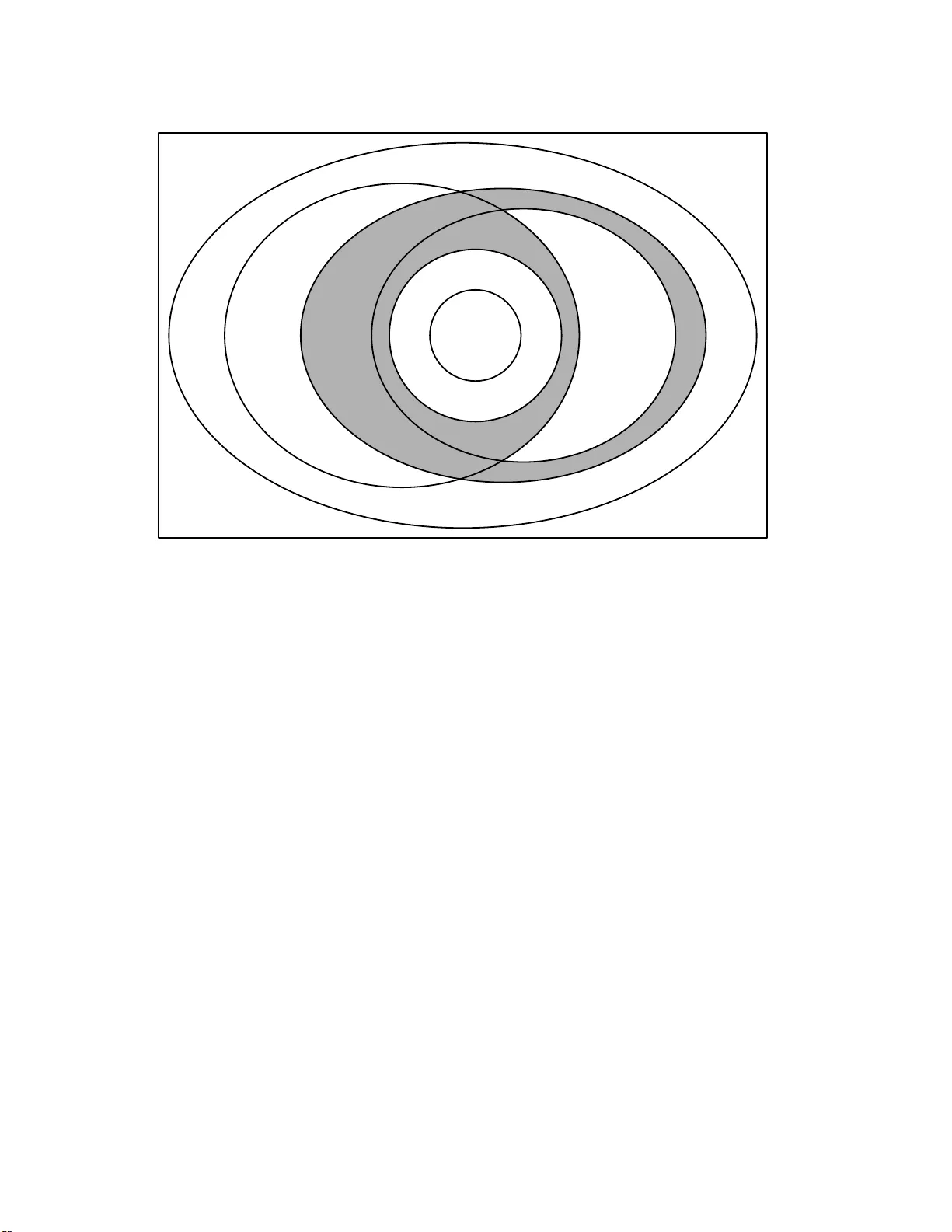
Adjoint functo rs and tree dualit y Jan F oniok ETH Zurich, Institute for Op erations Research R¨ amistrasse 101 , 8092 Zuric h, Switzerland foniok @math. ethz.ch Claude T ar dif Roy al Military College of Canada PO Box 17000, Stn F o rces, Kingsto n, O ntario Canada, K7K 7B4 Claude .Tardi f@rmc.ca 6 Ma y 2009 A family T of digraphs is a c omp lete set of obstructions for a digraph H if for an arbitrary d igraph G the existence of a homomorphism from G to H is equiv al ent to th e non-existence of a h omomorphism from any memb er of T to G . A digraph H is said to h a v e tr e e duality if there exists a complete set of obstructions T consisting of orien tations of trees. W e show th at if H has tree duality , then its arc graph δ H also has tree dualit y , and w e derive a family of tree obstructions for δ H from the obstru ctions f or H . F urthermore w e generalise o ur result to right adjoin t fun ctors on catego ries of r elational structures. W e show that these fun ctors alw a ys pr eserv e tree dualit y , as well as p olynomial CS Ps and the existence of near-unanimit y functions. Keyw ords: constr aint satisfaction, tree d ualit y , adjoint fu nctor 2000 Mathematics Sub ject Classification: 16B50 , 68 R10, 18A40, 05C15 1 I ntro duction Our primary motiv ation is the H - c olouring pr oblem (whic h has b ecome p opu lar und er the name Constr aint Satisfaction Pr oblem—CSP ): for a fi xed digraph H (a template ) decide wh ether an input digraph G admits a homomorphism to H . The computational complexit y of H -colouring d ep ends on the template H . F or some templates th e problem 1 tractable b ounded treewidth duality tree duality n uf b ounded heigh t tree duality δ π C fin. duality Figure 1: The s tr ucture of tractable template s is kno wn to b e NP-complete, for others it is tractable (a p olynomial-time algorithm ex- ists). Assuming that P 6 = NP, infinitely man y complexit y classes lie strictly b et w een P and NP [10], but it has b een conjectured that H -colouring b elongs to no suc h in termedi- ate class for an y template H [3] . This conjecture has ind eed b een prov ed for symmetric templates H [5]. In this pap er the fo cus is on tractable cases. Several conditions are kno wn to imply the existence of a p olynomial-time algo rithm for H -colo urin g (defin itions follo w in the next tw o paragraphs): it is the case if H has a n ear-un animit y fu nction (nuf ), if H has b ound ed -treewidth dualit y , if H has tree d u alit y , if H has finite du alit y (see [2, 3, 7]). Some of th e conditions are dep icted in the d iagram (Fig. 1). A ne ar-unanimity function is a h omomorp hism f from H k to H with k ≥ 3 suc h that for all x, y ∈ V ( H ) we hav e f ( x, x, x, . . . , x ) = f ( y , x, x, . . . , x ) = f ( x, y , x, . . . , x ) = · · · = f ( x, x, x, . . . , y ) = x . The p o we r H k is the k -fold p r o duct H × H × · · · × H in the catego ry of d igraphs and homomorph isms, see [6]. A digraph is a tree (has treewidth k ) if its underlying un directed graph is a tree (has treewidth k , resp ectiv ely). A set F of digraph s is a c ompl ete set of obstructions for H if for an arbitrary digraph G there exists a homomorphism from G to H if an d only if no F ∈ F admits a homomorphism to G . A template has b ounde d-tr e ewidth duality if it has a complete set of obstructions with treewidth b ound ed by a constant; it has tr e e duality if it has a complete set of obstructions consisting of trees; and it has finite duality if it 2 has a fi nite complete set of obstructions. There is a fairly straight forward wa y to generate templates with fi nite dualit y . F or an arbitrary tr ee T there exists a digraph D ( T ) suc h that { T } is a complete set of obstructions for D ( T ). The digraph D ( T ) is unique up to homomorphic equ iv alence ∗ ; it is called the dual of T . Sev eral explicit constructions are kn o wn (see [4, 9 , 15, 16]). If F is a finite set of orien ted trees, th en the pro d uct D = Q T ∈F D ( T ) is a template w ith finite d ualit y and F is a complete set of obstru ctions for D . This constr u ction yields all digraphs with fi nite dualit y [15], th us also pro ving that finite d ualit y implies tree d ualit y . Encouraged by the f ull description of finite du alities, we aim to provide a construction for some more digraph s with tree dualit y . T o this end we u se the arc-graph construction and consider the class δ π C of digraph s ge nerated fr om finite duals by taking ite rated arc graphs and fin ite Cartesian p ro ducts. W e show that all templates in this class ha v e tree du alit y . W e provide an explicit construction of the resulting tree obstructions, whic h allo ws us to sho w th at all the digraphs in δ π C ha v e in fact b ounde d-height tr e e duality , that is, they h av e a complete set of obstructions consisting of trees of b ound ed algebraic height (these are tree obstructions that allo w a h omomorphism to a fixed directed path). In this con text w e also pro ve th at the problem of existence of a complete set of obstructions consisting of trees with b ounded algebraic heigh t is decidable. The arc-graph constru ction is a sp ecial case of a more general ph enomenon: it is a righ t adjoin t in the cat egory of digraphs and homomorphisms. W e s ho w in the more general setting of th e category of relational structures that r igh t adjoin ts (c haracterised b y Pultr [17] for all lo cally present able catego ries) preserve tractabilit y of templates and moreo v er they preserve tree dualit y and existence of a near-un animit y fu nction. In this case, nev ertheless, it remains op en to pro vide a nice general description of complete sets of obstru ctions. W e use some n otions and p rop erties of graphs and homomorphisms wh ic h the reader can lo ok up in [6], as well as some category-theory notions, for whic h, e.g. [1, 13] ma y b e consulted. 2 A rc graphs and tree dua lit y Let G = ( V , A ) b e a d igraph. The ar c gr aph of G is the digraph δ G = ( A, δ A ), where δ A = (( u, v ) , ( v , w )) : ( u, v ) , ( v , w ) ∈ A . Notice that δ is an endofunctor ∗∗ in the category of d igraph s and h omomorphisms. This implies in particular that if G → H , th en δ G → δ H . (The notation G → H means that there exists a homomorp hism from G to H .) If G is a digraph and ∼ is an equiv alence relation on its verte x set V ( G ), the quo- tient G/ ∼ is the digraph ( V ( G ) / ∼ , A ), where V ( G ) / ∼ is the set of all equiv ale nce classes ∗ Tw o d igraphs H and H ′ are homomorphic al l y e quivalent if there exists a homomorphism from H to H ′ as well as a h omomorphism from H ′ to H . Clearly , if H and H ′ are h omomorphically eq uiv alen t, then H -colouring and H ′ -colouring are eq uiv alen t problems, b ecause H and H ′ admit homomorphisms from exactly th e same digraphs. ∗∗ An endofunctor is a functor from a category to itself. 3 of ∼ on V ( G ), and for X , Y ∈ V ( G ) / ∼ we hav e ( X, Y ) ∈ A if and only if there exist x ∈ X and y ∈ Y such th at ( x, y ) ∈ A ( G ). Supp ose still that G = ( V , A ) is a d igraph. Le t V ′ = { o u , t u : u ∈ V } and let A ′ = { ( o u , t u ) : u ∈ V } . Define the relation ∼ 0 suc h that t u ∼ 0 o v if and only if ( u, v ) ∈ A . Let ∼ b e the min imal equiv alence relation on V ′ con taining ∼ 0 . Set δ − 1 G = ( V ′ , A ′ ) / ∼ . In the f ollo wing, w e use the notatio n V ′ ( G ) = V ′ , A ′ ( G ) = A ′ and ∼ 0 and ∼ for th e sets and relations app earing in the definition of δ − 1 ; the precise meaning will b e clear from the co ntext. No w δ − 1 is also an endofun ctor in the categ ory of digraphs. S trictly sp eaking, it is not an inv erse of δ ; its name is c hosen b ecause of the follo wing prop er ty . Prop osition 1. F or any digr aph s G and H , G → δ H if and only if δ − 1 G → H . Pr o of. Let f : G → δ H b e a homomorphism. Then th ere exist tw o homomorphisms o, t : G → H su ch that f ( u ) = ( o ( u ) , t ( u )) for all u ∈ V ( G ). Define the mapping ˆ g : V ′ ( G ) → V ( H ) b y ˆ g ( o u ) = o ( u ) and ˆ g ( t u ) = t ( u ). If t u ∼ 0 o v , th en ( u, v ) ∈ A ( G ), whence ( f ( u ) , f ( v )) ∈ A ( δ H ) and th us t ( u ) = o ( v ). Therefore ˆ g is constan t on the equiv alence classes of ∼ , and it induces a homomorphism fr om A ′ ( G ) / ∼ = δ − 1 G to H . Con v ersely , let g : δ − 1 G → H b e a h omomorphism. W e d efine f : V ( G ) → V ( δ H ) b y f ( u ) = ( g ( o u / ∼ ) , g ( t u / ∼ )). If ( u, v ) ∈ A ( G ), then t u / ∼ = o v / ∼ , whence ( f ( u ) , f ( v )) ∈ A ( δ H ). Th erefore f is a homomorph ism. Th us δ and δ − 1 are Galois adjoints ∗ with resp ect to the ordering by existence of homomorphisms. They are in fact adjoin t fu n ctors in the category of digraphs and homomorphisms. W e return to this topic in Section 4. F or the moment we aim to pr ov e that δ preserves tree dualit y . More precisely , from the family T of tree obstructions of H , we will derive the family S proink( T ) of tr ee obstructions of δ H . The algebr aic height of an orien ted tree T is the minimum num b er of arcs of a directed path to w hic h T m ap s homomorp hically . The algebraic heigh t of ev ery fin ite orien ted tree is w ell-defined and finite, since ev ery such tree adm its a homomorphism to s ome finite directed path. Th us a tree T is of heig ht at most one if its v ertex set can b e split in to t w o parts 0 T , 1 T in suc h a wa y that for ev ery arc ( x, y ) of T w e ha v e x ∈ 0 T and y ∈ 1 T . Note that if the tree T has no arcs, then it has on ly one vertex and thus one of the sets 0 T , 1 T is empty and the other one is a singleton. Let T b e a tree. F or ev ery verte x u of T , let F ( u ) b e a tree of height at most one. F or eac h arc e of T incident with u , let there b e a fixed v ertex v ( e, F ( u ) ) in F ( u ) suc h that if u is the initial vertex of e , then v ( e, F ( u )) ∈ 1 F ( u ) , and if u is th e terminal v ertex of e , then v ( e, F ( u )) ∈ 0 F ( u ) . ∗∗ A tree S is no w constructed b y taking all the trees F ( u ) for all v ertices u of T , and by identifying the v ertex v ( e, F ( u )) with v ( e, F ( u ′ )) whenever e = ( u, u ′ ) is an arc of T . ∗ Let X and Y b e partially ordered sets. Mappin gs φ : X → Y and ψ : Y → X are Galoi s adj oints if φ ( x ) ≤ Y y ⇔ x ≤ X ψ ( y ) for all elements x ∈ X and y ∈ Y . ∗∗ It follo ws that if u is n either a source nor a sink of T , th en b oth 0 F ( u ) and 1 F ( u ) are non-empty , and so in this case F ( u ) is n ot a single vertex. If u is a source or a sink of T , then F ( u ) ma y b e an arbitrary tree of heigh t at most one. 4 An y such tree S constructed from T b y th e ab o v e p ro cedure is called a spr oink of T . The set of all sproinks of a tree T is denoted b y Sproink( T ). The follo wing lemma asserts th at s p roinks of obstru ctions for a template H are indeed obstru ctions for its arc graph δ H . Lemma 2. L et T b e a tr e e and H a digr aph such that T 9 H . If S ∈ Sp roink( T ) , then S 9 δ H . Pr o of. W e prov e that T → δ − 1 S . C onsequen tly δ − 1 S 9 H b ecause T 9 H , and therefore S 9 δ H b y Prop osition 1. Th us let S ∈ Sproink( T ). F or a v ertex u of T , consider the tree F ( u ), which is a subgraph of S . Since F ( u ) has heigh t at most one, its v ertices are partitioned in to the sets 0 F ( u ) and 1 F ( u ) . Th e set V ′ ( S ), whic h app ears in th e defi nition of δ − 1 S , con- tains V ′ ( F ( u )) as a subset. If ( x, y ) is an arc of F ( u ), then t x ∼ 0 o y . Thus wheneve r x ∈ 0 F ( u ) and y ∈ 1 F ( u ) , then t x ∼ o y . Hence for any v ertex u of T there exists a u n ique v ertex f ( u ) of δ − 1 S that is equal to t x / ∼ for all x ∈ 0 F ( u ) and to o y / ∼ for all y ∈ 1 F ( u ) . In this wa y , we hav e defined a mapping f : V ( T ) → V ( δ − 1 S ). No w assume that e = ( u, v ) is an arbitrary arc of T . Then the vertex v ( e, F ( u )), which b elongs to 1 F ( u ) , h as b een iden tified with v ( e, F ( v )), which b elongs to 0 F ( v ) . Let this iden tified v ertex b e x ; it is a v ertex of S . By defin ition, f ( u ) = o x / ∼ b ecause x ∈ 1 F ( u ) , and f ( v ) = t x / ∼ b ecause x ∈ 0 F ( v ) . Of course ( o x / ∼ , t x / ∼ ) ∈ A ( δ − 1 S ). Therefore f : T → δ − 1 S is a homomorphism, as w e hav e promised to pro v e. F or a set F of trees, let Sproink( F ) = S T ∈F Sproink( T ). Theorem 3. L et F b e a set of tr e es which is a c omplete set of obstructions for a template H . Then S proink( F ) is a c omplete set of obstructions for δ H . Pr o of. Lemma 2 implies that Sproink( F ) is a set of obstructions for δ H . It remains to pro v e that it is complete, that is w henev er G 9 δH , then there exists some S ∈ Sproink( F ) suc h that S → G . So let G 9 δ H . Thus b y Prop osition 1 we ha v e δ − 1 G 9 H . Hence there exists a tree T ∈ F such th at T → δ − 1 G , b ecause F is a complete set of obstru ctions for H . Consequent ly it suffices to pro v e that if T → δ − 1 G then there exists S ∈ S p roink( T ) suc h that S → G . Th us assume that f : T → δ − 1 G is a homomorphism. F or ev ery u ∈ V ( T ), the image f ( u ) is a ∼ -equiv alence class; p ut 1 u = { y ∈ V ( G ) : o y ∈ f ( u ) } , 0 u = { x ∈ V ( G ) : t x ∈ f ( u ) } . Then f ( u ) = 1 u ∪ 0 u , and by the definition of ∼ as the least equiv alence conta ining ∼ 0 , there exists a tree F ( u ) of heigh t at most one and a homomorp hism g u : F ( u ) → G su c h that g u (0 F ( u ) ) = 0 u and g u (1 F ( u ) ) = 1 u . F or ev ery arc ( u, v ) of T , we hav e ( f ( u ) , f ( v )) ∈ A ( δ − 1 G ) so th ere exists x ∈ V ( G ) such that o x ∈ f ( u ) and t x ∈ f ( v ). 5 Figure 2: A th und erb olt W e then select y ∈ 1 F ( u ) and z ∈ 0 F ( v ) suc h that g u ( y ) = g v ( z ) = x , and iden tify them. Pro ceeding with all such id en tifications, we construct a tree S ∈ S proink( T ) such that g = S u ∈ V ( T ) g u : S → G is a w ell-defined homomorp h ism. Corollary 4. If a digr aph H has tr e e duality, then its ar c gr aph δ H also has tr e e duality. Example. Consider T = ~ P 4 , the directed path with four arcs, and its dual D = ~ T 4 , the transitive tournament on four vertic es. Here δ D has six v ertices, bu t its core ∗ is the directed path ~ P 2 with t w o arcs. I t is well kno wn that a d irected graph G admits a homo- morphism to ~ P 2 if and only if it d o es not admit a homomorph ism from a “thunderb olt”, that is, an orien ted path with t wo forward arcs at th e b eginning and at the end, and with an o dd-length alternating path b et w een them (see Fig. 2). Thus th e family of all th und erb olts is a complete set of tree ob s tructions for ~ P 2 . Our construction S p roink( T ) give s all obstructions obtained b y stac king five trees L 0 , L 1 , L 2 , L 3 , L 4 of height at most one, with one top v ertex of L i iden tified with one b ottom verte x of L i +1 for i = 0 , 1 , 2 , 3. The example of th underb olts sh o ws th at in fact L 0 can b e r estricted to a single (top) ve rtex, and L 4 can b e r estricted to a single (b ottom) v ertex. The s ame h olds for lea v es of general trees. Also, L 1 , L 2 , L 3 can b e restricted to p aths of heigh t one, and it is also tru e in ge neral that it is sufficient to consider sproinks obtained by replacing v ertices by p aths of heigh t at most one. In fact the name “sp roink” is in s pired by pictur ing suc h a path springing out of eve ry non-leaf of T . The r esults of th is s ection sh o w that w e can construct an inte resting class of templates with tree d ualit y b y rep eatedly applying the arc-graph construction to d igraph s with finite du alit y . Moreo ver, if templates H 1 , H 2 , . . . , H k all hav e tree dualit y , th en also their pr o d uct H 1 × H 2 × · · · × H k has tree d ualit y as the union of the r esp ectiv e complete sets of obstructions of the factors is a complete set of obstructions for the pro du ct. The resulting class of templates is sub j ect to examination in the next s ection. ∗ The c or e of a digraph is any of its smallest subgraphs to which it admits a homomorphism. E very digraph H has a un ique core C (up to isomorphism), which is moreov er th e only core h omomorphically equiv alent to it. In fact, the core C of H is a r etr act of H , whic h means that there exists a homomorphism ρ : H → C whose restriction on C is the identit y mapping (such a homomorphism is called a r etr action ). 6 3 Fi nite dualit y F ol lo wing [15], eve ry tree T admits a d ual D ( T ) suc h that f or ev ery digraph G , we ha ve G → D ( T ) if and only if T 9 G . A digraph H has finite du alit y if and only if it is homomorphically equiv alen t to a finite pro du ct of d uals of trees. In this section, we consider the class δ π C , the s mallest cla ss of digraphs that con tains all duals of trees and is closed u nder taking arc grap h s, fin ite p r o ducts an d h omomorphically equiv alent digraphs. It follo ws from Corollary 4 that all elements of δ π C ha v e tree dualit y . Moreo v er w e kno w how to co nstr u ct a complete set of obstructions for eac h of these templates, u s ing iterated Spr oink constru ctions and un ions. The question then arises as to ho w significan t the class δ π C is within the class of d igraphs with tree d ualit y . It tur ns out that the d igraphs in δ π C h a v e prop erties that are not shared by all digraphs with tree duality . A digraph H has b ounde d-height tr e e duality p ro vided there exists a constan t m su c h that H admits a complete set of obstructions consisting of trees of algebraic height at most m . Prop osition 5. (i) E very c or e in δ π C ad mits a ne ar-unanimity function. (ii) E very memb er of δ π C ha s b ounde d-height tr e e duality. Pr o of. (i): By Corollary 4.5 of [11], ev ery structur e with fi nite dualit y admits a n ear- unanimit y fu n ction. Therefore it s u ffices to sho w that the class of structures admitting a near-unanimit y function is closed un der taking cores, finite pro ducts and th e arc-graph construction. Let C b e the core of H , ρ : H → C a retraction and f : H k → H a near-unanimit y function. Sin ce C is an indu ced s ubgraph of H , th e restriction ρ ◦ f ↾ C k is a near- unanimit y fu nction on C . Supp ose f i : H k i i → H i , i = 1 , . . . , m are near-unanimit y functions. F or k = max { k i : i = 1 , . . . , m } , w e define k -ary near-unanimit y f u nctions g i : H k i → H i b y g i ( x 1 , . . . , x k ) = f i ( x 1 , . . . , x k i ). F or H = Π m i =1 H i w e then defi n e a near-unanimit y fu nction g : H k → H co ordinate-wise, by p utting g (( x 1 , 1 , . . . , x m, 1 ) , . . . , ( x 1 ,k , . . . , x m,k )) = ( g 1 ( x 1 , 1 , . . . , x 1 ,k ) , . . . , g m ( x m, 1 , . . . , x m,k )) . No w supp ose that f : H k → H is a near-unanimity function. Th en ( δ H ) k is n aturally isomorphic to δ ( H k ), and w e define g : ( δ H ) k → δ H b y g (( u 1 , v 1 ) , . . . , ( u k , v k )) = ( f ( u 1 , . . . , u k ) , f ( v 1 , . . . , v k )) . The fact that f is a homomorphism implies th at g is w ell d efined, and g is a h omomor- phism by the definition of adjacency in δ H . Also, g clearly satisfies the near-un animit y iden tities, so it is a near-unanimit y f unction on δ H . (ii): The class of digraphs with b oun ded-heigh t tree dualit y is ob viously pr eserv ed by taking cores and finite pr o d ucts. By Th eorem 3, if H has a complete set of obstr u ctions 7 consisting of trees of algebraic height at most k , then δ H has a complete set of obstruc- tions consisting of trees of algebraic heigh t at most k + 1, so the class of d igraphs with b ound ed -heigh t tree du alit y is also p reserv ed b y the arc-graph construction. W e kno w a core digraph with tree dualit y b ut no near-un an im ity function and no b ound ed -heigh t tree dualit y . (The example is complicated and out of the scope of this pap er, therefore we omit it.) Thus th e class δ π C do es not capture all core d igraphs with tree dualit y . The problem of generating all stru ctures with tree dualit y b y means of suit- able fun ctors ap p lied to stru ctur es with fin ite du alit y remains n ev ertheless in teresting. Mem b ership in δ π C is not kno wn to b e decidable. In th e remainder of this section, w e sho w that b ounded-height tree d ualit y is d ecidable. Giv en a digraph H , the n -th crushe d cylinder H ∗ n is the quotien t ( H 2 × P n ) / ≃ n , where P n is the path with arcs (0 , 0) , (0 , 1) , (1 , 2) , · · · , ( n − 1 , n ) , ( n, n ), and ≃ n is the equiv alence defined by ( u, v , i ) ≃ n ( u ′ , v ′ , j ) ⇔ i = j = 0 and u = u ′ , or i = j = n and v = v ′ , or ( u, v , i ) = ( u ′ , v ′ , j ) . Theorem 6. F or a c or e digr aph H with tr e e duality, the fol lowing ar e e quivalent: (1) H has b ounde d-height tr e e duality, (2) F or some n we have H ∗ n → H . (3) Ther e exists a dir e cte d (upwar d) p ath fr om the first pr oje ction to the se c ond in H H 2 . Pr o of. (1) ⇒ (2): The t w o su bgraphs obtained from H ∗ n b y remo ving the t wo ends b oth admit homomorphisms to H . Therefore, if a tree obstruction of H admits a homomor- phism to H ∗ n , its image must intersect the t w o ends hence its algebraic length must b e at least n . ¬ (1) ⇒ ¬ (2): L et T b e a critic al obstruction of H of algebraic length n + 2. Let T 0 , T n b e the subgraphs of T ob tained by remo ving the v ertices of heigh t 0 and n + 2 resp ectiv ely . Then there exists h omomorphisms f 0 : T 0 → H and f n : T n → H . Let h : T → P n +2 b e the heigh t fun ction of T . W e define a m ap f : T → H ∗ n b y f ( u ) = ( f n ( u ) , f 0 ( u ) , h ( u ) − 1) / ≃ n if h ( u ) 6∈ { 0 , n + 2 } , ( f n ( u ) , f n ( u ) , 0) / ≃ n if h ( u ) = 0, ( f 0 ( u ) , f 0 ( u ) , n ) / ≃ n if h ( u ) = n + 2. Let ( u, v ) b e an arc of T . T hen h ( v ) = h ( u ) + 1. If { h ( u ) , h ( v ) } ∩ { 0 , n + 2 } = ∅ , w e clearly hav e ( f ( u ) , f ( v )) ∈ A ( H ∗ n ). If h ( u ) = 0, then f ( u ) = ( f n ( u ) , f n ( u ) , 0) / ≃ n is an in-neigh b our of ( f n ( v ) , f n ( v ) , 0) / ≃ n = ( f n ( v ) , f 0 ( v ) , 0) / ≃ n = f ( v ), and if h ( v ) = n + 2, f ( v ) = ( f 0 ( v ) , f 0 ( v ) , n ) / ≃ n is an out-neig hb our of f ( u ) b ecause ( f 0 ( u ) , f 0 ( u ) , n ) / ≃ n = ( f n ( u ) , f 0 ( u ) , n ) / ≃ n = f ( u ) . 8 Therefore f is a homomorphism. (2) ⇔ (3): T his equiv alence follo ws easily from the d efinition. Corollary 7. The pr oblem whether an input digr aph has b ounde d-height tr e e duality is de cidable. Pr o of. It is decidable wh ether a d igraph has tree dualit y [3] (see Theorem 11 b elo w). F or a digraph with tree d ualit y , b ounded h eigh t of the obstructions (the condition (1) of Theorem 6) is equiv alen t to the condition (3), wh ic h inv olv es d irected reac habilit y in a fin ite graph . Hence b ounded -heigh t tree dualit y is decidable. 4 A djoint functo r s and generation of tractable templ ates The corresp ond ence of Prop osition 1 can b e extended to a wide class of f unctors presented in this sectio n. T o illustrate this extension, w e first red efine δ in terms of p atterns. Let P b e the digraph with v ertices 0 , 1 and arc (0 , 1), and Q the digraph with vertic es 0 , 1 , 2 and arcs (0 , 1) , (1 , 2). F urthermore let q 1 , q 2 : P → Q b e the homomorph ism s mapping the arc (0 , 1) to (0 , 1) and (1 , 2) resp ectiv ely . F or an arb itrary digraph G , its arc graph δG can b e describ ed as follo ws: Th e v ertices of δ G are the arcs of G , that is, the homomorphisms f : P → G . The arcs of δ G are the couples of consecutiv e arcs in G , that is, the couples ( f 1 , f 2 ) such th at there exists a homomorph ism g : Q → G satisfying g ◦ q 1 = f 1 and g ◦ q 2 = f 2 . Th us the functor δ is generated b y the pattern { P , ( Q, q 1 , q 2 )) } in a w a y that generalises quite n aturally . The rest of this section deals with relational structur es. A vo c abulary is a finite set σ = { R 1 , . . . , R m } of relation s ym b ols, eac h with an arit y r i assigned to it. A σ -structure is a relational structure A = h A ; R 1 ( A ) , . . . , R m ( A ) i where A is a non-empt y set called the universe of A , and R i ( A ) is an r i -ary relation on A for eac h i . Homomorphisms of rela- tional stru ctures are r elatio n-pr eserving mappings b et wee n univ erses; a homomorphism is defined only b etw een str u ctures with the same v o cabu lary . Cores, trees, qu otien t structures, etc. can also b e defin ed in the con text of relational structures, consult [12] for the details (see also [8, 11]). The notio ns of the constrain t sati sfaction problem, template, and tree dualit y also carry o v er naturally from the setting of digraphs. Let σ and τ b e t wo v o cabularies. Let P b e a σ -stru cture, and for every relation R of τ of arit y r = a ( R ), let Q R b e a σ -structure with r fixed homomorphism s q R,i : P → Q R for i = 1 , . . . , r . Then the family { P } ∪ { ( Q R , q R, 1 , . . . , q R,a ( R ) ) : R ∈ τ } d efines a functor Ψ from th e category A of σ -structures to th e cat egory B of τ -structures as follo ws. • F or a σ -str u cture A , let B = Ψ A b e a τ -structur e w hose univ erse is the set of all homomorphisms f : P → A . • F or ev ery relation R of τ of arit y r = a ( R ), let R ( B ) b e the set of r -tuples ( f 1 , . . . , f r ) such that there exists a homomorphism g : Q R → A suc h th at for i = 1 , . . . , r w e ha v e g ◦ q R,i = f i . It w as sho wn b y Pultr [17 ] that functors Ψ defined b y means of p atterns are r igh t adjoin ts into a ca tegory of relational stru ctur es c haracterised b y axioms of a sp ecific 9 t yp e. W e exhibit th eir corresp ond ing left adjoint s Ψ − 1 in the case when b oth th e domain and the ran ge of Ψ is the catego ry of all relational structures with a giv en vocabulary . F or ev ery τ -structur e B , we defin e a σ -stru cture Ψ − 1 B = A/ ∼ , w here • A is a disj oin t union of σ -structures; for ev ery element x of the univ erse of B , A con tains a cop y P x of P , and for ev ery R ∈ τ and ( x 1 , . . . , x r ) ∈ R ( B ), A con tains a cop y Q R, ( x 1 ,...,x r ) of Q R . • ∼ is the least equiv alence whic h iden tifies ev ery element u of P x i with its image q R,i ( u ) in Q R, ( x 1 ,...,x r ) , for ev ery R ∈ τ , eve ry ( x 1 , . . . , x r ) ∈ R ( B ) and ev ery i ∈ { 1 , . . . , r } . Prop osition 8 ([17]) . F or any τ -structur e B and σ -structur e A , B → Ψ A if and only if Ψ − 1 B → A. Pr o of. Let h : B → Ψ A b e a homomorphism , and put h ( b ) = f b : P → A . Then for ev ery b ∈ B , the mapp ing f b corresp onds to a well-defined h omomorphism to A from a cop y P b of P . Also, f or ev ery R ∈ τ and ( b 1 , . . . , b r ) ∈ R ( B ), we ha v e ( h ( b 1 ) , . . . , h ( b r )) ∈ R (Ψ A ), so there exists a homomorphism g ( b 1 ,...,b r ) : Q R → A suc h th at f b i = g ( b 1 ,...,b r ) ◦ q R,i for i = 1 , . . . , r ; the mapp ing g ( b 1 ,...,b r ) corresp onds to a w ell-defined homomorphism fr om a cop y Q R, ( b 1 ,...,b r ) of Q R to A . Therefore S b ∈ B f b ∪ S τ S R ( B ) g ( b 1 ,...,b r ) corresp onds to a w ell-defined homomorphism ˆ h : S b ∈ B P b ∪ S τ S R ( B ) Q R, ( b 1 ,...,b r ) → A , su c h that if x ∼ y , then ˆ h ( x ) = ˆ h ( y ). Th erefore ˆ h in duces a homomorphism from th e quotien t structure Ψ − 1 B to A . Con v ersely , if h : Ψ − 1 B → A is a homomorphism, w e define a h omomorphism ˆ h : B → Ψ A by ˆ h ( b ) = f b , wh ere f b corresp onds to the r estriction of h to the q u otien t of P b in Ψ − 1 B . Ind eed, if R ∈ τ and ( b 1 , . . . , b r ) ∈ R ( B ), then the r estriction of h to the quotien t of Q R, ( b 1 ,...b r ) in Ψ − 1 B corresp onds to a homomorphism g : Q R → A su c h that f b i = g ◦ q R,i for i = 1 , . . . , r , wh ence ( ˆ h ( b 1 ) , . . . , ˆ h ( b r )) ∈ R (Ψ A ). Corollary 9. If a σ -structur e A has p olynomial CSP, then the τ -structur e Ψ A also has p olynomial CSP. In fact, C orollary 4 generalises as follo ws . Theorem 10. If a σ - structur e A has tr e e duality, then the τ - structur e Ψ A also has tr e e duality. W e pro ve Theorem 10 usin g F eder and V ardi’s c haracterisation of structur es with tree dualit y . F or a σ -structur e A , let U A b e th e σ -structure defined as follo ws. The universe of U A is the set of all nonempty subsets of A , and for R ∈ σ of arit y r , R ( U A ) is the set of all r -tuples ( X 1 , . . . , X r ) such that for all j ∈ { 1 , . . . , r } and x j ∈ X j there exist x k ∈ X k , k ∈ { 1 , . . . , r } \ { j } suc h that ( x 1 , . . . , x r ) ∈ R ( A ). Theorem 11 ([3]) . A structur e A has tr e e duality if and only if ther e exists a hom o- morphism fr om U A to A . 10 Pr o of of The or em 10. Sup p ose A has tree d ualit y . Then there is a homomorphism f : U A → A . Let U = P (Ψ A ) \ {∅} b e the u niv erse of U Ψ A and let S ∈ U . F or p ∈ P , define S p = { f ( p ) : f ∈ S } ∈ U A , and f S ( p ) = f ( S p ). W e claim that f S : P → A is a homomorph ism . In deed, for R ∈ σ and ( p 1 , . . . , p r ) ∈ R ( P ), the r -tup les ( f ( p 1 ) , . . . , f ( p r )) ∈ R ( A ) for all f ∈ S prov e that ( S p 1 , . . . , S p r ) ∈ R ( U A ), whence ( f S ( p 1 ) , . . . , f S ( p r )) = ( f ( S p 1 ) , . . . , f ( S p r )) ∈ R ( A ). Th us we define a map ˆ f : U Ψ A → Ψ A by ˆ f ( S ) = f S . W e s ho w that it is a homomor- phism. F or R ∈ τ and ( S 1 , . . . , S r ) ∈ R ( U Ψ A ), ev ery f i ∈ S i , 1 ≤ i ≤ r is conta ined in an r -tuple ( h 1 , . . . , h r ) ∈ R (Ψ A ) with f j ∈ S j for 1 ≤ j ≤ r and h i = f i , whence there exists a homomorphism g ( h 1 ,...,h r ) : Q R → A suc h that h j = g ( h 1 ,...,h r ) ◦ q R,j for j = 1 , . . . , r . F or x ∈ Q , let T x b e the set of all images g ( h 1 ,...,h r ) ( x ) ∈ A (with ( S 1 , . . . , S r ) fixed), and g ( S 1 ,...,S r ) ( x ) = f ( T x ). Then g ( S 1 ,...,S r ) : Q R → A is a homomorph ism, and for x ∈ q R,j ( P ) w e ha v e T x = S x (b ecause they are image s of x under restrictio ns of the same h omomorphisms), wh ence g ( S 1 ,...,S r ) ( x ) = f S j ( x ). Th us f S j = g ( S 1 ,...,S r ) ◦ q R,j for j = 1 , . . . , r . Consequen tly ( f S 1 , . . . , f S r ) = ( ˆ f ( S 1 ) , . . . , ˆ f ( S r )) ∈ R (Ψ A ). T his sh o ws that ˆ f is a homomorphism. Unlik e the case of the arc-graph construction, we are unable to provi de an explici t description of the tree obstructions of Ψ A in terms of those of A for a general righ t adjoin t Ψ . Ho we ve r, in isolated cases w e can do it, as the follo wing example sho ws. Example. The endofu nctor Ψ on the ca tegory of d igraphs is defined via the pattern { P , ( Q, q 1 , q 2 ) } , where P = ~ P 1 is the one-arc path u → v , Q = ~ P 3 is the directed path 0 → 1 → 2 → 3, the h omomorphism q 1 : u 7→ 0 , v 7→ 1, and finally q 2 : u 7→ 2 , v 7→ 3. Let T b e a tree of algebraic h eigh t h and consider the unique homomorphism t from T to the directed path ~ P h . Th e arcs of T are of t w o kinds: blue ar cs A b ( T ) = { ( x, y ) : t ( x ) = 2 k , t ( y ) = 2 k + 1 for some in teger k } and r e d ar cs A r ( T ) = { ( x, y ) : t ( x ) = 2 k + 1 , t ( y ) = 2 k + 2 for some integ er k } . W e defin e t wo equiv alence relations on the v ertices of T : x ∼ b y if the (not necessarily directed) path from x to y in T has only blue arcs, and x ∼ r y if the p ath from x to y in T has only red arcs. Then T has tw o Ψ-Sproinks, namely T / ∼ b and T / ∼ r with lo ops remo v ed. F or a collection T of trees, let Ψ-Sproink( T ) b e the set of all Ψ-Sproinks of the trees con tained in T . W e claim that if T is a complete set of obstructions for a template H , then Ψ-Sp r oink( T ) is a complete set of obs tr uctions for Ψ H . T o p r o v e it, we f ollo w the idea of the p r o ofs of Lemma 2 and Theorem 3 . First we prov e that T → Ψ − 1 ( T / ∼ b ). This is n ot difficult: eve ry blue arc of T w as con tracted to a v ertex of T / ∼ b and this v ertex w as blo wn up to an arc in T → Ψ − 1 ( T / ∼ b ). Thus we can map blue arcs to the corresp onding b lo wn-up arcs. Red arcs of T are also arcs of T / ∼ b , and hence we can map eac h red arc to the arc (1 , 2) of the corresp onding cop y of Q in Ψ − 1 ( T / ∼ b ). Clearly suc h a map p ing is a h omomorphism. Analogously we show that T → Ψ − 1 T / ∼ r . Finally we wa nt to pro v e that if T → Ψ − 1 G , then either T / ∼ b → G or T / ∼ r → G . Supp ose that f : T → Ψ − 1 G . Th en s ome arcs of T are mapp ed by f to arcs corresp onding to vertic es of G (arcs of copies of P ), and others are mapp ed to arcs corresp ondin g to 11 arcs of G (arcs (1 , 2) of copies of Q ). L et u s call the former v-arcs an d th e latter a-arcs. It follo ws f r om the d efinition of Ψ − 1 that either all blue arcs of T are v-arcs and all red arcs of T are a-arcs, or all blue arcs of T are a-a rcs and all r ed arcs of T are v-arcs. In the former case T / ∼ b → G , while in the latter case T / ∼ r → G . It is n otable that in the ab o v e example eac h tree obs tr uction for H generates fin itely man y obstructions f or Ψ H . This is no acciden t. Theorem 12. L et Ψ b e a fu nctor gener ate d by a p att ern { P } ∪ { ( Q R , q R, 1 , . . . , q R,a ( R ) ) : R ∈ τ } , wher e for eve ry R ∈ τ and 1 ≤ i < j ≤ a ( R ) , the image q R,i ( P ) is vertex- disjoint f r om q R,j ( P ) . If a σ -structur e A has finite duality, then the τ -structur e Ψ A also has finite duality. The p ro of uses the c haracterisation of structures with finite d ualit y of [11]. The squar e of a σ -structur e B is the stru cture B × B . It con tains the diagonal ∆ B × B = { ( b, b ) : b ∈ B } . An element a of B is dominate d by an elemen t b of B if for ev ery R ∈ σ , for every i and ev ery ( x 1 , . . . , x a ( R ) ) ∈ R ( B ) with x i = a , we ha v e ( y 1 , . . . , y a ( R ) ) ∈ R ( B ) with y i = b and y j = x j for j 6 = i . A structure B dismantl es to its induced substru cture C if there exists a sequence x 1 , . . . , x k of distinct element s of B suc h that B \ C = { x 1 , . . . , x k } and for eac h 1 ≤ i ≤ k the element x i is dominated in the structur e induced by C ∪{ x i , . . . , x k } . Th e sequence x 1 , . . . , x k is then calle d a dismantling se quenc e of B on C . Theorem 13 ([11]) . A structur e has finite duality if and only if it has a r etr act whose squar e dismantles to its diagon al. Pr o of of The or em 12. Let A b e a σ -structure with fi nite d ualit y . Wit hout loss of gen- eralit y , we assume that A is a core, so that A has no prop er retracts; th us the squ are of A d isman tles to its d iagonal. Let ( x 1 , y 1 ) , . . . , ( x k , y k ) b e a dism an tling sequence of A × A on ∆ A × A . Then Ψ( A × A ) ∼ = Ψ A × Ψ A ; we wan t to pro v e that it disman tles to ∆ Ψ A × Ψ A ∼ = Ψ∆ A × A . F or i ∈ { 1 , . . . , k } , defi n e X i to b e the substructure of A × A induced b y the set ∆ A × A ∪ { ( x i , y i ) , . . . , ( x k , y k ) } , and let X k +1 = ∆ A × A . W e will show that Ψ X i can b e disman tled to Ψ X i +1 , i = 1 , . . . , k . Let b = ( b 1 , b 2 ) b e an elemen t d omin ating a = ( x i , y i ) in X i . Let f ∈ Ψ X i \ Ψ X i +1 , and assume that f = ( f 1 , f 2 ) : P → A × A . Th en th er e exists (at least one) p 0 ∈ P suc h that f ( p 0 ) = a . W e define g = ( g 1 , g 2 ) : P → A × A b y g ( p 0 ) = b and g ( p ) = f ( p ) if p 6 = p 0 . Since b dominates a , g is a homomorphism, and ob viously g ∈ Ψ X i . W e claim that g dominates f . Ind eed, for R ∈ τ and ( f 1 , . . . , f a ( R ) ) ∈ R (Ψ X i ) suc h that f = f j , there exists a homomorphism h : Q R → X i suc h that f = h ◦ q R,j . Define h ′ : Q R → X i b y h ′ ( q R,j ( p 0 )) = b and h ′ ( z ) = h ( z ) for z 6 = q R,j ( p 0 ). Since b dominates a = h ( q R,j ( p 0 )), the mapping h ′ is a homomorphism . By h yp othesis, for ℓ 6 = j , the image q R,ℓ ( P ) is disjoin t from q R,j ( P ), whence f ℓ = h ′ ◦ q R,ℓ , while h ′ ◦ q R,j = g . Th erefore R (Ψ X i ) con tains all th e a ( R )-tuples needed to establish the domination of f by g . Let p 1 , p 2 , . . . , p m b e an enumeration of th e elemen ts of P . W e disman tle Ψ X i to Ψ X i +1 b y successiv ely r emo ving the functions f suc h that f ( p j ) = ( x i , y i ) for j = 1 , . . . , m . 12 Pro ceeding in this w a y for i = 1 , . . . , k , w e get a disman tling of Ψ A × Ψ A ∼ = Ψ X 1 to Ψ X k +1 ∼ = ∆ Ψ A × Ψ A . Th erefore Ψ A has fi nite dualit y . P erhaps the lac k of kno wledge of a general construction is n atural since there is no restriction on the pattern { P } ∪ { ( Q R , q R, 1 , . . . , q R,a ( R ) ) : R ∈ τ } . On the other hand, there are man y p ossib le transform ations T ′ on a family T of tree obstructions, in the st yle of Spr oink( T ). Any su c h transf ormation give s rise to a complete set of obstructions to homomorphisms in to a structure H ′ = Π T ∈T ′ D T ; ho wev er in general there is no w a y of guarant eeing that such structure H ′ is fin ite, ev en when T is a complete set of obstructions f or a finite structure H . 5 Co ncluding comments In th is pap er we tried to shed more ligh t on the str ucture of tractable templates with tree dualit y . Let us turn our atten tion one more time to Fig. 1. The grey areas in th e diagram are areas th at need a close r lo ok in fu ture r esearc h. Currently w e d o not kno w an y digraph with a near-unanimit y function and with b ound ed -heigh t tree du alit y that could n ot b e generated using right adjoin ts and pro d - ucts, s tarting from digraphs with finite d ualit y; it is not clear whether any such “reason- able” class of structures with tree d ualit y can b e generated from stru ctures with fi nite dualit y w ith a “reasonable” set of adjoint functors. W e ha v e shown here that p ossession of b ounded-h eight tree du alit y is decidable. It is natural to ask w hat its complexit y is; in particular, w h ether it is complete for some class of problems. Equally in teresting is the decidabilit y of mem b er s hip in other classes d ep icted in Fig. 1. T ree dualit y is kno wn to b e decidable [3], b ut not kno wn to b e in PSP A CE. O u r d ecision pro cedure for b ound ed-heigh t d ualit y is in PSP A CE for graphs with tree dualit y; this suggests that c hec king tree dualit y m a y b e hard er than chec king b oun ded height of the obstructions. F urthermore, finite dualit y is NP-complete [11]. The decidabilit y of b ound ed-tree- width dualit y is un kno wn, and so is the decidabilit y of a near-unanimity fun ction (see [14] for a r elated result). The prop erties of near-unanimity functions prov ed in the p ro of of Prop osition 5 (i) in the con text of digraph s and the arc-graph construction, also hold in the con text of general structures and righ t ad j oin ts. Th e pro ofs carry o ve r naturally . References [1] M. Barr and C. W ells. Cate gory The ory for Computing Scienc e . Les Pu blications CRM, Mon tr ´ eal, 3rd edition, 1999. [2] D. Cohen and P . Jea v ons. Th e complexit y of constrain t languages. In F. Rossi, P . v an Beek, an d T. W alsh, editors, Handb o ok of Constr aint Pr o gr amm ing , volume 2 of F oundations of Artificial Intel ligenc e , chapter 8. Elsevier, 200 6. 13 [3] T . F eder and M. Y. V ardi. The compu tational stru ctur e of monotone monadic SNP and constrain t s atisfaction: A study through Data log and group theory . SIAM J. Comput. , 28(1):57–1 04, 1999. [4] J . F oniok. Homomorph isms and Structur al Pr op erties of R elation al Systems . PhD thesis, Ch arles Un iv ersit y , Pr ague, 200 7. [5] P . Hell and J. Ne ˇ set ˇ ril. On the complexit y of H -coloring. J. Combin. The ory Ser. B , 48(1):92–1 10, 1990. [6] P . Hell and J. Ne ˇ set ˇ r il. Gr ap hs and Homomorp hisms , v olume 28 of Oxfor d L e ctur e Series in Mathematics and Its Applic ations . Oxford Universit y Pr ess, 200 4. [7] P . Hell, J. Ne ˇ s et ˇ ril, and X. Z h u. Dualit y and p olynomial testing of tree homomor- phisms. T r ans. Amer. Math. So c. , 348(4):1 281–1297 , 1996. [8] W. Hod ges. A shorter mo del the ory . Cam bridge Univ ersit y Press, 1997. [9] P . K om´ arek. Go o d char acterisations in the class of oriente d gr aphs . Ph D thesis, Czec hoslo v ak Academ y of S ciences, Prague, 1987. In Czec h (Dobr ´ e c harakteristiky v e t ˇ r ´ ıd ˇ e oriento v an´ yc h graf ˚ u). [10] R. E. Ladner. On the stru ctur e of p olynomial time redu cibilit y . J . Asso c. Comput. Mach. , 22(1):155 –171, 1975 . [11] B. Larose, C. Loten, and C. T ard if. A charact erisation of first-order constrain t satisfaction problems. In Pr o c e e dings of the 21st IEE E Symp osium on L o gic in Computer Scienc e (LICS’06) , pages 201–21 0. IEE E Computer S o ciet y , 2006. [12] C. Loten and C. T ardif. Ma jorit y fu nctions on structures with fi nite dualit y . Eur o- p e an J. Combin. , 29(4):979 –986, 2008. [13] S. Mac Lan e. Cate gories for the Working Mathematician , v olume 5 of Gr aduate texts in mat hematics . Spr inger-V erlag, New Y ork Berlin Heidelber g, 2nd edition, 1998. [14] M. Mar´ o ti. The existence of a near-unanimity term in a finite algebra is decidable. Man uscript, 200 5. [15] J. Ne ˇ set ˇ ril and C. T ardif. Dualit y theorems for finite structur es (c haracterising gaps and go o d charact erisations). J. Combin. The ory Ser. B , 80(1):80–97 , 2000. [16] J. Ne ˇ set ˇ ril and C. T ardif. S hort ans wers to exp onentiall y long qu estions: Extremal asp ects of h omomorphism dualit y . SIA M J. Discr ete Math. , 19(4):914 –920, 2005 . [17] A. Pultr. The right adjoin ts into th e categories of relational systems. In R ep orts of the Midwest Cate gory Seminar, IV , volume 137 of L e ctur e Notes in Mathematics , pages 100–113 , Berlin, 1970. Sprin ger. 14
Original Paper
Loading high-quality paper...
Comments & Academic Discussion
Loading comments...
Leave a Comment