Physically-Relativized Church-Turing Hypotheses
We turn `the' Church-Turing Hypothesis from an ambiguous source of sensational speculations into a (collection of) sound and well-defined scientific problem(s): Examining recent controversies, and causes for misunderstanding, concerning the state o…
Authors: Martin Ziegler
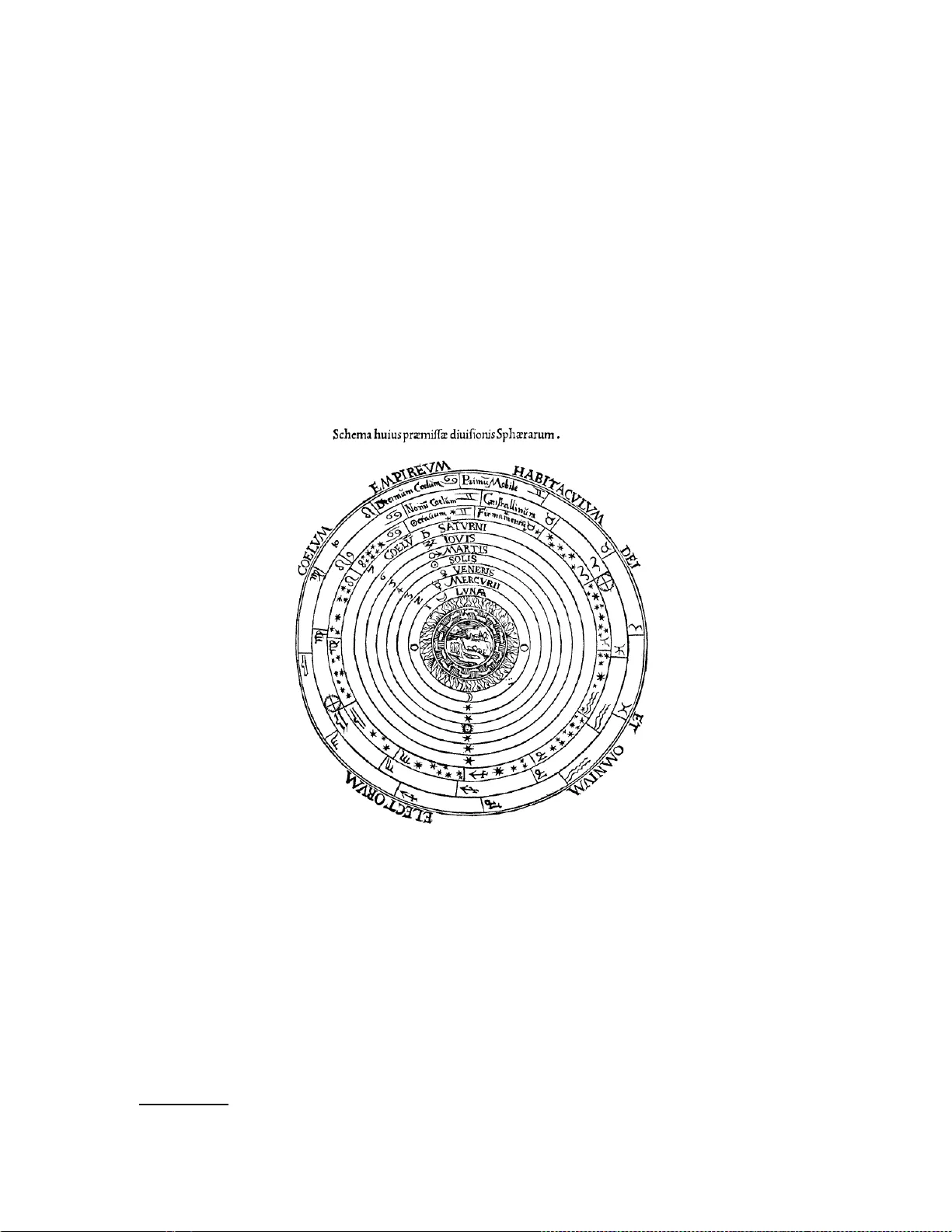
Ph ysically-Relativized Chur ch-T uring Hypotheses Martin Ziegler ⋆ Univ ersity of Paderbo rn, GERMANY Abstract. W e turn ‘the’ Church-T uring Hypothesis from a n ambiguo us source of sensational specula- tions into a (collection of) sound and well-defined scientific problem(s): Examining recent controv ersies, and causes for misunderstanding, concerning the state of the Church- T uring Hypothesis (CT H), suggests to study the CTH r elativ e to an arbitrary but specific physical theory—rather than v aguely referring to “nature” in general. T o this end we combine (and compare) physical structuralism with (models of computation i n) complexity theory . The benefit of this formal frame work is illustrated b y reporting on so me pre vious, and gi ving one ne w , e xample result(s) of co m- putability and complexity in computationa l physics. 1 Introd uction . . . . . . . . . . . . . . . . . . . . . . . . . . . . . . . . . . . . . . . . . . . . . . . . . . . . . . . . . . . . . . . . . . . 2 1.1 T u ring Univ ersality in Computer Science and Mathematics . . . . . . . . . . . . . . . . . . . . . . . 2 1.2 T u ring Univ ersality in Physics . . . . . . . . . . . . . . . . . . . . . . . . . . . . . . . . . . . . . . . . . . . . . . . 2 1.3 Summary . . . . . . . . . . . . . . . . . . . . . . . . . . . . . . . . . . . . . . . . . . . . . . . . . . . . . . . . . . . . . . . . 3 2 Physical Computing . . . . . . . . . . . . . . . . . . . . . . . . . . . . . . . . . . . . . . . . . . . . . . . . . . . . . . . . . . . . 3 3 Physical Theories . . . . . . . . . . . . . . . . . . . . . . . . . . . . . . . . . . . . . . . . . . . . . . . . . . . . . . . . . . . . . . 4 3.1 Structuralism in Physics . . . . . . . . . . . . . . . . . . . . . . . . . . . . . . . . . . . . . . . . . . . . . . . . . . . . 5 3.2 On the Reality of Physical Theories . . . . . . . . . . . . . . . . . . . . . . . . . . . . . . . . . . . . . . . . . . 6 4 Hyperco mputation in Classical Mechanics? . . . . . . . . . . . . . . . . . . . . . . . . . . . . . . . . . . . . . . . . 6 4.1 Existence in Physics . . . . . . . . . . . . . . . . . . . . . . . . . . . . . . . . . . . . . . . . . . . . . . . . . . . . . . . 7 4.2 Constructivism into Physical Theories! . . . . . . . . . . . . . . . . . . . . . . . . . . . . . . . . . . . . . . . 8 4.2.1 Constructing Physical Objects . . . . . . . . . . . . . . . . . . . . . . . . . . . . . . . . . . . . . . . . . 8 4.2.2 Pre-Theor ies: Ancestry among Physical Theories . . . . . . . . . . . . . . . . . . . . . . . . . 9 5 Applications to Computationa l Ph ysics . . . . . . . . . . . . . . . . . . . . . . . . . . . . . . . . . . . . . . . . . . . . 9 5.1 Sketch of A Research Programm e . . . . . . . . . . . . . . . . . . . . . . . . . . . . . . . . . . . . . . . . . . . . 10 5.2 Celestial Mechan ics . . . . . . . . . . . . . . . . . . . . . . . . . . . . . . . . . . . . . . . . . . . . . . . . . . . . . . . 10 5.2.1 Newton . . . . . . . . . . . . . . . . . . . . . . . . . . . . . . . . . . . . . . . . . . . . . . . . . . . . . . . . . . . . 10 5.2.2 Planar Eudox us/Aristotle . . . . . . . . . . . . . . . . . . . . . . . . . . . . . . . . . . . . . . . . . . . . . 10 5.2.3 Proofs . . . . . . . . . . . . . . . . . . . . . . . . . . . . . . . . . . . . . . . . . . . . . . . . . . . . . . . . . . . . . 12 5.2.4 General Eudoxu s/Aristotle; Ptolemy , Copernicus, and K epler . . . . . . . . . . . . . . . 13 5.3 Opticks . . . . . . . . . . . . . . . . . . . . . . . . . . . . . . . . . . . . . . . . . . . . . . . . . . . . . . . . . . . . . . . . . . 13 5.3.1 Geometric Optics . . . . . . . . . . . . . . . . . . . . . . . . . . . . . . . . . . . . . . . . . . . . . . . . . . . . 14 5.3.2 Electrody namics . . . . . . . . . . . . . . . . . . . . . . . . . . . . . . . . . . . . . . . . . . . . . . . . . . . . . 14 5.4 Quantum Mechanics . . . . . . . . . . . . . . . . . . . . . . . . . . . . . . . . . . . . . . . . . . . . . . . . . . . . . . . 14 5.4.1 Quantum Logic . . . . . . . . . . . . . . . . . . . . . . . . . . . . . . . . . . . . . . . . . . . . . . . . . . . . . 1 4 References . . . . . . . . . . . . . . . . . . . . . . . . . . . . . . . . . . . . . . . . . . . . . . . . . . . . . . . . . . . . . . . . . . . . . . . 1 4 ⋆ Supported by DFG project Zi 1009-1/2 . The author would also like to use this opportunity to express his gratitude to J O H N V . T U C K E R from Swansea Uni versity f or putting him on the present (scientific and career) track. 2 Martin Ziegler 1 Intr oduction In 1937 Alan Turing p roposed , and thorou ghly investigated the capabilities and fundamental lim itations of, a mathematical abstraction and id ealization o f a co mputer . This T u ring machine (TM) is nowadays considered the mo st approp riate mod el of actual digital com puters, reflecting what a co mmon PC (say) can do or canno t, and capturing its fun damental in -/capabilities in com putability and complexity cla sses: any computatio n prob lem that can in practice b e solved (efficiently) o n a PC belon gs to ∆ 1 (to P ); and vice versa. In this sense, the TM is widely believ ed to be uni versal; and problems P 6∈ P , or the Halting problem H 6∈ ∆ 1 , hav e to be faced up to as principally unsolv able in reality . 1.1 T uring Universality in Computer Science and Mathematics Indeed there is strong evidence for this belief: • There exists a so-called universal T uring mach ine (UTM), capab le o f simulating (with at mo st poly - nomial slowdo wn) any o ther given T M. • Sev eral other natural, yet seemingly unrelated mode ls of computation ha ve turned out as equiv alent to the TM: WHILE -progr ams, λ –calculus etc. Notice that these correspond to re al-world pr ogramm ing languag es l ike Lisp ! W e q ualify those e vidence as computer scientific —in contrast to the following mathematical evidence: • An integer function f is TM-co mputable if f it is µ -recursive; that is, f belongs to the l east class of functio ns – containin g the constant function 0, – the successor function x 7→ x + 1, – the projection s ( x 1 , . . . , x n ) 7→ x i , – and being closed under comp osition, – under primitive recursion, – and unde r so-called µ -recursion. Observe that this is a purely (and natural, inner-) m athematical notion indeed. 1.2 T uring Universality in Physics The ⋆ Church-T uring Hypothesis (CTH) claims that every fu nction whic h would naturally be r e g ar ded as computab le is co mputable und er his [i.e. T uring’ s] definition , i.e. by one of h is ma chines [Klee52, p.376]. Its str ong versio n claims that e fficient natur al com putability correspon ds to polyn omial-time T urin g co m- putability . Put d ifferently , CTH predicts a negati ve an swer to the following Question 1. Does nature adm it the existence of a system whose computationa l po wer strictly exceeds that of a TM? Notice that the CTH transcen ds computer science; in fact, it in volves physics as the general analysis of nature. Hence, if the answer to Question 1 turned out to be n egati ve, this would establish a third in ad- dition to the ab ove tw o, compu ter scientific and mathematical, dimension s of T urin g univ ersality (cmp. [Benn95,Svoz05]): • The class of (efficiently) physically computab le function s coin cides with th e class of (p olynom ial-time) T u ring computab le ones. Indeed , a TM can be built, at least in pr inciple ⋆⋆ , and hen ce constitutes a phy sical system; whe reas a negativ e answer to Question 1 means that, con versely , every physical ‘computer’ can be simulated (mayb e ev en in polynom ial time) by a TM. Such an answer is supported by long e xperien ce in two ways: ⋆ T o be honest, this is just one out of a lar ge v ariety of interpretations of this hypothesis; see, e.g. [Ord02, S E C - T I O N 2 . 2 ], [Cope02], or [LoCo08] ⋆⋆ it is for instance realized (in good approximation) by any stand ard PC Physically-Relativ ized Church-T uring Hypotheses 3 – the constant failure to physically solve the Halting problem and – the success of simulating a plethor a of physical systems on a TM, namely in Computational Ph ysics . Howe ver so f ar all attem pts have failed to p rove th e CTH, i.e. have giv en at best bo unds on the speed of calculations but n ot o n the general c apabilities of computation , based e.g. on the laws of thermodyn amics [BeLa85,Fran02] o r the speed of light (special relativity) [Lloy02]. In fact it has been suggested that the Church-Turing Hypothesis be included into ph ysics as an axiom : just like the impossibility of perpetual motion a s a source of energy first started as a recu rring experienc e and was th en p ostulated as the Sec ond Law of Thermody namics. Either way , whether axiomatizing o r try ing to prove the Ch urch-Turing Thesis, one first needs a formalizatio n of Question 1. 1.3 Summary The CTH is the subject of a plethora o f p ublications and of many hot disputes and speculatio ns. The p resent work aims to put some reason into the ongoing, an d often sensational [Kie03b,Lloy06], d iscussion. W e are convinced that this require s f ormalizing Question 1. Howe ver it seem s unlikely to r each consen sus a bout one single formalization. In fact we notice that m ost, if not all, d isputes abou t the state of the Church-T uring Hypothesis ar ise fro m disagreein g, and usually only im plicit, co nception s of how to f ormalize it. So what I propose is a class of formalization s, namely one for each physical theory . Manifesto 2. a) Describing the scientific laws of natur e is th e purpose and v irtue of physics. I t does so by means of va rious physical theories Φ , each of which ‘covers’ some part of r eality (but becomes unr ealistic on another part). b) Conseque ntly , instead o f vaguely referring to ‘na tur e’, an y claim co ncerning (the state of) the CTH should explicitly mention the specific physical theory Φ it considers; c) and criticism against such a claim as ‘based on unr ealistic presumptions’ should b e r e gar ded as d i- r ected to war ds the un derlying phy sical theory (an d stipulate r e-in vestigation sub ject to ano ther Φ , rather than dismissing the claim itself). d) Also th e input/o utput encoding better b e specified explicitly when r eferring to some “CTH Φ ”: How is the a r gument ~ x, o f n atural or r ea l nu mbers, fed into the system; i.e. how d oes its preparation (e.g. in Quantum Mechanics) pr o ceed operationally; a nd how is the ‘result’ to be read off (e.g. what ‘question’ is the system to answer)? [Ship93, S E C T I O N I ] The central Item b) e xplains f or the title of the presen t work ; the suggestion to consider physically- relativized Church -T uring Hy potheses “CTH Φ ” bears th e spirit of the related treatmen t of th e famou s “ P = N P ?” Qu estion in [BGS75]. Section 3 below e xpands on the concept (and notion within th e philosophy of science) of a physical theory Φ and its an alogy to a m odel of computation in co mputer science. W e turn Manifesto 2b) in to a research program me (Section 5 .1) an d illustrate its b enefit to com putational p hysics. Befo re, Section 2 reports on pr evious attempts to disprove the CTH by examples of h yperco mputers purported ly capable of solv ing the Halting pr oblem, and the respec ti ve physical theor ies they exploit. W e then significantly simplify on e such example to carefully inspect its source of com putationa l power and, b ased o n this in sight, are in Section 4.2 led to extend the above Manifesto 2 (continued). e) The term “exis t” in Question 1 must be interpreted in the sense of constructivism. 2 Physical Compu ting Common (ne cessarily in formal) arguments in fav or of the Chu rch-T uring Hy pothesis usually pr oceed along the fo llowing line: A ph ysical system is m athematically d escribed by a n ordina ry or par tial differential equation; th is can be solved numerically u sing time-stepping —as long a s the solution r emains regula r: whereas a singular solution is u nphy sical anyway a nd/or too unstable to be harnessed for physical comput- ing. 4 Martin Ziegler On the oth er hand, the literature knows a variety of suggestions fo r physical systems of computationa l power exceeding that of a TM; for instance: Example 3 i) General Relativity might admit for space-times such that the clock of a TM M following one world-lin e seems to r each infin ity within fi nite time a ccor ding to the clock of a n o bserver O starting at the same event b ut fo llowing a nother world-line ; O thus can decide whether M terminates or not [EtNe02] . However it is n ot kn own wh ether such space-times ac tually exist in o ur un iverse; and if th ey do, h ow to locate them a nd h ow far o ff fr om earth the y migh t be in or der to b e used for solvin g the Halting pr o blem. (Notice that the closest known Bla ck Ho le, namely ne xt to star V 4 641 , takes a t least 16 00 years to travel to) . F in ally it has b een criticized that, in this a ppr oach, a TM would hav e to actu ally run indefinitely— and use corr esponding amounts of stora ge tape and ener g y . ii) While ‘standar d’ q uantu m computers using a fin ite numb er of q ubits can be s imulated on a TM (al- though possibly at e xponen tial slowdo wn), Quantum Mechanics (QM) supports o perators on in finite superpositions which may be e xploited to solve the Halting pr ob lem [CDS00,Kie03a,A CP04,Zie g03] . On th e o ther h and, already finite ⋆ ⋆ ⋆ quantu m parallelism is in considerable d oubt of practicality due to issues of decohe rence , i.e. susceptibility to e xternal, classical n oise ( a kind of instability if yo u like); hence how much mor e unrealistic be infinite one! iii) Certain theories of Quantum Gravitation involve, a lr eady in their mathema tical formulation, combi- natorial conditions which ar e kno wn undecidab le to a TM [Ge Ha86] . These, however , ar e still mer e (a nd pr elimin ary) theories. . . iv) A light ray passing thr ough a finite system of mirr ors corr e sponds to the co mputation of a T uring machine; and by detecting whether it finally arrives at a c ertain position, one c an solve the Haltin g pr o blem [R TY94] . The catch is that the ray must adhere to Geometr ic Optics , i.e. have infi nitely small diameter , be devoid of dispers ion, and pr o pagate instantaneo usly; a lso the mirr ors ha ve to be perfect. v) The a bove claim that singu lar solutions can be ruled ou t is put into question by the discovery of non - collision singularities in Ne wtonian many-body systems [Y ao03,Smi06a] . On the other hand , the construction of th ese singu larities heavily r elies o n the moving pa rticles being ideal points obeying Newt on’s Law (with the singularity at 0) up to arbitrary small distances. vi) Even Classical Mechanics has be en suggested to allow for physical ob jects which can be pr obed in finite time to answer qu eries “n ∈ X ” for any fixed set X ⊆ N (an d in p articular for the Halting pr o blem) [BeT u04] . Notice th at each appro ach is based on, and in fact explo its sometimes b eyond recog nition, some (more of less specific) p hysical th eory . Also, the in dicated reproaches again st e ach approach to hype rcompu tation in fact aim at, and thus challenge the correctness of, the physical theory it is based on. 3 Physical T heories have been devised for thousand s of years as the scientific mea ns for objectively describing, and predicting the beha vior of , n ature. W e no wadays may feel inclin ed to patro nize e.g. A R I S T OT L E ’ s eight books, b ut his c oncept of Elements (air, fire, earth , water) con stitutes an im portant first step towards putting some structure into the many phenomena experienced † Since Ar istotle, a plethora of physical th eories of s pace-time has ev o lved (cf. e.g. [Du he85]), associated with famous names like G A L I L E O G A L I L E I , P T O L E M Y , N I C O L AU S C O P E R N I C U S J O H A N N E S K E P L E R , S I R I S A A C N E W T O N , H E N D R I K L O R E N T Z , and A L B E RT E I N S T E I N . Moreover theories of electricity and magnetism have sprun g an d later became unified ( J A M E S C L E R K M A X W E L L ) with G AU S S ia n Optics. ⋆ ⋆ ⋆ The present world-record seems to prov ide calculations on only 28 qubits; and ev en that is rather questionable [Pont07] † Even more, closer observ ation reveals that an argument like “ A ro ck flung up will f all down, because it is a roc k’ s natur e to r est on earth. ” i s no less circular than the following two more contemporary ones: “ A roc k flung up will fall down, because ther e is a for ce pulling it towar ds t he earth. ” and Electr ons in an atom occupy differ ent orbits, because the y ar e F ermions. Physically-Relativ ized Church-T uring Hypotheses 5 And th ere are various ‡ quantum mech anical an d field theories. Then th e un ification proce ss continu ed: Electricity an d Magnetism , been merged into Electrodynamics , were join ed by Quantum Mechanics to make up Quantumelectrodynamics (QED), and then with W eak Interaction formed Electrow eak Interaction ; moreover Gravitation an d Specia l Relativity became Genera l Relativity . Remark 4 (Analogy between a Physical Theory and a Model of Computation). Ea ch such theory has arisen, or rather be en devised, in o r der to de scribe with sufficient accu racy some part of natur e—while n ec- essarily neglecting others. (Quan tum Mechan ics fo r instance is aimed at d escribing elementary particles moving co nsiderably slower than ligh t; wher e as Relativity Theory focuses on very fa st yet macr oscopic o b- jects.) W e point out the analogy o f a physical theory to a model of computation in computer science: Her e, too, the goal is to r eflect some aspects of actual compu ting devises while b eing unr ealistic with r espect to o thers. (A T uring machine has u nbou nded working ta pe a nd hen ce ca n d ecide whether a 4GB-memory bound ed PC algorithm termin ates; wher eas th e canonica l model for compu ting devises with finite memory , a DF A is unable to decide the corr ec t placement of brac kets.) But what exactly is a physical theory? Agre ement on this issue is, in addition to a m eans fo r clearing up misunderstan dings as indicated in F ootno te ‡ , a crucial prerequisite for treating important further questions like: Ar e Newton’s Laws an extension o f K epler’s ? [ Duhe54] Do es Qua ntum Mechanics imp ly Classical Mechanics—and if so, in what sense e xactly? T o us, such intertheory relations [Batt0 7,Stoe95] are in turn relev ant in view of the above Man ifesto 2 with questions as the following one: Do the compu tational capabilities of Quantu m Mechanics include those of Classi cal Mechanics? 3.1 Structuralism in Physics Just like a physical the ory is regularly ob tained b y trying to infer a simple description of a family o f em- pirical data p oints obtained from e xperimen tal measurem ents, a meta -th eory o f physics takes the v ariety of existing physical theories as emp irical data points and tr ies to identify th eir common un derlying structure. Indeed the philosophy of scien ce kno ws se veral meta-th eories of ph ysics, that is, con ceptions of what a physical theory is [Schm08]: • S N E E D focu ses o n their mathematical asp ects [Snee71]; S T E G M Ü L L E R sugg ests to formalize physical theories in analogy to the Bourbaki Program me in mathematics [Ste g79,Steg86]. • C. F . V . W E I Z S Ä C K E R en vision s th e success of unifying previously distinct theo ries (recall a bove) to continue and ultimately lead into a “ Theor y of Everything ” [W eiz85,Sche97]. T o this perspective, any other physical theory (like e.g. Newton Mechanics) is merely a tentativ e draft [W ein94]. • M I T T E L S TA E D T emphasizes plurism in p hysical theories, that is, v arious theorie s equally appr opriate to descr ibe the same ran ge of phenome na [Mitt72, S E C T I O N 4 ]. Also [Hag e82] points o ut (amon g many other thin gs) that a ny physical theory , or model , is a mere a pprox imation and idealization of reality . • L U DW I G [Lud w90] and, building thereon , S C H RÖT E R [Sch r96] pro pose the, for our pur pose, most approp riate and elaborated formalization , based on the following (meta-) Definition 5 (Sketch). A physical theory Φ consists of – a description of a part of nature it a pplies to ( WB ) – a mathematical theory as the langu age to describe it ( MT ) – and mapping between physica l and mathematical objects ( AP ). ‡ Remember ho w scientists regularly get i nto a fight when starting to talk about (their conception of) Quantum Me- chanics 6 Martin Ziegler Note th at, in this setting, each phy sical theory has a specific and limited range of app licability (WB): a quite pragmatic approac h, compared to th e almost e schatological c onception of v on W eizsäcker and W einberg. The only h ope implicit in De finition 5, on the other han d, is that the variety of p hysical theories keeps augmen ting su ch as their W Bs (=images of MTs u nder APs) e ventu ally ‘c over’ and describe whole nature: just like a mathem atical manifol d b eing covered and d escribed by th e images o f Euclidean subsets u nder char ts [Miln97]. 3.2 On the Reality of Physical Theories The purpose of a physical theory Φ is to describe some part of nature. Hence, if and when some better description Φ ′ is found, a ‘ rev olution’ occu rs a nd Φ gets d isposed o f [Kuhn62]. Howe ver this it seems to have happened lege artis only very rarely ( and is one source o f cr iticism a gainst Kuhn ): more c ommon ly , the new theor y Φ ′ is applied to those parts of nature which the o ld one w ould not describe (suf ficiently well) while keeping Φ for applications where it long has turned as appropriate. Example 6 a) Classical/Continuu m Mechanics (CM) for instance is often hear d o f as ‘wr ong ’—becau se matter is in fac t comp osed fr om atoms cir cled by e lectr on s on stable orbits—yet it still constitutes the theory which most mec hanica l engineering is based on. b) Similarly , aud io systems a r e successfully designed usin g Ohm’s Law for (complex) electrical r esis- tance: in spite of Ma xwell’ s Eq uations being a mo r e a ccurate description o f a lternating cu rr ents, not to mention QED. In fact, QM (wh ich the reader mig ht feel tempted to suggest as ‘better’, in the sense of more realistic, a theory th an CM) h as bee n proven to n ot include or imply CM [Ludw85]—although such cla ims r egularly re-emerge particularly in pop ular science. Moreover, even QM itself is a gain merely § an appr oximation to parts of nature, unrealistic e.g. at high velocities or in the presence of large masses. These observations urge us to enhan ce Manifesto 2a+c): Manifesto 7. A physical th eory Φ (like, e.g . CM) constitutes an ontological entity of its own: It e xists n o less than “points” or “atoms” do . In p articular , it ad visable to in vestigate the computation al power of, and within, such a Φ (and no t d ismiss it on the gr ou nds o f b eing u nr ealistic: a tauto logical feature of any theory). A gain we str ess the an alogy to theo r etical computer scien ce (Re mark 4) studying the c ompu- tational power of models of c omputatio n M (e.g. finite au tomata, nondeterministic pushdown automata, linear-bounded nondeterministic T u ring machines: the f amous Chomsky Hier archy of formal languages) although each such M is unr ealistic in some r espect. 4 Hyper computation in Class ical Mech anics? Let u s exemplify Example 3vi) with an alternative ‘hyperco mputer’ similar to the on e p resented in [ BeT u0 4] yet stripped down to purely e xhibit, and make accessible for furthe r study , the core idea. Example 8 Consider a solid body , a cub oid into which has been carved a ‘com b’ with infinitely many teeth of decreasing width and distan ce, cf. F igure 1. Mor eover , having br oken off tooth no.n iff n 6∈ H , we arrive at an encoding of the Halting pr ob lem into a physical object in CM. This very object (together with some simple mecha nical contr ol) is a hyper computer! Indeed it may be r ead off, and used to decide fo r each n ∈ N the question “n ∈ H ?”, b y pr obing with a wedge the pr esence of the corr espondin g too th. A first reproach against Example 8 might object that the described system, although capable of solving the Halting proble m, is no hy per comp uter : because it cannot do anything else, e.g. simulate other T uring machines. But this is easy to mend: just attach the system to a universal T M, realized in CM [FrT o82]. § In particular we disagree with the, seemingly pre v alent, opinion that Quantum Theory is someho w sali ent or ev en uni versal in some sense [HaHa83,Holl96] Physically-Relativ ized Church-T uring Hypotheses 7 Fig. 1. Infinite comb with a wedge to probe its teeth The seco nd deficiency of Examp le 8 is mor e serious: th e co ncept of a solid bod y in CM is merely an idealization of actual matter com posed from a very large but still finite number of ato ms—bad ne ws for a n infinite comb. Ho we ver , as pointed ou t in Section 3. 2, we are to take f or serio us, and stud y the computatio nal po wer of and within, C M as a phy sical theory . But e ven then, there remains an important Observation 9 (Third issu e about Example 8) Even within CM, i.e . granting the e xistence of ideal solids and infinite combs, how ar e we to get hold of one encoding H ? Obviously one canno t construct it fr om a blank without solving the Ha lting pr ob lem in the fi rst place. He nce our only chance is to simp ly find one (e.g. left behind by some aliens [Clar68,StSt71] ) without knowing how to cr ea te one ourselves. 4.1 Existence in Physics In o rder to form alize the Church-Turing Hy pothesis ( a prer equisite for attempting to settle it), we th us cannot help but notice an ambiguity about the word “ exist ” in Question 1 pointed out a lready in [Zieg03 , R E M A R K 1 . 4]: For a physical object to exist within a physical theory , does that mean that A) one has to actually construct it? B) its non -existence leads to a contradiction? C) or that its existence does not lead to a contradiction (i.e. is consistent)? These three opinions correspon d in mathematics to the points of vie w taken by a constructivist , a classical mathematician (work ing e.g. in the Zer melo-F raenkel framework), an d one ‘ believing’ in the Axiom of Choice , respectively . And at least the last standp oint (C) is well kn own to lead to counter-intuitive consequen ces when taken in the physical realm of CM: Example 10 (Banach-T arski Paradoxo n) F o r a solid b all (sa y of g old) of u nit size in 3-sp ace, ther e ex- ists a pa rtition into fin itely ma ny (although ne cessarily n ot Lebesgue-measurable) pieces that, w hen put together appr opriately (i. e. after a pplying certain Euclid ean isometries), then form two solid balls o f u nit size. Note that th is exam ple is in no d anger of cau sing in flation: o n the one han d, becau se actu al m aterial g old is no t in finitely divisible (cmp. the seco nd d eficiency of E xample 8) ; but even within CM, beca use the partition of the ball ‘exists’ merely in the above Sense C). Hence, in order to av oid both ‘obviou sly’ unnatu ral (counter-) Exa mples 8 and 10 while sticking to Manifesto 7, we are led to transfe r and adapt the constructivist stan dpoint from mathematics to and for physics. 8 Martin Ziegler 4.2 Constructivism into Ph ysical Theories! As e xplained above, the “e xistence” of some physical o bject within a theory Φ is to be interpreted con- structively . Let us, similar to [CDCG95], d istinguish two ways of introd ucing constructivism into a physical theory Φ = ( MT , AP , WB ) : α ) By interpreting the mathematical theory MT constructively; compar e [BiBr85,Kush84,BrSv00 ,Flet02] and [DSKS95, S E C T I O N I I I]. β ) By impo sing constructivism onto th e side of physical objects WB . It seems that Meth od α ), although meritable of its own, does not q uite meet our goal of mak ing a physical theory constructive: Example 11 Consider the cond ition for a function f : X → Y between no rmed spaces to be open ; or even simpler: that of the image f [ B ( 0 , 1 )] ⊆ Y of the unit ball in X to be an ope n subset of Y . ∀ u ∈ f [ B ( 0 , 1 )] ∃ ε > 0 ∀ y ∈ B ( u , ε ) ∃ x ∈ B ( 0 , 1 ) : f ( x ) = y . (1) A constructivist would insist th at both e xistential qua ntifiers be interpreted constructively; wher eas in a setting of computation on r eal numb ers b y r ational appr oximation, applicatio ns suffice that only ε be com- putable fr om u , while the e xistence of x depend ing on y need not: compar e [Zieg06] . 4.2.1 Constructing Physical Objects The conception u nderly ing β ) is th at e very object in n ature (or m ore precisely: that part o f nature described by WB ) is • either a primitiv e one (e.g. a tree, mod eled in Φ as a homo geneou s cylinder of density ρ = 0 . 7g / cm 3 ; or , say , some ore, modeled as Cu Fe S 2 ) • or the result of some technolog ical process applied to such primitive objects. The latter may fo r instance in clude crafting a tree into a wheel or even a wooden gear; o r smelting ore to produ ce bronze. Notice also h ow such a proc ess—the seque nce o f o perations fr om cutting the tree, cleaning, saw- ing, carving; or of melting, red ucing, an d a lloying copp er—constitutes an algorithm (and crucial cu ltural knowledge passed on fro m ca rpenters or redsmiths to their apprentices). Mo re modern and advanced sci- ence, too, kn ows (and teaches stud ents) ‘ algorithm s’ for constructing p hysical o bjects: e.g. in mech anical engineer ing ( designing a g ear , say) or in QM (using a fur nace with boiling silver and s ome magnets to cre- ate a bea m o f spin- 1 2 particles a s in the famous S T E R N and G E R L A C H Experimen t and thu s o peration ally construct a ph ysical object correspo nding via AP to a certain wa ve function ψ as a mathematical object in MT ). W e ar e thus led to extend Definition 5: Definition 12 (Meta-). The WB of a physical theory Φ consists of • a specific collection of primitive objects ( PrimOb ) • and all so-called constructible objects, i.e., that can be obtained fr om primitive ones by a sequence ( o i ) of prepara tory operations . • The latter ar e elements o fr om a specifi ed collection PrepOp . • Mor eover , the sequence ( o i ) must be “computab le”. The fir st two items of Definition 1 2 are analogous to a m athematical th eory MT consisting o f a xioms (i.e . claims which ar e tru e by definition ) and theorems : claims which follow from the ax ioms by a sequence of ar guments . The last requir ement in Definition 12 is to prevent the body in Ex ample 8 fro m being “co n- structed” by repeated ¶ “breakin g of f a to oth” as prepar atory operations. On th e oth er hand , we seem to be ¶ Like me first , the reader may be tempted to admit only fi nite sequences of preparatory operations. H o we ver this would exclude woodturning a handrail out of a woo den cy linder by letting the carving knife follo w a curve, i.e. a continuous sequence Physically-Relativ ized Church-T uring Hypotheses 9 heading f or a circular notion: trying to form ally capture the comp utationa l c ontents o f a physical the ory Φ requir ed to restrict to ‘co nstructible’ objects, which in tu rn are defined as the result of a computab le sequence of prepara tory operations. That circle is av o ided as follows Definition 12 (co ntinued). “Computab ility” her e means r elative to a pre-theory ϕ to, an d to be specifie d with, Φ . 4.2.2 Pre-Theories: An cestry among Physical Theories Recall the ab ove example from metallurgy o f redox ing an ore: this may described b y the phlogiston theor y (an early form of theo retical chemistry , basically extending Aristotle’ s concept of four Elemen ts by a fifth resembling what nowadays would be con sidered ox ygen). Such a ‘ch emical’ theo ry ϕ of its own is req uired to fo rmulate (yet d oes not imply) metallurgy Φ , and in particular the algorithm therein that yield s to b ronze: ϕ is a pre-theor y to Φ . W e g i ve s ome furth er , and more advanced, examples of pre-theories: Example 13. a) The classical Hall Effect relies on Ohm’ s la w of electrical d irect curren t as well as on Lorentz’ force law . b) The Stern-Ger lach e xperimen t, and the quantum theory of spin Φ it spurred, is based on – a classical, mecha nical theory of a spinning top and precession; – some basic theory of ( inhomo geneou s) m agnetism and in particular of Lorentz force onto a d ipole – an atomic theory of matter (to explain e.g. the particle beam) – and even a theory of v acuum (T O R R I C E L L I , V O N G U E R I C K E ). c) In f act, any qu antum theory of microsystems requ ires [Lu dw85] some macroscopic p re-theo ry in order to describe the d evices (furnaces, scin tillators, amp lifiers, cou nters) for preparing and measuring the microscop ic ensembles under consideration . d) B A R D E E N , C O O P E R , and S C H R I E FF E R ’ s No bel pr ize-winning BCS-Theory o f supe rcondu ctivity is essentially based on QM e) whereas sup ercondu cting magnets, in turn , are essential to m any particle accelerators used fo r explor- ing elementary particles. The reader is referred to [Schr96, D E FI N I T I O N 4 . 0 . 8 ] for a more thoroug h, an d formal, account of this concept. Observation 14 T echnological pr ogr ess ca n be th ought of as a directed acyclic graph: a node u c orr e- sponds to a p hysical theory Φ ; an d may be based on (o ne or more) predecessor n odes, pr e-theories ϕ to Φ . Put differ ently , ph ysical theories form nets or logical hierarchies ; cmp. [Schr96, V E R M U T U N G 1 4 . 1 . 2 ] and [Stoe95] . 5 A pplications to Computational Physics Computer simulations o f physical systems hav e over the last few decad es be come ( in addition to exper- imental, applied, an d theoretical) an important ne w discipline o f physics of its o wn. I t h as, howe ver, r e- ceiv ed only very little sup port on behalf of Theoretical Computer Science. Specifically , scientists working in this area ( typically hig hly-skilled prog rammers with an extensi ve education in, and excellent in tuition for, p hysics) are highly interested in, and generally ask Question 15. Why is a specific ( class of) physical systems to hard ( in th e sense of co mputing resour ces like CPU-time) to simulate? Are our algor ithms o ptimal for them, and in what sense? Which are th e principal limits of compu ter simulation? Answers to such qu estions fo r various physical system s Φ (more pr ecisely: theo ries in the sense o f Sec- tion 3) are highly appreciated in Computation al Phy sics; an swers giv en o f course in the language of, and using method s from, C omputa tional Complexity Theory [Papa94], namely locating Φ in some complexity (or recursion theoretic) class and proving it complete for that class. 10 Martin Ziegler W e observe that, apart fro m sensation al attemp ts [Lloy06 ], there are rather few serio us and r igorou s an- swers to such questions to-date [FLS05,W olf85,Moo r90,Ship93,Sv oz93,ReT a93,R TY9 4,PIM06,Loff07 ]. One rea son ther efor mig ht be that, as oppo sed to classical prob lems considere d in co mputation al com- plexity , those arising in Computational Physics naturally in volve re al numbers [PERi89,W eZh0 2,W eZh 06] where uncompu tability easily occurs without completeness [Grze57,W o lf85,Moor9 0 ,Smi06a,MeZi06]. On the other hand , there is a well-established theor y of bit-complexity and (e.g. N P –) comp leteness over R [Frie84,K o91] Moreover for problems defined over real n umber s but restricted to rational inputs, the situa- tion can become quite subtle (and interesting): see, e.g., [CCK*04] or [Zieg06, P R O P O S I T I O N 3 0 ]. 5.1 Sketch of A Research Programme W e propose a systematic explor ation o f the computatio nal p ower (i.e. com pleteness) o f a large v ariety of physical theo ries. The fir st go al is a general pictur e of p hysically-re lati vized Church-T uring Hypotheses, that is, on the bou ndary between decidab ility and T uring-com pleteness; later on e ma y turn to lower com - plexity classes like E X P , P S P A C E , N P , P , and N C . The focus be on a thorough in vestigation, starting from simplest, decida ble theories and slowly proc eeding towards more complex ones (n ot nece ssarily in historical order) rich enou gh to admit a T uring- (i.e. ∆ 2 -) comp lete sy stem therein. In particular, it seems advisable to begin with rather modest (rather than straight aw ay with sexy ‘new’) physics: 5.2 Celestial Mechanics Recall the historical progr ess of describin g an d predicting the movement of planets and stars observed in sky fro m Eudo xus/Aristotle via Pto lemy , Co pernicus, and K e pler to Ne wton and Einstein. In deed, th ese de- scriptions constitute (not nece ssarily comparable, in the sense of reduction) physical theories! The present subsection e xemplifies our proposed approach by in vestigating and rep orting on the comp utational com- plexities of two of them . (W e admit that, lack ing any option for pr eparation , celestial mechanics is of limited use as a computatio nal s ystem in the sense of Manifesto 2d). 5.2.1 Newton Consider a physical the ory Φ o f N poin ts moving in Euclidean 3-space und er mutual attracting force propo rtional to distance − 2 (in verse-square law). This is the case for Electrostatics (Cou lomb) as well as for Classical Gra vitation (N ewton). Some questions, in the sense of Manifesto 2d), may ask: 1. Does poin t #1 reach within one second the unit ball B centered at the origin? 2. Does some poin t e ven tually es cape to infinity ? 3. Do two points (within 1sec or e ver) collide? It has been argued that Q uestion c) makes not muc h sense, be cause a ‘collision’ of id eal po ints (recall Manifesto 7) can be analytically continued to just pass th rough each other . Note that Question a) is not ‘well-posed’ in case the poin t just touch es the bo undary of B ; it is ther efore usually acco mpanied by th e pr o mise that point #1 either meets the interior o f B within one second or av oids the blown-up ball 2 B for two seconds; and sho wn P S P A C E -hard in th is case [ReT a93]. Question b) has only recently been shown to make sense in that a positive answer is actually po ssible [X ia92]; a nd it has been shown und ecidable [Smi06a]—howe ver f or input configu rations described by (possibly transcendental) r eal n umbers giv en as in finite sequen ces of rational app roximation s: for such encod ings, mere discontinuity is k nown to trivially imply uncom putability without completeness [Grze57]. 5.2.2 Planar Eudoxus/Aristotle An early theory of celestial me chanics originates f rom an cient Gr eece. An important purpose o f it, an d a lso of its s uccessors (see Section 5.2.4 below), w as to d escribe and p redict the mov ement, an d in p articular conjunctions , of planets and stars. Let u s captures this, d istinguishing short-term f rom long-term beh avior [Ship93, S E C T I O N I ] , in the following Question 16. 1 . W ill c ertain planets attain perfect conjunctio n, e ver? Physically-Relativ ized Church-T uring Hypotheses 11 2. or within a given time interval? 3. or reach an appr oximate conjunc tion, i.e. meet up to some prescribed angular distance ε ? According to A R I S T O T L E (Boo k Λ of Metaphysics ) and E U D OX U S O F C N I D U S , ear th resides in th e center of the universe (recall th e beginning of Sectio n 3) and is c ircled by celestial spher es m oving th e celestial bodies. Definition 17. Let Φ denote the physical th eory (which we r efrain fr om fully forma lizing in the sense o f Definition 5 or even [ Schr96] ) pa rameterized by th e initial positions u i of planets i = 1 , . . . , N , and their constant dir ections ~ d i and velocities v i of r otatio n. By Φ ′ , we mean a two-dimension ally r estricted vers ion: p lanets r otate on circles perpendicula r t o on e common d ir ection; compare F igur e 2. Moreo ver , initial positions an d angu lar velocities are pr esumed ‘commensurable k ’, that is, rational (multiples of π ). Fig. 2. Celestial orbs as drawn in P E T E R A P I A N ’ s Co smogr aphia (Antwerp, 1539) Recall that N C ⊆ P is the class of problems solvable in polylog arithmic par allel tim e on polynomially many processors; whereas P –ha rd problems (w .r .t. logspace -reductions, say) presumably do not ad mit such a beneficial parallelization. The greatest commo n divisor gcd ( a , b ) of two giv en ( say , n -bit) integers can be deter mined ∗∗ in polyn omial time; it is howev er not known to belong to N C no r be P -hard; the same holds for the calculatio n of a extended Eu clidean representation “ a · y + b · z = gcd ( a , b ) ”, i.e. o f ( y , z ) = gcdex ( a , b ) [G HR95, B . 5 . 1 ]. After these p reliminaries, we ar e a ble to state the comp utational com plexity of the above theory Φ ′ ; more precisely: the comp lexity , in terms of Φ ′ s parameters, of the d ecision problems ra ised in Question 16: Theorem 18. Let k ≤ n ∈ N a nd u 1 , . . . , u n , v 1 , . . . , v n ∈ Q b e given initial position s and ang ular velocities (measured in multip les of 2 π ) of planets #1 , . . . , # n in Φ ′ . k W e don’ t want an ybody to get dro wned like, alleg edly , H I P PAS U S O F M E TA P O N T U M . Also, since rational numbers are computable, we thus av oid the issues from Section 4.2. ∗∗ The attentativ e reader will conni ve our relaxed attitude con cerning decision versus function problems 12 Martin Ziegler a) Planets #1 and #2 will eventually appear in perfect conjunction iff v 1 6 = v 2 ∨ u 1 = u 2 . b) Planets #1 and #2 appear closer than ε > 0 to each other within time interval ( a , b ) iff it hold s, in interval notation : / 0 6 = Z ∩ ( a , b ) · ( v 1 − v 2 ) + u 1 − u 2 + ( − ε , + ε ) . This can be decided within N C 1 . c) The question of whether all pla nets #1 , . . . , # n will ever attain a perfect conjunctio n, can be decided in N C gcd ; d) and if so, the next time t for this to happe n can be calculated in N C gcdex . e) Whether there e xist k (amon g the n) plane ts that ever attain a perfect conjunctio n, is N P –comple te a pr o blem. 5.2.3 Proofs The major in gredien t is the following tool concern ing the compu tational complexity of problems abou t rational arithmetic progr essions: Definition 19. F or u , v ∈ Q , let u ÷ v : = ( a ÷ b ) / q and gcd ( u , v ) : = g cd ( a , b ) / q where a , b , q ∈ Z are such that u = a / q and v = b / q and 1 = gcd ( a , b , c ) ; similarly for u rem v and lcm ( u , v ) . F or a , α ∈ Q , write P a , α : = { α + a · v : z ∈ Z } . Lemma 20. a) Given a , α ∈ Q , the unique 0 ≤ α ′ < a with P a , α = P a , α ′ can be calcu lated as α ′ : = α rem a within complexity class N C 1 . b) Given a , α and b , β , the question whether P a , α ∩ P b , β = / 0 can be decided in N C gcd c) and, if so, c , γ with P a , α ∩ P b , β = P c , γ can be calculated in N C gcdex . d) Items b) and c) extend fr om two to the intersection of k given arithme tic pr ogr essions. e) Given n and a 1 , α 1 , . . . , a n , α n , determining the maximum number k of arithmetic pr ogressions P ( i 1 ) : = P a i 1 , α i 1 , . . . , P ( i k ) : = P a i k , α i k that have nonempty common intersection, is N P –co mplete. A result similar to the last item has been obtained in [MaHa94]. . . Pr oo f. a) Notice th at P a , α = P a , α ′ ⇔ α − α ′ ∈ P a , 0 . Hen ce there exists exactly one such α ′ in [ 0 , a ) , namely α ′ = α rem a . Moreover, in teger di vision belongs to N C [BCH86,CDL01]. b) Observe that P a , α ∩ P b , β 6 = / 0 hold s iff gcd ( a , b ) divides α − β . Ind eed, the extende d Euclid ean algo rithm then yields z ′ 1 , z ′ 2 ∈ Z with gcd ( a , b ) = − a · z ′ 1 + b · z ′ 2 ; then α − β = − a · z 1 + b · z 2 yields P a , α ∋ α + a · z 1 = β + b · z 2 ∈ P b , β . Conv ersely α + a · z 1 = β + b · z 2 ∈ P a , α ∩ P b , β implies that α − β = − a · z 1 + b · z 2 is a multiple of any (and in particular the greatest) common di visor of a and b . c) Notice th at c = lcm ( a , b ) = a · b / g cd ( a , b ) ; and, according to the proof of b), γ : = α + a · z 1 will do, where z 1 , z 2 ∈ Z with α − β = − a · z 1 + b · z 2 result f rom the extended Eu clidean algo rithm applied to ( a , b ) . d) Notice that x ∈ P a 1 , α 1 ∩ · · · ∩ P a k , α k ⇔ x ≡ α i ( mod a i ) , i = 1 , . . . , k . (2) According to th e Chinese Remainder Theorem , th e latter co ngrue nce admits such a solution x iff gcd ( a i , a j ) divides α i − α j for all pairs ( i , j ) . In o rder to calculate such an x , n otice th at a straig ht-forward iterative P a 1 .. k − 1 , α 1 .. k − 1 ∩ P a k , α k fails as it d oes not parallelize well, and also the numbers calculated ac cording to c) in may dou ble in length in each of the k steps. Instead, co mbine the P a i , α i in a binary way first two tuples P a 2 j , 2 j + 1 , α 2 j , 2 j + 1 of adjacent ones, then on to quadruples an d so on. At lo garithmic depth (=parallel time), this yields the desired result x = : α 0 and a 0 : = lcm ( a 1 , . . . , a k ) satisfying P a 0 , α 0 = T k i = 1 P a i , α i . e) It is easy to guess i 1 , . . . , i k and, based on d), verify in polynomial time that P ( i 1 ) ∩ . . . ∩ P ( i k ) 6 = / 0 . W e establish N P –h ardness by redu ction from Clique [GaJo7 9]: G i ven a graph G = ([ n ] , E ) , choo se n · ( n − 1 ) / 2 pair wise cop rime integers q i ,ℓ ≥ 2, 1 ≤ i < ℓ ≤ n ; for instance q i ,ℓ : = p i + n · ( ℓ − 1 ) will do, where p m denotes the m -th prime number , found in tim e poly nomial in n ≤ |h G i| (though not in |h p m i| ≈ lo g m + lo glog m ) by simple e xhaustive search. Then c alculate a i : = ∏ ℓ 6 = i q i ,ℓ and observe that Physically-Relativ ized Church-T uring Hypotheses 13 gcd ( a i , a j ) = q i , j for i 6 = j . No w start with α 1 : = 0 and iterati vely f or ℓ = 2 , 3 , . . . , n determine α ℓ by solving the following system of simultaneous congru ences: α ℓ ≡ α i ( mod q ℓ, i ) fo r ( ℓ, i ) ∈ E 1 + α i ( mod q ℓ, i ) fo r ( ℓ, i ) 6∈ E , 1 ≤ i < ℓ (3) Indeed , a s the q ℓ, i are pairwise coprime, the Chinese Rem ainder Theorem asserts the e xistence of a solution—com putable in time po lynomial in n , regard ing that α ℓ can be bounde d by ∏ i , j q i , j having a polyno mial number of bits). The thus construc ted vector ( α i ) i satisfies: α i ≡ α j ( mod gcd ( a i , a j ) | {z } = q i , j ) ⇔ ( i , j ) ∈ E because, for ( i , j ) 6∈ E , Equ ation (3) implies α i ≡ α j + 1 ( mod q i , j ) . W e claim that this mappin g G 7→ ( a i , α i : 1 ≤ i ≤ n ) constitutes the desired redu ction: Ind eed, accord ing to Equation ( 2), any sub-collection P ( i 1 ) , . . . , P ( i k ) has non-empty in tersection ( i.e. a comm on eleme nt x ) iff α i ℓ ≡ α i j ( mod gcd ( a i ℓ , a i j )) , i.e., by our construction, if f ( i ℓ , i j ) ∈ E ; hence cliqu es of G are in one-to-o ne correspondence with subcollection s of intersecting arithmetic progression s. ⊓ ⊔ Pr oo f (Theor em 18). At time t , p lanet # i a ppears at a ngular position u i + t · v i mod 1; and a n exact con- junction between # i and # j occu rs whenever u i + t · v i = u j + t · v j + z for some z ∈ Z , that is iff t ∈ n u j − u i v i − v j + z · 1 v i − v j o = P ( i , j ) : = P a i , j , α i , j where a i , j : = 1 v i − v j , α i , j : = u j − u i v i − v j . (4) Therefo re, p lanets #1 , . . . , # n attain a conjunction at some time t iff t ∈ T n i = 1 P ( 1 , i ) . The existence of such t thus am ounts to the non -emptiness o f th e join t intersectio n of arithmetic progression s and can b e decided in the claimed complexity ac cording to Lemma 2 0b+d). Moreover , Lemma 20a+c+d) sho ws how to calcu late the smallest t . Concernin g N P –h ardness claimed in Item f), we reduce fro m Lemma 20e): Giv en n ar ithmetic p ro- gressions P ( i ) = P a i , α i , let u i : = − α i · a i , v i : = 1 / a i , and u 0 : = 0 = : v 0 . Th en co njunctio ns between #0 and # i occur exactly at times t ∈ P ( i ) ; and P ( i 1 ) , . . . , P ( i k ) meet iff (and when/where) #0 , # i 1 , . . . , # i k do. Approx imate co njunctio n up to ε in time interval ( u , v ) mean s: ∃ t ∈ ( u , v ) ∃ z ∈ Z : ( v 2 − v 1 ) t + u 2 − u 1 + z ∈ ( − ε , + ε ) which is equiv alent to Claim b) . The boundaries of the in terval ( a , b ) · ( v 1 − v 2 ) + u 1 − u 2 + ( − ε , + ε ) can be calculated in N C 1 . ⊓ ⊔ 5.2.4 General Eudoxus/Aristotle; Ptolemy , Copernicus, and K epler Proceeding from the restricted 2D theory Φ ′ to Eudoxu s/Aristotle’ s full Φ o bviously complicates t he com- putational comp lexity o f the above predictions; and it seem s desirable to make that precise, e.g. with the help of [A CG9 3,GaOv95,BrKi98]. Moreover also Φ in turn had been refine d: P T O L E M Y introduced addi- tional so-called epicycles and deferents , located and rotating on the originally earth-centered spheres. This allowed for a more (parameters to fit in or der to yield an) accur ate description of the observed planetary motions. Copern icus relocated the spheres ( and sub-spher es thereon) to be cen tered aroun d the sun, rather than e arth. A nd Kepler replaced th em with ellipses in space. Again , the respective increase in com plexity is worth-while in vestigating. 5.3 Opticks There is an abundan ce of (ph ysical theories giving) explanatio ns for optical p henom ena; cmp. e.g. The Book of Optics b y I B N A L - H A Y T H A M (102 1) or N E W T O N ’ s b ook providing the title of this section . W e are specifically in terested in th e pr ogression from geo metric via Gaussian (taking into account d ispersion) over H U Y G E N S and F O U R I E R (diffracti ve, wa ve) op tics to Maxwell’ s theory of electromag netism; and e ven, in 14 Martin Ziegler order to describe the v arious k inds o f scattering o bserved, to quantum and quantum field theories. Note that this seq uence of optical theor ies Φ i reflects their historical succ ession, but no t a logical o ne in the sense that Φ i + 1 ‘implies’ (and hence is computation ally at least as hard as) Φ i . Our p urpose is thus to explore more thorough ly the co mputation al complexities of these theories. In fact their computationa l r elations may happen to b e si milar, unrelated, or just opposite to their histo rical ones! Consider for example geometric optics v ersus Electrody namics: 5.3.1 Geometric Optics considers light ray s as ideal ge ometric objects, i.e. , of infin itesimal section proceed ing instantaneou sly and straightly until hitting a , say , m irror . No w depe nding on the kind of m irrors (straight or cu rved, with rational or algebraic param eters) and the availability of further optica l devices (lenses, b eam splitters), [R TY9 4] has developed a fairly exhaustive taxonom y of th e ind uced compu tational complexities of ray tracing ranging from P S P A C E to un d ecidable! 5.3.2 Electrodynamics on the other h and treats lig ht as a vector-valued wa ve obeying a system of linear partial d ifferential equation s named after J A M E S C L E R K M A X W E L L . Their so lution, from g iv en initial condition s, is compu table, even over real n umber s [ W eZh 99]! 5.4 Quantum Mechanics is, since R I C H A R D P . F E Y N M A N ’ s famous Lec tures on Computation [FLS05], of particular in terest to the theo ry o f comp utation a nd has, in co nnection with the work of P E T E R S H O R ’ s, initiated Quan - tum Compu tation as a now fashionable and speculative [Kie0 3a] research topic lac king a gen eral picture [Smi06b,Myrv9 5 ,W eZh 06]. Sp eaking in complexity theoretic t erms, the (as u sual h ighly amb iguous) qu es- tion raised by the strong CTH (reca ll Section 1.2 ) asks to locate the co mputation al power of QM somewhere among (or b etween) P , P IntegerF actorizat ion , N P , an d ∆ 2 . And it seem s worth-wh ile to fur ther explo re how the answer dep ends on the un derlying Hamiltonian s bein g un- /bound ed as indicated in [ PERi89, C H A P T E R 3 ]? In o rder for a sou nd and more definite investigation, o ur ap proach sugge sts to start explo ring well- specified sub- an d pre-theo ries of QM. Th ese m ay for in stance be the B O H R - S O M M E R F E L D theo ry o f classical electron orbits with integral action-angle conditions. Another pro mising d irection co nsiders compu tational cap abilities of , and co mplexity in , Quantum Logic : 5.4.1 Quantum Logic arises as an abstra ction of the purely alg ebraic structu re exhibited by the col- lection o f effect o perators in troduce d by G . L U DW I G on a Hilbert space (i.e. certain q uantum m echanical observables); c f. e. g. [Svoz98]. This discipline h as flou rished fro m the co mparison with (i.e. sy stematic and thorou gh invest igation of similarities and differences to) Boolean logic. In p articular the axioms satisfied by operations “ ∧ , ∨ , ¬ , ≤ ” differ f rom the classical case, depending on which q uantum logic one considers. It seems interesting to de vise a theor y of computation al complexity similar to th at o f Boo lean cir cuits [Papa94, S E C T I O N S 4.3 and 11.4 ] with classical gates replaced by quan tum logic ones. A first importan t and non-tr i vial result has been obtained in [ DHMW05, S E C T I O N 3 ] and may be interpreted as: the satisfiability problem for quantum logic gates is decidable. Refer ences [A CG93] M . J . A T A L L A H , P. C A L L A H A N , M . T. G O O D R I C H : “ P –Complete Geometric P roblems”, pp.443–462 in Int. J . Comput. Geometry Appl. vol. 3:4 (1993). [A CP04] V . A . A DA M YA N , C . S . C A L U D E , B . S . P A V L OV : “Transc ending the limits of Turing computability”, pp.119–1 37 in Quantum Information Comple xity . P r oc. Me ijo W inter Sc hool 2003 (T . Hida, K. Saito, S. Si Editors), W orld Scientific Singapore (2004). [Batt07] R . B A T T E R M A N : “Intertheory Relations in P hysics”, in Stanfor d E ncyclopedia of Philosophy , http://plato. stanford.edu/ entries/physics-interrelate (2007). [BCH86] P. B E A M E , S . C O O K , H . H O OV E R : “Log Depth Circuits for Div ision and Related Problems”, pp.994 – 1003 in SIAM Jo urnal of Computing vol. 15 (19 86). Physically-Relativ ized Church-T uring Hypotheses 15 [BeLa85] C . H . B E N N E T T , R . L A N DA U E R : “The Fundamental P hysical Li mits of Computation”, pp.48–56 in Sci- entific American , vol. 253 (1) (1985). [Benn95] C . H . B E N N E T : “Univ ersal Comp utation an d P hysical Dynamics”, pp.268 –273 in Physica D vol. 86 (1995). [BeT u04] E . J . B E G G S , J . V . T U C K E R : “Computations via Experiments with Kin ematic Systems”, T echnical Report 5–2004 , Department of Computer Science, Univ ersity of W ales Swan sea. [BiBr85] E . B I S H O P , D . S . B R I D G E S : “ Constructive Analysis ”, Springer (1985). [BGS75] T. B A K E R , J . G I L L , R . S O L OV A Y : “Relativiza tions of the P = ? N P Question”, pp.431–44 2 in SIAM J ournal on Computing vol. 4:4 (197 5). [Breu02] T. B R E U E R : “ Quantenmec hanik: Ei n F all für Gödel? ”, Spektrum (2002). [BrKi98] H . B R E U , D . G . K I R K PA T R I C K : “Un it D isk Graph Recognition is N P -hard”, pp.3–24 in Computational Geometry Theory and Applications vol. 9 (1998). [BrSv00] D . B R I D G E S , K . S VO Z I L : “Constructi ve Mathematics and Quantum Physics”, pp.503–515 in Interna- tional J ournal of Theor etical Physics vol. 39:3 (2000 ). [CCK*04] E . - C . C H A N G , S . W . C H O I , D . Y . K W O N , H . J . P A R K , C . K . Y AP : “Shortest Path amidst Disc Obstacles is Computable”, pp.567– 590 in Int. J . Comput. Geometry Appl vol. 16 (2006). [CDL01] A . C H I U , G . I . D A V I D A , B . E . L I T O W : “Division in logspace-un iform N C 1 ”, pp.259–275 in Informatique Théor eti que et Applications vol. 35:3 (200 1). [CDS00] C . S . C A L U D E , M . J . D I N N E E N , K . S V O Z I L : “Reflections on Quantum Computing”, pp.35–37 in Com- plexity v ol. 6:1 (2000 ). [CDCG95] G . C A T TA N E O , M . L . D A L L A C H I A R A , R . G I U N T I N I : “Con structivism and Operationalism in the Foun- dations of Quantum Mechanics” , pp.21–31 in [DSKS95]. [Clar68] A . C . C L A R K E : “ 2001: A Space Odysse y ”, (1968). [Cope02] J . C O P E L A N D : “Hyp ercomputation”, pp.461–502 in Minds and Machines vol. 12 , Kluwer (2002 ). [Davi01] E . B . D A V I E S : “Building Infinite Machin es”, pp.671–682 i n Brit. J . Phil. Sci. vol. 52 (20 01). [DSKS95] W . D E P AU L I - S C H I M A N OV I C H , E . K Ö H L E R , F. S TA D L E R (Eds.): “The Foundational Debate: Complexity and Constructi vity in Mathematics and Physics”, V ienna Cir cle Institute Y earbook , Kluwer (1995). [Duhe85] P . D U H E M : “ Le système dy monde. Histoir e des doctrines cosmolog iques de P laton á Copernic ”, Paris (1913); pa rtial English translation by R . A R I E W : “ Med ieval Cos mology: Theories of Infinity , Place, T ime, V oide, and the Plurality of W orlds ”, Univ ersity of Chicago Press (1985). [Duhe54] P . D U H E M : “ La théorie physique , son objet, sa structur e ”, Paris: Cev alier & Riv ière (1906); English translation by P . P. W I E N E R : “ T he Aim and Structu r e of Physical Theory ” , Princeton Univ ersity Press (1954). [DHMW05] J . M . D U N N , T. J . H A G G E , L . S . M O S S , Z . W A N G : “Quan tum Logic as Moti va ted by Quantum Comput- ing”, pp.353–3 59 i n J ournal of Symbolic Logic vol. 70:2 (2 005). [EtNe02] G . E T E S I , I . N É M E T I : “Non-T uring Computations V ia Malament-Hogarth Space-T imes”, pp.341–370 in International J ournal of Theor etical Physics vol. 41:2 (2002 ). [Flet02] P . F L E T C H E R : “ A Constructivist Perspective on Physics”, pp.26–42 in Philosophia Mathematica vol. 10 (2002). [FLS05] R . P . F E Y N M A N , R . B . L E I G H T O N , M . S A N D S : “ The F eynman Lectur es on Computation including F e yn- man’ s T i ps on Physics ” (2nd Edition), Addison W esley (2005). [FL T82] E . F R E D K I N , R . L A N D AU E R , T. T O FF O L I (E dts): Pr oc. Conf . Physics of Computation : “Part I: Physics of Comp utation”, International Journ al of T heor etical P hysics vo l. 21 Nos.3+4 (1982) “Part II: Comp utational Models of Physics”, Int. Journ al of T heor etical P hysics vo l. 21 Nos.6+7 (1982) “Part III: Physical Models of Computation”, Int. Jou rnal of Theor etical Physics vol. 21 No.12 (1 982). [Fran02] M . P . F R A N K : “The Physical Limits of Computing”, pp.16–26 i n I EEE Computing in Science and Engi- neering vol. 4:3 (200 2). [Frie84] H . F R I E D M A N : “The Computational Complexity of Maximization and Integration”, pp.80–98 in Advances in Mathematics vo l. 53 (1984). [FrT o82] E . F R E D K I N , T. T O FF O L I : “Conserv ative Logic”, pp.219– 253 i n Internationa l Journa l of Theor etical Physics vol. 21 (19 82). [GaOv95] A . G A J E N T A A N , M. H . O V E R M A R S : “On a Class of O ( n 2 ) Problems in Computational Geometry”, pp.165–1 85 i n Comput. Geom. vol. 5 (199 5). [GaJo79] M . R . G A R E Y , D . S . J O H N S O N : “ Computers an d Intractability: A Guide to the Theory of N P – Completeness ”, Freeman (1979). [GeHa86] R . G E RO C H , J . B . H A RT L E : “Computability and P hysical Theories”, pp.533–550 i n F oundations of Physics vol. 16(6 ) (1986). [GHR95] R . G R E E N S L AW , H . J . H O O V E R , W. L . R U Z Z O : “ Limits to P ara llel Computation ”, Oxford Uni versity Press (1995). 16 Martin Ziegler [Grze57] A . G R Z E G O R C Z Y K : “On the Definitions of Computable Real Continuous Functions”, pp.61–77 in Fun- damenta Mathematicae 44 (1957). [HaHa83] S . W. H AW K I N G , J . B . H A RT L E : “The W av e Function of the Uni verse”, pp .2960–297 5 in Physical R evie w D vo l. 28 (1983). [Hage82] N . H A G E R : “Modelle in der Physik”, vol. 278 in W issensc haftliche T aschenbüc her , Akademie-V erlag Berlin (1982). [Holl96] P . R . H O L L A N D : “Is Quantum Mechanics Uni versa l?”, pp.99–110 in (J.T . Cushing , A. Fine, S. Gold stein, Eds) Bohmian Mech anics and Quantum Theory: An Appraisal , Kluwer (1996). [Kie03a] T. K I E U : “Quantum Algorithm for Hilbert’ s T enth Pr oblem”, pp.1461–1478 in International J ournal of Theor eti cal Physics 42 , Springer (2003). [Kie03b] T. D . K I E U : “Computing the non-co mputable”, pp.51–71 i n Contempor ary Physics vol. 44(1) (2003 ). [Klee52] S . K L E E N E : “ Intr oduction to Metamathematics ”, V an Nostrand (1952). [K o91] K . - I . K O : “ Computationa l Complexity of Real Functions ”, Birkhäuser (1991). [Kuhn6 2] T. S . K U H N : “ The Structur e of Scientific Revolutions ”, Univ ersity of Chicago Press (1962). [Kush84 ] B . A . K U S H N E R : “Lectures on Con structiv e Mathematical An alysis”, vol. 60 in T ranslations of M athemat- ical Monog raphc s , AMS (1984); translated from Russian (Mosco w 1973) and edited by E. Mendelson and L.J. Leifman. [Lloy02] S . L L O Y D : “Ultimate Physical Limits to Comp utation”, pp.1047–1054 in Natur e vol. 406 (Aug.2000 ). [Lloy06] S . L L O Y D : “ Pr o gramming the Univers e ”, Random House (2006). [LoCo08] B . L O FF , J . F. C O S TA : “Five V iews of Hypercomputation”, to appear in International Jo urnal of Uncon- ventional Computing . [Loff07 ] B . L O FF : “ Physics, Compu tation and Definab ility ”, Disseration, Mathematics Department of the Instituto Superior Técnico, Lisbon, Portugal (Nov .2007). [Ludw85] G . L U D W I G : “ An Axiomatic Basis for Quantum Mechan ics ”, S pringer (1985). [Ludw90] G . L U D W I G : “ Die Grundstruktur en einer physikalischen Theorie ”, Springer (1990). [MaHa94] B . S . M A J E W S K I , G . H A VAS : “The Complexity of Greatest Com mon Divisor Computations”, pp.184–19 3 in Pr oc. 1st Internationa l Symposium on Algorithmic Number Theory , Springer LNCS vol. 877 (1994). [Matz92] D . M AT Z K E (Chairman): “ IEEE Pr oc. W orkshop on Physics and Compu tation ” (T exas 1992 ), http://ieeexp lore.ieee.org /xpl/RecentCon.jsp?punumber=4863 ; see also http://ieeexpl ore.ieee.org/ xpl/RecentCon.jsp?punumber=2948 (1994). [MeZi06] K . M E E R , M . Z I E G L E R : “Uncomputability Below t he Real Halt ing Problem”, pp.368–37 7 in P r oc. 2nd Confer ence on Computability in Eur ope (CiE’06), Springer LNCS vol. 39 88 . [Miln97] J . M I L N O R : “ T opology fr om the Differ entiable V iewpoint ”, Princeton Univ ersity Press (1997). [Mitt72] P . M I T T E L S TA E D T : “ Die Sprac he der Physik ”, B.I. W issenschaftsv erlag (1972). [Moor90] C . M O O R E : “Unpred ictability and undecidability in dynamical systems”, pp.2354–2357 in Phys. Rev . Lett. vo l. 64 (1990). [Myrv95] W. C . M Y RV O L D : “Comp utability in Quantum Mechanics”, pp.33–46 in [DSKS 95]. [Papa94] C . H . P A PA D I M I T R I O U : “ Computational Complexity ”, Addison-W esley (1994). [PERi89] M . B . P O U R - E L , J . I . R I C H A R D S : “ Compu tability in Analysis and Physics ”, Springer (1989). [PIM06] A . P E R C U S , G . I S T R AT E , C . M O O R E : “ Computational Complex ity and Statistical Physics ”, Oxford Uni- versity Press (20 06). [Ord02] T. O R D : “Hypercompu tation: computing more than the Turing m achine”, Honour’ s Thesis, Univ ersity of Melbourne (2002); http://arxiv.o rg/math.LO/020 9332 [Pont07] J . P O N T I N : “ A Giant Leap Forw ard in Computing? Maybe Not”, The New Y ork T imes , April 8 (200 7). [ReT a93] J . R E I F , S . R . T A T E : “The Complexity of N-Body S imulations”, pp.162–1 76 in Pr oc. 20th Internation al Confer ence on Automata, Langu ag es, and Pr ogr amming (ICALP’93), Springer LNCS vol. 700 . [R T Y94] J . H . R E I F , J . D . T Y G A R , A . Y O S H I D A : “Computability and Complexity of Ray T racing”, pp.265 –276 i n Discr ete and Computational Geometry vo l. 11 (1994). [Sche97] E . S C H E I B E : “ Die Reduktion physikalisch er Theorien ”, Springer (1997). [Schm08] H . - J . S C H M I D T : “Structuralism in Physics” , in Stanfor d Encyclopedia of Philosophy , http://plato. stanford.edu/ entries/physics-structuralism/ (2008). [Schr96] J . S C H RÖ T E R : “ Zur Meta-Theorie der Physik ”, de Gruyter (1996). [Ship93] J . S H I P M A N : “ Aspects of Computability in Phy sics”, pp.299–314 in W orkshop on Physics and omputation (IEEE Computer Society , Los Alamitos, NM, 1993). [Smi06a] W. D . S M I T H : “Church’ s Thesis meets t he N -Body Problem”, pp.154–183 in Applied Mathematics and Computation vol. 178 (2 006). [Smi06b] W . D . S M I T H : “Three counterexamples refuting Kieu’ s plan for «quantum adiabatic hype rcomputation» and some unco mputable quantum mechanical tasks”, pp.184 –193 in J. Applied Mathe matics and Compu- tation vol. 178 (2 006). Physically-Relativ ized Church-T uring Hypotheses 17 [Snee71] J . D . S N E E D : “ The Logical Structur e of Mathematical Physics ”, Reidel Dordrecht (1971). [Steg79] W . S T E G M Ü L L E R : “ The Structuralist V iew of Theories ”, Springer (1979). [Steg86] W . S T E G M Ü L L E R : “Theorie und Erfahreung” , vol. II part. F in Probleme un d Resultate der W issensc haft- stheorie und Analytischen Philosophie , Springer Studienau sgabe (1986). [Stoe95] M . S T Ö L Z N E R : “Lev els of Physical Theories”, pp.47–6 4 in [DSKS95]. [StSt71] A . S T R U G AT S K Y , B . S T R U G AT S K Y : “ R oadside Picnic ” (1971). [Svoz93] K . S VO Z I L : “ Randomness and Undecidab ility in Physics ”, W orld Scientific (1993). [Svoz95] K . S VO Z I L : “ A Constructivist Manifesto for the Physical Sciences – Constructi ve Re-Interpretation of Physical Undecida bility”, pp.65–88 i n [DSKS95]. [Svoz98] K . S VO Z I L : “ Quantum Logic ”, Springer (1998). [Svoz05] K . S VO Z I L : “Computational uni verses”, pp.84 5–859 in Chaos, Solitons and F ractals v ol. 25:4 (2005). [Y ao03] A . C . - C . Y AO : “Classical Physics and t he Church-T uring Thesis”, pp.100–105 i n Jou rnal of the Associa- tion for Computing Mac hinery vol. 50(1) (2003). [W ein94] S . W E I N B E R G : “ Dr eams of a Fina l Theory : The Scientist’ s Sear ch for t he Ultimate Laws of Natur e ”, V intage (1994). [W eiz85] C . F. VO N W E I Z S ÄC K E R : “Das Gefüge der Theorien”, Kapitel 6 in Aufbau der Physik , Carl Hanser (1985). [W eZh99] K . W E I H R A U C H , N . Z H O N G : “The W ave Propagator Is Turing Computable”, pp.697–707 in Proc. 26th International Colloquium on Automata, Lang uag es and P r og ramming (ICALP 1999), Springer LNCS vol. 164 4 . [W eZh02] K . W E I H R AU C H , N . Z H O N G : “Is wav e propagation computable or can wav e computers beat the turing machine?”, pp.312–33 2 i n Pr oc. Londo n Mathematical Society vol. 85:2 (2 002). [W eZh06] K . W E I H R A U C H , N . Z H O N G : “Computing Schrödinger propagators o n T ype-2 T uring machines”, pp.918–9 35 i n J ournal of Complexity vo l. 22:6 (2006). [W olf85] S . W O L F R A M : “Undecidability and Intractability in Theore tical Phy sics”, pp.735–738 in Physical Re view Letters v ol. 54:8 (1985). [Xia92] Z . X I A : “The Existence of Non collision Singularities in the N /Body Problem”, pp .411–468 in Ann. Math. vol. 135 :3 (1992). [Zieg03] M . Z I E G L E R : “Computational Po wer of Infinite Quantum P arallelism”, pp.2057–2071 in International J ournal of Theor etical Physics vol. 44:1 1 (2005). [Zieg06] M . Z I E G L E R : “Effec tiv ely Open Real Functions”, pp.827–849 in Jo urnal of Complexity vol. 22 (2 006). [Zieg08] M . Z I E G L E R : “(A Meta-Theory of) Physics and Computation”, p.145 in V erhandlungen der Deutsche n Physikalischen Gesellsch aft (DP G), Feb .2008. [Zuse06] “ Is the Uni verse a Computer? From Kon rad Zuse’ s In ven tion of the Computer to his «Calculating Space» to Quantum Computing”, Symposium under the patronage of Dr . Annette Schav an, Federal Minister of Education and Research (Nov . 2006). http://www.gi -ev.de/region algruppen/berlin/download/veranstaltungen/ ist_das_unive rsum_flyer.pd f
Original Paper
Loading high-quality paper...
Comments & Academic Discussion
Loading comments...
Leave a Comment