Weak Hopf monoids in braided monoidal categories
We develop the theory of weak bimonoids in braided monoidal categories and show them to be quantum categories in a certain sense. Weak Hopf monoids are shown to be quantum groupoids. Each separable Frobenius monoid R leads to a weak Hopf monoid R \ot…
Authors: Craig Pastro, Ross Street
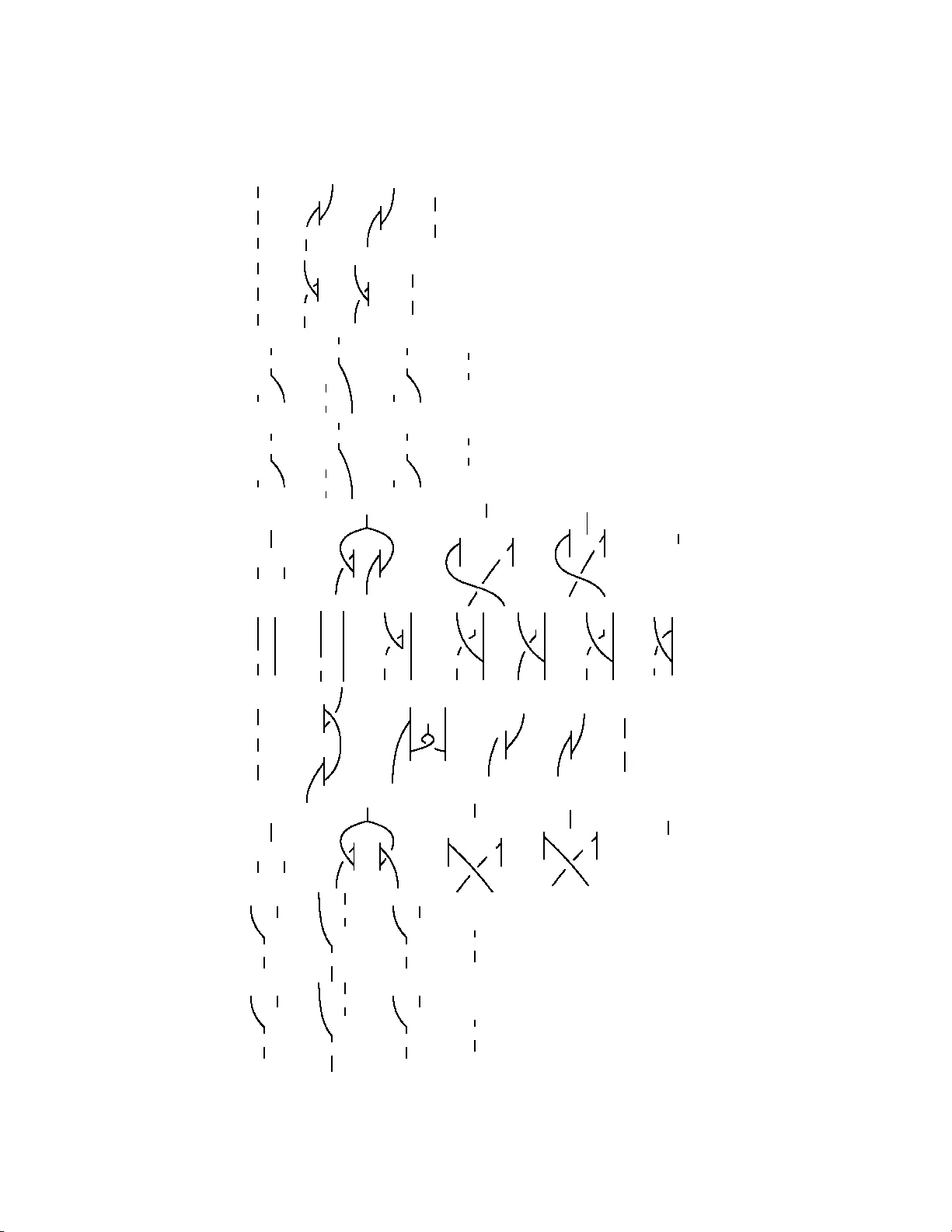
WEAK HOPF MONOIDS IN BRAIDED MONOID AL CA TEGORIES CRAIG P ASTRO AND ROSS STREET Abstract. W e dev elop the t heory of w eak bimonoids in braided monoidal categories and show them to b e quant um categories in a certain sense. W eak Hopf m onoids are shown to b e quant um groupoids. Eac h separable F rob en ius monoid R leads to a we ak Hopf monoid R ⊗ R . Contents 1. Int ro duction 1 2. W eak bimonoids 5 3. W eak Hopf monoids 10 4. The monoida l ca tegory of A -co modules 13 5. F rob enius mono id example 23 6. Quantum g roupoids 26 7. W eak Hopf monoids are quantum group oids 30 Appendix A. String dia grams and basic definitions 36 Appendix B. Pro ofs of th e properties of s , t , and r 42 References 45 1. Introduction W eak Hopf algebras were intro duced b y B¨ ohm, Nill, and Szlach´ an yi in a series of paper s [5, 15, 22, 4]. They are generalizatio ns of Hopf a lgebras and were pro- po sed a s an alternative to weak quasi- Hopf alg e bras. A weak bialgebra is bo th an assoc iativ e algebra and a coasso ciativ e co algebra, but instea d of requiring that the multiplication and unit mor phism are co algebra morphisms (or equiv alently that the comultiplication a nd the counit ar e alg ebra morphisms) other “ weakened” axioms a re impos e d. The multiplication is still required to be comultiplicativ e (equiv alently , the comultiplication is s till req uired to be mu ltiplicative), but the counit is no longe r r equired to b e an algebra morphism and the unit is no longer required to b e a co algebra morphism. I ns tead, these requirements a re replaced b y weak ened v ersions (see eq uations (v) and (w) b elow) . As the na me suggests, an y bialgebra satisfies these weak ened ax ioms and is therefore a weak bialg e br a. Given a weak bialgebra A one may define sour c e and targ et morphisms s, t : A / / A whose ima g es s ( A ) and t ( A ) are called the “sourc e and target (counital) Date : Octob er 28, 2018. The first author gratefully ackno wl ed ges supp ort of an i n te rnational Macquarie Univ ersity Researc h Sc holarship while the s ec ond gratefully ac kno wledges supp ort of the Australian Research Council Di s co very Gran t DP0771252. 1 2 CRAIG P ASTR O AND ROSS STREET subalgebra s”. It has be e n shown by Nill [15] tha t Hayashi’s face algebras [11] are sp ecial cas e s of weak bia lgebras for which the, say , target subalgebra is comm uta- tive. A weak Hopf a lgebra is a w eak bialgebra H equipp ed with an antipo de ν : H / / H s atisfying the axioms 1 µ ( ν ⊗ 1) δ = t, µ (1 ⊗ ν ) δ = s, and µ 3 ( ν ⊗ 1 ⊗ ν ) δ 3 = ν , where µ 3 = µ ( µ ⊗ 1) and δ 3 = ( δ ⊗ 1 ) δ . Aga in, any Hopf alg e br a satisfies these weak ened axio ms a nd so is a weak Hopf algebra. Also in [15] Nill has shown that the (finite dimensional) genera lized Kac algebras o f Y amanouchi [25] ar e examples of w eak Hopf alge br as with inv olutive antipo de. W eak Hopf alg ebras have also b een called “quantum group oids” [16] a nd in this pape r this is not what w e mean b y quantum gr oupoid. Perhaps the simplest example of weak bialge br as and w eak Hopf algebras are, resp ectiv ely , categor y alg ebras and gr oupoid a lgebras. Supp ose that k is a field and let C be a categor y with se t of ob ject C 0 and set o f morphism C 1 . T he c ate gory algebr a k [ C ] is the vector space k [ C 1 ] over k with basis C 1 . Elements are formal linear combinations o f the elements of C 1 with co efficients in k , i.e., αf + β g + · · · with α, β ∈ k and f , g ∈ C 1 . An asso ciativ e multiplication on k [ C ] is defined by µ ( f , g ) = f · g = ( g ◦ f if g ◦ f exists 0 otherwise and extended b y linearity to k [ C ]. This algebra do es not ha v e a un it unless C 0 is finite, in which cas e the unit is η (1) = e = X A ∈ ob C 1 A , making k [ C ] in to a unital algebra; all alg ebras (monoids) considered in this pap er will b e unital. A co m ultiplication and counit may b e defined on k [ C ] as δ ( f ) = f ⊗ f ǫ ( f ) = 1 making k [ C ] into a co algebra. Note that k [ C ] equipped with this algebra and coalgebr a structure will not sa tisfy any o f the f ollowing usua l bialgebr a axioms: ǫµ = ǫ ⊗ ǫ δ η = η ⊗ η ǫη = 1 k . The one bialg ebra axiom that do es hold is δ µ = ( µ ⊗ µ )(1 ⊗ c ⊗ 1 )( δ ⊗ δ ). Equipp ed with this algebr a and coa lgebra structure k [ C ] do es, howev er, satisfy the ax io ms of a weak bialgebr a. F urthermo r e, if C is a group oid, then k [ C ], which is then called the gr oup oid algebr a , is an example of a weak Hopf algebra with a n tipo de ν : k [ C ] / / k [ C ] defined by ν ( f ) = f − 1 . 1 There may b e some di screpa ncy wi th what w e call the source and target mor phisms and what exists in the l iterat ure. This arises f rom our conv ention of taking multiplication i n the group oid algebra to b e f · g = g ◦ f (whenev er g ◦ f is defined). WEAK HOPF MONOIDS IN BRAIDED MONOIDAL CA TEGORIES 3 and extended by linearity . I f f : A / / B ∈ C , the so urce and targe t morphisms s, t : k [ C ] / / k [ C ] are given by s ( f ) = 1 A and t ( f ) = 1 B , as o ne would exp ect. In this pap er w e define weak bialgebras and weak Hopf algebr as in a braided monoidal ca tegory V , where prefer to call them “weak bimonoids” a nd “weak Hopf monoids”. T o define a weak bimonoid in V the only diff erence from the definition given b y B¨ ohm, Nill, and Szla c h´ an yi [4] is that a choice of “crossing ” m ust b e made in the axioms . Our definition is not as genera l as the one given b y J. N. Alonso ´ Alv are z , J. M. F ern´ andez Vilab oa, a nd R. Gonz´ ale z Rodr ´ ıguez in [1, 2], but, in the ca se that their weak Y ang-Ba xter o perator t A,A is the bra iding c A,A and their idemp oten t ∇ A ⊗ A = 1 A ⊗ A , then our choices o f cross ing s are the same. Our difference in defining weak bimonoids o ccurs in the choice of s ource and ta rget morphisms. W e ha v e chosen s : A / / A a nd t : A / / A s o that: (1) the “g lobular” identities ts = s and st = t hold; (2) the source sub comonoid and tar get s ubcomonoid co incide (up to isomor - phism), and is denoted by C ; (3) s : A / / C ◦ and t : A / / C are c omonoid morphisms. These prop erties of the sourc e and target morphisms ar e esse ntial for our view of quantum categor ies. These are s = ¯ Π L A and t = Π R A in the no tation of [1, 2] and s = ǫ ′ s and t = ǫ s in the notation o f [19], with the appr opriate choice o f cross ing s. W e cho ose to work in the Cauc h y completion Q V of V . The catego ry Q V is also ca lled the “completion under idemp oten ts” of V or the “K aroubi env elope” of V . This is done rather than assume that idempotents split in V . Supp ose that A is a weak bimonoid in Q V . In this case we find C b y s plittin g either the sour ce or target morphism. As in [1 9, Pr op. 4.2], C is a separable F rob enius mono id in Q V , meaning tha t ( C, µ, η , δ, ǫ ) is a F rob enius monoid with µδ = 1 C . It tur ns o ut that our definition o f w eak Hopf mo noid is (in the symmetric cas e ) the same a s what is prop osed in [4], and in the braide d case in [1 , 2]. A weak bimonoid H is a weak Hopf mo no id if it is equipped with an a n tipo de ν : H / / H satisfying µ ( ν ⊗ 1) δ = t, µ (1 ⊗ ν ) δ = r , and µ 3 ( ν ⊗ 1 ⊗ ν ) δ 3 = ν, where r = ν s . This r : H / / H he r e turns out to b e the “usual” so urce mor phism; Π L H in the notation of [1, 2]. Ignoring cro ssings r is ǫ t in the notation of [19] and our r and t corresp ond resp ectiv ely to ⊓ L and ⊓ R in the no tation of [4 ]; the morphism s do es not app ear in [4]. Usua lly , in the second axio m ab ov e, µ (1 ⊗ nu ) δ = r , the right-hand side is equal to the chosen source map s of the weak bimonoid H . The rea son that this r do es not w ork as a source mor phism for us is that it do es not satisfy all three requirements for the source morphism mentioned abov e. This choice of r allows us to show that any F r o benius monoid in V yields a weak Hopf monoid R ⊗ R with bijective a n tipo de (cf. the example in the App endix of [4]). There are a num ber of generaliz ations of bia lg ebras and Hopf algebra s to their “many ob ject” versions. F or example, Sweedler’s g eneralized bia lg ebras [21], which were later gener alized b y T a keuchi to × R -bialgebra s [23], the quantum group oids of Lu [14] and Xu [24], Schauenburg’s × R -Hopf alg ebras [18], the bialge br oids a nd Hopf algebroids of B¨ ohm and Szlach´ anyi [7], the ea rlier mentioned fa c e alge br as [11] 4 CRAIG P ASTR O AND ROSS STREET and genera lized Kac algebr as [25], and, the o nes of interest in this pap er, the quan- tum ca tegories and quantum group oids of Da y and Street [9]. It has b een shown by Brzezi ´ nski and Militaru that the qua ntum g r oupoids o f Lu and Xu are equiv- alent to T a k euc hi’s × R -bialgebra s [8, Thm. 3.1]. Schauenburg has shown in [1 7 ] that face algebras are an example of × R -bialgebra s for whic h R is commut ative and sepa rable. In [19, Thm. 5.1] Sc hauen burg has shown that w eak bialg ebras are also examples of × R -bialgebra s for which R is se pa rable F r obenius (there ca lled F rob enius-separa ble). Schauen burg also shows in [19, Thm. 6 .1] that a w eak Hopf algebra ma y b e c haracterized as a w eak bialgebra H for which a certain canonical map H ⊗ C H / / µ ( δ ( η (1)) , H ⊗ H ) is a bijection. As a corollar y he sho ws that a weak Hopf algebra is a × R -Hopf alg ebra. Quantum group oids w ere introduced in [9]. They firs t in troduce quant um cat- egories. A quantum ca tegory in V consists of tw o co monoids A a nd C in V , with A playing the role of the ob ject-of-mo rphisms and C the ob ject-of-o b jects. There are source and target morphisms s, t : A / / C , a “comp osition” morphism µ : A ⊗ C A / / A , and a “ unit” morphis m η : C / / A a ll in V . This data must satisfy a num b er of axioms. Indeed, ordinary categorie s are examples of quan- tum categories . Motiv a ted by the dualit y found in ∗ - autonomous categ ories [3], they then define a quantum group oid to be a qua n tum category equipp ed with a generalized a n tipo de coming f rom a ∗ -auto no mous structure. In this pap er we show that weak bimonoids are examples o f quantum catego ries for whic h t he ob ject-o f-ob jects C is a separable F rob enius monoid, a nd that weak Hopf mo noids with inv ertible antipo de are quan tum g roupoids . An o utline of this pa per is as follo ws: In § 2 w e provide the definition of weak bimonoid A in a bra ided mo noidal ca te- gory V and define the s ource and tar get morphisms. W e then mov e to the Cauc h y completion Q V a nd prove the three required prop erties of o ur so urce and target morphisms mentioned ab ov e. In this section we also prov e that C , the o b ject-of- ob jects of A , is a se parable F rob enius mono id. W eak Hopf monoids in braided monoidal categ o ries a re intro duced in § 3 . In § 4 we describ e a mo noidal structur e on the categor ies Bicomo d ( C ) of C - bicomo dules in V , and Como d ( A ) of r igh t A -c omodules in V , such that the un- derlying functor U : Como d ( A ) / / Bicomo d ( C ) is str ong mo noidal. If H is a weak Hopf monoid, then we a re able to s ho w that the category Com od f ( H ), consisting o f the dualiza ble ob jects of Como d ( H ), is left autonomous. In § 5 w e pr o v e that any sepa rable F r obenius monoid R in a braided monoidal category V yields an example o f a weak Hopf monoid R ⊗ R w ith inv ertible antipo de in V . The definitions of q uan tum catego ries and quantum group oids are recalled in § 6, and in § 7 we show th at an y weak bimonoid is a quantum category and a n y w eak Hopf mo noid w ith in vertible a n tipo de is a quantum group oid. This pap er depends heavily o n o f t he string diagrams in braided monoidal cat- egories of Joy al and Street [13], which were shown to b e rigor ous in [12]. The reader unfamiliar with str ing dia grams ma y first w ant t o read App endix A where we re view s ome preliminary co ncepts using these diagrams . WEAK HOPF MONOIDS IN BRAIDED MONOIDAL CA TEGORIES 5 W e would like to thank J. N. Alonso ´ Alv are z , J. M. F ern´ andez Vilab oa, a nd R. Gonz´ alez Ro dr ´ ıguez for sending us copies of their preprints [1, 2]. 2. Weak bimonoids A w eak bia lgebra [5, 15, 22, 4] is a generalization of a bialgebr a with weak ened axioms. These weak ened a xioms repla c e the three axioms that s a y that the unit is a coalgebr a morphism and the counit is a n algebr a morphism. With the a ppropriate choices of under and o ver c rossings the definition of a weak bialgebra carr ies ov er rather straightforwardly into braided monoidal categor ies, where we prefer to ca ll it a “weak bimonoid” . 2.1. W eak bim onoids. Supp ose that V = ( V , ⊗ , I , c ) is a braided monoidal cat- egory . Definition 2. 1. A we ak bimonoid A = ( A, µ, η, δ, ǫ ) in V is an ob ject A ∈ V equipp e d with the structure of a monoid ( A, µ, η ) and a comonoid ( A, δ, ǫ ) satisfying the fo llowing equatio ns. (b) ? ? ? ? ? ? = J J J J J t t t t (v) 9 9 9 9 = w w w G G G = (w) 9 9 9 9 = G G G w w w = Suppo se A and B ar e w eak bimonoids in V . A morphism of we ak bimonoids f : A / / B is a morphism f : A / / B in V whic h is b oth a mono id morphis m a nd a co monoid mor phism. Let A be a weak bimonoid and define the sourc e a nd tar get morphisms s, t : A / / A o f A as follows: s = t = . Notice that s : A / / A is inv ariant under r otation by π , while t : A / / A is inv ar ian t under hor izon tal re flection and the in verse braiding. Impor tan tly , under either o f these trans formations • (m) and (c) are interchanged 2 , • (b) is inv aria n t, a nd • (v) a nd (w) a re interc hanged. Note that these are not the “usual” so ur ce and tar g et morphisms. They w ere chosen, as mentioned in the int ro duction, pr e cisely b ecause of the need for them to satisfy the following three prop erties: (1) the “g lobular” identities ts = s and st = t hold; (2) the source sub comonoid and tar get s ubcomonoid co incide (up to isomor - phism), and is denoted by C ; 2 The (m) and (c) here refer to the monoid and comonoid i de n tities found in A pp endix A. 6 CRAIG P ASTR O AND ROSS STREET Under (b) and (w) Under (b) and (v) (1) s 7 7 7 = s J J J = s X X s 7 7 7 = s J J J = s X X (2) s = : : : s = s = : : : s = (3) s s = s 7 7 7 s s = s 7 7 7 (4) s 7 7 7 = s ? ? ? ? s ? ? 7 7 7 = s s ? ? 7 7 7 = s s 7 7 7 = s ? ? ? ? (5) s s s ? ? = s s ? ? s s s ? ? = s s ? ? Under (b) (6) s o o o O O O o o o o o O O O O G G w w w = Under (b) and (w) or (v) (7) s s = s Figure 1. P roperties of s (3) s : A / / C ◦ and t : A / / C are c omonoid morphisms. These pr operties will b e prov ed in this section. Note tha t we will run in to the usual source morphism (which we call r ) in the definition of weak Hopf monoids (Definition 3 .1 ). A ta ble of prop erties of the sourc e morphism s is giv en in Fig ure 1 a nd table of prop erties of the target mor phism t in Figure 2 . Prop erties inv olving the int eraction of s and t are given in Fig ure 3. P roo fs of these pro perties may b e found in Appendix B. In the sequel A = ( A, µ, η , δ, ǫ ) will alw ays denote a weak bimo noid and s , t : A / / A the source and target morphis ms. W e see from prop ert y (7) in Figures 1 and 2 respectively that b oth s and t are idempo ten ts. In the following we will w ork in the Ca uc h y c o mpletion (= completio n under idemp otent s = Kar oubi envelope) Q V of V . W e do this rather than assume that idemp oten ts split in V . 2.2. Cauc hy com pletion. Given a categor y V , its Cauchy c ompletion Q V is the category whose ob jects are pairs ( X, e ) with X ∈ V and e : X / / X ∈ V an WEAK HOPF MONOIDS IN BRAIDED MONOIDAL CA TEGORIES 7 Under (b) and (w) Under (b) and (v) (1) t 7 7 7 = t J J J = t X X t 7 7 7 = t t t t + + + + = t , , / / (2) t = : : : t = t ? ? = : : : t = (3) t t = t 7 7 7 t t ? ? = t 7 7 7 (4) t 7 7 7 = t ? ? ? ? t ? ? 7 7 7 = t t ? ? 7 7 7 = t t 7 7 7 = t (5) t t t : : = t t : : t t t : : = t t : : Under (b) (6) t 7 7 7 7 7 = Under (b) and (w) or (v) (7) t t = t Figure 2. P roperties of t idempo ten t. A morphism ( X , e ) / / ( X ′ , e ′ ) in Q V is a morphis m f : X / / X ′ ∈ V such that e ′ f e = f . Note that the identit y morphism of ( X , e ) is e itself. The p oin t of working in the Cauch y completion is that every idempotent f : ( X, e ) / / ( X, e ) in Q V has a splitting, viz., ( X, e ) ( X, e ) ( X, f ) . f / / f < < < < < < < < f @ @ If V is a monoidal category , then Q V is a monoidal catego r y via ( X, e ) ⊗ ( X ′ , e ′ ) = ( X ⊗ X ′ , e ⊗ e ′ ) . The catego ry V may b e fully embedded in Q V by sending X ∈ V to ( X , 1 ) ∈ Q V and f : X / / Y ∈ V to f : ( X , 1) / / ( Y , 1), which is obviously a morphism in Q V . When working in Q V we will often identify an ob ject X ∈ V with ( X, 1) ∈ Q V . 8 CRAIG P ASTR O AND ROSS STREET Under (w) (8) s t = s t s = t (9) t s = t 7 7 7 s t = s 7 7 7 Under (v) (10) t s ? ? = s t z z D D A A A A A | | ~ ~ Under (w) and (v) (11) t ? ? ? ? = s Figure 3. Interactions of s a nd t 2.3. Prope rties of the source and target morphism s . Let A = ( A, 1) b e a weak bimonoid in Q V . F ro m the definition of the Cauch y co mpletio n the r e s ult of splitting the source morphism s is ( A, s ), and similarly , the result of splitting the target morphism t is ( A, t ). The following pro position shows that these t wo ob jects are isomo rphic. Prop osition 2 . 2. The idemp otent t : ( A, 1 ) / / ( A, 1) has the fol lowing two split- tings. ( A, 1) ( A, 1) ( A, t ) t / / t < < < < < < < < t @ @ ( A, 1) ( A, 1) ( A, s ) t / / t < < < < < < < < s @ @ In this c ase s : ( A, s ) / / ( A, t ) and t : ( A, t ) / / ( A, s ) ar e inverse morph isms, and henc e ( A, t ) ∼ = ( A, s ) . Pr o of. This result follows fro m the identities ts = s and st = t (pro perty (8) in Figure 3 ). W e will de no te this ob ject b y C = ( A, t ) and call it the obje ct-of-obje cts of A . In the next pro positions we will sho w that C is a comonoid, and furthermore, that it is a se parable F rob enius monoid, similar to what was done in [19] (there called F rob enius-separa ble). Prop osition 2.3. The obje ct C = ( A, t ) e quipp e d with δ = C C ⊗ C δ / / C ⊗ C t ⊗ t / / ǫ = C I ǫ / / WEAK HOPF MONOIDS IN BRAIDED MONOIDAL CA TEGORIES 9 is a c omonoid in Q V , and if furthermor e e quipp e d with µ = C ⊗ C C ⊗ C t ⊗ t / / C µ / / η = I C η / / then C is a sep ar able F r ob enius monoid in Q V (se e Defin it ion A.5). Pr o of. W e first observe that ( t ⊗ t ) δ : C / / C ⊗ C and ǫ : C / / I are in Q V which follows from (5) and (2) resp ectively . The comonoid identities a re given as t t t t ? ? ? ? (5) = t t t ? ? 7 7 (c) = t t t ? ? ? 7 7 (5) = t t t t ? ? ? ? and t t ? ? (2) = t ? ? (c) = t (c) = t ? ? (2) = t t ? ? . T o see that C is a separ able F rob enius mono id we firs t observe that µ a nd η are morphisms in Q V from (5) and (2), and the monoid iden tities a re dual to the comonoid identities. The following ca lc ula tion prov es that the F ro benius condition holds. t t t t ? ? ? ? ? ? (7) = t t t G G G G (5) = t t t t t G G G G (3) = t t t t J J J J J (4) = t t t t ? ? ? ? (4) = t t t t t t t t t (3) = t t t t t w w w w (5) = t t t w w w w (7) = t t t t Finally , that this is a separable F r obenius monoid follows from µδ = t t t t ? ? ? ? (7) = t t 7 7 7 7 (5) = t t t 7 7 7 7 (3) = t t 7 7 7 7 7 (6) = t = 1 C . Corollary 2.4. Every morphism of we ak bimonoids induc es an isomorphi sm on the “obje cts-of-obje cts”. That is, if ( A, 1) and ( B , 1) ar e we ak bimonoids, and f : ( A, 1) / / ( B , 1 ) is a m orphism of we ak bimonoids, then the induc e d morphism tf t : ( A, t ) / / ( B , t ) is an isomorphism. Pr o of. Note that if f : A / / B is a morphism of weak bimonoids then f t = tf and f s = st . The cor ollary now follows fro m Pr opositio n 2.3 and Prop osition A.3. 10 CRAIG P ASTR O AND ROSS STREET Prop osition 2.5. If we write C ◦ for the c omonoid C with t he “opp osite” c omul- tiplic ation define d via C C ⊗ C δ / / C ⊗ C t ⊗ t / / C ⊗ C c / / = t t z z D D A A A A A | | ~ ~ then s : A / / C ◦ and t : A / / C ar e c omonoid morphisms. That is, the diagr ams A C C ⊗ C A ⊗ A s / / c ( t ⊗ t ) δ δ s ⊗ s / / A C C ⊗ C A ⊗ A t / / ( t ⊗ t ) δ δ t ⊗ t / / c ommu te. Pr o of. The second diagram express e s t t t ? ? = t t ? ? which is exactly (5 ), and the following calcula tion s s ? ? (5) = s s s ? ? (8) = s s s t ? ? (3) = s t s ? ? (10) = s s t z z D D A A A A A | | ~ ~ (9) = s t t s z z D D F F F F w w y y (8) = s t t z z D D A A A A A | | ~ ~ shows that the firs t diagram commutes. 3. Weak Hopf monoids In this section we intro duce weak Hopf monoids. Usually in the literature, a weak Hopf monoid is a weak bimono id H equipp ed with an antipo de ν : H / / H satisfying the three axioms ν ∗ 1 = t, 1 ∗ ν = s, a nd ν ∗ 1 ∗ ν = ν, where f ∗ g = µ ( f ⊗ g ) δ is the conv olution pr oduct. O ur definition is slig htly different as, instead of ch o osing our sour ce mor phis m in the seco nd a xiom, we replace it with 1 ∗ ν = r, where r is defined b elo w. This turns out to be the usual definition of w eak Hopf monoids a s found in the liter a ture; in the symmetric case s ee [4], and in the braided case see [1, 2]. 3.1. The endomorphi sm r and weak Hopf monoids. Define a n endomo rphism r : A / / A by ro tating the ta r get mor phism t : A / / A by π , i.e ., r = . Since r is just t ro ta ted by π , all th e iden tities for t in Figure 2 r otated by π hold for r . W e list s ome additional ide ntities of r in teracting with s and t . WEAK HOPF MONOIDS IN BRAIDED MONOIDAL CA TEGORIES 11 (12) r s = s s r = r (13) t r ? ? = r t z z D D A A A A A | | ~ ~ t r ? ? = r t ? ? ? ? ? J J t t (14) s r = s 7 7 7 r s = r 7 7 7 The pro ofs o f these pr operties ma y also b e f ound in Appe ndix B. Definition 3.1. A weak bimonoid H is called a we ak Hopf monoid if it is equipp ed with a n endo morphism ν : H / / H , called the antip o de , satisfying ν ? ? ? = t , ν ? ? ? = r , ν ν ? ? ? ? ? ? = ν . The axioms o f a weak Ho pf monoid immediately imply the following identities ν = t ν ? ? ? ? ? ? = ν r ? ? ? ? ? ? . The antipo de is unique since if ν ′ is ano ther ν ′ = ν ′ ∗ 1 ∗ ν ′ = t ∗ ν ′ = ν ∗ 1 ∗ ν ′ = ν ∗ r = ν ∗ 1 ∗ ν = ν. If H and K ar e weak Hopf monoids in V , then a morphism of we ak Hopf monoids f : H / / K is a mo rphism f : H / / K in V which is a monoid and como no id morphism tha t also pre serv es the an tipo de, i.e., f ν = ν f . W e list some proper ties of the an tipo de ν : H / / H . Prop osition 3.2. (15) s ν = r (16) ν t = r ν = r t ν r = t ν = t r ν = ν 7 7 7 = ν ν z z D D A A A A A | | ~ ~ ν = ν 7 7 7 = ν ν z z D D A A A A A | | ~ ~ (17) 12 CRAIG P ASTR O AND ROSS STREET The last identit y (17 ) sta tes that ν : A / / A is b oth an an ti-comonoid morphism and an an ti-monoid mor phism. Pr o of. The calculatio n s ν ( ν ) = s t ν ? ? ? ? ? ? (9) = s ν ? ? ? ( ν ) = s r (12) = r verifies the iden tit y (15 ), a nd the following verifies the first identit y o f (16): ν t ( ν ) = t ν t ? ? ? ? ? ? (3) = ν t ? ? ? ( ν ) = r t ( ν ) = r ν ? ? ? (3) = r ν r ? ? ? ? ? ? ( ν ) = r ν . The seco nd identit y o f (16) follows from a similar calculation. T o prov e (17) w e will only prov e tha t ν is an an ti-comonoid morphism. That ν is a n anti-monoid morphism follows by rotating all the dia grams use d t o pr o v e this statement by π . The proof of the counit property is easy enough: ν ( ν ) = t ν ? ? ? ? (2) = ν ? ? ( ν ) = r (2) = . The following ca lc ulation prov es that the antipo de is an ti-comultiplicativ e. ν ? ? ? ( ν ) = ν r ? ? ? ? ? ? ? ? ? (b) = ν r ? ? ? O O O O O O o o o o (3) = ν r r ? ? ? ? ? ? ? ? ? ? ( ν ) = ν ν r ? ? ? ? ? ? ? ? ? ? ? ? ? ? (4) = ν ν r ? ? ? ? / / R R R R R R R ( ν ) = ν ν ν ? ? ? ? / / G G w w L L L L L L L (c) = ν ν ν ? ? ? ? 4 4 4 4 O O O O O O 0 0 0 0 0 0 0 0 0 0 0 o o o o v v v v v v v v v v (b) = ν ν ν ? ? ? ? ? ? ? / / / / / ? ? ? ? / / / / / / / / / / / t t t t t t t t t t (c, ν ) = t ν ν D D D D J J J J J 1 1 1 1 1 1 1 1 1 w w w w w w w WEAK HOPF MONOIDS IN BRAIDED MONOIDAL CA TEGORIES 13 (3) = t t ν ν D D D D J J J J J 1 1 1 1 1 1 1 1 1 w w w w w w w ( ν ) = ν ν t ν ? ? ? J J J J J ( ( ( ( ( ( ) ) ) ) ) ) ) ) ) ) ) ) l l l l l l l (4) = ν ν ν t ? ? ? ? w w w G G G ( ( ( ( ( ( ( ( ( ( ( ( ( m m m m m m m m (c, ν ) = ν t r ν ? ? ? ? ? ? ? ? ? ? ? ? ? ? ? ? O O O O O O O O O O o o o o o o o o (13) = ν r t ν ? ? ? ? ? ? ? ? ? ? ? ? ? ? ? ? O O O O O o o o o o G G G G G G w w w w w w (c, ν ) = ν ν ? ? ? ? ? ? ? ? ? 4. The mono id al ca tegor y of A -comodules Suppo se A = ( A, 1) is a weak bimonoid in Q V and let C = ( A, t ). In this section we describ e a monoidal structure on the categor ie s Bicom o d ( C ) of C -bicomo dules in Q V , and Como d ( A ) of right A -como dules in Q V such that the underlying functor U : Como d ( A ) / / Bicomo d ( C ) is strong monoidal. If A is a weak Hopf monoid then we show that Como d f ( A ), the s ubcategor y consis ting of the dualizable ob jects, is left autono mous. This sectio n is fair ly standard in the V = V ect case (see [6], [15], or [16] for example) a nd carr ies o ver rather stra igh tforw ardly to the general braided V case (cf. [1 0 ]). 4.1. The monoidal structure on C -bicomo dule s . Supp ose, for this s e ction, that C ∈ V is just a comono id, a nd that M ∈ V is a C - bic o module with coac tion γ : M / / C ⊗ M ⊗ C. A left C -coaction and a right C -c oaction a re obtained fro m γ b y in volving the counit ǫ : γ l = M C ⊗ M ⊗ C γ / / C ⊗ M 1 ⊗ 1 ⊗ ǫ / / γ r = M C ⊗ M ⊗ C γ / / M ⊗ C ǫ ⊗ 1 ⊗ 1 / / . Suppo se now that N is another C -bicomo dule. The tenso r pro duct of M and N ov er C is defined to be the equa lizer M ⊗ C N M ⊗ N M ⊗ C ⊗ N ι / / γ r ⊗ 1 / / 1 ⊗ γ l / / . Obviously the morphism M ⊗ C N M ⊗ N ι / / C ⊗ M ⊗ N ⊗ C γ l ⊗ γ r / / 14 CRAIG P ASTR O AND ROSS STREET equalizes the tw o morphisms C ⊗ M ⊗ N ⊗ C / / C ⊗ M ⊗ C ⊗ N ⊗ C and so induces a morphism γ : M ⊗ C N / / C ⊗ M ⊗ C N ⊗ C , which is the co action on M ⊗ C N . That this defines a mono idal str ucture on the ca tegory Bicomo d ( C ) with tensor pro duct ⊗ C and unit C is standard. 4.2. The tensor pro duct of A -como dules. Let A = ( A, 1) b e a weak bimo noid in Q V and let C = ( A, t ). The monoida l structur e on the catego ry of right A - como dules will b e ⊗ C , t he tensor pro duct o v er C , with unit C . Suppo se that M is a r igh t A -co module. W e know that s : A / / C ◦ and t : A / / C are comonoid morphisms and that prop ert y (10) holds, where recall that prop ert y (10) expr esses the co mm utativit y of the following diagra m. A A ⊗ A δ 8 8 r r r r r r C ⊗ C s ⊗ t / / C ⊗ C c A ⊗ A δ & & L L L L L L t ⊗ s / / Therefore, M may b e ma de into a C -bico module via γ = M M ⊗ A γ / / M ⊗ A ⊗ A 1 ⊗ δ / / A ⊗ M ⊗ A c − 1 ⊗ 1 / / C ⊗ M ⊗ C s ⊗ 1 ⊗ t / / , which is γ = M A C M C s t ? ? ? o o o o o / / in strings . The left and right C -c o actions are γ l = s J J J k k k k and γ r = t G G . The tensor product of t w o A -como dules M and N ov er C then ma y b e defined as in § 4.1. W e der iv e an explicit description of M ⊗ C N . Before doing so we will need the follo wing definition. Definition 4.1. Let f , g : X / / Y b e a pa rallel pair in V . This pair is called c osplit when there is an arr o w d : Y / / X such that d f = 1 X and f dg = g dg . It is not har d to se e tha t, in this case , dg : X / / X is an idemp oten t and a splitting of dg , i.e., X X Q dg / / x ? ? ? ? ? ? ? y ? ? Q Q X 1 / / y ? ? ? ? ? ? ? x ? ? provides a n a bsolute equalizer ( Q, y ) for f and g . WEAK HOPF MONOIDS IN BRAIDED MONOIDAL CA TEGORIES 15 Now supp ose M a nd N ar e A -como dules. Two morphisms M ⊗ N / / M ⊗ C ⊗ N are given as γ r ⊗ 1 = M N A M C N t G G and 1 ⊗ γ l = M N A M C N s J J J q q q q . Prop osition 4.2. The p ai r γ r ⊗ 1 and 1 ⊗ γ l ar e c osplit by d = M C N t M N G G G . Pr o of. That d is a mor phism in Q V follows immediately as t is idempotent. The calculation d ( γ r ⊗ 1) = t t G G G G G (7) = t G G G G G (c) = t O O O 4 4 4 4 4 (6) = ? ? (c) = = 1 M ⊗ N shows that d ( γ r ⊗ 1) = 1 and the identit y ( γ r ⊗ 1) d (1 ⊗ γ l ) = (1 ⊗ γ l ) d (1 ⊗ γ l ) follows from: ( γ r ⊗ 1) d (1 ⊗ γ l ) = s t t J J J m m m m G G G G G (8) = s t J J J m m m m G G G G G (2) = t J J J m m m m m G G G G G (c) = t O O O ? ? J J J l l l l (12) = s 4 4 4 J J J r r r r t t j j j j (2) = s s 4 4 4 J J J m m m m m t t / / k k k k (c) = s s J J J m m m m G G G J J J m m m m (8) = s t s J J J m m m m G G G J J J m m m m = (1 ⊗ γ l ) d (1 ⊗ γ l ) . 16 CRAIG P ASTR O AND ROSS STREET The idemp oten t d (1 ⊗ γ l ) will be denoted by m . The following calculatio n gives a simpler representation o f m : s t J J J m m m m G G G (8) = s J J J m m m m G G G (2) = J J J m m m m m G G G = m. A s plitting of m , i.e., ( M ⊗ N , 1) ( M ⊗ N , 1) ( M ⊗ N , m ) m / / m A A A A A A A A A m > > } } } } } } } } } ( M ⊗ N , m ) ( M ⊗ N , m ) ( M ⊗ N , 1) m / / m A A A A A A A A A m > > } } } } } } } } } provides an abso lute e q ualizer ( M ⊗ N , m ) of ( γ r ⊗ 1) and (1 ⊗ γ l ). Thu s, the tensor pro duct of M a nd N ov er C is M ⊗ C N = ( M ⊗ N , m ) . 4.3. The coaction on the tensor pro duct. If Como d ( A ) is to be a mono idal category with underlying functor U : Co mo d ( A ) / / Bicomo d ( C ) stro ng monoidal, then the tenso r pro duct of t w o A -como dules m ust a lso b e an A -como dule. In this section we show that the obvious coactio n on M ⊗ C N , na mely , γ = Q Q Q Q Q Q 7 7 7 : M ⊗ C N / / M ⊗ C N ⊗ A do es the jo b. Lemma 4.3. The c o action γ : M ⊗ C N / / M ⊗ C N ⊗ A , as define d ab ove , is a morphism in Q V . That is, the fol lowing e quation hold s. ? ? r r r r ? ? ? Q Q Q Q Q Q 7 7 7 = Q Q Q Q Q Q 7 7 7 = Q Q Q Q Q Q 7 7 7 ? ? r r r r ? ? ? Pr o of. The first equalit y is giv en by ? ? r r r r ? ? ? Q Q Q Q Q Q 7 7 7 (c) = O O O O O O O O O O O O J J J J J t t t t (b) = Q Q Q Q Q Q 7 7 7 ? ? (c) = Q Q Q Q Q Q 7 7 7 , WEAK HOPF MONOIDS IN BRAIDED MONOIDAL CA TEGORIES 17 and the second by a similar calculation: Q Q Q Q Q Q 7 7 7 ? ? r r r r ? ? ? (c) = O O O O O O O O O O O O J J J J J t t t t (b) = R R R R R R R ? ? ? ? (c) = Q Q Q Q Q Q 7 7 7 . Prop osition 4.4. ( M ⊗ C N , γ ) is an A -c omo dule. Pr o of. Coasso ciativity is prov ed as usua l, R R R R R R R ? ? ? ? / / / (b) = O O O O O O O O O O O O J J J J J t t t t (c) = T T T T T T T T J J J J J Q Q Q Q Q Q 7 7 7 and the counit co ndition a s S S S S S 4 4 4 (L. 4.3) = ? ? r r r r ? ? ? Q Q Q Q Q Q 7 7 7 (c) = ? ? ? ? o o o 9 9 9 9 (b) = ? ? o o o o ? ? G G G (c) = ? ? r r r r ? ? ? = 1 M ⊗ C N . 4.4. Como d ( A ) is a monoidal category. W e no w set out to prov e the cla im a t the beginning of this section, tha t ( Como d ( A ) , ⊗ C , C ) is a monoidal category . It will turn out that asso ciativit y is a strict equality (if it is so in V ) and the unit conditions are only up to isomorphism. W e state this a s a theorem and devote the r emainder o f this s ection to its pro of. Theorem 4. 5. Como d ( A ) = ( Como d ( A ) , ⊗ C , C ) is a monoid al c ate gory. First off no te that C itself is an A -como dule with coaction C C A t 7 7 7 . Before proving this theorem it will b e useful to have the follo wing lemma. Lemma 4. 6. The fol lowing identities hold. t Q Q Q Q Q Q 7 7 7 = t t J J J J J J J t Q Q Q Q Q Q 7 7 7 = t s O O O O O ? ? r r r t t t t 18 CRAIG P ASTR O AND ROSS STREET Pr o of. The first iden tit y is pro ved by t Q Q Q Q Q Q 7 7 7 (9) = t s Q Q Q Q Q Q 7 7 7 (11) = t t J J J J J (c) = t t J J J J J J J and the second by t Q Q Q Q Q Q 7 7 7 (3) = t t Q Q Q Q Q Q 7 7 7 (11) = t s J J J J J J t t t t t (c) = t s O O O O O ? ? r r r t t t t . Pr o of of The or em 4.5. Consider ( M ⊗ C N ) ⊗ C P and M ⊗ C ( N ⊗ C P ) in Q V . T he former is ( M ⊗ N ⊗ P , u ) and the latter ( M ⊗ N ⊗ P , v ) where u = J J J ? ? l l l l W W W W W / / / / / ? ? l l l l and v = J J J ? ? l l l l J J J ? ? l l l l o o o o ? ? ? . Since, by Lemma 4.3, γ is a morphism in Q V , both u and v may b e r ewritten as V V V V V 7 7 7 ? ? l l l l proving the (strict) equality ( M ⊗ C N ) ⊗ C P = M ⊗ C ( N ⊗ C P ) in Q V (since w e are writing as if V w ere strict). It r emains to pr o v e M ⊗ C C ∼ = M ∼ = C ⊗ C M . By definition M ⊗ C C = ( M ⊗ C, t ? ? l l l l J J J ) and C ⊗ C M = ( C ⊗ M , t ? ? l l l l J J J ) . W e will show that th e morphisms t G G G : M ⊗ C C / / M and t G G : M / / M ⊗ C C will establis h the is omorphism M ⊗ C C ∼ = M , and t ? ? o o o o : C ⊗ C M / / M and s ? ? o o o : M / / C ⊗ C M WEAK HOPF MONOIDS IN BRAIDED MONOIDAL CA TEGORIES 19 the isomorphism M ∼ = C ⊗ C M . These morphisms ar e easily seen to b e in Q V , and the fact that they a r e mutually inv erse pair s is given in one direction by Lemma 4.6, and in the other b y an easy string calculation making use of the identit y (6). It now remains to show that these four mor phisms ar e A -como dules mo rphisms, i.e., that they are in Como d ( A ). Note that M ⊗ C C and C ⊗ C M are A -como dules via the coactions t Q Q Q Q Q Q 7 7 7 and t Q Q Q Q Q Q 7 7 7 resp ectiv ely . W e then have: • t G G G : M ⊗ C C / / M is an A -como dule morphism as: t t Q Q Q Q Q Q / / / ? ? (L. 4.6) = t t t O O O O J J J J J (7) = t t O O O O J J J J J (c,6) = t L L L L L L (c) = t G G G (c) = t L L L L ? ? (4) = t L L L L (c) = t G G G ? ? ? ? . • t G G : M / / M ⊗ C C is an A -como dule morphism as: t t O O Q Q Q Q Q 7 7 7 (7) = t O O Q Q Q Q Q 7 7 7 (L. 4.6) = t t O O O O O O O O O (c) = t t O O O O O O O (6) = t J J . • t ? ? o o o o : C ⊗ C M / / M is an A -como dule mo rphism as: t t / / X X X X X X 7 7 7 ? ? l l l l (L. 4.6) = t s t T T T T T 7 7 7 ? ? l l l ? ? l l l l (8) = t s T T T T T 7 7 7 ? ? l l l ? ? l l l l (c,6) = t S S S S 7 7 7 ? ? (c) = t M M M M 2 2 2 2 (c) = t M M M M 2 2 2 2 ? ? (4) = t R R R R R R J J J 7 7 7 (c) = t ? ? J J J j j j j / / / . 20 CRAIG P ASTR O AND ROSS STREET • s ? ? o o o : M / / C ⊗ C M is an A -como dule mo rphism as: s t ? ? o o o V V V V V 7 7 7 (L. 4.6) = s t s ? ? o o o V V V V 7 7 7 ? ? o o o (8) = s s ? ? o o o M M M M 7 7 7 ? ? o o o (c,6) = s ? ? ? ? ? o o o . Thu s, M ⊗ C C ∼ = M ∼ = C ⊗ C M in Q V . Thu s, Como d ( A ) = ( Como d ( A ) , ⊗ C , C ) is a mo noidal categor y . 4.5. The forgetful functor from A -com odul es to C -bicom odul es. Ther e is a fo r getful functor U : Como d ( A ) / / Bicomo d ( C ) which as signs to each A - como dule M a C -bicomo dule U M which is M itself with coaction M A C M C s t ? ? ? o o o o o / / . A morphis m of A -como dules f : M / / N is automatica lly a morphism of the underlying C -bicomo dules f : U M / / U N . Prop osition 4. 7 . The for getful functor U : Como d ( A ) / / Bicomo d ( C ) is str ong monoidal. Pr o of. W e m ust es tablish the C -bicomo dule isomo rphisms C ∼ = U C and U M ⊗ C U N ∼ = U ( M ⊗ C N ) . The first is obvious. T o establish the second isomorphism we obser v e that the ob ject U M ⊗ C U N is ( M ⊗ C N , m ) with coaction s t ? ? ? ? ? r r r r ? ? j j j G G and U ( M ⊗ C N ) is also ( M ⊗ C N , m ) but with coaction s t T T T T T T 2 2 2 2 i i i i i i i ' ' . WEAK HOPF MONOIDS IN BRAIDED MONOIDAL CA TEGORIES 21 The follo wing calculation sho ws that these t w o coa ctions ar e the sa me, a nd hence the is omorphism U ( M ⊗ C N ) ∼ = U M ⊗ C U N . s t ? ? ? ? ? r r r r ? ? j j j G G (2) = s s t 7 7 7 ? ? o o o o o ? ? j j j G G (c,10) = s s t 7 7 7 ? ? o o o o o ? ? j j j * * * (2) = s t J J J ? ? l l l l ? ? j j j * * * (4) = t s Y Y Y Y Y Y ? ? ? ? 4 4 ? ? l l l (c) = s t T T T T T T O O O O O O L L L L j j j j j j j (4) = s t X X X X X X 7 7 7 j j j j j j j / / This may seem to be a strict equality , but as tensor pro ducts are r eally only defined up to isomorphism we pr e fer “strong”. 4.6. Como d f ( H ) is left a utonomous. Let V f denote the sub category of V con- sisting of the ob jects with a left dua l (since V is bra ided left duals are right duals). There is a for g etful functor U l : Como d ( H ) / / V defined as the comp osite of the tw o forg etful functor s Com od ( H ) / / Bicomo d ( C ) a nd Bicom o d ( C ) / / V . This comp osite U l : Como d ( H ) / / V is sometimes called the lo ng for getful func- tor , as oppos e d to the short for getful functor U : Com od ( H ) / / Bicomo d ( C ). Let us say a n ob ject M ∈ Como d ( H ) is d ualizable if U l M has a left dua l in V , i.e., U l M ∈ V f . Denote by Com od f ( H ) the sub category of Como d ( H ) consisting of the dualizable ob jects. The goal o f this section is to prov e the following pro position. Prop osition 4 . 8. If H is a we ak Hopf monoid then the c ate gory Como d f ( H ) is left autonomous (= left rigid = left c omp act). Suppo se M ∈ Como d f ( H ) has a left dual M ∗ in V . Using the an tipo de of H a co action on M ∗ is defined as M ∗ M ∗ A ν J J J J . By (17) it is eas y to see that this defines a como dule structure on M ∗ . W e claim that M ∗ is the left dual of M in Com o d f ( H ). Define mor phisms e : M ∗ ⊗ C M / / C and n : C / / M ⊗ C M ∗ via e = t ? ? and n = r t O O O O O . Prop osition 4.9. Supp ose M ∈ Como d f ( H ) with underlyi ng left dual M ∗ . Then M ∗ with evaluation and c o evaluation morphisms e and n r esp e ctively is the left dual of M in Co mo d f ( H ) . That is, Como d f ( H ) is left autonomous. 22 CRAIG P ASTR O AND ROSS STREET Pr o of. Let M , M ∗ , e , and n be as ab ov e. W e will first show that e and n a re como dule morphisms, and s econdly that they satisfy the triangle iden tities. The f ollowing ca lculation shows that e is a como dule morphism. ν t X X X X X J J J J (tri) = t ν J J J J S S S S (c) = ν t H H H H H J J K K (4) = ν t J J J J ( ν ) = t t ? ? (3,7) = t t ? ? ? ? ? T o sho w that n is a como dule mor phis m we must establish the equality r t ν O O O O O O O O T T T T T T T T = r t O O O O O which is prov ed by the follo wing calcula tion. r t ν O O O O O O O O T T T T T T T T (tri) = ν r t O O O O O O O Q Q Q Q U U U U U U ( ν ,c) = ν ν t O O O O / / T T T S S S S S S S S S S / / / 5 5 5 5 5 5 (17) = ν t O O O J J : : : : : R R R R j j j j j G G G (b) = ν t O O O 2 2 2 Q Q Q Q Q Q ? ? ( ν ) = r t O O O O O O (4) = r t O O O O O (4) = r t O O O O O It remains to show that e and n sa tisfy the triangle identities, i.e., that the following comp osites a re the iden tit y : (i) M ∼ = C ⊗ C M M ⊗ C M ∗ ⊗ C M n ⊗ 1 / / M ⊗ C C ∼ = M 1 ⊗ e / / (ii) M ∗ ∼ = M ∗ ⊗ C C M ∗ ⊗ C M ⊗ C M ∗ 1 ⊗ n / / C ⊗ C M ∗ ∼ = M ∗ e ⊗ 1 / / . Recall that M ∼ = M ⊗ C C and M ∼ = C ⊗ C M via t G G , t G G G and s ? ? o o o , t ? ? o o o o resp ectiv ely . WEAK HOPF MONOIDS IN BRAIDED MONOIDAL CA TEGORIES 23 The f ollowing ca lculation prov es (i): s r t t T T T ? ? M M M M M M q q q q q - - - - ? ? y y y (tri) = s t r J J J J J J M M M M O O O O O (c,13) = s r t J J J J J J J J J J J (2,c) = r t O O O O O O O O ? ? ? ? ? ? ? ? ? ? (6) = = 1 M , and (ii) is given by: ν t t r ν t t O O O J J O O O O O O O O O O O O O O Q Q Q Q (tri) = ν r t ν t T T T T T T T T T T T T S S C C C C C C O O O O ? ? ? (13) = ν t r ν t T T T T T T S S T T T E E E T T T J J J ? ? ? (2, ν ) = r r ν t T T T S S T T T E E E T T T J J J ? ? ? (2,c) = ν r t U U U U U U G G G ? ? ? ? G G w w w w w (13) = ν t r T T T T T T ? ? ? ? ? (2) = ν T T T T T T ? ? ? ? ? ( ν ) = t T T T (2,c) = (tri) = = 1 M ∗ . This completes the pro of that M ∗ is the left dual of M in Com o d f ( H ), and hence that Como d f ( H ) is left autonomous. 5. Frobenius monoid example Let R b e a se pa rable F rob enius mono id in V . In this section we prove that R ⊗ R is an example of a weak Hopf mo noid with an in v ertible antipo de. In the case V = V ect , this exa mple is essent ially the same as in [4, Appendix]. Let R b e a F rob enius monoid in V . Then R ⊗ R b ecomes a comonoid via δ = and ǫ = . (where, for simplicit y , in this section we will adopt the simpler notation ? ? ? = and ? ? ? = ) , and a monoid via µ = A A A A A A = = = = = = F F y y t t t t t t and η = . 24 CRAIG P ASTR O AND ROSS STREET The comonoid structure is via the como nad gener a ted by the adjunction R ⊣ R . The monoid s tr ucture is the usual mo noid structure (viewing R as a mo noid) on the tens o r pro duct R ◦ ⊗ R , where R ◦ is the opp osite monoid of R . Prop osition 5.1. If R is sep ar able, me aning µδ = 1 R , then R ⊗ R is a we ak bimonoid. An invertible antip o de ν on R ⊗ R is given by ν = . which makes R ⊗ R into a we ak Hopf monoid. The following three sets of calculatio ns establish r e spectively the axioms (b), (v), and (w), and hence the first claim. The axiom (b) is given by: ( µ ⊗ µ )(1 ⊗ c ⊗ 1 )( δ ⊗ δ ) = 9 9 9 9 9 9 9 9 ? ? ? ? 9 9 9 9 9 9 9 9 9 9 9 ' ' ' ' ' ' ' ' (nat) = H H H H H D D D D D O O O o o o o o o (sep) = H H H H H D D D D D O O O o o o o o o = δ µ. Axiom (v) is se en from t he diagrams: 9 9 9 9 : 6 6 6 6 6 O O O O O O : : : : : ? ? P P P P P P P P P E E t t t t t t w w w G G G : / / / / / ( ( ( ( ( : : : : : 6 6 6 6 6 : : : : : : ? ? J J J o o r r r r r r t t t t t t (c,tri) = 4 4 4 4 4 4 4 : : : : : ? ? P P P P P P P P P E E t t t t t t (c) = 6 6 6 6 6 O O O O O O : : : : : ? ? P P P P P P P P P E E t t t t t t : 2 2 2 2 . . . . . . . , , , , , , , , ? ? J J J v v v v v v v v v v < < < < < < < < @ @ @ @ @ @ @ @ (c) = ? ? / / / / 2 2 2 2 9 9 9 9 + + + + + + + + ? ? x x x x x x x x x x n n n n n n > > > > > > > > (tri) = : : : : : ? ? 6 6 6 6 6 Q Q Q Q Q O O O O O O O t t t t t t (c) = 6 6 6 6 6 O O O O O O : : : : : ? ? P P P P P P P P P E E t t t t t t F or (w), by the naturality of the braiding and the counit prop erty of R ea c h equation in (w), i.e., 9 9 9 9 , G G G w w w , WEAK HOPF MONOIDS IN BRAIDED MONOIDAL CA TEGORIES 25 is eas ily s een to b e equal to the following diagra m . Thu s, R ⊗ R is a w eak bimonoid. W e next prov e that tha t R ⊗ R is a weak Hopf monoid with in vertible a n tipo de ν = . An inverse to ν is easily see n to b e g iv en b y ν − 1 = : : , and so the antipo de is invertible. W e note that (in simplified form) r = 7 7 and t = ? ? ? . The following ca lc ulations then prov e the an tipo de axioms. µ ( ν ⊗ 1) δ = 9 9 9 9 2 2 2 2 2 2 2 = = = = = = 7 7 7 7 7 7 F F y y y y y y y y z z z z (tri) = ? ? ? (sep) = ? ? ? = t µ (1 ⊗ ν ) δ = 9 9 9 9 % % % % % % / / / / / / / = = = = = = 7 7 7 7 7 7 F F y y y y y y y y z z z z (nat) = 7 7 (sep) = 7 7 = r µ 3 ( ν ⊗ 1 ⊗ ν ) δ 3 = ? ? ? ? ? ? ? % % % % % % / / / / / / / = = = = = = 7 7 7 7 7 7 F F y y / / / / / / / N N N N N N N N D D D D D D t t t J J J o o o o o o y y y y y y z z z z z z z z (sep) = 5 5 5 5 5 5 5 z z z z (sep) = 6 6 6 6 6 6 6 6 z z z z (c) = = ν 26 CRAIG P ASTR O AND ROSS STREET Thu s, R ⊗ R is a w eak Hopf monoid with in v ertible antipo de. 6. Quantum gr oupoids In this section we recall the quantum categor ies and qua n tum gr oupoids of D ay and Street [9]. There is a succinct definit ion given in [9, p. 216 ] in terms o f “ba s ic data” and “Hopf ba sic data”. Here w e give the unpack ed definition of quantum category and quan tum groupoid which is ess en tially found in [9, p. 221]; how ev er, we do mak e a correction. Our setting is a braided monoidal c a tegory V = ( V , ⊗ , I , c ) in which the functors A ⊗ − : V / / V with A ∈ V , preserve coreflexive equalizers, i.e., equalizers of pairs o f morphisms with a common left in v erse. 6.1. Quan tum categories. Suppose A and C a re comono ids in V and s : A / / C ◦ and t : A / / C are c o monoid morphisms suc h that the diagra m A A ⊗ A δ 8 8 r r r r r r C ⊗ C s ⊗ t / / C ⊗ C c A ⊗ A δ & & L L L L L L t ⊗ s / / commutes. Then A may b e viewed as a C -bicomo dule with left and right coactions defined respectively v ia γ l = A A ⊗ A δ / / A ⊗ C 1 ⊗ s / / C ⊗ A c − 1 / / γ r = A A ⊗ A δ / / A ⊗ C 1 ⊗ t / / . Recall that the tensor pro duct P = A ⊗ C A o f A with itself ov er C is defined as the e q ualizer P A ⊗ A ι / / A ⊗ C ⊗ A γ r ⊗ 1 / / 1 ⊗ γ l / / . The f ollowing dia grams may b e seen to commute P A ⊗ A ι / / C ⊗ A ⊗ A γ l ⊗ 1 / / C ⊗ A ⊗ C ⊗ A 1 ⊗ γ r ⊗ 1 / / 1 ⊗ 1 ⊗ γ l / / P A ⊗ A ι / / A ⊗ A ⊗ C 1 ⊗ γ r / / A ⊗ C ⊗ A ⊗ C γ r ⊗ 1 ⊗ 1 / / 1 ⊗ γ l ⊗ 1 / / and therefore induce resp ectiv ely a left C - and right C -coactio n on P . These coactions ma k e P int o a C - bicomodule. The comm utativit y of the diagra m P A ⊗ A ι / / A ⊗ 4 δ ⊗ δ / / A ⊗ 4 1 ⊗ c ⊗ 1 / / A ⊗ A ⊗ A ⊗ C ⊗ A 1 ⊗ 1 ⊗ γ r ⊗ 1 / / 1 ⊗ 1 ⊗ 1 ⊗ γ l / / WEAK HOPF MONOIDS IN BRAIDED MONOIDAL CA TEGORIES 27 may b e seen from t ι 3 3 E E E E E E * * * * * * * * * * y y y E E E = t ι ; ; ; ; ; ; ; 2 2 2 2 2 2 y y y y w w 3 3 3 3 3 3 2 2 2 y y y + + + + + + = s ι G G G G G G ; ; ; ; < < $ $ $ $ $ R R R 7 7 = s ι 5 5 6 6 ; ; ; * * * * * * * * * : : : ? ? ? ? , and as 1 ⊗ 1 ⊗ ι is the equa lizer of 1 ⊗ 1 ⊗ γ r ⊗ 1 and 1 ⊗ 1 ⊗ 1 ⊗ γ l , there is a unique morphism δ l : P / / A ⊗ A ⊗ P making the diagram P A ⊗ A ι / / A ⊗ A ⊗ A ⊗ A δ ⊗ δ / / A ⊗ A ⊗ A ⊗ A 1 ⊗ c ⊗ 1 A ⊗ A ⊗ P δ l 1 ⊗ 1 ⊗ ι / / commute. In strings, ι : : : : : / / / / 2 2 2 = ι '&%$ !"# δ l * * * 9 9 . It is eas y to see (pos tco mpose with the monomorphism 1 ⊗ 1 ⊗ 1 ⊗ 1 ⊗ ι ) that the mo rphism δ l is the left c oaction o f the comonoid A ⊗ A on P making P in to a (left) A ⊗ A -co module. This means that the diagr ams P A ⊗ A ⊗ P δ l A ⊗ A ⊗ A ⊗ A ⊗ P δ ⊗ δ ⊗ 1 A ⊗ A ⊗ A ⊗ A ⊗ P 1 ⊗ c ⊗ 1 ⊗ 1 / / A ⊗ A ⊗ P δ l / / 1 ⊗ 1 ⊗ δ l P A ⊗ A ⊗ P δ l / / P ǫ ⊗ ǫ ⊗ 1 1 " " E E E E E E E E E E E E commute. W e are now r eady to s ta te the definition. A quantum c a te go ry in V consists o f the data A = ( A, C, s, t, µ, η ) where A , C , s , t ar e as a bov e, and µ : P = A ⊗ C A / / A and η : C / / A are morphisms in V , called the c omp osition morphism a nd un it morphism resp ectively . This data m ust s atisfy axioms (B1 ) through (B6 ) b elow. (B1) ( A, µ, η ) is a monoid in Bicomo d ( C ). (B2) The following dia gram commutes. P A ⊗ A ⊗ P δ l / / C ⊗ P t ⊗ ǫ ⊗ 1 / / ǫ ⊗ s ⊗ 1 / / C ⊗ A 1 ⊗ µ / / 28 CRAIG P ASTR O AND ROSS STREET Before stating (B3), we use (B2) to sho w that th e diagram P A ⊗ A ⊗ P δ l / / A ⊗ A ⊗ A 1 ⊗ 1 ⊗ µ / / A ⊗ C ⊗ A ⊗ A γ r ⊗ 1 ⊗ 1 / / 1 ⊗ γ l ⊗ 1 / / commutes, a s s een by the calculation t µ '&%$ !"# δ l ! ! ! ! ! ! ! ! 3 3 3 3 = t µ '&%$ !"# δ l , , , % % 5 5 5 5 5 5 5 5 = t µ '&%$ !"# δ l '&%$ !"# δ l + + + : : : : = s µ '&%$ !"# δ l '&%$ !"# δ l # # # 3 3 3 3 9 9 = µ s '&%$ !"# δ l . As ι ⊗ 1 is the equalizer of γ r ⊗ 1 ⊗ 1 and 1 ⊗ γ l ⊗ 1 there is a unique morphism δ r : P / / P ⊗ A making the square P A ⊗ A ⊗ P δ l / / A ⊗ A ⊗ A 1 ⊗ 1 ⊗ µ P ⊗ A δ r ι ⊗ 1 / / commute. W e can no w sta te (B3). (B3) The following dia gram commutes. P A µ / / A ⊗ A δ P ⊗ A δ r µ ⊗ 1 / / (B4) The following dia gram commutes. P A µ / / I ǫ A ⊗ A ι ǫ ⊗ ǫ / / (B5) The following dia gram commutes. C A η I ǫ 7 7 o o o o o o o ǫ ' ' O O O O O O O WEAK HOPF MONOIDS IN BRAIDED MONOIDAL CA TEGORIES 29 (B6) The following dia gram commutes. C A η = = | | | | | | | A ⊗ A δ / / C ⊗ A s ⊗ 1 / / A ⊗ A η ⊗ 1 ! ! B B B B B B A η ! ! B B B B B B B A ⊗ A δ / / C ⊗ A t ⊗ 1 / / η ⊗ 1 = = | | | | | | A η / / δ / / A consequence of these axioms is that P b ecomes a le ft A ⊗ A -, right A - bicomo dule. The axiom (B6) ma kes C in to a righ t A -como dule via C A η / / A ⊗ A δ / / C ⊗ A s ⊗ 1 / / . W e refer to A as the obje ct-of-arr ows and C a s the obje ct-of-obje cts . 6.2. Quan tum group oids. Suppo se we hav e co monoid isomorphisms υ : C ◦◦ ∼ = / / C and ν : A ◦ ∼ = / / A . Denote by P l the le ft A ⊗ 3 -como dule P with coaction defined b y P A ⊗ A ⊗ P ⊗ A δ / / A ⊗ A ⊗ P ⊗ A 1 ⊗ 1 ⊗ 1 ⊗ ν / / A ⊗ A ⊗ A ⊗ P 1 ⊗ 1 ⊗ c P,A / / , and by P r the le ft A ⊗ 3 -como dule P with coaction defined b y P A ⊗ A ⊗ P ⊗ A δ / / A ⊗ A ⊗ P ⊗ A 1 ⊗ 1 ⊗ 1 ⊗ ν − 1 / / A ⊗ A ⊗ A ⊗ P c − 1 A ⊗ A ⊗ P,A / / . F urthermo r e, s uppose that θ : P l / / P r is a left A ⊗ 3 -como dule isomorphism. W e define a quant um gr oup oid in V to be a quan tum ca tegory A in V equipp ed with an υ , ν , and θ sa tisfying (G1) through (G3) b elow. (G1) sν = t , (G2) tν = υ s , and (G3) the diag r am 3 P C ⊗ C ⊗ C ς / / C ⊗ C ⊗ C c C,C ⊗ C / / C ⊗ C ⊗ C 1 ⊗ 1 ⊗ υ P θ ς / / commutes, where the mor phis m ς : P / / C ⊗ 3 is defined by taking either of the equal routes P A ⊗ A ι / / A ⊗ C ⊗ A γ r ⊗ 1 / / 1 ⊗ γ l / / C ⊗ 3 s ⊗ 1 ⊗ t / / . 3 This corrects [9, § 12, p. 223]. 30 CRAIG P ASTR O AND ROSS STREET 7. Weak Hopf monoids are quantum groupoids The goal o f this section is to prov e the following theor e m. Theorem 7.1. A we ak bimonoid in Q V is a quantu m c ate gory in Q V whose obje ct- of-obje cts is a sep ar ab le F r ob enius monoid. If the we ak bimonoid is e quipp e d with an invertible antip o de, making it a we ak Hopf monoid, t he n the quantu m c ate gory b e c omes a quantum gr o up oid. 7.1. W eak bimonoids are quan tum categories. Let A = ( A, 1) b e a w eak bimonoid in Q V with source mo rphism s and target morphism t and set C = ( A, t ). This data along with µ = 7 7 7 : P / / A η = t : C / / A forms a quant um ca tegory in Q V . The morphisms s and t are obviously in Q V , hence so is η = t , and J J J ? ? l l l l 7 7 7 (nat) = D D D D D z z z z (b) = 7 7 7 shows that µ is as well. Recall tha t P = ( A ⊗ A, m ) where m = J J J ? ? l l l l . The mor phis ms δ l : P / / A ⊗ A ⊗ P and δ r : P / / P ⊗ A a re given by δ l = J J J ? ? l l l l J J J ? ? l l l l : : : : : * * * * δ r = J J J ? ? l l l l Q Q Q Q Q Q . The tw o calculatio ns J J J ? ? l l l l J J J ? ? l l l l 4 4 4 4 4 4 4 4 4 4 J J J ? ? l l l l (c) = ? ? l l l l J J J J J J ? ? l l l l J J J ? ? l l l l 4 4 4 4 4 4 4 4 4 4 = J J J ? ? l l l l J J J ? ? l l l l 4 4 4 4 4 4 4 4 4 4 and Q Q Q i i i i ? ? J J J ? ? l l l l Q Q Q Q Q Q (c) = T T T T T T D D D D D J J J l l l l ? ? z z z z (b) = J J J ? ? l l l l Q Q Q Q Q Q WEAK HOPF MONOIDS IN BRAIDED MONOIDAL CA TEGORIES 31 show that these ar e morphis ms in Q V . T o see that ( A, µ, η ) is a comonoid in Bicomo d ( C ) no tice that a ssocia tivit y follows f rom the a ssociativ ity of the µ viewed as a weak bimonoid and the counit prop ert y may b e seen fr o m prop erty (6), i.e., µ (1 ⊗ t ) δ = 1 A and µ ( s ⊗ 1) c − 1 δ = 1 A , and so (B1) holds. (B2) follows fr om o ne application o f (12), (B3) f rom (b), (B4) from (c), and (B5) from (2), while the calculation t s t (3) = t t s t (8) = t t t verifies (B6 ). Thus, A = ( A, C, s, t, µ, η ) is a quantum category in Q V . 7.2. W eak Hopf mo noids are quan tum group oids. Now suppo se that A = ( A, 1) is a weak Hopf monoid in Q V with an in v ertible an tipo de ν : A / / A , and that A = ( A, C , s, t, µ, η ) is as ab o ve. The data for a quantu m g roupoid ( υ , ν, θ ) is υ = tν ν t : C ◦◦ / / C ν = ν : A ◦ / / A θ = ν : P / / P. In the remainder o f this section w e will v erify this claim. The morphisms υ and ν are o bviously mo rphisms in Q V , and the tw o calcula tions ν J J J ? ? l l l l (c) = ν R R R R R R R : : : : : : 4 4 4 4 4 T T T T T T (b) = ν and ν J J J l l l l ? ? (17) = ν ν t t J J J (2) = ν r ν t t J J J (16) = t ν ν t t J J J (4) = t ν ν J J J 32 CRAIG P ASTR O AND ROSS STREET (16) = ν r ν J J J (2) = ν ν J J J (c) = ν ν 4 4 4 4 4 ( ν ) = r ν (2,c) = ν show that θ is a s well. Lemma 7. 2. An inve rse for θ is given by θ − 1 = 7654 0123 ν - 1 O O O O J J J ? ? l l l l : : : : : , Pr o of. Since ? ? l l l l J J J O O O O (c) = J J J E E E E y y y y (b) = J J J J J it is clear that θ − 1 is a morphism in Q V . That θ − 1 is an in verse for θ ma y b e se e n in one directio n fro m θ − 1 θ = ν 7654 0123 ν -1 O O O O J J J ? ? l l l l : : : : : (17) = ν 7654 0123 ν -1 7654 0123 ν -1 4 4 4 J J J ? ? l l l l ? ? ? ? ? ? ? O O O O O = 7654 0123 ν -1 / / / / J J J ? ? l l l l 9 9 9 9 9 9 9 J J J J (c) = 7654 0123 ν -1 ? ? ? v v v v v ? ? ? ? y y y f f f f f f Q Q Q ? ? i i i i K K K K ( † ) = s ? ? j j j k k O O O ? ? j j j j (4) = s ? ? o o o o ? ? O O O ? ? j j j j (2) = ? ? l l l l J J J J J J ? ? l l l l = ? ? l l l l J J J = 1 P where ( † ) is given by 7654 0123 ν -1 ? ? ? v v v v v y y y ? ? ? ? K K K K = ν 7654 0123 ν -1 7654 0123 ν -1 ? ? w w w w y y y E E E G G G G (17) = ν 7654 0123 ν -1 ? ? ( ν ) = r 7654 0123 ν -1 (15) = s , WEAK HOPF MONOIDS IN BRAIDED MONOIDAL CA TEGORIES 33 and in the other direction by: θθ − 1 = 7654 0123 ν -1 ν O O O O J J J ? ? l l l l : : : : : ( ‡ ) = 7654 0123 ν -1 ν O O O O 4 4 4 4 4 4 (c) = 7654 0123 ν -1 ν T T T T z z z z ? ? ? D D D D (17) = 7654 0123 ν -1 ν ν T T T T 7 7 = ν T T T T ? ? (c, ν ) = t ? ? ? ? (4) = t J J ? ? r r r r (2) = J J J ? ? l l l l = 1 P for which the first step ( ‡ ) holds since θ is a morphism in Q V . That the antipo de ν : A ◦ / / A is a comonoid is omorphism is our assumption. That υ : C ◦◦ / / C is as well may b e see n from the following calcula tion: ( t ⊗ t ) δ υ = ( t ⊗ t ) δ tν ν t = ( t ⊗ t ) δ ν ν t (3) = ( t ⊗ t ) c ( ν ⊗ ν ) δ ν t (17) = ( t ⊗ t ) c ( ν ⊗ ν ) c ( ν ⊗ ν ) δ t (17) = ( t ⊗ t )( ν ⊗ ν )( ν ⊗ ν ) ccδ t (nat) = ( t ⊗ t )( t ⊗ t )( ν ⊗ ν )( ν ⊗ ν ) ccδ t (7) = ( t ⊗ t )( ν ⊗ ν )( r ⊗ r )( ν ⊗ ν ) ccδ t (16) = ( t ⊗ t )( ν ⊗ ν )( ν ⊗ ν )( t ⊗ t ) ccδ t (16) = ( t ⊗ t )( ν ⊗ ν )( ν ⊗ ν )( t ⊗ t ) ccδ (5) = ( υ ⊗ υ ) ccδ. (5) An inverse for υ is g iv en by the morphism υ − 1 = tν − 1 ν − 1 t, as may b e seen in one direction by the calculation υ − 1 υ = tν − 1 ν − 1 ttν ν t = ttν − 1 ν − 1 ν ν tt (16) = tν − 1 ν − 1 ν ν t (7) = tt = t = 1 C . (7 ) The other direction is similar. 34 CRAIG P ASTR O AND ROSS STREET Recall that the left A ⊗ A -, r igh t A -coac tion δ on P is defined by tak ing the diagonal o f the comm utative sq ua re: P A ⊗ A ⊗ P A ⊗ A ⊗ P ⊗ A. P ⊗ A δ l / / 1 ⊗ 1 ⊗ δ r δ r δ l ⊗ 1 / / W e note that δ may b e wr itten a s U U U U U U J J J J J J : : : : : ? ? l l l l ? ? l l l l * * * * = U U U U U U J J J : : : : : ? ? l l l l * * * * (c) = : : : : : M M M M M E E E E / / / / y y y y (b) = : : : : : P P P P P P P * * * * = δ. W e must s how that θ is a left A ⊗ 3 -como dule iso morphism P l / / P r . That is, we must prove the comm utativit y of the square P l A ⊗ 3 ⊗ P l A ⊗ 3 ⊗ P r P r γ / / 1 ⊗ θ θ γ / / where the left A ⊗ 3 -coactions on P l and P r were defined using δ (see § 6 .2 ). The clockwise dir ection ar ound the square is ν ν P P P P P P P < < < < < < < < < < 6 6 6 6 6 (17) = ν ν ν B B B B B B B B B E E E P P P P P P P 4 4 4 4 7 7 7 7 7 7 (c) = ν ν ν K K K K K K K K K K K K K ? ? ( ( ( ( ( C C C C C C C C C C C C C C v v v v v v (?) = ν O O O O O O O * * * * : : : : : where the last step (?) is giv en by the fo llo wing ca lculation ν ? ? ? ? ? ? ? ? (17) = ν ν K K K K K G G w w ? ? ? ? s s s s (b) = ν ν K K K K K K K K K K K s s s s s s s s (17) = ν ν ν ν O O O O O O O 9 9 9 9 9 9 M M M M M M M M M M - - - - - o o o o o o q q q q q q q q q (17) = ν ν ν O O O O O O O , , , , , , , , M M M M M M M M M M - - - - - 4 4 4 o o o o o o q q q q q q q q q q (nat) = ν ν ν < < < < < < < < 7 7 ? ? ? ? ? ? ? { { { { { . WEAK HOPF MONOIDS IN BRAIDED MONOIDAL CA TEGORIES 35 The coun ter-clo c kwise direction is ν 7654 0123 ν -1 M M M M M ' ' ' , , * * * * $ $ $ $ (17) = ν ν 7654 0123 ν -1 7654 0123 ν -1 ? ? C C C { { { 4 4 4 4 4 $ $ $ $ H H H H H H H H (b) = ν 7654 0123 ν -1 J J J J J J J C C C C { { { 4 4 4 4 4 $ $ $ $ + + + + + D D D D D D D t t t t t t (c) = 7654 0123 ν -1 ν T T T T T T T T T T T L L L L t t t J J J z z z z z z J J J J t t r r r r r r # # # # # G G G G = s ν R R R R R R R R ? ? s s s s s % % % 9 9 9 9 (c) = s ν L L L L L L L L z z z z z % % % (11) = t ν R R R R R R R R w w w w w % % % (c,6) = ν O O O O O O O * * * * : : : : : . Thu s, θ is a left A ⊗ 3 -como dule morphism P l / / P r . The inv erse of θ then is a left A ⊗ 3 -como dule morphism P r / / P l . W e now prove the pro perties (G1) through (G3) required of a quantum gro upoid. The calcula tion ν s (12) = ν r s (16) = t r s (12) = t s (8) = t verifies (G1), and the follo wing esta blis hes (G2 ). ν t (7) = ν t t (16) = r ν t (15) = s ν ν t (8) = s t ν ν t (def ) = s υ It r emains to prov e (G3), i.e., we must show that θ mak es the following square P C ⊗ 3 C ⊗ 3 C ⊗ 3 P ς / / c C,C ⊗ C / / 1 ⊗ 1 ⊗ υ θ ς / / commute. 36 CRAIG P ASTR O AND ROSS STREET The clockwise dir ection ar ound the square is s s t t ν ν t J J J l l l l ? ? J J J t t t q q q q M M M M (10) = s s t t ν ν t J J J l l l l ? ? 7 7 (4) = s s t t ν ν t k k k k k ? ? 7 7 = ν s t t ? ? for which the last step holds since tν ν ts = tν ν s (8) = tν r (15) = ttν (16) = tν . (7) The coun ter-clo c kwise direction is ν s t t Q Q Q i i i i ? ? 7 7 (17) = ν ν t s t J J J 7 7 ? ? (2) = ν r ν t s t J J J 7 7 ? ? (16) = t ν ν t s t J J J 7 7 ? ? (4) = t ν ν t s t J J J 7 7 ? ? (16) = ν r ν t s t J J J 7 7 ? ? (2) = ν ν t s t J J J 7 7 ? ? ( ν ) = s ν t s t 7 7 ? ? (2,c) = ν s t t ? ? therefore esta blishing the c o mm utativit y of the square. Corollary 7.3. Any F r ob enius monoid in Q V yields a quantum gr oup oi d. By P ropos ition 5.1 every F rob enius monoid R in Q V leads to a w eak Hopf monoid with in v ertible ant ipo de R ⊗ R . Apply Prop osition 7 .1 to this w eak Hopf monoid with in vertible a n tipo de to get a quantu m g roupoid. Appendix A. String diagrams and basic definitions In this a ppendix we g iv e a quick introductio n to str ing dia grams in a braided monoidal category V = ( V , ⊗ , I , c ) [13] and use these to define monoid, mo dule, WEAK HOPF MONOIDS IN BRAIDED MONOIDAL CA TEGORIES 37 comonoid, como dule, and s eparable F rob enius monoid in V . The string calculus was shown to be rigorous in [12]. A.1. String diagrams. Suppo s e that V = ( V , ⊗ , I , c ) is a braide d (strict) monoidal category . In a string diag r am, ob jects lab el edg es and morphisms lab el no des. F o r example, if f : A ⊗ B / / C ⊗ D ⊗ E is a morphism in V it is re presen ted a s f = A B C D E '&%$ !"# f / / / / 3 3 3 3 3 where this diagram is here meant to b e r ead top-to -bottom. The identit y morphism on an ob ject will b e r epresen ted as the ob ject itself as in A = A . A s p ecial c a se is the ob ject I ∈ V which is represented as th e empt y edge. If, in V , there are morphisms f : A ⊗ B / / C ⊗ D ⊗ E and g : D ⊗ E ⊗ F / / G ⊗ H then they may b e comp osed a s A ⊗ B ⊗ F C ⊗ D ⊗ E ⊗ F f ⊗ 1 / / C ⊗ G ⊗ H 1 ⊗ g / / which may b e repr esen ted as v ertical co ncatenation (1 ⊗ g )( f ⊗ 1) = '&%$ !"# f '&%$ !"# g , , , , (where we hav e left off the o b jects). The tensor pro duct of morphisms, say '&%$ !"# f / / / / / / / / and '&%$ !"# g / / / / / / / / , is re pr esen ted as horizontal juxtap osition f ⊗ g = '&%$ !"# f / / / / / / / / '&%$ !"# g / / / / / / / / (again leaving o ff the ob jects). The braiding c A,B : A ⊗ B / / B ⊗ A is represented as a left-over-right crossing. The inv erse braiding is then represented as a right-ov er-left cross ing. c A,B = A B B A 2 2 2 2 2 2 2 c − 1 A,B = B A A B 2 2 2 2 2 2 Suppo se A ∈ V has a left dual A ∗ , which we deno te by A ∗ ⊣ A a nd say tha t A ∗ is the left a djoin t of A (it is an a djunction if we were to vie w V as a one o b ject 38 CRAIG P ASTR O AND ROSS STREET bicategory ). The ev aluation and co ev a luation morphisms e A : A ∗ ⊗ A / / I and n A : I / / A ⊗ A ∗ are repr esen ted as e A = A ∗ A and n A = A A ∗ . The triang le e qualities b ecome A A A ∗ = A and A ∗ A ∗ A = A ∗ In what follows, in or der to simplify the str ing diag rams, the no des will be omit- ted from certain morphisms (e.g ., m ultiplication a nd co m ultiplication mo rphisms) or simplified (e.g., unit and c o unit mor phisms). A.2. Monoids and mo dules. A monoid A = ( A, µ, η ) in V is an ob ject A ∈ V equipp e d with morphisms µ = 2 2 2 2 : A ⊗ A / / A and η = : I / / A, called the multiplic ation and unit of the monoid r espectively , s atisfying (m) 9 9 9 9 = 9 9 9 9 = 9 9 9 9 9 9 and 4 4 = = 9 9 9 9 . If A, B a r e monoids , a monoid morphism f : A / / B is a morphism in V satisfying A A B '&%$ !"# f 7 7 7 = A A B '&%$ !"# f '&%$ !"# f 2 2 2 and A B '&%$ !"# f = B . Monoids make se nse in any mo noidal ca tegory , how ev er, in order that the tenso r pro duct A ⊗ B of monoids A, B ∈ V is aga in a monoid ther e m ust be a “switch” morphism c A,B : A ⊗ B / / B ⊗ A in V given by , say , a braiding. In this case A ⊗ B bec omes a mo no id in V via µ = / / / / / / / / and η = . Suppo se that A is a monoid in V . A right A -mo dule in V is an ob ject M ∈ V equipp e d with a mo rphism µ = M A M 2 2 2 2 : M ⊗ A / / M WEAK HOPF MONOIDS IN BRAIDED MONOIDAL CA TEGORIES 39 called the action of A on M satisfying (m) M A A M 9 9 9 9 = M A A M 9 9 9 9 9 9 and M A M , , , , = M . Notice that we use the same la bel “(m)” as the monoid axioms (and “(c)” b elow for the co module axioms). This should no t cause any confusion as the labelling of strings disa m biguates a multiplication and an a ction; how ever, the lab elling will usually b e left off. If M , N are modules, a mo dule morphism f : M / / N is a morphism in V satisfying M A N '&%$ !"# f 7 7 7 = M A N '&%$ !"# f 2 2 2 . A.3. Comonoids and como dules. Co monoids and como dules ar e dual to monoids and mo dules. Explicitly , a c omonoid C = ( C , δ, ǫ ) in V is a n ob ject C ∈ V equipp ed with mo rphisms δ = 2 2 2 2 : A / / A ⊗ A a nd ǫ = : A / / I , called the c omultiplic atio n and c ounit of the comonoid resp ectively , satisfying (c) 9 9 9 9 = 9 9 9 9 9 9 = 9 9 9 9 and 9 9 9 9 = = 4 4 . If C, D are comono ids, a c o monoid morphism f : C / / D is a morphism in V satisfying B B A '&%$ !"# f 7 7 7 = B B A '&%$ !"# f '&%$ !"# f 2 2 2 and A B '&%$ !"# f = A . Similarly here, V must con tain a switch morphism c C,D : C ⊗ D / / D ⊗ C in order that the tensor pro duct C ⊗ D of comonoids C, D ∈ V is again a comonoid. In this case the com ultiplication and counit ar e g iv en by δ = / / / / / / / / and ǫ = . Suppo se that C is a co monoid in V . A right C -c omo dule in V is an ob ject M ∈ V equipp ed with a morphism γ = M M C 2 2 2 2 : M / / M ⊗ C called the c o action of A on M satisfying (c) M C C M 9 9 9 9 = M C C M 9 9 9 9 9 9 and M C M 4 4 = M . 40 CRAIG P ASTR O AND ROSS STREET If M , N ar e C -c o modules, a c omo dule morphism f : M / / N is a morphism in V satisfying N C M '&%$ !"# f 7 7 7 = N C M '&%$ !"# f * * * * * * . In this pap er we a lso ma ke use of C -bicomo dules. Supp ose that M is b oth a left C - comodule and a right C -co module with coactio ns γ l : M / / C ⊗ M γ r : M / / M ⊗ C. If the square M C ⊗ M M ⊗ C C ⊗ M ⊗ C γ l / / γ r 1 ⊗ γ r γ l ⊗ 1 / / commutes, mea ning M C M C 9 9 9 9 = M C M C 9 9 9 9 9 9 in string diagrams , then M is called a C -bic omo dule . The diago nal of the square will b e denoted b y γ : M / / C ⊗ M ⊗ C. A.4. F rob enius monoi ds. A F r ob enius monoid R in V is bo th a monoid and a comonoid in V which a dditionally satisfies the “F ro benius co ndition”: R ⊗ R R ⊗ R ⊗ R δ ⊗ 1 / / R ⊗ R. 1 ⊗ µ R ⊗ R ⊗ R 1 ⊗ δ µ ⊗ 1 / / In string s the F rob enius condition is display ed as ? ? ? ? ? = . W e will now review some basic facts ab out F r obenius monoids. Lemma A.1 . (1 ⊗ µ )( δ ⊗ 1) = δ µ = ( µ ⊗ 1)(1 ⊗ δ ) : R ⊗ R / / R ⊗ R . Pr o of. The left-hand iden tit y is pro v ed by the follo wing s tring calculation. ? ? ? ? ? = ? ? ? ? ? ? ? = J J J J J = J J J J J ? ? ? = o o o o ? ? ? = ? ? ? ? ? ? The rig h t-hand ident it y follows from a similar calculation. WEAK HOPF MONOIDS IN BRAIDED MONOIDAL CA TEGORIES 41 Define mo rphisms ρ and σ by ρ = I R η / / R ⊗ R δ / / = 7 7 7 σ = R ⊗ R R µ / / I ǫ / / = 7 7 7 . Prop osition A. 2. The morphisms ρ a nd σ form the unit and c ounit of an adjunc- tion R ⊣ R . Pr o of. One of the tria ng le identities is given as t t t t t (f) = J J J J J (m,c) = and the other should no w b e clear . A morphism of F r o b enius monoids f : R / / S is a morphism in V which is b oth a mono id a nd co mo noid morphism. Prop osition A. 3. Any m orp hism o f F r ob enius monoi ds f : R / / S is an isomor- phism. Pr o of. Giv en f : R / / S define f − 1 : S / / R b y f − 1 = S R ⊗ R ⊗ S ρ ⊗ 1 / / R ⊗ S ⊗ S 1 ⊗ f ⊗ 1 / / R 1 ⊗ σ / / = '&%$ !"# f G G G G . It is then an easy calcula tio n to sho w that f − 1 is the inv erse o f f , namely , '&%$ !"# f ?>=< 89:; f − 1 = '&%$ !"# f '&%$ !"# f G G ? ? = '&%$ !"# f J J J J J = J J J J J (f ) = t t t t t (m,c) = and the same viewed upside do wn. A s imila r calculation sho ws that S S ⊗ R ⊗ R 1 ⊗ ρ / / S ⊗ S ⊗ R 1 ⊗ f ⊗ 1 / / R σ ⊗ 1 / / = '&%$ !"# f w w w w . is als o an inv erse of f . Therefore, Corollary A.4. F or any morphism of F r ob enius monoids f : R / / S we have '&%$ !"# f G G G G = '&%$ !"# f w w w w . 42 CRAIG P ASTR O AND ROSS STREET Definition A.5. A F rob enius monoid R is said to b e sep ar able if a nd only if µδ = 1 , i.e., ? ? ? ? ? ? = . Appendix B. P r oofs of the proper ties of s , t , and r As we hav e noted in § 2, s : A / / A is inv ar ian t under rota tion by π , t : A / / A is inv ariant under hor izon tal reflection, and r is t r otated b y π . This r educes the nu m ber of pro ofs we present as the others are deriv able. (1) s 7 7 7 ( s ) = ? ? ? (c) = ? ? (w) = t t t J J J ( s ) = s J J J s 7 7 7 ( s ) = ? ? ? (c) = ? ? (w) = E E y y n n n n n P P P P ( s ) = s X X t 7 7 7 ( t ) = ? ? ? (c) = 9 9 9 9 (w) = O O O j j j j ( t ) = t J J J t 7 7 7 ( t ) = ? ? ? (c) = 9 9 9 9 (w) = 9 9 w w J J J J k k k k k ( t ) = t X X (2) s ( s ) = (nat) = J J J t t t (w) = 9 9 9 9 (c) = : : : s ( s ) = (m) = ? ? (c) = t (t) = (nat) = E E y y n n n n n P P P P (w) = 9 9 9 9 (c) = : : : t (t) = (m) = ? ? (c) = (3) s s (1) = s s T T (2) = s J J J (1) = s 7 7 7 t t (1) = t t T T (2) = t J J J (1) = t 7 7 7 WEAK HOPF MONOIDS IN BRAIDED MONOIDAL CA TEGORIES 43 (4) s 7 7 7 (b) = s J J J J J t t t t (1) = s D D D D D { { { z z z z (m) = s D D D D D { { { z z z z (b) = s ? ? ? ? s ? ? 7 7 7 (b) = s J J J J J t t t t (1) = s ? ? ? ? ? j j j j j j j X X X X X (m) = s n n n n n n n V V V V V V V (b) = s t 7 7 7 (b) = t J J J J J t t t t (1) = t D D D D D { { { z z z z (m) = t D D D D D { { { z z z z (b) = t ? ? ? ? t ? ? 7 7 7 (b) = t J J J J J t t t t (1) = t ? ? ? ? ? j j j j j j j X X X X X (m) = t n n n n n n n V V V V V V V (b) = t (5) s s s ? ? (4) = s s s G G G (3) = s s G G G (4) = s s ? ? t t t ? ? (4) = t t t G G G (3) = t t G G G (4) = t t ? ? (6) s t t t J J J t t t t J J J J ? ? (s) = + + + + + + (nat) = J J J J J t t t t (b) = ? ? ? ? (m,c) = t (t) = J J J J J t t t t (b) = 7 7 7 ? ? (m,c) = (7) s s ( s ) = s (2) = ( s ) = s t t ( t ) = t (2) = ( t ) = t 44 CRAIG P ASTR O AND ROSS STREET (8) s t ( s ) = t (2) = ( s ) = s t s ( t ) = s (2) = ( t ) = t (9) t s (3) = t t s (8) = t t (3) = t 7 7 7 s t (3) = s s t (8) = s s (3) = s 7 7 7 (10) t s ? ? ( s, t ) = (nat) = ? ? ? x x x x x x x F F F F F F (v) = ? ? ? ? ( s, t ) = s t w w G G K K K K K s s s s (11) t ? ? ? ? (m) = t E E E E (4) = t 4 4 4 (m) = t 4 4 4 (2) = 4 4 4 (2) = s 4 4 4 (4) = s (12) r s (r,s) = (nat) = (v) = 9 9 9 9 (c) = (s) = s (13) t r ? ? ( t, r ) = (nat) = ? ? ? F F F F F F x x x x x x (v) = ? ? ? ? ? ( t, r ) = r t z z D D A A A A A | | ~ ~ (14) r s (3) = r s s (12) = s s (3) = s 7 7 7 s r (3) = s r r (12) = r r (3) = r 7 7 7 WEAK HOPF MONOIDS IN BRAIDED MONOIDAL CA TEGORIES 45 References [1] J. N. Al onso ´ Alv arez, J. M. F ern´ andez Vilab oa, R . Gonz´ alez Rodr ´ ıguez. W eak br aided Hopf algebras, pr epri n t (2007). [2] J. N. Alonso ´ Alv arez, J. M. F ern´ andez Vilab oa, R. Gonz´ alez Ro dr ´ ıguez. W eak Hopf algebras and weak Y ang-Baxter operators, preprint (2007). [3] Micha el Barr. Nonsymmetric ∗ -autonomous categories, Theoret. Comput. Sci. 139 no. 1- 2 (1995): 115–130. [4] Gabriella B¨ ohm, Florian Nill , and Kor n´ el Szlac h´ an yi. W eak Hopf algebras I. Integral theory and C ∗ -structure, J. Algebra 221 no. 2 (1999): 385–438. [5] Gabriella B¨ ohm and Korn´ el Szlach´ an yi. A coassociative C ∗ -quan tum group with noninte gral dimensions, Lett. M at h. Phys. 38 no. 4 (1996): 437–456. [6] Gabriella B¨ ohm and Korn´ el Szlac h´ an yi. W eak Hopf algebras I I. Represent ation Theory , Di - mensions, and the M ark o v T race, J. Algebra 233 no. 1 (2000): 156–212. [7] Gabriella B¨ ohm and Korn ´ el Szlach´ an yi . Hopf algebroids with bijectiv e an tipo des: axioms , int egrals and duals, J. Al ge bra 274 no. 2 (2004): 708–750. [8] T omasz Brzezi´ nski and Gige l Mi litaru. Bi al ge broids, × A -bialgebras and duali t y , J. Algebra 251 no. 1 (2002): 279–294. [9] Brian Day and Ross Street. Quant um categories, star autonomy , and quantum group oids, in Galois The ory, Hopf Algebr as, and Semiab elian Cate gories , Fields Institute Comm unications 43 (2004) : 187–226. [10] Brian D ay , Paddy McCrudden and R oss Street. Dualizations and antipo des, Appl. Cat. Struct. 11 no. 3 (2003): 229–260 . [11] T ak ahiro Ha y ashi. F ace algebras I. A generalization of quantum group theory , J. Math. Soc. Japan 50 no. 2 (1998): 293–315. [12] Andr ´ e Joy al and Ross Street. The geometry of tensor calculus I, A dv. Math. 88 no. 1 (1991): 55–112. [13] Andr ´ e Jo y al and Ross Street. B r aided tensor categories, Adv. M ath., 102 no. 1 (1993): 20–7 8. [14] Jiang-Hua Lu. Hopf algebroids and qua n tum groupoids, In ternat. J. Math. 7 no. 1 (1996): 47–70. [15] Florian Ni ll. Axioms for we ak bialgebras, arXiv:math/9805 104 . [16] Dmitri Nikshyc h and Leonid V ainerman. Finite quan tum g roupoids and their applications, in New Dir e ctions in Hopf Algebr as , Susan Mont gomery and Hans-J ¨ urgen Sc hneider, eds., MSRI Publi ca tions V ol 43 (2002): 211–262. [17] P eter S c hauen burg. F ace algebras are × R -bialgebras, in Rings, Hopf a lgebr as, a nd Br au er gr ou ps (Ant werp/Brussels, 1996): 275–285 , Lecture Notes in Pur e a nd Appl. Math., 197, Dekk er, New Y ork, 1998. [18] P eter S c hauen burg. Duals and doubles of quan tum groupoids ( × R -Hopf algebras), in New tr ends in Hopf algebr a the ory , (La F alda, 1999), Contemp. Math. 267, AMS, Providence, RI, 2000: 273–299. [19] P eter Scha uen burg. W eak Hopf algebras and quan tum groupoids, in Nonc ommutative ge om- etry and quantum gr oups (Warsaw, 2001) , Polish Acad. Sci. , W ar sa w, 2003: 171–188. [20] Ross Street. F rob enius monads and pseudomonoids, J. Math. Ph ysics 45 no. 10 (2004) : 3930– 3948. [21] M. Sweedler. Groups of simpl e algebras, I.H.E.S, P ubl. 44 (1974): 79–189. [22] Korn ´ el Szlac h´ anyi. W eak H op f algeb ras, in Op er ator A lgebr as a nd Quantum Field The ory , S. Dopli c he r et al., eds, In ternational P r ess, 1996. [23] Mitsuhiro T akeuc hi. Groups of algebras ov er A ⊗ ¯ A , J. Math. Soc. Japan 29 (1977): 459–492. [24] Ping Xu. Quantu m group oids, Comm. Math. Phys. 216 no. 3 (2001): 539–581. [25] T. Y amanouchi. Duality for generalized Kac al gebras and a charact erization of finite group oid algebras, J. Algebra 163 no. 1 (1994): 9–50. Dep a r tment of Mat hema tics, Macquarie University, New South W ales 2109 Aus- tralia E-mail addr ess : { craig,str eet } @mat hs.mq.edu.au
Original Paper
Loading high-quality paper...
Comments & Academic Discussion
Loading comments...
Leave a Comment