MHD Memes
The celebration of Allan Kaufman's 80th birthday was an occasion to reflect on a career that has stimulated the mutual exchange of ideas (or memes in the terminology of Richard Dawkins) between many researchers. This paper will revisit a meme Allan e…
Authors: R. L. Dewar, R. Mills, M. J. Hole
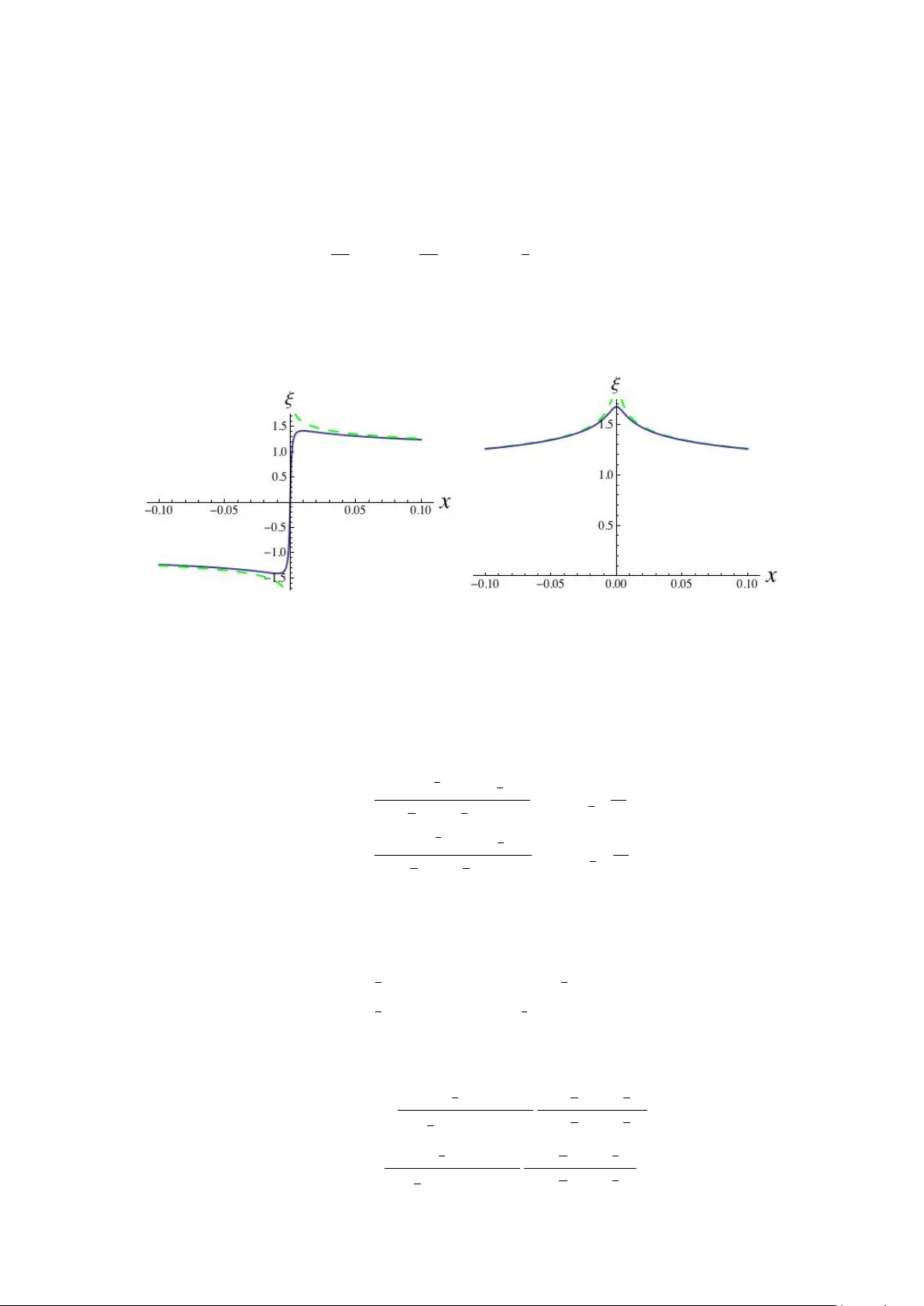
MHD Memes R L Dew ar, 1 , 2 R Mills 1 and M J Hole 1 1 Researc h Sc ho ol of Ph ysical Sciences and Engineering, The Australian National Universit y , Can b erra ACT 0200, Australia 2 Graduate School of F rontier Sciences, Universit y of T okyo, Kashiwa-Cit y Kashiwanoha 5-1-5 Chiba 277-8561, Japan E-mail: robert.dewar@anu.edu.au Abstract. The celebration of Allan Kaufman’s 80th birthda y was an occasion to reflect on a career that has stim ulated the mutual exchange of ideas (or memes in the terminology of Ric hard Dawkins) betw een many researc hers. This pap er will revisit a meme Allan encountered in his early career in magnetoh ydro dynamics, the con tin uation of a magnetoh ydro dynamic mo de through a singularit y , and will also men tion other problems where Allan’s work has had a p o w erful cross-fertilizing effect in plasma physics and other areas of physics and mathematics. 1. In tro duction Ric hard Dawkins [1, 2], in discussing the evolution of ideas, in tro duced the concept of memes in the following terms “. . . new replicators are not DNA . . . patterns of information that can thriv e only in brains . . . or b o oks, computers and so on . . . called memes to distinguish them from genes . . . passed from brain to brain . . . As they propagate they can change m utate . . . memic ev olution . . . ” Applying and extending this biological analogy to the ev olution of science, we can regard scien tific papers as the “organisms” in whic h multiple memes are expressed, and say that cross- fertilization leads to h ybrid vigour. One of Allan Kaufman’s greatest con tributions to plasma ph ysics has b een his role in adapting and develop ing p ow erful theoretical and mathematical metho ds, applying them to plasma ph ysics problems, and propagating these ideas to following generations through his abilit y as a great teac her. My (RLD) researc h in terests ha ve in tersected, and con tin ue to in tersect, with Allan’s v aried researc h in terests. In this pap er I hav e chosen to illustrate this with a few examples from magnetoh ydro dynamics (MHD). This ma y seem a little unexpected, b ecause Allan is not usually though t of as an MHD theorist, but in section 2 I revisit a problem he w as familiar with in his early career, namely the contin uation (or lack thereof ) of solutions of the Newcom b equation for linearized ideal marginal MHD mo des. The disconnection b etw een solutions on either side of a mo de rational surface is a tricky p oin t to explain to newcomers in the field and I present a new approac h whic h I hop e makes this phenomenon clearer. In section 3 I men tion some other MHD problems I ha v e encoun tered whic h ha v e intersections with Allan’s research. 2. The connection problem at a singular p oin t of the New com b equation It is probably not widely kno wn that some of Allan’s earliest w ork w as on magnetoh ydrodynamic (MHD) stabilit y theory [3]. New com b’s famous pap er on ideal-MHD stability theory in cylindrical geometry [4] ac kno wledges Allan’s critical reading of the manuscript while his Ref. 24 is the note “M. N. R OSENBLUTH (priv ate communication through A. N. Kaufman),” showing that Allan’s cross-p ollinating role in plasma physics started very early on. It happ ens that these pap ers are highly relev an t to our current researc h [5, 6, 7] on equilibrium and stabilit y in a m ultiple-region relaxed-MHD plasma model. This is motiv ated b y the desire to construct a w ell-p osed three-dimensional MHD equilibrium theory , based on T a ylor relaxation in regions separated b y arbitrarily thin ideal-MHD toroidal surfaces that act as barriers to field-line c haos. Not only do es this inv olv e the Hamiltonian nonlinear dynamics of the field-line flow, but the Hamiltonian of the field lines must itself b e determined self-consistently using MHD theory . T o understand the nature of these ideal-MHD barriers b etter we ha v e recently [8, 9] returned to the cylindrical limit and lo ok ed at the problem of whether the assumed barrier b etw een tw o relaxed regions of different pressure can b e constructed as the zero-width limit of a finite-width ideal-MHD region with a suitably c hosen physical pressure profile. [The criterion for ph ysicality of the pressure profile is that the pressure P ( r ) m ust b e non-negativ e, where r is the distance from the z -axis.] This problem was first studied b y Newcom b and Kaufman [3, 4]. The “New com b equation” [4] is satisfied at marginal stabilit y (i.e. when the growth rate γ is zero) by ξ ( r ) ≡ ξ · e r , where ξ ∝ exp i ( mθ + k z ) is the plasma displacemen t a w a y from equilibrium, θ b eing the angle ab out the z -axis and e r the unit vector in the radial direction: d dr f dξ dr − g ξ = 0 , (1) where f ( r ) ≡ r [ mB θ ( r ) + k rB z ( r )] 2 k 2 r 2 + m 2 , (2) g ( r ) ≡ 2 k 2 r 2 k 2 r 2 + m 2 dP dr + [ mB θ ( r ) + k rB z ( r )] 2 ( k 2 r 2 + m 2 − 1) r ( k 2 r 2 + m 2 ) + 2 k 2 r [ k 2 r 2 B z ( r ) 2 − m 2 B θ ( r ) 2 ] ( k 2 r 2 + m 2 ) 2 . (3) F or given in tegers m and n ≡ − R k 6 = 0, a mo de r ational surfac e is one where q ( r s ) = m/n , with q ( r ) ≡ r B z /RB θ and R b eing the p erio dicity length of the cylinder. A t such a rational surface r s , (1) has a singular p oint b ecause the co efficient of the highest deriv ative, f ( r ), v anishes there. Defining x ≡ r − r s , the T a ylor expansions of f and g ab out r s are of the form f ( r ) = f 00 ( r s ) x 2 / 2 + O ( x 3 ) and g ( r ) = g ( r s ) + O ( x ), with f 00 ( r s ) > 0 provided q 0 ( r s ) 6 = 0 and g ( r s ) 6 = 0 provided P 0 ( r s ) 6 = 0. The general solution of (1) on interv als not including r s is found as a linear sup erp osition of t w o functions whose F rob enius expansions (see e.g. [10, 11]) b egin with the fractional p ow ers | x | − 1 / 2 ± µ , where µ ≡ p 1 + 8 g ( r s ) /f 00 ( r s ) 2 . (4) W e assume µ is real, otherwise the system is in terc hange-unstable by the Suydam criterion. The solutions with leading terms | x | − 1 / 2 − µ and | x | − 1 / 2+ µ w ere called by New com b the lar ge and smal l solutions, resp ectively , the large solution b eing dominant as x → 0. In this pap er we discuss a p oint raised by Newcom b [4, p. 241]: “In general it is not p ossible to contin ue an Euler–Lagrange solution past a singular p oint.” T o this he adds the fo otnote: “This is true only because ξ is a real v ariable. If it were complex w e could go around the singular p oin t b y analytic contin uation, but the resulting solutions w ould generally b e m ultiv alued. ” The issue is interesting in the con text of the present pap er b ecause this meme is p erhaps expressed in a mutated form in Allan’s later pap ers on mo de conv ersion (e.g. [12]), whic h also in v olv es con tin uation through singularities. The natural framework in which to understand the singular solutions of the Newcom b equation is generalized function theory b ecause the solutions are not defined p oint wise (b eing undefined at r = r s ). In our previous w ork [13, 14, 15], using the singular solutions of the New com b equation or the tw o-dimensional generalization of it due to Bineau [16], we hav e follo w ed the approach and notation of of Gel’fand and Shilov [17] based on inner pro ducts with all members of a space of smo oth test functions. Ho w ever this approach is rather abstract and difficult to visualize, so in the current pap er we presen t an alternativ e approac h, where the required generalized functions are defined as limits of sequences, parametrized by δ , of smo oth functions that tend to weak solutions of the Newcom b equation as δ → +0. This is in the spirit of Lighthill’s [18] approac h to generalized function theory . T o do this we study a mo del Newcom b equation, in whic h f ( x ) = x 2 and g ( x ) = µ 2 − 1 / 4. The weak solution space is spanned by the four Gel’fand-Shilov generalized functions Ξ F r − ( x ) ≡ | x | − 1 / 2 − µ sgn x Ξ F r + ( x ) ≡ | x | − 1 / 2 − µ ξ F r − ( x ) ≡ | x | − 1 / 2+ µ sgn x ξ F r + ( x ) ≡ | x | − 1 / 2+ µ , (5) where sgn x denotes the sign of x . On the left-hand sides w e hav e used the notation of Dewar and Persson [11] in which the large and small F rob enius solutions are indicated by using upp er and low er case greek, resp ectiv ely; o dd and even parity solutions are indicated by subscript − and +, resp ectively . Alternativ ely , w e may use the “single-sided” generalized functions | x | λ ± ≡ 1 2 ( | x | λ ± | x | λ sgn x ) whose supp ort is the p ositive ( x > 0) or negative ( x < 0) half line. When restricted to their domains of supp ort these single-sided solutions corresp ond to the classical p oint wise solutions New com b mean t when he said solutions of the New com b equation could not b e contin ued through the singular p oin t. As the domains of supp ort are to the left (L) and righ t (R) of the origin, we denote the corresp onding generalized function solutions of the Newcom b b y subscripts L and R Ξ F r L ( x ) ≡ | x | − 1 / 2 − µ − Ξ F r R ( x ) ≡ | x | − 1 / 2 − µ + ξ F r L ( x ) ≡ | x | − 1 / 2+ µ − ξ F r R ( x ) ≡ | x | − 1 / 2+ µ + . (6) In ideal MHD the large solutions are rejected as they are not square in tegrable (hence give infinite kinetic energy), thus reducing the dimensionalit y of the solution space to 2 as exp ected for second-order differential equations. (How ev er, the large solutions are essen tial in resistive stabilit y theory for matching asymptotically to the resistive in ternal lay er in the neighbourho o d of the singular p oint.) T o apply the Lighthill approac h w e use a regularization appropriate to ideal-MHD stability studies, in whic h the only regularizing effect is that of inertia from the mass density ρ . This comes into play when the growth rate γ is nonzero, adding to f a p ositive term prop ortional to ργ 2 (see e.g. [19]) and thus removing the singularity but approximating the Newcom b equation arbitrarily closely as γ → 0. Thus we study the r e gularize d mo del Newc omb e quation d dx ( x 2 + δ 2 ) d dx ξ − µ 2 − 1 4 ξ = 0 , (7) whose general solution is a linear com bination of the resp ectiv ely o dd and ev en functions Im P µ − 1 / 2 ( ix/δ ) and Re P µ − 1 / 2 ( ix/δ ), where P ν ( z ) ≡ P 0 ν ( z ) denotes a Legendre function of the first kind [20, chapter 8]. Figure 1. Left panel: regularized o dd solution ξ F r − ( x | 0 . 001) (solid line) and unregularized o dd solution ξ F r − ( x ) (dashed line). Right panel: regularized even solution ξ F r + ( x | 0 . 005) (solid line) and unregularized even solution ξ F r + ( x ) (dashed line). In b oth cases µ = 0 . 4. By expanding P µ − 1 / 2 ( ix/δ ) in p ow ers of δ and c hoosing the superp osition co efficients appropriately w e can now define Ligh thill approximating functions for the o dd and ev en small solutions ξ F r − ( x | δ ) ≡ (2 δ ) µ − 1 2 Γ µ + 1 2 2 sin π 2 µ − 1 2 Γ(2 µ ) Im P µ − 1 2 ix δ , (8) ξ F r + ( x | δ ) ≡ (2 δ ) µ − 1 2 Γ µ + 1 2 2 cos π 2 µ − 1 2 Γ(2 µ ) Re P µ − 1 2 ix δ . (9) Figure 1 sho ws examples of the unregularized solutions defined in (5) and the regularized solutions defined in (8) and (9). The leading terms of the asymptotic expansions of these t wo functions in p ow ers of δ 2 µ are ξ F r − ( x | δ ) = | x | µ − 1 2 sgn x + δ 2 µ c − ( µ ) | x | − µ − 1 2 sgn x + O ( δ 4 µ ) , ξ F r + ( x | δ ) = | x | µ − 1 2 + δ 2 µ c + ( µ ) | x | − µ − 1 2 + O ( δ 4 µ ) , (10) where the factors c ± ( µ ) are defined by c − ( µ ) ≡ − 2 2 µ Γ µ + 1 2 2 Γ( − 2 µ ) Γ 1 2 − µ 2 Γ(2 µ ) sin π 2 µ + 1 2 sin π 2 µ − 1 2 c − ( µ ) ≡ 2 2 µ Γ µ + 1 2 2 Γ( − 2 µ ) Γ 1 2 − µ 2 Γ(2 µ ) cos π 2 µ + 1 2 cos π 2 µ − 1 2 . (11) The O (1) terms are the o dd and even generalized function small solutions as required. The O ( δ 2 µ ) terms inv olv e the large solutions of the same parity , with co efficien ts that v anish as δ → +0 b ecause our regularization is based on ideal MHD. The sp ecial case µ → 1 / 2 is imp ortan t b ecause it corresponds to the zero- β limit, or flattening pressure at a rational surface at arbitrary β . In this limit we find ξ F r − ( x | δ ) = sgn x − 2 δ π x − 1 + O ( δ 2 ) , ξ F r + ( x | δ ) = 1 + O ( δ 2 ) . (12) Figure 2. Left panel: regularized left solution ξ F r L ( x | 0 . 001) (solid line) and unregularized left solution ξ F r L ( x ) (dashed line). Right panel: regularized right solution ξ F r R ( x | 0 . 001) (solid line) and unregularized right solution ξ F r R ( x ) (dashed line). In b oth cases µ = 0 . 4. W e are now ready to regularize New com b’s “disconnected” solutions b y com bining the regularized o dd and ev en parity solutions in an analogous wa y to that used for unregularized solutions in (6), ξ F r L ( x | δ ) ≡ 1 2 ξ F r + ( x | δ ) − ξ F r − ( x | δ ) , (13) ξ F r R ( x | δ ) ≡ 1 2 ξ F r + ( x | δ ) + ξ F r − ( x | δ ) , (14) so that the O ( δ 0 ) terms cancel to the right or left of the origin for ξ F r L ( x | δ ) and ξ F r R ( x | δ ), resp ectiv ely . Figure 2 shows examples of the unregularized solutions defined in (6) and the regularized solutions defined in (13) and (14). It is seen that, for any finite δ , the solutions do connect across the singular p oint at the origin. By using (10) in (13) and (14) we see that the L and R solutions decay rapidly (like the large solution) as x → ±∞ with an amplitude that tends to zero as δ → +0, so that their supp ort b ecomes the negative or p ositiv e half line in the limit. 3. Other MHD in tersections The most ob vious point of in tersection b etw een Allan Kaufman’s and m y (RLD) researc h in terests is in the oscillation centre theory and the theory of wa v e action, whic h go es back to an MHD pap er [21]. This has developed in v arious w ays that other contributors to this Pro ceedings will no doubt touch on in muc h more detail. How ev er, sticking to the MHD theme, it could b e said that the theory of flux-minimizing surfaces [22, 23, 24, 25, 26] is a m utant form of oscillation centre theory , and this has close links with our current research on three-dimensional MHD equilibrium theory [5, 6]. Another in tersecton concerns the theory of quan tum c haos, a field in whic h Allan made an imp ortant con tribution [27], which is b etter known outside the field of plasma physics than within it. Indeed there has b een very little in the plasma ph ysics literature about quantum chaos, p erhaps b ecause of the name. How ev er, this field is really ab out WKB theory for arbitrary w a v es in the case of non-integrable ray dynamics, and in a num ber of pap ers o v er the past few y ears w e hav e applied metho ds from this field to the study of the ideal-MHD sp ectrum in a stellarator [28, 19, 29]. 4. Conclusion In this brief pap er we hav e revisited a basic problem in the the theory of ideal MHD stability theory that has connections with Allan Kaufman’s early research and our current research. In his long career Allan has b een a role mo del and inspiration to many , and particularly to the first author of this pap er. Ac kno wledgemen ts The first author (RLD) thanks the organizers of KaufmanF est for giving him the opp ortunity to help celebrate Allan Kaufman’s life and con tributions. The algebraic manipulations and plots in this pap er were done using Mathematic a [30]. Some of the work mentioned was supp orted by the Australian Research Council (ARC) Disco very Pro ject DP0452728. References [1] Dawkins R 1976 The Selfish Gene (Oxford, UK: Oxford Universit y Press) URL http://en.wikipedia.org/ wiki/The_Selfish_Gene [2] Dawkins R 1986 The Blind Watchmaker (Harlow, UK: Longman Scientific and T echnical) [3] Newcom b W A and Kaufman A N 1961 Physics of Fluids 4 314 URL http://link.aip.org/link/?PFL/4/ 314/1 [4] Newcom b W A 1960 Annals of Physics 10 232 URL http://www.sciencedirect.com/science/article/ B6WB1- 4DDR40K- T1/2/72496b9dddbc90fe5a2f659bfbef1ea6 [5] Hudson S R, Hole M J and Dewar R L 2007 Phys. Plasmas 14 052505 [6] Hole M J, Hudson S R and Dewar R L 2007 Nucl. F usion 47 746 URL http://stacks.iop.org/0029- 5515/ 47/746 [7] Dewar R L, Hole M J, McGann M, Mills R and Hudson S R 2008 Entr opy 10 URL http://www.mdpi.com/ journal/entropy/ [8] Mills R 2007 3D Plasma Equilibria Honours thesis The Australian National Universit y Canberra ACT 0200, Australia [9] Mills R, Hole M J and Dewar R L 2009 In pr ep ar ation [10] Ince E L 1956 Or dinary Differ ential Equations (New Y ork: Dov er) [11] Dewar R L and Persson M 1993 Phys. Fluids B 5 4273 [12] Kaufman A N and F riedland L 1987 Physics L etters A 123 387 URL http://www.sciencedirect.com/ science/article/B6TVM- 46MM1XC- 3R/2/dfe74ac0b228ec199e63cbd9c7346c10 [13] Manick am J, Grimm R C and Dewar R L 1981 Comp. Phys. Comm. 24 355 [14] Grimm R C, Dewar R L and Manick am J 1983 J. Comput. Phys. 49 94 [15] Dewar R L and Pletzer A 1990 J. Plasma Phys. 43 [16] Bineau M 1966 Nucl. F usion 2 130 [17] Gel’fand I M and Shilov G E 1964 Gener alize d F unctions (New Y ork: Academic Press) [18] Lighthill M J 1958 Intr o duction to F ourier A nalysis and Gener alise d F unctions (Cambridge Univ ersit y Press) [19] Dewar R L, T atsuno T, Y oshida Z, N ¨ uhren b erg C and McMillan B F 2004 Phys. R ev. E 70 066409 [20] Abramowitz M and Stegun I A (eds) 1972 Handb o ok of Mathematic al F unctions 10th ed Applied Mathematics Series - 55 (U.S. Gov ernment Prin ting Office, W ashington D.C.: National Bureau of Standards) URL http://www.math.sfu.ca/ ~ cbm/aands/ [21] Dewar R L 1970 Phys. Fluids 11 [22] Dewar R L and Meiss J D 1992 Physic a D 57 476 [23] Dewar R L, Hudson S R and Price P F 1994 Phys. L ett. A 194 49 [24] Hudson S R and Dewar R L 1997 Phys. L ett. A 226 85 [25] Hudson S R and Dewar R L 1998 Phys. L ett. A 247 246 [26] Hudson S R and Dewar R L 1999 Phys. Plasmas 6 1532 [27] McDonald S W and Kaufman A N 1979 Phys. R ev. L ett. 42 1189 [28] Dewar R L, Cuthbert P and Ball R 2001 Phys. R ev. L etters 86 2321 [29] Dewar R L, Kenn y B G, N¨ uhrenberg C, T atsuno T and McMillan B F 2007 J. Kor e an Phys. So c. 50 112 URL http://www.kps.or.kr/home/kor/journal/library/journal.asp? journaluid={F7A5B5DE- 52C4- 42EE- B398- E2D737D706EC}&globalmenu=4&localmenu=11&journaltype= {C017611D- EF29- 4B30- 8714- B9265F5AFF31} [30] W olfram Research, Inc 2007 Mathematic a, V ersion 6 (Champaign, Illinois, USA) URL http://support. wolfram.com/mathematica/reference/general/citing.html
Original Paper
Loading high-quality paper...
Comments & Academic Discussion
Loading comments...
Leave a Comment