The Rank of the Covariance Matrix of an Evanescent Field
Evanescent random fields arise as a component of the 2-D Wold decomposition of homogenous random fields. Besides their theoretical importance, evanescent random fields have a number of practical applications, such as in modeling the observed signal i…
Authors: M. Kliger, J. M. Francos
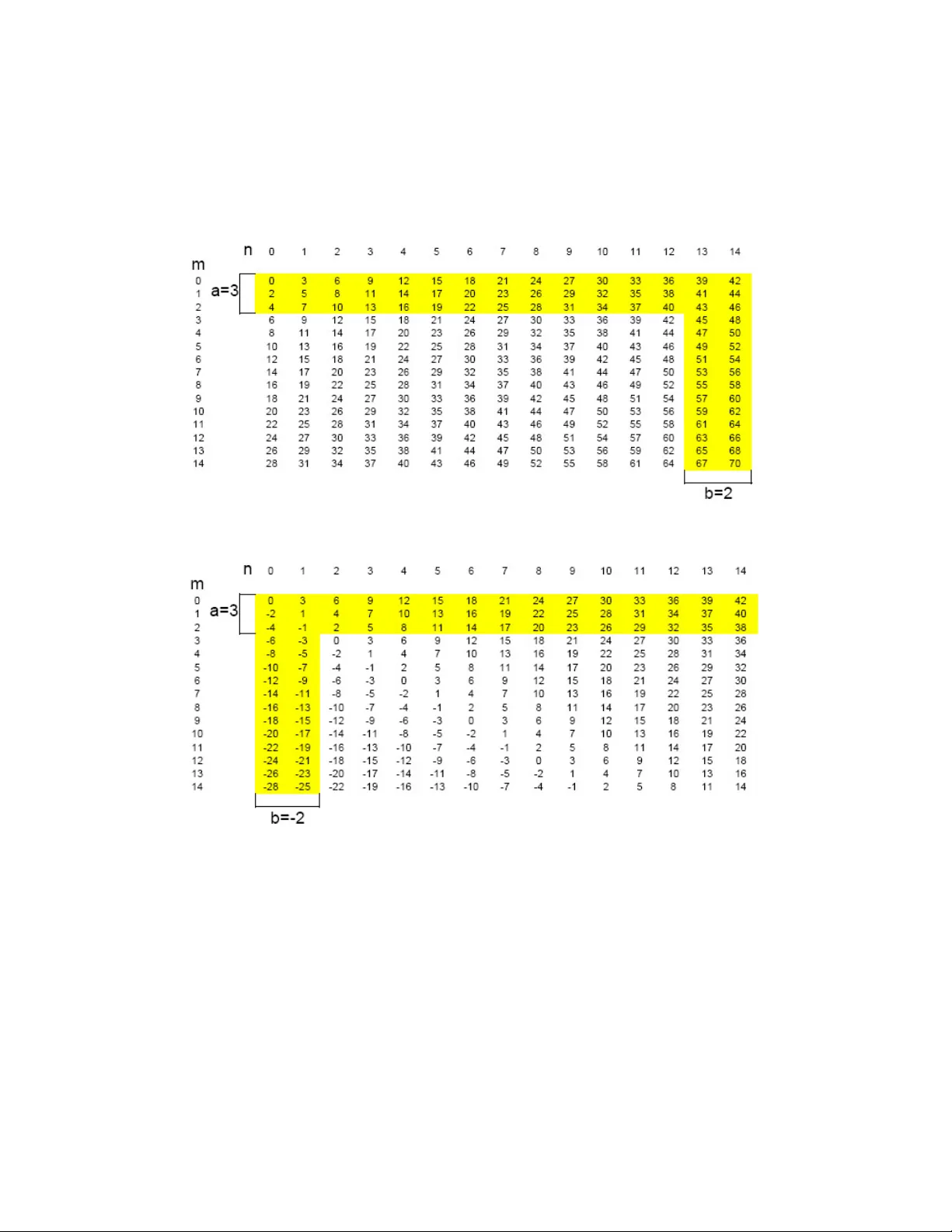
The Rank of the Co v ariance Matrix of an Ev anescen t Field Mark Kliger and Joseph M. F rancos Marc h 26, 2022 Abstract Ev anescen t random fields arise as a comp onen t of the 2-D W old decomp osition of homogenous random fields. Besides their theoretical imp ortance, ev anescen t random fields hav e a num b er of practical ap- plications, such as in mo deling the observed signal in the space time adaptiv e pro cessing (ST AP) of airb orne radar data. In this pap er w e deriv e an expression for the rank of the lo w-rank cov ariance matrix of a finite dimension sample from an ev anescen t random field. It is sho wn that the rank of this cov ariance matrix is completely determined by the ev anescen t field sp ectral supp ort parameters, alone. Th us, the problem of estimating the rank lends itself to a solution that av oids the need to estimate the rank from the sample cov ariance matrix. W e sho w that this result can b e immediately applied to considerably sim- plify the estimation of the rank of the in terference co v ariance matrix in the ST AP problem. Keyw ords: Homogeneous random fields, ev anescent random fields, co- v ariance matrix, linear Diophantine equation. AMS classification: Primary: 60G60; Secondary: 62M20, 62M40, 60G35. 1 1 In tro duction 1.1 The Ev anescen t Random field The problem of linear prediction of stationary pro cesses is a classic problem in time-series analysis. One of the most fundamental results in this field is the W old decomp osition [13], that states that a regular one dimensional wide-sense stationary processes indexed by Z ma y be decomposed in to t wo stationary and orthogonal comp onents: the purely-indeterministic pro cess (that pro duces the inno v ations) and the deterministic pro cess. This decom- p osition can b e equiv alently reform ulated using sp ectral notations: the sp ec- tral measure of the purely-indeterministic pro cess is absolutely contin uous with resp ect to the Leb esgue measure, and the sp ectral measure of the de- terministic pro cess is singular. In other w ords, the sp ectral measures of the orthogonal comp onents of W old decomp osition yield the Leb esgue decomp o- sition of the sp ectral measure of the pro cess. Homogenous random fields, (also called doubly stationary series), are the t w o-dimensional (indexed by Z 2 ) generalization of one-dimensional wide- sense stationary pro cess. Unfortunately , unlike the one-dimensional case, in m ultiple dimensions there is no natural order definition and terms such as “past” and “future” are meaningless unless defined with resp ect to a sp ecific order. Linear prediction of homogenous random fields was first rigorously form ulated b y Helson and Lo wdenslager in [6]. The problem of defining “past” and “future” on the tw o-dimensional lattice (i.e., Z 2 ) was resolv ed in [6] in terms of “half plane” total-ordering. The trivial example of a half-plane total order on Z 2 is a usual lexicographic order: ( k , l ) ( n, m ) iff k < n or ( k = n and l < m ). Lexicographic order can b e considered as a linear order induced b y Non-Symmetric (delimited by a broken straight line) Half Plane (NSHP), (see Figure 1). F urther analysis of the prediction problem led to a generalization of the W old decomp osition [7]. When we consider random pro cesses indexed by a group w e obtain a W old decomp osition with resp ect to any given total order on the group. When the group is not Z (lik e R or Z 2 ) the deterministic pro cess can hav e as a direct summand a deterministic pro cess of a sp ecial t yp e, the evanesc ent pr o c ess . In order to pro vide some in tuition on the c har- acteristics of the ev anescent pro cess w e next state some basic definitions and presen t an example of an ev anescen t field defined with resp ect to a vertical total order, whic h is simply a lexicographic order on Z 2 : 2 θ PAST PRESENT FUTURE n m Figure 1: Non-symmetric half plane A homogeneous random field { y ( n, m ) } is called r e gular with respect to the lexic o gr aphic or der if for ev ery ( n, m ), E [ y ( n, m ) − ˆ y ( n, m )] 2 = σ 2 > 0 where ˆ y ( n, m ) is the pro jection of y ( n, m ) on the c.l .m. h { y ( k , l ) : k < n, l ∈ Z } ∪ { y ( n, l ) : l < m } i , where c.l.m. denote a closed linear manifold. Thus, a regular homogeneous random field has a non-zero innov ation at ev ery lattice p oin t. A homogeneous random field { z ( n, m ) } is called deterministic with resp ect to the lexicographic order if it can b e p erfectly linearly predicted from its past in mean-square sense, i.e. , for every ( n, m ) we ha v e z ( n, m ) ∈ c.l .m. h { z ( k , l ) : k < n, l ∈ Z } ∪ { z ( n, l ) : l < m } i . Although a deterministic field can b e p erfectly predicted from its past with resp ect to lexicographic order, it may still posses a non-zero innov ation when prediction is based on samples in previous columns only . W e then sa y that the field { z ( n, m ) } has v ertical c olumn-to-c olumn innovations if I ( n, m ) := z ( n, m ) − ˆ z ( n, m ) (the innovation ) is not 0, where ˆ z ( n, m ) is the orthogonal pro jection of z ( n, m ) on the closed subspace generated by { z ( k , l ) : k < n, l ∈ Z } . In other words, if a deterministic field has non-zero column-to-column innov ations it cannot b e p erfectly linearly predicted from previous columns. When z ( n, m ) is the deterministic comp onen t of the decomp osition of a regular random field with resp ect to a NSHP total-ordering, the vertical 3 Figure 2: RNSHP supp ort. ev anescent comp onen t z e ( n, m ) is the orthogonal pro jection of z ( n, m ) on the closed subspace generated b y the (orthogonal) column-to-column innov ations { I ( k , l ) : k ≤ n, l ∈ Z } . Thus, an ev anescent field spans a Hilb ert space iden- tical to the one spanned b y column-to-column innov ations. In other words, the ev anescent field is a comp onen t of the deterministic field whic h represen ts column-to-column inno v ations. Horizon tal column-to-column (row-to-ro w) inno v ations and ev anescen t comp onen ts are similarly defined. Ev anescent pro cesses w ere first in tro duced in [7] (on R ). In Korezli- oglu and Loubaton [11], “horizontal” and “v ertical” total-orders and the corresp onding horizontally and vertically ev anescent comp onents of a homo- geneous random field on Z 2 are defined. In Kallianpur [9], as w ell as in Chiang [1], similar tec hniques are emplo y ed to obtain four-fold orthogonal decomp ositions of regular (non-deterministic) homogeneous random fields. In F rancos et. al. [2] this decomp osition of random fields on Z 2 w as further extended. This is done by considering al l the Rational Non-Symmetrical Half Plane (RNSHP) linear orders, each inducing a different partitioning of the tw o-dimensional lattice in to tw o sets b y a brok en straigh t line of ratio- nal slop e. In tuitively , the usual lexicographic order is not the only possible order definition of the 2-D lattice. Eac h RNSHP linear order is induced by a “rotation” of the usual lexicographic order, such that the resulting non- symmetrical half-plane is delimited by a brok en straight line with rational 4 slop e, and which leads to a different linear order definition. Consequen tly , terms such as “past” and “future” are redefined with resp ect to a sp ecific RNSHP linear order (see, for example, Figure 2). More specifically , each Rational Non Symmetrical Half Plane is defined in terms of t wo co-prime in tegers ( a, b ), s uc h that the past P a,b is defined by P a,b = { ( n, m ) ∈ Z 2 : na + mb < 0 , or na + mb = 0 and m ≤ 0 } . (1) Then P = P a,b satisfies ( i ) P ∩ ( − P ) = { 0 } , ( ii ) P ∪ ( − P ) = Z 2 , ( iii ) P + P ⊂ P ( usual addition ) . By (i)-(iii), P induces on Z 2 a linear order, whic h is defined by ( k, l ) ( n, m ) if and only if ( k − n, l − m ) ∈ P . Clearly , there are countably man y such linear orders. Eac h such order induces a different definition of the term “column”, and corresp ondingly differen t definitions of column-to-column innov ations and ev anescent field. The W old decomp osition of a regular random field into purely-indeterministic and deterministic comp onen ts is inv arian t to the c hoice of a RNSHP order. The decomp osition in [2] further asserts that w e can represent the deter- ministic comp onent of the field as a mutually orthogonal sum of a “half- plane deterministic” field and a coun table num b er of ev anescent fields. The half-plane deterministic field has no inno v ations, nor column-to-column in- no v ations, with resp ect to an y RNSHP linear order. On the other hand, eac h of the ev anescent fields can b e revealed only by using the corresp onding RNSHP linear order, i.e. , with resp ect to sp ecific definitions of “columns” and column-to-column inno v ations. This decomp osition yields a corresp ond- ing sp ectral decomposition, i.e. , we can decomp ose the sp ectral measure of the deterministic part in to a countable sum of m utually singular spectral measures, such that the sp ectral measure of each ev anescen t comp onent is concen trated on a line with a rational slop e. Based on these results, a parametric mo del of the homogeneous random field wa s derived in [2]. The purely-indeterministic comp onent of the field is mo deled by a white inno v ations driv en 2-D mo ving av erage process with resp ect to some RNSHP linear order. This component con tributes the abso- lutely con tinuous part of the spectral measure of the regular field. One of the comp onen ts of the half-plane deterministic comp onent that is often found in practical applications is the 2-D harmonic random field which is the sum of a coun table num b er of exp onential components, eac h having a constan t spatial 5 frequency and random amplitude. This comp onen t con tributes the 2-D delta functions in the sp ectral domain. The num b er of ev anescent comp onen ts of the regular field is coun table. The mo del of the ev anescent field with resp ect to sp ecific order is presen ted b ello w: Let ( a, b ) be a pair of co-prime in tegers ( a ≥ 0) whic h defines a sp ecific RNSHP linear order according to (1). Then, the mo del of the ev anescent field whic h corresp onds to this order is e ( a,b ) ( n, m ) = I ( a,b ) X i =1 s ( a,b ) i ( na + mb ) exp j ω ( a,b ) i ( nc + md ) , (2) where c and d are co-prime in tegers satisfying ad − bc = 1. F or the case where ( a, b ) = (0 , 1) w e ha v e ( c, d ) = (1 , 0), and for ( a, b ) = (1 , 0) w e ha ve ( c, d ) = (0 , 1). W e further note that in this notation na + mb is the “column” index and nc + md defines a “ro w”. The mo dulating process { s ( a,b ) i ( na + mb ) } is a 1-D purely-indeterministic, complex v alued pro cesses, and ω ( a,b ) i is a mod- ulation frequency . Th us, e ( a,b ) has no innov ations, with resp ect to “ro ws”, and has non-zero column-to-column inno v ation (expressed by the mo dulat- ing pro cess s ( a,b ) i ) with resp ect to its “columns”. I ( a,b ) denotes the n umber of different ev anescent comp onen ts that corresp ond to the same RNSHP de- fined by ( a, b ). The differen t comp onents are such that their 1-D mo dulating pro cesses { s ( a,b ) i } and { s ( a,b ) j } , are mutual ly ortho gonal and their mo dulation frequencies are differen t ω ( a,b ) i 6 = ω ( a,b ) j for all 1 ≤ i 6 = j ≤ I ( a,b ) . The “sp ectral density function” of each ev anescent field has the form of a sum of 1-D delta functions whic h are supp orted on lines of rational slop e in the 2-D sp ectral domain. The amplitude of each of these delta functions is determined by the sp ectral density of the 1-D mo dulating pro cess. Since the sp ectral density of the mo dulating pro cess can rapidly deca y to zero, so will the “sp ectral density” of the ev anescen t field, and hence the name “ev anescent”. 1.2 Practical Applications Besides its fundamental theoretical imp ortance, the W old decomp osition of a regular random field has v arious applications in image pro cessing and wa v e propagation problems. F or example, the parametric mo del that results from these orthogonal decomp ositions, naturally arises as the ph ysical mo del in problems of texture mo deling, estimation and syn thesis [3]. 6 Another application is space-time adaptive pro cessing of airb orne radar data [4]. Space-time adaptive pro cessing (ST AP) is an increasingly p opular radar signal pro cessing technique for detecting slo w-moving targets. The space dimension arises from the use of arra y of m ultiple antenna elemen ts and the time dimension arises from the use of coherent train of radar pulses. The p ow er of ST AP comes from the join t pro cessing along the space and time dimensions. Comprehensive analysis of ST AP app ears in [10, 12]. In [4] it is shown that the same parametric mo del that results from the 2-D W old-like orthogonal decomposition naturally arises as the physical model in the problem of space-time processing of airb orne radar data. This corresp on- dence is exploited to derive computationally efficien t detection algorithms. More sp ecifically , the target signal is mo deled as a random amplitude complex exp onen tial where the exp onential is defined b y a space-time steering vector that has the target’s angle and Doppler. Thus, in the space-time domain the target contribution is the half-plan deterministic comp onen t of the observed field. The sum of the white noise field due to the in ternally generated receiver amplifier noise, and the sky noise con tribution, is the purely-indeterministic comp onen t of the space-time field decomp osition. The presence of a jammer (a fo e interference source, transmitting high p o w er noise aimed at “blinding” the radar system) results in a barrage of noise lo calized in angle and uniformly distributed ov er all Doppler frequencies (since the transmitted noise is white). Hence, in the space-time domain each jammer is mo deled as an ev anescent comp onen t with ( a, b ) = (0 , 1) suc h that its 1-D mo dulating pro cess s (0 , 1) i ( m ) is the random pro cess of the jammer amplitudes. The jammer samples from different pulses are uncorrelated. In the angle-Doppler domain eac h jammer contributes a 1-D delta function, parallel to the Doppler axis and located at a specific angle ω (0 , 1) i using the notation of (2). The ground clutter results in an additional ev anescen t comp onen t of the observ ed 2-D space-time field. The aircraft platform motion pro duces a very sp ecial structure of the clutter due to the dep endence of the Doppler fre- quency on angle. The clutter’s echo from a single ground patc h has a Doppler frequency that linearly depends on its asp ect with resp ect to the platform. As the platform mo ves, identical clutter observ ations are rep eated b y differen t an tenna elemen ts on differen t pulses, which defines a sp ecific linear lo cus in the angle-Doppler domain, commonly referred as the “clutter ridge”. Th us, the clutter ridge, whic h represents clutter from all angles, is supp orted on 7 a diagonal line (that generally wraps around) in the angle-Doppler domain. Due to the physical prop erties of the problem the different comp onen ts of the field are assumed to b e mutually orthogonal. In the sp ecific applica- tion of airb orne radar, the ev anescent components (the clutter, and jamming signals) are considered unkno wn interferences. Although the data collected b y ST AP radars for different ranges can b e view ed as a sequence of finite-sample realizations from a homogenous field, its is tec hnically more conv enient to represent each of the observ ations in a v ector form and to statistically analyze them as multiv ariate vectors. Thus, if one uses a ST AP system with N an tenna elements and M pulses, the observ ed N × M ST AP signal is treated as N M × 1 multiv ariate random v ariable. These vectors are commonly called “snapshots”. The ST AP pro cessor goal is to solve a detection problem, i.e. , to estab- lish whether a hypothetical target is present or not. It adaptiv ely weigh ts the a v ailable data in order to ac hieve high gain at the target’s angle and Doppler and maximal mitigation along b oth the jamming and clutter lines. The adaptive weigh t v ector is computed from the inv erse of the interference- plus-noise co v ariance matrix,[10, 12]. It is shown in [5] that the dominan t eigen vectors of the space-time cov ariance matrix contain all the information required to mitigate the interference. Th us, the w eight vector is constrained to b e in the subspace orthogonal to the dominan t eigenv ectors. Because the interference-plus-noise cov ariance matrix is unknown a priori, it is typi- cally estimated using sample cov ariances obtained from a veraging ov er a few range gates. This is the kno wn as the ful ly adaptive ST AP approac h. The ma jor drawbac k of this approach is its high computational complexity . The final detection of a target is p erformed by applying either Constant-F alse- Alarm-Rate (CF AR) detector, or Adaptive-Matc hed-Filter (AMF) detector, or Generalized-Lik eliho o d-Ratio (GLR) detector. Usually the detector is em- b edded in to the w eight computations. F ortunately , b oth the clutter and the jammers ha ve lo w-rank cov ariance matrices. The clutter cov ariance matrix has a low rank due to the mov ement of the platform, as discussed ab o ve. The jammer cov ariance matrix has low rank since the jamming signal is spatially correlated b etw een all antennas at eac h pulse. The low-rank structure of the in terference co v ariance matrix ma y b e exploited to ac hiev e significant reduction in the adaptive problem dimensionalit y with little or no sacrifice in p erformance relativ e to the fully adaptiv e case. These metho ds are referred to as p artial ly adaptive ST AP . P artially adaptive ST AP methods require knowledge of the rank of the 8 in terference cov ariance matrix. How ever, it is a priori unknown, and unfor- tunately cannot b e easily estimated from the sample co v ariance matrix due to the existence of a noise comp onent which has a full rank cov ariance ma- trix. Hence, the problem of estimating the rank of the in terference co v ariance matrix is critical in the implemen tation of many ST AP algorithms. In this work w e consider the problem of determining the rank of the co v ariance matrix of a v ectorized finite dimension sample from an ev anescen t random field. By using the ev anescent field parametric mo del to mo del the in terferences in the ST AP problem, w e considerably simplify the solution to the problem of estimating the rank of the lo w-rank interference co v ariance matrix. In fact, it turns out that in this parametric framework the well- kno wn Brennan rule [12] for the rank of the clutter cov ariance matrix, as w ell as the rank computation of the jammer, b ecome sp ecial cases of the general result prov ed here. Hence, the provided deriv ation op ens the w a y for new, computationally attractive, metho ds in parametric and non-parametric estimation of tw o-dimensional random fields, with immediate applications in partially adaptiv e space-time adaptive pro cessing of airb orne radar data. The rest of the pap er is organized as follo ws: In Section 2 we form ulate the problem w e aim to solv e. A form ula for the rank of the co v ariance matrix of a complex v alued ev anescent random field is deriv ed in Section 3. In Section 4 w e extend the obtained result to the case of a real v alued ev anescent random field. Finally , in Section 5 w e pro vide our conclusions. The follo wing notation is used throughout. Boldface upp er case letters denote matrices, b oldface low er case letters denote column v ectors, and stan- dard lo w er case letters denote scalars. The sup erscripts ( · ) T and ( · ) H denote the transp ose and Hermitian transp ose op erators, resp ectively . By I w e de- note the iden tit y matrix and by 0 a matrix of zeros. The symbol denotes an elemen t b y elemen t pro duct of the v ectors (Hadamard pro duct). Giv en a scalar function f ( · ) and a column v ector v , w e denote by f ( v ) a column v ector consisting of the v alues of function f ( · ) ev aluated for all the elemen ts of v . Finally diag ( v ) denotes a square diagonal matrix with the elements of v on its main diagonal. 9 2 Finite Sample of an Ev anescen t Random Field: Definitions and Problem F orm ula- tion Let O denote the set of all p ossible pairs of different co-prime in tegers ( a, b ), a ≥ 0, where eac h pair defines a RNSHP order on the 2-D lattice. Although in the case of an infinite 2-D lattice the num b er of different RNSHP definitions is infinitely coun table, in the finite sample case only a finite n um b er of differen t linear orders can b e defined. Moreov er, in practical applications the n um b er of differen t ev anescent comp onen ts for eac h order definition is finite as w ell. Therefore, w e assume throughout this pap er that | O | and I ( a,b ) are finite in tegers. Let Q = P ( a,b ) ∈ O I ( a,b ) . Each of the Q ev anescent comp onents is uniquely defined by the triple ( a, b, ω ( a,b ) i ) where ( a, b ) ∈ O and ω ( a,b ) i is the fre- quency parameter. Let us denote the set of all p ossible triples by O Q = { ( a 1 , b 1 , ω 1 ) , ( a 2 , b 2 , ω 2 ) , . . . , ( a Q , b Q , ω Q ) } . All triples are unique: they either ha ve different supp ort parameters ( a i , b i ) 6 = ( a j , b j ), or in case ( a i , b i ) = ( a j , b j ) they ha ve different frequencies such that ω i 6 = ω j . Finally , adapting (2) to the finite sample case w e hav e that e ( n, m ) = Q X q =1 e q ( n, m ) , (3) where e q ( n, m ) = s q ( na q + mb q ) exp j ω q ( nc q + md q ) (4) suc h that ( a q , b q , ω q ) ∈ O Q and { s q } , c q , d q are defined as ab o ve. W e note that since the sp ectral measure of { e q ( n, m ) } is concentrated on a line (that may wrap around) whose slop e is determined by a q and b q , w e in terchangeably refer to a q and b q as either the sp e ctr al supp ort p ar ameters of { e q } or as the RNSHP slop e p ar ameters . Let { e ( n, m ) : ( n, m ) ∈ D } where D = { ( n, m ) ∈ Z 2 : 0 ≤ n ≤ N − 1 , 0 ≤ m ≤ M − 1 } b e the observed finite sample of the random field (3). Let e denote an N M × 1 vector form representation of this finite sample: e = [ e (0 , 0) , . . . , e (0 , M − 1) , e (1 , 0) , . . . , e (1 , M − 1) , . . . , . . . , e ( N − 1 , 0) , . . . , e ( N − 1 , M − 1)] T . (5) 10 This is a multiv ariate represen tation of a finite sample of an ev anescent ran- dom field. Let Γ denote the N M × N M co v ariance matrix of the ev anescent vector e , Γ = E e ( e ) H . (6) Due to the sp ecial structure of the ev anescent field, man y of the elements of e are linearly dep endent, and therefore Γ is low-rank. This property is easily demonstrated b y considering a single ev anescent comp onent that corresp onds to the vertical order ( a, b ) = (0 , 1) (single jammer source using the ST AP nomenclature), with some arbitrary mo dulation frequency ω and mo dulating pro cess s ( m ). In that case e (0 , 1) ( n, m ) = s ( m ) exp j ω n (7) The vector form representation of the finite sample of this ev anescent field is e (0 , 1) = [ s (0) , s (1) , . . . , s ( M − 1) , s (0) exp( j ω ) , . . . , s ( M − 1) exp( j ω ) , . . . s (0) exp( j ω ( N − 1)) . . . , s ( M − 1) exp( j ω ( N − 1))] T . (8) Since the mo dulating frequency ω is a deterministic constant, it is ob vious that e (0 , 1) is comprised of only M indep endent random v ariables. Therefore, the rank of Γ (0 , 1) = E e (0 , 1) e (0 , 1) H is also M . The aim of this p ap er is to derive an expr ession for the r ank of the low- r ank c ovarianc e matrix Γ of the evanesc ent ve ctor e , in the gener al c ase (3) . 3 The Rank of the Co v ariance Matrix of an Ev anescen t Field In this section w e deriv e an expression for the rank of the co v ariance matrix Γ . In order to do so, w e hav e to find and quan tify the linear dep enden- cies b et w een the samples of e . Unfortunately , for arbitrary sp ectral supp ort parameters and multiple ev anescent comp onents, this task inv olv es tedious calculations. The results of the en tire analysis in this section can b e summa- rized b y the following theorem: 11 Theorem 1. L et e b e a ve ctor-form r epr esentation of a finite sample fr om a sum of evanesc ent r andom fields, given by (3)-(5). Then, the r ank of its c ovarianc e matrix, Γ , is given by r ank ( Γ ) = min N M , N Q X q =1 | a q | + M Q X q =1 | b q | − Q X q =1 | a q | Q X q =1 | b q | ! . (9) Ev en though the ev aluations in the next subsections are technical in na- ture, the obtained result is surprisingly in teresting. Hence, b efore addressing the pro of itself let us make some comments. F rom Theorem 1, it is clear that the rank of the cov ariance matrix of a finite sample from an ev anescent random field is completely determined by the sp ectral supp ort parameters ( a q , b q ) of the differen t ev anescent comp onents, while it is indep endent of the other parameters of the ev anescent fields, suc h as the parameters of the mo dulating pro cesses, { s q } , or the mo dulation frequencies, ω q . Moreo ver, one can easily observ e that the well-kno wn Brennan rule for the rank of the low-rank clutter cov ariance matrix in the ST AP framew ork, [12] as well as the rank of the cov ariance matrix of the jamming signals are sp ecial cases of this theorem. The Brennan rule states that the rank of the clutter co v ariance Γ clut is giv en by: r ank ( Γ clut ) = b N + M β − β c (10) where β is the slop e of the clutter ridge orientation in the angle-Doppler domain, and bc denotes rounding to the nearest in teger. It is easy to see that this formula is a special case of the ab o v e theorem when only a single ev anescent field is observ ed, and its sp ectral supp ort parameters are ( a, b ) = (1 , β ). The rank of the jamming cov ariance matrix is, [12]: r ank ( Γ j am ) = M J (11) where J is a num b er of sources. Since the sp ectral support of a single jammer in the angle-Doppler domain is a line parallel to the Doppler axis, and since all jammers are mutually orthogonal, they can b e modeled as J vertical ev anescent comp onen ts with sp ectral support parameters ( a, b ) = (0 , 1), suc h that the rank of the co v ariance matrix of each individual jammer is M as in the ab o v e example. 12 3.1 Rank deriv ations In this subsection w e pro ve Theorem 1. The deriv ation pro vides an insigh t in to the structure of the co v ariance matrix, and explains the nature of its low- rank. Moreov er, we explicitly show ho w columns of the cov ariance matrix that can be represen ted as linear com binations of other columns are formed, whic h yields its low-rank. Rewriting (3) in a v ector form we hav e e = P Q q =1 e q , where e q = [ e q (0 , 0) , . . . , e q (0 , M − 1) , e q (1 , 0) , . . . , e q (1 , M − 1) , . . . , e q ( N − 1 , 0) , . . . , e q ( N − 1 , M − 1)] T . (12) Let ξ q = [ s q (0) , s q ( b q ) , . . . , s q (( M − 1) b q ) , s q ( a q ) , s q ( a q + b q ) , . . . , s q ( a q + ( M − 1) b q ) , . . . , s q (( N − 1) a q ) , s q (( N − 1) a q + b q ) , . . . , s q (( N − 1) a q + ( M − 1) b q )] T (13) b e the v ector whose elemen ts are the observ ed samples from the 1-D mo du- lating pro cess { s q } . Define v q = [ 0 , d q , . . . , ( M − 1) d q , c q , c q + d q , . . . , c q + ( M − 1) d q , . . . , ( N − 1) c q , ( N − 1) c q + d q , . . . , ( N − 1) c q + ( M − 1) d q ] T . (14) Let D q = diag exp( − j ω q v q ) . (15) b e an N M × N M diagonal matrix. Thus, using (4), we hav e that e q = D H q ξ q . (16) Let s q b e a ( N − 1) | a q | + ( M − 1) | b q | + 1 dimensional column v ector of consecutiv e samples of the 1-D mo dulating process { s q } . F or the case in whic h a q > 0 and b q < 0, s q is defined as s q = [ s q (( M − 1) b q ) , . . . , . . . , s q (( N − 1) a q )] T , (17) while for the case in whic h a q ≥ 0 and b q ≥ 0, s q is defined as s q = [ s q (0) , . . . , . . . , s q (( N − 1) a q + ( M − 1) b q )] T . (18) 13 Th us for any ( a q , b q ) w e hav e that ξ q = A T q s q (19) and e q = D H q A T q s q , (20) where A q is a real-v alued [( N − 1) | a q | + ( M − 1) | b q | + 1] × N M rectangular matrix where each of its columns has a single element whose v alue is “1”, while all the others are zero. Th us, eac h column of A q “c ho oses” the single elemen t from the vector s q that con tributes to the corresp onding elemen t of the vector ξ q . Due to b oundary effects, resulting from the finiteness of the observ ation, not al l of the elements of the v ector s q con tribute to the vector ξ q , unless | a q | ≤ 1 or | b q | ≤ 1. Hence some rows of the matrix A q ma y con tain only zeros. On the other hand, whenever na q + mb q = k a q + `b q for some in tegers n, m, k , ` suc h that 0 ≤ n, k ≤ N − 1 and 0 ≤ m, ` ≤ M − 1, the same sample from the mo dulating pro cess { s q } is duplicated in the elemen ts of ξ q . Therefore, the num b er of distinct columns in A q is equal to the num b er of elemen ts of s q that appear in ξ q , i.e. , the num b er of distinct samples from the random pro cess { s q } that are found in an observ ed finite sample of an ev anescent field of dimensions N × M . The matrix A q dep ends only on ( a q , b q ) and is indep enden t of the mo dulation frequency ω q or the mo dulating pro cess { s q } . The rank of co v ariance matrix Γ is strongly related to the num b er of distinct samples from the random pro cesses { s q } for all 1 ≤ q ≤ Q whic h can b e found in the ev anescen t vector e . Therefore, the rank of Γ is tightly related to the ranks of the matrices A q , 1 ≤ q ≤ Q . Let R q b e the co v ariance matrix of the vector s q i.e. , R q = E s q ( s q ) H . (21) The matrix R q is full rank p ositive definite since the pro cess { s q } is purely- indeterministic. Since the ev anescent comp onents { e q } are m utually orthog- onal w e conclude that Γ , the cov ariance matrix of e , has the form Γ = E e ( e ) H = Q X q =1 Γ q , (22) 14 where Γ q is the co v ariance matrix of e q . Using (20) and (21) w e find that Γ q = E e q ( e q ) H = D H q A T q R q A q D q . (23) Finally , Γ = Q X q =1 D H q A T q R q A q D q . (24) One can rewrite the ab o ve expression in a blo c k-matrix form Γ = C H Q R C Q (25) where C Q = D H 1 A T 1 . . . D H Q A T Q H , (26) and R = diag R 1 . . . R Q . (27) is a blo ck-diagonal matrix with the matrices R q , 1 ≤ q ≤ Q on its diagonal, and zeros elsewhere. Since the co v ariance matrices R q are full rank p ositiv e definite, the block- diagonal matrix R is full rank p ositiv e definite as well. Hence b y observ ation 7.1.6 [8] w e hav e r ank ( Γ ) = r ank ( C Q ) . (28) The matrix C Q has exactly N M columns, such that eac h one of its columns corresp onds to an entry in the ev anescen t vector e , or similarly , eac h one of its columns corresponds to a p oin t on the original N × M lattice D = { ( n, m ) ∈ Z 2 : 0 ≤ n ≤ N − 1 , 0 ≤ m ≤ M − 1 } . More sp ecifically , the n ( M − 1) + m column of C Q corresp onds to the n ( M − 1) + m elemen t of e which represents the ev anescent field sample at the ( n, m ) lattice p oin t. (Note that we enumerate the columns starting from zero). In the fol lowing we wil l adopt the abbr eviation [ n, m ] for indexing the n ( M − 1) + m c olumn of a matrix . T o gain more understanding on the structure of C Q let us examine the differen t matrices C Q is comprised of. W e begin with A q for some 1 ≤ q ≤ Q : By construction (see (20) and the following explanation) all columns of A q are unit v ectors, where the single “1” en try in eac h column chooses the single elemen t from the vector s q that con tributes to e ( n, m ) - the ev anescen t field 15 sample at ( n, m ) . The single non-zero entry in the [ n, m ] column of A q is lo cated in the k ’th row where na q + mb q = k (we allo w negative indexed ro ws in the case where b q < 0). F or example if a q > 0 and b q > 0, the matrix A q is giv en by 0 k ( N − 1) a q + ( M − 1) b q [0 , 0] · · · [ n, m ] · · · [ N − 1 , M − 1] 1 · · · · · · 0 · · · · · · · · · 0 . . . . . . . . . . . . 1 . . . . . . . . . . . . 0 · · · · · · 0 · · · · · · · · · 1 (29) Let ( n ∗ , m ∗ ) b e a solution to the line ar Diophantine e quation na q + mb q = k . Then, the equation is also satisfied b y n = n ∗ + tb q and m = m ∗ − ta q , where t is an arbitrary integer. Since ( a q , b q ) are coprime integers these are the only p ossible solutions. It means that as so on as ( n + tb q , m − ta q ) ∈ D , the corresp onding [ n + tb q , m − ta q ] column of A q will b e equal to its [ n, m ] column. T o find the rank of A q w e hav e to ev aluate the num b er of linearly indep enden t columns, i.e. , the num b er of distinct elemen ts of s q ( na q + mb q ) ( n, m ) ∈ D which contribute to e . Since D q is a diagonal matrix, the structure of A q D q is similar to the structure of A q with the only difference b eing that instead “1” in each col- umn, we hav e the appropriate exp onen tial co efficien t. Therefore, eac h col- umn of the matrix C Q has exactly Q non-zero elemen ts. Next, let us concatenate the matrices A p and A q , where 1 ≤ p 6 = q ≤ Q and examine the structure of resulting matrix ˜ C pq = [ A T p A T q ] T . (30) As b efore, let us consider the structure of some arbitrary [ n, m ] column of this matrix. It has t w o non-zero entries: On the k p ro w of A p and on the k q ro w of A q , where ( n, m ) satisfies na p + mb p = k p , (31) and na q + mb q = k q . (32) Next, we note that the pair ( n + tb p , m − ta p ) satisfies the linear Diophan- tine equation (31) for an y in teger t . Therefore, for t p suc h that ( n + t p b p , m − 16 t p a p ) ∈ D , the [ n + t p b p , m − t p a p ] column of A p has a “1” en try , at the same ro w as the [ n, m ] column. How ev er, ( n + t p b p , m − t p a p ) also satisfies the linear Diophan tine equation ( n + t p b p ) a q + ( m − t p a p ) b q = ` q . (33) Hence, the [ n + t p b p , m − t p a p ] column of A q has a “1” en try on its ` q ro w. Similarly , since ( n + tb q , m − ta q ) satisfies the linear Diophantine equation (32) for any integer t , for t q suc h that ( n + t q b q , m − t q a q ) ∈ D w e ha ve that the [ n + t q b q , m − t q a q ] column of A q has “1” at the same row as the [ n, m ] column. Since, ( n + t q b q ) a p + ( m − t q a q ) b p = ` p , (34) the [ n + t q b q , m − t q a q ] column of A p has “1” on its ` p ro w. Moreo ver, one can observ e that for a pair of integers ( t p , t q ) suc h that ( n + t p b p + t q b q , m − t p a p − t q a q ) ∈ D , the pair ( n + t p b p + t q b q , m − t p a p − t q a q ) sim ultaneously satisfies (33) and (34): ( n + t p b p + t q b q ) a p + ( m − t p a p − t q a q ) b p = ` p ( n + t p b p + t q b q ) a q + ( m − t p a p − t q a q ) b q = ` q (35) Therefore the [ n + t p b p + t q b q , m − t p a p − t q a q ] column of of A p has “1” on its ` p ro w, and the same column of A q has “1” on its ` q ro w. Finally , w e can represent the [ n, m ] column of ˜ C pq b y a linear com bination of its other columns: [ n, m ] = [ n + t p b p , m − t p a p ] + [ n + t q b q , m − t q a q ] − [ n + t p b p + t q b q , m − t p a p − t q a q ] , (36) or in a more detailed form b y k p k q 1 1 = k p ` q 1 1 + ` p k q 1 1 − ` p ` q 1 1 (37) Let T ( n,m ) pq b e the set of al l the in teger pairs ( t p , t q ) suc h that ( n + t p b p , m − t p a p ) , ( n + t q b q , m − t q a q ) , ( n + t p b p + t q b q , m − t p a p − t q a q ) ∈ D . Clearly , the 17 set T ( n,m ) pq is non-empt y since (0 , 0) ∈ T ( n,m ) pq , and it corresp onds to a trivial represen tation of the [ n, m ] column by itself. If | T ( n,m ) pq | > 1 then the [ n, m ] column has non-trivial linear represen tation by other columns. Recall how ever, that the matrix C Q is comprised of blo cks where each blo c k is of the form A q D q . Consider next the concatenation of tw o suc h blo c ks A p D p and A q D q , C pq = [ D H p A T p D H q A T q ] H . (38) Keeping in mind that b y definition a p d p − b p c p = 1 and a q d q − b q c q = 1, it is easy to chec k that the replacemen t of the “1” in the columns of ˜ C pq b y exp o- nen tials as in (38) will only affect the co efficients of the linear com bination. Indeed, the linear com bination of columns in this case has the form [ n, m ] = [ n + t p b p , m − t p a p ] exp( j ω p t p ) + [ n + t q b q , m − t q a q ] exp( j ω q t q ) − [ n + t p b p + t q b q , m − t p a p − t q a q ] exp( j [ ω p t p + ω q t q ]) . (39) One may also notice that if ( a p , b p ) = ( a q , b q ) we ha ve that k p = k q = ` p = ` q . Ho wev er, since in this case ω p 6 = ω q the linear combination in (39) is still v alid and non-trivial. It is clear that the linear dep endencies of columns of C Q are gov erned b y the same simple la ws: Let T ( n,m ) Q b e a set of all Q -tuples of in tegers ( t 1 , . . . , t Q ) defined as follows: F or any 1 ≤ q ≤ Q , let ( i 1 , . . . , i q ) b e a set of q indices, such that 1 ≤ i k ≤ Q for all 1 ≤ k ≤ q , and ( n + t i 1 b i 1 + . . . + t i q b i q , m − t i 1 a i 1 − . . . − t i q a i q ) ∈ D . Clearly , the set T ( n,m ) Q is non-empty since (0 , . . . , 0) ∈ T ( n,m ) Q . Let ( n, m ) ∈ D b e an arbitrary lattice p oint and let [ n, m ] b e its corresp onding column in C Q . Then, the [ n, m ] column can b e represen ted b y the linear combination [ n, m ] = Q X q =1 ( − 1) q − 1 Q − q +1 X i 1 =1 . . . Q X i q = i q − 1 +1 | {z } q sums [ n + t i 1 b i 1 + . . . + t i q b i q , m − t i 1 a i 1 − . . . − t i q a i q ] · · exp j [ ω i 1 t i 1 + . . . + ω i q t i q ] , (40) where ( t 1 , . . . , t Q ) ∈ T ( n,m ) Q . The details of this deriv ation are presented in App endix A. 18 F ollowing the foregoing analysis of the linear dep endencies betw een the columns of C Q , we next coun t its linearly independent columns in order to deriv e the rank of C Q . Let us first coun t the num b er of indep endent columns of A q D q . As men tioned earlier, this num b er is equal the num b er of distinct samples from s q ( na q + mb q ), ( n, m ) ∈ D that con tribute to e . In other w ords, this is the num b er of different indices k , such that na q + mb q = k where ( n, m ) ∈ D , and it can be easily calculated based on the dimensions of D (see Figure 3 for an illustrative example). Indeed, a new sample from the random pro cess { s q } may be in tro duced only on the first a q ro ws (since a q ≥ 0) and the last (first) | b q | columns (last if b q ≥ 0 and first if b q < 0) of the observed finite dimensional field, while the rest of the field is filled b y replicas of these samples. W e thus count N a q distinct samples in the first a q ro ws and M | b q | distinct samples in the first (last) | b q | columns. Ho w ev er, on the in tersection of these ro ws and columns | a q b q | samples are counted twice. Finally , the total num b er of distinct samples from the random pro cess { s q } that are found in an observ ed field of dimensions N × M (which is equal to the rank of A q and the rank of A q D q ) is giv en by r q = N a q + M | b q | − | a q b q | . (41) Similarly , it can be shown that the num b er of linearly independent columns of A p D p is N a p + M | b p | − | a p b p | . Let us next count the num b er of linearly indep enden t columns of C pq . Since r p columns of A p D p are linearly indep enden t, the same columns of the concatenated matrix C pq are linearly indep endent as w ell. The remaining N M − r p = ( N − | b p | )( M − | a p | ) columns ma y b e considered to corresp ond to an ( N − | b p | ) × ( M − | a p | ) rectangular sub-lattice D 1 = { ( n, m ) ∈ Z 2 : 0 ≤ n ≤ N − 1 − | b p | , | a p | ≤ m ≤ M − 1 } (see Figure 4 as an example), which is a subset of the original rectangular lattice (or similarly , one can define D 1 = { ( n, m ) ∈ Z 2 : | b p | ≤ n ≤ N − 1 , | a p | ≤ m ≤ M − 1 } whic h do esn’t c hange the reasoning of our argumen ts and only dep ends on a sign of b p ). Rep eating the same argumen ts as those made ab o v e, one can sho w that the n umber of distinct samples from the random pro cess { s q } that are found in a sub-lattice D 1 is ˜ r q = ( N − | b p | ) | a q | + ( M − | a p | ) | b q | − | a q b q | . (42) This is the num b er of linearly indep enden t columns whic h can b e found in C pq in addition to the first r p columns. 19 (a) (b) Figure 3: N = M = 15 , a = 3 , b = ± 2: (a) The indices k = na + mb of the observ ation on { s (3 , 2) ( k ) } ; (b) The indices k = na + mb of the observ ation on { s (3 , − 2) ( k ) } . The sets of distinct indices of { s (3 , 2) ( k ) } and { s (3 , − 2) ( k ) } are mark ed in yello w. Ev ery other sample in the field is identical to some sample in the y ellow area. 20 (a) (b) Figure 4: N = M = 15 , a 1 = 3 , b 1 = 2 , a 2 = 2 , b 2 = ± 1. (a): The set of distinct samples of s (3 , 2) ( n, m ) (in y ello w) and s (2 , 1) ( n, m ) (in blue). (b): The set of distinct samples of s (3 , 2) ( n, m ) (in y ellow) and s (2 , − 1) ( n, m ) (in blue). In b oth cases, every other sample in the field is a linear combination of samples in the colored areas. 21 Let D 2 b e the set of N M − r p − ˜ r q = ( N − | b p | − | b p | )( M − | a q | − | a q | ) lattice p oin ts that remain after the remov al from D of the r p + ˜ r q p oin ts corresp onding to the linearly indep endent columns of C pq (for simplicity and without limiting of the generalit y of the results, w e will discuss the case where b p > 0 and b q > 0, as illustrated in Figure 2a (uncolored area)). Th us, D 2 = { ( n, m ) ∈ Z 2 : 0 ≤ n ≤ N − 1 − | b p | − | b q | , | a p | + | a q | ≤ m ≤ M − 1 } . It thus remains to b e shown that all columns representing p oints in D 2 can b e represen ted by a linear com bination of columns that corresp ond to p oints in D \ D 2 . Since the “width” of D \ D 2 is | b p | + | b q | along the n -axis and | a p | + | a q | along the m -axis (colored areas in Figure 4), for every ( n, m ) ∈ D 2 w e hav e ( n + b p , m − a p ) , ( n + b q , m − a q ) , ( n + b p + b q , m − a p − a q ) ∈ D . Thus, ( t p , t q ) = (1 , 1) ∈ T ( n,m ) pq , and as we hav e shown ab ov e, w e can represent [ n, m ] by the linear com bination [ n, m ] = [ n + b p , m − a p ] exp( j ω p ) + [ n + b q , m − a q ] exp( j ω q ) − [ n + b p + b q , m − a p − a q ] exp( j [ ω p + ω q ]) . (43) Con tinuing this construction recursiv ely , it is obvious that for each p oin t ( n, m ) ∈ D 2 w e can find a pair ( t p , t q ) ∈ T ( n,m ) pq , and ( t p , t q ) 6 = (0 , 0) such that ( n + t p b p , m − t p a p ) , ( n + t q b q , m − t q a q ) , ( n + t p b p + t q b q , m − t p a p − t q a q ) ∈ D \ D 2 . On the other hand, for every point ( n, m ) ∈ D \ D 2 one can sho w that T ( n,m ) pq = { (0 , 0) } , i.e. , only the trivial linear combination exists. In other w ords, all the random v ariables indexed on D \ D 2 corresp ond to linearly indep enden t columns. Therefore, the n umber of linearly indep endent columns in C pq is r ank ( C pq ) = | D \ D 2 | = r p + ˜ r q = N ( | a p | + | a q | ) + M ( | b p | + | b q | ) − ( | a p | + | a q | )( | b p | + | b q | ) . (44) The construction described abov e can be easily extended to the general case where we concatenate al l the matrices whic h C Q is comprised of. See Figure 5 for an example of a three comp onen t case. If one c ho oses a subset of the original lattice, D Q = { ( n, m ) ∈ Z 2 : 0 ≤ n ≤ N − 1 − Q X q =1 | b q | , Q X q =1 | a q | ≤ m ≤ M − 1 } , whic h remains after the remov al of N Q X q =1 | a q | + M Q X q =1 | b q | − Q X q =1 | a q | Q X q =1 | b q | (45) 22 Figure 5: Sets of distinct samples in the case of three ev anescent comp onents. N = M = 15 , a 1 = 3 , b 1 = 2 , a 2 = 2 , b 2 = 1 , a 3 = 1 , b 3 = 3 lattice p oints (similarly to D 2 whic h remains after the remo v al of the r p + ˜ r q lattice p oin ts corresp onding to the indep enden t columns of C pq ), one can rep eat the same considerations as ab ov e and show that columns of C Q that corresp ond to the lattice p oin ts in D \ D Q are the only linearly indep enden t columns of C Q . Th us, r ank ( C Q ) = | D \ D Q | = N Q X q =1 | a q | + M Q X q =1 | b q | − Q X q =1 | a q | Q X q =1 | b q | . (46) Finally , Since the rank of Γ cannot exceed N M (the dimension of the co v ariance matrix), N M is an upp er b ound on the rank of Γ . Combining this and (46) the rank of Γ is given by (9), which completes the pro of. 4 The Case of a Real V alued Ev anescen t Field In the case where a real v alued ev anesced field is considered, we hav e e q ( n, m ) = s q ( na q + mb q ) cos( ω q ( nc q + md q )) + t q ( na q + mb q ) sin( ω q ( nc q + md q )) , (47) 23 where the 1-D purely-indeterministic pro cesses { s q } , { s p } , { t q } , { t p } are m utually orthogonal for all 1 ≤ p 6 = q ≤ Q , and for all q the pro cesses { s q } and { t q } hav e an iden tical auto correlation function. Let t q b e defined similarly to s q in (18). Using similar notations as in (20) we hav e e q = R ( D H q ) A T q s q + I ( D H q ) A T q t q , (48) where R and I denote real and imaginary parts resp ectively . Finally , since the processes { s q } and { t q } are m utually orthogonal and ha ve an identical auto correlation function w e find that Γ q = E e q ( e q ) T = R ( D H q ) A T q R q A q R ( D q ) + I ( D H q ) A T q R q A q I ( D q ) (49) where R q = E s q ( s q ) T = E t q ( t q ) T (50) is p ositiv e definite since { s q } and { t q } are purely-indeterministic. Similarly to the case of a complex v alued ev anescen t field, the co v ariance matrix Γ is given by Γ = Q X q =1 Γ q . (51) The deriv ation of the rank of the cov ariance matrix (51) follows exactly the same lines as in the previous section, and the next corollary is immediate: Corollary 1. L et e b e a ve ctor-form r epr esentation of a finite sample fr om a sum of r e al-value d evanesc ent r andom fields, given by (3),(47) and (5). Then, the r ank of its c ovarianc e matrix, Γ , is given by r ank ( Γ ) = min N M , N Q X q =1 2 | a q | + M Q X q =1 2 | b q | − Q X q =1 2 | a q | Q X q =1 2 | b q | ! . (52) 5 Conclusion W e hav e considered the problem of ev aluating the rank of the cov ariance matrix of a finite sample from an ev anescent random field. W e ha v e an- alytically deriv ed the rank form ula and ha ve shown that the rank of the 24 co v ariance matrix of this finite sample from the ev anescen t random field is completely determined by the ev anescent field spectral supp ort parameters and is indep enden t of all other parameters of the field. Thus, for example, the problem of ev aluating the rank of the lo w-rank cov ariance matrix of the in terference in space time adaptiv e pro cessing (ST AP) of radar data may b e solv ed as a by-product of estimating only the sp ectral supp ort parameters of the interference comp onents, when w e emplo y a parametric mo del of the ST AP data which is based on W old decomp osition, [4]. Th us , this form ula generalizes a w ell known result kno wn as the Brennan rule for the rank of the clutter co v ariance matrix in space-time adaptiv e pro cessing of airborne radar data. The derived rank formula ma y be emplo y ed in a wide range of applications in radar signal pro cessing as w ell as in other areas of signal and image pro cessing. 6 App endix A T o derive (40) let us c ho ose an arbitrary lattice p oint ( n, m ) ∈ D , and hence a corresp onding column [ n, m ]. Exactly as in the tw o comp onen t case, this column is asso ciated with the random v ariable e ( n, m ). In fact we are looking for a represen tation of this random v ariable by a linear combination of other random v ariables indexed on D . The first term in the desired linear com bination is a sum of Q columns Q X i =1 [ n + t i b i , m − t i a i ] exp( j ω i t i ) . (53) This sum creates a new column vector. Similarly to the t w o comp onen t case, this vector is composed of the Q non-zero elemen ts of the [ n, m ] column (similarly to the elemen ts in rows k p and k q of C pq ), but in addition it includes the undesir e d elemen ts (similar to the elemen ts in rows ` p and ` q ). The total num b er of con tributed undesired elemen ts is Q ( Q − 1). Each tw o pairs ( a i , b i ) and ( a j , b j ), i 6 = j , con tribute a pair of undesired elements (one in A i D i and one in A j D j ), whic h can b e eliminated b y subtraction of the [ n + t i b i + t j b j , m − t i a i − t j a j ] column m ultiplied by the appropriate exp onen tial co efficien t, since ( n + t i b i ) a j + ( m − t i a i ) b j = ( n + t i b i + t j b j ) a j + ( m − t i a i − t j a j ) b j ( n + t j b j ) a i + ( m − t j a j ) b i = ( n + t i b i + t j b j ) a i + ( m − t i a i − t j a j ) b i (54) 25 (See also (35) for the equiv alent scenario in the tw o comp onen t case). T o eliminate all these undesired elemen ts w e subtract from the v ector in (53) the sum of Q 2 suc h columns (half the num b er of contributed undesired elemen ts), and the result is Q X i =1 [ n + t i b i , m − t i a i ] exp( j ω i t i ) − (55) Q − 1 X i =1 Q X j = i +1 [ n + t i b i + t j b j , m − t i a i − t j a j ] exp ( j [ ω i t i + ω j t j ]) Ho wev er, the resulting column now con tains a new kind of undesired ele- men ts. Substraction of the [ n + t i b i + t j b j , m − t i a i − t j a j ] column has eliminated 2 undesired elemen ts in A i D i and A j D j , but at the same time has created a new undesired elemen t in every A k D k , suc h that i 6 = j 6 = k . A total of Q − 2 new undesired elements hav e b een created. Clearly , these elemen ts are negativ e and their total num b er is Q 2 ( Q − 2) = 3 Q 3 . T o eliminate the con- tribution of these elemen ts w e add the [ n + t i b i + t j b j + t k b k , m − t i a i − t j a j − t k a k ] column with an appropriate exp onen tial co efficient which eliminates the un- desired elemen t from A k D k . At the same time this action is also canceling the undesired result of subtracting [ n + t i b i + t k b k , m − t i a i − t k a k ] that app ears in A j D j , and the undesired result of subtracting [ n + t j b j + t k b k , m − t j a j − t k a k ] in A i D i . This is b ecause it can b e easy v erified that indeed ( n + t i b i + t j b j ) a k + ( m − t i a i − t j a j ) b k = ( n + t i b i + t j b j + t k b k ) a k + ( m − t i a i − t j a j − t k a k ) b k , ( n + t i b i + t k b k ) a j + ( m − t i a i − t k a k ) b j = ( n + t i b i + t j b j + t k b k ) a j + ( m − t i a i − t j a j − t k a k ) b j , ( n + t j b j + t k b k ) a i + ( m − t j a j − t k a k ) b i = ( n + t i b i + t j b j + t k b k ) a i + ( m − t i a i − t j a j − t k a k ) b i . (56) T o eliminate all undesired elemen ts w e add to the v ector in (55), Q 3 suc h 26 columns, and the result is Q X i =1 [ n + t i b i , m − t i a i ] exp( j ω i t i ) − Q − 1 X i =1 Q X j = i +1 [ n + t i b i + t j b j , m − t i a i − t j a j ] exp ( j [ ω i t i + ω j t j ]) + Q − 2 X i =1 Q − 1 X j = i +1 Q X k = j +1 [ n + t i b i + t j b j + t k b k , m − t i a i − t j a j − t k a k ] · · exp ( j [ ω i t i + ω j t j + ω k t k ]) (57) The last action canceled Q 2 ( Q − 2) = 3 Q 3 undesired elemen ts and cre- ated once again new Q 3 ( Q − 3) = 4 Q 4 undesired elemen ts. W e rep eat this pro cedure Q times and in eac h step k , 1 ≤ k ≤ Q , we subtract/add Q k columns for canceling k Q k undesired elemen ts created in the previous step. Due to this substraction/addition new Q k ( Q − k ) = ( k + 1) Q k +1 un- desired elemen ts are created. Clearly , when w e subtract/add Q Q − 1 columns exactly Q = Q Q Q undesired elemen ts are created. These may b e canceled b y substraction of a single vector. By substraction/addition of the last v ector, [ n + t 1 b 1 + . . . + t Q b Q , m − t 1 a 1 − . . . − t Q a Q ] the pro cess terminates, since w e are canceling the last Q undesired elements and remain with Q elements – exactly those of the [ n, m ] column, i.e. , [ n, m ] = Q X i =1 [ n + t i b i , m − t i a i ] exp( j ω i t i ) − Q − 1 X i =1 Q X j = i +1 [ n + t i b i + t j b j , m − t i a i − t j a j ] exp ( j [ ω i t i + ω j t j ]) + . . . ( − 1) Q − 1 [ n + t 1 b 1 + . . . + t Q b Q , m − t 1 a 1 − . . . − t Q a Q ] exp ( j [ ω 1 t 1 + . . . + ω Q t Q ]) = Q X q =1 ( − 1) q − 1 Q − q +1 X i 1 =1 . . . Q X i q = i q − 1 +1 | {z } q sums [ n + t i 1 b i 1 + . . . + t i q b i q , m − t i 1 a i 1 − . . . − t i q a i q ] · · exp j [ ω i 1 t i 1 + . . . + ω i q t i q ] (58) Clearly , this linear com bination will be meaningful only if ( t 1 , . . . , t Q ) ∈ 27 T ( n,m ) Q , i.e. , ( n + t i 1 b i 1 + . . . + t i q b i q , m − t i 1 a i 1 − . . . − t i q a i q ) ∈ D , for an y 1 ≤ q ≤ Q , and where ( i 1 , . . . , i q ) is suc h that 1 ≤ i k ≤ Q for all 1 ≤ k ≤ q . References [1] T. P . Chiang, “The Prediction Theory of Stationary Random Fields I I I, F ourfold W old Decomp ositions,” Jou. Multivariate Anal. , v ol. 37, pp. 46-65, 1991. [2] J. M. F rancos, A. Z. Meiri, and B. P orat, “A W old-lik e decomp osition of 2-D discrete homogenous random fields,” Ann. Appl. Pr ob. , vol. 5, pp. 248-260, 1995. [3] J. M. F rancos, A. Narashimhan, and J. W. W o o ds, “Maxim um- Lik eliho o d Estimation of T extures Using a W old Decomposition Model,” IEEE T r ans. Image Pr o c ess. , vol. 4, pp. 1655-1666, 1995. [4] J. M. F rancos and A. Nehorai, “Interference Mitigation in ST AP Using the Tw o-Dimensional W old Decomp osition Mo del,” IEEE T r an. Signal Pr o c es. , vol. 51, pp. 2461-2470, 2003. [5] A. Haimovic h, “The Eigencanceler: Adaptiv e radar by eigenanalysis metho ds,” IEEE T r ans. A e or. Ele ct. Syst. , vol. 32, pp. 532-542, 1996. [6] H. Helson and D. Lowdenslager, “Prediction Theory and F ourier Series in Sev eral V ariables,” A cta Mathematic a. , 99, pp. 165-201, 1958. [7] H. Helson and D. Lowdenslager, “Prediction Theory and F ourier Series in Several V ariables I I,” A cta Mathematic a , v ol. 106, pp. 175-213, 1961. [8] R. A. Horn and C. R. Johnson, T opics in Matrix Analysis , Cam bridge Univ ersity Press, 1991. [9] G. Kallianpur , A. G. Miamee and H. Niemi, “On the Prediction Theory of Two-P arameter Stationary Random Fields,” Jou. Multivariate A nal. , v ol. 32, pp. 120-149, 1990. [10] R. Klemm, Principles of Sp ac e Time A daptive Pr o c essing , IEE Publish- ing, London, 2002. 28 [11] H. Korezlioglu and P . Loubaton, “Sp ectral F actorization of Wide Sense Stationary Pro cesses on Z 2 ,” Jou. Multivariate Anal. , vol. 19, pp. 24-47, 1986. [12] J. W ard, Sp ac e-Time A daptive Pr o c essing for Airb orne R adar . T echnical Rep ort 1015, Lincoln Lab oratory , MIT, 1994. [13] H. W old, The Analysis of Stationary Time Series , 2nd ed, Almquist and Wic ksell, Upsala, Sweden, 1954 (originally published in 1938). 29
Original Paper
Loading high-quality paper...
Comments & Academic Discussion
Loading comments...
Leave a Comment