Level Crossing Rate and Average Fade Duration of the Double Nakagami-m Random Process and Application in MIMO Keyhole Fading Channels
We present novel exact expressions and accurate closed-form approximations for the level crossing rate (LCR) and the average fade duration (AFD) of the double Nakagami-m random process. These results are then used to study the second order statistics…
Authors: Nikola Zlatanov, Zoran Hadzi-Velkov, George K. Karagiannidis
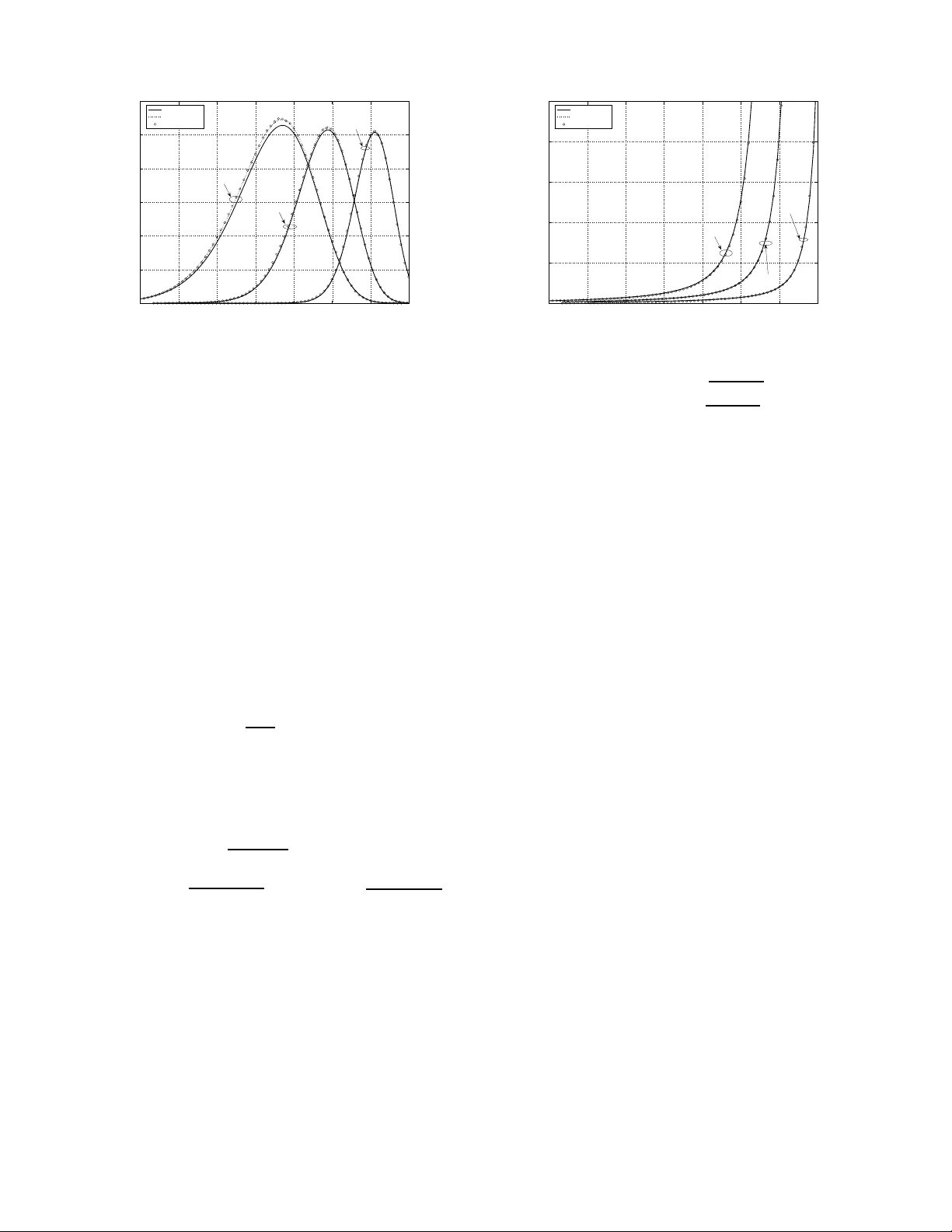
1 Le v el Crossing Rate and A v erage F ade Duration of the Double Nakag ami- m Random Process and Application in MIMO K e yho le F ading Channels Nikola Zlatanov , Zoran Ha dzi-V elkov , and Ge or ge K. Karagiannidis, Abstract —W e present no vel exact expre ssions and accurate closed-fo rm approximations fo r the l ev el cross ing rate (LCR) and the av erage fade duration (AFD) of t he double Nakagami- m rand om process. These results are then u sed to stu dy the second order statistics of multip le inp ut multipl e outpu t (MIM O) keyhole fadin g channels with space-time block codin g. Numerical and computer simulation examples validate t he accuracy of the presented mathematical analysis and show the t ightness of the proposed appro ximations. Index T erms —Leve l crossing rate (LCR), A v erage fade dura- tion (AFD), keyhole MIMO fading channels, Nakaga mi- m fading, multiplicative fading I . I N T R O D U C T I O N Recently , sp ecial attention has been giv en to the so -called “multiplicative” fading models. The double Rayleigh (i.e., Rayleigh*Rayleig h) cha nnel fading mod el has been fou nd to be suitable when both transmitter and receiver are moving [1]. Mo reover , it has also been recen tly used for ke yhole channel modeling of multiple-input multiple-outpu t (MIMO) systems [2]-[3]. Its extension, the do uble Nakag ami- m (i.e., Nakagami- m *Nakagam i- m ) fadin g model, h as been consid- ered in [4], where the fading between each pair o f transmit and re ceiv e antennas in p resence of th e “keyhole” is c harac- terized as Nakag ami- m fading. Ho wev er, all the ab ove works describe and utilize only the f irst o rder statistical pro perties o f these “multip licati ve” fading models, such as the o utage and the erro r pro babilities. But, knowledge of the second order statistics fo r above fading m odels are equally important, and are applicable, f or example, in mod eling and design o f th e multihop co mmunicatio ns systems [5]. In this letter, we focus on the second order statistics of the dou ble Nakagami- m random proc ess, for w hich we determine exact and appro ximate analy tical solution s for its lev el crossing rate (LCR) and av erage fade duratio n (AFD). Then we app ly these results to stud y the second ord er statistics of the keyhole ch annels applicable to MIMO sy stems with space-time blo ck coding (STBC), o perating in specif ic rich- scattering environments. Note th at althou gh this work assum es indepen dence among the channels, similar analysis can be used to d erive LCR and AFD in c orrelated keyhole chan nels [9]. Accept ed for IEEE CommLetters N. Zlatanov and Z. Hadzi-V elkov a re wit h the Fa culty of Electrical Engi- neering and Information T echnologies, Ss. Cyril and Methodius Unive rsity , Skopje , Email: zoranhv@feit.uki m.edu.mk, nzlatan ov@manu.edu .mk G. K. Karagiann idis is with the Depart ment of Electrica l and Com- puter Engineering, Aristotle Univ ersity of Thessaloniki, Thessaloniki, Email: geokara g@auth.gr I I . O N T H E S E C O N D O R D E R S T A T I S T I C S O F T H E D O U B L E N A K AG A M I - m R A N D O M P RO C E S S Let the double Nakagam i- m r andom proce ss b e defined a s Z ( t ) = X ( t ) Y ( t ) , (1) where X ( t ) and Y ( t ) are a pair of indepe ndent Na kagami- m distributed R Vs with pro bability distribution fu nctions ( PDFs) f X ( x ) = m X Ω X m X 2 x 2 m X − 1 Γ( m X ) exp − m X x 2 Ω X (2) and f Y ( y ) = m Y Ω Y m Y 2 y 2 m Y − 1 Γ( m Y ) exp − m Y y 2 Ω Y , (3) where Ω X = E [ X 2 ] , Ω Y = E [ Y 2 ] , an d m X and m Y are the fading sev erity p arameters, where E [ · ] means exp ectation. If X ( t ) and Y ( t ) are signal en velopes in some scattering radio channel exposed to the Doppler effect due to stations’ relativ e mo bility , then X ( t ) and Y ( t ) are time-corr elated random p rocesses. Considering a fixed-to-mobile channe l, each scattered co mpone nt of X ( t ) and Y ( t ) has some result- ing Dopp ler spectra with maxim um Doppler frequ ency shift f mx and f my , respectively . It was shown in [6] th at, under such conditio ns, the envelopes time deriv atives ˙ X an d ˙ Y are indepen dent fro m th eir respective e n velopes, w hile following zero-mea n Gaussian PDFs with respective variances σ 2 ˙ X = ( π f mx ) 2 Ω X /m X , σ 2 ˙ Y = ( π f my ) 2 Ω Y /m Y . (4) A. Second or de r statistics The LCR o f Z at thresho ld z is defin ed as the rate at which the ran dom proc ess crosses level z in th e n egati ve direc tion. T o extract LCR, we need to determ ine the joint PDF of Z an d ˙ Z , f Z ˙ Z ( z , ˙ z ) , an d apply the Rice’ s form ula N Z ( z ) = Z ∞ 0 ˙ z f Z ˙ Z ( ˙ z , z ) d ˙ z . (5) The above expression can be rewritten as N Z ( z ) = Z ∞ 0 Z ∞ 0 ˙ z f ˙ Z | Z X ( ˙ z | z , x ) d ˙ z f Z | X ( z | x ) f X ( x ) dx (6) where f ˙ Z | Z X ( · , · , · ) is the con ditional PDF of ˙ Z con ditioned on Z an d X . Th is con ditional PDF can be determin ed by finding th e time deriv ative of both sides o f ( 1), ˙ Z = Y ˙ X + X ˙ Y = Z X ˙ X + X ˙ Y , (7) 2 from which it is easily seen that, for fixed Z = z and X = x , the time deriv ativ e ˙ Z is a zer o-mean Gaussian R V with variance σ 2 ˙ Z | Z X = z 2 σ 2 ˙ X /x 2 + x 2 σ 2 ˙ Y . Now , the br acketed integral in (6) can be solved as Z ∞ 0 ˙ z f ˙ Z | Z X ( ˙ z | z , x ) d ˙ z = σ ˙ Z | Z X √ 2 π . (8) The co nditional PDF of Z for some fixed X = x , f Z | X ( z | x ) , is deter mined b y simple transformation of R Vs, f Z | X ( z | x ) = f Y ( z / x ) /x . Substituting (8) into (6), afte r some algebr aic manipulatio ns, we obtain th e exact solution for the LCR N Z ( z ) = 1 √ 2 π 4 z 2 m Y − 1 σ ˙ Y Γ( m X )Γ( m Y ) m X Ω X m X m Y Ω Y m Y × Z ∞ 0 s 1 + z 2 x 4 σ ˙ X σ ˙ Y 2 x 2( m X − m Y ) e − m X x 2 Ω X + m Y z 2 Ω Y x 2 dx (9) The above integral can be e valuated nu merically with de- sired accuracy (e.g. b y using some common software such as Mathematica). Alternatively , o ne can apply the Lapla ce approx imation to obtain a highly accurate closed -form solution of (9) - a s presen ted in th e following subsection. The AFD of Z at threshold z is defined as the average time that the d ouble Nakagami- m rand om p rocess r emains belo w lev el z after cr ossing that level in the downward dir ection, T Z ( z ) = F Z ( z ) N Z ( z ) , (10) where F Z ( z ) denotes the CDF of Z , which was derived only recently in closed-fo rm for N *Nakagam i ra ndom process [ 7]. For the do uble Nakagam i ran dom pro cess, it attains the form F Z ( z ) = 1 Γ( m X )Γ( m Y ) G 2 , 1 1 , 3 " z 2 m X m Y Ω X Ω Y 1 m X , m Y , 0 # , (11) where Γ( · ) and G [ · ] are gamma and M eijer’ s G functio ns. B. Laplace appr o ximation Using [8], the L aplace ty pe integral ca n b e appr oximated as Z ∞ 0 g ( x ) e − λf ( x ) dx ≈ r 2 π λ g ( x 0 ) p f ′′ ( x 0 ) e − λf ( x 0 ) , (12) when the real valued parameter λ is very large (i.e., λ → ∞ ). In (12), f ( x ) and g ( x ) are real-valued function s of x and x 0 is the point at which f ( x ) h as an abso lute minimum (known as the interior critical poin t of f ( x ) ). Note, that f ′′ ( x ) denotes the second derivati ve of f ( x ) with r espect to x . It was observed that above approx imation is very accu rate even for small values o f λ [8]. Comparin g ( 12) an d ( 9), these func tions are set as f ( x ) = m X x 2 Ω X + m Y Ω Y z x 2 − ln( x 2( m X − m Y ) ) , (13) g ( x ) = s 1 + z 2 x 4 σ ˙ X σ ˙ Y 2 , (14) whereas the secon d deriv ativ e of th e former is f ′′ ( x ) = 2 m X / Ω X + 6( m Y z 2 ) / (Ω Y x 4 ) + 2( m X − m Y ) /x 2 and λ = 1 . The critical p oint of f ( x ) is determin ing as the value of x f or which ∂ f / ∂ x = 0 , i.e., x 0 = h 1 2 m X Ω Y Ω X Ω Y ( m X − m Y ) + q Ω 2 X Ω 2 Y ( m X − m Y ) 2 + 4 m X m Y Ω X Ω Y z 2 i 1 2 . (15) Using (13)-( 15), the appro ximate closed-form solutions f or the LCR and the AFD are resp ectiv ely obtained as N Z ( z ) ≈ 4 z 2 m Y − 1 σ ˙ Y Γ( m X )Γ( m Y ) × m X Ω X m X m Y Ω Y m Y g ( x 0 ) p f ′′ ( x 0 ) e − f ( x 0 ) , (16) T Z ( z ) ≈ 1 4 z 2 m Y − 1 σ ˙ Y Ω X m X m X Ω Y m Y m Y × p f ′′ ( x 0 ) e f ( x 0 ) g ( x 0 ) G 2 , 1 1 , 3 " z 2 m X m Y Ω X Ω Y 1 m X , m Y , 0 # . (17) Although substitution o f f ( x 0 ) , f ′′ ( x 0 ) and g ( x 0 ) in to (16) and (17) is omitted for bre vity , we emphasize that the thresho ld z a ppears on ly as the ratio z 2 / ((Ω X /m X )(Ω Y /m Y )) . I I I . M I M O S T B C C O M M U N I C A T I O N O V E R K E Y H O L E F A D I N G C H A N N E L S Potentials of MIMO comm unications systems are not al- ways achievable even for a fully uncor related tran smit and receive channels, which is attributed to th e ran k deficiency of the MIMO channels known as the keyhole o r pinhole ef fect [2]. The existence of the keyhole MIMO channels has be en propo sed and demonstrated through phy sical examples, wher e, although spatially uncorr elated, these channels still have a single d egree of freedom [2]-[3]. Un der th e keyhole effect, the entries of th e chann el m atrix, H , f ollow statistics described a s a p roduct of two in dependen t single-p ath g ains. A. The MIMO ke yhole chan nel mode l From [4], the c omplex path g ain o f baseban d equiv alent signal transmitted over the chann el betwee n th e i -th transmit and the j -th receive antenna at arbitrary mo ment t is expressed as 1 ≤ i ≤ M , 1 ≤ j ≤ N h ij ( t ) = α i ( t ) β j ( t ) e j ( φ i ( t )+ ψ j ( t )) , (18) where α i ( t ) e j φ i ( t ) M i =1 are the complex path g ains intro- duced by the rich-scattered ch annel from th e i -th transmitting antenna to the “keyhole” , and β j ( t ) e j ψ j ( t ) N j =1 are the co m- plex path gain s introdu ced by the rich- scattered cha nnel fro m the “keyhole ” to the j -th receiving antenna. Phases { φ i ( t ) } M i =1 and { ψ j ( t ) } N j =1 are ind ependen t and uniform ly distributed over [0 , 2 π ) . The amplitudes { α i ( t ) } M i =1 and { β j ( t ) } N j =1 are i.i.d. Nak agami- m R Vs. The fading severity param eters of α i ( t ) are equal to m T , whereas Ω T = E [ α 2 i ] for all i . Simi- larly , the fading severity p arameters of β j ( t ) are eq ual to m R , whereas Ω R = E [ β 2 j ] f or all j . Assumin g mobility of b oth the tran smitter and the rec ei ver with respect to the “keyhole”, all chan nel gains are time-cor related random pr ocesses with maximum Dopple r shifts f α i = f α and f β i = f β , resp ecti vely . 3 −15 −10 −5 0 5 10 15 20 0 0.2 0.4 0.6 0.8 1 1.2 Normalized threshold (dB) Normalized Level Crossing Rate Approximation Exact MC simulation M = 3, N = 4 M = 2, N = 2 M = 7, N = 6 Fig. 1. Normalized L CR for variou s numbe r of transmit and recei ve a ntennas Under such con ditions, the time deriv ativ es ˙ α i and ˙ β j are indepen dent from α i and β j , r espectiv ely , and both follow zero-mea n Gaussian PDFs with variances g iv en by (4) , σ 2 ˙ α i = ( π f α ) 2 Ω T /m T , 1 ≤ i ≤ M and σ 2 ˙ β j = ( π f β ) 2 Ω R /m R , 1 ≤ j ≤ N . B. Orthogonal spa ce-time b lock coding a nd decod ing The o rthogo nal spacetime block encoding and decodin g (signal combinin g) transfo rm a MIM O fading chan nel in to an equiv alent single-input-sing le-output (SISO) fading channel with a p ath gain o f th e square d Frob enius no rm of the MIMO channel matr ix H ( t ) = [ h ij ( t )] M × N [4], || H ( t ) || 2 F = M X i =1 N X j =1 | h ij ( t ) | 2 = M X i =1 α 2 i ( t ) ! N X j =1 β 2 j ( t ) (19) at arbitr ary moment t . After space-tim e block decod ing, the instantaneou s output signa l-to-noise ratio (SNR) per sy mbol is given by γ ( t ) = ¯ γ M R || H ( t ) || 2 F , (20) where ¯ γ = E s / N 0 is the average SNR per receive an tenna, and R is the rate of the STBC. C. Secon d order statistics of output SNR W e in troduce the auxiliar y r andom p rocess Z ( t ) d efined by Z ( t ) = q || H ( t ) || 2 F = X ( t ) Y ( t ) , (21) where X ( t ) = q P M i =1 α 2 i ( t ) and Y ( t ) = q P N j =1 β 2 j ( t ) are again Nak agami- m distributed with PDFs g i ven by ( 2) and (3), respectively , with m X = M m T , Ω X = M Ω T , m Y = N m R and Ω Y = N Ω R . The time d eriv atives ˙ X and ˙ Y are indepen dent fr om X and Y , r espectiv ely , and both follow the zero-mea n Gaussian PDF with variances given by (4) , σ 2 ˙ X = σ 2 ˙ α i = ( π f α ) 2 Ω T /m T and σ 2 ˙ Y = σ 2 ˙ β j = ( π f β ) 2 Ω R /m R . Hence, the rando m process Z ( t ) , defined b y (21), is a double Nakagami- m process for which we can apply the analytical f ramew ork of Section II to determin e its exact and approx imate LCR and AFD by using (9), (11), (16) and (17). W ith above in mind, the LCR an d th e A OD 1 of instantaneo us 1 Instead of the term ”a vera ge fa de durati on (AFD)”, the term ”av erage outage duration (A OD)” is used here. −15 −10 −5 0 5 10 15 20 0 1 2 3 4 5 Normalized threshold (dB) Normalized Average Outage Duration Approximation Exact MC simulation M = 7, N = 6 M = 3, N = 4 M = 2, N = 2 Fig. 2. Normalized A OD for vari ous number of transmit a nd recei ve antennas output SNR, giv en by (20), are respectively determine d as N γ ( γ ) = N Z ( p γ M R/ ¯ γ ) , (22) T γ ( γ ) = T Z ( p γ M R/ ¯ γ ) . (23) I V . N U M E R I C A L R E S U LT S W e p resent several numeric al examples for th e LCR and th e AFD of th e STBC MI MO communica tions system o perating over a keyhole fading channel. The mobile transmitter and the mobile receiver are assumed to intro duce same ma ximum Doppler shifts du e to same relative speed s with respect to the “keyhole”, yield ing f α = f β = f m . Figs. 1 and 2 depict the n ormalized LCR ( N γ /f m ) and normalized AFD ( T γ f m ) of the instantane ous ou tput SNR v s. normalized SNR thr eshold. The norm alized SNR thresho ld ( x - axis) is calcu lated as 10 log[ γ M R/ ( ¯ γ (Ω T /m T )(Ω R /m R ))] . The results are o btained f or thr ee d ifferent pairs of num ber o f transmit an d r eceiv e anten nas ( M , N ) , app earing as curve pa- rameters. For each p air ( M , N ) , the three co mparative c urves on both f igures indicate excellent match betwe en the exact and the appro ximate solutions for the two statistical parameters, both of which a re validated b y Mon te Carlo simulations. R E F E R E N C E S [1] J. B. Andersen, “Stati stical distribut ions in mobile communications using multiple scatte ring, ” Proc. Gen. Ass em. Int. Union of Radio Sci. , Maas- tricht , The N ether lands, Aug. 2002. [2] D. Gesbert, H. Bolcskei, D. A. Gore, and A. J. Paulr aj, “Mimo wireless channe ls: Ca pacity and performance predi ction, ” Proc . GLOBECOM 2000 , vol. 2, pp. 1083-1088 [3] D. Chi zhik, G. J. Foschini, M. J. Gans, and R. A. V alenzuela, “K eyhol es, correla tions, a nd capaciti es of multiel ement t ransmit and recei ve antennas, ” IEEE Tr ans. W ir eless Commun. , vol. 1, no. 2, pp. 361-368, Apr . 2002 [4] H. Shin and J. H. Lee, “Performance analysis of space-ti me block codes ov er ke yhole Nakagami- m fadi ng channe ls, ” IEEE T rans. V eh. T echn ol. , vol. 53, no. 2, pp. 351-362, Mar . 2004 [5] Z. Hadzi-V elk ov , N. Zlatano v , G. K. Karagiannidi s, “On the second order statistics of the multihop Rayleigh fad ing channel, ” accepted for publica tion in the IEEE T ransactions on Communicati ons , 2008 [6] M. D. Y acoub, J . E.V . Bautista, and L . G. de Rezende Guedes, “On higher order statistic s of the Nakagami- m distributi on, ” IEEE T rans. Commun. , vol. 48, No. 3, pp. 790-794, May 1999 [7] G. K. Karagia nnidis, N. C. Sagia s, and P . T . Mathiopoulo s, “ N *Nakagami: a nove l stochasti c model for cascaded fadin g fhannel, ” IEEE Tr ans. Commun. , vol. 55, No. 8, pp. 1453-1458, Aug. 2007 [8] R. W ong, Asymptotic Appr oximations of Inte grals , SIAM: Society for Industria l and Applied Mathemat ics, New edition, 2001. [9] G. L e vin, S. Loyka, “On the Outage Capacit y Distribut ion of Correlat ed Ke yhole MIMO Channels”, IEEE T rans. on Inform. Theory , v ol. 54, no.7, pp. 3232-3245, July 2008.
Original Paper
Loading high-quality paper...
Comments & Academic Discussion
Loading comments...
Leave a Comment