Recorded Step Directional Mutation for Faster Convergence
Two meta-evolutionary optimization strategies described in this paper accelerate the convergence of evolutionary programming algorithms while still retaining much of their ability to deal with multi-modal problems. The strategies, called directional …
Authors: Ted Dunning
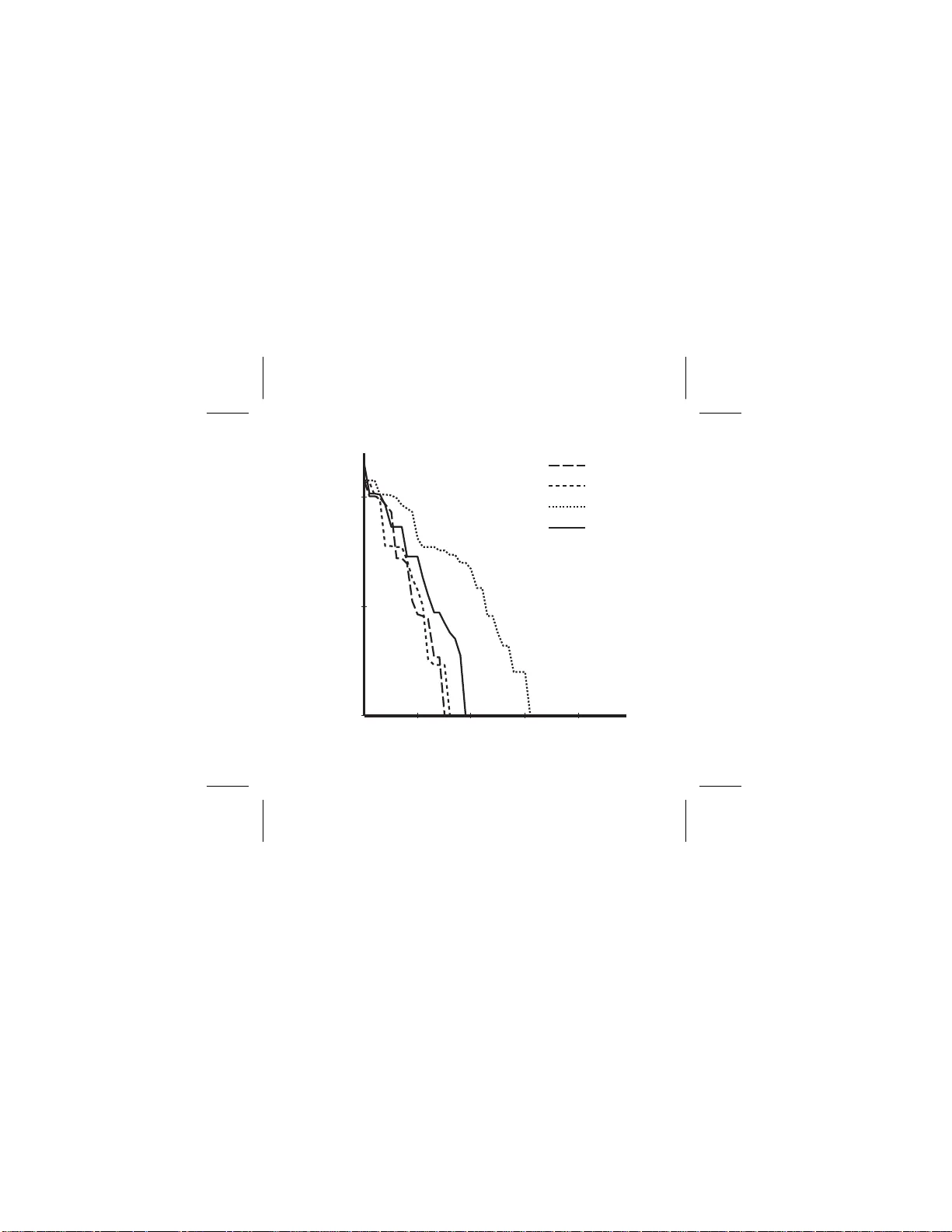
Abstract Tw o meta-ev olutionary optimization strategies de scrib ed in this paper ac- celerate the con v ergence of ev olutionary prog ramming algorithms while still retaining m uc h of their abilit y to deal with m ulti-mo dal problems. The strate- gies, called directional m utation and recorded step in this pap er, can op erate indep ende ntly but together they greatly enh ance t he ability of e volution- ary programming algorithms to deal with fitness landscap es c haracterized b y long narrow v alleys. The directional m utation asp ect of this com bined metho d uses correlated meta-m utation but do es not intro duce a full cov ari- ance matrix. These new metho ds are th us mu ch more economical in terms of storage for problems with high dimensionality . Additionally , directional m utation is rotationally in v arian t which is a substan tial adv an tage ov er self- adaptiv e metho ds whic h use a single v ariance p er co ordinate f or problems where the natural orien tation of t he problem is not oriented along the axes. Step-recording is a subtle v ariation on con v en tio nal meta-m utational a l- gorithms whic h a llo ws desirable meta-m utations to b e in tro duced quic kly . Directional m utation, on the other hand, has analogies with conjugate gra- dien t techniq ues in deterministic optimization algorithms. T ogether, t hes e metho ds substan tially improv e p erformance on certain classes of problems, without incurring m uc h in the w a y of cost o n problems where they do not pro vide m uc h b enefit. Somewhat surprisingly t heir effect when a pplied sep - arately is not consisten t. This pap er examines the p erformance of these new metho ds on sev eral standard problems tak en from t he literat ure. These new methods are directly compared t o more conv en tional ev olutionary algorithms. A new test prob- lem is also in tro duced to highligh t the difficulties inherent with long narrow v alleys. Recorded Step Directional Mutation for F aster Con v ergence T ed Dunning Chief Scien ti st Aptex Softw are 25 Septem b er, 19 95 1 Ov erview 1.1 Argumen ts for Meta-ev olution A n um b er of sto c hastic optimization pro cedure s ha ve b een dev elop ed since the ele ctronic computer has made automated optimization possible. Metho ds whic h hav e had substantial recen t dev elopmen t include sim ulated annealing, genetic algorithms, ev olutionary strat egies and ev olutio na ry programming. One shared prop ert y of eac h of these classes of algorithms is that they trade some degree of c onv ergence sp eed for a decreas ed lik eliho od of a v oiding lo cally optimal but globally sub optimal solutions. In each of these we ll- kno wn algorithms, there is a parameter o r set of parameters which can b e manipulated to affect this trade-off b et w een con- v ergence p o wer and sp eed. In sim ulated a nnealing, this parameter is the sim ulated temp erature, while in ev olutionary programming, this parameter is the m utation rate. T ypically , the t emp erature or m utation rate is decreased as the optimization prog res ses. This tactic substantially improv es the rate of con v ergence, often without significan tly increasing the lik eliho o d of finding a sub optimal solutio n. In sp ecial cases suc h as a quadra tic b ow l, co oling sc hedules can b e deriv ed whic h satisfy v arious theoretical constrain ts regard- ing the effort needed to ha ve a given probabilit y of finding a solution in a giv en amoun t of time, but this cannot be done in g ene ra l since the deriv ation of the optimal annealing sc hedule requires detailed k nowledge of prop erties of the function being optimized. Instead, an arbitrary a nd hop efully sufficien tly conserv ative co oling sc hedule is ty pically inv en ted and used. An alternative to a fixed co oling sc hedule is t o deriv e the co oling sc hedule adaptiv ely as the optimization algo rithm learns ab out the fitness landscap e that it is exploring. The idea that the m utation rate itself should b e a parameter sp ecific to each member of the p opulation to b e ev olv ed is not new and has b een recen tly explored in [F og92] and [Atm91]. This fo rm of meta-ev olution is attractive in that no explicit co oling sc hedule need b e giv en. 1.2 Common problems Problems whose solutions are found in long narrow v alleys cause sev ere prob- lems with ev olutionary progr a mming algorithm b ecause the narro wness of the v alley greatly decreases the probabilit y of finding a solution whic h improv es on a p oin t whic h is already on the flo or of t he v alley . These problems hav e 1 b een attac k ed in the past by using a cov ariance matrix to cause m utations to b e correlated as describ ed in [Seb92], [Sc h81] and [F og92]. This metho d is similar in essence to the conjugate gradient tech niques used in conv entional n umerical optimizatio n codes in that they concen trate the exploration of the fitness landscape in particular directions based on past exp erienc e. V ar io us forms o f dir ectional m utation has b een the sub j ect since the mid 60’s as indicated by the work of Bremermann and others [BR 64, BR65]. Com bining this metho d with meta-ev olution as is done in the metho ds presen ted in this pap er raises some interes ting pro blems, how eve r. In partic- ular, in meta- evolution, all parameters whic h con trol m utation are included in the genome and m ust themselv es b e sub ject to m uta t io n. But, if there are n real v alued parameters in the genome initially , then it tak es n 2 en tries in a co v ariance matrix to describ e ho w those n parameters should b e c hanged. Including the co v ariance matrix in the genome increases its size to n 2 + n real v alued parameters and r aises the serious question of ho w the m utation of the new parameters should b e described. Self-similar m utation sc hemes can a void the risk of a recursiv e explosion in the n umber of parameters to b e optimized. Ev en so, the original n 2 co v ariance parameters in the description of each elemen t of the en tire p opulation can b e v ery exp ensiv e, ev en if meta-meta- m utation para mete rs are not included. Th us, it is desirable to find a more economical metho d for describing correlated m utation, and to find a w a y so that this correlated m utation description con tains its o wn description of ho w it should b e c hanged. One additional desiderata is that the meta-m utation b e self similar so that the algorithm is insensitiv e to c hanges in scale. The t w o new strategies describ ed in this rep ort address this need. Other w ork along these lines can b e found in [F og97] where a directional m utation sc heme is describ ed whic h has o verhe ad similar to the metho ds describ ed here. It should b e noted that the stochastic o ptimization metho ds whic h hav e used Cauc h y distributed m utatio ns as in [FK92, SH87, Y ao91, Y ao95, YL97] are inheren tly not rotationally in v arian t. In ev olutionary optimizations deal- ing with a large n um b er o f dependent parameters, this means that the pro- p ortion of prog en y whic h c hange only a few parameters will b e muc h higher than w ould b e exp ected under the assumption of complete rota tional sym- metry of the optimization algorithms. F or man y pro blems , notably includ- ing the syn thetic problems often used t o ev aluate optimization algor ithms , this co ordinate orientation can b e highly adv an tageous. F or example, in the m ulti-mo dal test problems explored in [YL97] the lo cal optima are arra nged 2 in orthogo nal grids parallel to the parameter axes. In other problems of sig- nifican t practical significance, ho w ev er, correlated c hanges in parameters are necessary . Examples of this need f o r correlated c hanges o ccur in artificial neural net works o r in electronic filter design. 2 Tw o New Strategies 2.1 Step Recording In a con v en tional meta- m utation algorithm, the mutation rate for eac h mem- b er of the p opulation is mu ta t ed indep enden tly of the state vec to r . This metho d can lead to slo w er conv ergence, esp ecially in conjunction with direc- tional mutation if a low probabilit y step leads to impro v emen t in fitness. If this happ ens, rep eating a step like the one that caused the improv emen t can b e adv an tageous. If the m utation rate (and p ossibly the m utat io n direction) w as c hanged indep enden tly of the fitness parameters, then similar steps will probably stay unlik ely and con v ergence will b e slow . This situation will happen when a v ery fit solution in a small basin has b een fo und due to taking a very large step. That particular solution will tend to remain in the p opulation, but further impro vem ent is unlikely unless subseque nt small steps are taken. Ev en if an improv ed solution is found b y taking a small step (whic h is unlik ely , but it will happ en ev en tually), it is lik ely that the mutation rate will still b e large (which is wh y w e found this solution in the first place), a nd further impro v emen ts will only come slo wly as solutions with b oth b etter fitness and low er mutation rates are f ound. The t ypical sequence is fo r the m utation rate to decre ase first whic h then a llo ws smaller steps to b e tak en resulting in f ur t her optimization. With step recording, on the other hand, the m utatio n rate of an offspring is set to the magnit ude of the distance b et w een the parent and c hild solution. This coupling o f m utat io n rate a nd c hange in p osition means t ha t an y solu- tions whic h impro v e fitness b y taking small steps will a utomatically lead to a line of progeny whic h tend t o explore b y t a king small steps. Similarly , when directional m utation is com bined with step recording, once a step is tak en along the fitness gradien t, further steps similar to that o ne a re lik ely . This pro vides algorithms using directional mutation a sense of history in m uc h the same manner a s conjuga te g radien t metho ds use past history to improv e further optimization efforts. 3 2.2 Directional Mutation In order to fully characterize all of the possible correlat io ns b et w een n random v ar ia bles , it is nece ssary to use roughly n 2 quan tities. It do es not, how eve r, follo w that a description this complete is necessary to g ain the b enefits of directional mutation. In particular, a co v ariance matr ix specifies m uc h more than just m utat io n biased in a particular direction. Indeed, a co v ariance matrix contains muc h more information than can b e reliably extracted from the recen t p edigree of a single mem b er o f a p opulation. Instead, w e prop ose t he use of a muc h mo r e limited mo del o f directional m utation in whic h the mutation rate has a directional comp onen t and an omni-directional comp onen t. The tota l m utat io n is the sum of m utations deriv ed from eac h of these comp onen ts. The directional comp onen t of m uta- tion is restricted to a line, while the o mni-directional comp onen t is sampled from a symmetric gaussian distribution. T ogether these comp onen ts giv e a total m utation distribution whic h is an ellipsoidal g auss ian distribution. In a heuristic a ttempt t o enhance con ve rg ence, the dir ectional comp onen t is also biased slightly . If we use the notatio n N ( µ, σ ) to indicate a normally distributed random v ar ia ble with mean µ and standard deviation σ and use U ( a, b ) to indicate a uniformly distributed random v a r ia ble tak en from the half op en in terv al [ a, b ), then the follo wing mutation algor ithm suffices to prov ide a directional m utation of the v ector x λ := N (1 , 1) F or eac h x i , x i := x i + N (0 , σ ) + λk i Here λ is a biased random v ariable whic h indicates ho w f ar to go along the direction indicated by k , while σ pro vides the mag nitude of the omni- directional m uta t io n comp onen t. The m utation para mete rs k and σ can themselv es b e m utated by setting σ := − ( σ + | k | / 10) log(1 − U (0 , 1)) λ := N (1 , 1) and then for eac h k i , k i := N (0 , σ ) + λk i 4 In this algorithm the mutation o f σ is done b y taking a new v alue from the exp o nen tial distribution with mean equal to σ augmen ted by a fraction of the magnitude of k . This cross coupling b et w een σ and k prev en ts the m utations from b ecoming to o directional. The m utation of k uses σ to pro vide div ersit y in direction and λ to pro vide div ersit y in magnitude in a manner iden tical with the w a y that the mutation of x i w as done. The use of an exponen tial distribution is somewhat in contrast with the trend in the literature tow ard the use of a lo g-normal distribution, but the motiv ation is essen tially the same. Both the exp onen tial and log-normal distributions allo w self-similar m utation whic h allows t he entire algorithm t o b e scale in v arian t. It should b e noted that the meta-mutation op eration describ ed here is self-similar and o rien tation independen t. This means that the distribution of m utation parameters after sev eral generations in the absence of selection is in v arian t up to the scale and orientation of the original v alue. This fact a lso implies that the prop erties of t he resulting meta-evolutionary algorithm are sub ject to analysis by renormalization metho ds. T o conv ert this algorithm to a step recording a lgorithm, the mutation of x is simplified and is done after the m utat io n o f σ and k as shown b elo w. σ := − ( σ + | k | / 10) log(1 − U (0 , 1)) λ := N (1 , 1) k i := N (0 , σ ) + λk i x i := x i + k i The result is that k records the m utation step which was tak en so that if this step results in an improv emen t, similar steps are lik ely to b e used aga in. Another nota ble feature of the a lgorithms describ ed here are the coupling b et w een the directional parameters k and the omni- direc tio nal parameter σ . The coupling fro m k to σ allo ws a p opulation to stop m utating directionally when necessary as well as pro viding a bias whic h tends to increase the ov erall m utation rate in the absence of selection for lo we r rates. The coupling from σ back to k allows c hanges in the preferred direction of mutation to tak e place. 5 3 Exp erimen tal Metho ds T o pro vide a preliminary test of the efficacy of the prop osed algorit hms, all four combin at io ns of conv entional meta-ev olution, meta-ev olution with step recording, meta-ev olutio n with directional m utat ion and con ven t io nal meta- ev olution with b oth step recording a nd directional mutation w ere tested on three simple problems. These problems included a three dimensional sym- metric quadratic b owl (function F1 from [F og9 5]), a Bohache vsky multi- mo dal b o wl problem (function F 6 from the same w ork) and a v ery nar- ro w tw o dimensional quadratic b owl whose a xis was not aligned with either axis (lab elled F9 here to av oid conflict with F1 through F8 from [F og95]). These problems w ere not in tended to pro vide a comprehensiv e in ve ntory of the in teresting problems, but rather w ere simply tak en as exemplars whic h w ould highlight t he contrast b etw een previous metho ds and the directional recorded-step metho d. The dimensionalit y of the test functions used here is quite low , but the essen tial difficult y p osed to previous ev olutionary algo r ithms b y long nar r o w v alleys which are not aligned along the co ordinate axes is indep enden t of dimension. Additional tests with dimensionality a s high as 30 show the same results as demonstrated here. The test functions are describ ed b y the follow ing functions: f 1 ( x, y , z ) = x 2 + y 2 + z 2 f 6 ( x, y ) = x 2 + 2 y 2 − 0 . 3 cos(3 π x ) − 0 . 4 cos (4 π y ) + 0 . 7 f 9 ( x, y ) = ( x + y ) 2 + (100 y − 100 x ) 2 F or this test, the ev olutionary a lgorithm used 20 surviv ors eac h genera- tion, eac h o f whic h generated 9 progen y to create a p opulation of 200. After ev aluating the fitness function for eac h member of the p opulation, the en tire p opulation was sorted to find the b est 20 mem b ers who w ould surviv e in to the next generation. Eac h a lg orithm was run 10 times and a median fitness at eac h g eneration w as used to compare algo r ithms . All programs w ere limited to 50 generations or less. Generally , conv ergence to a solution with 10 − 8 of the correct v alue w as found within far few er generations. 6 10 20 30 40 1 -10 10 -5 10 Generation Error MEP+RS+DM MEP MEP+RS MEP+DM Figure 1: Con ve rgence for Symmetric Bo wl 4 Results The gra ph in 1 illustrates the conv ergence fo r the four algorithms for the symmetric b ow l (F unction F1). As can b e seen, t he con v ergence of the con- v en tional meta-ev olutionary strategy is sligh tly faster than for the mo dified algorithms, but the difference in terms of num b er generations required to con v erge is not substan tial and t he ultimate accuracy of the final solution is essen tially identical. It is in teresting to note that the omni-directional muta- tion rate w as a close appro ximation of the square ro ot of the remaining error. This b eha vior is close t o the theoretical optimum co oling for this problem; that it was deriv ed automatically b y the meta-m utation w as notew orthy . De- tailed examination of the p opulation sho w ed that omni-directional mutation w as the dominant mech anism of exploration in the case of the symmetric b o wl. The graph in 2 illustrates conv ergence for the Bohac hevsky function. Again, the difference b et w een the alg orithms is not striking, except for the algorithm whic h used directional m utation without step recording. Ev en so, the degra dation in con v ergence time was less than a f actor of t w o for di- rectional m utation, and the loss in p erformance for the o ther metho ds w as minimal. Finally , the gr a ph in 3 illustrates the conv erg ence rates for the narro w 7 1 -10 10 -5 10 10 20 30 40 Generati on Error MEP +RS+DM ME P MEP +RS MEP +DM Figure 2: Con ve rgence for Bohach evsky F unction 8 1 -10 10 -5 10 10 20 30 40 Generation Error MEP+RS+DM MEP MEP+RS MEP+DM Figure 3: Con ve rgence for Narrow Bowl quadratic b o wl. Here, all algo r ithms except for directional m utatio n with step recording ha v e sev ere problems with con v ergence. The differences here a re highly sig- nifican t. The difference in the case of the no n- directional algorithms is due to the fact that with symmetric m utation, if the m utation rate is m uc h larger than the distance to the ma jor axis o f the v a lley , then any m utation is lik ely to fall outside o f the narrow v alley a nd th us not result in an y impro ve ment. The effect is that as the p opulation approa ches the ma jo r axis of the v a lley , the m utation rate is decrease d and pro gress to w ard the optim um slo ws do wn. Ultimately , solutions v ery close to the ma jor axis are f o und, and the muta- tion ra te is reduced to a small v alue. This low m utation rate mak es progress do wn the ma jor axis of the v alley tow ard the global optimum quite slow. It is not clear why directional m utat io n without step recording p erforms so p o orly , but early exp erimen ts with differen t meta-mutation o p erators ap- p eared to p erform b etter, so the problem may ha v e had more to do with the meta-mutation itself than with an inherent defect in the pure directional m utational algorithm. The algo rithm whic h used directional m utation and step recording p er- formed v ery w ell in the narrow v alley pro blem. Detailed examination of ev olving p opulations show ed that p opulations far from the ma jor axis of the 9 v alley quic kly ev olv ed dir ectional m utations whic h to ok them to the ma jor axis. Once there, the p opulations conv erted their directional mutations in to omni-directional m utations whic h w ere in turn conv erted in to directional mu- tations strongly orien ted alo ng the ma jor a xis of the v alley . This quic kly lead to brac ke ting of the solution a t whic h p oin t, the p opulation v ariance shrank rapidly . Once the p opulation had adapted to the nature of t he problem, con- v ergence pro ceeded essen tially iden tically to the conv ergence b eha vior noted for the symmetric b o wl problem ( f 1 ). It is instructive to compare these results with those fro m the table on page 173 o f [F og95]. The relev ant pa rts of that table are repro duced in 1 and ex- tended with the curren t results. Note tha t the meta-ev olutionary algorithms (the new columns whic h ar e lab elled MEP , MEP+RS and MEP+RS+DM) are clearly a ble to pro duce results whic h are comparable with previous ev olu- tionary algorithms (the original columns whic h w ere lab elled G A, DPE and EP in the original w ork). It should b e remem b ered that when examining this table that comparing the v arious forms of ev olutiona ry programming after suc h an extreme degree of con v ergence is not terribly meaningful. F unction GA DPE EP F1 2 . 8 × 10 − 4 1 . 1 × 10 − 11 3 . 1 × 10 − 66 F6 2 . 629 × 10 − 3 1 . 479 × 10 − 9 5 . 193 × 10 − 96 F unction MEP MEP+RS MEP+RS+DM F1 3 . 3 × 10 − 71 3 . 2 × 10 − 125 1 . 5 × 10 − 51 F6 0 0 0 T able 1: Conv ergence of V arious Evolutionary Algorit hms (GA = Genetic Al- gorithm, DPE = GA with Dynamic Parameter Estimation, EP = Evolution- ary Programming, MEP = Meta-Ev olutionary algorithms, RS = Recorded Step, D M = Directional Mutation) 5 Summary and Discussi on This w ork clearly sho ws that meta- evolutionary strategies can b e effectiv e in accelerating the con v ergence of ev olutionary programming a lgorithms under certain conditions. F urthermore, the directional m utat ion and recorded step do not signifi- can tly de gra de this perfo rmance on simple problems. They can provide highly 10 signfican t impro v emen t in con v ergence sp eed o n problems whic h in v olve long narro w v alleys. The directional search algorithm presen ted here has a num b er o f clear adv a n tages o v er carrying a full co v ariance matrix with eac h mem b er of the p opulation. These include low er storage requiremen ts, lo w er computational o v erhead, and an in tuitiv ely app ealing metho d for doing meta-mutation. Although the algorithms describ e here p erform w ell on mo derately mu lti- mo dal problems such as the Bohachev sky functions, they pro bably trade off some of the abilit y to a v oid lo cally optimal solutions in return for their abilit y to explore narro w v alleys. This abilit y may need to b e recov ered for some problems. One w a y that this might b e done is to allow only paren t/progeny comp etition. This w ould help av oid the situation where a solution is fo und whic h is go o d enough to sw amp the surviv or p o ol with prog en y b efore more obscure solutio ns a re found. Another metho d for a ttac king this problem w ould b e introduce sp eciation. In partially or wholly decomp osable problems with high dimensionalit y , narro w v alleys can o ccu r whic h are aligned with the axes rather than aligned arbitrarily . In these cases, it the cost of the directional m utation algorithm giv en here might b e b etter sp en t by k eeping a separate mutation rate for eac h dimension. Eac h of these m utatio n rates could b e sub jected to the self-similar exp onen tial m utation describ ed in this pap er. Another option w ould b e to kee p the directional mutation, and expand the omni-dir ectional m utation rate to one mutation rate p er parameter. Whether either of these c hanges w ould actually enhance p erformance is an op en question. The use of a Cauc h y distribution for the directional m utation is a lso an in triguing p ossibilit y . As was noted earlier, the use o f Cauc h y distributions in problems similar to the long narro w v alley examined here could sev erely degrade con v ergence. This is b ecause o f the fact that m ulti-v ariate Cauc hy distributions are not rotationally in v arian t. One in trig uing option for a hy - brid approac h is to use a Cauc hy distribution for the directional mutation while retaining a normal distribution for the omni-directional m utation. Suc h a hybrid w ould retain the rotationally in v aria n t properties of the algorithm described here while taking adv a ntage of the desirable aspects of the use of the Cauch y distribution. Another in teresting a ve nue for further researc h is to combine step record- ing and directional m utation with more conv en tional self-a daptation of mu- tation r ates for eac h parameter. This combination might prov ide the ad- v antages of recorded step metho ds when solving largely separable problems 11 without losing the ability of directional m uta t io n to deal with narrow non- separable v a lley s. The cost of this hybrid w ould be the r equiremen t to k eep 2 n meta- parameters with eac h mem b er of the p opulation instead of the n + 1 meta-parameters required b y the metho ds describ ed here. Ov erall, step recording and the directional m utat io n op erator desc rib ed in this rep ort seem to pro vide stro ng adv an tages for optimizing certain classes of problems. The exp erimen ts describ ed here provide an initial indication of ho w large these a dv an tages can b e. F urther w ork is needed to c haracterize the interactions b et w een these inno v ativ e tec hniques and other metho ds. 12 References [A tm91] Dav id B. F ogel; Larry J. F ogel; J. Wirt A tmar. Meta- ev o lutionary programming. In R.R. Chen, editor, Pr o c e e dings of the 25th Asilo- mar Confer enc e on Signals, Systems and Computers , pages 542– 545. Pacific Grov e, CA, 1991. [BR64] H.J. Bremermann a nd M. R ogson. An evolution-t yp e searc h metho d on con ve x sets. T ec hnical R eport ONR T echnic al Rep ort, Contracts 222(85) AND 3656( 58), ONR, 1964. [BR65] H.J. Bremermann a nd M. Rog son. Search b y ev olution. In M. Max- field, A. Callahan, and L. F ogel, editors, Biophysics an d Cyb ernetic Systems , pages 157–1 67. Sparta n Bo oks, W ashington D.C., 1965. [FK92] G. S. Fishman and V. G . Kulk arni. Improv ing mon te carlo effi- ciency b y increasing v ariance. Managemen t Scienc e , 38(10):143 2– 1444, 1992. [F og92] Da vid B. F ogel; Larry J. F ogel; J. Wirt A tmar; Gary B. F ogel. Hierarc hic metho ds of ev olutionary programming. In Pr o c. of the First Annual Conf er enc e on Evolutionary Pr o g r amming, Evolution- ary Pr o gr amming So ciety, San Die go, CA , 1992 . [F og95] Da vid B. F ogel. Evolutionary Computation: T o war d a New Phil os- ophy o f Machine I ntel ligenc e . IEEE Press, New Y ork, NY, 1995. [F og97] Da vid B. F ogel. A preliminary in v estigation in to directed m utations in ev olutionary algorithms. In H.-M. V o igt, W Eb eling, I. Rec hen- Berg, and H.-P . Sc h we fel, editors, PPS N4 , pag es 329 – 335. Springer V erla g , Berlin, 97 . [Sc h81] H.-P . Sc hw efel. Numeric al Optimization of Com puter Mo dels . John Wiley , Chiche ster, UK, 19 81. [Seb92] A.V. Sebald. On exploiting the g lobal informat io n generated by ev olutionary programs. In Pr o c. of the First Annual Confer enc e on Evolutionary Pr o gr amming, Evolutionary Pr o gr amming So ciety, San Die go , CA , 1992. 13 [SH87] H. H. Szu and R. L. Hartley . Noncon v ex optimization by fast sim- ulated a nnealing. Pr o c e e dings of the IEEE , 75:1538– 1540, 1987. [Y a o91] Xin Y a o. Sim ulated annealing with extended neigh b orho o d. Inter- national Journal of Computer Mathematics , 40:1 69–189, 1 9 91. [Y a o95] Xin Y ao. A new simu lat ed annealing algorit hm. I nternational Jour- nal of Computer Mathem atics , 56:161–16 8 , 1995. [YL97] Xin Y ao and Y o ng L iu. F ast ev olutionary progr a mming. In Evolu- tionary Pr o gr am ming, V . MIT Press, 1997. 14
Original Paper
Loading high-quality paper...
Comments & Academic Discussion
Loading comments...
Leave a Comment