On Introspection, Metacognitive Control and Augmented Data Mining Live Cycles
We discuss metacognitive modelling as an enhancement to cognitive modelling and computing. Metacognitive control mechanisms should enable AI systems to self-reflect, reason about their actions, and to adapt to new situations. In this respect, we prop…
Authors: ** Daniel Sonntag (German Research Center for Artificial Intelligence, DFKI, Saarbrücken
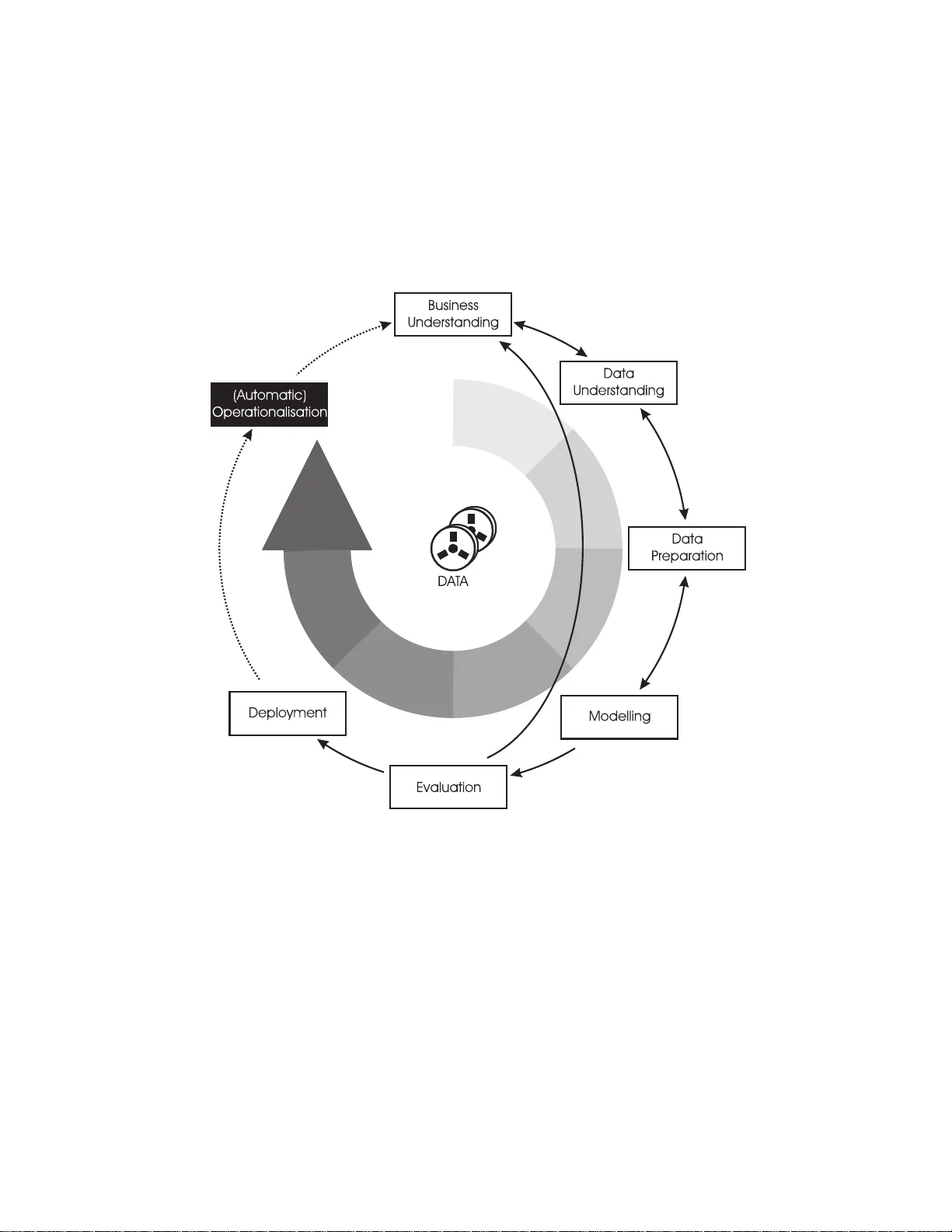
On In trosp ection, Metacognitiv e Con trol and Augmen ted Data Mining Liv e Cycles Daniel Sonntag German Researc h Cen ter for Artificial Intelligence 66123 Saarbr ¨ uck en, German y sonntag@df ki.de Abstract. W e discuss metacognitive modelling as an enh ancemen t to cognitiv e mo delling and computing. Metaco gnitive control mechanisms should en a ble AI systems to self-reflect, reason about their actions, and to adapt to new situations. In this respect, w e p ro p ose implementation details of a knowl edge tax o nomy and an augmen ted data mining life cy- cle which supp orts a live integration of obtained mod els . Keywords: Metacognitiv e Modelling, Data Mining 1 In tro duction Cognitive computing is the development of co mputer techniques to emulate hu- man per ception, in telligence , a nd problem solving. Cognitive mo dels are equipp ed with artificial sensor s and actuator s which are integrated and em b edded in to ph ysic al systems or ambien t in telligence environmen ts to act in the ph ysica l world. The goal is to have co g nitiv e capabilities and to p erform cognitive con- trol (e.g., see [1 ]). T o ov ercome pr oblems in shared cont ro l (of, e.g., na vig a ting rob ots [2]), direc t comm unication (in natural lang ua ge dia lo gue) b et ween a hu- man participa n t and a tec hnical control architecture can b e employ ed. This could b e us ed for mutu al disambiguation of m ultiple senso ry moda lities in a learning en viro nment. As one of the ma jor topics of sensory-ba s ed control mech- anisms, automatic pe r ception lea rning by introsp ection and r elev ance feedback could help in this disambiguation task. In order to purs ue the idea o f cog ni- tive systems able to self-r eflect, reason ab out their a ctions, and to adapt to new situations, metacog nitive strategies can b e employ ed. In this paper , we will pr esen t the core idea of a metacognitive control mo del o f machine le arning with respec t to problem solving capabilities to be exemplified by improving autonomous reaction b eha viour . W e start by clarifying the term metac o gnition . Metac o gnition is cognition ab out cognition. It can, in pr inciple, enable artificia l in telligence systems to monitor and con tro l themselves, choose go als, as sess pro gress, and adopt new strategies for a c hieving g oals. 1 [4] asso ciates metacognitive comp onents with the 1 F or example, students preparing for an exam judge about the rela tive difficult y of the learning material and use this for study strategies. The resulting reasoning task ability of a sub ject (or an intelligen t agent in ge neral) to orchestrate and monitor knowledge of the problem solving pr ocess; [5] argues tha t metac o gnitiv e abilities correla te with standa rd measures of in telligence; [6] talks ab out systems that know what they are doing. Here, we adopt the growing interest in metacognitive strateg ies 2 for AI sys- tems to build a metacognitive mo del for adaptable AI systems, which in volves computational mo dels of self-representation and self-a wareness. O ntologies re p- resent the knowledge gr oundw ork for the self-r epresen tation of a sys tem informa- tion state to b e included into a metacognitive mo del. 3 F or exa mple, McCarthy defines the term intr osp e ction as a machine having a b elief abo ut its own mental state rather than a b elief ab out prop ositions co ncerning the world. According to this explana tio n of metacognition we hypothesise that r esearchers in adaptable AI systems should in vestigate in metacognition beca use it can help us: 1. addr ess the difficulty to write down control management rules. Rules may not b e obvious, tang ible, or identifiable, or they may present an engineering ov erhead. 2. provide self-improv ement throug h a daptation and cus to misation. 3. offer des igns for ne ver-ending learning. 4. integrate a v a riet y of previous ly isolated findings : dialogue architectures, finite state stra teg ies, informatio n states, (un)super vised learning , stack ed generalisa tion, r einforcemen t learning, in tera ctiv e lea rning, and embedded data mining. Apart from its co mplexit y , metacognition highlights an empirically tra c table mo del c r eation and v erification pro cess. 2 Mo del, In trosp ectiv e V ie w and Con tr ol W e use the term mo del in the sense given by [7]: T o a n o bserv er B , an ob ject A • is a mo del of an ob ject A to the extent that B c a n use A • to answer questions tha t interest him ab out A . A can be the world or a sp ecific sub-do main such as the fo otball domain. T o a ns w er que s tions ab out the fo otball domain, an A • has to be construc ted. is a second-order reasoning pro cess ab out the own learning abilities called meta- reasoning or, more generally , metacognition. 2 IBM Au tonomi c Computing I nitiati ve, http://www.r ese ar ch.ibm.c om/autonomic/ , and, e.g., DARP A Information Processing T echnolo gy Office on Cognitive S y stems, http://www.darp a.mil /ipto/ thrust ar e as/thrust cs.asp . 3 [8] outlines t hat fo r intel ligent b eha viour, a declarativ e knowle dge model must be created fi rs t. Examination of, e.g., own b elief s would then b e p os sible when the b el iefs are ex plici tly represented. McCarthy sees intros p ection as essential for human level intel ligence (and n ot a mere epiphenomenon) [9]. A • corres p onds to an ontological knowledge base which contains facts abo ut the sub-domain a nd the kno wledge how to co mm unica te the facts. This level of knowledge repr esen tation is basica lly implemented by s tate-of-the-art seman tic techn o lo gies. Intelligent interaction systems for dialog ical interaction with the Semantic W eb (e.g., SmartW eb [15]) can be built on top of this represe n ta tion of domain knowledge (e.g., dialog ue and fo otball knowledge). Contemporar y AI in tro duces the notion of ontologies as a kno wledge repre- sentation mechanism (e.g., see [10]) for the op erational AI mo dels we are in- terested in. The o b ject level r epresen ts the w or ld a nd the domain of int er e st; in addition, the domain ontologies should contain mental concepts ab out co mm uni- cation and control structures; and for pro cessing user feedback, a repr esen tation of natural communication (natural language dialogue) is requir e d. When these concepts can be used to ma in tain an infor ma tion sta te, a model of introspec- tion c a n b e derived fro m it. Then, self-refle c tive knowledge can be provided by the introsp ectiv e AI system management facility which holds an int ro spective view of the ob ject level. More precisely , an intr osp e ctive view is o bta ined fr om int ro spective rep orts, i.e., interpretations of data r ecords of pro cess data as a de- scription o f the internal pro cesses under observ a tio n. In this resp ect, we recognis e int ro spection in the same way as done by [11]: W e view introsp ectiv e repo rts as data to b e ex pla ined, in contrast to the Structuralists’ view of introsp ectiv e r e p orts as desc r iptions of in terna l pro cesses; i.e., w e rega r d introsp e ction not as a co nduit to the mind but rather as a source of data to be acco un ted for b y po stulated in ternal pro cesses. 4 Thu s, the introsp ectiv e view can b e implemen ted b y the output of a meta- level data generalisatio n pr ocess while rep orting on the ob ject-level behaviour. Metadata providers decide which kind of infor mation is to b e included in the int ro spective r eports. On the meta- lev el, meta-mo dels can be generated with the help of ma chine learning and data mining algo rithms. A k nowledge taxo nom y helps differ en tiate b et ween the different knowledge levels, esp ecially the knowl- edge levels o btained from the mach ine lear ning exp erimen ts. 2.1 Meta Kno wl edge T axonom y In order to integrate lea rning schemes—i.e. to learn meta-level action str ategies from exper ie nce—w e prop ose a meta knowledge taxonomy (figur e 1). Consider a world ( W ) and a mo deller ( M ) who exists in the world, a nd who can be a h uman or an intelligen t computer ag en t. A k nowledge taxonomy can b e constructed to include the modelling of the w or ld a nd the modeller (according to some articles in [12]). In this pa p er, w e pr o vide the implemen tations of this knowledge taxonomy by using seman tic technologies a nd machine le a rning. 4 This imp ortan t quote basically states that metacognition as proposed here is not a reconstruction of the resp ectiv e human intellig ence apparatus—in accord with technical cognitiv e AI system researc h. W M C o gn it iv e A I Sy st em In fo r ma t io n St a t e M e t a- Kn ow le dg e b y M L M o d el s In t ro spe ct iv e M L M od els K n ow le dg e B asi s D e c i sio n -O r i e n t e d O p e r a t io n a l ise d M a n a g e me n t R u le s W - W or ld W - W o rl d K n ow led ge W - M e t a- K no w le dg e M - M od el le r - S el f ( R ef le c t iv e) K no w le d g e - In t r osp ec t iv e K n ow le d g e Fig. 1. Meta Knowledge T a xonom y for metacognitio n The mo del of the world ( W • ) is used to answer ques tions abo ut W . In order to answer questions a bout the modeller himself, we int ro duce a mo del of the mo deller ( M • ). M • is the s elf (reflective) kno wledge of the agent in the world. Before explaining the crucial lay ers o f int r o spective knowledge for co mplex AI systems, we should explain our idea of how to map and implement the first four lay ers. The world W is the application we ha ve in mind, with the capability to adapt to new environmental conditions. There by , the pr o cessing system is the mo deller M . Accor ding ly , W • is the proce s sing system’s kno wledg e basis, the ontology terminolo gy box of the AI system’s applicatio n domain. M • is the int erna l s tate of the dialogue sy s tem which we implement as information state, consisting of asse r tion b o x instances, according to the ont olo gy . It represents the self knowledge o f the system in the running state. If the informatio n s tate contains information about the system itself, the mo deller’s self knowledge ca n be called reflective. W •• is the mo del o f the world knowledge; it contains the meta knowledge in o rder to reaso n about the questions concerning the world knowledge. Some t ypica l questions for ontological knowledge bases a re whether the classes and re- lations adequately describ e the application domain, and whether the descriptive representation of do main pro cesses provides a mo tiv ated conclus iv e repr esen ta- tion of the situation in terms of c ontent -descri bing fe atur es . W e implement this meta knowledge lay er with ma chine lear ning mo dels: if the mo dels crea ted b y the attributes derived from ontology instanc e s hav e p ositive ev alua tion charac- teristics (for example, hig h cross- v alidated cla ssification accuracy or reasonable symbolic ass o ciation rules or decis ion trees), w e adequately describ e the world knowledge by meta knowledge. (A task-ba sed ev aluation of ont olo gies in a spe- cific a pplication domain is meta k nowledge, to o.) M •• is the knowledge that can be extr acted from the pro cessing sys tem while running the system in the cur- rent en vironment. This self-reflective k no wledge can be used to ada pt to other pro cessing strateg ies, for example control signals, if the current one fails. A t this lay er, we are able to recognise how all other kno wledge la yers work together to per forming a particular task in the AI s ystem’s applica tion domain. Both W •• and M •• can b e used to build de cision-oriente d op er ationalise d management rules . Decision-oriented means that any of the reaction duties are directly trig gered or effected. Op erationalised rules mea ns that the con tro l rules derived from the ma chine learning mo dels are in a directly executable format (e.g., asso ciation rules) or can b e transla ted into these. The op erationalisa tion itself can b e undertaken manu ally or automatically . T o sum up the inten tio n o f the meta knowledge tax o nom y for metacog nit io n. The mo delling b y a knowledge taxonomy provides abstract solution for the problem of how – to monitor sy stem p erformance; – to adapt a problem so lving str ategy according to p erformance class ification; – to build op erational machine lea r ning mo dels. 3 Augmen ted Data Mining Liv e Cycle The implementations of the knowledge taxono m y a re given by the pro cessing sys- tem, the (ont olo gical) knowledge basis, the information state, the meta knowl- edge by ML mo dels, and the introsp ectiv e ML mo dels. Thereby , the theory combines top-down a pproach es (i.e., on tolo gical knowledge representation) with bo ttom-up approa c hes (i.e., empirical pr ocess data mo del exploitatio n). The later means information state features agg r egation and data mining by com- bining declarative and pro cedural knowledge. Metac o gn i tive c ontr ol is the ap- plication of the int r o spective knowledge g ained on the meta-level by co n trolling the ob ject-level, as illustr ated in figur e 2. Acco r ding to control theor y , we are not only able to v a ry para meters of the ob ject le v el co n trol in re a l-time, but augment the ob ject-lev el (cognitive) r easoning pro cess b y lear ned meta-mo dels. Hence, the metac o gnitive c ontr ol idea includes planning, monitoring, authoring, int egr ation, and e v aluatio n. The last t wo steps, integration and ev alua tion, are implemented by augment- ing the data mining life cycle to support a liv e integration o f obtained models . W e ca ll this additional step the (automatic) op er ationalisation of learned meta mo dels. Figur e 3 illustrates the Cross Industr y Standar d Pr ocess for Data Mining cycle 5 and inc ludes o ur augmentation. In the mo del ling phase , v arious modelling techn iques are selected a nd a pplied. The modelling phase is finished when one or more models, whic h appear to be of high qualit y at least from a data analy- sis pers pective, hav e been built. These mo dels then need to b e ev aluated b efore their deploymen t. In the evaluation phase w e use the mo dels to re v iew the mode l building pro cess. This evaluation is done by running the system on unseen su- per vised data or by reinfor cemen t learning exp erimen ts. Fina lly , a t the end of the ev aluatio n stage, a decision has to b e r eac hed as to whether to use the da ta mining results obtained. The n a ne w mo del is deployed and used in the domain or business units. The CRISP cycle closes with the ev aluation of the deplo yed system in the r eal application co n text ( domain/business u nderstandi ng ), whether it per forms well, or not. In fact, this is a kind o f metacognitive pro cess conducted by the doma in exp erts. The introspective mechanism re pr esen ts a new phase b et ween ev a luation and (h uman) doma in/ business unders tanding. It automatically optimises the behaviour of the deplo yed sys tem and provides hints for h uman understanding by gener a ting tra nsparen t metamo dels of the system’s p erformance, for exa mple, int ro spective as sociation rules and decision trees. The cycle now includes the additional step (aut oma tic) op er ationalisation before it clo ses. Our aim to integrate the in trosp ective mechanism in o rder to extend the da ta mining cycle b y a new pha se where system in trosp ection is integrated, resulted in a new s tep of the data mining life cycle, i.e ., (automatic) op er ationalisation . The int ro spective mo dels are directly used in conjunction with the former decision making mode ls fo r ac tio n taking. As a result, the augmentation of the CRISP cy- cle repre s en ts a tractable metacog nitiv e mo del crea tion and verification pro cess. 5 See http://www.crisp-dm.or g . D M C y c le Fig. 2. The meta-level control is establis he d by the embedding of in trosp ectiv e knowledge for co ntrol. The augmented da ta mining cycle is shown in figure 3. In subsequent applications of the augmented CRISP c y cles, the in trosp ective mo dels can be com bined with the models o f the former CRISP pr ocess. It is imp o rtan t to note that empirical machine learning models are pattern patching systems; w e exp ect the b ehaviour to b e improved by drawing an analogy to a past exp erience which materialis es as patterns to b e mined. Thes e patterns do not necessa rily follow logical rules in terms of a higher order log ic—but in- stead, they s hould follow at least the causa l implications o f a prop ositional logic which helps to implemen t reactivity ba s ed o n learned causalit y . All patterns to be mined can b e regar ded as intr osp e ctive r ep orts on the application or business domain. 4 Conclusion The question we in vestigated was ab out the scop e a nd usefulness of a metacogni- tive mo del. In order to develop a computational in trosp ectiv e mode l, empirica l machine learning mo dels can be inv estigated. This should a ug men t cog nit ive capabilities of a daptable AI systems, esp ecially in the reasoning phase b efore action taking , which w e b elieve requires to a great extent metacognitive instead of cognitive ca pabilities. Similar metho dology in co mputation has received gre at attention for uncer - taint y ha ndling, con tro l in decentralised systems, scheduling for planning in real- Fig. 3. Adapted CRISP data mining cycle. CRISP is character ised by its inde- pendenc e from the application domain and the algorithms used. This makes it suitable a s base data mining cycle wher e metacognitive asp ects (also indep en- dent from do ma in and a lgorithms) ar e included. time, and meta-level reaso ning in general [13]. Applications a re to be found in the contexts of large-scale na tu r a l language pr ocessing architectures for texts (e.g., UIMA [14]), and dialo gical int er actions with the Semantic W eb (e.g., SmartW eb [15] integrating extensive on tolog ical gro undw o rk [16] for self-repres en tation of an information state to b e included into a metacognitive mo del). The metacogni- tive co n trol and augmented Data Mining Cycle prop osed here will b e int eg r ated int o a new s itu atio n-a ware dialogue shell for the Semantic Acce s s to Media and Services in the near future—to handle, fore and foremost, the access to dy na mic, heterogeneo us information structures . Ac kno wledge men ts . This re searc h has been supp orted in part by the THE- SEUS Pro gram in the Core T echn o lo gy Cluster WP4 S i tu atio n Awa r e Dialo gue Shel l for t he Semantic A c c ess t o Me dia and Servic es , which is funded by the German F eder al Ministry of E conomics and T echnology under the grant n umber 01MQ07 016. The resp onsibilit y for this publica tio n lies with the author. References 1. Beetz, M., Buss, M., W ollherr, D.: Cognitiv e technical systems — what is the role of artificial intelligence? In Hertzb erg, J., Beetz, M., Englert, R., eds.: Proceedings of the 30th German Conference on Artificial Intel ligence (KI -200 7). (2007) 19– 42 Invited paper. 2. Ross, R .J ., Sh i, H., V i erhuff, T., Krieg-Brckner, B., Bateman, J.A.: T ow ards dia- logue based shared control of naviga ting rob ots . In F reksa, C., Knauff, M., Krieg- Brc kn er, B., Neb el, B., Bark ow sky , T., ed s. : Sp atia l Cognitio n. V olume 3343 of Lecture Notes in Computer Science., Sprin ger (2004) 478–499 3. P antic, M., Pe ntland, A., Nijholt, A., Hu ang, T.: Human computing and machine understanding of human b eha vior: a su rvey . In: ICMI ’06: Pro ceedings of the 8th International Conference on Multimo dal Interfa ces, New Y ork, N Y, USA, ACM Press (2006) 239–2 48 4. Derry , S.: Strategy and exp ertise in solving word p ro blems. In: Cognitive strategy researc h: F rom basic research to educational applications. Sp rin ger-V erlag, NY (1989) 269–302 5. Da vid s on, J., Deuser, R., S tern b erg, R.: The role of metacognition in problem solving. In: Metacognition. The MIT Press. (1994) 207–226 6. Brac hman, R.J.: Systems That Know What They’re Doing. IEEE Intelligen t Systems 17 (6) (2002) 67–71 7. Minsky , M.: Matter, mind, and models. M. L. Minsky (ed.) Semantic Information Processing (1968) 8. McCarth y , J.: Prog rams with Common Sense. M. L. Minsky (ed.) S emantic In f or- mation Pro cessi ng (196 8) 9. McCarth y , J.: Making robots conscious of t h eir mental states. In: W orking Notes of th e A AAI Spring Sy mposium on Representing Mental States and Mechanisms, Menlo Park, CA (1995) 10. F ensel, D ., Hendler, J.A., Lieb erman, H., W ahlster, W., eds.: Spinning the S eman tic W eb: Bringing the W orld Wide W eb to Its F ull Poten tial. In F ensel, D., Hendler, J.A., Lieberman, H., W ahlster, W., eds.: Spinn ing the Semantic W eb, MIT Press (2003) 11. N el son, T.O., Narens, L.: Metamemory: A theoretical framew ork and new findings. In: G. H. Bow er (Ed.) The Psycholo gy of Learning and Motiv ation: Adv ances in Researc h and Theory . V olume 26. Academic Press (1990) 125–169 12. Minsky , M.: The society of mind. Simon & Sch uster, Inc., New Y ork, NY, USA (1986) 13. A nderson, M., Oates, T., eds.: 2005 AAAI Spring Symp osium on Metaco gnition in Computation, Marc h 21-23 200 5, St a nford, California, USA. In Anderson, M., Oates, T., ed s. : Metacognition in Computation. V olume SS-05-04 of A AAI T ech- nical Rep ort., AAAI Press (2005) 14. F errucci, D., Lally , A.: UIMA: an architectural approach to unstru ctured infor- mation pro cess ing in the corp orate research enviro nment. Natural Langu age En- gineering 10 (2004) 327–348 15. S onn tag, D ., Engel, R., Herzog, G., Pfalzgra f, A., Pfleger, N., Romanelli, M., Reithinger, N.: SmartW eb Handheld—Multimo dal I n teraction with Ontolo gical Knowl edge Bases and Semantic W eb Services. In Huang, T.S., Nijholt, A., P antic, M., Pen tland, A., eds.: A rtifical Intelligence for Human Computing. V olume 4451 of Lecture Notes in Compu t er Science., S p ringer (2007) 272–295 16. O berle, D., et al: D OLCE ergo SUMO: On foundational and domain models in the SmartW eb Integ rated Ontolog y (SW I n tO). W eb Semant. 5 (3) (2007) 156–174
Original Paper
Loading high-quality paper...
Comments & Academic Discussion
Loading comments...
Leave a Comment