Fuzzy Logic Control Based QoS Management in Wireless Sensor/Actuator Networks
Wireless sensor/actuator networks (WSANs) are emerging rapidly as a new generation of sensor networks. Despite intensive research in wireless sensor networks (WSNs), limited work has been found in the open literature in the field of WSANs. In particu…
Authors: Feng Xia, Wenhong Zhao, Youxian Sun
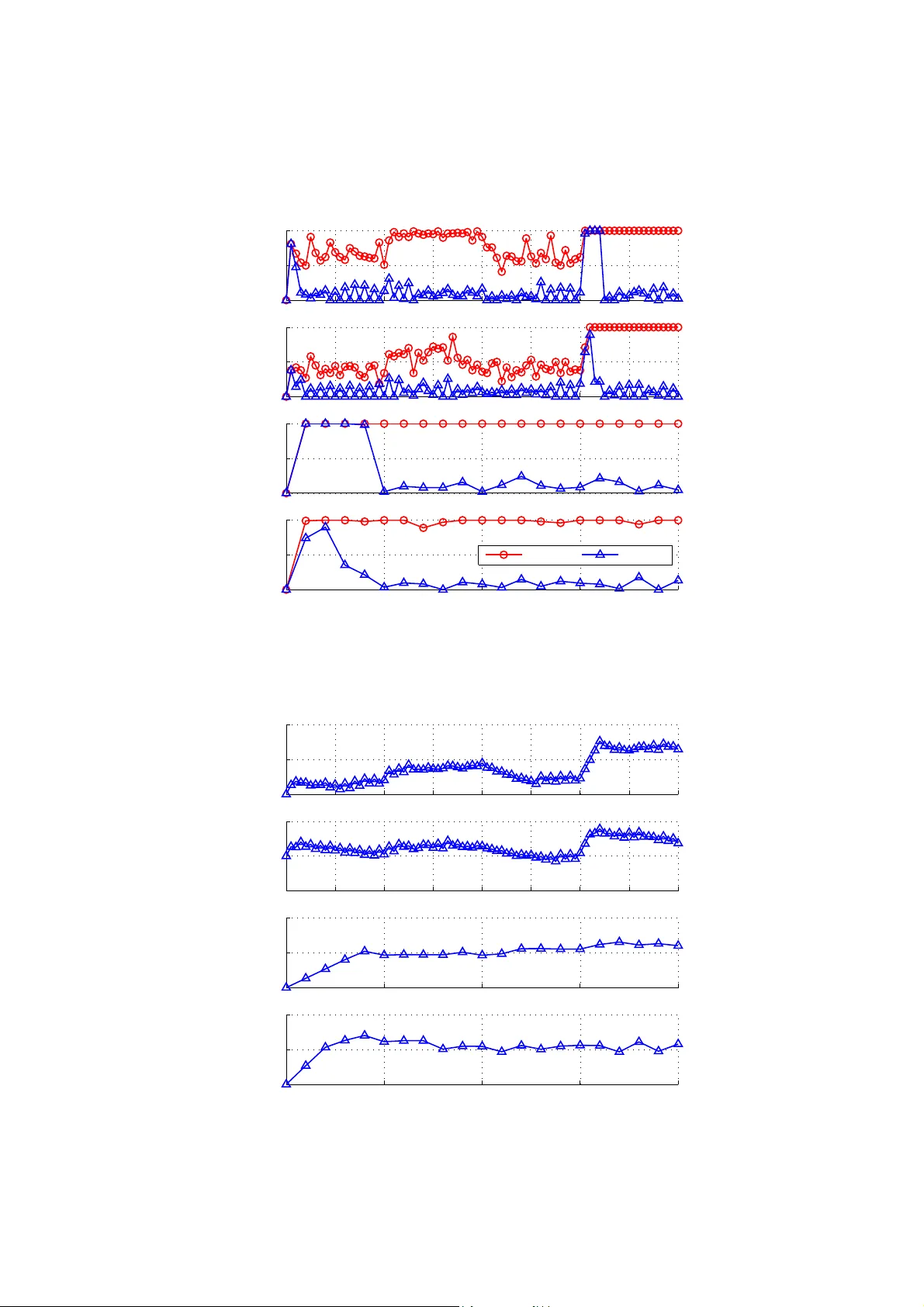
Published in Sensors 2007 , 7 (12), 3179-3191, www.mdpi.org/sensors. Full Paper Fuzzy Logic Control Based QoS Management in Wireless Sensor/Actuator Networks Feng Xia 1,3 , Wenhong Zhao 2 , Youxian Sun 3 and Yu-Chu Tian 1, * 1 Faculty of Information Technology, Queensland University of Technology, Brisbane QLD 4001, Australia; E-mail: f.xia@ieee.org; y.tian@qut.edu.au 2 Precision Engineering Laboratory, Zhejiang University of Technology, Hangzhou 310014, China 3 State Key Laboratory of Industrial Control Technology, Zhejiang University, Hangzhou 310027, China * Author to whom correspondence should be addressed. Abstract: Wireless sensor/actuator networks (WSANs) are em erging rapidly as a new generation of sensor networks. Despite intens ive research in wireless sensor networks (WSNs), limited work has been found in the open literature in the field of WSANs. In particular, quality-of-service (QoS) management in W SANs remains an im portant issue yet to be investigated. As an attempt in this dir ection, this paper develops a fuzzy logic control based QoS management (FLC-QM) schem e for WSANs with constrained resources and in dynamic and unpredictable environments. Taki ng advantage of the feedback control technology, this scheme deals with the impact of unpredictable changes in traffic load on the QoS of WSANs. It utilizes a fuzzy logic contro ller inside each source sensor node to adapt sampling period to the deadline miss ratio associat ed with data transm ission from the sensor to the actuator. The deadline miss ratio is main tained at a pre-determined desired level so that the required QoS can be achieved. The FLC-QM has the advantages of generality, scalability, and simplicity. Simulation results show that the FLC-QM can provide WSANs with QoS support. Keywords: wireless sensor/actuator network, quality of service, adaptive resource management, fuzzy logic control, deadline m iss ratio. 1. Introduction In the last decade, wireless sensor networks (WSNs) have been growing rapidly in various applications. Significant effort has been made in both academ ia and industry to meet the vision of a sensor-rich world [1-4]. Wireless sensor nodes e quipped with sensing, computing, and com munication capacities are now available. Typical examples incl ude UC Berkeley’s Telos and Mica fam ily, CMU’s FireFly, Intel’s IMote2, Sun’s SPOT, UCLA’s Me dusa, and MIT’s µAMPS. Commercial sensor node products and solutions are also offered by many vendors, e.g., Crossbow, Rockwell, MicroStrain, Ember, Sentilla, and Dust Networks. While their physi cal sizes continue to decrease, these sensor node products are becoming cheaper and more powerful than ever. The availability of these products m akes it possible to deploy WSNs at a large scale and a low cost that were im practical or even unimaginable just a few years ago. WSNs are typically used for information gatheri ng in applications like habitat monitoring, military surveillance, agriculture and environmental sensi ng, and health m onitoring. The primary functionality of a WSN is to sense and monitor the state of th e physical world. In most cases, they are unable to affect the physical environment. However, in ma ny applications, observing the state of the physical system is not sufficient, it is also expected to respond to the sensed events/data by performing corresponding actions on the system. This stimulat es the em ergence of wireless sensor/actuator networks (WSANs) [5,6]. Featuring coexistence of sensors and actuators, W SANs enable the application systems to sense, interact, and change the physical world. They can be deployed in lots of applications such as disaster relief, planet exploration, intelligent building, home automation, industrial control, smart spaces, pervasive computing system s, and cyber-physical systems. Real-world WSAN applications have their re quirem ents on the quality of service (QoS). For instance, in a fire handling system built upon a WSAN, sensors need to report the occurrence of a fire to actuators in a timely and reliable fashion; the n, the actuators equipped with water sprinklers will react by a certain deadline so that the situati on will not become uncontrollable. Both delay in transmitting data from sensors to actuators and pack et loss occurring during the course of transmission may potentially deteriorate control performance of the system, and may not be allowed in som e situations where the systems are safety-critical. In a sm art home, although there is no hard real-time constraint, actuators should turn on the lights in a timely fashion once receiving a report from sensors when someone enters or will enter a room where all li ghts are off; people would get unsatisfied if kept staying in dark for a long time waiting for lighti ng. In practice, QoS requirem ents differ from one application to another; however, they can be specifi ed in terms of reliability, timeliness, robustness, trustworthiness, and adaptability, among others. Some QoS m etrics may be used to measure the degree of satisfaction of these services. Technically, Qo S can usually be characterized by, e.g., delay and jitter, packet loss, deadline miss ratio, and/or ne twork utilization (or throughput) in the context of WSANs. Meeting QoS requirements in WSANs is difficult [2,7]. Some major challenges are described as follows. 1) WSANs are normally resource constrained. Sens or nodes are usually low-cost, low-power, small devices equipped with limited data pro cessing capability, transmission rate, energy, and memory. Due to the lim itation in transmission power, the available bandwidth and the radio range of the wireless channel are also limited. For instance, the MICAz m ote from Crossbow, one of the most widely-used sensor nodes, s upports a data rate up to 250 kbps, which is among the highest data rates available today. However, this is far lower than the data rate offered by WLAN (up to 11 Mbps for IEEE 802.11b and up to 54 Mbps for 802.11g), and even Bluetooth (up to 3 Mbps for Bluetooth 2.0). While actuato r nodes typically have stronger com putation and communication capabilities and m ore energy budget re lative to sensors, resource constraints apply to both sensors and actuators. 2) WSANs are highly dynamic in nature. The ne twork topology m ay possibly change over time due to node mobility, node failure, node additi on, and exhausted battery energy. The channel capacity may also change because of the dynami c adjustm ent of transmission powers of the sensor/actuator nodes. 3) WSANs feature inherent node heterogeneity. Having different functionality, sensors and actuators do not share the same level of resour ce constraints. The coexistence of sensors and actuators makes WSANs and W SNs fundamentally distinct. 4) WSANs typically operate in unpredictable environm ents. With wireless radio as the medium for data transmission, most W SANs suffer from di verse radio interferences. This problem will become increasingly severer as wireless technologies are incorporated in more and m ore (consumer) products that are expected to become pervasive. Furtherm ore, query-driven and event-driven applications can also cause the traffic load on the network to vary unpredictably. This paper deals with QoS management in W SANs . A fuzzy logic control based QoS management (FLC-QM) paradigm will be developed to fac ilitate QoS support in resource-constrained W SANs operating in dynamic and unpredictable environments . This approach is by no means an almighty solution to all of the above challe nges; it is, however, the first attempt to explicitly address the im pact of unpredictable variations in traffic load on the QoS of WSANs. The variability of traffic loads over wireless connections may be a natural result of network topology changes, ambient interferences, and/or system reconfiguration, just to mention a fe w. The deadline m iss ratio for data transmission is used as a metric to measure the QoS of W SAN. A fuzzy logic controller is designed to dynamically adjust the sampling period of relevant sensor in a wa y that the deadline miss ratio is kept at a desired level. Taking advantage of the feedback control technology, the FLC-QM ca n provide QoS guarantees while achieving predictable application performance. This solution is generic, scalable, and easy to implement. It can sim ultaneously address multiple QoS problem s such as delay, packet loss, and network utilization. Simulation results will be given to dem onstrate the effectiveness of the proposed FLC-QM scheme. The rest of this paper is organized as follo ws. Section 2 reviews some related work. The architecture of the FLC-QM scheme is described in Section 3. In Section 4, the fuzzy logic controller is designed. Comparative simulations are conducted in Section 5. Section 6 concludes the paper. 2. Related Work Regardless of great progress in WSN research and developm ent, limited work has been found in the open literature on WSANs. Some QoS issues in W SNs have been addressed in e.g. [2,8], but QoS management in W SANs remains an im porta nt issue yet to be explored. Ngai et al [9] suggested a real- time comm unication framework to support event detection, reporting, and actuator coordination in WSANs. The framework takes into account the hete rogeneous characteristics and functionalities of sensors and actuators. Boukerche et al [10] presented a QoS-aware r outing protocol with service differentiation for WSANs. Morita et al [11] developed a reliable data transm ission protocol for lossy and resource-constrained WSANs. Gungor et al [12] studied the impact of several network parameters on overall network performance via simulations. Zhou et al [13] presented a power-controlled real- time data transport protocol for energy-efficien t and real-tim e transmission of packets. W ark et al [14] deployed a real-world mobile WSAN for anim al control in cattle breeding industry. The mobile WSAN is capable of estimating the dynam ic states of bulls, and performing real-tim e actuation on the bulls from location and velocity observations. Trustw orthiness issue in W SANs has been discussed in [15]. However, the QoS management issue has not b een addressed in any of these works in term s of deadline miss ratio and/or network utilization. In our previous work [5], an application- level design methodology was proposed for WSANs in mobile control applications. In [16], a flexible tim e-triggered sampling scheme was also developed for wireless control systems. However, none of our prev ious reports have exploited fuzzy logic control based approach. Another area closely related to this work is th e application of fuzzy logic control to resource management in real-tim e computing and comm unication systems. In the literature, the use of control- based methods for resource managem ent is also called feedback scheduling [17-19]. Fuzzy logic control based feedback scheduling methods have b een explored in our previous work [20-22] for embedded real-time control system s. In recent years, fuzzy logic control has also been widely applied in network congestion control, e.g., [23]. Diao et al [24] proposed an approach to automating parameter tuning in web servers using a fuzzy contro ller. However, these papers have not explicitly dealt with WSANs. To the best of our knowledge, this paper is the first attem pt to apply fuzzy logic control to QoS management in W SANs. 3. QoS Management Architecture In a WSAN, as shown in Figure 1, there are typi cally lots of sensors coexisting with m ultiple actuators. Sensors collect information about the state of physical environm ent, such as the temperature and light inside a room, the occurrence of a fire , and the velocity of a mobile robot, and send corresponding messages to actuators via the wirele ss channel. Upon receipt of the sensed data, actuators make a decision on how to react and pe rform the actions on the physical world accordingly. The data transmission from a sensor to an actuato r can be in a single-hop or multi-hop style. A sensor that generates original measurement data charact erizing the state of physical world is called a source (sensor) node. In a multi-hop transmission, all other sensors except for the source node are intermediate nodes. In practice, a source node can also se rve as an intermediate node for transm itting messages from other nodes. For sim plicity, it is assumed that a source node needs to send its measurements to only one specific actuator. In add ition to sensors and actuators, a base station, also referred to as sink, may be used for network mana gem ent and node coordination (particularly actuator- actuator coordination). Sensor Actuator Source Sensor Figure 1. Topology of a WSAN. The QoS of a WSAN can be affected by many factor s. In the case of node m ovement, node removal or addition, or system update or reconfiguration, it is m ost likely that the network topology, routing, and node traffic load will change. This can then result in variations in network QoS attributes such as transmission delay, packet loss rate, and utilization. In some situations, the QoS of W SANs may become unsatisfactory when delay and/or packet loss rate are too large. Therefore, QoS management paradigms are needed to enhance the flexibility and adaptability of WSANs with respect to the changing network conditions. To meet this requirement, a fuzzy logic contro l based QoS management (FLC-QM) schem e is proposed in this section. The basic idea of the FLC- QM scheme is to adapt the sam pling period of each source sensor at run time such that the deadline miss ratio associated with the real-tim e data transmission from the source node to the actuator is m aintained at a pre-determined desired level. Practically, both a delay larger than the deadline a nd a loss of packet can be regarded as deadline misses. When the sam pling periods of sensors decreas e, the traffic load on the network will increase. As a result, the probability of node collisions increas es, leading to potential increases in both delay and packet loss rate. Therefore, increasing sampling periods can normally reduce deadline m isses [16]. However, too large sampling periods will adversel y cause low utilization of the network bandwidth resource. In some applications such as sampled- data control [17], sm aller sampling periods may be preferable because the system performance will de grade with increasing sam pling periods. For these reasons, this paper proposes to control the deadlin e miss ratio at a non-zero level. This can achieve high utilization of network resource while limiting the m agnitudes of delay and packet loss rate within an acceptable range. In FLC-QM, a separate QoS manager will be desi gned for each source sensor node to adjust its sampling period with respect to the deadline miss ratio associated with the transm ission of its measurements to the actuator, as shown in Figur e 2. Consider a wireless connection from source sensor s i to actuator a j . There could be some or no intermediate sensors between s i and a j . The QoS manager exploits the fuzzy logic control technique and operates in a time-triggered m anner. Let T FLC denote the invocation interval of the fuzzy logic controller. During each invocation interval, the actuator a j records the deadline misses related to data packets from s i . A deadline miss occurs if a j does not receive a data packet by its deadline. At the end of each invocation interval, the deadline miss ratio DMR will be computed as: () () /( ) = ⎢ ⎥ ⎣ ⎦ i i FLC i Nk DMR k Th k (1) where k corresponds to the k -th invocation interval, N i ( k ) is the number of deadline misses recorded in this interval, is the mathematical ope rator rounding towards m inus infinity, and h i is the sampling period of s i . Fuzzy Logic Controller QoS Manager Intermediate Sensors s i a j h i WSAN DMR i Figure 2. Fuzzy logic control based QoS management. At the beginning of a new invocation interval, a j sends the value of DMR i ( k ) to s i . With respect to this current deadline miss ratio and the desired level, the QoS manager generates the new sam pling period h i ( k +1) using a fuzzy logic control algorithm, whic h will be designed in the next section. The sampling period of s i will remain constant during the course of every invocation interval, though it might be changed at the invocation instants. The FLC-QM scheme has the advantages of generality, scalability, and simp licity. • Generality . The FLC-QM scheme is generic because it does not depend on any specific hardware (sensor nodes) or networking technologies. It is applicable to a large number of W SANs built upon different sensor/actuator nodes, with diffe rent network topologies , or using different routing and/or MAC protocols. It is well suited for various types of applications in which QoS is a concern. • Scalability . The FLC-QM scheme is a distributed solution since the adjustm ent of sampling period is performed by a separate QoS managem e nt module for each source sensor node. When a new source node is introduced, a corresponding QoS manager can be designed for the node. • Simplicity . The FLC-QM is simple because the fuzzy logic control algorithm used in the FLC- QM is computationally-cheap and is easy to implem ent. The small overhead makes it well-suited for resource-constrained systems like WSANs. In addition, the use of fuzzy logic control [25] in QoS managem ent in WSANs has the following potential advantages [17]: • In fuzzy logic control, controllers are usually de signed based on heuristic information that m ainly comes from practitioners. Modelling of the process to be controlled is not required for fuzzy control system design. This is very important for complex systems such as W SANs where the relationship between system output (e.g. deadline miss ratio) and control input (e.g. sam pling period) is very hard, if not impossible, to be f ormulated explicitly with mathem atical equations. This feature of fuzzy logic control makes it possi ble to fully exploit the potential of feedback control technology for QoS management in W SANs. • As a formal methodology to em ulate the intelligen t decision-making process of a hum an expert, fuzzy logic control provides an effective and flexib le way to arrive at a definite conclusion based on imprecise, noisy, or incomplete input inform a tion. Therefore, it can easily deal with various uncertainties inside WSANs, such as noise in the m easurement of deadline miss ratio, unpredictable changes in traffic load and network topology. • Fuzzy logic control is robust and adaptable since it can deliver good performance no m atter whether or not the controlled process is linear. This powerful capability in handling non-linearity will reinforce good performance of QoS managem ent in dynamic, unpredictable environments. 4. Fuzzy Logic Controller Design In this section, the fuzzy logic controller in the proposed FLC-QM scheme (Figure 2) will be designed. For simplicity, the subscript i in variables will be omitted wherever possible. As m entioned above, the role of the fuzzy logic controller is to determine the sam pling period based on current deadline miss ratio and its setpoint. Figure 3 shows th e inner structure of the fuzzy logic controller. There are two inputs, the deadline miss ratio control error e ( k ) and the change in error de ( k ) = e ( k ) – e ( k -1). Let DMR R be the desired deadline miss ratio, then e ( k ) = DMR R – DMR(k) . The output of the fuzzy logic controller is the change in sampling period dh ( k ) = h ( k +1) – h ( k ). Fuzzification Inference Mechanism Defuzzification Rule Base e de dh Figure 3. Inner structure of fuzzy logic controller. The fuzzy logic controller is composed of four m ain components [25]: fuzzification interface, rule base, inference mechanism, and defuzzification interface. Once activated at the k -th instant, the fuzzification interface translates numeric inputs e ( k ) and de ( k ) into fuzzy sets characterizing linguistic variables E and DE . The inference mechanism then applies a predetermined set of linguistic rules in the rule-base with respect to these linguistic vari ables, and produces the fuzzy sets of the output linguistic variable DH . Finally, the defuzzification interface converts the fuzzy conclusions the inference mechanism reaches to a num eric value dh ( k ). In this paper, the universes of discourse for e , de , and dh are chosen to be [-0.2, 0.1], [-0.2, 0.2], and [-1.5, 3] (in ms), respectively. Both sets of th e linguistic values for the linguistic variables E and DE are {NB, NS, ZE, PS, PB}, and the set of linguistic values for DH is {NB, NM, NS, ZE, PS, PM, PB}, where NB, NM, NS, ZE, PS, PM, and PB represent negative big , negative medium , negative small , zero , positive small , positive medium , and positive big , respectively. Figure 4 depicts the membership functions used in this paper for all linguistic valu es for both input and output linguistic variables. As shown in Table 1, 25 linguistic rules are built altogether. −0.2 −0.1 0 0.1 0 0.5 1 e ZE PS PB NB NS −0.2 −0.15 −0.1 −0.05 0 0.05 0.1 0.15 0.2 0 0.5 1 de Degree of Membership NB NS ZE PS PB −1.5 −1 −0.5 0 0.5 1 1.5 2 2.5 3 0 0.5 1 dh (ms) NB NM NS ZE PS PM PB Figure 4. Input and output membership functions. Table 1. Linguistic rules. DE DH NB NS ZE PS PB NB PB PB PB PM PS NS PM PS PS ZE ZE ZE PS ZE ZE ZE NS PS ZE ZE NS NS NM E PB NS NS NM NB NB −0.2 −0.1 0 0.1 −0.2 −0.1 0 0.1 0.2 −1 0 1 2 e de dh (ms) Figure 5. Input-output surface. For the inference mechanism, the m ax-min method is adopted. In the defuzzification interface, the most popular centre of gravity m ethod is used to produce a real num ber in the universe of discourse of the output. The input-output surface of the fuzzy l ogic controller is depicted in Figure 5, which describes more straightforwardly the mapping betw een the inputs to the output conceived by Figure 4 and Table 1. With FLC-QM, different fuzzy logic controllers can be used in different source nodes. In particular, the deadline miss ratio setpoint and the invocation inte rval may be different from one another. In this way, multiple types of traffic with different Qo S requirements can be supported sim ultaneously. For simplicity, this paper uses the same values of DMR R and T FLC in all QoS managers. 5. Performance Evaluation Simulations are conducted in this section to ev aluate the performance of the proposed FLC-QM scheme. Consider a simple yet illustra tive WSAN as shown in Figure 6, where s 1 , s 2 , s 3 , and s 4 are source sensor nodes, s 5 is an interfering source node, s 6 is an intermediate node, a 1 and a 2 are actuator nodes. These nodes reside in one collision area, that is , they have to compete for the use of the sam e wireless channel for data transmission. It is noteworthy that the sam pling period of s 5 cannot be adjusted at runtime. The utilized comm unication prot ocol is ZigBee with a data rate of 250 kbps. All data packets transmitted over the network are 45 bytes in size, which may correspond to a payload of 32 bytes and an overhead of 13 bytes. The defau lt sampling period for each source node is 10 ms, DMR R = 10%, and T FLC = 1s. The deadline of a data packet is assumed to be equal to current sampling period of the relevant source node. s 1 s 2 s 3 s 4 s 5 s 6 a 1 a 2 Figure 6. Simulated WSAN system . The simulation runs as follows. At the beginning, all nodes except s 3 , s 4 , and s 5 are active; s 5 is switched on at time t = 20s and off at time t = 40s; s 3 and s 4 remains off until t = 60s. The sim ulation ends at time t = 80s. The simulation tool used here is Matlab along with TrueTim e [26]. Figure 7 shows the deadline miss ratios corresponding to the four source nodes. W ith the classical design scheme, all of the deadline miss ratios are relatively high throughout the sim ulation. The deadline miss ratios change dramatically as the tra ffic over the network changes. When the interfering traffic is introduced, i.e. from t = 20s to 40s, both of the deadline m iss ratios associated with s 1 and s 2 increase; particularly, the deadline miss ratio for s 1 reaches nearly 100% during this term. When s 3 and s 4 become active (after t = 60s), almost all m essage s sent by the four source nodes m iss their deadlines. Further, it is found that under the same network condition the transm ission from s 1 to a 1 may encounter severer deadline miss than that from s 2 to a 1 . For instance, the average deadline miss ratios for s 1 and s 2 in time interval [0, 20]s are 66.5% and 37.8%, respectively. The reason behind is that the former experiences more hops than the latter. The average deadline miss ratio throughout the sim ulation is 81.1%, 58.4%, 100%, and 98.5%, respectively, for each source node. 0 10 20 30 40 50 60 70 80 0 0.5 1 DMR1 0 10 20 30 40 50 60 70 80 0 0.5 1 DMR2 60 65 70 75 80 0 0.5 1 DMR3 60 65 70 75 80 0 0.5 1 DMR4 Time (s) Classical FLC−QM Figure 7. Deadline miss ratios. 0 10 20 30 40 50 60 70 80 0.01 0.02 0.03 h1 (s) 0 10 20 30 40 50 60 70 80 0 0.01 0.02 h2 (s) 60 65 70 75 80 0.01 0.02 0.03 h3 (s) 60 65 70 75 80 0.01 0.015 0.02 Time (s) h4 (s) Figure 8. Sampling periods with FLC-QM. When the proposed FLC-QM scheme is em ployed, the deadline miss ratios for all data transmissions are maintained around the desired le vel 10% and are m uch lower than those resulting from the classical scheme alm ost all the time (ex cept f or during the limited transient processes). The average deadline miss ratios for the four source sensors are 14.2%, 10.5%, 24.2%, and 14.2%, respectively, which are significantly lower than those associated with the classical scheme. In this case, the sampling periods of the four source sensors are adjusted dynamically at runtim e, as shown in Figure 8. This is in contrast to the fixed sampling pe riods that used in the classical scheme and also explains why the examined two schemes perform differently in managing deadline misses. To summarize the above sim ulation results, the FLC-QM scheme is effective in supporting QoS in WSANs in dynamic and unpredictable environm ents. It can significantly enhance the flexibility and adaptability of the systems through m aintaining the desired level of QoS in terms of deadline miss ratio, and consequently delay and packet loss rate , while maximizing the network utilization as m uch as possible when traffic load change unpredictably. 6. Conclusion A fuzzy logic control based QoS management approach has been proposed for W SANs. With this approach, the sampling period of each source sensor node is adjusted dynamically so that the deadline miss ratio associated with the relevant data transmi ssion f rom the sensor to the actuator is maintained at a desired level. In this way, QoS requirements w ith respect to timeliness, reliability, and robustness can be satisfied. Simulation results have demonstrated the effectiveness of the proposed approach. Our future work in this direction includes: 1) improvem ent of the FLC-QM scheme for large-scale WSANs through, e.g., developing a unified framewor k; 2) extensive sim ulation studies on WSANs with more complex network topology; and 3) experim ental studies and practical implementation of the FLC-QM scheme in WSANs. Acknowledgements Authors Xia and Tian would like to thank Aust ralian Research Council (ARC) for its support under the Discovery Projects Grant Scheme (grant ID: DP0559111). References and Notes 1. Borriello, G.; Farkas, K.I.; Reynolds, F. ; Zhao, F. Building A Sensor-Rich World. IEEE Pervasive Computing 2007 , 6 (2), 16-18. 2. Felemban, E.; Lee, C.; Ekici, E. MMSPEED: Multipath Multi-SPEED protocol for QoS guarantee of reliability and timeliness in wireless sensor networks. IEEE Transactions on Mobile Computing 2007 , 5 (6), 738-754. 3. Hande, A.; Polk, T.; Walker, W.; Bhatia, D. Self -Powered W ireless Sensor Networks for Remote Patient Monitoring in Hospitals. Sensors 2006 , 6 , 1102-1117. 4. Wang, X.; Ma, J.; Wang S.; Bi, D. Prediction- based Dynam ic Energy Management in W ireless Sensor Networks. Sensors 2007 , 7 , 251-266. 5. Xia, F.; Tian, Y.C; Li, Y.; Sun, Y. Wireless Se nsor/Actuator Network Design for Mobile Control Applications. Sensors 2007 , 7 , 2157-2173. 6. Rezgui, A.; Eltoweissy, M. Service-oriented se nsor-actuator networks: Promises, challenges, and the road ahead. Computer Communications 2007 , 30 , 2627-2648. 7. Chen, D.; Varshney, P.K. QoS Support in Wireless Sensor Networks: A Survey. In Proc. of the Int. Conf. on Wireless Networks (ICWN’04), Las Vegas, Nevada, USA, June 2004. 8. Munir, S.A.; Bin, Y.W.; Biao, R.; Jian, M. Fu zzy Logic based Congestion Estimation for QoS in Wireless Sensor Network. In Proc. IEEE Wirele ss Com munications and Networking Conference (WCNC), Hong Kong, China, 2007. 9. Ngai, E. C.H.; Lyu, M.R.; Liu, J. A Real-Tim e Com munication Framework for W ireless Sensor- Actuator Networks. In Proc. IEEE Aerospace Conf., Big Sky, Montana, U.S.A., March 2006. 10. Boukerche, A.; Araujo, R.B.; Villas, L. A Wi reless Actor and Sensor Networks QoS-Aware Routing Protocol for the Emergency Preparedne ss Class of Applications. In Proc. 31st IEEE Conf.on Local Computer Networks, Tampa, FL, 2006; pp. 832-839. 11. Morita, K.; Ozaki, K.; Hayashibara, N.; Enoki do, T.; Takizawa, M. Evaluation of Reliable Data Transmission Protocol in Wireless Sensor-Act uator Network. In Proc. 21st Int. Conf. on Advanced Information Networking and Applications Workshops, May 2007; Vol. 2, pp. 713-718. 12. Gungor, V.C.; Vuran, M.C.; Akan, O.B. On the cr oss-layer interactions between congestion and contention in wireless sensor and actor networks. Ad Hoc Networks 2007 , 5 , 897-909. 13. Zhou, Y.; Ngai, E. C.-H.; Lyu, M.R.; Liu, J. POWER-SPEED: A Power-Controlled Real-Time Data Transport Protocol for Wireless Senso r-Actuator Networks. In Proc. IEEE W ireless Communications and Networking Conf (W CNC'07), Hong Kong, China, March 2007. 14. Wark, T.; Crossman, C.; Hu, W .; Guo, Y.; Valencia , P.; Sikka, P.; Corke, P.I.; Lee, C.; Henshall, J.; Prayaga, K.; O'Grady, J.; Reed, M.; Fisher , A. The design and evaluation of a mobile sensor/actuator network for autonomous animal control. In Proc. Int. Conf. on Inform ation Processing in Sensor Networks (IPSN), 2007; pp. 206-215. 15. Hu, F.; Cao, X.; Kumar, S.; Sankar, K. Trustwor thiness in wireless sensor and actuator networks: towards low-complexity reliability and secur ity. In Proc. IEEE Global Telecomm unications Conference (GLOBECOM), Vol.3, Dec. 2005. 16. Xia, F.; Zhao, W.H. Flexible Time-Triggered Sampling in Sm art Sensor-Based Wireless Control Systems. Sensors 2007 , 7 , 2548-2564. 17. Xia, F. Feedback Scheduling of Real-Time C ontrol Systems with Resource Constraints. PhD Thesis, Zhejiang University, 2006. 18. Xia, F.; Sun, Y.X. Control-Scheduling Codesi gn: A Perspective on Integrating Control and Computing. Dynamics of Continuous, Discrete and Impulsi ve Systems - Series B: Applications and Algorithms 2006 , Special Issue on ICSCA’06 , 1352-1358. 19. Arzen, K.-E.; Robertsson, A.; Henriksson, D.; J ohansson, M.; Hjalmarsson, H.; Johansson, K.H. Conclusions of the ARTIST2 Roadmap on Control of Computing System s. ACM SIGBED Review 2006 , 3 (3), 11-20. 20. Xia, F.; Liu, L.P.; Sun, Y.X. Flexible Qua lity-of-Control Management in Embedded System s Using Fuzzy Feedback Scheduling. Lecture Notes in Artificial Intelligence 2005 , 3642 , 624-633. 21. Xia, F.; Shen, X.F.; Liu, L.P.; Wang, Z.; Sun, Y. X. Fuzzy Logic Based Feedback Scheduler for Embedded Control Systems. Lecture Notes in Computer Science 2005 , 3645 , 453-462. 22. Xia, F.; Sun, Y.X. Anytime Iterative Optim al Control Using Fuzzy Feedback Scheduler. Lecture Notes in Artificial Intelligence 2005 , 3682 , 350-356. 23. Ren, F.Y.; Ren, Y.; Shan, X.M. Design of a fuzzy controller for active queue management. Computer Communications 2002 , 25 (9), 874-883. 24. Diao, Y.; Hellerstein, J. L.; Parekh, S. Optimizing quality of service using fuzzy control. In Proc. 13th IFIP/IEEE Int. Workshop on Distributed Syst ems: Operations and Managem ent (DSOM), 2002; pp. 42-53. 25. Passino, K.M.; Yurkovich, S. Fuzzy Control, Addison-Wesley, 1998 26. http://www.control.lth.se/truetime/, accessed 1 Nov 2007.
Original Paper
Loading high-quality paper...
Comments & Academic Discussion
Loading comments...
Leave a Comment