A Conversation with Seymour Geisser
Seymour Geisser received his bachelor's degree in Mathematics from the City College of New York in 1950, and his M.A. and Ph.D. degrees in Mathematical Statistics at the University of North Carolina in 1952 and 1955, respectively. He then held positi…
Authors: Ronald Christensen, Wesley Johnson
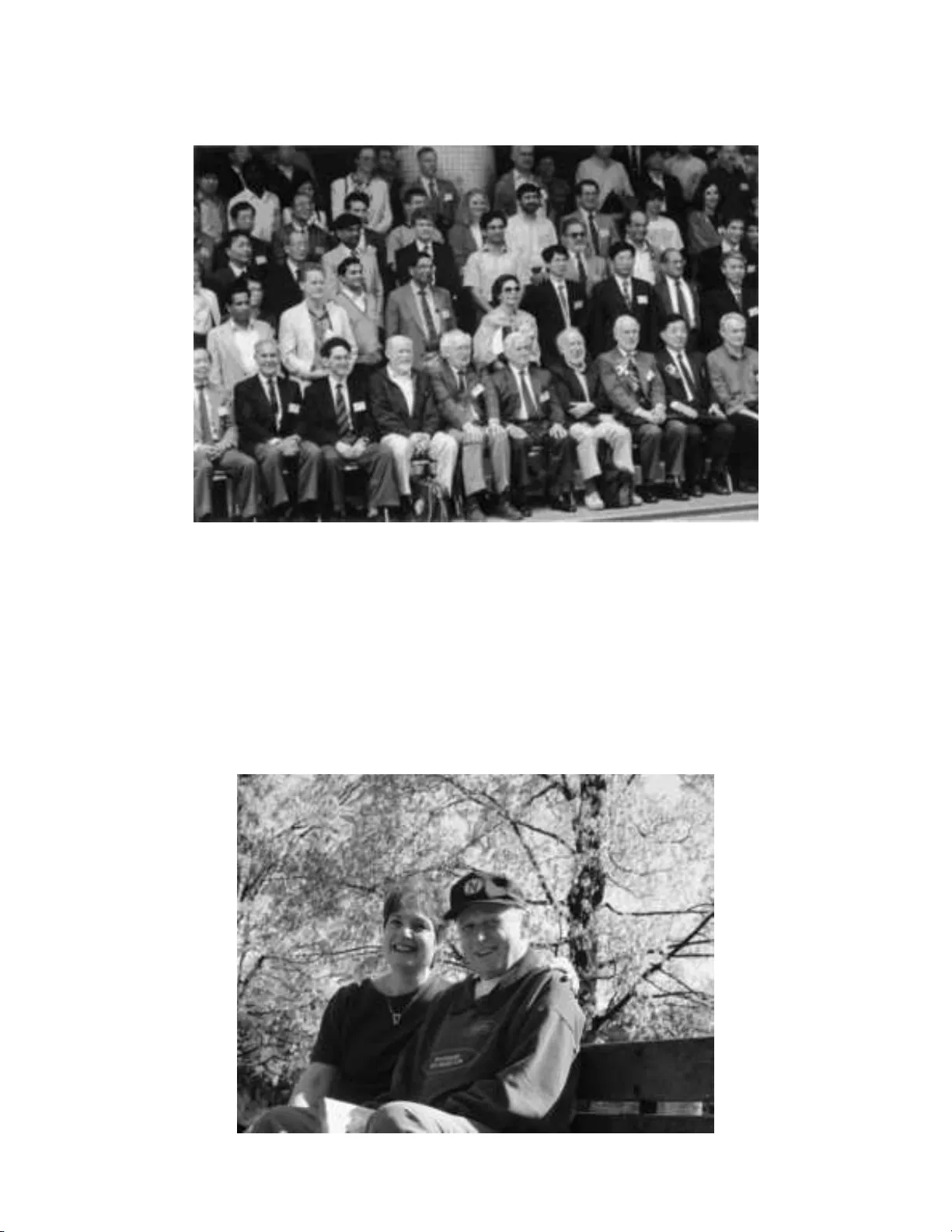
Statistic al Scienc e 2007, V ol. 22, No. 4, 621– 636 DOI: 10.1214 /0883423 07000000131 c Institute of Mathematical Statisti cs , 2007 A Conversation with Seymour Geisser Ronald Christensen and W esley Johnson Abstr act. Seymour Geisser receiv ed his bac h elor’s degree in Mathematics from the Cit y College of New Y ork in 1950 , and h is M.A. and Ph.D. degrees in Mathematical S tatistics at the Univ ersit y of North Carolina in 1952 and 1955, resp ectiv ely . He then held p ositions at the National Bur eau of Standards and the National In stitute of Menta l Health until 196 1. F rom 196 1 un til 1965, he wa s C hief of the Biometry Section at the National In stitute of Arthritis and Metab olic Disea ses, and al so held the p osition of P r ofessorial Lecturer at the George W ashington Univ ersit y from 1960 to 1965. F rom 1965 to 1970, he was the foun d ing Chair of the Departmen t of Statistics at the State Universit y of New Y ork, Buffalo, and in 1971, he b ecame the founding Director of the Sc ho ol of Statistics at the Universit y of Minnesota, remaining in that p osition unti l 2001. He h eld visiting pr ofessorships at Io w a State Un iv ersit y , 1960; Univ ersit y of Wisconsin, 1964; Universit y of T el-Aviv (Israel), 1971; Univ ersit y of W at erlo o (Canada), 1972; Stanf ord Univ ersit y , 1976, 1977, 1988; Carn egie Mellon Unive rsity , 1976 ; Univ ersit y of the Or ange F ree State (South Africa), 1978, 1993; Harv ard Un iversit y , 1981; Univ ers it y of C h icago, 1985; Un iv ersit y of W arwic k (England), 1986; Univ ersit y of Mo dena (Italy), 1996; and National Chiao T ung Univ ersit y (T aiw an), 1998. He was the Lady Da vis Visiting Professor, Hebrew Unive rsity of Jer u salem, 1991, 1994, 1999, and th e Schor Sc holar, Merck Researc h Lab oratories, 2002-2003 . He w as a F ello w of the Institute of Mathematical Statistics and the Am er ican Statistical Asso ciation. Seymour is listed in W orld Men of S cience, American Men and W omen of S cience and Who’s Who in America. He serv ed on n umerous committees for the Natio nal Institutes of Health, F o o d and Drug Administr ation, National Institute of S tatistical S cience and National Researc h Coun cil. In addition, he wa s a National Science F oundation Lecturer in S tatistics from 1966–1969 ; m em b er of the National Researc h Cou n cil Committee on National Statistics from 1984–1987 ; C hair of the National Academ y of Sciences p anel on O ccupational Safety and Health S tatistics from 1986–198 7; and he serv ed on Program Review Committees for many unive rsities. He deliv ered the American Statistical Association Presiden t’s Invited Ad dress in 1991. Seymour authored or coauthored 176 scien tific articles, d iscussions, b o ok r eviews and b o oks o ver his career. One of his articles, “On metho ds in the analysis of p rofile data,” whic h w as coauthored by S. W. Greenhouse, and p u blished in Psychometrika in 1959, is listed as a citatio n classic. He pioneered seve ral imp ortan t areas of statistical endea vor. He and Mervyn Stone s im ultaneously and ind ep end ently in v ent ed the no w p opu lar statistical metho d called “cross-v alidation,” whic h is used for v alidating statistical mo dels. Dr. Geisser’s pap er on the sub ject, “The p redictiv e sample r euse metho d with applications,” was pu b lished in the Journal of the Americ an Statistic al Asso ciation in 1975. He pioneered the areas of Ba ye sian m ultiv ariate analysis and d iscrimination, Ba yesian diagnostics for statistical prediction and estimation mo dels, Ba ye sian int erim analysis, testing for Hardy–W einb erg equilibrium using forensic DNA data, and the optimal administration of multiple diagnostic screening tests. R onald Christensen is Pr ofessor, Dep artment of Mathematics and Statistics, University of New Mexic o, Albuquer que, N ew Mexic o 57131, USA e-mail: fletcher@stat.unm.e du . Wesley Johnson is Pr ofessor, Dep artment of Statistics, University of California, Irvine, California 92697, U SA e-m ail: wjohnson@uci.e du . This is a n e le ctronic repr int of the origina l article published by the Institute o f Mathematical Sta tistics in Statistic al S cienc e , 2 0 07, V ol. 22, No. 4, 6 21–6 3 6 . This reprint differs from the original in pa gination and t yp ogr aphic detail. 1 2 R. CHRI STENSEN A ND W. JOHNSON Seymour wa s primarily noted for his su stained fo cus on pr ediction in Statistics. This b egan with h is w ork on Bay esian classification. He gav e an early exp osition in his article, “The inferen tial use of pred ictive distributions,” p ublished in F oundation s of Statistic al Infer enc e in 1971. Most of his work in this area is summarized in his m onograph, Pr e dictive Infer enc e: An Intr o duction pu blished by Ch apman and Hall in 1993. Th e essence of his argument w as that Statistics should fo cus on obser v able qu an tities rather th an on unobserv able parameters that often do not exist and ha ve b een incorp orated largely for conv enience. He argued that the success of a statistical mo del s hould b e measured b y th e qualit y of the predictions made from it. He p oin ted out that in terest in mo del parameters often seemed to b e b ased more on in terest in ease of mathematical displa y than in their scient ific utility . Shortly after it wa s in tro duced, he ga ve h is attent ion to forensic DNA pr ofiling. He wa s in v olv ed as an exp ert witness in 100 litigations inv olving m urd er , rap e, paternity , and other issues. His exp eriences in dealing w ith the FBI thr oughout these litigat ions are catalog ued in his pap er, “Statistics, litigatio n and condu ct un b ecoming,” publish ed in Statistic al Scienc e in the Courtr o om in 2000. His pr imary pur p ose in these litigations was to p oint out that statistica l calculations display ed in court should b e v alid. It w as his con tenti on that the statistica l metho ds th en b eing u sed by th e prosecution in DNA cases we re fla wed. Finally , he w as p roud of h is r ole in the d ev elopmen t of the Univ ersit y of Minnesota S c ho ol of S tatistics and its graduate program. During his tenure there, he was resp onsible for hiring outstanding facult y who hav e since b ecome leaders in their areas of exp ertise. Moreo v er, man y of the s tudent s ob taining their Ph.D. degrees at th e Universit y of Minn esota h a v e also b ecome prominent in their resp ectiv e fields. Seymour w as su bstan tially resp onsible f or creating an educational environmen t that v alued the f ou n dations of Statistics b ey ond mere tec hn ical exp ertise. Tw o sp ecial conferences w ere con vened to honor the con tribu tions of Seymour to the fi eld of Statistics. The first w as organized b y Jac k Lee and held at the National Chiao T un g Univ ersit y of T aiw an in Decem b er of 1995. T he second was organized by Glen Meeden and h eld at the Univ ersit y of Minnesota in Ma y of 2002. In conju nction with the former conference, a sp ecial v olume ent itled, Mo deling and Pr e diction: Honoring Seymour Geisser, w as p ublished in 1996. Most recently , Seymour compiled h is lecture notes in to a m an uscript entitle d, Mo des of Par a- metric Statistic al Infer e nc e [pub lish ed by Wiley in 2006]. Th e b o ok pro vides a broad view of the foundations of Statistics and invites d iscussion of the r elativ e merits of differen t m o des of statistical in f erence, metho d, and thou ght. His life’s wo rk exemplifies the pr esen tation of though tful, prin cipled, reasoned, and coheren t statistical metho ds to b e used in the searc h for scien tific truth . Seymour Geisser d ied Marc h 11, 2004. The Departmen t of S tatistics at the Universit y of Minn esota has established the Seymour Geisser Lectureship in Statistics . Eac h yea r, starting in the F al l of 2005, an individ ual will b e named the Seymour Geisser Lecturer f or that y ear and will b e invite d to giv e a sp ecial lecture. Individuals will b e selected on the basis of excellence in statistical endea vo rs an d th eir corresp ondin g contributions to science, b oth statistical and otherwise. F or more inform ation or to see his curriculum vitae, visit the Universit y of Minn esota, Department of Statistics w eb page, www.stat.umn.edu . A CONV ERSA TION WITH S EYMOUR GEISSER 3 This con v ersation to ok place among S eymour Geisser, W esley J oh n son and Ronald Ch ristensen in Seymour’s home in S t. Paul, Minn esota on January 15 and 17, 2004. He had earlier b een diagnosed with t w o ve ry rare and incur able diseases. Despite his ill- ness and d iscomfort, he was in go o d humor through- out the in terview. His wife, Anne, was an insp iration to him and as he b ecame more ill, she pla yed the ma- jor role in his emotional and physica l su pp ort. This con v ersation could not ha ve tak en place w ithout her and we dedicate it to Anne. W es: T el l us something ab ou t y our early life. Seymour: W ell , m y paren ts were immigrants from P oland. They came here in the early 1920s—of course v ery , very p o or. My father ended up b eing a garmen t w ork er in New Y ork C ity . I was b orn in the Bronx, but hav e no recollect ion of it b ecause at the age of t w o, we m o ved to Bro oklyn. I hav e one br other who is four y ears younger than I am. I w as a stud en t at Lafa y ette High Sc ho ol in Bro ok- lyn and m y u ndergraduate college w as the Cit y Col- lege of New Y ork, which w as en tirely fr ee at the time. It was qu ite a c hore to get up to City College from where I liv ed. Cit y C ollege was up on Conv ent Av en ue and 137th Str eet and I liv ed down in Ben- sonh urs t, whic h was almost on the southern en d of Bro oklyn. It to ok almost t wo h ours going and t wo hours coming b ac k. I sp ent a lot of time sleeping on the subw ay . Ron: Do you wa nt to say an y more ab out y our par- en ts? Seymour: Th ey came from W ars a w , P oland. My fa- ther was dr afted into the P olish Army d uring the Russo/P olish wa r of 1920 and as so on as he w as disc harged, he left the country . My mother follo wed so on after. My father w as 19 and I think m y m other w as 18 and they h ad just gotten m arried. T hey d idn’t ha v e enough money f or b oth to come at the s ame time. So, he came fir st and w ork ed here for almost a y ear in a num b er of jobs. One of them wa s a singing w aiter. Ron: I ’m curious wh y y our father left r igh t after the w ar. Seymour: W ell, they w ere P olish Jews and things w eren’t very go o d for them th er e. They we re al- w a ys on the brink of starv ation and then th ere w as the w ar with Russia. He had thr ee brothers who, disc harged from th e Ru ssian army in 1905 dur ing the Ru sso/Japanese W ar, also left and came to this coun try . S o, he came o v er and brought his mother, Fig. 1. Seymour cir c a 1950, with r e d hair. his wife and , I b eliev e, his sister, although I’m n ot sure ab out that one. Ron: Ho w d id y our father get separated from h is brothers? They w ere in Russia? Seymour: Thin gs were v ery difficult in Po land. A t the time it was un der o ccup ation by Russ ia. It was called Ru ssian Po land. It w as v ery difficult to wo rk and make a living and there w as opp ortunit y in this coun try , or at least they thought there was [S ey- mour smiles], and they managed to come. O ne of his brothers had to stop in Belgium b ecause he didn ’t ha v e enough money to go any further. He w ork ed as a coal miner in Belgi um for a y ear or so and then he came o v er -jus t the u sual immigration p attern. Ron: Do y ou w an t to say anyt hing ab out y our mother? Seymour: Y es. My m other had a brother who lived in th e States. He and m y father actually came o ver at the same time. I think they w ere b oth discharge d from the army at the same time. My mother did n’t ha v e m uc h sc ho oling. My father did n’t hav e m uch regular sc ho oling, b ut h e p ic ked up a lot of lan- guages. He could s p eak fairly fluently in, of course, P olish, as w ell as Russian, Ukrainian, Hebrew, Yid- dish, and Spanish . Spanish he pic k ed up fr om Cu bans 4 R. CHRI STENSEN A ND W. JOHNSON when h e was wo rking in this country . My mother was a h ou s ewife f or a num b er of y ears and later, when I w as in my teens, she wen t to w ork, to o, as a garmen t w ork er. W es: So they all wen t to New Y ork? Seymour: W e ll yes, and then one of them, with his family , mo ve d to California and ev en tually settled in the L.A. area. I h a v e an aunt , wh o was my father’s sister, who was the m other of Leon Gilford, who had b een a statisticia n at the C en sus Bu reau, and his wife w as Doroth y Gilford. T hey are th e ones that got me int erested in Statistics. Dorothy Gilford had b een a student of Hotell ing’s at Colum bia, I b eliev e, and m y cousin Leon h ad b een a stud en t of hers , I guess also at Colum bia. I w as an un dergraduate math ma jor at Cit y C ollege. One of the reasons w as [Seymour laughs ] b ecause w e u sed to pla y c h ess in the cafeteria wh ich w as n ear th e Math ro oms and offices, so w e did n’t hav e far to go. And then they got me interested in Statistics. I really didn’t kn ow ab out graduate sc h o ol at the time. I w as sort of a no vice at all this and th ey suggested that I apply to North Carolina. W es: Ho w did they get you interested in Statistics? Seymour: Opp ortunities!!! [Laughs all around.] The only thing y ou could do in math bac k then w as to teac h h igh sc ho ol and I didn ’t w ant to do that. Ron: Did y ou lik e high sc ho ol? Seymour: Oh, high sc ho ol w as a go o d bit of f un. I pla ye d a little b asketball on the h igh sc ho ol team and then I had an argum en t with the coac h and I quit. [My parent s] very m uch hop ed I w ould go to a unive rsity and, of course, at the time, it was free. W es: T el l us ab out y our gradu ate education. Seymour: When I left C it y College to go to C hap el Hill, I though t I w as entering a country club. It was suc h a prett y campus, eve n ju s t the w alk o ver to Phillips Hall where the Statistics Office wa s. Life seemed v ery easy . They had a lot of s tu den ts there, man y of wh om ha ve made a mark in the S tatis- tics field. There were a f ew upp er classmen such as Sudish Gh urye, Ingram Olkin, Ralph Bradley , Mil- ton T er r y , Sutton Munro e and others . Those closer to my time, wh ic h wa s t wo or three y ears b ehind , w ere p eople like Don Bur kholder, T ed Colton, F red Descloux, Ed Gehan, Ram Gnanadesik an, Shan ti Gupta, Jac k Hall, Bill Ho we, Marvin Kasten baum, T. V. Nara y ana, Jim Pa c heres, K. V. Ramac han- dran, P aul Somerville, Bill Thompson, John Wilkin- son and Marvin Z elen. Ther e we re others, to o, b ut I can’t recollect all their names. I think I ’v e giv en y ou a prett y long list. W es: W as Marvin y our year? Seymour: He was a ye ar ahead of me. He j ust to ok a Master’s Degree and then he left for his job at th e Stev ens Institute of T echnolog y . W es: Did the students go out together? Seymour: Some of us did. W e would d o the usual things: dr ank b eer in the rathsk eller, p la y ed a lot of cards, gam bled a lot. I th ink I h eld my own. W es: What were the professors lik e? Seymour: W ell, when I came th er e, they had an excellen t en tourage of professors. Harold Hotelling, W assily Ho effding, S . N. Ro y , George Nic holson, R. C. Bose and Herb Robbins were some of the top p eo- ple at the time. Robbins w as a ve ry go o d teac her. W e didn ’t ha v e to o muc h int eraction with ou r pro- fessors; th ey w ere all qu ite a bit older and the only in teraction with them was wh en they were mento r- ing u s as studen ts. Hotell ing was my men tor, but he w as v ery hard to get, and every time I w ould find him and show him m y work, he w ould alw ays su ggest something more to do. I got to b e a little anno yed at this. I though t I had done enough. So the next time he ask ed me to do something, I wen t bac k and I did it and I thought , wh at w ould he ask n ext. I thought ab out it and I said p robably this kind of thing and I did it. Next time I came in, s u re enough, he asked me to do exactly that and I said, “Here, I’ve done it.” He said, “W ell then, I gu ess y ou’re finished .” W es: Wh y did Hotelling stand out for you? Seymour: Hotelling had d one all this wo rk in mul- tiv ariate analysis, T-squ are, canonical correlations, discrimination. He w as v ery goo d in small sample theory . As I sa y , my cousin’s wife had w ork ed u nder him and she said h e was th e top man. So, I to ok my Master’s thesis with him and my Do ctoral disserta- tion. Ron: Just b riefly , wh at we re they? Seymour: The Master’s thesis w as on matrix compu- tations: ro ots and characte ristic v ectors of matrices. The Ph .D. thesis was on the mean s quare succes- siv e differen ce in Statistics. Durin g the sum m ers of 1952 an d 1953, wh en I was a graduate stud ent, I w ork ed at the Ab erdeen Pro ving Groun d. John vo n Neumann h ad w ork ed for them p reviously du ring the war, wr ote some pap ers with some of the p eo- ple there on certain quadratic forms. I got int erested and did some w ork on that, w hic h is really t w o parts, mean square su ccessiv e difference as an estimate of A CONV ERSA TION WITH S EYMOUR GEISSER 5 the v ariance when y ou h a v e a slo wly mo ving trend— so y ou can d ifference it out. And th e second p art is the ratio of that to the sample v ariance, wh ic h wa s the statistic that v on Neumann w orke d on, wh ich apparen tly w as usefu l on a firing r ange. So I pic k ed that problem and Hotelling said, “Fine, w ork on it.” Ron: I think successiv e differences are used in con- trol c harts, aren’t they? Seymour: Y es, when y ou ha v e thin gs that are related and th ey ha v e a linear trend. Th ere used to b e a guy at I ow a State w h o d id a lot of work on that sort of thing. [See Rao ( 1959 ).] Ron: I assume that when you sa y “Ab erdeen,” y ou don’t mean Ab erd een, S outh Dak ota. Seymour: No, it is Ab erdeen, Maryland. It w as a pro ving ground w here they tested ammunition, gun s, but they had a cannon mounted on a platform b e- t w een tw o truc ks. W e also had a lot of recoilless rifl es that were tested. That w as 50 years ago. Sometimes, when a deer u sed to cross the path of the target they used to turn the cann on on the deer. Ron: Did they ev er hit th e deer? Seymour: I don’t think so. W es: Why did North Carolina attract so man y fa- mous p eople? Seymour: Beca use of Hotelling. He w as brought do w n b y Gertrude Co x fr om Columbia wh ere they didn’t ha v e a Statistics Departmen t at the time. He wa s ac- tually in Economics, I b eliev e. In fact, h e h ad done v ery im p ortan t w ork in Economic theory b efore he came to North Carolina. He attracted the tw o p eo- ple fr om Ind ia, Bose and Roy , and Ho effding. I think Ho effding wa s in Germany d uring the war. I’m not sure wh ether he was a Dane originally and a refugee, but h e came ov er. [Ed. Note: Ho effdin g was b orn in Finland, mov ed to Denmark in 1920, and to Ger- man y in 1924.] And th en, of course, Herb Robbins. Robbins left in ab out 1952 or 1953 to go bac k to Colum bia. Hotelling and [Jerzy] Neyman were the k ey fig- ures in Statistics at that time, the late 1940s to mid-1950s. [Hotelling] actually put out the idea of a confid ence co efficien t, a confiden ce inte rv al, in a pap er wh ic h predated Neyman’s w ork. But he nev er dev elop ed it as Neyman and [Eagon] Pea rson did . Ron: Did any int eresting p eople come by to visit North Carolina? Seymour: C. R. Rao came b y , wh en he w as qu ite y oung. W e had some economists, W assily Leont iff and others. W ally [W alter L.] Smith . Someb o d y came who taugh t a course I to ok in Actuarial Statistics. But it wasn’t v ery int eresting. R. A. Fisher sp en t th e summer, I think, at North Carolina State. There wa s an interesting story ab out Fisher. He w as at a picnic, if I remem b er this cor- rectly , celebrating the 4th of July . Some woman came up to him and ask ed him if they also celebrated th e 4th of July in England. He though t for a while and said, “Ma yb e they should .” W es: Y ou wen t to w ork at NIH after you got y our degree? Seymour: Actually , I w ent to w ork first at th e Na- tional Bureau of Standards and I was ther e for ab out six m on ths. I really wasn’t interested in teac hing, although I had an offer fr om [the Math department at] Illinois. They h ad some statistics v acancies. The pa y wasn’t v ery go o d—$5,000 or something. I we nt to the Bureau of Standards b ecause it w as in W ash- ington D.C. I h ad live d in W ash ington for a summer after graduating Cit y College. I work ed at the Op- erations Researc h Office wh ic h had a br anc h in the Arm y W ar College. I w orke d there as a sort of an assistan t to Herm an Cher n off who w as th er e also at that time. T he W ashington su burb s seemed like a nice place to liv e and the p a y w as pr etty go o d in the civil service. There were some interesting p eople there. They h ad Jac k Y ouden, Churc hill Eisenh art, Marvin Z elen. Bill C onnor was there and Bill Clat- w orth y . When I w as at the Statistical En gineering Lab, whic h Churc h ill Eisenhart headed, [m y w ork wa s] mostly consulting and cleaning up m y dissertation for publication and some other thin gs lik e that. I wa s only there for six mon ths. Norman Seve ro, I don’t kno w if y ou r ememb er him, he came t w o m on ths b efore I left. It wa s prett y go o d ; p rett y interesting. Then I heard ab out the Comm iss ioned O fficers Corps of th e US P ublic Health Service and I applied and wa s acce pted, and I was assigned to NIH [Na- tional Institutes of Health]. Actually , there w as an agreemen t. If I w ould get commissioned, they w ould tak e me on. A t that time, they had a uniformed ser- vice that gav e you na v al ranks and y ou we re com- missioned. Y ou only wore a u niform if y ou were in the Public Health Ser v ice that r an the quaranti nes. They ran th e Medical Corp s f or the C oast Guard and they r an the CDC, the disease cen ter for NIH. I w as commissioned as the equiv alen t as a Lieutenan t (j.g.). I rose in th e ranks to Lieutenant Sen ior Grade. [NIH] w as in Bethesda, Maryland . I was p ut in Sam Gr eenhouse’s section in the National Ins titute 6 R. CHRI STENSEN A ND W. JOHNSON Fig. 2. Seymour cir c a 1960. of Menta l Health. [Ed. Note: Sam had agreed to supp ort Seymour’s app lication.] A t that time Jerr y Cornfield, Max Halp erin, Nate Man tel, and Marvin Sc hneiderman were at NIH. So, there was a coterie of statisticians. Some of them were cen trally lo cated under Harold Dorn and others w ere at v arious insti- tutes. W es: That’s quite a list. Seymour: Actually , it wa s a very in teresting time there. W e used to eat lun c h together and talk ab out ev erything from h istory to statistic s to religion to p olitics. Th e table talk w as really interesting. Jerry Cornfield wa s a bit of a r acon teur. But th ey’re all gone. He w as a very in teresting man, Jerr y . He had a Bac helor’s Degree in History and the rest he learned on his o wn . He w orked for the Bureau of Lab or Statistics for a while and then he was brought o v er to NIH. Some of the table talk w as ab out Ba y esian credible int erv als. W es: W as ther e an y of that in North Carolina? Seymour: Ba ye s? L on g gone. The only men tion w as what wa s in [Harald] Cram´ er’s b o ok ab out “The Man in th e Iron Mask.” The p robabilit y of whether he was th e king of F rance. Ho effding wa s in non- parametric inference. Both Bose and Ro y , at th e time, more Ro y , were in m ultiv ariate analysis, and Bose had just started to do w ork in co ding theory . But there was nothing ab out Ba y esian theory at the time. That wa s a sub j ect they all thought had died in the last century . When I told Hotelling sev eral yea rs later, while I w as at Buffalo, that I was doing Ba yesian work, he said, “W ell, that comes and go es.” I t’s in teresting that Hotelling, w ho w as a man of immense erudition and knew all sorts of things and w as also a w onderful racon teur, nev er though t ab out Ba y esian theory— only to make th at remark to me once, th at it comes and go es. W es: W as Jerry Cornfield a Ba yesian when yo u fir st met him or was he b ecoming one? Seymour: I think h e was sort of leaning that wa y . He was very inte rested in exploring the differences b et wee n Bay esian and F requen tist theory . T hat hap- p ened while I was there. I think it w as from reading [L. J.] S a v age. J er r y was thin king ab out the f u nda- men tal ideas of gam bling, lik e [Rob ert] Buehler was doing h ere [at Minnesota] at one time. The meaning of confi d ence in terv als, and the meaning of wh at he called, at that time, credibile interv als. A CONV ERSA TION WITH S EYMOUR GEISSER 7 Fig. 3. Seymour cir c a 1965, with r e d b e ar d. W es: Y ou said y ou w ere talking with this larger group? Seymour: None of them w as really in terested. Max Halp erin was not int erested in Bay esian theory; he p o oh, p o ohed it. And Sam Greenhouse wasn’t in ter- ested in Ba y esian theory and, of cour se, Nate Man- tel was not. Th ey we re in terested in metho d ology mainly , in dev eloping metho d ology for exp erimen ts and trials that were ru n at NIH, and were using the usual fr equen tist theory to analyze them. T he NIH group was really a ve ry smart, v ery go o d, ve ry kno wledgeable group, ev en though their actual sta- tistical training w as p rett y minimal at th at time. Only Max Halp erin had a do ctorate and that was from Chap el Hill. T h e argum en ts there were pas- sionate. W es: So yo u leaned one w a y an d they leaned the other? Seymour: I w as leaning to wa rds th e Ba y esian ap- proac h, esp ecially w h en I did a pap er. First, I wa nte d to see what would h app en if I considered the u sual m ultiv ariate pr oblems from the Ba y esian p oin t of view in ab out 1963. And then I tur n ed to see what w ould happ en with classificatio n/discrimination. Then it da wned on me that with Bay esian theory y ou didn’t hav e to m ak e a [strict] separation for lin- ear discrimin ation. F or example, eve rything on one side w as guilt y and the other side inno cent, if you lik e. [A Ba yesian] could fi nd the pr obabilit y of eac h individual b eing one or the other. It was a m uch finer distinction than using, sa y , the u sual Fisher linear discriminant and that r eally swu ng me to the Ba yesia n approac h at the time. W es: That sound s like the b eginning of th inking ab out pr ediction. Seymour: Y es, of course; it is prediction or a retro- diction to wh atev er y ou wan t to call it. Da vid C o x refused to let me use [retro diction] in a pap er. By a retro diction, I mean something th at h as already happ en ed but yo u don’t kno w what it w as, so you ha v e to h av e a probabilit y th at it happ ened. Predic- tion is s omethin g that is to h app en in the f u ture. W es: What kind of pr oblems did yo u w ork on at NIH? Seymour: W ell, at NIH, with Sam Greenhouse, I wrote m y most inf amous pap er. “Infamous,” I sa y b ecause it wasn’t a v ery imp ortan t or ve ry hard pa- p er. It w as just a pap er that seemed to ha v e caugh t on with so cial scienti sts and some medical p eople. It w as just this p rofile analysis pap er which ended up b eing a citation classic, whic h means that it had a lot of citations. It still has more citations than all of m y [other] pap ers altogether. [Laughs all aroun d.] W es: This w as the Greenhouse–Geisser p ap er? Seymour: Th ere are tw o pap ers. The first p ap er was in the Annals , wh ic h actually work ed out all of the quadratic forms, their exp ectations, and the math- ematics. And the second w as in Psychometrika and that w as the citation classic. That w as just to sho w the metho dology—ho w to use this. It wasn’t a v ery big deal. I w ork ed m uc h harder on other p ap ers and I think I p ro du ced m uc h b etter w ork. But de 8 R. CHRI STENSEN A ND W. JOHNSON gustibus non disputandum est [there’s no accoun t- ing for taste]. W es: W e skipp ed ov er yo ur inte rest in Latin when y ou were y ounger. Seymour: I to ok Latin in high sc ho ol for t w o y ears and then I con tinued in college for another t w o y ears. I also to ok German and F rench [bu t] Latin is qu otable. I [also] had read a lot of history . It wa s one of m y side in terests, r eading ab out h istory and arche- ology , and of course, nov els at the time. When I w as w orking at NIH, I w ould r ead at least a h alf a dozen b o oks a wee k. When I was in Ch ap el Hill, I got in- terested in the Civil W ar. I read a lot ab out that. I n fact, in their lib rary they h ad the h ome of the US go vernmen t pu blished volumes on what they called the W ar of the Reb ellion. I’d go thr ough them; there m ust h a v e b een at least 20 vol umes. That was the in teresting thing ab out the C ivil W ar; it wa s called the W ar of Reb ellion in the North and , as you m o v ed South, it w as called the W ar for S outhern In dep en - dence. [Seymour and Ron d igress ab out h istory .] W es: W e’v e got a lot of questions, so we need to mo v e on. Y ou were also associated with George W a sh- ington Universit y . Seymour: Y es, George W ashin gton Universit y r an a Statistics Graduate Pr ogram at night. I t w as one of the earliest ones; it w as started in th e 1930s. A t that time, Sam [Greenhouse] taught there, I taught there, [Solomon] Kullbac k taught there. Kullbac k w as an in teresting man, to o. He wa s sort of unap- preciated in his time. I r emem b er that many , many y ears later, ther e was a meeting in his h onor and I decided to giv e a talk on the Kullbac k/Leibler di- v ergence and all its v aried applications. A t the time that I was teac hing [at GW], I had no in terest in that. A t an y rate, after my talk, Kullbac k came o ve r to m e and said, “S eymou r , w h ere the hell we re you when I n eeded y ou.” W es: S omewhere in there yo u m ust hav e met and married y our wife and had c hild r en and mo ve d across the street from S am Greenhouse. Seymour: Right. I w as married in Chap el Hill to my first wife. W e were m arried for ab out 22 1/2 ye ars. W e were divo rced in Minneap olis, Minnesota. Ab out four or five y ears later, wh en I w as visiting th e Har- v ard School of Public Health for a couple of months, I met An ne and we got married the follo wing y ear. [Ed. note: Marvin Zelen had ask ed Anne, who was his admin istrator at the School of Public Health, to mak e su r e Seymour was lo ok ed after.] [My] c h ild ren we re all with my fir s t w if e. On e w as b orn in W ashington, D.C. and three in Maryland. My oldest w as a daught er and she was b orn in 1957. Then, I had a son in 1958, a d au ghter in 1960, and a son in 1963. W es: So y ou d ecided to mov e to Buffalo? Y ou were attracted to sno w? Seymour: [Chuc kle] No, it’s in teresting; it was, in a sense, a little bit of a mistake . I wa s ru nning a sec- tion at the time in the National Institute of Arthri- tis and Metab olical Disease s. They w ere tryin g to reorganize their institute. Bill C lat worth y , who was Fig. 4. Seymour cir c a 1970. A CONV ERSA TION WITH S EYMOUR GEISSER 9 the Chair of a Statistics group in the math dep art- men t, tried to recruit me and made me a rather go o d monetary offer. During the n egotiations he re- signed as the Chair. I mad e it a condition that it b e made a separate department of Statistics and they app ointe d me the C h air, and I w ent there. I also h ad the th ough t, whic h was not true, that since things w ere so in teresting in the table talk around NIH, if I w en t to a u n iv ersit y and had a m uch wid er group of p eople to talk to, it w ould b e ev en more in teresting. That turned out to b e completely false. It dep ends on the ind ividuals, not on the place y ou are at nec- essarily . Ron: Who w ere the statisticians at Buffalo when y ou w ere th ere? Seymour: W hen I was there, Norman Seve ro wa s there and h e also wa s instrumental in b ringing me. Bill Clat worth y . I think they w ere the only t wo at the time. An d then wh en I came we hired a bunch more. Th ere w ere quite a num b er of statisticians passing through there at on e time or another, in- cluding Marvin Zelen, Mann y Parzen and Charles Mo de. Jac k K albfleisc h w as there for a while and w e had go o d relations with W aterlo o: Da v e Sprott, the Kalbfleisc h brothers, and Ross Prent ice who wa s the last p erson I h ir ed j ust b efore I left. And P eter Enis wa s there. [Ed. Note: P eter was Seymour’s fi rst Ph.D. student at George W ashington.] W e had very go o d relations with the math d epartmen t, wh ic h is v ery unusual. In f act, at one time, I was ask ed to b e the Ch air of th e math dep artment as well, b ecause they h ad some big figh ts. But I told the Dean where to go. [Living in Buffalo] w asn’t to o bad. W e b ough t a house in Willia msville, wh ich was a sub urb. Ev en- tually , the department mov ed fr om inside the cit y to Amherst, wh ic h is another suburb . It was easy to get o v er there and the parking wa s go o d . Thin gs w ere easy . W es: Where is prediction at this stage in your think- ing? Seymour: I left NIH in 1965. It wa s well in to my NIH da ys, the late 1950s, early 1960s, wh en I wo rked on the classification problem, wh ic h was essentiall y a prediction pr oblem. And then finally , in 1970 at a conference at W aterlo o, there I really w rote ab out what I thought was prediction. I wrote, “The in fer- en tial use of predictiv e distributions,” which is in the v olume, F oundations of Statistic al Infer enc e , edited b y Go d amb e and S prott (Geisser, 1971 ). W es: That w as a liv ely pap er. It w as the fir s t pap er of y ours I r ead. Seymour: Y es, J ack [I. J.] Go o d commen ted on it. He had said that h e had heard of a pap er by [Bru n o] de Finetti also arguing ab out prediction and observ- ablistic inference rather th an parametric inferen ce. Jac k commen ted on it, Dav e Sp rott, and a couple of others. In terest seemed to b e passive. People w ere int er- ested in parametric inf erence, p eriod . W es: What d id Cornfi eld think ab out prediction? Seymour: It’s interesting. It wasn’t d iscussed m uch there. He w as still concerned ab out the w hole Ba y esian idea. He got more in terested in some of the sam- ple reu se w ork that I d id later on, s ometime in the mid 1970s. T w o ye ars b efore h e died, he said he w as thinking ab out using it b ecause he w as trying to mak e pr edictions ab ou t certain health problems, [for which sample reuse] seemed to him to b e a go o d idea. Ron: Y our interest in Bay esian ideas seems to hav e dev elop ed ve ry qu ickly . Y ou got in terested in it from discussions. Y ou did the m ultiv ariate pap er, then y ou did the classification pap er and, pretty muc h from there, all the p rediction ideas came. Seymour: Y es, yes. I wasn’t thinking ab out predic- tion b efore I did the Ba yesian wo rk. I t got m e think- ing ab out th e pr ediction of observ ables rather than the parameters that yo u neve r see . . . I talk ed a lit- tle bit ab out [frequen tist pr ediction] in the 1971 pa- p er, “Inf eren tial Uses of . . . ,” in th e v olume edited by [Go d am b e] and Sprott. I th ough t that w as a dead end b ecause it didn’t giv e y ou pr obabilities. Usu- ally , wh en I teac h it, I sho w ho w yo u can actually do s ome of the frequentist metho ds, su c h as h o w y ou can get a pred iction in terv al f or futu re observ a- tions, bu t they are so limited and so circumscrib ed compared to what y ou can d o as a Ba y esian, it is uninte resting. W es: Y ou enjo ye d b eing an administrator at NIH and Buffalo? Seymour: W ell, I w as a p etty functionary at NIH, y ou migh t s ay , b ut at Buffalo, I did r un a depart- men t. In fact, through m y whole univ ersit y career, I w as an administrator u n til I stepp ed do wn from the directorship at the Sc ho ol of S tatistics at Minnesota. W es: What w ere your thoughts ab out b uilding a group in Buffalo and then Minnesota? Seymour: Building a group is sort of difficult. There are lots of ups and do w ns. When y ou ha v e money , so d o es ev eryb o dy else. S o you are comp eting for 10 R. CHRI STENSEN A ND W. JOHNSON some v ery go o d p eople. T hat b ecomes a d iffi cu lt c h ore. And when you don’t ha v e money , you can’t hire anyb o dy . So a lot of time is sp ent haggling and figh ting with deans ab out lines, sp ace, money: the usual trinity . W es: One th ing that is really noticeable to me is that yo u fo cus ed on hir ing some amazing p eople. Seymour: Y eah, I think w e had a rather go o d group at Minn esota. Early on, I h ired Steve n Fienberg, Kit [Christopher] Bingham, Da vid Hinkley , Don Berry , Da vid Lane. W es: Dennis Co ok, Jo e [Morris L.] Eaton. Seymour: Right. An d Dennis has really b een a fi r e- ball in the areas h e is in terested in . And th en there w ere the senior p eople that we hired, lik e [Glen] Mee- den and [Doug] Ha wkins, and later on a rather go o d hire was Charley Gey er whose computational skills are really excellen t. Little b y little, some of the b et- ter ones got b etter offers elsewhere, whic h we end ed up not b eing able to matc h or exceed and they left, suc h as Fienberg and Hinkley . When I w as there, of course, Bob Bu ehler wa s there and Milton S ob el w as there, Bernie Lindgren, S omesh Das Gu pta and [Mic hael] P erlman, so it was a fairly strong group righ t u p to more or less now. Ron: I rememb er we h ad a lot of interesting p eople come to Minnesota. I r emem b er Co chran, Rao and George Barnard. W es: Dennis Lin d ley came sev eral times. Seymour: Th ere w as the Physicist, Ed Jaynes. W es: I th in k y ou had a whole qu arter on Fisher’s con tributions. Seymour: That’s right and w e wrote a little b o oklet on Fisher’s con tributions. [Ed . note: R. A . Fisher: An Appr e ciation (Fienberg and Hinkley , 1980 ).] It w as a very inte resting time. As far as S tatistics go es, it was one of the most in teresting times th at I had. But, on the other h and, th ere wa s sort of this lack of p eople going to lunc h together. I end ed u p u sually lunc hing with some of th e philosophy pr ofs, history , biology , and so on. I w ould often eat w ith them b e- cause most of the statisticians didn ’t go out to eat at the facult y club . W es: W e got sligh tly ahead of ou r selv es in yo ur tran- sition to Minn esota. Ho w did that happ en? They made y ou an offer y ou couldn’t refu s e? Seymour: Actually , I refused it the first time. Then they had someb o dy else who they made the offer to. He refus ed it and then they came bac k to me again the second time. The second time I d ecided to tak e it. Fig. 5. Seymour cir c a 1975. It was a c h ance to wo rk in a b etter dep artmen t at a universit y th at w as b etter than Buffalo w as. And change. [Ed . n ote: Marvin Zelen has p oin ted out that Seymour in tensely d islik ed the administra- tion at Buffalo.] I had finish ed my term as Chair at Buffalo and w e brought Manny P arzen in as C hair and I h ad gone on administrativ e lea ve . I w as at the Univ ersit y of T el Aviv. I had some telegrams bac k and f orth and fin ally I decided not to go b ack [to Buffalo]. W es: Y ou sp en t most of y our career at Minnesota? Seymour: Y es, wel l, there w as a time when it was v ery , very inte resting. T here was a group who was in terested in the foundations of Statistics, suc h as Bob Buehler, Da vid Lane, Bill Sudderth , m y s elf, and Jim Dic ke y . W e br ough t in of a lot of p eople who w ere in terested in f ou n dations. W e h ad a lot of sem- inars on it and there w as a lot of in teresting wo rk that w as d one on foundations at that time. That w as, in a sense, more inte resting than metho dology . Ron: F rom a Ba y esian p oint of view, metho dology w as more limited bac k then b ecause computing w asn’t as sophisticated. Seymour: Y es, p eople don’t seem to b e m uch in ter- ested in foun dations. As long as they can compute something, they d o it. [F oundations] lea v en th e su b- ject, it makes it more interesting, otherwise, it’s just a trite engineering pr oblem. Ron: I tend to think the most imp ortan t ideas in Statistics are not terribly mathematical. Seymour: That’s certainly true. T here are three parts to this S tatistics enterprise. The mathematics that the Berkel ey p eople really did with zest—the infer- en tial thin gs, and foundations, and compu ting. And , A CONV ERSA TION WITH S EYMOUR GEISSER 11 of course, the inferential asp ects and computing are tied up with metho d ology . W es: Who w ere y our primary men tors and infl u - ences? Seymour: W el l, Harold Hotelling wa s a m en tor and George Barnard. Those w ere the t w o most influ en- tial p eople. And th en, Jerry Cornfield. I wa s p articularly influen ced by George Barnard. I alwa ys read his pap ers. He had a great wa y of writ- ing. Excellen t pr ose. And h e was essentially trained in Philosophy—in Logic—at Cambridge. Of all of the p eople who infl u enced m e, I wo uld s a y that he w as probably the most influentia l. He w as the one that was in terested in foundations. W es: What are your other interests as a Statistician? Seymour: I got interested later on in w hat I call predictiv e s ample reuse to do pred ictions without sto c hastic assum ptions and I wr ote a n umber of p a- p ers on that. This also mir r ored the w ork of Mervyn Stone in London. He was w orking in that area, to o. It w as motiv ated b y tryin g to v alidate s omething. I w an ted to work with Kit Bingham to do that b e- cause he was our computer exp ert at the time, and he didn’t seem to b e intereste d, so I had to work out a metho d that w ould not necessarily inv olv e com- puting. Th en it turned out that Stone was doing the same th in g in London. Ron: Multiv ariate analysis, prediction, Ba y esian statis- tics, predictive sample reuse. Anything else? Seymour: W ell, I got interested in some legal pr ob- lems. DNA. The u se of statistics in DNA. It is h ard to remem b er these things; it has b een a lifetime. Then there were medical problems that I got in to, and clinical tr ials. Oh, mod el select ion! And the w ork with W es on infl uen tial observ ations. More re- cen tly , th ere was the work with W es on diagnostic tests. And then I got int erested in comparing differ- en t diagnostic tests and screening p r o cedures. And more recen tly , I also started w ith W es on the opti- mal ad m inistration of multiple screening tests – ho w y ou did this through decision theory . I also got in- terested, with a student, George P apandenatos, in Ba yesia n in terim analysis with lifetime d ata. Th at is prett y muc h where I am no w. My researc h has sort of tap ered off. W es: What sp ark ed y ou to lo ok into the DNA con- tro v ersy? Seymour: I w as called up b y a public d efen d er in the count y to help him sort out the DNA evidence against his client . I was one of th e few statisticians in v olv ed. Most of the p eople inv olved called th em- selv es—statistica l geneticists. So I got a lot of calls. T o o many calls. So I had to a v oid them. There w ere sev eral [contro v ersies] at the time. I thin k they use differen t metho dologies no w. A t the time, there wa s the matc h, and that wa s ei- ther a y es or no according to the lab. The matc h w as not necessarily an exact matc h, bu t it had to b e within certain statistical tolerance lev els w hic h they decided u p on. That was th e fi r st thing. And the second thin g w as computation of the r elativ e frequency of individu als in d ifferen t racial categories Fig. 6. Seymour with Jim and Gr ac e Pr ess in the Phil lipines, 1979. 12 R. CHRI STENSEN A ND W. JOHNSON ha ving that particular constellation of DNA, w hic h w as at the time an ywhere b et we en three and eigh t differen t marke rs. Th at wa s also sub j ect to con tro- v ersy . T h e assum ption wa s that all the markers were indep en d en t, so that they could just multiply the probabilities that they calculated to get the final probabilit y . Y ou [W es] and I sho w ed that it was not en tirely true. There was dep endence. W e had some pap ers published in the Americ an Journal of Human Genetics . The FBI tried to stop the pub lication of certain pap ers. Not only of m ine, but other p eople as w ell who d ecided to c h ime in on the problems. T hen I wrote a long pap er, w ell, not a long pap er, but a pap er on statistics litigation, “[Statistics, litigation, and] conduct unb ecoming”—whic h outlined all the errors and the nastiness of the FBI. It wa s published in Jo e Gast wirth’s vol ume on le- gal statistics. [Ed. note: Statistic al Scie nc e in the Courtr o om , Sp ringer (Geisser, 2000 ).] W es: What do y ou see as y our main accomplish- men ts? Seymour: W ell, my work on Ba yesia n analysis and prediction. It is things that flow ed from that, like mo del selection, d iagnostics and in terim analysis. I think those w ere my main inte rests and con tri- butions. Oh, y es, admin istration wa s an in terest of mine. Certainly when I wa s yo un ger and had the figh ting spirit to call d o w n Deans and argue with them all the time until I wo re them out or th ey w ore m e out. W es: And what do you see as the m a jor historic trends for Statistics? Seymour: If I knew what the ma j or trends in the future wo uld b e, I’d go and do them, but unfor- tunately , I don’t know. W e s eem to ha v e a c hange in d irection, roughly , eve ry 15 y ears or so. Th e last c h ange w as the computer revolutio n, bu t what will come n ext, I ha ve n o idea. But it will come fr om one of the yo unger p eople, not one of us older p eo- ple who contin ue in the same direction. W es: Please sp eak ab out the r ole of prediction in Statistics and more generally in s cience. Seymour: It alw ays seemed to me that prediction w as critical to mo d ern s cience. T here are really t w o parts, esp ecia lly for Statistics. Th ere is description; that is, you are trying to describ e and mo del s ome sort of pro cess, wh ic h w ill nev er b e true and essen- tially you introd u ce lots of artifacts into that sort of thing. Pr ed iction is the one thing y ou can r eally talk ab out, in a sense, b ecause wh at you p redict will either happ en or not h app en and yo u w ill kno w ex- actly where yo u stand, w hether y ou p redicted the phenomenon or n ot. Of course, Statistics is the so called science of uncertain t y , essen tially pr ediction, trying to know something ab out what is going to happ en and what has happ ened th at y ou don’t know ab out. This is true in science, to o. Science c hanges when predictions do not come tru e. Ron: A lot of p eople think that science is ab out un- derstanding phenomena. In realit y , what p eople tak e to b e under s tanding, wh ich ma y b e correct or incor- rect, helps them to deve lop mo dels. T h e real test is whether these mo d els help yo u predict correctly or not. Seymour: Y ou said it b etter than I d id. Ron: W ell, I got the ideas fr om y ou. Seymour: [Smiling.] Ob viously , I’v e forgotten some of them. W es: T ell us your thought s ab out Fisher’s con tribu- tions to Statistics and how they con trast with Ney- man’s. Seymour: Fisher was the master genius in S tatistics and his ma jor contributions, in some sen s e, were the metho d ologies that needed to b e introd uced, his though ts ab out wh at inferen ce is, and wh at the foundations of Statistics we re to b e. With regard to Neyman, he came out of Mathematics and h is ideas we re to mak e Statistics a r eal mathematical science and attempt to dev elop p recise metho ds th at w ould hold u p under any mathematical set up, esp e- cially his confidence in terv als an d estimatio n theory . I b eliev e that is w hat h e tried to d o. He also orig- inally tried to sho w that Fisher’s fiducial int erv als w ere essent ially confid ence interv als and later d e- cided that they w ere quite different. Fisher also said that they we re qu ite different. Es sen tially , the thing ab out Neyman is that he int ro d uced, muc h more widely , the idea of provi ng things mathematically— in deve loping mathematical structur es int o the sta- tistical ent erpr ise. Ron: My acquain tance is limited, so I lik e to say that I ha v e never met an yb o dy who und erstands fiducial inference. Can y ou comment on th at? Do I just need to meet m ore p eople? Seymour: When y ou s a y yo u don’t understand it, do y ou mean y ou don’t un derstand what it do es or y ou d on’t und erstand h o w it is d efined? Ron: Wh at I am thinkin g of is the rationale of turn- ing the one pr obabilit y int o the other. Seymour: I think that turned out to b e a mathe- matical tric k, a mathematical device r ather th an a A CONV ERSA TION WITH S EYMOUR GEISSER 13 fundamental philosophical metho dology . Y ou ha v e the d istribution function of the statistic, give n the parameter. No w, if you lo ok at that and see that if y ou let the statistic b e constant and v ary the pa- rameter, and if th at no w lo oks lik e a distribution function, Fisher essent ially called that a fid ucial d is- tribution fun ction. Fisher used this as an inv ersion without a Ba y esian prior. It is so restricted, as is sho wn by [Dennis] Lindley , it is restricted to the normal-gamma family and that is th e only place y ou can us e it. Ron: Bob Buehler d id a lot of fiducial stuff d idn’t he? Seymour: O h, ye s. He certainly w as able to in terpret Fisher correctly . Fisher’s writings w ere alw a ys fuzzy . Buehler wrote a tec hnical rep ort and a s et of notes that set out exactly what Fish er did in terms of th e in v ersion. The inv ersion mak es a big jum p in that something that was a constan t sudd enly b ecomes a random v ariable. W es: If someb od y other than Fisher had come u p with this, would we still b e talking ab ou t it? Seymour: Probab ly not. Ron: I do find it kind of f unny th at p eople get so wrought u p ab out parameters b eing fixed constan ts when mo dels are m er ely appr oximati ons to realit y to b egin with. I don’t kno w why yo u’d thin k that the parameters yo u use in those mo d els are someho w determined by a higher in telligence. Seymour: There’s something to b e said for that. Ac- tually , p eople get hung up ev en fu rther by think in g the parameters are real w hen they’re artifacts of our minds. The only time they are r eal, in a s en se, is when yo u tak e a statistic that is based on, sa y , n observ ations and then y ou let n go to infin it y . Th at can also define a p arameter. W es: Did y ou meet Fisher and Neyman? Seymour: I met Fisher, w hen I was at the National Bureau of Standard s; he came there and ga ve a series of talks. He was one of the w orst lecturers that I ha v e ev er seen. He would look only at the b oard and write v ery small and talk ed to the b oard, showing almost con tempt for the aud ience. With Neyman, wh en I was at NIH, h e came to NIH for money for th e Berk eley S ymp osium , and then wen t bac k and he said, “I ask ed f or d elta and I got epsilon.” But he came to NIH and gav e a few talks and one of the talks wa s on astronom y , as I re- call. W e had a guy who w as actually an astronomer at NIH at the time and had c hanged his in terests to Bioph ysics and h e w as quite interested in wh at Ney- man w as s aying. A t that time h e w as talking ab out w ork by Neyman and [Elizab eth] Scott, w hic h in - v olv ed a series of pap ers on the material in the hea v- ens, distrib uted r andom or not, and tests for that. It’s interesting work. He also d iscu ssed sto chastic pro cesses of diseases and the one-hit/t wo -hit theory of cancer. W es: What ab out [Harold] Jeffreys? Seymour: Jeffreys had a quite different view of prob- abilit y an d statistics. One of th e interesting things ab out Jeffreys is that h e thought his most imp ortant con tribution was significance testing, w hic h drov e [Jerry Corn field?] crazy b ecause, “That’s going to b e the least imp ortan t end of statistics.” But Jef- freys really brought b ac k the Ba yesia n p oin t of view. He had a view that y ou could h a v e an ob jectiv e t yp e Ba y esian situation where y ou could d evise a prior th at was more or less reasonable for the prob- lem and, certainly with a large num b er of obser- v ations, the pr ior wo uld b e w ashed out an ywa y . I think that was his most imp ortan t con tribu tion— the rejuvenati on of the Ba y esian appr oac h b efore an y one else in statistics through h is b ook, Pr ob abil- ity The ory (Jeffreys, 1961 ). S a v age w as the one that brought Ba ye sianism to th e States and that is where it spr ead f rom. W es: Distinguish b et w een Jeffreys’ and Sa v age’s roles in brin ging Ba yesianism b ac k. Seymour: W ell, Jeffreys’s b o ok was alw ays hard to read an d I don’t kno w ho w man y p eople actually read it thoroughly . It probably w as based on earlier w ork of the yo ung economist [F. P .] Ramsey , who died y oung at the age of 26, I th in k. But, essent ially , Jeffreys carried that torc h alone, b ecause all of the other statisticians in England were m uch more in- fluenced by Fish er. Sav age wo rked with de Fin etti for awhile in Italy . After he wo rked with de Finetti he b ecame a committed Ba y esian and he pr eac hed Ba yesia nism. Sa v age was a charismati c sp eake r an d excellen t lecturer and I think that he is the one who essen tially rein tro duced Ba yesia nism in th e Un ited States and I think that is when it to ok off. V ery little w as known ab out de Finetti in the States until h is b o ok w as translated, the one on probabilit y , in the early 1970s. He wasn’t a w ell kno wn name. [Ed. note: The ory of Pr ob ability , V ols. 1 and 2, Wiley . De Finetti ( 1974, 1975 ).] [His] view that it was the observ ables that w ere imp ortan t, not the parameters really , caugh t on here with Sav ag e. Jeffreys w as probably b etter kn o w n, bu t it seems 14 R. CHRI STENSEN A ND W. JOHNSON to me he was more or less disregarded in E n gland b ecause of Fisher’s eminence. Ron: I t is inte resting. I thin k you said that Ramsey w as an economist. J effr eys w as a geoph ysicist. De Finetti was an economist, right ? Seymour: Actuary . Ron: And Sa v age’s b o ok (Sav ag e, 1954 ) certainly tends to w ard the economic, w ith utilities and all. Statisticians don ’t seem to ha v e muc h input h ere. Seymour: W ell, in those days there w eren’t v ery man y statisticians. Most of the statisticians w ere in- v olv ed in go v ernment statistics. That’s wh at statis- tics means—affairs of go v ernment—and w ere not in to the sciences. I guess it was Fisher who fir s t got in to the n atural sciences, that is, as opp osed to the so cial sciences. He got in to genetics and biology and agriculture, and that’s what started it. Interesting. Y ou migh t call it s cien tific statistics. W es: Can y ou we igh in on the Fisher/Neyman con- tro v ersies? Seymour: W ell, at first it seems to me, they thought they we re talking ab out the same thing and th en it turned ou t th ey we ren’t. Fisher b r o oks no interfer- ence from an yb o dy and apparently he got angry at Neyman and from th en on it was a fight b et w een the t wo of them on these d ifferen t views of ho w to mak e in f erences in statistic s. Fisher claimed that, at b est, Neyman’s views were only go o d f or things lik e qualit y con trol, n ot really a metho dology for science. And of course Neyman disagreed. Neyman started to work on s tatistics related to health problems, as- tronom y , and in the subs tantiv e sciences. Fish er al- w a ys seemed to b e inv olv ed in the subs tan tiv e sci- ences. W es: He was famous in genetics, as well as in statis- tics. Maybe statistics was something for him to use to do genetics. Ron: I’ve met geneticists who didn’t realize that Fisher wa s a s tatisticia n. Seymour: Y es, that’s true, b ut I think the in terest in statistics s tarted with Fisher. He was an excellen t applied mathematician, Fisher. He ma y ha ve b een a student of [G. H.] Hard y’s at Cam bridge. His fir st fora ys into statistics, I thin k, we re in pro ofs, which he sa w in his min d actually , b ecause his pro ofs were not r eally we ll laid out, of the distribution of the correlation co efficien t, distribution of Student’s t, s o he w as inv olv ed early in the distrib ution of small sample statistics. Th e Fisher/Pe arson Con tr o versy started out w ith the tw o b y tw o table. [Karl] P ear- son thought it wa s th ree degrees of freedom, and then Fisher sho we d prett y conclusiv ely that it was only one degree of fr eedom in the analysis of the significance test for a tw o by t wo table. So he got in to his first big argumen t with P earson when he w as qu ite a young man, Fisher. And then of course P earson’s son, Egon P earson, w orke d with Neyman, and that was p robably enough to set Fisher on fire against Neyman. He was a man of large temp er. It’s b ecause, I think, he h ad red hair. That’s tru e; he had r ed h air. Ev en if he did n’t, yo u would alwa ys see him as ha ving red h air. Ron: W ere you a p erson of large temp er, b ecause y ou h ad red hair? Seymour: When I w as a y oung and had hair. No w I’m old and v ery mello w. W es: Other than your own, what are some of y our fa v orite statistics b o oks and pap ers, an d w hat makes them y our fa v orites? Seymour: W ell, my tw o fav orite b o oks, that I look at quite frequently , are Fish er’s Statistic al Metho d in Sc i entific Infer enc e (Fisher, 1956 ) and Cram´ er [ Mathematic al Metho ds of Statistics ] (Cram´ er, 1946 ). Those are the tw o b o oks that I’ve learned the most from. T he one, Cram ´ er, for the mathematic s of Statis- tics, and from Fisher, thin king ab out th e philosoph- ical un derpinn ings of what S tatistics wa s all ab out. I still read those b o oks. T here alw ays seems to b e something in there I missed the first time, the sec- ond time, the third time. The pap ers I alwa ys enjoy ed the m ost were those written b y George Barnard. Th ere was a w hole se- quence of pap ers and those are the ones I also r eread o ccasionally . W es: What advice would you give n ew researc hers in statistics? Seymour: F orget ab out y our diss er tation, and try to strike out in different directions. Because yo ur dissertation is normally , at least curren tly , almost dictated b y y our advisor, wh o told you what area to lo ok at, where to go, and so on. If y ou really w an t to do s omethin g imp ortant in s tatistics, y ou b etter strik e out on your o wn, tak e a c hance. That’s not easy in the American system where y ou ha v e to get tenure. The easiest w a y to get ten u re is to con tin ue on the same course that you w ere on in graduate school and con tin ue p umping out pap ers in that area. But if y ou wa nt to liv e a little more dangerously , try to strike out on y our own. Th at is where the new stuff, the innov atio ns that can c hange the direction of statistics, come fr om. The younger p eople hav e man y v ery bright and inn o v ativ e ideas. A CONV ERSA TION WITH S EYMOUR GEISSER 15 Fig. 7. Seymour and Col le agues—Hong Kong—Mar ch 1992. Symp osium on Multivariate Analysis. W es: Please tell us y our vision of the futur e. Seymour: I really don’t kn o w. My o wn feeling of where it s hould go is in the direction of talking ab out and inf erring ab out ob s erv ables rather than param- eters. An imp ortan t area [is] dev eloping n ew mo dels for scien tific w ork. W e ha ve a very limited num b er of vol umes that we pull off the shelf for almost any problem th at o ccurs. I am s ure ten yea rs f rom no w, or ev en less, there will b e a quite differen t view of where statistics is and where it should go. Ron: I must ha v e gotte n those ideas from yo u, b e- cause I feel v ery strongly that b oth of those are wh at w e sh ould b e doing. W es: L ea ving the sub j ect of Statistics, you once told me that y ou w ould like to b e a writer. With sev- Fig. 8. Seymour and wi fe Anne— Centr al Pennsylvania, 2003. 16 R. CHRI STENSEN A ND W. JOHNSON Fig. 9. Seymour Geisser: Dir e ctor, Scho ol of Statistics, U ni - versity of Minnesota, 1971–2001. eral b o oks and n umerous pap ers, in a sense y ou are. What would you ha ve w ritten if not S tatistics? Seymour: W ell, as I said b efore, I sort of bac ked in to Statistics, b ecause at the time I got my mathemat- ics degree there w asn’t muc h y ou could do with it. And I had these cousins who we re statisticians and told me that it lo oke d lik e a go o d enterprise and y ou could actually eat if yo u were a statistician, so I w ent to graduate sc ho ol. But the things that I was also interested in we re history , arc heology , religion, no v els. I was esp ecially in terested in bib lical arc he- ology . I subscrib ed to a biblical arc heologica l journal and history alw ays fascinated me, an y kind of his- tory , ancien t h istory , mediev al history , ju st wh at has happ en ed to man. I was once interested in writing no v els. But you get so tied do wn in yo ur professional life and raising c hildren that you don’t ha v e time. W es: T el l us ab out y our family . Seymour: I h a v e f our children who I am v ery happy with. They’re all doing r easonably well. My kids ha v e gro wn u p and gone through college , and are all, thank Go d, employ ed and reasonably happ y in their work. Mindy lives nearby and is a b iostatisti- cian. Adam liv es in Seattle and Dan and Georgia in Maryland, so I ’m sort of in the m iddle and I get to see them on o ccasion. I’m a grandfather to Emma and Liam and to trip lets that my y oungest son fa- thered, Rachel, Eden , and Joshua. I’ve b een married to m y second wife for ab out 22 ye ars, wh ic h has b een a muc h h appier marriage. My brother, Martin, w ho has b een r etired for a num b er of y ears, w as a high sc ho ol teac her in En glish and a counselor. He liv es out on Long Island in New Y ork. W es: An ything else you’d lik e to sa y? Seymour: I ha v e liv ed a reasonably happy life. I’v e had excellen t students, some I’m sur e will ha ve b et- ter legacies to lea ve than I. I’m counting on that. I w as one who tried to push a certain view that I h ad ab out wh at S tatistics should do, in other w ords, pr e- diction and observ ables and hop ed that this would b e h elpful in statistical inference, in science, and in so cial science. A CKNO WLEDGEMENTS Aelise Houx, retired from the Division of Statis- tics at the Univ ersit y of California, Da vis, w as kind enough to typ e the con v ersation from the tap ed in- terview. W e greatly appreciate her efforts. W e also thank Ann e Geisser, Jessica Utts, Marvin Zelen and Martin Geisser, for their help in editing the conv er- sation f or accuracy . Unfortun ately , Seymour’s health did n ot p ermit him to p articipate in the editing. W e also thank Ed Bedric k for h is commen ts. REFERENCES Cram ´ er, H . (1946). Mathematic al Metho ds of Statistics . Princeton U niv. Press. MR0016588 De Finetti ( 1974, 1975). The ory of Pr ob ability , 1, 2 . Wiley , New Y ork. Fienberg, S. E. and Hinkley, D. V. (1980). R. A. Fisher: An Appr e ciation . Sp ringer, New Y ork. MR0578886 Fisher, R. A. (1956). Statistic al Metho ds and Sci entific In- fer enc e . Oliv er and Boyd, Edinburgh. Geisser, S. (1971). The inferentia l use of predictive d istri- butions. In F oundations of Statistic al Infer enc e (V . P . Go- dambe and D. A. Sprott, eds. ) 456– 469. Holt, Rinehart, and Winston, T oron to. MR0381054 Geisser, S. (2000). Statistics, litigation, and conduct unbe- coming. In Stat istic al Scienc e in the Courtr o om ( J. L. Gast- wirt, ed.) 71–89. Springer, New Y ork. Jeffreys, H. (1961). The ory of Pr ob abil ity , 3rd ed. Oxford Univ. Press. MR0187257 Rao, J. N. K. (1959). A note on mean squ are successive dif- ferences. J. Amer. Statist. Asso c. 54 801–806. MR0110150 Sa v age, L. J. (1954). F oundations of Statistics . W iley , New Y ork. MR0063582
Original Paper
Loading high-quality paper...
Comments & Academic Discussion
Loading comments...
Leave a Comment