Markov switching models: an application to roadway safety
In this research, two-state Markov switching models are proposed to study accident frequencies and severities. These models assume that there are two unobserved states of roadway safety, and that roadway entities (e.g., roadway segments) can switch b…
Authors: ** Nataliya V. Malyshkina (Purdue University) – 지도교수: Fred L. Mannering, Andrew P. Tarko **
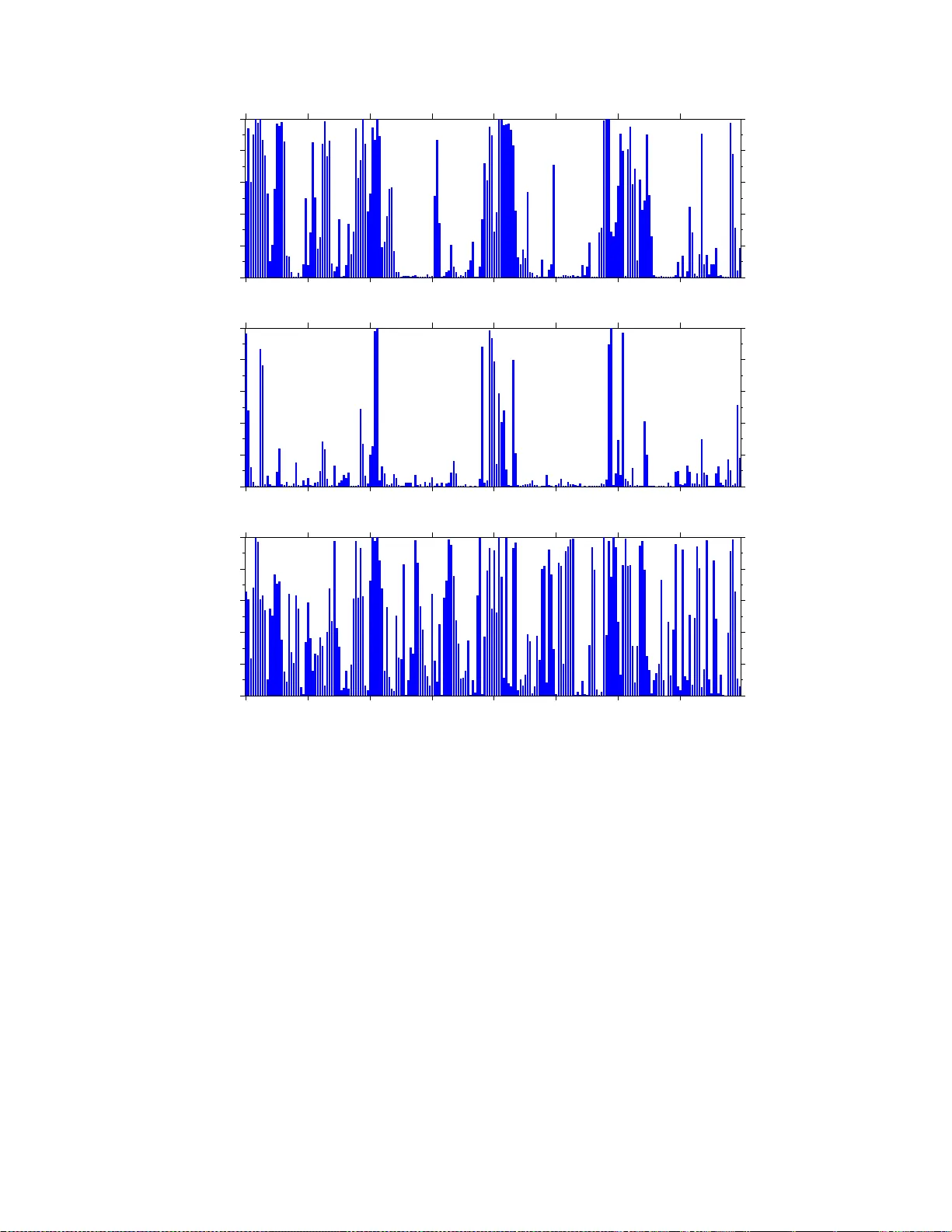
MARK O V SWITCHING MODELS: AN APPLICA TION TO R O ADW A Y SAFETY A Dissertation Submitted to the F aculty of Purdue Univ ers ity b y Nataliy a V. Malyshkina In P artial F ulfillmen t of the Requiremen ts for the Degree of Do ctor of Philosoph y Decem b er 20 08 Purdue Univ ersit y W est Lafay ette, Indiana ii T o my h usband Leonid and m y paren ts Nadezhda and Vla dimir iii A CKNO WLEDGMENTS First of all, I w ould lik e to thank my advisor, Professor F red Mannering. Without his in terest, encouragemen t and financial assis tance no ne of t his researc h would be p ossible. He supp orted me during all m y three and a half y ears a t Purdue. He also ga v e me a lo t o f freedom in research . I feel ve ry luck y to b e his student. I w ould like to thank Profess or Andrew T ark o, m y co-advisor, for his v ery help- ful commen ts and encouragemen t. I am especially g r ateful t o him for the acciden t frequency data that he pr ovided fo r the study rep orted in this dissertation. In addition, I w ould lik e to thank Jos e Thomaz for preparing the accide n t sev erit y data that w as used in this study . I w ould lik e to thank Professor Kristofer Jennings and Profess or Jon F ric k er for their helpful commen ts and for c arefully reading this dissertation. I also w ould lik e to thank m y colleagues and friends for their help and supp ort during my stay on Purdue campus. Finally , I feel infinite lo v e and gratitude to m y w onderful f a mily – m y h usband Leonid, m y mother Nadezhda and m y father Vladimir. I o w e ev erything I hav e to them and to their lov e and supp ort. iv T ABLE OF CONTENTS P a ge LIST OF T ABLES . . . . . . . . . . . . . . . . . . . . . . . . . . . . . . . . vi LIST OF FIGURES . . . . . . . . . . . . . . . . . . . . . . . . . . . . . . . viii LIST OF SYMBOLS . . . . . . . . . . . . . . . . . . . . . . . . . . . . . . . ix ABSTRA CT . . . . . . . . . . . . . . . . . . . . . . . . . . . . . . . . . . . x CHAPTER 1. INTR O D UCT ION . . . . . . . . . . . . . . . . . . . . . . . . 1 1.1 Motiv ation and research ob jectiv es . . . . . . . . . . . . . . . . . . 1 1.2 Organization . . . . . . . . . . . . . . . . . . . . . . . . . . . . . . 3 CHAPTER 2. LITERA TURE REVIEW . . . . . . . . . . . . . . . . . . . . 4 2.1 Acciden t frequency studies . . . . . . . . . . . . . . . . . . . . . . . 4 2.2 Acciden t sev erity studies . . . . . . . . . . . . . . . . . . . . . . . . 8 2.3 Mixed studies . . . . . . . . . . . . . . . . . . . . . . . . . . . . . . 13 CHAPTER 3. MODEL SPECIFICA TION . . . . . . . . . . . . . . . . . . . 15 3.1 Standard coun t data mo dels of acciden t frequencies . . . . . . . . . 16 3.2 Standard m ultinomial logit mo del of acciden t sev erities . . . . . . . 19 3.3 Mark ov switc hing pro cess . . . . . . . . . . . . . . . . . . . . . . . 20 3.4 Mark ov switc hing count data mo dels of a nnual acciden t frequencies . . . . . . . . . . . . . . . . . . . . . . . . . . . . . . . . 22 3.5 Mark ov switc hing count data mo dels of wee kly a cciden t frequencies . . . . . . . . . . . . . . . . . . . . . . . . . . . . . . . . 24 3.6 Mark ov switc hing multinomial logit mo dels of acciden t sev erities . . . . . . . . . . . . . . . . . . . . . . . . . . . . . . . . . 26 CHAPTER 4. MODEL ESTIMA TION AND COMP ARISON . . . . . . . . 29 4.1 Ba y esian inference and Ba y es formula . . . . . . . . . . . . . . . . . 29 4.2 Comparison of statistical mo dels . . . . . . . . . . . . . . . . . . . . 31 4.3 Mo del p erformance ev aluat io n . . . . . . . . . . . . . . . . . . . . . 32 CHAPTER 5. MARK O V CHAIN MONTE CARLO SIMULA TION METHODS . . . . . . . . . . . . . . . . . . . . . . . . . . . . . . . . . . 34 5.1 Hybrid Gibbs sampler and Metrop olis-Hasting algorithm . . . . . . 34 5.2 A general represen tation of Marko v switc hing mo dels . . . . . . . . 37 v P a ge 5.3 Choice of the prior probability distribution . . . . . . . . . . . . . . 43 5.4 MCMC simulations: step-b y-step algorithm . . . . . . . . . . . . . 47 5.5 Computational issues and o ptimiz ation . . . . . . . . . . . . . . . . 53 CHAPTER 6. FREQUENCY MOD EL ESTIMA TION RESUL TS . . . . . . 59 6.1 Mo del estimation results for annual frequency data . . . . . . . . . 59 6.2 Mo del estimation results for w eekly frequency data . . . . . . . . . 74 CHAPTER 7. SEVERITY MODEL ESTIMA TION RESUL TS . . . . . . . 89 CHAPTER 8. SUMMAR Y AND CONCLUSIONS . . . . . . . . . . . . . . 109 LIST OF REFERENCES . . . . . . . . . . . . . . . . . . . . . . . . . . . . 114 APPENDIX . . . . . . . . . . . . . . . . . . . . . . . . . . . . . . . . . . . . 1 18 VIT A . . . . . . . . . . . . . . . . . . . . . . . . . . . . . . . . . . . . . . . 122 vi LIST OF T ABLES T able P a ge 6.1 Estimation results fo r standard P oisson and negativ e binomial models of ann ual acciden t frequencies . . . . . . . . . . . . . . . . . . . . . . . . 63 6.2 Estimation results for zero-inflated and Mark o v switc hing P oisson mo dels of a nnual acciden t frequencies . . . . . . . . . . . . . . . . . . . . . . . 65 6.3 Estimation res ults for zero-inflated and Mark ov switc hing negativ e bino- mial mo dels of ann ual acciden t frequencies . . . . . . . . . . . . . . . . 67 6.4 Summary statistics of explanatory v ariables that en ter t he models of an- n ual and w eekly acciden t frequencies . . . . . . . . . . . . . . . . . . . 70 6.5 Estimation results for P o iss on mo dels of w eekly acciden t frequencies . . 78 6.6 Estimation results fo r nega t iv e binomial mo dels o f w eekly acciden t fre- quencies . . . . . . . . . . . . . . . . . . . . . . . . . . . . . . . . . . . 80 6.7 Correlations of the p o ste rior probabilities P ( s t = 1 | Y ) with w eather- condition v ariables f or the full MSNB mo del . . . . . . . . . . . . . . . 86 7.1 Estimation results for m ultinomial logit mo dels of sev erity outcomes of one-v ehicle acciden ts on Indiana interstate hig hw ay s . . . . . . . . . . . 92 7.2 Estimation results for m ultinomial logit mo dels of sev erity outcomes of one-v ehicle acciden ts on Indiana US routes . . . . . . . . . . . . . . . . 93 7.3 Estimation results for m ultinomial logit mo dels of sev erity outcomes of one-v ehicle acciden ts on Indiana state routes . . . . . . . . . . . . . . . 94 7.4 Estimation results for m ultinomial logit mo dels of sev erity outcomes of one-v ehicle acciden ts on Indiana count y roa ds . . . . . . . . . . . . . . 95 7.5 Estimation results for m ultinomial logit mo dels of sev erity outcomes of one-v ehicle acciden ts on Indiana streets . . . . . . . . . . . . . . . . . . 96 7.6 Estimation results for m ultinomial logit mo dels of sev erity outcomes of t w o -v ehicle acciden ts on Indiana streets . . . . . . . . . . . . . . . . . . 97 7.7 Explanations and summary statistics fo r v ariables and parameters listed in T ables 7.1 – 7.6 and in T ables A.1 – A.4 . . . . . . . . . . . . . . . . . 99 vii T able P a ge 7.8 Correlations of the p osterior probabilities P ( s t = 1 | Y ) with eac h other and with w eather-condition v ariables (for the MSML mo dels of acciden t sev erities) . . . . . . . . . . . . . . . . . . . . . . . . . . . . . . . . . . 106 A.1 Es timation results for mu ltinomial lo g it models of sev erity outcomes of t w o -v ehicle acciden ts on Indiana inters tate hig h w a ys . . . . . . . . . . 118 A.2 Es timation results for mu ltinomial lo g it models of sev erity outcomes of t w o -v ehicle acciden ts on Indiana US routes . . . . . . . . . . . . . . . . 11 9 A.3 Es timation results for mu ltinomial lo g it models of sev erity outcomes of t w o -v ehicle acciden ts on Indiana state routes . . . . . . . . . . . . . . . 1 2 0 A.4 Es timation results for mu ltinomial lo g it models of sev erity outcomes of t w o -v ehicle acciden ts on Indiana count y roads . . . . . . . . . . . . . . 121 viii LIST OF FIGURES Figure P a ge 5.1 Auxiliary time indexing of observ atio ns f or a general Marko v switc hing pro cess represen tation. . . . . . . . . . . . . . . . . . . . . . . . . . . 38 6.1 The histogram of 10 4 generated χ 2 v alues fo r the MSNB mo del of annual acciden t frequencies. The vertical line sho ws the observ ed v alue of χ 2 . 69 6.2 Five -y ear time series of the p osterior probabilities P ( s t,n = 1 | Y ) of the unsafe state s t,n = 1 fo r f o ur selected roa dw a y segmen ts ( t = 1 , 2 , 3 , 4 , 5). These plots are for the MSNB mo del of ann ual acciden t frequencies. . 71 6.3 Histograms o f the p osterior probabilities P ( s t,n = 1 | Y ) (the top plot ) and of the p osterior exp ectations E [ ¯ p ( n ) 1 | Y ] (the b ottom plo t ) . Here t = 1 , 2 , 3 , 4 , 5 and n = 1 , 2 , . . . , 335. These histograms are for the MSNB mo del of ann ual acciden t frequencies. . . . . . . . . . . . . . . . . . . 74 6.4 The t o p plot sho ws the we ekly acciden t frequencies in Indiana. The b ot- tom plot sho ws w eekly p osterior probabilities P ( s t = 1 | Y ) f o r the full MSNB mo del of w eekly acciden t frequencies . . . . . . . . . . . . . . . 82 7.1 W eekly p osterior probabilities P ( s t = 1 | Y ) for the MSML models esti- mated for sev erity of 1-v ehicle acciden ts on in terstate hig h w a ys (top plot) , US routes (middle plo t) and state routes (b ottom plot). . . . . . . . . 103 7.2 W eekly p osterior probabilities P ( s t = 1 | Y ) for the MSML models esti- mated for sev erit y of 1-v ehicle acciden ts o ccurring on coun t y ro ads (to p plot), streets (middle plot) and f or 2-v ehicle acciden ts o ccurring on streets (b ottom plot). . . . . . . . . . . . . . . . . . . . . . . . . . . . . . . . 104 ix LIST OF SYMBOLS AADT Av erag e Annual D aily T raffic AIC Ak aike Information Criterion BIC Ba y esian Information Criterion BTS Bureau of T ransp ortation Statistics i.i.d. indep ende n t and identically distributed MCMC Mark ov Chain Monte Carlo M-H Me trop olis-Hasting ML Multinomial logit MLE Maxim um Lik eliho o d Estimation MS Mark ov Switc hing MSML Mark ov Switc hing Multinomial Logit MSNB Mark ov Switc hing Negativ e Binomial MSP Mark ov Switc hing P o isson NB Negative Binomial PDO Prop ert y Damag e Only ZINB Zero-inflated Negativ e Binomial ZIP Zero-inflated P oisson x ABSTRA CT Malyshkina, Nataliy a V. Ph.D., Purdue Univ ersit y , Decem b er 2008. Mark ov Switc h- ing Mo dels: an Application to Ro a dw a y Safety . Ma jor Professors: F red L. Mannering and Andrew P . T ark o. In this researc h, t w o-state Marko v switc hing mo dels are prop osed to study acciden t frequencies and sev erities. These mo dels assume that there are t w o unobserv ed states of r o adw a y safet y , and that roadwa y en tities (e.g., roadw a y segmen ts) can switc h b et w een t hese states o v er time. The states are distinct, in the sense that in the differen t states acciden t frequencies or sev erities are generated b y separate pro cesses (e.g., P o isson, negativ e binomial, m ultinomial log it). Ba y esian inference metho ds and Mark ov Chain Mon te Carlo (MCMC) sim ulations are used for estimation of Mark o v switc hing mo dels. T o demonstrate the applicabilit y of the approach, w e conduct the follo wing three studies. In the first study , tw o-state Mar ko v switc hing coun t data mo dels are considered as an a lternativ e to zero-inflated mo dels, in order to account for prep onderance of zeros t ypically observ ed in acciden t frequency data. In this study , one of the states of road- w ay safet y is a zero-acciden t stat e, whic h is p erfectly safe. The o t he r state is an un- safe state, in whic h acciden t frequencies can b e p ositiv e and are generated by a giv en coun t ing pro cess – a P oisson or a negativ e binomial. Tw o- state Mark o v switc hing P o iss on mo del, t w o-state Mark o v switc hing negativ e binomial mo del, and standard zero-inflated mo dels are estimated for annual acciden t frequencies o n selected Indiana in terstate high w ay segmen ts ov er a fiv e- year time p erio d. An imp ortant adv an tage o f Mark ov switc hing models o v er zero-inflated mo dels is that the former allow a direct xi statistical estimation of what states sp ecific roadw ay segmen ts are in, while the later do not. In the second study , t w o -state Mark ov switc hing P oisson mo del and tw o-state Mark ov switc hing negat ive binomial mo del are estimated using wee kly acciden t fre- quencies on selected Indiana interstate highw a y segmen ts o v er a fiv e-y ear time p erio d. In this study , b oth states of roadw a y safet y are unsafe. Th us, acciden t frequencies can b e p ositiv e and are generated b y either P oisson or negative binomial pro cesse s in b oth states. It is found that the more frequen t state is safer and it is corr elat ed with b etter w eather conditions. The less frequen t state is found to b e less safe and to b e correlated with adv erse w eather conditions. In the third study , t w o-state Marko v switc hing multinomial logit mo dels are esti- mated for sev erit y outcomes of acciden ts o ccurring on Indiana roads ov er a fo ur-y ear time p erio d. It is aga in found that the mo r e frequen t state of roa dw a y safet y is corre- lated with b etter w eather conditions. The less frequen t state is found to b e correlated with adv erse w eather conditions. One of the most imp ortant results found in eac h of the three studies, is that in eac h case the estimated Mark ov switc hing models are strongly fa v ored by acciden t frequency and sev erit y data a nd result in a sup erior statistical fit, as compared to the corresp onding standard (single-state) mo dels. 1 CHAPTER 1. INTR O D UCT ION This c hapt er explains the motiv ation and ob jectiv es o f the presen t researc h, and the organization of this dissertation. 1.1 Motiv ation and researc h ob jec tiv es According to Bureau of T ransp ortation Statistics [BTS, 2008], in 2006, 99 . 55% of all transp ortation related acciden ts ( inc luding air, railroad, transit, w aterb orne and pip eline acciden ts) w ere motor v ehicle acciden ts on r o adw a ys. Moto r v ehicle acciden ts result in f a talities, injuries and property damage, and represen t high cost not only for in v olv ed indiv iduals but also for our so ciet y as a whole. In particular, on av erage, ab out one-quarter of the costs of crash es is paid direc tly b y the party in v o lved, while the so ciet y pa ys the rest. As an example of the economic burden related to motor v ehicle crashes, in the y ear 2000 the estimated cost of acciden ts o ccurred in the United States was 23 1 billion dollars, whic h is ab out 820 dollar s p er p erson or 2 p ercen t o f the gross domestic pro duct [BTS, 2008]. These n um b ers sho w that roadwa y ve hicle tra v el safet y has an enormous imp ortance for our so ciet y and for the national economy . As a res ult, extensiv e res earc h o n roadwa y safet y is o ngoing, in order t o b etter understand the most import a n t factors t ha t con tribute to v ehicle acciden ts. In general, there are t w o measures of roadwa y safet y that ar e commonly consid- ered: 1. The first measure ev aluates acciden t frequencies on roadw ay segmen ts. Acciden t frequency on a roa dwa y segmen t is obtained b y coun ting the n umber o f acci- 2 den ts o ccurring on t his segmen t during a sp ecified p erio d of time. Then coun t data statistical mo dels (e.g. Poiss on, negativ e binomial mo dels and their zero- inflated coun terparts) are estimated for acciden t frequencie s o n differen t road- w ay segmen ts. The explanatory v ariables used in these mo dels are the roadwa y segmen t c haracteristics (e.g. roadwa y segmen t len gth, curv ature, slope, t yp e, pa v emen t qualit y , etc). 2. The second measure ev aluates acciden t sev erity outcomes as determined by the injury lev el sustained b y the most sev erely injured individual (if any) in v olv ed in to the acciden t. This ev aluation is done by using data o n individual acciden t s and estimating discrete outcome statistical mo dels (e.g. ordered probit and m ultinomial logit mo dels) for the acciden t sev erity outcomes. The explanatory v ariables us ed in these models are the indiv idual acciden t c haracteristics (e.g. time and lo cation o f a n acciden t, w eather conditions and roadwa y characteristic s at the acciden t lo cation, c haracteristics of the v ehicles and drivers in v olv ed, etc). These tw o measures of roadw ay safet y are complemen tary . On one hand, an acciden t frequency study pro vides a statistical mo del of the probability of an acciden t o ccurring on a roadw a y segmen t. O n the o ther hand, an acciden t sev erity study pro vides a statistical mo del of the conditional probabilit y o f a sev erit y outcome of a n acciden t, g iv en the acciden t o ccurred. The unconditional probability of the acciden t sev erity outcome is the pro duct of its conditional probability and the pro ba bilit y o f the a cc iden t. The main ob jectiv e of this researc h study is to prop ose a new statistical approa ch to mo deling acciden t frequencies and sev erities, whic h ma y provide new guidance to theorists and practitioners in the area of r oadw ay safety . Our approac h is based on application of tw o-state Mark o v switc hing mo dels of acciden t frequencies and sev eri- ties. These mo dels assume an existence of tw o unobserv ed states of roadw a y safet y . The r o adw a y en tit ies (e.g., roadwa y segmen ts) are assumed to b e able to switc h b e- t w een these states ov er time, and the switc hing pro cess is assumed to b e Mark o vian. 3 Acciden t f req uencies and sev erit y outcomes are a ss umed to b e generated b y tw o dis- tinct data-generating pro ce sses in the tw o states. Two-state Marko v switc hing mo dels a v oid sev eral drawbac ks of the popular con v en tio nal mo dels of acciden t f req uencies and sev erities. W e estimate Mark o v switc hing mo dels and compare them to the con- v entional mo dels. W e find that the former are strongly fav ored b y acciden t frequency and sev erity data and pro vide a superio r statistical fit as compared to the la t er. Be- cause of the complexity o f Marko v switc hing mo dels, this researc h emplo ys Bay esian inference and Marko v Chain Mon te Carlo (MCMC) simulations for their statistical estimation. 1.2 Org a nization An o verv iew of the previous researc h on a cc iden t f req uency and sev erity is pre- sen ted in Chapter 2. Chapter 3 giv es sp ec ification of the tw o-state Marko v switc hing and con v en t io nal mo dels that are pro p osed, considered and estimated in this study . Ba y esian inference metho ds are given in Chapter 4. Chapter 5 presen ts Mark o v Chain Mon te Carlo (MCMC) simulation tec hniques used for Ba y esian inference and mo del estimation in this study . The mo del estimation r esults for acciden t frequencies are presen ted in Chapter 6. The mo del estimation results for a cciden t sev erities are giv en in Chapter 7. Finally , we discuss our results and give conclusions in Chapter 8. Some of the results are give n in the App endix at the end. 4 CHAPTER 2 . LITERA TURE REVIEW This chapter includes a brief o v erview of t he previous roadw ay safety studies of ac- ciden t frequencies and s ev erities. First, w e giv e an o v erview of acciden t frequency studies and standard statistical mo dels used for acciden t frequencie s. Then w e re- view previous w ork on sev erities of acciden ts. Finally , we discuss studies that consider b oth acciden t frequencies and acciden t sev erities. The literature review o f this c hap- ter do es not claim to b e full or ex haustiv e. A more detailed literat ure review, a s w ell a s a comprehensiv e description of con ven tional metho dologies commonly used in roadw a y safet y studies, can b e fo und in W ashington et al. [2003]. 2.1 Acciden t frequency studies Considerable res earc h has b een conducted on understanding and predicting ac- ciden t frequencies (the n um b er of acciden ts o ccurring on r o adw a y segme n ts o v er a giv en t ime p erio d). Because acciden t frequencies are non-negative in t egers, coun t data mo dels are a reasonable statistical mo deling approac h. Simple mo deling ap- proac hes include P oisson mo dels and negativ e binomial (NB) mo dels. These mo dels assume a single pro cess for acciden t data generation (a P oisson pro cess or a negativ e binomial pro cess) and in v olve a nonlinear regression of the observ ed acciden t fre- quencies on v arious roadwa y-segmen t c haracteristics (suc h as roadwa y geometric and en vironmental factors). Selec ted previous researc h on acciden t frequencies, conducted b y application of coun t data mo dels, is as follow s: • Hadi et al. [199 5 ] used negativ e binomial mo dels to estimate the effect of cross section roadwa y design elemen ts (e.g. presence o f curb, lane width) a nd tra ffic 5 v o lume on acciden t frequencies for differen t types of highw a ys. The authors found that some cross section design elemen ts can influence acciden t ra tes (e.g. lane width, in terc ha ng e presence, sp eed limit) and that some o ther do not hav e an y effect on num b er of acciden ts (e.g. t yp e of friction course material). • Shank ar et al. [19 95] applied a negativ e binomial mo del to a n accide n t dat a col- lected in W ashington State. Roadw ay geometries of fixed-equal length ro a dw a y segmen ts (e.g. horizon ta l and v ertical a lig nme n ts), w eather, and other seasonal effects w ere analyzed alo ng with o v erall acciden t frequencies of sp ecific acciden t t yp es (e.g., rear-end and same direction acciden ts). This researc h concluded that hig h w a y segmen ts with c hallenging geometries as w ell as areas that fre- quen tly experience adv erse w eather conditions are imp ortan t determinan ts of acciden t frequency . • P o c h a nd Mannering [1996] estimated a negative binomial regression of the fre- quencies of acciden t s a t intersec tion approa c hes in Seattle suburban areas. The authors of t his pap er considered traffic v olume, geometric characteristics o f in- tersection approac hes (e.g. approach sight-distance, sp eed limit) and approac h signalization c hara cteris tics (e.g. eigh t- phase signal) a s the mo del explanatory v ariables. Authors found a significan t influence o f s ome of these v ariables on acciden t f req uencies at intersec tion approac hes. In particular, t hey found that high left-turn and opp osite traffic v olumes considerably increase num b ers o f acciden ts at in t ers ection approac hes. • Miaou and Lord [2 003], ba se d on acciden t da t a collected in T oron to, examined generally a cc epted statistical mo dels (P oisson and NB) applied to acciden t fre- quencies in tersections. By using the empirical Bay es metho d, mathematical prop erties a nd p erformance of differen t p opular model functional forms were considered. The autho rs questioned in v ariability of the disp ersion parameter, giv en the complexit y of the traffic in teraction in an in tersection area. In addi- 6 tion, the full Bay es statistical a pproac h w as used f or model specification a nd estimation. • P ark and Lord [2008] rec en tly conside red finite mixture P oisson and negativ e binomial mo dels of acciden t frequencies, in order to accoun t for heterogenous p opulations of acciden t da ta. Acciden t data heterog eneity can result from data gene ration b y distinct (Poisson or NB) pro cesses that op erate in differ- en t unobserv ed states of ro a dw a y safet y . P ark and Lord [2008] suggested a t w o -component finite mixture negativ e binomia l mo del as the b est mo del to accoun t for acciden t data heterogeneit y in their data sample. • Recen tly , Anastasop oulos and Mannering [2008] applied random parameters coun t models to the analysis of acciden t frequ encies. The authors found these mo dels to b e b eneficial for acciden t frequency prediction. Random parame- ter mo dels can p oten t ially define unique parameters for eac h roadw ay segmen t, but t hese mo dels still a s sume a single state for eac h segmen t. This single- state assumption would a ls o b e true for coun t mo dels with rando m effects [see Shank ar et al., 19 9 8 ]. • Anastasop oulos et al. [2 008] w ere the first to use t obit regression mo dels for prediction of acciden t rates (accide n t rates are n um b er of acciden ts happ ened p er unit roadw a y segmen t length and p er unit a v eraged annual daily traffic v o lume). They considered fiv e-y ear acciden t data a nd fo und t ha t in ternational roughness index (of the pav emen t) , pa v emen t rutting, the pa v emen t’s condition rating, median types and width, shoulder widths, n um b er of ramps and bridges, horizon tal and vertical curv es, rumble strips, a nn ual av erage da ily tra ve l and the p ercen t o f com bination truc k in the traffic stream ha v e a significan t impact on acciden t rates. Because a prep onderance of zero-a cciden t o bserv ations is often observ ed in empir- ical dat a , some researc hers hav e applied zero-infla t ed P oisson (ZIP) and zero-inflated negativ e binomial (Z INB) models fo r predicting acciden t f r eq uencies. Zero-inflat ed 7 mo dels assume a t wo-state pro ces s fo r acciden t data generation. One state is a ss umed to b e p erfectly safe with zero a cc iden ts (o v er the duration of time b eing considered). The other state is assumed to b e unsafe with a p ossibilit y of nonzero acciden t frequen- cies in whic h acciden t s can happen and acciden t frequencie s are generated b y some giv en coun ting pro cess (P o iss on or negativ e binomial). Be low are selected studies that are based o n an application of zero- inflated coun t data mo dels: • Miaou [1 994] applied Poiss on regression, zero- inflat ed P oisson (Z IP ) regression, and NB regression to determine a relationship b et wee n geometric design c ha r - acteristics of roadw a y segmen ts and the n um b er o f truc k acciden ts. Results suggest that under the maxim um lik eliho o d estimation (MLE) metho d, all three mo dels p erform similarly in terms of estimated truc k-inv olv ed acciden t frequencies across roadw a y segmen ts. T o mo del the relationship, the author recommended the use of a P oisson regression as an initial mo del, then the use of a negativ e binomial mo del if the acciden t frequency data is o v erdisp erse d, and the use of a zero-inflated Poiss on mo del if the data con tains an excess of zero observ ations. • Shank ar et al. [1 9 97] studied the distinction b et w een safe and unsafe roadw a y segmen ts b y estimating zero-inflated P o isson and zero-inflated negativ e binomial mo dels for acciden t frequenc ies in W ashington State. The a uthors established the underlying principles of zero-inflated models, ba se d on a t wo-state data- generating pro cess for acciden t frequencies . The t w o states ar e a safe stat e that corresp onds to the zero acciden t lik eliho o d on a roadw ay segmen t, and a n unsafe state. The results sho w that t wo-state zero-inflated structure mo dels pro vide a sup erior statistical fit to acciden t frequency data as compared to the con- v entional single-state mo dels (without zero-inflation). Th us, the authors found that zero- infla t ed mo dels are helpful in rev ealing and understanding imp ortan t factors that a ffec t acciden t frequencies with prep onderance of zeros. 8 • Lord et al. [200 5 , 2007] addressed the question of c ho osing the b est a pproac h to the mo deling of ro a dw a y acciden t data b y using count data mo dels (e.g. whether to use standard single-state or zero-inflated models). Authors a r g ued that an application of zero- infla t ed mo dels to t he analysis of acciden t data with a prep onderance of ze ros is not a defensible mo deling appro ac h. They argued that an excess of zeros can be caus ed by an inappropriate data collection and b y man y other f a ctors, instead of due to a t w o- states pro cess. In addition, they claimed that it is unreasonable to expect some roadw ay segmen ts to b e alw a ys p erfectly safe and questioned “safe” and “unsafe” state definitions. The authors also argued that zero- inflated mo dels do not explicitly acc ount fo r a lik ely po ss ibilit y for r o adw a y segmen ts to change in time fr o m o ne state to another. Lord et al. [2005, 2007] concluded that , while an application of zero- inflated models often provides a better statistical fit to an observ ed acciden t frequency data, the a pplicability of these mo dels can b e questioned. 2.2 Acciden t sev erit y studies Researc h efforts in predicting acciden t sev erit y , suc h as prop erty damag e, injury and fat alit y , are clearly v ery imp ortant. In the past there ha s b een a la r g e num b er of studies that fo cused o n mo deling acciden t sev erit y outcomes. The proba bilities of sev erity outcomes of an accide n t are conditio ned on the o ccu rrence of t he acciden t. Common mo deling approac hes of acciden t sev erity include m ultinomial logit mo dels, nested logit mo dels, mixed logit mo dels a nd ordered pro bit mo dels. All acciden t sev erity mo dels in v o lve nonlinear regression of the observ ed a cc iden t sev erity out- comes on v ario us acciden t c haracteristics and related factors (suc h as roadw ay and driv er c haracteristics, environme n tal factors, etc). Some of the past acciden t sev erity studies are a s follow s: 9 • O’Donnell and Connor [1996] explored sev erity of motor v ehicle acciden ts in Australia by estimating the parameters of ordered multiple c hoice mo dels: o r - dered logit and probit mo dels. By studying driv er, passengers and v ehicle char- acteristics (e.g. v ehicle ty p e, seating po sition of ve hicle o ccupan ts, blo o d alcohol lev el of a drive r), the authors found the effects o f these c haracteristics on the probabilities of differen t t yp es o f sev erit y outcomes. F or example, they found that the older the victims are and t he higher the ve hicle sp eeds are, the higher the pr o babilities of serious injuries and deaths are. • Shank ar and Mannering [1996] estimated the lik eliho o ds of motorcycle rider ac- ciden t sev erity outcomes. In their researc h w ork, a multinomial logit mo del w as applied to a 5-year W ashington state data fo r single-v ehicle motorcycle colli- sions. It w as found that a helmeted-riding is an effectiv e means of reduc ing injury sev erit y in an y types of collisions, except in fixed-ob j ec t collis ions. A t the same time, alcoho l- impaired riding, high age of a mot orcyc le rider, ejection of a rider, w et pa v ement, interstate as a ro a dw a y type, sp eedin g and rider inat- ten t io n w ere fo und to b e the facto r s that increase roadw a y motorcycle acciden t sev erity . • Shank ar et al. [1996] used a neste d logit mo del fo r statistical analysis of acci- den t sev erit y outcomes on rural high wa ys in W ashington State. They found that en vironment conditions, high w a y design, acciden t ty p e, drive r and veh icle char- acteristics s ignifican tly influence acc iden t sev erit y . The y found that o v erturn acciden ts, r ear - end acciden ts on w et pa v emen t, fixed-ob ject acciden ts, and fa il- ure to use the restraint b elt system lead to higher probabilities of injury or/and fatality acciden t outcomes, while icy pav emen t and single-ve hicle collisions lead to higher probabilit y of prop ert y damag e o nly outcomes. • Duncan et al. [1998] applied an ordered probit mo del to injury sev erity out- comes in truc k-passenger car rear-end collisions in North Carolina. They found 10 that injury sev erit y is increased by darknes s, high sp eed differen tia ls, high speed limits, w et grades, drunk driving, and b eing female. • Chang and Mannering [1 999] fo cused on the effects of truc ks and v ehicle o ccu- pancies on acciden t sev erities. They estimated nested logit m o dels for s ev er- it y outcomes of truck -inv olv ed and non-tr uck-in v olv ed acciden ts in W ashington State a nd found that acciden t injury sev erity is noticeably w orsened if the ac- ciden t has a truc k in v olv ed, and that the effects of truc ks a r e more significant for multi-o ccupan t ve hicles than for single-o ccupan t v ehicles. • Khattak [200 1 ] estimated ordered probit mo dels for sev erit y outcomes o f multi- v ehicle rear-end acciden ts in North Carolina. In particular, the results of his researc h indicate that in t w o-v ehicle collisions the leading drive r is more lik ely to b e sev erely injured, in three-v ehicle collisions the driv er in the middle is mor e lik ely to b e sev erely injured, and b eing in a new er vehic le protects the driv er in rear-end collisions. • Ulfarsson [2001], Ulfarsson and Mannering [2004] fo cus ed on male and female differences fo r acciden t sev erity outcomes. They used m ultinomial lo git mo dels and acciden t data from W ashington Sta te. They found significan t behavioral and ph ysiological differences b et we en genders, a nd also found tha t probability of fa tal and disabling injuries is higher f or females as compared t o males. • Ko c kelm an a nd Kw eon [2002] applied o rdere d pro bit mo dels to mo deling of driv er injury sev erit y out comes. They used a nation wide acciden t data sample and found that pic kups and sp ort utilit y v ehicles are less ( mo r e) safe than passenger cars in single-ve hicle ( tw o-vehic le) collisions. • Khattak et al. [2002] fo cused on the safet y o f a ged drivers in the United States. Nine-y ear Iow a-statewide acciden t data w as considered and the ordered probit mo deling tec hnique w as implem en ted for acciden t sev erit y modeling. Authors insp ec ted v ehicle, roadw ay , driver, collision, and en vironmen ta l c haracteristics 11 as factors that may potentially effect acciden t sev erity of aged driv ers. The mo deling results we re consisten t with a common sense, for example, an animal- related acciden t tends to ha v e sev ere consequences fo r e lderly drive rs. Also, it w as found that acciden t s with farm v ehicles in v olved are highly sev ere fo r elderly driv ers in Iow a. • Ab del-A ty [2003] used ordered pro bit mo dels for analysis of driv er injury sev er- it y outcomes at different roa d lo cations (roa dw a y segmen ts, signalized in tersec- tions, toll plazas) in Cen tral Florida. He found highe r proba bilities of sev ere acciden t outcomes for o lder drivers, male drivers , those not wearing seat b elt, driv ers who sp eed, those who drov e v ehicles struc k at the driv er’s s ide, those who driv e in rural areas, and drive rs using electronic toll collection device (E- P a ss ) at toll plazas. • Y ama mo t o and Shank ar [2004] applied biv ariate ordered probit mo dels to an analysis of drive r’s and passenger’s injury sev erities in collisions with fixed ob- jects. They considered a 4 - y ear acciden t data sample from W ashington State and f o und that collisions with leading ends of guardrail and trees tend to cause more sev ere injuries, while collisions with sign p osts, fa ce s of guardrail, concrete barrier or bridge and fences tend to cause less sev ere inj uries. They also found that prop er use of veh icle restraint system strongly decreases the probabilit y of sev ere injuries and fa talities. • Khorashadi et al. [2005] ex plored the differences of driv er injury sev erities in rural and urban a cciden ts inv olving large truc ks. Using four y ears of California acciden t data and multinomial logit mo del approach, they found cons iderable differences betw een rural and urban acciden t injury s ev erities. In particular, they found that the probability of sev ere/fatal injury increases by 26 % in rural areas and b y 70 0 % in urban areas when a tractor-tr ailer combination is in volv ed, as opposed to a single-unit truck b eing in v olv ed. They also found t hat in ac- 12 ciden ts whe re alcohol o r drug use is iden tified, the probabilit y of sev ere/fatal injury is increased b y 250 % and 800% in rural a nd urban areas resp ectiv ely . • Islam and Mannering [20 06 ] studied driv er ag ing and its effect on male and female single-v ehicle a cc iden t injuries in Indiana. They employ ed m ultinomial logit mo dels and found significan t differences b et w een differen t g end ers and age groups. Specifically , they found an increase in probabilities of fatality for y o ung and middle-aged male driv ers when they hav e pa ssengers, an increase in probabilities of injury for middle-aged female drivers in v ehicles 6 y ears old or older, a nd an increase in fatality probabilities for males older tha n 65 y ears old. • Malyshkina [2006], Malyshkina and Mannering [2006] fo cused on t he relation- ship b et w een sp eed limits and roa dw a y safet y . Their researc h explored t he influence o f the p osted sp eed limit on the causation and sev erity of acciden ts. Multinomial logit statistical mo dels were estimated fo r causation and sev erity outcomes of different t yp es of acciden ts on differen t road classes. The results sho wed that sp eed limits do not hav e a statistically s ignifican t adv erse effect on unsafe-sp eed-related causation of acciden ts on all roads. At the same time higher sp eed limits generally increase the sev erit y of acciden ts on the ma jority of ro ads o ther than inters tate high w a ys (on in terstates sp eed limits w ere found to ha v e statistically insignifican t effect on acciden t sev erity). • Sa v olainen [2006], Sa volainen and Mannering [2007] fo cu sed on the imp ortan t topic of motorcycle safety o n Indiana ro a ds . They used m ultino mial a nd nested logit mo dels and found that p o or visibilit y , unsafe sp eed, alcoho l use, not we ar- ing a helmet, right-angle and head-on collisions, and collisions with fixed ob j ects increase sev erit y of motorcycle-in v o lv ed acciden ts. • Milton et al. [200 8 ], b y using acciden t sev erit y data fro m W ashington Sta te, estimated a mixed logit mo del with random parameters. This approac h allo ws estimated mo del parameters to v ary randomly across roadw a y segmen ts t o ac- coun t for unobserv ed effects that can b e related to o ther factors influencing 13 roadw a y safety . Authors found t ha t, on o ne ha nd, some roa dwa y characteristic parameters (e.g. pa v emen t friction, n umber of horizon tal curv es) can b e tak en as fixed. On the other hand, other mo del parameters, suc h as we ather effects and volume -related mo del parameters (e.g. truck p erce n tage, av erage ann ual sno wfa ll) , are r a ndom and normally-distributed. • Eluru and Bhat [20 07] mo deled a seat b elt use endogeneit y t o acciden t sev erit y due to unsafe driving habits of drivers not using seat belts. F or sev erit y out- comes, the authors considered a system of tw o mixed probit mo dels with random co efficie n ts estimated join tly for seat b elt use dummy and sev erity outcomes. The probit mo dels included random v ariables that mo derate the influence of the primary explanatory a ttributes asso ciated with driv ers. The estimation results highligh t the importance of moderatio n effects, seat belt use endogeneity and the r elation of b et we en failure to use seat b elt and unsafe driving habits. 2.3 Mixed studies Sev eral pre vious researc h studies considered mo deling of b oth acciden t freq uen- cies and acciden t sev erit y outcomes. It is b eneficial to look at b oth frequencies and sev erities sim ultaneously because, as men tioned ab o v e, an unconditional probability of the a cc iden t sev erity outcome is the pro duct of its conditional proba bility and the acciden t probabilit y . Sev eral mixed studies, w hic h consider both acciden t frequency and sev erity , are as follows. • Carson and Mannering [20 0 1 ] studied the effect of ice w arning signs o n ice- acciden t f r equencies a nd sev erities in W ashington State. The y mo deled acciden t frequencies a nd sev erities b y using zero-inflated negative binomial and logit mo dels resp ectiv ely . They found that the presence of ice w arning signs w as not a significan t factor in reducing ice-acciden t fr eq uencies a nd sev erities. 14 • Lee a nd Mannering [2002] estimated zero-inflated count-data mo dels and nested logit mo dels for frequencies and sev erities of run-o ff-roadw ay acciden ts in W ash- ington State. They found that run-off - roadw ay acciden t frequencies can b e re- duced by a v oiding cut side slop es, decreasing (increasing) the distance from outside shoulder edge to g ua rdrail (light p oles), and decreasing the num b er of isolated trees along roadw ay . The results of their researc h also sho w that run-off-roa dwa y acciden t sev erit y is increased b y alcohol impaired driving, high sp ee ds, and the presence of a g uardrail. • Kw eon and Ko c k elman [20 0 3 ] studied probabilities of acciden ts and acciden t sev erity outcomes for a giv en fixed driv er ex p osure (defined as the total mile s driv en). They used P oisson and ordered probit mo dels, and cons idered a na- tion wide acciden t data sample. After normalization of acciden t rates b y driv er exp o sure , the results of their study indicated that young driv ers are far more crash prone than other drive rs, a nd that sp ort utility v ehicles and pic kups a r e more lik ely to b e in v olv ed into rollov er acciden ts. 15 CHAPTER 3 . MODEL SPECIFICA TION In this c hapter we sp ecify the statistic al models that a r e us ed a nd es timated in the presen t study . F irst, w e consider standard (conv en tional) mo dels commonly used in accide n t studies. These a re coun t data models for acciden t frequencies (P oisson, negativ e binomial mo dels and their zero-inflated coun terparts) and discrete outcome mo dels for acciden t sev erit y outcomes (m ultinomial logit models). Then w e explain Mark ov pro cess for the state of roa dwa y safet y . Finally , w e presen t t w o -state Mark o v switc hing mo dels for acciden t frequencies a nd sev erities. In each of the t w o states the data is gene rated b y a standard pro cess (suc h as a P oisson or a negativ e binomial in the case of accide n t frequencie s, and a m ultinomial logit in the case of acciden t sev erities). O ur presen t a tion of Marko v switc hing mo dels is similar to that o f Mark ov switc hing autoregressiv e models in econometrics [McCullo c h and Tsay, 1994, Tsay, 2002]. All statistical mo dels that we consider here, either fo r acciden t frequencies or for sev erity outcomes, are parametric and can b e fully sp ecified b y a lik eliho o d function f ( Y | Θ , M ), whic h is the conditio na l probability distribution of the v ector of all observ at io ns Y , given t he vec tor of all parameters Θ of mo del M . If acciden t ev en t s are assumed t o b e indep end en t, the lik eliho o d function is f ( Y | Θ , M ) = T Y t =1 N t Y n =1 P ( Y t,n | Θ , M ) . (3.1) Here, Y t,n is the n th observ at io n during time p erio d t , and P ( Y t,n | Θ , M ) is the prob- abilit y (likelihoo d) of Y t,n . The v ector of observ ations Y = { Y t,n } includes all obser- v ations n = 1 , 2 , ..., N t o v er all time perio ds t = 1 , 2 , ..., T . Number N t is the total n um b er of observ atio ns during time p erio d t , and T is the total n um b er of time p e- rio ds. In t he case of acciden t frequencies , observ ation Y t,n is the num b er of a cc iden ts 16 observ ed on the n th roadw a y segmen t during time p erio d t (note that N t is the n um- b er of roadw ay s egmen ts in this case). In the case of acciden t sev erity , obse rv ation Y t,n is the observ ed outcome of the n th acciden t o ccurred during time p erio d t (no t e that N t is the n um b er of acciden ts in this case). V ector Θ is the v ector of a ll un- kno wn mo del parameters to b e estimated from a cc iden t data Y . W e will sp ecify the parameter ve ctor Θ separately for eac h statistical model presen ted below. Finally , mo del M = { M , X t,n } includes t he mo del’s name M (e.g. M = “negative binomial” or M = “m ultinomial logit”) and the v ector X t,n of all c haracteristic attributes (i.e. v alues of all explanatory v ariables in the mo del) tha t are a sso ciated with the n th observ at io n during time p erio d t . 3.1 Standar d coun t data mo dels o f acciden t frequencies The most p opular coun t data mo dels used for predicting acciden t frequencies are P o iss on a nd negative binomial (NB) mo dels [W ashingto n et al., 2003]. These mo dels are usually estimated b y the maxim um lik eliho o d estimation (MLE) metho d, whic h is based on t he ma ximization of the mo del like liho o d function f ( Y | Θ , M ) o v er the v alues of t he mo del estimable parameters Θ . Let the num b er o f acciden ts observ ed on the n th roadw a y segmen t during time p erio d t b e A t,n . Th us, our observ ations are Y t,n = A t,n , where n = 1 , 2 , ..., N t and t = 1 , 2 , ..., T . Here N t is the n um b er of roadw ay segmen ts observ ed during time p erio d t , and T is the total n um b er o f t ime p erio ds. The lik eliho o d function f or the P o iss on mo del of acciden t frequencies is sp ec ified by equation (3.1) and the follo wing equations [W ashingto n et al., 20 03]: P ( Y t,n | Θ , M ) = P ( A t,n | Θ , M ) = P ( A t,n | β ) , (3.2) P ( A t,n | β ) = λ A t,n t,n A t,n ! exp( − λ t,n ) , (3.3) λ t,n = exp( β ′ X t,n ) , t = 1 , 2 , ..., T , n = 1 , 2 , ..., N t . (3.4) 17 Here, λ t,n is the P oisson acciden t rate for the n th roadw a y segmen t, this rate is equal to the a v erage (mean) acciden t frequency on this segmen t ov er the time p erio d t . The v a r iance of a P oisson-distributed acciden t freq uency is the same as its av erage and is equal to λ t,n . P arameter v ector β consists of unknow n mo del parameters to b e estimated. Prime means transp ose, so β ′ is the transp ose of β . In the P oisson mo del the v ector of all mo del para meters is Θ = β . V ector X t,n includes character- istic v ariables for the n th roadw a y segmen t during time p erio d t . F o r example, X t,n ma y include segmen t length, curv e c hara cteris tics, grades, and pav emen t pro p erties. Henceforth, the first comp onen t of v ector X t,n is c ho sen to b e unity , and, therefore, the fir st comp onen t of v ector β is the in tercept. The like liho o d function fo r the nega t ive binomial (NB) mo del o f acciden t frequen- cies is sp ecifie d by equation (3.1) and the follo wing equations [W ashington et al., 2003]: P ( Y t,n | Θ , M ) = P ( A t,n | Θ , M ) = N B ( A t,n | β , α ) , (3.5) N B ( A t,n | β , α ) = Γ( A t,n + 1 /α ) Γ(1 /α ) A t,n ! 1 1 + αλ t,n 1 /α αλ t,n 1 + αλ t,n A t,n , (3.6) λ t,n = exp( β ′ X t,n ) , t = 1 , 2 , ..., T , n = 1 , 2 , ..., N t . (3.7) Here, Γ( ) is the standard gamma function. The o ver-dispersion parameter α ≥ 0 is an unkno wn model parameter t o b e estimated tog ethe r with ve ctor β . Th us, the v ector of all estimable parameters is Θ = [ β ′ , α ] ′ . The a v erage acciden t rate is equal to λ t,n , whic h is the same as in the case of the P oisson model. The v ariance of the acciden t rate is λ t,n (1 + αλ t,n ), whic h is higher than in the case of the Pois son mo del (if α > 0). The negativ e binomial mo del reduces to the P oisson model in the limit α → 0. In addition to the P o iss on and negative binomial mo dels, w e also consider t he stan- dard zero-inflat ed P oisson (ZIP) and zero-inflat ed negativ e binomial (Z INB) mo dels. These models accoun t for a p ossibilit y o f existence of t w o separate data-generating states: a normal count state and a zero-acciden t state. The norma l state is unsafe, and acciden ts can o ccur in it. The zero-acciden t state is p erfectly safe with no acciden ts 18 o ccurring in it. 1 Zero-inflated mo dels are usually used when there is a prep onderance of zeros in the data . In the case of acciden t frequency data with man y zeros in it, the probabilit y of A t,n acciden ts o ccurring on t he n th roadw a y segmen t at time pe- rio d t can b e w ell modeled b y a ZIP pro cess o r , if the data are ov er-disp erse d, b y a ZINB pro cess. The lik eliho o d functions of the Z IP and ZINB mo dels are sp ecified b y equation (3.1) and the following equations [W ashington et al., 2003]: P ( Y t,n | Θ , M ) = P ( A t,n | Θ , M ) = q t,n I ( A t,n ) + (1 − q t,n ) P ( A t,n | β ) for Z IP , (3.8) P ( Y t,n | Θ , M ) = P ( A t,n | Θ , M ) = q t,n I ( A t,n ) + (1 − q t,n ) N B ( A t,n | β , α ) for Z INB , (3.9) where I ( A t,n ) = { 1 if A t,n = 0, and 0 if A t,n > 0 } , (3.10) q t,n = 1 1 + e − τ log λ t,n , (3.11) q t,n = 1 1 + e − γ ′ X t,n . (3.12) Here w e use t w o differen t sp ec ifications f o r the probabilit y q t,n that the n th road- w ay segmen t is in the zero-acciden t state during time p erio d t . Scalar λ t,n is the acciden t r a te that is define d b y equation (3.4). Probabilit y distribution I ( A t,n ) is the probability mass function that reflects the fact that accide n ts nev er happen in the zero-acciden t state. The righ t - hand-side of equation (3.8) is a mixture of the zero-acciden t distribution I ( A t,n ) and the P oisson distribution P ( A t,n | β ) giv en by equation (3.3). The right-hand-side of equation (3.9) is a mixture of I ( A t,n ) and the negativ e bino mia l distribution N B ( A t,n | β , α ) g iv en by equation (3.6). Scalar τ and v ector γ are estimable mo del par a mete rs. W e call “Z IP- τ ” and “Z INB- τ ” the mo dels sp ec ified b y equations ( 3 .8 )-(3.1 1). W e call “ZIP- γ ” and “ZINB- γ ” the mo dels sp ec- ified b y equations (3.8)-(3.10) and (3.12). The ve ctor of all estimable parameters is 1 Note tha t roadway segments a re not required to stay in a particular sta te all the time and can mov e from normal count state to z e ro-accident s tate and v ic e versa. 19 Θ = [ β ′ , τ ] ′ for the ZIP- τ mo del, Θ = [ β ′ , α, τ ] ′ for the ZINB- τ mo del, Θ = [ β ′ , γ ′ ] ′ for the Z IP - γ mo del, and Θ = [ β ′ , α, γ ′ ] ′ for the Z INB- γ mo del. It is imp ortant t o note that q t,n dep ends on the estimable mo del parameters and giv es the probability of b eing in the zero-acciden t state, but q t,n is no t an estimable parameter b y itself. 3.2 Standar d multinomial logit mo del of acciden t sev erities The sev erit y outcome of an acciden t is determine d b y the injury lev el sustained b y the most se v erely injured individual (if an y) in v olv ed into the acciden t. Thus , acciden t sev erities are a discrete outcome data. Most common statistical mo del used for predicting sev erit y outcomes a re the multinomial log it mo del and the ordered probit mo del. Ho w ev er, there are tw o p oten tial problems with applying o r dered probabilit y mo dels to a cciden t sev erit y outcomes [Sav olainen and Mannering, 2007]. The first problem is due t o under-rep orting of non-injury a cc iden ts b ecause they are less lik ely to b e rep orted to authorities. This under-rep orting can result in biased a nd inconsisten t mo del co efficien t estimates in an o rdered probabilit y mo del. In contrast, the co efficien t estimates of a n unordered m ultinomial logit mo del are consisten t except for the in tercept terms [W ashington et al., 2003]. The second problem is related to undesirable restrictions t hat ordered probability m o dels place o n influences of the explanatory v ar iables [W ashington et al., 200 3 ]. As a result, in this study w e consider only m ultinomia l logit mo dels fo r acciden t sev erity . Let t here b e I discrete outcomes observ ed for acciden t sev erit y (for example, I = 3 a nd these outcomes a re fa t alit y , injury and prop ert y damage only). Also let us in tro duce acciden t sev erity outcome dummies δ ( i ) t,n that are eq ual to unit y if the i th sev erity outcome is observ ed in the n th acciden t that o ccurs during time p erio d t , and to zero otherwise. Then, our indiv idual observ ations are the sev erity outcome dummies, Y t,n = { δ ( i ) t,n } , where i = 1 , 2 , ..., I . No t e that n = 1 , 2 , ..., N t and t = 1 , 2 , ..., T , whe re N t is the n um b er of acciden ts observ ed during time p erio d t , and T is the total n um b er of time p erio ds. The v ector of all observ a tions Y = { δ ( i ) t,n } 20 includes all o utcomes observ ed in all acciden ts that o ccur during a ll time p eriods. The lik eliho o d f unc tion for the m ultinomial logit (ML) mo del of acciden t sev erity outcomes is sp ecified by equation (3.1) and the follo wing equations [W ashington et al., 200 3 ]: P ( Y t,n | Θ , M ) = I Y i =1 [ P ( i | Θ , M )] δ ( i ) t,n = I Y i =1 [ ML ( i | β )] δ ( i ) t,n , (3.13) ML ( i | β ) = exp( β ′ i X t,n ) P I j =1 exp( β ′ j X t,n ) , i = 1 , 2 , ..., I . (3.14) P a rameter v ectors β i consist of unkno wn mo del parameters to b e estimated, and β = { β i } , where i = 1 , 2 , ..., I . V ector X t,n con tains all c haracteristic v ariables f or the n th acciden t that o ccurs during time p erio d t . F or example, X t,n ma y include w eather and en vironmen t conditions, v ehicle and driv er characteristics , r o adw a y and pa v emen t prop erties. W e set the first comp onen t of X t,n to unit y , a nd, therefore, the first comp onen ts of ve ctors β i ( i = 1 , 2 , ..., I ) are the in tercepts. In addition, without loss of generalit y , w e set all β -parameters for the last sev erity outcome to zero, β I = 0 . This can b e done without loss of generalit y b ecause X t,n are assumed to b e indep enden t of the outcome i , and, therefore, the numerator and denominator in equation (3.14) can b e m ultiplied by the an arbitrary common factor [W ashington et al., 200 3]. 3.3 Mark o v switc hing pro cess Let there be N roa dw a y se gmen ts (or, more generally , roadwa y en tities or/and geographical areas) that w e observ e during s uccessiv e time p erio ds t = 1 , 2 , ..., T . 2 Mark ov switc hing mo dels, whic h will b e introduced b elo w, assume that there is an unobserv ed (laten t) state v ariable s t,n that determine s the state of roadw ay safet y for the n th roadw a y segmen t (or roadw ay e n tity , or geographical area) during time p erio d t . W e assume that the stat e v ariable s t,n can ta ke on only tw o v alues: s t,n = 0 corresp onds to the first state, and s t,n = 1 corresp onds to the second state. The c hoice 2 In a more ge ne r al case, w e ca n observe a v a r iable n um b er of roadway segments ov er successive time per iods. Her e, for simplicit y of the pre sen ta tion, we do not consider this genera l case. How ever, our analysis is straightforw ard to extend to it. 21 of lab els “0” and “1” for the t w o states is a r bit r a ry and is a matter of con v enience. W e further assume that, for each ro adw a y segmen t n the state v aria ble s t,n follo ws a stationary t w o-state Mark ov chain pro cess in time. 3 The Mark o v prop erty means that the probability distribution of s t +1 ,n dep ends only on the v alue s t,n at time t , but not on the previous history s t − 1 ,n , s t − 2 ,n , ... [Breiman, 1 9 69]. The stationary t w o- state Marko v chain pro ce ss { s t,n } can b e specified by time-indep ende n t transition probabilities as P ( s t +1 ,n = 1 | s t,n = 0) = p ( n ) 0 → 1 , P ( s t +1 ,n = 0 | s t,n = 1) = p ( n ) 1 → 0 , (3.15) where n = 1 , 2 , ..., N . In this equation, for example , P ( s t +1 ,n = 1 | s t,n = 0) is the conditional probability of s t +1 ,n = 1 at time t + 1, giv en that s t,n = 0 at time t . Note that P ( s t +1 ,n = 0 | s t,n = 0) = p ( n ) 0 → 0 = 1 − p ( n ) 0 → 1 and P ( s t +1 ,n = 1 | s t,n = 1) = p ( n ) 1 → 1 = 1 − p ( n ) 1 → 0 . T ransition probabilities p ( n ) 0 → 1 and p ( n ) 1 → 0 are unkno wn parameters to b e e stimated from acciden t data ( n = 1 , 2 , ..., N ). The stationary unconditional probabilities of states s t,n = 0 and s t,n = 1 are 4 ¯ p ( n ) 0 = p ( n ) 1 → 0 / ( p ( n ) 0 → 1 + p ( n ) 1 → 0 ) for state s t,n = 0 , ¯ p ( n ) 1 = p ( n ) 0 → 1 / ( p ( n ) 0 → 1 + p ( n ) 1 → 0 ) for state s t,n = 1 . (3.16) It is notew orth y that the case when (for eac h roadw a y segmen t n ) the states s t,n are indep enden t and iden tically distributed in time t is a sp ecial case o f the Marko v c ha in pro cess. Indeed, this case corresp onds to histor y- indep enden t pro babilities of stat es “0” and “1 ”, therefore, p ( n ) 0 → 0 ≡ p ( n ) 1 → 0 and p ( n ) 0 → 1 ≡ p ( n ) 1 → 1 . Th us, we hav e p ( n ) 0 → 0 = p ( n ) 1 → 0 = ¯ p ( n ) 0 and p ( n ) 0 → 1 = p ( n ) 1 → 1 = ¯ p ( n ) 1 , where the last equalities in these t w o form ulas follow from equations (3.16). 3 Stationarity of { s t,n } is in the statis tica l sense [Breiman, 1969]. 4 These can b e found from the following stationarity co nditions: ¯ p ( n ) 0 = [1 − p ( n ) 0 → 1 ] ¯ p ( n ) 0 + p ( n ) 1 → 0 ¯ p ( n ) 1 , ¯ p ( n ) 1 = p ( n ) 0 → 1 ¯ p ( n ) 0 + [1 − p ( n ) 1 → 0 ] ¯ p ( n ) 1 and ¯ p ( n ) 0 + ¯ p ( n ) 1 = 1 [Breiman, 1969]. 22 3.4 Mark o v switc hing count data mo dels of a nnual acciden t frequencies When considering ann ual acciden t frequency data b elo w, w e will use and estimate t w o -state Mark o v switc hing P oisson (MSP) a nd tw o-state Mark o v switc hing negative binomial ( MS NB) mo dels that are prop osed as follow. Similar to zero-inflated mo d- els, these ann ual-acciden t-frequency Mark ov switc hing mo dels assume that one of the t w o states o f ro a dw a y safety is a zero-acciden t state, in whic h acciden t s nev er happ en. The other state is assumed to b e an unsafe state with p ossibly non-zero acciden ts o c- curring. MSP and MSNB mo dels resp ectiv ely assume P oisson and negativ e binomial (NB) da t a -generating pro cesse s in the unsafe state. Without loss of generalit y , b elo w w e tak e s t,n = 0 to b e t he zero-acciden t state and s t,n = 1 to b e t he unsafe state. As in the case of the standa r d coun t data mo dels of acciden t fr equencies (see Section 3.1 ) , in this section, a single observ ation is the nu m b er of acciden ts A t,n that o ccur on the n th roadw a y segmen t during time p erio d t . There are T time p erio ds, each is equal to a year, and the p erio ds are t = 1 , 2 , ..., T . F or simplicity of presen tation, we assume that the n umber o f roadw ay segmen ts is constan t ov er time 5 , N t = N = const, and, therefore, the segmen t s are n = 1 , 2 , ..., N . The ve ctor of a ll observ at io ns Y = { Y t,n } = { A t,n } includes all acciden t frequencies A t,n ( t = 1 , 2 , ..., T and n = 1 , 2 , ..., N ). F or eac h r o adw a y segmen t n , the s tate s t,n can change ev ery y ear. The lik eliho o d functions of t he tw o-state Mark ov switc hing Poisson (MSP) and t w o -state Mark o v switc hing negativ e binomial (MSNB) mo dels of an nual a cc iden t frequencies A t,n are sp ecified by eq uation (3 .1) with N t = N , and by the follo wing equations: P ( Y t,n | Θ , M ) = P ( A t,n | Θ , M ) = I ( A t,n ) if s t,n = 0 P ( A t,n | β ) if s t,n = 1 (3.17) 5 The analys is is e asily extended to the case when we observe a v a riable n umber o f roadwa y seg men ts N t 6 = cons t during time p erio ds t , see also foo tnote 2 on pa ge 20. In this cas e it would b e con venien t to count all se g men ts as n = 1 , 2 , ..., N and to count the time p erio ds as t = T ( n ) i , T ( n ) i + 1 , ..., T ( n ) f , where the n th segment is assumed to b e observed during interv a l T ( n ) i ≤ t ≤ T ( n ) f of successive time per iods. 23 for t he MSP mo del of ann ual acciden t frequencies , and P ( Y t,n | Θ , M ) = P ( A t,n | Θ , M ) = I ( A t,n ) if s t,n = 0 N B ( A t,n | β , α ) if s t,n = 1 (3.18) for the MS NB model of ann ual acciden t frequencie s. Here zero-acciden t probabilit y distribution I ( A t,n ), giv en b y equation (3.10 ), reflects the fact that accid en ts nev er happ en in t he zero-acciden t state s t,n = 0. Probability distributions P ( A t,n | β ) and N B ( A t,n | β , α ) a re the standard P oisson and negativ e binomial probability mass func- tions, see equations (3.3) and (3.6) resp ectiv ely . V ector β is the v ector of estimable mo del parameters and α is the negat ive binomial o v er- dispersion par amete r. T o en- sure that α is non-negativ e, during mo del estimation w e consider its lo g arithm instead of it. F or each ro a dw a y segmen t n the state v ariable s t,n follo ws a stationary t w o-state Mark ov c hain pro cess as described in Section 3.3. Because the state v a r ia bles s t,n are unobserv a ble, the v ector of all estimable pa- rameters Θ mus t include all states ( s t,n ), in a ddition to all model parameters ( β -s, α -s) and all transition probabilities ( p ( n ) 0 → 1 , p ( n ) 1 → 0 ). Th us, Θ = [ β ′ , α, p (1) 0 → 1 , ..., p ( N ) 0 → 1 , p (1) 1 → 0 , ..., p ( N ) 1 → 0 , S ′ ] ′ , (3.19) where v ector S = [( s 1 , 1 , ..., s T , 1 ) , ..., ( s 1 ,N , ..., s T ,N )] ′ con tains all state v a lues s t,n and has length T × N . Of course, in the case of the MSP mo del, o v er-disp ersion parameter α do es not en ter equation (3.19). Note that, if p ( n ) 0 → 1 < p ( n ) 1 → 0 , then, according to equations (3 .16), w e ha v e ¯ p ( n ) 0 > ¯ p ( n ) 1 , and, on a v erage, for the n th roadw a y se gmen t state s t,n = 0 o ccurs more frequen tly than state s t,n = 1. On the other hand, if p ( n ) 0 → 1 > p ( n ) 1 → 0 , then state s t,n = 1 o ccurs more frequen tly for the n th segmen t. In addition, note that here the c hoice of a y ear as the length of the time p eriods t = 1 , 2 , ..., T is arbitrary . F o r example, one can consider quarterly ( or other) p erio ds instead. Finally , it is imp ortan t to understand that although the MSP and MSNB mo dels giv en by Equations (3 .1 7) and (3.18) assume state s t,n = 0 to be perfectly safe a nd 24 zero-acciden t, this state can b e (and probably should b e) view ed as an appro ximation for nearly safe states, in whic h acciden ts ra rely o ccur. 6 3.5 Mark o v switc hing count data mo dels of wee kly a cciden t f r eq uencies When considering w eekly acciden t frequency data b elo w, w e will use and estimate t w o -state Mark o v switc hing P oisson (MSP) a nd tw o-state Mark o v switc hing negative binomial (MSNB) mo dels that are prop osed as f o llo ws. In eac h of the tw o states ( s t,n = 0 and s t,n = 1) thes e w eekly-acciden t-frequency mo dels assume a standard P o iss on data-g enerating pro cess defined b y equation (3.3), or a standard negativ e binomial pro cess defined b y equation (3.6) . Th us, b oth states are assumed to b e unsafe f or these mo dels. W e observ e the num b er of acciden ts A t,n that o ccur on the n th roadw a y segmen t during time p erio d t , whic h is a we ek in t his case. Let there b e T we ekly time p erio ds in total. Let us again assume that the n umber of roa dw a y segmen ts is constan t o v er time, N t = N = const (see fo otnote 5 on page 2 2 ). Th us, in equation (3.1) the v ector of a ll observ a tions is Y = { Y t,n } = { A t,n } , where t = 1 , 2 , ..., T and n = 1 , 2 , ..., N . In addition, for w eekly-acciden t-frequency Mark ov switc hing mo dels, w e assume that a ll ro adw a y segmen ts alw a ys hav e the same state, a nd, therefore, the state v a r ia ble s t,n = s t dep ends on t ime p erio d t only . This is b ecause, here, state s t is inte nded to capture common unobserv ed factors influencing roadw a y s afety on all segmen ts. Corresp ondingly , all roadwa y segmen ts switc h b et w een the states with the same transition pro babilities p ( n ) 0 → 1 = p 0 → 1 and p ( n ) 1 → 0 = p 1 → 0 . With this, the lik eliho o d functions for the t w o-state Mark o v switc hing P oisson (MSP) a nd tw o-state Mark ov switc hing negativ e binomial ( MSNB) mo dels of we ekly 6 Nearly safe states hav e average accident rates λ t,n ≪ 1 [see Equa tions (3 .4) and (3.7)]. In this case, the per fectly safe, zer o-accident state, which has λ t,n = 0, serves as a go od approximation for these nearly safe states. 25 acciden t frequencies A t,n are sp ecified by equation (3.1) with N t = N , and by the follo wing equations: P ( Y t,n | Θ , M ) = P ( A t,n | Θ , M ) = P ( A t,n | β (0) ) if s t = 0 P ( A t,n | β (1) ) if s t = 1 (3.20) for t he MSP mo del of w eekly a cc iden t frequencies, and P ( Y t,n | Θ , M ) = P ( A t,n | Θ , M ) = N B ( A t,n | β (0) , α (0) ) if s t = 0 N B ( A t,n | β (1) , α (1) ) if s t = 1 (3.21) for the MSN B mo del of w eekly acciden t frequencie s. Here, t = 1 , 2 , ..., T and n = 1 , 2 , ..., N . P robability distributions P ( . . . ) and N B ( . . . ) are the s tandard Poiss on and negativ e binomial probability mass functions, see equations (3.3) and (3.6) re- sp ec tiv ely . P a rameter v ectors β (0) and β (1) , and negative binomial ov er-disp ersion parameters α (0) ≥ 0 and α (1) ≥ 0 a r e the unknow n estimable mo del parameters in the t wo stat es s t = 0 and s t = 1. T o ensure that α (0) and α (1) are non-negativ e, their loga rithms are considere d during mo del estimation. Because, we c ho ose the first comp onen t of X t,n to b e equal to unit y , the firs t comp onen ts of β (0) and β (1) are the in tercepts in the tw o states. Note that the state v ariable s t follo ws a station- ary t w o-state Mark ov chain pro cess with transition probabilities p 0 → 1 and p 1 → 0 as described in Section 3.3. Because t he state v ariables s t are unobserv able, the v ector of all estimable param- eters Θ m ust include all states ( s t ), in addition to all mo del parameters ( β -s, α -s) and all transition probabilities ( p 0 → 1 , p 1 → 0 ). Th us, Θ = [ β ′ (0) , α (0) , β ′ (1) , α (1) , p 0 → 1 , p 1 → 0 , S ′ ] ′ . (3.22) where vec tor S = [ s 1 , ..., s T ] ′ has length T a nd contains all state v alues. In the case of the MSP mo del, ov er-disp ersion parameters α (0) and α (1) are absen t from equation (3.22). 26 Without loss of generalit y , w e assume tha t (on av erage) state s t = 0 o ccurs more or equally frequen tly tha n state s t = 1. Therefore, ¯ p 0 ≥ ¯ p 1 , and from Equations (3.16) w e obtain restriction 7 p 0 → 1 ≤ p 1 → 0 . (3.23) In this case, w e can refer to states s t = 0 and s t = 1 as “mo r e frequen t” a nd “less frequen t” states resp ectiv ely . Note that here the c ho ice of a wee k a s the length of the time p erio ds t = 1 , 2 , ..., T is arbitrary . F or example, one can consider daily (or other) p erio ds instead. 3.6 Marko v switc hing mu ltinomial logit mo dels of acciden t sev erities When considering acciden t sev erit y data b elo w, w e will use and estimate t w o- state Mark o v switch ing multinomial logit (MSML) mo del that is prop osed as follow s. In eac h of the tw o states (0 and 1), this mo del assumes standard m ultino mia l logit (ML) data-generating pro cess that is defined by equation (3.14) and described in Section 3 .2. W e observ e sev erity outcome dummies δ ( i ) t,n that a r e equal to unit y if the i th sev erity outcome is o bse rv ed in the n th acciden t that o ccurs during time p erio d t , and to zero otherwise. W e conside r we ekly time p erio ds, t = 1 , 2 , ..., T , where T is the total num b er of p erio ds observ ed. Then, the vector of all observ ations Y = { δ ( i ) t,n } includes all o utcome s observ ed in all accide n ts that o ccur during all time p erio ds, i = 1 , 2 , ..., I , n = 1 , 2 , ..., N t and t = 1 , 2 , ..., T . Here I is the total n um b er of p ossible sev erit y outcomes, and N t is the n um b er of acciden ts observ ed during w eekly time perio d t . F or MSML mo dels of acciden t sev erities, w e again ass ume that all roadw a y segmen ts (where acciden ts happ en) alwa ys ha v e the same state of roadw ay safet y , and, therefore, the state v ariable s t,n = s t dep ends on time p erio d t only (in this case, state s t captures common unobserv ed factors that influence safety on a ll 7 Restriction (3.2 3) is introduced for the purp ose of av o iding the problem of switc hing of state lab els, 0 ↔ 1. This problem w ould otherwise arise b ecause of the s ymmetry of the likeliho od functions given by equations (3.1), (3.20) and (3 .2 1) under the la bel switching. 27 segmen ts). Corresp ondingly , all roadw a y segmen ts switc h b et w een the states with the same transition probabilities p ( n ) 0 → 1 = p 0 → 1 and p ( n ) 1 → 0 = p 1 → 0 . The lik eliho o d function for the tw o-state Mark ov switc hing m ultinomial logit (MSML) mo del of accid en t sev erit y outcomes is sp ecified by equation (3.1) and the follo wing equations: P ( Y t,n | Θ , M ) = I Y i =1 [ P ( i | Θ , M )] δ ( i ) t,n = I Q i =1 ML ( i | β (0) ) δ ( i ) t,n if s t = 0 I Q i =1 ML ( i | β (1) ) δ ( i ) t,n if s t = 1 , (3.24) where n = 1 , 2 , ..., N t and t = 1 , 2 , ..., T . Probabilit y distributions ML ( i | β (0) ) and ML ( i | β (1) ) are the standard m ultinomial log it proba bility mass functions in the t w o states, see equation (3.14). Here β (0) = { β (0) ,i } and β (1) = { β (1) ,i } , where i = 1 , 2 , ..., I . P ara me ter v ectors β (0) ,i and β (1) ,i are unknown estimable mo del parameters in states 0 and 1 resp ectiv ely . Since we choose the first comp onen t of X t,n to b e equal to unity , the first comp onen ts o f v ectors β (0) ,i and β (1) ,i are the interce pts. Similar to the case of the standard (single-state) ML mo del presen ted in Section 3.2, here, w e set all β -parameters for t he last sev erity outcome to zero, β (0) ,I = β (1) ,I = 0 . The v ector of a ll estimable parameters Θ includes all states ( s t ), in addition t o all mo del parameters ( β -s) and all transition probabilities ( p 0 → 1 , p 1 → 0 ). Th us, Θ = [ β ′ (0) , β ′ (1) , p 0 → 1 , p 1 → 0 , S ′ ] ′ . (3.25) where v ector S = [ s 1 , ..., s T ] ′ has length T and con ta ins all state v alues. In analogy with the assumption made in the previous section, here, without loss of generalit y , w e assume that (on av erage) state s t = 0 o ccurs more or equally frequen tly than state s t = 1. Therefore, ¯ p 0 ≥ ¯ p 1 , and from equations ( 3 .16) w e again obtain restriction p 0 → 1 ≤ p 1 → 0 . (3.26) 28 In this case, w e can refer to states s t = 0 and s t = 1 as “mo r e frequen t” a nd “less frequen t” states resp ectiv ely . Note that here the c ho ice of a wee k a s the length of the time p erio ds t = 1 , 2 , ..., T is arbitrary . F or example, one can consider daily (or other) p erio ds instead. 29 CHAPTER 4 . MODEL ESTIMA TION AND COMP ARISON This c ha pter presen ts t he basics of Bay esian estimation of standard mo dels and Mark ov switc hing mo dels o f acciden t frequencies and sev erities. W e also discuss com- parison o f differen t mo dels b y using Ba y esian a pproac h, and an ev aluatio n of mo del fit p erformance. 4.1 Bay esian inference and Ba y es formula Statistical estimation of Marko v switc hing mo dels is complicated b y unobserv abil- it y of the state v ariables s t,n (or s t ). 1 As a result, the traditional maxim um lik eliho o d estimation (MLE) pro cedure is of very limited use for Mark ov switc hing mo dels. Instead, a Ba y esian inferen ce approac h is used. Giv en a model M with lik eliho o d function f ( Y | Θ , M ), the Bay es formula is f ( Θ | Y , M ) = f ( Y , Θ |M ) f ( Y |M ) = f ( Y | Θ , M ) π ( Θ |M ) R f ( Y , Θ |M ) d Θ . (4.1) Here f ( Θ | Y , M ) is the p osterior probabilit y distribution of mo del parameters Θ conditional on the observ ed data Y a nd mo del M . F unction f ( Y , Θ |M ) is the join t probabilit y distribution of Y and Θ given mo del M . F unction f ( Y |M ) is the marginal lik eliho o d function – the probability distribution of da ta Y giv en mo del M . F unction π ( Θ |M ) is the prior probabilit y distribution of parameters tha t reflects prior kno wledge ab out Θ . The intuition b ehind equation (4.1) is straig h tforward: g iven mo del M , the p osterior distribution accoun ts for bo th the observ a tions Y and our 1 F or exa mple, in the case of Markov switching mo dels of weekly accide nt frequencies, we will hav e 260 time perio ds ( T = 2 6 0 weeks of av ailable data). In this case, there are 2 260 po ssible combinations for v alue of vector S = [ s 1 , ..., s T ] ′ . 30 prior kno wledge of Θ . W e use the harmonic mean form ula to calculate the marginal lik eliho o d f ( Y |M ) of data Y [see Kass and Raftery, 1 9 95] as, f ( Y |M ) − 1 = f ( Y | M ) − 1 Z π ( Θ |M ) d Θ = f ( Y |M ) − 1 Z f ( Θ , Y |M ) f ( Y | Θ , M ) d Θ = f ( Y | M ) − 1 Z f ( Θ | Y , M ) f ( Y |M ) f ( Y | Θ , M ) d Θ = Z f ( Θ | Y , M ) f ( Y | Θ , M ) d Θ = E f ( Y | Θ , M ) − 1 Y , (4.2) where E ( . . . | Y ) is the p o ste rior expectation (which is calculated by using the p o ste rior distribution). In our study (and in most practical studie s), the direct application of equa- tion (4.1) is not feas ible b ecause the parameter vector Θ con tains to o man y com- p onen ts, making in tegr a tion o v er Θ in equation (4.1) extremely difficult (see fo ot- note 1 o n pag e 29). Ho w ev er, the p osterior distribution f ( Θ | Y , M ) in equation (4.1) is kno wn up to its normalization constan t, namely f ( Θ | Y , M ) ∝ f ( Y , Θ |M ) = f ( Y | Θ , M ) π ( Θ |M ). As a result, w e use Marko v Chain Monte Carlo (MCMC) sim- ulations, whic h pro vide a con v enien t and pra ctical computational metho do logy for sampling from a probability distribution kn ow n up to a constan t (the p osterior dis- tribution in our case). Giv en a la r ge enough p osterior sample o f parameter v ector Θ , an y p osterior expectation and v a r iance can b e found and Ba y esian inference can b e readily applied. In the next c hapter w e describ e our c ho ice of prior distribution π ( Θ |M ) and the MCMC sim ulations in detail. The prior distribution is c hosen to b e wide and essen tially noninformat ive. F or the MCMC sim ulatio ns , w e wrote a sp ecial n umerical co de in t he MA TLAB programming lang ua ge and tested it (for details see the next c hapter). In the end of this section, let us make a short noteworth y dig r ession. In Ba y esian statistics mo del observ ations and mo del par a mete rs are treated on an equal fo oting. Therefore, fo r Mark o v switc hing mo dels, one c an treat the ve ctor of all state v alues S as latent mo del parameters, or as latent (hidden) o bse rv ations. W e treat S as mo del parameters. As a result, in our approac h, the transition probabilities p ( n ) 1 − > 0 and p ( n ) 0 − > 1 do not en ter the lik eliho o d function f ( Y | Θ , M ), whic h is a function of 31 S and mo del co efficien ts ( β - s, α -s, γ -s, τ ) only (refer to the lik eliho o d functions presen ted in the previous chapter). In this case, the Mark o v switc hing prop erty is treated as a prior information, and the prior distribution, given in the next chapter, reflects this prop erty (in other words, we a prior i sp ecify that the state v ariable s t,n follo ws a Mark o v pro cess in time). If w e treated state v alues S as laten t observ ations, then the vec tor of all observ a tion w ould include b oth Y and S . In this case, the lik eliho o d function w ould dep end on the transition probabilities and w ould b ecome f ( Y , S | Θ \ S , M ) = f ( Y | Θ , M ) f ( S | Θ \ S , M ), where Θ \ S means all c omp onen t s of Θ except S . In any case, for the purp ose of mo del comparison discussed b elo w, the marginal like liho o d should alw a ys b e defined as f ( Y |M ) [not as f ( Y , S |M )] b ecaus e Y is the only data that is truly observ ed. 4.2 Comparison of statistical mo dels F or comparison of differen t mo dels w e use the following Bay esian appro ac h. Let there b e tw o mo dels M 1 and M 2 with parameter v ectors Θ 1 and Θ 2 resp ec tiv ely . Assuming that we ha v e equal preferences of these mo dels, their prior probabilities are π ( M 1 ) = π ( M 2 ) = 1 / 2. In this case, the ratio of the mo dels’ p osterior probabilities, P ( M 1 | Y ) and P ( M 2 | Y ), is equal to the Bay es factor. The later is defined as the ratio of the mo dels’ marginal lik eliho o ds [Kass and Raftery, 1995]. Th us, w e ha v e P ( M 2 | Y ) P ( M 1 | Y ) = f ( M 2 , Y ) /f ( Y ) f ( M 1 , Y ) /f ( Y ) = f ( Y |M 2 ) π ( M 2 ) f ( Y |M 1 ) π ( M 1 ) = f ( Y |M 2 ) f ( Y |M 1 ) , (4.3) where f ( M 1 , Y ) and f ( M 2 , Y ) ar e the join t distributions of the mo dels and the data, f ( Y ) is t he unconditional distribution of the data, and the marginal lik eliho o ds f ( Y |M 1 ) and f ( Y |M 2 ) are giv en b y equation (4.2). If the ratio in equation ( 4.3) is larger than one, then mo del M 2 is fav ored, if the ratio is less than one, then model M 1 is fa v ored. An adv a n tage o f the use of Bay es factors is that it ha s an inheren t p enalt y for including to o many parameters in the mo del and guards against o v erfitting. 2 2 There are other frequently used mo del co mparison cr iter ia, for example, the deviance information criterion, DIC = 2 E [ D ( Θ ) | Y ] − D ( E [ Θ | Y ]), where deviance D ( Θ ) ≡ − 2 ln[ f ( Y | Θ , M )] [Rob ert, 32 4.3 Mo del p erformance ev aluation T o ev aluate the p erformance of mo del {M , Θ } in fitting the observ ed data Y , w e carry out a χ 2 go o dness -of- fit test [Maher and Summersgill , 1996, Co w an , 1998, W o o d, 20 02, Press et a l., 2007]. In the case of acciden t frequency mo dels, quan tity χ 2 is 3 χ 2 = T X t =1 N t X n =1 [ Y t,n − E ( Y t,n | Θ , M )] 2 v ar ( Y t,n | Θ , M ) , (4.4) where E ( Y t,n | Θ , M ) and v ar ( Y t,n | Θ , M ) a r e the exp ectations and v aria nce s of the observ at io ns Y t,n . In acciden t frequency studies, the observ ations are the frequencies, Y t,n = A t,n on roadw ay segmen t n during time p erio d t . F or example, from equa- tions (3.6) , (3.7) and (3.21) fo r the MSNB mo del of w eekly acc iden t frequenc ies w e find the followin g form ulas for the (unconditional o f state) expectations and v a riances : E ( Y t,n | Θ , M ) = ¯ p 0 λ (0) t,n + ¯ p 1 λ (1) t,n and v ar ( Y t,n | Θ , M ) = ¯ p 0 λ (0) t,n (1 + α (0) λ (0) t,n ) + ¯ p 1 λ (1) t,n (1 + α (1) λ (1) t,n ) + ¯ p 0 ¯ p 1 ( λ (1) t,n − λ (0) t,n ) 2 , where λ (0) t,n = exp( β ′ (0) X t,n ) and λ (1) t,n = exp( β ′ (1) X t,n ) are the mean acciden t rates in the states s t = 0 and s t = 1 resp ectiv ely . F or the MSNB mo del of ann ua l acciden t frequencies one needs to set λ (0) t,n ≡ 0 in t hese formulas b e- cause state s t = 0 is the zero-acciden t state in this case. The appropriate fo r m ulas for P oisson mo dels can be obtained by setting the o v er-disp ersion parameters ( α -s) to zero. In the limit o f asymptotically normal distribution of large acciden t frequenc ies, χ 2 has the c hi-square distribution with degrees of freedom equal to the n um b er o f observ at io ns min us the n um b er of mo del par a mete rs [W o o d, 2002]. Because w eekly (and eve n ann ual) a cc iden t frequencies are t ypically small, in this study , w e do not rely o n the assumption of their asymptotic norma lity . Instead, w e carry out Mon te 2001]. Mo dels with smaller DIC a r e fav ored to mo dels with larg er DIC. How ever, DIC is theoreti- cally base d on the assumption of asymptotic multiv ar iate normality of the p osterior distribution, in which case DIC reduces to AIC [Spiegelha lter et al., 2002]. As a result, we prefer to rely on a math- ematically rigorous and formal Bay es facto r appro ac h to mo del selection, as given by equation (4.3). 3 Note that for a standar d Poisson distribution, the v a r iances are equal to the means , v ar ( Y t,n | Θ , M ) = E ( Y t,n | Θ , M ), a nd equation (4.4) reduces to the Pearson’s χ 2 . 33 Carlo sim ulations to find the distribution of χ 2 [Co w an , 1998]. This is done b y generating a large num b er of a rtificial data sets under the h yp othesis that the mo del {M , Θ } is true, computing and recording the χ 2 v alue for eac h data set, and then using these v alues to find the distribution of χ 2 . This distribution is t hen used to find the go o dness-of-fit p- v a lue, equal to the probability that χ 2 exceeds the observ ed v alue of χ 2 (the later is calculated by using the observ ed data Y ). 4 In the case of acciden t sev erity mo dels, we use the P earson’s χ 2 , defined as χ 2 = T X t =1 N t X n =1 I X i =1 [ δ ( i ) t,n − P ( i | Θ , M )] 2 P ( i | Θ , M ) , (4.5) where the a cciden t sev erity outcome dummies δ ( i ) t,n are equal to unit y if t he i th sev erity outcome is observ ed in the n th acciden t tha t o ccurs during time p erio d t , and to zero otherwise. According to equation (3.24), the theoretical unconditional probability of the i th outcome is P ( i | Θ , M ) = ¯ p 0 ML ( i | β (0) ) + ¯ p 1 ML ( i | β (1) ). 4 Note that for this Mo nte Carlo simulations approach, spe c ific a tion of quantit y χ 2 is actually very flexible. F or exa mple, one can p otentially use [ Y t,n − E ( Y t,n | Θ , M )] 4 /v ar ( Y t,n | Θ , M ) 2 under the sum in equa tio n (4.4) for the go o dnes s-of-fit test. How ever, in this ca se χ 2 would not b ecome c hi-squar e distributed even in the a symptotic limit of large accident frequencies. 34 CHAPTER 5. MARK O V CHAIN MONTE CARLO SIMULA TION METHODS W e use MCMC sim ula tions for Ba y esian inference and mo del estimation. This ch ap- ter presen ts MCMC simulation metho ds in detail. Fir s t, w e describe a h ybrid Gibbs sampler and the Metropolis-Hasting algorithm. Next, w e explain a general M ark ov switc hing mo del represen tation that we use for all Mark o v switc hing mo dels of acci- den t frequencies and sev erities. After that w e describ e our c hoice of prior probability distribution. Then w e g iv e detailed step-by-ste p algorithm used fo r our MCMC sim- ulations. F inally , in the end of this c hapter, w e briefly o v erview sev eral imp ortant computational issue s and optimizations that allo w us to mak e Bay esian-MCMC es- timation reliable, e fficien t and n umerically acc urate. F or brevity , in this c hapter w e omit mo del sp ecification notation M in all equations. F o r example, in this chapter w e write the p osterior distribution f ( Θ | Y , M ) simply as f ( Θ | Y ), and etc. 5.1 Hybrid Gibbs sampler and Metrop olis-Hasting algo rithm As w e ha v e mentioned in the previous chapter, b ecause the p osterior distribution, giv en b y the Bay es formula (4.1), is extremely difficult to find exactly , but is relativ ely easy to find with accuracy up to its normalization constant, w e use Mark o v Chain Mon te Carlo (MCMC) simulations. They provide a feasible statistical me tho dology for sampling from a n y probability distribution known up t o a constan t, the p osterior distribution in our case. T o obtain draws of t he para mete rs v ector Θ from a p osterior distribution f ( Θ | Y ), w e use the hy brid Gibbs sampler, whic h is an MCMC sim ulation algo rithm tha t 35 in v o lves b oth Gibbs and Metropo lis -Hasting sampling [McCullo c h and Tsa y, 1994, Tsa y , 2 0 02, SAS Institute Inc., 2 006]. Assume that Θ is comp osed o f K comp onen ts: Θ = [ θ ′ 1 , θ ′ 2 , ..., θ ′ K ] ′ , whe re θ k can b e scalars or vec tors, k = 1 , 2 , ..., K . Then , the h ybrid Gibbs sampler w orks as follow s: 1. Cho ose an a rbitrary initial v a lue of the parameter v ector, Θ = Θ (0) , suc h tha t f ( Θ (0) | Y ) > 0 [i.e. f ( Θ (0) | Y ) ∝ f ( Y , Θ (0) ) = f ( Y | Θ (0) ) π ( Θ (0) ) > 0]. 2. F or eac h g = 1 , 2 , 3 , . . . , parameter v ector Θ ( g ) is generated comp onen t - b y- comp onen t f r o m Θ ( g − 1) b y the follo wing pro cedure: (a) First, draw θ ( g ) 1 from the conditional p osterior probability distribution f ( θ ( g ) 1 | Y , θ ( g − 1) 2 , ..., θ ( g − 1) K ). If this distribution is exactly kno wn in a closed analytical form, then w e draw θ ( g ) 1 directly from it. This is G ibbs sampling. If the conditional posterior dis tribution is know n up to an unk now n nor- malization constant, then w e dra w θ ( g ) 1 b y using the Metrop olis-Hasting (M-H) alg orithm describ ed b elow . This is M-H sampling. (b) Second, fo r all k = 2 , 3 , ..., K − 1, draw θ ( g ) k from the conditional p osterior distribution f ( θ ( g ) k | Y , θ ( g ) 1 , ..., θ ( g ) k − 1 , θ ( g − 1) k +1 , ..., θ ( g − 1) K ) by using either Gibbs sampling (if the distribution is kno wn exactly) or M-H sampling (if the distribution is kno wn up to a constan t). (c) Finally , dra w θ ( g ) K from the conditional po ste rior probability distribution f ( θ ( g ) K | Y , θ ( g ) 1 , ..., θ ( g ) K − 1 ) b y using either G ibbs or M- H sampling. 3. The resulting Mark o v c hain { Θ ( g ) } con v erges to the true p osterior distribution f ( Θ | Y ) as g → ∞ . Note that all conditional p osterior distributions are prop ortional to the join t distri- bution f ( Y , Θ ) = f ( Y | Θ ) π ( Θ ). F or example, we ha v e f ( θ k | Y , θ 1 , ..., θ k − 1 , θ k +1 , ..., θ K ) = f ( Y , θ 1 , ..., θ k − 1 , θ k , θ k +1 , ..., θ K ) f ( Y , θ 1 , ..., θ k − 1 , θ k +1 , ..., θ K ) ∝ f ( Y , θ 1 , ..., θ k − 1 , θ k , θ k +1 , ..., θ K ) = f ( Y , Θ ) . (5 .1 ) 36 By using the h ybrid Gibbs sampler algorithm describ ed ab o v e, w e obtain a Marko v c ha in { Θ ( g ) } , where g = 1 , 2 , . . . , G bi , G bi + 1 , . . . , G . W e discard the first G bi “burn- in” draws b ecause they can dep end on the initial choice Θ (0) . Of the remaining G − G bi dra ws, w e ty pically store ev ery third or ev ery tenth dra w in the compu ter memory . W e use t hese dra ws fo r Bay esian inference. W e typically c ho ose G ranging from 3 × 10 5 to 3 × 1 0 6 , and G bi = G/ 10. In our study , a single MCMC sim ulation run tak es fro m o ne day to couple w eeks on a single computer CPU. W e usually use eigh t differen t c hoices of the initial parameter v ector Θ (0) . Th us, we obtain eigh t Mark ov c ha ins of Θ , and use them for the Bro oks-Gelman-Rubin diagnostic of con v erg ence of our MCMC sim ulat io ns [Bro oks and Gelman, 1998], for details see Section 5.5 b elo w. W e also c heck con ve rgence b y monitoring the lik eliho o d f ( Y | Θ ( g ) ) and the join t distribution f ( Y , Θ ( g ) ). W e use the Metrop olis-Hasting (M-H) algorithm to sample from conditio nal p os- terior distributions know n up to their normalization constan ts. 1 Sp ecific ally , our goal here is to dra w θ ( g ) k from f ( θ k | Y , θ ( g ) 1 , ..., θ ( g ) k − 1 , θ ( g − 1) k +1 , ..., θ ( g − 1) K ) distribution that is not known exactly , so w e cannot use the Gibbs sampling. The M-H a lg orithm w o rks as follo ws: • Cho ose a jumping probability distribution J ( ˆ θ k | θ k ) of ˆ θ k . It m ust stay the same for all draws g = G bi + 1 , ..., G , and w e discuss its choice b elo w. • Draw a candidate ˆ θ k from J ( ˆ θ k | θ ( g − 1) k ). • Calculate ratio ˆ p = f ( ˆ θ k | Y , θ ( g ) 1 , . . . , θ ( g ) k − 1 , θ ( g − 1) k +1 , . . . , θ ( g − 1) K ) f ( θ ( g − 1) k | Y , θ ( g ) 1 , ..., θ ( g ) k − 1 , θ ( g − 1) k +1 , ..., θ ( g − 1) K ) × J ( θ ( g − 1) k | ˆ θ k ) J ( ˆ θ k | θ ( g − 1) k ) . (5.2) • Set θ ( g ) k = ˆ θ k with pro babilit y min( ˆ p, 1 ) , θ ( g − 1) k otherwise . (5.3) 1 In general, the M-H a lgorithm allows to make draws from any proba bilit y distribution known up to a c o nstan t. The algor ithm co n verges as the num b er of draws go es to infinity . 37 Note that the unknow n normalization constant of f ( . . . ) cancels out in equation (5.2). Also, if the jumping distribution is symmetric J ( ˆ θ k | θ k ) = J ( θ k | ˆ θ k ), then the ratio J ( θ ( g − 1) k | ˆ θ k ) J ( ˆ θ k | θ ( g − 1) k ) b ecomes equal to unit y and Metrop olis-Hasting algor ithm reduces t o Metrop olis algorithm. The av eraged acce ptance rate of candidate v a lues in equation (5.3) is recommended to range fr o m 15 t o 50%. In this study , during the first G bi burn-in draws we mak e adjustmen ts t o the jumping probabilit y distribution J ( ˆ θ k | θ k ) in o r der to ac hiev e a 3 0 % av eraged acceptance rate during the Metrop olis- Hasting sampling (carried out during the remaining G − G bi dra ws used for Ba y esian inference). The sp ecifics ab out the choice of the jumping distribution and of its adjustmen ts are giv en b elo w in Sections 5.4 - 5 .5. 5.2 A general represen t ation of Marko v switc hing mo dels All Mark o v sw itc hing mo dels for acciden t frequencies and sev erities, sp ec ified in Sections 3.4 - 3.6 , can b e represen ted in a g ene ral, unified wa y . This represen tation allo ws us to estimate all mo dels b y using the same ma t he matical nota tions, compu- tational metho ds and, most imp ortan t, the same n umerical co de. In this section, first, w e introduce a conv enien t general represen tation of Marko v switc hing mo dels considered in this study . Second, w e sho w how Mark ov switc hing mo dels for acciden t frequencies and sev erities, specified in Sections 3.4 - 3.6, are describ ed by using this general represen tation. F or the g eneral, unified represen tat ion o f Marko v switc hing b et w een the ro adw a y safet y states o ve r time, w e would lik e to mak e the state v ariable to b e dep enden t on time only . F or this purp ose, we in tro duce an auxiliary time index ˜ t , so that the state v ariable s ˜ t dep ends only on ˜ t . F or example, in the case o f ann ual frequencies of acciden ts o ccurring on N roadw ay segmen ts ov er T ann ual time p erio ds (t his case is considered in Section 3.4), the auxiliary time is defined a s ˜ t ≡ t + ( n − 1) T , where the real time is t = 1 , 2 , ..., T a nd the roadw ay segmen t nu m b er is n = 1 , 2 , ..., N . The auxiliary time index runs from one to N × T , t hat is ˜ t = 1 , 2 , ..., N T . As another 38 7 4 1 3 5 6 8 9 10 , , ... ... T ... 11 p 0−>1 1−>0 p (r=1) (r=2) 1−>0 p 0−>1 p r=1, r=2, 2 t: ~ ~ (r=1) (r=2) Figure 5.1. Auxiliary time indexing o f observ atio ns for a general Mark o v switc hing pro cess represen t a tion. example, consider the case o f w eekly a cc iden t f r eq uencies observ ed ov er T we ekly time p erio ds (refer to Section 3.5). In this case the auxiliary time sim ply coincides with the real time, ˜ t ≡ t . A general scenario of Mark ov switc hing b etw een the roa dw a y safety states o v er auxiliary time ˜ t is sc hematically demonstrated in Figure 5.1. The auxiliary t ime index runs fro m o ne to ˜ T , that is ˜ t = 1 , 2 , ..., ˜ T . During an auxiliary time perio d ˜ t the system is in state s ˜ t (whic h can b e 0 or 1). As the a ux iliary time index increases from ˜ t to ˜ t + 1, t he state of roa dw a y safety switc hes from s ˜ t to s ˜ t +1 . W e assume that for all ˜ t / ∈ T − (for all t that do not b elong set T − ) this switc hing is Mark o vian, tha t is the probabilit y distribution of s ˜ t +1 dep ends on the v alue of s ˜ t (see Section 3.3). W e assume that fo r those v alues of ˜ t that b elong to the set T − , the switc hing is indep ende n t of the previous state, that is for ˜ t ∈ T − the probabilit y distribution of s ˜ t +1 is ind ep enden t of s ˜ t and of the earlier states. 2 The v alues ˜ t ∈ T − are sho wn b y white dots in F ig ure (5.1 ), the v alues ˜ t / ∈ T − are sho wn by blac k dot s, and the Mark ov s witc hing transitions are sho wn b y conca ve arrow s. In a general case, the transition probabilities for Mark ov switc hing s ˜ t → s ˜ t +1 , where ˜ t / ∈ T − , do not need to b e necess arily constan t and can dep end on the auxiliary time index ˜ t . As a result, w e assume that there are R auxiliary time interv als T ( r ) ≤ ˜ t < T ( r + 1), r = 1 , 2 , ..., R , 2 Independent switching can b e view as a sp ecial ca s e of Ma rk ovian switching, see the dis c ussion that follows equation (3.16) 39 suc h that the transition probabilities a re constan t inside eac h time inte rv al and can differ from one in terv al to another. Here the set T contains, in an increasing or der, all left b oundaries of the time in terv als, t he first elemen t of T is equal t o 1, and the last elemen t of T is equal to ˜ T + 1. Note that the size of set T (i.e. the n um b er of elemen ts in it) is equal to R + 1. Th us, to rep eat, for each v a lue of index r = 1 , 2 , ..., R , the transition proba bilities p ( r ) 0 → 1 and p ( r ) 1 → 0 are constan t inside the r th in terv a l T ( r ) ≤ ˜ t < T ( r + 1) . In Figure (5.1) the interv als of constan t transition probabilities are sho wn b y curly brac k ets b eneath the do t s. In the real time t all data o bserv ations (acciden t frequencies or sev erity outcomes) are coun ted by using the real time index, that is the v ector of all observ atio ns is Y = { Y t,n } , whe re t = 1 , 2 , ..., T and n = 1 , 2 , ..., N t . When w e change to the auxiliary time, all observ ations are coun ted by using the a ux iliary time index, that is Y = { Y ˜ t , ˜ n } , where ˜ t = 1 , 2 , ..., ˜ T and ˜ n = 1 , 2 , ..., ˜ N ˜ t . Here N t and ˜ N ˜ t are the n um b er of observ at io ns during real and auxiliary time p erio ds t and ˜ t resp ectiv ely . There is alw a ys a unique c orresp ondence b et w een the indexing pair s ( t, n ) and ( ˜ t, ˜ n ). Using the auxiliary time indexing, the lik eliho o d function f ( Y | Θ ), given b y equation (3 .1 ), b ecomes f ( Y | Θ ) = ˜ T Y ˜ t =1 ˜ N ˜ t Y ˜ n =1 P ( Y ˜ t , ˜ n | Θ ) = ˜ T Y ˜ t =1 ˜ N ˜ t Y ˜ n =1 f ( Y ˜ t , ˜ n | ˜ β (0) ) if s ˜ t = 0 f ( Y ˜ t, ˜ n | ˜ β (1) ) if s ˜ t = 1 = Y { ˜ t : s ˜ t =0 } ˜ N ˜ t Y ˜ n =1 f ( Y ˜ t , ˜ n | ˜ β (0) ) × Y { ˜ t : s ˜ t =1 } ˜ N ˜ t Y ˜ n =1 f ( Y ˜ t , ˜ n | ˜ β (1) ) (5.4) where f ( Y ˜ t, ˜ n | ˜ β (0) ) and f ( Y ˜ t, ˜ n | ˜ β (1) ) are the model lik eliho o ds of single obse rv ations Y ˜ t , ˜ n in roadw a y safet y states s ˜ t = 0 and s ˜ t = 1 respective ly . Set { ˜ t : s ˜ t = 0 } is defined as all v alues of ˜ t suc h that 1 ≤ ˜ t ≤ ˜ T and s ˜ t = 0, and set { ˜ t : s ˜ t = 1 } is defined 40 analogously . V ectors ˜ β (0) and ˜ β (1) are t he mo del parameters v ectors in the states 0 and 1, these ve ctors are sp ecified b y the mo del t yp e as follows: ˜ β ( s ) = β ( s ) for Poisson or m ultinomial lo git , [ β ′ ( s ) , α ( s ) ] ′ for nega t iv e binomial , [ β ′ ( s ) , τ ( s ) ] ′ or [ β ′ ( s ) , α ( s ) , τ ( s ) ] ′ for Z IP- τ or ZINB- τ , [ β ′ ( s ) , γ ′ ( s ) ] ′ or [ β ′ ( s ) , α ( s ) , γ ′ ( s ) ] ′ for Z IP- γ or ZINB- γ models , (5.5) where s = 0 , 1 are the state v alues. Scalar τ and v ector γ are estimable zero-inflated mo del parameters, and α is the o v er-disp ersion parameter, as defined in Section 3 .1 . By defining the a uxiliary time ˜ t and sets T − and T , we sp ecify the general unified represen tation of the Mark o v switc hing mo dels in tr o duced in Chapter 3, as follo ws: • F or Marko v switc hing mo dels of a nnual acciden t frequencies , in tr o duced in Sec- tion 3.4, w e ha v e ˜ t = t + ( n − 1) T , ˜ T = N × T , ˜ n = 1 , ˜ N ˜ t = 1 , (5.6) T − = { nT , where n = 1 , ..., N } , (5.7) T = { 1 + ( r − 1) T , (1 + N T ) } , r = 1 , ..., N , R = N , (5.8) n = ⌈ ˜ t/T ⌉ and t = ˜ t − ( n − 1) T , (5 .9) where t = 1 , 2 , ..., T and n = 1 , 2 , ..., N are the real time index and the roadw a y segmen t num b er respectiv ely , and ⌈ x ⌉ is the “ceil” function that returns the smallest in teger not less than x . Here T is the num b er of ann ual time p erio ds, and N is the n um b er of roadwa y segmen ts observ ed during e ac h p erio d. The c ha ng e of indexing to auxiliary time ˜ t , given b y equation (5.6), is demonstrated in Figure 5.1 for the case when T = 5 (in Section 6.1 w e will consider a fiv e- y ear accide n t frequ ency data). Separate roa dwa y segmen ts n = 1 , 2 , .., N hav e differen t tra ns ition proba bilities for their states o f roadw ay safet y [refer to equa- tion (3.15)]. Therefore, in Equation (5.8 ) the time in terv al num b er r coincide s with the roadw a y segmen t n um b er n , that is r = n and R = N . Equation (5 .7 ) follo ws from the fact that states s ˜ t are indep enden t for differe n t roadw ay seg- 41 men ts n = 1 , 2 , ..., N . Equation (5.9) give s the con v ersion from the auxiliary time indexing bac k to the real time indexing. The observ at ions are annual acciden t frequencies A t,n (refer t o Sections 3.1 and 3.4 ) . Therefore, w e ha v e Y ˜ t , ˜ n = Y ˜ t , 1 = Y t,n = A t,n , where t and n are calculated from ˜ t b y using equations (5 .9). Th us, according to equations (3.17) and (3.18), the like liho o d functions of a single o bserv ation Y ˜ t , ˜ n = Y ˜ t , 1 = A t,n in the stat es 0 and 1 ar e f ( Y ˜ t , ˜ n | ˜ β (0) ) = f ( Y ˜ t , 1 | ˜ β (0) ) = I ( A t,n ) , f ( Y ˜ t, ˜ n | ˜ β (1) ) = f ( Y ˜ t, 1 | ˜ β (1) ) = P ( A t,n | ˜ β (1) ) (5.10) for t he MSP mo del of ann ual acciden t frequencies , and f ( Y ˜ t , ˜ n | ˜ β (0) ) = f ( Y ˜ t , 1 | ˜ β (0) ) = I ( A t,n ) , f ( Y ˜ t, ˜ n | ˜ β (1) ) = f ( Y ˜ t, 1 | ˜ β (1) ) = N B ( A t,n | ˜ β (1) ) (5.11) for the MSNB mo del of annual acciden t frequencies. Here ˜ n = 1, while t a nd n are calculated fr om ˜ t b y using equations (5.9). Keep in mind that ˜ β (1) is g iv en b y equation (5.5). • F or Marko v switc hing mo dels of wee kly acciden t frequencies, intro duce d in Sec- tion 3.5, w e ha v e ˜ t = t, ˜ T = T , ˜ n = n, ˜ N ˜ t = N , (5.12) T − = {∅} , T = { 1 , ( T + 1) } , r = 1 , R = 1 , (5.13) where t and n are the real time index and roadw ay segmen t n um b er respectiv ely , T is the n um b er o f w eekly t ime p eriods, and N is the n um b er o f roadwa y segmen ts observ ed (it is the same for all perio ds). Here the auxiliary time ˜ t coincides with the r eal time t . The transition probabilities a re constan t ov er all time perio ds ˜ t = t and a re the same for all roa dw a y se gmen ts n = 1 , 2 , ..., N . Th us, R = 1, set T consists of just t w o v alues, and set T − is empty . The observ a t ions are w eekly acciden t frequencies A t,n (refer to Section 3.5). Therefore, we hav e Y ˜ t, ˜ n = Y t,n = A t,n , where w e use ˜ t = t and ˜ n = n . Th us, 42 according to equations (3.20) and (3.21), the like liho o d functions of a single observ at io n Y ˜ t, ˜ n = A t,n in the states 0 and 1 are f ( Y ˜ t , ˜ n | ˜ β (0) ) = P ( A t,n | ˜ β (0) ) , f ( Y ˜ t , ˜ n | ˜ β (1) ) = P ( A t,n | ˜ β (1) ) (5.1 4) for t he MSP mo del of w eekly a cc iden t frequencies, and f ( Y ˜ t, ˜ n | ˜ β (0) ) = N B ( A t,n | ˜ β (0) ) , f ( Y ˜ t, ˜ n | ˜ β (1) ) = N B ( A t,n | ˜ β (1) ) (5.15) for the MSN B model of w eekly acciden t freque ncies. Here t = ˜ t and n = ˜ n . Note that ˜ β (0) and ˜ β (1) are giv en by equation (5.5 ) . • F or Mark ov switc hing mo dels of acciden t sev erities, in t r o duced in Sec tion 3.6, w e a gain consider w eekly time p erio ds and, therefore, ha v e formu las v ery similar to equations ( 5 .12)–(5.13), ˜ t = t, ˜ T = T , ˜ n = n, ˜ N ˜ t = N t , (5.16) T − = {∅} , T = { 1 , ( T + 1) } , r = 1 , R = 1 . (5.17) Here, the auxiliary time ˜ t again coincides with the real time t , scalar T is the total n um b er of w eekly time p eriods, and N t is the n um b er of acciden ts o ccurring during time p erio d t . The observ ations are acciden t sev erity outcome dummies δ ( i ) t,n (refer to Sec- tion 3.6). Thus , w e hav e Y ˜ t, ˜ n = Y t,n = { δ ( i ) t,n } , where i = 1 , 2 , ..., I and w e use ˜ t = t and ˜ n = n . According to equation ( 3.24), the likelihoo d functions of a single o bs erv ation Y ˜ t, ˜ n in the states 0 and 1 are f ( Y ˜ t , ˜ n | ˜ β (0) ) = I Y i =1 h ML ( i | ˜ β (0) ) i δ ( i ) t,n , f ( Y ˜ t , ˜ n | ˜ β (1) ) = I Y i =1 h ML ( i | ˜ β (1) ) i δ ( i ) t,n , ( 5 .18) where t = ˜ t and n = ˜ n . Note that ˜ β (0) and ˜ β (1) are given by equation (5.5). 43 In the remaining sections of this c hapter w e use the ab ov e g ene ral represen t a tion of Mark ov s witc hing mo dels. F or con v enience and brevit y of the pres en tation, w e drop tildes ( ∼ ) from a ll our notations. In o ther w or ds , w e use t , T , n , N t and β instead of ˜ t , ˜ T , ˜ n , ˜ N ˜ t and ˜ β . W e also call “auxiliary t ime” just “time”. Thus , it is go o d to k eep in mind that, in the rest of this chapter, time index/p erio d/in terv al means auxiliary time index/p eriod/interv al. 5.3 Choice of the prior probabilit y distribution A full sp ecification of Bay esian metho dology and mo del estimation requires a sp ec ification of the prior probability distribution. In this section w e describ e how we c ho ose the prior distribution π ( Θ ) of t he v ector Θ of all pa rameters to b e estimated. In our study , for the general represen tatio n giv en in the previous section, v ector Θ includes all unobserv able s tate v ariables ( s t ), model par a mete rs ( β (0) , β (1) ) and transition probabilities for ev ery r th time interv al ( p ( r ) 0 → 1 , p ( r ) 1 → 0 , r = 1 , 2 , ..., R ). Th us, Θ = [ β ′ (0) , β ′ (1) , p (1) 0 → 1 , ..., p ( R ) 0 → 1 , p (1) 1 → 0 , ..., p ( R ) 1 → 0 , S ′ ] ′ . (5.19) Here, v ectors β (0) and β (1) are the model parameter ve ctors for states s = 0 and s = 1, whic h are defined in equation (5.5). V ector S = [ s 1 , s 2 , ..., s T ] ′ con tains all state v a lues a nd has length T , whic h is the total n umber of time p erio ds. The prior distribution is supp osed to reflect our prior knowle dge of the mo del parameters [SAS Institute Inc., 2006]. W e c ho ose the prior distributions of β (0) , β (1) , p ( r ) 0 → 1 and p ( r ) 1 → 0 ( r = 1 , 2 , ..., R ) to b e nearly flat and essen tially non- informativ e. 3 The prior distribution of the state v ector S mus t reflect the Marko v switc hing prop ert y of the stat e v ar ia ble s t . The ov erall prior distribution of the v ector Θ of all parameters is c hosen to b e t he pro duct of the prio r distributions o f all its comp onen ts [refer to equation (5.19)]. Th us, our c hoice of the prio r is as follow s: 3 equation (4 .1) shows that for nearly flat pr ior distr ibutions, when π ( Θ |M ) is approximately con- stant around the p eak of the likeliho od function, the p osterior distributio n only weakly dep ends on the exact choice of the pr ior. W e have verified this result dur ing our test MCMC runs. 44 • Prior probabilit y distribution of mo del parameters v ectors β ( s ) is t he pro duct of prio r distributions for the v ector comp onen ts in stat es s = 0 and s = 1, π ( β (0) , β (1) ) = 1 Y s =0 K ( s ) Y k =1 π ( β ( s ) ,k ) , (5.20) where β ( s ) ,k is the k th comp onen t of v ector β ( s ) , a nd K ( s ) is the length of vector β ( s ) (i.e. the num b er of mo del parameters in the state s is equal to K ( s ) , where s = 0 , 1). F or free parameters β ( s ) ,k (whic h are free to b e estimated), the priors of β ( s ) ,k are c ho sen to b e normal distributions: π ( β ( s ) ,k ) = N ( β ( s ) ,k | µ k , Σ k ). [Keep in mind that fo r NB mo dels ln( α ) is estimated inste ad of the ov er-disp ersion parameter α , and, thus, the prior distribution of α is log-normal.] P arameters that en ter the prior distributions are c alled hy p er-parameters. F or these, the means µ k are c hosen to b e equal to the maxim um lik eliho o d estimation (MLE) v alues of β k for the corresp onding standard single-state models (P oisson, NB, ZIP , ZINB and m ultinomial logit mo dels in this study). The v ariances Σ k are c ho sen to b e ten times larger than the maxim um b et wee n the MLE v alues of β k squared and the MLE v aria nces of β k for the corresp onding standard mo dels (th us, v ariances Σ k are chosen to b e relatively larg e in order to hav e wide prior distributions of β ( s ) ,k ). All β -parameters can b e either f ree (whic h are free to b e estimated) or restricted (whic h are not free to b e estimated, but instead ar e set to some predetermined v alues). W e c ho ose normally-distributed priors only for free parameters. In this study , if a parameter is not free, then there are only three other po s sibilities: the non-free parameter is restricted to b e equal t o either zero, or −∞ , o r a free pa- rameter. Th us, in all these three cases we hav e prior know ledge ab out the v alue of the restricted parameter. F o r simplicit y of presen tation, in equation (5.20) and b elo w w e do not explicitly show whic h β - parameters are free and whic h are restricted, and f or pres en tation purp oses only w e p ortray all β -parameters as b eing free. How ev er, it is imp ortan t to r emember t hat during numerical MCMC 45 sim ulatio ns w e do not dra w restricted parameters, but, instead, we set them to the a ppropriate v alues that they are restricted to. 4 • F or w eekly acciden t f r equency and sev erit y models, in tro duced in Sections 3.5 and 3 .6, the joint prior distribution f o r a ll tr a ns ition probabilities { p ( r ) 0 → 1 , p ( r ) 1 → 0 } , where r = 1 , 2 , ..., R (note that R = 1 in case of basic w eekly mo dels), is π ( { p ( r ) 0 → 1 , p ( r ) 1 → 0 } ) ∝ R Y r =1 π ( p ( r ) 0 → 1 ) π ( p ( r ) 1 → 0 ) I ( p ( r ) 0 → 1 ≤ p ( r ) 1 → 0 ) . (5.21) Here π ( p ( r ) 0 → 1 ) = B eta ( p ( r ) 0 → 1 | υ 0 , ν 0 ) and π ( p ( r ) 1 → 0 ) = B eta ( p ( r ) 1 → 0 | υ 1 , ν 1 ) are ch o- sen to be standard b eta distributions. F unction I ( p ( r ) 0 → 1 ≤ p ( r ) 1 → 0 ) is defined as equal to unity if restriction p ( r ) 0 → 1 ≤ p ( r ) 1 → 0 is satisfied and t o zero otherwise [re- fer to equation (3.23)]. F or a nnual acciden t frequency models, intro duce d in Sections 3.4, the prior distribution for transition probabilities is giv en b y equa- tion (5 .2 1 ) with functions I ( p ( r ) 0 → 1 ≤ p ( r ) 1 → 0 ) dropp ed out b ecause there are no any restrictions for transition probabilities in this case [note that equation (5.21) b e- comes an equalit y in this case]. Thus , in the case of annual acciden t frequency mo dels, f unctions I ( p ( r ) 0 → 1 ≤ p ( r ) 1 → 0 ) should b e left out from all form ulas in the rest of this ch apter. The h yp er-parameters in equation (5.21) are chos en to b e υ 0 = ν 0 = υ 1 = ν 1 = 1, in whic h case the b eta distributions b ecome the uniform distribution b et w een zero and o ne. Similar to parameters β ( s ) ,k , we draw only free transition probability pa rameters p ( r ) 0 → 1 and p ( r ) 1 → 0 . All res tricted t r a nsition probabilities are not draw n, bu t are s et to the v alues that they a re restricted to. 4 A non-free para meter that is restricted to a free parameter is set immediately after the free para m- eter is dr awn during the h ybrid Gibbs sampler simulations. This is b e cause these tw o par ameters (the r estricted “child” parameter and its “ pa ren t” free pa r ameter) must alwa ys be the sa me. F or example, if we hav e three b eta-parameters β 1 , β 2 and β 3 , and if β 3 is restric ted to β 1 , then β 3 is set to the new v alue of β 1 immediately after this new v alue is drawn. 46 • The prior distribution for the state v ector S = [ s 1 , s 2 , ..., s T ] ′ is equal t o the lik eliho o d function of S giv en the tra nsitional pro babilities { p ( r ) 0 → 1 , p ( r ) 1 → 0 } , f ( S |{ p ( r ) 0 → 1 , p ( r ) 1 → 0 } ) = P ( s 1 ) Y n t : 1 ≤ t 0) o r necessarily b elo w 1 / 2 (when A t,n = 0). I n o ther w ords, we would hav e P ( s t,n = 1 | Y ) / ∈ [0 . 5 , 1 ) for any t and n . Ev en with Marko v switc hing e xisten t, in this study w e hav e never found any P ( s t,n = 1 | Y ) close but no t equal to 1, r e fer to the top plot in Figur e 6.3. 73 t = 1 , 2 , 3 , 4 , 5. A ro adw a y segmen t n b elongs to this cat ego ry if it ha d no an y accid en ts observ ed o v er the considered five-y ear time in terv al and the a c- ciden t rates w ere not la r g e, λ t,n . 1 for all t = 1 , 2 , 3 , 4 , 5. In fact, when λ t,n ≪ 1, the p osterior pr o babilities of the t w o stat es are close to one-half, P ( s t,n = 1 | Y ) ≈ P ( s t,n = 0 | Y ) ≈ 0 . 5, a nd no inference ab out the v a lue of the state v ariable s t,n can be made. In this case of small acciden t rates, the ob- serv atio n of zero acciden ts is p erfectly consisten t with b oth states s t,n = 0 and s t,n = 1. An example of a roadw a y segmen t from the third category is giv en in the b ottom-left plot in F igure 6.2. F or this segmen t E ( ¯ p 1 | Y ) = 0 . 4 96 is ab out one-half. • Finally , the fourth category is a mixture of the three categories describ ed ab o ve. Roadwa y segmen ts fr om this fourth category ha v e p osterior probabilities P ( s t,n = 1 | Y ) that c hang e in time b et wee n t he three p ossibilities g iven ab o ve. In particular, for some roadw ay segmen ts w e can say with high certaint y that they c hanged their states in time from t he zero-acciden t state s t,n = 0 to the unsafe state s t,n = 1 or vice ve rsa. An example of a ro a dw a y segmen t from the fourth catego ry is giv en in the b ottom-righ t plot in Figure 6 .2 . F or this segmen t E ( ¯ p 1 | Y ) = 0 . 510 is ab out one-half. Th us w e find a direct empirical ev idence that some r o adw a y segmen ts do c hange their states o v er time. Next, it is useful to consider roa dw a y segmen t statistics b y state of roadw ay safety . Refer to Figure 6.3, made for the case of t he MSNB mo del (no t e that the corresp ond- ing figure for the MSP mo del is similar and is not rep orted). The top plot in this figure sho ws the histogram of the p osterior probabilities P ( s t,n = 1 | Y ) for a ll N = 335 roadw a y segmen ts during all T = 5 ye ars (1 6 75 v alues of s t,n in total). F o r example, w e find that during fiv e y ears roadw ay segmen ts had P ( s t,n = 1 | Y ) = 1 and were unsafe in 851 cases, a nd they had P ( s t,n = 1 | Y ) < 0 . 2 and we re likely to b e safe in 212 cases. The b ottom plot in Figure 6.3 sho ws the histog r a m of t he p osterior exp ec - tations E [ ¯ p ( n ) 1 | Y ], where ¯ p ( n ) 1 = p ( n ) 0 → 1 / ( p ( n ) 0 → 1 + p ( n ) 1 → 0 ) are t he stationary unconditional 74 0 0.1 0.2 0.3 0.4 0.5 0.6 0.7 0.8 0.9 1 0 20 40 60 80 100 120 E(p 1 (n) |Y) − segments 0 0.1 0.2 0.3 0.4 0.5 0.6 0.7 0.8 0.9 1 0 200 400 600 800 P(s t,n =1|Y) segments during all years Figure 6 .3 . Histograms of the po sterior probabilities P ( s t,n = 1 | Y ) ( t he top plot ) and of the p osterior exp ectations E [ ¯ p ( n ) 1 | Y ] (the b ottom plot). Here t = 1 , 2 , 3 , 4 , 5 and n = 1 , 2 , . . . , 3 3 5. Thes e histograms are for the MSNB mo del of annu al acciden t frequencies. probabilities of the unsafe state (see Section 3.3). W e find that 0 . 2 ≤ E [ ¯ p ( n ) 1 | Y ] ≤ 0 . 8 for all segmen ts n = 1 , 2 , . . . , 335 . This means tha t in the long run, all roadwa y segmen ts ha v e significan t probabilities of visiting b oth the safe and the unsafe states. 6.2 Mo del estimation results f or w eekly frequency data In this section we use we ekly time p erio ds, t = 1 , 2 , 3 , . . . , T = 260 in to tal. 12 The state s t is the same for all roadw a y segmen ts and can change ev ery w eek. F our t yp es of w eekly acciden t frequency mo dels are estimated: 12 A week is from Sunday to Saturday , there are 260 full weeks in the 1 995-1999 time interv al. W e also considered daily time per io ds and obtained q ualitativ ely s imilar results (no t rep orted her e ). 75 • First, we e stimate the standard (single-state) P oisson and negative binomial (NB) models, sp ecifie d b y eq uations (3.3) and (3.6). W e estimate these mo d- els, first, b y the maxim um lik eliho o d estimation (MLE) and, second, by the Ba y esian inference approach and MCMC sim ula tions (see fo otnote 2 on page 60). W e refer to these mo dels as “P- by-MLE” (for the P oisson mo del estimated b y MLE), “NB-by-MLE” (for NB b y MLE), “P- by-MCM C” (for P o iss on b y MCMC) and “NB-b y-MCMC” (f o r NB b y MCMC). As one exp ects, for our c ho ice o f a non-informa t ive prior distribution, the estimated P-b y-MCMC and NB-b y-MCMC mo dels turned out to b e v ery similar to the P-b y-MLE a nd NB-b y-MLE mo dels resp ectiv ely . • Second, w e estimate a restricted t wo-state Marko v switc hing Poiss on mo del and a restricted tw o-state Marko v switc hing negativ e binomial (MSNB) mo del. In these restricted switc hing models only the inte rcept in the mo del parameters v ector β and the o v er- dispersion parameter α are allow ed to switch b et w een the t w o states of ro adw a y safet y . In other w ords, in equations (3.20) and (3.21) only the first comp onen ts of v ectors β (0) and β (1) ma y differ, while the remaining comp onen ts a re restricted to b e the same. In this case, the t w o states can hav e differen t av erage acciden t r a tes , giv en b y equation (3.4), but the rates ha v e the same dep end ence on the explanatory v ariables. W e refer to these mo dels as “restricted MSP” and “restricted MSNB”; they are estimated by the Bay esian- MCMC metho ds. • Third, w e estimate a full tw o-state Marko v switc hing Poisson (MSP) mo del and a full t w o-state Mark o v switc hing negativ e binomial (MSNB) mo del, sp ecified b y equations (3.20) and (3 .21). In these mo dels all estimable mo del parameters ( β -s and α ) are allow ed to switc h b et we en the t w o states of roadw a y safet y . T o c ho ose the explanatory v a riables for the final restricted and full MSP and MSNB mo dels rep orted here, w e start with using the v ariables that en ter the standard P o iss on and NB mo dels (see foo tnote 3 on page 60). Then w e consecutiv ely 76 construct and use 60%, 85% and 95% Ba y esian credible in terv als f o r ev aluat io n of the statistical significance o f eac h β -parameter. As a result, in the final mo dels some comp onen ts of β (0) and β (1) are restricted to zero o r restricted to b e the same in the tw o states. 13 W e do not impo se an y restrictions on o ver- disp ers ion pa r amete rs ( α -s). W e refer to the final full MSP and MSNB mo dels as “full MS P” and “full MSNB”; the y are estimated b y the Ba ye sian-MCMC metho ds. Note that t he tw o states, and thus the MSP a nd MSNB mo dels, do not hav e to exist. F or example, they will not exist if all es timated mo del parameters turn out to b e s tatistically the same in the t wo states, β (0) = β (1) , (whic h suggests the t w o states are iden tical and the MSP and MSNB mo dels reduc e to the standard non- switc hing P oisson and NB mo dels resp ectiv ely). Also, t he tw o states will not exist if all estimated state v ariables s t turn out to b e close to zero, r esulting in p 0 → 1 ≪ p 1 → 0 [compare to equation (3.23)], then the less freque n t state s t = 1 is not realize d and the pr o cess alw ay s stay s in state s t = 0. The estimation results f o r all P oisson and NB mo dels of wee kly acciden t frequen- cies are giv en in T ables 6.5 and 6.6 resp ectiv ely . Posterior (or MLE) estimates of all con tin uous mo del parameters ( β - s, α , p 0 → 1 and p 1 → 0 ) are giv en together with their 95% confidence in terv als for MLE mo dels and 95% credible interv als for Ba y esian- MCMC mo dels (refer to the sup erscript and subscript n um b ers adjacent t o parameter p osterior/MLE estimates in T ables 6.5 and 6.6, a nd see fo otnote 5 on page 61). T a - ble 6.4 on page 7 0 giv es summary statistics of all r oadw ay segmen t characteris tic v ariables X t,n (except the intercep t). T o visually see how the mo del tracks the data, consider Figure 6.4. The top plot in F igure 6.4 sho ws the w eekly time series of the num b er of acciden ts on selected Indiana in terstate segmen ts during the 1995-199 9 time in terv al (the horizon tal dashed line sho ws the av erage v alue). This plo t sho ws that the n um b er of acciden ts p er w eek 13 Of cour s e, in the restricted mo dels only the intercept is not re s tricted to b e the same in the t wo states. F or restr ic tions on other mo del co efficients, see fo otnote 4 on page 6 0. 77 fluctuates strongly o ve r time. Th us, under differen t conditions, roa ds can b ec ome considerably more or less safe. As a result, it is reasonable to assume that there exist t w o or more states of roadw a y safet y . These states can help account for the existence of n umerous uniden tified and/or unobserv ed f a ctors that influence ro adw a y safety (unobserv ed heterogeneit y). The b ottom plot in Figure 6.4 sho ws corr esp onding w eekly p osterior probabilities P ( s t = 1 | Y ) of the less freq uen t state s t = 1 for the full MSNB mo del. These probabilities ar e eq ual to the p osterior exp ectations of s t , P ( s t = 1 | Y ) = 1 × P ( s t = 1 | Y ) + 0 × P ( s t = 0 | Y ) = E ( s t | Y ). W eekly v alues of P ( s t = 1 | Y ) fo r the restricted MSNB mo del and for the MSP mo dels are v ery similar to those g iv en on the bott o m plot in Figure 6.4 , and, as a r esult, are not s how n o n separate plots. Indeed, for example, the time-correlation 14 b et w een P ( s t = 1 | Y ) fo r the tw o MSNB mo dels (restricted and full) is a bout 99 . 5%. Let us no w turn to mo del estimation results. Because estimation results for P ois- son mo dels are v ery similar to estimation results for negativ e binomial mo dels, let us fo cus on a nd discuss only the estimation results for negative binomial mo dels. Our ma jor findings, discussed b elo w fo r negativ e binomial mo dels, hold for P oisson mo dels as w ell (unless o t herwise stated). The findings are as follows . 14 Here and b elow w e calculate w eighted corr e lation co efficients. F or v ariable P ( s t = 1 | Y ) ≡ E ( s t | Y ) we us e weight s w t inv er s ely prop ortional to the p osterior standar d deviatio ns of s t . Tha t is w t ∝ min { 1 / std( s t | Y ) , median[1 / std( s t | Y )] } . 78 T able 6.5 Estimation results for P o iss on mo dels of wee kly acciden t f r equencies V aria ble P-b y-MLE a P-b y-MCMC b Restricted MSP c F ull MSP d state s = 0 sta te s = 1 state s = 0 stat e s = 1 In tercept (const ant term) − 21 . 1 − 19 . 0 − 23 . 3 − 20 . 4 − 18 . 4 − 22 . 5 − 20 . 4 − 18 . 4 − 22 . 5 − 19 . 4 − 17 . 4 − 21 . 6 − 20 . 1 − 18 . 1 − 22 . 1 − 20 . 1 − 18 . 1 − 22 . 1 Acciden t occurring on interstat es I-70 or I-164 (dummy) − . 627 − . 639 − . 715 − . 629 − . 541 − . 717 − . 628 − . 541 − . 716 − . 628 − . 541 − . 716 − . 587 − . 507 − . 667 − . 587 − . 507 − . 667 Pa vemen t quality index (PQI) av erage e − . 0132 − . 00681 − . 0195 − . 0194 − . 0142 − . 0245 − . 0193 − . 0143 − . 0244 − . 0193 − . 0143 − . 0244 − . 0206 − . 0160 − . 0252 – Road segmen t length (in miles) . 0678 . 0940 . 0417 . 0722 . 0980 . 0466 . 0721 . 0979 . 0462 . 0721 . 0979 . 0462 . 0754 . 0996 . 0511 . 0754 . 0996 . 0511 Logarithm of road segment length (in miles) . 872 . 934 . 810 . 862 . 923 . 800 . 862 . 923 . 801 . 862 . 923 . 801 . 865 . 923 . 807 . 865 . 923 . 807 T otal num b er of ramps on the road viewing and opposite sides − . 0203 − . 00766 − . 0329 − . 0246 − . 0123 − . 0369 − . 0246 − . 0123 − . 0369 − . 0246 − . 0123 − . 0369 − . 0150 − . 00109 − . 0288 − . 0345 − . 0186 − . 0509 Number of ramps on the viewing side per lane p er mile . 395 . 471 . 320 . 402 . 477 . 326 . 402 . 477 . 327 . 402 . 477 . 327 . 415 . 489 . 340 . 415 . 489 . 340 Median configuration is depressed (dumm y) . 187 . 288 . 0864 . 192 . 294 . 0923 . 193 . 293 . 0927 . 193 . 293 . 0927 – . 349 . 522 . 180 Median barr ier presence (dummy ) − 3 . 05 − 2 . 42 − 3 . 67 − 2 . 99 − 2 . 40 − 3 . 66 − 3 . 00 − 2 . 41 − 3 . 67 − 3 . 00 − 2 . 41 − 3 . 67 − 3 . 11 − 2 . 52 − 3 . 78 − 3 . 11 − 2 . 52 − 3 . 78 In terior shoulder presence (dumm y) − 1 . 11 − . 445 − 1 . 77 − . 980 . 326 − 2 . 27 − . 982 . 320 − 2 . 32 − . 982 . 320 − 2 . 32 − 1 . 12 . 476 − 1 . 82 − 1 . 12 . 476 − 1 . 82 Width of the interior shoulder is less that 5 feet (dumm y) . 371 . 471 . 271 . 387 . 487 . 288 . 387 . 487 . 289 . 387 . 487 . 289 . 374 . 473 . 277 . 374 . 473 . 277 In terior rum ble stri ps presence (dummy) − . 187 − . 0734 − . 300 − . 172 . 970 − 1 . 30 − . 172 . 967 − 1 . 32 − . 172 . 967 − 1 . 32 – – Width of the outside shoulder is less that 12 feet (dummy ) . 282 . 376 . 189 . 272 . 366 . 179 . 273 . 367 . 180 . 273 . 367 . 180 . 276 . 369 . 185 . 276 . 369 . 185 Outside barri er absence (dummy) − . 246 − . 139 − . 354 − . 254 − . 146 − . 360 − . 254 − . 147 − . 360 − . 254 − . 147 − . 360 − . 280 − . 174 − . 384 − . 280 − . 174 − . 384 Ave rage ann ual dail y traffic (AADT) − 3 . 99 − 3 . 16 − 4 . 83 × 10 − 5 − 3 . 97 − 3 . 15 − 4 . 84 × 10 − 5 − 3 . 95 − 3 . 13 − 4 . 82 × 10 − 5 − 3 . 95 − 3 . 13 − 4 . 82 × 10 − 5 − 3 . 64 − 2 . 87 − 4 . 45 × 10 − 5 − 3 . 64 − 2 . 87 − 4 . 45 × 10 − 5 Logarithm of a verage annua l daily traffic 2 . 06 2 . 29 1 . 83 2 . 03 2 . 27 1 . 80 2 . 02 2 . 26 1 . 80 2 . 02 2 . 26 1 . 80 1 . 94 2 . 16 1 . 73 1 . 94 2 . 16 1 . 73 Po sted speed limit (in mph) . 0151 . 0234 . 00672 . 0149 . 0232 . 00662 . 0149 . 0232 . 00658 . 0149 . 0232 . 00658 . 0252 . 0315 . 0189 – Number of bridges p er mile − . 0212 − . 00413 − . 0382 − . 0242 − . 00787 − . 0415 − . 0243 − . 00792 − . 0415 − . 0243 − . 00792 − . 0415 − . 0254 − . 00907 − . 0427 − . 0254 − . 00907 − . 0427 Maximal external angle of the horizonta l curv e . 003363 . 00669 . 000576 . 00395 . 00696 . 000919 . 00395 . 00696 . 000917 . 00395 . 00696 . 000917 . 00602 . 00922 . 00277 – Maximum of recipro cal v alues of hori zo ntal curve radii (in 1 / mile) − . 247 − . 169 − . 325 − . 249 . 172 − . 327 − . 249 . 172 − . 327 − . 249 . 172 − . 327 − . 274 − . 208 − . 341 − . 274 − . 208 − . 341 Maximum of recipro cal v alues of vertical curve radii (in 1 / mile) . 0196 . 0281 . 0112 . 0176 . 0259 . 00930 . 0176 . 0259 . 00930 . 0176 . 0259 . 00930 . 0182 . 0265 . 00998 . 0182 . 0265 . 00998 Number of v ertical curv es per mile − . 058 8 − . 0248 − . 0929 − . 0622 − . 0292 − . 0968 − . 0623 − . 0292 − . 0969 − . 0623 − . 0292 − . 0969 − . 0644 − . 0315 − . 0989 − . 0644 − . 0315 − . 0989 Pe rcenta ge of single unit trucks (daily a verage) 1 . 29 1 . 76 . 814 1 . 14 1 . 60 . 684 1 . 14 1 . 60 . 681 1 . 14 1 . 60 . 681 – 1 . 83 2 . 47 1 . 19 79 T able 6.5: (Con tinued) V aria ble P-b y-MLE a P-b y-MCMC b Restricted MSP c F ull MSP d state s = 0 state s = 1 state s = 0 state s = 1 Win ter season (dumm y) . 185 . 254 . 115 . 185 . 254 . 116 − . 0627 . 181 − . 173 − . 0627 . 181 − . 173 – − . 364 . 487 − . 232 Spring season (dumm y) − . 156 . 0817 − . 231 − . 156 . 0821 − . 231 − . 131 . 0689 − . 230 − . 131 . 0689 − . 230 – – Summer season (dumm y) − . 168 . 0932 − . 243 − . 168 . 0936 − . 243 − . 0571 . 134 − . 149 − . 0571 . 134 − . 149 – − . 345 . 147 − . 568 Mean accident rate ( λ t,n ), av eraged o ver all v alues of X t,n – . 0661 . 0570 . 154 0 . 0533 . 1100 Standard deviation of acciden t rate ( λ t,n ), av eraged o ver all v alues of explanatory v ariables X t,n – . 1900 . 1770 . 290 0 . 1730 . 2390 Marko v transition probability of jump 0 → 1 ( p 0 → 1 ) – – . 0705 . 113 . 0389 . 163 . 239 . 0989 Marko v transition probability of jump 1 → 0 ( p 1 → 0 ) – – . 662 . 840 . 439 . 632 . 779 . 476 Unconditional pr ob abilities of states 0 and 1 ( ¯ p 0 and ¯ p 1 ) – – . 902 . 947 . 829 and . 0981 . 171 . 0528 . 794 . 871 . 708 and . 206 . 292 . 129 T otal n umber of free m o del parameters ( β -s and α -s) 26 26 27 25 Po sterior a verage of the log-li k eliho od (LL) – − 16381 . 08 − 16367 . 39 − 16381 . 08 − 16035 . 97 − 16023 . 36 − 16047 . 89 − 15964 . 02 − 15947 . 44 − 15983 . 66 Max( LL ): true maximu m v alue of log-likelihoo d (LL) for MLE; maximum observ ed v alue of LL for Ba yesian-MCMC − 16355 . 68 (true) − 16362 . 30 (observ . ) − 15990 . 70 (observed) − 15928 . 03 (observ ed) Logarithm of marginal likelihoo d of data (ln[ f ( Y |M )]) – − 16384 . 97 − 16381 . 71 − 16386 . 24 − 16056 . 91 − 16050 . 68 − 16059 . 76 − 16001 . 15 − 15992 . 86 − 16003 . 65 Goo dness-of-fit p-v alue – 0 . 296 0 . 404 0 . 393 Maximum of the poten tial scale reduction factors (PSRF) f – 1 . 02205 1 . 00711 1 . 00759 Multiv ari at e poten tial scale reduction factor (MPSRF) f – 1 . 02361 1 . 00776 1 . 00792 a Standard (conv entional) Poisson estimated b y maxim um li k eliho od estimation (MLE). b Standard Poisson estimated b y Mark ov Chain Mont e Carlo (MCMC) s im ulations. c Restricted tw o-s ta te Marko v switc hing Poisson (MSP) model with only the inte rcept and ov er-di s persion parameters allow ed to v ar y betw een s t ates. d F ull t wo-stat e Marko v switc hing Poisson (MSP) model with all parameters allow ed to v ary b et wee n states. e The pav ement quality i nde x (PQI) is a composite measure of o verall pa vemen t qualit y ev aluated on a 0 to 100 scale. f PSRF/MPSRF are calculate d separately/join tly for all con tinuous mo del parameters. PSRF and MPSRF are close to 1 for con verged M C M C c hains. 80 T able 6.6 Estimation results for negativ e binomial mo dels of w eekly acciden t frequencies V aria ble NB-b y-ML E a NB-b y-MCMC b Restricted MSNB c F ull MSNB d state s = 0 state s = 1 state s = 0 state s = 1 In tercept (const ant term) − 21 . 3 − 18 . 7 − 23 . 9 − 20 . 6 − 18 . 5 − 22 . 7 − 20 . 9 − 18 . 7 − 23 . 0 − 19 . 9 − 17 . 8 − 22 . 1 − 20 . 7 − 18 . 7 − 22 . 8 − 20 . 7 − 18 . 7 − 22 . 8 Acciden t occurring on interstat es I-70 or I-164 (dumm y) − . 655 − . 562 − . 748 − . 657 − . 565 − . 750 − . 656 − . 564 − . 748 − . 656 − . 564 − . 748 − . 660 − . 568 − . 752 − . 660 − . 568 − . 752 Pa vemen t quality index (PQI) a ve rage e − . 0132 − . 00581 − . 0205 − . 0189 − . 0134 − . 0244 − . 0195 − . 0141 − . 0248 − . 0195 − . 0141 − . 0248 − . 0220 − . 0166 − . 0273 − . 0125 − . 00700 − . 0180 Road segment length (in miles) . 0512 . 0809 . 0215 . 0546 . 0826 . 0266 . 0538 . 0812 . 0264 . 0538 . 0812 . 0264 . 0395 . 0625 . 0165 . 0395 . 0625 . 0165 Logarithm of road segment length (in miles) . 909 . 974 . 845 . 903 . 964 . 842 . 900 . 961 . 840 . 900 . 961 . 840 . 913 . 973 . 853 . 913 . 973 . 853 T otal n umber of ramps on the road viewing and opp osite si de s − . 0172 − . 00174 − . 0327 − . 021 − . 00624 − . 0358 − . 0187 − . 00423 − . 0331 − . 0187 − . 00423 − . 0331 – − . 0264 − . 00656 − . 0464 Number of ramps on the viewing side per lane p er mile . 394 . 479 . 309 . 400 . 479 . 319 . 397 . 475 . 317 . 397 . 475 . 317 . 359 . 429 . 289 . 359 . 429 . 289 Median configuration is depressed (dummy) . 210 . 314 . 106 . 214 . 318 . 111 . 211 . 315 . 108 . 211 . 315 . 108 . 209 . 313 . 107 . 209 . 313 . 107 Median barr ier presence (dummy ) − 3 . 02 − 2 . 38 − 3 . 67 − 2 . 99 − 2 . 40 − 3 . 67 − 3 . 01 − 2 . 42 − 3 . 69 − 3 . 01 − 2 . 42 − 3 . 69 − 3 . 01 − 2 . 42 − 3 . 69 − 3 . 01 − 2 . 42 − 3 . 69 In terior shoulder presence (dummy) − 1 . 15 − . 486 − 1 . 81 − 1 . 06 . 135 − 2 . 26 − 1 . 02 . 148 − 2 . 23 − 1 . 02 . 148 − 2 . 23 − 1 . 16 − . 523 − 1 . 87 − 1 . 16 − . 523 − 1 . 87 Width of the inte rior shoulder is less that 5 feet (dummy) . 373 . 477 . 270 . 384 . 491 . 279 . 386 . 492 . 281 . 386 . 492 . 281 . 380 . 486 . 275 . 380 . 486 . 275 In terior rum ble stri ps presence (dummy) − . 166 − . 0382 − . 293 − . 142 . 857 − 1 . 16 − . 163 . 836 − 1 . 14 − . 163 . 836 − 1 . 14 – – Width of the outside shoulder is less that 12 feet (dummy ) . 281 . 380 . 182 . 272 . 370 . 174 . 268 . 366 . 170 . 268 . 366 . 170 . 267 . 365 . 170 . 267 . 365 . 170 Outside barri er absence (dummy) − . 249 − . 139 − . 358 − . 255 − . 142 − . 366 − . 255 − . 142 − . 366 − . 255 − . 142 − . 366 − . 251 − . 140 − . 362 − . 251 − . 140 − . 362 Ave rage ann ual daily traffic (AADT) − 4 . 09 − 3 . 04 − 5 . 15 × 10 − 5 − 4 . 09 − 3 . 24 − 4 . 95 × 10 − 5 − 4 . 07 − 3 . 22 − 4 . 94 × 10 − 5 − 4 . 07 − 3 . 22 − 4 . 94 × 10 − 5 − 3 . 90 − 3 . 11 − 4 . 72 × 10 − 5 − 4 . 53 − 3 . 61 − 5 . 48 × 10 − 5 Logarithm of a v erage ann ual daily traffic 2 . 08 2 . 36 1 . 80 2 . 06 2 . 30 1 . 83 2 . 07 2 . 30 1 . 83 2 . 07 2 . 30 1 . 83 2 . 07 2 . 30 1 . 84 2 . 07 2 . 30 1 . 84 Po sted speed limit (in mph) . 0154 . 0244 . 00643 . 0150 . 0241 . 00589 . 0161 . 0251 . 00697 . 0161 . 0251 . 00697 . 0161 . 0252 . 00712 . 0161 . 0252 . 00712 Number of bridges p er mile − . 021 3 − . 00187 − . 0407 − . 0241 − . 00721 − . 0419 − . 0233 − . 00648 − . 0410 − . 0233 − . 00648 − . 0410 – − . 0607 − . 0232 − . 102 Maximum of recipro cal v alues of horizonta l curve radii (in 1 / mile) − . 182 − . 122 − . 242 − . 179 − . 118 − . 241 − . 178 − . 117 − . 239 − . 178 − . 117 − . 239 − . 175 − . 114 − . 237 − . 175 − . 114 − . 237 Maximum of recipro cal v alues of vertical curve radii (in 1 / mile) . 0191 . 0285 . 00972 . 0177 . 027 . 00843 . 0183 . 0275 . 00917 . 0183 . 0275 . 00917 . 0184 . 0274 . 00925 . 0184 . 0274 . 00925 Number of v ertical curv es per mile − . 0535 − . 0180 − . 0889 − . 057 − . 0233 − . 0924 − . 0586 − . 0249 − . 0940 − . 0586 − . 0249 − . 0940 − . 0565 − . 0231 − . 0917 − . 0565 − . 0231 − . 0917 Pe rcenta ge of si ngle unit truck s (daily av erage) 1 . 38 1 . 88 . 886 1 . 25 1 . 75 . 758 1 . 19 1 . 68 . 701 1 . 19 1 . 68 . 701 . 726 1 . 28 . 171 2 . 57 3 . 39 1 . 77 81 T able 6.6: (Con tinued) V aria ble NB-b y-MLE a NB-b y-MCMC b Restricted MSNB c F ull MSNB d state s = 0 stat e s = 1 state s = 0 state s = 1 Win ter season (dumm y) . 148 . 226 . 0698 . 148 . 226 . 0689 − . 116 . 0563 − . 261 − . 116 . 0563 − . 261 − . 159 − . 0494 − . 269 – Spring season (dumm y) − . 173 − . 0878 − . 258 − . 173 − . 0899 − . 257 − . 0932 . 0547 − . 209 − . 0932 . 0547 − . 209 – – Summer season (du mmy) − . 179 − . 0921 − . 266 − . 180 − . 0963 − . 263 − . 0332 . 111 − . 146 − . 0332 . 111 − . 146 – − . 549 − . 293 − . 883 Ove r-disp ersion parameter α in NB models . 957 1 . 07 . 845 . 968 1 . 09 . 849 . 537 . 677 . 392 1 . 24 1 . 51 . 986 . 443 . 595 . 300 1 . 16 1 . 39 . 945 Mean accident rate ( λ t,n for NB), a veraged ov er all v alues of X t,n – . 0663 . 0558 . 1440 . 0533 . 1130 Standard deviation of acciden t rate ( p λ t,n (1 + αλ t,n ) for NB), a verage d o ver all v alues of explanatory v ariables X t,n – . 2050 . 1810 . 3350 . 1760 . 2820 Marko v transition probability of jump 0 → 1 ( p 0 → 1 ) – – . 0933 . 147 . 0531 . 158 . 225 . 100 Marko v transition probability of jump 1 → 0 ( p 1 → 0 ) – – . 651 . 820 . 463 . 627 . 773 . 474 Unconditional probabilities of states 0 and 1 ( ¯ p 0 and ¯ p 1 ) – – . 873 . 929 . 797 and . 127 . 203 . 0713 . 798 . 868 . 718 and . 202 . 282 . 132 T otal n umber of free mo del parameters ( β -s and α -s) 26 26 28 28 Po sterior a verage of the log-li k eliho od (LL) – − 16097 . 2 − 16091 . 3 − 16105 . 0 − 15821 . 8 − 15807 . 9 − 15835 . 2 − 15778 . 0 − 15672 . 9 − 15794 . 9 Max( LL ): true maximu m v alue of log-likelihoo d (LL) for MLE; maximum observ ed v alue of LL for Ba yesian-MCMC − 16081 . 2 (true) − 16086 . 3 (observ . ) − 15786 . 6 (observ ed) − 15744 . 8 (observe d) Logarithm of marginal likelihoo d of data (ln[ f ( Y |M )]) – − 16108 . 6 − 16105 . 7 − 16110 . 7 − 15850 . 2 − 15840 . 1 − 15849 . 5 − 15809 . 4 − 15801 . 7 − 15811 . 9 Goo dness-of-fit p-v alue – 0 . 701 0 . 729 0 . 647 Maximum of the poten tial scale reduction factors (PSRF) f – 1 . 00874 1 . 00754 1 . 00939 Multiv ari at e p oten tial scale reduct ion factor (MPSRF) f – 1 . 00928 1 . 00925 1 . 01002 a Standard (conv entional) negative binomial estimated by maximum likelihoo d estimation (MLE). b Standard negative binomial estimate d b y Mark ov Chain Monte Carlo (MCM C) simulations. c Restricted tw o-s ta te Mark ov switch ing negat ive binomial (MSNB) m o del with only the in tercept and o v er-disp ersion parameters allo we d to v ary betw een states. d F ull t wo-stat e Marko v switc hing negative binomial (MSNB) mo del with all parameters allow ed to v ary betw een states. e The pav ement quality index (PQI) is a composite measure of o verall pa ve ment quali t y ev aluated on a 0 to 100 scale. f PSRF/MPSRF ar e calculated separately/jointly for all con tinuous mo del parameters. PSRF and MPSRF are close to 1 for con verged MCMC c hains. 82 Jan−95 Jul−95 Jan−96 Jul−96 Jan−97 Jul−97 Jan−98 Jul−98 Jan−99 Jul−99 0 20 40 60 80 100 Date Number of accidents per week Jan−95 Jul−95 Jan−96 Jul−96 Jan−97 Jul−97 Jan−98 Jul−98 Jan−99 Jul−99 0 0.2 0.4 0.6 0.8 1 Date P(S t =1|Y) Figure 6.4. The top plot sho ws the wee kly acciden t frequencies in Indiana. The b ottom plo t shows w eekly p osterior probabilities P ( s t = 1 | Y ) for the full MSNB mo del of w eekly acciden t frequencies . The findings sho w that t w o s tates exist and Mark o v sw itc hing models a re non- trivial (in the sense tha t they do not reduce to the standard single-state mo dels). In particular, w e found that in the restricted MSNB mo del w e o v er 99 . 9 % confiden t that the diffe rence in v alues of β - in tercept in the t w o states is no n- zero. 15 In addition, Mark ov switc hing models (restricte d and full) are s trongly fav ored b y the empirical data as compared to the correspo nding standard mo dels. T o compare the former with the later, w e calculate and use Ba y es factors giv en by equation (4.3). F rom T able 6.6 w e see that t he v alues of the loga rithm of the marginal lik eliho o d of the data fo r the standard NB, restricted MSNB and full MSNB mo dels are − 16108 . 6, − 15850 . 2 and 15 The difference of the in tercept v a lues is statistically non-zer o despite the fact that the 95 % credible int erv a ls for these v alues overlap (see the “Intercept” line a nd the “ Restricted MSNB” columns in T able 6.6). The reason is that the p osterior draws of the intercepts are corr elated. The statistical test of whether the intercept v alues differ, m ust b e based on ev aluation of their difference. 83 − 15809 . 4 resp ec tiv ely . Thus , the restricted and full MSNB mo dels provide consider- able, 258 . 4 and 299 . 2, improv emen ts of the logarithm of the marginal lik eliho o d as compared to the standard non- sw itc hing NB mo del. As a result, given the acc iden t data, the p osterior probabilities of the restricted and f ull MSNB models are larger than the probabilit y of the standard NB model b y e 258 . 4 and e 299 . 2 resp ec tiv ely . 16 Note that w e use equation (4.2) for calculatio n of the v alues and the 95% confidence inter- v als of the logarit hms o f the marginal like liho o ds rep orted in T ables 6.5 and 6.6. The confidence in terv als are found b y b o otstrap sim ulations (see fo otnote 7 on page 6 2). W e can also use a classical statistics approac h for mo del comparison, based on the maxim um lik eliho o d estimation ( MLE ). Referring to T able 6.6, the MLE giv es the maxim um lo g-lik eliho o d v alue − 16081 . 2 for the standard NB mo del. The maximu m log-lik eliho o d v alues observ ed during our MC MC sim ulations for the restricted and full MSNB mo dels are − 157 8 6 . 6 and − 157 44 . 8 resp ectiv ely . An imaginary MLE, at its con ve rgence, w ould giv e MSNB log-lik eliho o d v a lues that w ould b e ev en larger than these observ ed v alues. Therefore, if estimated by the MLE, the MSNB mo dels w o uld provide v ery large (at least 294 . 6 and 33 6 . 4) impro v emen ts in the maxim um log-lik eliho o d v alue o ve r the standard NB mo del. These impro v emen ts w ould come with only mo dest increases in the n um b er of free contin uous mo del parameters ( β -s and α -s) that en ter the lik eliho o d function. Both the Ak aik e Information C riterion (AIC) and the Bay esian Informatio n Criterion (BIC) would strong ly fav or the MSNB mo dels ov er the NB mo del (see fo otnote 8 on page 62). T o ev aluate the g oo dness-of-fit fo r a mo del, w e use the po sterior (or MLE) es- timates of all con t inuous mo del parameters ( β - s, α , p 0 → 1 , p 1 → 0 ) and generate 10 4 artificial data sets under the h yp othesis that the mo del is true 17 . W e find the distri- bution of χ 2 , giv en b y equation (4.4 ), and calculate the go o dnes s-of-fit p-v alue for the 16 In addition, we find DIC (deviance infor ma tion criterion) v alues 32 219, 3166 2, 31577 for the NB, restricted MSNB and full MSNB models resp ectiv ely . W e also find DIC v alues 32771, 32 086, 31946 or the P oisso n, re stricted MSP and full MSP mo dels resp ectiv ely . This means that the MSNB (MSP) mo de ls ar e fa vored o ver the standar d NB (Poisson) mo del [the full MSNB (MSP) is favored most]. Howev er , we pr efer to rely on the Bayes factor a pproac h instead of the DIC (see fo otnote 2 on page 3 1 ). 17 Note that the state v a lues S are g enerated by using p 0 → 1 and p 1 → 0 . 84 observ ed v alue of χ 2 . The resulting p-v a lues for the NB mo dels are g iv en in T able 6.6. These p-v alues are around 65 –70%. The refore, all mo dels fit the data w ell. F o cusing on the full MSNB mo del, whic h is statistically sup erior because it has the maximal marg inal likelihoo d of the data, its estimation results sho w tha t t he less frequen t stat e s t = 1 is ab out four times as rare as t he more frequen t state s t = 0 [refer to the estimated v alues of the unconditional probabilities ¯ p 0 and ¯ p 1 of the stat es 0 and 1, whic h are give n b y equation (3.16) and repor ted in the “F ull MSNB” columns in T able 6 .6]. Also, the findings show that the less frequen t state s t = 1 is considerably less safe than the more f req uen t state s t = 0. This result follows from the v alues o f the mean w eekly acciden t rate λ t,n [giv en by equation (3.7) with mo del parameters β -s set to their p osterior means in the t w o states], a v eraged o v er all v alues of the explanatory v ariables X t,n observ ed in the data sample (se e “ me an accide n t rate” in T able 6 .6 ). F or the full MSNB mo del, on av erage, state s t = 1 has a b out t w o times more acciden ts p er w eek than state s t = 0 has. 18 Therefore, it is not a surprise, that in Figure 6.4 the w eekly n um b er of acciden ts (sho wn on the top plot) is larger when the p osterior probabilit y P ( s t = 1 | Y ) of the state s t = 1 (shown on the b ottom plot) is higher. Note that the long-term unconditional exp ectation of acciden t frequency A t,n is E ( A t,n ) = ¯ p 0 λ (0) t,n t + ¯ p 1 h λ (1) t,n t , where λ (0) t,n = exp( β ′ (0) X t,n ) and λ (1) t,n = exp( β ′ (1) X t,n ) are the mean a cc iden t rates in the stat es s t = 0 and s t = 1 resp ectiv ely [see equa- tion (3.7)], and h . . . i t means a v eraging ov er time. The unconditional exp ectation E ( A t,n ) should b e used in all predictions of long- term av eraged acciden t rates on the n th roadw a y segmen t. In the form ula f o r this exp ectation, the mean acciden t rate λ t,n is av eraged ov er the tw o states by using the stationary unconditional probabilities ¯ p 0 and ¯ p 1 (see the “ unc onditional probabilities of states 0 and 1” in T able 6.6). 18 Note tha t accident frequency rates can eas ily b e co n verted from one time p eriod to another (for example, weekly rates can b e conv e r ted to annual rates). Because accident even ts are indep enden t, the co n version is done by a summation of moment-generating (or character istic) functions. The sum of Poisson v a riates is Poisson. The sum of NB v ariates is also NB if all explanatory v ariables do not depe nd on time ( X t,n = X n ). 85 It is also notew ort hy that t he n um b er of acciden ts is more v olatile in the less frequen t and less-safe state ( s t = 1). This is refle cted in the fact tha t the standard deviation of the acciden t rate (std t,n = p λ t,n (1 + αλ t,n ) for NB distribution), av- eraged o v er a ll v alues o f exp lanatory v ariables X t,n , is higher in state s t = 1 than in state s t = 0 (refer to T able 6.6 ). Moreo v er, for the f ull MSNB mo del the o v er- disp ers ion parameter α is higher in state s t = 1 ( α = 0 . 443 in state s t = 0 a nd α = 1 . 16 in state s t = 1). Because state s t = 1 is relativ ely rare, this suggests that o v er-disp erse d v olatility of a cc iden t frequencies, whic h is often observ ed in empirical data, could b e in part due to the latent switc hing b et w een t he states, and in part due to high acciden t v olatility in the less frequen t and less safe state s t = 1. T o study the effect of we ather (whic h is usually unobserv ed heterogeneity in most data bases) on stat es, T able 6.7 g iv es time-correlatio n co efficien ts b et w een p oste- rior probabilities P ( s t = 1 | Y ) fo r t he full MSNB mo del and w eather-condition v ari- ables. These correlations w ere found b y using daily and hourly historical w eather data in Indiana, a v aila ble at the Indiana State Climate Office at Purdue Univ ersit y (www.agry .purdue.edu/climate). F or these corr elat io ns , the precipitation a nd sno w- fall a moun ts are daily amoun ts in inc hes a v erag ed o v er the week and across sev eral w eather observ ation stat io ns that are lo cated close to the roadwa y segmen t s. 19 The temp erature v a r ia ble is the mean daily air temp erature ( o F ) av eraged ov er the w eek and across the w eather stations. The effect of fog/fr o st is captured by a dumm y v ariable that is equal to one if and only if the difference b et w een air and dewp oin t temp eratures do es no t exceed 5 o F (in this case frost can form if the dewp oin t is b e- lo w the freezing p oint 32 o F , and fog can form otherwise). The fog/frost dummies are calculated fo r ev ery hour and are av eraged o v er the w eek and a cross the w eather stations. Finally , visibilit y distance v aria ble is the har mo nic mean of hourly visibilit y 19 Snowfall and precipitatio n amoun ts ar e w eakly related with each other b ecause snow density ( g /cm 3 ) can v ary b y more than a facto r of ten. 86 T able 6.7 Correlations o f the p osterior probabilities P ( s t = 1 | Y ) with we ather- condition v ariables for the full MSNB mo del All yea r Winter Summ er (Nov.–Mar.) (May–Sept.) Precipitation (inch) 0 . 0 3 1 – 0 . 144 T emp erature ( o F ) − 0 . 518 − 0 . 5 91 0 . 201 Snowfall (inc h) 0 . 602 0 . 577 – > 0 . 2 (dummy) 0 . 65 1 0 . 638 – F og / F rost (dumm y) 0 . 223 (frost) 0 . 539 (fog) 0 . 051 Visibilit y distance (mile) − 0 . 221 − 0 . 2 32 − 0 . 126 distances, whic h a re measured in miles every hour and are a v eraged ov er the we ek and across the we ather statio ns. 20 T able 6.7 show s that the less fr equen t and less safe state s t = 1 is p ositiv ely corre- lated with extreme tem p eratures (lo w during win ter and high during summer), rain precipitations and sno wfalls, fogs and frosts, low visibilit y distances. It is reasonable to expect tha t during bad w eather, roads can b ecome significan tly less safe, resulting in a c ha ng e of the state of roa dw a y safet y . As a useful test of the switc hing b et w een the t w o states, all w eather v ariables, listed in T able 6.7 , w ere added into our full MSNB mo del. How ev er, when doing this, the tw o stat es did not disappear and the p osterior probabilities P ( s t = 1 | Y ) did not c hanged substan tially (the correlation b et w een the new and the old probabilities w a s aro und 90%). As another test, we mo dified the standard single-state NB mo del by adding the w eather v ariables in to it. As a result, the marginal lik eliho o d for this mo del impro v ed noticeably , but the mo dified single-state NB mo del w as still strongly disfav ored b y the data as compared to the restricted and full MSNB mo dels. This result emphasiz es the imp ortance of the tw o-state approac h. 20 The ha rmonic mean ¯ d o f distances d n is calculated as ¯ d − 1 = (1 / N ) P N n =1 d − 1 n , assuming d n = 0 . 2 5 miles if d n ≤ 0 . 25 miles. 87 Let us giv e a brief s ummary of the effects of explanatory v ar iables on a cc iden t rates. W e will fo cus on those v ariables that are significan tly differen t betw een the t w o states in the full MSNB model. T able 6.6 sho ws that parameter estim ates for pa v emen t quality inde x, total n um b er of ramps on the road viewing and opp osite sides, av erage annual daily traffic (AADT), n um b er of bridges p er mile, p erce n tage o f single unit truc ks, and season dumm y v a riables ar e all significan tly differen t b et we en the tw o s tates. All these differences are reasonable and could be e xplained b y ad- v erse w eather/pa v emen t conditions in the less-safe state s t = 1, and b y the resulting ligh ter-than-usual tr affic and more alert/defensiv e driving in this state. In part icular, as compared to v ariable effec ts in the safe stat e s t = 0, in the less s afe state s t = 1 an impro v emen t of pav emen t qualit y leads to a smaller reduction of the acciden t rate, an increase in p ercen tage of single unit truc ks results in a larger increase of the acciden t r ate, and an increase in AA DT leads to a smaller increase of the acciden t rate (note that the effects of AADT and its logarithm should b e considered sim ul- taneously). An increase in num b er of ramps and bridges , and the summer season indicator significantly reduce the acciden t rate only in the less-safe state s t = 1. The win ter season indicator reduces the acciden t rate only in the safe state s t = 0 (this result, whic h might lo ok coun ter- in tuitiv e, could b e explained by an increase in cases of ov er-confiden t , reck less driving during goo d w eather/pa v emen t conditions , unless there is a winte r). Finally , b ec ause the time series in Figure 6.4 seem to exhibit a seasonal pattern [roads app ear to b e less safe and P ( s t = 1 | Y ) app ears t o b e higher during win ters], w e estimated MSNB and MSP mo dels in whic h the transition probabilities p 0 → 1 and p 1 → 0 are not constan t (allo wing eac h of them to a s sume t wo differen t v alues: one during win ters and the other during non-win ter seasons). 21 Ho w ever, these mo dels did not 21 Let us br iefly des c r ibe how these mo dels ca n b e sp ecified by us ing the g e ne r al r epresen tation of Marko v switching mo dels, given in Sec tion 5.2. W e define the wint er sea sons to b e fro m Nov ember to March. The non-winter seasons are fr o m April to O ctober. F or relations b et ween the real time indexing and the auxilia ry time indexing we hav e ˜ t = t , ˜ T = T , ˜ n = n , ˜ N ˜ t = N , T = {} . The elements of set T = { 1 , 14 , 45 , 67 , 9 7 , 1 19 , 149 , 171 , 201 , 223 , 254 , 261 } are in weekly time units a nd contain the left boundarie s of the winter and no n-win ter time interv als for the y ears 1995-19 99. The total num b er of time interv als is R = 11. T ra nsition pr o babilities p (1) 0 → 1 , p (1) 1 → 0 , p (2) 0 → 1 and p (2) 1 → 0 , 88 p erform as well as the MSNB and MSP mo dels with constan t transition pro babilities [as judged by the Bay es factors, see equation (4.3)]. 22 which a re for the first winter and first non-w inter in terv a ls ar e free parameters. All o ther tra nsition probabilities are no t free: f or the r emaining winter interv als they a re restricted to p (1) 0 → 1 and p (1) 1 → 0 , and for the r emaining non-winter interv als they ar e restricted to p (2) 0 → 1 and p (2) 1 → 0 . 22 W e have only six (five full) winter perio ds in our five-year data. MSNB and MSP with seasonally changing transition probabilities could p erform b etter for an accident data that cov ers a longer time per iod. 89 CHAPTER 7 . SEVERITY MOD EL ESTIMA TION RESUL TS In this ch apter we presen t mo del estimation resu lts for acciden t sev erities. W e esti- mate a standard m ultino mial logit (ML) mo del and a Marko v switc hing m ultinomial logit (MSML) model. W e compare the p erformance of these mo dels in fitting the acciden t sev erit y data. The sev erit y outcome of an acciden t is determine d b y the injury lev el sustained b y the mos t injured individual (if an y) inv olv ed in to the acciden t. In this study w e consider three a cc iden t sev erit y out comes: “fatality”, “injury” and “ PD O (prop ert y damage only)”, whic h w e num b er as i = 1 , 2 , 3 resp ectiv ely ( I = 3). W e use data from 811720 acciden ts that w ere observ ed in Indiana in 2003-20 0 6, and we use w eekly time p erio ds , t = 1 , 2 , 3 , . . . , T = 208 in total. 1 The stat e s t can change ev ery w eek. T o increase the predictiv e p ow er of our mo dels, we consider acciden ts separately for eac h comb ination of acciden t ty p e (1-vehic le a nd 2-v ehicle) a nd roadw ay class (in terstate high w a ys, US ro utes, state routes, count y roa ds, streets). W e do not consider acciden ts with more tha n t w o v ehicles in v olv ed. 2 Th us, in total, there are ten roadw a y-class-acciden t- t yp e combinations that w e consider. F or eac h roadwa y- class-acciden t-type combin ation the follow ing tw o types of a cc iden t frequency mo dels are estimated: • First, w e estimate a standard single-state m ultino mial logit (ML) mo del, whic h is sp ecified b y equations (3.13) and (3.14). W e estimate this mo del, first, by the maxim um lik eliho o d estimation (MLE), and, second, b y the Bay esian inference approac h and MCMC sim ulatio ns [for details o n MLE mo deling o f acciden t 1 A w eek is fro m Sunday to Saturday , there are 20 8 full weeks in the 2003-2 006 time interv a l. 2 Among 8 1 1720 accidents 24 1 011 (29 .7%) a re 1-vehicle, 52 5 035 (64 .7%) are 2-v ehicle, and only 45674 (5.6%) are accidents with more than tw o v ehicles inv o lv e d. 90 sev erities see [M alyshkina, 2006]; s ee also fo otnote 2 on page 60]. W e refer to this mo del as “ML-by-MLE ” if estimated b y MLE, and as “ML-by-MC MC” if estimated by MCMC. As one exp ec ts, for our c hoice of a non-informat ive prior distribution, the estimated ML-b y-MCMC mo del turned out to b e v ery similar to the corresp onding ML-b y- MLE mo del (estimated for the same roadw a y-class- acciden t-type com bination). • Second, w e estimate a t w o-state Mark ov switc hing m ultinomial logit (MSML) mo del, specified b y equation (3 .24), by the Ba yes ian-MCMC metho ds. T o c ho ose the explanatory v ariables for the MSML mo del, we start with using the v ariables that enter the standard ML mo del (see fo otnote 3 on page 60). Then, we consecutiv ely construct and use 6 0 %, 85 % and 95% Ba y esian credible in terv a ls for ev aluation of the statistical s ignificance of eac h β -parameter. As a result, in the final mo del some comp onen ts o f β (0) and β (1) are r estricted to zero or restricted to b e the same in the tw o states (see fo otnote 4 o n pa ge 60). W e refer to this mo del a s “MSML”. Note that the tw o states, and thus the MSML mo dels, do not hav e to exist fo r ev ery roadw ay-class-acciden t-ty p e com bination. F or example, they will no t exist if all estimated mo del parameters turn out to b e statistically the same in the t w o states, β (0) = β (1) (whic h suggests the t w o states are iden tical and the MSML mo dels reduce to the corresp onding standard ML mo dels). Also, t he t w o states will not exist if all estimated state v a r ia bles s t turn out to b e close to zero, resu lting in p 0 → 1 ≪ p 1 → 0 , compare to equation (3.26) , then the less frequen t state s t = 1 is not realized and the pro cess stay s in state s t = 0. T urning to the estimation results, our findings sho w that tw o states of roadw a y safet y and the appropria te MSML mo dels exist fo r sev erity outcomes of 1 - v ehicle ac- ciden ts o ccurring on all roadw a y classes (in terstate high w ays, US routes, state routes, coun ty roads, streets), and for sev erity outcomes of 2-v ehicle acciden ts occurring on streets. The mo del estimation results for these roa dw a y-class-acciden t- t yp e com bina- 91 tions, where Mark o v switc hing across t w o states exists, are give n in T ables 7.1 – 7.6. W e do not find existence of t w o states of roa dwa y safety in the cases of 2-v ehicle acciden ts on in terstate highw ay s, US routes, state routes and count y roads (in t hese cases all estimated state v ariables s t w ere found to b e close to zero, and, therefore, MSML mo dels reduced to standard non-switc hing ML mo dels). The standard ML mo dels estimated for these roadw a y-class-acciden t- t yp e com bina t ions are giv en in T a- bles A.1 – A.4 in the App en dix. In T ables 7.1 – 7 .6 and T a bles A.1 – A.4 p osterior (or MLE) estimates of all contin uous mo del parameters ( β -s, p 0 → 1 and p 1 → 0 ) are giv en together with their 95% confidence in terv als (if MLE) or 95% credible in terv als (if Ba y esian-MCMC), refer to the sup ersc ript and subscript n um b ers adj a ce n t to param- eter p osterior/MLE estimates, a nd also see fo otnot e 5 on page 61. T able 7.7 giv es description a nd summary statistics of all acciden t c haracteristic v ariables X t,n except the intercept. Because w e are mostly interes ted in MSML mo dels , b elo w let us fo cus on and discuss only model e stimation res ults for roadw a y-class-acciden t- t yp e com binations that exhibit existence of t w o states of ro adw a y safety . These roadw a y-class-acciden t- t yp e com binations (six com binations in total) include cases of 1- v ehicle acciden ts o ccurring on inte rstate high w a ys, US routes, state routes, count y roads, streets, a nd 2-v ehicle acciden ts o ccurring on streets, see T ables 7.1 – 7.6. The top, middle and b o ttom plo ts in Figure 7.1 sho w w eekly p osterior probabilities P ( s t = 1 | Y ) of the less frequen t state s t = 1 for the MSML mo dels estimated for sev erity of 1 -v ehicle acciden ts o ccurring on in terstate high w a ys, US routes and stat e routes resp ectiv ely . 3 The top, middle and b ottom plots in Figure 7.2 sho w wee kly p osterior probabilities P ( s t = 1 | Y ) of the less frequen t state s t = 1 for the MSML mo dels estimated for sev erit y of 1 - v ehicle acciden ts o ccurring on coun t y roads, streets and for 2 -v ehicle acciden t s o ccurring on streets resp ectiv ely . 3 Note that these p osterior probabilities are equal to the p osterior expec ta tions of s t , P ( s t = 1 | Y ) = 1 × P ( s t = 1 | Y ) + 0 × P ( s t = 0 | Y ) = E ( s t | Y ). 92 T able 7.1 Estimation results fo r m ultinomial logit mo dels of sev erity outcomes o f one-v ehicle acciden ts on Indiana in terstate highw a ys MSML V aria ble ML-by-MLE ML-b y-MC MC state s = 0 st ate s = 1 fatali t y injury fata lit y i njury fa tality injury fatality i njury int ercept − 11 . 9 − 10 . 1 − 13 . 7 − 3 . 69 − 3 . 53 − 3 . 84 − 12 . 4 − 10 . 6 − 14 . 5 − 3 . 72 − 3 . 56 − 3 . 88 − 12 . 2 − 10 . 5 − 14 . 4 − 3 . 98 − 3 . 79 − 4 . 17 − 12 . 2 − 10 . 5 − 14 . 4 − 3 . 22 − 2 . 98 − 3 . 45 sum . 235 . 329 . 142 . 235 . 329 . 142 . 237 . 329 . 143 . 237 . 329 . 143 . 176 . 293 . 0551 . 176 . 293 . 0551 . 176 . 293 . 0551 . 615 . 959 . 282 thda y − . 798 − . 115 − 1 . 48 – − . 853 − . 206 − 1 . 59 – − . 872 − . 225 − 1 . 61 – − . 872 − . 225 − 1 . 61 – cons − . 418 − . 213 − . 623 − . 418 − . 213 − . 623 − . 425 − . 224 − . 632 − . 425 − . 224 − . 632 − . 566 − . 319 − . 822 − . 566 − . 319 − . 822 − . 566 − . 319 − . 822 – light − . 392 − . 0368 − . 748 . 137 . 224 . 0501 − . 387 − . 0301 − . 740 . 143 . 230 . 0568 − . 378 − . 0236 − . 729 . 139 . 226 . 0522 − . 378 − . 0236 − . 729 . 139 . 226 . 0522 precip − 1 . 38 − . 830 − 1 . 92 − . 361 − . 264 − . 457 − 1 . 41 − . 884 − 1 . 99 − . 363 − . 267 − . 460 − 1 . 54 − 1 . 03 − 2 . 10 − . 563 − . 404 − . 729 − 1 . 54 − 1 . 03 − 2 . 10 – slush − 1 . 28 − . 0917 − 2 . 46 − . 432 − . 280 − . 583 − 1 . 43 − . 328 − 2 . 84 − . 438 − . 288 − . 590 − . 0515 − . 361 − . 671 − . 0515 − . 361 − . 671 − . 0515 − . 361 − . 671 − . 0515 − . 361 − . 671 driv . 571 . 929 . 213 – . 577 . 939 . 223 – . 566 . 930 . 211 – . 566 . 930 . 211 – curv e . 114 . 212 . 0165 . 114 . 212 . 0165 . 116 . 213 . 0186 . 116 . 213 . 0186 – – – – driver 4 . 24 5 . 30 3 . 18 1 . 53 1 . 64 1 . 43 4 . 39 5 . 64 3 . 39 1 . 54 1 . 64 1 . 43 4 . 48 5 . 73 3 . 48 2 . 00 2 . 18 1 . 84 4 . 48 5 . 73 3 . 48 . 715 . 946 . 468 hl20 . 790 . 887 . 693 . 790 . 887 . 693 . 790 . 891 . 691 . 790 . 891 . 691 . 785 . 886 . 684 . 785 . 886 . 684 . 785 . 886 . 684 . 785 . 886 . 684 moto 3 . 88 4 . 59 3 . 17 2 . 74 3 . 12 2 . 36 3 . 87 4 . 57 3 . 13 2 . 75 3 . 15 2 . 37 4 . 61 5 . 49 3 . 74 3 . 23 3 . 83 2 . 70 – 1 . 39 2 . 49 . 326 v age . 0285 . 0370 . 0201 . 0285 . 0370 . 0201 . 0286 . 0370 . 0201 . 0286 . 0370 . 0201 – . 0286 . 0371 . 0200 – . 0286 . 0371 . 0200 X 27 . 366 . 463 . 269 . 123 . 159 . 0859 . 367 . 465 . 264 . 123 . 159 . 0861 . 366 . 464 . 263 . 124 . 161 . 0874 . 366 . 464 . 263 . 124 . 161 . 0874 rmd2 2 . 60 4 . 00 1 . 20 – 2 . 86 4 . 63 1 . 56 – 2 . 86 4 . 66 1 . 56 – 2 . 86 4 . 66 1 . 56 – X 33 1 . 24 2 . 12 − . 345 − . 0257 − . 665 1 . 18 2 . 02 . 206 − . 345 − . 0335 − . 669 1 . 66 2 . 56 . 621 − . 332 − . 0198 − . 659 – − . 332 − . 0198 − . 659 X 35 – . 328 . 410 . 246 – . 331 . 413 . 248 – . 224 . 338 . 107 – . 479 . 637 . 328 h P ( i ) t,n i X – – . 00724 . 176 . 00733 . 174 . 00672 . 192 p 0 → 1 – – . 151 . 254 . 0704 p 1 → 0 – – . 330 . 532 . 164 ¯ p 0 and ¯ p 1 – – . 683 . 814 . 540 and . 317 . 460 . 186 # f ree par. 25 25 28 a verage d LL – − 8486 . 78 − 8480 . 82 − 8494 . 61 − 8396 . 78 − 8379 . 21 − 8416 . 57 max( LL ) − 8465 . 79 (true) − 8476 . 37 (observ ed) − 8358 . 97 (observe d) marginal LL – − 8498 . 46 − 8494 . 22 − 8499 . 21 − 8437 . 07 − 8424 . 77 − 8440 . 02 Goo d.-of-fit – 0 . 255 0 . 222 max(PSRF) – 1 . 00302 1 . 00060 MPSRF – 1 . 00325 1 . 00067 # observ. acciden ts = fatalities + injuries + PDOs: 19094 = 143 + 3369 + 15582 93 T able 7.2 Estimation results fo r m ultinomial logit mo dels of sev erity outcomes o f one-v ehicle acciden ts on Indiana US routes MSML V aria ble ML-by-MLE ML-b y-MC MC state s = 0 stat e s = 1 fatali t y i njury fatality injury fatality injury fatality injury int ercept − 6 . 51 − 5 . 00 − 8 . 03 − 2 . 13 − 1 . 79 − 2 . 47 − 6 . 62 − 5 . 16 − 8 . 14 − 2 . 12 − 1 . 78 − 2 . 47 − 5 . 72 − 4 . 69 − 6 . 92 − 2 . 05 − 1 . 71 − 2 . 40 − 5 . 72 − 4 . 69 − 6 . 92 − 2 . 79 − 2 . 37 − 3 . 23 sum . 514 . 894 . 134 . 200 . 305 . 0947 . 509 . 883 . 124 . 200 . 305 . 0951 . 190 . 300 . 0789 . 190 . 300 . 0789 . 190 . 300 . 0789 – light − . 498 − . 142 − . 855 . 194 . 287 . 101 − . 492 − . 136 − . 848 . 203 . 296 . 110 − . 493 − . 136 − . 857 . 197 . 290 . 105 – . 197 . 290 . 105 sno w − 1 . 17 − . 170 − 2 . 18 – − 1 . 30 − . 357 − 2 . 47 – − 1 . 10 − . 151 − 2 . 27 . 165 . 317 . 0115 − 1 . 10 − . 151 − 2 . 27 . 165 . 317 . 0115 no jun . 70 1 1 . 25 . 149 . 217 . 335 . 0994 . 727 1 . 31 . 199 . 213 . 331 . 0968 . 787 1 . 36 . 259 . 214 . 332 . 0965 . 787 1 . 36 . 259 . 214 . 332 . 0965 str − . 741 − . 383 − 1 . 10 − . 295 − . 191 − . 399 − . 739 − . 377 − 1 . 09 − . 296 − . 192 − . 399 − 7 . 37 − . 372 − 1 . 09 − . 294 − . 189 − . 398 − 7 . 37 − . 372 − 1 . 09 − . 294 − . 189 − . 398 en v − 3 . 45 − 2 . 72 − 4 . 18 − 1 . 89 − 1 . 78 − 1 . 99 − 3 . 51 − 2 . 81 − 4 . 32 − 1 . 89 − 1 . 79 − 2 . 00 − 3 . 59 − 2 . 89 − 4 . 40 − 2 . 09 − 1 . 96 − 2 . 24 − 3 . 59 − 2 . 89 − 4 . 40 − . 701 − . 263 − 1 . 16 hl10 . 594 . 681 . 507 . 594 . 681 . 507 . 562 . 650 . 475 . 562 . 650 . 475 . 560 . 648 . 472 . 560 . 648 . 472 . 560 . 648 . 472 . 560 . 648 . 472 moto 2 . 62 3 . 47 1 . 78 3 . 20 3 . 55 2 . 86 2 . 57 3 . 38 1 . 65 3 . 21 3 . 56 2 . 87 3 . 22 3 . 58 2 . 88 3 . 22 3 . 58 2 . 88 3 . 22 3 . 58 2 . 88 3 . 22 3 . 58 2 . 88 v age . 0363 . 0444 . 0283 . 0363 . 0444 . 0283 . 0367 . 0448 . 0287 . 0367 . 0448 . 0287 – . 0366 . 0447 . 0285 – . 0366 . 0447 . 0285 X 29 . 0363 . 0631 . 00950 . 0121 . 0178 . 00640 . 0373 . 0643 . 0117 . 0118 . 0176 . 00616 . 0285 . 0495 . 0104 . 0102 . 0178 . 00635 – . 0120 . 0178 . 00635 r21 − . 216 . 0417 − . 391 − . 216 . 0417 − . 391 − . 223 . 0517 − . 398 − . 223 . 0517 − . 398 − . 224 . 0504 − . 401 − . 224 . 0504 − . 401 − . 224 . 0504 − . 401 − . 224 . 0504 − . 401 X 33 1 . 19 1 . 94 . 439 – 1 . 13 1 . 85 . 315 – 1 . 27 1 . 98 . 452 – 1 . 27 1 . 98 . 452 – X 34 . 0114 . 0213 . 00150 – . 0113 . 0211 . 00137 – . 0101 . 0200 . 000054 2 – – – wda y – − . 104 . 0116 − . 196 – − . 104 . 0124 − . 196 – − . 125 . 0242 − . 227 – – X 35 – . 272 . 362 . 183 – . 276 . 365 . 186 – . 280 . 369 . 190 – . 280 . 369 . 190 h P ( i ) t,n i X – – . 00747 . 179 . 00823 . 183 . 00 218 . 158 p 0 → 1 – – . 0767 . 157 . 0269 p 1 → 0 – – . 613 . 864 . 337 ¯ p 0 and ¯ p 1 – – . 887 . 959 . 770 and . 113 . 230 . 0409 # free par. 24 24 25 a verage d LL – − 7406 . 39 − 7400 . 61 − 7414 . 03 − 7349 . 06 − 7335 . 46 − 7364 . 47 max( LL ) − 7384 . 05 (true) − 7396 . 37 (observed) − 7318 . 21 (observ ed) marginal LL – − 7417 . 98 − 7413 . 72 − 7420 . 23 − 7377 . 49 − 7369 . 62 − 7380 . 00 Goo d.-of-fit – 0 . 337 0 . 255 max(PSRF) – 1 . 00319 1 . 00073 MPSRF – 1 . 00376 1 . 00085 # observ. accidents = fatalities + i nj uries + PDOs: 17797 = 138 + 3184 + 14485 94 T able 7.3 Estimation results fo r m ultinomial logit mo dels of sev erity outcomes o f one-v ehicle acciden ts on Indiana state routes MSML V aria ble ML-b y-MLE ML-by-MCMC state s = 0 state s = 1 fatali t y injury fatality injury fatal it y injury fatali t y injury int ercept − 3 . 98 − 3 . 66 − 4 . 30 − 1 . 67 − 1 . 53 − 1 . 80 − 4 . 03 − 3 . 71 − 4 . 36 − 1 . 71 − 1 . 58 − 1 . 85 − 3 . 44 − 3 . 10 − 3 . 79 − 1 . 68 − 1 . 54 − 1 . 81 − 4 . 96 − 4 . 15 − 5 . 96 − 1 . 68 − 1 . 54 − 1 . 81 sum . 232 . 307 . 156 . 232 . 307 . 156 . 232 . 307 . 157 . 232 . 307 . 157 . 238 . 314 . 163 . 238 . 314 . 163 . 238 . 314 . 163 . 238 . 314 . 163 X 12 − . 390 − . 302 − . 478 − . 390 − . 302 − . 478 − . 395 − . 306 − . 483 − . 395 − . 306 − . 483 – − . 385 − . 296 − . 474 − 2 . 05 − . 954 − 3 . 62 − 3 . 85 − . 296 − . 474 light − . 646 − . 408 − . 884 . 193 . 261 . 125 − . 641 − . 404 − . 879 . 199 . 267 . 132 − . 689 − . 448 − . 931 – − . 689 − . 448 − . 931 . 277 . 378 . 177 precip − . 854 . 466 − 1 . 24 – − . 868 − . 494 − 1 . 27 – − . 829 − . 448 − 1 . 24 – − . 829 − . 448 − 1 . 24 – driv − . 583 − . 225 − . 940 – − . 596 − . 250 − . 964 – − . 589 − . 241 − . 960 – − . 589 − . 241 − . 960 – str − . 284 − . 214 − . 353 − . 284 − . 214 − . 353 − . 283 − . 214 − . 352 − . 283 − . 214 − . 352 − . 117 − . 0184 − . 214 − . 117 − . 0184 − . 214 − . 117 − . 0184 − . 214 − . 465 − . 360 − . 573 en v − 4 . 23 − 3 . 59 − 4 . 86 − 1 . 83 − 1 . 76 − 1 . 91 − 4 . 28 − 3 . 67 − 4 . 97 − 1 . 84 − 1 . 76 − 1 . 91 − 4 . 40 − 3 . 79 − 5 . 10 − 2 . 30 − 2 . 16 − 2 . 44 − 4 . 40 − 3 . 79 − 5 . 10 − 1 . 41 − 1 . 26 − 1 . 55 hl20 . 840 . 917 . 762 . 840 . 917 . 762 . 863 . 945 . 781 . 863 . 945 . 781 – . 861 . 944 . 778 1 . 64 2 . 64 . 856 . 861 . 944 . 778 moto 3 . 10 3 . 31 2 . 89 3 . 10 3 . 31 2 . 89 3 . 10 3 . 31 2 . 89 3 . 10 3 . 31 2 . 89 3 . 37 3 . 66 3 . 09 3 . 37 3 . 66 3 . 09 3 . 37 3 . 66 3 . 09 2 . 82 3 . 19 2 . 47 X 27 . 0557 . 0850 . 0265 . 0557 . 0850 . 0265 . 0565 . 0858 . 0276 . 0565 . 0858 . 0276 . 0942 . 138 . 0528 . 0942 . 138 . 0528 . 0942 . 138 . 0528 – X 33 1 . 90 2 . 45 1 . 33 . 456 . 780 . 133 1 . 87 2 . 42 1 . 28 . 447 . 768 . 124 1 . 87 2 . 43 1 . 28 . 461 . 782 . 137 1 . 87 2 . 43 1 . 28 . 461 . 782 . 137 X 34 14 . 6 21 . 4 7 . 80 × 10 − 3 − 2 . 80 − . 800 − 4 . 70 × 10 − 3 14 . 5 21 . 3 7 . 67 × 10 − 3 − 2 . 71 − . 723 − 4 . 69 × 10 − 3 14 . 5 21 . 4 7 . 63 × 10 − 3 − 2 . 46 − . 469 − 4 . 44 × 10 − 3 14 . 5 21 . 4 7 . 63 × 10 − 3 − 2 . 46 − . 469 − 4 . 44 × 10 − 3 X 35 − . 496 − . 211 − . 780 . 279 . 344 . 214 − . 505 − . 225 − . 794 . 278 . 343 . 213 − . 473 − . 192 − . 764 . 283 . 348 . 218 − . 473 − . 192 − . 764 . 283 . 348 . 218 v age – . 033 4 . 0392 . 0276 – . 0335 . 0393 . 0277 – . 0332 . 0390 . 0274 – . 0332 . 0390 . 0274 othUS – − . 449 − . 217 − . 681 – − . 444 − . 217 − . 679 – − . 436 − . 208 − . 671 – − . 436 − . 208 − . 671 h P ( i ) t,n i X – – . 0089 . 179 . 00951 . 180 . 00804 . 179 p 0 → 1 – – . 33 5 . 465 . 216 p 1 → 0 – – . 45 0 . 610 . 313 ¯ p 0 and ¯ p 1 – – . 574 . 681 . 504 and . 426 . 496 . 319 # free par. 22 22 28 a verage d LL – − 1 3867 . 40 − 13861 . 92 − 13874 . 73 − 13781 . 76 − 13765 . 02 − 13800 . 89 max( LL ) − 13846 . 60 (true) − 13858 . 00 (observ ed) − 13745 . 61 (observe d) marginal LL – − 13877 . 89 − 13874 . 24 − 13880 . 38 − 13820 . 20 − 13808 . 85 − 13821 . 73 Goo d.-of-fit – 0 . 515 0 . 445 max(PSRF) – 1 . 00027 1 . 00029 MPSRF – 1 . 00041 1 . 00045 # observ. accide nts = fatalities + injuries + PDOs: 33528 = 302 + 6018 + 27208 95 T able 7.4 Estimation results fo r m ultinomial logit mo dels of sev erity outcomes o f one-v ehicle acciden ts on Indiana coun t y roads MSML V aria ble ML-by-MLE ML-by-MCMC state s = 0 st ate s = 1 fatali t y injury fatality injury fa tality injury fatality injury int ercept − 6 . 39 − 5 . 78 − 7 . 00 − 1 . 62 − 1 . 53 − 1 . 71 − 6 . 49 − 5 . 89 − 7 . 12 − 1 . 65 − 1 . 56 − 1 . 75 − 6 . 16 − 5 . 59 − 6 . 73 − 1 . 81 − 1 . 70 − 1 . 93 − 7 . 51 − 6 . 75 − 8 . 29 − 2 . 13 − 1 . 99 − 2 . 26 sum . 151 . 201 . 100 . 151 . 201 . 100 . 149 . 200 . 0988 . 149 . 200 . 0988 . 142 . 194 . 0891 . 142 . 194 . 0891 – . 142 . 194 . 0891 wda y − . 28 1 − . 108 − . 453 − . 0987 − . 0541 − . 143 − . 275 − . 102 − . 446 − . 0952 − . 0505 − . 140 − . 146 − . 0934 − . 198 − . 146 − . 0934 − . 198 − . 146 − . 0934 − . 198 – da yt − . 456 − . 263 − . 649 – − . 443 − . 252 − . 637 – − . 492 − . 281 − . 709 – – – X 12 − . 642 − . 160 − 1 . 13 − . 169 − . 0733 − . 264 − . 667 − . 207 − 1 . 18 − . 169 − . 0746 − . 264 − . 689 − . 227 − 1 . 20 − . 207 − . 0941 − . 320 − . 689 − . 227 − 1 . 20 – slush − 1 . 17 − . 706 − 1 . 63 − . 293 − . 221 − . 365 − 1 . 19 − . 750 − 1 . 68 − . 294 − . 223 − . 366 − . 978 − . 509 − 1 . 49 − . 290 − . 212 − . 367 − . 978 − . 509 − 1 . 49 − . 290 − . 212 − . 367 no jun . 418 . 689 . 146 – . 427 . 704 . 165 – . 267 . 331 . 203 . 267 . 331 . 203 . 267 . 331 . 203 . 267 . 331 . 203 en v − 3 . 67 − 3 . 17 − 4 . 17 − 1 . 40 − 1 . 34 − 1 . 45 − 3 . 71 − 3 . 23 − 4 . 25 − 1 . 40 − 1 . 35 − 1 . 45 − 3 . 71 − 3 . 23 − 4 . 26 − 1 . 76 − 1 . 69 − 1 . 84 − 3 . 71 − 3 . 23 − 4 . 26 − . 733 − . 634 − . 830 hl20 1 . 30 1 . 53 1 . 08 . 825 . 871 . 779 1 . 34 1 . 59 1 . 10 . 814 . 862 . 767 1 . 34 1 . 59 1 . 10 . 809 . 857 . 762 1 . 34 1 . 59 1 . 10 . 809 . 857 . 762 moto 3 . 03 3 . 37 2 . 69 2 . 79 2 . 95 2 . 63 3 . 01 3 . 34 2 . 66 2 . 78 2 . 94 2 . 62 2 . 89 3 . 05 2 . 72 2 . 89 3 . 05 2 . 72 – 2 . 89 3 . 05 2 . 72 v age . 01 69 . 0311 . 02280 . 0360 . 0397 . 0322 . 0170 . 0309 . 00276 . 0361 . 0398 . 0323 . 0153 . 0293 . 00104 . 0353 . 0391 . 0316 . 0153 . 0293 . 00104 . 0353 . 0391 . 0316 X 27 . 207 . 250 . 164 . 115 . 137 . 0933 . 207 . 249 . 161 . 116 . 139 . 0947 . 200 . 243 . 154 . 118 . 141 . 0966 . 200 . 243 . 154 . 118 . 141 . 0966 X 29 . 0185 . 0279 . 00910 – . 0186 . 0280 . 00927 – . 0183 . 0278 . 00901 – . 0183 . 0278 . 00901 – X 33 2 . 22 2 . 57 1 . 86 . 748 . 949 . 547 2 . 21 2 . 56 1 . 84 . 743 . 942 . 543 2 . 34 2 . 71 1 . 95 . 716 . 916 . 516 – . 716 . 916 . 516 X 34 13 . 4 18 . 7 8 . 10 × 10 − 3 − 5 . 50 − 4 . 10 − 6 . 90 × 10 − 3 13 . 4 18 . 6 8 . 07 × 10 − 3 − 5 . 56 − 4 . 12 − 7 . 00 × 10 − 3 9 . 99 15 . 9 3 . 96 × 10 − 3 − 5 . 17 − 3 . 73 − 6 . 62 × 10 − 3 3 . 11 4 . 45 1 . 73 × 10 − 3 − 5 . 17 − 3 . 73 − 6 . 62 × 10 − 3 X 35 − . 365 − . 169 − . 562 . 246 . 289 . 203 − . 362 − . 169 − . 560 . 248 . 291 . 205 − . 384 − . 192 − . 581 . 220 . 271 . 167 − . 384 − . 192 − . 581 . 319 . 403 . 237 da y – . 105 . 147 . 0626 – . 124 . 166 . 0813 – . 108 . 150 . 0650 – . 108 . 150 . 0650 str – − . 147 − . 101 − . 194 – − . 146 − . 0996 − . 192 – − . 081 0 − . 0256 − . 136 – − . 209 − . 115 − . 303 h P ( i ) t,n i X – – . 00945 . 227 . 0102 . 226 . 00594 . 228 p 0 → 1 – – . 0780 . 134 . 0356 p 1 → 0 – – . 324 . 491 . 176 ¯ p 0 and ¯ p 1 – – . 803 . 902 . 674 and . 197 . 326 . 0982 # free par. 30 30 34 a verage d LL – − 30 740 . 29 − 30733 . 70 − 30748 . 77 − 30513 . 98 − 30499 . 38 − 30530 . 00 max( LL ) − 306 66 . 16 (t rue) − 30728 . 43 (observed) − 30480 . 05 (observed) marginal LL – − 30754 . 24 − 30749 . 02 − 30756 . 31 − 30547 . 83 − 30535 . 46 − 30546 . 73 Goo d.-of-fit – 0 . 242 0 . 303 max(PSRF) – 1 . 00080 1 . 00025 MPSRF – 1 . 00098 1 . 00041 # observ. acciden ts = fatalities + injuries + PDOs: 60782 = 581 + 13797 + 46404 96 T able 7.5 Estimation results fo r m ultinomial logit mo dels of sev erity outcomes o f one-v ehicle acciden ts on Indiana streets MSML V aria ble ML-by-MLE ML-b y-MCMC state s = 0 state s = 1 fatali t y injury fa tality i njury fata lit y injury fatal it y injury int ercept − 8 . 60 − 7 . 61 − 9 . 57 − 3 . 87 − 3 . 67 − 4 . 07 − 8 . 68 − 7 . 75 − 9 . 76 − 3 . 393 − 3 . 74 − 4 . 14 − 8 . 87 − 7 . 93 − 9 . 99 − 3 . 94 − 3 . 73 − 4 . 14 − 7 . 94 − 6 . 96 − 9 . 08 − 3 . 94 − 3 . 73 − 4 . 14 wint − . 192 − . 129 − . 256 − . 192 − . 129 − . 256 − . 187 − . 124 − . 251 − . 187 − . 124 − . 251 − . 159 − . 0641 − . 262 − . 159 − . 0641 − . 262 − . 159 − . 0641 − . 262 − . 217 − . 0574 − . 375 jobend . 141 . 208 . 0730 . 141 . 208 . 0730 . 142 . 209 . 0750 . 142 . 209 . 0750 – . 144 . 212 . 0765 – . 144 . 212 . 0765 cons − . 270 − . 0532 − . 487 − . 270 − . 0532 − . 487 − . 279 − . 0644 − . 496 − . 279 − . 0644 − . 496 − 2 . 22 − . 393 − 5 . 07 – − 2 . 22 − . 393 − 5 . 07 − . 598 − . 202 − 1 . 02 da y − . 779 − . 524 − 1 . 03 . 0654 . 119 . 0123 − . 776 − . 526 − 1 . 03 . 0784 . 131 . 0257 − . 768 − . 516 − 1 . 02 – − . 768 − . 516 − 1 . 02 . 139 . 251 . 0329 sno w − 1 . 92 − . 510 − 3 . 33 − . 370 − . 248 − . 491 − 2 . 18 − . 861 − 4 . 00 − . 374 − . 254 − . 496 − . 388 − . 265 − . 512 − . 388 − . 265 − . 512 − . 388 − . 265 − . 512 − . 388 − . 265 − . 512 dry . 567 . 870 . 264 . 299 . 361 . 238 . 578 . 887 . 281 . 298 . 360 . 238 . 715 1 . 02 . 418 . 297 . 359 . 234 . 715 1 . 02 . 418 . 297 . 359 . 234 wa y4 . 308 . 381 . 236 . 308 . 381 . 236 . 303 . 376 . 231 . 303 . 376 . 231 . 319 . 433 . 205 . 319 . 433 . 205 – . 308 . 464 . 155 driver 3 . 00 3 . 88 2 . 11 1 . 18 1 . 26 1 . 10 3 . 13 4 . 13 2 . 30 1 . 18 1 . 26 1 . 10 3 . 10 4 . 14 2 . 26 1 . 27 1 . 39 1 . 15 1 . 27 1 . 39 1 . 15 1 . 04 1 . 18 . 895 hl10 . 272 . 533 . 00987 . 789 . 848 . 730 . 165 . 433 − . 0966 . 811 . 873 . 749 – . 80 7 . 869 . 744 – . 807 . 869 . 744 moto 2 . 53 2 . 70 2 . 35 2 . 53 2 . 70 2 . 35 2 . 54 2 . 72 2 . 36 2 . 54 2 . 72 2 . 36 2 . 55 2 . 73 2 . 37 2 . 55 2 . 73 2 . 37 2 . 55 2 . 73 2 . 37 2 . 55 2 . 73 2 . 37 v age . 0312 . 0358 . 0265 . 0312 . 0358 . 0265 . 0312 . 0358 . 0265 . 0312 . 0358 . 0265 . 0348 . 0411 . 0285 . 0348 . 0411 . 0285 . 0348 . 0411 . 0285 . 0249 . 0334 . 0159 X 27 . 0713 . 0937 . 0490 . 0713 . 0937 . 0490 . 0723 . 0950 . 503 . 0723 . 0950 . 503 . 0310 . 0611 . 00299 . 0310 . 0611 . 00299 . 213 . 285 . 125 . 213 . 285 . 125 Ind . 361 . 460 . 261 . 361 . 460 . 261 . 359 . 459 . 260 . 359 . 459 . 260 . 362 . 463 . 263 . 362 . 463 . 263 – . 362 . 463 . 263 X 29 6 . 08 8 . 99 3 . 17 × 10 − 3 6 . 08 8 . 99 3 . 17 × 10 − 3 6 . 30 9 . 20 3 . 39 × 10 − 3 6 . 30 9 . 20 3 . 39 × 10 − 3 – 6 . 24 9 . 15 3 . 30 × 10 − 3 – 6 . 24 9 . 15 3 . 30 × 10 − 3 priv − . 679 − . 542 − . 852 − . 679 − . 542 − . 852 − . 692 − . 539 − . 848 − . 692 − . 539 − . 848 − 3 . 75 − 1 . 73 − 6 . 55 − 3 . 659 − . 504 − . 816 − 3 . 75 − 1 . 73 − 6 . 55 − 3 . 659 − . 504 − . 816 X 33 1 . 96 2 . 58 1 . 34 . 819 1 . 07 . 564 1 . 93 2 . 52 1 . 27 . 825 1 . 08 . 570 2 . 49 3 . 21 1 . 69 . 808 1 . 07 . 552 – . 808 1 . 07 . 552 X 34 . 0130 . 0202 . 00590 . 00318 . 00476 . 00161 . 0130 . 0200 . 00575 . 00318 . 00476 . 00161 . 0145 . 0215 . 00719 – . 0145 . 0215 . 00719 . 00692 . 00998 . 00396 X 35 − . 496 − . 207 − . 784 . 286 . 339 . 233 − . 502 − . 219 − . 797 . 288 . 341 . 234 − . 495 − . 211 − . 790 . 292 . 345 . 239 − . 495 − . 211 − . 790 . 292 . 345 . 239 driv – . 387 . 440 . 333 – . 385 . 438 . 331 . 398 . 475 . 320 . 398 . 475 . 320 – . 317 . 421 . 209 h P ( i ) t,n i X – – . 00858 . 309 . 0695 . 293 . 0115 . 335 p 0 → 1 – – . 282 . 428 . 140 p 1 → 0 – – . 436 . 652 . 241 ¯ p 0 and ¯ p 1 – – . 607 . 732 . 509 and . 393 . 491 . 268 # free par. 29 29 36 a verage d LL – − 19053 . 39 − 19046 . 91 − 19061 . 68 − 18952 . 63 − 18935 . 03 − 18972 . 69 max( LL ) − 19023 . 62 (true) − 19041 . 28 (observ ed) − 18915 . 07 (observ ed) marginal LL – − 19065 . 97 − 19061 . 88 − 19068 . 29 − 18994 . 00 − 18981 . 45 − 18996 . 73 Goo d.-of-fit – 0 . 398 0 . 601 max(PSRF) – 1 . 00267 1 . 00055 MPSRF – 1 . 00310 1 . 00073 # observ. a cciden ts = f at alities + injuries + PDOs: 32236 = 281 + 9947 + 22008 97 T able 7.6 Estimation results for m ultinomial logit mo dels of sev erity outcomes of t w o -v ehicle acciden ts on Indiana streets MSML V aria ble ML-by-MLE ML-b y-MC MC state s = 0 state s = 1 fatali t y injury fata lit y injury fa tality injury fata lit y injury int ercept − 10 . 6 − 9 . 58 − 11 . 6 − 2 . 86 − 2 . 71 − 3 . 02 − 10 . 7 − 9 . 68 − 11 . 7 − 2 . 95 − 2 . 79 − 3 . 10 − 13 . 1 − 11 . 0 − 16 . 2 − 3 . 00 − 2 . 87 − 3 . 12 − 13 . 1 − 11 . 0 − 16 . 2 − 3 . 00 − 2 . 87 − 3 . 12 wint − . 135 − . 101 − . 169 − . 135 − . 101 − . 169 − . 134 − . 0999 − . 168 − . 134 − . 0999 − . 168 – − . 130 − . 0939 − . 165 – − . 130 − . 0939 − . 165 wda y − . 896 − . 546 − 1 . 25 − . 104 − . 0699 − . 138 − . 892 − . 539 − 1 . 24 − . 102 − . 0679 − . 136 − . 835 − . 481 − 1 . 18 − . 0980 − . 0639 − . 132 − . 835 − . 481 − 1 . 18 − . 0980 − . 0639 − . 132 morn − . 05 50 − . 0117 − . 0983 − . 0550 − . 0117 − . 0983 − . 485 − . 00559 − . 0916 − . 485 − . 00559 − . 0916 – − . 0659 − . 0130 − . 121 – – X 12 − . 0801 − . 0188 − . 142 − . 0801 − . 0188 − . 142 − . 0598 − . 00109 − . 120 − . 0598 − . 00109 − . 120 – – – – cons − . 146 − . 0465 − . 246 − . 146 − . 0465 − . 246 − . 144 − . 0455 − . 244 − . 144 − . 0455 − . 244 – − . 139 − . 0411 − . 239 – − . 139 − . 0411 − . 239 darklamp . 199 . 237 . 162 . 199 . 237 . 162 . 194 . 232 . 156 . 194 . 232 . 156 1 . 03 1 . 38 . 672 . 188 . 226 . 150 1 . 03 1 . 38 . 672 . 188 . 226 . 150 no jun − . 282 − . 252 − . 313 − . 282 − . 252 − . 313 − . 280 − . 249 − . 310 − . 280 − . 249 − . 310 – − . 283 − . 243 − . 324 − . 272 − . 188 − . 364 − . 272 − . 188 − . 364 nonroad − . 654 − . 122 − 1 . 19 − . 654 − . 122 − 1 . 19 − . 697 − . 190 − 1 . 26 − . 697 − . 190 − 1 . 26 − . 697 − . 191 − 1 . 26 − . 697 − . 191 − 1 . 26 − . 697 − . 191 − 1 . 26 − . 697 − . 191 − 1 . 26 hl10 . 763 . 795 . 731 . 763 . 795 . 731 . 802 . 863 . 768 . 802 . 863 . 768 . 801 . 835 . 768 . 801 . 835 . 768 . 801 . 835 . 768 . 801 . 835 . 768 moto 4 . 68 5 . 21 4 . 14 1 . 76 1 . 99 1 . 53 4 . 66 5 . 18 4 . 11 1 . 75 1 . 98 1 . 52 4 . 66 5 . 18 4 . 11 1 . 75 1 . 98 1 . 52 4 . 66 5 . 18 4 . 11 1 . 75 1 . 98 1 . 52 v oldg . 428 . 772 . 0845 . 0345 . 0663 . 00271 . 428 . 770 . 0885 . 0324 . 0639 . 000866 – . 0425 . 0805 . 00511 – – Ind . 0769 . 130 . 0235 . 0769 . 130 . 0235 . 0778 . 131 . 0253 . 0778 . 131 . 0253 . 0803 . 134 . 0271 . 0803 . 134 . 0271 . 0803 . 134 . 0271 . 0803 . 134 . 0271 X 29 . 0811 . 104 . 0580 . 0284 . 0307 . 0262 . 081 . 104 . 0576 . 0286 . 0309 . 0264 . 0797 . 103 . 0559 . 0290 . 0312 . 0267 . 0797 . 103 . 0559 . 0290 . 0312 . 0267 priv − . 544 − . 399 − . 688 − . 544 − . 399 − . 688 − . 543 − . 400 − . 689 − . 543 − . 400 − . 689 − . 539 − . 396 − . 685 − . 539 − . 396 − . 685 − . 539 − . 396 − . 685 − . 539 − . 396 − . 685 X 33 3 . 14 3 . 93 2 . 35 1 . 55 1 . 73 1 . 37 3 . 07 3 . 81 2 . 19 1 . 54 1 . 72 1 . 37 1 . 54 1 . 81 1 . 30 1 . 54 1 . 81 1 . 30 1 . 54 1 . 81 1 . 30 1 . 70 2 . 40 1 . 07 X 34 . 0162 . 0250 . 00732 – . 0160 . 0248 . 00714 – . 0179 . 0268 . 00881 – . 0179 . 0268 . 00881 – singTR . 777 1 . 33 . 221 − . 315 − . 244 − . 386 − . 758 1 . 29 . 170 − . 310 − . 239 − . 382 . 950 1 . 54 . 300 − . 306 − . 235 − . 377 – − . 306 − . 235 − . 377 maxpass . 0526 . 0615 . 0437 . 0526 . 0615 . 0437 . 0528 . 0618 . 0439 . 0528 . 0618 . 0439 . 0398 . 0501 . 0292 . 0398 . 0501 . 0292 . 0398 . 0501 . 0292 . 153 . 192 . 120 mm . 581 . 926 . 236 − . 230 − . 199 − . 261 . 582 . 925 . 237 − . 228 − . 197 − . 260 . 539 . 883 . 195 − . 260 − . 218 − . 304 . 539 . 883 . 195 − . 135 − . 0500 − . 216 slush – − . 204 − . 107 − . 300 – − . 211 − . 115 − . 307 – − . 207 − . 111 − . 304 – − . 207 − . 111 − . 304 98 T able 7.6: (Con tinued) MSML V aria ble ML-by-MLE ML-by-MCMC state s = 0 state s = 1 fatali t y injury fatality injury fatality injury fat ality injur y driver – . 172 . 257 . 0856 – . 172 . 257 . 0859 2 . 07 5 . 08 . 216 . 164 . 237 . 0900 2 . 07 5 . 08 . 216 – X 27 – − . 0165 − . 00346 − . 0296 – − . 0163 − . 00333 − . 0293 – − . 0203 − . 00678 − . 0341 – − . 0203 − . 00678 − . 0341 nosig – − . 186 − . 150 − . 223 – − . 194 − . 158 − . 230 – − . 194 − . 158 − . 230 – − . 194 − . 158 − . 230 singSUV – − . 0860 − . 0584 − . 114 – − . 0854 − . 0579 − . 113 – − . 0864 − . 0588 − . 114 – − . 0864 − . 0588 − . 114 oldv age – . 0205 . 0236 . 0174 – . 0205 . 0236 . 0174 . 0205 . 0235 . 0175 . 0205 . 0235 . 0175 . 0205 . 0235 . 0175 . 0205 . 0235 . 0175 age0o – − . 521 − . 345 − . 697 – − . 522 − . 349 − . 701 − . 526 − . 352 − . 706 − . 526 − . 352 − . 706 − . 526 − . 352 − . 706 − . 526 − . 352 − . 706 h P ( i ) t,n i X – – . 00107 . 221 . 00112 . 218 . 00091 . 232 p 0 → 1 – – . 217 . 360 . 107 p 1 → 0 – – . 603 . 856 . 354 ¯ p 0 and ¯ p 1 – – . 733 . 861 . 588 and . 267 . 412 . 139 # f ree par. 36 36 39 a verage d LL – − 64232 . 05 − 64224 . 75 − 64241 . 21 − 64152 . 07 − 64134 . 19 − 64172 . 22 max( LL ) − 64226 . 29 (true) − 64217 . 50 (observe d) − 64113 . 04 (observ ed) marginal LL – − 64245 . 77 − 64241 . 79 − 64247 . 82 − 64191 . 23 − 64180 . 82 − 64193 . 80 Goo d.-of-fit – 0 . 773 0 . 781 max(PSRF) – 1 . 00092 1 . 00569 MPSRF – 1 . 00152 1 . 00658 # observ. acciden ts = fatalities + injuries + PDOs: 125336 = 138 + 27727 + 97471 99 T able 7.7 Explanations and summary statistics f or v ariables and parameters listed in T ables 7.1 – 7 .6 and in T ables A.1 – A.4 V aria ble Description Mean Std a Min a Median Max a age0 Age of the driver at fault is less than 18 years old (dummy) . 0846 . 278 0 0 1 . 00 age0o Age of the oldest drive r i n volv ed in to the acciden t is less than 18 y ears old (dumm y) . 0103 . 101 0 0 1 . 00 cons Construction at the acciden t location (dumm y) . 0272 . 163 0 0 1 . 00 curv e Roadwa y is at curv e (dummy) . 0459 . 209 0 0 1 . 00 dark Dark time with no street lights (dumm y) . 0439 . 205 0 0 1 . 00 darklamp Dark and street lights on (dummy) . 130 . 337 0 0 1 . 00 da y Da yli gh t (dumm y) . 784 . 412 0 1 . 00 1 . 00 da yt Day hours: 9:00 to 17:00 (dummy) . 577 . 495 0 1 . 00 1 . 00 driv Roadw ay median is driv able (dumm y) . 415 . 493 0 0 1 . 00 driver Primary cause of the accident is driver-related (dumm y) . 964 . 185 0 1 . 00 1 . 00 dry Roadwa y surface is dry (dummy) . 739 . 439 0 1 . 00 1 . 00 en v Primary cause of the acc ident i s en vironmen t-related (dumm y) . 0255 . 158 0 0 1 . 00 hl10 Help arrived in 10 minutes or less after the crash (dummy) . 637 . 481 0 1 . 00 1 . 00 hl20 Help arrived in 20 minutes or less after the crash (dummy) . 834 . 372 0 1 . 00 1 . 00 Ind License state of the v ehicle at fault is Indiana (dummy) . 907 . 290 0 1 . 00 1 . 00 light Da yli ght or street lights are lit up if dark (dummy ) . 914 . 281 0 1 . 00 1 . 00 maxpass The largest num ber of o ccupan ts in all ve hicles inv olved 1 . 88 1 . 77 0 70 . 0 mm Two male driv ers are in vo lved, if a 2-vehicle acciden t (dummy) . 308 . 461 0 0 1 . 00 morn Morning hours: 5:00 to 9:00 (dumm y) . 131 . 337 0 0 1 . 00 moto The vehicle at fault is a motorcycle (dummy) . 003 48 . 0589 0 0 1 . 00 nigh Late night hours: 1:00 to 5:00 (dumm y) . 0148 . 121 0 0 1 . 00 nocons No construction at the acciden t lo ca tion (dumm y) . 973 . 163 0 1 . 00 1 . 00 no jun No roadw ay junction at the acciden t lo cation (dumm y) . 448 . 497 0 1 . 00 1 . 00 nonroad Non-roadw ay crash (parking lot, etc.) (dummy ) . 00518 . 0718 0 0 1 . 00 100 T able 7.7: (Con tinued) V aria ble Description Mean Std a Min a Median Max a nosig No any traffic con trol device for the vehicle at fault (dumm y) . 233 . 423 0 0 1 . 00 olddrv The dr iv er at fault is older than the other driv er, i f a 2-veh icle acciden t (dummy) 47 . 3 16 . 5 15 . 0 99 . 0 oldv age Age of the oldest ve hicle inv olved (in y ears ) 1 0 . 2 5 . 07 − 1 . 00 41 . 0 othUS License state of the v ehicle at fault is a U.S. s tate except Indiana and its neigh b oring states (IL, KY, OH, MI) (dummy) . 0272 . 148 0 0 1 . 00 precip Precipitation: rain/fr ee zing rain/sno w /sl ee t/hail (dumm y) . 172 . 377 0 0 1 . 00 priv Road trav eled by the vehicle at fault is a priv ate drive (dummy) . 0289 . 168 0 0 1 . 00 r21 Roadw ay trav eled b y the ve hicle at fault is t wo-lane and one-w a y (dumm y) . 0347 . 183 0 0 1 . 00 rmd2 Roadw ay tra veled by the v ehicle at f ault is multi-lane and di vi de d t wo-wa y (dumm y) . 230 . 421 0 0 1 . 00 singSUV O ne of the t wo vehicles inv olv ed is a pic kup OR a v an OR a spor t utilit y vehicle, if a 2-v ehicle acc ident (dummy) . 446 . 497 0 0 1 . 00 singTR One of the t wo vehicles is a truc k OR a tractor, if a 2-v ehicle acc ident (dummy) . 0688 . 253 0 0 1 . 00 slush Roadwa y surface i s co v ered b y sno w/sl ush (dumm y) . 0400 . 196 0 0 1 . 00 sno w Snowing weathe r (dummy) . 0414 . 199 0 0 1 . 00 str Roa dwa y is straigh t (dummy) . 949 . 220 0 1 . 00 1 . 00 sum Summer season (dumm y) . 243 . 429 0 0 1 . 00 sund Sunda y (dumm y) . 0784 . 269 0 0 1 . 00 thda y Thursda y (dummy) . 157 . 364 0 0 1 . 00 v age Age of the ve hicle at fault (in ye ars) 7 . 91 5 . 31 − 1 . 00 41 . 0 v oldg The vehicle at fault is m ore than 7 y ears old (dumm y) . 489 . 500 0 0 1 . 00 v oldo Age of the oldest v ehicle in vo lved is mor e than 7 y ears (dummy ) . 688 . 463 0 1 . 00 1 . 00 wa ll Road median is a w all (dumm y) . 0528 . 224 0 0 1 . 00 wa y4 Accident lo cation is at a 4-wa y in tersection (dummy) . 371 . 483 0 0 1 . 00 wda y W eekday (Monday through F riday) (dumm y) . 800 . 400 0 1 . 00 1 . 00 wint Win ter season (dumm y) . 250 . 433 0 0 1 . 00 101 T able 7.7: (Con tinued) V aria ble Description Mean Std a Min a Median Max a X 12 Roadw ay type (dummy: 1 if urban, 0 if rur al ) . 829 . 377 0 1 . 00 1 . 00 X 27 Number of occupan ts in the v ehicle at fault 1 . 45 1 . 18 0 70 . 0 X 29 Speed limit (used if kno wn and the same for all v ehicles i n volv ed) 36 . 7 9 . 86 5 . 00 75 . 0 X 33 At least one of the vehicles inv olv ed w as on fire (dumm y) . 00 505 . 0709 0 0 1 . 00 X 34 Age of the driver at fault (in yea rs) 37 . 0 9 . 86 3 . 00 99 . 0 X 35 Gender of the driver at fault (dumm y: 1 if female, 0 if male) . 449 . 497 0 0 1 . 00 h P ( i ) t,n i X Probability of i th sev erity outcome av eraged o ve r all v alues of explanat ory v ariables X t,n – – – – – p 0 → 1 Marko v transition probability of jump 0 → 1, as time t increases to t + 1 – – – – – p 1 → 0 Marko v transition probability of jump 1 → 0, as time t increases to t + 1 – – – – – ¯ p 0 and ¯ p 1 Unconditional probabilities of states 0 and 1 – – – – – # free par. T otal n um b er of f ree model parameters ( β -s) – – – – – a verage d LL Posterior av erage of the log-likelihoo d (LL) – – – – – max( LL ) T rue maximum v alue of log-li kelihoo d (LL) for MLE; m axim um observ ed v alue of LL for Bay esian-MCMC – – – – – marginal LL Logarithm of marginal likelihoo d of data (ln[ f ( Y |M )]) – – – – – Goo d.-of-fit Goo dness-of-fit p-v alue, r efer to equation (4.5 ) – – – – – max(PSRF) Maximum of the poten tial scale reduction facto rs b – – – – – MPSRF Multiv ariate p oten tial scale r eduction factor (MPSRF) b – – – – – # observ. n umber of observ ations of acciden t sev erity outcomes a v ailable in the dat a sample – – – – – a Standard deviation, minimum and maximum of a v ariable. b PSRF/MPSRF ar e calculated separately/jointly for all con tinuous mo del parameters. PSRF and MPSRF ar e close to 1 for con verged MCM C c hains. 102 F rom T a bles 7.1 – 7.6 w e find that in all case s when the t w o states and Mark ov switc hing mu ltinomial logit (MSML) mo dels exist, these mo dels a r e strongly fav ored b y the empirical data ov er t he corresponding standard m ultinomial logit (ML) mo dels. Indeed, fo r example, from lines “mar g inal LL ” in T ables 7.1 – 7.6 w e see that the MSML mo dels provide considerable, ranging fro m 40 . 49 to 2 06 . 41, improv emen ts of the logar it hm of the marginal lik eliho o d of the data as compared to the corresp onding ML mo dels. 4 Th us, f rom equation (4.3) w e find that, giv en the acciden t sev erit y data, the posterior probabilities of the MSM L mo dels are larger than the probabilities of the corresp onding ML mo dels b y factors ranging from e 40 . 49 to e 206 . 41 . No te that w e use equation (4.2) for calculation of the v alues and the 95% confidence inte rv als of the logarithms of the marginal like liho o ds. T he confidence interv als are found b y b o otstrap sim ula t io ns (see fo otnote 7 o n pag e 6 2). Note that a classical stat istics approac h for mo del comparison, based on the max- im um lik eliho o d estimation (MLE), also fav ors the MSML mo dels ov er the standard ML mo dels. F or example, refer to line “max( LL )” in T able 7.1 giv en for the case of 1- v ehicle acciden ts on in terstate high w ays. The MLE g av e the maximum log-likelihoo d v alue − 8465 . 79 for the standard ML mo del. The maxim um lo g-lik eliho o d v alue ob- serv ed during our MCMC s im ulations for the MSML mo del is equal to − 8358 . 97. An imagina r y MLE, at its conv ergence, would giv e a MSML log -lik eliho o d v alue that w o uld be eve n larger than this observ ed v alue. Therefore, if estimated by the MLE, the MSML mo del w ould prov ide lar g e, at least 10 6 . 82 impro v emen t in the maxim um log-lik eliho o d v alue ov er the corr esp onding ML mo de l. Th is impro v ement w ould come with only mo dest increase in the n um b er o f free con tin uous mo del parameters ( β -s) that en ter t he lik eliho o d function (refer to T able 7.1 under “# free par.”). Simi- lar a rgumen ts hold for comparison of MSML and ML mo dels estimated f o r other roadw a y-class-acciden t- t yp e com binations where tw o s tates of roadwa y safet y exist (see T ables 7.2 – 7.6) . 4 In a ddition, we find that DIC (deviance informatio n criterion) fav ors the MSML mo dels ov er the corres p onding ML mo dels by DIC v alue improv ement ranging from 168 . 3 3 to 45 0 . 52. Ho wev er, we prefer to rely on the Bayes factor appr oac h instead of the DIC (see fo otnote 2 o n page 31). 103 Jan−03 Jul−03 Jan−04 Jul−04 Jan−05 Jul−05 Jan−06 Jul−06 0 0.2 0.4 0.6 0.8 1 Date P(S t =1|Y) Jan−03 Jul−03 Jan−04 Jul−04 Jan−05 Jul−05 Jan−06 Jul−06 0 0.2 0.4 0.6 0.8 1 Date P(S t =1|Y) Jan−03 Jul−03 Jan−04 Jul−04 Jan−05 Jul−05 Jan−06 Jul−06 0 0.2 0.4 0.6 0.8 1 Date P(S t =1|Y) Figure 7.1. W eekly p osterior probabilities P ( s t = 1 | Y ) for the MSML mo dels estimated for sev erit y of 1-v ehicle acciden ts on inte rstate high wa ys (top plot), US ro utes (middle plot) and state ro utes (b ottom plot). T o ev aluate the g oo dness-of-fit fo r a mo del, w e use the po sterior (or MLE) es- timates of all con t inuous mo del parameters ( β - s, α , p 0 → 1 , p 1 → 0 ) and generate 10 4 artificial data sets under the h yp othesis that the model is true (see fo otnote 17 on page 83). W e find the distribution of χ 2 , giv en by equation ( 4.5), a nd calculate the go o dness -of- fit p- v alue for the observ ed v a lue of χ 2 . The resu lting p- v alues for our 104 Jan−03 Jul−03 Jan−04 Jul−04 Jan−05 Jul−05 Jan−06 Jul−06 0 0.2 0.4 0.6 0.8 1 Date P(S t =1|Y) Jan−03 Jul−03 Jan−04 Jul−04 Jan−05 Jul−05 Jan−06 Jul−06 0 0.2 0.4 0.6 0.8 1 Date P(S t =1|Y) Jan−03 Jul−03 Jan−04 Jul−04 Jan−05 Jul−05 Jan−06 Jul−06 0 0.2 0.4 0.6 0.8 1 Date P(S t =1|Y) Figure 7.2. W eekly p osterior probabilities P ( s t = 1 | Y ) for the MSML mo dels estimated for sev erit y of 1-v ehicle acciden ts o ccurring o n coun t y roads ( t o p plot), streets (middle plo t ) and for 2-v ehicle acciden ts o ccurring on streets (b ottom plot). m ultinomial logit mo dels are giv en in T ables 7.1 – 7.6. These p-v alues are around 20–80%. Therefore, all mo dels fit the data w ell. No w, refer to T able 7.8. The first six rows of this table list time-corr elat io n co efficie n ts b et w een p osterior probabilities P ( s t = 1 | Y ) for the six MSML mo dels that exist and are estimated for six roadwa y-class-acciden t-t yp e com binations (1-v ehicle 105 acciden ts on in terstate high w a ys, US routes, state routes, coun ty roa ds , streets, and 2-v ehicle acciden ts on streets). 5 W e see that the stat es for 1-v ehicle a cc iden ts on all high-sp eed roads (inters tate highw a ys, US routes, state routes and count y roads) are correlated with eac h other. The v alues of the corresp onding correlation co efficien ts are positive and range from 0 . 263 to 0 . 688 (see T able 7.8). This result suggests an existence of common (unobserv able) factors that can cause switc hing b et w een states of roadw a y safet y for 1-v ehicle acciden t s on all high- speed roads. The remaining ro ws of T able 7.8 sho w correlation co efficien ts b et w een p osterior probabilities P ( s t = 1 | Y ) and w eather-condition v ariables. These correlations w ere found b y using daily and hourly historical w eather data in Indiana, av ailable at the Indiana State Climate Office at Purdue Univ ersit y (www.agry .purdue.edu/climate). F or these correlations, the precipitatio n and sno wfall amoun ts a re daily amounts in inc hes a v eraged o ve r the w eek and across Indiana w eather observ a t ion stations (see fo otnote 19 on page 85). The t emp erature v a riable is the mean daily a ir temp erature ( o F ) a v eraged ov er the wee k a nd across the we ather stations. The wind gust v ari- able is the maximal instan taneous wind sp eed (mph) measured during the 10- min ute p erio d just prior to the observ ational time. Wind gusts are measured ev ery hour and a v eraged ov er the w eek and across the w eather stations. The effect of fog/frost is c aptured b y a dumm y v ariable that is equal to one if and only if the difference b et w een air and dewp oin t temp eratures do es not exceed 5 o F (in this case frost can form if t he dewp oin t is b elo w the freezing p oin t 32 o F , and f og can fo r m otherwise). The fog /frost dummies are calculated for ev ery hour and are av eraged ov er the we ek and a cross the w eather statio ns . Finally , visibilit y distance v ariable is the ha r mo nic mean of hourly visibilit y distances , whic h are measured in miles ev ery hour and are a v eraged ov er the w eek and across the w eather stations (see fo otnote 20 on pag e 86). F rom the results given in T able 7.8 we find that f or 1-v ehicle acciden ts on all hig h- sp ee d roads (in terstate hig hw ay s, US routes, state routes and count y roads), t he less frequen t stat e s t = 1 is p ositiv ely correlated with extreme temp eratures (low during 5 See fo otnote 14 o n page 77 fo r details o n computation o f corr elation coefficients. 106 T able 7.8 Correlations of the p osterior probabilit ies P ( s t = 1 | Y ) with eac h other and with we ather-condition v ariables (for the MSML mo dels of a cciden t sev erities) 1-ve hicle, 1-vehicle, 1-v ehicle, 1-v ehicle, 1-vehicle, 2-vehicle, int erstates US routes s tate routes coun t y roads streets streets 1-ve hicle, in terstates 1 0 . 418 0 . 293 0 . 606 − 0 . 013 − 0 . 173 1-ve hicle, US routes 0 . 418 1 0 . 26 3 0 . 688 − 0 . 070 − 0 . 155 1-ve hicle, state routes 0 . 293 0 . 263 1 0 . 409 − 0 . 047 − 0 . 035 1-ve hicle, coun ty roads 0 . 606 0 . 688 0 . 409 1 − 0 . 022 − 0 . 051 1-ve hicle, streets − 0 . 013 − 0 . 070 − 0 . 047 − 0 . 022 1 0 . 115 2-ve hicle, streets − 0 . 173 − 0 . 155 − 0 . 035 − 0 . 051 0 . 115 1 All year Precipitation (inc h) − 0 . 139 − 0 . 060 0 . 096 − 0 . 037 0 . 067 0 . 146 T emp erature ( o F ) − 0 . 606 − 0 . 43 9 − 0 . 234 − 0 . 665 0 . 231 0 . 220 Sno wfall (inc h) 0 . 479 0 . 635 0 . 319 0 . 72 3 0 . 003 − 0 . 100 > 0 . 0 (dummy) 0 . 695 0 . 412 0 . 382 0 . 69 5 − 0 . 142 − 0 . 131 > 0 . 1 (dummy) 0 . 532 0 . 585 0 . 328 0 . 84 7 − 0 . 046 − 0 . 161 Wind gust (mph) 0 . 108 0 . 100 0 . 087 0 . 206 0 . 164 0 . 051 F og / F rost (dummy) 0 . 093 0 . 164 0 . 193 0 . 167 0 . 047 0 . 119 Visibili t y dis ta nce (mil e) − 0 . 228 − 0 . 221 − 0 . 172 − 0 . 298 − 0 . 019 − 0 . 081 Win ter (No vem b er - Marc h) Precipitation (inc h) − 0 . 134 − 0 . 037 0 . 027 − 0 . 053 0 . 065 0 . 356 T emp erature ( o F ) − 0 . 595 − 0 . 47 9 − 0 . 397 − 0 . 735 − 0 . 008 0 . 23 6 Sno wfall (inc h) 0 . 439 0 . 592 0 . 375 0 . 64 5 0 . 157 − 0 . 110 > 0 . 0 (dummy) 0 . 596 0 . 282 0 . 475 0 . 60 7 0 . 115 − 0 . 142 > 0 . 1 (dummy) 0 . 445 0 . 518 0 . 370 0 . 78 9 0 . 112 − 0 . 210 Wind gust (mph) 0 . 302 0 . 134 0 . 122 0 . 353 0 . 237 0 . 071 F rost (dumm y) 0 . 537 0 . 544 0 . 440 0 . 716 0 . 052 − 0 . 225 Visibili t y dis ta nce (mil e) − 0 . 251 − . 304 − 0 . 249 − 0 . 380 − 0 . 155 − 0 . 109 Summer (May - Septe mber) Precipitation (inc h) 0 . 000 0 . 006 0 . 259 0 . 096 0 . 047 − 0 . 063 T emp erature ( o F ) 0 . 179 0 . 149 0 . 113 0 . 037 0 . 062 0 . 155 Sno wfall (inc h) – – – – – – > 0 . 0 (dummy) – – – – – – > 0 . 1 (dummy) – – – – – – Wind gust (mph) − 0 . 126 − . 009 0 . 164 0 . 029 0 . 121 0 . 034 F og (dummy ) 0 . 203 0 . 193 0 . 275 0 . 101 − 0 . 076 − 0 . 011 Visibili t y dis ta nce (mil e) − 0 . 139 − 0 . 124 − 0 . 062 − 0 . 009 0 . 077 − 0 . 094 107 win ter and high during summer), rain precipitations and sno wfalls, strong wind gusts, fogs and fro sts , lo w visibilit y distances. It is reasonable to exp ect that roadw a y safet y is differen t during bad w eather as compared to b etter w eather, resulting in the tw o- state nature of roa dw a y safet y . The results of T able 7.8 suggest that Marko v switc hing for road safet y on streets is v ery different from switc hing o n all other roadwa y classes. In par t icu lar, the states of roadw a y safet y on streets exhibit lo w correlation with states on other roads. In addi- tion, only streets exhibit Marko v switc hing in the case of 2 -v ehicle acciden ts. Finally , states of r o adw a y safet y on streets show little correlation with w eat her conditions. A p ossible ex planation of these differenc es is that stree ts are mostly located in urban areas and they hav e traffic mov ing a t sp eeds low er that those on other roads. Next, we consider the es timation resu lts for the stationar y unconditional proba- bilities ¯ p 0 and ¯ p 1 of states s t = 0 and s t = 1 for MSML mo dels [see equations (3.1 6)]. These transition probabilities are listed in lines “ ¯ p 0 and ¯ p 1 ” of T ables 7.1 – 7.6. W e find that the ratio ¯ p 1 / ¯ p 0 is approximately equal to 0 . 46, 0 . 13, 0 . 74, 0 . 25, 0 . 6 5 and 0 . 36 in the cases of 1-ve hicle acciden ts on inte rstate high wa ys, US routes, state routes, coun ty roads, streets, and 2- v ehicle acciden ts on streets resp ectiv ely . Th us, for some roadw a y-class-acciden t- t yp e combinations (f or example, 1-v ehicle acciden ts on US routes) the less frequen t s tate s t = 1 is quite rare, while for other com bina t io ns (for example, 1- v ehicle acciden ts on state routes) state s t = 1 is only slightly less frequen t than state s t = 0. Finally , we set mo del coefficien ts β (0) and β (1) to their p osterior means, calcu- late the proba bilities of fatality and injury outcomes in states 0 and 1 by using equation (3.14), and av erage these pr o babilities o ver all v alues of the explanatory v ariables X t,n observ ed in the data sample. W e compare these probabilities across the t w o states of roadw a y safet y , s t = 0 and s t = 1, for MSML mo dels [refer to lines “ h P ( i ) t,n i X ” in T ables 7.1 – 7.6]. W e find that in many cases these a v eraged probabilities of fatality and injury outcomes do not differ v ery signific antly across the tw o states of roadw a y safety (the only significant differences a r e fo r fatality pr o babilities in the 108 cases of 1 - v ehicle acciden ts on US routes, coun ty roads and streets). This means tha t in man y cases stat es s t = 0 and s t = 1 are approximately equally dangerous a s far as acciden t sev erit y is concerned. W e discuss this result in t he next c hapter (wh ic h includes a discuss ion of all our results). 109 CHAPTER 8 . SUMMAR Y AND CONCLUSIONS In this final c ha pter w e giv e our ma jor conclusions for the tw o-state Mark ov switc hing mo dels estimated for annual acciden t frequencies , w eekly acciden t frequencies , and for a cc iden t sev erities. • Our conclus ions for the Mark ov switc hing mo dels of a nn ual acciden t frequencies, sp ec ified in Section 3 .4 and estimated in Section 6.1, are as follow s. First, these mo dels pro vide a far sup erior statistical fit for acciden t frequencies as compared to the standard zero- inflated mo dels. Second, the Marko v switc hing mo dels explicitly consider transitions b et w een the zero-acciden t state and the unsafe state o v er time, and p ermit a direct empirical estimation of what states roadw a y segmen ts a r e in at differen t time p erio ds. In pa r t icu lar, we found evidence that some roadw ay s egmen ts c hanged their states ov er time (see the b ottom-righ t plot in Fig ure 6 .2 ). Third, note tha t the Mark ov switc hing mo dels a v oid a theoretically implausible assumption that some r o adw a y segme n ts are alw a ys safe because, in these mo dels, an y segmen t has a non-zero probability of b eing in the unsafe state. Indeed, the long-term unconditiona l mean of the acciden t r ate f o r the n th roadw a y segmen t is equal to ¯ p ( n ) 1 h λ t,n i t , where ¯ p ( n ) 1 = p ( n ) 0 → 1 / ( p ( n ) 0 → 1 + p ( n ) 1 → 0 ) is the stationary probabilit y of b eing in t he unsafe state s t,n = 1 and h λ t,n i t is the time av erage of the acciden t ra t e in t he uns afe state [refer to equations (3.7) and (3.16)]. This lo ng -term mean is alw a ys ab o ve zero (see the b ottom plot in Figure 6.3), eve n for segmen ts that seem to b e in the zero-acciden t state ov er the whole observ ed fiv e-ye ar time interv al of our empirical data. Finally , we conclu de t ha t tw o-state Marko v switc hing coun t 110 data mo dels are like ly to b e a b etter alternative to zero-inflated mo dels, in order to a ccount f o r excess o f zeros observ ed in acciden t frequency data. • Our conclus ions for the Mark ov switc hing mo dels of w eekly acciden t frequ en- cies, specified in Section 3 .5 and es timated in Section 6.2, are as fo llo ws. Our empirical finding that t w o states exist and that these states are correlated with w eather conditions has imp ortan t implications. F o r example, m ultiple states of roadw a y safet y can p otentially exist due to slow and/or inadequate a dj ustment b y driv ers (and p o ss ibly b y roadw ay main tenance services) t o adv erse conditions and other unpredictable, unidentifie d, a nd/or unobserv a ble v a riables that influ- ence roadw a y safet y . All these v aria bles are lik ely to interact and change ov er time, resulting in transitions from one state to a nother. As discus sed ear lier, the empirical findings sho w that the less frequen t state is significan tly less safe than the other, more f req uen t state. The estimation results of the full MSNB/MSP mo dels sho w that explanatory v ariables X t,n exert different influences o n road- w ay safet y in differen t states as indicated b y the fact that some of the parameter estimates for the t w o states of the full MSNB/MSP mo dels a r e significan tly dif- feren t. Thu s, the states not only differ by av erage acciden t frequencies, but also differ in the magnitude and/or direction of the effects that v ario us v ariables exert on accid en t frequencies. This again undersc ores t he imp ortance of the t w o -state approac h. 1 • Our conclus ions for the Mark o v switc hing mo dels of acciden t sev erities, sp ecified in Section 3.6 a nd estimated in Chapter 7, are as follows. W e found that t w o states of roadw a y safety and Mark ov switc hing m ultinomia l logit (MSML) mo dels exist for se v erit y of 1-v ehicle acciden ts occurring on high-sp eed roads (in terstate highw ay s, US r o utes , state routes, coun t y ro ads), but not for 2- v ehicle acciden ts on these roads. One of p ossible explanations of this result 1 One might also c o nsider a threshold model in whic h the sta te v alue is a function o f explanator y v a ri- ables [similar to thre s hold a utoregressive mo dels used in eco nometrics [Ts ay, 2002]]. This int eresting po ssibilit y is b eyond the s cope of this study . 111 is that 1 - and 2-v ehicle acciden ts ma y differ in their nature. F or example, on one ha nd, sev erit y of 1-v ehicle acciden ts ma y frequen tly b e determine d by driv er- related factors (sp eeding, falling a sleep, driving under the influence, etc). Driv ers’ b eha vior migh t exhibit a t w o - state pattern. In particular, driv ers migh t b e o v erconfident and/or ha v e difficulties in adjustme n ts to bad w eather conditions. On the ot her hand, sev erit y o f a 2 -v ehicle acciden t might crucially dep end on the a ctual phys ics inv olv ed in the collision b et w een the t w o cars (for example, head-on and side impacts are more dang ero us than rear-end collisions). As far as slo w-sp eed streets are concerned, in this case b oth 1- and 2-v ehicle acciden ts exhibit tw o-state nature fo r t heir sev erit y . F urther studies are needed to understand these results. In this study , the imp ortan t result is that in all cases when t w o states o f roadw a y safety exist, the tw o-state MSML mo dels pro vide a sup erior statistical fit for a cc iden t sev erit y o utcome s as compared to the standa r d ML mo dels. W e found that in many cases states s t = 0 and s t = 1 are approximately equally dangerous as far as acciden t sev erity is concerned. This result holds despite the fact that state s t = 1 is correlated with adve rse we ather conditions. A lik ely and simple explanation of this finding is that during bad w eather b oth n um- b er of serious a cc iden ts ( f atalities and injuries) and num b er of minor acciden ts (PDOs) increase, so that their relativ e fraction stay s appro ximately constan t. In addition, most driv ers are rational and they a re lik ely to take some pr ecautions while driving during bad w eather. F rom the results of mo deling ann ual acciden t frequencies, we kno w that the total n um b er of acciden ts significantly increases during a dv erse weather conditions. Th us, driv er’s precautions are pro ba bly not sufficien t to a v o id increases in acciden t rates during bad w eather. W e can sp ec ulate that one of the ma jor causes of the existence of different states of roadwa y safety can b e slo w and inadequate adjustmen t by some driv ers to sudden w o r s ening of w eather and roadw a y conditions (suc h as sno w or ice on a roadw ay). Of course, apart from w eather conditions, t here can b e additional unpredictable and 112 uniden tified fa cto r s that influence road safet y . All these factors are lik ely to interact and change in time, resulting in unobserv ed heterogeneit y in acciden t data. Mark o v switc hing b et w een states of roadwa y safety in tends to accoun t f or these factors and for the resulting unobserv ed heterogeneit y . 2 Examples of ot her statistical mo dels that in tend to accoun t for unobserv ed heterogeneit y , includ e finite mixture mo dels, ran- dom parameters (mixed) mo dels, and ra ndom effects mo dels [Shank ar et al., 19 98, W ashington et al., 2003, P ark and Lord, 20 08]. A theoretical adv an tage of Mark ov switc hing mo dels ov er o ther mo dels is that the former allows for an explicit iden tifi- cation of the states of roadw ay saf ety at different time p erio ds. Another adv antage of Mark o v switc hing mo dels is t ha t they explicitly consider ho w v arious explanatory v ariables exert differen t influences on road safet y in diffe ren t states. F or example, in the case of the MSNB and MSP mo dels of acciden t freque ncies estimated in this study , the states differ not only by the v a lues of the a v erage a cc iden t frequency ( λ ), but also b y the v alues of the mo del co efficien ts ( β -s) in the tw o states. As far as practical application of Mark o v switc hing mo dels for prediction of av er- aged a cc iden t rates is concerned, this prediction dep ends o n whether it is conditional or unconditional. F or probabilities conditioned on the previous state, o ne us es the transition probabilities. 3 F or all unconditional expectations and long-term predic- tions, one uses unconditional proba bilities ( ¯ p ( n ) 0 and ¯ p ( n ) 1 ), giv en b y equation (3.16). In particular, the long-term probability of b eing in a state is equal to the unconditional probabilit y of this state. Please not e that, ev en if the curren t state is kno wn (zero or one), then in a long run, a ll expectatio ns conv erge to the unconditional exp ectations exp o nen tially fast (t his is a prop ert y of Marko v pro cesse s). Because researche rs and practitioners are usually interes ted in a long-term improv emen t of safety , using the unconditional probabilities is more appropriate for predictions and decision making. 2 The Markov prop erty of the switching ser v es as a reasona ble a ppro ximation, which helps to sim- plify o ur analy sis. F or ex ample, the Mar k ov prop ert y holds reaso nably well for changes o f weather conditions in time. 3 F or exa mple, if the prev ious state was zer o, s t − 1 ,n = 0, then the proba bilities of the curr en t sta te s t,n being ze r o a nd one ar e equal to the tra nsition probabilities p ( n ) 0 → 0 and p ( n ) 0 → 1 resp ectiv ely , refer to equation (3.15). 113 A determination of the roadw ay safet y state v alue (zero or one) during a sp ecific time p erio d t is complicated by the unobserv a bilit y of the state v ar ia ble. As a result, w e rely on Ba y esian inferenc e in this case – w e use an acciden t data, estimate a Marko v switc hing mo del for this data , a nd find the p osterior probabilities for the state v alues at time t . These p osterior probabilities should b e used for inference ab out the state v alues. In terms of future w ork on Mar ko v switc hing mo dels for acciden t frequencies and sev erities, additional empirical studies (for other acciden t data s amples) and multi- state mo dels (with more than tw o states of roadw a y safet y) are t w o areas tha t would further demonstrate the p oten tial of the approach. LIST OF REFERENCES 114 LIST OF REFERENCES Ab del-A ty , M . “Analysis o f driver injury sev erity lev els at multiple lo cations using ordered probit mo dels .“ Journa l of Safet y Researc h, V ol. 34 , No. 5, 2003 , pp. 597- 6 03. Anastasop oulos, P . Ch., Mannering, F. L., 2008. “A note on mo deling v ehicle- acciden t frequencies with random-para meters count models.” Submitted to Acciden t Analysis and Prev en tion. Anastasop oulos, P ., T arko, A., Mannering, F., 2008. “T obit analysis of v ehicle acci- den t rates o n interstate high w a ys.” Acciden t Analysis and Prev en t io n, V ol. 4 0 , No. 2, p. 768 Breiman L. “Probabilit y and sto c hastic pro cesses with a view tow ard applications.” Hough ton Mifflin Co., Boston, 1 969. Bro oks, S.P . and A. Gelman “General metho ds for monitoring con v ergence of iter- ativ e sim ulations.” Journal of Computational and Graphical Statistics, V ol. 7, No. 4, 1998, pp. 434 -455. Bureau of tra ns p ortation statistics, h ttp://www.bts.go v Carson, J. and F.L. Mannering “The effect of ice w arning signs on ice-acciden t frequencies and sev erities.” Acciden t Analysis and Prev ention, V ol. 33, No. 1, 2001, pp. 99-109. Chang, L.-Y. and F.L. Mannering “Analysis of injury sev erit y and ve hicle o ccupancy in truc k- and non- t r uc k-in v olv ed acciden ts.” Acciden t Analysis and Prev en tio n, V ol. 31, No . 5 , 1999 , pp. 579-5 92. Co w an, G., 199 8. “Sta tistic al Data Analysis”. Clarendon Press, Oxford Univers ity Press, USA Duncan, C., A. Khattak and F. Council “Applying the o rdered probit mo del to injury sev erit y in truck -passenger car rear- end collisions.” T ra ns p ortation R es earc h Record 1635, 1998, pp. 6 3-71. Eluru, N. and C. Bhat “A join t econometric analysis of seat b elt use a nd crash- related injury sev erit y .” Acciden t Analysis and Prev en tion, V ol. 39, No. 5, 2007, pp. 1037-10 49. Hadi, M.A., J. Aruldhas, Lee-F ang Cho w and J.A. W attlew orth “Estimating safety effects o f cross-sec tion design for v arious highw a y ty p es using negativ e binomial regression.” T ra nsp ortation Researc h Record 1500, 1995, pp. 169-17 7. 115 Hormann, W., J. Leydold and G. Derflinger “Automatic Nonu niform Random V ari- ate Generation.” Springer, 2004. Islam, S. and F.L. Mannering “Drive r aging and its effect o n male and female single- v ehicle acciden t injuries: some additional evidence.” Journal of Safet y Researc h, V ol. 37, No . 3 , 2006 , pp. 267-2 76. Kass, R.E. and A.E. Raftery “Ba y es F actors.” Journa l of the American Statistical Asso ciation, V ol. 90, No. 430, 1995, pp. 773- 795. Khattak, A., “Injury sev erit y in m ulti-v ehicle rear-end crashes.” T ransp ortation Re- searc h Record 1746, 2001, pp. 59- 6 8. Khattak, A., D. Pa wlo vic h, R. Souleyrette and S. Hallmar k and “F actors related to more sev ere older driver traffic cra sh injuries.” Journal of T ransp ortation Engineer- ing, V ol. 128, No. 3, 2002, pp. 243-249. Khorashadi, A., D . Niemeier, V. Sha nk a r , and F.L. Mannering “D ifferen ces in rural and urban drive r-injury sev erities in acciden ts in v o lving lar g e truc ks: an explorato r y analysis.” Acciden t Analysis and Preve n tion, V ol. 37, No. 5, 200 5, pp. 910- 921. Ko c ke lman, K. and Y.-J. Kw eon “Drive r Injury Sev erit y: An application of ordered probit mo dels.” Acciden t Analysis a nd Prev en tion, V o l. 34, No. 3, 2 002, pp. 313- 321. Kw eon, Y.-J. and K. Ko c k elman “Ov erall injury risk to differen t drive rs: com bining exp o sure , frequency , and sev erity models.” Acciden t Analys is and Pre v en tion, V ol. 35, No . 4 , 2003 , pp. 414-4 50. Lee, J. and F.L. Mannering “Impact of roadside features o n the frequency and sev erity of run-off- roadw ay acciden ts: an empirical a nalys is.” Acciden t Ana lysis and Prev en tion, V ol. 34, No. 2, 20 0 2, pp. 149 - 161. Lord, D., S. W a s hington and J.N. Iv an “Poiss on, P oisson-gamma and zero-inflated regression mo dels of mo t or v ehicle crashes: balancing statistical fit and theory .” Acciden t Analysis and Prev ention, V ol. 37, No. 1, 2005, pp. 35-46. Lord, D., S. W a sh ington and J.N. Iv an “F urther notes on the application of zero- inflated mo dels in high w a y safet y .” Acciden t Analysis and Prev en tio n, V ol. 3 9, No . 1, 2007, pp. 53- 57. Maher M. J., Summersgill, I. “A comprehensiv e methodolog y for the fitting of pre- dictiv e acciden t mo dels.” Acciden t Analys is and Prev ention, V ol. 28, No. 3, 199 6, pp. 281-296. Malyshkina, N.V. “Influence of sp ee d limit on roadw ay safet y in Indiana.” Maste r of Science Thesis, Civil Engineering, Purdue Unive rsit y , W est Lafa y ette, Indiana, 2006. Malyshkina, N.V. and F.L. Mannering “Analysis of the Effect of Speed Limit Increases on Acciden t-Injury Sev erities”, submitted to T ransp ortation Researc h Record, 2007. McCulloch, R.E. and R.S. Tsa y “Statistical analysis of economic time series via Mark ov switc hing mo dels.” Journal of Tim e Series Analysis, V ol. 15, No. 5, 1994, pp. 523-539. 116 Miaou, S.P . “ T he relationship b et we en truc k acciden ts and geometric design of roa d sections: P oisson v ersus negative binomial regressions.” Acciden t Analysis and Pre- v ention, V ol. 26 , No. 4, 1994, pp. 471-482 . Miaou, S.P . and D. Lord “ Mo deling traffic crash-flo w relationships for intersec tions: disp ers ion parameter, functional f orm, and Bay es ve rsus empirical Bay es metho ds.” T ransp ortation Researc h Record 1840 , 200 3 , pp. 3 1-40. Milton, J., V. Shank ar and F.L. Mannering “Highw a y acciden t sev erities and t he mixed lo g it mo del: an exploratory empirical analysis.” Acciden t Analysis and Pre- v ention, V ol. 40 , No. 1, 2008, pp. 260-266 . O’Donnell, C. and D. Connor “Predicting the sev erit y of motor v ehicle acciden t injuries using mo dels of ordered multiple c hoice.” Acciden t Analysis and Prev ention, V ol. 2 8 , No. 6, 19 9 6, pp. 739 - 753. P a rk, B.-J. and D. Lord “Application of finite mixture mo dels for v ehicle crash data analysis.”, 2008, T exas A&M Univ ersit y , unpublished. P o ch, M. and F.L. Mannering “Negativ e binomial analysis of interse ction acciden t frequency .” Journal of T ransp ortation Engineering, V ol. 122, No. 2, 1996, pp. 1 05- 113. Press, W. H., T euk olsky , S. A., V etterling, W. T., Flannery B. P . “Numerical Recip es 3rd Edition: The Art of Scien tific Computing.”, 2007, Cam bridg e Unive rsit y Press, UK. Rob ert, C. P . “The Bay esian c hoice: from decision-theoretic fo undations to compu- tational implemen tation.”, 200 1, Springer-V erlag, New Y ork. “Preliminary Capabilities for Ba y esian Analysis in SAS/ST A T Soft w are.” Cary , NC: SAS Institute Inc., 2006. http://support.sas.com/rnd/app/ pa p ers/bay esian.p df Sa v olainen, P . “An ev aluation of motorcycle safety in Indiana.” PhD Dissertation, Civil Engineering, Purdue Univ ersit y , W est Lafay ette, Indiana, 200 6. Sa v olainen, P . and F.L. Mannering “Probabilistic models of motorcyclists’ injury sev erities in single- and m ulti-vehic le crashes .” Acc iden t Ana lysis and Prev en t io n, V ol. 3 9 , No. 5, 20 0 7, pp. 955 - 963. Shank ar, V. and F.L. Mannering “ An exploratory mu ltinomial logit analysis of single-v ehicle motorcycle acciden t sev erity .” Jour na l o f Safet y R es earc h, V ol. 27, No. 3, 19 96, pp. 183-194 . Shank ar, V., F.L. Mannering and W. Barfield “Effect of roadw a y geometrics and en vironmental factors on rural freew a y a cciden t fr eq uencies.” Acciden t Analysis and Prev en tion, V ol. 27, No. 3, 19 9 5, pp. 371 - 389. Shank ar, V., F.L. Mannering and W. Ba r field “Statistical analysis of acciden t sev er- it y on rural freewa ys.” Acciden t Analysis and Prev en tion, V ol. 28, No. 3, 1996 , pp. 391-401 . Shank ar, V., J. Milton a nd F.L. Mannering “Mo deling acciden t frequencies as zero- altered probability pro cesses : an empirical inquiry .” Acciden t Analysis and Prev en- tion, V o l. 29, No. 6, 1997, pp. 8 2 9-837. 117 Shank ar, V., Albin, R., Milton, J., M annering, F., 1998. Ev aluating median cross- o v er lik eliho o ds with clustered acciden t coun ts: an empirical inquiry using the ran- dom effects nega t iv e binomial mo del. T ransp ort. Res. Rec. 1 635, 44-48 . Spiegelhalter, D. J., Best, N. G., Carlin, B. P ., v a n der Linde, A., 2002. Ba y esian measures of mo del complexit y and fit. J. Ro y al Stat. So c. B, 64 , 583-63 9. Tsa y , R.S. “Ana lysis o f financial time series: financial econometrics.” John Wiley & Sons, Inc., 2002. Ulfarsson, G . “Injury sev erit y analysis for car, pic kup, sp ort utilit y vehic le and miniv a n drive rs: male and female differences.” PhD Dissertation, Civil Engineering, Purdue Univ ersity , W est Lafay ette, Indiana, 2001. Ulfarsson, G. and F.L. Mannering “D ifferenc es in male and female injury sev eri- ties in sp ort-utility v ehicle, miniv an, pick up and passenger car a cc iden ts.” Acciden t Analysis and Prev en tion, V o l. 36, No. 2 , 2 004, pp. 13 5-147. W ashington, S.P ., M.G. Kar la ftis and F.L. Mannering “Sta tistical and econometric metho ds fo r transp ortation data analysis.” Chapman & Hall/CRC , 2003. W o o d, G. R. “Generalised linear acciden t mo dels and go o dness of fit testing.” Ac- ciden t Analysis and Prev en tion, V ol. 34 , 2 002, pp. 41 7-427. Y amamo t o , T. and V. Shank ar “Biv ar iate ordered-resp onse probit mo del o f driv er’s and passenger’s injury sev erities in collisions with fixed ob jects .” Acciden t Analysis and Prev en tion, V ol. 3 6 , No. 5, 20 0 4, pp. 869-876. APPENDIX 118 APPENDIX T able A.1 Estimation results for mu ltinomial logit mo dels of sev erity outcomes of t w o -v ehicle acciden ts on Indiana inters tate high wa ys ML-by-MLE ML-by-MCMC V aria ble fatali t y injury fatali t y injury int ercept − 11 . 3 − 9 . 00 − 13 . 5 − 3 . 50 − 3 . 17 − 3 . 84 − 12 . 0 − 9 . 75 − 14 . 6 − 3 . 57 − 3 . 23 − 3 . 90 nigh 1 . 36 2 . 05 . 665 . 583 . 796 . 370 1 . 35 2 . 02 . 599 . 594 . 805 . 379 driv . 736 1 . 28 . 196 . 139 . 244 . 0344 . 725 1 . 26 . 187 . 136 . 240 . 0309 dark . 365 . 510 . 220 . 365 . 510 . 220 . 355 . 499 . 209 . 355 . 499 . 209 v eh − . 815 − . 499 − 1 . 13 − . 815 − . 499 − 1 . 13 − . 825 − . 518 − 1 . 15 − . 825 − . 518 − 1 . 15 hl20 1 . 81 2 . 72 . 894 . 701 . 810 . 591 2 . 43 3 . 83 1 . 36 . 749 . 863 . 637 moto 2 . 60 3 . 16 2 . 03 2 . 60 3 . 16 2 . 03 2 . 59 3 . 18 2 . 03 2 . 59 3 . 18 2 . 03 X 29 . 0629 . 0997 . 0261 . 0144 . 0199 . 00890 . 0646 . 103 . 0298 . 0146 . 0201 . 00906 X 33 2 . 95 3 . 95 1 . 94 1 . 28 1 . 82 . 743 2 . 88 3 . 86 1 . 76 1 . 28 1 . 82 . 734 X 35 . 168 . 285 . 0500 . 168 . 285 . 0500 . 169 . 053 . 286 . 169 . 053 . 286 oldv age . 0323 . 0416 . 0230 . 0323 . 0416 . 0230 . 0323 . 0416 . 0230 . 0323 . 0416 . 0230 maxpass . 0563 . 0855 . 0271 . 0563 . 0855 . 0271 . 0568 . 0866 . 0276 . 0568 . 0866 . 0276 mm – − . 208 . 0911 − . 325 – − . 208 . 0914 − . 325 h P ( i ) t,n i X – – . 004 43 . 149 p 0 → 1 – – p 1 → 0 – – ¯ p 0 and ¯ p 1 – – # f ree par. 19 19 a verage d LL – − 6704 . 58 − 6699 . 51 − 6711 . 54 max( LL ) − 6704 . 47 (true) − 6696 . 12 (observed ) marginal LL – 6 717 . 06 − 6711 . 07 − 6717 . 28 Goo d.-of-fit – 0 . 536 max(PSRF) – 1 . 00326 MPSRF – 1 . 00567 # observ. accid.=fatal.+inj.+PDO: 15656 = 72 + 2329 + 13255 119 T able A.2 Estimation results for mu ltinomial logit mo dels of sev erity outcomes of t w o -v ehicle acciden ts on Indiana US routes ML-by-MLE ML-by-MCMC V aria ble fatali t y injury fa tality injury int ercept − 10 . 3 − 8 . 78 − 11 . 7 − 3 . 06 − 2 . 78 − 3 . 34 − 10 . 4 − 8 . 91 − 11 . 8 − 3 . 11 − 2 . 83 − 3 . 40 wint − . 0962 − . 0290 − . 163 − . 0962 − . 0290 − . 163 − . 0952 − . 0287 − . 162 − . 0952 − . 0287 − . 162 wda y . 0761 − . 00950 − . 143 . 0761 − . 00950 − . 143 − . 0725 − . 00654 − . 139 − . 0725 − . 00654 − . 139 da yt − . 427 − . 110 − . 744 − . 126 − . 0668 − . 185 − . 422 − . 105 − . 737 − . 121 − . 0619 − . 179 X 12 − 1 . 35 − . 955 − 1 . 75 − . 313 − . 241 − . 385 − 1 . 36 − . 972 − 1 . 77 − . 320 − . 248 − . 392 dark . 546 . 931 . 161 . 115 . 229 − . 00220 . 543 . 926 . 156 . 115 . 227 − . 00229 sno w − . 259 − . 0903 − . 428 − . 259 − . 0903 − . 428 − . 262 − . 0952 − . 431 − . 262 − . 0952 − . 431 driv . 06 00 . 118 − . 00240 . 0600 . 118 − . 00240 . 0556 . 112 − . 00157 . 0556 . 112 − . 00157 no jun . 302 . 582 . 0216 − . 214 − . 158 − . 269 . 0303 . 583 . 0263 − . 213 − . 158 − . 269 driver . 426 . 571 . 280 . 426 . 571 . 280 . 428 . 573 . 285 . 428 . 573 . 285 hl10 . 541 . 835 . 247 . 652 . 718 . 586 . 564 . 867 . 268 . 687 . 756 . 618 moto 3 . 98 4 . 62 3 . 35 1 . 88 2 . 24 1 . 51 3 . 97 4 . 60 3 . 31 1 . 88 2 . 25 1 . 51 v age . 0483 . 0709 . 0258 – . 0482 . 0705 . 0254 – X 29 . 0749 . 0999 . 0498 . 0231 . 0268 . 0194 . 0757 . 101 . 0511 . 0233 . 0270 . 0196 priv − 1 . 13 − . 540 − 1 . 73 − 1 . 13 − . 540 − 1 . 73 − 1 . 18 − . 607 − 1 . 81 − 1 . 18 − . 607 − 1 . 81 X 33 2 . 98 3 . 64 2 . 32 1 . 40 1 . 76 1 . 03 2 . 97 3 . 62 2 . 28 1 . 39 1 . 76 1 . 03 singTR 1 . 14 1 . 44 . 843 – 1 . 15 1 . 44 . 843 – maxpass . 0776 . 0979 . 0572 . 0776 . 0979 . 0572 . 0784 . 0991 . 0583 . 0784 . 0991 . 0583 olddrv . 0198 . 0287 . 0110 . 0230 . 0283 . 0177 . 0199 . 0286 . 0110 . 00481 . 00648 . 00314 mm . 316 . 598 . 0343 . 00480 . 00650 . 00320 . 321 . 602 . 0417 − . 230 − . 172 − . 289 oldv age – − . 234 − . 175 − . 292 – . 0230 . 0283 . 0177 h P ( i ) t,n i X – – . 00759 . 255 p 0 → 1 – – p 1 → 0 – – ¯ p 0 and ¯ p 1 – – # free par. 32 32 a verage d LL – − 16535 . 45 − 16528 . 62 − 16544 . 16 max( LL ) − 16527 . 94 (true) − − 16522 . 89 (observe d) marginal LL – − 16549 . 59 16544 . 60 16551 . 83 Goo d.-of-fit – 0 . 372 max(PSRF) – 1 . 00275 MPSRF – 1 . 003 58 # observ. accid.=fatal.+inj . +PDO: 28259 = 222 + 7285 + 21022 120 T able A.3 Estimation results for mu ltinomial logit mo dels of sev erity outcomes of t w o -v ehicle acciden ts on Indiana state routes ML-by-MLE ML-by-MCMC V aria ble fatali t y injury fatal it y injury int ercept − 13 . 1 − 11 . 6 − 14 . 5 − 3 . 65 − 3 . 37 − 3 . 94 − 13 . 2 − 11 . 8 − 14 . 6 − 3 . 75 − 3 . 47 − 4 . 03 wint − . 0668 − . 00790 − . 126 − . 0668 − . 00790 − . 126 − . 0669 − . 00888 − . 126 − . 0669 − . 00888 − . 126 wda y − . 133 − . 0737 − . 192 − . 133 − . 0737 − . 192 − . 132 − . 0727 − . 191 − . 132 − . 0727 − . 191 X 12 − . 787 − . 448 − 1 . 13 − . 251 − . 189 − . 313 − . 796 − . 462 − 1 . 14 − . 262 − . 201 − . 324 dark 1 . 07 1 . 35 . 794 . 248 . 338 . 158 1 . 07 1 . 34 . 787 . 248 . 338 . 158 wa ll − 2 . 01 − . 0430 − 3 . 98 – − 2 . 56 − . 708 − 5 . 48 – no jun . 385 . 627 . 142 − . 170 − . 121 − . 219 . 383 . 627 . 142 − . 172 − . 123 − . 221 curv e 1 . 01 1 . 30 . 715 . 234 . 323 . 145 1 . 00 1 . 29 . 705 . 239 . 327 . 150 driver 1 . 07 1 . 68 . 450 . 422 . 542 . 301 1 . 11 1 . 78 . 521 . 418 . 539 . 299 hl20 1 . 21 1 . 64 . 777 . 725 . 810 . 640 1 . 22 1 . 70 . 780 . 885 . 981 . 789 moto 2 . 92 3 . 51 2 . 33 1 . 97 2 . 25 1 . 68 2 . 92 3 . 50 2 . 31 1 . 97 2 . 27 1 . 69 X 29 . 0942 . 115 . 0734 . 0246 . 0277 . 0215 . 0950 . 116 . 0749 . 0249 . 0280 . 0218 priv − . 856 − . 378 − 1 . 33 − . 856 − . 378 − 1 . 33 − . 881 − . 421 − 1 . 39 − . 881 − . 421 − 1 . 39 X 33 3 . 10 3 . 65 2 . 55 1 . 26 1 . 58 . 947 3 . 10 3 . 64 2 . 54 1 . 27 1 . 59 . 950 X 35 . 380 . 739 . 0206 – . 384 . 743 . 0324 – singTR 1 . 00 1 . 28 0 . 726 − . 114 − . 0215 − . 206 1 . 00 1 . 27 . 722 − . 113 − . 0224 − . 206 v oldo . 255 . 309 . 201 . 255 . 309 . 201 . 254 . 308 . 200 . 254 . 308 . 200 maxpass . 053 6 . 0683 . 0389 . 0536 . 0683 . 0389 . 0544 . 0693 . 0398 . 0544 . 0693 . 0398 olddrv . 0212 . 0284 . 0140 . 00450 . 00600 . 00310 . 0212 . 0284 . 0140 . 0 . 450 . 00595 . 00306 mm . 625 . 962 . 288 − . 177 − . 125 − . 229 . 633 . 975 . 305 − . 177 − . 124 − . 230 nocons – . 280 . 427 . 133 – . 280 . 428 . 136 driver – . 454 . 743 . 166 – . 460 . 745 . 170 h P ( i ) t,n i X – – . 00843 . 257 p 0 → 1 – – p 1 → 0 – – ¯ p 0 and ¯ p 1 – – # f ree par. 35 3 5 a verage d LL – − 21088 . 31 − 21081 . 09 − 21097 . 38 max( LL ) − 21096 . 20 (true) − 21074 . 01 (observe d) marginal LL – − 21103 . 71 − 21097 . 88 − 21105 . 96 Goo d.-of-fit – 0 . 635 max(PSRF) – 1 . 00141 MPSRF – 1 . 00176 # observ. accid.=fatal.+inj .+PDO: 36136 = 311 + 9276 + 26549 121 T able A.4 Estimation results for mu ltinomial logit mo dels of sev erity outcomes of t w o -v ehicle acciden ts on Indiana count y roads ML-b y-ML E ML-by-MCMC V aria ble fatali t y i njury fatali t y i njury int ercept − 10 . 6 − 9 . 49 − 11 . 8 − 3 . 50 − 3 . 29 − 3 . 72 − 10 . 7 − 9 . 61 − 11 . 9 − 3 . 58 − 3 . 37 − 3 . 80 wint − . 145 − . 0756 − . 214 − . 145 − . 0756 − . 214 − . 146 − . 0774 − . 216 − . 146 − . 0774 − . 216 sund . 192 . 290 . 0945 . 192 . 290 . 0945 . 190 . 287 . 0927 . 190 . 287 . 0927 morn − . 10 8 − . 0276 − . 188 − . 108 − . 0276 − . 188 − . 101 − . 0215 − . 181 − . 101 − . 0215 − . 181 X 12 − 1 . 48 − . 647 − 2 . 31 − . 160 − . 0794 − . 242 − 1 . 56 − . 777 − 2 . 50 − 1 . 65 − . 0841 − . 246 darklamp − . 197 − . 0239 − . 371 − . 197 − . 0239 − . 371 − . 204 − . 0342 − . 377 − . 204 − . 0342 − . 377 wa y4 . 249 . 342 . 216 . 249 . 342 . 216 . 279 . 342 . 215 . 279 . 342 . 215 driver . 247 . 370 . 125 . 247 . 370 . 125 . 258 . 382 . 137 . 258 . 382 . 137 hl20 1 . 58 2 . 11 1 . 04 . 914 . 993 . 836 1 . 60 2 . 18 1 . 07 . 957 1 . 04 . 875 moto 4 . 04 4 . 67 3 . 40 2 . 19 2 . 58 1 . 80 4 . 04 4 . 67 3 . 38 2 . 21 2 . 61 1 . 82 X 29 . 0813 . 101 . 0615 . 0287 . 0320 . 0253 . 0820 . 102 . 0627 . 0290 . 0324 . 0257 X 33 2 . 82 3 . 58 2 . 06 1 . 18 1 . 56 . 794 2 . 77 3 . 51 1 . 96 1 . 17 1 . 56 . 787 singSUV . 47 1 . 778 . 163 – . 471 . 780 . 166 – oldv age . 0390 . 0630 . 0151 . 0215 . 0269 . 0162 . 0387 . 0621 . 0145 . 0217 . 0270 . 0163 age0 – . 142 . 230 . 0534 – . 143 . 231 . 0552 singTR – − . 174 − . 0454 − . 303 – − . 173 − . 0461 − . 302 maxpass – . 0176 . 0286 . 00670 – . 0179 . 0288 . 00685 age0o – − . 575 − . 335 − . 815 – − . 585 − . 347 − . 829 mm – − . 258 − . 194 − . 322 – − . 258 − . 194 − . 322 h P ( i ) t,n i X – – . 00662 . 247 p 0 → 1 – – p 1 → 0 – – ¯ p 0 and ¯ p 1 – – # free par. 26 26 a verage d LL – − 14423 . 80 − 14417 . 75 − 14431 . 72 max( LL ) − 14411 . 12 (true) − 14412 . 78 (observed ) marginal LL – − 14434 . 79 − 14431 . 73 − 14437 . 04 Goo d.-of-fit – 0 . 370 max(PSRF) – 1 . 00141 MPSRF – 1 . 00225 # observ. accid.=fatal.+inj.+PDO : 25597 = 173 + 6315 + 19109 VIT A 122 VIT A Nataliy a V. Malyshkina w as bo r n in Ek aterinburg (Y ek aterinbu rg), R ussia on Septem- b er 6, 197 8. Based o n excelle n t results of en trance examinations, she was admitted as a studen t to Ural State Univers ity of Railro ad T ra nsp ortation at the age of 15 (normal admission age in Russia is 17). In 1999 she graduated with a Master Diplo ma from the Departmen t of Railroad T ransp ortation Planning and Op erations at this univ ersit y . She joined this departmen t as a full-time teac her and lecturer immediately after the graduation. In August 2005 Nataliya joined the Sc ho ol o f Civil Engineering at Pur- due Univ ersit y a s a gra duate studen t and researc h assistan t. In Decem b er 2006 she receiv ed her Master of Science in Civil Engineering from Purdue Univ ersit y . She has an affinity for statistics, econometrics, micro economics , mathematical and n umerical mo deling, programming. Although Nataliya’s recen t w o r k has mostly b een fo cus ed on roadw a y safet y , her researc h in terests are broad and include transpo r t a tion systems analysis, mo deling and planning, transp ortation economics and managemen t, traf- fic op erations and control. Nataliy a’s ho bbie s include classical literat ure and m usic, c hess, swimming, bicycling, hiking.
Original Paper
Loading high-quality paper...
Comments & Academic Discussion
Loading comments...
Leave a Comment