Self-isospectrality, special supersymmetry, and their effect on the band structure
We study a planar model of a non-relativistic electron in periodic magnetic and electric fields that produce a 1D crystal for two spin components separated by a half-period spacing. We fit the fields to create a self-isospectral pair of finite-gap as…
Authors: Francisco Correa, Vit Jakubsky, Luis-Miguel Nieto
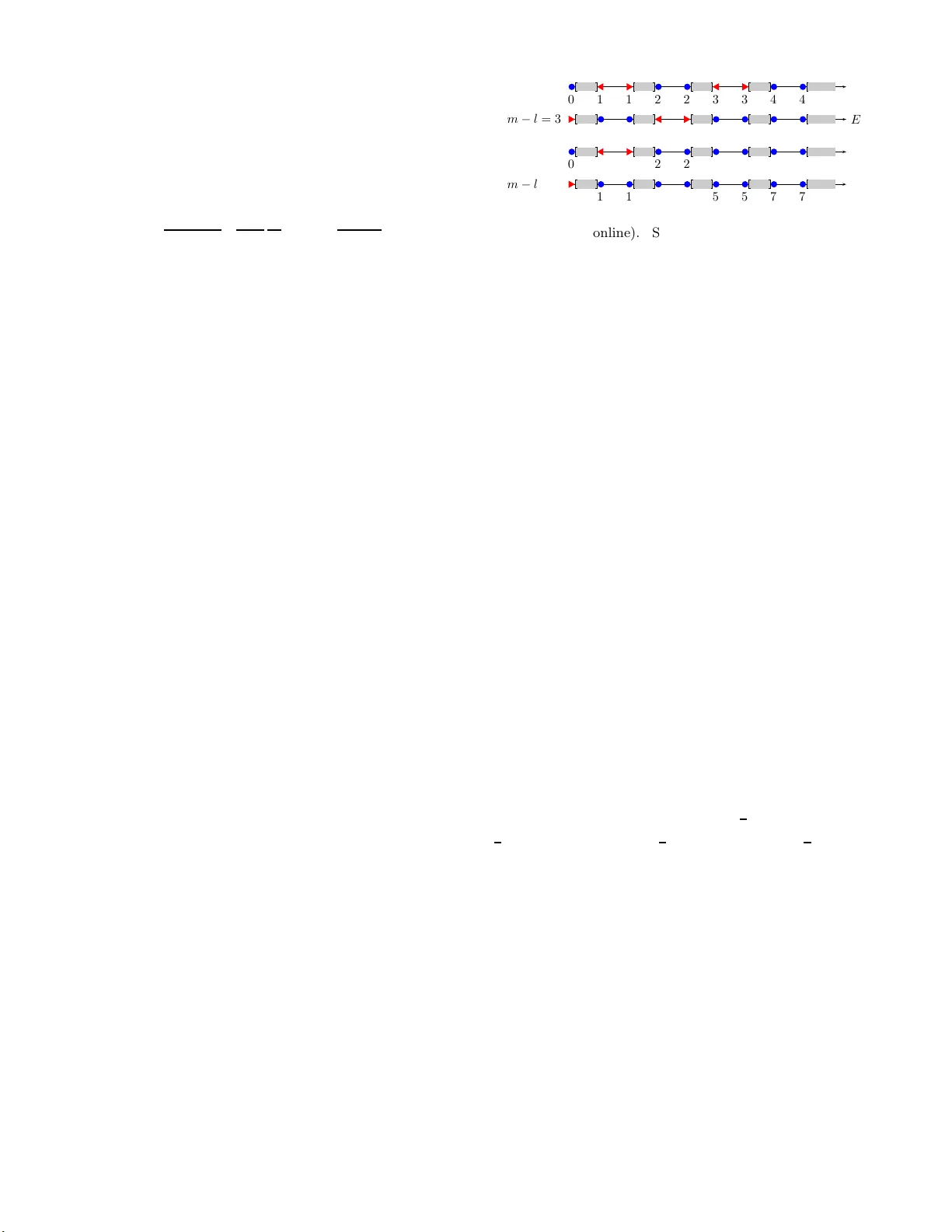
Self-isospectr alit y , sp ecial supersymmetry , and their effect on t he band structure F rancisco Correa 1 , V ´ ıt Jakubsk´ y 1 , Luis- Miguel Nieto 2 , and M ikhail S. Plyushchay 1 1 Dep art amento de F ´ ı sic a, Universidad de Santiago de Chile, Casil la 307, Santiago 2, Chile 2 Dep art amento de F ´ ısic a T e´ oric a, At ´ omic a y ´ Optic a, Universidad de V al ladolid, 47071, V al ladolid, Sp ain W e study a planar model of a non - relativistic electron in p eriodic magnetic a nd electric fields that prod uce a 1D crystal for tw o spin comp onents separated by a half-p erio d spacing. W e fit the fields to create a self-isospectral pair of finite-gap asso ciated Lam ´ e eq uations shifted for a half-p erio d , and sho w that the system obtained is characterized by a new typ e of sup ersymmetry . It is a special nonlinear sup ersymmetry generated by three commuting integral s of motion, related to th e parity- odd op erator of the associated Lax pair, that coherently reflects th e band structure and all its p eculiarities. In the infinite p erio d limit it provides an unusual p icture of su p ersymmetry b reaking. P ACS n umbers: 03.65.-w; 02.30.Ik; 11.30.Na; 11.30.Pb Intr o duction – Super symmetry as a fundament al sym- metry of Nature still waits for exper imental confirmation, but a s a kind of symmetry b etw een bo sonic a nd fermionic states, it a lready turned out to b e fruitful in diverse areas, including nuclear [1, 2], a tomic, so lid-state, and statisti- cal physics [3]. Sup er s ymmetric qua n tum mechanics [3] was introduced under in vestigation of the problem of su- per symmetry breaking in field theory [4]. In the simplest case a system is characterized there by a 2 × 2 diago nal matrix Hamiltonian, H = diag ( H + , H − ), and b y tw o anti-diagonal matrix integrals o f motion (sup ercharges) Q 1 and Q 2 = iσ 3 Q 1 . Super charges are first order differ- ent ial o pe r ators gener ating an N = 2 sup eralgebr a { Q a , Q b } = 2 δ ab H, [ Q a , H ] = 0 . (1) Such a s ystem ha s an additional integral of motion Γ = σ 3 , Γ 2 = 1 , which classifies the s tates with Γ = +1 and − 1, by conv en tion, as b os onic a nd fermionic states. Since [Γ , H ] = 0 and { Γ , Q a } = 0, the Hamiltonia n and sup er- charges are identified as b osonic a nd fermionic gener a- tors. The cases of un broken and broken sup ers y mme- try ar e distinguished by the Witten index ∆ defined as the difference b etw een the tota l num be rs of b os onic a nd fermionic states. In a non-p erio dic o ne-dimensional sys- tem, un broken sup er s ymmetry is characterized b y o ne singlet ground sta te of zero energ y and ∆ 6 = 0; fo r bro- ken sup ersymmetry there is no zero energy singlet state and ∆ = 0. How ev er, as it was obser ved in [5, 6], su- per symmetric p erio dic systems may supp ort tw o zero en- ergy gr ound states, and then ∆ = 0 in the unbroken case. So me systems inv estiga ted there p ossess a spec ific prop erty o f self-isosp e ctr ality , mea ning that co rresp ond- ing sup erpar tner po tentials V + and V − are given b y the same p erio dic function shifted for a half of a p erio d 2 L , V + ( x + L ) = V − ( x ). They b elong to a clas s of finite-ga p per io dic sy s tems, w hich play a n imp ortant role, in par - ticular, in condensed matter physics [7] and in the theory of nonlinea r int egr a ble systems [8]. In a nonline ar gener a lization of sup ersy mmetr ic quan- tum mechanics [9], sup ercharges Q a are higher ( n > 1) order differe ntial op e rators generating a no nlinea r s uper - algebra { Q a , Q b } = 2 δ ab P n ( H ), with P n ( H ) a p olyno- mial of o rder n . The num b er of singlet states ca n take there a ny v alue from 0 to n , a nd, as in per io dic mo dels with linear sup ers ymmetry , the Witten index does not characterize s up er symmetry brea king [9, 10]. This indi- cates tha t in p erio dic finite-g ap sys tems nonlinea r sup er - symmetry may play an impo rtant ro le. T o inv estigate the q uestion of the pr esence and nature of nonlinea r sup er symmetry in p erio dic finite-gap sys- tems, in this Letter we s tudy a planar mode l describ ed by the Pauli Hamiltonia n for a non-re la tivistic electr o n in p er io dic electric and mag netic fields. The model b e- longs to a br oad class of p er io dic sy stems inv estigated by Novik ov et al. [11]. It is well known that in the absenc e of an electr ic field the mo del, which includes the Landau problem a s a pa r ticular case, is characterized b y a sup er- symmetry with the usual linea r sup eralg ebraic s tructure (1) [3]. W e cho ose perio dic magnetic and electric fields in such a fo r m that the spin-up and -down comp onents o f the e le ctron wav e function feel the same one-dimensio na l effective per io dic p o tential but with a shift o f half o f the per io d. As a r esult, the effective p o ten tial of s up er ex- tended system satisfies a prop er ty of self-isosp ectr ality . V ec to r and scala r p otentials are fitted to pro duce the as- so ciated Lam´ e equa tion with tw o integer para meters m and l , whic h b elo ngs to a broad clas s of finite-g ap systems with a smo oth po ten tial, see Eq. (3) b elow [8 , 12, 13]. W e find here a sp ecial nonlinear sup er symmetry of the previously unknown structure , in which all the pec uliar- ities of the band structure of the sys tem are imprinted. In the infinite-p erio d limit our s ystem provides an un- usual picture of sup ersymmetry brea king ro oted in its nonlinearity . Mo del – Consider a no n-relativistic electro n confined to a plane a nd moving in the presence o f a n electr ic field, given by a s c alar p otential φ ( x, y ), and a pe r p endicu- lar magnetic field B z ( x, y ). It is des crib ed by the Pauli Hamiltonian H e = ( p x + A x ) 2 + ( p y + A y ) 2 + σ 3 B z − φ, (2) 2 where the units are ~ = c = 2 m = − e = 1. Let us restrict B z and φ by the conditio n that they de p end only on x . W e cho ose A x = 0 , A y = w ( x ), then B z = dw dx . Pr esent the wa ve function in the form Ψ( x, y ) = e iκy ψ ( x ), where κ , − ∞ < κ < ∞ , is the eig env alue of p y . T aking w ( x ) = α d dx ln(dn x ) and φ ( x ) = β w 2 ( x ) + γ w ( x ) + δ , with a ppr opriate choice o f co nstant pa r ameters α , β , γ and δ , we r educe (2) to a qua nt um p erio dic system given by the diago nal ma trix Hamiltonian H with up (+) a nd down ( − ) comp onents of the for m H ± m,l = − d 2 dx 2 + V ± m,l ( x ). Here V + m,l ( x ) = V − m,l ( x + L ), V − m,l ( x ) = − C m dn 2 x − C l k ′ 2 dn 2 x + c, (3) C m = m ( m + 1), C l = l ( l + 1 ), m and l ar e integers such that C 2 m + C 2 l 6 = 0 , c is a cons ta nt ; dn x = dn ( x, k ) is the Jaco bi even elliptic function, satisfying a relation dn ( x + K ) = k ′ / dn x , with mo dulus 0 < k < 1 a nd real and ima g inary per io ds 2 K and 4 i K ′ , K ( k ) is the elliptic co mplete integral of the first kind, K ′ = K ( k ′ ), and k ′ is a complementary mo dulus, k ′ 2 = 1 − k 2 . The Hamiltonian H obtained in this wa y then descr ib es a pa ir of tw o p arity-even a sso ciated La m´ e sy s tems, shifted one with resp ect to the other for the half of the r eal p er io d 2 L of the po ten tial, that is equal to 2 K for C m 6 = C l , and K for C m = C l . The cases with C m C l = 0 corres po nd to the Lam´ e sys tem [8]. By the Landen transfor mation [14], the case C m = C l is re duce d to the ca se of the Lam´ e system with same v alue of pa rameter C m but with C l = 0, a nd with the s ame ima ginary per io d but the real per io d divided in tw o. T aking in to account that C − m − 1 = C m , without loss of g e ne r ality one can a ssume that m > l ≥ 0 . Isosp ectral subsystems H + m,l and H − m,l belo ng to a class of finite-gap systems with e ven p otential and num b er of energy gaps in the sp ectrum equal to m [8, 12]. Hidden b osonize d sup ersymmetry – Co nsider an n -gap per io dic sy stem with even Hamiltonia n H = − d 2 dx 2 + V ( x ), V ( x + 2 L ) = V ( x ) = V ( − x ). Its sp ectrum σ ( H ) is ch ara cterized b y the band str uc tur e σ ( H ) = [ E 0 , E 1 ] ∪ . . . ∪ [ E 2 n − 2 , E 2 n − 1 ] ∪ [ E 2 n , ∞ ), E 0 < E 1 < . . . < E 2 n , which consists of n v alence bands and a conduction band, separated by ener gy gaps corr esp onding to n prohibited bands. The 2 n + 1 sing let band-e dg e states of definite parity and ener gies E j , j = 0 , . . . , 2 n , are given b y pe - rio dic or an tip erio dic states of p er io ds 2 L o r 4 L . The states in the interior of per mitted bands are des crib ed by Blo ch-Floquet qua si-p erio dic functions, and every inter- nal energ y level is doubly degenerate. The energy do u- blets ar e distinguished b y the r eflection (pa r ity) op er ator R , Rψ ( x ) = ψ ( − x ), that is a nonlo cal integral of mo tio n. On the other hand, do uble degene r ation of e ne r gy levels is a characteristic feature o f a q uantum mechanical N = 2 sup e rsymmetric sys tem. The presence of 2 n + 1 singlets is an indication of the higher o r der ( ≥ 3 ) nature of the cor- resp onding hidden s up er symmetry . An y finite-gap sys - tem is c harac terized by a nontrivial integral of motion A 2 n +1 that is a self-co njugate differe ntial op e rator of the form A 2 n +1 = i d 2 n +1 dx 2 n +1 + α 2 n − 1 ( x ) d 2 n − 1 dx 2 n − 1 + . . . α 0 ( x ). The ( A 2 n +1 , H ) is the La x pair of the n -th order K orteweg-de V r ies (KdV) equation, and the condition [ A 2 n +1 , H ] = 0 defines the stationar y KdV hiera rch y . This pair of com- m uting op er ators satisfies identically the relatio n [8] A 2 2 n +1 = P 2 n +1 ( H ) , P 2 n +1 ( H ) = 2 n Y j =0 ( H − E j ) , (4) and 2 n + 1 singlet states Ψ j are the co mmon eigen- states of H and A 2 n +1 of the eig env alues E j and 0 . The square of the self-co njugate op erator A 2 n +1 is p os- itive semi-definite, and (4) implies the describ ed band structure of the sp ectrum. Integral A 2 n +1 is pa r ity-odd, { R, A 2 n +1 } = 0. T aking into acco unt tha t [ R, H ] = 0 and R 2 = 1, we s ee that her e the reflec tio n op erator plays the same role as the op era to r σ 3 for N = 2 sup erextended matrix system, and the op era tor Z = A 2 n +1 can b e iden- tified a s the sup e rcharge. Define a nonlo cal o dd op er ator ˜ Z = iRZ . Odd sup er charges Q 1 = Z , Q 2 = ˜ Z g enerate the N = 2 nonlinea r sup ersy mmetr y of or der 2 n + 1 : { Q a , Q b } = 2 δ ab P 2 n +1 ( H ) . (5) Since this str ucture a ppe a rs in the one-dimensiona l sys - tem without matrix (spin) degrees o f freedom, the de- scrib ed no nlinear sup er symmetry of order 2 n + 1 for any n -gap p er io dic system with par it y-even Hamilto- nian is identifi ed as a hidden b osonize d sup e rsymmetry [15, 16, 1 7]. Sup ersymmetry and b and structu r e – Let us re tur n to our finite-ga p self-is osp ectral system. A vector space spanned by singlet band- e dg e states of the subsystem H + m,l or H − m,l is divided int o tw o vector subspaces formed by 2 L -p erio dic a nd 2 L -antiperio dic (i.e., 4 L - pe r io dic) states. The singlet state Ψ 0 with the lowest energy E 0 is 2 L -p er io dic, and the singlet state of the other edge of the first v alence band, Ψ 1 , is a nt ip erio dic. The tw o edge-states Ψ 2 j − 1 and Ψ 2 j , j = 1 , . . . , m , se pa rated by an energy gap, hav e the same p erio d [8, 1 2]. Therefore, the space of p erio dic singlet states has o dd dimensio n, and the space of antiperio dic sta tes has nonzero even di- mension. On these tw o subs pa ces o f sing let states, tw o irreducible non-unitary re presentations of the sl (2 , R ) a l- gebra are r ealized. Namely , according to [12, 18], the space of 2 m + 1 singlet states of the as so ciated Lam´ e system with m > l ca n be treated as a dir e c t s um o f t wo sl (2 , R )-repr esentations of dimensio ns m − l (spin j 1 = 1 2 ( m − l − 1)) a nd m + l + 1 (spin j 2 = 1 2 ( m + l )). The p erio d of the states o f these subspa ces is dictated by the parity of m − l . When m − l is o dd, spin- j 1 (spin- j 2 ) repr e sentation is r ealized on 2 L -p erio dic (4 L - per io dic) states, for even m − l the p erio dicity of spin- j 1 and spin- j 2 subspaces interc hanges. Making use of the 3 t wo co rresp onding alg ebraizatio n schemes [18], we find t wo commuting anti-diagonal self-conjugate int egra ls of motion, X and Y , wher e Y = i ǫ Y 0 Y − m,l ( x ) Y + m,l ( x ) 0 , (6) Y − m,l ( x ) = dn m +1 x cn m + l +2 x cn 2 x dn x d dx m + l +1 dn l x cn m + l x , Y + m,l ( x ) = Y − m,l ( x + K ) , ǫ Y = 1 (0) for m + l even (o dd), and X has a form similar to (6) with X − m,l ( x ) = Y − m, − l − 1 ( x ), X + m,l ( x ) = X − m,l ( x + K ), ǫ X = 1 − ǫ Y . The order o f the differential op e r ator X , | X | = m − l , is less than the order of Y , | Y | = | X | + 2 l + 1 = m + l + 1. X and Y hav e op- po site pa rities ( − 1) m − l ( X ), and ( − 1) m − l +1 ( Y ). When m − l is o dd, 2 L -p erio dic (4 L -p erio dic) singlet states of each subsys tem are zero mo des of the integral X ( Y ). F or even m − l the ro le of the op era tors X a nd Y a s a nnihila- tors of per io dic and ant ip erio dic edg e states in terchanges. The anticomm utator { X , Y } = 2 Z pro duces a diag onal int egra l Z = diag ( Z + m.l , Z − m,l ), | Z | = | X | + | Y | = 2 m + 1, with down, Z − m,l ( x ) = iY + m,l ( x ) X − m,l ( x ) = iX + m,l ( x ) Y − m,l ( x ) , (7) and up, Z + m,l ( x ) = Z − m,l ( x + K ), c omp onents, which are the parity-odd integrals of motion annihilating all the singlet states of the m - gap subsystems H − m,l and H + m,l describ ed above. Hence, Z 2 = P Z ( H ), wher e P Z ( H ) is a sp ectr al p o ly nomial (4) o f or der 2 m + 1 with H = di ag ( H + m,l , H − m,l ). F rom the explicit form of the in- tegrals X , Y a nd Z one finds that [ Z, X ]=[ Z , Y ] = 0, and X 2 = P X ( H ) , Y 2 = P Y ( H ). The po lynomials P X ( H ) and P Y ( H ) factor ize the sp ectral p oly nomial P Z ( H ), P Z ( H ) = P X ( H ) P Y ( H ), and include those fac- tors ( H − E j ) for whic h E j ’s are the eig e nv a lues o f ba nd- edge states of co rresp onding p erio dicity [19]. Periodic (antiperio dic) states hav e an even (odd) num- ber of no des in the p er io d interv al. The max imal num - ber of nodes tha t can hav e the band-edge states an- nihilated b y X ± m,l and Y ± m,l is not more than the or- der of these differential operato rs. When m − l is even , X annihilates m − l a n ti-p erio dic band-edg e states with 1 , 1 , 3 , 3 , . . . , m − l − 1 , m − l − 1 nodes . The m + l + 1 p erio dic edge states a nnihila ted by Y hav e 0 , 2 , 2 . . . , ( m + l ) , ( m + l ) no des. W e find that when m − l is o dd , X annihilates m − l per io dic band-edge s tates with 0 , 2 , 2 , . . . , m − l − 1 , m − l − 1 no des if m − l > 1, and one node le s s state Ψ − 0 if m − l = 1 . In the last case X is the usual first o r der sup ercharge [2 0]. The oper - ator Y annihilates m + l + 1 anti-perio dic states with 1 , 1 , . . . , m + l , m + l no des. The picture can b e summarized as follows. The band- edge s tate Ψ 0 is a zero mode of the par it y-o dd s up er - charge, i.e. of Y ( X ) when m − l is even (o dd). The band-edge states of the s ame prohibited band ‘attract’ b b b b b u u u u 0 2 2 4 4 1 1 3 3 m − l = 4 E b b b b b b u u u 0 2 2 5 5 1 1 3 3 m − l = 3 E b b b b b b b u u 0 2 2 6 6 1 1 4 4 m − l = 2 E b b b b b b b b u 0 3 3 7 7 1 1 5 5 m − l = 1 E FIG. 1: (color online). Scheme of band structu re for self- isospectral systems with m = 4. T riangles (dots) indicate band-edge states ann ihilated by X ( Y ), the d igits b elo w mean their no de numbers. The states with even (o dd ) number of nod es are p eriodic (anti-p erio dic). each other; they app ear as zer o mo des of the sa me su- per charge. When the n umber of per mitted bands m + 1 is fixed, a nd m − l increase s in steps of 2 , there app ear t wo new band-edge s tates annihilated by X , with incr easing energies. Every such pair is separ ated by a pair of zero mo des of Y . The highe s t 2( l + 1) singlet s tates a re zero mo des of Y . These pr op erties are illus trated on Fig. 1. Int egra l Z reflects the degener a tion of the states of each subsystem, while X and Y rev eal the self-isosp ectr ality of the comp osed sys tem. As a res ult, it is characterized by the 4- fold degenera tion of quasi- per io dic states a nd the double deg eneration of the ba nd-edge states . Nonline ar sup er algebr a – Besides nont rivia l in tegra ls X , Y a nd Z , our system is characterized also by mutu- ally co mmu ting in tegrals Γ 1 = σ 3 , Γ 2 = R and Γ 3 = σ 3 R . An y of them can b e chosen a s the op erator Γ that c las- sifies all the integrals int o b oso nic and fermionic o per a- tors. Appropriate linear co m binations of physical states for which Γ = + 1 and − 1 a re identified a s b o sonic and fermionic states. Let us choo se Γ = σ 3 . Eight integrals X , Γ i X , Y and Γ i Y , i = 1 , 2 , 3, anticommut ing with Γ are identified a s fermionic op era tors. They anticomm ute betw een themselves for certain linear comb inations of the 8 b oso nic op era tors Z , Γ i Z , Γ i and H with co efficients that ar e some p olyno mials in H . Linear comb inations of the b osonic op erato rs J ( ± ) 1 = − i 2 Rσ 3 Z Π ± , J ( ± ) 2 = 1 2 σ 3 Z Π ± and J ( ± ) 3 = − 1 2 R Π ± , where Π ± = 1 2 (1 ± σ 3 ), hav e the only nontrivial commutators [ J ( ± ) a , J ( ± ) b ] = iρ c ( H ) ǫ abc J ( ± ) c . (8) Here a, b , c = 1 , 2 , 3, ρ 1 , 2 = 1, ρ 3 = P Z ( H ). This is a nonlinear defor mation of su (2) ⊕ su (2) ⊕ u (1) ⊕ u (1), where the tw o last terms cor resp ond to Γ = σ 3 and H . The nonlinear alg ebra (8) is reminiscent of nonlinear symmetry algebra generated by the a ngular momentum and Laplace- Runge-Lenz vector op era tors in the quan- tum K e pler pr o blem [21]. The complete sup er algebra is identified as a nonlinear defo rmation of the su (2 | 2 ) sup e runitary symmetry , in which H plays a ro le of the m ultiplicative ce ntral charge [22]. Infinite p erio d limit – In the self-isosp ectr a l sy stem 4 k → 1 L → ∞ FIG. 2: (color online). Qu alitativ e p icture of sup ersymmetry breaking in a self-isospectral sy stem with m = 3 , l = 1 in the infin ite-p eriod limit. The form of potentials and bands sho wn on the left corresp onds to th e mo dulus k clo se to 1. Tw o lo w er horizontal dashed lines on the right show energy leve ls of singlet b ound states, the up p er separated horizontal conti nuous line corresp onds to a doublet of b ound states, the line at the b ottom of continuous sp ectru m indicates a doublet of the low est states of the scattering sector. considered here, ba nd-edge states form energy doublets, quasi-p erio dic states a re org anized in quadruplets . In the infinite p erio d limit, corr esp onding to k → 1, k ′ → 0, K → ∞ , dn( x, k ) → 1 cosh x , the s ystem transfor ms int o a pa ir o f r eflectionless P¨ oschl-T eller systems given by po tent ials V ± m,l = − C ± cosh − 2 x + c , C + = C l , C − = C m . In this limit the s pec tral p oly nomial degener a tes [16]. The quasip erio dic states of the co nduction band reduce to the scattering states, sup ersy mmetr ic doublet of its band-edge reduces to a doublet of the lowest states of the scattering sector . In a shifted subsystem H + m,l , m − l lower v a lence bands disapp ear, w hile the rest o f them in b oth subsystems shrink to the b ound states. The resulting system is c haracter ized by m − l single t a nd l doublet bo und states, and b y a doublet of the lowest s tates of the sca tter ing s ector. The r est of the scattering sta tes is organize d in energ y qua druplets. This unusual picture o f sup e rsymmetry breaking, illustra ted on Fig. 2, is rela ted to the nonlinear nature of self-iso sp ectral s uper symmetry . Conclusion – I n the mo del inv estigated her e the non- linear self-isosp ectr al sup e rsymmetry orig inates from: i ) the separ ability of the singlet band-edg e states o f bo th subsystems into tw o non- empt y subspac e s o f per io dic a nd anti-perio dic states, and ii ) the related fa c torization of the higher order Lax pair op er a tor of the as so ciated sta - tionary KdV hierarch y . The mutually commuting in- tegrals X and Y ar e the annihilators of the band-edge states of definite p erio dicity . They factorize the integral Z that annihilates all the ba nd-edge states. The unusual nonlinear sup er symmetry gener ated by these nontrivial int egra ls tog ether with integral σ 3 and parity o p erator R , reveals the band struc tur e of the system and a ll its p e- culiarities in the s ame way as a the nonlinear sy mmetry asso ciated w ith the Laplace - Runge-Lenz vector reflects sp ecific pr op erties of the hydrogen atom sp ectrum [21]. W e thank B . Dubrovin, V. Enolskii, I. Kr ichev er, A. T reibich, R. W eik ard a nd A. Za br o din for v aluable co m- m unications. The w ork was supp orted by FONDECYT (Grants 10500 01, 70 70024 and 3085 013), CO NICYT and DICYT (USACH ), by M ˇ SMT ˇ CR pro ject Nr. LC060 02, and by pro jects MTM2005 -0918 3 and V A01 3C05. LMN thanks Universidad de Santiago de Chile for ho spitality . [1] F. I ac hello, Phys. R ev . Lett. 44 , 772 (1980); A. B. Bal- antekin, I. Bars, and F. Iachello, ibid. 47 , 19 ( 1981). [2] A . Metz et al. , Phys. R ev . Lett. 83 , 1542 (1999); Phys. Rev. C 61 , 0643 13 (2000); J. Gr¨ oger et al. , ibid. 62 , 064304 (2000). [3] F. Coop er, A. Kh are and U. Sukhatme, Phys. Rept . 251 , 267 (1995); G. Junker, Sup ersymmetric Metho ds in Quantum and Statistical Physics (Springer, Berlin, 1996); B. K. Bagchi, Sup ersymmetry in Quantum and Classica l Mechanics (CRC, Boca Raton, 2001). [4] E. Witten, Nucl. Phys. B188 , 513 (1981); ibid. B202 , 253 (1982). [5] H . W. Braden and A . J. Macfarlane, J. Phys. A 18 , 3151 (1985). [6] G. V . Dun n e and J. F ein b erg, Phys. Rev. D 57 , 1271 (1998). [7] Y . Alhassid, F. Gursey and F. Iachello , Phys. Rev. Lett. 50 , 873 (1983); H. Li and D. Kusnezov, ibi d. 83 , 1283 (1999); H. Li, D. Ku snezo v and F. Iachello, J. Phys. A 33 , 6413 (2000). [8] B. A. Dubrovin, V . B. Matv eev and S. P . Novik o v, Russ. Math. S urv. 31 , 59 (1976); S. P . Novik o v et al. , Theory of Solitons (Plen um, New Y ork, 1984); E. D. Belokolo s et al. , Algebro-geometric Approach to Nonlinear Integrable Equations, (Sprin ger, Berlin, 1994); F. Gesztesy and H . Holden, Soliton Equations and Their Algebro-Geometric Solutions (Cam bridge Univ. Press, Cambridge, 2003). [9] A . A . And riano v, M. V. Ioffe and V . P . Spiridonov, Phys. Lett. A 174 , 273 (1993). [10] S. M. Klishevic h and M. S. Plyushc hay , N ucl. Phys. B606 , 583 (2001). [11] S. P . Novik ov, J. Sov. Math. 28 , 1 (1985). [12] A. Ganguly , J. Math. Phys. 43 ,1980 (2002). [13] Particular cases with m − l = 1 w ere considered in [6]; see also A . K hare and U. S ukhatme, J. Math. Phys. 40 , 5473 (1999); ibid. 42 , 5652 (2001); D. J. F ern andez, J. Negro and L. M. N ieto, Phys. Lett. A 275 , 338 (2000). [14] H. Bateman and A. Erd´ elyi, Higher T ranscendental F unc- tions, V ol. 3 (McGrawHil l Bo ok Co., N ew Y ork, 1955). [15] M. S. Plyushcha y , Ann als Phys. (N.Y.) 245 , 339 (1996); Int. J. Mo d. Phys. A 15 , 3679 (2000). [16] F. Correa and M. S. Plyushcha y , Ann als Phys. (N.Y.) 322 , 2493 (2007); J. Phys. A 40 , 14403 ( 2007). [17] F. Correa, L. M. Nieto and M. S. Plyushcha y , Ph ys. Lett. B 644 , 94 (2007). [18] A. V. T urbiner, Commun. Math. Phys. 118 , 467 (1988); J. Phys. A 22 , L1 (1989); F. Finkel, A. Gonzalez-Lop ez and M. A. Rod riguez, J. Math. Phys. 37 , 3954 (1996); J. Phys. A 33 , 1519 (2000). [19] F or a somewhat similar structure outside the context of finite-gap p eriod ic systems, see A. A. Andrianov and A. V . Sokolo v, Nucl. Phys. B660 , 25 (2003). [20] The choice c = (1 + k ′ 2 ) m 2 in (3) corresp onds to E 0 = 0 and { X , X } = 2 H . [21] A. Galindo an d P . P ascual, Quantum Mechanics, V ol. 1, p. 250 (Sprin ger-V erlag, Berlin, 1990). 5 [22] F. Correa, L. M. Nieto and M. S . Plyu shcha y , Phys. Lett. B 659 , 746 (2008).
Original Paper
Loading high-quality paper...
Comments & Academic Discussion
Loading comments...
Leave a Comment