Computads and Multitopic Sets
We compare computads with multitopic sets. Both these kinds of structures have n-dimensional objects (called n-cells and n-pasting diagrams, respectively). The computads form a subclass of the more familiar class of omega-categories, while multitopic…
Authors: Victor Harnik, Michael Makkai, Marek Zawadowski
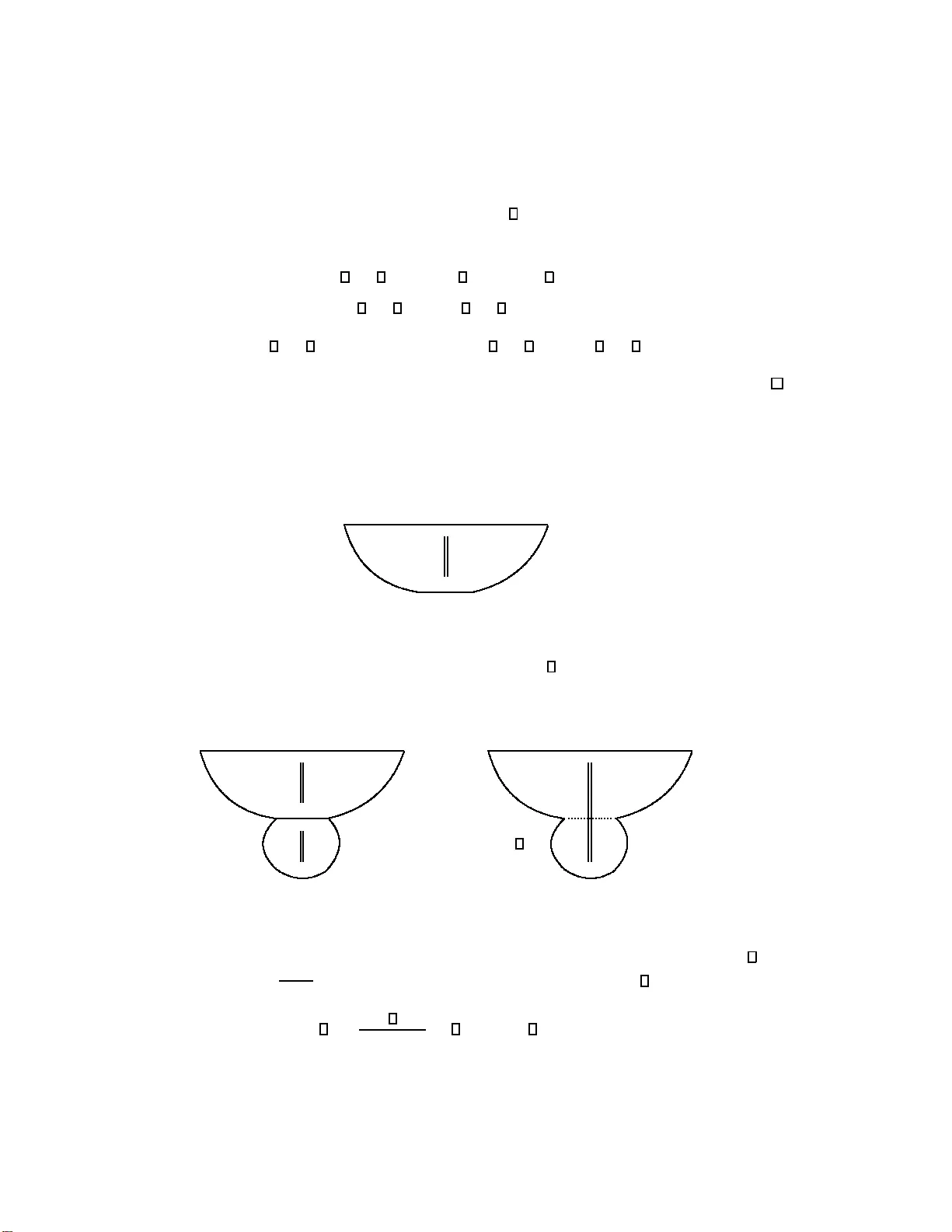
Computads and Multitopic Se ts Victor Harnik ∗ Univ ers it y of Haifa harnik@math.haifa.ac.il Mic hael Makk ai McGill Univ e rsit y makk ai@math.mcgill.ca Marek Zaw adows ki W arsa w Univ ersit y za w a do@mim uw .edu.pl No ve mber 3, 2021 Abstract W e compare c omputads (as defined in [15], [16], [3]) with multitopic sets (cf. [5]- [7]). Both these kinds o f structur es hav e n -dimensional ob jects (called n -c el ls for computads and n-p asting di agr ams for m ultitopic sets), for each natura l num b er n . In both cases, the set of n - dimensional ob jects is freely generated by one of its subsets. The computads form a sub clas s of the more familiar colle ction of ω - c ate gories while mult ito pic sets a re of a more novel nature, b eing based on an iteration o f free multic ate gories . Multitopic sets have b e e n devised as a vehicle for a definition of the concept of we ak ω -c at e gory . Our main res ult states that the categor y of m ultitopic sets is equiv alent to that of many- to-one computads, whic h is a certain full subca tegory o f the category o f a ll computads. In tro d uction and preliminaries The notion of fr e e structur e has p enetrated all parts of m o dern algebra. I t has the follo w in g abstract generalization. Giv en categories C and S and a functor U : C → S , w e say that an ob ject A of C is fr e e with resp ect to U iff for some ob j ect I and arro w ι : I → U A in S , the follo wing universal pr op erty holds: for ev ery ob ject B of C and arr o w φ : I → U B of S , there is a unique C -arrow f : A → B su c h that the follo wing diagram comm utes: I U B φ ? ? ? ? ? ? ? ? ? ? ? ? I U A ι / / U A U B U f W e sa y that I gener ates the free ob ject A ( via the arr ow ι ). In the familiar cases, the ob jects of C and S are mathematical structures, I is a substru cture of U A with ι b eing ∗ correspondin g author 1 the inclusion map, and the elemen ts of (the univ erse of ) I are called gener ators of the free structure A . F or example, if C is the c ate gory of c ommutative rings , S th e c ate gory of sets and U the for getful functor , the free ring generated b y a set X is nothing but the ring Z [ X ] of p olynomials with int egral co efficien ts and indeterminates from the set X . Borrowing terminology from this example, w e w ill usually refer to th e generators of a free structure as indeterminates or, in short, indets . Another familiar example is that of a fr e e c ate gory generated by a dir e c te d gr aph (see, e.g. [10], § 7 of Chapter I I). In this case, C is the cate gory C at of (small) cat egories, S is the category Gr ph of directed graphs and U is, again, the forgetful fun ctor. The notion of fr ee category has b een generalized to higher dimensional categories by Street, leading to the concept of c omputad whic h is cen tral for the p resen t work (cf. [15] and [16] for the 2-dimensional case and [3] for the general definition). T o fix our notations, w e n ow recal l the stru cture of higher dimensional categories. An n -dimensional category or, in short, an n -c ate gory C has a set of k -c el ls C k , for eac h k 6 n . F or k > 0, it has domain and co domain functions d, c : C k → C k − 1 ; thus, a k -cell u is en visaged as an arro w du u / / cu , linkin g its domain du ∈ C k − 1 to its co domain cu ∈ C k − 1 . F or k > 2, w e also require du and cu to b e p ar al lel , meaning that ddu = dcu and cdu = ccu , i.e. du and cu h a ve the same domain and th e same co domain. F or the sak e of u niformit y , w e sa y that any t wo 0-cells are parallel, so that w e can sa y that du k cu whenev er u ∈ C k , with k > 0. If u is an l -cell and k < l we let d ( k ) u b e the k -cell obtained from u by l − k successiv e applicatio ns of the domain f unction d ; the k -cell c ( k ) u is d efined similarly . The n -catego r y C is also equipp ed with p artial c omp osition op er ations • k for k < n . If u, v ∈ C l and k < l , then u • k v is an l -cell that is defined iff d ( k ) u = c ( k ) v . Finally , with eac h l -cell u , l < n , C h as an identity ( l + 1) -c el l u 1 u / / u . The concepts that w e men tioned, s atisfy certain axioms. F or a precise defin ition, see [9], as w ell as section 1 b elo w. An ω -category is one that has n -cells for eac h natural n u m b er n < ω (as cu s tomary in set theory , ω is the first infinite ordinal n umb er). An n -category can b e seen as an ω -catego r y in w h ic h all cells of d imension > n are identit ies. An ω -fun ctor F : C → C ′ b et ween ω -categories is a map from the cells of C to those of C ′ that preserve s the ω -categorical structure. The category ω C at of ω -categories is the one that has the small ω -categories as ob jects and the ω -functors as arro ws. F or an N -category C , with N 6 ω , and n < N , let C n b e the n -cate gory whose k -cells are the same as those of C , for all k 6 n . C n is called the n th tru ncation of C . If A is an n -catego r y , w e say that C extends A iff C n = A . Fix an ( n − 1 )-category A . An extension of A will b e any n -categ ory that extends A . A pr e-extension ( I , d, c ) of A will b e a set I together w ith functions d, c : I → A n − 1 , such that dx k cx for x ∈ I (remem b er that A n − 1 is the set of ( n − 1)-cells of A ). F or the sake of this preliminary discussion, let us introdu ce the categ ories E xt ( A ) and P reext ( A ); the form er 2 has the extensions of A as ob jects while its arrows are the ω -functors th at extend the identi ty functor on A . Th e latter category has the pre-extensions of A as ob jects and the structure preserving maps as arro ws. There is an ob vious for getful functor U : E xt ( A ) → P r eext ( A ). An extension B of A is called fr e e if it is a free ob ject of E xt ( A ) with resp ect to U , in the sense of th e definition that op ened this introd uction. This concept is at the h eart of Street’s definition. An ω -category A is called a c omputad iff A n +1 is a free extension of A n , for eac h n < ω . In the fi rst part of th is pap er (sectio n s 1 -6), w e concen trate on the study of free extensions of finite dimen sional categories. W e start by p resen ting a construction of a free extension, using a metho d f amiliar from univ ersal alg eb r a (cf. e.g. [4]): given a pre-extension ( I , d, c ) of an ( n − 1)-ca tegory A , w e set up a form al e quational language C which has terms d enoting all the cells that can b e constructed from the elements of I by applications of the partial op erations defi n ed among n -cel ls in an exte n sion of A . T he language C has also a de ductive system that allo ws us to pro ve equalities among terms. Tw o terms are called e quivalent if their equalit y is p ro v able in C . The elemen ts of the fr ee extension constructed by this metho d, will b e the equiv alence classes of C -terms. The same metho d could b e used to construct the free ring generated by a set of inde- terminates X . How ev er, a simplifying circumstance o ccur s in this case. The terms of the corresp ondin g form al language are algebraic expressions that use indeterminates, constan ts for 0 and 1, binary op eration sym b ols + , · , − as well as paren theses. Eac h suc h term t can b e pro ve n to b e equal to a p olynomial, w hic h is unique (assum in g that the monomials that are th e terms of the p olynomial occur in a canonical ordering in duced by a giv en ordering of the set of indeterminates). W e shall call th is p olynomial the r e duc e d form of the term t . This situation allo ws u s to r eplace the equiv alence class of t b y the un ique p olynomial whic h is the common r educed form of the mem b ers of this class. The free s tructure generated by X b ecomes, in this wa y , a term mo del , i.e. a stru ctur e whose elemen ts are individual terms, rather than equiv alence cla s ses. T his is h ow the p olynomial ring Z [ X ] is obtained. Can the free extension X of an n -category B , generate d b y a giv en p re-extension, b e also construed as a term mo del? In other w ords, can we su bstitute eac h equiv alence class of terms b y a ”c anonical” r epresen tativ e, a common ”reduced form” of its elemen ts? Under c ertain c onditions , the answ er to this question is p ositiv e. This result is jus t one corollary , a s id e b enefit, of the study that w e conduct in sections 3-6. W e are no w going to describ e the cont ent of these sectio n s, in rough terms. Assume that B itself is a fr e e extension of an ( n − 1)-category A , generated by a s et I of n -dimensional in dets (i.e., generated b y a pre-extension of the f orm ( I , d, c )) and let X b e an y extension of B . Call an ( n + 1)-cell of X , u ∈ X n +1 , many-to-one iff its cod omain cu is an indet, i.e. cu ∈ I . W e defin e, in section 3, a partial binary op eration, called plac e d c omp osition , b et ween the man y-to-one cells of X . As it tur ns out, the many-to- one cells of X , together with the op eration of partial comp osition yield a structur e C X whic h is a multic ate g ory . Th e abstract notio n of m ulticategory , describ ed in section 4, is a 3 generalizat ion, in tro du ced in [6], of a n otion due to Lambek (cf. [8]). F r ee m ulticategorie s do ha ve term mo dels , as sho wn in [6] and briefly s k etc hed in section 5. The main tec h nical result of this pap er, theorem 6.1, states that if X is a free extension of B , ge nerated by a set J of many-to one ind ets, then the m ulticategory C X is also f r ee (and, actuall y , generated b y the same set of indets J ). As we stated already , a computad is obtained by starting with a b arren set and iterat- ing the free extension construction indefinitely . If, at eac h stage, the generating in d ets are man y-to-one cells, th en we get a many-to-one computad. These are the ob jects of a cate- gory m / 1 C omp describ ed in sectio n 7. Th e many- to-one cells of a many-to -one computad A tog ether w ith the (partial) op er ations of placed comp osition and th e domain/codomain functions, form a structure S A . This s tructure is a multitopic set , an ab s tract notion in- tro duced in [7]. Roughly sp eaking, a m ultitopic set is a structure obtained b y iterating indefinitely the construction of free m u lticate gory . The precise setup, as we ll as the descrip- tion of the category mltS et of m ultitopic sets, are presen ted also in s ection 7. In section 8 w e sho w, using th e results of section 6, th at actually , al l multit opic sets are of the form S A for some many-to- one compu tad A . W e then infer that th e cate gories m/ 1 C omp and ml t S et are equiv alent. More colo r fully said, multitopic sets ar e the same as many-to-one c omputads . This is the main result of our pap er. Multitopic sets ha ve b een in tro duced in the sequence of pap ers [5], [6], [7 ] as a v ehicle for pro du cing the ”right” definition for the notion of we ak higher dimensional c ate gory . T his approac h w as inspir ed b y an earlier attempt of Baez and Dolan (cf. [1], [2]). S ee [9] for a surv ey of the comp eting d efinitions of weak h igher dim en sional cate gories, includin g the one of [11], based on m u ltitopic sets. Our main result sho w s that the d efinition of [11] could b e reph rased using the more familiar notion of many-to- on e compu tad. An alternativ e approac h for defining w eak h igher dimensional categories, based on a concept called dendr otopic sets , has been devised b y P alm in [14]. In addition, P alm shows that the cate gory of dendrotopic sets is equiv alent to th at of man y-to-one computads, th u s concluding that the cate gories of multitopic sets and of dend rotopic s ets are also equiv alen t. W e conclude the preliminaries by recalling one more notation. I f u is a k -cell of an ω -category A and k < n , then w e let 1 ( n ) u b e the n -cell obtained from u b y n − k su ccessiv e applications of th e x 7→ 1 x op eration. 1 F ree extensions Let ( I , d, c ) b e a p re-extension of an ( n − 1)-cate gory A , meaning, as w e r ecall, that I is a set and d, c : I → A n − 1 are fun ctions suc h that dx k cx for eac h x ∈ I . As in the intro d uction, the ele men ts of I w ill b e called n -indets . W e should think of an n -ind et x as denoting an arbitrary n -cell b elonging to an ω -category extending A (i. e. an ω -category wh ose ( n − 1)th truncation is A ), h a ving domain and co domain dx and cx . W e no w define an equational 4 language C = C ( A , I , d, c ), dealing with the n -cells obtained fr om the (cells denoted b y) n -indets, b y rep eated comp ositions. The symb ols of C will b e the n -indets, the c omp osition symb ols • k , for k < n , as w ell as th e identity symb ols 1 a , for eac h ( n − 1)-cell a ∈ A n − 1 . Besides these, C w ill emp lo y left and right paren theses as auxiliary sy mb ols. Definition 1.1. Th e set T ( C ) of C -terms and the domain and co domain f unctions d , c : T ( C ) → A n − 1 are defin ed as follo ws: 1. Eve ry n -indet x is a C -term with dx , cx as sp ecified by the giv en functions d , c : I → A n − 1 . 2. F or eac h a ∈ A n − 1 , 1 a is a C -term w ith d 1 a = c 1 a = a . 3. If t , s are C -terms and d ( k ) t = c ( k ) s , then ( t ) • k ( s ) is a C -term (the parentheses aroun d t and s insure uniqu e readabilit y; u sually , w e ju st write t • k s ) and we ha ve d ( t • k s ) = ( ds if k = n − 1 dt • k ds if k < n − 1 c ( t • k s ) = ( ct if k = n − 1 ct • k cs if k < n − 1 4. There are no C -terms b esides those men tioned in 1-3. The m eaning of the C -terms should b e clear. If X is an ω -categ ory extend in g A and if ϕ : I → X n is an assignment whic h is c orr e ct , meaning that dϕx = dx and cϕx = cx for all x ∈ I , then we can evaluate an y C -term t under the said assignmen t and get the v alue v al ϕ ( t ) ∈ X n . Remember that when sa yin g that X extends A , we mean that A = X n − 1 (the ( n − 1)th truncation of X ). More generally , if X is any ω -cat egory , F : A → X an ω -fu nctor and ϕ : I → X n an assignment that is c onsistent with F , in the sense that dϕx = F dx , cϕx = F cx for x ∈ I , w e ca n ev aluate t under F , ϕ and ge t the v alue v al F ,ϕ ( t ) ∈ X n . Th e formal defin ition runs as follo w s . Definition 1.2. Under th e assumptions that we jus t mentio n ed, w e define the function v al = v al F ,ϕ : T ( C ) → X n , b y induction on C -terms: 1. v al ( x ) = ϕx , for x ∈ I . 2. v al (1 a ) = 1 F a , for a ∈ A n − 1 . 3. v al ( t • k s ) = val ( t ) • k v al ( s ). If A = X n − 1 and ϕ is a correct assignment , w e let v al ϕ = v al i A ,ϕ , where i A is the inclusion ω -fu nctor of A in to X . 5 It may so happ en, that for terms t and s we hav e v al F ,ϕ ( t ) = v al F ,ϕ ( s ) for al l F and ϕ . This occurs whenever t and s must b e equal in virtue of the axioms of ω -categ ory . W e can describ e this situatio n pr ecisely , b y s etting up a dedu ctiv e system for pro ving equalit y of terms. This is done in th e definition b elo w , which completes the presen tation of the equational logical system C = C ( A , I , d, c ). Let us m ention that the axioms of th e n otion of ω -category are the asso ciativit y , exchange and ident ity axioms of this definition. Definition 1.3. W e d efine the dedu ctiv e s ystem C as follo ws, where, in the axioms and rules b elow, t, s, w , t 1 , s 1 are arbitrary C -terms and all comp ositions are supp osed to b e w ell defined (according to definition 1.1). Axioms. 1. t = t (equalit y axioms). 2. ( t • k s ) • k w = t • k ( s • k w ) (associativit y axio ms). 3. ( t • k t 1 ) • l ( s • k s 1 ) = ( t • l s ) • k ( t 1 • l s 1 ), where l < k < n (exc h an ge axioms). 4. 1 ( n ) b • k t = t = t • k 1 ( n ) a , where k < n , c ( k ) t = b and d ( k ) t = a . Also, 1 a • k 1 b = 1 a • k b , where a, b ∈ A n − 1 , d ( k ) a = c ( k ) b (iden tity axioms). R ules. 1. t = s s = t t = s s = w t = w (equalit y rules) 2. t = s t • k w = s • k w t = s w • k t = w • k s (congruence rules) W e will write ‘ ⊢ t = s ’ or, sometimes, ⊢ C t = s to indicate that t = s is pr o v able in th is system. Is this system complete? In other wo r ds are w e sure that, whenev er 0 t = s , there are X , F and ϕ for wh ic h val ( t ) 6 = v al ( s )? The p ositive answer to this question, follo ws from the existence of fr e e extensions. Theorem 1.4. Given A , I , d, c as ab ove, ther e exists an n - c ate gory A [ I ] satisfying: 1. A [ I ] i s an extension of A , i. e its ( n − 1) -th trunc ation is A , A [ I ] n − 1 = A . 2. Each x ∈ I is an n -c el l of A [ I ] with domain dx and c o domain cx . 3. A [ I ] has the fol lowing univ ersal p rop erty : if X is any ω -c ate gory e xtending A and ϕ : I → X n a function satisfying that dϕx = dx and cϕx = cx for x ∈ I , then ther e is a u nique ω -func tor G : A [ I ] → X such that Ga = a when a is a c el l of A and Gx = ϕx for x ∈ I . 6 Mor e over, A [ I ] has the fol lowing strong univ ersal pr op ert y : whenever X i s an ω -c ate gory, F : A → X an ω -functor and ϕ : I → X n a function such that dϕx = F dx , cϕx = F cx for x ∈ I , ther e is a u nique ω -functor G : A [ I ] → X such that Ga = F a whenever a is a c el l of A and Gx = ϕx for x ∈ I . R emark. The u niv ers al prop er ty means that A [ I ] is a fr ee extension of A in the sens e explained in th e introd uction. Th e str ong un iv ersal prop erty means that A [ I ] is free with resp ect to a forgetful functor U 1 : C 1 → S 1 , where C 1 is ω C at while S 1 is a catego r y whose ob jects are pairs h B , ( Z, d, c ) i with B an ( n − 1)-category and ( Z, d, c ) a pre-extension of B (the interested reader s hould ha ve no problems in iden tifying the arro w s of S 1 and the definition of U 1 ). Pr o of. As outlined in th e introdu ction, the n -cells of A will b e e quivalenc e classes of C - terms, un der a suitable equiv alence relati on . Claim 1.5. (a) If we define, for C -terms t and s , t ≈ s iff ⊢ t = s , then ≈ is an e quiva- lenc e r elation that is a c ongruenc e with r esp e ct to • k , k < n . (b) If ⊢ t = s then dt = ds, ct = cs . (c) If ⊢ t = s then v al F ,ϕ ( t ) = v al F ,ϕ ( s ) , for al l F and ϕ . Pr o of. (a) is imm ediate (congruence with resp ect to • k means that t ≈ s imp lies t • k w ≈ s • k w and w • k t ≈ w • k s ). (b) and (c) are easily c h ec k ed b y induction on pro ofs. W e can n o w describ e the n -catego r y A [ I ]. The cells of A [ I ] of dimension 6 n − 1 are those of A , wh ile the n -cells are the equiv alence classes t/ ≈ for t ∈ T ( C ), where d ( t/ ≈ ) = dt , c ( t/ ≈ ) = ct an d ( t/ ≈ ) • k ( s/ ≈ ) = t • k s/ ≈ . Claim 1.5(a)(b), insures that the definitions of c, d and • k are correct, and the axioms of our deductiv e system insure that w e defined , indeed, an n -category . How ev er, we w ant ed the elements of I to b e n -cells of A [ I ] and what we h av e, instead, is that x/ ≈ is a su c h, for ev ery x ∈ I . T o correct this, w e only h a ve to identify x with x/ ≈ . T o b e sure th at we do not mak e un wan ted identifica tions in this w ay , we ha ve to c hec k that x 6≈ y , whenev er x 6 = y for x, y ∈ I . Th is is ea sily seen, how ev er. It should b e clear when do w e sa y that an indet x o c curs in a term t ∈ T ( C ). A straight f orw ard ve r ification sho ws that the follo wing is true. Claim 1.6. If ⊢ t = s then any indet x ∈ I o c curs in t iff it o c curs in s . He nc e, if x and y ar e d istin ct indets, then 6⊢ x = y , which me ans that x 6≈ y . 7 This sho ws that w e can, indeed, iden tify x with x/ ≈ and assume that the elemen ts of I are n -cells of A [ I ]. T o conclude the pro of, it is enough to sh o w that A [ I ] has the str ong universal pr op erty stated in part 3 of 1.4. Giv en an ω -functor A F / / X and a function ϕ : I → X n suc h that dϕx = F dx, cϕx = F cx , w e define G : A [ I ] → X b y Ga = F a for a a cell of A and G ( t/ ≈ ) = v al F ,ϕ ( t ) for t ∈ T ( C ) . Claim 1.5(c) implies that this definition is correct and defin ition 1.2 of v al F ,ϕ ( − ) insures that G is an ω -fu nctor. It follo ws immediately that G extend s b oth, F and ϕ and that an y suc h G has to b e defined as ab ov e. Thus, G is u nique and we ha ve pro ved 1.4. If we no w let i A : A → A [ I ] b e th e inclus ion functor and ϕ b e the inclusion function from I in to the n -cells of A [ I ], then an easy indu ction on terms shows that v al i A ,ϕ ( t ) = t/ ≈ . This fact yields immediately the f ollo wing. Corollary 1.7. The de ductive system C is c omplete, namely, if 0 t = s , then for some X , F and ϕ we have val F ,ϕ ( t ) 6 = v al F ,ϕ ( s ) . R emark. As easil y seen, the universal pr op e rty of 1.4, part 3 , determines A [ I ] uniqu ely up to an isomorphism (actually , up to a unique isomorphism that is the iden tit y for the cells of A and for the elemen ts ( n -ind ets) of I ). It f ollo w s that the un iv ersal prop ert y actually implies the str ong universal prop erty . An n -categ ory B will b e called a fr e e extension of A iff it extends A and for some I ⊂ B n , B has the u n iv ersal prop erty of A [ I ] (and hence, it is isomorphic to A [ I ], as just remarke d ). W e also s ay , in this situation, that B is freely generated b y the set I (an abbreviated terminology that suppresses A ). An imp ortant con ven tion. A 0- c ate gory B consists of the set B 0 of its 0-cells, and nothing more. Thus, a 0-cate gory is jus t a barr en set (this is a customary p oin t of view). An ω -functor from such a B to an y ω -category X is just a fu nction from B 0 to the set X 0 of 0-cells of X . W e will say that any 0-cate gory B is fr e ely gener ate d by the set B 0 of its 0-cells. This is justified b ecause the ob vious univ ersal prop ert y holds trivially . Also, we will sometimes refer to the 0-cells of any ω -category as 0- indets . This terminology will turn out to b e conv enient in the sequel, as it will allo w the inclusion of the case n = 0 in sev eral stat ements. W e conclude this section with a remark able prop er ty of free extensions. As the statemen t and, ev en more so, the pro of, inv olv e some tec hnical details, the reader ma y wish to skip this on first reading and return to it when it is in v oked in later sections. In analogy with the notion of free group, one migh t exp ect that the same free extension of A migh t b e generate d b y several distinct sets of n -indets. In many im p ortan t instances, 8 this is n ot so, ho wev er. As it turns out, u nder certain conditions, the set of n -ind ets of a free extension is uniquely determined. Definition 1.8. An n -cell u of an ω -category X is inde c omp osable if whenev er u = v • k w , with k < n , then eit h er u = 1 ( n ) a or v = 1 ( n ) a , where a = d ( k ) v = c ( k ) w . Iden tit y cells are, in general, decomp osable in man y ob vious w ays. F or example, if u, v are non-identity m -cells suc h that u • m − 1 v = a is defined, then 1 a = 1 u • m − 1 1 v , showing that 1 a is de c omp osable . More generally , if l < k < m and a = u • l v , where u, v are k -cells, then it is easy to see that 1 ( m ) a = 1 ( m ) u • l 1 ( m ) v . W e will consider this kind of decomp ositions of k -ident ities to b e trivial. A formal definition, whic h is wider in a certain resp ect, will no w b e giv en. A cell of the form 1 ( m ) a , with a a k -cell and m > k , will b e ca lled a k -identity of dimension m . Definition 1.9. A k -iden tity e of dimension m > k is called essential ly inde c omp osable if whenev er e = u • l v with l 6 k , then b oth u and v are k -identit y cells of dimension m . R emark. I n the case of l = k < m , the condition of essen tial indecomp osabilit y just m eans that if e = 1 ( m ) a = s • k w with a of dimension k , then s = w = 1 ( m ) a . Definition 1.10. An n -category X is wel l- b e have d if, for all k < m 6 n , all k -id entities of dimension m are essen tially indecomp osable. Notice that an y 0-category is trivially w ell-b eha ved. Also, as fr e e c ate gories , i.e. free extensions of 0-categ ories, h a v e a v ery simple stru cture (cf. e.g. section 7 of chapter I in [10]) and are easily seen to b e w ell-b ehav ed . The remark able result th at we wan t to pr ov e is the follo w ing. Theorem 1.11. If A is a wel l-b ehave d ( n − 1) -c ate gory and I is a set of n - indets over it, then for any n -c el l x of A [ I ] , x ∈ I iff x is inde c omp osable and is not an identity c el l. F urthermor e, A [ I ] is also wel l b ehave d. Th us, an n -d imensional extension B of a well-behav ed ( n − 1)-catego ry A is free iff it is freely generated b y the set of its non-iden tit y indecomp osable cells. F or n = 1, this th eorem is easily c hec ked, d ue to the ab o ve men tioned simple structur e of free ca tegories. F or n > 1, th e p r o of in v olv es a deep er analysis of the deductiv e system C . W e b egin with a definition. Definition 1.12. 1. A term t ∈ T ( C ) is called c onstant iff no v ariable o ccur s in t . 2. t is called an identity iff for some ( n − 1)-cell a of A , ⊢ t = 1 a . An iden tity t is cal led a k -i dentity (where k < n ) iff ⊢ t = 1 ( n ) a for some k -cell a of A . 9 3. A term t is called inde c omp osable iff w henev er ⊢ t = s • k w (with k < n ) then one of s, w is a k -iden tit y . Th us, a term t is indecomp osable iff t/ ≈ is an indecomp osable n -cell of A [ I ]. The follo wing simple statemen t implies imm ed iately the “if ” direction of 1.11 . Prop osition 1.13. If t ∈ T ( C ) is an inde c omp osable term, then t is an identity or ⊢ t = x for some variable x ∈ I . Pr o of. By induction on t . If t is an id en tit y or a v ariable then we ha ve nothing to pr o ve . If t = s • k w , then eit h er s is a k -identit y an d th en ⊢ t = w or w is an identi t y and ⊢ t = s ; in either case, the claim follo ws b y th e induction hypothesis. Next, we p oin t out a v ery simple fact. Claim 1.14. A term t is c onstant iff it is an identity. Pr o of. By induction on t . If t is an ident ity or an n -indet, this is immediate. If t = s • k w and t is constan t then so are s, w , hence, by the induction h yp othesis, w e can fin d ( n − 1) -cells a, b su c h th at ⊢ s = 1 a , ⊢ w = 1 b . If k = n − 1, then w e h a v e a = d 1 a = ds = cw = c 1 b = b , hence ⊢ t = s • n w = 1 a • n 1 a = 1 a , so t is an iden tity . I f k < n − 1, then d ( k ) s = d ( k ) 1 a = d ( k ) a and lik ewise, c ( k ) w = c ( k ) b . As s • k w is defined, we ha v e that d ( k ) a = c ( k ) b , hence a • k b is defin ed and w e hav e, by one of the id entit y axio m s, ⊢ t = 1 a • k 1 b = 1 a • k b . this completes the pro of of the “o n ly if ” direction of the claim. The “if ” direction follo ws immediately by claim 1.6. This allo ws us to inf er the ”F urthermore” p art of 1.11. Claim 1.15. If A is wel l- b e have d then so is A [ I ] . Pr o of. W e ha ve to sho w that if t ∈ T ( C ) is a k -iden tit y and ⊢ t = s • k w , for k < n , then b oth s and w are k-ident ities. Indeed, in this case, t, s, w m ust all b e constan t, hence iden tities, b y 1.14. So, assume that ⊢ t = 1 ( n ) a and ⊢ s = 1 u , w = 1 v with a b eing a k -cell and u, v b eing ( n − 1)-cells of A . If k = n − 1, w e immediately infer that a = u = v . If k < n − 1, then dt = ds • k dw which means that 1 ( n − 1) a = u • k v and as 1 ( n − 1) a is a k -identit y in A , it is essen tially indecomp osable, whic h means that u, v are also k -ident ities hence, s o are s and w . Eac h o ccurrence of a comp osition sym b ol • k in a term t ∈ T ( C ) h as a definite sc op e whic h is a subterm of t of the form s • k w . Definition 1.16. An occur r ence of • k with scope s • k w in a term t is called inessential iff either one of s, w is a k -identit y or b oth, s and w are iden tities. 10 T o pu t it more colorfully , a comp ositio n o ccurrence in t is inessential iff it can b e “wip ed out” b y the use of one of the identity axioms of our deductiv e system. The next lemma, whic h is crucial for the pro of of 1.11, sa ys, in effect, that this is the only wa y in w hic h a comp osition symb ol can b e made to disapp ear from a term of T . Lemma 1.17 . Under the assumption of 1.1 1 , if ⊢ t = s and one of t, s has only inessential o c curr enc es of c omp osition, then so do es the other . Pr o of. By induction on pro ofs. W e ha ve to show, first, that th e stateme n t of the lemma is true for all the axio m s and, second, that if the statemen t is true for th e p remise, or the premises, of a rule then it is true for its conclusion as we ll. W e start with the asso ciativit y axioms. Let ( t • k s ) • k w = t • k ( s • k w ) b e a s uc h and assume, e.g., that the left hand side only inessen tial comp ositions. This means that the same is true for t, s, w , s o all w e ha ve to sho w is that the t w o • k -o ccurrences indicated on the right are inessentia l. As the righ tmost indicated o ccurrence of • k on the left hand sid e is inessent ial, we h a ve three cases, and w e examine eac h of them separately . Assume first that t • k s is a k -iden tit y . If so, then s o are t and s and th is implies that the tw o indicated occur r ences of • k on the right are inessent ial. Second, assume that w is a k -iden tity . But th en, the left hand side of th e axiom is p ro v ably equal to t • k s and b y assump tion, this o ccurrence of • k is also in essen tial and we easily conclud e that the comp ositions on the righ t hand side are also inessen tial. Finally , if b oth t • k s and w are iden tities, then so are t an d s and all comp ositions on the righ t are inessen tial. This completes the examination of the asso ciativit y axiom. The case of exchange axioms is more complex. The argumen tation is not h ard, bu t is somewhat tedious. Consider the in stance ( t • k t 1 ) • l ( s • k s 1 ) = ( t • l s ) • k ( t 1 • l s 1 ) where l < k 6 n . Assume fi rst that th e left side has no essentia l comp osition o ccurrences. Then, certai n ly , t, t 1 , s , s 1 ha ve no suc h o ccur r ences and so, all w e h a v e to sho w this that, on the right side, the three indicated comp osition occurren ces are inessen tial. As • l on the left is inessentia l, either b oth terms that it bin ds are ident ities or one of these terms that is an l -identit y . In the first case, t, t 1 , s , s 1 are all identi ties and h ence, all comp ositions on the righ t are inessen tial. In the second case assume, e.g., that t • k t 1 is an l -identit y . As l < k , any l -identit y is also a k -iden tity hence, by 1.15, is essen tially indecomp osable and b oth t and t 1 are k -identities. But then, ⊢ t • k t 1 = t = t 1 and so, t and t 1 are actuall y l -iden tities. T aking in to consideration that the second • k on the left is also inessen tial, we no w easily conclude that all comp ositions on the righ t are in essen tial. No w assum e that the right side of the exchange axiom has no essen tial comp osition o c- currences and let’s sho w that the three comp ositions indicated on the left are also inessentia l. 11 Either b oth terms b ound b y • k on th e right are id en tities or one of these is a k -identit y . The first case is, aga in , trivial, so let us co nsider the second. Assume, e.g., that t • l s is a k -iden tity and hence, is essen tially indecomp osable. Then t and s are b oth k -iden tities and, as the second • k on the r igh t is inessen tial, w e conclude immediately that all compositions on the left are inessen tial. Chec king the statemen t of th e lemma for the other axioms is trivial and so is for the rules. Pr o of of 1.11 . It remains to sho w that an y indeterminate x ∈ I is indecomp osable. assume that ⊢ x = t • k s . As the basic term x h as no essential comp ositio ns, it f ollo ws b y 1.17 that • k on the right is inessenti al. By 1.6, x must o ccur in t • k s , whic h means that t and s cannot b e b oth constant, i.e., b y 1.14 cannot b e b oth iden tities. W e conclude that one of t, s must b e a k -identit y . 2 Indet o ccurrences The notion of occur r ence of an indet in (a C -term d enoting) an n -cell u of A [ I ] is surp risingly complex and w ill b e d iscussed in the presen t secti on. W e start by p ointi n g out that the same ind et ma y o ccur seve ral times in a term de- noting u . A simp le example: assum ing that a = dx = cy and b = dy = cx , the C -term t = ( x • n − 1 y ) • n − 1 x denotes an n -cell a u / / b , the comp osite of the diagram a x / / b y / / a x / / b, and the ind et x has t w o d istin ct o ccurrences in t . As w e shall see, in certain s ituations w e will b e in terested in r eplacing one of these o ccurr ences of x b y a cell v of dimens ion n or higher (!), such that d ( n − 1) v = a and c ( n − 1) v = b . T h erefore, w e m u st ha ve a mean of indicating a particular o ccurr ence of an indet x in an n -cell u . One solution could b e to arrange the o ccurrences of the ind ets in a s equence, in the order in which they o ccur in t . In the example that w e just considered, w e are sp eaking of the sequence h x, y , x i . Unfortunately , the same cell u is d en oted b y s ev eral terms and the order of indet o ccurr ences ma y v ary from one suc h term to the other. F or instance, the terms t = ( x • k x 1 ) • l ( y • k y 1 ) and s = ( x • l y ) • k ( x 1 • l y 1 ) denote the same n -cell, where l < k < n . F ortunately , whenev er t an d s denote the same cell, i.e. when ever ⊢ t = s , the same indets occur in b oth, eac h o ccurring the same num b er of times in t and in s and, mor e over , eac h pro of of t = s yields, in an ob vious w ay , a one-to-one corresp ondence b etw een the in det o ccurr ences in t and those in s . T o deal with this situation, we start b y attac hin g to eac h n -cell u an indexe d set h u i of indet occurr en ces; this is a f unction h u i : |h u i| → I wh ose d omain is a finite set |h u i| . An 12 indet x ∈ I has an occurr ence in u iff it is in the ran ge of h u i and if this is the case, then the num b er of occurr ences of x in u is the ca rdinalit y of the set { r ∈ |h u i| : h u i ( r ) = x } . It will b e useful to assum e that all the domains |h u i| are subsets of a given in finite set N . F ollo win g [6], w e let I # b e the category wh ose ob jects are the finite indexed su bsets of I (i.e. the functions from fin ite sub s ets of N into I ) and arro w s are defined in th e obvio u s w ay . Let us mention, for further use, that in I # , h u 1 • k u 2 i is a c opr o duct of h u 1 i and h u 2 i , with sev er al p ossible p airs of copro jections κ i : |h u i i| → |h u 1 • k u 2 i| , i = 1 , 2. R emark. The c hoice of the finite set |h u i| is to tally arbitrary , apart from the fact th at the n u m b er of its elemen ts should equal that of distinct o ccurr ences of indets in u and we may , if w e wish so, r e p ar ametrize h u i , meaning that w e replace its domain |h u i| b y an y su b set of N of the same cardinalit y . h u i is just an abstract ob ject that carries the basic information ab out the in d ets o ccurring in u and th e n umb er of o ccurrences of eac h. W e still h a v e to attac h ev ery r ∈ |h u i| to a particular o ccurr ence of x = h u i ( r ) in u . This is done with the help of an indet-o c curr enc e sp e cific ation or, in short, a sp e cific ation for u . Suc h a sp ecification is giv en b y a C -term t denoting u (i.e. suc h that u = t/ ≈ ) tog ether with a on e-to-one function θ whose d omain is |h u i| and su ch that for eac h r ∈ |h u i| , θ ( r ) will b e a place in the strin g of sym b ols t , in whic h x = h u i ( r ) occur s. This o ccurr ence will b e referred to as the r-o c curr enc e of x in u , as sp e cifie d by θ . W e will denote θ : |h u i| → t , to indicate that θ is a sp ecificatio n as describ ed. As menti oned abov e, ev ery C -pro of π of t = s generates a bijection b etw een the indet o ccurrences in t and those in s . This is a one-to -one function χ = χ π whic h maps ev ery lo cation in the string of symb ols t at whic h a certai n indet occurs to a lo cation in s occupied b y the same indet. W e denote this situation by χ : t → s . W e let the reader figure out the obvious definition of χ π . With the h elp of this notion, w e can no w d efi ne when t w o sp ecifications for u are the same. Definition 2.1. Two sp ecifications θ i : |h u i| → t i , i = 1 , 2, are called e quivalent if there exists a C -p r o of π of t 1 = t 2 suc h that θ 2 = χ π θ 1 . R emarks. 1. If ev er y indet that occur s in u , o ccurs there p recisely onc e , then we h a v e a unique sp ecificati on θ : |h u i| → t , for ev ery t denoting u . If this is the case, then any t wo sp ecifications for u are equiv alen t. If, ho wev er, there are indets with multiple occurr ences in u , then there are sev eral p ossible sp ecificati on s for u into the same t . In this case, u ma y ha ve ine q u ivalent s p ecifications. T o sho w how delicate the issue of ind et o ccurrences ma y b e, let us also mentio n th at w e migh t hav e tw o distinct sp ecificatio n s θ i : |h u i| → t into the same t that are e qu ivalent ! Indeed, as remarked b y Ec kmann and Hilton, if a is a 0-cell and u, v : 1 a → 1 a are 2-cells, then one can pr o ve that u • 0 v = v • 0 u = u • 1 v = v • 1 u. 13 Th us, if we let x b e a 2-indet with dx = cx = 1 a , then s ubstituting x for u and v in, e.g. the pro of of the first equalit y , w e get a non-trivial C -pro of π of x • 0 x = x • 0 x whic h yields a χ π that inte r c hanges the t wo o ccurrences of x . 2. An alternativ e, more picturesque and less form al, p oin t of view is this. A sp ecification θ : |h u i| → t actually r elab els the distinct o ccur rences of any indet x by different sym b ols x ′ , x ′′ , ... . In this w a y , we transform t into a term t ⋆ , all of wh ose ind ets h a v e unique o ccurrences. An y C -pro of of t = s yields a suitable relabelling s ⋆ and a C -pro of of t ⋆ = s ⋆ . In this wa y , b y looking at the pr o of, w e can follo w the rearrangemen t in s of the indets that o ccur in t . W e now cho ose , for ev ery n -cell u of A , a pr eferr e d sp ecification θ u : |h u i| → t u . F rom this p oin t on, when sp eaking of the r -o ccurr en ce of x = h u i ( r ) in u , we will mean the o ccurrence sp ecified b y θ u . O ccasionally , we migh t hav e to use another term t denoting u , and in such a case, it should alw a ys b e considered together w ith a p ro of π of t u = t . Then, the ab o v e mentio ned r -o ccurrence in u is also the one sp ecified by the equiv alen t sp ecification θ = χ π θ u : |h u i| → t . One t yp ical con text in which s u c h a situation o ccurs naturally , will no w b e describ ed. If u 1 , u 2 are k -comp osable n -cells of A [ I ], then u 1 • k u 2 is denoted by b oth t u 1 • k u 2 and t u 1 • k t u 2 . Let’s write, for sim p licit y , u 1 • k u 2 = u , t u = t , t u i = t i , i = 1 , 2. Select a p ro of π of the equalit y t = t 1 • k t 2 . It will yield a map χ π : t → t 1 • k t 2 . Let ι i b e the “em b eddin g” of the term t i in to t 1 • k t 2 , i = 1 , 2. By this we mean that ι i maps ev ery lo cation in the string of sym b ols t i in to the corresp onding lo cation in the the large r string t 1 • k t 2 . R ememb er that h u i = h u 1 • k u 2 i is a copro du ct of u 1 and u 2 in the category I # . A pair of copro jections κ i , i = 1 , 2, will b e called appr opriate (with resp ect to th e selected p ro of π ), if the follo wing diagrams commute: |h u 1 i| t 1 θ 1 / / |h u 1 i| |h u i| κ 1 t 1 t 1 • k t 2 ι 1 |h u i| t θ / / t t 1 • k t 2 χ π / / |h u 2 i| |h u i| κ 2 O O t 2 t 1 • k t 2 ι 2 O O |h u 2 i| t 2 θ 2 / / where θ , θ 1 , θ 2 , are the pr efe rr e d sp ecifications for u, u 1 , u 2 . As all m ap s in this diagram are one-to-one, w e immediately conclud e that, given u 1 , u 2 and π , there is a unique pair of appropriate copro jections κ 1 , κ 2 . These copro jections will relate eac h indet o ccur rence in u i to the corresp onding one in u = u 1 • k u 2 . An important con ven tion. As w e remark ed already , w e can reparametrize an y giv en u b y changing its d omain at will. W e w ill use th is fl exibilit y and always assume t h at, 14 whenev er we are considering the cell u • k v , the index sets |h u i| , |h v i| were so c hosen as to b e disjoint an d to hav e |h u • k v i| = |h u i| ˙ ∪|h v i| (where th e customary notatio n “ ˙ ∪ ” comes to emphasize that the t w o terms of the union are disjoin t sets), with the inclu si on maps of |h u i| , |h v i| in |h u • k v i| b eing appr opriate copro jections. T his conv en tion will simplify notations in the sequel. 3 Placed comp osition In this sect ion, we will assume that B is an n -category f r eely generated by a set I of ind ets. This means that n > 0 and B = A [ I ], where A = B n − 1 , the ( n − 1)th truncation of B or else, n = 0 and I = B 0 . Let X b e an ω -category extending B . W e are going to describ e sev eral op erations inv olving cells of d im en sion > n of the ω -category X . Th e most imp ortan t, f or the presen t article, is the operation of pla c e d c omp osition , that will b e presen ted later in this section. The first op eration to b e describ ed is the n - c e l l r e plac ement op eration. If u is an n -cell of X , r ∈ |h u i| , h u i ( r ) = x ∈ I and if v is any n -cell of X p arallel to x , then w e ca n r eplac e the r -o ccur rence of the n -indet x in u by the n -cell v , pro d ucing an n -cell u r v , as resu lt. Notice that u r v is parallel to u . Let us r ecall that an n -cell v is parallel to x iff n > 0 and dv = dx, cv = cx or else, n = 0 (as any t w o 0-cell s are considered to b e parallel). W e can generalize this operation b y allo win g v to b e any cell of dimension > n , pro vided that, if n > 0 then d ( n − 1) v = dx and c ( n − 1) v = cx . Indeed, if u is an n -cell and v an m -cell, where k < n < m , suc h that d ( k ) u = c ( k ) v it is customary to define u • k v = 1 ( m ) u • k v . Similarly , u • k v = u • k 1 ( m ) v , if u is of dimension m and v of dimension n . These operations that yield an m -cell wh en applied to cells of dimensions n and m , are called whiskerings . As an y n -cell u is obtained from indets by means of comp ositions, we conclude that it mak es sense to replace the r -o ccurr ence of x in u , b y an y cell v of X of dimension m > n , pro vid ed that d ( n − 1) v = dx and c ( n − 1) v = cx . The result is an m -cell u r v and this kind of replacement will b e calle d a gener alize d whiskering op eration. The n -cell replacemen t op eration is j ust the ge n eralized w h isk erin g, r estricted to n -cells. F or n = 0, the ge neralized whisk erin g op erations is trivial: if u is a 0-cell, then it is an indet, and u r v = v , hence u r − is the iden tit y function on th e set of all cells of X . F or n > 0, giv en p ar al lel ( n − 1)-cells a, b ∈ X n − 1 of X , w e let X ( a, b ) b e the ω -cate gory whose k -cells are those ( n + k )-cells v ∈ X n + k that satisfy d ( n − 1) v = a, c ( n − 1) v = b . With this notation, w e see that, for u ∈ X n and r ∈ |h u i| , x = h u i ( r ), u r − is a function from the set of cells of X ( dx, cx ) to the cells of X ( du, cu ). As a clue to a precise definition of this function, we note that the follo win g three conditions should b e met. 1. If u is an n -cell of X , r ∈ |h u i| and h u i ( r ) = x then u r v is defined iff d ( n − 1) v = dx and c ( n − 1) v = cx . If this is the case, then d ( n − 1) ( u r v ) = du and c ( n − 1) ( u r v ) = cu . 15 2. If u = x ∈ I (remem b er that we identi fied x with the n -cell x/ ≈ ) then u r v = v (where, of cours e, |h u i| = { r } ). 3. ( u ′ • k u ′′ ) r v = ( ( u ′ r v ) • k u ′′ if r ∈ |h u ′ i| u ′ • k ( u ′′ r v ) if r ∈ |h u ′′ i| (remem b er that, b y the con v ention established at the end of section 2, w e ha ve |h u ′ • k u ′′ i| = |h u ′ i| ˙ ∪|h u ′′ i| ). W e wan t to associate with ev ery n -cell u an indexed set of partial functions h u r −i r ∈|h u i| so as to hav e conditions 1-3 m et. One migh t think that these conditions can b e used to define the partial function u r − b y recur sion on the n -cell u . Ho wev er, the s ame comp osite u migh t b e represen ted in more th an one w a y as a comp osition of tw o other cells. Conditions 1-3 allo w us to define, b y recursion on the C - term t , a partial function t r − and w e still ha ve to show that all terms denoting a give n u yield the same function. This can b e done b y induction on pr o ofs. Ho w ever, we prefer another route. W e will use the univ ersal prop ert y of A [ I ] (cf. theorem 1.4) and construe the mapping u 7→ h u r −i r ∈|h u i| as a fun ctor in to an n -categ ory W . Definition 3.1. W is the n -ca tegory satisfying the follo wing requirement s : 1. W n − 1 = A , i.e. the k -cells of W are those of A for k < n . 2. The n -cells of W are pairs U = ( u, h H r i r ∈|h u i| ), with u an n -cell of X and H r a fun ction from the set of ce lls of X ( dx r , cx r ) to the s et of cells of X ( du, cu ), where x r = h u i ( r ). The domain and codomain are dU = du, cU = cu . 3. F or a ∈ A n − 1 = W n − 1 , the iden tit y ov er a in W will b e (1 a , h i ) (wh er e h i is, of course, the empty indexed set of functions). 4. if U is as ab ov e and V = ( v , h K r i r ∈|h v i| ) is suc h that d ( k ) U = d ( k ) u = c ( k ) v = c ( k ) V , then we ha v e U • k V = ( u • k v , h L r i r ∈|h u • k v i| ) , where L r ( − ) = ( H r ( − ) • k v if r ∈ |h u i| u • k K r ( − ) if r ∈ |h v i| A straight f orw ard v erification sho ws that W is, indeed, an n -category . F or x ∈ I , seen as an n -cell of A [ I ] with |h x i| = { r } , w e hav e that ϕx = def ( x, h H r i ) is an n -cell of W , where H r = id X ( dx, cx ) is the iden tit y function from X ( dx, cx ) to itse lf . Th u s w e defined a function ϕ : I → W n and w e ha ve dϕx = dx, cϕx = cx . By theorem 1.4, there is a unique ω -fu nctor G : A [ I ] → W suc h th at Ga = a , for a a cell of A and Gx = ϕx , for x ∈ I . 16 Claim 3.2. F or every n -c el l u of A [ I ] , the first c omp onent of Gu ∈ W n is u itself. Pr o of. Let Π : W → A [ I ] b e defin ed as Π a = a for a a cell of A = W n − 1 and Π U = u for U = ( u, h H r i r ∈|h u i| ) = u . Then Π is an ω -fun ctor, hence so is the comp osite Π G : A [ I ] → A [ I ] and we must ha ve that Π G = 1 A [ I ] , the iden tity ω -fun ctor on A [ I ], b ecause, b y 1.4 there is a unique fu nctor A [ I ] → A [ I ] which is the ident ity f or the cells of A and for the indets x ∈ I . Definition 3.3. F or u an n -cell of X , if Gu = ( u, h H r i r ∈|h u i| ), th en w e d efine u r − = H r ( − ), for r ∈ |h u i| . It follo w s immediately that the partial fu n ctions u r − satisfy conditions 1- 3 s tip u lated just b efore d efinition 3.1. Actually , conditions 1-3 determine these fu nctions uniquely , as summed up in the follo wing statemen t. Theorem 3.4. Given X n = A [ I ] , ther e exists a unique system of p artial fu nc tions { u r − : u ∈ X n , r ∈ |h u i|} satisfying c onditions 1-3. Pr o of. The exi stenc e of a system as stipulated has b een just p ro ven, so we ha v e only to pr o v e uniqueness . This done b y induction on n -c el ls . Let us emp hasize that, while definitions by r e cursion on n -cells cells require sp ecial caution, as w e just sa w, pr o ofs by induction are unpr ob lematic, as the set of n -cells of X , b eing the same as the set of n -cells of A [ I ], is the least that cont ains the indets and the identit y n -cells and is close d und er comp osition. W e are now goi ng to see a first in stance of s u c h a pro of. Assuming th at { u ∗ r − : u ∈ X n , r ∈ |h u i|} is another s y s tem of functions satisfying 1-3 , an indu ction on u sho ws that u ∗ r − = u r − . W e lea v e th e straigh tforward argument to the reader. Many more instances of pro ofs by induction on cells will b e met so on. R emark. All these in vo lv ed state m en ts are relev an t for the case n > 0 only . If n = 0 then ev ery n -cell is an ind et and u r − is alwa ys the id entit y function. It is well k n o wn and easily seen that the whiskering op erations are functorial in the follo wing sense: if x, v , u are n -cells suc h that u = x • k v for some k < n , then the f unction − • k v : X ( dx, cx ) → X ( du, cu ) is an ω -fun ctor (and, of course, a similar statemen t holds for v • k − ). Th e same is tru e for gener alize d whiske r ing. Theorem 3.5. If X n = A [ I ] , u ∈ X n , r ∈ |h u i| and h u i ( r ) = x then the function u r − : X ( dx, cx ) → X ( du, cu ) is an ω -fu nctor. Pr o of. By indu ction on u . If u is an indet x ∈ I , then u r − is an id entit y map and there is nothing to pro v e. u cannot b e an iden tity , as |h u i| 6 = ∅ . If u = u ′ • k u ′′ and, sa y , r ∈ |h u ′ i| , then u ′ r − is an ω -fu nctor by the induction hypothesis, hence so is the comp osition u r − = ( u ′ r − ) • k u ′′ of the ω -functors − • k u ′′ and u ′ r − . 17 If u, v are n -cells of X , then so is u r v , if defined. Again, an easy p ro of by induction on u , will sho w that h u r v i is a coprod uct of h u i \ r (i.e. h u i restricted to |h u i| − { r } ) and h v i . The copro jections of this copro duct are induced by those of the • k op erations in volv ed, and if we stic k to our con ven tion of c h o osing d isjoin t index sets for the argumen ts of these comp osition op er ations, we will alw a ys hav e that |h u r v i| = ( |h u i| − { r } ) ˙ ∪|h v i| , with the inclusi on maps b eing the induc e d copr o jectio n s. Again, th is will greatly simplify notations in the sequel. Theorem 3.6. If u is an n -c el l then: 1. (“Commutativity”) If r, q ∈ |h u i| , r 6 = q such that u r v , u q w ar e define d wher e v , w ar e also n - c el ls, then ( u r v ) q w = ( u q w ) r v . 2. (“Asso ciativity”) If r ∈ |h u i| , and u r v is define d, v an n -c el l, q ∈ |h v i| and v q w is define d with w a c el l of dimension > n , then ( u r v ) q w = u r ( v q w ) . 3. (Identity rule) If r ∈ |h u i| and h u i ( r ) = x then u r x = u . Pr o of. By ind uction on u . W e sk etc h th e pro ofs of p arts 1,2 a n d lea ve the p ro of of 3 to the reader. Pro of of part 1 : As |h u i| is assu med to hav e at least t w o distinct elemen ts, u is neither an indet nor an identit y . Assume that u = u ′ • k u ′′ . Then |h u i| = |h u ′ i| ˙ ∪|h u ′′ i| . If r, q b elong to differen t summands, e.g . if r ∈ |h u ′ i| , q ∈ |h u ′′ i| , then b oth s id es of the stipulated equalit y are seen to b e equal to ( u ′ r v ) • k ( u ′′ q w ) (this ca s e doesn ’t require an y induction h yp othesis). If b oth r and q b elong to the same su m mand, e.g. r , q ∈ |h u ′ i| then the statemen t follo w s from the induction hyp othesis for u ′ . Pro of of 2 : If u is an indet, then b oth sides equal v q w . If u = u ′ • k u ′′ and, say , r ∈ |h u ′ i| then the left side equals (( u ′ r v ) q w ) • k u ′′ , while the righ t one equals ( u ′ r ( v q w )) • k u ′′ and the statemen t follo w s fr om the ind uction hypothesis for u ′ . Assume that, not only is X n = B a free extension of B n − 1 = A , bu t also X n +1 is a free extension of X n . Let’s say that X n +1 = X n [ J ] = B [ J ], for a set J of ( n + 1)-indets. This situatio n will b e encountered from section 6 on. If so, then w e can d efi ne generalized whiske r ing fun ctors for n -cells, as w ell as for ( n + 1)-cells. The follo wing simple tec hn ical lemma, linking these t wo kinds of op er ations, will b e u seful later. Lemma 3.7. Assume that X is an ω -c ate gory as just describ e d. If we have w ∈ X n , q ∈ |h w i| , u ∈ X n +1 , r ∈ |h u i| and v is any c el l of X of dimension m > n + 1 then the fol lowing e quality holds, pr ovide d that the expr essions involve d ar e define d: ( w q u ) r v = w q ( u r v ) . 18 Pr o of. By indu ction on w . If w is an n -indet, then w q − is an iden tit y functor, and there is nothing to p r o ve . w ca nnot b e an iden tit y , as |h w i| 6 = ∅ . Assume that w = w ′ • k w ′′ and , e.g., q ∈ |h w ′ i| . T h en ( w q u ) r v = (( w ′ q u ) • k w ′′ ) r v . By the ind uction h yp othesis, ( w ′ q u ) r v = w ′ q ( u r v ), and w e conclud e = ( w ′ q ( u r v )) • k w ′′ = ( w ′ • k w ′′ ) q ( u r v ) = w q ( u r v ) . W e no w go one dimension higher and define the op erations of plac e d c omp osition that in volv e ( n + 1)-cells of X . Let u b e suc h a cell. Its domain du is an n -cell of X , hence of A [ I ]. Assume that r ∈ |h du i| and h du i ( r ) = x ∈ I . Schemat ically , th e situation ma y b e represent ed as in the figure b elo w, where w e indicated the r -o ccurrence of x in du . cu / / du • x / / J J u K S Let, in addition, v b e another ( n + 1)-cel l of X w ith co d omain cv = x . Th e t w o cells can b e represented as in the fi gure at left b elo w and it is a natural thought to com bine the t wo cells in to a single one, u ◦ r v , whose domain will b e du r dv , the result of replacing the r -o ccurrence of x in du by dv . The new cell is represented schemati cally in the fi gure at righ t and is called the pla c e d c omp osition of u and v at r . cu / / du • x / / J J u K S dv ] ] v K S cu / / • / / J J u ◦ r v K S du r dv ] ] What is the pr ecise definition of placed comp osition? The cells u and v cannot b e comp osed as they are, b ecause the domain of u doesn ’t matc h the codomain of v . Th is, ho wev er, ca n b e corr ected with the help of the generalized whisk ering f unctor du r − . Indeed, as we ha ve dv v / / cv = x = h du i ( r ), w e get, after applying du r − , du r dv du r v / / du r cv = du r x = du 19 and thus, du r v is an ( n + 1) -cell with co domain du , matc h ing the domain of u . This motiv ates the follo wing definition: Definition 3.8. F or u, v ∈ X n +1 with r ∈ |h du i| and h du i ( r ) = x = cv , we defin e the plac e d c omp osition of u and v at r to b e th e ( n + 1)-cell u ◦ r v = u • n ( du r v ) with domain du r dv and co d omain cu . Again, we can generalize this op eration further, b y allo w ing v to b e an y X -cell of di- mension > n + 1 suc h that c ( n ) v = x . Definition 3.8 mak es sense f or su c h a v , with • n indicating a whisk ering, and pro duces a cell u ◦ r v , of dimension equal to that of v , whic h will b e ca lled the p laced whiskering of u and v at r . R emark c onc erning the c ase n = 0 . In this situatio n, du is a 0-cell, i.e. an indet, so that du r − is the id en tit y fun ction, |h u i| is a singleton, sa y { r } , and th e place d comp ositio n is defined only when c (0) v = du and w e ha v e, therefore, u r v = u • 0 v . The placed whiske r ing op erations in general, and placed comp ositions in particular, ha ve prop erties similar to those of the op erations of replacement and generalized wh isk ering. Theorem 3.9. If u is an ( n + 1) -c el l then: 1. (“Commutativity”) If r, q ∈ |h du i| , r 6 = q and v , w ar e ( n + 1) -c el ls for which u ◦ r v , u ◦ q w ar e define d, then ( u ◦ r v ) ◦ q w = ( u ◦ q w ) ◦ r v . 2. (“Asso ciativity”) If r ∈ |h du i| , v is an ( n + 1) -c el l such that u ◦ r v is define d, q ∈ |h dv i| and w is any X -c e l l of dimension > n + 1 with v ◦ q w define d, then ( u ◦ r v ) ◦ q w = u ◦ r ( v ◦ q w ) . 3. (Identity rules) If h du i ( r ) = x then u ◦ r 1 x = u . If cv = x and |h x i| = { r } , then 1 x ◦ r v = v . Pr o of. Pro of of part 1 : W e ha v e ( u ◦ r v ) ◦ q w = ( u • n ( du r v )) ◦ q w = u • n ( du r v ) • n ( d ( u • n ( du r v )) q w ) = = u • n ( du r v ) • n ( d ( du r v ) q w ) = u • n ( du r v ) • n (( du r dv ) q w ) (remem b er that du r − is fun ctorial, therefore d ( du r − ) = du r d − ) In the same w ay , ( u ◦ q w ) r v = u • n ( du q w ) • n (( du q dw ) r v ), hence the desir ed conclusion will follo w from the follo win g: 20 Lemma 3.10. If u ′ is an n -c el l, r , q ∈ |h u ′ i| , r 6 = q and v , w ar e ( n + 1) -c el ls satisfying cv = h u ′ i ( r ) , cw = h u ′ i ( q ) then ( u ′ r v ) • n (( u ′ r dv ) q w ) = ( u ′ q w ) • n (( u ′ q dw ) r v ) Pr o of. By in duction on u ′ . u ′ can b e neither an in det nor an ident ity , so assu me that u ′ = u ′ 1 • k u ′ 2 , k < n . Case 1: r, q b elong to the same one of |h u ′ 1 i| , |h u ′ 2 i| , e.g. r, q ∈ |h u ′ 1 i| . Then ( u ′ r v ) • n (( u ′ r dv ) q w ) = (( u ′ 1 r v ) • k u ′ 2 ) • n ((( u ′ 1 r dv ) q w ) • k u ′ 2 ) = = (( u ′ 1 r v ) • n (( u ′ 1 r dv ) q w )) • k u ′ 2 , where the second equalit y is just an instance of the exc hange axiom (axiom 3 of defini- tion 1.3). T o see this, one should notice that the • k comp ositions stand for whisk erings and, therefore, u ′ 2 is just sh ort for 1 u ′ 2 . Similarly , ( u ′ q w ) • n (( u ′ q dw ) r v ) = (( u ′ 1 q w ) • n (( u ′ 1 q dw ) r v )) • k u ′ 2 and the equalit y follo ws from the indu ction assumption for u ′ 1 . Case 2: r ∈ |h u ′ 1 i| , q ∈ |h u ′ 2 i| . Then, ( u ′ r v ) • n (( u ′ r dv ) q w ) = (( u ′ 1 • k u ′ 2 ) r v ) • n ((( u ′ 1 • k u ′ 2 ) r dv ) q w ) = = (( u ′ 1 r v ) • k u ′ 2 ) • n (( u ′ 1 r dv ) • k ( u ′ 2 q w )) = (( u ′ 1 r v ) • n ( u ′ 1 r dv )) • k ( u ′ 2 • n ( u ′ 2 q w )) = = ( u ′ 1 r v ) • k ( u ′ 2 q w ) , where, aga in , the equalit y b efore the last is an instance of the exc h ange axiom, while th e last equalit y follo ws b y identit y axioms (the first line of axiom 4, definition 1.3), taking in to consideration that u ′ 1 r dv , u ′ 2 are just short for 1 u ′ 1 r dv , 1 u ′ 2 , resp ectiv ely . A s im ilar computation shows that ( u ′ q w ) • n (( u ′ q dw ) r v ) equals ( u ′ 1 r v ) • k ( u ′ 2 q w ) as well . No n eed for any induction hypothesis f or this case. The pro of of part 1 is no w complete. Pro of of part 2 : A compu tation sho w s that u ′ ◦ r ( v ◦ q w ) = u ′ • n ( du r v ) • n ( du r ( dv q w )) , while ( u ′ r v ) q w = u ′ • n ( du r v ) • n (( du r dv ) q w ) and the desired equalit y follo ws by part 2 of theorem 3.6. The pro of of 3 is easy (for the first statemen t, one should only notice that du r 1 x = 1 du ). 21 Theorem 3.4 and defin ition 3.8 show that the op erations of placed comp osition are uniquely determined by the ω -cat egorical comp osition op er ations • k . The next statemen t describ es the b eha vior of a • k comp osition op eration when one of its argument s is a placed comp osition. It will allo w us to sho w, in section 6, that under certain conditions a c onverse also holds, namely , the placed comp ositions d etermine un iquely the ω -categorical ones. Prop osition 3.11. If X n = A [ I ] , then the fol lowing identities hold, wher e u, u ′ , u ′′ , v , v ′ , v ′′ ar e ( n + 1) -c el ls of X such that the left han d side expr essions ar e define d, then: 1. u • k ( v ′ ◦ r v ′′ ) = ( u • k v ′ ) ◦ r v ′′ , for k 6 n . 2. ( u ′ ◦ r u ′′ ) • k v = ( u ′ • k v ) ◦ r u ′′ , for k < n . Pr o of. P art 1 : As c ( v ′ ◦ r v ′′ ) = cv ′ , w e see th at u • k v ′ is defi ned and, as |h u • k v i| = |h u i| ˙ ∪|h v ′ i| , the right hand side expression is defined, whenever the left is. If k = n , then we ha v e u • n ( v ′ ◦ r v ′′ ) = u • n ( v ′ • n ( dv ′ r v ′′ )) = ( u • n v ′ ) • n ( dv ′ r v ′′ ) and the desired iden tit y follo ws once we notic e that dv ′ = d ( u • n v ′ ). If k < n , then u • k ( v ′ ◦ r v ′′ ) = u • k ( v ′ • n ( dv ′ r v ) = ( u • n 1 du ) • k ( v ′ • n ( dv ′ r v ). W e can no w use an instance of the exchange axiom and conclud e that u • k ( v ′ ◦ r v ′′ ) = ( u • k v ′ ) • n (1 du • k ( dv ′ r v ′′ )) = ( u • k v ′ ) • n ( du • k ( dv ′ r v ′′ )) = ( u • k v ′ ) • n (( du • k dv ′ ) r v ′′ ) (notice that th e second • k in the third expression repr esen ts a whisk ering) and the desired iden tity follo ws if we notice that du • k dv ′ = d ( u • k v ′ ). P art 2 : T o see that the righ t hand side is defined if the left is, n otice that d ( u ′ ◦ r u ′′ ) = du ′ r du ′′ k du ′ , hence d ( k ) ( u ′ ◦ r u ′′ ) = d ( k ) u ′ . The pr o of of the identit y is s imilar to th at of the case k < n of p art 1 . Theorems 3.9 and 3.6 p oint out common prop erties of th e placed composition op erations on one hand, and the n -cell replacemen t ones, on the other. Actually , these t w o families of op erations are particular instances of a ge n eral co n cept that form s the sub ject of the next section. 4 Multicategories The notion of multic ategory that w e are about to presen t, has b een in tro d uced in [6] and extends a n otion defin ed previously , under th e same name, by Lam b ek (cf. [8]). It is an abstr act concept that, as we ju st hinte d , disp la ys the common features of the placed comp osition op eratio n s, on one hand, and the n -cell replacemen t ones, on the other. A m ulticategory has a set of obje cts and a set of arr ows . Eac h arrow u h as a sour c e S u and a tar get T u . S u is an indexed set of ob jects, a fun ction from a fi nite set of indices | S u | in to the set of ob j ects. Th e multicate gory h as also partial multic omp osition operations, whic h w e d enote ⊙ r , r b eing an y ind ex. If u , v are arro ws then u ⊙ r v is defin ed whenev er 22 r ∈ | S u | and th e target of v is “appropriate” (in a sense to b e made precise sh ortly) for the ob ject S u ( r ) that occurs in the r -p osition in the source of u . If suc h is the ca se, w e will sa y that v is multic omp osable (or, r - multic omp osable ) into u . One kind of examples of multic ategories is b ased on the op erations of placed composi- tions pla ying the role of m ulticomp ositions. In this con text, the ob jects are the n -indets while the arro ws are certain ( n + 1)-cells. The source of an arr o w u will b e h du i and its target will b e cu . Th us, the target of v is “app ropriate” for th e ob ject S u ( r ) = h du i ( r ) iff it e quals it. The situation is a bit differen t in a m ulticateg ory based on the n -cell replacemen ts. The ob jects are, ag ain, the n -indets and the arro ws are th e n -cells, the source of u b eing h u i . This time, the r -multicomposition of v into u will b e defined iff we ha ve the equalit y of ordered pairs ( dv , cv ) = ( dx, cx ) where x = S u ( r ). W e will call ( dx, cx ) the typ e of the ob ject x and let the target of v b e T v = ( dv , cv ). Hence, in this case, the target of v is “appropriate” for the ob ject S u ( r ) = h u i ( r ) iff it equals its t yp e. In preparation for a formal d efinition, let us sp ecify a few con v entio n s an d notati ons. As w e m entioned al r eady , giv en a set O , w e let O # b e th e category whose ob j ects are finite indexed sets of elemen ts of O , i.e. functions fr om finite sub sets of a give n infinite set of indices N , an d arro ws defin ed in th e ob vious w a y (see also [6 ]). Recall that, giv en an ob ject f of O # , f : | f | → O , we allo w ours elv es to r ep ar ametrize f replacing, at will, the d omain | f | by an y s ubset of N of equal cardinality . T o b e more precise, if s ⊂ N and σ : s → | f | is a bijection, then w e regard f ′ = f σ : s → O as b eing the same as f . Of course, when w e do th is, w e also iden tify the O # -arro ws from and to f with the corresp onding maps (e.g. γ : g → f should b e identified with γ ′ = σ − 1 γ : g → f ′ ). Finally , if x ∈ O , we let h x i b e th e ob ject of O # whose domain is a singleton and whose range is { x } . Definition 4.1. A m ulticategory C consists of; 1. An obje ct system , whic h is a triple Ω = Ω( C ) = ( O , ˙ O , ( − ) · ) wher e O is a set of obje cts , ˙ O a set of obje c t typ es and ( − ) · : O → ˙ O a map that asso ciates with eve r y x ∈ O its typ e ˙ x ∈ ˙ O . W e sa y that C is b ase d on Ω. If O = ˙ O and ( − ) · is the ident ity , then Ω is called a simple ob ject system and is d enoted Ω = ( O ). 2. A s et A = A ( C ) of arr ows together w ith sour c e and tar get f unctions S : A → O b ( O # ) and T : A → ˙ O . 3. Pa r tial multic omp osition op er ations that asso ciate with eac h p air of arro ws u, v ∈ A and eac h r ∈ | S u | suc h that T v = ( S u ( r )) · , an arro w u ⊙ r v such that S ( u ⊙ r v ) is a copro duct of S u \ r and S v with sp e cifie d c opr oje c tions and T ( u ⊙ r v ) = T u (follo wing our practice, w e will alw a ys assume that S u, S v hav e b een so reparametrized as to ha ve | S ( u ⊙ r v ) | = ( | S u | \ { r } ) ˙ ∪| S v | with the inclusion maps b eing the sp ecified copro jections). 23 u ⊙ r v will b e referred to as the multic omp osition of v into u at plac e r . 4. An identity arro w 1 x , for eac h x ∈ O , suc h that S (1 x ) = h x i , T (1 x ) = ˙ x . These comp onents are sub je ct to the follo wing conditions: (a) (Identit y rules) If T u = ˙ x then 1 x ⊙ r u = u , w here, of course, | S 1 x | = { r } . If S u ( r ) = x , then u ⊙ r 1 x = u . (b) (“Commuta tivit y”) If r , q ∈ | S u | , r 6 = q , T v = ( S u ( r )) · and T w = ( S u ( q )) · then ( u ⊙ r v ) ⊙ q w = ( u ⊙ q w ) ⊙ r v . (c) (“Asso ciativit y”) If r ∈ | S u | , T v = ( S u ( r )) · , q ∈ | S v | and T w = ( S v ( q )) · then ( u ⊙ r v ) ⊙ q w = u ⊙ r ( v ⊙ q w ) . W e no w reexamine the examples that motiv ated this definition. As it tur n s out, there are two imp ortan t exa m ples b ased on p laced comp osition. The first (and m ain) example : If B is an n -catego r y generated b y a set I of ind ets, as w e considered in section 3, and X is an ( n + 1)-category extending B , i.e. X n = B = A [ I ], then we d efi ne the m ulticategory C = C X of plac e d-c omp osition , whose ob j ect system is simple, with set of ob jects I . The set of arro ws will b e A = { u : u ∈ X n +1 , cu ∈ I } , i.e. the set of those ( n + 1)-cells of X that w ere called many-to-one in the introdu ction. F or u ∈ A , S u = h du i and T u = cu . Th e multico m p osition op eration at place r will b e, of course, ◦ r . Finally , for x ∈ I , the identit y arro w will b e the iden tity c el l 1 x . R emark c onc erning the terminolo gy. An arb itrary ( n + 1)-cell u ∈ X n +1 can b e seen as linking b et w een the fin ite indexed sets of n -indets h du i and h cu i . In general, b oth these indexed sets ha ve (fi nitely) many co m p onen ts. If it so happ ens that cu ∈ I , i.e. h cu i con tains just one comp onent, then it is only natural to say that u is a many-to-one cell. A momen t of thought will show that w e d o not have to tak e the arro ws to b e ju s t th e man y-to-one ( n + 1)-cells. By deciding that al l ( n + 1)-cells of X a re arro ws we get another example of m ulticatego r y based on p laced comp osition. The se c ond exampl e of m ulticategory: W e enlarge th e p laced-comp osition multica tegory C X in to an e xtende d placed-comp osition multicate gory C + = C + X whose set of ob jects O is still the set of n -indets I , bu t the set of arro ws A equals X n +1 , the set of al l ( n + 1)-cell s of X . T o acco mm o date this situation, the ob ject system of C + X is no t simple anymore. The set of ob ject t yp es is ˙ O = B n , the set of all n -cells of B = A [ I ] and ( − ) · is the inclusion map. The source and the target of u are S u = h du i and T u = cu . Th e m ulticomp osition op erations and the iden tit y arro ws are d efined as in the case of C X . The definition of C + X is m ade p ossible by the f act that, in the abstr act concept of m ulticategory , the map ( − ) · : O → ˙ O is not necessarily on to ˙ O . Hence, we might hav e 24 arro ws whose target is not th e type of an y ob ject; such arro ws cannot b e multicomp osed in to any other arro w (bu t, of course, other arro ws can b e m ulticomp osed i nto it). This p ossibilit y w as not ru led out in [6], but it seems th at it h ad no relev ance in that pap er. It is, h o we ver, u seful in the present w ork as the n otion of extended placed-comp osition m ulticategory will turn out to b e v aluable in section 6 b elo w. R emark c onc erning the c ase n = 0 . In this case, X is a 1-categ ory (i.e., just an ordinary catego r y) and all its 1-cells are many-to-o n e. F ur thermore, as we remarked after d efi ni- tion 3.8, placed comp ositio n is the same as categorica l comp ositio n and so, w e ha ve in this case that C X = C + X = X . Hence, an ord inary cate gory , can b e seen at the s ame time as a m ulticategory of a very particular kind. Actually , the ordinary categories are precisely those m ulticategories whose ob ject system is simple and the source of any arro w is a singleton. W e no w tur n to the replacemen t con text. Thir d example : Giv en B = A [ I ] of d imension n > 0, we construct a multic ategory R = R B of c el l r eplac ement as follo ws. Th e set of ob jects of R w ill b e O = I , the set of n - indets. Th e set of t yp es ˙ O = { ( du, cu ) : u an n -cell of A } and for x ∈ O = I , ˙ x = ( dx, cx ). The set of arro ws A will b e B n , the set of n -cells of B = A [ I ] and for u ∈ A , S u = h u i , T u = ( du, cu ). The placed multicomposition op eration at r will b e r and f or x ∈ O = I , the identit y arro w 1 x will b e x itsel f . W e n o w d efine the ob vious notions of morphisms of ob ject systems and of m ulticate- gories. Definition 4.2. 1. A morphism γ : Ω → Λ b et w een ob ject systems Ω = ( O , ˙ O , ( − ) · ) and Λ = ( L, ˙ L, ( − ) · ) is a pair of functions γ = ( γ o , γ t ), w here γ o : O → L , γ t : ˙ O → ˙ L and w e ha ve , for x ∈ O , ( γ o x ) · = γ t ˙ x . T h u s, if Ω is s imple, then γ o = γ t and, if su c h is the case, w e denote γ = γ o . 2. A morphism χ : C → D , where C , D are m ulticatego r ies, is a p air χ = ( χ Ω , χ a ) suc h that: i. χ Ω : Ω( C ) → Ω ( D ) is a morphism of ob ject sys tems. ii. χ a : A ( C ) → A ( D ) and for eac h u ∈ A ( C ), χ a T u = T χ a u and there is a bijection θ u : | S u | → | S χ a u | su c h that S u = ( S χ a u ) θ u (and we will usu ally assume that an appr opriate reparametrization has b een made, so that θ u is an iden tit y map). iii. If u, v ∈ A ( C ) and u ⊙ r v is defin ed, then χ a ( u ⊙ r v ) = ( χ a u ) ⊙ r ( χ a v ) iv. χ a 1 x = 1 χ o x , for x ∈ O . R emark. Stipu lation iii has b een made und er the assumption that the θ b ijections of ii are iden tity maps. Otherwise, w e h a ve to sa y that χ ( u ⊙ r v ) = ( χu ) ⊙ r ′ ( χv ), wh ere r ′ = θ u r and m ust add obvious r equiremen ts concerning the link s b etw een θ u , θ v , θ u ⊙ r v 25 and the copro jectio n s related to the sources S ( u ⊙ r v ), S (( χu ) ⊙ r ( χv )). F or example, if the copro jections are in clusion maps, as w e usually assume, then w e m ust just require that θ u ⊙ r v = θ u ˙ ∪ θ v . 5 F ree m ulticategories W e follo w a path analogous to the one tak en in section 1. W e w ill design a language that allo ws to sp ecify arr o ws b uilt from giv en indeterminates by means of multico mp ositions in a multica tegory . Give n an ob ject system Ω = ( O , ˙ O , ( − ) · ), let J b e a set of arr ow - indeterminates, together with source and target fun ctions S : J → Ob ( O # ), T : J → ˙ O . The elemen ts of J will b e also called a- indets or, simply , indets , and will denote arbitrary arr o ws in a multicat egory based on Ω. W e will define an equational languag e M = M (Ω , J, S, T ). The symbols of M will b e the a-indets, the multic omp osition sym b ols ⊙ r , for r ∈ N , the identity sym b ols 1 x for x ∈ O , as well as left and righ t p aren theses, as auxiliary symbols. Definition 5.1. Th e set T ( M ) of M -terms and th e source and targe t functions S : T ( M ) → O b ( O # ), T : T ( M ) → ˙ O are defined as follo w s: 1. Eac h ind et f ∈ J is an M -term with S f , T f as sp ecified by the giv en source and target fun ctions. 2. F or eac h x ∈ I , 1 x is an M -term with S 1 x = h x i and T 1 x = ˙ x . 3. If t, s are M -terms and r ∈ | S t | , T s = ( S t ( r )) · , th en ( t ) ⊙ r ( s ) is an M -term (u sually written ju st as t ⊙ r s ), with T ( t ⊙ r s ) = T t and S ( t ⊙ r s ) b eing a copro duct, with sp e cifie d c opr oje ctions , of S t \ r and S s . W e will follo w our simplifying practice and assu m e that S t , S s ha v e b een so rep arametrized as to ha v e | S ( t ⊙ r s ) | = ( | S t | − { r } ) ˙ ∪| S s | , with the inclusion maps b eing the sp ecified copro jections. 4. There are no M -terms b esides those men tioned in 1-3. The seman tics of the M -terms is analogo u s to that of the C -terms of section 1. F or C a m u lticategory based on Ω and an assignmen t ϕ : J → A ( C ) which is c orr e ct , in the sense that S ϕf = S f , T ϕf = T f , one defines the v alue v al ( t ) = v al ϕ ( t ) ∈ A ( C ) of an y term t ∈ T ( M ), under the assignment ϕ . More generally , if γ : Ω → Ω( C ) is a morphism of ob ject structures for any multic ategory C and ϕ : J → A ( C ) an assignment that is c onsistent with γ (in the sense that S ϕf = γ S f , T ϕf = γ T f ) , w e can ev aluate t under γ , ϕ and get v al γ ,ϕ ( t ) ∈ A ( C ). T h e definition of the ev aluation function v al γ ,ϕ is most natural and similar to definition 1.2, so that w e do not present it formally . Next, w e defin e the axioms and rules of the equational logic M as w e did in d efinition 1.3: 26 Definition 5.2. The deductiv e system M has the follo wing axioms and rules, where, t, s, w are arbitrary M -terms and all m u lticomp ositions are supp osed to b e w ell d efined (according to definition 5.1). Axioms. 1. t = t (equalit y axioms). 2. 1 x ⊙ r t = t and t ⊙ r 1 x = t (iden tity axioms). 3. ( t ⊙ r s ) ⊙ q w = ( t ⊙ q w ) ⊙ r s , if r 6 = q (comm utativit y axioms). 4. ( t ⊙ r s ) ⊙ q w = t ⊙ r ( s ⊙ q w ) (asso ciativit y axioms). R ules. 1. t = s s = t t = s s = w t = w (equalit y rules). 2. t = s t ⊙ r w = s ⊙ r w t = s w ⊙ r t = w ⊙ r s (congruence rules). Again, we will write ‘ ⊢ t = s ’ or, sometimes, ‘ ⊢ M t = s ’, to indicate th at t = s is pro v able in system M . As in sect ion 1, w e are no w able to pro ve the existence of f r e e m ulticategories. Theorem 5.3. Given Ω , J , S, T , ther e exists a multic ate gory Ω[ J ] b ase d on Ω , with J ⊂ A (Ω[ J ]) , such that for f ∈ J , S f , T f ar e the sour c e and tar g et of f in Ω[ J ] and the fol lowing universal prop ert y holds: Whenever C is a multic ate g ory b ase d on Ω and ϕ : J → A ( C ) a function such that S ϕf = S f , T ϕf = T f for al l f ∈ J , ther e is a unique mo rphism χ : Ω[ J ] → C which is the identity on obje cts and obje ct-typ es and satisfies χf = ϕf for f ∈ J . Mor e over, Ω[ J ] has also the fol lowing strong universal prop erty : whenever C is any multic ate gory, γ : Ω → Ω( C ) a morphism of obje ct systems and ϕ : J → A ( C ) a f u nction such that S ϕf = γ S f , T ϕf = γ T f , ther e is a u nique morphism χ : Ω[ J ] → C extending b oth, γ and ϕ in the sense that χ Ω = γ and χ a f = ϕf f or f ∈ J . R emark. Here w e used abbreviated notat ions, that will b e adopted in the sequel. W e wrote just χ for χ a and , likewise, γ for γ o or γ t , as the su bscripts are un dersto o d for the con text. Also, when applying a function to a fi nite sequence (like in γ S f ), w e unders tand that the function is app lied to eac h component of the s equence. First pr o of (S ketc h ). As in the pro of of 1.4, we define, for M -terms t, s , t ≈ s iff ⊢ t = s , and tak e the arrows of Ω[ J ] to b e equiv alence classes t/ ≈ , of M -terms, identifying f ∈ J with f / ≈ . The details are similar to those of th e pr o of of 1.4. In p articular, χ ( t/ ≈ ) = v al γ ,ϕ ( t ). 27 The multica tegory Ω[ J ] will b e called fr e e or, more sp ecifical ly , fr e ely gener ate d by J over Ω. Th is termin ology is justified, as b oth univ ersal prop erties show that Ω[ J ] is a free ob ject with resp ect to suitable functors U , in the sense describ ed in th e in tro d uction. A n imp ortant example. Let Ω 0 = ( { 0 , 1 } ) b e the simple ob ject system having { 0 , 1 } as set of ob jects and ob ject t yp es. Giv en any set J , mak e J it int o a set of a-indets o v er Ω 0 b y letting S x = h 0 i and T x = 1, for eac h x ∈ J , and consider the m u lticateg ory Ω 0 [ J ]. A momen t of though t will sho w th at there are no non trivial arrow compositions in this m ulticategory and hence its set of arr o ws will con tain, b esides the t wo identit y arr o ws 1 0 , 1 1 , only th e elemen ts of J . W e can, therefore, identify the set J with the free multica tegory Ω 0 [ J ]. Hence, any b arr en set c an b e viewe d as a fr e e multic ate g ory . The n otion of a- indet o c curr enc e in an arr ow u ∈ A (Ω[ J ], can b e devel op ed precisely as w e did in sectio n 2 for the similar notion of indet o ccurrence in an n -cell of an n -category whic h is a free extension of its ( n − 1)th tru ncation. Thus, eac h u as ab o ve has a fi nite indexed set h u i : |h u i| → J of a-indet o ccurrences and h u ⊙ r v i is a copro duct of h u i and h v i with sp ecified appr opriate copro jections and w e will alw ays assume that the index sets |h u i| , |h v i| w ere so c hosen as to ha ve |h u ⊙ r v i| = |h u i| ˙ ∪|h v i| , with the in clusion maps b eing the appr opriate copro jectio ns. As we menti oned in the in tro d uction, there is, ho wever , a basic difference b et w een free extensions, on one hand, and free multi catego r ies on the other. T he latter is simpler , in the sense that the free m ulticategory Ω[ J ] can also b e describ ed as a true term mo del, wh ose arro ws are certain terms (a n d not equ iv alence classes of terms) in ‘P olish’ notation. This is the wa y free m u lticateg ories are constructed in [6] and w e repro duce the descrip tion here. Se c ond pr o of of 5.3 (Sk etc h). T he arro ws of Ω[ J ] w ill b e certain strings of elemen ts of O ˙ ∪ J . F or the fol lowing c onstruction only , it will b e useful to dep art from the con v entio n adopted elsewhere in th is pap er and to assum e, first, that the index set N is the set of natural n u m b ers and, second, that for an arrow u , the fi nite set | S u | will alwa ys b e of the form [ k ] = { 0 , .., k − 1 } , for some natural num b er k (thus, th e ob j ects of O # will b e strin gs of sym b ols (i.e. elements) from O ). W e also assume that eac h f ∈ J has a uniquely sp ecified source, with no reparametrizations allo wed. By the w a y , theses are the con ven tions adopted throughout [6]. As a result, the sp ecified copro jections asso ciated with multicompositions will no longer b e assumed to b e inclusion maps. Definition of A = A (Ω[ J ]) and of the target fun ction T: 1. If x ∈ O then x ∈ A and T x = ˙ x . 2. If f ∈ J , | S f | = [ k ], u r ∈ A and T u r = ( S f ( r )) · for r < k , then u = f u 0 u 1 ..u k − 1 ∈ A and T u = T f (h er e, u is the conca tenation of the one sym b ol string f and the strings u 0 , u 1 , .., u k − 1 ). 28 3. There are no arro ws in A b esides those men tioned in 1-2. The elements of A will sometimes b e called r e duc e d M -terms or, simp ly , r e duc e d terms . Definition of the source function, multicomp osition and iden tity arro w s: F or u ∈ A , S u will b e the substring of u consisting of the O -sym b ols only . If u, v ∈ A , S u ( r ) = x ∈ O and T v = ˙ x , then the r th O -symbol o ccurrence in the string u is an occur rence of x and u ⊙ r v will b e the string obtained from u by substituting th e said o ccurrence of x by an o ccur rence of v . Th us, if u = u ′ xu ′′ with x indicating the said O -sym b ol occurr ence, then u ⊙ r v = u ′ v u ′′ (this explicit w a y of w riting, should b e useful when c hec king that the multic ategory la ws are fulfilled for this definition). The sp ecified copro jections asso ciated with this multi comp osition are ob vious. Finally , for x ∈ O , 1 x will b e x itself. W e lea ve the reader the tedious but r outine task of c hec king th at w e did , indeed, con- struct a multicat egory . In order to ha v e J ⊂ A , w e ha ve to identi fy f ∈ J w ith f x 0 x 1 ..x k − 1 , wh er e x r = S f ( r ) for r < k . Finally , th e u niv ersal pr op ert y of Ω [ J ] is also routinely c heck ed , using the f act that f u 0 u 1 ..u k − 1 = ( .. (( f ⊙ k − 1 u k − 1 ) ⊙ k − 2 u k − 2 ) .. ) ⊙ 0 u 0 . As an immediate corollary of this second pro of of 5.3, w e conclude a s im p le but im- p ortant statemen t. W e sa y that a m ulticategory C is a su b multic ate gory of C ′ , C ⊂ C ′ , iff O ( C ) ⊂ O ( C ′ ), ˙ O ( C ) ⊂ ˙ O ( C ′ ), A ( C ) ⊂ A ( C ′ ) and the inclusion m aps of the comp onents of C into those of C ′ form a m ulticategory morphism χ : C → C ′ . W e also say , in such a situation, that Ω( C ) is an ob ject subsystem of Ω( C ′ ), Ω( C ) ⊂ Ω( C ′ ). Prop osition 5.4. If Ω ⊂ Ω ′ and J, J ′ ar e sets of a-indets over Ω , Ω ′ such that J ⊂ J ′ and the sour c e and tar get f u nctions on J ar e the r estrictions of those on J ′ , then Ω[ J ] ⊂ Ω[ J ′ ] . Strictly sp eaking, the A -terms are not M -terms, but can b e easily tr anslate d in to terms of the latter kind. In deed, the last remark of the second p ro of of 5.3 implies that eac h u ∈ A is the v alue v al ϕ ( u ⋆ ) of a recursively defined M -term u ⋆ , wh er e ϕ : J → A is the inclusion map of J into A (actually , the map u 7→ u ⋆ is primitive recursiv e). The M -terms u ⋆ are of a sp ecial form. Call an M -term t normal , if t is an identit y term or else, is of the form t = ( .. (( f ⊙ k − 1 t k − 1 ) ⊙ k − 2 t k − 2 ) .. ) ⊙ 0 t 0 with f ∈ J , | S f | = [ k ] and t 0 , .., t k − 2 , t k − 1 normal terms (w e still cling to the conv ention of the second pro of of 5.3, according to wh ich the ind ex sets are initial segmen ts of the n atural n u m b ers, and eac h a-indet has a uniquely sp ecified s ource). Obviously , u ⋆ is a normal M - term for all u ∈ A . C on versely , every normal M -term can b e seen to b e u ⋆ for a unique 29 u ∈ A . Thus, the free m ulticatego r y Ω [ J ] can b e describ ed as a term m o del wh ose arr o ws are the norm al M -terms. It follo ws that ev ery M -term t is M -pro v ably equiv alen t to a unique normal term ˆ t (namely , the only normal term satisfying ˆ t ∈ t/ ≈ ). It is n ot h ard to establish this fact directly and to sho w that the fun ction t 7→ ˆ t is primitiv e recursive. I n ciden tally , this implies that w e ha v e a primitive recursiv e algorithm for deciding whether t = s is M -pro v able or not, f or give n t, s . This fact is usually describ ed as sa ying that the wor d pr oblem for M is decidable. These circum s tances allo w a simpler treatmen t of the notion of a-indet occurr ence, as w e can defin e h u i c anonic al ly , as th e sequence of a-indets arranged in the order in whic h they o ccur in the unique normal M -term that denotes u . S till, w e p refer to think of |h u i| as a finite indexed set with domain |h u i| ⊂ N , whic h can b e r eparametrized to our conv enience. W e no w r eturn to the analogy th at exists, nev ertheless, b et we en free extensions of ( n − 1)-categories on one hand, and free multicate gories on the other. Giv en an arrow u ∈ A (Ω[ J ]) and r ∈ |h u i| , with h u i ( r ) = f ∈ J , if v is another arro w suc h that S v = S f , T v = T f , w e can r eplac e the r -o ccur r ence of f in u b y an o ccurrence of v and get an arro w u . r v . The precise defin ition is w ork ed our similarly to that of cell r ep lacemen t, as done in section 3. Theorem 5.5. Ther e is a unique system { u . r − : u ∈ A (Ω[ J ]) , r ∈ |h u i|} of p artial functions , satisfying the fol lowing c onditions: 1. If h u i ( r ) = f ∈ J then u . r v is define d iff v k f , me aning that S v = S f , T v = T f . If this is the c ase, then u . r v ∈ A (Ω[ J ]) and S ( u . r v ) = S u, T ( u . r v ) = T u . 2. If u = f ∈ J and |h u i| = { r } , then u . r v = v . 3. If u = u ′ ⊙ j u ′′ then u . r v = ( ( u ′ . r v ) ⊙ j u ′′ if r ∈ |h u ′ i| u ′ ⊙ j ( u ′′ . r v ) if r ∈ |h u ′′ i| Pr o of. (Sk etc h ) T he uniqu eness is easily seen by indu ction on u . Let us use th e follo wing n otations: A = A (Ω[ J ]) and A ( S u, T u ) = { v ∈ A : v k u } , for u ∈ A . W e construe the fu nction u 7→ h u . r −i r ∈ |h u i| as a morphism into a m ulticategory W , whose d efinition is based on the idea that w as u sed also in definition 3.1: 1. The ob ject system is Ω( W ) = Ω. 2. The arrows are pairs U = ( u, h H r i r ∈ | h u i| ), where H r : A ( S f r , T f r ) → A ( S u, T u ), f r = h u i ( r ). Also, S U = S u, T U = T u . 30 3. If x ∈ O then the iden tit y arro w o v er x in W is (1 x , hi ). 4. If U is as ab o ve and V = ( v , h K r i r ∈ | h v i| ), j ∈ | S U | = | S u | and T V = T v = ( S u ( j )) · = ( S U ( j )) · then U ⊙ j V = ( u ⊙ j v , h L r i r ∈ |h u ⊙ j v i| ) where L r ( − ) = ( H r ( − ) ⊙ j v if r ∈ |h u i| u ⊙ j K r ( − ) if r ∈ |h v i| It is easy to v erify that W is, indeed, a m u lticateg ory . W e can define ϕ : J → A ( W ) b y letting ϕf = ( f , h H r i ), wh ere |h f i| = { r } and H r = id A ( S f , T f ) , the ident ity map of A ( S f , T f ) on to itself. By the universal prop erty of Ω[ J ], there is a unique morph ism χ : Ω[ J ] → W whic h is the ident ity on the ob ject system and extends ϕ . As in 3.2, w e see that for u ∈ A , w e ha v e χ a u = ( u, h H r i r ∈ |h u i| ) and we define u . r − = H r ( − ). Giv en Ω an d J as abov e, one can define a multic ategory D = D Ω , J of arr ow r eplac ement as follo ws: Ω( D ) = ( O D , ˙ O D , ( − ) · D ), where O D = J , ˙ O D = { ( S u, T u ) : u ∈ A } and ˙ f = ( S f , T f ). The arro ws of D are those of Ω [ J ], while the source and target functions are defined by S D u = h u i , T D u = ( S u, T u ). The m ulticomp ositio n op er ation at r ∈ |h u i| is u . r − and the iden tity arro w o v er f ∈ J is f itself. The pro of that D is a m ulticategory is similar to that of theorem 3.6. A morph ism χ : Ω[ J ] → Ω ′ [ J ′ ] b et we en fr e e m ulticategories is said to b e indet pr e se rvi ng if χf ∈ J ′ whenev er f ∈ J . If χ is suc h a morph ism then it easy to see that, for ev ery u ∈ A (Ω[ J ]) th er e is a bijection θ : |h u i| → |h χu i| su c h that χ ( h u i ( r )) = h χu i ( θr ). W e will assume that an appropr iate reparametrization w as made suc h that |h u i| = |h χu i| and θ is the identit y . If so, then w e ha v e the follo wing useful statemen t: Prop osition 5.6. If a morphism χ : Ω [ J ] → Ω ′ [ J ′ ] pr eserves indets, then it pr eserves also arr ow r eplac ement. This me ans that for u, v ∈ A (Ω[ J ] , if u . r v is define d the so is ( χu ) . r ( χv ) and χ ( u . r v ) = ( χu ) . r ( χv ) . Pr o of. A straigh tforward induction on u . W e no w return to the comparison b et w een the languages of comp osition and multicom- p osition. As we sa w, M -terms ha ve normal forms and tw o terms are M -prov ably equal iff they ha v e the same n ormal form. Is a similar result true for C -terms? It does not s eem to b e so, esp ecially in view of [12]. Ho wev er, in th e restricted many-to-one situation, the C and M equ ational logi cs can be linked to eac h other in a b eneficial wa y that displa ys useful similarities. Th is is the sub ject of the next sect ion. 31 6 Comparing M and C in the man y-to-one case Consider, again, an n -category B generate d b y a set I of n -indets. In this section w e make the follo win g Assumption. J is a set of man y-to-one indets o ver B = A [ I ]. In other words, J is a set together with domain and co domain functions d, c : J → B n suc h that cf ∈ I for all f ∈ J (and, of cours e, d f k cf ). Th us, the indets in J denote arbitrary man y-to-one cells in ω -catego r ies extending B . Once we ha v e suc h a J , w e can construct thr ee distinct structur es: First , there is the free ( n + 1)-categ ory X = B [ J ], which is the n -category B augmen ted b y the set X n +1 of the ( n + 1)-cells generated from J . Se c ond , w e ha ve the m ulticategory C X based on the the simple ob ject sy s tem Ω with s et of ob j ects O = ˙ O = I . The arro ws of C X are, as w e recall, the many-to-one ( n + 1)-cells of of X and the source and target fun ctions are S u = h du i , T u = cu . In particular, al l ind ets f ∈ J are arr o ws of C X . Final ly , we construct the free m ulticategory Ω[ J ] generated b y J o ver the same ob ject system Ω on whic h C X is based. The arro w s of Ω[ J ] can b e construed either as equiv alence classes t/ ≈ of M -terms or, else, as redu ced M -terms u ∈ A . By the unive r sal p rop erty of Ω[ J ], there is a unique m orp hism χ : Ω[ J ] → C X whic h is the identit y on b oth, the set of ob jects (and ob ject-t yp es) O and the set of indets J . This map d eserv es a closer lo ok. As remark ed at the end of th e pro of of 5.3, for an y M -term t , χ ( t/ ≈ ) = v al i J ( t ), where i J is the inclusion map of J in to the set of arro ws of C X , whic h is nothing but the set of man y-to-one ( n + 1)-cells of X . Th us, χ maps ev ery arro w of Ω[ J ], whic h is d escrib ed b y an M -term, to a man y-to-one ( n + 1)-cell of X , w hic h is describ ed b y a C -term. Actually , b y carefully f ollo wing the p r o ofs of 1.4 and 5.3, one can exhibit a primitiv e recursiv e function that s en ds ev ery term t ∈ T ( M ) to a term ˜ t ∈ T ( C ) such that χ ( t/ ≈ ) = ˜ t/ ≈ . T he function t 7→ ˜ t is, therefore, a tr anslation of M -terms into C -terms. The considerations ab o v e p oin t to the fact that the map χ is a v ery imp ortan t one. It deserv es a sp ecial n otation and name. Notation. If χ : Ω[ J ] → C X is the un ique morp hism of multic ategorie s that is the iden tit y on O = I and on J , then we denote χ = [ [ − ] ]. This morphism will b e referred to as the c anonic al morphism of Ω[ J ] into C X . Th us, we ha v e χu = χ a u = [ [ u ] ] for u ∈ A (Ω[ J ]) and [ [ x ] ] = x, [ [ f ] ] = f for x ∈ I , f ∈ J . As we remark ed in section 4, if n = 0 then the category X is the same as the m u lticat- egory C X and, as in the presen t case X is a fr e e category , it is also identica l with the free m ulticategory Ω[ J ]. Moreo v er, the canonical morphism [ [ − ] ] is the identi t y map. In the case n > 0, ho wev er, the situation is m u c h more complex and in teresting. Not ev ery ( n + 1)-cell of X is of the form [ [ u ] ] for some arro w u of Ω[ J ], sim p ly b ecause the latter 32 is alw ays a man y-to-one cell. But are all many-to -one ( n + 1)-cells of X of the form [ [ u ] ]? F urther m ore, is the [ [ − ] ] map one-to-one? In other w ords, is [ [ u ] ] 6 = [ [ u ′ ] ] whenev er u 6 = u ′ ? The answer to b oth these questions is p ositiv e, as it follo ws from the follo w ing statemen t whic h is the main tec h nical result of this p ap er: Theorem 6.1. [ [ − ] ] : Ω[ J ] → C X is an isomorphism of multic ate gories. Th us, if X is an ( n + 1)- catego r y fr e ely g e ner ate d by a set J , then C X is a multic ategory fr e ely gener ate d by the same set J . As a result, we h a ve the follo w ing corolla r y that will b e extremely useful in the sequel. Corollary 6.2. Assume that X , B and J ar e as ab ove. If Z is any oth er ( n + 1) -c ate gory extending B and χ : C X → C Z is a morphism of multic ate gories which is the identity on obje cts and satisfies, for al l x ∈ J , dχ a x = dx, cχ a x = cx , then ther e is a uniqu e ω -fu nctor F : X → Z which i s the identity on the c el ls of B and extends χ , in the sense that F u = χ a u whenever u is a many-to-one ( n + 1) -c el l of X (which me ans that u is also an arr ow of C X ). If Z is also a fr e e extension of B and χ is an isomorphism, then F is an isomo rphism as wel l. The significance of the last stateme n t of this corollary is that in a free extension X of B generated b y man y-to-one indets, the ma ny-to-one ( n + 1)-cells of X (i.e. the arrows of C X ) determine th e en tire ( n + 1)-c ell stru ctur e of X . Pr o of. Due to the fr eeness of the ( n + 1)-ca tegory X , there is a u n ique ω -functor F : X → Z whic h is the identit y on the B -cells and suc h th at F x = χ a x for x ∈ J . All we ha ve to sho w is that F extends χ a on al l man y-to-one ( n + 1) cells of X . As these cells are also the arrows of C X and, by 6.1, C X is a fr ee m ulticategory , we ma y prov e that F u = χ a u by induction on the arro ws of C X . If u is an indet or an id en tit y , there is nothing to pro ve . T o handle the induction step u = u ′ ◦ r u ′′ , notice first that for any n -cell w of B an d r ∈ |h w i| , F preserv es the generaliz ed whisk erin g op eration w r − . This is seen by ind u ction on w , using conditions 1-3 of 3.4 whic h, as state d by that th eorem, c haracterize the generalized whiske r ing op erations. O nce this is done, w e infer F u = F ( u ′ ◦ r u ′′ ) = F ( u ′ • n ( du ′ r u ′′ )) = F u ′ • n F ( du ′ r u ′′ ) = F u ′ • n ( du ′ r F u ′′ ) By the induction assump tion, F u ′ = χ a u ′ , F u ′′ = χ a u ′′ . Also, as F is the ident ity on B -cells, we ha v e du ′ = F du ′ = dF u ′ = dχ a u ′ , hence we can go on w ith our sequen ce of equalities and conclude = χ a u ′ • n ( dχ a u ′ r χ a u ′′ ) = χ a u ′ ◦ r χ a u ′′ = χ a ( u ′ ◦ r u ′′ ) = χ a u. The last statemen t of the corollary n o w follo ws immediately . If Z is free as wel l, then w e ha ve also a unique ω -functor G : Z → X whic h is the iden tit y on B -cells and extends χ − 1 a . Hence, b oth GF , F G are id entit y functors, as they are identit ies on the cells of B as w ell as on the many-to-one ( n + 1)-cells (whic h includ e the ( n + 1)-indets). 33 Before turning to the pro of of 6.1 , let’s p oin t out the significance of this theorem at the lev el of M -terms. If t ∈ T ( M ) then t/ ≈ is an arro w of Ω ( J ). Let’s denote [ [ t/ ≈ ] ] = [ [ t ] ]. The significance of [ [ t ] ] is clear: t describ es a w ay of constructing an arro w fr om a-indets and iden tity arro w s by means of rep eated m u lticomp osition op erations; [ [ t ] ] ∈ A ( C X ) ⊂ X n +1 is the ( n + 1)-cell describ ed b y t when w e in terp ret the a- indets as the co r resp ond in g ( n + 1)- indets in X , wh ile the multic omp osition op erations ⊙ r are interpreted as the ( n + 1)-c ell placed comp ositions ◦ r . Th eorem 6.1 states, fir st, that t and s d enote distinct cell s [ [ t ] ] 6 = [ [ s ] ], whenev er 0 M t = s . F u r thermore, 6.1 tells us that an ( n + 1)-cell u ∈ X n +1 is of the form [ [ t ] ] for some t ∈ T ( M ) iff u is a many- to-one cell. Theorem 6.1 w ill f ollo w from a stronger and somewhat su rprising one that will b e stated after the pr eliminary discussion b elo w. The multicate gory C X has the extension C + X based on the ob ject system Ω + = ( I , B n , i I ), where i I is the in clusion map of I into the set B n of all n -cells of B = A [ I ]. If Ω[ J ] is, indeed, isomorph ic to C X , th en it m ust ha v e an extension based on Ω + whic h is isomorphic to C + X and w e no w set out to ident ify suc h an exte n sion. Th e s et A ( C + X ) of arro ws of C + X is also the set of al l ( n + 1)-c ells of X and has the follo wing c haracterizatio n that will assist us in our endea v or: A ( C + X ) is the least set of arro ws conta in ing the indets an d the ( n + 1)- identity c el ls (of X ) and closed under the placed co m p osition op erations ◦ r . (As w e u se this fact only as a guidin g p rinciple, w e will not give a f ull pro of, but only indicate ho w a categorical comp osition • k can b e expressed b y means of multic ategorical comp osition in a simple case: assu ming that u and v are man y-to-one ( n + 1)-cells suc h that u • k v is defined for some k < n , then u • k v = (1 x • k y ◦ 2 v ) ◦ 1 u , wh er e x = cu, y = cv and 1 , 2 are the indices ind icating the o ccurr ences of x, y in x • k y .) W e conclude th at the set of arr o ws of C X , i.e. the set of m an y-to-one ( n + 1)-cel ls of X , fails to encompass all ( n + 1)-cells, just b ecause it lac ks the iden tity cells 1 w for the n -cells w ∈ B n \ I that are not n -indets. Lik ewise, the multic ategory Ω [ J ] lac k s arro ws that would naturally corresp ond to the same identit y cells. This observ ations leads u s to the idea of augmen ting J by adding new a-indets that will denote these missin g items. T o b e more precise: W e extend the s et of a-indets J ov er Ω to a set J + of a-indets ov er Ω + b y letting J + = J ˙ ∪{ e w : w ∈ B n \ I } with the source and target fu n ctions extended by setting S e w = h w i and T e w = w . T he new ind ets e w will b e cal led, also, pr e determinates or, in short, pr e dets . F rom a syntactic al p oin t of view, the pred ets are indets lik e all the others, but semantic al ly they are pr edetermined to den ote iden tit y cells or arro ws . Consider the m ulticatego r y Ω + [ J + ] f reely generate d by J + o v er Ω + . It exte n ds the free m ulticategory Ω[ J ], cf. 5.4. Let ϕ : J + → X n +1 = A ( C + X ) b e defined b y ϕf = f for f ∈ J and ϕe w = 1 w for w ∈ B n \ I . By the universal prop ert y of free multica tegories, there is 34 a unique morp hism χ : Ω + [ J + ] → C + X whic h is the identit y on the ob j ect system Ω + and suc h that χg = ϕg for g ∈ J + . W e denote, for an y u ∈ A (Ω + [ J + ]), χu = [ [ u ] ] + . Th e main prop erty of th e map [ [ − ] ] + is that [ [ u ⊙ r v ] ] + = [ [ u ] ] + ◦ r [ [ v ] ] + . U s ing this, it is ea sy to infer that [ [ − ] ] + extends the canonica l morph ism [ [ − ] ]. This means that [ [ u ] ] + = [ [ u ] ] wh enev er u ∈ A (Ω[ J ]). W e can no w state the stronger result to whic h w e allud ed ab o v e. Theorem 6.3. [ [ − ] ] + : Ω + [ J + ] → C + X is an isomorphism of multic ate gories. An unexp ected feature of this statemen t is that C + X turns out to b e a free multic ategory some of whose generating arro w s are, at the same time, iden tit y cells in a related categ ory . T o get a b etter grasp of th e s ignifi cance of this r esult, it will b e usefu l to ha v e a closer lo ok at the structure of the arrows of Ω + [ J + ]. T o shorten te r minology , these arro ws will be called J + -arro ws, while those of Ω[ J ] w ill b e referred to as J -arro ws . Claim 6.4. A J + -arr ow u is a J -arr ow iff T u ∈ I . Conse quently, if u = u ′ ⊙ r u ′′ then u ′′ is always a J - arr ow. Pr o of. The ”only if” direction is immediate. F or the ”if” direction, assume that T u ∈ I and pro ve b y induction on arro ws that u is a J - arro w. If u is an in d et, then it cannot b e a predet, hence is a J -arro w. If u is an iden tity , it m ust b e 1 x , where x = T u . If u = u ′ ⊙ r u ′′ then T u = T u ′ ∈ I and T u ′′ ∈ I as w ell since otherwise, u ′′ could not p ossibly be composed in to another arro w. Therefore, b oth u ′ and u ′′ are J -arro ws, b y the induction h yp othesis, hence so is u . W e can no w sho w that 6.3 implies immediately our imp ortan t theorem 6.1. Pr o of of 6.1 . All w e hav e to sho w is that [ [ − ] ] is a one-to-one mapping from the arro ws of Ω[ J ], i.e. the J -arro ws, onto those of C X . But this follo ws immediately f rom the fact that, b y 6.3, [ [ − ] ] + is bijectiv e. As [ [ − ] ] + is the identit y on the ob ject system Ω + , it will map bijectiv ely the arro ws of Ω + [ J + ] whose targets b elong to I onto those of C + X with the same prop erty . Pr o of of 6.3 . The adv antag e of w orking with the m ulticatego ry C + X , r ather than C X , is that its arro ws hav e an additional stru cture em b o died b y the partial categorical comp osition op erations. If [ [ − ] ] + is, indeed, an isomorph ism then its inv erse map will in duce a similar additional structur e on the arro w s of Ω + [ J + ] and we ough t to b e able to iden tify it. W e w ill define a new ( n + 1)-cat egory Y such that Y n = B and Y n +1 = A (Ω + [ J + ]). Th us, in particular, J ⊂ Y n +1 and w e will sh o w that, on one hand, Y i s fr e ely ge ner ate d over B by J and hence, Y is isomorph ic to X = B [ J ], while, on the other hand, Ω + [ J + ] is identic al w ith C + Y . F rom this follo w s that Ω + [ J + ] is isomorphic to C + X and it will b e v ery easy to sh o w that the canonical morp hism [ [ − ] ] + is the isomorp h ism that we exhibited. 35 By setting Y n = B , we already defined the 6 n -dimensional structure of Y . Also, as w e decided that the ( n + 1)-dimensional cells of Y are the arro w s of Ω + [ J + ], all th at remains to b e done is to define the domain/codomain functions for ( n + 1)-cells, the ( n + 1)- dimensional identit y cells and the comp ositions of ( n + 1)-cells at all dimensions 6 n . The domain/c o domain fu nctions of Y will b e denoted ˆ d, ˆ c and are defined simply b y ˆ du = d [ [ u ] ] + , ˆ cu = c [ [ u ] ] + . Thus, we get ˆ du, ˆ cu ∈ B n = Y n and ˆ du k ˆ cu , as required. Also, for k < n , we ha v e ˆ d ( k ) u = d ( k ) [ [ u ] ] + = d ( k ) ˆ du, ˆ c ( k ) u = c ( k ) [ [ u ] ] + = c ( k ) ˆ cu , where d, c are the domain/cod omain functions in B . Remember th at [ [ − ] ] + is the iden tit y on ob ject systems, hence it preserv es sources and targets. As the source and target of [ [ u ] ] + , as an arrow of C + X , are h d [ [ u ] ] + i and c [ [ u ] ] + , w e infer the follo win g u seful equalitie s : S u = h ˆ du i and T u = ˆ cu , f or all u ∈ Y n +1 . Also, ˆ d ( u ⊙ r v ) = ˆ du r ˆ dv and ˆ c ( u ⊙ r v ) = ˆ cu , as is easily seen. The identity c el ls are easy to defi n e: if w = x ∈ I , then the iden tit y o ver w w ill b e the iden tity arro w 1 x and if w ∈ B n \ I then the id en tit y cell o ve r w w ill b e the predet e w . W e in tro d uce a helpful notation: f or w ∈ B n , w e let ε w = 1 x if w = x ∈ I and ε w = e w when w / ∈ I . Thus, the id entit y cell o v er w ∈ B n = Y n will b e, in an y case, ε w . Before going on, let u s remark that, as a consequence of 6.4, the s et of all J + -arro ws is the lea s t set P ⊂ A (Ω + [ J + ]) suc h that: (a) P contai ns all predets and identit y arro ws (in other words, ε w ∈ P for all w ∈ B n ) and (b) u ⊙ r v ∈ P whenev er u ∈ P and v is a J -a r ro w suc h that u ⊙ r v is defined. This observ ation will allo w us to pro ve s tatement s b y induction on J + -arro ws. W e no w turn to the definition of the comp osition op erations of Y , w h ic h will b e d enoted ˆ • k , for k 6 n . W e ha ve to define th ese only for cells of dimension n + 1. This is done through the follo win g t wo claims th at are str on gly suggested by prop osition 3.11. Claim 6.5. Ther e is a uni q ue p artial binary op er ation ˆ • n over Y n +1 , satisfying th e fol lowing r e quir ements: 1. u ˆ • n v is define d iff ˆ du = ˆ cv . 2. ˆ d ( u ˆ • n v ) = ˆ dv and ˆ c ( u ˆ • n v ) = ˆ cu . 3. u ˆ • n ε ˆ d u = u . 4. u ˆ • n ( v ′ ⊙ r v ′′ ) = ( u ˆ • n v ′ ) ⊙ r v ′′ . Pr o of. The uniquen ess of u ˆ • n v follo ws easily by induction on v . W e h a ve to sh ow, for eve r y u ∈ Y n +1 , the existence of the partial f u nction u ˆ • n ( − ). Case 1: ˆ du = x ∈ I . In this ca s e, S u = h ˆ du i = h x i and ˆ du = ˆ c v iff T v = ˆ cv = x and w e can defin e u ˆ • n v = u ⊙ r v , w here, of cours e, | S u | = { r } . Conditions 2-4 are easily verified. Case 2: ˆ du = w 0 / ∈ I . W e u se the str ong univ ersal p rop erty of Ω + [ J + ]. Let γ : Ω + → Ω + b e suc h that γ o is the iden tit y and γ t w = w for w 6 = w 0 , wh ile γ t w 0 = ˆ cu = T u . I t is easily seen that this γ is a morphism of ob ject systems. Next, let ϕ : J + → A (Ω + [ J + ]) 36 b e defi ned as ϕg = g for g ∈ J + \ { e w 0 } and ϕe w 0 = u . Then ϕ is c onsistent with γ , in the sense that S ϕg = γ S g and T ϕg = γ T g , hence there is a uni q ue morphism χ : Ω + [ J + ] → Ω + [ J + ] extending γ an d ϕ . O bviously , the restriction of χ to Ω[ J ] is the iden tity . W e no w defin e, f or v su c h that ˆ c v = T v = w 0 , u ˆ • n v = χv and ha ve to sho w that conditions 2-4 are met. 3 and 4 are easily verified and cond ition 2 is p ro ven b y induction on v . W e indicate only the ind uction step for ˆ d : if v = v ′ ⊙ r v ′′ , then u ˆ • n v = ( u ˆ • r v ′ ) ⊙ r v ′′ , b y condition 4 . Hence, ˆ d ( u ˆ • n v ) = ˆ d ( u ˆ • n v ′ ) r ˆ dv ′′ and, by the indu ction h yp othesis th is equals ˆ dv ′ r ˆ dv ′′ = ˆ d ( v ′ ⊙ r v ′′ ) = ˆ dv . Claim 6.6. F or every k < n , ther e is a unique p artial b inary op er ation ˆ • k on Y n +1 , satis- fying the fol lowing: 1. u ˆ • k v is define d iff ˆ d ( k ) u = ˆ c ( k ) v . 2. ˆ d ( u ˆ • k v ) = ˆ du ˆ • k ˆ dv and ˆ c ( u ˆ • k v ) = ˆ cu ˆ • k ˆ cv (wher e, of c ourse, the c omp osition ˆ • k of n -c el ls in Y is the same as • k in B ). 3. ε w ˆ • k ε w ′ = ε w ˆ • k w ′ . 4. u ˆ • k ( v ′ ⊙ r v ′′ ) = ( u ˆ • k v ′ ) ⊙ r v ′′ . 5. ( u ′ ⊙ r u ′′ ) ˆ • k v = ( u ′ ˆ • k v ) ⊙ r u ′′ . Pr o of. Again, the un iqueness of ˆ • k satisfying 1-5 is easily established by an indu ction on u and v , so w e ha v e to show only the existence. It w ould b e nice to pro duce an argument th at uses sole ly the u niv ersal (or strong uni- v ersal) prop erty of Ω + [ J + ], as w e did in th e pro of of 6.5. Unfortunately , w e did not find a suc h , y et. Th e pro of that we are presen ting u ses the concrete description of the J + -arro ws as equiv alence classes of M + -terms, where, of course, M + stands for the multic omp osition language M (Ω + , J + , S , T ) which is appropriate for Ω + [ J + ]. Th us, we will defin e, first, t ˆ • k s for M + - terms t, s satisfying ˆ d ( k ) t = ˆ c ( k ) s , suc h that co nditions 2-5 will b e met (h ere and in the sequel, w e abus e n otation sligh tly , b y letting ˆ dt = ˆ d ( t/ ≈ ) and so on). Then we will sho w that ≈ is a co ngruence r elation with resp ect to ˆ • k and conclude b y setting u ˆ • k v = t ˆ • k s for u = t / ≈ , v = s/ ≈ . W e w ill define, b y recur sion on the M + -term t , th e partial fun ction t ˆ • k ( − ). Assume that ˆ d ( k ) t = ˆ c ( k ) s . If t is an iden tity or a p redet, i.e. t = ε w for w ∈ B n , w e define t ˆ • k s by recursion on s : t ˆ • k s = ε w ˆ • k w ′ if s = ε w ′ ε w ˆ • k x ⊙ r f if s = f ∈ J, ˆ cf = T f = x, |h x i| = { r } ( t ˆ • k s ′ ) ⊙ r s ′′ if s = s ′ ⊙ r s ′′ 37 (where, in the middle case s = f ∈ J , |h x i| represents the second summand in |h w i| ˙ ∪|h x i| = |h w ˆ • k x i| = | S ε w ˆ • k x | ). As we pro ceed w ith this recursion, w e prov e by indu ction on s that condition 2 is fulfilled, i.e. ˆ d ( t ˆ • k s ) = ˆ dt ˆ • k ˆ ds an d ˆ c ( t ˆ • k s ) = ˆ ct ˆ • k ˆ cs . The basis of this induction, i.e. the cases in whic h t is an identit y or a predet or an indet, are easily handled using the fact that [ [ ε w ] ] + = 1 w , hence ˆ dε w = w . Let us turn to the case of s b eing a multico mp osition, whic h is the in d uction step. W e hav e: ˆ d ( t ˆ • k s ) = ˆ d (( t ˆ • k s ′ ) ⊙ r s ′′ ) = d [ [( t ˆ • k s ′ ) ⊙ r s ′′ ] ] + = d ([ [( t ˆ • k s ′ )] ] + ◦ r [ [ s ′′ ] ] + ) = d [ [ t ˆ • k s ′ ] ] + r d [ [ s ′′ ] ] + and th e in duction h yp othesis tells us that d [ [( t ˆ • k s ′ )] ] + = ˆ d ( t ˆ • k s ′ ) = ˆ dt ˆ • k ˆ ds ′ = d [ [ t ] ] + ˆ • k d [ [ s ′ ] ] + , so that we can con tinue the ev aluation of ˆ d ( t ˆ • k s ), k eeping in mind that, ˆ • k is the same as the ordin ary • k for Y -cells of dimension 6 n : ˆ d ( t ˆ • k s ) = ( d [ [ t ] ] + ˆ • k d [ [ s ′ ] ] + ) r d [ [ s ′′ ] ] + = d [ [ t ] ] + ˆ • k ( d [ [ s ′ ] ] + r d [ [ s ′′ ] ] + ) = d [ [ t ] ] + ˆ • k d [ [ s ′ ⊙ r s ′′ ] ] + = ˆ dt ˆ • k ˆ ds. The pro of that the same is true for the co domain function ˆ c is similar and somewhat simpler. It uses the fact that ˆ cs = T s = T ( s ′ ⊙ r s ′′ ) = T s ′ = ˆ cs ′ . This completes the definition of th e t ˆ • k ( − ) fun ction when t is an iden tit y or a predet. If t is an indet f ∈ J , T f = h x i then w e kno w that ⊢ M + t = 1 x ⊙ r f = ε x ⊙ r t and, as w e ha v e already defined the partial function ε x ˆ • k ( − ), we ma y let t ˆ • k s = ( ε x ˆ • k s ) ⊙ r t . Finally , if t is a m ulticomp osition, t = t ′ ⊙ r t ′′ then we let t ˆ • k s = ( t ′ ˆ • k s ) ⊙ r t ′′ . W e lea ve the reader the ve r ification of cond ition 2 in these other t wo cases. Conditions 3-5 are ob viously met for the ˆ • k op eration thus defin ed for M + -terms. I t remains to sh o w that ≈ is a co ngruence r elation with resp ect to this op eratio n. T o show that ⊢ t = t 1 implies ⊢ t ˆ • k s = t 1 ˆ • k s , w e pro ceed by indu ction on the pro of of t = t 1 . If t = t 1 is an M + -axiom, w e ha ve to examine five cases (as there are t wo kinds of ident it y axioms). These case s range from trivial to ve r y easy , e xc ept (somewhat surprisingly) for the left ident it y axioms of the form t = 1 x ⊙ r t . W e h a ve to sho w that ⊢ t ˆ • k s = (1 x ˆ • k s ) ⊙ r t and w e do this b y ind uction on t . Notice that, in th is case, t has to b e a J -arro w, as T t = x ∈ I . If t is an indet f ∈ J , then w e ha v e b y definition that t ˆ • k s = ( ε x ˆ • k s ) ⊙ t , so th ere is n othing to prov e (remem b er that ε x = 1 x ). If t is an identit y , it has to b e 1 x and t ˆ • k s = (1 x ˆ • k s ) ⊙ r t b ecomes an instance of a righ t identit y axiom. Finally , if t = t ′ ⊙ q t ′′ , where q 6 = r , th en w e ha ve: ⊢ (1 x ˆ • k s ) ⊙ r t = (1 x ˆ • k s ) ⊙ r ( t ′ ⊙ q t ′′ ) = ((1 x ˆ • k s ) ⊙ r t ′ ) ⊙ q t ′′ , b y an instance of the asso ciativit y axiom. Ho wev er, b y the induction h yp othesis w e also ha ve ⊢ (1 x ˆ • k s ) ⊙ r t ′ = t ′ ˆ • k s, 38 from which w e in fer, using the co n gruence r u le, ⊢ ((1 x ˆ • k s ) ⊙ r t ′ ) ⊙ q t ′′ = ( t ′ ˆ • k s ) ⊙ q t ′′ = t ˆ • k s, the last equalit y holding b y the defin ition of t ˆ • k s for the case of t b eing a multico m p osition. If t = t 1 is the co nclusion of an inference rule of M + then the desired equalit y follo ws immediately fr om the indu ction hyp othesis. The pro of that ⊢ s = s 1 implies ⊢ t ˆ • k s = t ˆ • k s 1 is similar, once w e established that, for s = f ∈ J , with T f = x, |h x i| = { r } , w e ha ve ⊢ t ˆ • k s = ( t ˆ • k ε x ) ⊙ r s . This is d one by induction on t and presen ts no d ifficulties. The pro of of the claim is no w complete. Claim 6.7. The structur e Y that we just describ e d, is an ( n + 1) -c ate gory. Pr o of. W e h av e to v erify the axioms for ( n + 1)-cells only . V erifying the exchange law ( u ′ 1 ˆ • k u ′′ 1 ) ˆ • l ( u ′ 2 ˆ • k u ′′ 2 ) = ( u ′ 1 ˆ • l u ′ 2 ) ˆ • k ( u ′′ 1 ˆ • l u ′′ 2 ), when l < k 6 n and the expression on the left is defined (wh ich implies that so is the one on the righ t). W e ha ve to distinguish tw o ca ses: Case 1: k = n . W e reason b y indu ction on u ′′ 1 , u ′′ 2 . If th ey are b oth ε ’s, i.e. u ′′ i = ε ˆ du ′ i for i = 1 , 2, then, b y 6.5, part 3 , the left sid e of th e d esir ed equalit y is n othin g but u ′ 1 ˆ • l u ′ 2 ; as to the righ t side, it is ( u ′ 1 ˆ • l u ′ 2 ) ˆ • n ( ε hdu ′ 1 ˆ • l ε ˆ du ′ 2 ) and is seen to b e equal to the same, b ecause b y 6.6, parts 3 and 2 , ε ˆ du ′ 1 ˆ • l ε ˆ du ′ 2 = ε ˆ du ′ 1 ˆ • l ˆ du ′ 2 = ε ˆ d ( u ′ 1 ˆ • l u ′ 2 ) . If any of the u ′′ s is a m ulticomp osite, then the exc hange axiom follo ws from the ind uction h yp othesis, using the connection b et we en the ˆ • and ⊙ op erations, as displa y ed in 6.5, part 4 and 6.6, parts 4,5 . Case 2: k < n . If all four cells are ε ’s, i.e. u ′ i = ε w ′ i , u ′′ i = ε w ′′ i then, b y p art 3 of 6.6, all we ha v e to show is ε ( w ′ 1 ˆ • k w ′′ 1 ) ˆ • l ( w ′ 2 ˆ • k w ′′ 2 ) = ε ( w ′ 1 ˆ • l w ′ 2 ) ˆ • k ( w ′′ 1 ˆ • l w ′′ 2 ) and this follo ws by the exc hange la w in B = Y n . O th erwise, if an y of the cells is a ⊙ - comp osite, then the equalit y follo ws easily from th e induction h yp othesis, using again the connections b etw een ˆ • and ⊙ . The verific ation of the asso ciative law is similar, and somewhat simpler. The identity laws: T o ve r ify the left iden tit y la w for ˆ • n , w e hav e to sh o w that ε ˆ cv ˆ • n v = v . W e d o this b y induction on v . If v is an ε , w e m u st ha v e ˆ dv = ˆ cv and v = ε ˆ cv and th e desired conclusion 39 follo ws by 6.5, part 3 . If v = v ′ ⊙ r v ′′ , then ˆ cv = T v = T ( v ′ ⊙ r v ′′ ) = T v ′ = ˆ cv ′ and using the ind uction h y p othesis as w ell as part 4 of 6.5, w e conclude that ε ˆ cv ˆ • n v = ( ε ˆ cv ′ ˆ • n v ′ ) ⊙ r v ′′ = v ′ ⊙ r v ′′ = v . The right iden tit y la w for ˆ • n is part 3 of 6.5. The left iden tit y la w for ˆ • k , with k < n , is ε w ˆ • k v = v , p r o vided that w = 1 ( n ) a where a = c ( k ) ˆ cv . The pr o of is b y indu ction on v . If v = ε w ′ , then ε w ˆ • k v = ε w ˆ • k w ′ and as w ′ = ˆ cv , w e ha v e that a = d ( k ) w ′ , hence w ˆ • k w ′ = w ′ , by the left id entit y la w in B = Y n , and the desired law follo ws. I f v = v ′ ⊙ r v ′′ , then the conclusion follo ws easily from the ind uction h yp othesis, once we notice that ˆ cv = T v = T ( v ′ ⊙ v ′′ ) = T v ′ = ˆ cv ′ . The right identit y law is u ˆ • k ε w ′ = u , where w ′ = 1 ( n ) a with a = d ( k ) ˆ du . Th e p ro of, b y induction on u is similar, exc ep t that for the induction step u = u ′ ⊙ r u ′′ , we ha v e to notice that ˆ du = d [ [ u ] ] + = d ([ [ u ′ ] ] + ◦ r [ [ u ′′ ] ] + ) = ˆ d [ [ u ′ ] ] + r ˆ d [ [ u ′′ ] ] + and hence, d ( k ) ˆ du = d ( k ) ˆ du ′ . As Y is an ( n + 1)-cate gory whose n th truncation is fr ee o ver its ( n − 1)th truncation, w e m ay define in it generalized whiskering op erations w b r − for w ∈ Y n , as describ ed in section 3. On ce w e d id that, w e can also define partial place d comp osition op erations ˆ ◦ r b y the formula u ˆ ◦ r v = u ˆ • n ( ˆ du b r v ) f or u, v ∈ Y n +1 , r ∈ |h u i| , ˆ cv = h ˆ du i ( r ) , as in d efinition 3.8. Not surprisin gly , ˆ ◦ r turns out to b e the same with the m u lticomp osition op eration ⊙ r of Ω + [ J + ]. Claim 6.8. If Y is the ( n + 1) -c ate gory describ e d ab ove, then: 1. If w ∈ Y n , r ∈ |h w i| and v ∈ Y n +1 ar e such that w b r v is define d, then w b r v = ε w ⊙ r v . 2. F or u, v ∈ Y n +1 and r ∈ |h u i| such that u ⊙ r v is define d, we have u ⊙ r v = u ˆ • n ( ˆ du b r v ) . Henc e, ⊙ r = ˆ ◦ r . Pr o of. P art 1 : b y induction on the n - c el l w . If w = x ∈ I , then w b r v = v = 1 x ⊙ r v = ε w ⊙ r v . w cannot b e an iden tit y cell, as |h w i| 6 = ∅ . Finally , if w = w ′ ˆ • k w ′′ , assume, e.g., that r ∈ |h w ′ i| . Then w b r v = ( w ′ b r v ) ˆ • k w ′′ = ( ε w ′ ⊙ r v ) ˆ • k w ′′ , wh er e the last equalit y h olds b y the induction hypothesis. In these equ alities, ˆ • k represent s a whisk erin g, whic h means that w ′′ is just short for ε w ′′ (whic h is the iden tit y cell ov er w ′′ in Y ). T aking th is into consideration, w e ca n go on and conclude that w b r v = ( ε w ′ ⊙ r v ) ˆ • k ε w ′′ = ( ε w ′ ˆ • k ε w ′′ ) ⊙ r v = ε w ′ ˆ • k w ′′ ⊙ r v = ε w ⊙ r v . P art 2 : u ˆ • n ( ˆ du b r v ) = u ˆ • n ( ε ˆ d u ⊙ r v ) = ( u ˆ • n ε ˆ d u ) ⊙ r v = u ⊙ r v . 40 F ollo wing our p lan for the pro of of 6.1, we no w sho w the follo w ing. Claim 6.9. The ( n + 1) -c ate gory Y is fr e ely gener ate d by J ⊂ Y n +1 = A (Ω + [ J + ]) over B = Y n . Pr o of. Let Z b e an ω -category extendin g B and ϕ : J → Z n +1 a map su c h th at dϕf = ˆ df , cϕf = ˆ cf for f ∈ J (here and in the sequel, d and c represent the domain/co domain functions d Z , c Z of the ω -catego r y Z ). W e h a ve to sh ow the existence of a unique ω -functor G extending b oth, the identit y functor on B and ϕ . This amoun ts to sp ecifying the fun ction that sends eac h elemen t u ∈ Y n +1 = A (Ω + [ J + ]) to Gu , whic h is an ( n + 1)-cell of Z and pro vin g that th ere is just one suc h f u nction that makes G int o an ω -functor. A t this p oin t, it is useful to remem b er that the ( n + 1)-cells of Z are the arro ws of th e extended m ulticatego ry C + Z whic h is based on the ob ject system Ω + as w ell. Ou r pro of will pro ceed as follo ws. First , we extend the function ϕ to ϕ + : J + → Z n +1 , by sending the predets to the cor- resp ond in g iden tit y cells. By the un iversal prop ert y of Ω + [ J + ], there is a un ique morp hism of multica tegories χ : Ω + [ J + ] → C + Z , wh ich is the identit y on Ω + and extends ϕ + . Next , w e sho w that the fun ction χ a , op erating on arro w s, preserve s domains, co domains, iden tity cells as w ell as ω -categ orical comp ositions (i.e. χ a ( u ˆ • k v ) = χ a u • k χ a v for k 6 n , where • k is th e comp ositio n in Z ). T his last fact follo ws r eadily from claims 6.5, 6.6, prop osition 3.1 1 and the fact that χ a preserve s m ulticomp ositio n . Hence, b y setting Gu = χ a u for u ∈ Y n +1 , we ge t an ω -functor as desired. Final ly , claim 6.8 implies that an y G as ab o ve p reserv es multicomposition, hence it originates from the unique morphism χ that we just describ ed. This pro ves the u n iqueness of G . In the rest of this claim’s p ro of we are elab orating on these th r ee steps. If we d efi ne ϕ + f = ϕf for f ∈ J and ϕe w = 1 w ( ∈ Z n +1 ) for w ∈ B n \ J , w e get a function that preserv es sources and targets. Ind eed, S ϕ + f = S ϕf = h dϕf i = h ˆ df i = S f for f ∈ J and S ϕ + e w = S 1 w = h d 1 w i = h w i = S e w for w ∈ B n \ J (notice the am biguous use of S as denoting source in Ω + [ J + ] as w ell as in C + Z ). A similar computation sho ws that ϕ + preserve s ta r gets. The conclusion is th at w e can apply the univ ersal pr op ert y of Ω + [ J + ] and infer the existence of the m orphism χ mentio ned abov e. W e ha ve to sho w that for u ∈ A (Ω + [ J + ]) = Y n +1 , dχ a u = ˆ du and cχ a u = ˆ cu . W e do this b y induction on the arr ow u . If u = f ∈ J , then χ a u = ϕf and there is nothing to p r o ve . If u = ε w for w ∈ B n , then χ a u = 1 w and dχ a u = w = ˆ dε w = ˆ du and similarly for co d omains. As to the ind uction step: if u = u ′ ⊙ r u ′′ , then χ a u = χ a u ′ ◦ r χ a u ′′ (where ◦ r is ( n + 1)-cell placed comp osition in Z ). The induction hyp othesis is that dχ a u ′ = ˆ du ′ , dχ a u ′′ = ˆ du ′′ , hence dχ a u = dχ a u ′ r dχ a u ′′ = ˆ du ′ r ˆ du ′′ = ˆ d ( u ′ ⊙ r u ′′ ) = ˆ du , w here r is cell replacemen t in b oth Z and X , as we h a ve Z n = X n . The preserv ation of co domains is prov en by a similar, bu t simpler, computation. 41 It is v ery easy to s ee that χ a preserve s identitie s . W e still h a v e the task of pro vin g that χ a ( u ˆ • k v ) = χ a u • k χ a v , for k 6 n . F or k = n , we pro ve this b y indu ction on v . If v is an iden tit y or a predet, then we m ust ha ve v = ε ˆ du and th e equ alit y is trivial. If v = v ′ ⊙ r v ′′ , then χ a ( u ˆ • n v ) = χ a (( u ˆ • n v ′ ) ⊙ r v ′′ ) = χ a ( u ˆ • n v ′ ) ◦ r χ a v ′′ . By using the in d uction hypothesis χ a ( u ˆ • n v ′ ) = χ a u • n χ a v ′ and then prop osition 3.11, we can go on an d conclude that χ a ( u ˆ • n v ) = ( χ a u • n χ a v ′ ) ◦ r χ a v ′′ = χ a u • n ( χ a v ′ ◦ r χ a v ′′ ) = χ a u • n χ a ( v ′ ⊙ r v ′′ ) = χ a u • n χ a v . If k < n , then we sho w by induction on u that ( u ˆ • k v ) = χ a u • k χ a v , for all v for w h ic h th e left h and side is defined (and hence, so is the righ t). F or u = ε w , this is done b y ind uction on v , m u c h in the style of th e calculation that w e just completed (the main d ifferen ce b eing that this time w e use 6.6, r ather than 6.5). F or u = u ′ ⊙ r u ′′ , we use 6.6 again, as well as the ind uction h y p othesis for u ′ and 3.11. By letting Ga = a for a a cell o f B = Y n = Z n and Gu = χ a u for u ∈ Y n +1 , we complete the pr o of of the existenc e of G . T o sho w u niqueness , assume that G : Y → Z is an ω -functor as desired. W e hav e to pro ve that G m ust b e induced by the morp hism χ as describ ed ab o ve. F or th is, suffi ces to sho w that G preserves m ulticomp osition, meaning that G ( u ⊙ r v ) = Gu ◦ r Gv . This is quite trivial, though: on one hand, we know from 6.8 that the m ulticomp ositions ⊙ r are the same as the ce ll replacemen ts ˆ ◦ r in the ω -categ ory Y ; on the other hand, an y ω -functor lik e G , b etw een t wo extensions of the n -category B wh ic h extends the iden tit y on B , clea r ly preserve s placed comp ositions b et w een ( n + 1)-cells. The pro of of 6.9 is now complete. It follo ws that Y is isomorphic to X = B [ J ] by a unique isomorphism that extends the iden tity fun ctions on B and J . W e are no w able to infer immediately the follo wing fact that we stated when outlining th e pr o of of 6.3. Claim 6.10. The multic ate gories Ω + [ J + ] and C + Y ar e i dentic al. Pr o of. Ob vious ly , the t wo multicate gories h a v e the same ob ject system Ω + , the same set of arro ws A (Ω + [ J + ]) = Y n +1 and the same source and target fu nctions S u = h ˆ du i , T u = ˆ cu . F urther , they ha v e the same identit y arro ws 1 x , for x ∈ I . By 6.8, they also ha ve the same m ulticomp ositio n op eratio ns ⊙ r = ˆ ◦ r . Concluding the pr o of of 6.3 : Th e u nique ω -functor K : Y / / X extending the identit y maps on b oth B and J is an isomorphism that indu ces an isomorphism of multica tegories κ : C + Y = Ω + [ J +] / / C + X . In addition, κ maps the in d ets e w , w ∈ B n \ I , wh ich are also identit y cells in Y , to the corresp onding identit y cells 1 w in X . Hence, κ must b e the canonical morph ism [ [ − ] ] + . W e no w men tion one more remark able fact. The ele men ts of the set A (Ω + [ J + ] = Y n +1 are, at the same time, the arro ws of the fr e e multic ategory Ω + [ J + ] and the ( n + 1)-cells of the 42 fr e e extension Y of the n -cate gory B . Therefore, w e can defin e on this set two replacemen t op erations, the multica tegorical . r (cf. 5.5) and the ( n + 1)-categorical b r (cf. 3.4). Are these op erations the same? Certainly not, b ecause we migh t encounte r u, v and r ∈ |h u i| suc h that, for f = h u i ( r ), w e h av e T v = T f (whic h also m eans that ˆ cv = ˆ cf ) and S v = S f (whic h is the same as |h ˆ dv i| = |h ˆ df i| ), but ˆ dv 6 = ˆ df . In suc h a ca se, u . r v is defined, while u b r v is not. Ho we ver, wh en b oth expressions are d efined, they are the same. Claim 6.11. If u, v ∈ Y n +1 and r ∈ |h u i| ar e such that u b r v is define d, then u b r v = u . r v . Pr o of. By in duction on th e arr ow u of Ω + [ J + ]. If u is an indet, then b oth expressions equal v . If u = u ′ ⊙ q u ′′ then, by part 2 of 6.8, u = u ′ ˆ • n ( ˆ du ′ b q u ′′ ). If r ∈ |h u ′′ i| then u b r v = u ′ ˆ • n (( ˆ du ′ b q u ′′ ) b r v ) = u ′ ˆ • n ( ˆ du ′ b q ( u ′′ b r v )) = u ′ ˆ • n ( ǫ ˆ d u ′ ⊙ q ( u ′′ . r v )) where th e second equalit y follo ws b y 3.7, while the third uses the induction h yp othesis for u ′′ as well as part 1 of 6.8 . Employing parts 4,3 of 6.5, w e go on and conclude = ( u ′ ˆ • n ǫ ˆ du ′ ) ⊙ q ( u ′′ . r v ) = u ′ ⊙ q ( u ′′ . r v ) = ( u ′ ⊙ q u ′′ ) . r v = u . r v . The case r ∈ |h u ′ i| is similar and simpler. It us es th e identit y ˆ d ( u ′ b r v ) = ˆ du ′ (cf. condition 1 of 3.4). Of cours e, the same claim is true for the isomorphic ( n + 1)-cate gory X as well. By this w e mean that the op eration of ( n + 1)-cell replace m en t in the free ( n + 1)-categ ory X is the same with arro w replacemen t in the free m u lticateg ory C X , whenever the former is defin ed. W e stated in the in tr o duction that our results imply that, under c ertain c onditions , the free extension X = B [ J ] can b e construed as a term mo del . W e conclude this section by outlining a pro of of this fact. Prop osition 6.12. Under the assumpt ions of this se ction, ther e is a primitive r e cursive function ( − ) ν : T ( C ) → T ( C ) which asso ci ates with every C - term t another T -term t ν such that for al l t, s ∈ T ( C ) , we have that ⊢ t = s iff t ν = s ν . This means that, in the construction of the free extension X = B [ J ], we can substitute the term t ν for the equ iv alence class t/ ≈ . Pr o of. (Sk etc h ) By follo w ing ou r p ro ofs of 6.5 and 6.6, it is not hard to see that there exists a primitive recursiv e function t 7→ t ′ that asso ciates with an y C -term t a M + -term t ′ , such that [ [ t ′ / ≈ ] ] + = t/ ≈ (hin t: one cla u se in the r ecursiv e definition of ( − ) ′ is ( t 1 • k t 2 ) ′ = t ′ 1 ˆ • k t ′ 2 , with t ′ 1 ˆ • k − defined as in the pro of of 6.6). Next, another prim itive recursiv e function tak es an y M + -term s to a C -term s ♯ suc h that [ [ s ] ] + = s ♯ / ≈ . Finally , tak e t ν = (( t ′ ) ⋆ ) ♯ , where ( t ′ ) ⋆ is the unique norm al M + -term equiv alen t to t ′ (cf. the discussion that follo ws prop osition 5.4). 43 7 Computads and m u ltitopic sets The notion of c omputad that we are goi ng to present, w as fi rst defin ed b y Street. A computad is a sp ecial kind of ω -cat egory whic h is obtained b y starting with a 0-catego r y , i.e. a barren set, taking a free extension of it whic h is a 1-cate gory , i.e. an ord inary category , then taking a free ext ension of it whic h is a 2-ca tegory and so on, ad infinitum . T he pr ecise definition is very simply stated. Definition 7.1. An ω -cate gory A is call ed a c omputad if for ev ery n < ω , A n +1 is a free extension of A n . Th us, if A is a compu tad then there exists, for ev ery n < ω , a set I n +1 ⊂ A n +1 of ( n + 1)- indets, su c h that A n +1 = A n [ I n +1 ]. F or the s ak e of un iformit y , we also set I 0 = A 0 and refer, sometimes, to 0-cells as 0 -indets . A simple p ro of by induction, using theorem 1.11, sho ws that for eac h n > 0, A n is w ell b eh av ed (cf. definition 1.10) and that an n -cell u is an n -ind et iff it is a non-identit y cell indecomp osable in the s en se of 1.8. Thus, the sets of indets of a co m putad are uniquely determined. Definition 7.2 . An ω -functor F : A → A ′ b et ween computads A and A ′ is called a c omputad functor iff it pr eserv es indets namely , F u is an indet whenev er u is. The category C omp , whose ob jects are the computads and arr o ws the computad functors, will b e called the c ate g ory of c omputads . Ob viously , C omp is a non-full sub categ ory of the category ωC at of ω -categories. It is not hard to see th at a compu tad functor preserv es not only ω -categorical, b ut also computad structure: Prop osition 7.3. A ssume that F : A → A ′ is a c omputad functor and u an n -c el l of A , n > 0 . 1. Ther e is a bije ction θ : |h u i| → |h F u i| such that, for r ∈ |h u i | , F ( h u i ( r )) = h F u i ( θ r ) . We wil l always assume, as we may, that due to an appr opriate r ep ar ametrization, θ is the identity. 2. F pr eserves the gener alize d whiskering op er ations. This me ans that F ( u r v ) = ( F u ) r ( F v ) whenever r ∈ |h u i| and u r v is define d. 3. F pr eserves the plac e d c omp osition op er ations, me aning that F ( u ◦ r v ) = ( F u ) ◦ r ( F v ) , whenever r ∈ |h u i| and u ◦ r v is define d. Pr o of. As A n is a free extension of A n − 1 , w e can p ro ve statemen ts b y induction on n -cells. P arts 1,2 are ea sily seen b y in duction on u and th en , part 3 follo ws immediately , b ecause ◦ r is d efi ned, in 3.8, in terms of op erations that are preserve d by F , namely categoric al comp osition, generalized whisk ering and the domain fun ction. 44 In view of the resu lts of section 6, w e tak e a sp ecial in terest in the case in wh ic h all indets are m an y-to-one. Definition 7.4. A many-to-one computad is one in whic h th e co domain of any ( n + 1)- indet is an n -indet, f or all n ∈ ω . Th e full sub category m/ 1 C omp of C omp , whose ob jects are the many-to -one computads, will b e ca lled the c ate gory of many-to-one c omputads . As we learned from corollary 6.2, if A is a man y-to-one computad th en for eac h n , the man y-to-one ( n + 1)-cells of A determine the structure of all ( n + 1)-cells. Let u s pu rsue this line of though t and take a closer look at the set of all man y-to-one cell s of A . F ollo w in g our practice, we consid er all 0-cells to b e indets and, for con v enience, w e d eclare them to b e man y-to-one cells. A ll 1-cells are man y-to-one, but for n > 2, only som e n -cells are many to one. The s et of many-to -one cells of a many- to-one computad A is not closed un der the ω -categorical comp osition operations • k and yet, this set enjo ys remark ab le closure prop er- ties. First of all, if u is a man y-to-one cell, then so are its domain and codomain (assuming, of course, that u has p ositiv e dimension). Indeed, cu is an indet, hence is m any-to-o n e, and du is parallel to cu , h ence is man y-to-one as well. Next, the man y-to-one cells are closed under the plac e d comp osition op erations. Thus, the man y-to-one cells form a com- plex stru ctur e that deserv es a sp ecial n ame. W e arriv e thus, in a natural w a y , to the n otion of multitopic set that w as introdu ced in [7]. Giv en a man y-to-one computad A d efine, f or n > 0, C n = C A n . In other w ords , C n is the m u lticateg ory whose arrows are the man y-to-one n -cells of A , and whose ob jects (and ob j ect t yp es) are the ( n − 1)-indets. By 6.1, C n is a free multic ategory generated by the n -indets. F or the sak e of completeness, we also let C 0 b e the b arr en set A 0 of 0-cells, view ed as a free multica tegory (as ind icated in the “imp ortan t example” f ollo wing 5.5). Th us, we ha v e a sequence ( C n ) n ∈ ω , of f ree multic ategorie s, su c h th at the generating a- indets of C n are at the same time the ob jects (and ob ject t yp es) of C n +1 . Ther e is an additional structural item that links these multicat egories, as w e hav e the domain and co domain functions d, c : A ( C n +1 ) → A ( C n ). The structur e S = S A consisting of the sequence ( C n ) n ∈ ω and the functions d, c , will b e called the multitop ic set asso ciate d with the many-to-one c omputad A . W e no w repr o duce the defi nition of the abs tract notion of m ultitopic set from [7]. W e start with a p r eliminary d efinition that will describ e the connection b et wee n the m ulticategories C n and C n +1 men tioned ab o ve . Definition 7.5. Give n a free multicat egory C = Ω[ J ], we sa y that b C is a fr e e extension of C via the functions d and c iff the follo win g conditions are met: 1. b Ω = Ω ( b C ) = ( J ). In other wo r ds, b C is based on the simple ob ject system wh ose ob jects are the a-indets that generate C . 45 2. b C = b Ω[ b J ], meaning that b C is freely generate d by a set of a-indets b J ⊂ A ( b C ). 3. d and c are functions d : A ( b C ) → A ( C ) , c : A ( b C ) → J , s uc h that for u ∈ A ( b C ), S u = h du i and T u = cu . F urthermore, du k cu , m eanin g th at S du = S cu, T du = T cu . Also, for x ∈ J , d 1 x = c 1 x = x . 4. F or u, v ∈ A ( b C ) and r ∈ | S u | suc h that the m u lticomp osition u b ⊙ r v is defined in b C , we ha ve d ( u b ⊙ r v ) = du . r dv and c ( u b ⊙ r v ) = cu (where . r is th e replacemen t op eration in C as defined b y theorem 5.5). W e are no w ready to define: Definition 7.6. A multitopic set S consists of sequences C n = C n ( S ) of m ulticategories and d n = d n ( S ) , c n = c n ( S ) of functions, n ∈ ω , s u c h that the follo wing conditions are met: 1. C 0 is a barr en set view ed as a free m ulticategory . 2. C n +1 is a free extension of C n via the fun ctions d n , c n , for all n ∈ ω . 3. F or n ∈ ω , w e ha v e d n d n +1 = d n c n +1 , c n d n +1 = c n c n +1 ( globularity c onditions ). R emark. If S is a m u ltitopic set, then eac h C n = C n ( S ) is a multicate gory based on a simple ob ject system, as it follo ws from definition 7.5. If A is a man y-to-one computad, then the structure S A is a m ultitopic set in the sense of this definition, when d n , c n are th e d omain/cod omain functions of the ω -category A restricted to the set A ( C n +1 ) of the many-t o-one ( n + 1)-cells of A . This is easily seen, thanks to the remark follo wing claim 6.11 (applied to the fr ee ( n + 1)-cat egory X = A n +1 ). As w e shall see in the next section, every m u ltitopic set is (isomorphic to) some S A . F ollo wing the notation of [7], w e shall write d = d n ( S ) , c = c n ( S ), as the subscripts are understo o d from th e con text. Th us, the globularity cond itions b ecome dd = dc and cd = cc . Other notations an d terminology fr om [7] that we will use are as follo ws. The set of generating a-indets of C n ( S ) will b e C n = C n ( S ) (its elemen ts are called “ n -c el ls ” in [7], but w e s h all not adopt this terminology here, as it would b e confusing in our con text, that men tions so often n -cells in ω -categories). Th e set of arr o ws of C n is P n = P n ( S ) and its mem b ers are called n -p asting diagr ams , b ecause they can b e naturally giv en a diagrammatic represent ation (cf. [5]). Notice that P 0 = C 0 . A m ultitopic set S is called n -dimensional iff C k ( S ) = ∅ for all k > n ; this condition implies that all pasting diagrams of dim en sion > n are identities . An n -dimensional mul- titopic set is determined b y the finite sequence h C k i k 6 n of its first n + 1 comp onen ts. If S is an y multitopic set, its n th truncation will b e n -dimensional m u ltitopic set S n with C k ( S n ) = C k ( S ), for k 6 n . Obviously , for a man y-to-one computad A , the n th truncation of S A is S A n . Next, we define the obvious notion of morphism of m u ltitopic sets. 46 Definition 7.7. A morp hism Φ : S → S ′ b et ween m ultitopic sets S and S ′ is a sequence h φ n i n<ω of maps φ n : P n → P ′ n (where h ere and in the sequel, unp rimed notations, like P n refer to comp onen ts of S , while their primed count er p arts, like P ′ n , refer to S ′ ), that preserve the m ultitopic structure, meaning that for eac h n < ω : 1. φ n maps indets to indets, i.e., φ n x ∈ C ′ n whenev er x ∈ C n . 2. If ˜ φ n is the restriction of φ n to C n , then the pair χ = ( ˜ φ n , φ n +1 ) is a morph ism of m ulticategories from C n +1 to C ′ n +1 . 3. F or u ∈ P n +1 , w e ha ve dφ n +1 u = φ n du and cφ n +1 u = φ n cu (notice the con text sensitivit y of the notation f or the domain/co domain fu nctions: d, c refer to S ′ on the left sides of the equations, and to S on the righ t). Notation. F or a morphism Φ as ab ov e and for u ∈ P n , w e denote Φ u = φ n u . Thus, Φ can b e view ed as one single, dimension pr eserving, fu n ction from the p asting d iagrams of S to those of S ′ . Ob viously , if S is an n -dim en sional m ultitopic set and Φ : S → S ′ is a morphism then the comp onen ts φ k of Φ for k > n are trivial, and Φ is determin ed by its first n + 1 comp onent s and we wr ite Φ = h φ k i k 6 n . One useful instance of th is is the follo wing: if Φ = h φ n i n<ω : S → S ′ is a morphism of m ultitopic sets, the so is Φ n : S n → S ′ n , wh ere Φ n = h φ k i k 6 n . Φ n will b e called the n th trunc ation of Φ . R emark. Morph ism s of multi topic sets are determined b y their v alues on indets. These v alues can b e c hosen arbitrarily , su b ject to certain restrictions that insure the preserv ation of domains/co domains. More explicitly , a step wise pr o cess of building a multitopic morphism go es as follo ws. W e start b y c ho osing φ 0 : C 0 → C ′ 0 arbitr arily . Ass uming that we ha v e already constructed φ k , for k 6 n suc h th at h φ k i k 6 n is a morphism fr om S to S ′ , we start the construction of φ n +1 b y choosing a f u nction ˜ φ n +1 : C n +1 → C ′ n +1 arbitr arily , sub jec t to the restriction that d ′ ˜ φ n +1 f = φ n d f and similarly for the codomain function. There is a unique morphism χ : C n +1 → C ′ n +1 suc h th at χx = φ n x and χf = ˜ φ n +1 f for x ∈ C n , f ∈ C n +1 . W e define φ k +1 u = χu for u ∈ P k +1 . Then φ k +1 extends ˜ φ n +1 , and we kno w th at it satisfies condition 3 of 7.7 for u ∈ C n +1 . Using 5.6, we can s ho w that the same condition is fulfi lled for al l u ∈ P n +1 . The comp osition of morp hisms of m ultitopic sets is aga in suc h a morp hism. Also, for a m ultitopic set S, the sequence of iden tit y maps id n : P n ( S ) → P n ( S ) is a morphism from S to itself. Hence we ma y d efine a new category: Definition 7.8. The cat egory ml tS et , whose ob jects are the m ultitopic sets and arrows their morphism s, is called the c ate gory of multitopic sets . 47 Can w e extend the function A 7→ S A to a functor? W e can, and actually , m uc h more is true. Theorem 7.9 . The function that asso c iates the multitopic se t S A to any many-to-one c omputad A c an b e extende d to a functor S − : m/ 1 C omp → ml tS et which is ful l and faithful. Pr o of. Giv en a computad functor F : A → A ′ b et ween man y-to-one computads A and A ′ , w e h a ve to define a morphism S F : S A → S A ′ of m ultitopic sets. W e set S F = h φ n i n<ω where φ n is the restriction of F to the set of many-t o-one n -cells of A , which is the same with the set P n = P n ( S A ) of the n -pasting diagrams of C n = C A n . As F is a computad map, it m aps indets to indets and, therefore, condition 1 of 7.7 is fulfi lled. C on d itions 2-3 are also satisfied, as it follo w s by 7.3. Thus, S F = h φ n i n<ω is, indeed, a morphism of m ultitopic sets, according to 7.7 . The fu nctorialit y of F 7→ S F is readily verified. The functor S − is faithful . Indeed, if S F = S G then w e show by in duction on n th at F n = G n , where F n , G n : A n → A ′ n are the restrictions of F, G to the n th tru ncation of A . The case n = 0 is trivial, b ecause F 0 , G 0 are b oth the 0th comp onent of S F = S G . If n > 0, then F n , G n extend F n − 1 , G n − 1 resp ectiv ely and by the indu ction hypothesis, F n − 1 = G n − 1 . Thus, as A n is a fr ee extension of A n − 1 , to in fer that F n and G n are equal, w e ha ve only to sh o w that they are equal on the s et of n -indets , whic h equals C n ⊂ P n . This is clear, ho w ever, as the restrictions of F n , G n to P n are, b oth, equal to the n th comp onent of S F = S G . Finally , we can sh o w th at S − is ful l . Give n a morph ism Φ : S A → S A ′ w e d efine b y induction the sequen ce h F n i n<ω of truncations of an ω -fu nctor F : A → A ′ suc h that S F = Φ. W e start by letting F 0 = φ 0 . Once we ha ve F n , w e let F n +1 b e th e u nique ( n + 1)- functor H : A n +1 → A ′ n +1 that extends F n and satisfies H f = φ n +1 f for f an ( n + 1)-indet (b y 7.3, it follo ws that H u = φ n +1 u for u an y m an y-to-one ( n + 1)-ce ll of A ). 8 Multitopic sets are equiv alen t to man y-to-one compu tads Definition 8.1. W e say that Σ is an assignment of a m ultitopic set S into a many- to-one computad A , and denote this as Σ : S → A , iff Σ : S → S A is a morphism of m u ltitopic sets. R emark. If Σ : S → A is an assignment and F : A → A ′ is a computad functor in m/ 1 C om p then the co mp osite f u nction Θ = F Σ is an assig nment Θ : S → A ′ . Roughly sp eaking, an assignmen t Σ is determined by its v alues on the a-indets that generate S . By this we mean that once we kno w the n th comp onent σ n , σ n +1 is uniquely determined by the v alues σ n +1 f ∈ A n +1 for f ∈ C n +1 ( S ). These v alues can b e chosen 48 arbitrarily , apart from the conditions that domains an d co d omain should b e p reserv ed (i.e. dσ n +1 f = σ n d f and similarly for codomains). As w e sh all see, theorem 6.1 implies that every multit opic set is (isomorphic to ) S A , f or some many-to -one computad A . Actually , we prov e somewhat more: Prop osition 8.2. F or every multitopic set S ther e is a ma ny-to-one c omputad h S i and an assignment h S i ∗ : S → h S i such tha t: 1. h S i ∗ is an isomorp hism of multitopic sets. 2. F or any assignment Σ : S → B into a many-to-one c omputad B , ther e is a un ique c omputad fu nctor F : h S i → B su c h that Σ = F h S i ∗ . Before proving 8.2, let us state t w o imp ortant corollaries. The first one is the main result of th is article. Theorem 8.3. The c ate gories m/ 1 C omp and ml tS et ar e e quiv alent. A ctual ly, the functor S − : m/ 1 C omp → mlt S et is an e q u ivalenc e of c ate gories. Pr o of. By 7.9, S − is full an d faithful. By 8.2 part 1 , S − is essen tially sur jectiv e on ob j ects, i.e., for ev ery ob ject S of ml tS et , there is an ob ject A of m/ 1 C omp suc h th at S is isomorp hic to S A (w e mean, of course, that A = h S i ). Th ese conditions mean that S − is an equiv alence of categories. The s econd corolla r y states that h−i and h−i ∗ are functorial. T o explain the functorialit y of the second of these fun ctions, w e ha v e to defin e one more cate gory . Definition 8.4. The cate gory Ass of assignments is d efined as follo ws. The obje cts are the assignmen ts Σ : S → A from multito p ic sets to many-t o-one computads. An arr ow with domain Σ : S → A and co d omain Σ ′ : S ′ → A ′ will b e a pair (Φ , F ) consisting of a morphism Φ : S → S ′ and a computad functor F : A → A ′ , suc h that the follo wing diagram comm utes: S ′ A ′ Σ ′ / / S S ′ Φ S A Σ / / A A ′ F Th us, if S is a multitopic set, then h S i ∗ : S → h S i is an ob j ect of the category Ass . Theorem 8.5 . h−i and h−i ∗ c an b e exp ande d to functors h−i : ml tS et → m/ 1 C om p and h−i ∗ : ml tS et → Ass such that, for any morphism Φ : S → S ′ in mltS et , we have h Φ i ∗ = (Φ , h Φ i ) . 49 R emark. T he last condition means that the f ollo wing diagram comm utes: S ′ h S ′ i h S ′ i ∗ / / S S ′ Φ S h S i h S i ∗ / / h S i h S ′ i h Φ i Pr o of. W e h a ve to defin e arrows h Φ i , h Φ i ∗ in m/ 1 C omp an d Ass , resp ectiv ely . Th e com- p osite fu nction Σ = h S ′ i ∗ Φ is an assignmen t from S to the man y-to-one computad h S ′ i . By 8.2 part 2 , there is a unique computad fu nctor F : h S i → h S ′ i suc h that Σ = F h S i ∗ . W e no w defin e th e arro ws h Φ i = F : h S i → h S ′ i of m/ 1 C omp and h Φ i ∗ = (Φ , F ) : h S i ∗ → h S ′ i ∗ of Ass . It is easy to v erify that w e h a ve th us defined the desired fu nctors. Pr o of of 8.2 . W e define, by indu ction, the truncations of h S i = A and of h S i ∗ = Φ. T o b e more pr ecise, w e will define sequen ces h A n i n<ω and h φ n i n<ω suc h that the follo wing conditions are fulfilled: a. A n is an n -dimens ional man y-to-one compu tad. b. A n +1 = A n [ C n +1 ], which means that A n +1 is a free extension of A n generated by a set of many-to -one ( n + 1)-indets whic h is iden tical with the set C n +1 = C n +1 ( S ) of a-indets that generate C n +1 = C n +1 ( S ) o ver C n , as indicated in definitions 7.5 and 7.6. c. φ n : P n → A n and Φ n = h φ k i k 6 n is an isomorph ism Φ n : S n → S A n of n -dimensional m ultitopic sets such that φ n x = x for x ∈ C n . d. Con d ition 2 of 8.2 is fulfilled with S n , A n and Φ n replacing S, h S i and h S i ∗ , resp ectiv ely . Once this is don e, w e will tak e h S i and h S i ∗ ha ving h A n i n<ω and h Φ n i n<ω as sequences of trun cations. As the basis of the indu ction, w e set A 0 = P 0 = C 0 and tak e φ 0 to b e the identit y function. Assume that we defined already A n and Φ n = h φ k i k 6 n . Defining A n +1 . Let us d efine functions d ′ , c ′ : C n +1 → A n b y letting d ′ f = φ n d f and c ′ f = φ n cf , for f ∈ C n +1 . The f unctions d, c : C n +1 → P n are closely related to their primed counterparts. Indeed, as φ n is the iden tit y on indets, w e ha ve h d ′ f i = h d f i ; moreo v er , c ′ f = cf , as cf ∈ C n and hence, φ n cf = cf . Because of these considerations, we shal l denote these new ly define d functions by d, c , r ather than d ′ , c ′ . Using the fact that, by induction h yp othesis, Φ n is an isomorphism b et ween th e m ultitopic sets S n and S A n , w e 50 infer that d f , cf are p ar al lel as n -cells of A n and therefore, C n +1 together with th e fun ctions d, c : C n +1 → A n b ecomes a set of ( n + 1) -indets o v er A n . W e no w d efine A n +1 = A [ C n +1 ], and thus fulfill condition b. ab o ve. Defining φ n +1 . By 7.5 and 7.6, w e ha ve C n +1 = Ω[ C n +1 ], w here Ω is the simple ob ject system with set of ob jects C n . The s ame Ω is also the ob ject system of the multicat egory C A n +1 whose arro ws are the man y-to-one ( n + 1)-cells of A n +1 . The ind ets f ∈ C n +1 are arro ws of C n +1 as w ell as of C A n +1 , and hav e the same sour ce and target, S f = h d f i and T f = cf , in b oth m ulticategories. At this p oint of the pr o of, we use our main tec hnical result 6.1 and conclude that the c anonic al morphism [ [ − ] ] : Ω[ C n +1 ] → C A n +1 (i.e. the unique morphism that is the id en tit y on b oth, C n and C n +1 ) is an isomorph ism . W e define φ n +1 : P n +1 → A n +1 b y φ n +1 u = [ [ u ] ]. V erifying c ondition c. The pair ( ˜ φ n , φ n +1 ) (cf. the n otatio n used in 7.7) is the same with [ [ − ] ], h en ce it is an isomorphism of m ulticategories. W e ha v e to prov e, in addition, that dφ n +1 u = φ n du , for al l u ∈ P n +1 . W e sho w this b y induction on ( n + 1) pasting diagrams. T o b egin with, this is giv en for u ∈ C n +1 and immediate for id en tities. F or the induction step, we use the fact that φ n +1 preserve s m ulticomp osition and infer: dφ n +1 ( u ⊙ r v ) = d ( φ n +1 u ◦ r φ n +1 v )) = dφ n +1 u r dφ n +1 v = Using the in duction hyp othesis as w ell as the fact that, b y prop osition 5.6, φ n preserve s arro w replacemen t, w e go on and conclude = φ n du r φ n dv = φ n ( du . r dv ) = φ n d ( u ⊙ r v ) . V erifying c ondition d. Give n an assignment Σ : S n +1 → B , let Σ ′ : S n → B b e its restriction to S n . By the induction h yp othesis, we h a ve a computad functor F ′ : A n → B suc h that Σ ′ = F ′ Φ n . F ′ has a u nique extension F : A n +1 = A n [ C n +1 ] → B such that F f = Σ f for f ∈ C n +1 . T o sho w that the assignmen ts Σ and F Φ n +1 from S n +1 to B are equal, we ha ve only to sho w that they induce the same multicat egory morph ism from C n +1 = Ω[ C n +1 ] to C B n +1 . T o this end, it su ffi ces to show that they are equal on the in dets in C n and C n +1 and this is readily seen. Indeed, for x ∈ C n , this follo ws f rom Σ ′ = F ′ Φ n , while for f ∈ C n +1 , Σ f = F f = F φ n +1 f . Thus, condition 2 of 8.2 is established. 9 Concluding remarks A notewo r th y result of [7] says that the category ml tS et of multi topic sets is a pr eshe af catego r y , i.e. it is equiv alen t to th e category S et M l t op of the c ontr avariant f unctors f rom a certain category M lt , called the cate gory of multitop es , into the category of sets S et . Thus, from our m ain result 8.3, w e infer that the c ate gory m/ 1 C omp of many-to-one multitopic sets is a pr eshe af c ate gory as w ell. This is a r emark able fact, since it is known that the catego r y C omp of all computads is not a p resheaf catego r y , as s ho wn in [13]. 51 The ob jects of M lt , as describ ed in [7], are the same as the pasting diagrams of the terminal multito p ic set. An alte rnativ e d escription of M lt w as giv en recen tly b y the third named author of this pap er, cf. [17]. As a corollary of our prop ositio n 6.12, w e infer th at the wor d pr oblem for many-to-one c omputads is solvable . The meaning of this statemen t is, roughly , as follo ws. A computad A is determined by the sequence ( I n ) n ∈ ω of sets of ind ets of the v arious dimensions. O ne can set up a large language w hic h has terms denoting the cells of A . This language has a hierarchica l stru ctur e, b eing built in consecutiv e stages. In the initial stage we ha ve a language C 0 whose terms are the indets x ∈ I 0 . Once the n th stage language C n is defined, w e tak e the next one to b e C n +1 = C ( A n , I n +1 , d, c ) whose terms are d efined as in d efinition 1.1, with one difference: the v alues of the domain/co d omain functions dt, ct of a C n +1 -term t are C n -terms , rather than n -cells of A . The meaning of C n +1 -terms is clear, once the seman tics of C n is understo o d . Eac h C n comes with its deduction system, similar to th e one defined in 1.3. The wo r d pr oblem for A is to fi nd an alg orithm for deciding whether t = s is C n - pro v able or n ot, for giv en C n terms t, s . As we men tioned al ready , 6.12 implies that w e h a ve suc h an algorithm, actually a primitive r e cursive one, for A a m an y-to-one computad. After a first draft of the presen t w ork has b een completed, the second named author pro ved that the wor d pr oblem for arbitr ary c omputad s is solvable as we ll., cf. [12]. His algorithm is v ery differen t from the present one. It is not b ased on th e existence of term mo dels and actuall y , w e do not kn o w if a result similar to 6.12 is tru e for arbitrary , not necessarily many-t o-one, free extensions. Ac kno w ledgemen t. W e thank Mic hael Barr for creating h is new diagram p ac k age, whic h w e u sed for dr a wing the f ew diagrams of this w ork. References [1] J ohn C. Baez and James Dolan, Higher-dimensional algebr a and top olo gic al qu antum field the ory , J . Math. Ph ys. 36 (1995), no. 11, 6073–61 05. [2] J ohn C. Baez and James Dolan, H igher-dimensional algebr a. III. n - c ate gories and the algebr a of op etop es , Adv. Math. 135 (19 98), no. 2, 145 –206. [3] M. A. Batanin, Computa ds for finitary monads on globular sets , Higher category theory (Ev anston, IL, 1997), Con temp. Mat h., v ol. 230, Amer. Math. So c., Pro vid ence, RI , 1998, pp. 37–57. [4] George Gr¨ atzer, Universal algebr a , second ed., Spr inger-V erlag, New Y ork, 1979. [5] C laudio Hermida, Mic hael Makk ai, and John P ow er, On we ak higher dimensional c at- e gories. I. 1 , J. Pure Appl. Algebra 154 (2000 ), no. 1-3, 221 –246, Category theory and its applications (Montrea l, QC , 1997). 52 [6] C laudio Hermida, Mic hael Makk ai, and John P ow er, On we ak higher-dimensional c at- e gories. I.2 , J. Pure Appl. Algebra 157 (2001 ), no. 2-3, 247– 277. [7] C laudio Hermida, Mic hael Makk ai, and John P ow er, On we ak higher-dimensional c at- e gories. I. 3 , J. Pure Appl. Algebra 166 (2002 ), no. 1-2, 83– 104. [8] J oac him Lam b ek, De ductive systems and c ate gories. II. Standar d c onstructions and close d c ate gories , Category Theory , Homology Theory and their Applications, I (Bat- telle In stitute Conf er en ce, S eattle, W ash ., 1968, V ol. One), Springer, Berlin, 1969, pp. 76–122 . [9] T om Leinster, A survey of definitions of n -c ate gory , Theory Appl. Categ. 10 (2002), 1–70 (electronic). [10] Saun ders Mac Lane, Cate gories for the working mathematician , second ed., Graduate T exts in Mathematics, vol . 5, Spr in ger-V erlag, New Y ork, 199 8. [11] Mic h ael Makk ai, The multitopic ome ga-c ate gory of al l multitopic ome ga-c ate gories , Re- p ort, McGill Univ ersit y , h ttp://www.math.mcgill.ca/ m akk ai/ , 1999. [12] Mic h ael Makk ai, The wor d pr oblem for c omputads , Report, McGill Univ ersity , h ttp://www.math.mcgill.ca/makk ai/ , 2005. [13] Mic h ael Makk ai and Ma r ek Za wa d o wski, The c ate gory of 3-c omputads is not c artesian close d , J. Pure App l. Algebra to app ear (2008). [14] Th orsten P alm, Dendr otopic sets , Galo is theory , Hopf algebras, and semiab elian cate- gories, Fields In st. Comm un., vol. 43, Amer. Math. So c., Pro vidence, RI, 200 4, p p . 411– 461. [15] Ross Street, Limits indexe d by c ate gory-value d 2 -functors , J. Pur e Appl. Algebra 8 (1976 ), no. 2, 149–18 1. [16] Ross Street, Cate goric al structur e s , Handb ook of algebra, V ol. 1, North-Holland, Am- sterdam, 1996, p p. 529–5 77. [17] Marek Za wa d o wski, Multitop e s ar e the same as princip al or der e d fac e structur es , Re- p ort, W ars aw Universit y , h ttp://duch.mim u w .edu .pl/ ∼ zaw ad o/pap ers.h tm, 2008. 53
Original Paper
Loading high-quality paper...
Comments & Academic Discussion
Loading comments...
Leave a Comment