The Implications of the Early Formation of Life on Earth
One of the most interesting unsolved questions in science today is the question of life on other planets. At the present time it is safe to say that we do not have much of an idea as to whether life is common or exceedingly rare in the universe, and …
Authors: Brendon J. Brewer
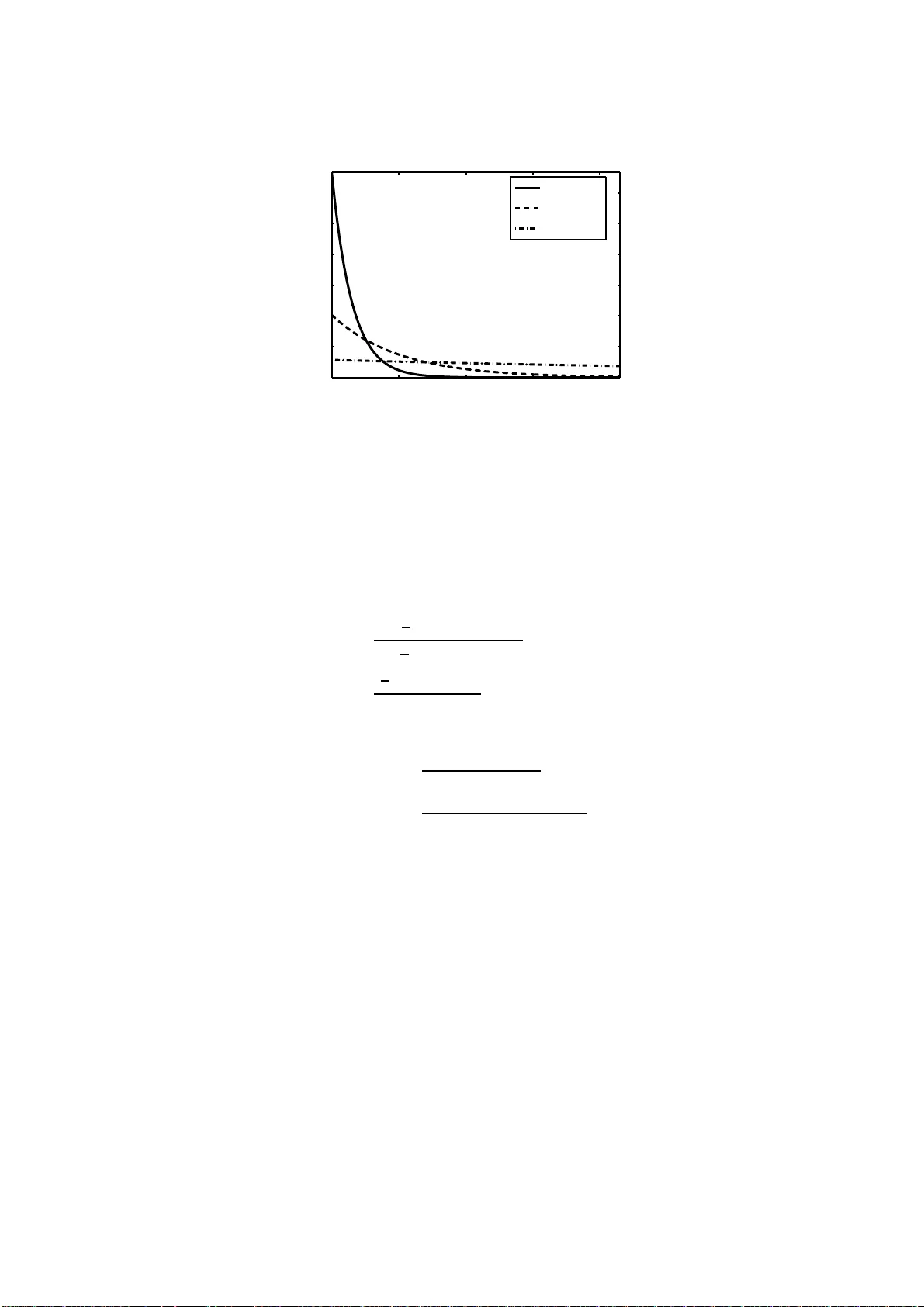
The Implications o f the Early F ormation of L ife on Earth Brendon James Brew er Sc ho ol of Mathematics and Stat istics The Univ ersit y of New South W ales brendon.bre wer@unsw.edu.au Octob er 25, 2018 Abstract One of the most interesting unsolved questions in science to day is the ques tion o f life on other planets. At the presen t time it is safe to say that we do not have mu ch of an idea as to whether life is commo n or exceedingly rare in the universe, and this will pro bably not b e solved for certain unless definitive evidence of extraterres trial life is found in the future. Our presence o n Earth is just as consistent with the hypothesis that life is extremely rare as it is with the h yp othesis that it is co mmon, since if there w as only one planet with in telligent life, we would find ourselves on it. How ev er, we hav e more infor ma tion than this, such as the the surprisingly s hort length of time it took for life to arise on Earth. Previous authors have analysed this inf orma tion, concluding that it is evidence that the probability of abioge nes is is moder ate ( > 13% with 95% probability) and ca nnot b e extr emely small. In this paper I use simple probabilistic mo del to show that this conclusion w as based mo r e o n a n unin ten tional assumption than o n the data . While the early formation of life o n Ea rth provides some evidence in the direction o f life b eing common, it is far fr om co nclusive, and in particular do es not rule out the p ossibility that abiogenesis has only o ccurred o nce in the history of the universe. 1 In tro duction A ttempting to make predictions ab out life elsewhere based on observ ations ab out Ear th is in- herently difficult due to the sample size of 1. It is also fraught with contro versial “anthropic” consideratio ns (Smolin, 2 004). Howev er, there is no reason in principle why it cannot be done. If we use probabilit y theory to mo del uncer taint y (Ja ynes, 2003), and data ab out life on Ea rth really is uninformativ e ab out extraterres tr ial life, then proba bilit y theory will r eturn wide probability distributions, indicating the lar ge uncertaint y . The s urprising fact that life ar ose o n E arth very quickly after its for mation (e.g. Mo jzsis et al , 1996) a nd at the e nd o f a likely phase of sterilisatio n due to frequent impacts, has been used to argue tha t abiogenesis m ust ther efore b e easy . Linewea ver & Davis (2 002, 200 4, hereafter L&D) hav e mo delled this rea soning with proba bility theory and concluded with 95% confidence (Bay esian po sterior probability) that the pr obability of abiogenesis on an Earth- like planet is greater than 13%. This w as done by using a model where there was co ns tant hazard (c hance o f life ar is ing per discrete time int erv al) q . The proba bilit y distribution for the time t L (our t L corres p o nds to L&D’s ∆ t biogenesis ) a t which life aris e s dep ends on q , and this is also calcula ted conditional on the fact that t L m ust b e less than the age of the Ea rth, to correct for the fact that we co uldn’t ha ve observed the Earth unless life b ega n. This probability distribution is a likeliho o d function for q when the actual observed t L is substituted in to it. Combined with a prior distribution for q , w e can then mak e inference s abo ut its v alue. Whilst it is p ossible and in teresting to calculate such things, the model us ed by L&D contains a flaw that renders the conclusion inv alid. Unfortunately , t he conclusion q uoted ab ov e de p ends 1 on a choice of pr ior distribution ov er q that is ov erconfident and unrealistic as a description of our state of knowledge ab out abiogenes is. While uniform pr io rs representing “initia l ignoranc e ” a re common in Ba yesian Analysis, a uniform prior for an unknown pro ba bility suc h as q is actually quite infor mative (Jaynes, 2003, chapter 18), a ssigning most o f its pr obability to moder a te v alues of q , and ignoring the possibility of ex treme v a lues. That the uniform prior is inappropria te can b e illustrated using the tec hnique of elab or atio n : are we happy with all of the implied co nsequences of assuming this prior dis tr ibution? F o r instance, one implication is that q ∈ [0 . 49 , 0 . 51] is ju st as plausible as q ∈ [0 , 0 . 02], whereas if w e are ig norant, pos sibilities such as q ∼ 10 − 6 and so on should no t b e igno red as they almost ar e by the uniform prio r. A more r e alistic repr esentation of complete prior igno rance would b e the improp er Haldane prior ∝ [ q (1 − q )] − 1 (Jaynes, 1 968), or a mo dification that re mov es the singula rities at q = 0 and q = 1 and makes the prior pr op er. The Haldane prior corr esp onds to an improper uniform prior for the “log it” log[ q / (1 − q )], representing uncertaint y no t just ab o ut the exact v alue of q but a lso ab out its or de r of magnitude . This pa p er uses a mo de l tha t bypasses direct use of q and deals with exp ected waiting times instead, although its co nc lus ions can be in terpreted in the L&D framew ork a s w ell. The conclusions of Linewea ver & Davis (2002) hav e been cr iticised previously on the basis that no obser ver would ever see a recent abiogenesis due to the lar ge n umber of intermediate steps required b etw een abiogenesis and the developmen t of in telligent lif e (Flambaum, 2003). How ever, it is still p ossible to imagine life a rising a fter 5 Gyr on a planet and intelligen t observers discov ering this at, say , t = 8 Gyrs . The fact that we are not in this situation c o uld still b e considered surprising, and therefore infor mative (Linewea ver & Da vis, 20 03). 2 The Mo del Suppo se that there ex is ted a planet that is iden tical with the ea rly Earth (when co nditions hav e settled down to be suited for life; call this time t = 0) in ter ms of a ll of its macr o scopic par a meters: mass, temp era ture, chemical comp osition, distance fro m its Sun (which is ident ical with o ur Sun), etc. Of course, this model only applies to planets that a re E arthlike in ter ms of their biologica l characteristics. While this may seem restrictive, observ ations ab out what actually o ccurred on Earth cannot be relev ant to planets that do no t hav e this prop erty . Imagine we are giv en t he v alue of a constant, µ , whic h is the exp ected waiting time for the first a bio genesis on a planet with the ab ov e conditions. F rom standar d surviv al ana ly sis, 1 / µ is prop ortional to the pr obability per unit time of the even t happ ening, a nd plays the same role a s q in L&D’s work. W e are then informed, to o ur great sur prise, that the following even ts o ccurred on the planet: - Pro po sition S : A t time t = t 0 (the present time. Hencefo r th, a v alue of 4.3 Gyr is a dopted whenever a specific v alue is r equired), there ex ists a p erson calle d Brendon James Br ewer, a nd the Prime Minister of Australia on the pla net is K evin Rudd. - Life first arose on the planet at a time t L . Obviously , t L < t 0 . While pr op osition S may s eem overly specific, one is mor e lik ely to make correct infer ences by conditioning o n a statement that is more sp ecific than, say , “intelligent life arises” . See Neal (2006) for a detailed discussion of this point and a principled framework for the treatment an thropic selection effects in gener al. Our predictions will b e g iven in the fo r m of proba bilit y distributions for all of these param- eters. The probability distributio ns are chosen to represent o ur uncer tain state of knowledge - the Bay esian framework (Jaynes, 2 003). Throughout this paper , probabilities of prop os itio ns a r e denoted by an upp er case P () and probability densit y functions (PDFs) for v a riables by a low er case p (); this notation allows probability expressions to b ecome very succinct as the rules follow ed by proba bilities and PDFs are wr itten in the same wa y . 3 Sampling Distribution If we only knew the abiogenes is timescale µ , o ur prediction for t L would b e des c rib ed b y an exp onential distr ibutio n: p ( t L | µ ) = 1 µ exp ( − t L /µ ) t L > 0 (1) 2 0 1 2 3 4 0 0.5 1 1.5 2 2.5 3 Time (Gyr) Probability Density (Gyr −1 ) µ = 0.3 Gyr µ = 1 Gyr µ = 10 Gyr Figure 1: The p robabilit y densit y for the time at whic h abiog enesis occured, giv en that we exist at t=4.3 Gyrs after the Earth wa s first suitable for life (defi n ed as t=0). Note that as the abiogenesis timescale b ecomes larger, this distrib ution b ecomes unif orm . Note tha t this is not an a ssumption ab o ut any frequency distribution that would occur in a p opu- lation of Ear ths, it is only the most conser v ativ e pro bability distribution that has the exp ectation v alue µ (Jaynes , 19 79). When w e find out that S is true for the planet we ar e w atching, the distribution is revised to be truncated to betw een t = 0 and t = t 0 : p ( t L | µ, S ) = 1 µ exp ( − t L /µ ) R t 0 0 1 µ exp ( − t L /µ ) dt L , t L ∈ [0 , t 0 ] (2) = 1 µ exp ( − t L /µ ) 1 − exp ( − t 0 /µ ) (3) T echnically , this should ha ve been calculated fro m Bay es’ theorem: p ( t L | µ, S ) = p ( t L | µ ) P ( S | t L , µ ) P ( S | µ ) (4) = p ( t L | µ ) P ( S | t L , µ ) R ∞ 0 p ( t L | µ ) P ( S | t L , µ ) dµ (5) where the first term in the numerator would come fr om Equation 1. The other term would be very difficult to quan tify , howev er, any effects tha t they w ould include apart from the obvious truncation effect ( S canno t be true unless t L < t 0 ) would likely b e simply quan titative versions of the evidence and a rguments discussed b y Lineweav er & Da vis (2003). F or exa mple, the fact that it is very unlikely for S to be true if t L is close to t 0 corres p o nds to the “non-o bserv abilit y of recent abiogenesis” and w ould be mo delled in the factor p ( S | t L , µ ). Another p ossible effect is that there are v arious ep o chs in any E arth-like pla net’s history , and conditions ar e suitable for life to arise in only one of those epo chs. Ho wev er, for the purp os es of this paper , the simple truncation of Eq uation 2 is s ufficient to rep eat most of L&D’s ar gument, while highlighting our p oint of disagreement with it. Any attempt to increase the sophistication of the mo del will b e defer red to future work. The sa mpling distribution (Equation 2) f or data given parameters is plotted in Figure 1 for three differe nt v alues of the abiogenesis waiting timesca le µ : 0.3, 1 and 10 Gyr. Any prop ose d v alue of µ is a distinct hypothesis that w e wish to test, and this sampling distribution defines the predictions that eac h hypothes is makes ab out the observ ational data t L , the actual time that abiogenesis o ccur red. Note that as µ increases, this tends to a unifor m distribution, and hence mo der ately lar ge values of µ ( ∼ 10 Gyr) and extr emely lar ge values of µ m ake exactly the same pr e dictions ab out t L . Thu s far , this mo del is virtually identical to tha t of L&D - the only difference is that L&D used a discr etised time axis with ∆ t =200 Myr and par ameterised µ by q ≈ µ − 1 ∆ t , the probability 3 of life arising in a time ∆ t . This makes it difficult to see ho w they co uld ha ve extracted such confident conclusions a bo ut q based o n t L , in light of the ab ove para graph. This question will be explored in the next s ection. 4 Inference A b out µ W e have a sampling distribution for some data given a parameter of in terest, in Equation 2. T o infer the pa r ameter µ from the known 1 v alue of t L , w e us e Bay es’ Theorem to get the p o s terior distribution for µ , which is propo rtional to a prio r distribution times the likelihoo d function from Equation 2: p ( µ | t L , S ) ∝ p ( µ | S ) p ( t L | µ, S ) = p ( µ ) p ( t L | µ, S ) (6) Since S b y itself har dly tells us anything about any abiogenesis except that it is p ossible, the depe ndence on S was dro pp e d from the pr ior. Now, befor e w e can get probabilistic conclusions ab out µ or a re la ted quantit y such as q , a prior m ust b e assig ned. If we are initially ignor ant of µ , a suitable pr ior is the Je ffreys prior ∝ 1 /µ . The reason for this is that it is equiv alen t to a uniform improp er prio r for log( µ ), and hence desc r ib es uncertaint y ab out the or der of magnitude of the parameter. Alter natively , it is the only prior that is in v ariant under a change of timescale: if w e were to find that we a re meas ur ing µ in T era years rather tha n Gigay ears , the J effreys prior is the only c hoice that w ould not change in the newly rescaled pro blem. With this choice, the p os terior distribution for µ cannot b e nor malised unless we obta in additional infor ma tion ab out an upp er limit to µ . Hence, it is imp ossible to co nstruct credible interv a ls fr om this data. All w e c a n do is plot the improp er p oster ior for log 10 ( µ ) (which is basica lly the likeliho o d, since a Jeffreys pr io r is uniform for log 10 ( µ )), and this is displa yed as the solid curve in Figure 2. There is a p eak in the po sterior, indicating that there is indeed evidence fav ouring a particular v alue for µ of ab out t L . How ev er, the likeliho o d fla ttens out at a non-negative (and non-neg ligible) v alue a fter ab out t =2 Gyr. Thus, this data cannot rule out the hypo thesis that µ is enormous and that Earth hosted the only abiogenesis even t(s) in the universe. This is essentially a quantitativ e version of a n arg ument that has b een put forward previously , (e.g. b y Hanson, 199 8): “Since no one on Earth would be w ondering ab out the origin of life if Earth did not contain creatures nearly as intelligent as o urselves, the fact that four billio n years elapse d befo re hig h intelligence a pp ea red on Earth seems compatible with any exp e cted time longer than a few billion years”. Now, what prior did L & D implicitly assume? T o a ns wer this, a uniform pr ior for q m ust be translated to a prior fo r µ via the approximate relatio nship q ≈ µ − 1 ∆ t . Since q ∼ Uniform(0 , 1), q / ∆ t = µ − 1 ∼ Unif orm(0 , 1 / ∆ t ). By the usual rule for transfor ming probability distributions: p ( µ ) dµ = p ( µ − 1 ) d ( µ − 1 ) (7) = p ( µ − 1 ) d ( µ − 1 ) dµ dµ (8) = (∆ t ) × − µ − 2 dµ, µ ∈ [∆ t, ∞ ] (9) The nega tive sign is irrelev an t beca use only the absolute v alue of the Jacobian matters, so this negative result simply measures the decrease in accum ulated probability as one mov es leftw ards along the µ axis - so nothing is amiss. It is apparent that the choice of a uniform prior for q is equiv alen t to a prio r for µ that is pro po rtional to µ − 2 , and truncated to v alues of µ gr eater than ∆ t . This may see m inno cuous, but it is sig nifica nt enough to make the p oster ior no rmalisable - in fact, whereas the lik eliho o d function (and p osterio r wr t a Jeffreys prior) flattens o ut c o mpletely for high µ , the pos terior wrt the L&D pr ior decays exp onentially in that region. The ma jor effect of this choice of prior on the po sterior can be seen easily in Figure 2. Unfortunately , unless definitive independent evidence can b e found that puts an upp er limit on po ssible v alues of µ , meaningful credible int erv als cannot b e constructed. L&D app ear to hav e un wittingly assumed that they did have that extra re quired infor mation, or that the ea rly formation of life on Ear th could provide it, but unfortunately this is not the case. Some infor mation 1 t L is not known exactly , of course. A v alue of 250 My r will b e adopted whenever a defin ite va lue is required. 4 −10 −5 0 5 10 0 0.5 1 1.5 log 10 ( µ /Gyr) Unnormalised Posterior Density −10 −5 0 5 10 0 2 4 6 8 log 10 ( µ /Gyr) Posterior Jeffreys Prior Posterior L&D Prior Figure 2: The p osterior probability den s it y for the logarithm of the abiogenesis timescale, assuming a Jeffreys prior for the timescal e (uniform prior for its logarithm), is plotted h ere as the solid curv e in the left pan el. T he prior that is imp lied b y a u niform prior for the quantit y q (the c hance of life arising in a finite time in terv al ) is shown as a dotted curve in the righ t hand panel, along with the resultan t p osterior. Note that the like liho o d function (pr op ortional to our p osterior) b ecomes flat at a nonzero v alue to w ards th e righ t of the curv e. Hence, wh ilst the data do supp ort the h yp othesis that abiogenesis is likel y on E arth -lik e planets (due to the likel iho o d p eak), it is not a strong enough constrain t to rule out more ‘p essimistic’ p ossibilities. that could provide a likelihoo d function that allow ed the pos ter ior to b e normalised would b e the following: - D etection of life elsewhere. Since it is pos sible to observ e a lack of life elsewhere, the sampling distribution of Equation 2 would no longer integrate to 1 , and would b e truncated at the star ’s lifetime rather than having anything to do with the a g e o f the Earth. This mo dels so me (quite high, in the ca se of large µ ) pro ba bilit y that life will not arise at a ll on a given pla ne t. It was anthropic considerations that led to the truncation a nd reno rmalisation, and these do not apply to the case of life on other planets. - A very comp elling and well unders to o d theory of abiogenes is would enable the direct calcu- lation of µ from fir st principles; in theory a t leas t. These tw o p o s sibilities, while not e x haustive, would allow definite inferences abo ut µ that the current da ta do not. This conclusion accords with the common sense attitute that prev ails in the scientific communit y a b out what w e know and don’t know ab out the probability o f abio genesis. 5 Conclusion The fact that life aro s e surprisingly ear ly after the formatio n of the Earth ca n b e used as ev idence for the hypothesis that abio genesis is easy , and hence supp orts the co nclusion that life is common in the universe. How ev er, the evidence is not as conclus ive as has b een cla imed. Sp ecifically , this study has highlighted the fact that knowledge of the ea rly abiogenes is time on Earth is still compatible with the follo wing h yp othesis: that life is ex traordinar ily rare in the universe, p erhaps even only o n E a rth, a nd we obser ve ear ly abiog enesis due to chance (we’d hav e to b e mo derately lucky , but not obscenely so). This conclusion differs fr om Linew eav er & Davis (2002) b eca use they un wittingly made ov erconfident pr io r ass umptions. Hence, unless there is a direct detection, the answer to the p erennial question “are we alo ne” remains “ no bo dy knows”. 5 Ac kno wledgmen ts I am supp orted by an Australian Postgraduate Award and a D enison Merit Award from The Sc ho ol of Physics at The Univ ers ity of Sy dney . I would lik e to thank the anonymous referees of an ear lie r version o f this paper for identifying flaws in the pr e v ious version, which allowed the pap er to b e improv ed significantly . References Flambaum, V. V., 20 03, Astr obiology , 3, 2: 2 37-23 9 Hanson, R., 1998, Must Early Life Be Easy? The Rh ythm of Ma jor E volutionary T ransitio ns . Av ailable on-line a t http ://ha nson.gmu.edu/hardstep.p df Jaynes E . T., 196 8, Prior Proba bilities, IEEE T ransa ctions on Systems Science and Cy ber netics, SSC-4, 22 7 Jaynes, E. T., 1 979, Where do w e Stand on Maximum En tropy?, in The Ma ximu m Entropy F ormalism, R. D. Levine and M. T ribus (eds.), M. I. T. Press, Cambridge, MA . Av ailable online at http://bay es.wustl.edu/etj/ar ticle s /stand.on.entropy .p df Jaynes E. T., 200 3, Probability Theo ry: The Logic of Science, Cambridge Universit y Pre ss Linewea ver C. H., Da vis T. M., 20 03, Astrobiolo gy , 3 , 2, 241-24 3 Linewea ver C. H., Da vis T. M., 20 02, Astrobiolo gy , 2 , 29 3 Linewea ver C. H., Da vis T. M., 20 04, IAUS, 2 13, 259 S. J . Mo jzsis, G. Arr he nius , K. D. McKeegan, T. M. Harrison, A. P . Nutman and C. R. L. F riend, 1996, Nature, 384, 55-59 Neal R. M., 2 006, Puzzles o f Anthropic Reasoning Resolv ed using F ull Non-Indexical Conditioning, arXiv:math/06 0859 2 Smolin L., 2004, Scientific Alternatives to the Anthropic Principle, arXiv:hep-th/040 7 213 v2 6
Original Paper
Loading high-quality paper...
Comments & Academic Discussion
Loading comments...
Leave a Comment