The Early Statistical Years: 1947--1967 A Conversation with Howard Raiffa
Howard Raiffa earned his bachelor's degree in mathematics, his master's degree in statistics and his Ph.D. in mathematics at the University of Michigan. Since 1957, Raiffa has been a member of the faculty at Harvard University, where he is now the Fr…
Authors: ** - Stephen E. Fienberg (Carnegie Mellon University, Department of Statistics, Machine Learning) **
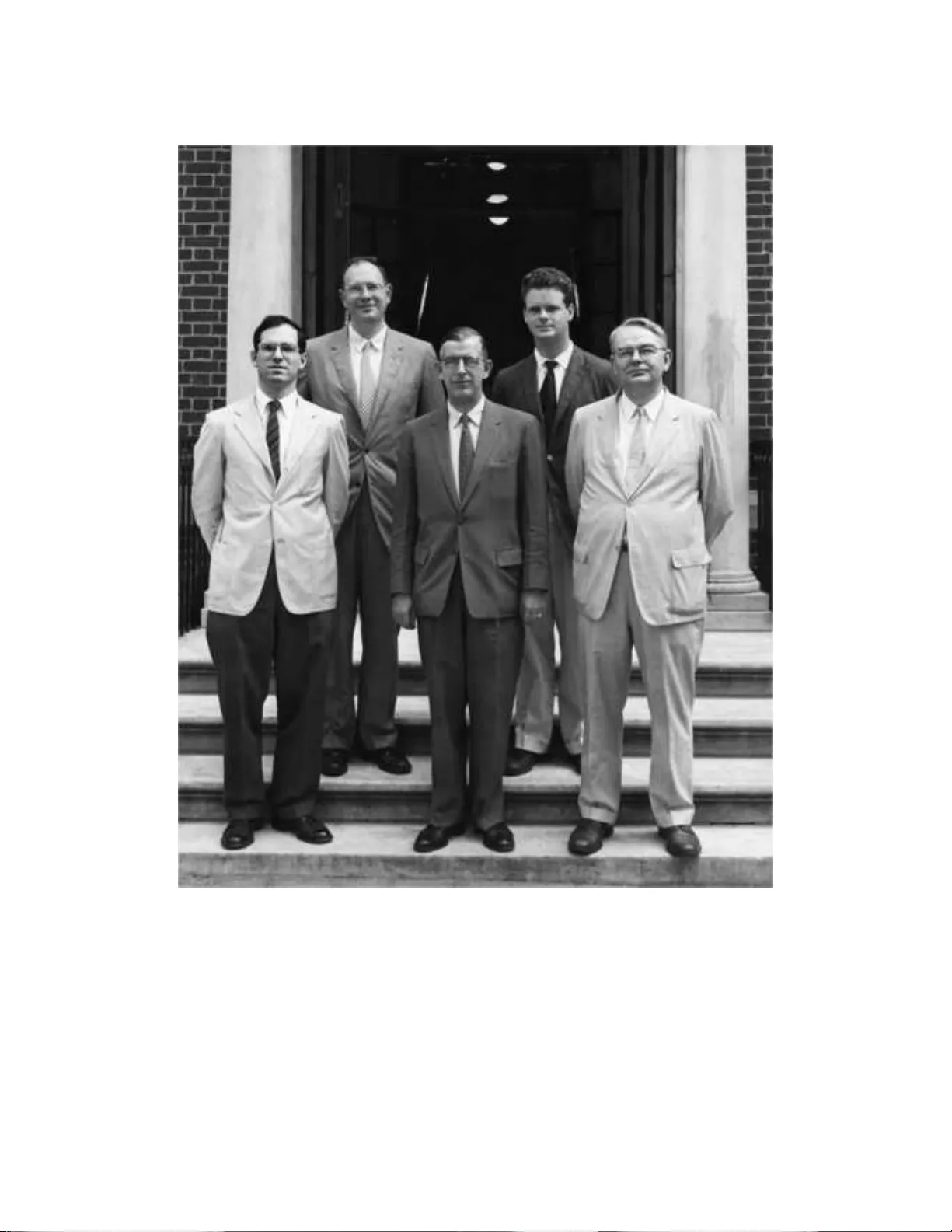
Statistic al Scienc e 2008, V ol. 23, No. 1, 136– 149 DOI: 10.1214 /0883423 07000000104 c Institute of Mathematical Statisti cs , 2008 The Ea rly Statistical Y ea rs: 1947– 1967 A Conversation with Ho w a rd Raiffa Stephen E. Fienb erg Abstr act. Ho ward Raiffa earned his bac helor’s degree in mathematics, his master’s degree in statistics and h is Ph.D. in mathematics at the Univ ersit y of Mic higan. Since 1957, Raiffa has b een a member of the facult y at Harv ard Un iversit y , where he is no w the F rank P . Ramsey Chair in Managerial Economics (Emeritus) in the Graduate Sc ho ol of Business Administration and the Kenn ed y S c ho ol of Go vernmen t. A pioneer in the creation of the field kn own as decision analysis, his re- searc h in terests sp an statistical decision theory , game theory , b ehavio ral decision theory , risk analysis and n egotiat ion analysis. Raiffa has su- p ervised more than 90 do ctoral dissertations and written 11 b o oks. His new b o ok is Ne gotiation Analysis: The Scienc e and Art of Col lab or ative De cision M aking. Another b o ok, Smart Choic es , co-authored with his former do ctoral students John Hammond and Ralph Keeney , w as the CPR (formerly kno wn as the Center for Public Resources) Institute for Dispute Resolution Bo ok of the Y ear in 1998. Raiffa help ed to create the Internatio nal Institute for Applied Systems Analysis and he later b ecame its first Director, s erving in that capacit y fr om 1972 to 1975. His many h onors and aw ards include the Distinguish ed Contribution Aw ard from the So ciet y of Risk Analysis; the F rank P . Ramsey Medal for ou tstand ing con tributions to the field of decision analysis from the Op erations Research So ciet y of America; and the Melamed Prize from the Un iv ersit y of Chicago Bu s iness Sc ho ol for The Art and Scienc e of Ne gotiation . He earned a Gold Medal fr om th e In ternational Asso cia- tion for Conflict Manag ement and a Lifetime Ac hiev ement Aw ard from the CPR Institute for Dispute Resolution. He h olds honorary d o ctor’s degrees from Carnegie Mellon Universit y , the Universit y of Mic higan, North w estern Universit y , Ben Gurion Univ ersity of t he Negev and Ha r- v ard Univ ersit y . Th e latter was a wa rded in 2002. Stephen E. Fienb er g is Mauric e F alk University Pr ofessor of S tatistics and So cial Scienc e, Dep artment of Statistics and Machine L e arning Dep artment, Carne gie Mel lon University, Pittsbur gh, Pennsylvania 15213 -3890, USA (e-mail: Fienb er g@s tat.cmu.e du ). This is a n electronic reprint of the origina l article published b y the Institute of Mathematica l Statistics in Statistic al Scienc e , 200 8, V o l. 2 3, No. 1, 136–1 49 . This reprint differs fr o m the original in pag ination and t yp ogr aphic detail. This con v ersation to ok place as p art of an in- formal seminar in the Department of Statistics at Carnegie Mellon Univ ersit y on Ap ril 3, 2000, pre- ceding b y a d a y a semin ar at wh ic h Ho ward Raiffa receiv ed the 1999 Dic ks on Prize in Science fr om the Univ ersit y . Others presen t and participating in th e discussion included William Eddy , Rob Kass, Ja y Kadane and R aiffa’s wife of 55 years, Estelle. The topic of Ho w ard’s pr esen tation at the Dic kson cere- mon y was: “The Analytical Ro ots of a Decision S ci- en tist.” F or the Department of Statistics he elab o- rated on the y ears 1947–1 967. 1 2 S. E. FIENBERG Fig. 1. Howar d R aiffa fol lowing the interview. April, 2000. Fien b erg: In 1964 I arriv ed as a graduate s tudent at Harv ard an d in my first class on statistical in- ference, a f acult y member, wh ose name I will not men tion, b egan teac h ing inference from a Neyman– P earson p ersp ectiv e, that is, hyp othesis testing and confidence in terv als. In fact, w e stud ied Eric h Lehmann’s b o ok on hyp othesis testing. It w as clear to me that this w asn’t the w ay I wa nte d to think ab out statisti cs. I ask ed aroun d the department ab out what alternativ es were a v ailable to me and some- one said: “On Monday afterno ons th ey ha ve a semi- nar at the b usiness school across the Charles Riv er.” So I just sho w ed up one Mond a y afterno on. It was one of the most wo nderf ul exp eriences of m y gradu- ate career. Although I ha v e no memory of who was sp eaking that first afternoon, I recall that it w as the most animated and heated discussion I had engaged in at an y p oint in m y career up to that p oint. It turned out th at the seminar and the heated discus- sion we re rep licated ev ery Monday afterno on. One of the leaders of t hat M onday afterno on seminar was Ho ward Raiffa. Raiffa: That w as called the Decision Un d er Un- certain ty seminar, the DUU seminar, and it w as one of the exciting parts of m y life as w ell. And it w en t on f or four y ears, from 1961 to 1964. I r an that seminar with m y colle ague Rob ert S c hlai- fer. Bet wee n the w eekly sessions of the seminar, a few of u s exc hanged a flo o d of m emos comment- ing on what was discussed and w hat should ha ve b een discussed. Although there w as a demand for air time, we neve r sc h eduled starting a n ew topic unt il we felt that w e had completed the train of re- searc h thinking on th e table. Half-bake d ideas w ere giv en p riorit y . Fien b erg: I w as lucky to b e able to attend for a couple of them! I brought along with me a couple of slices of statistical history this afterno on: Applie d Statistic al De c ision The ory (Raiffa and Sc hlaifer, 1961 ) and Intr o duction to Sta tistic al De cision The ory (Pratt, Raiffa and Sc hlaifer, 1995 ). T hey come from the same p er io d as the DUU seminar and both b o oks had a tremendous impact on the Ba y esian reviv al of the 1960s. I’m hoping w e will ha ve a c hance to talk ab out them in a f ew minutes, but let’s go bac k a lit- tle further in time and start with how you b ecame a statistic ian. Raiffa: Let me start at a decision no de. I wa s a First Lieutenan t in the Air F orce in c h arge of a radar-blind-landing system at T ac hik a wa Airfield near T oky o—ground-con trolled appr oac h it was called—and I w as due for a routine disc harge after completing 44 mon ths in the armed services. Should I co ntin ue in Japan acting in th e same extraordinar- ily exciting capacit y as a civilian, earn ing o o d les of money , or should I return to the States to complete m y b ac h elor’s degree, and if so, where, and to stud y what? I w as 22. I thought of b ecoming an engineer building u p on my practical exp erience with radar. I learned from an army bud dy of a fi eld I had nev er heard of: actuarial mathematics. Merit counted in the actuarial profession since bud ding actuaries had to pass nine comp etitiv e exams. The place to go to prepare for the first three of them w as Univ ersit y of Mic h igan. Fien b erg: Ho ward, I though t yo u w ent to Cit y College. Raiffa: Before going into the arm y , I w as more in terested in athletics than sc h olarship. I w as the captain of m y h igh sc ho ol bask etball team in New Y ork Cit y—a high s c ho ol of 14,000 stud en ts—at a CONVERSA TION WITH HOW ARD R AIFF A 3 time wh en bask etball w as the rage in NYC. I w as a medio cre B s tudent in m y freshman and sophomore y ears at Cit y College of New Y ork (CCNY), the col- lege of choi ce for p o or and middle-income students in New Y ork—I w as on the p o or side. F our y ears later, when I r eturned to college at the Universit y of Mic higan, I b ecame a sup erb stud ent. Th at sur- prised me. I also was a married man determined to b ecome emplo yable after getting m y bac helors de- gree. F or a while I thought the students at CC NY w ere just brigh ter than those in Mic higan, but on reflection I d idn’t like that explanation. Something c h anged within me. I w as sho oting for straigh t A’s and getting th em. Fien b erg: W e could statistically inv estigate this c h ange if w e had the righ t sort o f data. But Ho w ard, did you ever take those actuarial exams and ho w come you sta y ed on and got yo ur master’s d egree in statistics? Raiffa: I got m y b ac h elor’s in Actuarial Math and passed the first three exams and w as on m y wa y to b ecoming an actuary preparing for the fourth exam when I d ecided th at I really w ant ed to stud y some- thing m ore cerebral—something m ore theoretical . Fien b erg: Wh y statistics? Raiffa: Th e second actuarial exam was on proba- bilit y theory and w e actuarial studen ts took a co urse that deligh ted me. It u sed Whit wo rth’s Choic e and Chanc e , full of in triguing pu zzlers on combinatio ns and p ermutat ions. Brain teasers galo re. The b o ok w as short on theory and long on pr ob lems and I lo ved it, and I was goo d at it. I j ust couldn’t put it do wn. I was go o d enough that my p rofessors enco uraged me to go on and get a m aster’s d egree. So I to ok a master’s degree in s tatistics. F rankly , I w as also dis- app ointe d in that as w ell b ecause, at that time, th e statistics program in the mathematics departmen t w as s hort on theory and dep th and long on compu- tational manipulations. I r emem b er ha ving to i nv ert an 8 × 8 matrix. Peo ple are laughing b ecause now y ou en ter an 8 × 8 matrix in your computer and p o of, ou t comes the answer. But in those da ys w e had a mec hanical Marc h an t calculato r and I hated it. Ev en though I won a prize for sp eed, it did me in. Fien b erg: S o ho w come yo u sta yed on for a d o c- torate? Raiffa: Along with the courses I to ok in statistics, I also t o ok for cu ltu r al curiosit y a course in the foun- dations of m athematics by a Professor Cop eland who later b ecame one of m y men tors. Cop eland taught the course using th e R. L. Mo ore p edagogic al style . Are you familiar with this approac h , Stev e? Fien b erg: Y es, I am. Bu t please tell u s a little ab out the R. L. Mo ore p edagogy anyw ay . I under- stand that Jimmy S a v age also b ecame enamored with study in g mathematics after b eing exp osed to the Mo ore appr oac h. Raiffa: I nev er knew this un til I a ttended a memo- rial service for Jimmy . W ell, I was simila rly affected. I w as studyin g for a master’s degree in s tatistics; going for a do ctorate wa s not an alternativ e in my p ersonal decision space—it just w asn’t, but it should ha v e b een if I had only kno wn more ab out making smart choice s. Cop eland’s fir st assignmen t w as w eird: “Here are some seemingly unrelated mathematical curiosities. Think ab out them. T ry to make some conjectures ab out them. T ry to prov e y our conjectures. T r y to disco v er something of inte rest to tal k ab out.” I dr ew a blank and I came to class with n othing to con- tribute. S o did tw ent y other stud ents. A t the b eginning of class on that first da y the instructor asked, “Does anyb o dy hav e an y con tri- butions to make ?” W e sat and sat and sat and ten min utes we nt by and he said, “Class dismissed.” He added, “The same assignmen t tomorrow.” The fol- lo w in g da y , h e started the class: “An y b o d y ha ve an y- thing to sa y?” Finally , someone raised their h and and asked a question. T he course w as pure R. L. Mo ore. No b o oks were used, absolutely no b o oks. It w as tab o o to lo ok at the literature b ecause y ou migh t fin d hints. Y ou should act as if y ou were a mathematician in the 17th cent ury tr ying to pro ve something new. No matter that w e w ere “disco ver- ing” well- known results; it was new to us. W e stu- den ts did not study mat hematics; w e did mathemat- ics. T h e R. L. Mo ore metho d of teac hing turned m e on. I knew then that I wan ted to b ecome a math- ematician b ecause it was so m uch fun and, to m y surpr ise, I found out that I w as prett y go o d at it. So I b ecame a student of pur e m athematics and I was deliriously h ap py . Thanks to my wife, w ho b y th at time b ecame an elementa ry sc ho ol teac her and could supp ort me in a mann er that I grew ac- customed to, w e wen t from ab ject p ov ert y to solid ric hes. In the y ear I stud ied statistics, I don’t think I h eard the w ord Bay es. As a w a y of inference it w as nonexis- ten t; inference was all strictly d one from the Neyman– P earson p ersp ectiv e. And the v ersion of Neyman– P earson statistics I was exp osed to w asn’t very th e- 4 S. E. FIENBERG oretical as well . Th ey talke d ab out tests of signifi- cance bu t they really didn’t talk ab out the p o w er of the tests. Eddy: Who were your pr ofessors? Raiffa: Paul Dwyer and Cecil C. Craig. Fien b erg: And th ey w ere all stalw arts of the In- stitute of Mathematica l Statistics in its first couple of decades. So y ou weren’t turned on b y the kind of statistics they did? Raiffa: They were goo d mathematicians and goo d statisticia ns; but to them, statistics mean t some- thing quite restrictiv e. Dwye r w as computational and Craig did m ultiv ariate samp ling theory . Th ey w ere ve ry goo d at w hat they did, bu t there was n ot a decision b one in their b o dies. Fien b erg: So you are no w studying pure mathe- matics. Ho w did yo ur int erest in game theory start? Raiffa: F or ten hours a w eek I w orked as a researc h assistan t on an Office of Na v al Researc h (ONR)- sp onsored researc h program administered join tly by the Mathematics Departmen t and the Sc ho ol of En - gineering. My role w as to attend national meetings and listen to app lied problems that p eople w ere talk- ing ab out that related to our O NR p r o ject and to try to form ulate inte resting mathematical prob lems for m y more mathematical-orien ted co lleagues to w ork on. I b ecame qu ite adept at taking ill-formed situa- tions and translating them int o mathematical prob- lems that o ther p eople could work on, in cluding m y- self. Because submarine warfare wa s a hot topic, I read v on Neum ann’s and Morgenstern’s b o ok on Game Theory—or at least p arts of it. Jerry T hompson, a fello w stud en t, and I develo p ed a pap er on ho w to solv e t w o-p erson zero-sum games and we fou n d out to our deligh t that this s ame algo rithm could solv e linear programming pr ob lems. A t that time w e didn’t know an ythin g ab out the simplex metho d, so for m a yb e t w o w eeks w e had the b est algorithm for solving linear p rogramming problems. In ciden tally , Jerry has sp ent his distinguish ed academic career here at Carn egie Mellon Univ ersity . A t that time there w as n o w ell-dev elop ed theory of the simplest tw o-p erson, n on-zero-sum ga mes— there still isn’t. I (and probably hundreds of others unknown to me) in vestiga ted the man y qualitativ ely differen t bi-matrix games having tw o strategies for eac h p la yer. I , naturally , b ecame intrigued with a game n o w kno w n as the Prisoner’s Dilemma game. I kno w y ou are familiar with this game. The p oin t is that eac h pla y er has a dominant strategy so the op- timal thing for eac h to do is to choose this strategy . But the rub is that if eac h p lay er pla ys wisely , they eac h get miserable p a y offs. T he parado x is that t w o wise pla y ers d o w orse than t wo dumb p la y ers. Still, in a s in gle-shot situation, eac h pla y er sh ould c h o ose wisely . Rational individu al c hoice leads to grou p in- efficiencies. T he anomaly lies in th e structure of the game. When the game is rep eated for a pre-sp ecified n umb er of iterations, equilibr ium analysis sp ecifies that ea c h play er should use his or h er d ominating strategy at eac h trial with the result that eac h do es miserably trial after trial. The game presents a s o- cial p athology . If the pla y ers had pre-pla y comm u- nication and could mak e bind ing agreemen ts, they w ould agree to co op erate at eac h trial by taking the my opically dominated strategy . In the fi nitely rep eated game, doub le crossin g at eac h trial (i.e., c h o osing the non-co op erativ e strategy at eac h trial) is the b est r etort if the other guy acts that w a y . But double crossing at eac h trial is not the b est retort against someone who is n ot pla ying the double cross strategy at every trial. In th e lab oratory , most ana- lytically inclined sub jects start by coop erating b ut switc h to a b elligeren t stance tow ard the end of the n umb er of trials. But there is un certain t y w here the switc h will take p lace. In Pa rt A of a rep ort I wrote in 1950 on the t w o-p erson non-zero-sum game for the ONR pro ject, I considered the tw o-p erson Prisoner’s Dilemma game rep eated a fixed n umber of times (sa y 20). I as- signed a sub je ctive pr ob ability distribution o v er the w a y I though t others would pla y in order to figure out the b est w a y I sh ould p la y . In my naiv ete, w ith- out any theory or anything lik e that, I d id wh at I no w r ecognize as a prescriptiv e analysis for one part y , making u se of a descriptiv e mo deling pro- cess for the p ossib le decisions of the other parties. The d escriptiv e mo deling pro cess in v olv ed assessing judgmenta l probability d istributions. I slipp ed in to b eing a sub jectivist w ithout realizing how radical I was b ehaving. That was the natural thing to do. No big deal. P art B of the rep ort dealt with complex non-zero- sum games where there’s no solution. What w ould I do if t wo budd ies of min e came ov er t o me and said, “Lo ok, Ho w ard, we ca n’t solv e this game; there’s n o solution. Y ou resolv e it for u s. What’s fair?” Essen- tially I sough t an arb itration r ule th at would pro- p ose a compromise solution for an y non-zero-sum CONVERSA TION WITH HOW ARD R AIFF A 5 game. A t that time I w as familiar with th e sem- inal wo rk of K enneth Arr o w. Arrow sough t a so- cial welfare fun ction that w ould combine ind ividual preferences to arriv e at a so cial or group preference. He examined a set of v ery plausible constraint s on this so cial w elfare function only to pro v e that these requirement s w er e incompatible. No social w elfare function exists that satisfies p rop erties X, Y and Z. I adopted th e Arro w appr oac h: in m y state of co nfu - sion, I prop osed a set of reasonable desiderata for an arbitration sc heme to satisfy and then I inv estigated their j oin t implications. I remember distinctly ho w I started m y r esearch on arbitration rules. I attended a lecture b y a lab or arbitrator by the name of William Hab er. During his talk ab out arb itration, I exp erienced an “aha” inspiration; I jum p ed out of m y c hair w hile the lec- ture w as going on, I w ent b ac k to my stud y and wrote vigorously for hou r s without a br eak on how I would arb itrate n on-zero-sum games. That consti- tuted P art B of m y ONR rep ort on non-zero-sum games. I used the Kakutani Fixed Poi nt T heorem to s ho w the existence of equilibria strategies. That rep ort w as pub lished informally in the Engi- neering Departmen t. I t w as not p eer review ed; it w as simply a n informal report. A t the t ime I w as prepar- ing to tak e my oral qualifying exam and searc hing for a thesis topic in linear, normed spaces, Banac h spaces. This w as in April of 1950 . F or th e oral quali- fying exa ms in the Mat h Department, the candidate first had to write a r ep ort on what h e or she would lik e to b e examined on; then, d ep ending up on the rep ort, the examiners structur ed the oral exam—its breadth and depth. In my written prop osal I ex- amined ho w all s orts of mathematical ideas found their w a y into the theory of sto c h astic pro cesses. And then a surp rising thing happ ened. My wife, Estelle, receiv ed a telephone call from the v ery famous algebraist, Ric hard Brauer, wh o wa s the chairman of my oral examining committee. He informed her that, on the basis of my written re- p ort, the committee d ecided to excuse m e fr om m y oral exam. And then he said, “By th e wa y , the com- mittee would lik e to talk to me ab out my thesis.” I came in the next day all excited ab out the f act that I didn’t need to take m y oral exam and was told that the committee thought it appropriate that I u se m y recen tly completed En gineering Rep ort as m y do ctoral dissertation. I w as stunn ed. So I en d ed up not havi ng to tak e an oral exam, n ot ha ving to write a thesis, and I wa s through b efore I thought I s tarted. Fien b erg : So that wa s the end of y our graduate education! Did yo u start immediately lo oking for a job? Raiffa: Th at was in April; it w as to o late to go on to the job marke t and I didn’t kno w what to do. The Departmen ts of Mathematics and Psyc hology initi- ated an in terdisciplinary semin ar on Mathematics in the S o cial Sciences and as a p ost-do c I was hired to b e the rapp orteur of the seminar. I was c harged to record what w as said d uring the meetings and “what should ha ve b een said.” I had a ball! F or that one y ear I steep ed m yself mostly in p syc hological measuremen t theory , working with C lyde Co ombs from psyc hology and Larry Klein from economics. That inv olv emen t constituted an imp ortan t part of m y analytica l ro ots. During m y p ost-do c ye ar I also ga ve a series of seminar talks to the statistical facult y and do ctoral student s on Ab raham W ald’s newly p ublished b o ok on Statistic al De c ision The ory. I w as invited to d o so b ecause the b o ok wa s v ery mathematical and made extensiv e use of game theory in existence pro ofs. W ald’s b o ok w as full of Ba y esian decision rules. Not as a wa y of making decisions but as a w a y of elimi- nating noncon tend ers—inadmissible r ules. W ald never used sub jectiv e probabilities or judgmen ts to c h o ose a decision rule. Ba ye sian analysis w as just a math- ematical tec hn ique for fi nding out complete classes of admiss ib le decision rules. The follo win g yea r I w as ready to go on the job mark et an d I had sev eral offers fr om mathemat- ics departments, b ut there were also t wo statistics ones: one from Columbia Universit y’s Department of Mathematica l S tatistics, th e other one wa s w orking with George Sh annon at Bell Labs. The Bell Labs job paid a lot more th an Colum bia. But Columbia present ed a unique opp ortunity for me. A y ear ear- lier, Abraham W ald, who w as the star of the s tatis- tics departmen t at Colum b ia, was killed in an air- plane acciden t o v er India and his colleagues Jac k W olfo witz a nd Jac k Keifer left for C ornell when W ald died. The dep artment w as d ecimated but still there remained T ed And erson, Henr y Sc heffe, Ho ward Lev- ene and Herb ert Solomon. But they needed someone desp erately to teac h W ald’s stuff and to su p ervise his man y do ctoral student s. I was su p p osed to fill that bill b ecause I knew W ald’s b o ok. I really w as not prepared. W ald’s do ctoral stu- den ts knew more statistics than I and th ere w ere 6 S. E. FIENBERG Fig. 2. R aiffa with his wi fe Estel le and Carne gi e Mel lon Pr esident Jar e d L. Cohon at Dickson Prize Cer emony in April , 2000. times when I h adn’t the fain test idea w hat th ey w ere talking ab out. I had to learn and giv e lec- tures on adv anced topics in statistics. I did what I called “ju st-in-time” teac h ing. I used a b o ok by Blac kwell and Girshic k. A t that time it w as a v ail- able only in a pre-print ed form and it h adn’t y et b een published. Bu t it w as a w onderf ul b o ok. Blac k- w ell and Girshick were more in clined to wa rd th e Ba yesia n viewp oin t than W ald, b u t not really . (A t least n ot then, although Blac kwe ll later b ecame an arden t su pp orter of the Ba yesian p ersp ectiv e.) The b o ok carefully skirted issues of measurabilit y by con- fining itself to the denumerable case; it did n othing con tin uous. I brac ke ted their presen tation by exam- ining more closely the fi nite case, sp en ding a lot of time on n = 2 , and then going abstract b y consider- ing the most adv anced measure-theoretic v ersion of the id eas. I pro du ced copious n otes for the course. I w as a nerv ous wrec k b ecause my statistical col- leagues all audited that course. I also taugh t the first course in statistics. I taugh t Neyman–P earson theory , tests of hyp otheses, confidence inte rv als, un- biased estimation and pr eac hed ab ou t the d an gers of optional stoppin g that I n o longer b eliev e to b e true. Gradually I b ecame disillusioned. I just d idn’t b e- liev e th at the basic concepts I was teac hing were cen- tral to what the field should be ab out. S o I repeated what I knew ho w to d o b est. I w ent bac k to the Ar- ro w approac h and in an axiomatic st yle examined what p rimitiv e things that I b elieve d in and explored their joint imp lications. A t that time I shou ld ha ve kno wn ab out some of the work of Jimm y Sa v age, b ut I didn’t; I didn’t eve n kn o w who Jimm y Sa v age w as. But in 1954 I came across a pap er by Herman Cher- noff justifying the Laplace solution to these prob- lems. Essen tially in a state of ignorance it argued for using a uniform p rior distribution ov er states. I had m y reserv ations ab out the fu ll analysis, but Chernoff u sed an axiom he attributed to Herman Rubin, calle d the Sur e Thing Principle. I em braced it wholeheartedly . The implications w ere dev astat- ing. It argued for making inferences and decisio ns based on the lik eliho o d function. It also ruled out the Neyman–P earson theory that preac h ed that y ou can’t infer what y ou should do based on an observ ed sample outcome until y ou thin k what yo u w ould do for all p oten tial sample outcomes that could ha v e o c- curred bu t didn ’t. “Nonsense,” sa ys the su re thin g principle. Out w en t tests and unbiased estimates and confidence in terv als and lots of stuff on optional stopping. Not muc h left. No w that w e had destro ye d so muc h , it was time to r eally seek an alternativ e to NP theory . CONVERSA TION WITH HOW ARD R AIFF A 7 Consider the standard problem inv olving an u n - kno wn p opulation p rop ortion p . T hat’s th e usual binomial mo del. The s ample p r o duces nine F ’s and one S in that order and the lik eliho o d function is (1 − p ) 9 p 1 . No w compare that with the stopping rule that samples until the fi rst success app ears; and s up- p ose that the fi rst S o ccurs on the tenth trial. The lik eliho o d f unction would b e the same whether y ou had the first stopping rule or the second stopping rule, and therefore the inferen ce should b e the same. But using Neyman–P earson tests of hyp othesis, the answ ers are differen t—y ou ha v e to wo rry ab out not only wh at h app ened , but what could ha ve h app ened according to the sampling plan. I pushed th e axiomat ics and con vinced myself that it made sense to assign a pr ior probability distri- bution ov er the states of th e pr oblem and maxi- mize exp ected utilit y . I t was f or me akin to a reli- gious con version—from b eing a Neyman–P earsonian to b eing a Ba yesian. I b ecame a closet Ba y esian. I did n ’t come out of the closet b ecause my asso- ciates, whom I admired, w ere vociferously opp osed to Bay esianism. Th ey though t it w as a step back- w ard. They’d sa y , “Look, Ho w ard, what a re y ou try- ing to do? Are you t rying to in tro du ce squish y judg- men tal, p syc hological stuff int o somethin g whic h w e think is science?” Jimm y Sa v age, I think, h ad the b est retort to this. He said: “Y es, I w ould rather build an ed ifi ce on the shifting sands of sub jectiv e probabilities than b uilding on a voi d.” The biggest difference b et w een me and my col- leagues at Columbia w as the kind of problems that w e w ork ed on. Th ey were b asically driv en b y the problem of inf er en ce. They paid lip service to de- cision problems by consid ering whether one sh ould reject a n ull h yp othesis, but really basically wh at they were in terested in w as problems of statistical sampling and inference going from ob s erv ations to parameters. I came from a bac kgroun d in game the- ory and op erational research, so for me a proto- t ypical pr oblem w as: ho w muc h s hould yo u sto c k of a p ro du ct when demand wa s u nkno wn. F or me, that unk n o wn demand was the p opulation v alue and that p opulation v alue had a probabilit y distrib u tion. The whole p oin t of doing sampling was to get b et- ter information, to get more informed p robabilit y distributions. Decisions w ere tied to real eco nomic problems, not p h on y ones like should yo u accept a n ull h yp othesis. That w as really th e divid e, b ecause m y Colum bia colle agues, whom I grea tly admired, Henry Sc heff ´ e, T ed Ander s on, Herb Robbins and others weren’t in terested in my class of problems. T o me they were pr imarily inference p eople. Fien b erg: I notice from yo ur r esume that in 1957 y ou pu blished the highly acclaimed b o ok on Games and De ci sions with Duncan Luce (Lu ce and Raiffa, 1957 ). Y ou must h a v e w ritten this du ring the same p erio d of time y ou w ere primarily learning and teac h- ing and establishing y our p hilosophical ro ots in statis- tics. Could y ou tell us ab out y our game theory ac- tivities during th is p erio d? Raiffa: A group of us started th e interdisciplinary Beha vioral Mo d els Pro j ect at Colum bia and we hired a mathemat ical psycholo gist, Duncan Luce, to su - p ervise the pro ject. Du n can was not affiliated with an y department at th e time. T h e prin cipals were P aul Lazersfeld from psycholog y , Ern est Nagel f rom philosophy , Bill Vic ke ry fr om economics, and I sup- p ose I sh ould include myself from statistics. As th e junior mem b er of that steering committee, I acted as Chairman of the pro ject an d Duncan and I carried the burden of pu s hing th e pro ject alo ng. W e had ex- ternal financial supp ort and ran seminars and hired pre-do cs. W e prop osed pu blishing a series of s h ort 50-page monographs on the topics that featured the use of mathematics in the so cial sciences—topics suc h as learning theory , psycholog ical measur ement theory , game theory , informatics and cyb ernetics— but w e couldn’t get an y authors to submit manu- scripts. S o Dun can and I decided to wr ite a 50-page do cument on games and d ecisions, on game theory really . W e ev ent ually ga ve up writing that fift y-page do cument and wrote instead a 500-page b o ok on games and decisions. It to ok us t wo years to write. In 1953 –1954, Duncan wa s at the Center for Ad - v anced Study in the Behavi oral Sciences at Stanford and I was at Columbia. T he follo wing year I wen t to that institute and he w as back at Colum bia. W e w ere together face to face for fiv e da ys in these tw o y ears, in an era w ell b efore e-mail, and we w r ote the Games and De cisi ons b o ok. It included a lot of material from my un publish ed “non -d issertation.” Fien b erg: That w as a landmark b o ok in man y senses and it’s still in prin t as a Do v er pap erb ac k almost a half a cen tury later. What happ ened next in y our career? Raiffa: Th e b o ok still sells a few thousand copies a yea r. O.K., it is no w ’57 and out of the blue I got t w o offers: one from the Un iv ersit y of California, Berk eley—not in statistics—and one from Harv ard Univ ersit y—a join t a pp oin tment with the newly c re- ated Statistics D epartment and the Business Sc ho ol. 8 S. E. FIENBERG The newly form ed Statistics Departmen t was led b y F red Mosteller, a wonderful m an and statistician, and it also in clud ed Bill Co c hran, another great statisticia n. S o I was v ery , very flattered, except I was wo rried. Ho w w ould they receiv e my new con- v ersion to Ba yesia nism? I talk ed to F red Mosteller ab out that and he w as luk ewarm, but he w as tol- eran t. And Co chran said: “W el l, you’ll grow u p.” A t that time I literally was at Columbia f or fi v e y ears and I nev er k n ew that Columbia had a busi- ness school all this time. I really didn’t kno w an y- thing ab ou t b usiness and the only reason I decided to go to Harv ard w as b ecause of the Statistics De- partmen t. T hey we re willing to doub le m y Col umbia salary . Columbia, b elatedly , agreed to matc h it, and promote me, bu t w e decided to go to Harv ard. It w as a close call in making th at decision. My wife, Estelle, and I stew ed ab out the Harv ard offer b ecause there w ere m an y conflicting ob jectiv es w e had to balance. W e did a sort of formal anal- ysis of this decision problem. Our analysis inv olv ed ten ob jectiv es that w e scored a nd w eigh ted. My wife is n ot mathematically inclined at all, bu t for th is case she joined me in making all the assessmen ts. It turned out that we a greed on p ractically everything. Harv ard was the clear winner. Of cour se, th ere were some dimensions wh ere Columbia w as b etter, so it w asn’t a dominating solution, but the formalizatio n help ed us really decide that it wa sn’t a close call at all. W e then follo wed some advice that was giv en to us by Pat t y Lazersfeld. She advised t hat in decisions of this kind, don’t ev er mak e y our choi ce without testing it. Y ou tell y our friends that y ou’re going to Harv ard, y ou tell yo ur family , but you don’t tell the adm inistration. Th en b efore yo u officially com- mit y ourself, yo u s ee ho w y ou sleep for a w eek. And that’s wh at we did. W e slept we ll, we felt cont ent , and w e end ed u p at Harv ard. Fien b erg: But when I arriv ed at Harv ard in 1964 y ou were in essence full-time at the b usiness sc ho ol. Ho w d id this sh ift o ccur? Raiffa: Sur prisingly to me, m y a cademic life didn’t rev olv e around the s tatistics departmen t; it rev olv ed around a place called the Business Sc ho ol. At the B-Sc h o ol I w ork ed closely with Rob ert O. Schlai fer. He’s prob ab ly the p erson who influ enced me more in my life than an yb o dy else. He w as trained as a classical historian and classical Greek sc holar. Dur- ing the w ar he w orked for the underwate r laboratory writing prose for tec hn ical rep orts. He ended up at the end of the w ar writing a tome on the engineering and eco nomics of a viation engines. By some in vol ve - men t, by some fluke, he receiv ed an app ointme nt at the Business Sc ho ol but he had no sp ecialt y . Th e single p rofessor at the B-Sc h o ol who taugh t a prim- itiv e course in statistics r etired at that time and Rob ert was ask ed to teac h that cour se. Thus his- tory wa s made. T r ained as a classical historian, he knew nothin g ab out s tatistics, s o he read the “clas- sics”: R. A. Fisher, Neyman and P earson—not W ald and not Sa v age—and h e concluded that standard statistica l p edagogy d id n ot add ress th e main prob- lem of a b usinessman: h ow to m ak e decisions un - der uncertaint y . Not kn o wing an ything ab out the sub j ective /ob jectiv e philosophical d ivide, he threw a wa y the b o oks and in v en ted Ba y esian decision the- ory from scr atch. Since h e had little mathematics, most of his examples inv olv ed discrete prob lems or the univ ariate case, l ike an u n kno wn p opulation pro- p ortion. Rob ert h ad had only one course in mathematics, in the calculus. But he had raw mathematical abil- ities, p ro vided he could see ho w it migh t b e put to use. He w as singl e-minded in his pursuit of rele v ance to the real world. When I c ame th ere, he was thrilled that here w as a kindred soul that could tutor him in just the kind of mathematics he needed. I sp en t most of m y da ys teac hing Ro b ert Sc h laifer mathematics— first calculus, then linear algebra. I wo uld teac h him something ab out linear alge bra in the morn ing and he w ould sh o w me how it could b e applied in the af- terno on. H e w as not only smarter than other p eople, but h e work ed longer hour s than an yone else. Fien b erg: I’v e heard y ou b eing alluded to as Mr. Decision T ree. What’s the story b ehin d that? Raiffa: Already in m y b o ok with Lu ce on game theory , publish ed in 1957, I used game trees to defin e games in ext ensive form. T here w ere pla yer no d es and c hance no des, but all c h ance n o des had asso ci- ated, ob jectiv e probabilities in the common kno wl- edge domain. When I started w orking on in dividual decision p roblems at th e B-School I mo dified the game tree in to a d ecision tree that featured c hance no des with probabilit y distribu tions sub j ectiv ely as- sessed b y the decision maker. My nonm athemati- cally inclined audiences found it imp ossible to foll o w the logic of th e analysis withou t an accompanying decision tree to k eep trac k of the discussion. My use of decision trees started as a searc h for p edagogi- cal simp licit y , b ut I gradually b ecame dep end en t on them m yself. It’s in teresting to reflect wh y I nev er used decision trees earlier in teac h ing elemen tary CONVERSA TION WITH HOW ARD RAIFF A 9 Fig. 3. Harvar d Statistics Dep artment, 1957. F r om lef t to right : John Pr att, R aiffa, Wil liam Co chr an, Ar thur Dempster and F r e derick M ostel ler. statistics at C olumbia. In Applie d Statistic al D e ci- sion The ory (ASDT), I presen t a sc hematic decision tree d epicting the protot yp ical or canonical statisti- cal d ecision pr oblem. [A t this p oin t Raiffa we nt to the b lac kb oard.] A t mov e 1, a decision no de, the d ecision maker (DM) has a c hoice of exp eriments or information- gathering alternativ es i nclud in g the n ull exp eriment, whic h means acting n o w without gathering fur ther information ab out the unkno wn p opulation p arame- ter, θ . Mo ve 2 is in c hance’s domain and the sample outcome is symbolically d enoted by z . A t mo v e 3 the DM must c h o ose a terminal act a and at m o ve 4 c hance rev eals the true p opulation parameter θ . This r equ ires sp ecifying the marginal probabilit y of z at m ov e 2 and at mo v e 4 the conditional or p os- terior pr obabilit y of θ given z . T o make these p rob- abilit y assessments, th e DM usually starts with a sub j ective ly assessed prior distribution of θ and an ob jectiv e, mo del-based conditional sampling distr i- 10 S. E. FIENBERG Fig. 4. R aiffa dr awing the de cision tr e e. bution of z giv en eac h v alue of θ . The DM then uses Ba yes’ theorem to find the probabilities r equired at mo v e 4 and at 1. This is so standard that analysts using this metho dology are called Ba ye sians. Classi- cists m istak enly c ho ose not to assig n probabilities at mo v es 2 and 4 b ecause these inv olve sub jectiv e pr ob- abilit y inputs and are tab o o. Hence, for them, there is no gain to b e had from considering this s c h ematic decision tree. Fien b erg: In 1957, when y ou really launc hed y our efforts into the Ba ye sian directio n, the w ord Ba ye sian w as not used except p erhaps in a p ejorativ e or math- ematical formalism k in d of w a y . Jimm y Sav age, Jac k Go o d and Dennis L in dley did not call themselv es Ba yesia ns in the early parts of the fifties. Y et by the time you wrote the b o ok with Bob, it had b ecome second nature to ident ify y our self as such. Ho w d id that happ en? Ho w did Ba ye sian inference b ecome kno wn as “Ba y esian”? Raiffa: In the preface to ASDT we refer to “the so-calle d Ba ye sian app roac h .” I’m not su r e wh o is resp onsib le for the nomenclature. But I d islik e us- ing the term “Ba y esian” to refer to d ecision ana- lysts who b eliev e in using sub jectiv e prob ab ilities b ecause, once we generalize from the standard classi- cal statistica l paradigm, the schemat ic decision tree in the shown figure is to o s p ecial and not indicativ e of the b roader class of decision problems; and, in this wider class, sub j ectiv e pr ob ab ility assignmen ts are often made without in v oking Ba ye s’s f orm ula. Fien b erg: So ho w w ould y ou lik e to b e called? Raiffa: I think of myself as a decision analyst who b eliev es in usin g su b jectiv e probabilities. I w ould prefer b eing called a “su b jectivist” than a “Ba y esian.” Rob ert and I divided Ba y esians into t wo groups: en- gineers and scient ists, or “ e cht ” and the “non e cht .” The really true sub jectivists we re the engineers. The non e cht scien tists nev er elicited judgment al ques- tions from an yb o dy . F or them it’s all abstract. T he e cht folk got their hands d irt y . In the early 1960s w e had a series of distinguish ed Ba yesia ns (Lind - ley , Bo x and Tiao), who eac h sp en t a semester at the Business Sc ho ol. T hey w ere pr imarily w onderful statisticia ns of the n on- e cht v ariet y . The most no- table of our e cht visitors was Amos Tve rsky—b ut he visited us in the early 1980s. Next to S c hlaifer, Amos was the p erson who influenced me most. But Amos was not a statistician. Fien b erg: Ho ward, w h y don’t you cont inue with the story of y our early int eractions with Sc hlaifer. Raiffa: Rob er t and I taught an electiv e course to- gether in statistics at t he B-Sc ho ol and it wa s a ball . CONVERSA TION WITH HOW ARD RAIFF A 11 I opted for teac hing b oth th e ob jectivist and sub- jectivist p oint s of v iew side b y side with an op enly declared pr eference for the s ub jective sc ho ol. Rob ert though t that w as a cop-out. He said, “Lo ok, we’ re professors. W e are supp osed to kno w wh at’s righ t. Y ou teac h what’s right; y ou don’t teac h what’s wrong.” “But our stu den ts are going to hav e to read the literature,” I retorted. “Since when do business- men—nev er w omen—read the literature?” He w ouldn’t ha ve an yth in g to do with teac hin g Neyman– P earson theory; it wa s judgmental probability all the w a y righ t do wn the line. The closest I could push him to ward the classical sc ho ol w as to examine de- cision problems fr om the normal—as con trasted to the extensive—form of analysis. Not only was he smart, very smart, but he was the most opinionated p erson I ever met. One ob jection w e encoun tered in using the s ub jec- tivist approac h to statistics w as that it was to o h ard. Rob ert and I explored w a ys to simplify it. In 1959, after I was at th e B-Sc ho ol t wo years, w e started writing a b o ok together on what y ou hav e alluded to as Ba y esian statistic s. It w as not so m uc h a b o ok to b e r ead or eve n a textb o ok but a comp endium of results for the sp ecialist. The theme of our b o ok w as: it doesn’t ha ve to b e too complicated; an ything the classicists can do w e can do also—only b etter. W e discov ered a simple algebraic wa y to go fr om priors to p osteriors for samplin g d istr ibutions that admitted fi xed-dimensional sufficien t statistics, like the exp onen tial distribu tions. Kadane: Y ou mean the use of conjugate priors. Fien b erg: W ell, yo u certainly succeeded in push- ing the ideas. I’m op ening the b o ok right no w, and here, almost at the b eginning, there is a classical re- sult on minimal su fficien t statistics and exp onen tial families. And then sud denly , as if out of nowhere, y ou introdu ce conjugate f amilies and conjugate pr i- ors. Clearly , the ideas w ere around for sp ecial cases, going bac k at least int o the nineteent h cen tury , bu t I ha ve n’t found any other source that laid the ap- proac h out in fu ll generalit y . Ho w did y ou come to this id ea? Raiffa: W ell, it w as p r ett y ob vious that if w e’re going to get a systematic Ba y esian a ppr oac h for the exp onenti al-family distribu tions, w e needed to get somethin g wh er e up dating could b e d on e alge- braically in a formal sort of wa y . W e needed the prior and p osterior to b elong to the same family of distributions and to conform well to the like liho o d function. It’s not h ard to see how the mathematics w ould go. S o I guess I can tak e credit for that. Fien b erg: Y ou should! Raiffa: I ’ll tak e resp onsibilit y for that one. It ju st seemed all so natural. Our effort tur ned into the b o ok you mentio ned at the b eginning, Applie d Sta tistic al De cision The ory , whic h I’m proud to say h as b een republished b y Wi- ley in th eir classics series. O riginally the b o ok w as published not b y a regular pu b lishing hous e but b y the Harv ard Business School Division of Research, whic h h ad nev er p ublished an ything mathematic al b efore. The b o ok m ust hav e sold ma yb e three hun- dred copies. Jimm y Sa v age reviewed the manuscript v ery f a- v orably and he called the notation dazzlingly in- tric ate . He d idn’t like the n otational con ven tions. I tak e resp ons ib ilit y f or the in tricate hieroglyphics. It works for me and seems to w ork also for no vices who hav e not b een brain w ashed w ith usages of ot her notations. T he theory is intric ate enough so that when I’m a wa y from the field for long p erio ds of time and then r eturn, I ha ve a tough time remem b erin g the theo ry and the notation c omes to my rescue. Let me illustrate what I’m talking ab out. Let me go to the blac kb oard and sho w you. W e co nsid er a p op- ulation parameter, designated by the Greek sym b ol µ ; s ince µ is an uncertain qu an tit y , we flag it w ith a tilde sign, ˜ µ . W e distinguish b et w een p rior distri- butions and p osterior distribu tions of ˜ µ b y pr imes and d ou b le primes, giving resp ectiv ely ˜ µ ′ and ˜ µ ′′ . W e distinguish the prior mean—that is, the mean of ˜ µ ′ —whic h w e lab el ¯ µ ′ —from the p osterior mean ¯ µ ′′ . No w we get m ore complicated. F r om a pr ior p oint of view, w e might b e in terested in the as-y et- unknown p osterior mean. Th e d istribution of this quan tit y was dubb ed b y Rob ert, the pr e - p osterior distribution and renamed b y our students as the pr e- p oster ous distribu tion. The prior v ariance of the as- y et-unkno wn p osterior mean is connoted by v ′ . The p osterior distribution of ˜ µ dep ends up on a sufficien t statistic z , whic h w e b r ing into our notational fold, and so it go es. Fien b erg: While that first pr in ting of ASDT by the Business S c ho ol m a y ha v e not sold very man y copies, a later pap erback v ersion brough t out by MIT P ress was widely used and imp ortan t to those of us who tried to tak e th e conjugate prior frame- w ork in to statistic al pr oblems b ey ond d ecision the- ory . But then fairly so on after the b o ok firs t ap- p eared, y ou b egan to turn to related problems. Ho w did this h app en? 12 S. E. FIENBERG Fig. 5. R aiffa r e cr e ating the ASDT notation at the blackb o ar d. Raiffa: ASDT w as wr itten in 1959 and 1960 and published in ’61. Schlaife r and I w ould discus s some ideas and my style w as to start wr iting when I was still confused. Th e task of wr iting fo cused my mind. Sc hlaifer had trouble writing first drafts. He would lo ok at w hat I h ad wr itten and inv ariably his r eac- tion w as: “This is terrible,” and he would tear up m y v er s ion and write something b etter. But he had trouble s tarting without something to criticize. In the academic y ear 1960–196 1, I wa s a w fully busy since I organized, at the request of the F ord F oun dation, a sp ecial 11-mon th program for 40 researc h -orien ted professors, teac hing in managemen t sc ho ols, who f elt the n eed to learn more mathemat- ics. That p r ogram, The I n stitute for Basic Math- ematics for Ap plication to Busin ess (IBMAB), was reputed to b e a huge su ccess and the next generation of deans at suc h prestigious business sc ho ols as Har- v ard, Stanford and Northw estern we re all graduates of that program. Naturally , in th e IBMAB pr ogram I taught statistics from a sub jectivist p ersp ective with a hea vy decision orient ation and the gosp el ra- diated out ward in sc ho ols of managemen t. In the academic y ear 1961– 1962, another radical thing h app ened to me. I w as a s econd reader of a thesis prop osal by J ac k Grayson, a student in the Business Sc ho ol, in the area of finance. Gra yson was in terested in financial d ecisions of oil wildcatters. Through his interact ion with me, h is th esis w as ex- panded from a p urely descrip tiv e to a prescriptive p ersp ectiv e. Ho w should w ildcatters accumulate in- formation fr om geologic su rv eys, seismic sound in gs, exploratory we lls, exp er t j udgments? Th e drilling of an exp loratory well wa s sim ultaneously a term in al- action an d an information-gathering mo v e. Ho w should they form syn dicates for the sharing of risks? This leads to decision problems galore, and the prob - lems d id not easily conform to the classical statisti- cal d ecision paradigm inv olving sampling to gather information ab out an unkno wn p opulation param- eter. The s tatistica l decision paradigm seemed to o restrictiv e, to o h obbling, to o n arro w. Schla ifer con- curred with me and we b egan to think of ourselv es more as decision analysts than as statisticians. I don’t kno w wh y it to ok so long to mak e the s hift, but in m y min d every problem that I thought of up until that p oin t w as cast in the old statistical p aradigm of going f rom a prior to a p osterior distrib ution of a p opulation parameter. With m y new orien ta- tion I s a w problems all ov er the place in business, in medicine, in engineering, in public p olicy w here the decision pr oblems u nder uncertaint y did not fit CONVERSA TION WITH HOW ARD RAIFF A 13 comfortably into the c lassical mold. W e w ere excited ab out our new vision of the w orld of uncertaint y with a v ast new agenda and we started the Decisio n under U ncertaint y Seminar that y ou, Stev e, referr ed to earlier. Fien b erg: Th is w as also around the time that John Pratt work ed w ith you and Rob ert on the introdu c- tory b o ok that app eared in its pr eliminary edition in 1965. It w as called Intr o duction to Statistic al D e- cision The ory —ISDT in con trast to ASDT*. I stud- ied fr om t hat unpublished man uscript. But th en y ou nev er q u ite p olished it up and fin ished it. Wh at hap- p ened? Raiffa: T h e reason why w e didn’t publish this mas- siv e 900-page b o ok after we essentia lly fi nished it w as that Sc hlaifer and I no longer b eliev ed in the cen tralit y of the sta nd ard s tatistica l paradigm as d e- picted in the ab o v e figure. T he b o ok was put aside b ecause w e had a new exciting agenda to explore. But w e should ha ve finished it. Th e fact that the b o ok w as av ailable in a pre-publication form also to ok off the pressure fo r actually publishin g it. That b o ok w asn’t fi nished u nt il 1995, wh en I retired and had more time and more maturit y . Pratt did most of the p olishing and added more theoretic al mate- rial, bu t Sc hlaifer c hose not to get in volv ed in the revisions. W e are no w b ac k in 1963 and with ISDT on a b ac k burn er , we eagerly pu rsued our new agenda. W e had to learn ho w to elicit judgments from p eople— probabilities and utilities. Skeptic s asserted that we couldn’t get real exp erts to p ro vide these s ub jec- tiv e assessment s. W ell, w e demonstr ated to our sat- isfaction th at w as not the case. W e work ed with engineers and mark et exp erts who w ere more than willing to giv e us their sub jectiv e p r obabilit y assess- men ts for real pr oblems. But we re these assessmen ts an y go o d ? Garbage in and garbage out. W e realized that if w e wan ted to elicit jud gmen ts in a credib le manner, th er e was the delicate issue on ho w y ou ask ed the questions. F r aming w as crucial. F or ex- ample, we learned that if we ask ed questions ab out utilit y j udgment s in terms of increment al amoun ts, w e w ould get differen t answ ers than if w e aske d p eo- ple questions ab out th eir asset p ositions. And then w e had to decide whic h set of resp onses should b e used. Schlaifer and I con vinced ourselv es that ques- tions should b e posed in terms o f asset p ositions and not in terms of incremen tal amounts of m oney , b e- cause increment s invit ed all kinds of zero illusions . I had a do ctoral s tu den t who in v estigated the pr ob- lem of ov erconfidence un der my sup ervision. Exp erts did n ot calibrate v ery w ell; they were surpr ised a surpr ising n umb er of times and w e had to m ake our exp erts aw are of this tendency . Our m otiv ation wa s not description, but prescription, but nevertheless our students and we did a lot of work in what is no w called b eha vioral decision making. In the mid-1960s Rob ert in tro duced a required course in the fir st year of the MBA en titled Man- agerial Economics. All 800 students we re exp osed to cases that featured decision making under u n- certain ty . It w as an heroic effort th at was not uni- v ersally app reciated by some of our n onn umerate student s. Bu t it w as lik e an existence theorem: it demonstrated th at decision analysis was relev an t and teac hable to future managers. In retrosp ect I think the effort w as done to o quic kly without enough at- ten tion t o p alatable p edagogy . A t se mester’s end the student s b urned one of Rob ert’s b o oks, on e that I b eliev e deserv ed a prize f or in no v ation. In the mid-1960s, I was offered and accepted a join t c hair b et w een the Business School and the Eco- nomics Departmen t. I relished the f act that I never to ok a course in economics. I taught decision anal- ysis, which in m y mind had a different agenda than courses I once taught in statistical decision th eory . I dr if ted a wa y from Rob ert as I started to w ork on problems m ore in the pub lic sector and to d o re- searc h on multiple confl icting ob jectiv es and nego- tiations. But that researc h , together with my exp e- riences at I IASA, are other c h apters in m y career whic h I’ll discuss tomorrow at the Dic kson Aw ard ceremonies. Fien b erg: As you lo ok bac k o v er the field of statis- tics, don’t y ou hav e a sens e of satisfacti on ab out ho w y our w ork with Rob ert and John h as influenced oth- ers an d the gro wth of the Bay esian sc h o ol? Raiffa: C er tainly I’m proud of what I’ve con tributed in this field. But still I’m a little disapp oin ted. If we made a s urve y of the w a y s tatistics is taugh t across the country , it w ould b e dominated by the old stuff, the Neyman–P earson theory . Carnegie Mellon is a ma v eric k; is an exception. The sub jectivist sc ho ol of decision making is n ot b eing taugh t in many places. Kass: I thin k it’s tur ned a corner. Raiffa: Here, at Carnegie Mellon for s ure, but. . . Kass: W ell, no, I think in the w orld, in the last ten y ears or so I thin k it’s really started to change. And I don’t think it’s only in statist ics but in lots of 14 S. E. FIENBERG other fields, applied areas that really u se statistica l ideas and metho d s . Raiffa: W ell, let’s lo ok at the curricula of m ost of the universitie s. I think that o ve rwh elmingly the classical sc ho ol is still dominan t at most u niv ersities. I w as instru men tal in helpin g to start the Kennedy Sc ho ol of Gov ernment at Harv ard and in the b egin- ning I had some inpu t in what w as taught . In the early da ys the curriculum w as decision and p olicy orien ted and Ba y esian s tatistics and decision anal- ysis w ere taugh t and in tegrated in the curr iculu m. But new teac hers we re hired and they taught what they had learned as student s an d Ba yesianism d is- app eared. Kass: I h a v e another question; it’s almost the same as Stev e’s, inv olving the Ba y es part of it. One of the things that’s so in teresting to many of us is to ex- amine the wa y on e b o dy of work influences another. And in the case of y our b o ok with Sc hlaifer, it’s easy to see ho w that infl uenced, for instance, Mor- rie DeGro ot’s b o ok, wh ic h came a decade or so lat er, and th en, muc h later, J im Berger’s bo ok whic h most student s to day are familiar w ith in mo d ern s tatisti- cal decision theory . In retrosp ect it’s clear h o w yo ur b o ok in spired the m aterial and presen tation in DeG- ro ot’s b o ok. T o see these three b o oks, one righ t after another, it’s very easy to trace the in fl uences bac k- w ards, bu t ho w do we trace things b ac k to see the influences on yo ur wo rk with Rob ert as a Ba y esian? Raiffa: Schlaifer w as driven b y the need to co or- dinate statistics with b usiness decision making and he truly disco v ered from scratc h th e basic ideas of what y ou refer as B a y esianism. I, on the other hand, w as brain washed into the classica l tradition and had to go through a religious con version. Kadane: What ab out Jimmy Sa v age’s w ork and his 1954 b o ok? Raiffa: S omeho w I ju s t w as not a ware o f that b o ok unt il I left Columbia. I already men tioned Herman Chernoff ’s pap er and Herman Ru bin’s sure thin g principle. That had a profound effect on m e. Kass: Not only h as the Ba y esian world b ecome more intimatel y inv olv ed in applications since y our early efforts, b u t s tatistics as a whole has mo ved in this d irection. Raiffa: I hop e y ou are correct b ut it’s painfu lly slo w . I look forward to the da y that there will b e Departmen ts of Decision Sciences in other univ ersi- ties b esides Carn egie-Me llon and Duke . Statistics is a br oad sub ject encompassin g data analysis, mo d- eling and inference as w ell as decisions. I just don’t w an t the decision comp onent to d isapp ear. Fien b erg: W ell, Ho w ard, we all lo ok forward to a con tin uation of this conv ersation when y ou can tell us more ab out y our analytical ro ots as a decision scien tist and ab out y our exp eriences after 1967. Raiffa: I lo ok forward to it. REFERENCES Hammond, J. S., Keeney, R. L. and Rai ff a, H. (19 98). Smart Choic es. Harv ard Business School Press, Boston. Keeney, R. L. and R aiff a, H. (1976). De cisions with Mul- tiple O bje ctives : Pr ef er enc es and V al ue T r ade offs. Wiley , New Y ork. Reprinted, Cambridge Univ. Press, New Y ork (1993). MR0449476 Luce, R. D. and Raiff a, H. (1957). Games and De ci sions : Intr o duction and Critic al Surve y . Wiley , N ew Y ork. P ap er- back rep rint, Dove r, New Y ork. MR0087572 Pra tt, J. W. , Raiff a, H. and Schaifer, R. (1995). Intr o- duction to Statistic al De ci sion The ory . MIT Press, Cam- bridge, MA. MR1326829 Raiff a, H. (1968). De cision Analysis : Intr o ductory L e ctur es on Choic es Under Unc ertainty . Addison-W esley , Reading, MA. Raiff a, H. (1982). The Art and Scienc e of Ne gotiation . Har- v ard Un iv. Press, Cam b ridge, MA. Raiff a, H. (2002). Ne gotiation Analysis. Harv ard U niv. Press, Cam bridge, MA. Raiff a, H., Ri chardson, J. and Metcalfe, D. (2003). Ne- gotiation Analysis : The Scienc e and Art of Col lab or ative De cision. Harva rd Univ. Press, Cam bridge, MA. Raiff a, H. and Schaifer, R. (1961). Applie d Statistic al De cision The ory . Division of Researc h, Harv ard Business School, Bos ton. 1968 pap erback editio n, MIT Press, Cam- bridge, MA. Wiley Classics Library edition (2000).
Original Paper
Loading high-quality paper...
Comments & Academic Discussion
Loading comments...
Leave a Comment