Bi-Directional Multi-Antenna Relay Communications with Wireless Network Coding
In this paper, we consider a two-way or bidirectional communications system with a relay equipped with multiple antennas. We show that when the downlink channel state information is not known at the relay, the benefit of having additional antennas at…
Authors: Chau Yuen, Woon Hau Chin, Yong Liang Guan
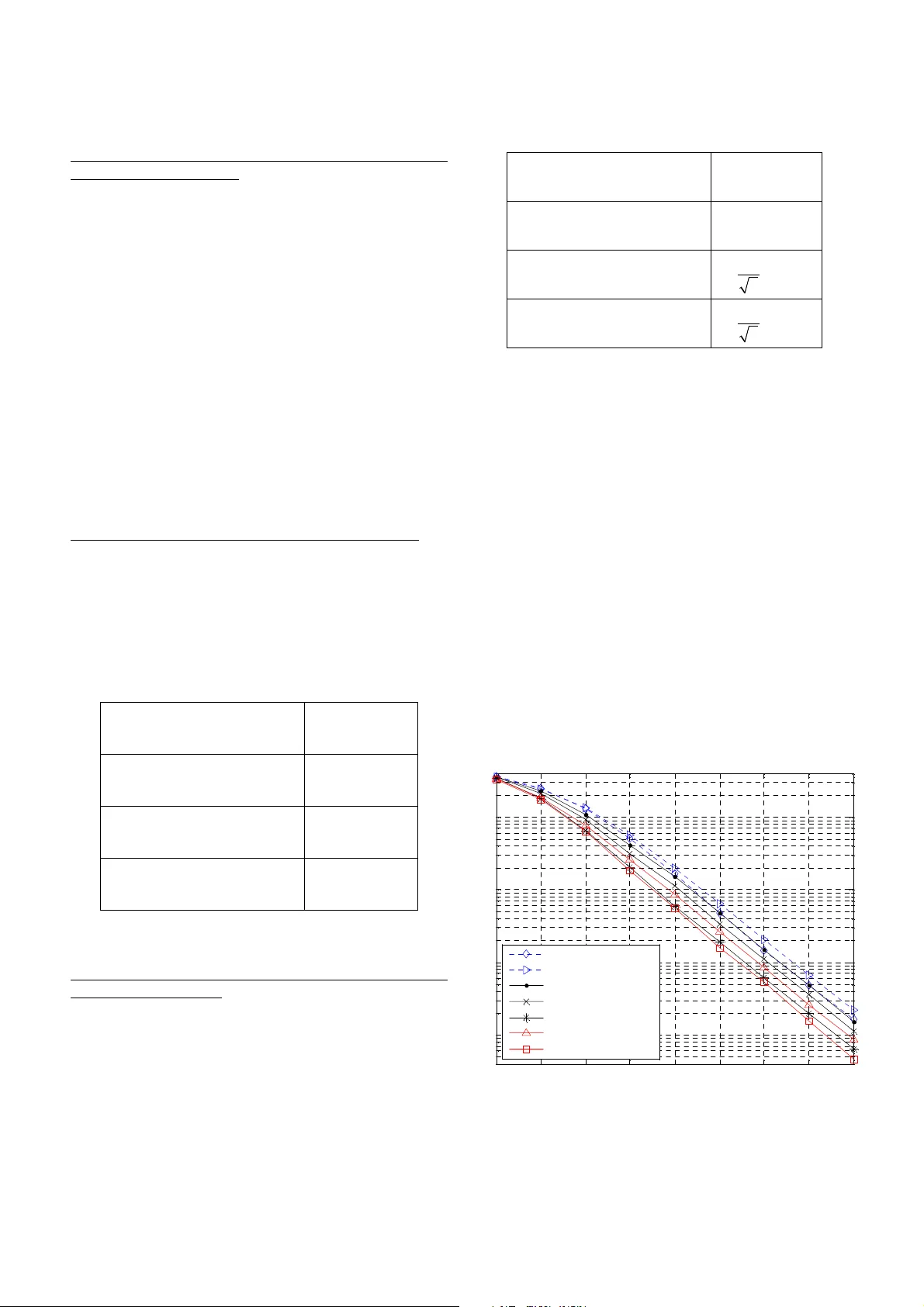
Ch au Y ue n , Wo on Hau Ch in Yo ng Li ang G uan , We nh ua Ch en , T aoy i Tee In s ti tute fo r I n foco m m Re se arc h (I 2 R), Singapo r e Nany a n g Technologi cal Unive rsit y , Sing a po r e {c yu en, whc hi n}@ i2r . a -sta r. edu. s g ey lgu an@ nt u. e du. sg Abst ract: In th i s pa p e r , we con si der a two- wa y or bi - di r e c tiona l co mmu n ic atio ns s y ste m with a re lay e quippe d w ith mult iple ante nnas . We show that w he n t he do w nlink cha nnel st ate info rmat io n is no t kno w n at the rel ay , the b enef it of havi ng ad ditio nal a nte nnas at t he r e l ay can o nly be ob tai ned by usin g de co de a nd fo rward (DF) but not amp lify an d f orw ard (AF ). The gai n be co mes sig nific ant w hen w e emplo y transm it div ersi ty toge ther w ith w ireles s n etwor k codin g. We al so demon st rat e h ow t h e per fo r man ce of su ch system ca n b e i mp roved by p er f or min g an tenn a se lec tio n at the relay . Our resu lts show th at if dow n li nk ch ann el st ate in fo r ma ti o n i s known a t the r ela y , n et w or k co din g may not pro vid e add ition al gai n t h a n si mple ante nn a se lec tio n scheme . Keywords: w i r el ess n e twor k codi n g, t wo-wa y or bi- di r e c tiona l c ommu n ic atio ns, mul ti-a nte nna relay , tr ans mit div e r s ity . I. I NTRODUCTION R elay netw orks w as first s tudied in the semi nal w ork [1] , whe r e relay s w ere s tudie d f rom an i n f orma tio n t heo retic poi nt of vie w . In r ecen t y ea r s, th e r ela y n etwor ks have b ecome mo re impo r ta nt in co mmunica tio n s ys tems as it is abl e to ext en d the com muni cati o n ran ge and im prove th e per for man ce of wi rel ess s ystem s. I n recen t st udi es, it was sho w n th at w ir e les s netw ork c od in g [2][3 ] ca n gr e a tly imp r o ve the th r o ughput o f re lay s y ste ms if th e co mmunicat io n t raf f ic is two - w a y o r bi- direc tio nal. I n this pape r, w e co n s ider a r e lay commu nica tions s y stem that is equipped w ith mu ltiple ante nnas a t th e r e lay . By ha vin g addit ion al ant e n na at th e r el ay , th e p r oblem b ecome s inte r e sti ng as t h e re are mo r e o ptio ns av ailab le at th e r ela y . For ex ampl e, th e r elay can per f or m n etwork codi ng at th e bit l ev el wit h th e decode a n d forwa rd (D F) sch eme, r ath er th an p e r form n etwork codi n g a t th e symbol lev el w ith t he a mplif y and f o rward (AF ) sc h e me . In add itio n, b y havi ng mu ltiple an te nnas at t he relay n o de, v ar ious MIMO t ransmi ssion sch emes can b e us ed t o achiev e a better decoding pe r f orma n c e. In thi s pape r, w e co n s ider t h e use o f Alamo uti o pen- loo p spac e-time b loc k c o d e ( S T B C ) [ 4 ] , a s w e l l a s t h e c a s e w h e n s o m e f o r m o f ch ann el st ate in fo r m ati o n (CSI ) is ava ila b l e at th e r ela y . We also i n v estig ate us e of antenna s ele c tion w he n w e fo rw ar d th e mess age at th e rela y . We con si der a comm u n ica tion s sy st em wit h a s ingl e relay equippe d with two an te nna s , w hi le t h e source a n d destinatio n a r e each equippe d with a s ingle a n te nna. Simu lat ion res ults s h o w th at w h e n no CS I is avai lab le a t the rel ay , the sc heme that f orw ard b it-lev e l n e two rk co ded b its in A lamo uti S TBC is t h e b es t. How ev er, w h e n CSI is av ailab le at t h e r e lay , simp le a nte nna s ele ctio n is go o d enough, and netwo r k co din g do es not prov ide an y ad vant age. The orga niz atio n of this pape r is as f o llows : w e dis cuss the sig nal and sy ste m mo de l in Se ctio n II , fo llow ed by th e tra n s missio n s c heme s co n s ide r e d fo r the mu lti- an tenn a relay in Sec ti o n III. W e show th e s im ul ati o n resul ts at Section IV and co n c lude t h e pape r in S ection V . II. S IGNAL M ODEL Co ns id e r a t hre e - no de ne tw o rk a s sho w n i n Figure 1 , wher e n odes A a n d C, each with on e an tenn a, woul d l ik e to exc h a n ge mes sages. The me ssage f r o m A to C is de n o ted as x A , w hile the me ss age fro m C to A is deno ted as x C . T h e node s A and C a re ass ume d to be o utside the comm uni cati on r an ge of ea ch ot her . A r elay node, B , eq uippe d w ith tw o ante nn as is i n be twe en them , suc h that node B is ab le to listen to the trans miss ion f r o m A a nd C si mult an eo u sly, pr oce sses th e sign al accor din g t o th e sc heme s t h a t w ill b e d esc ribe d in S ec tio n III , a n d t hen forw ar ds t h e signal to n o des A an d C. In this case, w e donote h AB and h CB as the ch ann els bet ween n o d es A an d B an d nod es C an d B r esp ecti v el y. It is a ssum ed tha t the y oper at e in the s ame fr equen c y ban d, w h il e the u plin k an d do w n lin k chan nel ar e reci proca l t o w h ich anoth er for simp lic ity . Ho we ver, w e d o no t imply th e no de s A, B or C kno w the C SI u n le ss st ated exp lic itly . Figure 1 A three- node relay netwo rk We as sum e tha t th e co m muni cat ion s y s tem o p er at es in two s ta ges. In th e fir st s t age, th e nod es A an d C tran s m it whi le th e r elay n ode B is in r eceive m o d e. In th e second st age, r el ay n ode B tr an smit s w h i le n odes A a n d C r eceive. In the fir st stag e, the r eceived s ign a l at th e r ela y n ode B, y B , can b e mode led as Bi- Directiona l Multi-Antenna Rela y Communications with W i reless Network Codin g A B C h AB h CB BA B A C B C B AB A B CB C A B C xx x x x x + =+ =+ y= h + h n h n h Hn (1) wher e x A and x C ar e th e sign als tr an smit ted fr om n odes A an d C r esp ecti v el y. Depen d ing on th e sch eme sel ected, r ela y n ode B ca n ch oo s e t o ei th e r am plif y a n d for war d y B , o r est ima te th e sign als x A an d x C us ing t h e MM SE es timato r as f ollow s: () 1 A ** B C 1 HH AB AB AB 2 BB CB CB CB ˆ ˆ x x α σ − − =+ =+ HH I Hy hh h Iy hh h (2) wher e A ˆ x an d C ˆ x ar e th e est imat ed sy m bols f or x A an d x C . III. M ULTI -A NT E NN A R ELA YING In this p a per, we co n si der t w o sc enar ios, the fir st case is wher e n o do w n lin k C SI i s ava ila b l e at the r ela y , an d th e sec o n d ca se i s w h er e th ere i s some for m of d own lin k CS I av ailab le at th e re lay , i.e. the mult i-a nte nna re lay know s w hich of its dow n li nk cha nnel has a larg er g ain, hence an tenn a select ion can be per for med. A. No CSI at th e r e l ay Amplify an d Forw ard (AF) Th e r elay n ode B can u se var ious techn iqu es to fo r war d th e sign al r eceived t o n o d es A an d C. I f n o C SI is a v a ila ble at the relay , the simp lest w a y of amplify and f orw ard (AF ) sc heme is f o r nod e B to f orw ard B BB B 2 2 2 AB C B B 2 α σ == ++ y sy hh (3) wher e α B is the p ow er n o r maliz ati on con stan t, an d σ B 2 is the n oise p ower a t th e ea c h of t he an ten nas o f n ode B. Sin ce node B has tw o an te nnas, he nce, it has tw ice th e n o ise po w er as co m par ed t o th e ca se of a sin gle- an tenna r elay. I t w ill b e s how n late r on, t ha t by using AF , t h e re lay with tw o - an tenn a suffer s a sligh t degr ada tion a s compar ed to sin gle- an tenn a case. At n ode A, x C ca n b e estima te d as fo llow s since x A is kno w n to A. Suc h a sc h e me is c ommo n ly know n as “ analog netw ork coding ”: () () AB A B A BB A A B A C B C B A A C BA AB A BA CB B ˆ y xx y xx α α + ++ =− =h s n =h h + h n n hh hh (4) It is a ssu med th at the n ode h as th e n ecessa ry ch ann el kno wle dge to perfo rm the dec o ding, as the o bje ctive of this stud y is to inv estig ate pe rfo rma nce o f v ar io us s che mes , and leav e the p rac tical aspe ct o f c hannel e st imatio n fo r fu ture works. Decode and Forw ard w it h Spa tial Multiplexing (DF -SM) Besides AF, sin ce n ode B ha s two ant e n nas, it is able to deco de th e signals x A and x C b efo r e it f orw ard t hem to nod es C and A respe ctive l y . In this pape r, we assume nodes B es timate s t he s ig nals u si ng the M MSE e sti mato r i n (2) . The es timate d sig nals a re t h e n dec o ded and re -enc od ed, and s e nt o ut as the s pati al ly multip lex ed s ig nal A B C ˆ ˆ x x = s (5) wher e └ ┘ r epr esents th e decodi n g an d r e-encod in g o peratio n o n the e stima te d sy mbo ls. The e stim atio n of th e inte n d ed s ig nals at no de A is as f ollo ws : () AB A B A A BA A C CA B A , 1 A B A , 2 ˆ ˆ ˆ y x x xy x + + =− =h s n =h n hh (6) wher e h BA, i is the i th elemen t of th e ch ann el vect or. Sin ce node A d oes not kno w if there is there a ny estima tio n e rror at the rel ay n o de, the c a n c ella tio n m ay n o t be pe r f ect. Li kew ise nod e C c a n es tima te x A accor din gly. Decode and Forw ard w it h Ne tw ork Coding ( DF-NC) We can al so per f or m n etwork codin g at bit l ev el at the relay node B by f ir st demo dulati n g the de t e cted s ignals i n to tw o bits s teams , b A an d b C : () () () AA C C BA C ˆˆ ˆˆ dem od demod ˆˆ mod bx b x xb b == =⊕ (7) wher e ⊕ is the X OR p r o cess , mod () and de mod( ) are t h e modulatio n and demo dulatio n f unctio ns, and x B is the ne w st ream of dat a prod uced b y XO Rin g th e estim at ed bit str eams b A an d b C . R e la y no de B ca n t he n f o rw ard t he ne w str eams of d ata as B B B () () () x t t x t = s . (8) The es timatio n o f the in te n d ed s ig n a ls at node s A is as fo llow s: AB A B A BA B A BA B A 1 () 1 1 ˆ 1 y xt xy + + = =h s n =h n h (9) wher e B ˆ x is t he e sti matio n of the netw o r k co de d sy mbol t r a ns mitte d f rom t he rel ay . The i nte n d ed me ss age fro m no de C c an th en be r ec over ed b y per f or min g XOR op er a ti on on th e n etwork coded b i t st r eam, B ˆ b , w ith the k no w n me ss age b A : CB A ˆˆ bb b =⊕ . (10) Decode and Forw ard w it h Netw ork Coding and Alamouti Coding ( DF-NC-Alamo uti) To exp loit the spac e time reso urce s o f the multiple an tenn as at th e r elay , we ca n al so encod e (7) in usi ng th e Alamo ut i sp ace time b loc k co de [3]. A s a r e su lt, the tra n s mitte d d ata s ignal is * BB B * BB () ( 1 ) () (1 ) ( ) xt xt t xt xt −+ = + s . (11) Th e decodi ng of t h e Alam o u ti S T B C can be r efer red to [4 ]. Th e esti mat ed bit str eam can be r eco v ered as in (10 ), h en ce w ill no t b e dis cu sse d i n de tail . B. Wi th C SI In thi s par t, we con si der tha t ther e i s e n ough in f or mat ion a t th e r ela y su ch th at ant e n na sel ecti on can be per for med. Decode and Forw ard w it h An tenna Selection ( DF-ANT) Af te r the r e lay estima ted x A and x C f rom (2 ), the relay w ill forw ar d C ˆ x on ly t h rou g h th e str o n ger c h ann el of h BA , like w ise forw ard A ˆ x o nly thro u g h t he st ro nge r c han ne l o f h BC . Th e det ail s of th e for war din g sch eme ar e su mmar ized in T able 1 . Table 1 The f orward ing scheme f or D F-A NT If h BA (1) > h BA (2) & h BC (1) > h BC (2) AC ˆˆ 0 xx + If h BA (2) > h BA (1) & h BC (2) > h BC (1) AC 0 ˆˆ xx + If h BA (1) > h BA (2) & h BC (2) > h BC (1) A C ˆ ˆ x x If h BA (2) > h BA (1) & h BC (1) > h BC (2) C A ˆ ˆ x x Decode and Forw ard w it h Netw ork Coding and Antenna Sel ection (DF -NC -ANT) Af te r t he r e lay enco de d the e sti mate d b it st r e a ms as x B as sh o wn in ( 7) , x B w ill t ra nsmit ted usi ng o nly th e f ir s t ante nna of the r e lay if the f ir s t ante nna has a b ette r c hanne l ga in t han the seco nd a nte nna t o bo th nodes A an d C; likew i s e x B w ill tra n s mitte d o n ly at t h e se co n d ante nna o f the rel ay if the sec o n d an t e nn a h as a b et ter chan nel g ain than th e f i rs t antenna to bo th n o des A an d C. If none o f the ante nna has a clea r gain over anoth er, then x B w ill b e tra n s mit te d on b o th ante nnas as si mila r to (8) . Table 2 The f orward ing scheme f or D F-NC -A NT If h BA (1) > h BA (2) & h BC (1) > h BC (2) B 0 x If h BA (2) > h BA (1) & h BC (2) > h BC (1) B 0 x If h BA (1) > h BA (2) & h BC (2) > h BC (1) 1 2 B B x x If h BA (2) > h BA (1) & h BC (1) > h BC (2) 1 2 B B x x IV. S IMUL ATION R ES UL TS We conside r a Ray leig h f lat fadi ng rel ay netw o r k w ith tw o - w a y o r bi-dire ctio nal c ommu nica tio n s . We assu me all th e n o d es ar e s y n chr onou s, an d th ey a ll h ave th e sa me SN R w it h al l the n o des employ i ng QPSK mo dula t ion. We c omp are th e BER per for man ce in Fi gure 2 , wh er e the b lue d otte d li nes rep rese nt t he r e su lts o f A F, t he b lack so lid cu r v es re pr e se nt t he DF sc h e me witho ut CS I i nfo rmatio n at th e r elay , whi le th e red tr iang u l ar an d r ed sq uar e lin es ar e t h e DF sc he me w it h a n te nna s ele ctio n. I t c a n b e se e n f ro m F ig u re 2 t h at w it h A F , re l ay w it h t w o ante nn as pro v ide no ga in o ve r relay w ith o ne a nten na. The pe r f ormanc e is in f ac t slig htly w o r s e th an o n e ante nna c ase , this c o uld b e d ue to th e po we r imb alance o f th e tra n s mit ted sign al. Additi o n ally , durin g tr ansmissi o n , we restr ict the to tal t rans missio n pow er to b e same as t he cas e w ith o ne antenna, h e nce, part o f the pow er i s bein g us ed to f orw ar d the n o ise, a nd this lead s to the sli g h t d eg radat io n i n t he per form an ce. 0 5 10 15 20 25 30 35 40 10 -4 10 -3 10 -2 10 -1 SN R ( d B) BER One ant enna relay A F AF DF S M DF NC DF NC A lamout i DF NC ANT (W CSI) DF A N T (W CS I ) Fi gu re 2 Si mu lat ed BE R for va riou s s che mes Ne xt, w it h DF, the pe rfo r m anc e is sig nific an tly imp rov e d, and the gai n p rov ide d by th e add itio n a l a nte nna b ec o mes visi ble. We sh ow t hat DF-N C i s bett e r than D F-SM, an d DF -NC- Ala mouti is b ette r tha n D F-N C . This is b ec ause by usin g n etwor k codin g, the ga in b ecome s e v en m o r e si g n i f i cant a s th e two da ta s tream s ar e combin ed int o o n e si ngl e str eam usin g XOR. Th erefor e al l th e tran smi ssi o n po w er can be c o n cen tra ted on thi s sing le str eam , rath er th an sh ar ed between t wo str ea ms. A n d it can be se en th at w i th the use of the Ala mo uti t rans mit d ive rsi ty sche me, it provide s th e be st BER per fo rmance amo ng all sc h e me w ithout C SI . It s hou ld b e no ted th at, f o r all t h e sc h e me s, i n c lu ding the Alamo ut i sc heme , t hey have the sa me d ive rsity gain (as in the slo pe of th e curve ). T his sugges ts that the div ersity o r de r of s uch sy stem is b ein g capped b y uplink. How ever, f or antenna se lectio n , w e get a diffe r e n t con clus ion f r om p revi ous case w h er e n o C SI is avai la ble a t rel ay . It c an b e s e en that D F-A NT pe rfo rms b etter tha n DF- NC-ANT. I n other wo rds, netwo r k c oding m ay n o t pr o vide any additio n a l gain when ante nn a se lection is perfo r me d. This c a n b e ex plaine d as f o llow s: w h e n the CS I is k now n at the r e l ay , it is b es t to simply conc entr ate t he tr ans miss ion pow er on th e desi r e d di r e ction. Fo r the case of n e twork codi ng , t w o s y m bols ar e “coded ” t ogeth er , h e n ce it wo u ld be a k in d of was te of en erg y wh en the ch ann el of b oth sid e do not matc h to the s ame an te nna. V. C ONCLU S ION We co mpared s eve ral sc h e mes fo r a tw o - w a y / b i- di r e c tiona l relay co mmunicat io ns sy ste m th a t h as tw o antennas at the r e lay node. We s h ow th a t by usin g simp le amp lify and f orw ard, t h e multip le an tenn as at t h e r e lay provide n o additio n a l benef it. O n the ot h e r hand, by co m b in i ng netw ork coding wit h de co de an d f orw ar d, t h e mul tiple a n te nnas can p rov ide add itio nal ga in, and the g ain b ecome s s ignific an t w h e n A lamo uti o pe n - loo p trans mit di vers it y i s em pl oyed. Wh en C SI i s ava ila ble a t th e r elay, suc h as w he n a n te nna se le ctio n is p erf ormed , w e s h o w that netw o rk co ding may not b e an op timal s olu tion . As fo r the future wo r k, de pen d ing on the amo un t and quality of th e ch ann el sta te in fo r ma tion a v a ila b l e at th e sour ce and r elay, mor e comp li cated s chemes can be devel oped . R EFERENC ES [1] E. C . van der Muelen , “Thr ee-T ermin al Com mu n i cation Channels ,” A d vances in Applied Probabil ity , v ol. 3 , no . 1, pp. 120- 154 , 1 971. [2] S . Katt i, H . R ah u l, W. H u, D . Katab i , M. Me da rd, J. Cro w crof t, ”XO Rs in the ai r: p ract ical w ir e les s netw ork co din g ”, SIGCO MM 2006 , p p. 243-254. [3] P . P opovski, H . Y o mo, “W ir ele ss network coding by amp lify -an d -fo rw ar d fo r b i-dire ctio nal t raf fic flow s”, IEEE Com munications L e t ters , v ol. 11, Ja n 2007, pp. 16-18. [4] S . M. Ala mo uti , “A s imple trans mi t div ersity tec hnique fo r wire les s co mmunica tio n s ”, I EEE Journal on Selected Areas in Comm unications , vo l.16, pp .1451- 1458, Oc t. 1998.
Original Paper
Loading high-quality paper...
Comments & Academic Discussion
Loading comments...
Leave a Comment