On the Superdistribution of Digital Goods
Business models involving buyers of digital goods in the distribution process are called superdistribution schemes. We review the state-of-the art of research and application of superdistribution and propose systematic approach to market mechanisms u…
Authors: Andreas U. Schmidt
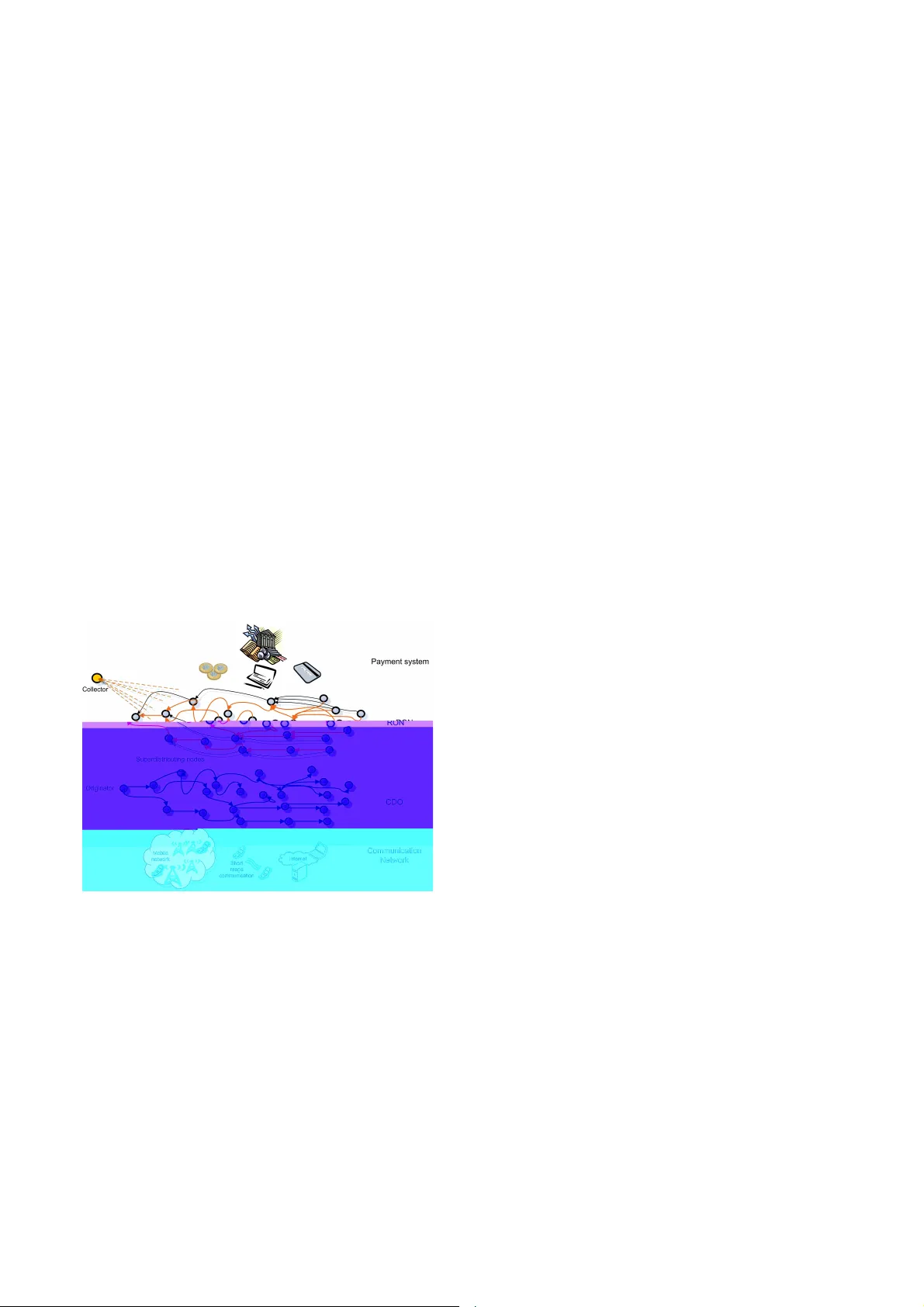
On the Superdistrib ution of Digital Goo ds (In vited P aper) Andreas U. Schmidt Fraunho fer Institute f or Secu re I nform ation T echn ology SIT Rheinstraße 75, 64 295 Dar mstadt, Ger many Email: andreas.sch midt@sit.fraunh ofer .de Abstract — Business models in volving buy ers of digital goods in the distribution pro cess are called superdistributi on schemes. W e re view the sta t e-of-the a rt of r esearch and application of superdistribution and propose systematic approach to market mechanisms using super -distribution and technical s ystem ar ch i- tectures su pporting it. The l imiting conditions on such markets are of economic, legal, technical, and psychological n ature. ©2008 IEEE. Personal use of this material is permitted . How- ev er , permission to reprint/republish this material f or adv ertising or promotional purposes or fo r creating new collective works fo r resale or redistribution to ser vers or lists, or to reuse any copyrighted component of this work in other works must be obtained from the IEEE . I . I N T R O D U C T I O N Inform ation systems in general and the distrib utio n of digital content in particular are do minated by centralised structures rooted in clien t-server mod els, and large efforts have b een made f or the vertical integration of conten t pro duction, inge s- tion, an d d istribution [1]. T he final transportatio n of con tent to th e he ad-ends is nowadays either digital br oadcast, e. g., D VB [ 2], multicast, as fo r instance en v isioned in 3GPP Long - T erm Evolution [3] , or conten t pu sh [4]. Peer-to-peer (p2p ) systems on the other han d realise a completely different parad igm for data tran sport in n etworks, namely distribution from node s to oth er node s with little in volvement of central instances [5]. File-sharing networks like KaZaA or Gnutella emb ody th is paradig m on the app lication lev el, implemen ting overlay networks in wh ich u sers acti vely (with varied degrees of automa tion) re- or super d istrib u te content, in th e form of digital files, to other users. The term superd istribution may h av e been coine d in [6], [7], in any case it ha se b een around in in formation and commun ication research for some time. T houg h th e concept lay dor mant for quite a while — per haps due to the association with the domin ant use of p2 p and file sharin g b y free riders and the co pyright wars — interest in superdistribution h as been rekindled recently in the content prod ucing industry . The combin ed size of the mo st importan t existing businesses based on conten t supe rdistribution sche mes are o f a small scale in com parison to the turnovers o f the media industry as a whole. N ev er theless they prove that the ind ustry is seriously experimenting with the concep t. Most imp ortantly , superdistribution has even been cast in the form o f a stand ard for the mo bile d omain by the Op en Mo bile Allianc e (OMA) . T echn ically , super distribution has hitherto been viewed just as a variant of Digital Rights Mana gement (DRM) [8], [9], or of p2p systems, and research on its fun damentals is still scarce. For instan ce, basic economic questions pe rtaining to the viability of superdistribution in particular in com petition with free riders have o nly b een examined in our previous work [1 0]. The p resent paper presents a first contribution to a treatmen t o f oth er characteristic issues of su perdistribution systems, viewed as inf ormation systems in their application and econo mic co ntext. A system model fo r generic supe rdis- tribution is proposed in Section II, wh ile Section III presen ts two concr ete rea lisations with distinct traits. Section IV is the co re p art of the paper which collects the ( in o ur view) most importa nt research top ics on superdistribution an d tries to give an overview ov er the curr ent state o f kn owledge in the area. The overarchin g theme he re is the techno logical and econom ic viability o f such systems. Section V trie s to pu t superdistribution into the con text of current soc io-econo mic developments su rroun ding content d istribution, copyright pr o- tection, and p iracy , in front of their historic backg roun d. W e conclud e in Section VI. I I . T H E G E N E R A L S T RU C T U R E O F S U P E R D I S T R I B U T I O N N E T W O R K S Superdistribution is the combined distribution and market scheme for digital goods inv o lving buyers in the distribution process in such a way th at they redistribute th e good to other legitimate buyers. Here a d igital good is an infor mation go od in the eco nomical sense [11], [12], which is rep resented in digital form , regardless o f be ing embodied ph ysically o r o nly in intangible form ( some use the term virtual goo ds , coined by [13] and used for for information goods in intangible, digi- tal f orm, and distributed via electron ic networks). In an active sense, to superdistrib ute means the c ombined transaction of acquiring a good and its (offering for) re- distribution, or resale, and actually tr ansferring it to anoth er nod e. Here we argue that existing system models for DRM are to narrow to accom modate for the sp ecific featu res and structu res of superdistribution. In fact, extending DRM in to v ar ious directions is a recent resear ch tren d, which is trig gered by the manifold ways in which users operate with digital goo ds for instance in social n etworks. For instance, the author s o f [14 ] transcend DRM b y envisioning a system in which only the informa tion o n “wh o owns this digital good” is ma naged and thus ag ents in the eco nomic n etwork can be given amp le freedom , e.g ., to super distribute it. In this section, we pre sent a similar approach to extend infor mation manageme nt systems in an ap propr iate way for superd istribution. A. Sup er distribution networks A superdistribution network in the most gener al sen se has two sides. Th e first o ne is the network over wh ich the go od is distributed, econo mically a logistics n etwork for the fina l distribution of the good to the co nsumer . If it is an electr onic network, it is a particular kind of a content distribution network, like Ak amai, Am azon S3, Corel, CD- Networks, etc. Whether a good is distributed by ordin ary mail, over an electronic network , or by sh ort-rang e communica tion between mob ile devices, is imma terial fo r the classification as a superdistribution network. Paradigm examples exist f or all th ree variants: The classic chain latter in the first, peer- to-peer n etworks in the second, an d superdistribution between mobile devices as for instance standardised by OMA in the last case. In a ll cases, su perdistribution is an overlay over an (often gener al-purp ose) co mmunic ation or transpor tation network, like ordinary m ail, the Interne t, or Blueto oth ad hoc co mmun ication b etween mob ile devices. W e call this side of a sup erdistribution network the co ntent distribution overlay (CDO) . Th e CDO is a d irected graph, which in most (reasonab le) cases may be assume d to be a conn ected tree. The CDO gra ph can b e colou red, i.e., various attributes may be attached to the edg es, a p articular example b eing that the quality of the goo d may change, e.g. , improved by a superdistributing node to c ompete with oth er r esellers. Fig. 1. Superdi stribution ov erlay netwo rks in the system context. Superdistributing n odes in a CDO need a g ood, econ omic reason to particip ate. This is always true due to the minimum marginal cost greater than zero in curred by a super distributing node fo r storag e and tr ansferal o f the good to and fro m him-/herself (one of the two at least is borne by a specific node). That is, nod es expect some k ind o f remuneration f or participating activ ely in the CDO — oth erwise they may just become sink s for the d igital good . T he flow of remuner a- tion — pecun iary , inf ormation al, immaterial, or of any oth er conceiv a ble kind — con stitutes ano ther overlay network, the r emune ration overlay network (RON ) . Th e claim he re is that no supe rdistribution ne twork exists without RON, the mo st trivial examp le being the tree spanned by the resale prices paid by buyers to super distributing nodes in th e CDO. In this case the edges of the R ON are just the edges of the CDO with inverted d irections (and different colours, e.g ., the sales price, attache d). The node-set of the RON c an b e assumed to be a sub set o f the nod e-set o f the CDO, but the relation of the R ON’ s edges to the edges of the CDO is generally nontrivial. For instance in multi-level marketing, a buyer of a goo d migh t pay a rew ard to resellers further down the line, and n ot only the resales pr ice to his direct reseller . Figure 1 sho ws CDO and R ON in the context of un derlying comm unication and paymen t networks. B. Digital goods The term digital good used so far r efers to the e conomica l atom distributed over the CDO and being the ro ot cause for the RON. I nform ationally , the d igital goo d is a com poun d minimally co nsisting o f thr ee compon ents. The conten t is the piece o f digital in formatio n that is actually u sed and , if the no de choo ses to do so, offered for distribution to o thers. A s th e super distribution n etwork is an econo mic market mechan ism, the conten t is nec essarily accompan ied by info rmation rep resenting the co ntractual r ules of a) the g lobal superd istribution market, an d b) the particu lar relationship b etween super distributing (reseller ) and acquirin g (buyer) n ode. Thou gh we will not make use of th is distinction of local and glob al contr act, this ortho gonal categor isation may be u seful, e. g., to classify super distribution n etworks. Using the good means, on the one hand, that the content is consumed by a node who acquires it. Con sumption of the content represents one part o f the value propo sition that the digital goo d represen ts to a buyer . It is governed by a piece of infor mation com monly called th e consumptio n licence , which describes the conditio ns and permissions under which the buyer c an use the co ntent. Econo mically speaking , th e consump tion licence prescribes the ways in which a buyer may turn the value pro position of the co ntent into utility . The consump tion licen ce is also thoug ht to b e the inform ational link between the digital good and the remuneratio n ov er lay by stating th e rules o f pay ment for the g ood to th e super dis- tributing nod e, as well as any other reward to be paid to further no des or entities. In this way the co nsumption licence generates th e R ON fro m the CDO, assuming the rules ar e adhered to by all participants. Summar ising, the consum ption licence co nsists o f thr ee pa rts: • Consumptio n rules describe how content m ay b e used ; • Remun eration rules describe h ow an d who must b e paid for it; • The Con tent association d escribes to wh ich conten t the rules ap ply . The seco nd way in which an acquiring no de can make use of th e good is b y superd istribution. W e th ink of it as g overned by rules incorpo rated in a secon d licence, the r edistrib u tion licence . Just a s the con sumption lice nce conn ects the goo d to the R ON, the r edistribution licence condition s, or g enerates the co ntent distribution overlay . Thus, this licence consists of two essential par ts: • Redistribution rules d escribe how , to whom and under which conditions co ntent may b e red istributed; • The Con tent associa tion describes to wh ich conten t the rules apply . The comp lete inform ational structure and its relation to CDO and R ON is visualised in Figu re 2 Fig. 2. Information model of superdistribut ion. Of cou rse, many other gro uping s of th e info rmation char- acterising a superdistribution network are p ossible — th e approa ch chosen her e is lead by th e d istinction b etween CDO and RON. It should also be noted th at a ll n otions introdu ced ab ove ar e u nderstoo d h ere in the broadest po ssible sense. That is large p arts of the rules a nd lice nces ma y be represented dif fer ently than in digital fo rm and may include for instance general legislation, c opyright law , social norms, etc. Redistribution in particular can also b e g overned by tech nical condition s, e.g., the info rmation system that r epresents the platform for th e execution o f sup erdistribution. Thus the particular rules that need to be represented digitally in a concr ete superdistribution network may be restrictions as well as extensions of such glo bal, or extern al, ru les. Likewise, content associations m ay be simple titles, digital identifiers denoting a sing le p iece of co ntent or a gr oup, or be au gmented by info rmation protecting the integrity of digital con tent such as h ash values or signatur es. Nothing r estricts th e metho ds by which the licences and the conten t are ge nerated, stor ed, and transferred in the superdistribution network. Th is co nceptual approa ch is well k nown from gen eral DRM [8 ]. C. Examp les Some m ore concrete examp les might elucidate th e abstra ct notions of Section II-B. The most direct form of remu neration is a resale price p aid by the acq uiring nod e to the superdis- tributing node. This makes the superd istribution network a genuine network mark et o f b uy ers/resellers, where an incentive to buy a g ood accrues to th em by the resale revenues they can achieve. The “mu lti” in the term mu lti-level marketing often refers to th e fact that m any subsequen t le vels or g eneration s of buyers contribute to a n ode’ s resales revenues, o r even all o f them. Th is kind of pay ments or r emuner ations from th e down- line may be restricted to a fin ite numbe r of buyer generatio ns or not, the latter case being realised in some network marketing schemes f or p hysical g oods. The remu neration s may be cond itioned by various global or individual factors such as time, buyer/reseller location, distance in a social n etwork, or extern alities like a measured popular ity of the co ntent. In ma ny cases it makes sense to let a part of the resales price accrue to a central entity external to the CDO p roper, which we call co llector . Its role may be to skim revenues from the market for, e.g., the artists and or labels, or it may act as a (state) co llecting agen cy implemen ting a taxation on the distribution of digital go ods. Ex amples for second-level paymen ts an d the role of the co llector are shown in Figure 1. An inter esting examp le for restriction s on the red istribution is the imp lementation of terr itorial pro tection of some sort. This can be used to p rotect resellers from the competition o f their (direct) buyers to a certain extent buy stating, e.g ., “do not super distribute before m oving away by 10 0 m etres”. Thu s, this kind of redistribution rule using restriction s based on ge- ograph ical loc ation may make particu lar sen se for CDO b ased short-ran ge comm unication betwe en m obile users, i.e., mob ile superdistribution. W e showed in [15] how such cond itions ca n be en forced in an efficient, de -central, y et secure mann er . I I I . S O M E E X A M P L E S As said, superdistribution n etworks occupy only a small niche even of the online content distribution market. The better known examples ar e th e fo llowing. Sn ocap [ 16], fou nded by one of the fathers of Napster, was started with the idea to obtain licen ces fro m the music in dustry wh ich explicitly allow to distribute content over the existing, pop ular p2p n etworks. Snocap uses a udio fingerpr inting to track the d istribution of conte nt, and file-sh aring networks need to be adap ted to support Snocap ’ s r emuner ation schem e. Thou gh Sno Cap has made some deals with m any , ev en major, labels, it nev er took off e conomic ally and the co mpany has b een aq cuired in February 20 08 by the social networking platf orm imeem [17 ]. After restru cturing and changing the strategy , Sno cap ha s become a gene ral service provider for online music distrib utio n and for instance provides the technolog y for the music stores in My Space. MashBox x [18] started with similar ambitions and also close to the circles of Napster and Grokster . Th e company seems lay dorm ant for some time, app earing in the news only f or r ecent intellectual prop erty litigations [ 19]. Peer Impact is a p ay-for-download file-sharing service cr eated by W ur ld Media, an d no w acquired together with its pare nt company b y the on line video service provider Roo [20 ]. T he file-sharing client has now bee n r e-released unde r the new brand name T oPeer [21] , which seems to use part of the original tech nolog y to allow p 2p users to cr eate pr iv ate spaces in which t o share content with peers they trust. In the following we describ e two particu lar examples in mor e detail. They are chosen because they represent true technical superdistribution systems, and th eir systems are better d ocumen ted. The two systems represent to some extent oppostite extremes for su- perdistribution with respect to ( de-)cen tralisation. A. P otato System The Potato system [22] is a pro duct developed by the 4FO A G [23] (fou nded in 200 0) to gether with th e Fraunh ofer Institute for Digital Med ia T echnolo gy IDMT [2 4] in Ilmenau , Germany , fo r superd istribution o f mu sic as m p3-files. The technical platform for superdistribution presented by the Potato system is centra lised, insofar as it uses a cen tral acco unting service ( AS) for registration and publishin g n ew son gs b y originato rs, and to operate the remu neration scheme. The content CDO is completely free of any DRM measure, the only informa tion p rotected by the AS (beside s the c ontent integrity of which is p roved by a hash value) is the redistribution licence, which is o btained by a buyer upon payment in the form of a tra nsaction number (T AN). The T AN serves as a receipt which is simp ly added to th e file n ame, which is in turn an nounce d in subsequen t resales to the AS wh ich initiates the r ew ard ing of reseller s. Some details are foun d in [2 5], [26]. Po tato supp orts various p ayment pr oviders from which the originato rs of a g ood m ay ch oose. Fig. 3. Rev enue sharing in the Potato system. The market mecha nism and remu neration scheme imple- mented in the Potato system is perhaps the most evolved in super distribution. Th e sharing of r ev en ues is shown in Figure 3. Pota to targets small labels and in depend ent artists, who may ob tain 55– 70% of the purc hase price o f every resale, depend ing on the service level th ey choose. An in teresting detail is that Po tato has an ag reement with the German collecting society f or m usic, GEM A which o btains the du e contributions directly from the system. Potato itself and the paymen t provid er share 14 % of the pu rchase price a nd furth er 14% are distributed as resale revenues fro m the buyer to resellers (this share has been d ecreased from 3 5% in “V ersion 1.0” to the cu rrent “ V ersion 2 .0” value). T he special kin d of remuner ation fo r resellers in this system e stablishes a tru e multi-level m arket with three rewarding levels, each bein g awarded a g eometrically decre asing share of 10, 3, an d 1 %, respectively , cf. [10, Sectio n II.B]. Th us the CDO and RON look loc ally as shown in Fig ure 4 I t is in teresting to no te that a rebate of 2% (b orne by th e system, not the r esellers) is offered for nodes who choo se to buy from a peer rather than the centr al service. This an impor tant in centive that red uces th e dominan t role o f a single ma rket particip ant, cf. Section IV -B 1 . Originally resellers were mostly left to their own devices in mar keting songs for resale. Th ey could use a resale link containing their T AN o n their W eb-site or in e-m ails. Th e 1 The present author takes the liberty to claim certain credit for suggesting some of these nov el concepts. Fig. 4. CDO and RON of Potato connect 4 buyer generations. most recent developments of the Po tato as a sup erdistribution platform r egard cap abilities to support users in marketing goods, i.e., m eans to offer th em successfully o nline for superdistribution, and to comp ete with oth er resellers. This includes the extension of resale links to W idgets embod ying small on line sho ps where resellers can display their fa vourites, covers, and let peers listen to clipping s of song s. 4FO also added a social com merce platform Sp readBox [2 7] to its portfo lio which also tries to leverage c ommun ity aspects of marketing in the form of produ ct recommend ation. B. DRM P aradiso The Paradiso system [28] is a technolog ical solu tion to DRM-based super distribution proposed by Nair Srijith from the research gro up of Andrew T an nenbau m [29], and others. Its central techn ical trait is that it r elies on a trusted platform [3 0] to en sure a dheren ce to con sumption and redistribution licence. Thus it makes some requ irements on complian t devices w ith regard to crypto graph ic capab ilities (hash, AES eng ine, and PKI man agemen t), secure storage , and secu re conten t decod er . In the co ntent distribution sche me o f Paradiso, con sumption and remuner ation licen ces are cry ptogra phically bo und to the content an d chain ed . That is, a buyer rec eiv es with the co ntent a signed contain er fro m the reseller , contain ing all p revious licences created in every resale upstream in the CDO. T he signature also associate s this data to the con tent. This enables him, e.g., to verify th at the c ontent has not been tampered with, fo r instanc e it prevents co ntent masqu erading attacks by which a reseller might try to superdistribute con tent o f lower quality . Th e co mpliant device ca n also chec k that all licence rules have been enfo rced in all p revious distribution steps, and en forces the app licable rules fo r itself, e. g., respects an d updates the allowed num ber of resales. Payment is and o ut- of b and pro cess in Paradiso which is based on a receipt the acquiring node send s back to the superdistributing node. It is not hard to see that this system has strong security with respect to the m aintenanc e o f DRM o f the co ntent as it is distributed down the CDO. Formal security proof s are g i ven in [31]. This system provid es the strongest possible DRM enfo rce- ment in superdistribution which can be implem ented in a completely decentralised fashion. The system has not been deployed commercially , yet a pr ototype has be en shown on a Neur os development board [3 2] with similar capabilities of wh at is ty pical for mob ile mu sic playe rs (TI 200-MHz ARM926, 120 -MHz C54 x DSP pro cessor , 64 Mbytes of SDRAM and 10 /100 Mbps Ethern et port, etc.). The b oard runs a modified version of the Linux 2.6 kernel. Based on OpenSSL libraries for cry ptograp hic suppo rt, the higher cryptogra phic and security f unctions, a re emu lated b y a sof tware layer . I V . C O N D I T I O N S F O R V I A B L E S U P E R D I S T R I B U T I O N At fir st sigh t, supe rdistribution seems a variant of DRM or p2p, or a co mbination of both. Now we try to elabo rate on specific traits to sh ow how superdistribution is d ifferent. A. The axis of la wfulness and le gitimacy The R ON, if effectiv e, turns superd istribution into a network marketing sche me, or if multiple buyer generatio ns receiv e remuner ations, a multi- lev el ma rketing sch eme. Multi-level marketing carries negative connotations and is illegal in special forms known as pyram id selling , snowball sy stems, chain - letters, etc., un der many jurisdictions. This similarity to illicit schemes has perhap s also impeded app lied research in th e field of supe rdistribution as such. [33, V ol. II] present criteria to d istinguish between legitimate mu lti-lev e l m arketing and such practises that are to be co nsidered illicit. In the case of digital goods some argum ents speak for the viability of fair superdistribution schemes (thor oughly discussed in [34], [3 5]). i) Buyers acquire not only a void rig ht to resale, but also a go od of value. Po tential losses an ag ent en tering at a late stage will incur are charged up against this value; ii) In ve ntory loading , i.e., the oblig ation to keep a large, non-retu rnable stock, is irrelev an t for digital go ods; iii) Marginal costs for rep lication and redistribution are mo stly mu ch smaller th an r esale prices and thus tran saction costs are largely insignificant; iv) A main novel featur e of the co ncepts above is that they en able in principle a fair system design (see below). Other legal requ irements for superdistribution are de riv ed from the correspon ding one s f or gen eral electr onic com merce. i) privac y of buyers and sellers should b e maintained by implementin g m inimal-need -to-kn ow pr inciples; ii) Con sumer protection legislation, as, e.g., in the EU [36] , ne eds to be respected; iii) Co pyright law must be respected, i.e., or igi- nators rights must be pr operly transcribed into the licences and a system’ s operator must obtain all n ecessary rights and in volve c ollecting societies, etc. iv) Contracts between buyers and r esellers must be enf orceable and indi v idual fraud (e .g., by selling con tent of lower value than p roposed) must be prevented; v) Market abuse and distor tion must be p revented, cf. the ec onomica l and secu rity r equirem ents below . B. The econo mical axis Digital go ods share the prop erties of info rmation goo ds which are transferable an d n on-rival like public goods, and additionally are durable, i.e., sho w no wear out by usage or time [11] , [1 2]. Like fo r a priv ate goo d, howev e r , orig inal creation ca n be costly , wh ereas repr oduction and r edistribution are poten tially v e ry cheap. This is the econo mical basis for superdistribution wh ich emulates the distribution system o f free-rid ers, namely p2p network s [37] . They po se additio nal value p roposition to buyers of the orig inal (legal) version of the good by revenues or othe r rewards linked to resales. Th us the central question fo r superdistribution o f digital good s is econom ic viability in the pr esence of fre e-riders. The RON of a superdistribution network is a ne twork marketing scheme. Theo retical treatments fo r network markets are scarce, wh ich inspired us to devise a stochastic model for the dyn amics of such m arkets in [34] an d ev alua te it in various ways [1 0], [35]. The mod el is essentially c omprised of atomic agents en tering the m arket con tinuously u ntil saturatio n, with equal chance to trade with each other , i.e., to buy the g ood from a reseller . W ith these assumptions, a no de entering the CDO at a certain point in time, i.e., a certain market saturation, can calculate its expected rev e nues fr om su bsequent resales, giv e n th at the p rice schedule o f curr ent an d futu re r esales prices is kn own. Figure 5 sho ws two examples (black, blu e) of prices ( dashed), exp ected r esales revenues (thin solid) an d effecti ve prices, i.e., price paid min us expected revenues (thick solid), p lotted again st the satu ration par ameter run ning from 0 to 1 . The thrilling flip side of the in nocuou s mathem atical expressions defining this mo del is that it enables d ynamical forwar d p ricing . That is, th e operato r of a superd istribution network c an in prin ciple co ntrol the incen tiv e that accr ues to buyers via th e resales revenues over time. This p ossibility has not b een exp loited by any sup erdistribution schemes ye t. 0 0.2 0.4 0.6 0.8 1 −1 −0.5 0 0.5 1 1.5 2 Fig. 5. Examples for expecte d reve nues from resales and effec tiv e price in random superdistrib ution with dynamica l forward pricing. Further results model’ s analysis spark optim ism f or su- perdistribution as a business and its viability as a replacemen t for DRM. In a basic extension of the mo del it was shown in [1 0] that th e legitimate g ood in the CDO can pr ev ail again st a free-rid er version un der mo derate assump tions. Non etheless, superdistribution market mech anisms nee d to be carefully crafted as many more external factors oth er than rational decision-ma king based on pecuniary incen ti ves come into play . One imp ortant aspec t in that vein is market hom ogeneity . While sup erdistribution will work fine in a popu lation which consists of a r ather ho mogen eous gro up of individuals, fo r instance with special p referen ces, it may break down if the market is biased in the sense that the re is a gro up of agents with higher trading capacities, e.g., large m usic labels runn ing direct sale web sites. Furtherm ore, inhomog eneities amp lified by network effects [38 ]–[42 ] carry the imminent dange r th at the market can be cann ibalised at an early stage by an agen t with overwhelmingly high communicatio n capacity , e.g ., a popular web site, who c ould the n o btain a practical mo nopoly . Finally , there is a p sycholog ical element to superdistribution that is conn ected to the aleatory element of network markets and hum an sense of ju stice, which modern em pirical ec o- nomics has shown to be an imp ortant driving force of hu man action [4 3]. In the sm all-scale stud y on a real sup erdistribution system [44 ], it was shown that users felt b ad abou t the monetary incentive they r eceiv e d from resales sinc e th ey were askin g mo ney from the ir peer s for something that w as perceived as pu re en tertainment. T hough these results may be culture-d ependen t to some e xten t, they sho w that the marketing aspects of sup erdistribution deserve utm ost care. C. The security and technical axis From a security v iewpoint the central difference between DRM an d superd istribution is that DRM p rotection is focused entirely on the CDO, wh ile in superdistribution the most importan t protection goals regard the remun eration. In fact, the parts of superdistribution wh ich requ ire loc al DRM pr otection in an d between the nodes ar e en coded in the co nsumption rules of the c onsump tion licen ce and th e r edistribution rule s. The latter are essential to p rotect the b u siness mod el and market mec hanism implemen ted by the superd istribution sys- tem’ s ope rator . These CDO p rotection req uiremen ts can be implemented by arbitrary DRM measures, centralised or de- centralised and with a varied lev el o f enfor cement, as we have seen in the examples o f Sectio n III. An importan t poin t for the buyer is the secure association to the content to prevent the mentioned conten t masq uerading . On the othe r hand, en suring rem uneratio n is essential to im plement a fair superdistribution mar ket. A natural way to combine the in - band with the necessary o ut-of-b and pr ocesses, e.g., payment, is by sending back receipts, which are crypto graph ically bound to the co ntent and transaction, to the reseller . The r eseller can then for instan ce redeem these receip ts as tickets at a central rew ar ding service. W e have sh own a way to implemen t such general schemes w ith trusted p latforms in [4 5]. Priv acy is o f utmost imp ortance in a network of transactio ns in volving a large num ber o f partners. In superdistribution p ri- vac y is limited again essentially in the r emunera tion pro cess, since there buyer and reseller need to reveal their identities and tr ansaction data tow ar d a payment pr ovider or transaction processing serv ice. Th is is not a gross r isk to priv a cy , since often buyers an d resellers ar e acqu ainted anyway , for in stance if superdistribution is based on personal recom mendatio n. In general, the identities o f nodes in the R ON sho uld be pr otected by Identity Managemen t systems [ 46], [47] to th e a pprop riate lev el. The Paradiso system described in Section III-B exhibits the u sual trad e-off between security and privac y . The ch ain of licences transported downstream in th e CDO c ontains informa tion (tho ugh not nec essarily per sonalised) o n every superdistribution tran saction on a path. It would be inter esting to see if security can b e protected with similar strength but with h igher priv acy levels. Metho ds for that ca n for instance make use of crypto graph ic zero -knowledge p roofs [4 8], [49]. Superdistribution as such is almost techn ology- neutral. Three challenges need to b e met for their su ccess in the econom y of digital g oods: Market mechan isms must be implemen table in a gener al superdistribution framework or platform. Su ch a framew o rk should en able the d efinition of CDO an d R ON structures, for instance rewarding levels, match-m aking rules, allowed number of r esales, o r th e more concrete ru les so me o f which have been me ntioned in Section II-C. A marketing platform must be in corpo rated in the superdis- tribution n etwork, in par ticular to ensure fairness in tr ade and competition between resellers, an d mar ket hom ogeneity . The dyna misation of the ma rket should be supp orted. T his regards local ch anges in space and /or time of the two licen ces, of which p erhaps the mo st impo rtant example is dynamical forward pricin g. A related research challenge is to devise methods to mon itor the market in real time. This would for instance be usefu l to f urnish up- to-date informa tion on the popular ity of a piece o f con tent. As an examp le, the digital good could b e made retur nable to the originato r or the reseller if th e chances to a chieve fur ther resales rev en ues becom es to low . V . S O M E R E FL E C T I O N S O N C O P Y R I G H T P R OT E C T I O N , U S E R - G E N E R AT E D C O N T E N T , A N D F R E E R I D I N G What is the re lationship b etween super distribution a nd copyright pro tection? Most existing super distribution systems use copyright prote ction on th e content, th us raising all well- known q uestions of fair use. In th ose systems, sup erdistribu- tion is just ano ther mar keting scheme fo r co pyright-p rotected content. One excep tion is the Potato sy stem which deliber ately refrains from applying copyright pro tection on the co ntent ans therefor e repr esents a tru e alternative to rigid DRM. As was shown th eoretically in p revious work, DRM-f ree superd istri- bution c an in fact be econom ically v iable even in the presen ce of free rid ers due to the incentives provided to legitimate resellers in th e network mar keting scheme implemented via the re muneratio n overlay , cf . Section IV -B. Th us, th e data that needs the stronge st pro tection in superdistribution is the redistribution licen ce, n ot the co nsumptio n licen ce nor th e content itself, as we foun d out in Section IV -C. Nev er theless, tech nical co pyright pr otection is the prev alen t method used in the m arketing of digital g oods, an d c entralised distribution is dominant. So it is in teresting to reflect on th e ongoin g “battle” between copyright holder s and “pirates” to see wh at ro le supe rdistribution of digital content m ay p lay in the future. So, free- riders a re fought b y techn ical methods for copyright p rotection and ac companying legal r egulation [50 ]– [52], wh ich, g enerally speak ing, aim at r estoring featu res of priv ate, phy sical goods. None of this h as lead to sustain able success and econo mic, legal, and societal implications of rigid DRM raised a h eated d ebate ab out its various fun- damental, economic, and p ragmatic problems [8], cf. [ 53] for a more general discussion of the underlying conc epts of intellectual proper ty rig hts. The general legitimacy o f DRM measures which tend to disrupt consumer s’ expectations on their individual usage of the g ood [54] , is doub tful in light of em pirical findings o n the effect of illegal file-sharing on record sales [55], which seems negligible. Some indu stry play ers “defect from the front”, for instance iT unes now offers media from majo r label EMI with superior quality and free o f copy p rotection, using the absen ce of DRM as a means of quality discrimin ation [56]. Exp onents of the co mputer and me dia in dustries issued statemen ts raising doubts on the viability of DRM for media marketing [57], [58]. On the other hand recent cour t cases had a mixed o utcome for both sides, sometimes awarding ( punitive) dam ages to copyright holders, sometimes questionin g the legitimacy of the case as such. Nevertheless the legal lever of c opyright holder s is becom ing un precede ntedly long. In an unfo rtunate tur n of aff a irs of historic dimension this is associated with n ovel legislation on lawful interception and mandatory data retentio n in telecom munication mea nt to pro tect societies from serious organised crime and te rrorism. Th e pressure o f the indu stries’ lobbyists is now on ISPs to filter copyrigh ted conten t and block user s even on th e mer e suspicion o f infring ement. This approa ch has failed in the first attemp t to push it through at the Europ ean Parliament’ s cultura l co mmission [5 9], a nd the Commissioner for th e Intern al Market has rejec ted the imple- mentation of EU po licies in that direction [6 0]. No netheless, France has enacte d legislation to bar u sers fro m the Internet as penalty for copyright v iolations [61]. The demands go so far as to “outlaw” and completely filter p2p protoco ls [ 62], as they are mostly used for “piracy” 2 . As Lawrence Lessig states in his insightful talk [63], “there is growing extremism that comes from both sides in this debate [. . . ]”. On the one side, a abolitionist attitude toward new technolog y which fo r instan ce automatically removes copy- righted conten t from sites like Y ouT ub e, regardless whether there migh t be a c laim of fair use to it or not. On the oth er side a growing d isrespect among the yo uth fo r the concep t of intellectual pro perty as such , and even f or the law in g eneral. User-generated content rely ing on or iginal conten t, such as “remixes” fo und f requen tly on th e W eb are a go od example o f new f orms of creativity that may b e thwarted in such a hostile en v ironmen t. The implications go b eyond digital good s and could im pact the whole way the I nternet is used, a s every move in it by a law-abiding citizen or his children bea rs incalculable risk of being incrim inated. In such a situation there is in fact little reaso n for copyr ight holders to experim ent with alternati ves to centralised content distribution p rotected by DRM, ci v il, and penal la w . Culture would be “rea d-only ” as Lessig phrases it. Making the historical analogy to the ad vent of bro adcasting technolo gy in th e US in the 19 30s, Lessig describes how th e then ruling cartel ASCAP that controlled most o f the per forman ce righ ts near ly strangled th e new media by chargin g broadcasters inflationary pr ices. Th is worked until in 1939 Bro adcast Music Incor porated (BMI) was foun ded. BMI was a conten t aggregator organised much more democrat- 2 W ith this ration ale, SMTP should be outla wed, as the ove rwhelming proportio n of e-mail is SP AM. ically and p roviding its su bscribers for instan ce with bundles of musical works fr om th e public domain at economic p rices. In the early 1940s most bro adcasters s witch ed to BMI. ASCAP countere d with co ntent qu ality argu ments that are resou nding in the curre nt DRM d ebate as well. Nevertheless ASCAP cracked in 19 41 an d the bottom lin e is th at c ompetition a lone was eno ugh to b reak a legal cartel over a ccess to conten t. Thus emerges the strongest argum ent against th e advent of the read-on ly cu lture. The re can be an econ omic balan ce between copyright h olders a nd co nsumers and it can be struck b y the cou nterweight r epresented by commu nity-pr oduced , user- generated content such as rem ixes and ma shups. In view of all this an d with h indsight to history , sup erdistri- bution and particularly network markets for digital goods could be a part of the econom ic cou nterweight necessary to strik e the mentioned balance. As the W eb is e volving now to the W eb 2.0 where user-generate d conten t and co mmunities gain an in- creasing importance, two germ ideas could b e f ollowed that might raise th e economic im pact o f sup erdistribution. First, an open super distribution platf orm can b e envisaged on which ev er yone can set up his own m arket mecha nism for his own content. Second, in a given superd istribution sy stem, resellers could b e explicitly allowed and even encou raged to cre ate deriv ative works o f the o riginal content they su perdistribute to become value-add ed r esellers. Both ideas enable reseller s in a CDN to differentiate themselves from each other . This helps to pr ovide an equal oppo rtunity market f or all particip ants an d make it more homo geneo us. V I . C O N C L U S I O N The main claim of the p resent paper is th at superdistribution is co nceptua lly dif fer ent from b oth DRM and p2 p and is really a th ird field in its own right. In fact we have shown that the system theo retic conten t of superdistribution is mu ch richer than that of DRM systems, as it u ses for the first time — and by ne cessity — infor mational representations for the value propo sition of a d igital good to its b u yers, i.e., the combination of co nsumptio n and remuner ation for resales. Moreover the econom y of su perdistribution lies on a categorically different lev el th an the economy of p2p ne tworks, w hich is centred on questions of in centives for participa tion an d fairness in the contribution of resour ces [64], r ather than tr ansported values. W e co nclude that the ev o lution of super distribution based business models for digital goo ds is still in its early b eginnings — a nd th ough the risks are considerab le, the p rospects are equally thrilling. As a research subject, superdistribution can be really attractive since it is inter disciplinary by nature and at the same tim e h as a clearly defin ed field of experime nt in the digital e conomy . R E F E R E N C E S [1] Axmedis project. http://www . axmedis.org / [2] U. H. Reimers, “D VB-the family of interna tional standa rds for digita l video broadcasting, ” Pr oc. IEEE , vol. 94, pp. 173–182, 2006. [3] 3GPP TS 26.346 V7.7.0 Multimedia Broadcast/Mult icast S ervice (MBMS); Protocols and Codecs, March 2008. [4] Open Mobile Alli ance, Push archit ecture. draft version 2.2. oma-a d- push-v2_2-200 60120-d, 2006. [5] S. Androutsell is-Theotokis and D. Spinellis, “ A survey of peer- to-peer content distrib ution tec hnologies, ” ACM Computing Surve ys , vol. 36, no. 4, pp. 335–371, 2004. [6] R. Mori and M. Kaw ahara, “Superd istribution : The concept and the archit ecture, ” T rans. of The Institut e of Electr onics, Information, and Communicat ion Engineers , vol. E 73, pp. 1122–1146, July 1990. [7] ——, “Superdist ribution: An elect ronic infrastructu re for the economy of the future, ” T rans. of the Information Pr ocessing Socie ty of Japan , vol. 38, no. 7, pp. 1465–1472, July 1997. [8] E. Becke r, W . Buhse, D. Günne wig, and N. Rump, Eds. , Digita l Rights Manag ement — T ec hnological , Economic, Le gal and P olitical Aspects , Lecture Notes in Compute r Science. Berlin, Heidelber g: Springer- V erlag, 2003, vol. 2770. [9] C. May , Digital Rights Mana gement. The pr oblem of ex panding owner- ship rights . W orld Scientific, 2007. [10] A. U. Schmidt, “Free riding and competit ion in netw ork markets for digita l goods, ” in Proc . HICSS-41 IEEE, 2008, (10 pages). [11] C. Shapiro and H. V arian, Information Rules: A Strate gic Guide to the Network E conomy . Harv ard Business School Press, 1999. [12] M. Stegman, “Information goods and adve rtising: An economic model of the internet. ” in National Bureau o f Economic Researc h Universitie s Resear ch Conferen ce ‘Economics of the Informati on Economy’. 7 and 8 May 2004, Royal Sonesta Hotel, Cambridge , MA. , 2004. http:/ /www . nber . org/ ~ confer/ 20 04/URCs04/stegeman.pdf [13] P . Aichroth and J. Hasselbach , “Incent ive management for virtual goods: About copyrigh t and creati ve product ion in the digital domain, ” in V irtual Goods 2003 . Ilmenau, Germany , 2003, pp. 70–81. http:/ /virtualgoods.tu- ilmenau.de/2003/incentiv e _management.pdf [14] M. Stini, M. Mauv e, and F . Fitzek, “Digital owne rship: From content consumers t o o wners and traders, ” IEEE, Multimedia , vol. 13, no. 4, pp. 1–6, Oct.-Dec. 2006. [15] A. U . Schmidt, N. Kuntze, and J. Abendroth, “Trust for location-base d authori s ation, ” in Proce edings of the WCNC 2008, Las V eg as, 31 Mar ch - 2 April 2008 . IEEE, 2008. [16] Snocap: http:/ /www .s nocap.com/; http:/ /www .techcrunch.com/2 00 5/06/14/snocap- launches- d igital- music- registry/ . [17] imeem: http:/ /www . imeem.com/. [18] Mashboxx: http:// www.mashbo xx.com/ . [19] http:// newtee vee.com/2008/01/15/mashboxx- founder- threatens- to- sue- limewire/ . [20] http:// sev .prne wswire.com/computer- electronics/20070227/NYTU10527022007- 1.html [21] 2peer: https:// www.2pe er .com/ [22] Potato system: http://www . potatosyst em. com/ [23] 4FriendsOnly A G: http://www .4fo.de/ [24] Fraunhofer IDMT : http:/ /www . idmt.fraunhof er .de/ [25] R. Grimm and J. Nützel, “Secur ity and busine ss models for virtual goods, ” P r oc. ACM Mult imedia Securit y W orkshop , 2002, pp. 75–79. [26] J. Nüt zel and R. Grimm, “Potato system and signed media format — an altern ativ e approach to online music business, ” in Pr oc. WEDELMUSIC 2003 . IEEE, 2003, pp. 23–26. [27] SpreadBox: http://www .spreadbox.ne t/ [28] Paradi so: http:// www.c s .vu.nl/~srijit h/paradiso/ [29] S. K. Nair , R. Gerrits, B. Cri s po, and A. S. T anenba um, “T urning teena gers into stores, ” Computer , vol. 41, no. 2, pp. 58–62, Feb . 2008. [30] B. Fichtin ger, E. Herrmann, N. Kuntz e, and A. U. Schmidt, “T rusted infrastruc tures for identitie s, ” in V irtual Goods 2007 , Koblenz , Octobe r 11-13, 2007, R. Grimm and B. Hass, Eds. Nov a Publishers, 2008. [31] H. Jonker , S. K. Nair , and M. T . Dashti, “Nuovo drm paradiso: to wards a verifie d f air drm protocol, ” in WISSEC2006 . Nove mber 8-9 , 200 6, Antwerpen , Belgium, 2006. [32] Neuros: http:/ /wiki.neurostechn o logy .com/index.php/OSD_Beta [33] H.-W . Micklitz, B . Mo nazzahian, and C. Rößler , “Door-t o- door selling — pyramid selling — multile vel market ing. ” Study commissioned by the European Commission, 1999. http:/ /europa.eu.int/comm/dgs/health_consumer/library/surv eys/sur10_en.html [34] A. U. Schmidt, “Mult i-lev el m arke ts and incent ive s for informati on goods, ” Information Economics and P olicy , vol. 18, pp. 125–138, 2006. [35] ——, “Multi -lev el marke ts for virtual goods, ” in P r oc. Axmedis 2005, V olume for W orkshops P . Nesi, K. Ng, and J. Delgado, Eds., Firenze Uni versity Press, 2005, pp. 134–14 1. http://arXi v .org/abs/ cs.GT /0409028 [36] EC Consumer Law Compendium: http:// www.e u- consumer- law . org/ [37] K. G. Zerfiridis and H. D. Karatza , “File distrib ution using a peer -to- peer network — a simulation study , ” J ournal of Systems and Softwar e , vol. 73, pp. 31–44, 2004. [38] N. Economides, “The economic s of netw orks, ” Internati onal Jou r nal of Industrial Org anization , vol. 14, pp. 673–699, 1996. [39] ——, “Network extern alities, complementarit ies, and in vitations to en- ter , ” Eur opean Journal of P olitical Economy , vol. 12, pp . 211–233, 1996. [40] S. M. Maurer and B. A. Huberman, “Competit ive dynamics of web sites, ” J ournal of Economic Dynamics and Contr ol , vol . 27, pp. 2195– 2206, 2003. [41] G. M. P . Swann, “The function al form of network effec ts, ” Information Economics and P olicy , vol. 14, no. 3, pp. 417–429, 9 2002. [42] B.-L. Lim, M. Choi, and M.-C. Park, “The late take-of f phenomenon in the dif fusion of telecommunicat ion service s: network ef fect and the critic al mass, ” Information Economics and P olicy , vol. 15, no. 4, pp. 537–557, 12 2003. [43] E. Fe hr and S. Gä chter , “Fairne ss and retalia tion: the ec onomics of recipro city , ” Journal of Economic P erspec tives , vol. 14, no. 3, pp. 159– 181, September 2000. [44] S. Ahrens, T . Hess, T . Pfister , and B. Freese, “Crit ical assumptions in superdistri bution based business models empirical ev idence from the user perspecti ve, ” in Proc. HICSS-41 . IEEE , Jan. 2008, p. 302. [45] N. Kuntze and A. U. Schmidt, “Trusted tick et systems and applica tions, ” in New Approac hes for Security , Pr ivacy and T rust in Complex Systems , ser . IFIP . H. V enter , M. Elof f, L . Labuschagne , J. Eloff, and R. von Solms, Eds. , vol. 232. Boston: Springer , 2007, pp. 49–60. [46] S. Clauß and M. Köhntopp, “Identity managemen t and its support of multila teral security , ” Computer Networks , vol. 37, pp. 205–219, 2001. [47] B. Pfitzmann and M. W aidner , “Federa ted identit y-management proto- cols, ” in Security Pr otocols: 11th International W orkshop, Cambridge , UK, April 2-4, 2003 , Lecture Notes in Computer Science, B. Christia n- son, B. Crispo, J. A. Malcolm, and M. Roe, Eds., vol. 3364. Berlin, Heidelb erg: Springer -V erlag, 2005, p. 153. [48] U. F eige, A. Fiat, and A. Shamir , “Zero-kno wledge proofs of identity , ” J ournal of Cryptolo gy , vol. 1, no. 2, pp. 77–94, 1998. [49] J. Camenisch and E. V . Herre weghen, “Design and implement ation of the idemix anonymous crede ntial system, ” in Pr oceedings of the 9th ACM confer ence on Computer and communicati ons security (CCS’02) , V . Atluri, Ed. NY , USA: A CM Press, 2002, pp. 21–30. [50] “Digita l mil lennium copy right act, ” Publi c Law 105-304, 105th C ongress, 112 St at. 2860, Oc tober 28 1998 . http:/ /en.wikisource.or g/wiki/Digital_Millennium_Copyright_Act [51] “WIPO cop yright treaty and agreed sta tements concerning the WIPO copyrig ht treaty , ” Genev a, 20 December , 1996. http:/ /www . wipo.int/ edocs/trtdocs/en/wo/wo033en.htm [52] “On the harmonisati on of certain aspects of copyright and related rights in the information society , ” Directi ve 2001/29/EC, May 22 2001. http:/ /eur- lex.europa . eu/LexUriServ/Le xUri Serv .do?uri=CELEX:32001L0029:EN:HT M L [53] P . Drahos and I. Maher , Eds. , Informati on Economics and P olicy . Special Issue . Else vier , January 2004, vol. 16. [54] D. K . Mulliga n, J. Han, and A. J. Burstein, “How DRM-based content deli very s ystems disrupt expe ctations of “personal use’, ” in Pro ceedings of the ACM workshop on Digital Rights Manag ement , 2003, pp. 77–89. [55] F . Obe rholzer and K. Strumpf, “The ef fect of file-sha ring on reco rd sales: An empirica l analysis, ” in National Bure au of Economic R esear ch Uni- versi ties Resear ch Confer ence "Economics of the In formation Economy", 7 and 8 May 2004, Royal Sonesta Hotel, Cambridge, MA , 2004. [56] J. Chaf fin, K. A. in Ne w Y ork, A. Edgeclif fe-Johnson, and D. Ibison, “ Apple sparks battle over copyrig ht, ” FT .com, February 7 2007. [57] S. Jobs, “Thought s on music, ”, February 6 2007. http:/ /www . apple.co m /hotne ws/thoughtsonmusic/ [58] S. M. Fulto n III, “Jupiter analyst: Interopera ble drm won’ t solv e music industry dilemma, ” BetaNe ws, February 16, 5:58 PM 2007. http:/ /www . betane ws.com/article/Jupiter_Analyst_Interoperable_DRM_W ont_Solve_ M u s i c _ I n d u s t r y _ D i l e m m a / 1 1 7 1 6 6 4 9 8 5 / 1 [59] Electronic Frontier Foundat ion, Deeplinks Blog, 18 Jan., 2008: Copy- right E xtension s and ISP Filteri ng: Breaking EU Culture, One Amend- ment at a Time; 22 Jan, 2008. Filterin g and Copyright Extension Fai l to Find a Home in EU, http://www .ef f.org/deepl inks/2008/01/ [60] Charlie McCre evy , E uropean Commissio ner for Interna l Mark et and Service s . Conference on Counterfei ting a nd Piracy , Brussels, 13 May 2008; Opening s peech on pri vate copyin g levie s Conference on “pri vat e copy ing levie s” P ublic Hearing Centre Borschette, Brussels - 27 May 2008, http://europ a.eu/rapid/ [61] IFPI, 23 Nov ., 2007: Internationa l Recording Industry welcomes ground- breakin g agreement in France to help in the fight against interne t piracy , http:/ /www . ifpi.or g/content/section_ne ws/20071123.html [62] Electronic Frontier Foundati on, Deeplinks Blog, 7 Dec., 2007: http:/ /www . ef f.org/deepl inks/2007/12/ ; Memorandum of t he IFPI, http:/ /www . ef f.org/files/file node/effeurope/ifpi_filtering_memo.pdf [63] L. Lessig, “Ho w creat ivity is being strangled by the law” TED, March 2007. http://www . ted.com/in dex.php/talks/vie w/id/187/ [64] P . Antonia dis, C. Courcoubetis, and R. Mason, “Compari ng economic incent ive s in peer -to-peer networks, ” Computer Netwo r ks , vol . 46, pp. 133–146, 2004.
Original Paper
Loading high-quality paper...
Comments & Academic Discussion
Loading comments...
Leave a Comment