Simplicial Descent Categories
Much of the homotopical and homological structure of the categories of chain complexes and topological spaces can be deduced from the existence and properties of the 'simple' functors Tot : {double chain complexes} -> {chain complexes} and geometric …
Authors: Beatriz Rodriguez Gonzalez
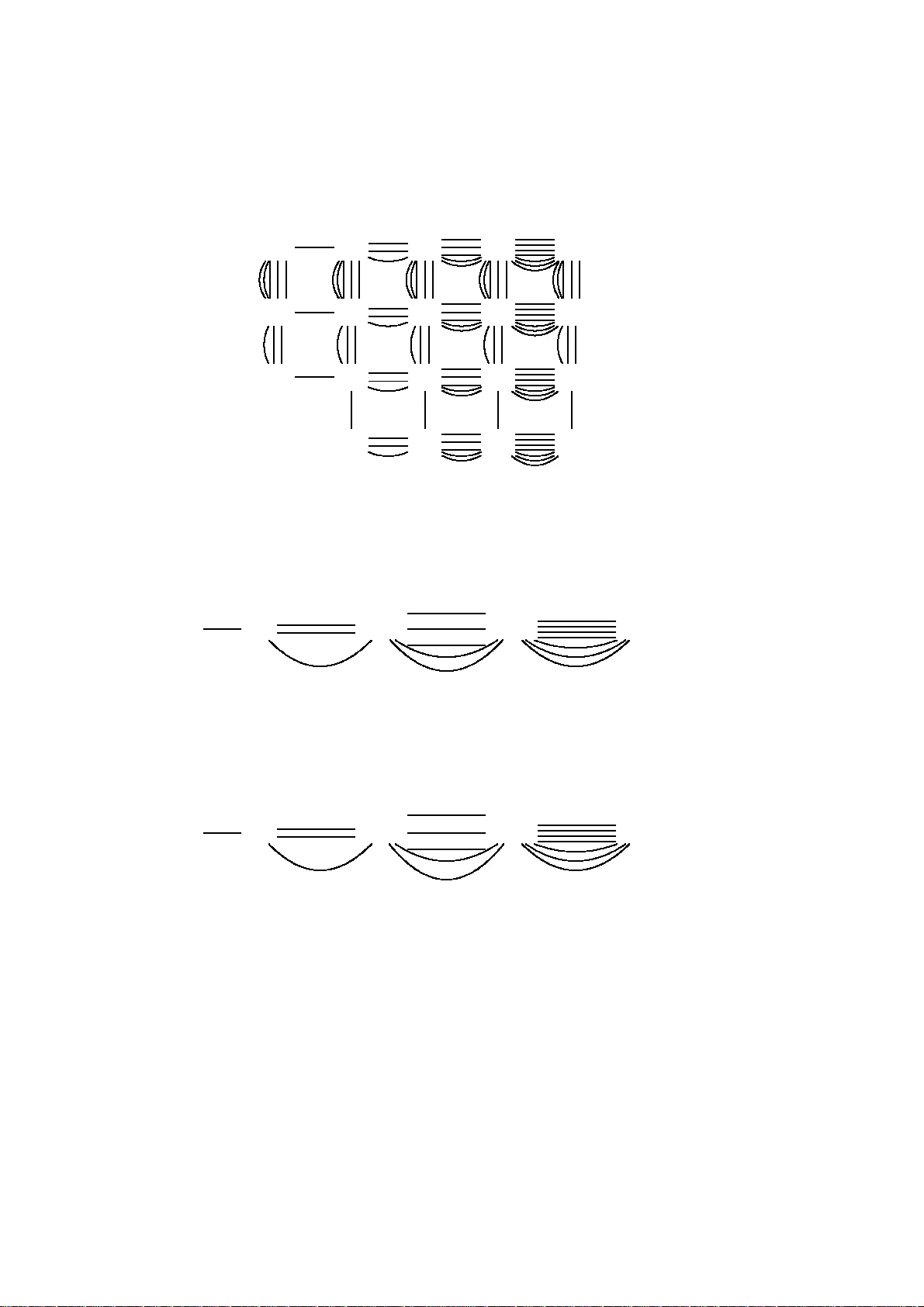
SIMPLICI AL DESCENT CA TEGO RI E S BY BEA TRIZ R ODRIGUEZ GONZALEZ 1 DISSER T A TION AD VISORS: LUIS NAR V ´ AEZ MA CARR O VICENTE NA V ARR O AZNAR (T ranslat ed and r ev ised v ersion of the) thesi s subm itted for the deg ree of Do ctor o f Philoso ph y in Mat hemati cs Universit y of Sevil le, Decemb er 20 0 7 1 Email: rgbea@algebra.us.es T o my gr andf a ther Mariano and my gr andmother Carm en. Ac kno wledgemen ts First and foremost, I w ould lik e to thank m y advis ors Luis Narv´ aez Macarro and Vicen te Na v arro Aznar. Their supp ort, dedication, patience and exp ert guidance hav e made this dissertation p ossible. On the other hand, I am indebted to An t o nio Quintero T oscano f or our discussions conce rning the (non-)exactness of geometric realization. They w ere essen tial for the dev elopmen t of section 5.5. I really appreciate the r eferences and material that F rancisco Guill´ en kindly ga v e to me. Also, it is m y pleasure to thank Agust ´ ı Roig for his comments on the conten ts of section 6.2 and subsection 6 .2 .1. In addition, there are man y p eople that I w ould like to thank for their in ter- est in my work a nd f o r their useful suggestions and comments . Among them, I w o uld lik e to men tion I. Mo erdijk, D . Cisinski, M. V aqui´ e, L. Alonso T arr ´ ıo, B. Keller and G . Corti ˜ nas. Finally , I w o uld also lik e to gratefully ac kno wledge the supp ort pro vided b y a Spanish FPU PhD G ran t (ref. AP2003 3674), a s we ll as the partial sup- p ort pro vided b y the researc h pro jects MTM-200 4 -07203- C02 - 01 and F QM-218: “Geometr ´ ıa Algebraica, Sistemas Diferenciales y Singularidades”. Con ten ts In tro duction 1 1 Preliminaries 12 1.1 Simplicial ob jects . . . . . . . . . . . . . . . . . . . . . . . . . . 12 1.2 Augmen ted simplicial ob jects . . . . . . . . . . . . . . . . . . . 17 1.2.1 Simplicial homoto py and extra degeneracy . . . . . . . . 20 1.3 T otal ob ject o f a biaugmen ted bisimplicial ob ject . . . . . . . . 21 1.4 T otal ob ject o f n -augmen ted n -simplicial ob jects . . . . . . . . . 30 1.5 Simplicial cylinder o b j ect . . . . . . . . . . . . . . . . . . . . . . 35 1.6 Symmetric notions of cylinder and cone . . . . . . . . . . . . . . 43 1.7 Cubical cylinder ob ject . . . . . . . . . . . . . . . . . . . . . . . 48 2 Simplicial Descent Categories 54 2.1 Definition . . . . . . . . . . . . . . . . . . . . . . . . . . . . . . 54 2.2 Cone and Cylinder ob jects in a simplicial descen t category . . . 62 2.3 F actorization prop ert y of t he cylinder functor . . . . . . . . . . 66 2.4 Acyclicit y criterion for the cylinder functor . . . . . . . . . . . . 78 2.5 F unctors of simplicial descen t categories . . . . . . . . . . . . . 86 2.5.1 Asso ciativit y of µ . . . . . . . . . . . . . . . . . . . . . . 94 3 The homotopy category of a simplicial descen t category 97 3.1 Description of H o D . . . . . . . . . . . . . . . . . . . . . . . . . 97 3.2 Descen t catego r ies with λ quasi-inv ertible . . . . . . . . . . . . . 116 3.3 Additiv e descen t categories . . . . . . . . . . . . . . . . . . . . . 117 4 Relationship with tr iangulated categories 127 5 Examples of Simplicial Descen t Categories 153 5.1 Chain complexes and homotopy equiv alences . . . . . . . . . . . 15 3 ii 5.1.1 Preliminaries . . . . . . . . . . . . . . . . . . . . . . . . 153 5.2 Chain complexes and quasi-isomorphisms . . . . . . . . . . . . . 164 5.3 Simplicial ob jects in a dditive or ab elian categories . . . . . . . . 168 5.4 Simplicial Sets . . . . . . . . . . . . . . . . . . . . . . . . . . . . 170 5.5 T op ological Spaces . . . . . . . . . . . . . . . . . . . . . . . . . 17 1 6 Examples of Cosimplicial Descent Categories 182 6.1 Co c hain complexes . . . . . . . . . . . . . . . . . . . . . . . . . 18 2 6.2 Comm utative differen tial graded algebras . . . . . . . . . . . . . 187 6.2.1 Commen ts on the non-comm utativ e case . . . . . . . . . 191 6.3 DG-mo dules o v er a D G-category . . . . . . . . . . . . . . . . . 194 6.4 Filtered co c hain complexes . . . . . . . . . . . . . . . . . . . . . 199 6.4.1 Filtered quasi-isomorphisms . . . . . . . . . . . . . . . . 200 6.4.2 E 2 -isomorphisms . . . . . . . . . . . . . . . . . . . . . . 204 6.5 Mixed Ho dge Complexes . . . . . . . . . . . . . . . . . . . . . . 210 A Eilen b er g-Zilber-Cartier Theorem 223 Bibliograf ´ ıa 227 Sym b ols I ndex 230 Index 232 iii In tro duction In the field of Algebraic Geometry , Grothendiec k, a t the b eginning of the sixties, glimpsed and imp elled the in tro duction of derive d c ate gories as the appropri- ate framew ork to handle the general form ula t io n o f dualit y t heorems, either “con tin uous” –on (quasi)coheren t ob jects– or “discrete” –on the top ological analogues motiv ated by ℓ -adic cohomology– (see for instance the introduction in [Har t]). Grothendiec k’s progr a m culminated in 1963 with V erdier’s thesis, where it is sho wed up, among o t her things, the imp orta nce of the structure of triangulate d c ate gory . This notion w as also related to ideas previously studied by Pupp e in the field of Algebraic T op ology [V]. Both notio ns, deriv ed categories and triangulated categories, were funda- men tal in the imp ortant dev elopmen ts in Algebraic Geometry ac hiev ed in the p erio d 1960- 1975. Neve rtheless, a t the same time these to ols w ere considered quite sophisticated and no t strictly necessary for most questions. Consequen tly , the use of this theory w as not so widespread. The situation c hanged dramatically in the last three decades. This was due to sev eral reasons. Among them, the Riemann-Hilb ert c orr esp ondenc e and t he disco ve ring of p erverse she ave s in Algebraic Geometry . Later, it to ok place its gradual in tro duction in Algebraic T op olog y , Represen tation Theory , Mathemat- ical Ph ysics and Algebra in general, as well as in -as a feedbac k- the dev elopmen t of the the ory o f motives . No w adays w e can see a wide diffusion o f b o t h notions, that hav e b ecome basic to ols in Homolog ical Algebra. How ev er, the notion o f tr ia ngulated cat- egory do es not seem to b e totally satisfactory . F o r instance, in [GM] the no n existence of a f unctorial cone is remark ed (see also [Ne]). Indep enden tly , and also in the sixties, Q uillen in tro duced the no tion of mo del c ate gory [Q], establishing a general abstract fra mework to s tudy homotop y cat- egories and ev en derive d func tors . On the other hand, a t the middle o f the tw en tieth cen tury the notio n of sim- plicial obje ct arose to define the singular homology of top ological sp aces. Since then, (co)simplicial o b j ects hav e b een presen t in the dev elopmen t of homologi- cal and homotopical theories in Algebraic T op ology and Algebraic Geometry . Simplicial sets, and more generally simplicial t ec hniques, are a lso useful in the framework of mo del categories, for instance throug h the natural no tion of 1 simplicial mo del c ate gory . Another instance app eared later through the nat ura l action of the homotop y category of simplicial sets on the homoto py category of an y mo del category , which is in fact a ke y ingr edient in the triangulated category structure on the latter o ne in the stable case (cf. [Ho]). Mo del categories are a useful to ol in the study o f lo calized categories aris- ing in t he the ory of motives (cf. [FSV], [D LOR V]) and more generally in the framew or ks of Algebraic Geometry and Homolo gical Algebra, where they are a complemen t of the notion of t riangulated category . Nev ertheless, mo del cate- gories do not alw ay s fulfill satisfactorily some common situations. F or instance, it is not easy to induce a mo del category structure on the category of diagrams of a fixed mo del category . There is also some difficulty in handling filtered structures that often app ear in cohomolog ical theories of Algebraic Geometry . On the other hand, simplicial structures –throug h the theory o f shea ve s– ha v e b een a relev ant t o ol to deal with certain (m ultiplicativ e) constructions, coming from Algebraic T op ology , in the fr a mew ork of Algebraic G eometry [Go d]. In this w ork w e in t r o duce and dev elop the notion of ( c o ) simplici a l desc en t c ate gory , that is an ev olution of the corresp onding “cubic” notion of Guill´ en- Na v arro [GN]. It is presen t ed as a n a lternativ e or complemen tary instrument to b e use d in the study of localized (or homotopic) categories arising in Algebraic Geometry . Let D b e a category with finite copro ducts, endo wed with a class of equiv a- lences E. The category of simplicial ob jects in D , ∆ ◦ D , has an extremely rich structure. Our aim is to transfer this ric hness to D with the help of a “ simple” functor s : ∆ ◦ D → D . T o this end w e need to imp ose some natural compatibil- it y conditions b etw een s and E. Th us, a simplici a l desc ent c ate gory is the data ( D , s ) satisfying certain axioms, as Normalization: the simple of the constan t simplicial ob ject asso ciated with X is equiv alen t to X Exactness: s (∆E) ⊂ E F actor ization: abstraction of Eile n b erg-Zilb er- Cart ier’s theorem app earing in [DP] Acyclicity: the image under s of the simplicial cone existing in ∆ ◦ D must b e a cone ob ject in D with resp ect to the equiv alence class E. 2 Using the simple functor, we obtain c one and cylinder functors in D satisfying the “usual” prop erties. The notion of c osimplicial desc ent c ate gory turns out to b e the dual notion, that is, the opp osite categor y of a simplicial descen t category . Bac kground T o use a “simple” functor in order to tr ansfer a structure is not a new idea, and it has app eared since the b eginning of T op ology , for instance when s =geometric realization, fact that is emphasized in [Ma y] § 11. Grothendiec k a nd his sc ho ol in tro duced “geometric” simplicial metho ds in Al- gebraic Geometry thro ugh the so-called s i mplicial hyp er c overs . They are an essen tial to ol used by D eligne to define a mixe d Ho dge structur e on the coho- mology of any complex alg ebraic v ariety S (not necessarily smo oth). T ec hnically , the key p oin t is the existence of a suitable “simple” functor ( Cosimplicia l Mi xed Ho dge Complexes ) − → ( Mixed Ho dge complexes ) that induces a mixed Ho dge structure on the cohomolo gy of S thro ugh a sim- plicial hyperco v er X of S . A similar pro cedure is follow ed in [DB] to construct a filtered De Rham complex on the cohomology of a singular v ariet y . Another instance of simple functor motiv ating this w ork app ear s in [N ]. Let Adgc b e the catego ry of comm utative differen tial graded algebras ov er a field of characteris tic 0. In lo c. cit. a “simple” f unctor { Cosimplicial ob jects in Adgc } → { Adgc } is in tro duced. This functor is kno wn as the Thom-Whitney simple . It is used mainly to tr a nsfer Sulliv an tec hniques from Algebraic T o p ology to Algebraic Geometry . As a n application, the author endo ws the rational ho motop y spaces of an algebraic v ariet y with a mixed Ho dge structure. In [GN], F. G uill ´ en and V. Nav a rro Aznar give an axiomatic and abstract no- tion of “simple” functor, inspired in Deligne’s and Th om-Whitney simples, but form ulated in the “cubical” framew ork [G NPP]. T o this end, t hey introduce the no t io n of (cu bical) c oh omolo gic al desc ent c ate gory and dev elop an extension 3 criterion of a functor F : { smo oth sche mes } → D to the category of non smo oth sc hemes, provided t ha t D is the lo calized category of a (cubical) cohomological descen t category . In this work w e dev elop the notion of (co)simplicial descen t category , that is widely based in the pre vious notion of (co)ho mological descen t category , where the basic ob jects are diagrams of cubical shap e instead o f simplicial ob jects. Both notions share the same philo sophy , but there are imp orta n t differenc es b et ween them: -cubical diag rams are finite whereas simplicial ob jects are infinite. -in the cubical case, the factor izat io n axiom is not so strong, in fact it is usually an automatic conseque nce of the F ubini theorem on the index sw a p- ping in a double co end. Ho w ev er, t he simplicial factorization axiom is muc h stronger, b ecause it in volv es the diagonal ob ject asso ciated with a bisimplicial ob ject, and it is in f act an abstraction of the Eilenberg-Zilb er-Cartier theorem giv en in [DP]. This theorem uses the degeneracy maps of simplicial ob jects. Hence, strict simplicial ob jects (with no degeneracy maps) are not enough for our purp o ses. Nev ertheless, a cubical diagram do es not hav e degeneracy maps. On the other hand, working in the simplicial framew ork has other adv an- tages. F or instance, o ne can induce a natural a ctio n of ∆ ◦ S et on D (defined through the simple functor from the action of ∆ ◦ S et on ∆ ◦ D ). W e can also exploit the ho motop y structure of ∆ ◦ D when D is a simplicial descen t catego ry . It turns out that homotopic morphisms b et w een simplicial ob jects (in the classical sense of simplicial homotop y) are mapp ed by s in to iden tical morphisms in t he lo calized category D [E − 1 ]. In particular, (simpli- cial) homotop y equiv alencies are mapp ed by s in to equiv alences. This applies to augmentations with an “extra degeneracy”. Main results a) W e establish a se t of axioms for t he (c o)simplicial desc ent c ate gories . These axioms unify the prop erties satisfied by a significan t n um b er of examples in the framew or ks of Algebraic T op ology and Algebraic Geometry . T o b e precise, a categor y D with finite copro ducts and final ob ject ∗ together with a saturated class of equiv alences E and a “simple” functor s : ∆ ◦ D → D is a simplicial desc ent c ate go ry if the follo wing axioms are satisfied. Additivit y: The canonical morphism s X ⊔ s Y → s ( X ⊔ Y ) is an equiv alence 4 for any X , Y ∈ ∆ ◦ D . Also E ⊔ E ⊆ E. F actor ization: There exists a nat ura l equiv alence µ Z : s D Z → s ∆ ◦ s Z , where D Z is the diagonal ob ject asso ciated with the bisim plicial ob ject Z and s ∆ ◦ s Z is its iterated simple. Normalization: There exists a natural equiv alence λ X : s ( X × ∆) → X , compatible with µ , relating an ob ject X in D to t he simple of its asso ciated constan t simplicial ob ject X × ∆. Exactness: If f is a morphism in ∆ ◦ D suc h that f n ∈ E for all n then s f ∈ E . Acyclicity: The simple of a mor phism f in ∆ ◦ D is an equiv alence if and only if the simple of its simplicial cone, s C f , is acyclic. Symmetry: The class { f : X → Y | s f ∈ E } is inv ariant by the op eration of in verting the order of t he face and degeneracy maps of X a nd Y . b) W e intro duce the follow ing ‘transfer lemma’, that will b e widely used to pro duce examples of ( co)simplicial descen t categor ies Assume that ( D ′ , s ′ , E ′ , λ ′ , µ ′ ) is a simpl i c i a l desc e n t c a te gory a n d D is a c ate gory with a s imple functor s and “c omp atible” natur al tr ansformations λ and µ . Mor e over, let ψ : D → D ′ b e a functor such that the fol low i n g dia g r a m ∆ ◦ D ψ / / s ∆ ◦ D ′ s ′ D ψ / / D ′ c ommutes up to natur al e quiva l e n c e, “c omp atible” w i th tr ansformations λ , λ ′ and µ , µ ′ . Th en ( D , E = ψ − 1 E ′ ) is also a simplicial desc ent c ate gory. c) In any simplicial descen t category D w e can induce cone and cylinder functors in the follow ing w ay . Giv en a morphism f : X → Y in D , consider it in ∆ ◦ D as a constan t simplicial map f × ∆ : X × ∆ → Y × ∆. Then, the cone of f is b y definition s C ( f × ∆), where C is t he simplicial cone asso ciated with f × ∆. Similarly , the “ cylinder” of tw o mor phisms A f ← B g → C in D is s C y l ( f × ∆ , g × ∆), where C y l is the simplicial cylinder asso ciated with ( f × ∆ , g × ∆). When X is a simplicial set, then the classic al cylinde r asso ciated w ith X is just our cylinder of X = X = X , a nd the one asso ciated with a morphism f is our cylinder of X = X f → Y . d) W e pro vide a “reasonable” desc ription of the morphisms in H o D = D [E − 1 ], the homot op y category of D . In general the class of equiv alences E do es not has calculus of fractions. The k ey p o int to obtain this description is the cylinder functor and its prop erties. 5 More sp ecifically , consider the functor R : D → D defined by R X := s ( X × ∆). Note that the natural tr a nsformation λ : R → I d is a p oint wise equiv alence. Then a morphism f : X → Y in H o D is represen ted b y a sequence X R X λ X o o f ′ / / T R Y w o o λ Y / / Y . where all arro ws except f ′ are equiv alences. Using this description w e can prov e, for instance, that H o D is additive when D is so. e) The s hift [1] : D → D is defined b y X [1] = c ( X → ∗ ), where c is the cone functor give n ab ov e. W e consider the class of distinguished triangles in H o D consisting of those triangles isomorphic, for some f , to X f / / Y / / c ( f ) / / X [1] . Distinguished triangles satisfy all a xioms of tria ngulated category except the second axiom TR 2 (that is, the one in v olving the shift of distinguished trian- gles), with no extra assumptions (neither additivity). Moreo ver, in the additive case H o D is a “susp ended” (or righ t tria ng ulated) category [KV] in the simplicial case, and it is “cosusp ended” (or left trian- gulated) in the cosimplicial case. In particular, if in addition the shift is an automorphism o f H o D then H o D is a triangulated category . f ) In order to study the prop erties of the simplicial cone and cylinder func- tors, w e dev elop a m uc h more general construction, the “ total simplicial obje ct ” asso ciated with a “biaugmented bisimplicial ob ject” (or, more generally , to a “ n -augmen ted n - simplicial ob ject”). More concretely , consider the bisimplicial ob ject Z given b y the picture Z − 1 , 2 . . . Z 0 , 2 o o . . . 4 4 Z 1 , 2 . . . o o o o 6 6 4 4 Z 2 , 2 . . . o o o o o o 6 6 4 4 Z 3 , 2 . . . o o o o o o o o · · · Z − 1 , 1 E E H H Z 0 , 1 o o E E H H 4 4 Z 1 , 1 E E H H o o o o 6 6 4 4 Z 2 , 1 E E H H o o o o o o 6 6 4 4 8 8 Z 3 , 1 o o o o o o o o E E H H · · · Z − 1 , 0 H H Z 0 , 0 o o 4 4 H H Z 1 , 0 o o o o H H 6 6 4 4 Z 2 , 0 o o o o o o H H 6 6 4 4 8 8 Z 3 , 0 o o o o o o o o H H · · · Z 0 , − 1 3 3 Z 1 , − 1 o o o o 4 4 3 3 Z 2 , − 1 o o o o o o 4 4 3 3 8 8 Z 3 , − 1 o o o o o o o o · · · 6 Then the total simplicial ob ject asso ciated with a biaugmen ted is in degree k the copro duct of the k -th diagonal o f Z . The face and degeneracy maps are defined resp ectiv ely as copro ducts of those of Z . It turns out that this total functor is left adjoin t to the “t otal decalage” given in [IlI I] p.7. W e can a lso consider the total functor as the simplicial analogue to the total c hain complex asso ciated with a double complex. g) On one hand, we hav e che c k ed that all examples o f (cubical) (co)homo lo - gical descen t categories [GN] are simplicial des cen t categories. Among them we can men tio n (filtered) co c ha in complexes, top ological spaces or comm utativ e differen tial gra ded algebras. On the other hand, w e provide other examples than the cubical ones. F or in- stance, we consider a cat ego ry o f mixed Ho dge complexes, a nd we endow it with a cosimplicial descen t category structure. In this structure the simple functor is just the one dev elop ed in [DeI I I]. As a corollary we obtain a triangulated structure on its homotop y category (similar to the one obtained in [Be]). Also the category of DG-mo dules ov er a f ixed DG- category is a cosimplicial descen t category , and w e deduce the usual triangulated structure exis ting in its homotop y cat ego ry [K]. A p ossibly less kno wn example is the category of co c hain complexes tog ether with a biregular filtration, where the class E 2 of equiv alences consists of those morphisms whic h induce isomorphism in the second t erm o f the resp ectiv e sp ec- tral sequences. No w w e get a tr iangulated structure on the category of b ounded-b elow filtered complexes lo calized with resp ect to the class E 2 . M oreov er, the “decalage” functor of a filtration [DeI I] I.3.3 is a triangulated functor with v alues in the (usual) filtered deriv ed category . Con t en ts Chapter 1 : The first c hapter contains the simplicial/com bina t orial prelimi- naries. W e study the classical cone and cylinder functors in ∆ ◦ D as particular cases of the total functor o f biaugmente d bisimplicial ob jects, that was men tio ned b efore. As far as the author know s, this tota l functor has not b een previously studied. P articular and related cases can b e found in [EP] and [AM]). The total functor satisfies interes ting prop erties. F or instance, the iteration of t otals of n -augmente d n -simplicial ob jects do es not dep end on the order in whic h we compute it (a na logously to the pro p ert y of the tot al complex asso ci- 7 ated with a m ultiple chain complex). Chapter 2 : This c hapter con tains the definition of (co)simplicial descen t cat- egory , as w ell as some of their pr o p erties, mainly those of homotopical ty p e, related to the cone a nd cy linder f unctors. The axioms of (co)simplicial descen t category are natural in the following sense: If I is a small category and D is a (co)simplicial descen t category t hen the category o f functors f r o m I to D (endo wed with the p o in twis e simple and the p oin t wise equiv alences ) is again a (co)simplicial descen t cat ego ry . In section 2 .3 the “factorizatio n” prop erty of the cylinder is established. In terms o f the cone functor this prop ert y means t he fo llowing: Consider a com- m uta tiv e diagr a m C in a simplicial descen t category D X f / / g Y g ′ X ′ f ′ / / Y ′ . If w e apply the cone functor b y ro ws and columns resp ectiv ely w e g et X f / / g Y g ′ c ( f ) α X ′ f ′ / / Y ′ c ( f ′ ) c ( g ) β / / c ( g ′ ) . Then the cone of α and t he cone of β are equiv alent in a natural w a y . This fa ct will pla y an imp ortan t role in chapter 4, since it is t he k ey p oin t in the pro ofs of the o ctahedron axiom and of the second axiom of triangulated categories. Section 2.4 is devoted to the study of the prop erties of the square s X s f / / s ǫ s Y I Y s X − 1 I X − 1 / / s C y l ( f , ǫ ) obtained b y applying s to the resp ectiv e square in ∆ ◦ D induced b y the simpli- cial cylinder. One can che c k that this square “comm utes up to equiv alence”, and that I X − 1 is an eq uiv alence pro vided that s f is so. The recipro cal assertion also holds under some extra assumptions, and it will b e needed to prov e the “transfer lemma”. In section 2.5 w e intro duce the notion of functor of simplicial descen t categories, 8 and w e prov e the “tra nsfer lemma”. Chapter 3 : In this c hapter we giv e a “reasonable” description of the mor- phisms of H o D . W e use this description to prov e that H o D is additive if D is so. Chapter 4 : W e prov e here that the class of distinguished triangles defined through the cone functor X f / / Y / / c ( f ) / / X [1] satisfies the axioms TR1, TR3 a nd TR4 of triangulated categor ies (with no extra a ssumptions). In the additiv e case, the right implication of TR2 holds, so D is a “susp ended” category [K V]. Moreo v er, if the shift is an isomorphism of categories then H o D is a triangulated category . Chapter 5 : In this c hapter w e exhibit examples of simplicial descen t cate- gories. The first o ne is the catego ry of ch ain complexes in an additiv e o r ab elian category , t a king as equiv alences E =homotop y equiv alences or E =quasi-isomorphisms. In this example the axioms of simplicial descen t category a r e c hec ked “by hand”, whereas in the remaining simplicial examples they are c hec k ed b y means of the transfer lemma. The follow ing picture contains the main examples of simplicial descen t cat- egories included in this c hapter as w ell as the functors of simplicial descen t categories b etw een them T op S / / ∆ ◦ S et |·| o o / / ∆ ◦ Ab / / C h ∗ Ab . Chapter 6 : Examples of cosimplicial descen t catego ries are provided in this c hapter. Co c hain complexes a re obtained just as the dual case of chain com- plexes. In section 6.2 the category of comm utativ e differen tial gr aded algebras (o v er a field of ch aracteristic 0) is considered. The simple is just the ‘Thom- Whitney simple’ give n in [N ]. In section 6.3 w e endo w the category of DG- mo dules [K] with a cosimplicial descen t category structure. In the next section w e pro v e that the c ategory of (p ositiv e) complexes together with a (biregular) filtration, CF + A has tw o differen t cos implicial de scen t struc- tures. In the first one, ( 1 CF + A ,E), the equiv alences E are the filtered quasi- isomorphisms. In the second one, ( 2 CF + A ,E 2 ), the class of equiv alences E 2 consists of those morphisms inducing isomorphism in the second term of the 9 sp ectral sequence. These statemen ts follo w from the transfer lemma. It is applied twice to the functors contained in the following diagram 2 CF + A D ec / / 1 CF + A Gr / / ( C h ∗ A ) Z . The functor D ec is the decalage functor giv en in [DeI I] I.3.3, and Gr is the graded f unctor, with v alues in the category of Z -graded co c hain complexes , en- do w ed with the degreewise descen t cat ego ry structure. Both s tructures are use d to induce a cosimplic ial descen t category structure on “the” category of mixed Ho dge complexes. T o finish, w e include an app endix containing the Eilen b erg-Zilb er-Cartier theorem [DP], and some extra prop erties whic h are not easy to find in the existing lit era t ure. F urt her researc h/Op en problems Next w e list some questions and pro blems related to this w ork. Some of them are natural questions and others are further applications and complemen ts. I. The category O p ( D ) of op era ds o v er a symmetric monoidal descen t cat- egory D has a natura l structure of descen t category (join t w ork with A. Roig). A r elated op en problem is t o endo w the category o f o p eradic algebras ov er a fixed op erad P ∈ O p ( D ) with a structure of cosimplicial descen t catego r y . I I. Ev ery cubical diagr a m X in a fixed category D giv es rise in a nat ura l w ay to a simplicial ob ject in D , τ X ([N], 12.1). If D is a simplicial descen t category , w e can comp ose τ with the simple f unctor s : ∆ ◦ D → D , obtaining in this w ay a “cubical simple functor” { Cubical diagrams in D } → D . The follo wing natural question arises: Is ev ery (co)simplicial descen t category a “cubical” (co)homological descen t category in the sense of [GN]? If the answ er is affirmativ e, then the “ extension of functors” theorem, giv en in –lo c. cit.–, will b e a lso v alid for functors with v alues in the lo calized category of a cosimplicial descen t catego r y . I I I. The lo calized category H o D o f a descen t category D ha s a tr a nslation functor T : H o D → H o D as w ell as a class of distinguished triangles ( coming from the cone f unctor in D ). The following question is motiv ated b y mo del category theory: Is H o D an additiv e category provid ed that T is an automorphism in H o D (stable case)? If the translatio n functor T : H o D → H o D is no t an auto mo r phism, it would 10 b e interes ting to provide an a bstract pro cess of ‘stabilization’, similar to the construction of the category of spectra from the catego ry of top ological space s. IV. Study the prop erties of the action of ∆ ◦ S et ov er a descen t catego ry D inherited from the natural a ction of ∆ ◦ S et on ∆ ◦ D through the simple functor . F urthermore, p o ssibilit y of carrying this action to the lev el of deriv ed categories. That is, to c hec k whether this action giv es r ise to another one fro m H o ∆ ◦ S et on H o D or not. V. Define sheaf cohomology with v alues in a descen t catego ry D , in a sim- ilar w ay to t ha t giv en in [N] for the case D = comm utative differen tial graded algebras. In a more general sense, to tac kle the definition of deriv ed functors in descen t categories, following the r ecent w ork [GNPR]. VI. Relationship b et we en simplicial descen t categories and mo del categories. In the “cubical” case, it is kno wn that the sub category of fibran t ob jects in a simplicial mo del categor y is a cohomolog ical descen t category [R ]. VI I. Extension of the notion of descen t category to the conte xt o f fibred categories and stac ks. VI I I . Study the relationship with the recen t w ork [V o], where it is also used the simplicial cylinder g C y l introduced in the first c ha pter of this w ork. F or instance, if D is a simplicial descen t category , it holds that the class { f | s f ∈ E } is a ∆-closed class in the sense of lo c. cit.. 11 Chapter 1 Prelim i naries 1.1 Simplicial ob jects In this section w e will remind the definition and some basic prop erties of sim- plicial ob j ects in a fixed category C . F or a mor e detailed expo sition see [May], [GZ] o r [GJ]. D EFINITION 1.1.1 (The Simplicial Category ∆) . The simplicial cat ego ry ∆ has as ob jects the ordered sets [ n ] ≡ { 0 , . . . , n } with 0 < 1 < · · · < n , and as morphisms t he (w eak) monotone functions, that is Hom ∆ ([ m ] , [ n ]) = { f : [ m ] − → [ n ] with f ( i ) ≤ f ( j ) if i ≤ j } . There exists tw o kind of relev an t morphisms in the category ∆. The f ace mo r phisms ∂ i = ∂ n i : [ n − 1] → [ n ] are just those monotone functions suc h that ∂ i ( { 0 , . . . , n − 1 } ) = { 0 , . . . , i − 1 , i + 1 , . . . , n } , for all i = 0 , . . . , n . The degeneracy morphisms σ n i = σ i : [ n + 1] → [ n ] are c haracterized b y σ i ( i ) = σ i ( i + 1) = i , for all i = 0 , . . . , n . More sp ecifically , ∂ i ( l ) = l if l ≤ i − 1 and ∂ i ( l ) = l + 1 if l ≥ i , whereas σ i ( l ) = l if l ≤ i and σ i ( l ) = l − 1 if l > i . These morphisms satisfy the so called “simplicial identities ”, that a re the follo wing equalities ∂ n +1 j ∂ n i = ∂ n +1 i ∂ n j − 1 if i < j σ n j σ n +1 i = σ n i σ n +1 j +1 if i ≤ j σ n − 1 j ∂ n i = ∂ n i σ n − 2 j − 1 if i < j I d [ n − 1] if i = j or i = j + 1 ∂ n − 1 i − 1 σ n − 2 j if i > j + 1 . (1.1) 12 The category ∆ is generated b y the f a ce and degeneracy morphisms, as described in the followin g prop osition [Ma y ]. P ROP OSITION 1.1.2. L et f : [ n ] → [ m ] b e a morphism i n ∆ differ ent fr om the identity. Denote by i 1 > i 2 · · · > i s those elements o f [ m ] that do n o t b elong to the ima g e of f , and by j 1 < j 2 · · · < j l those elements of [ n ] such that f ( j k ) = f ( j k + 1 ) . Then f = ∂ i 1 · · · ∂ i s σ j 1 · · · σ j l , (1.2) Mor e over, the factorization of f in this way is unique. R EMARK 1.1.3. Let b ∆ b e the category whose ob ject are a ll the (non empt y) finite o r dered sets, and whose morphisms are the monoto ne maps. If E = { e 0 < e 1 < · · · < e n } is an o b j ect of b ∆, then E is canonically isomorphic to [ n ], and n is the cardinal of E minus 1. Then eac h ob j ect of b ∆ is isomorphic to a unique ob ject of ∆, or equiv alen tly , ∆ is a sk eletal sub category o f b ∆. T hen it follow s the existenc e of a functor p : ∆ → b ∆ quasi-inv erse of the inclusion i : ∆ → b ∆. The in t r insic meaning of some definitio ns and pr o p erties g iv en in terms of ∆ b ecome clarif ied when expressed in terms of b ∆, a s we will chec k alo ng this c hapter. W e will use the follo wing op erations relative to b ∆. (1.1.4) D enote b y + : b ∆ × b ∆ → b ∆ the “o rdered sum” of ordered sets. That is, if E and F a r e ob jects of b ∆, then E + F is E ⊔ F as a set. The order in E + F is the one compatible with those of E and F , and suc h that e < f if e ∈ E and f ∈ F . Analogously , + : ∆ × ∆ → ∆ is suc h that [ n ] + [ m ] = p ( i ([ n ]) + i ([ m ])) = [ n + m + 1], where [ n ] is identified with { 0 , . . . , n } ⊂ [ n + m + 1] and [ m ] with { n + 1 , . . . , n + m + 1 } ⊂ [ n + m + 1]. (1.1.5) D enote b y b op : b ∆ → b ∆ the functor whic h consists of taking the opp osite order. That is, op ( E ) is equal to E a s a set, but it has the in v erse order o f E . 13 Analogously , op = p ◦ b o p ◦ i : ∆ → ∆ is the functor giv en b y op ([ n ]) = [ n ] a nd if θ : [ n ] → [ m ] , ( op ( θ ) ) ( i ) = m − θ ( n − i ) , and then op ( ∂ n i ) = ∂ n n − i : [ n − 1] → [ n ] and op ( σ n j ) = σ n n − j : [ n + 1] → [ n ] . D EFINITION 1.1.6 (The Category ∆ e ) . Let ∆ e b e the strict simplicial category, that is the sub category of ∆ with the same ob jects, but whose morphisms a re the injectiv e mo no tone functions. Analogously , ∆ e is generated by the face morphisms, and it is a ske letal sub- category o f the corresp onding catego r y b ∆ e . D EFINITION 1.1.7 (Simplicial Ob jects) . A simplicial ob ject X in a category C is a contra v ariant functor fr o m the sim- plicial categor y to C , that is, X : ∆ ◦ → C . (1.1.8) As a coro llary of (1.2), X is characterized b y the data X p = X ([ p ]) d i = X ( ∂ i ) s j = X ( σ j ) where the face and degeneracy maps d i and s j of X satisfy the following equal- ities, also called simplicial iden tities : d n i d n +1 j = d n j − 1 d n +1 i if i < j s n +1 i s n j = s n +1 j +1 s n i if i ≤ j d n i s n − 1 j = s n − 2 j − 1 d n i if i < j I d [ n − 1] if i = j or i = j + 1 s n − 2 j d n − 1 i − 1 if i > j + 1 . (1.3) Then, a simplicial ob ject X = { X n , d i , s j } can b e represen ted a s follows X 0 s 0 A A X 1 d 0 o o d 1 o o A A 6 6 X 2 o o o o o o < < A A 7 7 X 3 o o o o o o o o · · · · · · . (1.1.9) Analog ously , a strict simplicial ob ject is X : ∆ ◦ e → C , that is g iven by X 0 X 1 d 0 o o d 1 o o X 2 o o o o o o X 3 o o o o o o o o · · · · · · . 14 (1.1.10) Dually , a cosimplicial ob ject in C is a f unctor X : ∆ → C , or equiv a- len tly , a simplicial ob ject in C ◦ . The strict cosimplicial o b jects in C are defined in the same w ay . R EMARK 1.1.11. F rom no w on, w e will use the notation I C for the catego ry of functors from I to C . D EFINITION 1.1.12. The s implicial ob jects in C giv e rise to the category ∆ ◦ C , whose mor phisms are the natura l tra nsformations b etw een functors. A morphism ρ : X → X ′ in ∆ ◦ C is a set of morphisms ρ n : X n → X ′ n in C comm uting with the face and degeneracy maps, that is ρ n d X = d X ′ ρ n +1 ρ n +1 s X = s X ′ ρ n . (1.1.13) Ha ving in t o accoun t 1.1.3, ∆ ◦ C is canonically equiv alen t to b ∆ ◦ C . De- note b y I : b ∆ ◦ C → ∆ ◦ C (resp. P : ∆ ◦ C → b ∆ ◦ C ) the functor induced b y comp osition with i : ∆ → b ∆ (resp. p : b ∆ → ∆). Since p ◦ i = I d ∆ , we ha v e t ha t I ◦ P = I d ∆ ◦ C . (1.1.14) The categor ies of cosimplicial, strict simplicial and strict cosimplicial ob jects in C are denoted resp ective ly b y ∆ C , ∆ ◦ e C and ∆ e C , and are defined in the same w a y as ∆ ◦ C . Comp osing with the inclusion ∆ e → ∆ we obtain the fo rgetful functor U : ∆ ◦ C → ∆ ◦ e C consisting in forgetting the degeneracy maps of a simplicial ob ject. R EMARK 1.1.15. If C has colimits, the forg etful functor U : ∆ ◦ C → ∆ ◦ e C has a left adjoint π (called “D old-Pupp e tra nsfor ma t io n”) constructed as usual. Ho w eve r, it follows from the prop erty 1.1.2 that π exists just assuming t he existence of copro ducts in C . Next w e remind the definitio n o f the Dold-Pupp e transformation ( cf. [G] 1.2) . P ROP OSITION 1.1.16. If C is a c ate gory with finite c opr o d ucts, the for ge tful functor U : ∆ ◦ C → ∆ ◦ e C admits a left adjoint π : ∆ ◦ e C → ∆ ◦ C . If A is a strict simplicial obje ct in C , then π A is define d as ( π A ) n = a θ :[ n ] ։ [ m ] A θ m 15 wher e the c opr o duct is indexe d ov e r the s et of surje ctive morphisms θ : [ n ] ։ [ m ] in ∆ and A θ m = A m . (1.1.17) Let us see how the action or π A o v er the morphisms in ∆ is defined. Let f : [ n ′ ] → [ n ] b e a morphism in ∆. The mor phism in C ( π A )( f ) : ( π A ) n = a θ :[ n ] ։ [ m ] A θ m − → ( π A ) n ′ = a ρ :[ n ′ ] ։ [ m ′ ] A ρ m ′ is defined as f ollo ws. Giv en a surjectiv e θ : [ n ] ։ [ m ], it follo ws from 1.1 .2 that there exists a unique factorization o f θ ◦ f : [ n ′ ] → [ m ] as [ n ′ ] α ։ [ l ] β ֒ → [ m ] where α is surjectiv e and β is injectiv e. Then the restriction of ( π A )( f ) to A θ m is just A ( β ) : A θ m → A α l . D EFINITION 1.1.18 (Bisimplicial ob jects) . A bisimplic ial ob ject in C is b y definition a simplicial ob ject in ∆ ◦ C . Then, the category o f bisimplicial ob jects in C is ∆ ◦ ∆ ◦ C ≃ (∆ × ∆) ◦ C . Giv en Z ∈ ∆ ◦ ∆ ◦ C w e will denote d (1) i = Z ( ∂ i , I d ) : Z n,m → Z n − 1 ,m d (2) i = Z ( I d, ∂ i ) : Z n,m → Z n,m − 1 s (1) j = Z ( σ j , I d ) : Z n,m → Z n +1 ,m s (2) j : Z n,m → Z n,m +1 . No w w e in t r o duce some remarks that will b e useful a long t hese notes, as w ell a s their dual constructions in the cosimplicial case. (1.1.19) The diag onal functor D : ∆ ◦ ∆ ◦ C → ∆ ◦ C is the functor induced by comp osition with ∆ → ∆ × ∆, [ n ] → ([ n ] , [ n ]). Then, giv en Z ∈ ∆ ◦ ∆ ◦ C , (D Z ) n = Z n,n and (D Z )( θ ) = Z ( θ , θ ), ∀ n ≥ 0 and θ in ∆. (1.1.20) The index sw apping in ∆ ◦ ∆ ◦ C giv es rise to a canonical functor Γ : ∆ ◦ ∆ ◦ C → ∆ ◦ ∆ ◦ C , with (Γ Z ) n,m = Z m,n (Γ Z )( α, β ) = Z ( β , α ) , 16 if n, m ≥ 0 and α , β are morphisms in ∆. It holds that D ◦ Γ = D. (1.1.21) Each functor F : C → C ′ induces b y comp o sition a functor b et w een the resp ectiv e categories of simplicial ob jects of C and C ′ , tha t will b e denoted b y ∆ ◦ F : ∆ ◦ C → ∆ ◦ C . Then (∆ ◦ F ( X )) n = F ( X n ) ∀ n ≥ 0. (1.1.22) Let − × ∆ : C − → ∆ ◦ C b e t he simplicial constan t functor. More concretely , X × ∆ : ∆ ◦ → C is just the constant functor equal to X ( X × ∆) n = X ∀ n ≥ 0 ; ( X × ∆)( f ) = I d X ∀ morphism f of ∆ Note that if ∗ is a f inal ob ject (resp. initial) in C , so is ∗ × ∆ in ∆ ◦ C . (1.1.23) The functor − × ∆ : C → ∆ ◦ C induces the functors − × ∆ , ∆ × − : ∆ ◦ C → ∆ ◦ ∆ ◦ C . Giv en X in ∆ ◦ C then ( X × ∆) n,m = X n and ( ∆ × X ) n,m = X m ∀ n, m ≥ 0 . R EMARK 1.1.24. The category ∆ ◦ C inherits most of the prop erties satisfied b y C . F or instance, if C has finite copro ducts the same holds fo r ∆ ◦ C through: ( X ` Y ) n = X n ` Y n ; ( X ` Y )( f ) = X ( f ) ` Y ( f ) . Analogously , ∆ ◦ C is a dditiv e (resp. monoidal, ab elian, complete, co complete, etc) if C is so. 1.2 Augmen ted simplicial ob jects D EFINITION 1.2.1. Let ∆ + b e the category whose ob jects are the ordinal n umbers [ n ] = { 0 , . . . , n } , n ≥ − 1, where [ − 1] = ∅ , and whose mor phisms a r e the (weak ) monotone functions. Then ∆ + con ta ins ∆ as a f ull sub category . Denote by ∂ 0 : [ − 1] → [0] the trivial morphism, that will b e considered as a 17 face morphism. As in the case of ∆, it also holds tha t ev ery morphism has a unique factorization in t erms of the face and degeneracy ma ps. The se maps satisfy in the same w ay the simplicial identities . R EMARK 1.2.2. Analogo usly to 1 .1 .3, ∆ + is a sk eletal sub category of b ∆ + , that is the catego ry of (ev en tually empty ) ordered sets and monotone functions. W e will also denote b y i : ∆ + → b ∆ + and p : b ∆ + → ∆ + the inclusion and its quasi-in vers e. The o p eration + : b ∆ + × b ∆ + → b ∆ + is defined as (1.1.4), and it mak es b ∆ + (then also ∆ + ) into a (strong) monoidal category (cf. [ML] p.171). D EFINITION 1.2.3. An augmente d simplicial ob ject in a cat ego ry C is a functor X + : (∆ + ) ◦ → C . Denote b y ∆ ◦ + C the category of augmen ted simplicial ob jects in C . Therefore, an aug mented simplicial ob ject X + ∈ ∆ ◦ + C is c ha r acterized by the data { X n , d i , s j } , where X n = X ([ n ]), d i = X ( ∂ i ) and s j = X ( σ j ). That is, X is represen ted b y the follo wing diagram X − 1 X 0 d 0 o o s 0 A A X 1 d 0 o o d 1 o o A A 6 6 X 2 o o o o o o < < A A 7 7 X 3 o o o o o o o o · · · · · · . D EFINITION 1.2.4. G iv en a simplicial ob ject X ∈ ∆ ◦ C , an augmen ta tion o f X is an augmen ted simplicial ob ject X + ∈ ∆ ◦ + C suc h that its image under the forgetful functor U : ∆ ◦ + C → ∆ ◦ C induced b y restriction is just X . R EMARK 1.2.5. Given X ∈ ∆ ◦ C , a n augmen tation of X is a pair ( X − 1 , d 0 ) where X − 1 is an ob ject in C , and d 0 : X 0 → X − 1 is suc h that d 0 d 0 = d 1 d 0 : X 1 → X − 1 . If C ha s a final ob ject 1, then ev ery simplicial ob ject X has a trivial aug - men tatio n, ta king X − 1 = 1. Hence, w e ha v e t he f unctor ∆ ◦ C → ∆ ◦ + C , righ t adjoin t of U : ∆ ◦ + C → ∆ ◦ C . P ROP OSITION 1.2.6. i) Given an obje ct S in C and a morphi sm ǫ : X → S × ∆ in ∆ ◦ C , then ǫ 0 : X 0 → S is an augmentation of X , and the c orr esp onde n c e ǫ → ǫ 0 is a bije ction Hom ∆ ◦ C ( X , S × ∆) ≃ { X + ∈ (∆ + ) ◦ C with X − 1 = S and U X + = X } ii) The functor − × ∆ : C → ∆ ◦ C i s left adjoin t to ∆ ◦ C → C , X · → X 0 . Tha t is, Hom ∆ ◦ C ( S × ∆ , X ) ≃ Hom C ( S, X 0 ) . 18 Pr o of. i) Clearly , if ǫ : X → S × ∆, then d 0 = ǫ 0 : X 0 → S is an augmentation of X . Conv ersely , if d 0 : X 0 → S is an augmentation of X , then ǫ n = ( d 0 ) n +1 : X n → S defines a morphism ǫ : X → S × ∆. Moreo ver, it follows b y induction that ǫ n = ( d 0 ) n +1 . T o c hec k ii) , it is enough t o note that g iv en ǫ : S × ∆ → X then ǫ n = ( s 0 ) n ǫ 0 . Tw o relev ant examples o f aug men ted simplicial ob ject are the “decalage” ob jects asso ciated with an y simplicial ob ject (see [IlI I]). (1.2.7) Consider the functor F : b ∆ → b ∆ (resp. G : b ∆ → b ∆) giv en by F ( E ) = [0] + E (resp. G ( E ) = E + [0]), that is, the ordered set obtained from E by adding a smallest (r esp. g reatest) elemen t . If w e w ork in the category ∆, the functor F : ∆ → ∆ maps [ n ] in to [ n + 1] and if θ is a morphism ∆, F ( θ )( 0 ) = 0 and F ( θ )( i ) = θ ( i − 1) + 1, if i > 0. On the other hand, the functor G : ∆ → ∆ is suc h that G ([ n ]) = [ n + 1] and if θ : [ n ] → [ m ] then G ( θ )( i ) = i if i < n + 1, G ( n + 1) = m + 1. D EFINITION 1.2.8 (“D ecalage” ob jects) . The “low er decalage functor”, dec 1 : ∆ ◦ C → ∆ ◦ C , is defined b y comp o sing with F . If X : ∆ ◦ → C , then X ◦ F is obtained by “for getting the fir st face and degeneracy maps” of X ( dec 1 ( X )) n = X n +1 ( dec 1 ( X ))( d i ) = d i +1 ( dec 1 ( X ))( s j ) = s j +1 . The morphism d 1 : X 1 → X 0 giv es rise to the augmen tation dec 1 ( X ) → X 0 × ∆ giv en by X 0 X 1 d 1 o o s 1 A A X 2 d 1 o o d 2 o o s 1 D D s 2 ; ; X 3 d 2 o o d 1 o o d 3 o o < < A A 7 7 X 4 o o o o o o o o · · · · · · . In the same w a y , by comp osition with G w e obtain the functor “upp er decalage”, dec 1 ( X ) : ∆ ◦ C → ∆ ◦ C that consists of “forgetting the last face and degeneracy maps” ( dec 1 ( X )) n = X n +1 ( dec 1 ( X ))( d i ) = d i ( dec 1 ( X ))( s j ) = s j . Therefore, d 0 : X 1 → X 0 pro duces the augmentation dec 1 ( X ) → X 0 × ∆ X 0 X 1 d 0 o o s 0 A A X 2 d 0 o o d 1 o o s 0 B B s 1 ; ; X 3 d 1 o o d 0 o o d 2 o o < < A A 7 7 X 4 o o o o o o o o · · · · · · . 19 1.2.1 Simpli cial homotop y and extra degeneracy W e will remind t he relationship b etw een an augmen tat io n with an extra de- generacy a nd the notion of homotop y betw een simplicial morphisms (cf. [B], p. 78). First w e g iv e the combinatorial definition of homotopic morphisms in (cf. [Ma y ] § 5). D EFINITION 1.2.9 (Simplicial homoto p y) . The morphism f : X → Y in ∆ ◦ C is homotopic to g : X → Y , f ∼ g , if there exists morphisms h i : X n → Y n +1 , i = 0 , . . . , n satisfying the following iden tities i ) d 0 h 0 = f , d n +1 h n = g ii ) d i h j = h j − 1 d i if i < j d j h i − 1 if i = j ≥ 1 h j d i − 1 if i > j + 1 iii ) s i h j = h j +1 s i if i ≤ j h j s i − 1 if i > j. Note that the relation ∼ is not symmetric. D EFINITION 1.2.10. 1. An augmen tation X → X − 1 × ∆ has a “low er” extra degeneracy if there exists morphisms s n − 1 = s − 1 : X n → X n +1 in C f or all n ≥ − 1 such t hat the follo wing simplicial iden tities hold d 0 s − 1 = I d d i +1 s − 1 = s − 1 d i s j s − 1 = s − 1 s j − 1 ∀ i ≥ 0 , j ≥ 0 , (1.4) where ǫ 0 = d 0 : X 0 → X − 1 . 2. Dually , an augmen tation X → X − 1 × ∆ has an “upp er” extra degeneracy if there exists morphisms s n n +1 = s n +1 : X n → X n +1 in C f o r all n ≥ − 1 suc h that d n +1 s n +1 = I d d i s n +1 = s n d i s j s n +1 = s n +2 s j ∀ i ≤ n, j ≤ n + 1 . E XAMPLE 1.2.11. F ollo wing the notatio ns introduced in 1.2 .8 , it is clear that the augmen ta tion dec 1 ( X ) → X 0 × ∆ has a “ lo wer” extra degeneracy , consis ting of the forgott en degeneracy s 0 : X n → X n +1 . Analogously , dec 1 ( X ) → X 0 × ∆ has an “upp er” extra degeneracy s n : X n → X n +1 . 20 P ROP OSITION 1.2.12 ( [B] cap. 3 , 3.2) . A n augmentation ǫ : X → X − 1 × ∆ has a lowe r extr a de gener acy if and only if ther e exi s ts ζ : X − 1 × ∆ → X such that I d X ∼ ζ ǫ and ǫζ = I d X − 1 × ∆ . Dual ly, ǫ has a n u pp er extr a de g e ner acy if and only if ther e exists ζ : X − 1 × ∆ → X such that ζ ǫ ∼ I d X and ǫζ = I d X − 1 × ∆ 1.3 T otal ob ject of a biaugmen ted bisimplicial ob ject In this section D denotes a category with finite copro ducts. In this case, one can consider the classical cone ob ject asso ciated with a morphism f : X → Y in ∆ ◦ D , as well as the classical cylinder ob ject ass o ciated with X . It turns out that b oth classical ob jects are pa r ticular cases of the “total” functor dev elop ed in this section. In fact, the total functor can b e seen as the simplicial analogue of the total c hain complex asso ciated with a double ch ain complex in an additiv e category . Ev en though this to tal functor is an extremely natural construction, the author could not find it in the literature. Next w e introduce this combinatorial construction asso ciated with any bi- augmen ted bisimplicial ob ject Z , alt ho ugh w e will o nly use some pa rticular cases of Z in this w o rk. In the cosimplicial setting, all dual constructions a nd prop erties can b e established. D EFINITION 1.3.1 (biaugmented bisimplicial ob ject) . Let 2 − ∆ + b e the full sub category of ∆ + × ∆ + whose o b j ects are the pairs ([ n ] , [ m ]) ∈ ∆ + × ∆ + suc h that [ n ] and [ m ] are not b oth empt y . A biaugmen ted bisimplicial ob ject Z is a functor Z : 2 − ∆ ◦ + → D , or equiv alen tly a diag ram Z − 1 , · ← Z + · , · → Z · , − 1 , where Z − 1 , · , Z + · , · and Z · , − 1 are t he resp ectiv e restrictions of Z to [ − 1] × ∆, ∆ × ∆ a nd ∆ × [ − 1]. 21 Hence Z is a diag r a m of D of the fo r m Z − 1 , 2 . . . Z 0 , 2 o o . . . 4 4 Z 1 , 2 . . . o o o o 6 6 4 4 Z 2 , 2 . . . o o o o o o 6 6 4 4 Z 3 , 2 . . . o o o o o o o o · · · Z − 1 , 1 E E H H Z 0 , 1 o o E E H H 4 4 Z 1 , 1 E E H H o o o o 6 6 4 4 Z 2 , 1 E E H H o o o o o o 6 6 4 4 8 8 Z 3 , 1 o o o o o o o o E E H H · · · Z − 1 , 0 H H Z 0 , 0 o o 4 4 H H Z 1 , 0 o o o o H H 6 6 4 4 Z 2 , 0 o o o o o o H H 6 6 4 4 8 8 Z 3 , 0 o o o o o o o o H H · · · Z 0 , − 1 3 3 Z 1 , − 1 o o o o 4 4 3 3 Z 2 , − 1 o o o o o o 4 4 3 3 8 8 Z 3 , − 1 o o o o o o o o · · · (1.5) W e will denote b y 2 − ∆ ◦ + D the category of biaugmented bisimplicial ob jects, whose mor phisms are natural transformations b et w een functors. (1.3.2) Again, 2 − ∆ ◦ + D is canonically equiv a len t to the category 2 − b ∆ ◦ + D , where 2 − b ∆ + is the full sub category of b ∆ + × b ∆ + ha ving as morphisms the pairs ( E , F ) of o r dered sets E and F dif f eren t fro m ( ∅ , ∅ ). The functors giving rise to this equiv alence will b e denoted b y P : 2 − ∆ ◦ + D → 2 − b ∆ ◦ + D and I : 2 − b ∆ ◦ + D → 2 − ∆ ◦ + D . Next w e will exhibit tw o examples of biaugmen ted bisimplicial ob ject. First, w e in tro duce t he “total decalage” ob ject associated with a simplicial ob ject (cf. [IlI I], p.7). (1.3.3) The or dered sum o f sets (see 1.2 .2), + : b ∆ + × b ∆ + → b ∆ + , can b e restricted to ℘ : 2 − ∆ + → ∆ , with ℘ ([ n ] , [ m ]) = [ n ]+ [ m ] = [ n + m + 1], where [ n ] is iden tified with { 0 , . . . , n } ⊂ [ n + m + 1] and [ m ] with { n + 1 , . . . , n + m + 1 } ⊂ [ n + m + 1]. E XAMPLE 1.3.4. The functor tot al d e c alage D ec : ∆ ◦ D → 2 − ∆ ◦ + D is defined b y comp osition with ℘ : 2 − ∆ + → ∆. If X is a simplicial ob ject, the biaugmen ted bis implicial ob ject D ec ( X ) consists of 22 X 2 . . . X 3 o o . . . 5 5 X 4 . . . o o o o 7 7 5 5 X 5 . . . o o o o o o 7 7 5 5 X 6 . . . o o o o o o o o · · · X 1 E E H H X 2 o o E E G G 5 5 X 3 E E G G o o o o 7 7 5 5 X 4 E E G G o o o o o o 7 7 5 5 < < X 5 o o o o o o o o E E G G · · · X 0 H H X 1 o o 5 5 G G X 2 o o o o G G 7 7 5 5 X 3 o o o o o o G G 7 7 5 5 < < X 4 o o o o o o o o G G · · · X 0 5 5 X 1 o o o o 7 7 5 5 X 2 o o o o o o 7 7 5 5 < < X 3 o o o o o o o o · · · F ollow ing the notations introduced in 1.2 .8, the ro ws of the diagra m are the a ug- men ted simplicial ob jects dec k ( X ) → X k − 1 , k ≥ 1, where d ec k ( X ) = dec 1 ( k ) · · · dec 1 ( X )) is obtained from X by forgetting the last k face and degeneracy maps, that is X k − 1 X k d 0 o o s 0 ? ? X k +1 d 0 o o d 1 o o s 0 @ @ s 1 : : X k +2 d 1 o o d 0 o o d 2 o o : : ? ? 5 5 X k +3 o o o o o o o o · · · · · · . In the s ame wa y , the columns are the augmen ted simplicial o b jects dec k ( X ) → X k − 1 , this time obtained b y forgetting the first face and degeneracy maps of X , that is X k − 1 X k d k o o s k ? ? X k +1 d k o o d k +1 o o s k B B s k +1 : : X k +2 d k +1 o o d k o o d k +2 o o : : ? ? 5 5 X k +3 o o o o o o o o · · · · · · . Analogously , d D ec : b ∆ ◦ D → 2 − b ∆ ◦ D is defined as [ d D ec ( X )]( E , F ) = X ( E + F ), and it holds that D ec = I d D ec P (see 1.3.2, 1.1 .13). E XAMPLE 1.3.5. Let f : X → Y b e a morphism in ∆ ◦ D and ǫ : X → X − 1 × ∆ an augmentation of X . Hence, X giv es rise to the bisimplicial ob ject Z + = ∆ × X , that is, Z + i,j = X j . Moreo ver, f and ǫ define the augmen ta t io ns Z + i,j → Z − 1 ,j = Y j and Z + i,j → Z i, − 1 = X − 1 . Therefore the diagra m Z = Z ( f , ǫ ) : Z − 1 , · ← Z + · , · → Z · , − 1 is a biaugmen ted 23 bisimplicial ob ject. Consequen tly , giv en ([ n ] , [ m ]), ([ n ′ ] , [ m ′ ]) in 2 − ∆ + and a morphism ( θ , θ ′ ) : ([ n ′ ] , [ m ′ ]) → ([ n ] , [ m ]), w e hav e that Z n,m = Y m if n = − 1 X m if n 6 = − 1 Z ( θ , θ ′ ) = Y ( θ ′ ) if n = − 1 (hence n ′ = − 1) X ( θ ′ ) if n ′ 6 = − 1 (hence n 6 = − 1) f m ′ X ( θ ′ ) if n ′ = − 1 and n 6 = − 1 Visually , Z ( f , ǫ ) is the follow ing diagram Y 2 . . . X 2 o o . . . 5 5 X 2 . . . o o o o 7 7 5 5 X 2 . . . o o o o o o 7 7 5 5 X 2 . . . o o o o o o o o · · · Y 1 E E H H X 1 o o E E G G 5 5 X 1 E E G G o o o o 7 7 5 5 X 1 E E G G o o o o o o 7 7 5 5 : : X 1 o o o o o o o o E E G G · · · Y 0 H H X 0 o o 5 5 G G X 0 o o o o G G 7 7 5 5 X 0 o o o o o o G G 7 7 5 5 : : X 0 o o o o o o o o G G · · · X − 1 4 4 X − 1 o o o o 6 6 4 4 X − 1 o o o o o o 6 6 4 4 9 9 X − 1 o o o o o o o o · · · (1.6) where the horizontal morphisms are either f n : X n → Y n or the identit y X n → X n , whereas the v ertical morphisms are either the face and degeneracy maps of X or ǫ 0 = d 0 : X 0 → X − 1 . Clearly Z ( f , ǫ ) is natural with resp ect to ( f , ǫ ). In addition, since ǫ : X → X − 1 × ∆ is characterized b y ǫ 0 (see 1.2 .6 ), then Z ( f , ǫ ) preserv es all the informa t io n con ta ined in ( f , ǫ ). D EFINITION 1.3.6 (T otal ob ject of a biaugmen ted bisimplicial ob ject) . The functor T ot : 2 − ∆ ◦ + D → ∆ ◦ D is defined as fo llo ws. If Z is a biaug - men ted bisimplicial ob ject, then T ot ( Z ) is in degree n the copro duct of the n -th antidiagonal of (1.5), that is T ot ( Z ) n = a i + j = n − 1 Z i,j . The fa ce maps in T ot ( Z ) are defined as copro ducts of the morphisms in ( 1 .5) going from the n - th antidiagonal to the n − 1-th one, and analogously for the degeneracy maps. More specifically , set θ (1) = Z ( θ , I d ) : Z n,k → Z m,k and θ (2) = Z ( I d, θ ) : Z k ,n → 24 Z k ,m for ev ery θ : [ m ] → [ n ] and k ≥ − 1. The face maps d k : T ot ( Z ) n → T ot ( Z ) n − 1 are g iv en b y d k | Z i,j = ( d (1) k : Z i,j → Z i − 1 ,j if i ≥ k d (2) k − i − 1 : Z i,j → Z i,j − 1 if i < k , . The degeneracy maps s k : T ot ( Z ) n → T ot ( Z ) n +1 are s k | Z i,j = ( s (1) k : Z i,j → Z i +1 ,j if i ≥ k s (2) k − i − 1 : Z i,j → Z i,j +1 if i < k , . (1.3.7) Consider Z ∈ (2 − ∆ + ) ◦ D . The canonical maps Z − 1 ,n → a i + j = n − 1 Z i,j and Z n, − 1 → a i + j = n − 1 Z i,j giv e rise to the fo llowing canonical morphisms in ∆ ◦ D Z − 1 , · → T ot ( Z ) ← Z · , − 1 , that are natural in Z . (1.3.8) The functor T ot can b e extended to T ot + : (∆ + × ∆ + ) ◦ D → (∆ + ) ◦ D as fo llo ws. If + Z ∈ (∆ + × ∆ + ) ◦ D and Z if the restriction of + Z to 2 − ∆ + then the morphism d 0 = d (2) 0 ⊔ d (1) 0 : Z − 1 , 0 ⊔ Z 0 , − 1 → + Z − 1 , − 1 is an augmentation of T ot ( Z ). R EMARK 1.3.9. As far as the author kno ws, the functors T ot and T ot + do not app ear in the literature. Ho w eve r, a particular case of T ot + is introduced in [EP], tha t is called the “join” of t w o augmen ted simplicial sets. If X → X − 1 and Y → Y − 1 are augmen ted simplicial sets then their join is just the image under the total functor of + Z = { X n × Y m } n,m ≥− 1 . In lo c. cit. the asso ciativit y of t his join is stated. This asso ciativit y can b e deduced as w ell from (the augmen ted v ersion) of prop osition 1.4.9. Hence, the notion of join is completely similar to the one of tensor pro duct of t w o c hain complexes A and B o f mo dules o v er a comm utativ e ring R , since the tensor pro duct of A and B is just the to t al chain complex a sso ciated with t he double complex { A n ⊗ R B m } n,m . 25 The definition giv en ab o v e for T o t is purely com binatorial, w e introduced it in t his w ay b ecause w e will need the form ulae for computations. How ev er, this construction can b e understo o d in a more intuitiv e wa y if we consider t he follo wing equiv alen t definitions. (1.3.10) The functor T ot : 2 − ∆ ◦ + D → ∆ ◦ D can b e describ ed as follows. • Consider the category ∆ / [1] with ob jects the pairs ([ n ] , σ ), where σ : [ n ] → [1] is a morphism in ∆. A morphis m θ : ( [ n ] , σ ) → ([ m ] , ρ ) is θ : [ n ] → [ m ] in ∆ suc h that ρθ = σ . W e will denote ([ n ] , σ ) by σ if [ n ] is understo o d. • If σ : [ n ] → [1 ], let i σ ∈ { 0 , . . . , n + 1 } b e suc h that { i σ , . . . , n } = σ − 1 (1) if it is non empt y , and i σ = n + 1 if σ − 1 (1) = ∅ . Note that the corresp ondence σ → i σ is a bijection. Moreo v er, w e will iden tify [ i σ − 1] with σ − 1 (0), as w ell a s [ n − i σ ] with σ − 1 (1) (af t er relab elling in a suitable w a y). • Let Ψ : ∆ / [1] → 2 − ∆ + b e the functor defined by Ψ( σ ) = [ i σ − 1] × [ n − i σ ]. Giv en θ : ([ n ] , σ ) → ([ m ] , ρ ), since θ ( σ − 1 ( j )) ⊆ ρ − 1 ( j ) for j = 0 , 1 then θ | σ − 1 (0) : [ i σ − 1] → [ i ρ − 1], and θ | σ − 1 (1) : [ n − i σ ] → [ m − i ρ ] are morphisms in ∆ + . Hence, define Ψ( θ ) = θ | σ − 1 (0) × θ | σ − 1 (1) : [ i σ − 1] × [ n − i σ ] → [ i ρ − 1] × [ m − i ρ ]. • If Z is a biaugmen ted bisimplicial ob ject, T ot ( Z ) is the simplicial ob ject defined in degree n as T ot ( Z ) n = a σ : [ n ] → [1] Z i σ − 1 ,n − i σ If ρ : [ n ] → [1 ] and θ : [ n ] → [ m ], then θ : ([ n ] , ρθ ) → ( [ m ] , ρ ) is in ∆ / [1], and t he restriction of T ot ( Z )( θ ) t o Z i ρ − 1 ,m − i ρ is Z (Ψ( θ )) : Z i ρ − 1 ,m − i ρ → Z i ρθ − 1 ,n − i ρθ (1.3.11) In terms of b ∆ + , d T ot : 2 − b ∆ ◦ + D → b ∆ ◦ D is defined as [ d T ot ( Z )]( E ) = a E = E 0 + E 1 Z ( E 0 , E 1 ) , where the copro duct is indexed o v er the set of pairs ( E 0 , E 1 ) ∈ 2 − b ∆ + suc h that E is the ordered sum of E 0 and E 1 (see 1.2.2). 26 Let f : E ′ → E b e a morphism in b ∆ and ( E 0 , E 1 ) an ob ject in 2 − b ∆ + suc h that E 0 + E 1 = E . Denote b y E ′ i the set f − 1 ( E i ) with the order induced b y t he one of E ′ , for i = 0 , 1. It is clear that E ′ = E ′ 0 + E ′ 1 , as we ll as f = f 0 + f 1 , where f i = f | E ′ i : E ′ i → E i for i = 0 , 1. Then [ d T ot ( Z )]( f ) : [ d T ot ( Z )]( E ) → [ d T ot ( Z )]( E ′ ) is defined as [ d T ot ( Z )]( f ) | Z ( E 0 ,E 1 ) = Z ( f 0 , f 1 ) : Z ( E 0 , E 1 ) → Z ( E ′ 0 , E ′ 1 ) . (1.3.12) The functor d T ot can b e also extended in a natural w a y to d T ot + : ( b ∆ + × b ∆ + ) ◦ D → b ∆ ◦ + D , with [ d T ot + ( Z )]( ∅ ) = Z ( ∅ , ∅ ). P ROP OSITION 1.3.13. The two definitions given for T ot c oincide, a n d d o define a functor T ot : 2 − ∆ ◦ + D → ∆ ◦ D . In addition, these c onstructions c orr esp ond to d T ot : 2 − b ∆ ◦ + D → b ∆ ◦ D under the c anonic al e quivalenc e of the c ate gories ∆ + and b ∆ + . That is, under the notations of 1.3.2 an d 1.1.13 we have that T ot = I ◦ d T ot ◦ P . Pr o of. Let us see first the second statement. Define b ∆ / [1] as 1.3.10, as well as b Ψ : b ∆ / [1] → 2 − b ∆ + . More sp ecifically , if σ : E → [1], then b Ψ( σ ) = σ − 1 (0) × σ − 1 (1). An y decomp osition E = E 0 + E 1 in 2 − b ∆ + determines in a unique wa y an ob ject σ : E → [1] in b ∆ / [1] (just tak e σ ( E i ) = i , i = 0 , 1). Hence 1.3 .11 can b e rewritten as [ d T ot ( Z )]( E ) = a σ : E → [ 1] Z ( σ − 1 (0) , σ − 1 (1)) . Moreo ver, if f : E ′ → E , then the restriction o f [ T o t ( Z )]( f ) to Z ( σ − 1 (0) , σ − 1 (1)) coincides with Z ( f | ( f σ ) − 1 (0) , f | ( f σ ) − 1 (1) ). Consequen tly [ I ◦ d T ot ◦ P ( Z )]([ n ]) = a σ : [ n ] → [1] ( P Z )( σ − 1 (0) , σ − 1 (1)) = a σ : [ n ] → [1] Z ( p ( σ − 1 (0)) , p ( σ − 1 (1))) , that is equal to T ot ( Z ) n , and clearly the action of I ◦ d T ot ◦ P ( Z ) and of T ot ( Z ) o v er the morphisms of ∆ coincides. 27 Secondly , let us che c k that the tw o definitions giv en for the to t a l functor coincide. Note that an y monotone function σ : [ n ] → [1] is characterize d b y the in t eger i σ ∈ { 0 , n + 1 } suc h that σ − 1 (1) = { i σ , . . . , n } . It follows that t he corresp ondence σ → i σ − 1 is one-to-one b et w een the sets { ( i, j ) | i + j = n − 1 , i, j ≥ − 1 } and { ( i σ − 1 , n − i σ ) | σ : [ n ] → [1] } . Let θ = ∂ k : [ n − 1 ] → [ n ] and ρ : [ n ] → [1] b e morphisms in ∆. W e will compute Ψ( ∂ k ) : [ i ρ∂ k − 1] × [ n − 1 − i ρ∂ k ] → [ i ρ − 1] × [ n − i ρ ] . If i ρ ≤ k , then i ρ∂ k = i ρ and it holds that ∂ k | ( ρ∂ k ) − 1 (0) = I d : [ i ρ − 1] → [ i ρ − 1] ; ∂ k | ( ρ∂ k ) − 1 (1) = ∂ k − i ρ : [ n − i ρ − 1] → [ n − i ρ ] . In this case [ T ot ( Z )]( ∂ k ) | Z i ρ − 1 ,n − i ρ = d (2) k − i ρ : Z i ρ − 1 ,n − i ρ → Z i ρ − 1 ,n − i ρ − 1 . Then, taking i = i ρ − 1, [ T ot ( Z )]( ∂ k ) | Z i ρ − 1 ,n − i ρ corresp onds to d (2) k − i − 1 : Z i,j → Z i,j − 1 . On the other ha nd, if i ρ > k , then i ρ∂ k = i ρ − 1 and it can b e c hec ke d analogously that [ T ot ( Z )]( ∂ k ) | Z i ρ − 1 ,n − i ρ = Z ( ∂ k , I d ) : Z i ρ − 1 ,n − i ρ → Z i ρ − 2 ,n − i ρ . Hence, setting i = i ρ − 1 w e hav e that [ T ot ( Z )]( ∂ k ) | Z i ρ − 1 ,n − i ρ is d (1) k : Z i,j → Z i − 1 ,j . The analog ous equality inv olving the degeneracy maps σ k : [ n + 1 ] → [ n ] can b e chec k ed in a similar w a y . It remains to see that T ot ( Z ) ∈ ∆ ◦ D , that is, that T ot ( Z )( θ θ ′ ) = T ot ( Z )( θ ′ ) T ot ( Z )( θ ) for ev ery comp osable morphisms θ and θ ′ in ∆. The equality T ot ( Z )( I d ) = I d follo ws fro m the na t uralit y of Ψ. Finally , giv en ψ : Z → S then T ot ( ψ ) : T ot ( Z ) → T ot ( S ) is defined in degree n by T ot ( ψ ) | Z i,j = ψ i,j : Z i,j → S i,j . Clearly , it is a morphism b et we en simplicial ob jects, na tural in ψ . R EMARK 1.3.14. Let I : b ∆ ◦ + D → ∆ ◦ + D and P : (∆ + × ∆ + ) ◦ D → ( b ∆ + × b ∆ + ) ◦ D b e the equiv alences of categories induced b y i : ∆ + → b ∆ + and p : b ∆ + → ∆ + . Hence, it holds that T ot + = I ◦ d T ot + ◦ P . P ROP OSITION 1.3.15. The functor d T ot : 2 − b ∆ ◦ + D → b ∆ ◦ D is lef t adjoint to the total de c alage functor d D ec : ∆ ◦ D → 2 − ∆ ◦ + D intr o duc e d in 1.3.4 . Henc e ( T ot, D ec ) is also an adjoint p air of functors. Conse quently, the functors d T ot and T ot c o m mutes with c olimits and in p artic- ular with c opr o ducts. 28 Pr o of. Since P and I are quasi-inv erse equiv alences of catego ries, and since T ot = I ◦ d T ot ◦ P and D ec = I ◦ d D ec ◦ P , it f ollo ws from the adjunction ( d T ot, d D ec ) that ( T ot, D ec ) is also a n adjoint pair. Consider Z ∈ 2 − b ∆ ◦ + D and Y ∈ b ∆ ◦ D . Let us c heck that there is a canonical bijection Hom b ∆ ◦ D d T ot ( Z ) , Y ≃ Hom 2 − b ∆ ◦ + D Z , d D ec ( Y ) . A morphism F : d T ot ( Z ) → Y consists of a collection of morphisms in D G ( E 0 , E 1 ) = F ( E ) | Z ( E 0 ,E 1 ) : Z ( E 0 , E 1 ) → Y ( E ) = [ d D ec ( Y )]( E 0 , E 1 ) for ev ery equalit y of ordered sets E = E 0 + E 1 . Moreo ver, G is natural in ( E 0 , E 1 ) since F is natural in E . T o see t his, give n an expression E = E 0 + E 1 , it is enough to note that there exists a bijection b et ween the set of morphisms ( f 0 , f 1 ) : ( E ′ 0 , E ′ 1 ) → ( E 0 , E 1 ) in 2 − b ∆ + and t he morphisms f : E ′ → E . T o see this, set E ′ = E ′ 0 + E ′ 1 ; f = f 0 + f 1 : E ′ → E on one hand, and E ′ i = f − 1 ( E i ); f i = f | E ′ i , i = 0 , 1 on the other hand. The naturality of F means that for ev ery ordered set E the following equality holds F ( E ′ ) ◦ d T ot ( Z )( f ) = Y ( f ) ◦ F ( E ) : [ d T ot ( Z )]( E ) → Y ( E ′ ) , and this happ ens if and only if this equality holds o n eac h comp onent Z ( E 0 , E 1 ) of d T ot ( Z ). That is to sa y , if a nd only if G ( E ′ 0 , E ′ 1 ) ◦ Z ( f 0 , f 1 ) = ( F ( E ′ ) ◦ d T ot ( Z )( f )) | Z ( E 0 ,E 1 ) = = ( Y ( f ) ◦ F ( E )) | Z ( E 0 ,E 1 ) = [ d D ec ( Y )]( f 0 , f 1 ) ◦ G ( E 0 , E 1 ) and this happ ens if and o nly if G is natural with resp ect to eac h morphism ( f 0 , f 1 ). R EMARK 1.3.16. In [CR] the autho r s consider a “decalage” functor dec : ∆ ◦ S et → ∆ ◦ ∆ ◦ S et , b y forgetting the biaugmen tation of the biaug mented bisim- plicial ob ject D ec ( X ) asso ciated with X ∈ ∆ ◦ S et . In lo c. cit. a nother “com- binatorial” functor ∆ ◦ ∆ ◦ S et → S et is also in tro duced. This functor is right adjoin t to dec and is defined using f ib er pro ducts in S et instead of copro ducts. Next w e will see that the classical simplicial cone and cylinder ob jects are particular cases of the functor T ot . E XAMPLE 1.3.17 (Simplicial cone) . Assume that D has a final ob ject 1 and f : X → Y is a morphism in ∆ ◦ D . The 29 classical definition of cone o b ject a ssociated with f [DeI I I] is C f ∈ ∆ ◦ D , with ( C f ) n = Y n ⊔ X n − 1 ⊔ · · · ⊔ X 0 ⊔ 1 . Let Z b e the biaugmen ted bisimplicial ob ject asso ciated with f : X → Y and to the trivial augmen tation X → 1 × ∆ (see 1.3 .5). Hence C f is just the total simplicial ob ject of Z . E XAMPLE 1.3.18 (’Cubical’ cylinder) . Giv en a simplicial ob j ect X in D , let us remind the classical not io n of cylinder asso ciated with X , that will b e denoted b y g C y l ( X ). W e will say that g C y l ( X ) is the “cubical” cylinder o b ject o f X . It is defined in degree n as g C y l ( X ) n = a σ : [ n ] → [1] X σ n , where X σ n = X n ∀ σ . Giv en θ : [ m ] → [ n ] in ∆, g C y l ( θ ) : g C y l ( X ) n → g C y l ( X ) m is g C y l ( θ ) | X σ n = X ( θ ) : X σ n → X σθ m . It holds that g C y l ( X ) is the total o b j ect of D ec ( X ) ∈ (2 − ∆ + ) ◦ D (giv en in 1.3.4). R EMARK 1.3.19. W e recall t ha t the c ubical cy linder ob ject c haracterizes sim- plicial homot o pies [[Ma y] prop. 6.2 ]. In o t her words, let u 0 , u 1 : [ n ] → [1] b e the morphisms suc h that u i ([ n ]) = i , i = 0 , 1. If X is a simplicial ob ject, define I , J : X → g C y l ( X ) a s I n = I d : X n → X u 1 n and J n = I d : X n → X u 0 n . Giv en f , g : X → Y in ∆ ◦ D , we ha v e that f ∼ g (that is, f is homotopic to g ) if and only if there exists H : g C y l ( X ) → X suc h that H ◦ I = f and H ◦ J = g . 1.4 T otal ob ject of n -augmen ted n -simplicial ob jects In this section w e will generalize in a natural wa y the f unctors T ot and d T ot to the catego r ies n − ∆ ◦ + D a nd n − b ∆ ◦ + D , resp ectiv ely . In addition, the functor T ot n (resp. d T ot n ) can b e obtain as well as iteratio ns of T ot (resp. d T ot ). D EFINITION 1.4.1. Let n − ∆ + b e the full sub category of ∆ + × n ) · · · × ∆ + whose ob jects are ([ m 0 ] , . . . , [ m n − 1 ]) with P m k 6 = − n . Analo gously , let n − b ∆ + b e the category defined using b ∆ + instead of ∆ + . Again, w e will refer to t he elemen ts o f the cat ego ry n − ∆ ◦ + D of con tra v arian t functors fro m n − ∆ + to D as n -augmen ted n -simplicial ob jects. 30 (1.4.2) Similarly to the case n = 2, a n ob ject T of 3 − ∆ ◦ + D can b e visualized as T i, − 1 ,k / / T i, − 1 , − 1 T − 1 , − 1 ,k T i,j,k O O / / T i,j, − 1 , O O T − 1 ,j,k O O / / T − 1 ,j, − 1 where the indexes i, j, k are p ositiv e in tegers. D EFINITION 1.4.3. D efine T ot n : n − ∆ ◦ + D → ∆ ◦ D as follows. Let ∆ / [ n − 1] b e the category defined as ∆ / [1] in 1.3.10. Giv en σ : [ m ] → [ n − 1] and k ∈ [ n − 1], note tha t each ordered subset σ − 1 ( k ) of [ m ] is isomorphic to a unique o b ject [ m k ( σ )] of ∆ + . If Z ∈ n − ∆ ◦ + D , set [ T ot n ( Z )] m = a σ : [ m ] → [ n − 1] Z m 0 ( σ ) ,... ,m n − 1 ( σ ) . Moreo ver, if θ : [ m ′ ] → [ m ], then θ | ( σθ ) − 1 ( k ) : ( σ θ ) − 1 ( k ) → ( σ ) − 1 ( k ) induces a monotone function θ k : [ m ′ k ( σ θ )] → [ m k ( σ )], and the restriction of [ T ot n ( Z )]( θ ) to Z m 0 ( σ ) ,... ,m n − 1 ( σ ) is Z ( θ 0 , . . . , θ m − 1 ) : Z m 0 ( σ ) ,... ,m n − 1 ( σ ) → Z m ′ 0 ( σθ ) ,..., m ′ n − 1 ( σθ ) . Next w e prov ide a description of the total functor in terms of b ∆ + . (1.4.4) The functor d T ot n : n − b ∆ ◦ + D → b ∆ ◦ D is given b y [ d T ot n ( Z )]( E ) = a E = E 0 + ··· + E n − 1 Z ( E 0 , . . . , E n − 1 ) . If f : E ′ → E is a morphism in b ∆ and E = E 0 + · · · + E n − 1 then E ′ = E ′ 0 + · · · + E ′ n − 1 and f = f 0 + · · · + f n − 1 , where E ′ i = θ − 1 ( E i ) and f i = f | E ′ i : E ′ i → E i , f o r i = 0 , . . . , n − 1. Hence [ d T ot n ( Z )]( f ) : [ d T ot ( Z )]( E ) → [ d T ot n ( Z )]( E ′ ) is [ d T ot n ( Z )]( f ) | Z ( E 0 ,...,E n − 1 ) = Z ( f 0 , . . . , f n − 1 ) : Z ( E 0 , . . . , E n − 1 ) → Z ( E ′ 0 , . . . , E ′ n − 1 ) . 31 R EMARK 1.4.5. As in 1 .3 .2, the equiv alences of categories i : ∆ → b ∆, p : b ∆ → ∆ induce the quasi-inv erse equiv alences I : n − b ∆ ◦ D → n − ∆ ◦ D P : n − ∆ ◦ D → n − b ∆ ◦ D . Then, t he following analogue o f 1.3.15 also holds T ot n = I ◦ d T ot n ◦ P . R EMARK 1.4.6. Since + : 2 − b ∆ + → b ∆ is asso ciativ e, w e can consider the sum E 0 + · · · + E n − 1 with no need of fixing the order in whic h the sums are made. Consequen tly , the f o llo wing prop ert y holds. Consider a no n empty ordered set E . It is clear that t here is a bijection b e- t w een the decomp ositions of E as an ordered sum of n of its subsets, E = E 0 + · · · + E n − 1 , and the decomp ositions E = E ′ 0 + E ′ 1 together with tw o more decomp ositions E ′ 0 = E 0 + · · · + E k − 1 and E ′ 1 = E k + · · · + E n − 1 , for a fixed 0 ≤ k ≤ n − 1. Iterating this pro cedure, it follow s that d T ot n (resp. T ot n ) agrees with consecu- tiv e iterations of d T ot = d T ot 2 (resp. T ot = T ot 2 ). Let us see the case n = 3 in more detail. (1.4.7) Consider T ∈ 3 − b ∆ ◦ + D and an ordered set E . Roughly sp eaking, ` F = G + H T ( E , G, H ) is the t otal ob ject of T ( E , − , − ) ev al- uated a t F . Ho w eve r, when E 6 = ∅ it turns out that T ( E , − , − ) ∈ ( b ∆ + × b ∆ + ) ◦ D , whereas T ( ∅ , − , − ) ∈ 2 − b ∆ ◦ + D . Therefore, w e intro duce the follo wing notations. Giv en E ∈ b ∆ + , we define d T ot ∗ ( T ( E , − , − )) = d T ot + ( T ( E , − , − )) if E 6 = ∅ d T ot ( T ( ∅ , − , − )) if E = ∅ , where d T ot + : ( b ∆ + × b ∆ + ) ◦ D → b ∆ ◦ + D is defined as T ot + in 1 .3 .12. W e define also d T ot ∗ ( T ( − , − , E )) = d T ot + ( T ( − , − , E )) if E 6 = ∅ d T ot ( T ( − , − , ∅ )) if E = ∅ . 32 L EMMA 1.4.8. Ther e exists functors d T ot (0) , d T ot (2) : 3 − b ∆ ◦ + D → 2 − b ∆ ◦ + D , such that [ d T ot (0) ( T )]( E , F ) = [ d T ot ∗ ( T ( E , − , − ))]( F ) and [ d T ot (2) ( T )]( E , F ) = [ d T ot ∗ ( T ( − , − , F ))]( E ) for any T in 3 − b ∆ ◦ + D . Pr o of. Firstly , it suffices to pro v e the statemen t for T ot (0) ( T ). In this case, if R ∈ 3 − b ∆ ◦ + D is given b y R ( E , F , G ) = T ( G, F , E ), w e hav e that Z = d T ot (0) ( R ) is a bia ug men ted bisimplicial ob ject. Note that d T ot (2) ( T ) is just the ob ject in 2 − b ∆ ◦ + D obta ined by in terchanging the indexes E and F in Z . Let us c hec k that d T ot (0) ( T ) is in fact in 2 − b ∆ ◦ + D . Giv en ( f , g ) : ( E ′ , F ′ ) → ( E , F ), then [ d T ot (0) ( T )]( f , g ) : [ d T ot (0) ( T )]( E , F ) → [ d T ot (0) ( T )]( E ′ , F ′ ) is induced b y T in a natura l w a y . T o see this, we hav e that [ d T ot (0) ( T )]( E , F ) = a F = F 0 + F 1 T ( E , F 0 , F 1 ) ; [ d T ot (0) ( T )]( E ′ , F ′ ) = a F ′ = F ′ 0 + F ′ 1 T ( E ′ , F ′ 0 , F ′ 1 ) . Giv en F 0 and F 1 with F = F 0 + F 1 , set F ′ i = g − 1 ( F i ), g i = g | F ′ i : F ′ i → F i for i = 0 , 1. Then [ d T ot (0) ( T )]( f , g ) | T ( E ,F 0 ,F 1 ) = T ( f , g 0 , g 1 ) : T ( E , F 0 , F 1 ) → T ( E ′ , F ′ 0 , F ′ 1 ) , and clearly d T ot (0) ( T ) is functoria l in ( f , g ) . P ROP OSITION 1.4.9. The functors d T ot 3 , d T ot ◦ d T ot (0) and d T ot ◦ d T ot (2) ar e iso- morphic. In other wor ds, given T ∈ 3 − b ∆ ◦ D , ther e ar e c anonic al and functorial isomor- phisms d T ot 3 ( T ) ≃ d T ot ( d T ot ∗ (0) ( T )) d T ot 3 ( T ) ≃ d T ot ( d T ot ∗ (2) ( T )) . Pr o of. By definition [ d T ot 3 ( T )]( E ) = a E = E 0 + E 1 + E 2 T ( E 0 , E 1 , E 2 ) . Clearly , the sets { ( E 0 , E 1 , E 2 ) ∈ 3 − b ∆ | E = E 0 + E 1 + E 2 } { ( F , G ) × ( G 0 , G 1 ) ∈ (2 − b ∆) × (2 − b ∆) | E = F + G and G = G 0 + G 1 } { ( E , F ) × ( E 0 , E 1 ) ∈ (2 − b ∆) × (2 − b ∆) | E = F + G a nd F = F 0 + F 1 } 33 are bijectiv e. Hence, af ter r eor dering the terms in the copro duct defining [ d T ot 3 ( Z )]( E ) we obtain canonical isomorphisms [ d T ot 3 ( T )]( E ) σ E ≃ a E = F + G a G = G 0 + G 1 T ( F , G 0 , G 1 ) ! = a E = F + G d T ot ∗ (0) ( T )( F , G ) = [ d T ot ( d T ot ∗ (0) ( T ))]( E ) [ d T ot 3 ( T )]( E ) ρ E ≃ a E = F + G a F = F 0 + F 1 T ( F 0 , F 1 , G ) ! = a E = F + G d T ot ∗ (2) ( T )( F , G ) = [ d T ot ( d T ot ∗ (2) ( T ))]( E ) Therefore, fo r ev ery f : E ′ → E it holds t ha t [ d T ot ( d T ot ∗ (0) ( T ))]( f ) ◦ σ E = σ E ′ ◦ [ d T ot 3 ( T )]( f ) (and similarly for ρ ). Consider E i , i = 0 , 1 , 2 with E = E 0 + E 1 + E 2 . Then [ d T ot 3 ( T )]( f ) | T ( E 0 ,E 1 ,E 2 ) = T ( f 0 , f 1 , f 2 ) : T ( E 0 , E 1 , E 2 ) → T ( E ′ 0 , E ′ 1 , E ′ 2 ), where E ′ i = f − 1 ( E i ) a nd f i = f | E ′ i for i = 0 , 1 , 2. In addition, the restriction of σ E ′ to T ( E ′ 0 , E ′ 1 , E ′ 2 ) is the iden tity o n the same comp onen t of d T ot ∗ (0) ( E ′ 0 , E ′ 1 + E ′ 2 ). On t he other hand, the r estriction of σ E to T ( E 0 , E 1 , E 2 ) is the iden t ity on the same comp onen t of d T ot ∗ (0) ( E 0 , E 1 + E 2 ), whereas the restriction of [ d T ot ( d T ot ∗ (0) ( T ))]( f ) to d T ot ∗ (0) ( E 0 , E 1 + E 2 ) is d T ot ∗ (0) ( f 0 , f 1 + f 2 ), since f | f − 1 ( E 0 + E 1 ) = f 0 + f 1 . Finally , d T ot ∗ (0) ( f 0 , f 1 + f 2 ) | T ( E 0 ,E 1 ,E 2 ) coincides with T ( f 0 , f 1 , f 2 ) by definition, and the pro of is concluded. The ab ov e prop osition also ho lds for the functor T ot . (1.4.10) Consider T ∈ 3 − ∆ ◦ D and n ≥ − 1. W e define T ot ∗ ( T ([ n ] , − , − )) = T ot + ( T ([ n ] , − , − )) if n > − 1 T ot ( T ([ − 1] , − , − )) if n = − 1 . Similarly , T ot ∗ ( T ( − , − , [ n ])) = T ot + ( T ( − , − , [ n ])) if if n > − 1 T ot ( T ( − , − , [ − 1])) if n = − 1 . C OR OLLAR Y 1.4.11. Ther e exists functors T ot (0) , T ot (2) : 3 − ∆ ◦ D → 2 − ∆ ◦ D such that [ T ot (0) ( T )]([ n ] , [ m ]) = [ d T ot ∗ ( T ([ n ] , − , − ))]([ m ]) and [ T ot (2) ( T )]([ n ] , [ m ]) = [ d T ot ∗ ( T ( − , − , [ m ]))]([ n ]) . Mor e over, the functors T ot 3 , T ot ◦ T ot (0) and T o t ◦ T ot (2) : 3 − ∆ ◦ D → ∆ ◦ D ar e isomorphic. 34 Pr o of. W e hav e that T o t (0) = I ◦ d T ot (0) ◦ P , and the same holds for T ot (2) . More sp ecifically , giv en T ∈ 3 − ∆ ◦ D then [ I ◦ d T ot (0) ◦ P ( T )]([ n ] , [ m ]) = [ d T ot (0) ◦ P ( T )]([ n ] , [ m ]) = [ d T ot ∗ (( P T )([ n ] , − , − ))]([ m ]) , that agrees with [ T ot ∗ ( T ([ n ] , − , − ))]([ m ]) since T ot a nd T ot + are obtained fro m d T ot and d T ot + b y comp osition with I and P . Consequen tly T ot (0) and T ot (1) are functors, and the stat emen t follows from 1.4.9 to gether with P I ≃ I d . 1.5 Simplicial cylinder ob ject In this section w e in tro duce the simplicial cylinder obje ct , t ha t is a generaliza- tion o f the simplicial cone ob ject C f asso ciated with a morphism f : X → Y b et ween simplicial ob jects in D , 1.3.1 7. D EFINITION 1.5.1. L et Ω( D ) b e the category of pairs ( f , ǫ ) consisting of dia- grams in ∆ ◦ D X f / / ǫ Y X − 1 × ∆ . A morphism in Ω( D ) is a triple ( α, β , γ ) : ( f , ǫ ) → ( f ′ , ǫ ′ ) suc h that X − 1 × ∆ α X f / / ǫ o o β Y γ X ′ − 1 × ∆ X ′ f ′ / / ǫ ′ o o Y ′ comm utes. In a similar wa y , w e will denote b y CoΩ( D ) the category wh ose ob jects are the diagrams in ∆ ◦ D X Y f o o X − 1 × ∆ . ε O O (1.5.2) Let ψ : Ω( D ) → 2 − ∆ ◦ + D b e the functor that maps the pair ( f , ǫ ) in to the biaugmented bisimplicial (1.6) of 1.3.5 . 35 D EFINITION 1.5.3 (Simplicial cylinder ob ject) . The simplicial cylinder functor C y l : Ω( D ) → ∆ ◦ D is the comp osition Ω( D ) ψ / / 2 − ∆ ◦ + D T ot / / ∆ ◦ D . In other w o rds, C y l ( f , ǫ ) = T ot ( ψ ( f , ǫ )). (1.5.4) Ha ving in mind the description 1.3.10 of T ot , the functor C y l can b e described a s follows . Denote by u i : [ n ] → [1] the morphisms in ∆ with u i ([ n ]) = i , if i = 0 , 1 and Λ n = { σ : [ n ] → [1] | σ 6 = u 0 , u 1 } . Giv en σ : [ n ] → [1 ], we will iden tify the ordered set σ − 1 ( i ) with the corresp ond- ing ob ject in ∆ + for i = 0 , 1. Then [ C y l ( f , ǫ )]([ n ]) = a σ : [ n ] → [1] C y l ( f , ǫ ) ( σ ) , where [ C y l ( f , ǫ )] ( σ ) = Y ([ n ]) if σ = u 1 X − 1 if σ = u 0 X ( σ − 1 (1)) if σ ∈ Λ n . If θ : [ m ] → [ n ], the restriction of Θ = [ C y l ( f , ǫ )]( θ ) to the comp onen t indexed b y ( σ ) is Θ | ( σ ) = X ( θ | ( σθ ) − 1 (1) ) : X ( σ − 1 (1)) → X ( ( σ θ ) − 1 (1)) if σ θ ∈ Λ m Y ( θ ) : Y ([ n ]) → Y ([ m ]) if σ = u 1 f ([ m ]) ◦ X ( θ | ( σθ ) − 1 (1) ) : X ( σ − 1 (1)) → Y ([ m ]) if σ ∈ Λ n and σ θ = u 1 I d : X − 1 → X − 1 if σ = u 0 ǫ ( σ − 1 (1)) : X ( σ − 1 (1)) → X − 1 if σ ∈ Λ n and σ θ = u 0 . (1.7) (1.5.5) More sp ecifically , C y l ( f , ǫ ) is in degree n C y l ( f , ǫ ) n = Y n ⊔ X n − 1 ⊔ X n − 2 ⊔ · · · ⊔ X 0 ⊔ X − 1 . The face maps d i : C y l ( f , ǫ ) n → C y l ( f , ǫ ) n − 1 are giv en compo nent wise by d i | Y n = d Y i , a nd if 1 ≤ k ≤ n + 1 then d i | X n − k = d X i − k if i ≥ k I d X n − k if i < k and ( k , i ) 6 = (1 , 0) f n − 1 if ( k , i ) = (1 , 0) 36 where d X 0 = ǫ 0 : X 0 → X − 1 . Visually , if 1 ≤ i ≤ n , then d i is Y n d Y i > > > > > > > ⊔ X n − 1 d X i − 1 ! ! D D D D D D D D ⊔ X n − 2 d X i − 2 ! ! D D D D D D D D ⊔ · · · ⊔ X n − i d X 0 " " F F F F F F F F ⊔ X n − i − 1 I d ⊔ · · · ⊔ X 0 I d ⊔ X − 1 I d Y n − 1 ⊔ X n − 2 ⊔ X n − 3 ⊔ · · · ⊔ X n − i − 1 ⊔ · · · ⊔ X 0 ⊔ X − 1 , whereas d 0 is Y n d Y 0 @ @ @ @ @ @ @ ⊔ X n − 1 f n − 1 ⊔ X n − 2 I d ⊔ X n − 3 I d ⊔ · · · ⊔ X 0 I d ⊔ X − 1 I d Y n − 1 ⊔ X n − 2 ⊔ X n − 3 ⊔ · · · ⊔ X 0 ⊔ X − 1 . The degeneracy maps s j : C y l ( f , ǫ ) n → C y l ( f , ǫ ) n +1 are defined as s j | Y n = s Y j and g iv en 1 ≤ k ≤ n + 1 then s j | X n − k = ( s X j − k if j ≥ k I d X n − k if j < k , that is to say Y n s Y j ~ ~ ~ ~ ~ ~ ~ ⊔ X n − 1 s X j − 1 ~ ~ } } } } } } } } ⊔ X n − 2 s X j − 2 | | z z z z z z z z ⊔ · · · ⊔ X n − j s X 0 { { w w w w w w w w w ⊔ X n − j − 1 I d ⊔ · · · ⊔ X − 1 I d Y n +1 ⊔ X n ⊔ X n − 1 ⊔ · · · X n − j +1 ⊔ X n − j ⊔ X n − j − 1 ⊔ · · · ⊔ X − 1 . (1.5.6) Giv en D : X − 1 × ∆ X f / / ǫ o o Y in Ω( D ), it follows from 1.3 .7 tha t the canonical morphisms i Y n : Y n → C y l ( D ) n and i X − 1 X − 1 → C y l ( D ) n induce t he following diagram, natural in ( f , ǫ ), X f / / ǫ Y i Y X − 1 × ∆ i X − 1 / / C y l ( D ) . (1.8) Note that if 0 is a n initial ob ject in D , the morphisms i X − 1 and i Y are just the image under the functor C y l o f the maps X − 1 × ∆ I d 0 / / o o 0 ; 0 0 / / o o Y I d X − 1 × ∆ X f / / ǫ o o Y X − 1 × ∆ X f / / ǫ o o Y , 37 since C y l ( X − 1 × ∆ ← 0 → 0) = X − 1 × ∆ a nd C y l (0 ← 0 → Y ) = Y . R EMARK 1.5.7. Let F l (∆ ◦ D ) b e the category of morphisms in ∆ ◦ D . If D has a final ob ject 1, c onsider the inclusion I : F l (∆ ◦ D ) → Ω( D ) that maps the diag r a m 1 ← − X f − → Y in to the morphism f : X → Y . Hence I is righ t adjoint to the forg etful functor U : Ω( D ) → F l (∆ ◦ D ), U( X, f , ǫ ) = f , a nd the simplicial c on e functor C : F l (∆ ◦ D ) → ∆ ◦ D is C y l ◦ I . Giv en X ∈ ∆ ◦ D , C X will mean C ( I d X ), and if S is an ob ject in D , C y l ( S ) will denote C y l ( S × ∆ , I d S × ∆ , I d S × ∆ ). Next w e study some of the prop erties of the functor C y l . P ROP OSITION 1.5.8. Th e functor C y l : Ω( D ) → ∆ ◦ D c omm utes with c o pr o d- ucts, that is C y l ( f , ǫ ) ⊔ C y l ( f ′ , ǫ ′ ) ≃ C y l ( f ⊔ f ′ , ǫ ⊔ ǫ ′ ) . Pr o of. The statemen t follows directly from the commutativit y of the functors Ψ and T ot with copro ducts ( see 1.3.15). The pro of of the following prop osition will b e g iv en later in 1 .7.15. P ROP OSITION 1.5.9. F or every D : X − 1 × ∆ X f / / ǫ o o Y in Ω( D ) , the dia- gr am (1.8) c ommutes up to simplicial homo topy, natur al in D . P ROP OSITION 1.5.10. Given a c ommutative diagr am in ∆ ◦ D X f / / ǫ Y ρ ′ X − 1 × ∆ ρ / / T × ∆ , (1.9) ther e exists a unique H : C y l ( f , ǫ ) → T × ∆ such that H ◦ i X − 1 = ρ and H ◦ i Y = ρ ′ . Equival e ntly, X f / / ǫ Y ρ ′ i Y X − 1 × ∆ ρ . . i X − 1 / / C y l ( f , ǫ ) ♯ ♯ H & & M M M M M M M M M M T × ∆ . In addition , H is natur al in (1.9) . 38 Pr o of. The data T , ρ a nd ρ ′ allo ws to construct + Z ∈ (∆ + × ∆ + ) ◦ D from Ψ( f , ǫ ). The restriction of + Z to 2 − ∆ ◦ + D is Ψ( f , ǫ ) and + Z − 1 , − 1 = T . Hence, the morphism H 0 : Y 0 ⊔ X − 1 → T with H 0 | Y 0 = ρ ′ 0 , H 0 | X − 1 = ρ is an augmen ta tion o f C y l ( f , ǫ ) by 1.3.8. Moreo ver H 0 is the unique morphism suc h that H 0 ◦ i X − 1 = ρ 0 and H 0 ◦ i Y 0 = ρ ′ 0 . W e deduce f r o m 1.2.6 that H 0 induces H : C y l ( f , ǫ ) → T × ∆ with H n = H 0 ◦ ( d 0 ) n , and suc h that H ◦ i X − 1 = ρ : X − 1 × ∆ → T × ∆ and H ◦ i Y = ρ ′ : Y → T × ∆, b ecause these mor phisms agree in degree 0. Since H is determined by H 0 , it follows that H is the unique morphism satisfying the required equalit y , and H is nat ural in (1.9) b ecause H 0 is so. No w we dev elop a prop erty of C y l that will b e needed la t er for the study of the relationship b et w een simplicial descen t categories and triangulated cat- egories. (1.5.11) W e ha v e that ∆ ◦ D has copro ducts b ecause D has. Then w e can consider the cylinder functor of a morphism f : X → Y b et w een bisimplicial ob jects, where X has an augmentation ǫ . This can b e an augmen tation with resp ect to any of the t w o simplicial indexes of X . Therefore w e need to intro duce the fo llowing notations. D EFINITION 1.5.12. Consider the catego ry Ω (1) (∆ ◦ D ) whose ob jects ar e the diagrams ∆ × Z − 1 Z ǫ o o f / / T , that in degree n, m is Z − 1 ,m Z n,m ǫ n,m o o f n,m / / T n,m . Hence, the functor C y l (1) ∆ ◦ D : Ω (1) (∆ ◦ D ) → ∆ ◦ ∆ ◦ D is C y l (1) ∆ ◦ D ( f , ǫ ) n,m = T n,m ⊔ Z n − 1 ,m ⊔ · · · ⊔ Z 0 ,m ⊔ Z − 1 ,m . If α : [ m ′ ] → [ m ] then [ C y l (1) ∆ ◦ D ( f , ǫ )]( I d , α ) : C y l (1) ∆ ◦ D ( f , ǫ ) n,m → C y l (1) ∆ ◦ D ( f , ǫ ) n,m ′ is T ( I d , α ) ⊔ Z ( I d, α ) ⊔ n ) · · · ⊔ Z ( I d, α ) ⊔ Z − 1 ( α ) , whereas if β : [ n ′ ] → [ n ], w e define [ C y l (1) ∆ ◦ D ( f , ǫ )]( β , I d ) : C y l (1) ∆ ◦ D ( f , ǫ ) n,m → C y l (1) ∆ ◦ D ( f , ǫ ) n ′ ,m using the fo rm ulae (1.7), b y fo rgetting t he index m . The category Ω (2) (∆ ◦ D ) is defined in the same w a y , but considering the diagrams D : Z − 1 × ∆ Z ǫ o o f / / T . 39 Similarly , we define the diagram C y l (2) ∆ ◦ D : Ω (2) (∆ ◦ D ) → ∆ ◦ ∆ ◦ D b y applying C y l to the second index of the diagra m D . Then, w e obtain the f ollo wing square of functors Ω (1) (∆ ◦ D ) Γ C y l (1) ∆ ◦ D / / ∆ ◦ ∆ ◦ D Γ Ω (2) (∆ ◦ D ) C y l (2) ∆ ◦ D / / ∆ ◦ ∆ ◦ D . (1.10) (1.5.13) As ha pp ens with C y l , w e ha ve the canonical inclusions of ∆ × Z − 1 (resp. Z − 1 × ∆) a nd T in C y l (1) ∆ ◦ D (resp. C y l (2) ∆ ◦ D ). (1.5.14) Assume that the follo wing diagram commute s in D Z ′ X ′ g ′ o o f ′ / / Y ′ Z α O O α ′ X g o o f / / β O O β ′ Y γ O O γ ′ Z ′′ X ′′ g ′′ o o f ′′ / / Y ′′ . (1.11) Consider (1.11) in ∆ ◦ D through the functor − × ∆. Applying C y l b y ro ws and columns we obtain C y l ( f ′ , g ′ ) C y l ( f , g ) ρ o o ρ ′ / / C y l ( f ′′ , g ′′ ) C y l ( α ′ , α ) C y l ( β ′ , β ) G o o F / / C y l ( γ ′ , γ ) . Then the diagrams of ∆ ◦ D Y ′ i Y γ o o γ ′ / / i Y ′′ i ; Z ′′ i X ′′ g ′′ o o f ′′ / / i Y ′′ i C y l ( f ′ , g ′ ) C y l ( f , g ) ρ o o ρ ′ / / C y l ( f ′′ , g ′′ ) C y l ( α ′ , α ) C y l ( β ′ , β ) G o o F / / C y l ( γ ′ , γ ) . giv e rise to the morphisms b etw een bisimplicial ob jects ϕ : ∆ × C y l ( γ ′ , γ ) → C y l (2) ∆ ◦ D ( ρ ′ × ∆ , ρ × ∆) φ : C y l ( f ′′ , g ′′ ) × ∆ → C y l (1) ∆ ◦ D (∆ × F , ∆ × G ) . 40 L EMMA 1.5.15. Under the ab ove notations, ther e exists a c an o nic al morphism Θ : C y l (1) ∆ ◦ D (∆ × F , ∆ × G ) → C y l (2) ∆ ◦ D ( ρ ′ × ∆ , ρ × ∆) in ∆ ◦ ∆ ◦ D , such that the fol lowing diagr am c ommutes C y l (1) ∆ ◦ D (∆ × F , ∆ × G ) Θ C y l ( f ′′ , g ′′ ) × ∆ i + + X X X X X X X X X X φ 3 3 f f f f f f f f f f ∆ × C y l ( γ ′ , γ ) . i k k X X X X X X X X X X ϕ s s f f f f f f f f f f C y l (2) ∆ ◦ D ( ρ ′ × ∆ , ρ × ∆) Pr o of. Set A ·· = A × ∆ × ∆ ∈ ∆ ◦ ∆ ◦ D if A ∈ D , as w ell as h ·· = h × ∆ × ∆ if h is a morphism in D . The diagram o f ∆ ◦ ∆ ◦ D Z ′ ·· X ′ ·· g ′ ·· o o f ′ ·· / / Y ′ ·· i / / C y l ( f ′ , g ′ ) × ∆ Z ·· α ·· O O α ′ ·· X ·· g ·· o o f ·· / / β ·· O O β ′ ·· Y ·· γ ·· O O γ ′ ·· i / / C y l ( f , g ) × ∆ ρ × ∆ O O ρ ′ × ∆ Z ′′ ·· i X ′′ ·· i g ′′ ·· o o f ′′ ·· / / Y ′′ ·· i i / / C y l ( f ′′ , g ′′ ) × ∆ φ ∆ × C y l ( α ′ , α ) ∆ × C y l ( β ′ , β ) ∆ × G o o ∆ × F / / ∆ × C y l ( γ ′ , γ ) i / / C y l (1) ∆ ◦ D (∆ × F , ∆ × G ) , (1.12) where eac h i is degreewise the canonical inclusion given by the copro duct, is comm utative. (1.12) is in degrees n, m Z ′ X ′ g ′ o o f ′ / / Y ′ i n / / Y ′ ⊔ ` n X ′ ⊔ Z ′ Z α O O α ′ X g o o f / / β O O β ′ Y γ O O γ ′ i n / / Y ⊔ ` n X ⊔ Z ρ n O O ρ ′ n Z ′′ i m X ′′ i m g ′′ o o f ′′ / / Y ′′ i m i n / / Y ′′ ⊔ ` n X ′′ ⊔ Z ′′ φ n,m Z ′′ ⊔ ` m Z ⊔ Z ′ X ′′ ⊔ ` m X ⊔ X ′ G m o o F m / / Y ′′ ⊔ ` m Y ⊔ Y ′ i / / T n,m where T n,m = ( Y ′′ ⊔ ` m Y ⊔ Y ′ ) ⊔ n a ( X ′′ ⊔ ` m X ⊔ X ′ ) ⊔ ( Z ′′ ⊔ ` m Z ⊔ Z ′ ). On the other hand, if R = C y l (2) ∆ ◦ D ( ρ ′ × ∆ , ρ × ∆), w e hav e that R n,m = ( Y ′′ ⊔ ` n X ′′ ⊔ Z ′′ ) ⊔ m a ( Y ⊔ ` n X ⊔ Z ) ⊔ ( Y ′ ⊔ ` n X ′ ⊔ Z ′ ), that is 41 obtained by reordering the copro duct in T n,m . Therefore, let Θ n,m : T n,m → R n,m b e the canonical isomorphism t ha t reorders the copro duct. It is clear that ( Y ′′ ⊔ ` m Y ⊔ Y ′ ) ⊔ n a ( X ′′ ⊔ m a X ⊔ X ′ ) ⊔ ( Z ′′ ⊔ m a Z ⊔ Z ′ ) Θ n,m Y ′′ ⊔ ` n X ′′ ⊔ Z ′′ i n + + φ n,m 3 3 ( Y ′′ ⊔ ` n X ′′ ⊔ Z ′′ ) ⊔ m a ( Y ⊔ n a X ⊔ Z ) ⊔ ( Y ′ ⊔ n a X ′ ⊔ Z ′ ) is commu tative , and similarly Θ n,m ◦ i m = ϕ n,m . Hence, it remains to show t hat Θ = { Θ n,m } n,m is a morphism of bisimplicial ob jects. F ollow ing the terminology in 1.5.4, write T n,m = C y l (1) ∆ ◦ D (∆ × F , ∆ × G ) n,m as C y l ( γ ′ , γ ) u 1 m ⊔ a ρ ∈ Λ n C y l ( β ′ , β ) ρ m ⊔ C y l ( α ′ , α ) u 0 m = ( Y ′′ u 1 ,u 1 ⊔ a σ ∈ Λ m Y u 1 ,σ ⊔ Y ′ u 1 ,u 0 ) ⊔ a ρ ∈ Λ n ( X ′′ ρ,u 1 ⊔ a σ ∈ Λ m X ρ,σ ⊔ X ′ ρ,u 0 ) ⊔ ( Z ′′ u 0 ,u 1 ⊔ a σ ∈ Λ m Z u 0 ,σ ⊔ Z ′ u 0 ,u 0 ) On the other hand, R n,m = C y l (2) ∆ ◦ D ( ρ ′ × ∆ , ρ × ∆) n,m is C y l ( f ′′ , g ′′ ) u 1 n ⊔ a ρ ∈ Λ m C y l ( f , g ) ρ n ⊔ C y l ( f ′ , g ′ ) u 0 n = ( Y ′′ u 1 ,u 1 ⊔ a σ ∈ Λ n X ′′ u 1 ,σ ⊔ Z ′′ u 1 ,u 0 ) ⊔ a ρ ∈ Λ m ( Y ρ,u 1 ⊔ a σ ∈ Λ n X ρ,σ ⊔ Z ρ,u 0 ) ⊔ ( Y ′ u 0 ,u 1 ⊔ a σ ∈ Λ n X ′ u 0 ,σ ⊔ Z ′ u 0 ,u 0 ) Then, Θ n,m maps the comp onen t ( ρ, σ ) of T n,m in t o the compo nen t ( σ, ρ ) of R n,m . If θ : [ n ′ ] → [ n ], the v erificat io n of the equalities Θ n ′ ,m ◦ T ( θ , I d ) = R ( θ , I d ) ◦ Θ n,m , and Θ m,n ′ ◦ T ( I d, θ ) = R ( I d, θ ) ◦ Θ m,n is a straightforw ard computation. Let us see, for instance, the first equalit y , b ecause the second one is tot a lly similar. W e ha ve that T ( θ , I d ) | ( ρ,σ ) = I d : C y l ( β ′ , β ) ρ m → C y l ( β ′ , β ) ρθ m if ρθ ∈ Λ n ′ F m : C y l ( β ′ , β ) ρ m → C y l ( γ ′ , γ ) u 1 m if ρθ = u 1 and ρ ∈ Λ n G m : C y l ( β ′ , β ) ρ m → C y l ( α ′ , α ) u 0 m if ρθ = u 0 and ρ ∈ Λ n I d : C y l ( γ ′ , γ ) u 1 m → C y l ( γ ′ , γ ) u 1 m if ρ = u 1 I d : C y l ( α ′ , α ) u 0 m → C y l ( α ′ , α ) u 0 m if ρ = u 0 . 42 Note also that the restriction o f R ( θ , I d ) ◦ Θ n,m to t he comp onent ( ρ, σ ) agrees with the restriction of R ( θ , I d ) to the comp onen t ( σ, ρ ), that is by definition R ( θ , I d ) | ( σ ,ρ ) = C y l ( f , g )( θ ) | ( σ ,ρ ) : C y l ( f , g ) σ n → C y l ( f , g ) σ n ′ if σ ∈ Λ m C y l ( f ′′ , g ′′ )( θ ) | ( σ ,ρ ) : C y l ( f ′′ , g ′′ ) u 1 n → C y l ( f ′′ , g ′′ ) u 1 n ′ if σ = u 1 C y l ( f ′ , g ′ )( θ ) | ( σ ,ρ ) : C y l ( f ′ , g ′ ) u 0 n → C y l ( f ′ , g ′ ) u 0 n ′ if σ = u 0 . W e remind that C y l ( f , g )( θ ) | ( σ ,ρ ) = I d : X σ ,ρ → X σ ,ρθ if ρθ ∈ Λ n ′ I d : Y σ ,u 1 → X σ ,u 1 if ρ = u 1 I d : Z σ ,u 0 → X σ ,u 0 if ρ = u 0 f : X σ ,ρ → Y σ ,u 1 if ρ ∈ Λ n and ρθ = u 1 g : X σ ,ρ → Z σ ,u 0 if ρ ∈ Λ n and ρθ = u 0 , and analogo usly for C y l ( f ′′ , g ′′ )( θ ) | ( σ ,ρ ) and C y l ( f ′ , g ′ )( θ ) | ( σ ,ρ ) . Assume that ρθ ∈ Λ n ′ . Then T ( θ , I d ) | ( ρ,σ ) = I d : X ′′ ρ,u 1 → X ′′ ρθ, u 1 if σ = u 1 I d : X ρ,σ → X ρθ, σ if σ ∈ Λ m I d : X ′ ρ,u 0 → X ′ ρθ, u 0 if σ = u 0 . Hence, the result of interc hanging the indexes in the ab ov e form ula is Θ n,m ◦ T ( θ , I d ) | ( ρ,σ ) = I d : X ′′ u 1 ,ρ → X ′′ u 1 ,ρθ if σ = u 1 I d : X σ ,ρ → X σ ,ρθ if σ ∈ Λ m I d : X ′ u 0 ,ρ → X ′ u 0 ,ρθ if σ = u 0 = R ( θ , I d ) | ( ρ,σ ) , and the equalit y holds as in the remaining cases. D EFINITION 1.5.16 (Simplicial path ob ject) . The simplicial path functor P ath : C o Ω( D ) → ∆ D is just the dual notio n of C y l , consequen tly it satisfies the dual prop erties included in this section. 1.6 Symmetric notions of cylinder and cone The biaugmen ted bisimplicial ob ject Z asso ciated with an ob ject ( f , ǫ ) in Ω( D ) is clearly asymmetric, and w e could consider as w ell the ob ject Z ′ obtained from 43 Z by interc hanging the indexes. The total simplicial ob ject of Z ′ is another cylinder ob j ect asso ciated with ( f , ǫ ) that will b e studied in this section. (1.6.1) Let op : ∆ → ∆ b e the isomorphism of categories that ‘rev erses t he order’, in t r o duced in 1.1.5. Denote b y Υ : ∆ ◦ D → ∆ ◦ D the functor obtained b y comp osition with op . Therefore (Υ X ) n = X n d Υ X i = d X n − i : X n → X n − 1 s Υ X j = s X n − j : X n → X n +1 . Let Υ : Ω( D ) → Ω( D ) b e the induced functor, that is also an isomorphism, and is given b y Υ( f , ǫ ) = (Υ( f ) , Υ( ǫ )). The result of “conjugate” the cylinder functor C y l with resp ect to Υ is the follo wing alternativ e definition of cylinder. D EFINITION 1.6.2. Set C y l ′ = Υ ◦ C y l ◦ Υ : Ω( D ) → ∆ ◦ D . Giv en X − 1 × ∆ X f / / ǫ o o Y in Ω( D ) , then C y l ′ ( D ) is in degree n C y l ′ ( D ) n = Y n ⊔ X n − 1 ⊔ · · · ⊔ X 0 ⊔ X − 1 . The face morphisms d C y l ′ ( D ) i : C y l ′ ( D ) n → C y l ′ ( D ) n − 1 are defined as d C y l ′ ( D ) i | Y n = d Y i , d C y l ′ ( D ) i | X k = d X i i ≤ k I d i > k ( i, k ) 6 = ( n, n − 1) f n − 1 ( i, k ) 6 = ( n, n − 1) The degeneracy maps s C y l ′ ( D ) j : C y l ′ ( D ) n → C y l ′ ( D ) n +1 are s C y l ′ ( D ) j | Y n = s Y j , s C y l ′ ( D ) j | X k = ( s X j j ≤ k I d j > k . Visually , for 0 ≤ i < n , d C y l ′ ( D ) i is Y n ∂ Y i > > > > > > > ⊔ X n − 1 ∂ X i ! ! D D D D D D D D ⊔ X n − 2 ∂ X i ! ! D D D D D D D D ⊔ · · · ⊔ X i ∂ X i ? ? ? ? ? ? ? ⊔ X i − 1 I d ⊔ · · · ⊔ X 0 I d ⊔ X − 1 I d Y n − 1 ⊔ X n − 2 ⊔ X n − 3 ⊔ · · · ⊔ X i − 1 ⊔ · · · ⊔ X 0 ⊔ X − 1 . The case i = n is Y n ∂ Y n @ @ @ @ @ @ @ ⊔ X n − 1 f n ⊔ X n − 2 I d ⊔ X n − 2 I d ⊔ · · · ⊔ X 0 I d ⊔ X − 1 I d Y n − 1 ⊔ X n − 2 ⊔ X n − 2 ⊔ · · · ⊔ X 0 ⊔ X − 1 . 44 Finally s C y l ′ ( D ) j is expresse d as Y n s Y j ~ ~ ~ ~ ~ ~ ~ ⊔ X n − 1 s X j ~ ~ } } } } } } } } ⊔ X n − 2 s X j | | z z z z z z z z ⊔ · · · ⊔ X j s X j ~ ~ ~ ~ ~ ~ ~ ⊔ X j − 1 I d ⊔ · · · ⊔ X 0 I d ⊔ X − 1 I d Y n +1 ⊔ X n ⊔ X n − 1 ⊔ · · · X j +1 ⊔ X j ⊔ X j − 1 ⊔ · · · ⊔ X 0 ⊔ X − 1 . (1.6.3) Again, it follow s fr o m the prop erties of T ot the existence o f canonical inclusions X − 1 × ∆ → C y l ′ ( f , ǫ ) Y → C y l ′ ( f , ǫ ) . The next result is a consequenc e of the definitions o f T ot a nd C y l ′ . W e denote by Γ : 2 − ∆ + − → 2 − ∆ + the functor that interc hanges the indexes of a biaugmen ted bisimplicial ob ject. P ROP OSITION 1.6.4. The functor C y l ′ : Ω( D ) → ∆ ◦ D ag r e es with the c omp o- sition Ω( D ) ψ − → 2 − ∆ + Γ − → 2 − ∆ + T ot − → ∆ ◦ D , wher e ψ is the functor given in (1.5 .2) . In other w or ds, the simp licial ob j e ct C y l ′ ( f , ǫ ) c oincides with the total obje ct of the bi augmente d bi s i m plicial obje ct obtaine d by inter changing the index e s in (1.6) , that is to say X − 1 . . . X 0 o o . . . 5 5 X 1 . . . o o o o 7 7 5 5 X 2 . . . o o o o o o 7 7 5 5 X 3 . . . o o o o o o o o · · · X − 1 E E G G X 0 o o E E G G 5 5 X 1 E E G G o o o o 7 7 5 5 X 2 E E G G o o o o o o 7 7 5 5 < < X 3 o o o o o o o o E E G G · · · X − 1 G G X 0 o o 5 5 G G X 1 o o o o G G 7 7 5 5 X 2 o o o o o o G G 7 7 5 5 < < X 3 o o o o o o o o G G · · · Y 0 6 6 Y 1 o o o o 8 8 6 6 Y 2 o o o o o o 8 8 6 6 < < Y 3 o o o o o o o o · · · . R EMARK 1.6.5. The functor C y l ′ satisfies as w ell the analogo us prop ositions to 1.5.8, 1.5.9 and 1.5.10, tha t w e will la b elled as 1.5.8’, 1 .5.9’ and 1.5.10’. 45 D EFINITION 1.6.6. If D has a final ob ject, the following alternativ e notion o f simplicial cone is induced b y C y l ′ C ′ = Υ ◦ C ◦ Υ : F l (∆ ◦ D ) → ∆ ◦ D . The f o llo wing prop osition w ill be useful in the next c hapter, and it will be a k ey p oin t in the study of the relationship b etw een the cone and cylinder axioms. (1.6.7) Consider a comm utat ive diagram in ∆ ◦ D X − 1 × ∆ h / / r U − 1 × ∆ Y − 1 × ∆ X β O O g / / q U , γ O O p Y α O O f / / V (1.13) W e will denote b y U − 1 × ∆ C y l ′ ( g , β ) t / / δ o o C y l ′ ( f , α ) the ob ject of Ω( D ) obtained by applying C y l ′ in one direction, and b y Y − 1 × ∆ C y l ( q , β ) u / / ζ o o C y l ( p, γ ) . the result of a pplying C y l to (1.13) in the other sense. P ROP OSITION 1.6.8. Ther e exists a natur al isomorphism in (1.13) C y l ′ ( u, ζ ) ≃ C y l ( t, δ ) . Pr o of. W e can add in a suitable w a y t w o new simplicial indexes to eac h sim- plicial ob ject in (1.13) in order to obtain a 3-augmen ted 3-simplicial ob ject T (see 1.4.2). In other w ords, for i, j, k ≥ 0 define T i,j,k = X j T i,j, − 1 = U j T − 1 ,j,k = Y j T − 1 ,j, − 1 = V j T i, − 1 ,k = X − 1 T i, − 1 − 1 = U − 1 T − 1 , − 1 ,k = Y − 1 It follows from 1 .4.11 that T ot ◦ T ot (0) ( T ) ≃ T ot ◦ T ot (2) ( T ). If i ≥ 0, we can fix as i t he f ir st index of T and apply T ot + . The result is 46 the augmen ted simplicial ob ject C y l ′ ( g , β ) → U − 1 × ∆, whereas if i = − 1 w e obtain C y l ′ ( f , α ). Hence T ot (0) ( T )([ n ] , [ m ]) = C y l ′ ( g , β ) m if n, m ≥ 0 U − 1 if m = − 1 C y l ′ ( f , α ) if n = − 1 . Then, T ot (0) ( T ) is the biaugmen ted bisimplicial ob ject asso ciated with C y l ′ ( f , α ) C y l ′ ( g , β ) t o o δ / / U − 1 × ∆ , in (1 .3.5), so T ot ◦ T ot (0) ( T ) = C y l ( t, δ ). On the other hand, if w e fix k ≥ 0 in T and apply T ot + w e get C y l ( q , β ) → Y − 1 × ∆, whereas setting k = − 1 and applying T ot w e obtain C y l ( p, γ ). Con- sequen tly , T ot (2) ( T )([ n ] , [ m ]) = C y l ( q , β ) n if n, m ≥ 0 Y − 1 if n = − 1 C y l ( p, γ ) n if m = − 1 . Therefore T ot ◦ T ot (2) ( T ) = C y l ′ ( u, ζ ), and we are done. C OR OLLAR Y 1.6.9. L et f : A → B and g : A → C morphisms in D . Then C y l ( f × ∆ , g × ∆) ≃ C y l ′ ( g × ∆ , f × ∆) . Mor e over, this isom orphism is c omp atible with the r esp e ctive inclusio n of B × ∆ and C × ∆ into b oth cylinder obje cts. Pr o of. Let 0 b e the initial ob ject of D , and D · b e the cons tant simplicial o b ject D × ∆, for ev ery ob j ect D in D . It is enough to apply the ab ov e prop osition to A · g · / / f · C · B · 0 · O O / / 0 · , O O 0 · O O / / 0 · and note tha t C y l ′ ( D · ← 0 · → 0 · ) = C y l ( D · ← 0 · → 0 · ) = D · for any D in D . In additio n, since the isomorphism obtained in t his w ay is just to reorder a copro duct, it is clear that the cano nical inclusions of B × ∆ and C × ∆ ar e preserv ed. 47 1.7 Cubical cylinder ob ject The construction dev elop ed in this section is just a generalization of the cubical cylinder ob j ect g C y l ( X ) a ssociated with a simplicial ob ject X in D , 1.3.18. D EFINITION 1.7.1. Let 1 b e the category • / / • • o o . Then, if w e fix a category C , the category ◦ 1 C has as ob jects the diagrams in C Z X f / / g o o Y , that will b e represen ted by ( f , g ). The morphisms in ◦ 1 C are comm utat iv e diagra ms Z X / / o o Y Z ′ X ′ / / o o Y ′ . Similarly , 1 C is the category whose ob jects are diagra ms Z g / / X Y f o o . D EFINITION 1.7.2. D efine the functor Φ : ◦ 1 ∆ ◦ D → 2 − ∆ ◦ + D as follows. Giv en ( f , g ) ∈ ◦ 1 ∆ ◦ D , the biaugmented bisimplicial ob ject Φ( f , g ) is T : T − 1 , · T + · , · ζ / / ǫ o o T · , − 1 , where T + · , · = D ec ( X ) | ∆ × ∆ (see 1.3.18), T − 1 , · = Y · and T · , − 1 = Z · . In other w ords T i,j = X i + j + 1 if i, j ≥ 0 Y j if i = − 1 Z i if j = − 1 . Visually , T can b e visualized as 48 Y 2 . . . X 3 o o . . . 5 5 X 4 . . . o o o o 7 7 5 5 X 5 . . . o o o o o o 7 7 5 5 X 6 . . . o o o o o o o o · · · Y 1 E E H H X 2 o o E E G G 5 5 X 3 E E G G o o o o 7 7 5 5 X 4 E E G G o o o o o o 7 7 5 5 < < X 5 o o o o o o o o E E G G · · · Y 0 H H X 1 o o 5 5 G G X 2 o o o o G G 7 7 5 5 X 3 o o o o o o G G 7 7 5 5 < < X 4 o o o o o o o o G G · · · Z 0 6 6 Z 1 o o o o 8 8 6 6 Z 2 o o o o o o 8 8 6 6 < < Z 3 o o o o o o o o · · · The horizon tal augmentations, ǫ n : X n → Y n − 1 , a r e equal to f n − 1 d 0 , whereas the ve rtical ones, ζ n : X n → Z n − 1 , are g n − 1 d n . D EFINITION 1.7.3 (Cubical cylinder ob ject) . W e define the cubical cylinder functor g C y l : ◦ 1 ∆ ◦ D → ∆ ◦ D as the comp osition ◦ 1 ∆ ◦ D Φ / / 2 − ∆ ◦ + D T ot / / ∆ ◦ D . In other w o rds, g C y l ( f , g ) = T ot (Φ( f , g )), that is in degree n g C y l ( f , g ) n = Y n ⊔ X n ⊔ n ) · · · ⊔ X n ⊔ Z n . (1.7.4) Equiv alently , consider the maps u i : [ n ] → [1] giv en b y u i ([ n ]) = i , i = 0 , 1, and let Λ b e the set of morphisms σ : [ n ] → [1] different from u 0 and u 1 . Then g C y l ( f , g ) n = g C y l ( f , g ) u 1 n ⊔ a σ ∈ Λ g C y l ( f , g ) σ n ⊔ g C y l ( f , g ) u 0 n , where g C y l ( f , g ) u 1 n = Y n , g C y l ( f , g ) u 0 n = Z n and g C y l ( f , g ) σ n = X n ∀ σ ∈ Λ. If θ : [ m ] → [ n ] is a morphism in ∆, it follows that the restriction of g C y l ( f , g )( θ ) : g C y l ( f , g ) n → g C y l ( f , g ) m to the comp onen t σ ∈ ∆ / [1] is g C y l ( f , g )( θ ) | g C y l ( f ,g ) σ n = X ( θ ) : X σ n → X σθ m if σ θ ∈ Λ f m X ( θ ) : X σ n → Y u 1 m if σ ∈ Λ , σ θ = u 1 g m X ( θ ) : X σ n → Z u 1 m if σ ∈ Λ , σ θ = u 0 Y ( θ ) : Y u 1 n → Y u 1 m if σ = u 1 Z ( θ ) : Z u 1 n → Z u 1 m if σ = u 0 . 49 (1.7.5) Consider Z X f / / g o o Y in ◦ 1 ∆ ◦ D . The canonical morphisms j Y n : Y n → g C y l ( f , g ) n and j Z n : Z n → g C y l ( f , g ) n giv e rise to the fo llowing diagram, natural in ( f , g ) X f / / g Y j Y Z j Z / / g C y l ( f , g ) . (1.14) R EMARK 1.7.6. If X is a simplicial ob ject in D , then g C y l ( I d X , I d X ) is just g C y l ( X ), the cubical cylinder ob ject asso ciated with X , that was in tro duced in 1.3.18. R EMARK 1.7.7. W e will explain here wh y the cylinder considered in this sec- tion is called “cubical”. Firstly , the category ◦ 1 C is a sub category of the category of (all) “cubical diagrams” in C introduced in [GN]. If C has copro ducts, there exists a functor ◦ 1 C → ∆ ◦ e C that assigns to Z X f / / g o o Y in C the strict simplicial ob ject E ( f , g ) g iven b y Y ⊔ Z X f o o g o o 0 o o o o o o 0 o o o o o o o o · · · · · · , where 0 if the initial ob ject in C . On the other hand, we ha v e the Dold- Pupp e transform π : ∆ ◦ e C → ∆ ◦ C (see 1.1.16). Setting C = ∆ ◦ D , then π ( E ( f , g )) ∈ ∆ ◦ ∆ ◦ D , and its dia gonal is just g C y l ( f , g ). P ROP OSITION 1.7.8. The functor g C y l : ◦ 1 ∆ ◦ D → ∆ ◦ D c ommutes with c o- pr o ducts, that is g C y l ( f , g ) ⊔ g C y l ( f ′ , g ′ ) ≃ g C y l ( f ⊔ f ′ , g ⊔ g ′ ) Pr o of. The statemen t is a consequence of the comm utativity of Φ and T o t with copro ducts. 50 P ROP OSITION 1.7.9. Given Z X f / / g o o Y in ◦ 1 ∆ ◦ D , the diagr a m (1.14 ) c ommutes up to simp licial homotopy e quivalenc e, natur al in ( f , g ) . Pr o of. Applying g C y l to the follo wing morphism of ◦ 1 ∆ ◦ D X g X I d / / I d o o I d X f Z X f / / g o o Y , w e obtain H : g C y l ( X ) → g C y l ( f , g ). F ollow ing the not a tions intro duced in 1.3.19, from the naturality of (1 .1 4) w e deduce that the diagram X g J / / g C y l ( X ) H X f I o o Z j Z / / g C y l ( f , g ) Y , j Y o o comm utes. Then H ◦ I = j Y ◦ f and H ◦ J = j Z ◦ g , therefore j Y ◦ f ∼ j Z ◦ g . R EMARK 1.7.10. The functor g C y l also satisfies an analo g ue o f 1.5 .10, that will not b e used in this w o rk. Giv en a comm utativ e diagram in ∆ ◦ D X f / / g Y ρ ′ Z ρ / / T , (1.15) there exists a mor phism, natural in (1.15), H : g C y l ( f , g ) → T suc h that H ◦ j Z = ρ and H ◦ j Y = ρ ′ , that is X f / / g Y ρ ′ j Y Z ρ . . j Z / / g C y l ( f , g ) ♯ ♯ H $ $ I I I I I I I I I T . Indeed, it is enough to consider H suc h that H n | X n = ρ ′ n f n : X n → T n , where X n denotes a comp onen t of g C y l ( f , g ) n . 51 R EMARK 1.7.11. A prop erty of “factorization” (similar to 1 .5 .15) also holds for g C y l , with resp ect to a diagram (1.11) of simplicial ob jects (introduced in 1.5.14). This pro p ert y will not b e used in t his work. Next we study the relationship b et wee n C y l and g C y l (in those cases in which they are comparable). The follow ing result is a direct consequence of the definitions of C y l a nd g C y l . P ROP OSITION 1.7.12. If C A f / / g o o B is a diagr am in D , then C y l ( f × ∆ , g × ∆) = g C y l ( f × ∆ , g × ∆) . P ROP OSITION 1.7.13. L et Z X f / / g o o Y b e a diagr am in ∆ ◦ D . Then, fol- lowing the notations given in 1.5.12 , the di a gonal simplicial obje ct of the bisim- plicial obje ct C y l (1) ∆ ◦ D (∆ × f , ∆ × g ) is e qual to g C y l ( f , g ) . Similarly, D C y l (2) ∆ ◦ D ( f × ∆ , g × ∆) = g C y l ( f , g ) . Pr o of. The bisimplicial ob ject T = C y l (1) ∆ ◦ D (∆ × f , ∆ × g ) is T n,m = Y m ⊔ X ( n − 1) m ⊔ · · · ⊔ X (0) m ⊔ Z m where X ( n − i ) m = X m ∀ i = 1 , . . . , n . The face maps d (2) i : T n,m → T n,m − 1 resp ect to the second index are d (2) i = d Y i ⊔ d X i ⊔ n ) · · · ⊔ d X i ⊔ d Z i , and analogously for the degeneracy maps s (2) k : T n,m → T n,m +1 . On the other hand d (1) i : T n,m → T n − 1 ,m is d (1) i | Y m = I d , d (1) i | Z m = I d and d (1) i | X ( n − k ) m = I d : X ( n − k ) m → X ( n − k − 1) m if i ≥ k and ( k , i ) 6 = (1 , 0) I d : X ( n − k ) m → X ( n − k ) m if i > k and ( k , i ) 6 = ( n, n ) f m : X ( n − 1) m → Y m if ( k , i ) = ( 1 , 0) g m : X (0) m → Z m if ( k , i ) = ( n, n ) . The degeneracy maps are built in a similar wa y using the definition of C y l . Clearly , the diago nal o f T , D T , coincides with g C y l ( f , g ). The last statemen t follo ws from the comm utativity of diagram (1.10) and from the fa ct D Γ = D. P ROP OSITION 1.7.14. I f X − 1 × ∆ X f / / ǫ o o Y is a diagr am in ∆ ◦ D , then C y l ( f , ǫ ) is a r etr act of g C y l ( f , ǫ ) . In other wor ds, ther e exists morphisms α : C y l ( f , ǫ ) → g C y l ( f , ǫ ) and β : g C y l ( f , ǫ ) → C y l ( f , ǫ ) such that β α = I d . In ad dition, α a nd β ar e na tur al in ( f , ǫ ) and c ommute with the inclusio n s of X − 1 and Y in to the r esp e ctive cylinde rs. 52 Pr o of. W e hav e that α n : Y n ⊔ X n − 1 ⊔ · · · ⊔ X 0 ⊔ X − 1 − → Y n ⊔ X ( n − 1) n ⊔ n ) · · · ⊔ X (0) n ⊔ X − 1 is defined as the identit y on Y n and X − 1 , and on X n − k is ( s 0 ) k : X n − k → X ( n − k ) n . It holds that α commutes with the face mor phisms, since α n − 1 d i | X n − k = ( s 0 ) k d X i − k if i ≥ k ( s 0 ) k − 1 if i < k and ( k , i ) 6 = (1 , 0 ) f n − 1 if ( k , i ) = ( 1 , 0) , whereas d i α n | X n − k = d X i ( s 0 ) k if i ≥ k d i ( s 0 ) k if i < k and ( k , i ) 6 = (1 , 0) f n − 1 d 0 s 0 if ( k , i ) = ( 1 , 0) . The equalit y ( s 0 ) k d i − k = d X i ( s 0 ) k follo ws from the iteratio n of the simplicial iden tity d j +1 s 0 = s 0 d j if j > 1. In addition, since ( s 0 ) l = s l − 1 ( s 0 ) l − 1 , then d i ( s 0 ) k = d i ( s 0 ) i ( s 0 ) k − i = d i s i − 1 ( s 0 ) k − 1 = ( s 0 ) k − 1 . One can c hec k similarly that α comm utes with the degeneracy maps. On the other hand, β n : Y n ⊔ X ( n − 1) n ⊔ n ) · · · ⊔ X (0) n ⊔ X − 1 → Y n ⊔ X n − 1 ⊔· · ·⊔ X 0 ⊔ X − 1 is the iden tit y on Y n and X − 1 , and on X ( n − k ) n is ( d 0 ) k : X ( n − k ) n → X n − k . W e deduce a gain f r om the simplicial iden tities that β is in fact a morphism in ∆ ◦ D , as w ell as the equality β α = I d holds, and it is clear that the inclusions of Y and X − 1 comm utes with b ot h morphisms. C OR OLLAR Y 1.7.15. The diagr am (1.8) given in 1.5.6 c ommutes up to sim- plicial hom o topy. Pr o of. Let X − 1 × ∆ X f / / ǫ o o Y b e a diagram in ∆ ◦ D . It follows from 1.7.9 that there exists R : g C y l ( X ) → g C y l ( f , ǫ ) suc h that R ◦ I = j Y ◦ f and R ◦ J = j X − 1 ◦ ǫ . Therefore H = β ◦ R : g C y l ( X ) → C y l ( f , ǫ ) is suc h that H ◦ I = i Y ◦ f and H ◦ J = i X − 1 ◦ ǫ . 53 Chapter 2 Simplici a l Descen t Categori es The notion of (co)simplicial descen t cat ego ry is widely based in the one of “(co)homological descen t category”, in tro duced in [GN]. In lo c. cit. the basic ob jects are diagra ms of “cubical” nature instead of s implicial ob jects in a fixed category . 2.1 Definition D EFINITION 2.1.1. Consider a category D and a class of morphisms E in D . W e will denote by H o D the lo calization of D with resp ect to E, and by γ : D → H o D the canonical functor. The class E is saturated if a morphism f is in E ⇐ ⇒ γ ( f ) is an isomorphism in H o D . Equiv alen tly , E is saturated if E = γ − 1 { isomorpshisms o f H o D } . R EMARK 2.1.2. i) If E is saturated, the “2 out of 3 ” prop ert y holds for E. That is, if t w o of the morphisms f , g or g f are in E then so is the third. ii) An enough (and necessary) conditio n for E b eing saturated is tha t the morphisms in E ar e just those t hat are mapp ed by a certain f unctor in to iso- morphisms. In other words: If F : D → C is a functor and E = { f | F ( f ) is an isomorphism } then E is saturated. The following lemma will b e needed later, whose (trivial) proof is left to the reader. 54 L EMMA 2.1.3. If E is a satur ate d cl a ss of morphisms in a c ate gory D with final obje c t 1 , then the class of acyclic obje cts of D ( with r esp e ct to E) A = { obje cts A o f D | A → 1 is an e quivalenc e } is close d under r etr acts. Mor e sp e cific al ly, if A r → B p → A is such that p ◦ r = I d A and B → 1 is an e quivalenc e, then A → 1 is also an e quivalenc e. Pr o of. By the 2 out of 3 pro p ert y , it is enough to see that r is an equiv a lence. Let ξ : B → 1 b e the trivial morphism. Then ξ ◦ r ◦ p = ξ : B → 1, since 1 is final ob ject. Therefore ρ = r ◦ p : B → B is in E . Th us, the equalities p ◦ r = I d A and r ◦ ( p ◦ ρ − 1 ) = I d B hold in H o D . So p is a righ t in vers e of r and pρ − 1 is a left in v erse of r . Consequen t ly r is an isomorphism in H o D with p ρ − 1 = p a s in v erse. Since E is saturated, we deduce that r ∈ E. Before go ing in to details with the notion of simplicial descen t categories, w e in t r o duce the followin g notations. (2.1.4) Let C a nd D b e categories with finite copro ducts (in particular initial ob ject 0) . Note that ev ery functor ψ : C → D is (lax) monoidal with resp ect to the copro duct. The K ¨ unneth morphism is the one giv en by the univ ersal prop erty of the copro duct σ X,Y : ψ ( X ) ⊔ ψ ( Y ) → ψ ( X ⊔ Y ) ∀ X , Y ∈ C ; σ 0 := 0 → ψ (0) . The morphism σ X,Y is the unique morphism suc h tha t the diagram ψ ( X ) i ψ ( X ) * * T T T T T T T ψ ( i X ) ) ) ψ ( X ) ⊔ ψ ( Y ) σ X,Y / / ψ ( X ⊔ Y ) ψ ( Y ) i ψ ( Y ) 4 4 j j j j j j j ψ ( i Y ) 5 5 comm utes. W e will denote this natural transforma t io n by σ ψ , or just σ if ψ is understo o d. If E is a class of morphisms of D , the functor ψ is said to b e quasi-strict monoidal (with resp ect to E) if σ X,Y and σ 0 b elongs to E for ev ery o b jects X and Y in C . Dually , if C and D hav e finite pro ducts then ev ery functor ψ : C → D is (lax) comonoidal with resp ect to the pro duct. This time the K ¨ unneth morphism is 55 the canonical morphism σ ψ : ψ ( X × Y ) → ψ ( X ) × ψ ( Y ) give n by the univ ersal prop ert y o f the pro duct. (2.1.5) Assume that a functor s : ∆ ◦ D → D is giv en. Under the notations in t r o duced in 1.1.21, the ima g e under ∆ ◦ s : ∆ ◦ ∆ ◦ D → ∆ ◦ D of a bisimplicial ob ject T in D is the simplicial o b j ect (∆ ◦ s ( T )) n = s ( T n, · ) = s ( m → T n,m ) . D EFINITION 2.1.6 (Simplicial descen t category) . A ( simplici a l ) desc ent c a te gory consists of the da t a ( D , E , s , µ, λ ) where: ( SDC 1 ) D is a category with finite copro ducts ( in particular with initial o b- ject 0) and with final ob ject 1. ( SDC 2 ) E is a satura t ed class of morphisms in D , stable b y copro ducts (that is E ⊔ E ⊆ E). The morphisms in E will b e called e quivalenc es . ( SDC 3 ) Additivit y: The simple functor s : ∆ ◦ D → D commutes with copro d- ucts up to equiv alence. In other words, the canonical morphism s X ⊔ s Y → s ( X ⊔ Y ) is in E for all X , Y in ∆ ◦ D . ( SDC 4 ) F actoriz at ion: Let D : ∆ ◦ ∆ ◦ D → ∆ ◦ D b e the diagonal functor. Consider the functors s (∆ ◦ s ) , s D : ∆ ◦ ∆ ◦ D → D . Then µ is a natural transfor- mation µ : s D → s (∆ ◦ s ) suc h that µ T ∈ E f or all T ∈ ∆ ◦ ∆ ◦ D . ( SDC 5 ) N ormalization: λ : s ( − × ∆) → I d D is a natural transformation compatible with µ and suc h that λ X ∈ E f or all X ∈ D . ( SDC 6 ) Exactness: If f : X → Y is a morphism in ∆ ◦ D with f n ∈ E ∀ n then s ( f ) ∈ E. ( SDC 7 ) Acyclicit y: If f : X → Y is a morphism in ∆ ◦ D , then s f ∈ E if and only if the simple o f its simplicial cone is acyclic, that means that s ( C f ) → 1 is an equiv alence. ( SDC 8 ) Symme try: s Υ f ∈ E if (and only if ) s f ∈ E, where Υ is the functor Υ : ∆ ◦ D → ∆ ◦ D that rev erses the o rder of the face and degeneracy maps in a simplicial ob ject in D . 56 (2.1.7) [Compatibilit y b et w een λ a nd µ ] Giv en X ∈ ∆ ◦ D , we ha v e that s ◦ ∆ ◦ s ( X × ∆) = s ( n → s ( m → X n )) = s ( n → s ( X n × ∆)) s ◦ ∆ ◦ s (∆ × X ) = s ( n → s ( m → X m )) = s ( s ( X ) × ∆) . In the first case, the mo r phisms λ X n : s ( X n × ∆) → X n giv e rise to a morphism of simplicial ob jects. The compatibility condition b et wee n λ and µ means that the fo llo wing com- p ositions must b e equal to the iden tity in D : s X µ ∆ × X / / s (( s X ) × ∆) λ s X / / s X s X µ X × ∆ / / s ( n → s ( X n × ∆)) s ( λ X n ) / / s X . (2.1) R EMARK 2.1.8 (Commen ts on the symmetry axiom) . W e will use later the f o llo wing prop ert y of the image under the simple functor of the simplicial cylinder asso ciated with a morphism f : X → Y and with an augmen ta tion ǫ : X → X − 1 × ∆: ( ∗ ) The simple of f is a n equiv alence when the simple of t he canonical inclusion i X − 1 : X − 1 × ∆ → C y l ( f , ǫ ) is so. The con v erse prop ert y will be also needed to prov e the “transfer lemm a” 2.5.8, at least under some extra hy p othesis. The symmetry axiom is imp osed in order to ha v e the con v erse statemen t of ( ∗ ) (see section 2.4). Ho w eve r, other p ossibilit y is to imp ose the axiom: sf ∈ E if and only if s ( i X − 1 ) ∈ E, and remo v e the symmetry a xiom from the notion of simplicial descen t category (in this case (SD C 7) holds setting X − 1 = 1). W e decide to do it in this w a y b ecause the aim of this w o rk is just to establish a set of axioms ensuring the desire d prop erties, and w e w ould lik e these axioms to b e “less restrictiv e a s p ossible”. An a lt ernat iv e to (SDC 8) is the existence of an isomorphism of functors b e- t w een s and s Υ : ∆ ◦ D → D . But ev en this prop ert y holds in many of our examples, it is not true for D = S et and the diagonal D : ∆ ◦ ∆ ◦ D → ∆ ◦ D a s simple functor. R EMARK 2.1.9. W e consider in D , ∆ ◦ D and ∆ ◦ ∆ ◦ D the trivial monoidal structures coming from the copro duct. Then w e ha v e automatically that s a nd ∆ ◦ s are (lax) monoidal functors, with σ = σ s and σ ∆ ◦ s as resp ectiv e K ¨ unneth 57 morphisms (see 2.1.4). In additio n the natural transformations λ and µ a re also monoidal. That is to say , these transformat io ns a re compatible with σ in the f ollo wing sense. Giv en ob jects X , Y in D , the diagram s ( X × ∆) ⊔ s ( Y × ∆) σ / / λ X ⊔ λ Y * * U U U U U U U U U U U U U U U U U s (( X ⊔ Y ) × ∆) λ X ⊔ Y X ⊔ Y (2.2) comm utes. On the other hand, let Z and T b e bisimplicial ob jects in D . Then w e hav e the following comm utativ e diagr am s D Z ⊔ s D T σ / / µ Z ⊔ µ T s D( Z ⊔ T ) µ Z ⊔ T s (∆ ◦ s Z ) ⊔ s (∆ ◦ s T ) σ ∆ ◦ σ / / s (∆ ◦ s ( Z ⊔ Y )) . R EMARK 2.1.10. F actorization: Recall the functor Γ : ∆ ◦ ∆ ◦ D → ∆ ◦ ∆ ◦ D that sw aps the indexes in a bisim- plicial ob ject in D . In the factorizat io n axiom w e may also consider s (∆ ◦ s )Γ : ∆ ◦ ∆ ◦ D → D . Assuming (SDC 4) , since DΓ = D w e deduce the existence of the natural trans- formation µ ′ : s D → s (∆ ◦ s )Γ giv en b y µ ′ ( Z ) = µ (Γ Z ) and suc h that µ ′ ( Z ) ∈ E, ∀ Z ∈ ∆ ◦ ∆ ◦ D . Then s (∆ ◦ s ) Z D Z µ ′ ( Z ) / / µ ( Z ) o o s (∆ ◦ s )(Γ Z ) . P ROP OSITION 2.1.11. The axiom ( SDC 6 ) in the notion of simplicial desc ent c ate gory c a n b e r eplac e d by the fol low ing alternative axi o m ( SDC 6 ) ′ If X is an o bje ct in ∆ ◦ D such that X n → 1 is an e quivalenc e for every n , then s X → 1 is al s o in E . Pr o of. Assume that D satisfies (SDC 6) ′ instead of (SDC 6), together w ith the remaining a xioms of simplicial descen t categor y . Let f : X → Y b e a morphism in ∆ ◦ D with f n ∈ E f or all n . Then, for a fixed n ≥ 0 w e ha v e that s ( f n × ∆) : s ( X × ∆) → s ( Y × ∆) is an equiv alence, since λ Y ◦ s ( f n × ∆) = f n ◦ λ X and t he 2 out of 3 prop erty holds for E. Hence, it follows from the acyclicit y axiom that s C ( f n × ∆) → 1 is in E, for 58 ev ery n . Consider now the bisimplicial o b j ect T ∈ ∆ ◦ ∆ ◦ D defined by T n,m = C ( f n × ∆) m = Y n ⊔ m a X n ⊔ 1 . Equiv alen tly , T is the image under C y l (2) of 1 × ∆ × ∆ X × ∆ f × ∆ / / o o Y × ∆ , (see 1.5.12) . Therefore s (∆ ◦ s ( T )) = s ( n → s ( m → C ( f n × ∆) m )) = s ( n → s ( C ( f n × ∆))) , and from (SDC 6) ′ w e deduce that s ∆ ◦ s ( T ) → 1 is an equiv alence. Moreo ver, by the factorizatio n axiom we hav e t ha t µ T : s D T → s (∆ ◦ s ( T )) is in E, and again the 2 out of 3 prop ert y implies that the trivial morphism ρ : s D T → 1 is also in E. On the other hand, D T = D C y l (2) ( 1 × ∆ × ∆ X × ∆ f × ∆ / / o o Y × ∆ ) that agrees with e C f , the image under g C y l of 1 × ∆ X f / / o o Y , b ecause of prop osition 1.7 .1 3. F rom 1.7.14 it follows tha t s C f is a retract of s e C f = s D T , that is an acyclic ob ject. Then w e conclude by lemma 2.1.3 that s C f is acyclic, a nd using the acyclicit y axiom we get that s f ∈ E . The following prop erties are direct consequences of the a xioms. P ROP OSITION 2.1.12. I f f : X → Y is a mo rp hism b etwe en si mplicial obje cts in a simplicial desc e n t c ate gory D , then s f ∈ E if an d only i f s ( C ′ f ) → 1 is an e quivalenc e , wher e C ′ is the “symmetric” notion of simplicial c one, given in 1.6.6 . Pr o of. It fo llows from the s ymmetry axiom that s f ∈ E if and only if s Υ f ∈ E. By the acyclicit y axiom, this happ ens if and only if s C ( Υ f ) → 1 is an equiv a- lence. If τ : C (Υ f ) → 1 × ∆ is t he trivial mor phism, then s C (Υ f ) → 1 is an equiv alence if and o nly if s ( τ ) : s C (Υ f ) → s (1 × ∆) is so, b ecause the morphism s (1 × ∆) → 1 is in E b y the normalization axiom. Again this condition is equiv a len t to the fact that s (Υ τ ) : s (Υ C (Υ f )) → s (1 × ∆) is an equiv a lence, since Υ(1 × ∆) = 1 × ∆. Finally , by definition C ′ f = Υ C Υ f , and the statemen t follo ws from t he acyclicit y of the o b ject s (1 × ∆). 59 P ROP OSITION 2.1.13. L et D b e a simplicial desc ent c ate gory. Consider a morphism ( α , β , γ ) : D → D ′ in Ω( D ) , X − 1 × ∆ α X f / / ǫ o o β Y γ X ′ − 1 × ∆ X ′ f ′ / / ǫ ′ o o Y ′ , such that α n , β n and γ n ar e in E f or al l n . Then the induc e d morphism s ( C y l ( α, β , γ )) : s ( C y l ( D )) → s ( C y l ( D ′ )) is also in E . Pr o of. By de finition C y l ( α , β , γ ) n = γ n ⊔ β n − 1 ⊔ · · · ⊔ β 0 ⊔ α . So it follo ws from (SDC 2) tha t C y l ( α, β , γ ) n ∈ E ∀ n , and from (SD C 6) that s ( C y l ( α, β , γ )) ∈ E. C OR OLLAR Y 2.1.14. If X f / / β Y γ X ′ f ′ / / Y ′ , is a morphism in F l (∆ ◦ D ) such that β n and γ n ar e e quivalenc es for al l n , then s C ( β , γ ) : s ( C f ) → s ( C f ′ ) is also in E . Pr o of. Just set X − 1 = 1 and α = I d in the last prop osition. P ROP OSITION 2.1.15. I f I is a smal l c ate gory and ( D , E D , s D , λ D , ρ D ) is a simplicial d esc ent c ate gory then the c a te gory o f functors fr om I to D , I D , has a natur al structur e of s i m plicial desc ent c ate gory. Given X : ∆ ◦ → I D , the image und e r the simple f unc tor in I D , s I D , of a simplicial obje ct X in I D is define d as ( s I D ( X ))( i ) = s D ( n → X n ( i )) and E I D = { f such that f ( i ) ∈ E D ∀ i ∈ I } . Pr o of. Define also λ I D and ρ I D through the identification ∆ ◦ ( I D ) ≡ I ∆ ◦ D . (2.3) Then, (SDC 1) is clear, since the copro duct in I D is defined degreewise. The v erification of the axioms (SDC 3) , . . . , (SDC 6) a nd (SDC 8 ) is straightforw ard. T o see (SDC 2), let us c heck that E I D is a saturated class. 60 Let γ I D : I D → I D [E − 1 I D ] and γ D : D → D [E − 1 D ] b e t he lo calizations of I D and D with resp ect to E I D and E D resp ectiv ely . Giv en an ob ject j in I , consider the “ev aluation” functor π j : I D → D , give n b y π j ( P ) = P ( j ). Then γ D π j (E I D ) ⊆ { isomorphisms of D [E − 1 D ] } , and the comp osition γ D π j giv es rise to the fo llo wing comm utativ e dia g ram of functors, I D π j / / γ I D D γ D I D [E − 1 I D ] π j / / D [E − 1 D ] . Therefore, if f is a morphism in I D suc h tha t γ I D ( f ) is an isomorphism, it follo ws that γ D ( f ( j )) is so for ev ery j ∈ I . Hence, f ( j ) ∈ E D ∀ j and by definition f ∈ E I D . T o chec k (SDC 7) it is enough t o note that, if w e denote b y C I D : F l (∆ ◦ I D ) → ∆ ◦ I D and C D : F l (∆ ◦ D ) → ∆ ◦ D the resp ectiv e cone functors, then (b y defini- tion of the copro duct in I D ), it holds tha t [ C I D ( f )]( j ) = C D ( f ( j )) . Finally , ( SD C 8) f o llo ws from the equalit y ( s I D (Υ f ))( i ) = s D (Υ f ( i )), for each i ∈ I . C OR OLLAR Y 2.1.16. If D is a ( simplicial ) de sc ent c ate gory then ∆ ◦ D is so, wher e the simple func tor e s is define d as [ e s ( Z )] n = s ( m → Z m,n ) for al l Z ∈ ∆ ◦ ∆ ◦ D and wher e the clas s of e quivalenc es is E ∆ ◦ D = { f such that f n ∈ E D ∀ n } . R EMARK 2.1.17. F ollowing the notations in (2.1.5) and 2 .1.10, the functor e s : ∆ ◦ ∆ ◦ D → ∆ ◦ D is the comp osition ∆ ◦ s ◦ Γ : ∆ ◦ ∆ ◦ D → ∆ ◦ D . This fo llo ws from the iden tification (2.3), that now is just Γ. A natural q uestion is if it is also p ossible to consider ∆ ◦ s as a simple. Ho w ev er, this time the transforma t ion λ should be a morphism in ∆ ◦ D relating ( s X ) × ∆ to X , and in general this transformation λ do es not exist. Cosimplicial Descent Categories D EFINITION 2.1.18. A cosimplicial descen t category consists of the data ( D , E , s , µ, λ ) where D is a category , s : ∆ D → D is a functor, E is a class o f morphisms in 61 D , and µ : s ∆ ◦ s → s D and λ : I d D → s ( − × ∆) are natural transfor ma t io ns, suc h that D ◦ , the opp osite category of D , together with (E ◦ , s ◦ , µ ◦ , λ ◦ ), induced b y (E , s , µ , λ ) in D ◦ , is a simplicial descen t catego ry . More sp ecifically , a cosimplic ial descen t category is t he data ( D , E , s , µ, λ ) where: ( CDC 1 ) D is a cat ego ry with finite pro ducts and initia l ob ject 0. ( CDC 2 ) E is a saturated class of morphisms in D , stable by pro ducts. That is, given f , g ∈ E then f ⊓ g ∈ E. ( CDC 3 ) Additivity : s : ∆ D → D is a quasi-strict comonoidal functor with resp ect t o the pro duct. ( CDC 4 ) F actorization: If D : ∆∆ D → ∆ D is the diagonal functor, consider s (∆ s ) , s D : ∆∆ D → D . Then µ : s (∆ s ) → s D is a natural transformation suc h that µ ( Z ) ∈ E for ev ery Z ∈ ∆∆ D . ( CDC 5 ) Nor malization: λ : I d D → s ( − × ∆) is a natural transformation, compatible with µ , suc h that for ev ery X ∈ D , λ ( X ) ∈ E. ( CDC 6 ) Exactness: Giv en f : X → Y in ∆ D suc h that f n ∈ E ∀ n then s ( f ) ∈ E. ( CDC 7 ) Acyclic ity: If f : X → Y is a morphism in ∆ D , then s f ∈ E if and only if the simple of its cosimplicial path ob ject is acyclic. That is, if and only if 0 → s ( P athf ) is an equiv alence. ( CDC 8 ) Symmetry: it holds that s Υ f ∈ E if (and o nly if ) s f ∈ E. 2.2 Cone and Cylinder ob jects in a simplicial descen t category F rom now on, D will denote a simplicial descen t category . The simplicial cone and cylinder functors in the category ∆ ◦ D (section 1.5) induce cone and cylinder functors in D through the constan t and simple functors. In addition, since D is a simplicial descen t cat ego ry , these functors satisfy the “usual” prop erties (as in the chain complex case or top olo gical case). Of course, dual prop erties to those con tained in this section remain v alid in t he cosimplicial setting. Again, w e mean b y H o D the lo calized category o f D with resp ect t o E. D EFINITION 2.2.1. Let R : D → D b e the functor defined as R = s ◦ ( − × ∆). The normalization axiom pro vides the natural transformatio n λ : R → I d D , suc h that λ X : R X → X ∈ E ∀ X in D . 62 Therefore, giv en a morphism f in D it follo ws from the 2 out of 3 prop ert y and from the naturality of λ that f ∈ E if and only if R f ∈ E. (2.2.2) F ollowing the notations intro duced in 1.5.1 and 1.7.1, the functor − × ∆ : D → ∆ ◦ D induces − × ∆ : ◦ 1 D → Ω( D ), as well as s : ∆ ◦ D → D induces s : C o Ω( D ) → 1 D . Again, we iden tify F l ( D ) with the full sub category of ◦ 1 D whose ob jects are the diag r a ms 1 ← X → Y . D EFINITION 2.2.3 (cone and cylinder f unctors) . W e define the cylinder functor cy l : ◦ 1 D → D a s the comp osition ◦ 1 D −× ∆ / / Ω( D ) C y l / / ∆ ◦ D s / / D . More sp ecifically , giv en morphisms f : A → B and g : A → C in D , the cylinder of ( f , g ) ∈ ◦ 1 D is the imag e under the simple functor of the simplicial ob ject C y l ( f × ∆ , g × ∆). If 1 is a final ob ject in D , the cone functor c : F l ( D ) → D is defined in a similar w ay as c = s ◦ C ◦ ( − × ∆). Hence, the cone of f : A → B is the simple of C ( f × ∆) = C y l ( f × ∆ , A × ∆ → 1 × ∆). (2.2.4) W e deduce f rom 1.5.6 that if X Y g o o f / / Z is in ◦ 1 D , then ap- plying cy l we obtain an o b ject in 1 D , natural in ( f , g ), consisting o f R X I X / / cy l ( f , g ) R Z I Z o o . In the first ch apter we hav e dev elop ed other no tions of simplicial cylinder differen t from C y l , tha t are g C y l and C y l ′ (giv en resp ectiv ely in 1 .7 .3 and 1.6.2). Ho w eve r, the definition of cy l “do es not dep end” on the choice b etw een C y l and g C y l . O n the other hand, if w e tak e C y l ′ instead of C y l in the definition of cy l (that is, its conjugate with resp ect t o Υ), the result is the same as if we sw ap the v ariables f and g in cy l . P ROP OSITION 2.2.5. a) Given an obje c t C A f / / g o o B in ◦ 1 D , it holds that cy l ( f , g ) = s ( g C y l ( f × ∆ , g × ∆)) . 63 b) Ther e exists a natur al isomorphism in ( f , g ) cy l ( f , g ) ≃ cy l ′ ( g , f ) , wher e cy l ′ ( g , f ) = s ( C y l ′ ( g × ∆ , f × ∆)) . Mor e over this isomorphi s m c ommutes with the c anonic al in clusions of R B and R C i n to the r esp e ctive cylin d ers. Pr o of. P art a) is a direct consequence o f 1.7.12, whereas b) fo llows from 1.6.9. Next w e in tro duce some prop erties of the functors cy l and c that can b e deduced trivially fr o m the definitio ns. P ROP OSITION 2.2.6. Consider a morphism in ◦ 1 D X α Y f / / g o o β Z γ X ′ Y ′ f ′ / / g ′ o o Z ′ , such that α, β , γ ar e e quivalenc es. Then the induc e d morphism cy l ( f , g ) → cy l ( f ′ , g ′ ) is also an e quivalenc e . Pr o of. The statemen t follo ws trivially from the definition of cy l and fr o m 2.1.13. C OR OLLAR Y 2.2.7. Con s i d er a c ommutative squar e in D X α f / / Y β X ′ f ′ / / Y ′ , such that α an d β ar e e quivalenc es. Then the ind uc e d morph i s m c ( f ) → c ( f ′ ) is also an e quival e n c e. P ROP OSITION 2.2.8 ( Additivit y of the cone a nd cylinder functors) . a) T he cylinder functor is “additive up to e quivalenc e”. I n other wor ds, given ( f , g ) , ( f ′ , g ′ ) ∈ ◦ 1 D , then the n a tur al morphism σ cy l : cy l ( f , g ) ⊔ cy l ( f ′ , g ′ ) → cy l ( f ⊔ f ′ , g ⊔ g ′ ) , define d as in 2 .1.4 , is an e quivalen c e. b) The morphism σ c : c ( f ) ⊔ c ( f ′ ) → c ( f ⊔ f ′ ) is an e quivalenc e for any f , f ′ ∈ F l ( D ) if a n d o n ly if 1 ⊔ 1 → 1 is an e quivale n c e. 64 Pr o of. The fir st statemen t follows from the additivit y of the simplicial cylinde r functor C y l together with the axiom (SDC 3). Indeed, given ( f , g ) , ( f ′ , g ′ ) ∈ ◦ 1 D , we deduce from prop osition 1.5.8 that σ C y l : C y l ( f × ∆ , g × ∆) ⊔ C y l ( f ′ × ∆ , g ′ × ∆) → C y l (( f ⊔ f ′ ) × ∆ , ( g ⊔ g ′ ) × ∆) is an isomorphism. Therefore the follow ing morphism is also an isomorphism s σ C y l : s ( C y l ( f × ∆ , g × ∆) ⊔ C y l ( f ′ × ∆ , g ′ × ∆)) → cy l ( f ⊔ f ′ , g ⊔ g ′ ) . On the other hand, we hav e that σ s : cy l ( f , g ) ⊔ cy l ( f ′ , g ′ ) → s ( C y l ( f × ∆ , g × ∆) ⊔ C y l ( f ′ × ∆ , g ′ × ∆)) is an equiv alence, and we are done since σ cy l = s σ C y l ◦ σ s . Let us pro v e b). The mor phism R1 → 1 is in E b ecause of (SDC 5), hence 1 ⊔ 1 → 1 is an equiv alence if and only if I d ⊔ I d : R1 ⊔ R1 → R1 is so. First, if in b) w e set f = f ′ = 0 : 0 → 0 then R 1 ⊔ R1 → R1 is just σ c : c (0) ⊔ c (0) → c (0 ⊔ 0) = c ( 0). T o see the remaining implication, a ssume that 1 ⊔ 1 → 1 is an equiv alence. If D is an ob ject in D , denote by ρ D the trivial morphism D → 1. Giv en morphisms f : A → B and f ′ : A ′ → B ′ in D , it follows from part a) that σ cy l : c ( f ) ⊔ c ( f ′ ) = cy l ( f , ρ A ) ⊔ cy l ( f ′ , ρ B ) → cy l ( f ⊔ f ′ , ρ A ⊔ ρ A ′ ) (2.4) is a n equiv alence. Also, by prop osition 2.2.6 w e ha ve that the comm utat ive diagram B ⊔ B ′ I d A ⊔ A ′ ρ A ⊔ ρ A ′ / / f ⊔ f ′ o o I d 1 ⊔ 1 B ⊔ B ′ A ⊔ A ′ ρ A ⊔ A ′ / / f ⊔ f ′ o o 1 , giv es rise to an eq uiv alence cy l ( f ⊔ f ′ , ρ A ⊔ ρ A ′ ) → c ( f ⊔ f ′ ) suc h that comp osed with (2.4 ) is j ust σ c . P ROP OSITION 2.2.9. Consider the fo l lo wing c ommutative d i a gr am in D X f / / g Y β Z α / / T . (2.5) 65 Ther e exists ρ : cy l ( f , g ) → R T , natur al in (2.5) , such that ρ I X = R α and ρ I Z = R β . Visual ly R Y R g R f / / R Z I Z R β R X R α . . I X / / cy l ( f , g ) ♯ ♯ ρ % % J J J J J J J J J R T . Pr o of. Just consider the diagra m (2.5) in ∆ ◦ D thro ugh − × ∆, and apply s to the morphism H : C y l ( f × ∆ , g × ∆) → T × ∆ given in pro p osition 1.5.10. P ROP OSITION 2.2.10. Given f : X → Y in D then f ∈ E if and only if its c one is acyclic, that is, if and o n ly if c ( f ) → 1 is in E . Pr o of. It is enough to apply (SDC 7) to f × ∆, since f ∈ E if and o nly if R f ∈ E. C OR OLLAR Y 2.2.11. The cla s s E is close d under r etr acts. In other wor ds, if g : X ′ → Y ′ is a morphism i n E and ther e exists a c ommutative dia gr am in D X r / / f X ′ p / / g X f Y r ′ / / Y ′ p ′ / / Y (2.6) with pr = I d X , p ′ r ′ = I d Y ( that is, f is a r etr act of g ) , then f ∈ E . Pr o of. The image of (2 .6) under the cone functor is c ( f ) R / / c ( g ) P / / c ( f ) with P R = I d c ( f ) in D . Since g ∈ E, then ξ : c ( g ) → 1 is an equiv alence. Hence c ( f ) is a retract of an acyclic ob ject, and from lemma 2.1.3 w e deduce that c ( f ) → 1 is in E, so f ∈ E. 2.3 F actorization prop ert y of the cylinder functor This section is dev oted to the study o f a relev an t prop ert y of “factorization” satisfied by the functor cy l in a simplicial descen t category D . This prop erty 66 will b e v ery useful in the follo wing section, in fact it is a k ey p oin t in the dev el- opmen t of the relatio nship b etw een the notions of simplicial descen t category and triangulated category . (2.3.1) Assume giv en the follo wing comm utative diagram in D Z ′ X ′ g ′ o o f ′ / / Y ′ Z α O O α ′ X g o o f / / β O O β ′ Y γ O O γ ′ Z ′′ X ′′ g ′′ o o f ′′ / / Y ′′ . (2.7) Applying the functor cy l b y ro ws a nd columns w e o btain cy l ( f ′ , g ′ ) cy l ( f , g ) δ o o δ ′ / / cy l ( f ′′ , g ′′ ) cy l ( α ′ , α ) cy l ( β ′ , β ) b g o o b f / / cy l ( γ ′ , γ ) . Denote b y ψ : cy l (R γ ′ , R γ ) → cy l ( δ ′ , δ ) and ψ ′ : cy l (R f ′′ , R g ′′ ) → cy l ( b f , b g ) the resp ectiv e mor phisms obtained b y applying cy l to the morphisms in ◦ 1 ( D ): R Y ′ I R Y R γ o o R γ ′ / / I R Y ′′ I ; R Z ′′ I R X ′′ R g ′′ o o R f ′′ / / I R Y ′′ I cy l ( f ′ , g ′ ) cy l ( f , g ) δ o o δ ′ / / cy l ( f ′′ , g ′′ ) cy l ( α ′ , α ) cy l ( β ′ , β ) b g o o b f / / cy l ( γ ′ , γ ) , where I means the corresp onding canonical inclusion. In the same w a y , denote by b λ : cy l (R γ ′ , R γ ) → cy l ( γ ′ , γ ) and e λ : cy l (R f ′′ , R g ′′ ) → cy l ( f ′′ , g ′′ ) the equiv alences obta ined from R Y ′ λ Y ′ R Y R γ o o R γ ′ / / λ Y R Y ′′ λ Y ′′ ; R Z ′′ λ Z ′′ R X ′′ R g ′′ o o R f ′′ / / λ X ′′ R Y ′′ λ Y ′′ Y ′ Y γ o o γ ′ / / Y ′′ Z ′′ X ′′ g ′′ o o f ′′ / / Y ′′ . P ROP OSITION 2.3.2. Und e r the ab o v e notations, the c ylind er obje cts cy l ( δ ′ , δ ) and cy l ( b f , b g ) ar e natur al ly isomorphic in H o D . Mor e c oncr etely, let e T b e the simpl i c ial obje ct in D obtaine d by applying g C y l to the diag r am C y l ( α ′ , α ) ← C y l ( β ′ , β ) → C y l ( γ ′ , γ ) . 67 Then ther e e x i s ts isomorphism s Ψ : s ( e T ) → cy l ( δ ′ , δ ) , Φ : s ( e T ) → cy l ( b f , b g ) in H o D , na tur al in (2.7 ) , such that the diagr am R 2 Y ′′ I R I ~ ~ | | | | | | | | | | λ R Y ′′ / / R Y ′′ I I ~ ~ | | | | | | | | | | R 2 Y ′′ R I I ~ ~ | | | | | | | | | | λ R Y ′′ o o R cy l ( f ′′ , g ′′ ) I λ / / cy l ( f ′′ , g ′′ ) cy l (R f ′′ , R g ′′ ) e λ o o ψ ′ cy l (R γ ′ , R γ ) ψ ~ ~ | | | | | | | | | b λ / / cy l ( γ ′ , γ ) ~ ~ | | | | | | | | | R cy l ( γ ′ , γ ) , I ~ ~ | | | | | | | | | λ o o cy l ( δ ′ , δ ) s e T Φ / / Ψ o o cy l ( b f , b g ) (2.8) c ommutes in H o D , and the same holds for Z ′ , Z ′′ and Y ′ . Pr o of. First of all, note that it is enough to prov e the commutativit y in H o D of R cy l ( f ′′ , g ′′ ) I λ / / cy l ( f ′′ , g ′′ ) cy l (R f ′′ , R g ′′ ) e λ o o ψ ′ cy l ( δ ′ , δ ) s e T Φ / / Ψ o o cy l ( b f , b g ) cy l (R γ ′ , R γ ) ψ O O b λ / / cy l ( γ ′ , γ ) O O R cy l ( γ ′ , γ ) I O O λ o o (2.9) since the remaining squares in diagram (2 .8) comm utes b ecause of the defini- tions of the ar r ows inv olv ed in them, or b ecause of the comm utativity of the rest o f the diagra m, together with the fact that the horizon tal arrows are iso- morphisms in H o D . Set C y l ( h, t ) = C y l ( h × ∆ , t × ∆) if h, t are morphisms in D . Consider dia g ram 2.7 in ∆ ◦ D thro ugh the functor − × ∆ and denote b y C y l ( f ′ , g ′ ) C y l ( f , g ) ρ o o ρ ′ / / C y l ( f ′′ , g ′′ ) C y l ( α ′ , α ) C y l ( β ′ , β ) G o o F / / C y l ( γ ′ , γ ) the result of applying C y l b y ro ws and columns resp ectiv ely . W e a lso follow the nota tions in tro duced in 1.5.14 for φ and ϕ . Let Θ : C y l (1) ∆ ◦ D (∆ × F , ∆ × G ) → C y l (2) ∆ ◦ D ( ρ ′ × ∆ , ρ × ∆) b e the canonical 68 isomorphism in ∆ ◦ ∆ ◦ D given in 1.5.15. It is suc h that the diagram C y l (1) ∆ ◦ D (∆ × F , ∆ × G ) Θ C y l ( f ′′ , g ′′ ) × ∆ i + + X X X X X X X X X X φ 3 3 f f f f f f f f f f ∆ × C y l ( γ ′ , γ ) i k k X X X X X X X X X ϕ s s f f f f f f f f f C y l (2) ∆ ◦ D ( ρ ′ × ∆ , ρ × ∆) (2.10) comm utes. W e will compute the image of the ab ov e diagr a m under the functors s ◦ D, s ◦ ∆ ◦ s and s ◦ ∆ ◦ s Γ. Set T = C y l (1) ∆ ◦ D (∆ × F , ∆ × G ) and R = C y l (2) ∆ ◦ D ( ρ ′ × ∆ , ρ × ∆). W e deduce from 1.7.1 3 that D T = g C y l ( F , G ) = e T and D R = g C y l ( ρ ′ , ρ ). Therefore, applying s ◦ D to (2.10) w e obtain t he following comm uta t ive diagr a m in D s g C y l ( F , G ) s DΘ cy l ( f ′′ , g ′′ ) s D i ) ) T T T T T T T s D φ 5 5 j j j j j j j cy l ( γ ′ , γ ) . s D i i i T T T T T T T s D ϕ u u j j j j j j j s g C y l ( ρ ′ , ρ ) (2.11) where s D Θ is an isomorphism. Let us compute the image under ∆ ◦ s of C y l ( f ′′ , g ′′ ) × ∆ φ / / C y l (1) ∆ ◦ D (∆ × F , ∆ × G ) ∆ × C y l ( γ ′ , γ ) . i o o It follows from t he definitions that (∆ ◦ s T ) n = s ( m → ( C y l ( γ ′ , γ )) m ⊔ n a ( C y l ( β ′ , β )) m ⊔ ( C y l ( α ′ , α )) m ) . In additio n (∆ ◦ s ( C y l ( f ′′ , g ′′ ) × ∆)) n = s ( m → Y ′′ ⊔ n a X ′′ ⊔ Z ′′ ) = R( Y ′′ ⊔ n a X ′′ ⊔ Z ′′ ) (∆ ◦ s (∆ × C y l ( γ ′ , γ )) n = s ( m → C y l ( γ ′ , γ ) m ) = cy l ( γ ′ , γ ) . By the univ ersal prop ert y of the copro duct w e ha v e the morphisms cy l ( γ ′ , γ ) ⊔ ` n cy l ( β ′ , β ) ⊔ cy l ( α ′ , α ) σ n / / (∆ ◦ s T ) n R Y ′′ ⊔ ` n R X ′′ ⊔ R Z ′′ σ n / / R( Y ′′ ⊔ ` n X ′′ ⊔ Z ′′ ) in such a wa y that the fo llowing diagram comm utes C y l (R f ′′ , R g ′′ ) n σ n e ψ / / C y l ( s F , s G ) n σ n (∆ ◦ s ( C y l ( f ′′ , g ′′ ) × ∆)) n (∆ ◦ s φ ) n / / (∆ ◦ s T ) n cy l ( γ ′ , γ ) , (∆ ◦ s i ) n o o i h h Q Q Q Q Q Q Q Q Q Q Q Q 69 where b oth morphisms σ n are equiv alences b ecause of (SDC 3), and where s F = b f , s G = b g and s e ψ = ψ ′ . Then, applying s , the following diagram comm utes cy l (R f ′′ , R g ′′ ) s ( { σ n } ) ψ ′ / / cy l ( b f , b g ) s ( { σ n } ) s (∆ ◦ s ( C y l ( f ′′ , g ′′ ) × ∆)) s (∆ ◦ s φ ) / / s (∆ ◦ s T ) R cy l ( γ ′ , γ ) , s ∆ ◦ s i o o I g g O O O O O O O O O O O where s ( { σ n } ) is an equiv alence ( by the exactness axiom). On the other hand, the natural transformation µ : s ◦ D → s ◦ ∆ ◦ s gives rise t o s (∆ ◦ s ( C y l ( f ′′ , g ′′ ) × ∆)) s (∆ ◦ s φ ) / / s (∆ ◦ s T ) R cy l ( γ ′ , γ ) s ∆ ◦ s i o o cy l ( f ′′ , g ′′ ) µ C y l ( f ′′ ,g ′′ ) × ∆ O O s D φ / / s g C y l ( F , G ) µ T O O cy l ( γ ′ , γ ) . µ ∆ × C y l ( γ ′ ,γ ) O O s D i o o F rom the equations (2.1) describing the compatibility b etw een λ and µ we deduce that the follo wing diagram comm utes in H o D s (∆ ◦ s ( C y l ( f ′′ , g ′′ ) × ∆)) s (∆ ◦ s i ) / / s ( { λ n } ) s (∆ ◦ s T ) R cy l ( γ ′ , γ ) s ∆ ◦ s i o o λ cy l ( γ ′ ,γ ) cy l ( f ′′ , g ′′ ) s D φ / / s g C y l ( F , G ) µ T O O cy l ( γ ′ , γ ) . s D i o o If w e join t he tw o resulting diagrams, we obtain cy l (R f ′′ , R g ′′ ) s ( { σ n } ) ψ ′ / / cy l ( b f , b g ) s ( { σ n } ) R cy l ( γ ′ , γ ) I o o λ cy l ( γ ′ ,γ ) s (∆ ◦ s ( C y l ( f ′′ , g ′′ ) × ∆)) s ( { λ n } ) s (∆ ◦ s T ) cy l ( f ′′ , g ′′ ) s D φ / / s g C y l ( F , G ) µ T O O cy l ( γ ′ , γ ) , s D i o o that is just the right side of (2.9) taking Φ = s ( { σ n } ) − 1 ◦ µ T , and noting that s ( { λ n ◦ σ n } ) = e λ . Indeed, it follo ws from t he compatibilit y (2.2 ) b et w een λ and σ that the com- p osition R Y ′′ ⊔ n a R X ′′ ⊔ R Z ′′ σ n − → R( Y ′′ ⊔ n a X ′′ ⊔ Z ′′ ) λ n − → Y ′′ ⊔ n a X ′′ ⊔ Z ′′ 70 is equal to λ Y ′′ ⊔ ` n λ X ′′ ⊔ λ Z ′′ . It remains to see the existence of the left side o f (2 .9). In order t o do that, w e argue in a similar w ay to compute the image under ∆ ◦ s Γ of C y l ( f ′′ , g ′′ ) × ∆ i / / C y l (2) ∆ ◦ D ( ρ ′ × ∆ , ρ × ∆) ∆ × C y l ( γ ′ , γ ) . ϕ o o By definition (∆ ◦ s Γ R ) n = s ( m → C y l ( f ′′ , g ′′ ) m ⊔ n a C y l ( f , g ) m ⊔ C y l ( f ′ , g ′ ) m ) (∆ ◦ s Γ( C y l ( f ′′ , g ′′ ) × ∆)) n = (∆ ◦ s (∆ × C y l ( f ′′ , g ′′ ))) n = s ( m → C y l ( f ′′ , g ′′ ) m ) (∆ ◦ s Γ(∆ × C y l ( γ ′ , γ ))) n = (∆ ◦ s C y l ( γ ′ , γ ) × ∆) n = s ( m → Y ′′ ⊔ ` n Y ⊔ Y ′ ) . Again by the univ ersal prop erty of the copro duct w e ha v e the following com- m uta tiv e diagr a m cy l ( f ′′ , g ′′ ) (∆ ◦ s Γ i ) n / / i ( ( Q Q Q Q Q Q Q Q Q Q Q Q Q (∆ ◦ s Γ R ) n (∆ ◦ s ( C y l ( γ ′ , γ ) × ∆)) n (∆ ◦ s Γ ϕ ) n o o C y l ( s ρ ′ , s ρ ) n σ n O O cy l ( γ ′ , γ ) , σ n O O ψ n o o where s ρ ′ = δ ′ , s ρ = δ and s ψ = ψ . Hence applying s w e obtain R cy l ( f ′′ , g ′′ ) s (∆ ◦ s Γ i ) / / I ( ( Q Q Q Q Q Q Q Q Q Q Q Q s (∆ ◦ s Γ R ) s (∆ ◦ s ( C y l ( γ ′ , γ ) × ∆)) s (∆ ◦ s Γ ϕ ) o o cy l ( δ ′ , δ ) s ( { σ n } ) O O cy l ( γ ′ , γ ) . s ( { σ n } ) O O ψ o o The natural transformat io n µ Γ : s D → s ◦ ∆ ◦ s ◦ Γ giv es rise to cy l ( f ′′ , g ′′ ) µ ∆ × C y l ( f ′′ ,g ′′ ) I / / g C y l ( ρ ′ , ρ ) µ Γ R cy l ( γ ′ , γ ) s D ϕ o o µ C y l ( γ ′ ,γ ) × ∆ R cy l ( f ′′ , g ′′ ) s (∆ ◦ s Γ i ) / / s (∆ ◦ s Γ R ) s (∆ ◦ s ( C y l ( γ ′ , γ ) × ∆)) , s (∆ ◦ s Γ ϕ ) o o where we can replace µ ∆ × C y l ( f ′′ ,g ′′ ) b y λ cy l ( f ′′ ,g ′′ ) and µ C y l ( γ ′ ,γ ) × ∆ b y s ( { λ n } ). Putting a ll together w e g et cy l ( f ′′ , g ′′ ) I / / g C y l ( ρ ′ , ρ ) µ Γ R cy l ( γ ′ , γ ) s D ϕ o o s (∆ ◦ s Γ R ) s (∆ ◦ s ( C y l ( γ ′ , γ ) × ∆)) s (∆ ◦ s Γ ϕ ) o o s ( { λ n } ) O O R cy l ( f ′′ , g ′′ ) λ cy l ( f ′′ ,g ′′ ) O O I / / cy l ( δ ′ , δ ) s ( { σ n } ) O O cy l ( γ ′ , γ ) . s ( { σ n } ) O O ψ o o 71 Again, s ( { λ n } ◦ s ( { σ n } ) = b λ . Then, adj o ining (2.1 1), the result is cy l ( f ′′ , g ′′ ) I d s D φ / / g C y l ( F , G ) s DΘ cy l ( γ ′ , γ ) s D i o o I d cy l ( f ′′ , g ′′ ) I / / g C y l ( ρ ′ , ρ ) µ Γ R cy l ( γ ′ , γ ) s D ϕ o o s (∆ ◦ s Γ R ) R cy l ( f ′′ , g ′′ ) λ cy l ( f ′′ ,g ′′ ) O O I / / cy l ( δ ′ , δ ) s ( { σ n } ) O O cy l ( γ ′ , γ ) b λ O O ψ o o T o finish just tak e Ψ = s ( { σ n } ) − 1 ◦ µ Γ R ◦ s DΘ. In order to deduce from this result an analogous prop erty for the cone func- tor, we need the following lemma. L EMMA 2.3.3. L et Z X g o o f / / Y b e a diagr a m of sim plicial ob j e cts in D . Ther e exi s ts an isom orphism Φ : s ( g C y l ( f , g )) → cy l ( s f , s g ) in H o D , natur al in f and g , that fits into the fol low i n g c ommutative diag r a m of H o D s Y s j Y ' ' O O O O O O O O µ ∆ × Y / / R( s Y ) I s Y ) ) S S S S S S S S S S s ( g C y l ( f , g )) Φ / / cy l ( s f , s g ) , s Z s j Z 7 7 o o o o o o o o µ ∆ × Z / / R( s Z ) I s Z 5 5 k k k k k k k k k k (2.12) wher e j Y , j Z ar e the c anonic al inclusions given in 1.7.5 . Pr o of. This result is a consequence o f the fa ctorization, additivity and exactness axioms, tog ether with 1.7.13. Indeed, consider (∆ × f , ∆ × g ) ∈ Ω (1) (∆ ◦ D ). Then T = C y l (1) ∆ ◦ D (∆ × f , ∆ × g ) is a bisimplicial ob ject in D whose diagonal is just g C y l ( f , g ). By the factorization a xiom, µ T : s (D T ) → s ◦ ∆ ◦ s ( T ) = s ( n → s ( m → T n,m )) is an equiv alence. The simplicial ob ject ∆ ◦ s ( T ) is giv en in degree n by (∆ ◦ s ( T )) n = s ( m → Y m ⊔ X ( n − 1) m ⊔ · · · ⊔ X (0) m ⊔ Z m ) . Hence by (SDC 3) w e hav e an equiv alence σ n : s Y ⊔ ( s X ) ( n − 1) ⊔ · · · ⊔ ( s X ) (0) ⊔ s Z − → (∆ ◦ s ( T )) n . 72 Moreo ver, s Y ⊔ ( s X ) ( n − 1) ⊔ · · · ⊔ ( s X ) (0) ⊔ s Z = C y l (( s f ) × ∆ , ( s g ) × ∆) n and since σ n is obtained b y the univ ersal pr o p ert y of the copro duct, we hav e that the fo llowing diagram comm utes s Y i s Y * * U U U U U U U U U U U U U U s ( i Y ) * * C y l (( s f ) × ∆ , ( s g ) × ∆) n σ n / / (∆ ◦ s ( T )) n . s Z i s Z 4 4 i i i i i i i i i i i i i i s ( i Z ) 4 4 By the natura lit y of σ , w e get the morphism b et wee n simplicial ob jects = { σ n } n : C y l (( s f ) × ∆ , ( s g ) × ∆) → ∆ ◦ s ( T ). Applying s w e obtain the comm utativ e diag ram R( s Y ) I s Y ( ( Q Q Q Q Q Q Q s ( s ( i Y )) ( ( cy l ( s f , s g ) s / / s ◦ ∆ ◦ s ( T ) , R( s Z ) I s Z 6 6 m m m m m m m s ( s ( i Z )) 6 6 where s is an equiv alence b y t he exactness axiom. Finally , R ( s Y ) = s ◦ ∆ ◦ s (∆ × Y ), and from the natura lit y of µ follo ws that the follo wing diagram commute s s Y s ( j Y ) ' ' O O O O O O O O µ ∆ × Y / / R( s Y ) I s Y ) ) S S S S S S S S S S s ( g C y l ( f , g )) µ T / / s ◦ ∆ ◦ s ( T ) . s Z s ( j Z ) 7 7 o o o o o o o o µ ∆ × Z / / R( s Z ) I s Z 5 5 k k k k k k k k k k Therefore, it suffices to take Φ = ( s ) − 1 ◦ µ T : s ( g C y l ( f , g )) → cy l ( s f , s g ). (2.3.4) Consider the follow ing comm utativ e square of D X f / / g Y g ′ X ′ f ′ / / Y ′ . (2.13) Let b g : c ( f ) → c ( f ′ ) and b f : c ( g ) → c ( g ′ ) b e the mor phisms deduced fro m the functorialit y of the cone, as w ell as ψ : c (R f ′ ) → c ( b f ), ψ ′ : c (R g ′ ) → c ( b g ), 73 e λ : c (R f ′ ) → c ( f ) and b λ : c (R g ′ ) → c ( g ) those obtained f rom the following comm utative diagra ms R X ′ R f ′ / / I R Y ′ I ; R Y I R g ′ / / R Y ′ I ; R X ′ R f ′ / / λ X ′ R Y ′ λ Y ′ ; R Y R g ′ / / λ Y R Y ′ λ Y ′ c ( g ) b f / / c ( g ′ ) c ( f ) b g / / c ( f ′ ) X ′ f ′ / / Y ′ Y g ′ / / Y ′ , where each I denotes the corresp onding canonical inclusion. C OR OLLAR Y 2.3.5. Under the ab ove notations, the c one obje cts c ( b f ) a nd c ( b g ) ar e natur al ly isomorphi c in H o D . If e T ∈ ∆ ◦ D is g C y l of the diagr am 1 × ∆ ← C ( g ) → C ( g ′ ) , then ther e exists isomorphisms Ψ : s ( e T ) → c ( b g ) and Φ : s ( e T ) → c ( b f ) in H o D , natur al in (2 .1 3) , such that the d i a gr am R 2 Y ′ I R I λ R Y ′ / / R Y ′ I I R 2 Y ′ R I I λ R Y ′ o o R c ( f ′ ) I λ / / c ( f ′ ) η c (R f ′ ) e λ o o ψ c (R g ′ ) ψ ′ b λ / / c ( g ′ ) η ′ R c ( g ′ ) , I λ o o c ( b g ) s e T Φ / / Ψ o o c ( b f ) c ommutes i n H o D . The map η : c ( f ′ ) → s e T is the simple of the morphism induc e d by the inclusion s of Y ′ and X ′ into C ( g ) and C ( g ′ ) r esp e ctivel y, wher e as η ′ : c ( g ′ ) → s e T is just the simp l e of the inclusion of C ( g ′ ) into e T . Pr o of. Again, it suffices to prov e the comm utativity of R c ( f ′ ) I λ / / c ( f ′ ) η c (R f ′ ) e λ o o ψ c ( b g ) s e T Φ / / Ψ o o c ( b f ) c (R g ′ ) ψ ′ O O b λ / / c ( g ′ ) η ′ O O R c ( g ′ ) I O O λ o o . 74 Let us see that this is true for the left side of the diagram, since the comm uta- tivit y of the righ t side can b e c heck ed similarly . W e complete diagra m (2.13) to 1 1 o o / / 1 1 O O X o o f / / O O g Y υ O O g ′ 1 X ′ o o f ′ / / Y ′ . The image under c y l of the ro ws of this diagram is cy l (1) c ( f ) o o b g / / c ( f ′ ) . Denote by e ψ : cy l (R g ′ , R υ ) → cy l ( b g , ) and λ : cy l (R g ′ , R υ ) → c ( g ′ ) the result of applying cy l to R1 I R Y R υ o o R g ′ / / I R Y ′ I ; R1 λ 1 R Y R υ o o R g ′ / / λ Y R Y ′ λ Y ′ cy l (1) c ( f ) o o b g / / c ( f ′ ) 1 Y υ o o g ′ / / Y ′ . By the la st prop osition we ha v e that if b T is g C y l of the diagram C y l (1 × ∆) ← C ( g ) → C ( g ′ ) t hen w e ha v e an isomorphism Ψ ′ in H o D suc h that the follo wing diagram commute s R c ( f ′ ) I / / λ cy l ( b g , ) cy l (R g ′ , R υ ) e ψ o o λ c ( f ′ ) b η / / s b T Ψ ′ O O c ( g ′ ) , b η ′ o o where b η ′ is the simple of the canonical inclusion o f C ( g ′ ) in to b T , whereas η is the simple of the morphism induced b y t he inclusions of Y ′ , X ′ and 1 × ∆ in to C ( g ), C ( g ′ ) and C y l (1 × ∆) resp ective ly . If R1 J 1 → cy l (1 ) I 1 ← R1 are the canonical inclusions obtained by applying cy l to 1 ← 1 → 1, b y 2.2.9, we deduce the existence of a morphism ρ : cy l (1) → R1 with ρI 1 = ρJ 1 = I d R1 . Since I d : 1 → 1 is an equiv alence, it follow s f r om the acyclicit y axiom that J 1 is so, and b ecause of the 2 o ut of 3 pro p ert y w e get tha t ρ is in E. 75 Therefore ρ ′ = λ 1 ρ : cy l (1) → 1 is also an equiv alence, and the morphism of cubical diagra ms cy l (1) ρ ′ c ( f ) o o b g / / I d c ( f ′ ) I d 1 c ( f ) o o b g / / c ( f ′ ) giv es rise to the equiv alence τ : cy l ( b g , ) → c ( b g ) suc h that t he follow ing dia g ram comm utes cy l ( b g , ) τ R c ( f ′ ) I d I o o c ( b g ) R c ( f ′ ) . I o o On the other hand, the trivial morphism λ 1 : R1 → 1 induces R1 λ 1 R Y R υ o o I d R g ′ / / R Y ′ I d 1 R Y R g ′ / / o o R Y ′ and applying cy l , w e get a n equiv alence τ ′ : cy l (R g ′ , R υ ) → c (R g ′ ). Hence, the following diagram is also comm utativ e R c ( f ′ ) I / / c ( b g ) c (R g ′ ) ψ ′ o o R c ( f ′ ) I / / λ I d O O cy l ( b g , ) τ O O cy l (R g ′ , R υ ) τ ′ O O e ψ o o λ c ( f ′ ) b η / / s b T Ψ ′ O O c ( g ′ ) . b η ′ o o Indeed, τ ◦ e ψ = ψ ′ ◦ τ ′ since b oth morphisms a r e respectiv ely the image under cy l of the morphism in ◦ 1 D given by these t w o comp ositions R1 I 1 R Y R g ′ / / R υ o o I R Y ′ I R1 R Y R g ′ / / R υ o o I d R Y ′ I d cy l (1) c ( f ) b g / / o o I d c ( f ′ ) I d ; 1 R Y R g ′ / / R υ o o I R Y ′ I 1 c ( f ) b g / / o o c ( f ′ ) 1 c ( f ) b g / / o o c ( f ′ ) . 76 Moreo ver, it holds in H o D that λ ◦ ( τ ′ ) − 1 = b λ b ecause in D , b λ ◦ τ ′ is cy l o f the comp osition R1 λ 1 R Y R g ′ / / R υ o o I d R Y ′ I d 1 I d R Y R g ′ / / o o λ Y R Y ′ λ Y ′ 1 Y g ′ / / o o Y ′ . that agr ees with λ by definition. Hence, setting Ψ ′′ = τ ◦ Ψ ′ w e hav e the following comm utativ e diagr am R c ( f ′ ) I / / λ c ( b g ) c (R g ′ ) ψ ′ o o b λ c ( f ′ ) b η / / s b T Ψ ′′ O O c ( g ′ ) . b η ′ o o (2.14) and it remains to show that b T = g C y l ( C y l (1 × ∆) ← C ( g ) → C ( g ′ )) and e T = g C y l (1 × ∆ ← C ( g ) → C ( g ′ )) are suc h that s ( b T ) and s ( e T ) are naturally equiv alen t. Indeed, if ν : C y l (1 × ∆) → 1 × ∆ is the morphisms deduced fr om 1.5.10, then the diag r a m C y l (1 × ∆) ν C ( g ) o o / / I d C ( g ′ ) I d 1 × ∆ C ( g ) o o / / C ( g ′ ) giv es rise ( b y applying g C y l ) to the morphism ϑ : b T → e T b et wee n simplicial ob jects. The imag e under s of the ab ov e diagram pro duces the morphism in ◦ 1 D consisting of cy l (1) s ν c ( g ) ′ o o b f / / I d c ( g ′ ) I d R1 c ( g ) ν ′ o o b f / / c ( g ′ ) and such that s ν ∈ E, since cy l (1) = c ( I d 1 ) a nd R1 are equiv alen t to 1. Then, b y 2.2.6 w e ha v e that the induced morphism ϑ ′ : cy l ( b f , s ′ ) → cy l ( b f , ν ′ ) is an equiv alence. 77 Finally , from lemma 2.3.3 w e deduce the comm uta tiv e diagram in D s b T s ϑ b Φ / / cy l ( b f , ′ ) ϑ ′ s e T e Φ / / cy l ( b f , ν ′ ) . It follo ws that s ϑ : s b T → s e T is an equiv a lence. Consequen tly , b y the definition of ϑ it is cle ar that, after adjoining this morphism to (2.14), we get the desired comm utative diagra m R c ( f ′ ) I / / λ c ( b g ) c (R g ′ ) ψ ′ o o b λ c ( f ′ ) b η / / η # # G G G G G G G G G s b T Ψ ′′ O O s ϑ c ( g ′ ) b η ′ o o η ′ { { w w w w w w w w s e T . 2.4 Acyclicit y criterion for the cylinder functor In this section w e dev elop a generalization of the acyclicit y axiom of the notion of simplicial descen t category . More concretely , the question is if (SD C 7 ) remains true when w e consider an y augmentation X → X − 1 × ∆ instead of X → 1 × ∆. The a nsw er is affirma t ive for the “ only if ” part o f (SD C 7), whereas the other part will b e true under certain extra h yp othesis. The acyclicit y criterion is necessary in the next chapter in order t o establish the “tr ansfer lemma”, and it will pla y a crucial role in the study of H o D . P ROP OSITION 2.4.1. Consider morp h isms Z X f / / g o o Y in D . The functor cy l gives rise to the diagr am R X R g R f / / R Y I Y R Z I Z / / cy l ( f , g ) that satisfies the fol lo w ing p r op erties a) f ∈ E if and only if I Z is in E . 78 b) g ∈ E if and only if I Y is in E . In addition , the functor cy l ′ verifies the analo gous pr op erties. Pr o of. Consider the comm utativ e diagram in D 1 0 o o / / 0 Z I d O O 0 o o / / O O 0 O O Z X g o o f / / Y . If w e apply cy l b y rows and columns we get R1 R Z I Z / / o o cy l ( f , g ) c ( I d Z ) R X R f / / ′ o o R Y . By the fa cto r izat io n prop ert y o f the cylinder functor, 2.3.2 , w e deduce that cy l ( I Z , ) and c y l (R f , ′ ) are isomorphic in H o D . Since I d Z ∈ E, then c ( I d Z ) → 1 is an equiv a lence, and therefore the morphism cy l (R f , ′ ) → c (R f ) obtained b y applying cy l to c ( I d Z ) R X R f / / ′ o o I d R Y I d 1 R X R f / / o o R Y is an equiv alence. On t he other hand, it follows from the normalizat io n axiom t ha t R1 → 1 is in E, and arguing as b efore w e obtain an equiv alence cy l ( I Z , ) → c ( I Z ). Therefore c (R f ) is isomorphic to c ( I Z ) in H o D , so c (R f ) → 1 is an equiv alence if and only if c ( I Z ) → 1 is so. Then, by 2.2.10, I Z is an equiv alence if and only if R f is so, and b y (SDC 4) this happ ens if and only if f ∈ E. The similar result for cy l ′ follo ws from the symmetry axiom. Indeed, cy l ′ ( f , g ) = s C y l ′ ( f × ∆ , g × ∆) = s Υ C y l Υ( f × ∆ , g × ∆) = s Υ C y l ( f × ∆ , g × ∆) , since Υ( h × ∆) = h for eve ry morphism h in D . Hence I Z = s ( i Z ) ∈ E if and only if s (Υ i Z ) : R Z → cy l ′ ( f , g ) is in E, but this 79 morphism is just the canonical inclusion of R Z in to cy l ′ ( f , g ), so we get a). T o see b), from the statemen t a) for cy l ′ w e get that g ∈ E if and o nly if the inclusion R Y → cy l ′ ( g , f ) is so. F rom lemm a 2.3.3 w e deduce the existenc e of a morphism τ : cy l ′ ( g , f ) → cy l ( f , g ) suc h that the follow ing diagram commutes R Y ( ( Q Q Q Q Q Q Q ( ( cy l ′ ( g , f ) τ / / cy l ( f , g ) . R Z 6 6 m m m m m m m 6 6 Then R Y → cy l ′ ( g , f ) is an equiv alence if and only if R Y → cy l ( f , g ) is so, t hat finish the pro of of b). The statemen t b) for cy l ′ can b e prov ed a nalogously using the symmetry axiom. L EMMA 2.4.2. Cons i d er the morphisms Z X f / / g o o Y in ∆ ◦ D . The functors g C y l and s give rise to a diagr am in D s X s g s f / / s Y s j Y s Z s j Z / / s g C y l ( f , g ) (2.15) such that a) s f ∈ E if and o n ly if s j Z is in E . b) s g ∈ E if and only if s j Y is in E . Pr o of. First, assume that X , Y and Z a r e ob jects in D . In this case, by 2.2 .5 a), s g C y l ( f × ∆ , g × ∆) = cy l ( f , g ) and the statemen t follows from prop osition 2.4.1. If X , Y and Z are simplicial ob j ects, by diagram (2.12) o f lemma 2.3.3 w e deduce that s j Z ∈ E if and only if I s Z ∈ E. Then it follow s f r o m the constant case that this holds if and only if s f ∈ E. Similarly , s j Y if and o nly if I s Y is so, if and only if s g is so, by the constan t case. T HEOREM 2.4.3. L e t f : X → Y b e a morphism in ∆ ◦ D and ǫ : X → X − 1 × ∆ an augmentation. Then a) if s f is an e quivalenc e then the si mple of i X − 1 : X − 1 × ∆ → C y l ( f , ǫ ) is so. b) if s ǫ is an e quivalenc e then the sim ple of i Y : Y → C y l ( f , ǫ ) is so. 80 Pr o of. Assume t hat s f ∈ E. Then w e deduce fro m 2.4.2 that s j X − 1 : R X − 1 → s g C y l ( f , ǫ ) is in E. On t he other hand, b y 1.7.14 w e deduce that t he following diagram comm utes in D s ( C y l ( f , ǫ )) s α / / s ( g C y l ( f , ǫ )) s β / / s ( C y l ( f , ǫ )) R X − 1 I d / / s ( i X − 1 ) O O R X − 1 I d / / s ( j X − 1 ) O O R X − 1 , s ( i X − 1 ) O O where s β ◦ s α = I d . Therefore s ( i X − 1 ) is a retract of s ( j X − 1 ) ∈ E, a nd by 2.2.11 s ( i X − 1 ) ∈ E. T o see b), one can argue in a similar w ay . The previous result remains v alid using the symmetric no tion of cylinder, C y l ′ , intro duced in 1.6.2. C OR OLLAR Y 2.4.4. L et f : X → Y b e a morphism in ∆ ◦ D and ǫ : X → X − 1 × ∆ b e an a ugm entation. Then a) if s f is an e quivalenc e, the simpl e of i X − 1 : X − 1 × ∆ → C y l ′ ( f , ǫ ) is so. b) if s ǫ is an e quivalenc e, the simple of i Y : Y → C y l ′ ( f , ǫ ) is so. Pr o of. Again, the statemen t follows fr o m the previous prop osition together with (SDC 8). Let us see b), since a) can b e pro v ed analogously . If s ǫ ∈ E then s Υ ǫ is also in E. By the previous prop osition, the simple of Υ Y → C y l (Υ f , Υ ǫ ) is an equiv alence. Therefore the simple of Y → Υ C y l (Υ f , Υ ǫ ) = C y l ′ ( f , ǫ ) is in E, and w e are done. T HEOREM 2.4.5. L et X − 1 × ∆ X f / / ǫ o o Y b e a diagr am in ∆ ◦ D such that ther e exists ǫ ′ : Y → X − 1 × ∆ with ǫ ′ f = ǫ . Then s f ∈ E if an d only i f s i X − 1 : R X − 1 → s C y l ( f , ǫ ) is in E . Pr o of. The “only if ” part follo ws from 2.4.3. Assume that s i X − 1 ∈ E. F rom the comm utativity of the diagram of ∆ ◦ D X f / / ǫ Y ǫ ′ X − 1 × ∆ I d / / X − 1 × ∆ w e get by 1.5.10 the existence of a morphism H : C y l ( f , ǫ ) → X − 1 × ∆ suc h that H ◦ i X − 1 = I d X − 1 × ∆ and H ◦ i Y = ǫ ′ . 81 Since s i X − 1 ∈ E, it follows from the 2 out of 3 pro p ert y that s H is a n equiv a- lence. On the other hand, a pplying 1.6.8 to the diagram X − 1 × ∆ / / I d 1 × ∆ X − 1 × ∆ X ǫ O O I d / / f X , O O f Y ǫ ′ O O I d / / Y w e g et an isomorphism b et w een the simplicial ob ject obtained as the image under C y l of 1 × ∆ C y l ′ ( I d X , ǫ ) o o F / / C y l ′ ( I d Y , ǫ ′ ) and the image under C y l ′ of X − 1 × ∆ C y l ( f , ǫ ) H o o G / / C ( f ) . In other w o rds, C ( F ) ≃ C y l ′ ( G, H ). As s ( I d X ) = I d s X ∈ E then by 2.4.4 we deduce that the simple o f t he canonical inclusion j X − 1 : X − 1 × ∆ → C y l ′ ( I d X , ǫ ) is an equiv alence. Similarly , the same holds for the simple o f l X − 1 : X − 1 × ∆ → C y l ′ ( I d Y , ǫ ′ ). Moreo ver, fro m the naturality of C y l ′ w e get that F ◦ j X − 1 = l X − 1 , hence s F ∈ E. Then, b y the acyclicit y axiom, s C ( F ) → 1 is in E, consequen t ly s C y l ′ ( G, H ) → 1 is also an equiv alence. But s H ∈ E, and aga in it fo llows from 2.4.4 that the simple of C ( f ) → C y l ( G, H ) is in E. Therefore s C ( f ) is a cyclic, and from the acyclic it y criterion w e deduce that s f ∈ E. P ROP OSITION 2.4.6. i) If f , g ar e ho m otopic morph i s ms in ∆ ◦ D (se e 1 .2.9 ) then s ( f ) = s ( g ) in H o D . ii) If ǫ : X → X − 1 × ∆ has a (lower or upp er) extr a de gener ac y (se e 1.2.1 0 ) then s ( ǫ ) is an e quivalenc e. Pr o of. Let g C y l ( X ) = g C y l ( I d X , I d X ) b e the cubical cylinder ob ject asso ciated with X , g iv en in 1.3 .18. The mor phisms f and g are homotopic in ∆ ◦ D , so there 82 exists a homo t o p y H : g C y l ( X ) → X suc h that the following diagram comm utes in ∆ ◦ D X I % % K K K K K K K f $ $ g C y l ( X ) H / / X . X J 9 9 s s s s s s s g : : Then s ( f ) = s ( H ) ◦ s ( I ) and s ( g ) = s ( H ) ◦ s ( J ) in D , so it is en ough to c hec k t he equalit y s ( I ) = s ( J ) in H o D . If cy l ( s X ) = cy l ( I d s X , I d s X ), by 2.3.3, it suffices to see t ha t the inclusions I s X and J s X : R X → cy l ( s X ) coincide in H o D . Note that b oth morphisms I s X , J s X are equiv alences, b ecause of 2 .4.1. On the other hand, it follows from 2.2.9 the existence of ρ : cy l ( s ( X )) → R s ( X ) suc h that ρ ◦ I R s ( X ) = ρ ◦ J R s ( X ) = I d . Hence, in H o D , ρ is an isomorphism suc h that I R s ( X ) = J R s X = ρ − 1 , tha t finish the pro of. ii) follo ws from i) , ha ving in to accoun t 1.2.12. C OR OLLAR Y 2.4.7. I f D is the obje ct X − 1 × ∆ ← X → Y of Ω( D ) , the fol- lowing diag r am c ommutes i n H o D s ( X ) s ( f ) / / s ( ǫ ) s ( Y ) s ( i Y ) s ( X − 1 × ∆) s ( i X − 1 ) / / s ( C y l ( D )) . Pr o of. In the first c ha pter w e prov ed that i Y ◦ f is homotopic to i X − 1 ◦ ǫ (see 1.5.9), therefore the statemen t is a consequence of the ab ov e prop osition. C OR OLLAR Y 2.4.8. If f : X → Y is a morphism b etwe en si m plicial obje cts then the c omp osition s ( X ) s ( f ) → s ( Y ) → s ( C f ) is trivial in H o D , that is, it factors thr ough the fina l obje ct 1. Pr o of. By the previous prop o sition we ha v e the following commutativ e diagram in H o D s ( X ) s ( f ) / / s ( Y ) s ( i Y ) R1 / / s ( C ( f )) . The result follow s from the equiv alence existing b et w een R1 and 1 (by (SD C 5)), so they a re isomorphic in H o D . 83 C OR OLLAR Y 2.4.9. Given an obje c t Z X g o o f / / Y in ◦ 1 D , then the fol lowing diagr am c ommutes in H o D R X R g R f / / R Y I Y R Z I Z / / cy l ( f , g ) . Mor e over, if cy l ( X ) = cy l ( I d X , I d X ) , ther e exis ts H : cy l ( X ) → cy l ( f , g ) such that H ◦ I X = I Y ◦ R f and H ◦ J X = I Z ◦ R g , wher e I , J ar e the inclusions of X into cy l ( X ) . In p articular, the c omp osition R X R f / / R Y I Y / / c ( f ) is trivial in H o D . Pr o of. Ha ving in mind the comm utativit y up to homotop y of the diagram of simplicial ob jects X × ∆ f × ∆ / / Y × ∆ i Y Z × ∆ i Z / / C y l ( f × ∆ , g × ∆) , there exists L : g C y l ( X × ∆) → C y l ( f × ∆ , g × ∆) suc h tha t L ◦ i X = i Y ◦ f × ∆ and L ◦ j X = i Z ◦ g × ∆. In addition, s g C y l ( X × ∆) is equal t o cy l ( X ), therefore it is enough t o ta k e H = s L . R EMARK 2.4.10. Consider the comm uta tiv e diag r a m in D X α Y f / / g o o β Z γ X ′ Y ′ f ′ / / g ′ o o Z ′ . F rom the functoria lit y of cy l w e obtain δ : cy l ( f , g ) → cy l ( f ′ , g ′ ) suc h that in the diag r a m R Y R f / / β R g R Z γ I Z R X I X / / α cy l ( f , g ) R Y ′ R f ′ / / R g ′ R Z ′ , I Z ′ R X ′ I X ′ / / cy l ( f ′ , g ′ ) 84 all the faces comm ute in D , except t he lo we r and upp er ones, that comm ute in H o D . T o finish this section, w e giv e the follo wing result just fo r completeness, b ecause w e will not use it in these notes. It is a consequence of prop osition 2.4.1. P ROP OSITION 2.4.11. If f , g ar e morphisms in D such that f ⊔ g is an e quiv- alenc e, then f and g ar e so. Pr o of. Let f : A → B and g : A ′ → B ′ b e morphisms suc h tha t f ⊔ g ∈ E, and let us prov e that f ∈ E. W e will chec k that the canonical inclusion R1 → c ( f ) is in E (that is equiv alen t to c hec k that c ( f ) → 1 is in E). Consider the trivial morphisms ρ A : A → 1 and ρ A ′ : A ′ → 1, as w ell as the morphism ρ = ρ A ⊔ ρ A ′ : A ⊔ A ′ → 1 ⊔ 1. Since f ⊔ g ∈ E, w e deduce from 2.4 .1 that the inclusion I : R(1 ⊔ 1) → cy l ( f ⊔ g , ρ ) is an equiv a lence. If w e denote b y I f : R1 → c ( f ) and I g : R1 → c ( g ) the canonical inclusions, b y 2.2.8 w e get an equiv alence σ cy l suc h that t he diagram R1 ⊔ R1 σ R I f ⊔ I g / / c ( f ) ⊔ c ( g ) σ cy l R(1 ⊔ 1) I / / cy l ( f ⊔ g , ρ ) comm utes. Moreo ver, f r o m (SD C 3) w e deduce that σ R ∈ E, and therefore I f ⊔ I g is a n equiv alence. Finally , it is enough to see that I f is a retract of I f ⊔ I g , in suc h a case the pro of would b e concluded by 2.2.11. The “zero” morphism α : c ( g ) → c ( f ) is defined as follows . The mo r phism C ( g × ∆) → 1 × ∆ giv es rise to c ( g ) → R1, a nd by comp osing with I f w e get the desired morphism α . Moreov er, α ◦ I g = I f since at the simplicial lev el 1 × ∆ → C ( g × ∆) → 1 × ∆ is the iden t it y . Then, we obtain the commutativ e diagram c ( f ) / / c ( f ) ⊔ c ( g ) I d ⊔ α / / c ( f ) R1 I f O O / / R1 ⊔ R1 I f ⊔ I g O O I d ⊔ I d / / R1 I f O O where the horizontal comp ositions are the identit y , and it follow s that I f is in fact a retract of I f ⊔ I g . 85 2.5 F unctors of simplicial descen t categories The aim of this section is to state and pro v e the “transfer lemma”, that will allo w us to transfer the simplicial descen t structure from a fixed simplicial descen t category to a new category through a suitable functor. D EFINITION 2.5.1. Let ( D , s , E , µ, λ ) and ( D ′ , E ′ , s ′ , µ ′ , λ ′ ) b e simplicial de- scen t categories. W e say that a functor ψ : D → D ′ is a functor of s i m plicial desc ent c ate gorie s if ( FD 0 ) ψ preserv es equiv alences, tha t is, ψ (E) ⊆ E ′ . ( FD 1 ) ψ is a quasi-strict mono idal functor with resp ect to the copro duct (see 2.1.4). ( FD 2 ) Consider the diagram ∆ ◦ D ∆ ◦ ψ / / s ∆ ◦ D ′ s ′ D ψ / / D ′ γ / / H o D ′ . (2.16) There exists a natural isomorphism of functors Θ : γ ◦ ψ ◦ s → γ ◦ s ′ ◦ ∆ ◦ ψ in suc h a w ay that Θ comes fr om a f unctorial “zig- zag ” with v alues in D ′ . Moreo v er, Θ m ust b e compatible with λ , λ ′ and with µ , µ ′ . More concretely , there exists f unctors A 0 , . . . , A r : ∆ ◦ D → D ′ suc h that A 0 = ψ ◦ s a nd A r = s ′ ◦ ∆ ◦ ψ , a nd they are related by the natural tr a nsformations ψ ◦ s = A 0 Θ 0 A 1 Θ 1 · · · · · · Θ r − 1 A r = s ′ ◦ ∆ ◦ ψ (2.17) where either Θ i : A i → A i +1 or Θ i : A i +1 → A i , and suc h that Θ i X ∈ E ′ for all X in ∆ ◦ D and for all i . The natural transformation Θ must b e the image under γ of the zig-zag (2 .1 7). (2.5.2) Let us describe more sp ecifically the compatibility condition that is men tioned in (F D 2). W e will denote also by ψ the induced morphisms ∆ ◦ ψ : ∆ ◦ D → ∆ ◦ D ′ and ∆ ◦ ∆ ◦ ψ : ∆ ◦ ∆ ◦ D → ∆ ◦ ∆ ◦ D ′ . i. Giv en a n ob ject X in D , the follow ing diagram m ust commute in H o D ′ ψ ( s ( X × ∆)) ψ ( λ X ) / / Θ X × ∆ ψ ( X ) . s ′ ( ψ ( X ) × ∆) λ ′ ψ ( X ) 8 8 q q q q q q q q q q q q q q q q q (2.18) 86 ii. If Z ∈ ∆ ◦ ∆ ◦ D , then ψ (D Z ) = D( ψ ( Z )) and Θ D Z : γ ψ ( s (D Z )) → γ s ′ D( ψ ( Z )). The following diagram m ust b e comm utativ e in H o D ′ s ′ D( ψ Z ) µ ′ ψ ( Z ) / / s ′ ∆ ◦ s ′ ( ψ Z ) ψ s (D Z ) Θ D Z O O ψ ( µ Z ) / / ψ s (∆ ◦ s Z ) , ( s ′ ∆ ◦ Θ ◦ Θ) Z O O (2.19) where the natural transformation s ′ ∆ ◦ Θ ◦ Θ : ψ ◦ s ◦ ∆ ◦ s → s ′ ◦ ∆ ◦ s ′ ◦ ψ is defined in H o D ′ and is induced in a natural w ay by Θ. Concretely , on o ne hand we hav e that Θ ∆ ◦ s Z : ψ s (∆ ◦ s Z ) − → s ′ ψ (∆ ◦ s Z ) . On the other hand, fixing as n the first index of Z w e get Z n, · ∈ ∆ ◦ D , and the ev aluation o f (2.17) in Z n, · is the natural sequenc e of mor phisms in D ′ ψ ( s Z n, · ) Θ 0 Z n, · A 1 ( Z n, · ) Θ 1 Z n, · · · · · · · Θ r − 1 Z n, · s ′ ( ψ Z n, · ) . Therefore, w e obtain the sequenc e in ∆ ◦ D ′ ψ (∆ ◦ s Z ) ∆ ◦ Θ 0 Z ∆ ◦ A 1 Z ∆ ◦ Θ 1 Z · · · · · · ∆ ◦ Θ r − 1 Z ∆ ◦ s ′ ( ψ Z ) . and, b y the exactness a xiom, the result of applying s ′ is the sequence of equiv- alences in D ′ s ′ ψ (∆ ◦ s Z ) s ′ ∆ ◦ A 1 Z · · · · · · s ′ ∆ ◦ s ′ ( ψ Z ) . that gives rise to the morphism in H o D ′ ( s ′ ∆ ◦ Θ) Z : s ′ ∆ ◦ ( ψ s ) Z − → s ′ ∆ ◦ s ′ ( ψ Z ) Then, ( Θ ◦ s ′ ∆ ◦ Θ) Z is the comp osition ψ s (∆ ◦ s Z ) Θ ∆ ◦ s Z / / s ′ ψ (∆ ◦ s Z ) s ′ (∆ ◦ Θ) Z / / s ′ ◦ ∆ ◦ s ′ ( ψ Z ) . R EMARK 2.5.3 (Case Θ = I d ) . Assume that (2.16) is commutativ e, t hat is, Θ = I d : ψ ◦ s → s ′ ◦ ∆ ◦ ψ as functors ∆ ◦ D → D ′ . In this case the compatibilit y condition b et ween λ , λ ′ and µ , µ ′ means that the following equalities hold in H o D ′ ψ ( λ ( X )) = λ ′ ( ψ ( X )) ∀ X ∈ D ; ψ ( µ ( Z )) = µ ′ ( ψ ( Z )) ∀ Z ∈ ∆ ◦ ∆ ◦ D . 87 E XAMPLE 2.5.4. If F : D → D ′ is a functor o f simplicial descen t categories and I is a small category , then F ∗ : I D → I D ′ is also a functor of simplicial descen t categories, with the descen t structures introduced in 2.1.15. In addition, if D is a simplicial descen t catego ry and x is a n o b ject in D , the “ev aluation at” x functor, ev x : I D → D with ev x ( f ) = f ( x ), is a functor of simplicial descen t catego r ies. R EMARK 2.5.5. In the followin g lemma we will prov e that the comp osition of tw o functors of simplicial descen t cat ego ries is again a functor in this w a y . Hence, w e ha ve the category ( in a con ven ien t univ erse) D es S imp of simplicial descen t categories together with the functor s of simplicial descen t cat ego ries. L EMMA 2.5.6. The c omp osi tion of t wo functors o f s i m plicial de s c ent c ate gories is again a functor of simplicial desc ent c ate gories. Pr o of. Let ψ : D → D ′ and ψ ′ : D ′ → D ′′ b e functors of simplicial descen t categories. W e shall study the comm uta tivit y of the diagrams ∆ ◦ D ∆ ◦ ψ / / s ∆ ◦ D ′ s ′ ∆ ◦ ψ ′ / / ∆ ◦ D ′′ s ′′ D ψ / / D ′ ψ ′ / / D ′′ . Assume t ha t the zig-zag Θ and Φ asso ciated with ψ and ψ ′ are giv en resp ectiv ely b y ψ ◦ s = A 0 Θ 0 A 1 Θ 1 · · · · · · Θ r − 1 A r = s ′ ◦ ∆ ◦ ψ ψ ′ ◦ s ′ = B 0 Φ 0 B 1 Φ 1 · · · · · · Φ s − 1 B s = s ′′ ◦ ∆ ◦ ψ ′ . Then Ψ = (Φ ◦ ∆ ◦ ψ ) ◦ ( ψ ′ ◦ Θ) is the zig- zag relating ψ ′ ◦ ψ ◦ s to s ′′ ∆ ◦ ( ψ ′ ◦ ψ ), whose v alue at X ∈ ∆ ◦ D is ψ ′ ψ s X ψ ′ Θ 0 X · · · · · · ψ ′ Θ r − 1 X ψ ′ s ′ ◦ ∆ ◦ ψ X Φ 0 ∆ ◦ ψ X · · · · · · Φ s − 1 ∆ ◦ ψ X s ′′ ∆ ◦ ( ψ ′ ψ ) X The compatibilit y of Ψ with λ and λ ′′ follo ws from the one of Θ a nd Φ with λ , λ ′ and λ ′′ . On the other hand, if Z ∈ ∆ ◦ ∆ ◦ D , the square ( 2 .19) can b e draw n in this case a s s ′′ D( ψ ′ ψ Z ) µ ′′ ψ ′ ψ Z / / s ′′ ∆ ◦ s ′′ ( ψ ′ ψ Z ) s ′′ ψ ′ ψ (∆ ◦ s Z ) ( s ′′ ∆ ◦ Ψ) Z O O ψ ′ ψ s (D Z ) Ψ D Z O O ψ ′ ψµ Z / / ψ ′ ψ s (∆ ◦ s Z ) . Ψ ∆ ◦ s Z O O (2.20) 88 It is enough to chec k that ( s ′′ ∆ ◦ Ψ) Z ◦ Ψ ∆ ◦ s Z agrees with ψ ′ ψ s (∆ ◦ s Z ) ψ ′ Θ ∆ ◦ s Z / / ψ ′ s ′ ψ (∆ ◦ s Z ) ψ ′ ( s ′ ∆ ◦ Θ) Z / / ψ ′ s ′ ∆ ◦ s ′ ( ψ Z ) ψ ′ s ′ ∆ ◦ s ′ ( ψ Z ) Φ ∆ ◦ s ′ ( ψ Z ) / / s ′′ ψ ′ s ′ ( ψ Z ) ( s ′′ ∆ ◦ Φ) ψ Z / / s ′′ ∆ ◦ s ′′ ( ψ ′ ψ Z ) (2.21) since in this case diagram ( 2.20) is the comp osition of the following commutativ e squares ψ ′ s ′ D( ψ Z ) ψ ′ µ ′ ψ Z / / ψ ′ s ′ ∆ ◦ s ′ ( ψ Z ) s ′′ D( ψ ′ ψ Z ) µ ′′ ψ ′ ψ Z / / s ′′ ∆ ◦ s ′′ ( ψ ′ ψ Z ) ψ ′ s ′ ψ (∆ ◦ s Z ) ψ ′ ( s ′ ∆ ◦ Θ) Z O O s ′′ ψ ′ ∆ ◦ s ′ ( ψ Z ) ( s ′′ ∆ ◦ Φ) ψ Z O O ψ ′ ψ s (D Z ) ψ ′ Θ D Z O O ψ ′ ψ ( µ Z ) / / ψ ′ ψ s (∆ ◦ s Z ) ψ ′ Θ ∆ ◦ s Z O O ψ ′ s ′ D( ψ Z ) ψ ′ µ ′ ψ ( Z ) / / Φ ψ D Z O O ψ ′ s ′ ∆ ◦ s ′ ( ψ Z ) . Φ ∆ ◦ s ′ ( ψ Z ) O O By definition ( s ′′ ∆ ◦ Ψ) Z ◦ Ψ ∆ ◦ s Z is the zig-zag ψ ′ ψ s (∆ ◦ s Z ) ψ ′ Θ ∆ ◦ s Z / / ψ ′ s ′ ψ (∆ ◦ s Z ) Φ ψ (∆ ◦ s Z ) / / s ′′ ψ ′ ψ (∆ ◦ s Z ) s ′′ ψ ′ ψ (∆ ◦ s Z ) ( s ′′ ψ ′ ∆ ◦ Θ) Z / / s ′′ ψ ′ s ′ ψ (∆ ◦ s Z ) ( s ′′ ∆ ◦ Φ) Z / / s ′′ ∆ ◦ s ′′ ( ψ ′ ψ Z ) and to see that it agrees with (2.21), it suffices to prov e that the following diagram is comm utativ e in H o D ′′ ψ ′ s ′ ψ (∆ ◦ s Z ) Φ ψ (∆ ◦ s Z ) / / ψ ′ ( s ′ ∆ ◦ Θ) Z s ′′ ψ ′ ψ (∆ ◦ s Z ) ( s ′′ ψ ′ ∆ ◦ Θ) Z ψ ′ s ′ ∆ ◦ s ′ ( ψ Z ) Φ ∆ ◦ s ′ ( ψ Z ) / / s ′′ ψ ′ s ′ ( ψ Z ) . Expanding this diagra m w e get ψ ′ s ′ ψ (∆ ◦ s Z ) Φ 0 ψ (∆ ◦ s Z ) ψ ′ ( s ′ ∆ ◦ Θ 0 ) Z B 1 ( ψ (∆ ◦ s Z )) · · · B s − 1 ( ψ (∆ ◦ s Z )) Φ s − 1 ψ (∆ ◦ s Z ) s ′′ ψ ′ ψ (∆ ◦ s Z ) ( s ′′ ψ ′ ∆ ◦ Θ 0 ) Z ψ ′ s ′ (∆ ◦ A 1 Z ) s ′′ ψ ′ (∆ ◦ A 1 Z ) ψ ′ ( s ′ ∆ ◦ Θ r − 1 ) Z ( s ′′ ψ ′ ∆ ◦ Θ r − 1 ) Z ψ ′ s ′ ∆ ◦ s ′ ( ψ Z ) Φ 0 ∆ ◦ s ′ ( ψ Z ) B 1 (∆ ◦ s ′ ( ψ Z )) · · · B s − 1 (∆ ◦ s ′ ( ψ Z )) Φ s − 1 ∆ ◦ s ′ ( ψ Z ) s ′′ ψ ′ s ′ ψ (∆ ◦ s Z ) 89 Since Φ j is a natural transformation relating B j and B j +1 , w e deduce that the t w o upper ro ws of the ab ov e square can b e completed to the following diagr a m, where each square comm utes ψ ′ s ′ ψ (∆ ◦ s Z ) Φ 0 ψ (∆ ◦ s Z ) ψ ′ ( s ′ ∆ ◦ Θ 0 ) Z B 1 ( ψ (∆ ◦ s Z )) B 1 (∆ ◦ Θ 0 ) Z B s − 1 ( ψ (∆ ◦ s Z )) Φ s − 1 ψ (∆ ◦ s Z ) B s − 1 (∆ ◦ Θ 0 ) Z s ′′ ψ ′ ψ (∆ ◦ s Z ) ( s ′′ ψ ′ ∆ ◦ Θ 0 ) Z ψ ′ s ′ (∆ ◦ A 1 Z ) Φ 0 ψ (∆ ◦ A 1 Z ) B 1 (∆ ◦ A 1 Z ) B s − 1 (∆ ◦ A 1 Z ) Φ s − 1 ψ (∆ ◦ A 1 Z ) s ′′ ψ ′ (∆ ◦ A 1 Z ) and iterating this pro cedure w e get that the required diagram comm utes. Next w e in tro duce the “transfer lemma”. T o this end w e need the following remark ab o ut the comm utativity b etw een the simplicial cylinder functor and the functor ∆ ◦ ψ : ∆ ◦ D → ∆ ◦ D ′ induced b y a quasi-strict monoidal functor ψ : D → D ′ . R EMARK 2.5.7. If ψ : D → D ′ satisfies (FD 1 ) , that is, it is quasi-strict monoidal, then the diagram Ω( D ) ∆ ◦ ψ / / C y l Ω( D ′ ) C y l ∆ ◦ D ∆ ◦ ψ / / ∆ ◦ D ′ comm utes up to (degreewise) equiv alence. More concretely , there exists τ : C y l ∆ ◦ ψ → ∆ ◦ ψ C y l suc h that ( τ D ) n ∈ E ′ ∀ D ∈ Ω( D ), ∀ n ≥ 0. Indeed, if D ≡ X − 1 × ∆ X f / / ε o o Y then ∆ ◦ ψ ( D ) ≡ ψ ( X − 1 ) × ∆ ∆ ◦ ψ ( X ) ∆ ◦ ψ ( f ) / / ∆ ◦ ψ ( ε ) o o ∆ ◦ ψ ( Y ) . The mor phisms ( τ D ) n = σ ψ : ψ ( Y n ) ⊔ ψ ( X n − 1 ) ⊔ · · · ⊔ ψ ( X − 1 ) → ψ ( Y n ⊔ X n − 1 ⊔ · · · ⊔ X − 1 ) are equiv alences, and τ D = { ( τ D ) n } n is a morphism in ∆ ◦ D ′ , due to the unive rsal prop erty of the copro duct. Note also that b y definition of i X − 1 : X − 1 × ∆ → C y l ( D ) a nd i ψ ( X − 1 ) : ψ ( X − 1 ) × ∆ → C y l (∆ ◦ ψ ( D )), the diag ram ψ ( X − 1 ) × ∆ ∆ ◦ ψ ( i X − 1 ) / / i ψ ( X − 1 ) ' ' N N N N N N N N N N N N N N N N N N ∆ ◦ ψ ( C y l ( D )) C y l (∆ ◦ ψ ( D )) τ D O O (2.22) 90 comm utes. T HEOREM 2.5.8 (T ransfer lemma) . Consider the data ( D , s , µ, λ ) satisfying ( SDC 1 ) D is a c a te gory with finite c opr o ducts and fi n al obje ct 1 . ( SDC 3 ) ′ s : ∆ ◦ D → D is a functor. ( SDC 4 ) ′ µ : s D → s (∆ ◦ s ) is a natur al tr ansformation. ( SDC 5 ) ′ λ : s ( − × ∆) → I d D is a natur al tr ansform ation c omp atible with µ , that is, the e qualities in (2.1 ) hold. Assume that ( D ′ , E ′ , s ′ , µ ′ , λ ′ ) is a simplicial desc ent c ate gory an d ψ : D → D ′ a functor such that ( FD 1 ) and ( FD 2 ) hold. Then, takin g E = { f | ψ ( f ) ∈ E ′ } , ( D , E , s , µ, λ ) is a simplicial desc en t c ate- gory. In addition , ψ : D → D ′ is a functor of simplici al des c ent c ate gories. Pr o of. W e m ust see that the data ( D , E , s , µ , λ ) satis fy the axioms of simplicial descen t category . F or clarit y , assume that the functorial zig-zag (2.17) in D ′ asso ciated with Θ : γ ◦ ψ ◦ s → γ ◦ s ′ ◦ ∆ ◦ ψ is ψ ◦ s A Θ 1 / / Θ 0 o o s ′ ◦ ∆ ◦ ψ . (SDC 2) By definition, E is the class consisting of those morphisms that are mapp ed by the comp osition D ψ → D ′ → H o D ′ in t o isomorphisms. Hence E is saturated. Let us chec k that E is stable under copro ducts. Let f j : X j → Y j b e morphisms in D for j = 1 , 2 suc h tha t ψ ( f j ) ∈ E ′ . Since ψ ( X 1 ⊔ X 2 ) ψ ( f 1 ⊔ f 2 ) / / ψ ( Y 1 ⊔ Y 2 ) ψ ( X 1 ) ⊔ ψ ( X 2 ) ψ ( f 1 ) ⊔ ψ ( f 2 ) / / σ ψ O O ψ ( Y 1 ) ⊔ ψ ( Y 2 ) σ ψ O O comm utes and σ ψ ∈ E ′ , it follo ws fro m the 2 o ut of 3 prop ert y that ψ ( f 1 ⊔ f 2 ) ∈ E ′ , therefore f 1 ⊔ f 2 ∈ E. (SDC 3) If X , Y ∈ ∆ ◦ D , w e mus t see that ψ ( σ s ) : ψ ( s ( X ) ⊔ s ( Y )) → ψ ( s ( X ⊔ Y )) 91 is in E ′ . Consider the diagram ψ ( s X ⊔ s Y ) ψ ( σ s ) / / ψ s ( X ⊔ Y ) ψ s X ⊔ ψ s Y σ ψ s / / σ ψ O O ψ s ( X ⊔ Y ) I d O O A ( X ) ⊔ A ( Y ) Θ 1 X ⊔ Θ 1 Y σ A / / Θ 0 X ⊔ Θ 0 Y O O A ( X ⊔ Y ) Θ 1 X ⊔ Y Θ 0 X ⊔ Y O O s ′ (∆ ◦ ψ X ) ⊔ s ′ (∆ ◦ ψ Y ) σ s ′ ∆ ◦ ψ / / σ s ′ s ′ ∆ ◦ ψ ( X ⊔ Y ) I d s ′ (∆ ◦ ψ X ⊔ ∆ ◦ ψ Y ) s ′ ( σ ∆ ◦ ψ ) / / s ′ ∆ ◦ ψ ( X ⊔ Y ) . The t o p and b ott o m squares comm ute in D ′ (b ecause of the univ ersal prop ert y of the copro duct and the definition of σ , (2.1 .4 )). T he t w o central squares comm ute b y the same reason, since eve ry natural transformation is monoidal with resp ect to the copro duct. On the other and, the morphism σ ∆ ◦ ψ is σ ψ : ψ ( X n ) ⊔ ψ ( Y n ) → ψ ( X n ⊔ Y n ) in degree n , tha t is in E ′ for a ll n . Therefore, from the exactness of s ′ w e deduce that s ′ ( σ ∆ ◦ ψ ) ∈ E ′ , and b y the 2 out of 3 prop ert y w e get that σ s ′ ∆ ◦ ψ ∈ E ′ . In addition Θ i X ⊔ Θ i Y , Θ i X ⊔ Y ∈ E ′ for i = 0 , 1, and hence σ ψ s ∈ E ′ . Consequen tly ψ ( σ s ) ∈ E ′ . (SDC 4) Let Z ∈ ∆ ◦ ∆ ◦ D . The square (2.19) comm utes in H o D ′ and b y defini- tion the horizon tal morphisms are isomor phisms, as we ll as µ ′ ψ ( Z ) . Hence ψ ( µ Z ) is an isomorphism in H o D ′ , so it fo llows that ψ ( µ Z ) ∈ E ′ , and µ Z ∈ E. (SDC 5 ) Analogo usly , giv en X ∈ D , w e deduce fr o m the comm utativit y of (2.18) t ha t ψ ( λ X ) ∈ E ′ , so λ X ∈ E. (SDC 6) Let f : X → Y b e a morphism in ∆ ◦ D with f n ∈ E ∀ n . Then [∆ ◦ ψ ( f )] n = ψ ( f n ) ∈ E ′ ∀ n , and consequen tly s ′ (∆ ◦ ψ ( f )) ∈ E ′ . 92 It fo llo ws from the naturalit y of Θ that s ′ (∆ ◦ ψ ( f )) ◦ Θ X = Θ Y ◦ ψ ( s ( f )) in H o D ′ , and hence ψ ( s ( f )) ∈ E ′ , therefore s ( f ) ∈ E. (SDC 7 ) Giv en a morphism f : X → Y in ∆ ◦ D w e ha ve to pro v e that ψ s f ∈ E ′ if and only if ψ s ( C f ) → ψ (1 ) is so. By (FD 2), w e ha v e that ψ s f ∈ E ′ if and only if s ′ (∆ ◦ ψ f ) ∈ E ′ . Let τ : C y l ∆ ◦ ψ → ∆ ◦ ψ C y l b e the mor phism defined as in 2.5.7. If D ≡ 1 × ∆ X f / / ρ o o Y , a pplying ∆ ◦ ψ w e obta in ∆ ◦ ψ ( D ) ≡ ψ (1) × ∆ ∆ ◦ ψ ( X ) ∆ ◦ ψ ( f ) / / ∆ ◦ ψ ( ρ ) o o ∆ ◦ ψ ( Y ) , so τ D : C y l (∆ ◦ ψ f , ∆ ◦ ψ ρ ) → ∆ ◦ ψ ( C y l ( f , ρ )) = ∆ ◦ ψ ( C f ) is a degreewise equiv- alence, and w e deduce t ha t s ′ ( τ D ) : s ′ C y l (∆ ◦ ψ f , ∆ ◦ ψ ρ ) → s ′ ∆ ◦ ψ ( C f ) is in E ′ . In additio n, it follow s f r o m the comm utativit y of (2.22) that s ′ i ψ 1 : R ψ (1) → s ′ C y l (∆ ◦ ψ f , ∆ ◦ ψ ρ ) ∈ E ′ if and only if s ′ (∆ ◦ ψ i 1 ) : R ψ (1) → s ′ (∆ ◦ ψ C f ) ∈ E ′ By (FD 2), s ′ (∆ ◦ ψ i 1 ) ∈ E ′ if and only if ψ ( s i 1 ) : ψ (R1) → ψ ( s C f ) is so. But w e prov ed in (SD C 5) that ψ (R1) → ψ (1) ∈ E ′ , then s ′ i ψ 1 : R ψ ( 1) → s ′ C y l (∆ ◦ ψ f , ∆ ◦ ψ ρ ) ∈ E ′ if and only if ψ ( s C f ) → ψ (1) ∈ E ′ . On the other hand, if ρ ′ : Y → 1 × ∆ is the trivial morphism, we hav e that ρ ′ ◦ f = ρ , and (∆ ◦ ψ f ) ◦ (∆ ◦ ψ ρ ′ ) = ∆ ◦ ψ ρ . Hence, by 2.4.5, it holds t hat s ′ (∆ ◦ ψ f ) ∈ E ′ if and only if s ′ i ψ (1) : R ψ ( 1) → s ′ C y l (∆ ◦ ψ f , ∆ ◦ ψ ρ ) is in E ′ , so (SD C 7) is already prov en. (SDC 8) Give n a morphism f in ∆ ◦ D then s f ∈ E ⇔ ψ ( s f ) ∈ E ′ ⇔ s ′ (∆ ◦ ψ f ) ∈ E ′ ⇔ s ′ (Υ ◦ ∆ ◦ ψ f ) = s ′ (∆ ◦ ψ (Υ f )) ∈ E ′ ⇔ ⇔ ψ ( s (Υ f )) ∈ E ′ ⇔ s (Υ f ) ∈ E . C OR OLLAR Y 2.5.9. If D is a sub c ate gory of a si m plicial desc ent c ate gory ( D ′ , E ′ , s ′ , µ ′ , λ ′ ) such that 1. D is close d unde r c opr o d ucts 2. D is c l o se d under the simple functor, that is, if X ∈ ∆ ◦ D then s ′ ( X ) is in D . 93 3. T he v a lue of the natur al tr ansformation λ ′ (r esp. µ ′ ) at any obj e ct o f D (r esp. ∆ ◦ ∆ ◦ D ) is a morph i s m of D . F or instanc e, if D is ful l. Then ( D , E ′ ∩ D , s ′ | D , µ ′ | D , λ ′ | D ) is a sim plicial desc ent c ate gory. Pr o of. It suffices to tak e ψ = i : D → D ′ in the lemma transfer. 2.5.1 Asso c iativit y of µ If D is a (simplicial) descen t category and the natural transformation µ is “asso ciativ e” then ∆ ◦ D has a second structure of descen t category in addition to the one introduced in 2.1.16, this time t a king the diagonal functor D : ∆ ◦ ∆ ◦ D → ∆ ◦ D as simple functor. The asso ciativit y prop ert y of µ will not be us ed in the s equel. Ho w eve r, this is a relev an t pro p ert y a nd means t hat the descen t structure can b e iterated in a “suitable” w a y in the categor y of m ult isimplicial ob jects in D . Moreo ver, in this case t he transfor ma t io ns λ and µ give rise to a cotriple (cf. [Dus]) in D . D EFINITION 2.5.10 (Asso ciativit y o f µ ) . Let D 1 , 2 : ∆ ◦ ∆ ◦ ∆ ◦ D → ∆ ◦ ∆ ◦ D (r esp. D 2 , 3 : ∆ ◦ ∆ ◦ ∆ ◦ D → ∆ ◦ ∆ ◦ D ) b e t he functor that mak es equal the tw o first indexes (resp. the tw o last indexes) of a trisimplicial ob ject. W e will sa y that the natural transformation µ is asso ci a tive if for ev ery T ∈ ∆ ◦ ∆ ◦ ∆ ◦ D the following diagram commutes in D s DD 1 , 2 T = s DD 2 , 3 T µ D 2 , 3 T / / µ D 1 , 2 T s ∆ ◦ s D 2 , 3 T s (∆ ◦ µ T ) s ∆ ◦ s D 1 , 2 T = s D∆ ◦ ∆ ◦ s T µ ∆ ◦ ∆ ◦ s T / / s ◦ ∆ ◦ s ◦ ∆ ◦ ∆ ◦ s ( T ) , (2.23) where ∆ ◦ µ T : ∆ ◦ s D 2 , 3 T → ∆ ◦ s ◦ ∆ ◦ ∆ ◦ s ( T ) is in degree n the morphism b etw een simplicial ob jects (∆ ◦ µ T ) n = µ T n, · , · : s D T n, · , · → s (∆ ◦ s T n, · , · ) . P ROP OSITION 2.5.11. Assume that D is a simplicial desc ent c ate gory with µ asso ciative. Then the data R : D → D wher e R X = s ( X × ∆) λ : R → I d D µ ′ : R → R 2 wher e µ ′ X = µ X × ∆ × ∆ is a c otriple (R , λ, µ ′ ) in the c ate gory D . 94 Pr o of. The statemen t is a n immediate consequen ce of the asso ciativity of µ and the equations describing the compatibilit y b et w een λ and µ (2.1). Indeed, assume giv en an o b ject Y in D a nd set X = Y × ∆. F o llo wing the notations in (2.1), w e ha ve that µ ∆ × X × ∆ = µ X × ∆ × ∆ = µ ′ Y , whereas λ s X = λ R Y and s ( λ X n ) = s ( λ Y × ∆) = R λ Y . Hence, the compatibilit y equations b et w een λ and µ a r e in this case µ ′ Y ◦ λ R Y = µ ′ Y ◦ R λ Y = I d Y . On the other hand, if T = Y × ∆ × ∆ ∈ ∆ ◦ ∆ ◦ D then µ D 1 , 2 T = µ D 2 , 3 T = µ ′ Y , µ ∆ ◦ ∆ ◦ s T = µ ′ R Y and s (∆ ◦ µ T ) = s ( µ Y × ∆ × ∆ × ∆) = R µ ′ Y and the comm utativit y o f diagram (2.23) in this case is just t he equalit y µ ′ R Y ◦ µ ′ Y = (R µ ′ Y ) ◦ µ ′ Y . P ROP OSITION 2.5.12. I f ( D , E , s , µ, λ ) is a sim p licial desc ent c ate gory with µ asso ciative then ∆ ◦ D i s also a si m plicial desc ent c ate gory, wher e the simple functor is the diagonal functor D : ∆ ◦ ∆ ◦ D → ∆ ◦ D and the class o f e quivalenc es is E ′ ∆ ◦ D = { f | s f ∈ E } . In addition , s : ∆ ◦ D → D is a functor of desc ent c ate go ri e s . Pr o of. The result follows from the transfer lemma, setting ψ = s : ∆ ◦ D → D . Axioms ( SD C 1) and (SDC 3) ′ hold. The na tural tr a nsformations µ ∆ ◦ D and λ ∆ ◦ D are b o t h the iden tity nat ura l transformation, therefore they satisfy triv- ially the equalities (2.1). On the other hand, (FD 1) is a consequence of the additivity axiom, whereas b y the nor malization one, the natural transformation Θ = µ : s D → s ∆ ◦ s is a (p oin t wise) equiv alence. If X is a simplicial ob ject in D , diag ram (2 .1 8) is just s D( X × ∆) s ( I d )= I d / / µ X × ∆ s X s (( s X ) × ∆) λ s X 9 9 s s s s s s s s s s s s s s s s s that commu tes in D b y the compatibility condition b et w een λ and µ . Consider now T ∈ ∆ ◦ ∆ ◦ ∆ ◦ D . Under this setting, the usual diagonal functor D : ∆ ◦ ∆ ◦ (∆ ◦ D ) → ∆ ◦ D is D 1 , 2 , whereas ∆ ◦ D : ∆ ◦ ∆ ◦ ∆ ◦ D → ∆ ◦ D is by definition D 2 , 3 . 95 Hence, diag r am (2.19) can b e written as s D 1 , 2 (∆ ◦ ∆ ◦ s T ) µ ∆ ◦ ∆ ◦ s T / / s ∆ ◦ s (∆ ◦ ∆ ◦ s T ) s ∆ ◦ s D 2 , 3 T ( s ∆ ◦ µ ) T O O s DD 1 , 2 T µ D 1 , 2 T O O s ( I d )= I d / / s DD 2 , 3 T µ D 2 , 3 T O O so its comm utativit y is just the asso ciativit y condition satisfied b y µ . 96 Chapter 3 The homotop y category of a simpli cial des cen t category 3.1 Description of H o D This section is dev oted to t he study o f the homotop y category asso ciated with a simplicial category D , t ha t is b y definition D [E − 1 ]. In general the class E do es not has calculus o f fractions, for instance when D =c hain complexes and E =morphisms inducing isomorphism in homology . Ho w eve r, some of the prop erties satisfied b y the functor cy l deve lop ed in the last c hapter are similar, but in a more general sense, to the left calculus of fractions ( or to the right calculus of fr a ctions in the cosimplicial case). This fact will allo w us to exhibit a “reasonable” description of the morphisms in H o D . F rom now on D will b e a simplicial descen t category . (3.1.1) Let X b e an ob ject in D . W e remind that R : D → D is R X = s ( X × ∆). In addition, if T = X × ∆ ∈ ∆ ◦ ∆ ◦ D t hen µ T : R X → R 2 X . D enote also b y µ : R → R 2 the natural transformation obtained in this w ay , that is, µ X means µ X × ∆ × ∆ . F rom the compatibilit y b etw een λ and µ (2.1 ) w e deduce that the follo wing comp ositions mus t b e the iden tity in D R X µ X / / R 2 X λ R X / / R X R X µ X / / R 2 X R λ X / / R X . (3.1) Note a lso that f r o m the naturalit y of λ : R → I d D it follows that λ X ◦ λ R X = λ X ◦ R λ X . 97 D EFINITION 3.1.2. Let H o D b e the category with the same ob jects as D and whose mor phisms are described as follo ws. Giv en ob jects X , Y in D then H om H o D ( X,Y ) = T( X, Y ) ∼ where a n elemen t F of T( X , Y ) is a zig-zag X R X λ X o o f / / T R Y w o o λ Y / / Y , w ∈ E . If X R X λ X o o g / / S R Y u o o λ Y / / Y is a nother elemen t G ∈ T( X , Y ), then F is related to G , F ∼ G , if and only there exists a ‘hammo ck’ (that is, a comm uta tiv e diagram in D ) R 2 X I d { { w w w w w w w w w R f / / R T R 2 Y R w o o I d # # H H H H H H H H H R 2 X e X o o h / / U e Y o o / / R 2 Y , R 2 X I d c c G G G G G G G G G R g / / O O R S O O R 2 Y R u o o I d ; ; v v v v v v v v v O O (3.2) relating F and G , suc h t hat all maps except f , g and h are equiv alences. (3.1.3) G iv en tw o comp osable morphisms in H o D represen ted by zig-zag s F and G giv en resp ectiv ely by X R X λ X o o f / / T R Y u o o λ Y / / Y Y R Y λ Y o o g / / S R Z v o o λ Z / / Z , then their comp osition is r epresen ted by the zig-zag G ◦ F defined a s X R X λ X o o h / / cy l ( u, g ) R Z w o o λ Z / / Z , where the morphisms h : R X → cy l ( u, g ) a nd w : R Z → cy l ( u, g ) ∈ E are the resp ectiv e comp o sitions R X µ X / / R 2 X R f / / R T I T / / cy l ( u, g ) R Z µ Z / / R 2 Z R v / / R S I S / / cy l ( u, g ) . By 2.4.1, I S ∈ E. Therefore w ∈ E since it is the comp osition of tw o equiv a - lences. 98 R EMARK 3.1.4. Not e that if w e comp ose the hammo c k (3.2) with λ we g et the fo llowing hammo ck where the upp er zig-zag is F a nd the low er one is G R X f / / λ X T R Y w o o λ Y 3 3 3 3 3 3 3 3 3 3 3 3 3 3 3 3 R 2 X } } { { { { { { { { λ R X O O R f / / R T λ T O O R 2 Y R w o o " " E E E E E E E E E λ R Y O O X e X o o h / / U e Y o o / / Y . R 2 X a a C C C C C C C C R g / / O O λ R X R S O O λ S R 2 Y R u o o < < y y y y y y y y y O O λ R Y R X g / / λ X X X 2 2 2 2 2 2 2 2 2 2 2 2 2 2 2 2 S R Y u o o λ Y E E (3.3) T HEOREM 3.1.5. H o D is in fact a c ate gory. Mor e over, the functor γ : D → H o D define d as the ide n tity over obje cts, and over morphisms as γ ( X f → Y ) = X R X λ X o o R f / / Y R Y I d o o λ Y / / Y is a lo c alization o f D with r esp e ct to E . The pro of of the ab ov e theorem is very similar to the analogue pro of in the calculus of f r a ctions case, except that no w a great num b er of tec hnical problems m ust b e solv ed. This is wh y w e decide to divide this pro of in to t he follow ing lemmas a nd preliminary results. L EMMA 3.1.6. Two elements F a nd G in T( X , Y ) given b y X R X λ X o o f / / T R Y w o o λ Y / / Y X R X λ X o o g / / S R Y u o o λ Y / / Y ar e such that F ∼ G i f and only if ther e exi s ts k ≥ 0 and a hammo ck H k R k +1 X I d y y s s s s s s s s s s R k f / / R k T R k +1 Y R k w o o I d % % K K K K K K K K K K R k +1 X e X o o h / / U e Y o o / / R k +1 Y , R k +1 X I d e e K K K K K K K K K K R k g / / O O R k S O O R k +1 Y R k u o o I d 9 9 s s s s s s s s s s O O 99 wher e al l maps exc ept f , g and h ar e e quivalenc es. Pr o of. If k = 0 , it is enough to apply R to the hammo c k H 0 , since R(E) ⊆ E. If k > 1, ev ery hammo c k H k giv es rise to a new one with k = 1, through the natural tra nsfor ma t io ns λ k : R k → R and µ k : R → R k . More sp ecifically , let λ n b e the nat ural transformation defined as λ X = λ R k − 1 X ◦ λ R k − 1 X ◦ · · · ◦ λ R X : R k X → R X , a s w ell as µ k X = µ R k − 2 X ◦ · · · ◦ µ X : R → R k . Then, f r om (3.1) w e deduce that the comp osition R k X µ k X / / R X λ k X / / R k X is equal to the iden tit y . Let us do t he computation for the upp er half of H k , since it can b e argued similarly fo r the lo wer one. T o this end, just note that the naturality of µ k together with the equalit y λ k ◦ µ k = I d imply that the following diagram is comm utative R 2 X I d y y t t t t t t t t t t t t t t t t t t t t t t t t t R f / / µ k R X R T µ k T R 2 Y R w o o I d % % J J J J J J J J J J J J J J J J J J J J J J J J J µ k R Y R k +1 X I d y y s s s s s s s s s s R k f / / R k T R k +1 Y R k w o o I d % % J J J J J J J J J J R 2 X R k +1 X λ k R X o o e X o o h / / U e Y o o / / R k +1 Y λ k R Y / / R 2 Y . L EMMA 3.1.7. The r elation ∼ is an e quivalen c e r elation ove r T ( X , Y ) . Pr o of. The relatio n ∼ is symmetric by definition. The reflexivit y is also clear, just ta ke the vertical morphisms in the corresp onding hammo ck as iden tities. It remains to c heck that ∼ is tra nsitiv e. Assume that F ∼ G and G ∼ L through the hammo c ks H and H ′ giv en resp ectiv ely by R 2 X I d } } | | | | | | | | R f / / R T R 2 Y R w o o I d > > > > > > > R 2 X I d R g / / q R S q ′′ R 2 Y R w ′ o o I d A A A A A A A A q ′ R 2 X e X α o o h / / U e Y u o o β / / R 2 Y ; R 2 X b X α ′ o o h ′ / / W b Y u ′ o o β ′ / / R 2 Y R 2 X I d a a B B B B B B B B R g / / p O O R S p ′′ O O R 2 Y R w ′ o o I d ? ? p ′ O O R 2 X I d _ _ ? ? ? ? ? ? ? ? R l / / O O R V O O R 2 Y R w ′′ o o I d > > } } } } } } } } O O 100 Applying by columns the f unctor cy l w e get e X h / / U e Y u o o R 2 X R g / / q p O O R S p ′′ O O q ′′ R 2 Y R w ′ o o p ′ O O q ′ b X h ′ / / W b Y u ′ o o and setting X = cy l ( q , p ), M = cy l ( q ′′ , p ′′ ) and Y = cy l ( q ′ , p ′ ) w e o btain the comm utative diagra m in D R e X R h / / s R U R e Y s ′ R u o o X / / M Y o o R b X R h ′ / / t O O R W O O R b Y t ′ O O R u ′ o o (3.4) where all v ertical arrows are equiv alences by 2.4.1, as w ell as Y → M b y 2.2.6. In addition, since α ◦ p = α ′ ◦ q = I d R 2 X (resp. β ◦ p ′ = β ′ ◦ q ′ = I d R 2 Y ), if follow s from 2.2.9 the existence of a mor phism ρ : X → R 3 X (resp. ρ ′ : Y → R 3 Y ) suc h that ρ ◦ s = R α and ρ ◦ t = R α ′ (resp. ρ ′ ◦ s ′ = R β and ρ ′ ◦ t ′ = R β ′ ). By the 2 o ut of 3 prop ert y w e hav e that ρ (resp. ρ ′ ) is an equiv a lence. On the other hand, applying R to the upp er half of H and to the low er half of H ′ w e obtain R 3 X I d ~ ~ } } } } } } } } R 2 f / / R 2 T R 3 Y R 2 w o o I d A A A A A A A A R 3 X R b X R α ′ o o R h ′ / / R W R b Y R u ′ o o R β ′ / / R 3 Y R 3 X R e X R α o o R h / / R U R e Y R u o o R β / / R 3 Y R 3 X I d ` ` A A A A A A A A R 2 l / / O O R 2 V O O R 3 Y R 2 w ′′ o o I d > > ~ ~ ~ ~ ~ ~ ~ ~ O O and after adjoining them to (3 .4) and comp o sing, the result is R 3 X I d { { w w w w w w w w w R 2 f / / R 2 T R 3 Y R 2 w o o I d # # F F F F F F F F F R 3 X X ρ o o / / M Y o o ρ ′ / / R 3 Y R 3 X I d c c G G G G G G G G G R 2 l / / O O R 2 V O O R 3 Y R 2 w ′′ o o I d ; ; x x x x x x x x x O O Then, by the previous lemma, F ∼ L . 101 L EMMA 3.1.8. The c om p osition o f morphisms in H o D is wel l define d, that is, if F ∼ F ′ and G ∼ G ′ r epr esent two c omp o s able morphi s ms i n H o D then G ◦ F ∼ G ′ ◦ F ′ . Pr o of. Assume that F ∼ F ′ and G ∼ G ′ through the hammo cks H and H ′ giv en resp ectiv ely by R 2 X I d } } | | | | | | | | R f / / s R T s ′′ R 2 Y R w o o I d > > > > > > > s ′ R 2 Y I d R g / / q R U q ′′ R 2 Z R v o o I d A A A A A A A A q ′ R 2 X e X α o o h / / L e Y u o o β / / R 2 Y ; R 2 Y b Y α ′ o o h ′ / / W b Z u ′ o o β ′ / / R 2 Z R 2 X I d a a B B B B B B B B R f ′ / / p O O R S p ′′ O O R 2 Y R w ′ o o I d ? ? p ′ O O R 2 Y I d _ _ > > > > > > > R g ′ / / t O O R V t ′′ O O R 2 Z R v ′ o o I d > > } } } } } } } } t ′ O O W e hav e to find a hammo c k relating t he zig-zags X R X λ X o o µ X / / R 2 X R f / / R T I T / / cy l ( w , g ) R U I U o o R 2 Z R v o o R Z µ Z o o λ Z / / Z X R X λ X o o µ X / / R 2 X R f ′ / / R S I S / / cy l ( w ′ , g ′ ) R V I V o o R 2 Z R v ′ o o R Z µ Z o o λ Z / / Z . T o this end, apply by rows the functor cy l to the diag ram R T s ′′ R 2 Y R w o o I d / / R 2 Y I d L e Y u o o β / / R 2 Y R S p ′′ O O R 2 Y R w ′ o o I d / / p ′ O O R 2 Y I d O O Then w e obtain R 2 T J T / / R s ′′ cy l (R w , I d ) R 3 Y I d J Y o o R L / / cy l ( u, β ) R 3 Y o o R 2 S R p ′′ O O J S / / cy l (R w ′ , I d ) O O R 3 Y I d O O I Y o o where a ll arrows are equiv alences, b y prop erties 2.4.1 and 2.2.6 of cy l . On the o ther hand, since I d R T ◦ R w = R w ◦ I d R 2 Y (resp. I d R S ◦ R w ′ = R w ′ ◦ I d R 2 Y ), it follows from 2.2.9 the existence of a morphism ρ : cy l (R w , I d ) → R 2 T (resp. ρ ′ : cy l (R w ′ , I d ) → R 2 S ) suc h that ρ ◦ J T = I d R 2 T and ρ ◦ J Y = R 2 w (resp. 102 ρ ′ ◦ J S = I d R 2 S and ρ ′ ◦ I Y = R 2 w ′ ). F rom the 2 o ut of 3 prop ert y w e deduce that ρ and ρ ′ are equiv alences. So w e can construct the following diag ram fro m these tw o maps, together with the result of applying R t o some parts of H and H ′ , g etting R 3 X R 2 f / / R 2 T I d / / R 2 T R 3 Y R 2 w o o R 3 Y R 2 g / / I d o o R 2 U R 3 X I d O O R 2 f / / R s R 2 T J T / / R s I d O O cy l (R w , I d ) ρ O O R 3 Y I d J Y o o I d O O R 3 Y I d O O R 2 g / / R q I d o o R 2 U R q ′′ I d O O R e X R h / / R L / / cy l ( u, β ) R 3 Y o o R b Y R α ′ o o R h ′ / / R W R 3 X I d R 2 f ′ / / R p O O R 2 S R p ′′ O O J S / / I d cy l (R w ′ , I d ) O O ρ ′ R 3 Y I d O O I d I Y o o R 3 Y I d R 2 g ′ / / R t O O I d o o R 2 V R t ′′ O O I d R 3 X R 2 f ′ / / R 2 S I d / / R 2 S R 3 Y R 2 w ′ o o R 3 Y R 2 g ′ / / I d o o R 2 V . Comp osing a rro ws in the ab o v e diagra m and attac hing the remaining part of H ′ w e get R 3 X R 2 f / / R 2 T R 3 Y R 2 g / / R 2 w o o R 2 U R 3 Z R 2 v o o R 3 X I d O O / / R s cy l (R w , I d ) ρ O O R 3 Y I d O O R 2 g / / R q o o R 2 U R q ′′ I d O O R 3 Z R 2 v o o I d O O R q ′ R e X / / cy l ( u, β ) R b Y R h ′ / / o o R W R b Z R u ′ o o R 3 X I d R p O O / / cy l (R w ′ , I d ) O O ρ ′ R 3 Y I d R 2 g ′ / / R t O O o o R 2 V R t ′′ O O I d R 3 Z R 2 v ′ o o I d R t ′ O O R 3 X R 2 f ′ / / R 2 S R 3 Y R 2 g ′ / / R 2 w ′ o o R 2 V R 3 Z R 2 v ′ o o where all vertical maps are equiv alences, as w ell as the columns that contains R 2 w and R 2 v . No w comp ose with the natural tra nsformation λ 2 : R 2 → I d to obtain R X f / / T R Y g / / w o o U R Z v o o R 3 X λ 2 R X O O / / R s cy l (R w , I d ) O O R 3 Y λ 2 R Y O O R 2 g / / R q o o R 2 U R q ′′ λ 2 U O O R 3 Z R 2 v o o λ 2 R Z O O R q ′ R e X / / cy l ( u, β ) R b Y R h ′ / / o o R W R b Z R u ′ o o R 3 X λ 2 R X R p O O / / cy l (R w ′ , I d ) O O ′ R 3 Y λ 2 R Y R 2 g ′ / / R t O O o o R 2 V R t ′′ O O λ 2 V R 3 Z R 2 v ′ o o λ 2 R Z R t ′ O O R X f ′ / / S R Y g ′ / / w ′ o o V R Z v ′ o o 103 where = λ T ◦ ρ and ′ = λ S ◦ ρ ′ . The r esult of applying cy l to the tw o middle columns in the ab o v e diagram is R 2 X R f / / R T I T / / cy l ( w , g ) R U I U o o R 2 Z R v o o R 4 X R λ 2 R X O O / / R 2 s R cy l (R w , I d ) R O O / / M ′ O O R 3 U R 2 q ′′ R λ 2 U O O o o R 4 Z R 3 v o o R λ 2 R 2 Z O O R 2 q ′ R 2 e X / / R cy l ( u , β ) / / M R 2 W o o R 2 b Z R 2 u ′ o o R 4 X R λ 2 R X R 2 p O O / / R cy l (R w ′ , I d ) O O R ′ / / M ′′ O O R 3 V R 2 t ′′ O O R λ 2 V o o R 4 Z R 3 v ′ o o R λ 2 R Z R 2 t ′ O O R 2 X R f ′ / / R S I S / / cy l ( w ′ , g ′ ) R V I V o o R 2 Z R v ′ o o No w apply cy l to the three first ro ws, getting R 3 X R 2 f / / R 2 T R I T / / R cy l ( w , g ) R 2 U R I U o o R 3 Z R 2 v o o cy l (R λ 2 R X , R 2 s ) / / N ′ / / N N ′′ o o cy l (R λ 2 R 2 Z , R 2 q ′ ) o o R 3 e X / / O O R 2 cy l ( u, β ) / / O O R M O O R 3 W o o O O R 3 b Z R 3 u ′ o o O O R 5 X R 2 λ 2 R X R 3 p O O / / R 2 cy l (R w ′ , I d ) O O R 2 ′ / / R M ′′ O O R 4 V R 3 t ′′ O O R 2 λ 2 V o o R 5 Z R 4 v ′ o o R 2 λ 2 R Z R 3 t ′ O O R 3 X R 2 f ′ / / R 2 S R I S / / R cy l ( w ′ , g ′ ) R 2 V R I V o o R 3 Z R 2 v ′ o o (3.5) On t he other hand, since R 2 α ◦ R 2 s = I d R 4 X and R 2 β ′ ◦ R 2 q ′ = I d R 4 Z , the equiv- alences σ = R λ 2 R X ◦ R 2 α and σ ′ = R λ 2 R Z ◦ R 2 β ′ fit in to the comm utativ e diagrams of D R 4 X R λ 2 R X / / R 2 s R 2 Z I d R 4 Z R λ 2 R Z / / R 2 q ′ R 2 Z I d R 2 e X σ / / R 2 Z R 2 b Z σ ′ / / R 2 Z . It follows the existence of equiv alences δ and δ ′ suc h that the diagrams R 3 X R 3 Z R 3 X / / I d 7 7 n n n n n n n n n n cy l (R λ 2 R X , R 2 s ) δ O O R 3 e X R σ g g P P P P P P P P P P o o R 3 Z / / I d 6 6 n n n n n n n n n n n cy l (R λ 2 R 2 Z , R 2 q ′ ) δ ′ O O R 3 b Z . R σ ′ h h Q Q Q Q Q Q Q Q Q Q Q o o 104 are comm uta t ive. In addition, b y definition we hav e that σ ◦ R 2 p = R λ 2 R X and σ ′ ◦ R 2 t ′ = R λ 2 R Z . If A = cy l (R λ 2 R X , R 2 s ) and A ′ = cy l (R λ 2 R 2 Z , R 2 q ′ ), a ttac hing these da t a to (3.5) and comp osing arr ows w e obtain R 3 X I d R 3 X R 2 f / / I d o o R 2 T R I T / / R cy l ( w , g ) R 2 U R I U o o R 3 Z R 2 v o o I d / / R 3 Z I d R 3 X A δ o o / / N ′ / / N N ′′ o o A ′ o o σ ′ / / R 3 Z R 3 X I d I d O O R 5 X R 2 λ 2 R X O O / / R 2 λ 2 R X o o R 2 cy l (R w ′ , I d ) O O R 2 ′ / / R M ′′ O O R 4 V R 3 t ′′ O O R 2 λ 2 V o o R 5 Z R 4 v ′ o o R 2 λ 2 R Z R 3 t ′ O O R 2 λ 2 R Z / / R 3 Z I d O O I d R 3 X R 3 X R 2 f ′ / / I d o o R 2 S R I S / / R cy l ( w ′ , g ′ ) R 2 V R I V o o R 3 Z R 2 v ′ o o I d / / R 3 Z . Finally , apply cy l to the three low er row s t o g et R 4 X I d R 4 X R 3 f / / I d o o R 3 T R 2 I T / / R 2 cy l ( w , g ) R 3 U R 2 I U o o R 4 Z R 3 v o o I d / / R 4 Z I d R 4 X R A R δ o o / / R N ′ / / R N R N ′′ o o R A ′ o o R σ ′ / / R 4 Z cy l (R 3 X ) b B / / o o B ′ / / B B ′′ o o e B o o / / cy l (R 3 Z ) R 4 X O O R 4 X O O R 3 f ′ / / I d o o R 3 S R 2 I S / / O O R 2 cy l ( w ′ , g ′ ) O O R 3 V R 2 I V o o O O R 4 Z R 3 v ′ o o O O I d / / R 4 Z . O O (3.6) Let η and η ′ b e the equiv alences deduced fro m 2.2.9. Then the dia grams R 4 X R 4 Z R 4 X / / I d 8 8 r r r r r r r cy l (R 3 X ) η O O R 4 X I d f f L L L L L L L o o R 4 Z / / I d 9 9 s s s s s s s cy l (R 3 Z ) η ′ O O R 4 Z I d e e K K K K K K K o o comm ute. If we adjoin η and η ′ to (3.6) and comp ose a rro ws, the result is the hammo c k R 4 X R 3 f / / m I d z z v v v v v v R 3 T l ′ R 2 I T / / R 2 cy l ( w , g ) l R 3 U R 2 I U o o l ′′ R 4 Z R 3 v o o k I d $ $ I I I I I I R 4 X b B / / τ o o B ′ / / B B ′′ o o e B o o τ ′ / / R 4 Z , R 4 X m ′ O O R 3 f ′ / / I d d d H H H H H H R 3 S R 2 I S / / r ′ O O R 2 cy l ( w ′ , g ′ ) r O O R 3 V R 2 I V o o r ′′ O O R 4 Z R 3 v ′ o o k ′ O O I d : : u u u u u u 105 that gives rise to R 3 X I d ~ ~ } } } } } } } } R 2 µ X / / R 4 X R 3 f / / m R 3 T l ′ R 2 I T / / R 2 cy l ( w, g ) l R 3 U R 2 I U o o l ′′ R 4 Z R 3 v o o k R 3 Z I d @ @ @ @ @ @ @ @ R 2 µ Z o o R 3 X b B o o I d / / b B / / B ′ / / B B ′′ o o e B o o e B / / I d o o R 3 Z R 3 X I d ` ` A A A A A A A A R 2 µ X / / O O R 4 X m ′ O O R 3 f ′ / / R 3 S R 2 I S / / r ′ O O R 2 cy l ( w ′ , g ′ ) r O O R 3 V R 2 I V o o r ′′ O O R 4 Z R 3 v ′ o o k ′ O O R 3 Z I d ? ? ~ ~ ~ ~ ~ ~ ~ ~ R 2 µ Z o o O O where the left triangle consists of R 3 X R 4 X R 2 λ R X O O R 3 X R 2 µ X / / I d : : u u u u u u u u u u u u u u u u u R 4 X m ′ / / b B τ O O R 4 X m o o R 3 X . I d d d I I I I I I I I I I I I I I I I I I R 2 µ X o o whereas the righ t triangle is constructed analogously . Then b y 3.1.6 we hav e that G ◦ F ∼ G ′ ◦ F ′ , tha t finishes the pro of. L EMMA 3.1.9. The zig-zag F given by X R X λ X o o f / / T R Y λ Y / / w o o Y is r elate d to the fol lowing zig - zag, that w i l l b e denote by R F X R X λ X o o µ X / / R 2 X R f / / R T R 2 Y R w o o R Y µ Y o o λ Y / / Y . Pr o of. It is enough to consider the small ha mmo c k H 0 R X I d v v n n n n n n µ X / / I d R 2 X R f / / λ R X R T λ T R 2 Y R w o o λ R Y R Y I d ' ' P P P P P P µ Y o o I d R X R Y R X I d h h Q Q Q Q Q Q I d / / R X f / / T R Y w o o R Y I d o o I d 6 6 n n n n n n that is a pa r t icular case of a usual hammo ck. Then the statemen t follows f rom 3.1.6. L EMMA 3.1.10. Given an ele ment F of T( X , Y ) gi v en by X R X λ X o o f / / T R Y λ Y / / w o o Y 106 and an e quivalenc e s : R X → S , then F is r elate d to the fol lowing zig-zag, that wil l b e denote by F S X R X λ X o o µ X / / R 2 X R s / / R S I S / / cy l ( s, f ) R T I T o o R 2 Y R w o o R Y µ Y o o λ Y / / Y . Pr o of. By 2.4.9 w e deduce the existence of H : cy l (R X ) → c y l ( s, f ) satisfying the follo wing pro p ert y . If I R X , J R X are the canonical inclusions of R 2 X in to cy l (R X ) then H ◦ I R X = I S ◦ R s and H ◦ J R X = I T ◦ R f . Hence, we ha ve the comm utativ e diagram R 2 X R f / / J R X R T I T R 2 Y R w o o I d cy l (R X ) H / / cy l ( s, f ) R 2 Y I T ◦ R w o o R 2 X R s / / I R X O O R S I S / / cy l ( s, f ) I d O O R T I T o o R 2 Y I d O O R w o o where a ll the v ertical a rro ws are equiv alences b y the prop erties of cy l . If ρ : cy l (R X ) → R 2 X is suc h that ρ ◦ J R X = ρ ◦ J R X = I d , then the ab ov e diagram can b e completed to R X I d y y s s s s s s s s s µ X / / J R X ◦ µ X R 2 X R f / / J R X R T I T R 2 Y R w o o I d R Y µ Y o o µ Y I d # # G G G G G G G G R X cy l (R X ) λ R X ◦ ρ o o I d / / cy l (R X ) H / / cy l ( s, f ) R 2 Y I T ◦ R w o o R 2 Y I d o o λ R Y / / R Y , R X I d e e K K K K K K K K K µ X / / I R X ◦ µ X O O R 2 X I S ◦ R s / / I R X O O cy l ( s, f ) I d O O R 2 Y I d O O I T ◦ R w o o R Y I d ; ; x x x x x x x x µ Y O O µ Y o o that implies that F S is related to the zig- zag R F given in 3 .1 .9. Then the result follo ws fro m the t r a nsitivit y of ∼ . The next lemma can b e prov ed in a similar w ay . L EMMA 3.1.11. Con s i d er the element F of T( X , Y ) X R X λ X o o f / / T R Y λ Y / / w o o Y and an e quivalenc e u : R Y → U . Th en F is r elate d to the zig - zag F u given by X R X λ X o o µ X / / R 2 X R f / / R T I T / / cy l ( w , u ) R U I U o o R 2 Y R u o o R Y µ Y o o λ Y / / Y . 107 L EMMA 3.1.12. T h e c omp osition of morphisms in H o D al lows to “delete p airs of inverse arr ows”. I n other wo r ds, assume given c omp osable zig-zags F an d G describ e d r esp e ctively as X R X λ X o o f / / U R S u o o R Y λ Y / / s o o Y Y R Y λ Y o o s / / R S g / / V R Z λ Z / / v o o Z . Then the zig-zag G ◦ F is e quivalent to the c omp osition of the zig-z a gs F ′ and G ′ given by X R X λ X o o f / / U R S λ S / / u o o S ; S R S λ S o o g / / V R Z λ Z / / v o o Z . Pr o of. Since the following diagram comm utes U I d R Y s ◦ u o o g ◦ s / / s V I d U R S u o o g / / V w e deduce from t he functorialit y of cy l a morphism α : cy l ( s ◦ u, g ◦ s ) → cy l ( u, g ) suc h that the diagram R U I d I U / / cy l ( s ◦ u, g ◦ s ) α R V I V o o I d R U J U / / cy l ( u, g ) R V J V o o comm utes. In addition, b y 2.2.6, α ∈ E. Then the a b o v e diagr a m can b e completed to the follow ing small hammo c k R X I d z z t t t t t I d µ X / / R 2 X I d R f / / R U I d I U / / cy l ( s ◦ u, g ◦ s ) α R V I V o o I d R 2 Z R v o o I d R Z I d µ X o o I d I d $ $ I I I I I R X R Z R X I d d d J J J J J µ X / / R 2 X R f / / R U J U / / cy l ( u, g ) R V J V o o R 2 Z R v o o R Z µ X o o I d : : u u u u u that relates G ◦ F to G ′ ◦ F ′ . L EMMA 3.1.13. The c omp osition of the fol lowing zig- z a gs F and G X R X λ X o o f / / U R Y λ Y / / u o o Y Y R Y λ Y o o u / / U g / / V R Z λ Z / / v o o Z is e quivalent to X R X λ X o o f / / U g / / V R Z λ Z / / v o o Z . 108 Pr o of. By definition G ◦ F is X R X λ X o o µ X / / R 2 X R f / / R U I U / / cy l ( u, g ◦ u ) R V I V o o R 2 Z R v o o R Z µ X o o λ X / / X . Since g ◦ u = I d V ◦ ( g ◦ u ), from 2.2.9 w e deduce the existence of β : cy l ( u, g ◦ u ) → R V suc h that β ◦ I U = R g a nd β ◦ I V = I d R V . Then, β ∈ E a nd w e hav e the hammo c k R X I d z z t t t t t I d µ X / / R 2 X I d R f / / R U I d I U / / cy l ( u, g ◦ u ) β R V I V o o I d R 2 Z R v o o I d R Z I d µ X o o I d I d % % K K K K K R X R Z . R X I d e e K K K K µ X / / R 2 X R f / / R U R g / / R V R V I d o o R 2 Z R v o o R Z µ X o o I d 9 9 r r r r r T o finish the pro of, it suffices to ta k e into accoun t 3.1.9. Pr o of of 3.1.5 . T o see that H o D is a category , it remains to chec k that the comp osition of morphisms is asso ciativ e and that is has a unit. Unit: giv en X in D , the unit for the comp osition in Hom H o D ( X , X ) is 1 X = γ ( I d X ), that is the morphism represen ted b y X R X λ X o o I d / / R X R X λ X / / I d o o X . Indeed, if b f ∈ Hom H o D ( X , Y ) is the class of X R X λ X o o f / / T R Y λ Y / / w o o Y then by definition b f ◦ 1 X is represen ted by X R X λ X o o µ X / / R 2 X I R X / / cy l ( I d R X , f ) R T I T o o R 2 Y R w o o R Y µ Y o o λ Y / / Y . F rom the comm utativ e diagram R X I d / / f R X f T I d / / T w e deduce b y 2.2.9 t he existence of an equiv alence α : cy l ( R X, f ) → R T suc h that α ◦ I R X = R f and α ◦ I T = I d T , so w e ha v e t he hammo ck R 2 X I d { { w w w w w w w w w R µ X / / R µ X R 3 X R I R X / / R cy l ( I d, f ) R α R 2 Y R I T ◦ R 2 w ◦ R µ Y o o R µ Y I d # # F F F F F F F F F R 2 X R 3 X R λ R X o o R 2 f / / R 2 T R 3 Y R 2 w o o R λ R X / / R 2 Y . R 2 X I d c c G G G G G G G G G R f / / µ R X O O R T µ T O O R 2 Y I d ; ; w w w w w w w w w µ R Y O O R w o o 109 Therefore, b f ◦ 1 X = b f , and it can b e pro v ed analogously tha t 1 Y ◦ b f = b f . Asso ciativit y: Let b f , b g and b h three comp osable morphisms in H o D , repre- sen ted resp ectiv ely by the fo llo wing zig-zags F , G and H X R X λ X o o f / / U R Y λ Y / / u o o Y Y R Y λ Y o o g / / V R Z λ Z / / v o o Z Z R Z λ Z o o h / / W R S λ S / / w o o S Let us see that ( b h ◦ b f ) ◦ b g = b h ◦ ( b g ◦ b f ). Consider the dia gram R 2 U R I U ' ' O O O O O O O O R 3 Y R 2 u o o R 2 g / / R 2 V R I V u u l l l l l l l l l l R J V ) ) R R R R R R R R R R R 3 Z R 2 v o o R 2 h / / R 2 W R I W w w n n n n n n n n R cy l ( u , g ) I ( ( R R R R R R R R R cy l ( v , h ) J v v l l l l l l l l cy l ( I V , J V ) where I V , I W and J are equiv alences. Let us c heck that ( b h ◦ b g ) ◦ b f and b h ◦ ( b g ◦ b f ) coincides with the morphism represen ted b y the zig-zag L give n by X R X λ X o o ˆ µ X / / R 3 X R 2 f / / R 2 U I ◦ R I U / / cy l ( I V , J V ) R 2 W J ◦ R I W o o R 3 S R 2 w o o R S ˆ µ S o o λ S / / S, where ˆ µ : R → R 3 is ˆ µ M = R µ M ◦ µ M , f o r ev ery o b ject M in D . Ha ving in to accoun t the equiv alences u : R Y → U and v : R Z → V , b y 3.1.10 it follows that G ∼ G u and H ∼ H v , where G u and H v are resp ectiv ely Y R Y λ Y o o µ Y / / R 2 Y R u / / R U I U / / cy l ( u, g ) R V I V o o R 2 Z R v o o R Z µ Z o o λ Z / / Z Z R Z λ Z o o µ Z / / R 2 Z R v / / R V J V / / cy l ( v , h ) R W I W o o R 2 S R w o o R S µ S o o λ S / / S . Therefore b h ◦ b g is the class o f H v ◦ G u , that b y 3.1.12 coincides with the comp osi- tion of zig-zags Y R Y λ Y o o µ Y / / R 2 Y R u / / R U I U / / cy l ( u, g ) R V I V o o λ V / / V V R V λ V o o J V / / cy l ( v , h ) R W I W o o R 2 S R w o o R S µ S o o λ S / / S , and this is b y definition the zig-zag ( H ◦ G ) ′ Y R Y λ Y o o ˆ µ Y / / R 3 Y R 2 u / / R 2 U I ◦ R I U / / cy l ( I V , J V ) R 2 S J ◦ R t ′ o o R S µ W o o λ S / / S 110 where t ′ = I W ◦ R w ◦ µ S : R S → cy l ( v , h ). In additio n, F is related to the zig-zag R 2 F consisting of X R X λ X o o ˆ µ X / / R 3 X R 2 f / / R 2 U R 3 Y R 2 u o o R Y ˆ µ Y o o λ Y / / Y and b y 3.1.13 it fo llo ws that ( H ◦ G ) ′ ◦ R 2 F ∼ L . On the other hand, G ◦ F ∼ G u ◦ R F , that b ecomes after deleting arrows in X R X λ X o o µ X / / R 2 X R f / / R U I U / / cy l ( u, g ) R V I V o o R 2 Z R v o o R Z µ Z o o λ Z / / Z Hence the result of comp osing with H v is related to the comp osition o f X R X λ X o o µ X / / R 2 X R f / / R U I U / / cy l ( u, g ) R V I V o o λ V / / V V R V λ V o o J V / / cy l ( v , h ) R W I W o o R 2 S R w o o R S µ S o o λ S / / S , that is L by definition. F unctor iality of γ : D → H o D : w e hav e by definition that the image un- der γ of an iden tit y morphism in D is an iden tit y morphism in H o D . Giv en comp osable morphisms f : X → Y and g : Y → Z in D , let us c hec k that γ ( g ◦ f ) = γ ( g ) ◦ γ ( f ) . By definition, γ ( g ◦ f ) is r epresen ted by X R X λ X o o R f / / R Y R g / / R Z R Z I d o o λ Z / / Z In the same w ay , t he comp osition of the zig-zag s X R X λ X o o R f / / R Y R Y I d o o λ Y / / Y ; Y R Y λ Y o o R g / / R Z R Z I d o o λ Z / / Z is X R X λ X o o µ X / / R 2 X R 2 f / / R 2 Y I R Y / / cy l ( I d R Y , R g ) R 2 Z I R Z o o R Z µ Z o o λ Z / / Z b y def- inition. It follows fro m 2.2.9 the existence of ρ : cy l ( I d , R g ) → R 2 Z suc h that ρ ◦ I R Y = R 2 g and ρ ◦ I R Z = I d R 2 Z . Hen ce, ρ is an equiv alence and w e hav e the follo wing small hammo ck R X I d z z t t t t t I d µ X / / R 2 X I d R 2 f / / R 2 Y I d I R Y / / cy l ( I d, R g ) ρ R 2 Z I d I R Z o o R Z µ Z o o I d I d $ $ I I I I I R X R Z R X I d e e K K K K µ X / / R 2 X R 2 f / / R 2 Y R 2 g / / R 2 Z R 2 Z I d o o R Z µ Z o o I d : : t t t t where the lo w er zig-zag represen ts the mor phism γ ( g ◦ f ) b y 3.1.9, and then the required equality holds. 111 Univ ersal prop erty : First, γ : D → H o D is suc h that γ (E) ⊆ { isomorphisms of H o D } . Indeed, if w : X → Y is an equiv alence, then R w is so, and γ ( w ) − 1 is the morphism in H o D give n by Y R Y λ Y o o I d / / R Y R X R w o o λ X / / X that clearly is the inv erse of γ ( w ) (b y 3.1 .1 3). It remains t o see that the pair ( H o D , γ ) satisfies the univ ersal prop ert y of the lo calized category D [E − 1 ]. Let F : D → C b e a f unctor suc h that F maps equiv alences in to isomorphisms. W e m ust pr ov e t ha t there exists an unique functor G : H o D → C suc h t hat G ◦ γ = F . Existenc e: define G as G X = F X if X is an y ob ject of D . The image under G of a morphism ˆ f in H o D giv en b y X R X λ X o o f / / T R Y w o o λ Y / / Y is G ( ˆ f ) = ( F λ Y ) ◦ ( F w ) − 1 ◦ ( F f ) ◦ ( F λ X ) − 1 . Note tha t G ( ˆ f ) do es not dep end o n the zig-zag c hosen. Indeed, if t w o zig-zags L and L ′ represen t ˆ f , b o th will b e related by a hammo c k as in ( 3.3). This hammo c k b ecomes, after applying F , a commutativ e diagram in C . As t he equiv alences are now isomorphisms, it follows that F ( L ) = F ( L ′ ). In addition, the equality G ◦ γ = F holds. T o see this, let f : X → Y b e a morphism in D . By definition G ( γ f ) is F λ Y ◦ ( F I d R Y ) − 1 ◦ F (R f ) ◦ ( F λ X ) − 1 = F λ Y ◦ F (R f ) ◦ ( F λ X ) − 1 , that agr ees with F ( f ) since λ Y ◦ R f = f ◦ λ X in D . Next w e ch ec k that G is functorial. It is clear that G maps identities into iden tities, since G ( I d X ) = G ( γ ( I d X )) = I d F ( X ) . On the other hand, let ˆ f and ˆ g b e comp osable mo r phisms in H o D represen ted b y the resp ectiv e zig-zags X R X λ X o o f / / T R Y w o o λ Y / / Y ; Y R Y λ Y o o g / / S R Z v o o λ Z / / Z . W e mus t see that G ( ˆ g ) ◦ G ˆ f ) = G ( ˆ g ◦ ˆ f ), that is, the following comp osition of morphisms must coincide in C F (R X ) F f / / F T ( F w ) − 1 / / F R Y F g / / F S ( F v ) − 1 / / F (R Z ) F (R X ) F µ X / / F (R 2 X ) F (R f ) / / F (R T ) F I T / / F cy l ( w , g ) ( F I S ) − 1 / / F R S ( F R v ) − 1 / / F (R 2 Z ) ( F µ Z ) − 1 / / F (R Z ) . 112 where w e ha v e already deleted in G ( ˆ g ) ◦ G ( ˆ f ) and G ( ˆ g ◦ ˆ f ) the isomorphisms ( F λ X ) − 1 and F λ Z . Then, it suffices to prov e the comm utativit y in C of t he follo wing diagrams (I), (I I) and (I I I) F (R X ) F f / / ( I ) F µ X F T ( F w ) − 1 / / F R Y F g / / ( I I ) F S ( F v ) − 1 / / ( I I I ) F (R Z ) F µ Z F (R 2 X ) F (R) f / / F (R T ) F λ T O O F I T / / F cy l ( w , g ) ( F I S ) − 1 / / F R S ( F (R v )) − 1 / / F λ S O O F (R 2 Z ) . T o see (I) and (I I I), just note that in D w e hav e the commutativit y of R X f / / µ X T ; R Z v / / µ Z S R 2 X R f / / R T λ T O O R 2 Z R v / / R S λ S O O Indeed, the statemen t follows from the equalities λ T ◦ R f = f ◦ λ R X and λ R X ◦ µ X = I d R X , and analogously for t he right diagram. The commutativit y of (II) follo ws from the comm utativity of the diagrams b el- lo w in D and C resp ectiv ely T R Y g / / w o o S ; F (R T ) F I T & & M M M M M M M M M M F (R 2 Y ) F (R g ) / / F (R w ) o o F (R S ) . F I S x x q q q q q q q q q q q R T λ T O O R 2 Y R g / / λ R Y O O R w o o R S λ S O O F cy l ( w , g ) Let us see tha t F I T ◦ F (R w ) = F I S ◦ F (R g ) in C . F rom the prop ert y 2.2.9 of cy l w e deduce the follow ing diag r am inv olving cy l (R Y ) = c y l ( I d R Y , I d R Y ) R 2 Y I R Y ' ' N N N N N N N I d & & cy l (R Y ) ρ / / R 2 Y . R 2 Y J R Y 7 7 p p p p p p p I d 8 8 Hence, ρ ∈ E and since F ρ ◦ F I R Y = F ρ ◦ F J R Y = I d R 2 Y then F I R Y = F J R Y in C . O n the other hand, b y 2.4 .9 w e hav e a morphism H : cy l (R Y ) → cy l ( w , g ) suc h t ha t H ◦ J R Y = I S ◦ R g and H ◦ I R Y = I T ◦ R w . Applying F w e deduce that F ( I T ◦ R w ) = F ( I S ◦ R g ). Uniqueness: Assume that G ′ : H o D → C is suc h that G ′ ◦ γ = F . The equalit y G ′ = G is deduced from G ′ ◦ γ = G ◦ γ , together with the fo llo wing lemma. 113 L EMMA 3.1.14. The morphism ˆ f in H o D given by X R X λ X o o f / / T R Y w o o λ Y / / Y is e qual to γ ( λ Y ) ◦ ( γ ( w )) − 1 ◦ γ ( f ) ◦ ( γ ( λ X )) − 1 . Pr o of. Firstly , note that if S is an y ob j ect in D , then γ ( λ S : R S → S ) is represen ted by R S R 2 S λ R S o o λ R S / / R S R S I d o o λ S / / S . Indeed, by definition γ ( λ S ) is the class of R S R 2 S R λ S o o λ R S / / R S R S I d o o λ S / / S , and fro m the naturalit y of λ it follow s tha t λ R S ◦ λ S = R λ S ◦ λ S = α . Therefore w e hav e the following hammo ck relating b oth zig- zags R 2 S I d ~ ~ } } } } } } } } I d λ R S / / R S λ S R S I d o o I d @ @ @ @ @ @ @ @ I d R 2 S R 2 S I d o o α / / S R S λ S o o I d / / R S . R 2 S I d ` ` A A A A A A A A I d O O R λ S / / R S λ S O O R S I d o o I d > > ~ ~ ~ ~ ~ ~ ~ ~ I d O O Hence, γ ( f ) ◦ ( γ ( λ X )) − 1 is represen ted by the comp osition o f the zig-zags X R X λ X o o I d / / R X R 2 X λ R X o o λ R X / / R X ; R X R 2 X λ R X o o R f / / R T R T I d o o λ T / / T that is by definition X R X λ X o o µ X / / R 2 X I R X / / cy l ( λ R X , R f ) R 2 T I R T o o R T λ T / / µ T o o T . F rom the equalit y λ T ◦ R f = g ◦ λ R X and the prop ert y 2.2.9 of cy l we get the small hammo c k R X I d µ X / / I d y y s s s s s R 2 X I R X / / I d cy l ( λ R X , R f ) R 2 T I R T o o λ T R T I d % % K K K K K µ T o o I d R X R T . R X I d e e K K K K µ X / / R 2 X R f / / R T R T I d o o R T I d o o I d 8 8 r r r r r Then γ ( f ) ◦ ( γ ( λ X )) − 1 is represen ted by X R X λ X o o µ X / / R 2 X R f / / R T R T I d o o λ T / / T . Comp ose with T R T λ T o o I d / / R T R 2 Y R w o o λ R Y / / R Y (that represen ts the mor- phism [ γ ( w )] − 1 ) a nd delete arrows in a suitable w ay to obtain that [ γ ( w )] − 1 ◦ γ ( f ) ◦ ( γ ( λ X )) − 1 is given b y X R X λ X o o µ X / / R 2 X R f / / R T R 2 Y R w o o λ R Y / / R Y . T o finish it suffices to comp ose this zig-zag with R Y R 2 Y λ R Y o o λ R Y / / R Y R Y I d o o λ Y / / Y . Again λ T ◦ R w = w ◦ λ R Y , a nd as b efore we get R X I d µ X / / I d y y t t t t R 2 X R µ X / / λ R X R 3 X R f / / λ R 2 X R 2 T I R X / / λ T cy l (R w , λ R Y ) R 2 Y I R Y o o I d R Y I d $ $ I I I I µ Y o o I d R X R Y R X I d e e K K K K I d / / R X µ X / / R 2 X R f / / R T I d / / R T R 2 Y R w o o R Y µ Y o o I d 9 9 t t t t 114 Hence γ ( λ Y ) ◦ [ γ ( w )] − 1 ◦ γ ( f ) ◦ ( γ ( λ X )) − 1 is the class of the hammo c k induced b y the lo w er row of the ab o v e hammo c k, and fro m 3 .1.9 the required equality follo ws. C OR OLLAR Y 3.1.15. A final obje ct in D is also a final obje ct in H o D . Pr o of. Indeed, if X R X λ X o o f / / T R1 w o o λ 1 / / 1 represen ts the mor phism ˆ f : X → 1 in H o D , then ˆ f = γ ( ρ ), where ρ : X → 1 is the trivial morphism in D . T o see this, j ust consider the hammo c k R X I d ~ ~ } } } } } } } I d R ρ / / R1 λ 1 R1 R w o o I d @ @ @ @ @ @ @ I d R X R X I d o o / / 1 R1 λ S o o I d / / R1 . R X I d ` ` A A A A A A A I d O O R f / / R1 λ 1 O O R1 I d o o I d ? ? ~ ~ ~ ~ ~ ~ ~ I d O O C OR OLLAR Y 3.1.16. Assume that the trivial morphism σ 0 : 0 → R0 is an isomorphism in D , wher e 0 i s an initial o bje ct in D . Then 0 is also an initial obje ct in H o D . R EMARK 3.1.17. i) Since s comm utes with copro ducts up to equiv alence, we deduce tha t σ 0 is alw ays an equiv alence, a nd λ 0 ◦ σ 0 = I d b ecause 0 is initial. ii) In t he examples considered in this w ork, the simple functor s alw ay s com- m utes with copro ducts (that is, the transformation σ of 2.1.4 is an isomor- phism). In part icular, the h yp othesis in the previous coro lla ry holds. Pr o of. Let F : 0 R0 λ 0 o o f / / T R X w o o λ X / / X b e a zig-zag represen ting the morphism ˆ f : 0 → X in H o D . By assumption, R0 is isomorphic t o 0, so R0 is an init ia l ob ject in D. Then w e ha v e t he following comm utativ e diagram R0 f / / T R X w o o R0 / / I d O O R X w O O R X , I d O O I d o o that gives rise to a hammo c k relating F to γ (0 → X ). 115 3.2 Descen t categories with λ quasi-in ve rtible In the description of H o D give n in the previous section, the zig-zag s that rep- resen t the mor phisms in H o D consists of fo ur a rro ws instead of tw o (that is the situation in the calculus o f fractions case). The reason is that the cylinder of t w o morphisms A f ← B g → C gives r ise to R A → cy l ( f , g ) ← R C , so w e need to attac h λ s in order t o reco v er A and C . If λ is “quasi-inv ertible” this problem disappear s, and the description of the morphisms in H o D b ecome easier. Throughout this section, ( D , E , s , µ, λ ) denotes a simplicial descen t category . D EFINITION 3.2.1. W e will say that λ : R → I d D is quasi-invertible if there exists a natural transformation ρ : I d D → R suc h that λ ◦ ρ : I d D → I d D is the iden tity natural transformat io n. That is, λ X ◦ ρ X = I d X for ev ery ob ject X in D . An example of suc h situatio n is the category o f c hain complexes. P ROP OSITION 3.2.2. Assume that λ is quasi-invertible. Then the cylinder obje ct of two m orphisms A f ← B g → C in D has the fol lowing pr op erties 1) ther e exists mo rphisms in D , functorial in ( f , g ) A : A → cy l ( f , g ) B : B → cy l ( f , g ) such that A (r esp. C ) is in E if and only if g (r esp. f ) is so. 2) If f = g = I d A , ther e exists an e quivale n c e P : cy l ( A ) → A in D such that the c omp osition of P w i th the inclusions A , ′ A : A → cy l ( A ) giv e n in 1) is e qual to the identity A . 3) ther e exists H : cy l ( A ) → cy l ( f , g ) such that H c omp ose d with A and ′ A is e qual to A ◦ f an d C ◦ g r esp e ctively. Pr o of. As usual, 3) follow s f rom 1). T o see 1), A and B are defined as the comp ositions A ρ A / / R A I A / / cy l ( f , g ) B ρ B / / R B I B / / cy l ( f , g ) . Since λ A ◦ ρ A = I d A and λ A ∈ E, w e deduce that ρ A ∈ E. Hence, 1) follo ws from the prop erties of the functor cy l . Finally , if D is an y descen t cat ego ry , there exists P ′ : cy l ( A ) → R A suc h that P ◦ I A = P ◦ J A = I d R A , where I A , J A denote the canonical inclusions of R A 116 in t o cy l ( A ). Therefore, P = λ A ◦ P ′ satisfies 3 ) trivially . W e can replace the ma ps I A : R A → cy l ( f , g ) (resp. I C ) by A (resp. C ) in the pro ofs of t he previous section. In this w a y we obtain the fo llowing prop osition. P ROP OSITION 3.2.3. If D is a sim plicial desc e n t c a te g o ry with λ quasi-in vertible, then the morphisms in H o D c an b e describ e d as fol low s Given obje cts X , Y in D , H om H o D ( X,Y ) = T ′ ( X , Y ) ∼ wher e an element F of T ′ ( X , Y ) is a zig-zag X f / / T Y w o o , w ∈ E . If X g / / S Y u o o is ano ther element G ∈ T ′ ( X , Y ) , then F ∼ G if and only if ther e exi s ts a ham mo ck X I d ~ ~ ~ ~ ~ ~ ~ ~ f / / T Y w o o I d A A A A A A A A X e X o o h / / U e Y o o / / Y , X I d _ _ @ @ @ @ @ @ @ @ g / / O O S O O Y u o o I d > > } } } } } } } } O O (3.7) r elating F to G and wher e a l l maps exc ept f , g and h ar e e quivalen c es. 3.3 Additiv e descen t categories D EFINITION 3.3.1. An additive simplicial descen t category is a simplicial de- scen t category that is a lso an additiv e catego ry a nd such that the simple functor is additive. A functor of additiv e simplicial descen t categories is a functor of simplicial descen t categories whic h is also a dditiv e. P ROP OSITION 3.3.2. If D is an additive simplicial desc e nt c ate gory then H o D is an additive c ate go ry, and the lo c aliz a tion functor γ : D → H o D is additive. In addition , every functor F : D → D ′ of additive simplicia l des c ent c ate g o ries gives rise to an additive func tor H oF : H o D → H o D ′ . 117 Throughout this section, w e will assume that D is a n a dditive simplicial descen t category . L EMMA 3.3.3. If ˆ f , ˆ g : X → Y ar e morphisms i n H o D then ther e exists zig-zags r epr esenting ˆ f and ˆ g with “c ommon den ominator” ρ ˆ f : X R X λ X o o f / / L R Y w o o λ Y / / Y ρ ˆ g : X R X λ X o o g / / L R Y w o o λ Y / / Y . Pr o of. Let ˆ f and ˆ g b e the r espectiv e classes of the follo wing zig-zags F and G X R X λ X o o f ′ / / T R Y u o o λ Y / / Y ; X R X λ X o o g ′ / / S R Y v o o λ Y / / Y . If L = cy l ( u, v ), then I T : R T → L and I S : R S → L are equiv a lences b y 2 .4 .1. Let w : R Y → L b e the equiv alence defined as the comp osition R Y µ Y / / R 2 Y R v / / R S I S / / L . On one hand, by 3.1.1 1 w e ha v e that F is related to the zig- zag F v giv en b y X R X λ X o o µ X / / R 2 X R f ′ / / R T I T / / cy l ( u, v ) R Y w o o λ Y / / Y . On the other hand, it is clear that the zig-zag R G (see 3.1.9) is related to X R X λ X o o µ X / / R 2 X R g ′ / / R S I S / / L R S I S o o R 2 Y R v o o R Y µ Y o o λ Y / / Y . Indeed, we ha v e the hammo ck R X I d µ X / / I d y y t t t t R 2 X R g ′ / / I d R S I S R 2 Y R v o o R Y I d % % L L L L µ Y o o I d R X R Y . R X I d e e K K K K µ X / / R 2 X R g ′ / / R S I S / / L R Y w o o I d 9 9 r r r r Hence, the pro of is f inished. D EFINITION 3.3.4 ( Definition of sum in H o D ) . Let ˆ f , ˆ g : X → Y b e morphisms in H o D and ρ ˆ f , ρ ˆ g b e zig-zags represen ting them as in 3.3.3. W e define ˆ f + ˆ g : X → Y as the class of ρ ˆ f + ρ ˆ g : X R X λ X o o f + g / / L R Y w o o λ Y / / Y . L EMMA 3.3.5. The sum of f and g in H o D is wel l defin e d. Equivalen tly, ˆ f + ˆ g do es not dep end on the zig-zags ρ ˆ f and ρ ˆ g with “ c ommon denomin ator” chosen for f and g . 118 Pr o of. Consider tw o diff eren t zig-zags ρ ˆ f , ρ ˆ f ′ represen ting ˆ f , as w ell a s ρ ˆ g , ρ ˆ g ′ represen ting ˆ g ρ ˆ f : X R X λ X o o f / / S R Y u o o λ Y / / Y ; ρ ′ ˆ f : X R X λ X o o f ′ / / T R Y v o o λ Y / / Y ρ ˆ g : X R X λ X o o g / / S R Y u o o λ Y / / Y ; ρ ′ ˆ g : X R X λ X o o g ′ / / T R Y v o o λ Y / / Y . W e must c heck that the following zig-zags are related ρ ˆ f + ρ ˆ g : X R X λ X o o f + g / / S R Y u o o λ Y / / Y ρ ′ ˆ f + ρ ′ ˆ g : X R X λ X o o f ′ + g ′ / / T R Y v o o λ Y / / Y . W e will see that b o t h are related to a zig-zag ρ ′ ˆ f + ρ ˆ g . The equiv alences R u : R 2 Y → R S and R v : R 2 Y → R T induce equiv alences I R S : R 2 S → cy l (R v , R u ) , I R T : R 2 T → cy l ( R v , R u ) . Consider the morphisms e f ′ = I R T ◦ R 2 f ′ , e g = I R S ◦ R 2 g : R 3 X → cy l (R v , R u ). Then ρ ′ ˆ f + ρ ˆ g is defined by the zig-zag X R X λ X o o ˆ µ X / / R 3 X e f ′ + e g / / cy l (R v , R u ) R 2 S I R S o o R 3 Y R 2 u o o R Y ˆ µ Y o o λ Y / / Y where ˆ µ X = µ X ◦ R µ X , and ˆ µ Y = µ Y ◦ R µ Y . Consider the hammo ck s relating ρ ˆ f to ρ ˆ f ′ , a nd ρ ˆ g to ρ ˆ g ′ R 2 X I d z z v v v v v v p R f / / R S p ′ R 2 Y R u o o I d # # H H H H H H p ′′ R 2 X I d z z v v v v v v s R g / / R S s ′ R 2 Y R u o o I d $ $ I I I I I I s ′′ R 2 X X α o o h / / M Y w o o β / / R 2 Y R 2 X e X α ′ o o h ′ / / N e Y w ′ o o β ′ / / R 2 Y . R 2 X I d d d H H H H H H q O O R f ′ / / R T q ′ O O R 2 Y R v o o I d ; ; v v v v v v q ′′ O O R 2 X I d d d H H H H H H t O O R g ′ / / R T t ′ O O R 2 Y R v o o I d : : u u u u u u t ′′ O O W e will denote them b y H and H ′ resp ectiv ely . First step: ρ ′ ˆ f + ρ ˆ g is related to ρ ˆ f + ρ ˆ g . The hammo ck s H and H ′ giv e rise to the commutativ e diagram R 2 X p R f / / R S p ′ R 2 Y R u o o p ′′ R u / / R S I d R 2 X R g o o p X h / / M Y w o o u ′ / / R S X l o o R 2 X q O O R f ′ / / R T q ′ O O R 2 Y R v o o q ′′ O O R u / / R S I d O O R 2 X R g o o q O O 119 where u ′ is the comp osition Y β / / R 2 Y R u / / R S and l is X α / / R 2 X R g / / R S . Then, applying the functor cy l to the t wo rows in the middle of the ab o v e diagram we get R 3 X R p R 2 f / / R 2 S R p ′ J R S / / cy l (R u , R u ) r R 2 S I d K R S o o R 3 X R 2 g o o R p R X R h / / R M I M / / cy l ( u ′ , w ) R 2 S L R S o o R X R l o o R 3 X R q O O R 2 f ′ / / R 2 T R q ′ O O I R T / / cy l (R v , R u ) r ′ O O R 2 S I d O O I R S o o R 3 X R 2 g o o R q O O that b ecomes, after comp osing arrow s, in R 3 X R p ¯ f / / cy l (R u , R u ) r R 3 X ¯ g o o R p R X ¯ h / / cy l ( u ′ , w ) R X ¯ l o o R 3 X R q O O e f ′ / / cy l (R v , R u ) r ′ O O R 3 X . e g o o R q O O Then, it holds that r ◦ ( ¯ f + ¯ g ) = ( ¯ h + ¯ l ) ◦ R p and r ′ ◦ ( e f ′ + e g ) = ( ¯ h + ¯ l ) ◦ R q . Therefore, the fo llowing diagram comm utes R 3 X R p ¯ f + ¯ g / / cy l (R u , R u ) r R 2 S I d K R S o o R 3 Y R 2 u o o I d R X ¯ h + ¯ l / / cy l ( u ′ , w ) R 2 S L R S o o R 3 Y R 2 u o o R 3 X R q O O e f ′ + e g / / cy l (R v , R u ) r ′ O O R 2 S I d O O I R S o o R 3 Y . R 2 u o o I d O O (3.8) As usual, w e complete this diagram to a hammo ck through the natural trans- formations λ and µ . Indeed, consider the diagr a ms R X µ X / / τ I d | | x x x x x x x R 2 X R µ X / / η R 3 X R p R 3 Y I d R 2 Y I d R µ Y o o R Y µ Y o o I d " " E E E E E E E I d R X R X o o I d / / R X I d / / R X R 3 Y R 2 Y R µ Y o o R Y µ Y o o I d / / R Y R X τ ′ O O I d b b F F F F F F F µ X / / R 2 X η ′ O O R µ X / / R 3 X R q O O R 3 Y I d O O R 2 Y I d O O R µ Y o o R Y µ Y o o I d < < y y y y y y y I d O O (3.9) where η = R p ◦ R µ X , η ′ = R q ◦ R µ X , τ = R p ◦ R µ X ◦ µ X , τ ′ = R q ◦ R µ X ◦ µ X and = λ R X ◦ R λ R X ◦ R α . 120 Then, the squares in the left diagram commute by definition of the arrows in volv ed in them. In addition, ◦ τ = ◦ τ ′ = I d R X , since ◦ τ = λ R X ◦ R λ R X ◦ (R α ◦ R p ) ◦ R µ X ◦ µ X = λ R X ◦ (R λ R X ◦ R µ X ) ◦ µ X = λ R X ◦ µ X = I d R X . The equalit y ◦ τ ′ = I d R X is che c k ed a nalogously . Therefore, the diag rams in (3.9) ar e comm uta tiv e. Attac hing them to (3.8) w e obtain the hammo ck R X ˆ µ X / / I d | | z z z z z z z R 3 X ¯ f +¯ g / / cy l (R u , R u ) R 2 S K R S o o R 3 Y R 2 u o o R Y ˆ µ Y o o I d ! ! D D D D D D D R X R X o o / / R X / / cy l ( u ′ , w ) R 2 S o o R 3 Y o o R Y ˆ µ Y o o / / R Y R X O O I d b b D D D D D D D ˆ µ X / / R 3 X O O e f ′ + e g / / cy l (R v , R u ) O O R 2 S O O I R S o o R 3 Y R 2 u o o O O R Y ˆ µ Y o o I d = = z z z z z z z O O relating ρ ′ ˆ f + ρ ˆ g to the zig-zag e ρ X R X ˆ µ X / / λ X o o R 3 X ¯ f +¯ g / / cy l (R u , R u ) R 2 S K R S o o R 3 Y R 2 u o o R Y ˆ µ Y o o λ Y / / Y . On the other hand, applying tw ice 3.1.9, it f ollo ws that ρ ˆ f + ρ ˆ g is related to the zig-zag R 2 ( ρ ˆ f + ρ ˆ g ), g iv en by X R X λ X o o ˆ µ X / / R 3 X R 2 ( f + g ) / / R 2 S R 3 Y R 2 u o o R Y ˆ µ Y o o λ Y / / Y and R 2 ( f + g ) = R 2 f + R 2 g since R is a dditiv e. In addition, b y the pro p erties of the cylinder f unctor we hav e an equiv alence θ : cy l (R u, R u ) → R 2 S such that θ ◦ K R S = θ ◦ J R S = I d R 2 S . Hence θ ◦ ( ¯ f + ¯ g ) = θ ◦ ( J R S ◦ R 2 f + K R S ◦ R 2 g ) = R 2 f + R 2 g . Therefore, w e get the follo wing hammo c k relating e ρ to R 2 ( ρ ˆ f + ρ ˆ g ) R X ˆ µ X / / I d I d y y s s s s s R 3 X ¯ f +¯ g / / I d cy l (R u , R u ) θ R 2 S I d K R S o o R 3 Y R 2 u o o I d R Y ˆ µ Y o o I d $ $ I I I I I I d R 2 X R Y R X I d e e L L L L L ˆ µ X / / R 3 X R 2 ( f + g ) / / R 2 S R 2 S I d o o R 3 Y R 2 u o o R Y ˆ µ Y o o I d 9 9 t t t t t that finishes the pro of of the first step. Se c ond step: ρ ′ ˆ f + ρ ′ ˆ g is related to ρ ′ ˆ f + ρ ˆ g . Consider this time the follow ing comm utative diagram induced by the ham- 121 mo c ks H and H ′ R 2 X s R g / / R S s ′ R 2 Y R u o o s ′′ R v / / R T I d R 2 X R f ′ o o s e X h ′ / / N e Y w ′ o o v ′ / / R T e X l ′ o o R 2 X t O O R g ′ / / R T t ′ O O R 2 Y R v o o t ′′ O O R v / / R T I d O O R 2 X R f ′ o o t O O where v ′ is the comp osition e Y β ′ / / R 2 Y R v / / R T and l ′ is e X α ′ / / R 2 X R f ′ / / R T . Again, applying cy l (this time c ha ng ing the order of t he arrows) w e o btain R 3 X R s R 2 g / / R 2 S R s ′ I R S / / cy l (R v , R u ) k R 2 T I d I R T o o R 3 X R 2 f ′ o o R s R e X R h ′ / / R N I N / / cy l ( v ′ , w ′ ) R 2 T L R T o o R e X R l ′ o o R 3 X R t O O R 2 g ′ / / R 2 T R t ′ O O K R T / / cy l (R v , R v ) k ′ O O R 2 T I d O O J R T o o R 3 X R 2 f ′ o o R t O O that b ecomes, after comp osing arrow s, in R 3 X R s e g / / cy l (R v , R u ) k R 3 X e f ′ o o R s R e X ˇ h / / cy l ( v ′ , w ′ ) R e X ˇ l o o R 3 X R t O O ˇ g ′ / / cy l (R v , R v ) k ′ O O R 3 X , ˇ f ′ o o R t O O and again w e deduce the comm utativ e diagr a m R 3 X R s e f ′ + e g / / cy l (R v , R u ) k R 2 T I d I R T o o R 3 Y R 2 v o o I d R e X ˇ h + ˇ l / / cy l ( v ′ , w ′ ) R 2 T L R T o o R 3 Y R 2 v o o R 3 X R t O O ˇ f ′ + ˇ g ′ / / cy l (R v , R v ) k ′ O O R 2 T I d O O J R T o o R 3 Y . R 2 v o o I d O O As in the prev ious ste p, it is p ossible to complete this diagram to the hammo c k R X ˆ µ X / / I d | | z z z z z z z R 3 X R s e f ′ + e g / / cy l (R v , R u ) k R 2 T I d I R T o o R 3 Y R 2 v o o I d R Y ˆ µ Y o o I d ! ! D D D D D D D R X R e X o o / / R e X ˇ h + ˇ l / / cy l ( v ′ , w ′ ) R 2 T L R T o o R 3 Y R 2 v o o R Y ˆ µ Y o o / / R Y R X O O I d b b D D D D D D D ˆ µ X / / R 3 X R t O O ˇ f ′ + ˇ g ′ / / cy l (R v , R v ) k ′ O O R 2 T I d O O J R T o o R 3 Y R 2 v o o I d O O R Y ˆ µ Y o o I d = = z z z z z z z O O 122 relating the zig- zags b ρ and ρ consisting respectiv ely of the t o p and b otto m rows of this hammo c k. Note that b ρ ∼ ρ ′ ˆ f + ρ ˆ g . Indeed, w e hav e the hammo ck R X ˆ µ X / / I d | | z z z z z z z R 3 X I d e f ′ + e g / / cy l (R v , R u ) I d R 2 T I R T o o R 3 Y R 2 v o o I R 2 Y R Y ˆ µ Y o o I d % % J J J J J J J J R X R e X o o / / R 3 X e f ′ + e g / / cy l (R v , R u ) cy l (R 2 Y ) H o o cy l (R 2 Y ) I d o o / / R Y R X O O I d b b D D D D D D D ˆ µ X / / R 3 X I d O O e f ′ + e g / / cy l (R v , R u ) I d O O R 2 S I R S o o R 3 Y R 2 u o o J R 2 Y O O R Y ˆ µ Y o o I d 9 9 t t t t t t t t O O where H is the morphism prov ided b y 2.4.9. If ϕ : cy l (R 2 Y ) → R 3 Y is suc h that ϕ ◦ I R 2 Y = ϕ ◦ J R 2 Y = I d R 3 Y (see 2.2.9), and ˆ λ X = R λ R X ◦ λ R X , then the triangle in the righ t hand side of the previous hammo c k consists of R X R 3 X ˆ λ X O O R Y ˆ µ X / / I d 9 9 t t t t t t t t t t t t t t t t t t t R 3 X I R 2 Y / / cy l (R 2 Y ) ϕ O O R 3 X J R 2 Y o o R X . I d e e K K K K K K K K K K K K K K K K K K K K ˆ µ X o o Then b ρ ∼ ρ ′ ˆ f + ρ ˆ g , a nd t he fact ρ ∼ ρ ′ ˆ f + ρ ′ ˆ g can b e prov ed as in the previous step, so w e are done. Pr o of of 3.3.2 . Let us pro v e that the axioms o f additive category a re hold in H o D . W e follow here t he presen t a tion giv en for a dditiv e categories in [GM]. Axiom ( A1 ) : The sum in H o D clearly mak es each Hom H o D ( X , Y ) in to an ab elian group. Let us c hec k that the comp osition Hom H o D ( Z , X ) × Hom H o D ( X , Y ) → Hom H o D ( Z , Y ) is bilineal, that is, ˆ h ◦ ( ˆ f + ˆ g ) = ˆ h ◦ ˆ f + ˆ h ◦ ˆ g ; ( ˆ f + ˆ g ) ◦ ˆ h = ˆ f ◦ ˆ h + ˆ g ◦ ˆ h . W e will see that ( ˆ f + ˆ g ) ◦ ˆ h = ˆ f ◦ ˆ h + ˆ g ◦ ˆ h (the other equalit y can b e prov ed simi- larly). Consider the morphisms ˆ f , ˆ g : X → Y and ˆ h : Z → X in H o D . As w e sa w b efore, w e can assume tha t these morphisms a re represen t ed resp ectiv ely b y ρ ˆ f : X R X λ X o o f / / T R Y w o o λ Y / / Y ρ ˆ g : X R X λ X o o g / / T R Y w o o λ Y / / Y ρ ˆ h : Z R Z λ Z o o h / / L R X t o o λ X / / X . 123 The functor cy l prov ides the dia grams R 2 X R f / / R t R T I T ; R 2 X R g / / R t R T J T R L I L / / C R L J L / / C ′ , where the arrow s i T , j T ∈ E. Again, w e hav e the comm utativ e diagram in H o D R 2 T R I T / / R J T R C I C R C ′ I C ′ / / N , where a ll maps a re in E. Let u : R 3 Y → N b e the comp osition R 3 Y R 2 w / / R 2 T R I T / / R C I C / / N . Set f ′ = I C ◦ R I L and g ′ = I C ′ ◦ R J L . Assume tha t the following zig-zags represen t ˆ f and ˆ g resp ectiv ely ρ ′ ˆ f : X R X µ X / / λ X o o R 2 X R µ X / / R 3 X f ′ ◦ R 2 t / / N R 3 Y u o o R 2 Y R µ Y o o R Y µ Y o o λ Y / / Y ρ ′ ˆ g : X R X µ X / / λ X o o R 2 X R µ X / / R 3 X g ′ ◦ R 2 t / / N R 3 Y u o o R 2 Y R µ Y o o R Y µ Y o o λ Y / / Y . In this case, ˆ f + ˆ g is give n b y the zig-zag X R X µ X / / λ X o o R 2 X R µ X / / R 3 X R 2 t / / R 2 L f ′ + g ′ / / N R 3 Y u o o R 2 Y R µ Y o o R Y µ Y o o λ Y / / Y and if w e comp ose it with the zig-zag R 2 ρ ˆ h represen ting ˆ h Z R Z µ Z / / λ Z o o R 2 Z R µ Z / / R 3 Z R 2 h / / R 2 L R 3 X R 2 t o o R 2 X R µ X o o R X µ X o o λ X / / X then by 3.1.12 we can delete arrows getting that ( ˆ f + ˆ g ) ◦ ˆ h is giv en b y Z R Z µ Z / / λ Z o o R 2 Z R µ Z / / R 3 Z R 2 h / / R 2 L f ′ + g ′ / / N R 3 Y u o o R 2 Y R µ Y o o R Y µ Y o o λ Y / / Y On the other ha nd, w e can use again R 2 ρ ˆ h to compute ˆ f ◦ ˆ h and ˆ g ◦ ˆ h . After deleting arrows, they are giv en b y Z R Z µ Z / / λ Z o o R 2 Z R µ Z / / R 3 Z R 2 h / / R 2 L f ′ / / N R 3 Y u o o R 2 Y R µ Y o o R Y µ Y o o λ Y / / Y Z R Z µ Z / / λ Z o o R 2 Z R µ Z / / R 3 Z R 2 h / / R 2 L g ′ / / N R 3 Y u o o R 2 Y R µ Y o o R Y µ Y o o λ Y / / Y 124 and therefore their sum is ( ˆ f + ˆ g ) ◦ ˆ h , so in t his case (A1) holds. It remains t o see that ρ ′ ˆ f and ρ ′ ˆ g represen t ˆ f and ˆ g resp ectiv ely . Considering the zig-zags ρ ˆ f and ρ ˆ g , and applying 3.1.10 to the equiv alence t : R X → L , it follo ws that ˆ f and ˆ g a re give n b y X R X µ X / / λ X o o R 2 X I L ◦ R t / / C R 2 Y I T ◦ R w o o R Y µ Y o o λ Y / / Y X R X µ X / / λ X o o R 2 X J L ◦ R t / / C ′ R 2 Y J T ◦ R w o o R Y µ Y o o λ Y / / Y . Set τ = R I T ◦ R 2 w and τ ′ = R J T ◦ R 2 w . By 3.1.9 t hese zig-zags ar e related resp ectiv ely to X R X µ X / / λ X o o R 2 X R µ X / / R 3 X R I L ◦ R 2 t / / R C R 3 Y τ o o R 2 Y R µ Y o o R Y µ Y o o λ Y / / Y X R X µ X / / λ X o o R 2 X R µ X / / R 3 X R J L ◦ R 2 t / / R C ′ R 3 Y τ ′ o o R 2 Y R µ Y o o R Y µ Y o o λ Y / / Y . In the first case, it s uffices to replace R C b y R C I C → N I C ← R C , obtaining in this w ay ρ ′ ˆ f . In the second case, replacing R C ′ b y R C ′ I ′ C → N I C ′ ← R C ′ w e deduce that ρ ˆ g is related to ρ ′′ ˆ g : X R X µ X / / λ X o o R 2 X R µ X / / R 3 X g ′ ◦ R 2 t / / N R 3 Y u ′ o o R 2 Y R µ Y o o R Y µ Y o o λ Y / / Y . where u ′ = I C ′ ◦ R J T ◦ R 2 w . But I C ′ ◦ R J T is “homotopic” to I C ◦ R I T , that is , 2.4.9 pro vides H : cy l (R T ) → N suc h that comp osing with the inclusions of R 2 T in t o cy l (R T ) w e obtain just I C ′ ◦ R J T and I C ◦ R I T . Then, a hammo ck r elat ing ρ ′′ ˆ g to ρ ′ ˆ g can b e constructed in the usual w a y using H . So (A1) is already prov ed. Axiom ( A2 ) : W e m ust sho w that H o D has a zero ob ject, that is, an ob ject 0 suc h t ha t Hom H o D (0 , 0 ) = {∗} =trivial group. Since D has a zero ob ject 0 D , that is at the same time an initia l and final ob ject, the fr o m 3.1.1 5 (or 3.1.16) (A2) follows. Axiom ( A3 ) : Giv en ob jects X , Y in H o D , w e m ust sho w the existence of an ob ject Z and morphisms X i 1 / / Z p 2 / / p 1 o o Y i 2 o o suc h t ha t p 1 ◦ i 1 = I d X ; p 2 ◦ i 2 = I d Y ; i 1 ◦ p 1 + i 2 ◦ p 2 = I d Z and p 2 ◦ i 1 = p 1 ◦ i 2 = 0 in H o D . 125 But, since X and Y are ob jects in D , the data Z , i 1 , i 2 , p 1 and p 2 so exists in D , and it is enough to tak e the imag e under γ : D → H o D of these morphisms. Hence, since γ is functorial it is clear that γ ( p 1 ) ◦ γ ( i 1 ) = I d X and γ ( p 2 ) γ ( i 2 ) = I d Y . On the other hand, it follow s from the definitions of sum in H o D and of γ that γ ( f ) + γ ( g ) = γ ( f + g ), then γ ( i 1 ) ◦ γ ( p 1 ) + γ ( i 2 ) ◦ γ ( p 2 ) = I d Z . T o finish, the morphism 0 in D is defined as the unique morphism that fa cto r s thro ug h t he zero ob ject 0 D , and since γ (0 D ) = 0 H o D , w e deduce that γ maps the mo r phism 0 in to the morphism 0, so the equalit y γ ( p 2 ) ◦ γ ( i 1 ) = γ ( p 1 ) ◦ γ ( i 2 ) = 0 holds, and (A3) is pro v en. In addition, as men tioned b efore, γ : Hom D ( X , Y ) → Hom H o D ( X , Y ) is lineal, so γ is a dditiv e. Finally , let F : D → D ′ b e a functor of additive simplicial descen t categories. Assume given ˆ f , ˆ g : X → Y in H o D , and zig-zags represen ting them as in 3.3 .3. By definition, w e ha v e that ˆ f + ˆ g is represen ted b y ρ ˆ f + ρ ˆ g : X R X λ X o o f + g / / L R Y w o o λ Y / / Y . Then, b y 3.1.14 it holds that ˆ f + ˆ g = γ ( λ Y ) ◦ ( γ ( w )) − 1 ◦ γ ( f + g ) ◦ ( γ ( λ X )) − 1 , a nd since γ and F preserv e sums, t hen H oF ( ˆ f + ˆ g ) = H oF ( ˆ f ) + H oF ( ˆ g ) follo ws from the equalit y H oF ◦ γ = γ ◦ F . 126 Chapter 4 Relationship with triangulated categories The aim of this c hapter is to des crib e the “left uns table” triangulated structure existing o n the homotop y category H o D asso ciated with an y simplicial de scen t category D . The distinguished t r ia ngles will b e those defined through the cone functor c : M aps ( D ) → D . With no extra assumption, neithe r additivit y , this clas s o f triangles will sat- isfy all axioms of triangulated category but TR3, that is the o ne in v olving the shift of distinguished triangles. When D is an additiv e catego ry then H o D is “righ t triangulated” or “susp ended” [KV], so if in addition the shift functor is an equiv alence of cat ego ries then H o D is a triangulat ed category . F or triangulat ed categories we will f o llo w the not a tions of [GM]. In o r der to simplify the notat ions w e will write f : X → Y to denote the morphism γ ( f ) in H o D , for an y morphism f in D . D EFINITION 4.1.1 (shift functor) . The shift functor T : D → D is defined a s T( X ) = cy l (1 ← X → 1) = c ( X → 1). As usual, b y X [ n ] we mean T n ( X ). R EMARK 4.1.2. It follo ws from 2.2.6 that T preserv e equiv alences, that is, T(E) ⊆ E (in f a ct w e will see that T − 1 (E) = E). Then T induc es a functor b etw een the lo calized categories, that w e will denote also b y T : H o D → H o D . If f is a morphism in H o D we will also write f [1 ] 127 instead of T f . Note that our shift f unctor s T : D → D , T : H o D → H o D ma y no t b e equiv alences of categories. (4.1.3) If X is an o b j ect of D , there exists an isomorphism θ X : R ( X [1]) → (R X )[1] in H o D functorial in X , giv en b y R( X [1]) λ X [1] / / X [1] (R X )[1] . λ X [1] o o The next prop osition and its corollary will not b e used in this w ork, w e in t r o duce them just for completeness . P ROP OSITION 4.1.4. If f is a morphis m in D , ther e exists an isomorphis m in H o D θ f : c ( f [1 ]) → ( c ( f ))[1] , functorial on f a nd such that the fol lowin g di a g r am c ommutes ( in H o D ) R( Y [1]) θ Y I Y [1] / / c ( f [1]) θ f (R Y )[1] I Y [1] / / ( c ( f ))[1] . Pr o of. Let f : X → Y b e a morphism in D . T o see the existence of the isomorphism θ f it suffices to apply the fa ctorization prop ert y of the cone, 2.3.5, to the square X f / / I d Y X / / 1 and substitute c ( I d 1 ) by 1 when needed. Note that θ Y is just θ 0 → Y , a nd by definition θ f is functorial on f . Hence the equalit y θ f ◦ I Y [1] = I Y [1] ◦ θ Y holds. C OR OLLAR Y 4.1.5. A morphi s m f of D is in E if and only if f [1] is so . Ther efor e, a morphism f of H o D is an isomorphis m if and only f [1] is so. Pr o of. Consider a morphism f : X → Y of D suc h that f [1 ] ∈ E. F rom the acyclicit y axiom (o r it s corollary 2.2.10) w e deduce that c ( f [1]) ≃ ( c ( f ))[1] → 1 is in E. But ( c ( f ))[1 ] = c ( c ( f ) → 1), and again from (SDC 7) follo ws t ha t 128 c ( f ) → 1 is an equiv alence, hence f ∈ E. The last statemen t is a fo r ma l conseq uence of the f irst one since E is saturated. D EFINITION 4.1.6 (triang les in H o D ) . A triangle in H o D is a sequence o f morphisms in H o D o f the form X → Y → Z → X [1]. A morphism betw een the triangles X → Y → Z → X [1] and X ′ → Y ′ → Z ′ → X ′ [1] is a comm utat iv e diagra m in H o D X / / α Y / / β Z / / δ X [1] α [1] X ′ / / Y ′ / / Z ′ / / X ′ [1] . (4.1.7) G iv en a morphism f : X → Y in D , if we apply cy l to the diagram 1 X f / / o o I d Y 1 X / / o o 1 w e will obtain, b y 2.4.10, the diagram R X R f / / R Y I Y R1 I 1 / / c ( f ) p R X / / R1 , J 1 R1 K 1 / / X [1] (4.1) where all faces comm ute in D except the top and b otto m ones, that comm utes in H o D . Therefore, f giv es rise to the followin g sequence of morphisms of D R X R f / / R Y I Y / / c ( f ) p f / / X [1] . It holds that the comp o sitions P ◦ I Y and I Y ◦ f are trivial in H o D , that is, they factor thro ug h the f ina l ob ject 1 ( since 1 ≃ R1 in H o D ). 129 D EFINITION 4.1.8 (distinguished tria ngles in H o D ) . Define distinguishe d triangles in H o D as those triangles isomorphic, for some morphism f of D , to X f / / Y ι Y / / c ( f ) p / / X [1] (4.2) where ι Y is the comp osition in H o D of Y λ − 1 Y / / R Y I Y / / c ( f ) . R EMARK 4.1.9. Therefore, we ha v e automatically that the comp osition of t w o consecutiv e maps in a distinguished triangle is t rivial, that is, it factors through the ob ject 1 in H o D . Next w e will see that most of the axioms o f triangulated categories hold fo r this class of distinguished triangles. P ROP OSITION 4.1.10 ( TR 1 ) . i) the triangle X I d → X → 1 → X [1] is distinguishe d, wher e the m ap 1 → X [1] is the c omp osition 1 λ − 1 1 / / R1 K 1 / / X [1] ( se e (4.1)) . ii) Every triangle i s o morphic to a distinguishe d triangle is also disting uish e d. iii) Given f : X → Y in H o D , ther e exis ts a distinguishe d triangle of the form X f / / Y / / Z / / X [1] . Pr o of. T o see i ), consider (4.1) for f = I d X . Set ρ = K 1 ◦ λ − 1 1 : 1 → X [1]. The map I 1 : R1 → c ( I d ) is in E, so c ( I d ) η → 1 is so (since η ◦ I 1 = λ 1 ∈ E). The diagram X / / I d X / / I d c ( I d ) p I d / / η X [1] I d X / / X / / 1 ρ / / X [1] . pro vides a morphism of triangle. Indee d, to see the comm ut a tivit y in H o D of the righ t square just note t ha t by ( 4 .1), K 1 = p ◦ I 1 , and then ρ ◦ η = K 1 ◦ ( λ − 1 1 ◦ η ) = K 1 ◦ I − 1 1 = p . ii ) holds b y definition o f distinguished triangle. Then it r emains to pr ov e iii ). G iven a morphism f : X → Y in H o D , from 3.1.5 w e hav e that f is represen ted b y a zig- zag of the form X R X λ X o o f / / T R Y w o o λ Y / / Y . If Z = c ( f ), w e consider the distinguished triangle R X f / / T ι T / / Z p / / (R X )[1] . 130 Let g : Y → Z and h : Z → X [1] b e the comp ositions g iven resp ectiv ely b y Y λ − 1 Y / / R Y w / / T ι T / / c ( f ) = Z Z p / / (R X )[1] λ X [1] / / X [1] . Then, setting α = λ Y ◦ w − 1 : T → Y w e deduce the following comm utative diagram R X f / / λ X T α ι T / / Z I d p / / (R X )[1] ( λ X )[1] X f / / Y g / / Z h / / X [1] that is in fact an isomorphism of triangles, so the b o t tom triangle is distin- guished. P ROP OSITION 4.1.11 ( TR 3 ) . If X → Y → Z → X [1 ] and X ′ → Y ′ → Z ′ → X ′ [1] ar e distinguishe d triangles and X f / / α Y β X ′ g / / Y ′ , c ommutes in H o D , then ther e exists an isomorphism of triangles X f / / α Y / / β Z / / h X [1] α [1] X ′ g / / Y ′ / / Z ′ / / X ′ [1] . In addition , if α and β ar e isomorph isms of H o D then so is h . Pr o of. By definition of distinguished tria ng le we can assume that f and g are mor- phisms of D and the triangles X → Y → Z → X [1], X ′ → Y ′ → Z ′ → X ′ [1] are those obtained from f and g resp ectiv ely as in (4.2). Case 1 : α and β are morphisms in D and β ◦ f = g ◦ α in D . In this case it follows directly fro m t he functoriality of the cone the existence of h : c ( f ) = Z → c ( g ) = Z ′ in D such t ha t the required diagram is commuta- tiv e. If α, β are isomorphisms in H o D then they are in E, since E is saturated. Hence, we deduce from corollar y 2.2.7 that h ∈ E. 131 Case 2 : α and β are morphisms of D and β f = g α in H o D . In this case the zig-zags X R X R( β ◦ f ) / / λ X o o R Y ′ R Y ′ I d o o λ Y ′ / / Y ′ X R X R( g ◦ α ) / / λ X o o R Y ′ R Y ′ I d o o λ Y ′ / / Y ′ define the same morphism of H o D , and by 3.1.5 w e ha v e a hammo ck in D in the fo r m R 2 X I d x x r r r r r r r r r r R 2 ( β ◦ f ) / / w R 2 Y ′ t R 2 Y ′ I d o o I d & & M M M M M M M M M M M R 2 X X o o H / / L Y o o / / R 2 Y ′ R 2 X I d e e L L L L L L L L L L R 2 ( g ◦ α ) / / w ′ O O R 2 Y ′ t ′ O O R 2 Y ′ , I d o o I d 8 8 q q q q q q q q q q O O (4.3) where all maps are in E except R 2 ( β ◦ f ), R 2 ( g ◦ α ) and H . Hence, if w e denote b y λ 2 : R 2 → R the natura l transformation with λ 2 S = λ S ◦ λ R S , w e ha ve t he follo wing diagram consisting of the comm utative squares in D X f R 2 X R 2 f λ 2 X o o I d / / R 2 X R 2 ( β ◦ f ) w / / T H R 2 X w ′ o o R 2 ( g ◦ α ) R 2 α / / R 2 X ′ R 2 g λ 2 X ′ / / X ′ g Y R 2 Y R 2 β / / λ 2 Y o o R 2 Y ′ t / / S R 2 Y ′ t ′ o o I d / / R 2 Y ′ λ 2 Y ′ / / Y ′ . By t he first case there exists morphisms e λ , e β , u , u ′ , e α and b λ suc h that the 132 diagram X f / / Y / / Z = c ( f ) / / X [1] R 2 X R 2 f / / λ 2 X O O I d R 2 Y R 2 β / / λ 2 Y O O c (R 2 f ) e λ O O e β / / (R 2 X )[1] I d λ 2 X [1] O O R 2 X R 2 ( β ◦ f ) / / w R 2 Y ′ t / / c (R 2 ( β f ) ) u / / (R 2 X )[1] w [1] T H / / S / / c ( H ) / / T [1] R 2 X w ′ O O R 2 ( g ◦ α ) / / R 2 α R 2 Y ′ t ′ O O / / I d c (R 2 ( g α )) / / e α u ′ O O (R 2 X )[1] w ′ [1] O O (R 2 α )[1] R 2 X ′ R 2 g / / λ 2 X ′ R 2 Y ′ / / λ 2 Y ′ c (R 2 g ) / / b λ (R 2 X ′ )[1] λ 2 X ′ [1] X ′ g / / Y ′ / / Z ′ = c ( g ) / / X ′ [1] comm utes in H o D . On the other hand, the morphisms e λ , u , u ′ and b λ are in E. Observ e that the comp osition in H o D of the morphisms in the first column is just α . Indeed, from (4.3) it follow s that w ′ = w − 1 , and it is enough to hav e in to accoun t the equalit y λ 2 X ′ ◦ R 2 α = α ◦ λ 2 X , that holds since λ 2 is a na t ur a l transformatio n. In the same w ay , the second column is the morphism β , whereas the fourth one is α [1]. Summing all up, we get a morphism h = b λ ◦ e α ◦ ( u ′ ) − 1 ◦ u ◦ e β ◦ e λ − 1 suc h that the requested diagram commu tes. Finally , if α and β are in E, then R 2 α and R 2 β are also equiv alences, and by the previous case the same holds f o r e α and e β . Therefore h an isomorphism in H o D . Case 3 : General case: α and β are morphism in H o D . Let A and B b e zig-zags represen ting α and β resp ectiv ely , giv en b y X R X α ′ / / λ X o o S R X ′ u o o λ X ′ / / X ′ Y R Y β ′ / / λ Y o o T R Y ′ v o o λ Y ′ / / Y ′ . 133 Consider the diagram X f R X α ′ / / R f λ X o o S R X ′ R g u o o λ X ′ / / X ′ g Y R Y β ′ / / λ Y o o T R Y ′ v o o λ Y ′ / / Y ′ . If there exists t : S → T suc h that t ◦ α ′ = β ′ ◦ R f and t ◦ u = v ◦ R g in H o D , then it suffice s to apply the case 2 to the squares in the ab ov e diagram. Let us c heck that w e can alw a ys c ho ose zig-zags represen t ing α and β satisfying this prop ert y . That is t o sa y , it is enough see that there exists zig-zags A ′ and B ′ X R X α ′′ / / λ X o o S ′ R X ′ u ′ o o λ X ′ / / X ′ Y R Y β ′′ / / λ Y o o T ′ R Y ′ v ′ o o λ Y ′ / / Y ′ represen ting α and β and suc h that t here exists s : S → T that mak es the follo wing diagram commute in H o D X f R X α ′′ / / R f λ X o o S ′ s R X ′ R g u ′ o o λ X ′ / / X ′ g Y R Y β ′′ / / λ Y o o T ′ R Y ′ v ′ o o λ Y ′ / / Y ′ . By 3.1.9, the zig-zags R 2 A and R 2 B g iv en by X R X µ X / / λ X o o R 2 X R α ′ / / R S R 2 X ′ R u o o R X ′ µ X ′ o o λ X ′ / / X ′ Y R Y µ Y / / λ Y o o R 2 Y R β ′ / / R T R 2 Y ′ R v o o R Y ′ µ Y ′ o o λ Y ′ / / Y ′ represen t also the morphisms α and β resp ectiv ely . imply that the square R X ′ R u R g / / R Y ′ I Y ′ R S I S / / cy l ( g , u ) comm utes in H o D , and I Y ′ is an equiv alence. Mor eov er, in the same wa y as b efore w e can build the square R 2 Y ′ R I Y ′ R v / / R T I T R cy l ( g , u ) I cy l ( g,u ) / / cy l (R v , I Y ′ ) 134 that comm utes in H o D and suc h that all maps are in E. Set T ′ = cy l (R v , I Y ′ ). Since I T : R T → T ′ ∈ E, it is clear that R 2 A is related to Y R Y µ Y / / λ Y o o R 2 Y R β ′ / / R T I T / / T ′ R T I T o o R 2 Y ′ R v o o R Y ′ µ Y ′ o o λ Y ′ / / Y ′ . Consequen tly it suffices to c hec k that t he morphism s = I cy l ( g ,u ) ◦ R I S : R T → S ′ is suc h that X f R X µ X / / λ X o o R f R 2 X R 2 f R α ′ / / I R S s II R 2 X ′ R u o o R 2 g R X ′ R f µ X ′ o o λ X ′ / / X ′ g Y R Y µ Y / / λ Y o o R 2 Y R β ′ / / R T I T / / T ′ R T I T o o R 2 Y ′ R v o o R Y ′ µ Y ′ o o λ Y ′ / / Y ′ comm utes in H o D . In o r der to see that, it is clear that the square I I comm utes. T o see I, since β ◦ f = g ◦ α and λ W is an isomorphism in H o D for any W in D , w e deduce the comm uta tivit y in H o D of the diagr am R X α ′ / / R f S u − 1 / / R X ′ R g R Y β ′ / / T v − 1 / / R Y ′ . Then w e ha v e that I T ◦ R β ′ ◦ R 2 f = I T ◦ R v ◦ (R v − 1 R β ′ ◦ R 2 f ) = ( I T ◦ R v ) ◦ R 2 g ◦ R u − 1 ◦ R α ′ = I cy l ( g ,u ) ◦ (R I Y ′ ◦ R 2 g ) ◦ R u − 1 ◦ R α ′ = I cy l ( g ,u ) ◦ R I S R 2 u ◦ R u − 1 ◦ R α ′ = s ◦ R α ′ . No w we will b egin the pro of o f the o ctahedron axiom. (4.1.12) Tw o comp osable morphisms X u → Y v → Z in D gives rise in a natura l w ay to the t r iangle c ( u ) α → c ( v ◦ u ) β → c ( v ) γ → c ( u )[1 ] . Indeed, applying the cone f unctor to the follo wing squares X I d u / / A Y v X v ◦ u / / u Z I d X v ◦ u / / Z ; Y v / / B Z . w e obtain c ( u ) α → c ( v u ) and c ( v u ) β → c ( v ) resp ectiv ely . On the other hand c ( v ) γ → c ( u )[1] is defined as the comp osition c ( v ) p → Y [1] ι Y [1] → c ( u )[1]. 135 P ROP OSITION 4.1.13. Under the notations given ab ove , the triangle c ( u ) α → c ( v ◦ u ) β → c ( v ) γ → c ( u )[1] is distinguishe d in H o D . Pr o of. Let us see that the ab o v e triang le is isomorphic to the o ne induced b y α , t ha t is c ( u ) α / / c ( v ◦ u ) ι / / c ( α ) p ′ / / c ( u )[1] . W e will apply the fa cto r ization prop ert y of the cone 2.3.5 to the square X u I d / / X v ◦ u Y v / / Z . T o that end w e intro duce some notations. Let b u : c ( I d X ) → c ( v ) b e the morphism obtained by applying the cone functor b y rows to the previous square, as w ell as ψ ′ : c (R( v ◦ u )) → c ( b u ), ψ : c (R v ) → c ( α ), b λ : c (R( v ◦ u )) → c ( v ◦ u ) and e λ : c (R v ) → c ( v ) the morphisms obtained in the same w a y from the squares R X R( v ◦ u ) / / I R Z I ; R Y I R v / / R Z I ; R X R( v ◦ u ) / / λ X R Z λ Z ; R Y R v / / λ Y R Z λ Z c ( I d X ) b u / / c ( v ) c ( u ) α / / c ( v ◦ u ) X v ◦ u / / Z Y v / / Z , where each I denotes the corresp onding canonical inclusion. Denote b y e T ∈ ∆ ◦ D the image under g C y l of 1 × ∆ ← C ( u ) e α → C ( v ◦ u ). T ak e isomorphisms Φ : s ( e T ) → c ( α ) and Ψ : s ( e T ) → c ( b u ) suc h that the diagram R 2 Z I R I λ R Z / / R Z I I R 2 Z R I I λ R Z o o R c ( v ) I λ / / c ( v ) η c (R v ) e λ o o ψ c (R( v ◦ u )) ψ ′ b λ / / c ( v ◦ u ) η ′ R c ( v ◦ u ) , I λ o o c ( b u ) s e T Φ / / Ψ o o c ( α ) (4.4) comm utes, where η is the image under s of the c anonical inclusion of C ( v ) in to e T , whereas η ′ the image under s of the morphism induced b y the canonical 136 inclusions of X and Z into C ( I d X ) a nd C ( v ) resp ectiv ely . Since c ( I d X ) → 1 is an equiv alence, b y 2.4 .1 w e hav e tha t I : R c ( v ) → c ( b u ) is in E. Hence, w e deduce from the comm utativit y o f the fron t face of the ab ov e diagram that η , ψ ∈ E. Set τ = ψ ◦ ( e λ ) − 1 = Φ ◦ η : c ( v ) → c ( α ). It is enough to see that the dia g ram c ( u ) α / / I d c ( v ◦ u ) β / / I d c ( v ) γ / / τ c ( u )[1] I d c ( u ) α / / c ( v ◦ u ) ι / / (1) c ( α ) p ′ / / (2) c ( u )[1] is a morphism of triangles. In other w ords, w e m ust pro ve that (1) and (2) comm ute in H o D . Let us see first the comm utativit y of (2), that is c ( v ) p / / Y [1] (R Y )[1] λ Y [1] o o I Y [1] / / c ( u )[1] I d c (R v ) ψ e λ O O c ( α ) p ′ / / c ( u )[1] . Let p ′′ : c (R v ) → (R Y )[1] b e the morphism induced by R v (see 4.2). Then λ Y [1] ◦ p ′′ = p ◦ e λ in D , since b oth morphisms agree with the r esult of applying the cone functor to the following comp ositions R Y R v / / λ Y R Z λ Z R Y R v / / I d R Z Y v / / I d Z R Y / / λ Y 1 Y / / 1 Y / / 1 . Hence, it remains to see that p ′ ◦ ψ = I Y [1] ◦ p ′′ , but again this equalit y holds in D b ecause b oth morphisms ar e equal to the image under the cone functor of the comp ositions R Y R v / / I Y R Z I Z R Y R v / / I d R Z I Z c ( u ) α / / I d c ( v ◦ u ) R Y / / I Y 1 c ( u ) / / 1 c ( u ) / / 1 . 137 No w we study the square (1), that consist of c ( v ◦ u ) β / / I d c ( v ) η s e T Φ c ( v ◦ u ) R c ( v ◦ u ) I c ( v ◦ u ) / / λ c ( v ◦ u ) o o c ( α ) . The strategy will b e the follo wing. W e will define a simplicial morphism Θ : e T → C ( v ) suc h that a) If i C ( v ◦ u ) : C ( v ◦ u ) → e T is the canonical inclusion and e β : C ( v ◦ u ) → C ( v ) the simplicial morphism defined thro ugh the diagram B of (4.1.12), then Θ ◦ i C ( v ◦ u ) = e β . b) If ρ : C ( v ) → e T is the map induced b y the canonical inclusions of Y a nd Z into C ( u ) and C ( v ◦ u ), then Θ ◦ ρ = I d C ( v ) . Assume tha t a) and b) are satisfie d. Since s ( ρ ) = η : c ( v ) → s e T is an equiv alence, θ = s Θ = ( η ) − 1 in H o D . On the other hand, s i C ( v ◦ u ) = η ′ and s ( e β ) = β : c ( v ◦ u ) → c ( v ). Hence we deduce fro m a) that θ ◦ η ′ = β in D . Therefore, (1) comm utes, b ecause on one hand η ◦ β = θ − 1 ◦ β = η ′ , a nd on the other hand, b y (4.4) η ′ = Φ − 1 ◦ I c ( v ◦ u ) ◦ ( λ c ( v ◦ u ) ) − 1 . Hence, it remains to prov e a) and b). D efine Θ : e T → C ( v ) as fo llo ws. Recall that C ( u ) is defined in degree n as Y ⊔ ` n X ⊔ 1. F ollo wing the notations in 1 .5 .4 it can b e describ ed as C ( u ) n = Y u 1 ⊔ a σ ∈ Λ n X σ ⊔ 1 u 0 . Similarly , by 1.7.4, e T n = C ( v ◦ u ) u 1 n ⊔ ` σ ∈ Λ n C ( u ) σ n ⊔ 1 u 0 , that is e T n = ( Z u 1 ,u 1 ⊔ a ρ ∈ Λ n X ρ,u 1 ⊔ 1 u 0 ,u 1 ) ⊔ a σ ∈ Λ n ( Y u 1 ,σ ⊔ a ρ ∈ Λ n X ρ,σ ⊔ 1 u 0 ,σ ) ⊔ 1 u 0 ,u 0 where t he sup erscripts are mute , and a re just used a s lab els for indexing the copro duct. Define Θ n : ( Z u 1 ,u 1 ⊔ a ρ ∈ Λ n X ρ,u 1 ⊔ 1 u 0 ,u 1 ) ⊔ a σ ∈ Λ n ( Y u 1 ,σ ⊔ a ρ ∈ Λ n X ρ,σ ⊔ 1 u 0 ,σ ) ⊔ 1 u 0 ,u 0 − → Z u 1 ⊔ a σ ∈ Λ n Y σ ⊔ 1 u 0 138 as the morphism whose restriction t o the comp onen t ρ, σ is Θ n | ρ,σ = I d : Z u 1 ,u 1 → Z u 0 if ρ = σ = u 1 I d : Y u 1 ,σ → Y σ if σ ∈ Λ n , ρ = u 1 I d : 1 u 0 ,σ → 1 u 0 if ρ = u 0 u : X ρ,σ → Y σ if ρ, σ ∈ Λ n , σ − 1 (1) ⊆ ρ − 1 (1) u : X ρ,σ → Y ρ if ρ ∈ Λ n , σ 6 = u 0 , ρ − 1 (1) ⊆ σ − 1 (1) . Pro vided that Θ is a n isomorphism of simplicial ob jects, it is clear that a) and b) hold. Therefore, it remains to see that Θ is in fa ct a morphism b et wee n simplicial ob jets. Giv en an order pr eserving map ν : [ m ] → [ n ], w e m ust c hec k that Θ m ◦ e T ( ν ) = [ C ( v )]( ν ) ◦ Θ n : e T n → C ( v ) m in D . Recall that [ C ( v )]( ν ) : Z u 1 ⊔ ` σ ∈ Λ n Y σ ⊔ 1 u 0 → Z u 1 ⊔ ` σ ∈ Λ m Y σ ⊔ 1 u 0 is given b y (see 1.5.4) [ C ( v )]( ν ) | σ = I d : Y σ → Y σν if σ ν ∈ Λ m I d : Z u 1 → Z u 1 if σ = u 1 v : Y σ → Z u 1 if σ ∈ Λ n and σ ν = u 1 I d : 1 u 0 → 1 u 0 if σ = u 0 Y σ → 1 u 0 if σ ∈ Λ n and σ ν = u 0 . On the other hand, e T ( ν ) : e T n → e T m is (see 1.7.4) e T ( ν ) | σ = [ C ( u )]( ν ) : C ( u ) σ n → C ( u ) σν m if σ ν ∈ Λ e α m ◦ [ C ( u )]( ν ) : C ( u ) σ n → C ( v ◦ u ) u 1 m if σ ∈ Λ , σ ν = u 1 C ( u ) σ n → 1 u 1 if σ ∈ Λ , σ ν = u 0 [ C ( v ◦ u )]( θ ) : C ( v ◦ u ) u 1 n → C ( v ◦ u ) u 1 m if σ = u 1 I d : 1 u 1 → 1 u 1 if σ = u 0 . 139 that, by definition of the cone functor, is equal to e T ( ν ) | ρ,σ = I d : X ρ,σ → X ρν,σ ν if ρν ∈ Λ n , σ ν 6 = u 0 I d : Y u 1 ,σ → Y u 1 ,σ ν if σ ν ∈ Λ m , ρ = u 1 I d : 1 u 0 ,σ → 1 u 0 ,u 0 if ρ = u 0 X ρ,σ → 1 u 0 ,σ ν if σ ν 6 = u 0 , ρν = u 0 , ρ ∈ Λ n u : X ρ,σ → Y u 1 ,σ ν if σ ν ∈ Λ m , ρν = u 1 , ρ ∈ Λ n v : Y u 1 ,σ → Z u 1 ,u 1 if σ ν = u 1 , σ ∈ Λ n , ρ = u 1 v ◦ u : X ρ,σ → Z u 1 ,u 1 if σ ν = u 1 , ρ ∈ Λ n , ρν = u 1 I d : Z u 1 ,u 1 → Z u 1 ,u 1 if σ = ρ = u 1 X ρ,σ → 1 u 0 ,u 0 if σ ν = u 0 , σ 6 = u 0 , ρ ∈ Λ n Y u 1 ,σ → 1 u 0 ,u 0 if σ ν = u 0 , σ ∈ Λ n , ρ = u 1 . Hence, the equalit y Θ m ◦ e T ( ν ) = [ C ( v )]( ν ) ◦ Θ n is clearly satisfied ov er the com- p onen t s Z u 1 ,u 1 , Y u 1 ,σ and 1 u 0 ,σ of e T n . Let us chec k it ov er the comp onen ts of the fo r m X ρ,σ , with ρ ∈ Λ n and σ 6 = u 0 . Case σ − 1 (1) ⊆ ρ − 1 (1). In this case σ 6 = u 1 (otherwise ρ = u 1 ), so σ ∈ Λ n and we ha v e that [ C ( v )]( ν ) ◦ Θ n | X ρ,σ = u : X ρ,σ → Y σν if σ ν ∈ Λ m v ◦ u : X ρ,σ → Z u 1 if σ ν = u 1 X ρ,σ → 1 u 0 if σ ν = u 0 . On the other hand, since σ − 1 (1) ⊆ ρ − 1 (1) then ν − 1 σ − 1 (1) ⊆ ν − 1 ρ − 1 (1), that is, ( σ ν ) − 1 (1) ⊆ ( ρν ) − 1 (1). Therefore, if σ ν ∈ Λ m in particular ( σ ν ) − 1 (1) 6 = ∅ and consequen tly ρν 6 = u 0 . If ρν = u 1 , b y definition ˜ T ( ν ) | X ρ,σ = u : X ρ,σ → Y u 1 ,σ ν and Θ m ◦ e T ( ν ) | X ρ,σ = u : X ρ,σ → Y σν . Otherwise, w e ha v e that ρν ∈ Λ m and then ˜ T ( ν ) | X ρ,σ = I d : X ρ,σ → X ρν,σ ν . As ( σ ν ) − 1 (1) ⊆ ( ρν ) − 1 (1) then Θ m ◦ e T ( ν ) | X ρ,σ = u : X ρ,σ → Y σν . No w assume that σ ν = u 1 . Then ( σ ν ) − 1 (1) = [ m ] ⊆ ( ρν ) − 1 (1) and ρν = u 1 , so e T ( ν ) | X ρ,σ = v ◦ u : X ρ,σ → Z u 1 ,u 1 , a nd Θ m ◦ e T ( ν ) | X ρ,σ = v ◦ u : X ρ,σ → Z u 1 . On the other hand, if σ ν = u 0 , it is clear that Θ m ◦ e T ( ν ) | X ρ,σ : X ρ,σ → 1 u 0 . 140 Case ρ − 1 (1) ⊆ σ − 1 (1). Again by definition [ C ( v )]( ν ) ◦ Θ n | X ρ,σ = u : X ρ,σ → Y ρν if ρν ∈ Λ m v ◦ u : X ρ,σ → Z u 1 if ρν = u 1 X ρ,σ → 1 u 0 if ρν = u 0 . Note that ( ρν ) − 1 (1) ⊆ ( σ ν ) − 1 (1). If ρν ∈ Λ m , it follows that ( ρν ) − 1 (1) 6 = ∅ , then σ ν 6 = u 0 . Hence, e T ( ν ) | X ρ,σ = I d : X ρ,σ → X ρν,σ ν and Θ m ◦ e T ( ν ) | X ρ,σ = u : X ρ,σ → Y ρν . If ρν = u 1 , we ha v e t ha t σ ν = u 1 and Θ m ◦ e T ( ν ) | X ρ,σ = v ◦ u : X ρ,σ → Z u 1 . Finally , if ρν = u 0 , b y definition e T ( ν ) | X ρ,σ : X ρ,σ → 1 u 0 ,σ ν and Θ m ◦ e T ( ν ) | X ρ,σ : X ρ,σ → 1 u 0 , tha t finish the pro of. In order to pro v e the o ctahedron axiom in the general case, we will nee d the follo wing notations. (4.1.14) Denote b y f : X [1] − → Y a morphism of the fo rm f : X → Y [1] of H o D . Then the distinguished triangle X → Y → Z → X [1] can b e written as X / / Y y y s s s s s s Z [1] e e K K K K K K W e will call “ o ctahe dr o n upp er half ” a diagram in H o D as in the following picture X u A A A A A A A A w / / Z s ∗ Y v > > ~ ~ ~ ~ ~ ~ ~ q ~ ~ } } } } } } } } ∗ M [1] t O O N [1] r ` ` @ @ @ @ @ @ @ [1] p o o (4.5) where t he triangles la b elled with the sym b ol ∗ are distinguished and the tw o remaining commute (in H o D ). P ROP OSITION 4.1.15 ( TR 4, Octahedron axiom ) . Every o ctahe dr on upp e r half c a n b e c o mplete d t o an o ctahe dr on. Mor e p r e cisely, 141 given an o ctahe dr on upp er half as 4.5 , ther e e x ists a di a gr am X w / / ∗ Z s v ′ ~ ~ } } } } } } } } Y ′ [1] u ′ ` ` B B B B B B B B r ′ A A A A A A A A M [1] t O O q ′ > > | | | | | | | | ∗ N [1] p o o wher e, again, the triangles lab el le d with ∗ ar e distinguishe d and the others c om- mute ( in H o D ) . Mor e o ver, the f o l lo wing diagr ams c ommute in H o D Z v ′ % % K K K K K K K X [1] u [1] ' ' P P P P P P Y v 9 9 t t t t t t t q % % L L L L L L Y ′ Y ′ u ′ 8 8 q q q q q q r ′ ' ' N N N N N N N Y [1] . M q ′ 8 8 r r r r r r N r 6 6 m m m m m m m Pr o of. First, supp o se that u and v are morphisms of D . In this case, using the notations giv en in 4.2 and 4.1.12, it f ollo ws from TR3 that the given o ctahedron upp er half is isomorphic to X u ! ! D D D D D D D D v ◦ u / / Z ι Z ∗ Y v < < y y y y y y y y y ι Y } } | | | | | | | | ∗ c ( u ) [1] p u O O c ( v ) . [1] p v b b D D D D D D D D [1] γ o o Hence, it suffices to pro v e that this o ctahedron upp er half can b e completed in t o a whole o ctahedron. Consider the distinguished triangle obtained from v ◦ u X v ◦ u / / Z Z / / c ( v ◦ u ) p v ◦ u / / X [1] . F ollow ing the notatio ns giv en in 4.1.12, we consider the diag ram X v ◦ u / / ∗ Z ι Z Z z z u u u u u u u u u u c ( v ◦ u ) [1] p v ◦ u c c H H H H H H H H H β # # H H H H H H H H H c ( u ) [1] p u O O α ; ; w w w w w w w w ∗ c ( v ) . [1] γ o o 142 I claim that the triangles lab elled with ∗ are distinguished. The upp er triangle is clearly dis tinguished, whereas the low er one is so b ecause of prop osition 4.1 .13. Since α and β are the morphisms obta ined as the image under the cone functor of the squares A and B in 4.1.1 2, it follows tha t t he ab o v e triangles not labelled with ∗ are comm utative, as w ell as Z Z ' ' P P P P P P P X [1] u [1] ' ' P P P P P P Y v 9 9 r r r r r r r ι Y & & L L L L L L c ( v ◦ u ) c ( v ◦ u ) p v ◦ u 7 7 n n n n n n β ' ' P P P P P P Y [1] , c ( u ) α 7 7 o o o o o o c ( v ) p v 7 7 n n n n n n This finish the pro of of TR 4 when u, v are morphisms o f D . T o see the g eneral case, when u and v are morphisms of H o D , let us ch ec k that eac h o ctahedron upp er half (4.5) is isomorphic to an o ctahedron upp er half where u and v a r e in D . Since the triangle X u / / Y q / / M t / / X [1] is distinguished, b y definition there exists a morphism ¯ u : ¯ X → ¯ Y in D and a n isomorphism of tria ngles X u / / τ Y q / / τ ′ M t / / τ ′′ X [1] τ [1] ¯ X ¯ u / / ¯ Y ι ¯ Y / / c ( ¯ u ) p ¯ u / / ¯ X [1] . Hence, the isomorphisms τ , τ ′ , τ ′′ pro vide an isomorphism b etw een the giv en o ctahedron upp er half and the f ollo wing one ¯ X ¯ u ! ! C C C C C C C C ¯ v ◦ ¯ u / / Z s ∗ ¯ Y ¯ v ? ? ι ¯ Y ~ ~ | | | | | | | | ∗ c ( ¯ u ) [1] p ¯ u O O N [1] ¯ r _ _ > > > > > > > > [1] ¯ p o o where ¯ v = v ◦ ( τ ′ ) − 1 , ¯ r = τ ′ ◦ r a nd ¯ p = ι ¯ Y ◦ ¯ r = ( τ ′′ ) − 1 ◦ p . Therefore w e can assume tha t the morphism u in our o ctahedron upp er half X u A A A A A A A A w / / Z s ∗ Y v > > ~ ~ ~ ~ ~ ~ ~ q ~ ~ } } } } } } } } ∗ M [1] t O O N [1] r ` ` @ @ @ @ @ @ @ [1] p o o 143 is a morphism in D . On the other hand, we deduce fro m t heorem 3.1 .5 that v : Y → Z is represen ted b y a zig-zag of morphisms of D in the form Y R Y λ Y o o ¯ v / / T R Z l o o λ Z / / Z , l ∈ E . Finally , let us see that the original o ctahedron upp er ha lf is isomorphic to R X R u # # F F F F F F F F ¯ v ◦ R u / / T ¯ s ∗ R Y ¯ v ; ; w w w w w w w w w R q { { x x x x x x x x ∗ R M [1] ¯ t O O R N . [1] ˆ r c c G G G G G G G G G [1] R p o o (4.6) T o this end, consider for any A in D t he isomorphism θ A of H o D defined as the comp osition R( A [1]) λ A [1] / / A [1] ( λ A [1]) − 1 / / (R A )[1] . Set ¯ t = θ X ◦ R t : R M → ( R X )[1]. Then the follow ing diagram comm ut es R X R u / / λ X R Y R q / / λ Y R M ¯ t / / λ M (R X )[1] λ X [1] X u / / Y q / / M t / / X [1] . In the same w ay , ¯ s and ˆ r are the resp ective comp ositions T l − 1 / / R Z R s / / R N R N R r / / R( Y [1]) θ Y / / (R Y )[1] that give rise to the isomorphism of triang les R Y ¯ v / / λ Y T R q / / λ Z ◦ l − 1 R N ¯ t / / λ N (R X )[1] λ X [1] Y w / / Z q / / N ˆ r / / X [1] . Therefore it is clear that (4 .6) is an o ctahedron upp er half isomorphic to the original, tha t finish the pro of. In order to study the remaining axiom TR 2 of triangulated category , w e need H o D to b e additive, since TR 2 in volv es a “minu s” sign. Recall that b y 3.3.2, if we a ssume that D is an additiv e simplicial descen t category (definition 3.3.1) then so is H o D . 144 P ROP OSITION 4.1.16 ( TR 2 ) . i) Supp ose that D is an additiv e simplicial descen t category . If the triangle X u → Y v → Z w → X [1] is distinguishe d in H o D , then so is Y v → Z w → X [1] − u [1] → Y [1] . ii) If in addi tion the shift functor T : H o D → H o D is ful ly faithful, so the c onverse statemen t a lso hold s. Pr o of. Pro of of i) By definition of distinguished triangle w e can a ssume that u is a morphism of D , and that X u → Y v → Z w → X [1] is t he triangle obtained from u , that is X u / / Y ι Y / / c ( u ) p u / / X [1] . W e must pro v e that t he triangle Y ι Y / / c ( u ) p u / / X [1] − u [1] / / Y [1] . is distinguished. Define the morphism I Y : R Y → c ( u ) as in (2 .2 .4). W e will see that there exists an isomorphism of triangles Y ι Y / / c ( u ) p u / / X [1] − u [1] / / Y [1] R Y I Y / / λ Y O O c ( u ) ι c ( u ) / / I d O O c ( I Y ) p I Y / / θ O O (R Y )[1] . λ Y [1] O O (4.7) Let 0 b e a zero ob ject of D , that is at the same t ime initial and fina l ob ject. Giv en a simplicial ob ject S in D it holds that, at the simplicial lev el, the simplicial cone of 0 → S is b y definition the simplicial cylinder of 0 ← 0 → S , that coincides with S (since 0 is the unit for the copro duct). In particular, if S = T × ∆ fo r some ob ject T of D , it follo ws that c (0 → T ) = s ( T × ∆) = R T . By assumption s is additiv e, so R0 = 0 . Consequen t ly , w e can consider the morphism f : c ( I Y ) → R( X [1]) in D defined as the imag e under the cone functor of the square R Y I Y / / c ( u ) p u 0 / / X [1] obtained f rom diagram (4.1) in 4.1.7. 145 Let us see that f ∈ E. Consider the following comm ut a tiv e cub e in D 0 / / X I d u Y I I d / / Y 0 / / X 0 / / 0 (4.8) W e will apply the factorization pro p ert y of the cone, 2.3.5, to the upp er and lo w er faces of this cub e. Begin with the lo w er o ne 0 / / 0 0 / / X . Applying the cone functor b y ro ws and columns w e obtain the mor phisms R X → 0 and 0 → X [1] resp ectiv ely . Denote b y X { 1 } the simplicial cone ob ject asso ciated with the morphism X × ∆ → 0 × ∆. If b T is the image under g C y l of 0 × ∆ ← 0 × ∆ → X < 1 > , then b T = X { 1 } . Note that s ( X { 1 } ) = X [1 ] b y definition of X [1]. The nat ur a l isomorphisms Ψ ′ : X [1] → (R X )[1] and Φ ′ : X [1] → R( X [1]) obtained f rom 2.3.5 are such that the diag r a m (R X )[1] I d λ X [1] / / X [1] I d R( X [1]) , I d λ X [1] o o (R X )[1] X [1] Φ ′ / / Ψ ′ o o R( X [1]) Therefore Ψ ′ = ( λ X [1]) − 1 and Φ ′ = λ − 1 X [1] . On the other hand, consider now 0 / / X u Y I d / / Y . Let g : R X → c ( I d Y ) b e the result of applying the cone functor b y rows to the ab o v e square, and e T ∈ ∆ ◦ D the image under g C y l of the diagra m 0 × ∆ ← Y × ∆ i Y → C ( u ). It follow s from 2 .3 .5 the existence of na tural isomorphisms Ψ : s e T → c ( g ) and 146 Φ : s e T → c ( I Y ) in H o D . Diagram (4.8) prov ides the morphisms f : c ( I Y ) → (R X )[1 ] ; f ′ : s e T → X [1] ; f ′′ : c ( g ) → (R X )[1] . W e deduce from the functoria lity of the isomorphisms Ψ, Φ, Ψ ′ and Φ ′ the comm utativity in H o D of t he following diagram c ( g ) f ′′ s e T f ′ Φ o o Ψ / / c ( I Y ) f (R X )[1] λ X [1] / / X [1] R( X [1]) . λ X [1] o o (4.9) On the other hand, the morphism f ′′ : c ( g ) → (R X )[1] is obtained as the image under the cone functor o f the square R X g / / I d c ( I d Y ) R X / / 0 . Since I d Y ∈ E, from 2.2.10 we deduce that c ( I d Y ) → 0 is an equiv alence. Hence it follows from corollary 2.2.7 that f ′′ is in E. Then by (4.9)we find tha t f ∈ E. T ak e θ = λ X [1] ◦ f = f ′′ ◦ Ψ − 1 : c ( I Y ) → X [1], that is isomorphism in H o D b y definition. W e m ust c heck that diagra m (4.7) is in fact a morphism of triangles. In other w ords, w e must see that the squares app earing in this diag ram are comm utative in H o D . The equalit y ι Y ◦ λ Y = I Y , f o llo ws from t he definition of ι Y . Let us pro v e that θ ◦ ι c ( u ) = p u : c ( u ) → X [1] in H o D . By definition f comes from the comm utativ e square R Y I Y / / c ( u ) p u 0 / / X [1] , and hence f ◦ I c ( u ) = R p u , so θ ◦ ι c ( u ) = λ X [1] ◦ f ◦ I c ( u ) ◦ λ − 1 c ( u ) = λ X [1] ◦ R p u ◦ λ − 1 c ( u ) . But b y the naturality of λ , this is just p u . Therefore, it remains to c hec k the equalit y − u [1] ◦ θ = λ Y [1] ◦ p I Y in H o D . T o this end, it is enough to define a simplicial morphism H : X { 1 } → e T suc h that a) f ′ ◦ s H = I d X [1] , hence s H = ( f ′ ) − 1 and θ − 1 = Ψ ◦ s H . b) λ Y [1] ◦ p I Y ◦ Ψ ◦ s H = − u [1]. 147 By definition X { 1 } n is the copro duct (that is, the dir ect su m) of n copies of X . W e will index this sum ov er the set { σ : [ n ] → [1] σ 6 = u 0 , u 1 } = Λ n (see 1 .5.4). Then X { 1 } n = M σ ∈ Λ n X σ . On the other hand, e T = g C y l (0 × ∆ ← Y × ∆ i Y → C ( u )), that in degree n is (see 1.7.4) e T n = C ( u ) u 1 n ⊔ L σ ∈ Λ n Y σ . Again, b y definition o f the simplicial cone functor, e T can b e describ ed as e T n = ( Y u 1 ,u 1 ⊕ M ρ ∈ Λ n X ρ,u 1 ) ⊕ M σ ∈ Λ n Y u 1 ,σ . Define the restriction of H n : X { 1 } n → e T n to the comp o nent σ of X { 1 } n as the map H n | σ = ( I d, − u ) : X σ → X σ ,u 1 ⊕ Y u 1 ,σ . No w we are ready to c hec k a) and b). Firstly , let us prov e that f ′ ◦ s H = I d X [1] . Let Q : C ( u ) → X { 1 } b e the morphism obtained f r o m the square X u / / I d Y X / / 0 . By definition f ′ = s F ′ , where F ′ : e T → X { 1 } is the morphism obtained fro m applying g C y l to the diagram 0 Y o o i Y / / C ( u ) Q 0 0 o o / / X { 1 } . Then F ′ n : ( Y u 1 ,u 1 ⊕ L ρ ∈ Λ n X ρ,u 1 ) ⊕ L σ ∈ Λ n Y u 1 ,σ − → L σ ∈ Λ n X σ is given b y F ′ | ρ,σ = 0 : Y u 1 ,σ → X { 1 } n if σ 6 = u 0 , ρ = u 1 I d : X ρ,u 1 → X ρ if ρ ∈ Λ n , σ = u 1 . Therefore it is clear that F ′ ◦ H = I d X { 1 } , so f ′ ◦ s H = I d X [1] . Pro of of b). W e ma y c hec k the comm utativit y of X [1] − u [1] / / s H Y [1] s e T Ψ / / c ( I Y ) p I Y / / (R Y )[1] . λ Y [1] O O 148 Denote by P : e T → Y { 1 } the image under g C y l of 0 Y o o i Y / / I d C ( u ) 0 Y o o / / 0 , Consider now the cub e 0 / / X u Y I d I d / / Y 0 / / 0 Y / / 0 The isomorphisms prov ided b y 2.3.5 are natural, so the ab ov e cub e g ives rise as b efo r e to the following comm uta tiv e diagram in H o D s e T Ψ / / s P c ( I Y ) p I Y Y [1] (R Y )[1] , λ Y [1] o o consequen tly λ Y [1] ◦ p I Y ◦ Ψ = s P in H o D . Moreo ver, we hav e trivially the equalit y of simplicial morphisms P ◦ H = − u { 1 } : X { 1 } → Y { 1 } , that is just the morphism induced by X / / − u 0 Y / / 0 . Then λ Y [1] ◦ p I Y ◦ Ψ ◦ s H = s P ◦ s H = − u [1], so b) is prov en. T o finish the pro of it r emains to see that H is a morphism of sim plicial ob jects. Recall tha t e T n = ( Y u 1 ,u 1 ⊕ L ρ ∈ Λ n X ρ,u 1 ) ⊕ L σ ∈ Λ n Y u 1 ,σ and if α : [ m ] → [ n ] is a morphism of ∆, then e T ( α ) : e T n → e T m is e T ( α ) | σ = I d : Y σ → Y σα if σ α ∈ Λ m ( i Y ) m : Y σ → C ( u ) u 1 m if σ ∈ Λ n , σ α = u 1 0 : Y σ → e T m if σ ∈ Λ n , σ α = u 0 [ C ( u )]( α ) : C ( u ) u 1 n → C ( u ) u 1 m if σ = u 1 . 149 That is e T ( α ) | ρ,σ = I d : Y u 1 ,σ → Y u 1 ,σ α if σ α 6 = u 0 , ρ = u 1 0 : Y u 1 ,σ → e T m if σ ∈ Λ n , σ α = u 0 , ρ = u 1 I d : X ρ,u 1 → X ρα,u 1 if ρα ∈ Λ m , σ = u 1 u : X ρ,u 1 → Y u 1 ,u 1 if ρ ∈ Λ n and ρα = u 1 , σ = u 1 0 : X ρ,u 1 → e T m if ρ ∈ Λ n , ρα = u 0 , α = u 1 . On the other hand, X { 1 } n = L σ ∈ Λ n X σ , and the restriction of ( X { 1 } )( α ) : X { 1 } n → X { 1 } m to the comp onen t σ is defined a s ( X { 1 } )( α ) | σ = I d : X σ → X σα if σ α ∈ Λ m 0 : X σ → X { 1 } m if σ α 6∈ Λ m . In additio n, H n : X { 1 } n → e T n is H n | σ = ( I d, − u ) : X σ → X σ ,u 1 ⊕ Y u 1 ,σ . Let us see that H m ◦ X { 1 } ( α ) = e T ( α ) ◦ H n . W e hav e that H m ◦ X { 1 } ( α ) | σ = ( I d, − u ) : X σ → X σα,u 1 ⊕ Y u 1 ,σ α if σ α ∈ Λ m 0 : X σ → e T m if σ α 6∈ Λ m . If σ α 6 = u 0 , u 1 , it follo ws from t he definitions that e T ( α ) ◦ H n | σ = ( I d, − u ) : X σ → X σα,u 1 ⊕ Y u 1 ,σ α . If σ α = u 0 then e T ( α ) | X σ,u 1 ⊕ Y u 1 ,σ is the trivial morphism, so the equality is satisfied. Finally , if σ α = u 1 then e T ( α ) ◦ H n | σ is the comp osition X σ ( I d, − u ) / / X σ ,u 1 ⊕ Y u 1 ,σ u + I d Y / / Y u 1 ,u 1 Then e T ( α ) ◦ H n | σ = 0, and the pro of of i) is finished. Pro of of ii) . Assume that Y v → Z w → X [1] − u [1] → Y [1] is distinguished. Applying ii) twice w e obtain that X [1] − u [1] − → Y [1] − v [ 1] − → Z [1] − w [1] → X [2] is also distinguished. If we tak e t he trivial isomorphism of triangles consisting of ± I d , we deduce that X [1] u [1] − → Y [1 ] v [1] − → Z [1] w [1] → X [2 ] is distinguished. By the axiom TR1, the morphism u : X → Y can b e inserted in t o a distinguished triangle X u − → Y v ′ − → Z ′ w ′ → X [1] If we apply three times i) to it, we obta in the distinguished t r iangle X [1] u [1] − → Y [1] v ′ [1] − → Z ′ [1] w ′ [1] → X [2]. 150 Then it follows from TR3 the existence of an isomorphism Θ : Z [1] → Z ′ [1], suc h that the diagram X [1] u [1] / / I d Y [1] v [1] / / I d Z [1] Θ w [1] / / X [2] I d X [1] u [1] / / Y [1] v ′ [1] / / Z ′ [1] w ′ [1] / / X [2] . comm utes. Since T is f ully faithful, there exists an isomorphism Θ ′ : Z → Z ′ of H o D suc h tha t Θ = Θ ′ [1], and the diagram X u / / I d Y v / / I d Z Θ ′ w / / X [1] I d X u / / Y v ′ / / Z ′ w ′ / / X [1] . is commu tative , so the upp er triang le is distinguished. Summing all up, w e ha v e the following T HEOREM 4.1.17. If D is a simpl i c i al desc ent c ate gory then the axioms T R 1 , T R 3 and T R 4 of triangulate d c ate gory hold. If mor e over D is an additive simplicial de s c ent c ate gory then H o D is a “sus- p ende d” (or right triang ulate d , [KV]). A functor F : D → D ′ of additive simplicial desc ent c ate go ries 3.3.1 induc es a functor of susp ende d c ate go ries F : H o D → H o D ′ . Pr o of. Except the last part, the theorem is already prov en. Let F : D → D ′ b e a f unctor of additiv e simplicial descen t categories , and Θ : s ′ ◦ ∆ ◦ F → F ◦ s a natural tra nsformation a s in definition 2.5.1. If f : X → Y is a morphism of D , let us see that F ( c ( f )) is isomorphic to c ′ ( F ( f )) in H o D ′ , through a functorial isomorphism θ . Since F is additive a nd the simplicial cone is defined degreewise using direct sums, it f ollo ws t ha t the canonical morphism σ F : ∆ ◦ F ( C ( f × ∆)) ≃ C ( F ( f ) × ∆) in ∆ ◦ D ′ . On the other hand σ F comm utes with the canonical inclusions F ( i Y ) : F ( Y ) × ∆ → ∆ ◦ F ( C ( f × ∆)) a nd i F Y : F ( Y ) × ∆ → C ( F ( f ) × ∆). Hence, c ′ ( F ( f )) = s ′ C ( F ( f ) × ∆) s ′ σ F ≃ s ′ ∆ ◦ F ( C ( f × ∆)) Θ ≃ F ( s ( f × ∆)) = F ( c ( f )) giv es rise to the natural is omorphism θ b etw een c ′ ( F ( f )) and F ( c ( f )). In particular θ : F ( X [1]) = F ( c ( X → 0)) ≃ ( F X )[1] = c ′ ( F X → 0) in H o D ′ , 151 and from the functoriality of Θ and σ F follo ws that the diagram F X F ( f ) / / I d F Y F ( ι Y ) / / I d c ′ ( F ( f )) θ F ( p f ) / / F ( X [1 ]) I d F X F ( f ) / / F Y F ( ι Y ) / / F ( c ( f )) F ( p f ) / / F ( X [1 ]) θ ≃ ( F X )[1] . is commu tative , pro viding an isomorphism of triangles. C OR OLLAR Y 4.1.18. If D is an additive s implicial desc ent c a te go ry s uch that T : H o D → H o D is an automorphism of c ate go rie s, then H o D is a triangulate d c ate gory. A functor F : D → D ′ of addi tive sim plicial desc ent c ate gories induc es a functor of triangulate d c ate gories F : H o D → H o D ′ . R EMARK 4.1.19. In fact, the axioms TR1, . . . ,TR4 hold just assuming that D is an additiv e simplicial descen t catego r y and T is fully faithful. 152 Chapter 5 Exampl es of Simplicial Descen t Categories In the previous chapters w e dev elop ed the notion a nd prop erties of simplicial descen t categories. Now w e intro duce examples of such categories. The first one consists of the catego r y of c hain complexes. The axioms of simplicial de- scen t catego ries will b e c heck ed b y hand in this case, whereas in the remaining examples we will use the transfer lemma t o this end. 5.1 Chain complexes and homotop y equiv alences 5.1.1 Preliminaries (5.1.1) Let A b e an a dditiv e category . D enote b y C h ∗ ( A ) the catego ry of c hain complexes in A . W e will assume that A has nume rable sums, that is, if { A k } k ∈ Z is a family of ob jects of A , then L k ∈ Z A k exists in A . If w e consider the categor y of uniformly b ounded b ello w c hain complexes (see 5.2.4), fo r instance p ositiv e c hain complexes , the assumption of the existence of numerable sums in A can b e dropp ed, so in this case A is just an additive category A . D EFINITION 5.1.2 (Do uble and triple complexes; t otal functor) . • Let C h ∗ C h ∗ ( A ) b e the category o f do uble c hain complexes , also called “naif ” (cf. [Del]). An ob ject A of C h ∗ C h ∗ ( A ) consists of the data A = { A i 1 ,i 2 ; d 1 : A i 1 ,i 2 → A i 1 − 1 ,i 2 , d 2 : A i 1 ,i 2 → A i 1 ,i 2 − 1 } 153 . . . . . . . . . . . . A 0 , 2 d 2 o o A 1 , 2 d 1 o o d 2 A 2 , 2 d 1 o o d 2 . . . o o . . . A 0 , 1 d 2 o o A 1 , 1 d 1 o o d 2 A 2 , 1 d 1 o o d 2 . . . o o . . . A 0 , 0 o o A 1 , 0 d 1 o o A 2 , 0 d 1 o o . . . o o . . . . . . . . . The functor T ot : C h ∗ C h ∗ ( A ) → C h ∗ ( A ) is defined as follo ws. If A = { A i 1 ,i 2 ; d 1 : A i 1 ,i 2 → A i 1 − 1 ,i 2 , d 2 : A i 1 ,i 2 → A i 1 ,i 2 − 1 } is a double complex, T otA is the (single) c hain complex g iven by ( T otA ) n = M i 1 + i 2 = n A i 1 ,i 2 ; d = ⊕ ( − 1) i 2 d 1 + d 2 . • Consider now the catego ry C h ∗ C h ∗ C h ∗ ( A ) = 3 − C h ∗ ( A ) of triple c ha in complexes. Giv en an o b ject A = { A i 1 ,i 2 ,i 3 ; d 1 , d 2 , d 3 } o f 3 − C h ∗ ( A ), where d j is the b oundar y map corr esp onding to the index i j , set T ot 1 , 2 ( A ) p,q = M i 1 + i 2 = p A i 1 ,i 2 ,q ; d p = ⊕ ( − 1) i 2 d 1 + d 2 , d q = ⊕ d i 3 ; T ot 2 , 3 ( A ) p,q = M i 2 + i 3 = p A q ,i 2 ,i 3 ; d p = ⊕ ( − 1) i 3 d 2 + d 3 , d q = ⊕ d i 1 ; T ot 1 , 3 ( A ) p,q = M i 1 + i 3 = p A i 1 ,q ,i 3 ; d p = ⊕ ( − 1) i 3 d 1 + d 3 , d q = ⊕ d i 2 . In this w a y w e obtain the functors T ot 1 , 2 , T ot 2 , 3 , T ot 1 , 3 : 3 − C h ∗ ( A ) → C h ∗ C h ∗ ( A ). R EMARK 5.1.3. F ollo wing [Del], the functor T ot : C h ∗ C h ∗ ( A ) → C h ∗ ( A ) is the total functor corresp onding to the order i 1 > i 2 and t he r esp ectiv e total functor corresp onding to i 2 > i 1 is canonically isomorphic to the one used here. In other w or ds, if Γ : C h ∗ C h ∗ ( A ) → C h ∗ C h ∗ ( A ) is t he functor whic h sw aps the indexes of a double complex, then the following diagram comm utes (up to 154 canonical isomorphism) C h ∗ C h ∗ ( A ) Γ / / T ot & & N N N N N N N N N N N C h ∗ C h ∗ ( A ) T ot x x p p p p p p p p p p p C h ∗ ( A ) . L EMMA 5.1.4. The functors T ot : 3 − C h ∗ ( A ) → C h ∗ ( A ) obtain by c om- p osing T ot : C h ∗ C h ∗ ( A ) → C h ∗ ( A ) with T ot 1 , 2 , T ot 2 , 3 , T ot 1 , 3 ar e c anonic al ly isomorphic. Pr o of. F ollow ing the notations in [D el], T ot ◦ T ot 1 , 2 is the total functor give n b y the order i 3 < i 2 < i 1 , whereas T ot ◦ T ot 2 , 3 corresp onds t o i 1 < i 3 < i 2 and T ot ◦ T ot 1 , 3 to i 2 < i 3 < i 1 . So it follo ws from lo c. cit. that these three comp ositions are canonically isomorphic. Moreo ver, the to tal functor “ comm utes” with cones in t his case. Firstly , w e will remind t he class ical construction of cone functor in the chain complex case, that will b e also denoted b y c : F l ( C h ∗ ( A )) → C h ∗ ( A ). In fa ct, the functor c is obtained as a part icular case of the total functor T ot . D EFINITION 5.1.5. If B is an additiv e category , the cone functor c : F l ( C h ∗ B ) → C h ∗ ( B ) assigns t o the morphism f : X → Y of c hain complexes the chain complex c ( f ) n = Y n ⊕ X n − 1 d cf = d Y 0 f − d X ! . Equiv alen tly , if J : F l ( C h ∗ B ) → C h ∗ C h ∗ B is the functor with J f equal to the double complex . . . 0 . . . o o 0 o o . . . 0 o o . . . . . . o o . . . X 0 f 0 o o X 1 d X o o f 1 X 2 d X o o f 2 . . . o o . . . Y 0 . . . o o Y 1 d Y o o . . . Y 2 d Y o o . . . . . . o o 155 then c : F l ( C h ∗ B ) → C h ∗ ( B ) is the comp osition F l ( C h ∗ B ) J / / C h ∗ C h ∗ B T ot / / C h ∗ B . L EMMA 5.1.6. i) If B = C h ∗ ( A ) and c A : F l ( C h ∗ ( A )) − → C h ∗ ( A ) , c B : F l ( C h ∗ ( B )) − → C h ∗ ( B ) ar e the r esp e ctive c one functors, the fo l lowing diagr am c ommutes (up to c ano n ic al isomorphism) F l ( C h ∗ ( B )) c B / / T ot C h ∗ ( B ) T ot F l ( C h ∗ ( A )) c A / / C h ∗ ( A ) . ii) The functor T ot pr eserv e homotopi e s . That is, if f , g : X → Y ar e homo- topic mo rp hisms of chain c omplexes, then the induc e d mo rp hism in the total c omplex ar e also hom o topic. Pr o of. i) It suffices t o c heck the comm uta t ivit y ( up to isomorphism) of the diagrams (I) and (I I) b ellow F l ( C h ∗ C h ∗ ( A )) J B / / T ot 3 − C h ∗ A T ot 1 , 2 / / T ot 1 , 3 C h ∗ C h ∗ ( A ) T ot F l ( C h ∗ ( A )) J A / / ( I ) C h ∗ C h ∗ ( A ) T ot / / ( I I ) C h ∗ ( A ) . The comm utativit y of (I I) f ollo ws from lemma 5.1.4, whereas the commutativit y of (I) is an easy computation. Indeed, if f : B n,m → C n,m if a morphism of C h ∗ C h ∗ ( A ) = C h ∗ B then T ot ( f ) : T ot ( B ) → T o t ( C ), and J ( T ot ( f )) is the double complex { A i 1 ,i 2 ; d 1 , d 2 } give n b y 0 if i 2 > 1 T ot ( B ) i 1 if i 2 = 1 T ot ( C ) i 1 if i 2 = 0 with b oundary map d 1 is equal to either d T ot ( B ) or d T ot ( C ) dep ending o n the case, and d 2 = T ot ( f ). On the other hand, J B ( f ) is the triple complex D i 1 ,i 2 ,i 3 giv en by 0 if i 2 > 1 B i 1 ,i 3 if i 2 = 1 C i 1 ,i 3 if i 2 = 0 156 The b oundary map d 2 is equal to f , whereas d 1 is equal to the b oundary map of either B n,m or C n,m (dep ending on the case) resp ect to the index n , a nd analogously d 3 is the one resp ectiv e t o the index m . Th us T ot 1 , 3 ( D ) p,q = M n + m = p D n,q ,m = 0 if q > 1 L n + m = p B n,m if q = 1 L n + m = p C n,m if q = 0 = J ( T ot ( f )) p,q . Moreo ver, the b oundary maps coincide, s ince d p : T ot 1 , 3 ( D ) p,q → T ot 1 , 3 ( D ) p − 1 ,q is by definition d p = 0 if q > 1 ⊕ ( − 1) m d n B + d m B if q = 1 ⊕ ( − 1) m d n C + d m C if q = 0 = 0 if q > 1 d : T ot ( B ) p → T ot ( B ) p − 1 if q = 1 d : T ot ( C ) p → T ot ( C ) p − 1 if q = 0 . Finally , d q : T ot 1 , 3 ( D ) p,q → T ot 1 , 3 ( D ) p,q − 1 is ⊕ d i 2 D = ⊕ f = T ot ( f ). ii) can b e deduced from i) ha ving in mind that a morphism p : X → Y of C h ∗ ( B ) is homotopic to 0 if and only if p can b e extended to the cone of X . Hence, if f and g are homotopic in C h ∗ ( B ) then ∃ H : c B ( X ) → Y such that the diag r a m X f − g / / " " E E E E E E Y c B ( X ) H < < y y y y y y . is comm utat ive. Applying T o t to the previous diagram, it f ollo ws f rom i) that T otf − T otg can b e extended to c ( T otX ), so the statemen t is prov en. R EMARK 5.1.7. Recall that t he cone functor c : F l ( C h ∗ ( A )) → C h ∗ ( A ) sat- isfies the following prop erties i) f is a homotop y equiv alence if and only if c ( f ) is con tr a ctible, that is, is and only if the mo r phism c ( f ) → 0 is a homotopy equiv alence. ii) if A is ab elian, f induces an isomorphism in homolog y if and only if the homology of c ( f ) is equal to 0. D EFINITION 5.1.8. Simple functor: The simple functor s : ∆ ◦ C h ∗ ( A ) − → C h ∗ ( A ) is defined as the comp osition ∆ ◦ C h ∗ ( A ) K / / C h ∗ C h ∗ ( A ) T ot / / C h ∗ ( A ) where K ( { X , d i , s j } ) = { X , P ( − 1) i d i } . 157 More explicitly , let X = { X n , d i , s j } b e a simplicial c hain complex. Then, eac h X n is a c ha in complex, tha t will b e referred to as { X n,p , d X n } p ∈ Z . Note that X induces the double complex (5.1), with v ertical b oundary map d X n : X n,p → X n,p − 1 and horizon tal b o undary map ∂ : X n,p → X n − 1 ,p defined as ∂ = P n i =0 ( − 1) i d i . . . . . . . . . . . . . X n − 1 ,p +1 d X n − 1 o o X n,p +1 ∂ o o d X n X n +1 ,p +1 ∂ o o d X n +1 . . . o o . . . X n − 1 ,p d X n − 1 o o X n,p ∂ o o d X n X n +1 ,p ∂ o o d X n +1 . . . o o . . . X n − 1 ,p − 1 o o X n,p − 1 ∂ o o X n +1 ,p − 1 ∂ o o . . . o o . . . . . . . . . (5.1) Th us, the image under the simple functor of X is the c hain complex s X giv en by ( s X ) q = M p + n = q X n,p d = ⊕ ( − 1) p ∂ + d X n : M p + n = q X n,p − → M p + n = q − 1 X n,p . W eak equiv alences: Define E as the class of homotopy equiv a lences. T ransformation λ : G iv en A ∈ C h ∗ ( A ), s ( A × ∆) in degree n is L k ≤ n A k , in suc h a w a y that A is canonically a direct summand of s ( A × ∆). Then, λ A : s ( A × ∆) → A is just the pro jection. T ransformation µ : Giv en Z ∈ ∆ ◦ ∆ ◦ C h ∗ ( A ), µ Z : s D( Z ) → s ∆ ◦ s ( Z ) is obtained f rom the Alexander-Whitney map A.1.3 . In degree n , the restriction o f ( µ Z ) n : ⊕ p + q = n Z p,p,q → ⊕ i + j + q = n Z i,j,q to the comp onen t Z p,p,q is ⊕ i + j = p µ Z i,j,q : Z p,p,q → Z i,j,q , where µ Z i,j,q = Z ( d 0 j ) · · · d 0 , d p d p − 1 · · · d j +1 ) . P ROP OSITION 5.1.9. L et A b e an additive c ate gory with numer able sums . Then C h ∗ ( A ) A to gether with the homotopy e quivalenc es, and to gether with the simple functor, λ and µ defin e d ab ove is an additive simplicial desc en t c ate gory. In addition , µ is asso ciative and λ is quasi-invertible . 158 Pr o of of 5.1.9 . The first tw o axioms are w ell known, whereas (SD C 3) follow s from t he addi- tivit y of s (since it is the comp osition of additiv e functors). Pro of of a xiom (SDC 4) : W e m ust c hec k that the diagra m b ello w commute s up to natural homotopy equiv alence ∆ ◦ ∆ ◦ C h ∗ ( A ) ∆ ◦ K / / D ∆ ◦ C h ∗ C h ∗ ( A ) ∆ ◦ T ot / / ∆ ◦ C h ∗ ( A ) K C h ∗ C h ∗ ( A ) T ot ∆ ◦ C h ∗ ( A ) K / / C h ∗ C h ∗ ( A ) T ot / / C h ∗ ( A ) . F ollow ing the notatio ns giv en in 5.1.2, w e can split our diagra m in to ∆ ◦ ∆ ◦ C h ∗ ( A ) ∆ ◦ K / / D ∆ ◦ C h ∗ C h ∗ ( A ) ∆ ◦ T ot / / K ∆ ◦ C h ∗ ( A ) K 3 − C h ∗ ( A ) T ot 1 , 2 C h ∗ C h ∗ ( A ) T ot ∆ ◦ C h ∗ ( A ) K / / C h ∗ C h ∗ ( A ) T ot / / (I) C h ∗ ( A ) . # (5.2) The right hand side of (5.2) is comm utativ e, where as (I) comm utes up to homo- top y , b y the Eilenberg-Zilb er-Cartier’s theorem (see A.1.1), taking U = C h ∗ ( A ). Then, giv en Z ∈ ∆ ◦ ∆ ◦ C h ∗ ( A ), conside r µ E − Z ( Z ) : K D( Z ) → T ot 1 , 2 K ∆ ◦ K ( Z ) as in A.1.1 . Hence µ = T ot ◦ µ E − Z : s D → s ∆ ◦ s is a homotop y equiv alence b ecause T ot preserv e homotopies. Pro of if axiom (SDC 5) : Firstly , consider an additiv e category B and the f unctor I : B → C h ∗ ( B ) tha t maps A in to t he complex I ( A ) 0 = A , I ( A ) n = 0 if n > 0. Let us see tha t t here exists a functor G : B → C h ∗ B suc h that G ( A ) is con- tractible for eve ry A . Recall that con tra ctible means that the identit y o v er G ( A ) is homoto pic to the zero morphism. In addition, w e will c hec k that K ( − × ∆) = I ⊕ G . Indeed, if A ∈ B then K ( A × ∆) is the chain complex · · · 0 o o A o o A 0 o o A I d o o A 0 o o A I d o o · · · . o o 159 Then, define G ( A ) as · · · 0 o o 0 o o A o o A I d o o A 0 o o A I d o o · · · . o o Clearly , K ( A × ∆) = I ( A ) ⊕ G ( A ). T o see that G ( A ) is contractible, just take the homoto p y H n = I d A : G ( A ) n → G ( A ) n +1 , n > 0. Set now B = C h ∗ A . If A is a chain complex of B , it holds in C h ∗ ( B ) that K ( A × ∆) = I ( A ) ⊕ G ( A ) a nd then s ( A × ∆) = T otK ( A × ∆) = T ot I ( A ) ⊕ T ot G ( A ) = A ⊕ T otG ( A ) . By definition λ A is the pro j ection A ⊕ T ot G ( A ) → A . Since T ot preserv e homo- topies and is additiv e, then T ot G ( A ) is con tra ctible. Hence λ A is a homotop y equiv alence. Pro of of axiom (SDC 6) : The case Y = 0 × ∆ can b e found, for instance, in [B]. The general case follow s f r om prop osition 2.1.11. Pro of of axiom (SDC 7) : Let B an additiv e category . The functor K : ∆ ◦ B → C h ∗ B induces in a natural w ay a functor F l (∆ ◦ B ) → F l ( C h ∗ B ), that will b e denoted a lso by K . Assume pro v en the comm utativit y up to homotop y equiv alence of the diagram b ello w 1 F l (∆ ◦ B ) C / / K ∆ ◦ B K F l ( C h ∗ B ) c B / / C h ∗ B , (5.3) where C denotes the simplicial cone functor 1.5.7, and c : F l ( C h ∗ B ) → C h ∗ B is the cone of c hain complexes giv en in 5.1.5. In this case, if B = C h ∗ ( A ), since T ot preserv es ho mo t opies (see 5.1.6) w e obtain that T ot ◦ K ◦ C = s ◦ C is ho motopic to T ot ◦ c B ◦ K . Again by lemma 5.1.6, T ot ◦ c B is isomorphic to c A ◦ T ot . Therefore s ◦ C is homotopic to c A ◦ T ot ◦ K = c A ◦ s . Equiv a lently , the following diagram comm utes up to (natural) homotopy equiv alence F l (∆ ◦ C h ∗ ( A )) C / / s ∆ ◦ C h ∗ ( A ) s F l ( C h ∗ A ) c A / / C h ∗ A . (5.4) 1 This is a w ell k no wn fact and d ue to Dold and Pupp e. An analogous proof for the cosimplicial case app ears in [H ] p.21 160 Hence, giv en f : A → B in ∆ ◦ C h ∗ ( A ), it f ollo ws t hat s C f → 0 is a homotopy equiv alence if and only if c A ( s f ) → 0 is so, a nd this happ ens if and only if s f is a homotopy equiv a lence, b y the classical pr o p erties satisfied b y the cone functor c A : F l ( C h ∗ ( A )) → C h ∗ ( A ). Consequen tly (SD C 7) w o uld b e prov en. Hence it remains to prov e the comm utativity up to equiv alence of diagra m (5.3). Indeed, let f : A → B b e a morphism of simplicial c hain complexes. By definition C ( f ) is the tota l simplicial ob ject asso ciated with the fo llowing biaugmen ted bisimplicial ob j ect ( see 1.3.17) B 2 . . . A 2 o o . . . 6 6 A 2 . . . o o o o 8 8 6 6 A 2 . . . o o o o o o 8 8 6 6 A 2 . . . o o o o o o o o · · · B 1 E E H H A 1 o o E E G G 6 6 A 1 E E G G o o o o 8 8 6 6 A 1 E E G G o o o o o o 8 8 6 6 < < A 1 o o o o o o o o E E G G · · · B 0 H H A 0 o o 6 6 G G A 0 o o o o G G 8 8 6 6 A 0 o o o o o o G G 8 8 6 6 < < A 0 o o o o o o o o G G · · · 0 8 8 0 o o o o : : 8 8 0 o o o o o o : : 8 8 = = 0 o o o o o o o o · · · The imag e under K of C ( f ) is the same as the to tal chain complex of the double complex o bta ined by applying K to A 0 . . . 6 6 A 1 . . . o o o o 8 8 6 6 A 2 . . . o o o o o o 8 8 6 6 < < A 3 o o o o o o o o . . . · · · A 0 6 6 H H A 1 o o o o G G 8 8 6 6 A 2 o o o o o o G G 8 8 6 6 < < A 3 o o o o o o o o G G · · · B 0 6 6 B 1 o o o o 8 8 6 6 B 2 o o o o o o 8 8 6 6 < < B 3 o o o o o o o o · · · 161 This double complex is ho motopic by columns t o 0 . . . 0 o o . . . 0 o o . . . . . . o o A 0 f 0 A 1 d K A o o f 1 A 2 d K A o o f 2 . . . o o B 0 B 1 d K B o o B 2 d K B o o . . . o o whose a sso ciated complex is just c ( K f ). W e will giv e explicitly a homotop y equiv alence b etw een K ( C ( f )) ∈ C h ∗ B and F = c ( K ( f )) . W e hav e that F is the c hain complex given b y F n = c ( K ( f )) n = B n ⊕ A n − 1 ; d F ( b, a ) = ( d K B ( b ) + f ( a ) , − d K A ( a )) . By definition, it holds that K ( C ( f )) n = B n ⊕ A n − 1 ⊕ · · · ⊕ A 0 and d K ( C ( f )) is d K B n + f n − 1 + n X k =1 ( − 1) k d K A n − k + X 1 ≤ k ≤ n/ 2 I d A n − 2 k − 1 : K ( C ( f )) n → K ( C ( f )) n − 1 . Consider the c hain complex e A defined as e A n = A n − 2 ⊕ · · · ⊕ A 0 if n ≥ 2 and e A 0 = e A 1 = 0 d e A = n X k =2 ( − 1) k d K A n − k + X 1 ≤ k ≤ n/ 2 I d A n − 2 k − 1 : e A n → e A n − 1 . Then K ( C ( f )) = F ⊕ e A , since it holds that d F ⊕ d e A = d K ( C ( f )) . In addition, e A is contractible. T o see that, let h n = n +1 X k =2 I d A n − k : A n − 2 ⊕ · · · ⊕ A 0 → A n − 1 ⊕ A n − 2 ⊕ · · · ⊕ A 0 if n ≥ 2 and h 0 = h 1 = 0. If n ≥ 2 then h n − 1 d e A + d e A h n = n X k =2 ( − 1) k d A n − k + X 1 ≤ k ≤ n/ 2 I d A n − 2 k − 1 + n +1 X k =3 ( − 1) k d A n +1 − k + X 1 ≤ k ≤ ( n +1) / 2 I d A n − 2 k = I d e A n Th us, the pro jection K ( C ( f )) → c ( K ( f )) is a homotopy equiv alence. Pro of of axiom (SDC 8) : 162 The functor Υ : ∆ ◦ C h ∗ ( A ) → ∆ ◦ C h ∗ ( A ) assigns to the simplicial chain com- plex X the c ha in complex Υ X whose face morphisms are d Υ X i = d X n − i : X n → X n − 1 . Then K (Υ X ) has as hor izontal b oundary ma p the morphism d K (Υ X ) = P n i =0 ( − 1) i d X n − i = ( − 1) n d K X , whereas the v ertical b oundary maps coincide in b oth cases. The double complexes K X and K (Υ X ) are then canonically isomorphic. Com- p osing with T ot , we deduce that the functors s , s ◦ Υ : ∆ ◦ C h ∗ ( A ) → C h ∗ ( A ) are also canonically isomorphic, so (SDC 8) is prov en. Compatibilit y b et w een λ and µ : Giv en X in ∆ ◦ C h ∗ ( A ), w e m ust chec k that the follow ing comp osition of mor- phisms are equal to the iden tit y s X µ ∆ × X / / s (( s X ) × ∆) λ s X / / s X s X µ X × ∆ / / s ( n → s ( X n × ∆)) s ( λ X n ) / / s X . Firstly , consider the bisimplicial c hain complex Z = ∆ × X . By definition s (( s X ) × ∆) n = M p + q = n s ( X ) q = M p + i + j = n X i,j and ( λ s X ) n : L p + q = n ( s X ) p → ( s X ) n is the pro jection of L p + i + j = n X i,j on to L i + j = n X i,j . On the other hand, the restriction of ( µ Z ) n : M l + k = n X l,k → M s + t + k = n X t,k to X l,k is M s + t = l X ( d l d l − 1 · · · d t +1 ) : X l,k → X t,k . T o comp ose with ( λ s Z ) n is the same as to pro j ect ov er the comp onen ts with s = 0, that is, t = l in the ab o v e eq uation. But the restriction o f ( µ Z ) n to thes e comp onen ts is the iden tity . Therefore λ s X ◦ µ ∆ × X = I d . The case Z = X × ∆ is completely similar. Finally , the asso ciativit y of µ follows from the a sso ciativity of µ E − Z (prop osi- tion A.1.5), whereas the quasi-inv erse of λ is just the inclusion of A as direct summand o f s ( A × ∆). R EMARK 5.1.10. As in the pro of o f the comm utativity up to homot o p y of diagram (5.4) in (SDC 7), it holds that giv en an y ch ain complex A , there exists 163 a natural homotop y equiv alence betw een cy l ( A ) and the classical cylinder of A . In a dditio n this equiv alence is compatible with the resp ectiv e inclusions of A in t o b o th cylinders. Hence, the prop erties deduced f or C h ∗ ( A ) from sections 2.2, 2 .3 and 2.4, a nd from c hapters 3 and 3, recov er the classical treatmen t of the ho mo t op y category asso ciated with C h ∗ ( A ). Another conseque nce is that eac h class E making C h ∗ ( A ) in to a simplicial descen t category m ust con tain the homo t o p y equiv alences. Again by (5.4), the shift functor induced by the descen t structure coincide up to homotopy equiv alence with the usual one. Thus it is an automorphism of categories H oC h ∗ ( A ) → H oC h ∗ ( A ). Therefore, w e obtain in this w a y the usual tria ng ulated structure on H oC h ∗ ( A ) by theorem 4.1.17. 5.2 Chain complexes and quasi-isomorphisms No w, let A b e an ab elian category with numerable sums (or just an ab elian category if w e w o rk in the uniformly b o unded-b ello w case, 5.2.4). As in the a dditiv e case, consider the simple functor s = T ot ◦ K : ∆ ◦ C h ∗ ( A ) → C h ∗ ( A ), and the natural transformations λ a nd µ giv en in definition 5.1.8. As usual, a quasi-isomorphism is a morphism of C h ∗ ( A ) tha t induces iso- morphism in homology . P ROP OSITION 5.2.1. L et A b e an ab elian c ate gory with numer able s ums . Then the c ate gory of chain c omple x e s over A , to gether with the quasi-isomorphism s as e quivalenc es ar e an additive sim plicial desc e n t c ate gory. In addition λ is quasi-invertible and µ is asso ciative. Pr o of. Again, the t w o first axioms are w ell kno wn prop erties. The axioms (SD C 3), (SDC 4), (SDC 5) and (SDC 8 ) follow directly f rom the additiv e case. The axiom (SDC 7 ) is a gain a consequence of 5.1.7 and of the commutativit y up to homotop y equiv alence of diag ram 5.4 in the pro of of (SDC 7) in prop o sition 5.1.9. Finally , to see (SDC 6) it is enough to proo f t ha t if X ∈ ∆ ◦ C h ∗ ( A ) is such that X n is acyclic for all n ≥ 0, then s X is so, b y 2.1.1 1. If X is suc h a simplicial c hain complex, then K X is a double complex lo cated in the rig h t- half o f the plane, and whose columns are a cyclic. The following lemma state that T ot ( K X ) = s X is acyclic in this case. 164 L EMMA 5.2.2 ([B], p. 98 , exercise 1.) . L et { X p,q ; d 1 : X p,q → X p − 1 ,q ; d 2 : X p,q → X p,q − 1 } b e a d o uble chain c omplex such that 1. X p,q = 0 if p < 0 . 2. Given p ≥ 0 , the c omplex X p = { X p,q ; d 2 : X p,q → X p,q − 1 } is acyclic. Then T ot ( X ) is acyclic. Pr o of. The pro of giv en here is a n a daptation of the same fact for “first quad- ran t” double complexes with acyclic columns. Giv en q ≥ 0, consider the sub complex F q ⊆ T ot ( X ) defined as ( F l ) n = M p + q = n ; p ≤ l X p,q that is in fact a sub complex of T ot ( X ) since d T ot ( X ) ( F q ) ⊆ F q . In this w a y w e obta in the increasing c hain of sub complexes of T o t ( X ) 0 ⊆ X 0 = F 0 ⊆ · · · ⊆ F q ⊆ F q +1 ⊆ · · · ⊆ T ot ( X ) . Moreo ver, we ha v e the short exact sequence 0 / / F l / / F l +1 / / F l +1 /F l / / 0 . Since F l +1 /F l ≃ X l +1 and F 0 = X 0 are acyclic , it follows by induction that F q is acyclic for ev ery q ≥ 0. If [ x ] ∈ H r ( T ot ( X ) ) is the class of x ∈ k er { d r : T ot ( X ) r → T ot ( X ) r − 1 } , in particular x ∈ L p + q = r X p,q . Then, b y definition o f direct sum, there exists a finite set o f indexes I suc h that x ∈ L ( p,q ) ∈ I X p,q . Therefore, w e can find l suc h that x ∈ F l r . But d F l x = d T ot ( X ) r x = 0 and F l is acyclic, so x = d F l x ′ = d T ot ( X ) x ′ . Hence [ x ] = 0 and T ot ( X ) is acyclic. In other w ords, T ot ( X ) is just the colimit of F 0 ⊆ · · · ⊆ F q ⊆ F q +1 ⊆ · · · , where each F q is acyclic, so T ot ( X ) is also acyclic since homolo g y comm utes with filtered colimits. As in the additive case, the shift functor induced b y the descen t structure coincide up to ho mo t op y equiv alence with the usual one. So it is an auto mor- phism of H oC h ∗ ( A ). Therefore, 4.1.17 recov er the usual triang ula ted structure on the deriv ed category of A . 165 R EMARK 5.2.3. In the ab elian case, apart from the usual simple w e can also consider the “norma lized simple” that is defined using the normalized v ersion of K K N : ∆ ◦ B → C h ∗ B instead K . Given a simplicial ob ject B in B , K N ( B ) is just the quotien t of K ( B ) ov er the de generate part of B [Ma y]. Then, K N pro vides the normalized simple functor s N : ∆ ◦ C h ∗ ( A ) → C h ∗ ( A ) , that also give s rise to a simplicial descen t category structure on C h ∗ ( A ). This time λ = I d , whereas the transformation µ of the non-normalized structure pass to quotien t, inducing µ N : s N ◦ D → s N ∆ ◦ s N . This new descen t structure is of course equiv alen t to t he non-normalized one, since the pro jection K → K N is a homoto py equiv alence [May], and applying T ot w e o bta in a homoto p y equiv alence relating s a nd s N . Consequen tly , the iden tity functor C h ∗ ( A ) → C h ∗ ( A ) is an equiv a lence of de- scen t categories. In the normalized case, the corresp onding diagram (5.4 ) app earing in the proo f of (SDC 7) is comm utativ e. Similarly , if w e compute cy l ( A ) using t his nor- malized simple w e obtain the usual cylinder asso ciated with A , f or eac h A in C h ∗ ( A ). In par ticular, t he shift functor coincides with the usual o ne in this case. R EMARK 5.2.4. In sections 5 .2 and 5.1 we ha v e consid ered non b ounded c hain complexes, but a ll the properties con ta ined in this section remain v alid for uni- formly b ounded-b ello w chain complexes. Denote by C h q A t he categor y of c ha in complexes { A n , d } with A n = 0 for all n smaller than the fixed b ound q ∈ Z . In this case, w e don’t nee d to imp ose the existence of n umerable sums to define the simple functor, since we deal now with first-quadra n t double complexes. P ROP OSITION 5.2.5. L et A b e an additive ( r esp. ab elian ) c ate gory. Then C h q A with the homotopy e quivalenc es ( r es p. quasi-isom orphisms ) as e quiva- lenc es and the tr ansform ations λ and µ gi v en in 5.1.8 , ar e an additive simpli c ial desc ent c ate gory. In addition λ is quasi-inve rtible and µ is asso ciative. In this case the shift functor is not an a utomorphism of H oC h q A , so H oC h q A is a susp ended category ( that is, righ t triangulated). 166 R EMARK 5.2.6. The case C h b A of (non-unifor mly) b ounded-b ellow chain complexes cannot b e considered directly as an example o f simplicial descen t category , since the simple functor do est not preserv e bo unded-b ellow chain complexes. Ho w eve r, w e can use the previous prop osition and argue as follows in order to giv e a pro of based in these tec hniques of the w ell kno wn triangulated structure on t he deriv ed category of C h b A (that is, the bo unded-b ellow deriv ed category asso ciated with A ). C OR OLLAR Y 5.2.7. L e t C h b A b e the c ate gory of b ounde d-b el low chain c om- plexes. Then the lo c alize d c ate gory H oC h b A of C h b A with r esp e ct to the quasi- isomorphisms (r esp . the ho motopy e quivalenc es) is a triangulate d c ate gory. Pr o of. Let us prov e the case H oC h b A = D b A , the lo calized categor y of C h b A with resp ect to the quasi-isomorphisms. The other case is completely similar. The idea of the pro of is just to induce in D b A “ = ′′ S k ∈ Z H oC h k A the susp ended category structure coming from eac h H oC h k A , and since in D b A the shift functor is an automorphism, it fo llows that D b A is triangulated. Before lo calizing, we ha v e the c hain of inclusions o f categories · · · ⊂ C h k A ⊂ C h k +1 A ⊂ · · · ⊂ C h b A and C h b A = S k ∈ Z C h k A . F or an y k ∈ Z , the category C h k A is an additive simplicial descen t cat ego ry . In particular, w e hav e the cone functor c k : F l ( C h k A ) → C h k A , that is compatible with t he inclusions C h k A ⊂ C h k +1 A . This compatibilit y holds b ecause the simple functor do es not dep end o n k . Then, the family { c k } induces the cone functor c : F l ( C h b A ) → C h b A , t ha t is we ll defined. Therefore, the shift functor [1 ] : C h b A → C h b A is also defined. Moreov er, it preserv es quasi- isomorphisms, so it passes to the deriv ed categories. Giv en a mor phism f : X → Y in C h b A , there exists K ∈ Z suc h that f is in C h K A , so f giv es rise to the triangle X f / / Y / / c ( f ) / / X [1] (5.5) where a ll arrows are in C h K A b ecause λ is quasi-inv ertible. Define the class of distinguished triangles of D b A as those isomorphic (in D b A ) to some triangle in the form (5.5). This class of distinguished t r ia ngles is b y definition closed by isomorphism. Eac h distinguished triangle o f D b A is isomorphic to some distinguished tr ia ngle 167 of D K A , for some K . Since D K A is suspended (theorem 4.1.17). Thus the distinguished triangles of D b A satisfy all axioms of susp ended categories. Consequen tly , D b A is suspended, and since [1] is an automorphism, it is triangulated. R EMARK 5.2.8. The a b o v e pro of can b e generalized t o the case in whic h a category D is the inductiv e limit of a family of simplicial descen t catego r ies, b ecause the argumen t used ab ov e just means that theorem 4 .1 .17 is preserv ed b y “inductiv e limits”. 5.3 Simplicial ob jects in additiv e or ab elian categories The Eilenberg-Zilb er-Cartier theorem A.1.1 a dmits an interes ting in t erpretat io n in the contex t of descen t categories. Under our setting, this t heorem means that the simplicial ob j ects in an additive category are a simplicial descen t category , taking as simple the diagonal functor, and as equiv alences the mo r phisms that are mapp ed into homotop y equiv alences in C h ∗ A . Let C h + A b e the category of p o sitiv e c hain complexes o f A (tha t is, C h + A = C h 0 A in 5.2.4). Remind that the functor K : ∆ ◦ A → C h + A giv en in 5.1.8 is defined b y taking as b oundary map the alternate sum of the face maps. Next definition describ es the descen t structure on ∆ ◦ A . D EFINITION 5.3.1. Simple functor: The simple functor is the diago nal functor D : ∆ ◦ ∆ ◦ A → ∆ ◦ A . Equiv alences: The equiv alences are the class E = { f ∈ ∆ ◦ A | K ( f ) is a homotopy equiv a lence } . T ransformations λ and µ : The natural transformations λ and µ are defined as the corresp onding iden t ity natura l tra nsfor ma t io n. P ROP OSITION 5.3.2. Under the p r evious notations, (∆ ◦ A , E , D , µ, λ ) is an additive simplicia l desc e n t c a te go ry, in wh i c h λ is quasi-in v e rtible and µ as s o - ciative. In addition, K : ∆ ◦ A → C h + A is a functor of additive simpli c ial desc ent c at- e gories, whe r e we c onsider in C h + A the desc en t structur e given in pr op osition 5.2.5 . 168 Pr o of. Let us c hec k t ha t K : ∆ ◦ A → C h + A satisfies t he h yp o t hesis of transfer lemma 2.5.8 . The axioms (SDC 1) and (SDC 3) ′ are clear. Let us see (SDC 4) ′ . Since s = D, the comp ositions s ∆ ◦ s and s D are equal, so it suffices to tak e µ = I d : s D → s ∆ ◦ s . T o see (SDC 5) ′ , consider X ∈ ∆ ◦ ∆ ◦ A . Then D( X × ∆) = X , and we can set λ = I d . The compatibilit y b et wee n λ and µ holds t rivially . In a dditio n, K is a n additiv e functor, in particular it is quasi-strict mono ida l, so (FD 1 ) holds. It remains to see (FD 2). Denote b y ( C h + A , E ′ , s ′ , µ ′ , λ ′ ) the descen t structure on C h + A give n in 5.2.5. By theorem A.1.1 a) for U = A , w e deduce that Θ = µ E − Z : K ◦ D → s ′ ◦ ∆ ◦ K is a homotopy equiv alence when w e ev aluate it at eac h bisimplicial ob j ect of A . Then, if X ∈ ∆ ◦ ∆ ◦ A , the mo r phism Θ X = µ E − Z : K D( X ) → s ′ ∆ ◦ K ( X ) is “univ ersal” and suc h that (Θ X ) 0 = I d X 0 , 0 : X 0 , 0 → X 0 , 0 . Let us c hec k the compatibility b etw een λ , µ , Θ, λ ′ and µ ′ . Giv en X ∈ ∆ ◦ A , den ote b y e X the associated constan t simplicial ob ject, that is e X n,m = X m for all n , m . W e must see t ha t λ ′ K X ◦ µ E − Z ( e X ) = I d K X in C h + A . By definition, ( λ ′ K X ) n : X n ⊕ · · · ⊕ X 0 → X n is the pro jection, whereas µ E − Z ( e X ) : X n → X n ⊕ · · · ⊕ X 0 is µ E Z ( e X ) = ( I d, d n , d n − 1 ◦ d n , . . . , d 1 ◦ · · · ◦ d n ). Therefore, when w e pro ject o v er the comp onent X n , we obtain the identit y . The compatibilit y b et w een Θ = µ E Z and µ ′ (also o bta ined f rom µ E − Z ) is con- sequence of the asso ciativit y o f this transformation A.1.5. Finally , ∆ ◦ A is additive since A is, and the diagonal functor D : ∆ ◦ ∆ ◦ A → A is additive, so ∆ ◦ A is an additiv e simplicial descen t category . Assume no w that A is an ab elian category , and K : ∆ ◦ A → C h + A the usual functor. W e hav e the additional descen t structure on ∆ ◦ A . D EFINITION 5.3.3. Simple functor: Again, t he simple functor is the diagonal functor D : ∆ ◦ ∆ ◦ A → ∆ ◦ A . Equiv alences: The class of equiv a lences is E ′ = { f ∈ ∆ ◦ A | K ( f ) is a quasi-isomorphism in C h + A} . T ransformations λ and µ : The natural transformations λ and µ are defined as the iden tit y natural transformation. 169 P ROP OSITION 5.3.4. Under the ab ove notations, (∆ ◦ A , E ′ , D , µ, λ ) is an ad- ditive simplicial desc en t c a te go ry such that λ is q uasi-invertible and µ is a sso- ciative. In addition, K : ∆ ◦ A → C h + A is a functor of additive simpli c ial desc ent c at- e gories, wher e the desc ent structur e on C h + A is the one gi v en in pr op osition 5.2.5 . Pr o of. F rom the pro of of pro p osition 5.3 .2 w e deduce t ha t K : ∆ ◦ A → C h + A satisfies the conditions of the transfer lemma 2.5.8, now taking the descen t structure on C h + A in with the equiv alences are the quasi-isomorphisms 5 .2.5. 5.4 Simplicial Sets Denote by S et the category o f sets, and by Ab the category of ab elian groups. In this section w e will giv e a descen t structure to ∆ ◦ S et , in w hic h t he eq uiv- alences will b e the quasi-isomorphisms. D EFINITION 5.4.1. If L : S et → Ab is the functor t ha t maps a set T to the free group with base T , then the homology of a simplicial set W is the homology o f the ch ain complex K ◦ ∆ ◦ L ( W ), that is the image of W under t he comp osition of functors ∆ ◦ S et ∆ ◦ L / / ∆ ◦ Ab K / / C h + ( Ab ) . D EFINITION 5.4.2. Simple functor: Again, t he simple functor is the diagonal functor D : ∆ ◦ ∆ ◦ S et → ∆ ◦ S et . Equiv alences: The class E of equiv alences consists of those morphisms that induce isomorphism in homology . T ransformations λ and µ : The natural tra nsformations λ and µ are defined as the iden tit y natural transformation. P ROP OSITION 5.4.3. Under the ab ove notations, (∆ ◦ S et, E , D , µ, λ ) is a sim- plicial desc ent c ate gory such that λ is quasi-invertible and µ is asso cia tive. In addition, ∆ ◦ L : ∆ ◦ S et → ∆ ◦ Ab is a functor of simplici a l desc ent c ate gories, wher e the desc ent structur e on ∆ ◦ Ab is the on e given in pr op osi tion 5.3.4 . Pr o of. The compatibilit y b et wee n λ and µ is clear. The functor ∆ ◦ L : ∆ ◦ S et → ∆ ◦ Ab satisfies t he hypothesis of t he tra nsfer lemma 2.5.8 trivially , where Θ is again the iden tit y natural transformation. 170 R EMARK 5.4.4. The homology of a simplicial set W coincides with the singular homology of its geometric realization | W | (see [May] 16.2 ii)). Then E = { f : W → W ′ | | f | : | W | → | L | induces isomorphism in singular homology } 5.5 T op ological Spaces Consider the category T op of top ological spaces and con tin uous maps. W e will endo w the category T op with a desce n t structure in whic h the equiv alences are the quasi-isomorphisms (that is, morphisms inducing isomorphism in singular homology). The usual geometric realization | · | : ∆ ◦ T op → T op presen t some disadv an- tages for our purp oses. F or instance, w e need to imp ose some extra conditions to a map f : X → Y such that f n is an equiv a lence for all n in o rder to ha v e that | f | is aga in an equiv alence (see, f o r instance, [M] 11.13). In o t her words, the exactness axiom of simplicial descen t categories is not satisfied b y | · | under the generality needed here. This is the reason wh y w e consider as simple the so called “fat” g eometric realization, defined in a similar w a y as | · | , except that now w e do no t iden tify those terms related through the degeneracy maps (w e only iden tify those terms related thro ug h the f ace maps). The natural transformation s → | · | is a homot o p y equiv alence when ev alu- ated at tho se X ∈ ∆ ◦ T op suc h that the degeneracy maps are closed cofibrations (see [S], app endix A), for instance when ev aluated at simplicial sets. D EFINITION 5.5.1. Let △ : ∆ − → T op b e the functor whic h maps the ordinal [ m ] in ∆ to the standard m -dimensional simplex △ m ⊂ R m +1 giv en by △ m = { ( t 0 , . . . , t m ) ∈ R m +1 | m X k =0 t k = 1 and t k ≥ 0 } . If f : [ n ] → [ m ] is a morphism of ∆, then f induces a contin uous map △ ( f ) : △ n → △ m . Setting J i = f − 1 ( { i } ), then △ ( f )( t 0 , . . . , t n ) = ( r 1 , . . . , r m ) where r i = P j ∈ J i t j if J i is not empt y , and r i = 0 otherwise. Recall that the singular homology of a top ological space is by definition the homology of the simplicial set obtained through the “singular c ha ins” functor. This functor S : T op → ∆ ◦ S et assigns to a top ological space X the simplicial set S X = { H om T op ( △ n , X ) } n . 171 Then, the singular homolo g y of X is just the ho mology of the chain complex K ∆ ◦ L ( S X ) giv en in definition 5.4.1. D EFINITION 5.5.2. Simple functor: the simple functor s : ∆ ◦ T op → T o p is the “fat” geometric realization. Give n a simplicial top olo gical space X 0 s 0 A A X 1 ∂ 0 o o ∂ 1 o o A A 6 6 X 2 o o o o o o < < A A 7 7 X 3 o o o o o o o o · · · · · · consider t he bifunctor ∆ ◦ e × ∆ e / / T op ([ n ] , [ m ]) / / X n × △ m . The fat geometric realization of X is de fined as the cofinal of this bifunctor (cf. [ML]): s X = Z n X n × △ n more sp ecifically , s X = a n ≥ 0 X n × △ n ∼ where ∼ is the equiv alence relation generated b y ( ∂ i ( x ) , u ) ∼ ( x, △ ( d i )( u )) if d i : [ n − 1] → [ n ] , and ( x, u ) ∈ X n × △ n − 1 . W e will write [ x, t ] for the equiv alence class of an elemen t ( x, t ) ∈ ` n ≥ 0 X n × △ n . Equiv alences: Consider the class E consisting of tho se contin uous maps that induce isomorphism in singular ho mo lo gy . This kind of maps will b e called quasi-isomorphisms as well. T ransformation λ : G iv en X ∈ T op , the pro jections p n : X × △ n → X induce b y the unive rsal prop ert y of cofinals a con tin uous map λ X : s ( X × ∆) → X , natural in X , with λ X [ x, t ] = x . T ransformation µ : If Z ∈ ∆ ◦ ∆ ◦ T op , since the simple functor is defined a s a cofinal, the F ubini theorem holds ([ML],IX.8), and w e deduce that s ∆ ◦ s Z is the quotient of ` n,m ≥ 0 Z n,m × △ n × △ m o v er the obvious iden tifications. Then, the maps ( µ Z ) n : Z n,n × △ n → s ∆ ◦ s Z with ( µ Z ) n [ z , t ] = [ z, t, t ] pro vides a contin uous map µ Z : s D Z → s ∆ ◦ s Z suc h that µ Z ([ z nn , t n ]) = [ z n,n , t n , t n ]. P ROP OSITION 5.5.3. Under the pr evio us notations, ( T op, E , s , µ, λ ) is a sim- plicial desc en t c ate gory, such that µ is asso c iative and λ is q uasi - i nvertible. 172 In addition, the singular functor S : T op → ∆ ◦ S et is a functor of sim plicial desc ent c ate gorie s . No w w e will b egin with the pro of of t his prop osition. T o this end we need some preliminary results. L EMMA 5.5.4. If f : X → Y is a morphism in ∆ ◦ T op such that for a l l n , f n induc es isomorphism in singular h o molo gy ( r esp. f n is a homotopy e quivalenc e ) then the same holds for s f : s X → s Y . The pro of fo r f n quasi-isomorphism can b e f o und in [Dup] 5.16, a nd the case f n homotop y equiv alence app ears in [S] A.1. R EMARK 5.5.5. The previous lemma justifies the c hoice of s as simple functor instead of t he usual g eometric realization | · | . On the other hand, one of the adv an tages of | · | is the existence of the adjoint pair ([May], § 16) ∆ ◦ S et |·| / / T op . S o o (5.6) Our simple functor s is defined by forgetting the degeneracy maps of a simpli- cial top ological space. A consequence of t his f a ct is that the ab ov e adjunction do es not hold at t he lev el of simplicial sets b et w een s and S , but it holds at the lev el of strict simplicial sets. That is to sa y , there is an adjunction ∆ ◦ e S et s / / T op . S o o Due to this f a ct w e will ha v e to solv e some technic al difficulties in the pro of of prop osition 5.5 .3 . R EMARK 5.5.6. Note that w e can consider as w ell the homology of a strict simplicial set W ∈ ∆ ◦ e S et , b ecause the f unctor K do es not use the degeneracy maps of a simplicial set, that is, K : ∆ ◦ e Ab → C h + ( Ab ). Then, quasi-isomorphisms b etw een strict simplicial sets can b e defined in the same w a y as those morphisms f : W → W ′ in ∆ ◦ e S et that induce isomorphisms in homo lo gy . D EFINITION 5.5.7. The geometric realizatio n | · | : ∆ ◦ T op → T op is defined as | X | = a n ≥ 0 X n × △ n ∼ where ∼ is the equiv alence relation generated b y ( θ ( x ) , u ) ∼ ( x, △ ( θ )( u )) if θ : [ m ] → [ n ] is a morphisms of ∆ , and ( x, u ) ∈ X n ×△ m . 173 W e will write | x, t | f o r the equiv alence class of the elemen t ( x, t ) ∈ ` n ≥ 0 X n × △ n . D EFINITION 5.5.8. A simplicial top ological space is called “go o d” if its de- generacy maps are closed cofibrat io ns. Simplicial sets (with the discrete top ology) ar e alw ays go o d in this sense. Moreo ver, if T ∈ ∆ ◦ ∆ ◦ S et is a bisimplicial set, then the simplicial to p ological space X with X n = | m → T m,n | , obtained b y applying the g eometric realization to T with resp ect to o ne of it s indexes is also an example of “g o o d” simplicial top ological space. This is consequence o f the fact that an y degeneracy map s j : T · ,n → T · ,n +1 is an inclusion of simplicial sets (b ecause of the simplicial iden tit ies), and the geometric realization of any inclusion of simplicial sets is alw a ys a closed cofi- bration. Next w e recall the follo wing connection b etw een | · | and s , giv en in [S], app endix A. L EMMA 5.5.9. If X is a go o d simp l i c ial top olo gic al sp ac e then the mo rp h ism τ X : s X → | X | [ x, t ] → | x, t | is a homotopy e quivalen c e. The fa t geometric realization satisfies a s w ell the classical Eilen b erg-Zilb er prop ert y . L EMMA 5.5.10 (Eilen b erg- Zilb er) . Given W ∈ ∆ ◦ ∆ ◦ S et , the m ap η ( W ) : | D( W ) | → | ∆ ◦ | W | | , w ith η ( W )([ w nn , t n ]) = | w n,n , t n , t n | is an home omorphism. The map µ ( W ) : s (D( W )) → s ∆ ◦ s ( W ) , with µ ( W )([ w nn , t n ]) = [ w n,n , t n , t n ] is a homotopy e quivalenc e. I n addition, the fol lowing diagr am c ommutes s D( W ) τ µ ( W ) / / s ∆ ◦ s ( W ) P | D( W ) | η ( W ) / / | ∆ ◦ | W | | , (5.7) wher e P : s ∆ ◦ s ( W ) → | ∆ ◦ | W | | , [ x, p, q ] → | x, p, q | . Pr o of. Firstly , the usual Eilen b erg- Zilb er theorem ([GM]. I.3.7) states that η ( W ) : | D( W ) | → | ∆ ◦ | W | | is a homo eomorphism. The second part o f the lemma is a consequence of the comm utativity of diagram (5.7), since b oth τ 174 (lemma 5.5 .9 ) and P are homot o p y equiv alences. Fix n as the first index of W , obtaining W n, · ∈ ∆ ◦ S et . The pro jections p n = τ W n : s ( W n, · ) → | W n, · | are homotopy equiv alences for all n b y 5.5.9. Hence, p · = { p n } n : ∆ ◦ s ( W ) → ∆ ◦ | W | is suc h that s ( p · ) : s ∆ ◦ s ( W ) → s ∆ ◦ | W | is a homotop y equiv a lence b y 5.5.4. Since ∆ ◦ | W | is a go o d simplicial top ological space then the pro j ection s ∆ ◦ | W | → | ∆ ◦ | W | | is also a homotop y equiv alence, and comp o sing b oth maps w e deduce that the pro jection P : s ∆ ◦ s ( W ) → | ∆ ◦ | W | | is a homology equiv alence as required. The fo llo wing statemen t is similar to the classical result satisfied by the usual geometric realization | · | . L EMMA 5.5.11. Co nsider the natur al tr ansformations Φ : s S = ⇒ I d T op and Ψ : I d ∆ ◦ e S et = ⇒ S s define d as Φ( Y )([ λ n , t n ]) = λ n ( t n ) , (Ψ( W ) n ( w n ))( t n ) = [ w n , t n ] . Then Φ an d Ψ induc e i s omorphism in hom olo gy for al l Y ∈ T op and for al l W ∈ ∆ ◦ e S et . Pr o of. As stated in the pro o f of ([Dup], 5.15), giv en W ∈ ∆ ◦ e S et , then the fat geometric realization of W , s W , is a CW-complex whose n -cell a re the set W n . Then, the group of n-cellular c ha ins of s W is just L ( W n ) a nd the cellular b oundary map is P i ( − 1) i d i . Since the cellular homology and the singular homology of a CW-complex coin- cide, then the morphism Ψ( W ) o f ∆ ◦ e S et induces isomorphism in homology . Consider no w Y ∈ T op . By the f irst part of the lemma, Ψ(S Y ) : S Y → S s (S Y ) induces isomorphism in homolog y . But SΦ( Y ) ◦ ΨS( Y ) = I d : S Y → S Y , so SΦ( Y ) is also a quasi-isomorphism. Hence Φ( Y ) induces isomorphism in singular ho mo lo gy . W e need use the next tec hnical result. L EMMA 5.5.12. L et H o ∆ ◦ S et ( r esp. H o ∆ ◦ e S et ) b e the lo c alize d c ate gory of simplicial sets ( r esp. strict simplic i al sets ) with r esp e c t to the quasi-isomorphisms . Then, the for getful functor U : ∆ ◦ S et → ∆ ◦ e S et pr e s erves quasi- i s o morphisms, giving rise to the functor U : H o ∆ ◦ S et → H o ∆ ◦ e S et . This is a faithful functor, that is, the map H om H o ∆ ◦ S et ( W , L ) → H om H o ∆ ◦ e S et (U W , U L ) is inje ctive. 175 W e will dela y the pro of of this lemma t o giv e b efo r e the o ne of prop osition 5.5.3. Pr o of of 5.5.3 . Let us c hec k that the h yp othesis of prop osition 2.5.8 are satisfied by the singu- lar ch ain complex functor S : T op → ∆ ◦ S et . First, note tha t the transformations λ and µ are compatible. T o see this, let X b e a simplicial top ological space, and [ x, t ] an elemen t of s X represen t ing the pair ( x, t ) ∈ X n × △ n . Then λ s X ◦ µ ∆ × X ([ x, t ]) = λ s X ([[ x, t ] , t ]) = [ x, t ], so λ s X ◦ µ ∆ × X = I d , and simi- larly s ( λ X n ) ◦ µ X × ∆ = I d . The disjoint union is the copro duct in T op , and the singular c ha in f unctor comm utes with copro ducts, so (FD 1) holds. In order to relax the notations, w e will write also ψ for the induced functors ∆ ◦ ψ : ∆ ◦ D → ∆ ◦ D ′ and ∆ ◦ ∆ ◦ ψ : ∆ ◦ ∆ ◦ D → ∆ ◦ ∆ ◦ D ′ . T o see (FD 2), we m ust study the comm utativit y of the diagram ∆ ◦ T op S / / s ∆ ◦ ∆ ◦ S et D T op S / / ∆ ◦ S et . Define the isomorphism Θ X : S ( s X ) → D( S X ) of H o ∆ ◦ S et as the one coming from the zig-zag in ∆ ◦ S et S ( s X ) S ( s ∆ ◦ s ( S X )) Θ 0 X o o Θ 1 X / / S | ∆ ◦ | S X || D( S X ) Θ 2 X o o defined as follow s. The transformatio n Θ 0 X : S ( s ∆ ◦ s ( S X )) → S ( s X ) is just the image under S s o f the morphism φ : ∆ ◦ s ( S X ) → X of ∆ ◦ T op , whic h in degree n is giv en b y Φ( X n ) : s S X n → X n (see 5.5 .1 1). Therefore, if α : △ n → s ∆ ◦ s ( S X ) is the morphism tha t assigns to t ∈ △ n the class of ( β , p, q ) ∈ S k X m × △ k × △ m , it follo ws that Θ 0 X ( α )( t ) = s φ ◦ α ( t ) = [ β ( p ) , q ] ∈ s X . Then, as eac h Φ( X n ) is a quasi-isomorphism, w e deduce from 5.5.4 that s φ (and hence S s φ = Θ 0 X ) is so. The t r ansformation Θ 1 X : S ( s ∆ ◦ s ( S X )) → S | ∆ ◦ | S X || is the image under S of t he pro j ection P : s ∆ ◦ s ( S X ) → S | ∆ ◦ | S X || , P ([ x, t, r ]) = | x, t, r | . In 5.5 .10 w e c hec ked that P is a homotopy equiv alence f or an y bisimplicial set W , in 176 particular it is so f o r W = S X . Secondly , Θ 2 X : D( S X ) → S | ∆ ◦ | S X || assigns to α : △ n → X n the morphism Θ 2 X ( α ) : △ n → | ∆ ◦ | S X || giv en b y t → | α , t, t | , where ( α, t, t ) ∈ S n X n ×△ n ×△ n . Note that Θ 2 X induces isomorphism in ho mo lo gy , since it is just the comp osition D( S X ) Ψ ′ ( S X ) / / S | D( S X ) | S ( η ( S X )) / / S | ∆ ◦ | S X || α : △ n → X n / / t ∈ △ n → | α, t | / / t ∈ △ n → | α, t, t | The morphism Ψ ′ ( S X ) comes from the adjunction (5.6) and it is a quasi- isomorphism (cf. [May] 16.2 ), whereas η ( S X ) is a homeomorphism b y 5.5.10, so S ( η ( S X )) is an isomorphism of simplicial sets. It remains t o pro v e that Θ is compatible with the natural transformations λ and µ of T op and ∆ ◦ S et . T o see this, by lemma 5.5.12 it suffices to che c k that the corresponding diagrams comm ute in H o ∆ ◦ e S et . The adv an tage of w ord- ing in ∆ ◦ e S et is that UΘ coincides in H o ∆ ◦ e S et with the mo r phism of strict simplicial sets S ( s X ) D ( S X ) θ ( X ) o o suc h t ha t θ ( X ) n : S n X n = { γ : △ n → X n } → S s ( X ) = { ζ : △ n → s ( X ) } is θ ( X ) n ( γ )( t ) = [ γ ( t ) , t ] ∈ s ( X ). Indeed, the morphism θ ′ ( X ) of ∆ ◦ e S et defined as D( S X ) θ ′ ( X ) / / S ( s ∆ ◦ s ( S X )) α : △ n → X n / / t ∈ △ n → [ α, t, t ] fits into the commutativ e diagr a m S ( s ∆ ◦ s ( S X )) UΘ 1 X ( ( R R R R R R R R D( S X ) UΘ 2 X w w o o o o o o o θ ′ ( X ) o o S | ∆ ◦ | S X || . Hence UΘ = (UΘ 1 X ◦ θ ′ ( X )) − 1 = θ ( X ) − 1 : S ( s X ) → D( S X ). Firstly , g iv en Y ∈ T op , diagr a m (2.18) in H o ∆ ◦ e S et is now S ( s ( Y × ∆)) S ( λ Y ) * * U U U U U U U U U U S Y . D(( S Y ) × ∆) I d 4 4 i i i i i i i i i i θ ( Y × ∆) O O 177 whose commutativit y in ∆ ◦ e S et follow s directly fro m the definitions. On the o ther hand, give n Z ∈ ∆ ◦ ∆ ◦ T op , (2.1 8) is now t he following diagram of H o ∆ ◦ e S et DD( S Z ) θ (D Z ) I d / / DD( S Z ) D θ ( Z ) D S (∆ ◦ s Z ) θ (∆ ◦ s Z ) S s (D Z ) S µ Z / / S s (∆ ◦ s Z ) whose commutativit y is again a direct consequence of definitions. Therefore, the transfer lemma is prov en for S : T op → ∆ ◦ S et . T o finish the pro of, µ is clearly asso ciative , whereas the quasi-in ve rse of λ , λ ′ : I d T op → s ( − × ∆), can b e defined as follows . If X ∈ T o p and x ∈ X , then λ ′ X ( x ) is the equiv alence class in s ( X × ∆) of the pair ( x, ∗ ) ∈ X × △ 0 . Pr o of of lemma 5.5.12 . The pro of is based in the pro p erties satisfied b y t he adjoin t pair ∆ ◦ e S et π / / ∆ ◦ S et . U o o where π : ∆ ◦ e S et → ∆ ◦ S et is the Dold-Pupp e transform (see 1.1.16 ). Step 1 : Denote also b y π : ∆ ◦ e Ab → ∆ ◦ Ab to the Dold-Pupp e transform in the category of ab elian g r o ups. W e will use the functors K : ∆ ◦ e Ab → C h + Ab , K : ∆ ◦ Ab → C h + Ab and K N : ∆ ◦ Ab → C h + Ab , where K is as usual the functor that take s the alternate sums of face maps as b oundary map, whereas K N ( A ) = K ( A ) /D ( A ) , where D ( A ) n = n − 1 [ i =0 s j A n − 1 . Giv en any W ∈ ∆ ◦ e Ab , w e will see tha t K N ( π A ) = K ( A ) . Indeed, if n ≥ 0, K ( π A ) n = ` θ :[ n ] ։ [ m ] A θ m and it is enough to c hec k that D ( π A ) n = a θ :[ n ] ։ [ m ] , θ 6 = I d A θ m . By definition, the restriction of s i : ( π A ) n − 1 → ( π A ) n to the comp onen t A σ m corresp onding to σ : [ n − 1 ] ։ [ m ] is just s i | A σ m = I d : A σ m → A σ ◦ s i m . 178 Then, we deduce that D ( π A ) n ⊆ ` θ :[ n ] ։ [ m ] , θ 6 = I d A θ m . The ot her inclusion is also clear since if θ : [ n ] ։ [ m ] is a non-identit y surjec- tion, then t here exists 0 ≤ i ≤ n − 1 and e θ : [ n − 1] ։ [ m ] suc h that θ = e θ ◦ s i . T o see this, just tak e i suc h that θ ( i ) = θ ( i + 1) and define θ ′ in t he natural w ay . Step 2 : It holds that π : ∆ ◦ e S et → ∆ ◦ S et preserv es quasi-isomorphisms. Indeed, if f : W → W ′ is a quasi-isomorphism, this means that K ( Lf ) is so in C h + Ab , where L : ∆ ◦ e S et → ∆ ◦ e Ab (or L : ∆ ◦ S et → ∆ ◦ Ab ) is defined j ust by taking free groups. Note that π ◦ L = L ◦ π . F rom the previous step it follows that K N ( Lπ f ) = K N ( π Lf ) = K ( Lf ) is also a quasi-isomorphism. Since K N and K are homotopic functors ([Ma y] 22.3 ), w e deduce that π f is a quasi-isomorphism as w ell. Step 3 : G iv en X ∈ ∆ ◦ S et , the mor phism a X : X → π U X coming from t he adjunction ( π , U), is a quasi-isomorphism. The mo r phism a X is in degree n the inclusion X n → X I d n ⊔ ` θ :[ n ] ։ [ m ] , θ 6 = I d X θ m . Then by step 2 we get that K N ( La X ) : K N ( LX ) → K N ( π LX ) = K ( LX ) co- incides with t he inclusion K N ( LX ) n → K ( LX ) n = K N ( LX ) n ⊕ D ( LX ) n , that again by lo c. cit. is a homot op y equiv alence. Step 4 : The functor U : H o ∆ ◦ S et → H o ∆ ◦ e S et is faithful. Let f , g : X → Y b e morphisms in H o ∆ ◦ S et suc h that U f = U g in H o ∆ ◦ e S et . By step 2, π pass t o the lo calized categor ies, π : H o ∆ ◦ e S et → H o ∆ ◦ S et . Then π U f = π U g in H o ∆ ◦ S et . On the other hand, it follows from the functo- rialit y of a that π U f ◦ a X = a Y ◦ f , and π U g ◦ a X = a Y ◦ g . F ro m step 3 we deduce that a Y is an isomorphism in H o ∆ ◦ S et , so f = g in H o ∆ ◦ S et . T o finish this section w e giv e the follo wing consequence of the prop erties previously dev elop ed o f functors | · | and s . C OR OLLAR Y 5.5.13. The ge ometric r e alization | · | : ∆ ◦ S et → T op and the fat ge ometric r e alization s : ∆ ◦ S et → T op ar e functors of simplicial desc ent c ate gories. Pr o of. Firstly , let us b egin with s : ∆ ◦ S et → T op . The Eilen b erg- Zilb er theo- rem 5.5.10 pro vides the quasi-isomorphism Θ = µ W : s D W → s ∆ ◦ s W for any bisimplicial set W . The compatibility b etw een Θ = µ and the transformations λ o f ∆ ◦ S et and T op follows from t he compatibility b etw een those tra nsforma- tions λ and µ of T op . 179 On the other hand, the compatibility b etw een Θ and the resp ectiv e transforma- tions µ can b e deduced from the a sso ciativity pro p ert y of the transformation µ of T op . T o see that | · | : ∆ ◦ S et → T op is a functor of simplicial descen t categories, w e can ta k e this time Θ as the zig- zag whose v alue at a bisimplicial set W is | D W | η W / / | ∆ ◦ | W | | s (∆ ◦ | W | ) , τ ∆ ◦ | W | o o where η W is the homeomorphism giv en in 5.5.10 and τ ∆ ◦ | W | is the homotopy equiv alence from 5.5.9 (indeed ∆ ◦ | W | is a go o d simplicial to p ological space since it is o bta ined from bisimplicial set). Consider no w a simplicial set T . The compatibilit y b et wee n Θ T and the re- sp ectiv e transformations λ T is just the comm utat ivity of the diagram | D(∆ × T ) | η ∆ × T / / I d ( ( Q Q Q Q Q Q Q Q Q Q Q Q Q Q Q || T | × ∆ | λ T s ( | T | × ∆) τ | T |× ∆ o o λ | T | v v m m m m m m m m m m m m m m m | T | where, if ( t, p, q ) ∈ T n × △ n × △ m then λ T ( | t, p , q | ) = | t, p | . On t he other hand, g iv en Z ∈ ∆ ◦ ∆ ◦ (∆ ◦ S et ), under the notations of definition 2.5.10, we m ust c hec k the comm utativit y in H oT op of the diagram s D 1 , 2 ∆ ◦ ∆ ◦ | Z | τ ∆ ◦ | D 1 , 2 Z | / / µ ∆ ◦ ∆ ◦ | Z | | ∆ ◦ | D 1 , 2 Z || | DD 1 , 2 Z | I d η D 1 , 2 Z o o s ∆ ◦ s ∆ ◦ ∆ ◦ | Z | s ∆ ◦ τ / / s ∆ ◦ | ∆ ◦ ∆ ◦ | Z || s ∆ ◦ | D 2 , 3 Z | s ∆ ◦ η o o τ / / | ∆ ◦ | D 2 , 3 Z || | DD 2 , 3 Z | η o o By the comm utativit y of the square s ∆ ◦ | D 2 , 3 Z | s ∆ ◦ η / / τ s ∆ ◦ | ∆ ◦ ∆ ◦ | Z || τ | ∆ ◦ | D 2 , 3 Z || | ∆ ◦ η | / / | ∆ ◦ | ∆ ◦ ∆ ◦ | Z ||| , w e can just see the comm utativit y of s D 1 , 2 ∆ ◦ ∆ ◦ | Z | τ ∆ ◦ | D 1 , 2 Z | / / µ ∆ ◦ ∆ ◦ | Z | | ∆ ◦ | D 1 , 2 Z || | DD 1 , 2 Z | I d η D 1 , 2 Z o o s ∆ ◦ s ∆ ◦ ∆ ◦ | Z | τ ◦ s ∆ ◦ τ / / | ∆ ◦ | ∆ ◦ ∆ ◦ | Z ||| | DD 2 , 3 Z | , | ∆ ◦ η | ◦ η o o 180 One can see this comm utativity in H o T op dividing it into t w o squares through the map | ∆ ◦ η | : | ∆ ◦ | D 1 , 2 Z || − → | ∆ ◦ | ∆ ◦ ∆ ◦ | Z ||| , and it follows from the defini- tions tha t these t w o squares comm ute in T op . 181 Chapter 6 Exampl es of Cosimplici a l Descen t Ca tegori es 6.1 Co c hain comp lexes If A is an additive category , the category C h ∗ A of co c ha in complexes can b e iden tified with ( C h ∗ ( A ◦ )) ◦ . Assume moreo ver that A has n umerable pro ducts, that is, given a f amily { A k } k ∈ Z of ob jects of A , then Q k ∈ Z A k exists in A . In this case A ◦ is an additive category with n umerable pro ducts, so C h ∗ ( A ◦ ) is a simplicial descen t category with resp ect to the homo t op y equiv alences. W e can argue analogo usly if A is ab elian with r esp ect to the quasi-isomorphisms. Again, w e can drop the condition of existence of n umerable pro ducts in the case of uniformly b ounded-b ellow co c hain complexes. Next w e in tro duce the dual constructions to those giv en in 5.1.8. D EFINITION 6.1.1. Simple functor: The simple functor s : ∆ C h ∗ ( A ) − → C h ∗ ( A ) is defined as the comp osition ∆ C h ∗ ( A ) K / / C h ∗ C h ∗ ( A ) T ot / / C h ∗ ( A ) where K ( { X , d i , s j } ) = { X , P ( − 1) i d i } . More concretely , let X = { X n , d i , s j } b e a cosimplicial co c hain complex. Eac h X n is an ob ject o f C h ∗ ( A ), that will b e written as { X n,p , d X n } p ∈ Z . Then X induces the double co c hain complex (6 .1), with v ertical b oundary map d X n : X n,p → X n,p +1 and horizontal b oundary map ∂ : X n,p → X n +1 ,p , 182 ∂ = P n +1 i =0 ( − 1) i d i . . . . . . . . . . . . . / / X n − 1 ,p +1 O O ∂ / / X n,p +1 O O ∂ / / X n +1 ,p +1 O O / / . . . . . . / / X n − 1 ,p d X n − 1 O O ∂ / / X n,p d X n O O ∂ / / X n +1 ,p d X n +1 O O / / . . . . . . / / X n − 1 ,p − 1 d X n − 1 O O ∂ / / X n,p − 1 d X n O O ∂ / / X n +1 ,p − 1 d X n +1 O O / / . . . . . . O O . . . O O . . . O O (6.1) Hence, the image of X under t he simple functor is the co ch ain complex s X giv en by ( s X ) q = Y p + n = q X n,p d = Q ( − 1) p ∂ + d X n : Y p + n = q X n,p − → Y p + n = q +1 X n,p . T ransformation λ : If A ∈ C h ∗ ( A ), s ( A × ∆) is in degree n the pro duct Q k ≤ n A k , in suc h a w ay that t he inclusion λ A : A → s ( A × ∆) is a morphism of co chain complexes. T ransformation µ : If Z ∈ ∆∆ C h ∗ ( A ), µ Z : s ∆ ◦ s ( Z ) → s D( Z ) is in degree n ( µ Z ) n = Y ( µ Z ) p,q : Y i + j + q = n Z i,j,q → Y p + q = n Z p,p,q where, g iven p, q with p + q = n , ( µ Z ) p,q is ( µ Z ) p,q = X i + j = p Z ( d 0 j ) · · · d 0 , d p d p − 1 · · · d j +1 ) : Z i,j,q → Z p,p,q . If p is a fixed integer, note that the sum P i + j = p Z ( d 0 j ) · · · d 0 , d p d p − 1 · · · d j +1 ) is finite since the indexes i, j in Z i,j,q are p ositiv e (b ecause Z ∈ ∆∆ C h ∗ ( A )). Th us, the next prop osition follows directly fr o m the definition of cosimplicial descen t category . P ROP OSITION 6.1.2. Under the ab ove notations, if A is an a d ditive c ate go ry with numer able p r o ducts, then ( C h ∗ A , s , µ, λ ) is a c osimplicial desc ent c ate gory with r esp e ct to the homotopy e quivalenc es. 183 If mor e o v er A is ab elian then ( C h ∗ A , s , µ, λ ) is a c osimplicial desc e n t c ate- gory, wh e r e E is the class of q uasi-isomorphisms. In b oth desc ent structur es λ is quasi-inv e rtible and µ is asso ciative. This time w e will giv e the sp ecific consequenc es of t he previous prop o sition, b ecause while the cone in C h ∗ A is widely kno wn, do es not o ccur the same to its dual construction, the pa t h ob ject. P ROP OSITION 6.1.3. Given morphisms A f → B g ← C of c o c h ain c omplexes, the p ath obje ct as so ciate d w ith f and g is a c o chain c omp lex path ( f , g ) , functorial in the p air ( f , g ) , whic h satisfies the fol lowing pr op erties 1) ther e exists ma ps in C h ∗ A , functorial in ( f , g ) A : path ( f , g ) → A B : path ( f , g ) → B such that A is a quasi-isomorphis m ( r esp. homo topy e quivale n c e ) if and on l y if g is so . Si m ilarly, C is a quasi-isomorphism ( r esp. hom otopy e quivalenc e ) if and only if f is so. 2) If f = g = I d A , ther e exis ts a homotopy e quivalen c e P : A → path ( A ) in C h ∗ A such that the c omp osition of P with the pr oje ctions A , ′ A : path ( A ) → A given in 1) is e qual to the identity. 3) The fol lowing squar e c ommutes up to homotopy e q uiva lenc e B A f o o C g O O path ( f , g ) . A O O C o o R EMARK 6.1.4. When C = 0, P ath ( f , 0) is (up to homot op y equiv alence) the co c ha in complex c ( f )[ − 1], where c ( f ) is the classical cone of f . The pro o f is just the dua l of the o ne where w e c heck ed the commu tativity of diagram (5.4) in prop osition 5.1.9 up to ho mo t o p y , and can b e found in [H] 2.2.11. Then, under the classical a pproac h of the homot o p y theory of C h ∗ A , f giv es rise to the distinguished canonical triang le A f → B i → c ( f ) p → A [1] and, under our settings, t he morphism A : P ath ( f , 0) → A corresp onds to the pro jection c ( f )[ − 1] p [ − 1] → A . Therefore the induced tria ngulated structure on H oC h ∗ A coincides with the usual one. 184 L EMMA 6.1.5. Given two morphisms A f → B g ← C in C h ∗ ( A ) , ther e ex- ists a natur a l homotopy e quivalenc e b etwe en path ( f , g ) and the c o chain c omplex path r ( f , g ) giv en by path r ( f , g ) n = A n ⊕ B n − 1 ⊕ C n ; d = d A 0 0 f − d B g 0 0 0 . In ad dition, the morphism s A and C c orr esp ond to the r esp e ctive pr o je ctions A n ⊕ B n − 1 ⊕ C n → A n and A n ⊕ B n − 1 ⊕ C n → C n . Ide a of the pr o o f. By definition path ( f , g ) = s ( P ath ( f × ∆ , g × ∆)). The cosim- plicial ob j ect P ath ( f × ∆ , g × ∆) is the image under the total functor (dual of definition 1.3 .6 ) of T , consisting of the biaugmen ted bisimplicial co chain complex A . . . f / / B . . . / / / / B . . . w w / / / / / / B . . . z z w w / / / / / / / / B . . . z z w w · · · A f / / O O O O O O B O O O O O O / / / / B O O O O O O w w / / / / / / B O O O O O O z z w w / / / / / / / / B O O O O O O z z w w · · · A O O O O f / / B O O O O / / / / B O O O O w w / / / / / / B O O O O z z w w / / / / / / / / B O O O O z z w w · · · C g O O / / / / C g O O w w / / / / / / C g O O z z w w / / / / / / / / C g O O z z w w · · · where all maps without lab el are iden tit ies. Then, it follow s fro m the def- initions that K ( T ot ( T )) coincides with T o t ◦ K ( T ) . There fore path ( f , g ) = T ot ( T ot ( K ( T ))) is t he total co c ha in complex asso ciated with the follow ing 185 triple complex A . . . f / / B . . . 0 / / B . . . I d / / B . . . 0 / / B . . . · · · A f / / I d O O B I d O O 0 / / B I d O O I d / / B I d O O 0 / / B I d O O · · · A 0 O O f / / B 0 O O 0 / / B 0 O O I d / / B 0 O O 0 / / B 0 O O · · · C g O O 0 / / C g O O I d / / C g O O 0 / / C g O O · · · whic h is homotopic b y columns to 0 . . . / / 0 . . . / / 0 . . . / / 0 . . . / / 0 . . . · · · A O O f / / B O O 0 / / B O O I d / / B O O 0 / / B O O · · · C g O O 0 / / C g O O I d / / C g O O 0 / / C g O O · · · that is homotopic b y ro ws to 0 . . . / / 0 . . . / / 0 . . . / / 0 . . . · · · A O O f / / B O O / / 0 O O / / 0 O O · · · C g O O / / 0 O O / / 0 O O · · · (6.2) Therefore, the pro jection of path ( f , g ) on to the total complex of (6.2) is a homotop y equiv alence. But this total complex coincides with path r ( f , g ), so A and C corresp ond to the pro jections of path r ( f , g ) on to A and C , resp ectiv ely . 186 Pr o of of 6.1.3 . The stateme n t follo ws from pro p osition 3 .2 .2. Let us see 3). By lo c. cit. there exists H : path ( f , g ) → path ( B ) suc h that ′ B ◦ H = f ◦ A and ′′ B ◦ H = g ◦ B , where ′ B , ′′ B : path ( A ) → A are the canonical pro jections. Then, it suffices to see t hat ′ B and ′′ B are homoto pic morphisms of C h ∗ A , or equiv alen tly , that the pro jections P , Q : path r ( I d B , I d B ) → B are homotopic. T o this end, consider the homotopy H : path r ( I d B , I d B ) n → B n − 1 defined as the pro j ection onto the second summand B n ⊕ B n − 1 ⊕ B n → B n − 1 . R EMARK 6.1.6. Similarly to the c ha in complexes case, in t he a b elian we can consider a s w ell the normalized ve rsion of the simple functor, s N . The functor path obta ined using the normalized simple functor is equal to path r . It a lso holds t he dual of prop ositions 5 .2.5 and corollary 5.2.7. P ROP OSITION 6.1.7. L et A b e an add itive c ate gory ( r esp. ab elian ) . Then the c ate gory C h q A of uniformly b o und e d-b el low c o cha i n c omplexes, to gether with the homotopy e quiva lenc es ( r esp. the quasi-isomo rp h isms ) a s e quivalenc es and the data λ , µ given in 6.1.1 , is an additive c o s implicial desc e nt c ate gory. In addition, λ is quasi-in vertible and µ is as so ciative. W e obtain in this w ay the usual “cosusp ended” (or left triangulated) cate- gory structure on H oC h q A . C OR OLLAR Y 6.1.8. L et C h b A b e the c ate gory of b ounde d-b el low c o cha in c om- plexes. Then the lo c alize d c ate gory H oC h b A of C h b A with r esp e ct to the quasi- isomorphisms ( r esp . homotopy e quivale nc es ) is a triangulate d c ate gory. 6.2 Comm utativ e d ifferen tial graded algebras The Thom-Whitney functor and its prop erties w ere dev elop ed in [N]. This sim- ple functor giv es rise to a cosimplicial descen t category structure on the category of commu tative differen t ia l graded algebras ov er a field of c haracteristic 0. D EFINITION 6.2.1. Let Cdga ( k ) b e the category of comm utativ e differen tial gra ded algebras (or cdg alg ebras) o v er a field k of c hara cteristic 0. The pro duct of t w o cdg algebras A and B has as underlying co c hain complex the pro duct (i.e. the direct sum) of those underlying complexes of A and B . D EFINITION 6.2.2 (Descen t structure on Cdga ( k )) . Simple functor: The Thom-Whitney simple functor s T W : ∆ Cdga ( k ) → 187 Cdga ( k ), in tr o duced in [N], is defined as follows . Firstly , let L ∈ ∆ ◦ Cdga ( k ) [BG] b e the simplicial ob ject of Cdga ( k ) suc h tha t L n = Λ( x 0 , . . . , x n , dx 0 , . . . , dx n ) ( P x i − 1 , P dx i ) , where Λ n = Λ( x 0 , . . . , x n , dx 0 , . . . , dx n ) is the free cdg algebra in whic h x k has degree 0 and dx k has degree 1, 0 ≤ k ≤ n . The b oundary map is the unique deriv ation in Λ n suc h that d ( x k ) = dx k , d ( dx k ) = 0. The face maps d i : L n +1 → L n and the degeneracy maps s j : L n → L n +1 are defined as d i ( x k ) = x k , k < i 0 , k = i x k − 1 , k > i and s j ( x k ) = x k , k < j x k + x k +1 , k = j x k +1 , k > j . Giv en A ∈ ∆ Cdga ( k ), denote b y T A : ∆ ◦ e × ∆ e → Cdga ( k ) the bifunctor obtained from L ⊗ A : ∆ ◦ × ∆ → Cdga ( k ) b y for g etting the degeneracy maps. Then the Thom-Whitney simple is the final s T W ( A ) = Z n T A ( n, n ) . Equiv alences: The class E consists of the quasi-isomorphisms, that is to sa y , those morphisms of cdg alg ebras whic h induce isomorphism in cohomolo gy . T ransformation λ : If A ∈ Cdga ( k ), the morphisms A → A ⊗ L n ; a → a ⊗ 1 define the morphism λ ( A ) : A → s T W ( A × ∆). T ransformation µ : If Z ∈ ∆∆ Cdga ( k ) , µ T W ( Z ) : s T W ∆ ◦ s T W Z → s T W D Z = R p Z p,p ⊗ L p is given b y the morphisms s T W ∆ ◦ s T W Z π / / Z p,p ⊗ L p ⊗ L p I d ⊗ τ p / / Z p,p ⊗ L p where π is the iterated pro jection and τ p : L p ⊗ L p → L p is the structural morphisms o f the cdg algebra L p , that a re morphisms of cdg algebras since L p is commu tative . P ROP OSITION 6.2.3. The c ate gory Cdga ( k ) to ge ther with the quasi-isomorphi sms and the Thom-Whitney simple is a c osimplici a l desc ent c ate gory. I n addition, the for getful functor U : Cdga ( k ) → C h ∗ k is a functor of c osimplicial desc ent c ate gories. W e will use the fo llowing no t a tions in the pro o f of the previous prop osition. (6.2.4) Let k [ p ] b e the co c hain complex that is e qual to 0 in all degrees exc ept p , and ( k [ p ]) p = k . As in [N] ( 2 .2), w e denote b y R △ p : L p → k [ p ] the map 188 of co ch ain complexes whic h in degree p is the “integral o v er the simplex △ p ”, L p p → k . Pr o of. Let C h ∗ k b e the category of co chain complexes of k -ve ctor spaces. Let us c heck that the f o rgetful functor U : Cdga ( k ) → C h ∗ k satisfies the dual prop osition to 2.5.8, whe re C h ∗ k is conside red with the usual descen t structure giv en in definition 6.1.1. The a xiom (FD1) ◦ hold, and it is stra ig h tfo rw ard t o chec k that λ and µ are compatible natura l transforma t ions. Let us see (F D2) ◦ . Denote b y s T W : ∆ C h ∗ k → C h ∗ k the functor defined as the final of U(L) ⊗ A : ∆ ◦ e × ∆ e → C h ∗ k . Then w e hav e the comm utativ e diagram ∆ Cdga ( k ) ∆U / / s T W ∆ C h ∗ k s T W Cdga ( k ) U / / C h ∗ k . By ([N], 2.15), there exists a natural transformatio n I : s T W → s : ∆ C h ∗ k → C h ∗ k suc h that I ( A ) is a homotop y equiv alence for eac h A ∈ C h ∗ k . Set Θ = I ∆U : U s T W → s ∆U : ∆ Cdga ( k ) → C h ∗ k . More concretely , giv en A ∈ ∆ Cdga ( k ), t he morphism Θ A : U s T W ( A ) → s ∆U( A ) in degree n is the map ( s T W ( A )) n → ( s ∆U( A )) n = Q p + q = n A p,q whose pro jection onto the comp onent A p,q is given b y the comp osition ( s T W ( A )) n = Z m ( A m ⊗ L m ) n π − → ( A p ⊗ L p ) n I d ⊗ R △ p − → A p,q , where π denotes the pro jection and R △ p is the morphism in tro duced in 6.2.4. The compatibility b et w een λ : I d Cdga ( k ) → s T W ( − × ∆) and λ ′ : I d C h ∗ k → s ( − × ∆) means the comm utativity up to quasi-isomorphism of the diagram U( s T W ( A × ∆)) Θ( A × ∆) U( A ) . U( λ ( A )) o o λ ′ (U( X )) w w p p p p p p p p p p p p p p p p p p s (U( A ) × ∆) 189 that in degree n b ecomes s n T W ( A × ∆) Θ n ( A × ∆) A n . λ n ( A ) o o k K i n y y s s s s s s s s s s s s s s s s Q i ≤ n A i If a ∈ A n , λ n ( A )( a ) = { (1 m ⊗ a, 0 , . . . ) } m ≥ 0 ∈ s n T W ( A × ∆) ⊂ Y k + l = n Y m L k m ⊗ A l , where 1 m ∈ L 0 m is the unit of L m . Therefore Θ n ( A × ∆)( λ n ( A )( a )) = (( Z △ 0 1) a, 0 , . . . ) = ( a, 0 , . . . ) = i n ( a ) . It remains to see that µ T W : s T W ∆ s T W → s T W D, µ ′ : s ∆ s → s D a nd Θ are compatible. T o see this, it is enough to prov e the comm utat ivity up to homotop y o f the diagram U s T W ∆ s T W ( A ) e Θ U( µ T W ) / / U s T W (D A )) Θ D A s (∆ s ∆∆U( A )) µ ′ / / s D(∆∆U( A )) , (6.3) where e Θ is the comp osition U s T W ∆ s T W ( A ) Θ ∆ s T W ( A ) / / s (∆U s T W A ) s (∆Θ A ) / / s (∆ s ∆∆U( A )) . Using the homotopy in v erse E of Θ giv en in [N], one can obta in a homotopy in vers e of e Θ, that will b e referred to as e E . Then, it holds t hat Θ D A ◦ U( µ T W ) ◦ e E coincides with µ ′ up to homotopy equiv a lence. Indeed, (6.3) is homoto py equiv alent to the image under the tot a l complex of a square of double co chain complexes of k -v ector spaces of the f orm U s ∗∗ T W ( A ) U( µ ∗∗ T W ) / / U s ∗∗ T W (D A ) I ∗∗ s ∗∗ U( A ) E ∗∗ O O µ E − Z / / K D U( A ) . 190 where µ E − Z is the Alexander-Whitney map (see A.1 .3). By the Eilen b erg- Zilb er-Cartier theorem A.1.1, it is enough to c hec k that the ab ov e square com- m utes in degree 0, but this is a straigh tforw ard calculation, to tally similar to [N], (3 .4). 6.2.1 Commen ts on the non-comm utative case Consider no w a comm utative (associative and unitary) ring R , and let Dga b e the category of differen tia l graded R -a lgebras (not neces sarily comm utative). Denote by C h ∗ R the catego ry of co c hain complexes of R - mo dules. In this case, as w e will explain later, the simple functor in C h ∗ R (defini- tion 6.1.1) induces in a natural w ay the so called Alexander-Whitney simple s AW : ∆ Dga → Dga [N]. Then, a natural question is if this Alexander-Whitney simple pro vides a descen t structure on Dga , t o gether with the quasi-isomorphisms. The answ er is that all a xioms of cosimplicial descen t category are satisfied by this simple, except the fa cto r izat io n one. The reason is that the transformation µ of the cosimplicial descen t structure on C h ∗ R do es not induce a natural transformatio n in Dga , b ecause it is no t compatible with the m ultiplicativ e structures in v olv ed. Hence, the descen t structure on C h ∗ R do est not induce a descen t structure on Dga . W e will give in this subsection an explicit counterex ample of this fact. That is, w e will exhibit a bicosimplicial graded algebra Z suc h that the morphism of co c ha in complexes µ Z : s ∆ s Z → s D do es not preserv e the m ulti- plicativ e structure, so it is not a morphism of the category Dga . (6.2.5) By definition 6.1.1, the simple functor s : ∆ C h ∗ R → C h ∗ R is the comp osition of functors K a nd T ot . Since b oth functors ar e monoidal with resp ect to the tensorial pro duct of R -mo dules, so is s . Hence, given cosimplicial co c ha in complexes X and Y , w e hav e the K ¨ unneth morphism k : s X ⊗ s Y − → s ( X ⊗ Y ) that is obtained from the Alexander-Whitney map (see A.1.3) as follows . In degree n , k n : M p + q = n ( Y i + j = p X i,j ⊗ Y s + t = q Y s,t ) − → Y l + m = n ( X l ⊗ Y l ) m 191 where, as usual, X d ∈ C h ∗ R is denoted b y { X d,r } r ∈ Z for an y d ≥ 0. Then k n is determined b y the morphisms X u + v = l k u,v : Y i + j = p X i,j ⊗ Y s + t = q Y s,t − → ( X l ⊗ Y l ) m , If u, v ≥ 0 with u + v = l , k u,v is given b y the comp osition Q i + j = p X i,j ⊗ Q s + t = q Y s,t p ⊗ p / / X u,p − u ⊗ Y v,q − v A − W / / X u + v, p − u ⊗ Y u + v, q − v where each p denotes the corresp onding pro jection, whereas A − W = ( − 1) uq X ( d 0 v ) · · · d 0 ) ⊗ Y ( d l d l − 1 · · · d v +1 ). The sign ( − 1) uq app earing in t he last equation comes from the K ¨ unneth morphism of the functor T ot . D EFINITION 6.2.6 (Alexander-Whitney Simple) . [N] Let A ∈ ∆ Dga and U A ∈ ∆ C h ∗ R b e the cosimplicial co chain complex obtained b y forgetting the m ultiplicative structure. W e ha v e that s (U A ) is a differen t ia l graded algebra thro ugh the morphism τ A : s (U A ) ⊗ s (U A ) → s (U A ) defined as the comp osition s (U A ) ⊗ s (U A ) k − → s (U A ⊗ U A ) s τ − → s ( A ) (6.4) where k is the K ¨ unneth morphism a nd τ n : U A n ⊗ U A n → U A n is the structural morphism of the differen tial graded algebra A n . The Alexander-Whitney simple ([N], 3.1 ) is the functor s AW : ∆ Dga → Dga obtained in this w a y . R EMARK 6.2.7. Consider now B ∈ Dga and Z ∈ ∆∆ Dga . W e hav e the follo wing morphisms in C h ∗ R λ U B : U B → s ( B × ∆) µ U Z : s DU Z → s ∆ s U Z . It can b e che c k ed easily that λ U B is compatible with the resp ectiv e multiplica- tiv e structures of B and s AW ( B × ∆), giving rise to a natural transformatio n λ AW : I d Dga → s AW ( − × ∆). Ho w eve r, it do es not happ en the same with µ , as we will see in the f ollo wing coun terexample. E XAMPLE 6.2.8. Consider Z as a differen tia l graded algebra concentrated in degree 0 and let Z × ∆ ∈ ∆ Dga b e the asso ciated constan t cosimplicial ob ject. Denote by B ∈ ∆ Dga the path ob ject asso ciated with Z × ∆. In other w ords, 192 B is equal to P ath ( Z ← Z × ∆ → Z × ∆) ( definition 1 .5.16), and can b e visualized as Z × Z d 0 / / d 1 / / Z × Z × Z d d / / / / / / Z × Z × Z × Z i i f f · · · where d 0 ( a, b ) = ( a, a, b ) and d 1 ( a, b ) = ( a, b, b ), for a ny in tegers a a nd b . Set Z = B × ∆ ∈ ∆∆ Dga , that is, Z n,m = B n = Z × n +2 · · · × Z . In this case the morphism of co chain complexes µ Z : s AW D Z → s AW ∆ s AW Z is not a morphism of algebras. Indeed, if w e consider x = (1 , 0) ∈ Z 0 , 1 , 0 ⊂ ( s AW ∆ s AW Z ) 1 and y = (1 , 2) ∈ Z 0 , 0 , 0 ⊂ ( s AW ∆ s AW Z ) 0 , it holds that µ ( x ) · µ ( y ) 6 = µ ( x · y ), (where eac h · denotes the corresp onding pro duct in s AW D Z and s AW ∆ s AW Z ). Let us compute first µ ( x ) · µ ( y ). By definition (see 6.1.1 ) w e hav e that µ ( x ) = Z ( d 0 , I d ) x = (1 , 1 , 0) ∈ Z 1 , 1 , 0 ⊂ ( s AW D Z ) 1 and µ ( y ) = Z ( I d, d 1 ) y = y ∈ Z 0 , 0 , 0 ⊂ ( s AW D Z ) 0 . The pro duct of these t wo elem en ts is, following (6.4), eq ual to the pro duct in Z o f (1 , 1 , 0) and Z ( d 1 , d 1 ) y = (1 , 2 , 2), so µ ( x ) · µ ( y ) = (1 , 1 , 0) · (1 , 2 , 2) = (1 , 2 , 0) ∈ Z 1 , 1 , 0 ⊂ ( s AW D Z ) 1 . Secondly , x · y is t he pro duct in Z of x ∈ Z 0 , 1 , 0 and Z ( I d, d 1 ) y = y ∈ Z 0 , 1 , 0 , that is, x · y = (1 , 0) ∈ Z 0 , 1 , 0 . Therefore µ ( x · y ) = Z ( d 0 , I d )(1 , 0) = (1 , 1 , 0) ∈ Z 1 , 1 , 0 . Consequen tly µ ( x ) · µ ( y ) = (1 , 2 , 0) 6 = (1 , 1 , 0) = µ ( x · y ). R EMARK 6.2.9. Giv en Z ∈ ∆∆ Dga , let T b e the 4-simplicial ob ject in D ga giv en b y T i,j,k ,l = Z i,j ⊗ Z k ,l . Under the notations of 2.5.1 0, Z ⊗ Z = D 1 , 3 D 2 , 4 T . In additio n s ∆ s Z ⊗ s ∆ s Z is obtained by applying four t imes s to T . In this w ay , the K ¨ unneth morphism k : s ∆ s Z ⊗ s ∆ s Z → s ∆ s ( Z ⊗ Z ) is j ust an it eration o f µ . Analogously , under t his p o in t of view, k : s D Z ⊗ s D Z → s D( Z ⊗ Z ) is just the image under µ of D 1 , 2 D 3 , 4 T . The preserv ation of the m ultiplicativ e structure b y µ means the commutativit y of the diagram s ∆ s Z ⊗ s ∆ s Z k / / µ ⊗ µ s ∆ s ( Z ⊗ Z ) s ∆ s τ / / µ Z ⊗ Z s ∆ s Z µ Z s D Z ⊗ s D Z k / / s D( Z ⊗ Z ) s D τ / / s D Z The right hand side comm ut es by the natura lit y of µ , but the left hand side comm utes pro vided tha t µ is asso ciativ e and commutativ e. This is not the case 193 b ecause the Alexander-Whitney map fails to b e comm utativ e, then µ is not a morphism of algebras. In the comm utat ive case w e ha v e used the Thom-Whitney simple. The corre- sp onding natural transformation µ comes fr o m the pro duct in the cdg algebra L, so this time µ is a ctually an asso ciativ e and commutativ e natural transfor- mation. 6.3 DG-mo du les o v er a DG - c ategory In this section w e study the category of DG - mo dules o ve r a f ixed DG-category [K] as an example of cosimplicial descen t category . W e b egin b y recalling the definition o f DG- category . Along this section R will b e a fixed commu tative r ing, and the tensorial pro duct ⊗ R o v er R will b e written as ⊗ . D EFINITION 6.3.1. If A is a catego ry and A, B are ob jects of A , denote by A ( A, B ) the set of morphisms of from A to B in the cat ego ry A . A DG -category A (or a dif f er ential gr ade d c ate gory ) is a category suc h t ha t giv en ob jects A, B of A then A ( A, B ) = {A ( A, B ) r } r ∈ Z where each A ( A, B ) r is an R -mo dule. Moreo ver, A ( A, B ) has a b oundary map d : A ( A, B ) r → A ( A, B ) r +1 satisfying the fo llowing prop erties 0. the comp osition o f morphisms of A is a homogeneous map of degree 0 A ( A, B ) ⊗ A ( B , C ) → A ( A, C ) 1. d 2 = 0, that is, A ( A, B ) is a co c hain complex of R -mo dules. 2. if f and g a r e comp osable morphisms of A and f is homog eneous of degree p then d ( f ◦ g ) = ( d f ) ◦ g + ( − 1) p f ◦ ( dg ) . E XAMPLE 6.3.2. The DG - category Dif R has as ob jects the co c hain complexes of R -mo dules. If V and W are such co c hain complexes, set Dif R ( V , W ) = { Dif R ( V , W ) p } p ∈ Z where Dif R ( V , W ) p = { f : V → W mor phism of R − mo dules | f ( V k ) ⊆ W p + k } . 194 Denote by f k = f | V k : V k → W p + k . The image under the b oundary map d : Dif R ( V , W ) p → D if R ( V , W ) p +1 of f = { f k } k ∈ Z is { d W ◦ f k − ( − 1) p f k +1 ◦ d V } k ∈ Z . R EMARK 6.3.3. Note that a morphism f ∈ D if R ( V , W ) p do es not comm ute in general with the b oundar y maps of V and W . Actually , the cochain complex · · · − → Dif R ( V , W ) − 1 d − 1 − → Dif R ( V , W ) 0 d 0 − → Dif R ( V , W ) 1 − → · · · is suc h t hat K er d 1 consists of the morphisms o f co c hain complexes b etw een V and W , whereas H 0 (Dif R ( V , W )) consists of the morphisms b etw een them in the homoto p y category K ( R − mod ), that is, are equiv a lence classes of mor- phisms of complexes mo dulo homotopy . F rom no w un til the end of t his section A will denote a fixed DG -category , that we will a ssume to b e a small category . D EFINITION 6.3.4. The category C A of di f f e r ential gr ade d mo dules o v er A ha s as ob j ects the functors of D G -categories M : A ◦ → Dif R . More concretely , giv en o b j ects A a nd B of A , M : A ( A, B ) → Dif R ( M B , M A ) is a morphism of co c hain complexes (it is R -lineal, homogeneous of degree 0 and comm utes with the dif f eren tials). A morphism of C A b etw een M and N is a natura l tra nsfor ma t io n τ : M → N suc h that for each ob ject A of A , τ A : M A → N A is a morphism of co c hain complexes. The category C A is an additiv e categor y . This additiv e structure is induced in a natural w ay from the additivit y of D if R and C h ∗ R . Actually , C A is a n exact category ( cf. [K] 2.2). Denote by ( C h ∗ R, R s , R µ, R λ ) t he descen t structure on the category of co c hain complexes o f R -mo dules C h ∗ R giv en in section 6.1. (6.3.5) Let M = { M n , d i , s j } b e a cosimplicial ob j ect of C A . Then, for eac h n ≥ 0, the functor M n : A ◦ → Dif R is a functor of DG-categories. In partic- ular, for a f ixed A ∈ C A , M n A is a co c hain complex that will b e written as { ( M n A ) q , d N n A } q ∈ Z . On the other hand, t he face and degeneracy maps of M are natural tra nsfor - mations d i : M n → M n +1 , s j : M n → M n − 1 satisfying the simplicial iden tities, 195 and suc h that their v alue at eac h ob ject A of A is a morphism of co c hain complexes d i Z : M n A → M n +1 A , s j A : M n A → M n − 1 A . Therefore, fixed A ∈ A , it follows that M A = { M n A, d i A , s j A } is a cosimplicial co c ha in complex of R -mo dules. D EFINITION 6.3.6 (Descen t structure on C A ) . Simple functor: Giv en M ∈ ∆ C A , the image under s M : A ◦ → Dif R of an ob ject A of A is defined as the co c hain complex ( s M ) A := R s ( M A ) whic h is in degree m (( s M ) A ) m = Y p + q = m ( M p A ) q . If f ∈ A ( A, B ) r and n ≥ 0 then M n f ∈ Dif R ( M n B , M n A ) r is the morphism M n f = { M n f k : ( M n A ) k → ( M n A ) k + r } k ∈ Z , g iv en b y ( s M ) f = { (( s M ) f ) k } k ∈ Z where (( s M ) f ) k = Y p + q = k + r M p f q − r : (( s M ) B ) k → (( s M ) A ) k + r . On the other hand, if τ : M → N is a morphism of ∆ ◦ C A t hen ( s τ ) A = R s ( τ A ) : ( s M ) A → ( s N ) A . Equiv alences: The class E of equiv alences consists of those mo r phisms ρ : M → N suc h that ρ A : M A → N A is a quasi-isomorphism in C h ∗ R for a ll A in A . T ransformations λ and µ : Giv en M ∈ C A and Z ∈ ∆ ◦ ∆ ◦ C A , the tr a ns- formations λ ( M ) : M → s ( M × ∆) and µ ( Z ) : s ∆ ◦ s Z → s D Z a r e define resp ectiv ely as λ ( M ) A = R λ M A and µ ( Z ) A = R µ Z A for each ob ject A of A . L EMMA 6.3.7. If M ∈ ∆ C A , the mapping A → ( s M ) A = R s ( M A ) defines a functor s : ∆ C A → C A . F ol l o wing t he a b ove notations, in addition λ : I d C A → s ( − × ∆) and µ : s ∆ s → s D ar e in fact natur al tr ans formations. Pr o of. By (6.3.5) M A ∈ ∆ C h ∗ R , so R s ( M A ) ∈ C h ∗ R and it is and ob ject of Dif R . If f : A → B is a homogeneous morphism of A of degree r , then eac h 196 M n f : M n B → M n A is an R -lineal morphism, and homogeneous of degree r . Hence, it is clear that ( s M ) f : ( s M ) B → ( s M ) A is a mor phism of Dif R . Therefore, s M : A ◦ → D if R is a f unctor, and to see tha t s M is an ob ject of C A it remains to see that s M : A ( A, B ) − → Dif R (( s M ) B , ( s M ) A ) comm utes with the resp ective b o undar y maps. Giv en n ≥ 0, it holds that M n : A ( A, B ) → Dif R ( M n f , M n A ) comm utes with the b o undary maps, that is, if f ∈ A ( A, B ) r and M n f = { M n f k : M n B k → M n A k + r } k ∈ Z then M n ( d f ) = d ( M n f ) = { d M n A ◦ M n f k − ( − 1) r M n f k +1 ◦ d M n B } k ∈ Z ∈ Dif R ( M n B , M n A ) r +1 and M n ( d f ) k = d M n A ◦ M n f k − ( − 1) r M n f k +1 ◦ d M n B . It follows that (( s M ) ( d f )) k = Y p + q = k + r +1 M p ( d f ) q − r − 1 = Y p + q = k + r +1 ( d M p A ◦ M p f q − r − 1 − ( − 1) r M p f q − r ◦ d M p B ) . On the other hand, ( s M ) f = { (( s M ) f ) k } k ∈ Z with (( s M ) f ) k = Q p + q = k + r M p f q − r , so d (( s M ) f ) k = d ( s M ) A ◦ Y p + q = k + r M p f q − r ! − ( − 1) r Y s + t = k + r +1 M s f t − r − 1 ! ◦ d ( s M ) B . Set ∂ ( M p B ) q = P p i =0 ( − 1) i d i ( M p B ) q : ( M p B ) q → ( M p +1 B ) q , and denote by d ( M p B ) q : ( M p B ) q → ( M p B ) q +1 the boundary maps of the double complex that is induced b y M B , and similarly for M A . Note that since d i : M p → M p +1 is a natural transformation, then M p +1 f q ◦ d i ( M p B ) q = d i ( M p A ) q + r ◦ M p f q , and we deduce that M p f q − r ◦ ∂ ( M p − 1 B ) q − r = ∂ ( M p − 1 A ) q ◦ M p − 1 f q − r . By definition, d ( s M ) A : (( s M ) A ) k + r → (( s M ) A ) k + r +1 and d ( s M ) B : (( s M ) B ) k → (( s M ) B ) k +1 are d ( s M ) A = Y p + q = k + r +1 d ( M p A ) q − 1 +( − 1) q ∂ ( M p − 1 A ) q ; d ( s M ) B = Y s + t = k +1 d ( M s B ) t − 1 +( − 1) t ∂ ( M s − 1 A ) t Therefore d (( s M ) f ) k = Y p + q = k + r +1 d ( M p A ) q − 1 ◦ M p f q − r − 1 + ( − 1) q ∂ ( M p − 1 A ) q ◦ M p − 1 f q − r + − ( − 1) r ( M p f q − r ◦ d ( M p B ) q − r − 1 + ( − 1) q − r M p f q − r ◦ ∂ ( M p − 1 B ) q − r ) = 197 = Y p + q = k + r +1 d ( M p A ) q − 1 ◦ M p f q − r − 1 − ( − 1) r ( M p f q − r ◦ d ( M p B ) q − r − 1 = (( s M ) ( d f )) k . Consequen tly s M is indeed an ob ject of C A . The functorialit y of s with resp ect to the morphisms of C A is clear, so s : ∆ C A → C A is a functor as requested. The naturality of λ and µ is a straightforw ard computation, left to the reader. P ROP OSITION 6.3.8. Under the a b ove n otations, ( C A , s , E , λ, µ ) is an ad d i- tive c os implicial desc ent c ate gory. In a ddition, the natur al tr ansformation µ is asso ciative and λ is quasi-invertible. Pr o of. W e will see that ( C A , s , E , λ, µ ) satisfies the axioms of the notion of cosimplicial descen t catego ry . (CDC 1 ) is cle ar. Let us c hec k that the class E is saturat ed. Let A b e an ob ject of A . By definition of C A , the ev aluation on A provide s a f unctor ev A : C A → C h ∗ R → H oC h ∗ R . Moreo ver, if ρ is an equiv alence in C A then ev A ( ρ ) = ρ A is a n isomorphism of H oC h ∗ R . Hence, the ev aluation functor induces ev A : H o C A → H oC h ∗ R , whic h fits into the comm utativ e diagr am of functors C A ev A γ / / H o C A ev A C h ∗ R γ / / H oC h ∗ R . Therefore, if γ ( ρ ) is a n isomorphism of H o C A then ev A ( γ ( ρ )) = γ ( ρ A ) is a n isomorphism of H oC h ∗ R for e ac h A ∈ C A . Th us ρ A is a quasi-isomorphism for eac h A , and this means t ha t ρ ∈ E. It is also clear that E is closed b y products, so (CDC 2) holds, as w ell as (CDC 3). Giv en M ∈ A and Z ∈ ∆ ◦ ∆ ◦ A , the transformations λ ( M ) : s ( M × ∆) → M and µ ( Z ) : s ∆ ◦ s Z → s D Z are equiv alences since R λ M A and R µ Z A are quasi- isomorphisms fo r eac h ob ject A of A , b ecause C h ∗ R is a cosimplicial descen t category . Th us (CDC 4), (CDC 5) hold, and w e can argue similarly for (CDC 6). Giv en a morphism ρ : M → N o f ∆ C A , to see (CDC 7) it is enough to note that [ C ( ρ )]( A ) = C ( ρ A ) in ∆ ◦ C h ∗ R . Finally , (CDC 8) follows from the equalit y ( s Υ ρ )( A )) = R s (Υ ρ A ). 198 R EMARK 6.3.9. Give n M ∈ C A , w e denote by [ − 1] : C A → C A the usual shift functor [ − 1] : C h ∗ R → C h ∗ R . On the other hand, w e hav e the shift functor induced by the descen t structure on C A , that is S M = s P ath (0 → M ← 0). If A ∈ A then (S M ) A = R s P ath (0 → M A ← 0) and the inclusion ( M A )[ − 1] = path r (0 → M A ← 0) = R s N P ath (0 → M A ← 0) in to (S M ) A is a natural homotop y equiv alence (see 6.1.5 a nd 6.1.6 ). Then the f unctors S, [ − 1] : H o C A → H o C A are isomorphic, so S : H o C A → H o C A is an isomorphism of catego ries. Hence, w e obtain from the dual of theorem 4.1.1 7 the (w ell-known) triang ula ted structure on H o C A . 6.4 Filtered c o c h ain complexes Giv en an ab elian categor y A , let CF + A b e the category of filtered p ositiv e co c ha in complexes, filtered by a biregular filtration. In this section we will endo w CF + A with tw o different descen t structures, whose equiv alences will b e the filtered quasi-isomorphisms on one hand, and E 2 -isomorphism on the other hand. Both structures will b e related t hrough the “decalage” functor of a fil- tered complex [DeI I]. The category of p ositiv e cochain complexes will b e written as C h + A , wh ose ob jects are complexes { X n , d } suc h that X n = 0 if n < 0. D EFINITION 6.4.1. A (decreasing) filtr ation F of an ob ject K of A is a family { F k K } k ∈ Z of sub ob jects o f K suc h tha t F k K ⊆ F l K if l ≤ k . Denote b y F A the a dditiv e category whose ob jects are pairs ( K , F) consisting of an ob ject K of A together with a filtration F of K , and whose morphisms are those morphisms of A compatible with the f iltrations. A filtration F is said to b e finite if there exists in tegers n, m ∈ Z suc h that F n K = K and F m K = 0. The f ull sub category of F A whose ob jects are the complexes filtered by a finite filtration will b e denoted by F f A . Of course, this is a n additive category as w ell. R EMARK 6.4.2. W e can consider similarly increasing filtratio ns instead of decreasing ones. If F is a decreasing filtr a tion, the con v en tio n F k K = F − k K allo ws us to reduce our study to the case of decreasing filtrations. 199 D EFINITION 6.4.3. Let CF + A be the additiv e catego ry of pairs ( A, F), where A is a filtered p ositive co c ha in complex and F is a biregular decreasing filtration of A . In other w ords, F = { F k A } k ∈ Z is suc h that 1. F k A is a sub complex of A ∀ k and A = ∪ k F k A . 2. F k +1 A ⊆ F k A ∀ k . 3. G iv en q ≥ 0, the filtratio n { (F k A ) q } k of A q is finite. Then, there exists in t egers a and b suc h that (F a A ) q = A q and ( F b A ) q = 0. a morphism f : ( A, F ) → ( B , G) of CF + A is a morphism f : A → B o f cochain complexes such that f (F k A ) ⊆ G k B , fo r all k . R EMARK 6.4.4. Equiv alen tly , CF + A is the category of p ositiv e co ch ain com- plexes of the a dditiv e category F f A . 6.4.1 Filtered quasi-isomorphisms D EFINITION 6.4.5. F or eac h k ∈ Z , the gr ade d functor Gr k : CF + A → C h + A is defined as F Gr k A = F k A F k +1 A . for a filtered co chain complex ( A, F). A morphism f of CF + A is a filtered quasi-isomorphism if Gr k ( f ) is a quasi-isomorphism fo r all k ∈ Z . Let ( C h + A ) Z b e the categor y of graded co c hain complexes, whose ob jects are families indexed o v er Z of p ositiv e co c hain complexes. The gr ade d functor Gr : CF + A → ( C h + A ) Z applied to ( A, F) is in degree k the complex F Gr k A . D EFINITION 6.4.6 (Descen t structure on CF + A ) . • Let s : ∆ C h + A → C h + A b e the simple in tro duced in 6.1 . Giv en ( A, F ) ∈ ∆CF + A denote by s ( F ) the filtration of s ( A ) defined as ( s (F)) k ( s A ) = s (F k A ). The simple functor ( s , s ) : ∆CF + A → CF + A is giv en b y ( s , s )( A, F) = ( s ( A ) , s (F ) ). • The class E consists of the filtered quasi-isomorphisms. • The natura l t ransformations λ and µ in CF + A are the same as in the co c ha in complex case. As w ell as in the cubical case, [GN] 1.7.5, it holds the follo wing prop osition. 200 P ROP OSITION 6.4.7. Under the notations intr o duc e d in 6.4 .6 , (CF + A , ( s , s ) , E , λ, µ ) is an additive c osimplicial desc ent c a te gory. In addition, µ is asso ciative, an d λ is quasi-invertible. Pr o of. Firstly , note that if Z is the discrete category whose o b jects are the in t egers and whose morphisms are the identities , then ( C h + A ) Z is just the category of functors fro m Z with v alues in C h + A . By 2 .1 .15, ( C h + A ) Z is a cosimplicial descen t category , with the simple functor induced degreewise, and with equiv alences those morphisms that are degreewise quasi-isomorphisms. Let us see that prop osition 2.5.8 op holds for Gr : CF + A → ( C h + A ) Z . (SDC 1) op is clear since CF + A is additiv e. T o see (SDC 3 )’ op , w e will c hec k that for eac h ( A, F) in ∆C F + A , s (F) is biregular. Denote A = { A nm } n,m where n is the cosimplicial degree and m is the degree relat ive to C h + A . Fixed k ∈ Z , the complex ( s (F)) k ( s ( A )) is in degree q s (F k A ) q = L i + j = q F k A i,j . By assumption F is biregular on each A n , so giv en p ≥ 0 there exists a = a ( n, p ) and b = b ( n, p ) with F a A n,p = A n,p and F b A n,p = 0. Let α = α ( q ) = min { a ( i, j ) | i + j = q ; i, j ≥ 0 } and β = β ( q ) = max { b ( i, j ) | i + j = q ; i, j ≥ 0 } . Then s (F α A ) q = s ( A ) q and s (F β A ) q = 0, so s (F) is biregular. T o see (SD C 4) ′ op and (SDC 5) ′ op , let us c hec k that the transformations µ and λ of 6 .1 are indeed morphism in CF + A . If ( A, F) ∈ CF + A , then s ( A × ∆) n = A n ⊕ A n − 1 ⊕ · · · ⊕ A 0 and λ ( A ) : A → s ( A × ∆) is the inclusion. Therefore ( λ ( A ))(F k A n ) = F k A n ⊆ ( s (F)) k ( s ( A × ∆) n ) = F k A n ⊕ F k A n − 1 ⊕ · · · ⊕ F k A 0 . On the other hand, if ( Z , F) ∈ ∆∆CF + A , the restriction of µ ( Z ) : ⊕ i + j + q = n Z i,j,q → ⊕ p + q = n Z p,p,q to Z i,j,q is Z ( d 0 j ) · · · d 0 , d p d p − 1 · · · d j +1 ), where p = i + j . Moreo ver ( s ∆ s F) k ( s ∆ s Z ) n = ⊕ i + j + q = n F k Z i,j,q and ( s DF) k ( s D Z ) n = ⊕ p + q = n F k Z p,p,q . Th us, µ ( Z ) is mo r phism in CF + A since Z ( d 0 j ) · · · d 0 , d p d p − 1 · · · d j +1 ) preserv es the filtra t io n F fo r eac h i, j, q . Secondly , (FD 1) op holds b ecause Gr is additiv e. It remains to see (FD 2 ) op . W e hav e that the diagra m ∆CF + A ∆ Gr / / ( s , s ) ∆( C h + A ) Z s CF + A Gr / / ( C h + A ) Z comm utes up to canonical isomorphism. Indeed, given ( A, F) ∈ CF + A , k ∈ Z 201 and n ≥ 0 it holds that s (F) Gr k ( s ( A ) n ) = s (F) k ( s ( A ) n ) s (F) k +1 ( s ( A ) n ) = M i + j = n F k A i,j M i + j = n F k +1 A i,j ≃ M i + j = n F k A i,j F k +1 A i,j = s ( F Gr k ( A )) n and the b oundary maps coincide. If ( A, F ) ∈ CF + A , w e hav e that Gr ( λ ( A )) corresp onds to the inclusion F Gr k ( A ) → s (( F Gr k A ) × ∆) ≃ s (F) Gr k ( s ( A × ∆)). Finally , if ( Z , F) ∈ ∆∆CF + A , it is clear that Gr k ( µ ( Z )) corr esponds to µ ( F Gr k Z ) through the isomorphisms s ∆ s (F) Gr k ( s ∆ s ( Z ) ) ≃ s ∆ s ( F Gr k Z )) and s D(F) Gr k ( s D( Z )) ≃ s D( F Gr k Z )) . R EMARK 6.4.8. By simplicit y , w e hav e considered the category CF + A of uni- formly b o unded-b ello w co chain complexes, with uniform b o und equal to 0, but the argumen ts remain v alid for an y fixed v alue of the b o und. So, if k is a fixed in t eger and CF k A is the category of filtered ( by a biregular filtration) co c hain complexes ( A, F) suc h t ha t A n = 0 when n < k , then (CF k A , ( s , s ) , E , λ, µ ) is an additiv e cosimplicial descen t category , where λ is quasi-inv ertible and µ asso ciativ e. D EFINITION 6.4.9 (Filtered homo t o pies) . Since CF + A = C h + (F f A ), the homotop y theory o f CF + A is just the one coming fr om C h + F f A . Then, a filter e d homotopy b et wee n the morphisms f , g : ( A, F) → ( B , G) in CF + A is a homotopy h : A i +1 → B i that preserv e the filtra tions (that is, h (F k ( A i +1 )) ⊆ G k ( B i )) and suc h that it is a usual homotop y b et w een f and g (that is, d B ◦ h + h ◦ d A = f − g ). In this case w e will say that f is homoto pic to g in CF + A . C OR OLLAR Y 6.4.10. Given morph isms A f → B g ← C of filter e d c o chai n c om- plexes, the p ath obje ct asso ciate d with f and g is a c o chain c omplex path ( f , g ) , functorial in ( f , g ) , which satisfies the fol lo w ing p r op erties 1) ther e exists functorial maps in CF + A A : path ( f , g ) → A B : path ( f , g ) → B 202 such that A ( r esp. C ) is a filter e d quasi-isomorphism if and only if g ( r esp . f ) is so. 2) If f = g = I d A , then ther e exists a filter e d quasi-isomorphis m P : A → path ( A ) of CF + A such that the c omp os i tion of P with the pr oje c tions A , ′ A : path ( A ) → A given in 1) is e qual to the identity on A . 3) The fol lowing squar e c ommutes up to filter e d ho m otopy e quivalenc e B A f o o C g O O path ( f , g ) . A O O C o o R EMARK 6.4.11. If C = 0, then P ath ( f , 0) is (up to natural filtered homoto p y equiv alence) the co chain complex c ( f )[ − 1], where c ( f ) denotes the classical cone, filtered b y the induced filt r a tion b y those of A and B . Then, follow ing the classical homotop y theory of CF + A , f giv es rise to t he distinguished triangle A f → B i → c ( f ) p → A [1] . In our setting the morphism A : P ath ( f , 0 ) → A corresp o nds to c ( f )[ − 1] p [ − 1] → A . On the other hand, the ob ject path ( f , g ) is homot o pic to the complex giv en in 6.1.5, filtered b y the filtration whic h is induced in a natural w ay by t ho se of A , B and C . The categor y H o CF + A is a sub categor y of the usual filtered deriv ed cate- gory asso ciated with A , D F A = CF A [E − 1 ] (where the co c hain complexes do es not need to b e b o unded). It is kno wn that the class of equiv alences E has calculus of fractions in K F A , and the description of the filtered deriv ed category deduced of this fact is sim- ilar to the one give n in the fo llowing corollary , obtained using o ur descen t tec hniques. C OR OLLAR Y 6.4.12. The c ate gory H o CF + A is additive. A mo rphism F : X → Y of H o CF + A c an b e r epr e sente d by a zig-za g in the form X T f / / w o o Y , w is a filter e d quasi-iso m orphism . A nother zig-zag X S u o o g / / Y r epr esents F if and onl y if ther e exists a 203 hammo ck ( c omm utative i n CF + A ) , r elating b oth zig-zags, in the f o rm X T f / / w o o Y X I d ? ? ~ ~ ~ ~ ~ ~ ~ ~ I d @ @ @ @ @ @ @ @ / / e X O O U O O h / / o o / / e Y O O Y , I d ` ` A A A A A A A A I d ~ ~ } } } } } } } } o o X S g / / u o o Y wher e al l maps exc ept f , g and h ar e filter e d quasi - i s omorphisms. One can pro ceed similarly as in prop osition 5.2.7 to deduce the following corollary . C OR OLLAR Y 6.4.13. L et CF b A b e the c ate gory of (non-uniformly) b ounde d- b el low c o chain c om p lexes that ar e fi l ter e d by a bir e gular filtr ation. Then the lo- c alize d c ate gory D F b A of CF b A with r esp e ct to the fi lter e d quasi-isom orphisms is a triangulate d c ate gory. The w ell-kno wn triang ula ted structure on D F b A is usually obta ined in the literature as a consequence o f the exact structure on CF A . Ho w ev er, this tri- angulated structure can b e obtained directly (see [IlI] p. 271), and this is the approac h reco ve r here. R EMARK 6.4.14. In the case of un b ounded co c hain complexes, the simple functor of a biregular filtratio n is not in general a biregular filtration. This is wh y we ha ve reduced ourselv es to the uniformly b ounded-b ellow case. Ho w eve r, we can also a pply these tec hniques in the case of not necessarily regular filtra t io ns, dropping the b oundness conditio n. The same happ ens with biregular filtrations that are zero outside unifo rm upp er and lo w er b ounds. In other words, let CF f A b e the catego r y whose ob jects are co chain complexes together with a filtration F suc h that 0 = F M A ⊆ F 1 A ⊆ · · · ⊆ F 0 A = A where M is a fixed integer. In this case, it can b e pro v ed similarly that (CF f A , ( s , s ) , µ, λ ) is an additiv e cosimplicial descen t category . 6.4.2 E 2 -isomorphisms W e recall the definition of the sp ectral sequence asso ciated with a filtered co c ha in complex. 204 D EFINITION 6.4.15. Let ( A, F) ∈ CF + A , a nd r ≥ 0 p, q ∈ Z . Define Z p,q r , B p,q r and E p,q r , where E p,q r is called the sp ectral sequence asso ciated with the filtration F , as follo ws Z p,q r = k er d : F p A p + q → A p + q F p + r A p + q A p + q B p,q r = cok er d : F p − r +1 A p + q − 1 → A p + q F p +1 A p + q E p,q r = Im Z p,q r → A p + q B p,q r = Z p,q r B p,q r ∩ Z p,q r . The b oundary map d r : E p,q r → E p + r,q − r +1 r is induced b y the one of A . The equalit y d r d r = 0 holds and E p,q r +1 = H( E p − r,q + r − 1 r d r / / E p,q r d r / / E p + r,q − r +1 r ) . (6.5) R EMARK 6.4.16. a) F or r = 0, it holds that E p,q 0 = F Gr p ( A p + q ) and d = d 0 : E p,q 0 → E p,q +1 0 . Then E 0 : CF + A → ( C h A ) Z , so in E p,q 0 w e ha v e that q is the degree corresp onding to C h A and p the one corresp onding to Z . b) F or r = 1, E p,q 1 ⋆ = d − 1 (F p +1 A p + q +1 ) ∩ F p A p + q d (F p A p + q − 1 ) + F p +1 A p + q , and d = d 1 : E p,q 1 → E p +1 ,q 1 . Therefore E 1 : CF + A → ( C h A ) Z , in such a w ay that in E p,q 1 , p is the degree corresp onding to C h A whereas q corresp onds to Z . c) By (6.5), a morphism f of CF + A is a f ilt ered quasi-isomorphism if and only if E 1 ( f ) is an isomorphism. d) Similarly , E p,q 2 ( f ) is an isomorphism for all p, q if and only if E 1 ( f ) is a quasi-isomorphism in ( C h A ) Z (that is, it is a quasi-isomorphism in C h A degreewise). W e will refer to suc h morphisms as E 2 -isomorphisms. D EFINITION 6.4.17 (Second descen t structure on CF + A ) . • The simple functor ( s , δ ) : ∆CF + A → CF + A is defined a s follo ws. If ( A, F) ∈ CF + A , then ( s , δ )( A, F) = ( s ( A ) , δ F), where s ( A ) is the usual simple of co c hain complexes. On the other hand, δ F is the diag onal filtr a- tion 1 o v er s ( A ), given b y ( δ F) k ( s ( A ) n ) = M i + j = n F k − i A i,j . 1 The filtration δ F is th e diagonal fi ltration of s F and of the n atural filtration G of s A given by G q = ⊕ p ≤ q A p, · 205 • The class of equiv alences E 2 consists of the E 2 -isomorphisms. • The t ransformations λ and µ are the same as in 6.4.6, that is, the same as in the co c hain complexes case. D EFINITION 6.4.18 (“decalage” functor) . Let D ec : CF + A → CF + A b e the functor that maps the f iltered complex ( A, F) in t o the filtered complex ( A, D ec ( F )), where D ec (F) is the “decalage” filtrat io n of F ([DeI I] I.3.3), that is also biregular . This filtration is defined as D ec (F) p A n = Z p + n, − p 1 = k er d : F p + n A n → A n +1 F p + n +1 A n +1 . W e recall the follow ing result ([D eI I] I.3.4). L EMMA 6.4.19. Consider ( A, F) ∈ CF + A . i) T he se quenc e of incl usio ns Z p + n +1 , − p − 1 1 ⊆ F p + n +1 A n ⊆ B p + n, − p 1 ⊆ Z p + n, − p 1 induc es a natur al morphism u n,p : E p,n − p 0 ( D ec (F)) = Z p + n, − p 1 Z p + n +1 , − p − 1 1 − → E p + n, − p 1 ( F ) = Z p + n, − p 1 B p + n, − p 1 . ii) Give n p , the morphism s u ∗ ,p gives rise to a mo rphism of C h A , natur al in ( A, F) u ( A, F) : E p, ∗− p 0 ( D ec (F)) → E p + ∗ , − p 1 . iii) The morphi s m u ( A, F) is a quasi-isomorphism , that it, it induc es isomor- phism in c ohomolo gy. iv) Using the e quation (6.5) in defi nition 6.4.15 , we have f o r al l r ≥ 1 that u induc es an isomorphi s m of gr ade d c om plexes E r ( D ec (F)) ∼ − → E r +1 (F) . By 6.4.1 9 iv) for r = 1 and 6.4.16 c) we deduce the fo llo wing corollary . C OR OLLAR Y 6.4.20. A morphism f of CF + A is an E 2 -isomorphism if a n d only if D ec ( f ) is a filter e d quasi - i s omorphism. In other wor ds E 2 = { f ∈ CF + A | D ec ( f ) ∈ E } . 206 P ROP OSITION 6.4.21. Under the notations given in 6 .4.17 , (CF + A , ( s , δ ) , E 2 , λ, µ ) is an additive c o simplicial desc ent c ate gory. In addition, µ is asso cia tive and λ is quasi-invertible. Pr o of. Ha ving into accoun t 6.4.20, it suffices to prov e the transfer lemma 2.5.8 op for the functor D ec : CF + A → CF + A . Again CF + A is additiv e, so (SDC 1 ) op holds. Let us see (SD C 3)’ op , or equiv- alen tly , that given ( A, F) ∈ CF + A , the filtration δ F of s ( A ) is biregular. By a ssumption F is a biregular of A i, ∗ for a ll i ≥ 0. So fixed j ≥ 0, there exists a ( i, j ) , b ( i, j ) ∈ Z suc h that F k A i,j = A i,j ∀ k ≤ a ( i, j ) and F k A i,j = 0 ∀ k ≥ b ( i, j ). T hen setting α = min { a ( i, j ) + i | i + j = q ; i, j ≥ 0 } and β = max { b ( i, j ) + i | i + j = q ; i, j ≥ 0 } w e ha v e that ( δ F) α ( s ( A ) n ) = M i + j = n F α − i A i,j = s ( A ) n and ( δ F) β ( s ( A ) n ) = M i + j = n F β − i A i,j = 0 . Let us prov e ( SD C 4) ′ op . If ( Z , F ) ∈ ∆∆C F + A , in degree n µ ( Z ) : s ∆ s ( Z ) → s D Z is the sum of the morphisms µ ( Z ) i,j,q = Z ( d 0 j ) · · · d 0 , d p d p − 1 · · · d j +1 ) : Z i,j,q → Z p,p,q , where p = i + j and p + q = n . The filtration δ ∆ δ F of s ∆ s ( Z ) if ( δ ∆ δ F ) k ( s ∆ s ( Z ) ) n = L i + j + q = n F k − i,k − j Z i,j,q , whereas ( δ DF) k ( s D( Z )) n = L p + q = n F k − p,k − p Z p,p,q . Since F is a decreasing filtration, µ ( Z ) i,j,q (F k − i,k − j Z i,j,q ) ⊆ F k − i,k − j Z p,p,q ⊆ F k − p,k − p Z p,p,q , so µ ( Z ) preserv es the filtrations. Let us see now (SDC 5)’ op . If ( A, F ) ∈ CF + A , then λ ( A ) n : A n → s ( A × ∆) n = A n ⊕ A n − 1 ⊕ · · · A 0 is the inclusion, a nd ( δ (F × ∆)) k ( s ( A × ∆)) n = F k A n ⊕ F k − 1 A n − 1 ⊕ · · · ⊕ F 0 A 0 , then λ ( A ) preserv es the filtra tions as w ell. It is clear that D ec is an a dditiv e functor, so ( F D 1) op holds. T o finish the pro of it remains to see (F D 2) op . Let us c hec k the commutativit y of the follo wing diagram (see [DeI I I] 8.I.16) ∆CF + A ∆ D ec / / ( s ,δ ) ∆CF + A ( s , s ) CF + A D ec / / CF + A Let ( A, F) ∈ CF + A . By definition D ec ( δ F) p ( s ( A )) n = δ F Z p + n, − p 1 = k er d : ( δ F) p + n s ( A ) n → s ( A ) n +1 ( δ F) p + n +1 s ( A ) n +1 = = k er d : M i + j = n F p + n − i A i,j → M l + s = n +1 A l,s M l + s = n +1 F p + n +1 − i A l,s 207 The restriction of the b o undary map d t o A i,j is d A i + P k ( − 1) k + j ∂ k , where d A i : A i,j → A i,j +1 is the b oundary map of the complex A i , and ∂ k : A i,j → A i +1 ,j is the k -th face map of A . Since ∂ k (F p + n − i A i,j ) ⊆ F p + n − i A i +1 ,j = F p + n − ( i +1)+1 A i +1 ,j ⊆ ( δ F ) p + n +1 s ( A ) n +1 , then the restriction of d to F p + n − i A i,j and mo dulo ( δ F ) p + n +1 s ( A ) n +1 coincides with L i d A i . Th us D ec ( δ F) p ( s ( A )) n = M i + j = n k er d A i : F p + j A i,j → A i,j +1 F p + j +1 A i,j +1 = M i + j = n D ec (F) p ( A i,j ) . Therefore D ec ( δ F) p ( s ( A )) n = s ( D ec (F)) p s ( A ) n and ( s , s )∆ D ec = Dec ( s , δ ). Finally , since the image under D ec o f a morphism of CF + A is the same mor- phism b etw een the underlying co c hain complexes, it is clear that D ec ( λ ( A, F) ) = λ ( A, D ec (F)) if ( A, F) ∈ CF + A , and D ec ( µ ( Z, F)) = µ ( Z , D ec (F)) if ( Z , F) ∈ ∆∆CF + A . C OR OLLAR Y 6.4.22. If we denote by 1 CF + A the c ate gory CF + A with the desc ent structur e given in 6.4.6 and by 2 CF + A the c ate gory CF + A with the one given in 6.4.17 , then D ec : 2 CF + A → 1 CF + A is a functor of addi tive d esc ent c ate gories. C OR OLLAR Y 6.4.23. Given morph isms A f → B g ← C of filter e d c o chai n c om- plexes, the p a th o bje ct asso ciate d with f and g is a filter e d c o chain c omplex path ( f , g ) , which is functorial in ( f , g ) and such that satisfies the fol lo w ing pr op erties 1) ther e exists functorial maps in CF + A A : path ( f , g ) → A B : path ( f , g ) → B such that A ( r esp. C ) is an E 2 -isomorphism if and o n ly if g ( r e sp. f ) is so. 2) I f f = g = I d A , ther e exists an E 2 -isomorphism P : A → path ( A ) of CF + A such that the c omp osition of P with the pr oje c tions A , ′ A : path ( A ) → A given in 1) is e qual to the identity on A . 3) The fol lowing squar e c ommutes up to E 2 -isomorphism B A f o o C g O O path ( f , g ) . A O O C o o 208 R EMARK 6.4.24. The underlying co chain complex of path ( f , g ) coincides with one of the path ob ject giv en in prop osition 6.4.23 , but t hey are not the same ob ject of CF + A , since no w the filtration of s ( P ath ( f × ∆ , g × ∆)) is t he diag o nal filtration. C OR OLLAR Y 6.4.25. The c ate gory H o 2 CF + A = CF + A [E − 1 2 ] is additive. A morphism F : X → Y of H o CF + A i s r epr ese n te d by a zig-zag in the form X T f / / w o o Y , w is an E 2 -isomorphism . A nother zig-zag X S u o o g / / Y r epr esents F if and onl y if ther e exists a hammo ck ( c omm uting in CF + A ) r elating b oth zig- z ags, in the form X T f / / w o o Y X I d ? ? ~ ~ ~ ~ ~ ~ ~ ~ I d @ @ @ @ @ @ @ @ / / e X O O U O O h / / o o / / e Y O O Y , I d ` ` A A A A A A A A I d ~ ~ } } } } } } } } o o X S g / / u o o Y wher e al l maps exc ept f , g and h ar e E 2 -isomorphisms . Again, one can pro ceed as in prop osition 5.2.7 to deduce the follo wing C OR OLLAR Y 6.4.26. L et C F b A b e the c a te g o ry of b ounde d- b el low c o chain c om- plexes, filter e d by a bir e gular filtr ation. Then the c ate gory lo c ali z e d c ate gory CF b A [E − 1 2 ] of CF b A with r es p e ct to the E 2 -isomorphisms is a triangulate d c at- e gory. In addition, the “de c alage” functor induc es a functor of triangulate d c ate gories D ec : D b F A → CF b A [E − 1 2 ] . All the results giv en in this section are satisfied in the case of decreasing filtrations instead of decreasing ones. In particular the follow ing prop o sition holds. P ROP OSITION 6.4.27. I f CF + A denotes the c ate gory o f c o chain c omplexes fil- ter e d by a bir e gular incr e asing filtr ation, then 2 CF + A = (CF + A , ( s , δ ) , E 2 , µ, λ ) is a n additive c osimplicia l d esc ent c ate gory. The diagonal filtr ation δ of the simple of a c o s i m plicial filter e d c o cha in c omplex ( A, W) is defin e d this time as ( δ W) k ( s ( A ) n ) = M i + j = n W k + i A i,j . 209 In addition, the functor D ec : 2 CF + A → 1 CF + A is a functor of additive c osim - plicial desc ent c ate gories. 6.5 Mixed Ho dge Complexes In [D eI I I] it is introduced the notion of mixed Hodg e complex. The morphisms b et ween suc h complexes are not giv en explicitly , but it can b e unders to o d tha t they are those morphisms livin g in the resp ectiv e (bi)filtered deriv ed categories that are compatible with the structural morphisms of the mixed Ho dge com- plexes inv olv ed. W e will define in this section a catego ry of mixed Ho dge complexes, and we will endow it with a structure o f cosimplicial descen t category using the sim- ple functor dev elop ed in [D eI I I]. The homotopy category asso ciated with this cosimplicial descen t categor y is mapp ed into the “category” app earing in lo c. cit.. F rom now on A will denote an ab elian category . Before giving the notion of mixed Ho dge complex, we need to intro duce the follo wing preliminaries. D EFINITION 6.5.1. Giv en a filtered complex ( A, W) of CF + A , the b oundary map d : A i → A i +1 is just a morphism of F f A (se e 6.4.1). Then, d is said to b e strictly c omp a tible with the filtr ation W if the morphism A i / ker( d ) − → Im( d ) induced by d is an isomorphism in F f A , where A i / ker( d ) and Im( d ) are endo w ed with the filtrations induced b y W (cf. [DeI I][I.I]). R EMARK 6.5.2. The b oundary map of a filtered complex ( A, W) is compat- ible with the filtration if a nd only if the sp ectral sequence asso ciated with W degenerates at E 1 [DeI I][I.3.2]. D EFINITION 6.5.3 (bifiltered complexes) . Denote by CF + 2 A the category whose ob jects a re triples ( K , W , F), where 1.- K is a p ositive co c hain complex. 2.- W is an increasing biregular f iltration of K (see 6.4 .3). 3.- F is a decreasing biregular filtration. A morphism f : ( K , W , F) → ( K ′ , W ′ , F ′ ) of CF + 2 A is a morphism of co chain complexes f : K → K ′ suc h that f : ( K , W) → ( K ′ , W ′ ) and f : ( K , F) → ( K , F ′ ) a re morphisms of filtered complexes. 210 (6.5.4) Let k b e a field and A b e the category of k - v ector spaces. In order to relax the notations, we will write C h + k instead of C h + A , CF + k instead of CF + A and CF + 2 k instead of CF + 2 A . D EFINITION 6.5.5 (Ho dg e complex of weigh t n ) . A Ho dge c omplex of weight n is the data ( K Q , ( K C , F) , α ), consisting o f a) A complex K Q of C h + Q suc h that its cohomology H k K Q has finite dimen- sion ov er Q , for all k . b) A f iltered complex ( K C , F) in CF + C . c) α is ( α 0 , α 1 , e K ) , where e K is in C h + C and α i , i = 0 , 1, are quasi-isomorphisms K C e K α 0 o o α 1 / / K Q ⊗ C . In additio n, the following prop erties must b e satisfied (HCI) The b o undary map of K C is strictly compatible with F. (HCI I) F or any k , the filtration o v er H k ( K C ) = H k ( K Q ) ⊗ C induced b y F defines a Ho dge structure on H k ( K Q ) of w eight n + k . R EMARK 6.5.6. (HCI I) means that the filtration F of H k ( K C ) is n + k -opp osite to its conjug a te F, that is, H k K C admits the follo wing decomp osition in to a direct sum H k K C = M p + q = n + k H p,q where F m (H k K C ) = M p ≥ m H p,q and F m (H k K C ) = M q ≥ m H p,q or equiv alen t ly , [DeI I][I.2.5] F Gr p F Gr q (H k K C ) = 0 if p + q 6 = n + k . In the previous definition the zig-zag α is in the form · ← · → · , but we can consider a s w ell a n y other kind of zig- zag relating K C and K Q ⊗ C . D EFINITION 6.5.7. Let A b e a category endow ed with a class of morphisms W . A W - z ig-zag of A (or just zig-zag, if W is unde rsto o d) is a pa ir ( A , w ) con- sisting o f a family A = { A 0 , . . . , A r } of ob jects of A together with morphisms w = { w 0 , . . . , w r − 1 } o f W , suc h that eac h w i is a morphism b et we en A i and A i +1 (that is, either w i : A i → A i +1 or w i : A i +1 → A i ). In addition, w e will assume that t w o consecutiv e a r r o ws ha v e opp o site senses, 211 that is, either A i − 1 w i − 1 → A i w i ← A i +1 or A i − 1 w i − 1 ← A i w i → A i +1 . Tw o W -zig- zag s ( A , w ), ( B , v ) ar e said to b e of the same k ind if their re- sp ectiv e fa milies of ob jects ha v e the same car dina lity r and if eac h w i has the same sense as v i , for i = 0 , . . . , r − 1 . A morphism b et wee n tw o W - zig- zags ( A , w ), ( B , v ) of the same kind is a family of morphisms f = { f i : A i → B i } i suc h that eac h diagra m in v olving the maps f · , w · and v · is commu tative . A W -zig- zag betw een A and B is just a W -zig- zag ( A , w ) suc h that A 0 = A and A r = B . Giv en ob jects A and B of A , the W -zig- zags b etw een A a nd B are the ob jects of a catego r y , that will b e denoted b y R ist W ( A, B ). The W - zig-zags b et ween A and B of the same kind as · ← · → · giv es rise to the full sub categor y of R ist W ( A, B ), that will b e denoted by R ist W r ed ( A, B ). In addition, if we inv ert the morphisms of W in A , then eac h W -zig-zag b ecomes a morphism, so w e hav e the functors R ist r ed ( A, B ) γ / / Hom A [ W − 1 ] ( A, B ) R ist W ( A, B ) γ / / Hom A [ W − 1 ] ( A, B ) R ist r ed γ / / F l ( A [ W − 1 ]) R ist W γ / / F l ( A [ W − 1 ]) . (6.5.8) Let Quis b e the class of quasi-isomorphisms of C h + k , and QuisF b e the class of filtered quasi-isomorphisms o f CF + k , where k = Q , C . Then, the data α of a Ho dge complex of w eight n is just an ob ject of the category R ist Quis r ed ( K C , K Q ⊗ C ). D EFINITION 6.5.9. A ge n er alize d Ho dge c omplex of weight n consists of ( K Q , ( K C , F) , α ), where K Q and ( K C , F) satisfies conditions a), b) (HCI) and (HCI I) in definition 6.5.5, whereas α is a Quis -zig- zag b et w een K C and K Q ⊗ C of C h + C . Due to prop erties 1) and 3) in prop osition 6.1.3, w e can asso ciate a Ho dge complex of w eigh t n to a generalized Hodg e comple x of we ight n in a functorial w ay . L EMMA 6.5.10. If A is an ab elian c ate gory, ther e ex ists a functor r ed : R ist Quis − → R ist Quis r ed such that the c omp osition R ist Quis r ed / / R ist Quis r ed γ / / F l ( H o C h + A ) is just γ : R ist Quis − → F l ( H o C h + A ) . 212 In addition , if A , B ar e obje c ts of C h + A , the functor r ed r estrict to r ed : R ist Quis ( A, B ) − → R ist Quis r ed ( A, B ) We wil l say that r ed ( A, w ) is the r e duc e d zig-zag as so ciate d with ( A, w ) . Pr o of. Giv en a Quis -zig-zag R = ( A , w ) b etw een A and B in the form A = A 0 w 0 A 1 w 1 · · · w r − 2 A r − 1 w r − 1 A r its asso ciated reduced zig-zag is o bt a ined through the fo llo wing pro cedure. W e ta k e the first pair of consecutiv e a r ro ws in R of the form A i − 1 w i − 1 → A i w i ← A i +1 . If there is no suc h pair of consecutiv e arrows in R , then this zig-zag is already a zig-zag in R ist Quis r ed ( A, B ), and w e define r ed ( R ) = R . If there exists suc h w i , w i − 1 , prop erties 1) a nd 2) of prop osition 6.1.3 pro vide the fo llowing square, commutativ e up to homotop y , A i A i +1 w i o o A i − 1 w i − 1 O O path ( w i , w i − 1 ) , A i +1 O O A i − 1 o o where A i +1 and A i − 1 are quasi-isomorphisms, that is, morphisms of Quis . Hence, replacing in R the ma ps A i − 1 w i − 1 → A i w i ← A i +1 with A i − 1 A i − 1 ← path ( w i , w i − 1 ) A i +1 → A i +1 and comp osing maps we obtain a new Quis - zig-zag e R b et wee n A and B of length strictly smaller t ha n the length of R . Since w i ◦ A i +1 is homot o pic to w i − 1 ◦ A i − 1 , then γ ( R ) and γ ( e R ) coincides in H o C h + A . Moreo ver, the mapping R → e R defines a functor R ist Quis ( A, B ) → R ist Quis ( A, B ). Indeed, if w e ha v e a comm utativ e diagr a m in C h + A A i − 1 w i − 1 / / f i − 1 A i f i A i +1 w i o o f i +1 B i − 1 v i − 1 / / B i B i +1 v i o o then fr o m the functorialit y of path it follow s the existence of a morphism e f that fits into the commutativ e diagr a m A i − 1 f i − 1 path ( w i , w i − 1 ) A i +1 / / e f A i +1 o o A i +1 f i +1 B i − 1 path ( v i , v i − 1 ) B i +1 / / B i +1 o o B i +1 . 213 Therefore, it suffices to iterate t his pro cedure un til w e get the desired zig-zag r ed ( A, w ). R EMARK 6.5.11. Note that the reduced zig-zag asso ciated with ( A, w ) not only preserv es the morphism in H o C h ∗ ( A ) represen ted b y this zig-zag. In addition, the orig inal and reduced zig-zags are in some sense “homotopic”. C OR OLLAR Y 6.5.12. Each gener a l i z e d Ho dg e c omplex of weight n giv e s rise to a Ho dge c om plex of wei ght n , just by r eplacing α with r ed ( α ) . Next w e recall the notion of mixed Ho dge complex, and in tro duce a category consisting of these complexes. (6.5.13) The tensor pro duct o v er C , − ⊗ C : Q -vec tor spaces → C -v ector spaces, is an exact functor. Th us it induces − ⊗ C : CF + Q → CF + C in such a wa y that the functor Gr n comm utes with − ⊗ C . D EFINITION 6.5.14 ( Mixed Ho dge Complex ) . A mixe d Ho dge c o mplex consists of the data (( K Q , W) , ( K C , W , F) , α ), where a) ( K Q , W) is a co c ha in complex of Q -v ector spaces, filtered b y the increasing filtration W. In other w or ds, ( K Q , W) is an ob ject of CF + Q . In addition, H k K Q has finite dimension ov er Q for all k . b) ( K C , W , F) is a n ob ject of CF + 2 C . c) α is the data ( α 0 , α 1 , ( e K , f W)), where ( e K , f W) is an o b ject of CF + C and α i , i = 0 , 1, is a filtered quasi-isomorphism (see 6.4 .5 ) ( K C , W) ( e K , f W) α 0 o o α 1 / / ( K Q , W) ⊗ C . The following axiom m ust b e satisfied (MHC) F or eac h n , ( W Gr n K Q , ( W Gr n K C , F) , Gr n ( α )) is a Ho dge complex of w eight n , where Gr n ( α ) denotes the zig-zag W Gr n K C f W Gr n e K Gr n α 0 o o Gr n α 1 / / W ⊗ C Gr n ( K Q ⊗ C ) ( 6.5.13 ) ≃ ( W Gr n K Q ) ⊗ C . R EMARK 6.5.15. Aga in, the data α of a mixed Ho dge complex is just an ob ject of the category R ist Quis r ed (( K C , W) , ( K Q , W) ⊗ C ), where QuisF is the class of the filtered quasi-isomorphisms o f CF + C . 214 Analogously to the case of Ho dge complexes of we igh t n , we can consider an y kind of zig-zag to define the data α of a mixed Ho dge complex. D EFINITION 6.5.16. A gener alize d mixe d Ho dge c omplex consists of (( K Q , W) , ( K C , W , F) , α ), where ( K Q , W) and ( K C , W , F) satisfies conditions a) and b) of mixed Ho dg e complex. As b efore, α is a QuisF -zig- zag b et w een ( K C , W) and ( K Q , W) ⊗ C in CF + C . In additio n, the following axiom m ust b e satisfied (MHC) F or eac h n , ( W Gr n K Q , ( W Gr n K C , F) , Gr n ( α )) is a generalized Ho dge complex o f w eigh t n (where Gr n ( α ) is defined analog o usly). Similarly to 6.5.10, pro p erties 1) and 3) of the functor path giv en in prop o- sition 6.4.23 allo ws us to asso ciate a mixed Ho dge complex to an y generalized mixed Ho dge complex in a functorial w a y . L EMMA 6.5.17. If A is an ab elian c ate gory, ther e ex ists a functor r ed : R ist QuisF − → R ist QuisF r ed such that the c omp osition R ist QuisF r ed / / R ist QuisF r ed γ / / F l ( H o CF + A ) is just γ : R ist QuisF − → F l ( H o CF + A ) . In addition , if ( A, F) , ( B , G ) ar e obje cts of CF + A , functor r ed r estricts to r ed : R ist QuisF (( A, F ) , ( B , G)) − → R ist QuisF r ed (( A, F ) , ( B , G)) We wil l r efer to r ed (( A, F) , w ) as the r e duc e d zig-zag asso ciate d with (( A, F) , w ) . R EMARK 6.5.18. The square app earing in prop erty 3 ) of prop o sition 6.4.23 comm utes up to filtered homotop y , so the reduced zig-zag asso ciated with (( A , F) , w ) is “homoto p y equiv alen t” (in some sense) to (( A, F) , w ). In addition, this is a constructiv e pro cedure, consisting just in iterate functor path (in an ordered wa y). C OR OLLAR Y 6.5.19. Each gener alize d m i x e d Ho dge c o m plex gives rise to a mixe d Ho dge c omplex in a functorial way by r eplacing α by r ed ( α ) . E XAMPLE 6.5.20. [DeI I I], 8.I.8 Let j : U → X b e an op en immersion of smo oth v arieties (here v ariety means a separated, reduced and of finite t yp e C - sc heme). Assume that X is prop er and Y = X \ U is a normal crossing divisor. Let ( R j ∗ Q , W) b e the filtered complex of shea v es of Q -vec tor spaces on X , where W = τ ≤ is the “canonical” filtration. That is to sa y , τ ≤ p Rj ∗ Q is g iven in 215 degree n b y R j ∗ Q if n < p , Ker d if p = n a nd 0 otherwise. Let (Ω X h Y i , W , F) b e the logarithmic De Rham complex of X alo ng Y [DeI I] 3.I. The filtration W is t he so-called “w eight filtratio n”, consisting in filtering b y the order of p oles in Ω X h Y i . The filtr a tion F, called “Ho dge filtr a tion”, is just the filtration “bˆ ete” asso ciated with Ω X h Y i , that is, F n Ω p X h Y i = Ω p X h Y i if p ≥ n and 0 otherwise. Then, t here exists a zig-zag α of filtered quasi-isomorphisms such that ( R Γ( j ∗ Q , W) , R Γ(Ω X h Y i , W , F) , α ) is a mixed Ho dge complex. The zig-zag α in v olv es the result [DeI I] 3.I.8 t ha t relates Ω X h Y i to j ∗ Ω U , to- gether with Poincar ´ e lemma (that is, Ω U is a r esolution of the constan t sheaf C ), and together with G o demen t resolutions. The zig- zag α = α ( U, X ) is natural in ( U, X ). Moreov er, since Go demen t res- olutions are functorial, the natural transformations that g ives rise to α ( U, X ) giv en in [DeI I] has v alues in the category of filtered complexes instead of in the filtered deriv ed categor y (cf. [Be], 4 or [H], 8.2). It should b e p oin ted out that the zig-zag α is also considered as a zig-zag of length 2 in [H], using a dual pro cedure to the one giv en here, that is called “quasi-pushout” in lo c. cit.. D EFINITION 6.5.21 ( Category of mixed Ho dge complexes ) . Let H dg b e the catego ry whose ob jects are the mixed Ho dge complexes, a nd whose mor phisms are defined as follows. A morphism f = ( f Q , f C , e f ) : (( K Q , W) , ( K C , W , F) , α ) → (( K ′ Q , W ′ ) , ( K ′ C , W ′ , F ′ ) , α ′ ) consists of 1) A morphism f Q : ( K Q , W) → ( K ′ Q , W ′ ) of CF + Q . 2) A morphism f C : ( K C , W , F) → ( K ′ C , W ′ , F ′ ) of CF + 2 C . 3) If α and α ′ are the resp ectiv e zig-zags ( K C , W) ( e K , f W ) α 0 o o α 1 / / ( K Q , W) ⊗ C ( K ′ C , W ′ ) ( e K ′ , f W ′ ) α ′ 0 o o α ′ 1 / / ( K ′ Q , W ′ ) ⊗ C then e f : ( e K , f W) → ( e K ′ , f W ′ ) is a morphism of CF + 2 C suc h tha t the squares 216 I and I I of diagra m ( K C , W) f C ( e K , f W) α 0 o o α 1 / / e f ( K Q , W) ⊗ C f Q ⊗ C ( K ′ C , W ′ ) I ( e K ′ , f W ′ ) α ′ 0 o o α ′ 1 / / II ( K ′ Q , W ′ ) ⊗ C (6.6) comm utes in CF + 2 C . F or a similar definition see [Be ], 3. D EFINITION 6.5.22. The category of generalized mixed Ho dge complexes, H dg G , is defined analogously . A morphism f = ( f Q , f C , e f ) : (( K Q , W) , ( K C , W , F) , α ) → (( K ′ Q , W ′ ) , ( K ′ C , W ′ , F ′ ) , α ′ ) b et ween t wo generalized mixe d Ho dge complexes suc h that α and α ′ are of the same kind, consists of 1) A morphism f Q : ( K Q , W) → ( K ′ Q , W ′ ) of CF + Q . 2) A morphism f C : ( K C , W , F) → ( K ′ C , W ′ , F ′ ) of CF + 2 C . 3) A morphism e f b et wee n α and α ′ in the cat ego ry R ist QuisF of zig-zags of filtered quasi-isomorphisms in CF + C . C OR OLLAR Y 6.5.23. The functor “r e duc e d zig - z ag” gives ris e to a functor r ed : H d g G − → H dg that maps the gener alize d m ixe d Ho dge c omple x (( K Q , W) , ( K C , W , F) , α ) into the mix e d Ho dge c o mplex (( K Q , W) , ( K C , W , F) , r ed α ) . Mor e over, the zig-zags α and r ed α define the same morphism of H o CF + Q and, in addition, they ar e “homotopy e q uiva lent”. Pr o of. The functoriality of r ed : H d g G − → H dg is clear. If f = ( f Q , f C , e f ) : (( K Q , W) , ( K C , W , F) , α ) → (( K ′ Q , W ′ ) , ( K ′ C , W ′ , F ′ ) , α ′ ), is a morphism in H dg G then ( f Q , f C , r ed e f ) is a morphism in H dg , b ecause of the functorialit y o f r ed : R ist QuisF − → R ist QuisF r ed . R EMARK 6.5.24. Assume giv en f = ( f Q , f C , e f ) : (( K Q , W) , ( K C , W , F) , α ) → (( K ′ Q , W ′ ) , ( K ′ C , W ′ , F ′ ) , α ′ ) suc h that f Q : ( K Q , W) → ( K ′ Q , W ′ ) and f C : ( K C , W , F) → ( K ′ C , W ′ , F ′ ). Assume also that α a nd α ′ consists of the resp ective zig- zag s ( K C , W) ( e K , f W) α 0 o o α 1 / / ( K Q , W) ⊗ C ( K ′ C , W ′ ) ( e K ′ , f W ′ ) α ′ 0 o o α ′ 1 / / ( K ′ Q , W ′ ) ⊗ C 217 and that e f : ( e K , f W) → ( e K ′ , f W ′ ) is a morphism o f CF + 2 C suc h that the squares I and I I of diagra m ( K C , W) f C ( e K , f W) α 0 o o α 1 / / e f ( K Q , W) ⊗ C f Q ⊗ C ( K ′ C , W ′ ) I ( e K ′ , f W ′ ) α ′ 0 o o α ′ 1 / / II ( K ′ Q , W ′ ) ⊗ C comm utes up to filtered homotopy in CF + 2 C . Let cy l ( e K , f W) b e the “classical” cylinder o b j ect in the category CF + 2 C = C (F f C ) (see 6.4.9), and i, j : ( e K , f W) → cy l ( e K , f W) b e the canonical inclu- sions. Recall that f C ◦ α 0 is homoto pic to α ′ 0 ◦ e f in CF + 2 C if and o nly if there exists a homotop y H : cy l ( e K , f W) → ( e K , f W) giving rise to the following morphism of QuisF -zig-zags in CF + 2 C ( K C , W) f C ( e K , f W) α 0 o o f C ◦ α 0 i / / cy l ( e K , f W) H ( e K , f W) j o o e f ( K ′ C , W ′ ) ( K ′ C , W ′ ) I d o o I d / / ( K ′ C , W ′ ) ( e K ′ , f W ′ ) α ′ 0 o o One can argue in a similar w ay with square I I, obta ining a morphism of H dg G . Therefore, w e obtain in this wa y a morphism in H dg b etw een the corresp onding mixed Ho dge complexes. This mapping in not functorial at a ll in the data ( f Q , f C , e f ), since it dep ends on c hosen the homotop y for t he squares I and I I. Tw o differen t c hoices of homotopies for I and I I pro vides t wo morphisms of H dg , that are no related in general. R EMARK 6.5.25. In [PS] another definition of category of mixed Ho dge com- plexes is considered, in whic h a morphism is suc h that t he corresp onding dia- gram (6.6 ) comm utes up to homotopy . In this case some pathologies app ear, for instance the non-functoriality of the cone a ssociated with a morphism of mixed Ho dge complexes (see lo c. cit. 3.23). Next we endow H dg with a structure of cosimplicial descen t category , in whic h the simple functor s H dg = ( s , δ, s ) : ∆ H dg → H dg is the one g iv en in [DeI I I] 8.I.15. 218 R EMARK 6.5.26. Note that the simple f unctor ( s , δ ) : ∆CF + Q → CF + Q (see 6.4.27) comm utes with − ⊗ C , since the tensor pro duct with C comm utes with finite sums. D EFINITION 6.5.27 (Descen t structure on H dg ) . Simple functor: Giv en a cosimplicial mixed Ho dg e complex K = ( ( K Q , W) , ( K C , W , F) , α ), let s H dg K b e the mixed Ho dge complex (( s K Q , δ W) , ( s K C , δ W , s F) , s α ), where s denotes the usual simple of co c hain complexes and δ W is defined as in 6.4.27. More concretely s ( K − ) n = M p + q = n K p,q − ; ( δ W) k ( s ( K − ) n ) = M i + j = n W k + i K i,j − , if − is Q or C ( s (F)) k ( s K C ) n = M p + q = n F k K p,q C . Finally , if α = ( α 0 , α 1 , ( e K , f W)) then s α denotes the zig-zag ( s K C , δ W) ( s e K , δ f W) s α 0 o o s α 1 / / ( s ( K Q ⊗ C ) , δ (W ⊗ C )) 6.5.26 ≃ ( s K Q , δ W) ⊗ C . (6.7) Equiv alences: the class of equiv alences is defined a s E H dg = { ( f Q , f C , e f ) | f Q is a quasi-isomorphism in C h + Q } . T ransformation λ : λ H dg : I d H dg → s H dg ( − × ∆) is λ H dg K = ( λ Q K Q , λ C K C , λ C e K ) induced by the tr a nsformations λ Q and λ C of C h + Q and C h + C resp ectiv ely . T ransformation µ : similarly , the transformatio n µ H dg K : s H dg ∆ s H dg → s H dg D is µ H dg = ( µ Q K Q , µ C K C , µ C e K ) where µ Q , µ C and e µ are the usual natural tra nsfor ma - tions of C h + Q and C h + C resp ectiv ely . T HEOREM 6.5.28. The c ate gory ( H dg , s H dg , E H dg , µ H dg , λ H dg ) is an additive c osimplicial desc ent c ate gory. In addition, the for getful functor U : H d g → C h + Q given by U(( K Q , W) , ( K C , W , F) , α ) = K Q is a functor of additive c osimplicial desc e n t c ate gories. By pro p osition 6.4.27, the simple functor ( s , δ ) : ∆CF + A → CF + A pre- serv es E 2 -isomorphisms. In addition, it also preserv es filtered quasi-isomorphisms, [DeI I]7.I.6.2. L EMMA 6.5.29. If A is an ab elian c ate gory, the f unc tor ( s , δ ) : ∆CF + A → CF + A pr eserves filter e d quasi-isomorphism s . That is to say, if f : ( A, W) → ( B , V) is a m orphism of c osimpl i c i a l filter e d 219 c o chain c omple xes such that + f m : ( A m , W) → ( B m , V) is a filter e d q uasi - isomorphism for e ach m , then s f : ( s A, δ W) → ( s B , δ V) is also a filter e d quasi-isomorphism . Pr o of of 6.5.28 . W e will apply the tra nsfer lemma 2.5.8 op to U : H dg → C h + Q . (SDC 1) op holds since H dg is additiv e. Let us see (SDC 3) ′ op , that is, let us c heck that s H dg = ( s , δ, s ) : ∆ H dg → H dg is indeed a functor. Giv en K ∈ ∆ H d g , t hen s H dg K is a Ho dge complex by [DeI I I] 8.I.15 i). Hence, s H dg ( K ) satisfies conditions a) and b) of definition 6 .5.14. Indeed, they are consequences of the functoriality of ( s , s ) and ( s , δ ), and it can b e prov en that H k ( s K Q ) is a finite dimensional v ector space using the standard a r gumen t of the pro of of (SDC 6) in prop osition 5.2.1 (or equiv alen tly , using the sp ectral sequence asso ciated with s K Q ). On the other hand, by assumption α = ( α 0 , α 1 , ( e K , f W)) is suc h that α i is a degreewise filtered quasi-isomorphism for i = 0 , 1. Then, f rom 6.5 .29 w e de- duce that ( s , δ ) α i is so, for i = 0 , 1. Therefore, the zig-zag s α g iven b y form ula (6.7) satisfies condition c) of the definition of mixed Ho dge complex. Th us, it remains to see ( MHC). Giv en an integer n , ( δ W Gr n ( s K Q ) , ( δ W Gr n ( s K C ) , s F) , Gr n ( s α )) satisfies the hy - p othesis of definition 6.5.5 of Ho dge complex of we igh t n by lo c. cit., except condition c) whic h is tr ivially satisfied b ecause eac h s α i is a filtered quasi- isomorphism. Let us c hec k no w the functoriality of s H dg with resp ect to the morphisms o f ∆ H dg . A morphism f = ( f Q , f C , e f ) : (( K Q , W) , ( K C , W , F) , α ) → (( K ′ Q , W ′ ) , ( K ′ C , W ′ , F ′ ) , α ′ ) in ∆ H dg giv es rise to the f o llo wing comm utativ e dia g ram of ∆CF + C ( K C , W) f C ( e K , f W ) α 0 o o α 1 / / e f ( K Q , W) ⊗ C f Q ⊗ C ( K ′ C , W ′ ) ( e K ′ , f W ′ ) α ′ 0 o o α ′ 1 / / ( K ′ Q , W ′ ) ⊗ C . Therefore, applying ( s , δ ) : ∆CF + C → CF + C w e get a commutativ e diagram 220 in CF + C , that giv es rise to ( s K C , δ W) s f C ( s e K , δ f W ) s α 0 o o s α 1 / / e f ( s ( K Q ⊗ C ) , δ ( W ⊗ C )) s ( f Q ⊗ C ) ∼ / / ( s K Q , δ W) ⊗ C ( s f Q ) ⊗ C ( s K ′ C , δ W ′ ) ( s e K ′ , δ f W ′ ) s α ′ 0 o o s α ′ 1 / / ( s ( K ′ Q ⊗ C ) , δ (W ′ ⊗ C )) ∼ / / ( s K ′ Q , δ W ′ ) ⊗ C . Therefore, s H dg f = ( s f Q , s f C , s e f ) is a morphism in H dg . No w w e will pro v e ( SD C 4 ) ′ op and (SDC 5)’ op . Denote by λ Q , λ C the natural transformations relative the descen t catego ries CF + Q and CF + C (with the structure giv en in 6.4.27). These transformations coincide at the lev el of co c hain complexes with the usual t r a nsformation λ of 6.1. If (( K Q , W) , ( K C , W , F) , α ) is a mixed Ho dge complex, from 6.4.27 and 6.4.7, it follow s that λ Q K Q , λ C K C and λ C e K preserv e the filtratio ns. Set L = L × ∆. W e state that the follo wing diagram commute s in CF + C ( K C , W) λ C K C ( e K , f W ) α 0 o o α 1 / / λ C e K ( K Q , W) ⊗ C λ C K Q ⊗ C λ Q K Q ⊗ C ) ) R R R R R R R R R R R R R R R R R R R R R ( s ( K C ) , δ (W)) ( s ( e K ′ ) , δ ( f W)) s ( α 0 ) o o s ( α 1 ) / / ( s ( K ′ Q ⊗ C ) , δ (W ′ ⊗ C )) ∼ / / ( s ( K ′ Q ) , δ (W ′ )) ⊗ C . Indeed, the squares comm utes by the functoria lit y of λ C , a s we ll as the right triangle since λ L is just the inclusion of L as direct summand of s ( L × ∆). Consequen tly λ H dg = ( λ Q K Q , λ C K C , λ C e K ) is a morphism in H dg . It can b e ar g ued similarly with µ H dg K = ( µ Q K Q , µ C K C , µ C e K ). (FD 1) op is trivial since U is additive , and the diagram ∆ H dg ∆U / / ( s ,δ, s ) ∆ C h + Q s H dg U / / C h + Q comm utes. Finally , it is clear that the transformations λ of H dg and C h + Q are compatible, and the same happ ens with µ , so 2.5.8 op holds. R EMARK 6.5.30. The fixed length of the zig-zag α of a mixed Ho dge complex has no relev ance in the previous pro of. Consequen tly , the catego ry ( H dg G , s H dg , E H dg , µ H dg , λ H dg ) 221 defined similarly , is an additiv e cosimplicial descen t category , and the forgetful functor U : H dg → C h + Q is a g ain a functor of additiv e cosimplicial descen t categories. 222 App endix A Eilen b erg-Zil b er-Cartier Theorem W e will need the fo llo wing theorem, known as the Eilen b erg-Zilb er-Cartier ([DP],2.9). T HEOREM A.1.1 (Eilenberg-Zilb er-Cartier) . Consider an additive c ate go ry U , and the squar e ∆ ◦ ∆ ◦ U ∆ ◦ K / / D ∆ ◦ C h + U K C h + C h + U T ot ∆ ◦ U K / / C h + U . a) If V ∈ ∆ ◦ ∆ ◦ U , then the morphisms I d V 0 , 0 : [ T otK ∆ ◦ K ( V )] 0 → [ K D( V )] 0 and I d V 0 , 0 : [ K D( V )] 0 → [ T otK ∆ ◦ K ( V )] 0 c an b e extende d to universal mor- phisms ( η E − Z ( V ) : T otK ∆ ◦ K ( V ) → K D( V ) µ E − Z ( V ) : K D( V ) → T otK ∆ ◦ K ( V ) , that ar e homotopy inv erse. b) Each universal morphism F : T otK ∆ ◦ K ( V ) → K D ( V ) with F 0 = I d is ( universal ly ) homotopic to η E − Z ( V ) . A nalo gously, if G : K D( V ) → T otK ∆ ◦ K ( V )) is universal and G 0 = I d , then G is ( univers a l ly ) homotopic to µ E − Z ( V ) . R EMARK A.1.2. i) Give n V ∈ ∆ ◦ ∆ ◦ U , a morphism ⊕ V p,q → ⊕ V p ′ ,q ′ in U is univ ersal if eac h 223 comp onen t V p,q → V p ′ ,q ′ is of the f o rm P α,β n α,β V ( α , β ), where n α,β ∈ Z , and α : [ p ′ ] → [ p ] and β : [ q ′ ] → [ q ] are morphisms of ∆. Similarly , a morphism F in C h + ( U ) b etw een T otK ∆ ◦ K ( V ) and K D ( V ) is univ ersal if each F n is so. ii) Since η E − Z and µ E − Z are univ ersal, it fo llo ws tha t they are functorial in V , so they define natural t ransformations b et we en K D and T otK ∆ ◦ K . Pr o of . Giv en p, q , r , s ≥ 0 , let M ( p , q ; r, s ) b e the free abelian group generated b y the pairs ( α, β ), where α : [ r ] → [ p ] a nd β : [ s ] → [ q ] ar e morphisms in ∆. Consider the category M whose ob jects are the sym b o ls M p,q , p, q ≥ 0. A morphism from M p,q to M r,s is just an elemen t of M ( p, q ; r, s ). Comp osition in M is inherited fro m comp osition in ∆. Hence ( α ′ , β ′ )( α, β ) = ( α α ′ , β β ′ ) if ( α, β ) ∈ M ( p, q ; r , s ) a nd ( α ′ , β ′ ) ∈ M ( r , s ; t, u ). Consequen tly , ∆ ◦ × ∆ ◦ ⊆ M . A tt ac h o b j ects and morphisms to M in suc h a w a y that w e can consider finite direct sums in M . In this w ay w e g et the additiv e category f M , and again ∆ ◦ × ∆ ◦ ⊆ f M . Therefore, restricting the identit y f M → f M w e obtain a simplicial ob ject M ∈ ∆ ◦ ∆ ◦ f M . Consider V ∈ ∆ ◦ ∆ ◦ U . Then V can b e extended in a unique w a y to an additiv e functor M → U , that gives rise to V ′ : C h + ( f M ) → C h + ( U ) . Th us, a morphism in C h + ( U ) b et wee n T otK ∆ ◦ K ( V ) and K D( V ) is uni- v ersal if and only if it is t he image under V ′ of a morphism of C h + ( f M ) b e- t w een T otK ∆ ◦ K ( M ) and K D( M ). Moreov er, since V : f M → U is additiv e, a homotop y b et w een tw o morphisms F and G fro m T otK ∆ ◦ K ( M ) to K D( M ) (or vicev ersa) is mapp ed b y V ′ in t o a (univ ersal) homotopy b etw een V ′ ( F ) and V ′ ( G ), that are morphisms fro m T otK ∆ ◦ K ( V ) to K D( V ) (or vicev ersa). Hence, we can restrict ourselv es to U = f M and V = M . Let Ab b e the catego ry of ab elian groups. F or eac h l ≥ 0 denote b y K ( l ) ∈ ∆ ◦ Ab the simplicial ab elian group suc h that K ( l ) p is t he free ab elian g roup generated by the morphisms α : [ p ] → [ l ]. In other w ords, K ( l ) is obta ined from the “standard” simplicial ob ject △ [ l ], by t a king fr ee g roups. Consider K ( l , m ) ∈ ∆ ◦ ∆ ◦ Ab give n by K ( l, m ) p,q = K ( l ) p ⊗ K ( m ) q . Consider R p,q : ∆ ◦ ∆ ◦ Ab → Ab with R p,q ( W ) = W p,q if W ∈ ∆ ◦ ∆ ◦ Ab , and the natural transformations τ : R p,q → R p ′ ,q ′ (also called F D -op erator s). Denote b y N ( p, q ; p ′ , q ′ ) the gro up consisting of a ll of them. Examples of suc h τ are the basic transformat io ns ( α , β ) ∗ ( W ) = W α,β if α : [ p ′ ] → [ p ] a nd β : [ q ′ ] → [ q ]. By [EM] 3.1 w e hav e that N ( p, q ; p ′ , q ′ ) is a free gro up generated b y the basic transformations. In addition, τ ∈ N ( p, q ; p ′ , q ′ ) is characterized b y its v alue at the bisimplicial ab elian groups K ( l , m ), ∀ l , m . 224 Clearly , the mapping ( α, β ) → ( α , β ) ∗ is injectiv e, since giv en a n y α : [ p ′ ] → [ p ] and β : [ q ′ ] → [ q ] then ( α , β ) ∗ ( K ( p, q ))( I d [ p ] , I d [ q ] ) = ( α, β ) ∈ K ( p, q ) p ′ ,q ′ . It follo ws that N ( p, q ; p ′ , q ′ ) ≃ M ( p, q ; p ′ , q ′ ). Therefore, M can b e replaced by the categor y N whose ob jects are sym- b ols N p,q and whose morphisms b et w een N p,q and N p ′ ,q ′ are just N ( p, q ; p ′ , q ′ ). Similarly , consider the restrictions of the iden tit y functor e N and N ∈ ∆ ◦ ∆ ◦ e N . The morphism I d : N 0 , 0 → N 0 , 0 in N (0 , 0; 0 , 0 ) is the natural tr ansformation defined by I d : K ( l , m ) 0 , 0 → K ( l, m ) 0 , 0 for all l , m . By the classical Eilenberg-Z ilb er theorem [Ma y ] 29.3 it follows the existence of natural transformations defined from η ( l , m ) : ⊕ p + q = n K ( l ) p ⊗ K q → K ( l ) n ⊗ K ( m ) n and µ ( l , m ) : K ( l ) n ⊗ K ( m ) n → ⊕ p + q = n K ( l ) p ⊗ K q for a ll l , m , suc h that they are the identit y in degree 0, and suc h that they are homotopy inv erse. In addition, an y t w o suc h η are homotopic in a natural wa y , and the same holds for µ . By definition of e N , the morphisms { η ( l , m ) } l,m corresp ond to morphisms η ∈ ⊕ p + q = n N ( p , q ; n, n ). In other w ords η : T otK ∆ ◦ K ( N ) → K D( N ), and similarly { µ ( l , m ) } l,m corresp ond to µ : K D( N ) → T o tK ∆ ◦ K ( N ), in such a w ay that (natural) homoto pies are preserv ed b y this corresp ondence. Hence the pro of is finished. R EMARK A.1.3 (D escription of η E − Z and µ E − Z ) . Giv en V ∈ C h + C h + U , t he “sh uffle” map η E − Z ( V ) : T otK ∆ ◦ K ( V ) → K D( V ) and the Alexander-Whitney map µ E − Z ( V ) : K D( V ) → T otK ∆ ◦ K ( V ) are (uni- v ersal) in v erse homoto p y equiv alence ([DP] 2 .1 5). They are giv en by η E − Z ( V ) = Σ η i,j ( V ) : ⊕ i + j = k V ij → V k ,k η i,j ( V ) = Σ ( α,β ) sig n ( α , β ) V ( σ α j σ α j − 1 · · · σ α 1 , σ β i σ β i − 1 · · · σ β 1 ) where the sum is indexed o v er the ( i, j )- “sh uffles” ( α , β ) a nd sig n ( α, β ) denotes the sign of ( α, β ) (see [EM]). On the other hand µ E − Z ( V ) = Σ µ i,j ( V ) : V k ,k → ⊕ i + j = k V i,j , where µ i,j ( V ) = V ( d 0 k − i ) · · · d 0 , d k d k − 1 · · · d j +1 ) . R EMARK A.1.4. The “sh uffle” e η E − Z and Alexander-Whitney e µ E − Z maps giv en in [D P] are not exactly those used in these notes. The r eason is t ha t the total functor used in [DP], g T ot : C h + C h + U → C h + U , is isomorphic but not the same used here (see 5.1.3). Indeed, g iv en { V i,j ; d i , d j } ∈ C h + C h + U , then g T ot ( V ) has as b oundary map P d i + ( − 1) i d j . 225 Therefore, e η E − Z : g T otK ∆ ◦ K → K D and e µ E − Z : K D → g T otK ∆ ◦ K . Denote by Γ : C h + C h + U → C h + C h + U a nd Γ : ∆ ◦ ∆ ◦ U → ∆ ◦ U the functors that in terc ha nge the indexes in a double complex and in a bisimplicial ob ject resp ectiv ely . Then η E − Z ( V ) = e η E − Z (Γ V ) and µ E − Z ( V ) = e µ E − Z (Γ V ) . Note that g T ot Γ = T ot , D Γ = D and K ∆ ◦ K Γ = Γ K ∆ ◦ K . Hence, e µ E − Z (Γ V ) : K D (Γ V ) = K D( V ) → g T otK ∆ ◦ K ( Γ V ) = T otK ∆ ◦ K , and similarly for η E − Z . W e will use in these notes the Alex ander-Whitney map in or der to pro o f the factorization axiom in the (co)chain complexes case. W e will need as we ll the follo wing prop ert y o f µ E − Z . P ROP OSITION A.1.5. The natur al tr ansform ation µ E − Z is asso ciative. Mor e c oncr etely, gi v en a trisim p licial ob je ct T i n U , t he morphisms T n,n,n → L r + s + t = n T r,s,t obtaine d by applying twic e µ E − Z L i + j = n T i,j,n µ E Z * * V V V V V V V T n,n,n µ E Z 5 5 k k k k k k k k µ E Z ) ) S S S S S S S S L r + s + t = n T r,s,t L p + q = n T n,p,q µ E Z 4 4 i i i i i i i c oincide. This is a well-kno wn prop ert y (see, fo r instance, [H] 1 4 .2.3.). It holds that η E − Z is also asso ciativ e, and in addition it is symmetric (that is, it is in v aria n t b y sw apping the indexes). On the other hand, µ E − Z is not symmetric, but it is symmetric up t o homot o p y equiv alence. R EMARK A.1.6. Usually the t r a nsformations µ E − Z and η E − Z are used when U is a category of R -mo dules, and the bisimplicial ob ject considered is of the form { X n ⊗ Y m } n,m (for instance in the study o f the relationship b et ween the ho- mology of the cartesian pro duct of topo logical spaces and the tensorial product of their homologies). 226 Bibliograph y [AM] M. Artin and B. Mazur On t he van Kamp en the or em , T op ology , 5 , (1966) p. 17 9-189. [B] M. Barr , A cyclic mo dels , CRM Monog raph Ser ies, 17 . Amer. Math. So c., Pr ovidence, 2002. [Be] A. A. Be ilins on, Notes on absolute H o dge c ohomolo gy. Applic ations of algebr aic K - the ory to algebr aic ge ometry and numb er the ory , Contemp. Math., 5 5 , Amer. Math. So c., P rovidence, RI, (19 86) p. 35-68. [BG] A. K. Bous field and A. M. Guge nheim, On PL De Rham t he ory and ra tional homotopy typ e , Mem. Am er. Math. Soc. 17 9 (197 6). [CR] A. M. Cega rra and J. Remedios , The r elationship b etwe en t he diagonal and the b ar c onstruct ions on a bisimplicial set , T op olo gy Appl. 153 (2 005), n. 1, p. 21-51. [DeII] P . Deligne, Th´ eorie de Ho dge II , P ubl. Math. I.H.E.S., 40 (1971), p. 5-57. [DeII I] P . Deligne, Th´ eorie de Ho dge III , Publ. Math. I.H.E.S., 44 (197 5), p. 2 -77. [Del] P . Deligne, Cohomolo gie ´ a supp orts pr opr es , Expos´ e XVI I, SGA 4, Springer LNM 305 (1973), p. 25 2 -480. [DP] A. Dold and D. P uppe, Homolo gie Nicht-A dditiver F unktor en. Anwendungen , Ann. Inst. F ourier, 11 (1 961), p. 20 1-312. [DB] Ph. Du Bois, Complexe de De Rham filtr´ e d’une vari ´ et´ e singuli` er e , Bull. So c. Math. F ra nce, 1 09 (1981), p. 41- 81. [DLOR V] B.I. Dundas, M. Levine, P . A. Ø stvær and O. R¨ o ndingsandV. V o evo dsky , Motivic Homotopy The ory , Universitext, Springe r , Berlin (2007 ). [Dup] J. Dup ont, Curvatur e and Char acteristic Classes , Lec t. Notes in Math. 640 , Springe r, Berlin (1978 ). [Dus] J. Duskin, Simplicial metho ds and the int erpr etation of “ t riple” c ohomolo gy , Mem. Amer. Math. So c. 16 3 (1975). [EP] P .J. Ehlers and T. Porter, J oins for ( augmente d ) simplicia l sets , J. Pure Appl. Algebra 145 (2000 ), n. 1, p. 37-44. 227 [EM] S. Eilenber g and S. Mac Lane, O n the gr oups H ( π , n ) , I , Annals of Math. 58 n. 1 (1953), p. 55 - 106. [FSV] E. M. F r iedlander,A. Suslin, and V. V o evods k y , Cycles, t r ansfers, and motivic homol- o gy the ories , Ann. of Math. Stud., 143 , Pr incen ton Univ ersity P ress, (2000). [GZ] P . Gabrie l and M. Zisman, Calculus of F r actions and Homotopy The ory , Spr inger, Berlin 196 7 . [GM] S.I. Gelfand and Y.I.Manin, Metho ds in Homolo gic al Algebr a , Second ed., Springer Monogra phs in Math., Be r lin, 2 003. [Go d] R. Go dement, T op olo gie Alg ´ ebrique et Th´ eorie de s faisc e aux , Publ. de l’Inst. de Math. de l’Univ. de Stra sbo urg vol. XI I I, Hermann, Paris (1958 ). [GJ] P .G. Goers and J.F. J a rdine, Simplicial Homotopy The ory , Birkh¨ auser V erlag, Ba s el, 1999. [G] F. Guill ´ en, Une re lation entr e la filtr ation p ar le p oids de Deligne et la filtr ation de Ze eman , Co mpos itio Math. 61 (198 7), n. 2, p. 201-227. [GN] F. Guill´ en and V. Nav arro Aznar, Un Crit` er e d’Extension des F oncteurs D´ efinis sur les Sch ´ emas Lisses , Publ. Math. I.H.E.S., 95 (2002), 1-91 . [GNPP] F. Guill´ en, V. Nav arro Aznar , P . Pascual and P . P ue r ta, Hyp err´ esolutions cubiques et desc ente c ohomolo gique , Lec t. Notes in Math., 1335 , Spring er, Ber lin, 1988 . [GNPR] F. Guill´ en, V. Nav arro Aznar, P . Pascual and A. Roig A Cartan-Eilenb er g appr o ach to homotopic al algebr a , prepr in t, 2007. [Hart] R. Hartshorne, R esidues and Du ality , Lect. Notes in Math., 20 , Springer, Berlin (1966). [Ho] M. Hov ey , Mo del Cate gories , Math. Surveys and Monog raphs, 6 3 , Amer . Math. So c., Providence, RI, 199 9. [H] A . Huber, Mixe d Motives and their R e alization in Derive d Cate gories , Lect. Notes in Math., 1604 , Springer , B e r lin (1 995). [IlI] L. Illusie, Complexe Cotangent et D´ eformations I , Lect. Notes in Math., 239 , Springer, Berlin (1971 ). [IlII ] L. Illusie, Complexe Cotangent et D´ eformations II , Lect. No tes in Ma th., 283 , Springer, Berlin (197 2). [K] B. Keller, Deriving D G c ate gories , Ann. Sci. +cole Norm. Sup. 27 (199 4), n. 1, p. 63-10 2. [KV] B. Keller and D. V ossieck, Sous les c at´ egories d´ eriv´ ees , C. R. Acad. Sci. P aris S ´ er. I Math. 305 (1987 ), no. 6 , p. 225-228. 228 [ML] S. MacLane, Cate gories f or the Working Mathematician , Second ed., Springer, Berlin, 1998. [M] J. P . May , The ge ometry of iter ate d lo op sp ac es , Lect. Notes in Math., 2 71 , Springer , Berlin (1972 ). [May] J. P . May , Simplicial Obje cts in A lgebr aic T op olo gy , V an Nostr and, Princeton, 19 6 7. [N] V . Nav a rro Azna r , Su r la th´ eorie de Ho dge-Deligne , Inv e n t. math., 90 (1987 ), p. 11 -76. [Ne] A. Neeman, Some new axioms for triangulate d c ate gories , J. Algebra, 139 (19 91), n. 1, p. 221 -255. [PS] C. Peters and J. Steenbrink, Mixe d Ho dge Structu re s , in pr ogress ht tp://www-four ier.ujf-grenoble.fr/ ∼ p eters/mhs.f/MH-p df.h tml [Q] D. Q uille n, Homotopi c al Algebr a , Lect. Notes in Math., 43 , Spr ing er, Berlin (196 7). [R] L. Rubi´ o i Pons, Stable mo del c ate gories and c ohomolo gic al desc ent , preprint, ht tp://up commons.up c.edu/handle/ 1 23456 789/185 [S] G. Seg al, Cate gories and c oho molo gy the ories , T opo lo gy 1 3, (1974), p. 293 -312. [V] J. L. V erdier, D es c at´ egories d´ eriv´ ees, des c at´ egories ab ´ eliennes , Ast ´ erisque, 239 (1996). [V o] V. V oevo dsky , Simplicial r additive functors , preprint, 2 007 ht tp://www.math.uiuc.edu/K -theory/0 863/ 229 Sym b ols Index ( C h + A ) Z , 200 − × ∆, 17 2 − ∆ + , 21 2 − b ∆ + , 22 Ab , 170 C ′ , 4 6 C X , 38 C f , 30 C h ∗ A , 182 C h ∗ C h ∗ ( A ), 15 3 C y l , 36 C y l ′ , 4 4 C y l ( S ), 38 C y l (1) ∆ ◦ D , 3 9 C y l (2) ∆ ◦ D , 4 0 D ec , 22, 205 E + F , 13, 1 8 E p,q r , 2 04 F l (∆ ◦ D ), 38 H o D , 54 P ath , 4 3 S et , 170 T op , 171 T ot , 154 T ot ( Z ), 2 4 T ot 1 , 2 , T ot 2 , 3 , T ot 1 , 3 , 154 T ot n , 31 ∆, 12 ∆ / [1], 26 ∆ C , 15 ∆ e , 1 4 ∆ e C , 15 ∆ + , 1 7 Γ, 16 Λ, 49 Ω, 35 Ω (1) , 39 Ω (2) , 39 Υ, 44 △ , 171 C h ∗ ( A ), 15 3 η E − Z , 2 24 R △ p , 1 88 CoΩ, 35 Cdga ( k ), 187 Dga , 19 1 Gr , 200 s T W , 1 88 C A , 1 95 R ist W ( A, B ), 212 R ist W r ed ( A, B ), 212 CF + A , 199 CF + 2 A , 210 Dif R , 194 D, 16 F A , 19 9 F f A , 199 R, 62 T, 127 T( X, Y ), 98, 117 230 µ E − Z , 2 24 σ ψ , 55 ∆ ◦ C , 15 ∆ ◦ s , 56 ∆ ◦ ∆ ◦ C , 16 ∆ ◦ e C , 15 1 , 48 r ed , 21 2, 215 b ∆, 13 b ∆ + , 1 8 g C y l , 49 g C y l ( X ), 30 c , 63, 155 cy l , 6 3 dec 1 , 1 9 dec 1 , 1 9 n − ∆ + , 3 0 op , 13 s AW , 1 92 231 Index W -zig-zag, 2 11 “sh uff le” map, 224 Thom-Whitney simple, 188 additiv e descen t cat., 117 Alexander-Whitney map, 2 24 augmen ta tion, 1 8 bisimplicial o b ject, 1 6 category of simplicial ob jects, 15 simplicial descen t, 5 6 catego y of ordered sets, 13 c hain complexes, 153 double, 15 3 co c ha in complexes, 182 comm utative differential graded alge- bras, 18 7 complexes bifiltered, 21 0 cone in a simpl. descen t cat., 63 cone functor of chain complexes, 155 cono simplicial, 30 constan t simplicial ob ject , 17 cosimplicial descen t catego ry , 61 cubical cylinder, 49 cylinder in a simpl. descen t cat., 63 decalage lo w er, 19 of a filtration, 205 upp er, 19 description o f H o D , 98 DG-category , 1 94 diagonal o f a bisimp. ob ject, 16 differen tia l gra ded algebras, 191 Eilen b erg- Z ilb er-Cartier thm., 22 2 extra degeneracy , 20 fat geometric realization, 172 functor of additive descen t cat., 117 of simpl. descen t categories, 86 filtered complexes, 199 filtered homoto p y , 202 filtered quasi-isomorphism, 200 filtration biregular, 199 finite, 1 9 9 graded complex, 20 0 Ho dge complex mixed, 2 1 4 mixed a nd generalized, 214 of we igh t n , 210 of we igh t n generalized, 212 homotopic morphisms, 20 232 mo dules ov er a D G-category , 1 95 o ctahedron, axiom, 1 41 ordered sum, 13, 18 path ob ject, 43 quasi-in vertible , 116 quasi-isomorphism, 164 quasi-strict monoidal, 55 reduced zig- zag, 212, 215 saturated class, 54 shift, 12 7 simplicial category , 12 cylinder, 36 iden tities, 14 ob ject, 14 simplicial iden tities, 12 simplicial ob ject augmen ted, 18 simplicial sets, 17 0 singular chains, 172 sp ectral sequence, 204 stric simplicial ob ject, 14 strict simplicial category , 14 strictly compatible with the filtra tion, 210 sum in H o D , 118 total of a biaug. bisimpl. ob ject, 24 total decalage, 22 total functor of double complexes, 154 total ob j ect of n -aug. n -simpl. ob jects, 31 T ransfer lemma, 91 triangles, 1 2 9 distinguished, 130 t w o- of-three prop erty , 5 4 233
Original Paper
Loading high-quality paper...
Comments & Academic Discussion
Loading comments...
Leave a Comment