Stackelberg Network Pricing Games
We study a multi-player one-round game termed Stackelberg Network Pricing Game, in which a leader can set prices for a subset of $m$ priceable edges in a graph. The other edges have a fixed cost. Based on the leader's decision one or more followers o…
Authors: Patrick Briest, Martin Hoefer, Piotr Krysta
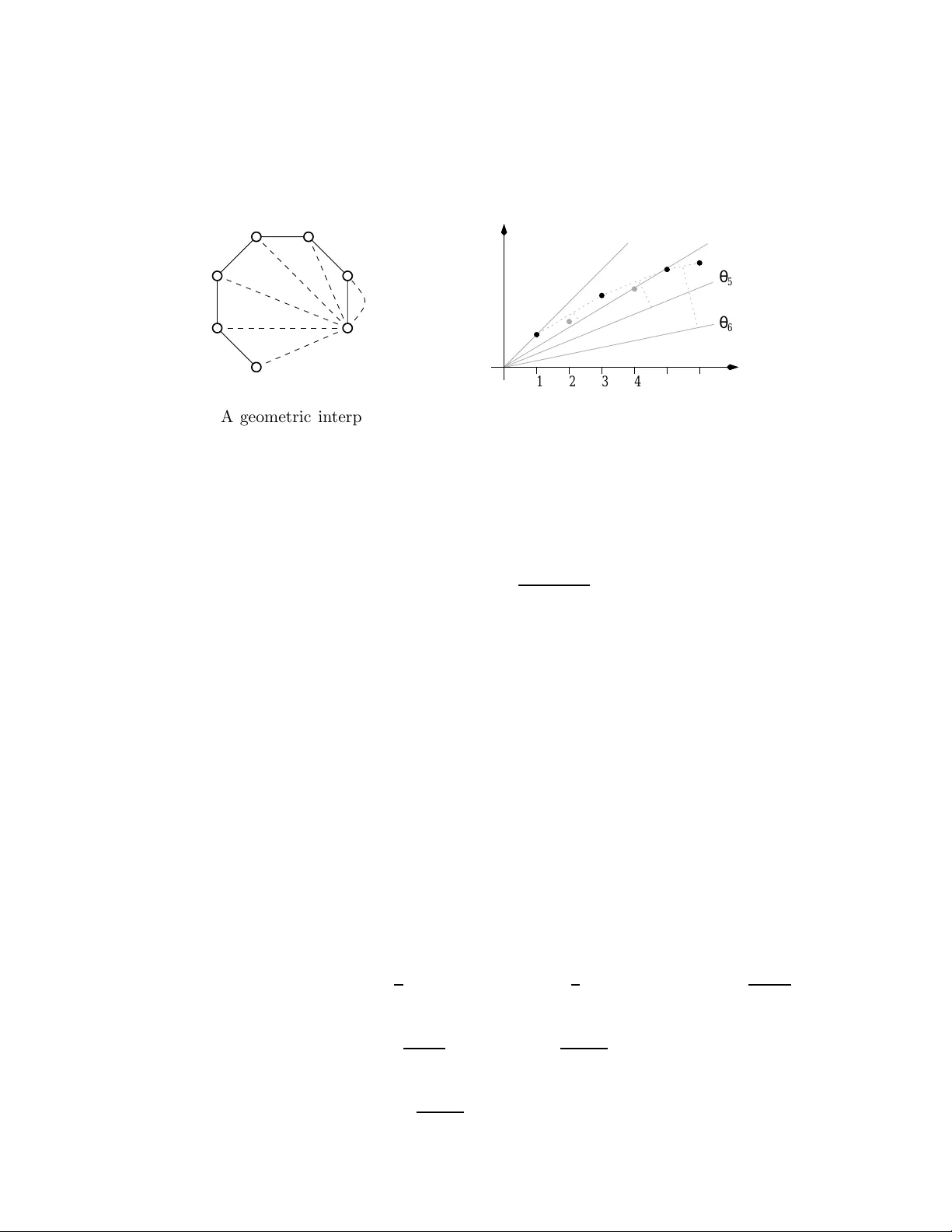
Symposium on Theoretical Aspects of Computer Science 2008 (Bordeaux), pp. 133-142 www .stacs-conf .org ST A CKELBERG NETW ORK PRICING GAMES P A TRICK BRIEST 1 , MAR TIN HOEFER 2 , AND PIOTR KR YST A 1 1 Department o f Computer Science, The Universit y of Liverpo ol, United Kingdom. Supp orted b y DFG g rant Kr 2332 /1-2 within Emmy Noether program. E-mail addr ess : {patrick.b riest, p.krysta}@li ve rpool.ac . uk 2 Department o f Computer Science, R WTH Aachen Univers ity , German y . Supp orted b y DFG G raduiertenkolleg 1298 “AlgoSyn”. E-mail addr ess : mhoefer@in formatik.rwth- aach en .de Abstra ct. W e study a m ulti-p la yer one-round game termed Stac kelberg Netw ork Pricing Game, in which a le ader can set p rices for a subset of m priceable edges in a graph. The other edges ha ve a fixed cost. Based on t h e leader’s decision one or more fol lowers optimize a p olyn omia l-time solv able com binatorial minimization problem and choose a minimum cost solution satisfying their req uiremen ts based on t h e fixed costs and the leader’s prices. The leader receives as reven u e the t otal amount of prices paid by the follo wers for priceable edges in their solutions, and the p roblem is to find reven u e maximizing prices. Our mo del extends several known pricing prob lems, includ ing single-minded and unit-d emand pricing, as wel l as Stack elb erg pricing for certain follow er problems like shortest path or minimum spanning tree. Our fi rst main result is a tight analysis of a single-price algorithm for t he single follo wer game, which provides a (1 + ε ) log m -app roximation for any ε > 0. This can b e extended to provide a (1 + ε )(log k + log m )-app roximation for the general problem and k follo w ers. The latter result is essen tially best possible, as the problem is shown t o b e hard to app ro ximate within O (log ε k + log ε m ). If follo wers hav e demand s, the single-price algorithm p ro vides a (1 + ε ) m 2 -approximation, and the problem is hard to appro x imate within O ( m ε ) for some ε > 0. O ur second main result is a p olynomial time algorithm for reven ue maximizatio n in the sp ecial case of Stacke lb erg bipartite v ertex cov er, which is based on non-trivial max -flo w and LP-duality techniques. Our results can b e ext en ded to provide constan t- fa ctor approximatio n s for any constant num b er of follo wers . 1. In tro duction Algorithmic pr icing p roblems mo del the t ask o f assigning reve nue maximizing prices to a retailer’s set of pro ducts give n some estimate of th e p oten tial customers’ p references in purely compu ta tional [14 ], as well as strategic [3] settings. Previous w ork in this area has mostly fo cused on settings in w hic h these pr eferences are r ather restricted, in the sense that pro ducts are either pur e c omplements [2, 7, 15, 16] and ev ery customer is interested in exactly one su b set of pro ducts or pur e substitutes [1, 8, 10, 14, 15, 16], in wh ic h case eac h 1998 ACM Subje ct Classific ation: F.2 Analysis of Algorithms and Problem Complexit y . Key wor ds and phr ases: Stack elb erg Games, Algorithmic Pricing, Approximation Algorithms, Inapproximabilit y . c P . Briest, M. Hoefer, and P . Kr ysta CC Creat iv e Commons Attribution-NoDer ivs License 134 P . BRIEST, M. HOEFER, AND P . KR YST A customer seeks to buy only a s ingle pro duct out of some set of alternativ es. A customer’s real preferences, how ever, a r e often significan tly more complicate d than that and therefore p ose some additional c hallenges. The modelling of consumer preferences has r ece ived co n siderable att ention in th e con- text of algorithmic me chanism design [18] and c ombinator ial auctions [12]. The established mo dels range from relativ ely simp le bidd ing languages to b idders that are r epresen ted by or- acles allo wing certain types of qu er ies, e.g., rev ealing the desired bu n dle of items giv en some fixed set of prices. The latter w ould b e a somewhat pr oblemat ic assumption in the theory of pricing algo r ith m s, where w e us u ally assume to hav e access to a rather large num b er of p oten tial customers through some sort of sampling pro cedure and, th us, are in terested in preferences that allo w for a compact kind of r epresen tation. In this pap er w e focu s on customers that hav e non-trivial preferences, y et can b e fully describ ed by th eir typ es a n d budgets a n d do not require any kin d of oracles. Assume that a compan y owns a s u bset of the links in a given net work. The remaining e d ge s are o wned b y other companies an d ha ve fixed pub licly kno wn prices and some customer needs to purchase a path b et w een t wo terminals in the n et work. Since she is acting rational, she is going to buy the shortest path connecting her te r m inals. Ho w should w e set the prices on the priceable edges in order to maximize the compan y’s rev enue? What if there is another cus tomer, who needs to pur c h ase, e.g., a minimum cost spanning tree? This t yp e of pricing problem, in wh ich p references are implicitly defin ed in terms of some optimization problem, is usually referred to as Stackelb er g pricing [23]. In the standard 2- pla y er form we are giv en a le ader setting th e prices on a subset of the n etw ork and a fol lower seeking to p urc hase a min-cost net work satisfying her requir ements. W e pro ceed by formally defining the mo del before stating our results. 1.1. Mo del and Notat ion In this p aper we consider the follo w ing class of m ulti-play er one-roun d games. Let G = ( V , E ) b e a m ulti-graph. There are t wo t yp es of pla yers in the game, one le ader and one or more fol lowers . W e consider tw o classes of e dge and vertex games , in whic h either the edges or th e v ertices h a ve costs. F or most of the pap er, we will consider edge games, but the definitions and results for v ertex games follo w analogously . In an edge game, the edge set E is partitio ned in to t wo sets E = E p ∪ E f with E p ∩ E f = ∅ . F or ea ch fixe d-pric e edge e ∈ E f there is a fixed cost c ( e ) ≥ 0. F or eac h pric e able edge e ∈ E p the leader can sp ecify a price p ( e ) ≥ 0. W e denote t he num b er of p r icea ble edge s by m = | E p | . Eac h follo wer i = 1 , . . . , k has a set S i ⊂ 2 E of fe asible subnetworks . The weight w ( S ) of a subnetw ork S ∈ S i is given by th e costs of fixed-p rice edges and the price of priceable edges, w ( S ) = X e ∈ S ∩ E f c ( e ) + X e ∈ S ∩ E p p ( e ) . The r evenu e r ( S ) of the leader from sub net work S is giv en by the p rices of the p ricea b le edges that are included in S , i.e., r ( S ) = X e ∈ S ∩ E p p ( e ) . Throughout the p aper we assume that for an y price fun cti on p ev ery follo wer i can in p olynomial time fin d a subnetw ork S ∗ i ( p ) of minim um w eight. O ur interest is to find the ST ACKELBER G NETW ORK PRICING GAMES 135 pricing function p ∗ for the leader that generates maxim um rev enue, i.e ., p ∗ = arg max p k X i =1 r ( S ∗ i ( p )) . W e denote th e v alue of this maxim u m rev enue by r ∗ . T o guaran tee that the reven u e is b ounded and the optimization problem is non-trivial, we assu me that th ere is at least one feasible subnet wo rk for eac h f oll ow er i that is co mp osed only of fix ed -price edges. In order to a v oid tec h n ica lities, we assume w.l.o.g . that among subnetw orks of iden tical w eigh t the follo w er alwa ys c h o oses the one with higher reven u e for the leader. It is n ot d ifficult to see that in the 2-play er ca se we also need follo w ers with a large n umb er of feasible su bnet w orks in order to mak e the p roblem int eresting. Prop osition 1.1. Given fol lower j and a fixe d subnetwo rk S j ∈ S j , w e c an c ompute pric es p with w ( S j ) = min S ∈S j w ( S ) maximizing r ( S j ) or de cide that such pric es do not exist in p olynomial time. In the 2-player game, if |S | = O ( poly ( m )) , r evenue maximization c an b e done in p olynomial time. The pro of of Prop ositio n 1.1 will app ear in the full v ersion. In general w e will refer to the rev enue optimizatio n problem b y S t ack . Note that our mo del extends the pr eviously considered p ricing mo dels and is essen tially equiv alent to pr icing with general v aluation functions, a pr oblem that has ind epen d en tly b een considered in [4]. Every general v aluation function can b e expr essed in terms of S tac k elb erg netw ork pr icing on graphs, a nd our algorithmic results apply in this setting as w ell. 1.2. Previous W ork and New Results The single-follo wer s h ortest path Stac ke lb erg p ricing p r oblem ( St ackSP ) has fir s t b een considered b y Labb ´ e et al. [17], wh o derive a bilev el LP form ulation of the problem and p r o ve NP-hardness. Ro c h et al. [19] present a fir s t p olynomial time approximat ion algorithm with a prov able p erformance guarantee , whic h yields logarithmic appro ximation ratios. Bouh tou et al. [5] extend the problem to m ultiple (w eight ed) follo wers and present algorithms f or a restricted shortest path prob lem on parallel lin k s . F or an o v erview of m ost of the initial w ork on Stac k elb erg net work pricing the reader is referred to [22]. A different line of r esea rch has b een inv estigating the app lica tion of S tac ke lb erg p ricing to net wo rk congestion games in order to obtain low congestion Nash equilibria for sets of selfish follo wers [11, 20 , 21]. More rece ntly , C ard inal et al. [9 ] initiated the inv estigati on of the co rr esp onding mini- m um spanning tree ( St ackMST ) game, again obtaining a logarithmic appr o ximation guar- an tee and proving APX-hard ness. Their single-pric e algorithm , w hic h assigns the same price to all pr ice able edges, turns out to b e ev en more widely applicable and yields similar ap- pro ximation guaran tees for an y matroid based Stac ke lb erg game. The first result of ou r p ap er is a generalization of this resu lt to general Stac kelberg games. Th e p revious limitation to matroids stems from th e difficulty to determine the necessarily p olynomial num b er of candid ate prices that can b e tested by the algorithm. W e dev elop a nov el c h arac terization of the sm all set of thr eshold pric es th at need to b e tested and obtain a p olynomial time (1 + ε ) H m -appro ximation (where H m denotes th e m ’th harmonic n umb er) for arbitrary ε > 0, wh ich turn s out to b e p erf ec tly tight for sh ortest path as wel l as minim um spanning tree games. T h is result is found in Section 2. 136 P . BRIEST, M. HOEFER, AND P . KR YST A W e then extend the analysis to multiple follo we r s , in which case th e app r o ximation ratio b ecomes (1 + ε )( H k + H m ). This can b e sho wn to b e essen tially b est p ossible b y an appro ximation preservin g redu ction from single-minded com binatorial pr icing [13]. Extend - ing the p roblem ev en further, we also lo ok at the case of multiple weighte d follo wers, w hic h arises naturally in net work settings wh ere different follo w ers come with d ifferent routing demands. It has b een conjectured b efore that no approximat ion essen tially b ette r than the n umb er o f follo we rs is p ossible in this scenario. W e dispr o ve this conjecture b y presenting an alternativ e analysis of the single-price algorithm r esulting in an appro ximation ratio of (1 + ε ) m 2 . Additionally , w e derive a lo w er b ound of O ( m ε ) for the wei ghted pla yer case. This resolv es a previously op en problem f r om [5]. Th e results on multiple follo we rs are found in Section 3. The generic r eduction from single-minded to Stac kel b erg pricing y ields a class of net- w orks in w hic h we can price the ve rtices on one side of a bipartite graph and pla yers aim to pu rc h ase minimum cost ve r tex co ve rs for their sets of edges. This motiv ates us to r eturn to the classical Stac k elb erg setting and consider th e 2-play er bipartite v ertex co v er game ( St ackV C ). As it turns out, this v ariation of the g ame allo ws polynomial-time algo rith m s for exact rev enue maximization using non-trivial algorithmic tec hn iques. W e first pr esen t an up p er b oun d on the p ossible rev enue in terms of the min-cost ve r tex co v er not using an y priceable vertices and the minimum p ortion of fi xed cost in any p ossible co ve r. Us- ing iterated max-flo w computations, we then determine a pricing with total rev en u e that ev en tually coincides with our u pp er b ound . These results are found in Section 4. Finally , S ect ion 5 concludes and pr esen ts several intriguing op en problems for fu rther researc h. Some of the pro ofs hav e b een omitted du e to space limitations. 2. A Single-Price Algor ithm for a Single F ollo wer Let us assu me that we are faced with a single follo w er and let c 0 denote the cost of a c heap est f ea sib le subnetw ork for the follo wer n ot con taining an y of the pr ice able edges. Clearly , w e can compute c 0 b y assigning p r ice + ∞ to all pr ice able edges and simulat ing the follo we r on the resu lting net w ork. The single-pric e algorithm pro ceeds as follo ws. F or j = 0 , . . . , ⌈ log c 0 ⌉ it assigns price p j = (1 + ε ) j to all priceable edges and determines the resulting reven ue r ( p j ). It then s im p ly returns th e pricing that r esults in maximum rev enue. W e present a logarithmic b ound on the appr o ximation gu arantee of the sin gle- price algorithm. Theorem 2 .1. Given any ε > 0 , the single-pric e algorithm c omputes an (1 + ε ) H m - appr oximation with r e sp e ct to r ∗ , the r evenue of an optimal pricing. 2.1. Analysis The single-price algorithm has pr evio u sly b een app lied to a num b er of d ifferent com- binatorial pricing p roblems [1, 15]. The main issue in analyzing its per f ormance guaran tee for Stac k elb erg pr icing is to determine the right set of candidate prices. W e first d eriv e a precise c h aract erization of th ese candidates and th en argue that th e geometric sequence of prices tested by the algorithm is a g o o d enough appr o ximation. Sligh tly abusin g notation, ST ACKELBER G NETW ORK PRICING GAMES 137 w e let p refer to b oth price p and th e assignment of this price to all priceable edges. If ther e exists a feasible subnet work for the foll ow er th at uses at least j pr ice able edges, w e let θ j = max n p | S ⋆ ( p ) ∩ E p | ≥ j o b e the largest pr ice at wh ic h such a sub net work is c hosen. If no feasible subnetw ork with at least j priceable edges exists, we set θ j = 0. As we shall see, these thresholds are the k ey to pro v e Theorem 2.1 . W e wa nt to d eriv e an alternativ e c haracterization of th e v alues of θ j . F or eac h 1 ≤ j ≤ m w e let c j refer to the min im u m sum of p rices of fi x ed -price edges in an y feasible su bnet w ork con taining at most j priceable edges, formally c j = min n X e ∈ S ∩ E f f e S ∈ S : | S ∩ E p | ≤ j o , and ∆ j = c 0 − c j . F or ease of n ota tion let ∆ 0 = 0. Cons id er the set of p oints (0 , ∆ 0 ), (1 , ∆ 1 ) , . . . , ( m, ∆ m ) on the plane. By H we refer to a min imum selection of p oin ts spann ing the u pp er con ve x h ull of the p oint set. It is a straigh tforward geometric observ ation that w e can define H as follo ws: F act 1. Poin t ( j, ∆ j ) b elo n gs to H if and on ly if min i max j θ j +1 , i.e., if at price θ j the sub n et work c hosen b y the follo w er co ntains exactly j priceable edges. Let i 1 < i 2 < · · · < i ℓ denote the ind ice s, suc h that θ i k are tru e thr eshold v alues and for ease of notation d efine i 0 = 0. F or an example, see Figure 1. Lemma 2.2. θ j is true thr eshold value i f and only if ( j, ∆ j ) b elongs to H . Pr o of. ” ⇒ ” Let θ j b e tru e threshold v alue, i.e ., at pr ice θ j the chosen sub n et work contai n s exactly j priceable edges. W e observe th at at any pr ice p the c heap est subn etw ork con taining j pr icea ble edges has cost c j + j · p = c 0 − ∆ j + j · p . Thus, at price θ j it must be the case that ∆ j − j · θ j ≥ ∆ i − i · θ j for all i < j and ∆ j − j · θ j > ∆ k − k · θ j for all j < k . It follo ws that min i max j j . Using p > (∆ k − ∆ j ) / ( k − j ) w e obtain ∆ k − k · p = ∆ j − j · p + (∆ k − ∆ j ) − ( k − j ) p < ∆ j − j · p , and, thus, the su bnet w ork c hosen at price p con tains exact ly j priceable edges. W e co nclud e that θ j is a tru e threshold. 138 P . BRIEST, M. HOEFER, AND P . KR YST A ∆ j θ 1 θ 3 00 11 0 0 1 1 θ θ 5 6 1 2 3 4 5 6 16 11 9 s t 5 4 1 00 00 11 11 0 1 0 1 0 0 1 1 Figure 1: A geometric in terpr et ation of (true) thr eshold v alues θ j . T he follo we r seeks to purchase a shortest path from s to t , dashed edges are fixed-cost. It is not d ifficult to see that the pr ice p d efined in the second part of the pro of of Lemma 2.2 is precisely the threshold v alue θ j . Let θ i k b e an y true threshold. Since p oin ts ( i 0 , ∆ i 0 ) , . . . , ( i ℓ , ∆ i ℓ ) define the con ve x h ull w e can wr ite that min i 0 , unless N P ⊆ T δ> 0 BPTIME( 2 n δ ). The same holds for the river tariffic ation pr oblem. Theorem 3.4 is based on a red u ctio n from the single-minded com b inatorial pr ici n g problem, in whic h eac h cus tomer is in terested in a su b set of pro ducts and purchases the whole set if the su m o f prices do es n ot exc eed her budget. Sin gle -mind ed pr icing is hard to appro ximate w ith in O (log ε k + log ε m ) [13], where k and m d enote the num b ers of customers and pro ducts, r esp ec tivel y . T heorem 3.4 shows that the single-price algorithm is essentia lly b est p ossible for multiple unw eigh ted follo w ers. Theorem 3.4. The Stackelb er g network pricing pr oblem with multiple unweighte d fol low- ers is har d to appr oximate within O (log ε k + log ε m ) for some ε > 0 , unless NP ⊆ T δ> 0 BPTIME( 2 n δ ). The same holds for bip artite Sta ckelb er g V ertex Cover P ricing ( St ackV C ). The idea for th e pro of of Theorem 3.4 is illustrated in Figure 3(b). W e d efine an in stance of St ackV C in bipartite graphs. V ertices on one side of the bip artiti on are pr ice able and represent th e u niv erse of pr o ducts, vertice s on the other side enco de customers an d h a ve fixed p rices corresp onding to th e resp ectiv e budgets. F or eac h customer we define a follo wer in the Stac k elb erg game with edges connecting the customer v ertex and all pro duct v ertices ST ACKELBER G NETW ORK PRICING GAMES 141 (a) (b) Figure 3: Reductions from pr icing problems to Stac kelberg pricing. (a) Un it- d emand re- duces to d irecte d S t ackSP . Bold edges are priceable, edge lab els ind ica te cost. Regular edges without lab els hav e co st 0. V ertex lab els ind ica te source-sink pairs for the follo w ers. (b) Single-minded p ricing reduces to bipartite S t ackV C . Filled v ertices are p ricea ble, v ertex lab els in d icat e cost. F or eac h customer th ere is one follo w er, who striv es to co ver all incident edges. the customer wishes to p urc hase. No w eve ry follo w er seeks to buy a m in-co st v ertex co ve r for her set of edges. W e pro ceed b y taking a closer lo ok at th is sp ecial t yp e of Stac kelberg pricing ga me and esp eci ally fo cus on the in teresting case o f a single follo wer. 4. Stac k elb erg V ertex Co ver Stac k elb erg V ertex Co ver Pricing is a vertex game, how eve r , the a p pro ximation results for the single-price algorithm con tin u e to h old. Note that in general th e vertex co ver problem is hard , hence we fo cus on settings, in which th e pr oblem can b e solv ed in p olynomial time. In bipartite graph s the p roblem can b e solve d optimally b y using a classic and fu n damen tal max-flo w/min-cut argumenta tion. If all pr icea ble vertic es are in one side of the partition, then for multiple follo wers there is evidence that th e single-price algorithm is essent ially b est p ossible. O u r main theorem in th is section states that the setting with a single follo we r can b e solv ed exactly . As a consequence, general b ipartite St ackV C can b e appro ximated by a fact or of 2. Theorem 4.1. If for a bip artite gr aph G = ( A ∪ B , E ) we have V p ⊆ A , then ther e is a p olynomial time algorithm c omputing an optimal pric e function p ∗ for St ackV C . Before we p ro ve the theorem, w e men tion that the standard problem of minimum vertex co v er in a bipartite graph G w ith d isjoin t vertex sets A , B and edges E ⊆ A × B can b e solv ed by the follo wing application of LP-du alit y . The LP-du al is interpreted as a maxim um flo w pr oblem on an adju sted fl o w net w ork G d . In p articular, G d is constructed by add ing a source s and a sink t to G and conn ecting s to all v ertices v ∈ A with directed edges ( s, v ), and t to all vertic es v ∈ B with directed edges ( v , t ). Eac h such edge gets as capacit y the cost of the in vo lved original vertex - i.e. p ( v ) for v ∈ V p or c ( v ) if v ∈ V f . F urthermore, all original edges of the graph are directed from A to B and th eir capacit y is s et to infinit y . The v alue of a maximum s - t -flow equals the cost of a minimum cut, and in addition th e cost of a minimum cost vertex co ver of th e graph G (for an example s ee Figure 4). T o obtain su c h a co v er consider a n augmenting s - t -p ath in G d , w h ic h is a p ath tra versing on ly forw ard edges with slac k capacit y and bac kwa rd edges w ith non-zero flo w. The maxim u m 142 P . BRIEST, M. HOEFER, AND P . KR YST A (a) (b) (c) Figure 4: Construction to solve bip artite St ackV C with priceable ve r tices in one p artition and a single follo w er. Filled vertic es are priceable, v ertex lab els indicate cost. (a) A grap h G ; (b ) T h e flow net work G d obtained from G . Grey parts are source an d sink add ed by th e transf ormatio n. Edge lab els ind icat e a sub optimal s - t -flo w; (c) An augmenting p at h P indicated by b old edges and the resulting fl o w. Ev ery suc h path P starts with a pr iceable v ertex, and all p r icea ble v ertices remain in the optim um co ve r at a ll times. flo w can b e computed by iterativ ely increasing fl o w along such paths. The ve r tices in the minim u m v ertex co ve r then co rr esp on d to inciden t edges in a minim um cut. I n particular, the minimum vertex co v er includ es a v ertex v ∈ A if the flo w allo ws no augment ing s - v -path from s to v , i.e. if eve r y path from s to v has at least one bac kward edge with no flo w, or at le ast one forw ard edge without slac k capacit y . W e use a similar idea to ob tain the optimal pricing for St ackV C . L et n = | V p | and the v alues c j for 1 ≤ j ≤ n denote the minimum s um of prices of fixed-price v ertices in an y feasible su bnet w ork cont aining at most j priceable vertice s. Then, ∆ j = c 0 − c j are again upp er b ounds on the rev enue that can b e extracted from a net wo r k th at includes at most j pr icea ble v ertices. W e thus hav e r ∗ ≤ ∆ n . Algorithm 1 : Solving St ackV C in bipartite graphs with V p ⊆ A Construct the fl ow net work G d b y adding no des s and t 1 Set p ( v ) = 0 for all v ∈ V p 2 Compute a maximum s - t -flow φ in G d 3 while ther e is v ∈ V p s.t. incr e asing p ( v ) yields an augmenting s - t -p ath P do 4 Increase p ( v ) and φ along P as muc h as p ossible 5 Supp ose all p riceable ve r tic es are lo cated in one partition V p ⊆ A and consider Algo- rithm 1. W e den ot e by C ALG the co v er calculated by Algorithm 1. A t first, wh en computing the maxim um flo w on G d holding al l p ( v ) = 0, the algorithm obtains a flow of c n . W e first note that in the follo wing while-lo op w e will never face a situation, in w hic h there is an augmen ting s - t -path (tra versing forward edges with slac k capacit y and backw ard edges with non-zero fl o w) starting w ith a fixed -price vertex. W e call s u c h a p ath a fixe d path, while an augmen ting s - t -path starting with a priceable verte x is called a pric e path. Lemma 4.2. E very augmenting p ath c onsider e d in the while-lo op of A lgorithm 1 is a pric e p ath. Pr o of. W e prov e the lemma by ind uctio n on the wh ile -lo op and by cont r ad iction. Supp ose that in th e b eginning of the current iteration there is no fi xed path. In p articular, this is ST ACKELBER G NETW ORK PRICING GAMES 143 true for the fi r st iteration of the wh ile- lo op. Th en, sup p ose that after we h a ve increased the flo w o v er a pr ice p ath P p , a fixed p ath P f is created. P f m ust include some of the edge s of P p . Consid er the vertex w at w h ic h P f hits P p . By follo wing P f from s to w and P p from w to t there is a fixed path, w hic h m u st ha ve b een pr esent b efore flow wa s increased on P p . This is a con tradiction and pro ves th e lemma. Recall from ab ov e that the optim um co ver cont ains a v ertex v ∈ A if there is n o augmen ting s - v -path from s to v . In particular, this means th at for a v ertex v ∈ A ∩ C the follo wing t w o prop erties are fulfi lle d : (1) there is no slack capacit y on edge ( s, v ); (2) there is no augmen ting s - v -path from s o v er a different v ertex v ′ ∈ A . As th e algorithm alwa ys adjusts the p rice of a ve r tex v to equal the current flo w on ( s, v ), only th e violation of prop ert y (2) can force a vertex v ∈ V p to lea v e the co v er. In particular, s u c h an augmenting s - v -path must start with a fixed-price vertex, and it m u st reac h v by decreasing flow o v er one of the original edges ( v , w ) for w ∈ B . W e call suc h a path a fixe d v -p ath . Lemma 4.3. Algorithm 1 cr e ates no fixe d v -p ath for any pric e able vertex v ∈ V p . The pr oof of Lemma 4.3 is similar to the pro of of Lemma 4.2 and will app ear in the full version. As there is n o augmen ting path f rom s to any priceable v ertex at any time, the follo wing lemma is no w ob vious. Lemma 4.4. C ALG includes al l pric e able vertic es. Pr o of of The or em 4.1. Finally , we can pro ceed to argue that the computed p ricing is optimal. Su pp ose that after executing Algorithm 1 we increase p ( v ) o v er φ ( s, v ) for any priceable v ertex v . As we are at the end of the algorithm, it do es not allo w us to increase the flo w in th e same wa y . Thus, the adju stmen t creates slac k capacit y on all the edges ( s, v ) for an y v ∈ V p and causes every pr ice able vertex to lea v e C ALG . T he n ew co v er must b e the cheapest co ver that excludes every p ricea b le v ertex, i.e. it m ust b e C 0 and ha ve cost c 0 . As w e hav e not increased the flo w, w e know that the cost of C ALG is also c 0 . Note that b efore starting the while-lo op the co ver wa s C n of cost c n . As all flo w increase in th e while-lo op was m ade ov er price p at h s and all the priceable vertic es stay in the co ve r , the rev enue of C ALG m ust b e c 0 − c n = ∆ n . Th is is an u pp er b ound on the optim um reve nue, and hen ce th e pr ice f u nction p ALG deriv ed with the algorithm is optimal. Fin ally , n otic e that adjusting the price of the p riceable ve rtices in eac h iteration is n ot necessary . W e can start with computing C n and for the remaining w hile-loop set all prices to + ∞ . This will result in the desired flo w , whic h directly generates the final p r ice for ev ery vertex v as flo w on ( s, v ). Hence, we can get optimal prices with an adjusted ru n of the s tand ard p olynomial time al gorithm for maxim um flo w in G d . T his pro ves Theorem 4.1. Theorem 4.5. Ther e is a p olynomial time 2 -appr oximation algorithm for bip artite St ackV C . In Theorem 4.5 w e use the pr evio u s analysis to get a 2-appr o ximation of the optim u m rev enue for general bipartite S t ackV C . This r esults in a 2 k -appro ximation for any num b er of k follo wers. In con trast, the analysis of the single-price algorithm is tigh t ev en for one follo w er and all priceable vertic es in one partition. Moreo ver, bipartite St ackV C for at least t wo follo wers is NP-hard b y a reduction fr om the high w a y p r icing problem [7]. 5. Op en problems There are a n umber of imp ortant op en p r oblems th at arise from our w ork. W e b eliev e that the single-price algorithm is essential ly b est p ossible ev en f or a single follo wer and 144 P . BRIEST, M. HOEFER, AND P . KR YST A general Stac k elb erg pricing games. How ever, there is no matc hing logarithmic lo wer b ound, and the b est low er b ound r emains APX-hardness from [9]. In addition, we b eliev e that f or w eigh ted follo we r s a b etter up p er b oun d than m 2 is p ossible, whic h would decrease the gap to the Ω( m ε ) lo wer b ound w e observed. More generally , extendin g other algo rithm design tec hniques to co p e with pricing pr ob lems is a ma jor op en p r oblem. References [1] G. Aggarw al, T. F eder, R . Motw ani, and A. Zh u. Algo rithms for Multi-Pro duct Pricing. In Pr o c. of 31st ICALP , 2004. [2] N. Balcan and A. Bl um . Approximation Algorithms and Online Mec hanisms for Item Prici ng. In Pr o c. of 7th EC , 2006. [3] N. Balcan, A. Blum, J. Hartline, and Y. Mansour. Mec hanism Design via Mac hine Learning. In Pr o c. of 46th FOCS , 2005. [4] M. Balcan, A. Blum, and Y. Mansour. Single Price Mechanisms for Revenue Maximization in Unlimited Supp ly Combinatorial Auctions. T echnical Rep ort CMU-CS-07-111 , Carnegie Mellon Universit y , 2007. [5] M. Bouhtou, A. Grigori ev, S. v an Hoesel, A. v an d er Kraaij, F. Sp ieksma, and M. Uetz. Pricing Bridges to Cross a River. Naval R ese ar ch L o gistics , 54(4): 411–420, 2007. [6] P . Briest. T ow ards Hardness of Envy-F ree Pricing. ECC C T e chnic al R ep ort TR06-150 , 2006. [7] P . Briest and P . Krysta. Single-Minded Unlimited-S u pply Pricing on Sparse Instances. In Pr o c. of 17th SODA , 2006. [8] P . Briest and P . Krysta. Buy ing Cheap is Exp ensive: Hard n ess of Non- P arametric Multi-Pro duct Pricing. I n Pr o c. of 18th SODA , 2007. [9] J. Cardinal, E. Demaine, S. Fiorini, G. Jo ret, S. Langerman, I. Newman, and O . W eimann. The Stack elb erg Minimum Spann in g T ree Game. In Pr o c. of 10th W ADS , 2007. [10] S . Chawla, J. Hartline, and R . Kleinberg. Algorithmic Pricing v ia V irtual V aluations. In Pr o c. of 8th EC , 2007. [11] R . Cole, Y. Dodis, and T. R oughgarden. Pricing Netw ork Edges for Heterogeneous Selfish Users. In Pr o c. of 35th STOC , 2003. [12] P . Cramton, Y. Sh oham, and R . Steinberg (Editors). Combinatorial Auctions. MIT Press, 2006. [13] E.D. D emai n e, U . F eige, M.T. H a jiagha yi, and M.R. Salav atip our. Combination Can Be Hard: Approximabilit y of the U nique Cov erage Problem. In Pr o c. of 17th SODA , 2006. [14] P . Glynn, P . Rusmevichien tong, and B. V an Roy . A N on-P arametric Approach to Multi-Product Pricing. O p er ations R ese ar ch , 54 (1):82–98, 2006. [15] V . Gurusw ami, J.D. Hartline, A.R. Karlin, D. Kemp e, C. Keny on, and F. McSherry . On Profit- Maximizing Envy-F ree Pricing. In Pr o c. of 16th SODA , 2005. [16] J. Hartline and V. Koltun . Near-Op t imal Pricing in Near-Linear Time. In Pr o c. of 8th W ADS , 2005. [17] M. Labb´ e, P . Marcotte, and G. Sav ard. A Bilevel Model of T axation and its A pplication to Optimal Highw ay Pricing. Management Scienc e , 44(12): 1608–1 622, 1998. [18] N . Nisan and A. R onen. Algorithmic Mec han ism Design. I n Pr o c. of 31st STOC , 1999. [19] S . Roch, G. Sav ard, and P . Marcotte. An App ro ximation Algorithm for Stack elb erg Netw ork Pricing. Networks , 46(1): 57–67, 2005. [20] T. Roughgarden. S tac kelberg Scheduling Strategies. SIAM J. on Computing , 33(2): 332–350, 2004. [21] C. Swam y . The Effectiveness of Stack elb erg Strategies and T olls for Netw ork Congestion Games. In Pr o c. of 18th SODA , 2007. [22] S . v an Ho esel. An Ov erview of Stack elb erg Prici n g in Netw ork s. R esea rch Memoranda 042, ME- TEOR, Maastrich t, 2006. [23] H . von S tac kelberg. Marktform und Gl ei chge wi cht (Market and Equilibrium) . V erlag von Julius Springer, Vienna, 1934. This wor k is licensed under th e Crea tiv e Commons Attr ibution-NoDerivs Licen se . T o view a copy of this license, visit http://c reativecommons.org/licenses/by- nd/3.0/ .
Original Paper
Loading high-quality paper...
Comments & Academic Discussion
Loading comments...
Leave a Comment