A Conversation with Ingram Olkin
Ingram Olkin was born on July 23, 1924 in Waterbury, Connecticut. His family moved to New York in 1934 and he graduated from DeWitt Clinton High School in 1941. He served three years in the Air Force during World War II and obtained a B.S. in mathema…
Authors: ** Allan R. Sampson (Professor, Department of Statistics, University of Pittsburgh) **
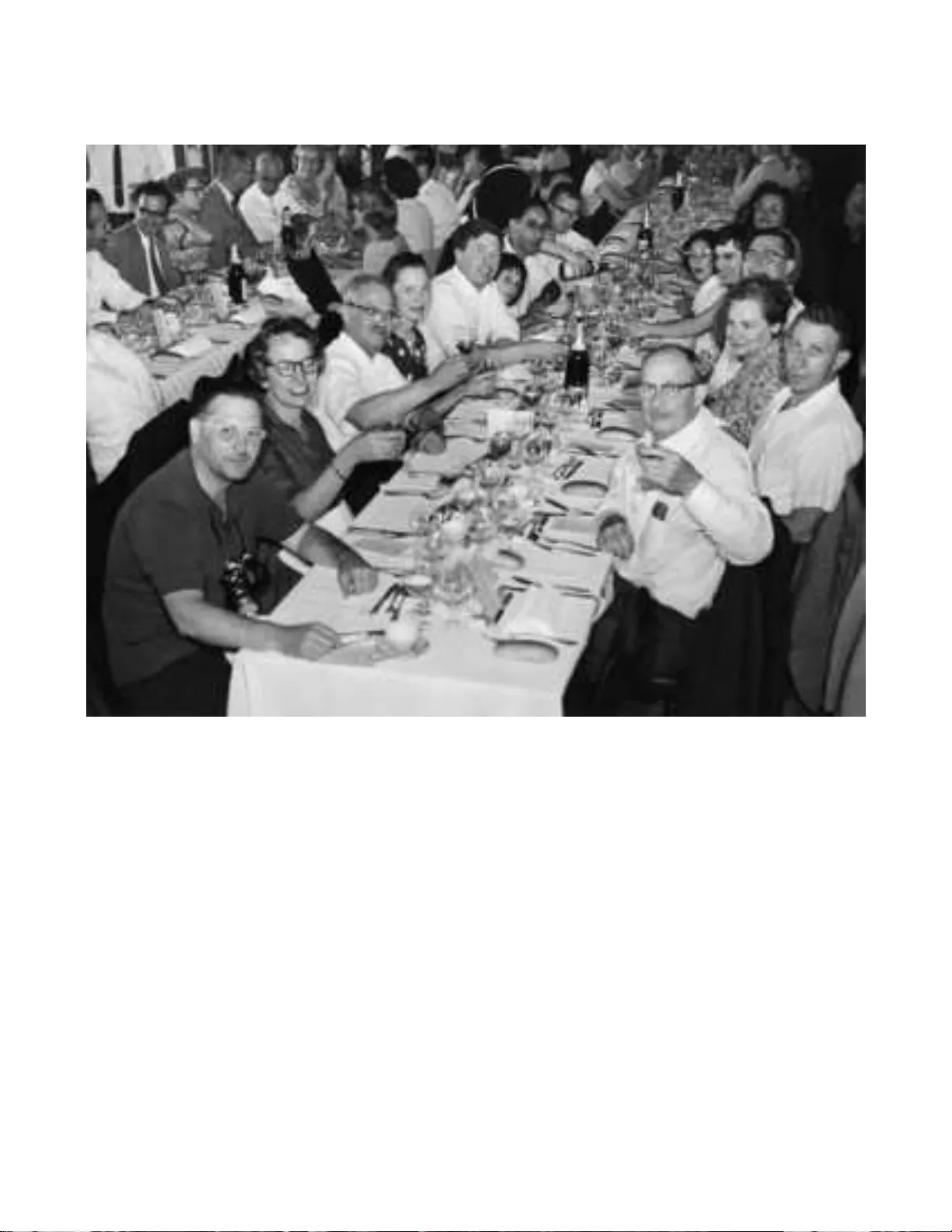
Statistic al Scienc e 2007, V ol. 22, No. 3, 450– 475 DOI: 10.1214 /0883423 07000000122 c Institute of Mathematical Statisti cs , 2007 A Conversation with Ingram Olk in Allan R. Sampson Abstr act. Ingram Olkin w as b orn on Ju ly 23, 1924 in W a terbur y , Conn ecticut. His family mo v ed to New Y ork in 1934 and h e graduated from DeWitt Clinton High School in 194 1. He serv ed three y ears in the Air F orce du r ing W orld W ar I I and obtained a B.S. in mathemat ics at the Cit y C ollege of Ne w Y ork in 194 7. After receiving an M.A. in mathematical statistics fr om Columbia in 1949, he completed his gradu ate studies in the Departmen t of Statistics at th e Univ ersit y of North Carolina in 1951. His d iss ertation wa s written un der the direction of S . N. Ro y and Harold Hotelli ng. He joined th e Departmen t of Mathematics at Michiga n S tate Univ ersit y in 1951 as an Assista nt Professor, subsequently b eing pr omoted to Professor. In 1960, he to ok a p osition as Ch air of the Department of Statistics at the Unive rsity of Minnesota. He mo v ed to Stanford Universit y in 1961 to tak e a join t p osition as Professor of Statistics and Professor of Education; he wa s also C hair of the Departmen t of S tatistics from 1973– 1976. In 2007, Ingram b ecame Pr ofessor Emeritus . Ingram w as Ed itor of the Annals of M athematic al Statistics (1971– 1972) and served as the fir st editor of the Annals of Statistics from 1972–1 974. He was a primary f orce in the foun d ing of the Journal of Educ ational Statistics , for whic h h e w as also Associate Editor during 1977–198 5. In 1984, he wa s President of the Institute of Mathemati- cal Statistics. Among his many p rofessional activities, he has serve d as Chair of the Committee of Presidents of Statistical So cieties (COPSS), Chair of the Committee on Applied and Theoretical Statistics of the Natio nal Research C ouncil, Chair of the Managemen t Board of the American Education Researc h Association, and as T rustee for the National Institute of Statistical S ciences. He h as b een honored by the American Statistical Asso ciatio n (ASA) with a Wilks Medal (1992) and a F ound er’s Aw ard (1992) . T he American Psycholo gical Asso ciation ga ve h im a Lifetime Contribution Aw ard (1997) and he w as elected to the National Academ y of Education in 2005. He receiv ed the C O PSS Elizab eth L . Scott Aw ard in 1998 and deliv ered the R. A. Fisher Lecture in 2000. In 2003, the City Unive rsity of New Y ork ga v e him a T ownsend Harris Medal. An author of 5 b o oks, an editor of 10 b o oks, and an author of more than 200 publi- cations, Ingram h as made ma j or con tributions to statistics and education. His researc h has fo cused on m ultiv ariate analysis, ma jorization and inequalities, distribution theory , and meta-analysis. A volume in celebration of Ingram’s 65th b ir thda y conta ins a brief biograph y and an interview [Gleser, P erlman, Press and Sampson (1989)]. In gram was c h osen in 1997 to participate in the American Statistical Asso ciation Distinguish ed Statistician Video Series and a videotaped con versatio n and a lecture (Olkin, 1997) are av ailable fr om the ASA (1997, DS041, DS042). Key wor ds a nd phr ases: Educational statistics, m a j orization, meta-analysis, multi- v ariate analysis, pr obabilit y inequalities. Al lan R. Sampson is Pr ofessor, Dep artment of Statistics, Cathe dr al of L e arning 270 1, University of Pittsbur gh, Pittsbur gh, Pennsylvania 15260, USA e-mail: asampson@stat.pitt.e du . This is an e lectronic reprint of the origina l a rticle published by the Institute of Mathematica l Sta tistics in Statistic al Scienc e , 2007, V ol. 2 2, No. 3, 4 50–47 5 . This reprint differ s from the origina l in pa g ination and t yp ogr aphic detail. 1 2 A. R. SA MPSON This con v ersation to ok place on Decem b er 9, 2005 at the Renaissance Hotel in W ashington, DC. INTRODUCTION A ND EAR L Y YEARS Sampson: Ingram, w e’v e b een trying to get to- gether to do this conv ersation for quite a while. It’s difficult to find an y gap in yo ur extremely hec- tic tra ve l sc hedu le. Y ou’re p erh aps more inv olv ed in statistics no w than y ou w ere wh en y ou b egan y our career 55 y ears ago. And the question I wan t to start with is: w hat is it ab out statistics that’s still so com- p elling to y ou? Olkin: That’s an in teresting qu estion. S tatistics has a r ole in so m an y different applications, and what I alw ays fi nd exciting is the fact that yo u’re confron ted with a new discipline and a new set of p eople, and they b ring different and interesting sci- en tific questions in whic h the statistician can partic- ipate. Ju st to illustrate, I wa s most recent ly ask ed to discuss some asp ects of what is called “the v alue of a s tatistical life” with the Envi ronmental Pr otectio n Agency . This is a fascinating p roblem b ecause it co v- ers very large areas of the en vironment, and what’s in teresting is the p eople working on the p ro jects are economists, not statisticia ns, so it brings me in to con tact with a whole new area. Sampson: Y ou’v e b een in v olv ed w ith these v arious forms of app lied problems f or a long time. But what k eeps y ou still so fired-u p? Olkin: This question ab out th e “fire” is one I hav e trouble answering. Sampson: It ma y precede y our b eginn in gs in statis- tics—p erhaps s omething in y our upb ringing. Olkin: I s u sp ect that’s true. My mother had fire unt il she was 98. Sampson: Amen! Olkin: The “fire” was mostly addressed to me. And I think there ma y b e some genetics b ecause m y d augh ters h a v e a certain amount of that trans- mitted. Sampson: When y ou were a c hild, were you as in- tense and as passionate in whatev er you were d oing then as y ou are now? Olkin: Let me put it this wa y . I was b orn in W a- terbury , Connecticut and I lived ther e until age 10. I w en t to a public sc ho ol th at had v ery little heat, and w hen you misb eha v ed th ey sen t you to sit in the cloakroom, wh ic h was cold. What I can tell y ou is m y mother was a constan t visitor to the s chool b e- cause I w as in the cloakro om an inordinate amoun t of time. S o, I th ink I was a very activ e kid at that time. Sampson: It sound s more than activ e, but p erhaps reb ellious. Olkin: I don’t kn o w. Bu t I do kn o w, and I can’t tell you what grade, the teac her tap ed my mouth. Sampson: Some of yo ur colleag ues no w, I susp ect, wish they knew that teac h er’s secret! [Laugh ter] Olkin: No w, of course, this was abuse under cur - ren t definitions. But, it didn’t b other me at the time. I think I’v e alwa ys b een activ e and int erested in d if- feren t things. I think that certainly is a characte ris- tic. Sampson: Did y ou ha ve a lot of int erests as a c h ild? Olkin: Y es I did . And I think I w as sort of go o d in a lot of different areas and so I w as int erested in sp orts, I collected stamps, I wen t to theaters, music, and s o on. I really av ailed myself. Sampson: Some of that sounds lik e it o ccurred when you we re older. Olkin: Th eater and m usic o ccurred during my early teens after I mo ved to New Y ork. There w ere not that many outside inte rests a v ailable in W aterbury , Connecticut. T he only place that w as av ailable wa s a library , and my mother took me to the libr ary on man y , man y o ccasions. It w as a ritual. That’s an in teresting p oint b ecause m y mother was an immi- gran t who really didn’t h a v e m u c h education. Sampson: Where wa s y our mother from? Olkin: My mother came from W arsa w, m y father came from V ilnius, but he w as in W arsa w at the time, and so they b oth came o v er. But m y mother knew that b o oks were goo d. Sh e dragged me to the library , but sh e didn ’t ha ve to drag v ery m uch. It w as just nice to go there eve ry Saturda y morning. By the time I got to New Y ork, I was indep enden t— ev en though I was only 10 y ears old. The thing ab out New Y ork is that children we re totally in dep end en t. Sampson: Y ou liv ed in the Bronx? Olkin: I lived in th e Bronx on Arth ur Aven ue and 179th Street. Sampson: Y ou fin ished elemen tary s c ho ol in New Y ork City? Olkin: I fin ished elemen tary sc h o ol in New Y ork Cit y and then wen t to middle sc ho ol follo wed by Dewitt Clin ton High S c ho ol. That wa s a v er y goo d high sc h o ol at the time. Dewitt Clin ton had an an- nex and it was th at annex w hic h b ecame the Bronx High Sc ho ol of Science. They had sup erior teac hers. A CONV ERSA TION WITH INGR AM OLKIN 3 Fig. 1. Ingr am Olkin, 2001. The math teac her actually published in The Am er- ic an Mathematic al M onthly . There w as a m ath club in high sc ho ol, and there was m usic. An d at that time I pla y ed trom b one, and I was in the orchestra. Sampson: Y ou w ere an only c hild? Olkin: I was th e only c hild. My mother actually lost sev eral c hildren , some in miscarriage, and one c h ild at a yea r old. I was really somewhat of a last c h ance b ecause th ey were getting older by the time I was b orn. My mother wa s 36. A t th at time, giving birth at that age wa s probably already precarious, Sampson: Y our dad w as in the jewe lry busin ess in W aterbu ry? Olkin: Y es. In those y ears, it w as v ery customary for immigrants t o ha ve a relativ e or f r iend i n the United States wh o would sort of set the stage for them. My father had a v ery close friend who had a jew elry business in W aterbur y , and my father wa s a jew eler in Europ e. So he had a job ready-made in W aterbu ry and th at’s ho w w e got there. I w as b orn in 19 24 and this is pre-depression. When I w as a c h ild, my father actually was out of wo rk for quite a bit of time thou gh m y mother didn’t kno w it. He nev er told her, and somehow w e m anaged. But it w as clear that W aterbur y was somewhat of a dead- end in the jew elry busin ess, which is one of the first to go du ring any depr ession in any case. But there w as a second factor of wh y we mov ed to New Y ork. By this time, I w as getting close to 10 years old, and the question w as what would the fu tu re brin g in terms of college? C on n ecticut was n ot known at that time—w e’re talking ab out th e 30s—for lots of go o d state univ ersities. And, in fact, I h ad a cousin who w as teac hin g at Cit y C ollege of New Y ork, and the general view was that Cit y College wa s the place where I could get an edu cation. W e m o ved to New Y ork in 1934, and it was clear that I w ould go to Cit y College b ecause that w as the only p lace op en in the immediate p ost-depression era. NEW YORK Sampson: Did y our father ev entuall y find jewe lry w ork in New Y ork? Olkin: Y es. In the jewelry trade, they’ll ha v e one big store with little stalls. And h e had a stall on Canal Street whic h had a jewe lry district and one on 47th Street. Throu gh ou t his life he con tin ued to w ork in the jew elry trade. Sampson: F rom th e wa y you describ e it, it sounds lik e your mother was more influential in y our up- bringing than y our father. I s that a fair statemen t? Olkin: Th ere’s no qu estion ab out that. My m other w as a very str ong woman. She had firm id eas, an d she was also a very activ e t yp e. My father was a v ery gent le kind p erson, whom eve ryone in the fam- ily and the extended family thou ght was great. No- b o d y ever had an un kind wo rd ab out m y f ather. My mother w ould generate different reactions fr om dif- feren t p eople, bu t she w as a very p ositiv e force. Sampson: Did she h a v e any in fluence in yo ur going in to the mathematical sciences? Olkin: No, I ha v e to sa y in thinking ab out my u p- bringing and the up bringing of ou r c h ildren, there’s a distinct difference. My mother did not kn o w wh at I was d oing in colle ge or in high school. But she b e- liev ed that wh atev er I did w as great, so I had com- plete full sup p ort for whatev er I wan ted to do. Sh e had faith that no matter what I wo uld do, it would b e fine. And no w I think of our o wn actions w ith our c h ildren. My d augh ter wo uld come home and sa y , “Ok, I’m taking math.” I would say , “W ell, w hat 4 A. R. SA MPSON Fig. 2. Ingr am Olkin and his p ar ents, Julius and Kar ola Olkin, 1940s. math?” She w ould sa y , “Algebra.” I’d say , “What are yo u stud ying in algebra?” and s o on. There’s something v ery p ositiv e ab out u nequivocal supp ort that r eally is v er y healthy . Early on in ev ery Jewish family , there wa s alwa ys the qu estion of whether y ou’re going to b e a do c- tor. And it b ecame very clear at an early age that I did n ot like anything conn ected with blo o d. Thus I nev er had to go thr ough th e p erio d of “m y s on, the do ctor.” My mother alwa ys said, “W ell, he do esn’t lik e medicine” and that left me out of that. Sampson: As an aside, I am in terested in y our fam- ily’s inv olvemen t w ith Ju daism. Olkin: My parent s w ere what yo u would call mild ortho do x. Our house w as ko sher, but m y father, when times w ere bad, d id go to w ork on Satur da y . W e alw a ys observed all the holida ys , and he did go to the syn agogue on Saturdays a lot of th e time. And I wo uld accompan y him. I wa s certainly Bar Mitzv ahed , and marr ied in the syn agogue, and our house was what y ou might call med iu m orth o do x. Sampson: Let me come b ac k to y our h igh sc ho ol again. I kn o w y ou once told me that when they asked y ou in y our high sc ho ol y ear b o ok w hat y ou in tended to b e, yo u said, “a statistician.” Olkin: Th at is correct. It’s clear n o w, to b oth of us, that I didn’t kno w anything of what b eing a statisticia n meant. Sampson: Are y ou an y wiser 65 ye ars later?! [Laugh ter] Olkin: That’s a go o d question! I ha ve a feeling that the math club had lots of differen t problems, and I susp ect th at there were some problems in statistics that we wen t through th at must ha ve cap- tured my imagination. But I cannot no w repro du ce ho w I ev er c hose th e term statistician. I ma y b e the only one in the profession who in high school said that they w an ted to b e a statistician, and it came true. No w, it’s interesti ng to go bac k to the high sc ho ol yearbo ok, which I did. Sev eral p eople were w ell kno wn. F or example, James Baldwin, the au- thor, w as at Dewitt Clinton High School. I c hec k ed to see what he said he wa nte d to b e. He s aid he w an ted to b e a writer. Th ere w ere sev eral others whose stated goals in high sc ho ol came tru e in later life. S omehow, there ma y h a v e b een some germs of what p eople thought th ey m igh t b e intereste d in, and I susp ect that s tatisticia n just meant some p art of mathematics without my r eally knowing what it w as. Sampson: Y ou started college at CCNY and yo u had to tak e a break for the war, b efore return ing to CCNY? Olkin: I graduated Dewitt C lin ton High S c ho ol in 1941. I started in CCNY and then in late 1942, the go v ernment—and I don’t kno w ho w this came to me—said they were interested in students in mathe- matics, p h ysics and p ossibly engineering, going into radar, meteorology , and languages. T here was some- thing called the AST P , the Armed Services T r ainin g Program. Ev en though math ma j ors w ere d eferred, I though t th at ev en tually I wo uld b e drafted. Ev ery- b o d y was drafted at the time, and so I enlisted in the Meteorolo gy Program. I w as indu cted in F ebru - ary of 1943. I w as a w a y from 1943 to 1946, and then I was disc harged. My disc harge w as in C alifornia, but I return ed to New Y ork and finish ed Cit y Col- lege in 1947. After that I wen t to Colum bia for a master’s de- gree which wa s a one-y ear program. I started in A CONV ERSA TION WITH INGR AM OLKIN 5 Fig. 3. Mr. and Mrs. Selby R obinson (b ottom) with his former City Col le ge of New Y ork students: Ingr am Olkin, Herman Chernoff, Herb Solomon (top), Stanfor d, 1971. the summer of 1947, and then finished the follo w in g y ear. The summer of 1947 wa s one of the fir s t p ost W orld W ar I I classes and it was an exciting time at Colum bia. Many of the students who were there b e- came close life-long friend s includ ing Bob Bec hh ofer, Milton S ob el and Rosedith S itgrea ves. Also that w as a time when Hotelling had m o v ed from Columbia to Chap el Hill (in 1946). While at Columbia, I applied to Chap el Hill for the Ph.D. program and for a fel- lo w s hip, and we then mov ed to Chap el Hill in 1948. GRADUA TE S CHOOL A T U. NORTH CAROLINA Sampson: T ell me a bit ab out y our exp eriences at Chap el Hill. Olkin: I think one h as to thin k somewhat in terms of the history of s tatistics. Nineteen forty-six was the time when statistics w as really b eginnin g in s ev- eral p laces. C olum bia had a department in 1946, with Ab raham W ald, Jac k W olfo witz, T ed And erson and How ard Lev ene, and I think Henry Scheff ´ e w as there at the time. Princeton did not h a v e a Depart- men t of Statistics, but it had S am Wilks and John T uk ey . Berk eley , of course, had Jerzy Neyman and Eric h Lehmann . Th ey did n ot h av e a d epartmen t in 1946—that came later. But they h ad a statis- tical lab oratory and man y eminent facult y . Chicago w as another p lace; Io wa State; North Carolina State started; but Chap el Hill was a galaxy of facult y . Harold Hotelling w as the leader. Herb Robbins w as there, W assily Ho effding was ther e, as were R. C. Bose, S. N. Ro y and P . L. Hsu, although Hsu wa s on lea v e and it was not clear whether he was com- ing bac k. William Co c hr an w as at Raleigh, but came to Chap el Hill on man y o ccasions. Bill Mado w was there. Sampson: Gertru d e Cox? Olkin: Gertrud e Cox w as the head of the en tire In- stitute, and sh e wa s h oused more at Raleigh. In any case, Chap el Hill was a ph enomenal place. The stu- den ts we re great. At that time, Ind ia h ad sup p orted a lot of studen ts to s tu dy in the Un ited States. This w as really the “heyda y” of Indian statistics in the United S tates. Ra j Bahadur wa s there as a student. S. S. Shrikh ande, Gopinath Kallianpur and D. N. Nanda were students, and later on, K. C. S. Pillai, Shant i Gu p ta, Ram Gnandesik an and Go vind Mud - holk ar. I can go on, but I don’t remem b er them all. Sampson: Su dhish Ghryr e was someone th at you w ork ed with? Olkin: He came a ye ar later. But he wa s there. It w as really a first rate group. And then there w ere American stud ents: Ralph Bradley was a student, Mey er Dwass was there, Joan Rosenblatt, Morris Skibinsky , Su tton Monro, and many others. There w as a lot of camaraderie among th e students, and there were v ery few barr iers b et ween facult y and student s. Part of it wa s that the faculty w as young. 6 A. R. SA MPSON Fig. 4. Ingr am Olkin and Bil l C o chr an, 1973. They were only a few y ears older than some of the student s. W e would gather across the street from the department in mid-afterno on. There w as a little store where p eople could get ice cream. In terms of classes, Robbins’ batting a ve rage wa s alwa ys some- where in the order of 75% to 80%, by whic h I mean 75% or 80% of his lectures w ere r eally sup erb. And Ho effding wa s a different t yp e of lecturer. Ho effd- ing’s lectures were b uilt-up from the small to the b ig, whereas Robb ins tr ied to in s till some excitemen t, and to comm u nicate a lot of the ke y ideas. Ho effd- ing was m uc h m ore m etho dical, as w as Bose. Th ey co vered the int ricacies, and th eir lectures were not really exciting, bu t the material was exciting. It w as all new. One of the things that p eople d on’t quite realize is that there were no b o oks. This was 1948. Cram ´ er ( 1946 ) wa s a v ailable. The Kendall b o oks w ere a v ailable (Kendall, 1944 , 1946 ). William F eller’s b o ok in probabilit y did not come out u n til 1950 (F eller, 1950 ). Robbins h ad a cop y of the man uscript, I su sp ect, and taught some parts of it, but added a lot. S o eve rythin g wa s new. Hoeffdin g’s lectures in nonparametric we re all h is o w n which then app eared subsequently as his pap ers, and the same with Bose and Ro y . Hotelling was n ot a great lecturer. But his lectures were pleasant to hear at times b ecause he w as very erudite, an d I’d lik e to sa y he sp ok e in pr ose. Th er e w ere alw ays complete sentences and they were b eautifully put together. Sampson: Th at’s th e newsp ap er man in h im. Olkin: T h at’s right. He was a jou r nalist ma j or at the Universit y of W ash ington, and his wr iting is clear, and b eautiful, and this is true in the pa- p ers th at he publish ed. Hotelling was an in tellectual force. He was in terested in push ing student s in ev ery p ossible w a y and fostering th em. Sampson: What do y ou mean b y p ushing s tu den ts? Olkin: W ell, let me giv e y ou an illustration in my o w n case. I w ant ed to tak e a course in multi v ariate and it happ ened th at at the time that I w ant ed to tak e the course, th e course w as not giv en. I had nev er tak en multiv ariate. I had no idea w h y I wan ted to tak e multiv ariate, but I did. I w ent to Hotelling and I told h im that I wan ted to tak e m ultiv ariate, and he said, “W ell, why don’t you get P . L. Hsu ’s notes from last year, and study them on your o wn ?” “And then we’ll h a v e an oral—y ou can lecture on it.” I’v e forgotten exactly how he w as going to grade it. As it turned ou t, one of the other student s, W alter Deemer, h ad the same desire. The t w o of us got Al Bo wker’s copy of P . L. Hsu ’s notes, whic h w e wen t thr ough, and we work ed on it. T hat’s where W alter and I recognized that s ome of th e re- sults on Jacobians were things that we could im- pro v e and expand on , which w e did. But I w ant to come bac k to the role Hotelling pla y ed. A t th e end of the quarter, W alter and I ga ve a lecture on wh at w e had r ead and accomplished on Jacobians. Hotelling said, “Y ou m ust p u blish this.” W e nev er th ough t ab out p ublishin g this. W e we re actually v ery yo ung, and timid, and so we left it more or less in Hotelling’s hands. Both W alter and I said this is b ased on Hsu’s lectures, and mayb e Hsu should b ecome a coauthor or even author it himself. In any case, Hotelling said he w ould write to Hsu. A t this time the Un ited States d id not ha v e in ternational relations with Ch ina, and you could not send a letter fr om the U.S. to China. Hote lling w rote a lette r to Egon P earson and ask ed Egon Pe arson to transmit the letter to Hsu. Later, Hsu r eplied in the same w a y and indi- cated th at he d id not w ant to b ecome a coauthor. He thou ght w e had extended the method ology , and A CONV ERSA TION WITH INGR AM OLKIN 7 that we should pub lish it. How ev er, h e had a few though ts ab out one of the theorems at the end, and he asked if we wo uld includ e sev eral paragraphs that he su p plied. W e did, and our pap er came ou t in Biometrika (Deemer and Olkin, 1951 ). In general at ev ery lecture, at ev ery public meet- ing, Hotelling would pu blicly men tion w hat students at C h ap el Hill had d one, so that the profession w ould kno w what th ey h ad accomplished and in this w a y he would try to h elp their careers. Sampson: Did he hav e so cial ev en ts at his hous e to encourage in teractions among stu d en ts and facult y? Olkin: Hotelling had an afterno on tea, th e s econd Sund a y of every m on th, wh ic h, if I recall correctly , the stud en ts lab eled “Hotelling’s T .” F acult y and student s w ould meet at his house. Hotelling had an encyclop edic memory . His conv ersation w as nev er what you migh t call small stuff. Y ou would ask him some sim p le q u estion s uc h as “I see that they’re tearing up F ranklin S treet?” And Hotelling would sa y , “It wa s in 1824, that F ranklin Street was first dev elop ed,” and he w ould giv e y ou an en tire history of w hatev er it is yo u w ere discussing. Hotelling’s wife, Susann a, wa s a viv acious p erson w ho w as in - terested in the s tu den ts, h elp ed everyb o dy , and wa s extremely so cial. Sampson: O n e has the sense that p erh ap s Hotelling migh t b e a bit in timidating to h a v e con v ersations with? Olkin: I don’t kno w if in timidating is right, b ut y ou wouldn’t talk to Hotelli ng without recognizing that you we re talking to someb o dy wh o had ac hieve d a lot. There w as a resp ectful tone that on e alwa ys main tained with Hotelling. He could generate a re- sp ect for the fi eld, and an inspir ation for working in the field. Sampson: Did y ou k eep in con tact with Hotelling after you left North Carolina? Olkin: Afterwa rds b ecause of m y sense of app reci- ation for him, when Hotelling turn ed 65, I suggested to sev eral p eople from Chap el Hill that we h av e a festsc h rift in his honor. Gh urye, Ho effding, Mado w, Mann and I we re the editors and w e invited man y p eople to sub m it a pap er (Olkin et al., 1960 ). I re- call v ivid ly the r esp onse from Joseph Do ob. W e had ask ed Do ob if he w ould submit a p ap er in h onor of Hotelling, and Do ob said, “Of cour s e I will subm it a pap er, Hotelling sa v ed m y life.” As it turn ed out, in 1939, I b eliev e, Do ob w as out of a job and Hotelling recognized his talen t and ga ve him a p osition at Colum bia. He ga v e Do ob a job and h e br ough t W ald to Colum bia. Not man y p eople would b ring some- one as go o d as W ald wh o m ight b e a comp etitor. Hotelling w as ab o ve that in the sen s e that he was only interested in your s cholarly and intel lectual af- fairs. He nev er en tered into any kind of gossip—he w as alw ays just basically on an in tellectual lev el. Sampson: Hotelling was your th esis advisor? Olkin: My thesis advisors we re Ro y and Hotelling. Sampson: What w as Ho effd ing lik e? Olkin: Ho effdin g wa s v ery , v ery quiet. I’m n ot sure if h e came from Germany or Russia in the 30s, but he w as there with his mother. Ho effding had a sibling. I thin k h e wa s a journalist w ho also came o v er at the time. Hoeffdin g w as fo cused on the mathematics of the fi eld. He was not a p erson for small talk, so it w as ve ry hard to ha v e a con versation. I mean, you migh t giv e a whole sentence, and his reply w ould b e “y es.” Then yo u would ha v e to thin k of an en tire new sentence. Y ou did n ot get too muc h resp on s e. Sampson: Y ou later h ad translated from German one of Ho effding’s works that was multiv ariate in nature. Olkin: It w as Ho effding’s 1940 thesis that was on correlations, fi xed marginals and b iv ariate d istr ibu- tions (Ho effding, 1940 ). What we call the F rech ´ et b ound s are really Ho effd ing–F rech ´ et b ound s. It’s hard to know who did w hat first, b u t Ho effdin g def- initely h ad the result there. RESEARCH A ND COLLABORA TIONS Sampson: I’d lik e to no w talk ab out your researc h. Y our pu blished researc h is quite div erse, but there seems to b e one constant. And with v ery few excep- tions, the v ast ma jority of it is p u blished with coau- thors. And this b egan relativ ely early in yo ur career. It wasn’t something that y ou pic k ed up later. What is it ab out join t r esearc h in statistics that s o ent ices y ou? Olkin: I think ther e are pr ob ab ly t wo factors. One factor is, I think, I enjo y wo rking with p eople, and y ou h a ve to enjo y working with p eople if you’re go- ing to coauthor pap ers. The other is that I foun d that with coauthors, the sum is r eally more than what eac h ind ivid ual pro vides. This is b ecause in some w a y eac h one complemen ts the other, and so y ou mov e ahead muc h faster. It av oids doldrums. If one p erson is do wn, the other p erson hop efu lly is up and th en you con tin ue pro d ucing. Sampson: When I lo ok thr ough y ou r list of coau- thors, there is not a whole lot of common threads among th em. Th ey are a tremendously div erse group. 8 A. R. SA MPSON Fig. 5. Al Marshal l and I ngr am Olkin, 1973. Olkin: That’s right. Most of the coauthorships were started in an u ndesigned wa y . That is, they w ere not though t of that I wo uld work with someone. Some- ho w an idea came up. I ma y ha v e talk ed to some- b o d y ab out it, or they talk ed to me ab out it. Then suddenly it b ecame really an inte resting problem that the t wo or three of us w ould work on. There’s only one pap er that I recall that w as d one b y dif- feren t groups. There’s a pap er wh ic h Seymou r Sh er- man calle d the “Chicago Six,” and that pap er did ha v e contributions from different p eople without our starting to w ork together (Das Gupta et al., 1972 ). This m igh t b e a goo d p oint to tell you ab out a particular collab oration. Y ou mentioned that I had a lot of coa uthors , which is correct. But I also ha ve one coauthor with whom I’v e b een in v olv ed for 50 y ears. Sampson: Al Marshall! Olkin: Y es and that h app ened by acciden t. I w as on sabb atical lea ve at Stanf ord from Mic higan State in 1958, and I h ad just pub lished a pap er with John Pratt on a multiv ariate Chebyshev inequalit y (Pratt and O lkin, 1958 ). I’m not ev en sur e the p ap er had app eared. In any case, Al Marshall’s thesis, at the Univ ersit y of W ashington with Bill Birnbaum wa s on a multiv ariate Cheb yshev inequalit y . I b eliev e that I sa w an abstract of Al’s, and I think I wr ote to him ab out the pap er that Pratt and I had published —they did not signifi can tly o v erlap b y the w a y . In an y case, Al, w h en h e graduated, w as ei- ther a p ost-do c or a visitor at Stanford, and as it turned out by c h ance our offices w ere next d o or to eac h other. (As an aside, I s till remem b er the p eople in the five offices adjacen t to me. T here w as George F orsythe, Bill Mado w, myself, Al Marshall, Ben Epstein, and Bob Bec hh ofer. I could talk to George F orsyth e ab out computing, with Bill Mado w on samp ling, with Ben E p stein on the exp onen tial distribution, and with Bob Bec hhofer on r anking and selection, but mainly with Al.) So Al and I qu i- etly s tarted w orking together and w e wrote 1 or 2 pap ers, an d then I r eturned to Mic higan S tate. I w as bac k at Stanford in 1961 and we started a collab- oration at that time that mo ve d fr om Ch eb yshev inequalities, o ccasionally to other inequalities, and then later to S ch u r f u nctions and ma j orization. W e w ere able to cont inue in a serious w a y b ecause w e b oth sp ent a year at Cam bridge in 1967–196 8. By that time, the s eeds of our ma j orization researc h had b een established. At Cam b ridge, Al and I ga v e lec- tures on m a jorization and b egan the work that led to our b o ok (Marshall and Olkin, 1979 ). F r om 1967 to when the b o ok app eared in 1979—that’s o ve r a 12 or 13 yea r p erio d—we were collecting resu lts, work- ing together, and th en u ltimately wrote the b o ok. Sampson: Y ou also s p ent a lot of time at Bo eing. Olkin: Oh ye s. I wa s a consultan t at Bo eing whic h means that they made the opp ortunit y av ailable for me to come up wheneve r Al and I wan ted to. A CONV ERSA TION WITH INGR AM OLKIN 9 The Bo eing Scientific Researc h Labs w as really a great place. It had a galaxy of go o d p eople. In addition to Al, F rank Prosc h an w as there, as w ere Jim Esary , George Marsaglia, S am S aunders, Roger W ets, Da ve W alkup and sev eral others. And the visitors w ere Dic k Barlo w, Ron Pyk e, Victor Klee, Bill Birn baum and m yself. It w as alw a ys an exciting place. Sampson: How m uch time did yo u sp end there? Olkin: My recollection is that w e‘d try to get to- gether eve ry few wee ks. Al w ould come do wn to Stanford for a few da ys, or I would go up to S eattle for a few da ys. Th e visits were not extensiv e visits, but w e would often work on th e germ of the idea, and then tr y to d evelo p it a little bit individually , and th en get toget her again. Sampson: And th at was b efore email bac k and teleconference made comm unications so m uc h eas- ier. Olkin: Ev er y th ing was hand written, of course. Ho w- ev er, y ou do hav e to recognize that it’s very difficult to write a b o ok just by going b ac k and f orth this w a y . So w e actually sp ent time toget her a wa y . Beside the yea r in Cambridge, w e were also in En gland for a ye ar and we w ere in Augsbur g and Zuric h f or thr ee mon ths together. W e were in a num b er of places for more extended p erio d s then just these visits. Sampson: Did yo u sp end time in British C olum bia? Olkin: I sp ent a quarter ther e, when Al w as on the facult y at the Un iv ersit y of British Columbia, Also I d id visit on o ccasion for shorter p erio ds. What we tried to do w as wo rk in short sp urts and then ha v e culmination b y ha ving longer p erio ds together. Sampson: Y ou also did with Al a fair n umb er of pap ers on d istributions, and some more recent w ork has b een on families of d istribution. And of course there’s the w ell-kno w n Marshall–Olkin biv ariate and m ultiv ariate exp onentia l distributions (Marshall and Olkin, 1967 ) that are w idely used. Olkin: W e started w orking on the question of how to generate b iv ariate distrib utions that h a v e certain kinds of nice pr op erties, and our fir s t instance of that w as wh at’s no w called the Marshall–Olkin bi- v ariate exp onentia l. More recen tly we plann ed to try to write a b o ok on nonnorm al biv ariate distri- butions. W e started, and then w e said w e’d b etter first wr ite a c hapter on univ ariate nonnormal dis- tributions. W ell w e started that and we found th at w e wr ote one c hapter, and then another c hapter, and then another c hapter, and we found we nev er got to m ultiv ariate distributions! W e are no w ab out to pu blish a b o ok ent itled Life Distributions: N on- p ar ametric, Semip ar ametir c and Par ametric F ami- lies. The b o ok is almost complete. W e’re in the pro- cess of pr eparing the graphs for the b o ok, and wh en that h app ens , the b o ok w ill b e finished . So m y guess is within the next three mon ths, w e will b e s en ding it off for publication. Sampson: T o go bac k to y our work on the exp o- nen tial, my recollection is th at b efore y ours and Al’s w ork, p eople did not do a lot of work lo oking at prop erties of th e exp onen tial distrib u tion in the un i- v ariate case and tryin g to extend them. W as y ours the fir st that lo ok ed at the memoryless prop ert y and tried to extend it to t wo-dimensions? Olkin: I th ink in th at resp ect, ours w as the first. Ho wev er, I think y our p oin t is really an imp ortant one. What w e tried to do is look at a prop ert y of a u n iv ariate distr ibution and see in w hat wa y one could extend that particular prop ert y . Not all u ni- v ariate prop erties h a v e nice extensions to the biv ari- ate case. The memoryless p r op erty was one that h ad a n ice extension. But there are lots of other examples where we extended th e ideas of the c haracteristics of the univ ariate distribution to the b iv ariate. Sampson: More generally , y ou ha v e a r eal inte rest in solving functional equations. Olkin: F un ctional equations h a v e sto o d us very w ell. I’m really a prop onen t of Acz ´ el’s ( 1966 ) b o ok on fun ctional equ ations. Al and I j ust submitted a pap er in honor of S. N. Ro y that’s coming out in a sp ecial issue of the Journal of Statistic al Plan- ning and Infer enc e. And there w e solv e a n umb er of functional equations. Y ou might ask the question, wh y is th e W eibull distribution so p opular and ho w did W eibull come ab out it? W ell, it turns out that W eibu ll actually came to it from data analysis. How- ev er, there is a nice rationale in terms of the distribu- tion as th e solution of a functional equ ation. When y ou ha ve s cale-parameter families and prop ortional hazard families, the W eibu ll is the coincidence of the t w o families. This u ses a fu nctional equation s olu- tion again. Sampson: Ingram, what do y ou see as the secret of y our collab oration w ith Al in terms of w orking st yle? I think yo u told me h e is a cr aftsman b y na- ture and for instance lov es to build fur niture. Is that st yle something th at carried ov er int o ho w you t w o in teract? Olkin: W ell, Al is definitely more of a mathemati- cian than I am, b u t I don’t thin k that’s the issue. 10 A. R. SA MPSON Fig. 6. Cy Derman, Ingr am Olkin and L e on Gleser, 1986. I think that Al h as a un ique w a y of lo oking at prob- lems, and it happ ens to b e sligh tly d ifferen t from mine. And so Al b rings an exp ertise that I would not h a ve, bu t I bring a differen t view of some of the problems that Al w ouldn’t ha v e. I think it’s fair to sa y that Al pr obably could write th e b o ok without me, and that I probably could not wr ite the b o ok without him. But that the end result is v ery differ- en t fr om what it w ould h a ve b een had h e ju s t writ- ten the b o ok alone. I think the wid e applicabilit y is something that comes ab out f r om our collaboration. If you thin k ab out the ma jorization b o ok, there are a lot of tec hnical asp ects, but there’s a lot of b readth and scop e—applications in probabilit y and statis- tics, in matrix theory and in com binatorics. I think a lot of that is the kind of thing that I w ould bring to the b o ok, and a lot of the results w ould b e things that Al deve lop ed on his o w n or we did toget her. Sampson: My sense is, in add ition, that the t wo of y ou w ere goo d p erson al friends. Y ou s hare a lot in terests in common. Olkin: W e do. W e go to concerts together, and our wiv es ha v e gone toget her on differen t trips, and w e’v e gone toget her on differen t trip s. W e used to do this a lot more than no w b ecause we eac h h av e large families that we ’re inv olv ed with. W e ha v en’t visited eac h other as muc h as we u sed to, but in the early da ys w e certainly sp ent a lot of time together. Our collab oration has b een uniqu e in m y life in that it has extended o ve r such a long p erio d of time and o ver so many different p ap ers and t wo b o oks. It’s b een very , ve ry fruitfu l. Indeed, some p eople think we’re one p erson wh ose name is h yphenated as Marshall–Olkin. I ha ve to tell y ou that Al once sen t me a CD that he h ad foun d. The cov er featured m usic b y a comp oser whose name is Ingram Marshall. Sampson: Y ou’v e had a num b er of other coauthors that y ou’ve done a lot of pap ers with in cluding Leon Gleser and Larry Hedges, b oth of wh om were y our Ph.D. stud en ts. Olkin: L eon and I o verlap a lot in inte rests and skills, and that’s a v ery n ice collab oration b ecause w e’re b oth attuned to the same kind of orien tation. Leon is really a ve ry go o d problem solver and to- gether we ’v e work ed on quite a num b er of different problems. I’v e alw a ys enjoy ed that collab oration. I’v e probably published more with Leon, after Al, than with an yb o d y else. MET A-ANAL YSIS Olkin: Larry and I started w orking together as a resu lt of my app oin tmen t in the S c ho ol of Edu- cation at Stanford and my early in vo lv ement with meta-analysis. Dur in g my life I’ve tried ev ery ten, fifteen y ears, to b ecome in v olv ed in something a lit- tle different, a little orthogonal from what I h ad b e- ing doing. Beca use once yo u con tinue it’s v ery hard A CONV ERSA TION WITH INGR AM OLKIN 11 to ke ep up the excitement in the field after yo u’ve b een pub lish ing, and it’s n ice to start on something new. And meta-analysis w as one of the areas that w as very differen t. And that started in a v ery inno- cen t wa y . It b egan b ecause a colleague in the S c ho ol of Edu cation said to m e, “Ingram, there hav e b een literally hundreds of pap ers on th e effects of cer- tain teac hing asp ects, bu t these studies are sm all and th ey’re not s ignifican t. Is there any wa y to put together this mass of in d ividual studies?” S o that started me on the field of meta-analysis. Th at w as in the early 70s, and I wrote one pap er in the 70s b y m yself, and then I started w ith stud en ts. And Larry was the first s tu den t. He wrote a dissertation on meta-analysis. Sampson: He w as a stud en t in Education? Olkin: Y es, at that time w e h ad a program in edu - cation. It was comparable to wh at y ou m ight call biostatistics, only it was edu cational s tatistics in whic h th e students would tak e all the courses in the Statistics Departmen t, more or less thr ough w hat w ould b e a normal Ph.D. p rogram, bu t the disserta- tion w ould b e on an educational topic. Th ey ma y not ha v e tak en ev ery single course, but they to ok most of the courses. Larry w as in that situation. And we started writing this b o ok on statistical metho d s for meta-analysis. Sampson: W as that while he w as still a studen t? Olkin: No. The b o ok w as p ublished in 1985 (Hedges and Olkin, 1985 ), and m y recollection is he may h a v e finished h is Ph .D. in 1981. Bu t we started working on it almost immediately thereafter. And the reason w e s tarted working on it w as we r ead many of the pap ers that were b eing published, and we recognized that th ere w as not muc h statistica l metho dology b e- ing used in th em. There w as a b o ok earlier than ours b y Glass, McGra w and Smith ( 1981 ), and it had some statistics. But it didn’t hav e a systematic statistica l dev elopmen t. So that’s wh at we pr o vided in our b o ok. Our b o ok seems to ha v e had a catalytic effect on meta-analysis. Afterwa rds m y increased in- v olv emen t w ith meta-a nalysis brough t me in to the sphere of the medical p r ofession. These were really the p eople who are doing medical researc h and try- ing to come up with conclusions ab out the state of their field, so it has b een very exciting for m e. Sampson: Y ou’v e giv en and still cont inue to giv e short cours es on meta-a nalysis. Olkin: The sh ort courses really started with one of the medical originators of meta-analysis, a p h ysi- cian by the name of T om Ch almers. Ch almers was a deligh tful p erson, and he and I m et when he was at Mt. Sinai Hospital. He w as the h ead of wh at I think w as called a T ec hnical Assessmen t Division. And they had a site visit, and I w as on that s ite visit committee. I enunciated a num b er of factors in fa- v or of meta-analysis th at the hospital, at the time, hadn’t recognized. As a result of that, Chalmers and I b ecame friends , and we started giving some sh ort courses. It w as a m arvelous collab oration b ecause he w ould sp eak for an hour and a h alf on medicine and then I w ould sp eak for an hour and a half on the statistica l asp ects of the studies. And then we w ould go bac k and forth, and we did this for t w o da ys, at seve ral different places. Chalmers started his lecture in a w ay that I couldn ’t b ecause I’m not a physician. His first few sent ences w ere something like, “I got int o the field of m eta- analysis b ecause I r ealized that I was killing pa- tien ts.” W ell, of course, when a physici an sa ys that it creates qu ite a stir in the aud ience. T om h ad a v ery wo nderf ul wa y of presen ting the material. Un- fortunately , h e died a few y ears ago of prostrate can- cer. One of his prot ´ eg ´ ees is a physician that I w ork with a lot no w, who’s very go o d, and a lo vely col- league. That’s Joseph Lau, who’s at the New En g- land Medical C en ter. Joseph h as a group w orking there, and they’re one of th e pro du cers of a lot of meta-analyses. Sampson: Where ha v e you give n some of y our short cours es—p articularly the in ternational ones? Olkin: T o start with, several were for the Ameri- can S tatistical Asso ciation. I’v e give n sh ort courses in S in gap ore and in Hong Kong and I’v e giv en short courses throughout Europ e, including Sw itzerland, Spain, Croatia, Holland, and Austria. I ma y hav e left out a f ew places—I hav e not given a s hort cours e in F rance. Some of these courses I taugh t with J oseph Lau. EDITORIAL CONTRIB UTIONS Sampson: I ngram, let’s talk ab out y ou r editorial w ork. Y ou’v e had a life-long in volv emen t in v ari- ous editorial capacities, in statistics journ als, edu- cational jour nals, and mathematics j ou r nals. Why ha v e you chosen to dev ote so m uc h ener gy to these purp oses? Olkin: W ell, earlier on I mentio ned m y mother to ok m e to the libr ary . Sampson: Y ou are blaming it on yo ur mother?! [Laugh ter] 12 A. R. SA MPSON Fig. 7. Ingr am Olkin sp e aking on meta-analysis, University of Pittsbur gh, Mar ch, 1998. Olkin: No, I’m not going to blame it on my mother. I d on’t kn o w wh y I w as so inv olv ed in journals. When I was at Chap el Hill in 1946, it w as not a ma- jor enterprise to r ead all the journ als. They would come to the library and I wo uld b r o wse through the journals. I found that a lot of times br o wsing through an article w ould ring a b ell ab out something that wa s similar to what I was doing. Th at wa s the b eginning of my in terest in j ournals. A t Stanford, I wa s on the Libr ary Committee and I w as alw a y s in v olv ed in trying to b uild up the libr ary . But that do esn’t relate to the editorial w ork. I w as an asso- ciate editor for JASA , but that also wasn’t the real catalyst. It w as when I b ecame editor of the An- nals that I started th inking a lot more ab out jour - nals. What b ecame clear to me is that the gro wth in statistics from the time I graduated in 1951 to the time I w as an editor of th e Annals in 1972, had resulted in the A nnals ’ pu b lishing ov er 2,000 pages a y ear. No editor could really review all the pap ers . The editor w as really a manager. Y ou just shuffled the p ap ers to different asso ciate editors and you in terv ened in questionable cases. Otherw ise, when things were clear-cut, y ou merely accepted what the asso ciate ed itor su ggested. Probabilit y and statis- tics w ere b oth gro wing and it was ju st unreasonable A CONV ERSA TION WITH INGR AM OLKIN 13 to think of trying to kee p the t wo together. Now, there wa s a con tro v ersy at this time. The question w as should we b egin to splinte r into sev eral separate groups? There w ere camps on b oth sides. There we re clearly p eople who though t that the Annals of Math- ematic al Statistics should in clude b oth statistics and probabilit y . I thought from a practical p oint of view, the gro wth wa s to o big in b oth fields, so I prop osed splitting th e Journal. W e w en t to the Coun cil. After discussion, w e did sp lit the Jour nal. I r emained as editor of the Annals of Statistics and Ron Py ke b e- came the first editor of the Annals of Pr ob ability . Of course, in the year 2005, n o one would ev er question going bac k to a single jour nal. The t wo fields hav e gro w n and, in fact, they’v e splintered even more into the Annal s of Applie d P r ob ability and now into the Anna ls of Applie d Statistics . Sampson: I’m curious, was op p osition to the split more from the statisti cal types or th e probabilists? Olkin: The statisticia ns d id n ot w an t pr obabilit y split off. But more than that, they also felt that splin tering of the field was not go o d. I wa s not of that opinion for a v ariet y of reasons. What I sa w w as that w h en the so ciet y d ecided not to pu blish a topic journal suc h as th e Journal of Multivariate Analysis , or the Journal of Time Series , or the J ournal of Se quential Analysis , the commercial publishers w ent in to that field. An d I felt it was b etter for the so ciet y to sp onsor these topic journals, b ut others felt that this sp lin tered the field. My p osition was that it was going to b e splintered by the commercial publish ers in any case, and that I w ould r ather it b e sp lin tered within the So ciet y’s con trol. I lost that b attle. Also the b eginnings of splint ering led me to start to thin k ab out j ou r nals that the So ciet y m ight feel comfortable with. Let me go back in time for a mo- men t. There was a jour nal in engineering, T e c ho- metrics ; there were sev eral journals in biology , Bio- metrics , and to some degree Biometrika ; there we re journals in psy cholog y , Psychometrika ; and journals in economics, Ec onometric a . There w as nothing in education, so Mel Novic k wh o was in psychomet- rics at Stanford and I talk ed a lot ab out p ossibly starting a jou r nal in educatio n. He and I agreed on t w o p rinciples; one was that it should b e pu b- lished by a so ciet y , ev en though commercial pub - lishers had app roac h ed u s; and the second wa s that w e agreed that it would b e b etter for th is to b e a join t ven tur e b et w een education and statistics, rather than either one taking it on separately . Mel’s task was to go to the council of the American Ed- ucational Researc h Asso ciation; m y task w as to go to the b oard of the American Statistical Asso ciation and to see if we could prop ose a join t ven tur e. That w as ac hieve d and Mel No vick w as the fir st editor— I had not w ant ed to b e inv olv ed as an editor—and the Journal of Educ ational Statistics (now called the J ournal of Educ ational and Behavior al Statis- tics ) was launched in 197 6. Sampson: What w ere the issues inv olv ed in the creation of Statistic al Scienc e and how did it get started? Olkin: Th at w as very in teresting in a v ariet y of w a ys. A group of statistic ians, without an y author- it y f rom so cieties, w ould get together. The group in- cluded National S cience program directors, b ecause they were on top of the problems in the field, and also p eople who were inte rested in d oing something for the so ciet y . I hate to men tion members b ecause I’m going to lea v e out some, but I ’ll men tion Jerry Sac ks, Morrie DeGro ot, Stev e Fien b erg, P eter Bic kel , P aul Shaman and myself, and p eople suc h as Bruce T rumbull and Nancy Flourno y . Both Bruce and Nancy w ere NSF program directors as had b een Jerry Sac ks and Paul S haman. On e th eme that ke pt surf acing w as the need for some kind of generalist jour nal. Morrie and I, in p articular, w ere the leads in that. Morrie wa s in terested in b eing editor, and that was great b ecause h e wa s a really a sup erb editor. W e b oth h ad in mind doing some h istory , doing some in- terviews, and doing some general pap ers. What we firmly b eliev ed was that a pap er that was s u itable for JASA or the Annals would n ot b e suitable for Statistic al Sc ienc e . W e wan ted these to b e generalist t yp e article s with a w ider r eadership Sampson: Wh y did it end b eing published by the IMS? Olkin: I think th at was a decision that we made. It w as the pr actical it y of the situation. W e could get it through the IMS and w e could not get it th r ough the ASA. It w ould in v olv e a d ifferen t type of pr op osal to get it through the ASA. W e w ere all mem b ers of IMS. A lot of us were on the council; one of us was a treasur er. So we could get a p ositiv e r eaction f r om the Council of th e I MS , and as it turned out we did. Sampson: Statistic al Sc ienc e is almost t wen ty y ears old. Has it successfully fulfilled wh at was the original am bition for it? Olkin: When I talk to p eople, they sa y th ey lov e the inte rviews. They read other articles on o ccasion. 14 A. R. SA MPSON Fig. 8. ISI Me eting, Pari s, 1961. L eft side: Unknown, Elizab eth Sc ott, Jerzy Neyman, A nne Durbin, Jim Durbin, Miriam Chernoff, Herman Chernoff, Unknown; R ight si de: Jack Y ouden, Ingr am Oklin, Dor othy Gilfor d, Manny Parzen, Car ol Parzen, El len Chernoff, Judy Chernoff. It’s not a journ al that p eople read from co v er-to- co ver. But almost ev eryb o dy lik es something, and I hav e found v ery few p eople wh o sa y that they dis- lik e th e j ournal. A testament to its su ccess, I think, is th at a lot of members of the American Statistical Asso ciation are sorry that it’s n ot a journal that’s join t. Sampson: Do y ou think Statistic al Scienc e has k ept the mathematical con ten t far enough a wa y from JASA and the Annals ? Olkin: I think that it is difficult in a lot of sub- jects to not b ecome to o tec hnical. Bu t I think, by and large, that th ere are enough articles that are not mathematic al, so that p eople con tinue to enjo y reading it, and keep referrin g to it. Sampson: Th ese days, one has a sense that there’s going to b e more of a mo v ement to electronic jour- nals, e-journals, that may nev er exist on pap er. Do y ou ha v e an y thoughts on th is? Olkin: W ell, it’s clear that the pr ofessions hav e to face the issue of electronic journals. One of th e questions, of course, for statistic s, is that statistics is an arc hiv al science. Not ev ery field is arc hiv al. W e w an t to b e able to preserv e what the journ als pro- duce. I think one of the problems that will ha ve to b e faced is who is going to preserv e them and in what condition will they b e preserved? But certainly elec- tronic journ als will con tin ue to b ecome the natur al format. Sampson: Y ou mentio ned earlier that the for-profit publisher s are pu tting out the journals in more fo- cused areas of statistics. W ould y ou b e advocating that the so cieties to d ay try to pic k u p that role, to o? Olkin: I ha v e tried to get so cieties to fo cus a little bit on some of these splint er topics, bu t b y-and-large A CONV ERSA TION WITH INGR AM OLKIN 15 so cieties are conserv ativ e. I thin k they fear that if they pu b lish splinter journals, the n umber of suc h splin ters could b e large. And they can’t quite face wh y , for example, the IMS should p ublish a journal in design of exp eriments, and n ot on multiv ariate, and not on sequenti al, etc. I think they are faced with the plethora of p ossible sp lin tered topics. It w as p erhap s somewhat tolerable when differen t pub lish- ers pick ed u p d ifferen t parts of the splintering, b ut as time has ev olv ed, these sep arate companies ha v e merged. So now, all of a sudden, in s tead of, for in- stance, ten journals f rom ten publishers , we ha v e ten journals from one pu b lisher—a sup er pub lisher. All of these s p lin tered j ournals are no w creating a r eally serious fi nancial p roblem for an y lib r ary . Sampson: Th ese sup er publishers hav e v ery strong price leve rage. Olkin: That’s, in effect, what is happ ening. And w e did not foresee the mergers. What we sa w w ere the splint ers. But we d id n ot see th e fact that these w ould all coalesce under one or t wo k ey pub lishers. The pr oblem is already very acute in medicine b e- cause the splinte rs hav e fu rther s p ecialized. There migh t b e a highly sp ecialized jour nal, and if there is a single do ctor stu dying that p articular area at an institution, their library may b e forced to purc hase a b u ndle of journals b y that publisher in order to obtain th e one sp ecialized j ournal. ST A TISTIC S ON THE NA TIONAL SCENE: NAEP , NISS AND NIST Sampson: Let’s talk ab out y our w ork in statis- tics and its infl u ence on n ational p olicy issues—in particular, ab out y our wo rk with the NCES (Na- tional Cen ter for Education Statistics), NAEP (Na- tional Assessment of E ducational Pr ogress), NISS (National I n stitute of Statistical S cience) and NIST (National In s titute of Standards and T ec hn ology). Olkin: I w ould lik e to talk fir s t ab out the Na- tional Cente r for Ed ucation Statistics. Th ere are a n umb er of go vernmen tal agencies c h arged with the collect ion of data relev an t to their particular area. There’s the National C en ter f or Education S tatis- tics, National Cen ter for Health Statistics, th e Bu- reau of Lab or Statistics, Agriculture, and so forth. One of th e th ings that b ecame clear early on w as that ev en though the National Cent er for Ed u cation Statistics has the w ord “statistics” in its title, the n umb er of whom w e would call professional statis- ticians in NCES is v ery small. Some of the other agencies ha ve man y m ore statisticians f or a v ariet y of historical reasons. In any case, in the late 1980s I had conta ct with Emerson Elliot, the C ommissioner of the National Cen ter f or Education S tatistics. W e talk ed a lot, and I comment ed to h im on the fact that not that man y statisticia ns mo ved in the sphere of education, and I though t that it wo uld b e go o d if that could b e c h anged. A t that time, the American Statistica l As- so ciation already had a fello wship p rogram—I b e- liev e it w as in existence with the Bureau of Lab or Statistics. In any case, I suggested to Emerson that there b e a f ello wsh ip p r ogram at NC ES. And Emer- son w as a v ery p ositiv e p erson in try in g to do all kinds of go o d things for NCE S , and h e th ough t he w ould b e willing to put up s ome fi nancial supp ort. The ultimate conclusion to our discussion w as that a f ello wsh ip p rogram was started. He ask ed me if I wo uld b e willing to help start it, and I said I wo uld. I w as in strumenta l in getting Larr y Hedges and Ed Haertel to b e F ello ws dur ing the early p erio d. S ub- sequen tly , Julie Shaffer was a F ello w, Jeremy Finn w as a F ello w, and there hav e b een many others. And I thin k this b rought a b it more connection b et w een statistics and education. But it was also at NCES that I b ecame inv olve d in some of the tec hnical issues in the Natio nal As- sessmen t of Ed ucational Progress (NAEP). NAEP has b een in existence for many years, and is really one of the fun damen tal b arometers of the state of education in the United S tates. Lyle Jones and I re- cen tly edited a h istory of NAEP , often called the “Nation’s Rep ort Card” (Jones and Olkin, 2004 ). It is a fascinating story . The story starts in the early 1960s with F rancis Kepp el, then U.S. Com- missioner of Education, who r ecognized the n eed for a n ational assessmen t of edu cation. Kepp el wa s a friend of Ralph Tyler, then director of the Cent er for Adv an ced Study at S tanford, and of John Gard - ner, then president of the Carn egie Corp oration of New Y ork. The three had talk ed ab out the idea of a national assessmen t. K epp el ask ed Tyle r to suggest a wa y to ev aluate education, and T yler conv ened a committee consisting of John T uk ey (Chair), Rob ert Ab elson, Lee Cr on bac h and Lyle Jones to develo p a plan for a p erio dic national assessmen t. Gardner, via the Carnegie Corp oration provided fu nding for t wo conferences. F rom this b eginning, thr ough a series of conferences, committees, and partial assessments, an assessmen t of 17- ye ar-olds in citizenship, science and writing to ok place in 1969. W e hav e come a long 16 A. R. SA MPSON w a y fr om that p oin t, and it is a credit to NCES that NAEP has main tained credib ilit y through ou t its history . T o da y w e ha ve in ad d ition to th e national NAEP , a state NAEP , b ecause states are in terested in ho w well students in the state are doing. What all of this sho ws is that it take s the confluence of many forces to accomplish a pr ogram of this magnitude. As a result of m y ed u cation conta cts, I b ecame a mem b er of what was then called the T ec hnical Advisory Committee to NAEP , and is no w called the Design and Analysis Committee of NAEP . I’v e b een on that C ommittee for probably 15 or 20 ye ars. It’s had somewhere b et ween 10 and 14 mem b ers, mostly statisticia ns and psyc hometricians—all ve ry go o d p eople. W e meet three times a y ear, and our task is to help in some of the tec hn ical intricacie s in doing a national assessment. I’ll giv e yo u an example of one of the tec h nical problems. When Congress mandates that a change b e made, this affects the wa y the testing w ill take p lace. F or example, Congress mandated th at testing give ac- commo dation to children w ho h av e d isabilities. Th is mean t that NAEP must decide how to deal w ith c h ildren who h av e hearing problems, or ey esigh t prob- lems, or d y s lexia, or a v ariet y of other problems. But the p oint is that now if y ou’re doing a trend and sud - denly at a certain p oin t Congress mak es a c hange, ho w do you maintai n the trend giv en this c h ange? W e’ve had many discussions on that. Another exam- ple of a tec hn ical pr ob lem which is of interest is the state NAEP . W e ha ve fifty states, and no w if y ou’re going to mak e comparisons b et wee n states, we might ha v e more than 1,200 comparisons. So, the qu estion is h o w should we make these m ultiple comparisons? The real p roblem is how to reconcile a tec h n ical correctness with an interpretiv e correctness. If you do multiple comparisons yo u might find that state A an d state B are not statistically differen t. Bu t if y ou don’t do m ultiple comparisons, yo u migh t find out there’s a significan t difference. The issu e is no w that a legislator in some state will sa y , “Ho w can there b e t w o answers—w e’re different or we’re not differen t?” W ell, as y ou kno w, th e m ultiplicit y of ac- ceptable statistical analyses is a standard problem for statisticians in man y con texts. It’s not just ba- sically a commen tary ab out multiple comparisons v ersus none. Someb o dy d o es a t -test and someb o dy do es a nonparametric test, and you could get differ- en t answers. W e ha v e a problem in interpretati on, and th e National C en ter of Educational Statistics has th e task of telling th e nation its r esults. S o, if y ou lo ok at the rep orts, y ou’ll fi nd a v ariet y of sug- gestions that ha ve b een implemented to try to b e clear to th e public as to what’s going on. W e’v e u sed fo otnotes to try to explain, and w e hav e con tin uing discussions on this p oin t. Sampson: NISS is another statistic al ent erprise that’s f o cused on issues in pub lic p olicy . Olkin: I’d like to go back to the h istory of how NISS actually b ecame NIS S. The group in vo lv ed with starting Statistic al Sci enc e also r ecognized that there wa s a deficiency in cross-disciplinary researc h . Ultimately , there was a prop osal th at Jerry Sacks and I submitted through the I MS to th e National Science F oundation to ha ve a panel to discuss and study cross-disciplinary researc h. When th at panel’s rep ort w as completed, a little b o oklet ab out its find- ings w as issu ed (Olkin and Sac ks, 1988 ). That b o ok- let has b een used b y many c hairs of d epartmen ts when talking to deans. It’s b een u sed in a v ariet y of other con texts. In an y case, there w as a long discussion in th e b o oklet ab out the need for cross- disciplinary researc h. A confluence of many ev ents are needed for an organization lik e NISS to b e form ed. The P anel’s rep ort pr ovided a rationale for an In- stitute of Statistics, whic h, I th ink, it is fair to sa y , w as my idea. Jerry Sac ks help ed with the plannin g and conceptualiz ation and Nancy Flourno y , the NSF Statistics Program Director, m an aged to pr o vide money for a feasibilit y study , w hic h resulted in a call for p rop osals. All in all, it to ok several ye ars b efore NISS came to fr u ition. Sampson: There w as a heated comp etition for NISS. Pittsbur gh was one of the finalists, as y ou kno w, along with North Carolina. Our state legisla- ture wasn’t as generous as the State of North Car- olina. Th e North C arolina group did a wo nderf ul job in obtaining NISS. Olkin: That’s absolutely correct. T here w ere fiv e prop osals of whic h t w o were finalists. One wa s fr om a consortium of the Universit y of Pittsbur gh and Carnegie Mellon Univ ersit y . Dic k Cye rt, then Pres- iden t of Carnegie Mellon, wa s instrumental in of- fering u s sp ace in th e future. Carn egie Mellon wa s building up. And the other p rop osal w as from a con- sortium in North Carolina, namely , of Duk e, North Carolina at Chap el Hill, North Carolina State and the Researc h T riangle. A t that time, the Researc h T riangle offered land in their park, b ut the most critical p oin t w as that the North Carolina consortium was instrumental in getting their state legislature to offer quite a bit of A CONV ERSA TION WITH INGR AM OLKIN 17 money . There was a lot of start-up w h ic h wa s dif- ficult to come by , and so NISS ended up in North Carolina. But in contrast to some of th e mathemat- ics institutes, NISS w as not designed to b e an insti- tute f o cused on a sp ecific area, but rather on cross disciplinary areas that w ould ha ve a p olicy impact. In fact, in the original call for p rop osals, we limited en tries to east of Ch icago b ecause we though t that if NISS’s w ork was going to inv olv e p olicy that it should b e with in access of W ashington, D.C. NISS w as started and no w is in its tent h y ear. And I think it h as b een very successful. Sampson: Also no w it’s inv olve d with SAMSI whic h is headed by Jim Berger, and they are hous ed in the same b uilding. Olkin: I think it’s v ery go o d for statistics. I w ould only argue that it’s a sh ame that we d on’t ha ve three such institutes b ecause I think th e profession is gro wing to suc h a degree that there should b e. A v ery natural marriage would b e b et w een statistics, genetics, and biology to ha ve a m ore fo cus ed role in thinking ab out ho w statistics can p articipate in what is clearly going to b e an imp ortan t and gro wing field. If statistics isn’t inv olve d in the early stages, it m ay not b e inv olv ed later on. Sampson: Let’s mo v e from NIS S to NIST. Briefly , what were yo ur in teractions with NIST? Olkin: W ell, I w as inv olv ed with Churc hill Eisen- hart, wh o was the first leader of th e Statistical Engi- neering Group at the National Bur eau of S tandards. No w y ou ha v e to remem b er that the National Bu- reau of Standard s h ad a long history of statistics. In the 195 0s, it had on its staff p eople such as Marvin Zelen, F rank Proschan, Richard S a v age and Joan Rosen blatt. After Ch urchill Eisenhart r etired, Joan Rosen blatt w as the head of this thriving group. I wa s in vited to participate in some of th eir activities. I actually ga ve a lecture on meta-analysis th ere, and o v er th e y ears I’ve b een inv olved in n umber of p ro jects. The most recen t one I’v e b een in vo lv ed with is an up date of what I’ll call the Abramo witz and S tegun ( 1972 ) b o ok, M athematic al F unctions , w hic h is one of the famous and b est selling b o oks eve r in mathematics. In it there’s a chapter on probabilit y and statistics b y Marvin Zelen and Norman Seve ro. T his chap- ter is b eing up d ated and I’ve b een inv olv ed with a n umb er of p eople on that pro ject. ST ANFORD Sampson: In gram, we hav en’t y et talk ed muc h ab out y our unive rsity careers. I know y ou started at Mic hi- gan State and then wen t to Minnesota b efore Stan- ford. Also m y rough calculatio n is that Stanford ’s Statistics Departmen t, is ab out 60 ye ars old. Y ou’ve b een there for approxima tely 45 y ears, whic h is 75% of the departmen tal life history and this migh t giv e y ou an inte resting p ersp ectiv e. Olkin: Let me talk a little bit ab out eac h piece, if I ma y . The first p oin t is in 1951, w h en I graduated, there w ere v ery few statistics departments. Almost ev ery one wh o graduated, generally would go to a math department. What I didn’t recognize at that time was that man y of u s who w en t to math d epart- men ts ultimately tried to generate statistics dep art- men ts. S o th is started this general growth. Wh en I wen t to Mic higan State, there were n ot many j obs and I did n ot ha ve many offers. Math departments w ould w ant one statistician, and so if they had one, Fig. 9. I ngr am Olkin in his Mi chigan State Uni versity Of- fic e, 1950s. 18 A. R. SA MPSON they weren’t ready for a second one. And a lot of math departments didn ’t hav e any , and didn ’t wan t an y . In an y case, Leo Katz—once again random c h ance mec hanism plays in y our life—wa s a visi- tor at Chap el Hill. W e b ecame fr iend ly and he said “W ell, wh en you graduate s en d me yo ur vita.” I d id, and they offered m e a job. Leo Katz was the fi rst mem b er of the statistics group at Michig an S tate. I cannot remem b er whether I wa s second or third, but the other one w as Kenneth Arnold wh o had b een in Wisconsin. After that was J im Hannan. L eo w as v ery goo d as a manager, and he arranged to get a lot of visitors, su c h as Herman Rubin and Esther Seiden (w h o late r wa s on the faculty). R. A. Fisher w as a visitor during my sta y th ere. I’m one of the few memb ers of th e profession n o w w ho can say th at R. A. Fisher h ad din ner at our hou s e. Sampson: That sounds lik e a story for another in- terview! Olkin: Y ou’re right. In an y case, once we had a core group, we w ere able to form the departmen t, and that was p robably by 1956 or 1957. And I really enjo y ed Mic h igan State very m uch. It was a great part of my life. Th e state of Mic higan had thr ee statistics groups. There was the Mic h igan State group. Don Darling, Paul Dwyer and C ecil Craig w ere at Michiga n. Milton Sob el an d Ben Epstein w ere at W ayne. W e h ad joint meetings and semin ars on o ccasion where we rotated the places. It wa s a v ery go o d time for statistic s. In 1960, I was offered a v ery nice p osition at Minnesota, and I decided to accept that. As it turn ed out, the c hair at Min- nesota w as P almer John son wh o was an educational statisticia n—a wonderful p erson. He died shortly af- ter I arrived and I b ecame the c hair. Richard Sa v age w as there, as w ere Bernie L indgren and Leo Hurwitz, and we were starting to bu ild up . W e hired Milton Sob el and w e hired Mey er Dwa ss. (Mey er later d e- cided to go bac k to Northw estern.) So this started an increase in S tatistics. Later Kallianpur wa s h ired and a n umber of others. And, of cour se, Minnesota has n ow b ecome a large Sc ho ol of S tatistics. In an y case, I h ad this offer f r om S tanford. I ha v e to say that at that time, I don’t kno w that I would ha v e accepted an ything other than Stanford . I had found S tanford to b e really almost an id eal p lace for someone like m yself b ecause I wa s inv olve d in m ultiv ariate, and the offer w as joint b etw een Educa- tion and Statistics to build up the s tatistics program in Ed ucation. T h at was really app ealing to me. W e mo v ed to Stanford in 196 1. The d epartmen t at Stanford wa s found ed in 1948. Al Bo wk er wa s the firs t chair. There is an inte r- view in Statistic al Scienc e (Olkin, 1987 ) that d e- scrib es the early da ys and how h e b ecame c h air. He is a sup er b manager, an en trepreneu r for statistics. Shortly b efore I came, Herb Solomon b ecame chair, b ecause Al Bo wker b ecame Dean of the Gradu ate Sc ho ol, and Herb w as actually the one who hired me. Herb w as also a vigorous supp orter of s tatistics. The facult y consisted of Solomon, Herman Chernoff, Charles S tein, Jerry Lieb erman, Manny P arzen, Ru- p ert Miller, Lin coln Moses, V ern on Johns and S am Karlin. I b eliev e I ha v en’t omitted any one. I was the next th ere and Kai Lai Chung came the same y ear I did. No w a critical p oint in Bo wker’s thin k- ing was that Statistics, b eing a small department, w ould never hav e to o large a facult y un less it had join t app oin tmen ts, wh ic h w ould mean t wo p eople in every billet. But furtherm ore, he firmly b eliev ed that statistics sh ould hav e all these tentac les and connections, and I think th at came out of his b eing at the statistica l researc h group at Columbia, wh ere once agai n Hotelling wa s one of the leading ligh ts. Before to o long, we had joint app oin tments with m yself in Education, T ed An derson in Economics, T om Co v er with Electrical En gineering, K arlin with Mathematics, and Moses with the medical s chool. The Stanford of the early 60s w as not only an ex- citing p lace, it was a p henomenally cohesiv e t yp e of place. At lunc h, there w as a game of hearts that wa s v ery cut-throat and had mathematicians and statis- ticians. There w as a bridge game, there was a go game, and some p eople wen t swimming. In 1961, Statistics d id not h a v e its o wn building, nor did Mathematics. Math was scattered o v er campus, so that some of the mathematicians we re in the same building as Statistics. In 1964, the mathematicians got their o w n buildin g, and Statistics had Sequoia Hall all to its o wn. But early on, it did not. Sampson: Ingram, it is my impression that S tan- ford has c hanged o ve r time in terms of the so cial relationships in the departmen t? Olkin: W ell, I think that’s definitely true. Y ou ha v e to remem b er that in the 60s, most of the f acult y liv ed on campu s , and so we were not only close ge- ographically to the S tatistics Departmen t, we were also close to one another. The d emographics ha v e c h anged in the Departmen t and the h ousing has c h anged. I don’t kno w where every one live s no w, but s ome faculty migh t live in Redwoo d Cit y or San F r ancisco, and some m igh t liv e closer to San Jose. A CONV ERSA TION WITH INGR AM OLKIN 19 Fig. 10. Sam Gr e enhouse, R. A. Fisher, Unknown, Car ol Parzen, I ngr am Ol ki n, Manny Parzen (l-r), Paris, 1961. ISI Me et- ing. Also there are n o w a lot more pressures, a lot m ore t w o career f amilies than there w ere in the 1960s, and as a result of this, p eople are sp ending more time a wa y from the office, w h ereas in the early days the office w as s ort of “Grand Central S tation” in many w a ys. All this mak es for differen t interactio ns. Pe o- ple come in an d do their work, so to sp eak, and then ma yb e go h ome. Th e computer has certainly facil- itated all of this. There are more closed d o ors and there’s certainly less int eraction. My conv ersation with p eople in other unive rsities is that the same is true ev erywhere. P eople can d o an en tire job aw a y from the main office. It would b e in teresting to see a study across univ ersities’ d epartmen ts in whic h we coun ted the num b er of join t pub lications among fac- ult y wh o were in the same departmen t, and see ho w that h as c hanged o v er time. Sampson: Stanford has alwa ys b een a wo nder f ul b eacon of academic statistics. Do y ou think it’s main- tained that role and k ept its illustr iousness? Olkin: I’v e th ou ght a lot ab out ho w do great de- partmen ts mainta in thems elves, and wh y do some great departments go do wn and then other d epart- men ts, who are not that wel l-kno wn, sudden ly b e- come well -known. An imp ortant ingredien t is the t yp e of y oung p eople y ou b ring in. O f course you ha v e to b ring in very go o d p eople if the department is to m aintain its stature. But you also n eed p eople who in teract with the profession, who are not iso- lates, b ecause y ou wa nt the departmen t to in some w a y b ecome a “domain of attraction.” I thin k that Stanford has b een very , very f ortunate in b eing able to attract a n umber of y oung p eople who are clearly 20 A. R. SA MPSON Fig. 11. Jack Kiefer, I ngr am O lkin, Milton Sob el, Unknown, 1981. not only excellen t, but will k eep u p the stature of th e Departmen t. As I lo ok at other places, I think that w e hav e b een among the fortunate in the qualit y of our y oung p eople. There are sev eral other depart- men ts that I th in k hav e also b een successful in th is. F or instance, I think Carnegie–Mellon has done an excellen t job in b eing able to rep lace itself. Whether a d epartmen t will b e able to m ain tain its stature is a contin uing problem. Sampson: In gram, can you talk ab out wh at yo u’ve seen in terms of the change in the School of Educa- tion at Stanford d uring your time there? Olkin: No w, 1961 was a time wh en th e School of Education was in the th ro es of tr y in g to b ecome more researc h oriented, whereas previously they h ad b een oriented tow ards the practice of education. I wa s hired at the same time as Dic k A tkins on wh o was half in Psycholog y and h alf in Edu cation. Shortly af- Fig. 12. Ingr am Ol ki n in his Se quoia Hal l offi c e, Stanfor d University, Spring, 1996. A CONV ERSA TION WITH INGR AM OLKIN 21 ter I came, Janet E lash off and Lee Cron bac h joined the faculty and we formed what yo u migh t call an educational s tatistics group similar to what a bio- statistics group wo uld b e. W e had semin ars and w e had a Ph.D. p rogram. O ne of the nicest times in my asso ciation with the Sc ho ol of Education w as w h en Rosedith Sitgrea ves w as a colleag ue. Sitgrea ves, Cron bac h and I f ormed a very nice tr io, and quite a n umb er of students graduated in educational statis- tics. What I wan t to note is th at aside from the p eople and wh at they were doing in the program, one of the adv an tages of b eing asso ciated with the Sc ho ol of Edu cation is that students had p roblems that w ere somewh at differen t, and it wa s an app lied area that p osed many new problems, m ostly in mul- tiv ariate analysis. It was also the genesis of meta- analysis, so I v alue that asso ciation tremendously . Sampson: Ingram, d o y ou wan t to men tion your closer fr iends on the facult y at Stanford, f or instance, Jerry Lieb erman and Herb Solomon? Olkin: Wh en I fi rst we nt there it was clear that Jerry and I w ould b ecome close friends. And we main tained that f r iendship unt il h is death a num b er of y ears ago. I was ve ry close with him. I was also v ery fr iendly with Herb S olomon from wa y bac k, and h e wa s also a close friend. These w ere friend- ships that were main tained o v er a v ery long p erio d of time. Sampson: I know that when Jerry was losing his strength and his abilit y to comm un icate b ecause of ha ving ALS , yo u we re one of his faithful visitors. Y ou were there sev eral d a ys a w eek to sp end time with him. That must h a ve b een b oth rewa rdin g and difficult. Olkin: Jerry had the abilit y , ev en though h e could barely sp eak, to mak e p eople feel w elcome and wan t to visit. It was n ev er a d epressing time u nt il really close to the end . But it wa s a hard time b ecause it w as not clear h o w muc h h e u ndersto o d after a wh ile. Early on, he wa s quite lu cid and w as able to com- m unicate. But ALS is such a debilitating disease, so that after a certain p oin t one has to concen tr ate jus t on su rviving. It’s v ery difficult to think ab out any other asp ects. Sampson: I remem b er visiting y ou during th at time and going with yo u to visit J er r y . He had lost totally his abilit y for sp eec h, bu t he had a syn thetic sp eec h b oard, and he “talk ed ” with a sense of humor. I r e- mem b er v ery vividly h e had programmed “tak e the rest of the da y off ” and h e would hit that as p eople w ere lea ving. Olkin: Y es, th at’s absolutely true. He had a n um- b er of his fa v orite commen ts that were programmed in to the synt hesizer, and he w as alwa ys u pb eat. He alw a ys had a sm iling hello, an d then we w ould talk. Basically to w ards the end, of course, it was a mono- logue. I wo uld try to b ring h im u p to date on wh at Fig. 13. I ngr am Olkin, Jerry Lieb erman and Ge or ge R esnikoff, 1981. 22 A. R. SA MPSON w as going on, but ALS is a ve ry d ifficult disease b oth for the p er s on and for p eople around. ST A TISTIC AL S T A TESMAN Sampson: The term “statistical statesman” has b een applied to y ou, and I know the p eople wh o kno w you w ell would agree with this charact eriza- tion. I’m w ondering if yo u could say wh at y ou see y our role has b een and con tinues to b e as “statistical statesman?” Olkin: There’s no question I’v e b een an adv o cate of statistics. I think at times I’v e b een s omewh at forceful and my v oice may not hav e b een th at wel - comed in terms of b eing an adv o cate. But I w as ask ed to b e on a num b er of site visits, and that w as v ery go o d in that it ga v e me an opp ortunity to v oice to administrations the n eed f or a s tatistics p rogram or s tatistics dep artment. I w ould guess th at I was on ten or fifteen suc h site visits durin g m y lifetime. A t a p lace lik e th e Un iv ersit y of Mic higan, w e w ere able to m ake some s uggestions whic h I think , su bse- quen tly , led to their making offers and buildin g the departmen t. A t Mt. S inai Hospital, I think it’s al- most true to say that I help ed sav e one of the statis- tical programs. This also has o ccurred abr oad and, in fact, I just came bac k fr om Croatia where they’re talking ab out starting a do ctoral program in statis- tics. Th is is w ithin a mathematics department, and they do n ot ha v e an y sense of the role of statistics in applications, an d it wa s gratifying to b e able to illuminate them on a lot of these issues. So I think that I’ve had an effect in that resp ect. Sampson: There are some m aterials I’v e seen from whic h I ha v e take n this direct quote. Someone de- scrib ed you as a “tireless campaigner for impro ving and increasing opp ortun ities in statistics for w omen.” Olkin: That’s a nice statemen t, and I really appr e- ciate it. I hop e I deserv e it. Let m e tell y ou a little bit of ho w it all s tarted. I think it’s apparent to most p eople that there are very f ew ten ur ed w omen in de- partmen ts of statistics. There are no w more ten ured w omen in biostatistics. But th roughout h istory th ere were not many ten ured w omen in academia. And what I n oticed w as that in many departmen ts, esp eciall y in small de- partmen ts, or in departments wh ere a woman would b e th e lone statistician in the math departmen t, when it came time for tenure, it w ould b e very dif- ficult to mak e an assessmen t. The mathematicia ns w ould ev aluate app lied work v ery differently from theoretical wo rk. It wo uld b e ve ry hard f or this lone w oman to b e able to get letters of recommendation. I had the idea that if we could invite some wo men in their fourth and fifth yea r to wards tenure to Stan- ford for tw o su mmers, that it would giv e them a c h ance to broaden their scop e, write-up their r esults and, hop efully , get in vo lv ed with some of the facult y . The optimal outcome of these visits wo uld b e that one of the Stanford facult y wo uld know this p erson sufficien tly w ell to b e able to write a letter of rec- ommendation. And certainly this op ened do ors for some of these women. Sampson: When did y ou start this? Olkin: It’s no w at least 15 y ears. Sampson: Y ou started it on your own NSF grant? Olkin: The wa y it started is that I p rop osed this to the National Science F oundation. They said, “w ell, w e’ll try this” and th ey ga ve m e a sup plemen t to m y m ultiv ariate gran t. I was able then to go to the Asso ciate Prov ost and mak e th e case that this wa s a unique pr ogram in the United States, that it would help women, and that Stanford could b e part of this b y w aiving o verhead w hic h w ould p ermit us to in- vite more women with the s ame amount of money . Stanford did wa iv e the ov erhead. Sampson: How man y women ha v e come in the y ears that yo u’ve b een doing this? Olkin: W ell, we used to ha ve somewhere b et wee n 1 and 4 w omen eac h s ummer. Ov er a 15 y ear p e- rio d, there w ere probably 15 to 20 w omen w h o came through the p rogram, and I will sa y most of them did get tenured. I thin k it just w as an inspiration to them. It also lo ok ed go o d on their vita to b e able to sa y th at they w ere invit ed under an NSF program to b e at Stanford. Sampson: W er e yo u in v olv ed in other wa ys w ith men toring w omen? Olkin: I had a n umber of female Ph.D. studen ts and, in general, I was able to advise them on what w ould b e in store for them after graduation, and to try to help them in deciding on j ob offers. F rom man y women, n ot only from Stanford , I got phone calls trying to discuss d ifferen t offers, what was p osi- tiv e and negativ e, and I wo uld try to giv e th em some unbiase d advice. Not from my p oin t of view, but more from th eir p oint of view and w hat their n eeds w ere. It turn ed out that this is a con tagious pro cess. If yo u h elp one p ers on, the w ord gets around, and then you help another one, and another one, and b efore y ou kn o w it, you’re sort of a cen tral agency for giving advice. A CONV ERSA TION WITH INGR AM OLKIN 23 Sampson: It is to y our tribu te that you were the first male to win the Elizabeth Scott Awa rd. That m ust ha ve b een gratifying to you. Olkin: It w as really gratifying. Of course, y ou h a ve to rememb er I’m the father of three daught ers. I b e- came a ware of gender bias in s cience v ery early on when w e w ere in England. Our oldest daugh ter was in school, and she wan ted to tak e some science courses and they w ant ed to counsel h er out of it. W ell, I foun d m yself b eing an adv o cate in that dir ection and in- sisting on this not happ ening. An d this happ ened o ver and o v er again in different w a ys. So I wa s re- ally aw are of the problem. I’ve also talk ed to a lot of w omen who ha v e Ph .D.s and I’v e disco ve red that of- ten there wa s a paren t in v olv ed who stated that their daugh ter w as not to b e discrim in ated against an d fough t for them. W e no w know that man y w omen are counseled out of the sciences, and it do es tak e an advocate. Sampson: I know that y ou ha ve h ad a n umb er of other honors. Y ou receiv ed an honorary degree from DeMon tfort Univ ersit y in England; also a CCNY Distinguished Alum n us Awa rd, an AS A F ounders Aw ard, a Wilks Medal, a L if etime Contribution Aw ard from the American Psyc hological Ass o cia- tion, and a Fisher L ecturesh ip, among others. I’m w ondering, are there an y fav orites among these for y ou? Olkin: Certainly the Elizab eth Scott Aw ard, but the other one that I really v alued a lot was the Wilks Medal. Wilks was one of my hero es, in part, b ecause he w as really a statistical statesman. He fought in man y wa ys for the fur therance of statistics, and eve n though I was not at Princeton, I kn ew ab out this and on o ccasion discussed this with him. Wilks w as a theoretician, h e had stu den ts at Princeton, he w as an editor, and he was inv olv ed in helping the pro- fession. In many wa ys I though t of myself tryin g to follo w in the v arious directions that he had. So that a ward w as really a very pleasing one. Sampson: W ould y ou call him a role mo del? Olkin: In man y w a ys he w as a role mo d el. Hotelling w as a d ifferen t kin d of p erson and fough t different kinds of battles, but the battles that Wilks fough t w ere v ery similar to the battles that I as p erson could see myself doing. And so, yes, Wilks w as def- initely a mo del for me. F AMIL Y LIFE Sampson: W e’v e b een talking a lot ab out y our pro- fessional life and the fullness of y our professional life, but I kno w yo u’ve got a full family life, to o. Y ou’ve b een equally in vo lv ed with Anita and your three daugh ters. I’m curious ho w y ou met An ita. I don ’t think I ev er heard that story . Olkin: What seems to come out in our con versa- tion is that c hance pla y ed a big role in many as- p ects of my life, and this wa s another suc h o cca- sion. I wa s in th e orc hestra at Cit y College. I pla y ed trom b one. Not very w ell, I migh t say , b ut I pla y ed trom b one. I p la y ed well enough to b e in th e orc hes- tra, and the orchestra used to pla y at the b ask etball games in Madison Square Garden wh en the Cit y College basketbal l team w as one of the great teams. (They we re one of the few teams who w on b oth the NIT and NCAA championships.) My close f riend, Andy Gregg, wh o also p la yed tromb one, had a friend b y th e n ame of Anita, and And y in tro d uced me to Anita. I met her shortly after I joined the service. I was stationed in the east and I was able to meet with her f airly often. Because I w as a meteorologist, I w as stationed at airp orts. A t that time ev ery plane th at to ok off from an airp ort had to ha ve the signature of an op erations officer and a meteorolo gist. So I knew ab out ev ery plane that was taking off. When I had free time and someb o dy was flying to New Y ork, I would ask the pilot if he could take m e, and the answ er w as often get a parac hute and come along. I would all of a sudden come into New Y ork at nine o’clock at n ight and call Anita an d we ’d go out. W e sa w eac h other for sev eral y ears this wa y and also corresp onded . Then I was stationed at LaGuard ia Airp ort. I w as in New Y ork, actually living at home, and w as able to see Anita quite a bit. Next San F ran- cisco con tacted LaGuardia and told them that they needed an extra p erson b ecause th ey w ere short- handed, and would LaGuardia transf er one of its p eople. But they also had the stipulation that b e- cause h ousing was very difficult in San F rancisco, they would prefer if they transferred a single p er- son, and I was chosen to b e that p erson. I n an y case, I had to go to San F rancisco. W ell, Anita and I d iscussed this and w e decided to get married. In spite of S an F ran cisco’s demand f or a sin gle p erson, w e did get marr ied after ve ry sh ort n otice. W e b oth to ok a train to S an F rancisco, and that wa s a v ery happy part of our life. Sampson: Y ou w ere married r igh t at wa r’s end? Olkin: ` W e w ere married in Ma y of 1945 and the war wa s coming to an end. W e were able to find h ousing in San F ran cisco. A t the time a lot of 24 A. R. SA MPSON Fig. 14. Anita and Ingr am Olki n, New Y ork, 1945. p eople r en ted ro oms. Anita w as w orking an d I w as w orking and we w ould meet afterw ards an d go to the Officer’s Clu b for din ner, and then just go out. It w as a v ery n ice time. I was disc harged a ye ar later in 1946, and at that time w e returned to New Y ork where I finished Cit y College. Sampson: Vivian, y our oldest, was b orn in North Carolina? Olkin: After Columbia, w e wen t to Ch ap el Hill, where Vivian w as b orn in 1950. Vivian return ed to Chap el Hill ab out 15 y ears ago where she no w liv es with h er family . Then in 1951 , we w ent to Mic higan State and Rho da, my middle d au ghter was b orn in 1953 in Lansing. And my youngest Ju lia is a S tanf ord c h ild, b orn in 1959 when I was on sabbatical th ere. Sampson: Y our daughters are very close to you and Anita. I think yo u sp ent a lot of time with them when they we re gro w ing up. Olkin: Oh y es. I was really very fortunate in ha v- ing sufficient energy to b e able to wo rk d uring the da y and come home in the late afterno ons and ev enings to sp end time with the c h ildren. F or most y oung children five o’clock is the “witc hin g” hour and th ey’re tired after the day . A t Mic h igan State, I r emem b er I w ould come h ome a b it early and sev- eral of us, my colleagues and I, w e w ould tak e our c h ildren and go off to the Cow Barn. Mic higan State had an agricultural school, so th at it h ad a lot of ar- eas whic h were attractiv e to c hildr en. It had a duck p ond and co w barn s, for example. The children lik ed the change of scenery . But I had a lot of energy an d that’s very fortunate when y ou hav e children and a work da y . After the children wen t to sleep, I was able to ev en con tinue w ork . Sampson: Y ou u se the past-tense “had a lot of energy .” I’ve b een at conferences with y ou recen tly and at the end of the conference we are all tired. But y ou are f u ll of energy and tell us “I’m going to ha v e dinner with a grandc hild tonigh t,” and you set out for an h our on a bu s line somewhere. Olkin: I think those are singular ev en ts now-a- da ys. Th e abilit y to wo rk late at n igh t is no longer with me. Sampson: Y ou are a vicious tennis p la y er, and I witnessed that p ers on ally . I once h eard Harry Jo e, who w as just half your age when he play ed you in tennis, sa y “the only w a y I kno w how to b eat Ingram”—he felt a bit guilt y ab out this—“was to hit the ball at wide ends of the court and mak e y ou just run so hard, th at even tually yo u w ould wear do wn.” Harry said he could n ot fi gure out an y other w a y to b eat you. Olkin: W ell, I lov e tennis and I pla y ed quite a b it. I w as v ery fortunate alw a y s in b eing able to find a v ery go o d doubles partner who could run and h elp out. Sampson: Harry w as describin g this in a singles game, Ingram. Olkin: On e of m y tric ks wa s to we ar the wrong so c ks and what one w ould call “schlump y” clothing, and try to psyc hologically h a v e my opp onent n ot ex- p ect v ery m uch. Th at w ork ed up to a certain p oint, unt il th ey disco ve red w hat was going on. [Laugh ter] A CONV ERSA TION WITH INGR AM OLKIN 25 Fig. 15. Ingr am and Anita Ol kin and their gr andchildr en, L e ah, No ah, Jer e d, Sophia, Jer emy and R achel (l-r), 2005. But ye s, I did lik e tennis a lot. I ha ve n’t pla y ed recen tly , b ut I’m going to get bac k to it. Sampson: Y ou’re still swimming. Olkin: Until the recent energy crisis, our swim- ming p o ol at the house was heated suffi cien tly all y ear r ound. I really enjo y ed getting up in the morn- ing and going swimm in g for t w ent y minutes or half an hour ev ery d a y . No w I just do it half a year and I hav e to figure out some wa y to sw im more often. Sampson: Also, m y recollect ion is that y ou enjo y hiking. Olkin: I ha ve gone on hiking trips—I really lo ve Y osemite. It’s b een just b eautiful up there, and I’v e gone bac kpac king, and often with one or tw o p eople whom I had k n o wn from the hiking groups. I w ould go, not alwa ys with the same grou p s, and sometimes part of the trip with one, and part with another. There’s some b eautiful h ikes in Y osemite. I w ould go up to the high country and then hike for ab ou t a week, and that was ju s t absolutely magnificent . Y our could hik e, and then all of a sudd en there’s an op ening and the vista is just br eath taking. I re- ally enjo y ed that, and I did th at r egularly for man y y ears. PERSPECTIVES Sampson: W e are coming to the end of our con- v ersation. And there a couple of things y et I’d like to yo u touch up on. The first is to ask if there is any advice y ou’d like to offer y oung statisticians wh o are just s tarting their careers. Olkin: I think th at there are a num b er of profes- sions wh ere the notion of pr o b ono service is intrin- sic in the profession. The medical profession is one, as is the legal profession. And I think the statistical profession should b e, in many w a ys, one suc h. There are a lot of go vernmen t agencies and panels that d is- cuss imp ortan t p roblems relating to so ciet y . Most of these inv olv e the analysis of d ata, and if th e statisti- cians do n ot participate in this, I thin k , it would b e a serious mistak e. S tatisticians bring to the und er- standing of these problems a different orient ation, in my opinion, that is not generally th e pur view of most of the p eople who are on these p anels. 26 A. R. SA MPSON The term pr o b ono is in teresting b ecause it r eally refers to lac k of fin an cial comp en s ation. Ho w ev er, it’s not pr o b ono int ellectually . That is, there’s a v ery big return b y b eing on a lot of these panels. Sampson: Finally I’d lik e to ask y ou if y ou could, and I realize that this is a hard th in g to do, lo ok bac k at y our long and fru itful career in statistics, and fr om th is v ant age p oin t say wh at has giv en y ou the most satisfaction? Olkin: There are v arious things th at I’v e done that, I th ink, in retrosp ect ha v e b een v ery fulfi lling and satisfying. Of course, all of us hav e a research career, and that’s p art of it. The multiple collab o- rations that I ha v e h ad with y ou, with Al Marshall, Leon Gleser, Milton Sob el, Larr y Hedges, Michael P erlman, Jim Press, and others hav e b een b oth en- jo y able and satisfying. Bu t I thin k the friend s and student s whom I ha ve influ en ced in a p ositiv e w a y ha v e b een ve ry satisfying. I’v e really enjoy ed the pro cess of helping a stud en t from b eginning to fruition. It is v ery , ve ry satisfying when students complete a d issertation and go on to live a fruit- ful life. If they b ecome totally and indep endent ly pro du ctiv e, I fin d th at the p ersonal satisfaction is immeasurable. Also I think m y accomplishmen ts in terms of the profession h av e also b een very gratifying and, of course, m y role in helping build Stanford in to a great statistic s dep artmen t complemen ts all of these. I think this comp osite w as v ery fulfilling and really mak es me feel satisfied when I lo ok bac k at m y ca- reer. Sampson: T hank you Ingram. That’s an insp ira- tion f or all of u s, and thank yo u for this interview. A CKNO WLEDGMENTS W e w ish to thank Diane Hall who did a sup erb job, as alw a ys, of transcribin g the original tap es. Also we wan t to thank Leon Gleser for his advice prior to the con versatio n and his assistance in edit- ing the print v ersion of this con v ersation. REFERENCES Abramow itz, M . and Stegun, I. , eds. (1972). Handb o ok of Mathematic al F unctions with F ormulas , Gr aphs , and Math- ematic al T ables. National Bureau of S tandards A pplied Mathematics Series 55 . US Go vernment Printing Office, W ashington, DC. MR0167642 Acz ´ el, J. (1966). L e ctur es on F unctional Equations and Their Appli c ations. Academic Press, New Y ork. MR0208210 Cram ´ er, H. (1946). Mathematic al Metho ds of Statistics. Princeton U niv. Press, Princeton. MR0016588 Das Gupt a, S., Ea ton, M. L., Olkin, I., Perlman, M . , Sa v age, L. J. and Sobel, M. (1972). In equalities on the probability conten t of conv ex regions for elliptically conto ured distribution. Pr o c. Sixth Berkeley Symp. Math. Statist. Pr ob ab. 2 241–265. Univ. California Press, Berke- ley . MR0413364 Deemer, W . and Olkin, I. (1951). The Jacobians of cer- tain matrix transformations useful in multiv ariate an alysis. Biometrika 38 345–367. MR0047300 Feller, W. (1950). Intr o duction to Pr ob ability The ory and Its Appli c ations 1 . Wiley , New Y ork. MR0038583 Glass, G. V., McGra w, B. and S mith, M. L. (1981). M eta- analysis in So cial R ese ar ch . S age, Pub lications, Beverly Hills, CA. Gleser, L. J., Perlman, M. D., Press, S. J. and Sampson, A. R. (1989). Contributions to Pr ob ability and Statistics : Essays in Honor of Ingr am Olkin . Springer, New Y ork. [Bi- ograph y reprinted in Li ne ar Algebr a and Its Appl i c ations 1–15 (1994). MR1274406 ]. MR1024318 Hedges, L. V. and Olkin, I. (1985). Statistic al Metho ds f or Meta-A nalysis . Academic Press, New Y ork. MR0798597 Hoeffding, W. (1940). Masstabinv ariante korrela tionstheo- rie. Schriften des Mathematischen Instituts und des Insti- tuts fur Angewandte Mathematik der Universitat Berlin 5 179–233 . Jones, L. V. and Olkin, I. (2004). The Nations R ep ort Car d : Evolution and Persp e ctives. Phi Delta Kappa, Blooming- ton, IN. Kendall, M. G. ( 1944). The A dvanc e d The ory of Statistics . 1 . J. B. Lippincott Co., Philadelphia. MR0010934 Kendall, M. G. ( 1946). The A dvanc e d The ory of Statistics . 2 . Charles Griffin and Company , Ltd., London. MR0019869 Marshall, A. and Olkin, I. (1967). A multiv ariate exp o- nential distribution. J. Amer. Statist. Asso c. 62 30–44. MR0215400 Marshall, A . and Olkin, I. (1979). Ine qualities: The ory of Majorization and Its Applic ations. Academic Press, New Y ork. MR0552278 Olkin, I. (1987). A conv ersation with Alb ert H. Bowk er. Statist. Sci. 2 472–483 . MR0933739 Olkin, I. (1997). The History and Development of M eta- Ana lysis (DS041) and A Conversation with Ingr am Olkin (DS042). Di stinguishe d L e ctur e Vide otap es . American Sta- tistical A ssociation, W ashington, DC. Olkin, I., Ghur ye, S. G., Hoeffd ing, W., Madow , W. G. and Mann, H. B. , eds. (1960). Contributions to Pr ob a- bility and Statistics : Essays in Honor of Har old Hotel l ing. Stanford Un iv. Press, Stanford, CA. MR0120692 Olkin, I. and S ack s, J. (1988). Cr oss-Disciplinary R ese ar ch in the Statistic al Scienc es . (R ep ort of a Panel of th e Insti- tute of Mathematical St atistics.) IMS , Hayw ard, CA. Pra tt, J. W. and Olkin, I. (1958). On a multiv ariate Tc hebyc heff inequality . Ann. Math. Statist. 29 226–234. MR0093865
Original Paper
Loading high-quality paper...
Comments & Academic Discussion
Loading comments...
Leave a Comment