Staring at Economic Aggregators through Information Lenses
It is hard to exaggerate the role of economic aggregators -- functions that summarize numerous and / or heterogeneous data -- in economic models since the early XX$^{th}$ century. In many cases, as witnessed by the pioneering works of Cobb and Dougla…
Authors: Richard Nock, Nicolas Sanz, Fred Celimene
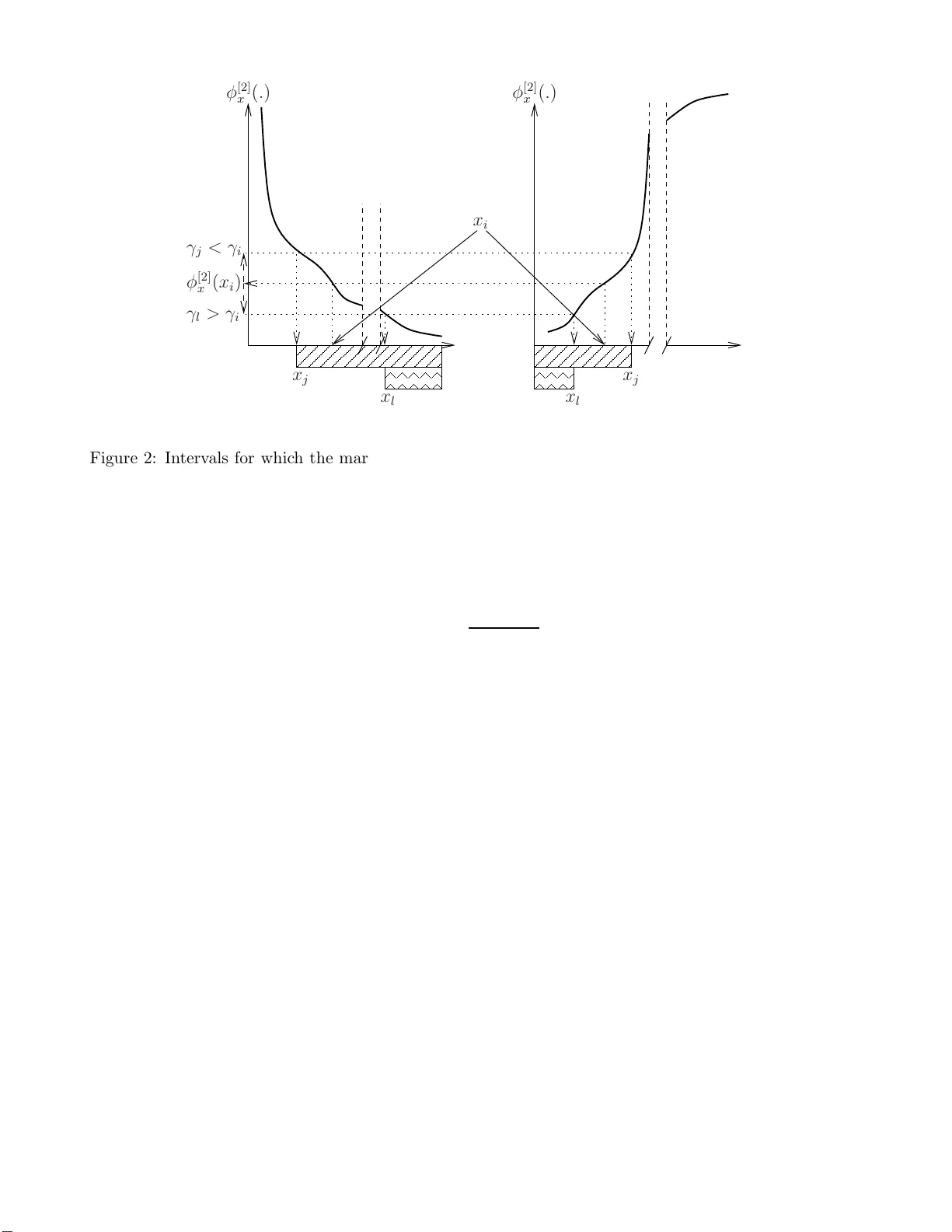
Staring at Economic Aggregators through Information Lenses Ric hard No c k Cen tre d’Etude et de Rec herc he en Economie, Gestion, Mo d ´ elisation et Informatique Appliqu ´ ee ( Cere gmia — UAG), PO Box 7209 , Sc ho elc her 9 7275, F rance. rnock@marti nique.univ-ag. fr Nicolas Sanz Ceregmia — UA G, PO Box 792, Ca y enne 97400, F rance . Fred.Celime ne@martinique. univ-ag. fr F red C ´ elim ` ene Ceregmia — UAG, PO Box 7209 , Sc ho elc her 9 7275, F rance. Fred.Celime ne@martinique.univ-ag.fr F rank Nielsen LIX — Ecole P olytec hnique, P a la iseau 9 1 128, F rance & Sony Computer Science Lab orator ies Inc., 3-14- 1 3 Higashi Gotanda, Shinaga w a-Ku, 141-0 022 T oky o, Japan. Nielsen@acm .org Octob er 2 5, 2018 Abstract It is hard to e x aggerate the role of eco nomic aggregato rs — functions that summar ize numerous and / or heterogene o us data — in ec o nomic mo dels since the early XX th centu ry . In ma n y cases, as witnessed by the pioneering works of Cobb and Douglas, these functions were information quantities tailored to economic theories, i.e. they were built to fit economic phenomena. In this pap e r , we lo ok at these functions from the complementary side: information. W e use a r ecen t to olb o x built on top of a v a st class of distor tions coined by Br egman, whos e application fie ld riv als metrics’ in v arious subfields of mathematics. This to olbox makes it p ossible to find the quality of an a ggregator (for cons umptions , prices, lab or, capital, wages, etc.), fr om the standp oint of the information it carries . W e pr o ve a rather striking r esult. F rom the infor mational standp oint, well-known economic aggre g ators do b elong to the optimal set. As common economic assumptions en ter the analys is, this larg e set shrinks, and it essentially ends up exactly fi tting either CES, or Cobb-Dougla s, or bo th. T o summar iz e , in the r e lev a n t eco nomic contexts, one could not hav e crafted b etter some aggre g ator from the info r mation standp oin t. W e also discuss global economic b ehaviors of o ptimal information agg regators in gener a l, a nd pr e sen t a brief panora ma of the links b etw ee n econo mic and information aggrega tors. Keyw ords : Econo mic Aggregato r s, CE S, Cobb-Doug las, Breg man divergences 1 In tro d uction Since the end of the XIX th cen tu ry and the b irth of th e “neo-classica l” sc ho ol, mathematics ha v e pla y ed a gro w ing role in economics. With the works of L´ eon W a lras, the question of aggregation of the b eh a vior of many in dividuals has risen and b ecome central in the economic theory . In order to represent as well as p ossible the evo lution of these aggregat e v ariables, some mathematical f unctions ha v e b een p rop osed and b ecome ve ry famous in the economic literature. 1 One of th e most famous n eo-c lassical fu nction is the Cobb-Douglas [7, 19]. This function is of particular interest, since it allo ws for p erfect su bstitutabilit y b et we en the d ifferen t inpu ts it dep ends on. Another w ell-kno w n “linear” fu nction was later formulat ed by Leon tief [13], in wh ich inputs are con versely complement ary . The c h oice of su c h a function to describ e th e pro duction pr o cess has v ery strong implications at the macroeconomic lev el, as illustrated by man y results found by Keynesians economics in th e literature on gro wth theory . But b ey ond these differen t aggregate functions, one of the most recen tly built and w ell-kno wn one is the constan t elasticit y of s ubstitution (CES) function elaborated b y Arro w et al. [2]. I n deed, in the Cobb -Dougla s pro du ctio n f unction, the elasticit y of su bstitution of capital for lab or is fixed to unit y . This implies that a one p ercen t in crease in the capital s tock implies an equal one p ercent fall in labor inpu ts in order to main tain a constan t pro duction leve l, giv en the structure of relativ e pr ices. On the con trary , the CES function allo ws this elasticit y to lie b et w een zero and infi nit y , but to stay fixed at that num b er along and across the iso quan ts, wh ateve r the quan tities of inpu ts that are us ed in the pro duction pro cess. The main adv anta ge exhibited by the CE S f unction is that it encompasses the Cobb-Douglas, the Leonti ef and the Linear p ro duction functions, whic h are in fact limit and thus particular cases of it. Nev erth eless, one of the reasons economists ha ve ke pt on u sing simpler fun ctions suc h as the C obb-Douglas one is the h eavy calculus to which the CES function often leads, esp ecially at the p oin t where mo dels ha v e to b e closed. In a seminal wo rk, Dougla s in [10] highlights the imp ortance of the progresses in the field of statistica l inform atio n in the genesis of h is essa y . Pioneering wo rks of Cobb and Douglas [7], and Arro w et al. [2], un d erline the inductive n ature of the inception of th eir resp ectiv e fu nctions, as the purp ose was to fi t as b est as p ossible inf ormation quantit ies (ag gregators) to obs erv ed economic phenomena. In this pap er, w e tak e a d eductiv e route pav ed with a rigorous inf ormation m ateria l, to deriv e these fund amen tal qu an tities b ased on t wo assumptions: • an aggregator should alw a ys b e as informative as p ossible w ith resp ect to the data it su mmarizes (prices, consumptions, w ages, capital, lab or, etc.); • an aggrega tor might b e r equ ire to satisfy standard economic assump tions, relying on agg regator dualities (prices / consumptions, w ages / lab or, etc.), elasticiti es, marginal rates of substitutions, returns to scale, etc. The starting p oin t of our w ork is a class of d istortions coined in the sixties b y Bregman [6], in the con text of con vex pr ogramming. Though they were b orn four decades ago, it was only m uc h later that these distortions literally spr ead out to other fields, in clud ing statistics, signal pro cessing and classification [12], fields where th ey had to b ecome und eniably cen tral. It w as ev en later th at was disco vered their broad applicabilit y , with an axiomatiz ation that mak es it p ossible to relate them to metrics and their sp a wn s [3]. V ery roughly , Br e gman diver genc es are non-negativ e fun ctio ns that meet the same iden tit y of indiscern ib les condition as metrics, and rely on a third assum ption ab out the existence of a particular ag gregator whic h minim izes the to tal d istortion to a s et. This last condition, which can b e rephr ased as a maxim um like liho o d condition, makes this aggregator the most informative quant it y ab out the data, and we call it a L ow D istortio n A ggr e gator (LD A). In this pap er, our con tribution is thr eefold. First, we mak e a clear partition of economic aggregators with resp ect to inform atio n, as w e sh o w that some ar e LD As (CE S , Cobb-Douglas), some are limit cases of L D As (Leonti ef ), and some are n either (Mitsc herlic h-Spillman-vo n Th ¨ unen). W ithout more assumptions, the set of all LD As is huge, y et we sh o w that global trends of economic relev ance can b e easily sho wn f or all, such as on marginal rates of su bstitution, and the set can b e qu ite easily drilled do wn for aggregators with general b eha viors, su c h as conca vit y or conv exit y . Th is, in fact, is our last con tr ib ution. Our main con tribution is to sho w that, wh en we plu g in v arious s tand ard economic 2 assumptions (see ab o v e), the set of all LDAs r ed uces to a particular sub set which pr e cisely matc h es CES, Cobb-Douglas, or b oth sets. This n o ve l adv o cacy for the use of these p opu lar aggregators b rings a very strong information-theoretic r ationale to their “economic” existence. The remainin g of the pap er is structured as follo ws. Section 2 p resen ts LD As and their main prop erties. In Section 3 , we relate co mmon economic aggregators to LDAs. Section 4 discuss es additional prop erties of LDAs. A last section concludes th e p ap er, with a v en ues for f uture researc h. In order not to laden the pap er’s b o dy , all p r oofs hav e b een p ostp oned to an app endix. 2 Lo w-distortion aggreg ators F or any strictly con vex fun ction ϕ : X → R differen tiable on in t( X ), with X ⊆ R d con vex, the Br e gman Diver genc e D ϕ with generator ϕ is [6, 3]: D ϕ ( x || y ) def = ϕ ( x ) − ϕ ( y ) − h x − y , ∇ ϕ ( y ) i , (1) where h· , ·i d enotes the in ner pro du ct, and ∇ ϕ def = [ ∂ ϕ/∂ x i ] ⊤ is the gradien t op erator. In this pap er, b old notations such as x sh all denote ve ctor-based notations, and blac kb oard faces suc h as X sets of (tuples of ) real n u m b ers or natur al integ ers of R or N resp ectiv ely . D ϕ ( x || y ) is the difference b et w een the v alue of ϕ at x and the v alue at x of the h yp erplane tangen t to ϕ in y . Bregman divergence s enco de a n atural notion of distortion, as sho wn b y Theorem 1 b elo w. Its pro of is a sligh t v ariation of Theorem 4 in [3] (see also [4]). Theorem 1 L et F : R d × R d → R b e a function that satisfies the fol lowing thr e e axioms ( ∀ x , y ∈ R d ): 1. non-ne g ativity: F ( x , y ) ≥ 0 ; 2. identity of indisc ernibles: F ( x , y ) = 0 if and only if x = y ; 3. the exp e ctation is the lowest distortio n ’s pr e dictor: for any r andom variable X whose distribution D has supp ort R d , arg y ∈ R d min E D F ( X , y ) = E D X ( def = µ X ) , (2) wher e E D denotes the mathematic al exp e ctation. Then F ( x , y ) = D ϕ ( x || y ) for some strictly c onvex and differ entiable ϕ : R d → R . (pro of: see the App endix) It is easy to c h ec k that an y Bregman dive rgence satisfies [1], [2] and [3] [4], and so Theorem 1 pr o vides a complete charac terization of Bregman div ergences, in the same wa y as conditions [1] and [2], completed with symmetry an d subadd itivit y , w ould axiomatize a metric. This p ositions Bregman d iv ergences with resp ect to n umerous metric-relate d n otio ns, and gives the imp or- tance of their main difference, eq. (2). Eq. (2) is fu ndamen tal b ecause it sa ys th at the (arithmetic ) exp ectatio n is the lo w est distortion p aramete r for a p opulation, regardless of th e distortion. Actually , eq. (2) sa ys muc h more: the exp ectation is maximum likeliho o d estimator o f data for a large set of distributions called the exp onential families . These f amilies con tain some of the most p opu lar distri- butions, suc h as Bernoulli, m ultinomial, b eta, gamma, normal, Ra yleigh, Laplacian, P oisson [4 , 15]. A remark able p rop ert y is that any memb er satisfies th e follo wing identit y [4]: log Pr [ x | θ , ϕ ] = − D ϕ ( x || µ θ ) + log b ϕ ( x ) . (3) 3 dom( ϕ ) φ ( x ) D ϕ ( x || y ) Div ergence name R d x 2 P d i =1 ( x i − y i ) 2 Squared Eu clidean norm R d + x log x − x P d i =1 x i log x i y i − x i + y i Kullbac k-Leibler div. P d id. P d i =1 x i log x i y i En tropy R d + − log x P d i =1 x i y i − log x i y i − 1 Itakura-Saito div. [0 , 1] x log x +(1 − x ) log (1 − x ) x log x y +(1 − x ) log 1 − x 1 − y Logistic loss T able 1: C orresp ondence b etw een v arious generators and their Bregman d ivergences. P d is the d - dimensional pr obabilit y simplex. The generator of the Bregman diverge nce is defined by ϕ ( x ) def = P d i =1 φ ( x i ) (see text). θ defines the so-calle d natural p arameters of the distribution, and b ϕ ( . ) is a normalizat ion function. It follo ws from (3 ) and (2) that the maxim um lik eliho o d estimator of d ata is the exp ectation parameter µ θ . Some Bregman div ergences ha ve b ecome cornerstones of v arious fields of mathematics and com- puter science, as sho wn in T able 1. All of them are sep ar able Bregman div ergences [8], as they can b e c h aracte rized using a strictly con ve x function φ : I ⊆ R → R , the generator of the Bregman d iv ergence b eing ju s t: ϕ ( x ) def = X i φ ( x i ) . (4) It migh t seem that (2) unv eils a strong assymetry b etw een the t wo p arameters of a Bregman div ergence, all the more as that Bregman dive rgences are not symmetric in almost all cases [15]. This distinction b ecomes more sup erfi cial — bu t crucial for our p urp ose — as L e gendr e duality enters the analysis. Any Bregman div ergence is indeed equal to a Bregman d iv ergence ov er swapp e d parameters in the generator’s gradien t space. T o mak e it formal, the generator ϕ of a Bregman div ergence admits a conv ex conju gate ϕ ⋆ : R d → R give n b y [17]: ϕ ⋆ ( y ) def = s up x ∈ X {h x , y i − ϕ ( x ) } (5) = h y , ∇ − 1 ϕ ( y ) i − ϕ ∇ − 1 ϕ ( y ) , (6) where ∇ − 1 ϕ , the in v erse gradien t, is we ll-defined b ecause of the strict con v exit y of ϕ . The follo w- ing Theorem, whose pr oof follo ws from plugging (6) in (1), states the d ual symm etry of Bregman div ergences. Theorem 2 D ϕ ( x || y ) = D ϕ ⋆ ( ∇ ϕ ( y ) || ∇ ϕ ( x )) . It follo w s from (2) and the strict conv exit y of ϕ that the minimizer of the exp ected dual div ergence D ϕ ⋆ ( . || . ) can b e expr essed in int( dom( ϕ )) as: µ ϕ def = ∇ − 1 ϕ ( E D ∇ ϕ ( X )) . (7) The s et spanned by (7), w h ic h includes the arithmetic av erage (tak e φ def = x 2 / 2 in (4)), is close to the set of f -means [11], a set whose studies date b ac k to the early thirties, by Kolmogoro v and Nagumo. T o summarize the conceptual ju stificatio ns for the us e of aggr e gators ha ving shap e (7), three main motiv ations could ju s tify their use: first, they are all optimal distortion estimators — and the only 4 ones to b e optimal – in th e sen se of Th eorem 1; second, they enco de maxim um like liho o d estimators for a ma jorit y of p opular distribu tions; third, they en co de geo desic-lik e curv es in the geometry of the information space [15 ]. F or all these reasons, they can b e co nsider ed the b est information agg regators for the data they summarize (data whic h could b e prices, consumptions, lab ors, wa ges, etc. in the economic world). Hereafter, we consider av erages (7) with fi n ite su pp ort of size m > 0, and r eplace (2) b y the more general searc h f or arg y ∈ R d min P m i =1 γ i F ( x i , y ), with γ i > 0 , ∀ i = 1 , 2 , ..., m . A rapid glimpse at (2) r ev eals that th e solution is P m i =1 γ i x i , and so the extension of (7) to the minimizer of a general w eigh ted sum of Bregman div ergences no w tak es the more general form: µ ϕ def = Γ ∇ − 1 ϕ 1 Γ m X i =1 γ i ∇ ϕ ( x i ) ! , (8) with Γ def = P m i =1 γ i . Because of (2 ), any µ ϕ as in (8) is called a lo w-d istortion aggregato r (LD A). F or economic and mathematical reasons, a ve rages ha ving the f orm (8) with a conca ve or con vex regime are particularly in teresting. The follo wing Theorem allo ws to catc h the p icture of where conca vit y and conv exit y lie: the symmetric dual av erage of some a v erage (8) enjo ys the sym m etric regime. If one is conca v e, the other is conv ex and vic e versa . Theorem 3 µ ϕ is c onc ave if and only if µ ϕ ⋆ is c onvex. (pro of: see the Ap p endix). T o finish up with information, we state the last result that shall b e useful in the s equ el. Theorem 4 L et µ ϕ a c onc ave (r esp. c onvex) aver age that fol lows (7). Then it is u pp erb ounde d (r esp. lowerb ounde d) by the sum: s = P m i =1 γ i x i . F urthermor e, ∇ ϕ is c onc ave (r esp. c onvex), and ∇ − 1 ϕ is c onvex (r esp. c onc ave). (pro of: see the App end ix). 3 Economic Aggregators Because a LDA µ ϕ do es n ot c hange by adding a constant term to its generator ϕ , it sh ou ld b e k ept in mind that generators shall b e given up to an y s uc h constant. F urthermore, our analysis tak es place for separable generators, that meet (4). Th is eases r eadabilit y w h ile encompassing most economic settings. F o r suc h reasons, it is also con v enient to assu me that dom φ ⊆ R + , and introdu ce the follo wing notation for an y relev ant k ∈ N ∗ : φ [ k ] ( x ) def = d k φ ( x ) d x k . (9) 3.1 Optimalit y of E conomic Aggregators Let x ⋆ denote an aggrega tor f or v alues x 1 , x 2 , ..., x m ( m ∈ N ∗ ). One of the most common economic aggrega tors is th e CES function [2]: x ⋆ def = m X i =1 β i x σ − 1 σ i ! σ σ − 1 . (10) The form ulation in σ is not the simplest b ut it is in tentio nal, as it depicts the constan t elasti cit y of substitution inside v alues aggregated [5]. Here, β i > 0 is the weigh t of aggregated v alue x i . F ur ther 5 constrain ts of economic relev ance are generally imp osed on σ dep ending on the setting in whic h (10) is applied [5]; in order to remain as general as p ossib le, w e consider the unrestricted setting for w hic h σ ∈ R ∗ \{ 1 } . W e now show that a C ES is a LDA. Lemma 1 Any CES x ⋆ as define d in (10) is a LDA for the gener ator φ ces ( x ) def = ax 2 − 1 σ , (11) with a ∈ R ∗ any c onstant for which (11) is c onvex, and γ i def = β i B 1 σ − 1 , ∀ i = 1 , 2 , ..., m . Her e, B def = P m i =1 β i . (pro of: see th e App endix). Aggregato rs are sometimes tied u p via imp ortan t economic equalities. O ne example relates prices and consum ptions. Let m denote the num b er of goo ds, and the consu mption function of goo d i is noted c i . The price of goo d i is p i . Tw o ag gregators for consu mptions and prices, resp ectiv ely c ⋆ and p ⋆ are d evised so as to satisfy: m X i =1 c i p i = p ⋆ c ⋆ . (12) F urther economic assumptions can b e made, suc h as the conca vit y of c ⋆ , w hic h indicates the pr eference for dive rsit y [9]. The p opular c hoice for c ⋆ is a CES function (10) [2]. Notice th at the weigh ts in the LD A ( γ i ) are different from the we igh ts in the C ES ( β i ). Mo dulo a simp le normalization of the CES , they remain equal. If w e multiply c ⋆ b y B 1 / (1 − σ ) , the normalized CES obtained is such that γ i = β i . F urthermore, this normalization, for whic h B 1 / (1 − σ ) = m 1 / (1 − σ ) when all β i = 1, is one wh ic h turns out to p la y a key role in economic mo dels [5]. The price aggregat or, p ⋆ , can b e foun d b y insp ecting (12) after remarking that p artial deriv ativ es on the left and r ight-hand sid e must also coincide. After a standard deriv ation using (10) for c ⋆ , we obtain that th e price index has th e form: p ⋆ = m X i =1 β σ i p 1 − σ i ! 1 1 − σ . (13) p ⋆ has also the general CES form of (10); for completeness, we charac terize b elo w its LD A (pro of similar to Lemm a 1). Lemma 2 L et δ i def = β σ i , and ∆ def = P m i =1 δ i . The pric e index i n (13) is a LDA for the gener ator: φ p ( x ) def = bx 2 − σ , (14) with b ∈ R ∗ any c onstant for which (14) is c onvex, and γ i def = δ i ∆ σ 1 − σ , ∀ i = 1 , 2 , ..., m . Mo dulo the normalization of the CES f or c ⋆ , and the c hoice β i = 1, (13 ) wo uld return to the con v en- tional c hoice in whic h β σ i → 1 /m . It is quite a remark able fact that p ⋆ and c ⋆ are LD A under the sole assumptions of (12) and c ⋆ is a CES . Su c h a p rop ert y also h olds f or lab or and w ages. Su pp ose we hav e n consumer-w orke rs, eac h of whic h selling a particular lab or t yp e; let w j b e the w age for lab or-t yp e j and n j the demand for lab or-type j , for j = 1 , 2 , ..., n . Then there exists an aggregate lab or-demand index n ⋆ , and a wa ge ind ex w ⋆ , suc h that [5]: n X j =1 w i n i = w ⋆ n ⋆ . (15) 6 The CE S form f or w ⋆ [5] implies b oth the LD A prop erty for w ⋆ and n ⋆ (Lemmata 1 and 2). T o summarize, p opular aggregato rs for consumptions, prices, lab or and w ages are all LD As, which m eans that they are all optimal from the information theory s tandp oin t. Before drilling do w n f urther into the prop erties th at yield relationships lik e (12) or (15), let u s give a brief p anorama of which Bregman div ergences are in v olv ed so far. The Bregman d iv ergence of a CES (10) is: D φ ces ( x || z ) = a m X i =1 x 2 − 1 σ i − 2 − 1 σ x i z 1 − 1 σ i + 1 − 1 σ z 2 − 1 σ i . (16) Since any CES is a LD A, it follo ws that Cobb-Douglas and Leon tief fun ctions are limit LD As, re- sp ectiv ely when σ → 1 and σ → 0 + . While Leontie f function, x ⋆ def = min i { β i x i } , d oes not admit a generator (it is not differentiable) , C obb-Douglas, x ⋆ def = m Y i =1 x β i i , (17) admits one, wh ic h is: φ cd ( x ) def = b ( x log x − x ) (18) = bφ kl ( x ) (see T able 1; b ∈ R + , ∗ is an y constan t). If w e lo ok at the pr ice ind ex in (13), w e get the follo wing result. Lemma 3 Fix b = 1 / ((2 − σ )(1 − σ )) in (14), assuming σ 6 = 1 , and let φ IS def = − log x (se e T able 1). Then lim σ → 2 D ϕ p ( x || z ) = D ϕ IS ( x || z ) . (19) This r esult is easily p ro ven once w e r emark that x k ≈ 1 + k log x + o ( k ). The right-hand sid e of (19) is Itakura-Saito diverge nce (T able 1). T og ether with the fact that th e limit d iv ergence f or c ⋆ is Kullbac k-Leibler divergence wh en σ → 1, we get the generators for tw o p opu lar dive rgences of signal pro cessing and statistics [15]. A w ell-kno wn similar result holds for a p articular su b set of Bregman div ergences, Amari α -div ergences, for which [1]: φ a ( x ) def = 4 x − x 1+ α 2 / (1 − α 2 ) , α ∈ [ − 1 , 1] . (20) T aking limits of the generator when α reac hes th e in terv al b oun ds yields Itakura-Saito and Ku llbac k- Leibler divergences. 3.2 Completeness of Economic Aggregators In this section, we consid er some relev an t economic assump tions ab out aggregat ors, and s ho w that any LD A that w ould meet su c h assumptions would n ecessarily b elong to a particular sub class of LD As. This sub class is called “complete” for the assump tion at hand. The fi rst assu mption we consider is ab out any tw o dual aggregators x ⋆ (for x 1 , x 2 , ..., x m ) and z ⋆ (for z 1 , z 2 , ..., z m ) that wo uld meet the follo w ing abstraction of (12) and (15): m X i =1 x i z i = x ⋆ z ⋆ . (21) 7 W e sho w that C ES tur n s out to b e complete for dual aggregat ors, as the LD A assumption for any of the tw o implies that b oth are C ES. W e state it more formally b elo w. Theorem 5 Supp ose that at le ast one of x ⋆ and z ⋆ that satisfies (21 ) is a LDA. Then b oth x ⋆ and z ⋆ ar e CE S. F u rthermor e, they ar e linke d thr ough the identity φ [2] z = d φ [2] x − 1 for some d ∈ R ∗ . (pro of: see the App endix). CES turns out to b e complete from another stand p oin t: elasticit ies. Consider some LDA x ⋆ ; its elasticit y with r esp ect to x i ( i = 1 , 2 , ..., m ) is defin ed as: e x i x ⋆ def = d x ⋆ x ⋆ / d x i x i . (22) Consider the eco nomic assu mption that all elasticities sum to one. W e show that CES is complete for this assu m ption. Theorem 6 L et x ⋆ ( x 1 , x 2 , ..., x m ) b e any LDA. Then P m i =1 e x i x ⋆ = 1 i f and only if x ⋆ is a CES. (pro of: see the App endix). W e now switc h to another imp ortant economic quantit y , the s u bstitution elasticit y of x i for x j in x ⋆ , e x i → x j x ⋆ , defin ed by: e x i → x j x ⋆ def = d( x j /x i ) x j /x i / d s x i → x j x ⋆ s x i → x j x ⋆ , (23) where s x i → x j x ⋆ def = ∂ x ⋆ ∂ x i / ∂ x ⋆ ∂ x j (24) is the marginal rate of substitution of x i for x j . Another economic assumption commonly encount ered is the fact th at e x i → x j x ⋆ is assumed to b e unit. W e sh o w that the complete LD A sub class for this assumption is, this time, Cobb -Dougla s. Theorem 7 L et x ⋆ ( x 1 , x 2 , ..., x m ) b e any LDA. Then, th er e exists indic es 1 ≤ i, j ≤ m such that e x i → x j x ⋆ = 1 i f and only if x ⋆ is a Cobb- D ouglas. (pro of: see the App en d ix). It is int eresting to notice that the L D A assumption comp etes with the homogeneit y assumptions ab out x ⋆ that are r equ ired to come up with the same result (i.e. without making the LD A assu mption). The fact that w e are able to alleviate the economic setting (homogeneit y ties u p x ⋆ with assump tions on returns to scale) while end ing up with the s ame aggregato r mak es information a very v aluable companion to in tr o du ce the true nature of p opu lar economic aggrega tors. One qu estion whic h remains is how ev er w hat w ould imply the homogeneit y assumption alone in a LD A setting. W e d efine x ⋆ to b e homogeneous of d egree a ∈ R ∗ if and only if: x ⋆ ( λx 1 , λx 2 , ..., λx m ) = λ a x ⋆ ( x 1 , x 2 , ..., x m ) , (25) for every λ ∈ R + . W e show that the complete LD A sub class for this assu mption v aries dep end ing on the v alues of a . Without losing to o muc h generalit y , the Theorem assumes that φ [2] x is different iable. Theorem 8 L et x ⋆ ( x 1 , x 2 , ..., x m ) b e any LDA, and a ∈ R ∗ . Then: • x ⋆ is homo gene ous of de gr e e a 6 = 1 if and only if it is a Cobb-D ouglas; • x ⋆ is homo gene ous of de gr e e a = 1 if and only if it is a Cobb-D ouglas or a CES. (pro of: see the App end ix). 8 Optimalit y Completeness (LD A) Th. 5 Th. 6 Th. 7 Th. 8 Th . 8 ( a 6 = 1) ( a = 1) CES Y Y Y N N Y Cobb-Douglas Y N N Y Y Y Leon tief L L L N N L MST N N N N N N T able 2: Summary of ou r results on four families of aggregators: CES, Cobb -Douglas, Leon tief and MST, w ith resp ect to the assump tions made in Th eorems 5, 6, 7 and 8 (see text for d etail s). 4 Discussion F amilies of economic aggregators T able 2 summarizes th e results obtained on thr ee f amilies of aggrega tors: C ES, Cobb-Douglas and Leontie f. F or eac h of them we giv e the indication of whether they are LDAs (Y/N), whether th ey can b e in the limit (L), and w hether they b ecome complete for the assump tions made in Theorems 5, 6, 7 and 8 (Y / N / L ). Remark that the T able mak es a clear distinction b et w een all these three families of aggregators. There exists v arious other aggregators in economic w orks; for ob vious space reasons, w e ha v e c hosen to fo cus on the most p opular, and it turns out that all hav e stron g relationships with LD As, either directly , or at the limit. In ord er to co v er the p ossible relationships b et w een aggregato rs and LD As, let us take a last example, of a general class of aggrega tors that we call Mitsc herlic h-Spillman-vo n Th ¨ unen (MST ) aggregators [14, 18, 19], a family in wh ic h the global form of aggrega tor x ⋆ reduces d irectly or after a v ariable c h ange to ( θ ∈ {− 1 , +1 } ): x ⋆ def = m Y i =1 (1 − exp( θ γ i x i )) . (26) Suc h aggregato rs date b ac k to the XIX th cen tu ry , and so they hav e pr eceded those we ha ve b een fo cusing on so far. What w e can show is that, con trasting with their su ccessors, MST aggregators are not LD As. Lemma 4 MST aggr e gators ar e not LDAs. (pro of: see the App end ix). Aggregators and economic constraints Modulo c h anges of v ariables, Theorems (5) - (8) could b e alleviate d from the constraint of the LDA c h oice und er their r esp ectiv e economic assu m ptions. Consider for example (21), in which w e w ould lik e to plu g an y LD A. T o b e concrete, let us stic k to p rices and consump tions in (12). Consider th e generator φ ˜ c of some strictly conca v e LD A ˜ c ⋆ that aggregat es its consumptions ˜ c i for i = 1 , 2 , ..., m . Let u s say that strict conca vit y is c h osen b ecause usual consump tion indexes are conca ve, to ind icate the consumer’s preference for div ersit y [9]. C onsider the c hange of v ariables that in v olv es some (conca v e) C E S: c i def = φ [1] ces − 1 φ [1] ˜ c (˜ c i ) . (27) If we consider that consump tions c i are the actual observed consumptions (the ˜ c i ’s b eing “hidd en ”, non-observ ed consump tions), the aggregator c ⋆ for those lifted consumptions is a CES which may b e 9 ˜ c i ˜ c j ˜ c ⋆ p i > p ⋆ p j < p ⋆ φ [2] ˜ c ( x ) φ [2] ˜ c ( ˜ c ⋆ ) Figure 1: Pr ices vs consumptions for a conca ve consu m ption LD A in (30): r egardless of the LD A, for an y go o d i , if its price is larger (resp. smaller) than the price index, its consump tion cannot b e large r (resp. smaller) than the normalized consumption index (see text for details). plugged in (12). Reconstructing ˜ c ⋆ is immediate as we ha v e: ˜ c ⋆ = φ [1] ˜ c − 1 φ [1] ces ( c ⋆ ) . (28) In order n ot to laden the discu s sion, let us consider th at all w eigh ts β i = 1 / m , and that we keep the CES form for p ⋆ ( p i = ˜ p i ). What interests us here is not exactly the consum ption index ( c ⋆ ), b ut the normalize d index, c ⋆ def = c ⋆ /m , w hic h is really homogeneous to th e consu mption of a sin gle goo d. W e also define th e same ind ex ˜ c ⋆ for ˜ c ⋆ , and assume the same relationship as (28) for these tw o ind ices. Differen tiating (12) in c i yields: p i p ⋆ = φ [2] ces ( c i ) φ [2] ces ( c ⋆ ) , (2 9) from w hic h we obtain using (27 ) and (28): p i p ⋆ = φ [2] ˜ c (˜ c i ) φ [2] ˜ c ( ˜ c ⋆ ) . (30) Eq. (30) is interesting b ecause it displa ys a remark ably stable b eh a vior that holds for any conca ve LD A. Because of T heorem 4 and the con vexit y of φ , φ [2] ˜ c is m on otonic decreasing and strictly p ositiv e. Th us, it con v erges to wards some non negativ e v alue. Figure 1 giv es an ov erview of how pr ices and consumptions alw a y s b ehav e. There are t wo conclusions to dra w from the fi gure. T h e first is a sanit y c h ec k, as larger p r ices mean lo we r consumptions, a conclusion that follo ws from dividing (30) for distinct go o ds i and j . Indeed, if a go o d i has pr ice p i > p j , th en we shall hav e ˜ c i ≤ ˜ c j (notice, from (27), that it is equiv alent to s aying c i ≤ c j ). W e also r emark th at prices that are larger (resp. smaller) th an the p rice index mean consump tions that are smaller (resp . larger) than the normalized consumption index (see Figure 1). Th e second is the damp ening effect of prices on consumptions: a small differen ce on p rices ma y incur a v ery large difference on consumptions if those p rices are already small, and it can mak e almost no difference on consumptions if prices are high. 10 0000000 0000000 1111111 1111111 000000 000000 111111 111111 000 000 111 111 000 000 111 111 φ [2] x ( . ) φ [2] x ( . ) φ [2] x ( x i ) x l γ l > γ i γ j < γ i x i x l x j x j Figure 2: Int erv als f or whic h the marginal rate of sub stitution of x i for x j (or x l ) exceeds u n it when x ⋆ is a conca v e (left) or conv ex (right) LD A. Global b eha viors of LD As as economic a ggregators Ev en withou t a change of v ariables, LD As sometimes displa y economic regimes with extremely close b eha viors, as witnessed b y the marginal rate of sub stitution of x i for x j . In deed, whenev er x ⋆ is a LD A, we hav e: s x i → x j x ⋆ = γ i φ [2] x ( x i ) γ j φ [2] x ( x j ) . (31) Figure 2 d isp la ys the general b eha viors of s x i → x . x ⋆ as a fu nction of the conca vity or con ve xit y of x ⋆ . In the conv ex case, Theorem 4 and th e con v exit y of φ bring that φ [2] x is m on otonic increasing and strictly p ositiv e, h ence the sc hema depicted in Figure 2 (right). The dash ed rectangles depict the in terv als for whic h this marginal rate of substitution would b e greater th an 1, th at is, lo cations where we w ould b e willing to trade more than one unit of x . to obtain one u nit of x i . The b ehavio r is remark ably link ed with the global regime of x ⋆ : when it is conca v e, Figure 2 (left) clea rly displays a pr eference for d iv ersity , w hile wh en it is con v ex, Figure 2 (right ) sh o ws the symmetric trend , an a v ersion for div ersit y . Aggregators of aggregators and ec onomic programs LDA s m a y incorp orate heterogeneous quan tities and even LD As as w ell, as it is common for economic aggregato rs to integ rate other economic aggrega tors. Examples sho w how the wh ole aggregat e ma y b eha ve, and ho w global regimes underlin ed ab o ve for “b aseline” aggregato rs also emerge in a simple mann er for whole aggrega tes as w ell. C onsider the determination of the global consump tion index c ⋆ and money exp enses m (hereafter, m do es not refer anymore to the num b er of aggregated v alues) of a consumer, based on h is/her whole bud get r and price indices p ⋆ (w e do not mak e an y assumption on the form of c ⋆ and p ⋆ ). Th e consu mer solve s the maximization of a utilit y aggregator u ⋆ : max c ⋆ ,m u ⋆ s.t. p ⋆ c ⋆ + m = r . (32) 11 Let u s inv estigate th e general solution of (32), u nder the sole assum ption that u ⋆ is some conca v e LD A that mixes consumption and money via some Bernoulli distribu tion B ( γ ) for co efficien ts γ i , i = 1 , 2 whic h lev erages the im p ortance of consumption and money in u ⋆ : u ⋆ = ∇ − 1 φ u ( γ ∇ φ u ( c ⋆ ) + (1 − γ ) ∇ φ u ( m/p ⋆ )) . (33) The follo wing Theorem states the f u ndamen tal relationships that ma y b e us ed to determine c ⋆ and m , for any conca ve LD A. Theorem 9 The optimal values for c ⋆ and m in (32) satisfy: φ [2] u ( c ⋆ ) = 1 − γ γ φ [2] u r p ⋆ − c ⋆ , (34) φ [2] u m p ⋆ = γ 1 − γ φ [2] u r p ⋆ − m p ⋆ . (35) (pro of: see th e App end ix). Bec ause φ [2] u is monotonous decreasing and strictly p ositive , solving (34) and (35 ) can b e done via a simple d ic hotomic searc h in the general case wh ere φ [2] ( x ) w ould b e strictly monotonous (when strict monotonicit y is not ensu red, we ma y logically en d u p with an interv al of v alues). Th e p ro of of Theorem 9 reve als an interesti ng relationship b et we en consump tion and m oney , namely: φ [2] u ( c ⋆ ) = 1 − γ γ φ [2] u m p ⋆ . (36 ) Figure 3 displa ys this relationship, and m ore precisely wh ere m/p ⋆ is lo cated with resp ect to c ⋆ , dep ending on γ . Remark that when γ > 1 / 2 , whic h marks the predominance of consumption o ver money in the consumers’ u tilit y function u ⋆ , Figure 3 sho ws that c ⋆ indeed r epresen ts more th an money in the whole b u dget, as w e recall that c ⋆ + ( m/p ⋆ ) = r /p ⋆ . The symmetric situation holds when γ < 1 / 2 . 5 Conclusion The aim of this pap er wa s to d emonstrate that the choice of v arious economic aggrega tors, that hav e mainly b een originally b uilt on empirical economic ground s, meet optimalit y from the information standp oin t, and most notably , remain the only optimal aggrega tors as v arious standard economic assumptions are consid ered. In th ese settings, th ey are the only wa ys one could su mmarize at b est n umerous individual v ariables in aggregate indexes, designed to r epresen t their collectiv e economic b eha vior at the global lev el. W e ha ve also displa y ed the fact that inform atio n aggregators mee t consisten t economic b eha v iors for f airly general settings, and th at these b ehavio rs may b e extracted using s imple deriv ations. Our resu lts might ha v e applications, an d implications, on v arious economic areas whose theoretical and empirical results d ep end on the u se of f unctions embo died in the LDAs studied in this pap er. This includ es, for instance, theories suc h as imp erfect comp etition, international trade and gro w th theory . LDAs migh t mak e it p ossible to transf er , in the economic frameworks, three main adv antag es that Bregman divergence s in general ha v e extensively brought to s tatistics, classification and ev en geometry [4, 15, 16]. First, the analytical expression of a LDA can b e extremely complex, y et the abstraction of the general form (8), and its prop erties (Theorems 3, 4), mak es it p ossible for f airly complex b eha viors to b e derive d in a simple m anner. Second, it has b een sh o wn in th e aforement ioned fields that algorithms f or solving differen t pr ob lems on a sin gle divergence could b e generalized to solving the same pr oblems on an y dive rgence. Last, but n ot least, LDAs enco de such a large v ariet y of fun ctions that they could m ake it easier to find tigh t fits to economic d ata. 12 φ [2] u ( c ⋆ ) c ⋆ φ [2] u ( x ) φ [2] u m p ⋆ m p ⋆ y = x y = γ 1 − γ x, γ > 1 / 2 y = γ 1 − γ x, γ < 1 / 2 Figure 3: Depiction of the relati onships b et w een consump tion and money for the consumer’s program (32) (wh en γ > 1 / 2 and γ < 1 / 2 ; see text f or details). Ac kno wledgmen ts The auth ors than k Pierre Cah uc for h a ving read an earlier draft of this pap er. R. No c k and N. Sanz gratefully ac kn o wledge sup p ort from the State Secretary of Ultrap eripheric Regions through grant 07MAR15 “Co ordination F ailures and Distortions in Economic Mo dels”. F. Nielsen and R. No c k are supp orted by National Researc h Agency (ANR) Blanc pro ject ANR-07-BLAN-032 8-01 “Computa- tional In f ormation Geometry and Applications”. References [1] S.-I. Amari and H. Nagaok a. Information Ge ometry . C ambridge Un iv ersity Press, 1999. [2] K.-J. Arr ow, H.-B. Chenery , B.-S. Minhas, and R.-M. Solo w. Capital- lab or substitution and economic efficiency . R eview of Ec onomics and Statistics , 43:225–250 , 19 61. [3] A. Banerjee, X. Guo, and H. W ang. On the optimalit y of conditional exp ectation as a br egman predictor. IEEE T r ans. on Information The ory , 51:2664–2 669, 2005. [4] A. Banerjee, S. Merugu, I. Dhillon, and J . Ghosh. Clusterin g with bregman div ergences. J ournal of M achine L e arning R ese ar ch , 6:1705 –1749, 2005. [5] O.-J. Blanc h ard and N. Kiy otaki. Monop olistic Comp etition and the Effect of Aggregate Demand. Americ an Ec onomic R eview , 77:647 –666, 1987. [6] L. M. Bregman. The relaxation metho d of finding the common p oint of con ve x sets and its application to th e solution of problems in conv ex programming. U SSR Comp. M ath. and Math. Phys. , 7:200– 217, 1967. [7] C. Cob b and P .-H. Douglas. A theory of p rod uction. A meric an Ec onomic R evi e w , 18:139–16 5, 1928. 13 [8] I. Dhillon and S. Sra. Generalized non-negativ e matrix appro x im ations with Bregman d iv ergences. In A dvanc es in Neur al Information Pr o c essing Systems 18 , 2005. [9] A. -K. Dixit and J.-E. Stiglitz. Monop olistic comp etition and optim um pro du ct div ersit y . Amer- ic an Ec onomic R ev iew , 67:297–3 08, 1977. [10] P .-H. Douglas. The The ory of Wages . Macmillan, 1934. [11] J .-E. Littlew o o d G.-H. Hardy and G. Poly a. Ine qualities . C am br idge Univ ersit y Pr ess, 1967. [12] C . Gentile and M. W armuth. Pro v in g relativ e loss b ounds for on-line learning algorithms us- ing Bregman d iv ergences. In T utorials of the 13 th International Confer enc e on Computational L e arning The ory , 2000. [13] W. Leonti ef. The Structur e of the Americ an Ec onomy . Harv ard Un iversit y Press, 1941. [14] E.-A. Mitsc h erlic h. Das gesetz d es minimums und das gesetz des abnehmenden b o denertrages. L andw. Jahrb. , 38:537–55 2, 1909. [15] F. Nielsen, J.-D. Boissonnat, and R. No c k. On Bregman V oronoi diagrams. In Pr o c. of the 19 th ACM-SIAM Symp osium on D i scr ete Algorith ms , p ages 746–755, 2007. [16] R. No c k an d F. Nielsen. On W eigh tin g Clu stering. IEEE T r ans. on Pattern A nalysis and M achine Intel ligenc e , 28:1223–1 235, 2006. [17] R. T. Ro c k afellar. Convex A nalysis . Princeton Univ ersit y Press, 1970. [18] W.-J. Sp illman. The law of diminishing r eturns . W orld Bo ok Co., 1924. [19] J .-H. v on Th ¨ unen . Der isolierte Staat in Beziehung auf L andwirthschaft und N ationa l¨ okonomie . Fisc h er , 1930 . 6 App end ix 6.1 Pro of of Theorem 1 Theorem 4 in [3] states the result for a function that meets [1], [3] and F ( x , x ) = 0 , ∀ x ∈ R d (the ⇐ in [2]). F also meets ident it y of in discernibles as otherwise indeed, (2) w ould b e violated for any distribution with distinct x and y as sup p ort and suc h that F ( x , y ) = 0. In this case, the solution of the left-hand s id e of (2) would b e x or y , bu t not their a v erage. 6.2 Pro of of Theorem 3 Because of its indep end en t in terest for Bregman diverge nces, w e state the pr oof in the most general form: we do not make the assu mption that the generator is s eparable (4). Without loss of generalit y , w e assume Γ = 1 in (8). Th e concavi t y of µ ϕ means: E j ∇ − 1 ϕ ( E i ∇ ϕ ( x ij )) ≤ ∇ − 1 ϕ ( E i ∇ ϕ ( E j x ij )) . (37) Let x ij def = ∇ − 1 ϕ ( x ′ ij ) for x ′ ij ∈ im( ∇ ϕ ). Applyin g ∇ ϕ on b oth sides ( ϕ is str ictly con v ex, so ∇ ϕ is bijectiv e) and r eplacing yields: ∇ ϕ ( E j ∇ − 1 ϕ ( E i x ′ ij )) ≤ E i ∇ ϕ ( E j ∇ − 1 ϕ ( x ′ ij )) . (38) 14 Eq. (38) states the c onv exit y of th e LD A µ def = ∇ ϕ ( E D ∇ − 1 ϕ ( X )), but L ege ndr e dualit y implies ∇ ϕ = ∇ − 1 ϕ ⋆ , and we get µ = µ ϕ ⋆ , the du al of LDA µ ϕ . T he pr oof starting f r om the conv exit y of µ ϕ follo ws th e same path. 6.3 Pro of of Theorem 4 W e p ro ve the fi rst part of the Theorem relating µ ϕ and s . Without loss of generalit y and to sa v e notations, w e make the p ro of for s ep arable generators (4) and tak e a route slight ly differen t from a direct use of Jen sen’s inequalit y . F urtherm ore, w e mak e the pro of for the conca ve case, assu ming (8) holds f or µ ϕ . Divisio n b y Γ do es not c hange the regime, and so µ ϕ / Γ = ∇ − 1 φ ( P m i =1 ( γ i / Γ) ∇ φ ( x i )) is conca ve . W e compute the tangen tial hyp erplane to µ ϕ / Γ when x i = ˜ x ∈ int(dom( φ )) , ∀ i = 1 , 2 , ..., m . W e kno w that since µ ϕ / Γ is conca ve , it sh all b e located b elo w this hyp erplane. W e ha v e ∇ µ ϕ / Γ = [ · · · ( γ i / Γ) φ [2] ( x i ) /φ [2] ( µ ϕ ) · · · ] ⊤ , and so the tangen tial hyp erplane to ˜ x = [ · · · ˜ x · · · ] ⊤ on any x is (with κ i def = γ i / Γ): z ( x ) = µ ϕ ( ˜ x ) + h x − ˜ x , ∇ µ ϕ / Γ ( ˜ x ) i = ˜ x + h κ , x i − ˜ x = h κ , x i = m X i =1 ( γ i / Γ) x i . ( 39) W e obtain µ ϕ / Γ ≤ P m i =1 ( γ i / Γ) x i . T his yields to the statemen t that µ ϕ ≤ s , as claimed. The p ro of for the con vex case is similar. The second part of the Theorem is an immediate consequence of th e first part, and so this ends the pro of of Theorem 4. 6.4 Pro of of Lemma 1 W e hav e φ [1] ces ( x ) = a (2 σ − 1) x ( σ − 1) /σ /σ and φ [1] ces − 1 ( x ) = ( σ x/ ( a (2 σ − 1))) σ/ ( σ − 1) . There remains to r emark that B = P m i =1 β i = B σ σ − 1 , use (8 ) and get: µ φ ces = B σ σ − 1 1 B σ σ − 1 m X i =1 B 1 σ − 1 β i x σ − 1 σ i ! σ σ − 1 , (40) whic h, after simplification, giv es (10), as claimed. 6.5 Pro of of Theorem 5 Without loss of generalit y , we first sh ow that, if x ⋆ is a L D A that meets (21), it is a C ES. W e thus assume the form (8) for x ⋆ . Using (8), w e obtain that x ⋆ satisfies (we replace in this pro of notation φ x b y the simpler φ for th e sak e of readabilit y): φ [1] x ⋆ Γ = 1 Γ m X i =1 γ i φ [1] ( x i ) , (41) with γ i ≥ 0 , ∀ i = 1 , 2 , ..., m , and Γ def = P m i =1 γ i . I f w e different iate (12) w ith resp ect to any x i , u s ing (8), w e get: z i z ⋆ = γ i φ [2] ( x i ) φ [2] ( x ⋆ / Γ) . (42) 15 W e multiply b oth sides by x i / (Γ x ⋆ ), s u m for all i , s implify via (12), rearrange, and get: x ⋆ Γ φ [2] x ⋆ Γ = 1 Γ m X i =1 γ i x i φ [2] ( x i ) . (43) No w, we matc h (41 ) with (43), and get that φ must satisfy: ∃ κ ∈ R ∗ s.t. φ [1] ( x ) = κxφ [2] ( x ) , ∀ x ∈ dom φ . (44) The s olution is found to b e φ [1] ( x ) ∝ x κ , i.e.: φ ( x ) = d κ + 1 x κ +1 , (45) with d ∈ R ∗ an y constan t that k eeps (45) con ve x. Matc hing (45) with (11) implies σ = 1 / (1 − κ ), and w e get the p ro of that x ⋆ is a CES . Lemma 2 then implies that z ⋆ is also a C ES. The pro of that φ [2] z = d φ [2] − 1 for some d ∈ R ∗ follo ws f rom the expressions of φ c and φ p in Lemmata 1 and 2. 6.6 Pro of of Theorem 6 It is we ll-kno wn that the prop erty is true for any CES, so w e inv estigate the reverse implication, and giv en any LD A x ⋆ , let φ (whic h replaces φ x for th e sak e of readabilit y) denote its generator. Using (8), w e obtain: e x i x ⋆ = γ i x i φ [2] ( x i ) x ⋆ φ [2] ( x ⋆ / Γ) . (46) Summing this for i = 1 , 2 , ..., m and rearranging, w e get th at the su m of elasticities of x ⋆ is one implies: x ⋆ Γ φ [2] x ⋆ Γ = 1 Γ m X i =1 γ i x i φ [2] ( x i ) . (47) This is exactly (43). There remains to conclude that x ⋆ is a CES as in the pro of of Theorem 5. 6.7 Pro of of Theorem 7 Implication ⇐ is folklore, so we in v estigate the r ev erse implication. F or any L D A x ⋆ whose generator is den oted φ , e x i → x j x ⋆ = 1 implies, with ˜ x ij def = x j /x i : d s x i → x j x ⋆ d ˜ x ij = s x i → x j x ⋆ ˜ x ij , (48) implying s x i → x j x ⋆ = κ ˜ x ij , for some κ > 0 wh ic h do es not d ep en d on x i or x j . W e obtain th at x ⋆ satisfies the follo wing P DE: x i ∂ x ⋆ ∂ x i − κx j ∂ x ⋆ ∂ x j = 0 . (49) Because x ⋆ is a LDA , we hav e ∂ x ⋆ /∂ x i = γ i φ [2] ( x i ) /φ [2] ( x ⋆ ), and so (49) b ecomes: γ i x i φ [2] ( x i ) = κγ j x j φ [2] ( x j ) . (50) 16 Since κ, γ i , γ j > 0 and (50) holds for any x i , x j ∈ int(dom φ [1] ), we obtain that xφ [2] ( x ) is constant. This yields φ ( x ) = b ( x log x − x ) f or some constan t b ∈ R + , ∗ , the generator of Cobb-Douglas LDA (18), as claimed. R emark : (5 0) also pr ov es that if m > 2 and we requir e unit sub s titution elasticit y b et w een m ore than t wo goo ds, then necessarily κ = 1 and γ i = γ j , ∀ i, j = 1 , 2 , ..., m . By means of words, fixing un it substitution elasticit y for more than tw o go o ds implies equal wei ght s for the go od s. Clearly , this is a prop ert y of Cobb -Dougla s aggregator rather than a r estrictio n for L DAs. 6.8 Pro of of Theorem 8 Implication ⇐ is folklore, so we in v estigate the r ev erse implication. F or any L D A x ⋆ whose generator is den oted φ , (25) implies: Γ ∇ − 1 φ 1 Γ m X i =1 γ i ∇ φ ( λx i ) ! = λ a Γ ∇ − 1 φ 1 Γ m X i =1 γ i ∇ φ ( x i ) ! . (51) T ak e some x i , i = 1 , 2 , ..., m , and differentiat e b oth sides in x i . W e get after simplifi cation: λφ [2] ( λx i ) φ [2] ( λ a x ⋆ ) = λ a φ [2] ( x i ) φ [2] ( x ⋆ ) . (52) • Case 1: a 6 = 1. Supp ose that x i = x j = z /λ, ∀ i, j = 1 , 2 , ..., m , whic h implies x ⋆ = z /λ as w ell. Eq. (52) simp lifies to: φ [2] ( λ a − 1 z ) = 1 λ a − 1 φ [2] ( z ) , (53) i.e. φ [2] is homogeneous of degree − 1. Euler’s homogeneous function Theorem implies that φ [2] satisfies the follo win g PDE: xφ [3] ( x ) + φ [2] ( x ) = 0 , (54) whose solution is φ [2] ( x ) ∝ 1 /x (with a p ositiv e factor), i.e. φ ( x ) = b ( x log x − x ) for some constan t b ∈ R + , ∗ , the generator of Cobb-Douglas LD A (18), as claimed. • Case 2: a = 1. I n this case, (52) implies: φ [2] ( λx ) = g ( λ ) φ [2] ( x ) , (55) for an y fu n ction g ( λ ) ∈ R ∗ . S upp ose w ithout loss of generalit y that g is C 1 , so that we can tak e the r oute of the pro of of Euler’s homogeneous f unction Theorem. W e differentiate (55) in λ , and tak e the resulting equ ation for λ = 1. W e obtain the follo win g P DE: xφ [3] ( x ) − g [1] (1) φ [2] ( x ) = 0 , (56) i.e. φ [2] ( x ) ∝ x κ , wh er e κ ∈ R ∗ is some constan t. W e obtain th at φ is either of the form of (11), or (18), th e generators of C ES and Cobb-Douglas LD As, as claimed. 17 6.9 Pro of of Lemma 4 After different iation on some x i , should it b e a LD A, any MST ag gregator x ⋆ with generator φ wo uld satisfy: γ i × − θ exp( θ γ i x i ) (1 − exp( θ γ i x i )) × x ⋆ = γ ′ i × φ [2] ( x i ) × 1 φ [2] ( x ⋆ ) , (57) with γ ′ i the LD A w eigh t for x i . This would imply φ [2] ( x ) = 1 /x , from w hic h the simplification of (57) yields that regardless of the v alue of x i , the corresp onding w eigh ts γ i and γ ′ i m ust satisfy − θ γ i x i exp( θ γ i x i ) = γ ′ i (1 − exp( θ γ i x i )), imp ossible. 6.10 Pro of of Theorem 9 Let λ b e the Lagrange multiplier for (32), s o that the Lagrangian is L def = u ⋆ + λ ( r − p ⋆ c ⋆ − m ), and w e obtain the follo wing stationarit y conditions for the optimum: ∂ L ∂ c ⋆ = γ φ [2] u ( c ⋆ ) φ [2] u ( u ⋆ ) − λp ⋆ = 0 , (58) ∂ L ∂ m = (1 − γ ) φ [2] u ( m/p ⋆ ) p ⋆ φ [2] u ( u ⋆ ) − λ = 0 . (59) Solving (59) for λ and simplifying (58) yields: φ [2] u ( c ⋆ ) = 1 − γ γ φ [2] u m p ⋆ . (60 ) There r emains to use th e identit y p ⋆ c ⋆ + m = r to get (34) and (35), as claimed. 18
Original Paper
Loading high-quality paper...
Comments & Academic Discussion
Loading comments...
Leave a Comment