Dependable k-coverage algorithms for sensor networks
Redundant sensing capabilities are often required in sensor network applications due to various reasons, e.g. robustness, fault tolerance, or increased accuracy. At the same time high sensor redundancy offers the possibility of increasing network lif…
Authors: ** 저자 정보가 논문 본문에 명시되어 있지 않음. (원문에 저자명 기재 필요) **
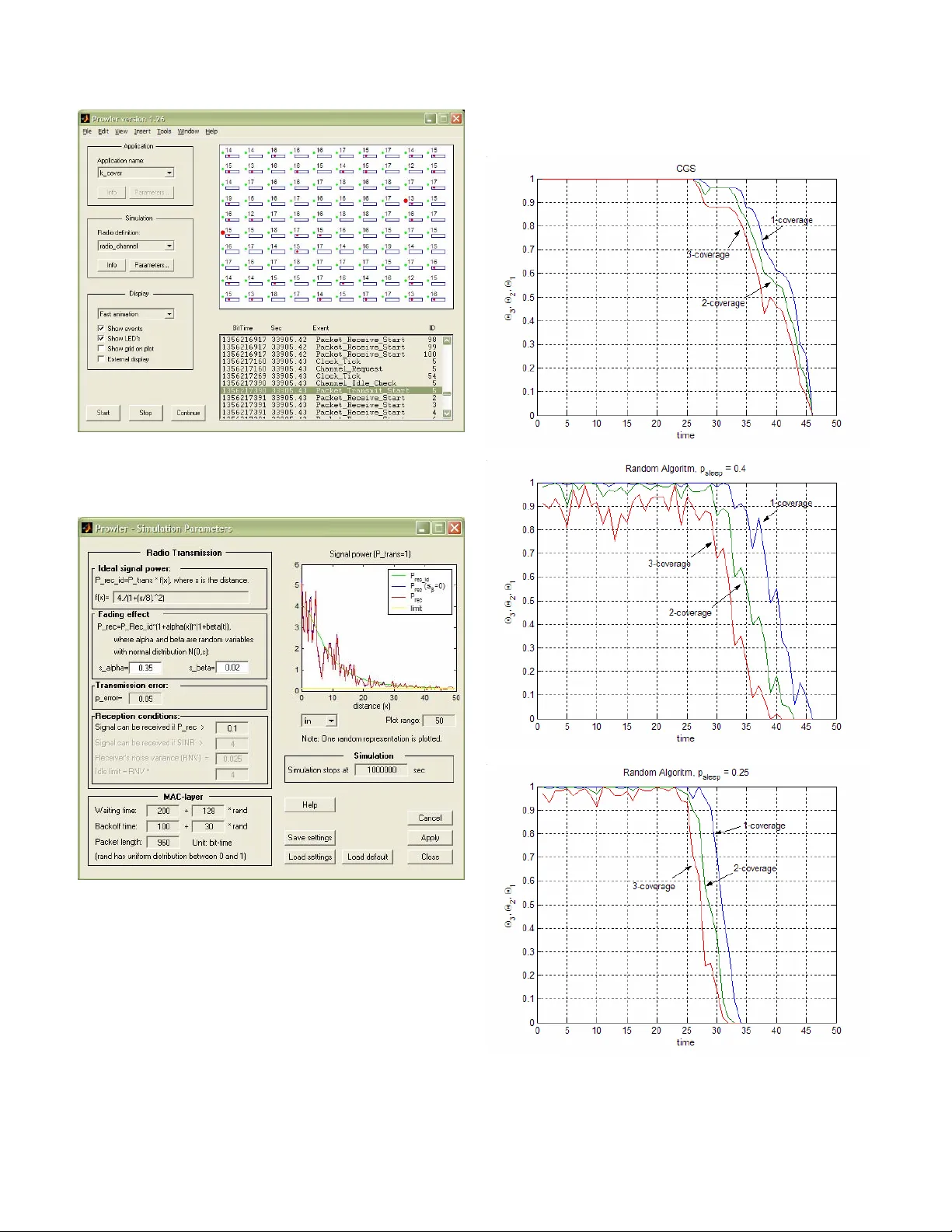
Inst rument ati on and Measur em ent Technol ogy C onferen ce – I MT C 2007 War saw, Pol and, May 1- 3, 2007 D e p e nda b l e k- c ov e ra ge a l g or i t hm s f or s e ns or ne t w or ks Gy ul a Si m o n 1,3 , Mi kl ó s M ol ná r 2 , Lá s zl ó Gön czy 3 , Ber nard Co us in 2 1 De pa rtme nt o f Co mpute r S cie n ce , U nive rsity of Pan non ia, H -8200, Veszp rém, Egy ete m u. 10, H un gar y 2 IRIS A, Cam pus de B eaulieu, 35 042 R ennes Cedex, F rance 3 Dept . of Me asureme nt and I n fo r m ation Sy stems, B udapest U ni ve rsit y of Technolo gy an d Ec onomics H -1117 B udapest, XI. Magy a r tudóso k krt. 2., H ungary Emai l: {simon ,gonczy }@m it.bme.hu , {molnar , bcousin} @irisa.fr Abst rac t – Re dunda nt sensing capa bilit ies are often re qu ired in sensor netw ork a pplic ation s due to var io us re asons, e.g . robu stnes s, fault tolera nce , or increa sed ac cura cy. At the same time high se nsor redundan cy offe rs the p ossib ility of i ncreas ing netw ork lifet ime by schedul ing s lee p interva ls fo r som e se nsors and stil l prov idin g contin uous se rvice w ith help of the re main ing ac tive sensor s. In th is paper ce ntral ized an d d istribu ted alg orithm s are p ropo sed to solv e the k- covera ge sensi ng p roble m and max imi ze ne tw ork life time . W hen phys ically po s sib le, the propo se d robus t Con trol led G ree dy Slee p Algori thm prov ides gu ara ntee d service indepe nde ntly of n od e and commu nication e rrors in the ne tw ork. The perf orman ce of the algorithm i s illustr ated and compa re d to resul ts of a rando m solution by simu latio n examp l es. Keywor ds – senso r netw or k, k-cove rage, de pendable , s lee p- schedul ing. I. INTRODU CTI ON Wir eless sen s or n et work s ar e co n str uct ed fr o m s m al l, au t on om ous s en s or s an d ar e u t il iz ed f or va r i ou s m ea sur em ent purpos es . Th e individual pow er capacity of th e senso r s is v e r y limite d (us i ng ba tte ries it m ay be only some day s) b ut the e xpe c t ed us ef ul lif e time of the netw ork is requi r ed to be i n t he r a nge o f w ee ks o r mo nt hs , d e pe ndi ng o n t h e appl ic at io n. To ac hie v e netw o rk longe v ity l ow dut y cyc le o pe ratio n is util ize d . I n co nti nuou sly operat ing s e nso r netwo rks r edu ndant se nsors are deploy ed from w hich only a little sub se t is activ e at a time ; t he maj o r par t o f senso r s is turned o ff an d t h us sav es energy . In redu n da nt de nse se nsor netwo rks vario us sc h edul ing algo r ithms a r e use d to c o ntr ol en er gy con ser va t i on. In sen sor n etwor ks u sed t o a ust er ely mon it or an area in spac e it may also be a requ i reme n t t hat m ul tip le se nsor s be ab le to prov ide me as ureme n ts f rom e ac h po int i n spac e . T h is pr opert y m a y ei t h e r be n ecessa r y be ca use o f t h e a p pl i ed mea s ur em en t tech n o l og y, sa fet y or p er f or man ce r eason s or to satis fy accu racy requ ire me n ts w ith re lativ ely low -quality sen s or s. Hi gh red un dan cy p r es en t in th e n et wor k i s n ecess a r y to ac hiev e this go al. I n gene r al t his c lass o f p rob lems can b e tr ea t ed as th e k-cover ag e pr oblem , wh er e cover ag e mean s the ab ility of a se nso r to pe rfo r m me as u reme nts o v e r a ce r tai n ar ea . Wh il e in a d en se sen sor n et wor k th er e may b e s ev er al eq ually goo d so lutio n s to the g enera l k-co verage prob l em, th e en erg y con ser vat ion cr it er i on narr ow s t h e r ange o f th e accep t a bl e solu t i on s. In ma ny appli catio ns a r equi red co verage is s atisfacto ry as wel l, so lar ger c over ag e d oes n ot pr ovid e h i gh e r p er for m an ce. Thus f indi ng a n ‘ec o no mical ’ s o lutio n to t h e k-c ove rag e pro b lem w ith s m all n umb er of part icip at ing nod es at t he s am e time re su lts ene rgy conse rv atio n and thus lo nge r netw o r k lif e time as w ell. Ef f ectiv e sc heduli n g al go r it hm is requ ired t o organize t he alte rnation of active (awake ) an d sleepi ng sensor sets to p rov ide continuo us se rvice of t h e n etw o rk. In this paper new r ob ust algori thms a re pr opo se d to provide depe nda ble k-cove r age and pr olo nged netw o rk lif e time. I n Se c tio n II t h e m ai n p rev ious res ults a re sum mar ized . Sect i on I I I intr od uces a cen tr a li z ed al g ori thm and its f ully distrib ute d v ariant (C o n tro lle d G r ee dy S l eep Algorit hm) to prov ide rob ust k-cove ra ge w hile minim izing th e n um ber of a wak en sen sor s at the s a m e tim e. In Sect i on IV n ew qu a li t y of s er v i ce m et ri cs ar e intr od uced an d sim ula ti on resu lts a re p r es ente d to illus t rate the c apab ili ties of the pr opos ed a lg or i t h m s . II. PREVIO US R ES ULTS Because of th eir fragi lity and power de priv atio n th e dependabil ity of sensor networks is an import ant and ho t resea rch topi c. Th ere are se ver al pro pos it ions to ens ur e fau lt tol eran ce a t diff erent le vels [ 1]. S inc e th e sen so rs ar e performing bot h sensi ng and co mmuni cation tasks the m ain problems of s ensor n etworks are assoc iated to these tw o activities [14] . The sensor n etwork s hould be capable o f taking me asurem ent in the obs erved ar ea and t rans mitting t he measured va lues to sink nod es. The k-cover age prob lem is ass oci at ed to th e measu r emen t fu nc tion ality [1 0 ]: ev ery po in t of the target are a mus t be co v ered b y at le ast k se nsors ( k is determined by t he applicat ion). I t also has se vera l imp li catio ns to co nn e ctiv ity iss ues [ 8]. The life-tim e of the network is ge neral ly prolonged by scheduling sleep int ervals for s ome sensors, meanwh ile th e continuous se rvice is provided by the active sensors (s ee examples in [5] , [6], [7]). The lifeti me long evity and th e netwo rk o perab i lity req uir e effic ient tra de- o ffs , re al ized b y different sch eduling algori thms, wh ich can m ainly b e divid ed into two main groups : random a nd coordin ated schedul ing algorithms [2] . A distributed, r andom sle eping algorit hm was proposed in [3] wh e re nodes m ake local dec isions on wh ether to sleep or to jo in a forwar ding ba ckbone, to ensur e communic ations. Ea ch node bas es its decision on an estimat e of how many of its neighbours w ill benef it from its bein g awake and the amount of e nergy available to it. In [4] the authors propos e a rando mized, si mple scheduling for dense an d mostly sle eping sensor netwo rks . They suppose that th ere are many re dund ant sensors in t h e targ et ar ea and on e c an compu te the requir ed ( ide nti ca l) d ut y cycle for ind ividual s ensors. In th e propos ed Rando mized Independent Sl eeping algor ithm, time is div ided into peri ods . At t he be g i nni n g o f ea c h pe r i od , ea c h se n s o r de ci d e s whe t h er to go to sleep (wit h prob ability p co mpu ted fr om the d ut y cyc le) or no t, th us the l ife ti me of th e netw ork is in cre as ed b y a factor clos e to 1 /p. This solut ion is v ery simpl e and d oes not require communi cation betwe en sensors. The draw back of th e proposition is tha t ther e is no gu arant ee for coverag e nor fo r network conn ectivity . Furthermor e, since the s leeping fac tor is the s ame fo r al l sens ors , this so lu tio n c anno t adapt to inhomogeneous or mobil e sensor set ups. To handle the basic covera ge problem th e authors in [2] propose a Role-A lternating, Cov erage- preservin g, Coordinated Sle ep Algorit hm (RACP) . Each sensor sends a message p eriodically t o its ne ighbourhood con taining it s location, res idual energy and other control in form ation. A n explicit acknow ledgm ent-base d election a lgorith m permits t o decide the sleep /awake status . The coordin ated sleep is m ore robust and red uces th e duty cycle o f se nsors c ompare d to t h e random sleep algorit hm, and i t guaran tees 1-cover age in th e network. In this solut ion the topolo gy can a ffect th e behaviour; thus the sensors can adapt their s leeping t o t he needs . The p rice of the pe rf or man ce is th e sig nif ic an t communic ation overhe ad increasing power consu mption. In [9] t he asy mptotic be ha vio r of cove ra ge in la r ge-sc ale senso r netwo rks is studied. For the k - cov er a g e pr oble m , for m ul at ed a s a d e ci s i on pr obl em , pol yn om i al -t ime al g ori th m s (in ter m s of th e n um ber of sen sor s) ar e pr esen ted in [10]. A c ompre h e nsive s tud y on bo th cove ra ge and con n ect i vi t y i ssu es ca n b e foun d in [1 1]. In this pape r a new coo r dinated a lgorithm is p ropo se d th at is a ble t o g uar ant ee k - cover age in th e n et wor k wh er e it is phy sically pos sib le and a t t he s ame ti me c a n pro v ide pro lo nged netw o r k lif etime . The pro po s e d algori t hm take s into acc ount bo th th e po we r status a nd the se nsing ass ig nme nt o f the s e nso rs. Fi rst , a c e ntrali ze d s o lutio n w ill b e pro po se d, w hic h will b e app roxima te d b y a dist rib ute d algo rit hm . T he la tte r so lutio n is mo r e f easib le in pract ic e due to its lo w commu n ica tio n o ve rh ead . III. SCHEDULING ALGORIT HM A. Background The se nsing assig nment in a se n sor netw ork can b e r epr es en t ed by a bi par tit e gr aph () E S R G , ∪ , wh er e th e two di sjoi n ts set s of ver ti ces r ep r esen t th e nodes S and ge og r aph ic al r eg i on s R (see Fig. 1). T h e regions are def ined by th e s ubs et o f sen s or s th at can mon itor th em. Gen e ra l ly , th e y cover th e whol e m ea sur ed ar ea an d ar e di sjoin t. In G th er e is an edg e e bet ween reg i on R r ∈ and sensor S s ∈ if and o nly if s (co mpletely ) cov ers regio n r . The simp le k-c overage probl em is to find a su b -grap h () E S R G ′ ′ ′ , ∪ wher e S S ⊆ ′ so th at for al l ver t i ces R in G ′ th e d egr ee i s at l ea st k . Th e min imal k- coverag e prob lem is to f ind a non- redundant sub- gr a ph G ′ that so lves the k -cover a g e pr oblem . A gra ph G ′ is no n-red u nda nt if there e xis ts no () E S R G ′ ′ ′ ′ ′ ′ , ∪ an d S S ′ ⊂ ′ ′ tha t so lves the sim ple k - cove ra ge p rob lem. Fi g. 1. An exampl e of the targ et are a c overe d by fo ur sens ors (s 1 , …, s 4 ). Th e sen s in g di sk s and t he se n si n g r e gio n s (R 1 , … , R 11 ) are al so show , alon g with th e c orr e sp on di ng bi pa rt it e gr a ph B. Assump ti ons Fo r the s ake of simplicity we as s ume that t he c o ve rage o f each sen sor can be m odel ed by a sen sin g di sk an d a co rr espo nding sensing rad ius (w e use a constan t se nsing radiu s bu t it’s no t es se ntia l) . Wit hi n its se n si ng radi us a se nso r is ab le to pe rfo r m meas u re me nts , w hile o uts ide t he sensing ci rcle th e se nsing perfo rman ce may degrade (but not n ecess a r il y). It ’ s a l so a ssu m ed th at th e comm un i ca ti on r a diu s i s a t lea st tw ic e of the se nsi ng r adius . In mo s t prac tic a l cas e s it’ s a se nsib le assump t io n and it au to mat ically pr o v ide s netw o rk- w ide communication if 1-c ove ra ge in sensing is prov ided [7]. Ge neral ly , f rom t he as su mptio n it a lso follo w s that ne tw o rk co n nectiv ity is highe r th an k w hen se nsing k-co ve rage is provide d [8]. s 2 s 3 s 4 R 1 R 2 R 3 R 4 R 5 R 6 R 7 R 8 R 9 R 10 R 11 s 2 s 1 s 1 s 3 R 1 R 2 R 3 R 4 R 5 R 6 R 7 R 8 R 9 R 10 R 11 s 4 C. Th e cen tral ized k- cov era g e a lgo ri thm In t his v e rsio n a c e nt ral sc hedule r un it is c h arge d w ith t he co n trol o f awake /doze s tates o f se nso rs. The sc hed u ler coll ect s t h e sen sor s t a te in forma t i on p eri od i ca l ly, ca l cu l at es a specia l dr ow sin ess fact or f or ea c h sen so r and send s to sleep a su bs et o f s en sor s, d ep e n din g on th e ir dr owsi n es s fa ct or . The algo rit hm is the f o llow in g: 1. Run th e n et work for a p er i od of T 2. Wak e u p all s ensor s an d coll ect st a t e in for ma t i o n 3. Com pu t e dr owsin ess fact or for ea ch n ode. 4. Se le c t the nod e w it h t he la rge st po sitiv e d ro w s iness f ac to r. Se nd t his nod e to sl ee p. 5. Rep ea t St eps 3-4 whil e p ossi bl e (i . e. th er e is at l ea st o ne nod e w ith p o sitiv e d row s iness f ac to r). Th e dr owsi n es s fa ct or of a n ode s wi t h c ur r en t en er g y E s is def ined as () − ∀ > Φ Φ = ∑ ∈ ∀ otherwise 1 0, if , 1 r s r E D r R r r s s δ α , (1) wher e () = otherwise 0 and between in edge an is there if 1 , r s G s r δ (2) An d α is a p o sitiv e co nsta nt (e .g. 2 = α ), and r Φ is the cove ra ge ratio of region r de f ined as f o llo ws : − > − = Φ otherwise 1 if 1 K c K c r r r (3) wher e c r is the d egr ee of n ode r in G. T he co verage ratio r Φ is po sitiv e if the regio n is o v e r-co v ere d, i.e . mo r e t han k sen sor s co ve r r eg i on r . r Φ is ne ga tiv e if regio n r is not o ve r- cov er ed : in thi s ca s e th e op er a ti on of a l l s ens or s co ver in g r is es s entia l. The d r ow sin ess fact or D s takes into acco unt the e nergy of sen sor s : th e sma ll er th e e n erg y of a sen sor th e lar g er i ts dr owsiness. Nega ti ve dr owsin ess in d icat es th at th e sen sor is not al lo w ed to sle ep. A sen sor p art i ci pa tin g in man y r eg i on s th at ha ve l ow ov er - co ve rage is lik ely to par ticip ate i n mo re po ssib le so lutions th an s en s or s co ver in g r e g i on s al s o c o ver ed b y m an y ot h er sen sor s. Th us a h eur is ti c pr op er t y is in cl u de d in D s to inc rease the l if e time o f the netw ork: s e nso rs p art icip a ting i n regio ns o nly slig htly ove r-c ov e red hav e large r dro w siness . Th e d r owsi n ess fact or for ea ch sen sor in cl u d es th e s um of t he co ve rage ratio s o f the regio n s the se nso r is ab le to ob s erve . Th i s pr o per t y en f or ces t h e sen sor s in cri t i cal p ositi on s to go to sl eep wh en ever it i s p ossi ble, t o con ser ve th eir e n er g y for times w h e n t hei r pa rtic ipa tion w ill b e co me inev itable . Al th ou gh th e cen tr al iz ed a l g ori th m sol ves t h e k -co v er a g e pr ob lem an d con ser ves t h e en e r gy o f th e n et work a t th e same time , it ass ume s n etw ork-w ide inf o rmatio n dis t ributio n. In a large netw ork it w o uld mean ex ce ssiv e amo unt o f me ss ages transfe r and thus t he so luti on w ould impose an impo r tant com m u n i cat i on over h ea d. In st e a d, an appr oxi mat ion of t h e algo rit hm is p ro po se d that use s inf o rmatio n loc ally av ailab l e in th e n ei gh borh ood o f a n ode . D. Th e d istr ibu te d k-co vera ge alg or ithm The f o llow ing r o b us t, f ault to le ra nt, dis trib ute d a lgor ith m so lves the k-c o verage p r ob lem us i ng lo cally availab le in for m at i on onl y an d th u s it s com m un i ca ti on over h ead is lo w . The algo rit hm is b ase d on t he f o llow in g o bs erv atio ns : To pe rfo r m app r ox im ately the s ame sche dul i ng as i t w as sh own in the cen tra li z ed a l g o r ith m, a sen sor s can go t o sl eep if its ne ig hbo rs w ith la rge r dro ws ines s f acto r dec ide d the ir st a t e for th e n ext per i od an d s has no cr it i cal (n o t ove r co ve red) regio n to mo n ito r. Fo r this , e ac h se nso r s hou ld kn ow th e d r owsi n ess fact or o f t h e n eigh bor s an d th e d eci si on of n ei gh b or s with lar ger fa ctor . To min im iz e th e loca l comm u ni ca ti on , a comm un ica ti on d ela y (ST D) ca n b e ass o c iate d w ith eac h se nso r. T his de lay is inve rse ly pr opor ti on a l with th e dr ow si n es s fa ctor . So t h e s en sor s wit h lar ge fact or b r oa dca s t th eir deci si on ear li er. O nl y th e a wa ke state de c is io n s h ou ld b e b road cas te d e xplic itly , in t his w a y th e com m un i cat i o n over h ead can be m ini ma l. Controlled G re edy S leep (CG S) A lgorithm 1. Run th e n et work for a p er i od of T 2. Wake up a ll se n sors 3. No des w ith en e rgy enough f o r at least o ne mo re pe ri od b road cas t lo c al H e llo me ss age s c ontain ing nod e loca t i on s. Ba sed on recei ved H el lo m essa g es n o de s b uilds up its lo cal se t o f alive nei g hb o r no de s ( S s ) wit h t hei r loc atio n s. 4. Each n ode s calcul ates its dr ow sin ess factor D s (see E q . 1 ). In st ea d of t h e gl oba l gr aph G us e t he lo c ally kn own s u bgr aph () s s s s E S R G , ∪ . R s and E s are def ined in Not e 1. 5. Base d o n D s each n ode sel ect s a Sh out Ti m e D ela y (ST D ). S ma ll dr o wsin ess mean s lar g e ST D, lar ge dr owsin ess mean s small STD. 6. Each n ode s b roadcasts i ts S TD s an d star ts coll ecti n g oth er n odes ’ A wak e Messa g es ( AMs ). Fr om the r ecei ved AMs each node buil ds a List of Awake Nodes (LAN). 7. After STD s eac h node s m ake s a de cisio n based upo n the r ecei ved A Ms: − if the k-co ver age p r oble m can be so lved us ing o nly n odes pr esen t in th e LAN an d n odes wi t h S TD lar g er th an ST D s th en go t o sl eep − oth er w i s e stay aw ake an d br oad c a st an A M t o in for m o the r no d e s. Note 1: For each n ode t h e co ver ed r eg i on s ar e r epr esent ed by a set of squares, as illust rated in Fig. 2. (I n the e xamp le th er e ar e 24 r egi on s, whi ch can be incr ea sed t o pr ovid e bett e r app ro xim at io n). L e t’s de note t he no de ’s lo catio n by ( x s , y s ), an d th e cen ter o f r egi on i by () i i y x ∆ ∆ , in t he no de ’s lo cal co o rdina te sy s te m. As a pes simis tic ap p rox i matio n, in G s th er e is an edg e bet ween n ode w p l a ced a t l oca t i on ( x w , y w ) an d r egi on i if () ( ) 2 2 2 w i s w i s y y y x x x R − ∆ + + − ∆ + > ∆ − (4) The sq ua re mo de l may s eem a rude appro xim at io n of th e se nsi ng d isk , but s i nce t he s e n si ng dis k mo de l is i nhe r en tly a rat he r impe rf ec t estimat io n o f the rea l s ensi n g a rea o f a se nso r, the r e is no p o int to p ut grea t effo r t to ac curately app ro xim ate i t. T he p ro po se d solutio n is pe ss imist ic, i. e . cer t ain area s ma y be un n eces sa r ily ov er - co ver ed. Fi g. 2. Possib le app roxim atio n of the se ns ing dis k of a senso r s by a s et o f re gi ons R s No te 2: Eac h n od e go es t o slee p in a g ree dy ma nn e r: if the cove ra ge p rob lem can be solved with th e alre ady known a wa k e n ei gh bor s ( wi t h hi gh e r dr owsi n ess fa ct or ) in th e LA N (these nodes already ha ve dec ided o n their sle eping st atus) and s o me of the neig h bo r s w ith low er drow sines s fac tor (t hes e no de s w ill de c ide their sle e p/aw ake s tatu s late r) the n th e n ode gr eed i l y el e cts t o sl eep. No te 3: The node s make t heir dec isio n base d upo n rece iv ed H e llo, STD , and Aw ake me ssages . T h us th e algo rit hm is i nsensi tiv e to lo st me s sage s in the se n se th at th e cove ra ge is alw a y s prov ided (if and where it is po ssib le). Na t ura ll y, c omm u n ica ti on p r oblem s m a y ca u se n odes t o st a y aw ake un nec es s arily and thus t hey sho rte n the lif etime of the netw ork b ut do not af fec t t he q uality of s erv ic e . No te 4: T he e le ctio n algo rit hm to lerate s no de f ailures as we ll. T he o nly situ atio n a f aili ng nod e ca n ca us e p rob lem is w hen t he nod e die s rig ht af te r tra n s mitti ng its S TD me ss ag e . In t h i s ca s e n od es wi t h h i gh e r dr owsi n ess fa ct or ma y in corr ectl y rel y on th e pr esen ce of t h e fa il ed n ode. No te 5: The c o mmu nicat io n ov erhead o f the algo rithm is low. In each cycle e v er y n ode br oa dca s t s on l y at most thr e e mes s age s ( tw o if it t he no de w ill go to s le ep , th ree o the rw is e). In ad ditio n to t his , nod es mus t st ay aw ake in o rde r t o co mplete the e lec tio n p ro ce ss. Du ring t his e xtra T e time n od es con su m e en er gy . Th e com m un i cat i on an d a wake- t ime over h ead can be n eglect ed i f T is si g nif ica n tly lo nger t h an T e , w hich is t rue i n mo st p rac tic a l c ase s . IV. RESULTS A. Quality of Ser vice M e trics: The f irst (f un ct io nal) requi re ment is co v e rage: t he netw o rk must maint ai n k-co ve rage at the la rge st p o ss ib le part o f the ar ea . Th e sec on d (n on - fun ct i ona l) req u ir em en t is th e long lif e -time o f the ne tw o rk. T he pe rfo r ma nce o f the netw ork c a n be c har acte rized w ith the size of th e full y covered regions. A po s sib le me t ric k Θ can be t h e k-cov erage-rati o def i ned as A A k k = Θ , (5) wher e k A is t he are a of t h e k-c ove red regio ns a nd A is the tot a l ar ea o f th e tar get s pace. I f th e r egion s ha ve app ro xim ately t he s ame size t he n a no the r si mila r me tr ic k Θ ′ can b e de f in ed to a pp roximate k Θ : N N k k = Θ ′ , (6) wher e N k is t h e n um ber of t h e k - cove r e d r egi on s wh il e N is th e t ot al num ber of r eg i on s in th e tar get sp a ce. In a c ritic a l app lica tio n t he k -c ov e rage mu st b e mai ntai ned as lo n g as po ssib le and w it h k Θ a s h i g h a s p o s s i b l e . I f i n a degrading netw o rk k Θ is no t sat is f ac to ry any more it m ay still b e impo rtant to ma i ntai n a hig h v alue f or 1 − Θ k , 2 − Θ k , etc , e.g. i n o r de r to p r ov ide fu ll co n nectiv ity in the re mai ni ng netwo rk. Th e k- life tim e ) ( λ k L of a n etwor k c an be d efi n ed a s th e max imu m o pe rat io nal ti me o f the netw ork w ith λ > Θ k , wher e 1 0 ≤ < λ (c lo s e to 1 in p ract ic e ). B. Sim ula tion resu lts The propo sed CGS algorithm and the random k-co ver age algo rit hm [ 4] w e re simu late d i n P r ow ler, a p r ob abilis ti c se nso r ne tw o rk simu l ato r [12] . The simu lato r pa r ame te rs we re s e t to mo de l t he B e rkeley MI CA mo tes’ MA C lay er [1 3] . Th e r a d i o pr op a gati on m od el in clu des r eal i sti c ef fect s , e.g . f ad i ng, c o llisio n s a nd lo st mes s age s. The tes ts w e re pe rfo rmed w ith a w e ll c o ntr olle d setu p co nta ini n g 100 node s place d uni fo rml y on a gri d, as can be see n in F i g. 3, sh owi n g Pr owl e r ’ s ma in dis p la y . T h e di s ta n c e of adj acent node s o n th e g rid w as 10 m , t he sensing ra dius w as 15 m, a nd t he c ommu nica tio n r ad ius w as app rox im ately 40 m ( se e the par amete r setti ngs i n Fig. 4) . In the simu lat io n the i niti al e n e rgy of all se n so rs w as se t to 20 u nits a n d i n eac h per iod a wak e sen sors con sum ed 1 uni t of en er gy . Th e peri od T w as se t to 1 hou r and t h e required cov erage w as 3. In Fig. 5 t he perfo rmance of the random k-co v erage and th e C GS a l g or i th m s can be c om pa r ed. Th e p l ot s sh ow k- cove ra ge ratio s k Θ for k = 1 , 2 ,3, as a f unc ti o n o f time. ∆ x i ( x s , y s ) ∆ y i Fi g.3. Prowle r sim ul ating the 10x 10-g rid ne two rk. Node 5 and 87 (big dots ) are transm itting AM mess a ges. Sm a ll LEDs i n bo xes show no des th at h ave alre ady transm i tted A M and w ill stay awake d uring the ne xt pe riod. The nu mb er s i n di ca t e th e a ctu a l en er g y r es er v e o f t h e n o de s . Fi g.4. Simul ation p ara mete rs in P rowle r. The pl ot ill ustr ates a poss ible (ran dom ) s ign al pow er vs. d ist ance f unc tion In th e exp er iment s th e r an d om al gori th m ’ s sl eep in g prob ability was set to p sleep = 0.4 and p sleep = 0.25 . In the first cas e the lif e time o f the rando m and CG S n e tw o rks w ere ap pr ox i ma t ely th e same, bu t whil e th e CGS al g ori thm managed to provide th e required co ve r age, t he rando m algorithm’s 3-c o verage ratio w as only around 90%. During the se rv ice d eg radatio n phase (af ter time i nsta nt 26) the CG S still p r ov ided muc h be tte r cov erage. W h e n p slee p was set t o 0.25 the random algo rithm imp rov ed its perfo r mance (app r ox . 95 %) b ut t he de gr ad atio n o f the netw ork w as muc h mo re ab ru pt: at ti me ins ta nt 3 4 al l se nso rs w ere c o mple te ly drained ( 0 1 2 3 = Θ = Θ = Θ ), w hile at t his i nst ant f o r the propos ed algo rithm % 81 3 = Θ , % 86 2 = Θ an d % 95 1 = Θ . (a) (b) ( c) Fi g. 5. Deg radatio n of QoS charac te ri st ics of the CGS (a) and the random al gori thm w ith p sleep = 0.4 (b ) and p sleep = 0.25 (c) , fo r the senso r netw or k shown in Fig. 3. Th e n um ber of a wa k e se n s or s i s sh own , a s a fu n cti on of time , in F ig . 6 . W ith p sleep = 0. 2 5 m uc h m or e sen s or s wer e awa ke i n th e ran d om n etwor k th an in th e CG S n etwor k . To prov ide s imi lar ene r gy sav ings s imi lar to t he CG S algo rit hm, th e p sleep = 0. 4 s et t in g wa s a p pr opr ia te for th e ra n dom al g ori th m. Wi th thi s s et t ing , h owever , th e co ver age pr oper ti es were muc h wo rse, acc o rdin g to Fig. 5 . CGS , how e ver, provide s co n stan t go o d quality se rvice an d lo ng netw o rk lif e time at t he s ame ti me. Fi g. 6. The numbe r of a w ake sens o rs as a f unc tion of time for the ra ndom an d CGS al gorit hms V. SUMMARY Algorit hm s w ere propo se d th at solve the k-coverage pro b lem a n d ca n p rov ide pro lo nge d netw ork lif e time . W e sh owed t h at th e pr opose d p er iod i c r e sc h e d u l in g of t h e sl eepi n g and a wak e nod es sa ves en er gy in th e n et work and ex te nds o v e rall netw ork lif e time . The c o nt ro lled sc hed u l e al g ori th m guar antees k- c o ver a ge i n th e wh ole n etwor k when ever th e topol og y of t h e net wor k per m it s i t. Th e cen tral iz ed ver s ion of th e al g ori th m req uir es n et wor k- w ide co mmun icat ion an d t hus it is not f easib le in larg e n e t wor ks. A d i st r ibu t e d a p pr oxim ati on wa s p r opos ed t h at use s o nly loc ally av ailab le info r mat io n. T he Co n tro lle d Greedy Sleep Algo rithm requires o nly a few messages to be broadc asted f rom ev er y node in eac h perio d, thus t he e nergy wast ed on th e com m u ni ca ti on over h ead i s sma ll , com par ed to the gain in the total ene rgy savin g in the netw o r k, suppos ing th e p eri od of t h e s ched ulin g is su ffici en tl y lar ge. The CG S algo r it hm is rob ust and f ault to le r an t: the algorithm p rov ides t he r equ ired co ver age n etw o rk-wide (if pos sib l e) in depe n dently of node failures o r eve n hi gh amo unt of lo s t mes s age s. T he al go r it hm w as c o mpared to t he rando m k-cov erage algorithm a nd w as prov ed to be superior in two se nse s: w hile it is po ssib le , the CG S algo rith m gu a rante e s the required co v erage all ove r the netw o r k. Also, the de gradatio n cu rve is muc h ge ntle r, t hus t he netw ork s erv ic e is pro v ided fo r a lo nge r time . ACKNOWLEDGMENT This rese arc h was p artially supported by “ Dependable, inte ll ige n t netw orks ” (F -30 /05 ) p ro je c t of th e H un ga ria n- Fre n ch I nte rgo vernme n tal S &T C o o pe ratio n P rogr am a nd by th e Hun gari an Gov er n m ent und er contr a ct NKFP 2- 00018/2005 . RE FE REN C E S [1] F. Ko us ha n far, M. Po tk on ja k a nd A . San gio v an n i-Vin cen telli, “ Fau lt Tol erance i n Wi rel ess Ad H oc Sens or Net works ,” I EEE Sens ors, Vol 2, pp. 1491- 1496, 2002. [2] C. Hsi n and M. Liu, “N etwor k coverage usi n g low dut y-cycl e d sensor s: random & coor dinated sl eep alg ori thms, ” in P roceedi ngs of t he Thi rd Inte rn atio n al Sy mp os ium on In form atio n Pro c ess ing in Sen so r Net works , pp. 433-44 2, 2004. [3] B. Chen, K. Jami eson, H . B alakr ishnan and R . M orr is, “S pan: An Ene rg y-Ef ficie nt Co o rd ina tion Alg o rith m fo r To po lo gy Main te nanc e in Ad Ho c Wire les s N etwo rk s,” W ire les s Ne two rk s, V ol 8 . No 5 ., pp . 481-4 94, 200 2. [4] S. Kuma r, T. H. Lai and J. Bal ogh, “On k- coverage i n a mostl y sleepi ng sens or networ k,” P roceedi ngs of the 10t h Annu al I nter nati onal Confer ence o n Mobi le C omputi ng and Net worki n g Mobi Com '04, pp. 144-1 58, 200 4. [5] R. Kras hin sk y an d H . Bala kr ishn a n, “ Minim izin g e n erg y for wire less web access w it h bounded s lowd own, ” P roceedin gs of the 8t h Annual Inte rn atio na l Con fe renc e o n Mo b ile Co mp utin g and N etw ork in g Mobi Com ' 02, pp. 119-13 0, 2002. [6] L.S. B rakmo, D .A. Wall ach and M. A. Vir edaz, “S leep: a technique for reduci ng ener gy c onsum pti on in hand hel d devi ces, ” Pr oceedings of the 2n d I nte rn atio nal Co nf ere n ce on Mo bile Sys tem s, Ap p lica tion s, a nd Ser vices Mobi Sys '04, pp. 12-22, 2004. [7] G. Xin g , X. Wan g , Y. Zh an g, C. Lu , R . Ples s a nd C. G ill, “ In teg ra ted covera ge and co nne cti vity conf igur ati on for ener gy conservat ion i n sensor networ ks, ” ACM T ransact ions on Sens or Net works , vol . 1, No 1, pp. 36-72, 200 5. [8] H. M. Amm ari and S. K. Das , “C overage, connecti vit y, and f ault tol erance meas ure s of w ire less sensor networ ks,” Pr oc. 8t h Int. S ymp. on Stab iliza tio n, Sa fety , an d Sec urity o f Dis tr ibu te d Sy ste ms (S SS), A . K. Da tta a n d M . Gr ad in ariu (Ed s.) , LN CS 428 0 , pp . 3 5- 49 , Da llas , TX , USA, Nov. 2006. [9] B. Liu and D. T owsl ey, “A study of the cover ag e of l arge-sc ale sens or networ ks, ” Pr oc. 1s t I EEE I nt. Conf . on M obil e Ad- hoc and Sens or Sys tem s (MA SS) , Fo rt Lau d e rd ale , Flo rid a , USA , Oc t. 2 00 4 . [10] C .- F. Huang, and Y.- C. Tseng, “T he coverage pr oblem in a wi rel ess sensor networ k,” P roc. 2nd AC M I nt. Conf . on Wir eles s Sensor Net works and A ppli cati ons (W SN A), San Diego, Ca li forni a, USA , Sep. 2003. [11] A. Ghosh and S . K. Das, “Coverage and co nnectivit y iss ues in w irel ess sensor networ ks, ” Mobi le , W ir eles s and S ensor N etwor ks: Technol ogy, Appli cati ons and F uture D ir ecti ons, ( Eds. R. S horey, et al .), Wil ey- IEEE Pre ss, Ma r. 2 0 06 . [12] G. Si mon, P . Völgyes i, M. Marót i, A. Lédeczi , “Si mulat ion- based opti mizat ion of communic at ion pr otoc ols for l arge- scale w irel ess sen so r n etw ork s,” 200 3 IEEE Ae ros pa ce Co nfe re nce, Big Sky , MT, Mar ch 8, 2003. S imul ator can be download ed fr om http://www. isis.van derb ilt.ed u /Proje cts /ne st/p ro wle r/ [13] J. Hill, D. Culler , “M ica: A Wireless Platform fo r Deep ly Embe dde d Net works, ” I EE E Mi cro, Vol. 22, No. 6, pp. 12–24, 2002. [14] N. A hmed, S .S. Kanher e and S. Jha, “The hol es probl em in w ire less sensor networ ks: a surve y, ” SI GM OBILE Mob. C omput. Comm un. Rev. , vol . 9., Nr. 2. , pp. 4- 18, 2005.
Original Paper
Loading high-quality paper...
Comments & Academic Discussion
Loading comments...
Leave a Comment